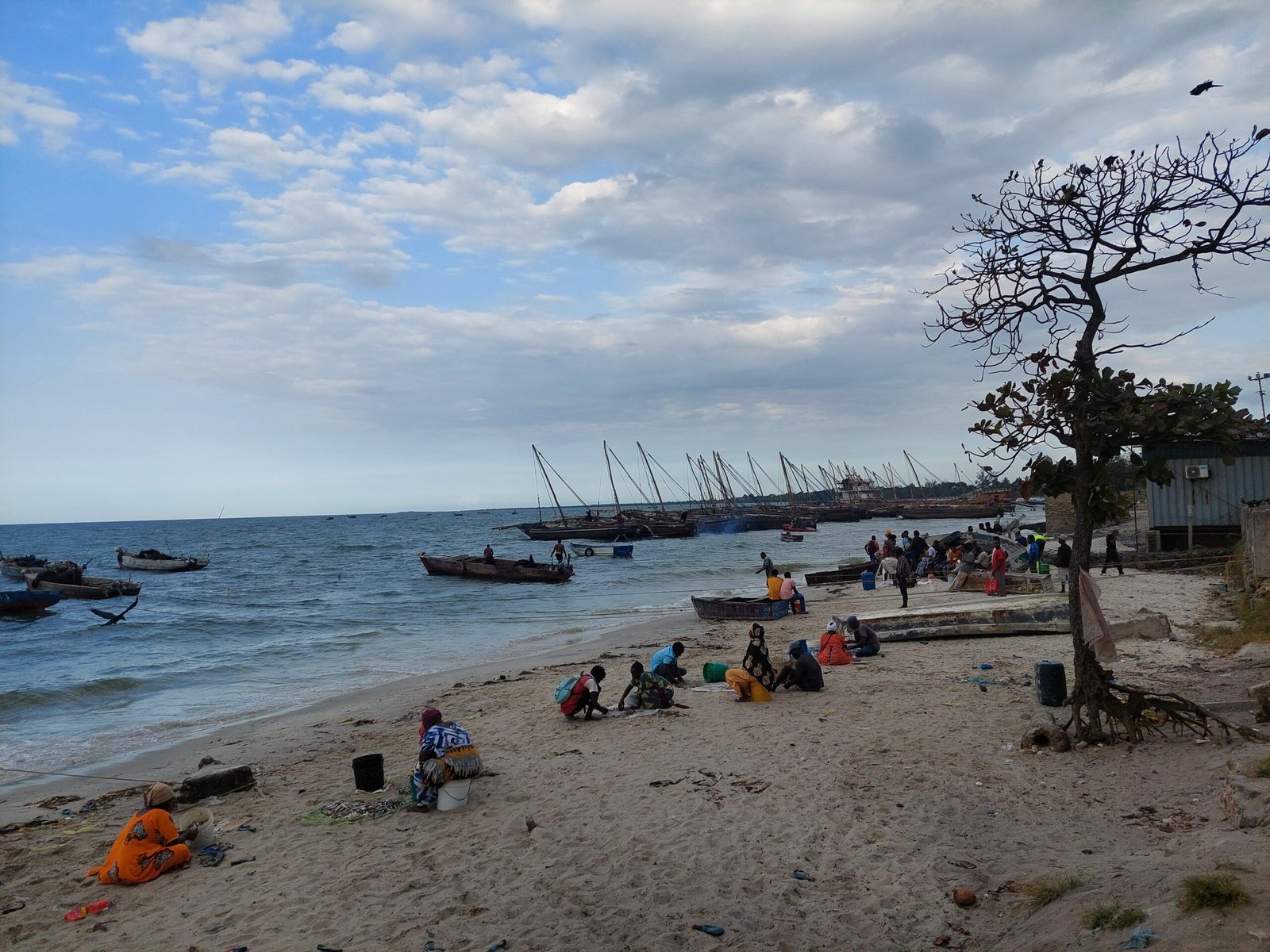
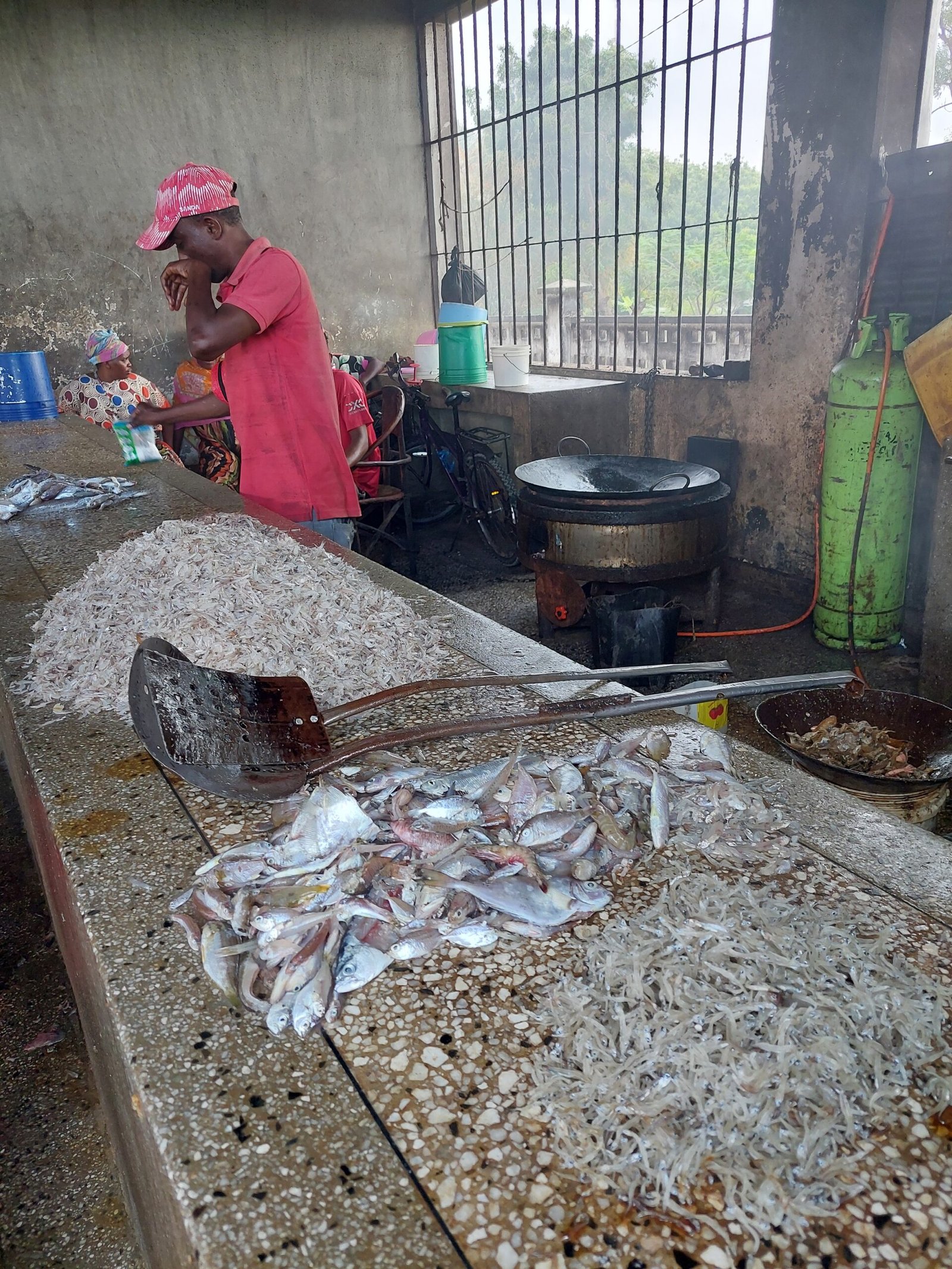
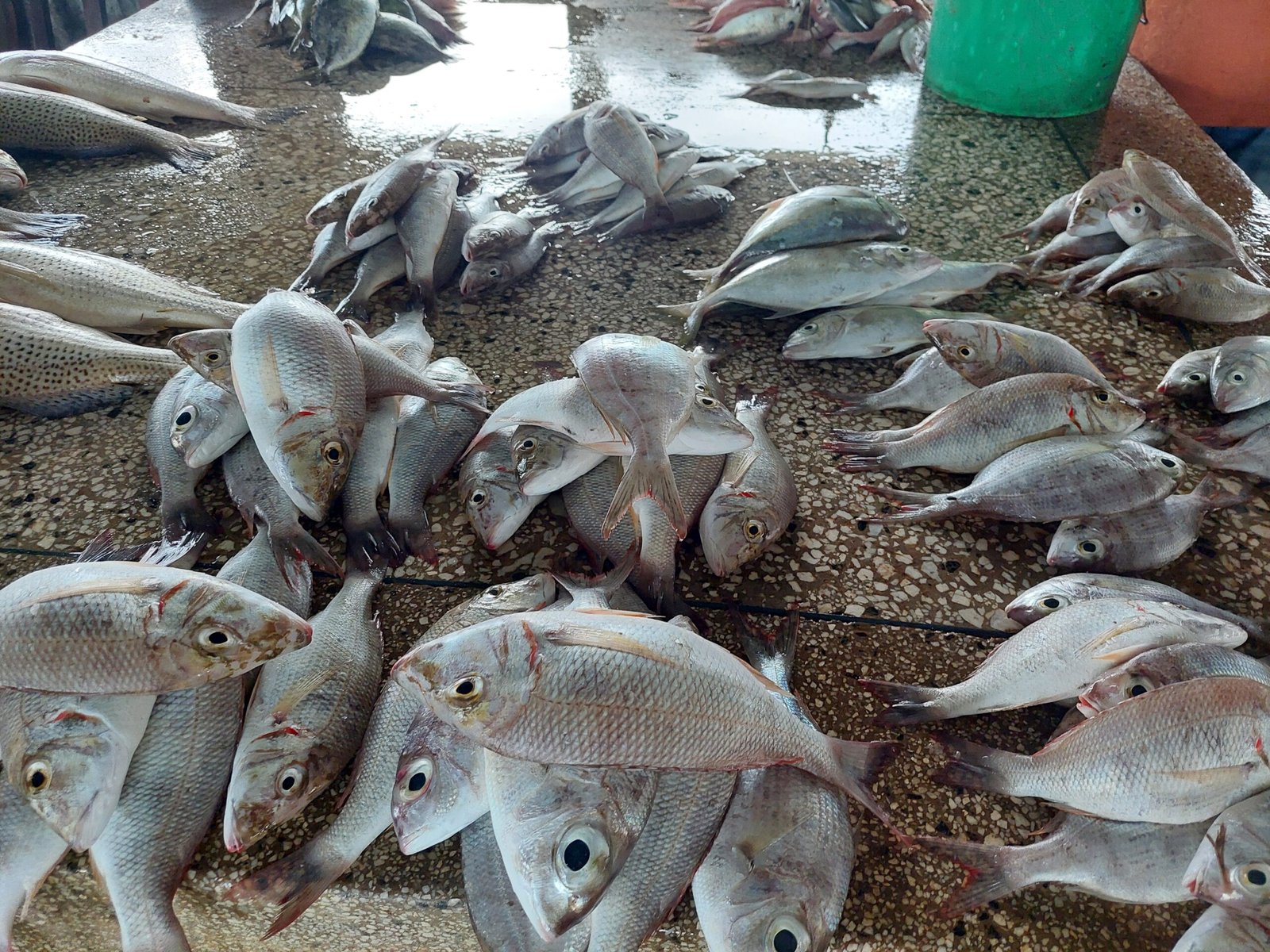
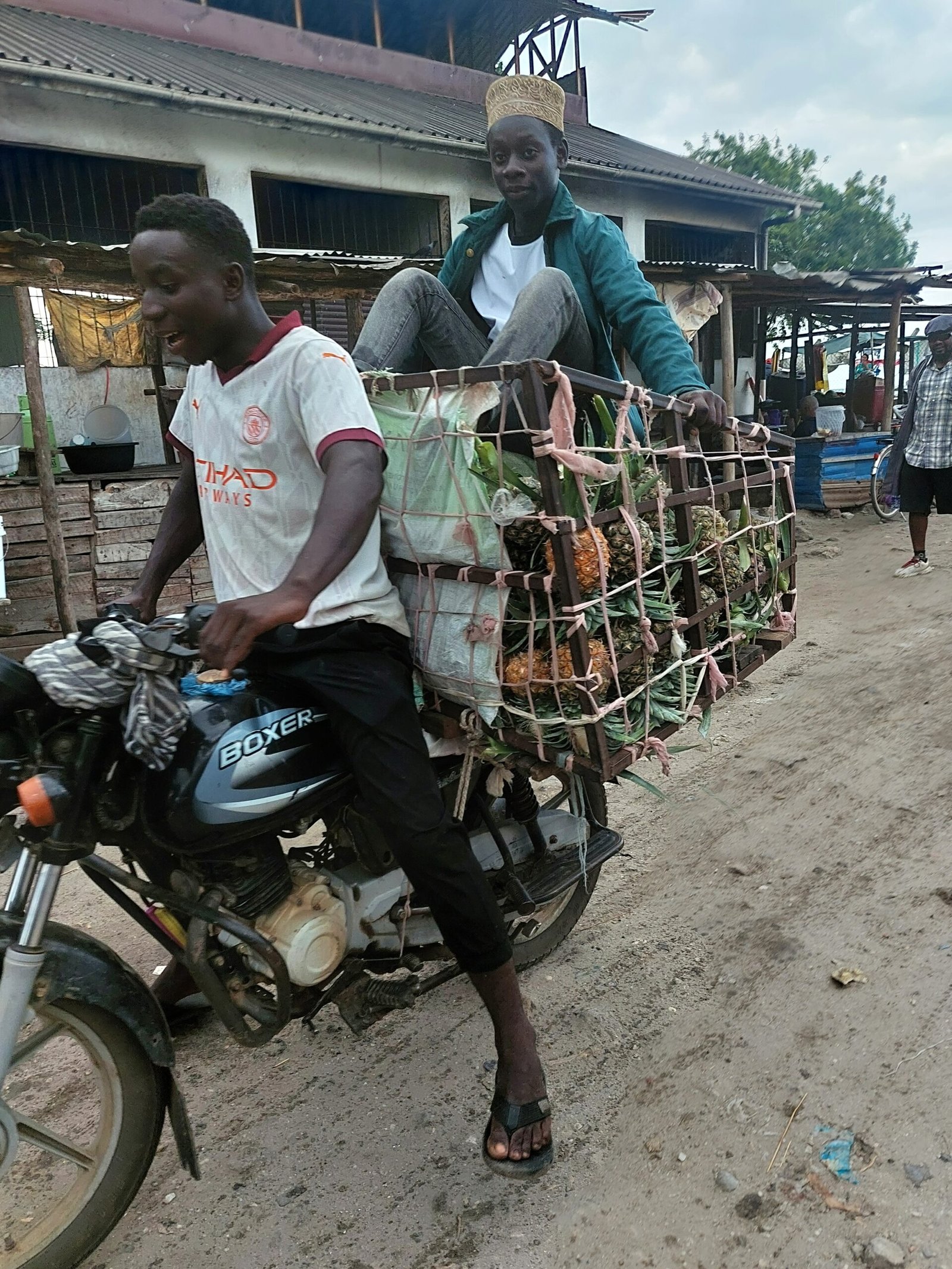
The small town of Bagamoyo is a UNESCO World Heritage Site. After setting up our tents, our family set out to see what was so remarkable about the place that it had made it onto this list. First, we went to check out the fish market on Bagamoyo beach. It was quite a stench, but we bravely wandered around the area for a while nonetheless. Unfortunately, this rather fishy smell also carried over to our campsite, as the fish market and the campsite were right next to each other.
Main entrance to the fish market.
Fish was on sale both fresh and cooked.
Fruit and vegetables were also sold on the market.
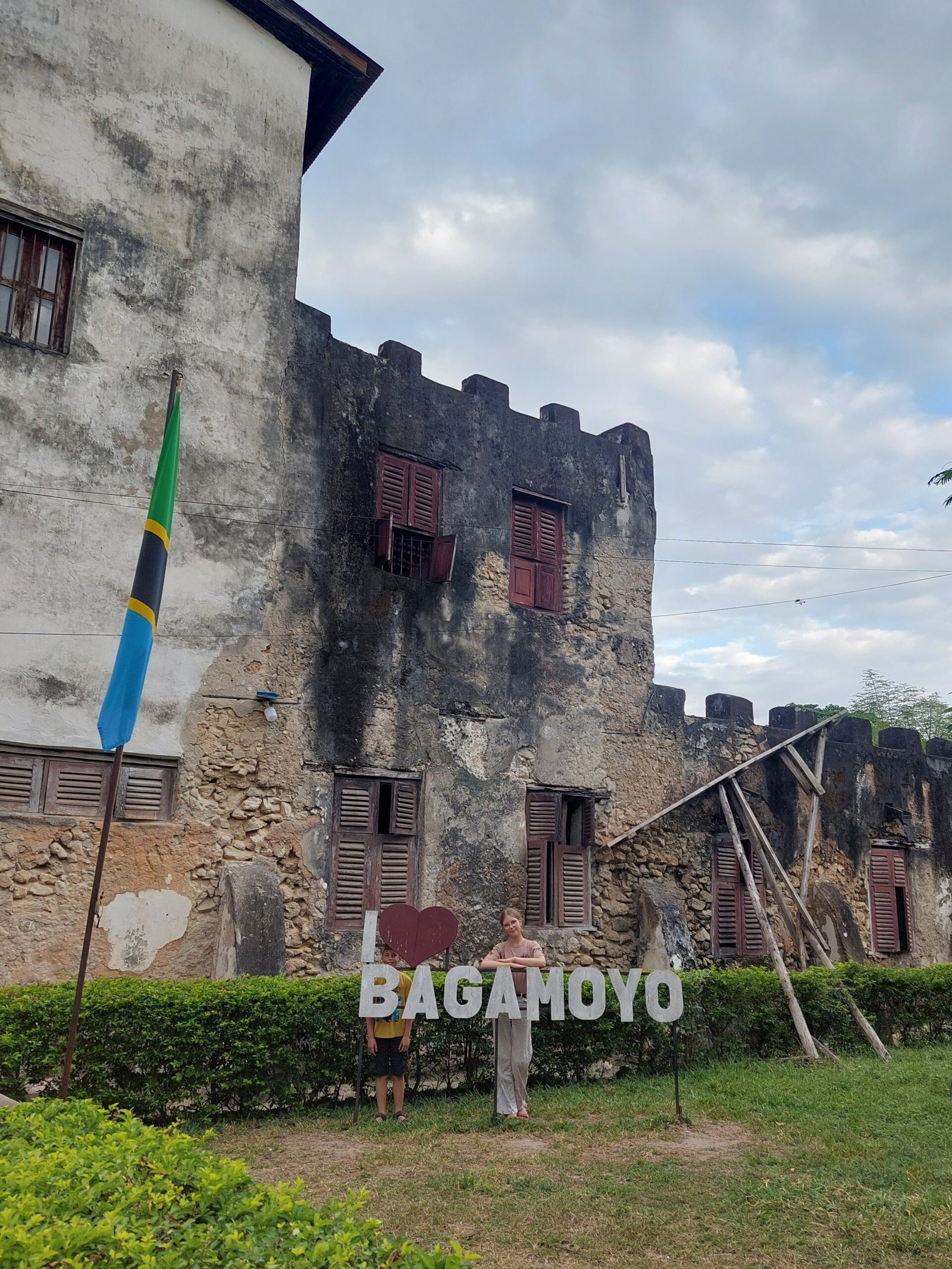
The city of Bagamoyo features old German architecture. However, this is not the reason for the World Heritage listing. Bagamoyo was once a major slave-trading town, which is why it has been listed by UNESCO. Slaves were brought from deeper in Africa to Bagamoyo, from where they were transported by boat to the island of Zanzibar.
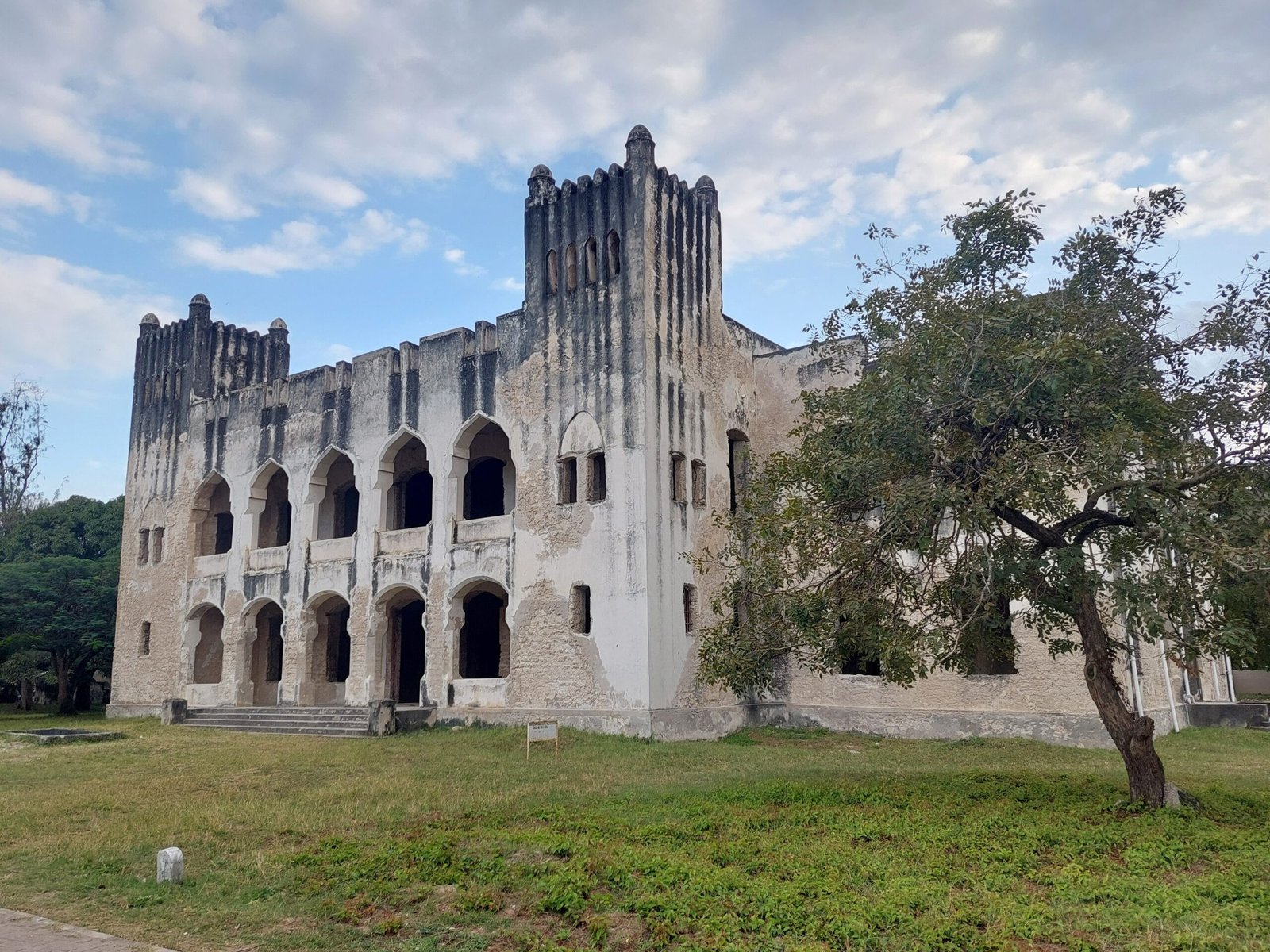
We first walked along the main street of the town, parallel to the beach, in one direction. We returned along the street next to it. On the first street we saw only dilapidated buildings, one of which was probably once a church or monastery of some kind. On the second street there were a few souvenir shops and two restaurants. We decided to go to one of the restaurants for a cold drink, as it was a very hot day and the humidity was probably close to 100 %. The restaurant had a nice roof terrace where we decided to sit for a while. From there we had to go back to the campsite, where we were served Tanzanian fish stew for dinner. The fish, however, had not been bought from the adjacent market.
There has presumably been no activity here for years.
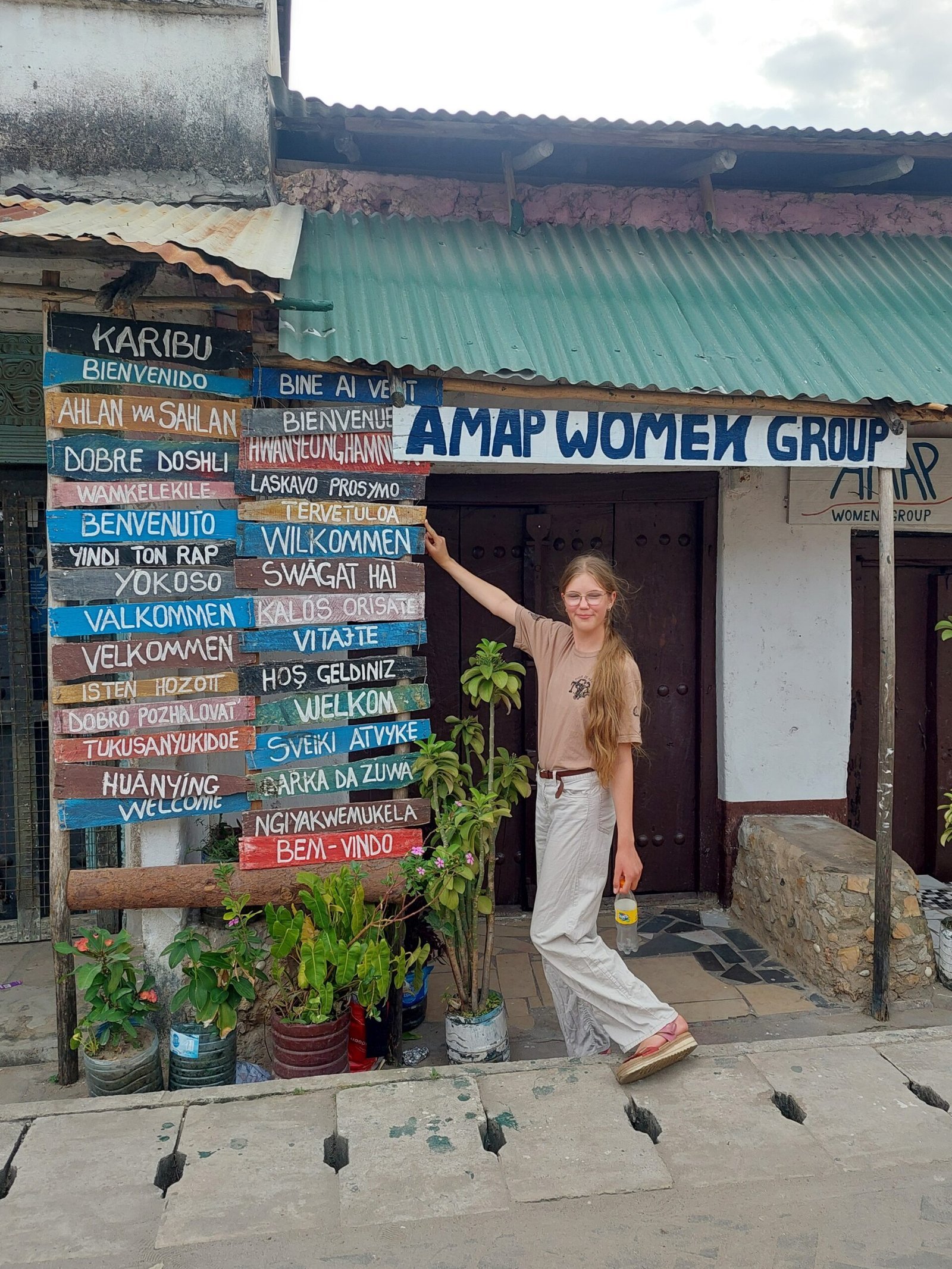
Bagamoyo restaurant street.
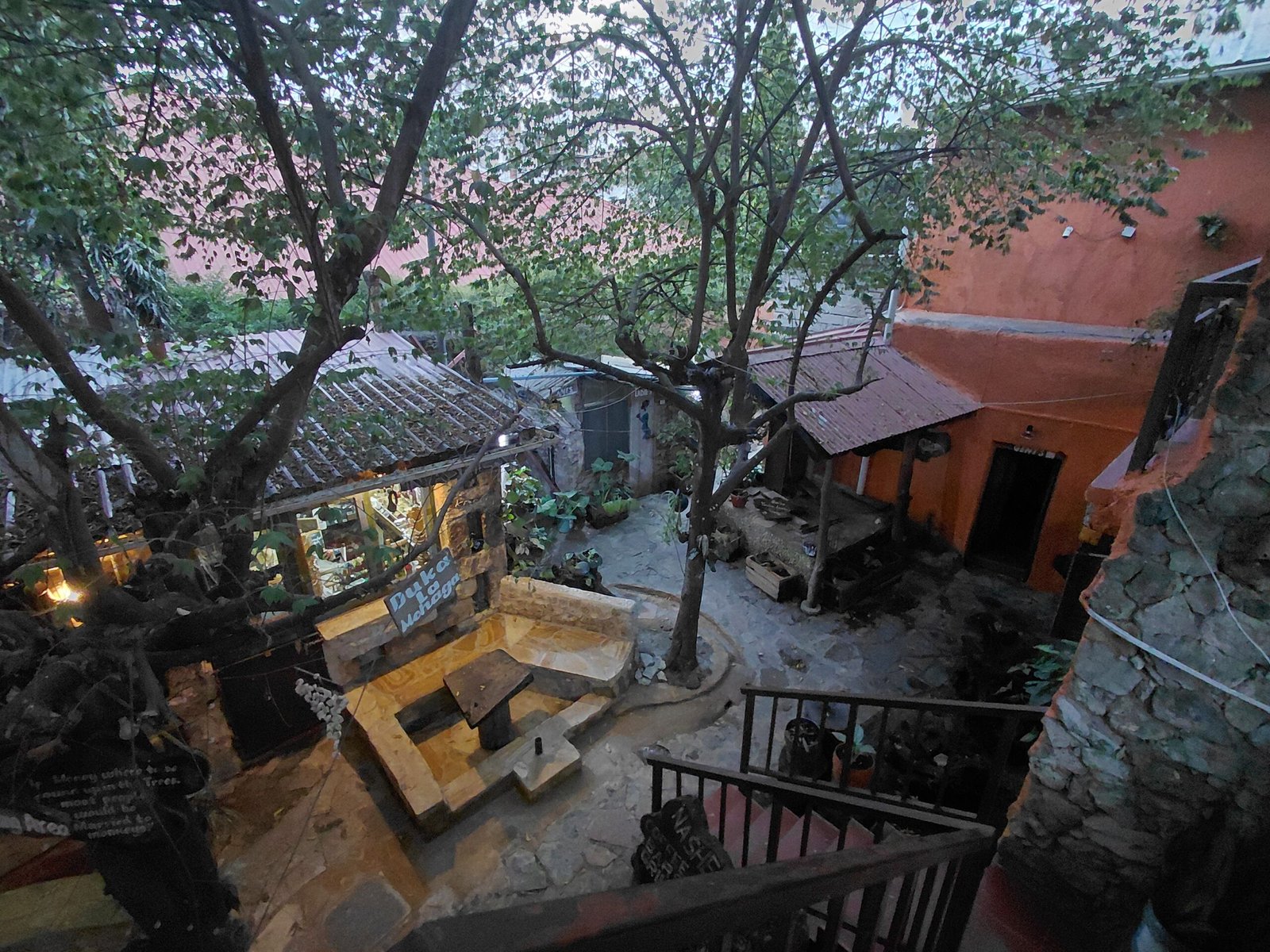
The courtyard of a funny little restaurant with a souvenir shop.
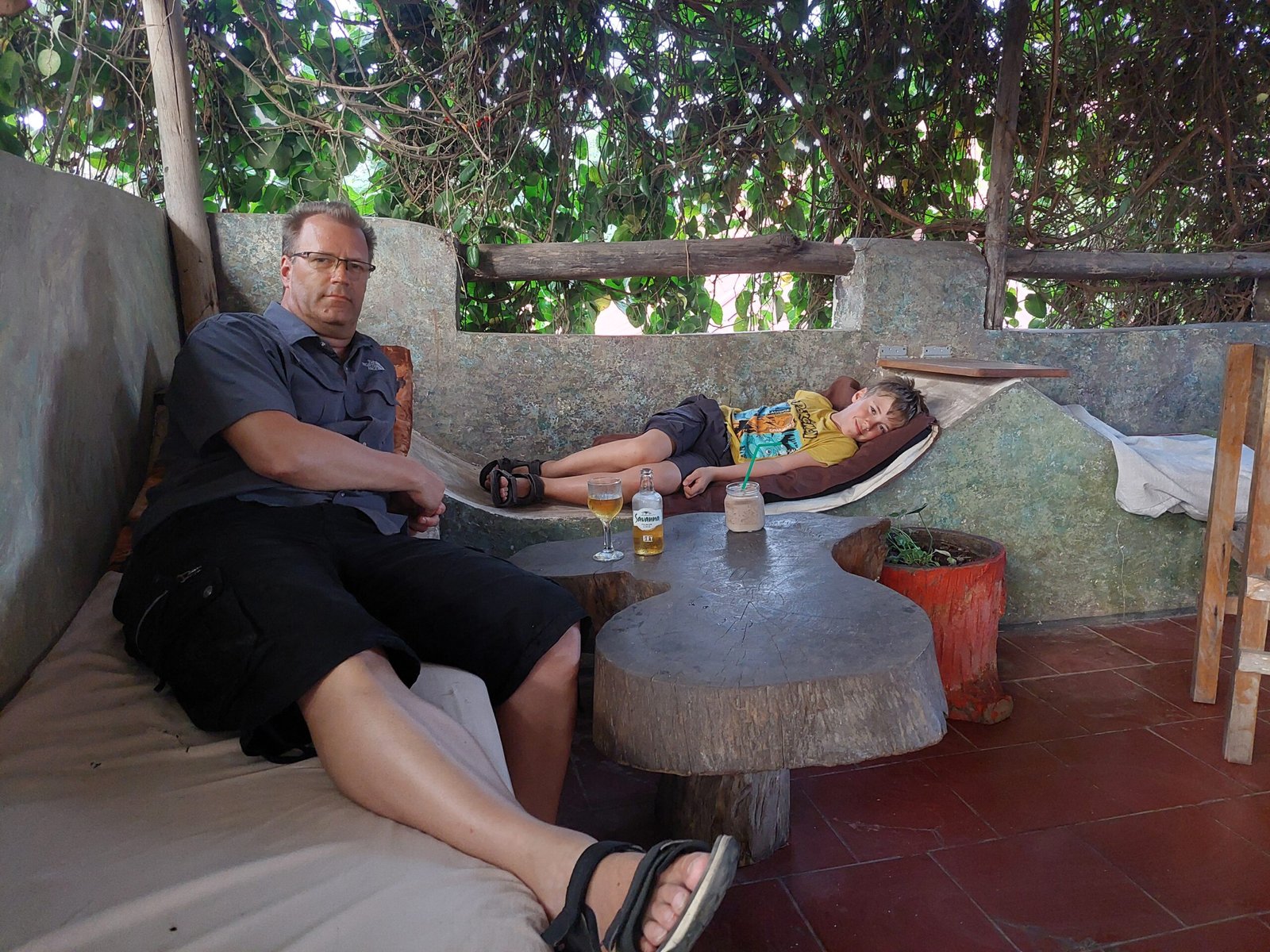
Marko enjoys a Savanna while Risto chose a Nutella milkshake.
By dinner, the worst of the fish smell had dissipated from the campsite, as the market closed at sunset. Fortunately there was no need to sleep in the smell of herring at night. We all went to bed early, as there was a very early wake-up call.
This guy came to greet us before we went to bed.
The alarm clock went off at 4:15 in the morning, so we could set off for Arusha at 5:30. We left early because it was a long drive to Arusha, almost 600km.
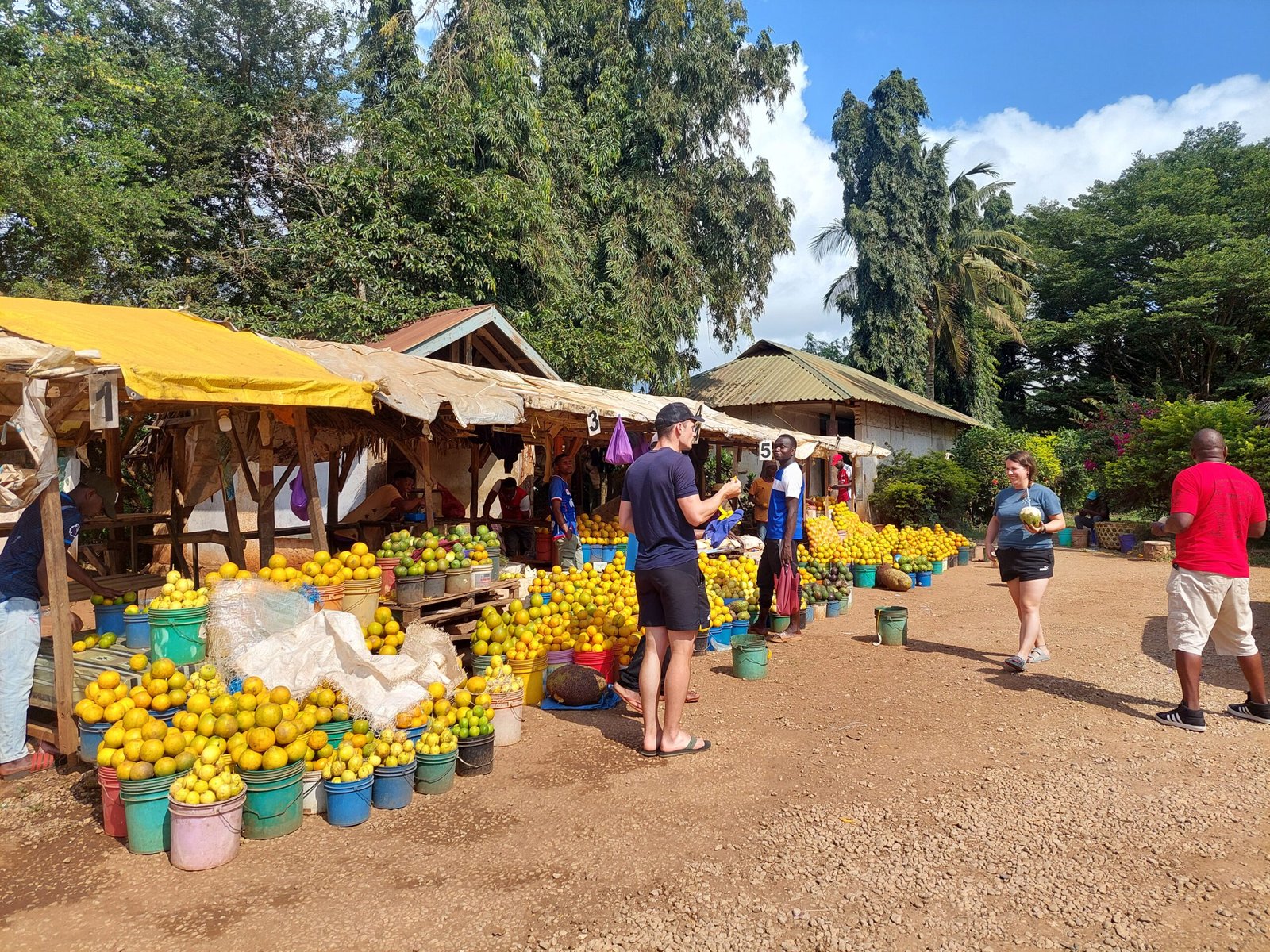
On the way to Arusha, we stopped for a toilet break and to buy some fresh fruit.
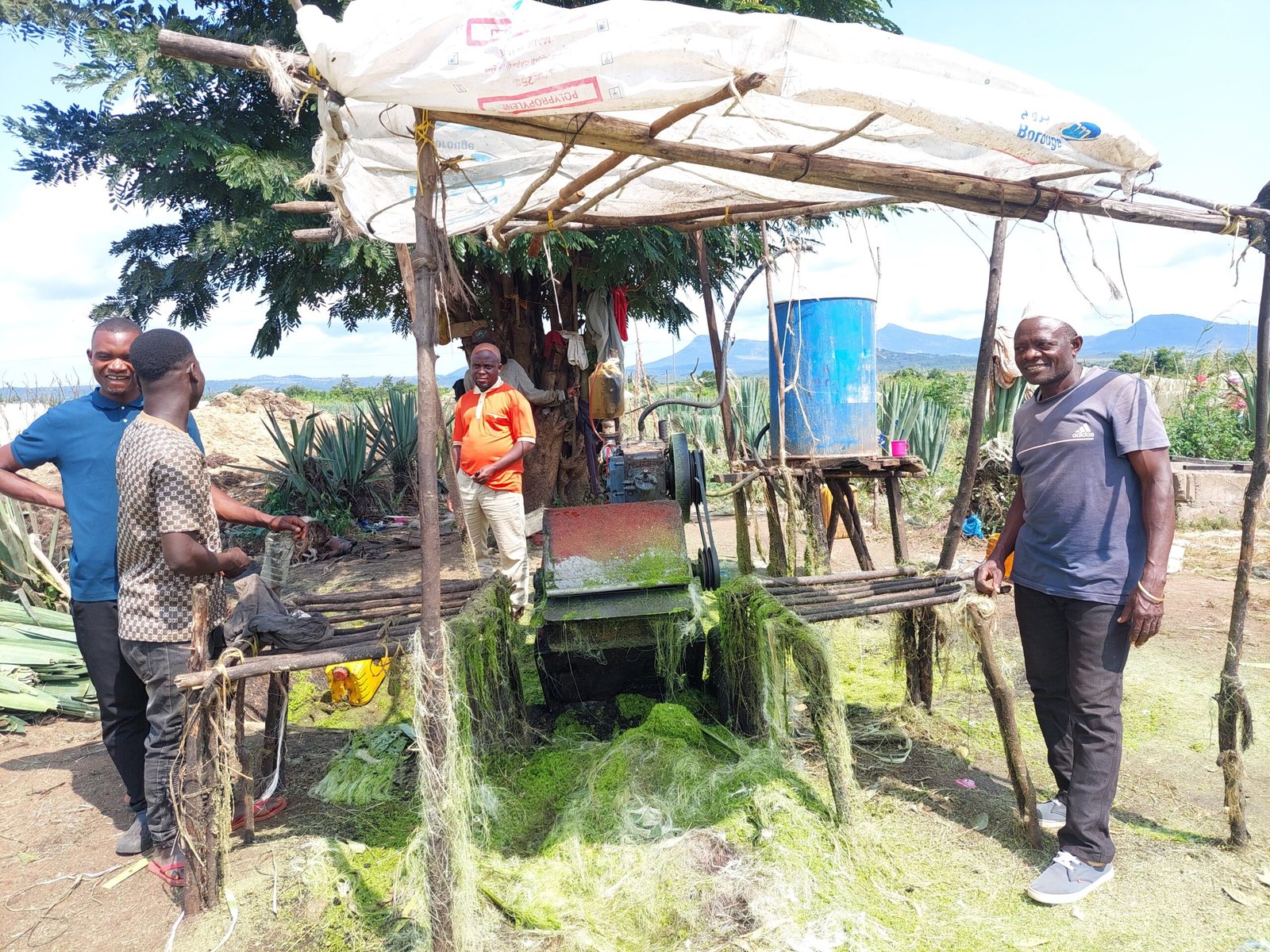
We also stopped to see how sisal fibre was collected to manufacture ropes, among other things.
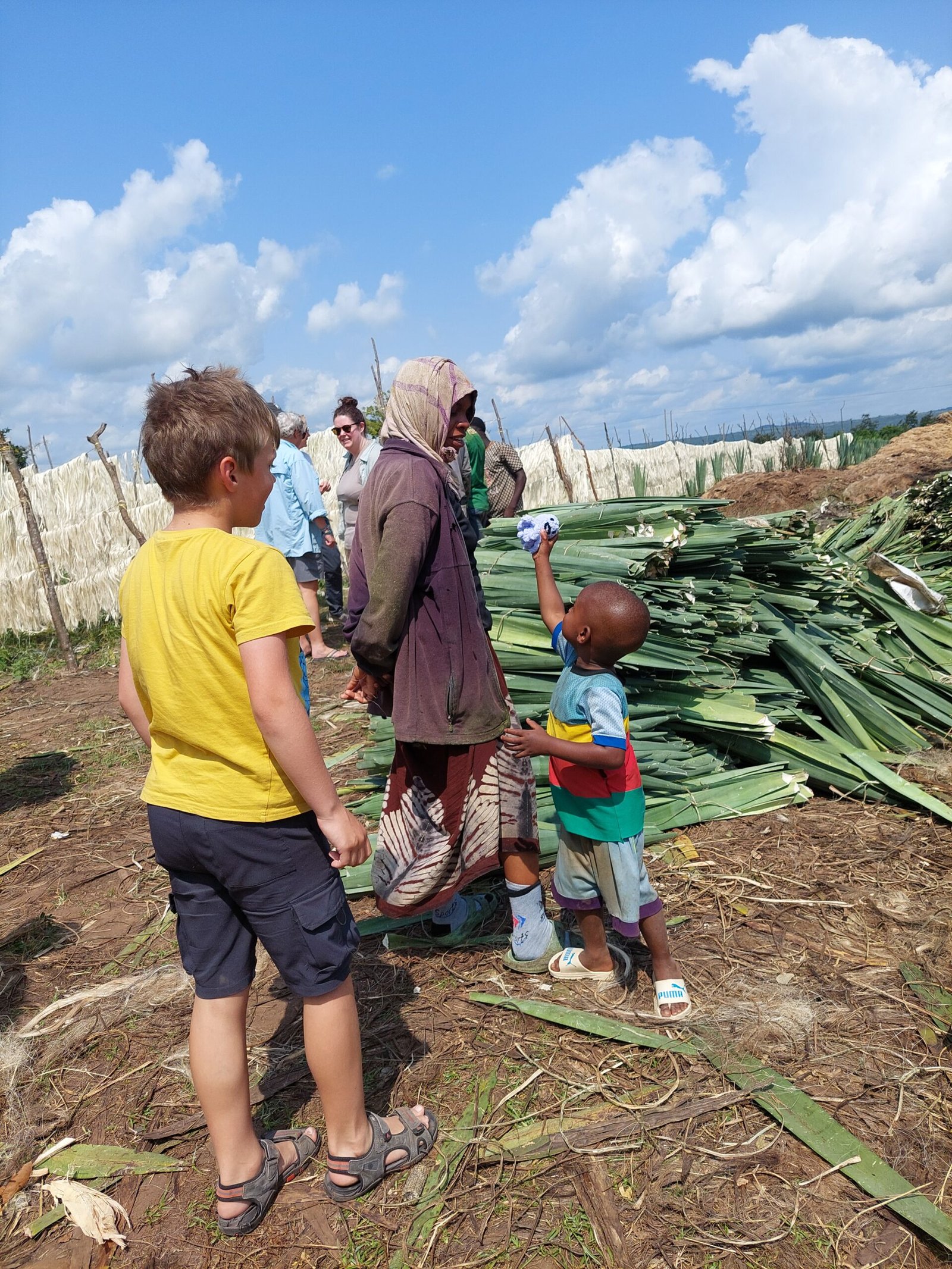
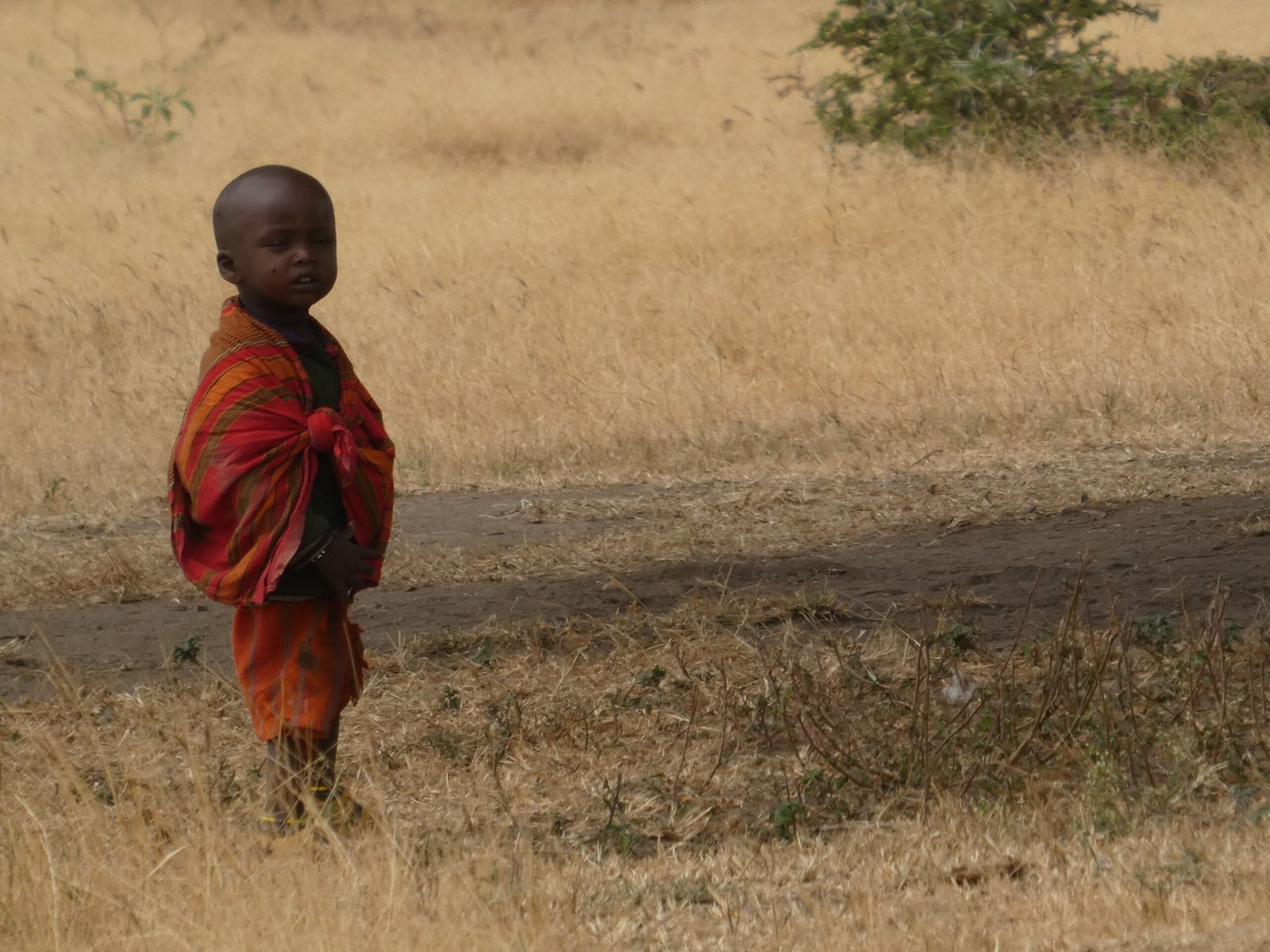
The workers had a small child with them. For him, another octopus was found in Ronja's stash.
The long journey also required a couple of bushy bushy stops. This open-air loo had a great view.
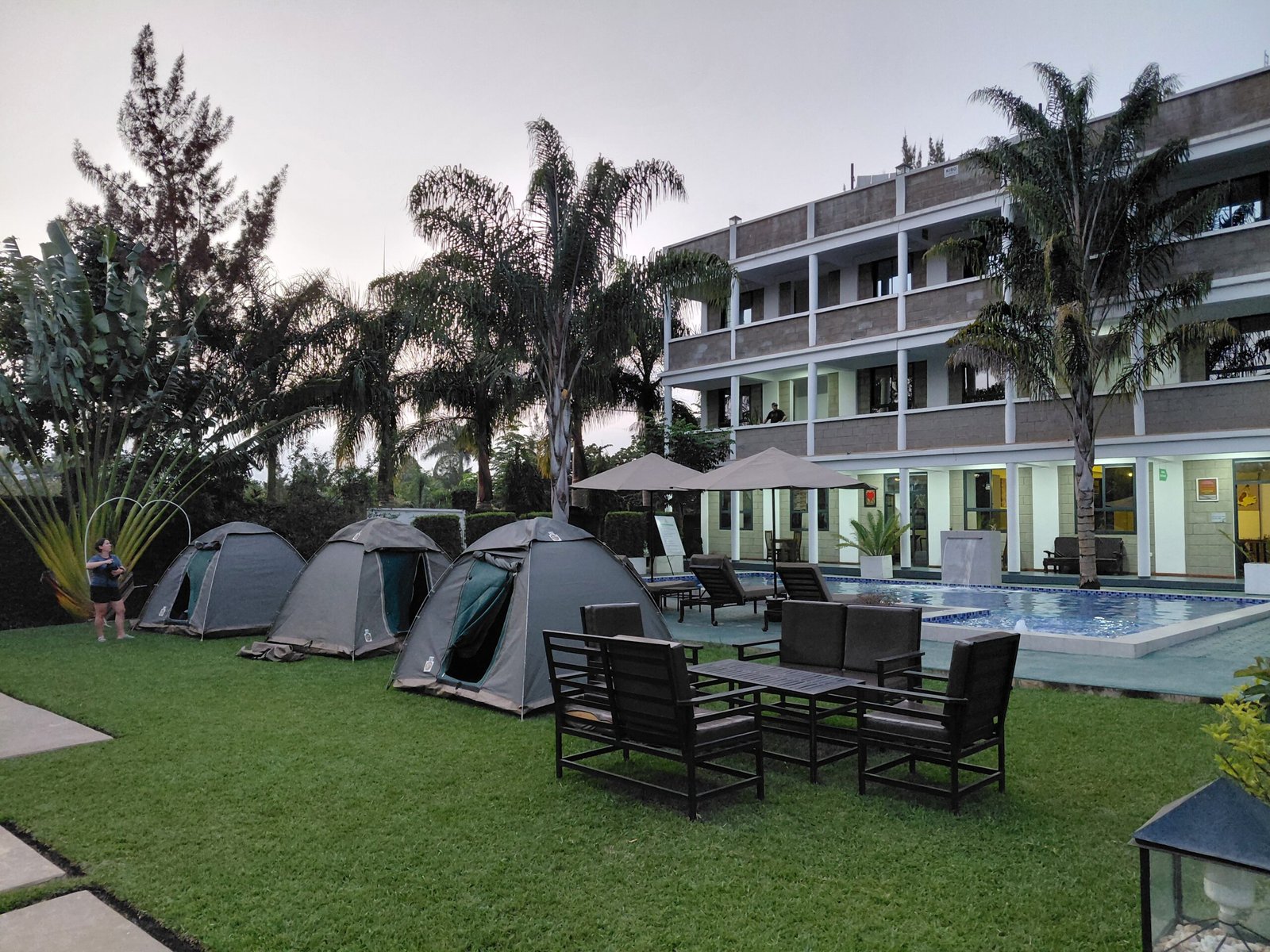
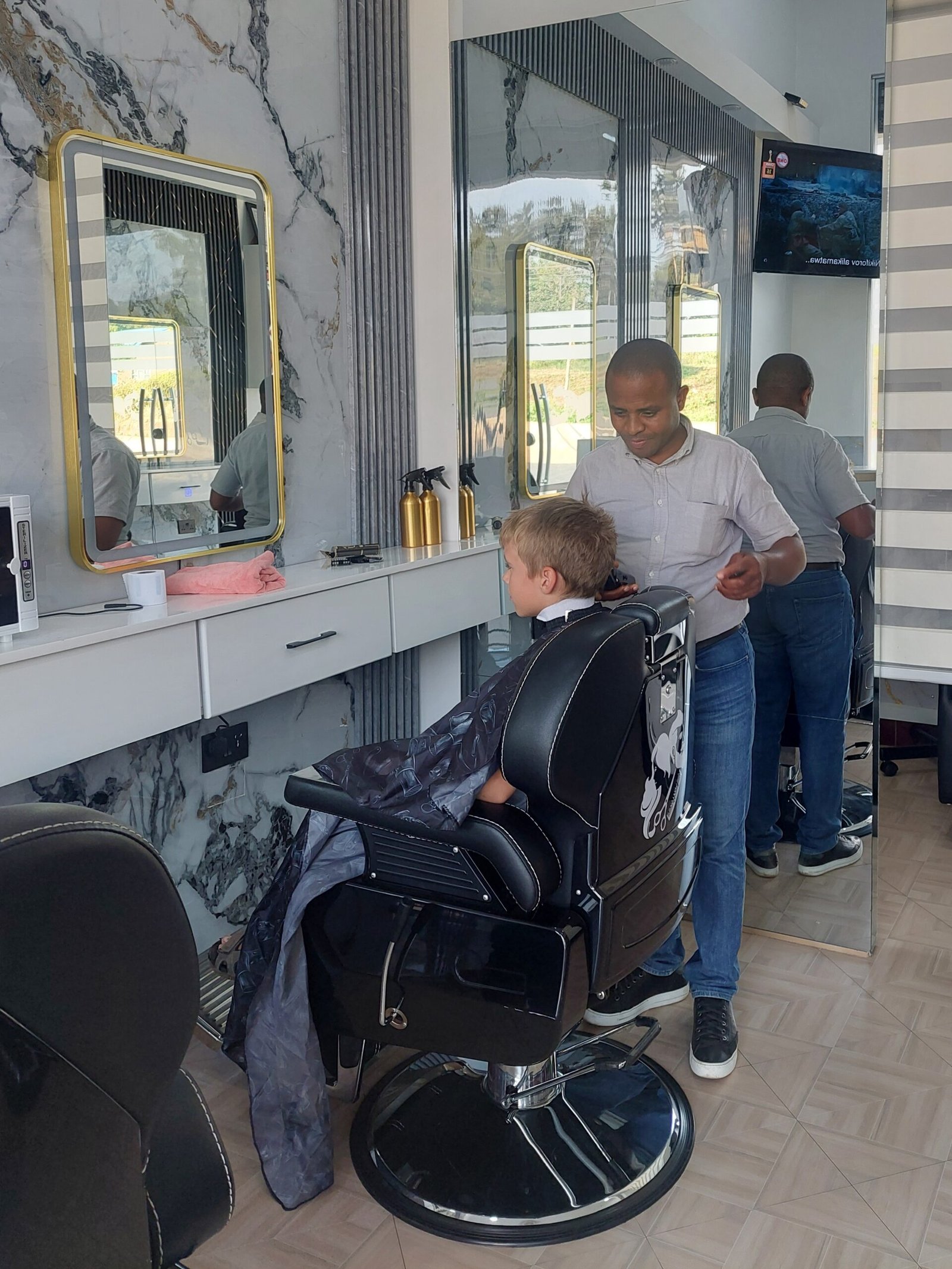
Our average speed on this stretch of road was not too high and it was 18:30 by the time we arrived at the Safari Lodge. We quickly pitched our tents on the lodge’s lawn next to the pool and spent the rest of the evening in the lodge’s courtyard using the internet connection. Only Marko stuck his head outside the gates, as he had spotted a local barber near the lodge when we were driving in, and went there to try his luck with a haircut. Luck was with him, and Marko returned to dinner a new man. A haircut at the local barber cost 10 000 shillings, or about three euros.
Camping in Arusha.
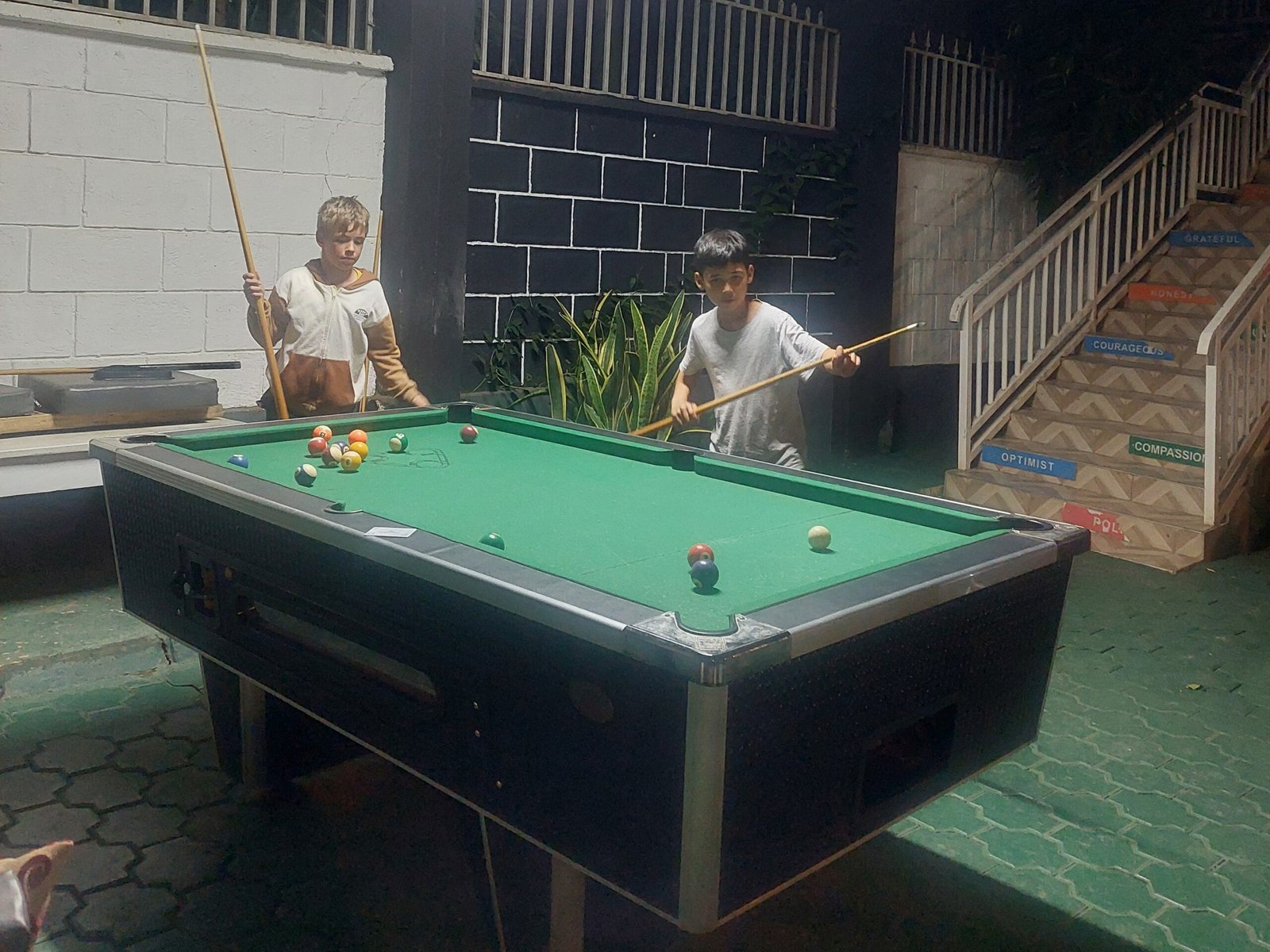
The boys were playing pool.
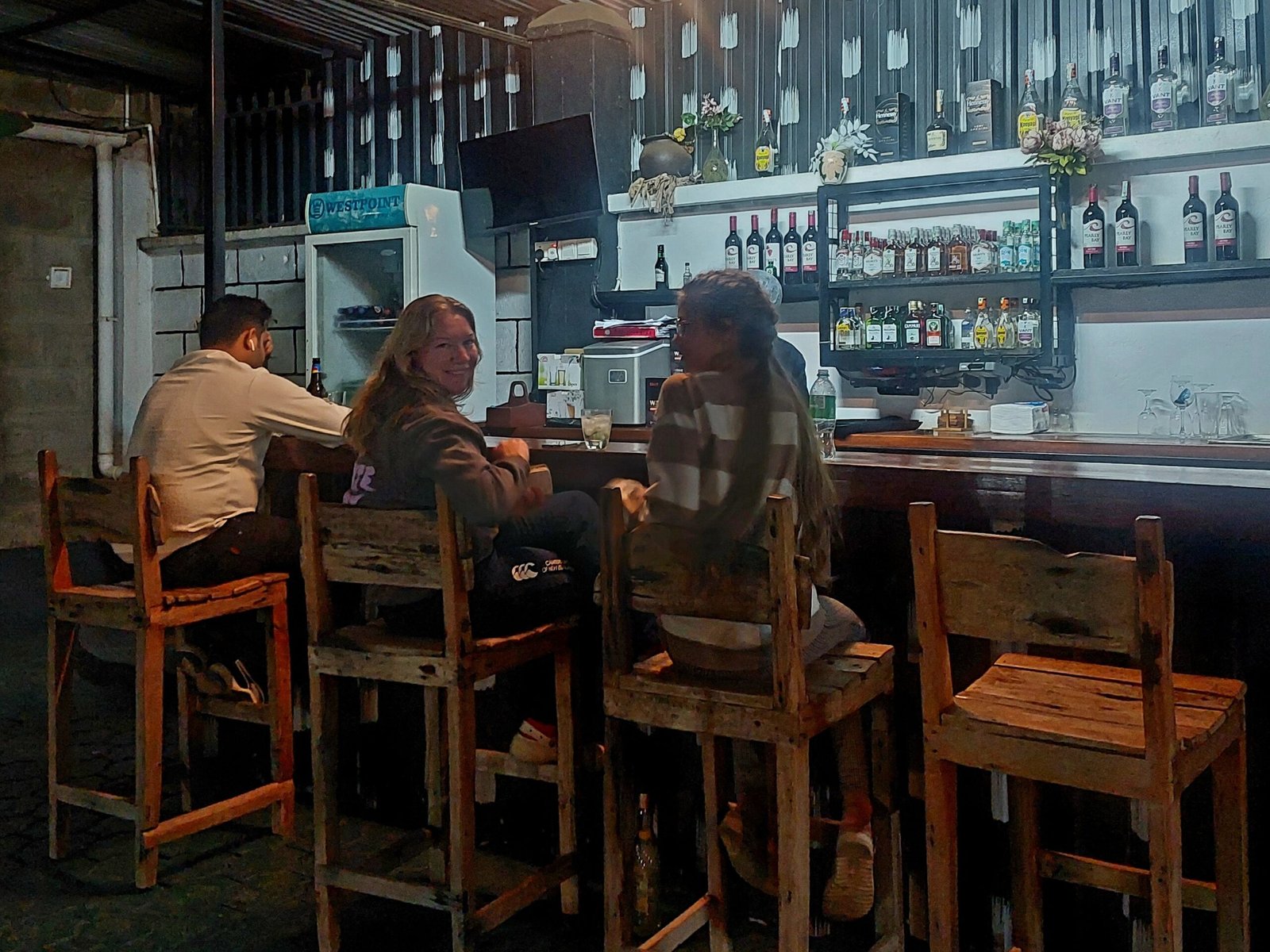
Ronja ended up at the bar with Sophie.
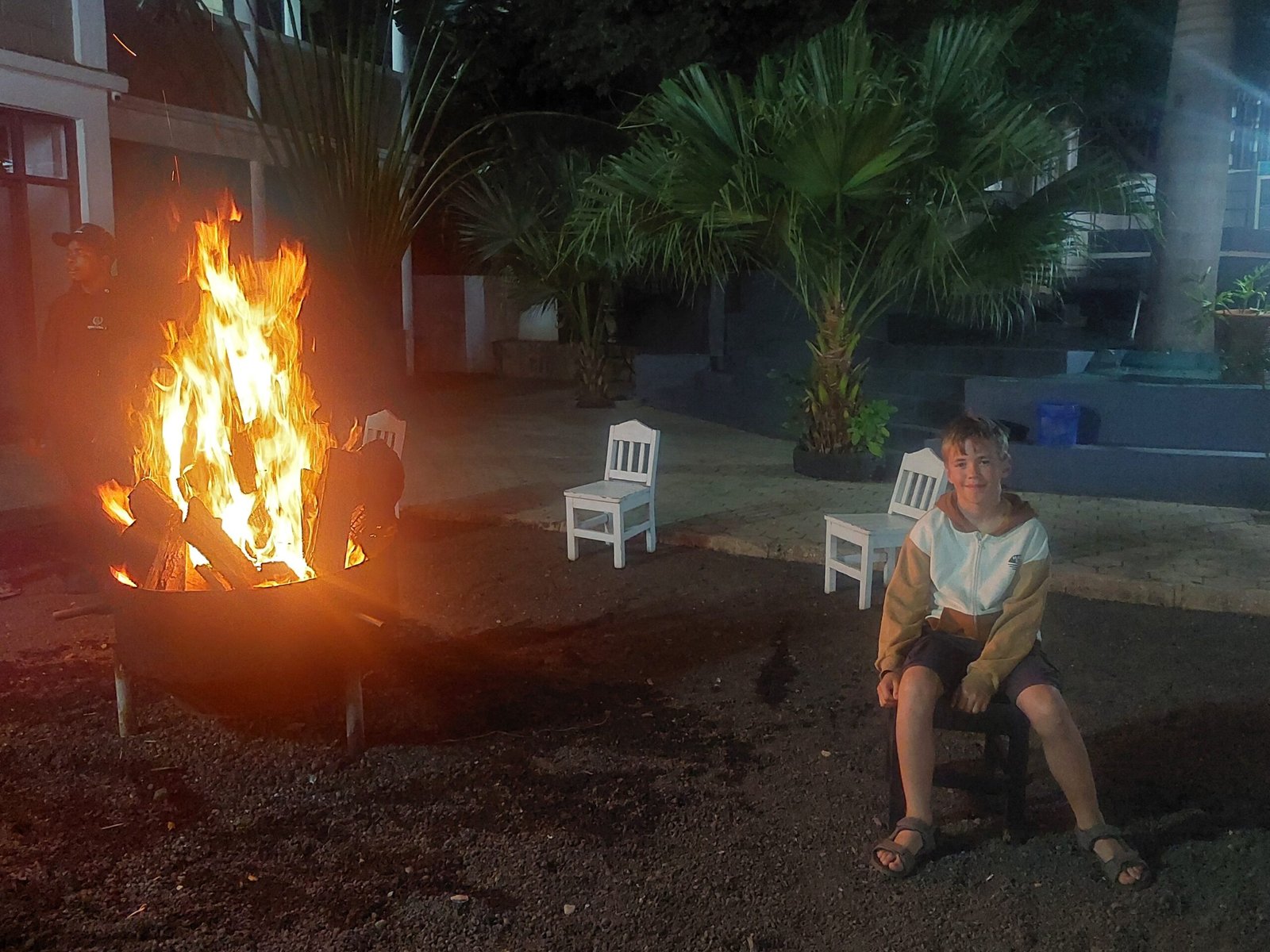
Risto was also taking care of the campfire.
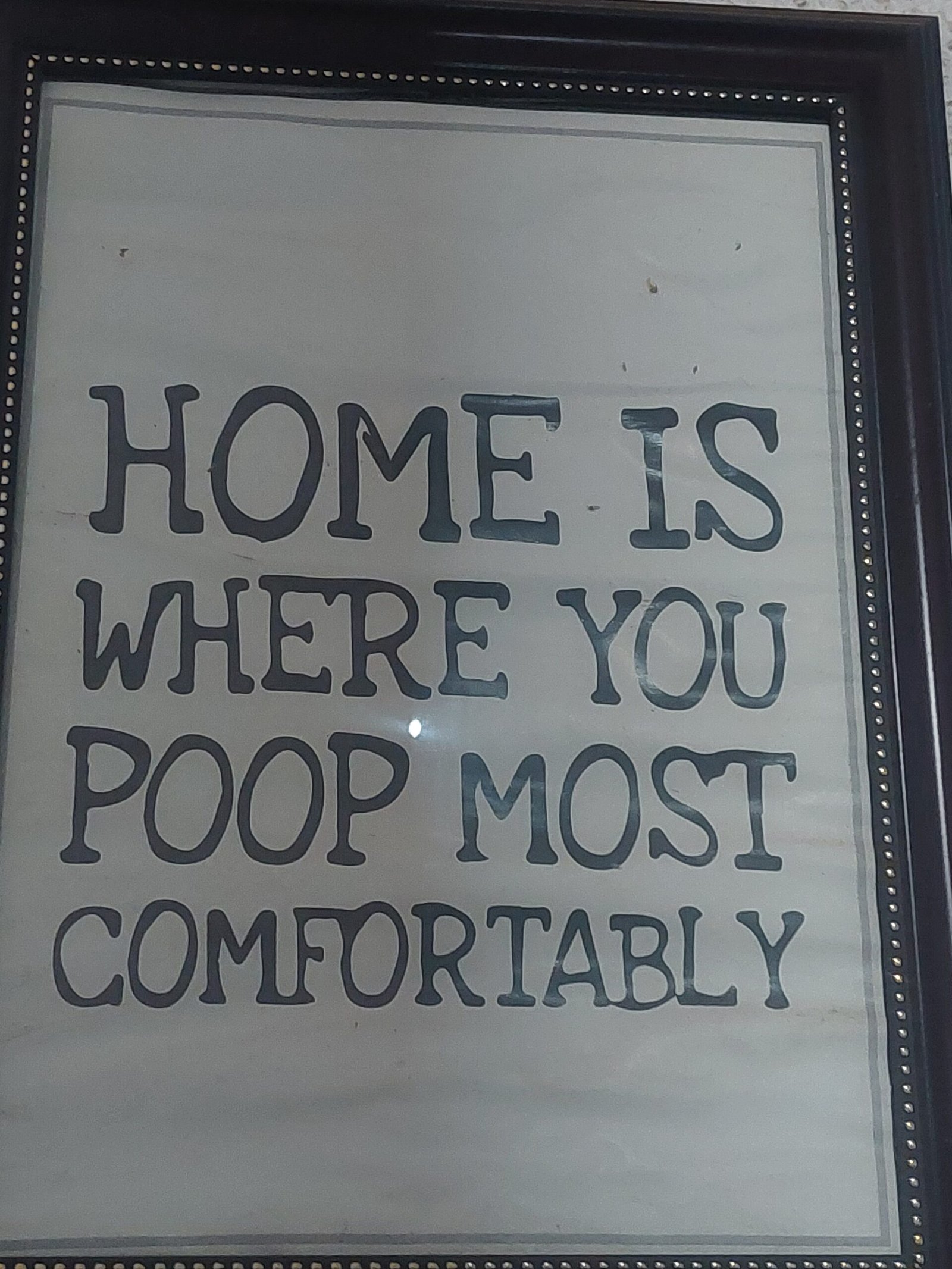
This wisdom of life was found in the women's bathroom at Safari Lodge. So Africa is definitely not Ronja's home...
From Arusha, the journey continued towards the town of Karatu, which serves as a gateway for tourists travelling to Ngorongoro and Serengeti. The journey was not very long, but it did take a little longer, as the programme included a stop at a Masai village and a couple of souvenir shops. The souvenir shops were of little interest to us, but the visit to the Masai village was one of the highlights of the whole trip, at least for us adults.
The souvenir shops had a lot of fine paintings for sale.
There was no shortage of decorative items either.
Larger decorative items could also have been sent by DHL directly to your home.
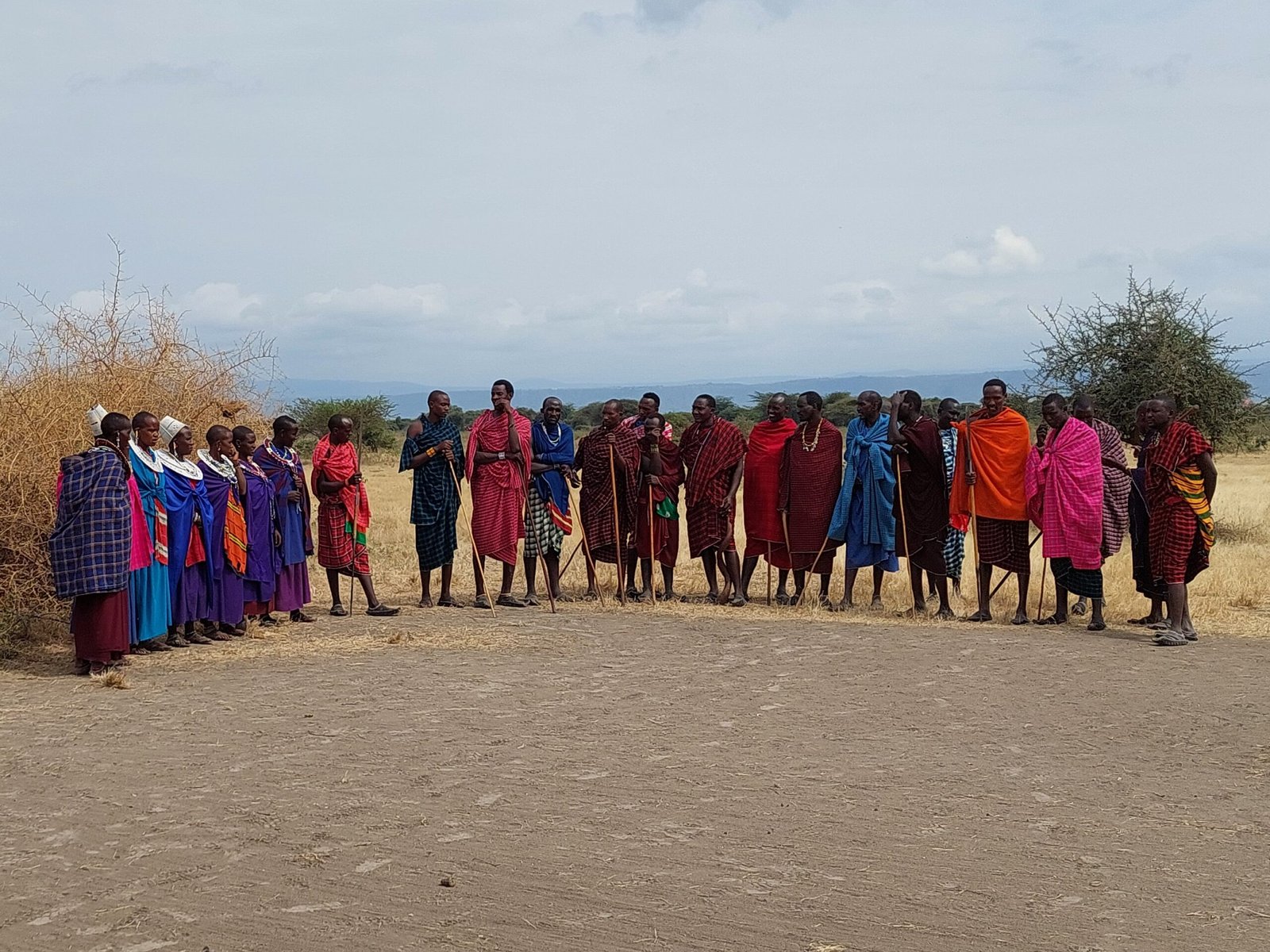
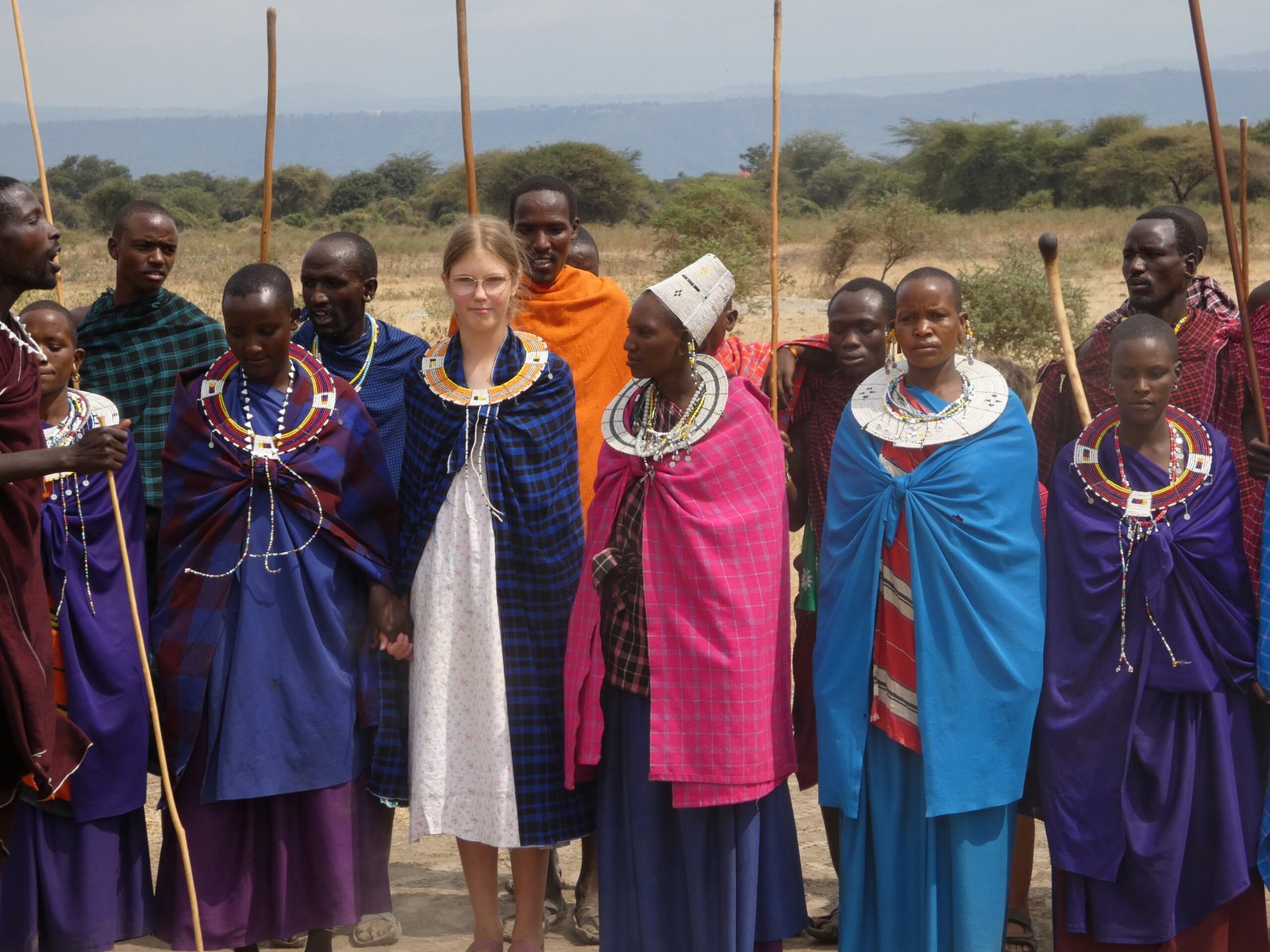
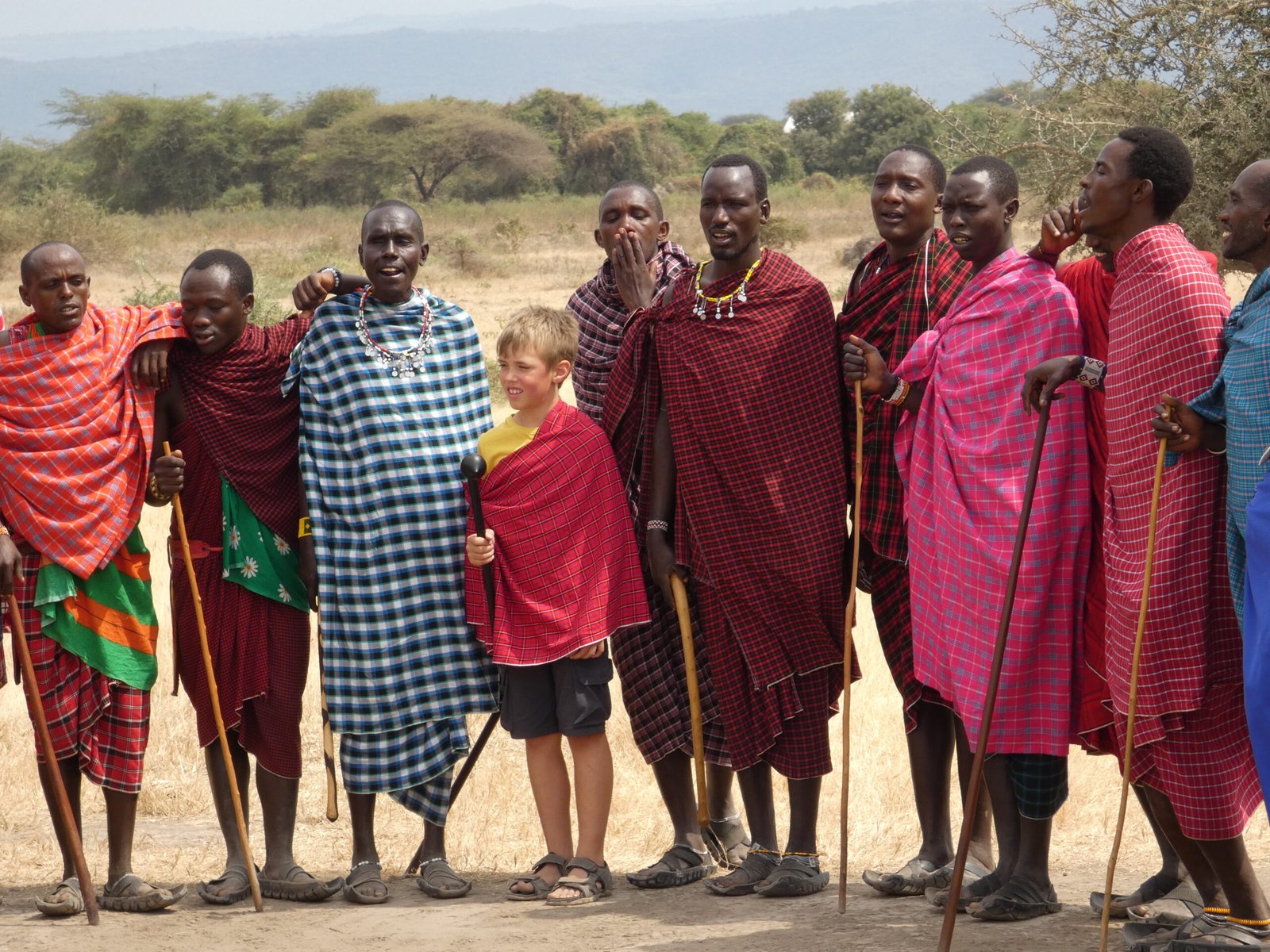
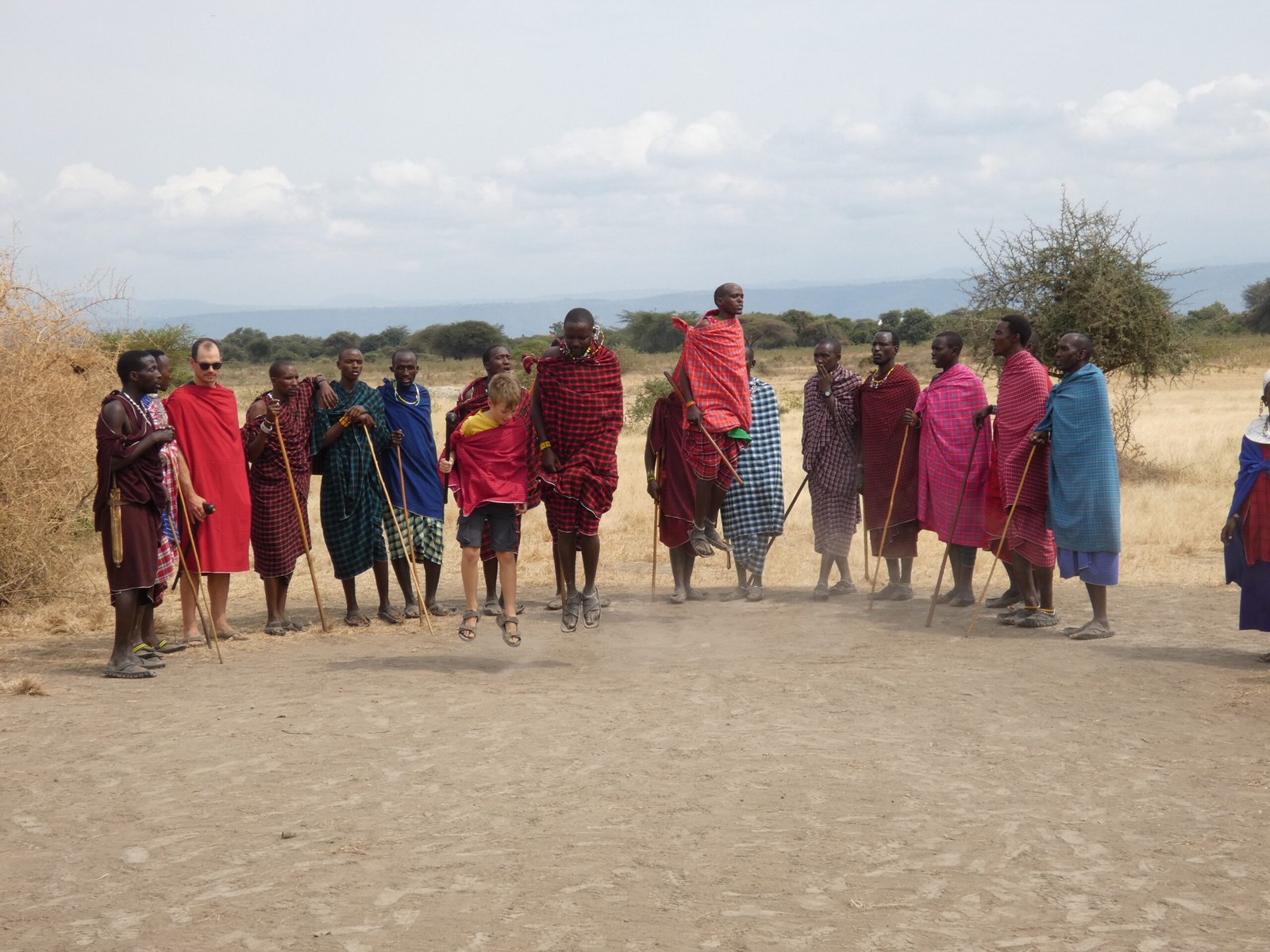
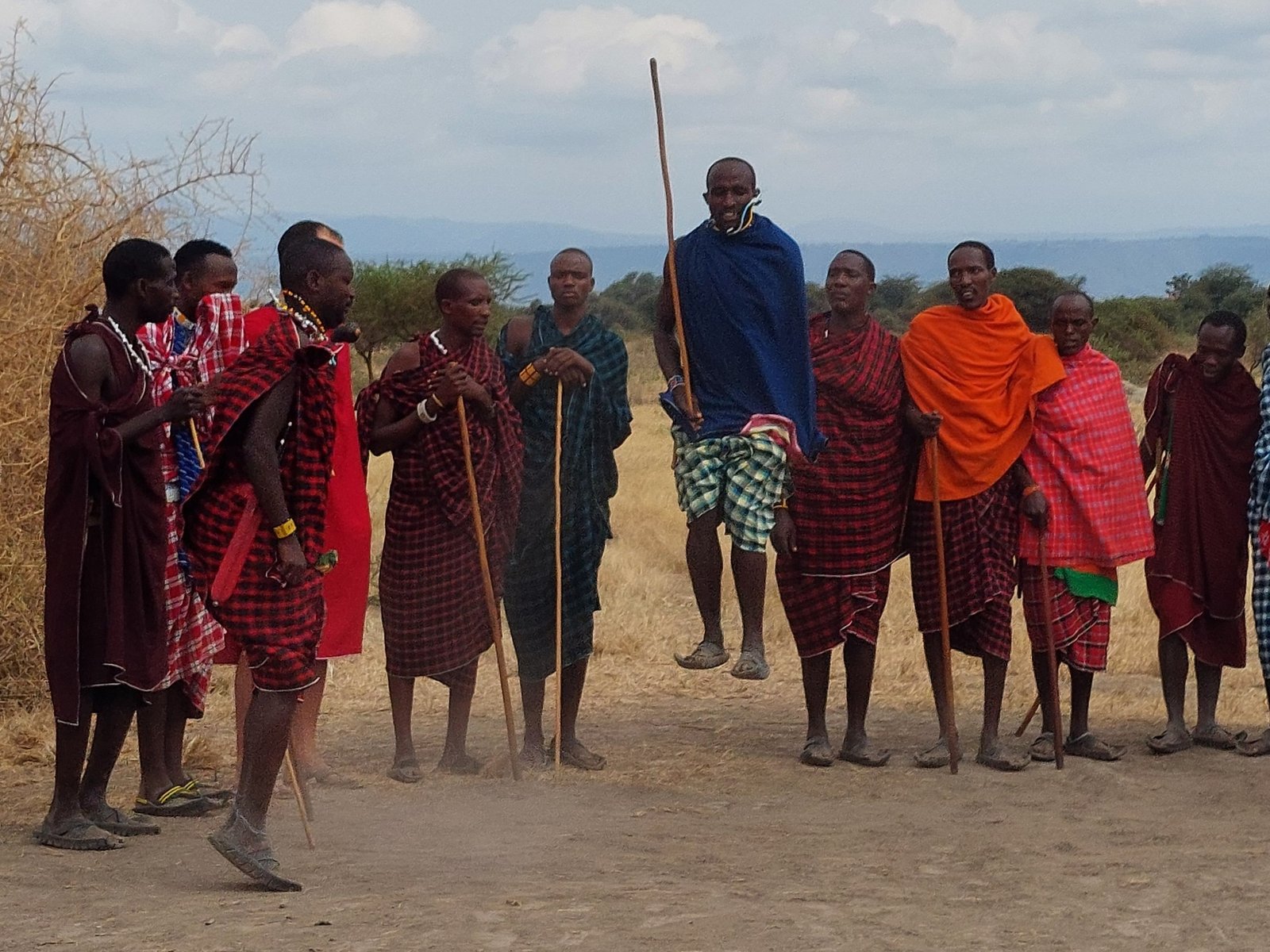
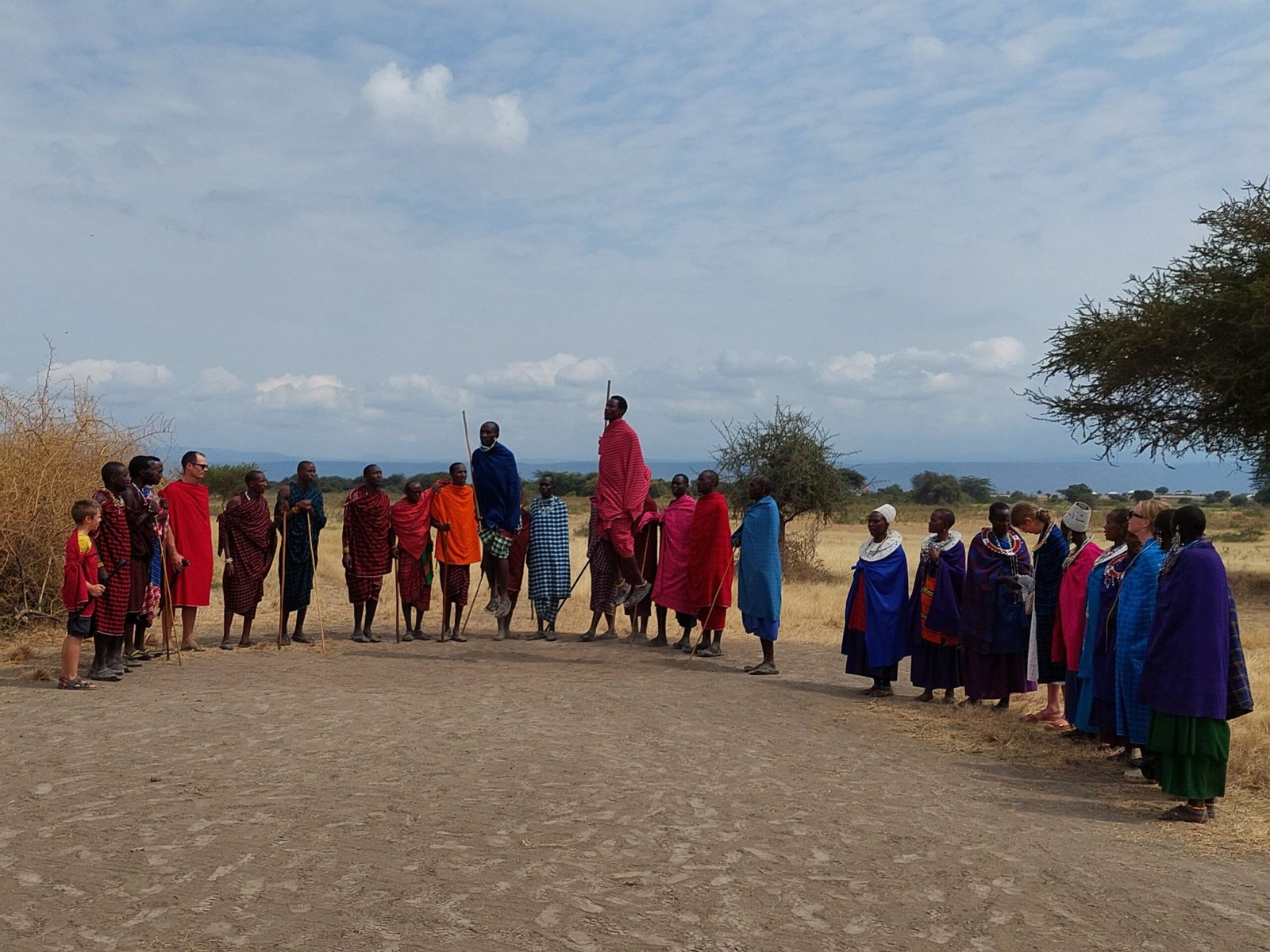
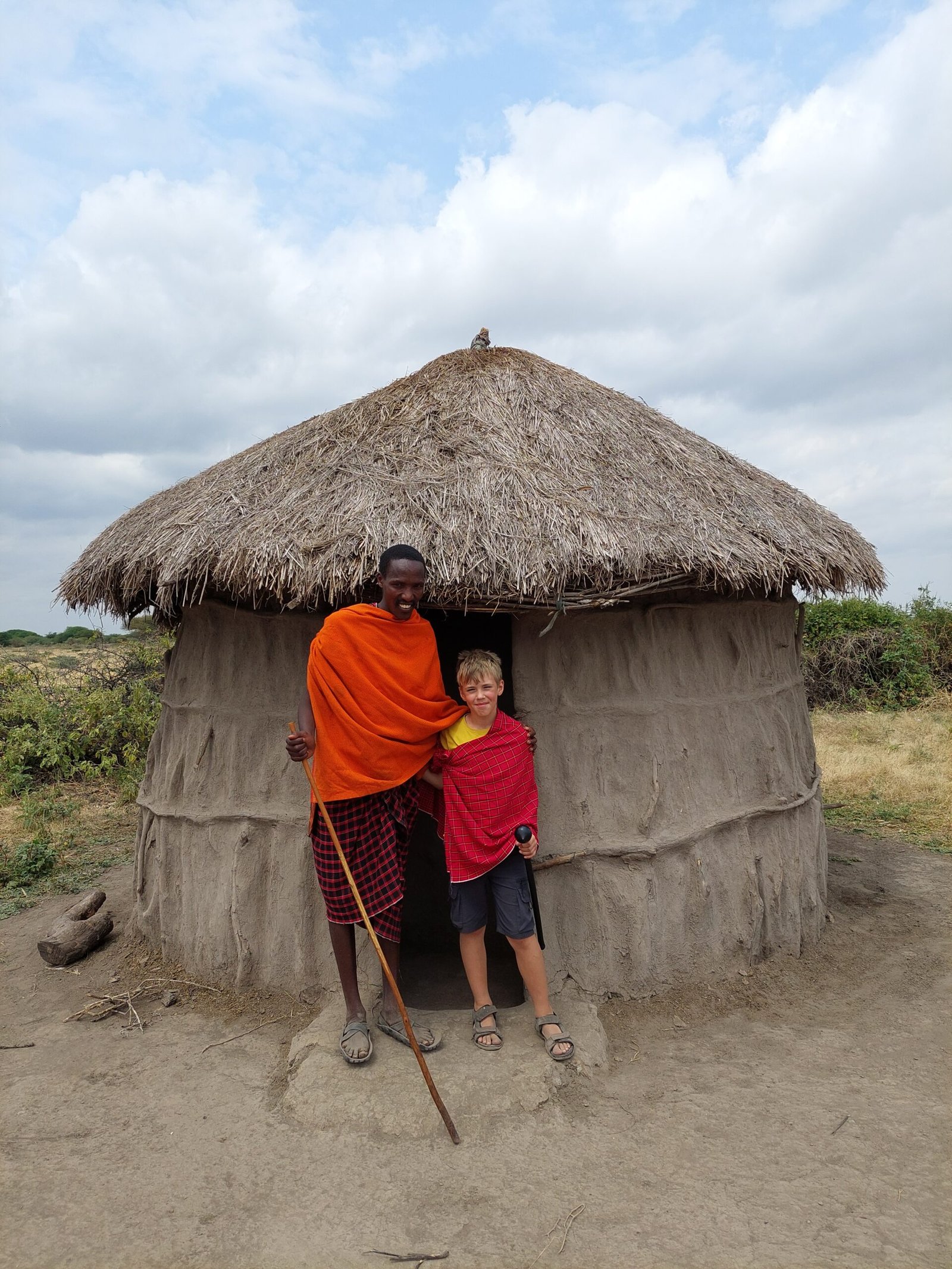
First, we were presented with a welcome song and a couple of other songs and dances, which everyone was invited to join in. Risto immediately joined the men to see how high he could jump. Ronja danced with the women, trying to imitate the way the women waved their necklaces. After the opening ceremonies, we were able to visit the village itself. One of the Masai men took us to his family home to visit. There wasn’t that much space though. Risto said that his room in Finland was bigger than the whole family’s hut here.
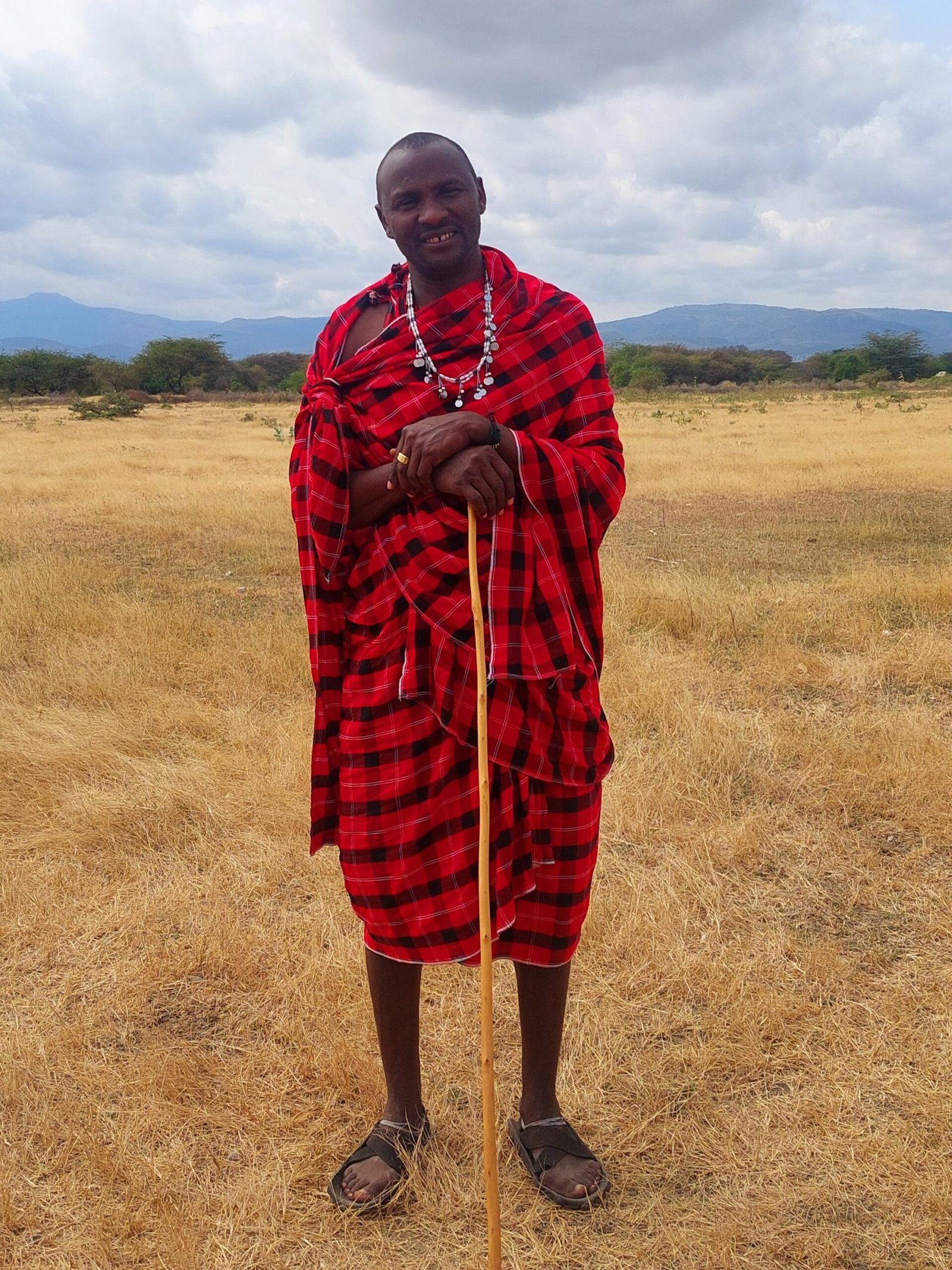
This Masai man welcomed us to his father's village.
Almost all the Masai were wearing sandals made from car tyres.
Women usually wear blue, as it is the colour of peace.
For men, red is the more common colour. It's the colour of a warrior.
Only men took part in the jumping competitions.
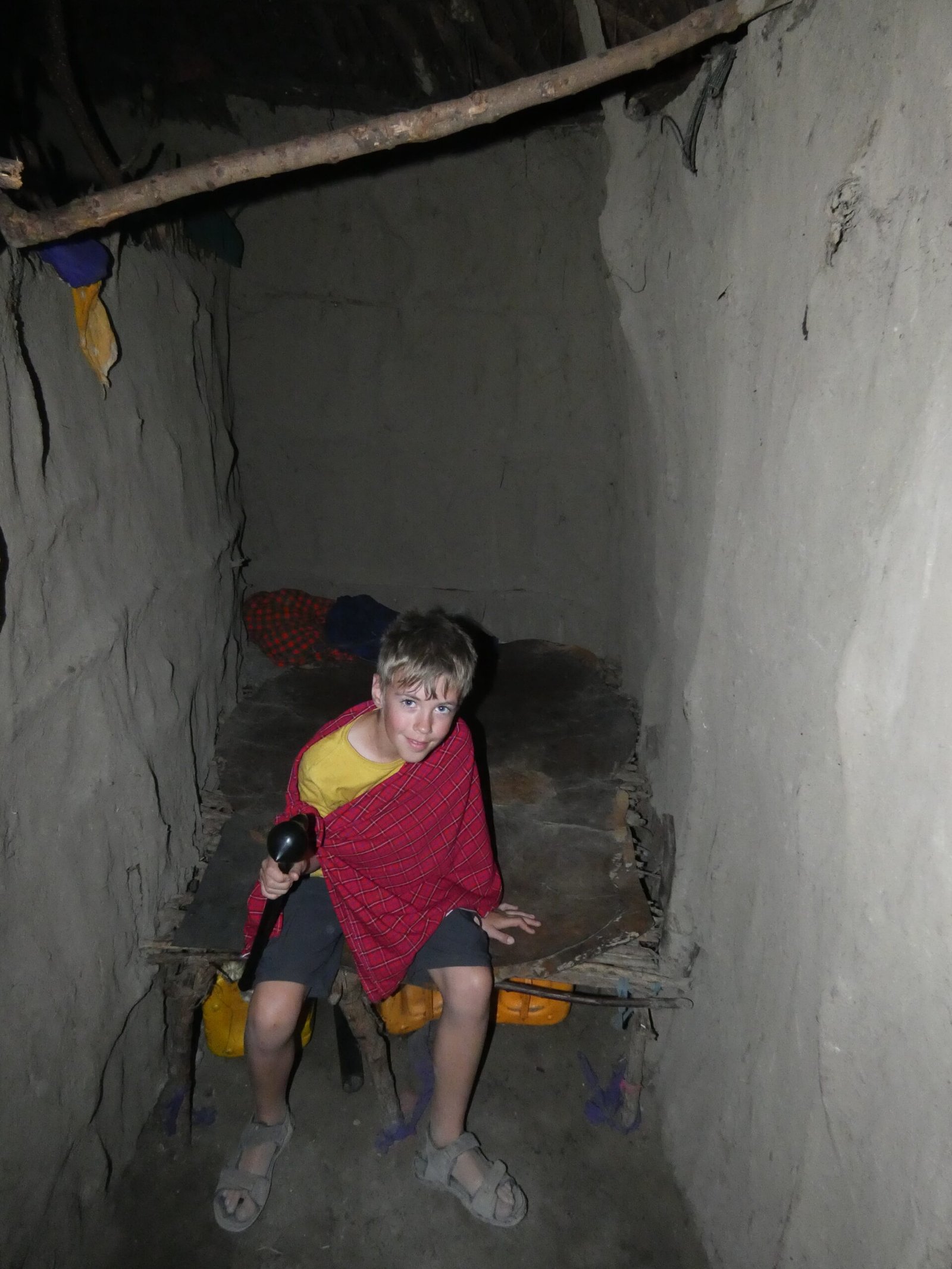
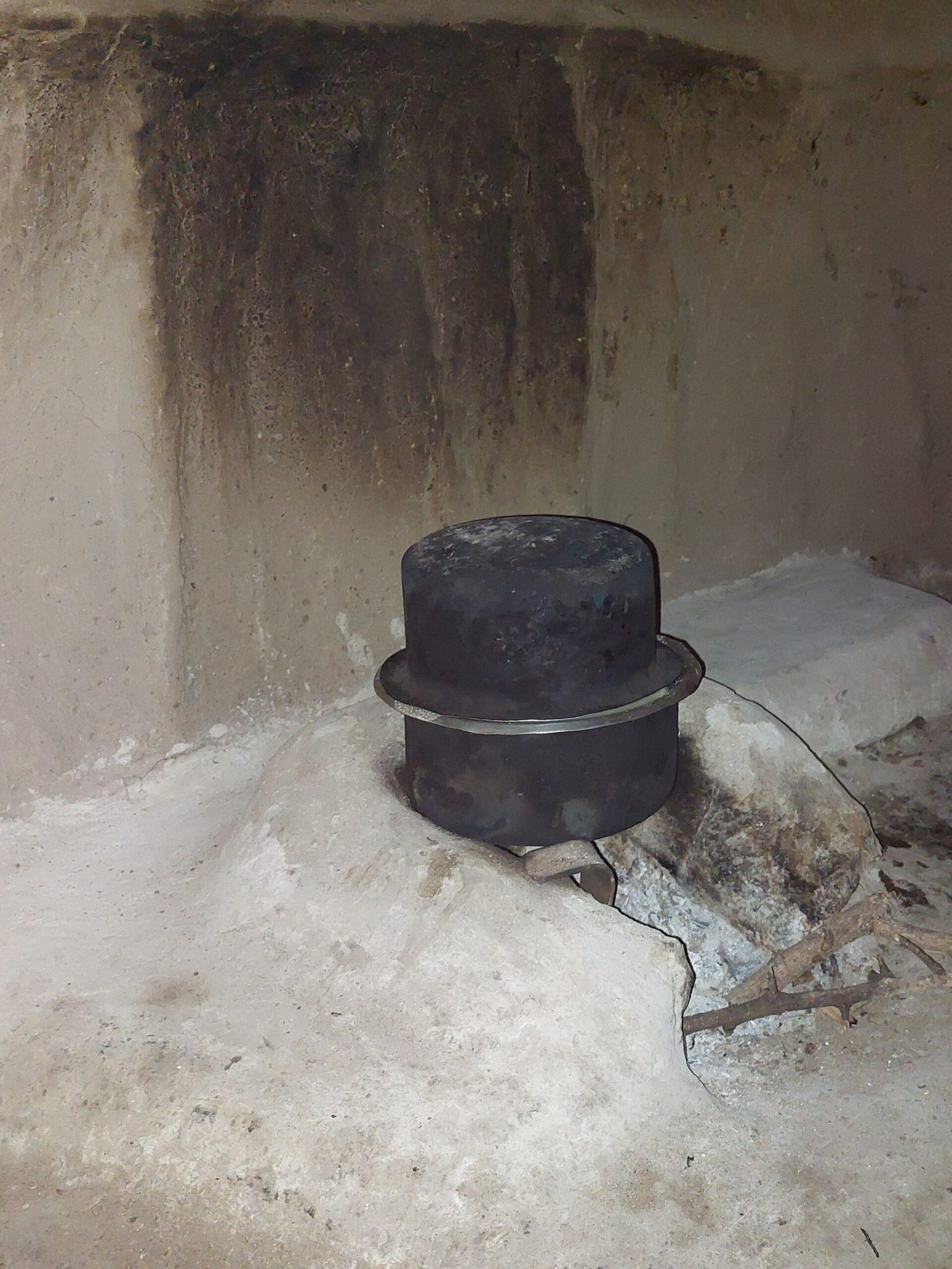
The hut, built of cow dung, had a wall separating two “rooms”. In one room there was a bed where the mother, father and the youngest of the children slept. The other three children slept in the other room in their own beds. The kitchen was a small fireplace in the doorway with a small black pot on top. The Masai actually eat only beef and goat meat, and drink a mixture of milk and beef blood. Vegetables or any other fresh produce are not part of their diet. To maintain such a diet, one does not need much more cooking equipment than a stew.
Not only was the apartment very small, it was also dark, as there were no windows. There was only a little light coming into the hut through the doorway, because the door did not open directly into the interior as there was a sort of small corridor before the interior opened up. All the huts seemed to be the same size, so one can only imagine how cramped it must be for a family with a husband and several wives and children. Masai men can have as many as a dozen wives. The Masai man who received us told us that his father was the head of this small village community and that he had ten wives. The first wife is always chosen by the parents for their son, but the next wives are chosen by the son himself. The girls have no say in the matter. Masai women are married off to men at the age of 15 at the earliest, but men can ‘reserve’ a wife for themselves when the girl is only 8-9 years old. If a man finds a suitable wife, he takes a bucket of honey and a cow to the girl’s family as a “reservation fee”. The girl’s parents then either accept or reject this groom.
A traditional Masai house is always built by women.
This was the parents' "bedroom".
This is where the rest of the children in the family slept.
The food is always cooked inside, and at least most of the smoke escapes through the doorway. There is no ventilation hole in the ceiling for the smoke.
Risto and the host of the hut.
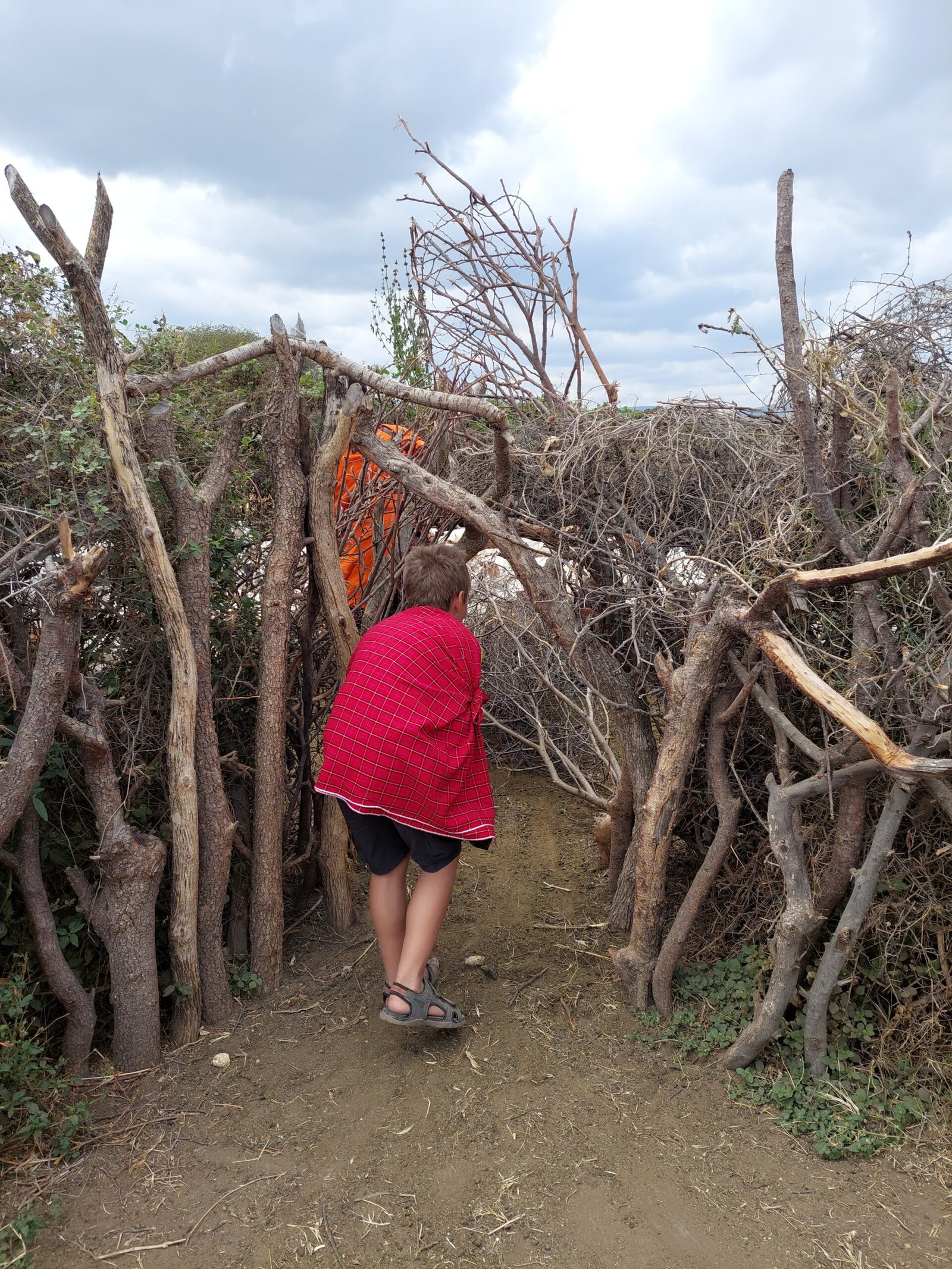
The village was surrounded by a fence made of thorn bushes, which protected the dwellings there. In the center of the village was an even smaller enclosure where the Masai kept their cattle. We were able to peek into the enclosure to see the goats, which were kept there to protect them from predators. The visit ended, of course, with a visit to the village’s own souvenir shop. Risto caught sight of a necklace that the Masai said was made of a lion’s tooth. The Masai warrior’s rite of passage is that a Masai man must kill a lion and bring a lion’s tail and paw to the village as a sign of successful killing. Only then does the Masai man become a warrior in his tribe. It is no longer necessary for every Masai man to kill a lion himself, but only to have participated in a successful hunting expedition. This is also a good thing because it prevents lions from being over-hunted.
A large thorny branch was used as a door to the enclosure, which was pushed into the enclosure when you entered.
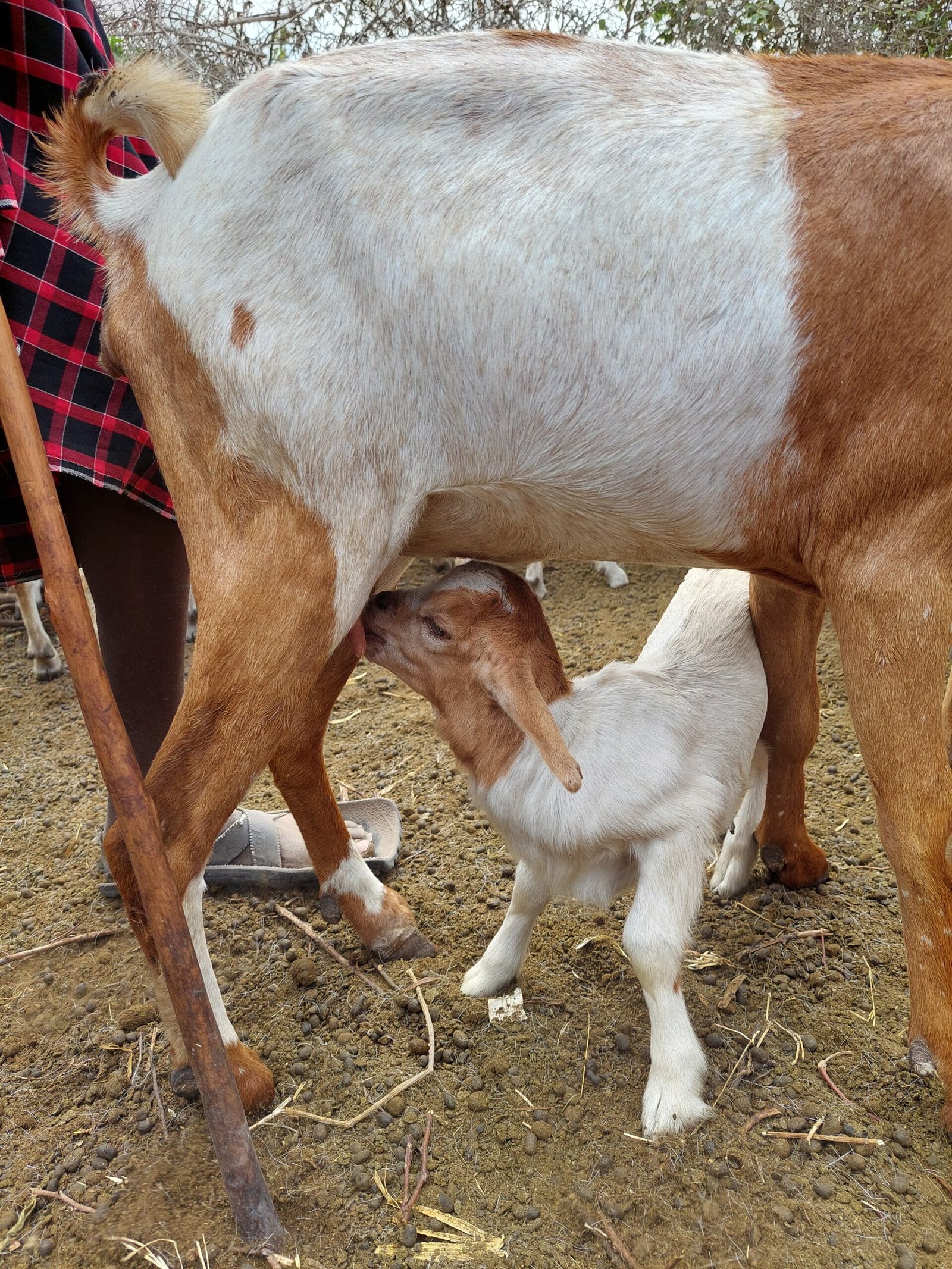
The goats were quite tightly packed in the enclosure.
We also met a teacher from the village’s own “school” and her pupils. This school is not really a school, it just teaches the children some basic English so that they can do better in school when they eventually go there. We did hear, however, that a large proportion of the children do not go to school, as the children are needed to herd cattle and do housework. If, for one reason or another, not all the children in a family can go to school, then the boys are the ones who go. In so many ways, it would not be easy to live the life of a Masai woman!
The village school and its pupils.
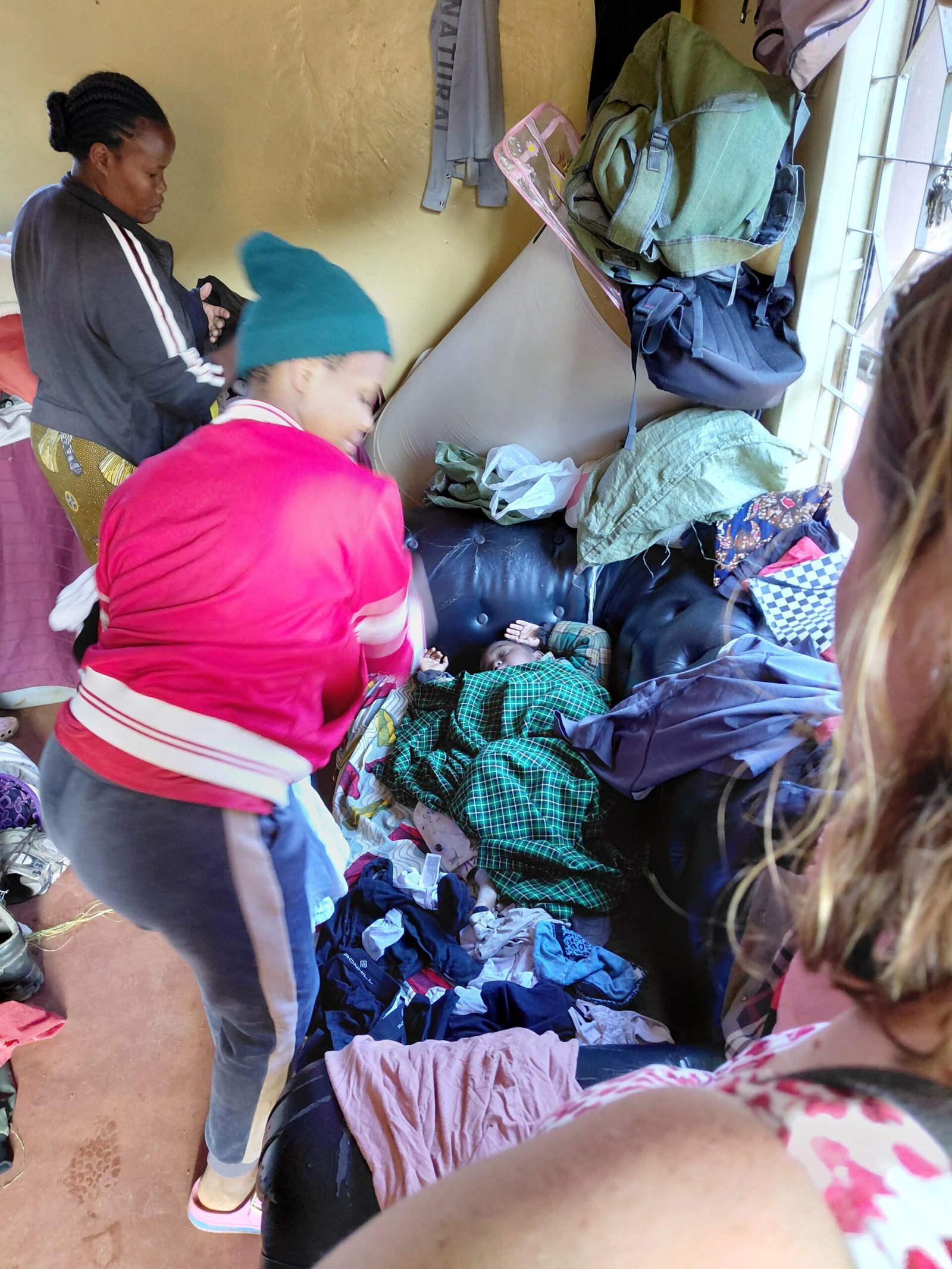
It wasn’t very far from Masai village to Karatu, so after a quick (no one bought anything) visit to the souvenir shop, we got there pretty quickly. We stayed in Karatu for one night at the Kudu Lodge campsite. Luckily we got there around 4pm, as we had accumulated a pile of laundry that we needed to get cleaned before our trip to Serengeti. Gift advised us of a laundromat outside the campsite, and Jaana and Marko went to see if it would be possible to get the laundry washed and dried that same day. The local laundry was quite homely, with a small child sleeping on the couch in the “office” amongst the clean and dirty laundry. Our dirty laundry was laid out on this same couch, and they were all counted. This was to make sure that out of all the mess of clothes, we were guaranteed to get ours back. We didn’t leave all the laundry in the place to be washed, as they seemed to have their hands full already. We were given an estimated time of one hour and a price of 30 000 shillings, or about ten euros. Marko then left to explore Karatu town, while Jaana and the kids stayed at the campsite to pass the time. On the same trip to the town, Marko promised to pick up our clean laundry before dinner.
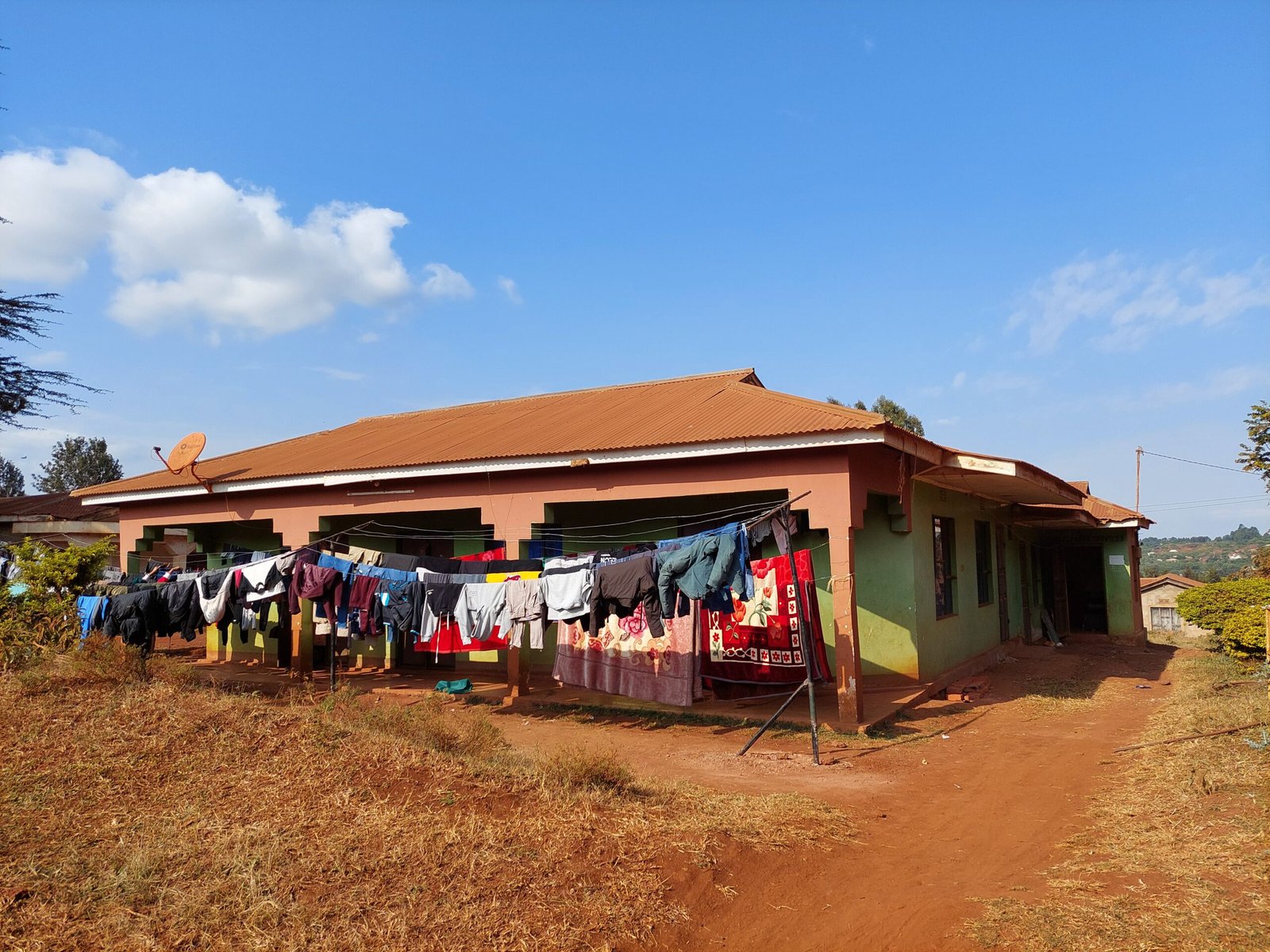
It was quite easy to identify this building as a laundry by the number of clothes drying in front of it.
A little one in the middle of a laundry pile.
Shortly before dinner, Marko returned, but the promised hour turned out to be an African hour. In reality, Marko had had to wait at least 20min for the laundry, even though he had gone there to pick up the laundry half an hour after the deadline. Well, the main thing was that we had clean clothes again for the next part of the trip. At dinner we said goodbye to our driver Casper, who had to leave suddenly for Johannesburg in the middle of the journey. In Zanzibar he had received a message that his brother, who lives in Johannesburg, had been shot, and Casper had to go to help his brother’s family in this situation. So the rumours about the dangers in Johannesburg are not entirely unfounded.
On Tuesday, we set off in three SUVs, first towards the Ngorongoro Crater and later Serengeti. It was only 15km from the campsite to the crater, so we got there quickly. We had a slight issue when we got to the area, as at the gate we were asked for the children’s passports. Luckily we had them with us, but Edvin’s passport, who was in the same car, had been left in the locker of our truck waiting at Kudu Lodge. Edvin’s father had been told that his passport was no longer needed, as copies of it and our children’s passports had been sent to the safari tour operator the day before. Well, luckily there was free internet access at the gate, so Ingemar was able to dig up a photo of Edvin’s passport from his own emails. After that, we were able to enter the gates to the nature park.
The people responsible for the second part of our trip are Casper, Artlin and Gift. A really great team!
The baboons were already waiting for us outside the gates of Ngorongoro.
Serengeti and Ngorongoro were once a single nature reserve. Today, only the Serengeti is a nature reserve, while the Ngorongoro Crater is also inhabited by humans. People do not live in the crater itself, but on its rim. All the people living there belong to the Masai tribe, who have the right to use the area as grazing land for their cattle. Even in the dry season, there is enough water and food for the wild animals that live in the crater, as well as for the Masai cattle. The name Ngorongoro aptly translates as the ringing of cowbells.
The area at the bottom of the crater is not very large, only about 264 square kilometres. It would certainly have been spectacular to see it from a lookout point on the rim of the crater at 2286m, but it was a cloudy day and we drove along the rim of the crater inside a cloud the whole time. The visibility was much better at the bottom of the crater. We drove around the crater area until lunch time, and saw, among other things, many different birds, antelope, buffalo and one elephant. However, we did not see any huge masses of animals. Instead, we did see four-wheel drive cars in masses! Jaana calculated that there were at least 70 SUVs parked at the lunch spot at the same time. Our driver, aptly named Safari, told us that during the high season there are about 300 cars a day in the crater. If each car carries an average of about 5 people, that means that the daily visitor numbers in the park are somewhere between 1500 and 2000 people.
On the volcano catchment side, the Masai had the right to live and raise cattle.
We saw several Masai villages while driving to the crater.
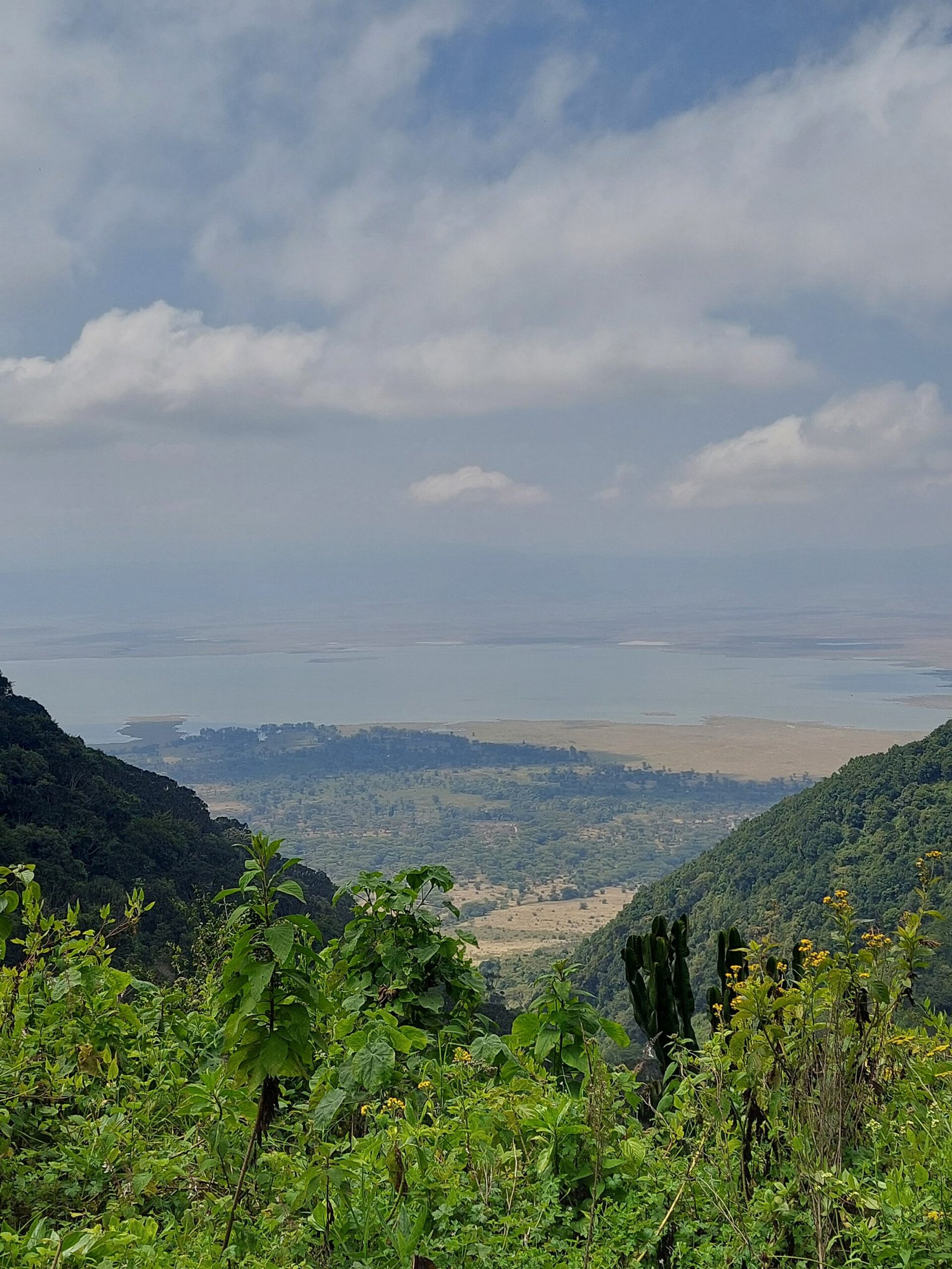
Views from Ngorongoro's V-viewpoint.
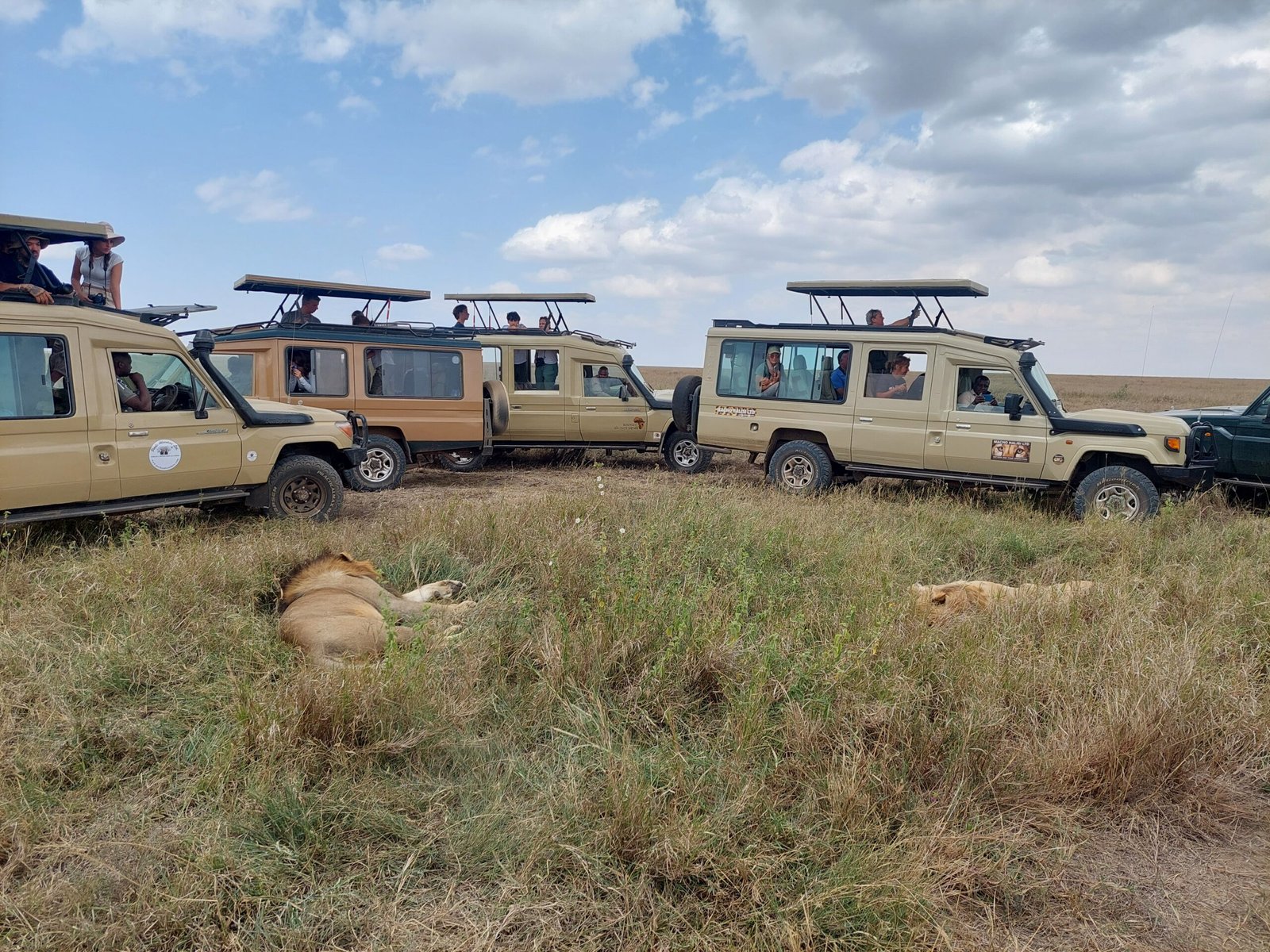
We weren't exactly the only ones who wanted to see the animals in Ngorongoro.
Sometimes the jeep queues were ridiculously long when something interesting had been spotted.
The Southern Crowned Crane is a handsome bird.
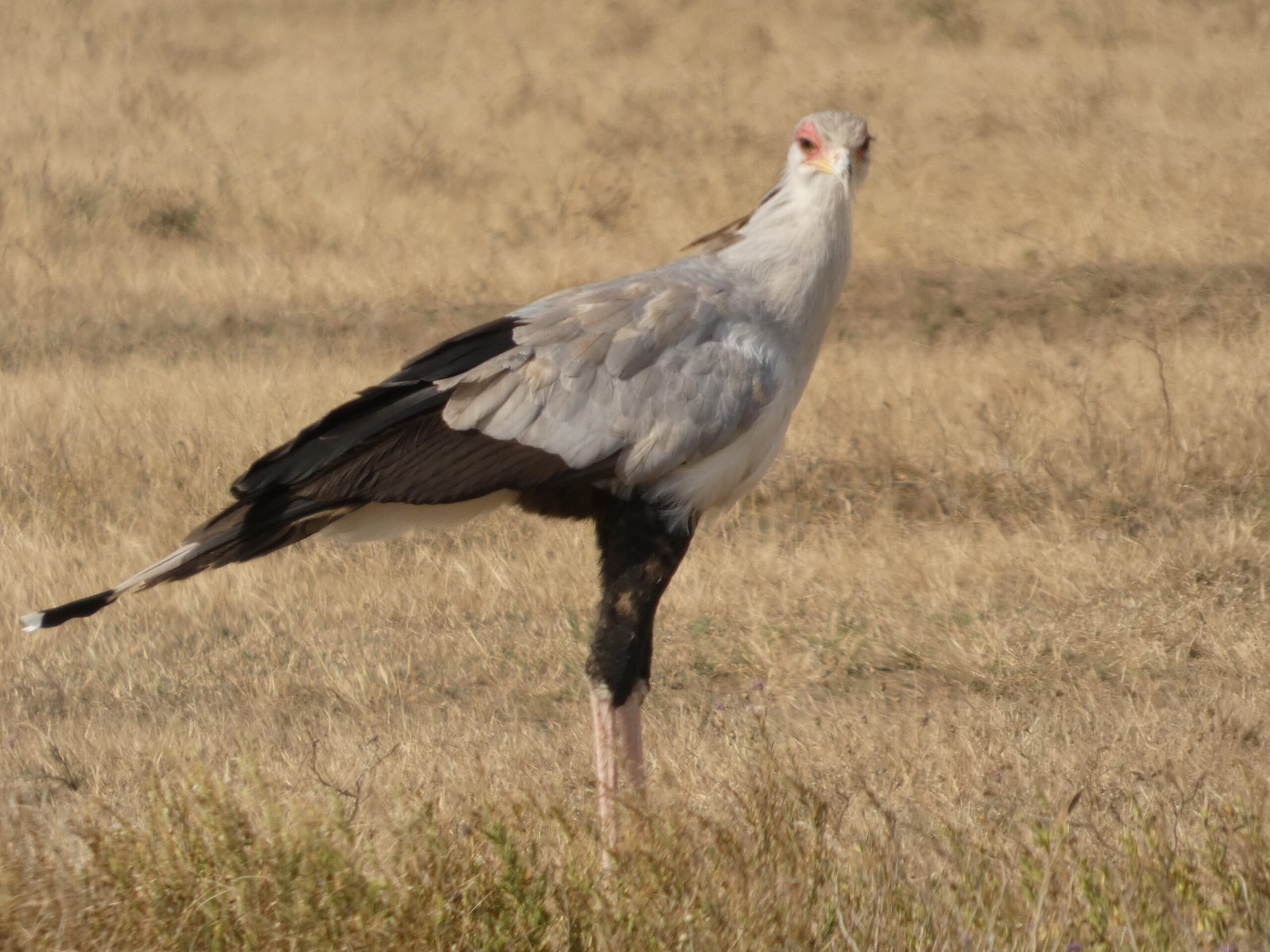
The secretary bird is a long-legged bird of prey.
The ostriches were courting.
The wildebeest living in the crater had not embarked on a migratory journey like their Serengeti counterparts.
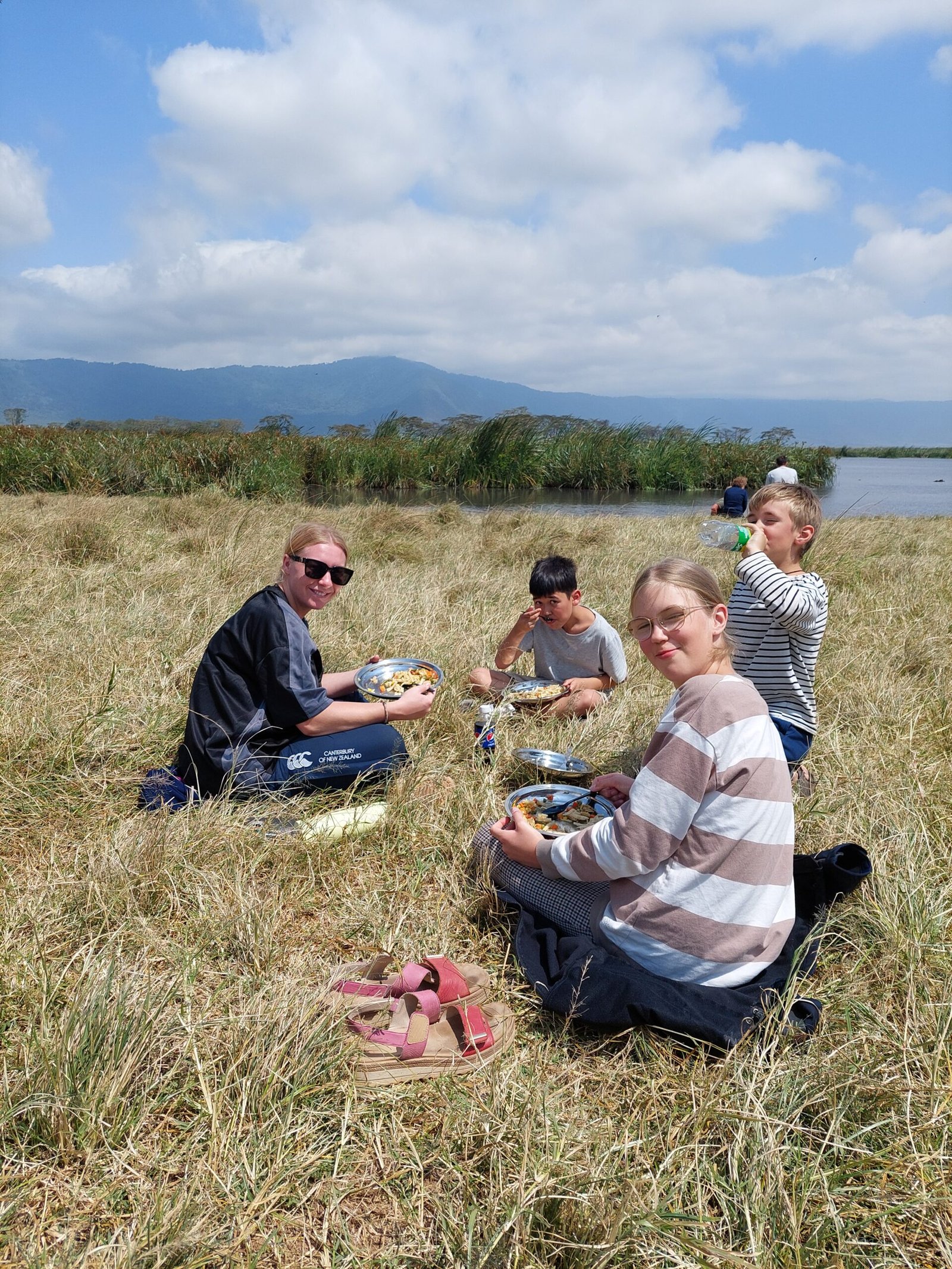
Even at lunch, there was no need to eat alone.
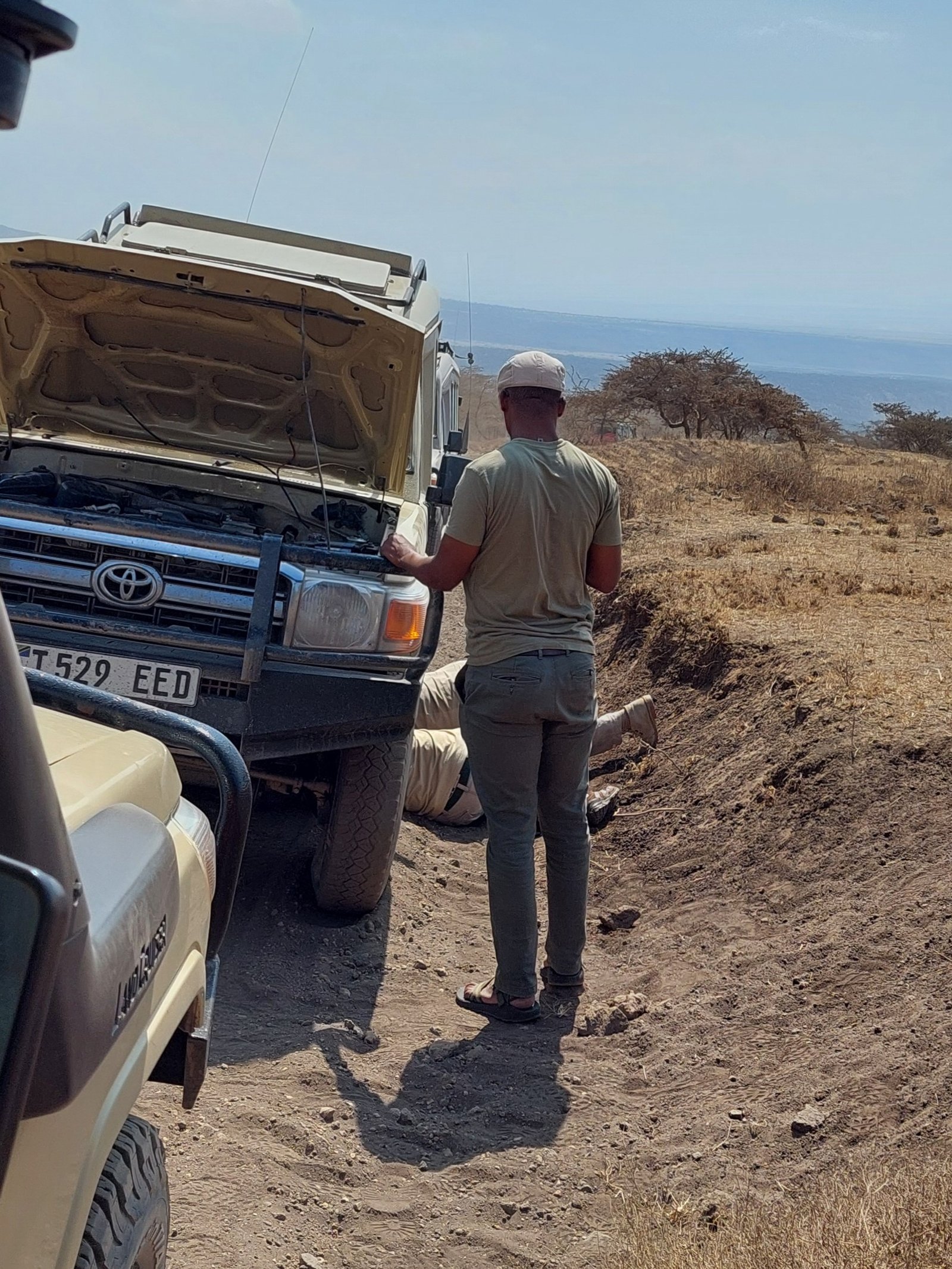
After lunch, we continued our journey towards the Serengeti Nature Reserve. The journey there was surprisingly long. We stopped every now and then along the way to look at the animals and the scenery. We also stopped once to help another group of SUVs that were having some kind of trouble with their petrol supply. Well, we didn’t help, but Safari jumped out of the car and crawled under the car as the third man to wonder about the situation. It didn’t take long for the men before the car was back on the road and ready to go.
Spotting animals is hard work.
When travelling in remote areas, people always stop to help others.
We also stopped briefly at the Olduvai Gorge, where 1.8 million-year-old human skeletons have been found.
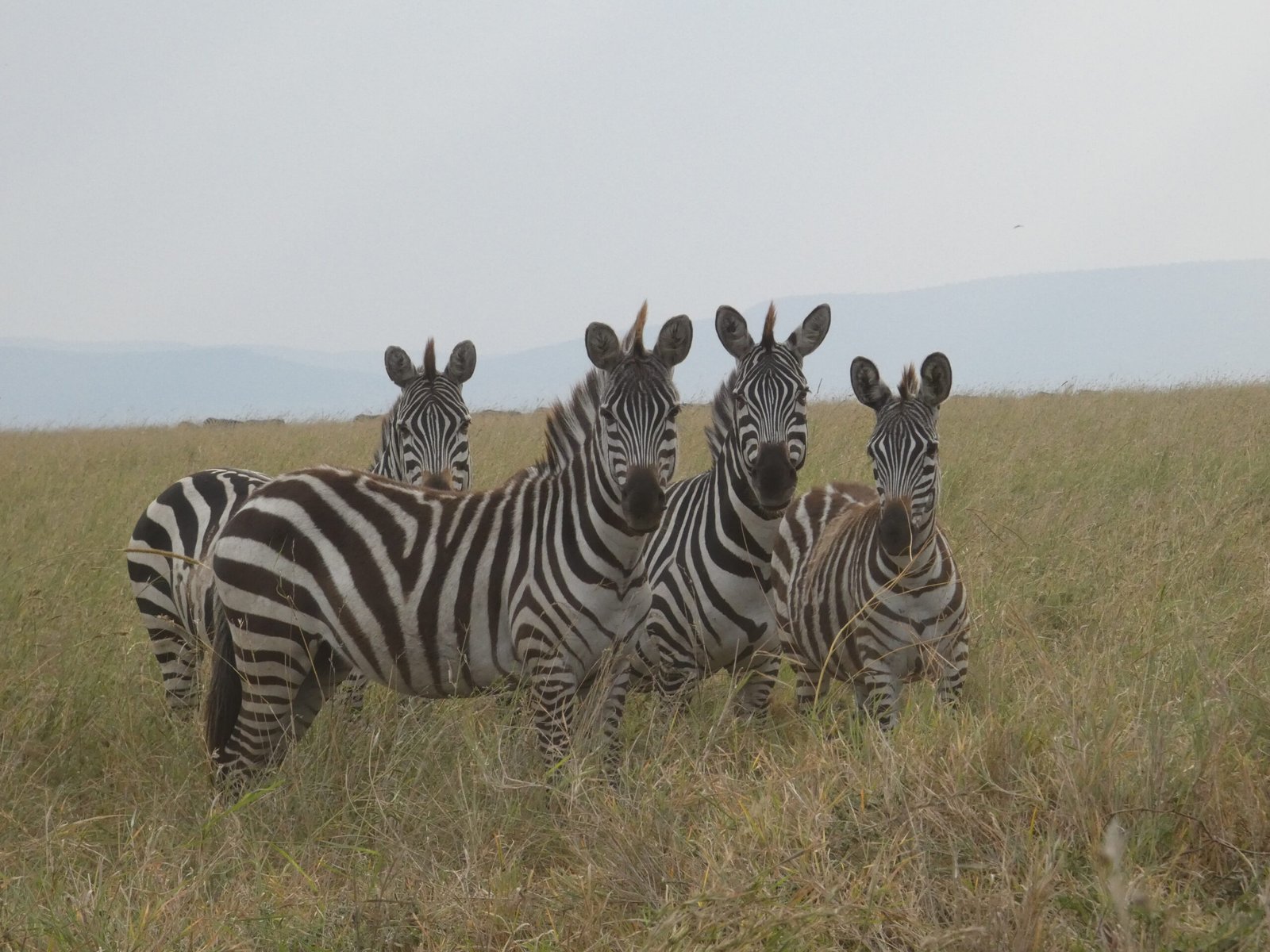
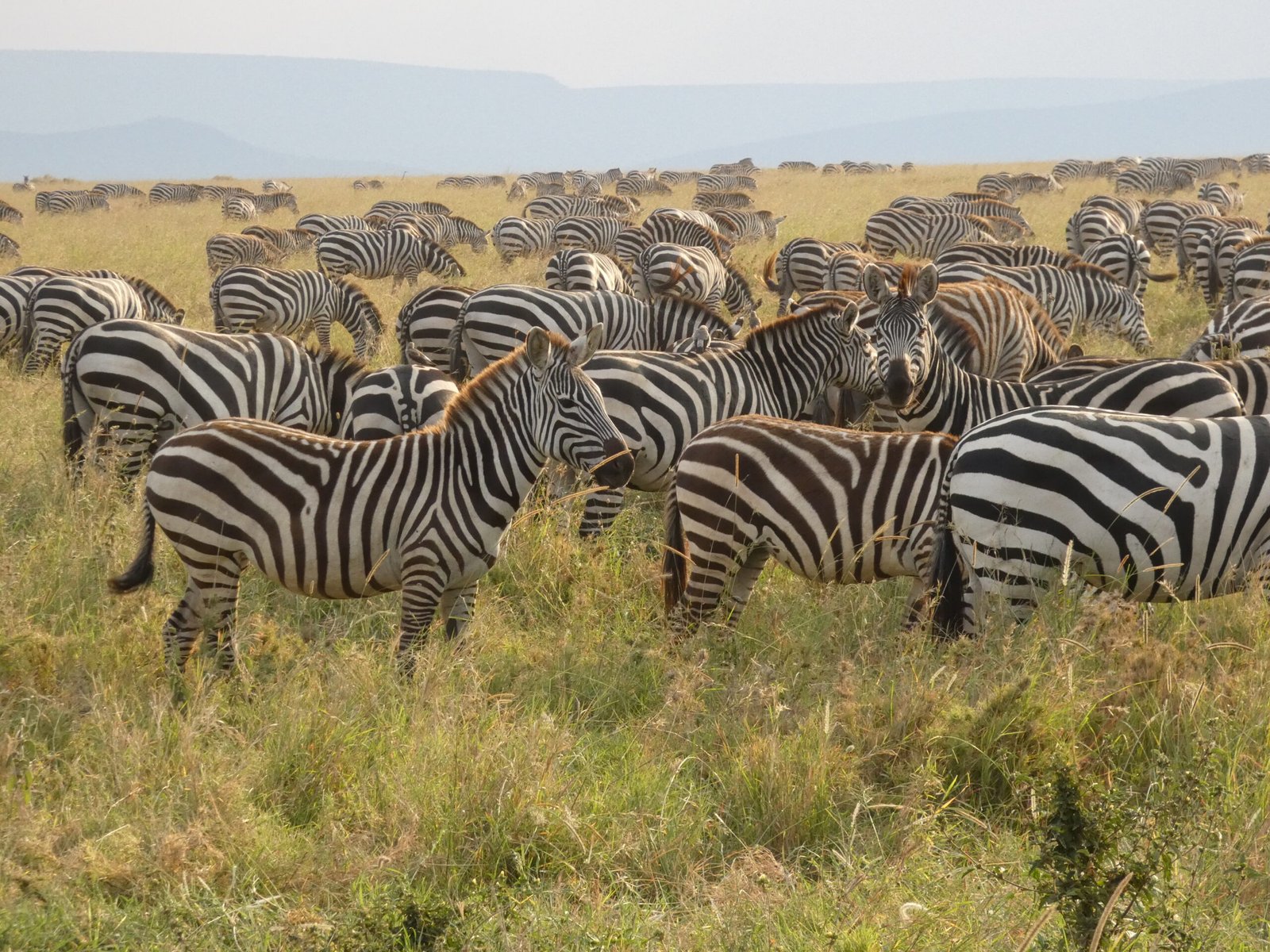
At the gates of Serengeti, we heard that it was still almost two hours to our campsite. By this point we were all terribly hungry, as it had been several hours since lunch. So we went to buy some snacks at the only, and very expensive, little stall on the site. Never before have we paid five dollars for a can of Pringles! Well, now we’ve experienced that too. We drove around the park, stopping every now and then to take pictures of the animals we saw there. The most impressive sight was probably the herd of zebras on their annual migration, which we were able to watch up close. Although there seemed to be a lot of zebra around us, Safari told us that these were the last remnants of the migratory herds. The largest herds are gone by early June.
Welcome to Serengeti!
Serengeti is a variant of the Masai word "Siringit", which means endless plain. Quite an apt name for this place.
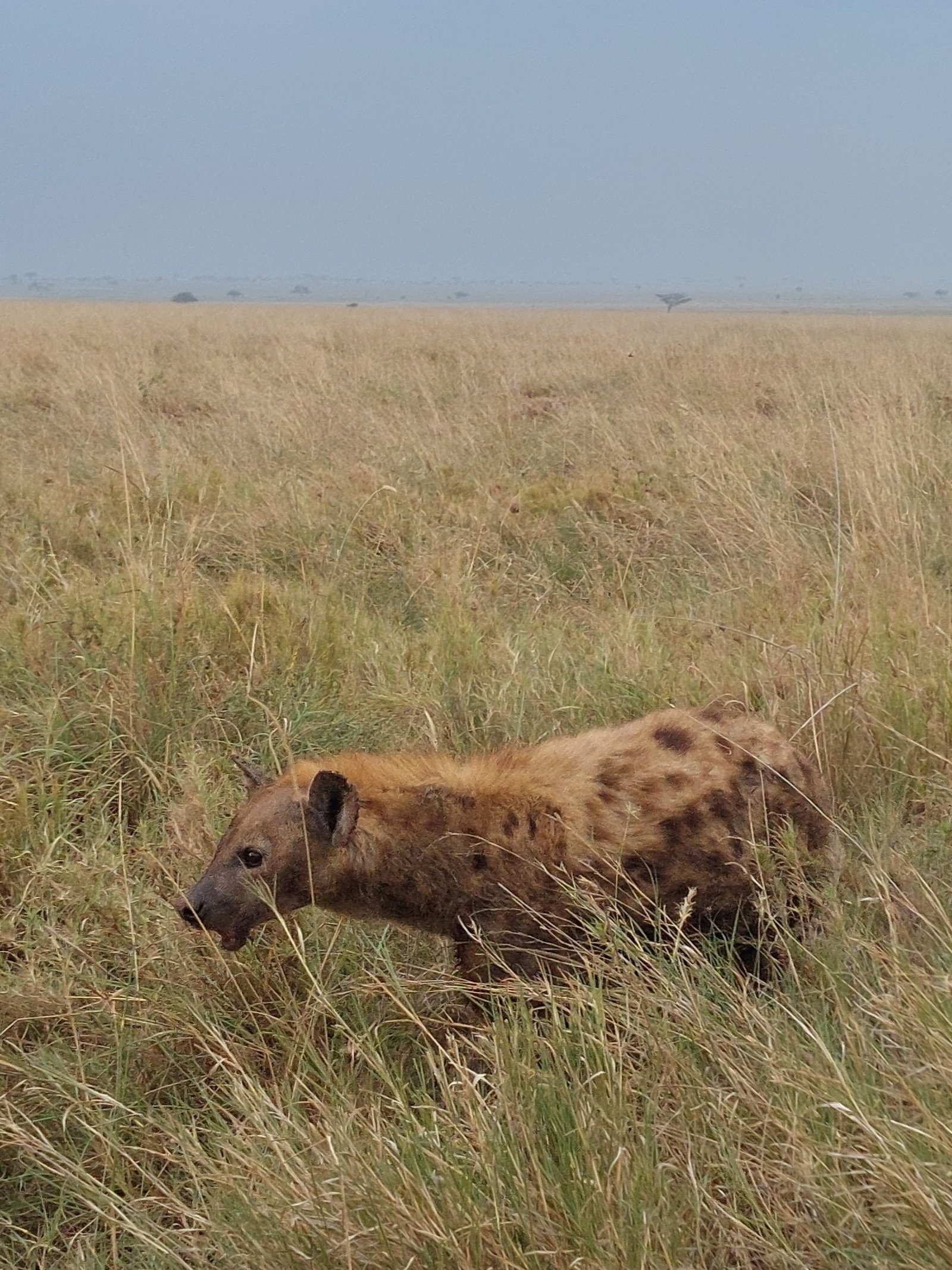
As we were on the move in the early evening, the hyenas were also on the move.
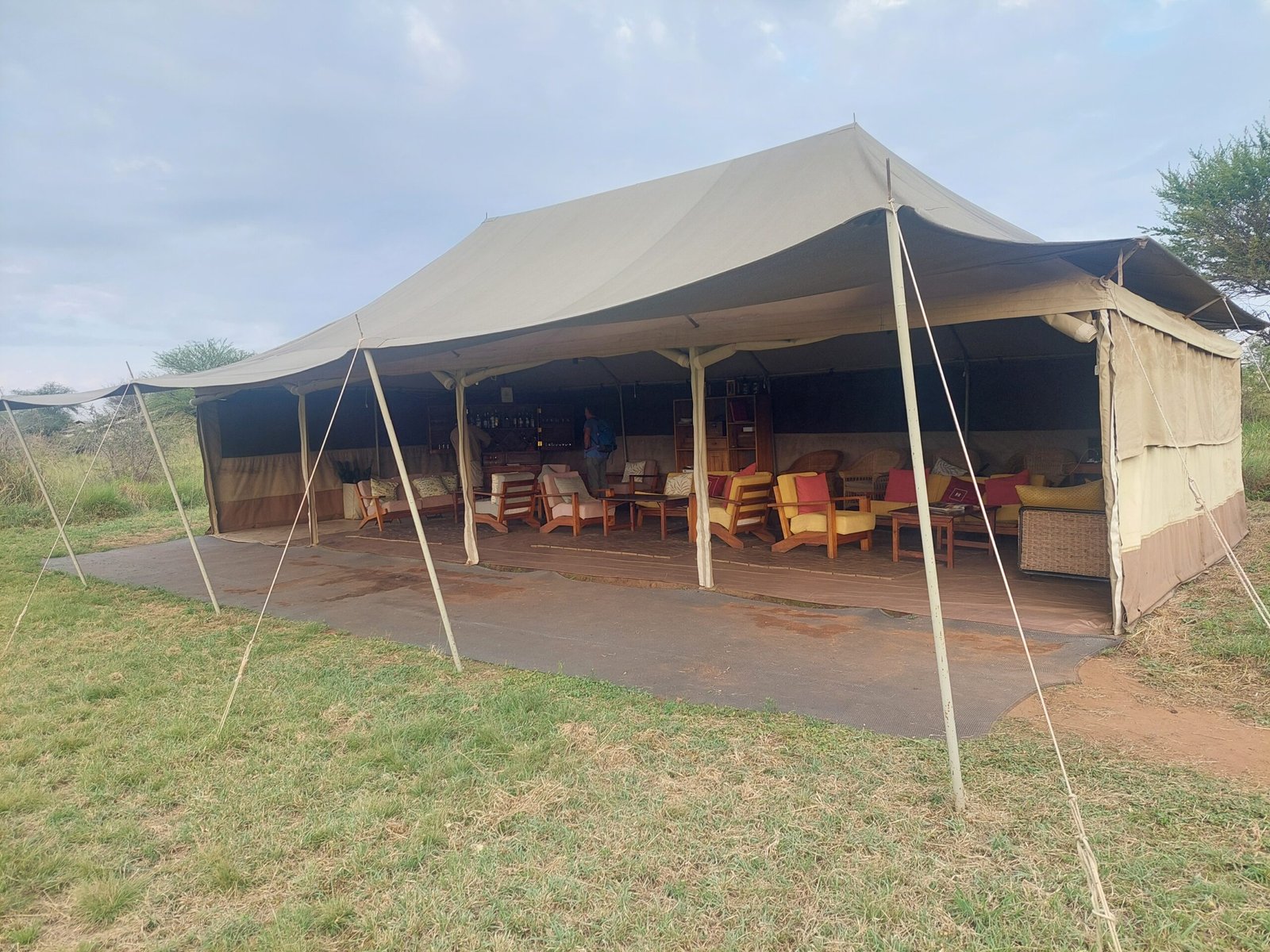
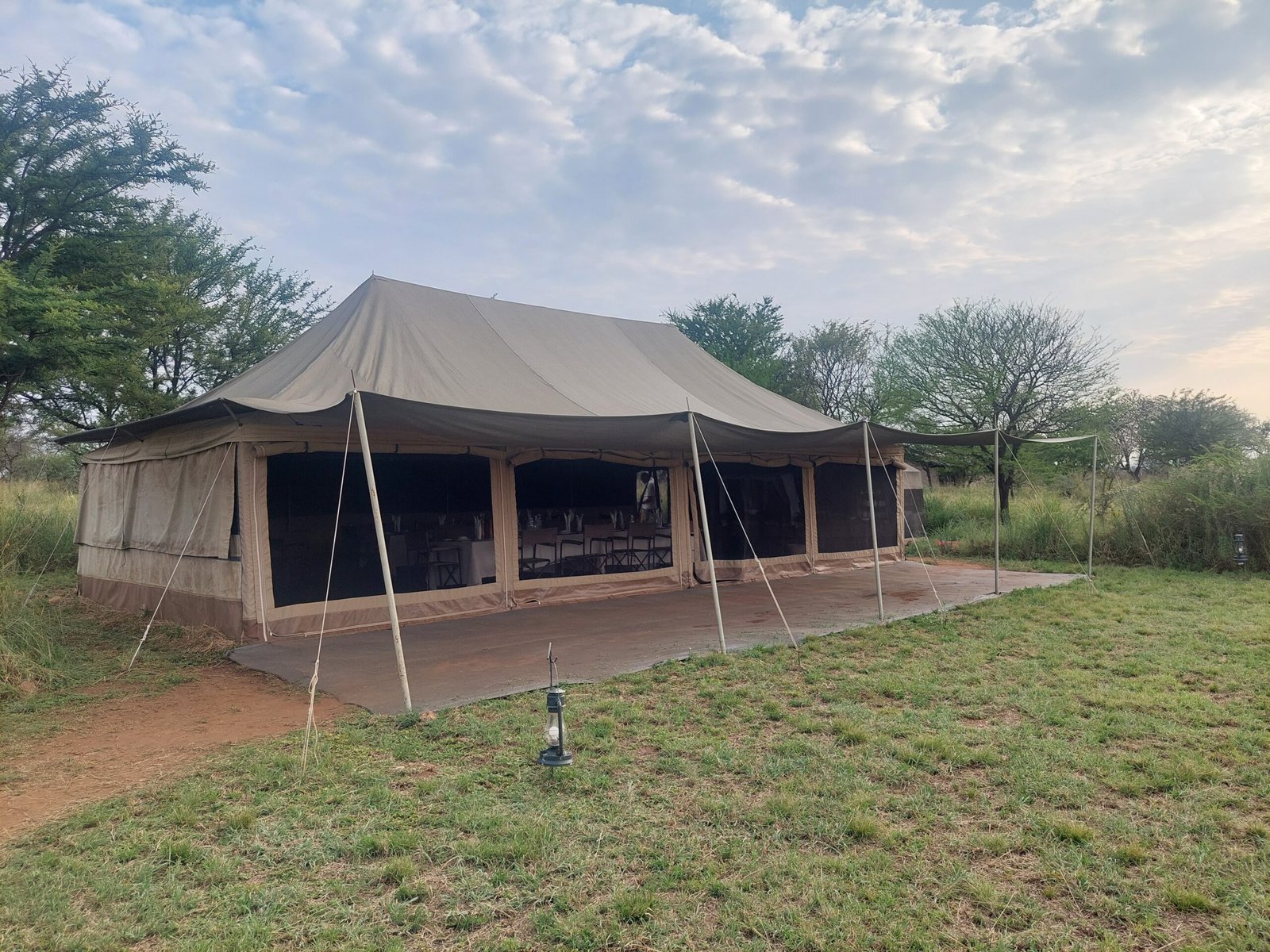
In the evening it started to rain when we finally arrived at our campsite. We had been told in advance that we would be staying in permanent tents on site. Naturally, we had imagined something like a small tent like the Okawango tent, but we were in for quite a surprise. The “tent” was absolutely huge. It had its own little porch and inside there were beds, a group of couches, a clothes shelf and a bathroom with a sink behind the screen. You could even get hot water for the shower if you requested it from the staff in advance. Quite a luxury, all this! We enjoyed dinner in the restaurant. There was a three-course dinner with starters and desserts. Afterwards it was time to retire back to the tents to sleep, as there would be another early wake-up call in the morning.
"Tent" is obviously a broad concept, as this seemed more like an apartment.
The lounge and bar at Wilderness Camp.
This tent had a dining room.
There were also communal toilets in the area.
During daylight hours, you could walk to the tents yourself. After dark, you had to wait for an escort because of the wild animals.
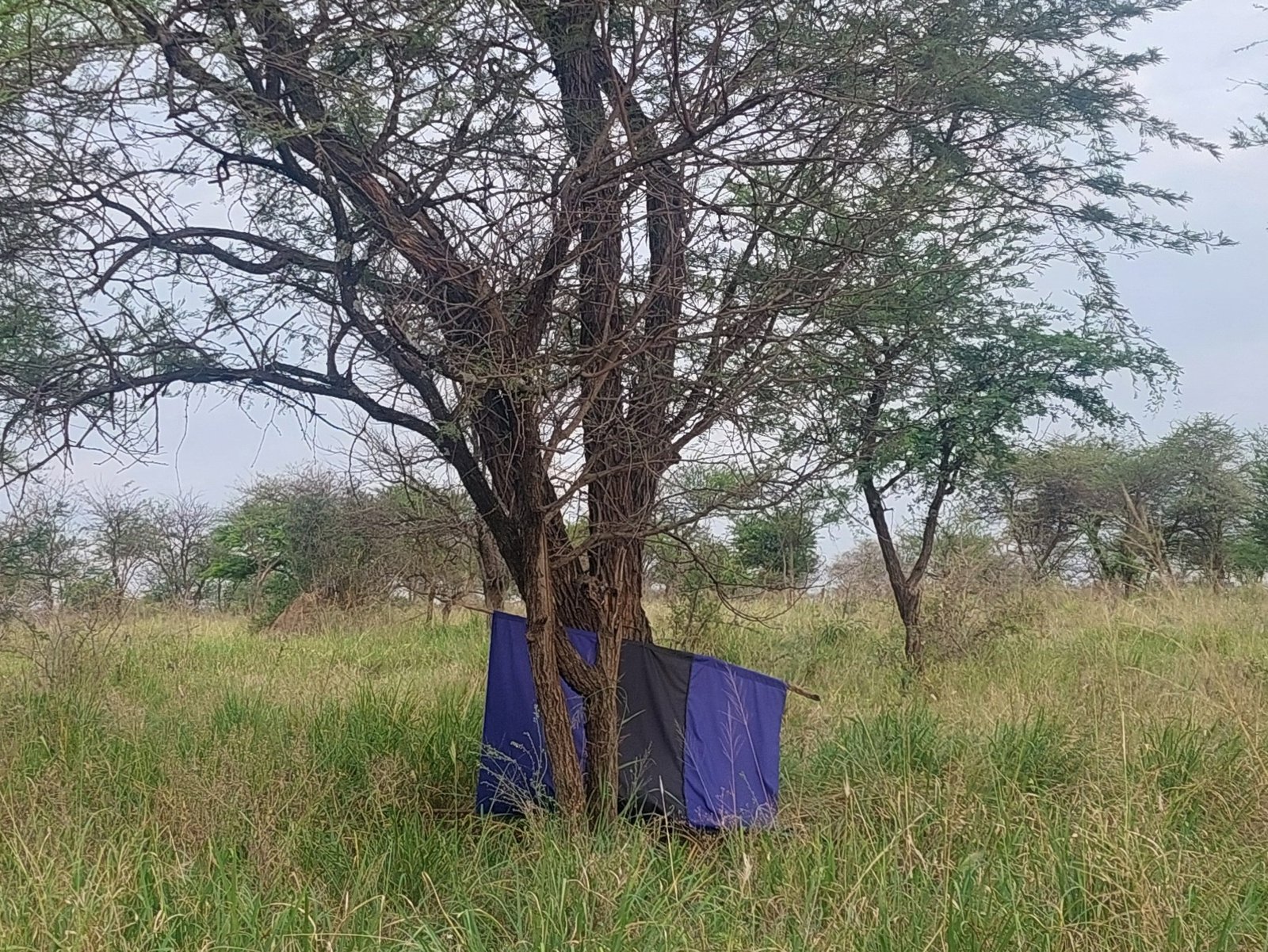
Tsetse flies especially like blue and black. These sheet traps had been sprayed with poison for the flies.
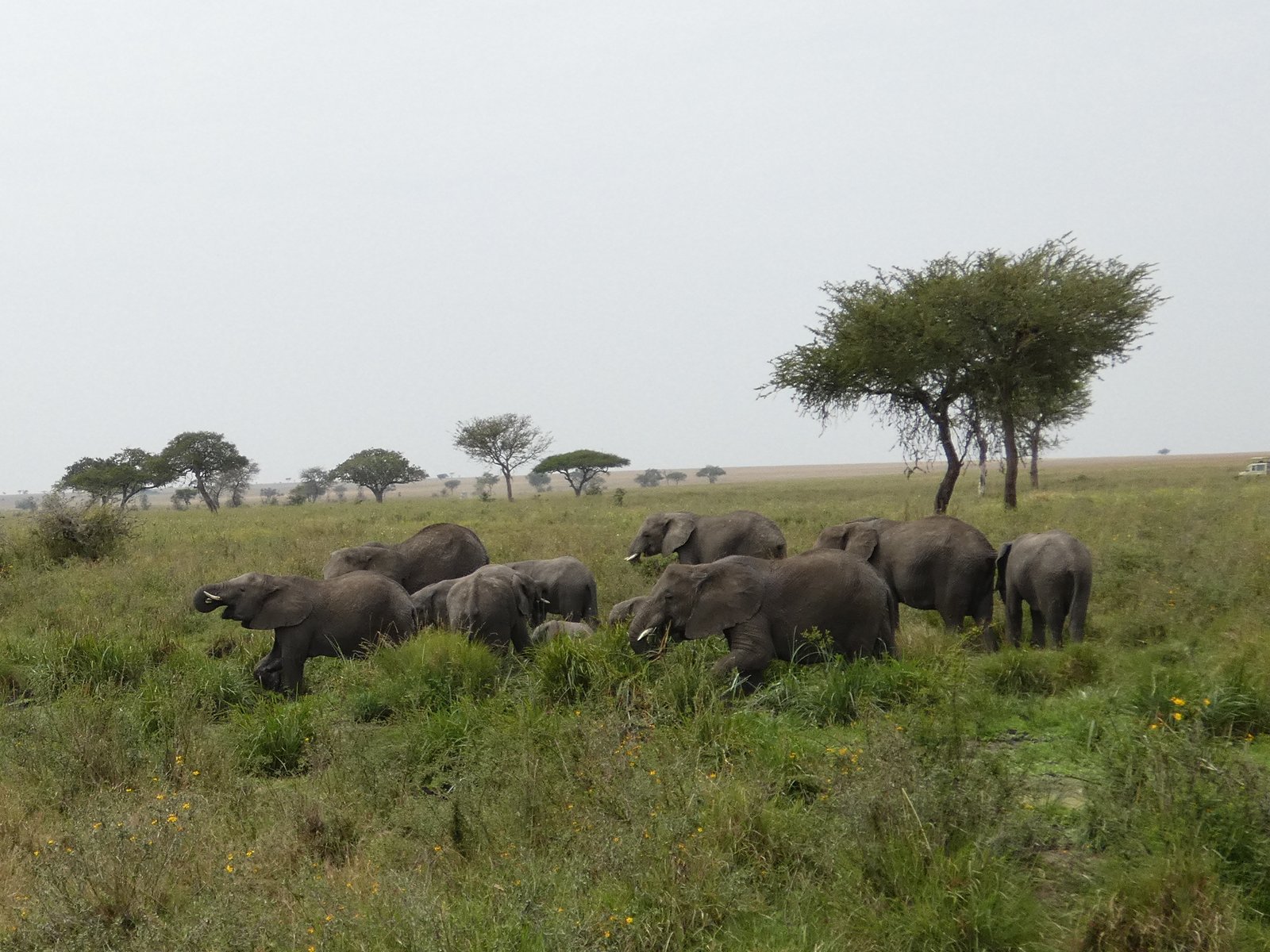
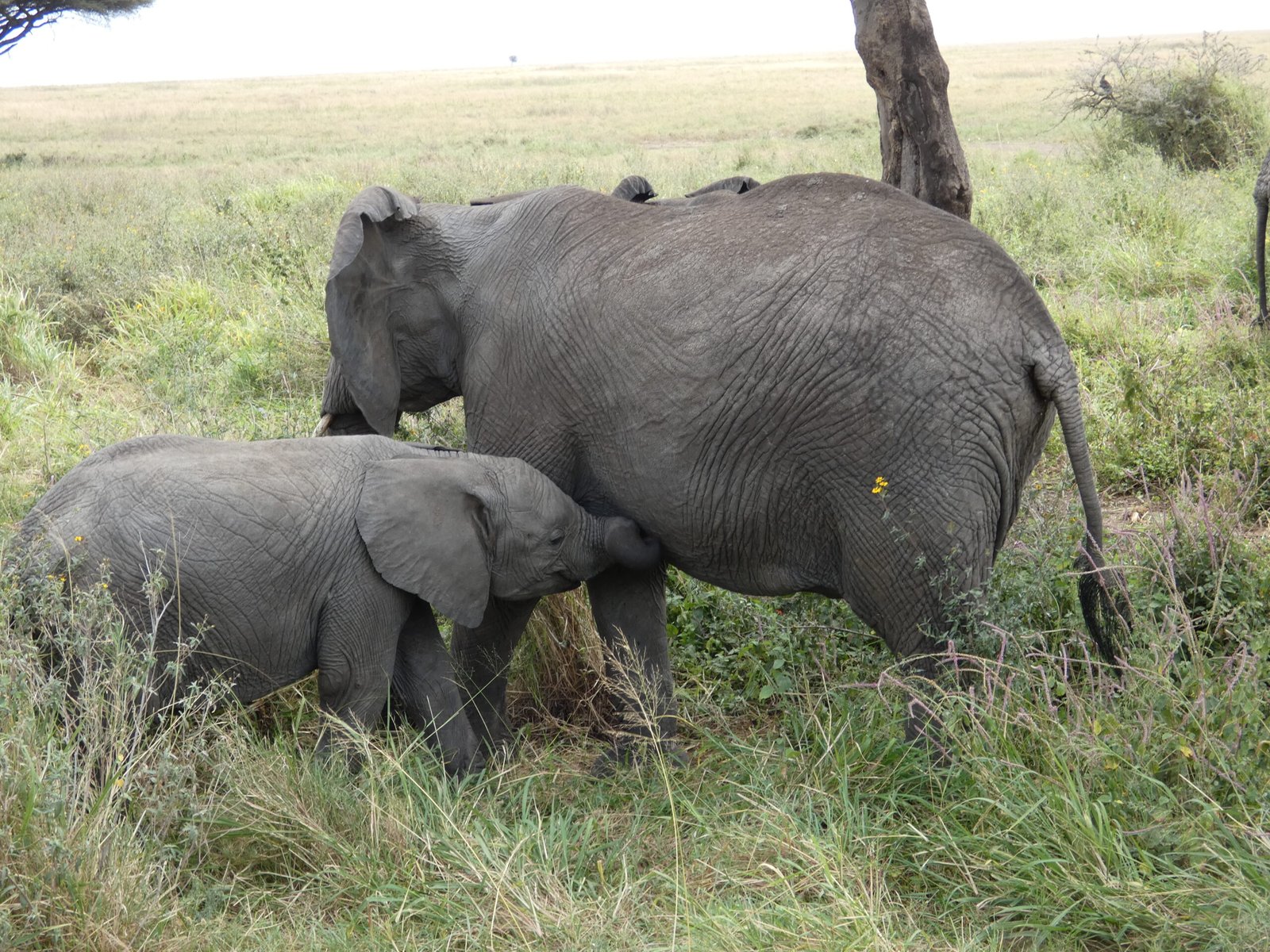
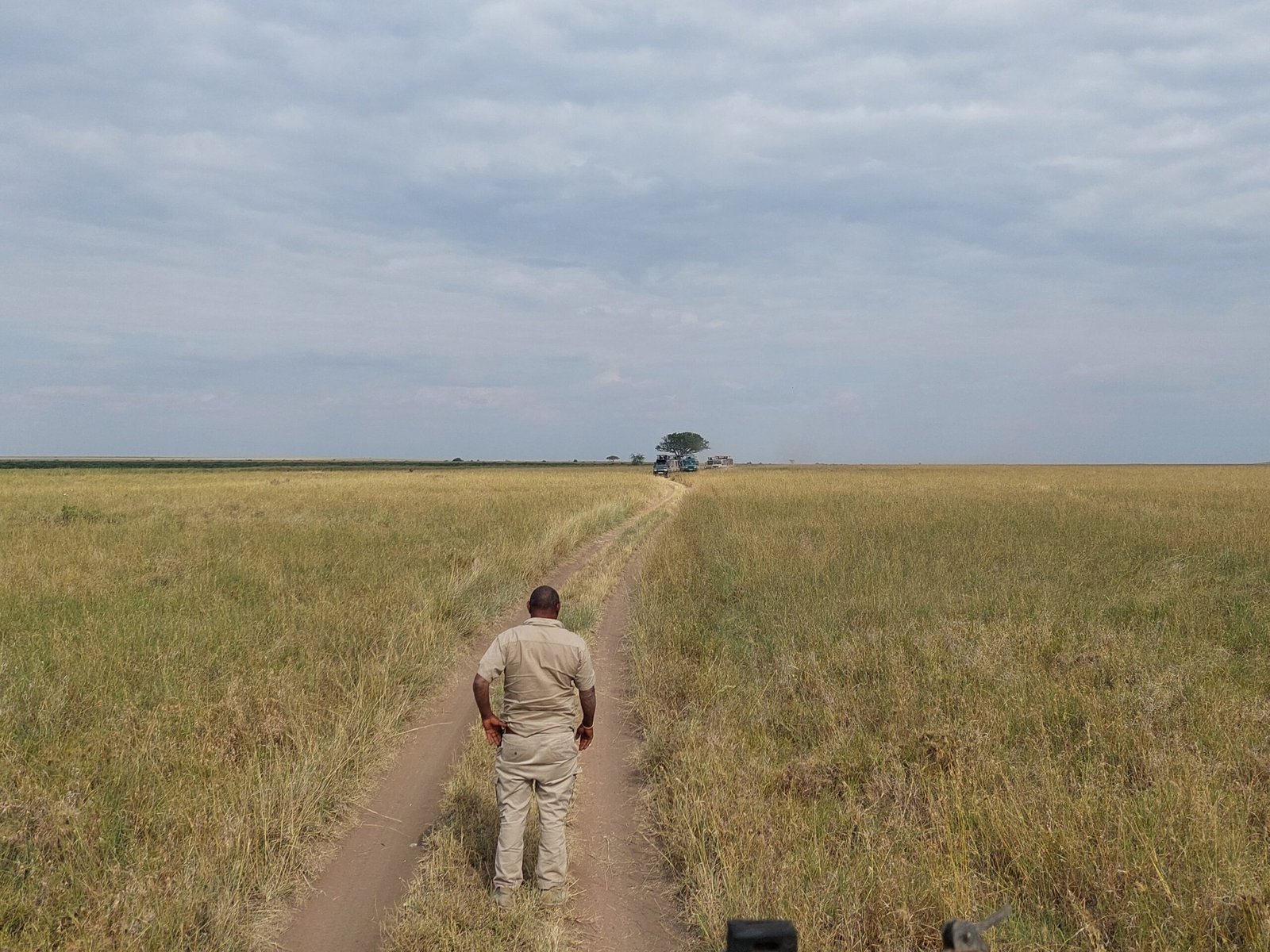
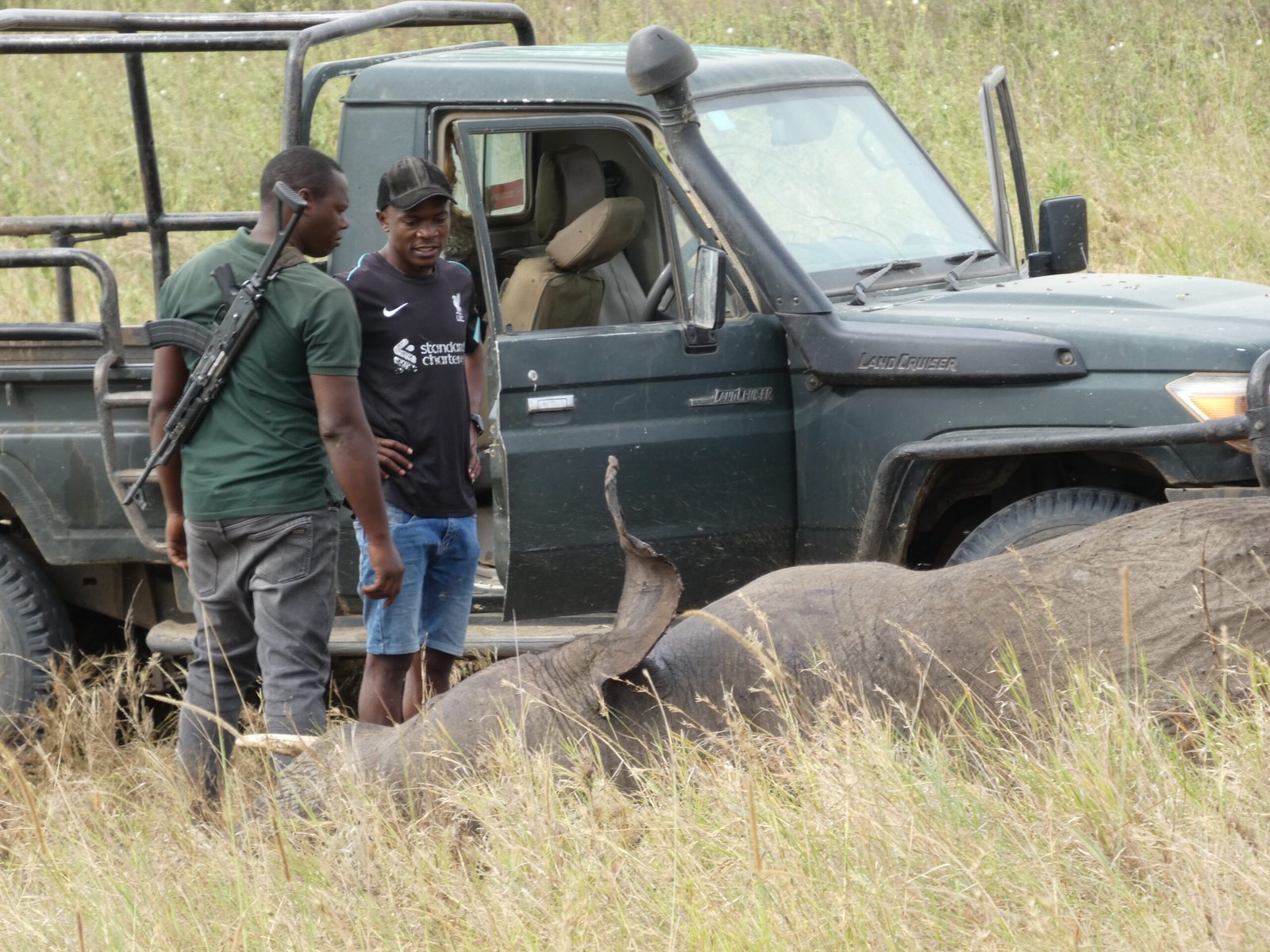
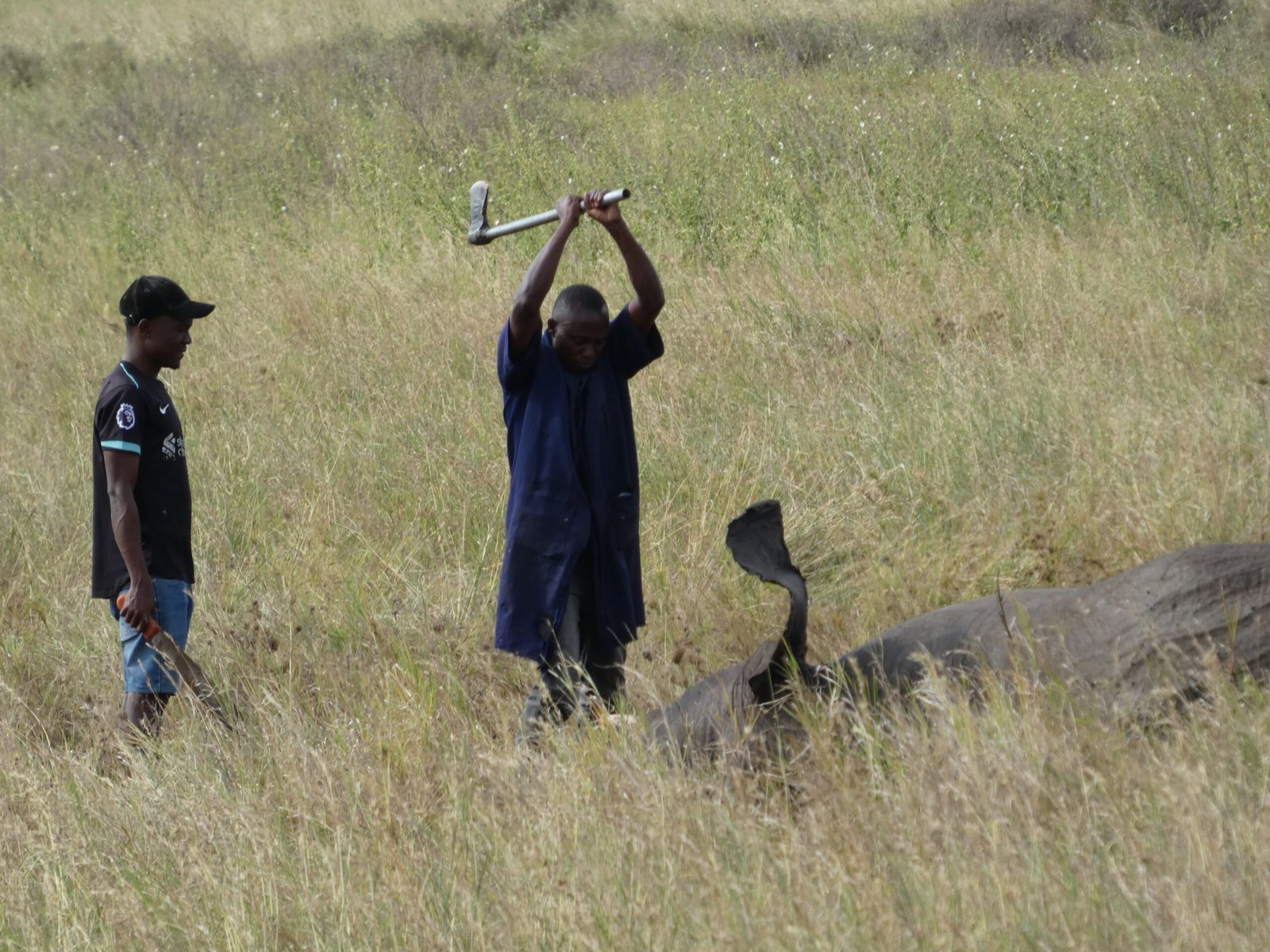
We slept very well in the tents. The beds were very comfortable and the blankets were thick and warm. When the alarm rang at 6 a.m., we would undoubtedly have wanted to turn over and go back to sleep. After breakfast we went to Serengeti for an all-day safari. A full day in this case meant ten hours with lunch and toilet breaks during the day. In those ten hours we got to see a lot. Perhaps the most memorable encounters were the elephant herd, and the cheetah, whose activities we followed closely for a long time. Another memorable event was when we saw the carcass of a young elephant in the park. As it still had its tusks in place, Safari said that this individual had probably died of some disease. The lions had already found the carcass and were gnawing on it happily. By the time we crossed the small river in our jeep to the other side of the carcass to get a better look, a group of park staff had arrived. One was standing guard next to a pride of lions observing the situation, while others were removing the elephant’s tusks. They said they had to be sawed off to avoid leaving ‘easy prey’ for would-be poachers. Samples were also to be taken from the elephant and passed on for examination. If there was a more dangerous disease, the park staff should know about it.
Four members of our group went on a hot air balloon flight over the Serengeti. They said it had been an amazing experience.
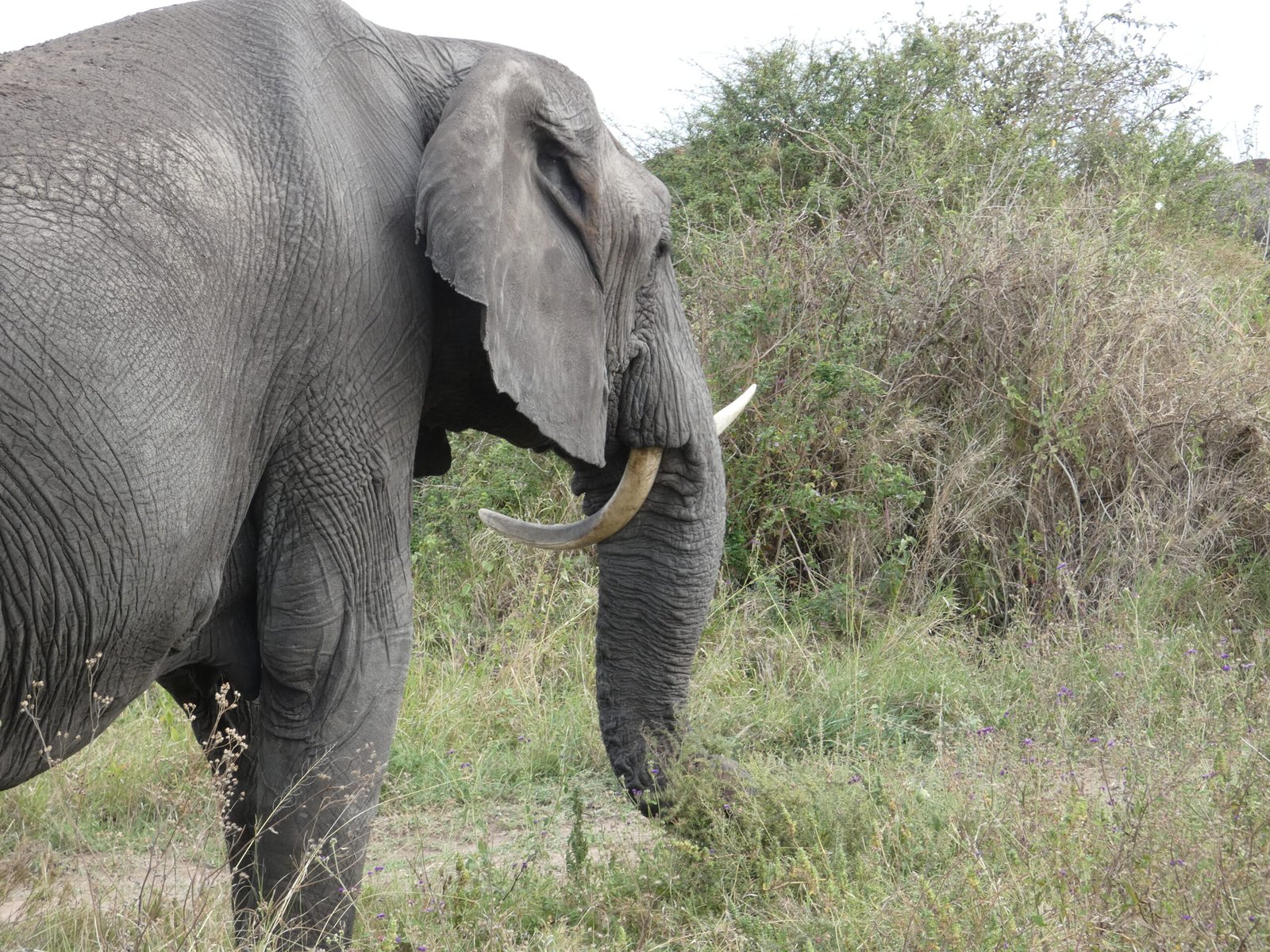
I wonder if braces are available for elephants? This guy could use some.
We got to see the elephants up close and personal.
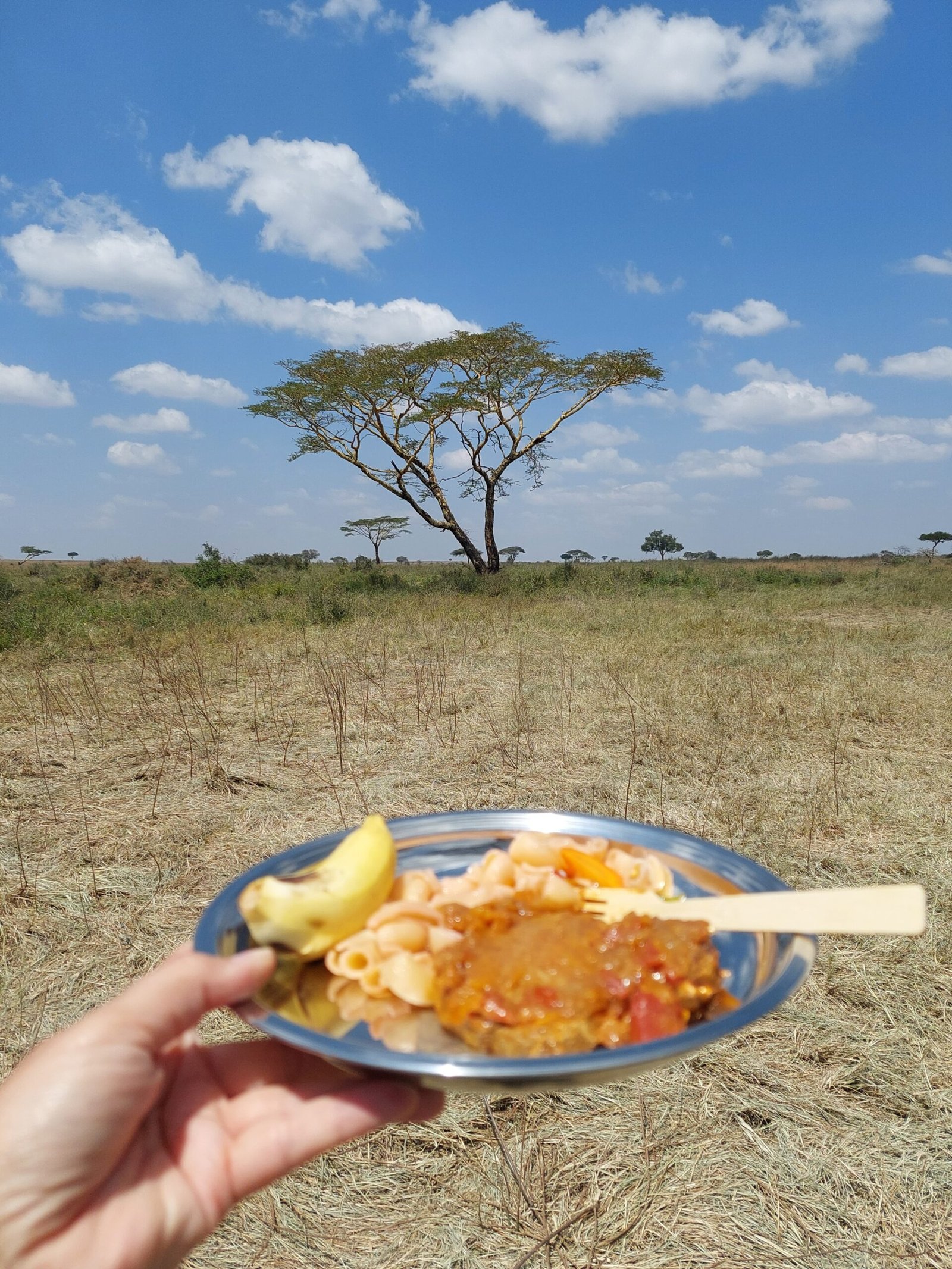
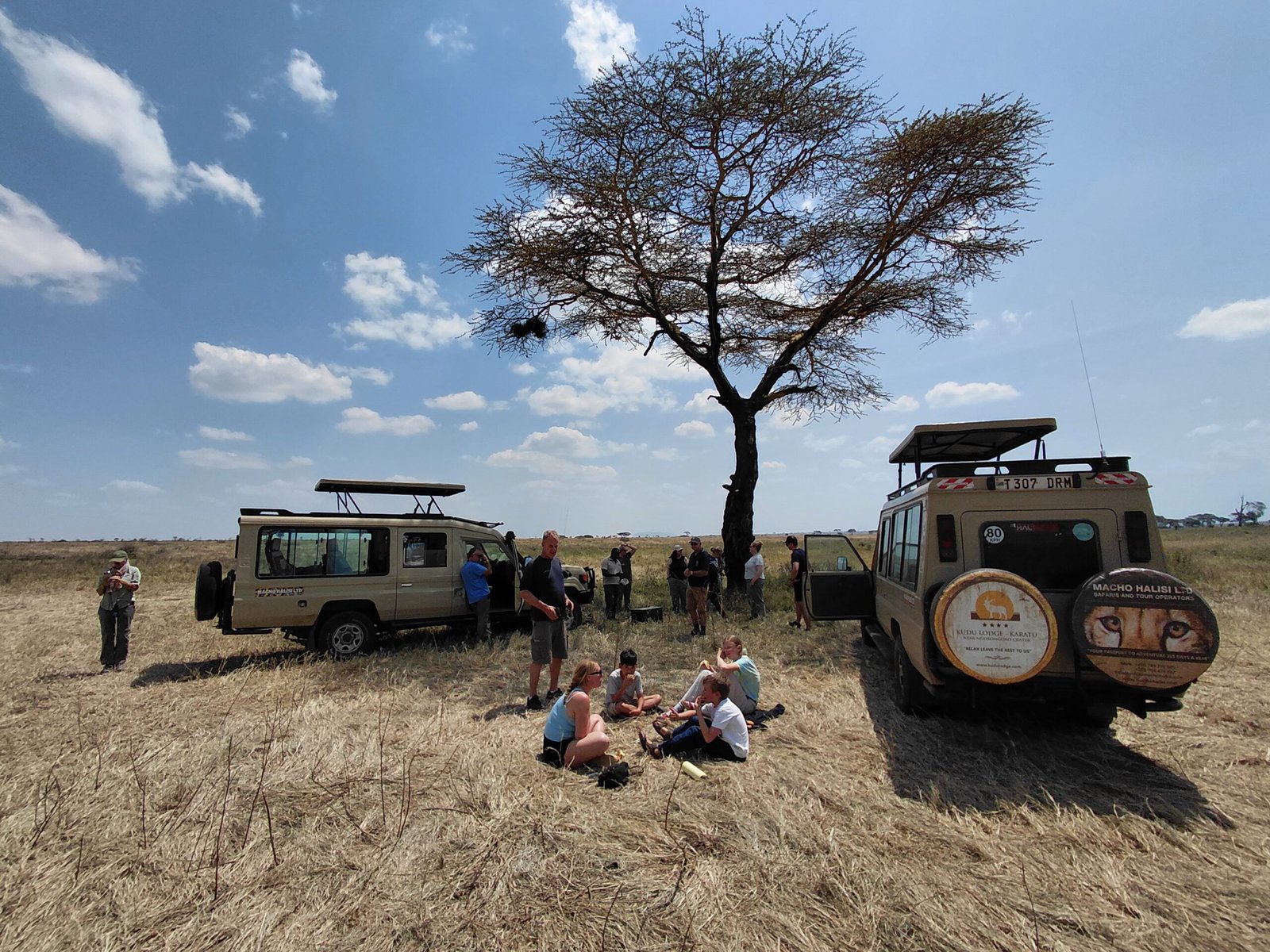
Lunch time
On this trip we saw a cheetah for the second time. And really close too!
You can't tell from the picture, but this female cheetah was clearly pregnant.
Kenya's national bird, the lilac-breasted roller.
A rare giant giraffe, or an optical illusion?
Sometimes we watched the giraffes, and sometimes the giraffes watched us.
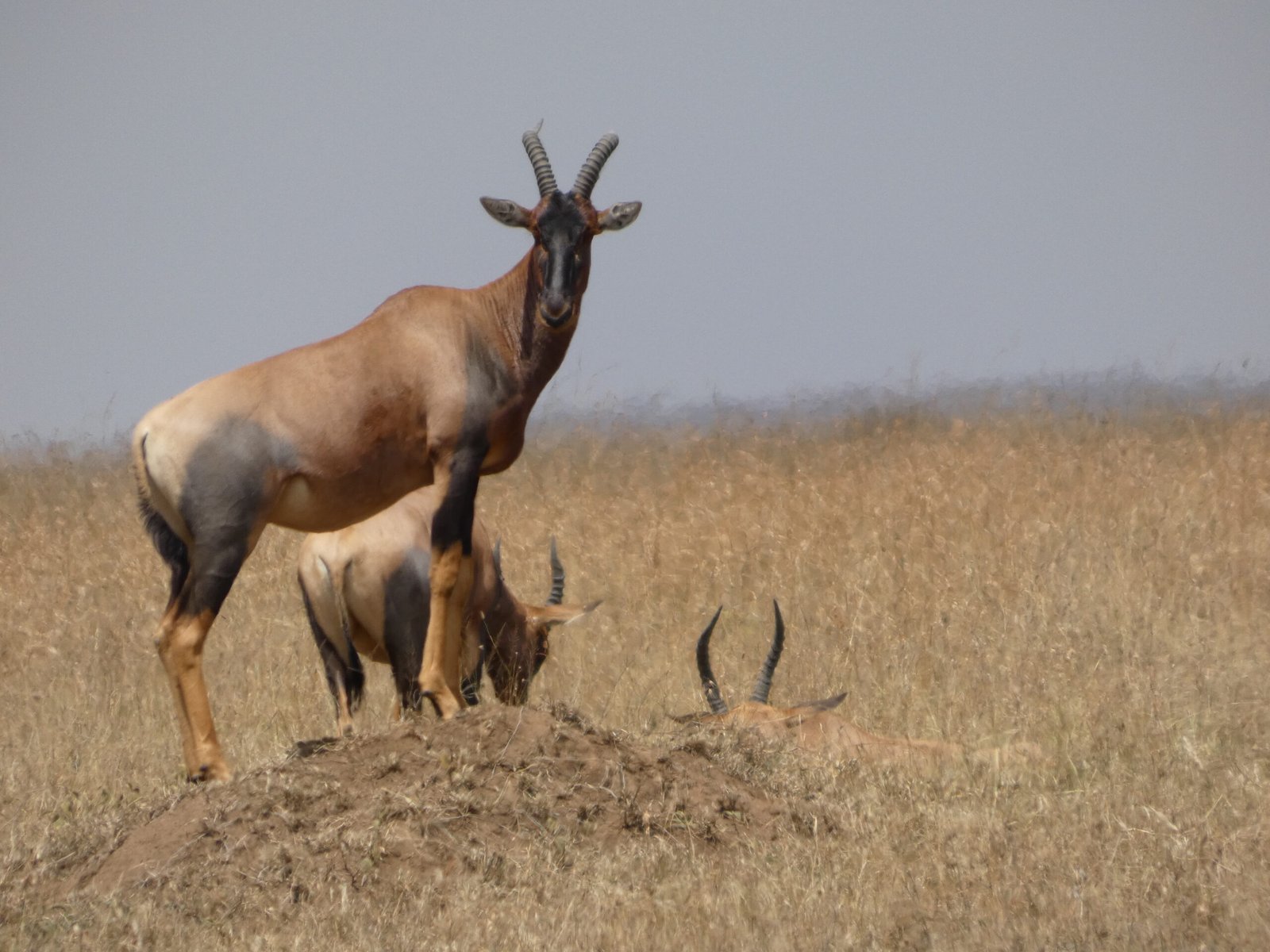
The topi antelope is one of the nine species of antelope in Serengeti.
In Africa, a pedestrian crossing is called a "zebra crossing". In Serengeti it can also mean this.
The jackal is unlikely to catch this antelope.
This little one was some kind of rock-climbing antelope.
A Lion King moment.
Lunch break in the midst of acacia trees.
A leopard had been here the day before.
A quick bushy bushy just a few metres from the car. You never know what's lurking in the bush.
Safari stopped all oncoming traffic so that Ronja could go for a bushy bushy behind the jeep.
The elephant carcass was first discovered by lions and later by vultures.
Eventually, park rangers also found their way to the scene.
The elephant's tusks are cut off to prevent poachers getting them.
It was obviously a successful safari.
We came back at daylight, so we decided to ask the staff to heat up the showers for us. After the shower, while curled up on the bed and looking through the mosquito net window, Jaana said to Marko that the only thing missing now is a few giraffes walking by. Well, it wasn’t long before three giraffes appeared a little further away on the edge of the grass, eating the leaves of an acacia tree. A moment later, Risto came to announce that there was now a herd of water buffalo. This nature reserve is indeed a safari at all hours of the day!
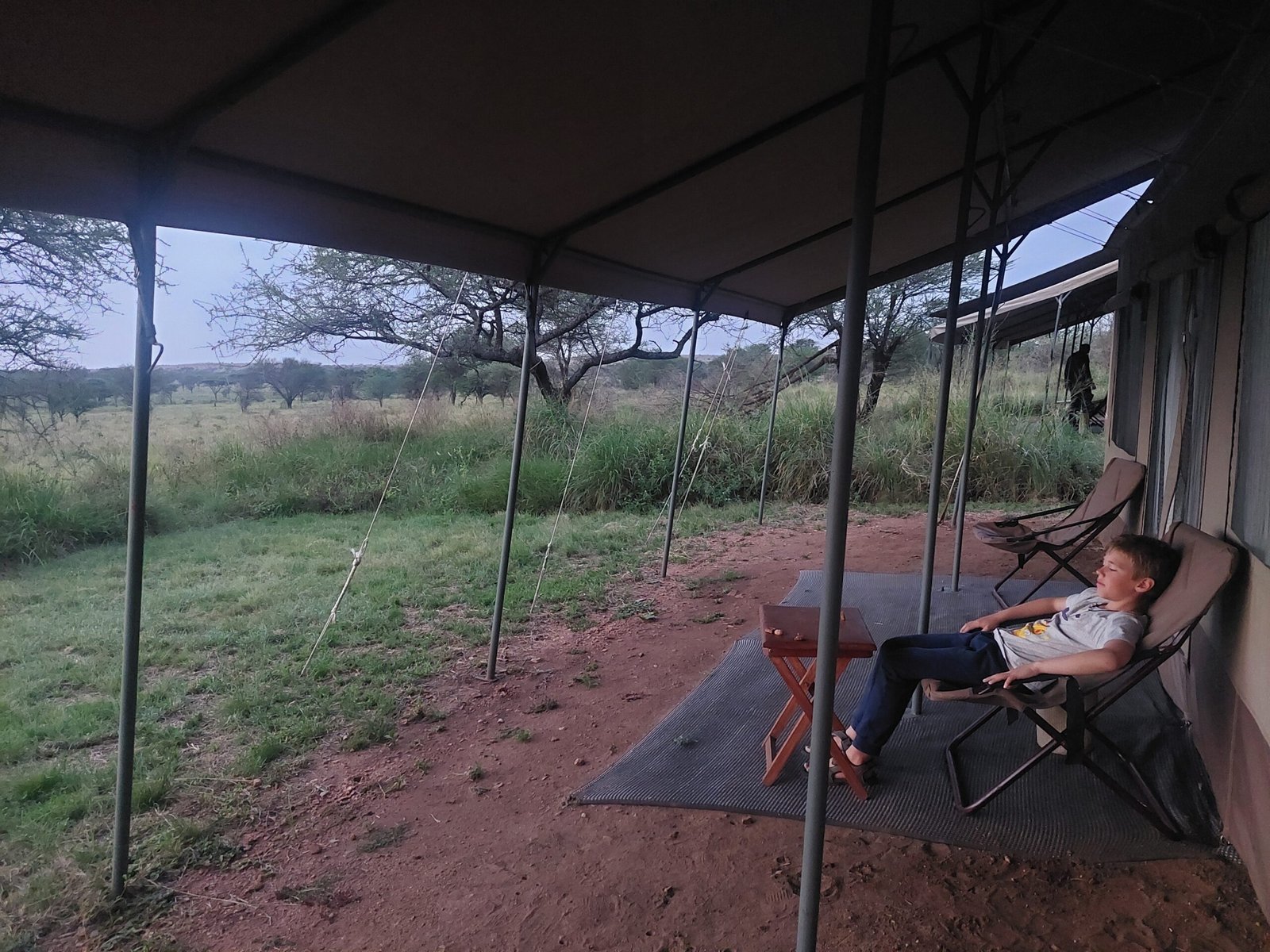
From the terrace of the tent it was good to observe the animals in the park.
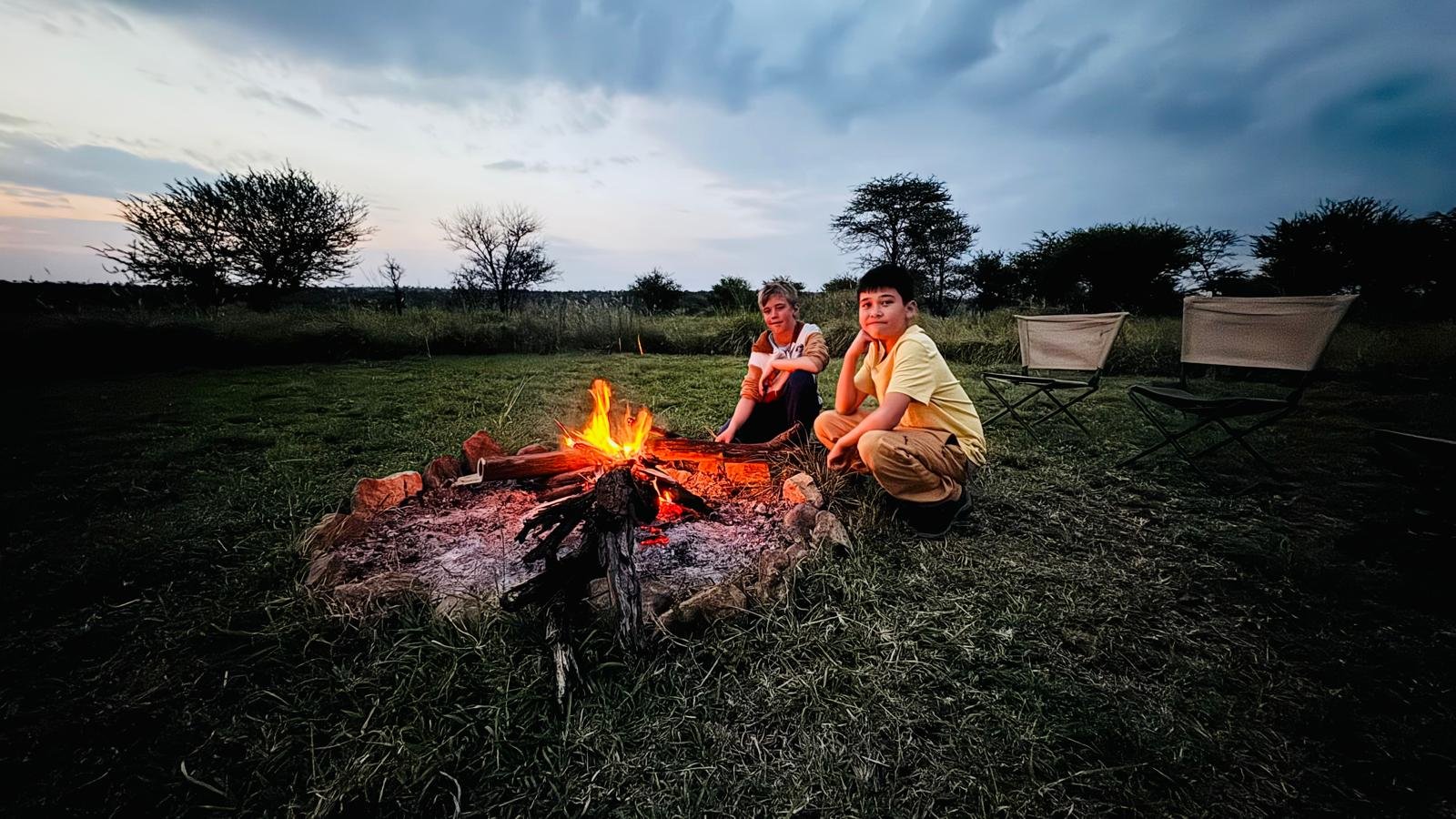
Thanks to these boys, we were always guaranteed to have a campfire going.
On Thursday we went back to Arusha. We could have gladly stayed longer in Serengeti and Wilderness Camp. We first took a jeep back to Karatu, where our truck Keith was waiting for us. Since we were still in the nature reserve part of the way, we saw a lot of animals on the way back. This time we saw an unusually large number of hyenas and huge herds of zebra and buffalo.
When you wake up early, you can also see the sunrise.
The journey continues again.
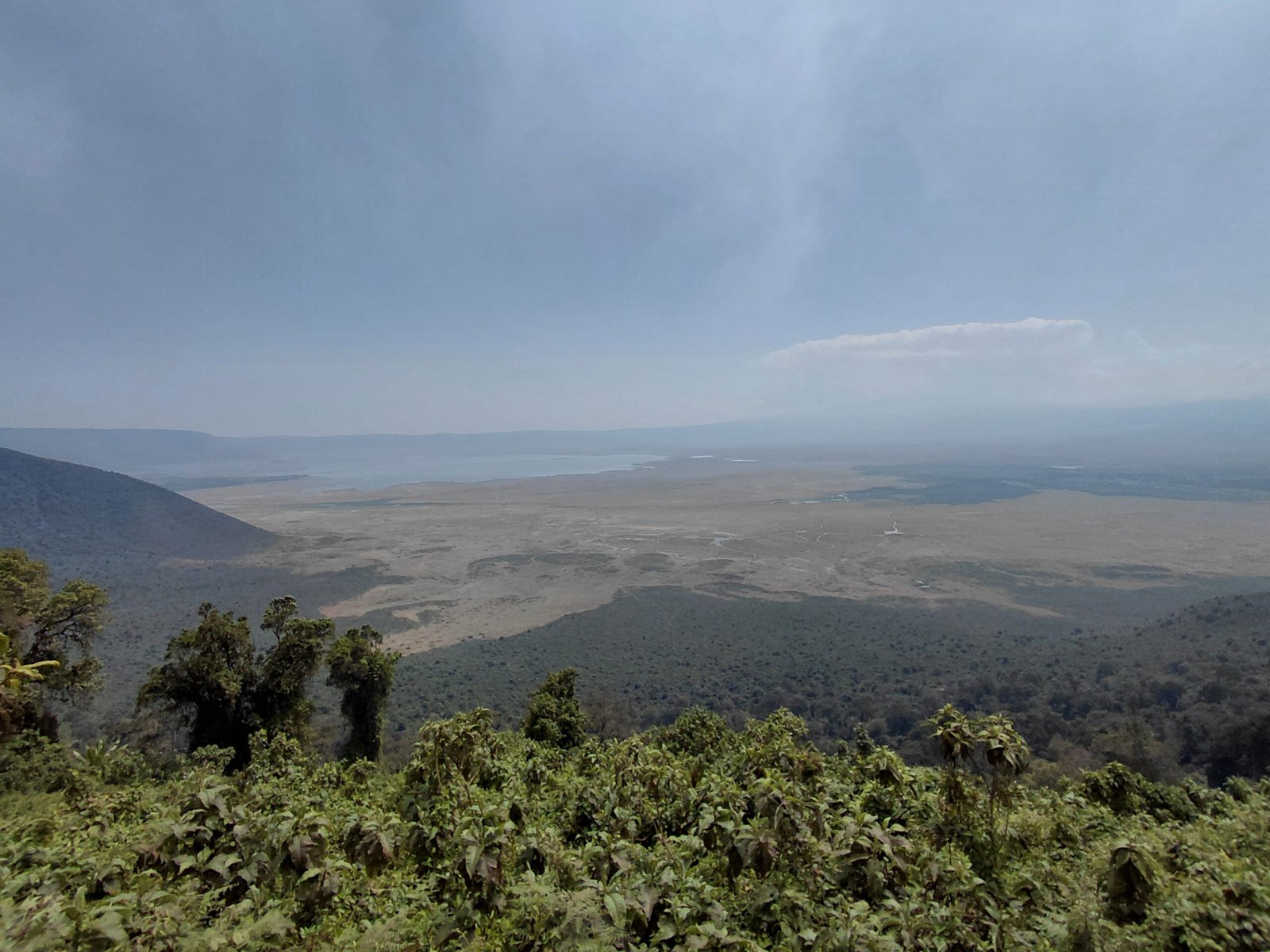
On the way back, the clouds parted enough to give us a view of the Ngorongoro crater.
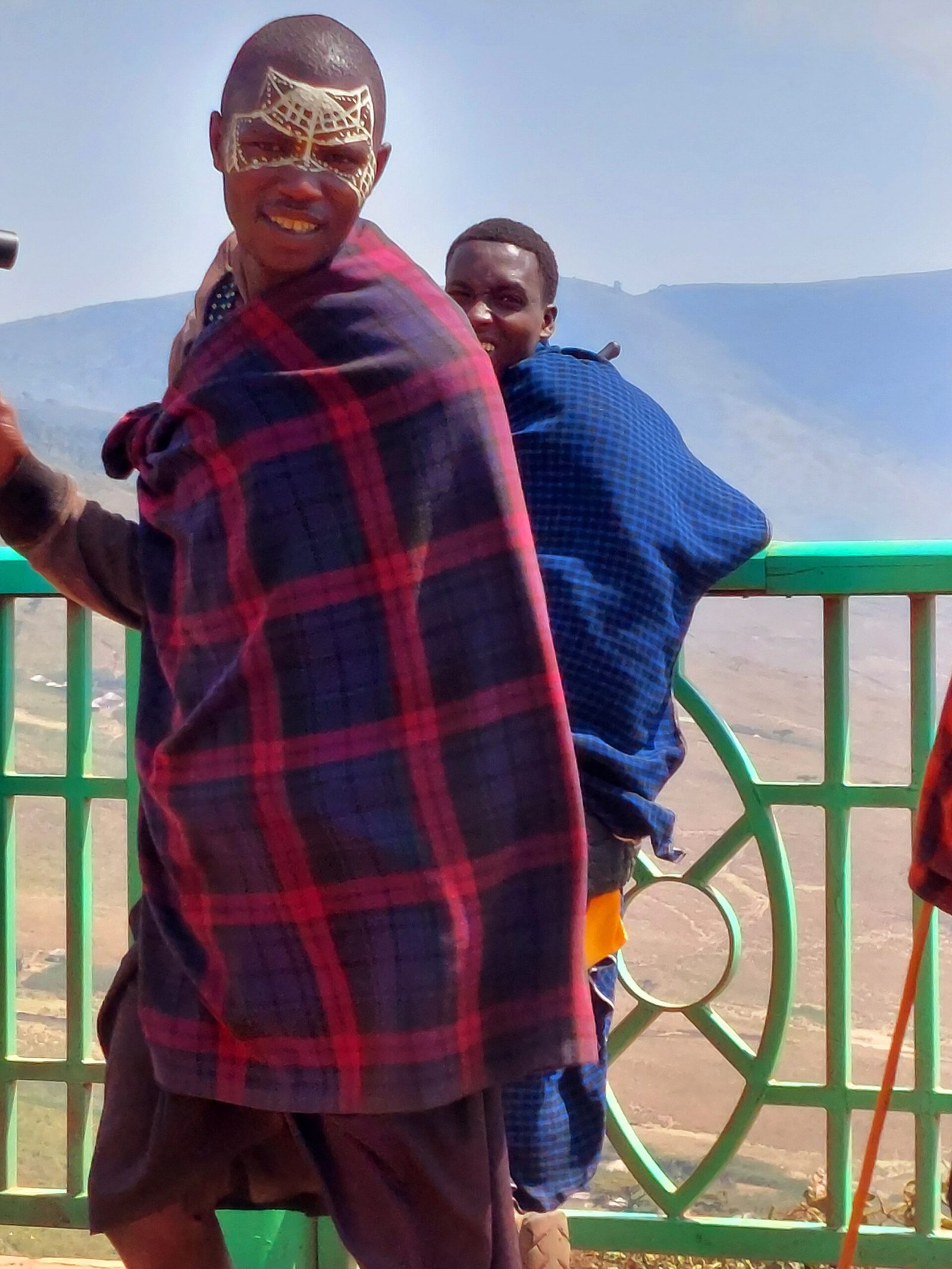
Masai boys with white face-painting related to rites of passage were spotted on several occasions at viewpoints, offering to be photographed together (for money, of course).
To save time, we ate lunch in the truck, and arrived at the familiar Safari Lodge in Arusha before 4pm. This left us plenty of time to pitch our tent for the last time on this trip and pack our things for the final leg to Kenya. Jaana and the kids threw away all the plastic bags in the rucksack at this point, as according to the internet at least, Kenya is very strict about not allowing plastic bags into the country. Marko decided to try his luck and leave some of the stuff like shoes and dirty clothes in the backpack in the plastic bags. Hopefully that won’t get him a fine at the border. Marko can always say that in Finland these bags are used as garbage bags, as the use of plastic garbage bags is still acceptable in Kenya.
This is one way to enjoy your lunch.
Repacking the stuff.
Since we still had plenty of time before dinner, Risto was able to visit the same barber shop where Marko had been a few days earlier. Risto’s haircut cost the same as Marko’s (10,000 Shillings, or €3.30), so it didn’t matter too much, even though there was no reduced price for children’s haircuts. In the evening we had our last dinner together, as most of us were finishing our journey in Nairobi. Then it was time to go to bed and gather strength for the last truck ride on this trip to Nairobi.
"Is Swahili ok?" Well it wasn't, so there was no common language.
But the end result was very good anyways.
It took the children only 5 minutes and 30 seconds to pitch the tent. Surely the tent would have been up in 5 minutes if one of the tent’s attachment hooks hadn’t been so badly bent that it was really difficult to get it in place. From the start of the trip, the children pitched and packed their tent all by themselves. Risto is particularly adamant that no one should help them. Ronja probably would not have minded if someone helped them now and then.
We didn't see Mount Kilimanjaro on this trip, but Mount Meru was visible from the roof of the Safari Lodge.
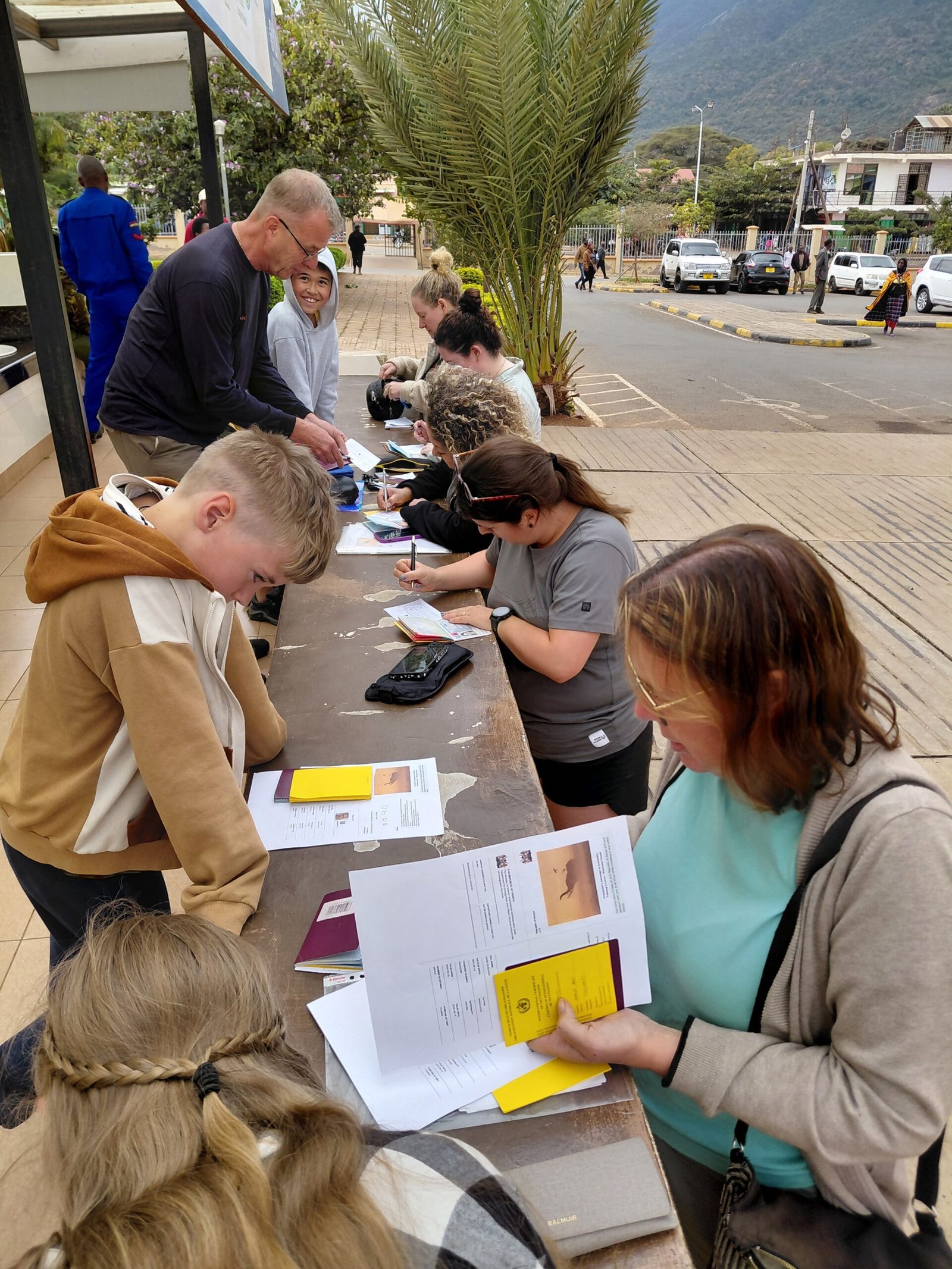
The journey to Nairobi went without a hitch. Border formalities were handled quickly at the one-stop border post, and our luggage did not need to be searched. Gift had a friend working at the border this time, so it was a bit easier. Customs officials came all the way to the truck to show us Kenya’s new electronic customs declaration form, but as none of us really had internet access on our phones and there was no wifi at the border, we were able to skip the customs forms this time. David and Adriana, just for fun, tried to fill in the form with the help of the customs officer’s hotspot, but otherwise this part was settled with just a shrug and wishes for a good trip.
Sophie's hair salon.
Card games were also part of the entertainment programme.
Paperwork at the Kenyan border post.
The eighth country on this trip. Welcome to Kenya!