4.10. – 6.10.2024

Thursday 4.10.2024

Departure day started with a bit of bad news. At Helsinki-Vantaa airport, the baggage check-in system had experienced software issues in the early hours of the morning, and it was not possible to check in the baggage. Queues stretched all the way to the outside of the airport and luggage was piled up in large mounds in front of the check-in counters. Fortunately, our flights departed in the late afternoon and the problems were fixed during the morning. When I arrived at the airport, accompanied by Jaana and Risto, around 2pm, there were hardly any queues at all.

My travelling companions had booked flights via Delhi to Kathmandu, but that route didn’t really appeal to me because of the Delhi airport hassle and the connecting flight on Nepal Airways. I invested a couple of hundred euros more and got Finnair and Qatar Airways flights via Doha. This would have been a decision worth its weight in gold if the baggage system had still been broken before we left. I would have had the flights on one ticket and would certainly have had my backpack in Kathmandu the next day. With separate flights to Delhi and Kathmandu, the situation would have been a tad more awkward. Nevertheless, Delhi and Nepal Airways offered value for my extra euros even without the issues at Helsinki airport. Nepal Airways had cancelled their flight weeks before departure and offered a flight several hours later. This did not please the guys and they got Indian Indigo flights instead. Basically, they should get a refund on the original flight, as the flight had been cancelled by the airline. But even with the new flight, Heikki had received some kind of message about the flight being rescheduled, so he had the papers for both the later Nepal Airways flight and the Indigo flight with him, and not quite sure which plane he would end up on. After all, both of them got on the same plane. In Delhi, they had to wait for their luggage and had a long stopover before their next flight. The plan was not to hang around at the airport, so Pude had booked a room at an airport hotel for less than ten bucks. Contrary to expectations, the hotel was not located near the terminals, but some five kilometres away in a rather slum-like area. The guys hired the same taxi driver to pick them up five hours later and went for a shower, a beer and a rest. Heikki’s summary of the hotel was ‘cheap and crap’. As they had to collect their luggage in Delhi anyway and move to another terminal for a new check-in, the guys had also got their Indian visas. After counting the visas, the ‘hotel night’ and two taxi rides, that route wasn’t much cheaper than my own, but at least they could laugh about one more adventure in a rocking chair.

Although my own trip was basically smooth, it’s still a long way to go. The ten past five flight took nearly 7 hours because, in the words of the captain, it was necessary to ‘avoid conflict zones’. In the plural… Belarus, Ukraine, Iran, Iraq and Israel for starters. The flight curved through Egypt and arrived in Doha just after midnight. Doha airport was packed, as it is a regional hub for intercontinental flights along with Dubai, and flights took off throughout the night at a brisk pace in various directions. When I went to look for the departure gate, 2.5 hours before the scheduled departure time, I couldn’t find my flight on the info screen that spanned four monitors. There was simply that many flights departing in the middle of the night. My flight was scheduled to leave at 3am and arrive at 10:30am local time. The departure itself was delayed for half an hour when a customer in a wheelchair could not get on board. In the end, we arrived in Kathmandu three quarters of an hour late. I managed to get a visa fairly quickly, but before the baggage belts there was a hand luggage screening point where everyone queued for at least an hour. I thought that at least I wouldn’t have to wait for my luggage, but I was wrong. I still had to wait for them for more than half an hour. I was out of the airport two hours after the plane’s wheels had hit the runway. The tour operator’s driver was nowhere to be seen at the front doors, so I called the tour operator. The driver was somewhere in the airport area, and five minutes later he turned up at the outer doors with a sign in his hand. According to the map, it was about 7 km from the airport to the hotel in the Thamel area. The driver estimated the journey time at 25 minutes, which turned into an hour due to standing in traffic. If the driver’s estimate had been correct, he could have expected an average speed of about 15 km in normal circumstances. Now we were doing 7 kilometres per hour. I finally arrived at the hotel at quarter to four local time.
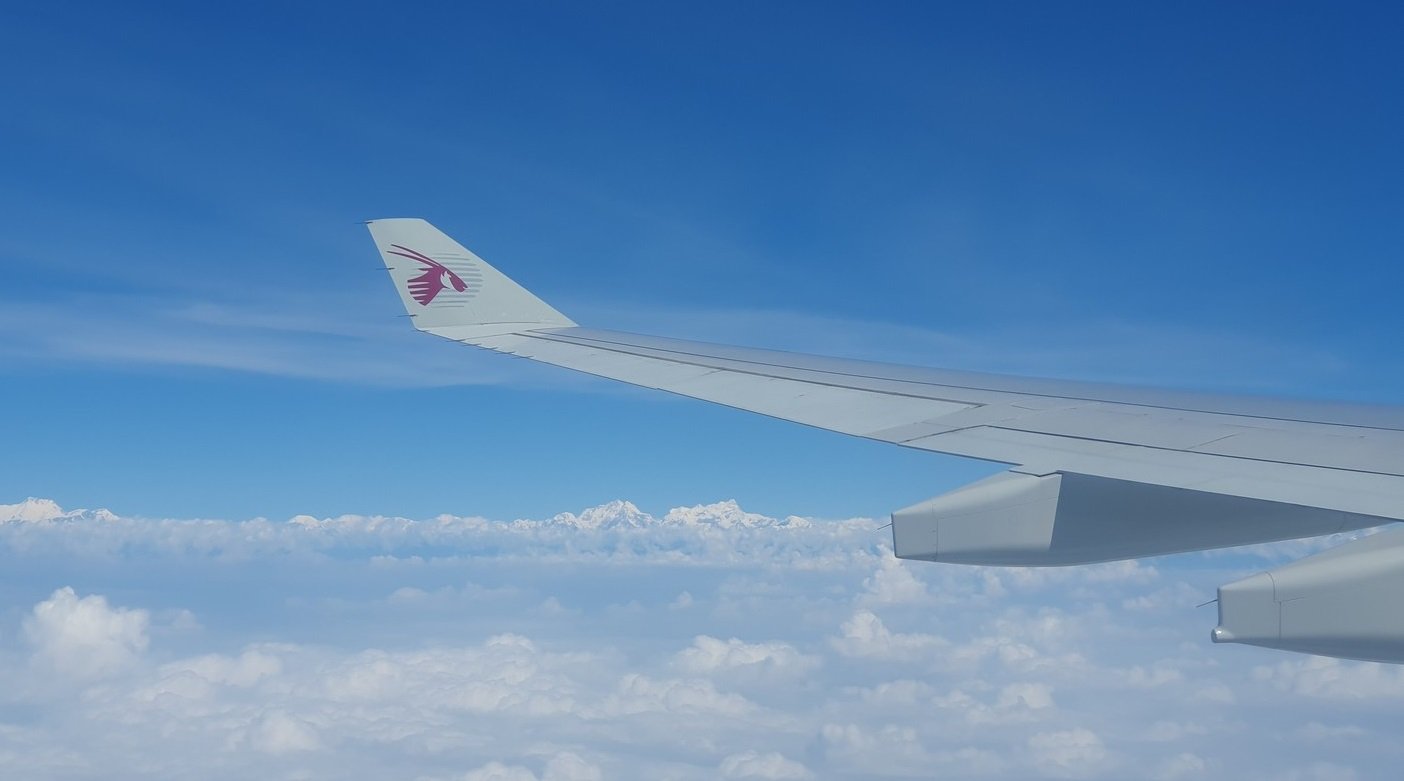
Himalayan peaks as seen from the airplane
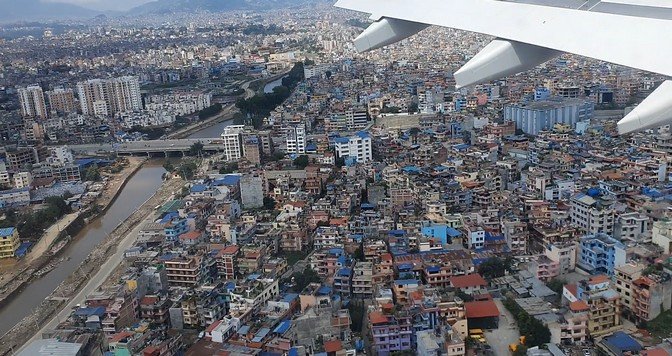
Kathmandu as seen from the airplane just before landing

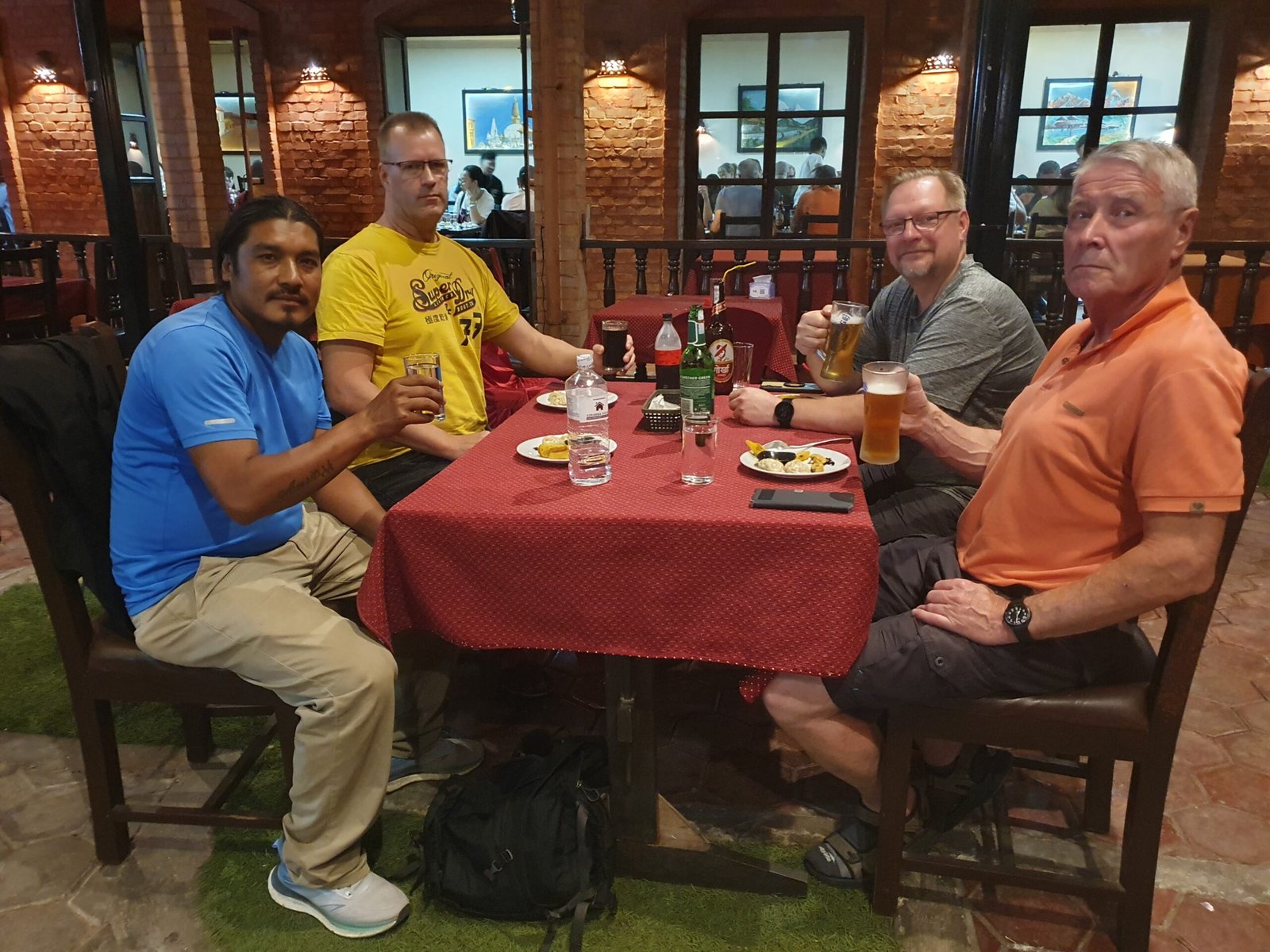
For some mysterious reason, I got an upgrade on the room, and got into the ‘suite’. Not exactly a big hotel suite, but a very nice and spacious room! The guys arrived around 6am, and we went to a nearby restaurant for dinner. After dinner we went to sit in my suite and the guys pulled out a few bottles bought from the tax-free. So much for catching up on sleep debt!

City views from the roof terrace
Dinner at the Green Wally restaurant

Friday 5.10.2024

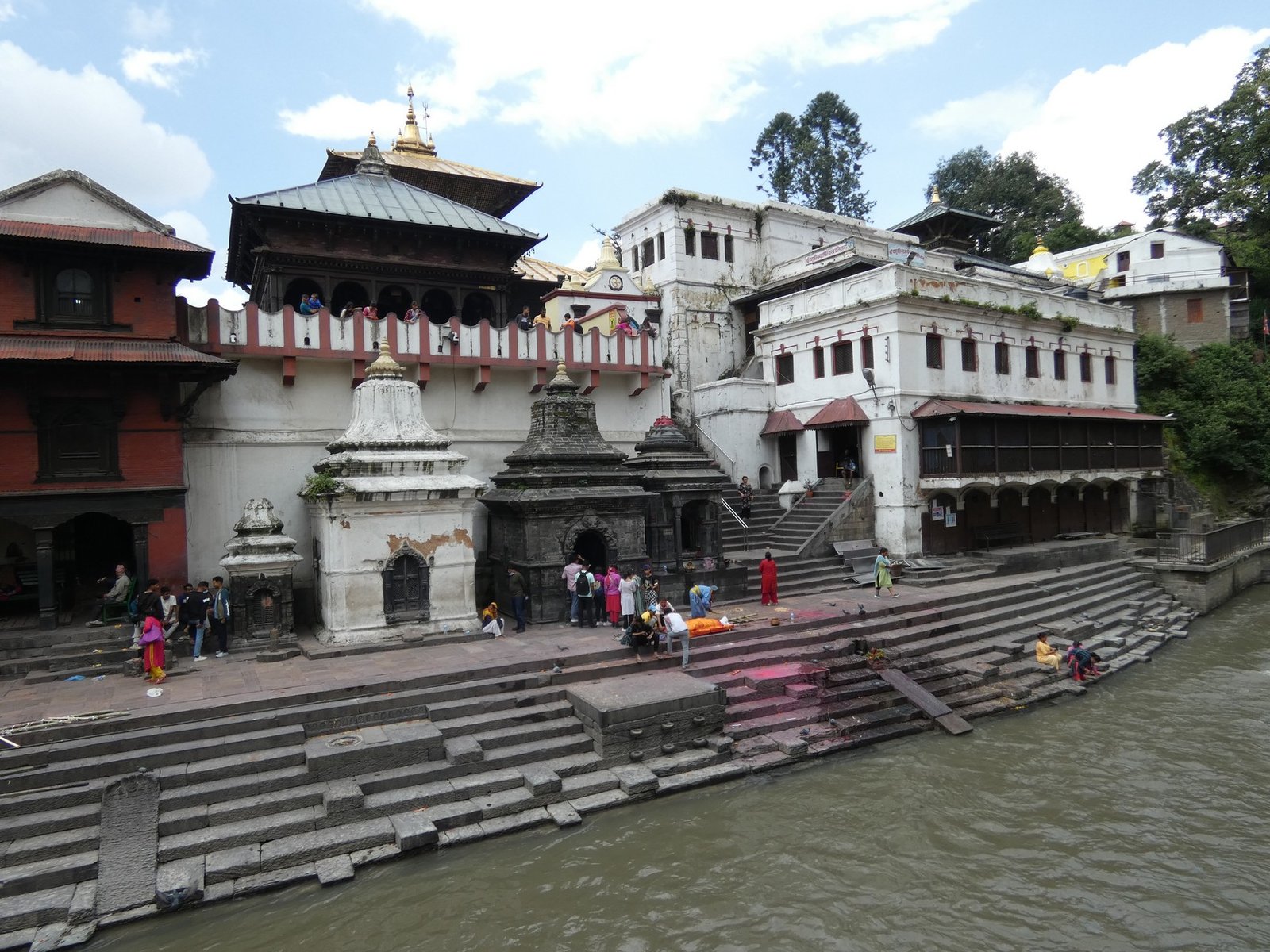
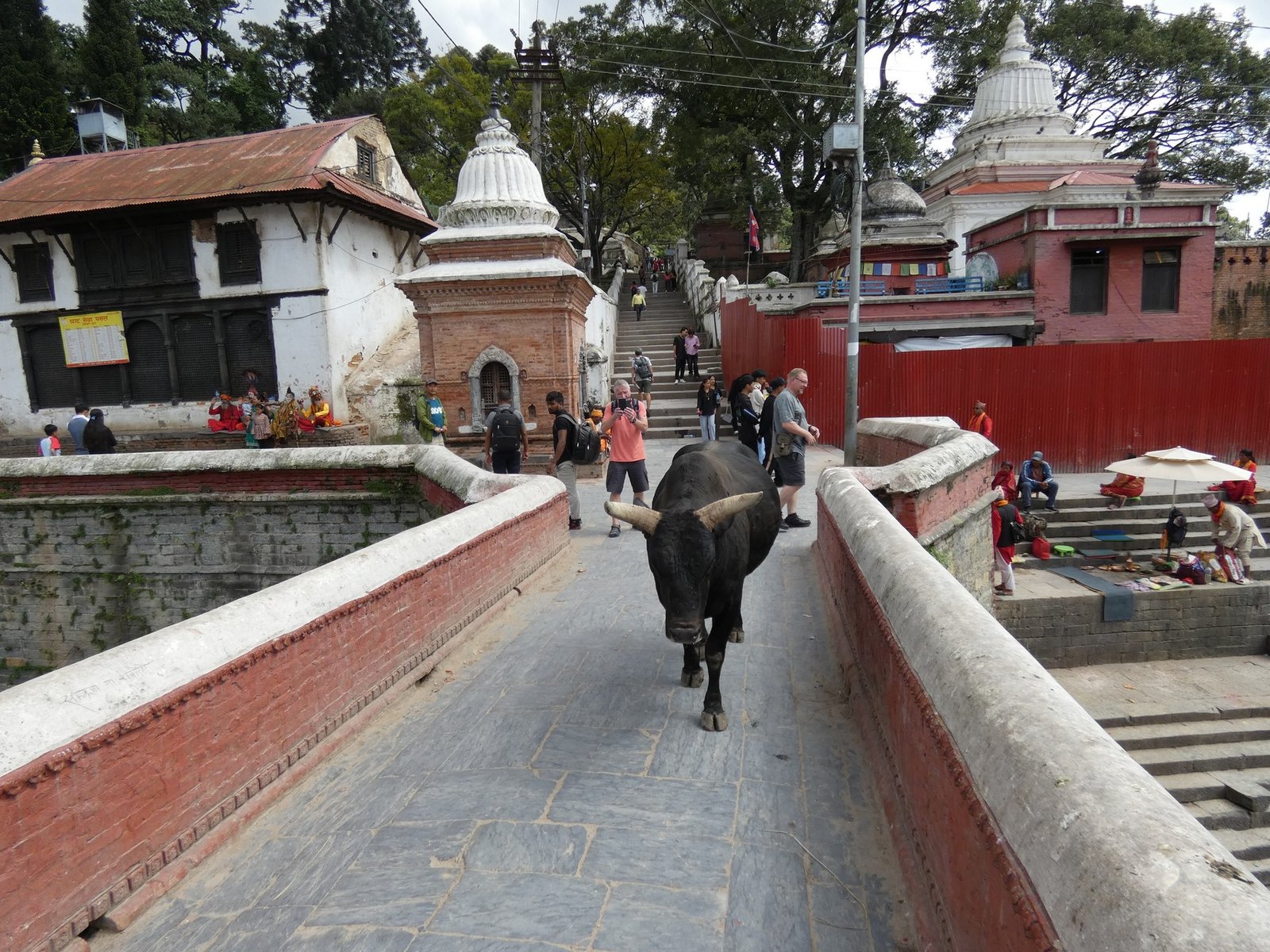
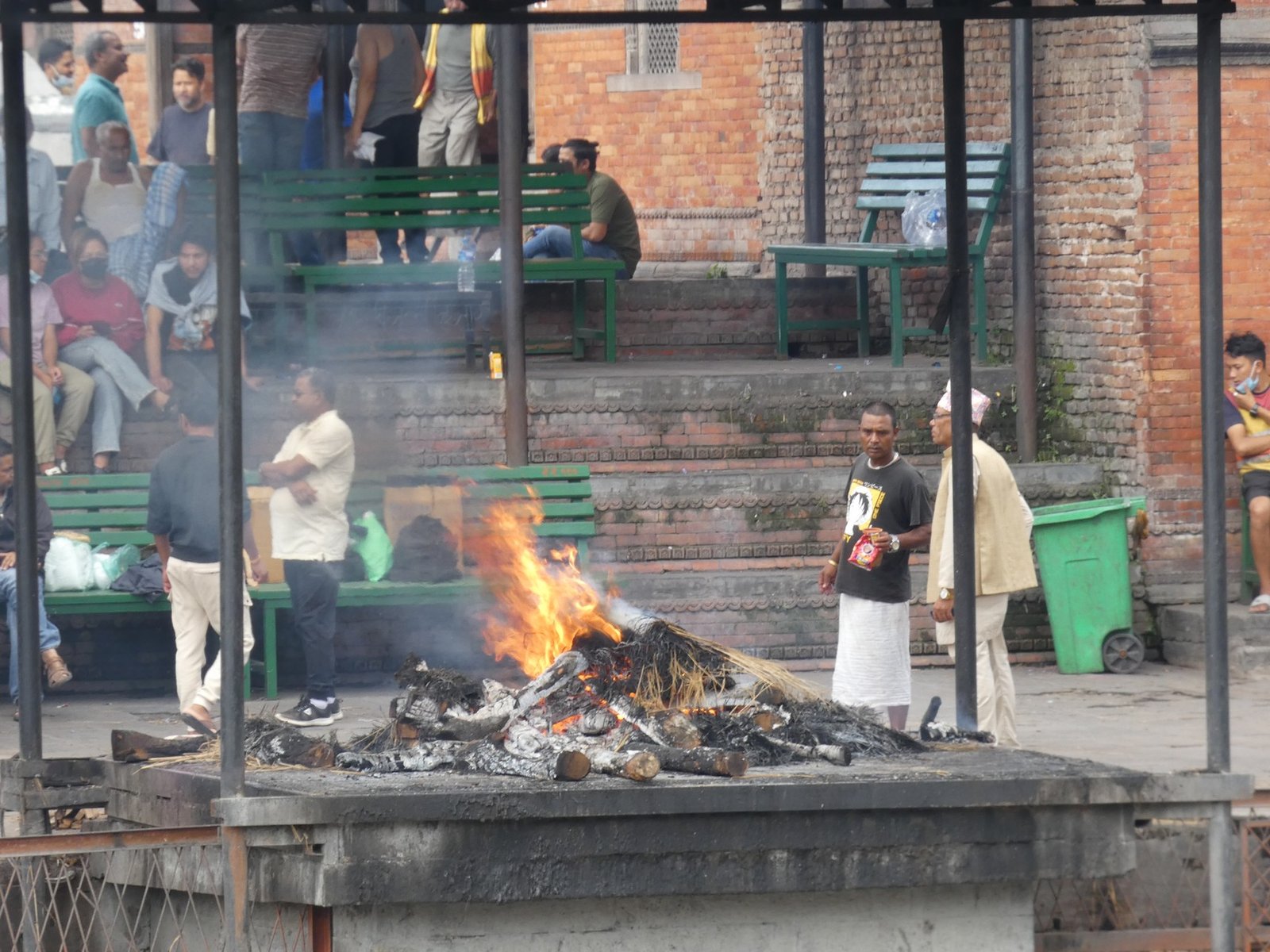
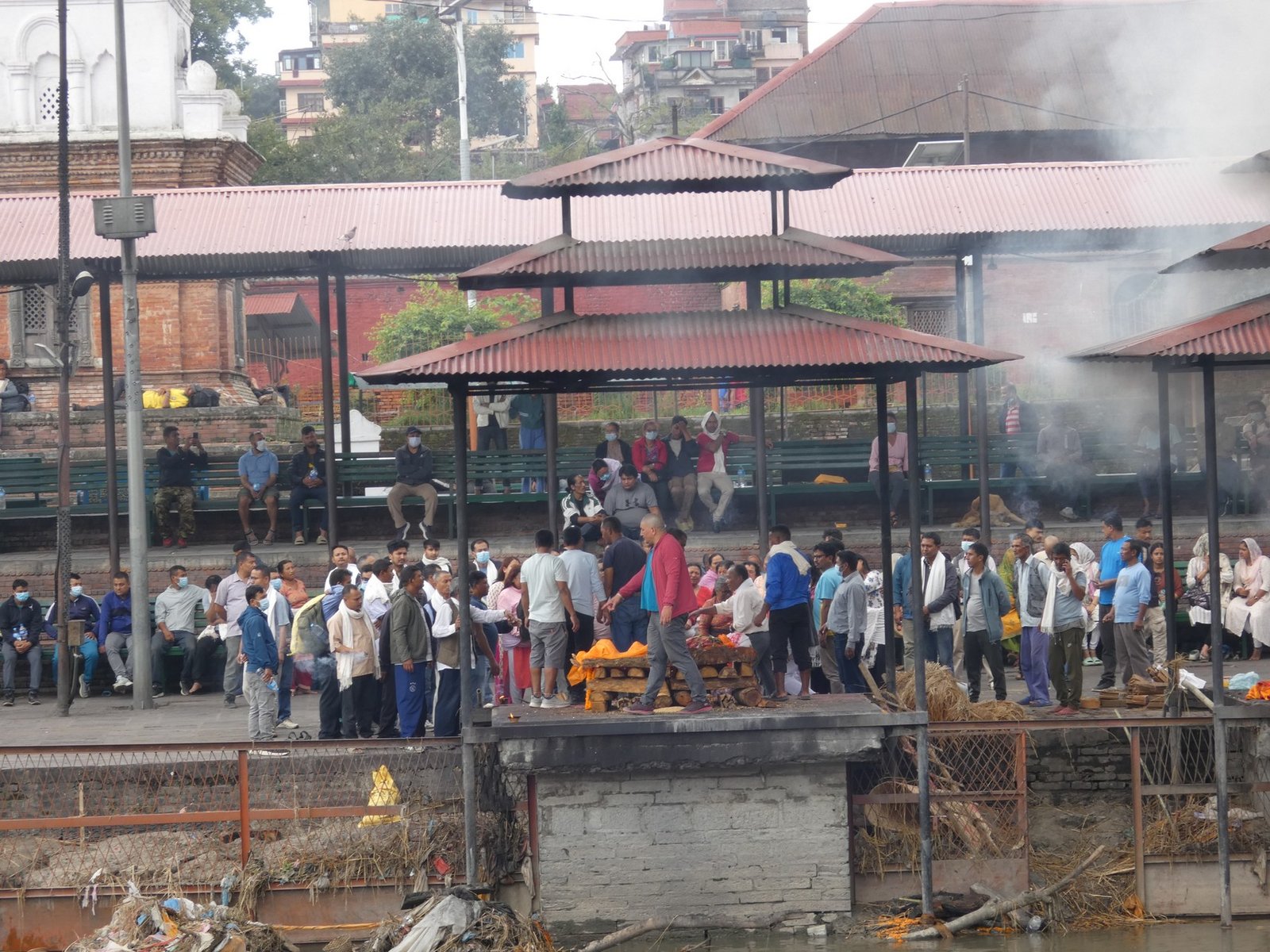
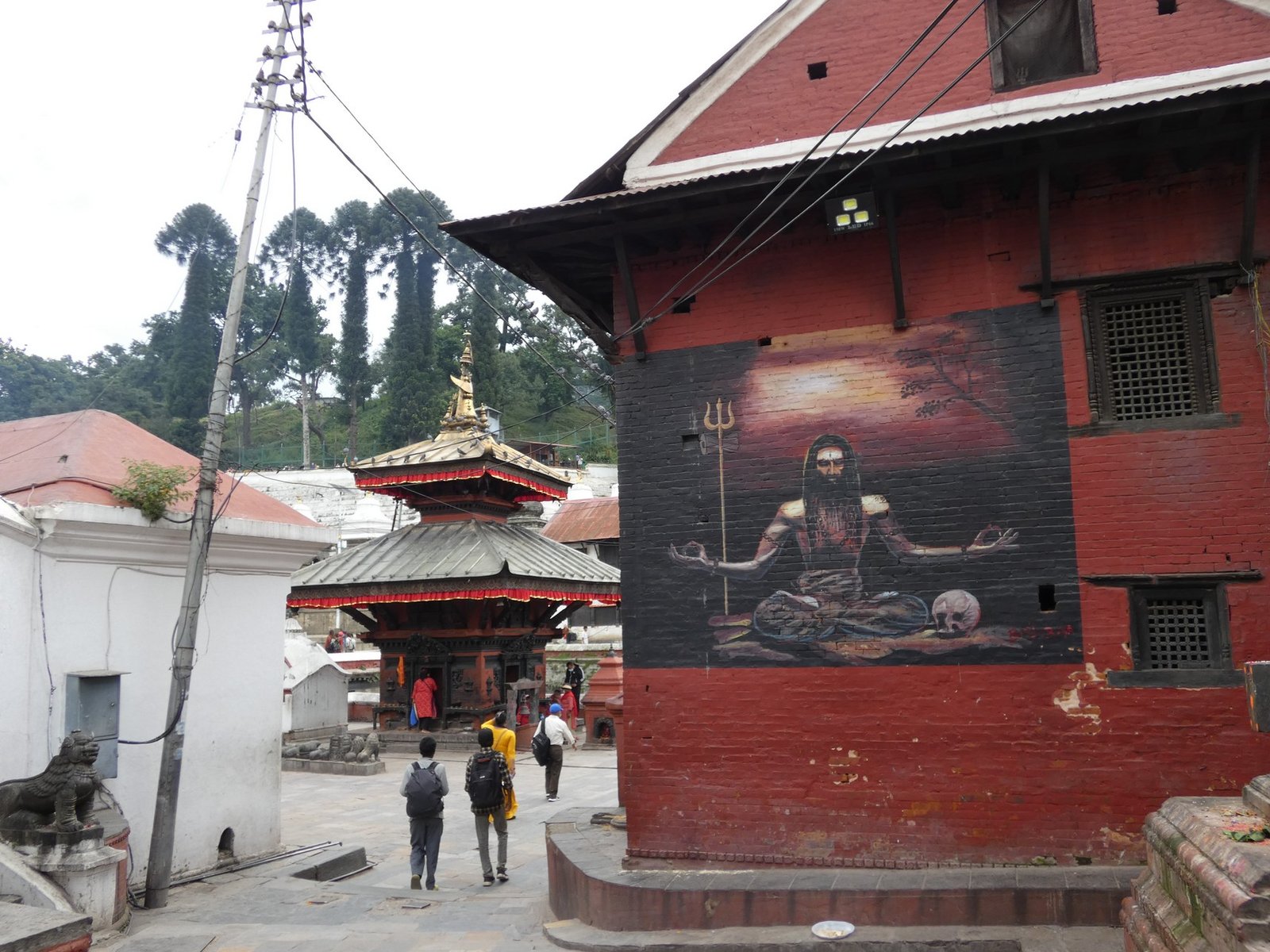
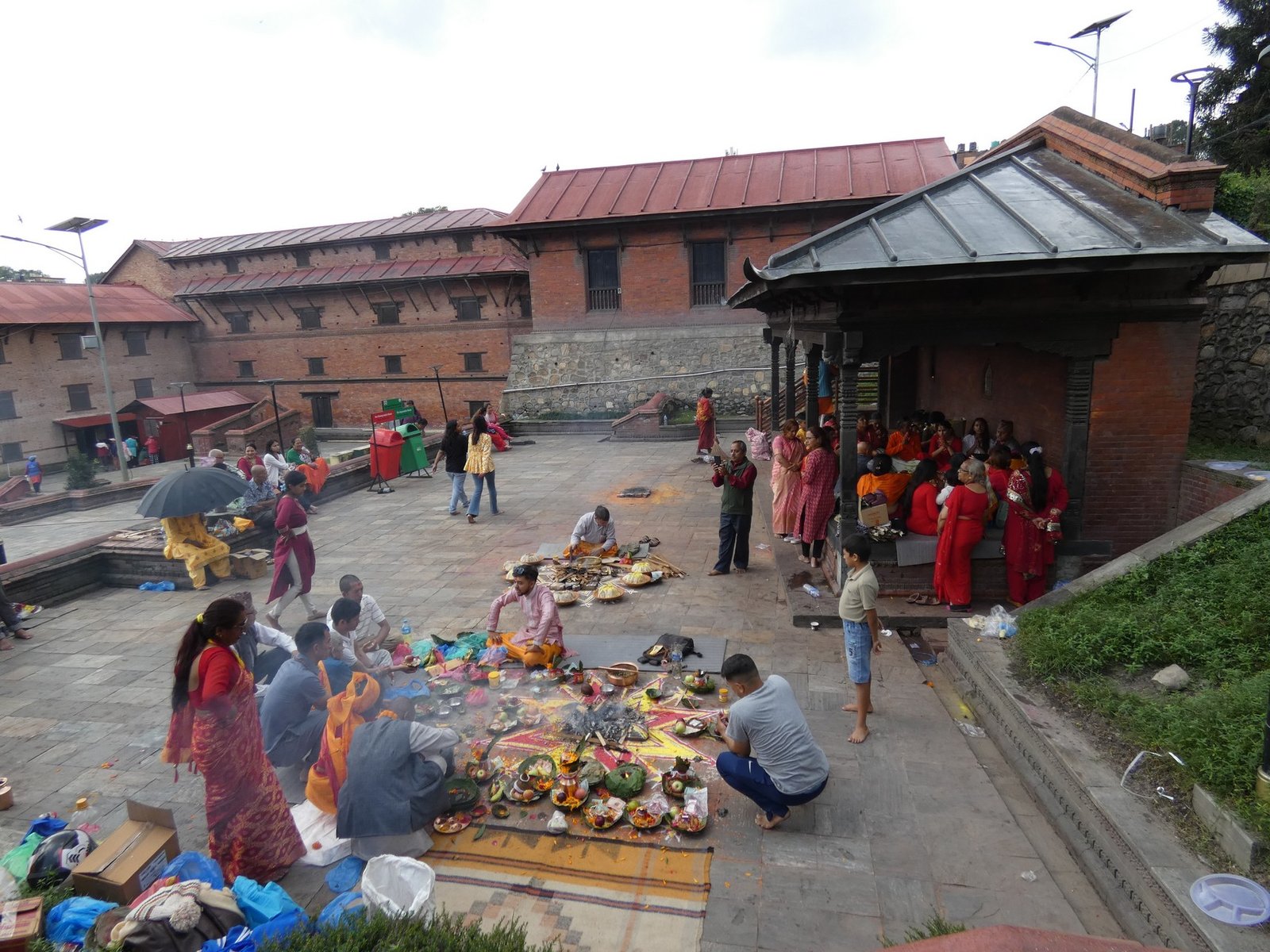
Friday was the first day of our organised trip. We were picked up from our hotel at noon for a city tour. First we drove to the big Hindu temple of Pashupatinath, where the dead were cremated on the banks of the Bagmati River. The adjacent building was reportedly a kind of hospice. According to Hindu custom, cremation must be carried out within 24 hours of death. The body is first placed on a shale by the river so that the feet of the deceased are in the holy water. The cremation then takes place on a platform running along the river, where pallets of wood are stacked side by side. Finally, the ashes are swept into the river, which finally flows into the Ganges. All this was done in full public view, including tourists passing by on the other side of the river. As we crossed the river, we bumped into a sacred cow on the bridge, so it didn’t take long to spot one. There were also saddhus, or holy men, in the area, although they did invite tourists to take photographs, for a fee of course. According to our guide, they are not considered to be genuine saddhus. We are told that there are genuine ones in the area, but they live in caves somewhere, have little to do with anyone else and have given up all worldly possessions. Why would a real saddhu need tourists’ money, the guide rightly wondered. In fact, it was not clear. These ‘public’ saddhus were a rather shady-looking bunch, and they didn’t seem to have accumulated much physical wealth either. Maybe food or more trinkets for the neck?

Hospice and the final resting place
Holy cow
According to Hindu custom, cremation must be carried out within 24 hours
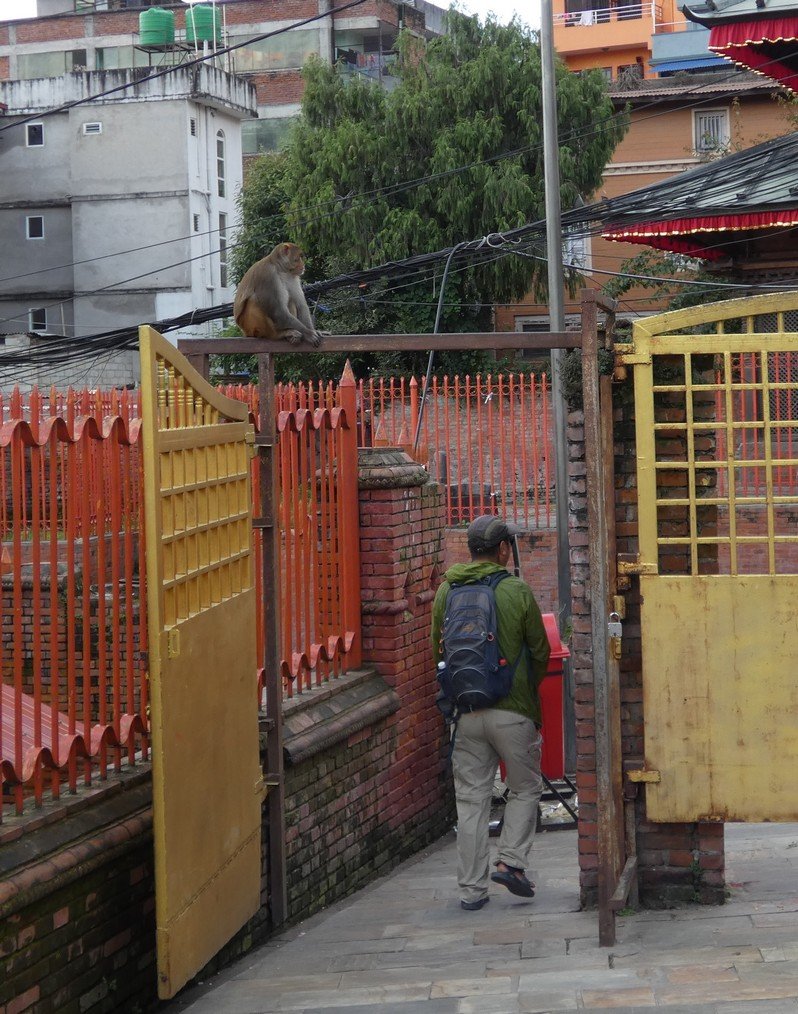
Monkey ready to poop on a passerby
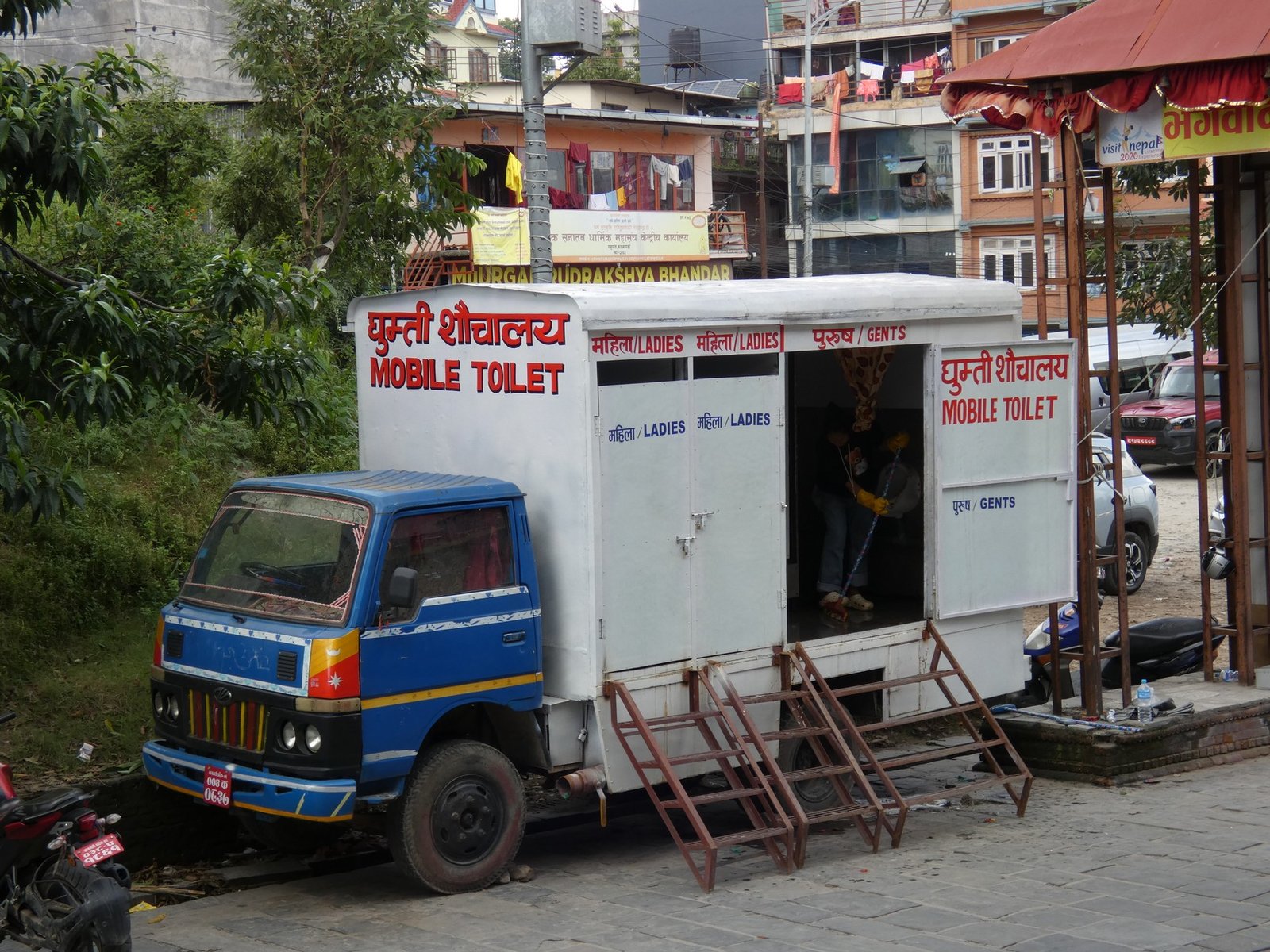
Mobile toilet

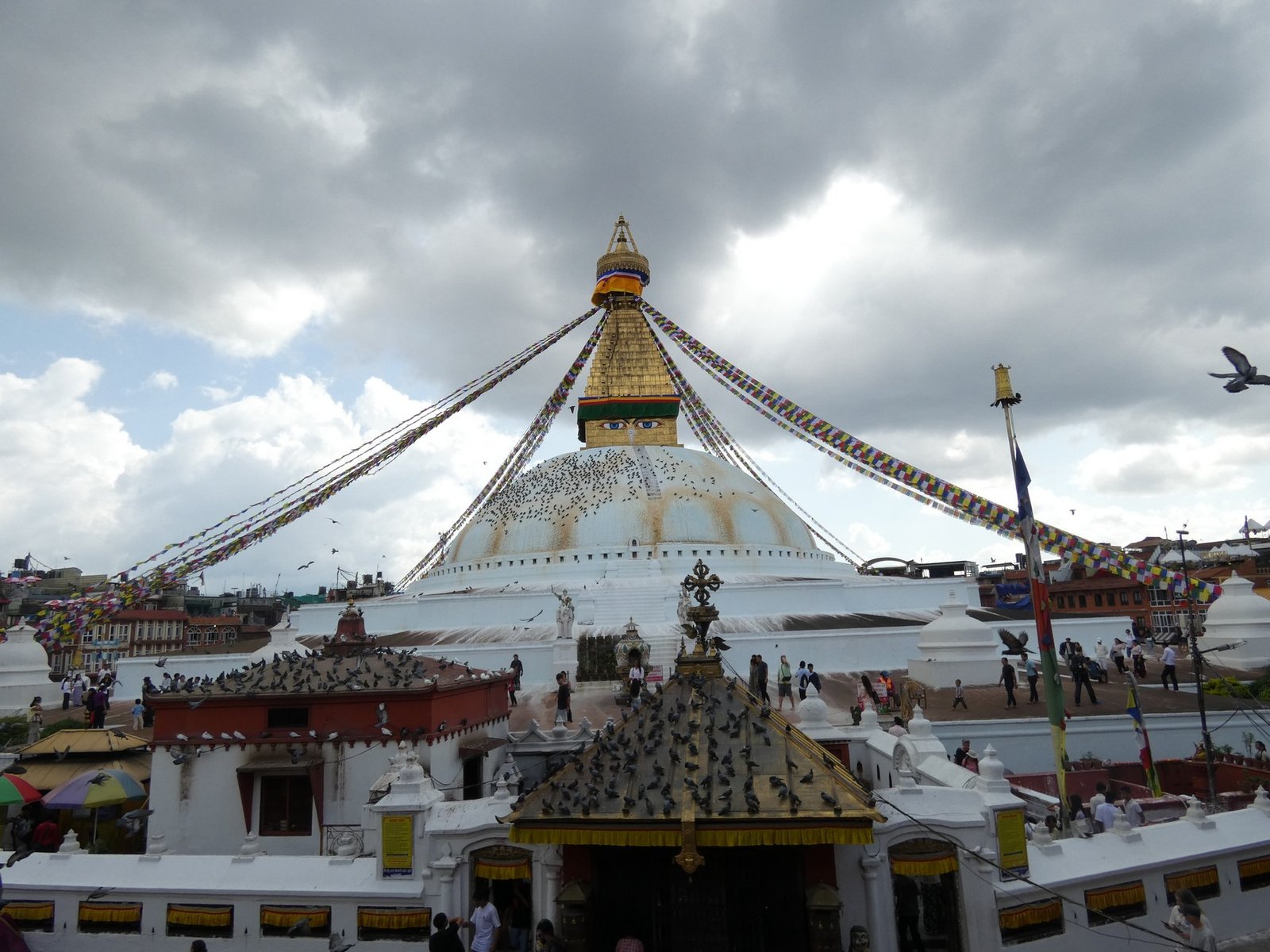
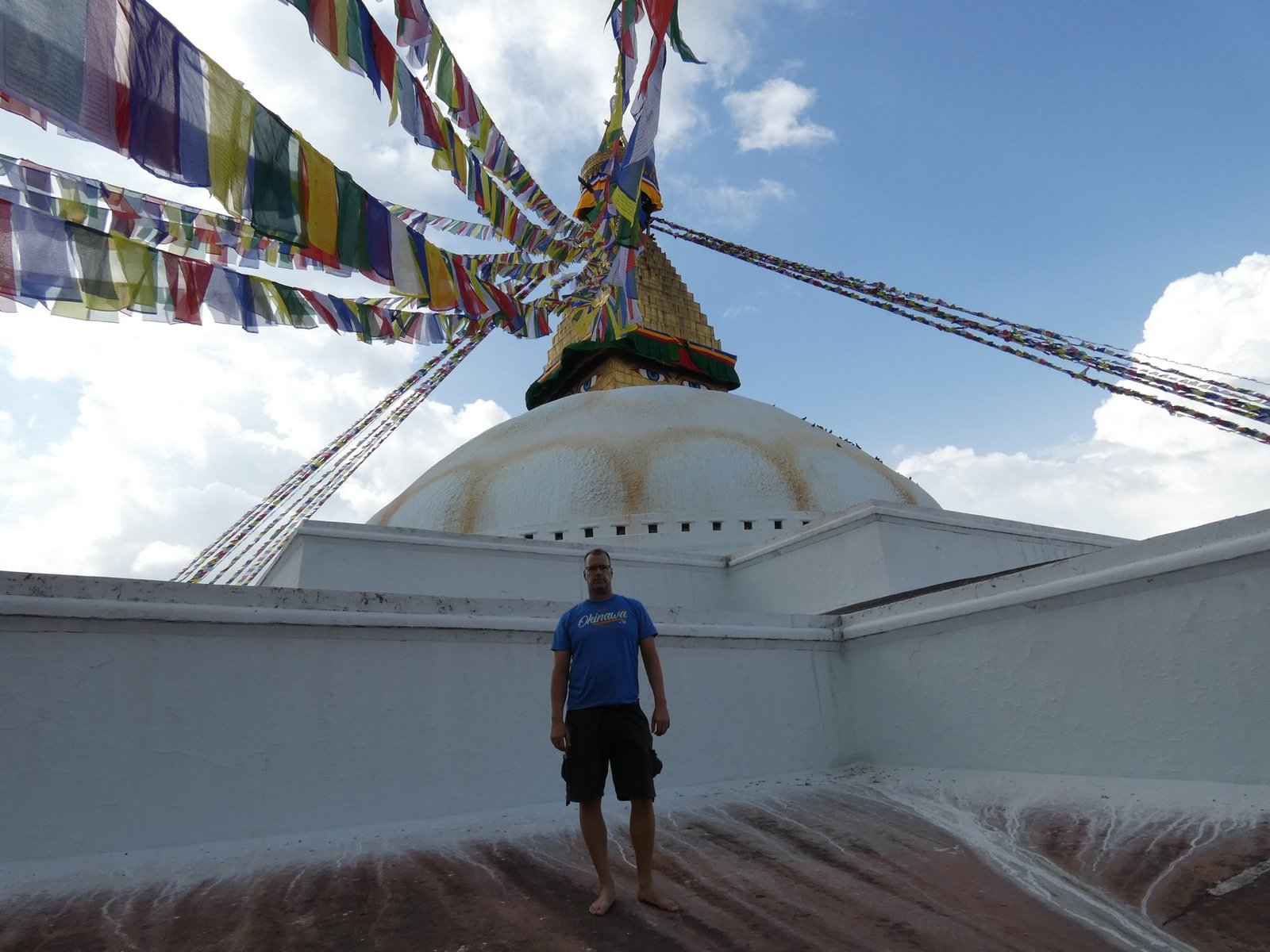
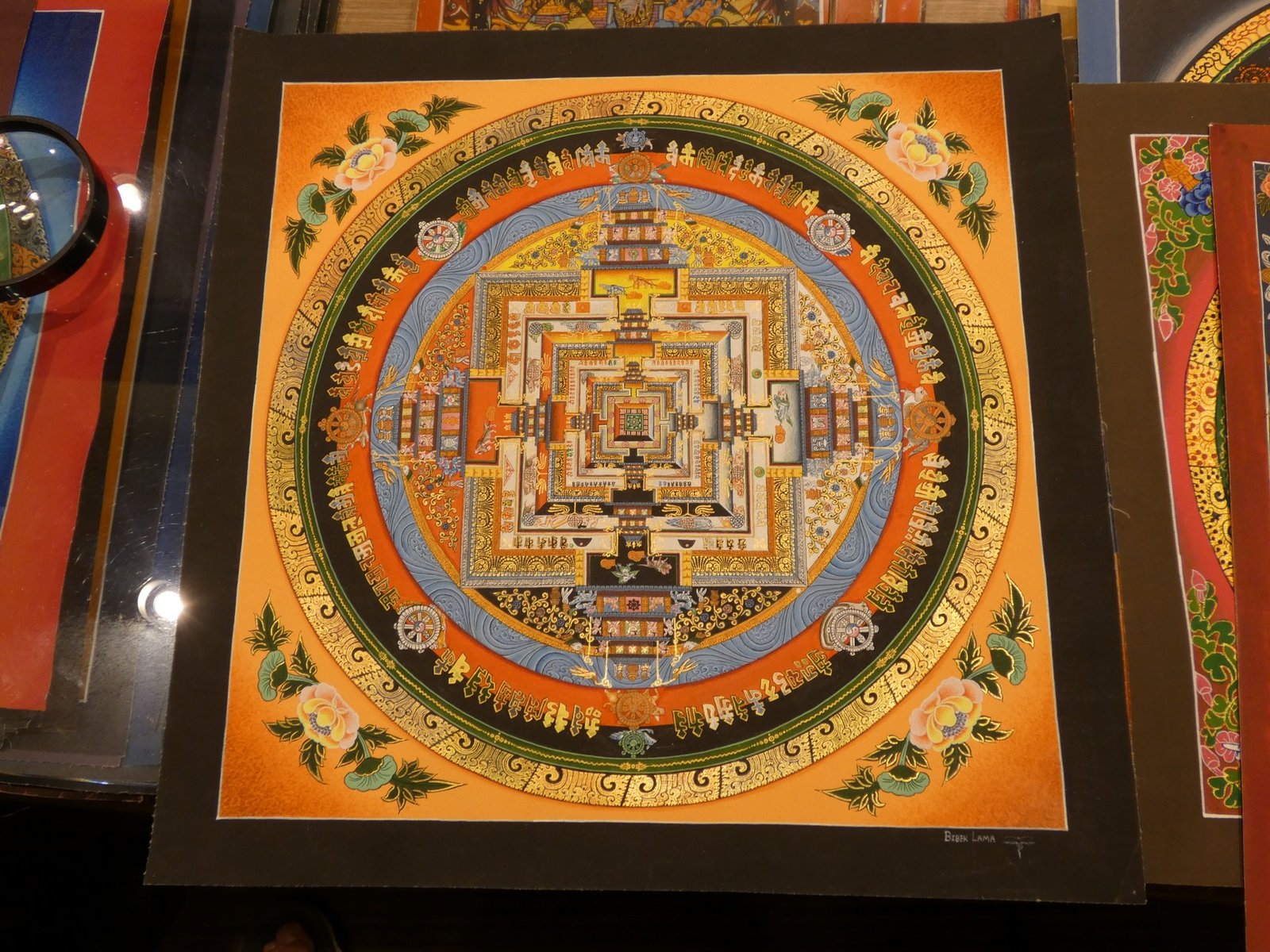
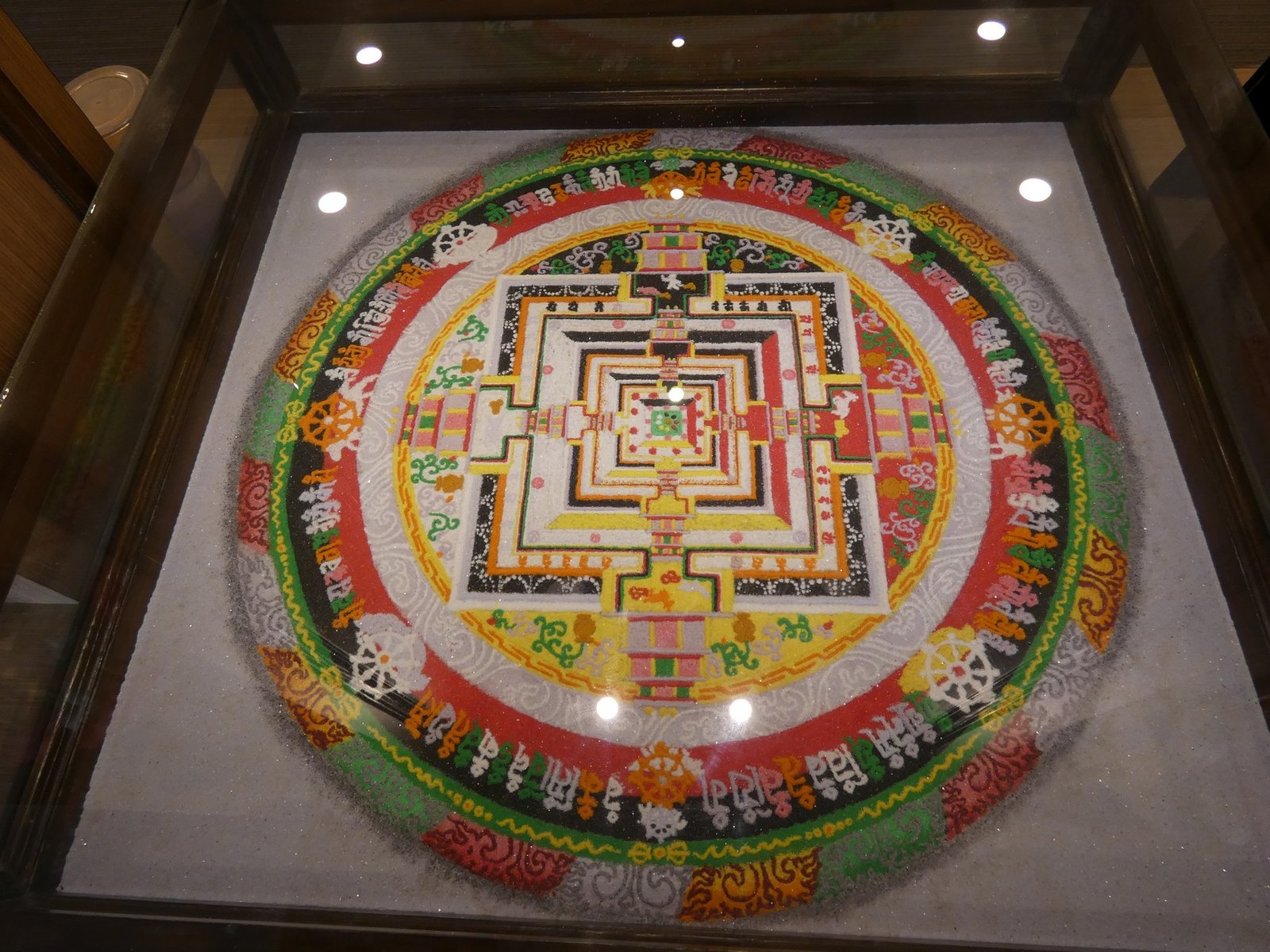
The next destination was the largest stupa in the world, Boudhanath Stupa. You couldn’t get inside, but we wandered around the area for a good while. We visited a local painting school, where they were producing versions of traditional Buddhist images such as the circle of life. The actual structure of the picture was looked up in a book with a couple of hundred traditional structures. Only the outside of the circle was completely free to be decorated. We were shown beginners, practitioners and masters versions of the images. The difference was the precision of the details. For the masters’ pictures, we were given magnifying glasses so we could see how incredibly detailed the patterns or animals were in the pictures. And each circle, doorway, animal and symbol had its own meaning. The last place we visited was a workshop where metal bowls of different sizes were produced. Smaller bowls were used for meditation. Their rims were rubbed with a kind of mallet, causing them to vibrate and produce a kind of humming sound, apparently to accompany meditation or recitation. The same thing was also demonstrated with a large bowl that held perhaps three litres of water. Although the bowl did not visually vibrate, it apparently did so at a very high frequency. The water in the bowl started to vibrate rapidly and after a while it looked like it was boiling and water was flying here and there over the rim. Bigger bowls were also used for medical treatments. I was the first volunteer victim and a big bowl was turned upside down on my head and then knocked over with a club. The sound was quite wild, but actually quite soothing. When the same was done to Pude, I realized that no noise was heard by outsiders. The bowl was also tilted so that it was in the palm of the performer’s hand. In this case, the hum could be heard clearly and a good quality handmade bowl can hum for three minutes with a single tap of the mallet. The bowls could also be used for massage, where the bowl was pressed and moved, for example against the back, and tapped more frequently. The strong vibration gave a surprisingly effective massage effect.

Boudhanath Stupa

After the cultural tour, we were taken to the hotel that the tour operator uses as its base. We were briefed about the upcoming trip and given the equipment provided by the tour operator, namely a duffel bag, a sleeping bag, an inner liner for the sleeping bag, a down jacket and a couple of rolls of toilet paper. The equipment was packed in the duffel bags and the rest of the space was filled with our own stuff and eventually given to the porters. In the evening there was a welcome dinner, which was held in a nearby restaurant and event space. Each night there was a traditional dance and music show for the tourists, but tonight there was also a local wedding party in the second wing. After a delicious dinner, we returned to the hotel.

Our guide Amrit and a welcome dinner

Sunday 6.10.2024

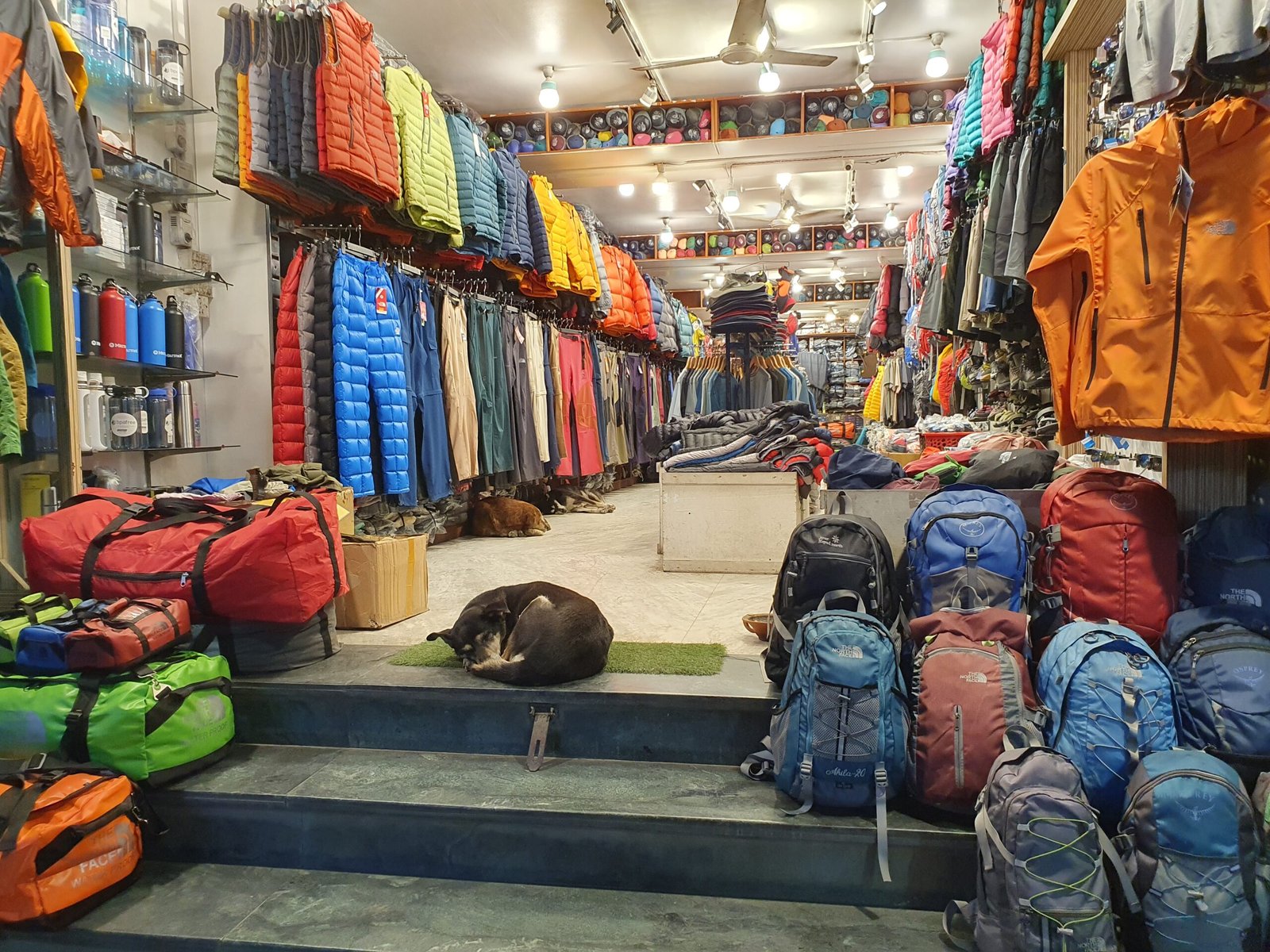
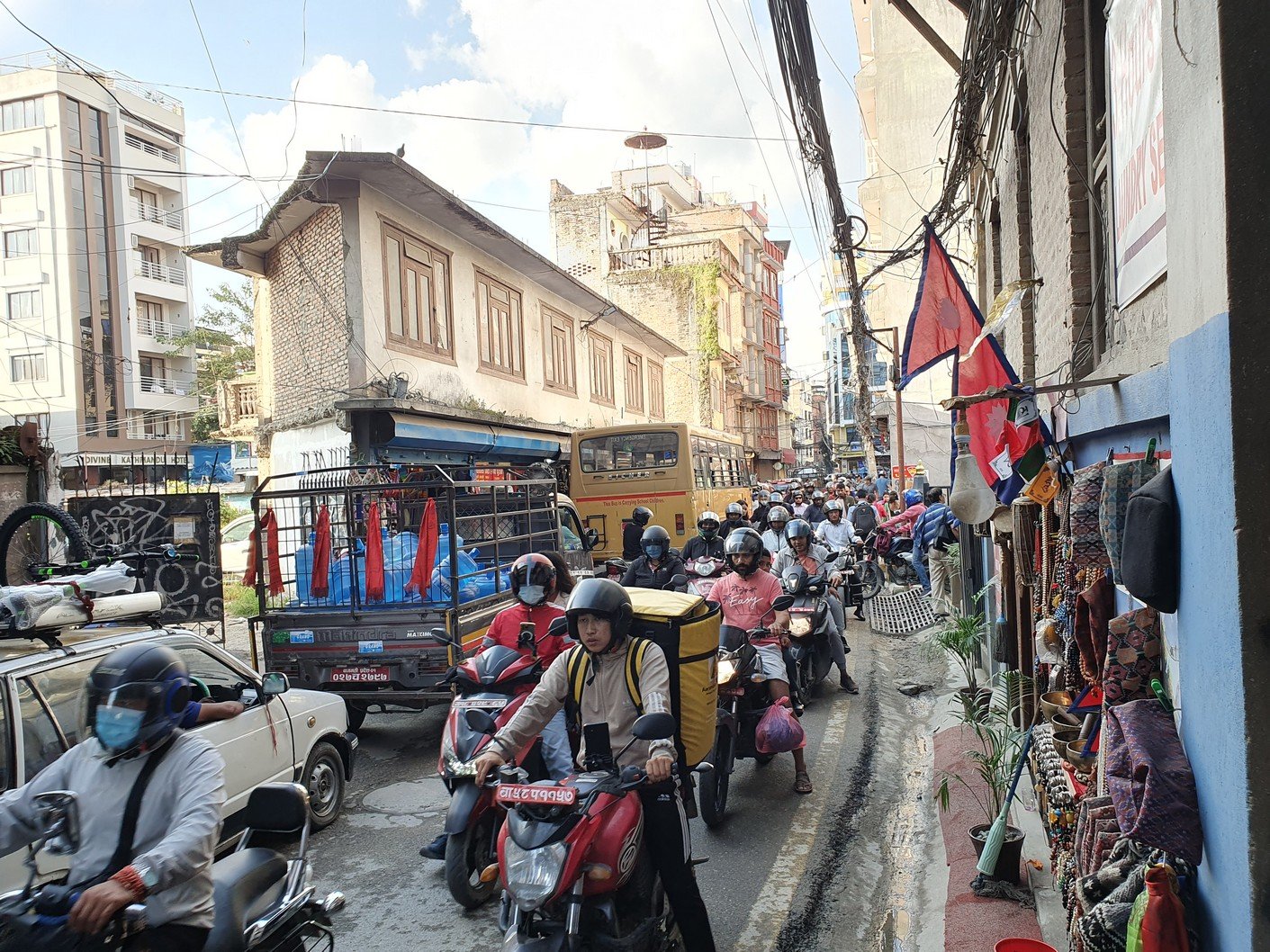
According to the original schedule, the city tour would have taken place on Sunday, but as we had already completed all the official formalities the day before, Sunday was a day off. First, I tried to get a new bracelet for my sports watch as the original bracelet had apparently frayed and snapped off. There were a few small watch shops nearby, where I found a rubber strap of the right width. Surprisingly, the guy at the place couldn’t get the bracelet holders off the Garmin watch, although presumably he should have been able to unscrew them. I’ll just have to get on with a pocket watch. Next, I went to pick up another pair of short and long sleeve hiking shirts. The shirts said Patagonia and North Face on the front, but they weren’t authentic. But I guess they’ll do the job as daily wear shirts. The last task was to get a local SIM card for data use. There are two major operators in Nepal, the state-owned NCL and the private Ncell. The former had better coverage along the route, so I tried to ask for one at a few mobile phone kiosks that are everywhere. Surprisingly, they only sold Ncell. I returned to the hotel and asked the manager where I could get a NCL card. After a brief discussion with a colleague, he said he would take me to a place where I could get one. We headed towards the front door and I thought we’d go somewhere nearby. But the manager grabbed a helmet from the shelf in the hallway, which gave me a real ‘oh shit’ feeling. I was about to say to the guy that I’m actually fine with a Ncell card from the kiosk at the roundabout. But the manager had already jumped on the scooter, so I had to sit in the back. In Nepal, wearing a helmet was made compulsory years ago, but the helmet ban caused problems as almost everyone was driving with a passenger. Or the whole family. Nowadays all drivers wear helmets, but otherwise it’s a free-for-all. Now I can tick off riding a scooter in the chaotic traffic of Kathmandu from my bucket list. In reality, the scooter is so low that your feet reach the ground if needed and the pace of the driving is quite slow in the congested traffic, so a potential minor crash would not necessarily mean an instant death. We drove a surprisingly long distance across Thamel and I assumed we were going to some big cell phone store. However, we ended up at a kiosk somewhat similar to the ones on every block. However, I got an NTC card valid for 30 days with 100 gigs of data for 1600 rupees, or about 11 euros. Time will tell how functional and useful it is in the end, but it doesn’t cost much to try.

After sorting out the SIM card, I stayed in the Thamel area for lunch and a quick wander around. Back at the hotel, I had to finish packing. Things for the porters went in the gear bag, electronics and a few changes of clothes in the daypack, and clothes to be stored in Kathmandu in my own backpack. In the evening we went to the Fire&Ice restaurant for some good pizzas.

There are quite a lot of dogs, but they are calm and not disturbed
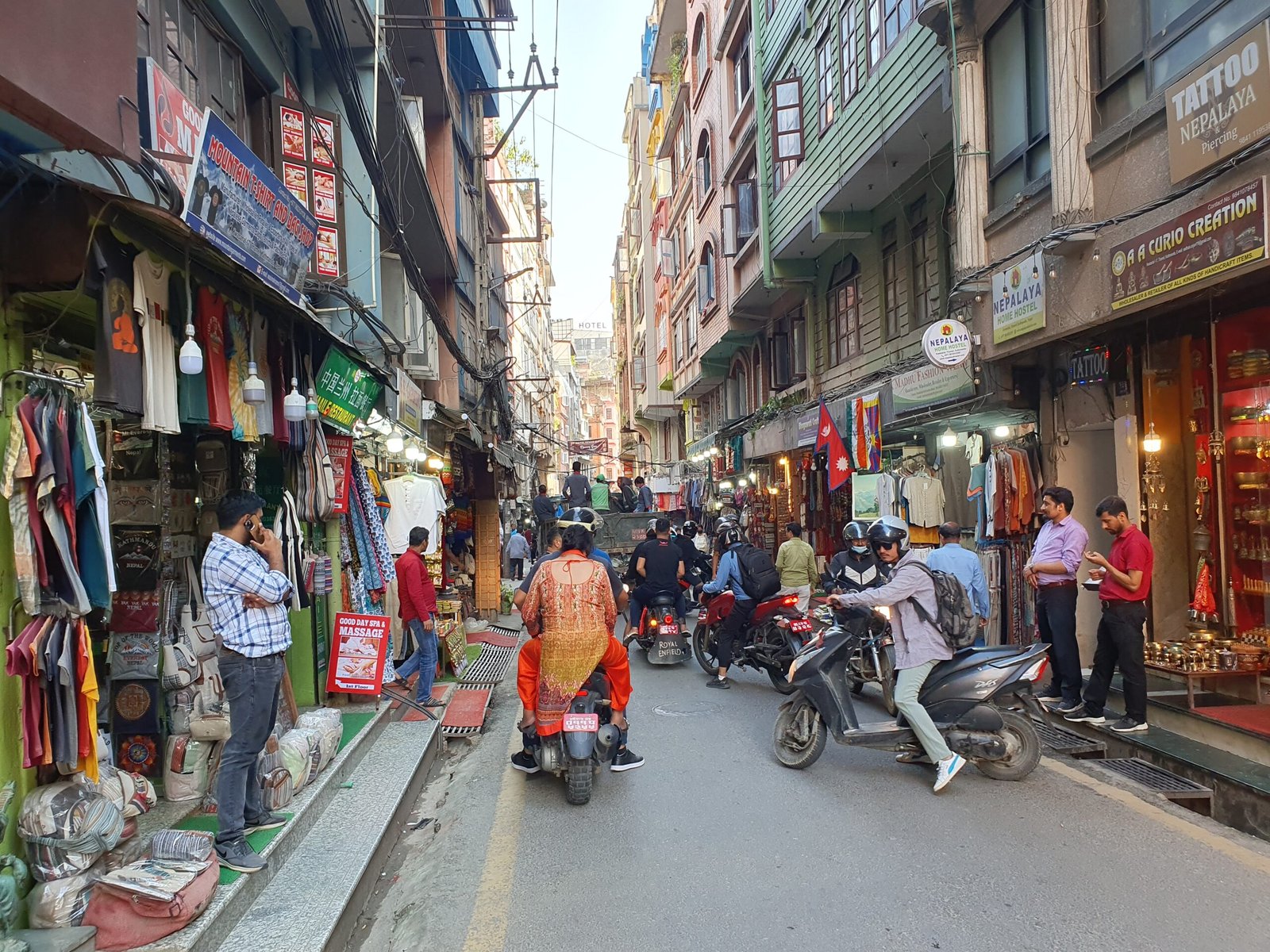
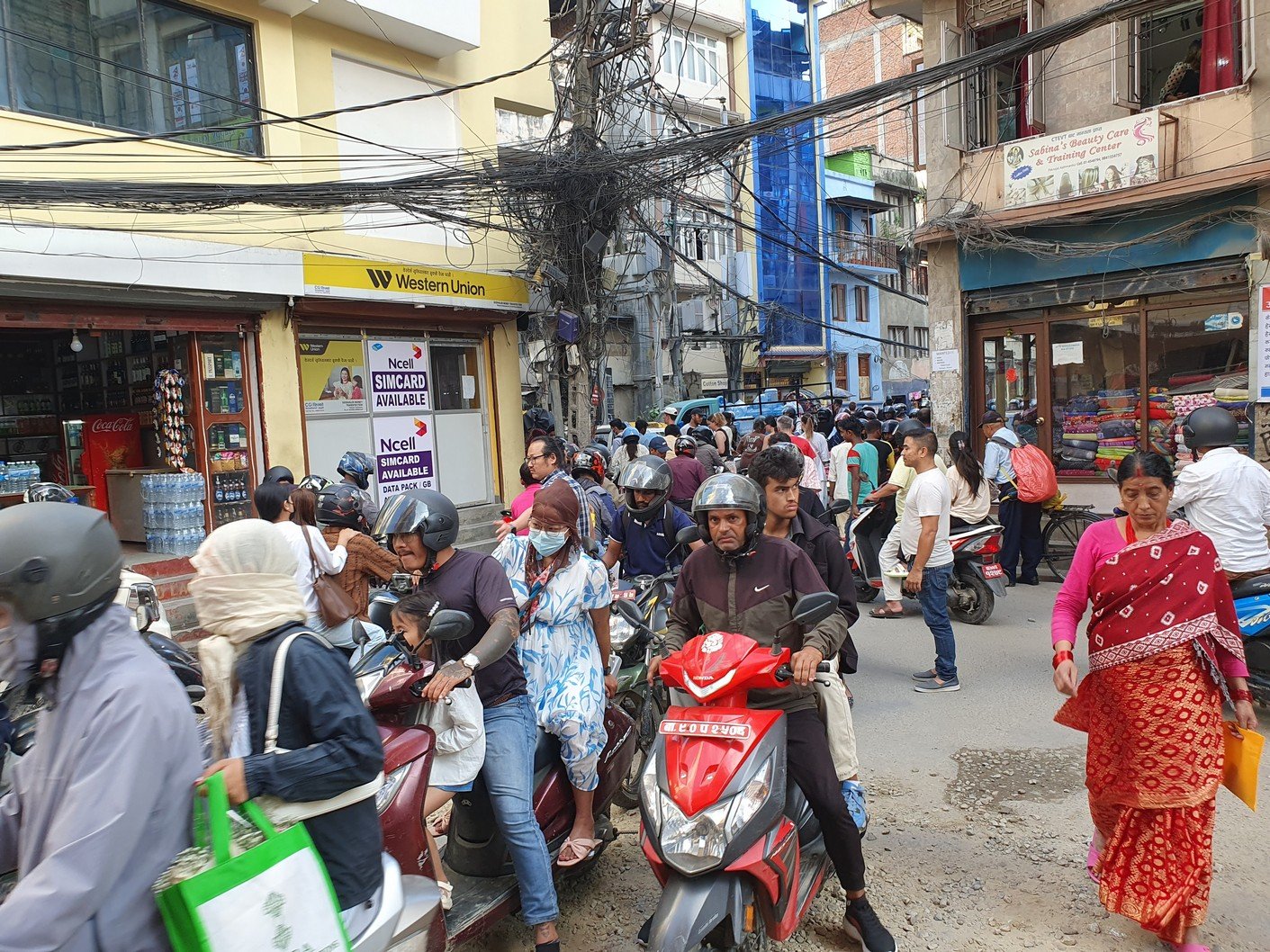
There are plenty of motorcycles
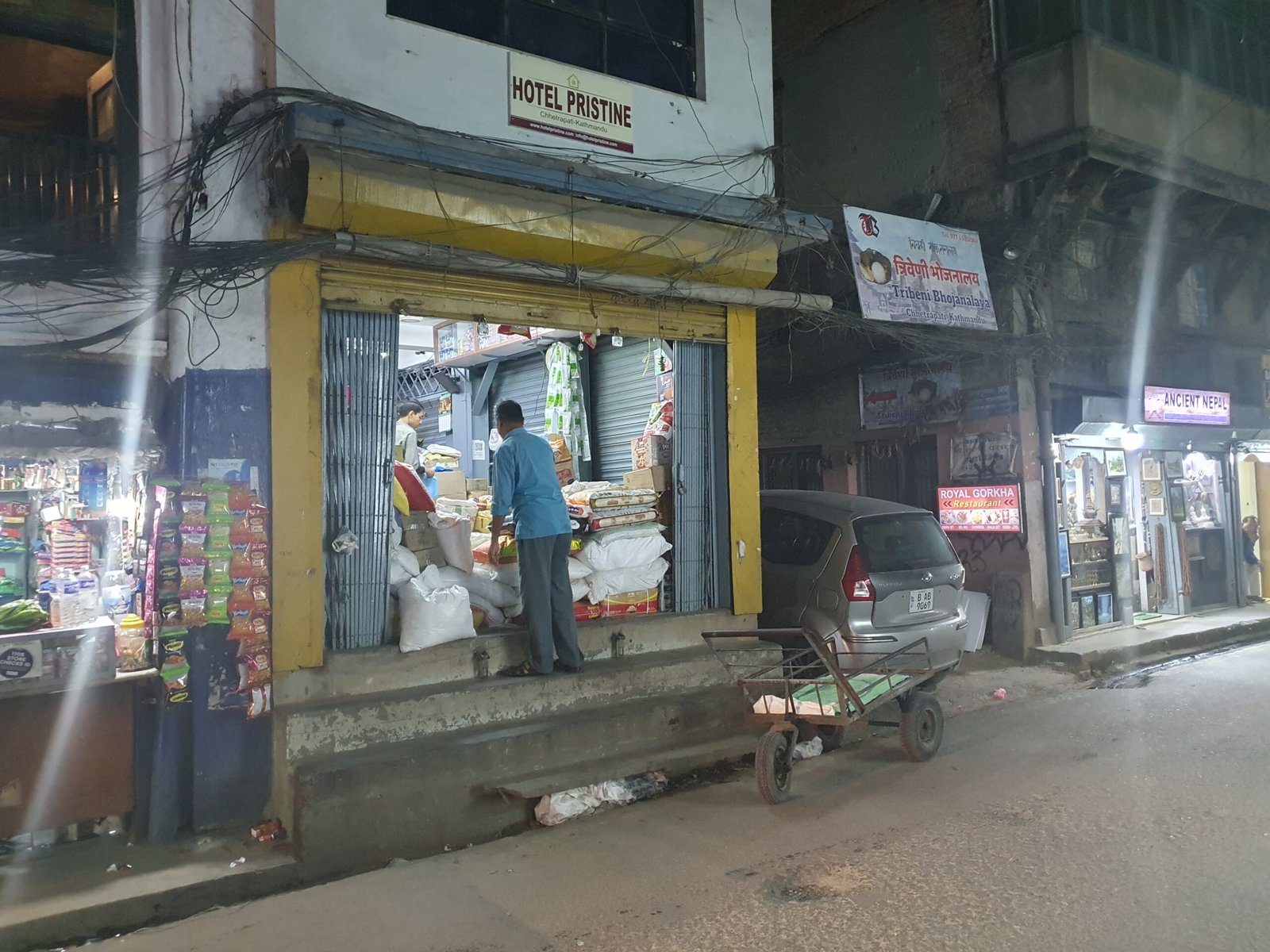
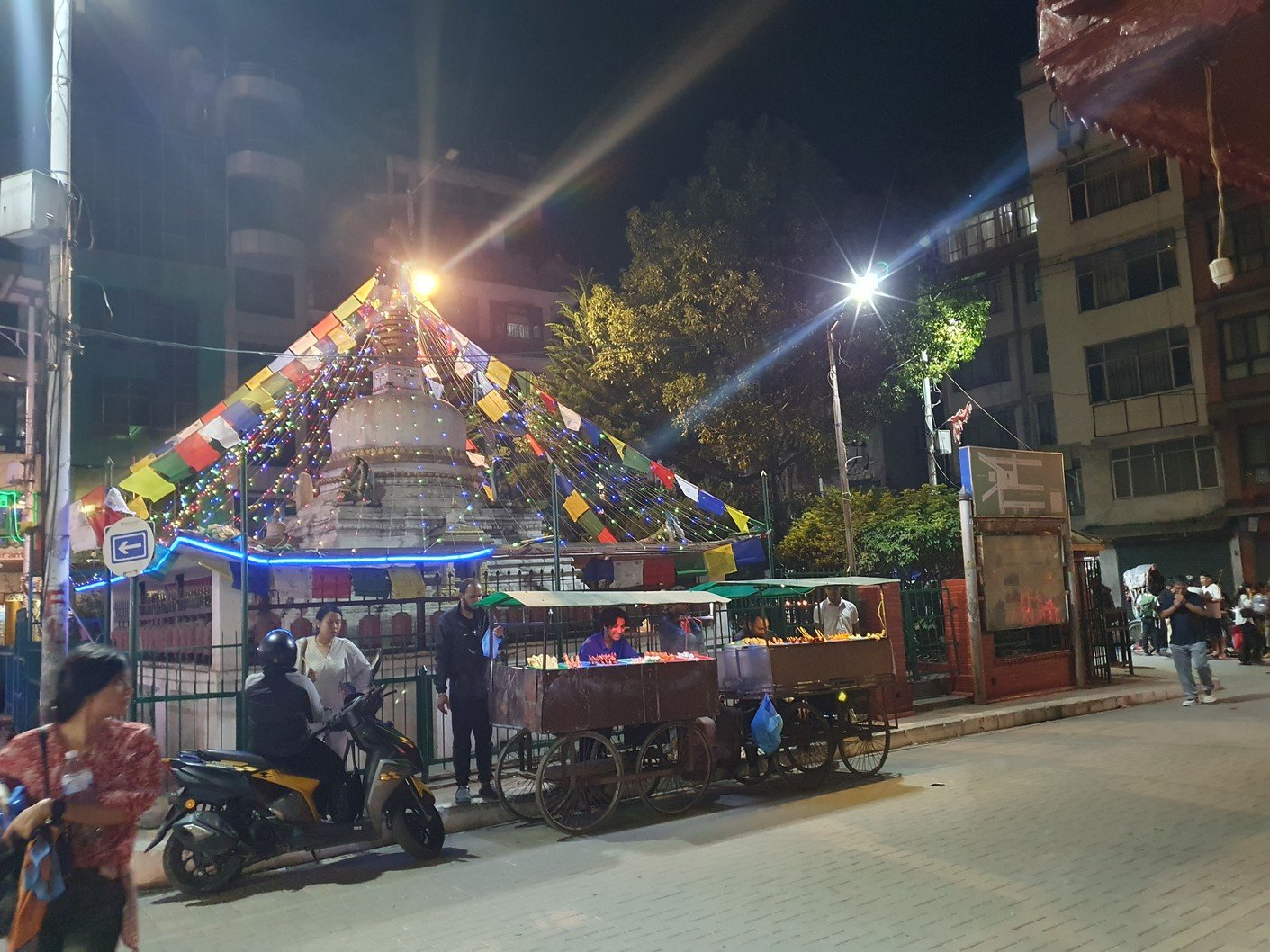
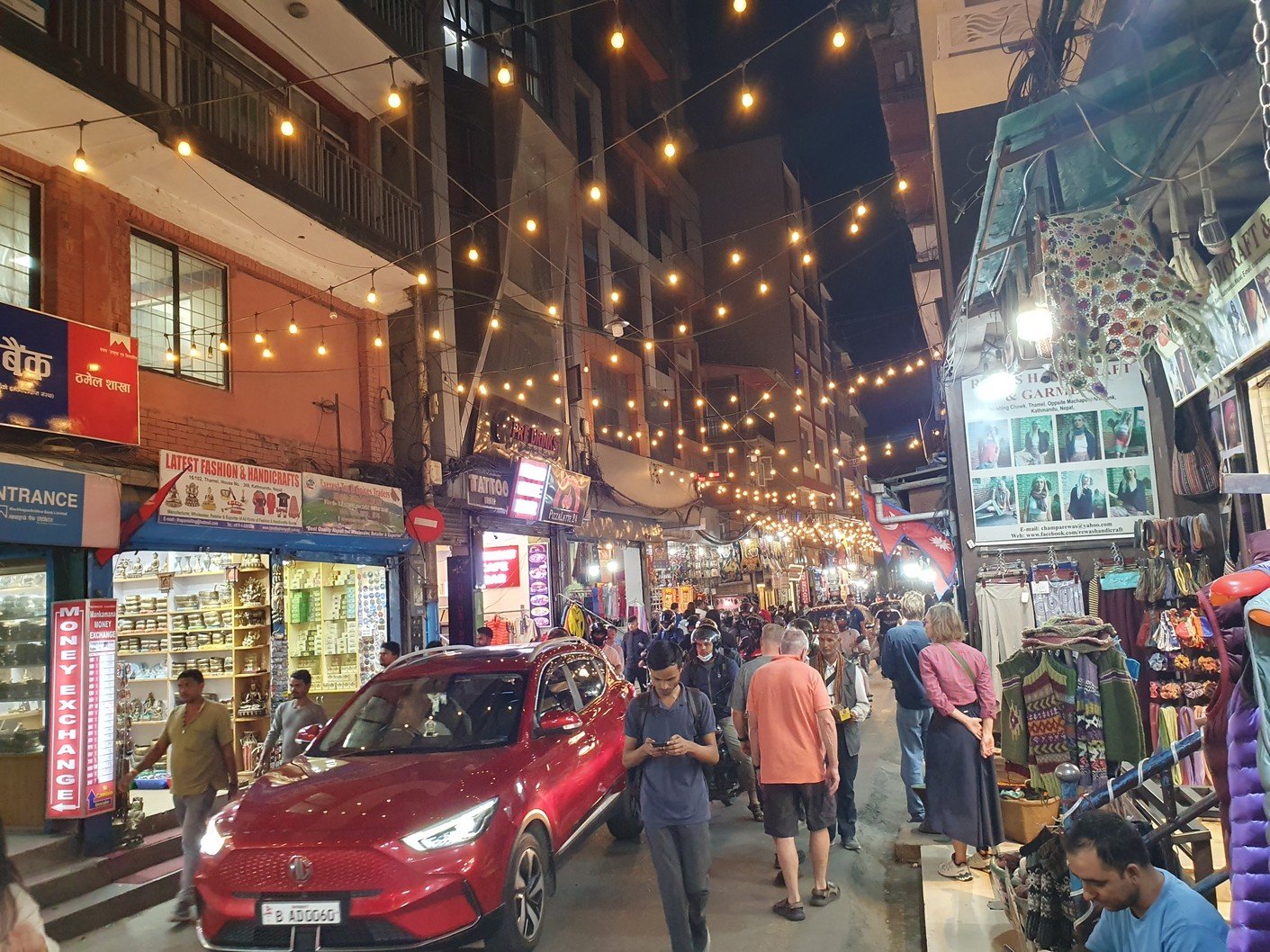
The Thamel area is full of shops and restaurants
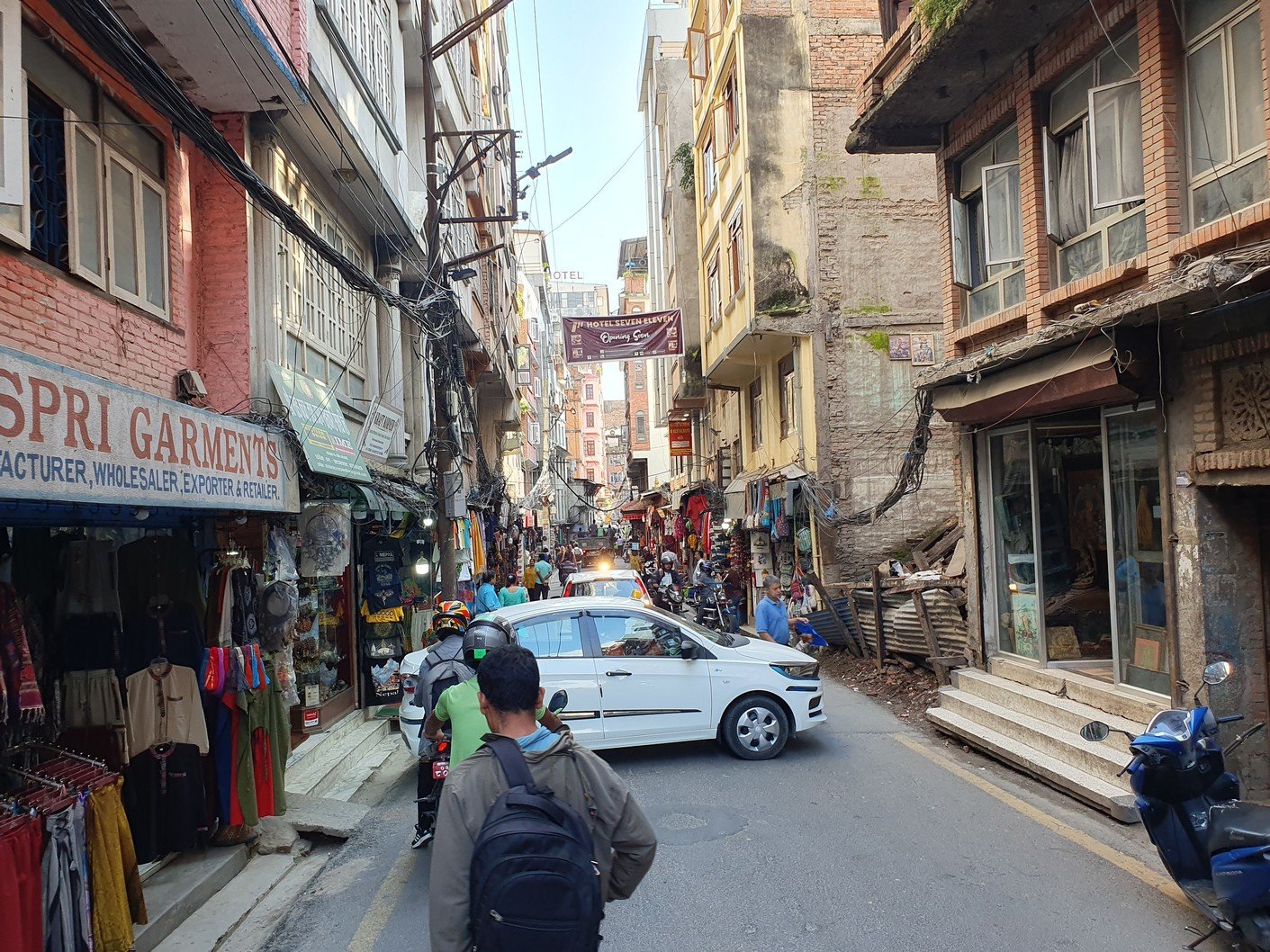
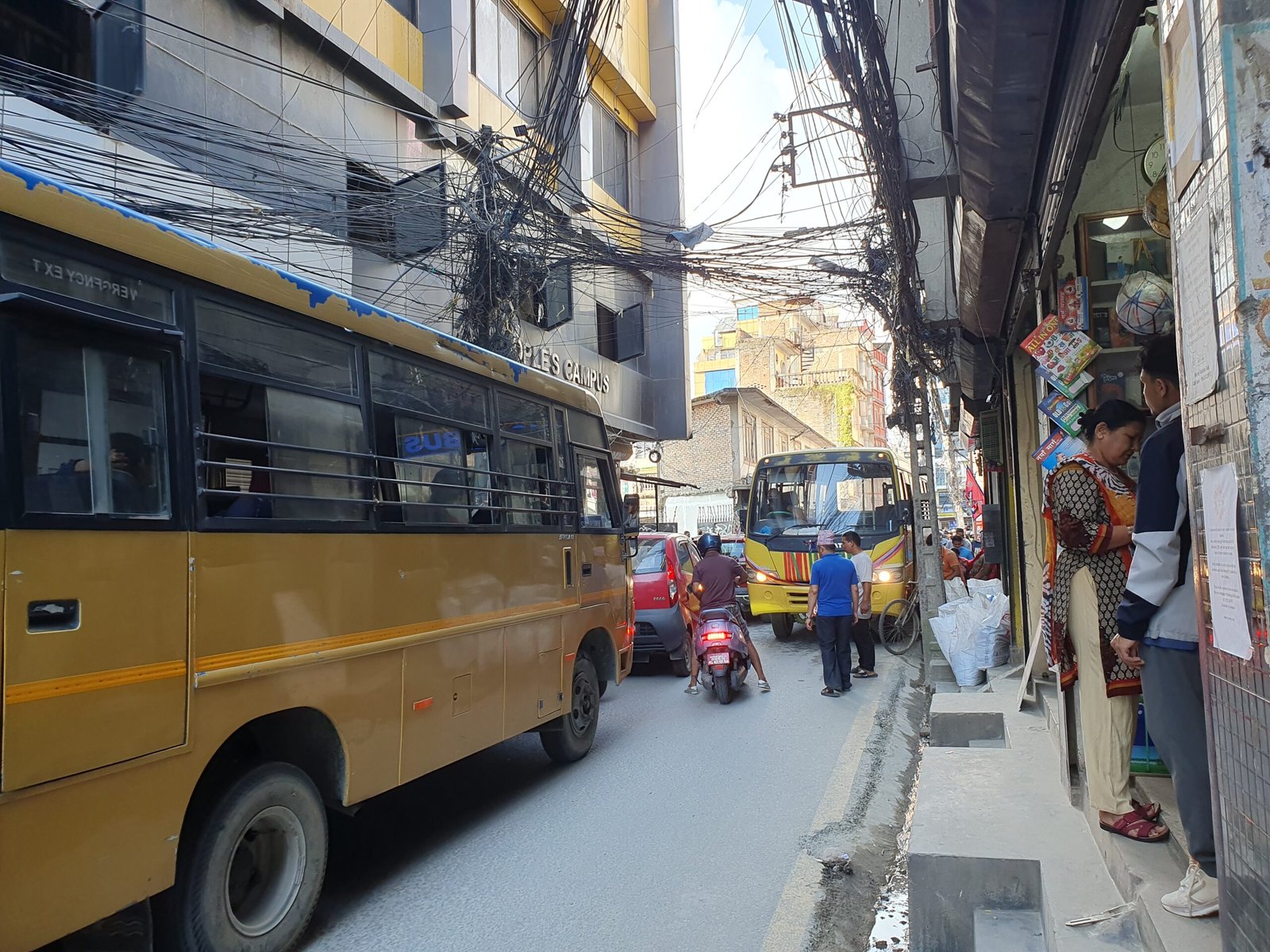
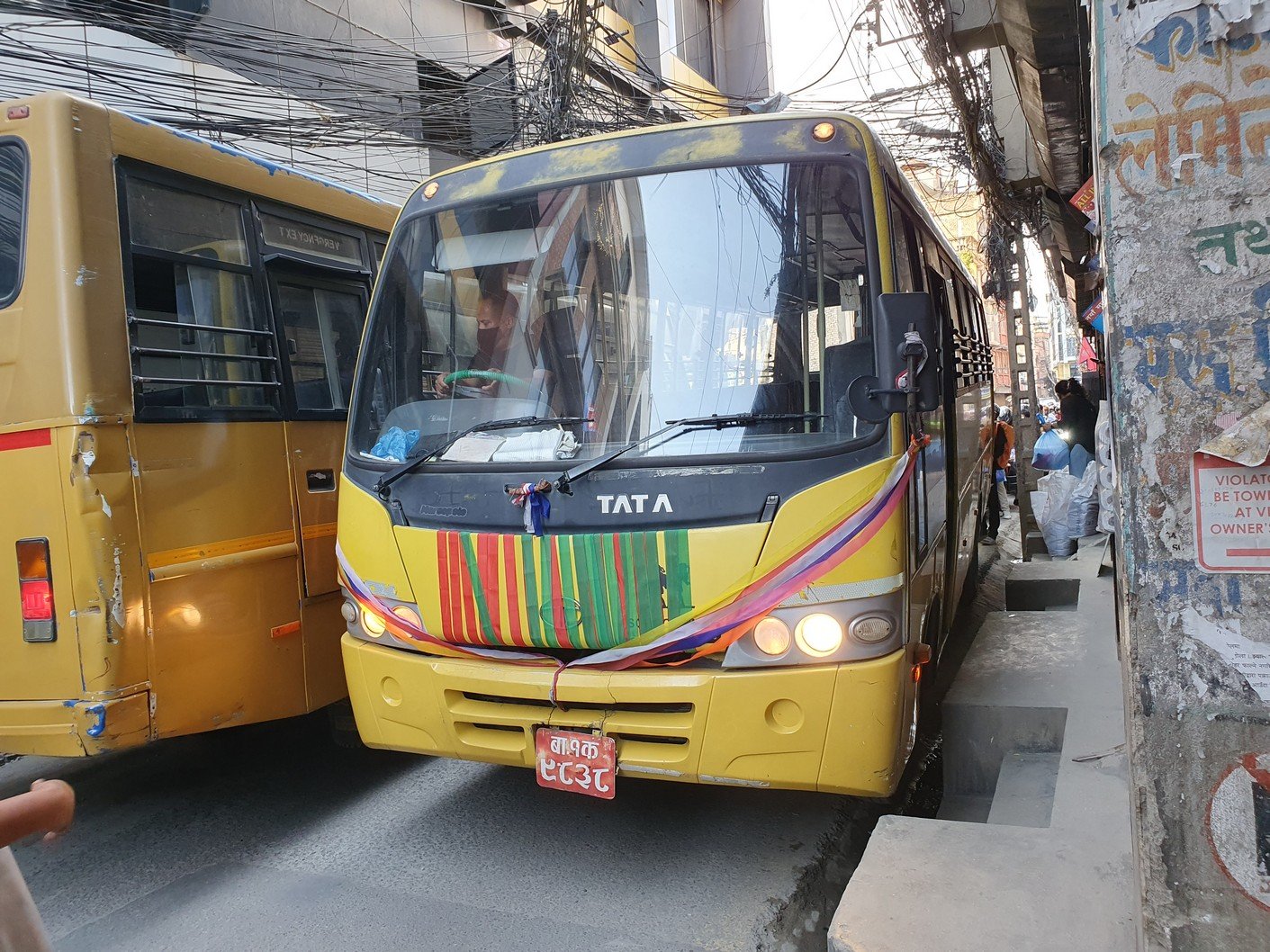
The narrow streets lead to congestion
An U-turn is easier said than done
Nothing good will come of this
You couldn't fit even a newspaper between the buses or between the bumper and the roadside
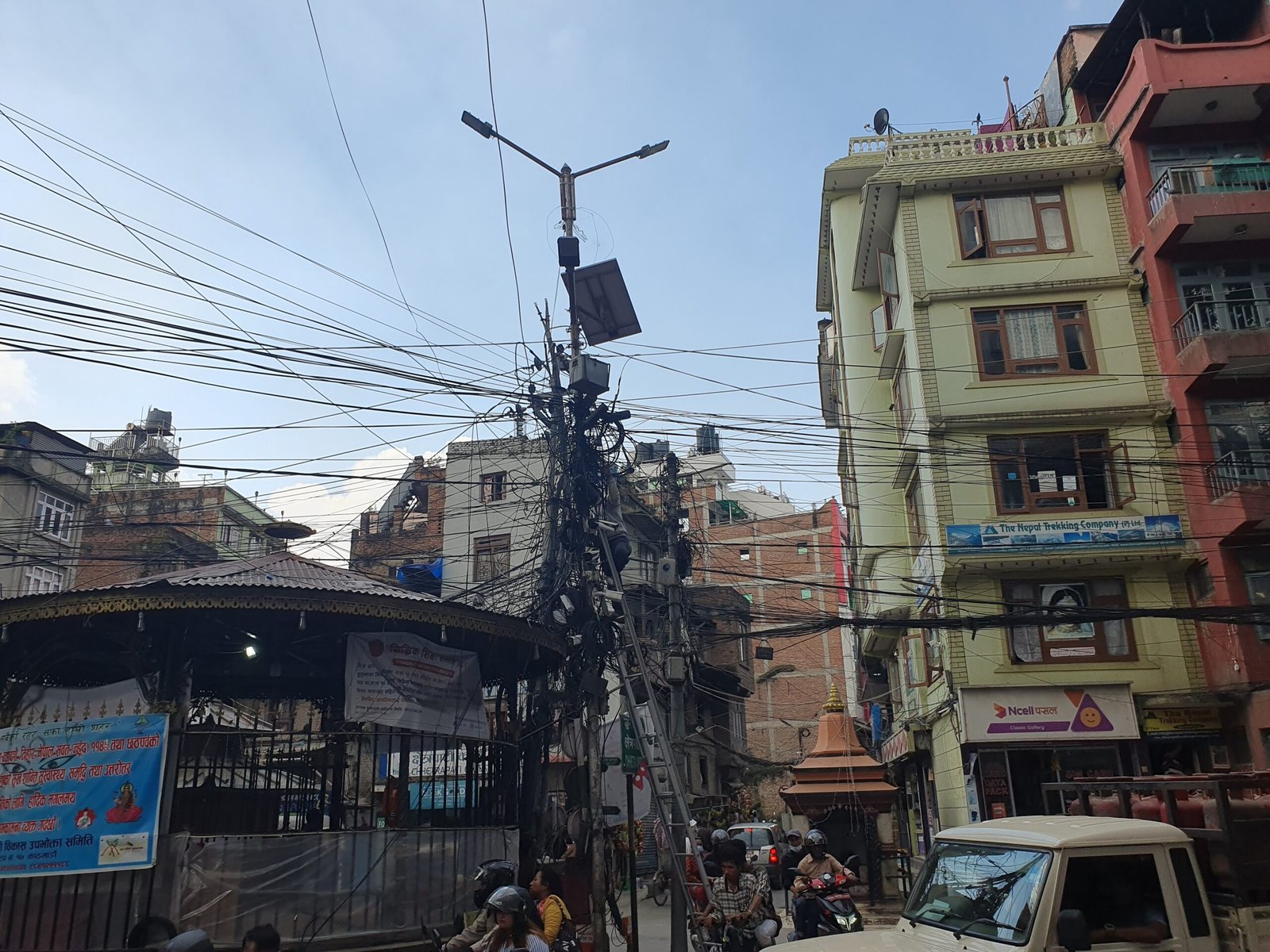
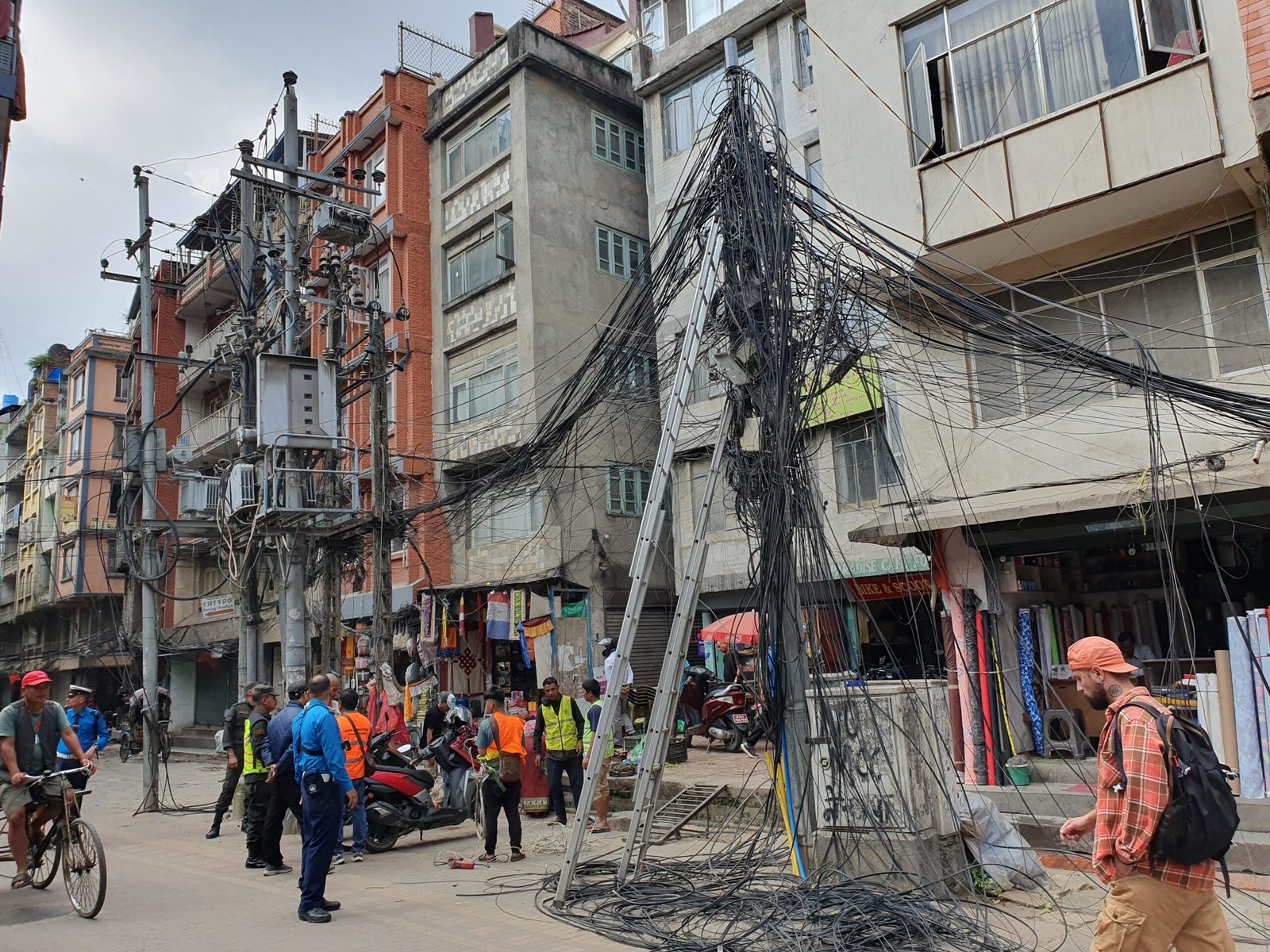
Ladders, a maintenance man and an insane mess
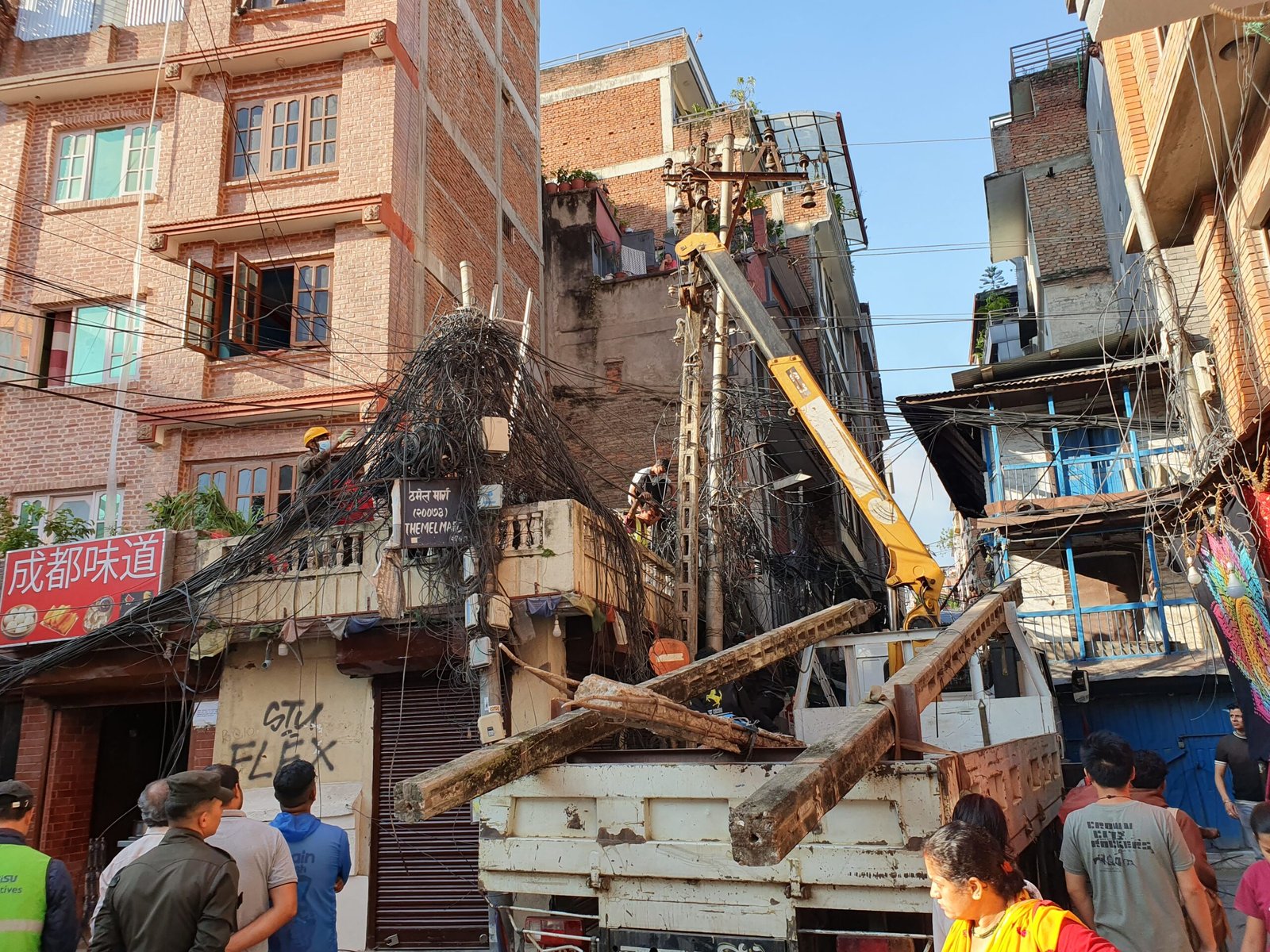
The pole may be replaced, but the mess remains

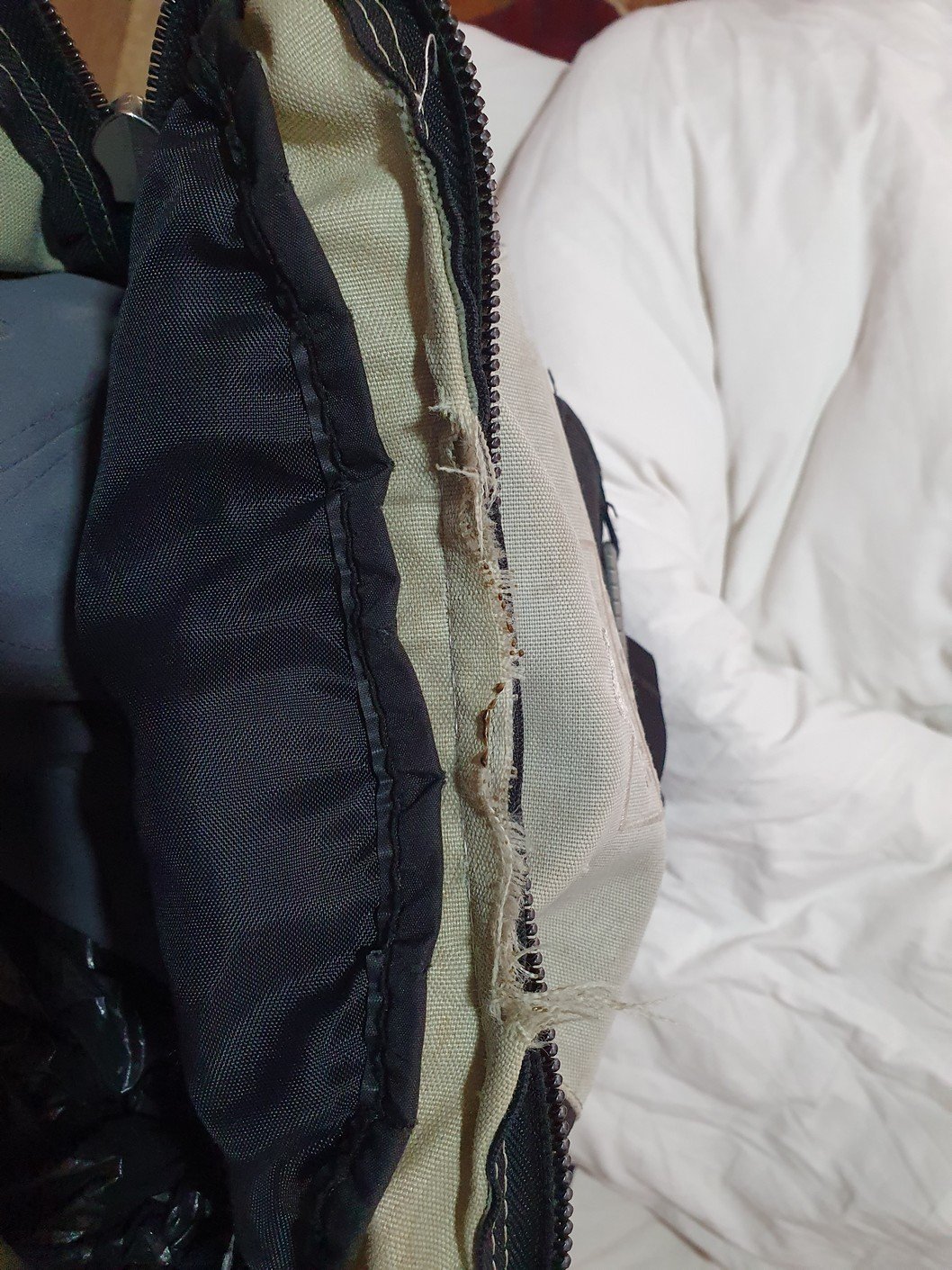
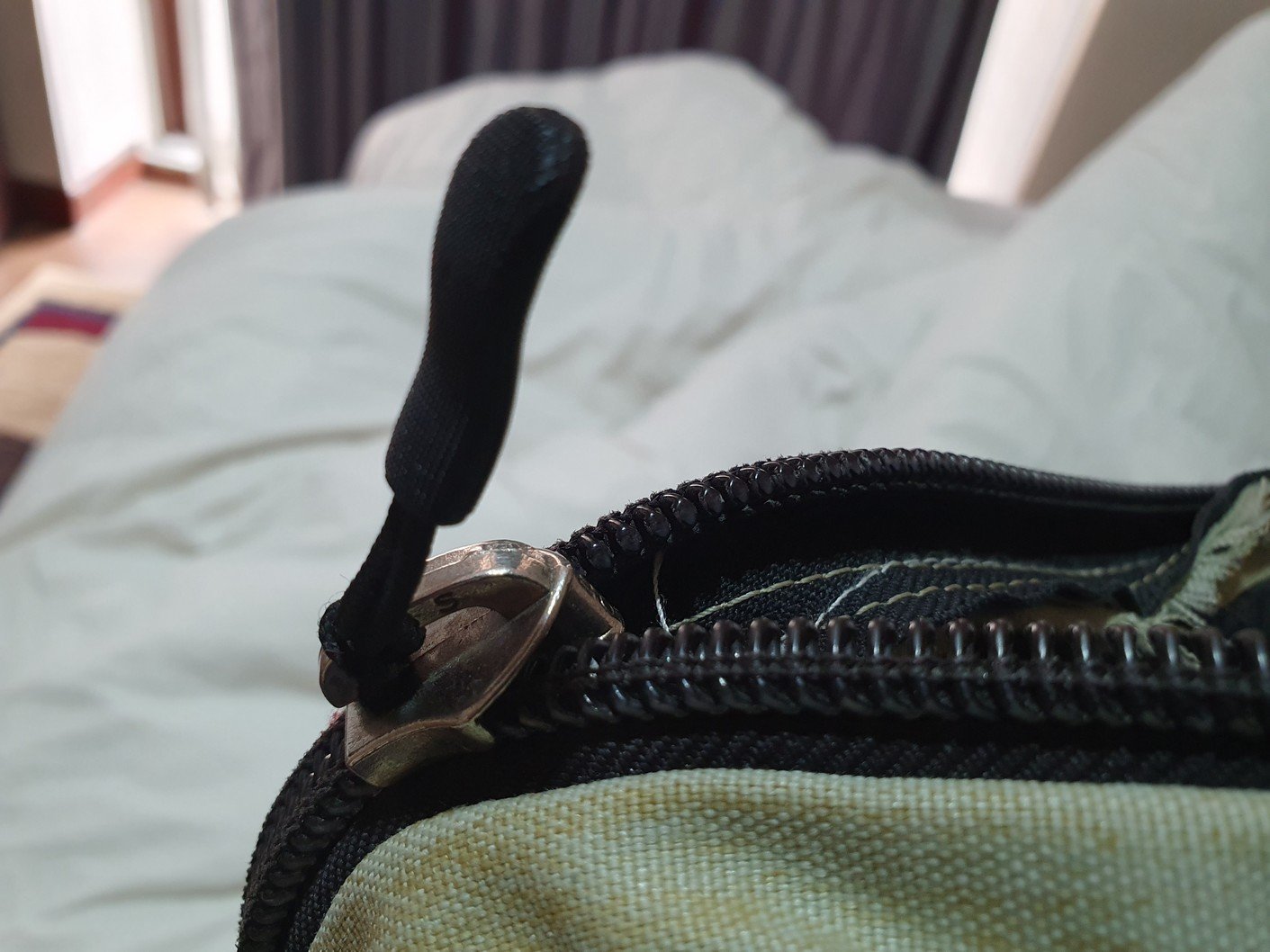
When I was packing my things at the hotel, I noticed that the fabric of the daypack had torn quite badly at the top. I don’t understand what had caused it, as the backpack had been carried as hand luggage on the plane and the items in the backpack do not put any weight on the top of the backpack. I asked the hotel staff if there was a seamstress nearby who could fix the backpack. The woman who was serving breakfast examined the backpack and asked if the missing zipper handles needed to be replaced also. I pointed to another seam where the stitching was partially ripped and asked how much it would cost to fix everything. The estimate was 200 rupees, or one euro and 40 cents. The backpack went somewhere to be repaired and I got it back in the evening, repaired. The price estimate didn’t change along the way, so I paid just over a euro for everything. I doubt it took an experienced seamstress many minutes to make the repairs, but still, the value for money was excellent.

The fabric was folded and sewn almost the entire width of the top of the backpack
The zippers on both sides had new handles
Nepalese rupees. The euro is just over 140 rupees. A five rupee note is worth about three sheets of toilet paper. The largest banknote is 1000 rupees, which is about 7 euros.

Leave a Reply

Your email address will not be published. Required fields are marked *