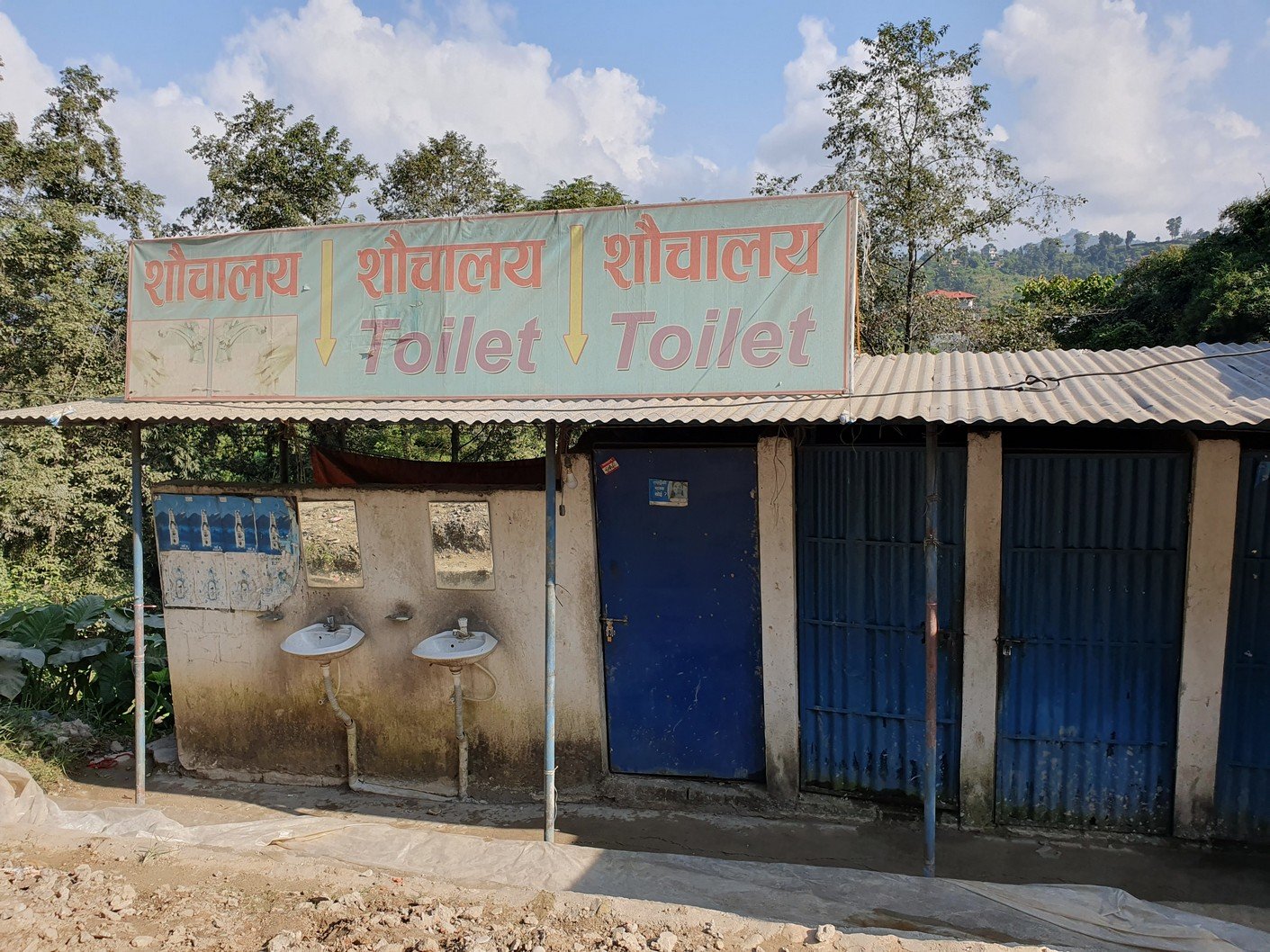
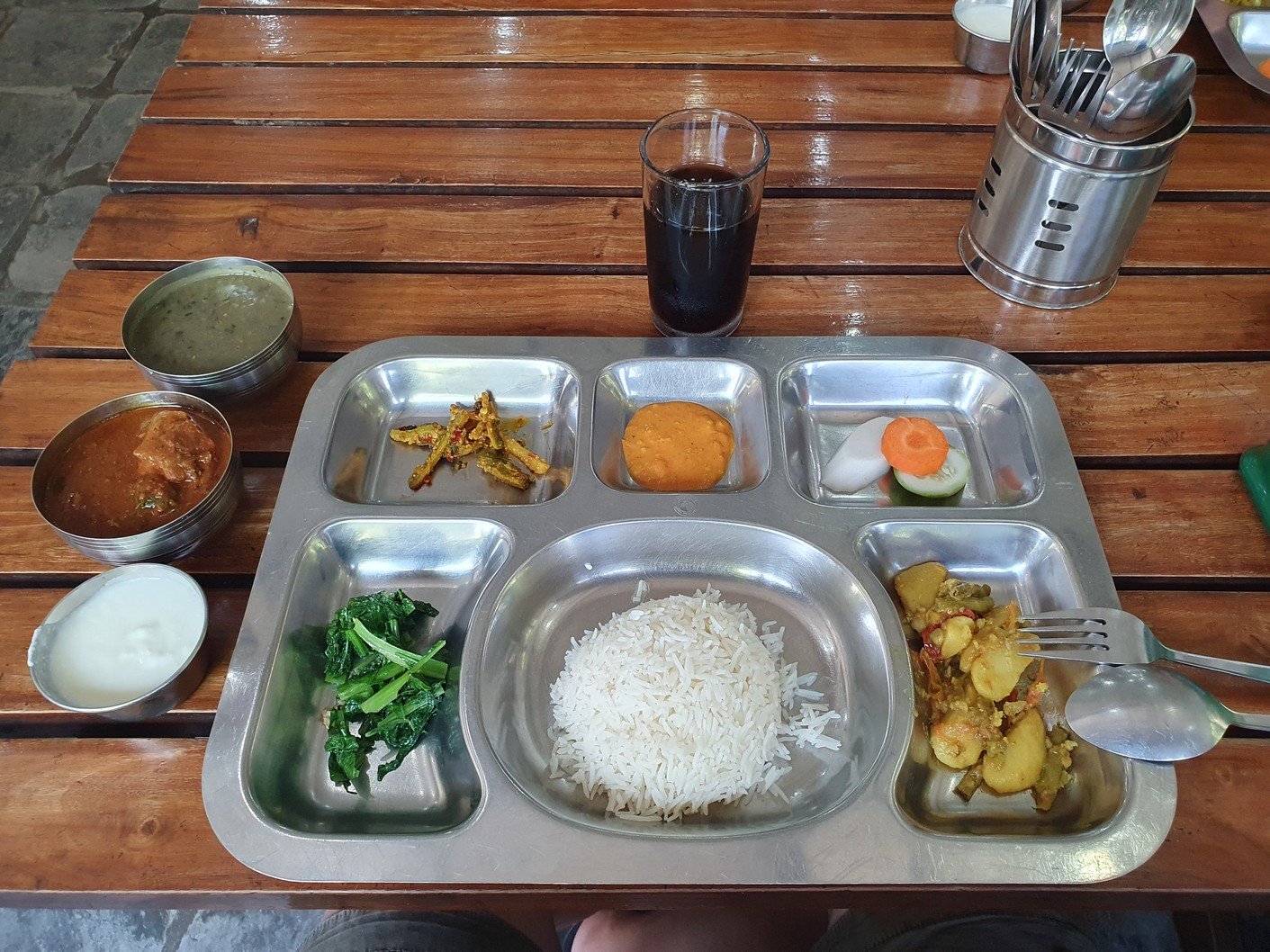
On Monday we set off towards the starting point of the Annapurna circuit. Breakfast was at 6:30 and we set off at exactly 7:00. In the minibus, apart from us, there was a driver, our guide, our two porters and apparently a local family who were supposedly being dropped off at a temple three hours away. Traffic was already busy in the morning, but at least it was moving forward, unlike when we came from the airport. Kathmandu’s urban area spreads many kilometers in all directions, which was already clear from the plane window. We stopped at a petrol station on the outskirts of the city, after which I thought we’d start moving a bit faster. But we didn’t, quite the opposite. We were quite high up, and there was a long winding road down into the valley ahead of us. The road was completely blocked by buses and lorries going in both directions, and occasional single-lane sections for all sorts of reasons. The floods of a week ago had wreaked havoc here and although the road had been technically cleared, in places it was just a track over unevenly compressed clay or the lanes were much narrower than normal. After a few hours there was a toilet break and a couple of hours later it was lunch time. The temple ‘three hours’ away had not yet come up, as the local family was still with us. After lunch we eventually arrived at the temple. It was on the other side of the valley at the top of a hill, but there was a chairlift to get there.
Fueling up for the long day
Recent floods had damaged the hilly road outside Kathmandu
Lunch break
Chairlift to the temple
Checkpoint for hiking permits
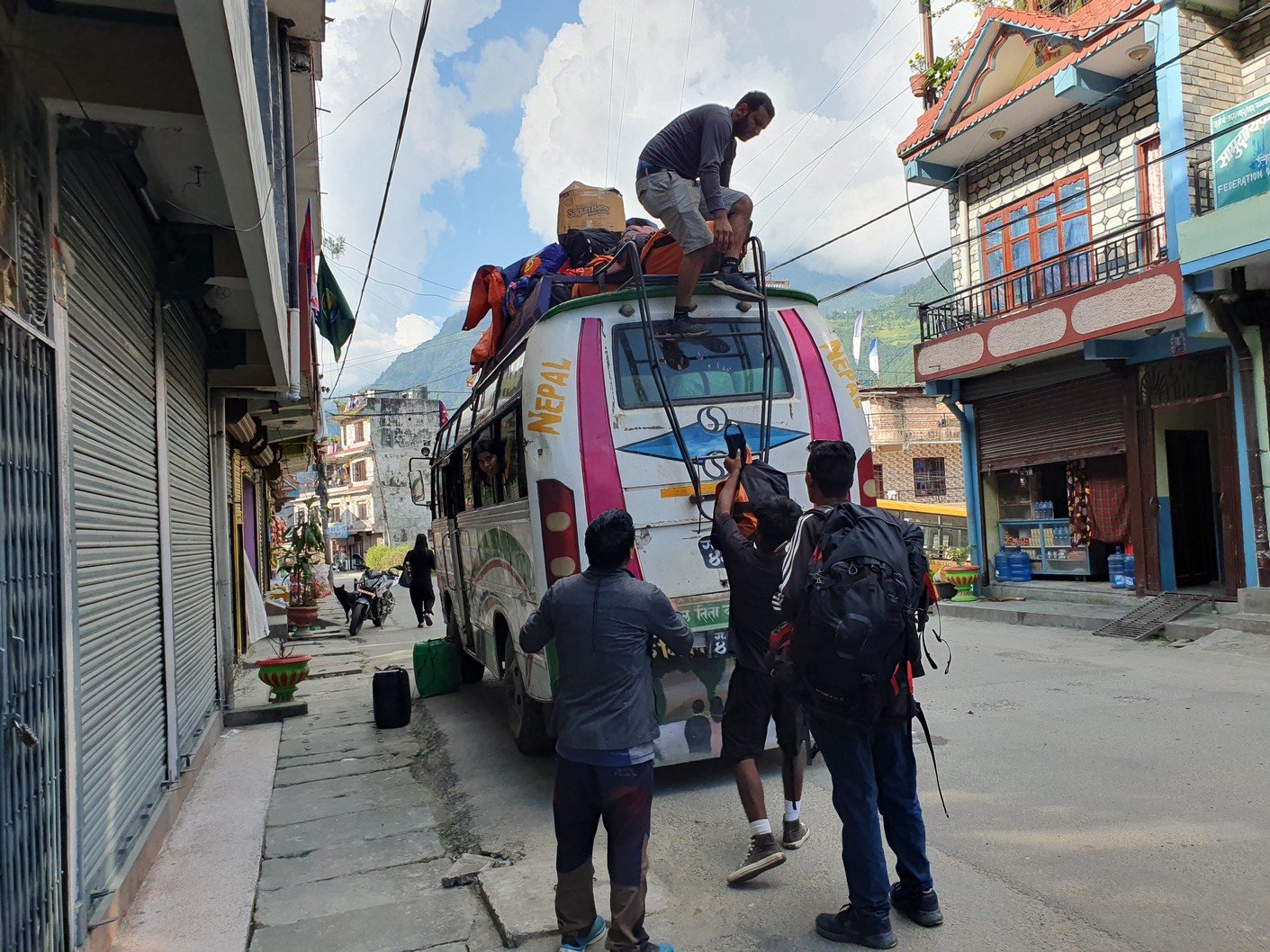
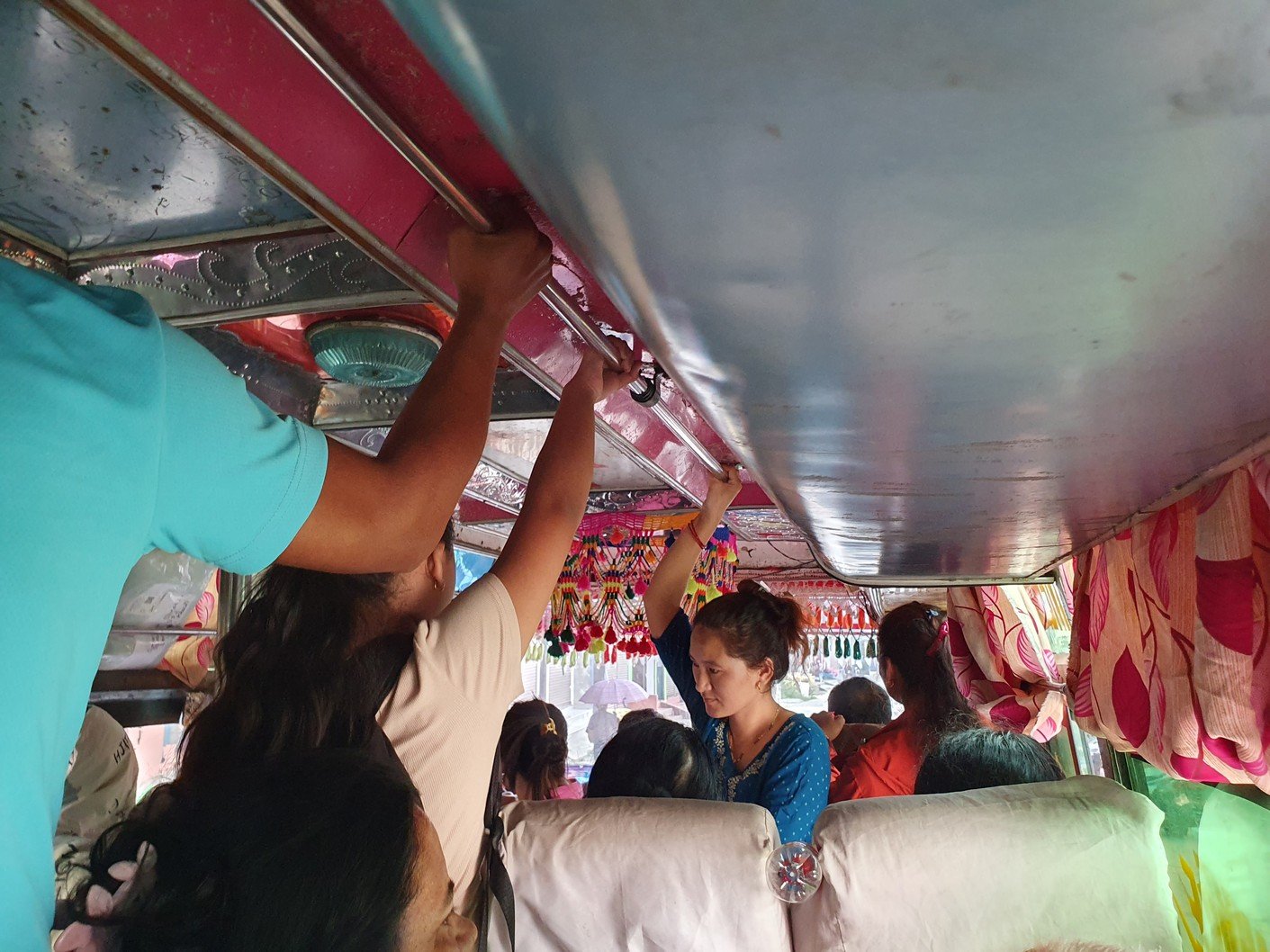
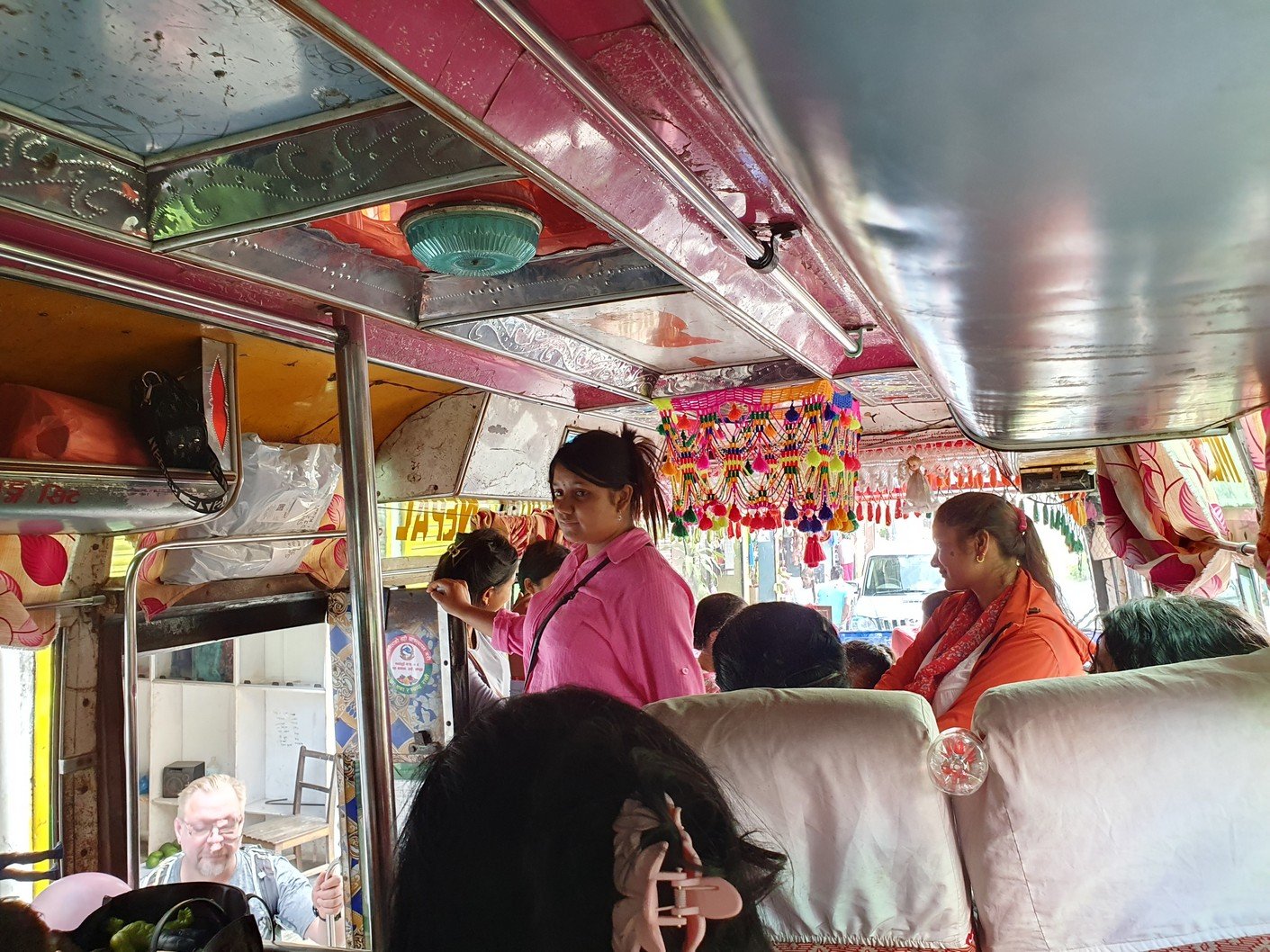
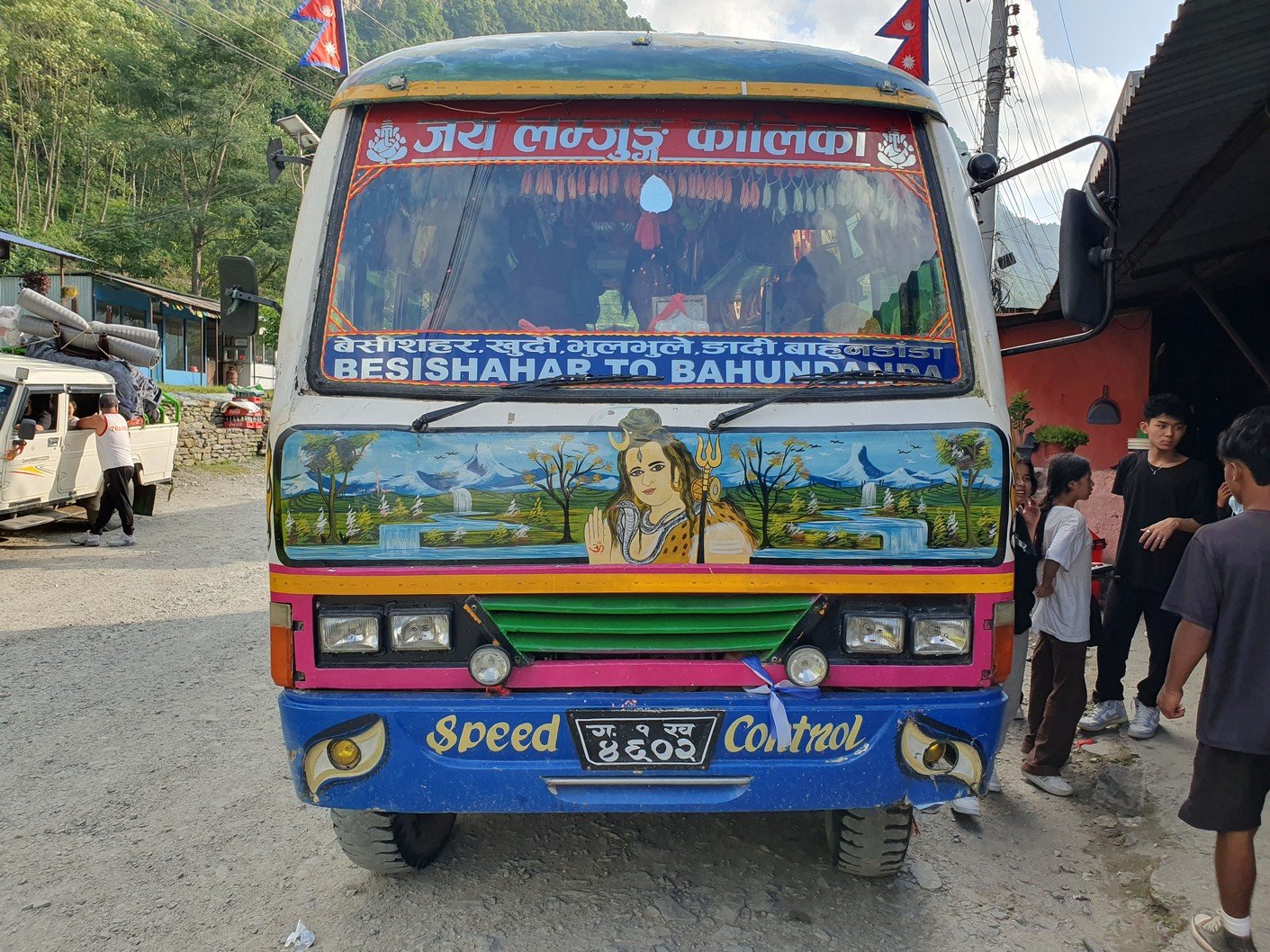
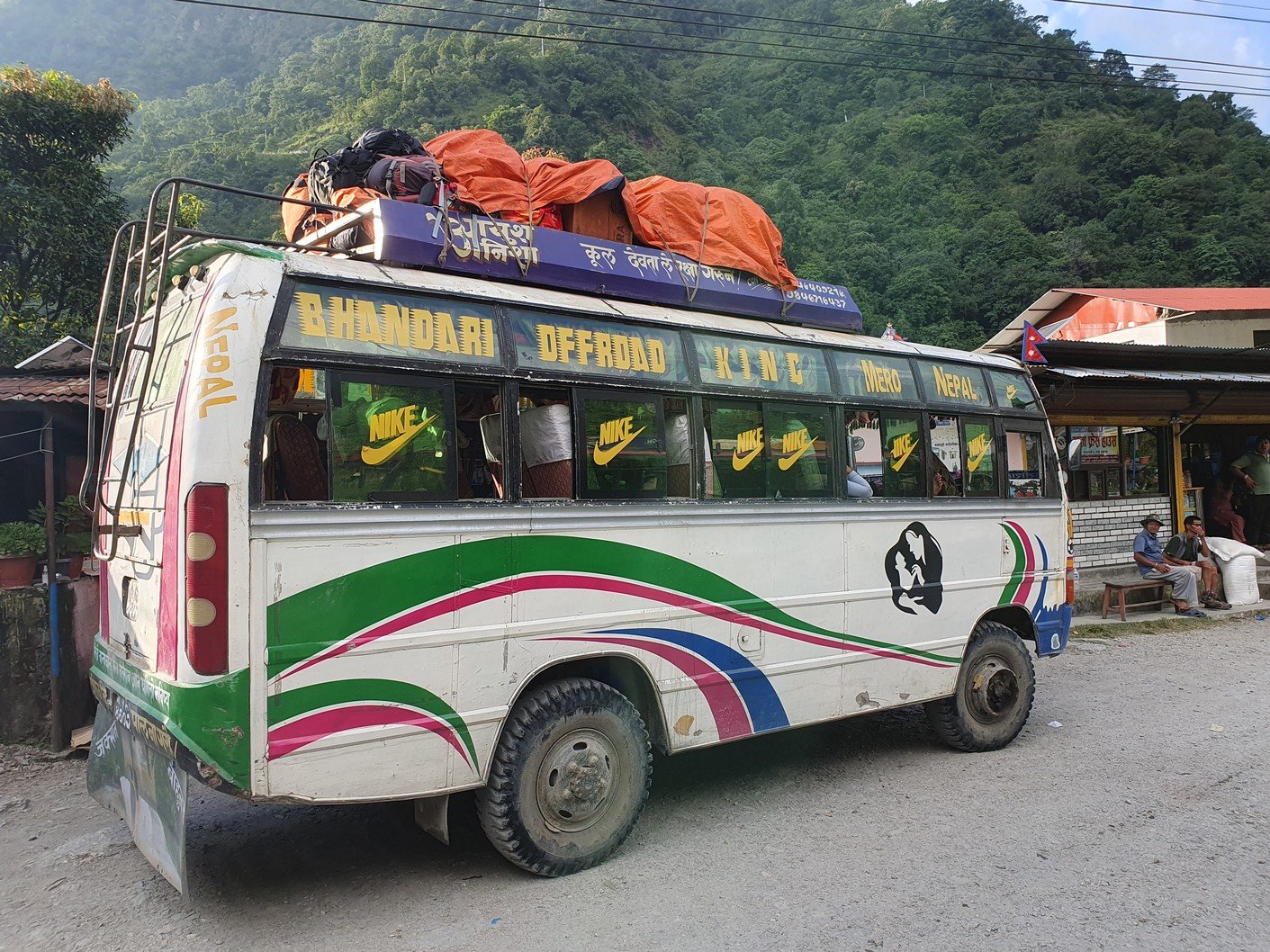
Our journey continued slowly towards Besisahar. Our driver and guide began to be in increasingly frequent telephone contact with someone, and the names of the villages through which we were driving could be picked up from the conversation. It seemed that we were getting in a hurry to catch the local bus. Eventually, at around 3pm, we arrived in Besisahar, where a large crowd of locals and a wild-looking little bus were waiting. Our equipment bags were tied on the roof, which was already packed to the brim, and we crammed into the bus. I asked the guide how long the bus had been waiting for us. An hour and a half, was the reply. I asked if we couldn’t have taken another bus, but this was the only one that afternoon, he said.
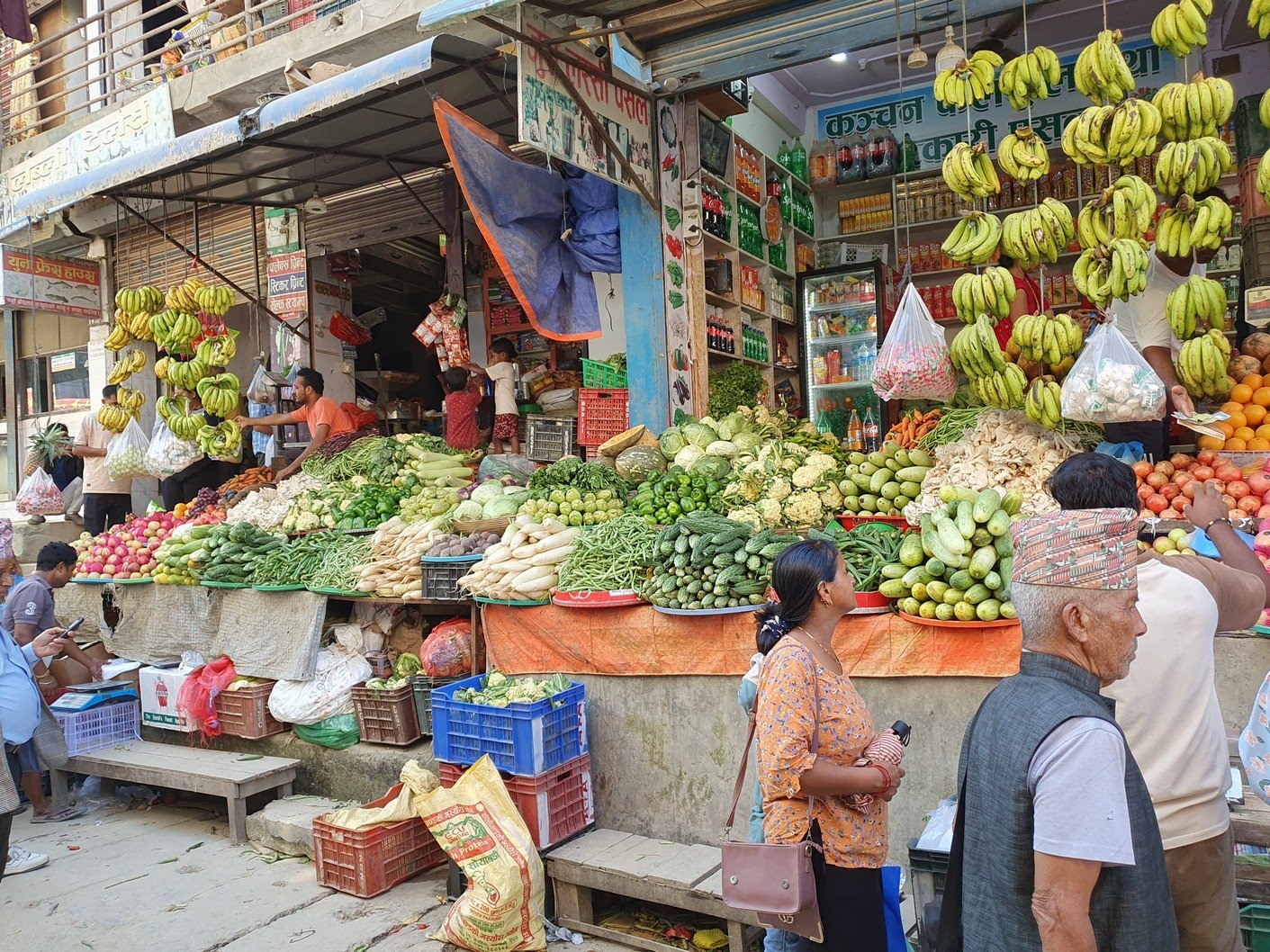
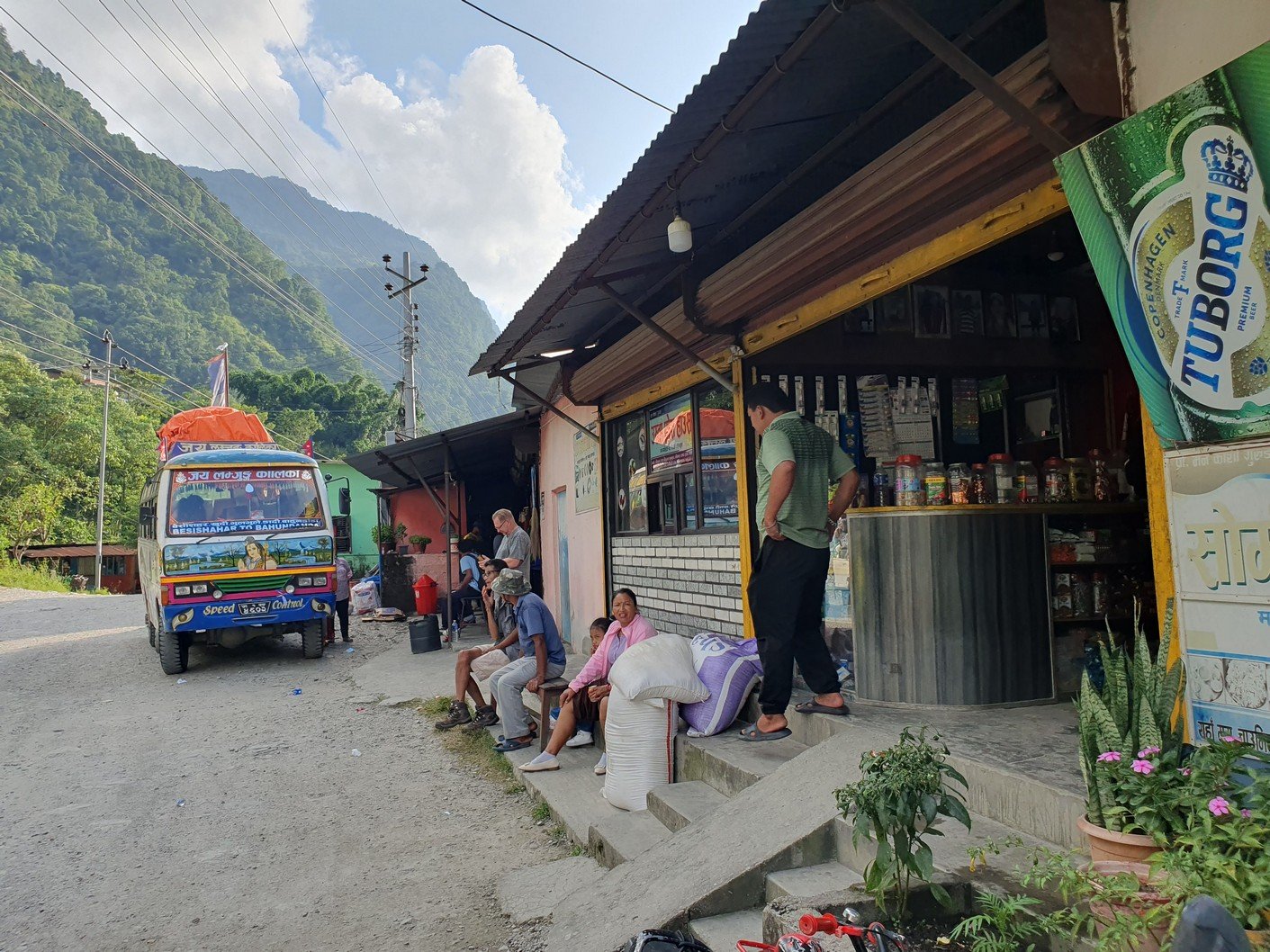
The festival season was just starting in Nepal, and the villagers had come to Besisahar market to shop. They had picked up 25 kilo bags of rice and cardboard boxes full of other necessities. The bus pushed on at a slow pace along the stony track that served as the road, and at regular intervals people and goods were unloaded along the roadside. Sometimes the location was clearly by a house or a road junction, but sometimes the reason for choosing that particular place remained a bit of a mystery to us Westerners. The journey should have taken an hour and a half, but we didn’t arrive until half past five. Quite mysteriously, we made a longer stop just half an hour before Besisahar and some of the locals stopped for noodles and momos. Maybe the fridge was empty (or maybe there wasn’t one to begin with) or maybe the wisdom of the jungle is that you eat when you can instead of risking sitting on the roadside next to a broken down bus on an empty stomach.
Equipment bags tied on the roof of a local bus
There was already plenty of local market purchases on the roof