After breakfast, we checked out of our room and waited in the lobby for our driver, who was supposed to take us across the border. About a quarter of an hour before the scheduled time, Marko received a message saying that the driver was still stuck on the Argentine side of the border. There had been a major operation at the border to apprehend drug smugglers, and as a result, the border was apparently either completely closed or at least severely congested. So, a new driver was arranged for us at the last minute, and he arrived to pick us up only about five minutes late. Once we had finally managed to pack all our belongings into the car, we set off around eleven o’clock.
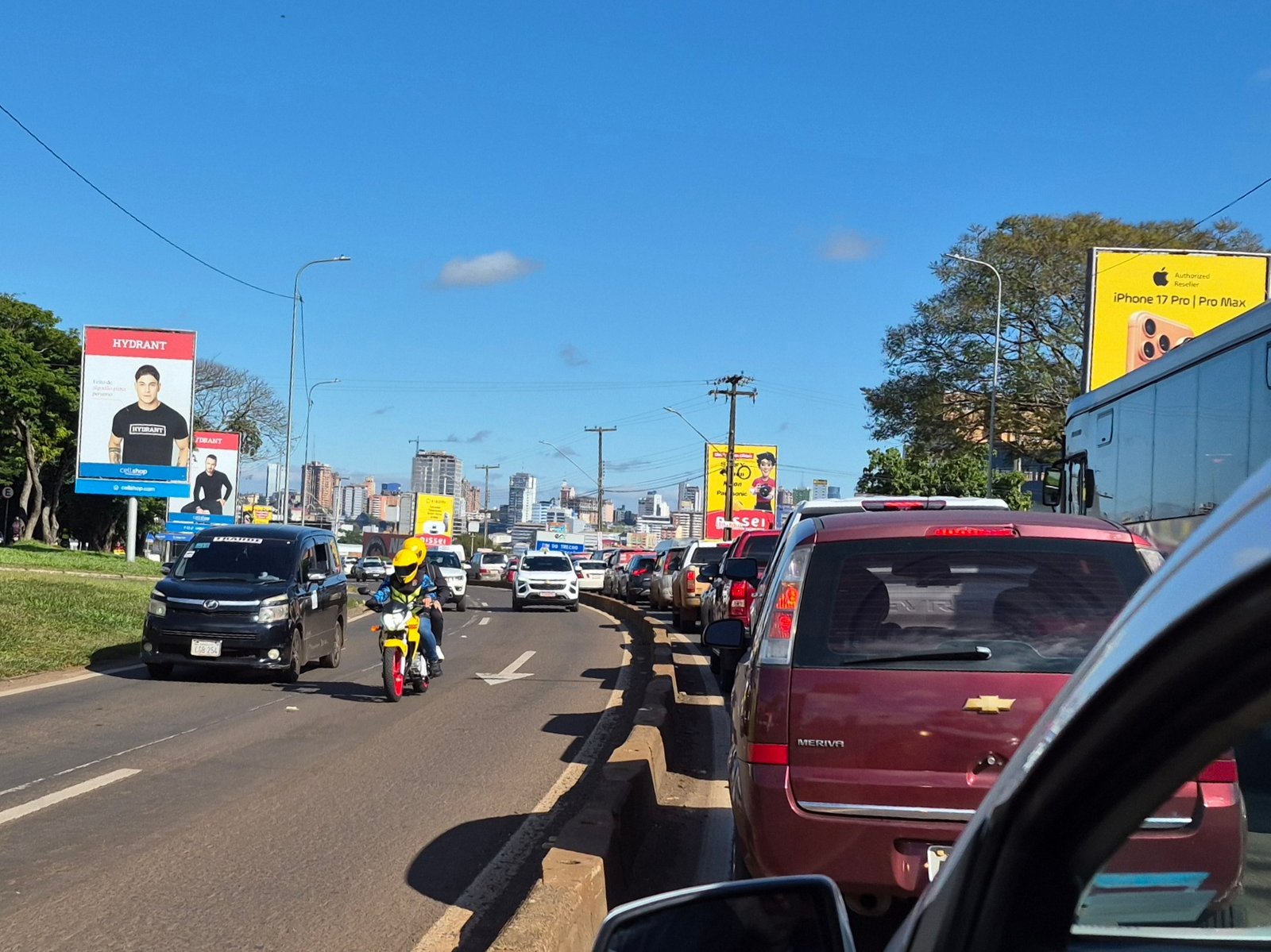
It was a good thing we left early, because the bridge, clogged with shopping tourists, was pretty much gridlocked. On the Brazilian side, there are six lanes side by side, including the on-ramps, and when they suddenly narrow down to two, you can probably imagine how traffic gets backed up. However, we made it through both border checkpoints in just under two hours, and thus arrived in Paraguay. We were pretty much the only travelers who had to show our passports when leaving Brazil and entering Paraguay. Locals can drive across the border without any red tape.
Traffic jam as we approached the border bridge. The high-rise buildings visible in the background were already on the Paraguayan side.
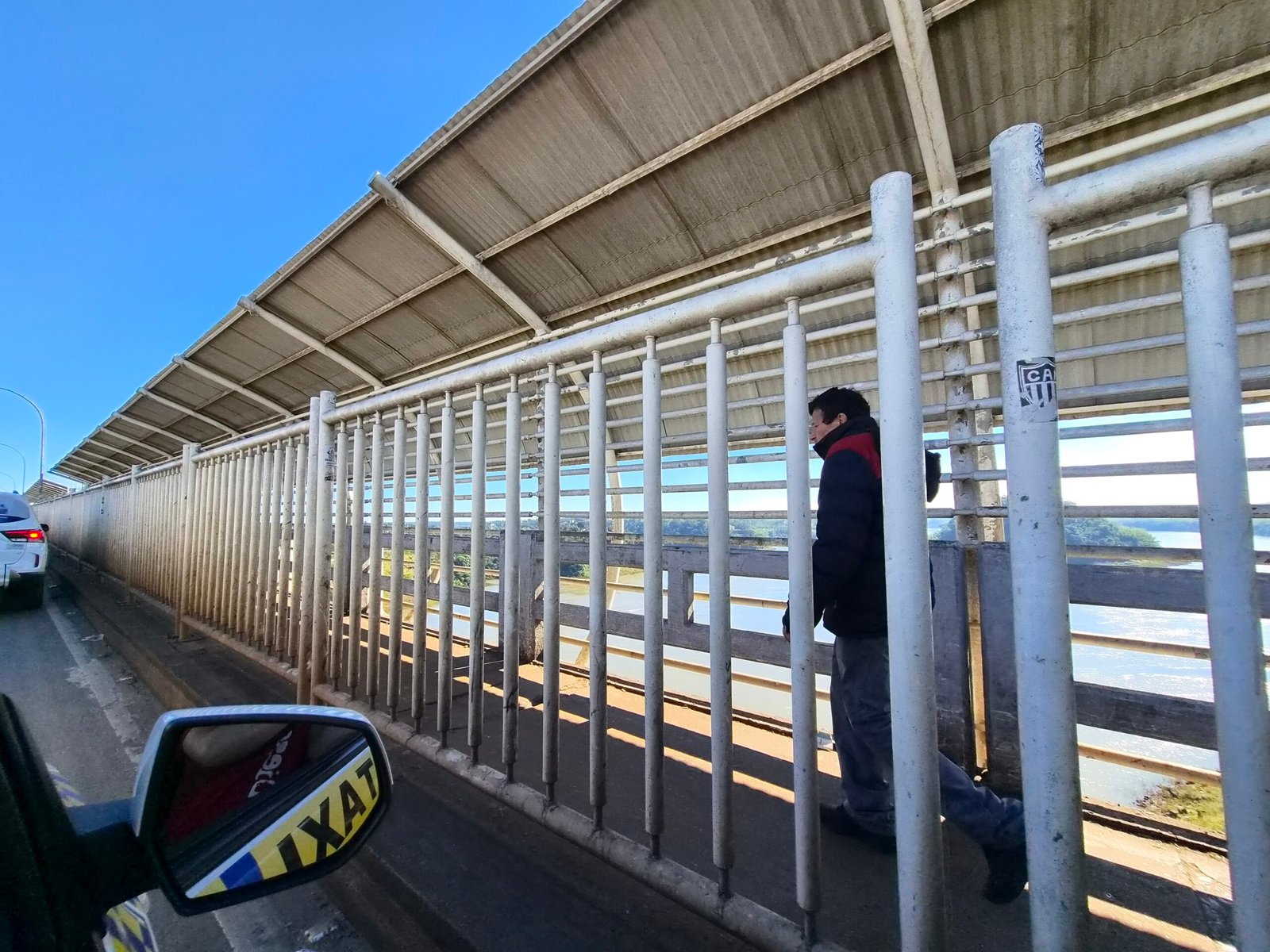
If you were walking, you'd already be there...
Our taxi driver, Pedro, took us to the bus station in Ciudad del Este, as we had bought tickets online the previous day for the bus departing from there. Marko set off optimistically to explore the area around the station in search of a “magic wall” where we might be able to pick up some local money. It quickly became clear, however, that judging by the homeless people lounging on the sidewalks, the area wasn’t exactly a hotspot for magic walls. Luckily, we’d already bought snacks for the bus ride while we were still in Brazil, so we didn’t have an urgent need for cash.
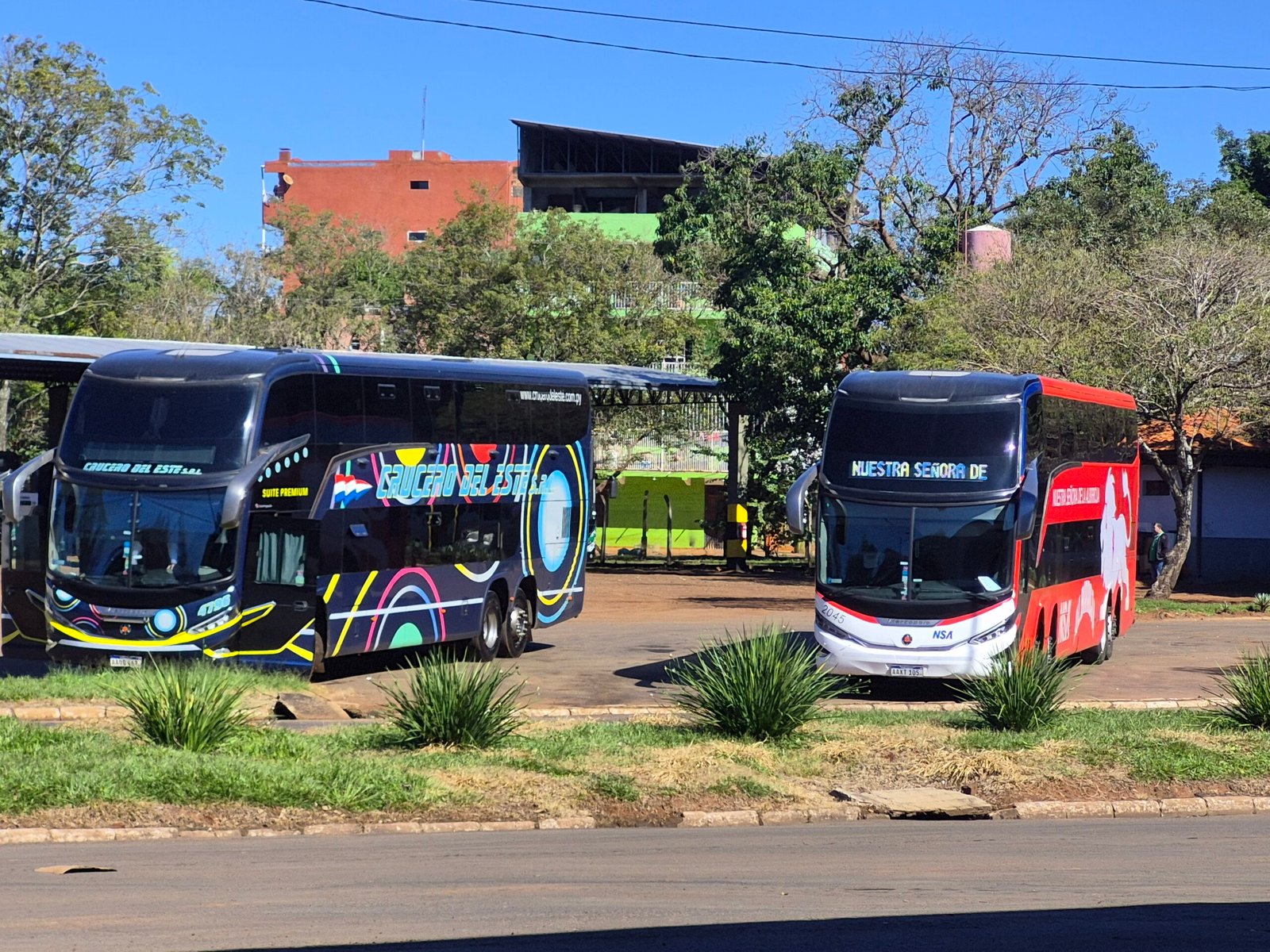
The NSA buses were big and equipped with comfortable seats.
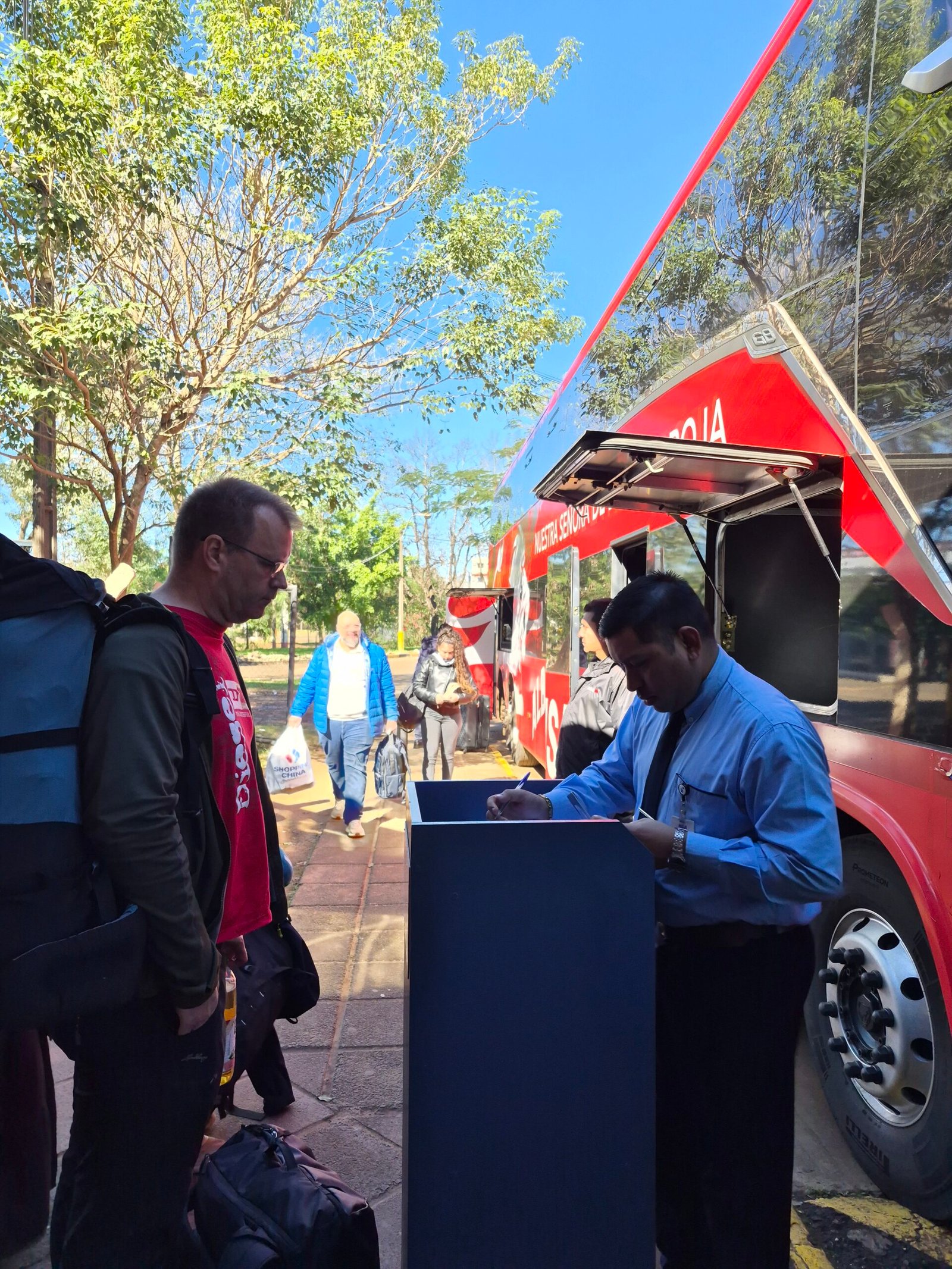
Here, we are being marked as having arrived on the passenger list.
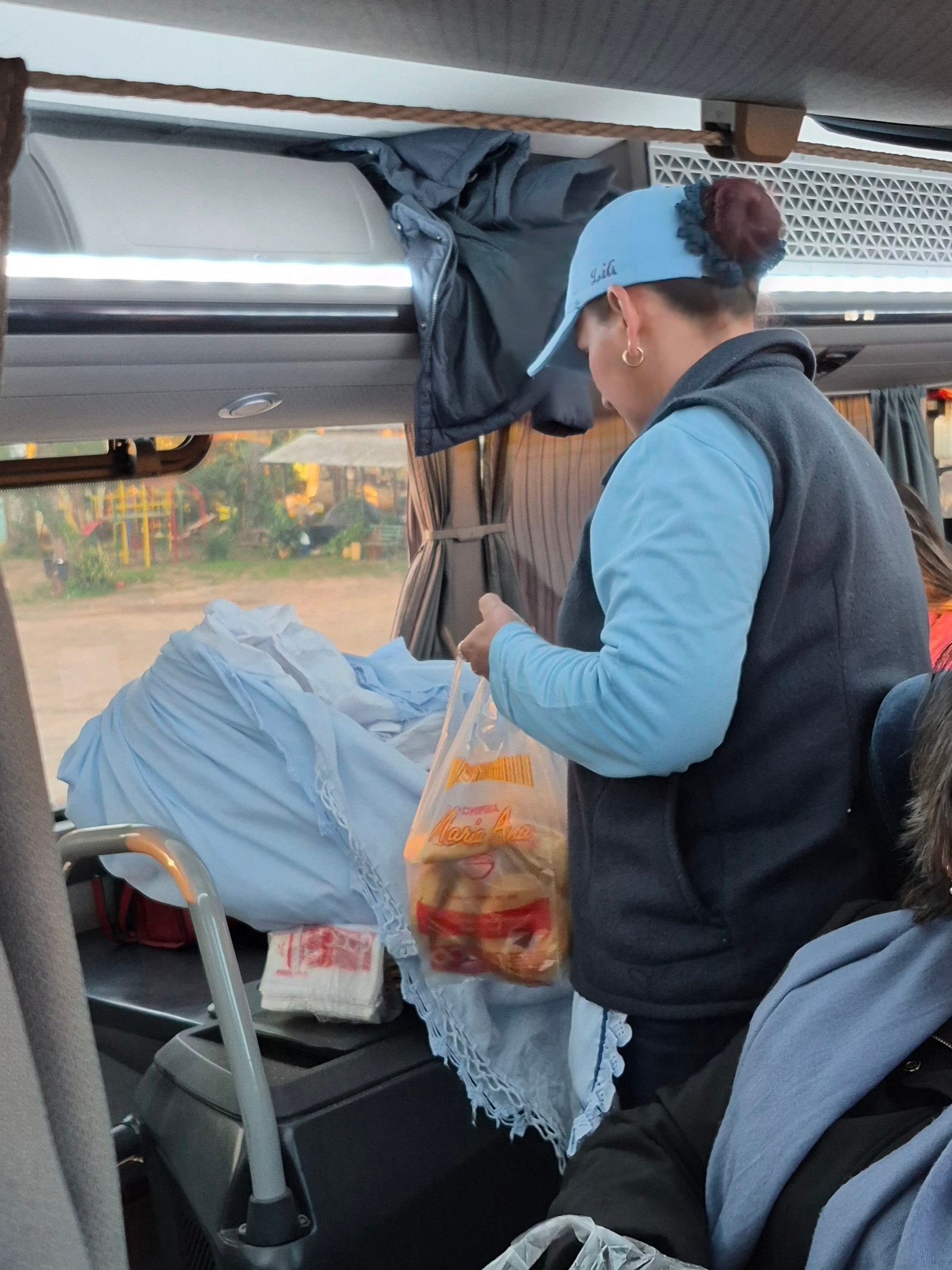
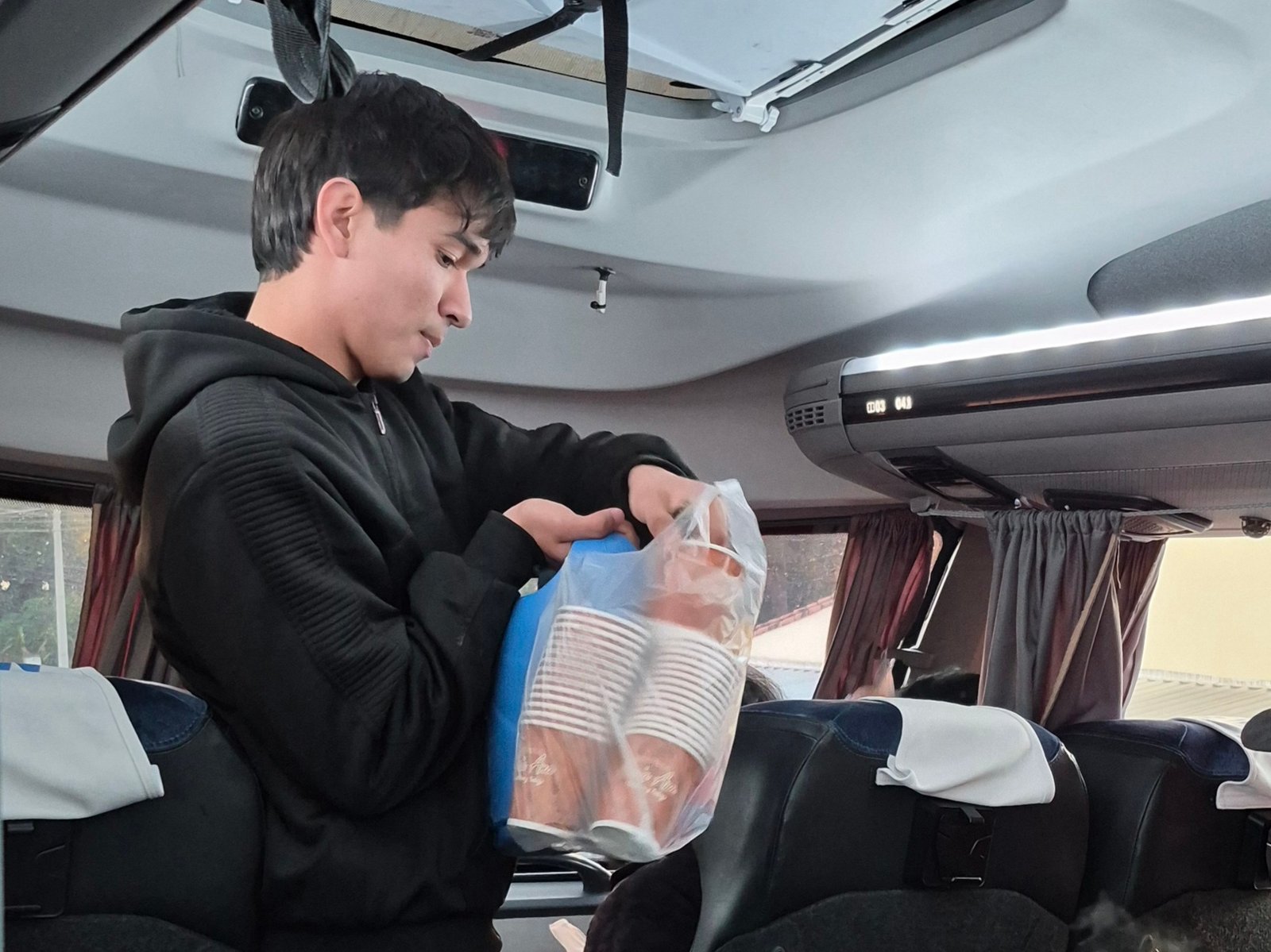
The bus ride from Ciudad del Este to Asunción took five and a half hours. The distance between the cities is only three hundred kilometers, but the progress is pretty slow on the urban stretches in the beginning and end. One can’t help but wonder about the route choices, as at times the bus drove along streets so narrow that it was barely wide enough for the bus, and tree branches—and perhaps even low-hanging power lines at times—brushed against the roof of our double-decker bus. Once we’d made it out of the city, the journey went quite smoothly. There were no major stops, except for a brief stop about halfway through the trip in front of some kind of café. The passengers didn’t get off the bus; instead, the café employees boarded the bus to sell bagel-like pastries and coffee. Of course, we didn’t buy either, since we still didn’t have any local currency. But among the locals, the bagels were quite a hit! The vast majority of the passengers bought them, some even by the bagful.
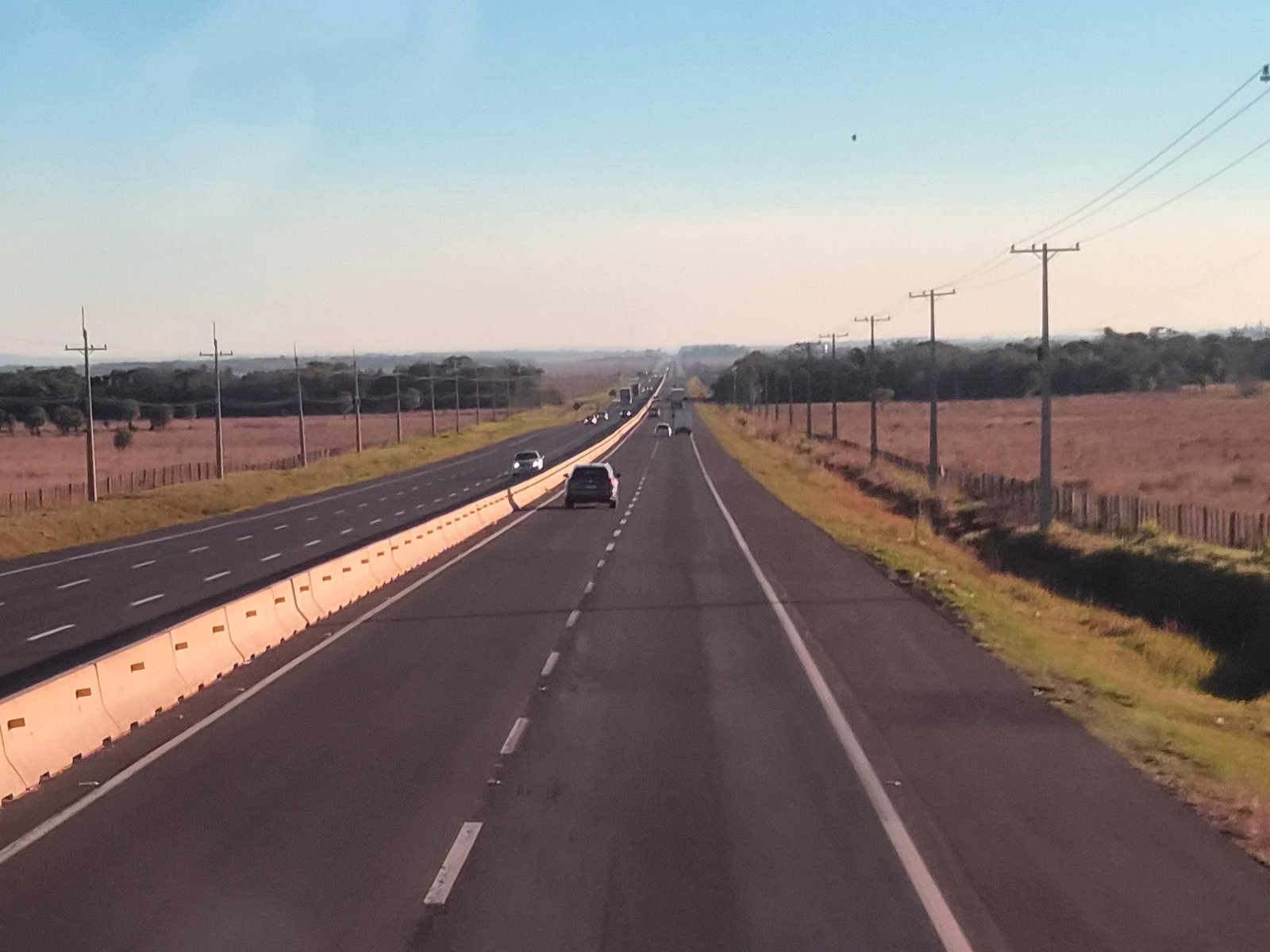
The route was, for the most part, as straight as a ruler
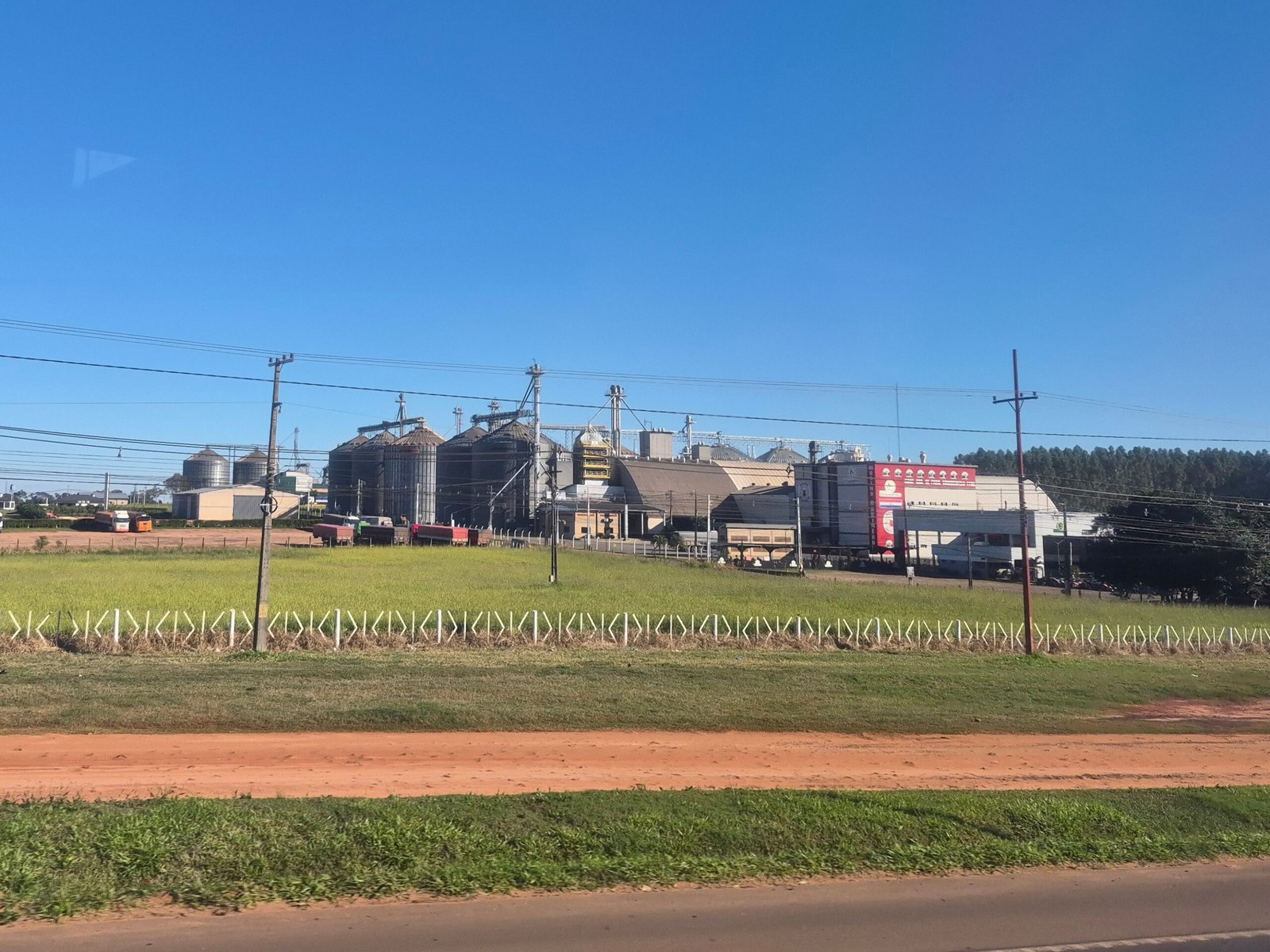
Paraguay is an agricultural country. Along the way, we saw several plants that were apparently manufacturing fertilizers.
"Intermission, coffee, and bagels"
The sun had already set by the time we finally arrived at the bus station in Asunción. From there, we ordered an Uber to our accommodation, the Abiba Aparthotel, and zoomed off there. Fortunately, the ride wasn’t long, since we happened to get a slightly smaller vehicle. So we ended up holding some of our backpacks on our laps the whole way.
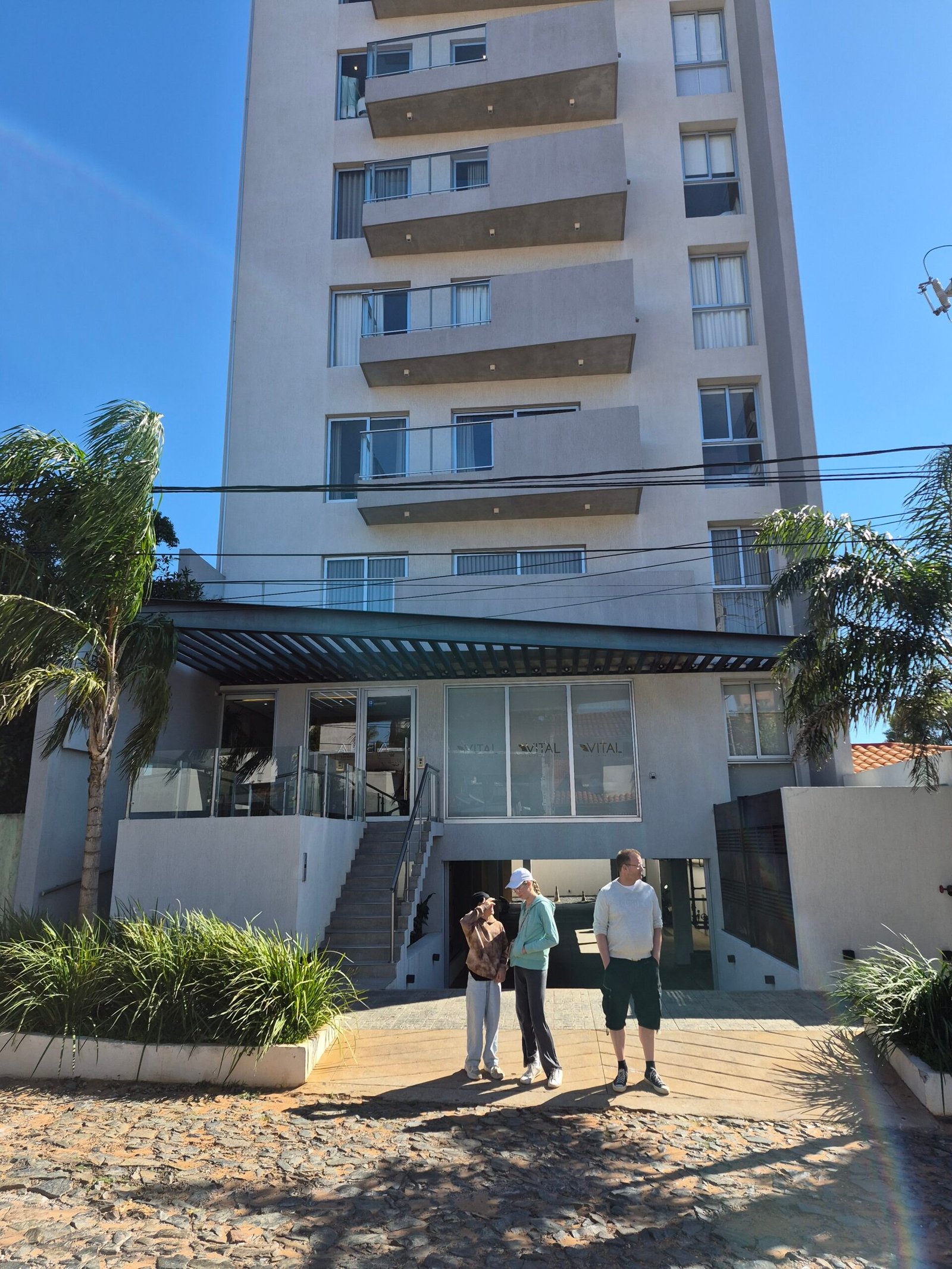
The apartment was really nice, and above all, warm. This is actually the first place—excluding the Amazon and the Pantanal—where we haven’t had to struggle with the air conditioners. We haven’t managed to get any of them to blow properly warm air yet, so at times we’ve ended up sleeping with our noses a bit frosty. Perhaps because of this, Jaana developed a fever in the evening, which fortunately subsided reasonably well with some pain reliever. In the evening before bedtime, Jaana and Marko went on what has become a tradition—a trip to the nearest supermarket—while the kids waited at the apartment.
Here's our apartment during the day
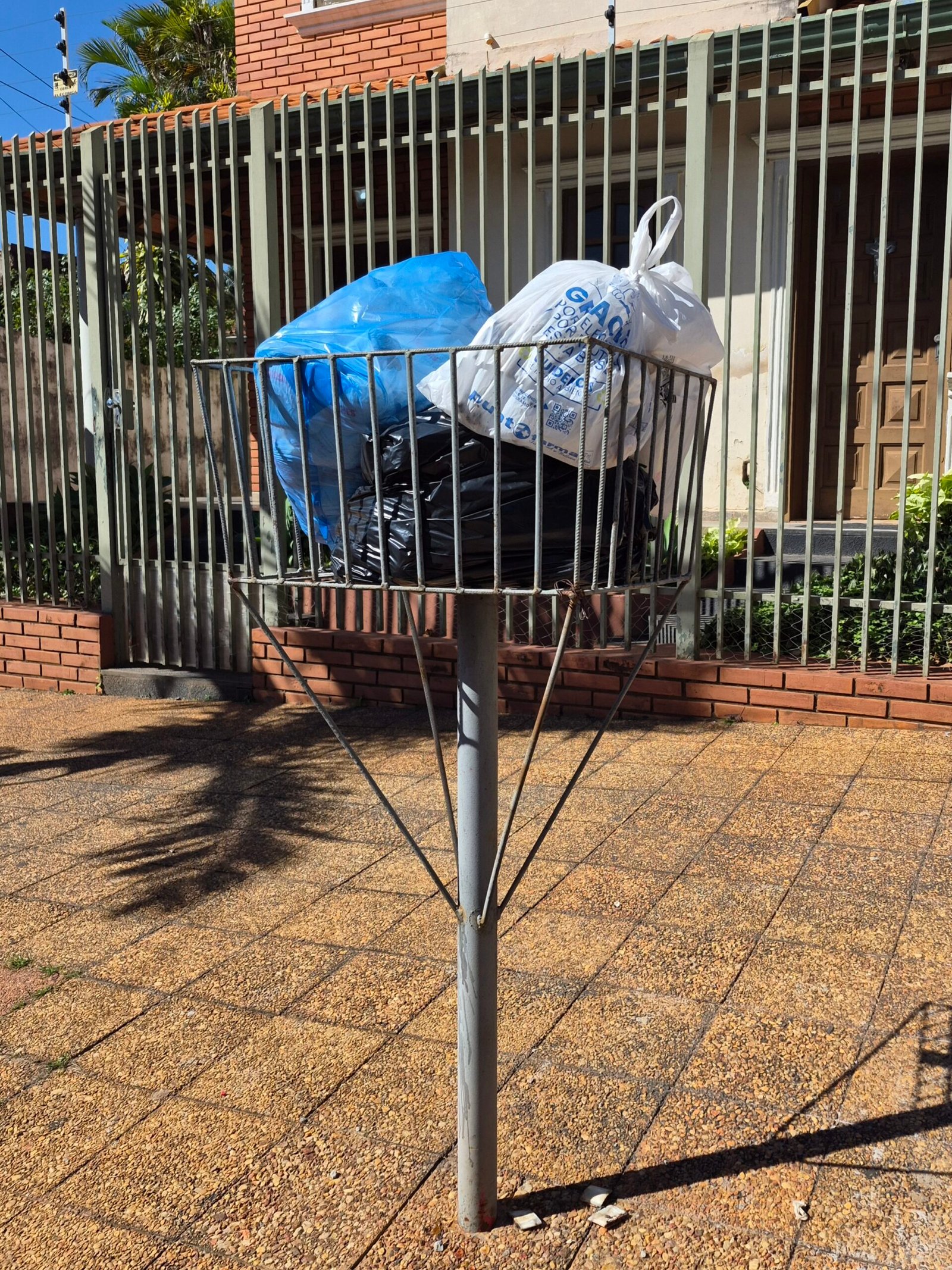
Here's how trash collection worked. During the day, trash bags were taken out to these "trash poles" in front of the building, and in the evening, the trash collectors picked them up. Apparently, the local rats can't climb up the metal poles.
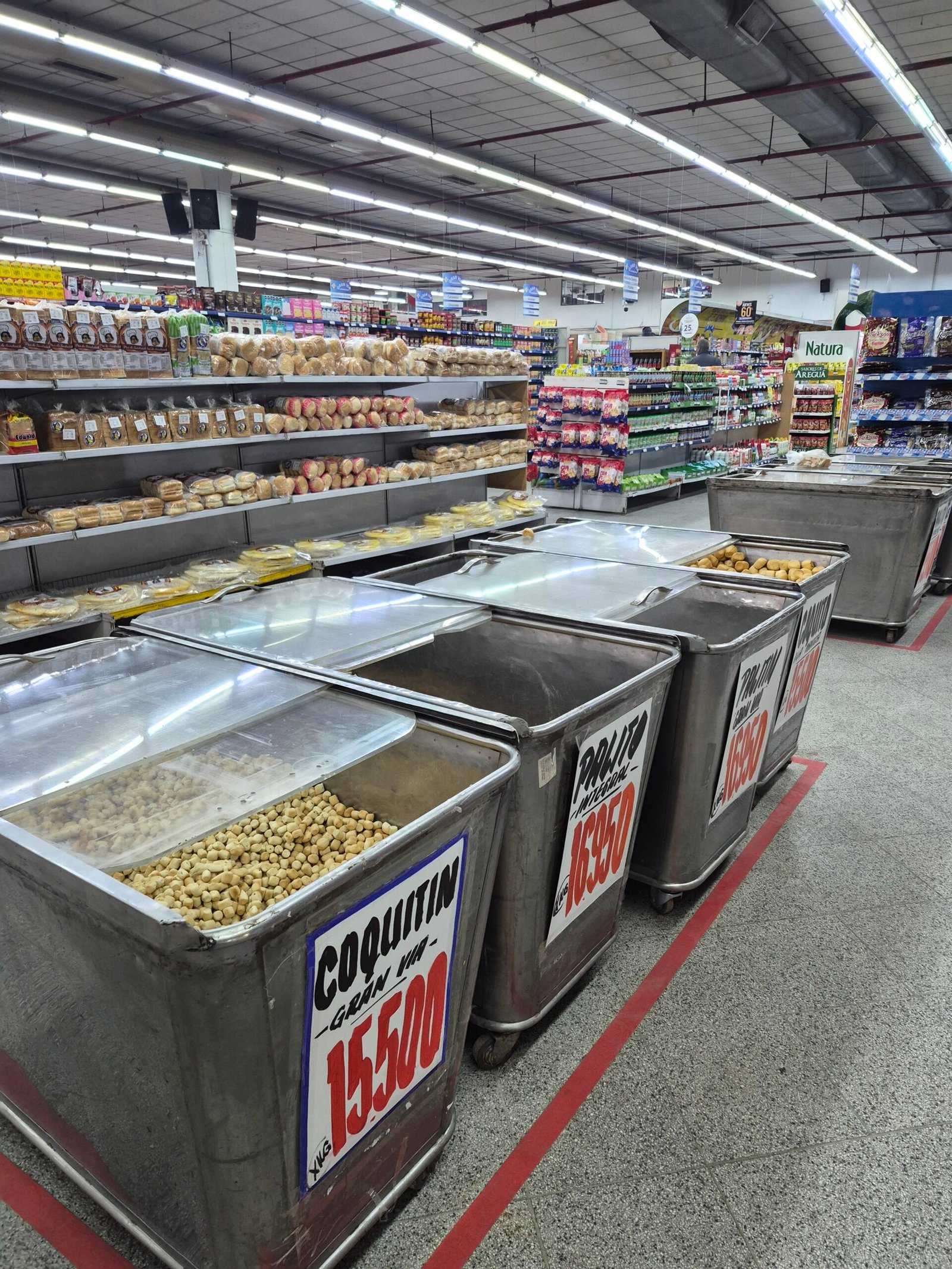
The store also sold a variety of "forever cookies"—which Jaana and Marko recognized from their trip to Mongolia—in a box. We decided to pass.
On Wednesday, we all slept in until almost ten, after which we adults started with the laundry, and Risto went to work out. Shortly before we started getting ready to head into the city center, some kind of party started in a nearby building, featuring very loud mariachi-style music. We figured it wouldn’t bother us too much, since the music would be over by evening anyway. So we set off again in an Uber toward downtown and the presidential palace.
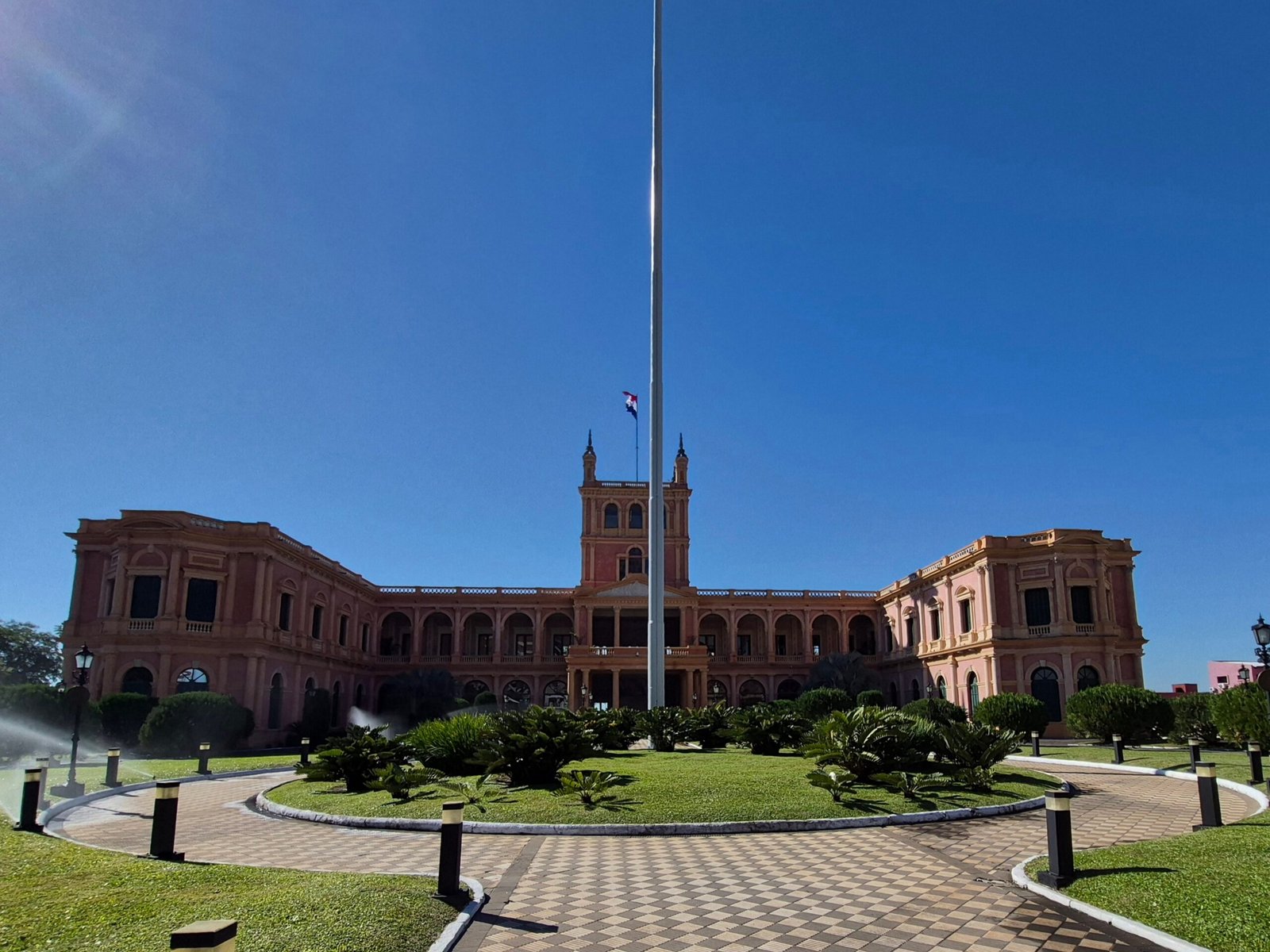
The palace was indeed a magnificent structure. As we stood there in front of it, we heard the sound of a helicopter, and a moment later, an armored helicopter took off from behind the palace. Our guess is that the President of Paraguay doesn’t trust the area’s congested and accident-prone traffic, and prefers to travel through the skies instead. In fact, over these first two days, we’ve noticed that a lot of cars are dented and otherwise in poor condition. Traffic signs (such as stop signs) are merely suggestions, and a yellow traffic light means it’s time to floor it.
Palacio de los López was quite an impressive building.
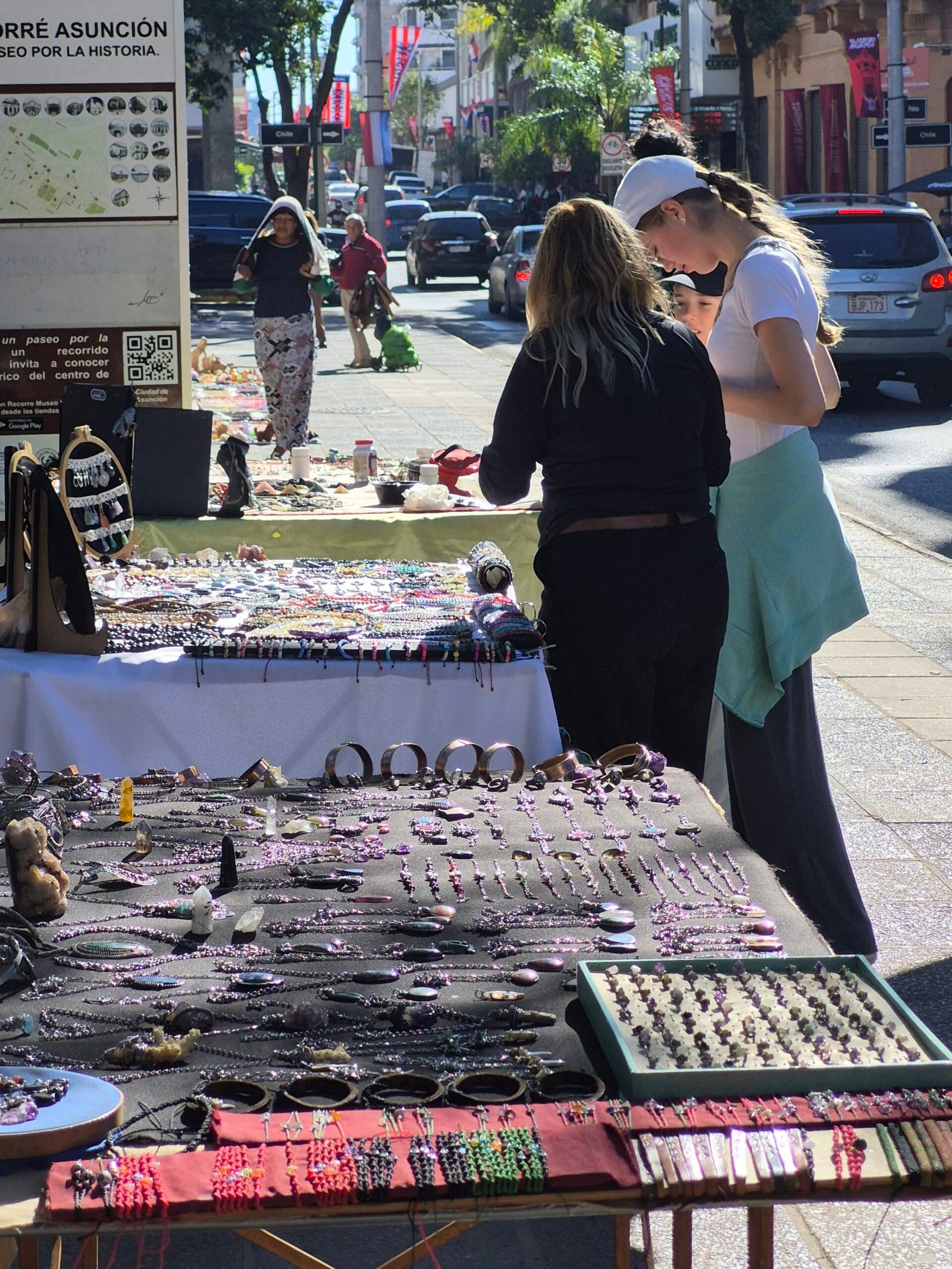
After visiting the palace, we stopped by a currency exchange booth for the first time in ages, since we hadn’t really come across any ATMs. Marko had tried one ATM the previous evening while out shopping, but that machine left him empty-handed. “Transaction canceled successfully,” it said, for both debit and credit. Thanks and goodbye. The exchanged currency (1€ = 7,000 guaraníes) came in handy right away, as both Ronja and Risto went on a shopping spree while browsing the street vendors’ stalls. Risto picked up a Portuguese soccer jersey with Ronaldo’s name on it, while Ronja bought souvenirs for her friends.
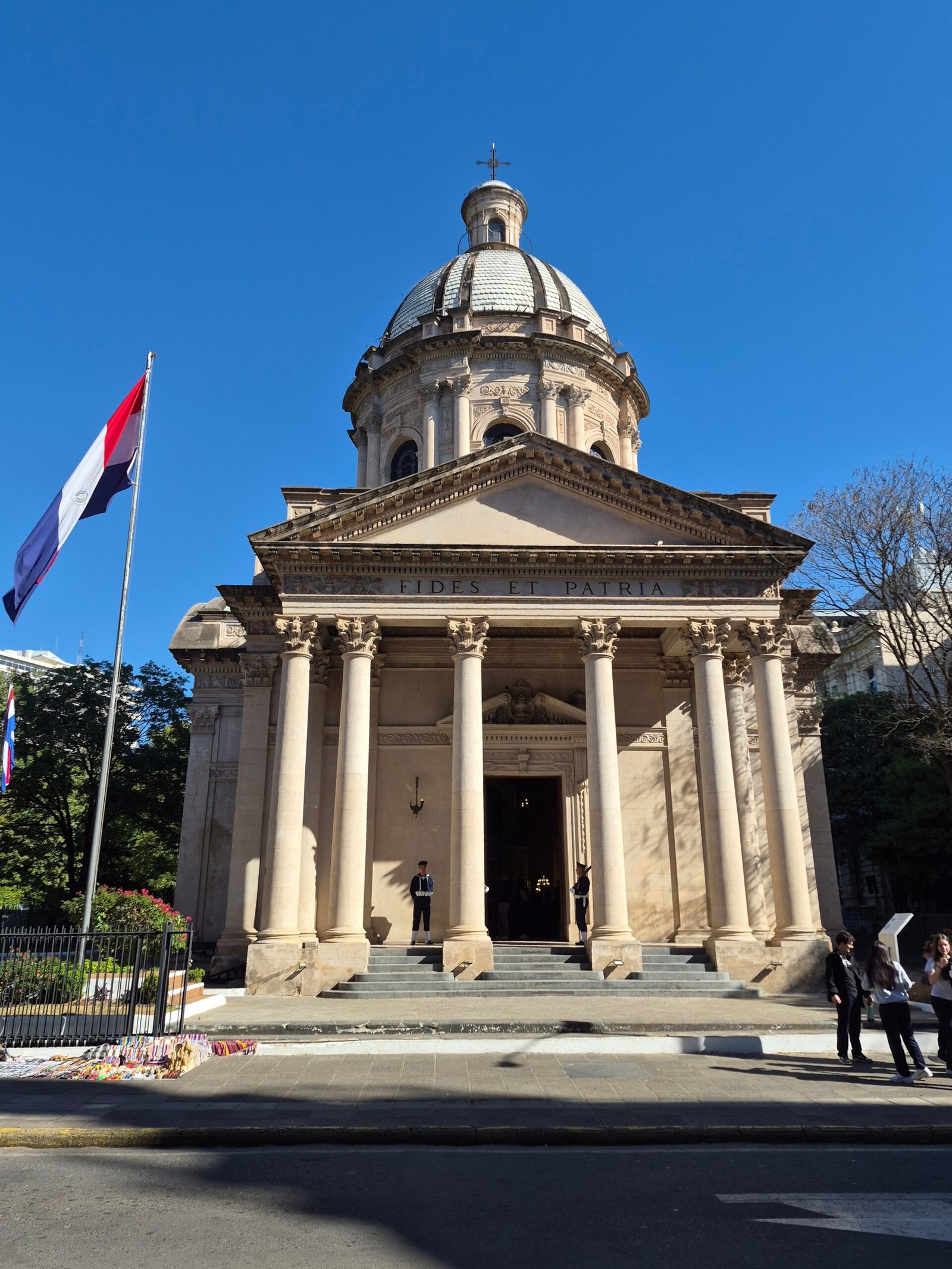
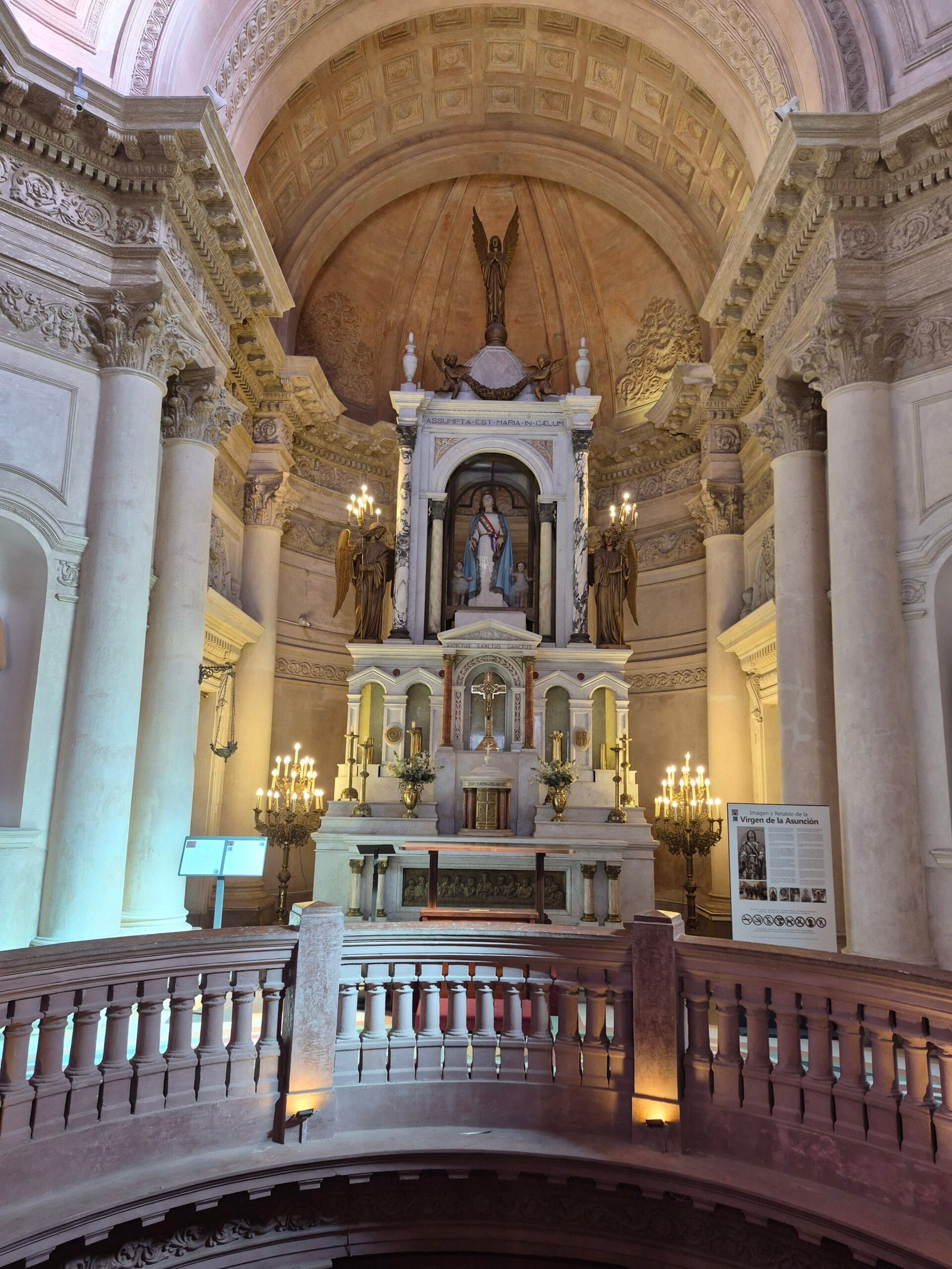
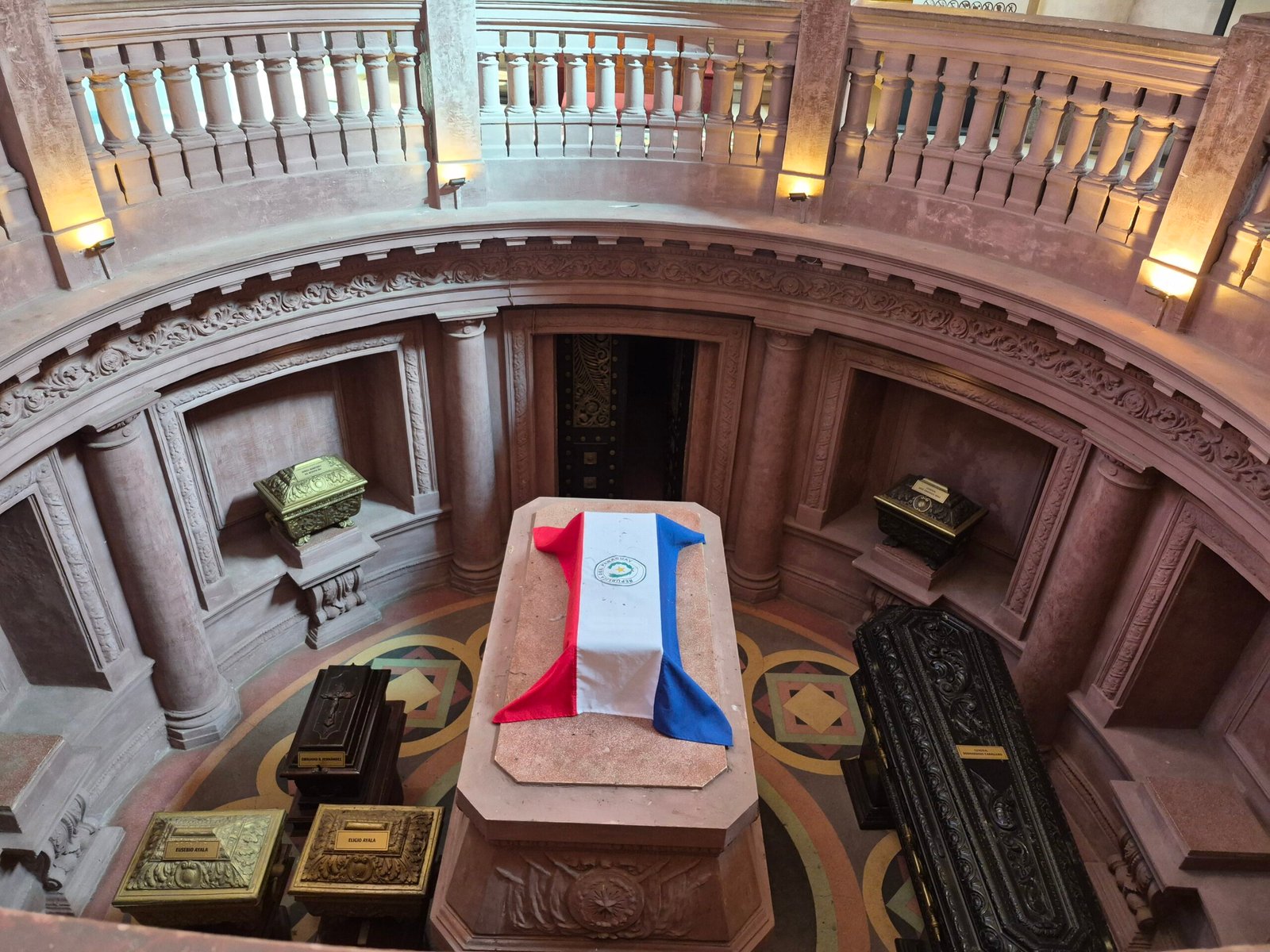
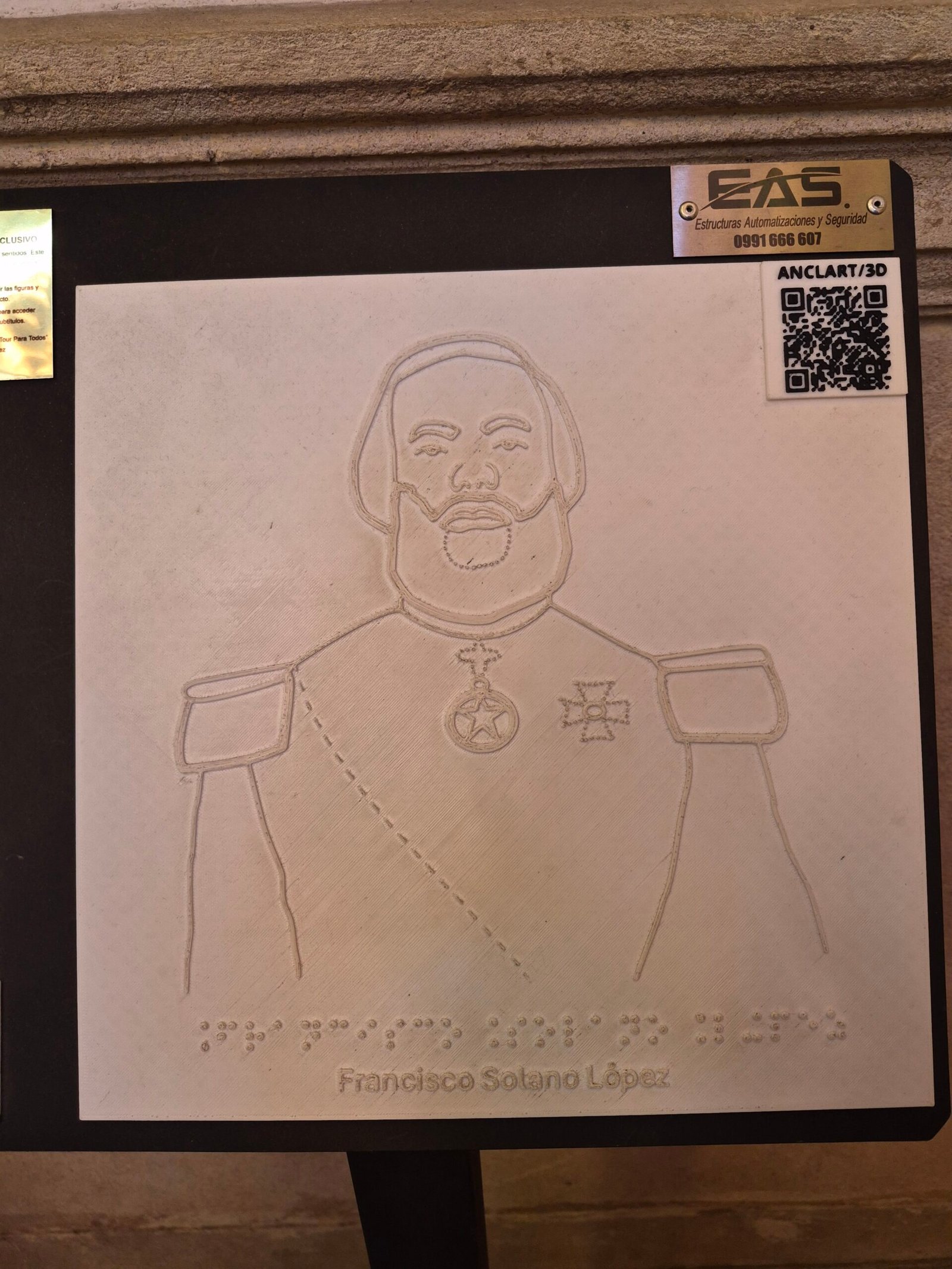
We also stopped by a mausoleum along the street called the Panteón Nacional de los Heroes. It is a national memorial where the remains of the most important figures in Paraguayan history rest. At least two of them were presidents; we didn’t even try to figure out the exploits of the others. The mausoleum is constantly guarded by two stern-faced soldiers in their fine uniforms. In addition to these notable figures, the mausoleum is also dedicated to the Virgin Mary and apparently serves as a church as well. Inside the mausoleum, we noticed how well the needs of visually impaired people had been accommodated. Since each notable figure was also represented by a statue, the person’s face was depicted as a pictograph on a plaque beneath the statue. In addition, the plaque included pictographs indicating who the statue represented. The interior of the mausoleum was also rendered in relief for the visually impaired.
Panteón Nacional de los Heroes
In the middle of the building, dignitaries sprawled out in their coffins.
The venue was also well-adapted for people with visual impairments.
Ronja shopping for jewelry.
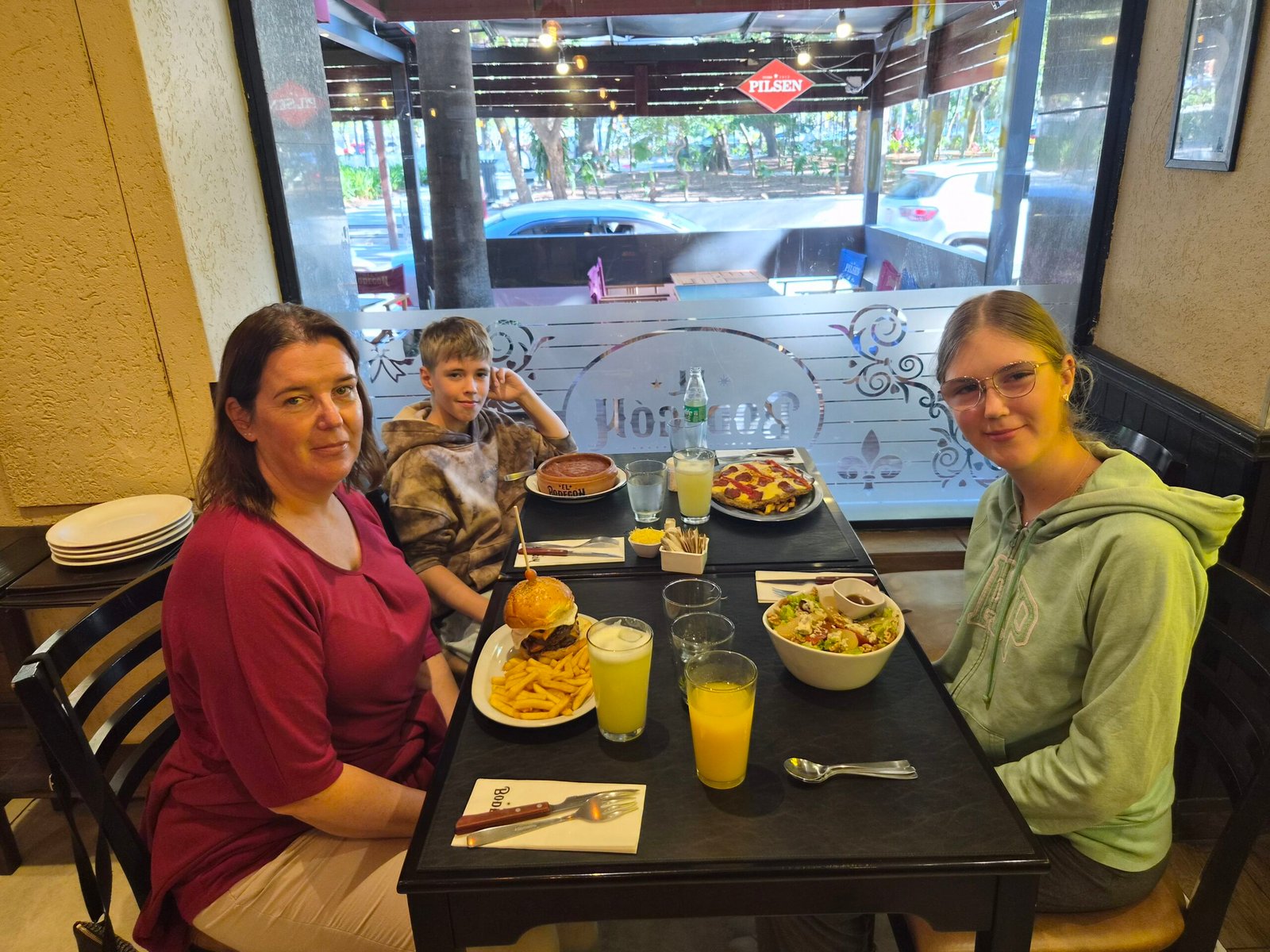
Since we had completed our obligatory visit to the church, we headed out to eat next. We found a nice-looking restaurant called El Bodego on a street called Palma, so we went inside. The food was pretty affordable (main courses around 10–15€), and when our orders arrived, we realized just how generous the portions really were. The portions were shockingly large! For once, even Marko couldn’t finish his Milanesa—which was similar to a Wiener schnitzel—and Jaana eventually gave up on her hamburger, too. That’s because, in addition to two thick ground beef patties, it also included bacon and a fried egg. Maybe it’s best not to check your cholesterol levels right after eating these meals…
The portions were generously sized. Marko’s pizza-like schnitzel, which covered his entire plate, was topped with a thick layer of cheese and slices of salami, served with French fries. Jaana’s hamburger was as tall as a soda can.
When we returned to our apartment that evening around five o’clock, the music coming from the nearby building was still playing. By then, however, it had shifted to ’80s hit songs that we were familiar with as well. We listened for another couple of hours to Queen, Opus’s “Life Is Life,” Boney M, and Michael Jackson, among others. Luckily, the music finally stopped before we went to bed.
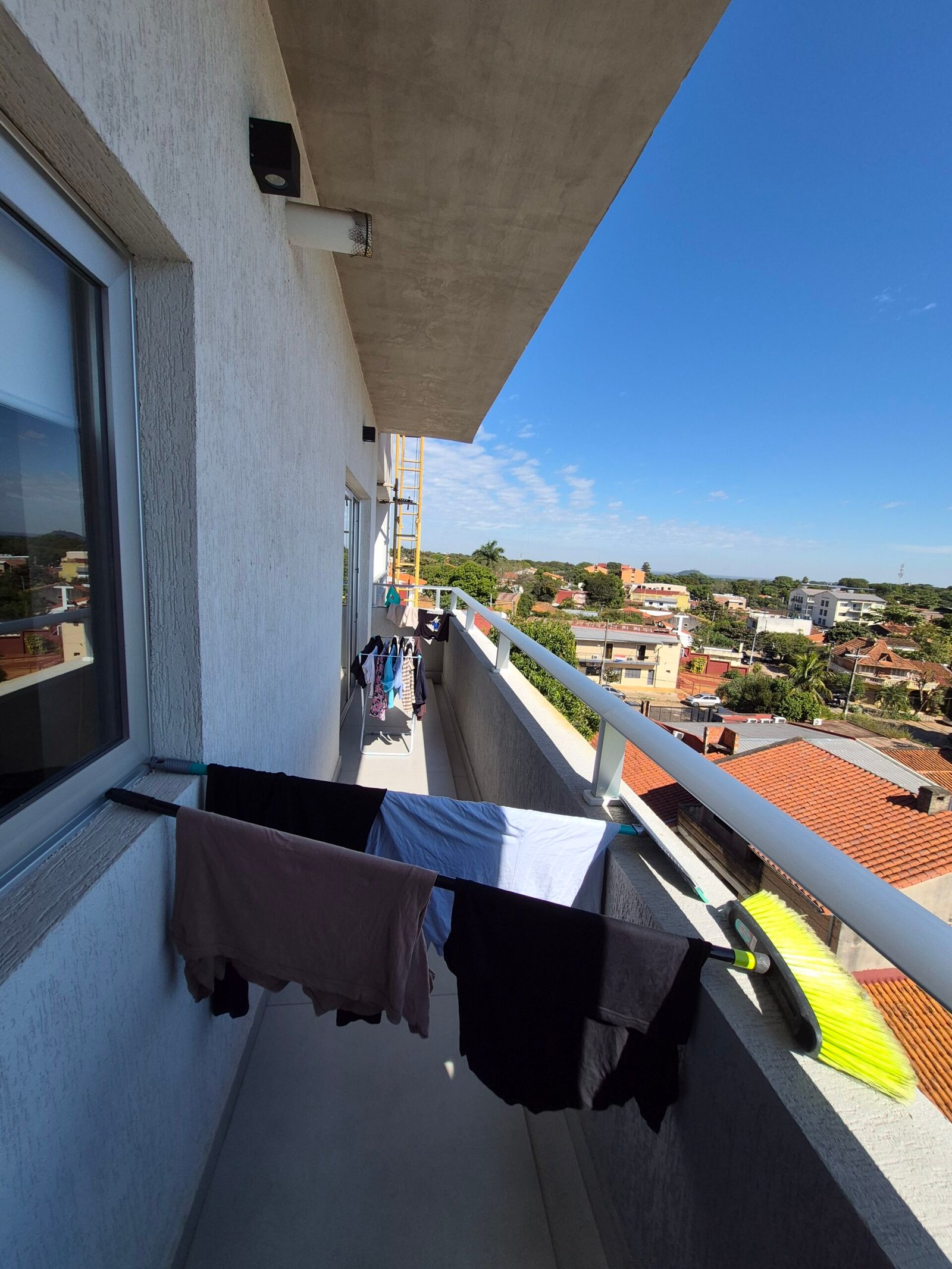
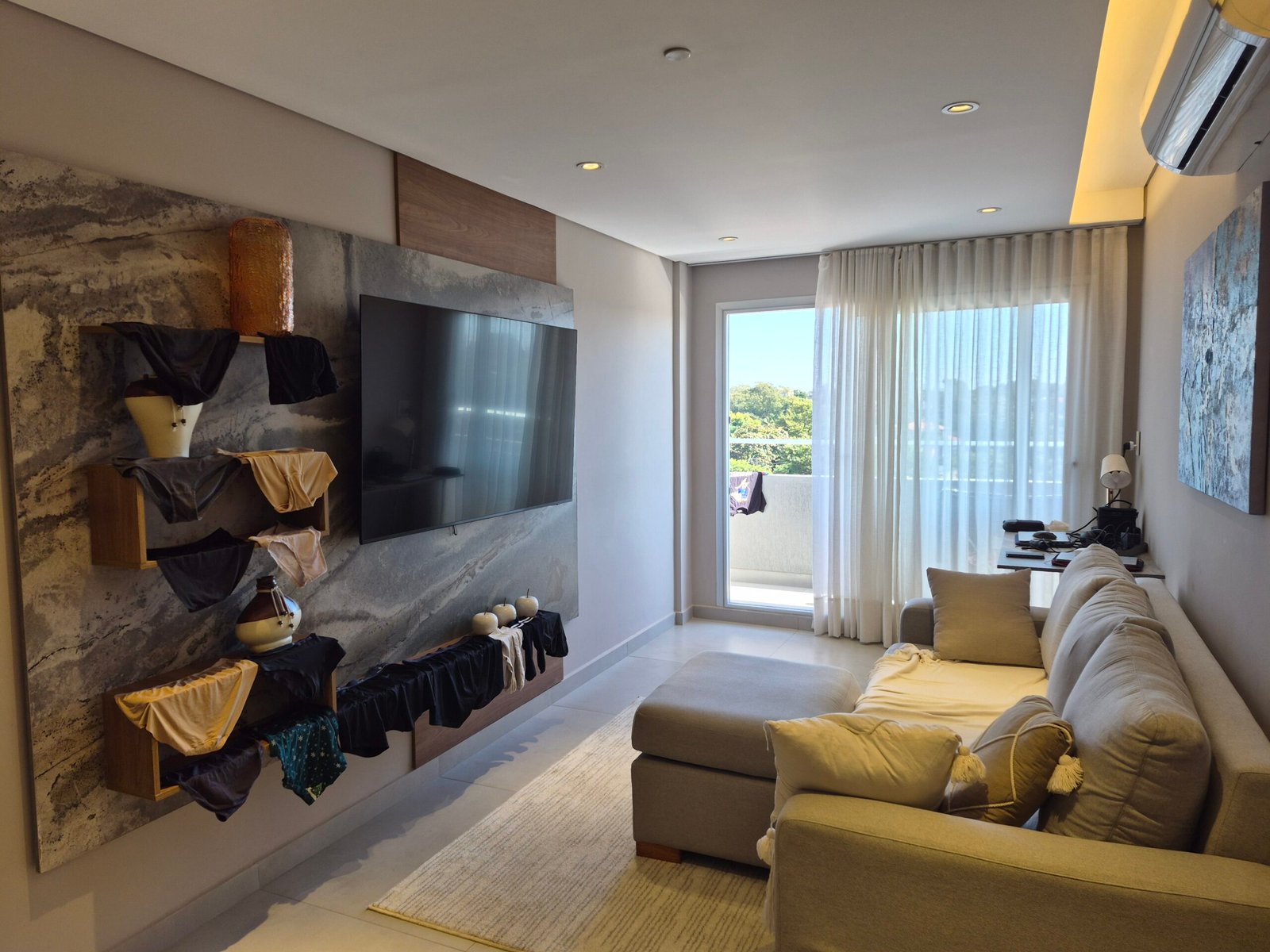
On Thursday, we slept in again and did some more laundry. Hanging the laundry to dry required a bit of creativity, since the apartment’s tiny drying rack could only hold a fraction of the clothes that had come out of the washing machine. Once we finished the laundry tetris, we set out to see what other interesting things Asunción might still have to offer us.
Laundry day
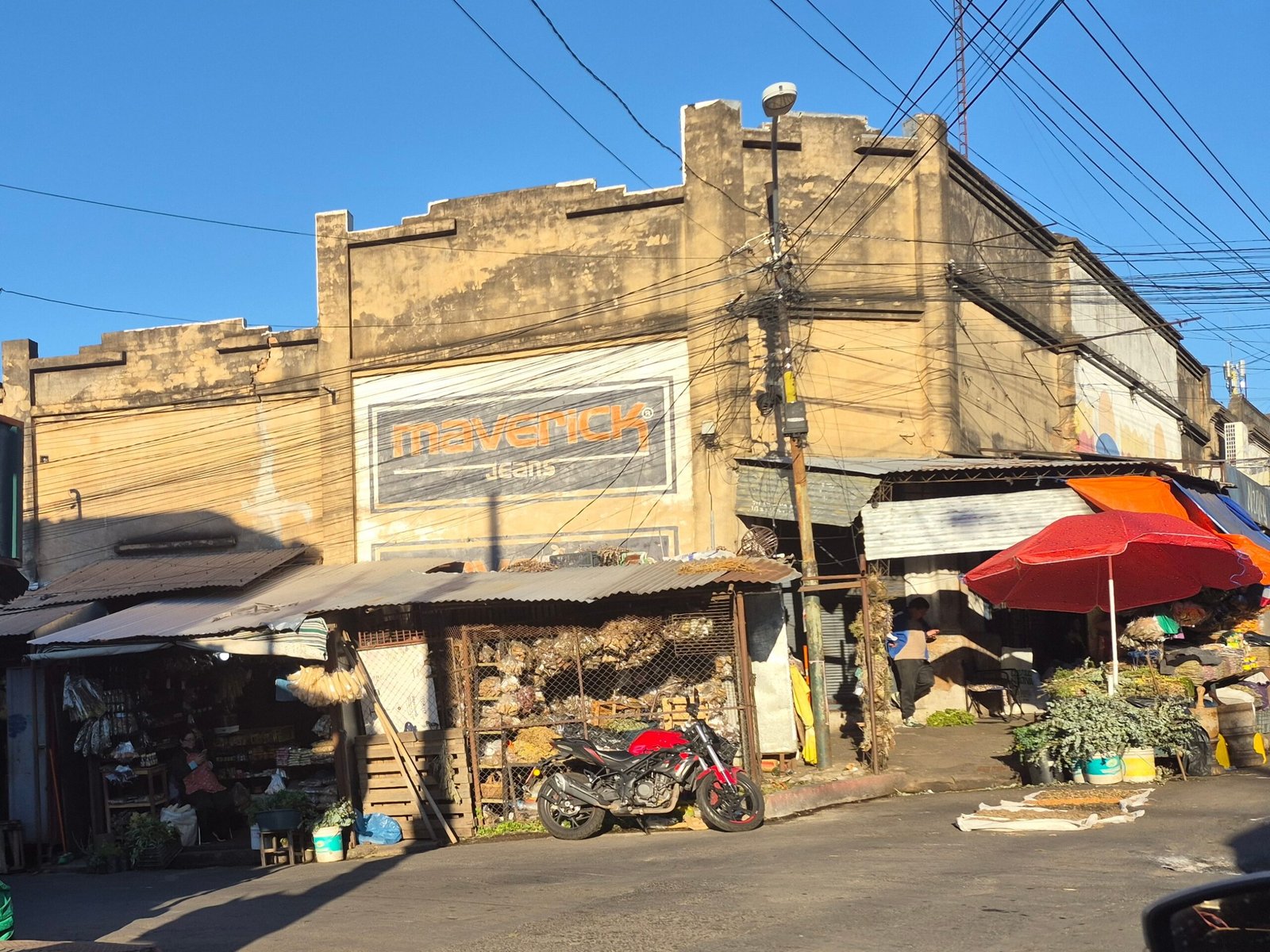
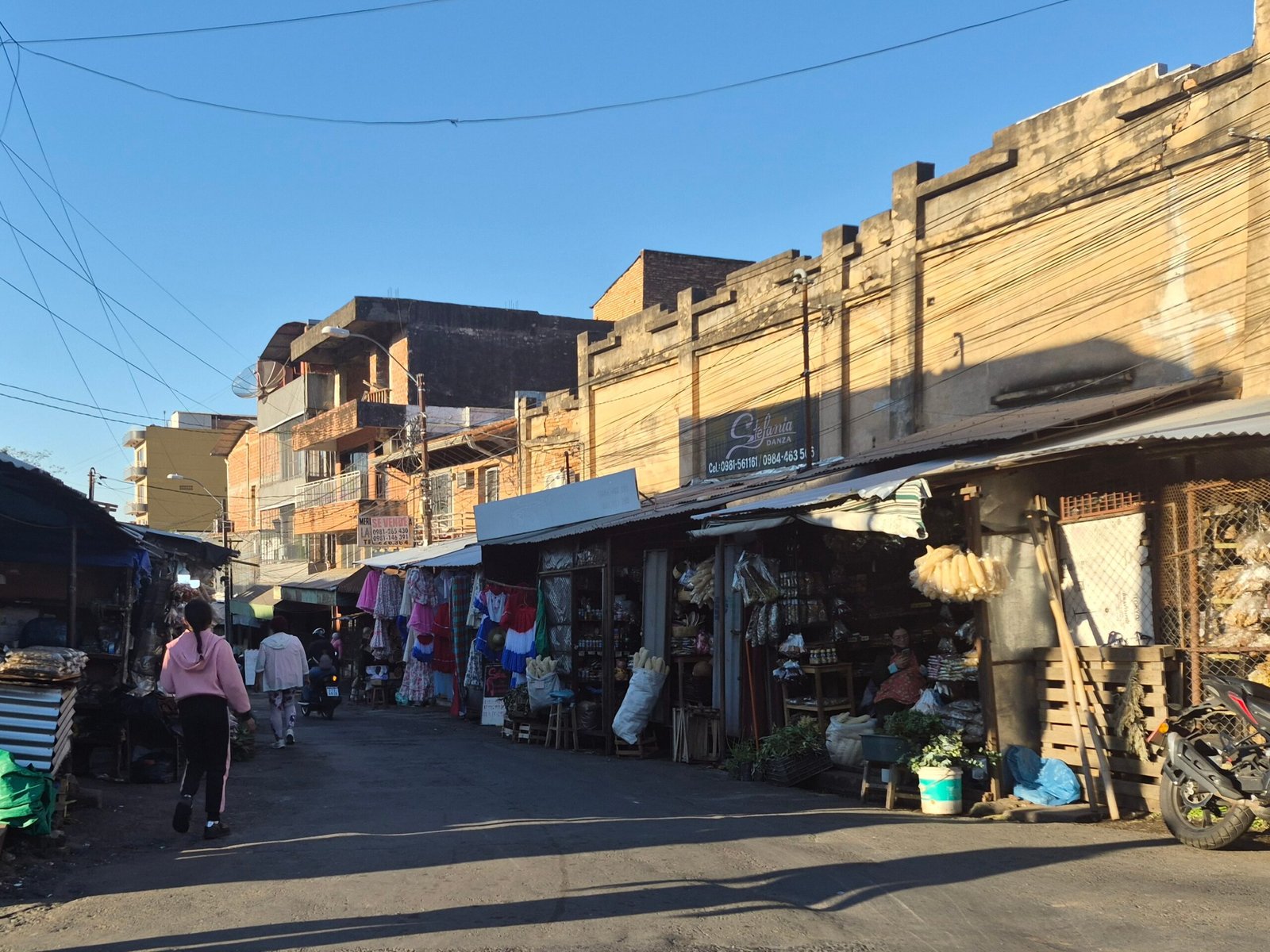
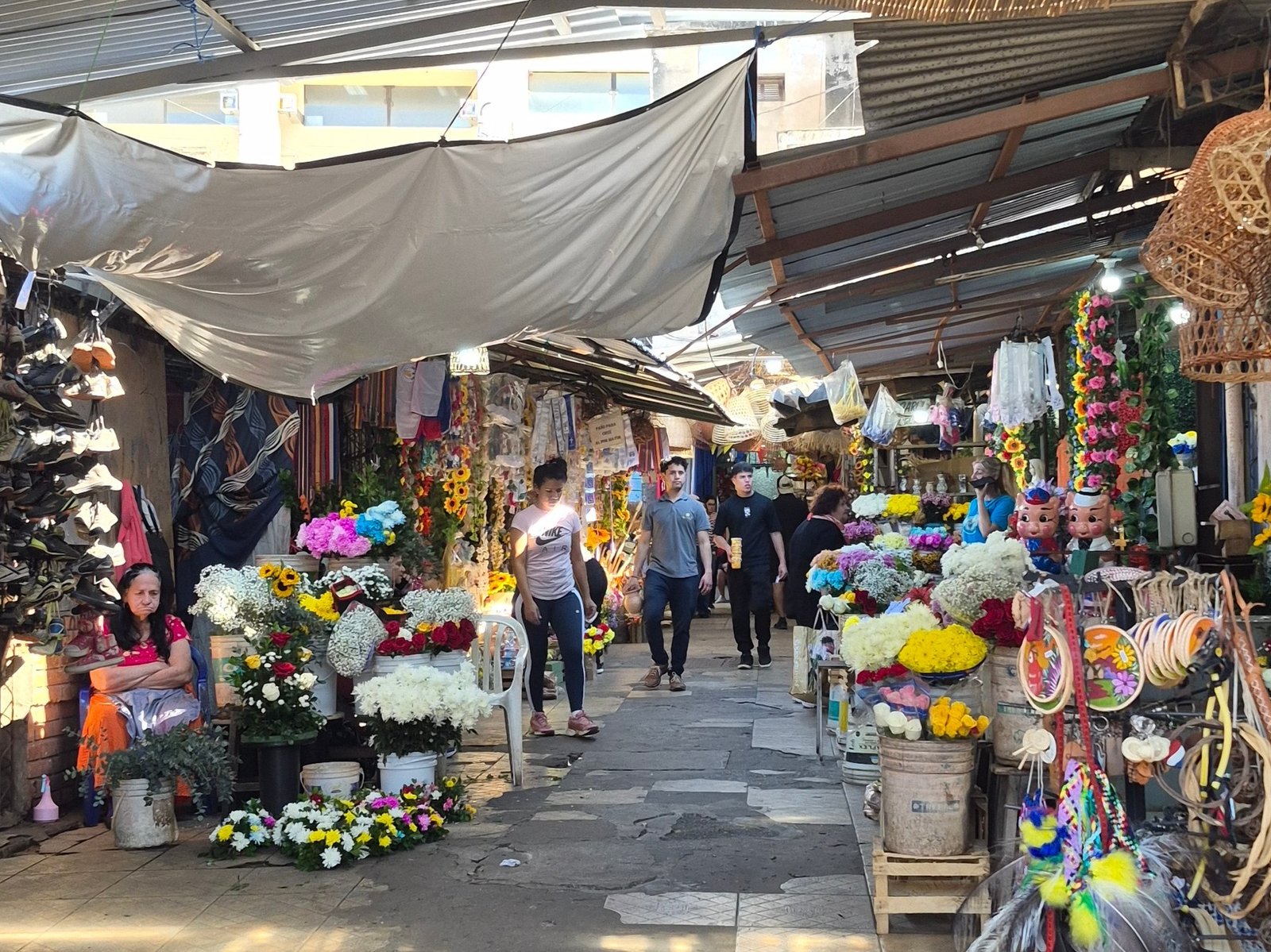
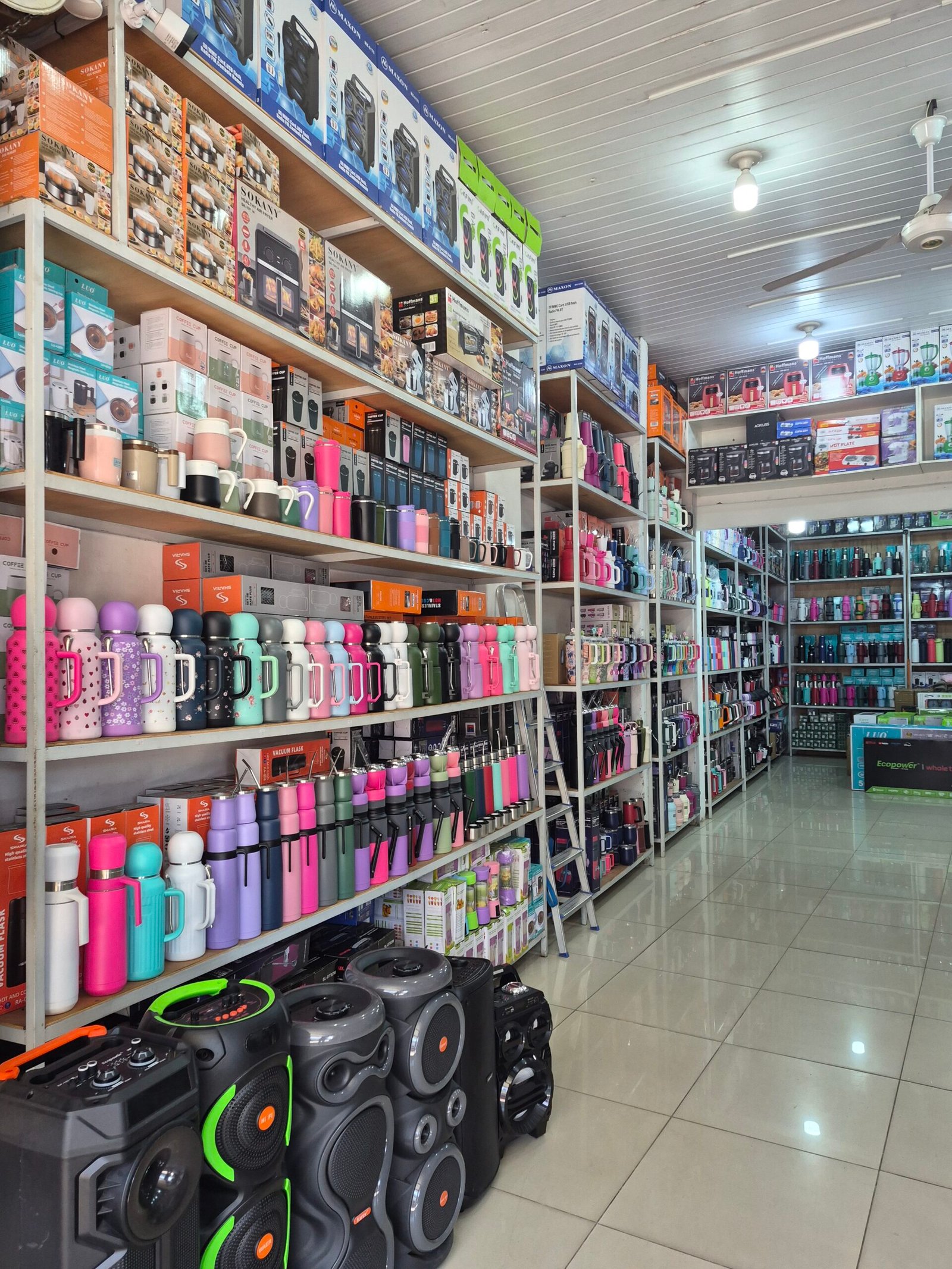
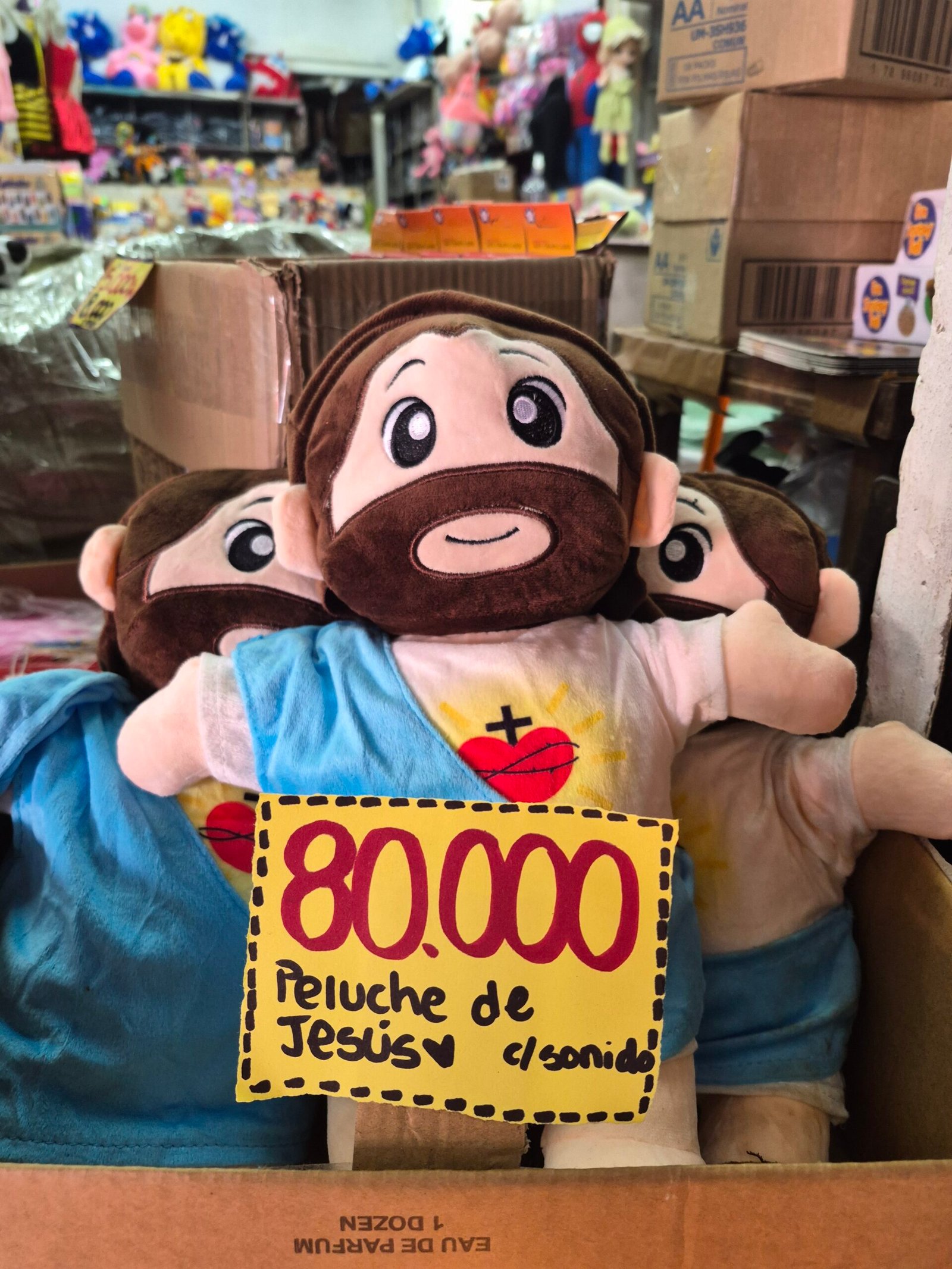
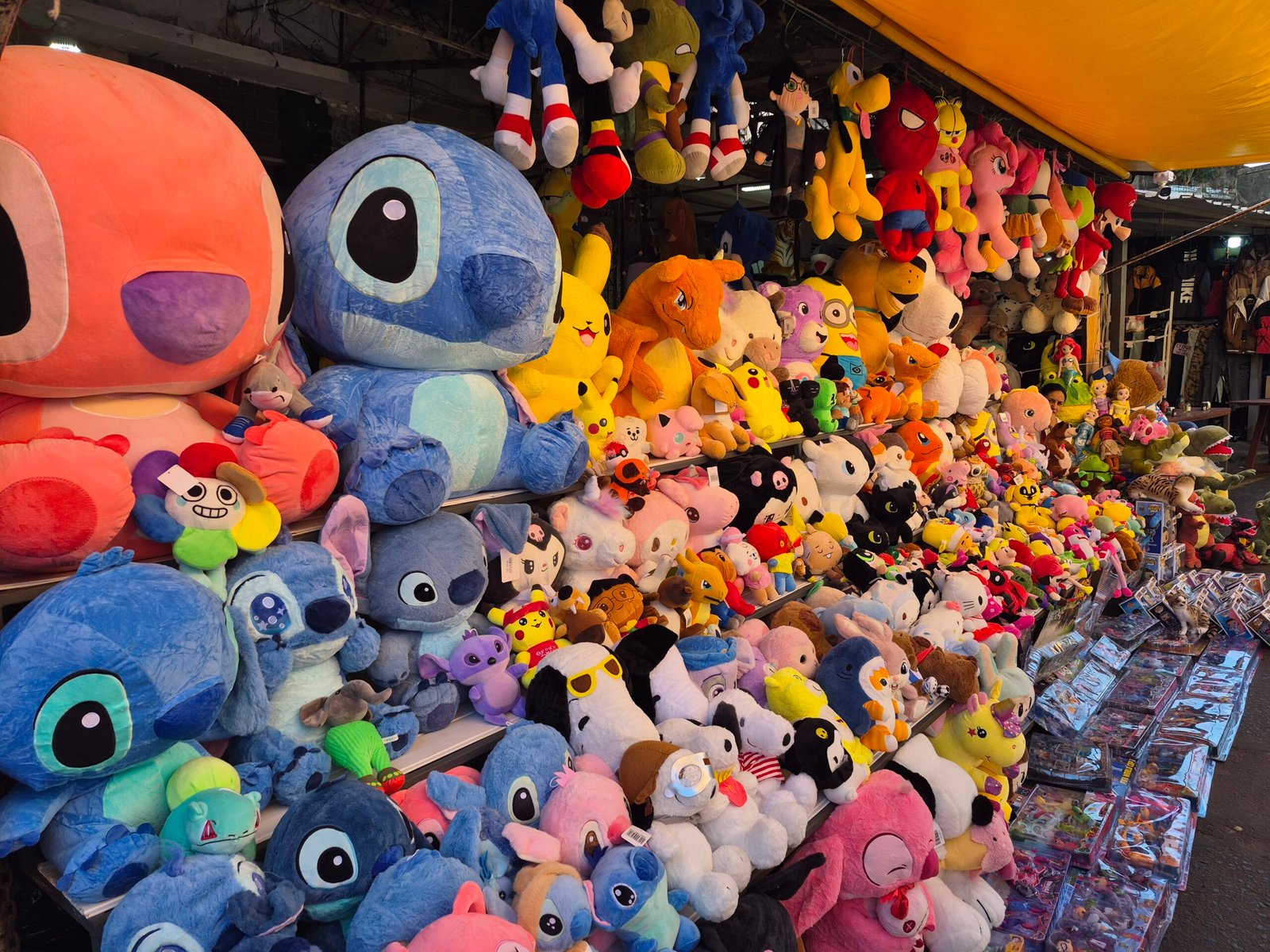
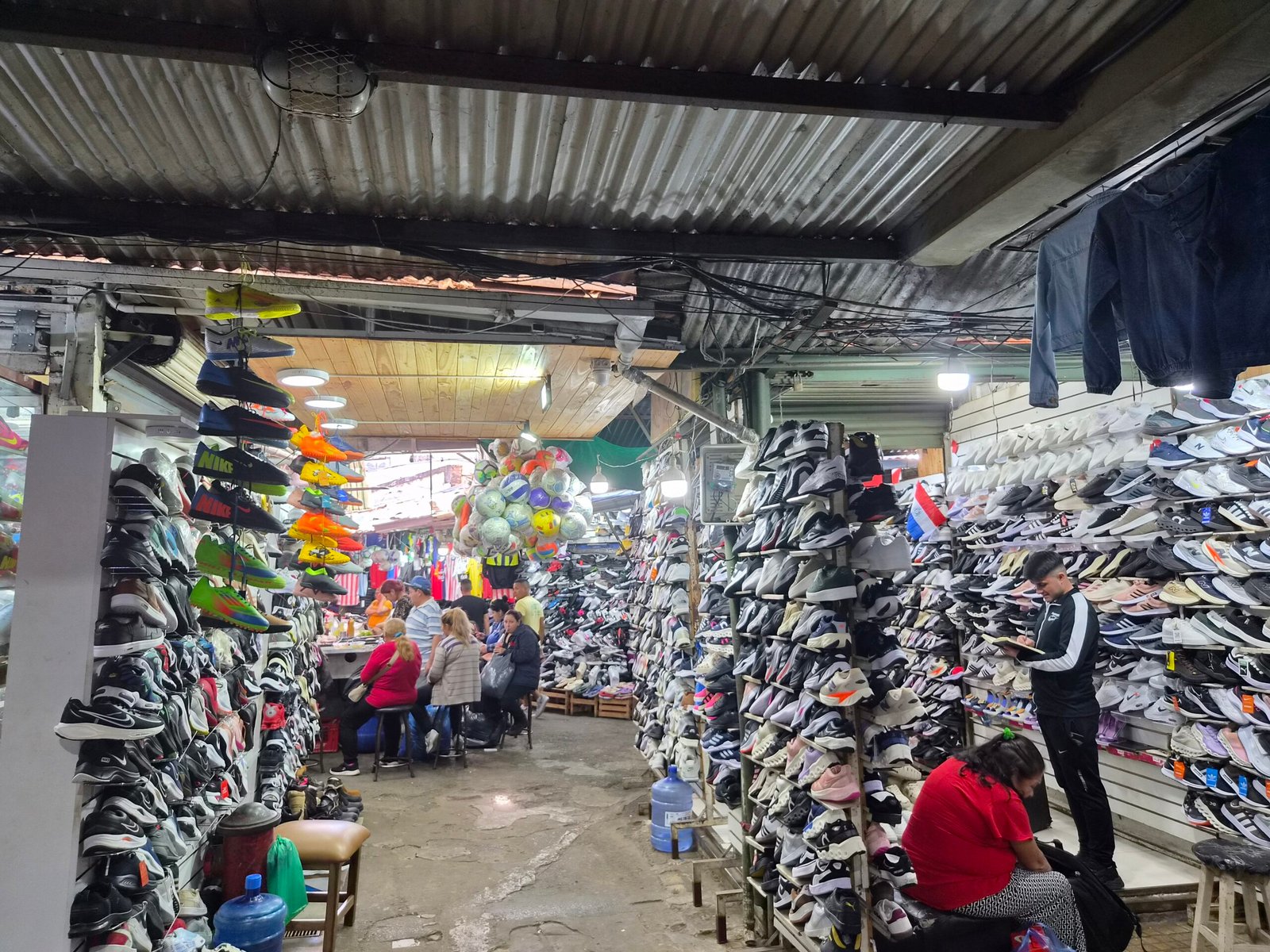
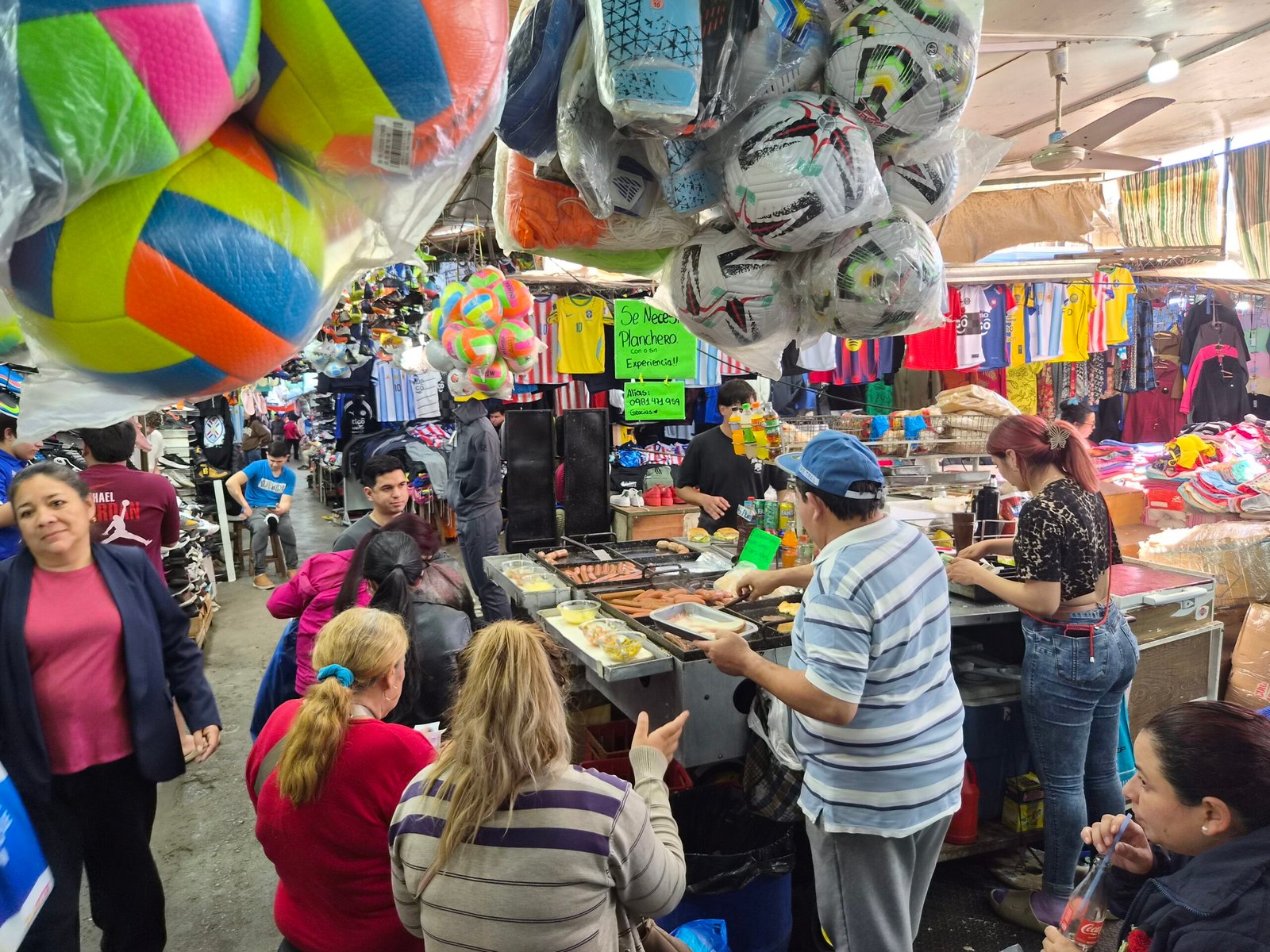
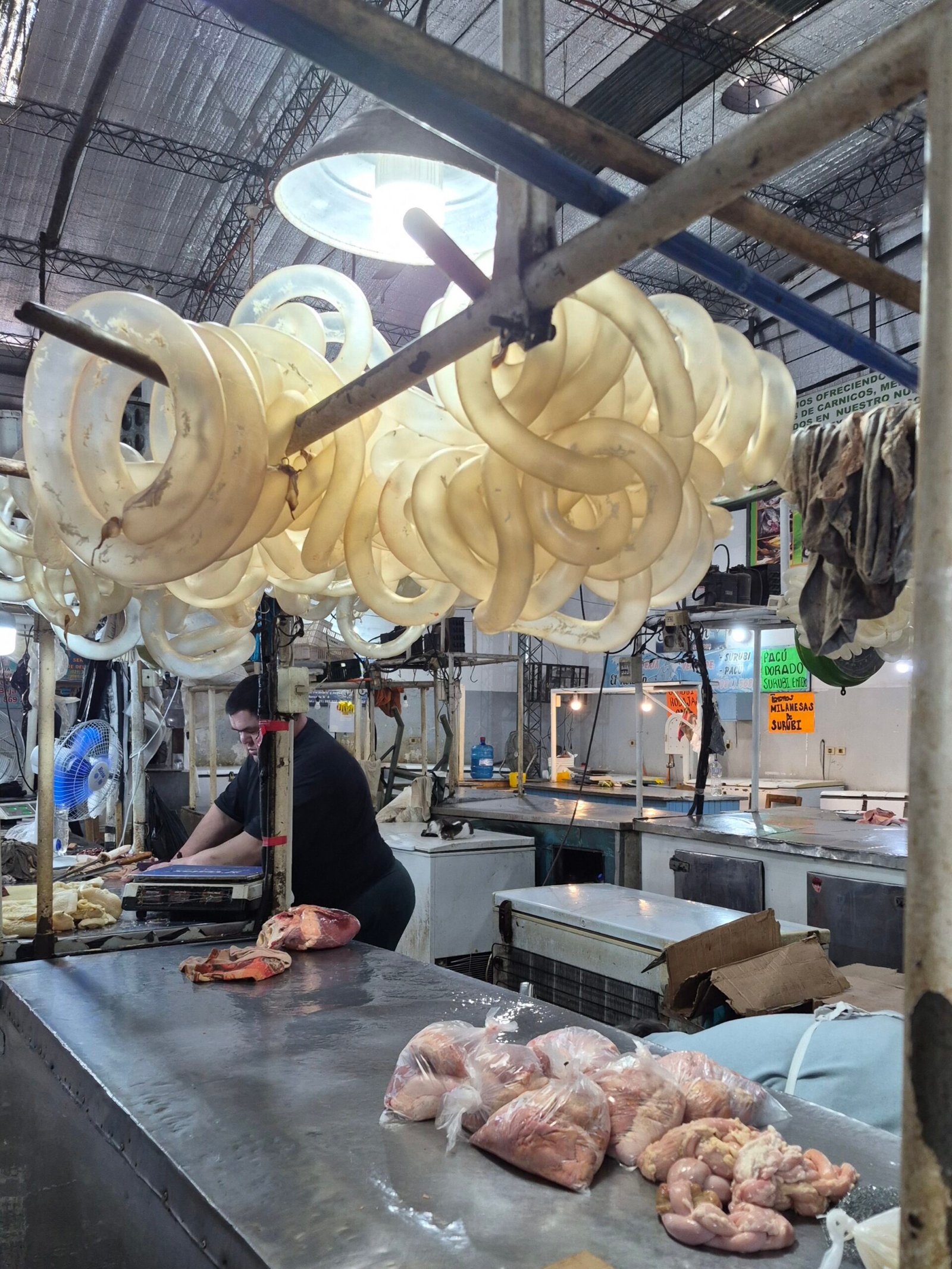
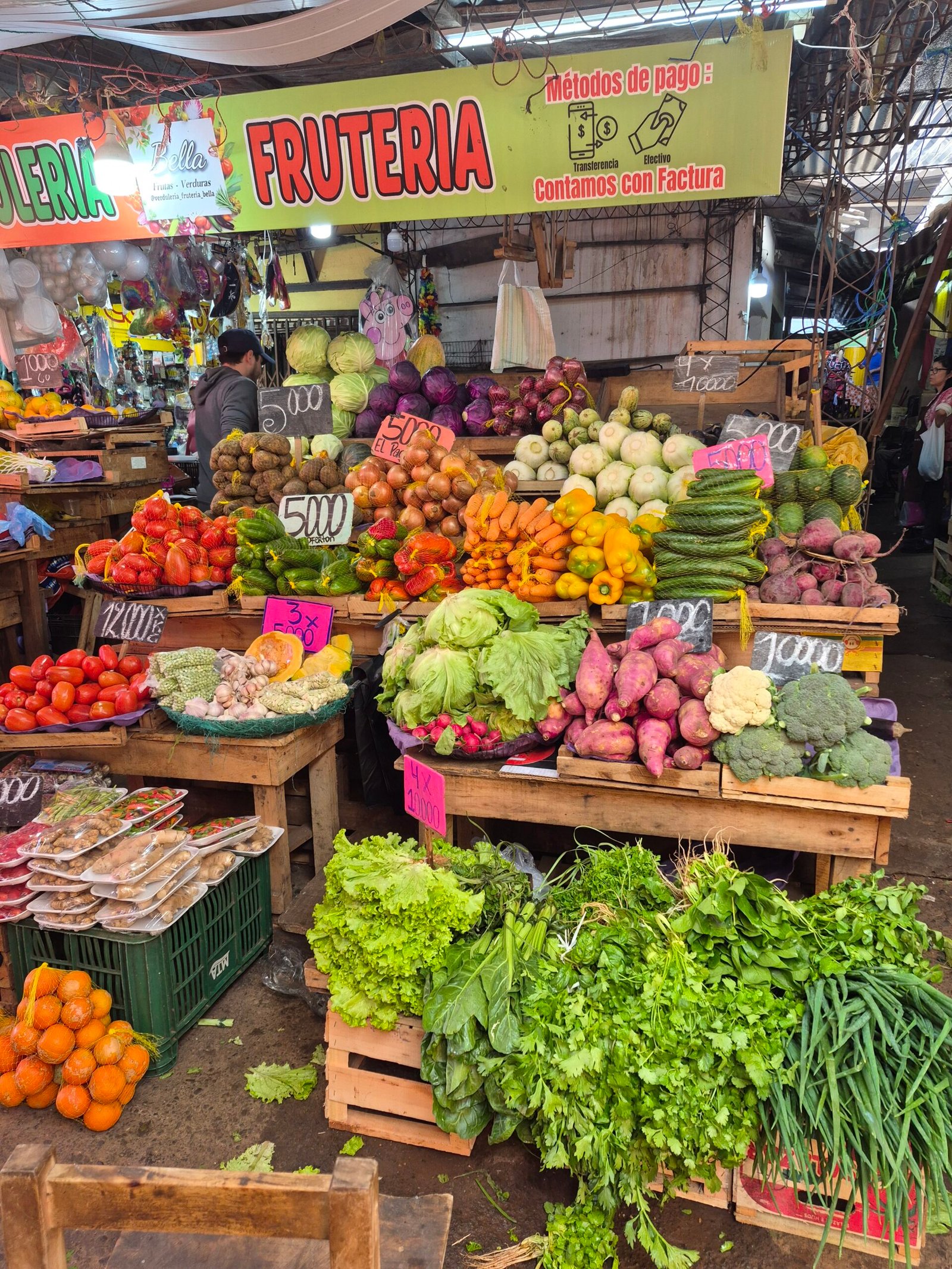
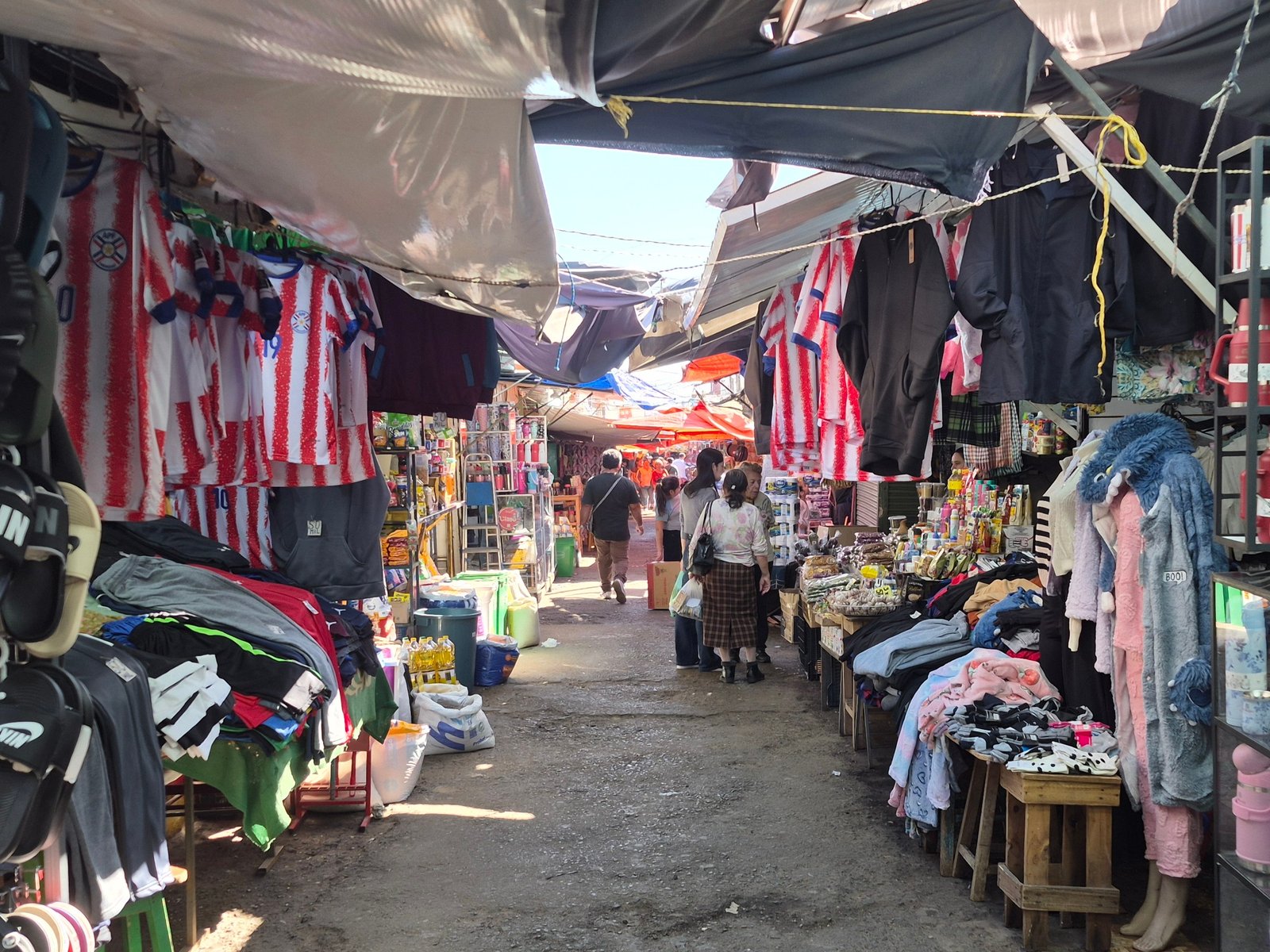
First, we stopped at a large local complex combining outdoor market stalls and a covered market (Mercado 4), where they sold everything from sausages to thermos flasks for yerba mate. We spent quite a while wandering through the maze of shopping alleys, and Risto picked up a few soccer jerseys, among other things. At one stall, we also saw plush Jesus figurines for sale for about twelve euros each. Smaller ones were available for less than ten euros, but we didn’t even glance at them, since this Jesus was, for some reason, dressed in a robe that was a bit too short. So there sat the little Jesus on the shelf, his bottom exposed, waiting for a buyer.
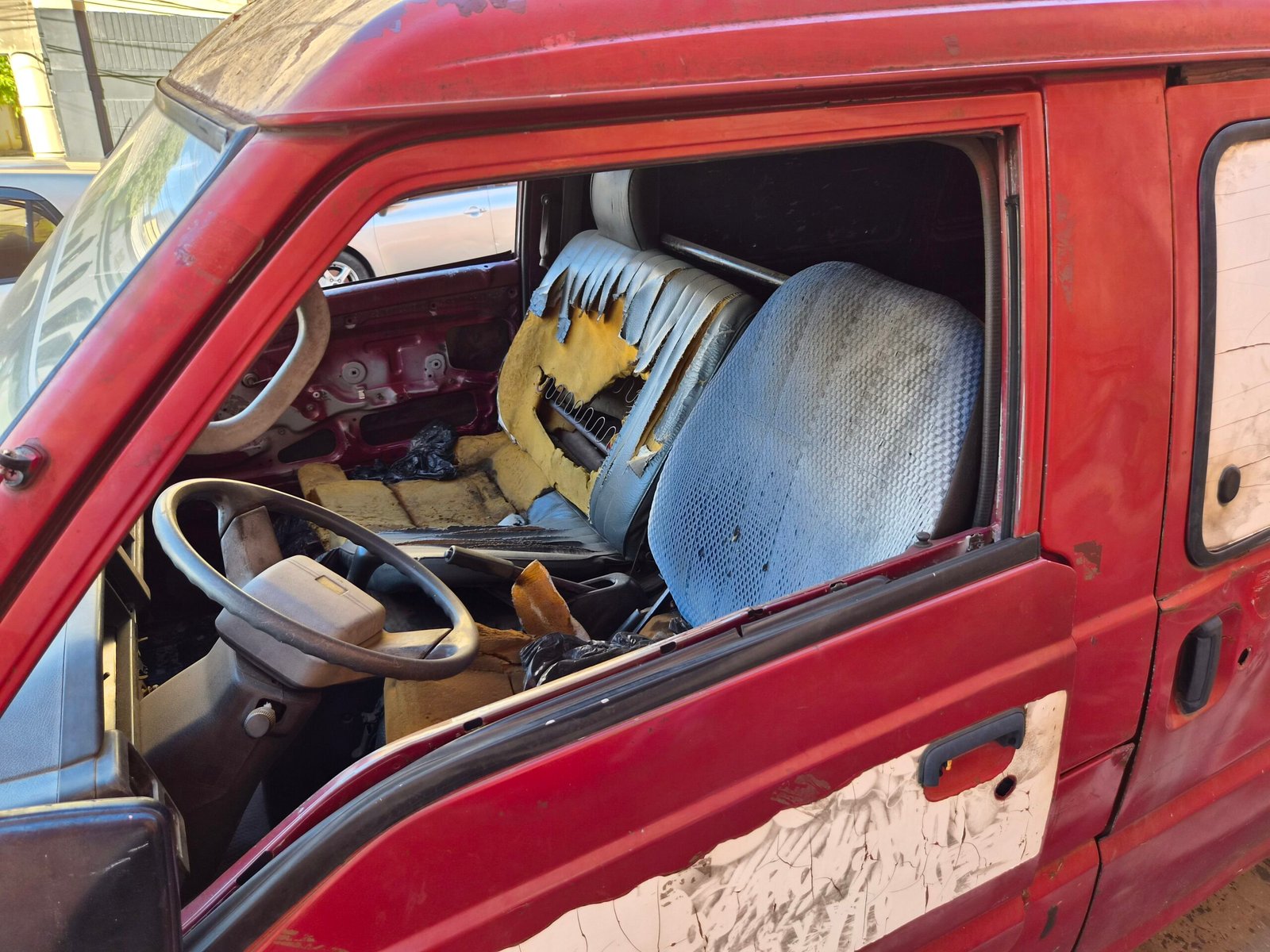
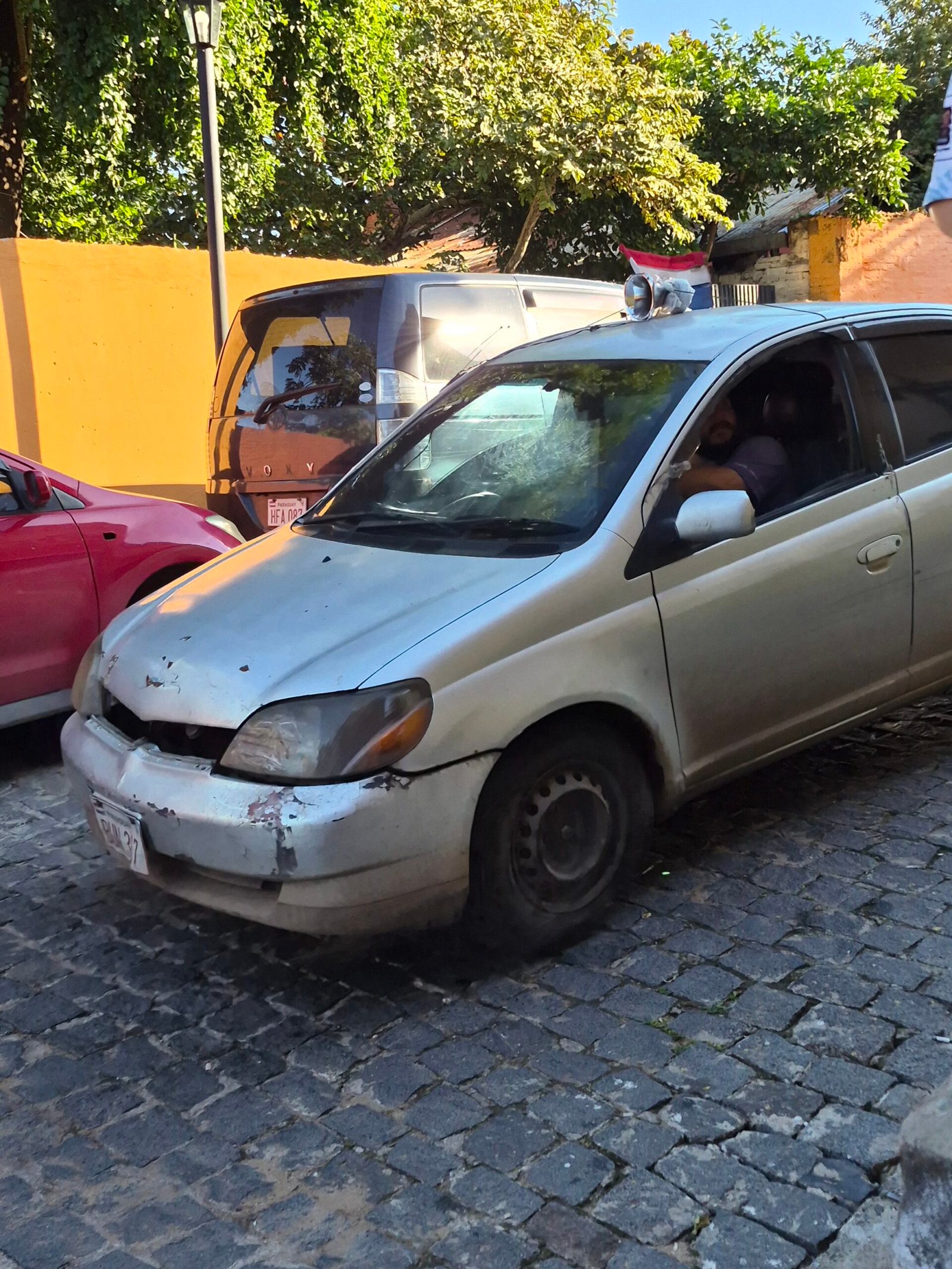
Fortunately, our Uber rides haven't been in quite such bad shape, but generally speaking, the cars here are in pretty poor condition.
It was easy to get lost in the Mercado 4 area.
Around here, almost everyone carries a thermos with them.
How about a plush Jesus for a little over ten euros?
More traditional soft toys were also available.
One area was dedicated to shoes.
Food would have been available as well.
One could choose the sausage filling themselves.
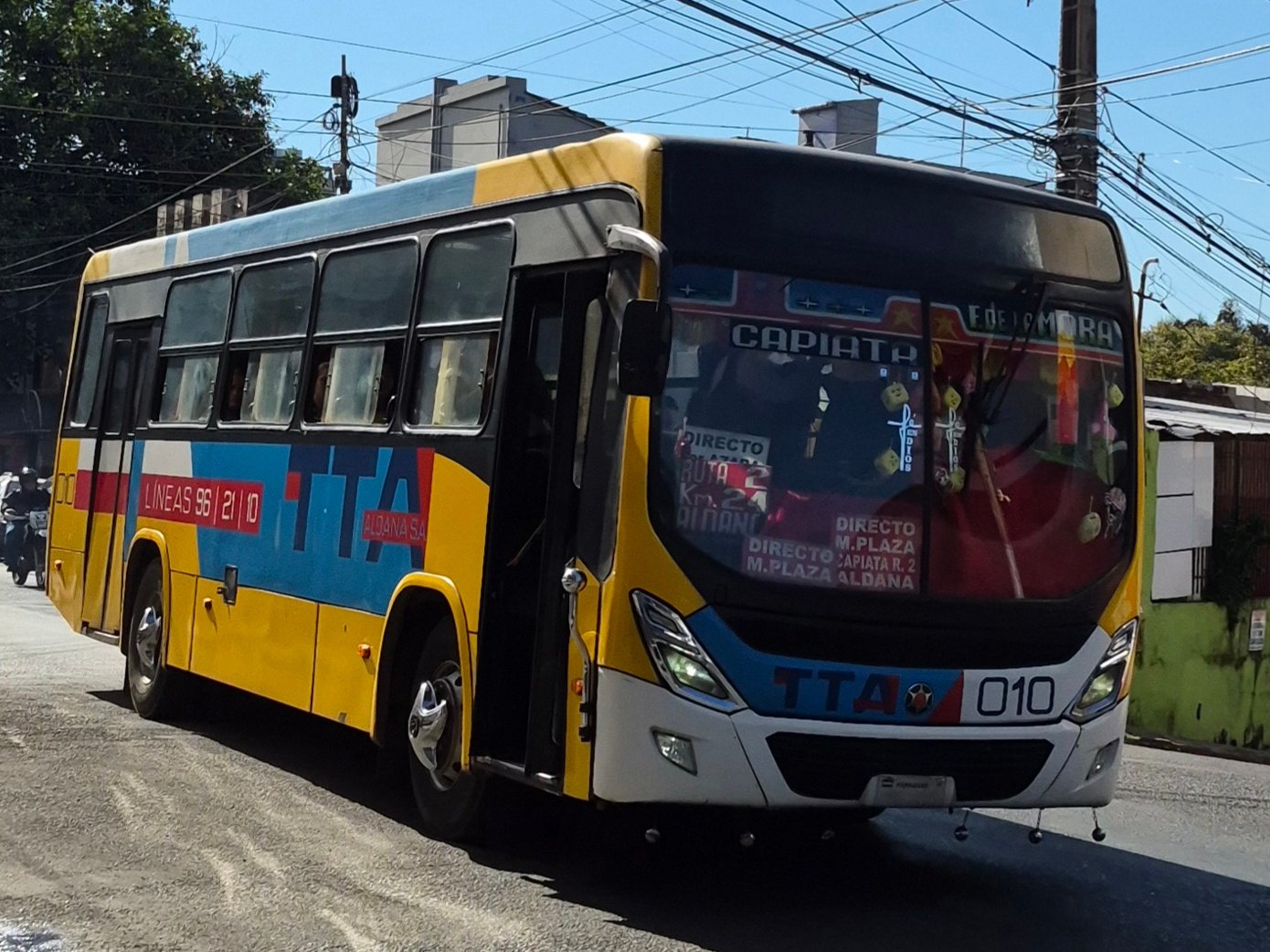
There were all sorts of local buses. Many of them had both fur dice and cross-shaped decorations on the front window.
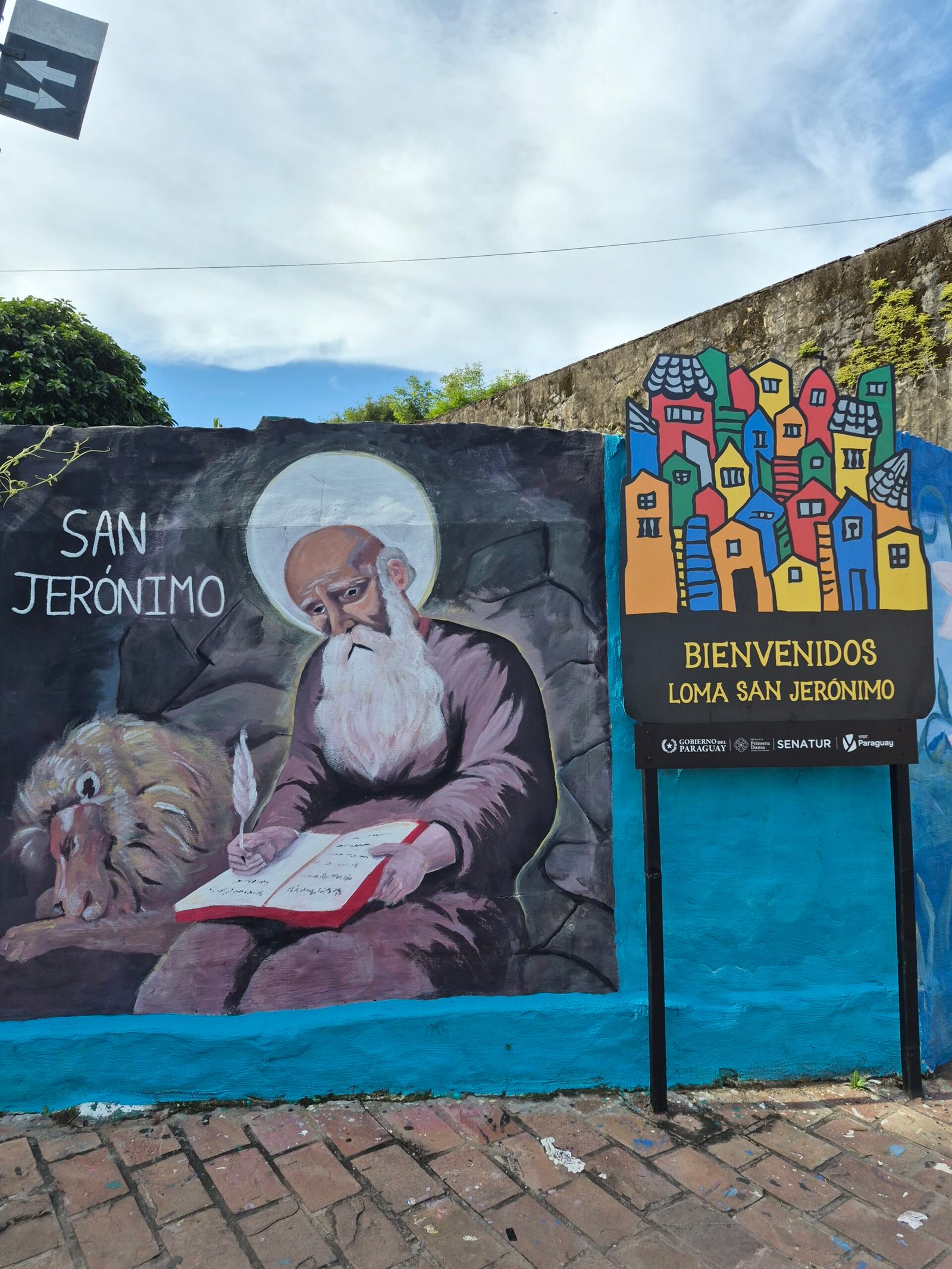
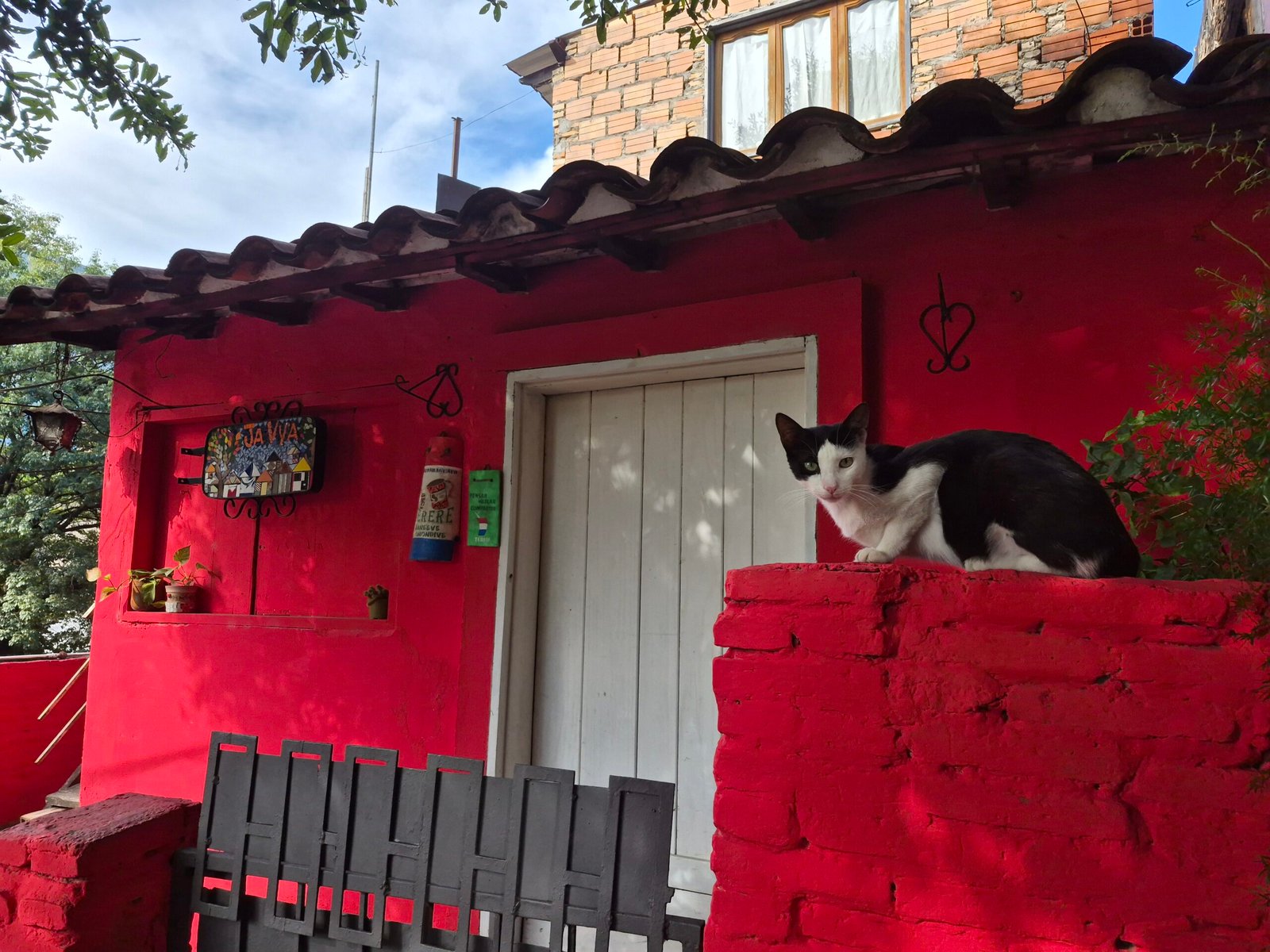
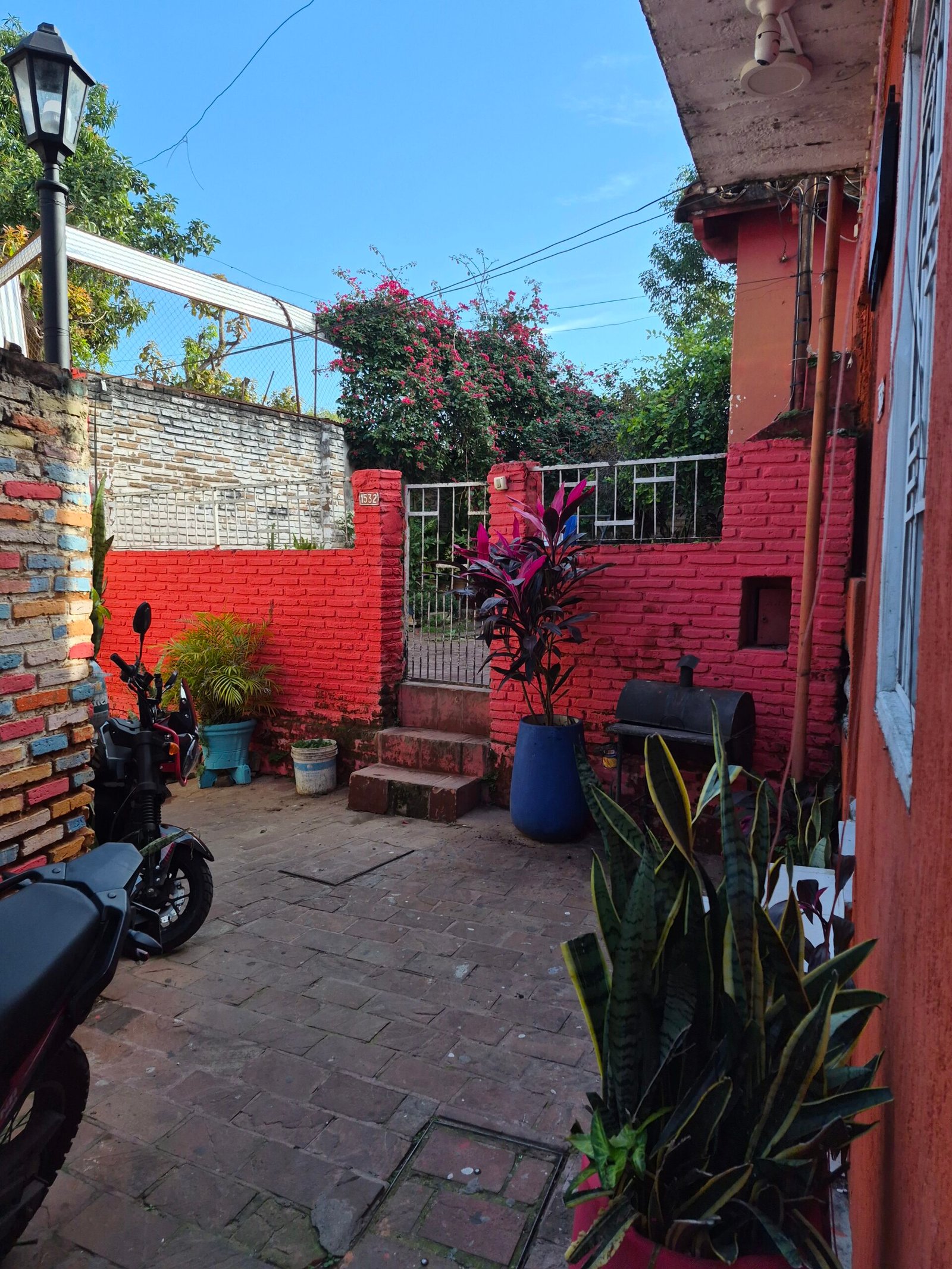
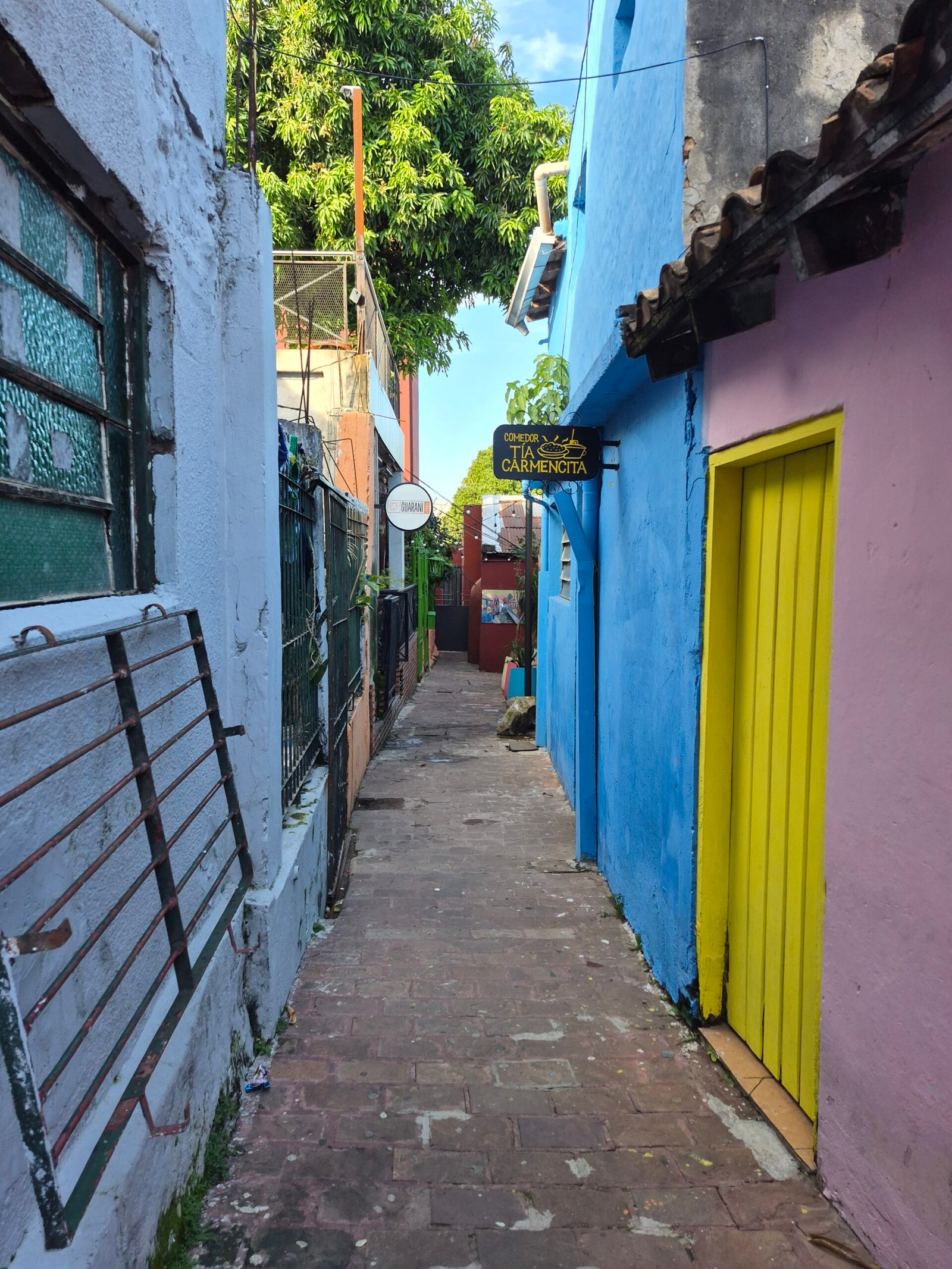
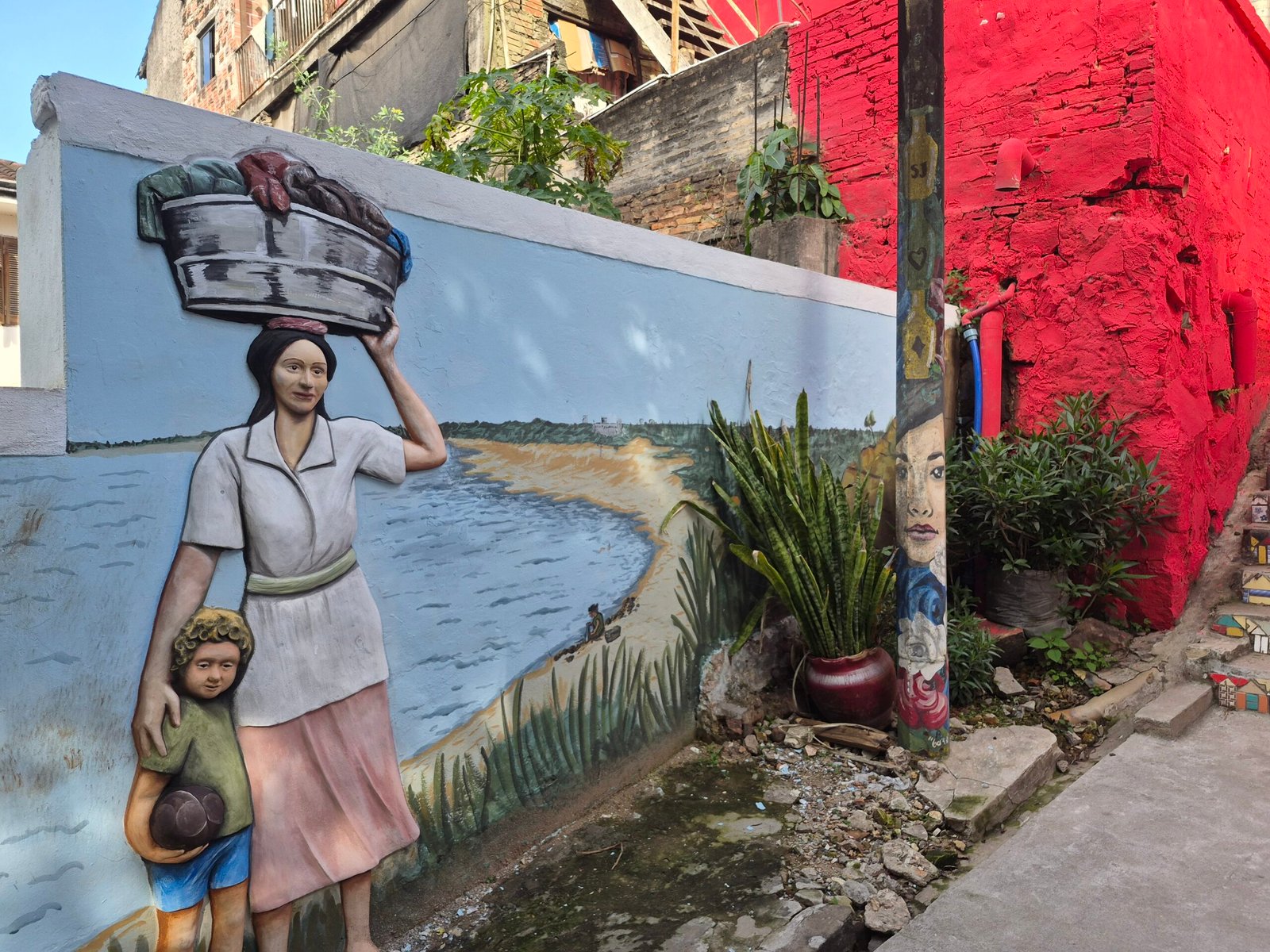
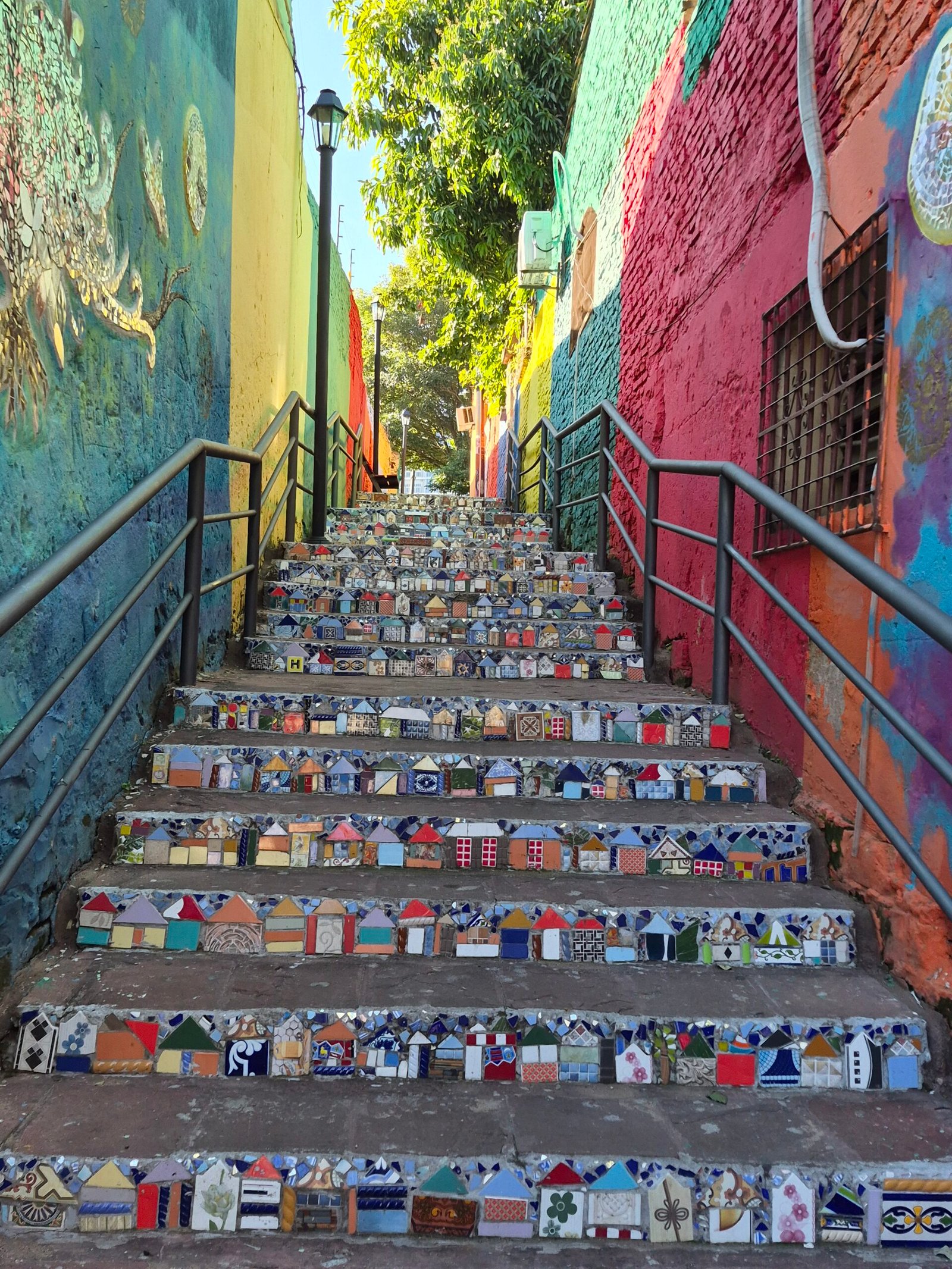
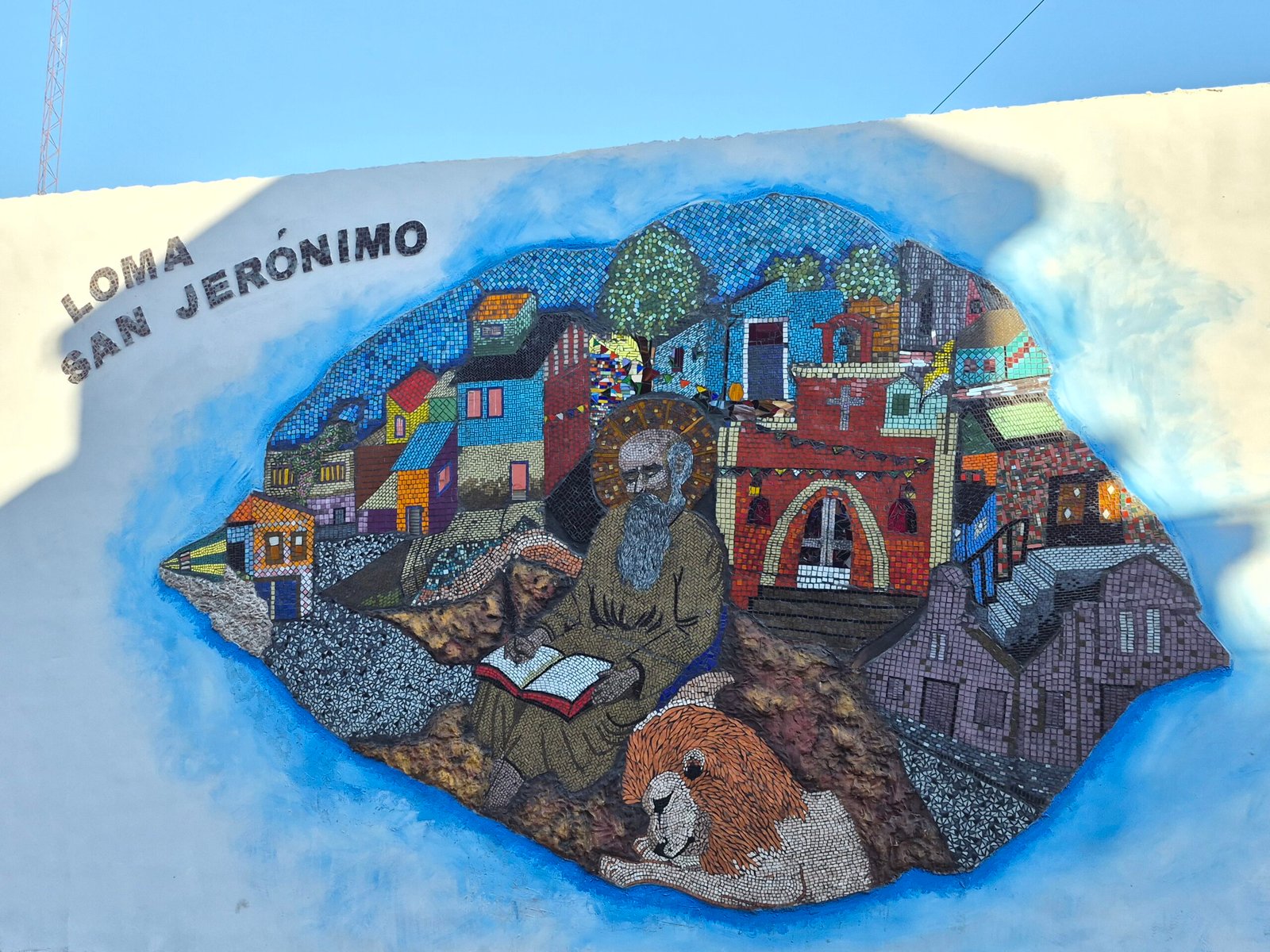
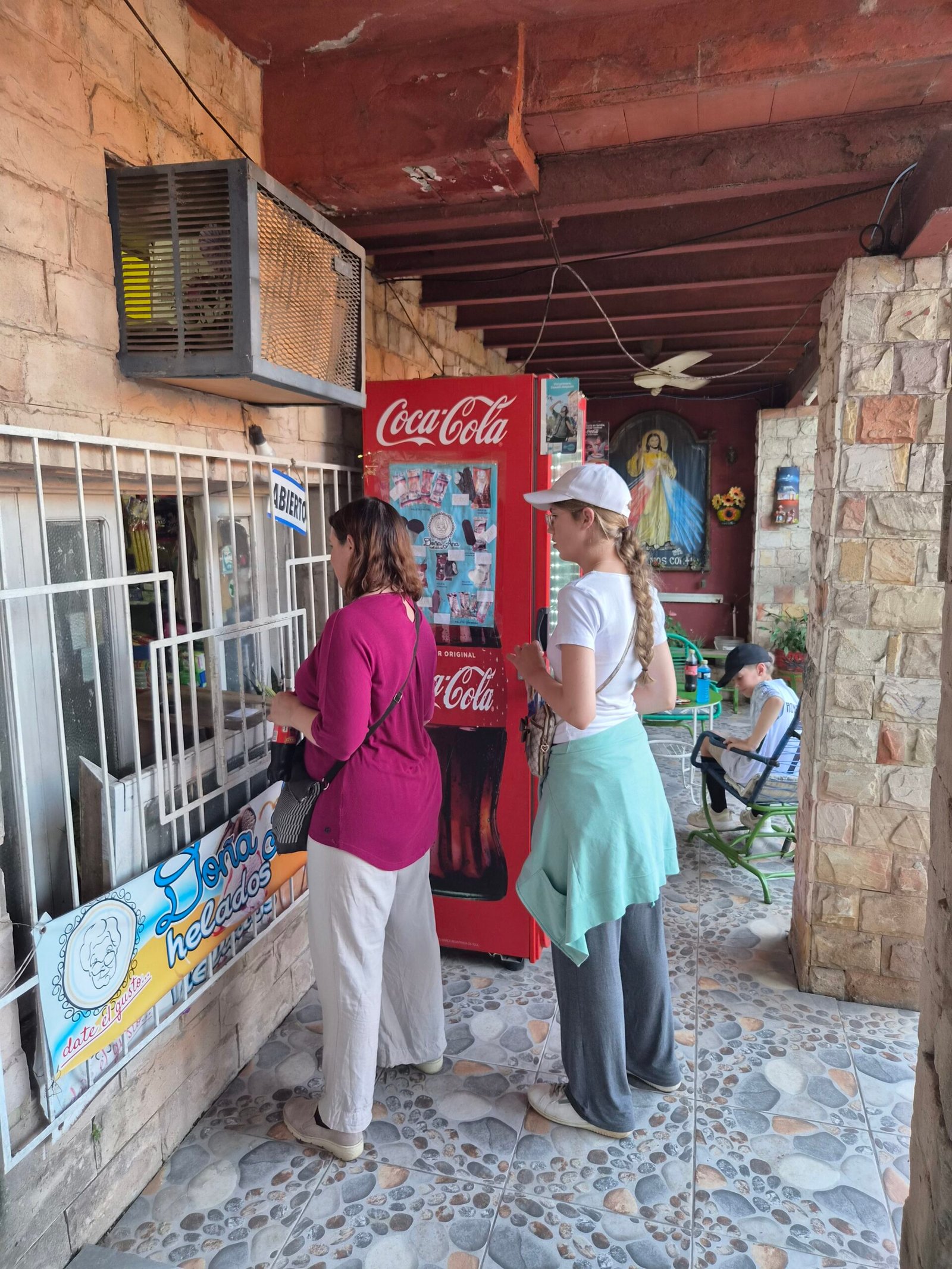
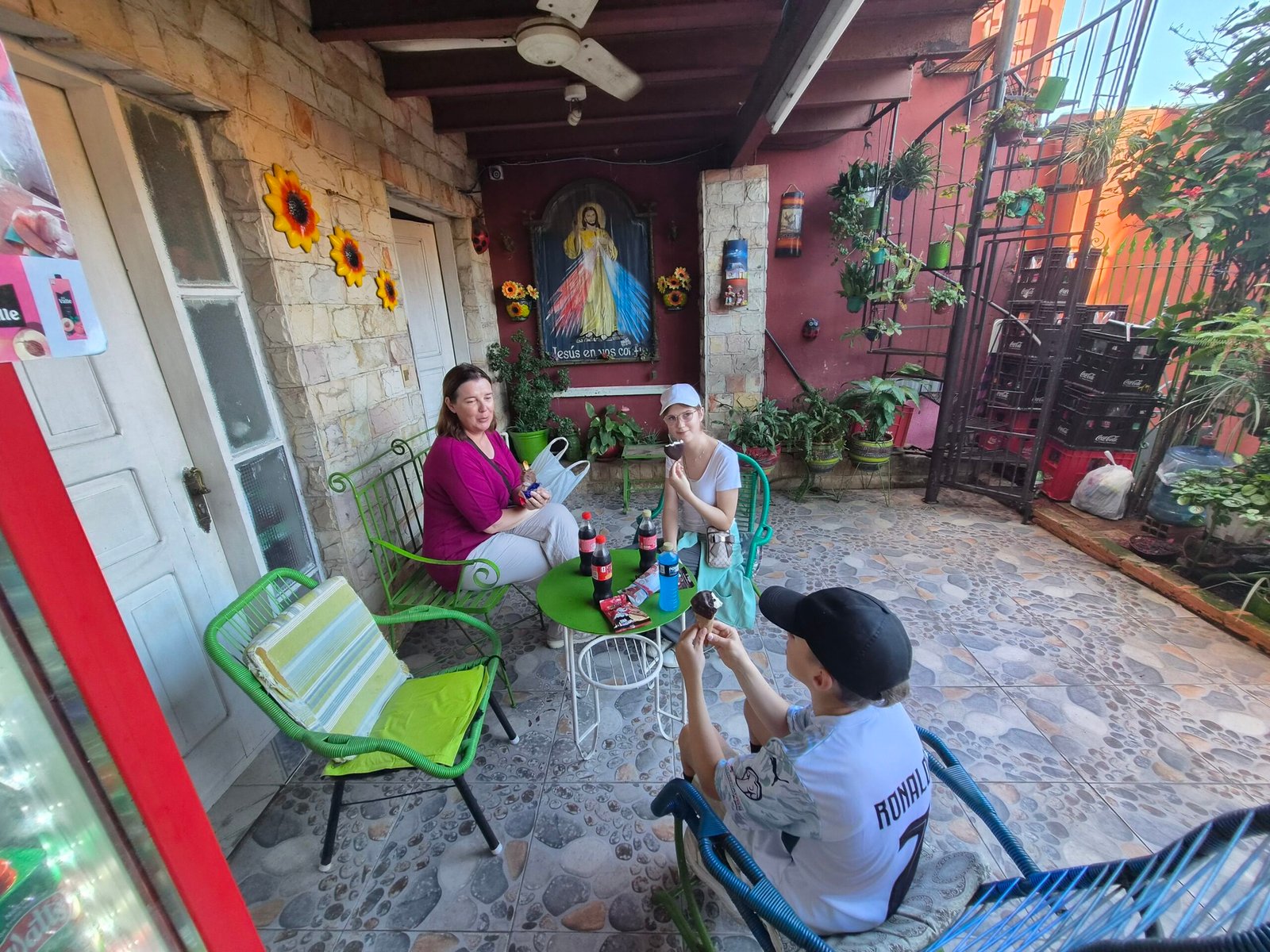
From the shopping streets, we continued on to Loma San Jerónimo, a tiny but colorful neighborhood in Asunción. We’d seen pictures of the area online, and it seemed like a place worth exploring. The area was about the size of a postage stamp, so in theory, it wouldn’t have taken very long to walk through it. Our stroll took a little longer, though, because Risto—the “Mother Teresa of Dogs”—had bought some dog treats from a store the day before and was giving them to the dogs wandering the streets. Some of them were surely genuine strays, but I’m sure a few treats found their way into the mouths of pet dogs as well. Ronja was very worried about whether it was okay to feed the dogs, since they might have had a special diet or something similar. In San Jerónimo, we also found a small kiosk-like stand run by an elderly local woman. Since it was a surprisingly warm day—+26°C—we bought some drinks from her, as well as a few (already partially melted) ice creams. There was a small terrace in front of the kiosk, so we sat there enjoying our drinks and marveling at how peaceful the area was.
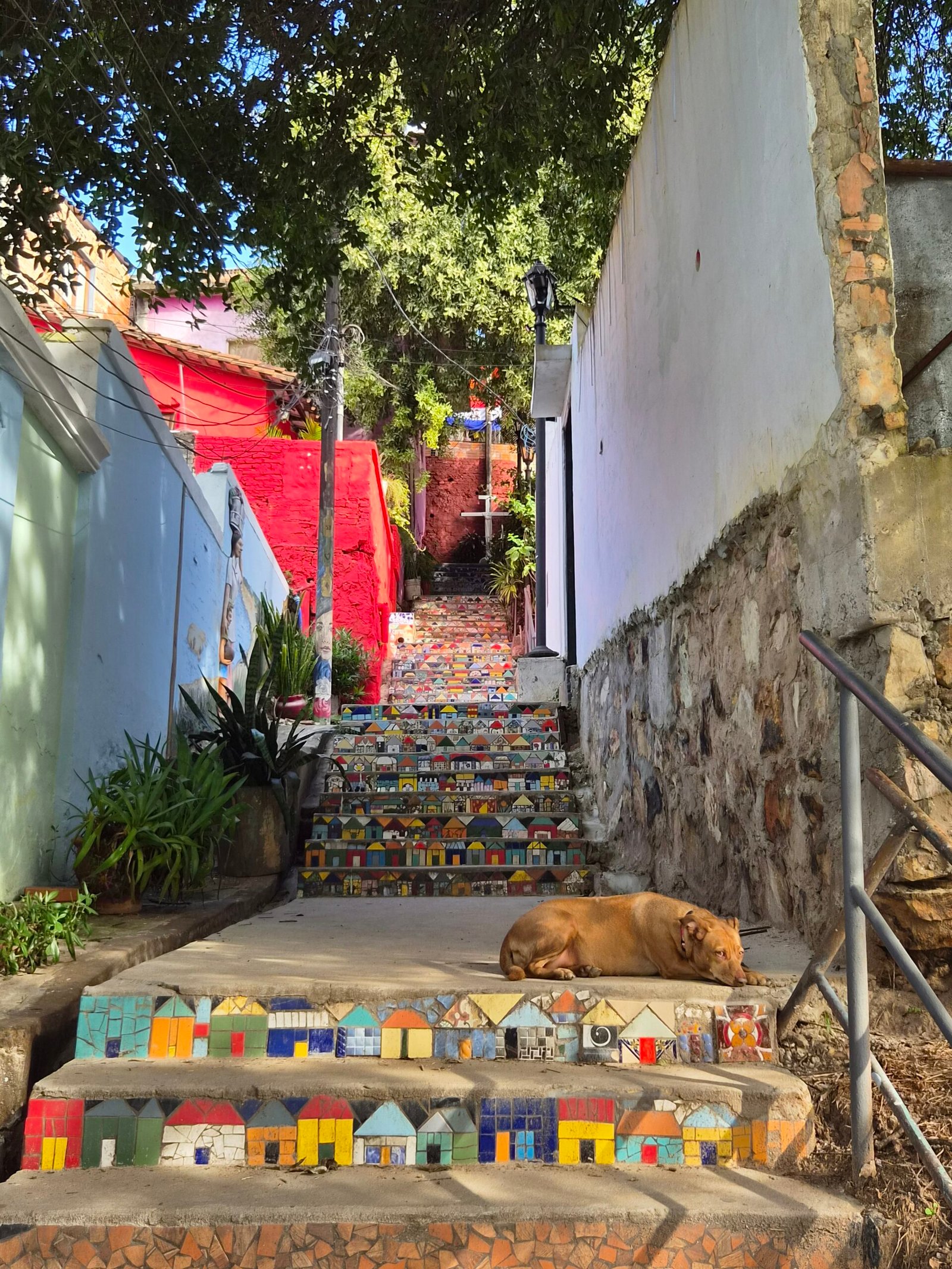
This dog also got its share of Risto's dog treats.
There were also a lot of cats in the area.
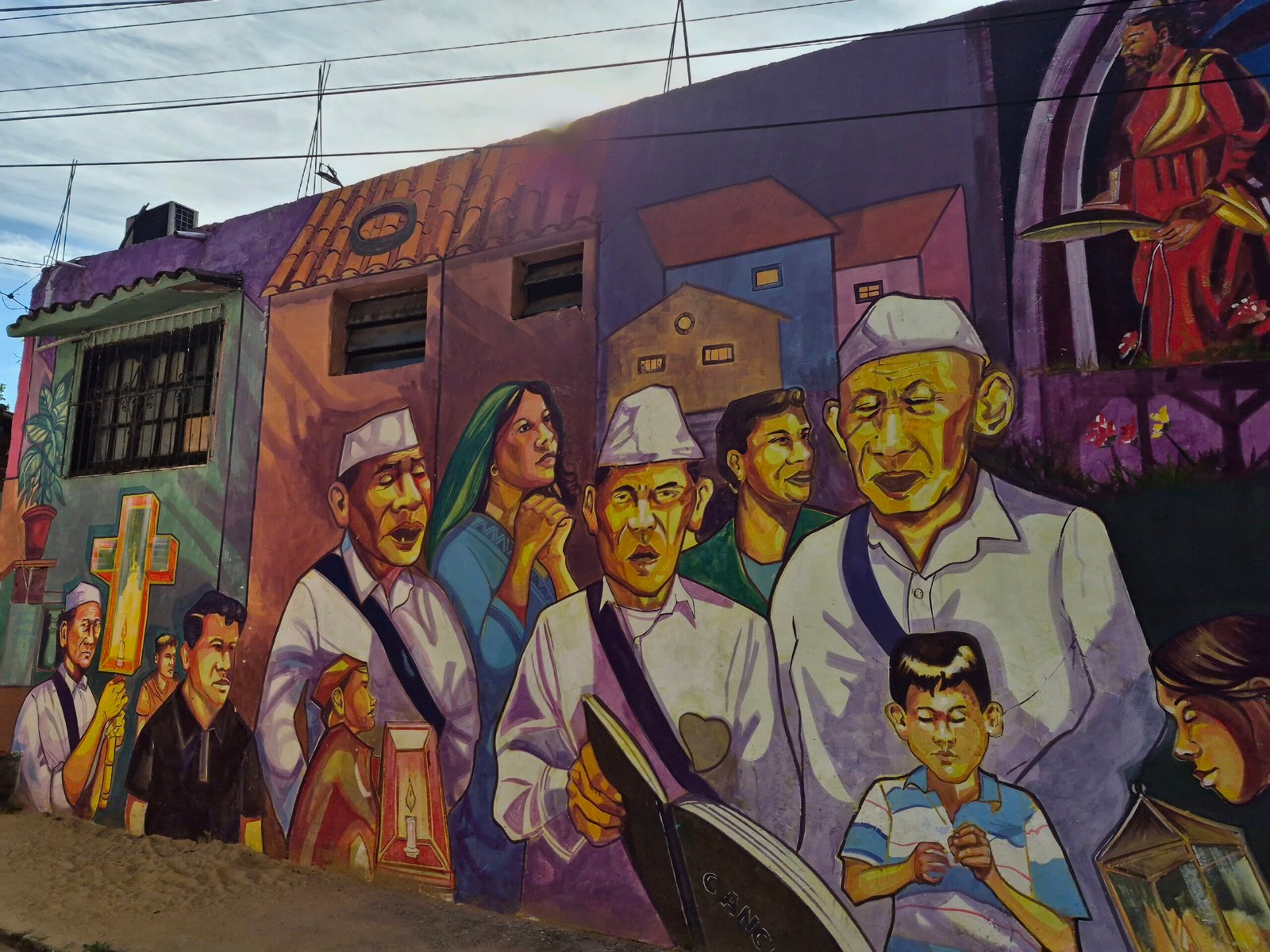
The whole little neighborhood was delightfully colorful.
At least a couple of the staircases were decorated with fun mosaic patterns.
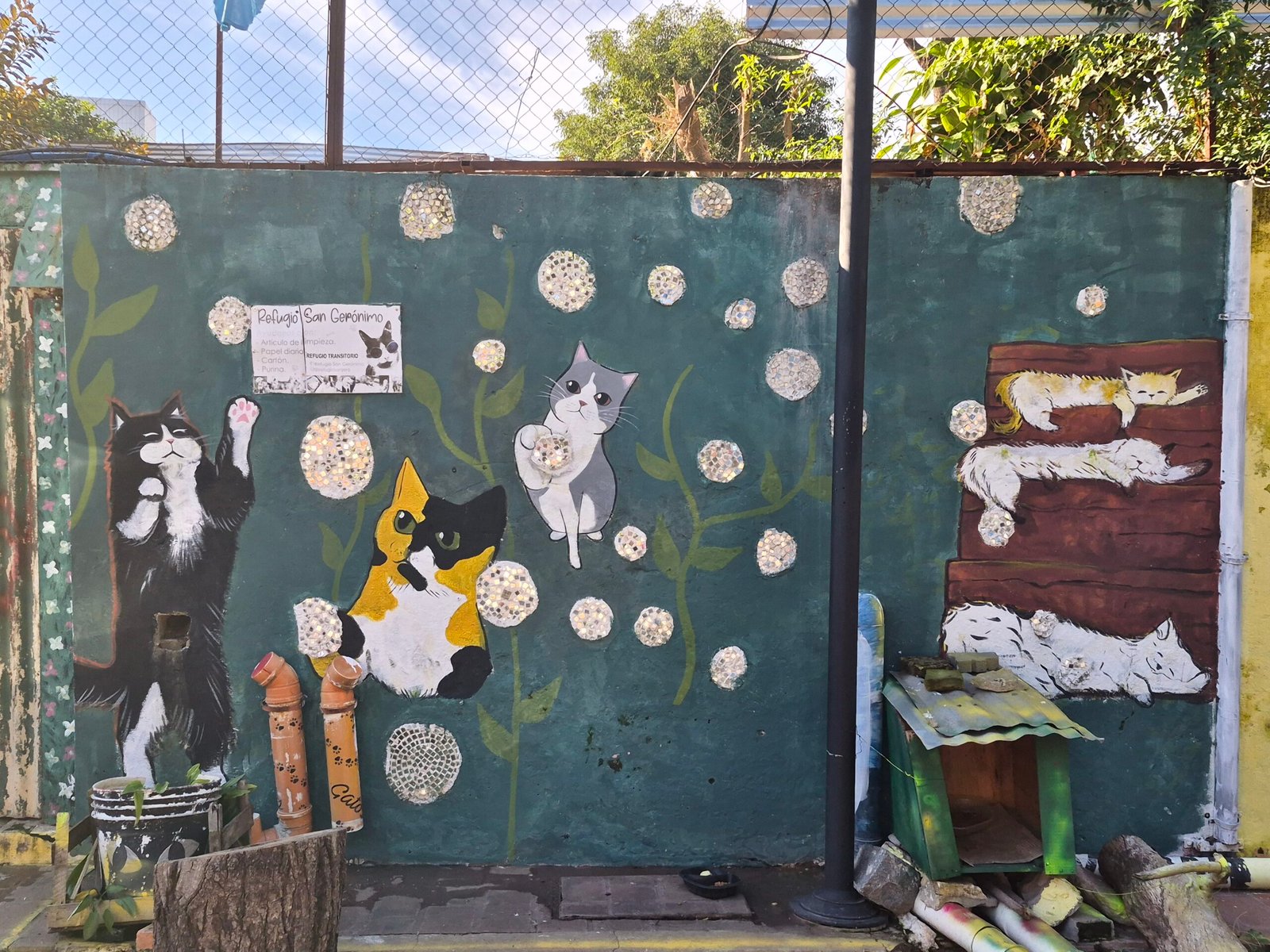
We also found a local animal shelter in the area.
Ordering a small snack
A little snack under Jesus' watchful eye
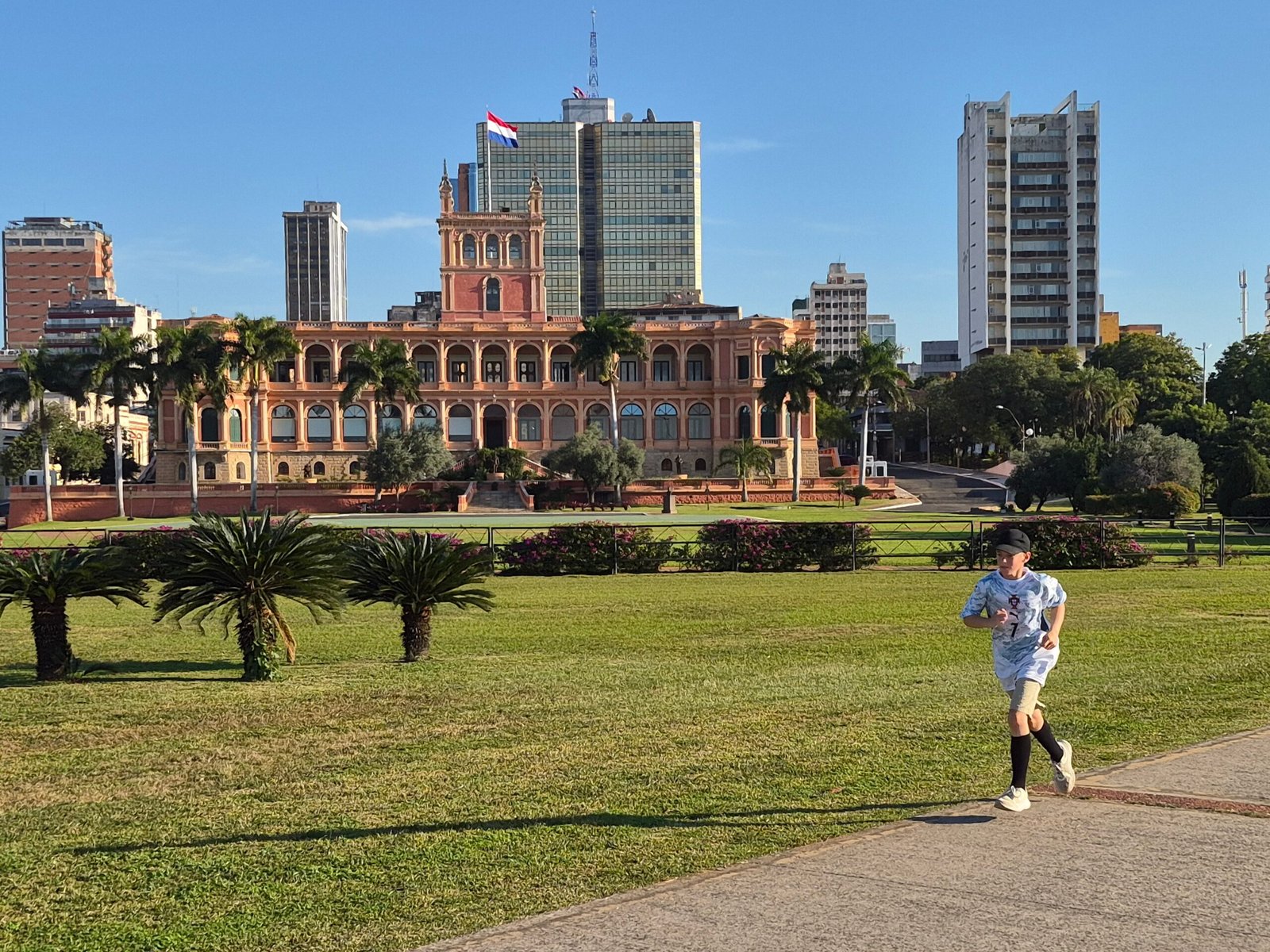
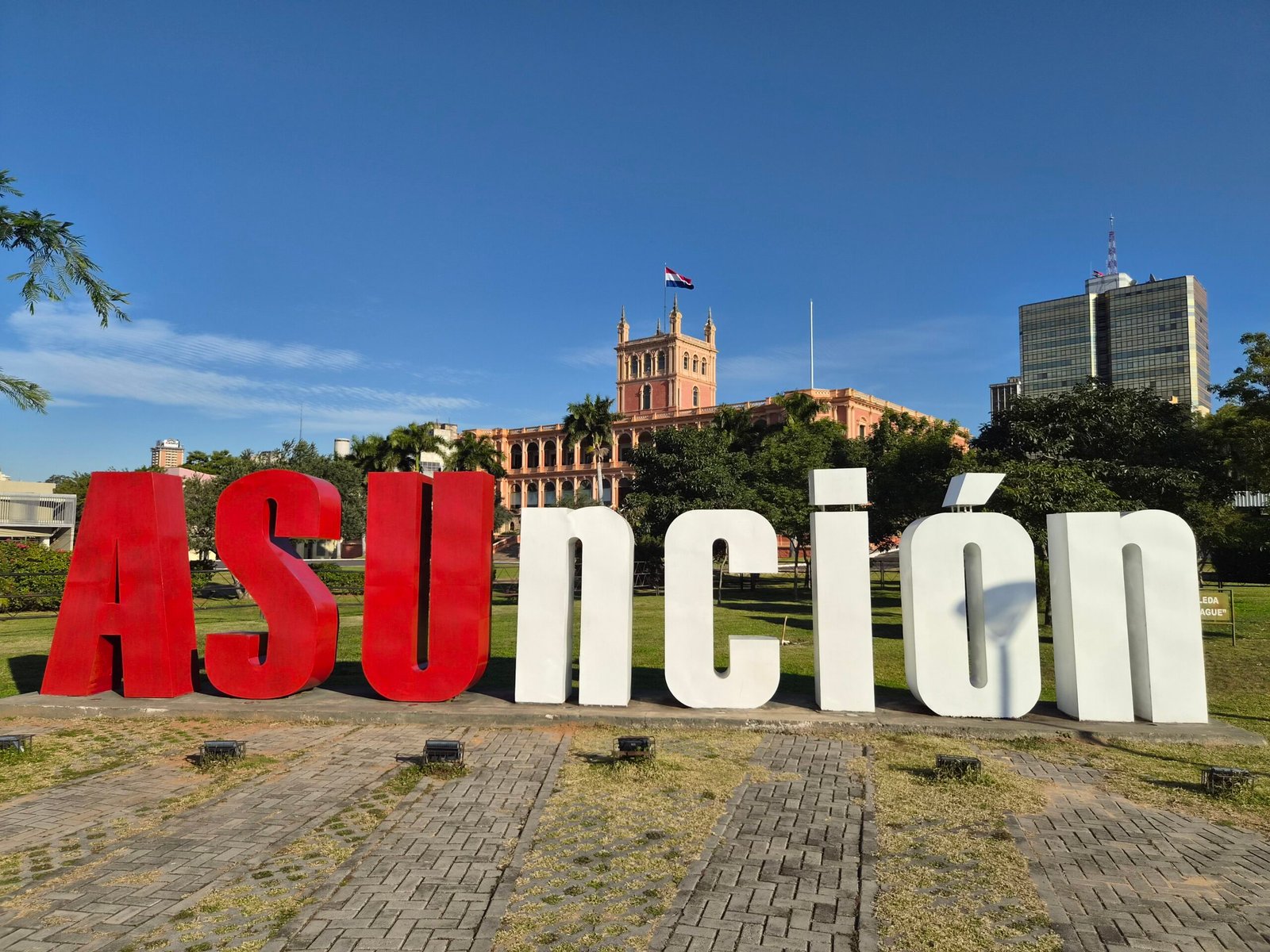
From San Jerónimo, we walked back to the palace, where we had already stopped the previous day. This time, however, we headed to the waterfront promenade behind the building, since that’s where Risto could run his 30-minute jog for the week. I have to say, he’s quite the tough guy, jogging for half an hour straight in those temperatures. The rest of us just contented ourselves with filming his performance and cheering him on. Even the soldier standing in the shade in the palace’s backyard watched with interest as Risto ran the same loop past him time and time again.
Risto went for a run in front of the Presidential Palace
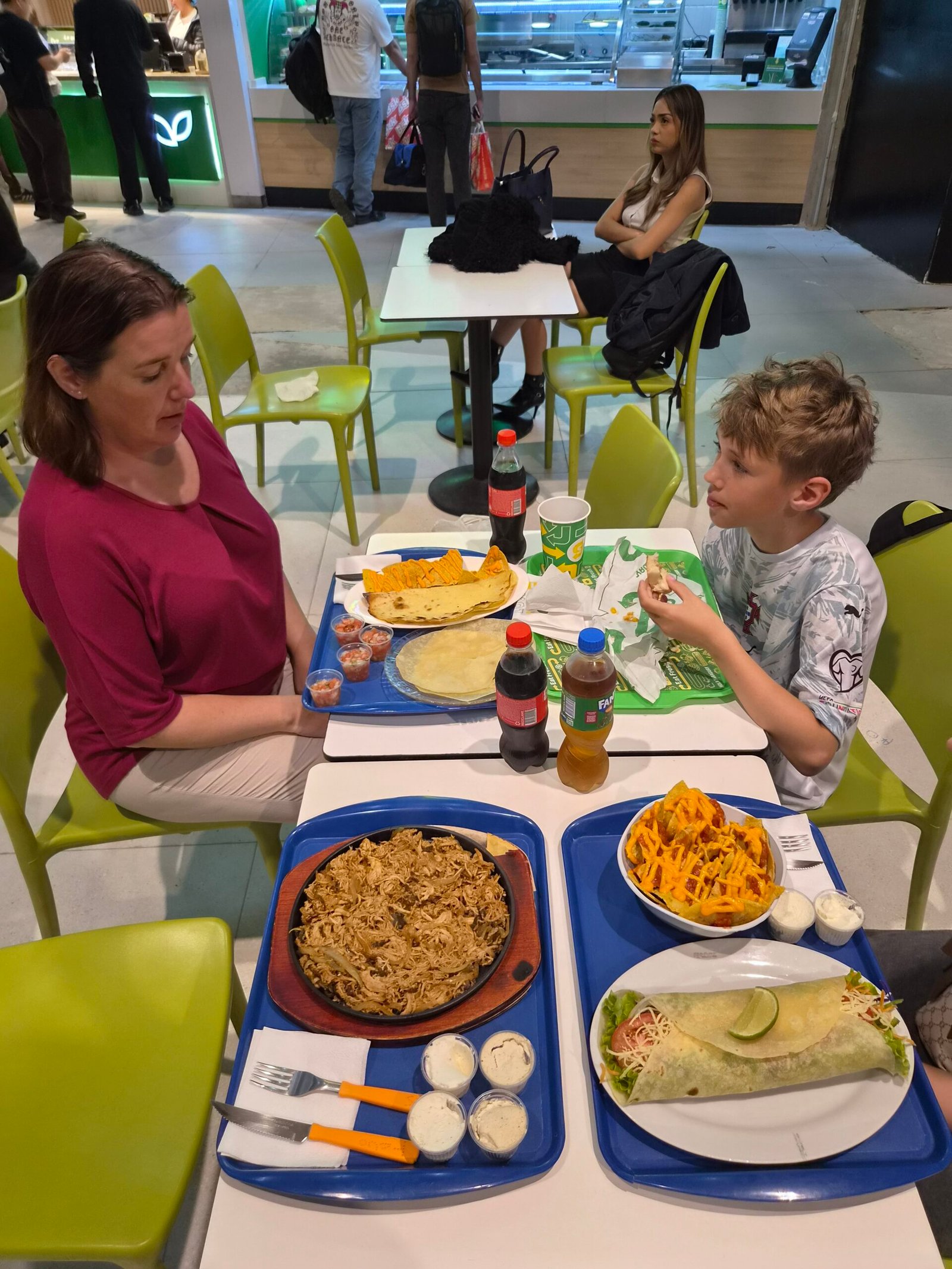
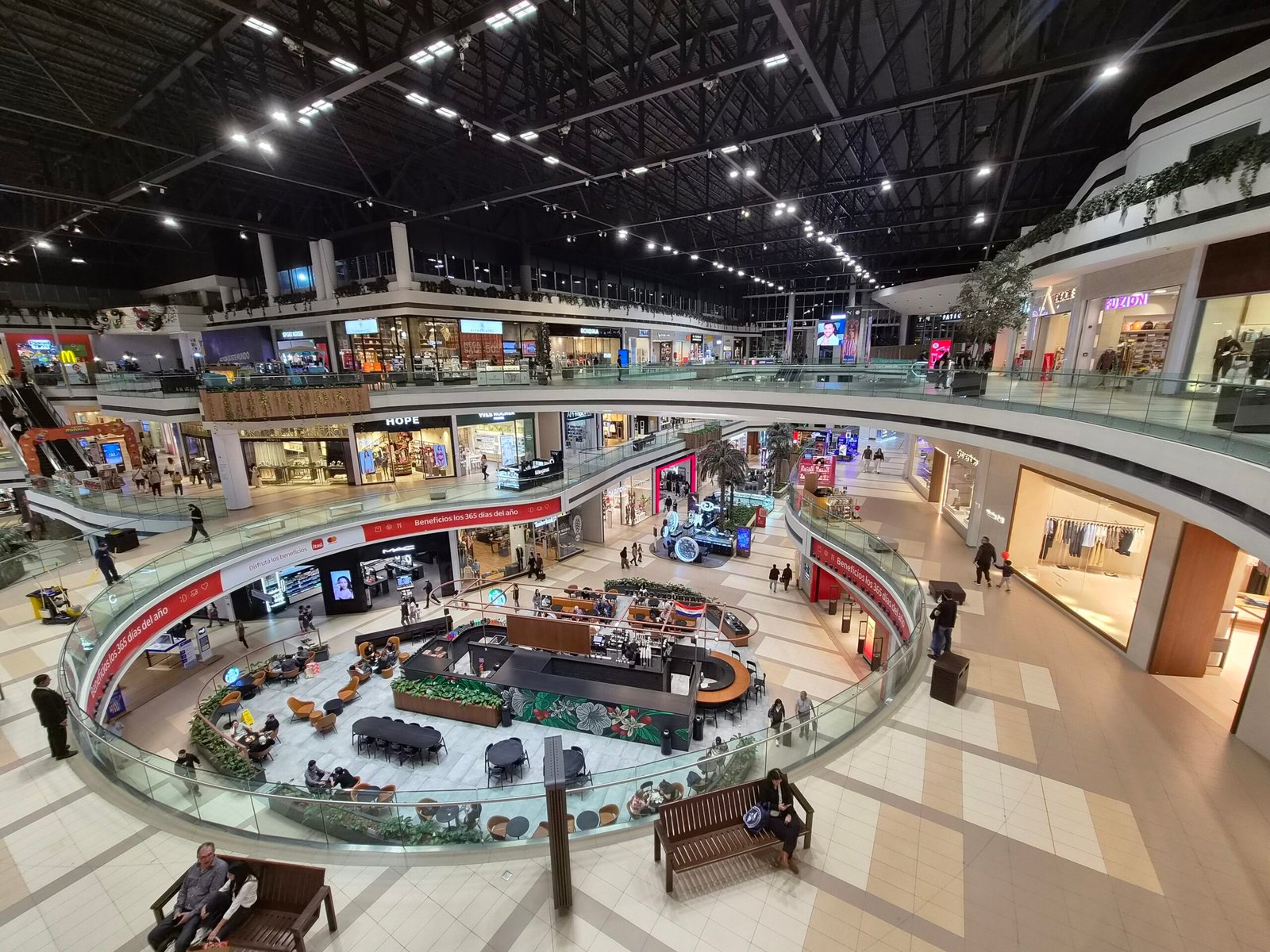
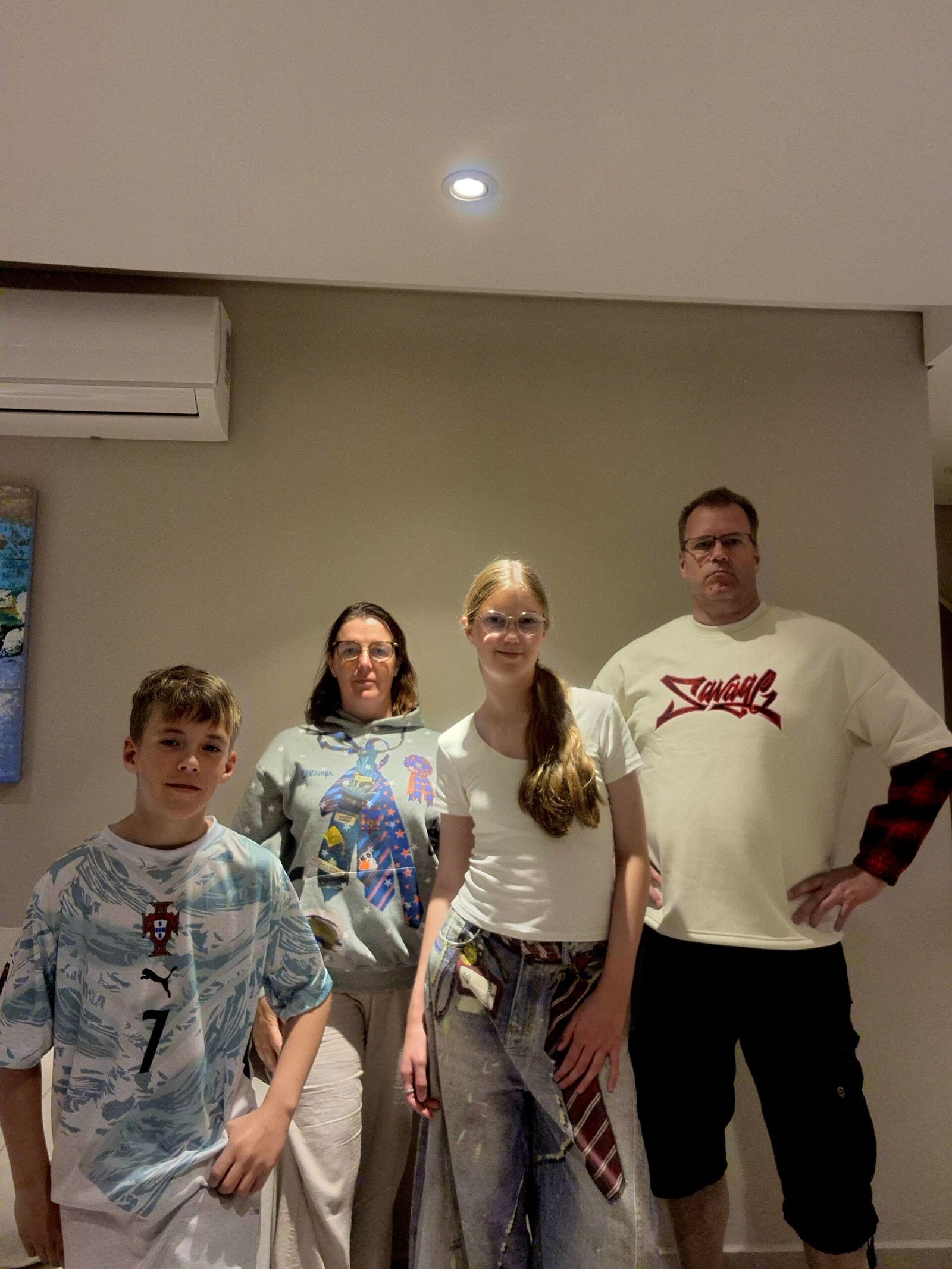
After the run, everyone (not least Risto) was already hungry, so we ordered an Uber again and drove to the huge La Galeria shopping center, located just outside the old city center. In the food court, we each found a “little” something to eat for a late lunch or early dinner. After eating, we wandered around the main shopping mall for a while and ended up doing some impulse shopping. We wandered into a clothing store that was advertising a concert by the Korean band BTS in Argentina in October. The clothes in the boutique were so unique and different compared to what’s sold in Finland that Marko and Jaana ended up buying shirts there, and Ronja bought a pair of jeans. We didn’t buy anything for Risto this time, but he had already added three more Ronaldo jerseys to his collection. (Can you guess which player the young man is a fan of?)
I wonder when we'll learn that it's better to order less food than we do in Finland? The portion sizes are simply way too big.
La Galeria was even more impressive than many Western shopping malls.
Wearing our new outfits. Latest fashion straight from Paraguay.
Even though we hadn’t planned any specific activities for the day, we didn’t get back to our apartment until after nine in the evening. After that, we still had to pack, since once again we were facing an early departure for the airport. Even though Asunción wasn’t exactly blessed with major attractions, we really liked the city. Maybe we could have even spent a couple more days there, but during our three-night stay, we definitely got a pretty comprehensive look at the city. While getting around by Uber, we had to constantly zigzag from one street to another, because—at least to us—it seemed as though the city was built entirely of one-way streets. With a population of over 450,000 in the city of Asunción itself, and as many as 2.5–3 million in the Asunción metropolitan area, traffic gets pretty interesting when most of the roads are one-way.
This old clunker, too, had seen better days. At least it hadn't been patched together with duct tape, like some of the other cars we'd seen.