1.4. – 6.4.2023
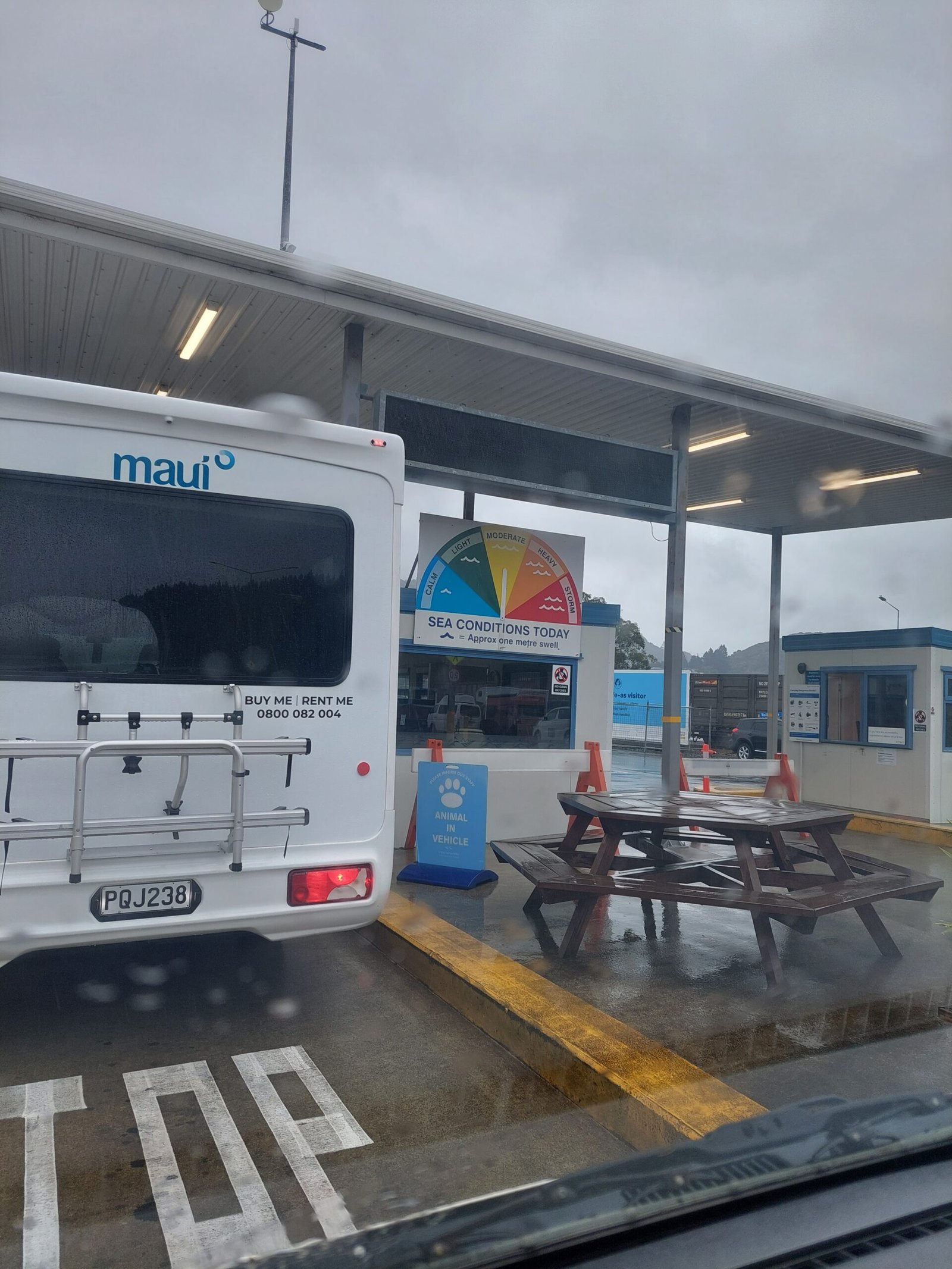
Lauantaina lähdimme ajelemaan kohti pientä Pictonin kaupunkia. Tälle päivälle siirrettyä lauttayhteyttä ei ollut peruttu toistamiseen, joten tarkoituksena oli siirtyä eteläsaarelta pohjoisaarelle loppuajaksi. Ehdimme paikalle hyvissä ajoin ennen lautan lähtöaikaa vain kuullaksemme, että se oli myöhässä. Ja kyseessä ei ollut aprillipila. No, parempi sekin, kuin kokonaan peruttu lauttayhteys. Odotteluaikaa jäi noin kolme tuntia. Meille sanottiin, että voisimme kyllä halutessamme parkkeerata auton jonoon, lähteä käymään kaupungilla, ja palata sitten ajoissa takaisin. Koska satoi vettä, päätimme jäädä satamaan autoon odottelemaan. Siellä pysyisimme kuivina, ja syömistäkin löytyi jääkaapista tarpeen vaatiessa. Edellisenä autojonossa olevat päättivät myös jäädä satamaan, ja ryhtyivät jonossa kokkauspuuhiin. Aikaahan siihen oli riittävästi.
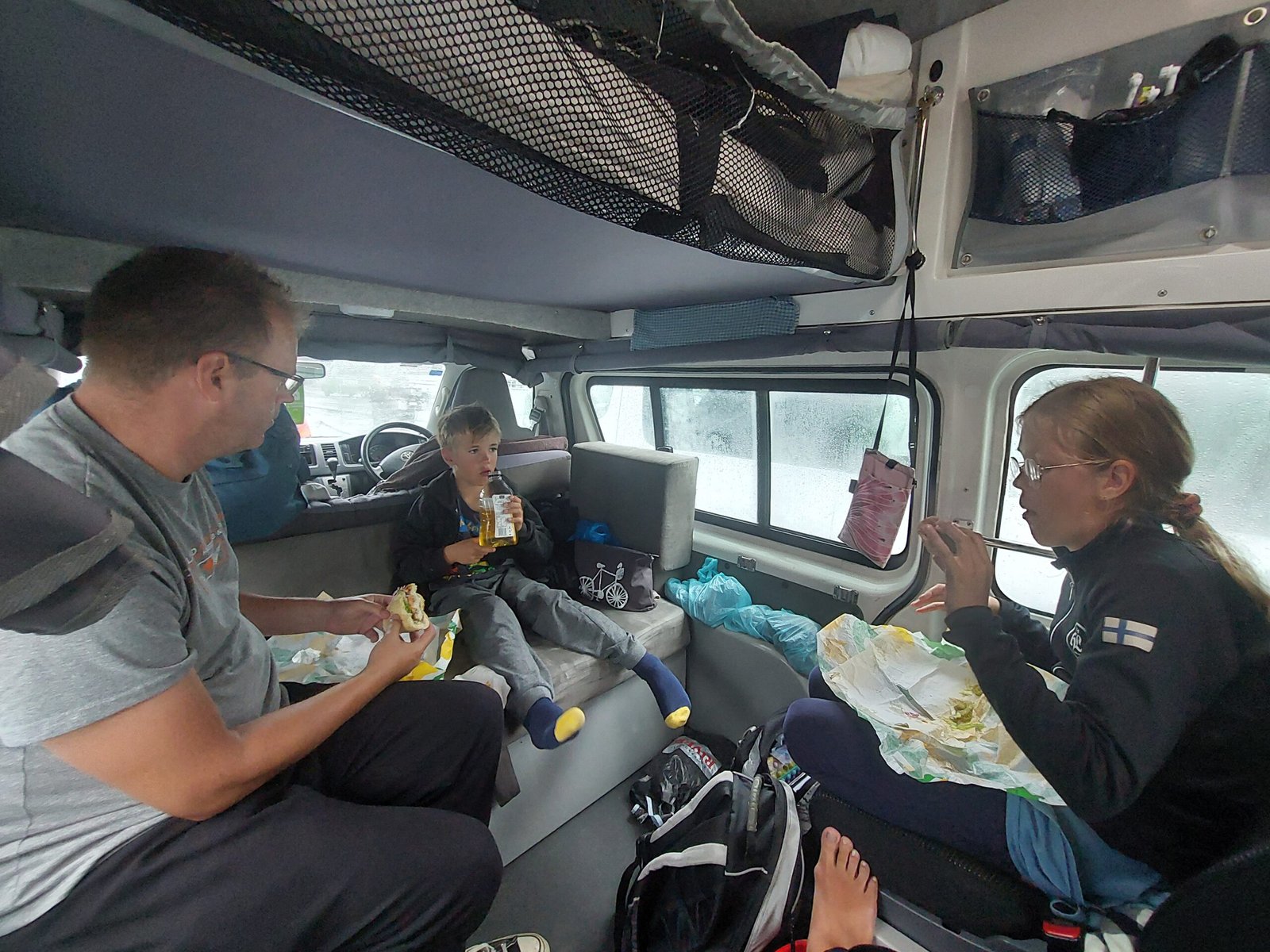
Lopulta Marko kyllästyi autossa odotteluun ja lähti sateesta huolimatta lyhyelle kävelyretkelle Pictoniin. Takaisin hän palasi mukanaan purkki margariinia, sekä pullollinen omenamehua. Tärkein tuominen oli kuitenkin tieto, että aivan kulman takana oli Subway, jonne Marko lupautui ruokaostoksille. Niinpä teimme lasten kanssa tilauksen, ja lähetimme Markon uudelleen sateeseen. Ehdimme parahiksi syödä patongit ennen kuin autojono alkoi vihdoin liikkua hitaasti kohti lautan uumenia.
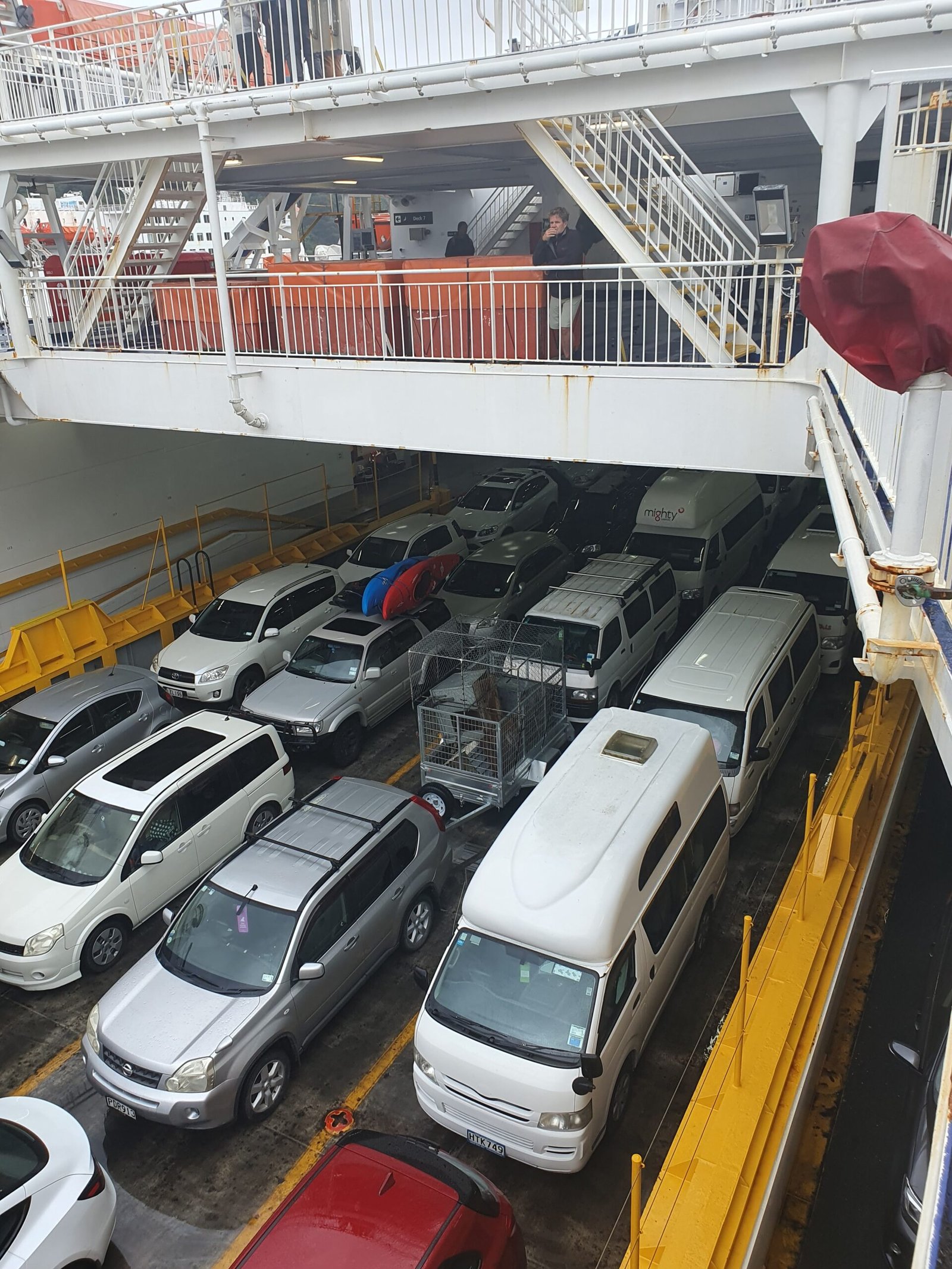
Kun olimme saaneet auton parkkiin yläkannelle, lähdimme etsimään vapaata istumapaikkaa sisältä. Lautassa oli jo aika täyttä, mutta onnistuimme silti löytämään vielä muutamat paikat meidänkin perheellemme. Lapset viettivät koko matkan lautan leikkihuoneessa piirrettyjä katsellen, ja me aikuiset istuskelimme lautan pehmeillä nojatuoleilla leikkihuoneen lähettyvillä.
Lautta saapui satamaan vasta kahdeksalta illalla, joten oli jo pimeää, ennen kuin viimein löysimme tiemme leirintäalueelle. Matkalla piti tehdä pari ylimääräistä käännöstä, sillä suuressa kaupungissa navigointi offline-kartan kanssa ei ole yhtä yksinkertaista, kuin pikkukaupungeissa. Ilmeisesti offline-kartta ei näytä aivan jokaista risteystä ja liikenneympyrän kaistaa, joten pari kertaa ajoimme hieman harhaan. Onneksi kummallakin kerralla virhe oli nopeasti korjattavissa, eikä lisäkilometrejä tullut kuin pari.
Kun saavuimme leirintäalueelle, oli vastaanotto mennyt jo kiinni. Hetken siinä ihmeteltyämme Marko löysi oven vierestä laatikon, jossa oli meille osoitettu kirjekuori. Sieltä saimme portin koodin, ja parkkipaikkamme numeron. Illalla herätyskelloa viritellessämme huomasimme, että seuraavana yönä Uudessa-Seelannissa käännettiin kelloja. Koska olemme päiväntasaajan toisella puolella, ja kaikki täällä on väärinpäin, siirrytään Uudessa-Seelannissa talviaikaan tunti taaksepäin. Eli juuri päinvastoin kuin Suomessa. Nyt aikaeroa Suomeen on siis enää yhdeksän tuntia.
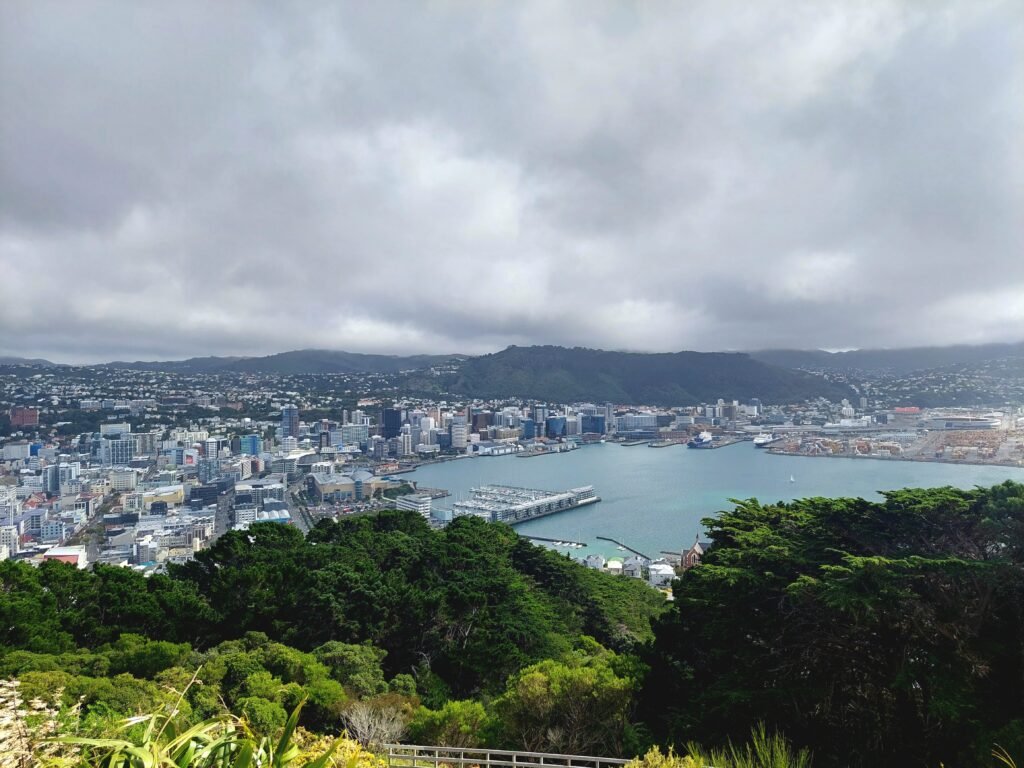
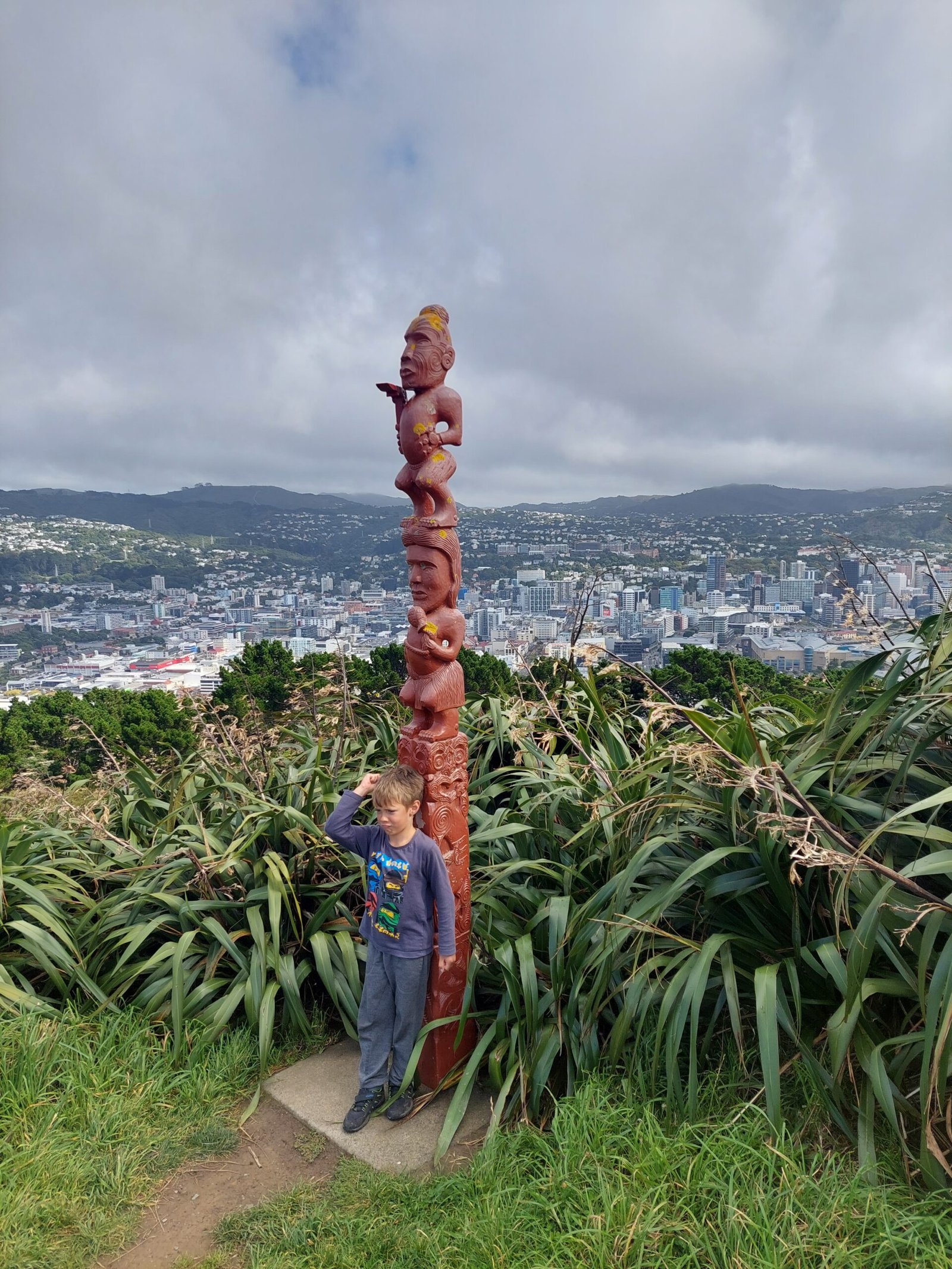
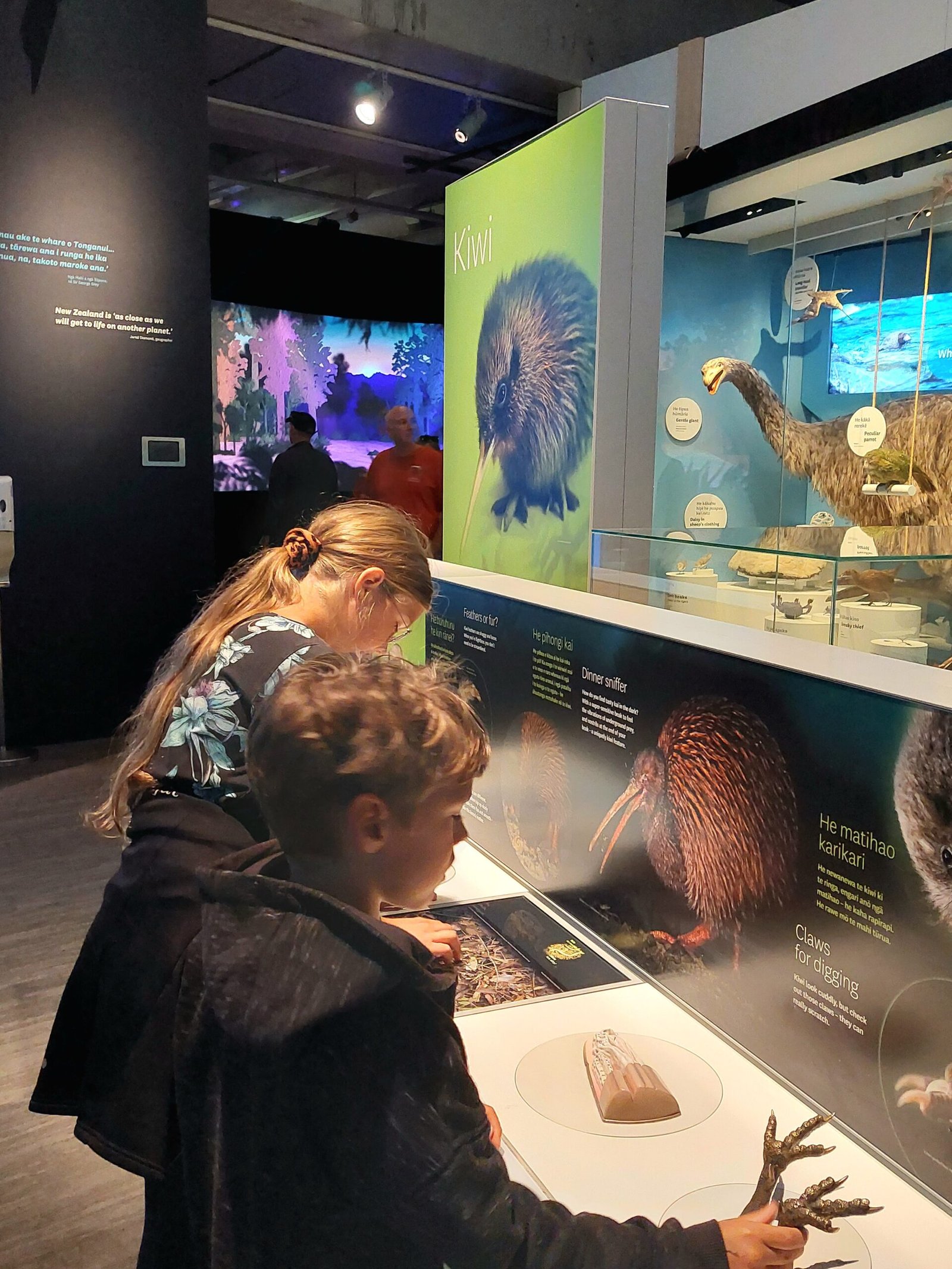
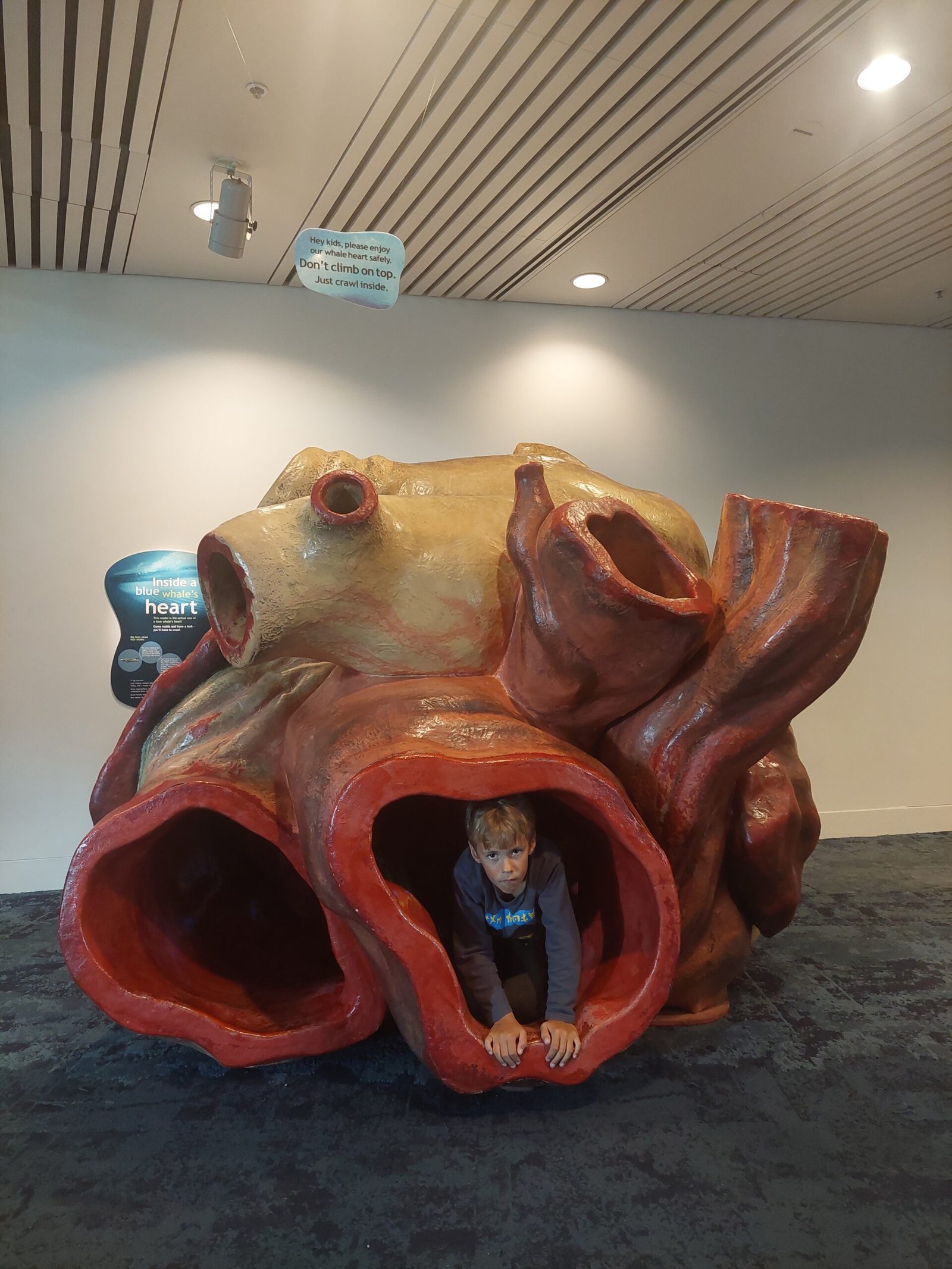
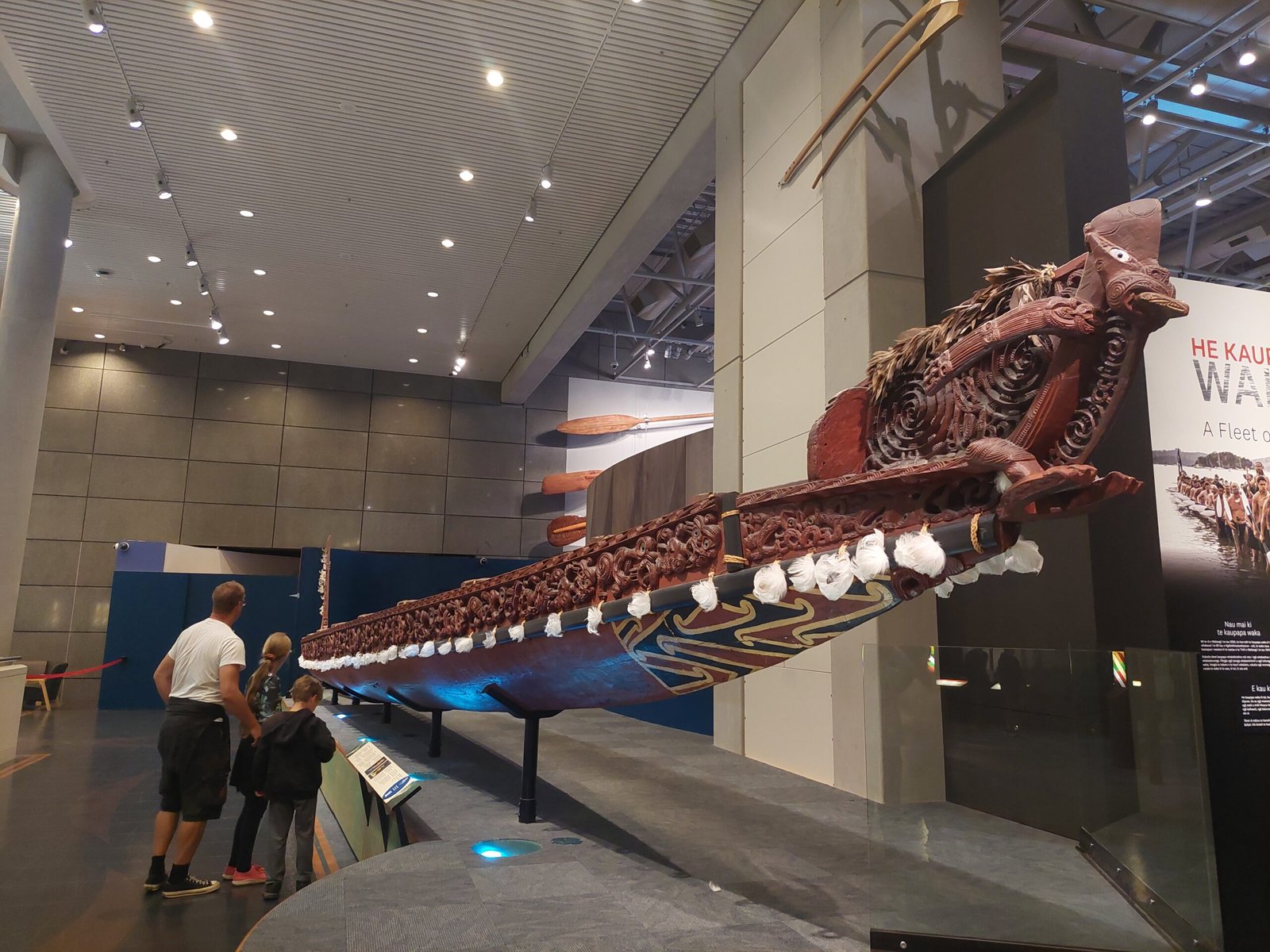
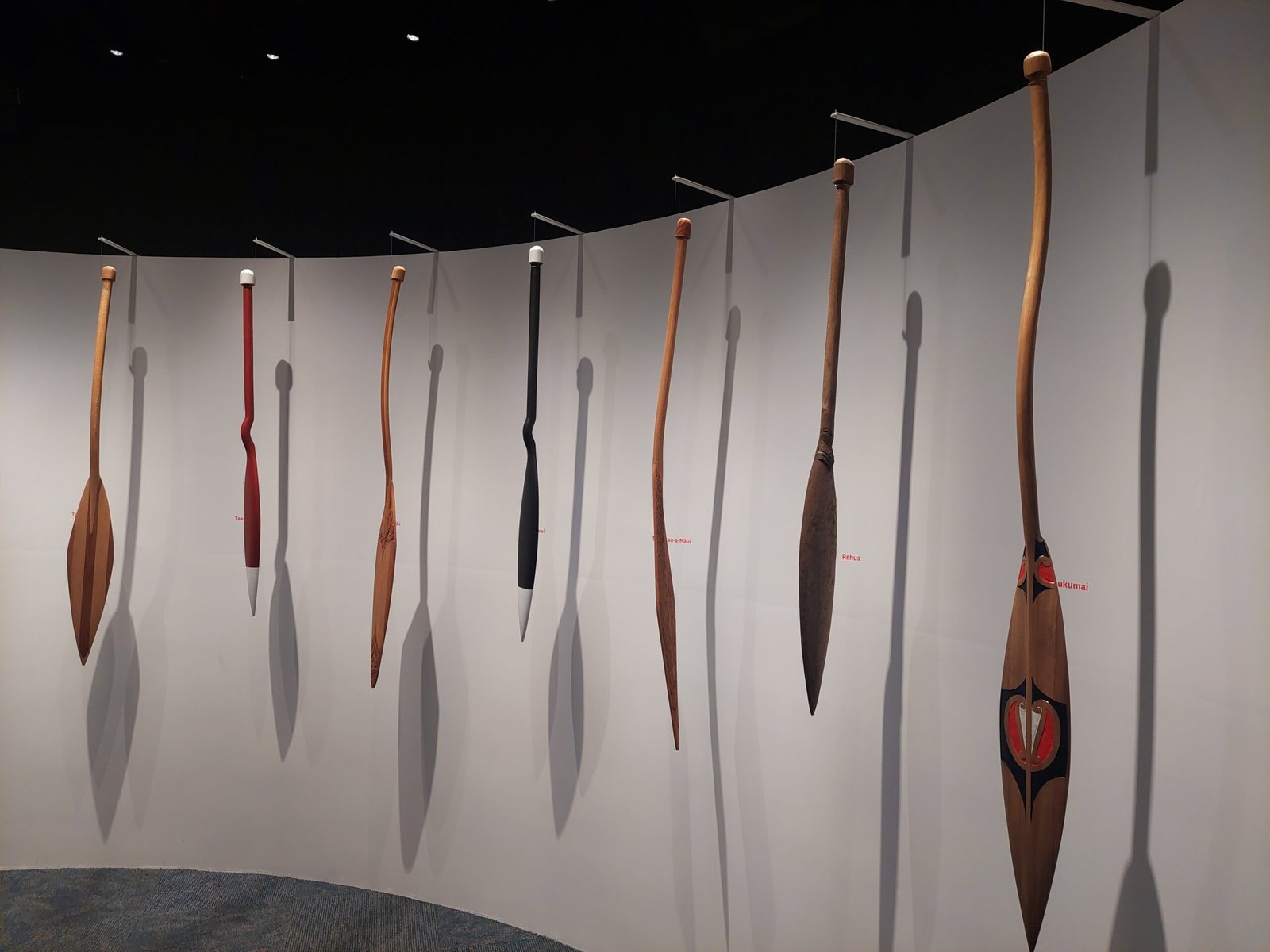
Aamiaisen jälkeen lähdimme ajamaan Mt. Victoria Lookout -näköalapaikalle lähelle Wellingtonin keskustaa. Sen jälkeen oli tarkoitus tehdä vielä pikainen pyörähdys keskustassa, ja jatkaa sitten matkaa. Maisemat kukkulan laelta olivat hienot, joskin hivenen pilviset. Kukkulan laelta huomasimme, että purjevenesataman liepeillä näytti olevan jonkinlaiset markkinat käynnissä. Niinpä sieltä palattuamme ajoimme satamaan katsomaan, mistä oli kyse. Menimme kuitenkin ensin käymään Uuden-Seelannin museoiden lippulaivassa, Te Papassa. Alunperin tarkoituksemme oli kyllä käydä siellä vain vessassa, mutta koska näyttelyt olivat ilmaisia, päätimme viedä lapset sinne. Me aikuiset olimme käyneet Te Papassa edellisellä Uuden-Seelannin vierailullamme, mutta emme muistaneet, kuinka hieno paikka se olikaan! Lapset eivät yleensä museokäynneistä innostu, mutta täällä he hihkuivat vähän väliä innosta, koska ne näyttelyt, joissa kävimme, olivat todella interaktiivisia. Kaikkea sai koskea ja kokeilla.
Museovisiitin jälkeen jatkoimme satamaan, ja koska alkoi olla jo nälkä, ostimme sunnuntain ruokamarkkinoilta itsellemme kambodzalaisesta ruokakojusta kevätkääryleitä, possunyyttejä ja kana- sekä liharullat. Jälkiruuaksi Jaana ja lapset ostivat vielä hollantilaisia pikkupannukakkuja. Vatsat pullollaan pääsimme vihdoin jatkamaan matkaa kohti seuraavaa pysähdyspaikkaamme, Rotoruaa. Ajomatkaa sinne oli 5,5h, joten yhden pysähdyksen (Taupossa) taktiikalla, olimme perillä vasta puoli yhdeksältä illalla. Kellojen kääntäminen talviaikaan aiheutti sen, että viimeiset pari tuntia ajoimme aikalailla pimeässä. Onneksi autossamme on ihan hyvät valot.
Tiesimme saapuneemme Rotoruaan, kun aloimme haistaa vienon mädän kananmunan tuoksun. Rotorua on hyvin aktiivista geotermistä aluetta, joten tuota rikin sulotuoksua ei voi siellä valitettavasti välttää. Onneksi leirintäalueemme sijaitsi ilmeisesti riittävän kaukana aktiivisemmista geotermisistä alueista, sillä siellä ilma oli ihan raikasta.
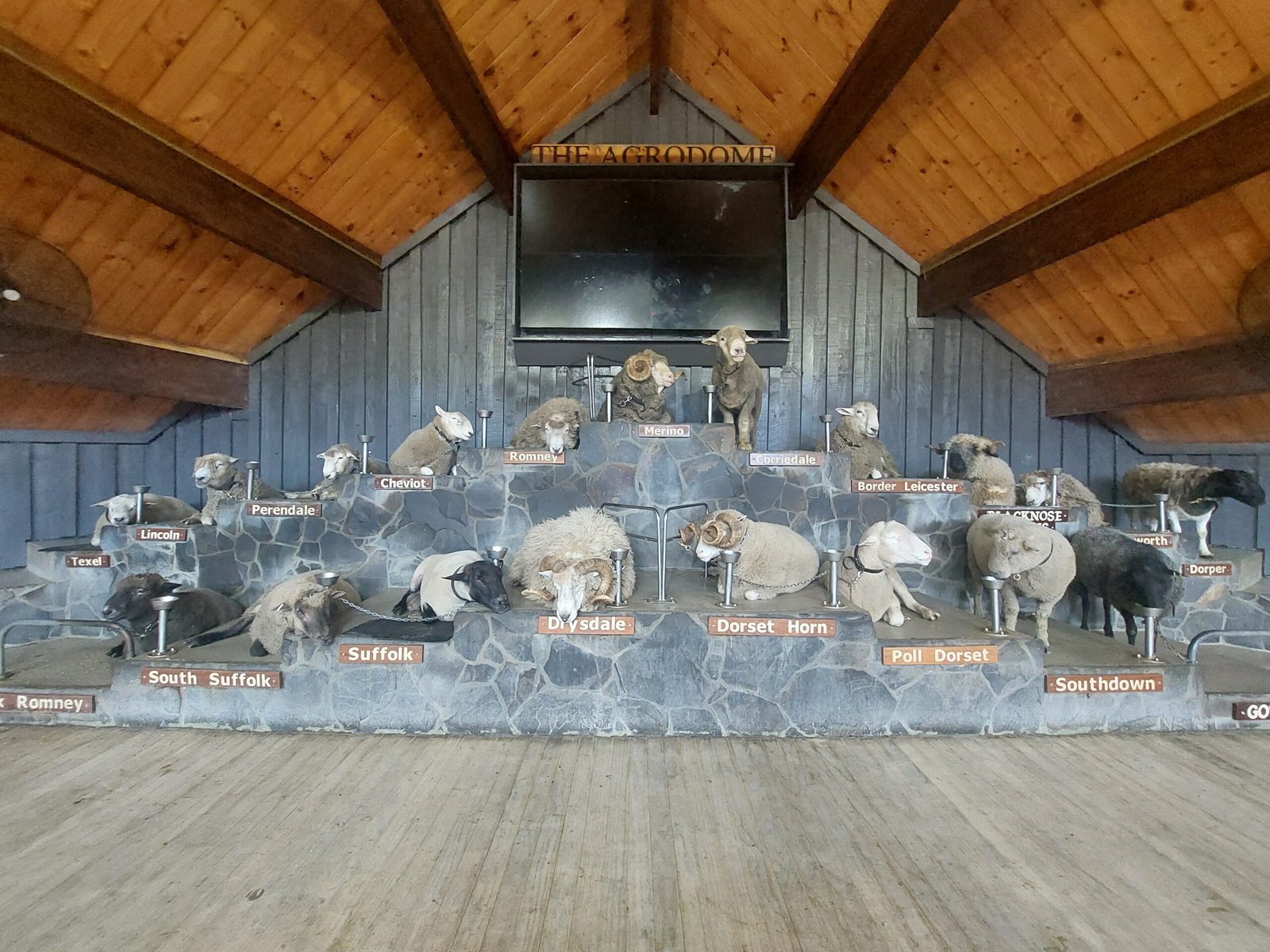
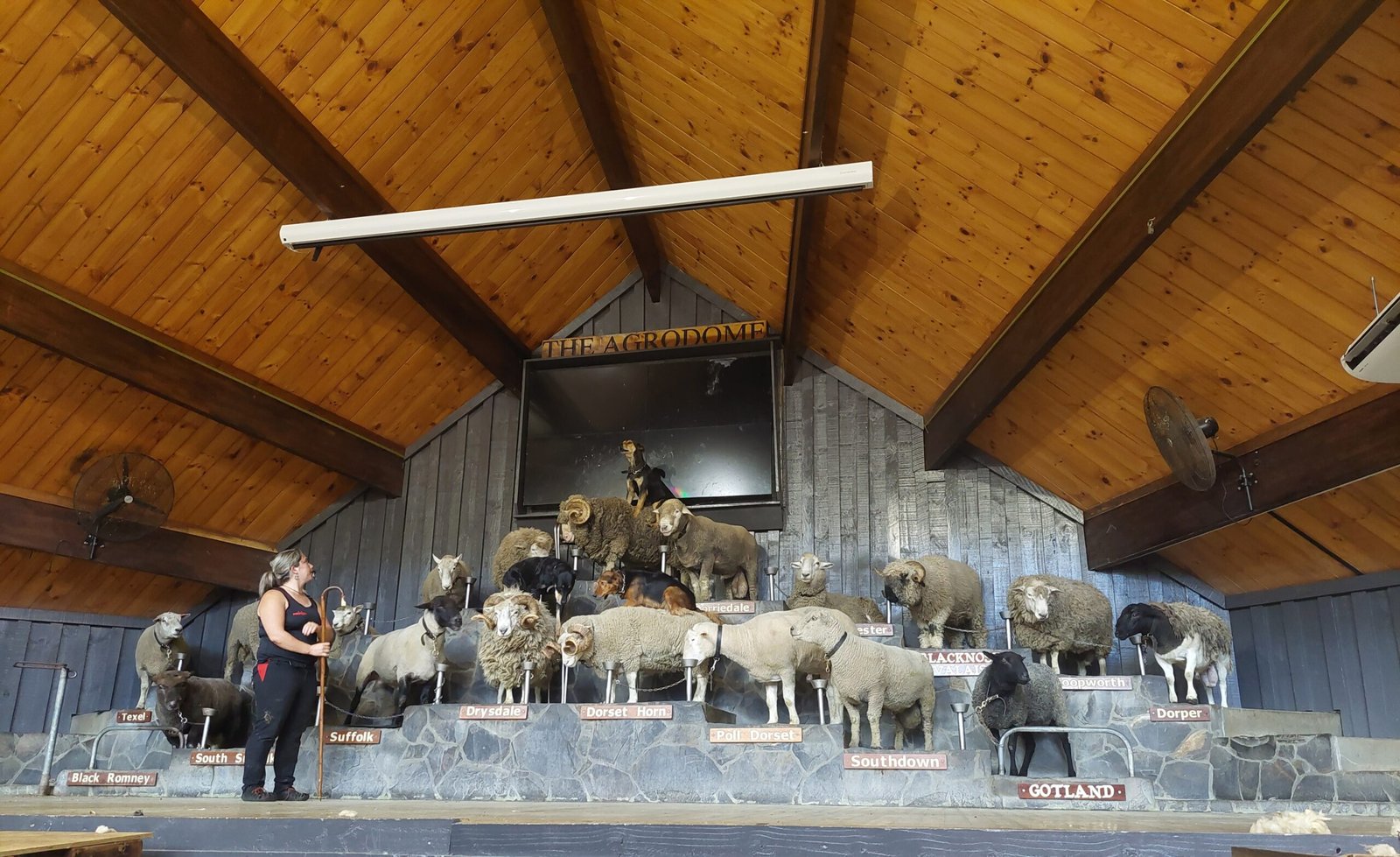
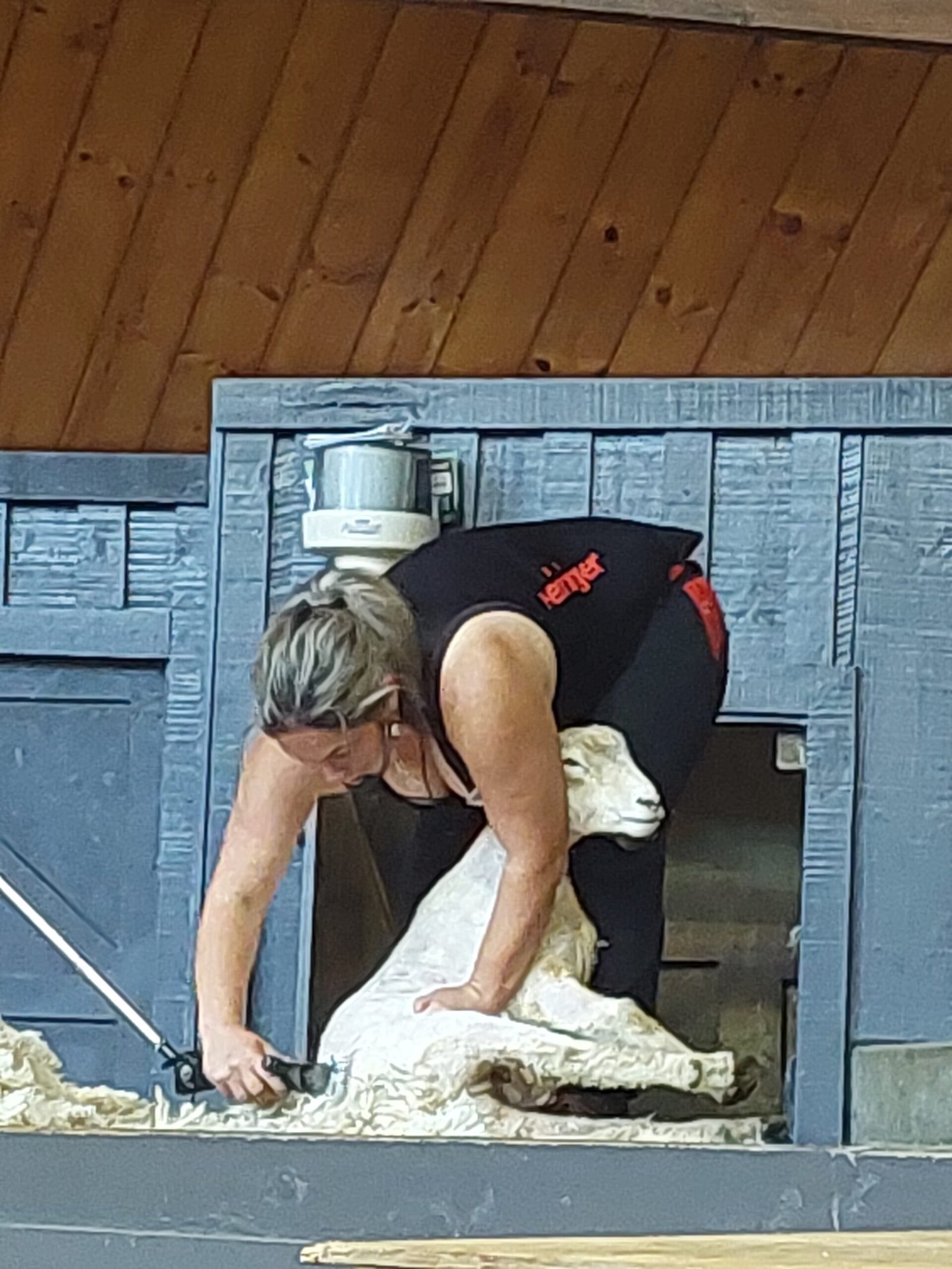
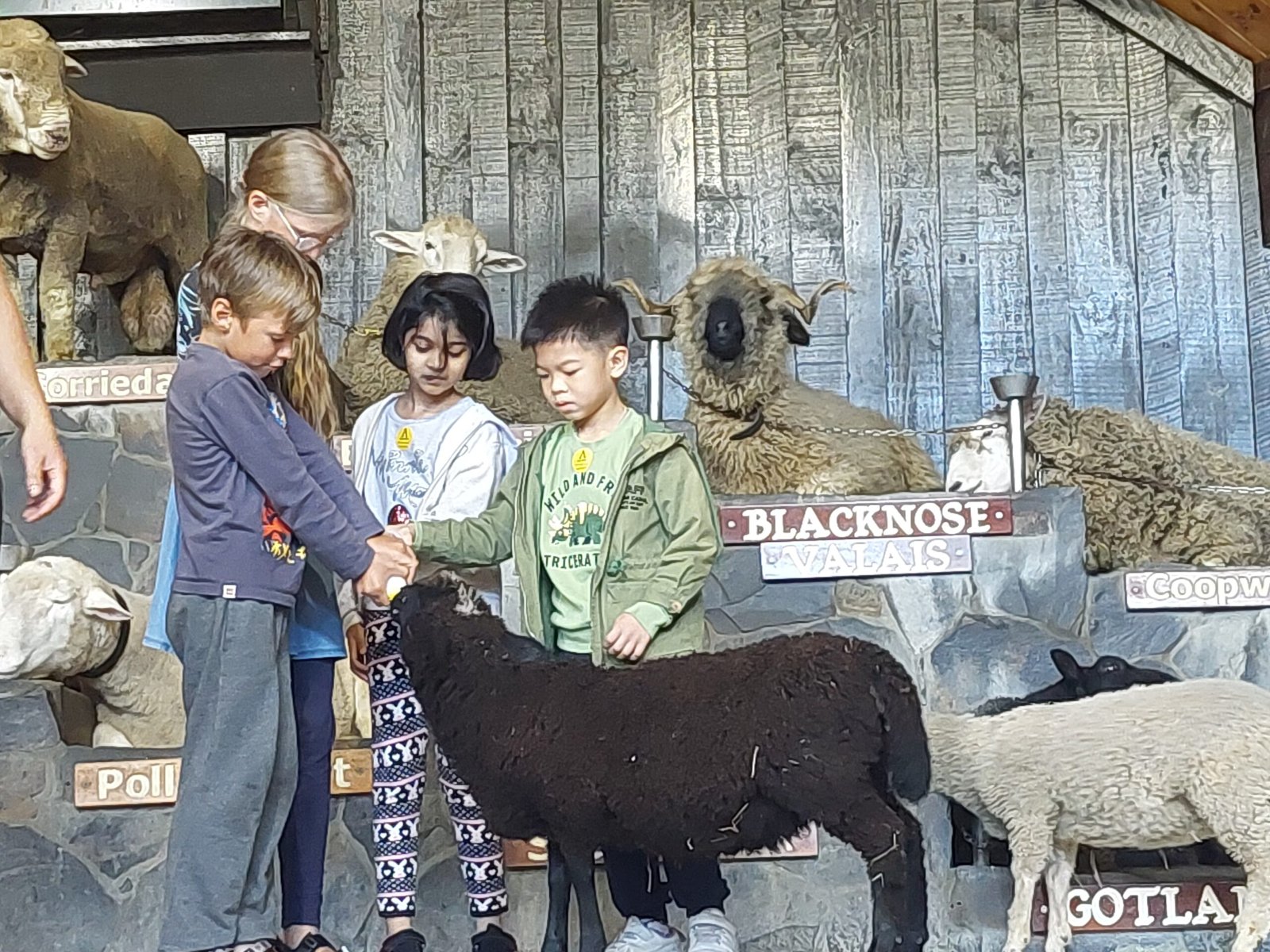
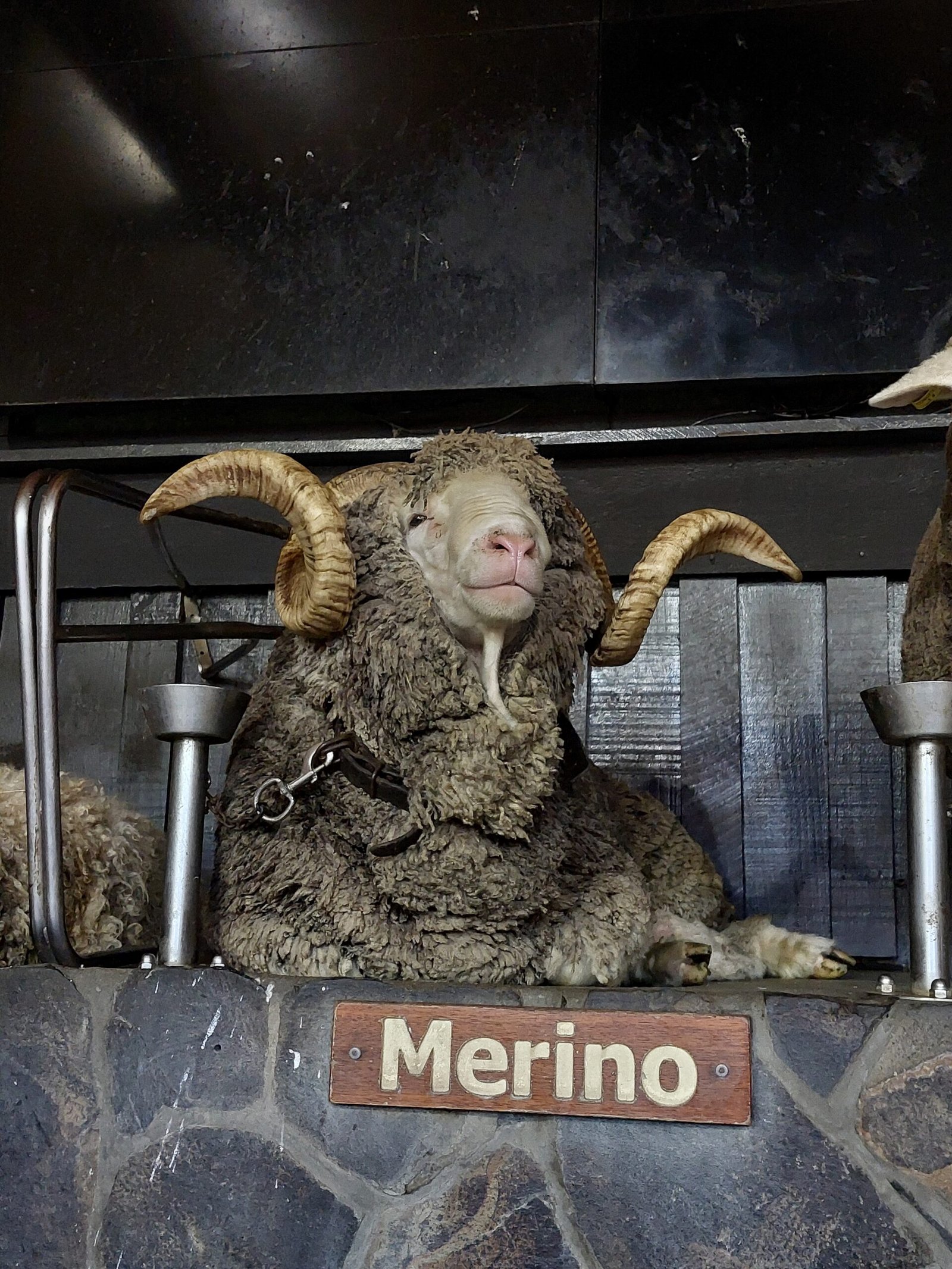
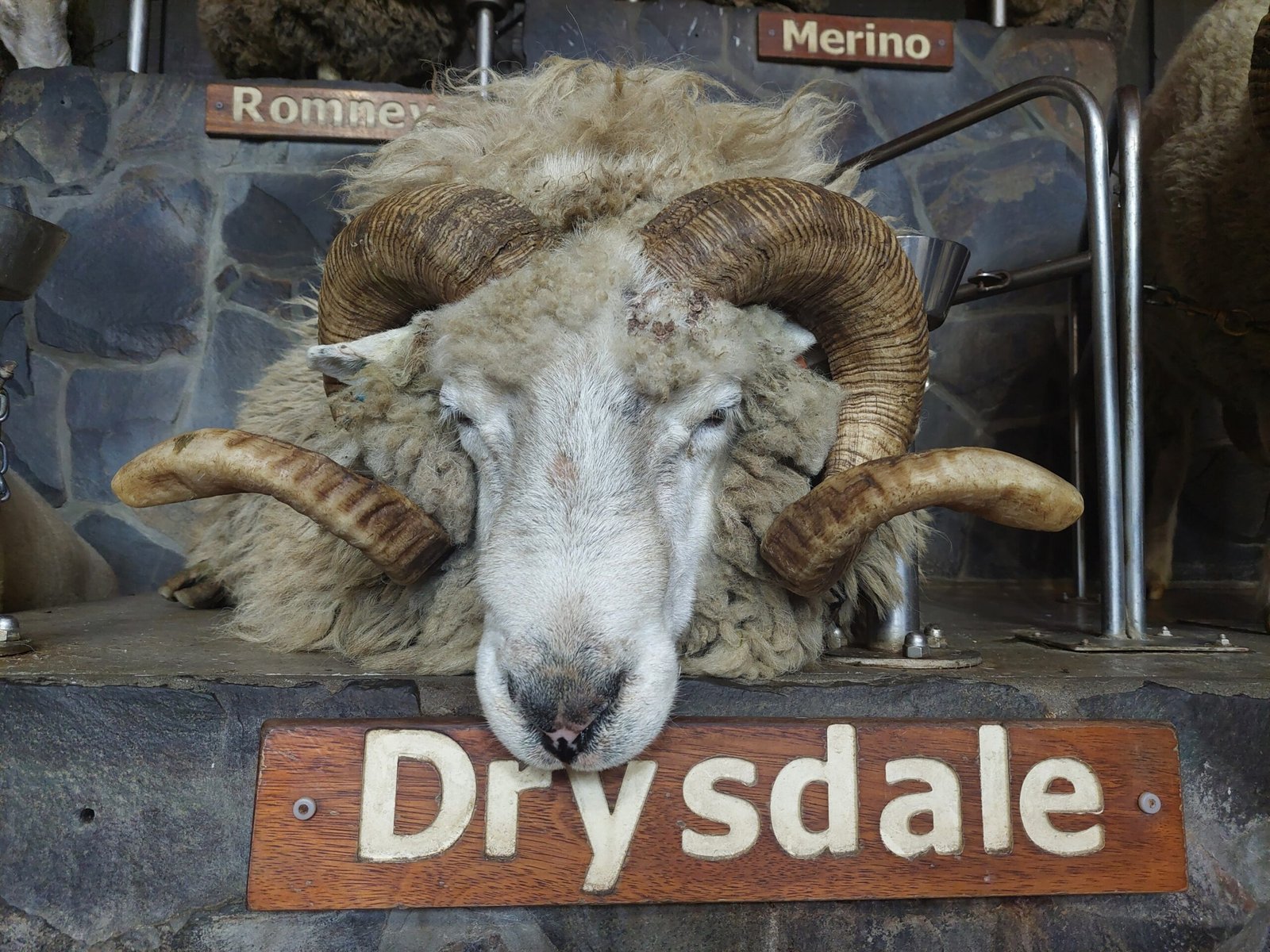
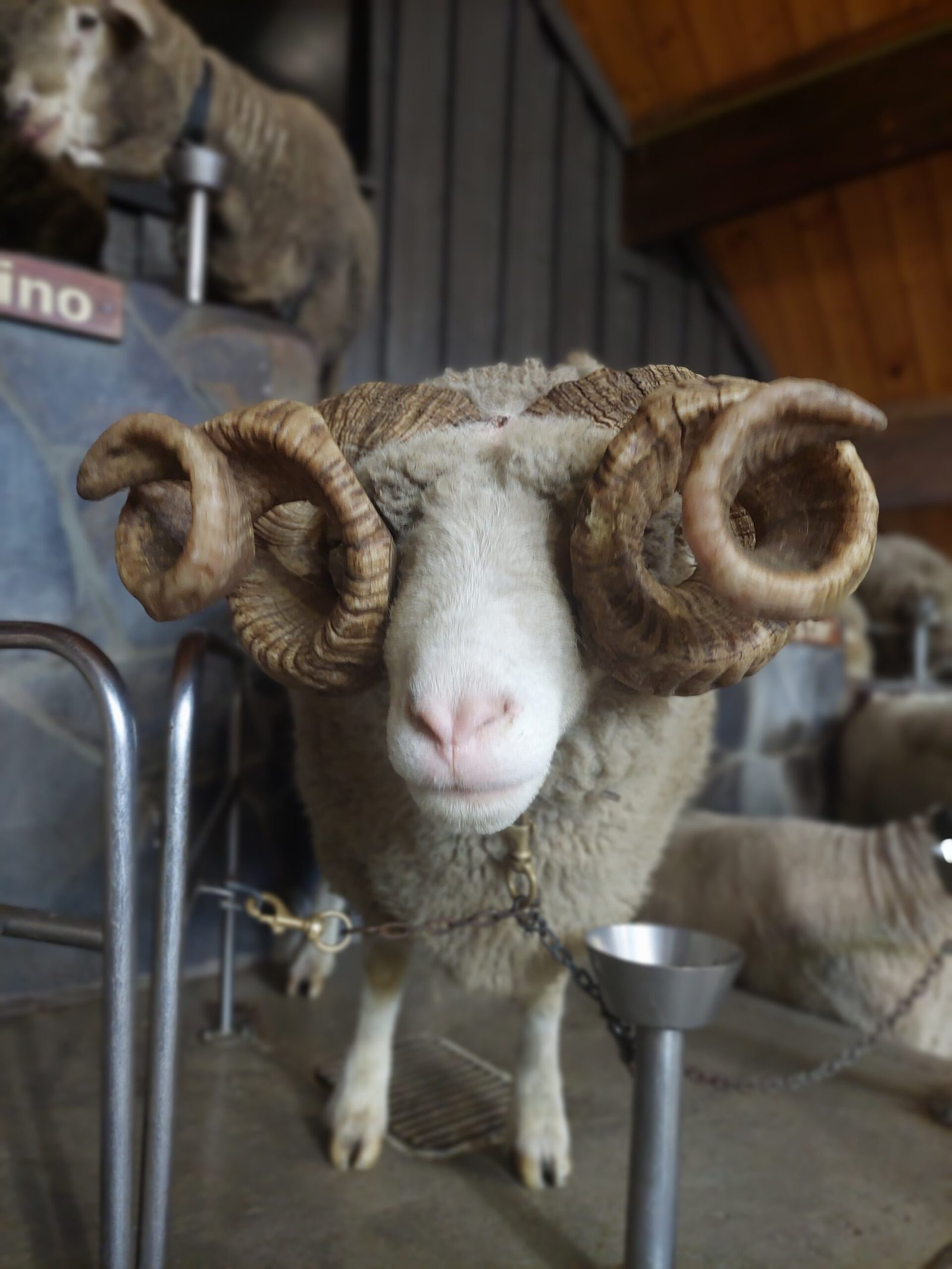
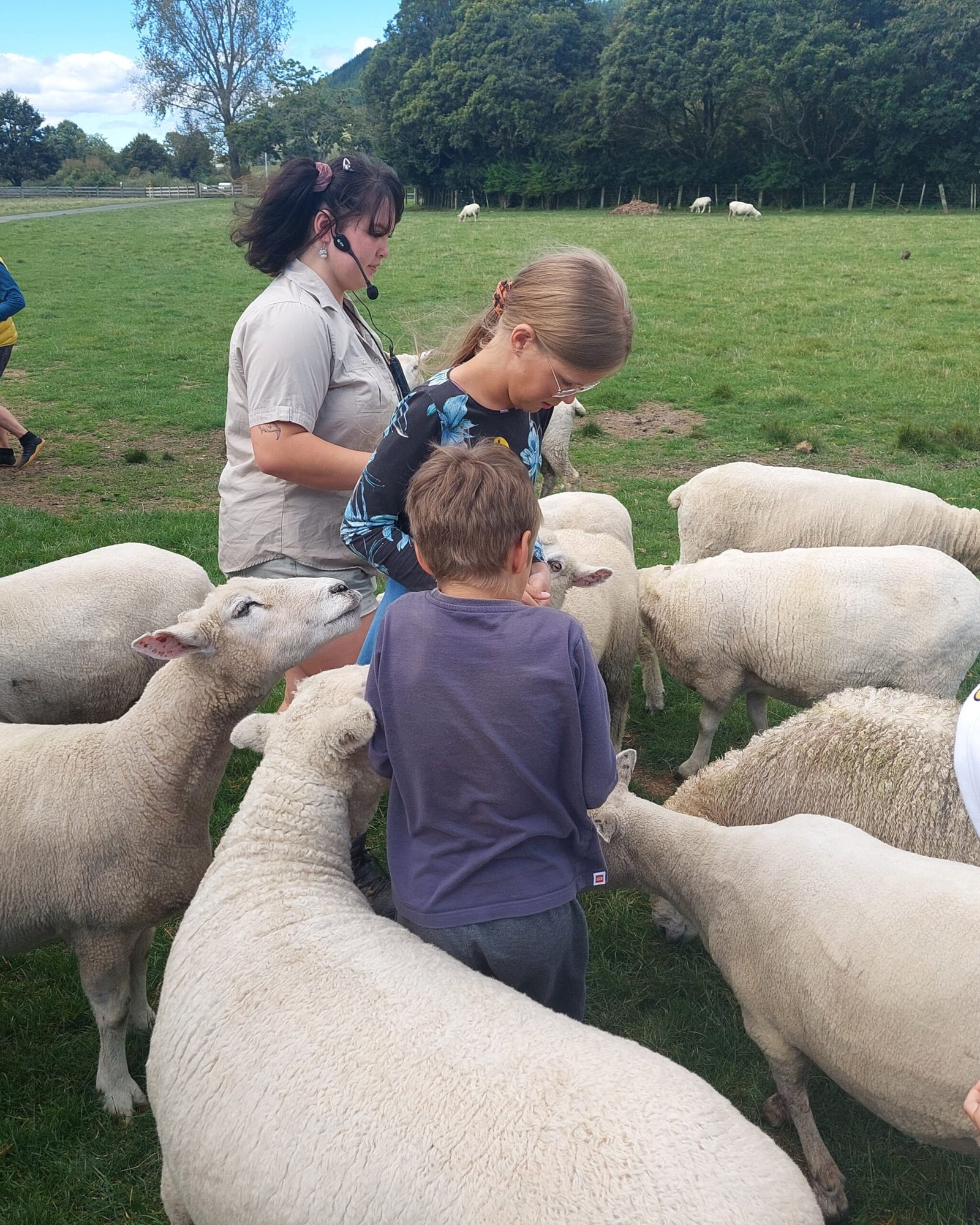
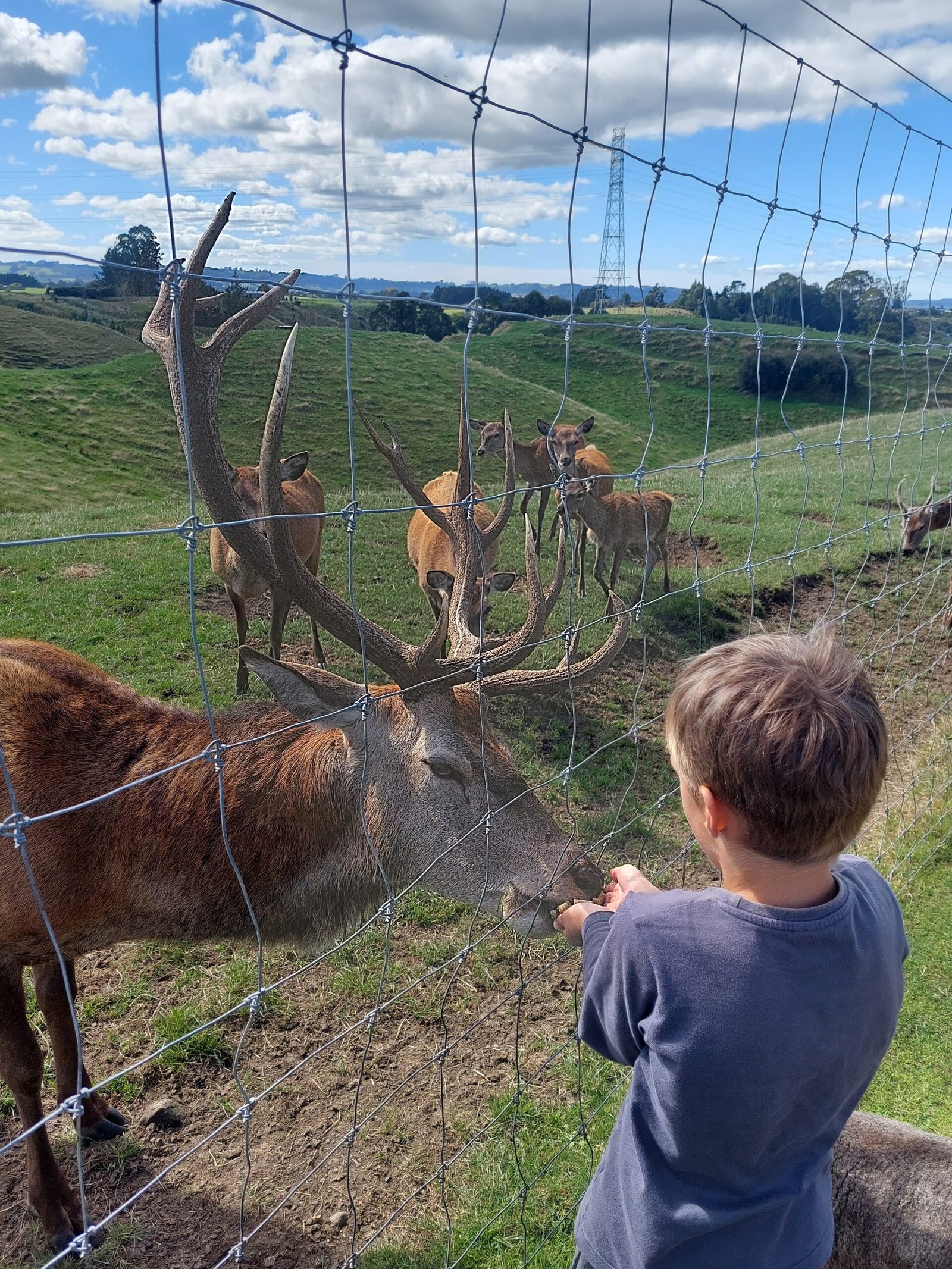
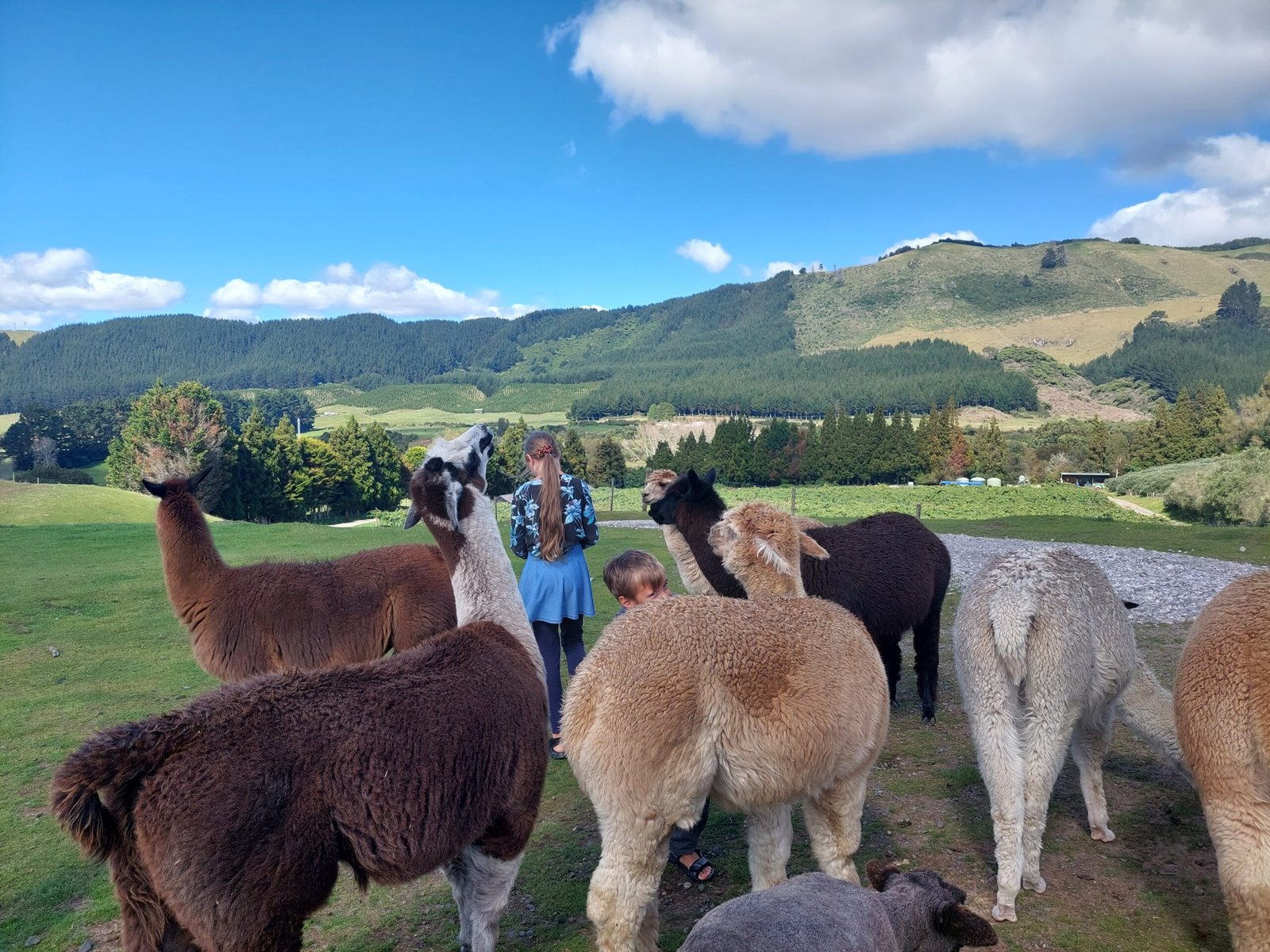
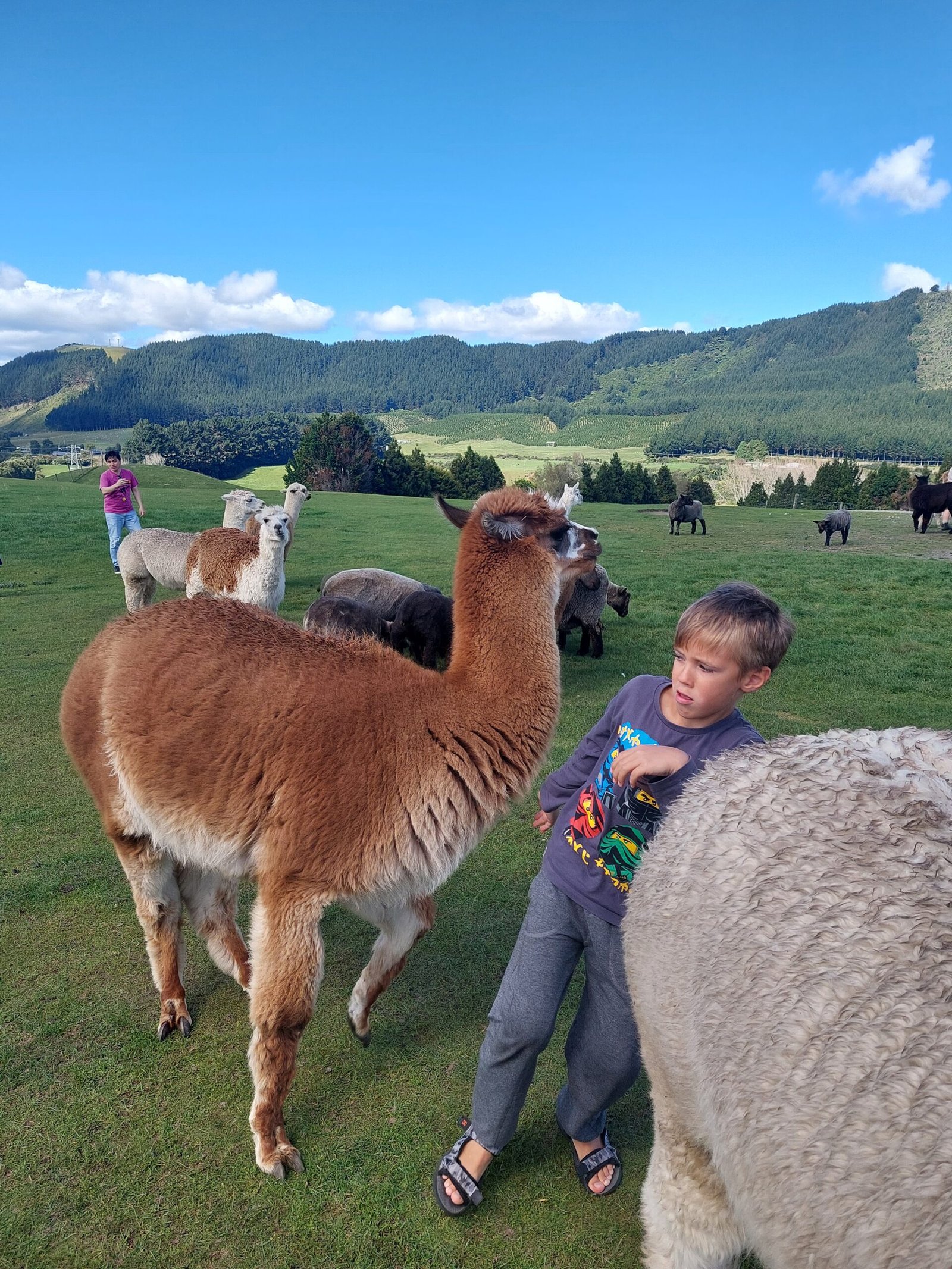
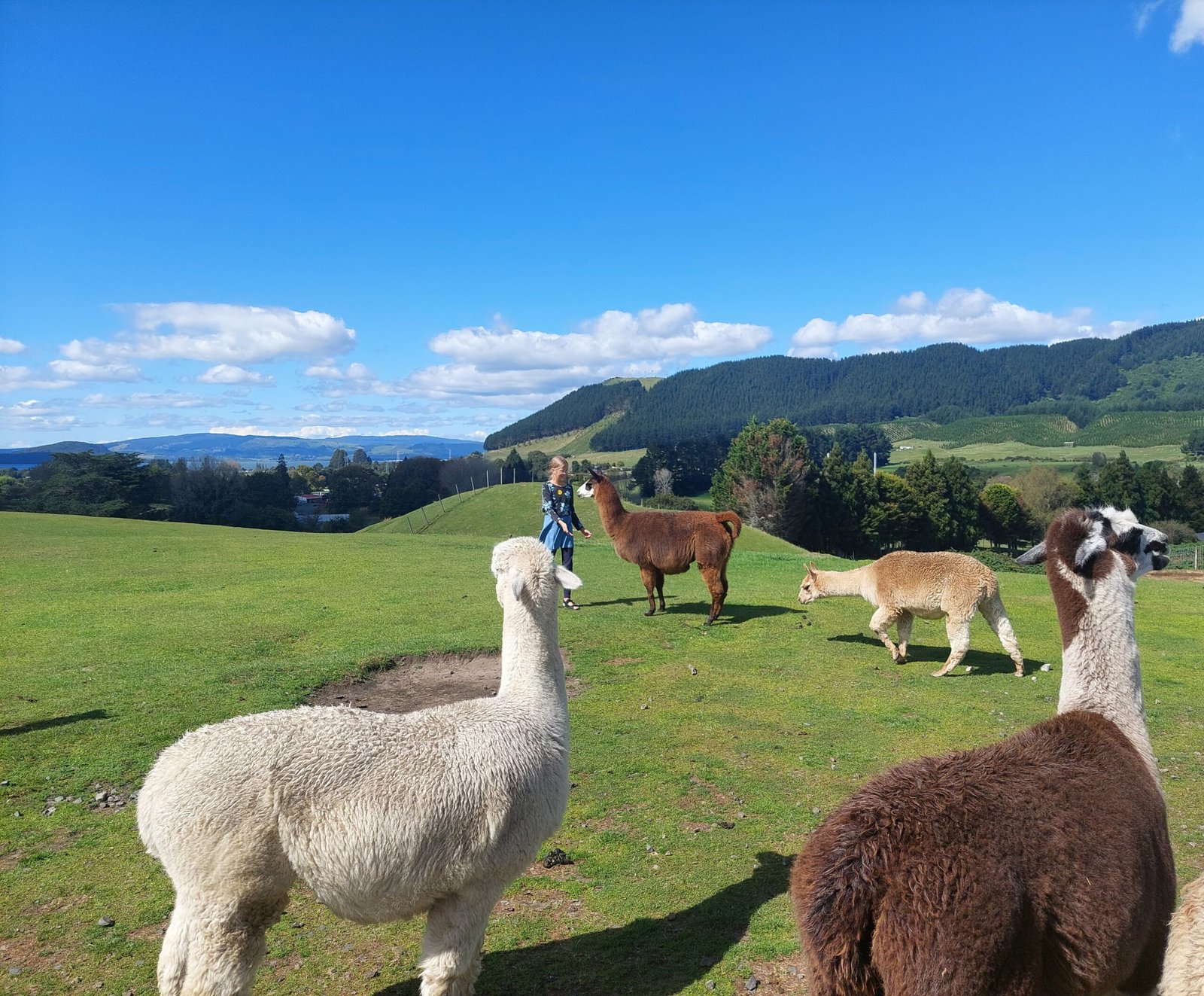
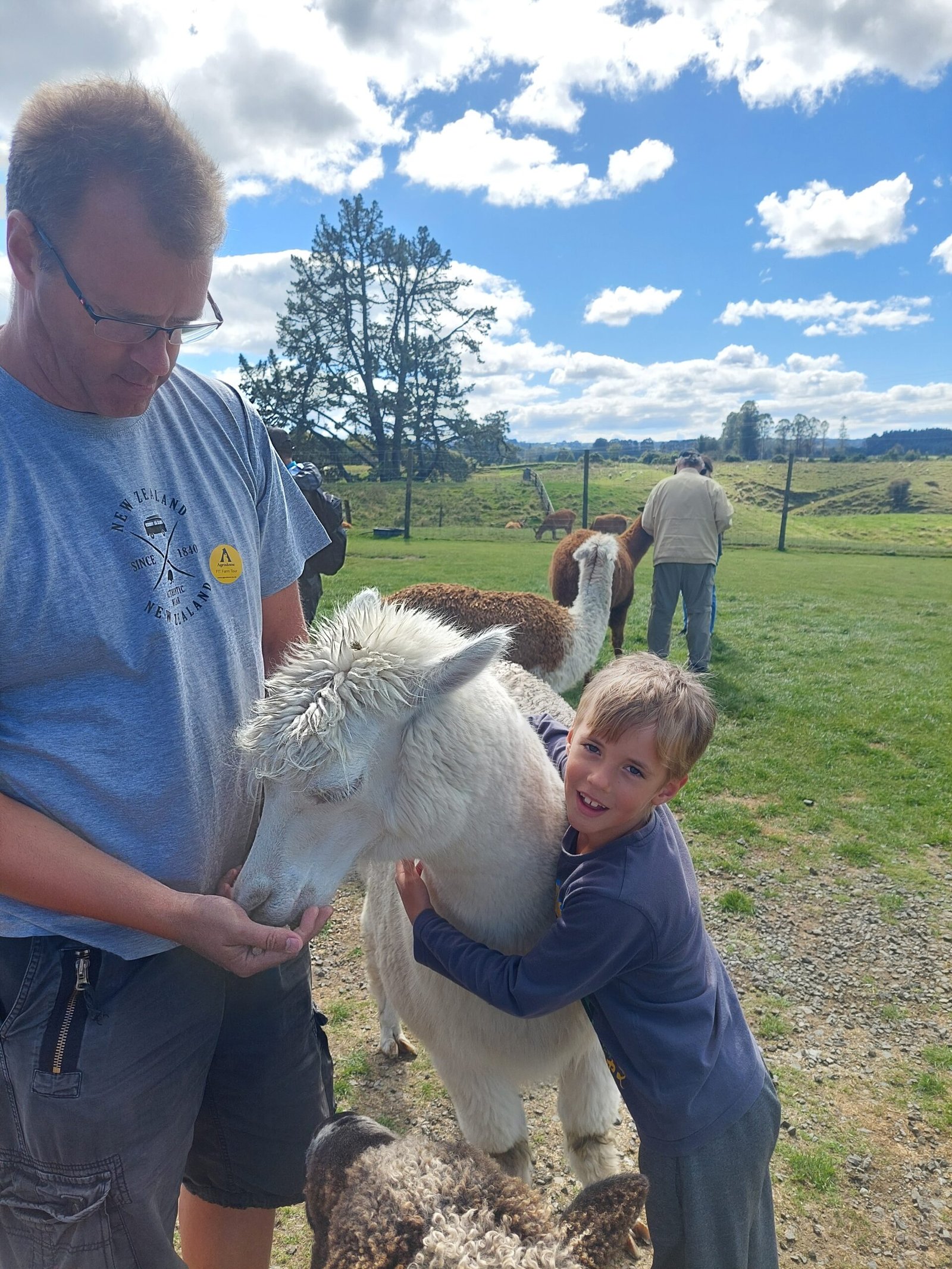
Ensimmäisenä päivänä Rotoruassa lähdimme käymään Agrodome-nimisellä maatilalla. Siellä pääsimme seuraamaan showta, jossa meille esiteltiin eri lammasrotuja, lampaan keritsemistä (Tiesittekö muuten, että keritsemisen maailmanennätys on 13 sekuntia!) sekä paimenkoirien toimintaa. Lapset pääsivät myös syöttämään pieniä karitsoita, ja jotkut aikuiset puolestaan lypsämään lehmää. Esityksen jälkeen pääsimme kierrokselle maatilan pelloille, jossa saimme ruokkia ja silitellä lampaita ja alpakoita.
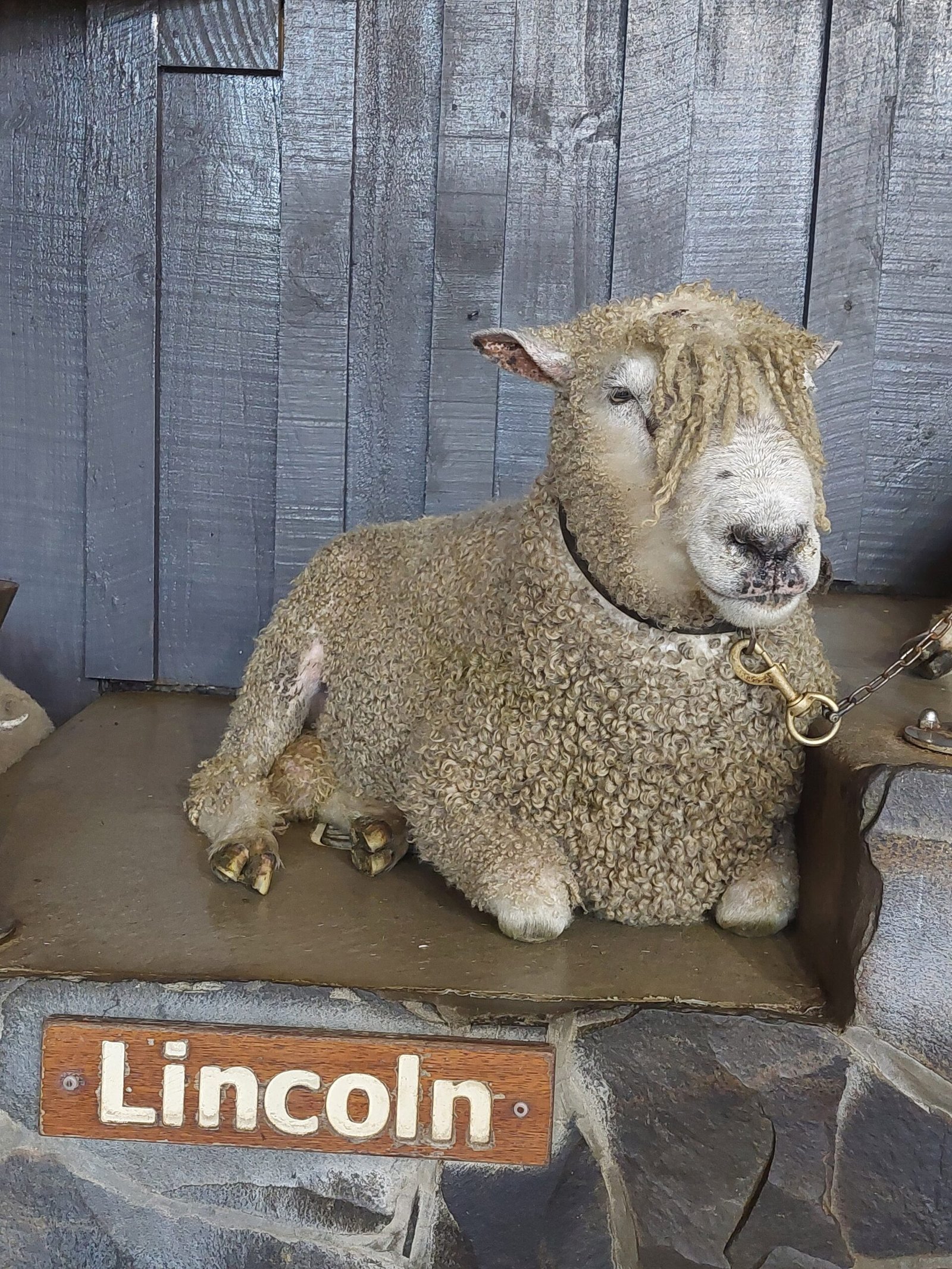
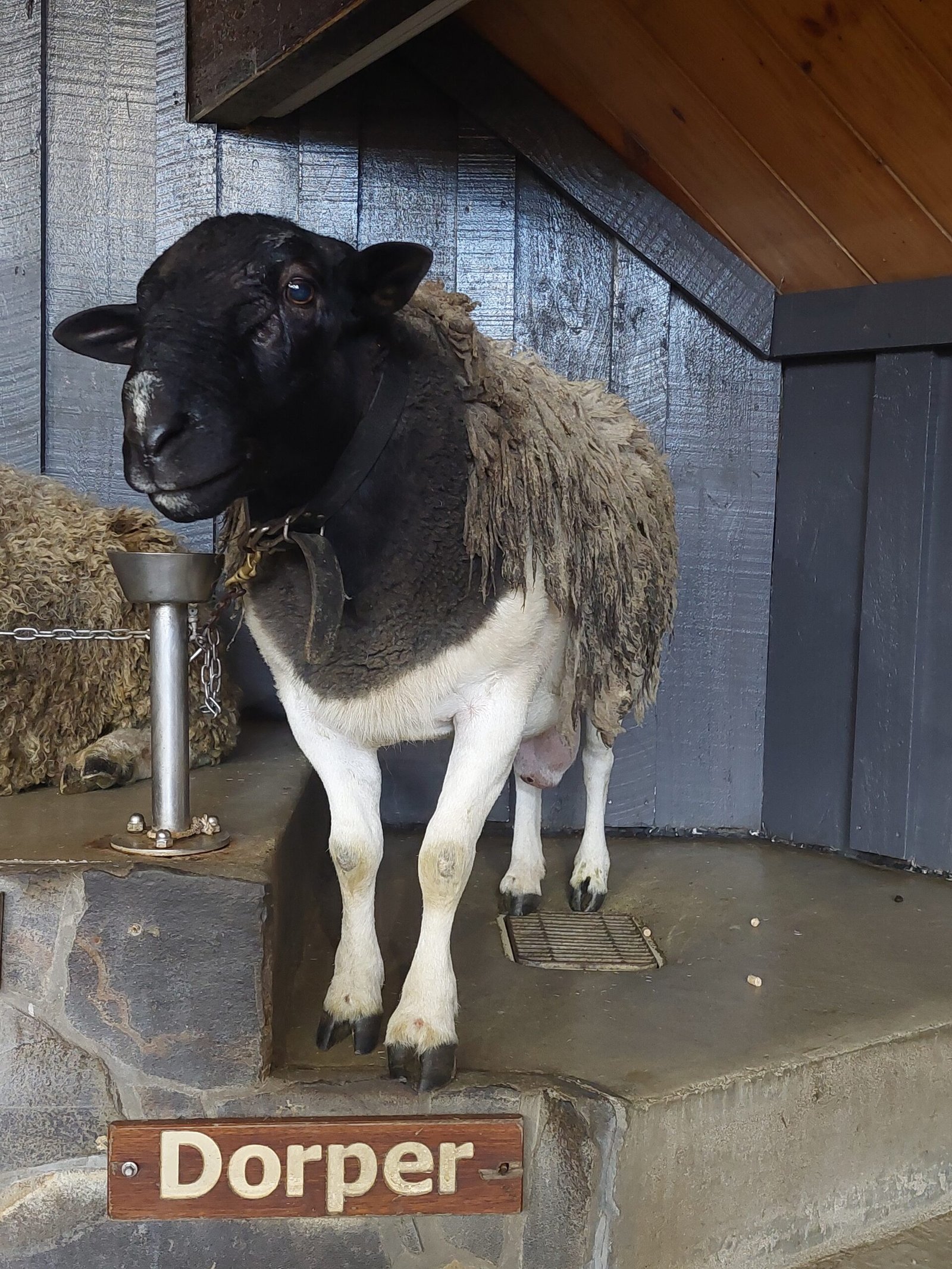
Koko ohjelma farmilla oli todella hyvin järjestetty. Tunnin mittainen show sisälsi juuri sopivasti huumoria ja paljon tietoa. Nyt tiedämme, että Uudessa-Seelannissa on noin 28 000 000 lammasta, kuusi jokaista paikallista kohti. Osaamme myös erottaa muutamia lammasrotuja toisistaan. Opimme myös, että Etelä-Afrikasta kotoisin olevaa dorper-rotuista lammasta ei tarvitse keritseä lainkaan, sillä se tiputtaa itse omat karvansa vuosittain. Merino-lampaat pääsevät parturiin kerran vuodessa, toiset rodut paristi vuodessa.
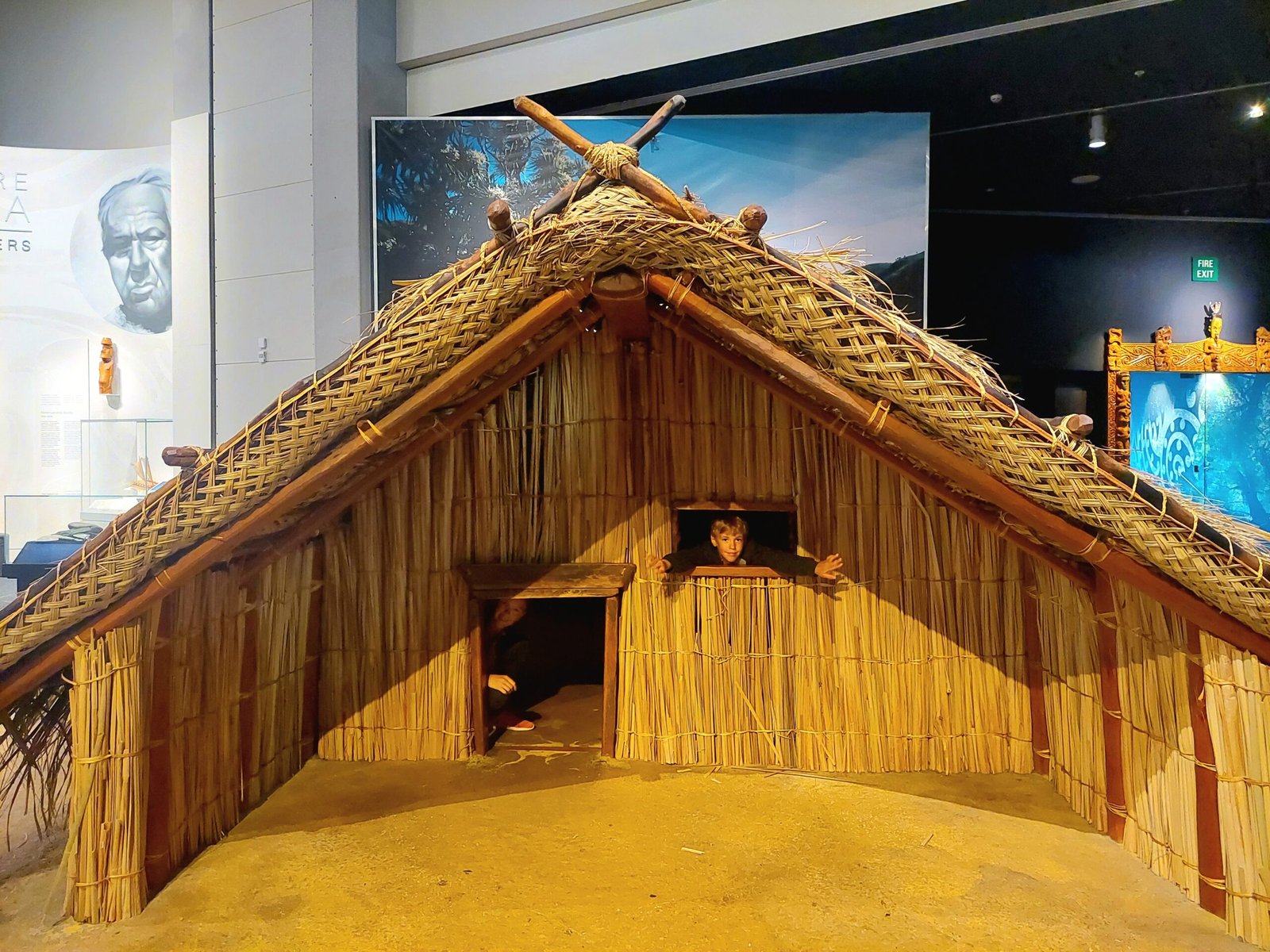
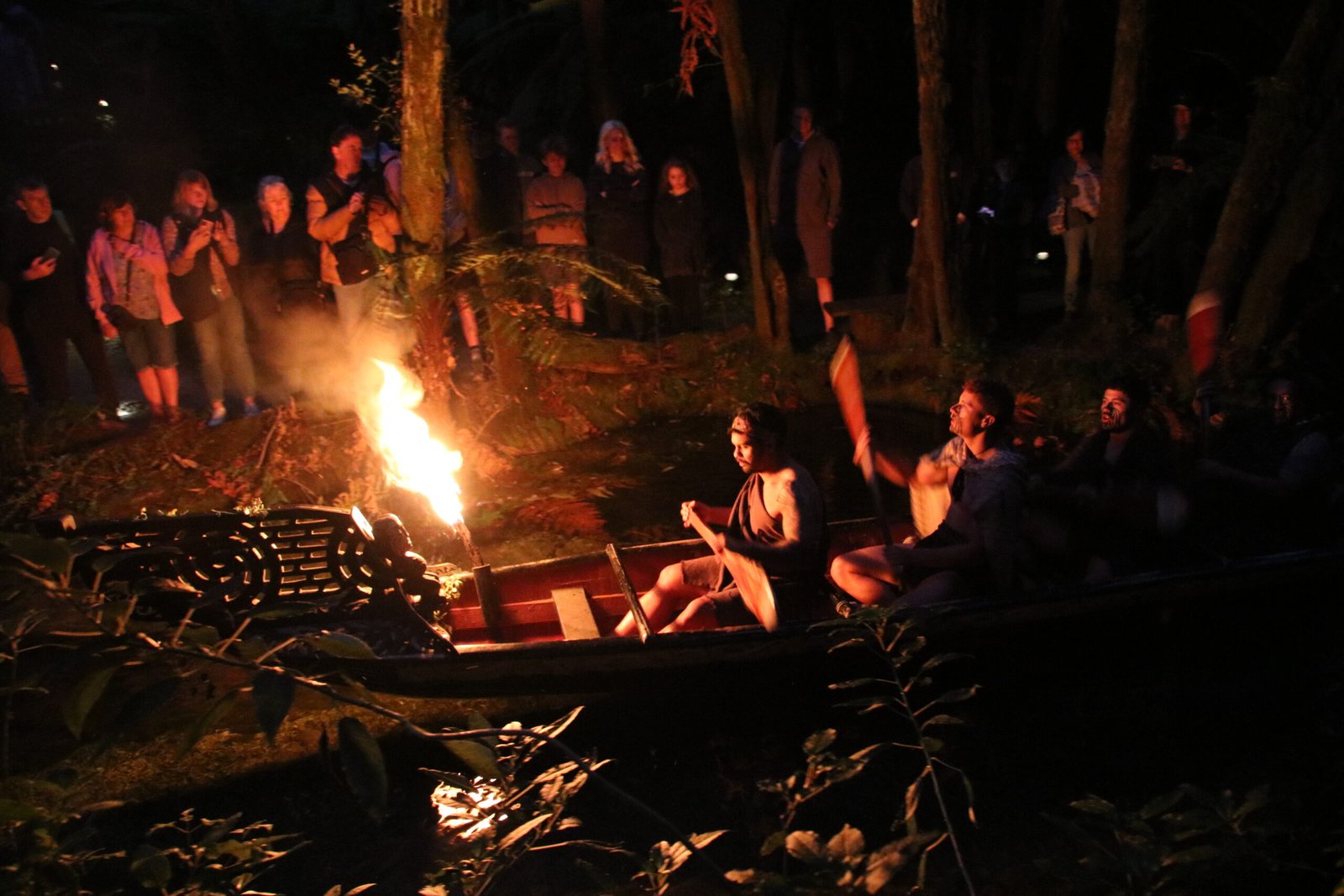
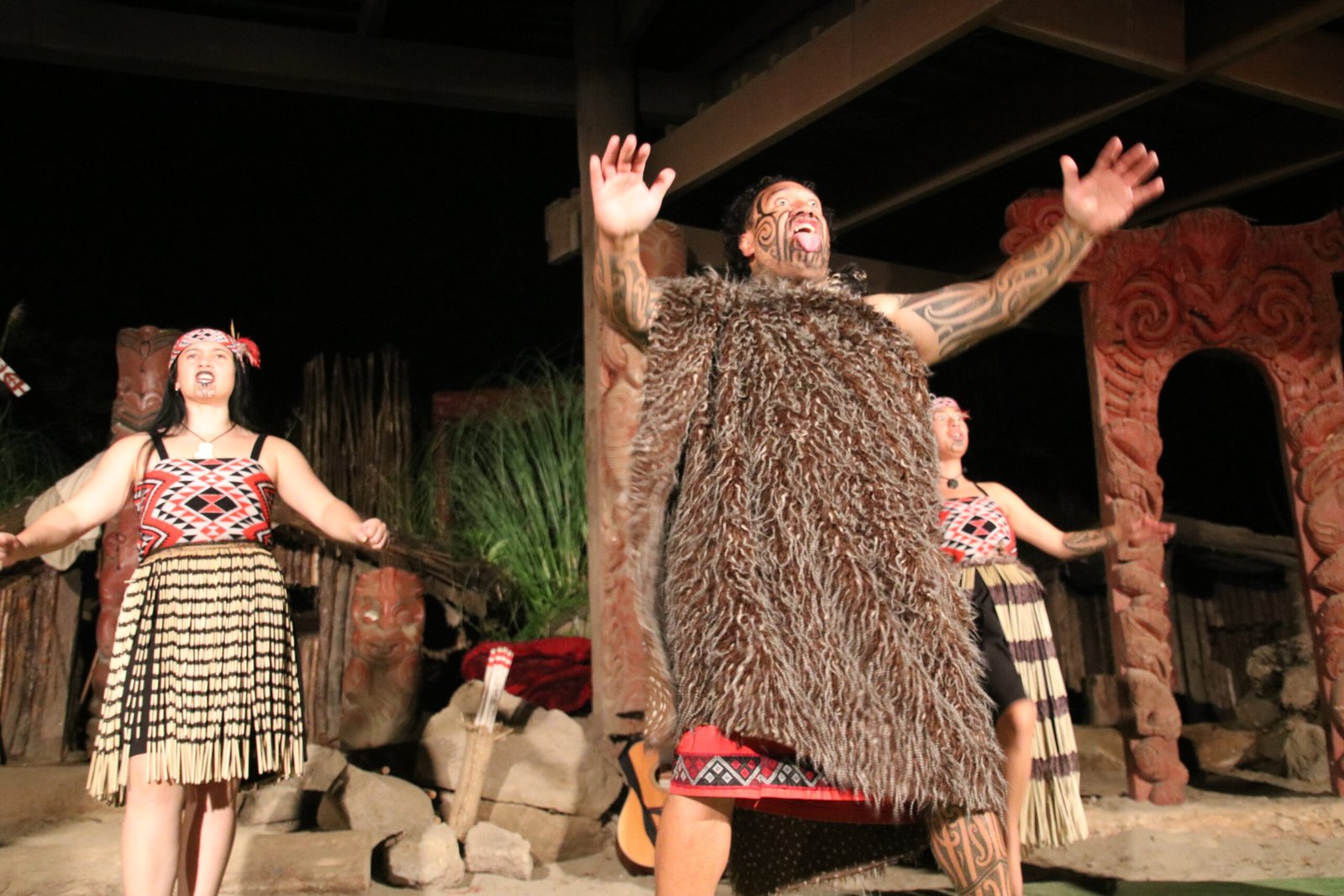
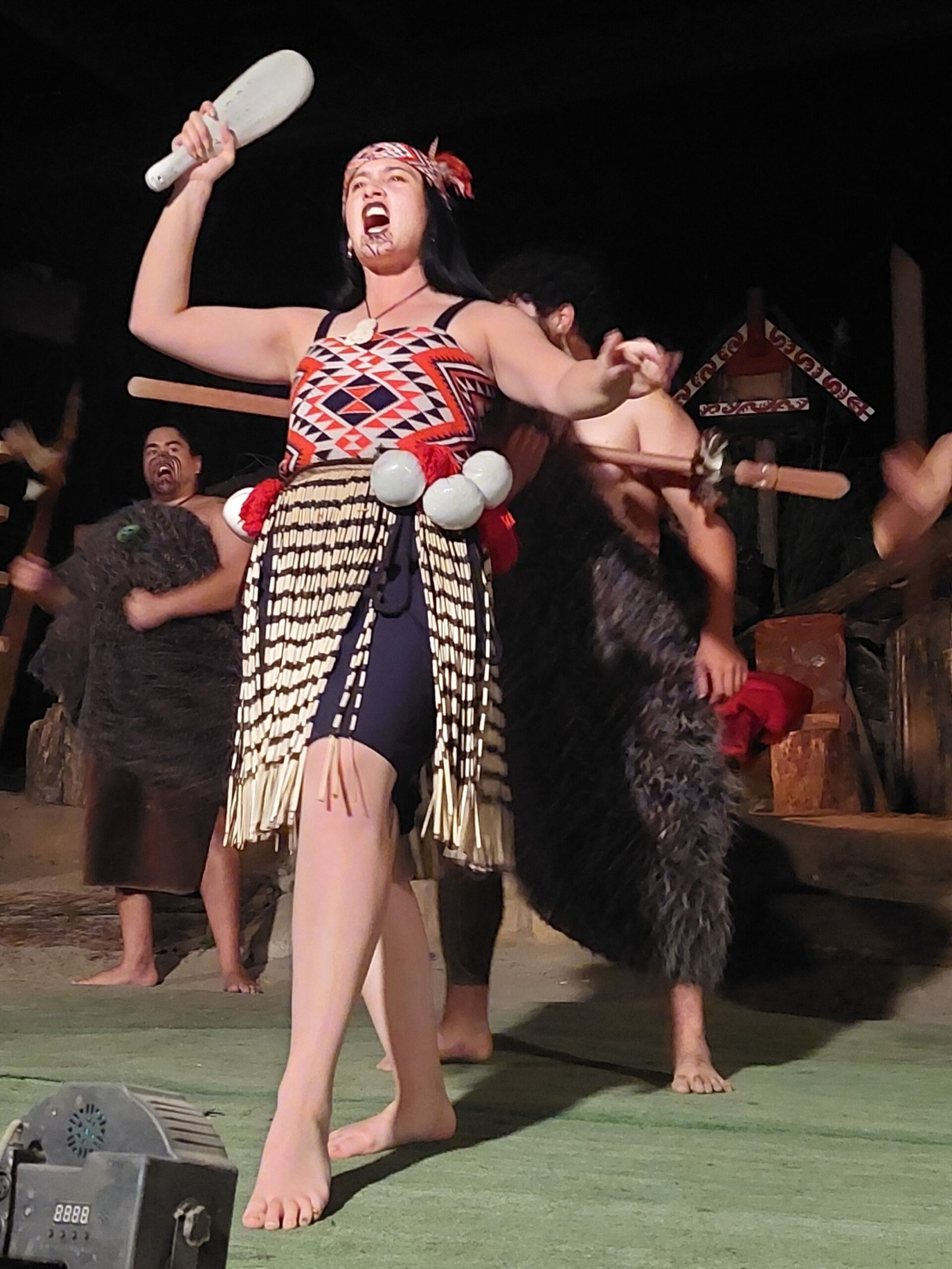
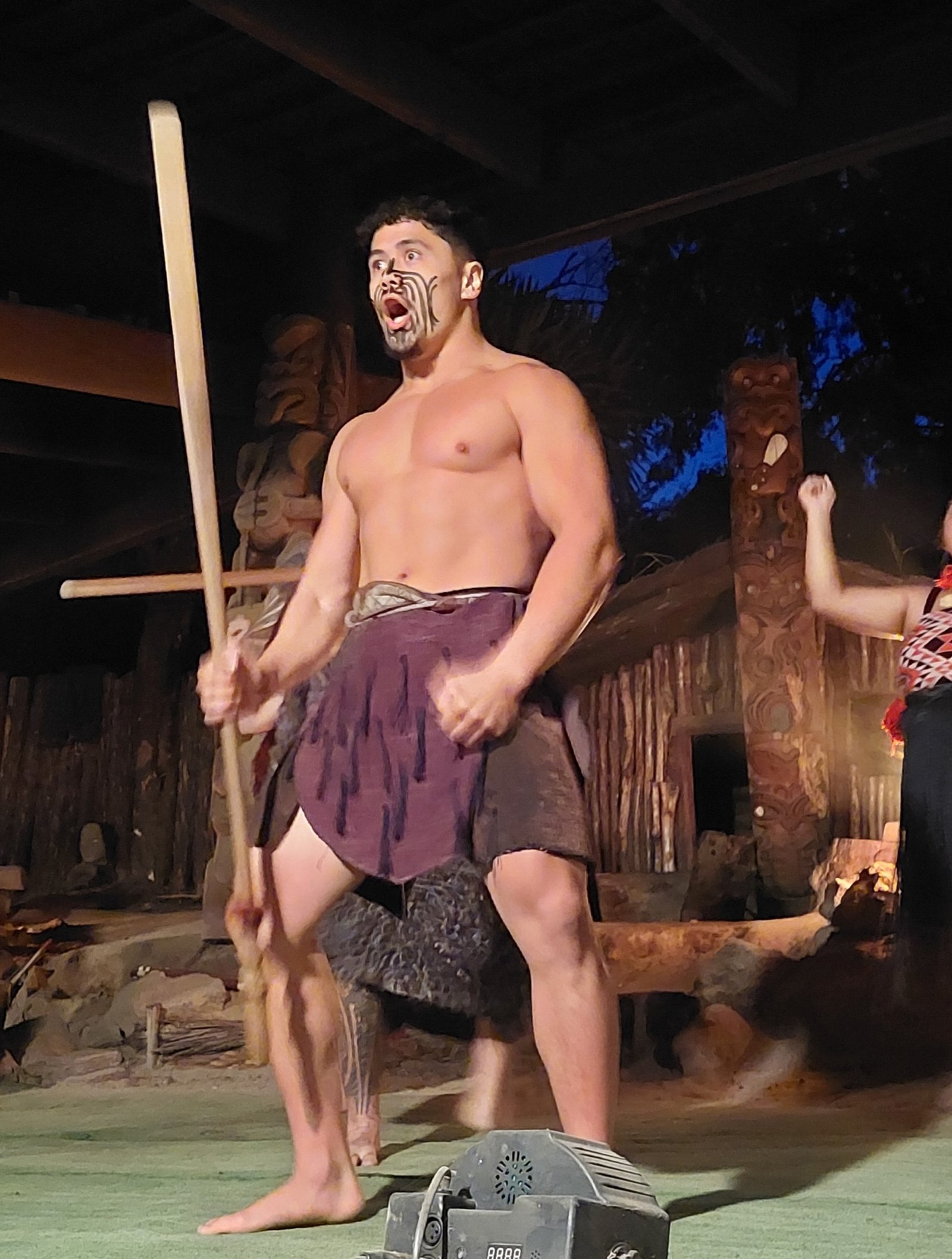
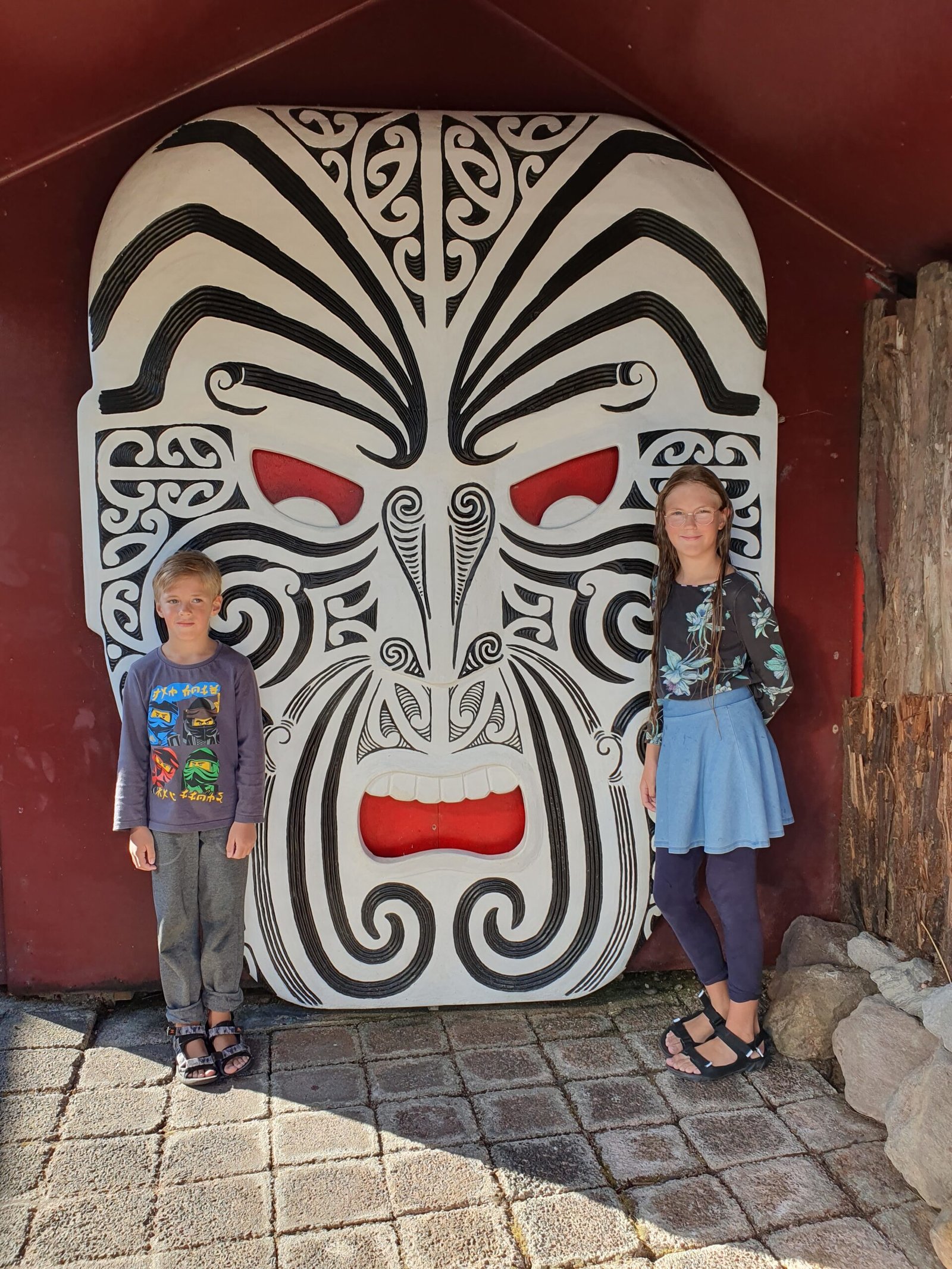
Farmilta lähdimme käymään Rotoruan keskustassa leikkipuistossa ja syömässä. Rannalta löytyikin lapsille todella mukava puisto, jossa he ehtivät leikkiä hetken, ennen kuin piti jatkaa matkaa illaksi vielä Mitai-maorikylään. Siellä meille oli varattuna noin kolmen tunnin mittainen käynti, jonka aikana pääsimme seuraamaan, kuinka heimon miehet saapuivat kanootilla (waka) jokea pitkin. Sen jälkeen pääsimme osallisiksi tapaamisseremoniaan, jossa heimopäälliköt tarjoavat toisilleen rauhaneleen (lehti, sulka tms.), joka toisen päällikön pitää kohteliaasti hyväksyä. Tämän seremonian aikana heimon jäsenet pelottelevat toisiaan huutamalla, uhkailemalla keihäällään, muljauttelemalla silmiään ja näyttämällä kieltään. On tärkeää, että seremonian aikana ei naureta, tai osoiteta pelkoa toista heimoa kohtaan.
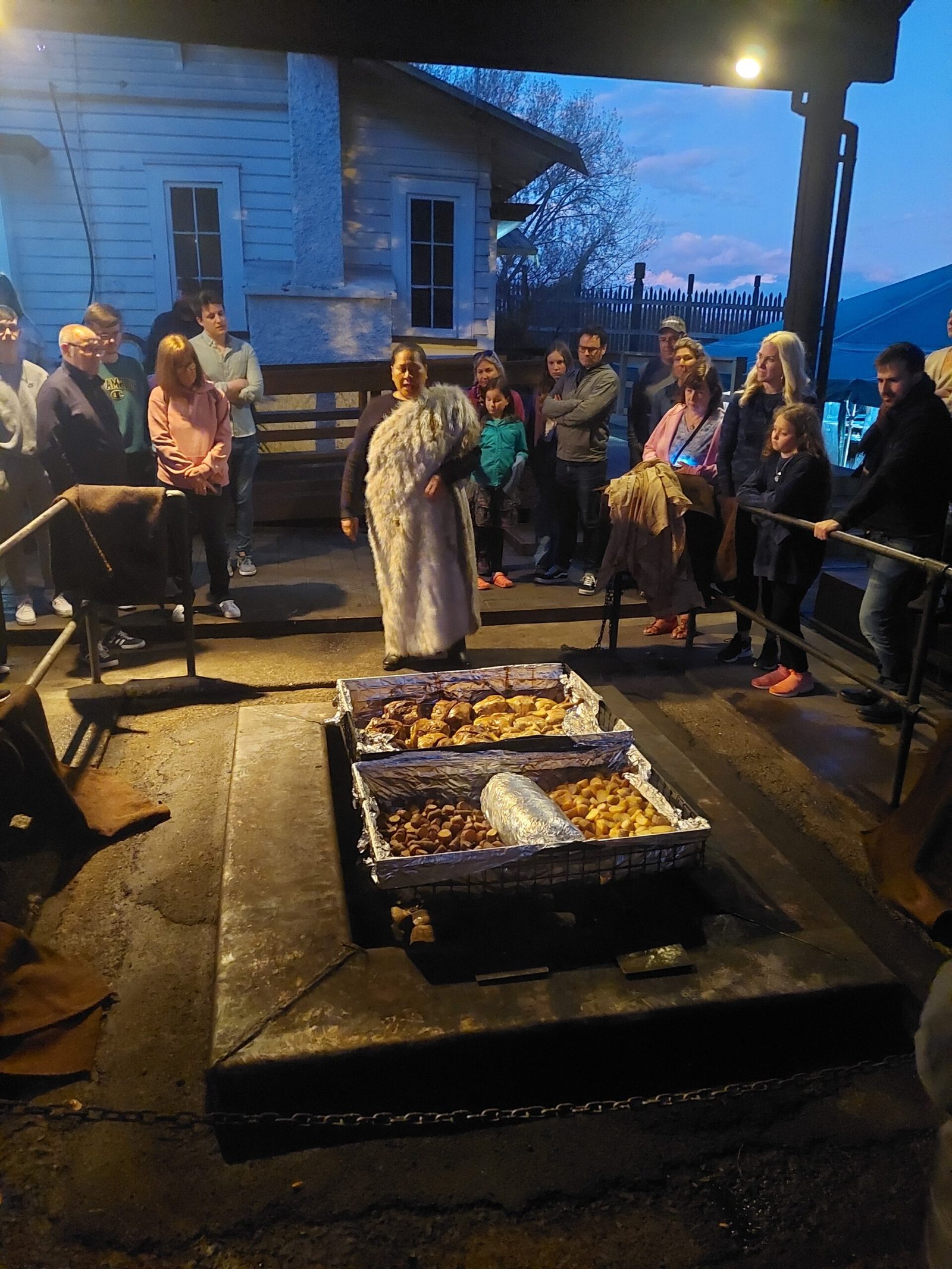
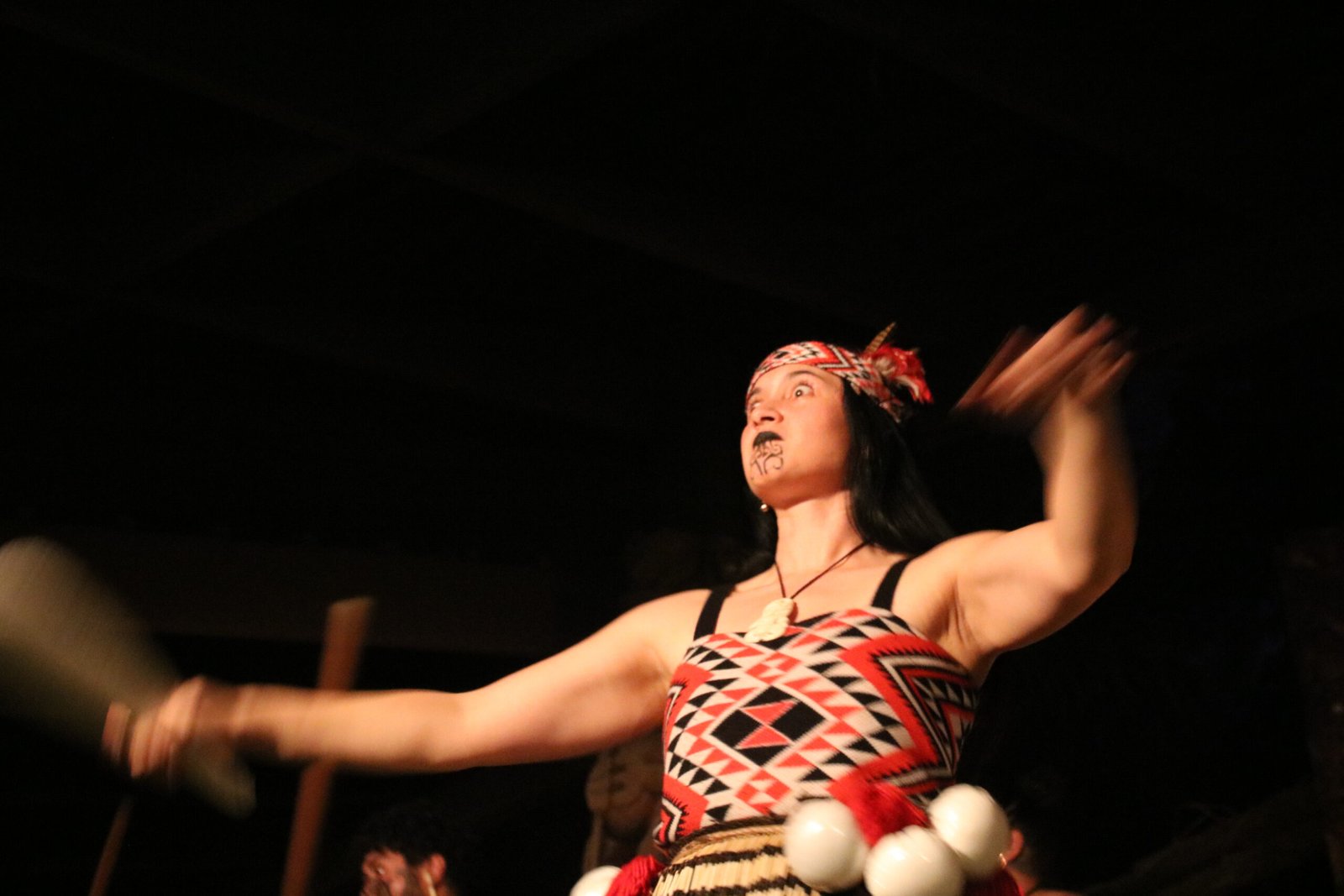
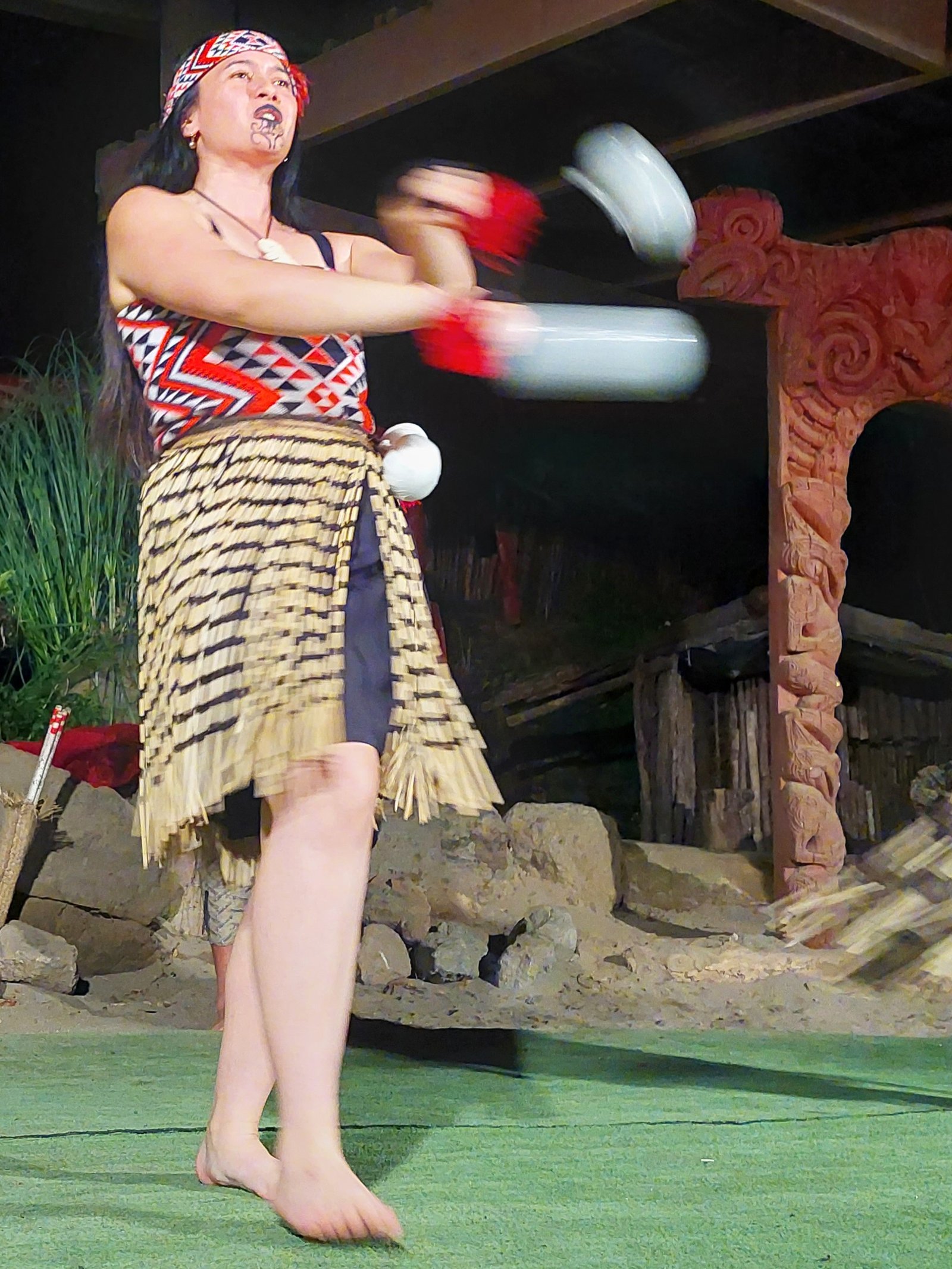
Kun seremonia oli ohi, meille kerrottiin maorikulttuurista ja esitettiin erilaisia perinteisiä lauluja ja tansseja. Esityksen jälkeen saimme vielä nauttia perinteistä juhlaruokaa, hangia. Tämä ateria valmistetaan maauunissa kypsentämällä useiden tuntien ajan. Ateriaan kuuluu yleensä lammasta, kanaa (koska jotain paikallista kyyhkyslajia ei saa enää metsästää), sianlihaa, kalaa ja vihanneksia. Perinteisesti maorit eivät mausta ruokiaan juuri lainkaan, vaan lihan annetaan kypsyä sellaisenaan. Entisaikaan kun mausteita ei juuri ollut saatavilla.
Ruokailun lomassa saimme myös esittää kysymyksiä illan juontajalle, joka oli itsekin maori. Hän kertoi, että maoreita on nykyään n. 600 000, ja eri heimoja on lukuisia. Heimojen tarkkaa määrää on vaikea sanoa, sillä heimot jakaantuvat vielä sukuihin, joita voidaan pitää myös omina erillisinä heimoinaan. Heimoa johtaa yleensä heimopäällikkö, ja valta siirtyy aina päällikön vanhimmalle pojalle. Tosin juontajan heimon päällikön kuoltua päällikön poika ei halunnut ryhtyä päälliköksi, vaan heidän heimoaan on johtanut jo useamman vuoden ajan vanhimmista koostuva neuvosto. Ilmeisesti tämäkin systeemi on toiminut oikein hyvin.
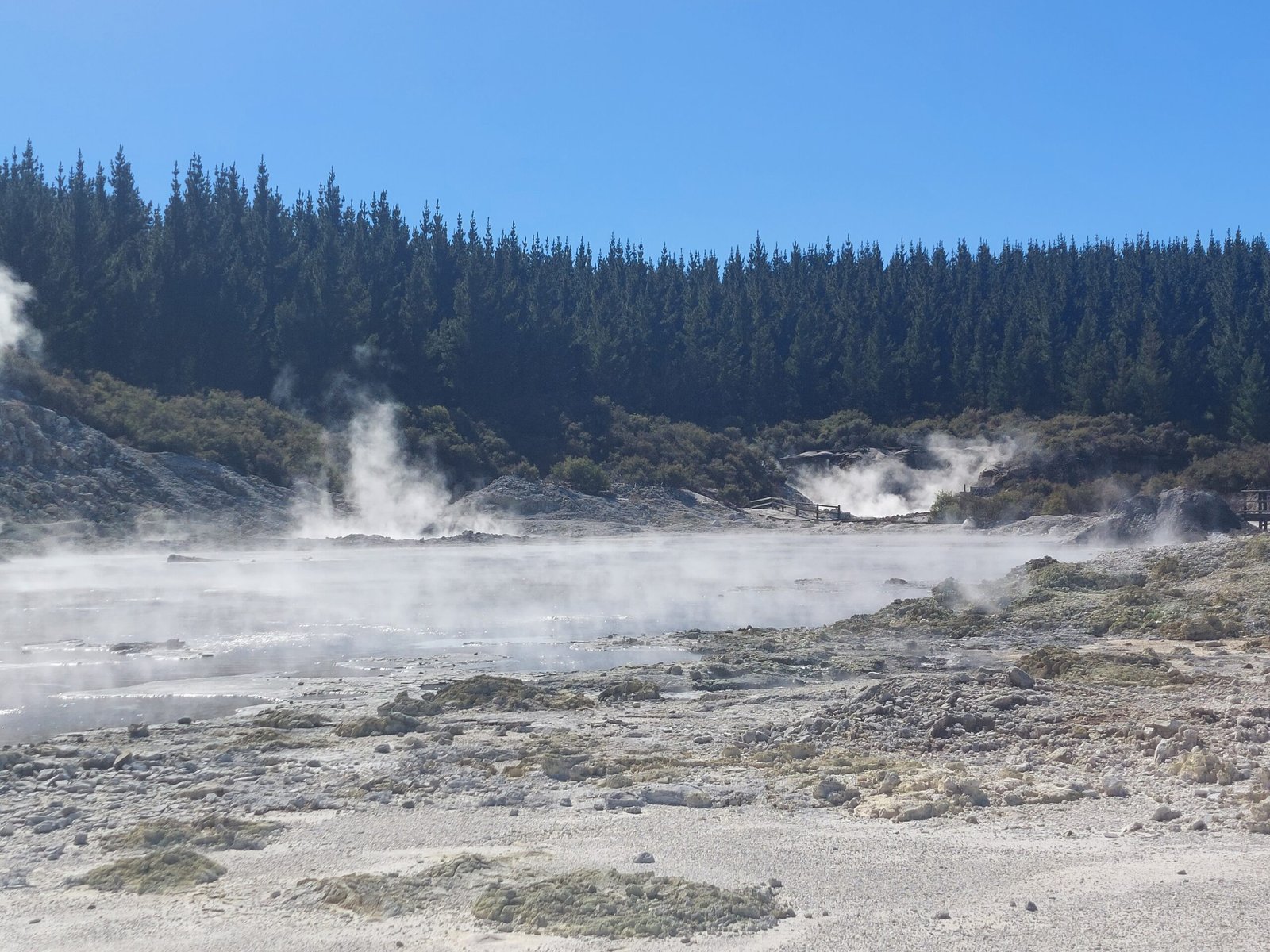
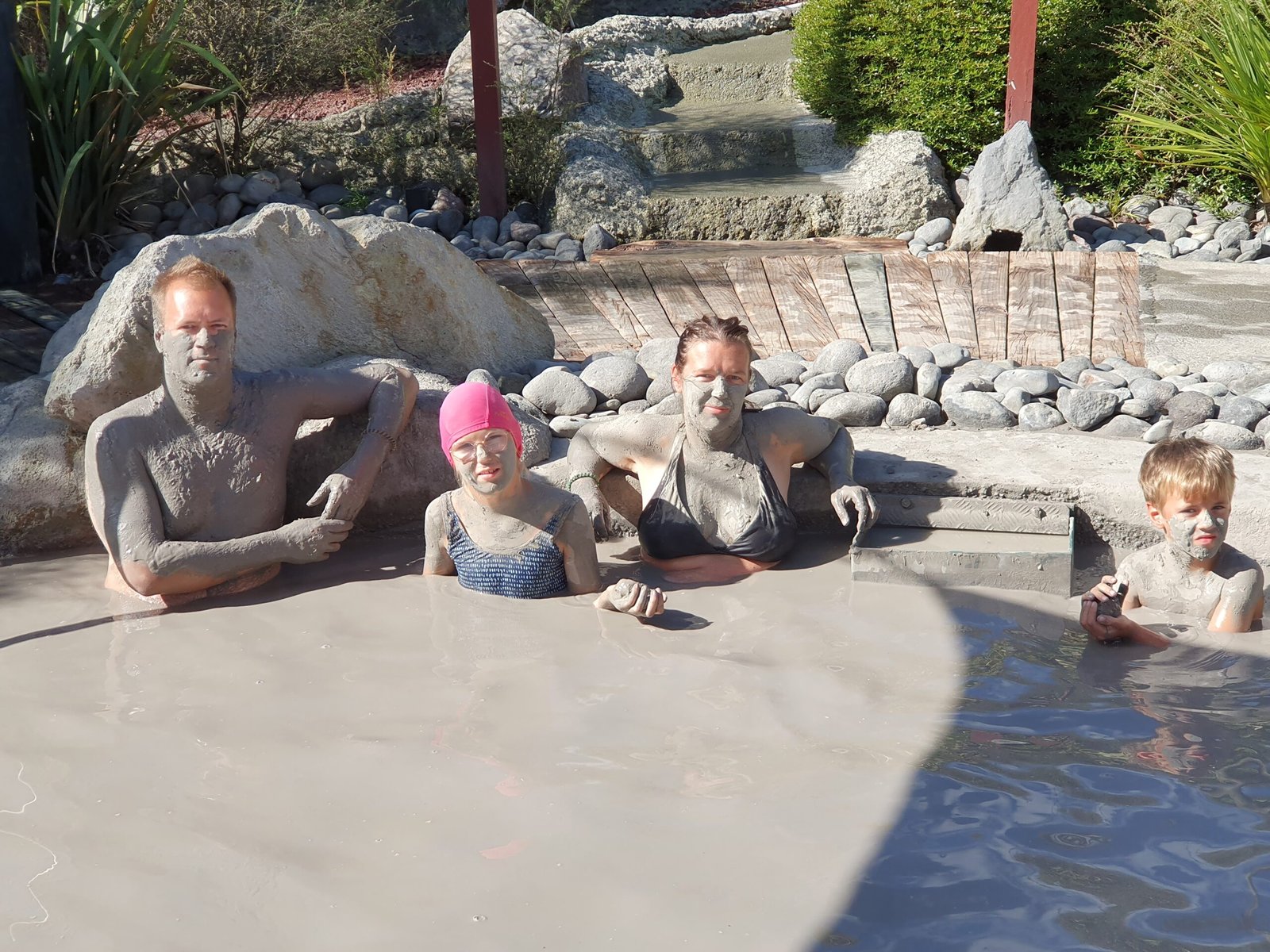
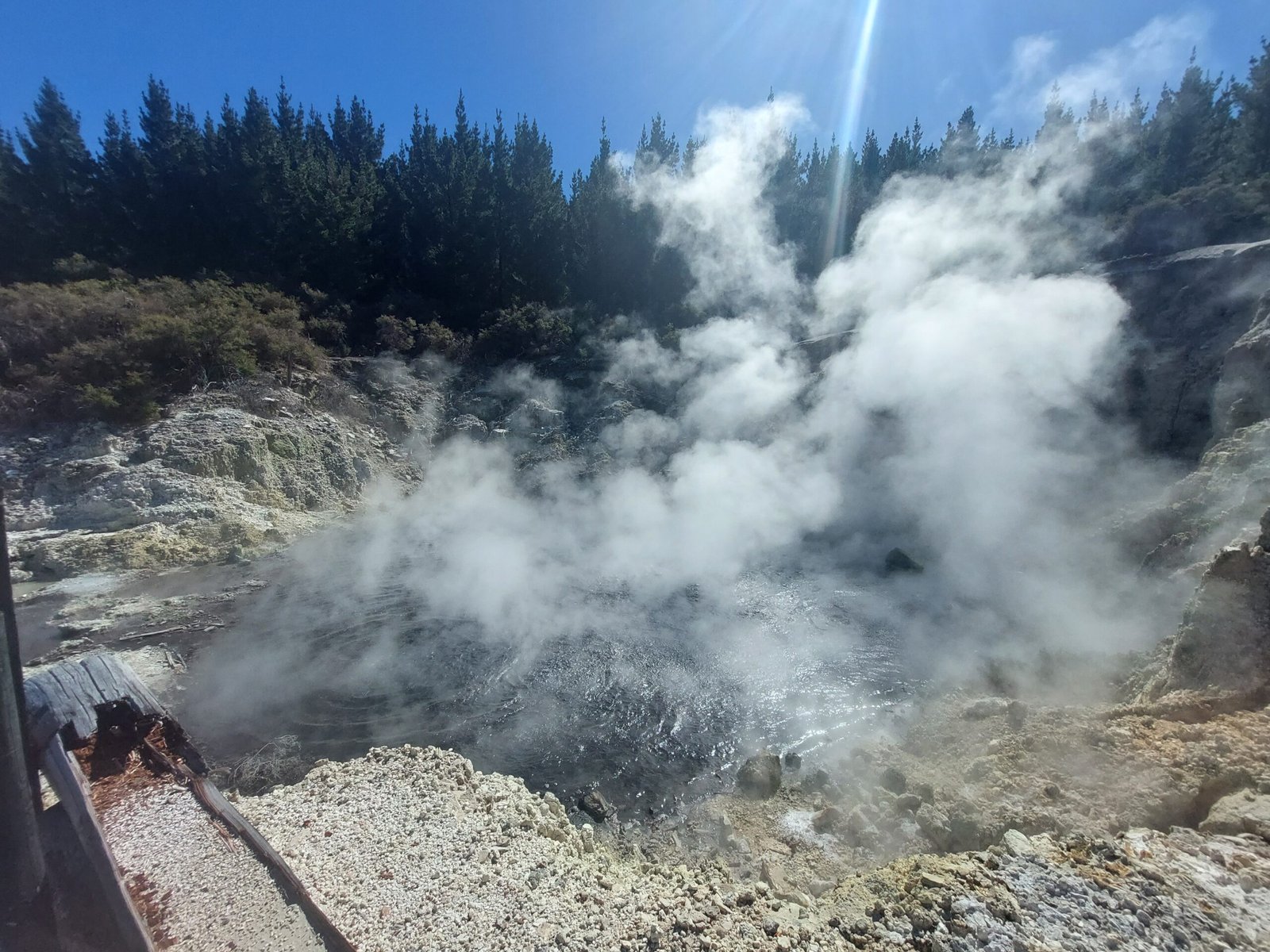
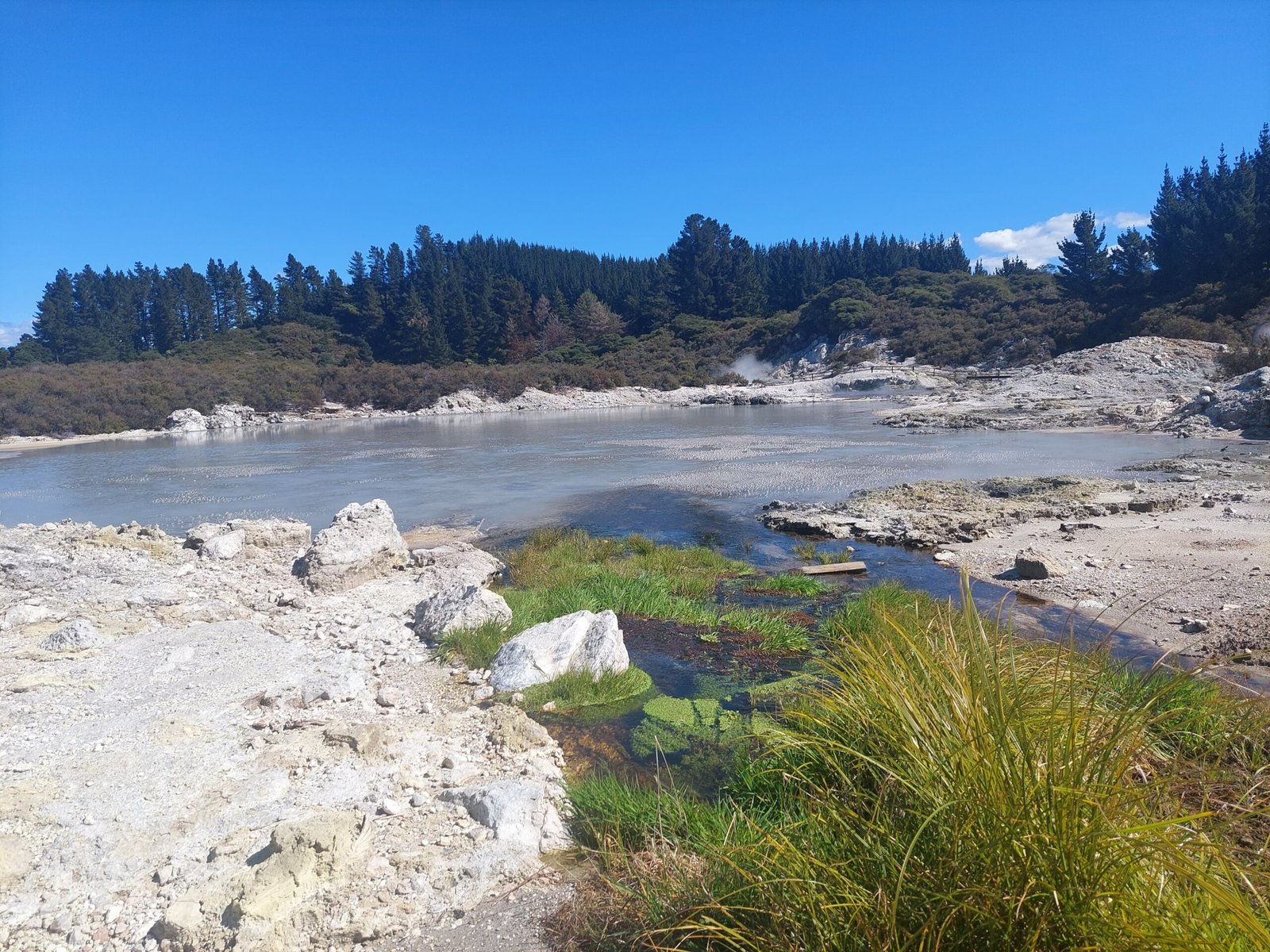
Seuraavana päivänä lähdimme käymään helvetin porteilla. Menimme nimittäin mutakylpyyn Hell’s Gate -nimiseen paikkaan. Ennen mutakylpyjä kävimme kävelykierroksella paikkaa ympäröivällä geotermisellä alueella. Näimme siellä paljon erilaisia pulppuavia ja höyryäviä muta- ja vesialueita. Rikin haju alueella oli todella voimakas. Ei tullut mieleenkään poiketa alueelle merkityltä kulkureitiltä, sillä joissakin paikoin näkyi hyvin selvästi, kuinka ohut maankuori paikoittain oli. Ei olisi ollut kiva humpsahtaa maankuoren läpi kiehuvan kuumaan mutaan. Pääsimme kuitenkin myöhemmin kokeilemaan, miltä vesialueissa kiehuva ja kupliva muta tuntui, sillä mutakylvyissä käytetty muta haettiin yhdestä alueen kuumista lähteistä.
Olimme ajatelleet alunperin jatkaa matkaa seuraavana päivänä yhdeksi yöksi Coromandelin alueelle, mutta tulimme siihen tulokseen, että parempi jäädä Rotoruaan. Emme kuitenkaan olisi ehtineet tekemään Coromandelissa mitään erikoisempaa ennen kuin meidän piti ajaa Aucklandiin palauttamaan asuntoauto.
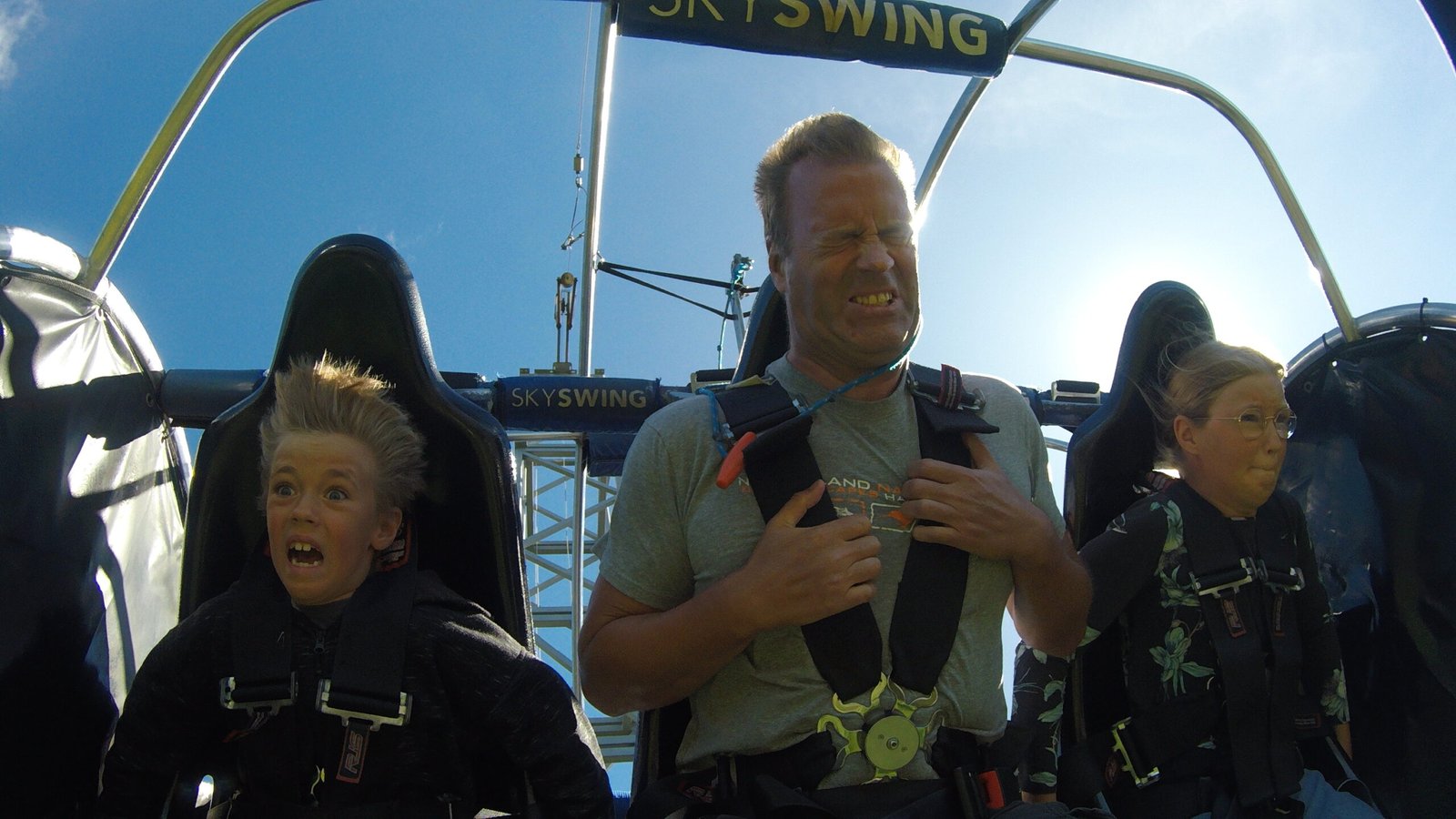
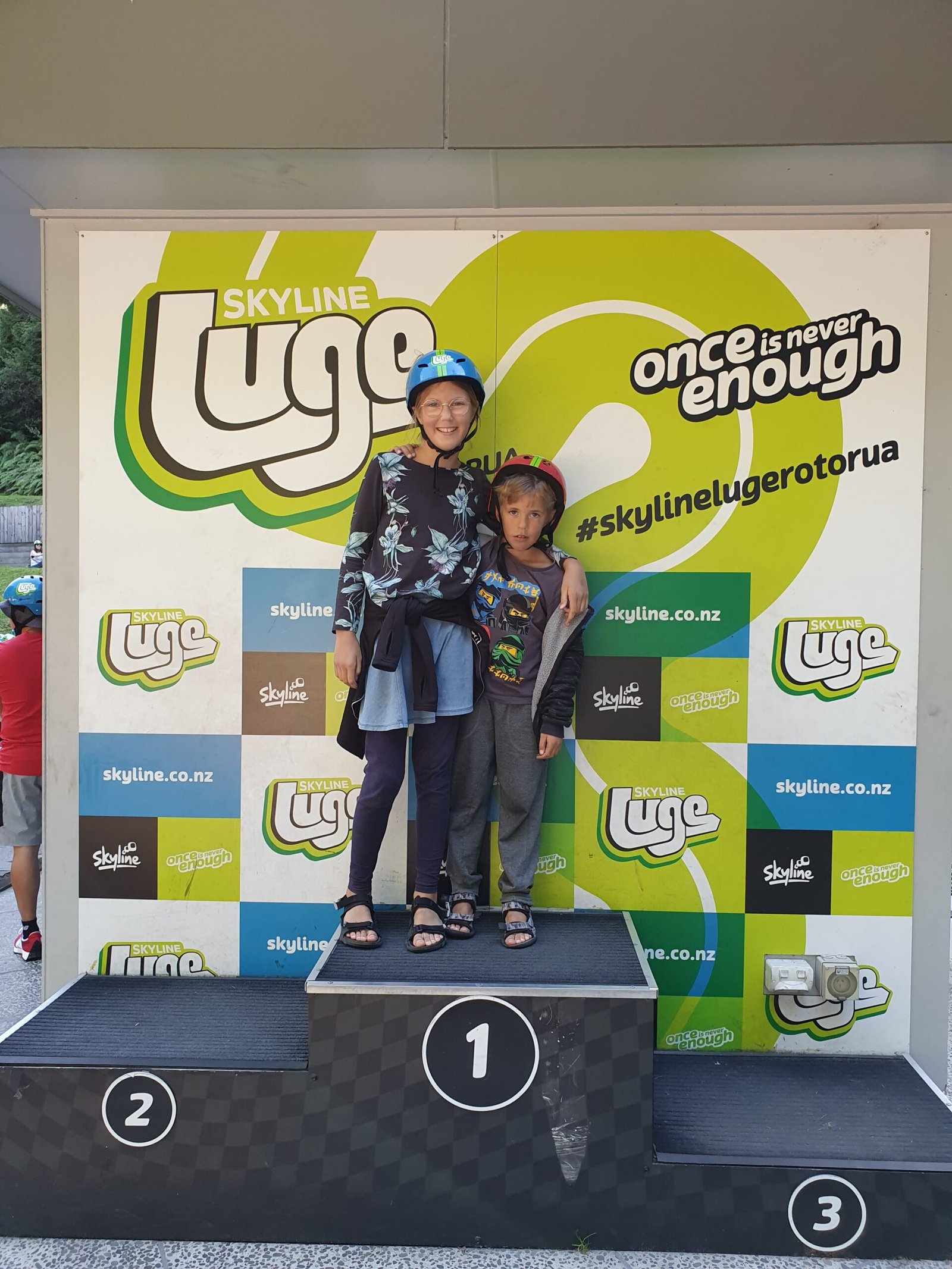
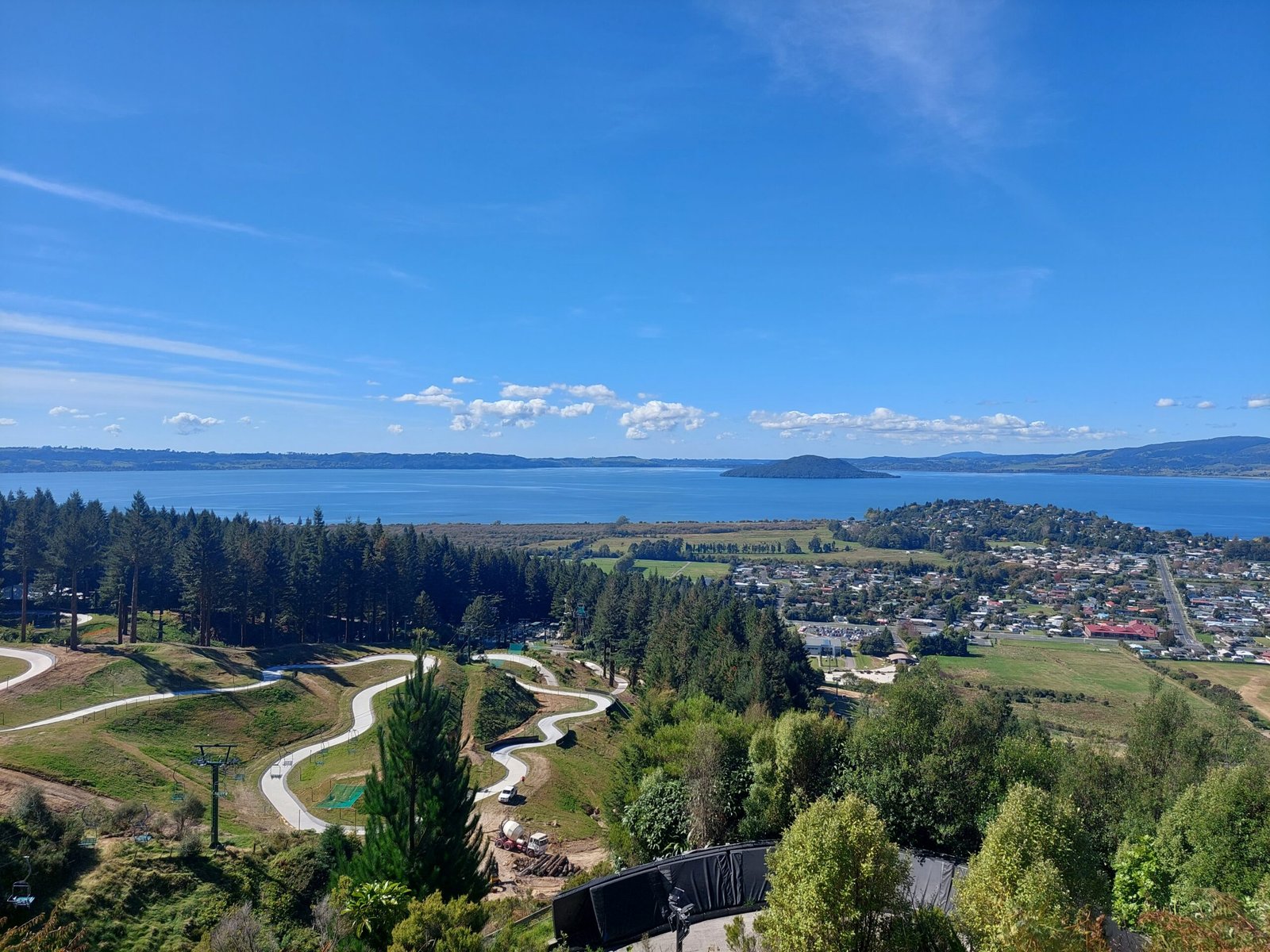
Siispä viimeisenä päivänä Rotoruassa lähdimme käymään Skyline Gondolalla kukkulalla katselemassa maisemia. Lisäksi Marko ja lapset kävivät kelkkailemassa sekä keinumassa Sky Swing -keinussa, joka hilattiin ensin 50 metrin korkeuteen, josta se päästettiin putoamaan vapaasti alaspäin. Keinu kiihtyi kahdessa sekunnissa 150km/h nopeuteen. Video tästä keinureissusta on aivan hulvaton. Ilmeisesti vauhti oli alussa aika hurja, ainakin ilmeistä päätellen. Jaana jätti nämä aktiviteetit väliin, sillä oli satuttanut reitensä pari päivää aiemmin leikkipuistossa kiipeillessään. (Ei ilmeisesti pitäisi tällä iällä enää lähteä yrittämään samoja temppuja, kuin lapset tekevät.) Koska etureisi oli vielä turvoksissa ja kipeä, ei kelkkailu tiukoissa mutkissa tai heiluminen keinun kyydissä oikein houkutellut. Keinuun olisi ehkä voinut vielä mennäkin, mutta koska sinne mahtui kerralla vain kolme henkilöä, Marko sai kunnian mennä sinne lasten kanssa. Sillä aikaa kun Marko ja lapset kelkkailivat mäessä, Jaana nautti cappuccinoa ravintolan terassilla maisemista nauttien. Ei huono vaihtoehto sekään.
Briefly in English:
On Saturday we started to drive towards the small town of Picton. The ferry service that had been rescheduled already once had not been cancelled again, so the plan was to move from the South Island to the North Island. We arrived well before the ferry’s departure time only to hear that it was late. And it wasn’t an April Fool’s. Well, better that than a completely cancelled ferry connection. We had about three hours to kill. We were told that we could park the car in the queue after check-in and go to town, if we wanted to. Since it was raining, we decided to stay in the car at the port and wait. There we would stay dry, and there was food in the fridge if we needed it. A couple in the car in front of us also decided to stay in the harbour, and started cooking in their campervan while waiting in the queue.
Eventually Marko got tired of waiting in the car and, despite the rain, went for a short walk to Picton. He returned with a packet of margarine and a bottle of apple juice. But most importantly, he had spotted a Subway just around the corner. So the kids and I placed an order, and we sent Marko out into the rain again. We had time to eat our baguettes before the queue finally started moving slowly into the ferry.
Once we got the campervan parked, we started to look for seats inside. The ferry was already pretty full, but we still managed to find a few more seats for our family. The kids spent the whole trip in the playroom watching cartoons, while us adults sat on the comfy armchairs near the playroom.
The ferry didn’t arrive in port until 8pm, so it was dark before we finally found our way to the campsite. We had to make a few extra turns on the way, as navigating in a big city with an offline map is not as easy as in small towns. Apparently the offline map doesn’t show every single intersection and roundabout lane, so a couple of times we got a bit lost. Fortunately, on both occasions the mistake was easy to fix, and we only drove a couple of extra kilometers.
When we arrived at the campsite, the reception had already closed. Marko found a box with an envelope addressed to us next to the reception door. There was the gate code, and the number of our parking space. In the evening, while setting the alarm clock, we discovered that it was the daylight saving time in New Zealand. Because we are on the other side of the equator, and everything here is backwards, New Zealand goes back an hour for wintertime. It’s the exact opposite of Finland. So now the time difference with Finland is only nine hours.
After breakfast, we drove to the Mt. Victoria Lookout, near the centre of Wellington. After that we planned to make a quick stop in the city centre, and then continue our journey. The views from the top of the hill were great, but a little cloudy. From the top of the hill, we noticed that there seemed to be some sort of market going on near the marina. After returning from the lookout, we drove to the marina to see what it was all about. First we went to visit New Zealand’s number one museum, Te Papa. Our original intention was just to go to the toilet there, but since the exhibitions were free, we decided to take the kids to the museum as well. Marko and Jaana had been to Te Papa on their previous visit to New Zealand, but didn’t remember how great it was! Kids don’t usually get excited about museum visits, but they loved Te Papa. All the exhibits we visited were really interactive. You could touch and try almost everything yourself.
After the museum visit, we continued to the marina. Since we were getting hungry we bought spring rolls, pork dumplings and chicken and meat rolls from a Cambodian food stall at the Sunday food market. For dessert, Jaana and the kids bought some Dutch pancakes. Stomachs full, we finally got to continue our journey towards our next stop, Rotorua. It was a 5,5h drive, so with one stop in Taupo, we arrived at 8:30 in the evening. Since we were in the wintertime now, we drove the last couple of hours in the darkness. Fortunately, our car has pretty good lights.
We knew we had arrived in Rotorua when we started to smell a rotten egg. Rotorua is a very active geothermal area, so the smell of sulphur is unfortunately unavoidable there. Fortunately, our campsite was far enough from the most active geothermal areas, as the air was quite fresh there.
On our first day in Rotorua we went to visit a farm called Agrodome. There we watched a show where we were introduced to different breeds of sheep, sheep shearing (did you know that the world record for shearing is 13 seconds!) and shepherd dogs. The children also got to feed little lambs, while some adults got to milk a cow. After the show, we were taken on a tour to the farm fields, where we got to feed more sheep and some alpacas too.
The whole programme at the farm was really well organised. The hour-long show contained just the right amount of humour and lots of information. We now know that there are about 28 000 000 sheep in New Zealand, six for every local. We can also tell the difference between a few sheep breeds. We also learnt that the dorper breed of sheep, which originates from South Africa, doesn’t need to be sheared at all as it sheds its own hair every year. Merino sheep get a haircut once a year, other breeds a couple of times a year.
From the farm we went to the playground and to have something to eat in the centre of Rotorua. From the city centre we went to the Mitai Maori village for the evening. It was a three hour visit, during which we watched the Maori men arrive by canoe (waka) along the river. Afterwards we participated in a meeting ceremony where the tribal chiefs offer each other a peace offering (leaf, feather, etc.) which the other chief must politely accept. During this ceremony, tribal members intimidate each other by shouting, threatening with spears, rolling their eyes and showing their tongues. It is important not to laugh or show fear of another tribe during the ceremony.
When the ceremony was over, we were told about Maori culture and were shown various traditional songs and dances. After the performance, we had the traditional festive meal, hangi. This meal is prepared in a pit oven and cooked for several hours. The meal usually consists of lamb, chicken (because a local species of pigeon is no longer allowed to be hunted), pork, fish and vegetables. Traditionally, the Maori do not season their food much as spices were scarcely available in the old days.
During the meal we were told that there are around 600 000 Maori today, and there are many different tribes. It is difficult to say exactly how many tribes there are, as tribes are still divided into families, which can also be considered as separate tribes. Every tribe has a chief, and next chief is always the eldest son of the current chief. However, our host told us that when the chief of their tribe passed away, the eldest son didn’t want to become a chief. Instead a council of elders has been leading their tribe for several years now. Apparently this system has worked very well too.
The next day we went almost to hell. We went for a mud bath at a place called Hell’s Gate. Before the mud baths, we took a walking tour in the geothermal area surrounding the place. We saw a lot of different bubbling and steaming mud and water holes. The smell of sulphur in the area was really strong. We didn’t even think about stepping out from the marked trail, as in some places there was only a very thin layer of ground covering the bubbling mud holes. It would not have been nice to fall through into the boiling hot mud. However, later we got to experience what the bubbling mud felt like, as the mud for the mud baths came from one of these mud holes.
You could stay in the mud baths only for 20 minutes, as the muddy water in the pools had lots of acids in it. While sitting in the pools you could apply the mud to your skin. Not above the eyes, though. This was apparently because the acid in the mud could have irritated the eyes if it got into them.
After the mud bath, we went to wash most of the mud off our skin and then went to other hot spring pools. In these pools we were not allowed to put our heads under the water, as the water had acids in it too. After bathing, we had to put all our bathing suits and towels in the washing machine, as the smell of sulphur stuck onto them quite firmly.
We had originally planned to continue the next day to Coromandel, but decided it was better to stay in Rotorua. We would have had time to spend only one night in Coromandel before we had to drive to Auckland to return the campervan.
On our last day in Rotorua, we went for a ride on the Skyline Gondola. Marko and the kids also went riding on a luge and to the Sky Swing. The swing was first pulled up to a height of 50 metres and then let free-fall downwards. The swing accelerated to 150km/h in two seconds. The video of this swing ride is absolutely hilarious. Jaana skipped this activity, having injured her thigh a few days earlier while climbing in the playground. (Apparently, at this age, you shouldn’t try to do the same tricks that kids do.). Maybe Jaana could have gone to the swing without hurting her leg even more, but since it could only hold three people at a time, Marko had the honour of going on it with the kids. While Marko and the kids were riding the luge, Jaana was enjoying a cappuccino on the restaurant terrace. Not a bad option either.