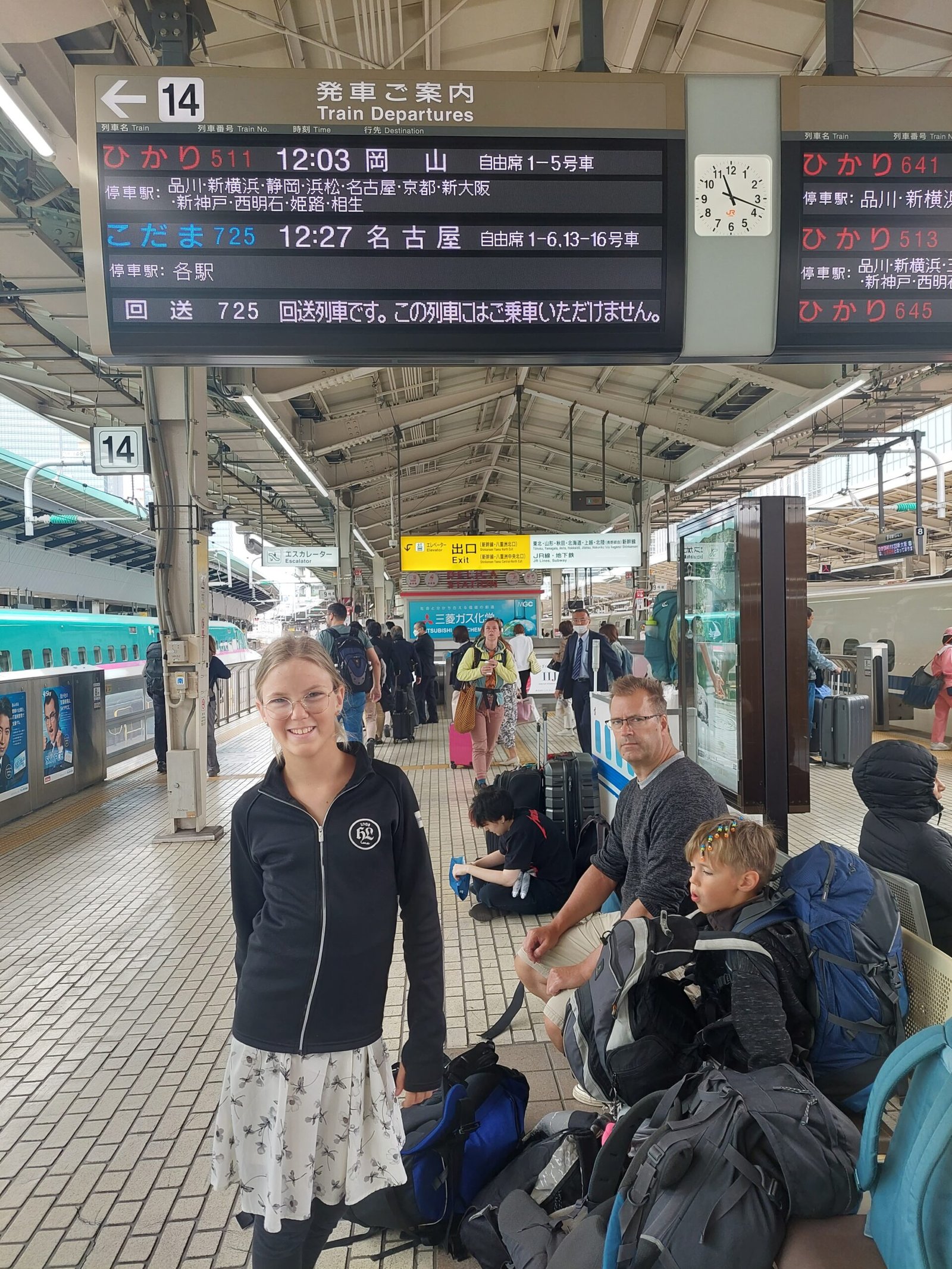
The train from Tokyo to Osaka left at 12:03. We had booked seats on the Hikari bullet train, which took us to Osaka in just under three hours. The Hikari has a top speed of 285km/h, so it was a bit faster than the Pendolino trains back at home. This speed is just the beginning, though, because in Japan they have already started a project for a 500km/h train line. We had pre-booked seats, as we were travelling with a lot of luggage. The train had separate carriages for those who had not booked in advance. There was no restaurant car on the train, but a woman pushing a coffee trolley went back and forth several times. There were also other workers on the train, whose job description was a little unclear to us. One guy with “total security” written on his chest walked around the train pointing his finger at doors and ceiling lights. He was apparently counting whether they all were still there. Another dude was just wandering around the train, bowing every time he left the compartment. But so did all the other workers.
A streamlined bullet train ready to go.
Passengers are also ready for their train journey in Japan.
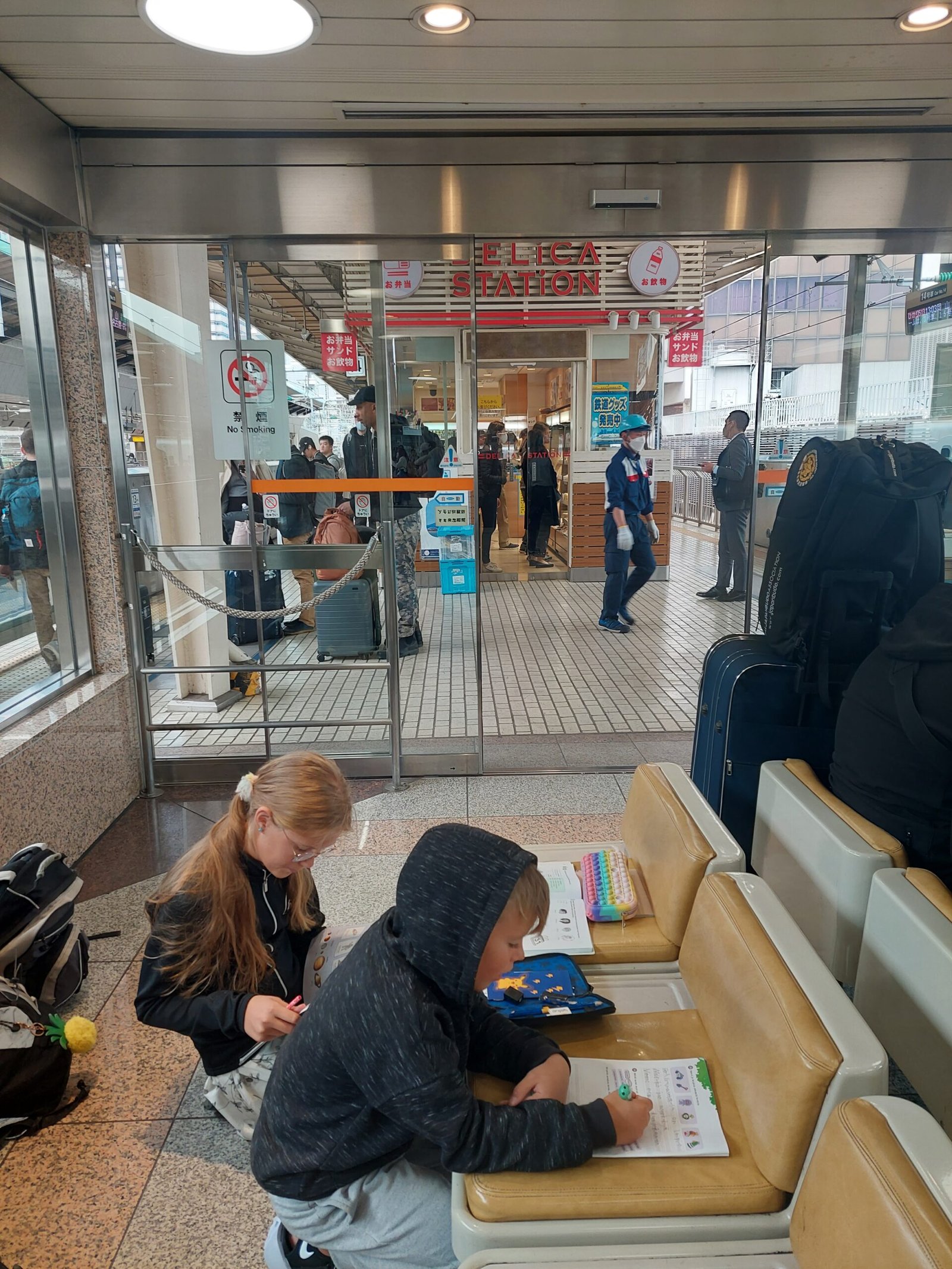
Schoolwork has been done at airports, on planes, at the ferry terminal, on the ship, at the train station, on the train, in the caravan and sometimes even at home.
We passed Mount Fuji along the way.
At Osaka station, our first task was to buy new metro cards. There were no 72h metro cards available for tourists like in Tokyo. Marko had figured out during the train ride that the cheapest option would be to get a rechargeable IC card like the locals have. We first tried to buy one at the information desk, as in Tokyo, but were directed to the ticket machines. Unfortunately, they had cards for adults only, so Marko went to the Japan Railways office to queue for metro cards for children. When Marko got to the ticket booth, he was told that it was cash only. So he went to queue up at the ATM, and again back at the ticket office. The queue was really long and to make it even longer some of the employees closed their own ticket windows. Apparently, the working day was over for them. Marko did not stay in the queue any longer, but went back to Jaana and the children. We just bought one day metro cards for the kids from the vending machine and went to look for our flat.
The flat in Osaka was a little further away from the station than the one in Tokyo. It was only a one kilometre walk, but with backpacks it seemed quite long to the kids. The apartment was much bigger than our studio in Tokyo. We had two separate bedrooms upstairs, and a kitchen and Japanese-style dining room downstairs. The soundproofing is not very good, so we have to hope that we live on a relatively quiet street.
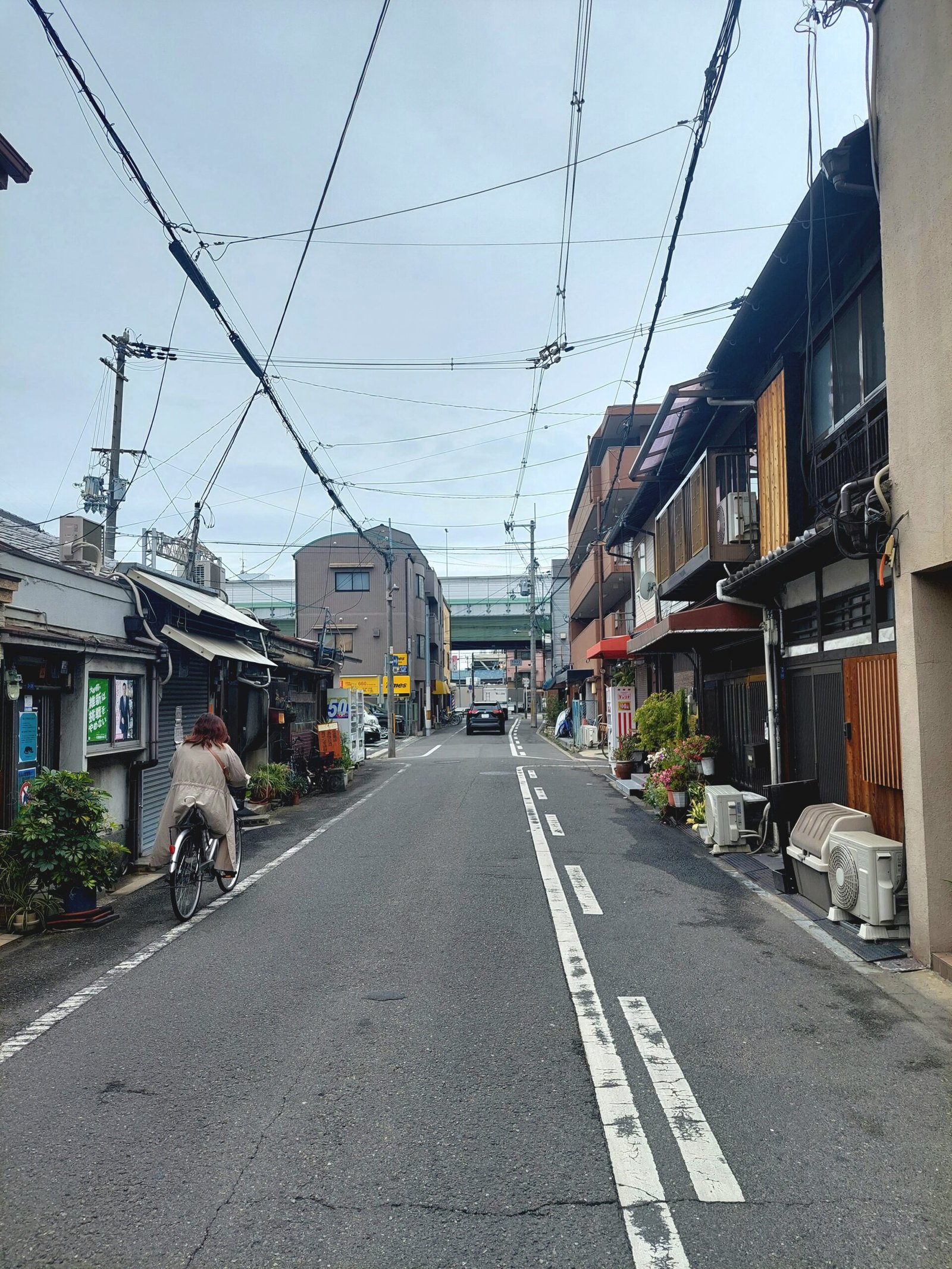
Our apartment is on the street on the right, just before the crossroads.
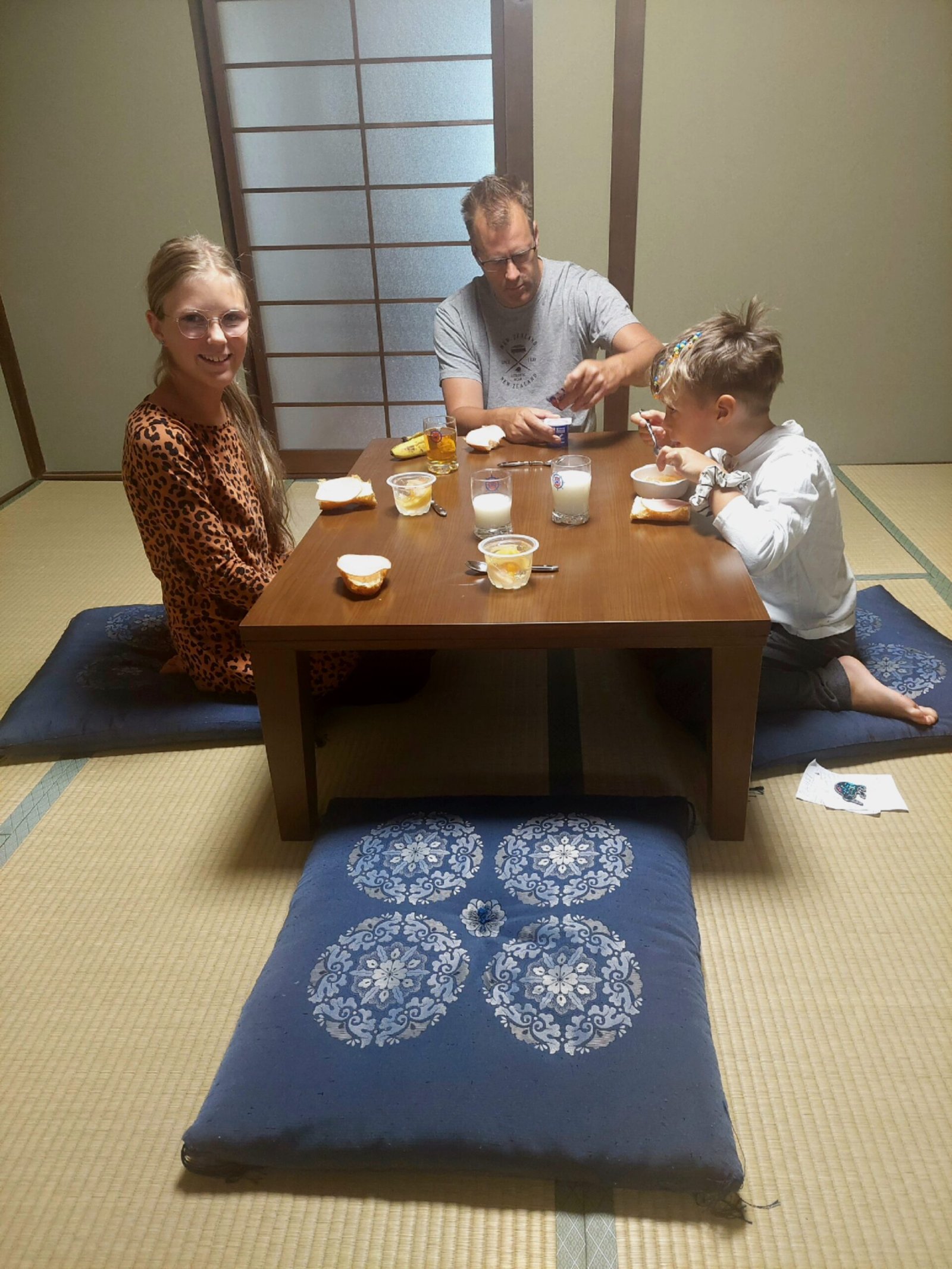
Meals were enjoyed Japanese style sitting on the floor.
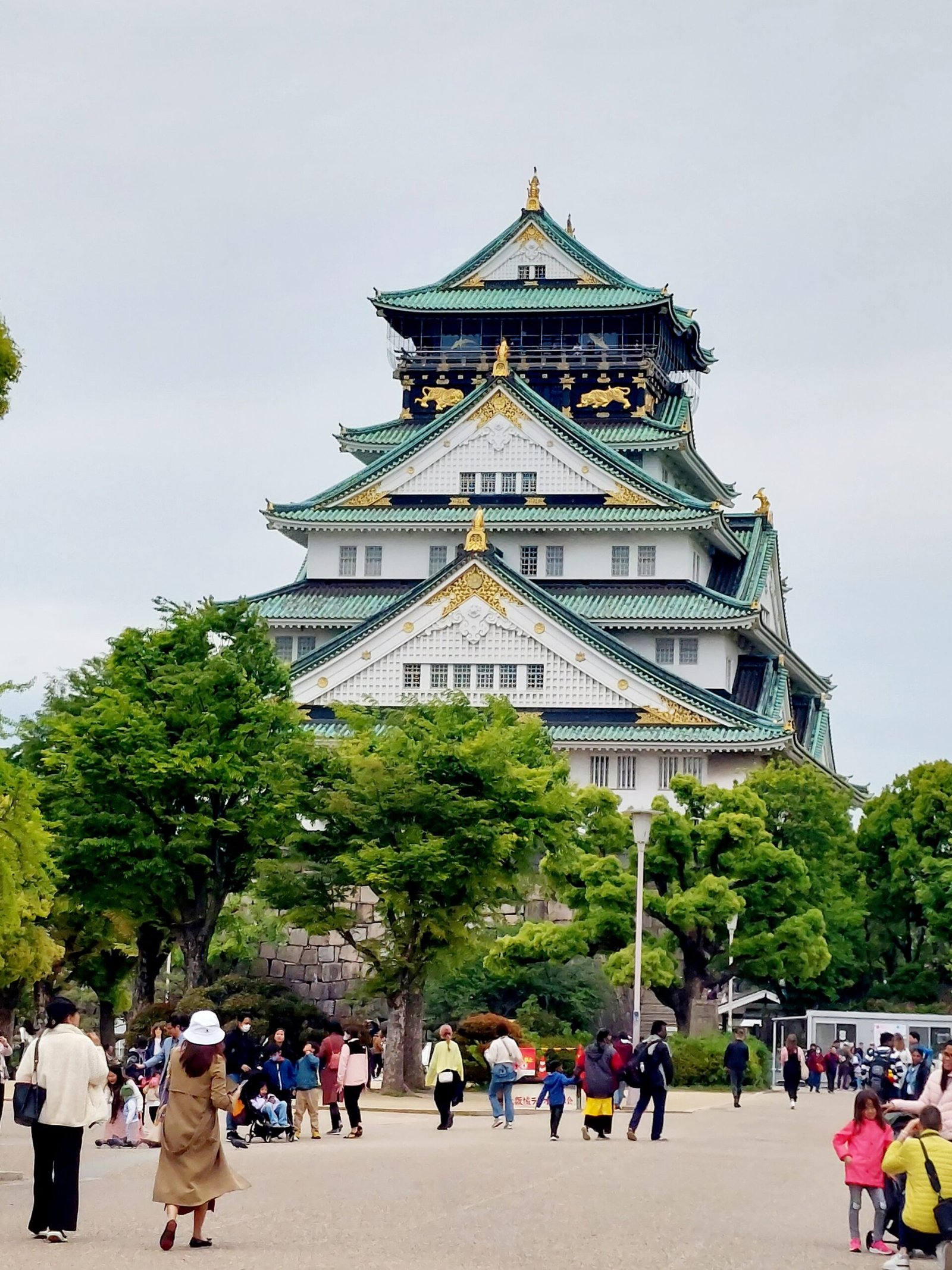
On Tuesday it was raining a bit. We decided to go to see Osaka Castle anyway. Initially there was a large temple on the site, which was replaced (or extended, it was not clear) by a man called Toyotomi Hideyoshi, who began to build a castle during his reign. It was the largest castle at that time. Later, the castle was attacked and destroyed once, and on another occasion the main tower was struck by lightning and burned to the ground. This latest version of the castle has been standing for almost a hundred years.
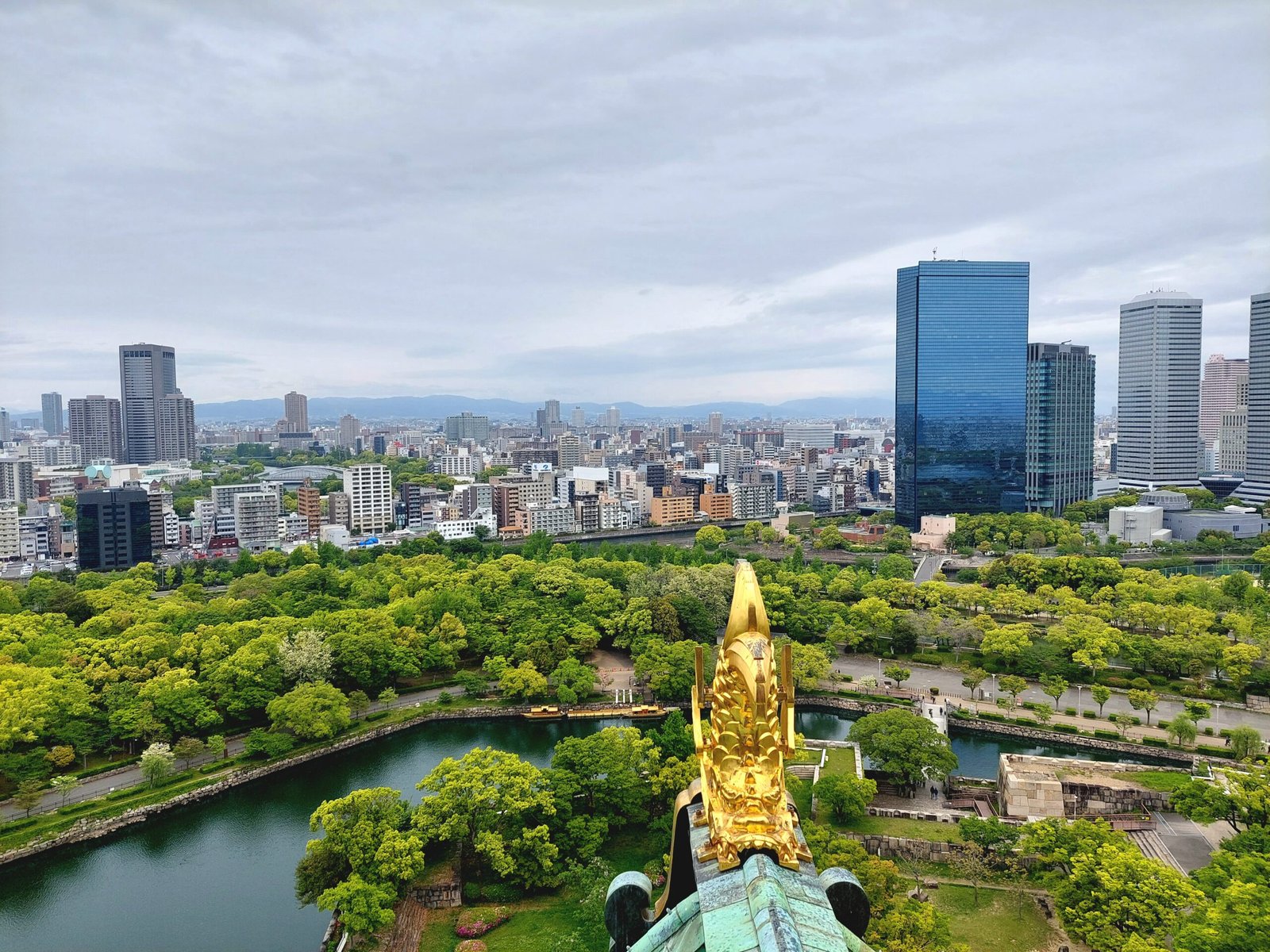
For the locals, this was apparently a big attraction, but as we had no idea who this Toyotomi Hideyoshi was, the castle museum didn’t interest us much. There were a few interesting artefacts, such as a samurai helmet and armour, but other than that, the best thing about the place was the view of Osaka from the eighth floor of the tower.
The tallest tower of Osaka Castle, which also housed the museum.
Osaka is the third largest city in Japan after Tokyo and Yokohama.
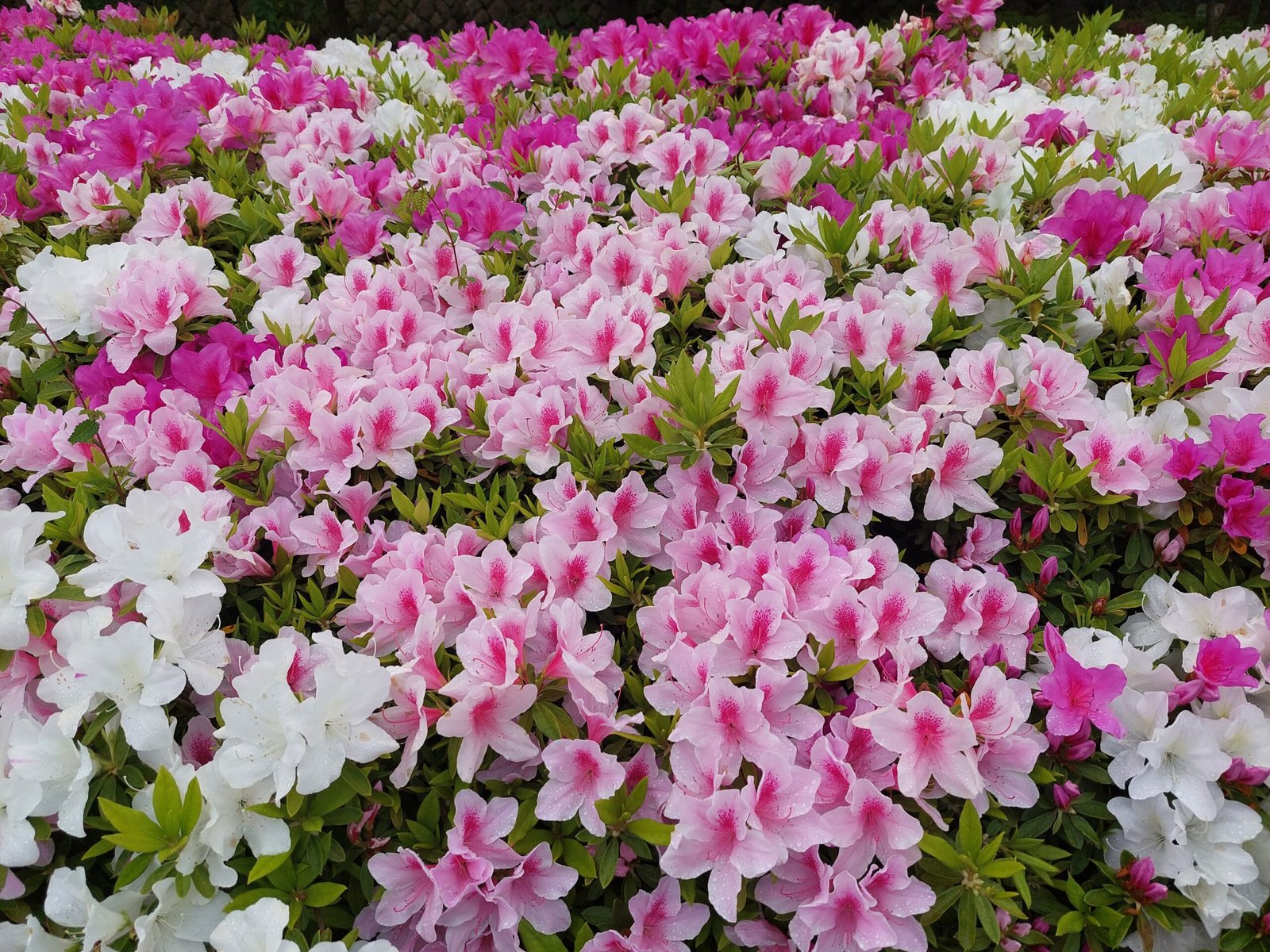
This imperial garden also had its fair share of flowers.
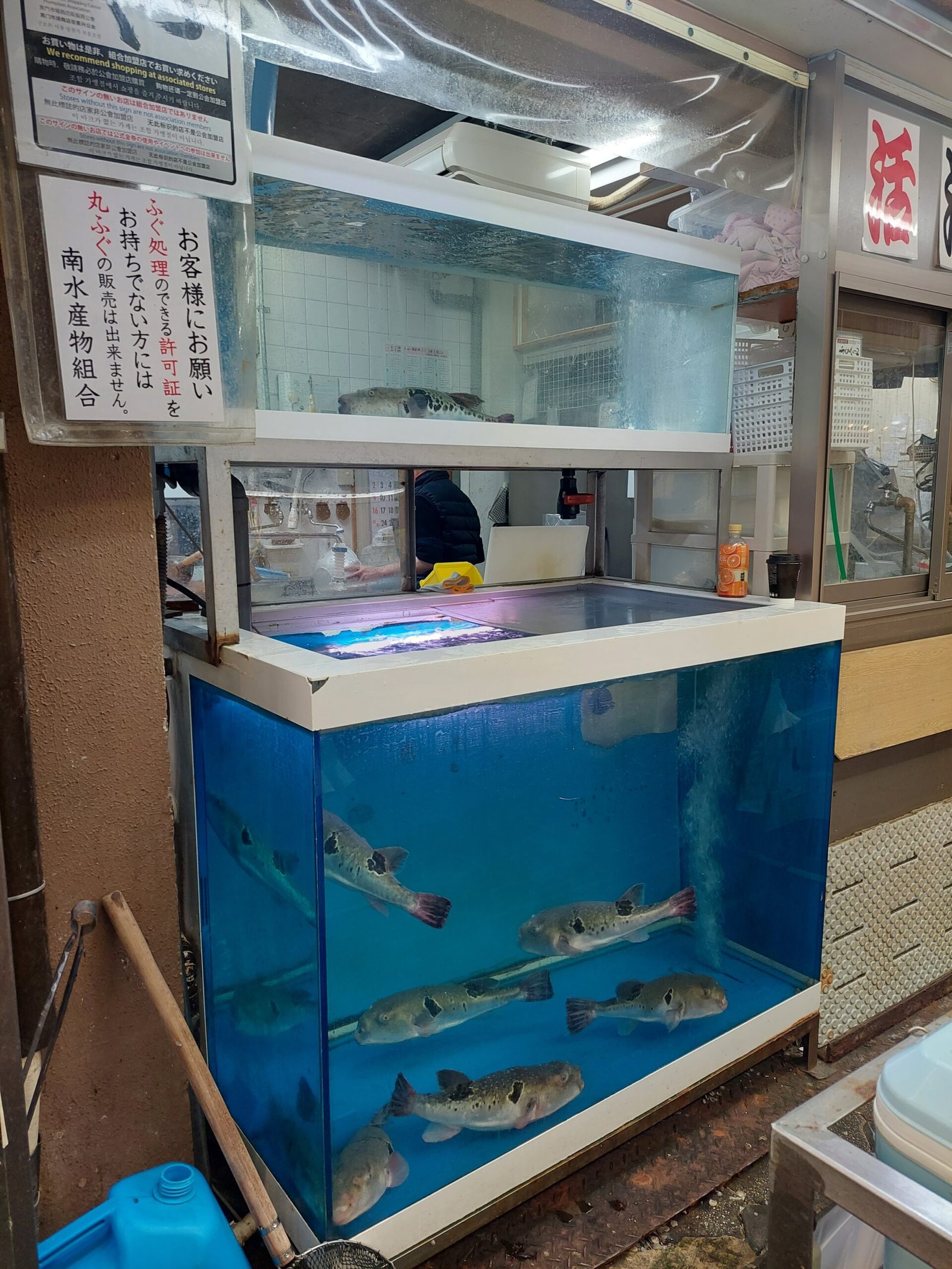
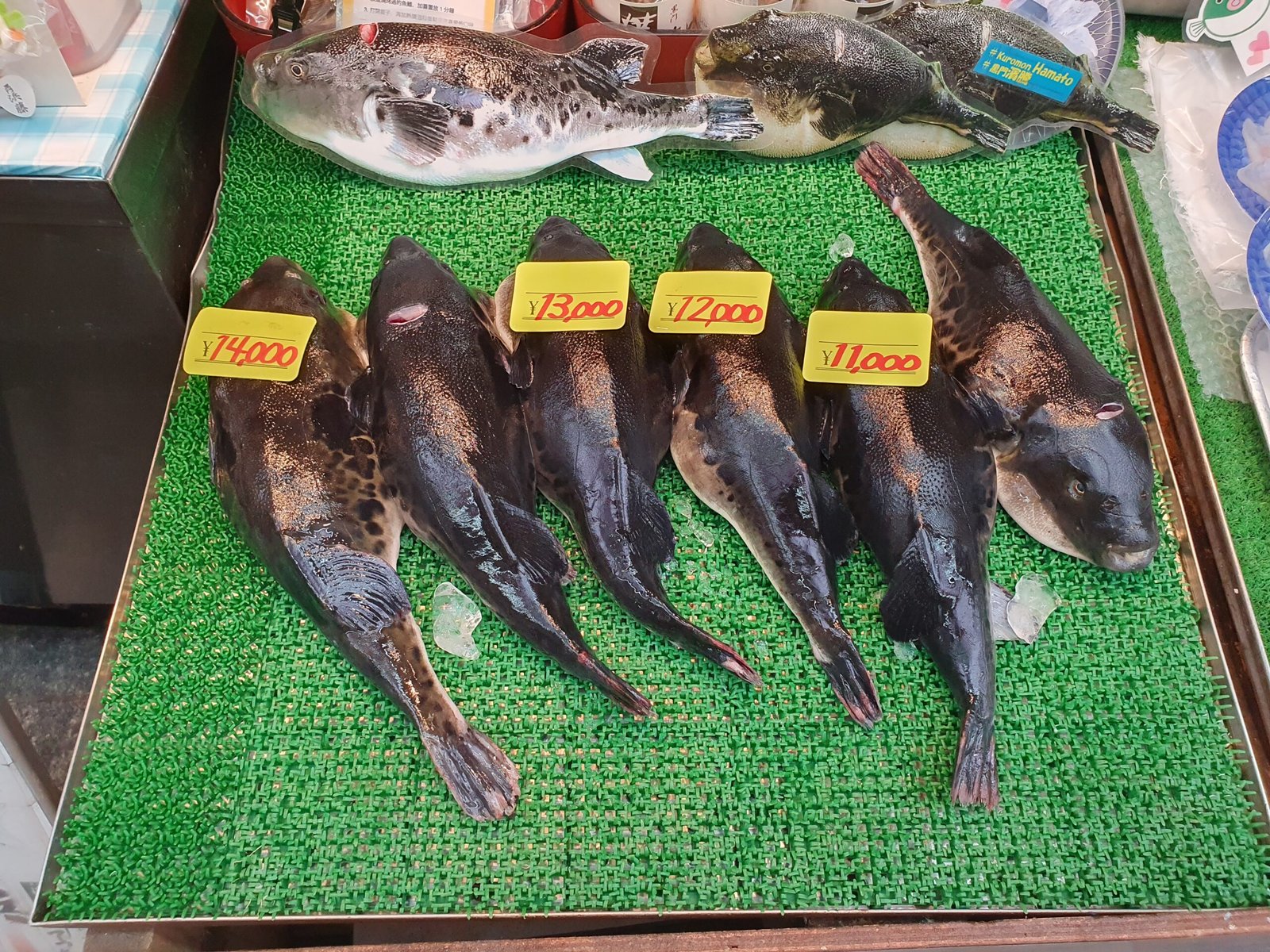
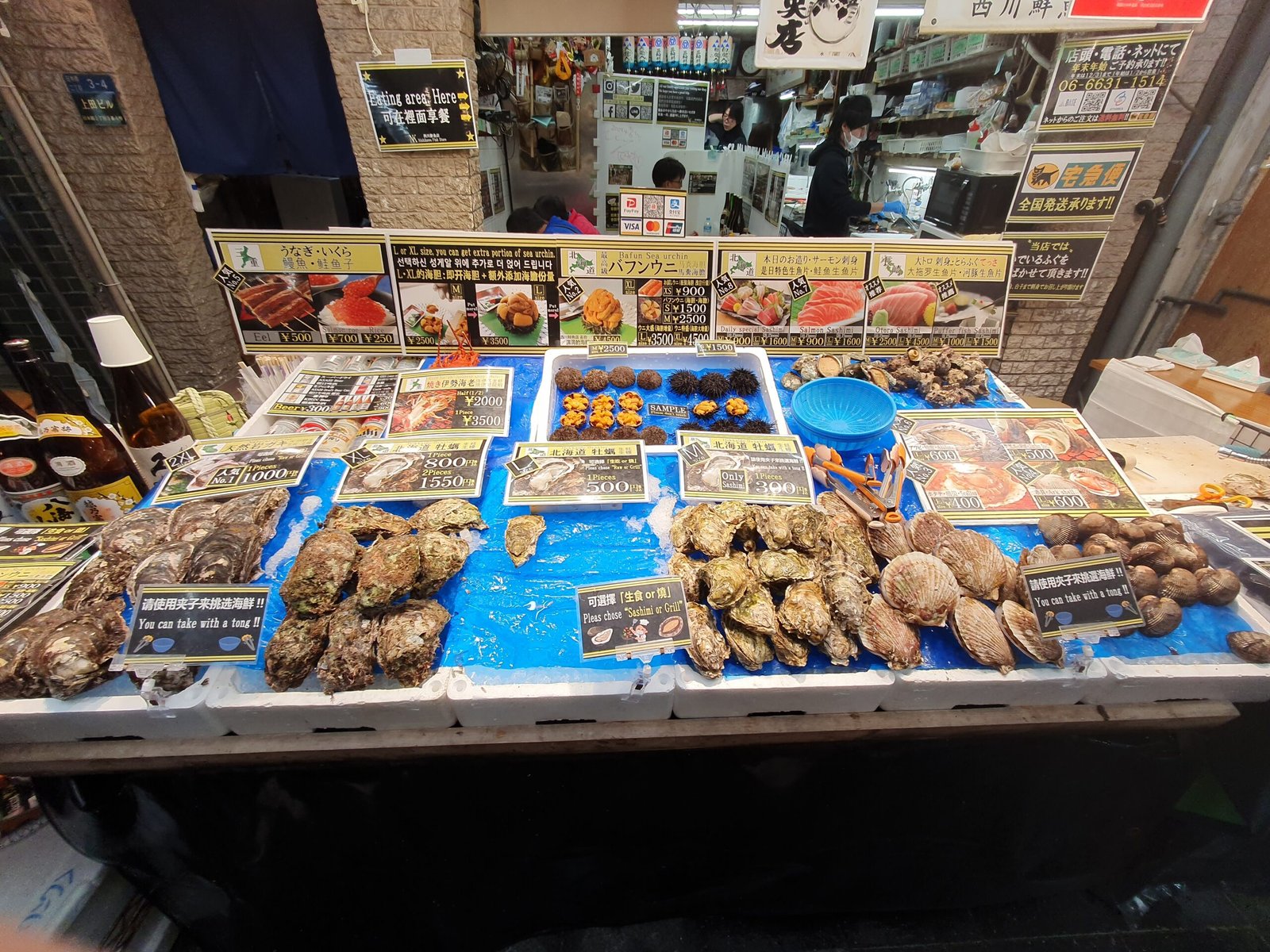
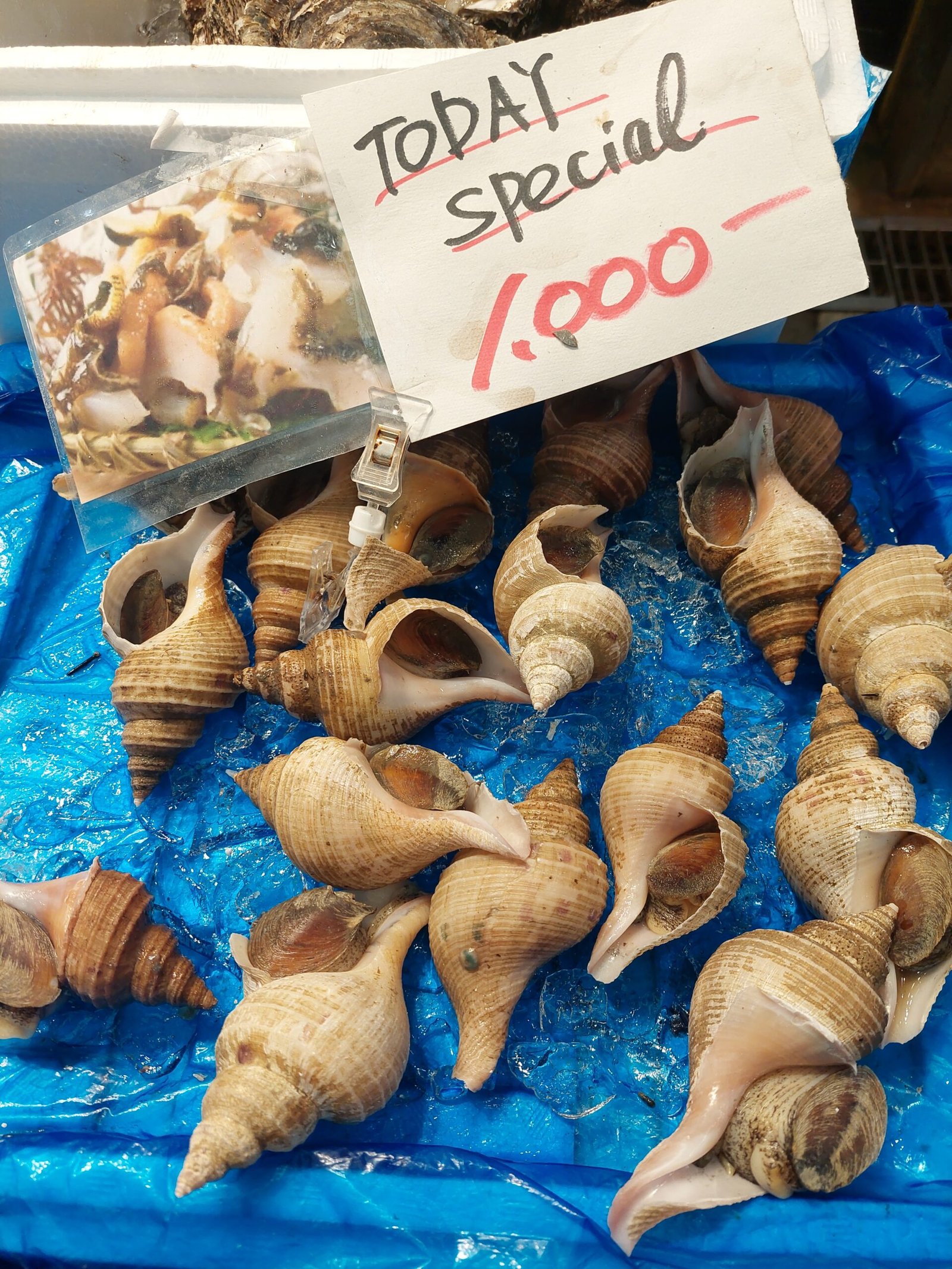
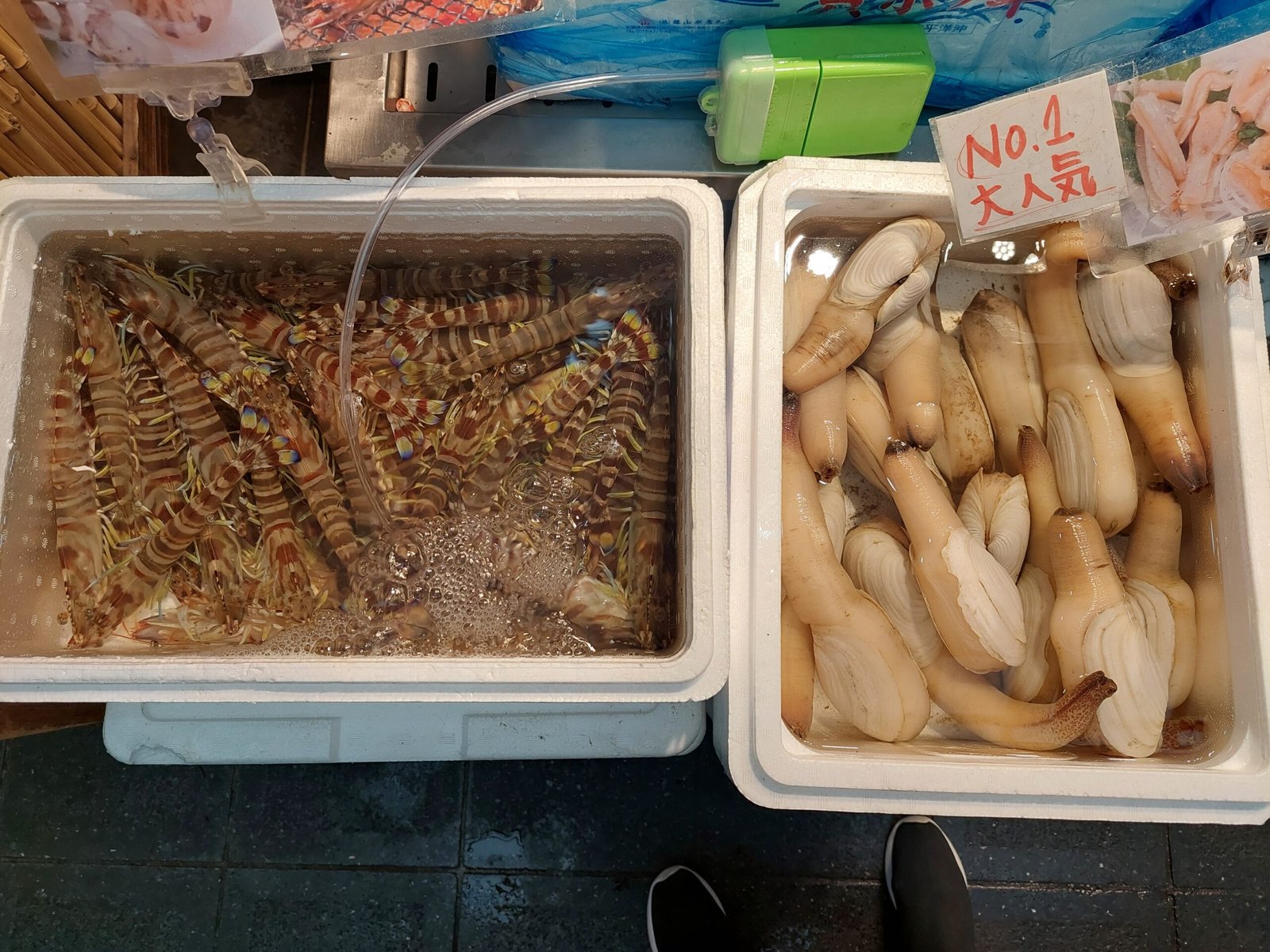
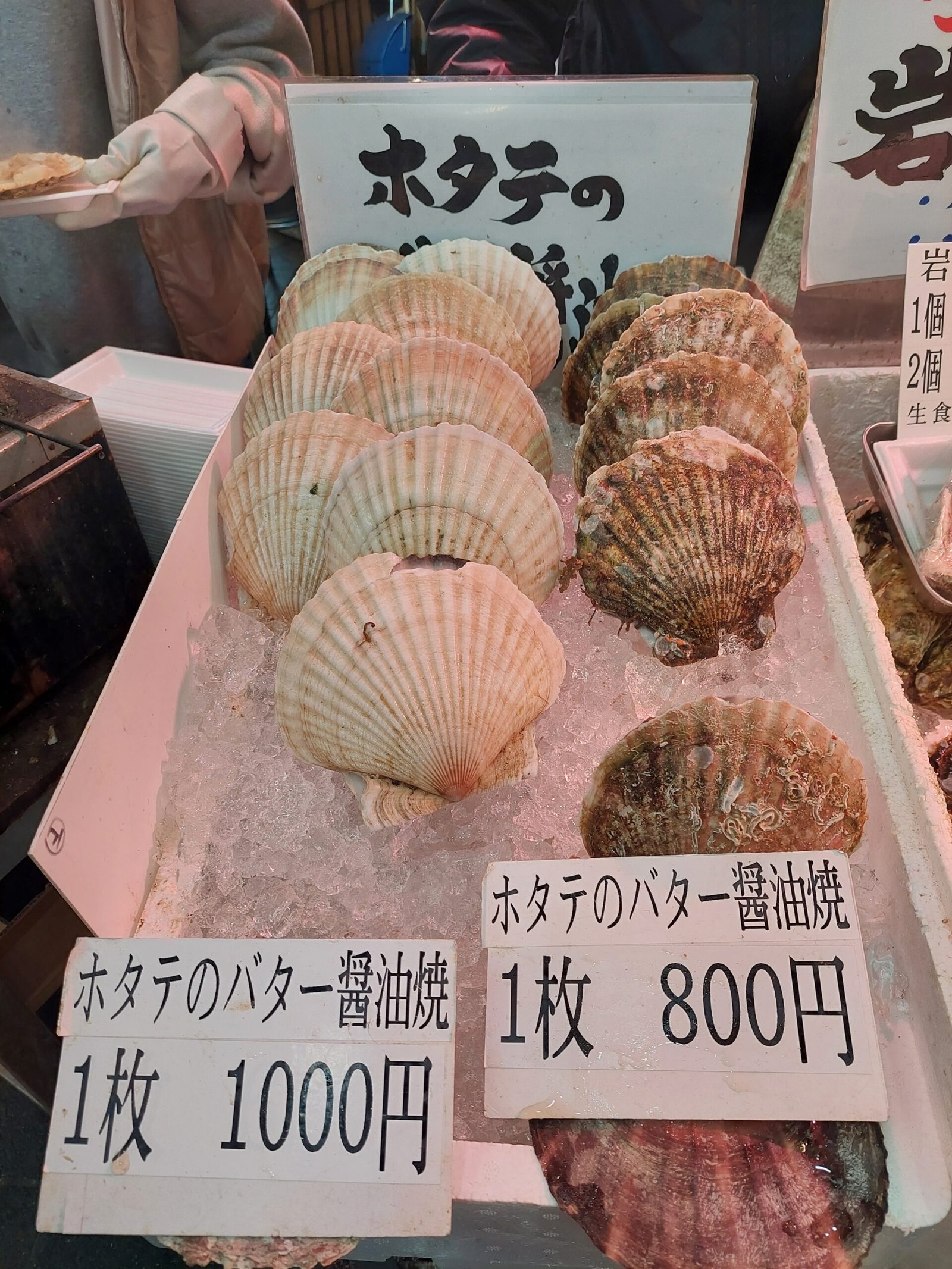
From the castle we continued on to the Ichiba Kuromon market. There you could have bought all sorts of delicacies from puffer fish to mussels and sea urchins. We didn’t dare touch the puffer fish, but decided to test what the giant clam cooked on coals might taste like. Risto said he wouldn’t put it in his mouth, but in the end we managed to slip a small piece of mussel into Risto’s mouth too. “Never again” was Risto’s verdict. Ronja on the other hand asked for even some more.
Rainy weather doesn't stop the cyclists here.
No one wears rainwear, but the bicycles have their own support for umbrellas.
Puffer fish was for sale alive...
...dead...
... and in the form of sashimi.
Several small stalls sold grilled eel.
You could choose the ingredients you wanted at the counter, and they were cooked while you waited.
Oysters and sea urchins would also have been on sale.
We didn't buy any of these 'delicacies'.
We decided to try a thousand yen mussel.
Ronja got to try her hand at frying.
Marko was the first to sacrifice himself to taste it.
"No way!"
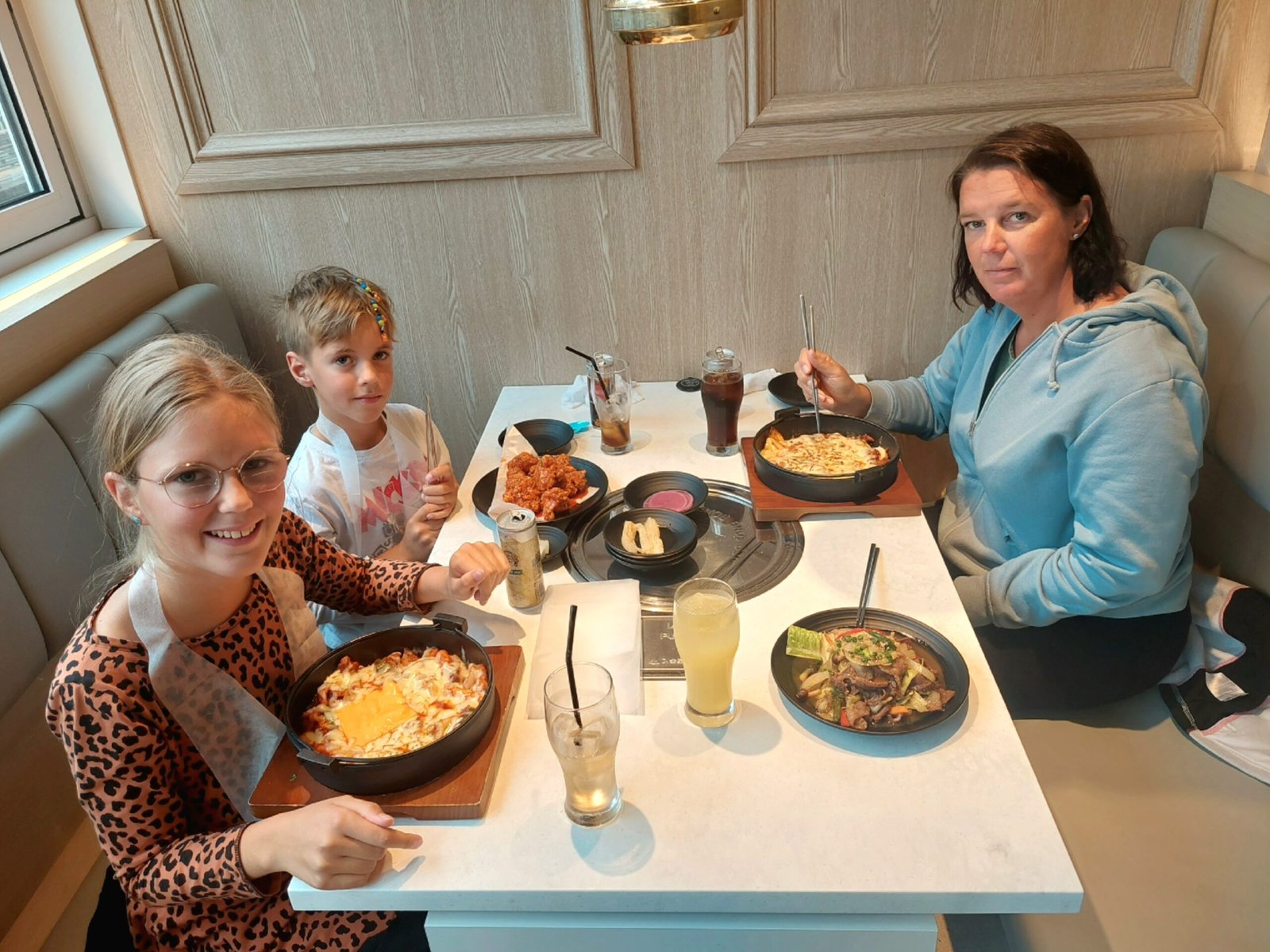
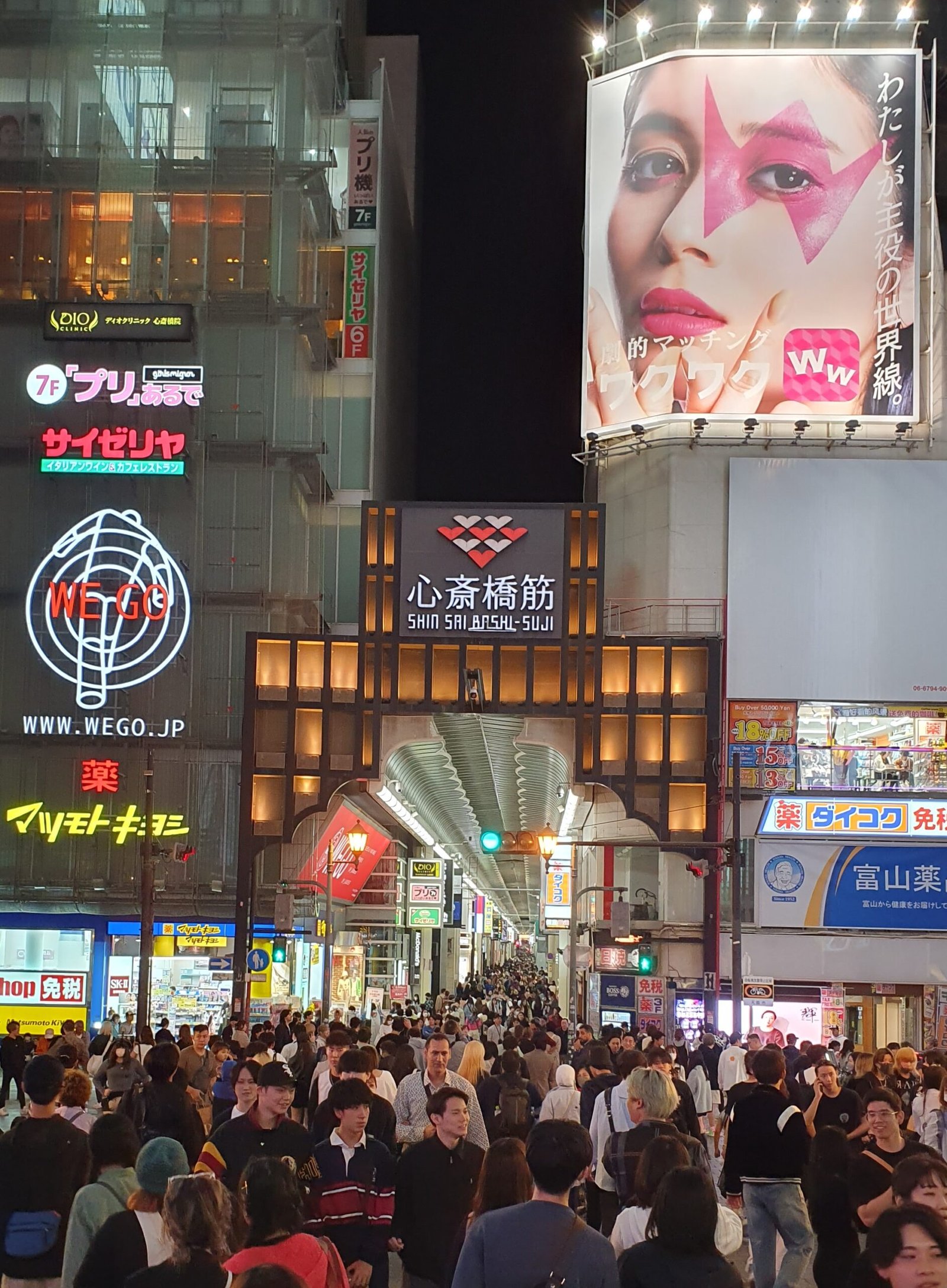
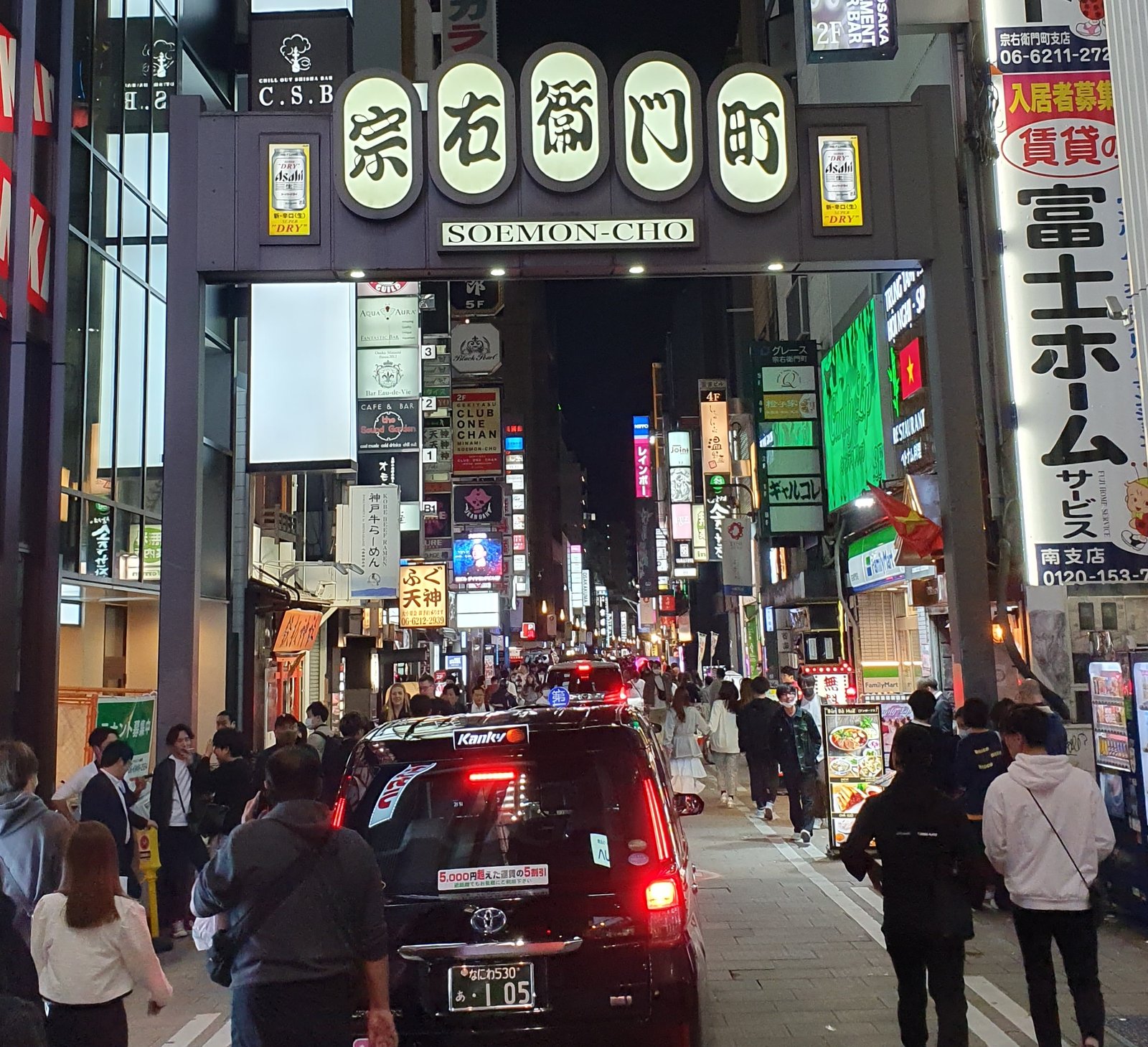
As the mussel wasn’t quite enough to fill all four of us, we went to look for a restaurant in the Dotonbori area. After a while of walking around, we ended up at a Korean restaurant. The place had menus in English, so we thought ordering would be a bit easier. As we didn’t know much about Korean food, ordering was still a bit of a puzzle. We ordered four portions, which were passed around from one diner to the next. Jaana’s dish was super spicy, so Marko got to eat most of it. Marko gave his own dish to Ronja, because she didn’t really like what she had ordered. It wasn’t quite clear whether there were pieces of meat, chicken or perhaps some seafood lurking under the cheese. Jaana took Ronja’s dish, and poor Risto bravely nibbled at his own chicken dish, which turned out to be quite spicy too. Not quite Kuala Lumpur’s “fire chicken”, but spicy enough that Risto settled for just rice after eating one piece of chicken. I don’t think Korean food will become our favourite. We returned home for the evening, and sorted out some of our plans for the rest of the trip. Meanwhile, the kids were busy finishing up their schoolwork.
At the restaurant, everyone got their own small "aprons" so that their clothes wouldn't get dirty while eating.
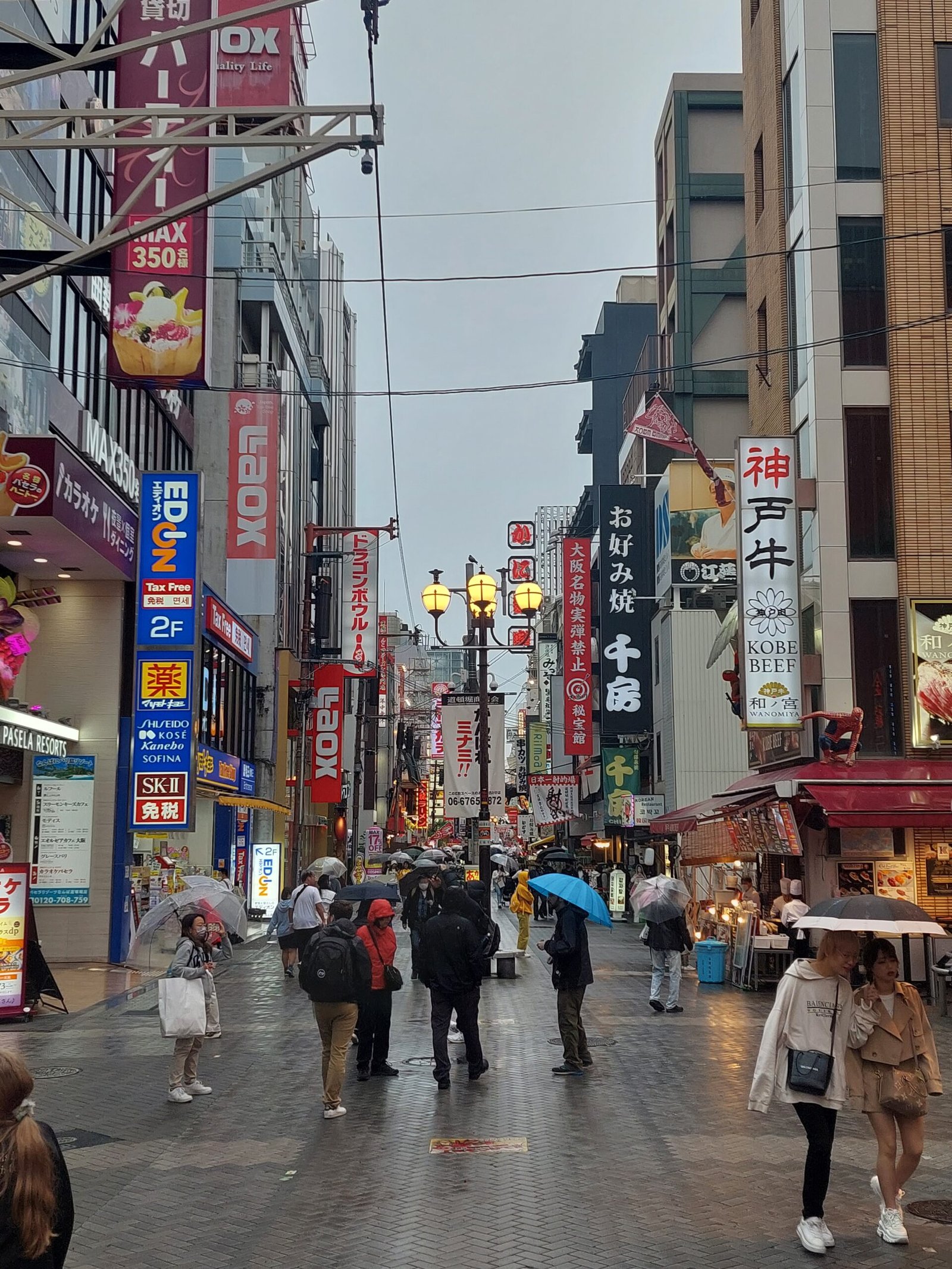
Dotonbori had restaurants to choose from!
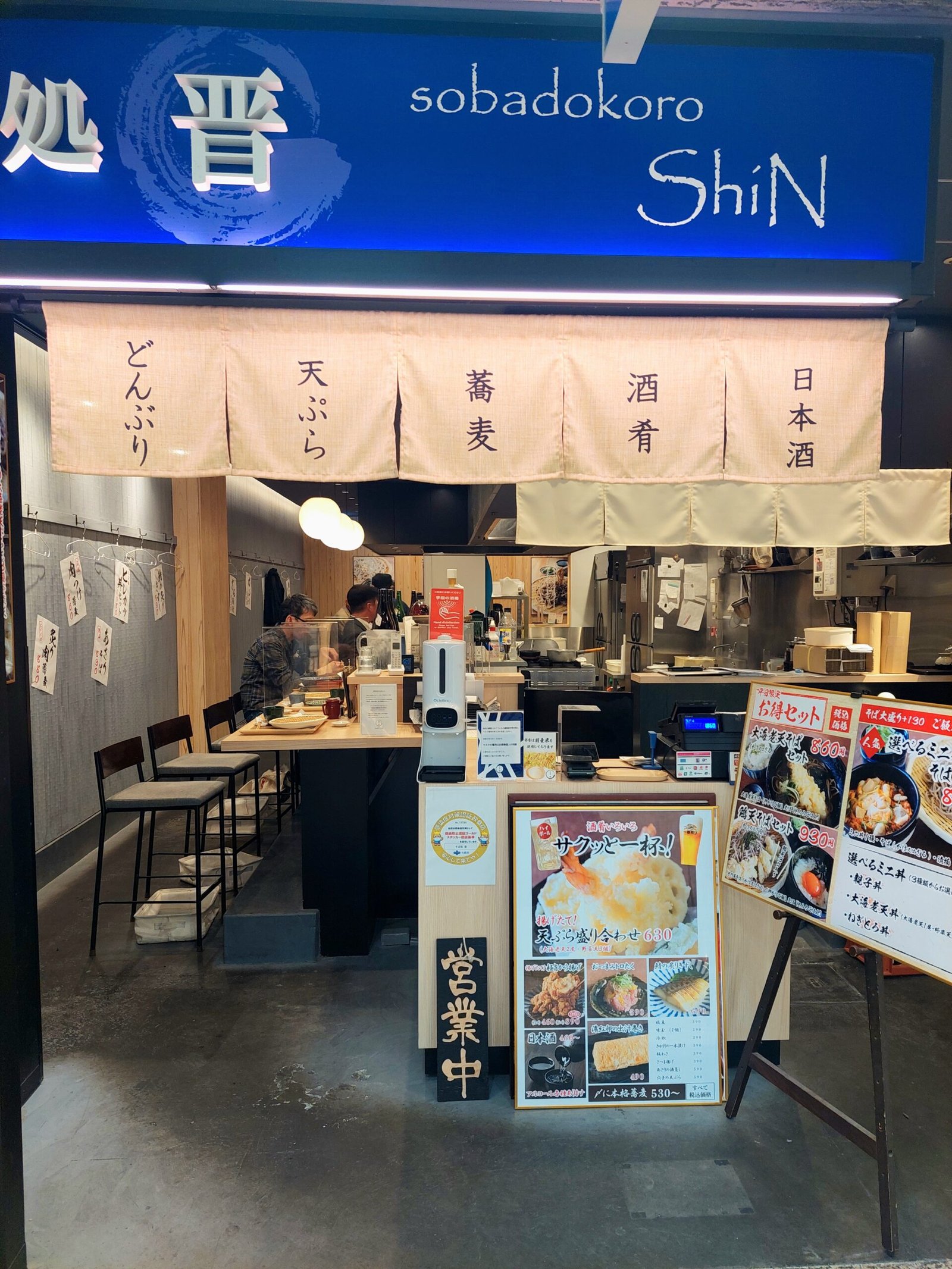
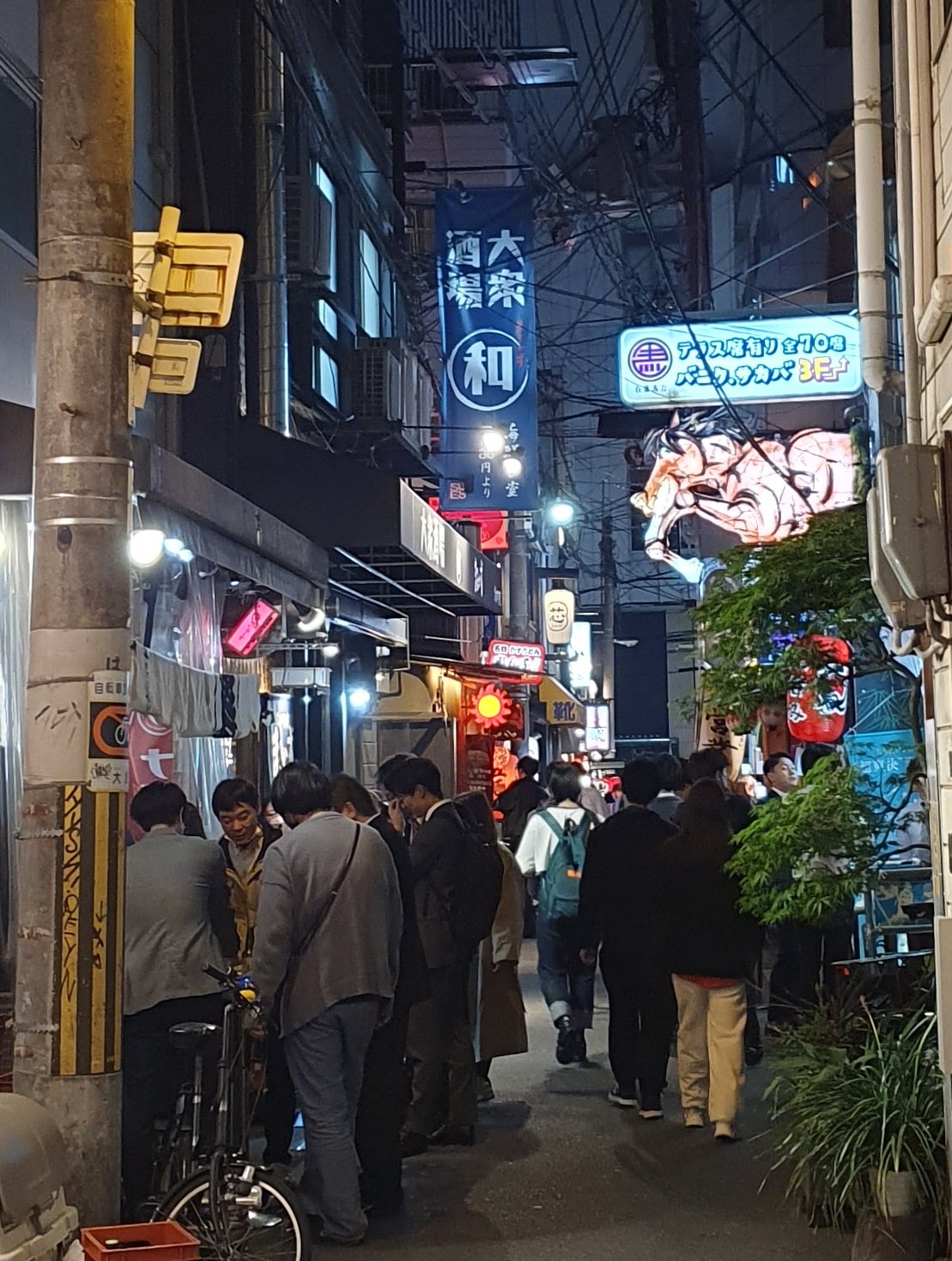
Many of the restaurants were very small.
The small restaurants often had their menus only in Japanese.
The hustle and bustle of Dotonbori on a Friday night
On Wednesday, it was still raining in the morning, so we started the day with a late breakfast and some schoolwork. The children have almost finished their schoolwork for the spring term. Risto has only extra exercises to do, and Ronja has just a few chapters of math and other subjects left.
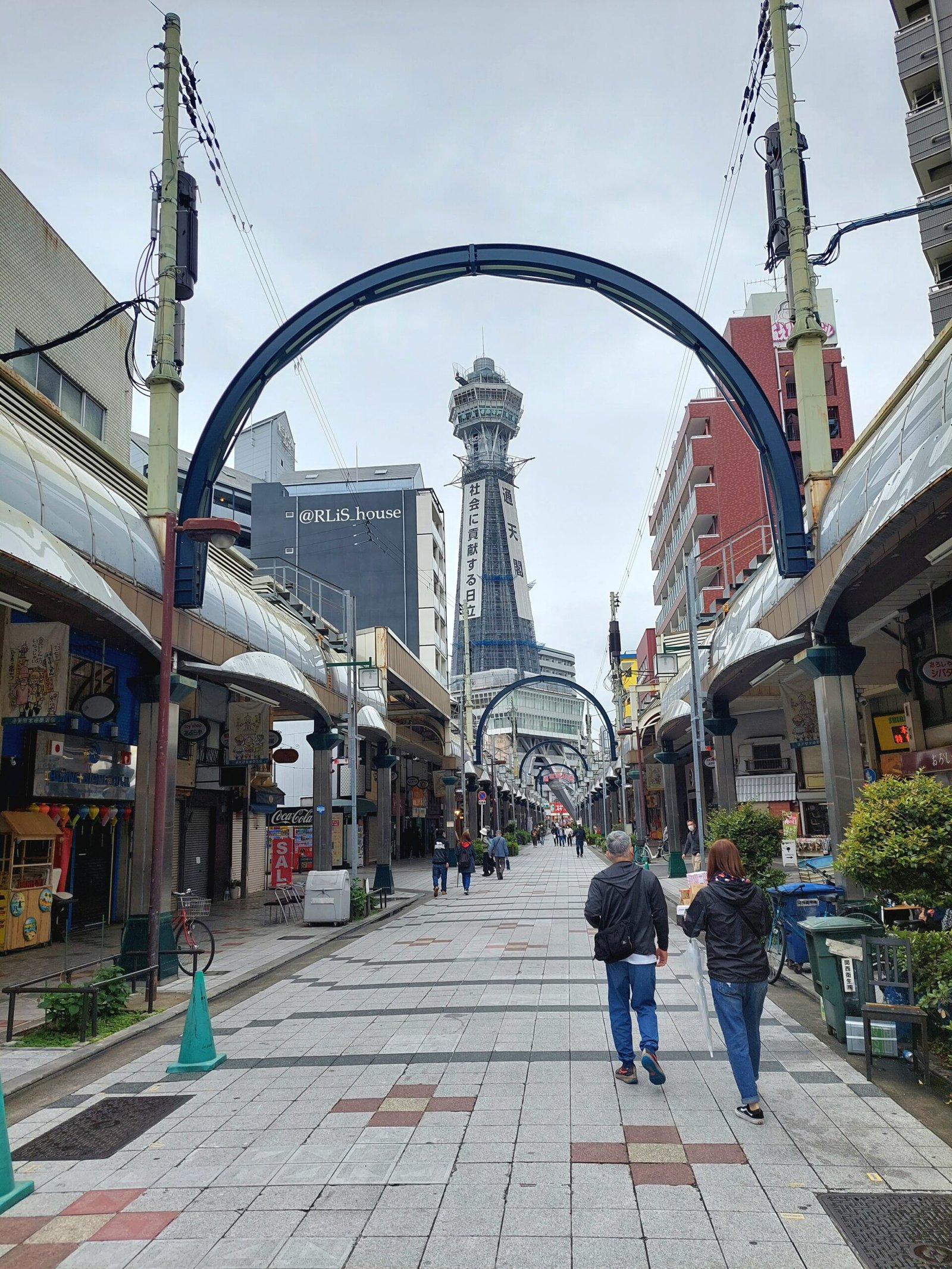
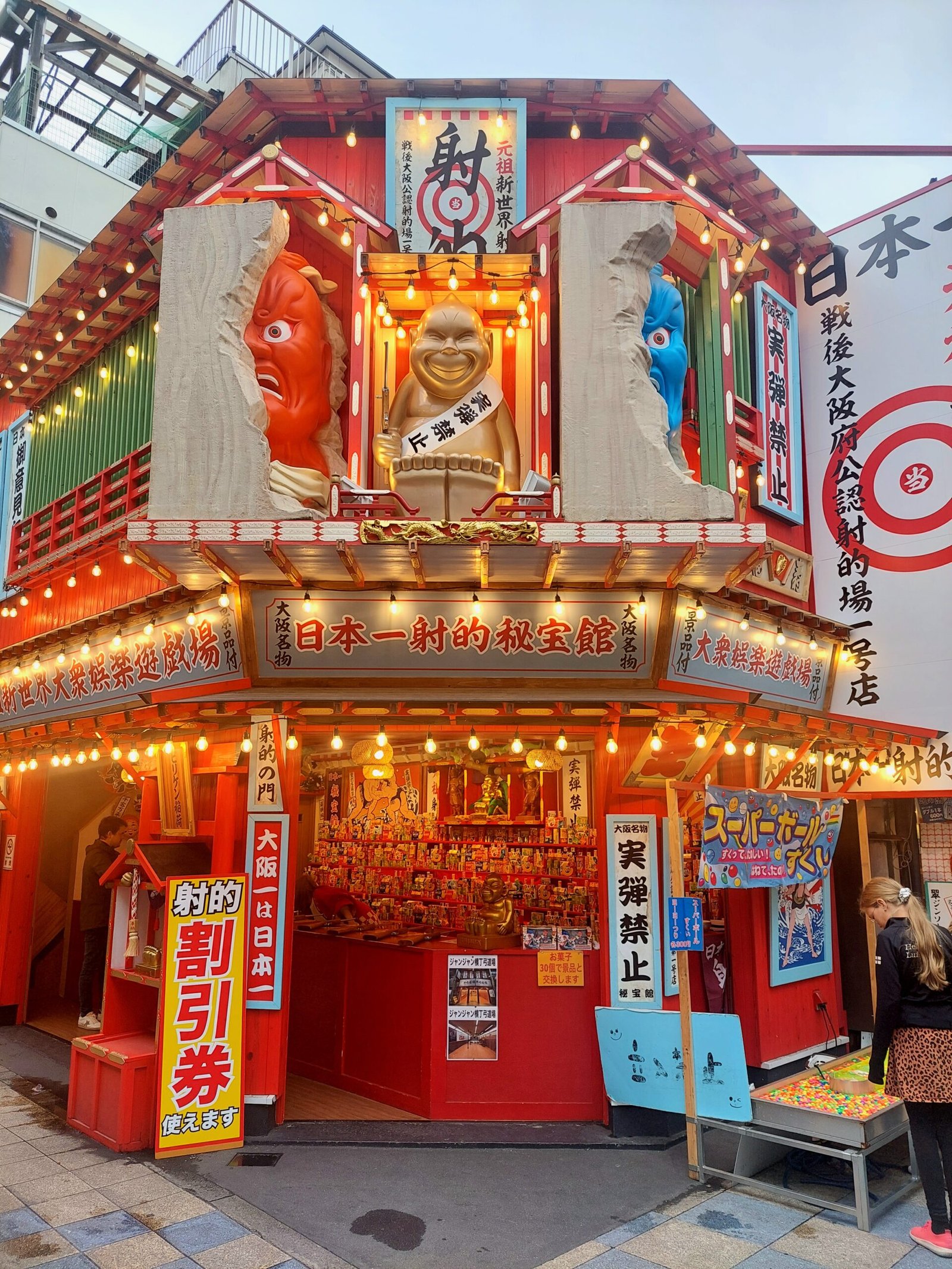
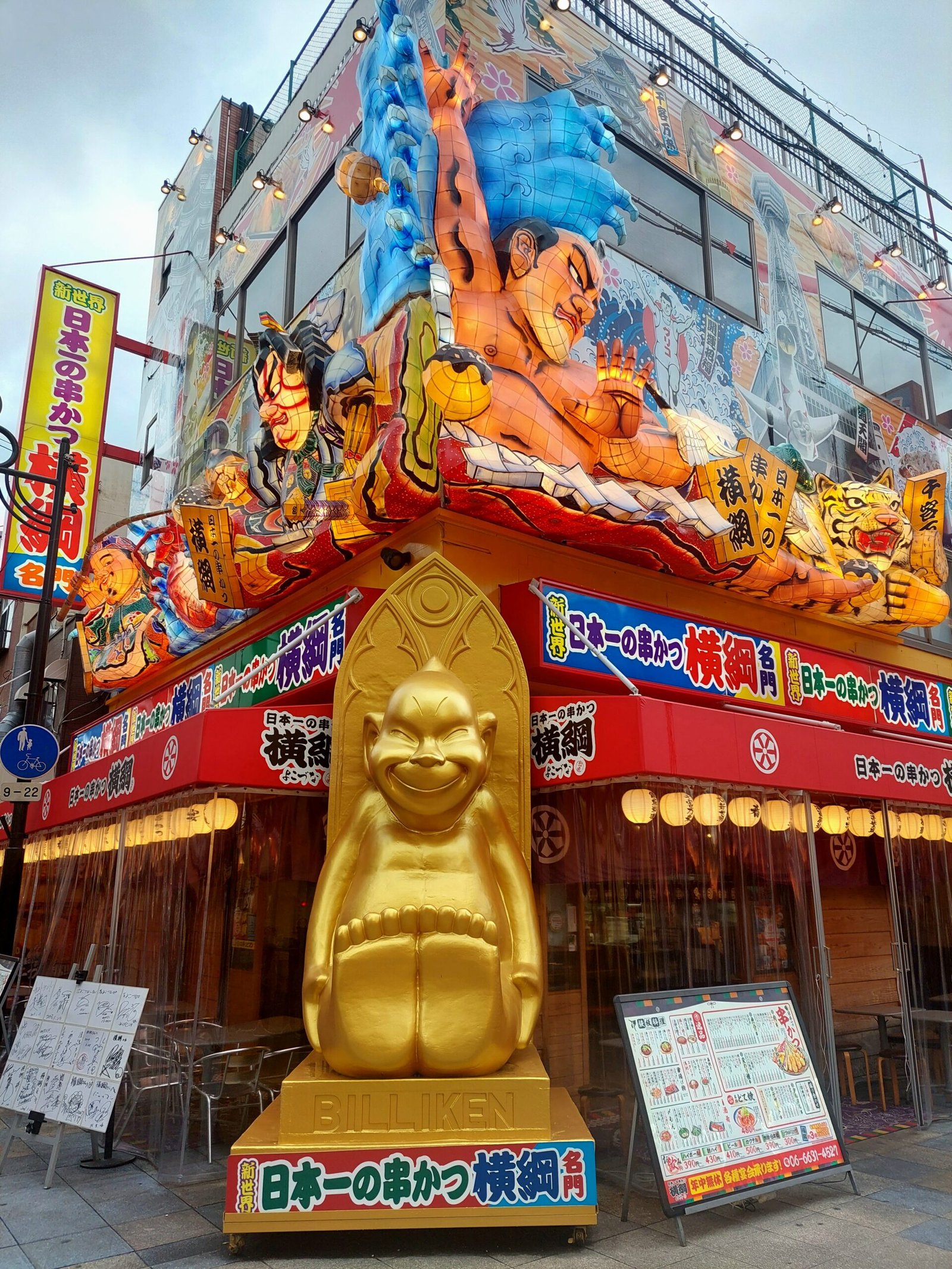
In the afternoon we took a metro to an area called Shinsekai. We should have gone there after the sunset, but since we live on a western schedule, 4 o’clock was already a dinner time for us. There were numerous restaurants in the area with really wild-looking facades. We weren’t the only ones, who were busy photographing them. Eventually we ended up in a small restaurant to have the speciality of the area, kushikatsu.
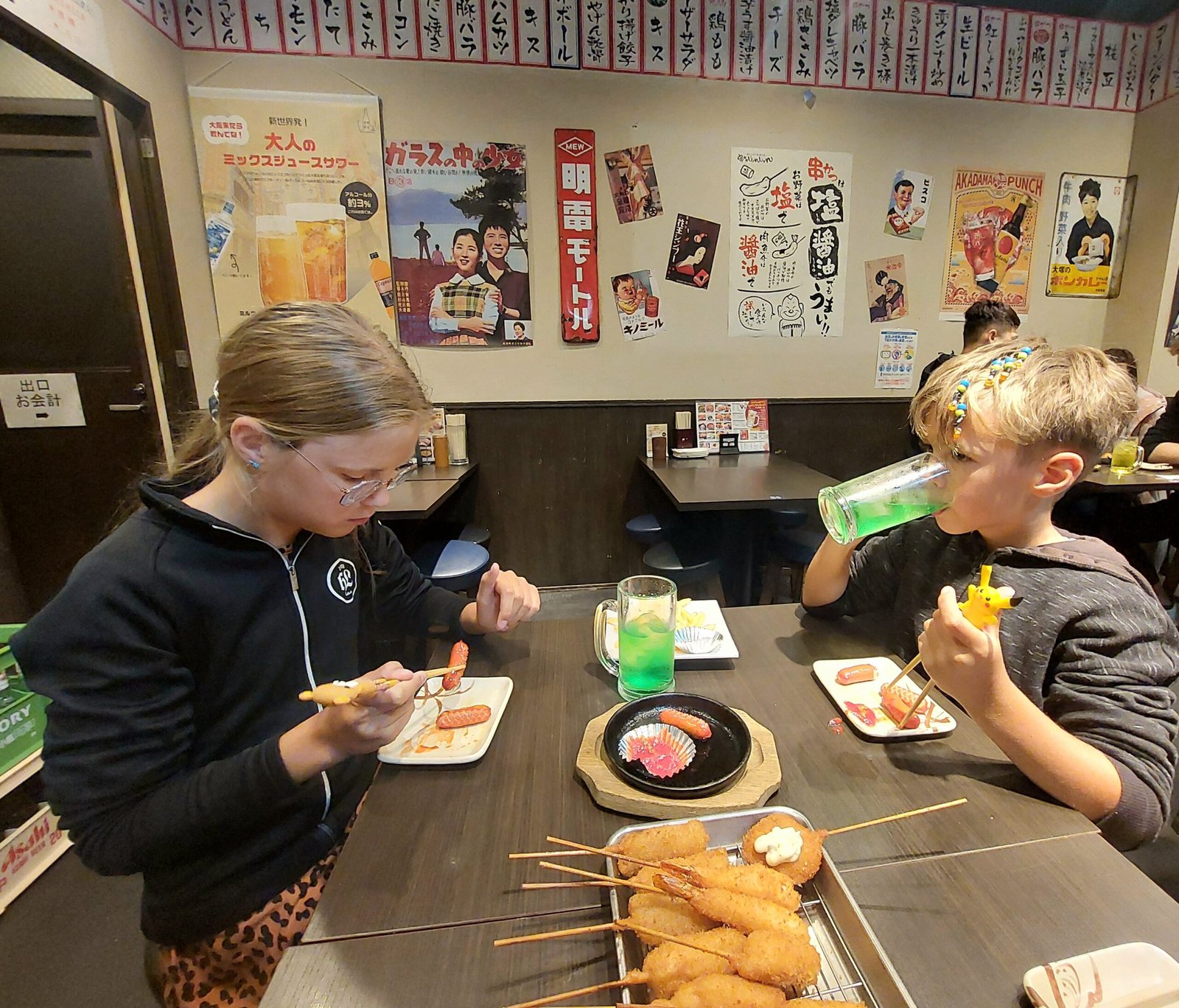
Kushikatsu is basically a variety of skewers battered and deep fried. This time we took the safe route and only ordered dishes that we were sure to recognise. So we had beef, chicken, salmon and prawns on our skewers. The kids also ordered grilled sausages for themselves. Before we could even order the food the waiter brought us some kind of pickled vegetables. They came with a note saying that this restaurant serves all customers tukidasi and they charge 300 yen whether we eat it or not. In addition, all customers were required to order at least one drink with their meal. Quite an unusual system.
Children's chopsticks bought in Singapore make it much easier for children to eat.
Shinsekai only comes alive after dark.
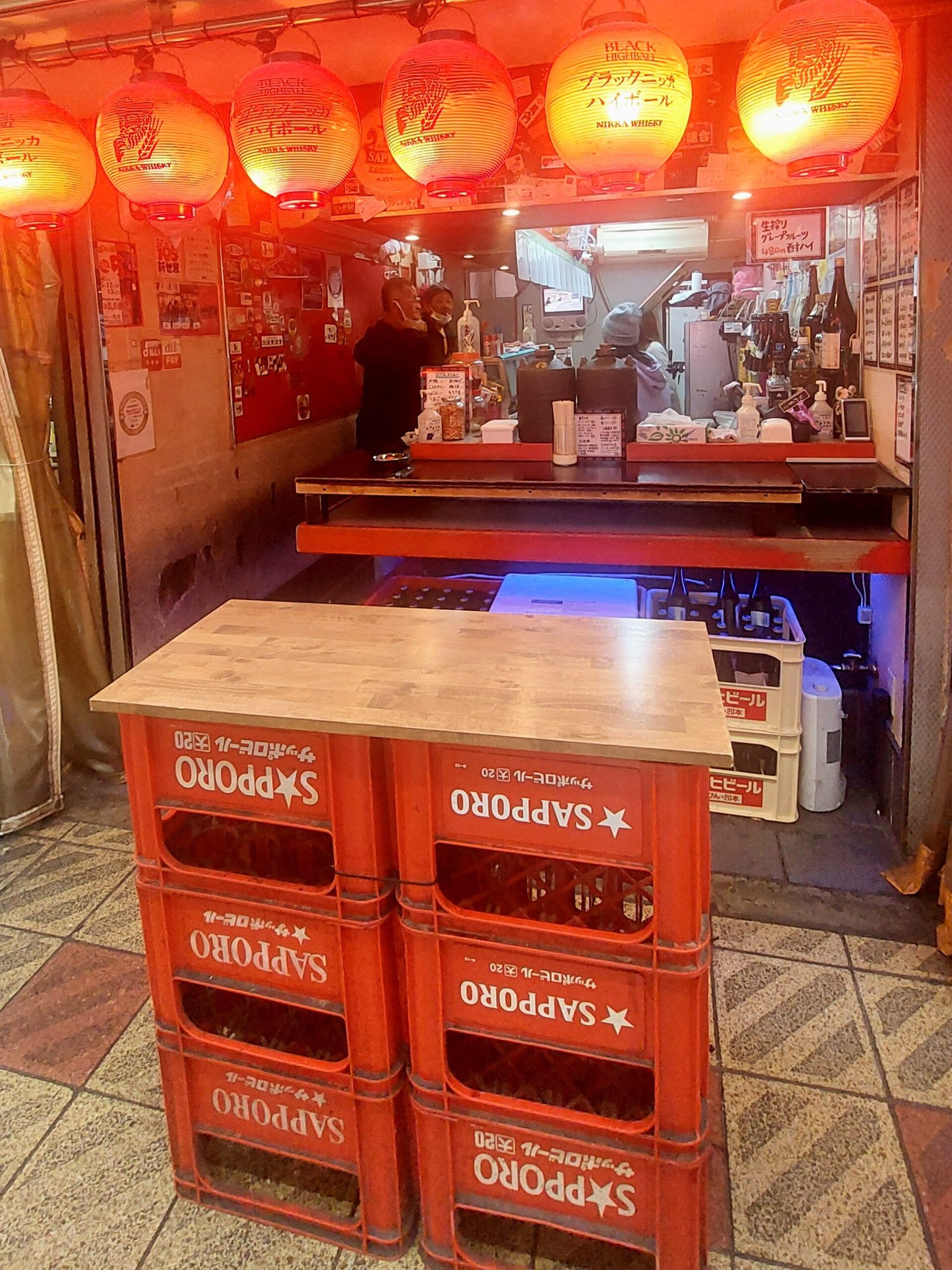
There were lots of small restaurants in this area too.
The mahjong game room in the area was popular with the older crowd.
After dinner we walked around for a while in Shinsekai area and then we took the metro back home. The kids had asked for an “indoor day”, so that’s what they got, except for this couple of hours in Shinsekai.
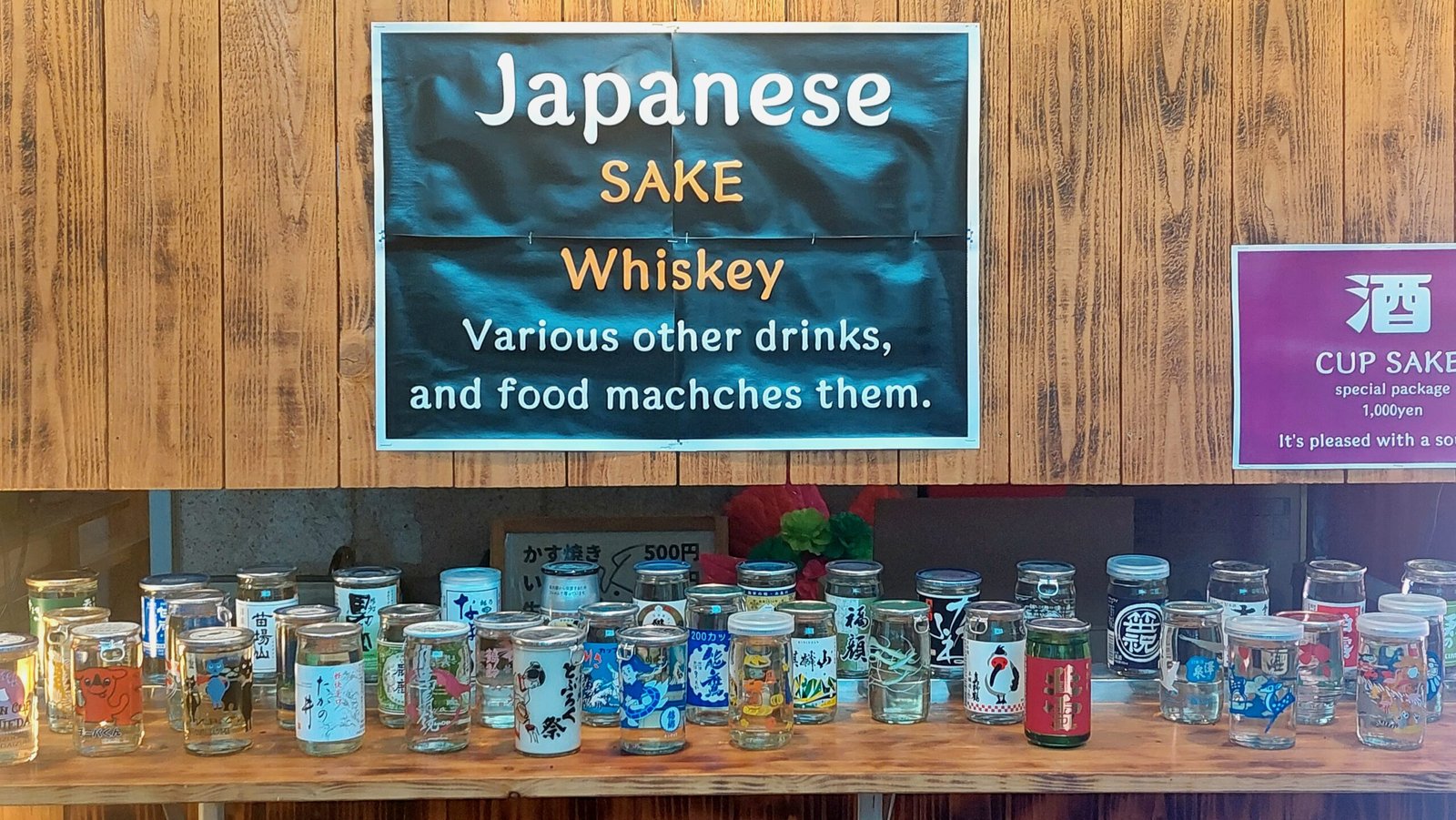
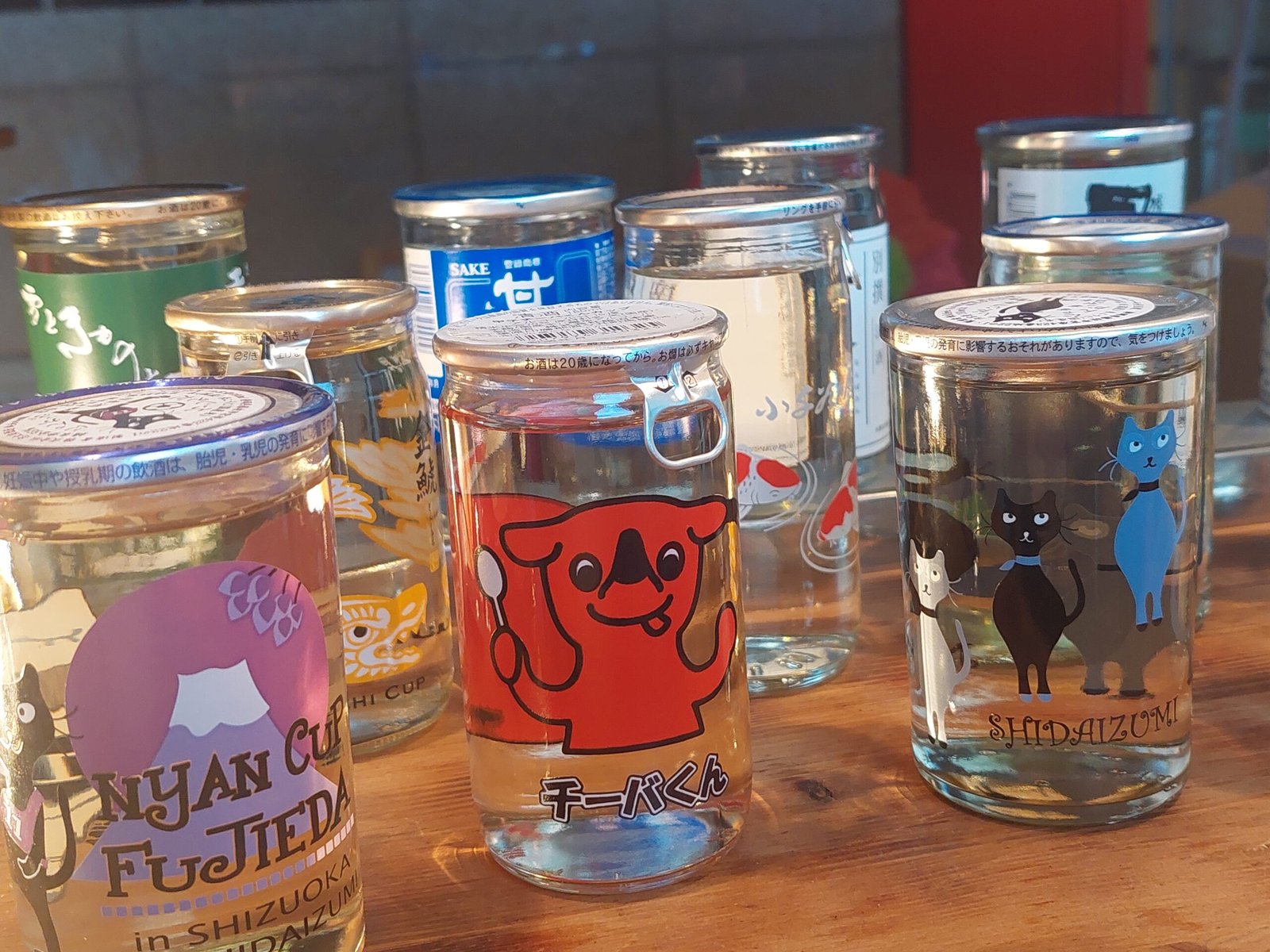
Sake tasting
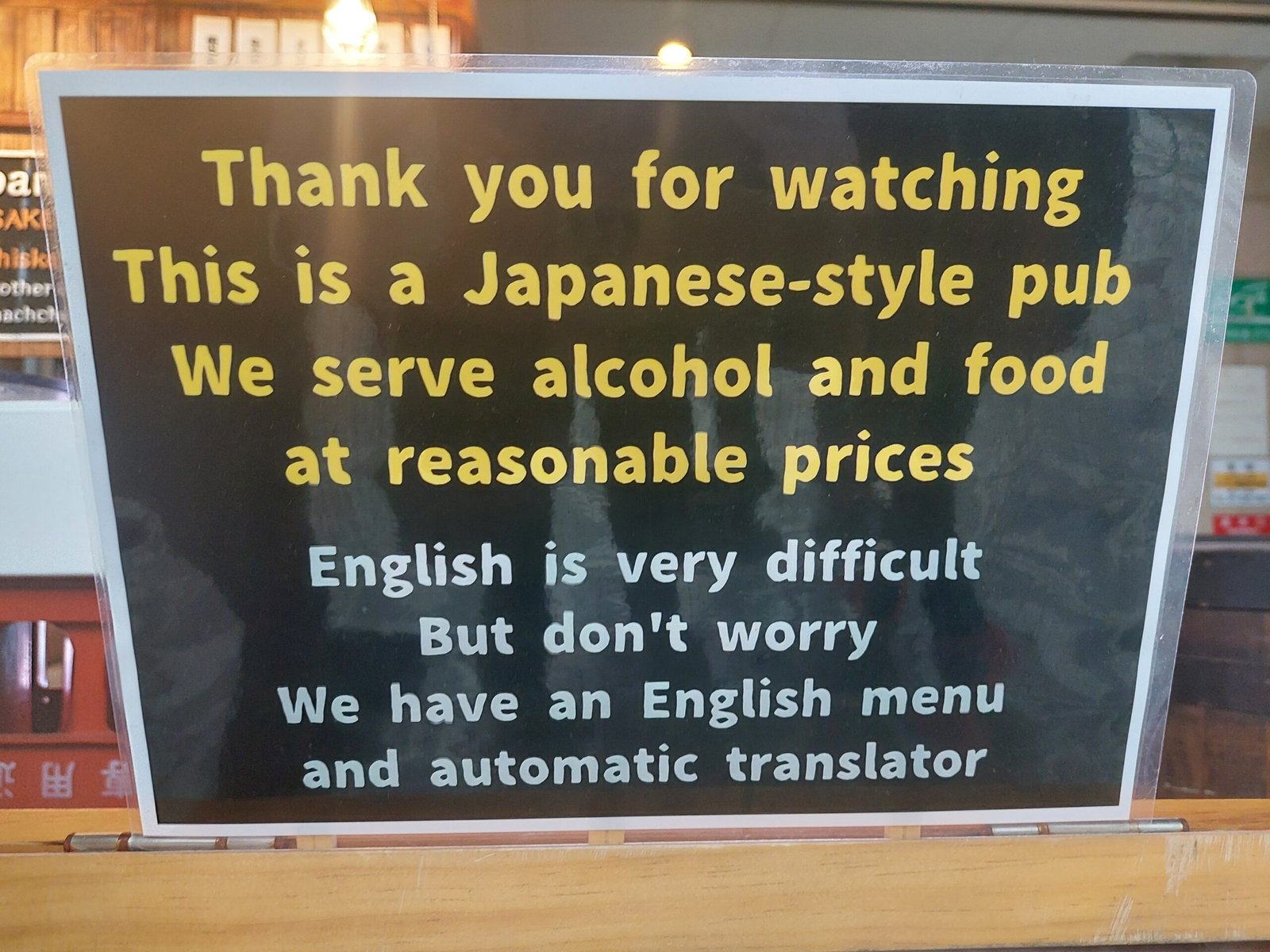
It has also become clear that English is difficult for the locals.
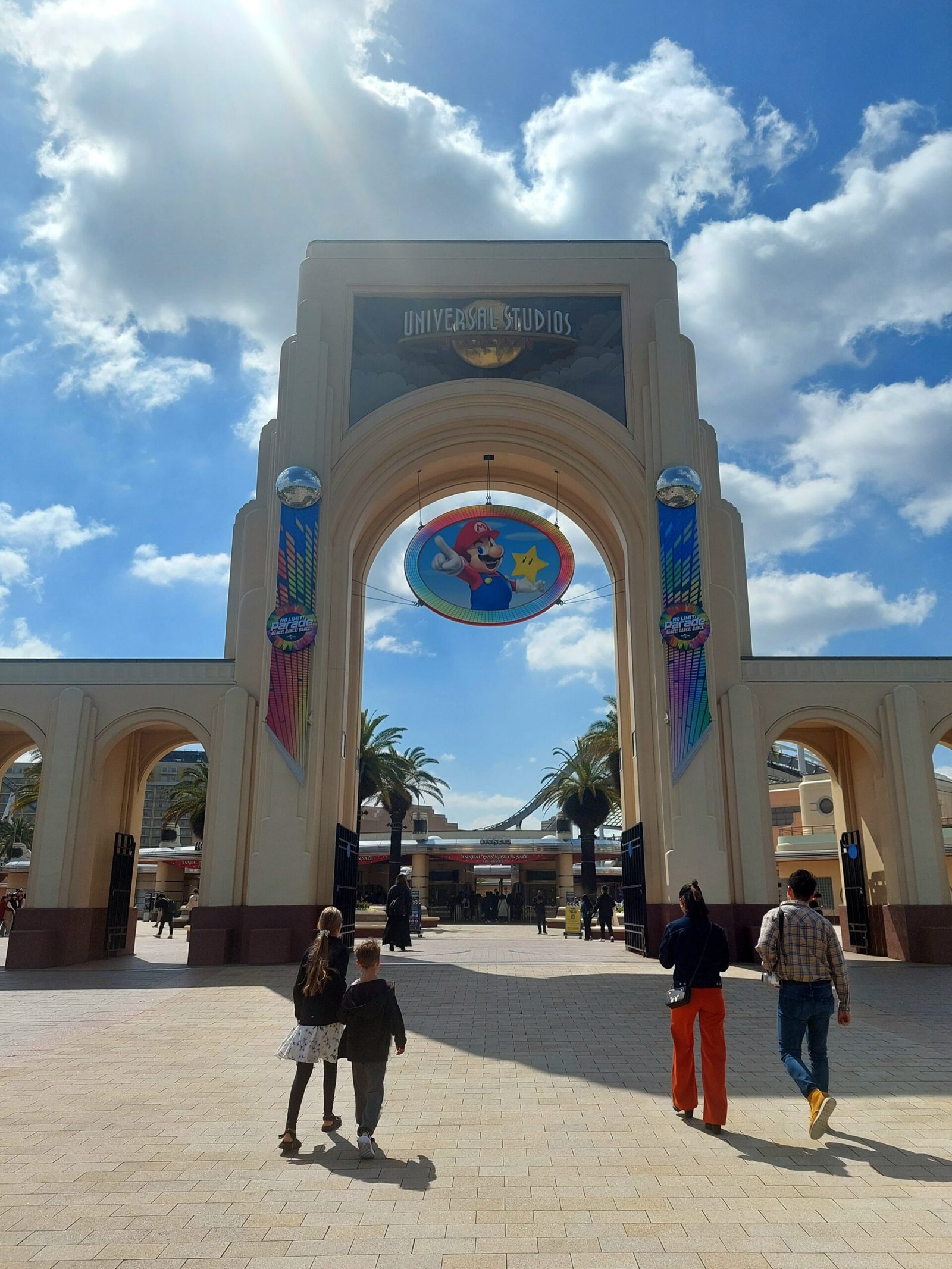
On Thursday we took a taxi to Universal Studios in Osaka first thing in the morning. It would have been very tricky to get to the studios using the public transport from our flat, so that’s why we took a taxi. We got to the park around 10am, one hour after the opening. Even then, there were lots of people around. We decided to go to Super Nintendo World first to see what this new area of the park was like. When we tried to enter, we were told that the place was already full and that we would have to get a timed entry ticket online. We downloaded the app, and the first free slot was at 2:20pm!
At this stage, it still seemed that the park would not be crowded. We were wrong.
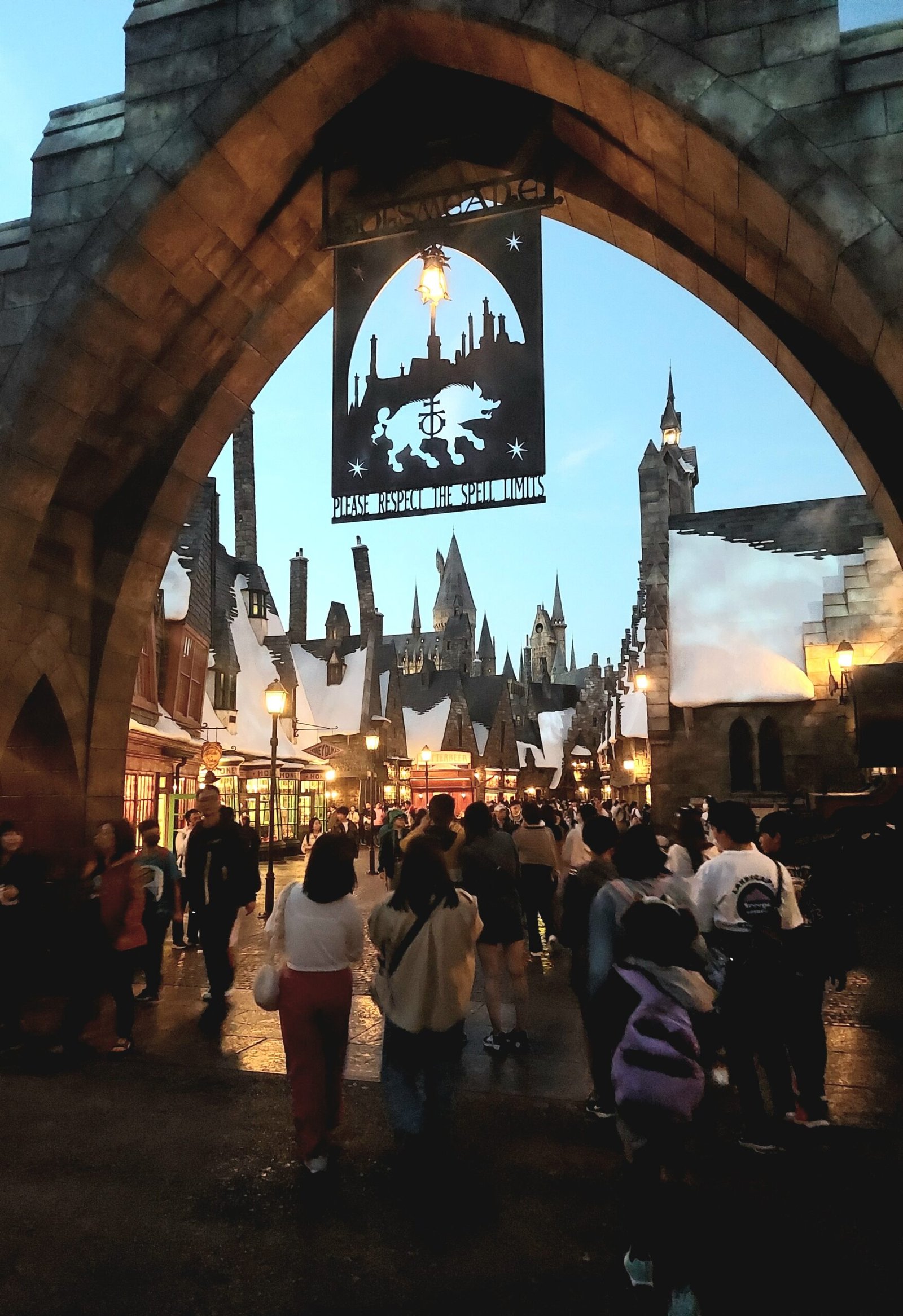
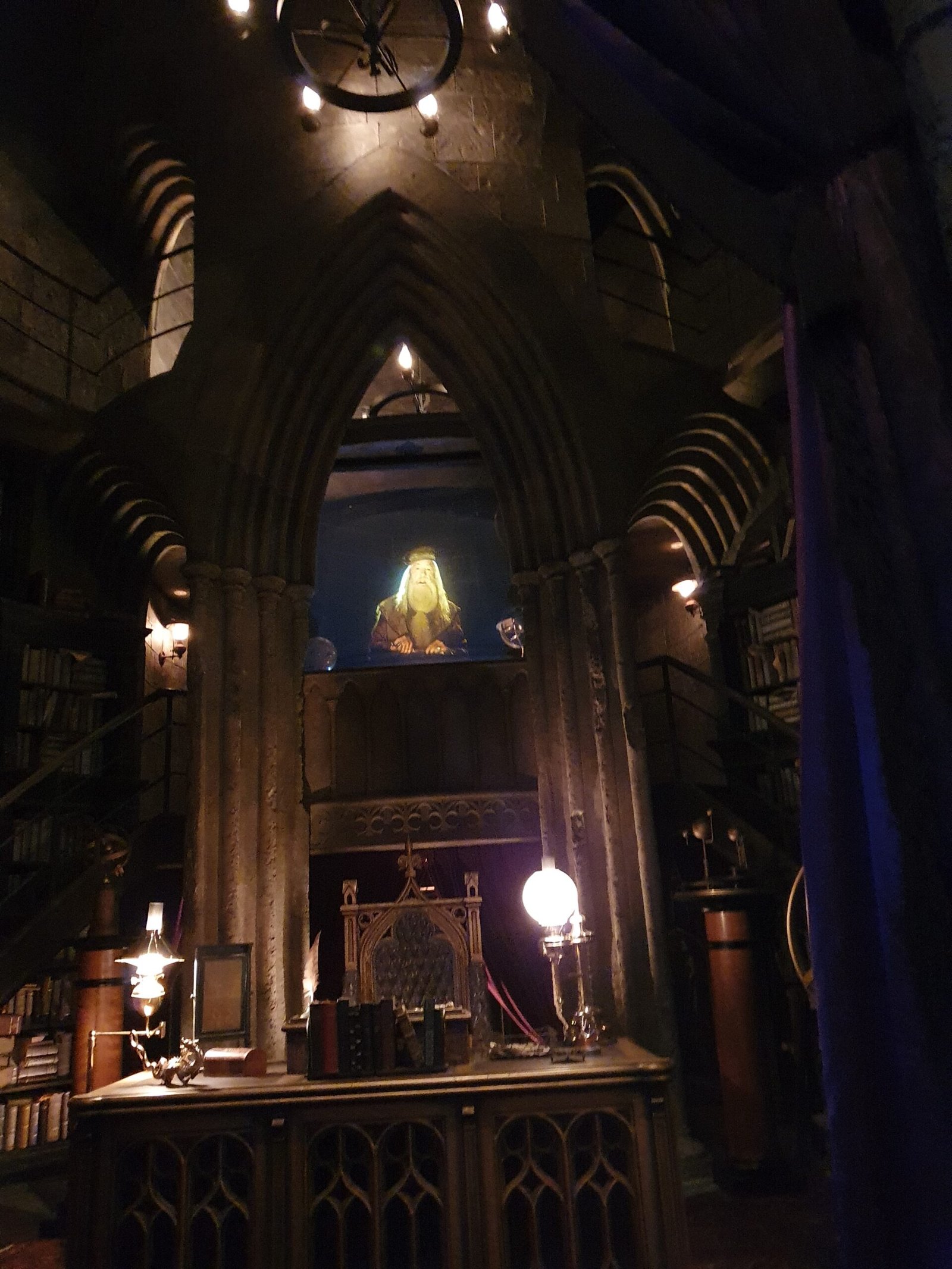
We went to Hogwarts to test a couple of different roller coasters. The first one, The Flight of the Hippogriff, was a quite easy ride near Hagrid’s hut. The second roller coaster took us inside Hogwarts. Before hopping on, we wandered through the corridors of Hogwarts, and saw the mirror of Erised, the Fat Lady, and Dumbledore among other things. We also spotted the sorting hat, but we didn’t quite get which house we belonged to, since it spoke only Japanese. We jumped on board from the Great Hall, with candles shining from the ceiling. What a ride that was! It was a roller coaster, 3D technology and IMAX theatre all combined. And along the way there were a number of special effects, from dragons to Dementores. On the first ride, Risto was so scared that he had his eyes squeezed tightly shut from the very beginning when we encountered a dragon while we were flying on a broom. He opened his eyes again when the ride was over. Risto was devastated and he wanted immediately to go and try the ride again. Since for some reason the queue was only 20min long, we all went there again. This time Risto kept his eyes open.
Many others wanted to go to Hogwarts.
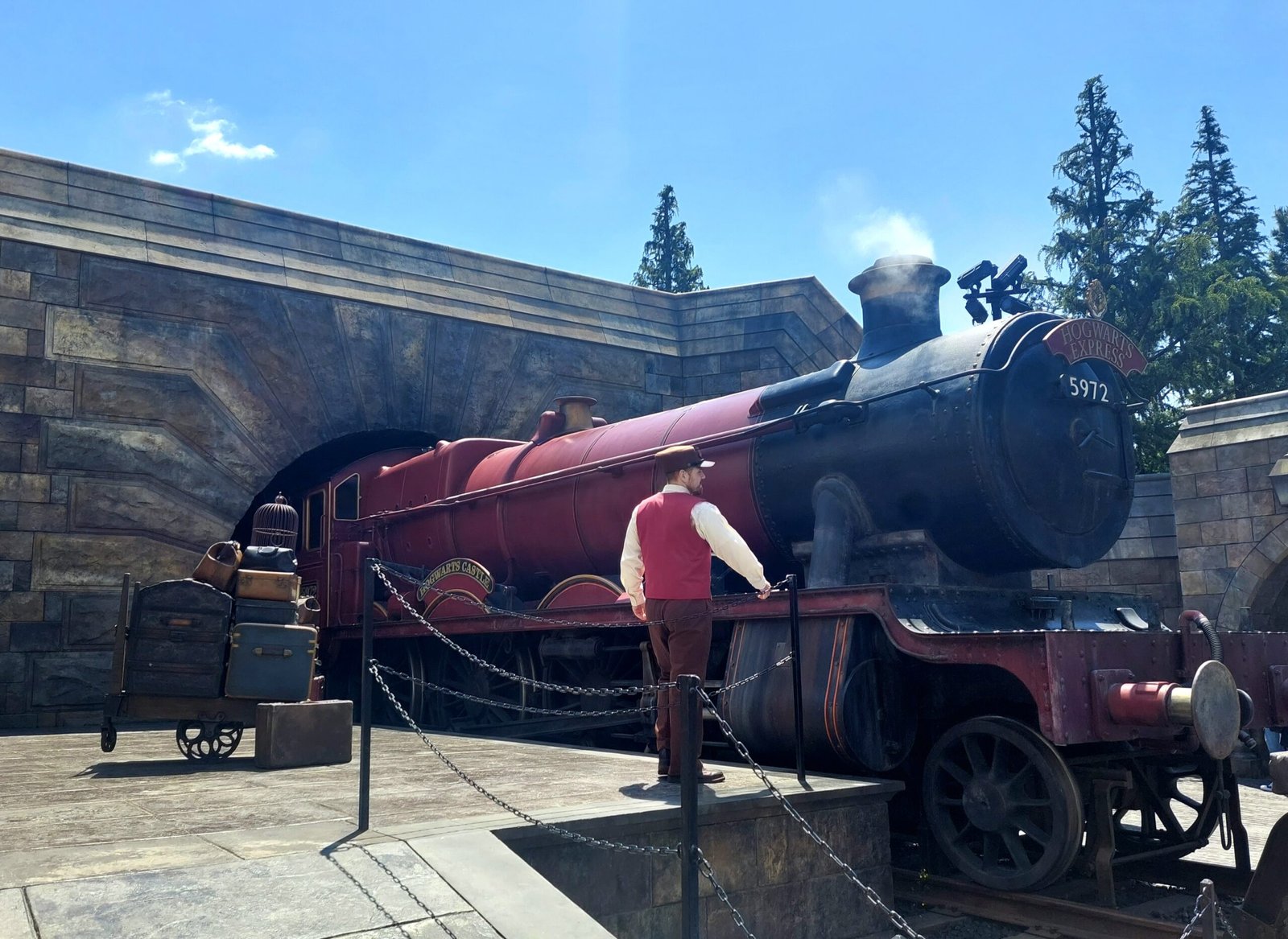
The Hogwarts train arrived just in time through the tunnel.
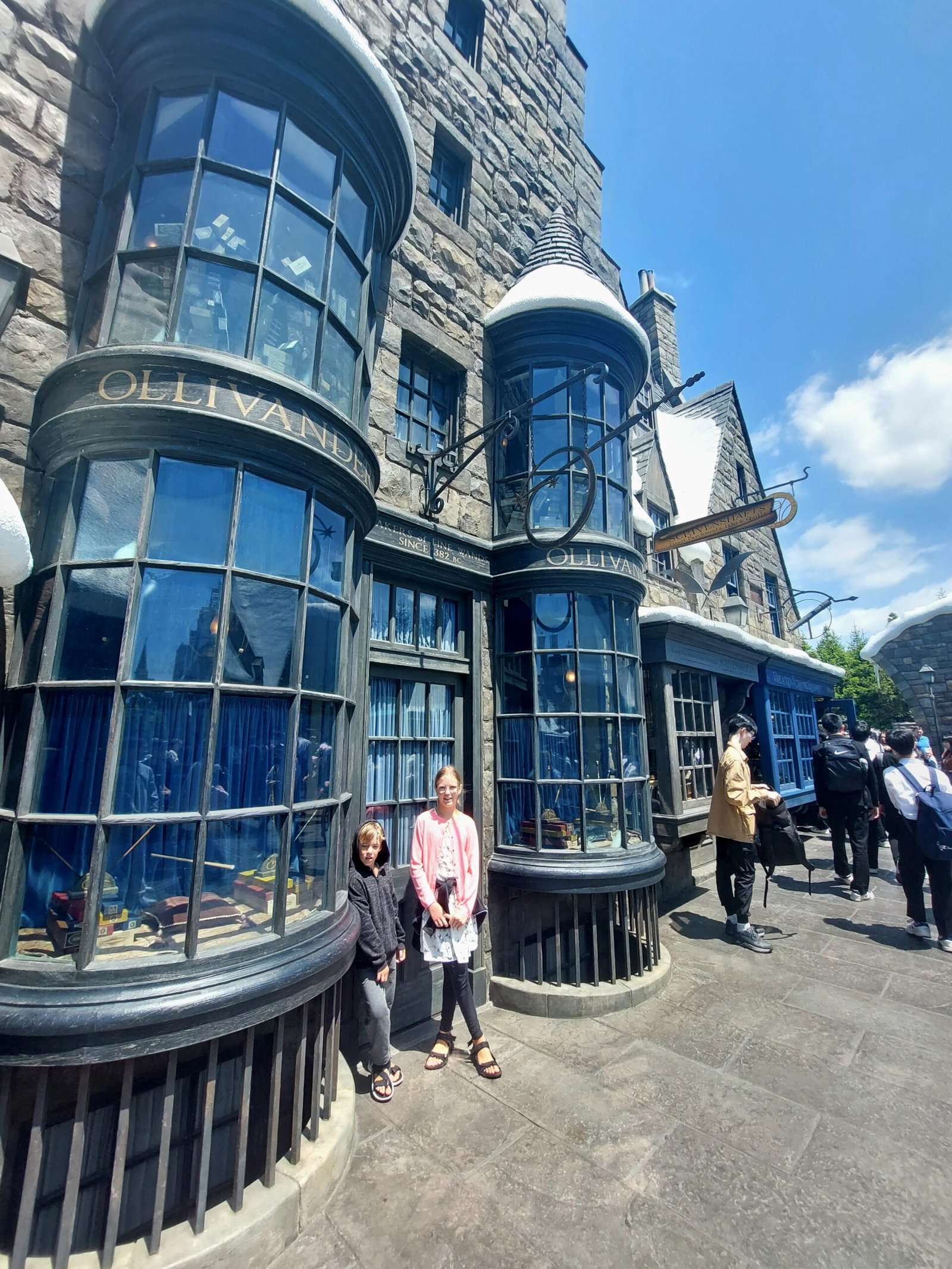
We also went to check out Ollivander's selection of wands.
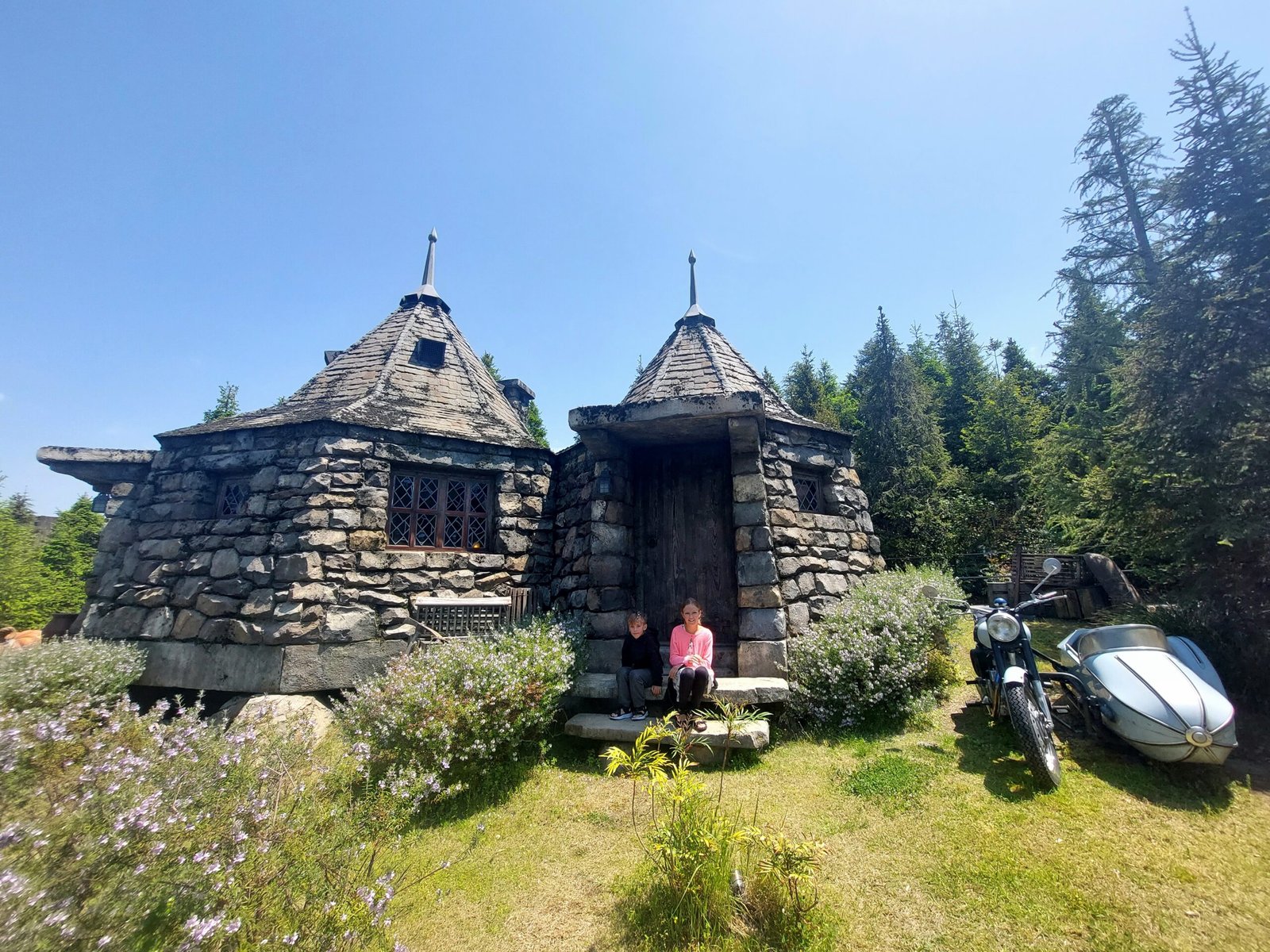
We could hear Tora's growl from inside Hagrid's home.
"I wish we could actually get in there!" We did.
Dumbledore had learned to speak Japanese too.
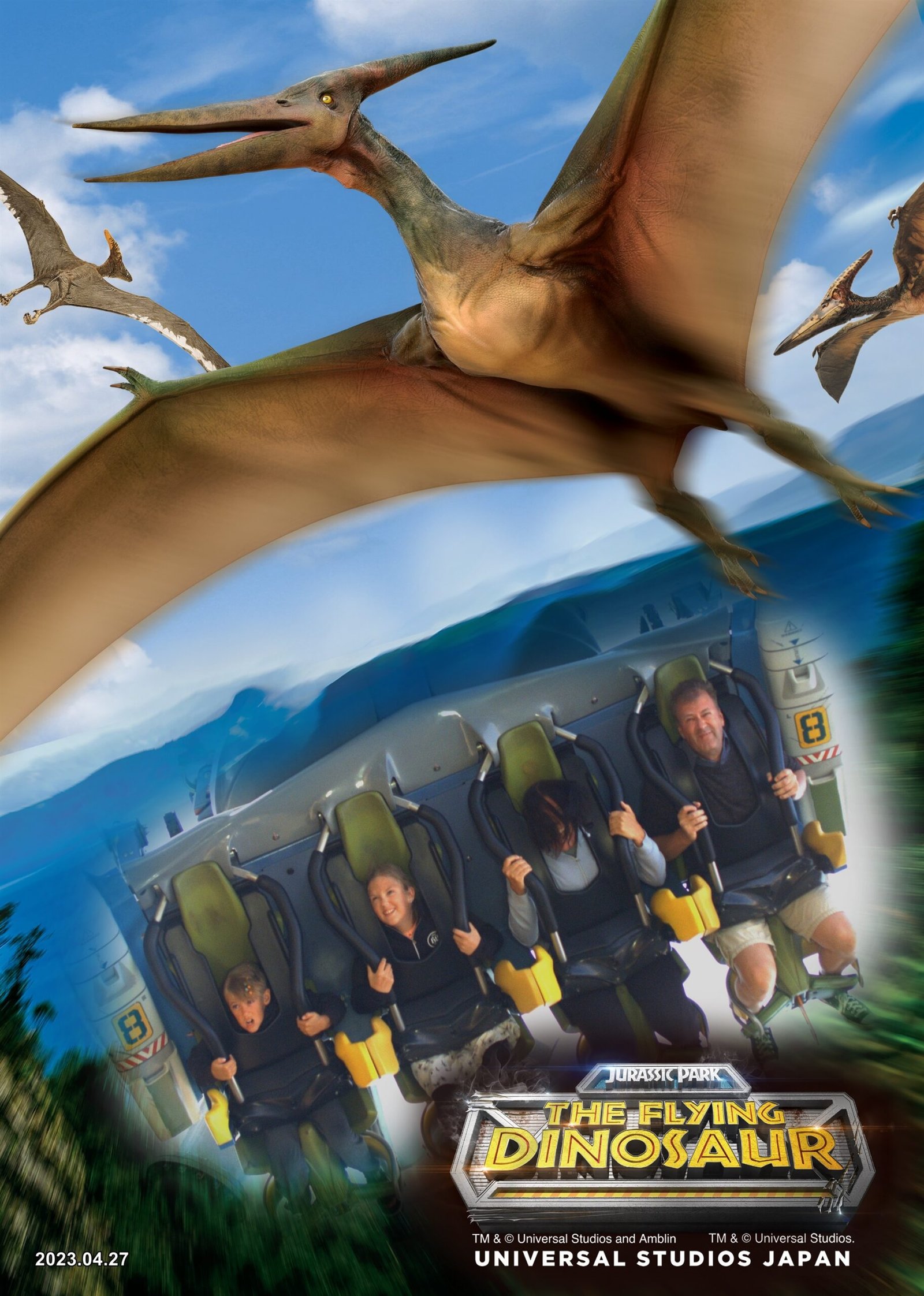
On the Jurassic Park side, we escaped the Tyrannoraurus Rex on a water roller coaster, and hopped on a flying dinosaur on another roller coaster. We almost didn’t go there at first, thinking that Risto wasn’t tall enough to ride it. Luckily, however, 130cm with sandals on was tall enough, and the whole family was able to ride what was probably the wildest roller coaster of our lives. Linnanmäki’s Taiga doesn’t even come close! We would have liked to go on another massive roller coaster too, but there were ridiculously long queues all day long. At the longest they were 90min long, and the shortest queue was 70min.
The passengers were mostly dangling horizontally downwards, except when we were spinning in who knows which direction along the track.
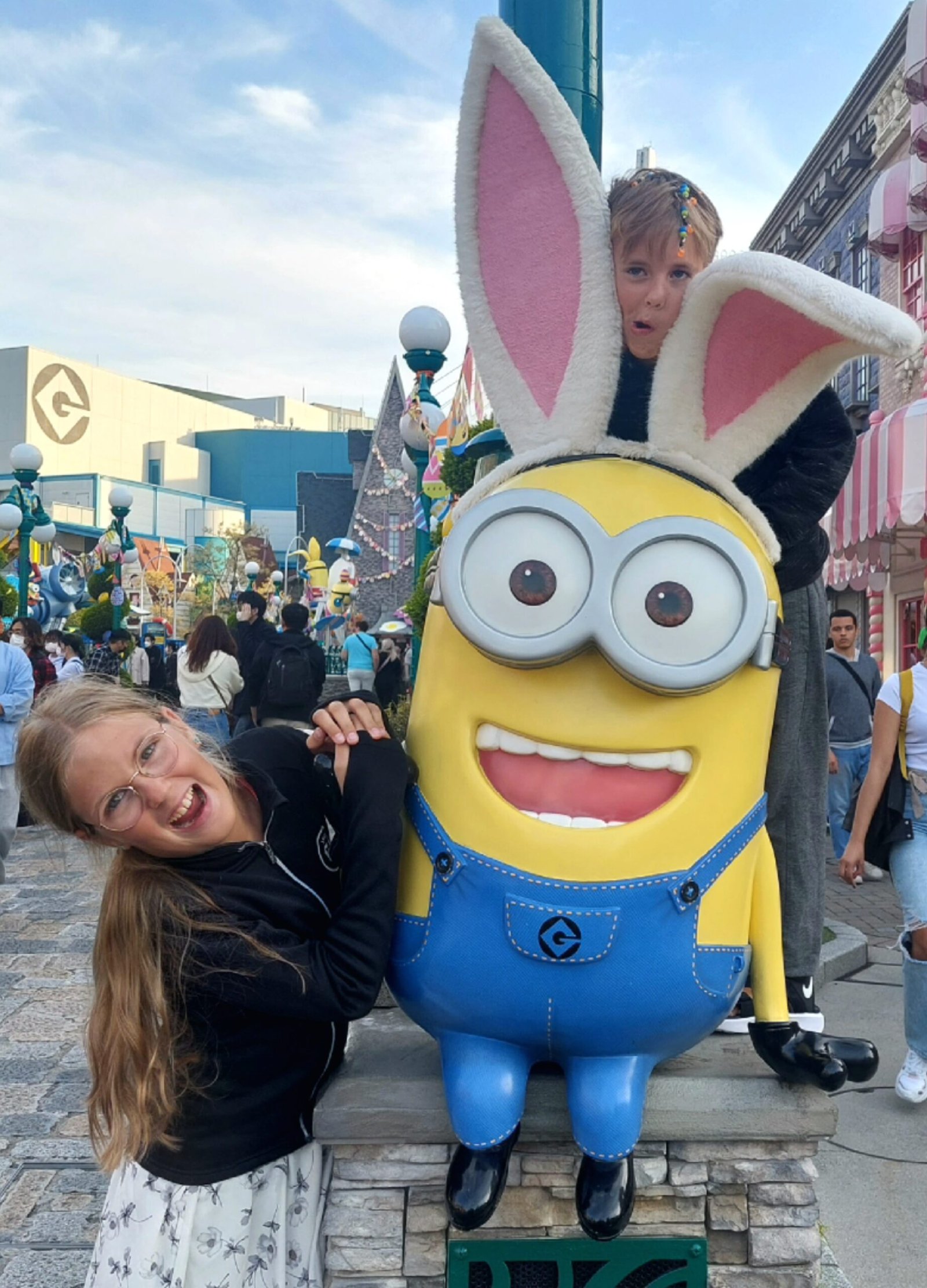
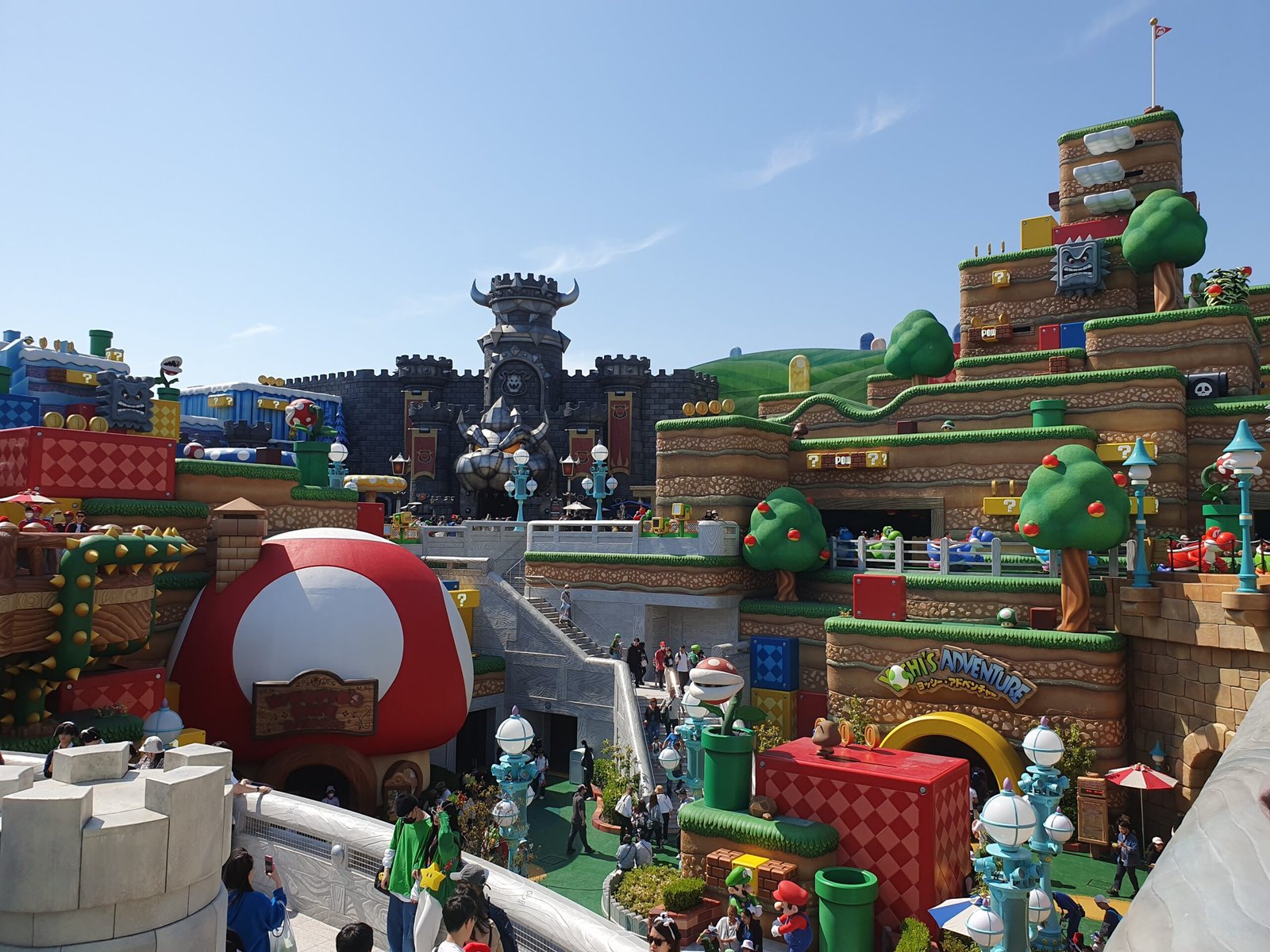
We also got to ride with Spiderman, turn into Minions, and fight with Super Mario against the evil Bowser. Of course, in the spirit of nostalgia, we also had to experience how the Jaws almost sank our boat. That was not a very hair-raising experience anymore.
Our Minions
"Daddy, I'm NEVER going on any ride with you again. Stop it!"
In Super Nintendo World, you could step right into the game.
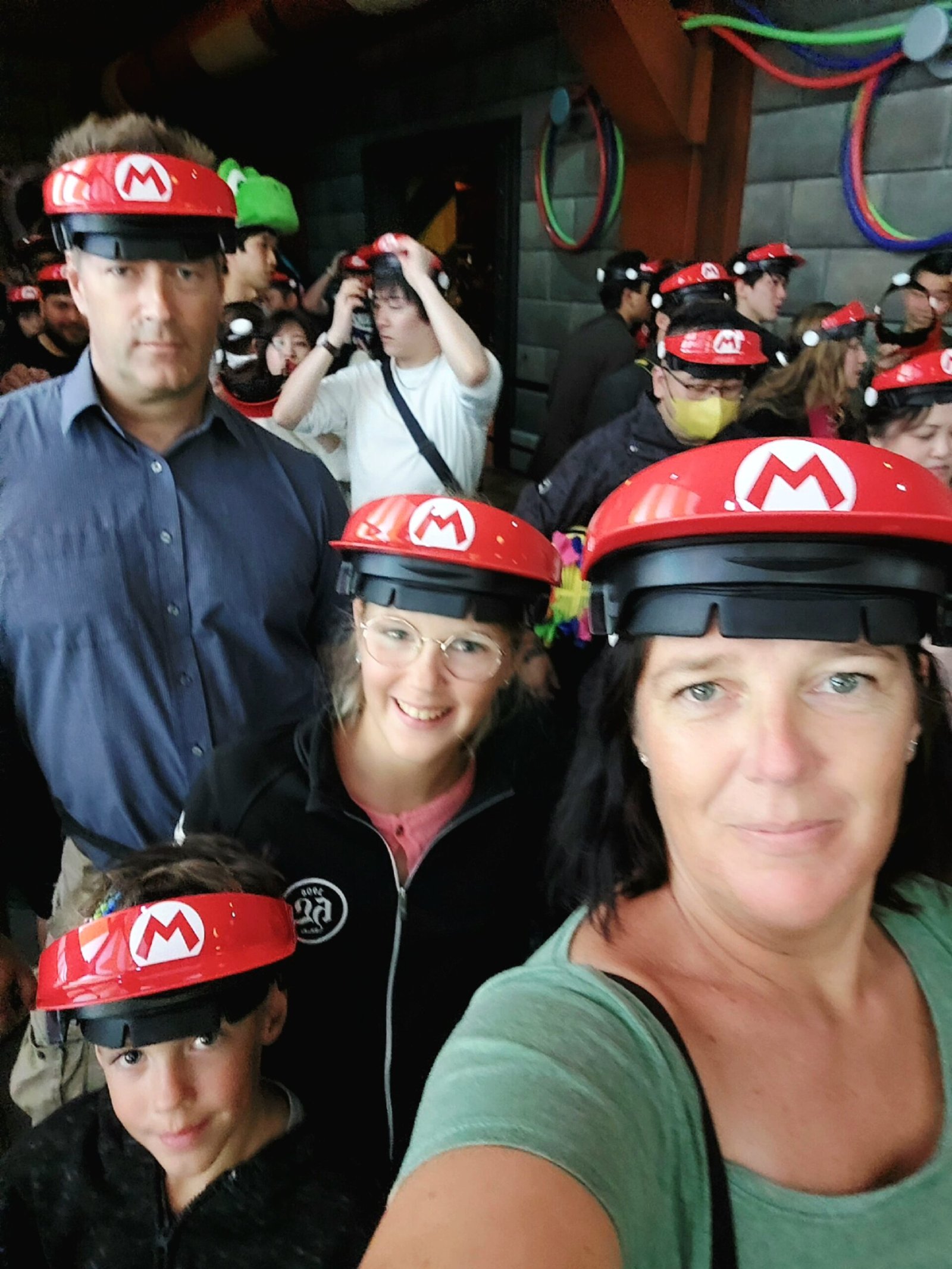
AR goggles were attached to these fancy hats, so we could see the bad guys we had to bomb during the ride.
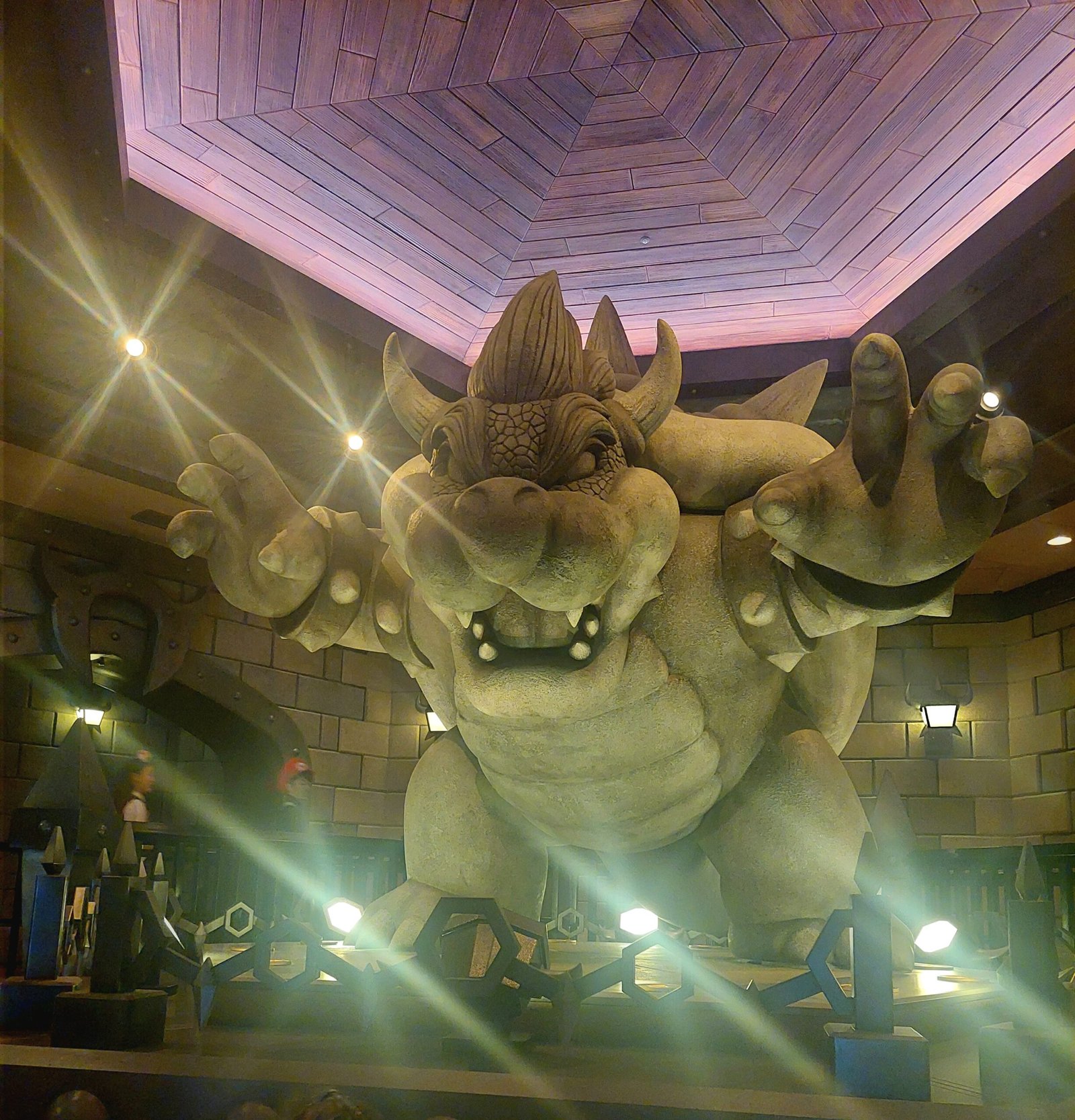
This was the bad guy in the game, and we had to fight his troops.
We spent nine hours in the park, and managed to see and experience everything we wanted to. There were really long queues for most of the rides, but in addition to the queues, the park had developed all sorts of things to see and explore while waiting, so the queuing time wasn’t just standing around. We wondered what the queues would be like in the park when it was the Japanese holiday season, or even just a normal weekend. Even now the queue times were on average around 35 minutes, but there was space reserved for queues at least three times longer.
Darkness fell before we headed back home.
On Friday we went to Kyoto. This 43km trip went quickly by bullet train in just over ten minutes. Quite handy! We had looked beforehand at a few places we wanted to visit in Kyoto. First, we headed for the Samurai and Ninja Museum.
A tour of the museum cost about €100 for four people, but it was well worth every penny. The museum had an excellent English-speaking guide who was able to explain samurai culture in a nutshell. He didn’t explain any useless trivia, which was nice. In the first few rooms we were shown various samurai costumes, and told what made each costume valuable in its own way. In the third room, there were samurai swords on display. The longer ones were for outdoor fighting, while the shorter ones were for indoor fighting. The houses had very low ceilings at the time, to prevent the samurais swinging their long swords indoors.
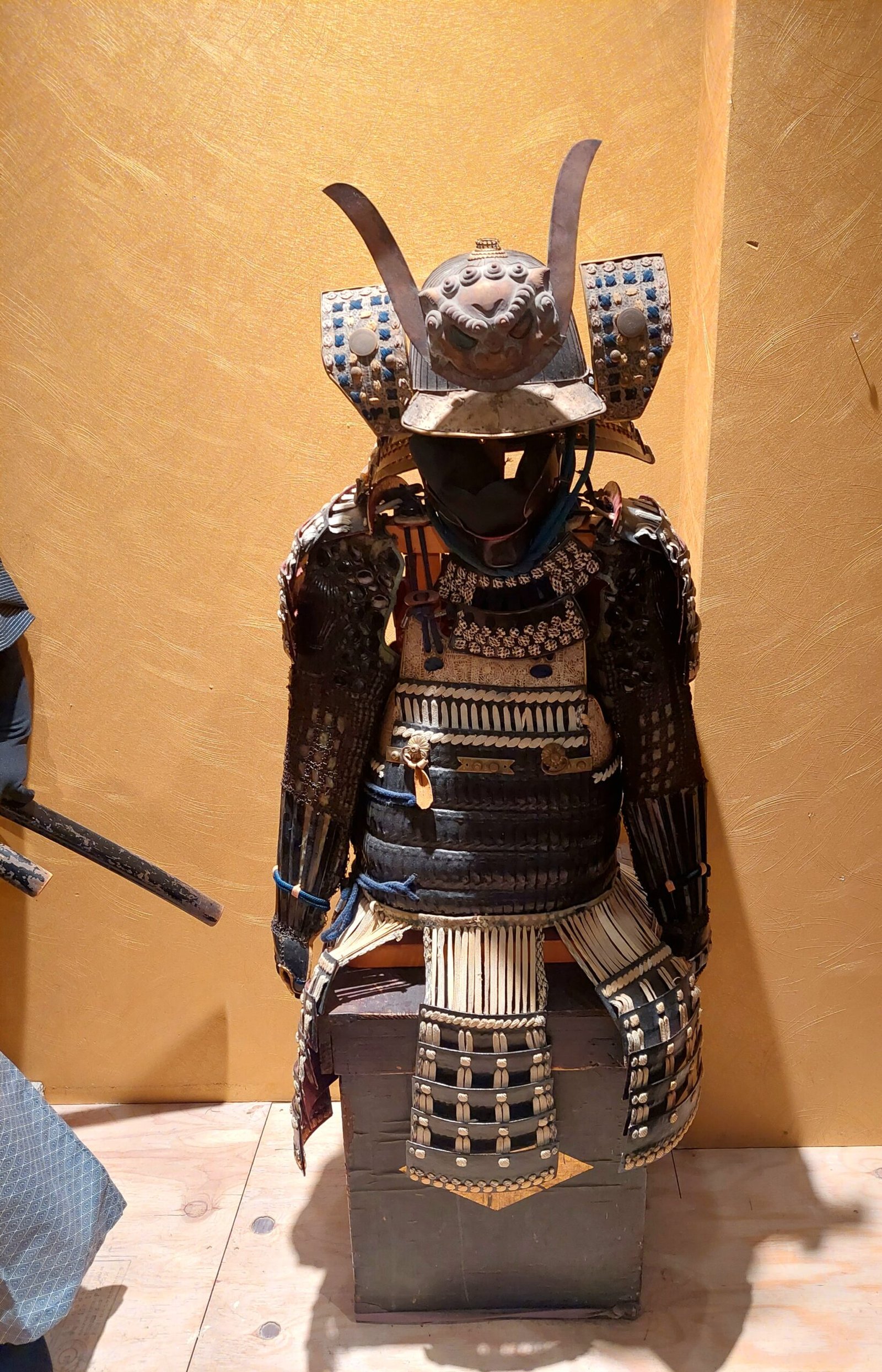
This was the armour the samurai wore when it was time for battle.
In peacetime, the outfit was lighter. The hair style was kept as it was. (The hairpiece on top was originally meant to soften the pressure of the heavy helmet.)
We also learned a lot about how society was structured in the old days. The emperor was the head of state in name, but the real power was in the hands of the shoguns. Under the shogun were a number of daimyo, a kind of regional commander, who each led their own samurai troops. In addition to the samurai, there was a group called the ronin, who were also trained fighters, but they were not part of any of the daimyo’s forces. Both samurai and ronin were easily identifiable by the way they dressed. Therefore, the daimyo hired farmers and fishermen to be trained as ninjas for more secretive fighting.
We also learned where the name kamikaze comes from. The Mongols tried to invade Japan twice, but both times they managed to time their attack to the typhoon season. So both times a typhoon came, and literally poured down and wiped out the Mongols’ plans. The Japanese, who believed in the spirits, thought that it was no accident, but a divine intervention. The Japanese word for God is “Kami” and the wind is “kaze”. So they called these typhoons “kami-no-kaze”, the holy wind. Later, during the Second World War, suicide pilots in the Japanese armed forces came to be called kamikaze pilots, as their purpose was to fly a plane loaded with explosives into an enemy ship and stop the enemy’s intentions from the air.
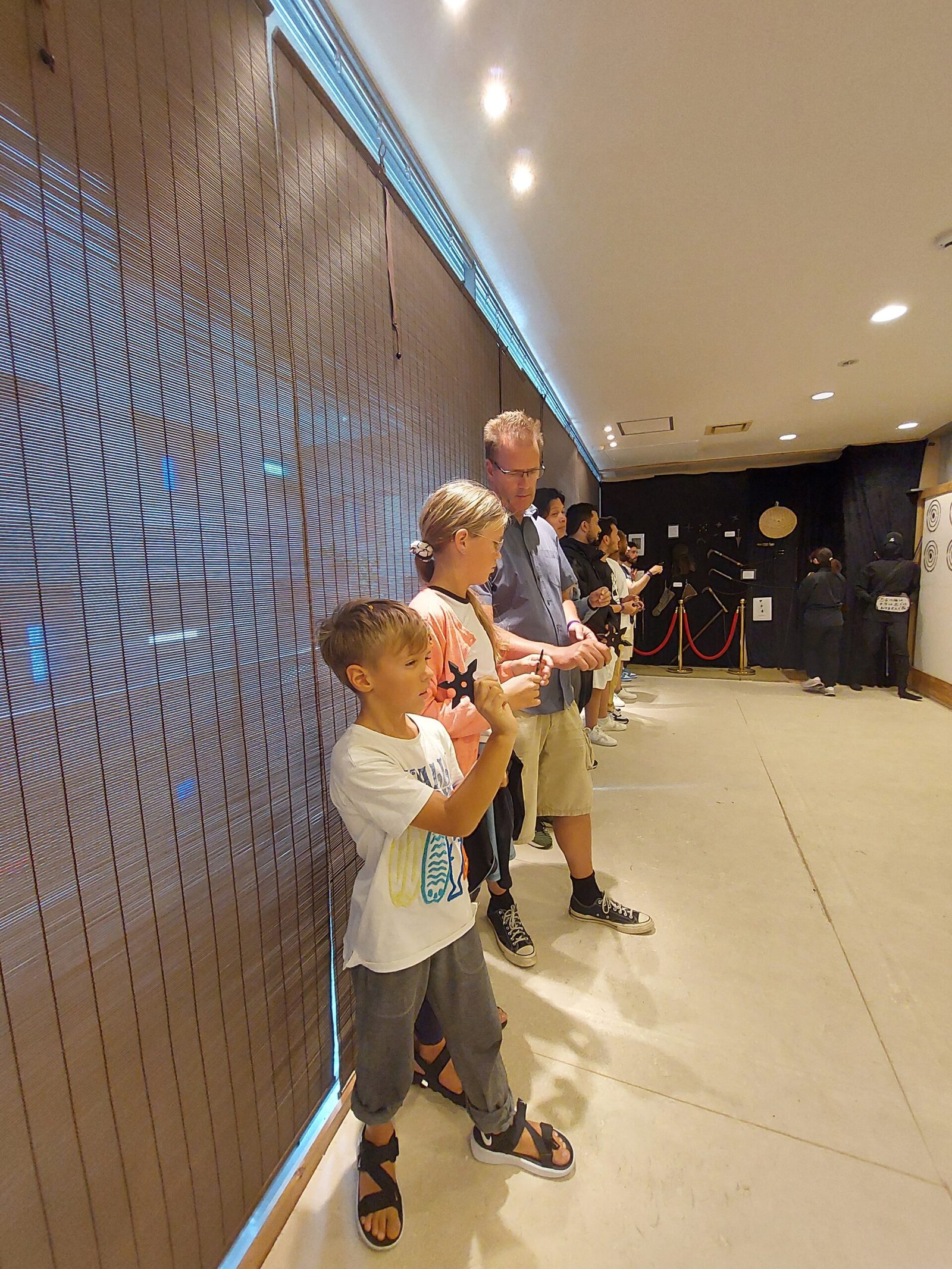
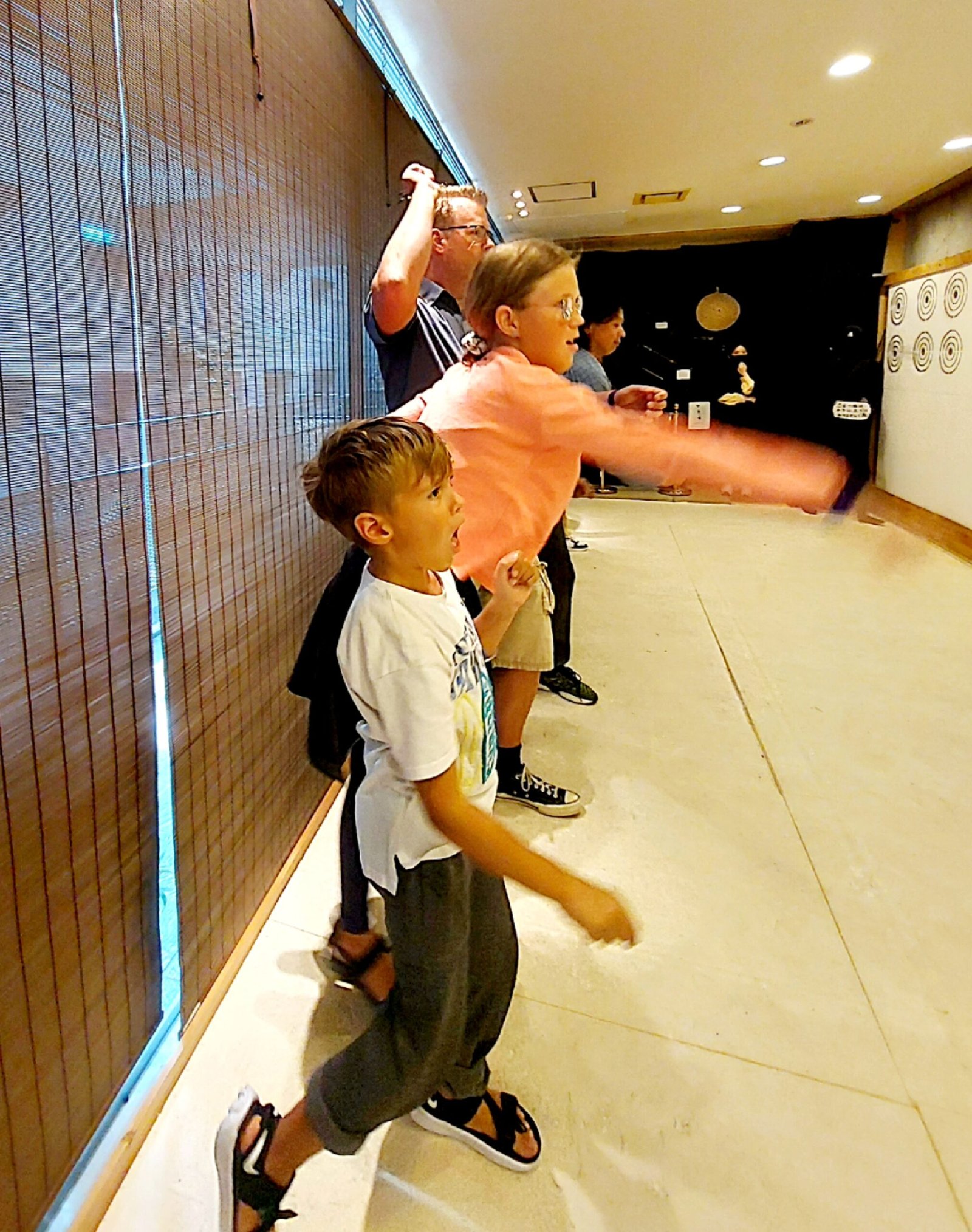
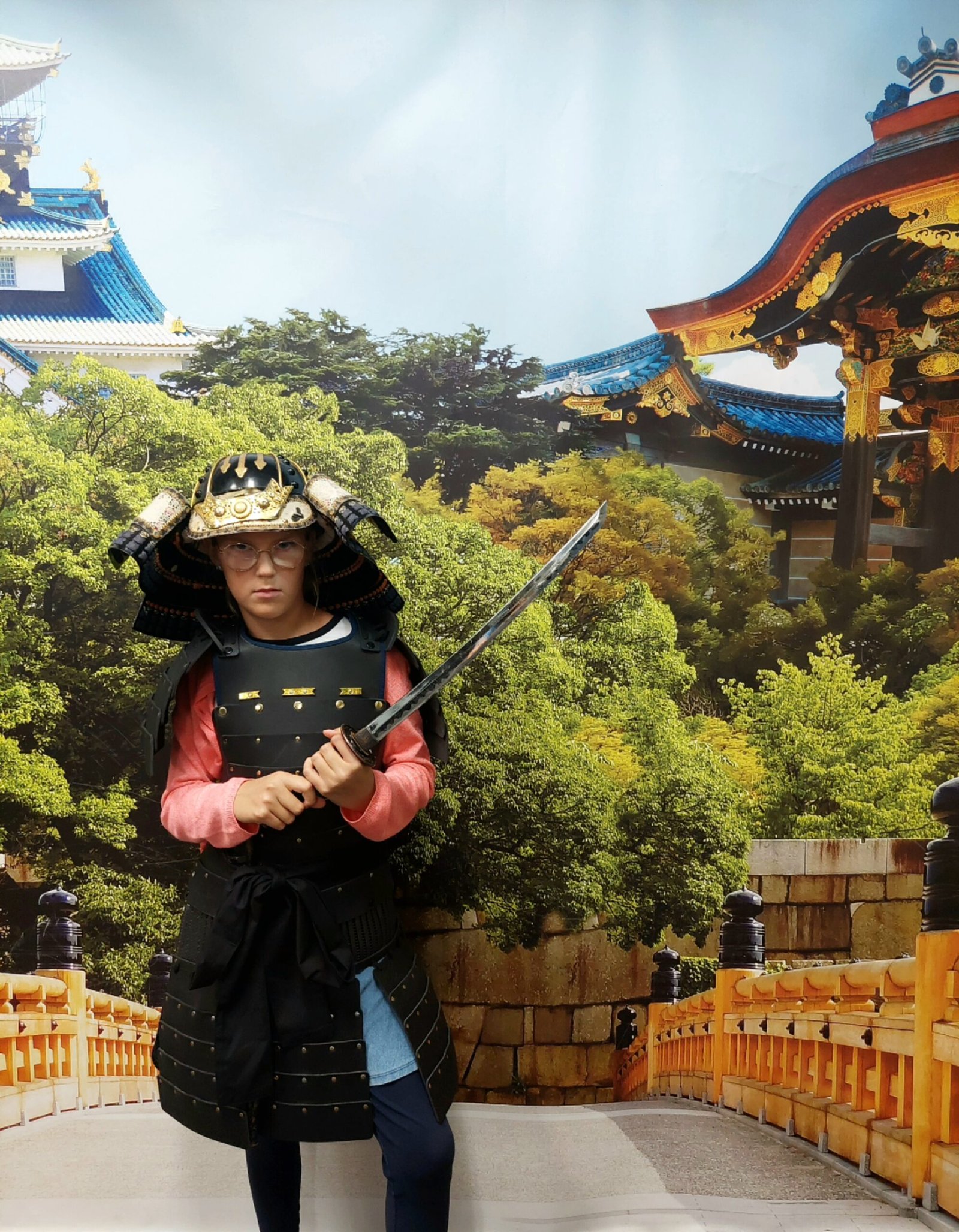
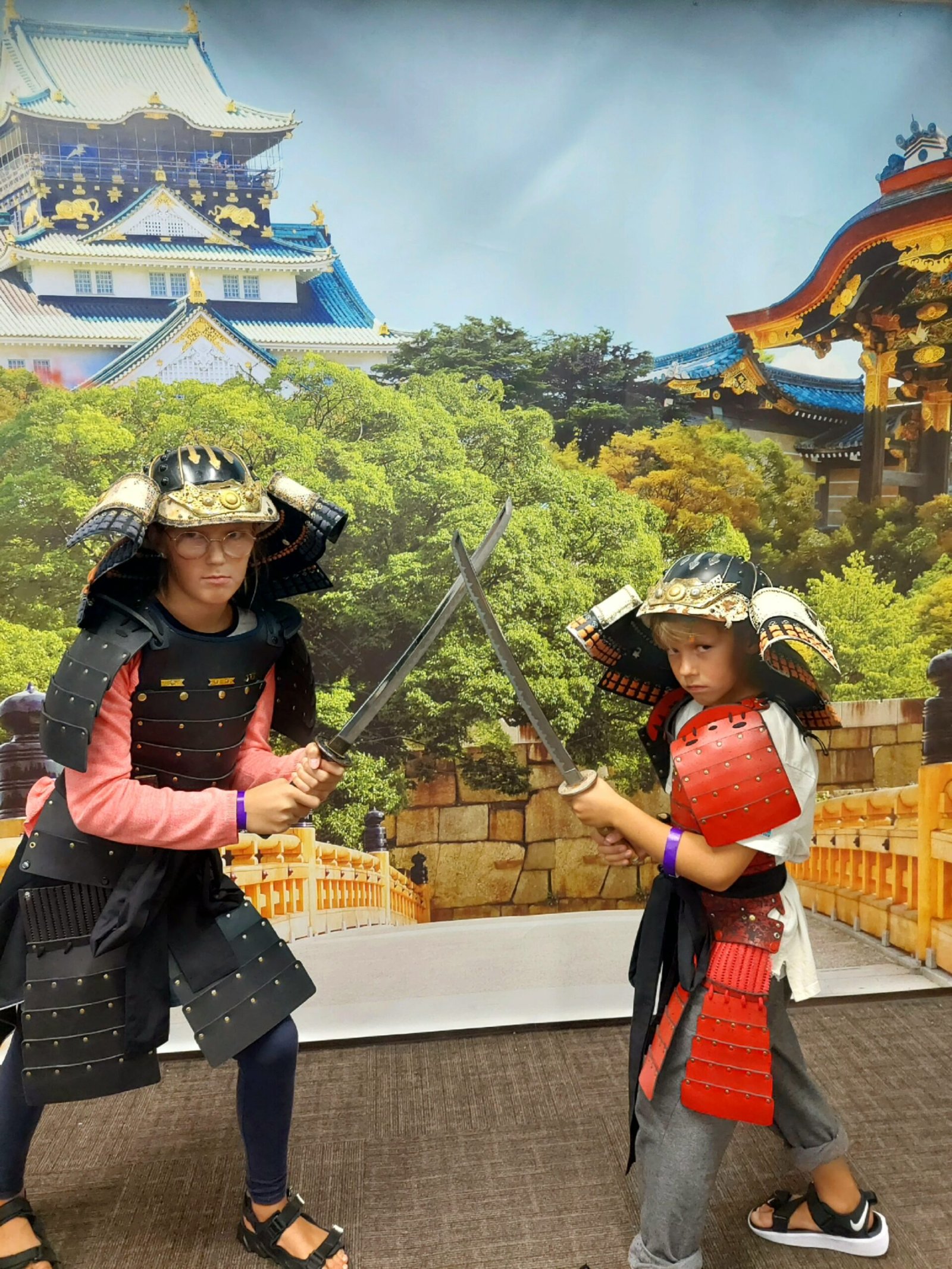
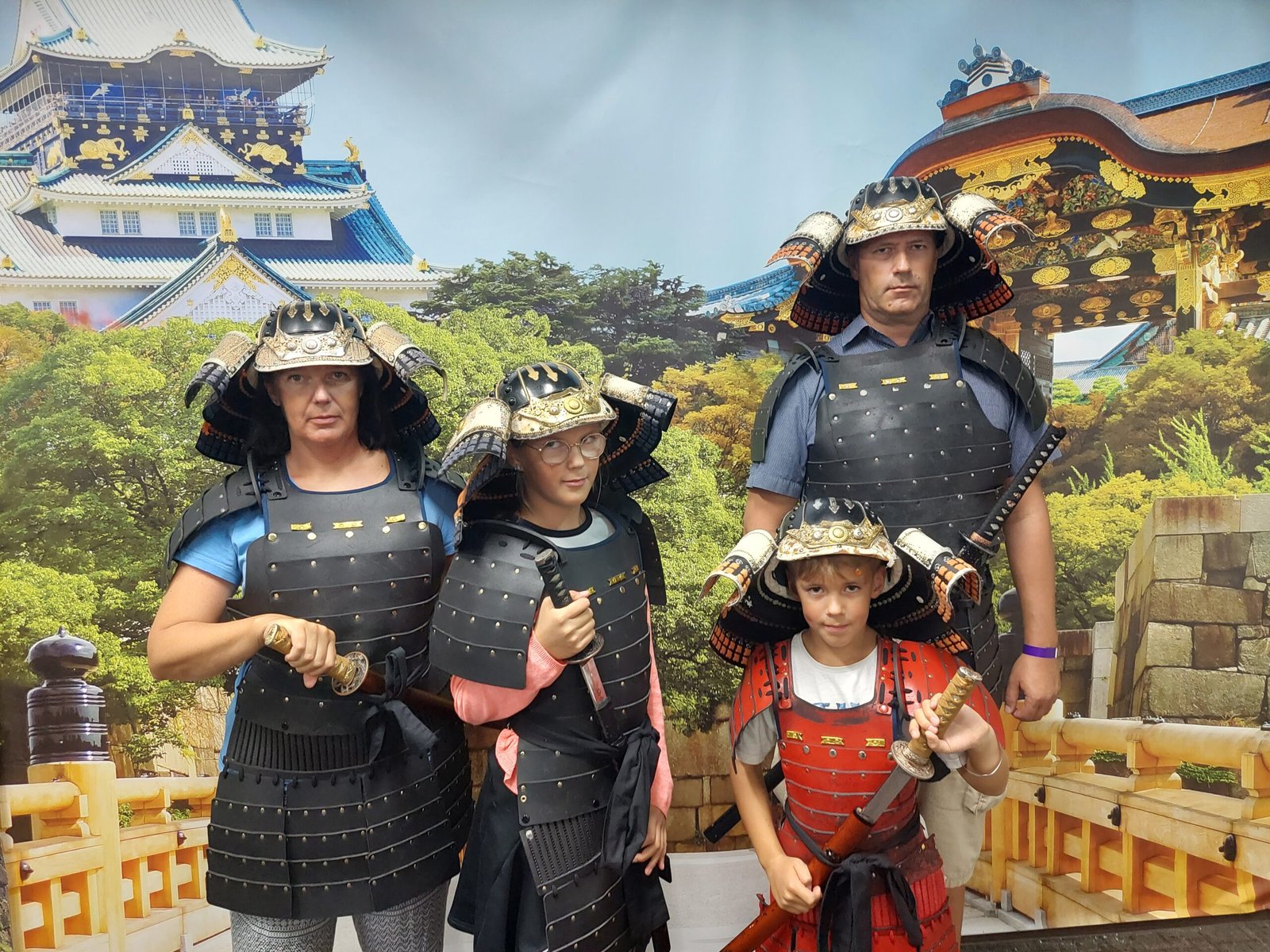
At the end of the tour, we got to try throwing ninja stars and dressing up as samurai. Throwing ninja stars was surprisingly difficult, even from a short distance. Marko had the best aim and managed to score seven points. The rest of us scored only three points each.
Ninja course
Everyone hit at least the styrofoam wall.
A fierce samurai
And another one
Sisterly love
Clearly samurai blood!
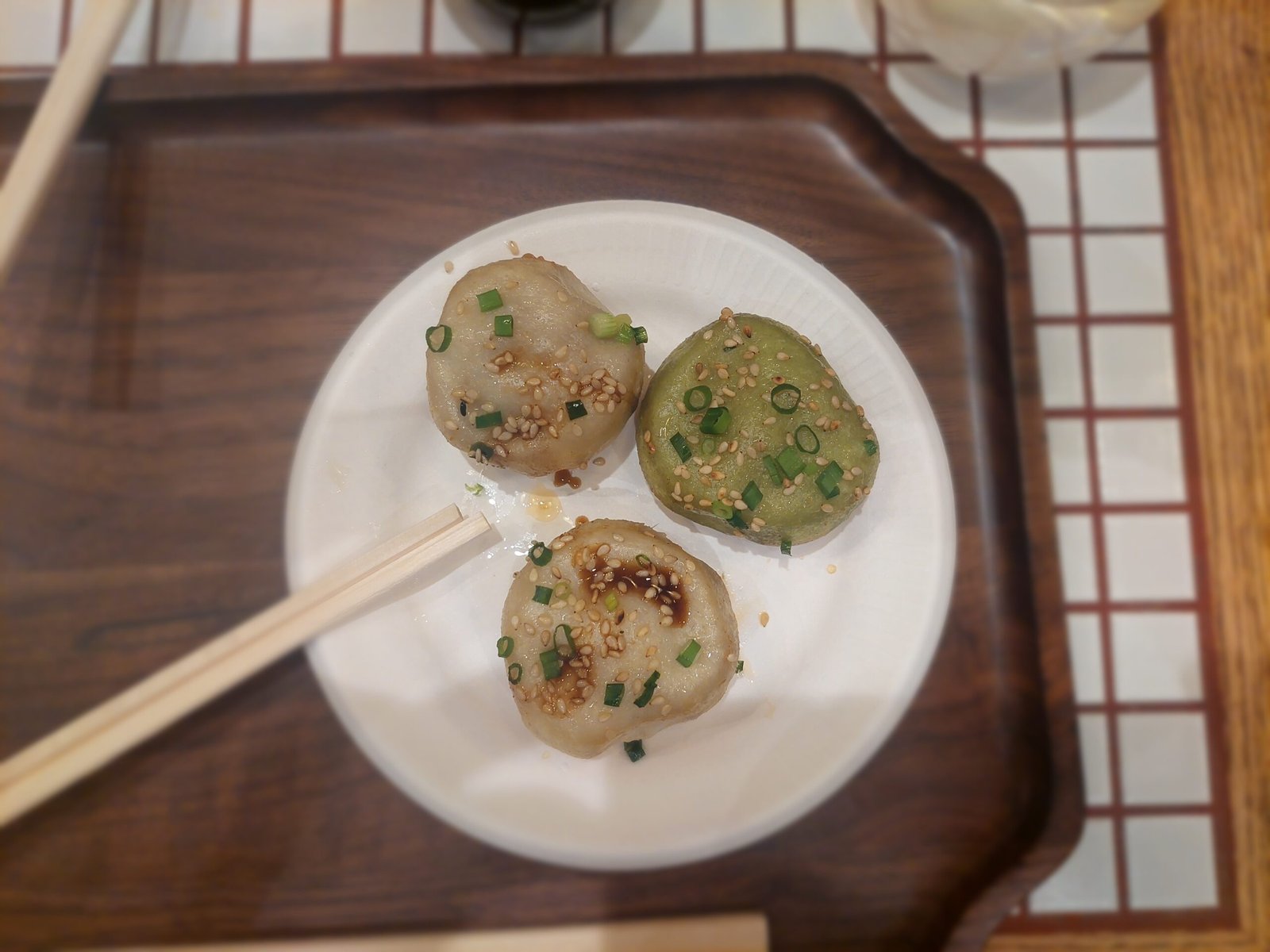
After the museum tour, we stopped for some meat dumplings at a food stall in a nearby shopping area before heading for a tour of the Gion geisha district. First, we had a short guided tour where we were explained the basics about geisha culture. After that, we walked around the main street of Gion by ourselves for a while, trying to spot things we had been told about beforehand.
The green dumpling was filled with shrimp.
We've got to practice eating with sticks a lot.
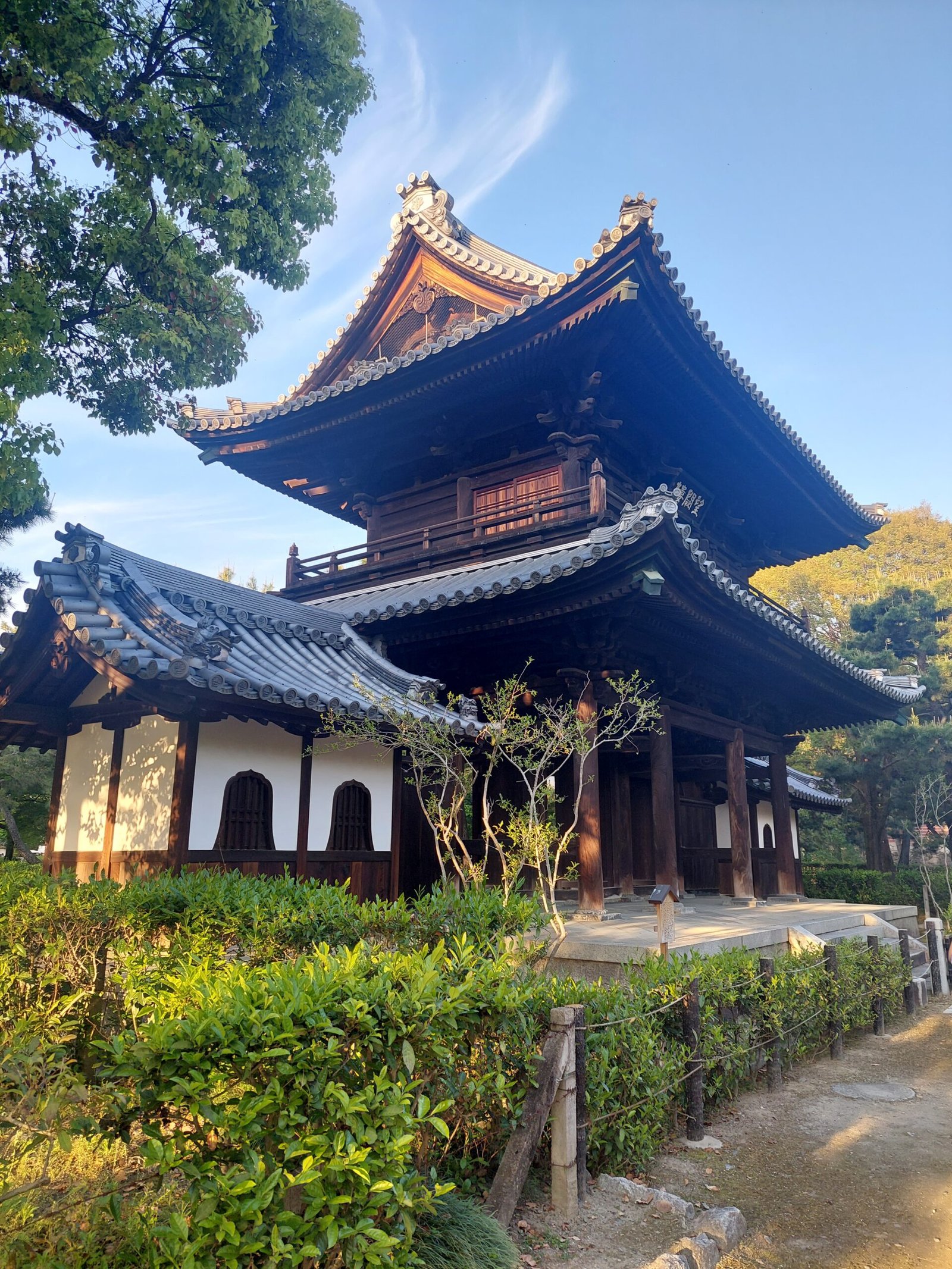
This is where our guided walk began.
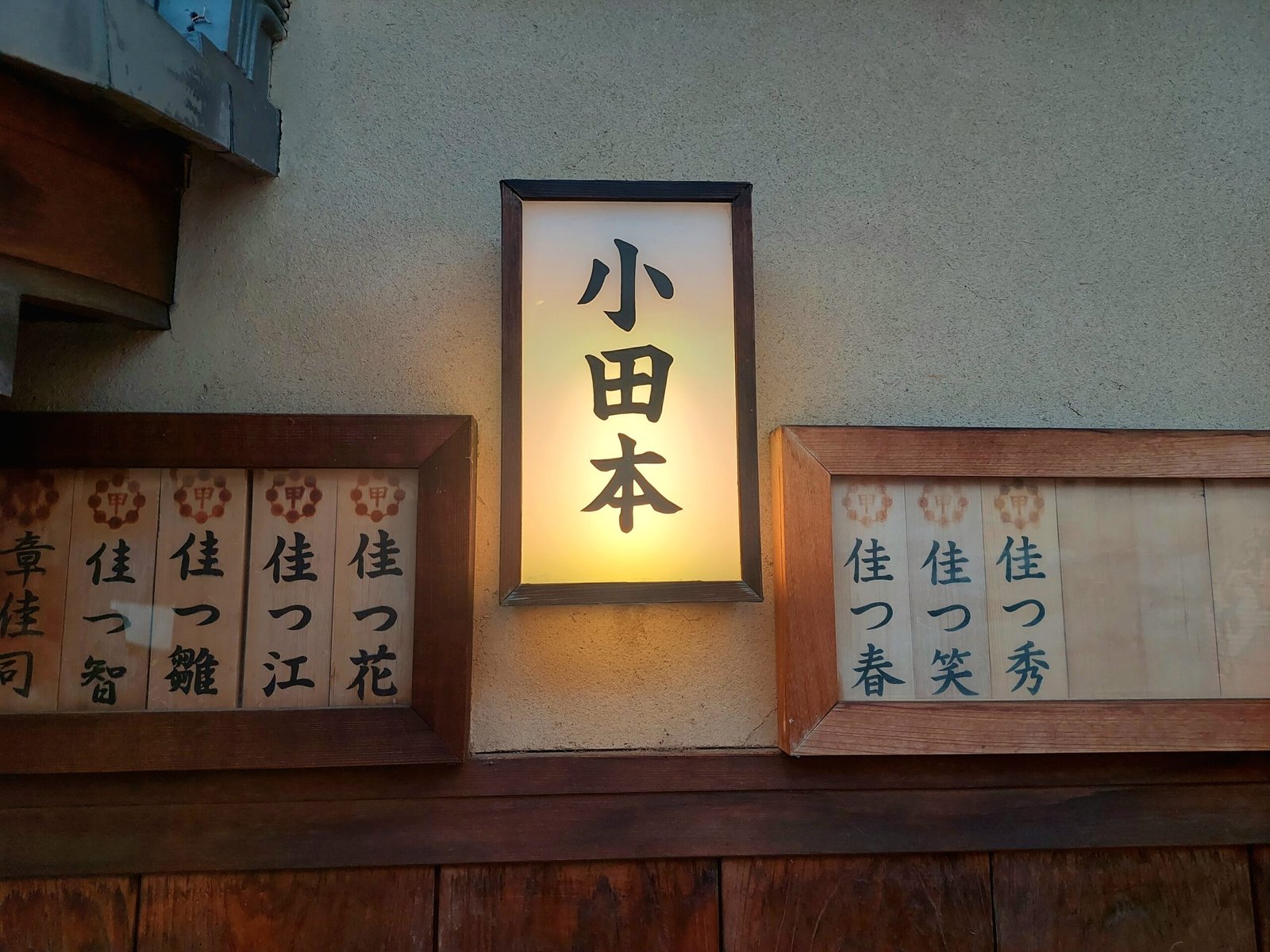
The names of the residents are written above the door of a Geisha house. Maikos on the left, geikos (=geishas) on the right.
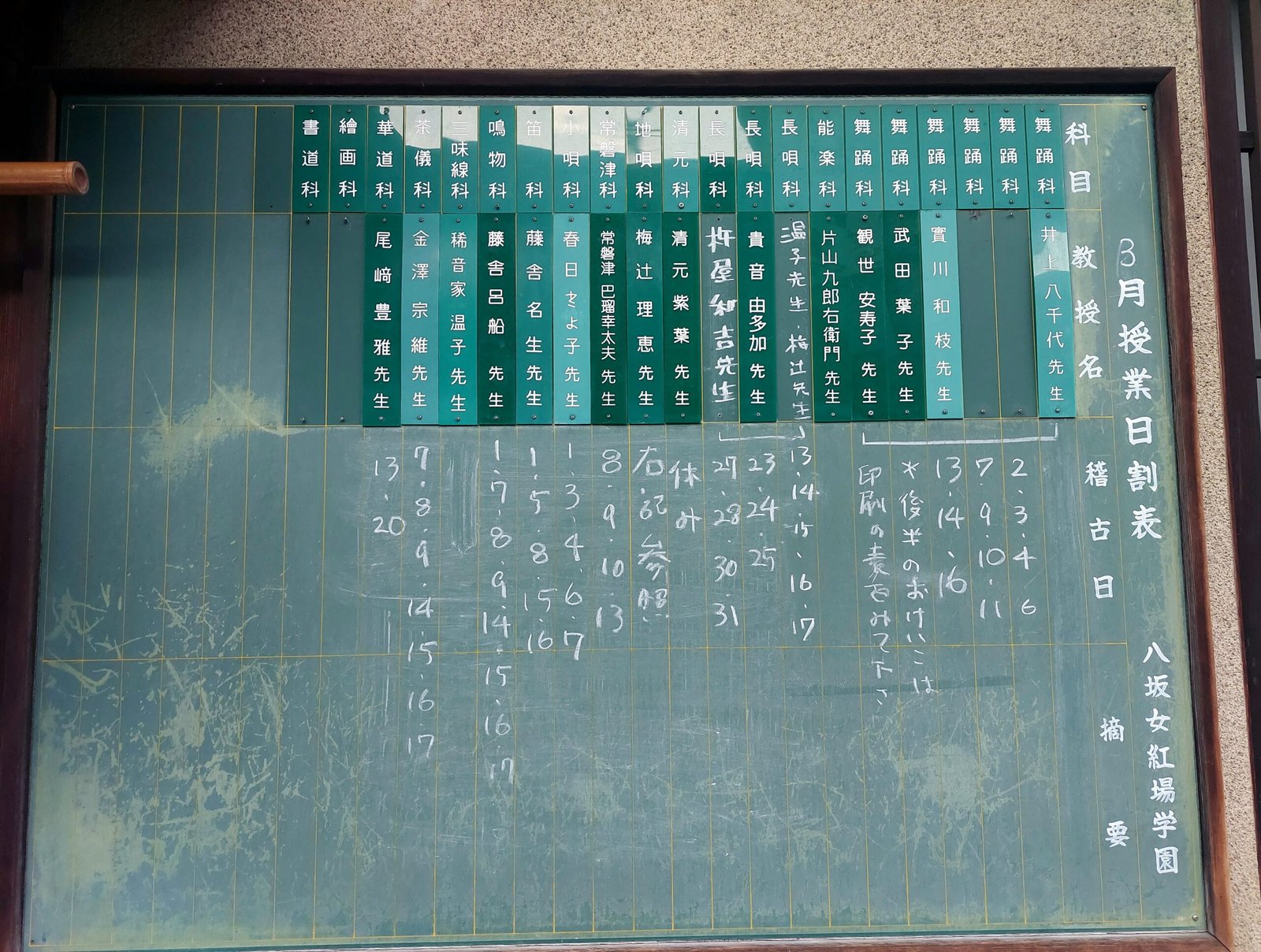
The curriculum of the Maikos was displayed on the blackboard on the wall of the house.
The sloping lower part of the buildings on the left was designed for two reasons: a) To prevent dogs from peeing on the wall of the house. b) To prevent samurai fighting in the streets from damaging the wall with their swords.
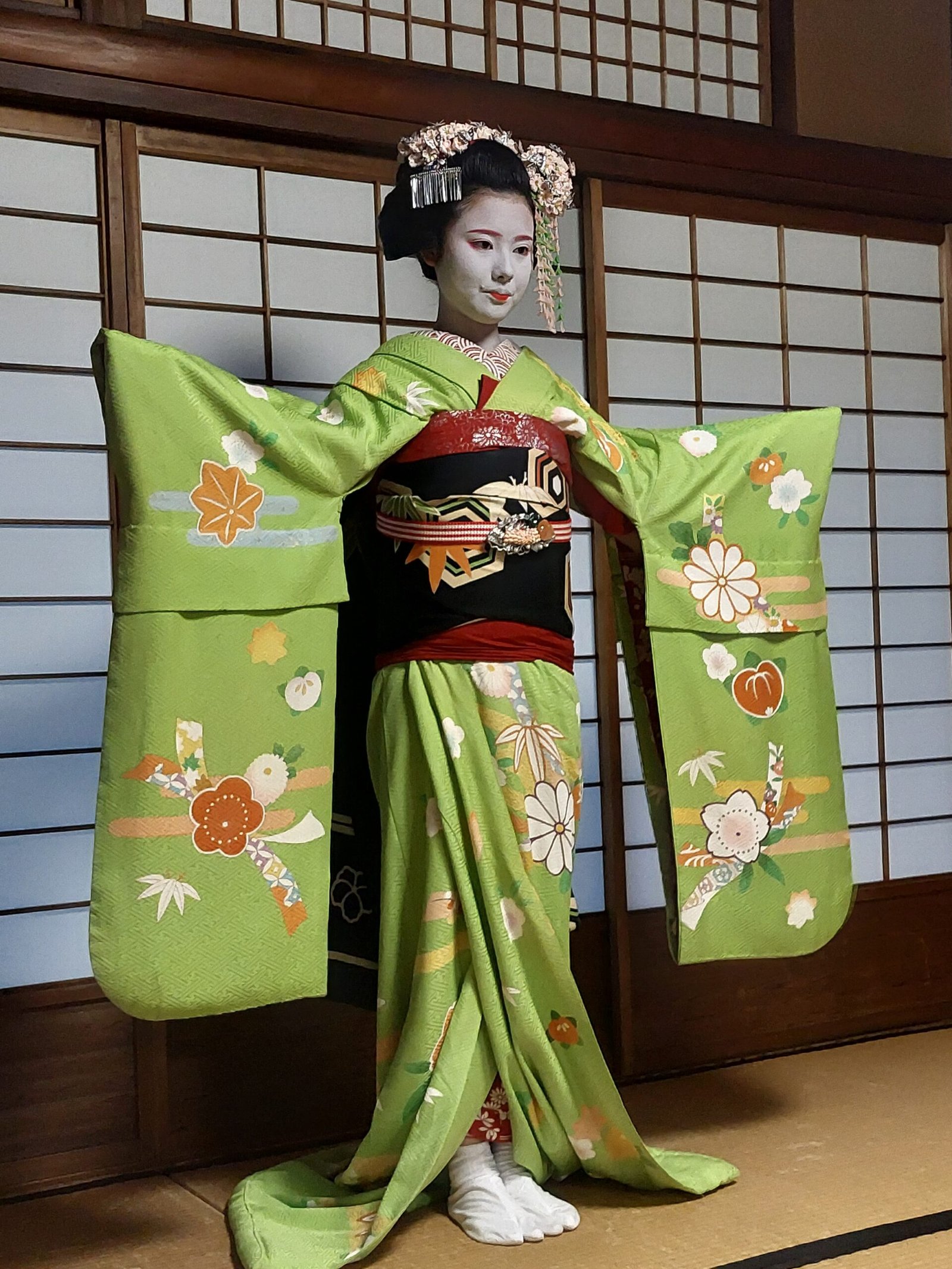
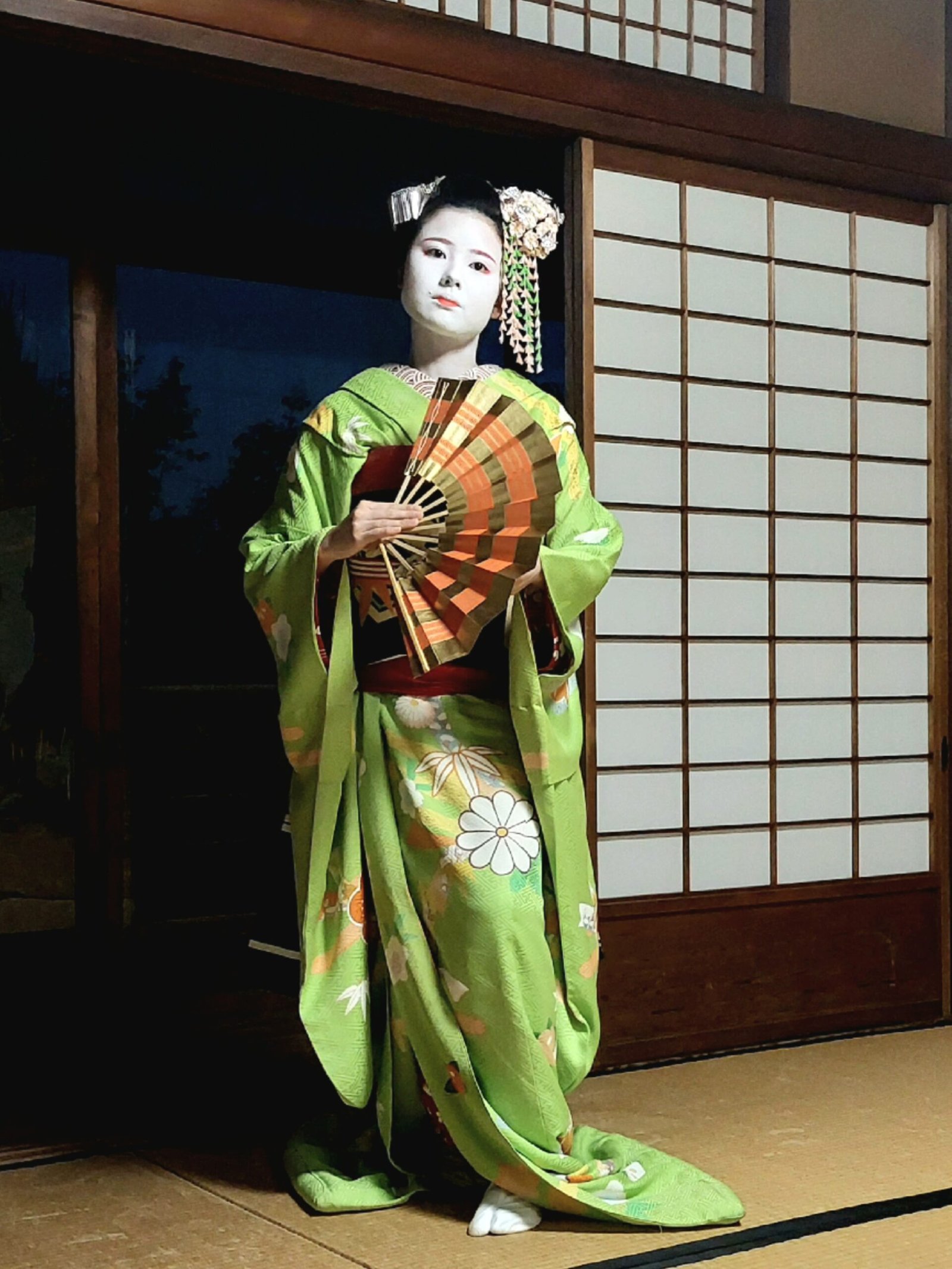
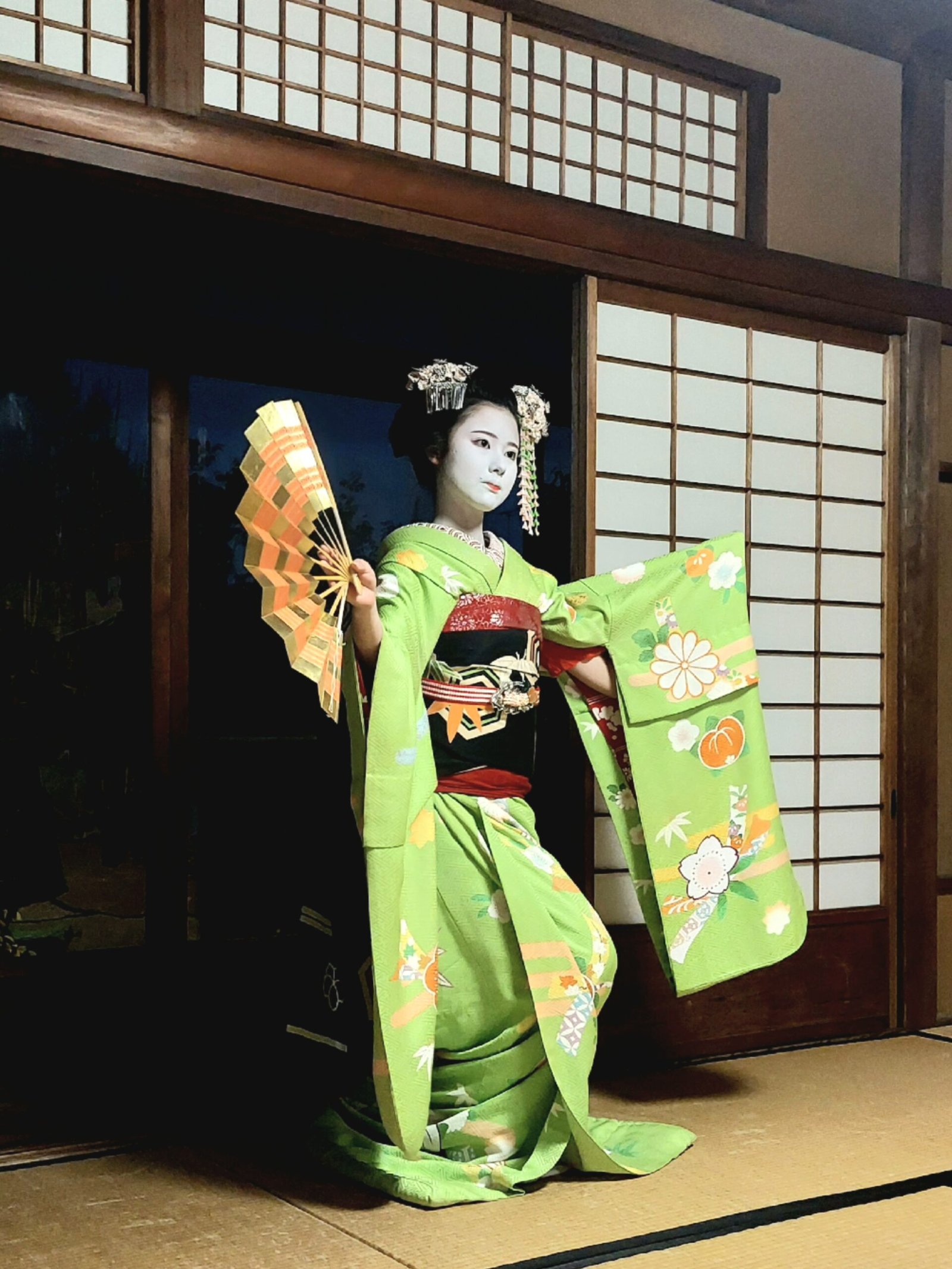
Finally, we returned to the tearoom, where our tour had begun. There we met a 19-year-old maiko. She had moved from Osaka to Kyoto to become a maiko as soon as she graduated the highschool at the age of 18. She lived in a geisha house (okiya) in one of the five geisha districts in Kyoto. When she arrived at the geisha house, she had had to give up everything that young teenagers today usually do. Maikos are not allowed to own mobile phones or computers, for example. So contacting with friends and relatives is done by letters. They have only two days off a month, but even then they cannot behave like young adults of their age. They must wear a kimono throughout their education (including their days off) and keep their hair combed in a certain style. Maikos don’t get paid, but the owner of the geisha house takes care of all the maiko’s expenses.
There are only about 20 maikos left in Kyoto, and only 70 geikos.
A maiko's entire outfit is worth as much as one Japanese house.
The black, ornate fabric behind the outfit totals 7m
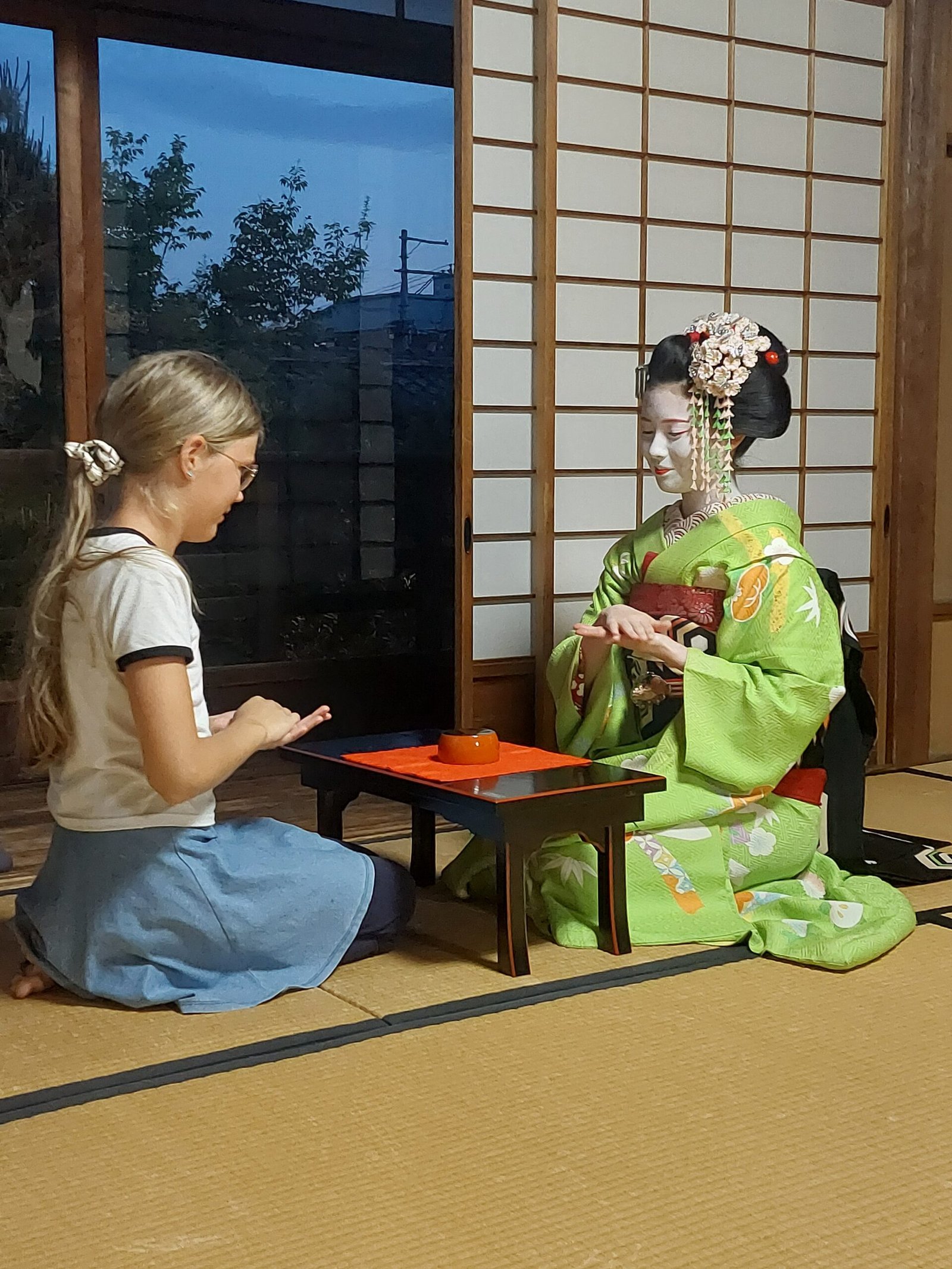
Training for maiko includes Japanese tea ceremony, traditional music, conversation skills, performing and various traditional games. We got to try one of these games with maiko, if we wanted to. Ronja was the first volunteer, and she amazed both the maiko and the evening’s host, who acted as her interpreter, with her skills. It was a very simple game, where you had to take turns on putting your hand on the cup at a certain rhythm. If one of the participants removed the cup on her turn from the table, the other had to put her hand in a fist on the table. This was continued with the pace speeding up. Ronja was able to keep this up for a long time at an insane speed. After the game she was asked if she had ever played this game before. (Thanks Tiisa for the tremolo lessons! They have clearly been useful.) Risto and Jaana also tried the game, but neither of them got nearly as far as Ronja did.
Ronja's good sense of rhythm certainly helped in this game.
Risto did well too.
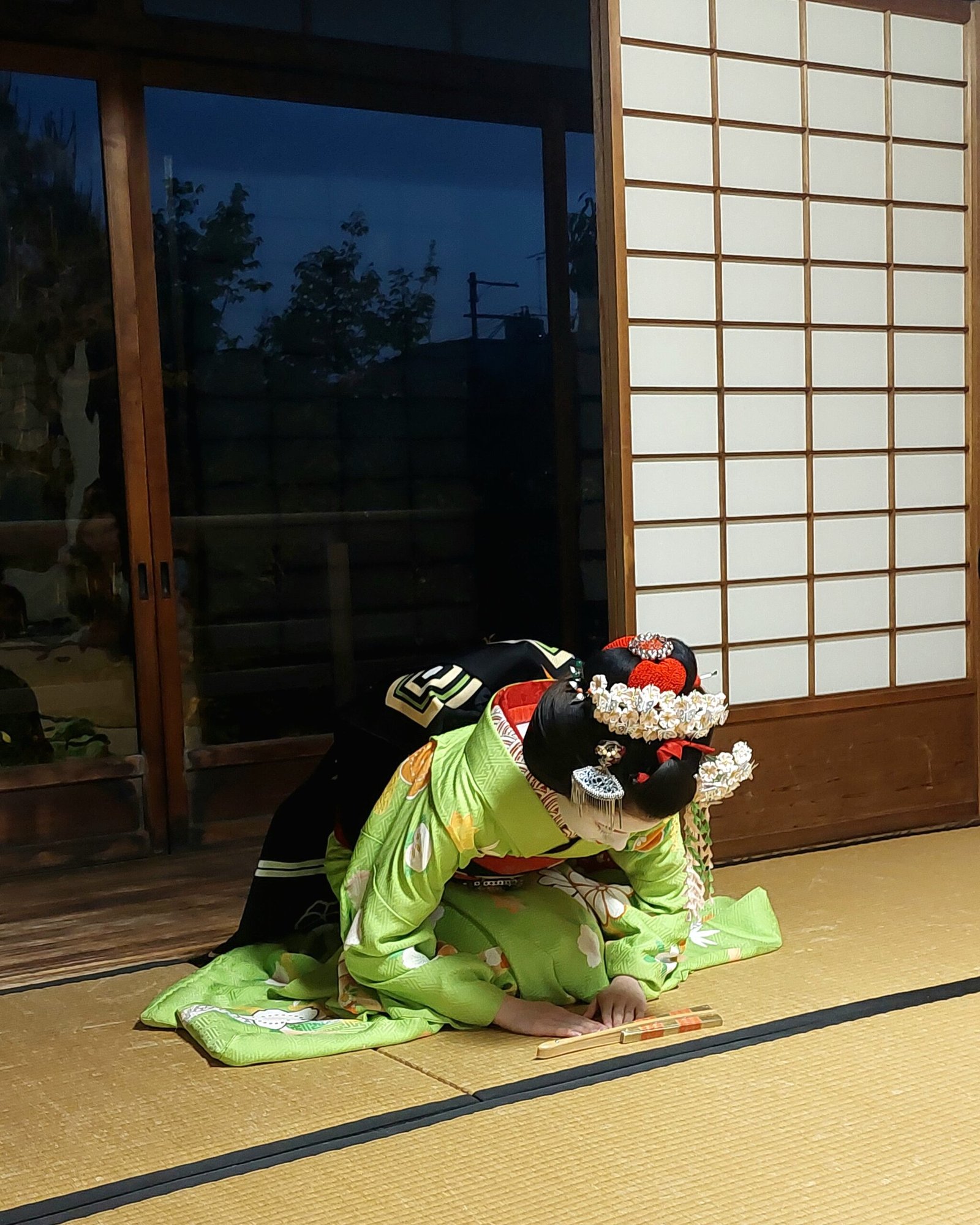
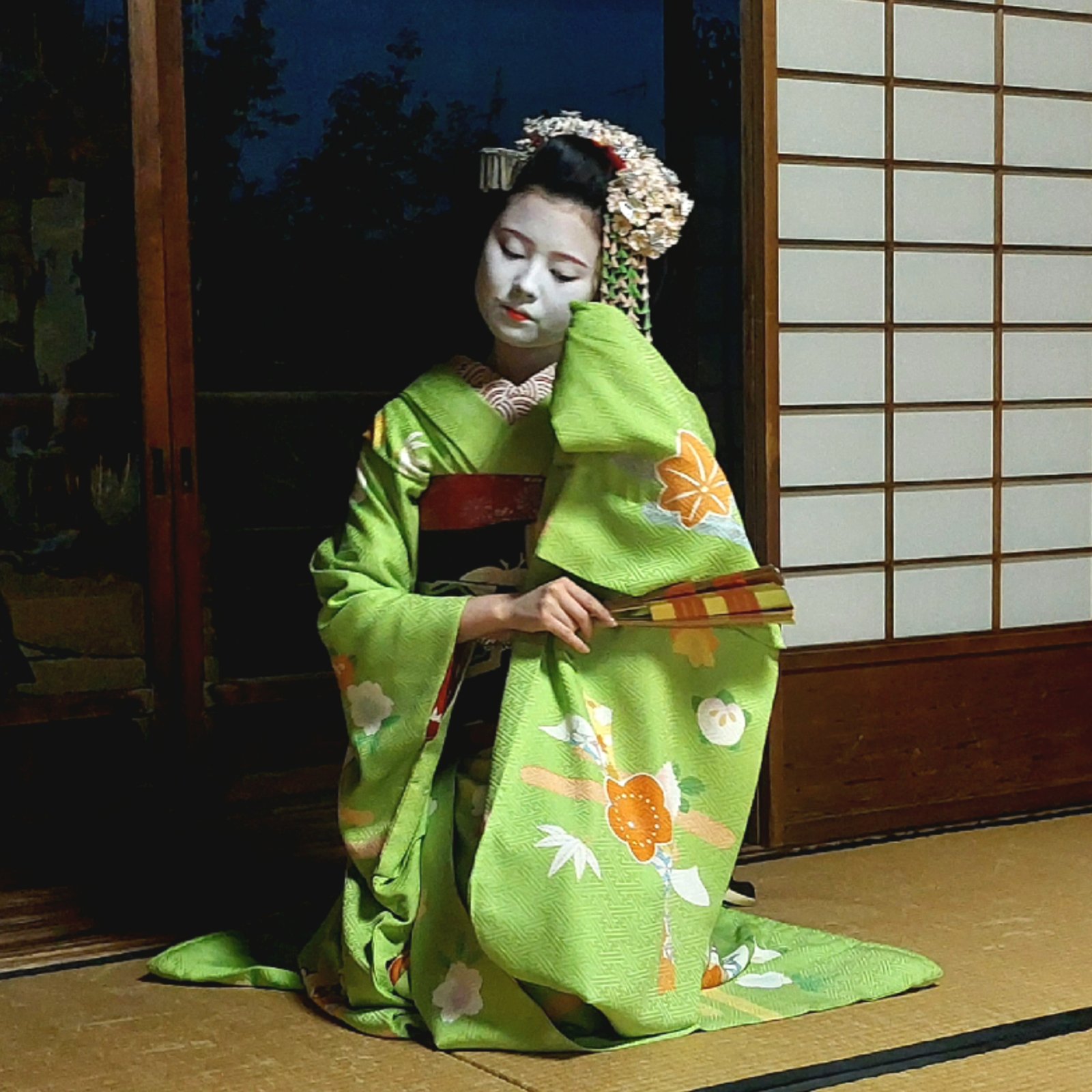
At the end of the evening maiko performed a Japanese traditional dance “Spring Rain”. The movements were very graceful. The background music was played on an old Japanese instrument that remotely resembles a guitar, the shamisen.
The game and the maiko dance were accompanied by shamisen.
The opening bow before the start of the dance performance.
It was not allowed to record the dance performance.