Accompanied by rain, we left Cape Town in our truck at 8:00 a.m. on Saturday and headed for the Namibian border. We were quite surprised that we stopped for the first night only a couple of hours’ drive from Cape Town. We spent the night at a citrus farm in Marcuskraal, which also accommodates occasional travelers. However, their main livelihood is growing citrus fruits.
This was supposed to be our last chance to admire Table Mountain. It's somewhere out there behind the clouds.
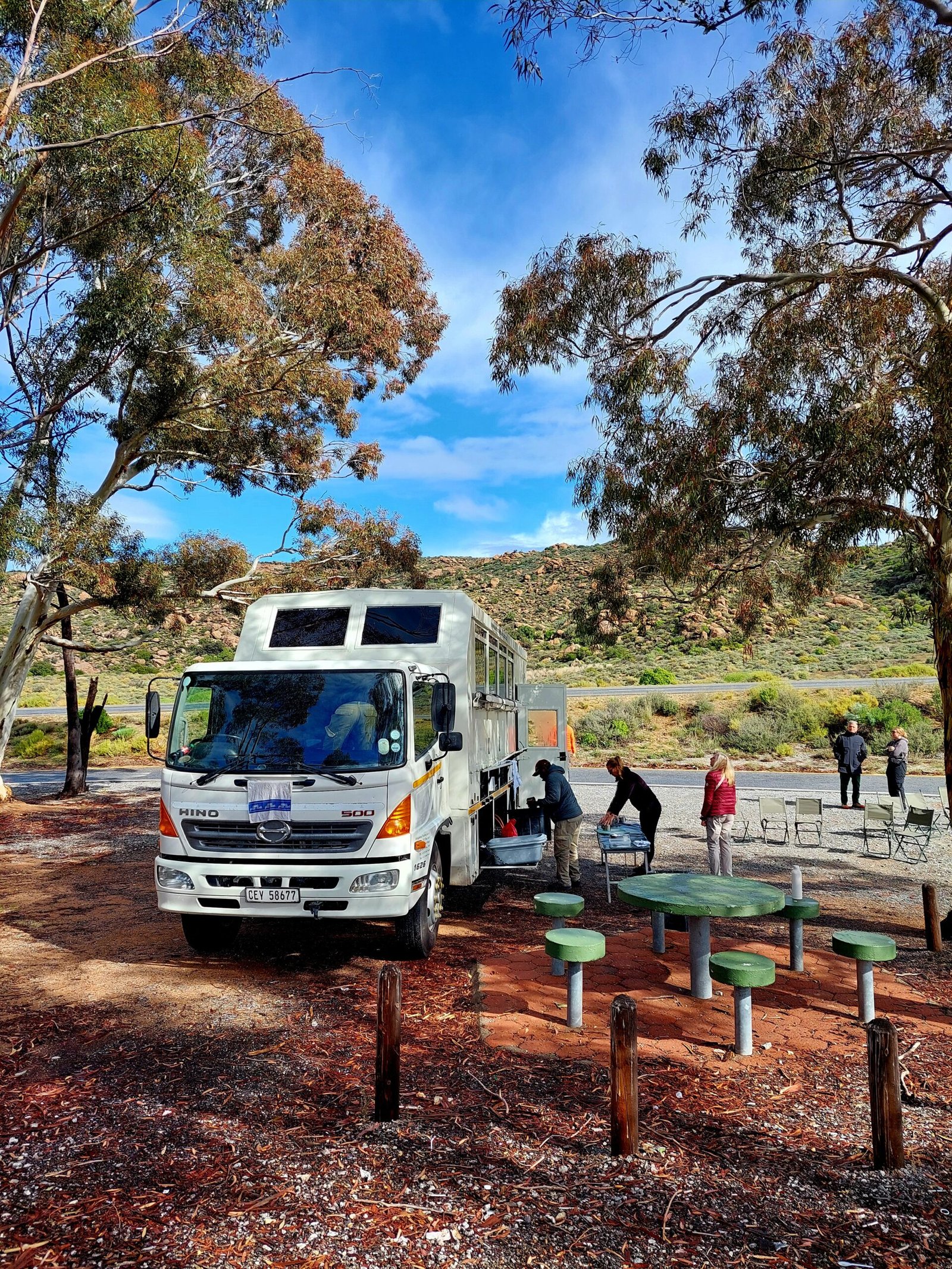
Then we stopped to buy some food.
Nomad Africa has been a regular customer of the citrus farm for years. Maybe that’s why the farm owners started offering dinner at their restaurant to people traveling with Nomad. It was nice to be able to eat indoors, as the rain that had been falling all day had soaked everything thoroughly. Unfortunately, our tents were wet both inside and out. They had already gotten wet during setup, because that was when the rain started coming down harder instead of just drizzling. Setting up the tents only takes 5-10 minutes at most, so you can imagine how wet it was when we put them up. When we went to bed after dinner, we had to dry out a couple of desiliters of water from the adults’ tent. At least the children’s tent was only damp on the walls and floor.
Right from the start, the kids wanted to pitch their own tent.
These will be our homes for the next six weeks.
It rained on and off throughout the night. Every time it started raining again, Jaana woke up wondering if we would wake up in the morning to find an own little swimming pool in the tent. Fortunately, this didn’t happen, and we stayed reasonably dry until morning. Everyone else slept well, but Ronja complained of being cold in the early hours of the morning. We ate breakfast in the outdoor shelter and set off for the border at around 8 a.m.
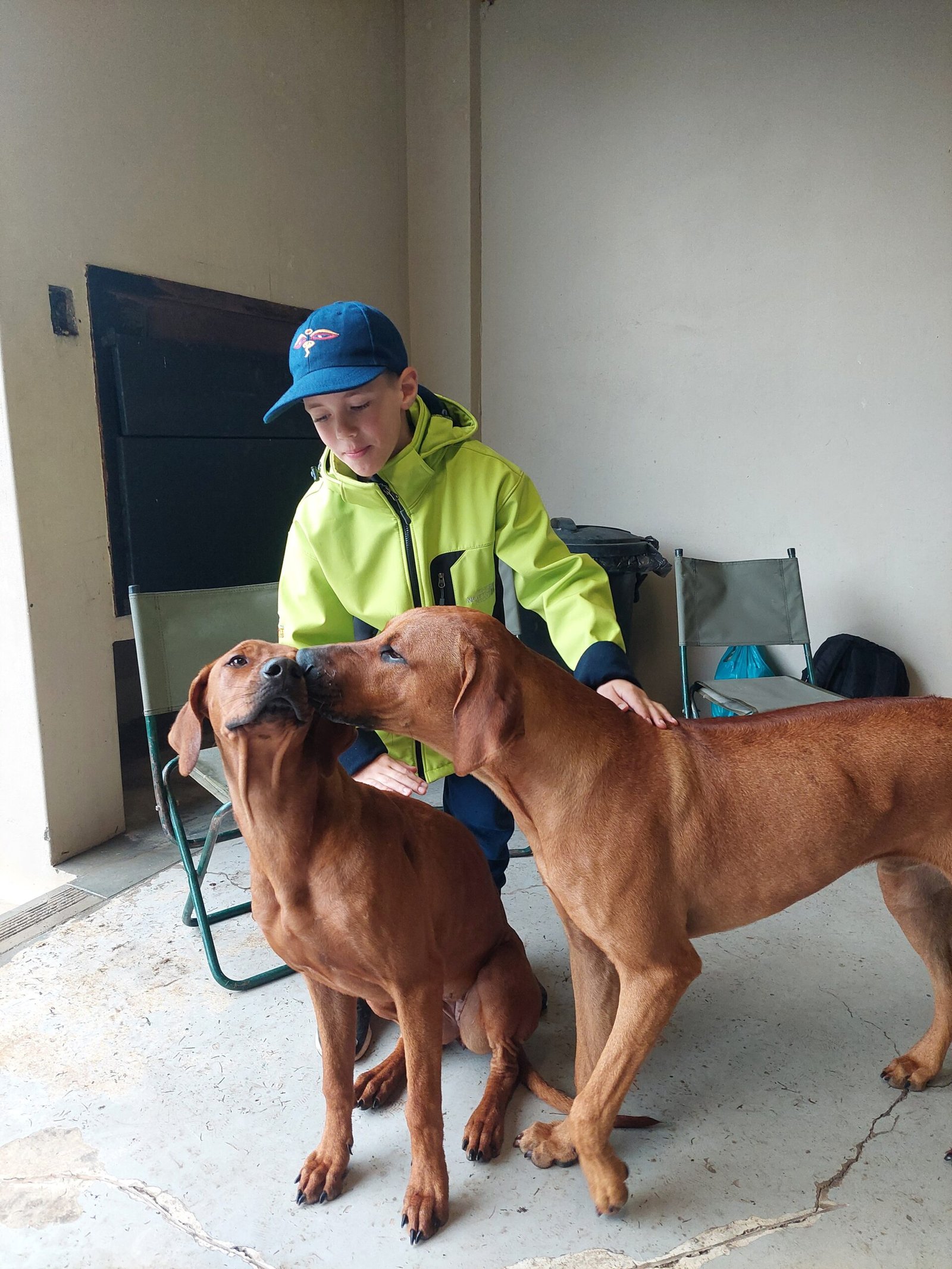
Risto found some canine friends during breakfast.
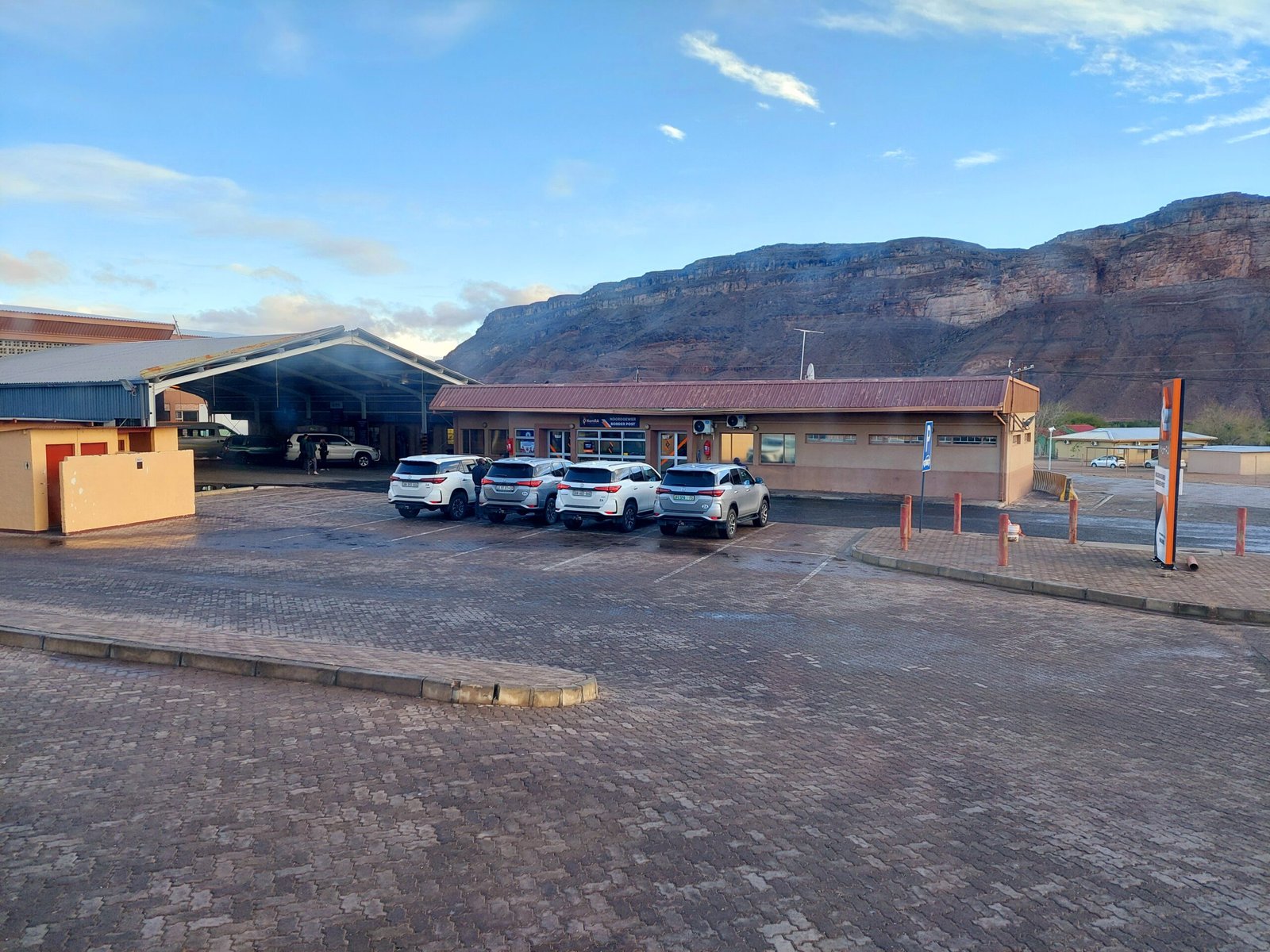
The second day of our trip was spent entirely driving, but we knew that in advance. During the day, we drove over 500 km north to reach the border crossing at Noordoewer. Namibia had introduced e-visas in April, so we had expected the border crossing to be a smooth process. However, this was not the case. First, on the South African side, a single official checked all 18 passports in our group very slowly and thoroughly. After that, our passports had to be taken to a couple of other windows for inspection before we could continue our journey to the Namibian checkpoint.
At the Namibian checkpoint, we all had to fill out entry forms with practically the same information that had already been requested on the e-visa. Only then were we allowed to join the queue to show our visas and the completed forms. In addition to the signed form, we also had to sign the e-visa, but this could not be done in advance. It had to be signed under the watchful eye of an official. We were all almost ready when it was our Dutch travel companion’s turn to present his e-visa. She had accidentally applied for her visa so that it would only be valid the following day. A brief consultation and a few humble apologies were required, but after that our Dutch travel companion was also allowed to continue her journey.
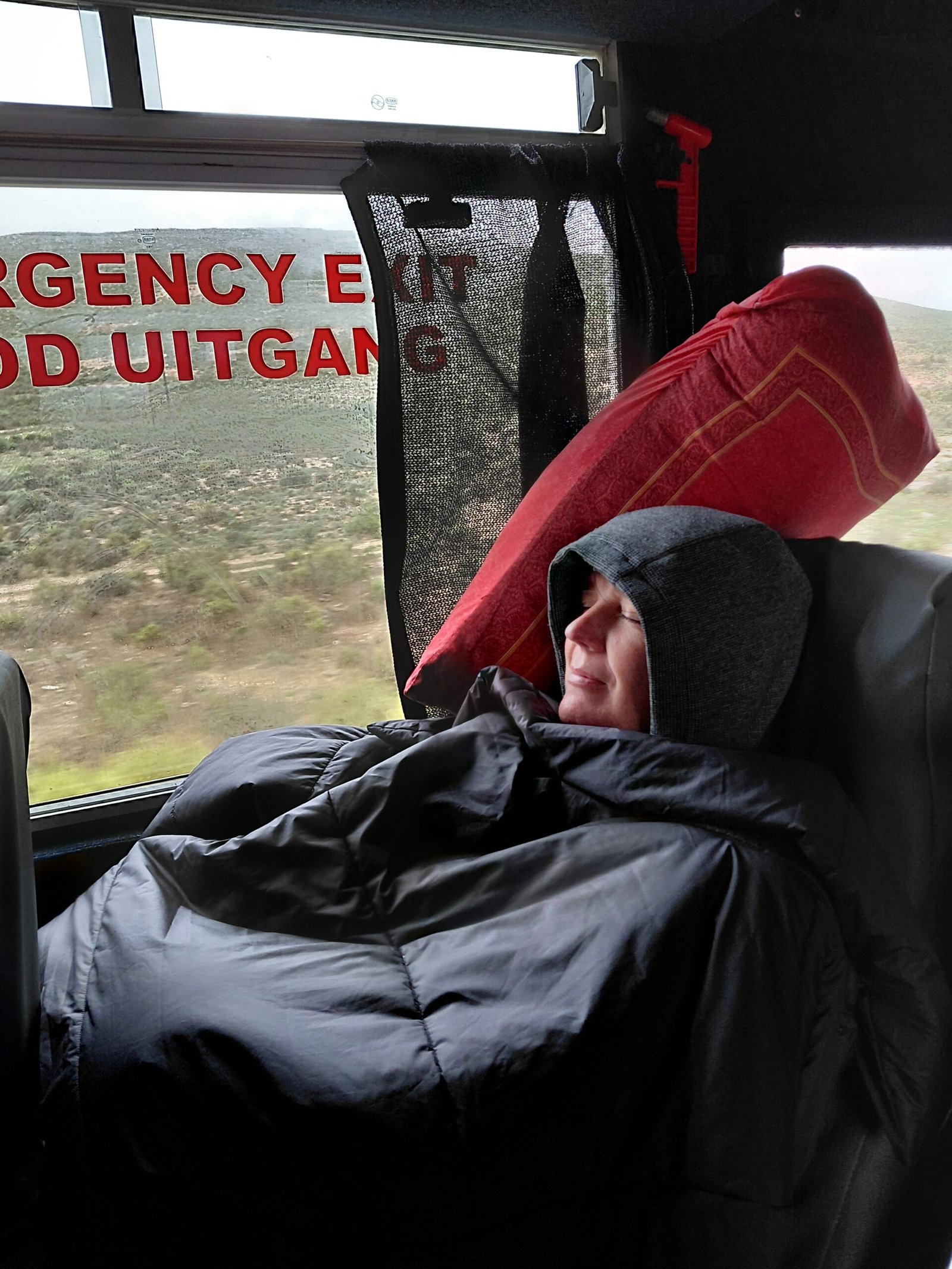
It was really cold in the truck all day. The down jackets came in handy right away.
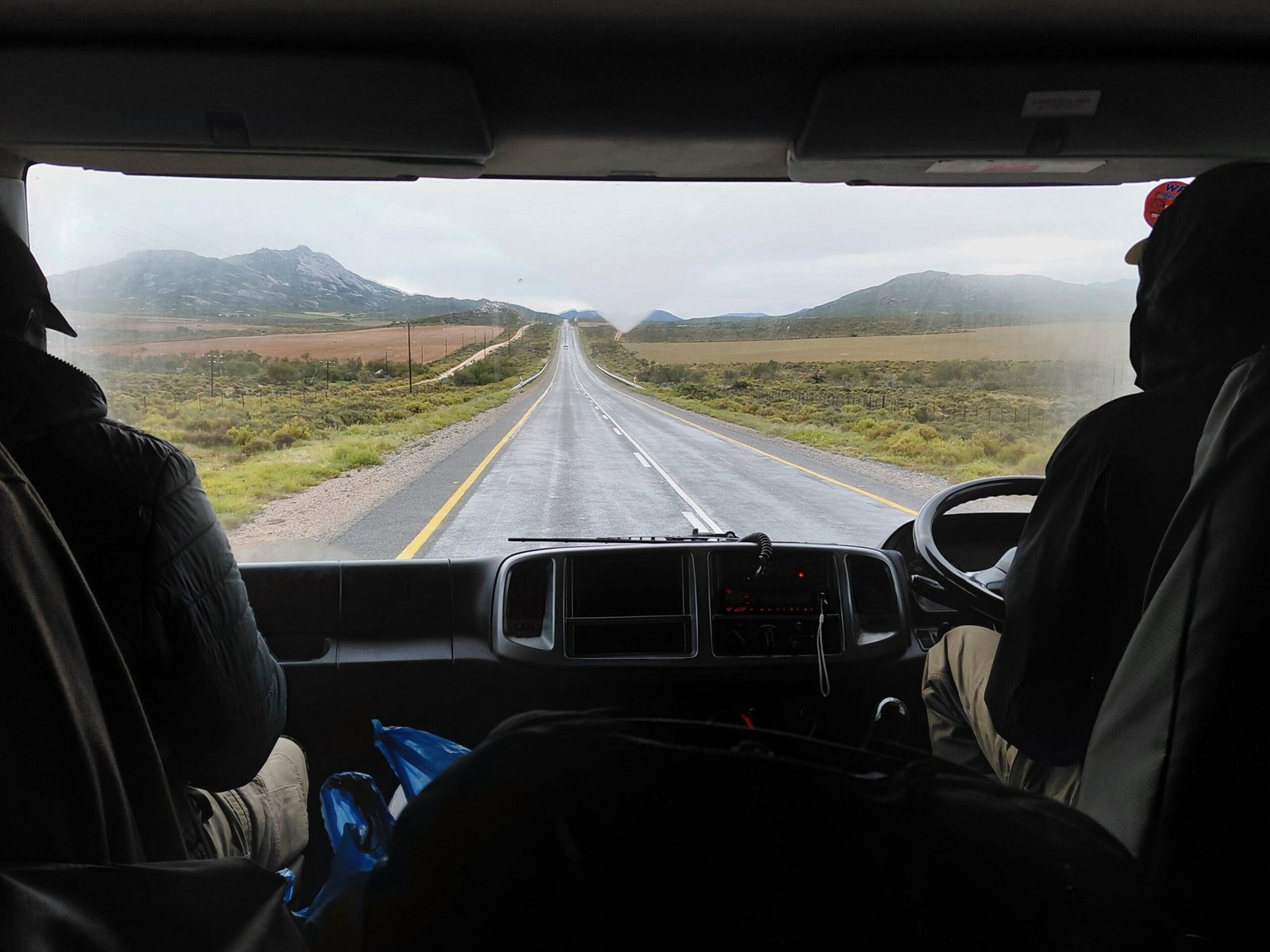
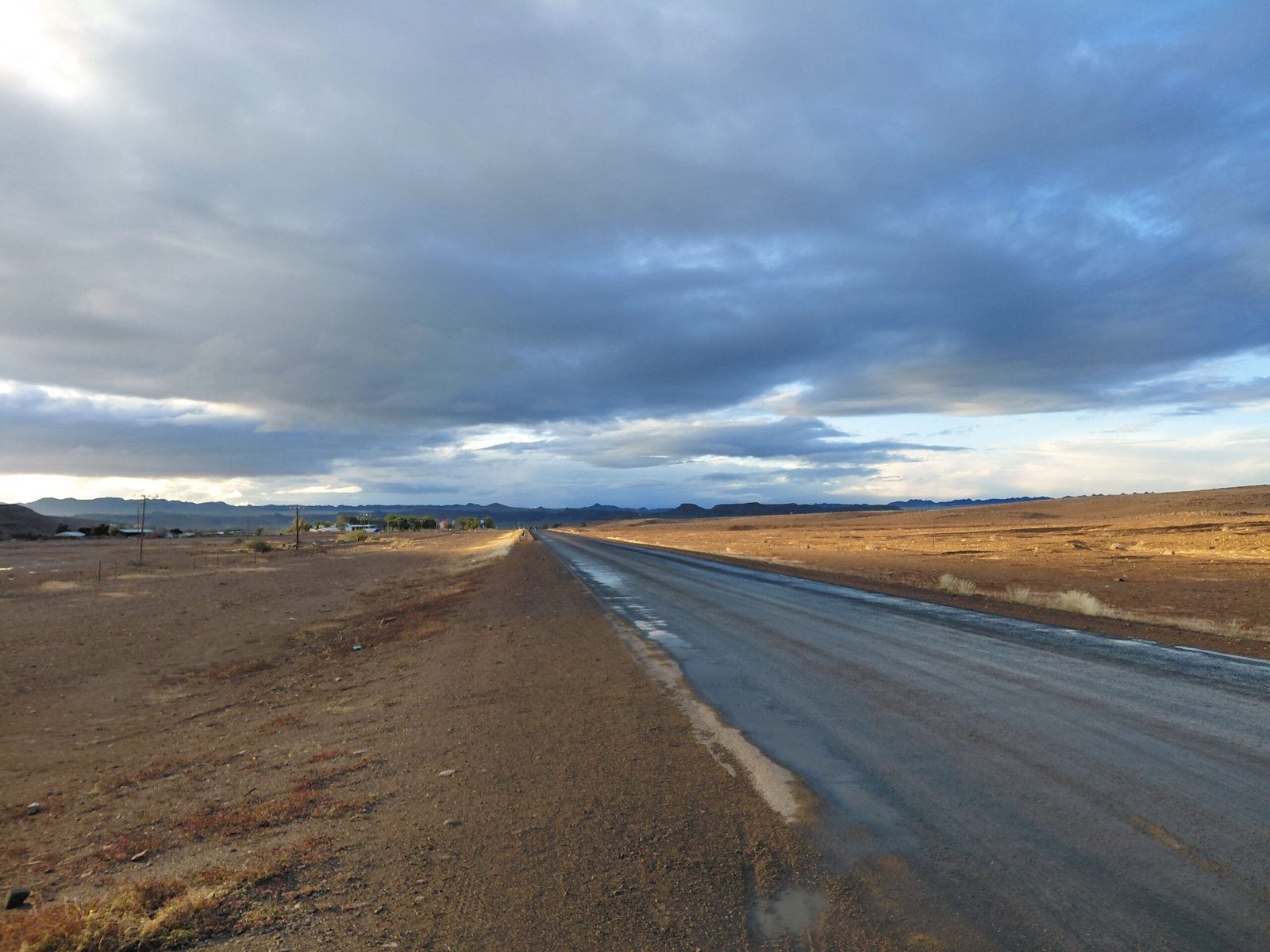
The scenery didn't change much during the day.
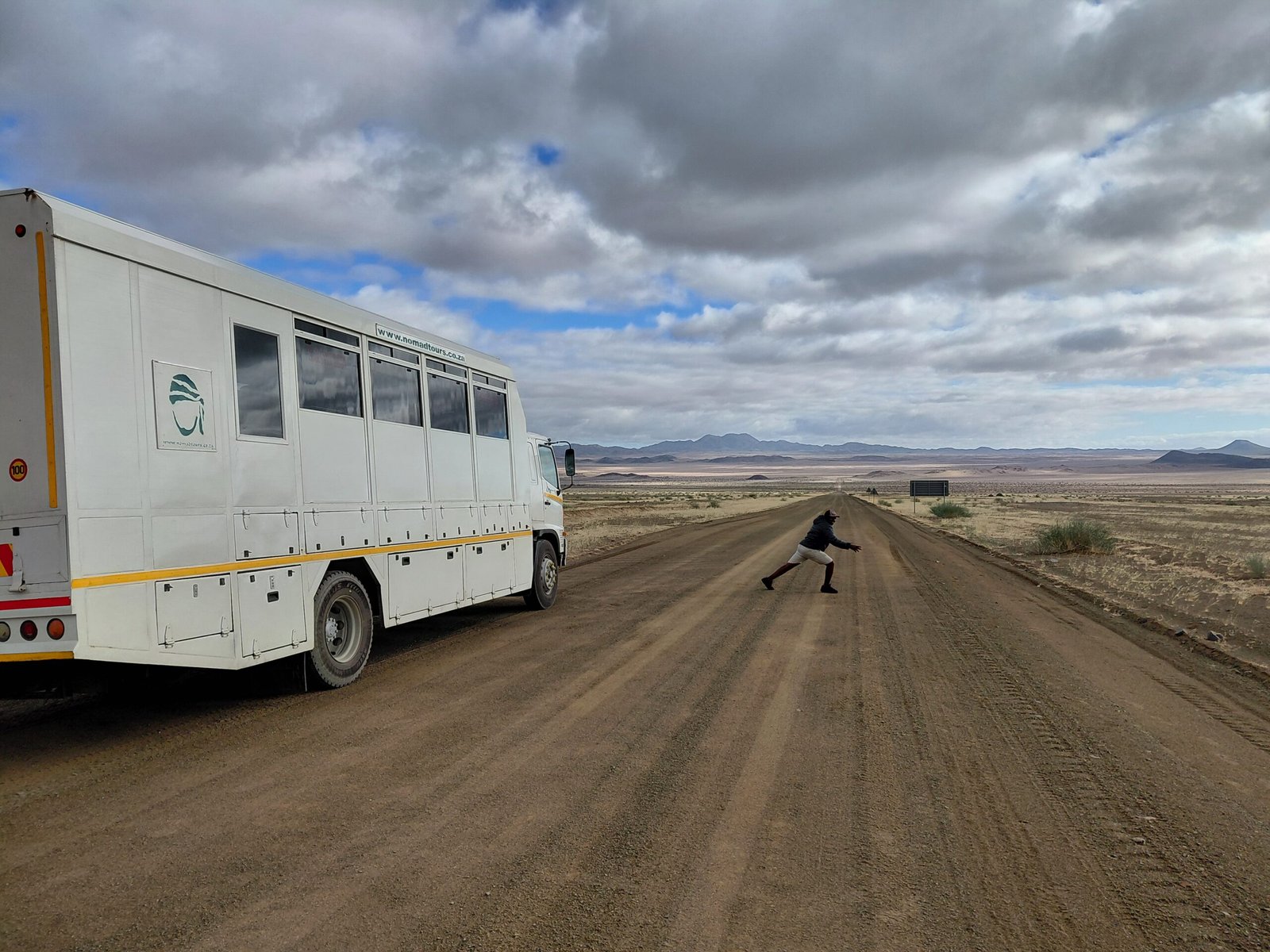
The asphalt quickly gave way to a sandy road.
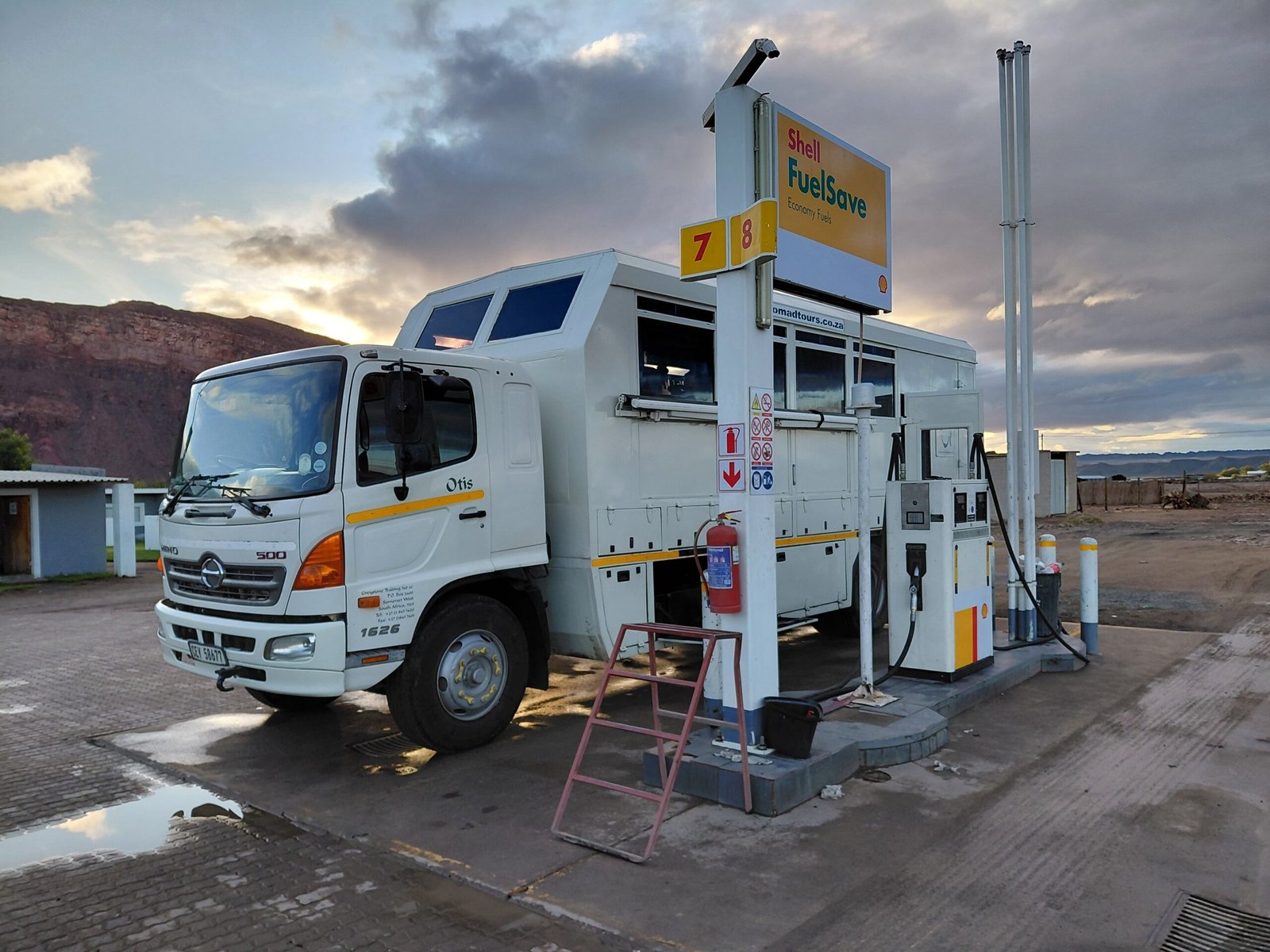
Refueling is needed now and then. Here the truck was topped up with 280 liters of fuel.
Along the way, we passed a vineyard where the workers lived in dwellings they had built themselves out of reeds.
At the Namibian border, the rain finally stopped.
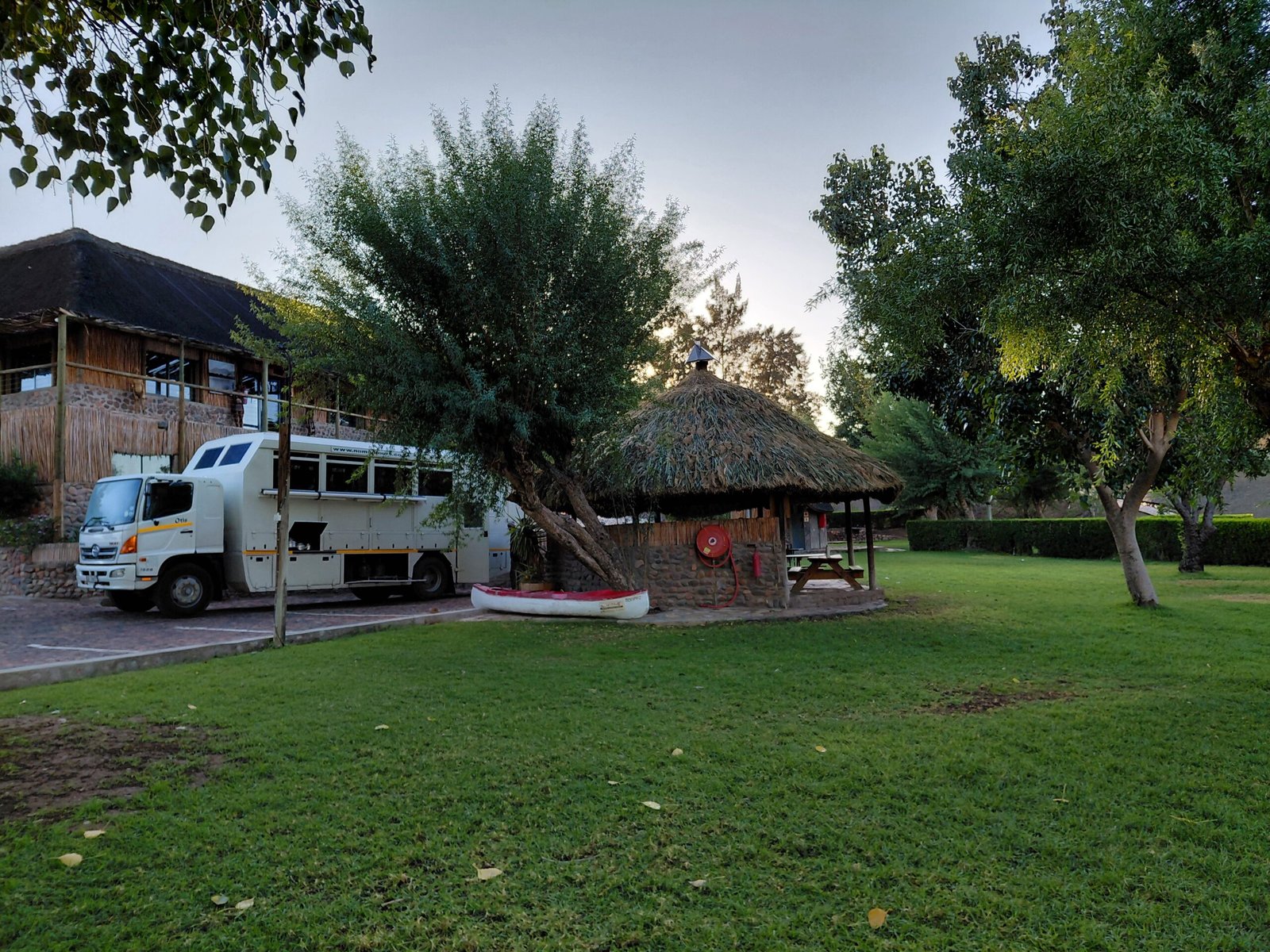
We drove on from the border for about 15-20 minutes and spent the night at a campsite called Felix Unite on the banks of the Orange River. The Orange River is the border river between South Africa and Namibia.
We prepared dinner in a shelter under the trees.
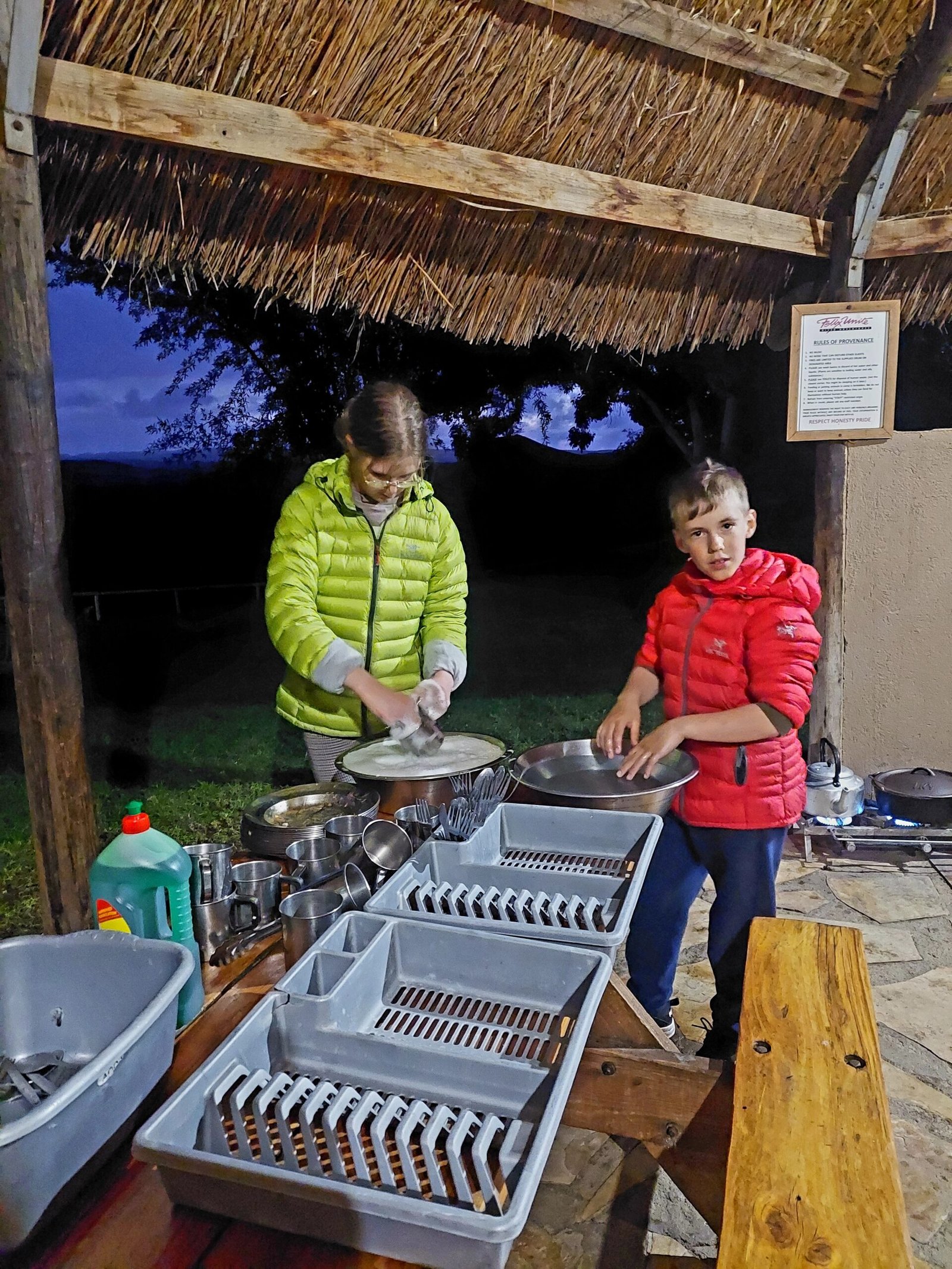
After dinner, the children helped washing the dishes.
It had stopped raining, but it was still very cold and damp. We pitched our already wet tents and dried the inside with a mop. After mopping, we needed a handful of paper towels, but after that the tents were at least relatively dry inside. We had to do the same drying operation for the mattresses, but despite that, we spent another night in fairly damp conditions.
In the evening, we ate dinner cooked by our guide Stanley (meat stew and rice), after which we slowly started to go to sleep. Again, Ronja was the only one who woke up at four in the morning because she was cold. Fortunately, our journey continues north, so the nights should get warmer and at least the rain will stay behind us. We can cope with the cold, but when everything is damp, including the sleeping bags, it dampens the mood a little.
After breakfast, we went to see the Orange River.
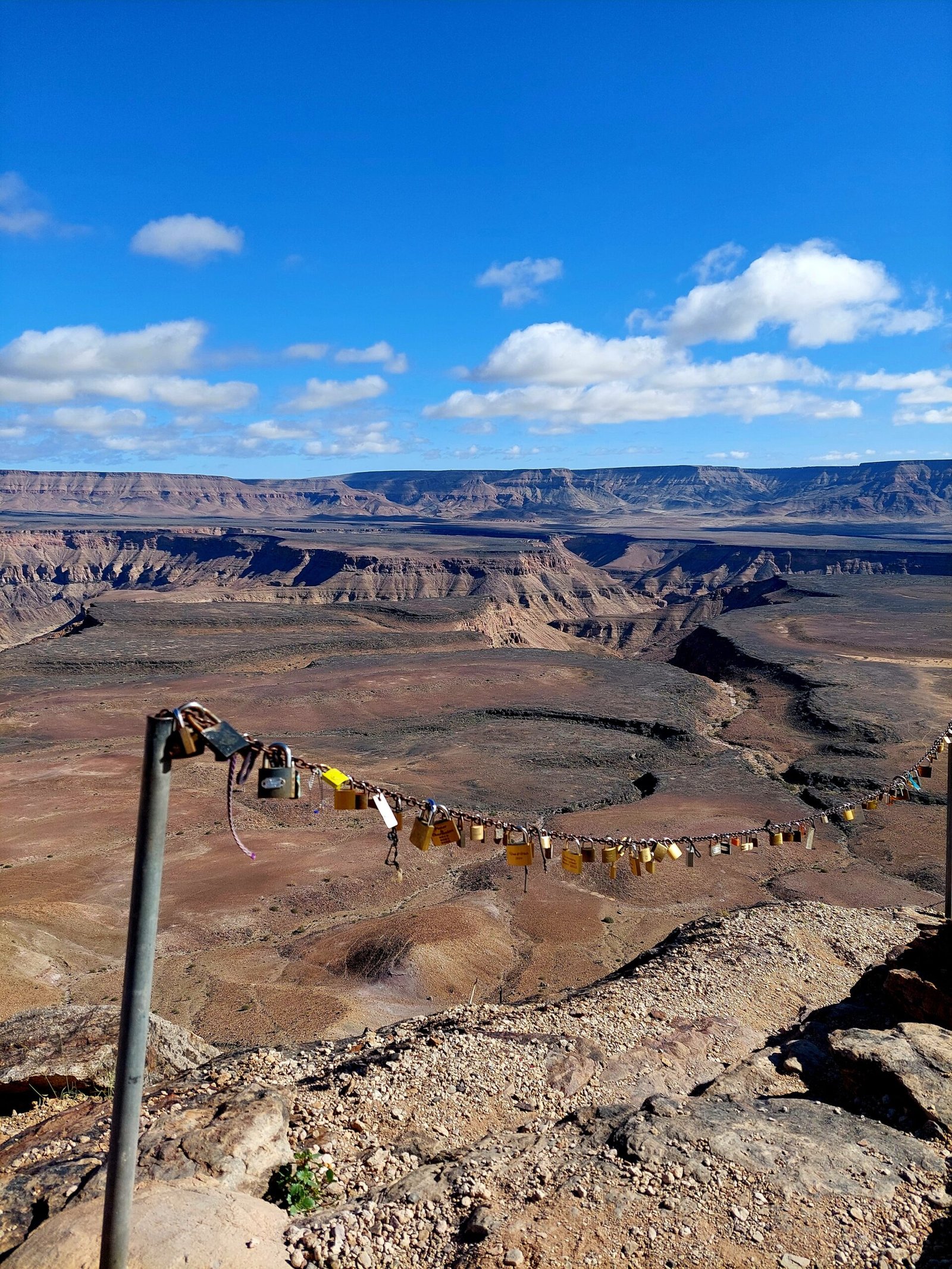
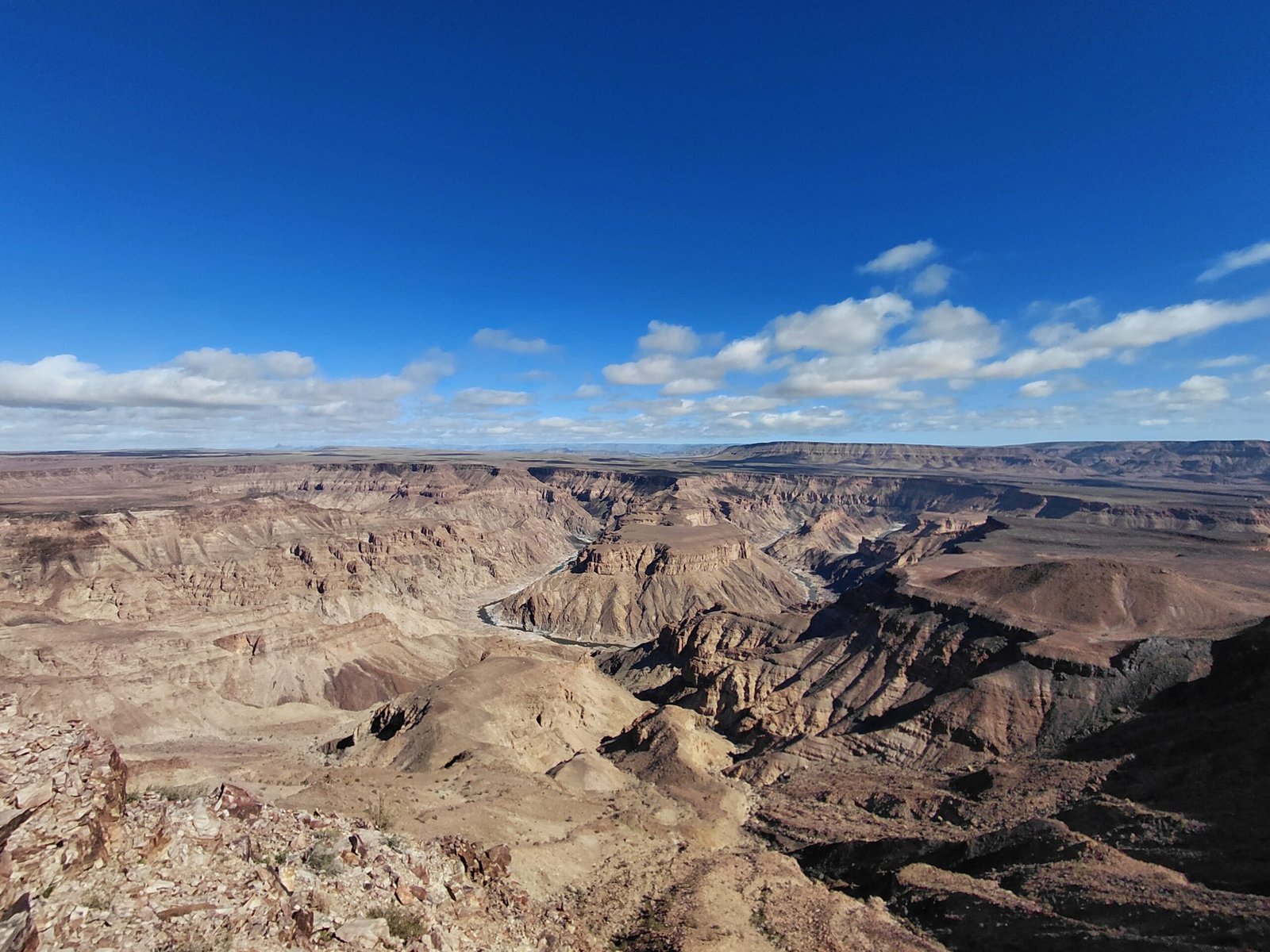
From Orange River, our journey continued at 8:30 a.m. towards Fish River Canyon, which is the second largest canyon in the world after the Grand Canyon. So now we have seen both of them. The Grand Canyon is more impressive in all its grandeur, but the scenery of Fish River Canyon was also worth admiring.
Lunch break
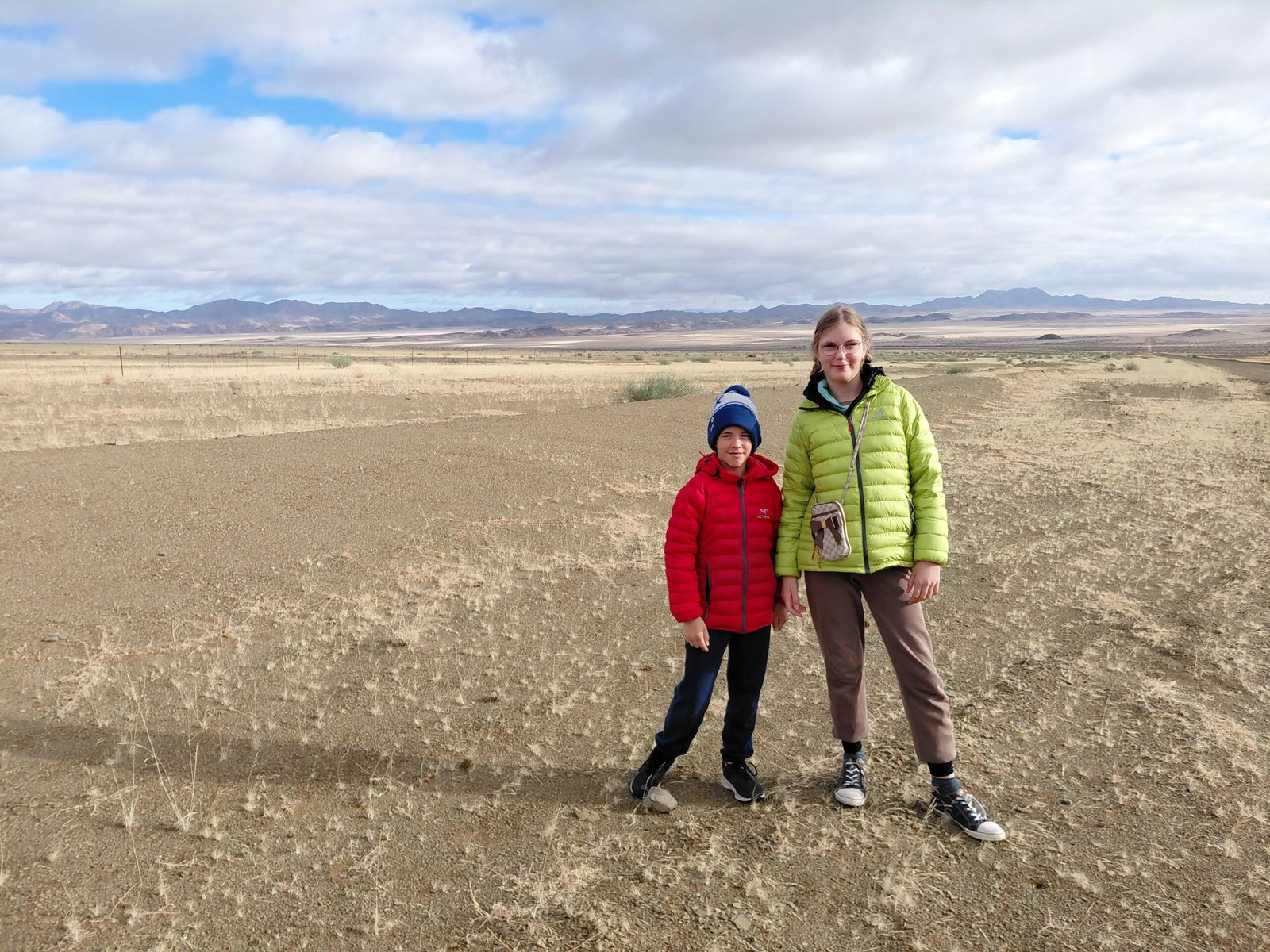
So far, the landscapes of Namibia have been quite dry and cold.
The hiking trail at the bottom of the canyon takes five days to complete. We chose a shorter 30-minute walk along the edge of the canyon.
We walked from one viewpoint to another along the canyon, while Stanley prepared lunch for us in the truck. We enjoyed our lunch in magnificent surroundings at the edge of the canyon, after which we continued our journey to our next overnight stop, the town of Keetmanshoop, where we stayed at the Schutzenhaus Guesthouse.
No one fell into the canyon.
Most of our group will be staying in small cottages or rooms during the trip. Apart from our family, there are only three other campers, our two traveling companions, and a German interpreter who is accompanying us on behalf of Nomad. The interpreter’s job is pretty easy, as the only German-speaking couple with us seems to understand English quite well. Of course, Yvonne from Switzerland does more than just interpret. She helps our two Zimbabwean guides with cooking and other daily chores.
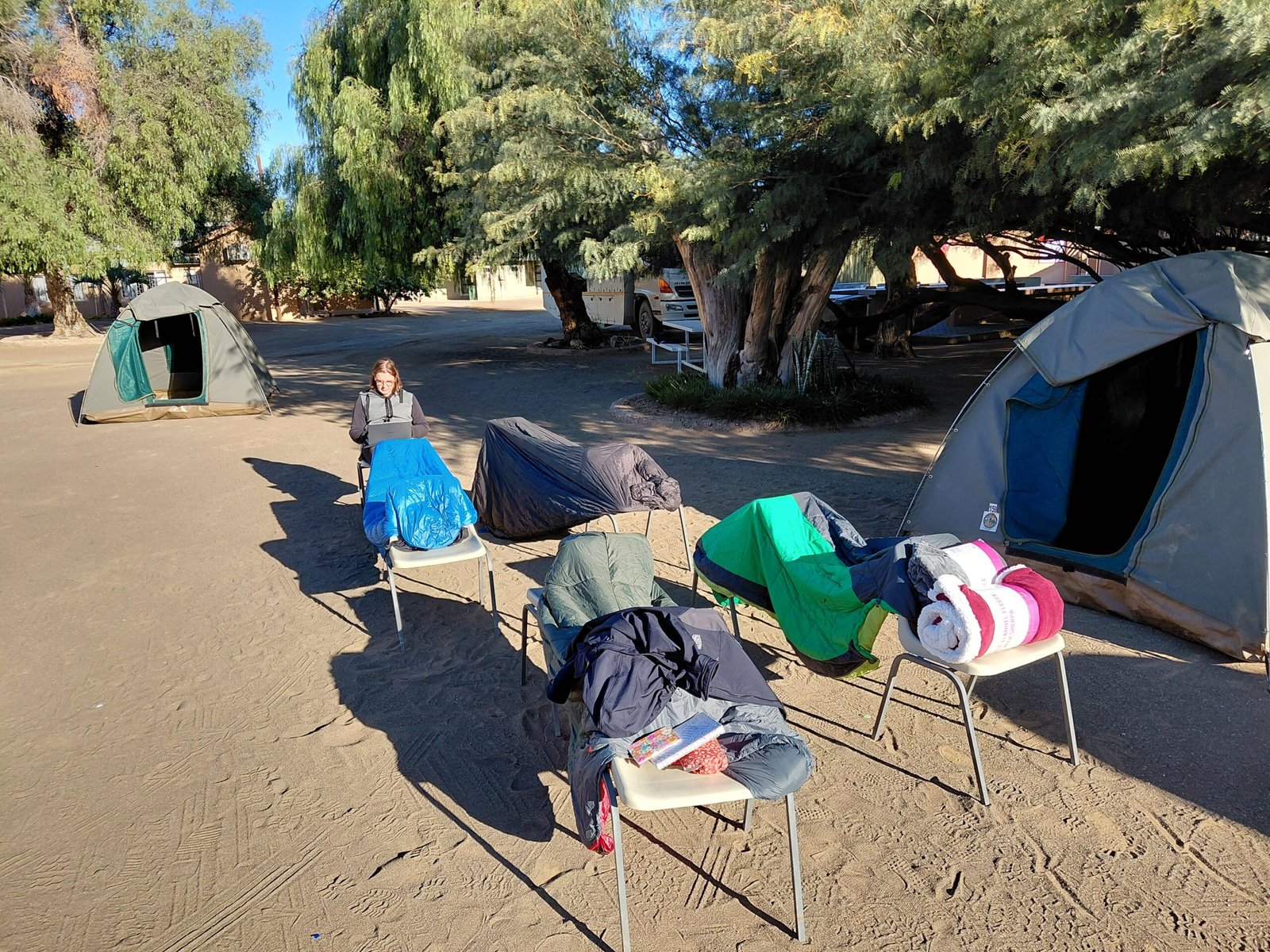
We spread out our sleeping bags in the campground and quickly set up our tents to dry in the sun. They dried quickly in the sun, and we knew that the night would be dry but cold. Marko quickly went to a nearby supermarket to buy an extra blanket for Ronja to put on top of her sleeping bag. We didn’t want her to freeze any more nights. Camping isn’t fun when it’s cold. Marko returned with two thick fleece blankets. One was for Ronja, and the other was given to Jaana, just in case, as she had swapped sleeping bags with Ronja. On paper, at least, Ronja’s sleeping bag should have been the warmest, as it was a Finnish made Joutsen down sleeping bag. But since Ronja said she was cold inside it, we decided to give her a synthetic fiber sleeping bag, which at least hadn’t been cold for Jaana on previous nights. In addition, Yvonne had taken a room for herself for the night, and we got two extra thick blankets for Ronja and Risto from there. To top it all off, Yvonne said she would leave her door unlocked, so if Ronja got cold despite all the extra blankets, she could just take her mattress and blanket and hop over to sleep on the floor of Yvonne’s room. What a lovely thought!
Drying our gear and updating the blog in the afternoon sun.
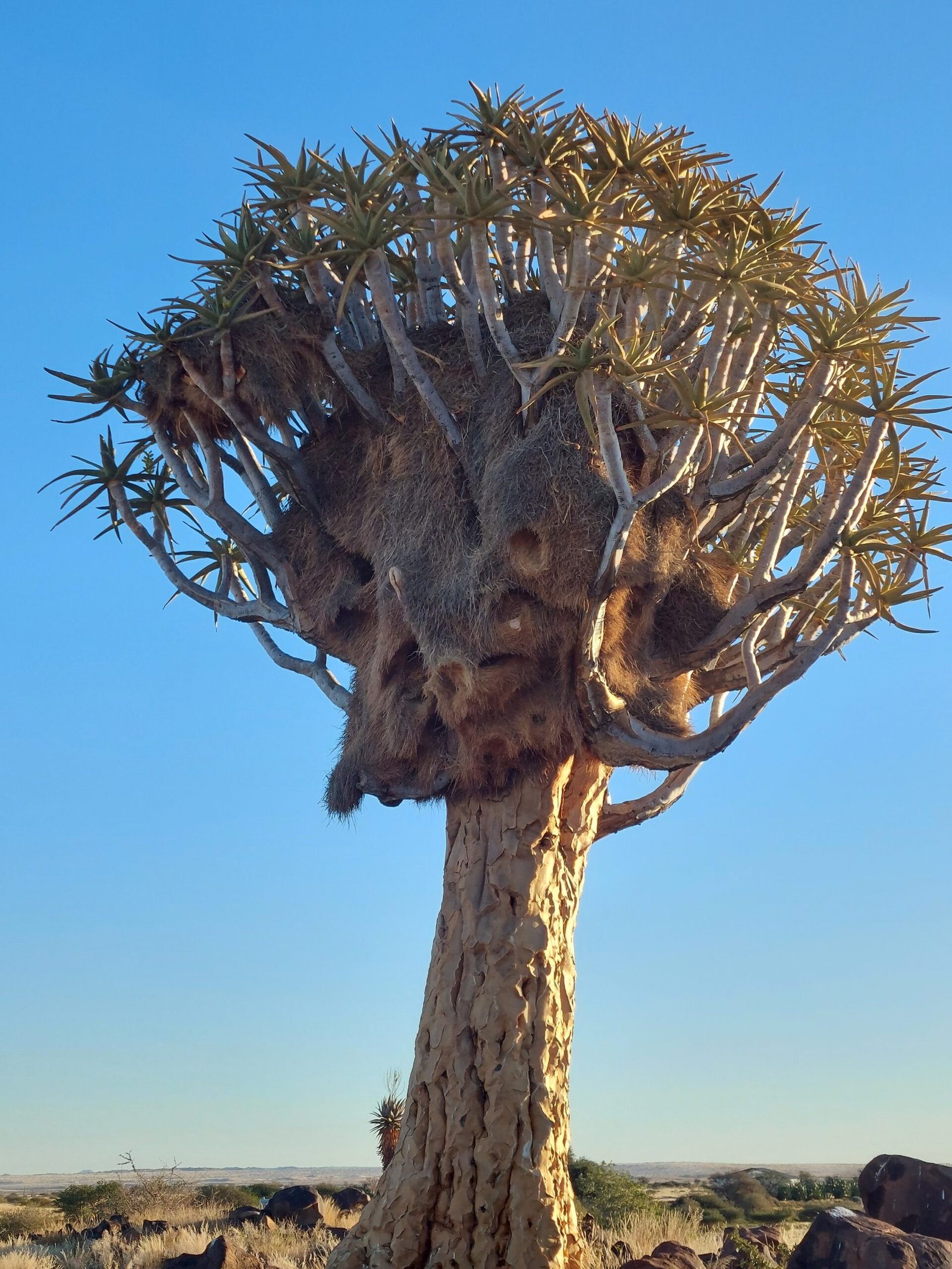
Before dinner, we went to visit a place called Quiver Tree Forest. There were funny-looking trees with nests built by weaver birds. Although the name refers to trees and a forest, we were told that the quiver tree is not actually a tree, but belongs to the aloe family. In addition to weaver birds, the forest was home to tamarins, which we knew from Table Mountain, and giant grasshoppers.
An apartment building for the birds.
These little guys were chilling out on the rocks enjoying the last rays of the evening sun.
This guy is definitely a giant grasshopper.
From there, our journey continued to an area called Giant’s Playground. To get there, we had to register at a small guesthouse near the park gate. In the yard of the guesthouse, there were also two cheetahs in a small enclosure. It happened to be feeding time, so we stayed for a while to watch them being fed and to listen to a brief introduction about them. Risto, however, was more interested in the three dogs at the guesthouse, which he went to pet.
Dinner time for Saddam and Gaddafi
The parents of the cheetahs had ended up at the guesthouse as orphans. The two remaining males, Saddam and Gaddafi, were born there. The cheetahs actually had a six-hectare fenced area on the guesthouse grounds where they could roam freely. However, the pair were very happy to come ‘home’ at mealtimes in the hope of an easy dinner. We heard that the local cattle farmers and the cheetahs were not the best of friends. The cheetahs have a nasty habit of hunting more than what they can eat, so the goat farmers don’t like them at all. The cheetahs had killed 135 goats on a nearby farm, which is a big loss for the low-income locals. However, these two cheetahs were able to live in peace without fear of being shot, because the entire six-hectare enclosure had been made so high that they could not jump over it in search of goat meat.
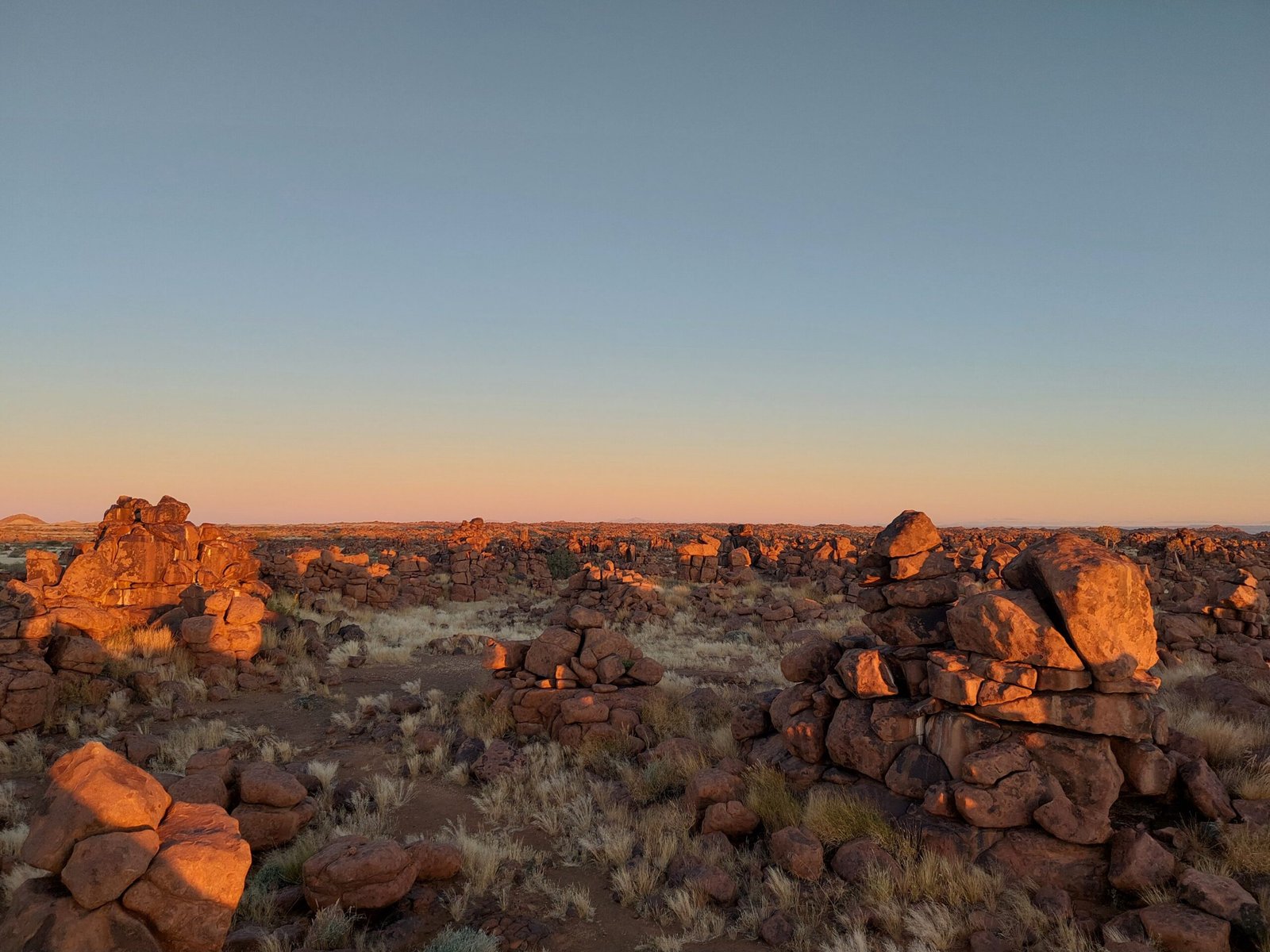
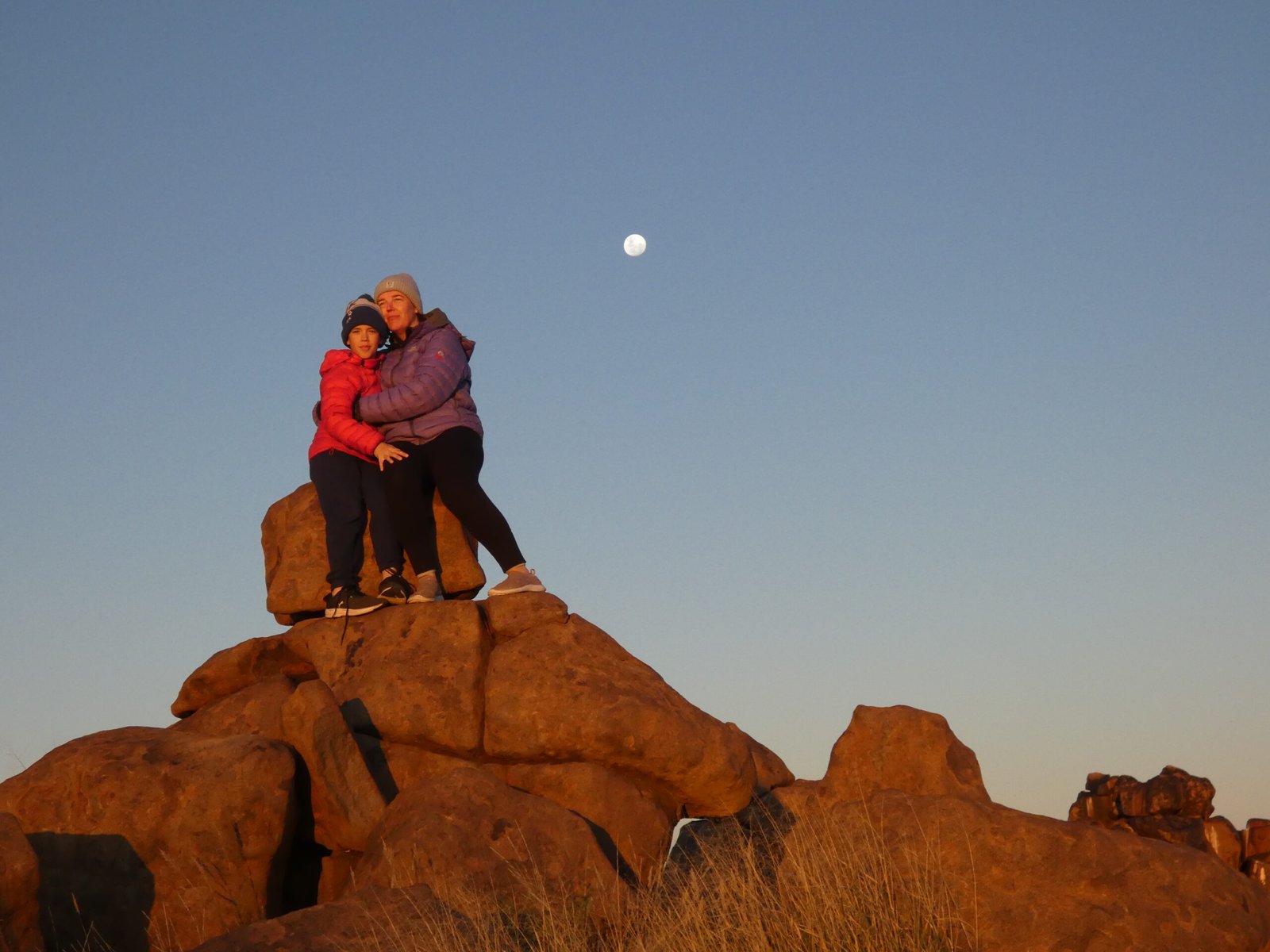
We arrived at Giant’s Playground a quarter of an hour before sunset. The place was full of rock formations, each bigger than the last, which you could climb on. The rocks really looked like giant building blocks that giants might have played with at one time.
Giant's Playground was a beautiful place in the evening light.
The rock formations were a great place to admire the sunset.
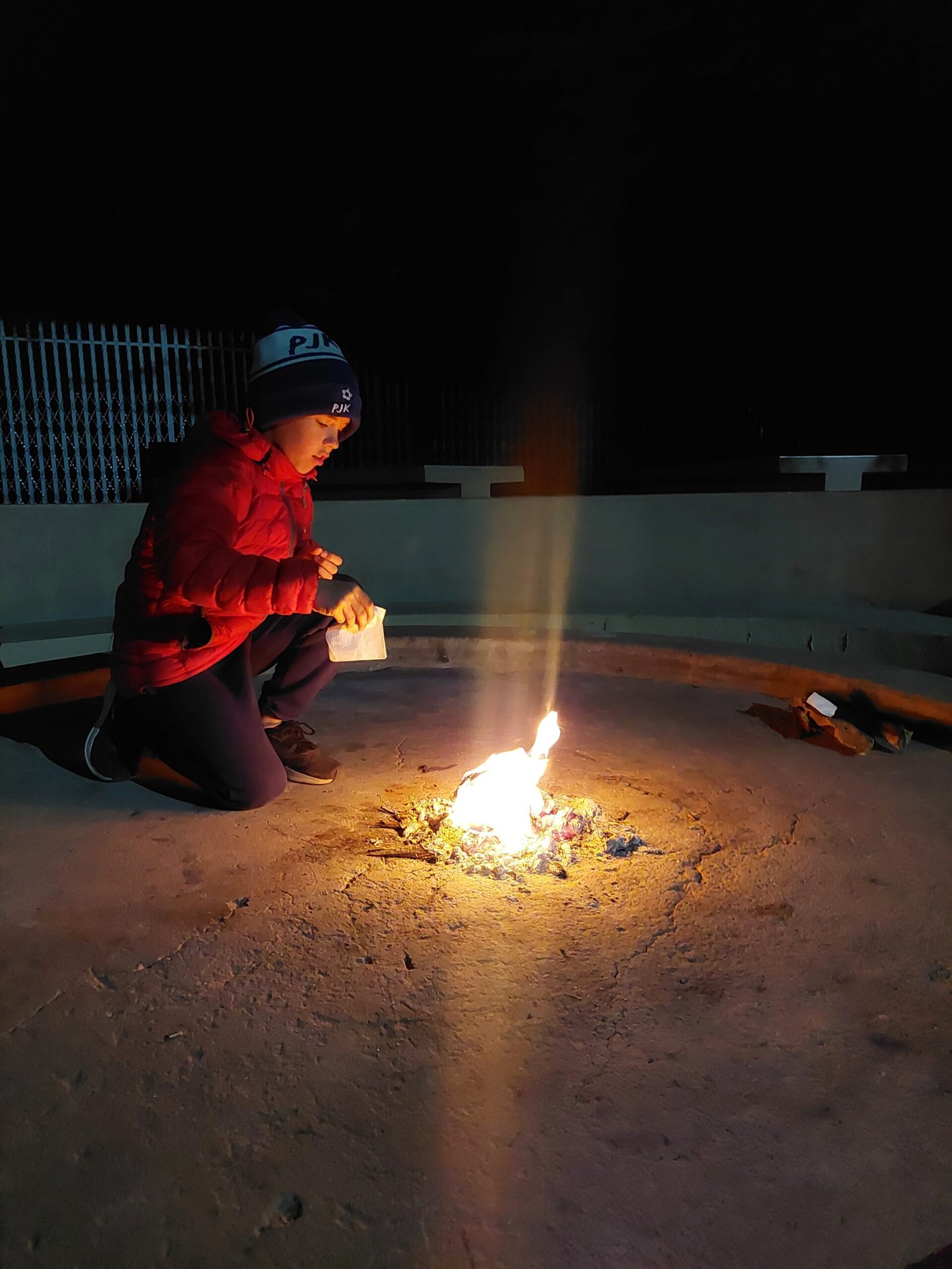
Tonight, Stanley didn’t cook dinner for us. Instead we ate at the campsite restaurant. There was a large gas heater by the table, and our travel group had reserved a seat for Ronja next to it. Ronja was naturally very happy about this. Since we were staying at a guesthouse of German origin, we were served huge Wiener schnitzels for dinner. The steak alone took up more than half of the plate, so we were all really full after dinner. After dinner, Jaana and Risto went to set up a small campfire at Risto’s request.
Risto enjoying his favorite pastime
Marko and Ronja stayed behind at the restaurant to chat with the other travelers. A little later, Ronja joined Jaana and Risto at the campfire, after which they all retired to the tents to sleep. As the temperature was expected to drop below freezing that night, we put on plenty of clothes before crawling into our sleeping bags. Ronja was also wrapped up in two blankets along with her sleeping bag, so hopefully she would stay warm during the night.
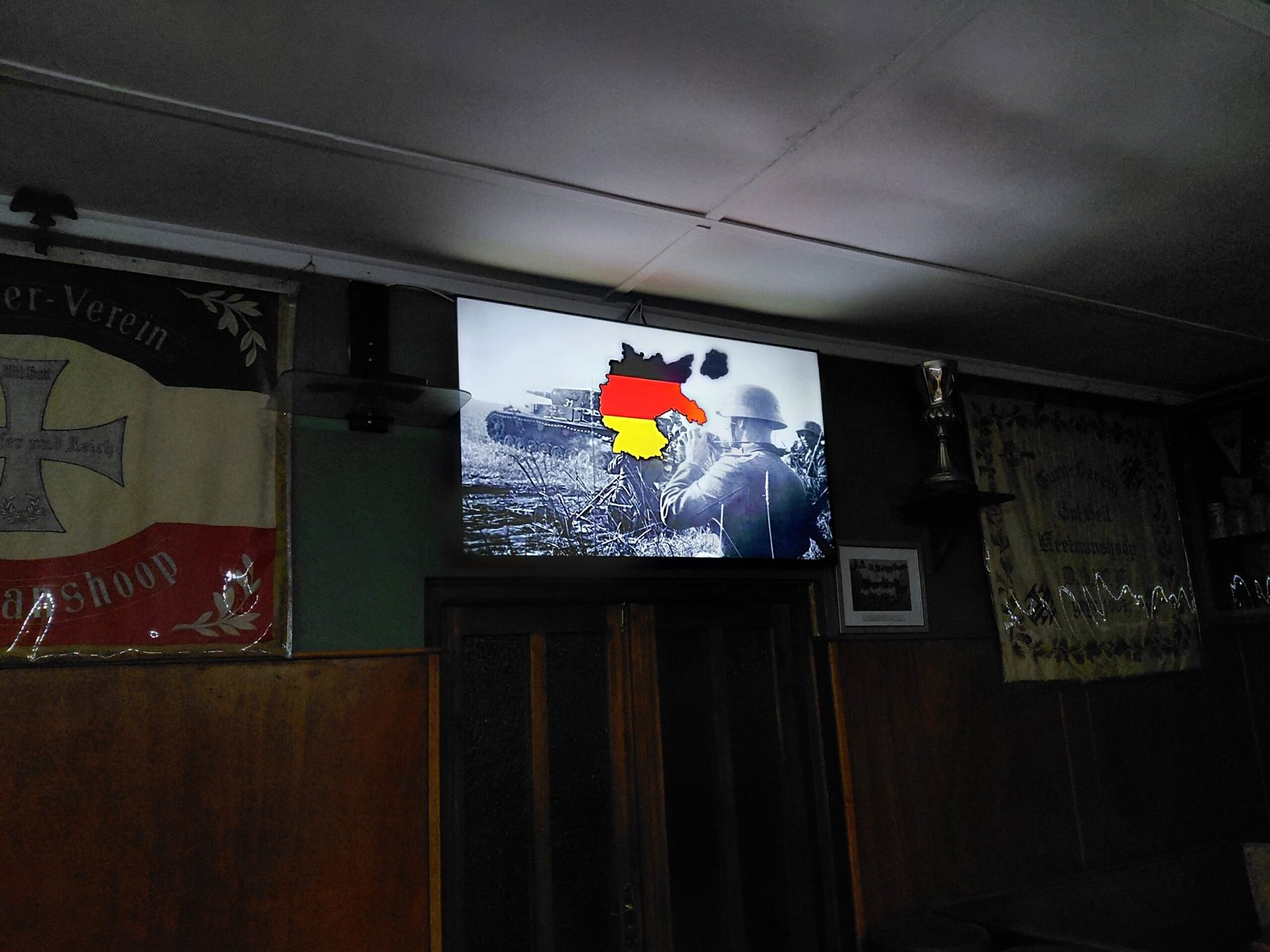
The restaurant closed soon after dinner, but the staff tipped about a bar next door. Dimitri, Sophie, and Marko decided to pay a quick visit to the bar. It wasn’t hard to find, as German marching songs could be heard all the way down the hallway. This was not your average bar. The walls were decorated with various pictures and posters strongly reminiscent of the German colonial era, and the TV was showing a karaoke version of the World War II song “Erika,” which four gentlemen in the bar were enthusiastically singing along to. These were four local guys who could be described as ‘old-school’ fellows. For example, they wanted to sing us the national anthem of “Süd-West Afrika,” as Namibia was called in the ‘good old days.’ They said Finland was a good country with good people. After a brief chat in German, we were suddenly all brothers which was celebrated with several shots of Jägermeister and Unicum. It was quite a way to end the evening.