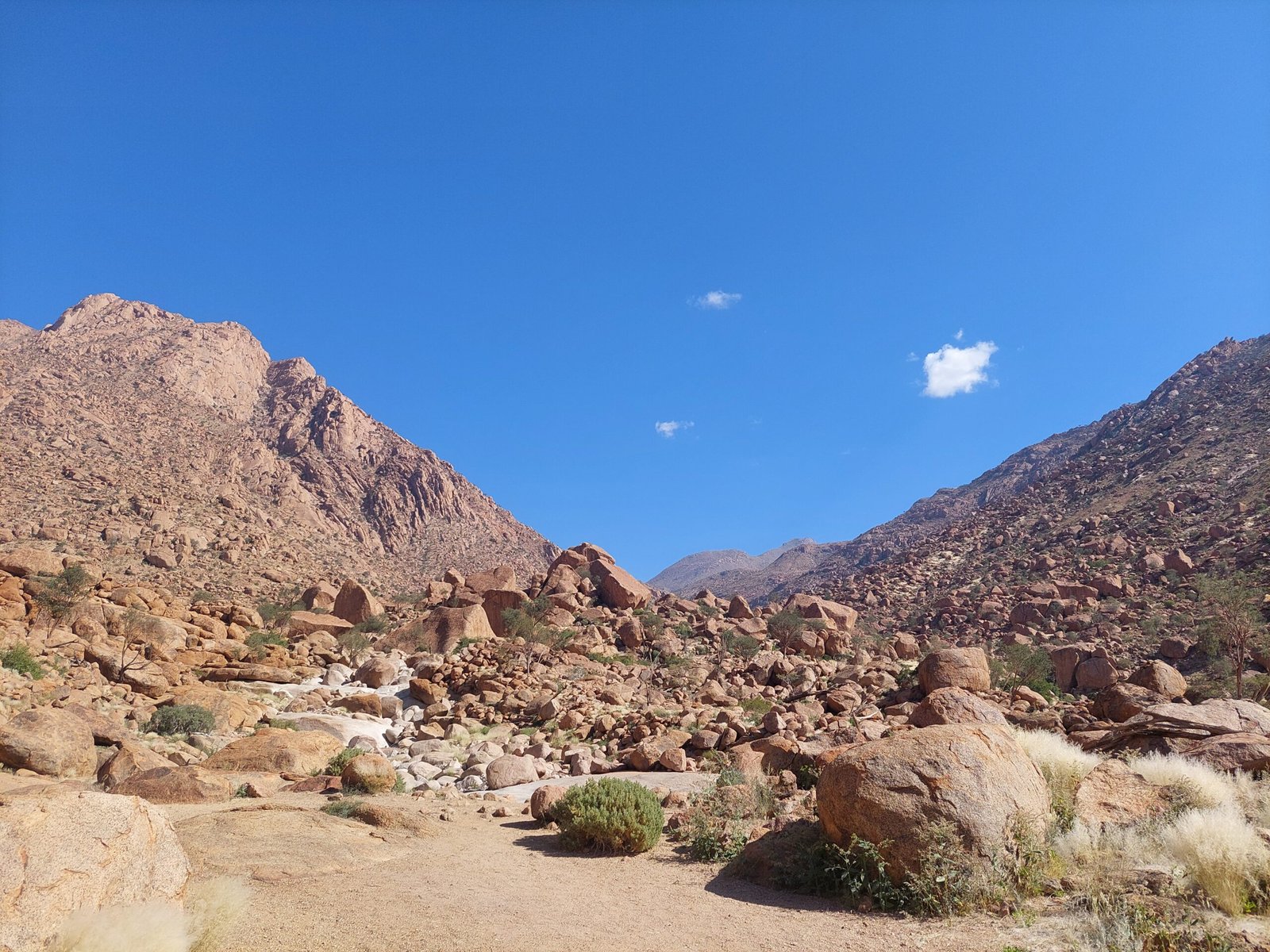
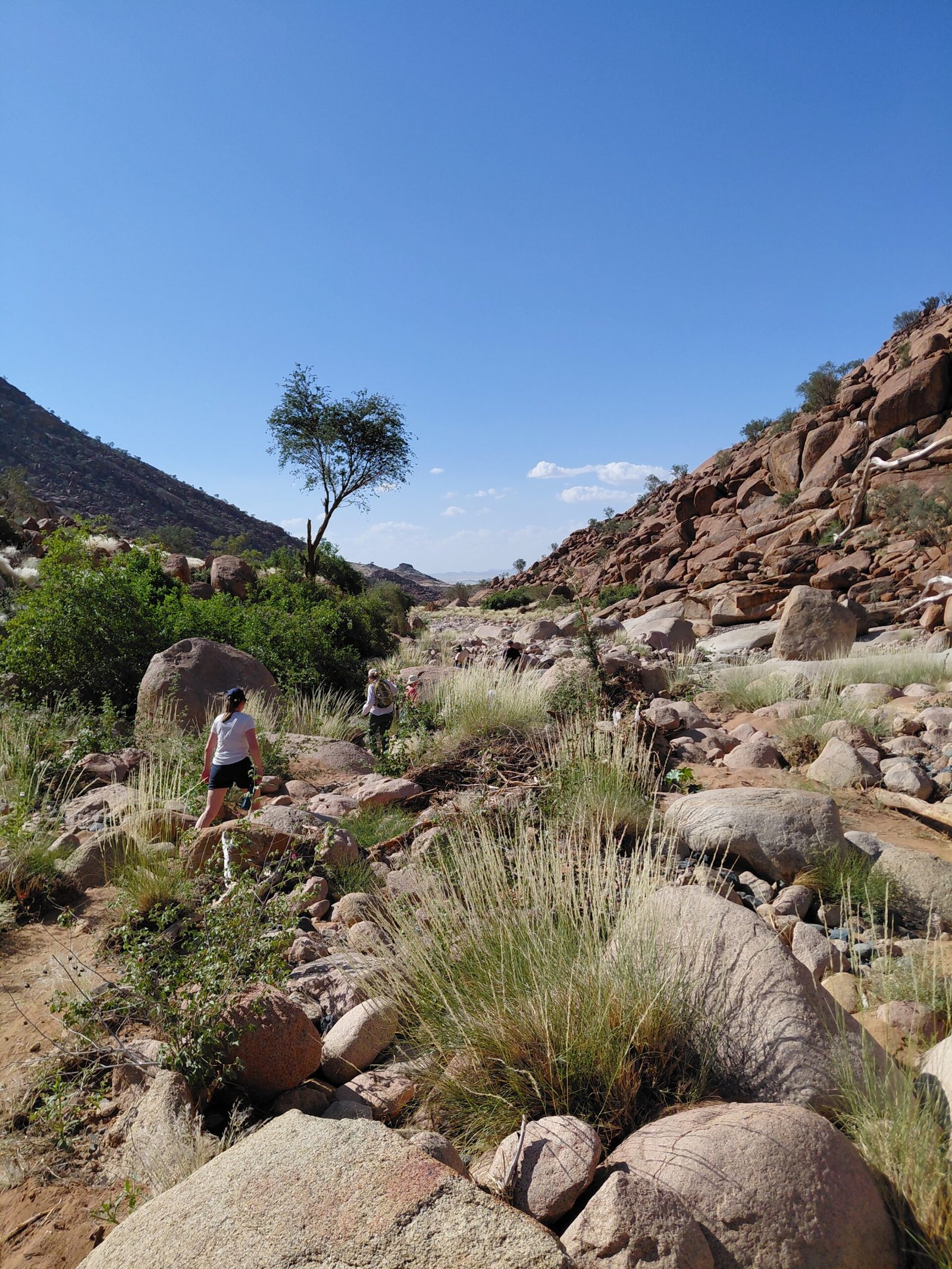
On Sunday, we continued our journey toward Brandberg Mountain. The drive wasn’t long, so we arrived at the village of Uis around noon. Before setting up camp, we went on a three-hour walk in the valley between the mountain peaks. It wasn’t the best time for a walk, as it was incredibly hot. The walk wasn’t very long, only about 5 km in total, but heavy rains had washed away part of the trail. So we walked almost the entire way along a very rocky path, which was quite slow going.
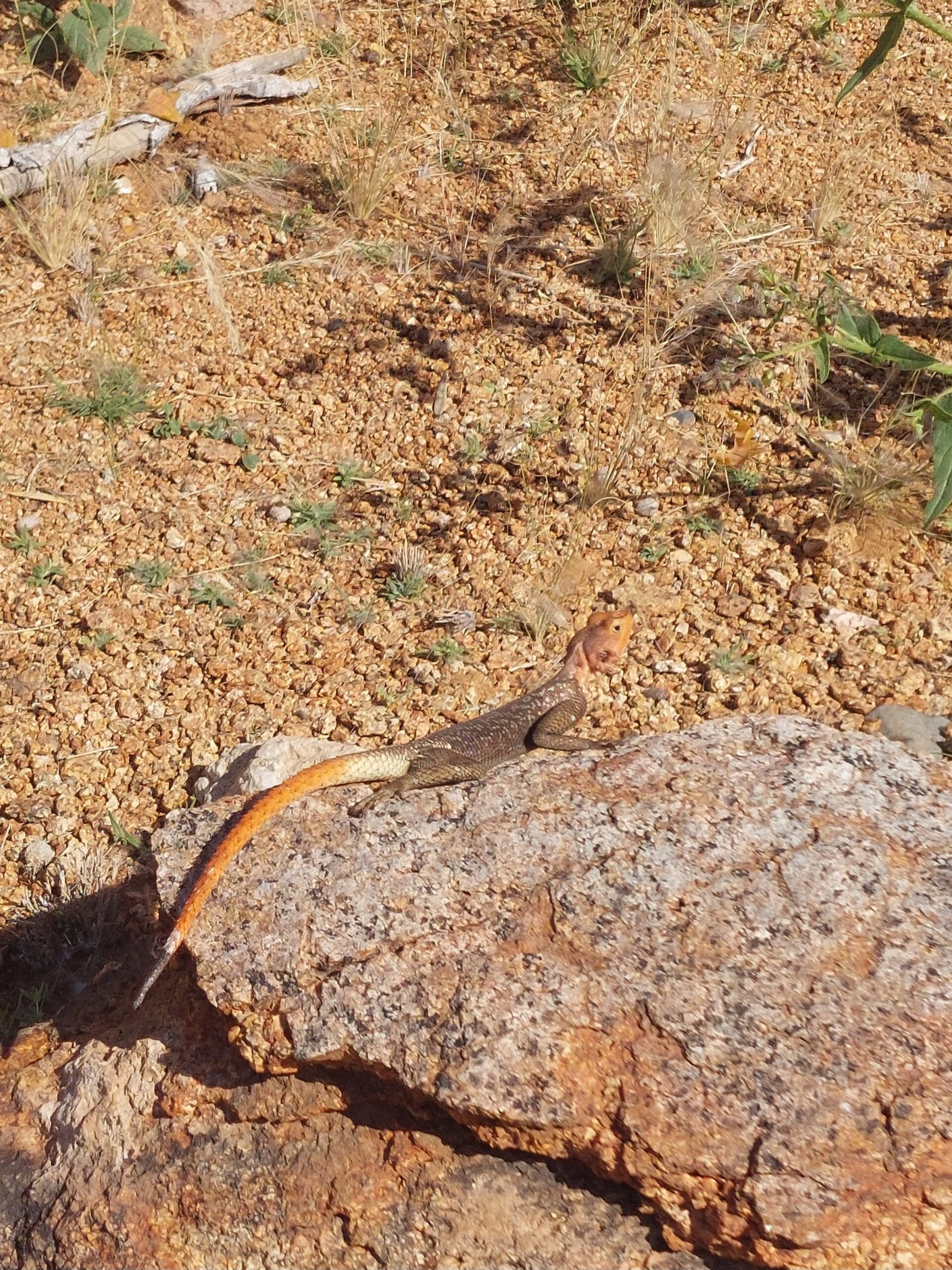
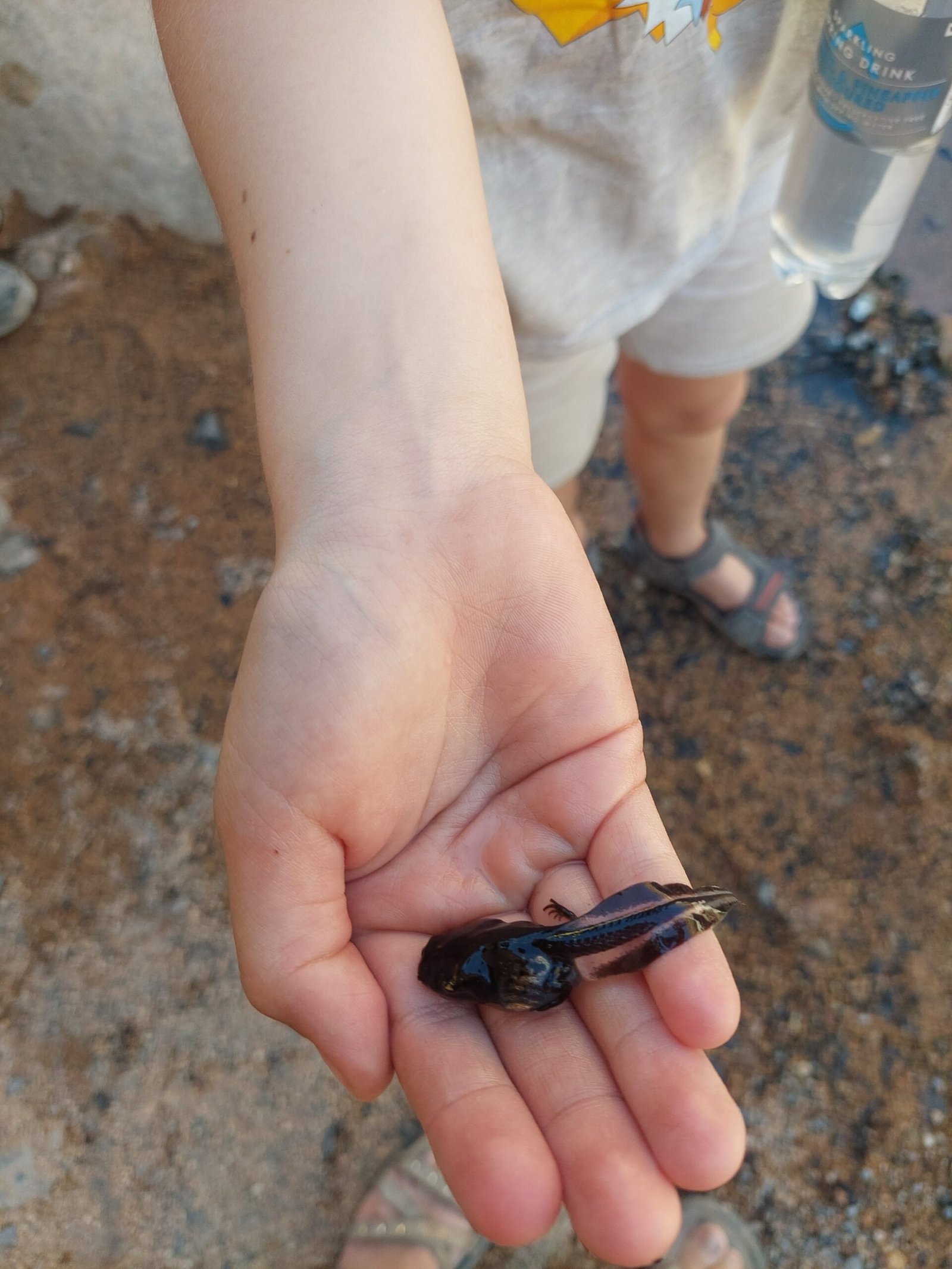
The scenery was beautiful, but we had to stop to admire it because we had to keep our eyes firmly on our feet while walking. In addition to the beautiful scenery, we also saw tamans, various lizards, insects, and lots of tadpoles, as well as thousands of bullheads still developing. Apparently, there used to be elephants in the area, but due to drought, they hadn’t been seen there for eight years. Now that there was water in the valley again, there was hope that the elephants would return.
At this point, the task still seemed quite easy.
The terrain was quite rocky in places.
You had to watch your step when walking!
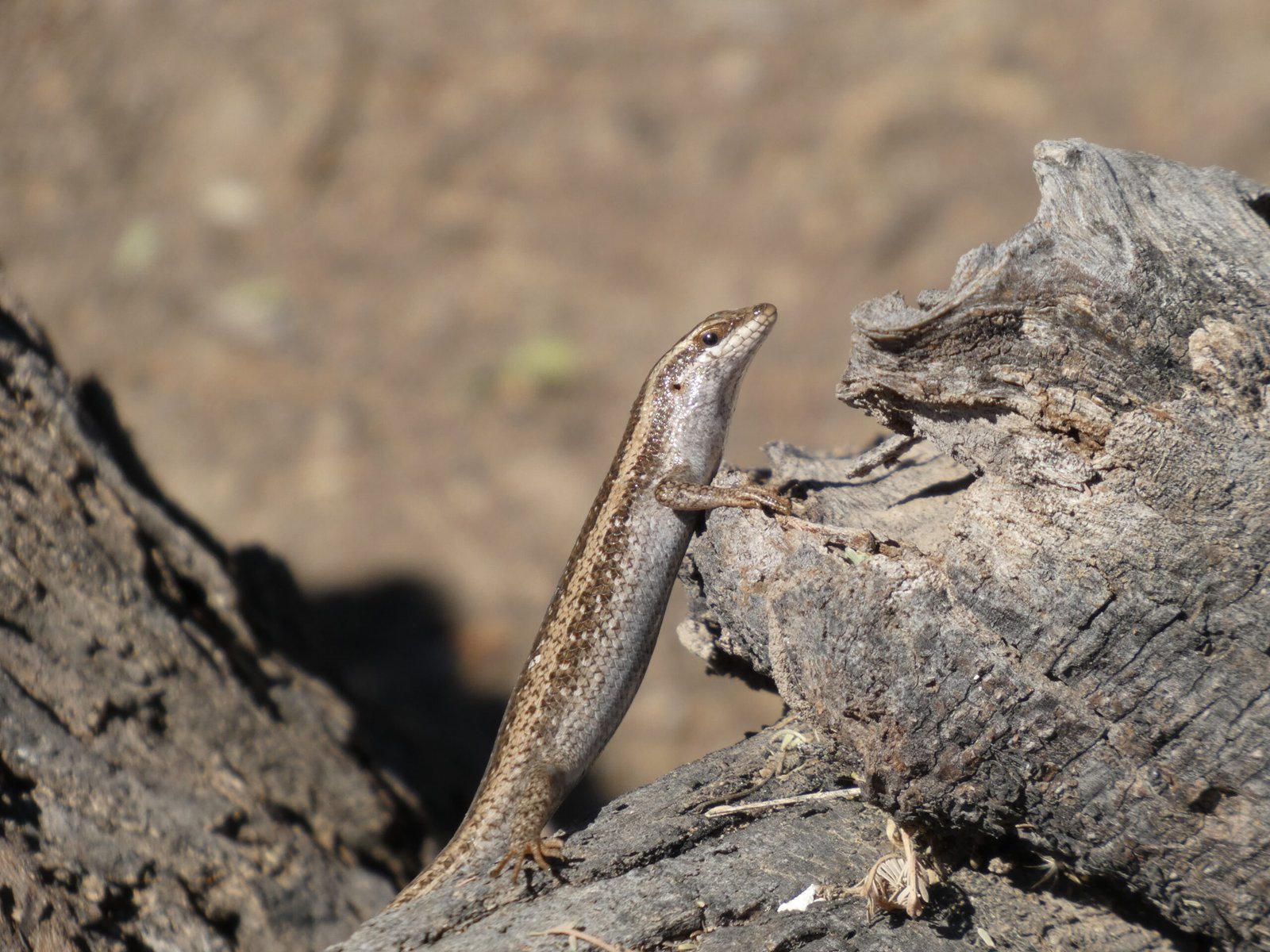
We saw several lizards as we walked.
Risto caught a bullhead.
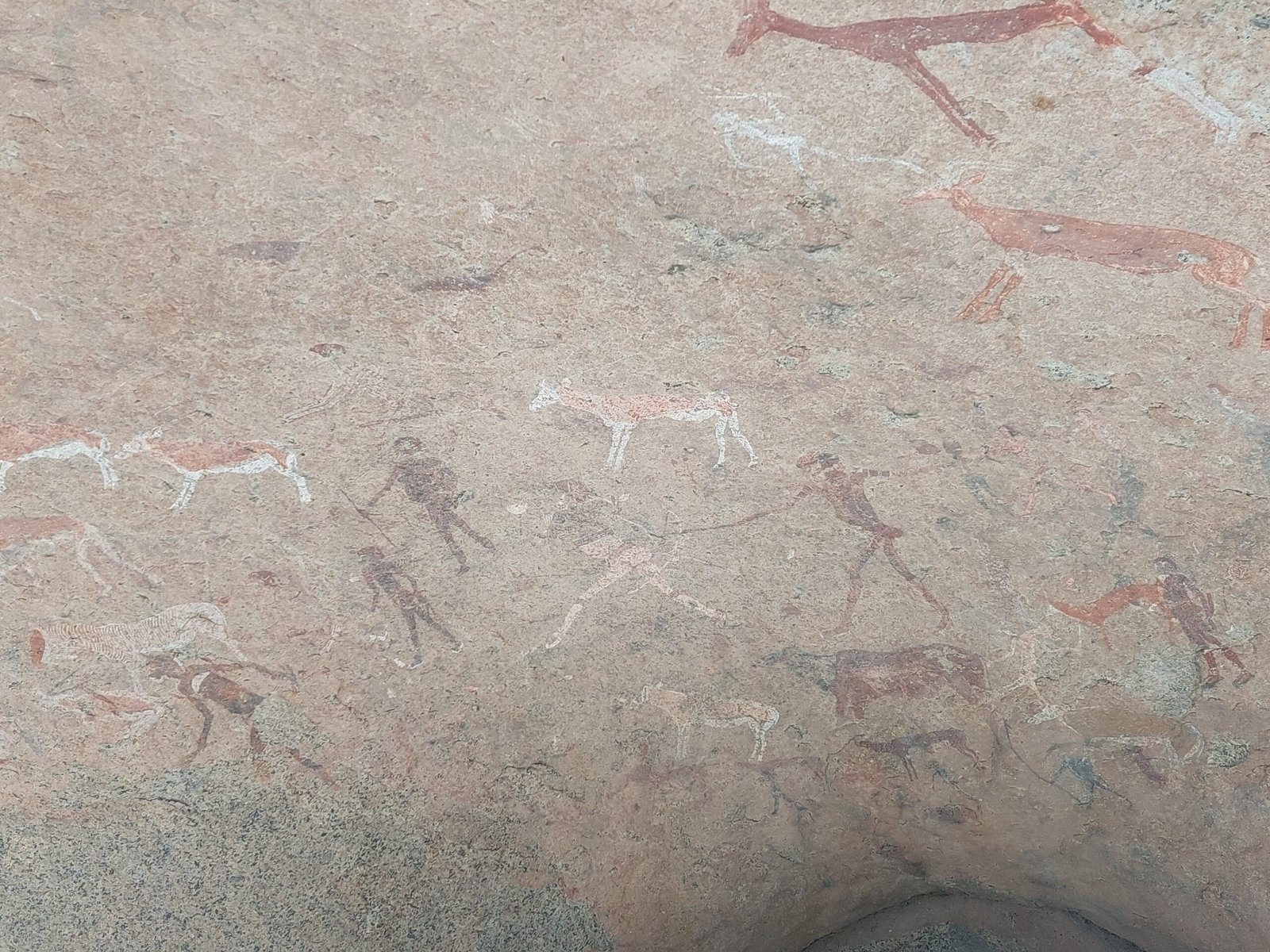
Brandberg Mountain is the highest point in Namibia, reaching just under 2,600 meters (2,573 meters) at its peak. It would have been possible to hike there, but the route would have taken four days. We didn’t go hiking just for fun, but to see the rock paintings made by the indigenous people. The most important of these was called the White Lady. However, we were told that the fair-skinned person in the painting was not white, nor was it even a woman. In reality, it was a shaman who had been painted white with ash. The rock paintings we saw were very well preserved and were between 2,000 and 5,000 years old. There are many other rock paintings in the Brandberg area. According to our guide, they have been found in over a thousand locations, and there are a total of about 43,000 individual paintings. It would be quite a task to see them all!
Brandberg rock paintings.
The white lady wasn't white after all, nor was she even a woman.
At the end of the walk, Risto went rock shopping.
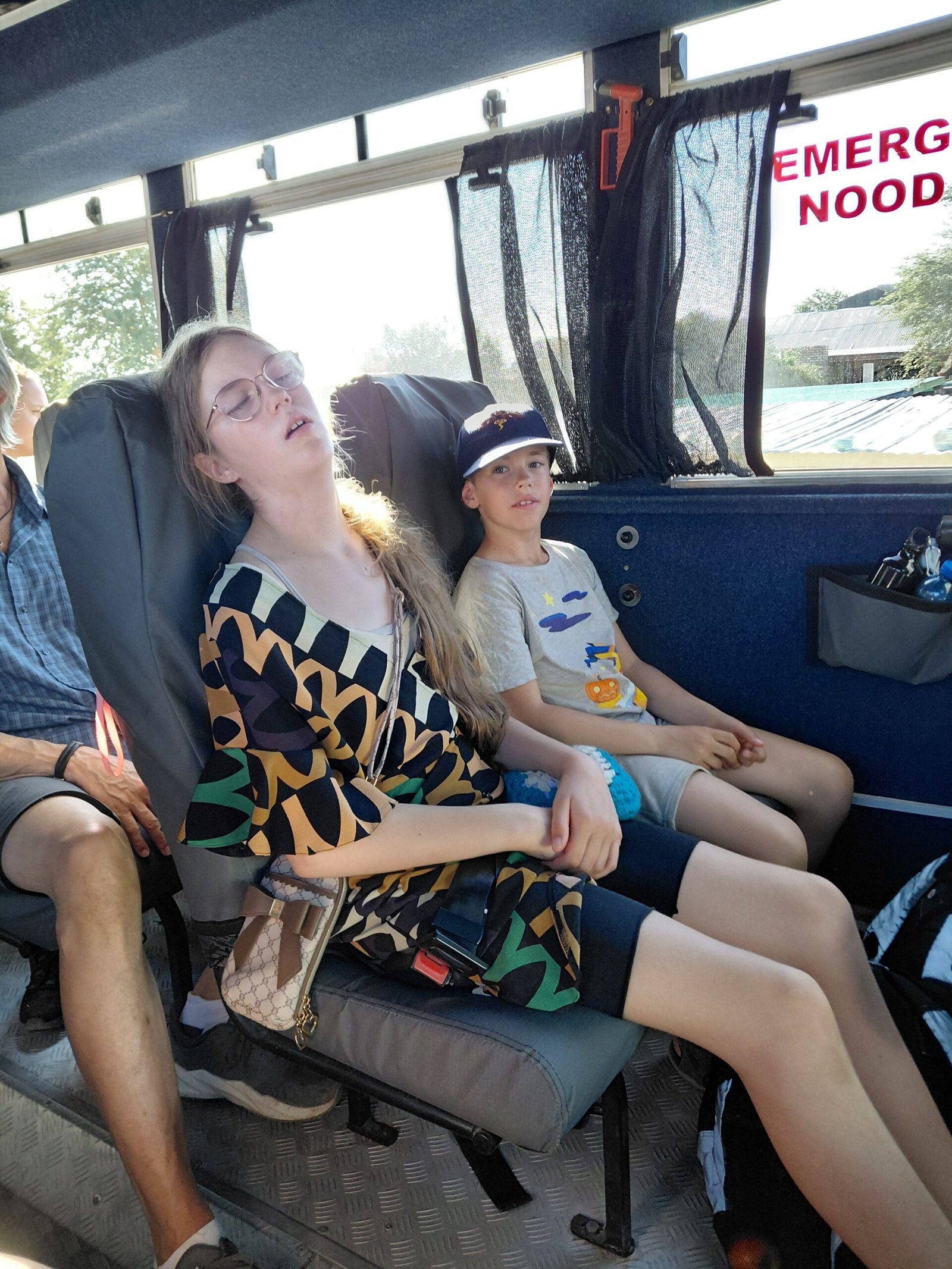
Three hours of trekking exhausted Ronja.
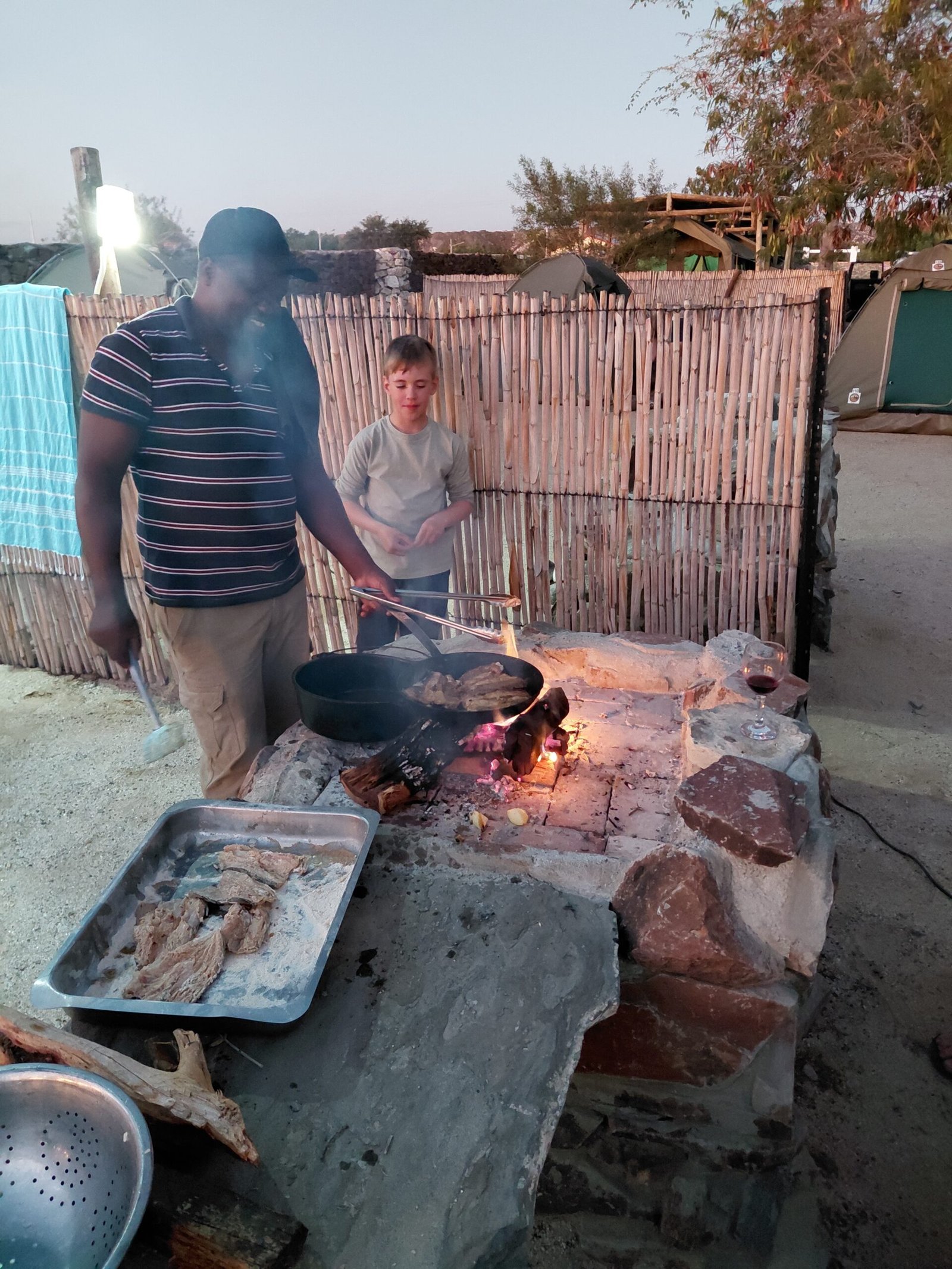
After our walk, we returned to the campsite in the village of Uis and pitched our tent. There was also a small swimming pool, which the children quickly jumped into despite the rather cold water. We adults were content to sit at the bar and enjoy €1.50 ciders. For dinner, a long table was set for us, and Stanley cooked us some delicious fish. (Much to Risto’s delight, over the campfire.)
Risto and Stanley cooking.
A delicious dinner to end a long day.
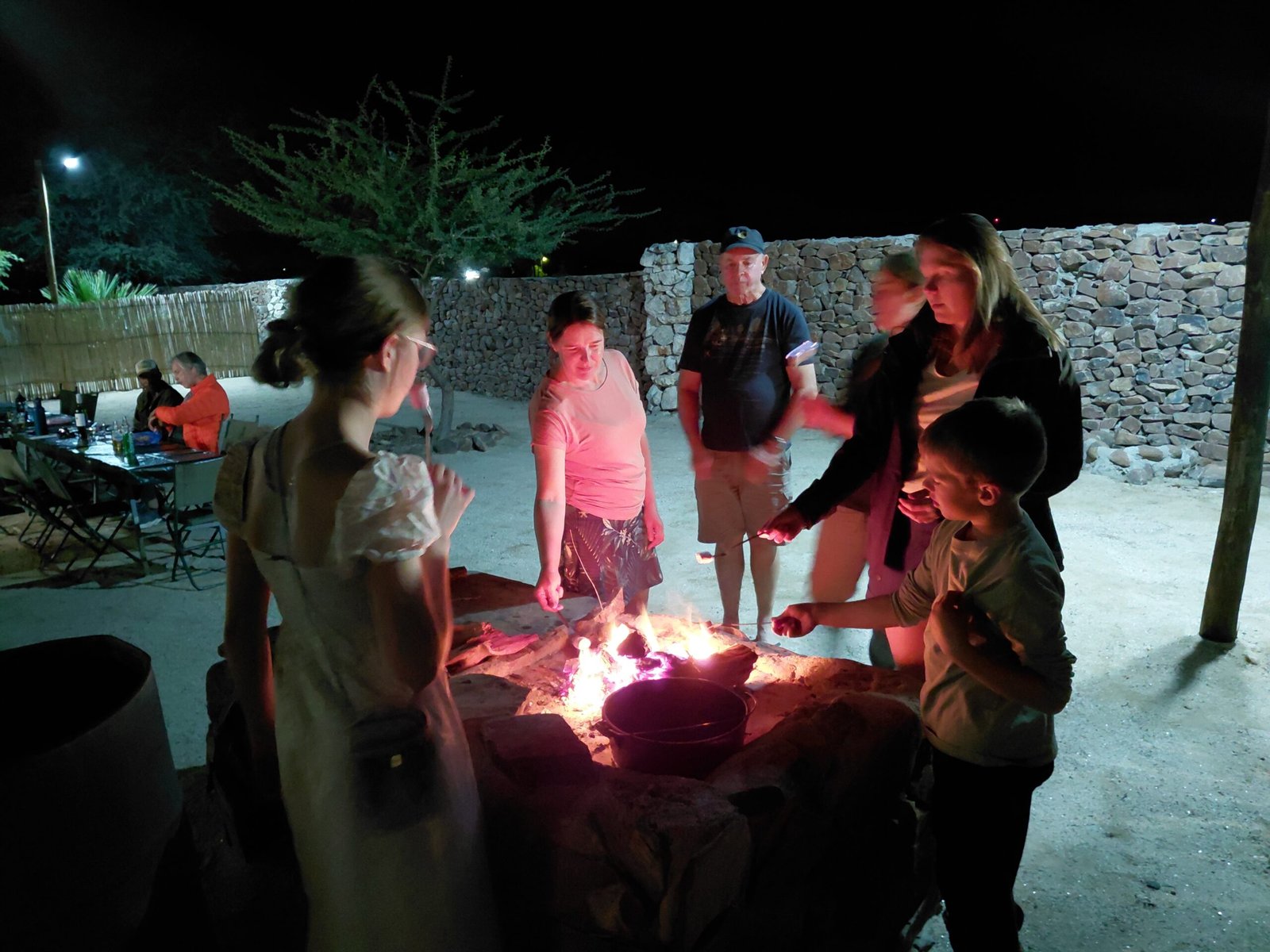
For dessert, we roasted marshmallows.
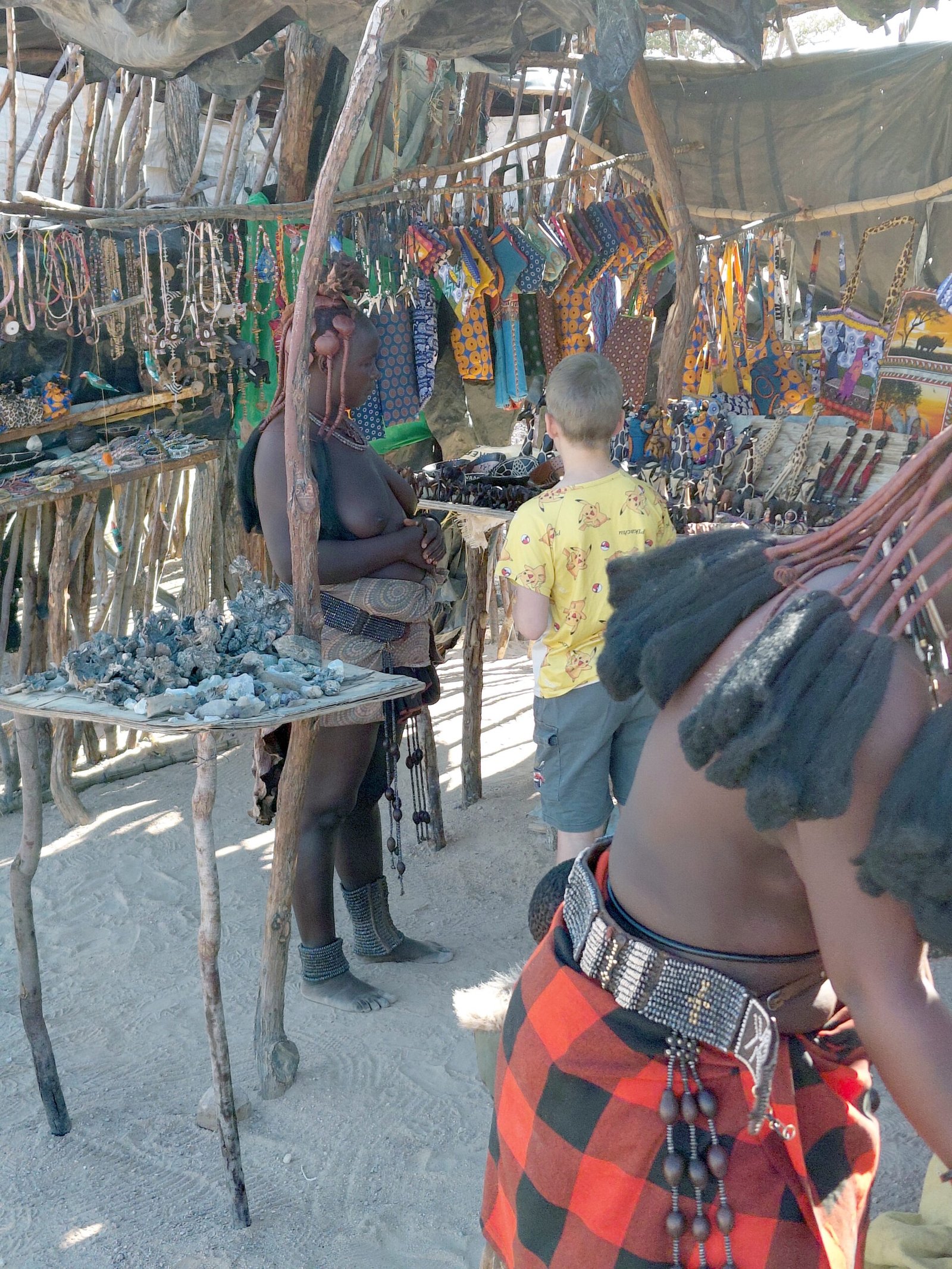
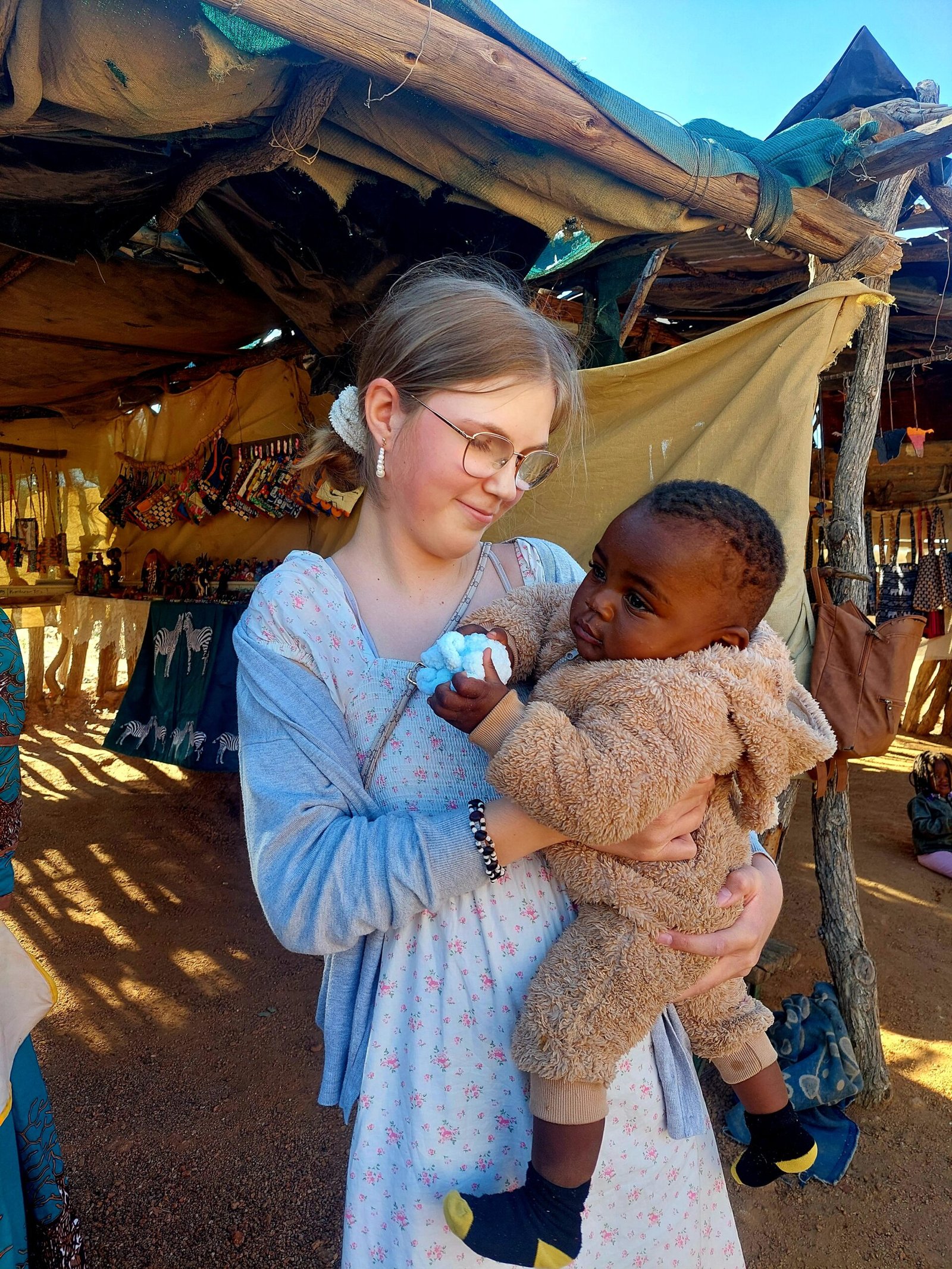
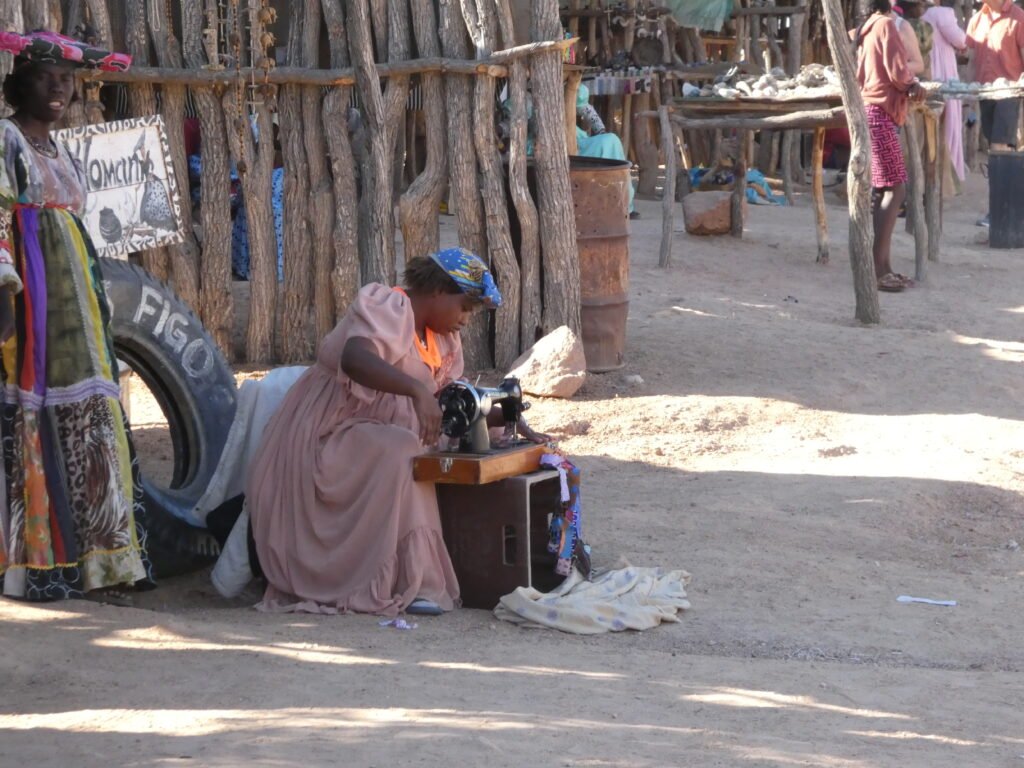
The next day, we continued our journey towards Etosha National Park. So, we had another day of driving ahead of us. At the beginning of the trip, we stopped at a place where Herero and Himba women were selling their handicrafts. We didn’t buy any handicrafts, even though they were beautiful, because the wooden decorative items in particular would surely be broken before we got back to Finland. Risto, on the other hand, spent 80 NAD on gemstones, which the women were also selling in their stalls. Ronja had managed to make another octopus, and she decided to give it to a little boy belonging to one of the Herero women. In return, Ronja got to hold the little boy and she was given a beautiful bracelet as a gift.
Risto bargaining with a Himba woman.
This little boy got a squid crocheted by Ronja.
Traditional clothing of the Herero tribe.
The world's oldest sales pitch: “Would you like to try it on?”
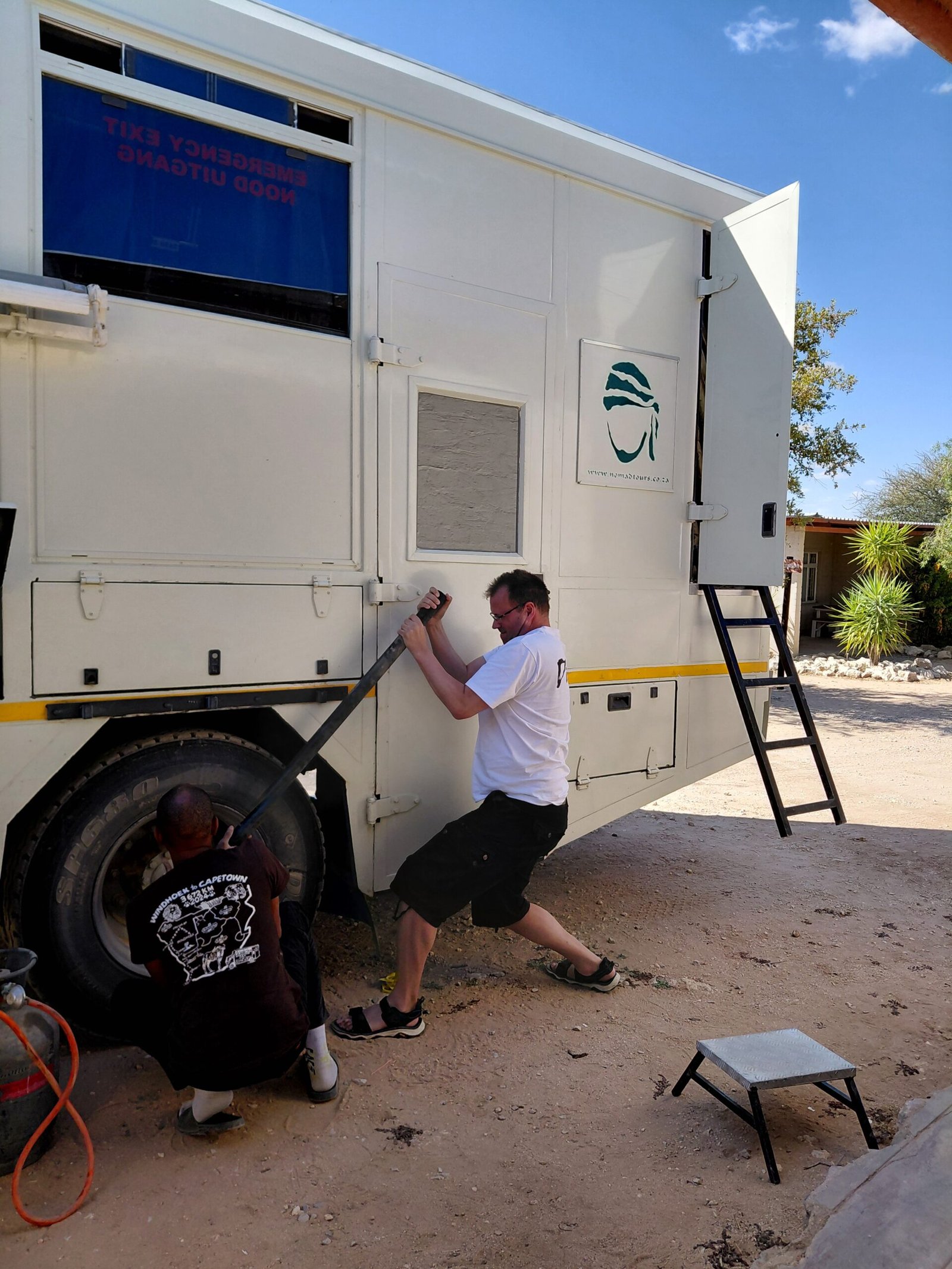
The journey continued, and we stopped for lunch. At the same time, Taku noticed that one of our rear tires was flat. He tried to change it himself, but he couldn’t get the truck up high enough with the jack. So, Taku’s next stop was the auto repair shop, and the rest of us went to the grocery store. After getting a new tire for the truck 45 minutes later, we continued on our way.
Tire trouble
We spent the night at a campsite called Taleni, right next to Etosha National Park. As we drove in, we saw several kudu antelopes roaming around the area. Ronja was not at all thrilled about this, as she was naturally concerned about what animal she might bump into if she needed to leave the tent during the night. She suggested that we get rooms to solve the toilet problem, but her annoying parents said that it was much more fun to sleep in a tent and listen to the animals at night. Ronja was not reassured by the fact that the rooms were quite luxurious and spacious.
Dinner and breakfast were provided by Taleni for those staying at the campsite, so when we left for dinner, we had to take headlamps with us so that we could walk along the path from the main building back to our tents. The campsite was located a short walk from the main building and the restaurant.
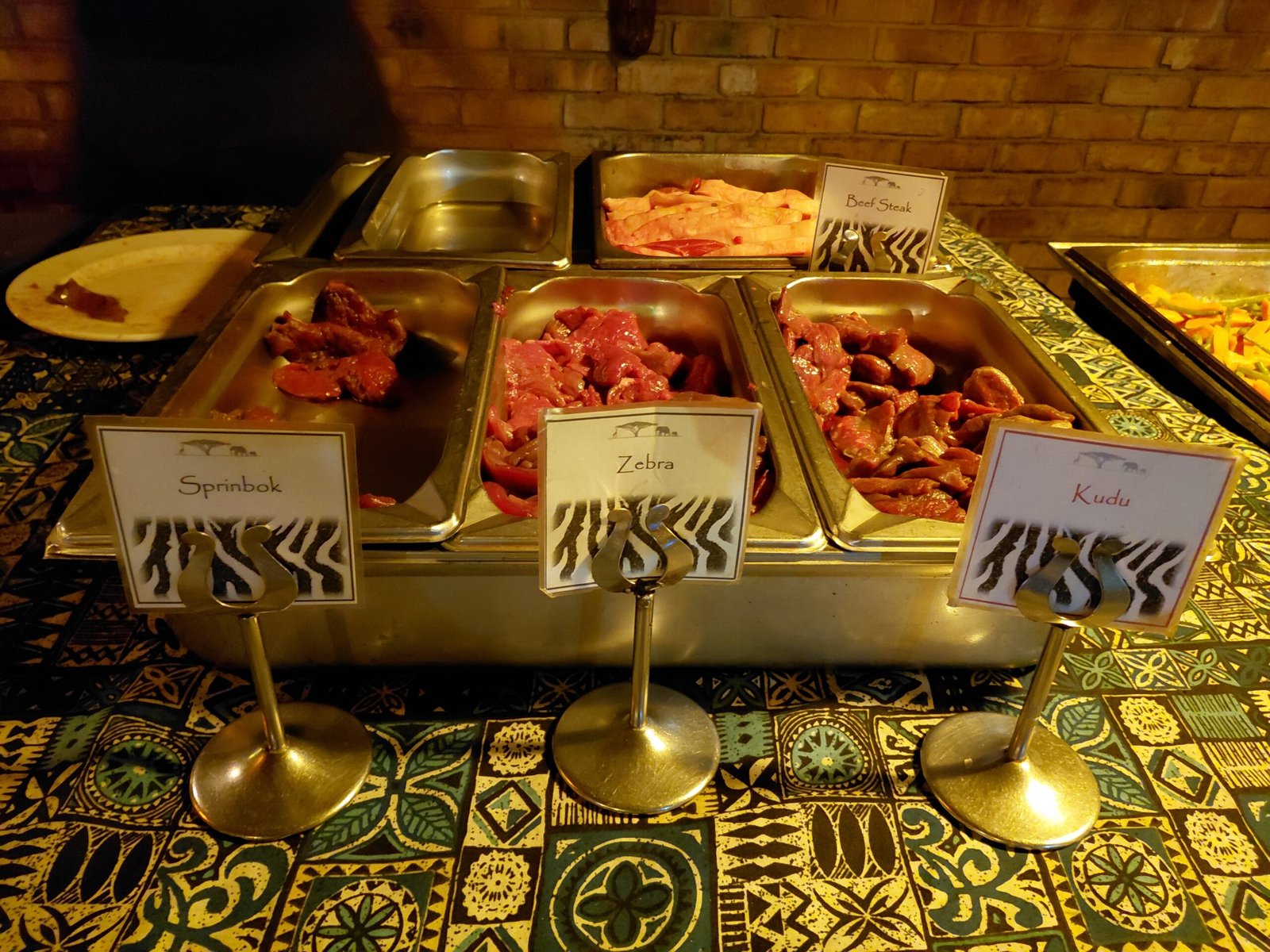
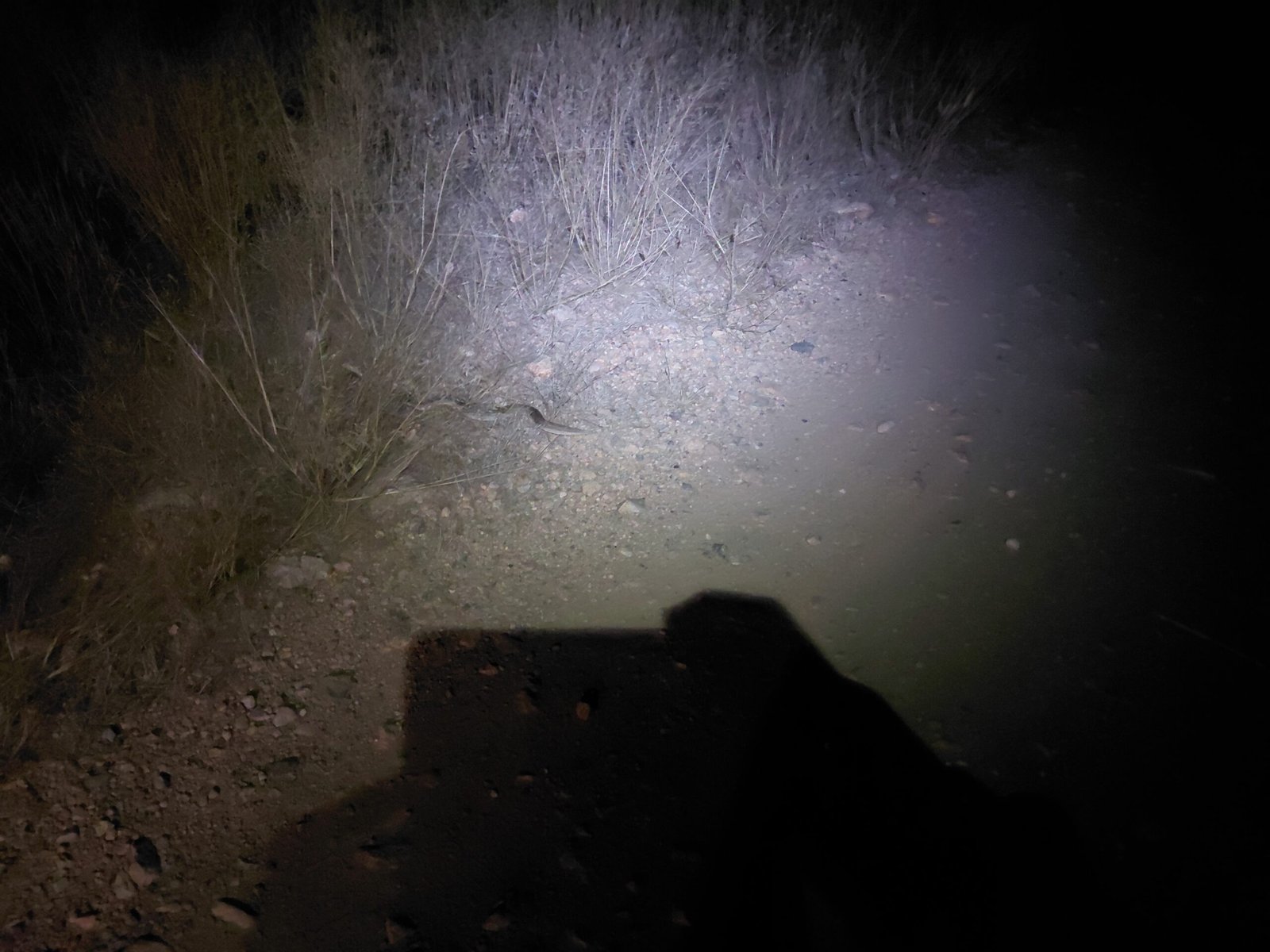
Dinner was quite a feast. The main course included springbok, kudu, zebra, and eland. We had to try them all. In our opinion, all the meat options tasted pretty much the same. However, the eland got the worst marks from us. In addition to meat, there were also various salads, bread, and, of course, desserts. When we returned to the campsite after dinner, there was a snake in the middle of the road. As it was quite cool, it moved slowly, so we had plenty of time to marvel at it before it disappeared into the grass. As you might expect, Ronja was a little freaked out by the encounter and immediately demanded to upgrade from a tent to a cabin. Ronja’s opinion was noted, but no action was taken.
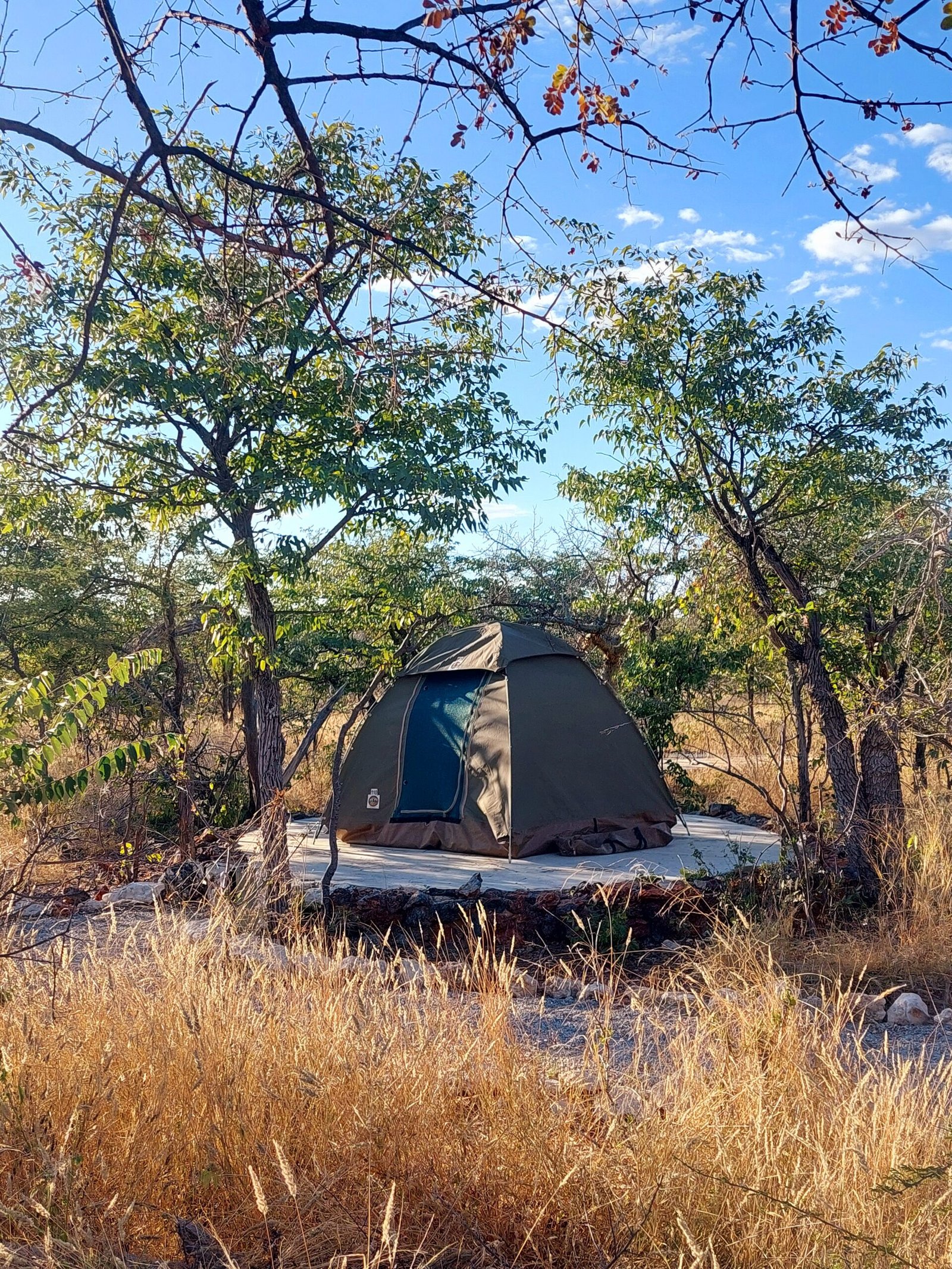
Setting up camp.
All done.
On the way to dinner.
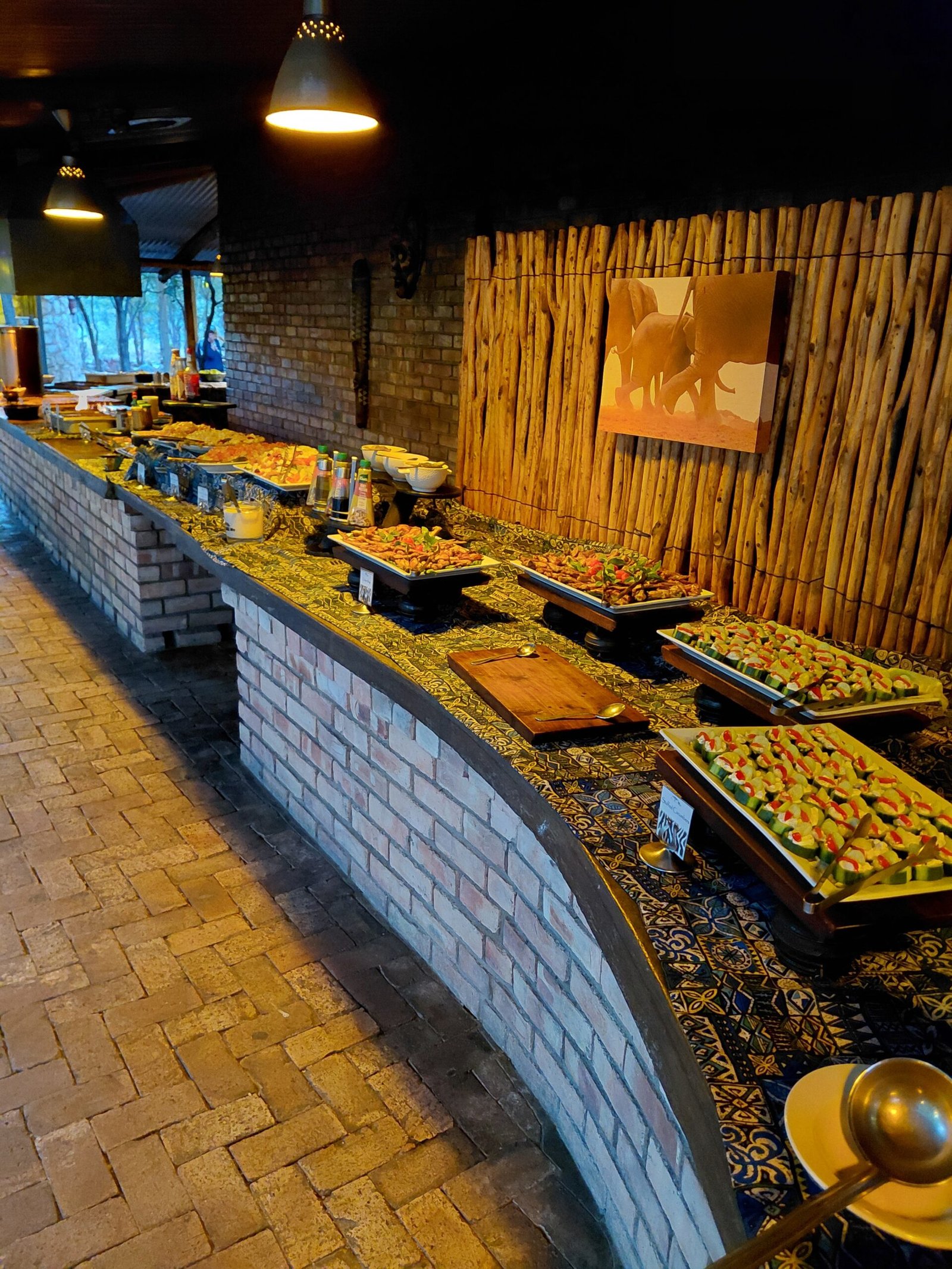
Buffet delicacies
No one was left hungry.
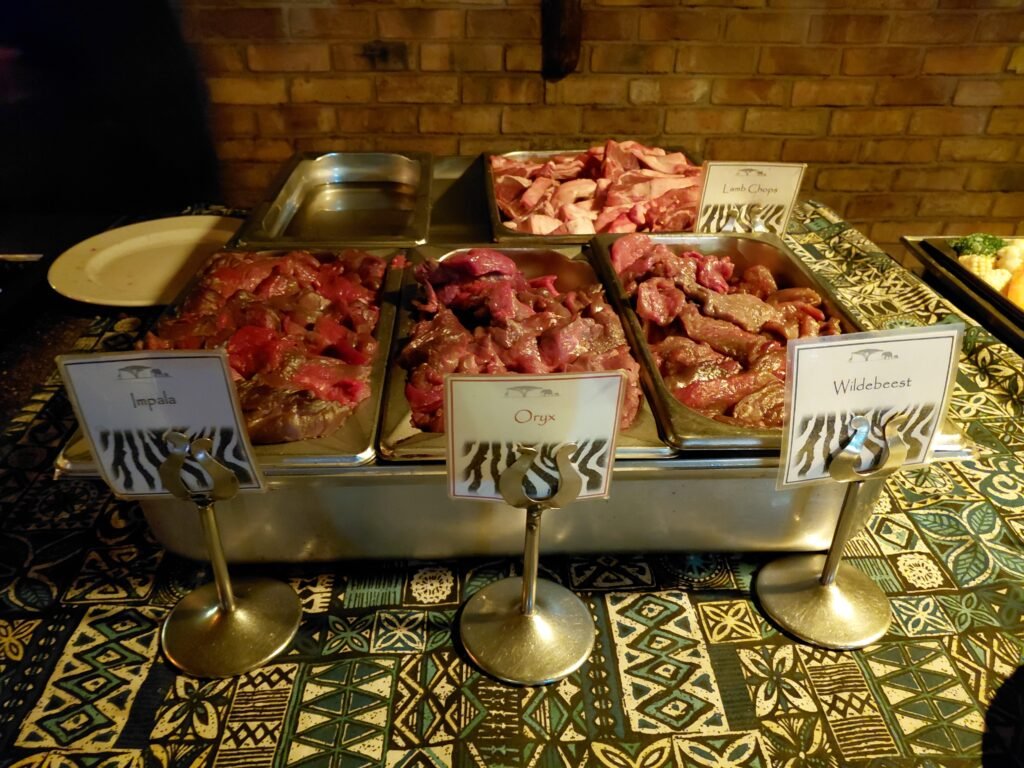
Meat options for the evening
“I hate this ******** place!!!” said Ronja when she saw a snake.
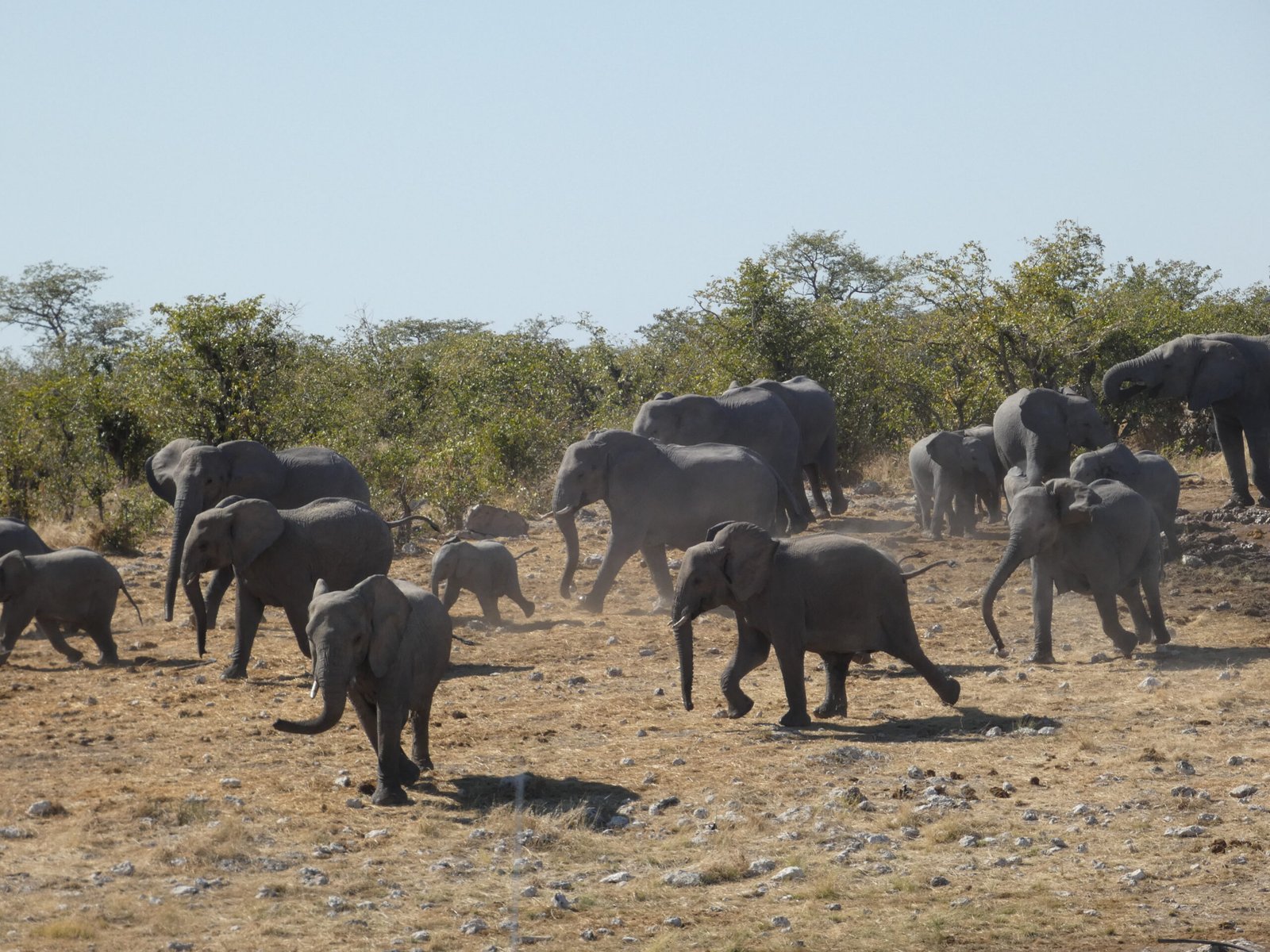
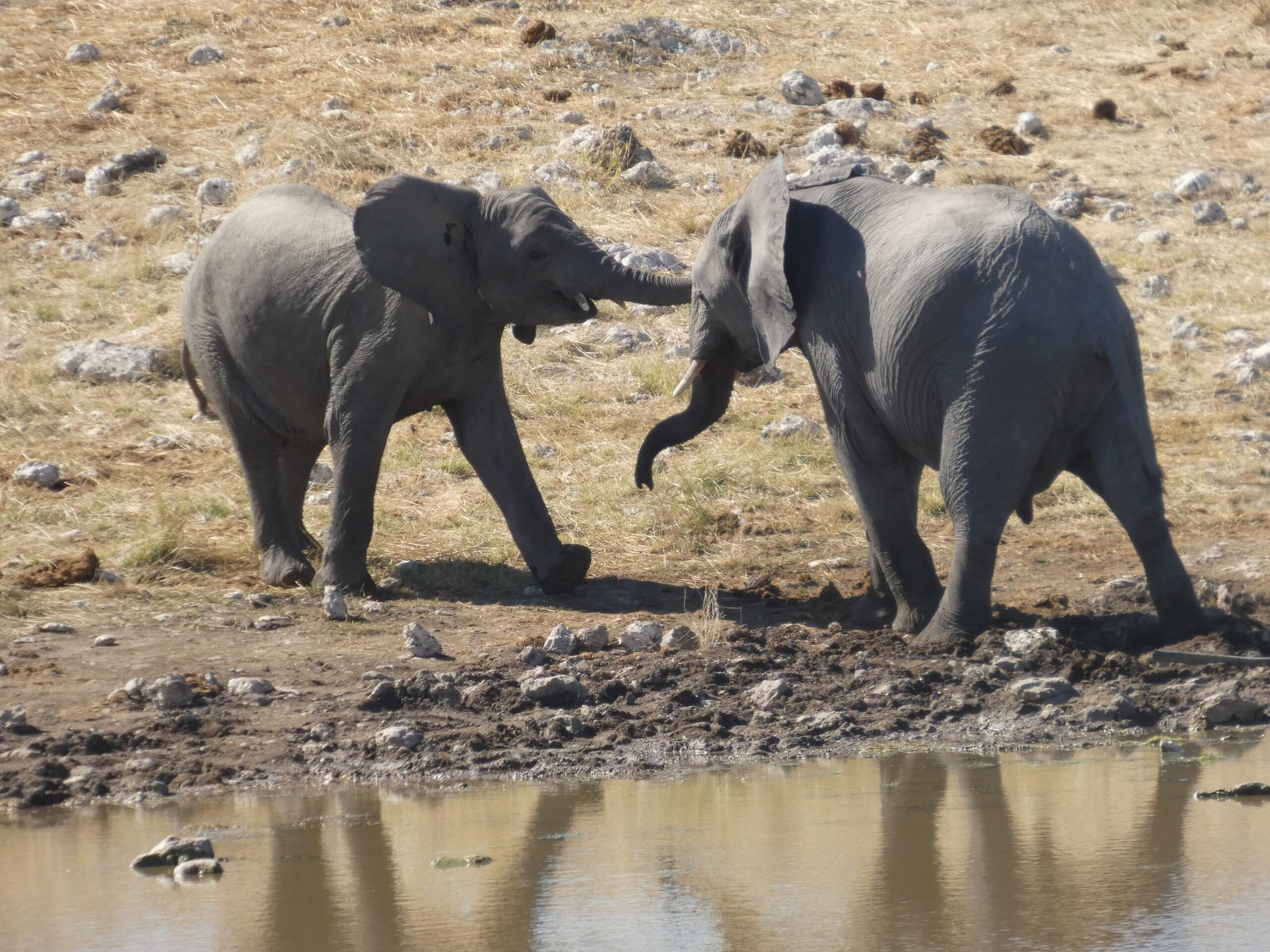
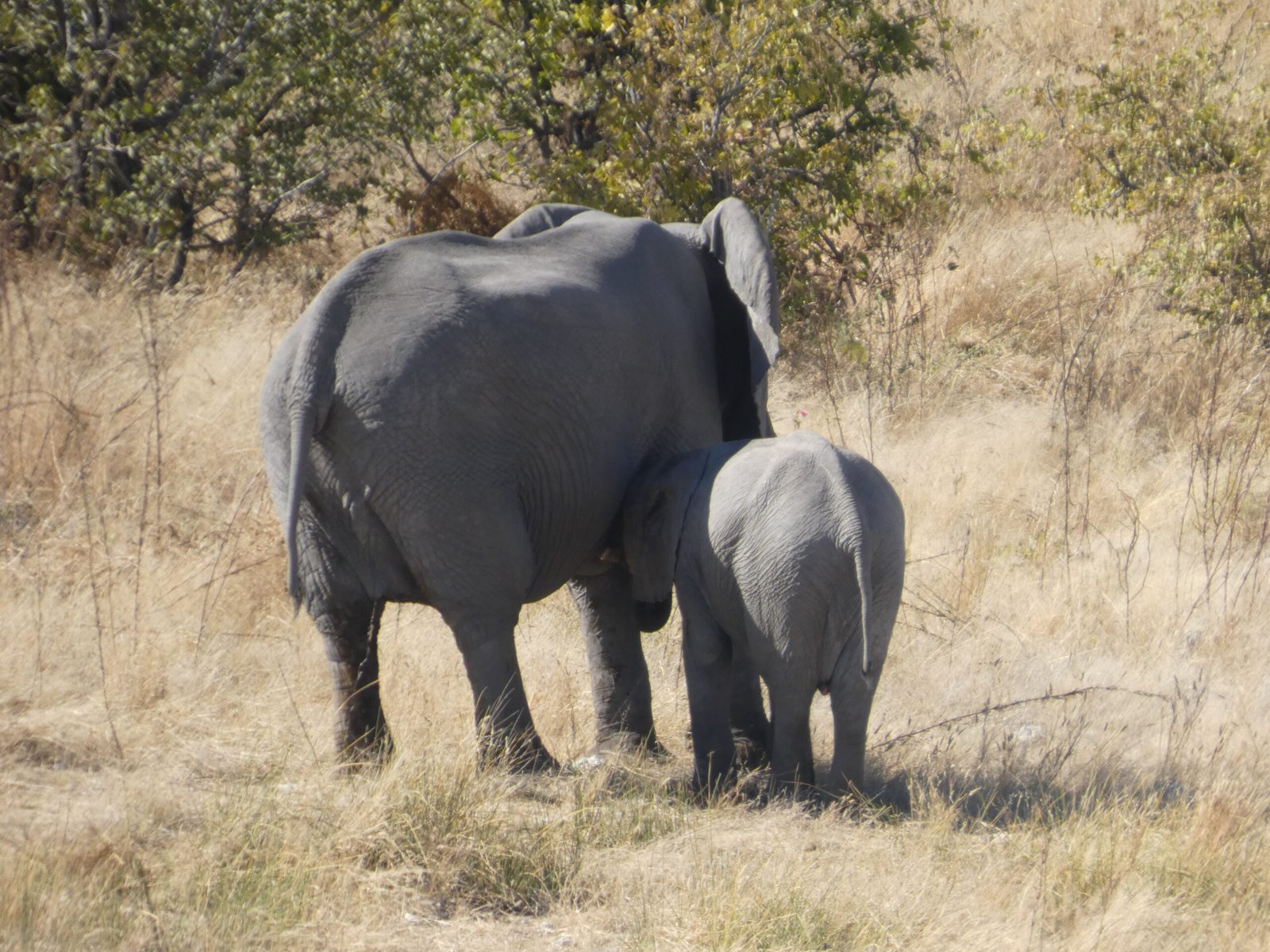
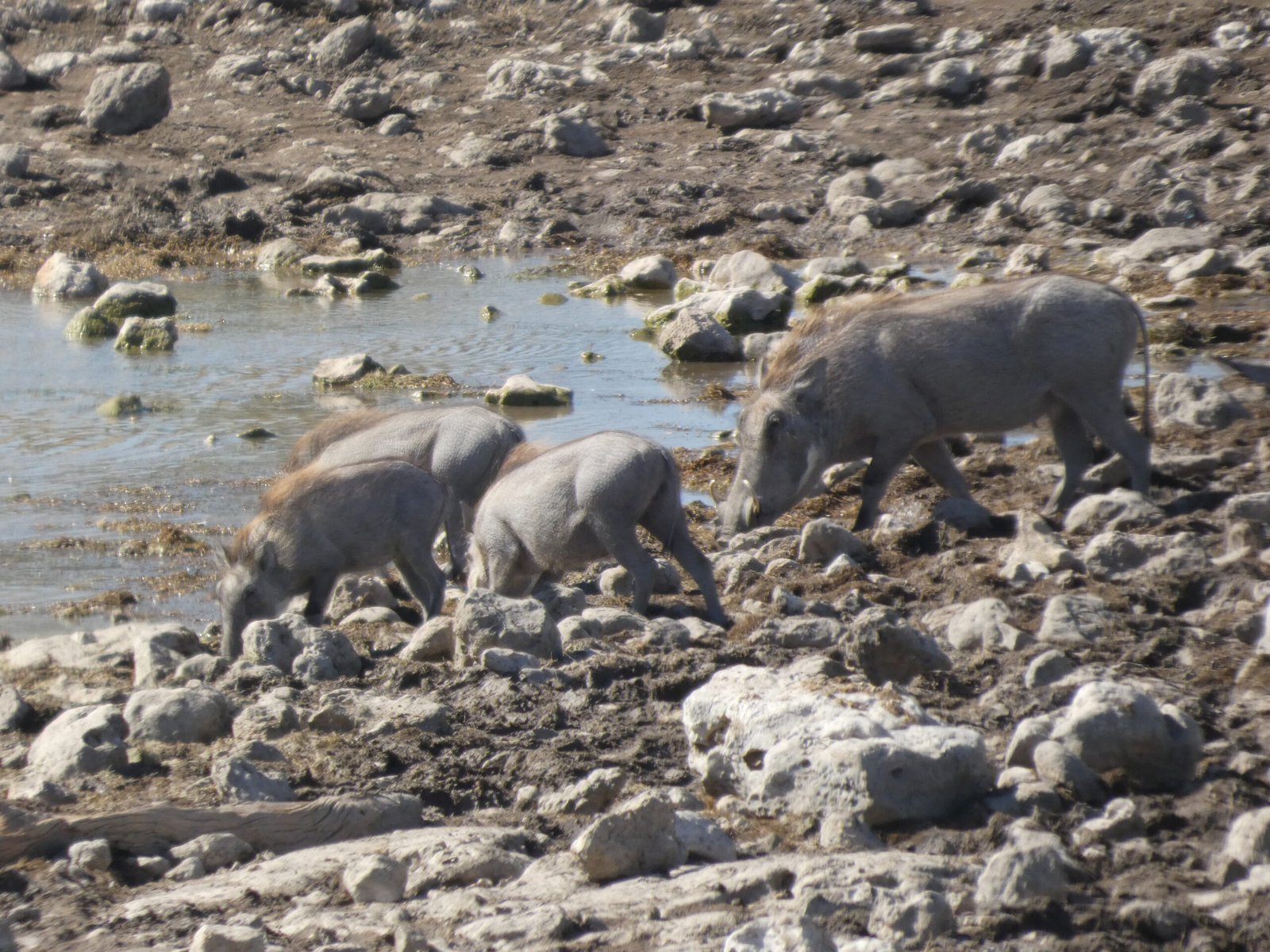
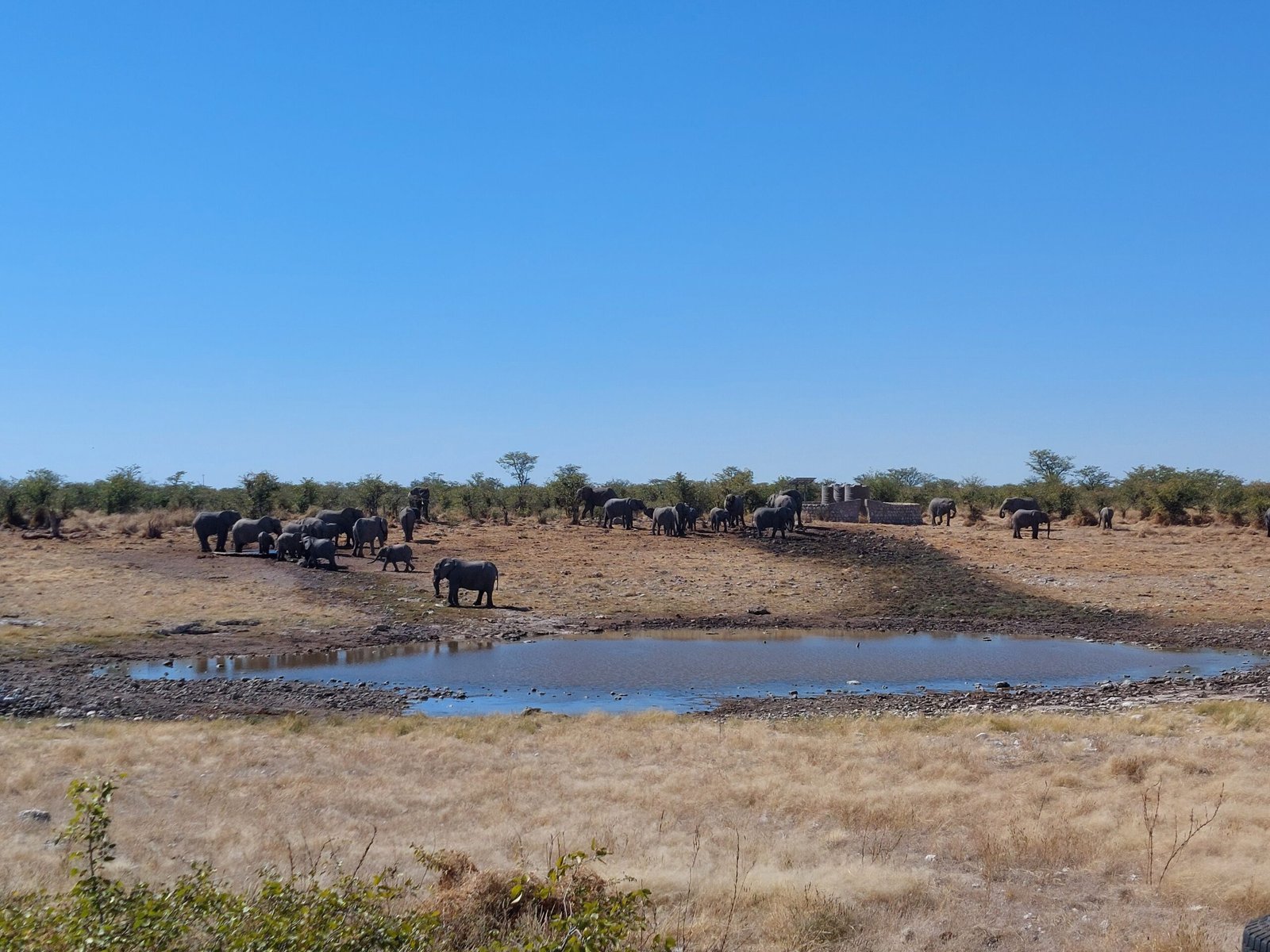
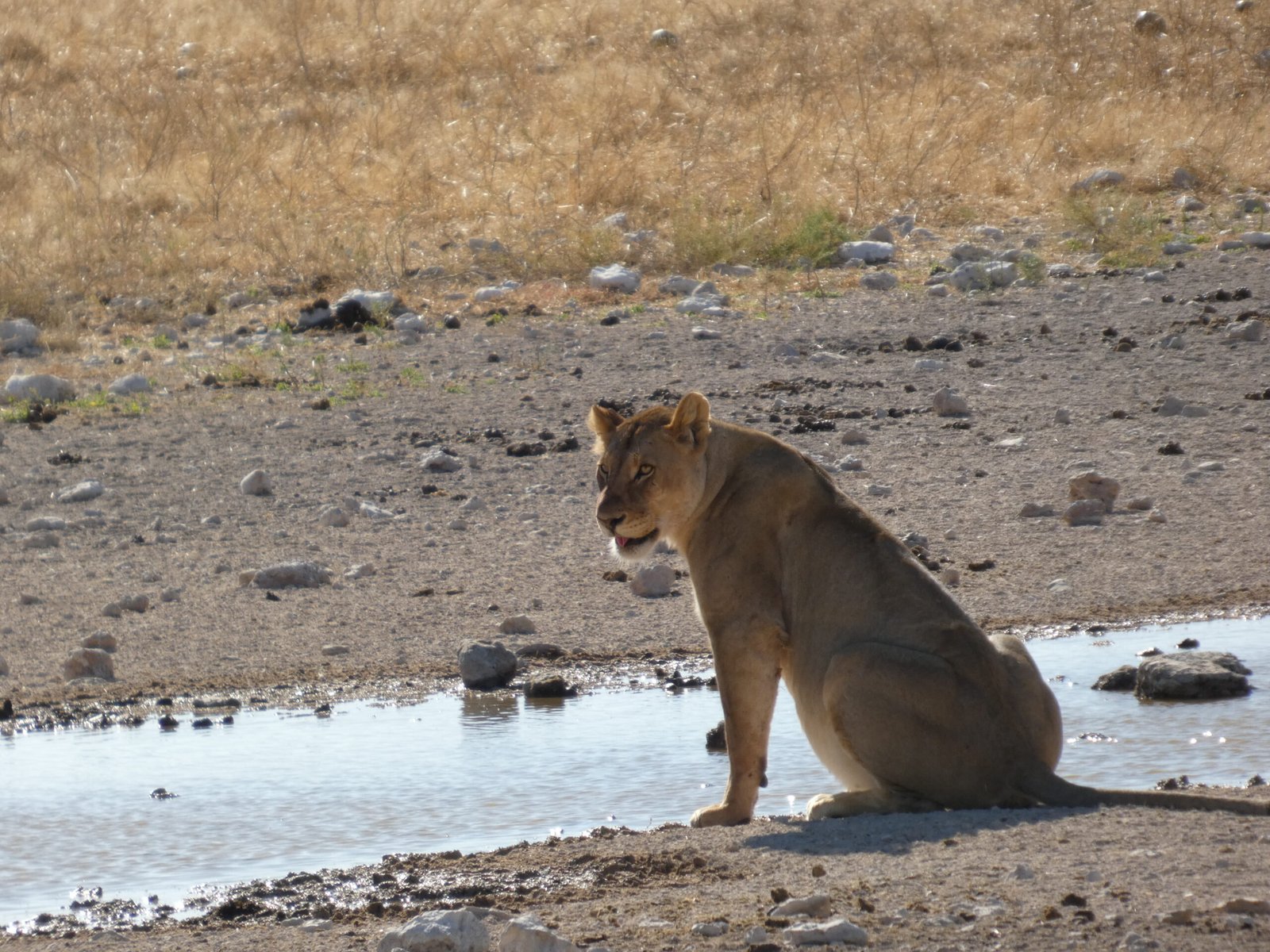
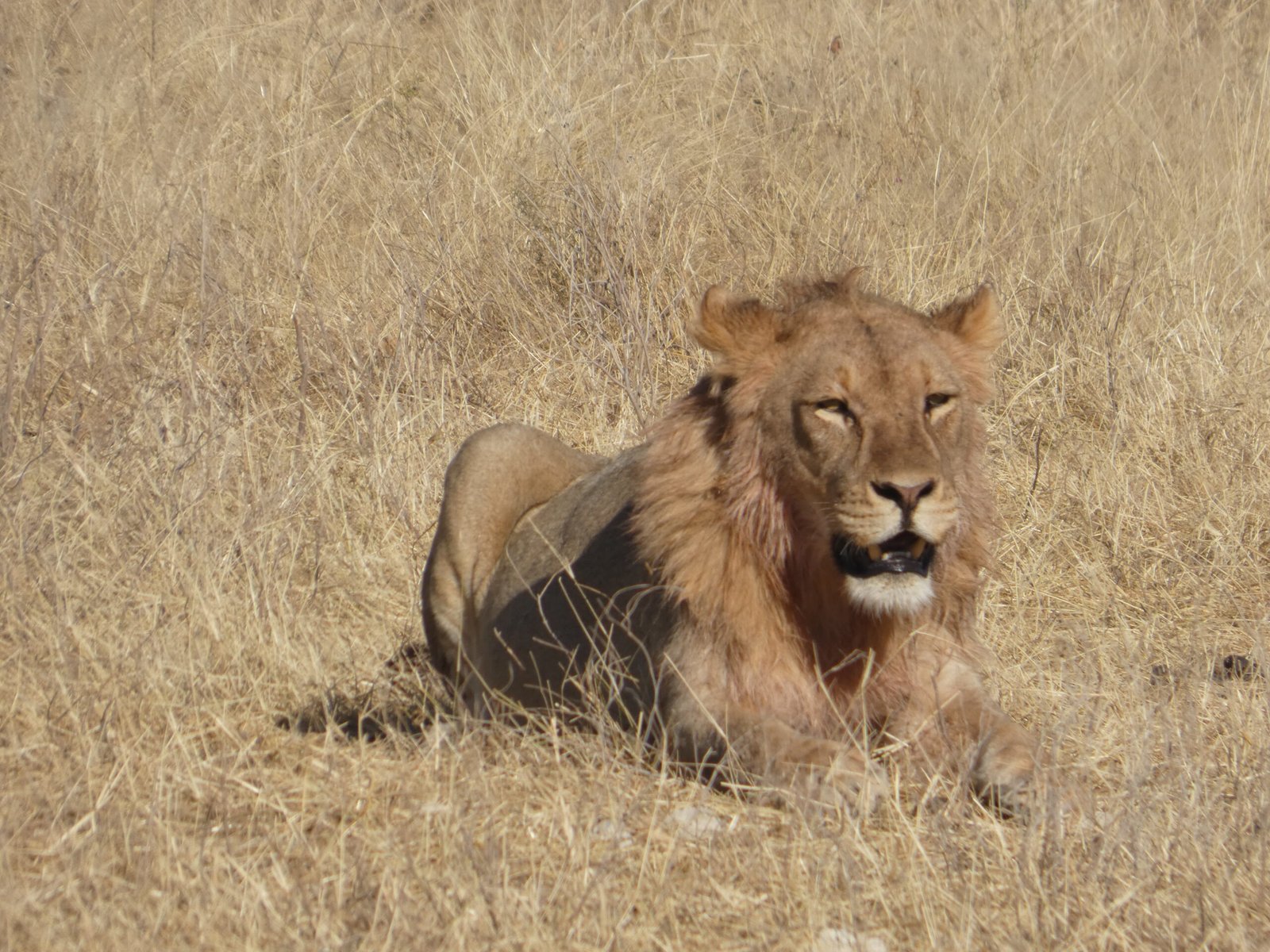
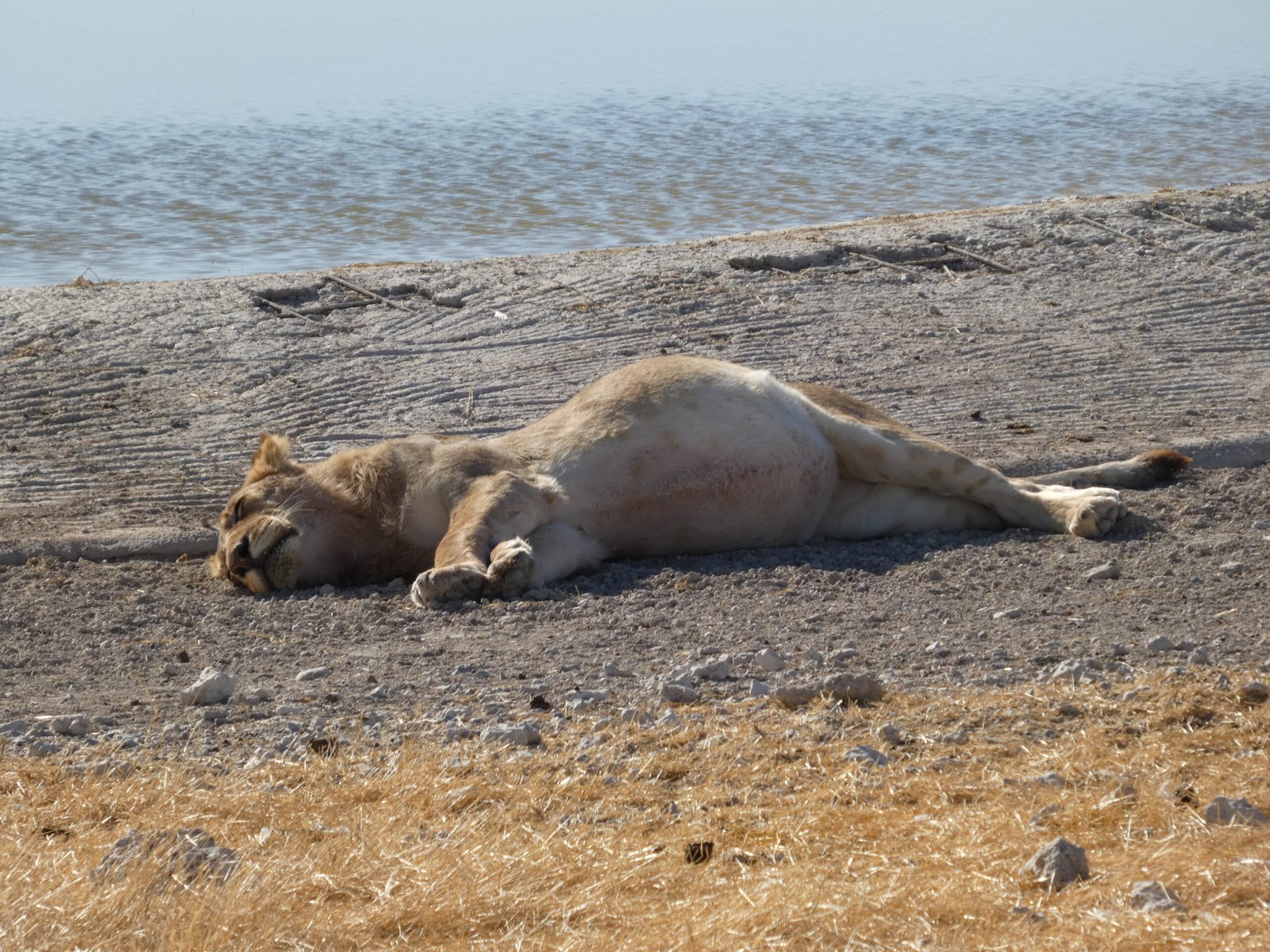
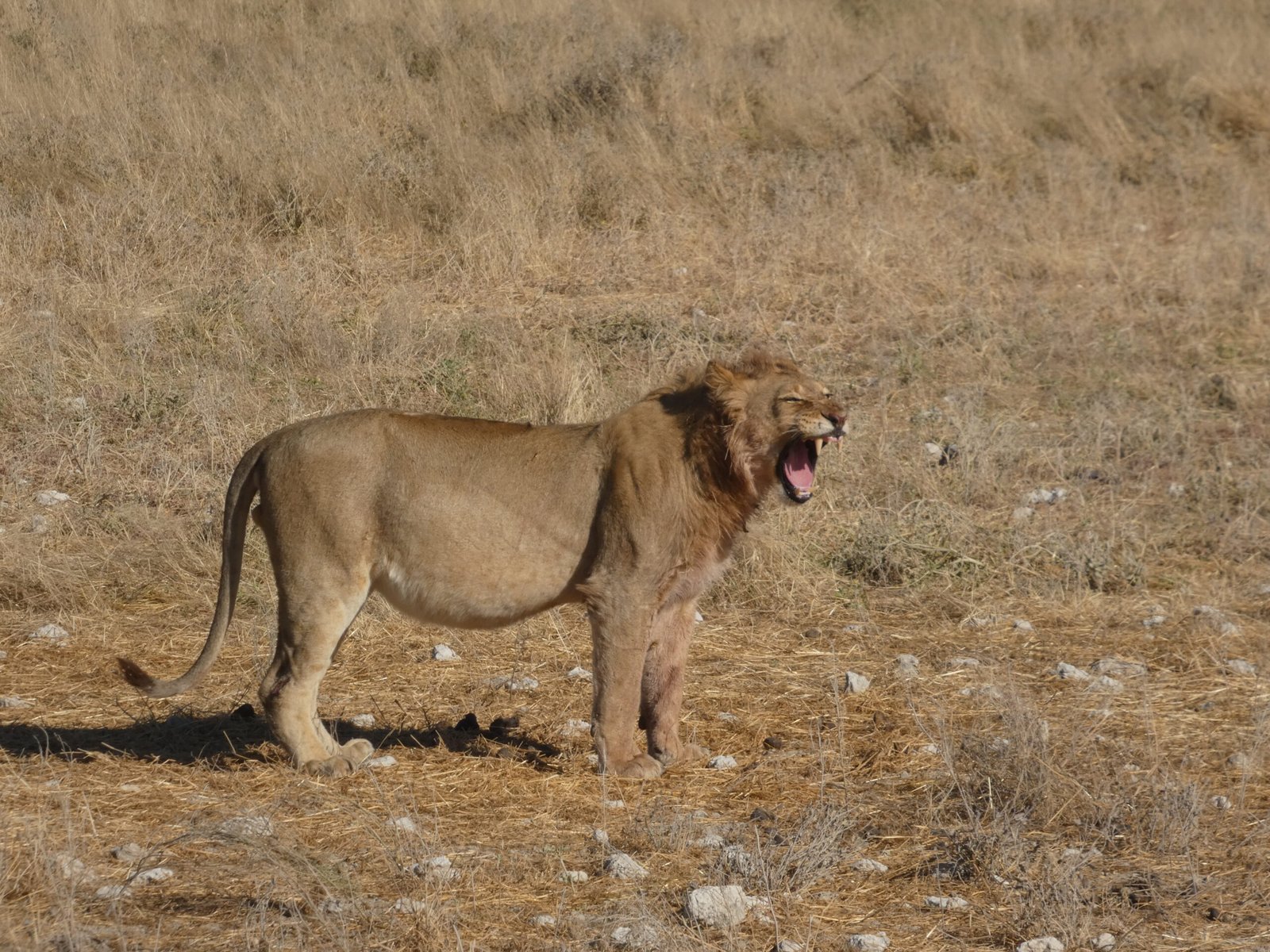
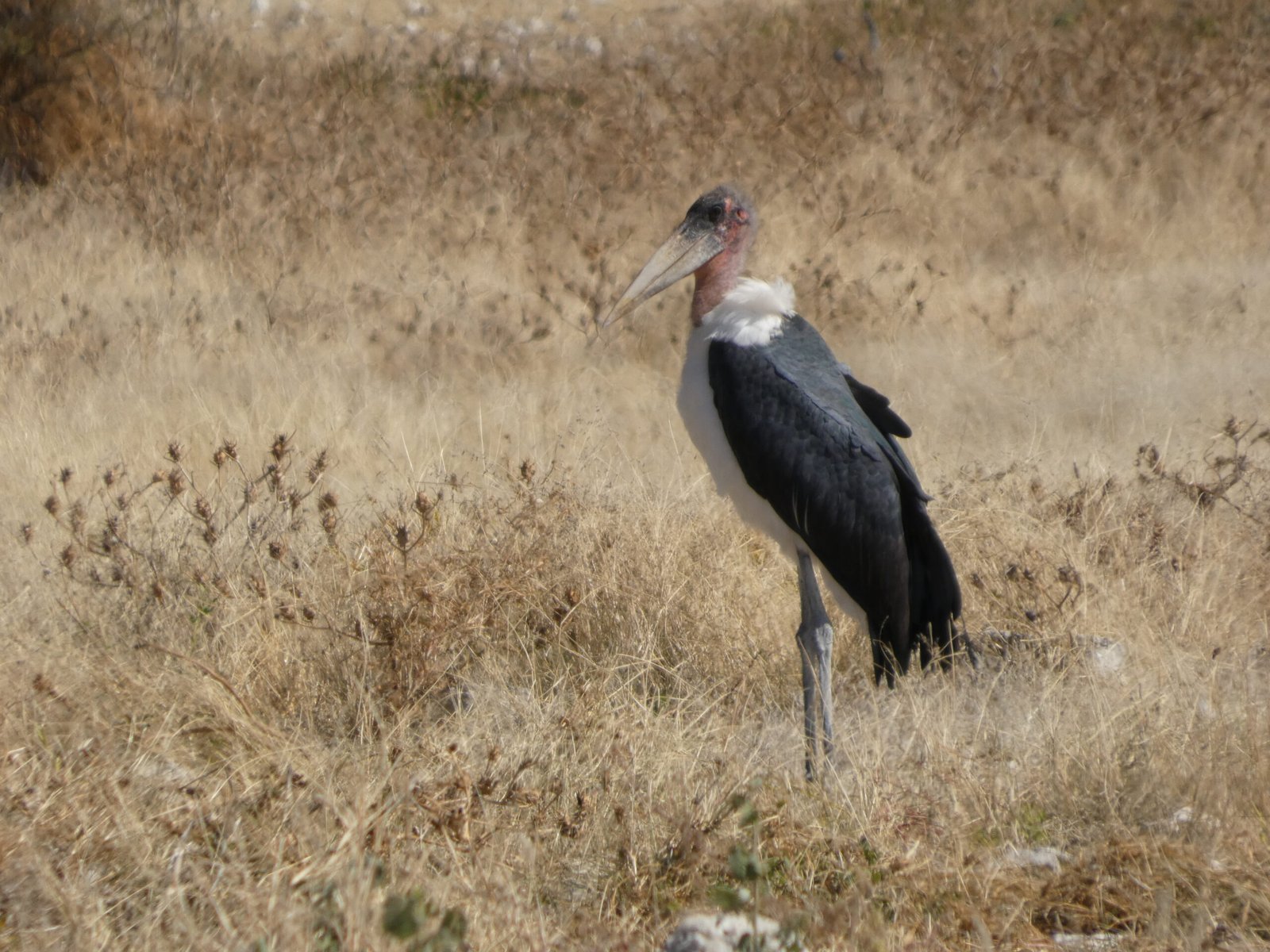
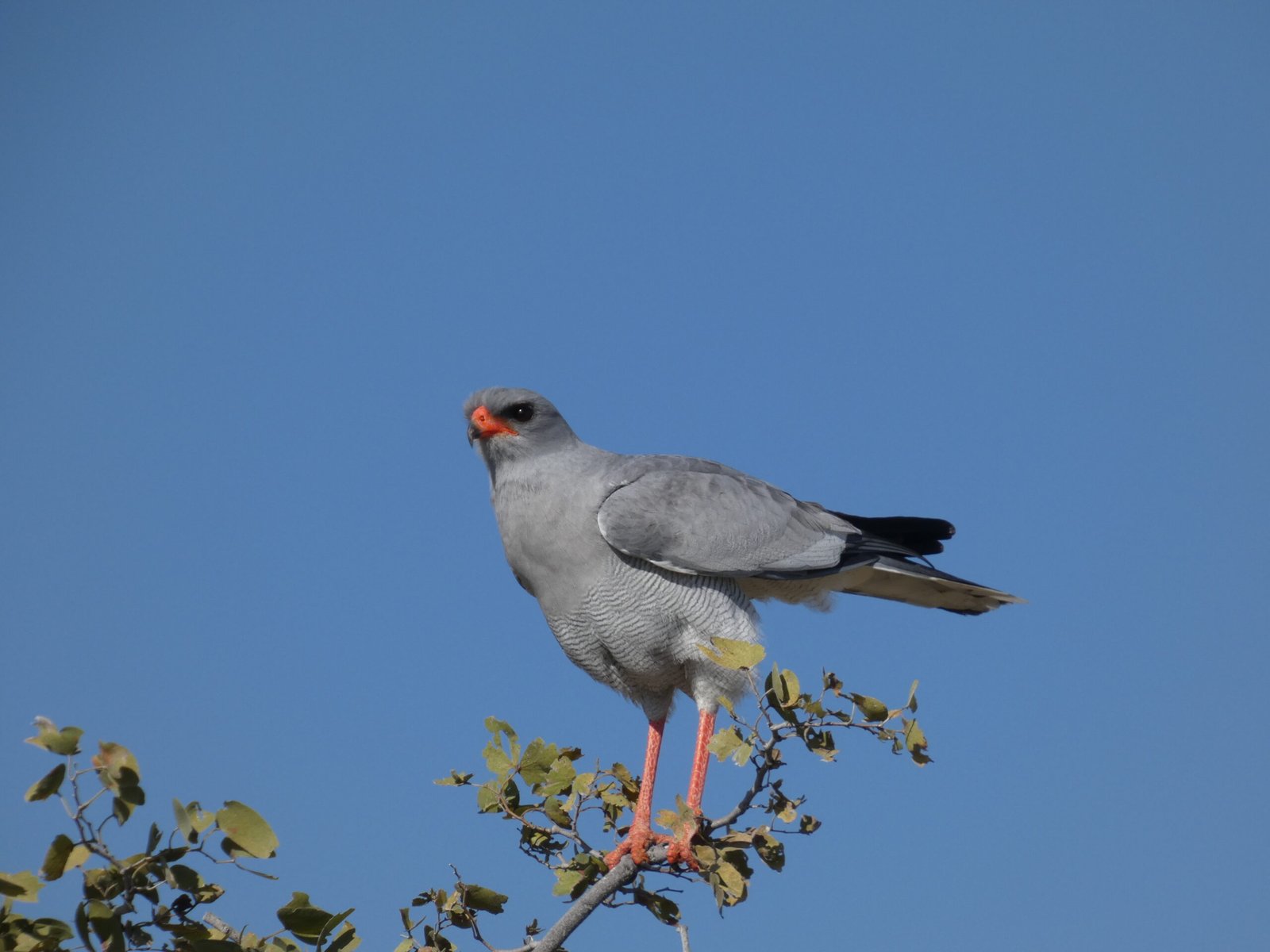
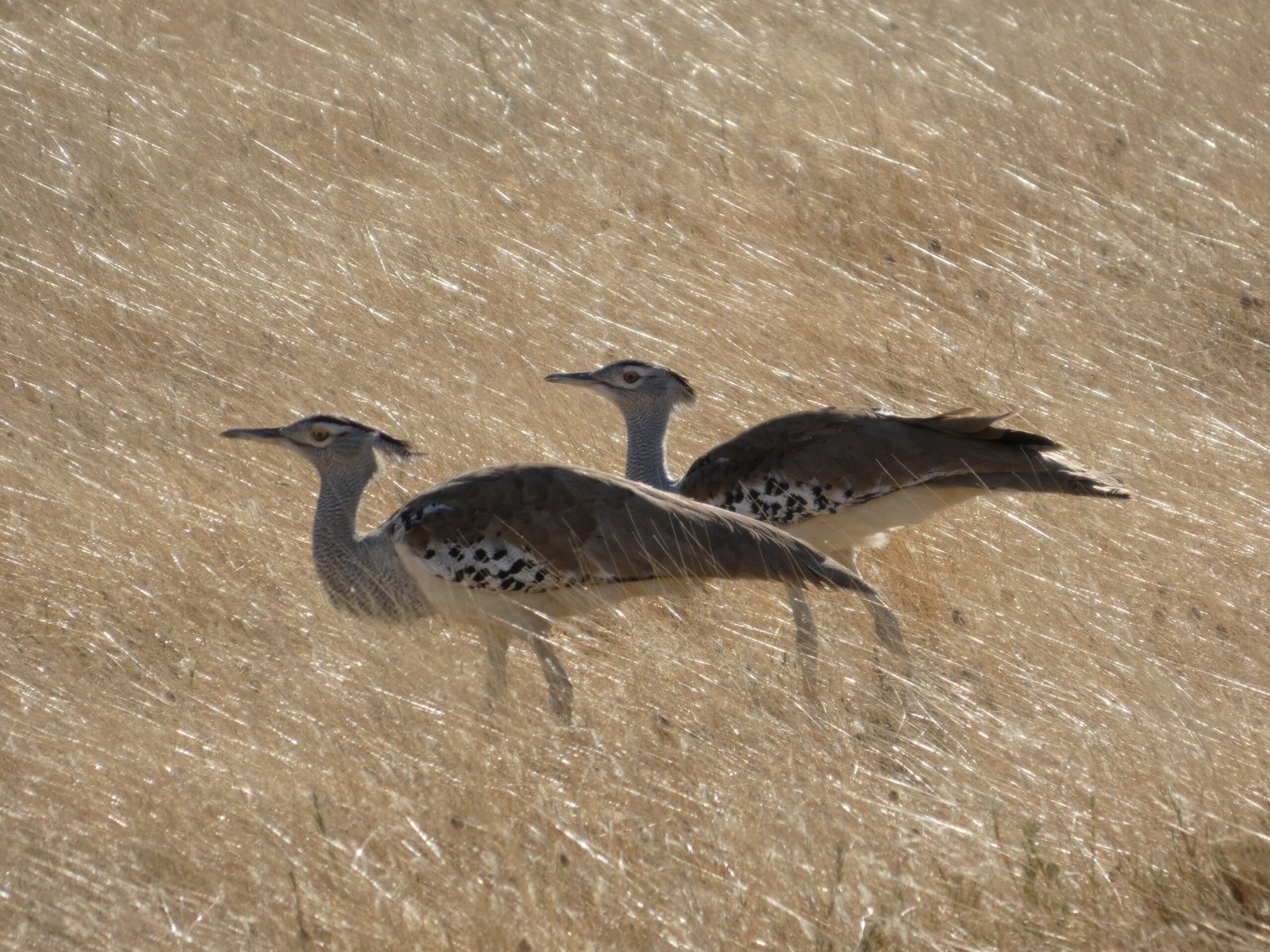
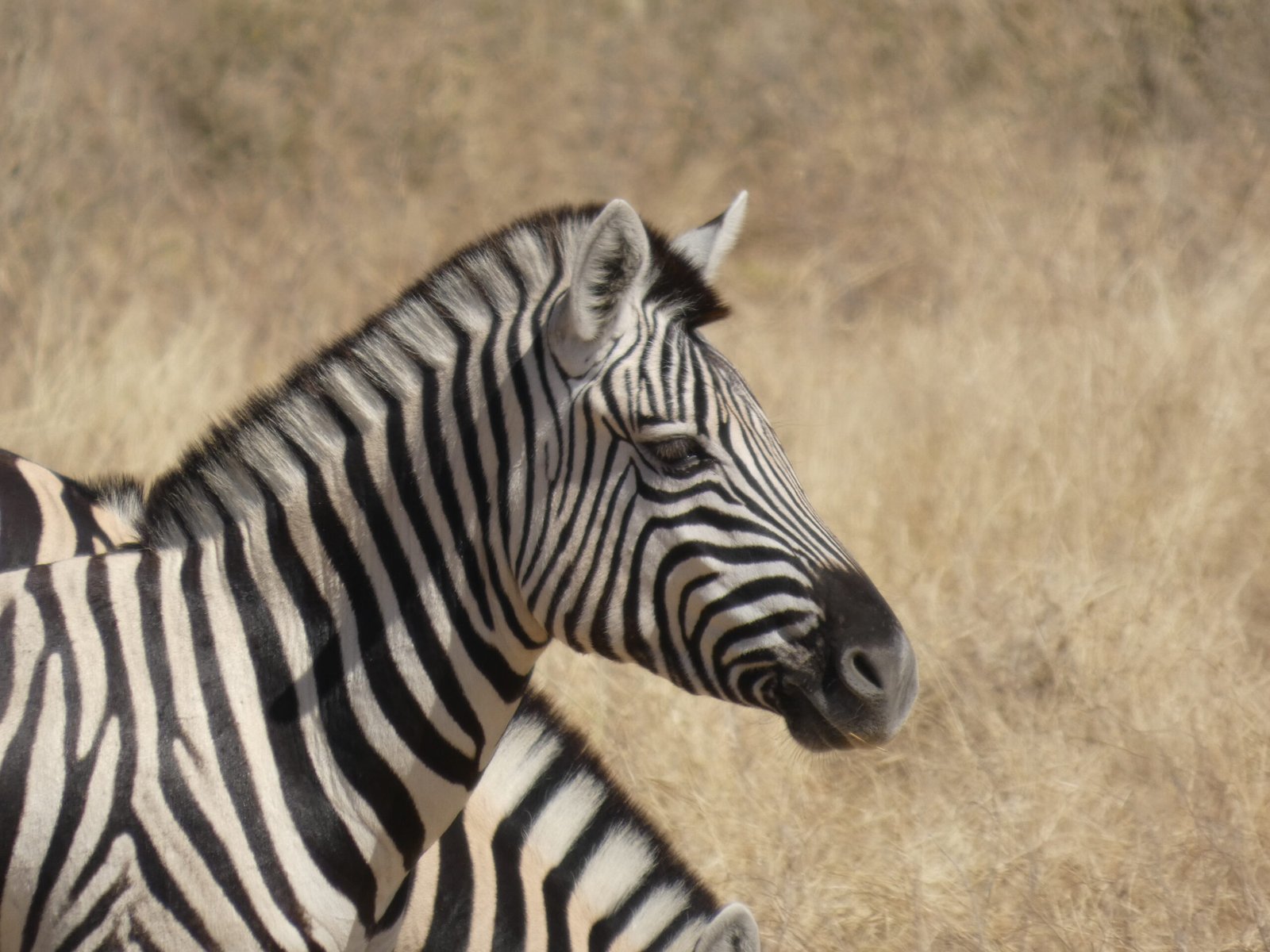
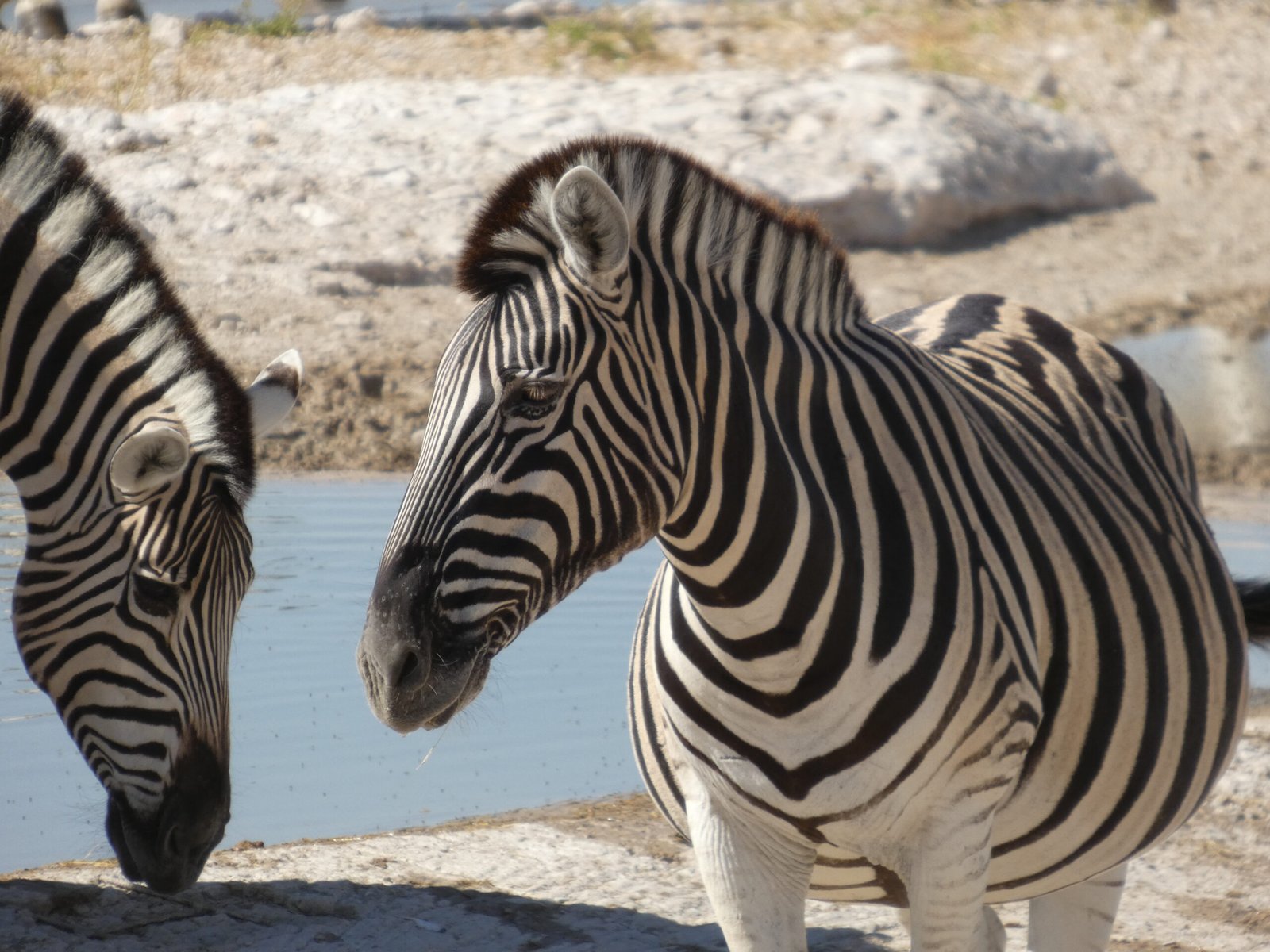
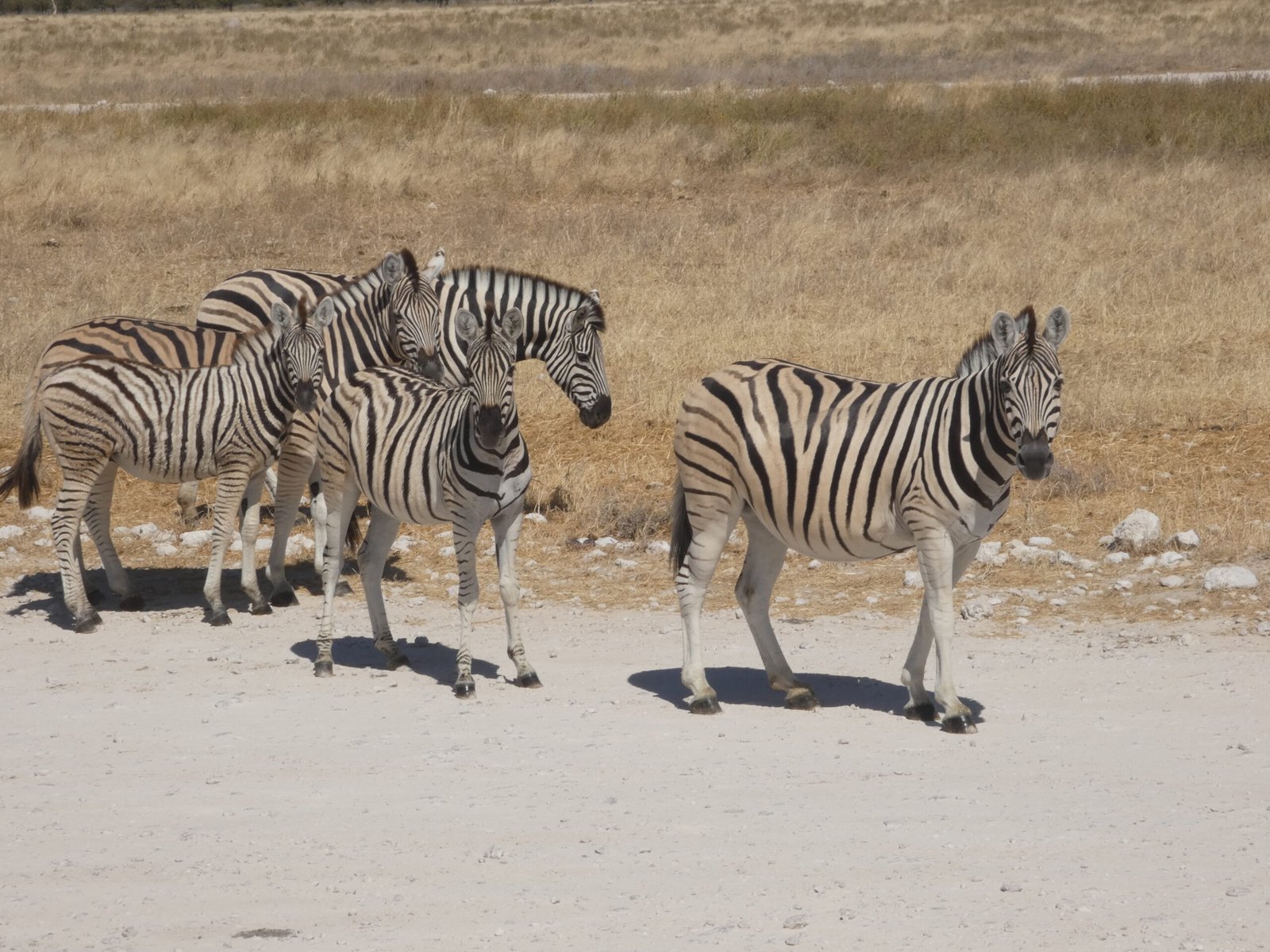
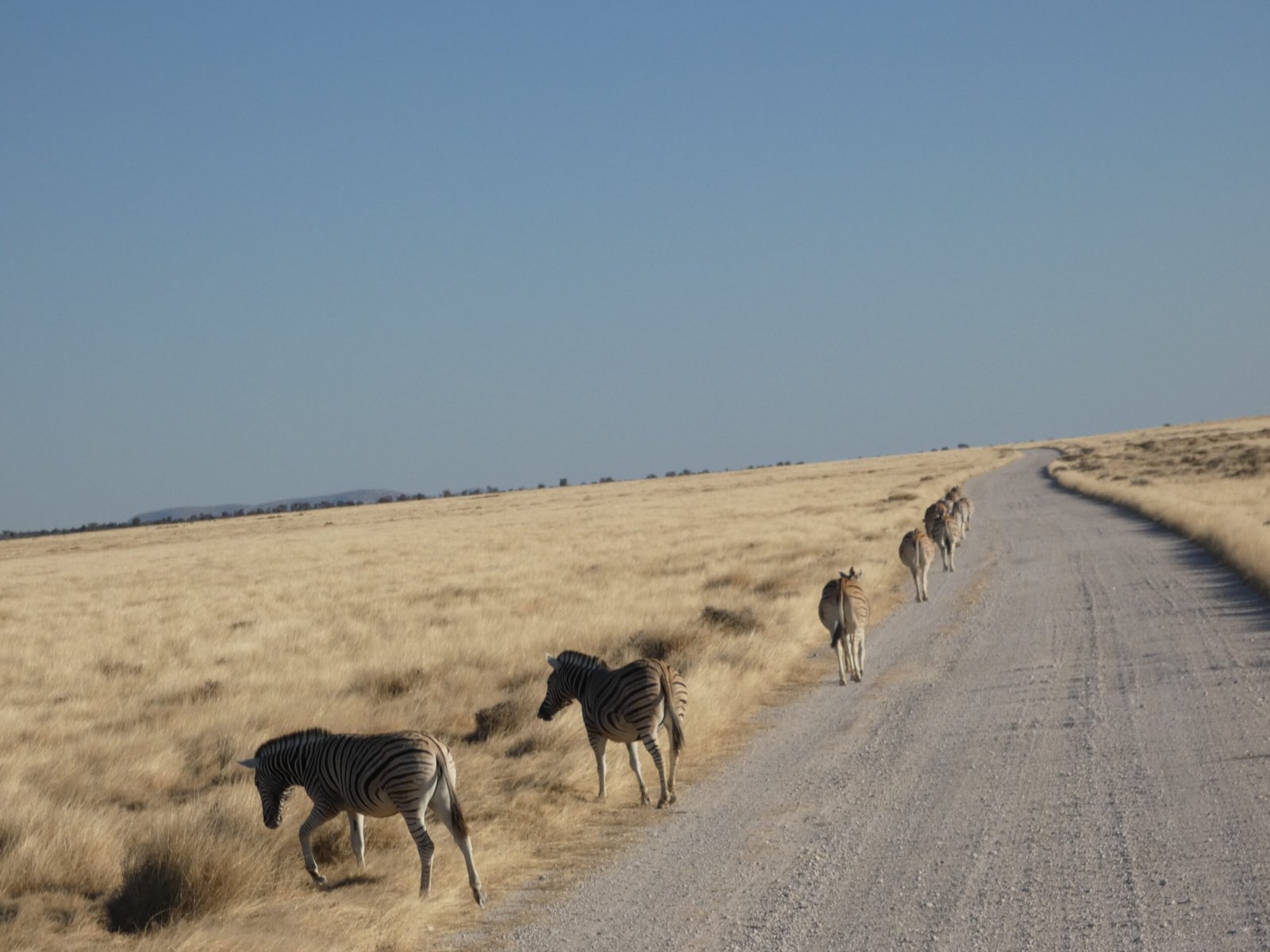
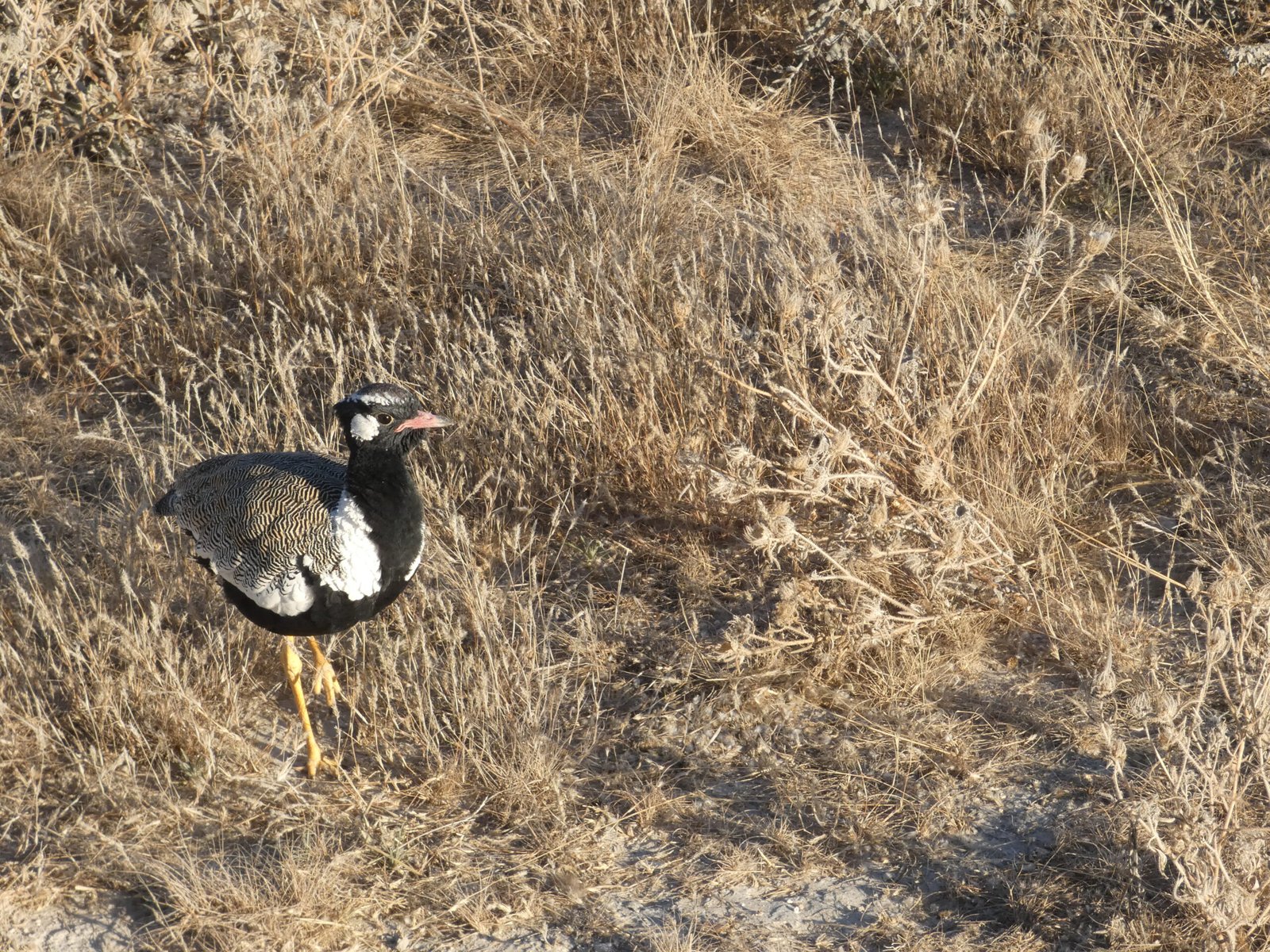
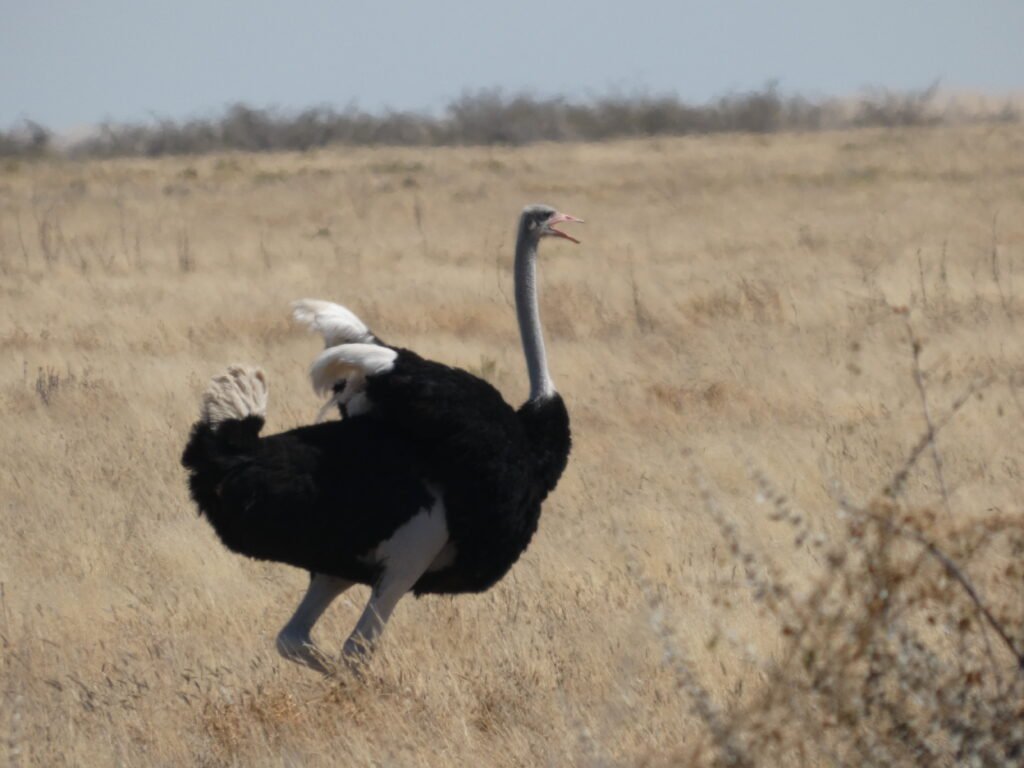
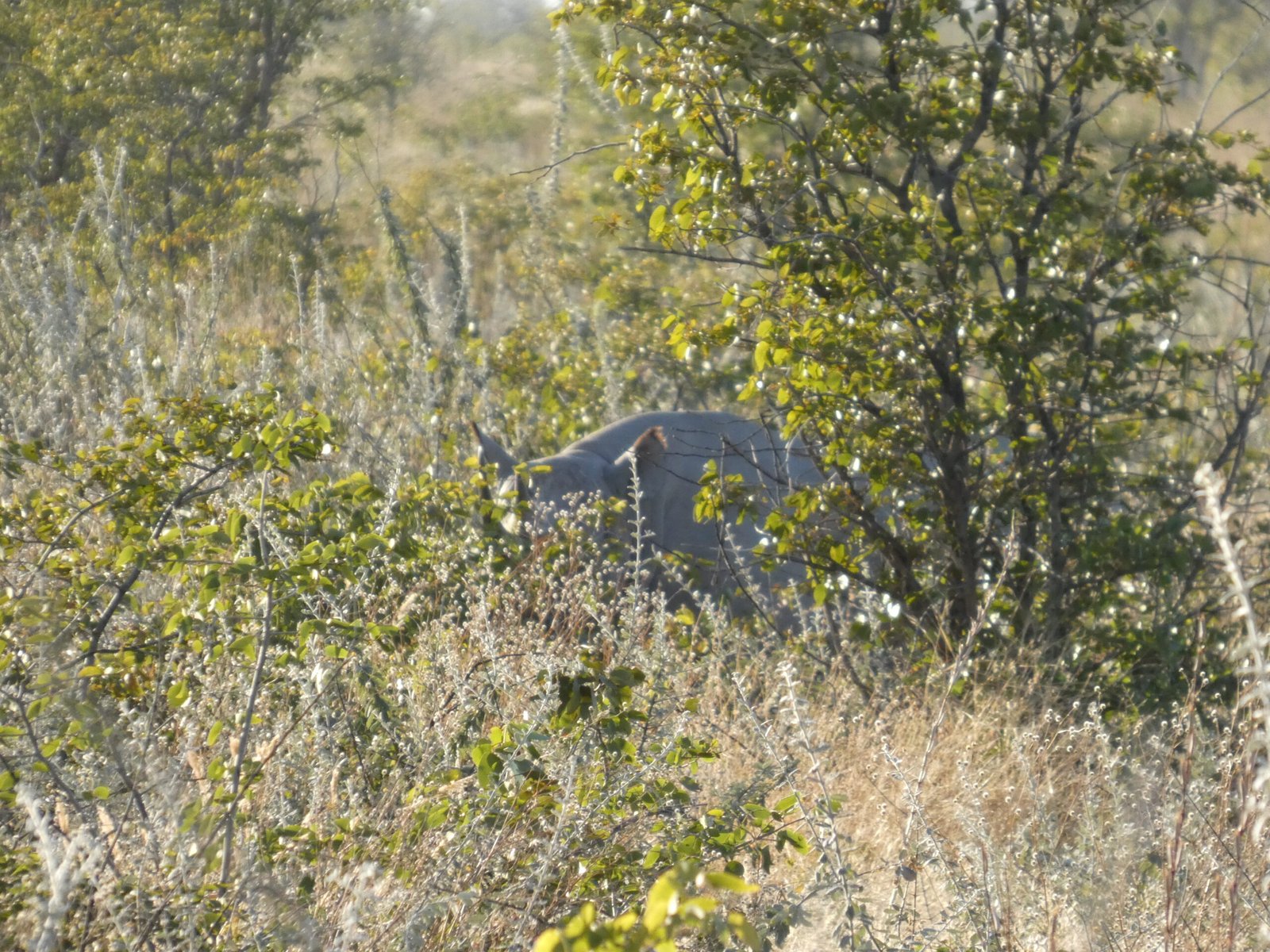
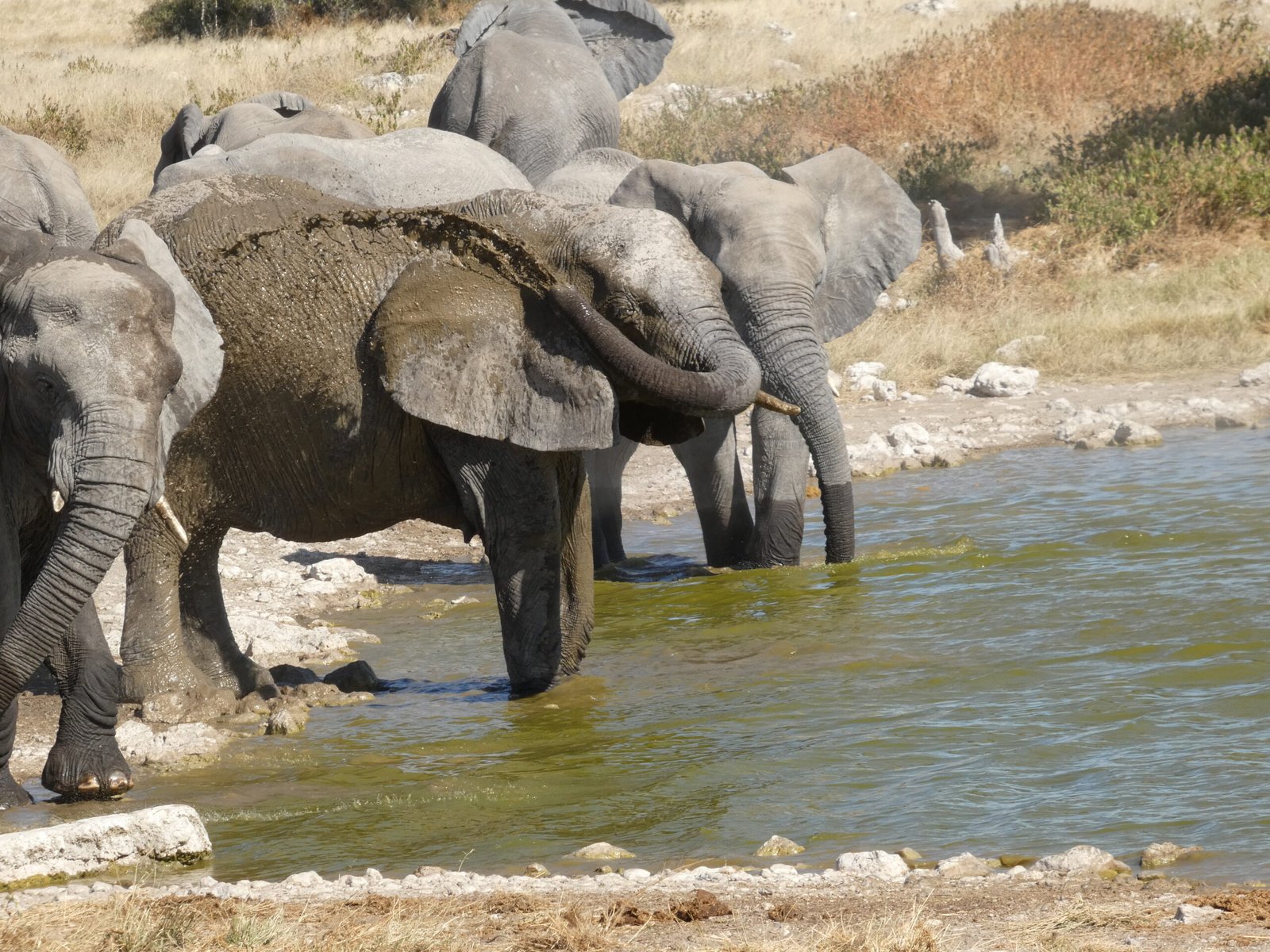
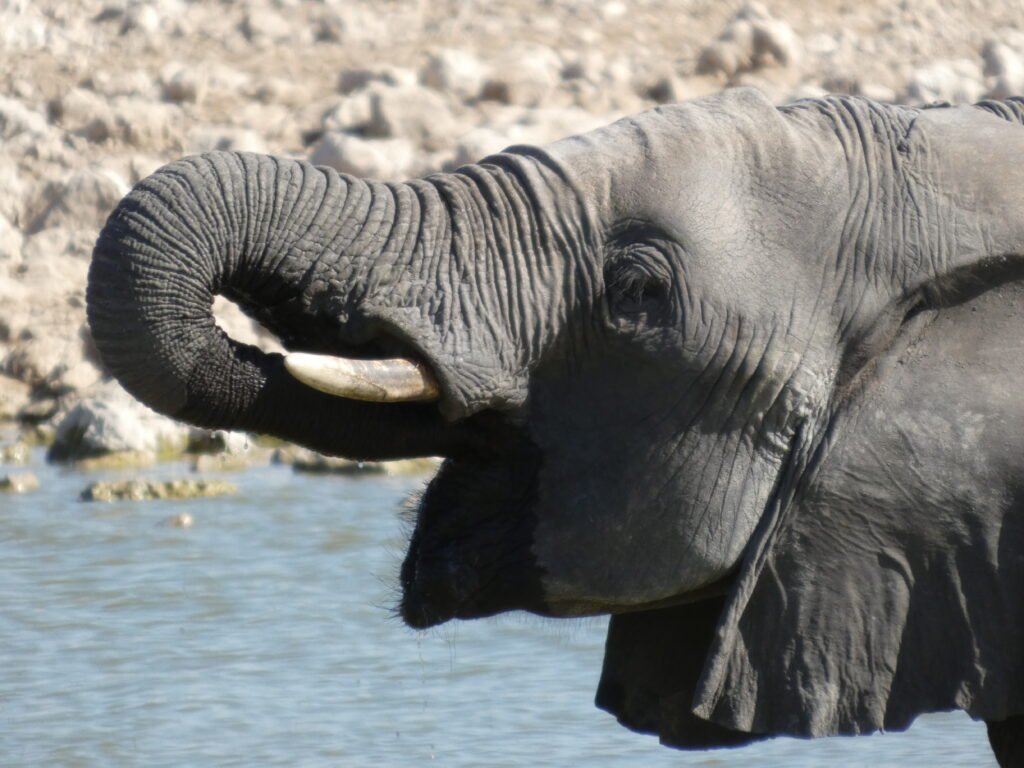
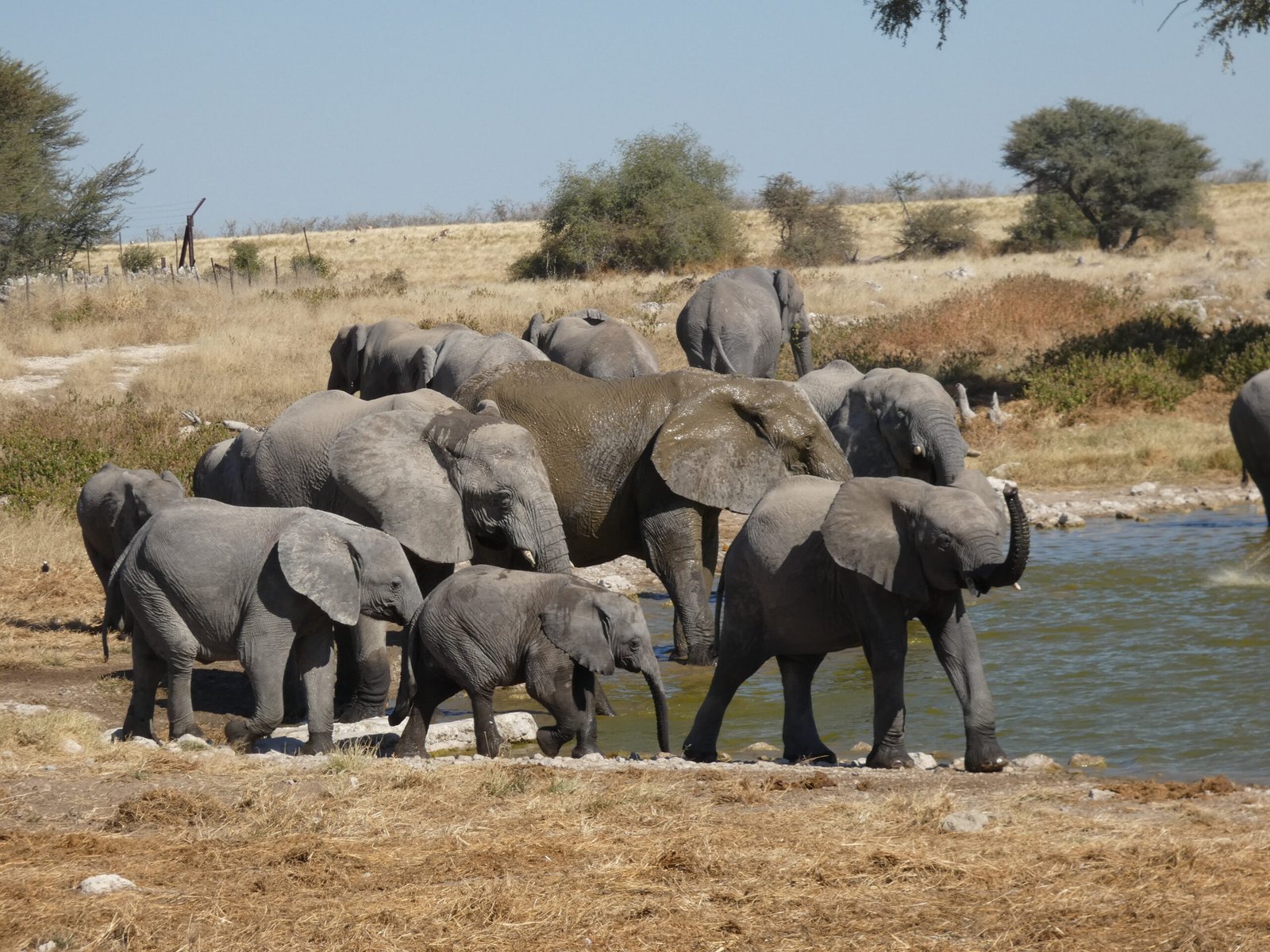
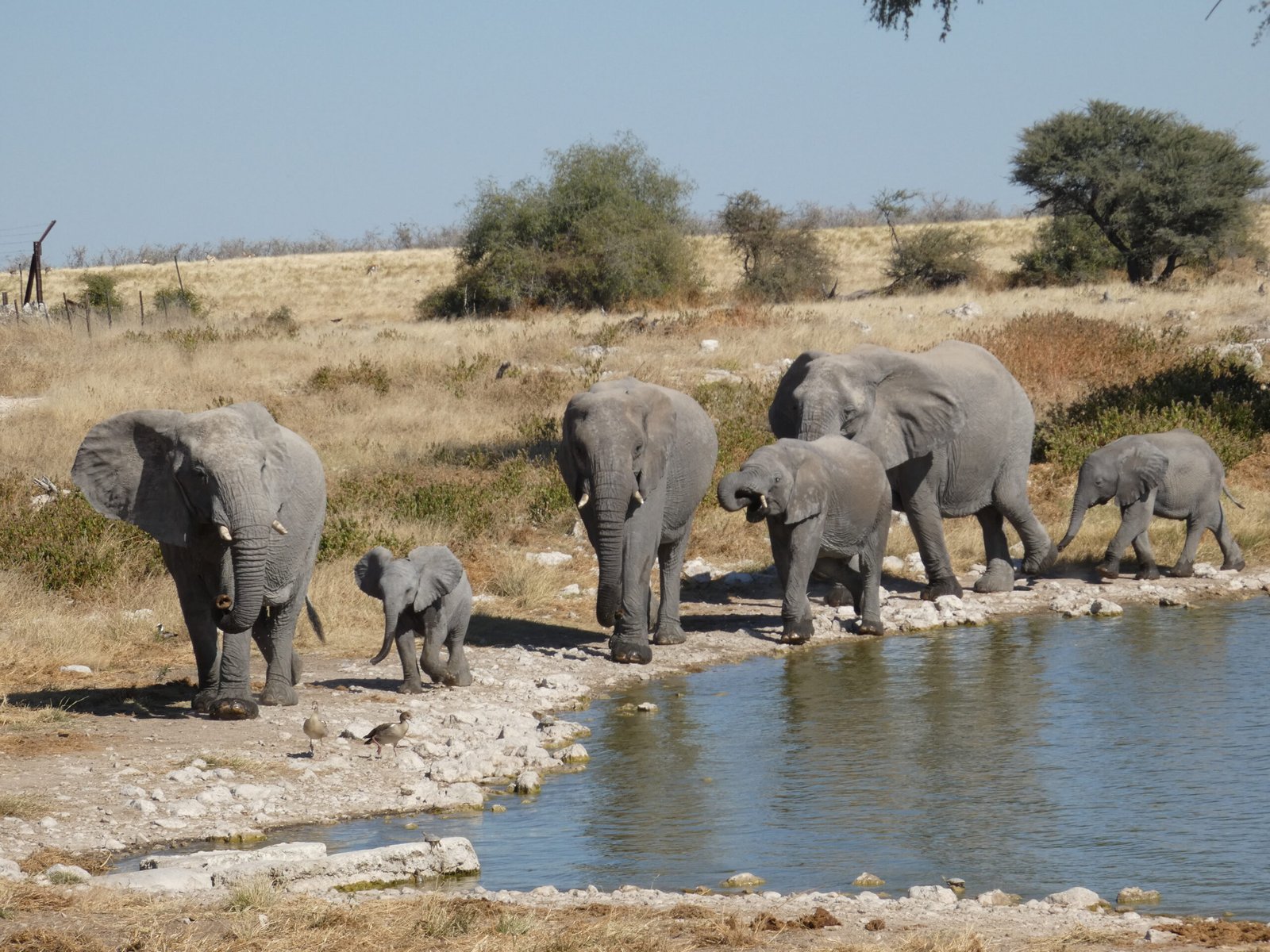
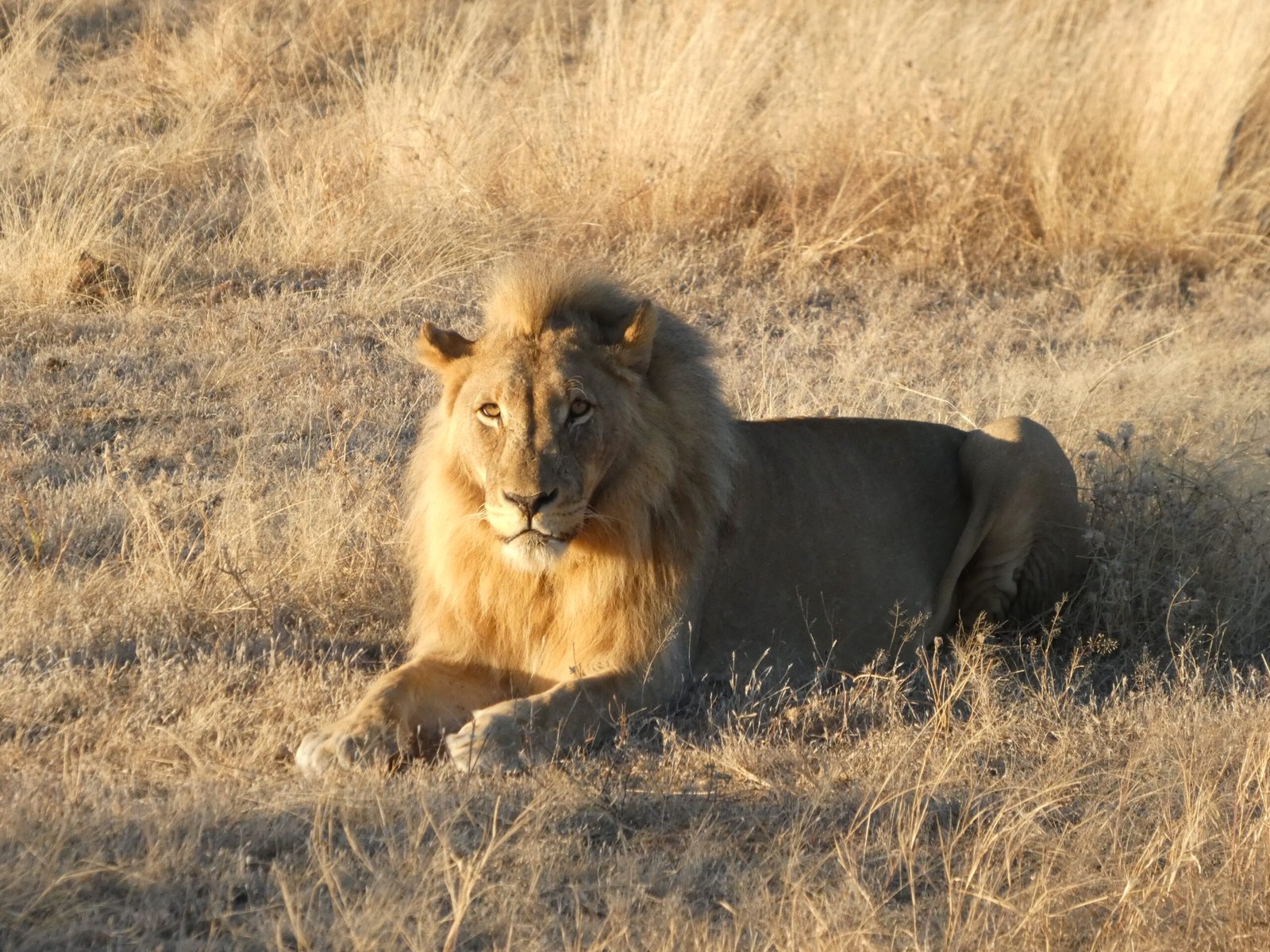
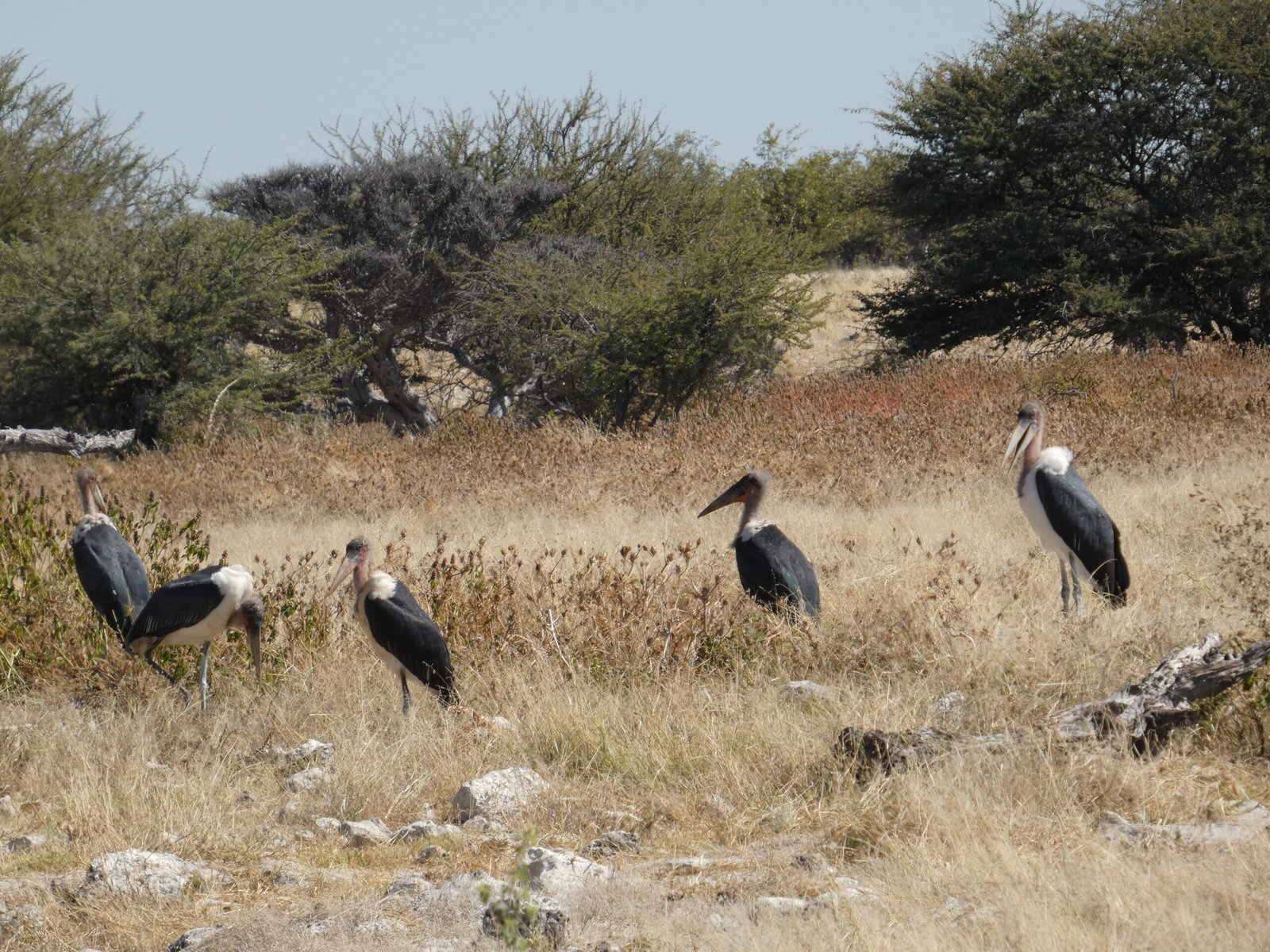
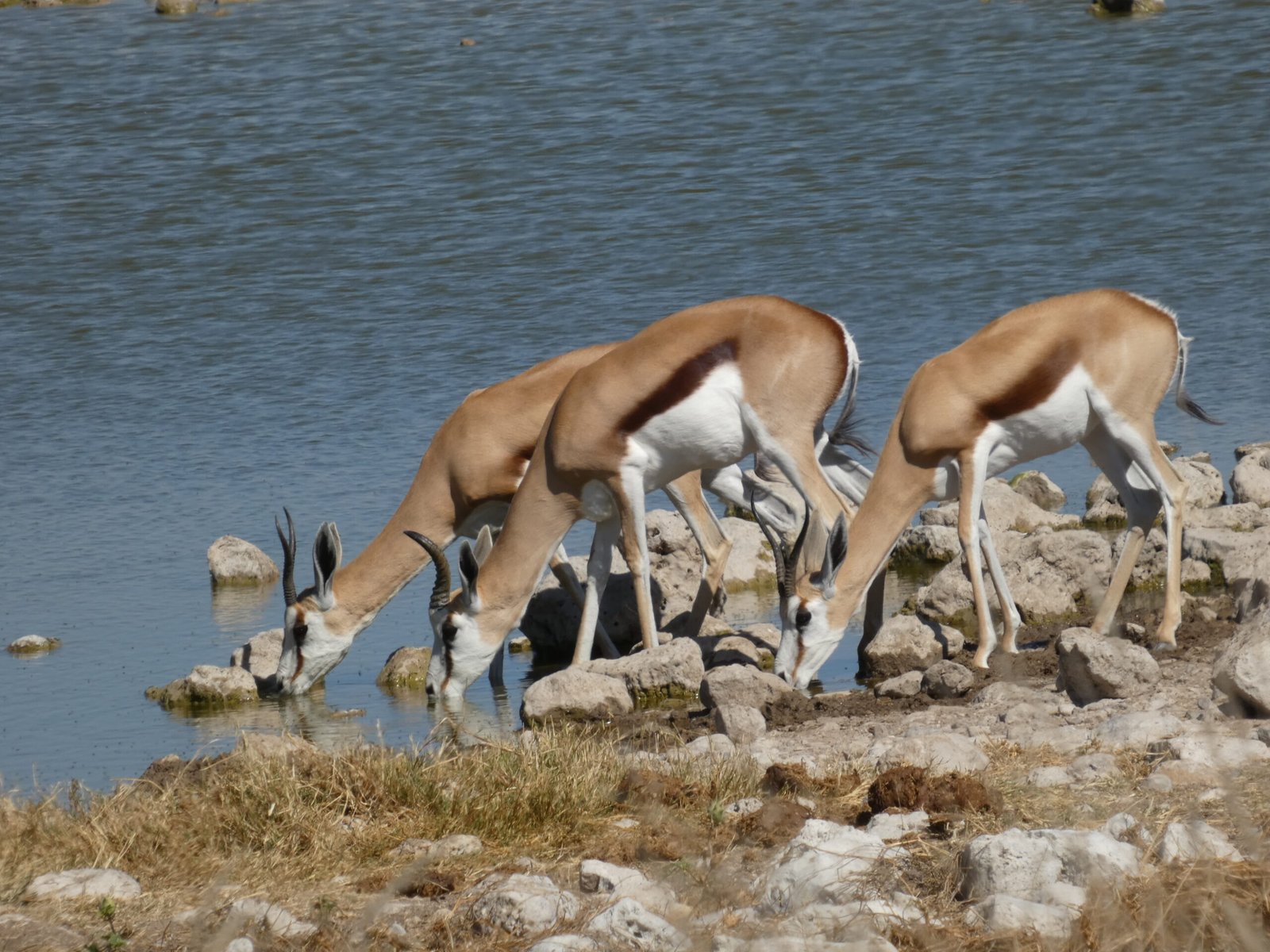
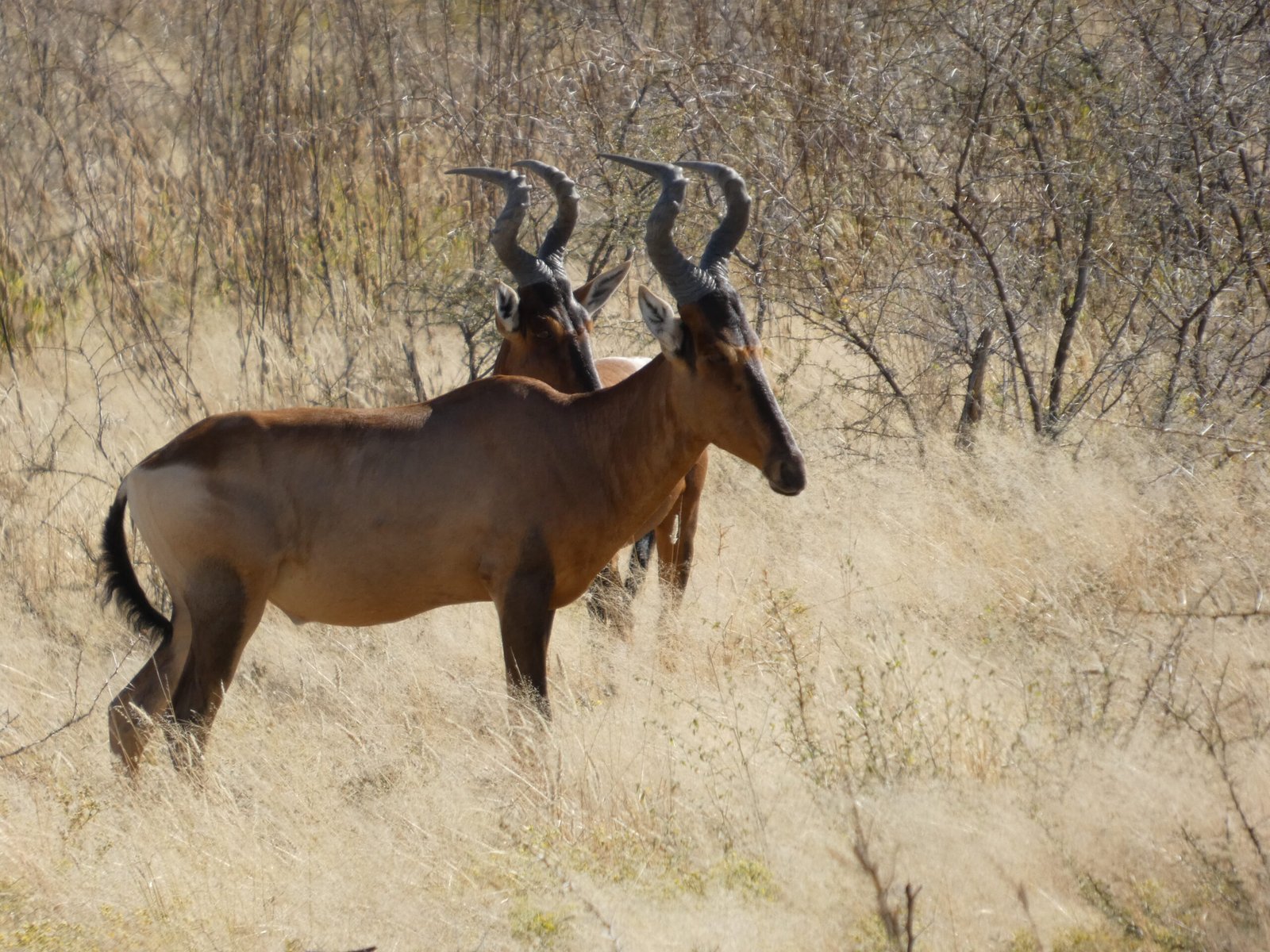
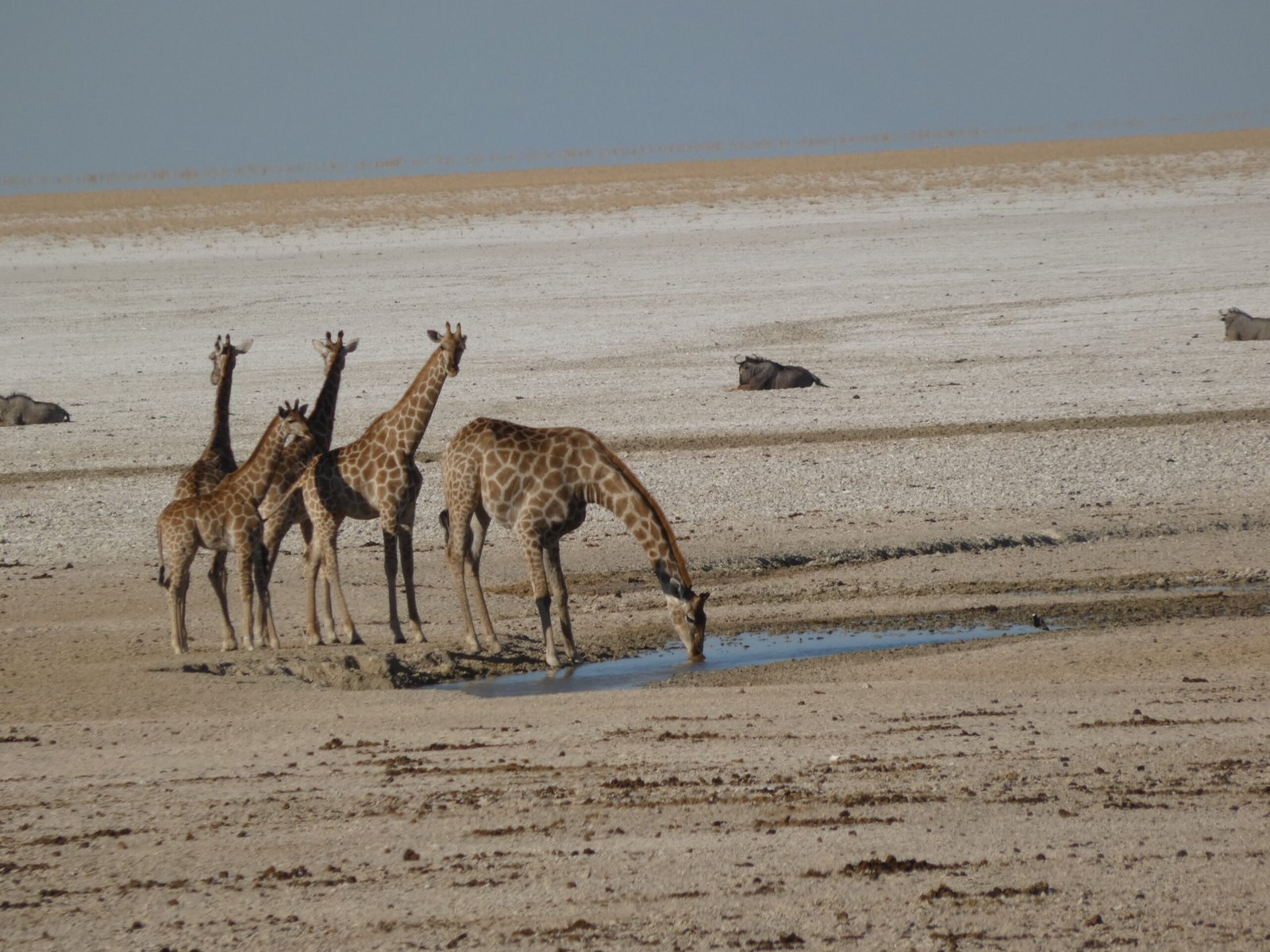
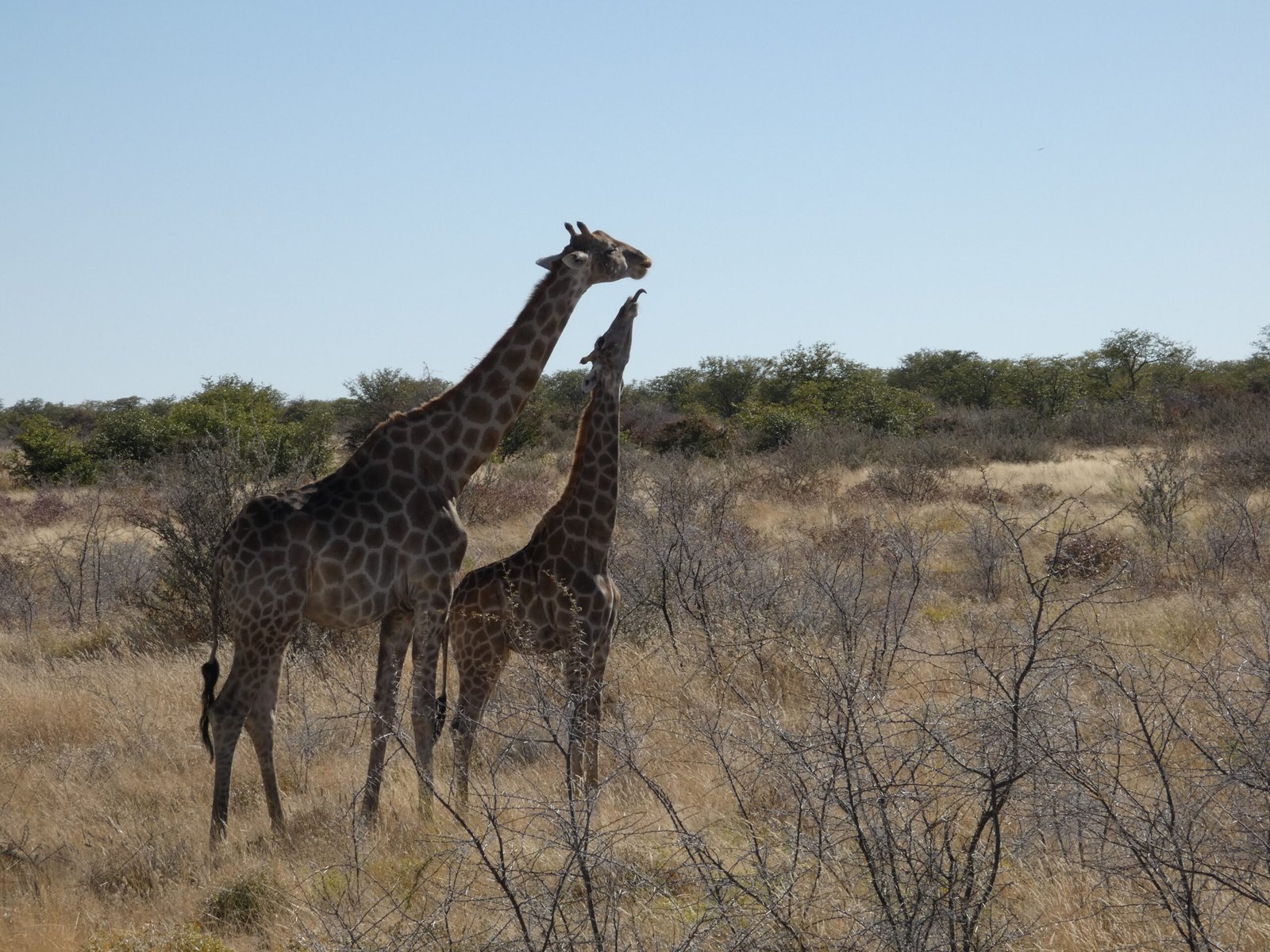
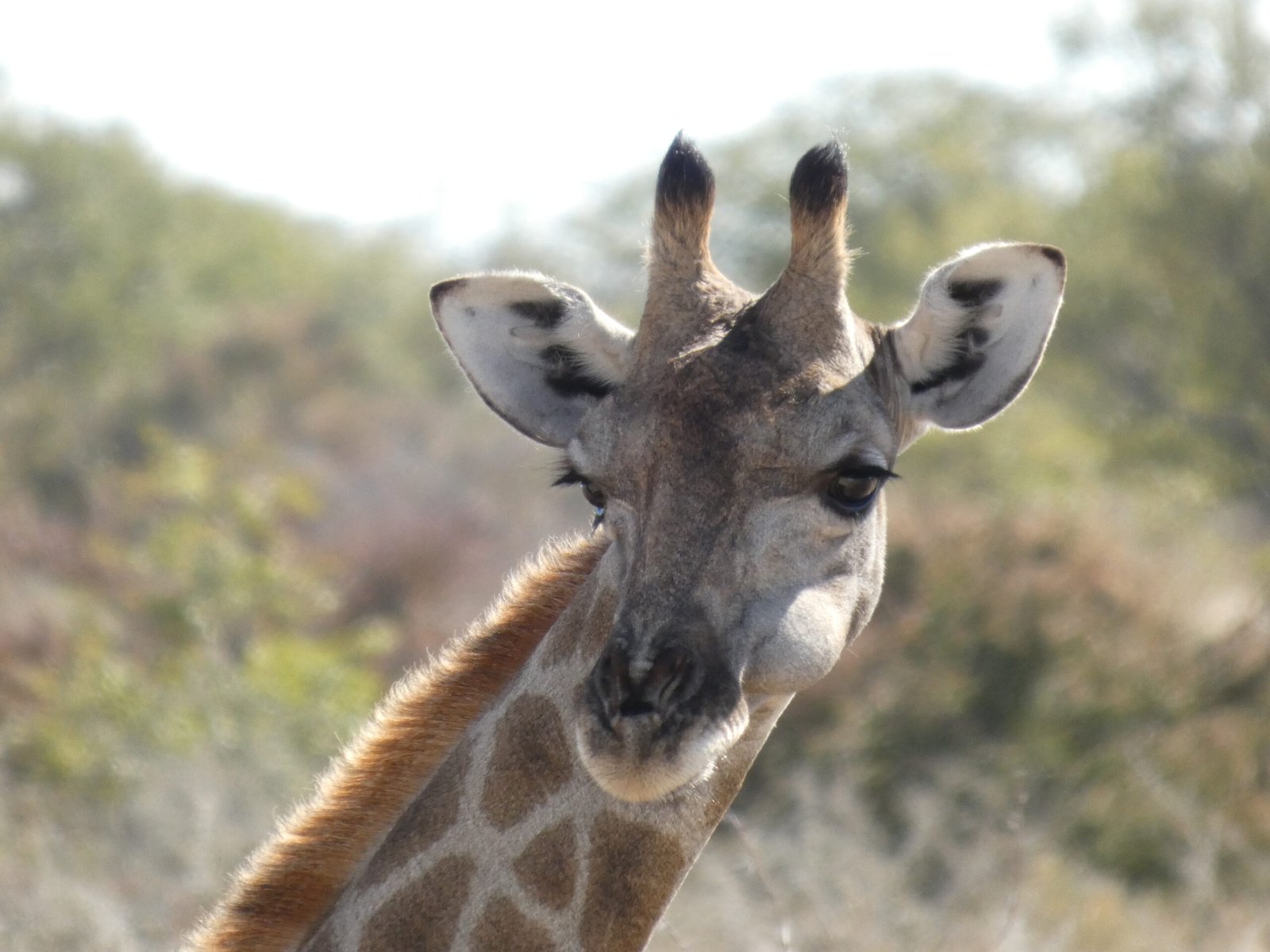
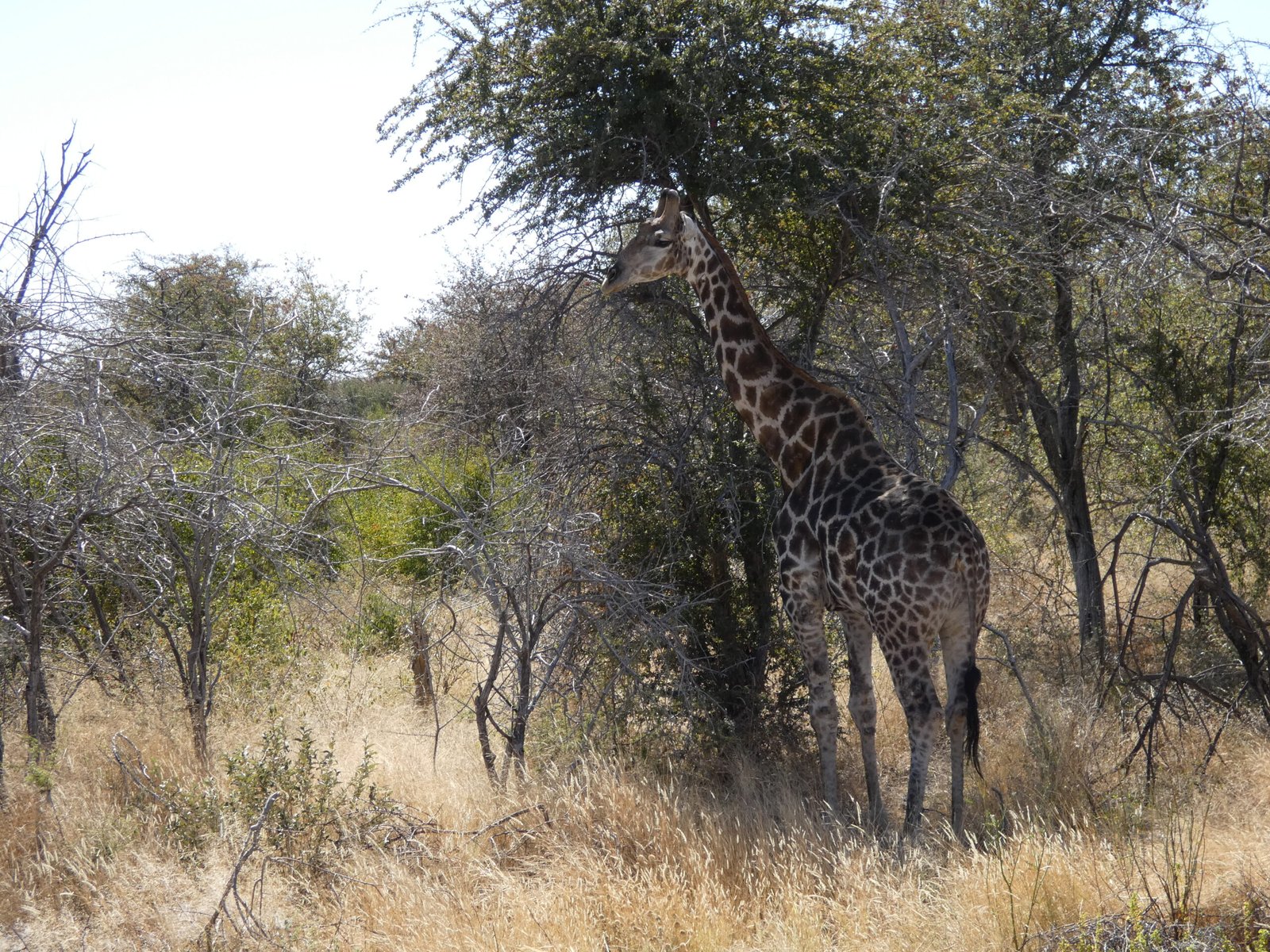
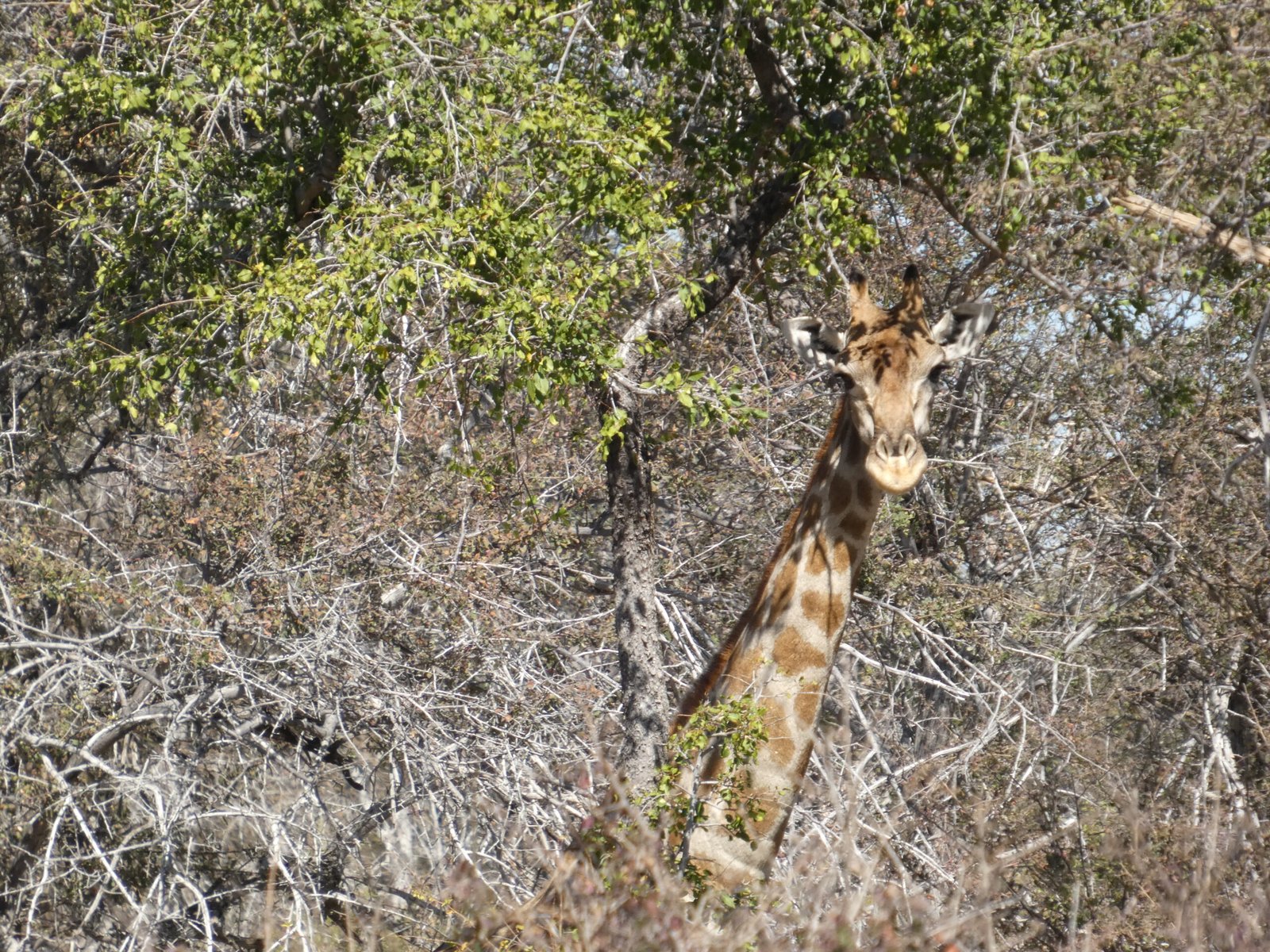
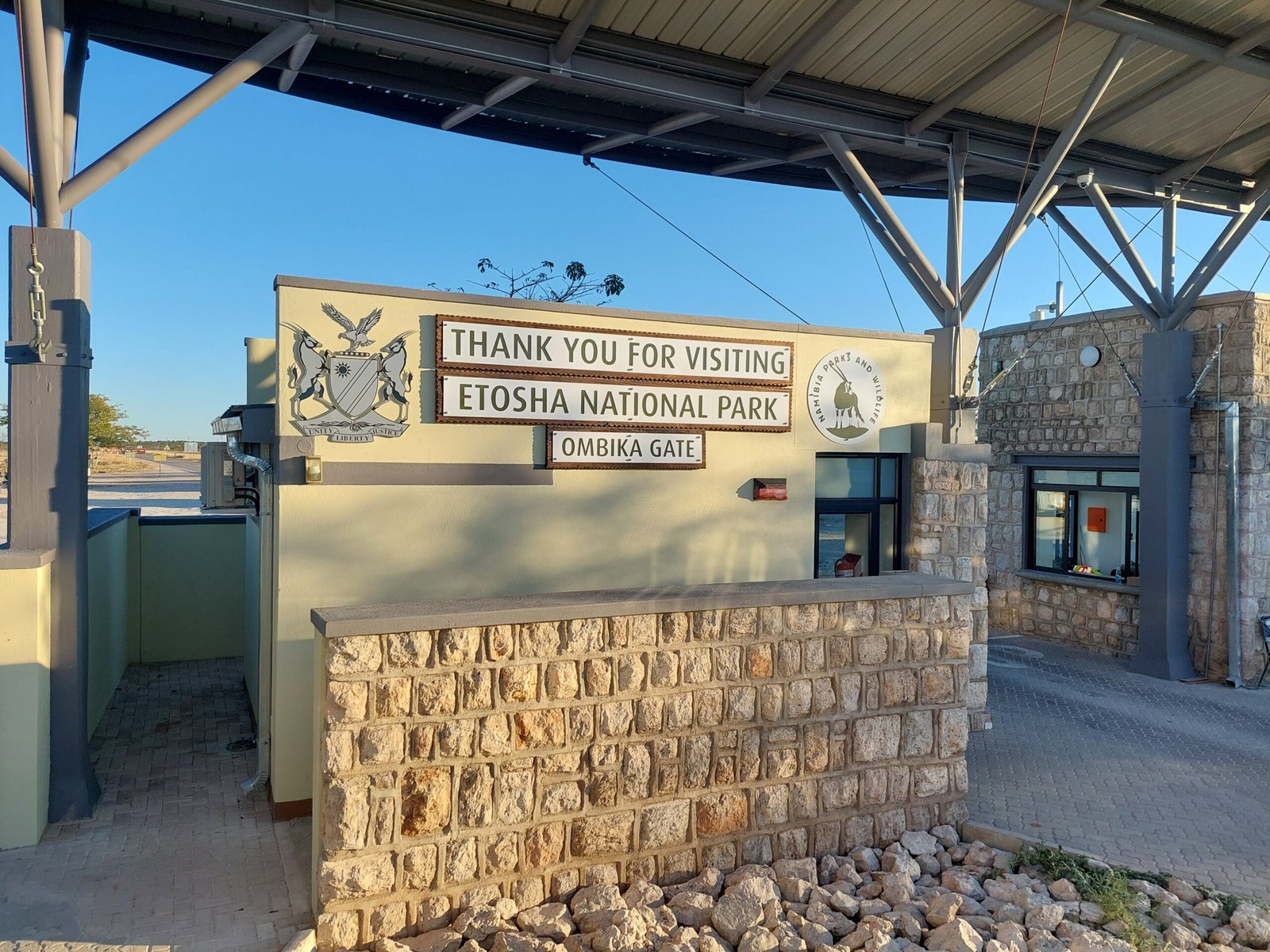
We got up early in the morning so that we could be at the gate of the nature park when it opened. We spent the whole day in the park marveling at the animals. We were incredibly lucky: we saw a total of about 60 elephants at two different watering holes, a dozen giraffes, hundreds of zebras and various antelopes, a rhinoceros (albeit from a distance) and seven lions. Marko took lots of photos of the animals with his camera, and Jaana took care of the video. We won’t post all 269 photos on this blog, but here are some of the best ones.
It was feeding time for the little one.
This is the best picture we got of a rhinoceros this time.
Spotting animals is hard work.
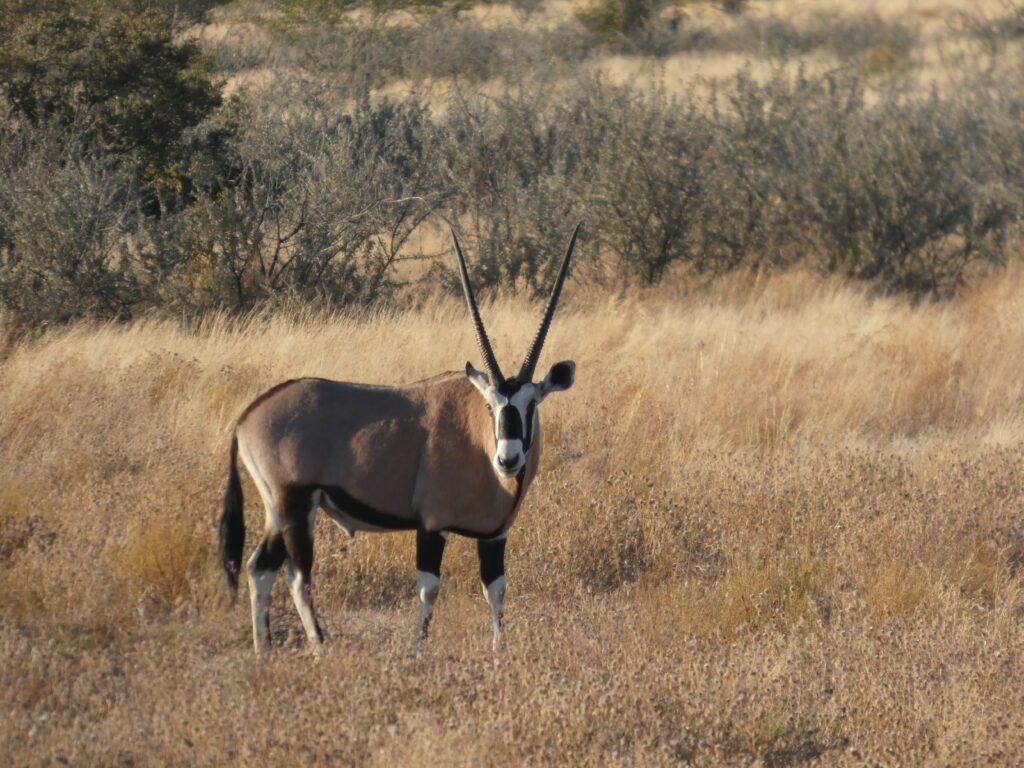
When we returned, we had dinner again at the resort restaurant. This time, the meat options were impala, oryx, and wildebeest. Once again, we had to try all the options available, and once again, we found that they all tasted pretty much the same. They were good, though.
With our stomachs full, it was time to go to bed. This time we didn’t encounter any snakes on the way back, but when Ronja went to the bathroom during the night, she said she heard an animal scurrying around outside. Ronja concluded that it was an animal because it didn’t respond to her persistent cries of “Who’s there?”
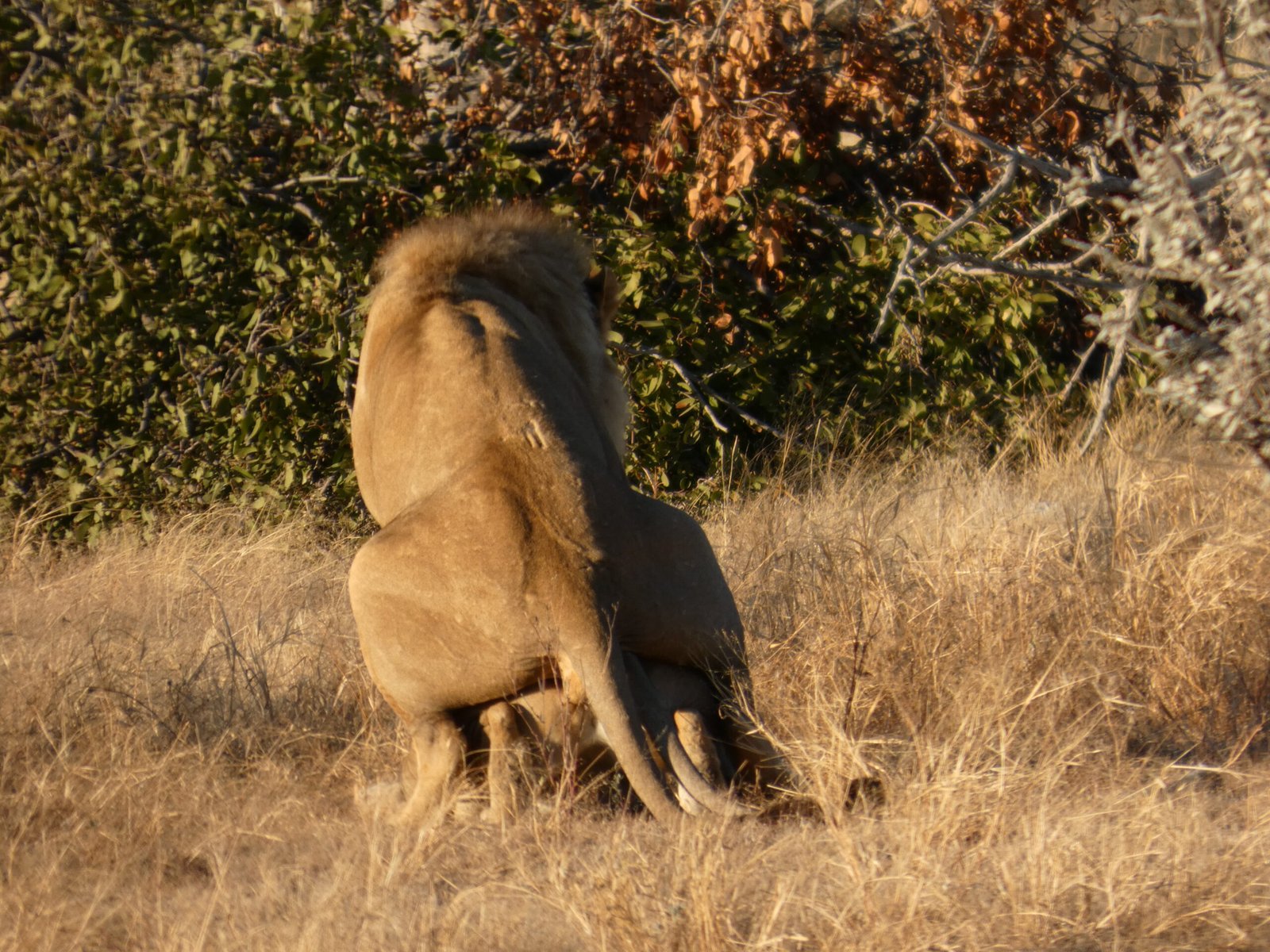
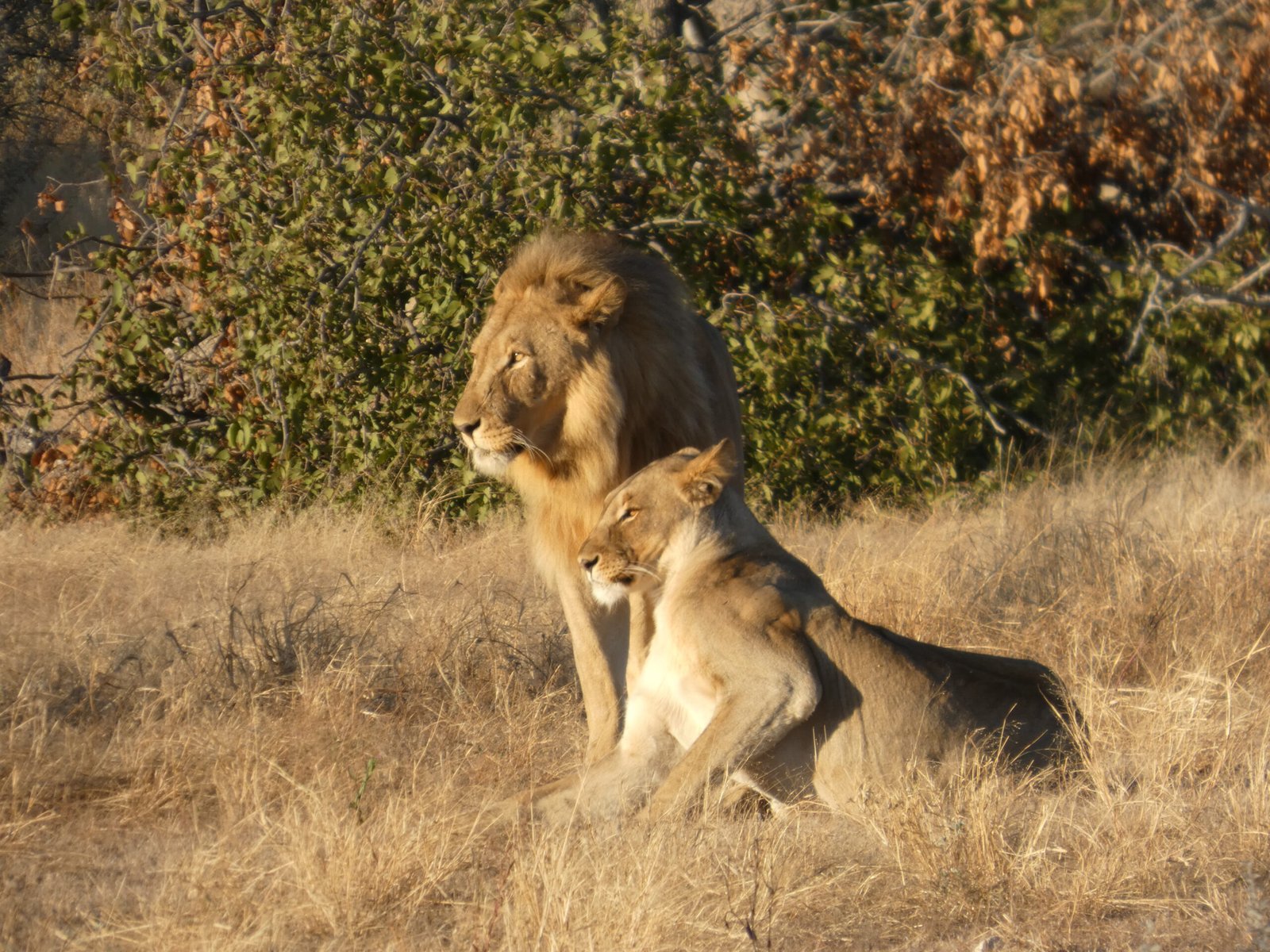
On Wednesday morning, we got up at six again, packed our tent, and had breakfast at the restaurant. Then we set off on another drive to the nature park. This time, as soon as we arrived at the park, we spotted a pair of lions, who decided to engage in mating rituals in front of all the spectators’ cameras. This provided a quick explanation of the miracle of reproduction for Risto.
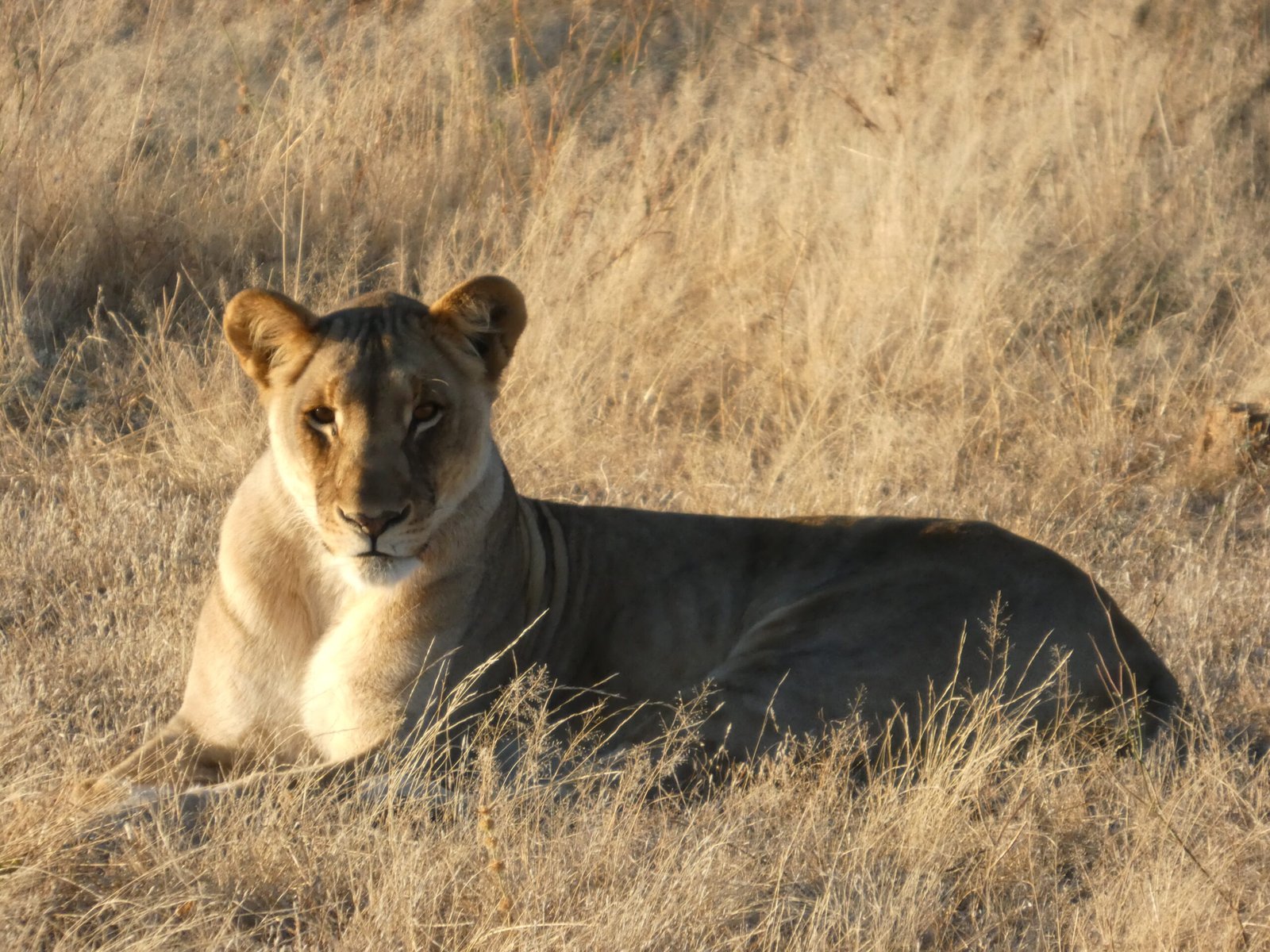
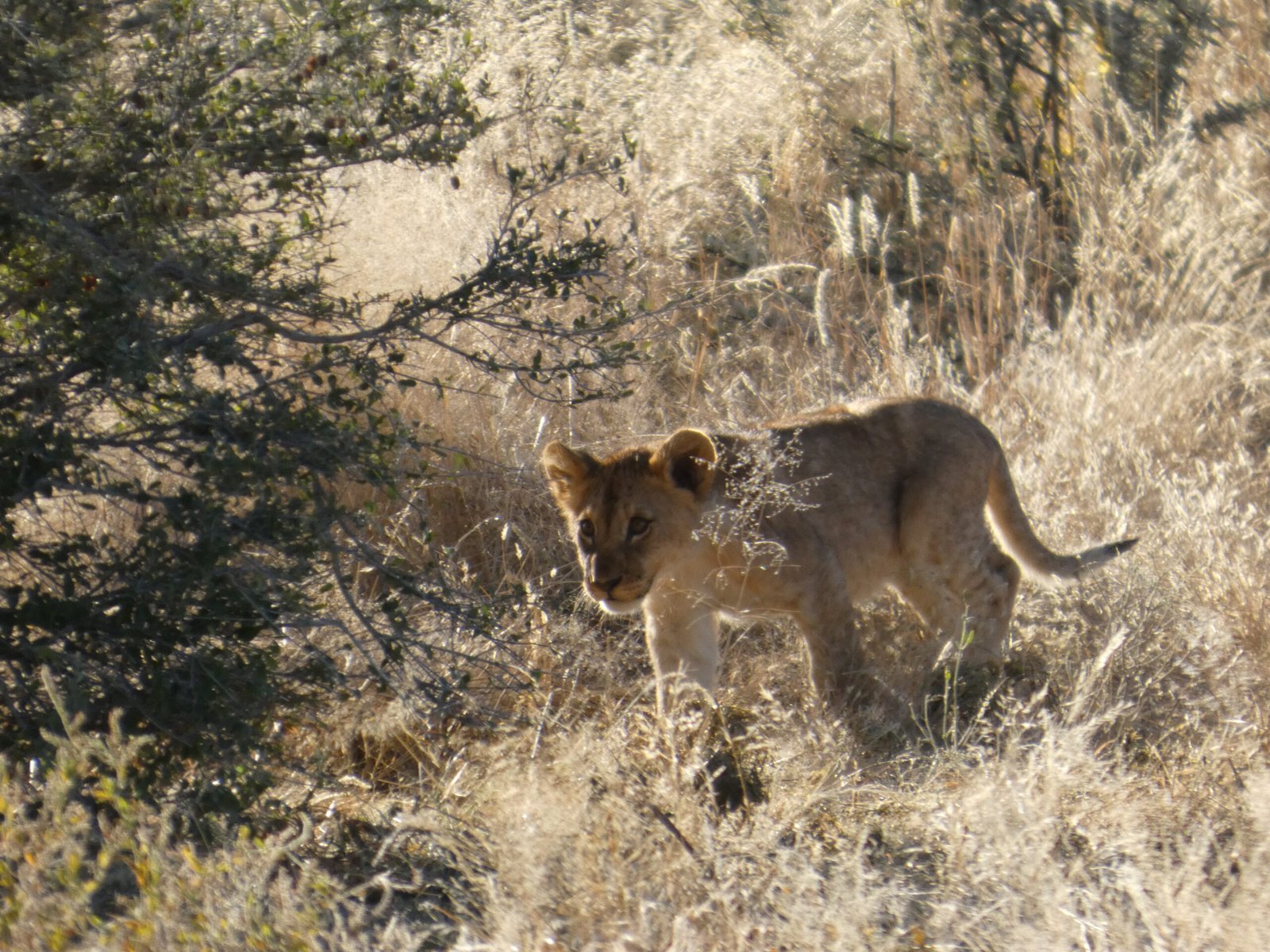
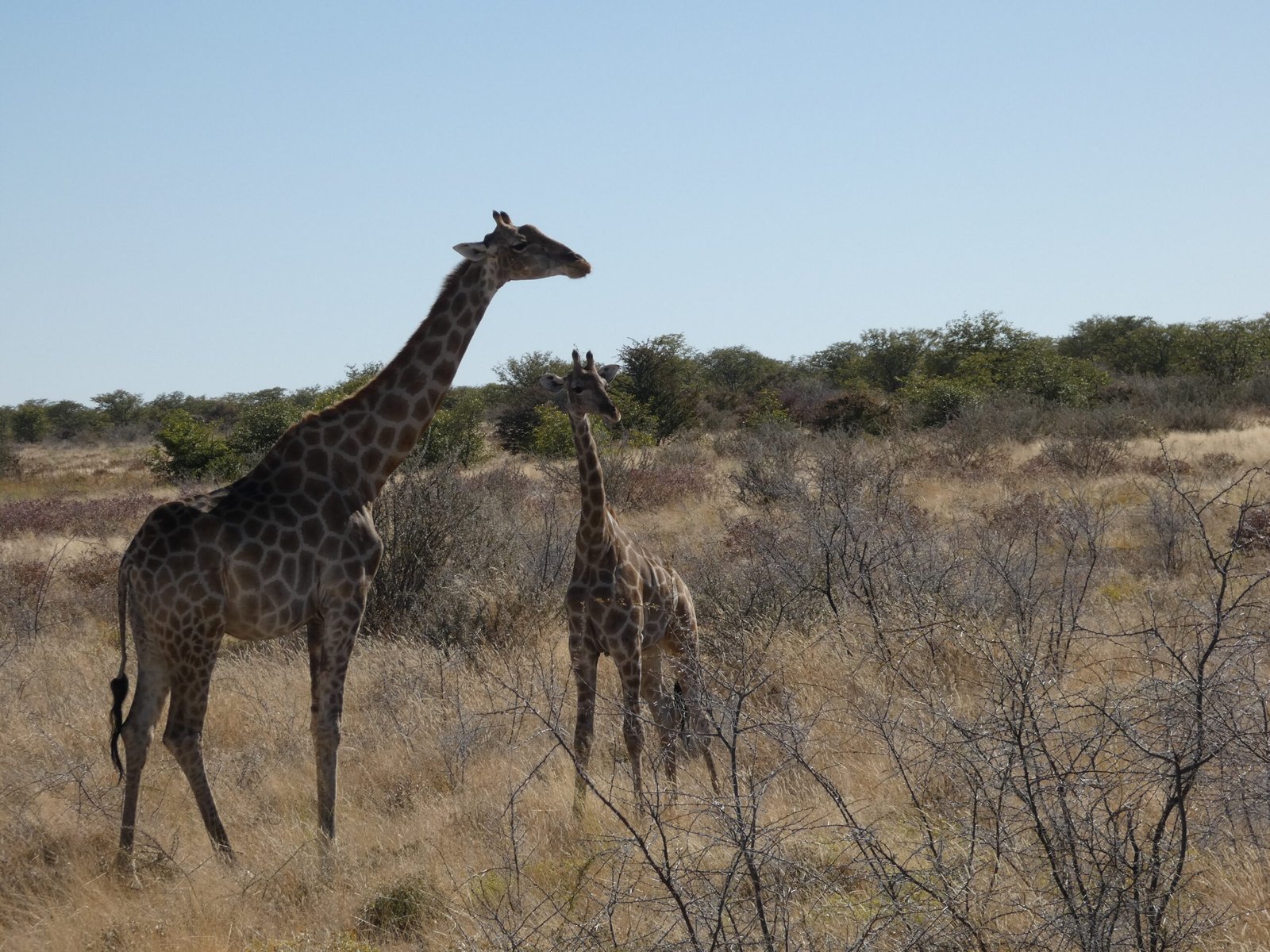
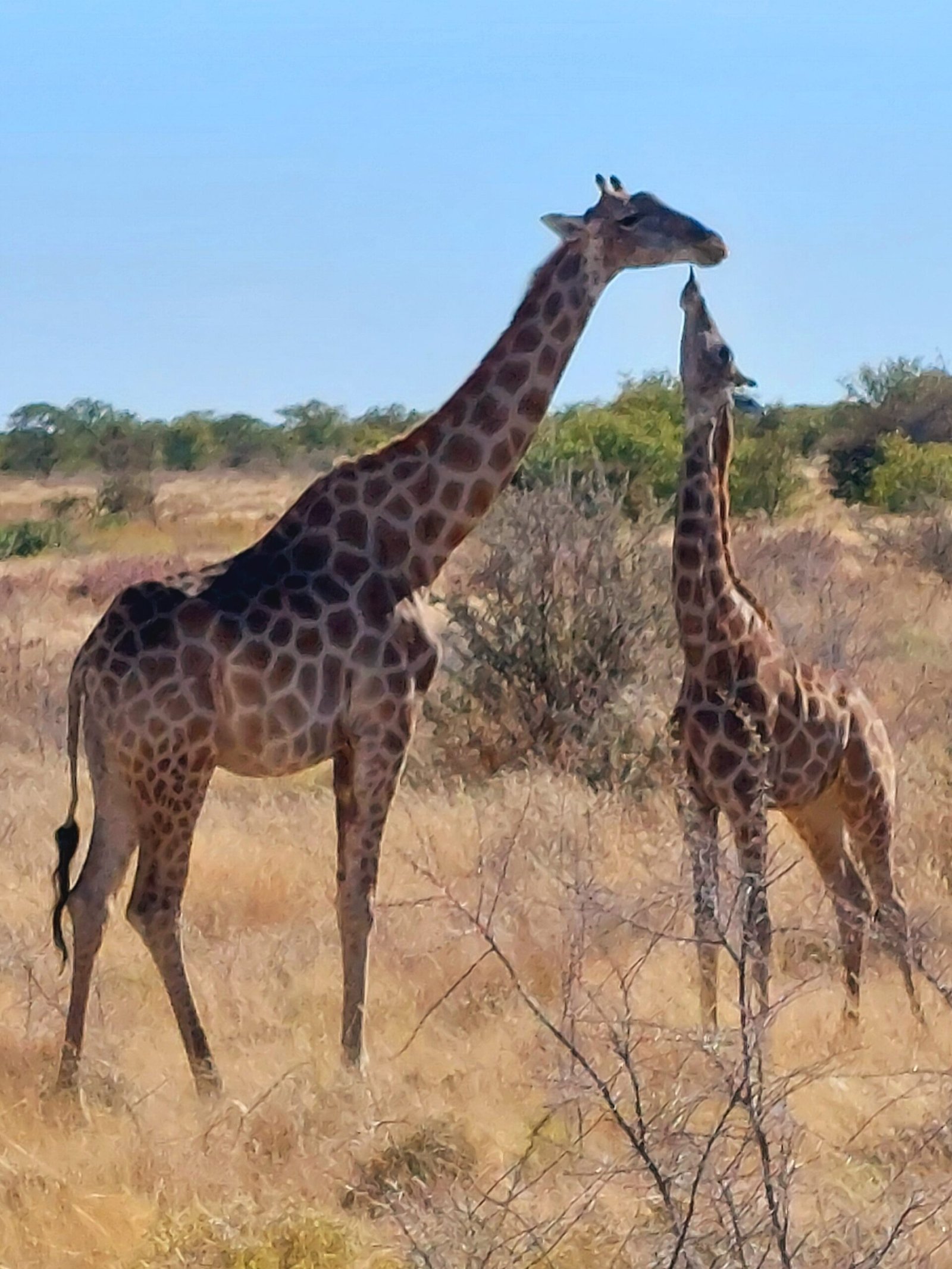
A little later, we saw a female lion with her three cubs. Female lions spend time with their cubs away from the pride until the cubs are old enough to join the pride. Male lions would kill the cubs immediately for fear of potential competition. We saw more baby animals when we spotted a giraffe with its calf by the side of the road. We also spotted a rhinoceros (unfortunately still quite far away), many more giraffes (32 in total), zebras, and antelopes. We didn’t see any elephants at all that day.
We had a quick lunch at the campsite inside the park, after which we continued our journey, exiting through the gate on the other side of the park.
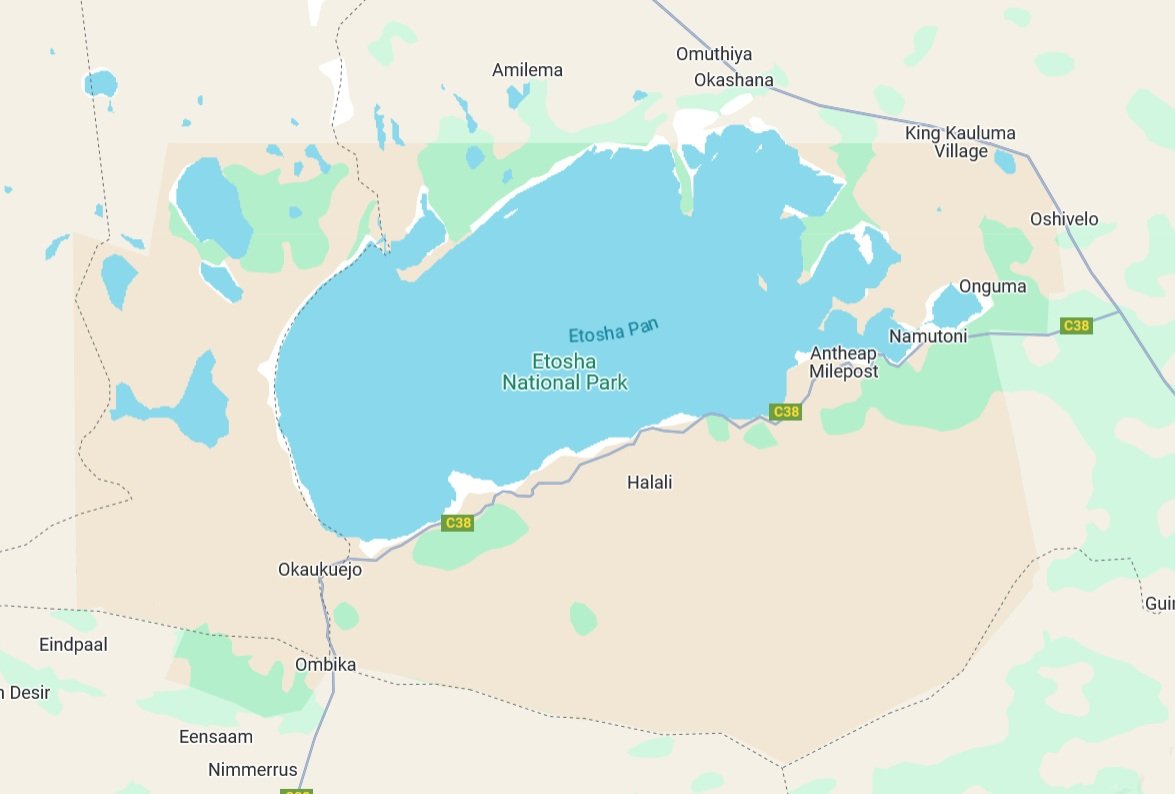
Etosha National Park according to Google Maps.
And here's the reality. Instead of water, the park contains a salt flat measuring approximately 125 km x 50 km, which only ostriches and oryx antelopes can cross.
From Etosha, we continued our journey to the town of Tsumeb, where we stayed overnight at the Kupferquelle resort. Upon arrival, we were offered welcome drinks, just like at Talenis, after which luggage was carried to the rooms by porters. We campers were allowed to pitch our tents on the grass instead of sand. That was also a luxury.
Dinner was served in the resort restaurant, so we were able to eat indoors. Another luxury was that there were washing machines, so we could do some laundry. It’s amazing how much laundry four people can accumulate in such a short time, even though we’ve been very careful about changing clothes, even Ronja. The last few days have been so sandy and dusty that we simply have to change into fresher clothes every now and then.
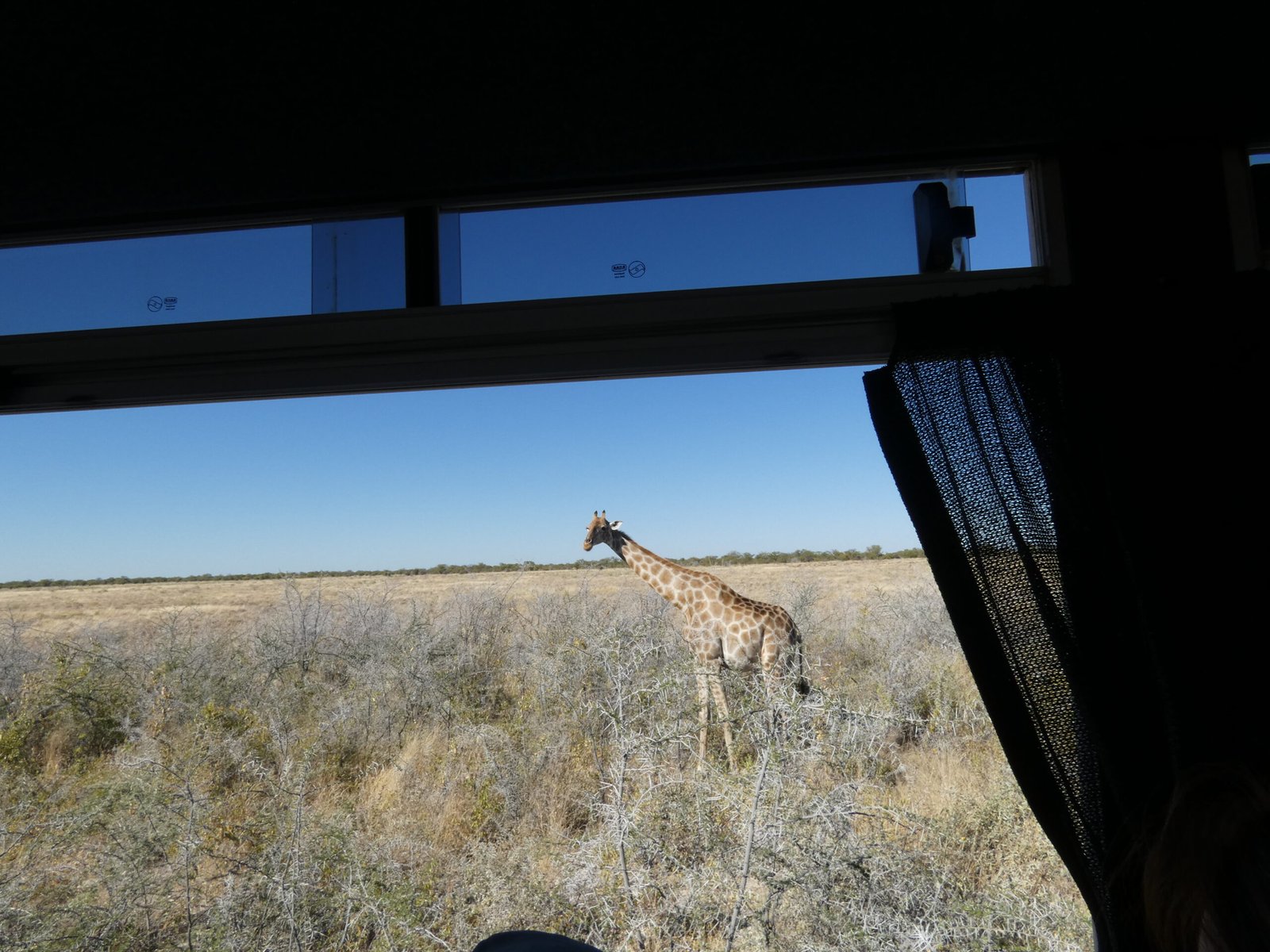
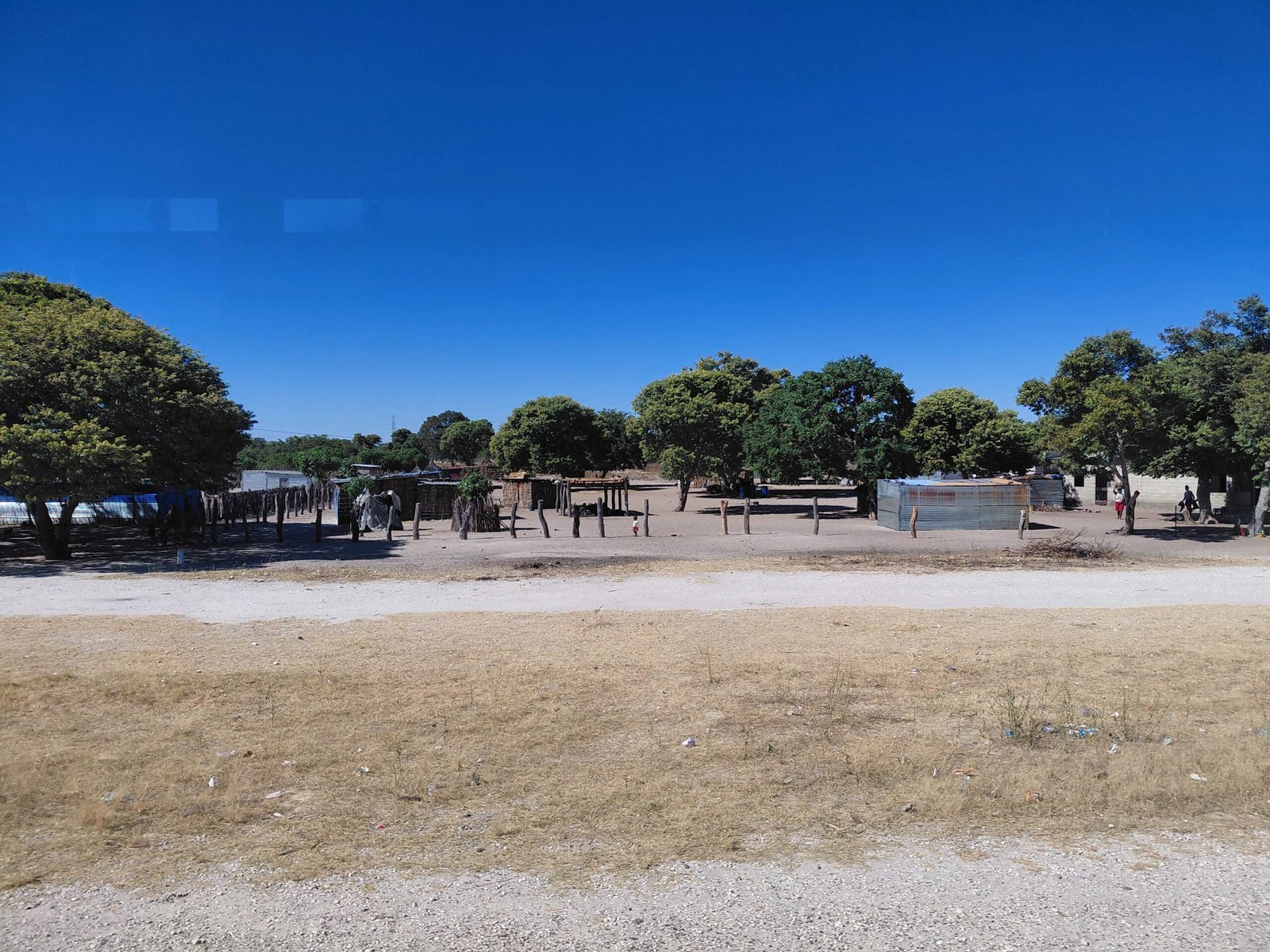
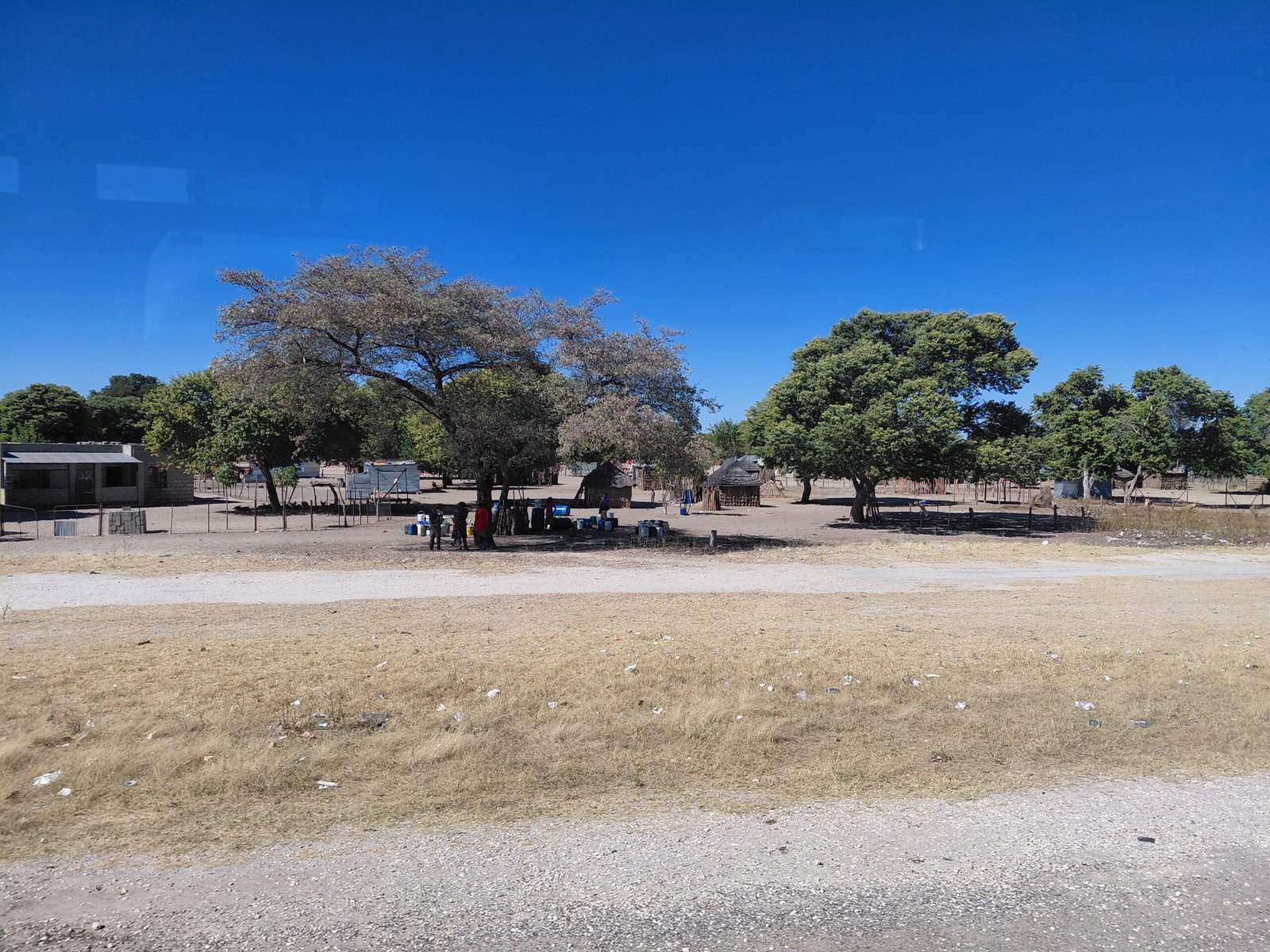
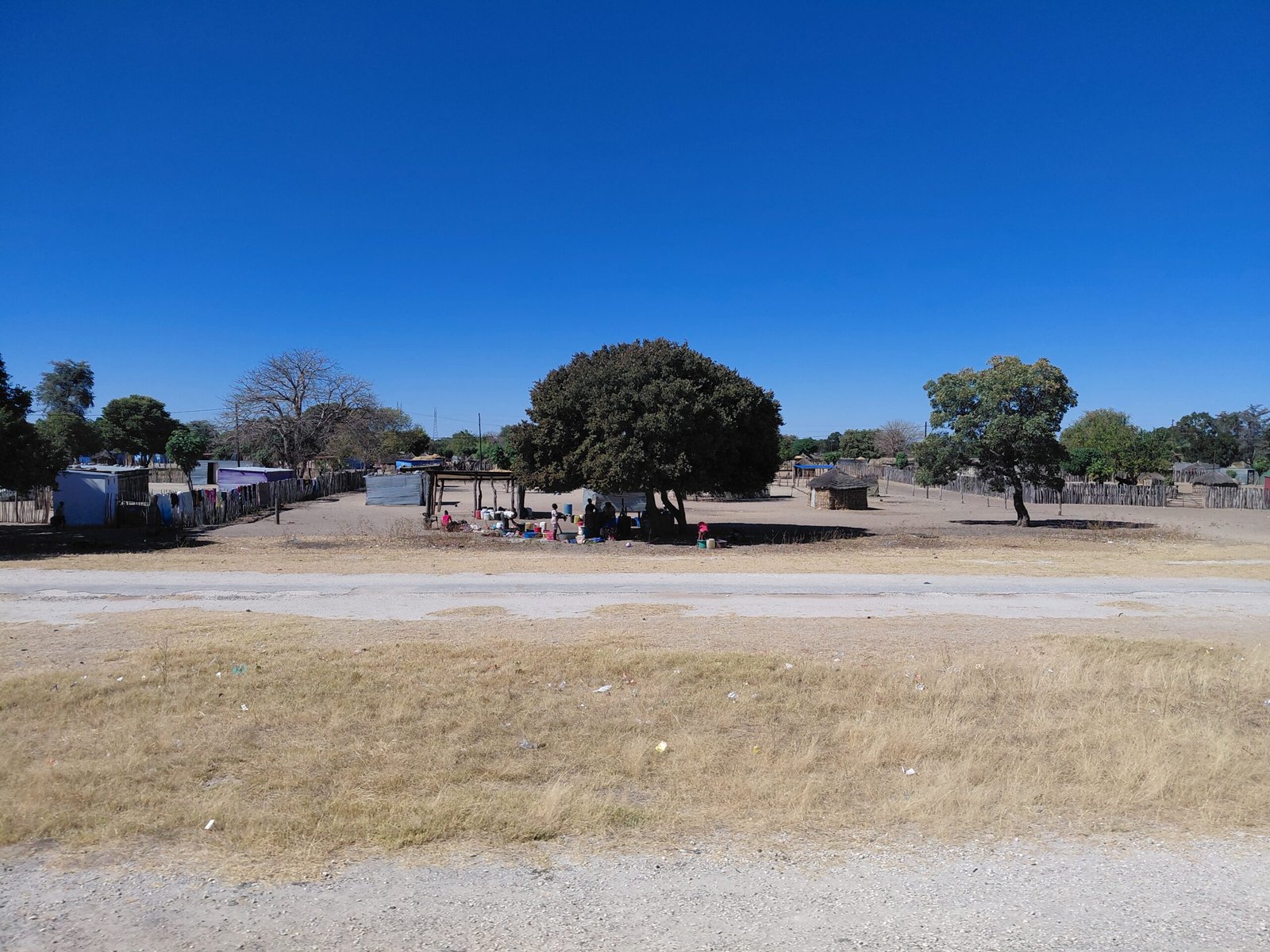
On Thursday, the journey continued toward the Botswana border. We had a long day of driving ahead of us, over 600 km, so it wasn’t a very eventful day. On the other hand, it was actually quite nice just to sit in the truck and watch the scenery flash by. For the first time on this trip, we saw small villages and more traditional styles of housing. Most of the buildings were round mud huts with some kind of dense roof made of straw and sticks. The carefully raked yards were surrounded by thick fences made of branches, and domestic animals, mainly cows and goats, had their own pens.
Scenery photographed from the car window
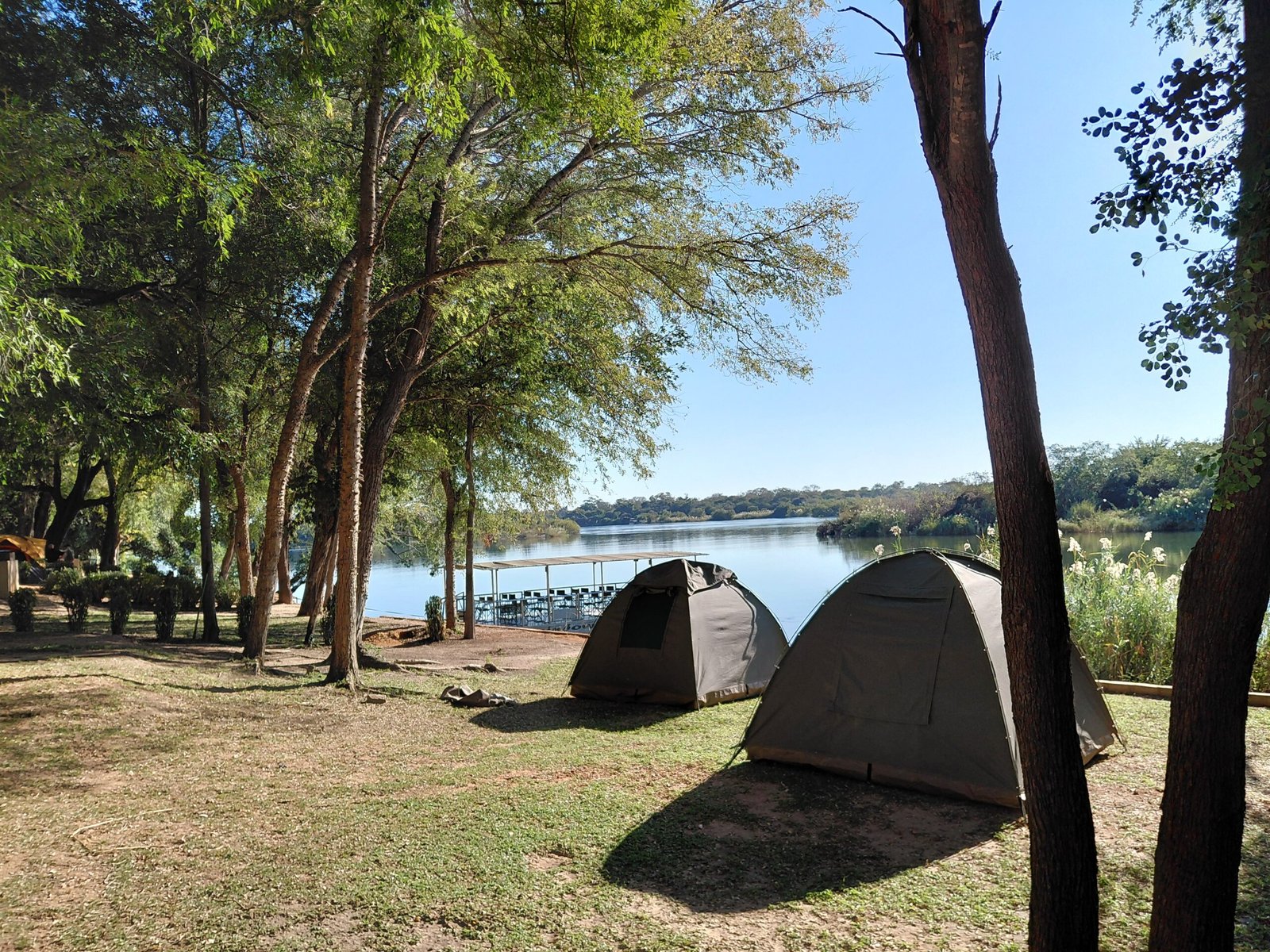
In the afternoon, around three o’clock, we arrived at our accommodation called Rainbow Lodge in northern Namibia. It was a lovely place on the banks of the Okavango River. The Okavango River is a border river that separates Namibia and Angola. In theory, it would have been only a short swim across the river to Angola, but hippos and crocodiles living in the water prevented people from swimming in the river. So we stayed safely on the Namibian side.
We were warned that the hippos that spend their days in the river sometimes come ashore on the grounds of Rainbow Lodge to eat grass. Hippos usually spend 4-5 hours of the night feeding and prefer to graze near the water, so the lodge grounds were a veritable buffet table for these chubby creatures. That’s why, when going to the toilet at night, you had to first check if there were any hippos in the yard before venturing out into the darkness. We heard a lot of hippo noises in the evening and at night, but luckily we didn’t encounter any of them face to face.
Tents at a scenic spot. The other side of the river is already Angola.
We had dinner reservations at the Rainbow Lodge restaurant, so in the evening we headed there as a group. It was nice to sit in the outdoor restaurant as the Namibian evening grew dark and the sun set behind the Okavango River. In addition to the scenery, the dinner was also very good, so we went to our tents in good spirits to sleep.
Sunset
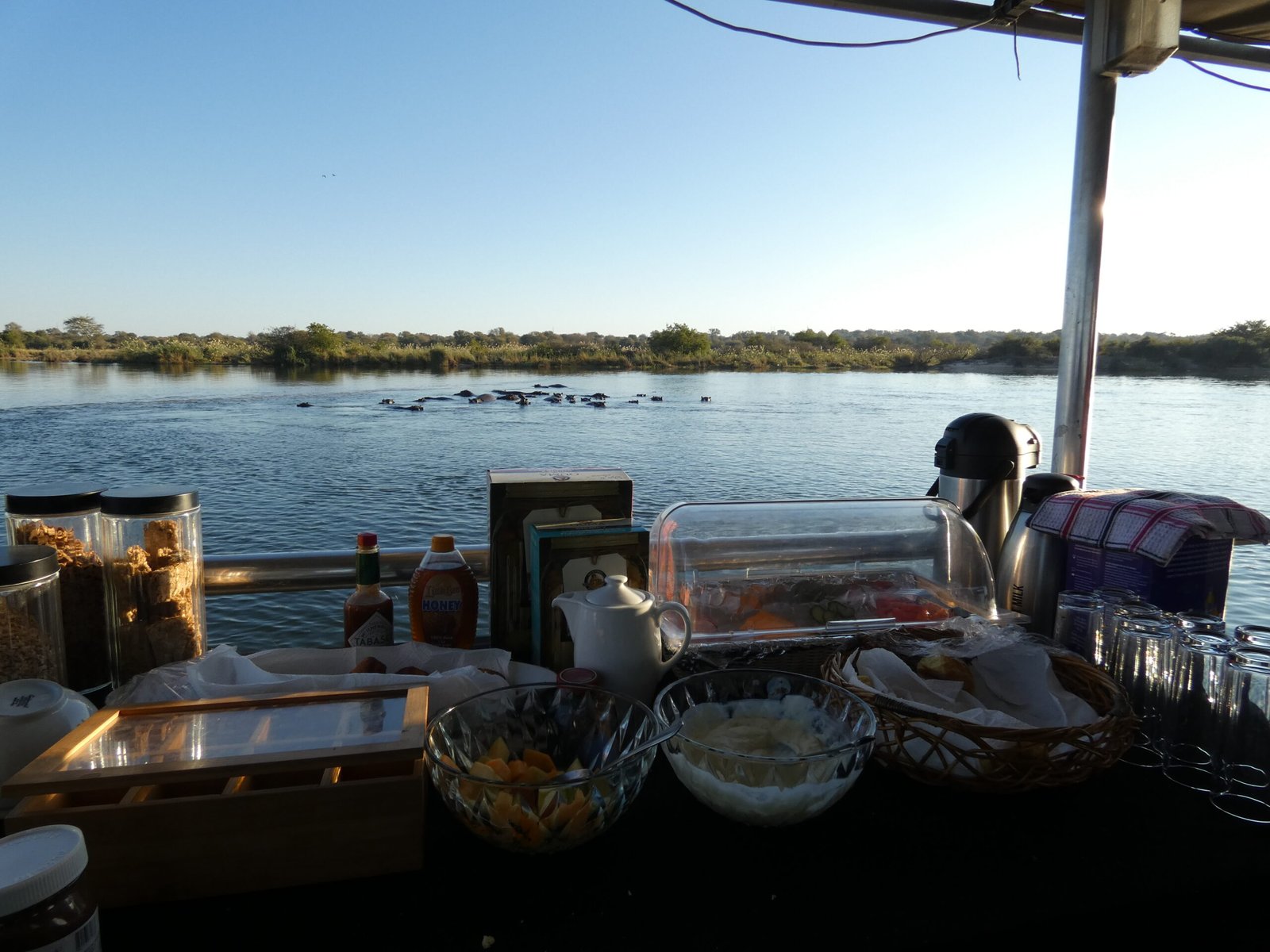
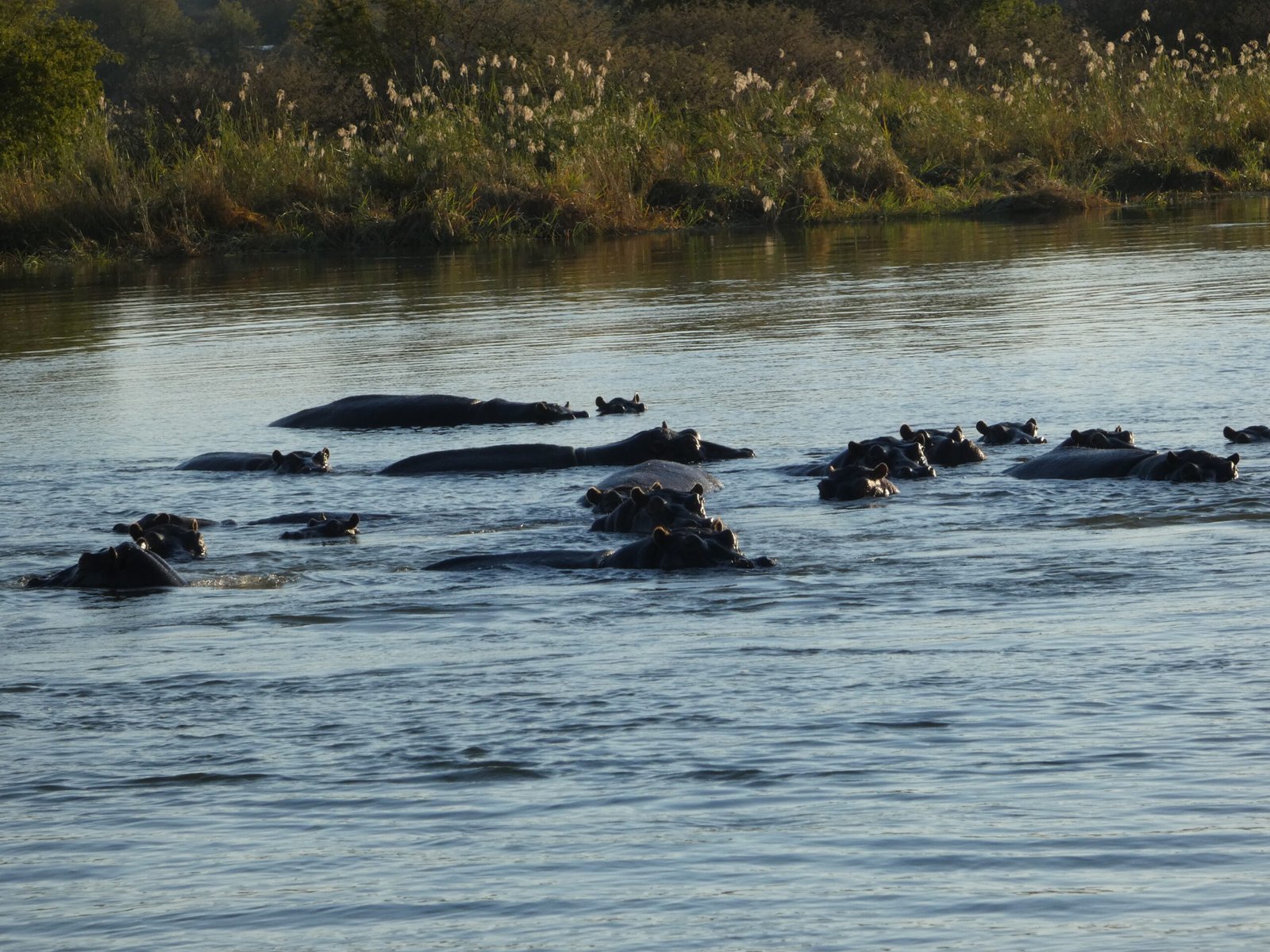
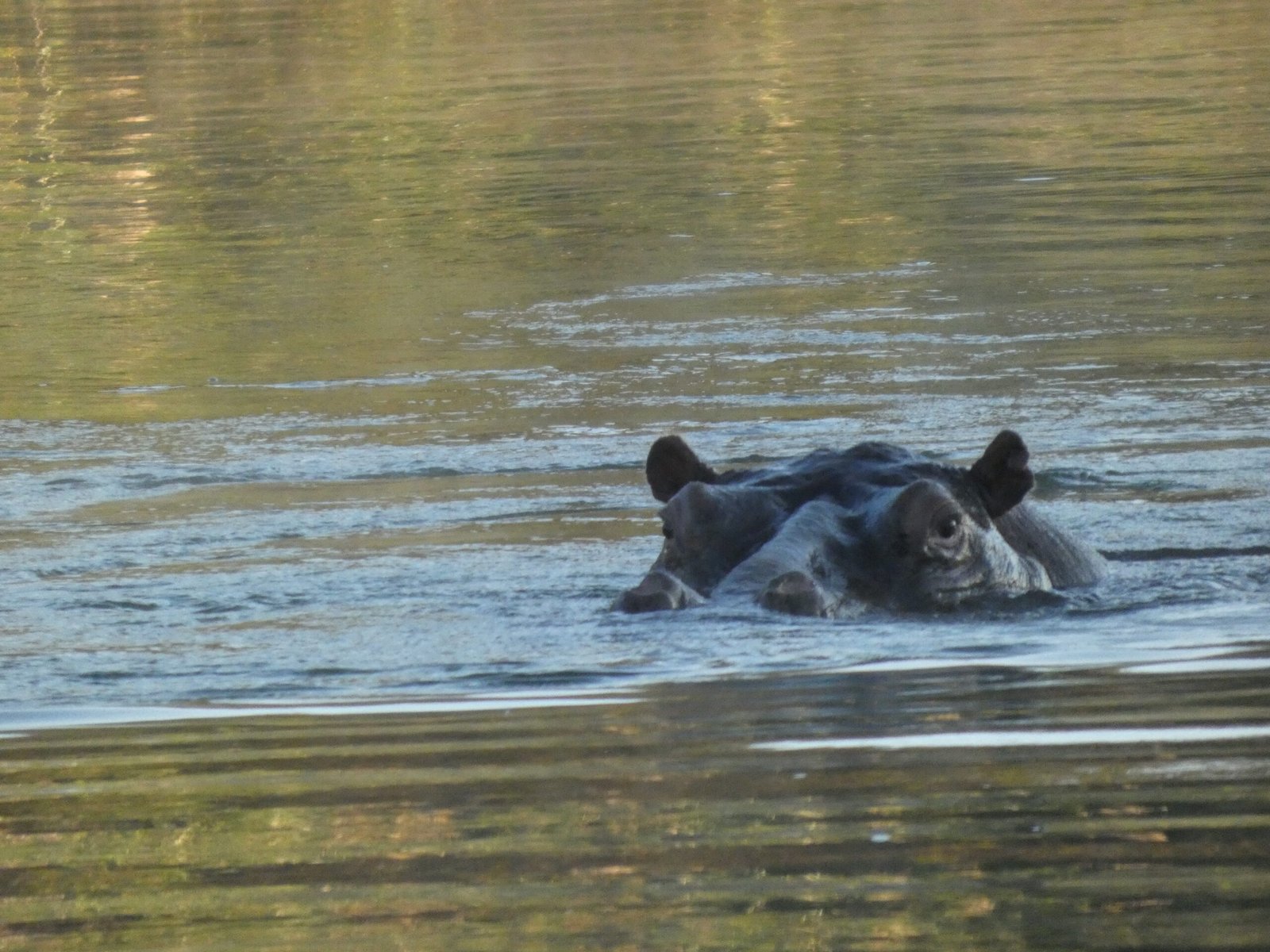
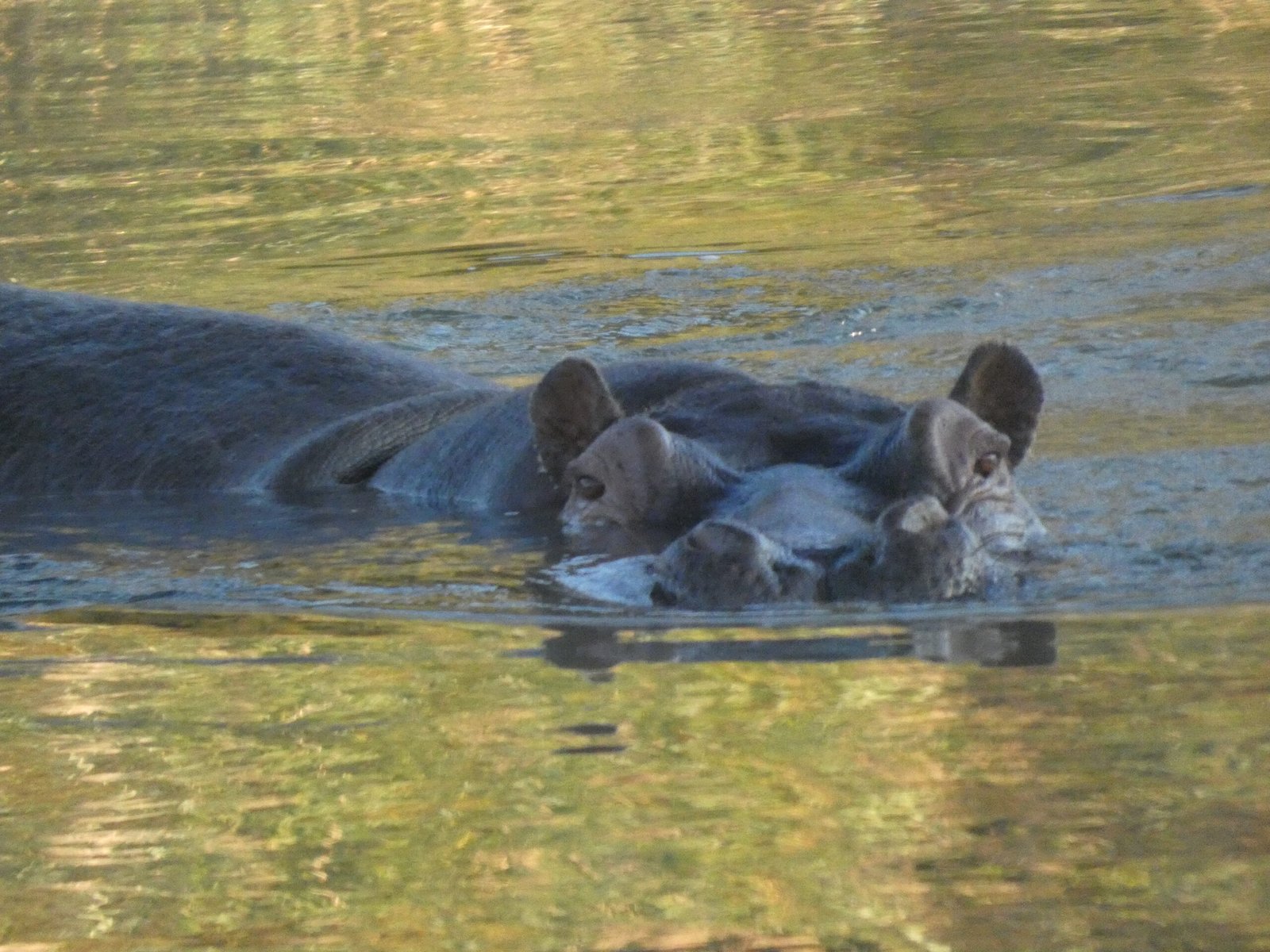
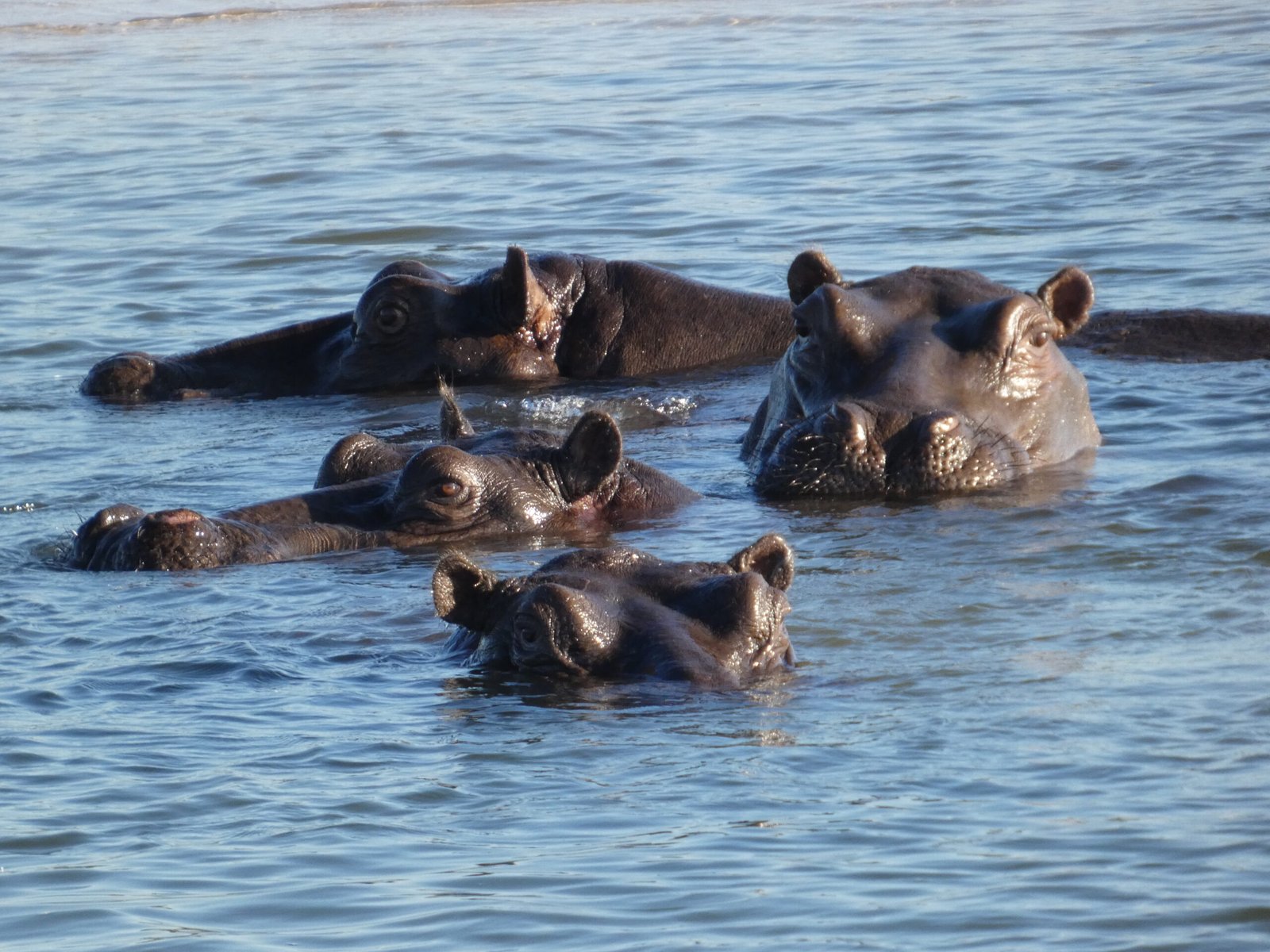
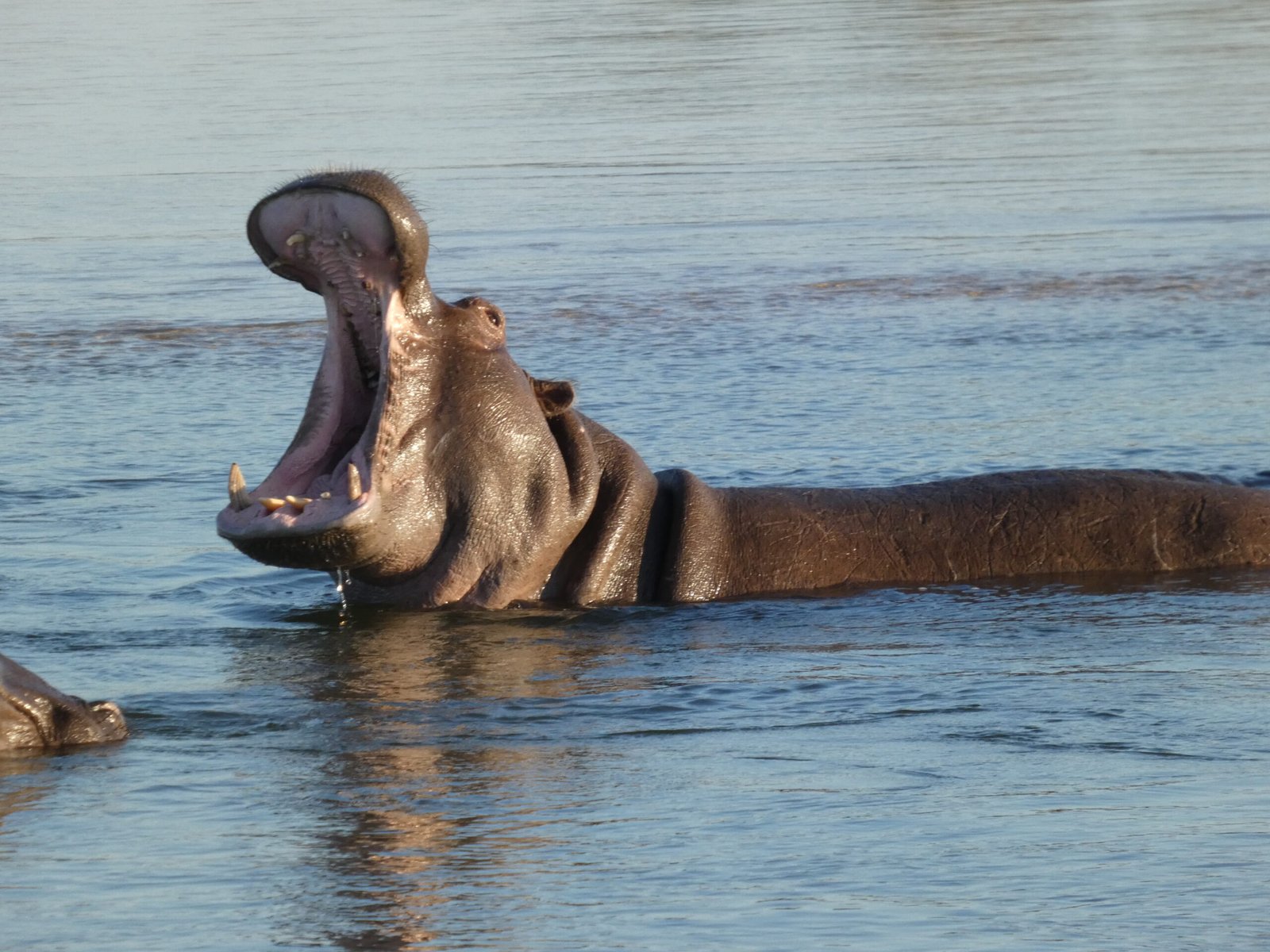
At seven in the morning, we set off on a breakfast cruise on the Okavango River. Breakfast included bacon and eggs, as well as fresh rolls and Nutella, much to Risto’s delight. We chugged slowly down the river, enjoying our breakfast and watching the hippos. There were an incredible number of them in the river. At one point, we counted 28 hippos at the same time. Risto said that if he had known how many hippos actually lived in the river, he would have been much more nervous about sleeping in a tent right by the river. In hindsight, that’s probably true. It would have been quite an experience to encounter a hippo on a nighttime trip to the bathroom!
On the river cruise, we were looked after by two chefs, a waiter, and a captain.
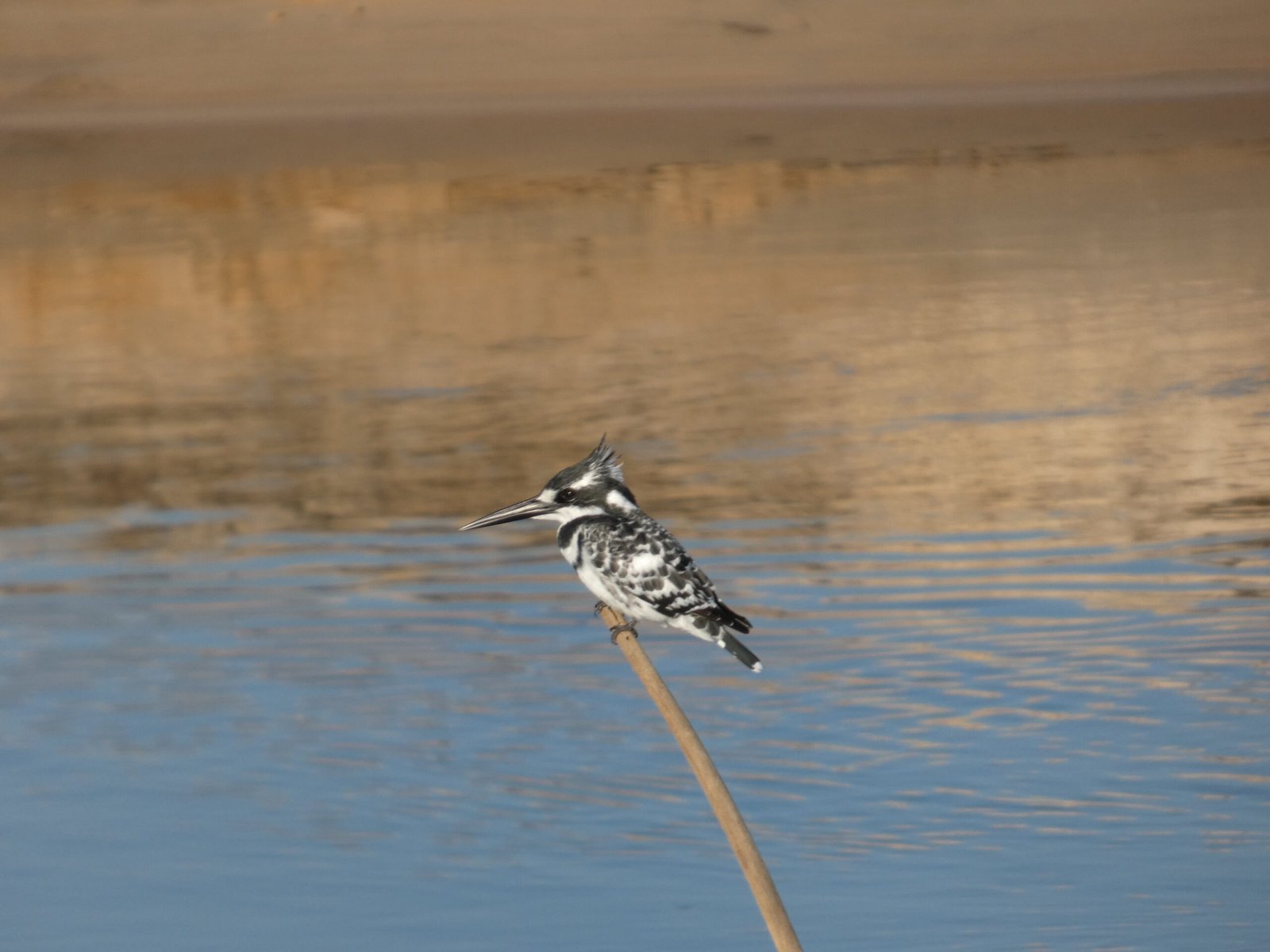
In addition to hippos, we also saw many birds, including kingfishers.
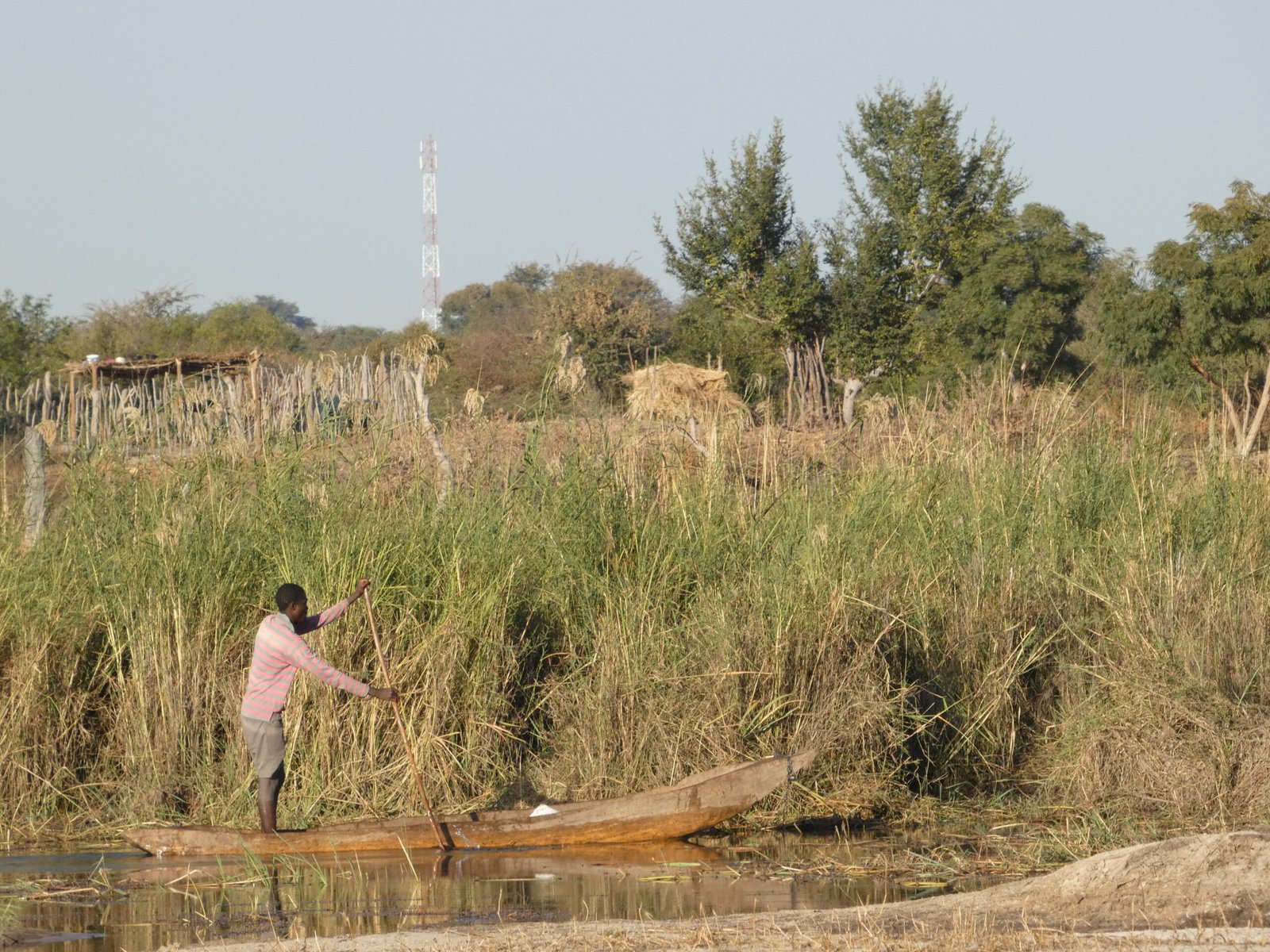
The locals still use traditional mokoro boats to travel on the river.