11.-13.6.2024
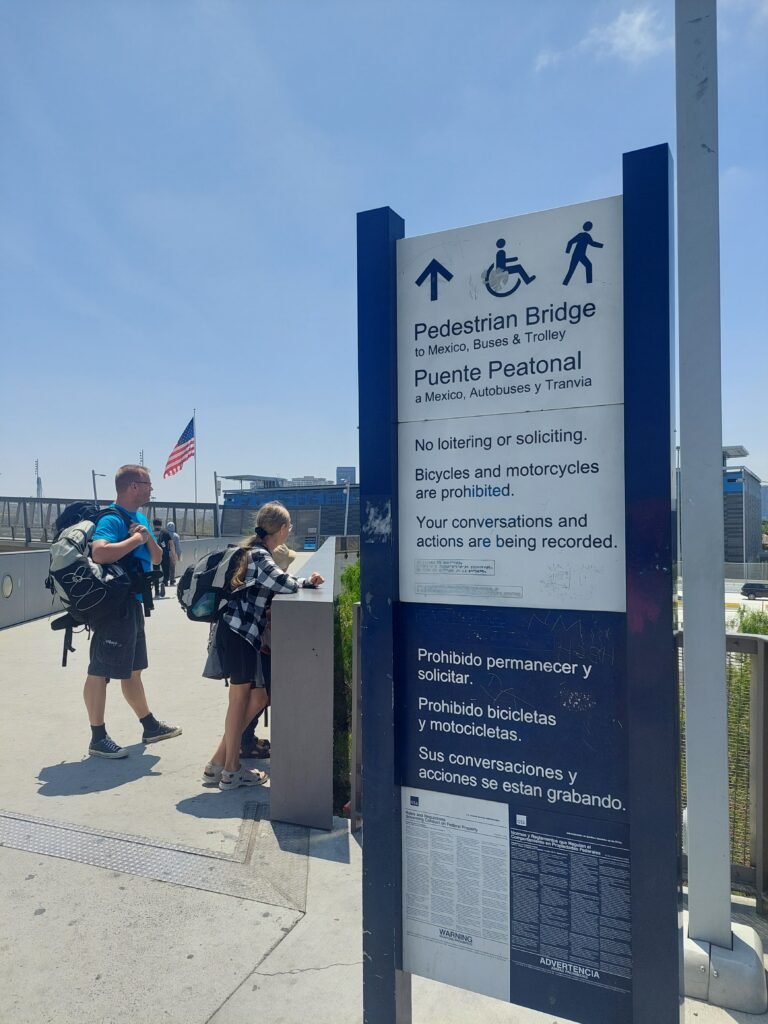
Ajomatka San Diegosta Meksikon rajalle kesti vain 25min. Emme voineet viedä vuokra-autoa rajan yli, eikä autoilu Meksikossa hirveästi muutenkaan houkutellut, joten parkkeerasimme automme yhteen rajan tuntumassa sijaitsevista pitkäaikaisparkeista, ja lähdimme kävellen ylittämään Meksikon rajaa.
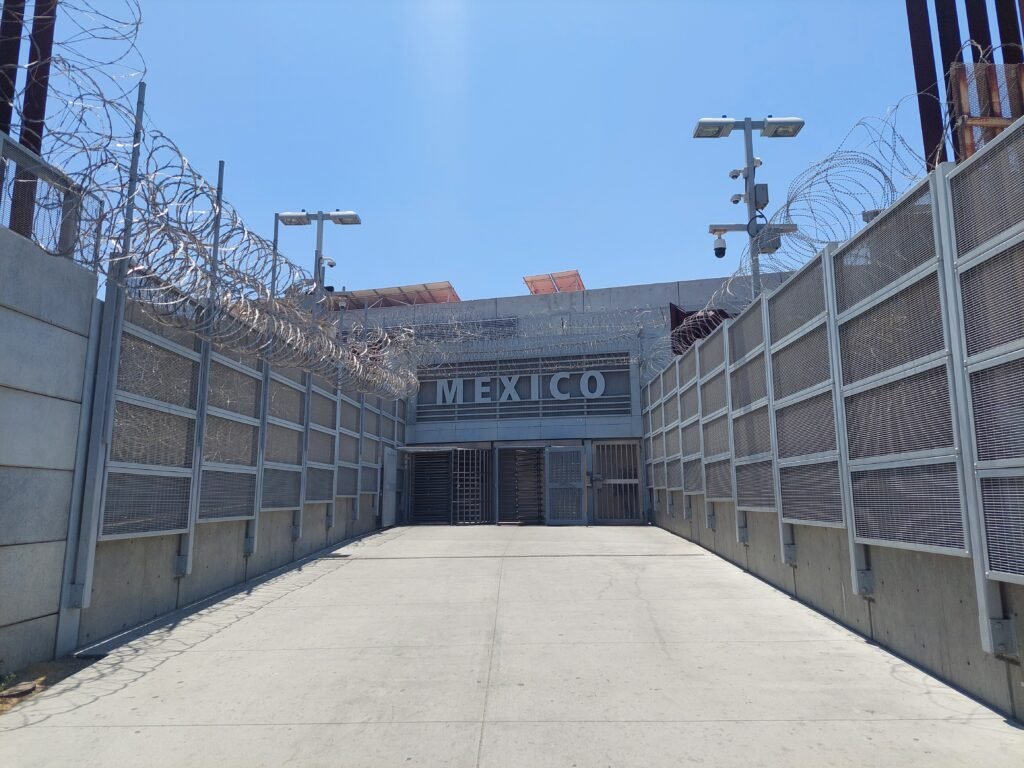
Rajanylitys kävellen oli todella helppoa. Ensin kuljimme kävelysiltaa pitkin portista sisään rakennukseen, jonka yläpuolella luki ”Mexico”. Tämän jälkeen tavaramme läpivalaistiin, ja jatkoimme matkaa kävellen eteenpäin. Koko ajan odottelimme, koska joutuisimme näyttämään passimme, mutta tuo läpivalaisu oli ainoa virallinen tarkistus Meksikoon päin mennessä. Passeja ei kyselty keneltäkään missään vaiheessa. Ilmeisesti meksikolaisia ei hirvittävästi kiinnosta, ketä sinne USA:n puolelta rajan yli tulee. USA:n rajalla takaisin päin mennessä on kuulemma hieman tiukempi meininki.
Heti rajan tuntumassa oli iso määrä takseja tarjoamassa kyytiä rajan ylittäneille. Reilusta 3km matkasta hotellille taksikuski pyysi 15$, mikä oli selvästi ihan liikaa, mutta emme jaksaneet jäädä vääntämään asiasta, vaan hyppäsimme taksin kyytiin. Koska majapaikkamme ei ole tavallinen hotelli, vaan enemmän sellainen toimistohotellin tyyppinen ratkaisu, oli kuskillamme aluksi hieman vaikeuksia ymmärtää, minne olimme menossa. Onneksi Jaana osaa vielä sen verran espanjaa, että saimme selitetyksi, mihin halusimme mennä.
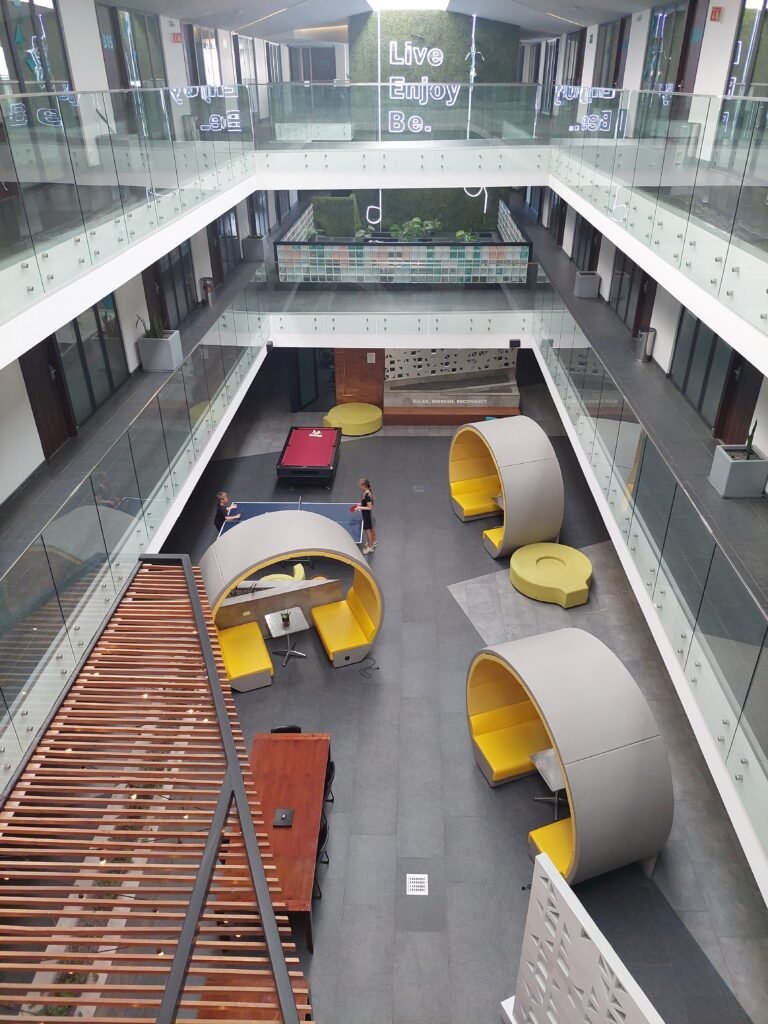
Neljännessä kerroksessa sijaitseva huoneistomme oli valtavan kokoinen. (Kaksi olohuonetta, avokeittiö, kaksi makuuhuonetta ja kaksi kylpyhuonetta. Lisäksi huoneistossa oli parveke, josta ei kyllä kovin kaksiset maisemat olleet.) Lisäksi kerrostalokompleksin keskellä olevassa sisäaulassa oli viihtyisät oleskelutilat, jossa lapset tykkäsivät pelata pingistä ja biljardia.
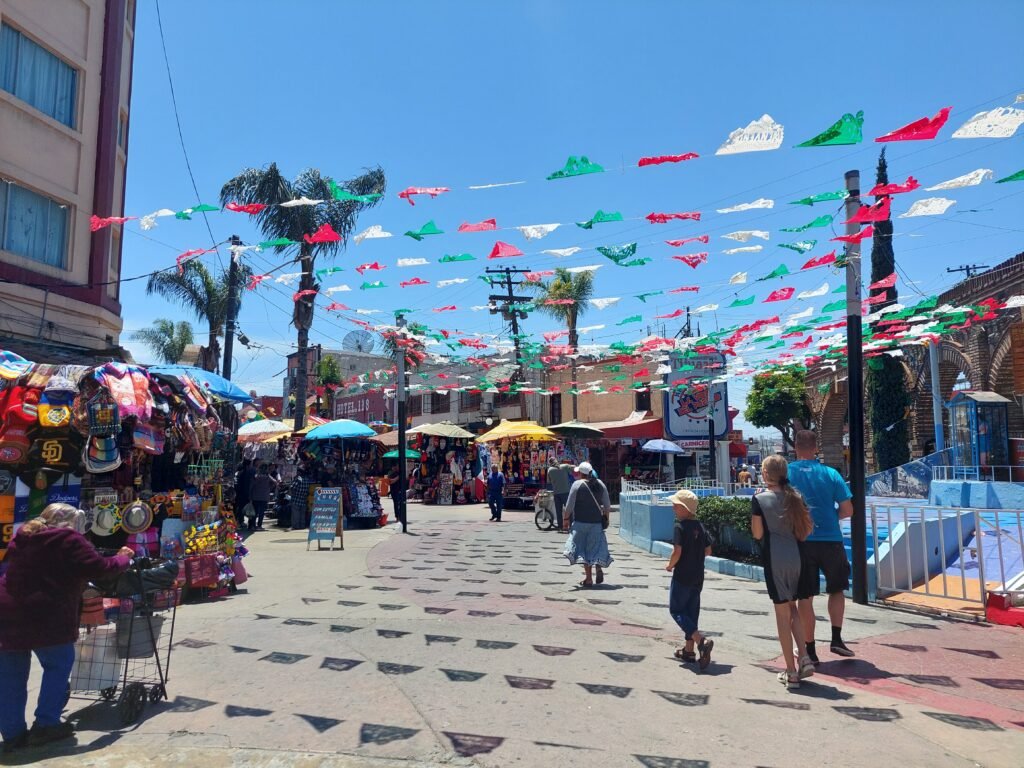
Koska huoneistomme siivous oli vielä kesken, jätimme tavarat vastaanottoon, ja lähdimme Überin kyydissä kohti Tijuanan keskustaa. Tällä kertaa kyyti maksoi vain kuuden euron verran (120 Pesoa), joten tänne tullessamme maksoimme kyydistä todellakin ryöstöhinnan. Keskustassa ei kyllä tottapuhuen ollut varsinaisesti mitään näkemistä. Nopeasti kävi selväksi, että tämä kaupunki ei ollut mikään silmiä hivelevä näky tai kulttuurin kehto. Se ehkä selitti myös sen, miksi emme nähneet meidän lisäksemme keskustassa juurikaan muita turisteja.
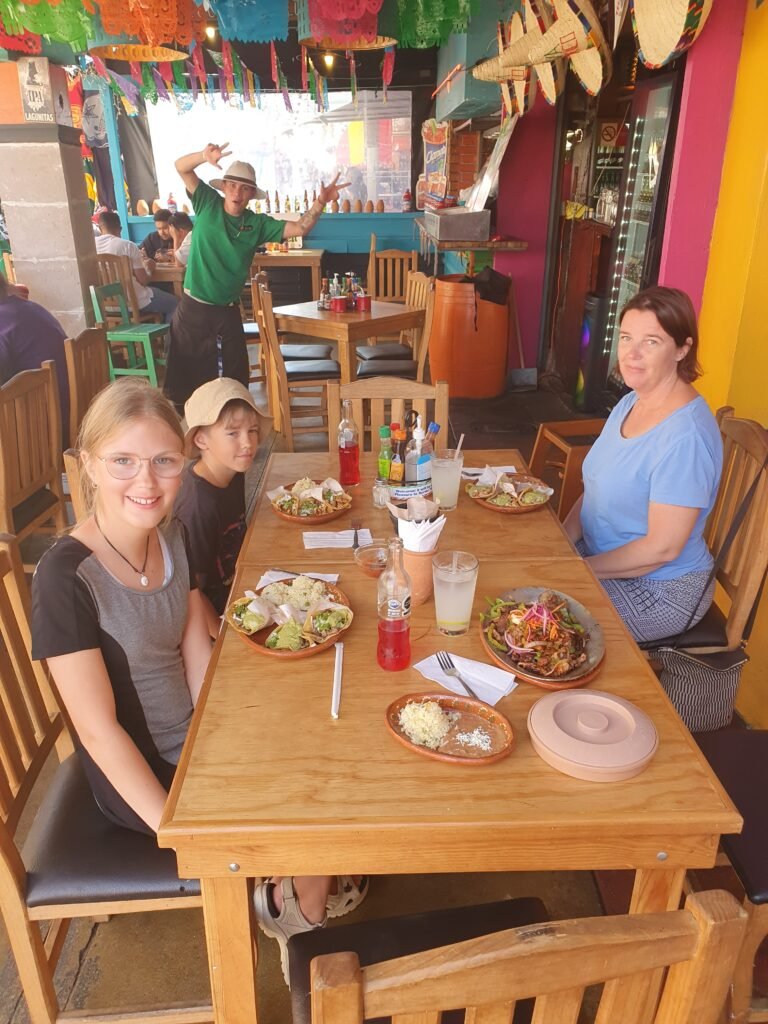
Kävelimme hetken kaupungin pääkatua pitkin, ja jokaisen liikkeen ovelta (jopa apteekista) meitä huudeltiin sisään tutustumaan putiikin valikoimaan. Me emme turistikrääsää ostaneet. Ainoastaan Ronja osti itselleen kolmella dollarilla rannekorun. Paikallinen valuutta on täällä Peso, mutta meillähän ei sitä ole. Onneksi ainakin täällä Tijuanassa paikalliset kelpuuttavat myös dollarit oikein mielellään. Kävelyreissun päätteeksi menimme syömään meksikolaista ruokaa Plaza Santa Cecilian kupeessa olevaan ravintolaan. Ruoka olikin erinomaista. He kuulemma valmistavat ravintolassa tacot ja tortillalettuset itse joka päivä. Ainoa miinus paikassa olivat sinne jatkuvasti soittamaan pyrkivät mariachit, joita saimme hätistellä pois pöytämme luota tasaisin väliajoin.
Ruokailun jälkeen käväisimme vielä paikallisessa supermarketissa (Siellä oli muuten kohtuullisen kattava valikoima tortillalettuja tarjolla!) ja palasimme Überin kyydissä takaisin asunnollemme loppupäiväksi.
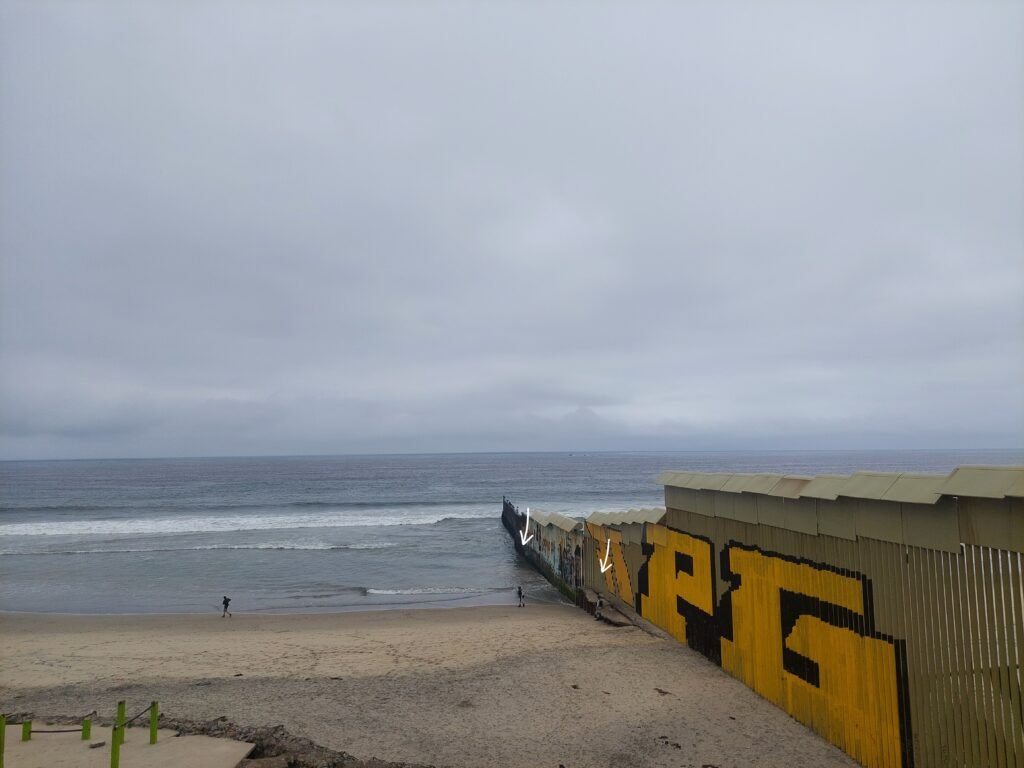
Tiistai oli ainoa kokonainen päivä meillä täällä Meksikossa, joten päätimme lähteä koko päivän mittaiselle opastetulle retkelle Tijuanasta etelään Baja Californian alueelle. Halusimme nähdä, olisiko se alue Tijuanaa kauniimpi, ja mitä nähtävää siellä olisi. Kuskimme Eric tuli hakemaan meitä aamuyhdeksältä. Hän tosin oli tarjoutunut tulemaan vielä aikaisemminkin, jos olisimme halunneet käydä ennen matkan alkua syömässä aamiaistacot yhdessä. Jätimme tämän tarjouksen väliin, ja starttasimme siis yhdeksältä. Ennen kuin ajoimme ulos Tijuanan kaupungista, kävimme Meksikon luoteiskulmassa katsomassa paikkaa, jossa USA:n ja Meksikon välinen raja päättyy Tyyneen valtamereen. Meksikosta USA:n puolelle haluavien on turha kuvitellakaan vain uivansa näppärästi rajan toiselle puolelle. Meksikon puolella muurin luona partioi nimittäin kaksi rynnäkkökiväärein aseistautunutta sotilasta. Veikkaus on, että samanlainen vastaanotto odottaisi myös USA:n puolella.
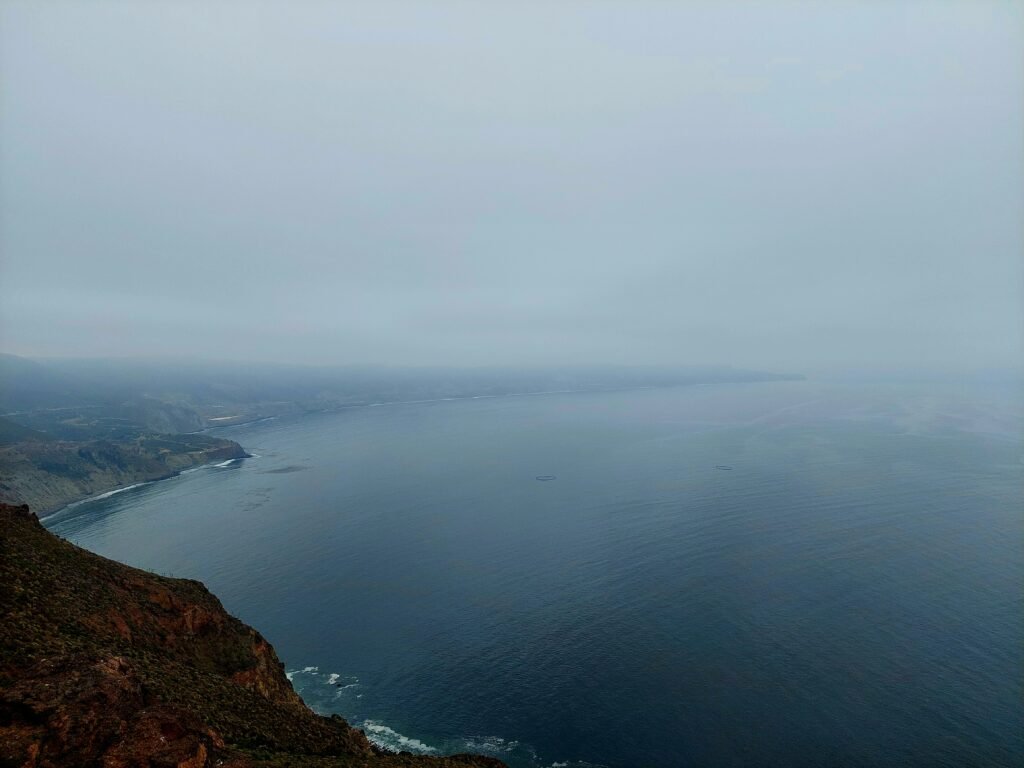
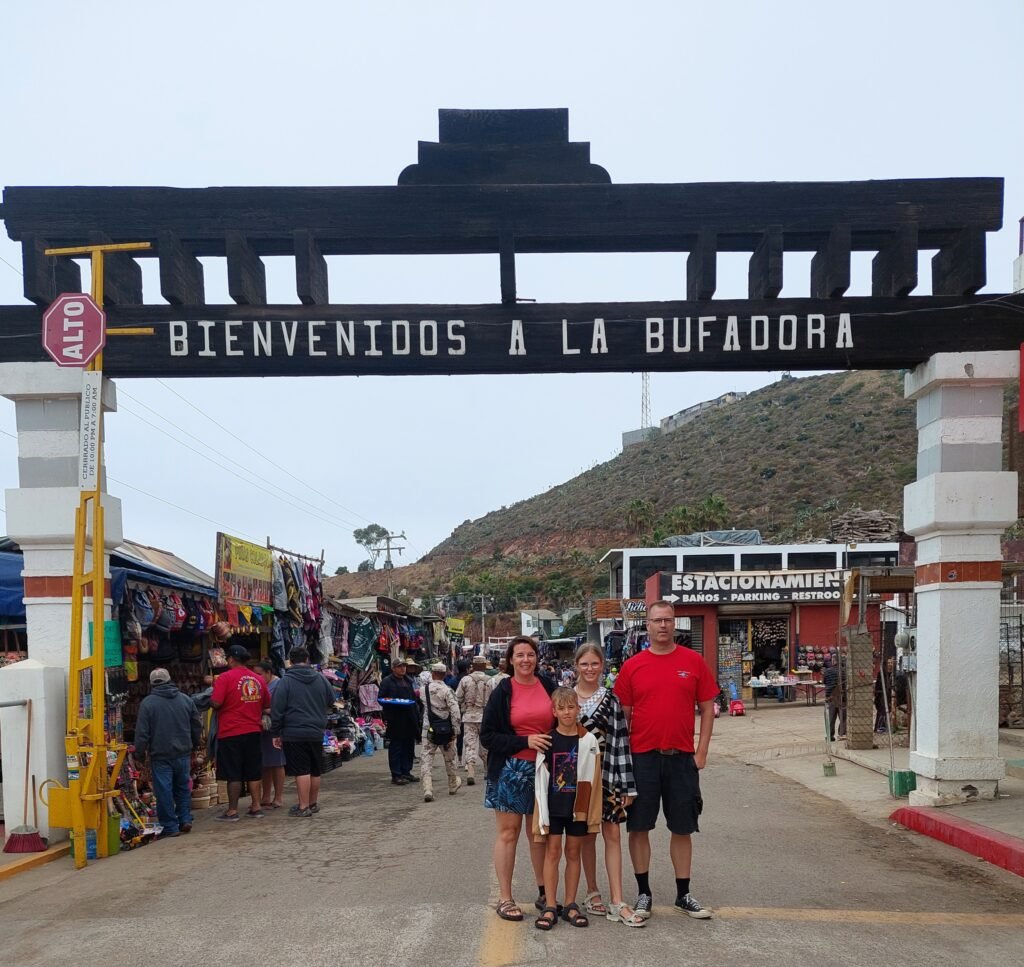
Matkamme eteläisin piste oli Ensenadan kaupungin eteläpuolella sijaitseva ”La Bufadora”. Suomenkielistä termiä ilmiölle emme keksineet, mutta englanniksi käytetään termiä ”blowhole”. Tämä on eräänlainen kallioiden välissä oleva luola, jonne pääsee vettä sisään, mutta se ei purkaudukaan samaa tietä ulos, vaan suihkuaa geysirin lailla ulos luolan katossa olevasta kapeasta aukosta. Ennen sinne saapumista pysähdyimme kuitenkin ihailemaan maisemia Mirador Salsipuedes –nimisellä näköalapaikalla. Aamu oli kovin pilvinen ja utuinen, joten kuvista ei tullut kovin hyviä, mutta aurinkoisena päivänä maisemat ovat varmasti upeat. Mukaan maisemakuvien lisäksi meille tarttui hunajakuorrutettuja pekaanipähkinöitä pieni rasiallinen.
Parin tunnin ajomatkan jälkeen saavuimme La Bufadoran luokse. Alueelle olikin pesiytynyt melkoinen joukko matkamuistoja myyviä kauppiaita siellä pyöriviä turisteja ahdistelemaan. Onnistuimme välttelemään bootseja ja ponchoja kaupittelevat myyjät, mutta vastapaistettujen churrojen kohdalla emme voineeet enää kieltäytyä. Ostimme niitä pussillisen kuudella dollarilla, ja dippailimme niitä kondensoituun maitoon. Olivat muuten todella hyviä! Meidän lisäksemme alueella oli useampi bussilastillinen risteilymatkustajia, jotka oli tuotu sinne Ensenadaan ankkuroituneelta ristelilijältä. He näyttivät kyllä ostavat kojuista kaikenlaista, joten ihan ilman asiakkaita muutkaan myyjät eivät jääneet.
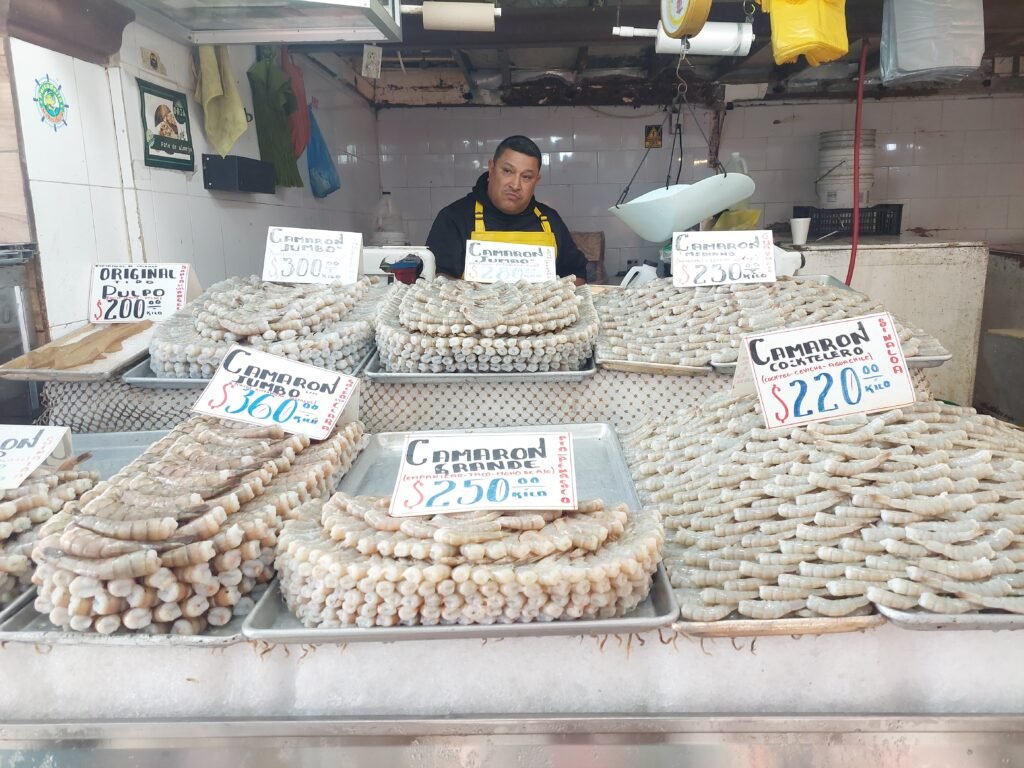
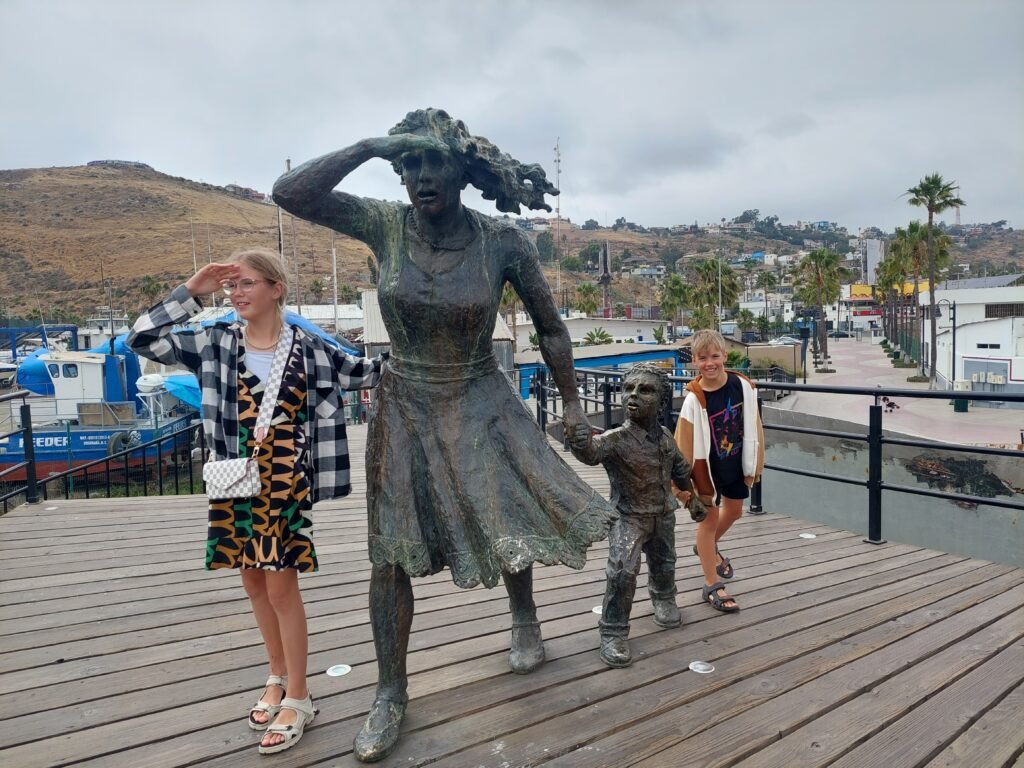
La Bufadoralta palasimme Ensenadan kaupunkiin, joka on Meksikon suurin rahtisatama. Me emme pysähtyneet rahtisatamassa, vaan kalasatamassa, jossa saimme syödäksemme todella maukkaita kala- ja katkaraputacoja. Ravintola ei näyttänyt ulospäin kovin kummoiselta, mutta ruoka oli uskomattoman hyvää! Tacot tuotiin pöytään ilman mitään lisukkeita, ja sitten itse sai päättää, mitä lisukkeita siihen pöydällä olevista kipoista laittaa. Osa kastikkeista oli niin tulisia, että pieni pisara riitti maustamaan koko tacon. Lounaan jälkeen kiertelimme vielä hetken kalamarkkinoilla, jonka jälkeen jatkoimme matkaa Meksikon viinialueelle, Valle de Guadalupeen.
Kun ajoimme kukkuloidan toiselle puolelle, säätila muuttui täysin. Aurinko paistoi pilvettömältä taivaalta, ja lämpötila kohosi muutamalla asteella. Pysähdyimme yhdellä alueen monista viinitiloista maistelemaan heidän viinejään. Neljän viinin maistelu maksoi 350 Pesoa, eli n. 17,50€. Paikassa olisi ollut mahdollista myös ruokailla, mutta koska meillä oli vatsat edelleen täynnä kalatacoja, jätimme ruokailun tällä kertaa väliin. Viinitilalla olisi ollut mahdollista myös yöpyä. Viiniviljelmien luokse oli rakennettu pikkuisia mökkejä, joita olisi voinut vuokrata, kuin hotellihuoneita. Emme kysyneet majoituksen hintaa, mutta epäilemme, että kovin halpaa se ei ole.
Viinialueelta palasimme takaisin Tijuanaan. Matkan varrella ohitimme paikan, jossa on aikanaan kuvattu mm. Titanic- ja Pearl Harbour-elokuvia. (Alueella oli siis vain useita valtavia vesitankkeja, joissa elokuvia oli kuvattu.) Paikasta oli yritetty tehdä kuvausten jälkeen Universal Studioiden vastinetta Meksikoon, mutta oppaamme mukaan paikallinen korruptoitunut poliisilaitos oli syynä siihen, että homma ei koskaan oikein lähtenyt käyntiin. Onko se totta, sitä emme tiedä, mutta kovasti paikalliset poliisit kuulemma nykyäänkin ahdistelevat amerikkalaisilla kilvillä varustettuja autoja ajavia ihmisiä tekaistuilla rikesakoilla ja antavat vaihtoehdoiksi joko vierailun poliisilaitokselle, tai asian hoitamisen rahalla poliisin kanssa kahden kesken.
Tijuanassa kävimme vielä ajelemassa hieman rikkaampien ihmisten asuinalueen läpi. Sinne asumaan päästäkseen täytyy tienata hieman enemmän, kuin paikallinen perusduunarin keskipalkka, 20$/päivä. Asuntojen keskihinnat kun sillä alueella ovat noin puoli miljoonaa dollaria.
Kiertoajelumme kesti kokonaisuudessaan 10h. Sen aikana tuli ainakin selväksi, että tämä Meksikolle kuuluva niemennokka ei ole kyllä mikään ranta- tai risteilylomien ykköskohde. Maisemat eivät paria paikkaa lukuunottamatta olleet kovin kummoiset, ja kaupungitkin vaikuttivat suoraan sanottuna aika rumilta ja likaisilta. Ihmiset Meksikossa ovat ilmeisesti aika köyhiä, varsinkin jos eivät ole onnistuneet kouluttautumaan johonkin hieman paremmin palkattuun ammattiin. Kaduilla liikkuu paljon kodittomia, ja erilaisia kaupustelijoita on kadunvarret täynnä. Eipä siis ihme, että täkäläisiä pyrkii USA:han paremman elämän toivossa niin laillisesti kuin laittomastikin joka päivä.
Palasimme Tijuanasta San Diegon puolelle samaa tietä, kuin olimme sinne tulleetkin. Tällä kertaa itäisen jalankulkijoille tarkoitetun rajanylityspaikan luona oli enemmän jonoa, ja passejakin piti vilauttaa pariinkin otteeseen amerikkalaisille rajavartijoille. Muuten homma sujui kyllä suhteellisen nopeasti. Passintarkastuksen virkailija kysyi, mitä olimme pitäneet Meksikosta. Jaana ei turhaan kuorrutellut mielipidettään vaan totesi vain että ‘ugly’. Siinä kohtaa petti jo virkailijankin pokka ja hän toivotti nauraen ‘Welcome back!’.
Kun olimme päässeet takaisin USA:n puolelle, käväisimme nopeasti rajan tuntumassa olevassa outlet-kompleksissa. Meidän piti vain ihan pikaisesti käydä vilkaisemassa, mitä sieltä löytyisi, mutta niin vain erityisesti Jaana ja Ronja kartuttivat vaatevarastojaan kohtuuhintaisilla vaatteilla. Ostosrupeaman jälkeen lähdimme ajamaan kohti Grand Canyonia. Koska matka sinne oli yhdellä ajamisella hieman liian pitkä, päätimme pysähtyä noin matkan puolivälissä Blythe-nimiseen pikkukaupunkiin. Ajomatkaa sinnekin kertyi 3,5h. Tosin meidän matkantekomme oli hieman hitaampaa, koska ensin piti pysähtyä syömään, ja sen jälkeen tasaisin väliajoin kuvaamaan maisemia.
Autotie kulki lähellä Meksikon rajaa, joten kerran jouduimme jopa pysähtymään rajavartioston tarkastuspisteellä. Siellä ei tosin sen kummemmin meitä tai autoamme tutkittu. Yksi rajavartija vain kurkkasi autoomme ja toivotteli hyvää päivänjatkoa. Olimme ilmeisesti niin luotettavan näköistä porukkaa, että meihin ei kannattanut sen kummemmin käyttää aikaa.
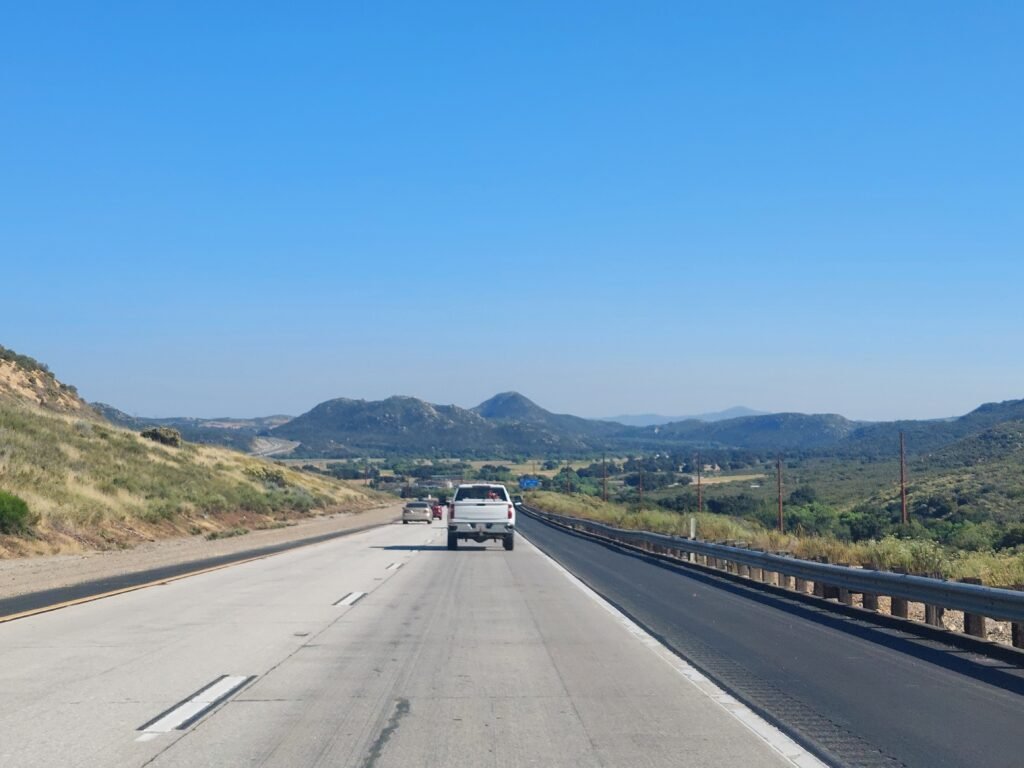
Maisemat matkan varrella olivat todella vaihtelevat. Ensin ajelimme hyvinkin mäkisessä ja aika kuivassa maastossa, joka muistutti meistä kovasti Alicanten alueen maisemia. Sen jälkeen siirryimme vieläkin kuivempaan maastoon, sillä ympärillämme oli vain kivisiä kukkuloita. Lopuksi tupsahdimme vielä yhtäkkiä hiekkadyyneille. Siellä oli jo pakko tehdä vähän pidempi pysähdys, sillä paikka oli sen verran erikoinen. Jonkin aikaa dyyneillä kiipeiltyämme totesimme, että meistä ei ole beduiineiksi, ja palasimme takaisin autolle, jonka lämpömittari näytti vaatimattomat 104F, joka vastaa 40C. Ei ihme, että meillä kaikilla oli kuuma ja jano!
Illalla kahdeksan jälkeen saavuimme perille Blythen pikkukaupunkiin ja majoituimme yhdeksi yöksi paikalliseen motelliin. Se osoittautuikin yllättävän mukavaksi paikaksi uima-altaineen, ja koko porukka pulahti vielä pitkän päivän päätteeksi pimeässä illassa uimaan linnunmaidon lämpöiseen uima-altaaseen.
Briefly in English:
The drive from San Diego to the Mexican border took only 25min. We couldn’t take the rental car across the border, and driving in Mexico didn’t sound very tempting anyway, so we parked our car in one of the long-term parks near the border, and walked to the Mexican border.
Crossing the border on foot was really easy. First, we walked along a footbridge that lead to a gate. Above the gate there was a big “Mexico” sign. We walked through the gate into a building where the officers x-rayed our bags. After that we continued our walk outside. We thought we’d end up to a booth where we would show our passports, but no. Apparently that x-ray screening was the only official checkpoint on the way into Mexico. It seems like the Mexicans are not very interested in who comes across the border from the US side. The US border on the way back is a bit more strict, we were told.
Right at the border, there were a large number of taxis offering rides to those crossing the border. The taxi charged 15$ for the 3km ride to the hotel, which was clearly too much, but we didn’t want to argue about it, so we hopped in. As our accommodation is not a regular hotel, but more of an office hotel type of solution, our driver had a little trouble understanding where we were going at first. Fortunately, Jaana still speaks enough Spanish to explain where we wanted to go.
Our apartment on the fourth floor was huge (two living rooms, open kitchen, two bedrooms and two bathrooms). The apartment also had a balcony, which didn’t offer much of a view. In addition, the lobby in the middle of the apartment complex had a comfortable lounge area where the kids liked to play ping-pong and pool.
As our apartment had not yet been cleaned, we left our things at the reception and took a ride with Über towards the centre of Tijuana. This time the ride only cost six euros (120 pesos), so we really were overcharged when we got here. To be honest, there wasn’t really anything to see in the centre. It soon became clear that this city was not a sight to behold or a cultural cradle. Perhaps that also explained why we didn’t see many other tourists in the centre, apart from ourselves.
We walked for a while along the main street of the town, and at the door of every shop (even the pharmacy) we were invited in to see the selection of boutiques. We didn’t buy any tourist junk. Only Ronja bought herself a bracelet for three dollars. The local currency here is the Peso, but we don’t have any. Fortunately, at least here in Tijuana, the locals are happy to accept dollars. After our sightseeing walk, we went for Mexican food at a restaurant next to Plaza Santa Cecilia. The food was excellent. The tacos and tortilla sheets are made in the restaurant every day. The only downside was the mariachis who kept trying to perform to us, and we had to shoo them away from our table at regular intervals.
After our meal, we visited the local supermarket (which had a wide selection of tortilla sheets!) and took an Über ride back to our apartment for the rest of the day.
Tuesday was the only full day we had here in Mexico, so we decided to go on a full-day guided tour from Tijuana south to Baja California. We wanted to see if the area was more beautiful than Tijuana, and what there was to see. Our driver, Eric, came to pick us up at 9am. He had offered to come even earlier if we wanted to have breakfast tacos together before the trip. We declined this offer, and started at 9am. Before we drove out of Tijuana, we went to the northwest corner of Mexico to see where the US-Mexico border meets the Pacific Ocean. For those wanting to cross from Mexico to the US, swimming is not an option. Two soldiers armed with assault rifles patrolled the Mexican side of the wall. We assume that a similar reception awaits on the US side.
The furthest point of our trip was “La Bufadora”, a blowhole south of the town of Ensenada. Blowhole is a place, where water enters a cave from the sea, but does not come out the same way, but spurts out like a geyser through a narrow opening in the roof of the cave. Before arriving, however, we stopped to admire the view from the Mirador Salsipuedes. The morning was very cloudy and foggy, so the pictures didn’t come out very good, but on a sunny day the views are certainly spectacular. In addition to taking pictures, we also bought a small box of honey-covered pecans.
After a couple of hours of driving we arrived at La Bufadora. The area was crowded with souvenir vendors harassing the tourists there. We managed to avoid the vendors selling boots and ponchos, but when it came to the freshly-baked churros, we could no longer refuse. We bought a bag of them for six dollars, and dipped them in condensed milk. They were really good, by the way! We weren’t the only ones there, because several busloads of cruise passengers from the port of Ensenada were there too.
From La Bufadora we returned to the city of Ensenada, Mexico’s largest cargo port. We didn’t stop at the cargo port, but at the fishing port, where we had some really tasty fish and shrimp tacos. The restaurant didn’t look like much from the outside, but the food was incredibly good! The tacos were brought to the table without any toppings, and you got to choose your toppings from the bowls that were on the table. Some of the sauces were so hot that just a drop was enough to season the whole taco. After lunch, we wandered around the fish market for a while before continuing on to the Mexican wine region, Valle de Guadalupe.
As we drove to the other side of the hills, the weather changed completely. The sun was shining from a cloudless sky and it was warmer. We stopped at one of the many wineries in the area to taste their wines. Tasting four wines cost 350 pesos, or about 17.50€. It would have been possible to dine there too, but as we were still full of fish tacos, we skipped the meal this time. It would also have been possible to stay overnight at the winery. Small cottages had been built next to the vineyards, which could be rented like hotel rooms. We didn’t ask how much it woud have cost, but we suspect it would not have been cheap.
From the wine region we returned back to Tijuana. On the way we passed the Titanic and Pearl Harbour movies film site. (What you could see, were basically just huge water tanks where the films were shot.) There had been an attempt to turn the place into the Mexican equivalent of Universal Studios after the filming, but our guide said that the corrupt local police force was the reason the whole thing never really got going. Whether that’s true, we don’t know, but even today the local police are reportedly harassing people driving cars with American plates with bogus fines and giving them the option of either visiting the police station, or settling the matter with the police privately in cash.
In Tijuana, we drove through a slightly richer neighbourhood. To live there, you have to earn a little more than the average salary of the basic local worker, $20/day. Average house prices in that area are around half a million dollars.
Our tour lasted 10 hours in total. During that time, it became clear that this peninsula of Mexico is not the number one destination for a beach or cruise holiday. Apart from a couple of places, the scenery was not very nice, and the towns seemed quite ugly and dirty. People in Mexico are apparently quite poor, especially if they have not managed to get an education for a slightly better-paid profession. There are a lot of homeless people on the streets, and the streets are full of street vendors of various kinds. No wonder the people from here are seeking a better life in the USA, both legally and illegally, every day.
We returned from Tijuana to San Diego the same way we had arrived. This time there was more queuing at the eastern pedestrian crossing, and we had to flash our passports a couple of times at the American border guards. Otherwise, it was relatively quick.
Once we got back to the US side, we made a quick stop at the outlet complex near the border. We had intended to just take a quick look to see what we could find there, but Jaana and Ronja in particular were stocking up on reasonably priced clothes. After the shopping spree, we started driving towards Grand Canyon. As the journey there was a bit too long in one drive, we decided to stop about halfway in a small town called Blythe. The drive there also took 3.5h. Our journey was a bit slower, though, as we had to stop for lunch first, and then at regular intervals to take pictures of the scenery.
The motorway ran close to the Mexican border, so once we even had to stop at a border patrol checkpoint. However, neither we nor our car were searched there. One border guard just looked at our car and wished us a good day. Apparently, we were such a reliable-looking bunch that it was not worth spending any more time on us.
The scenery along the way was really varied. At first we drove in a very hilly and rather dry landscape, which reminded us very much of the landscape in the Alicante area. Then we moved on to even drier terrain, as there were only rocky hills all around us. Finally, we suddenly found ourselves on sand dunes. We had to make a longer stop there, because the place was so special. After climbing the dunes for a while, we realised that we were not Bedouin and returned to the car, where the thermometer showed a modest 104F, equivalent to 40C. No wonder we were all hot and thirsty!
After 8pm we arrived in the small town of Blythe and stayed for one night in a local motel. It turned out to be a surprisingly nice place with a swimming pool, and the whole gang went for a swim in the warm pool at the end of a long day.