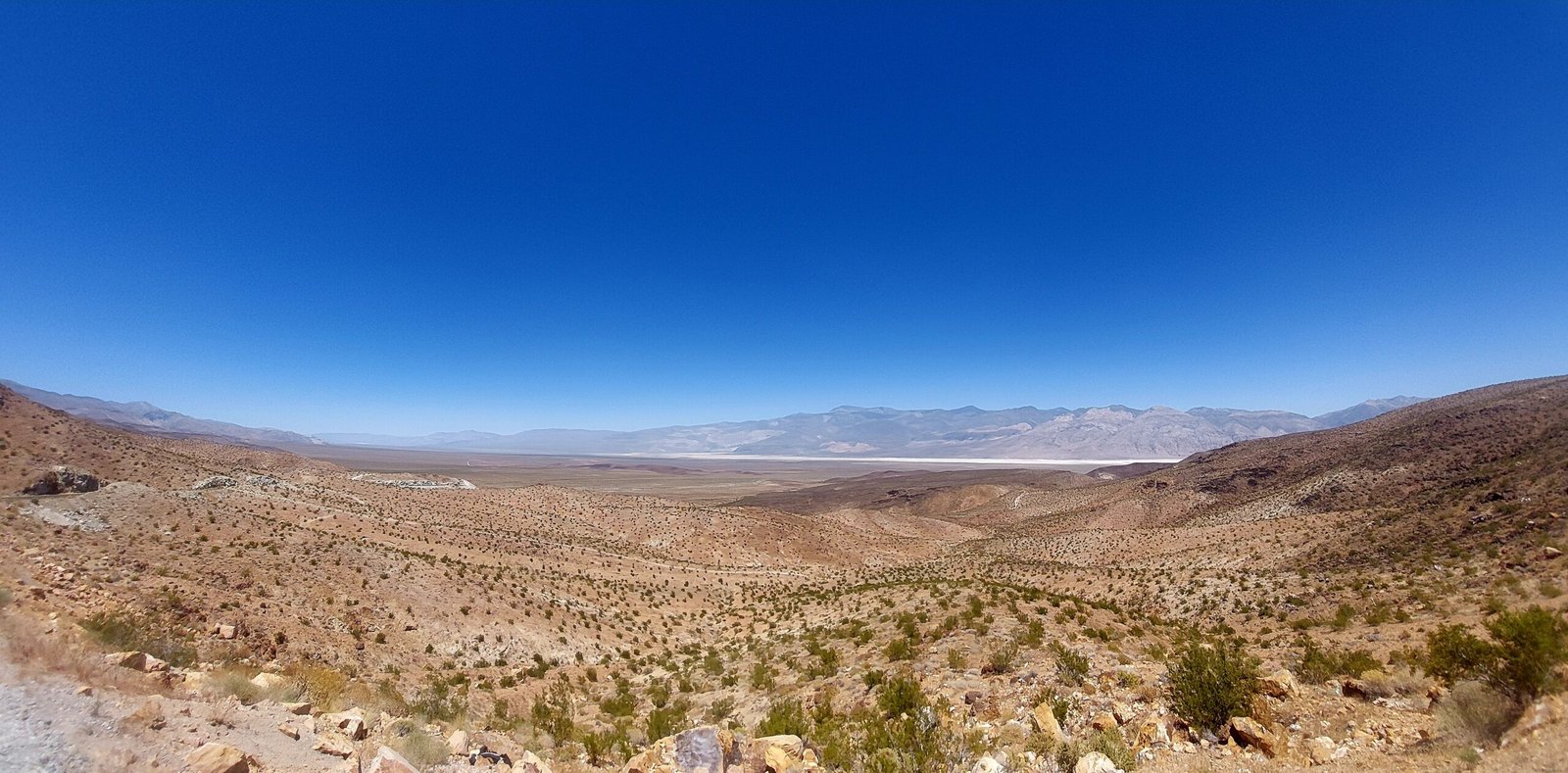
We had booked accommodation in Death Valley for two nights. The first morning we woke up at 7:30 to explore the nature park before the heat really got bad. By the time we got to the Visitor Centre a little after 9am, the temperature had already risen to +38 degrees. We realized it was going to be a sweaty day.
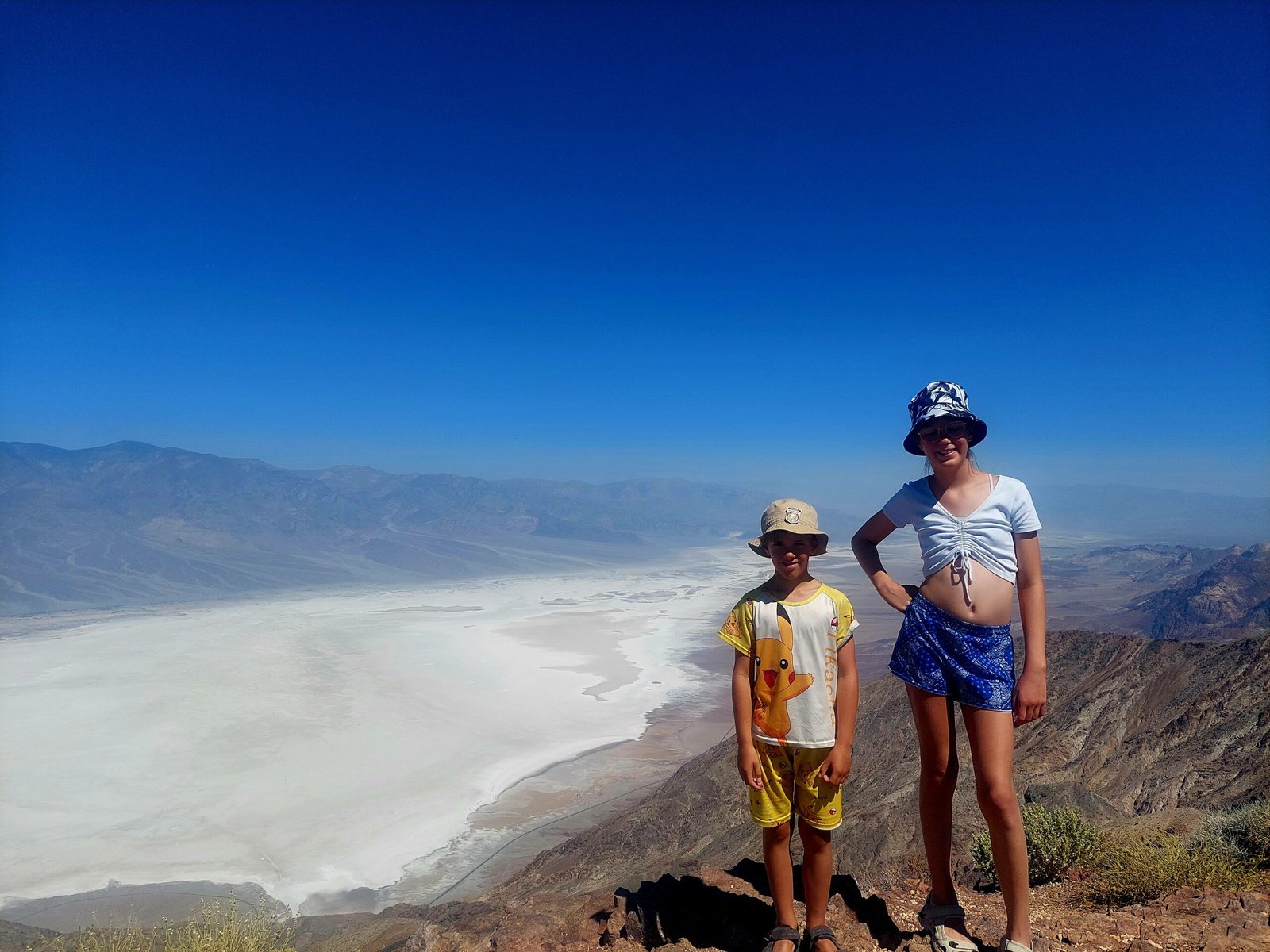
The park rangers gave us tips on what to see and in what order. The first thing we did was to head for the viewpoint called Dante’s View. We could drive the car right to the top of the hill, but we walked a little further from the parking lot to get better photos. There we spotted several small and quick lizards that live in Death Valley. To our surprise, we also saw swallows, butterflies and dragonflies. There were also an awful lot of flies buzzing around the area, as well as bees.
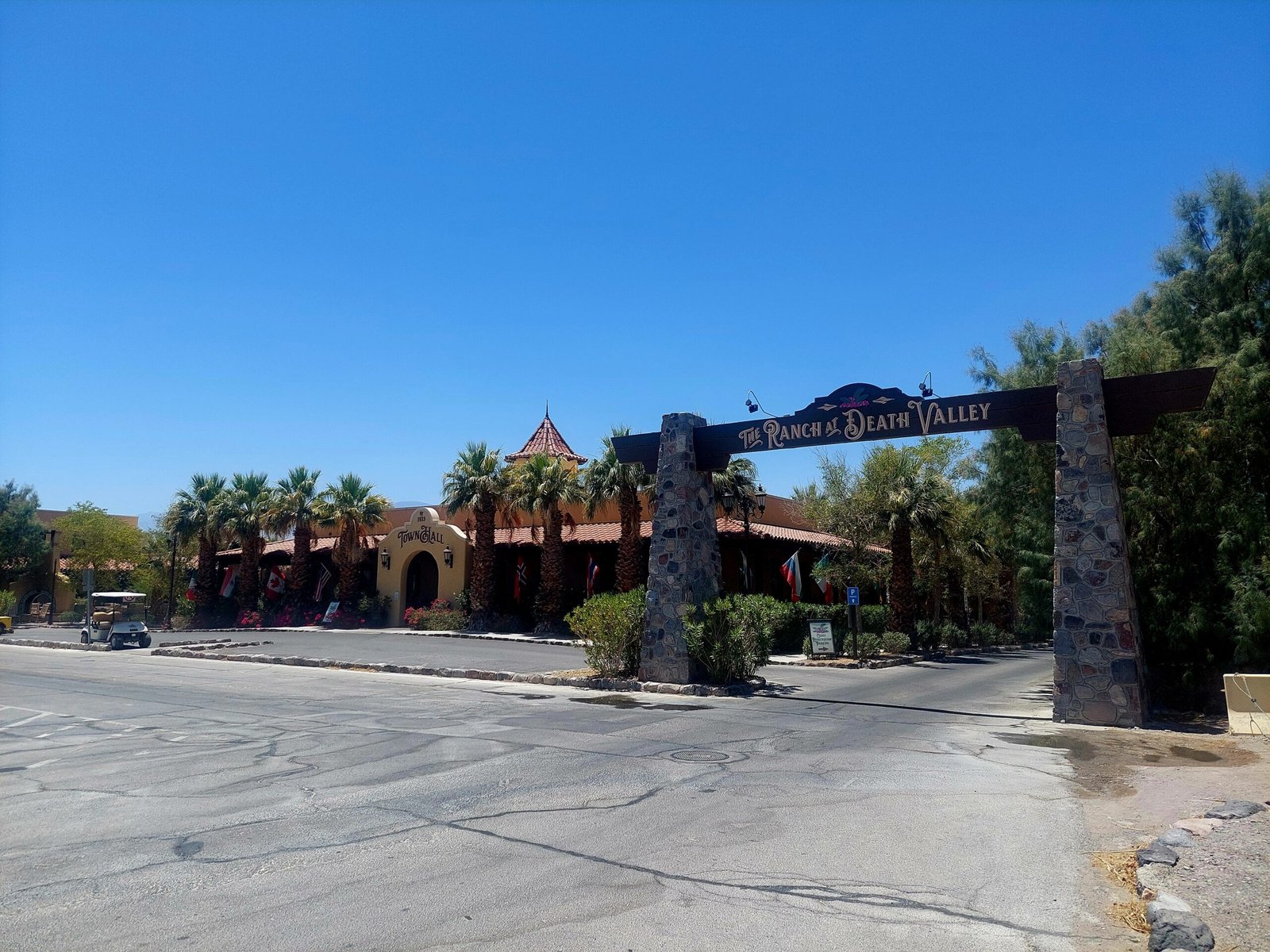
Our resort was probably the only place in the nature park where trees and bushes grew. This was, of course, thanks to the irrigation system.
There were several of these small lizards scurrying around us.
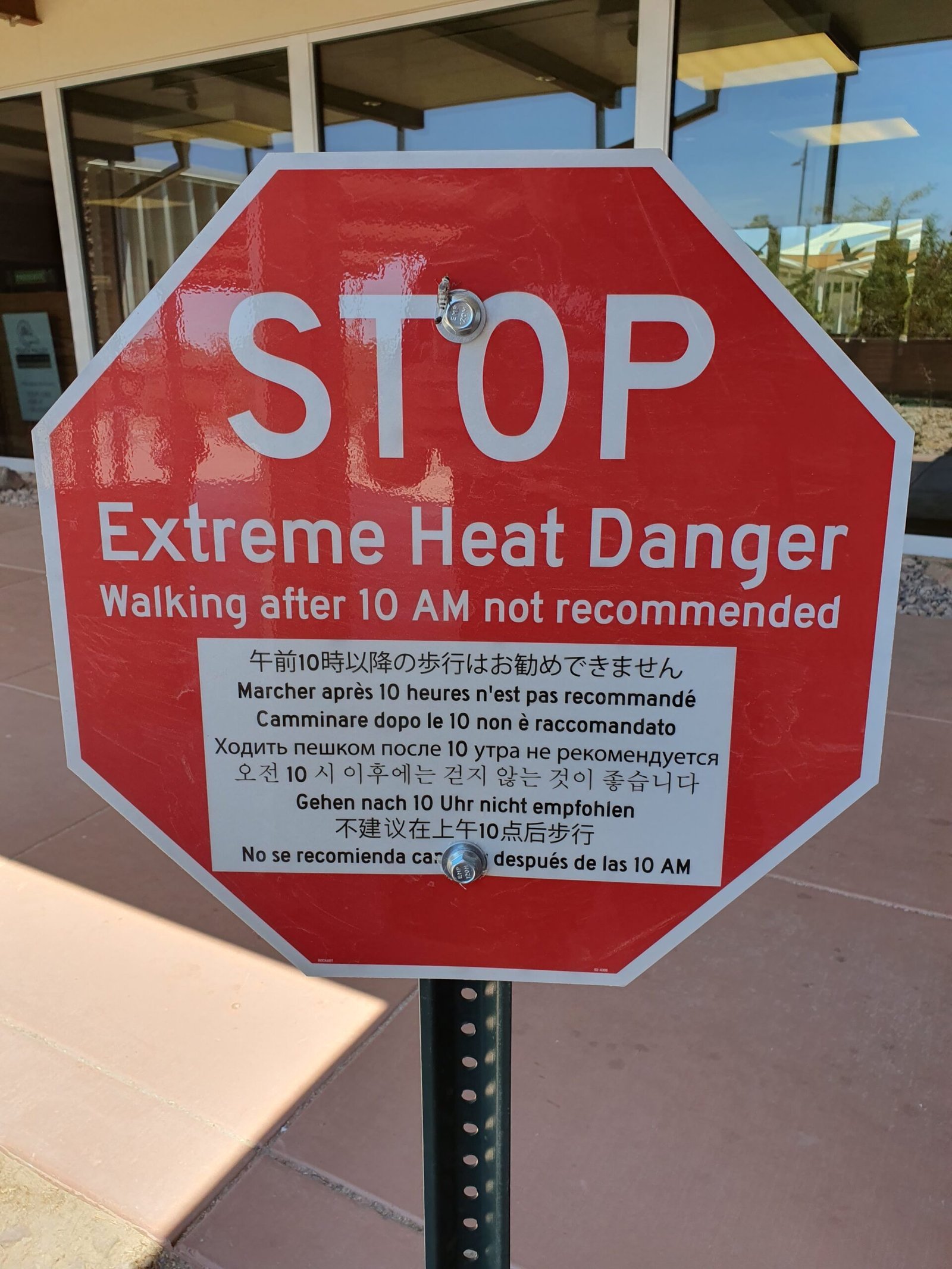
This warning sign was found at every stop.
From the Dante's View lookout point, we could see how vast the Badwater Basin and its salt flats were below.
After the first stop, we were all very thirsty. Luckily, we had brought with us about a gallon of water for each of us. We could manage with that amount of water even if the car broke down somewhere in the park and we had to wait for help for a longer period of time.
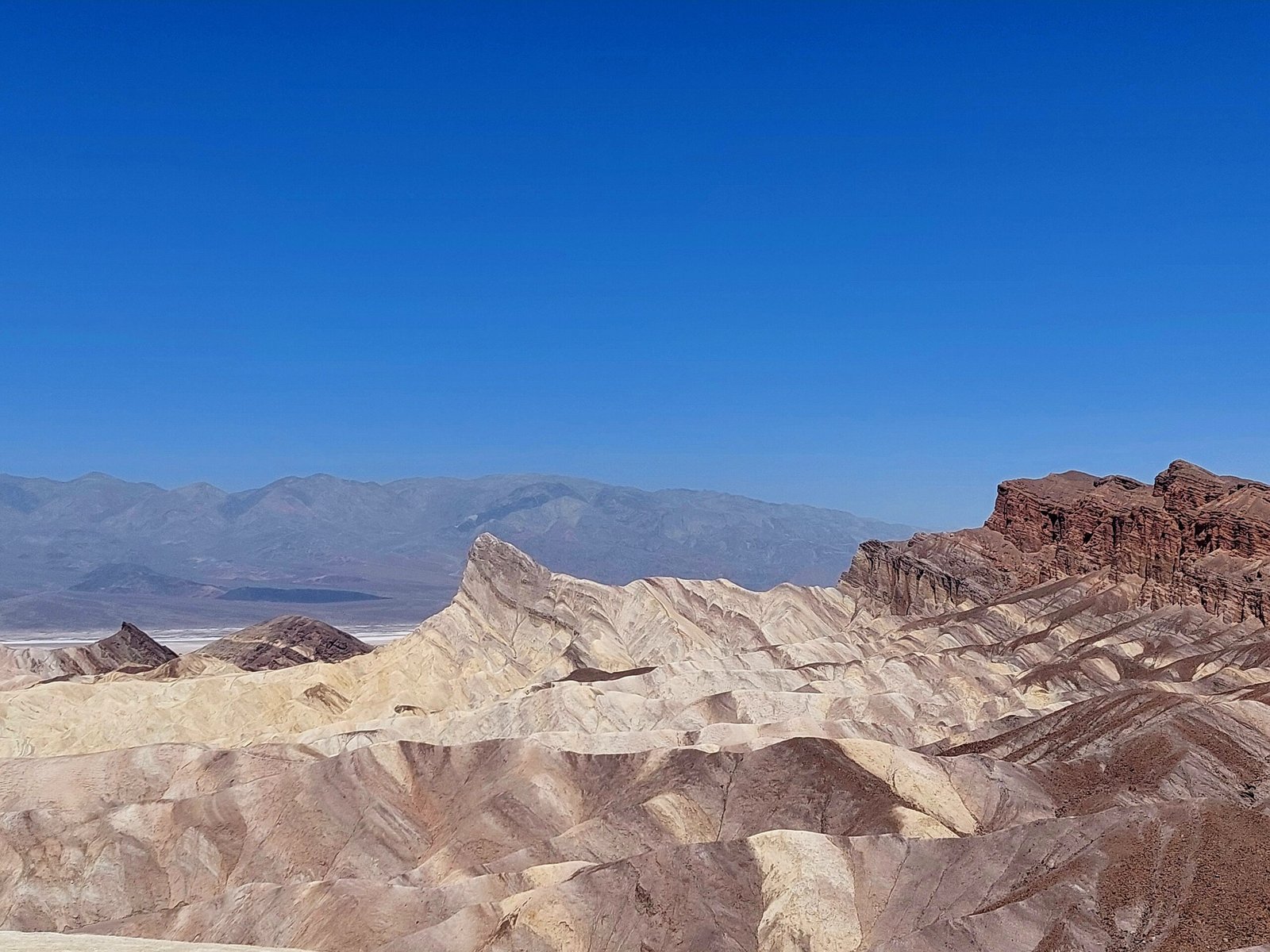
Our next stop was Zabriskie Point. We were told that we could see a beautiful sunrise from there, but we didn’t want to get up that early the next day. So we admired the dry landscape for a while, and headed back to the car. And again we were thirsty and finished off the first gallon of water.
At Zabriskie Point, we saw a couple of people hiking along the ridges of these hills. Fortunately, they were already on their way back, so they had probably started their hike in the morning at sunrise.
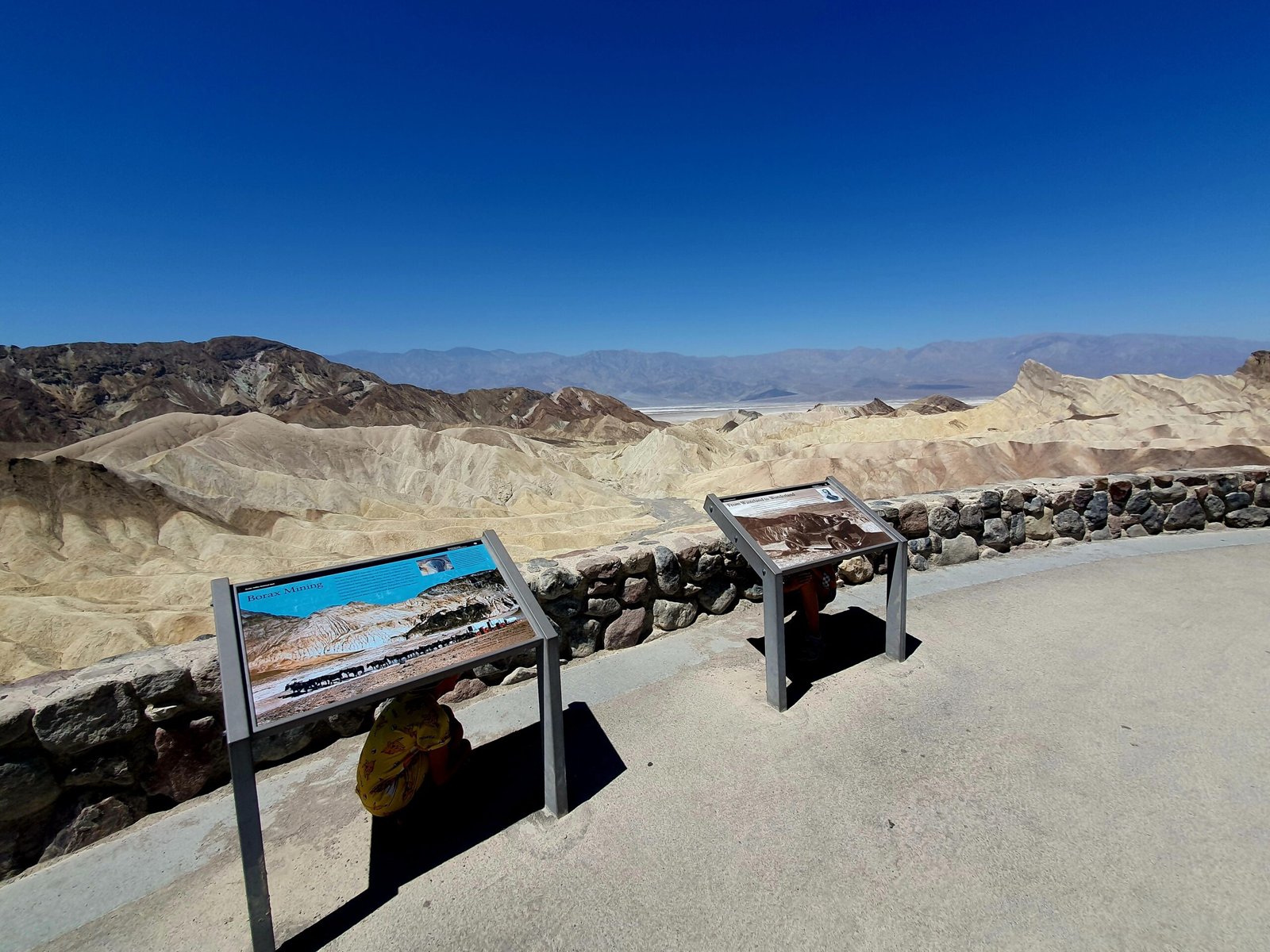
The children fled from the sun under the information boards. It was probably the only place in the entire park where there was any shade.
Hiking after ten in the morning can be life-threatening, even if you are well equipped for the trip.
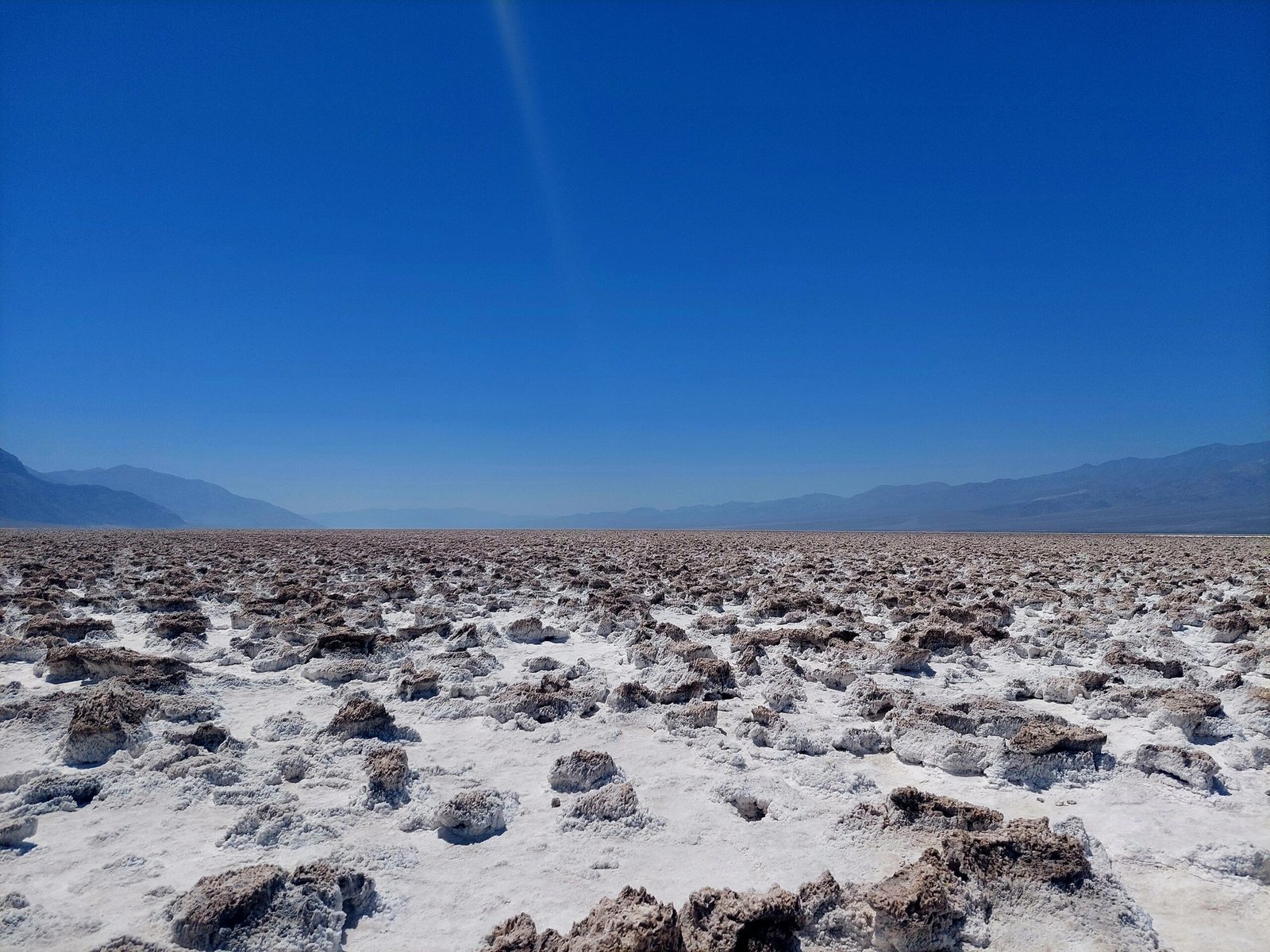
The third stop was at Devil’s Golf Course. It is an immense area of rock salt eroded by wind and rain into jagged spires. The place got its name from the phrase in the park’s guidebook, “Only the devil could play golf on such a surface”.
Devil's Golf Course – now that's a challenge for players.
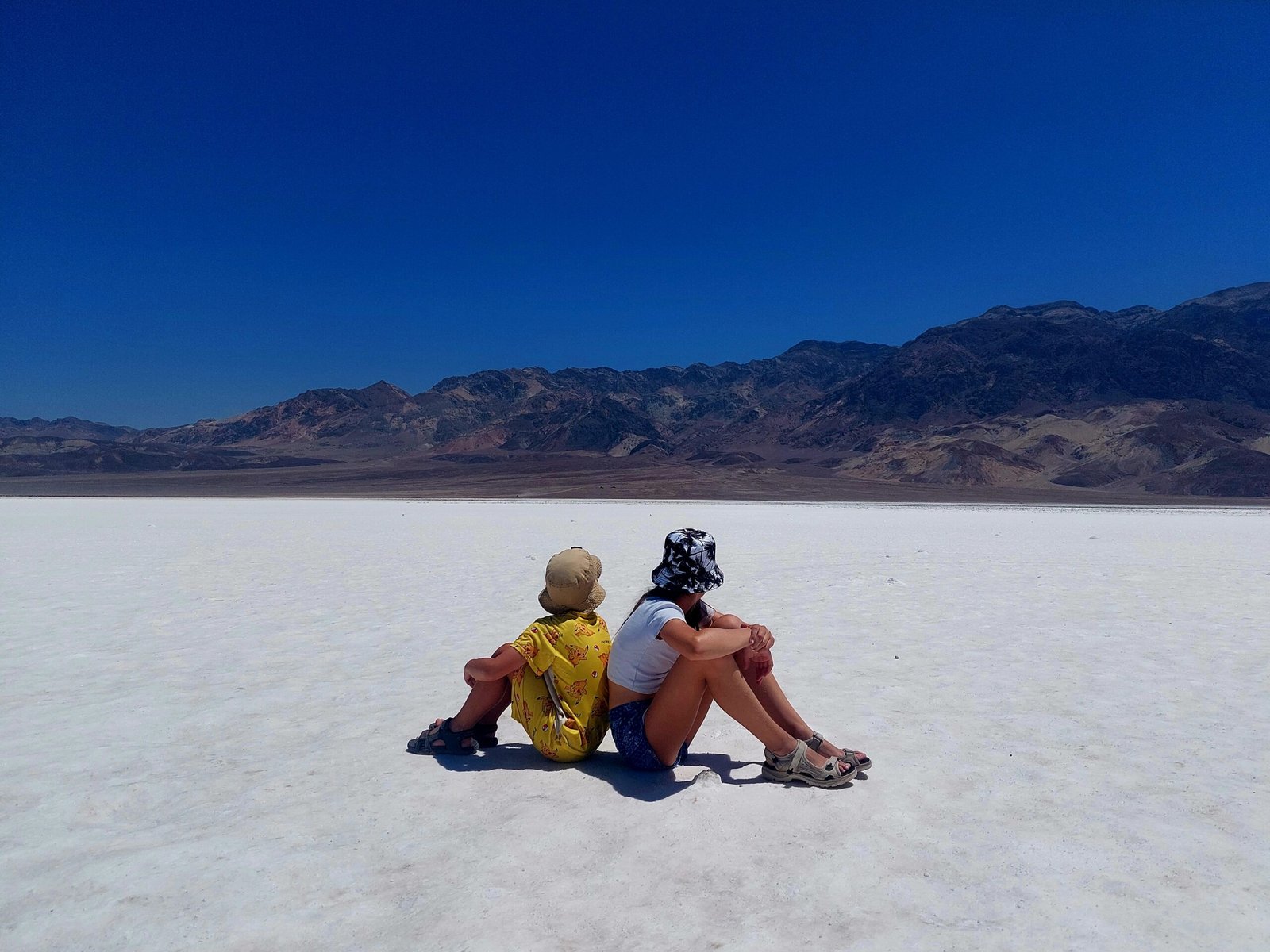
There weren't many places to find shade on the salt flats.
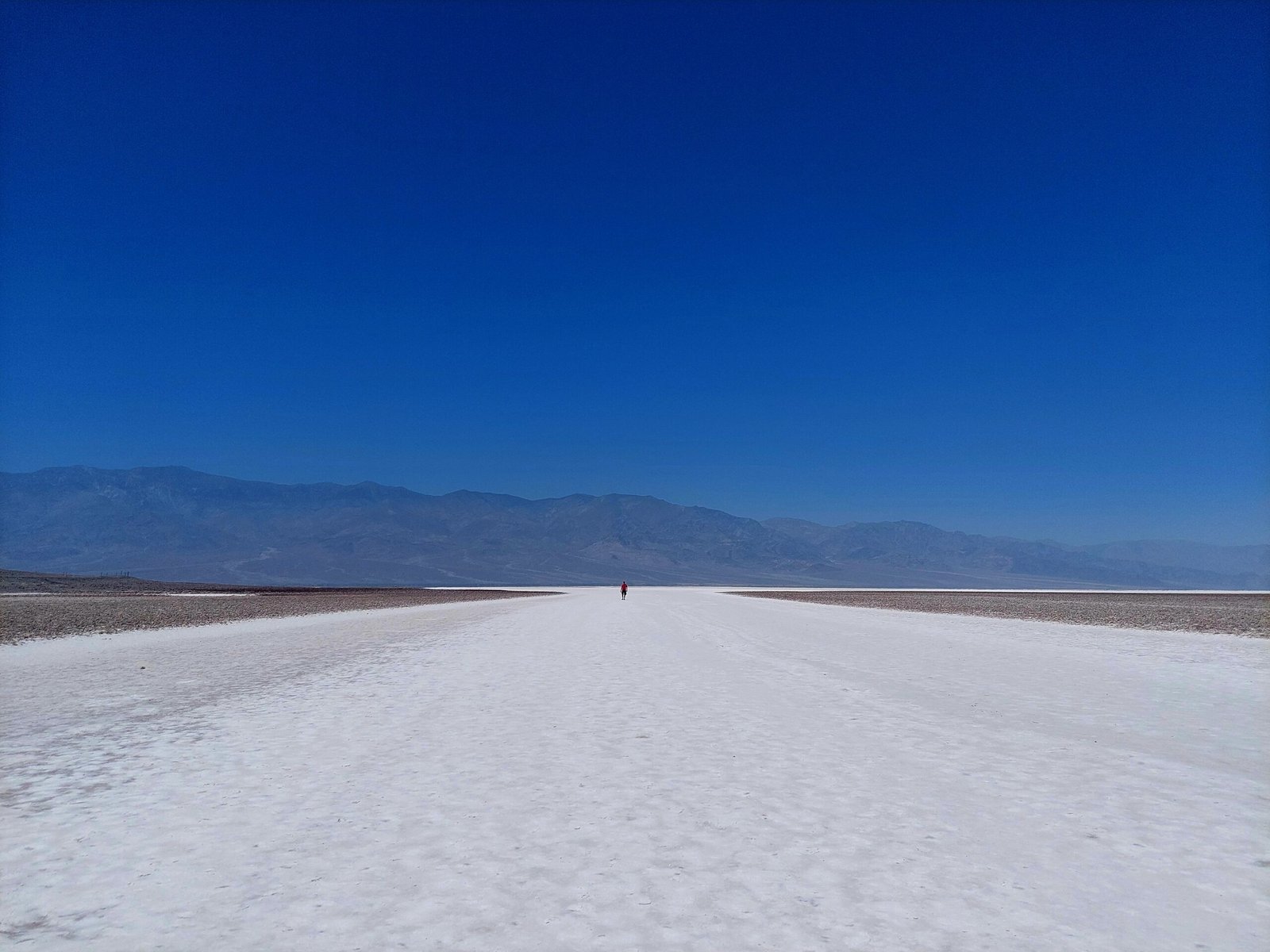
Near the Devil’s Golf Course was an area called Badwater. A man who had been there mapping the area had tried to give water to his mule from a small pond there. However, the water was not good to drink because it is so salty. So he wrote the name “Badwater” on the map, and it became the permanent name of the place. We certainly don’t doubt the saltiness of the pond water. There was a huge white salt plain around it. Apparently, however, there is some life in the pond, despite the salt. On the information board it said that a specific species of snails live there. The white salt reflected the sunlight so brightly that it was impossible to be there without wearing sunglasses. I’m guessing it wouldn’t take too long to get salt blindness instead of snow blindness there. Even Jaana’s phone malfunctioned due to the heat or brightness, recording several videos of nothing but red. After taking photos, the phone often had to be cooled in front of the car’s air conditioning to prevent it from overheating.
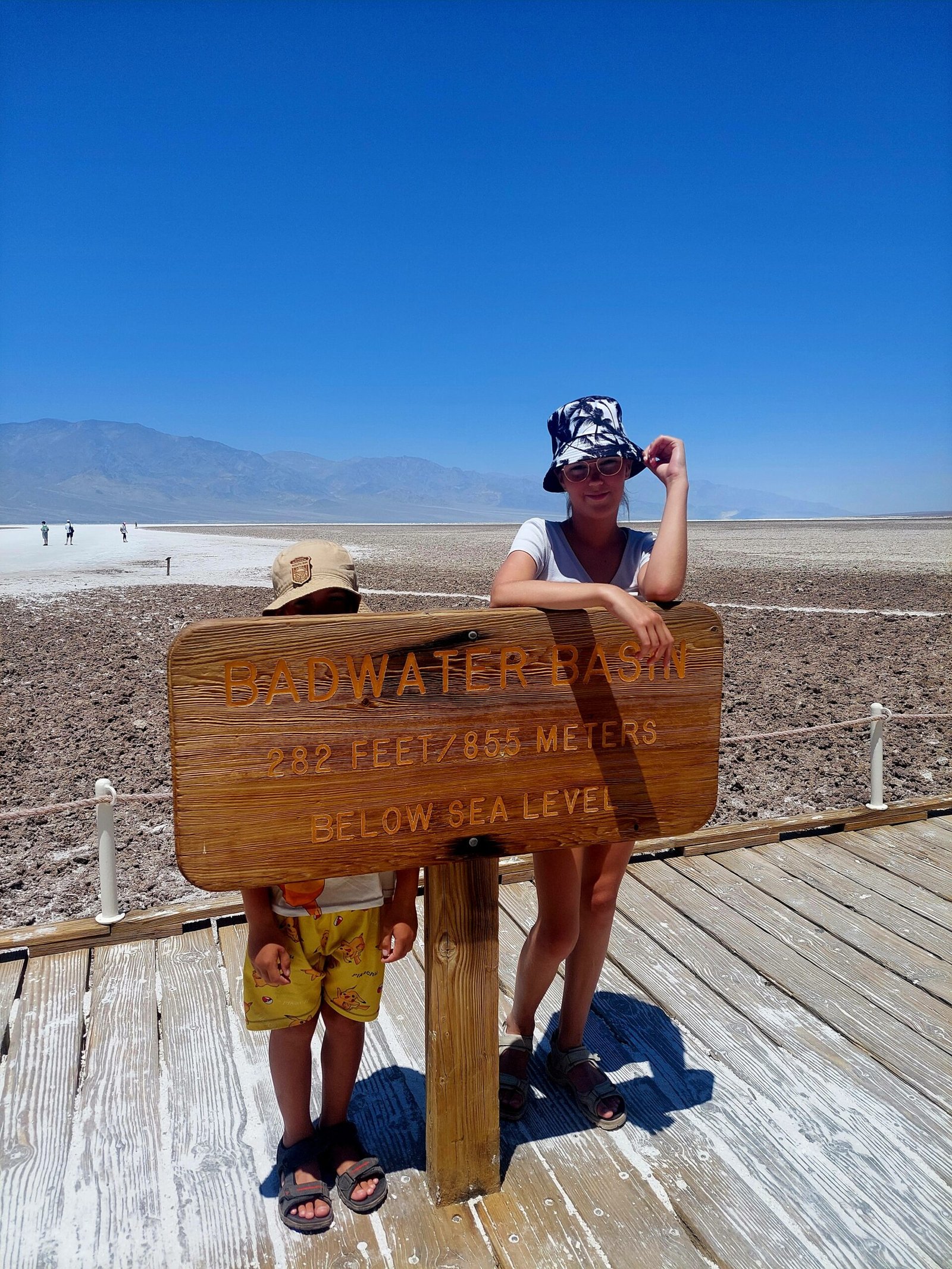
The Badwater Basin is the lowest point in the United States.
You can't get very far on the salt flats before you have to turn back because of the heat. Here, Marko is on his way back.
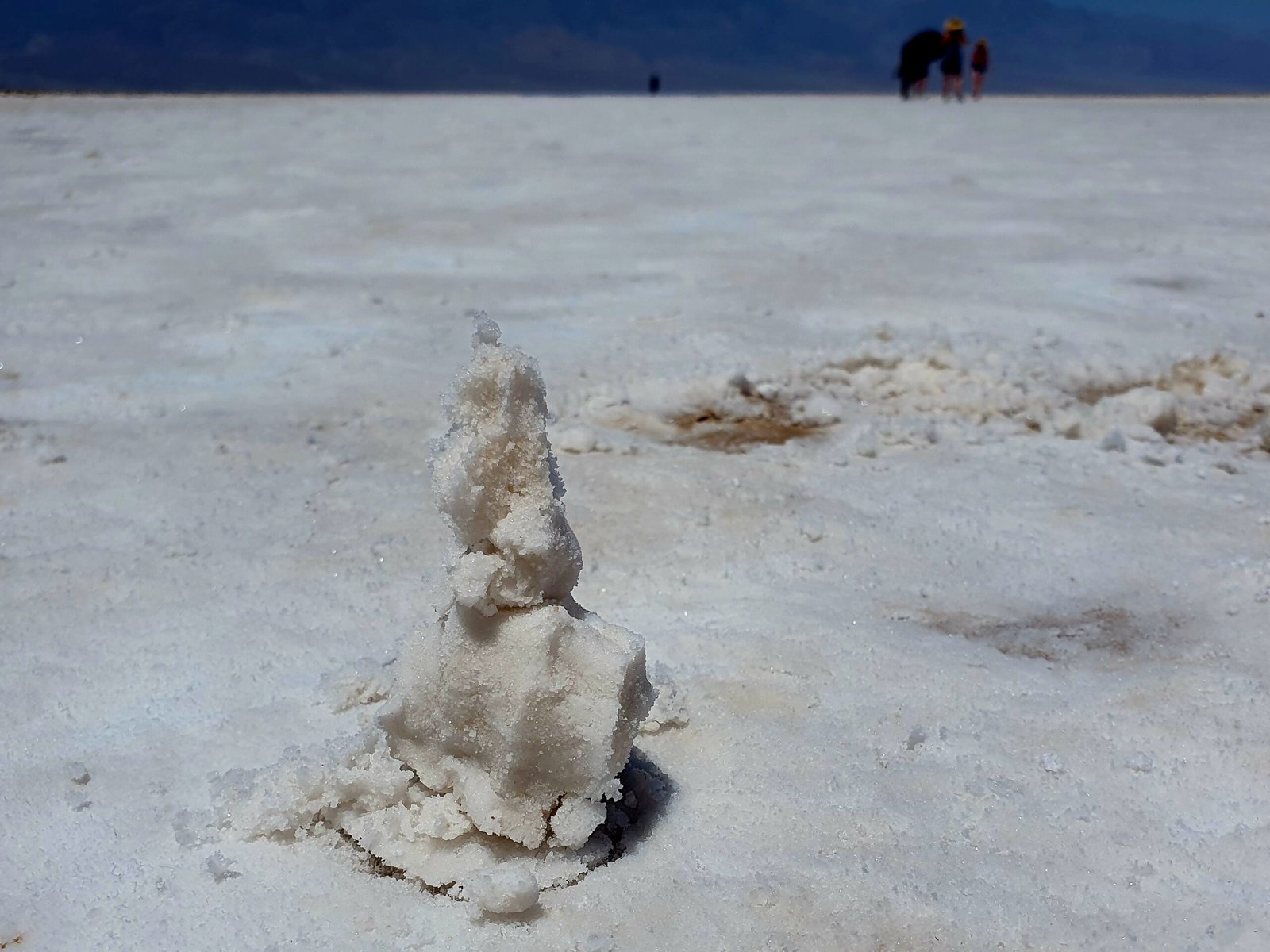
The children built a salt man showing his tongue while waiting for Marko and the car keys.
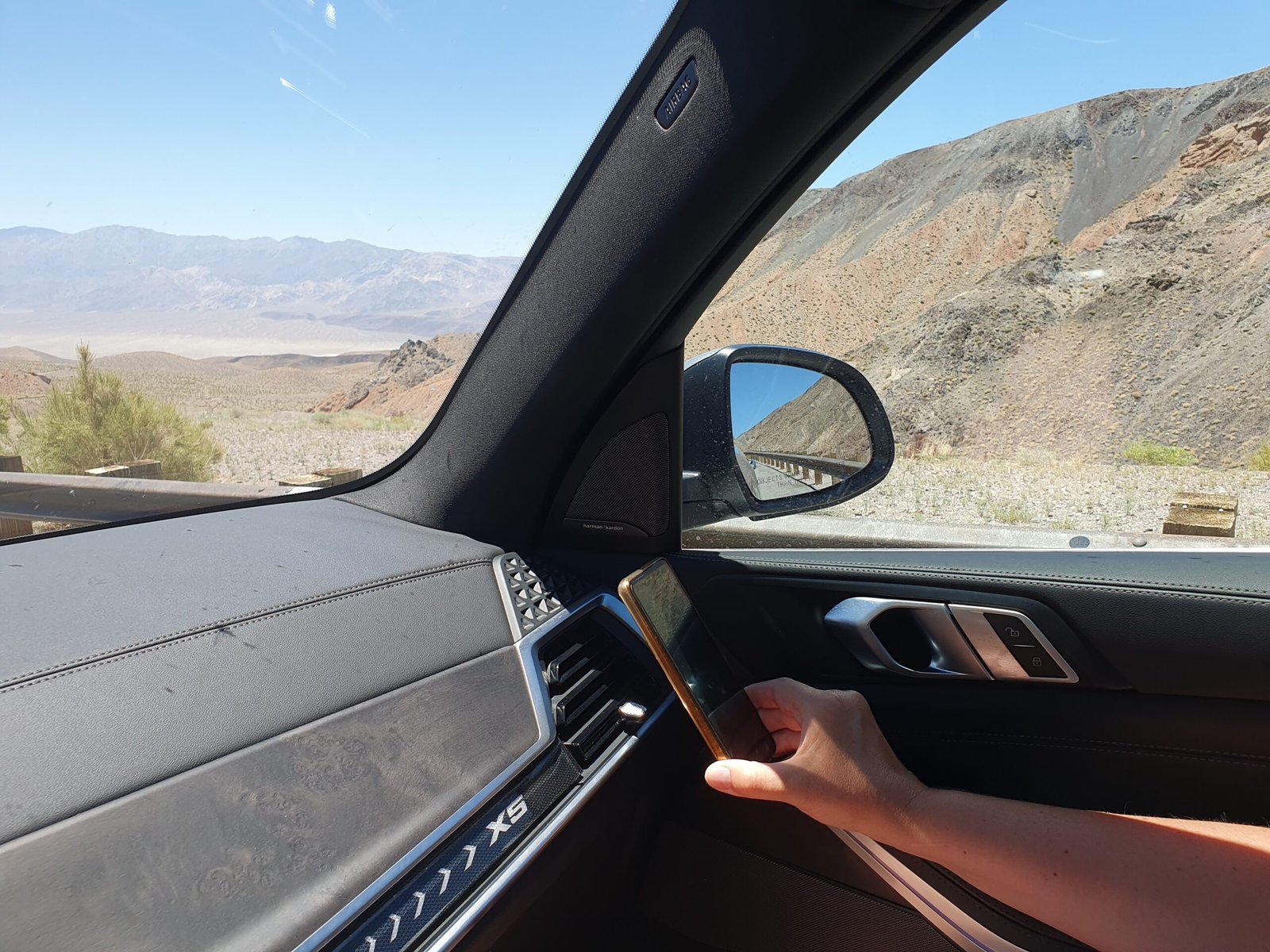
In addition to people, phones also needed cooling down from time to time.
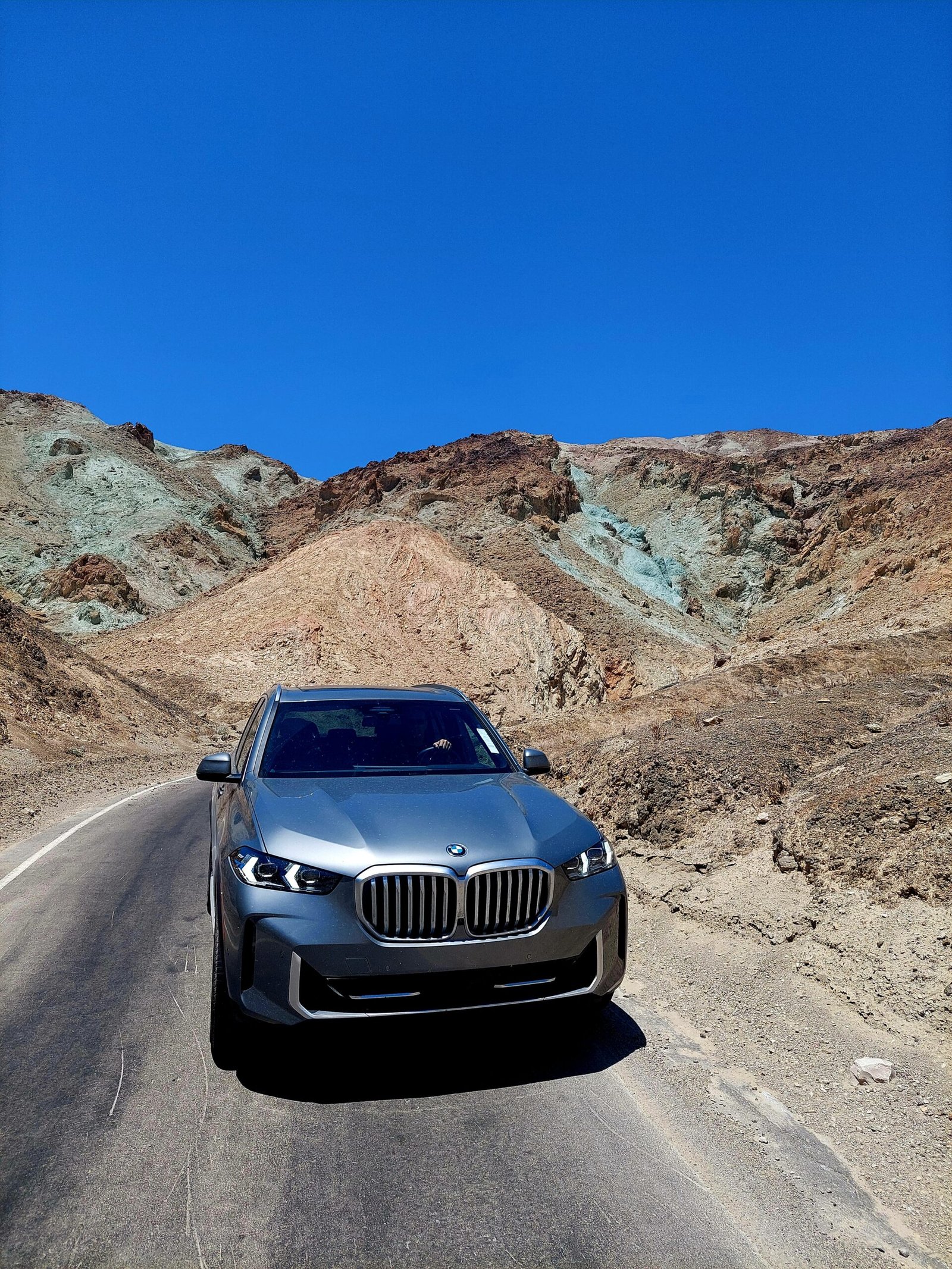
On the way back, we drove back along the Artistic Drive. This road was one-way because it was so narrow. It was a scenic route, but the scenery was just high, dry hills with different colours. Beautiful, but pretty much the same stuff we had seen already before. At times the route was so narrow and winding that we understood very well why larger vehicles were not allowed on the road at all.
As we were driving in the nature park, we saw two men running there. Yes, you read that correctly. These two guys were apparently training for the Badwater 135 ultrarun. In this race, runners have 48 hours to complete a 135 mile (217km) route starting at Badwater Basin, the lowest point in America. The route ends at the Whitney Portal, at an altitude of 2530m. This year’s race will be run on 22-24 July, so it’ll be hot for sure!
We also found green stones on the Artistic Drive route. The children didn't believe the stones were emeralds, even though we tried hard to convince them.
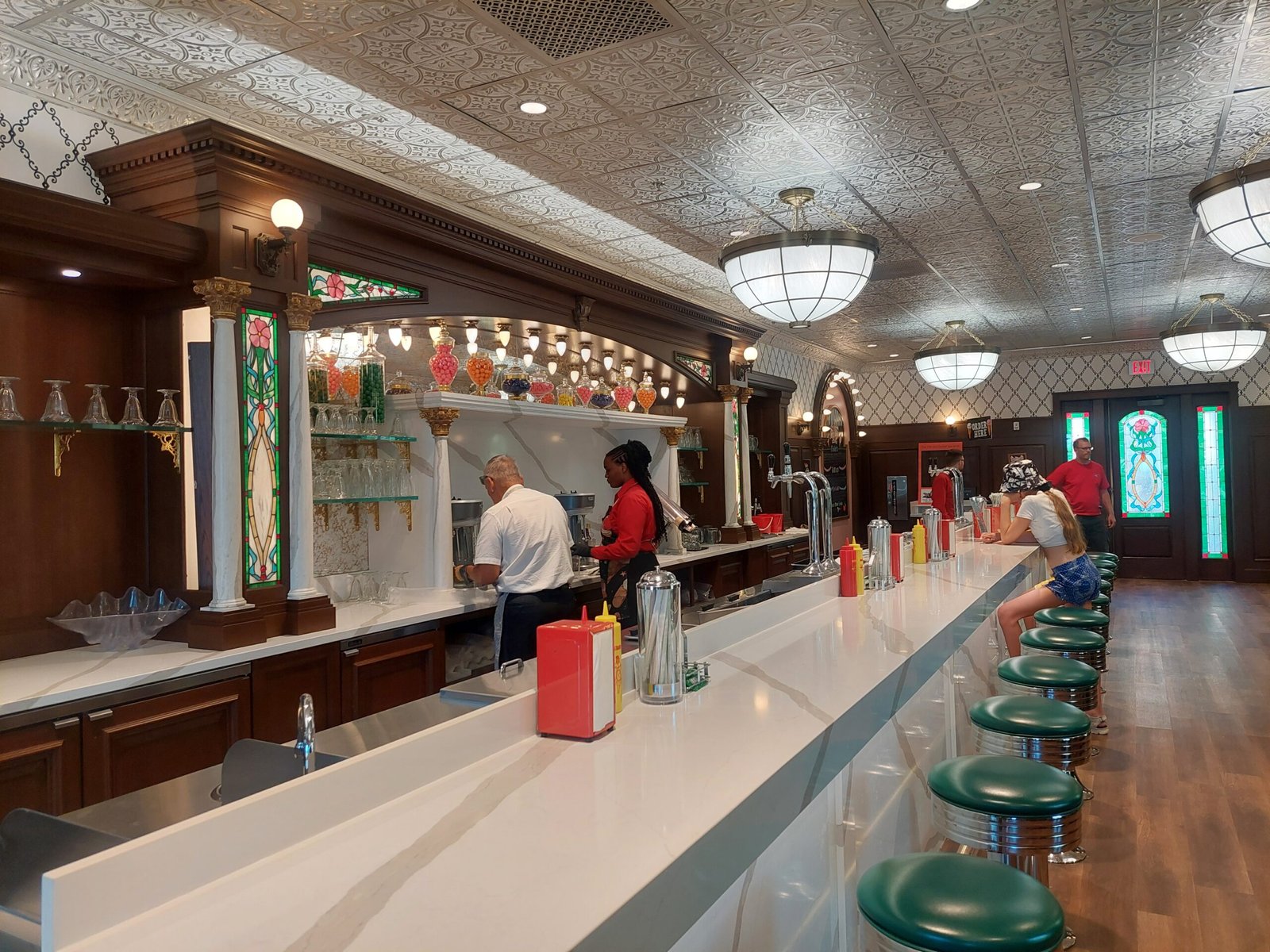
Before returning to the hotel, we went to the Visitor Centre to check the official temperature in the park at that moment. It was 111F/44C. That was a good reason to go back to our cool, air-conditioned room. After resting there for a while, we braved the heat, and went to see what the ice cream parlour would offer for us. The place was really worth going. There were plenty of yummy ice cream flavours, and the place was decorated in a really nice way. We chatted for a while with the workers there. As we had suspected, all the employees lived on the resort grounds. Some stayed here for longer periods at a time, others stayed for the duration of their working week, and then returned home for a three-day break. For groceries, workers have to visit the town of Pahrump, which we had driven past on the way here. Since it’s an hour’s drive each way, it’s not worth driving there if you run out of milk in the middle of the week.
The ice cream bar was cool and cozy.
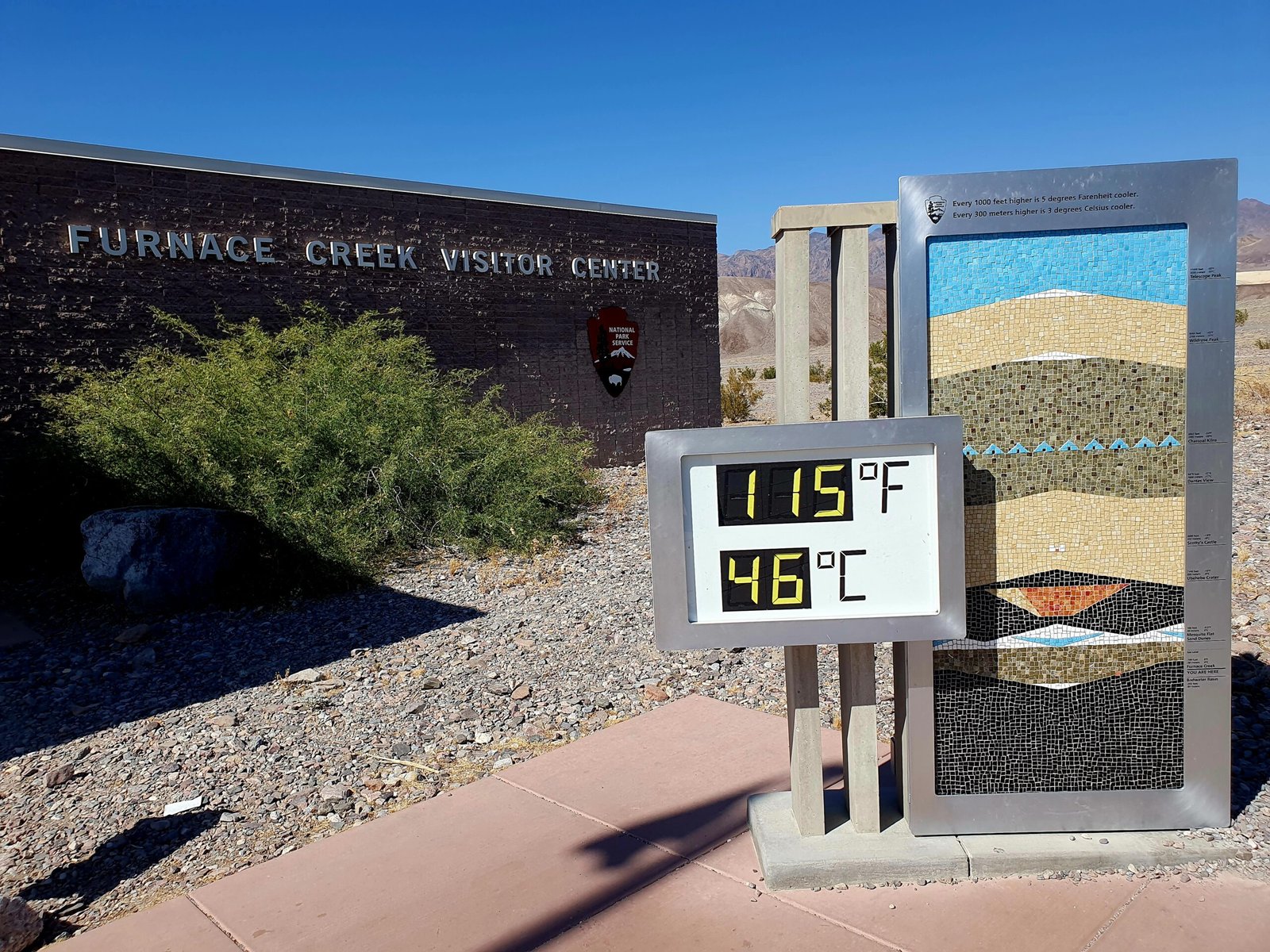
Before going to dinner, Marko drove back to the Visitor Centre to see what the official temperature would be for the hottest hours of the day. The temperature had gone up another couple of degrees, so the highest reading of the day was 115F/46C. One of the ice cream bar employees told us that in a few weeks it’s quite common for temperatures to rise to 125F/51.6C. Luckily, we’ll be long gone by then!
This is probably the highest temperature of the day. Even at night, the temperature is not expected to drop below 30 degrees today.
Death Valley is the hottest place on our planet. The annual rainfall here is only about 60 mm. No wonder there is little vegetation.
On the day of departure, we visited the Visitor Centre again, because the children had completed their Junior Ranger booklets and were to receive new Junior Ranger badges for it. This time, the children had to present their booklets to a ranger at the centre, and he asked the children about their observations, and also told them a lot of new things about the nature of Death Valley. After this little “test”, the children took an oath and received another badge to add to their collection. We should definitely have the same system in Finland too. By filling in the booklets, the children focus on exploring nature much more carefully, and stop to reflect on what they have seen and experienced.
A coyote near the Visitor Center, waiting for treats from tourists.
We only stopped twice on the way to Santa Barbara. Our first stop was still in Death Valley. We had a quick look at the sand dunes there. As the weather was even hotter than the day before, this was a really quick stop. The hot sand was burning our toes, so we couldn’t really walk on the dunes wearing sandals. So we just snapped a few photos, and hurried back to our air-conditioned car.
Plants and animals have had to develop different survival strategies for the harsh conditions. The hairs on the flowers of this plant reflect the sun's rays, reducing water evaporation from the plant.
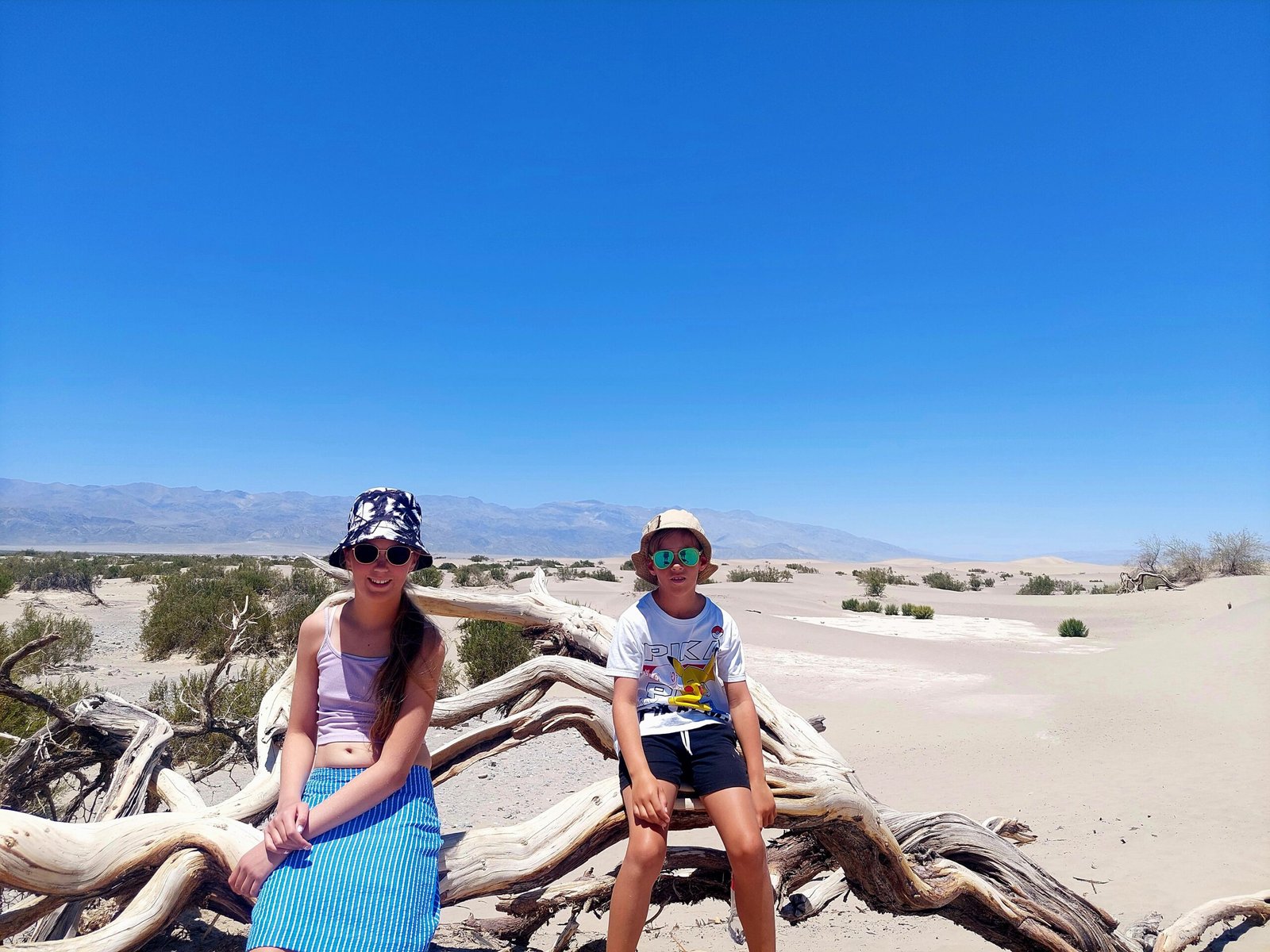
The children sat on a dry tree trunk to avoid the sand burning their toes.
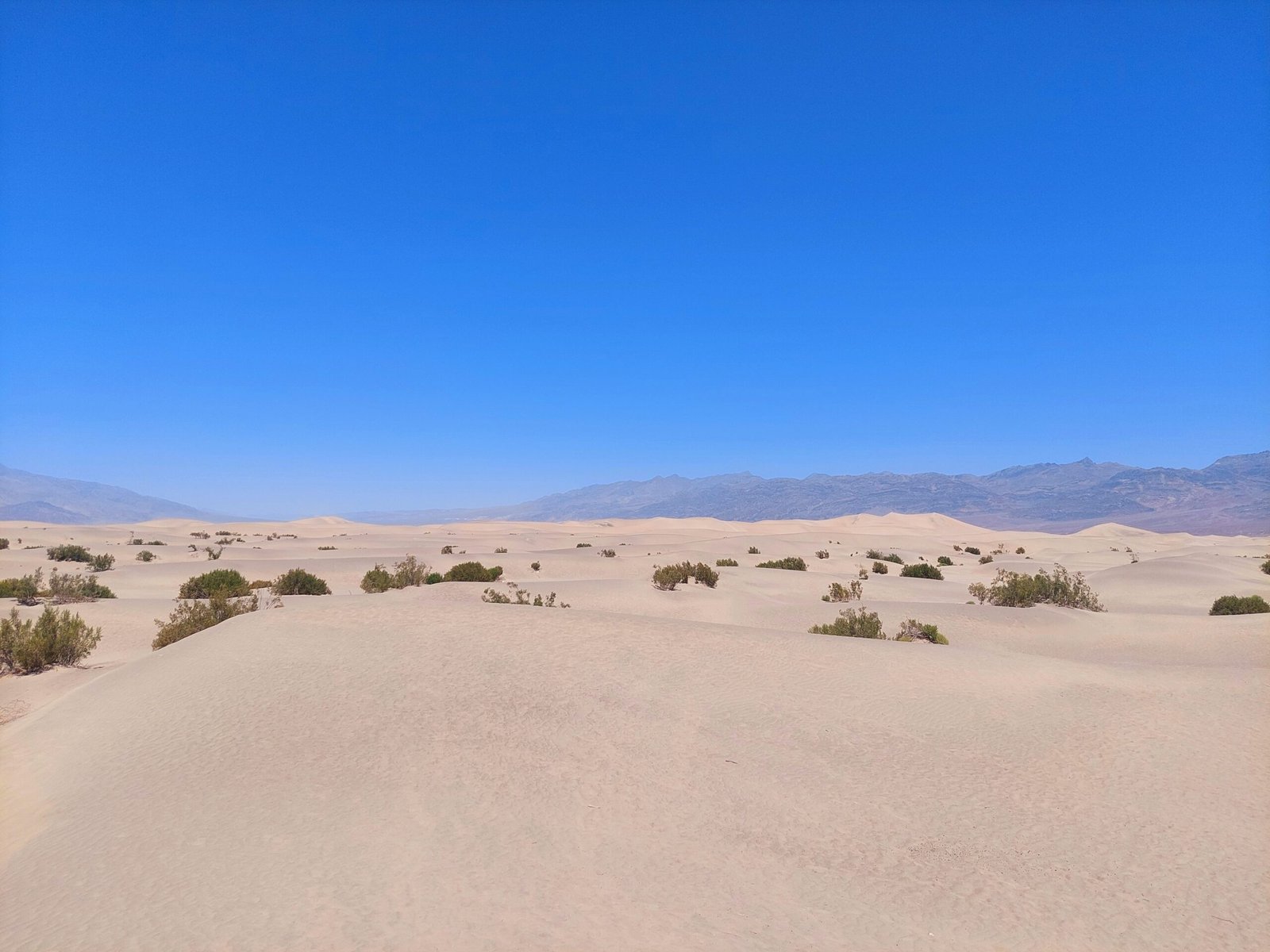
There were sand dunes as far as the eye could see.
Only when we reached the coast did these desert-like landscapes disappear.
Along the way, we came across Trona, which was once an active mining town.
Now the town was a rather desolate sight with its abandoned and dilapidated houses.
Our second stop was a food and toilet break, after which we continued on to Carpinteria, a small town near Santa Barbara. The 5h20min journey went without any delays this time. We arrived early in the evening and the children could play with the animals of our Airbnb apartment. There are two cats, two dogs, two horses and chickens here. We were told that the chickens lay eggs every day, so we can pick up some fresh eggs, if we want to.
This time, our caravan is very compact, but all the more charming.