18.4.-24.4.2023

Our flight from Nadi to Tokyo left a little late, like things in Fiji tend to do. However, the flight was nowhere near full, so we each had plenty of room for the entire nine hour flight. When we arrived in Japan, “Fiji time” was gone as everything seemed to happen on time. In addition, everything was organised and thought out to the last detail. I guess you have to be organised and precise when you have to move millions of people around Tokyo every day.

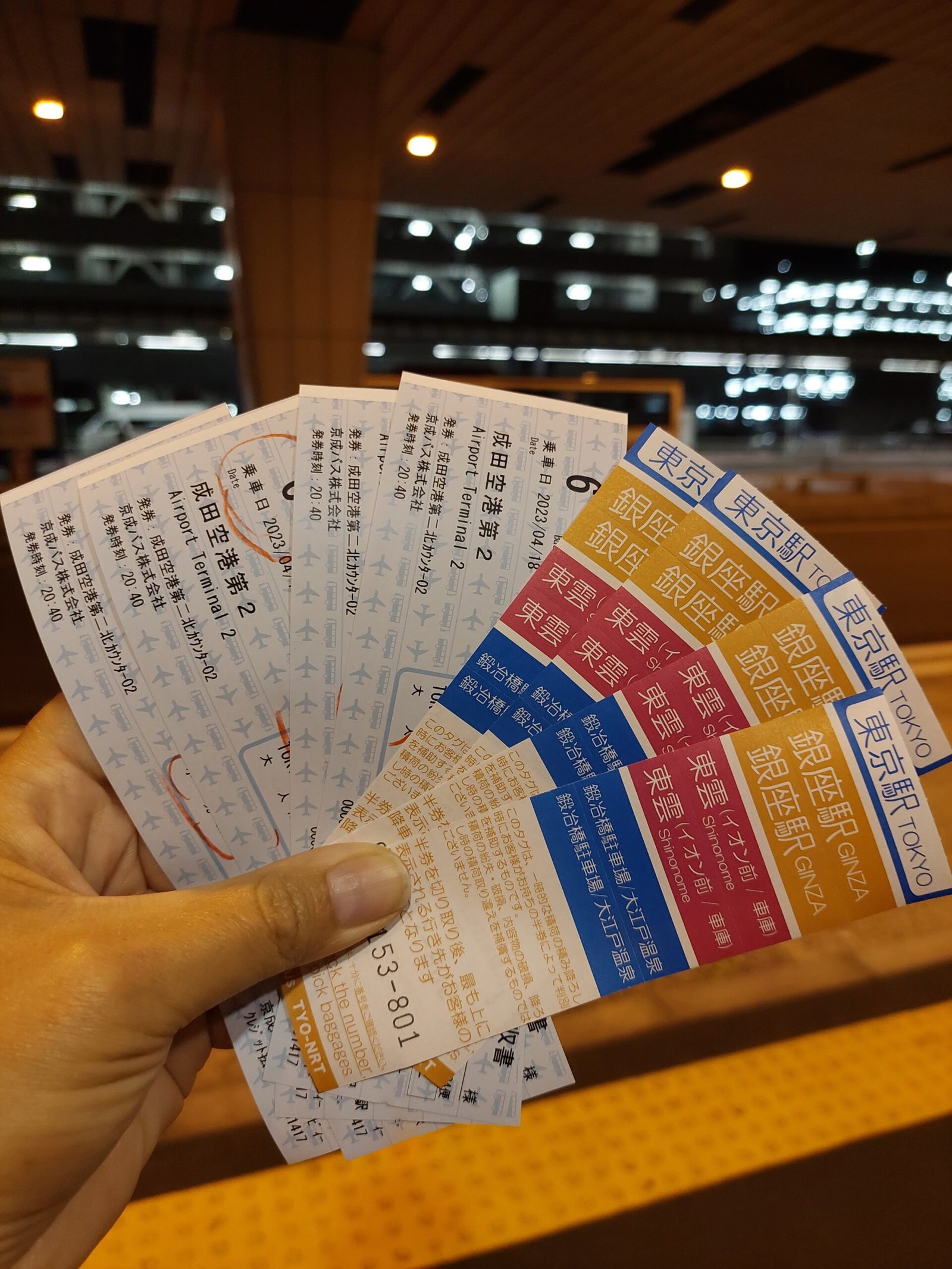
Bus tickets to central Tokyo, as well as receipts for the luggage stored in the luggage compartment of the bus.
Tired travelers on the bus

We had booked an Airbnb apartment in the Nishi-Kasai district for six nights. To get there, we first had to take an hour-long bus ride from the airport to the city centre, from where we took the subway directly to our apartment. The owner of the apartment had sent Marko not only the address but also several photos of how we would find our way to the apartment once we got to the station. After a short photo navigation session, we found the apartment and went to bed. Since the time difference is three hours, we were all more than ready to sleep when we finally hit the pillow at 11:30pm.

Our compact studio apartment in Tokyo

We woke up relatively early the next day, so we had plenty of time to explore Tokyo. Our first destination was the local medical centre, as Jaana’s leg still wasn’t quite ok. Fortunately all street names and metro stations here are also marked in Western letters, so it was really easy to find our way. There was hardly a queue at the doctor’s, so Jaana got in quickly.

Jaana had used Google translator to translate a few phrases into Japanese, just in case the doctor didn’t speak English like the most of the locals here. It was a positive surprise that the doctor spoke reasonably good English. He checked the leg with an ultrasound. There was no muscle tissue damage. The big lump on the left thigh was just a large haematoma which would eventually melt away.

Jaana was given some kind of anti-inflammatory plasters to be used on her thigh if needed. In addition, a support bandage was fitted to her thigh because we walk a lot every day. We had a hilarious conversation while adjusting the bandage:

The doctor (looking at the bandage on Jaana’s leg): Oh, you’re too big.

Me: Excuse me?

The doctor: No, no, no… Sorry, sorry, sorry… You’re not fat. You Western people are much bigger. Big people. Asians are much smaller.

Well, from their secret stashes, they got the next size up. It fit even to this western thigh, and we were off to explore Tokyo. The cost of the doctor’s visit, including medicine and bandages, was around 85 euros. This was a positive surprise, as there had been stories on the internet about how tourists have to pay much more for their medical appointments here than locals. It is probably true that tourists have to pay more, but for the locals the medical services must then be really cheap.

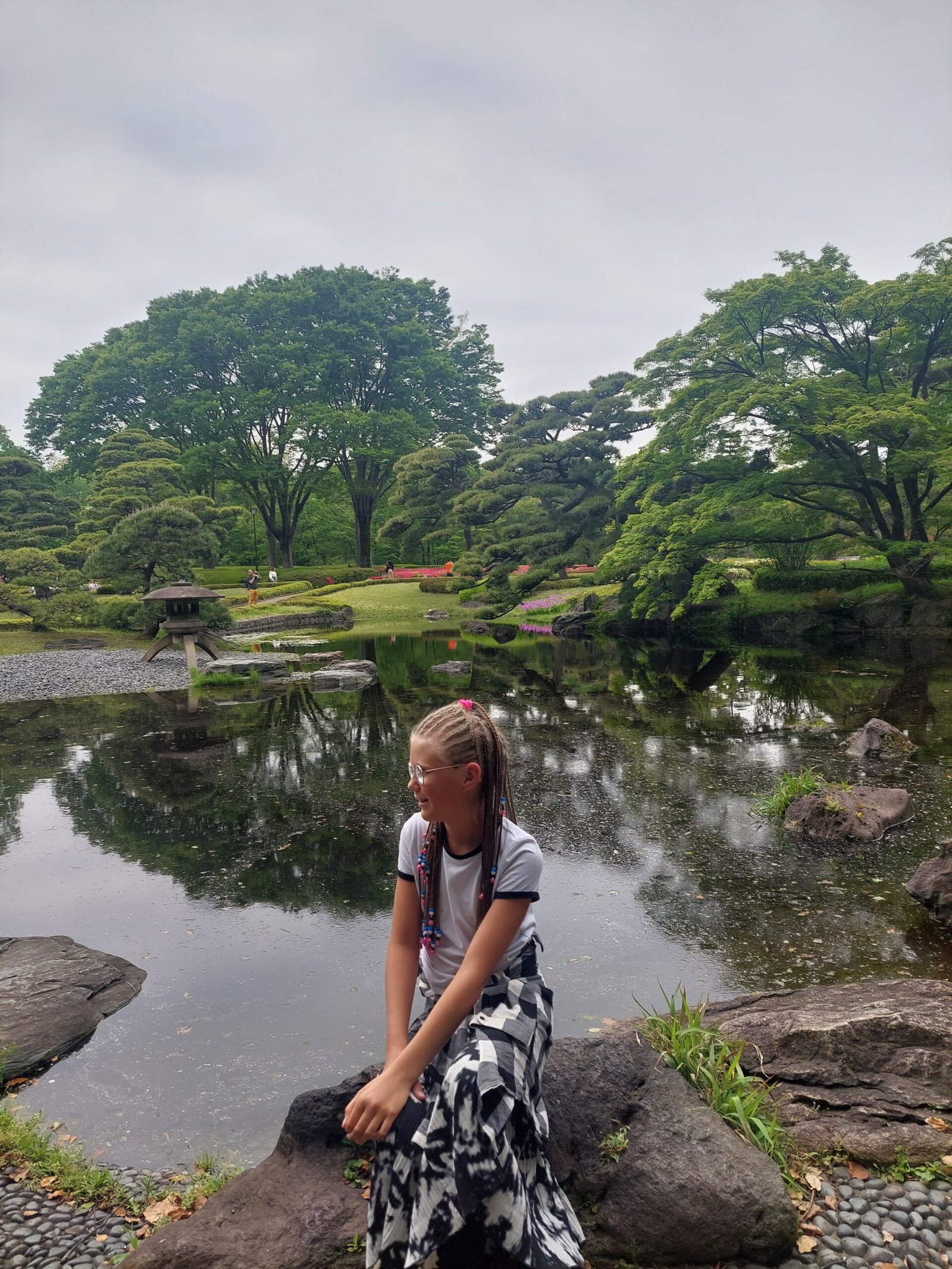
From the doctor’s we took the subway to Otemachi station, from where was only a short walk to Tokyo’s Imperial Palace. We didn’t see the palace though, we just walked around the eastern gardens of the area. The Emperor of Japan lives in the area, but the public cannot enter the enclosed area except for guided tours. The gates are also opened on the Emperor’s birthday and New Year’s Day to allow the public to present their New Year’s wishes to the Emperor.
The splendor of flowers in the Imperial Garden

From the palace grounds, we continued on to the Shibuya district, as we wanted to see what the world’s busiest pedestrian crossing looks like. At the intersection, red lights come on for all cars at the same time, so people crossing the intersection all start moving at the same time. We were there at an off-peak time, so there wasn’t a huge rush at the intersection at the time. However, it is estimated that at the busiest times, up to 3,000 pedestrians cross the junction at the same time as the green lights are on. This takes 46 seconds.

Although Tokyo is a huge city, we still haven’t seen really big crowds anywhere. Sure, there are a lot of people in Tokyo, but it doesn’t feel crowded. Even the subway has been ok so far. We haven’t been on them at the worst of the rush hour, though. In some parts of the city, even during the day, there are really quiet little streets where no one is moving. You wouldn’t expect to find that in a city of about 14 million inhabitants.

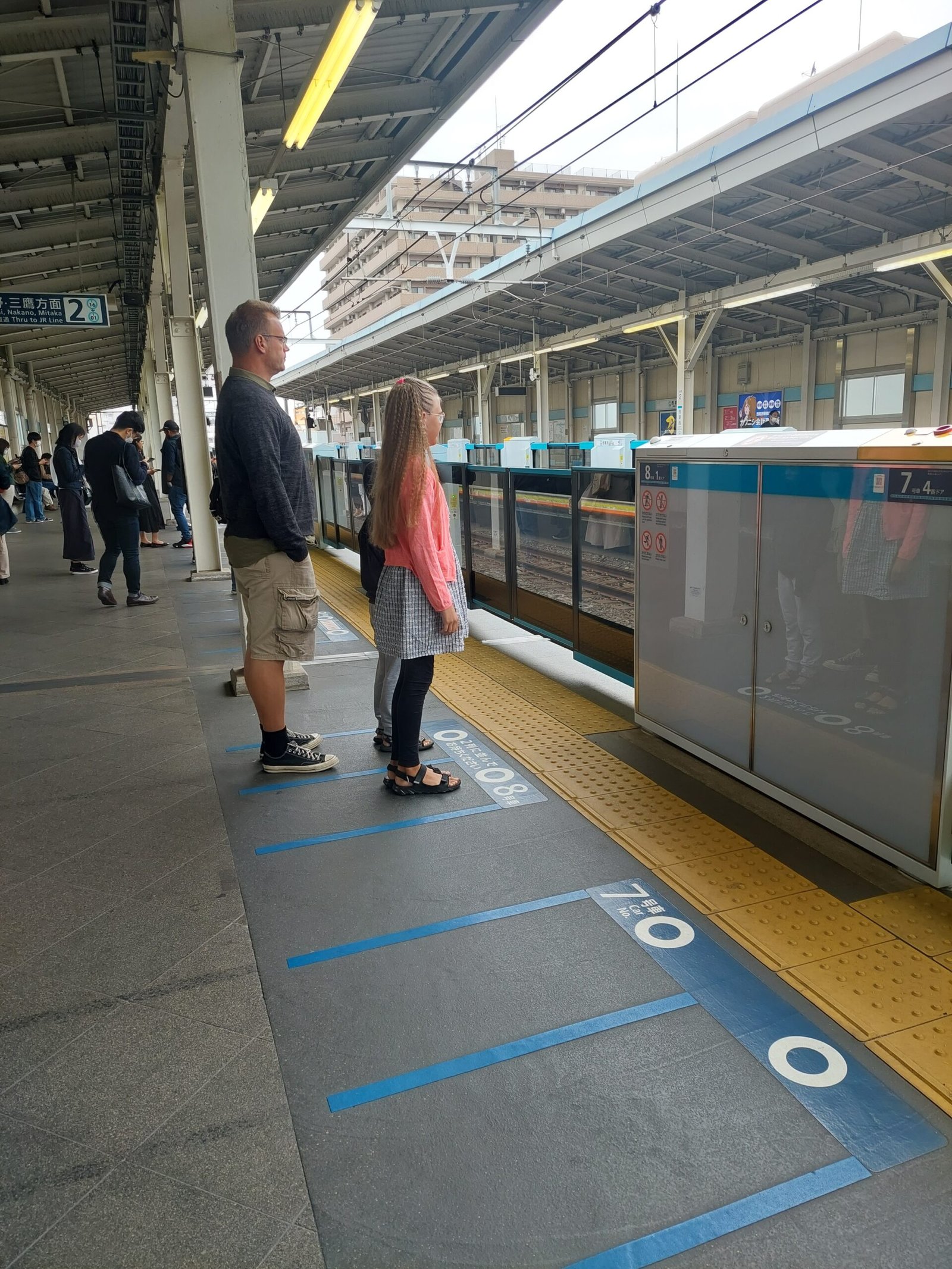
The metro has not been very crowded, but for busy times there are designated places where you have to queue for the metro.
To keep order, rushing into the metro car with a carrot in the mouth is apparently prohibited.

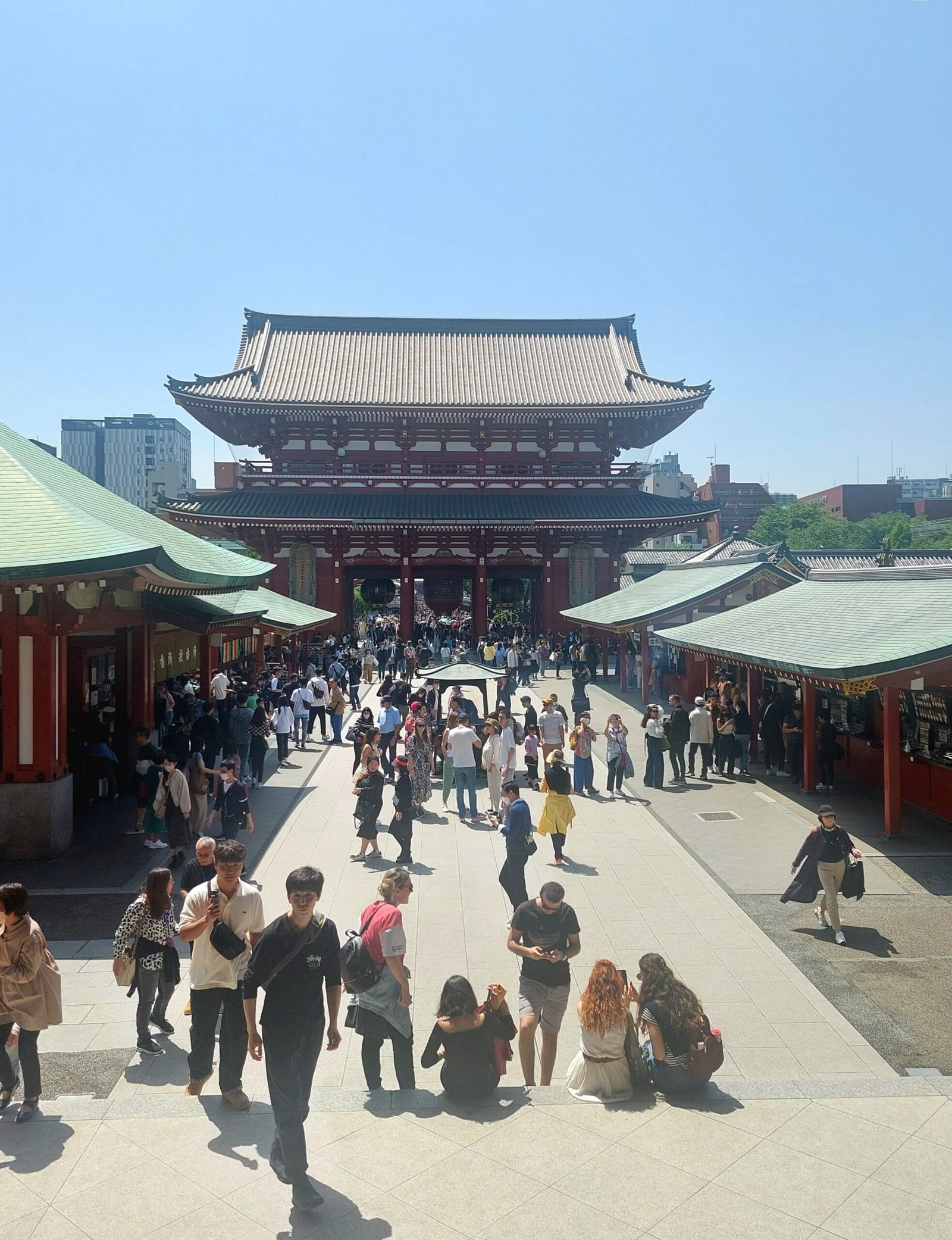
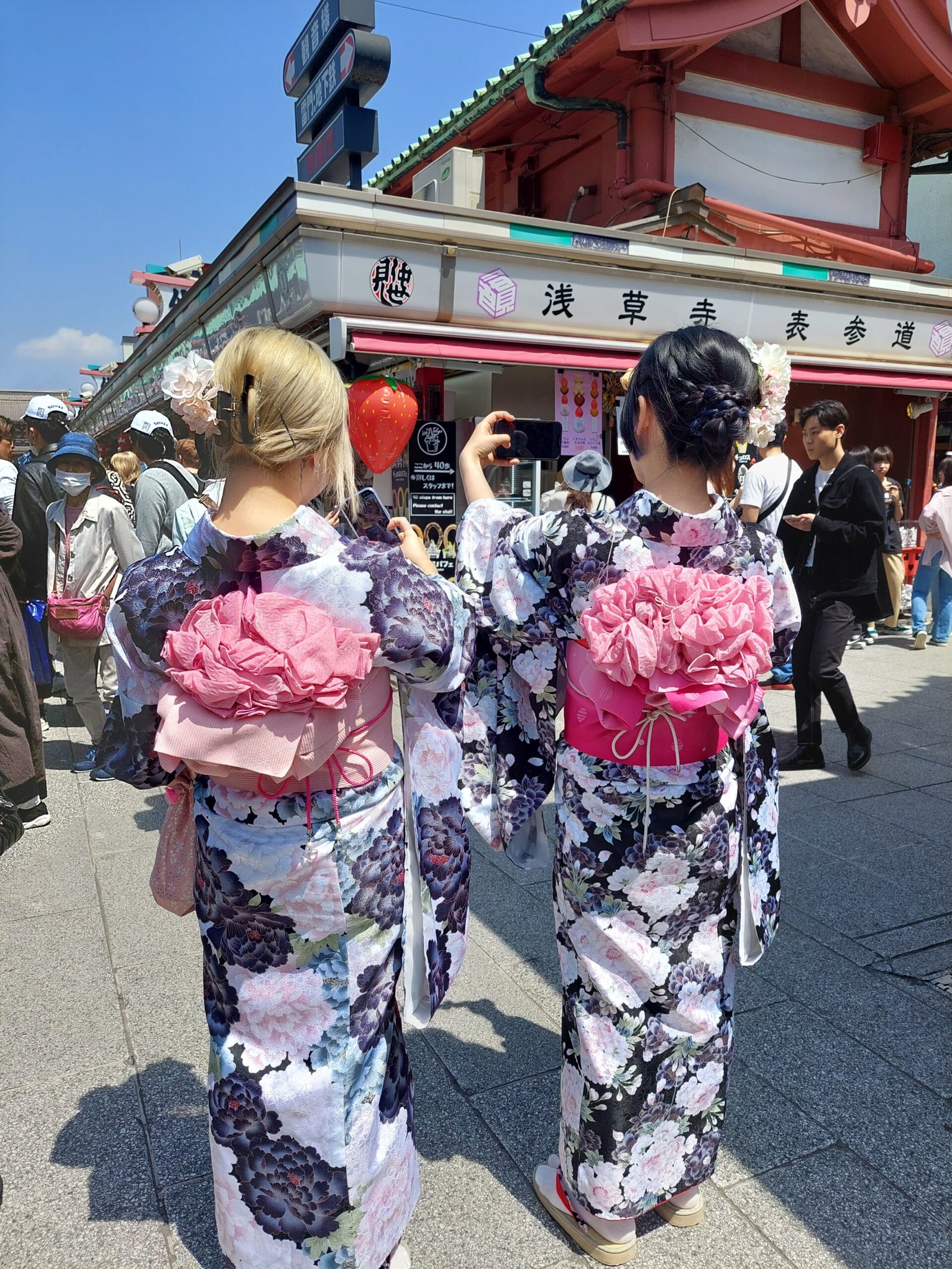
The next day we went to the Asakusa area first. From our apartment, it was easy to get there by changing the metro line only once. This area has preserved the old traditional Japanese atmosphere better than the rest of Tokyo. It was very lively, with small stalls lining the streets selling traditional Japanese costumes, objects and jewellery. There were also a number of stalls selling local snacks, both sweet and savoury, along the streets. Senso-ji Buddhist temple was the first place we visited in the area. This temple is the oldest in Tokyo, and therefore the most important. A lot of local women in kimonos were walking around, taking pictures of themselves. They were happy to pose for tourists too. On our way out, we bought some dumplings for a snack from a little stall outside the temple area. The children bought dumplings filled with chocolate, while the adults tried a savoury dumpling with a filling called monja.

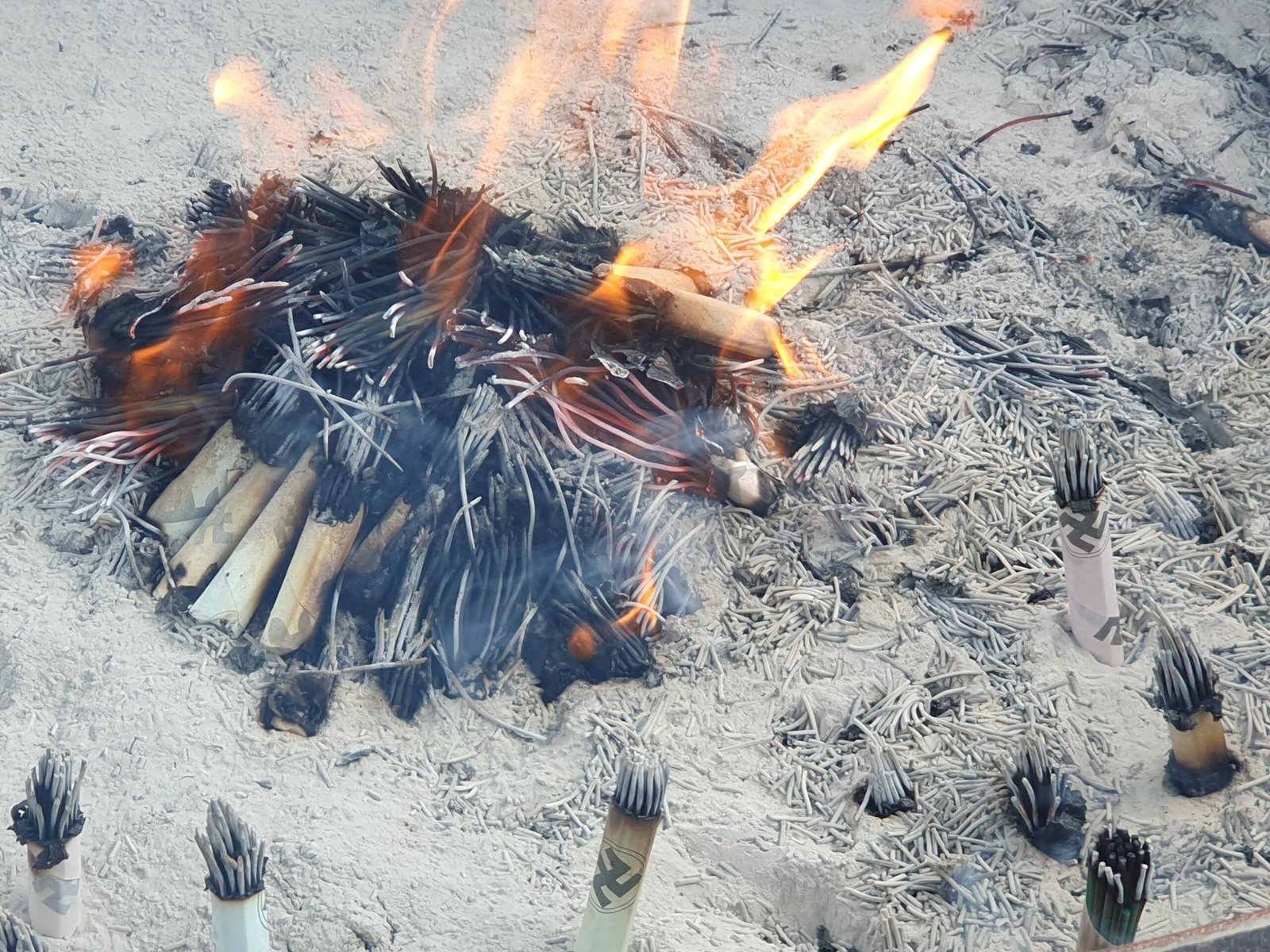
Incense sticks could be bought at a kiosk in the temple area. An employee was on hand to make sure they burned properly.
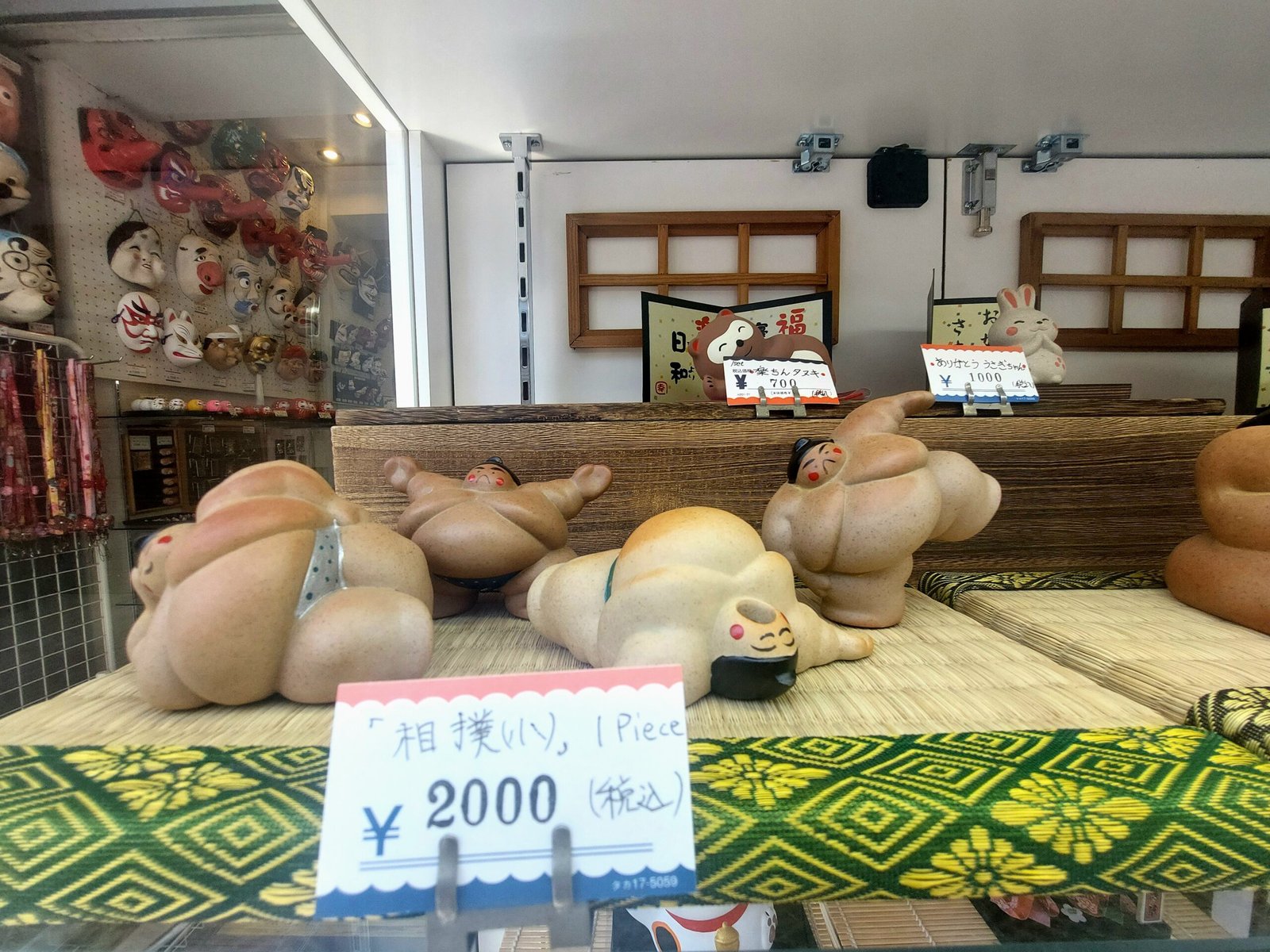
These sumo wrestler statues were for sale.
Instead of sumo wrestlers, we bought some savoury balls.
These sandals stayed on the shelf.

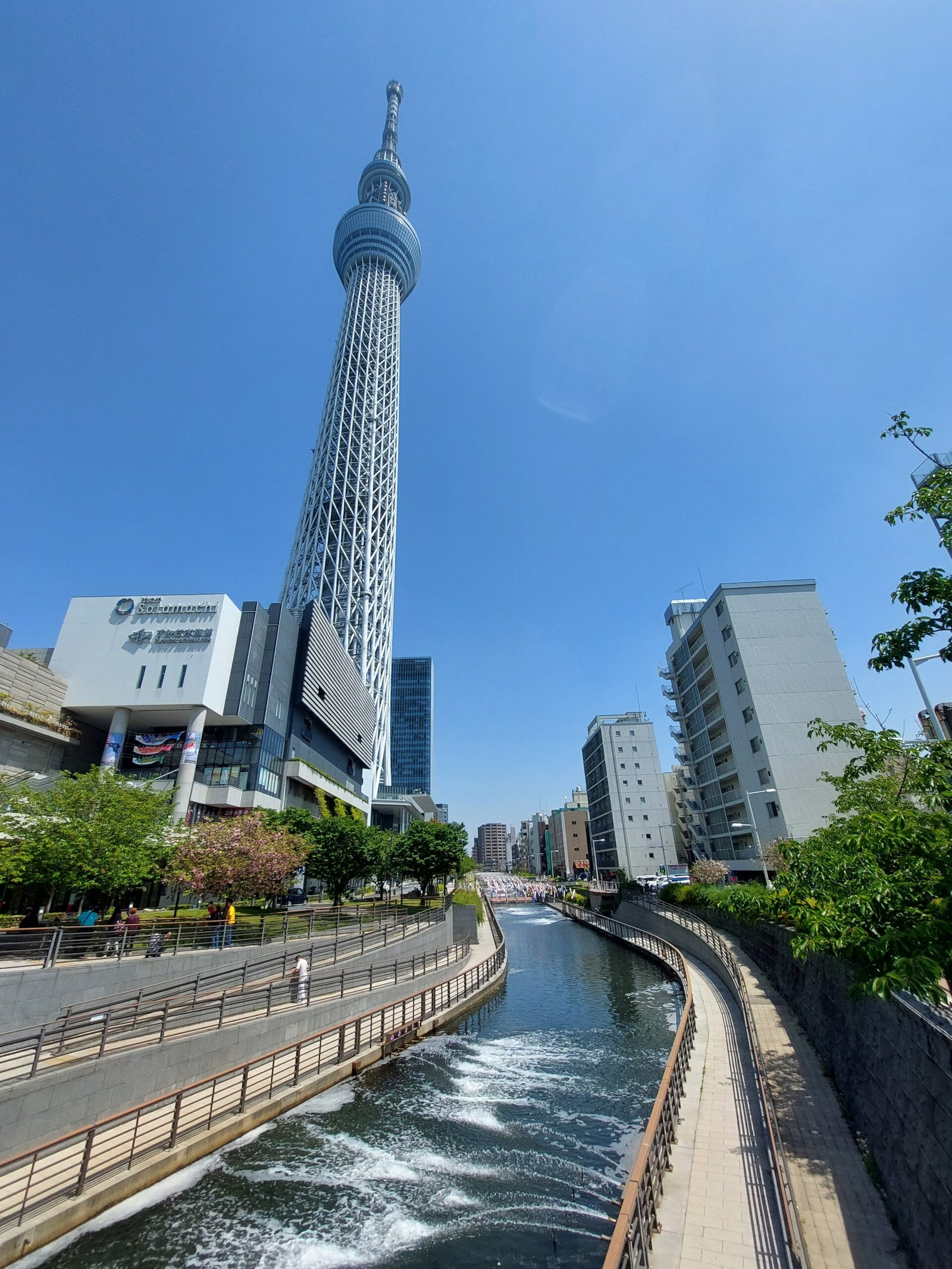
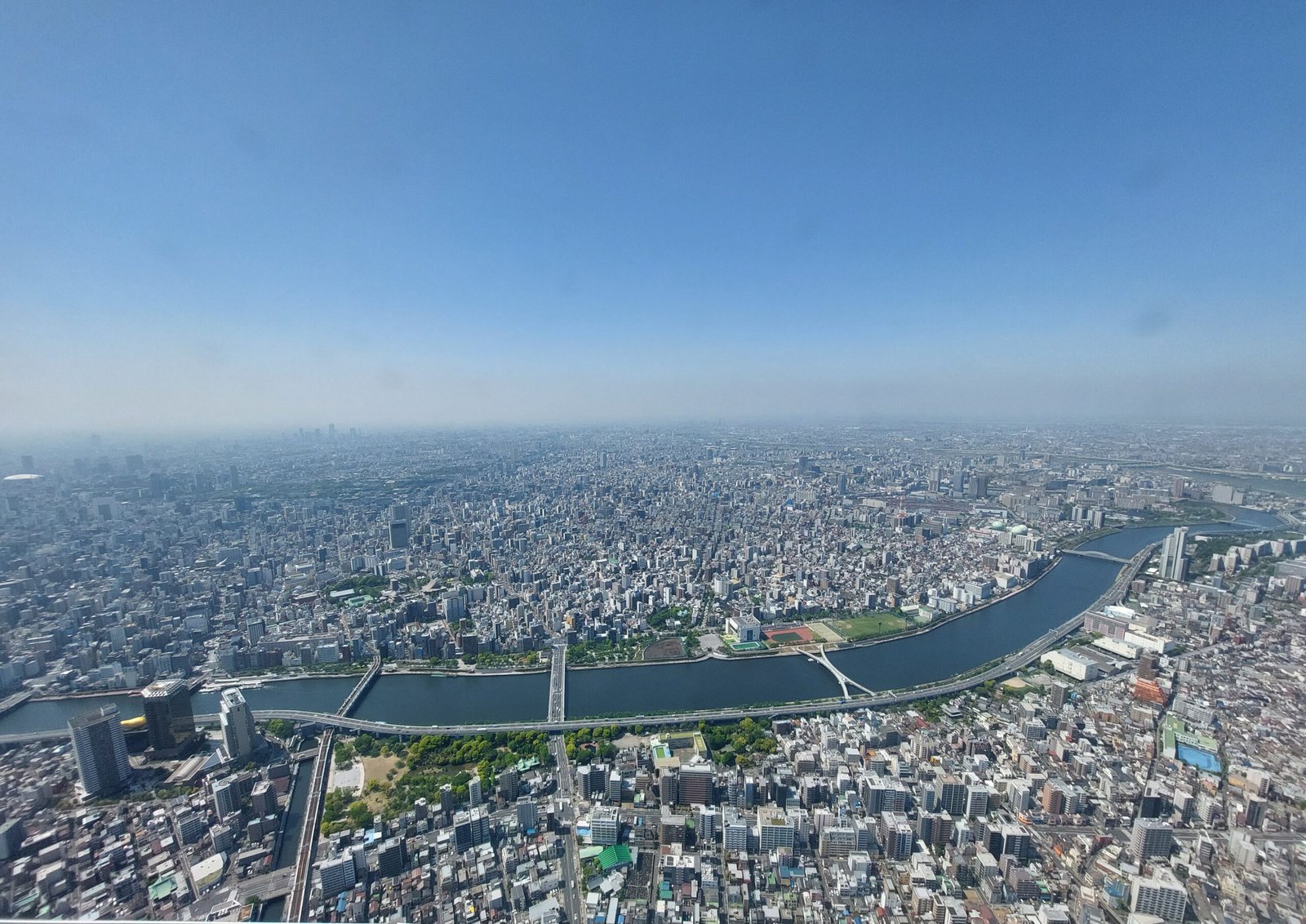
Since Tokyo’s Sky Tree television and observation tower was close to the Senso-ji temple, we decided to walk there next. This 634m high tower has a viewing platform at 450m. We bought tickets and took the lift first to 350m in fifty seconds. From there we took another lift up another hundred metres. The views from the tower were stunning. From a bird’s eye view, it was easy to see how huge the city really is.

Tokyo is huge. The city stretches as far as the eye can see in every direction.

When we came back from the tower, we went to the food court of the shopping centre next to the tower. There were all sorts of goodies on offer at very reasonable prices. Even though we are in Japan, we decided to eat Thai food this time. We had been prepared for the fact that eating in restaurants, or food in shops would be expensive, but we were wrong. These meals were less than a tenner each, and even cheaper food is available in small street side kitchens. It’s also very safe to eat almost anywhere, as everything is really clean and you don’t have to worry about Montezuma’s Revenge, the traveller’s diarrhea. However, when eating in these street kitchens, it can be difficult to interpret the menu, as they are mostly in Japanese only.

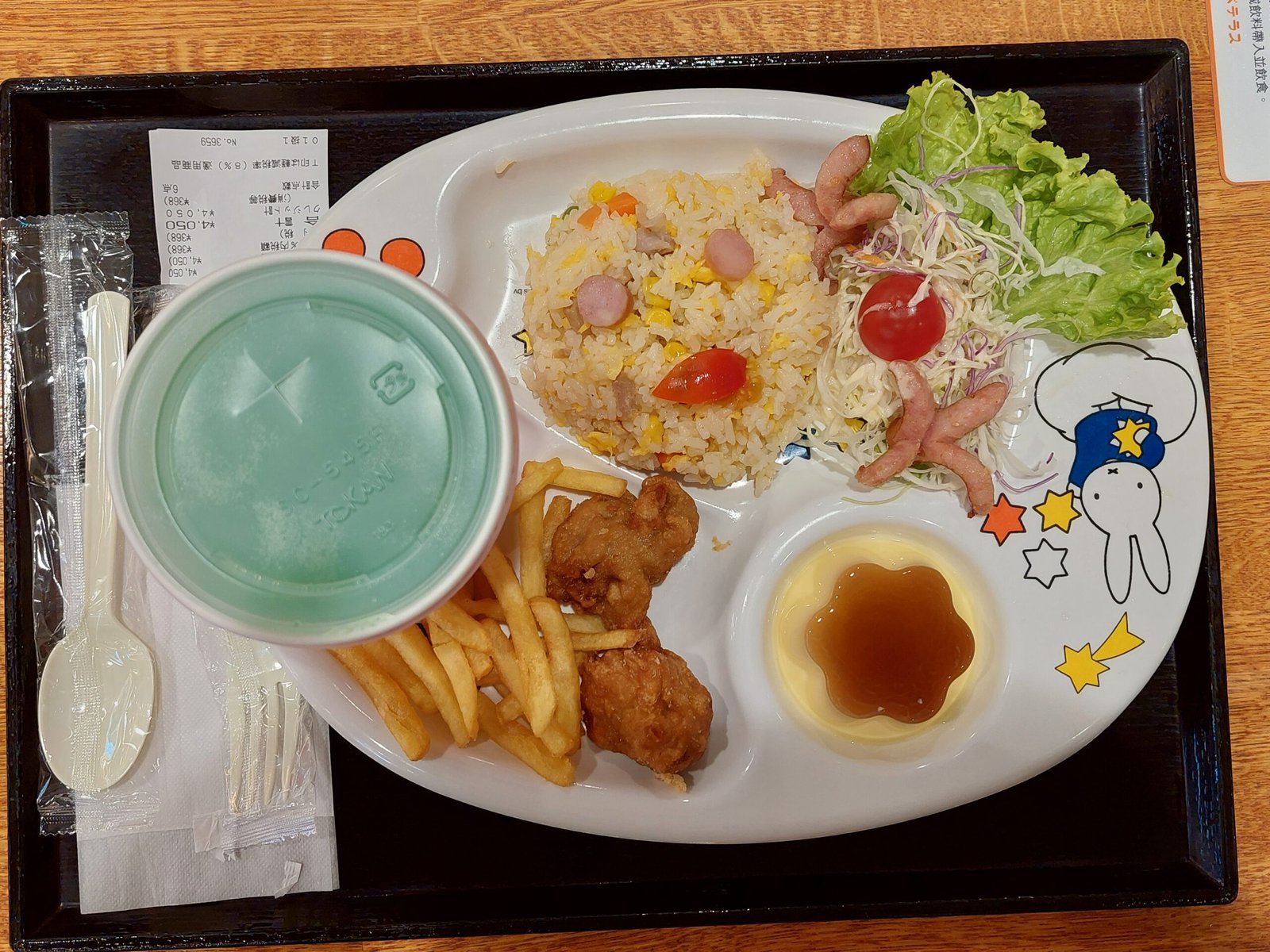
On the children's meals, the food was arranged to form a smiley face.
We couldn't figure out if the plastic plexiglass in the middle of the table was a remnant of the coronavirus pandemic.

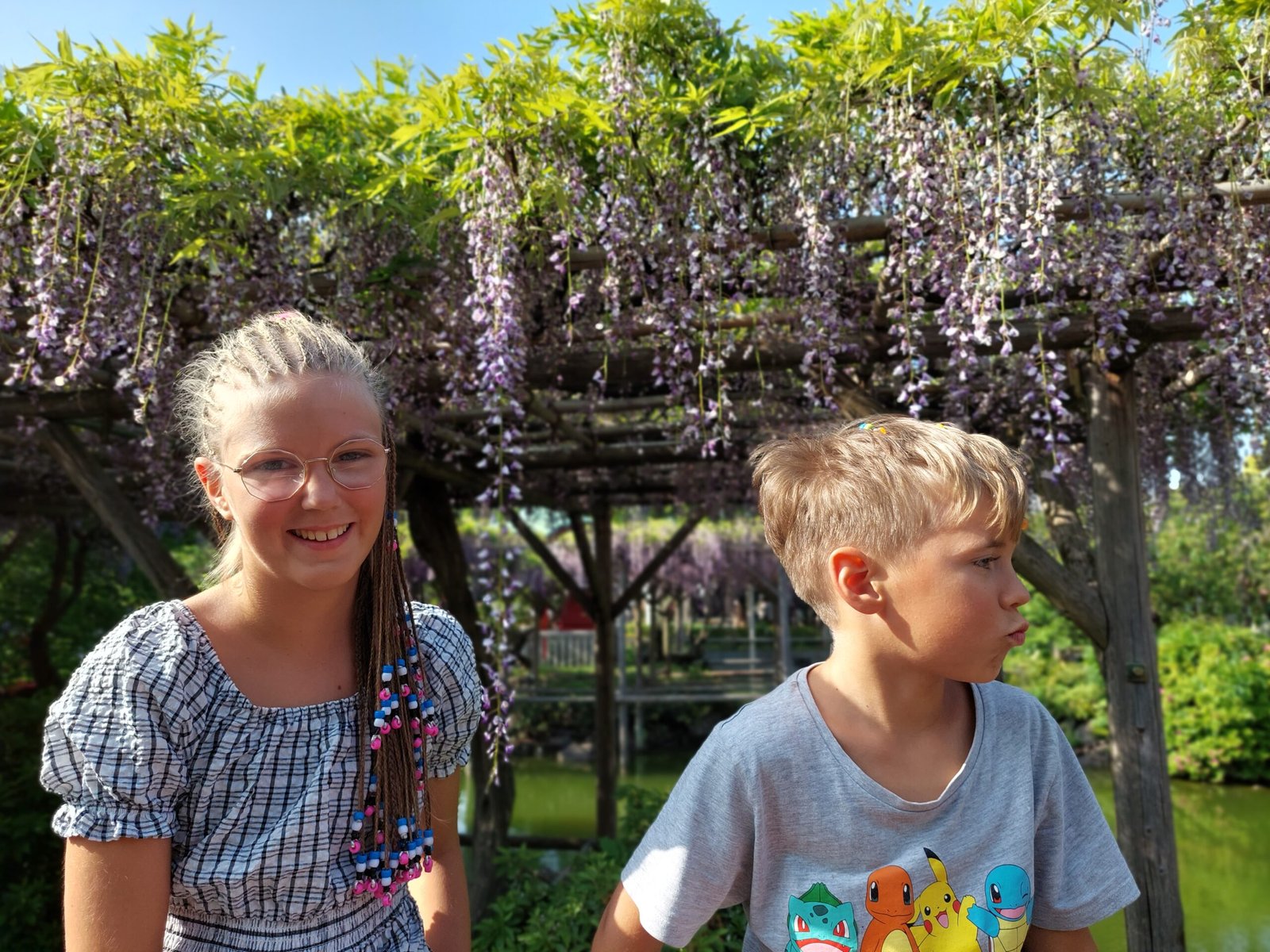
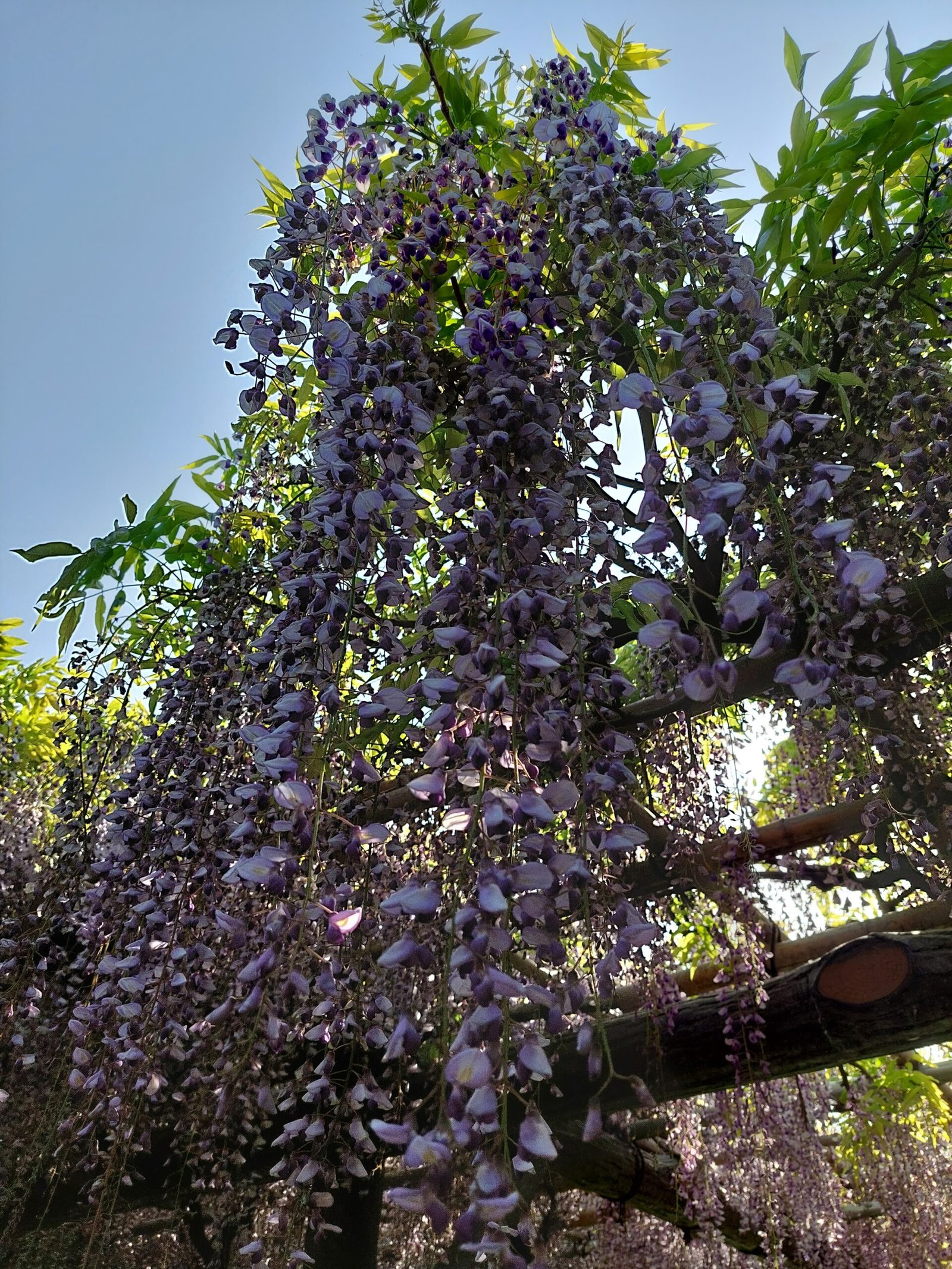
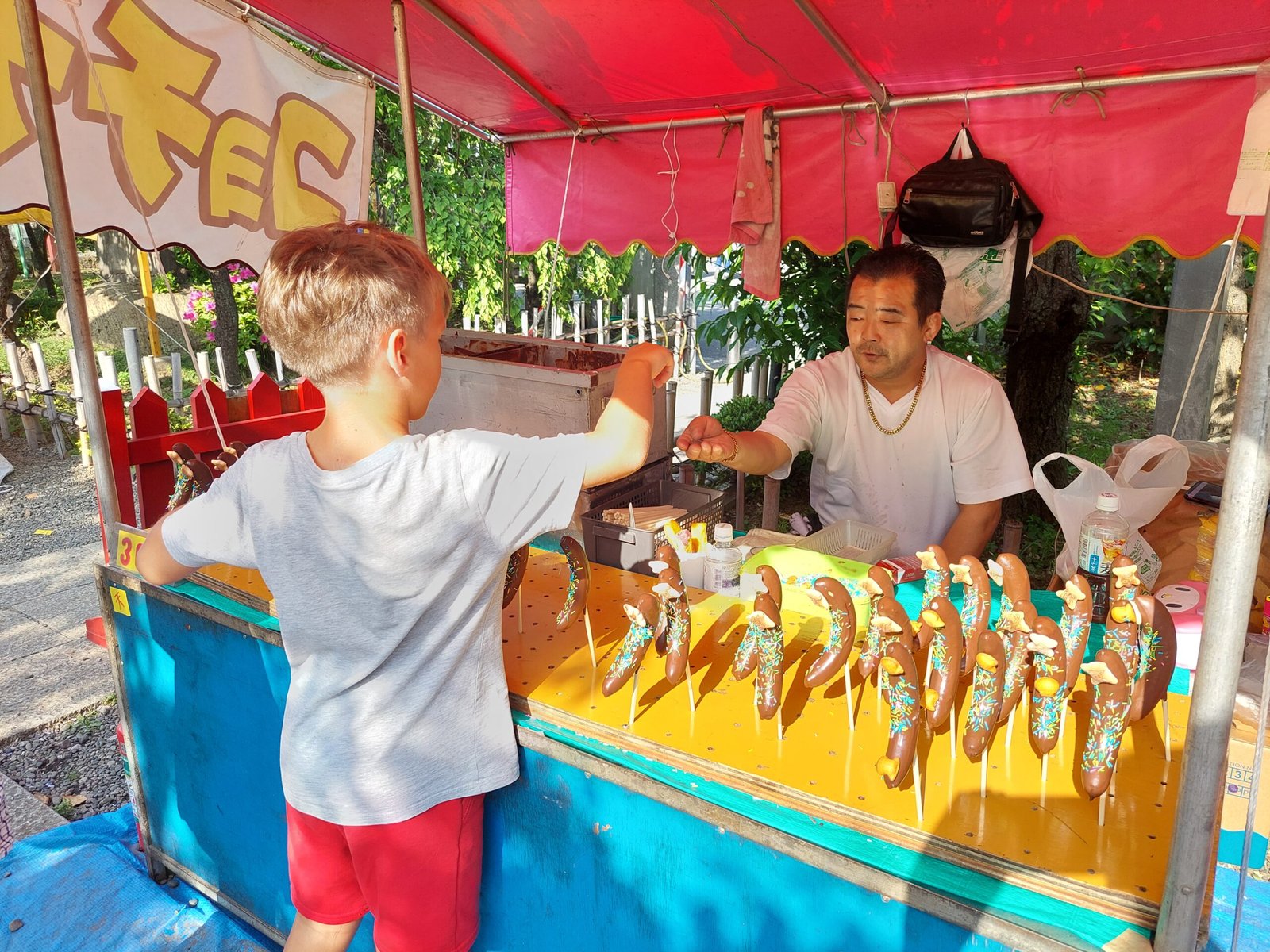
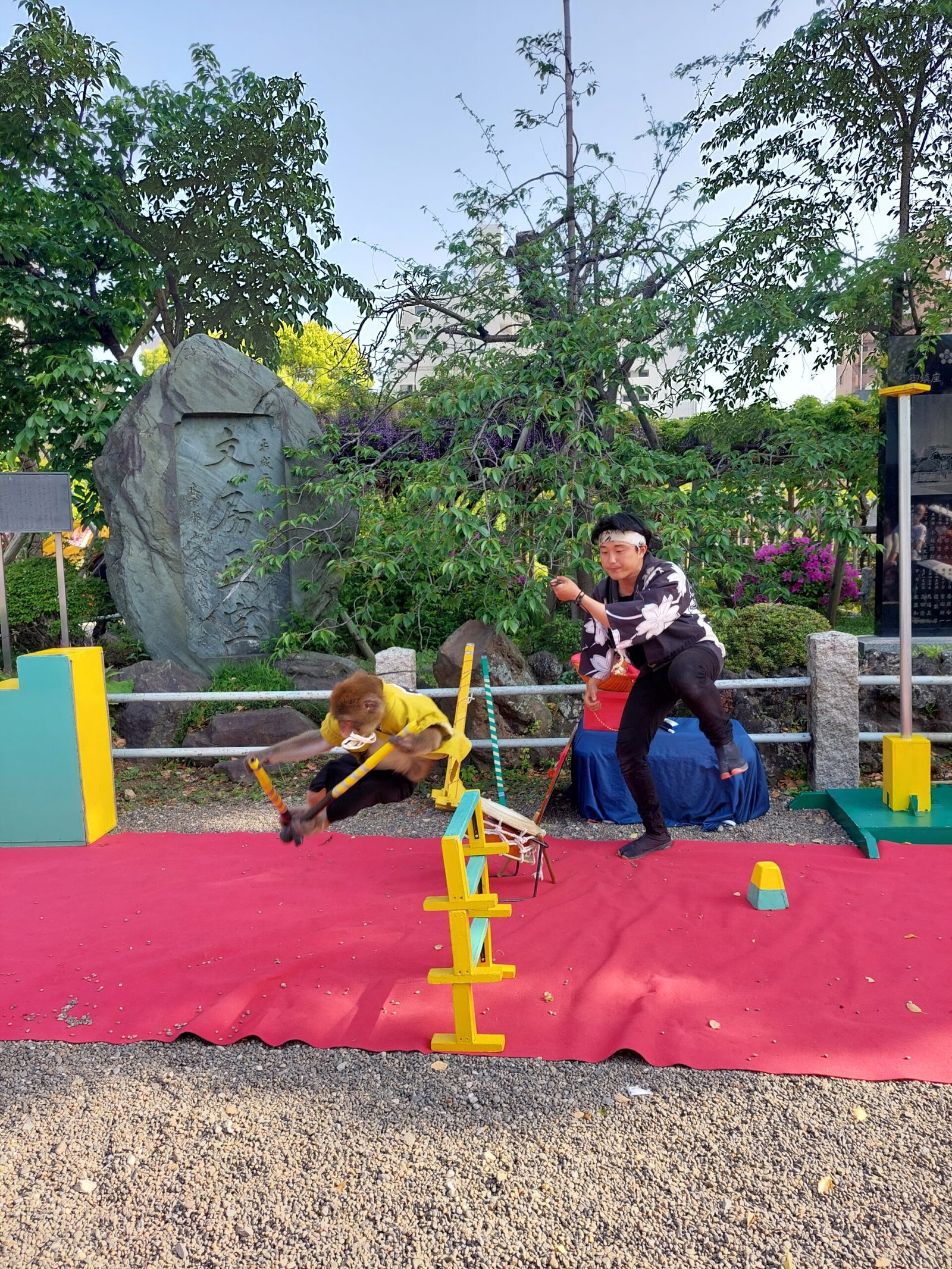
After our lunch break, we went to Kameido Tenji shinto shrine. The reason for going there was not so much the shrine itself, but the wisteria that bloomed in its grounds. As we were late for the cherry blossom bloom, this was our second choice for flower spotting. The children were not much interested in the flowers, but instead they spotted the chocolate-covered bananas for sale in the area. The next most interesting thing for the kids was the man performing with his monkey.

There are apparently about 50 wisteria trees growing in the area.
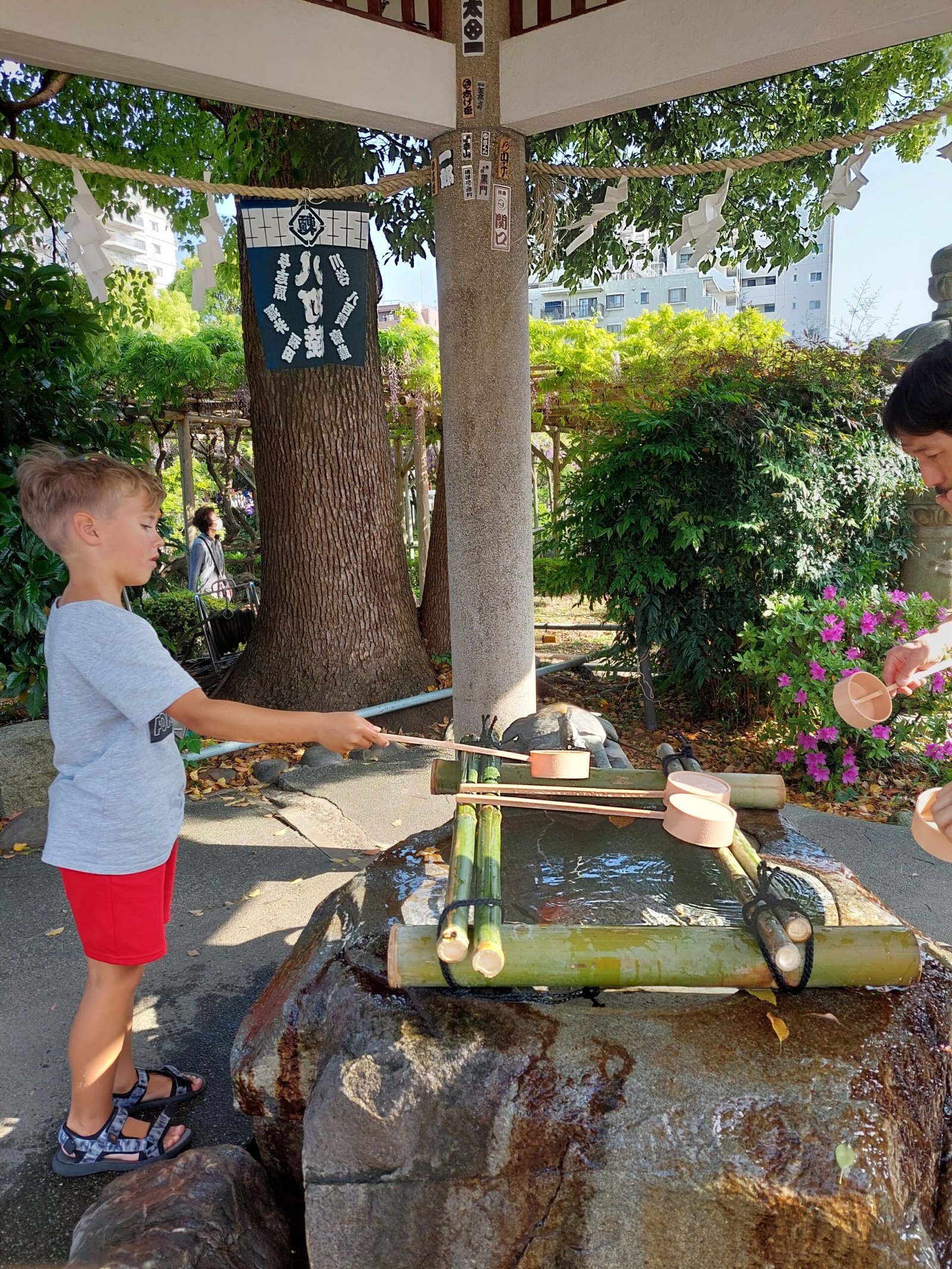
Before entering the shrine, we had to wash our hands with a ladle. The water was taken from a "turtle spring."
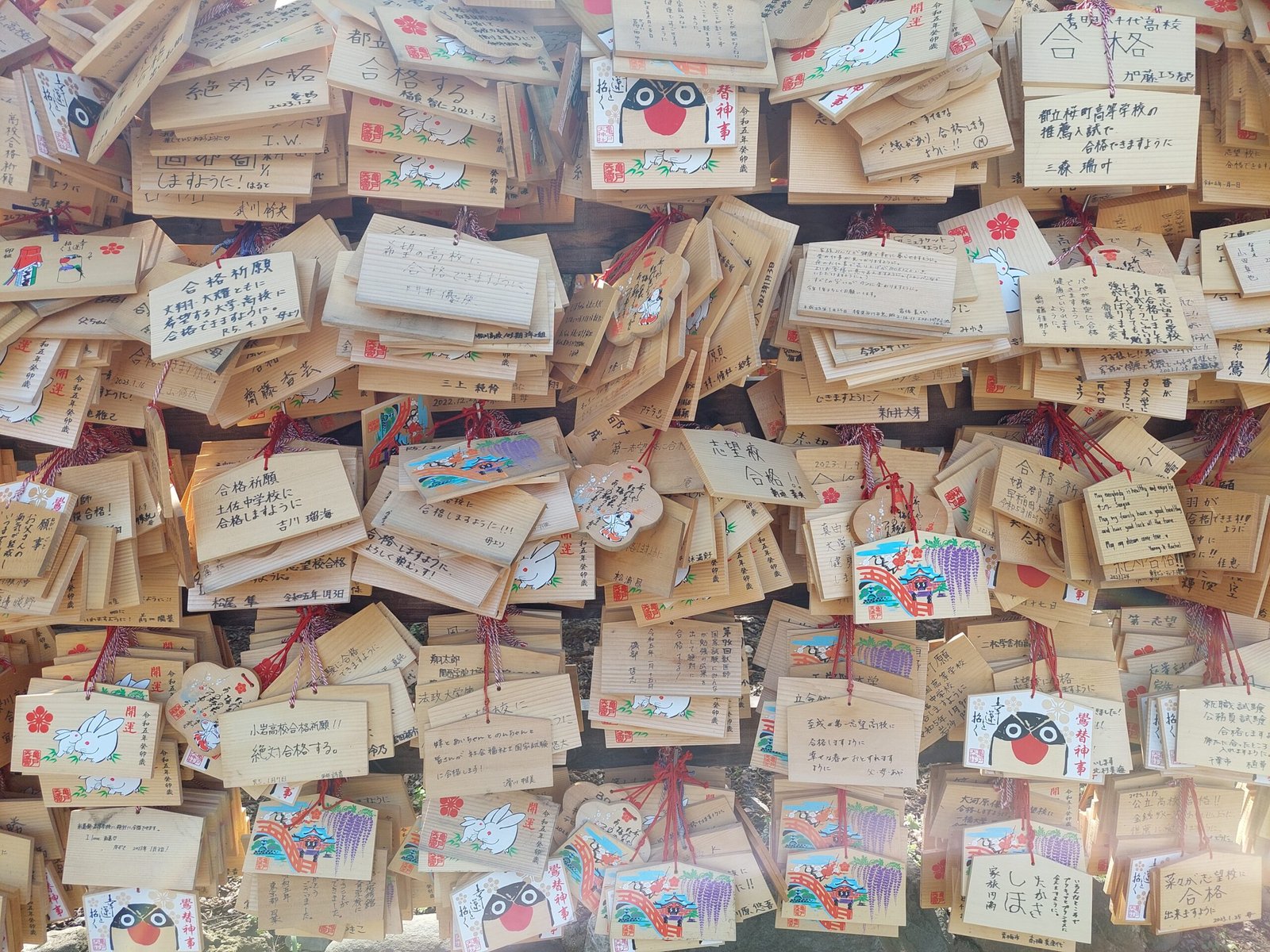
In front of the shrine, there were wishes and prayers written on wooden tiles.
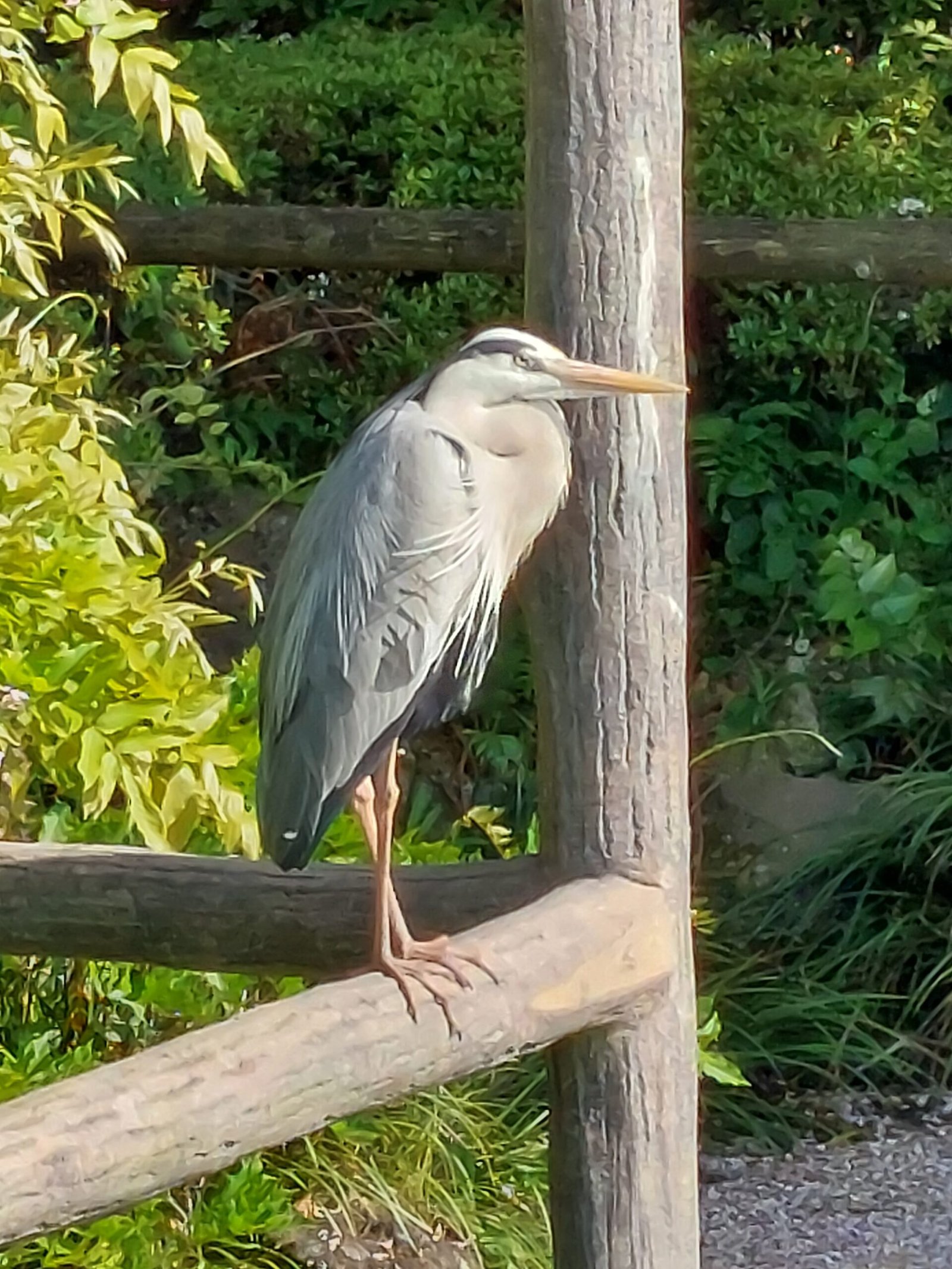
This bird also lived in the area.
One chocolate coated banana cost 300 yen, or €2.
A monkey jumping over obstacles.

On Friday we went to the Ueno Zoo. It was located in the Ueno Park, so we got to see the actual park area at the same time. Since we were about two weeks late for the cherry blossom, we missed Ueno Sakura this time, which is apparently stunning. Before going to the park, however, we went to Ueno train station to buy ourselves a week-long Japan Rail Pass. This was the cheapest solution for getting from one city to another, although it still cost quite a bit. The passes for two adults and two children cost around 100 000 yen in total, about 650€.

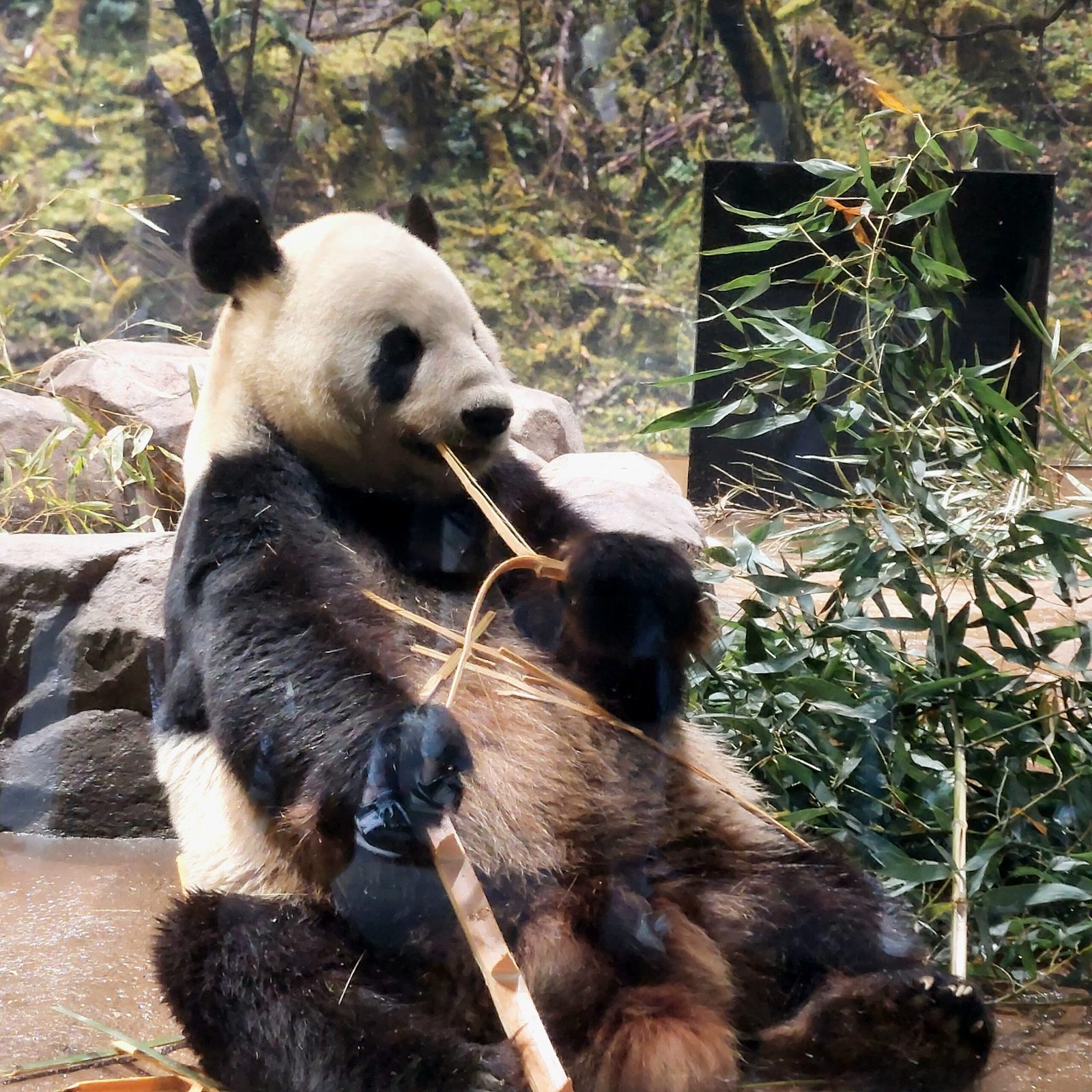
The zoo was really big, so we walked several kilometres to see the animals. The children’s favourites were pandas, polar bears, small pygmy hippos and gorillas. We happened to be there just in time for the polar bears’ feeding time, so we saw one of the polar bears diving into the water to catch the fish and pieces of meat thrown to him. The zoo was a great place to see all the animals there. Unfortunately, of course, this meant that the enclosures were quite small for many of the animals. As for seeing the pandas, we were lucky as there was no queue at all when we went to see them. About a couple of hours later, the queue to see the pandas was already 45 minutes.

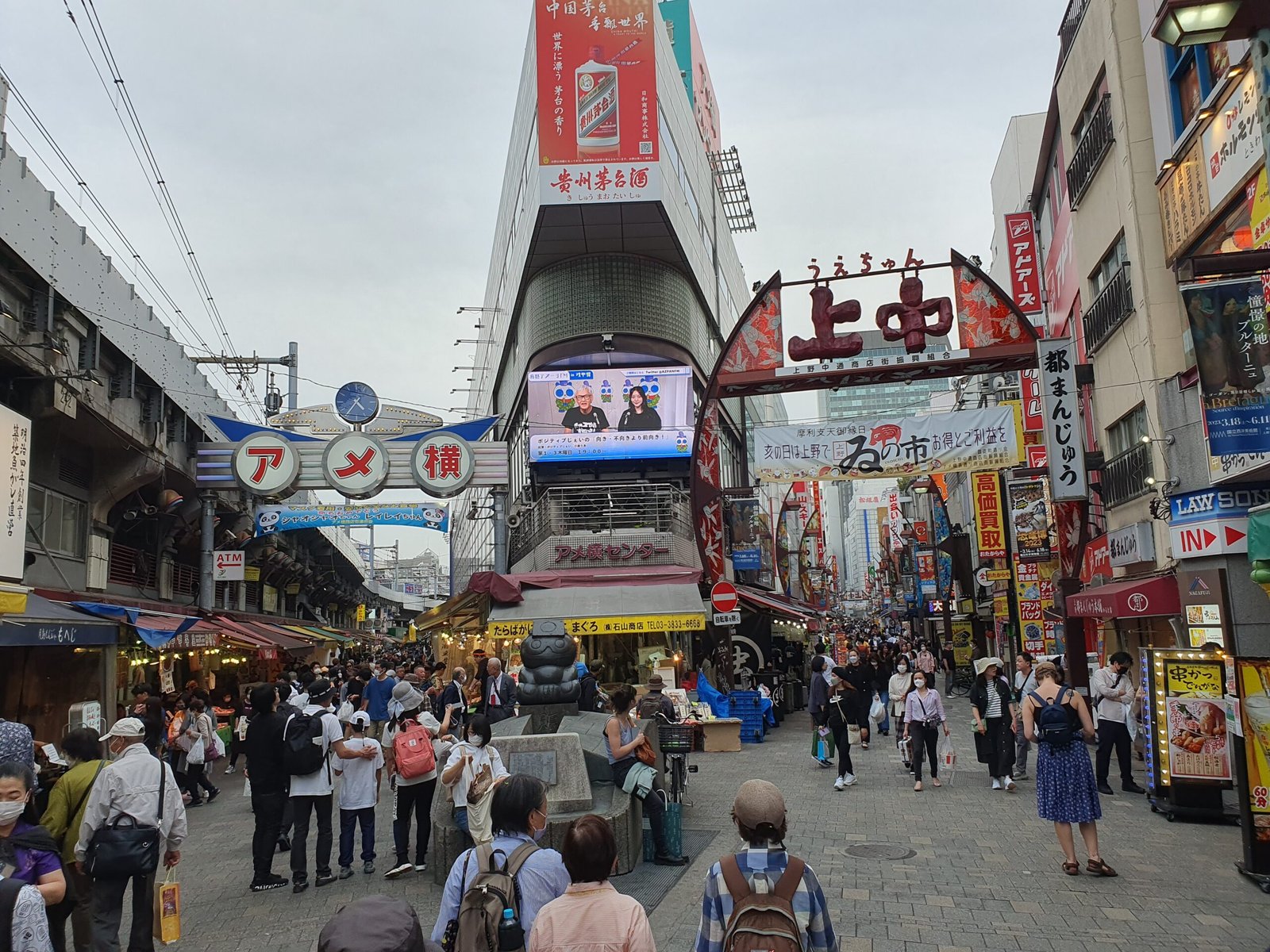
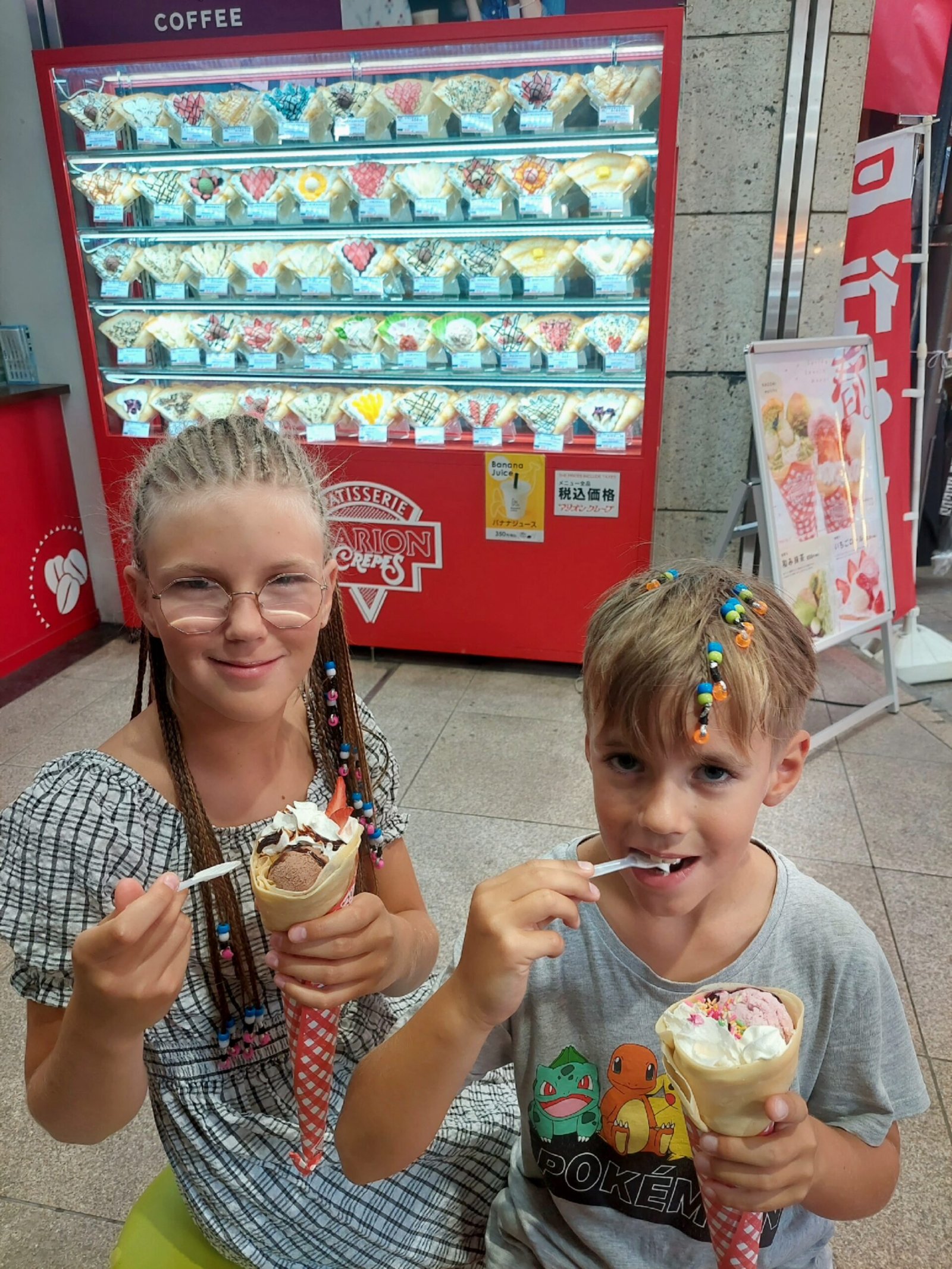
There was a quirky area called Ameyoko next to Ueno Park. There were lots of small shops and restaurants there. We briefly popped in there before taking the metro back to the apartment. The kids spotted the stuffed crepes sold in a little stall, so we bought a couple. This time ordering was easy, as all the different types of crepes with fillings were presented in plastic versions with a number on it outside the stall. So it was easy to just show the number, even though there was no common language. This isn’t the first place we’ve come across these plastic food presentations. There must be a huge factory somewhere producing plastic food for restaurant windows.

Ameyoko's two "shopping streets."
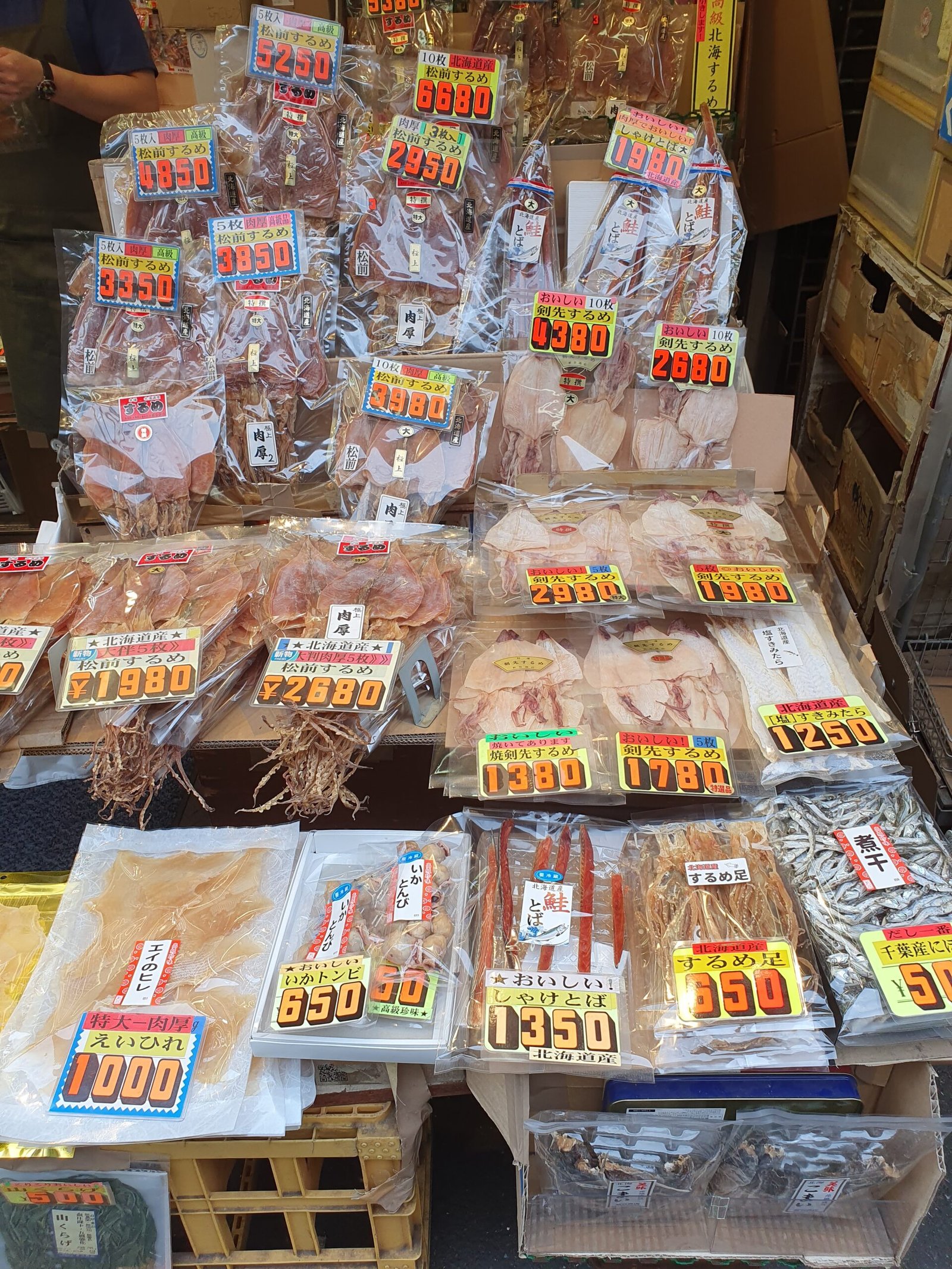
Would you like some dried squid?
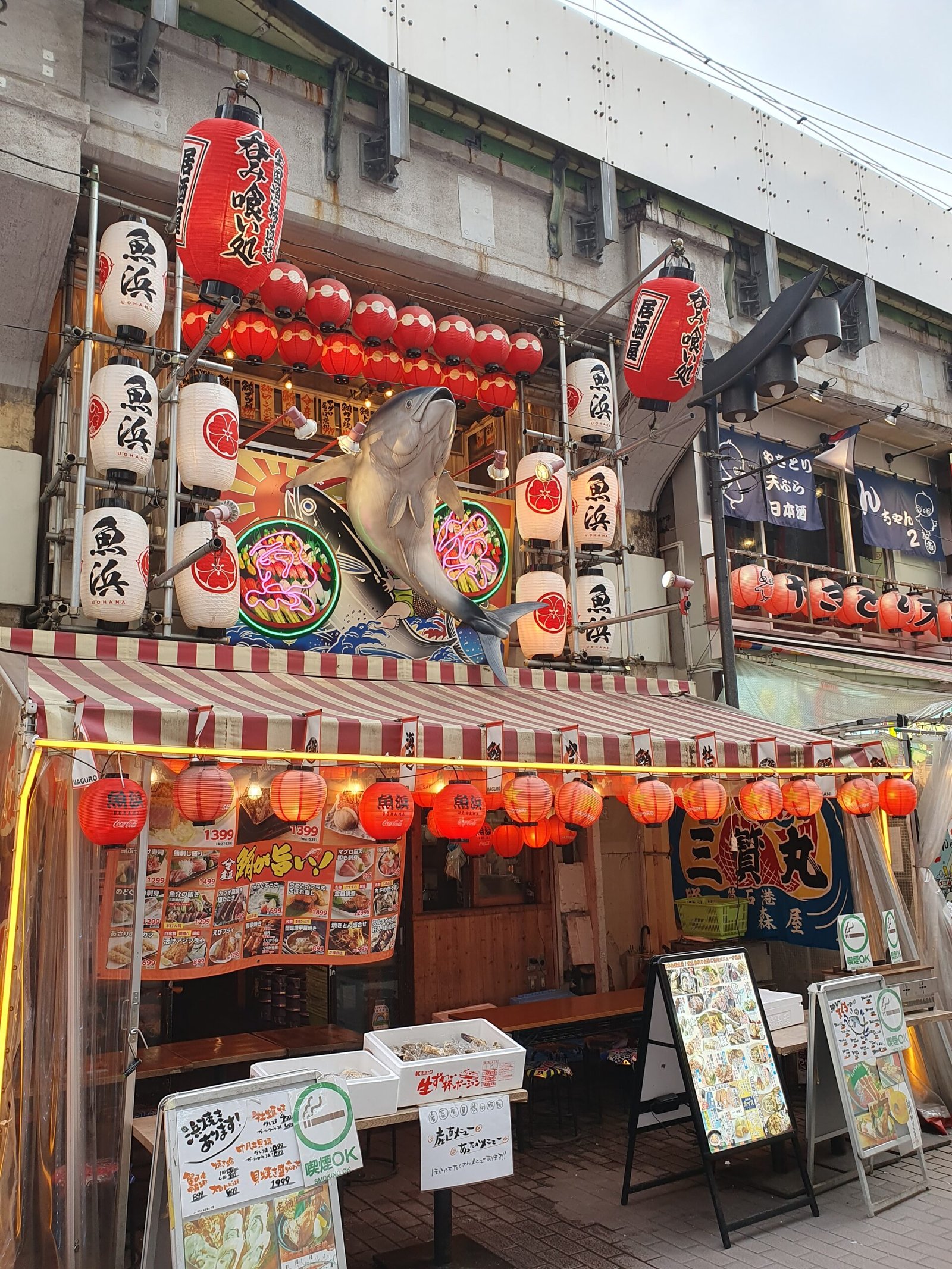
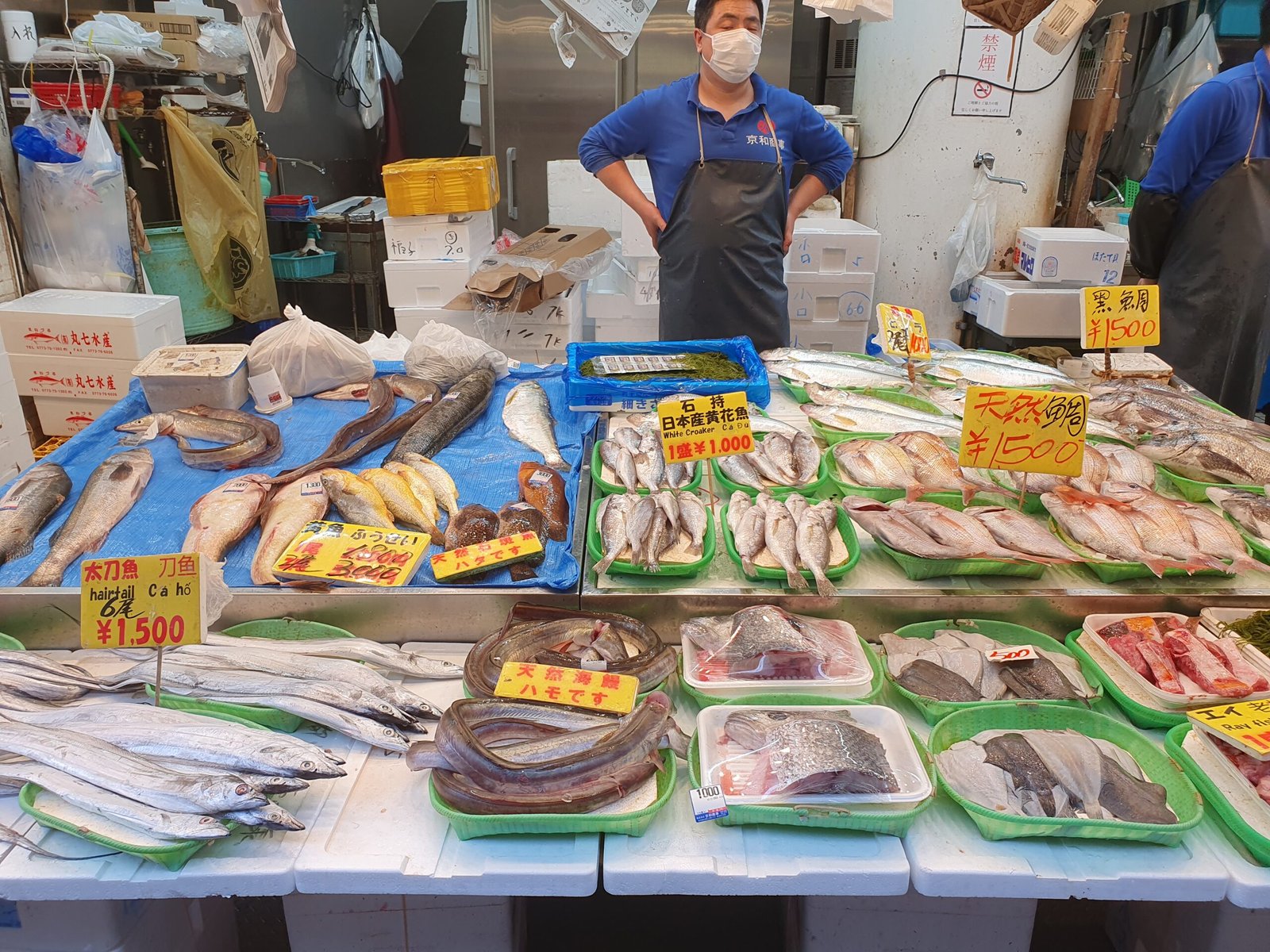
There was no doubt that this was a fish restaurant.
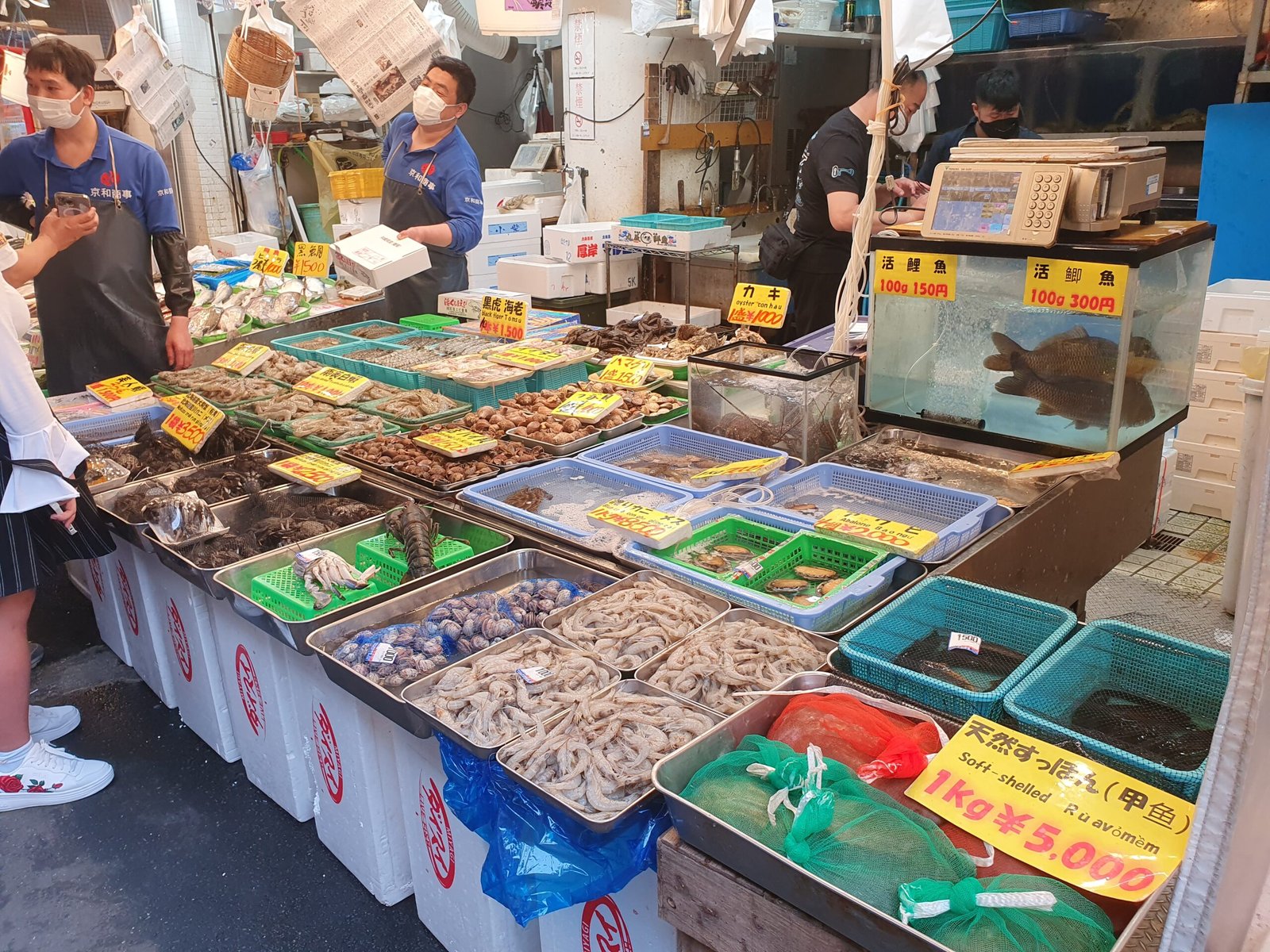
More seafood
Part of a plastic menu can be seen behind the children.

We had set off at ten in the morning, but somehow again it was already six o’clock before we were home. Although the metro network here is extensive and fast, the distances are so long that it can easily take a long time to get from one place to another. We stayed at home for a couple of hours before heading out in the evening to explore the restaurants in our local area.

Just in case, we had translated and copied some key words we thought we would need (chicken, spicy and mild) into Japanese using Google Translator. But we didn’t need them, as the menu of the small restaurant we went to had all the dishes written in English. We first tried to enter the restaurant, but one of the staff informed us in Japanese that there was no room for four people. At least that was our assumption, as there were only a couple of seats available. Fortunately, the place also served take-away meals. For these, though, we had to go outside the restaurant to order them from the little hatch and wait outside.
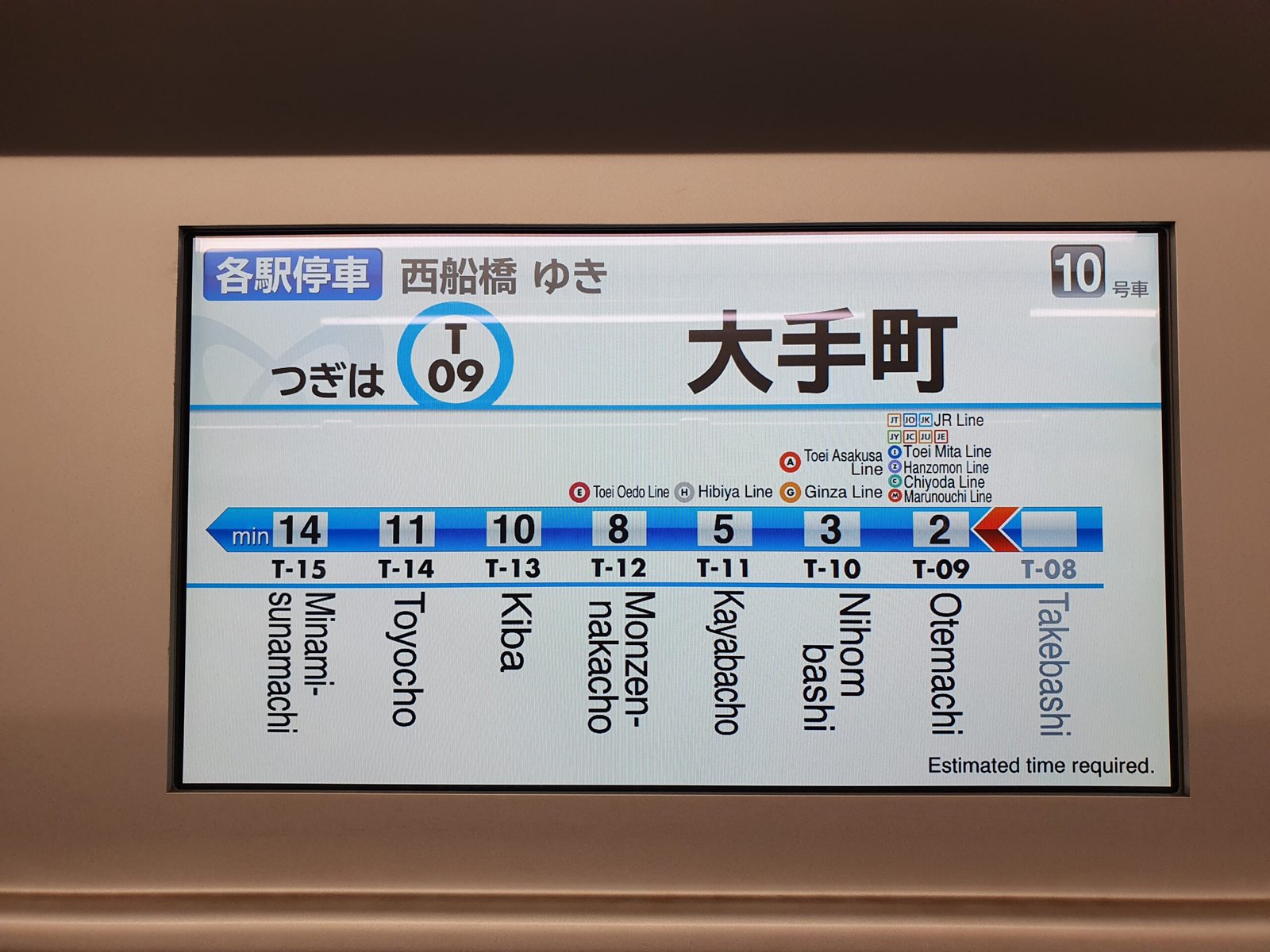
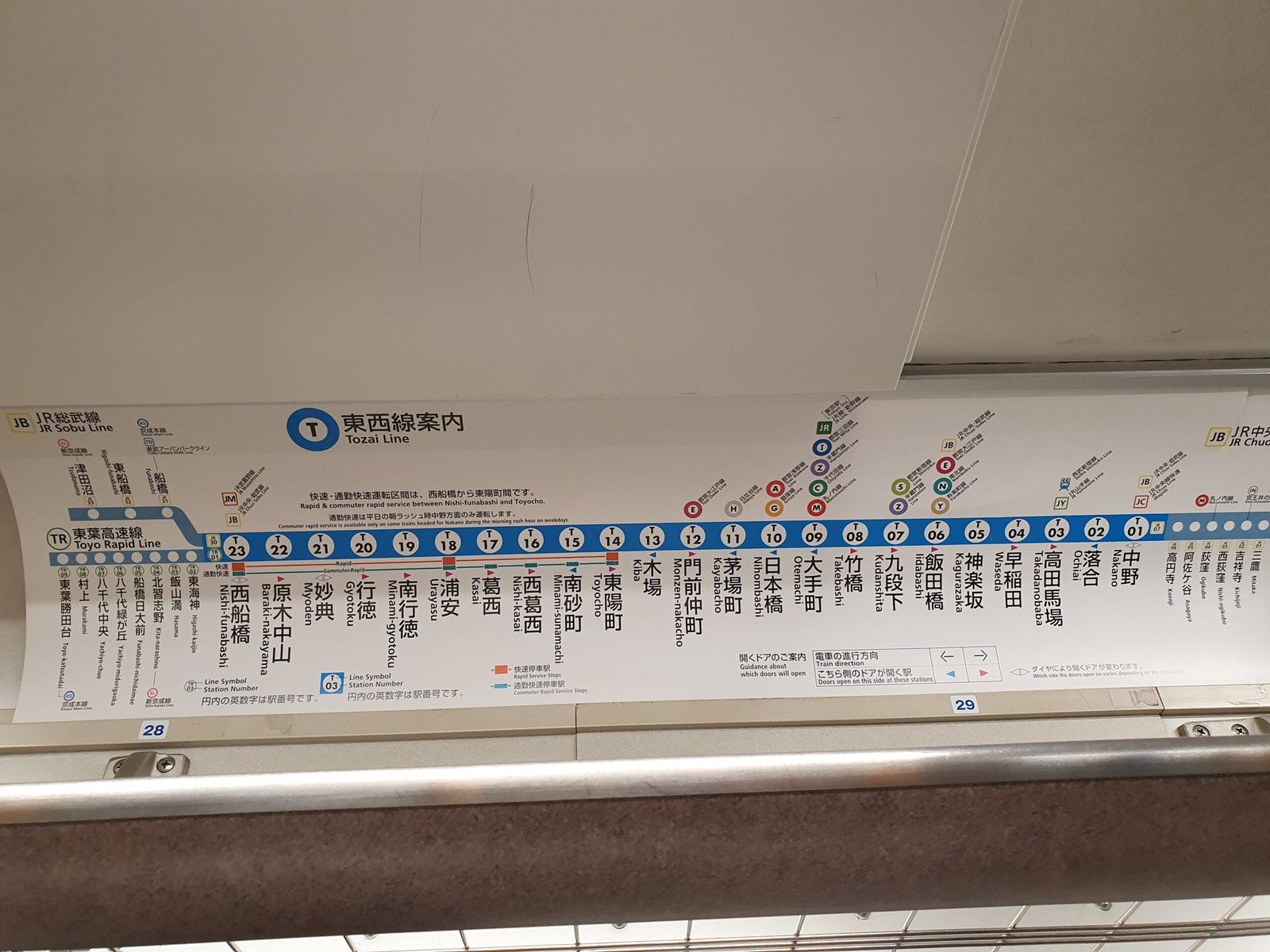
The metro stations are clearly marked.
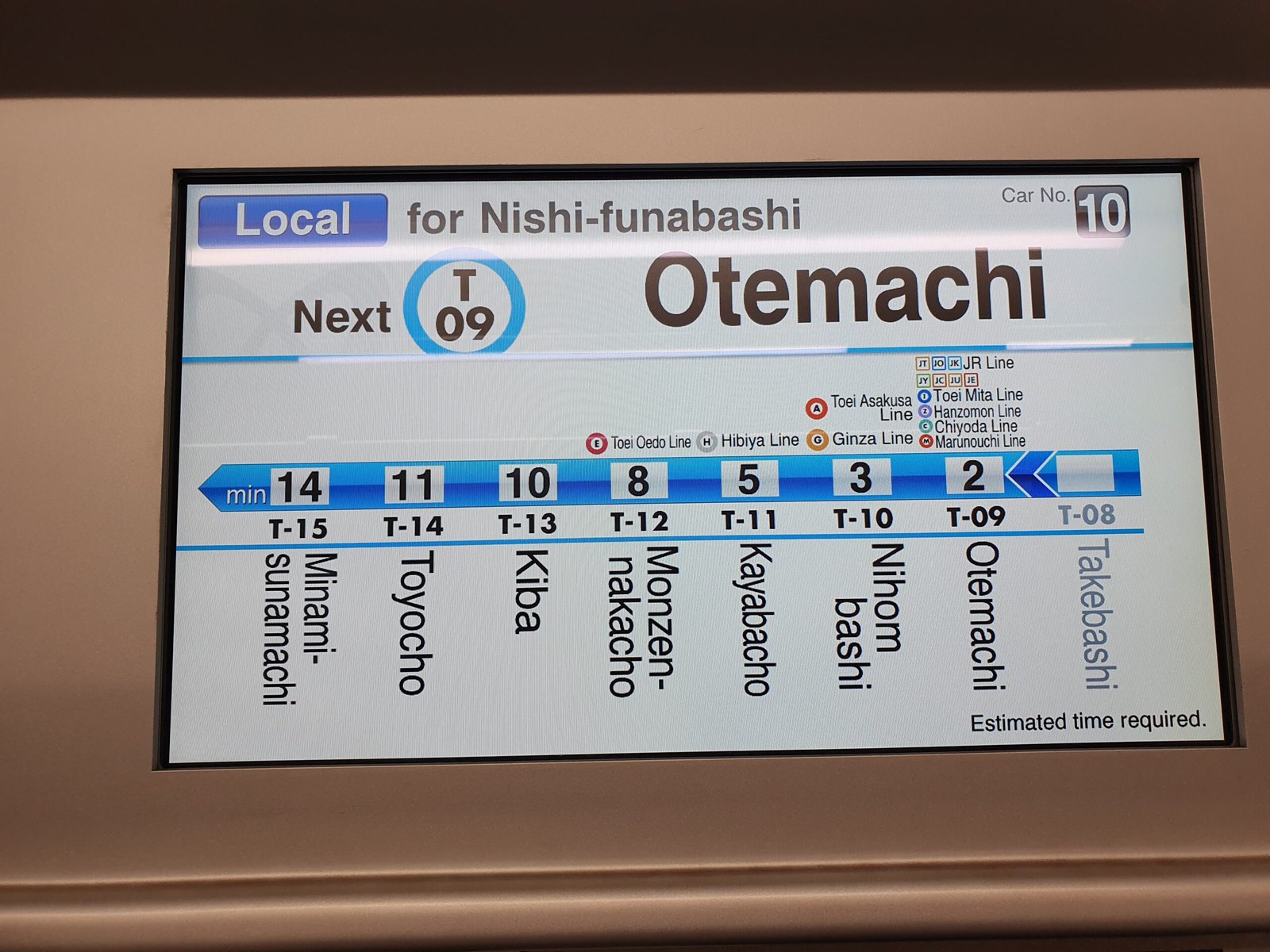
The changing displays show text in two languages.

On Saturday, we were supposed to go shopping for new sandals for Marko and Risto. We first took the metro to Otemachi station and checked where we could catch the train to Osaka on Monday. It was a wise move to check the route beforehand, because it wouldn’t be nice to find out you’d gone half a kilometre to the wrong direction when carrying the backpacks.

The Otemachi area is also the business district of Tokyo. That’s probably why the streets were so quiet, as it was the weekend. As we continued walking a little further into the Ginza district, there were more people. Still not the million-city crowds we had expected, though. We had thought that since Ginza is a famous shopping district, it would be easy to shop there. It would have been easy if you had wanted to invest your money in Prada, Fendi, Louis Vuitton or Bvlgari for example. But our travel budget didn’t allow us to do that. Even in the cheaper clothing stores, it was a bit of a challenge for a Westerner to find suitable clothing to wear, as they were all advertised as “petit” or “extra small size”. We’ll see what will happen when we finally find a shop selling sandals and Marko tells us he needs a size 46 shoe…

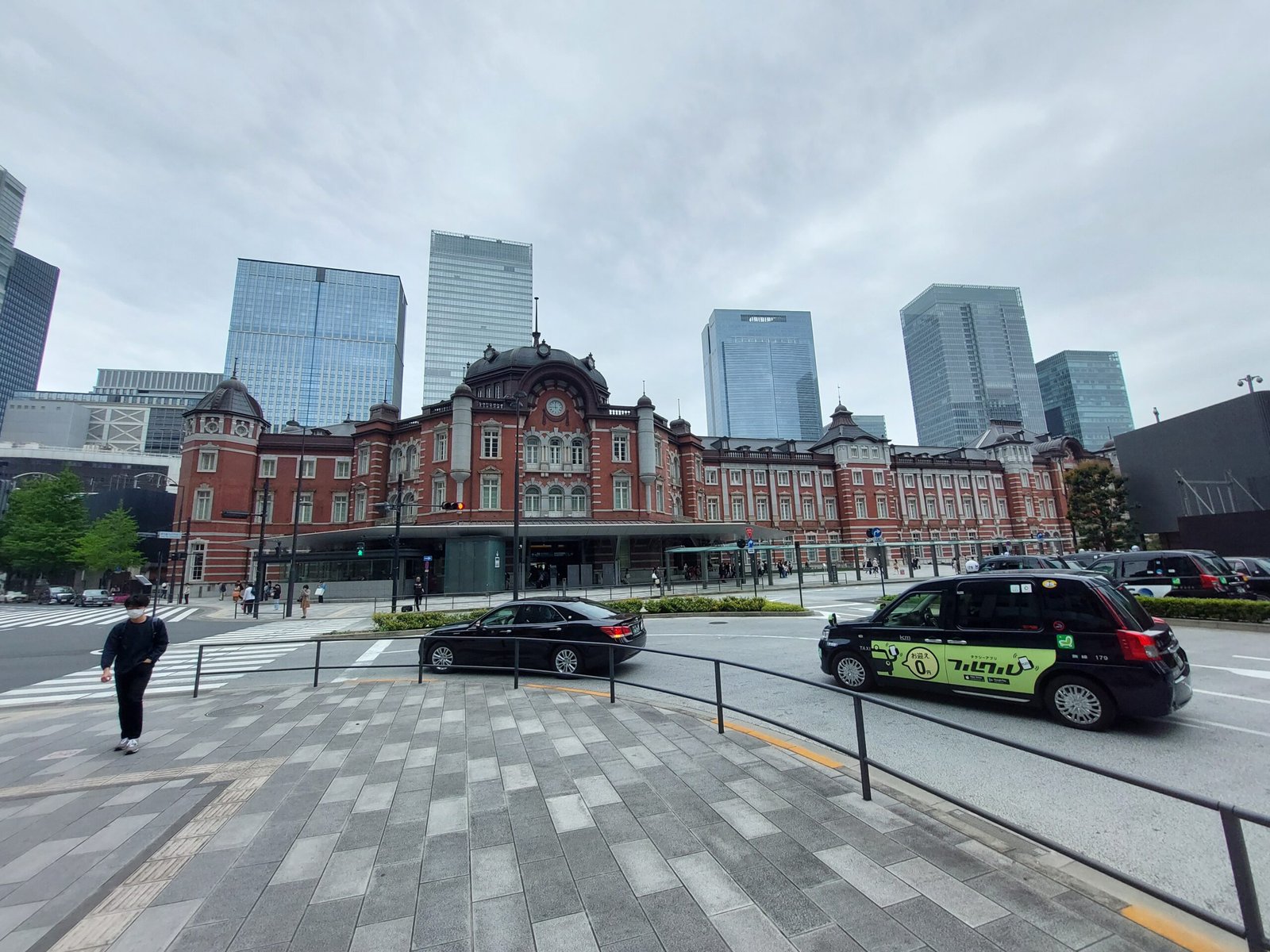
Tokyo Central Station
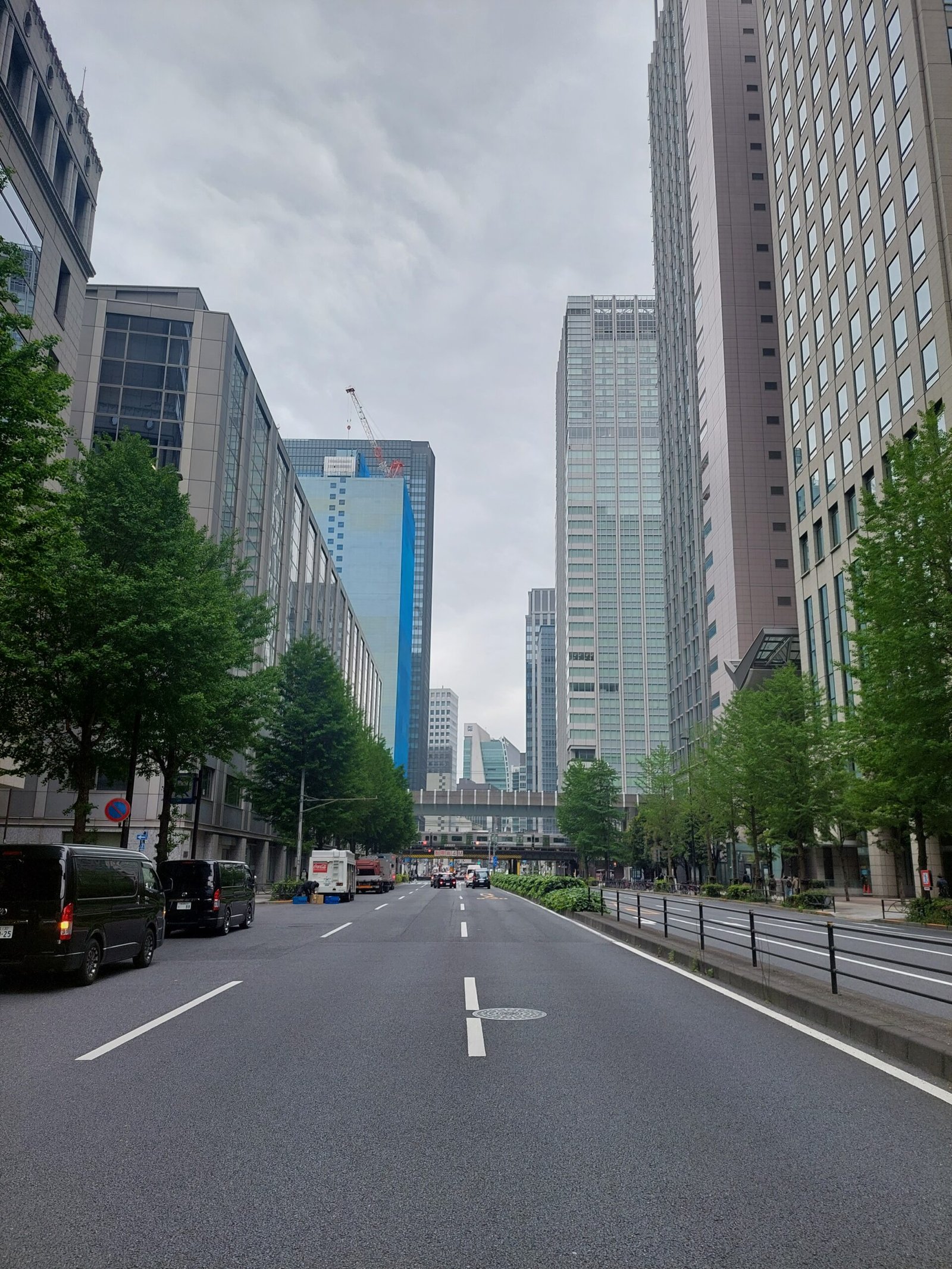
Otemachi was really quiet. It was hard to imagine being in a city of millions.
Even the luxury brand shopping area in Ginza was relatively quiet.

Marko stayed in town to look for the electronics store district while Jaana and the kids headed back to the apartment. Before returning to the apartment, however, an important ritual had to be performed: the purchase of Saturday sweets. That was a bit of a puzzle, as not a single bag of sweets had a word of English on it. In the end we ended up buying several small bags, as they were not expensive. If some of them turned out to be bad, there are still many more bags left to choose from.

On his walk, Marko found a luxury karaoke bar where one could have rented a costume to perform in.
An electronics store had a whole section dedicated to smart toilet seats.
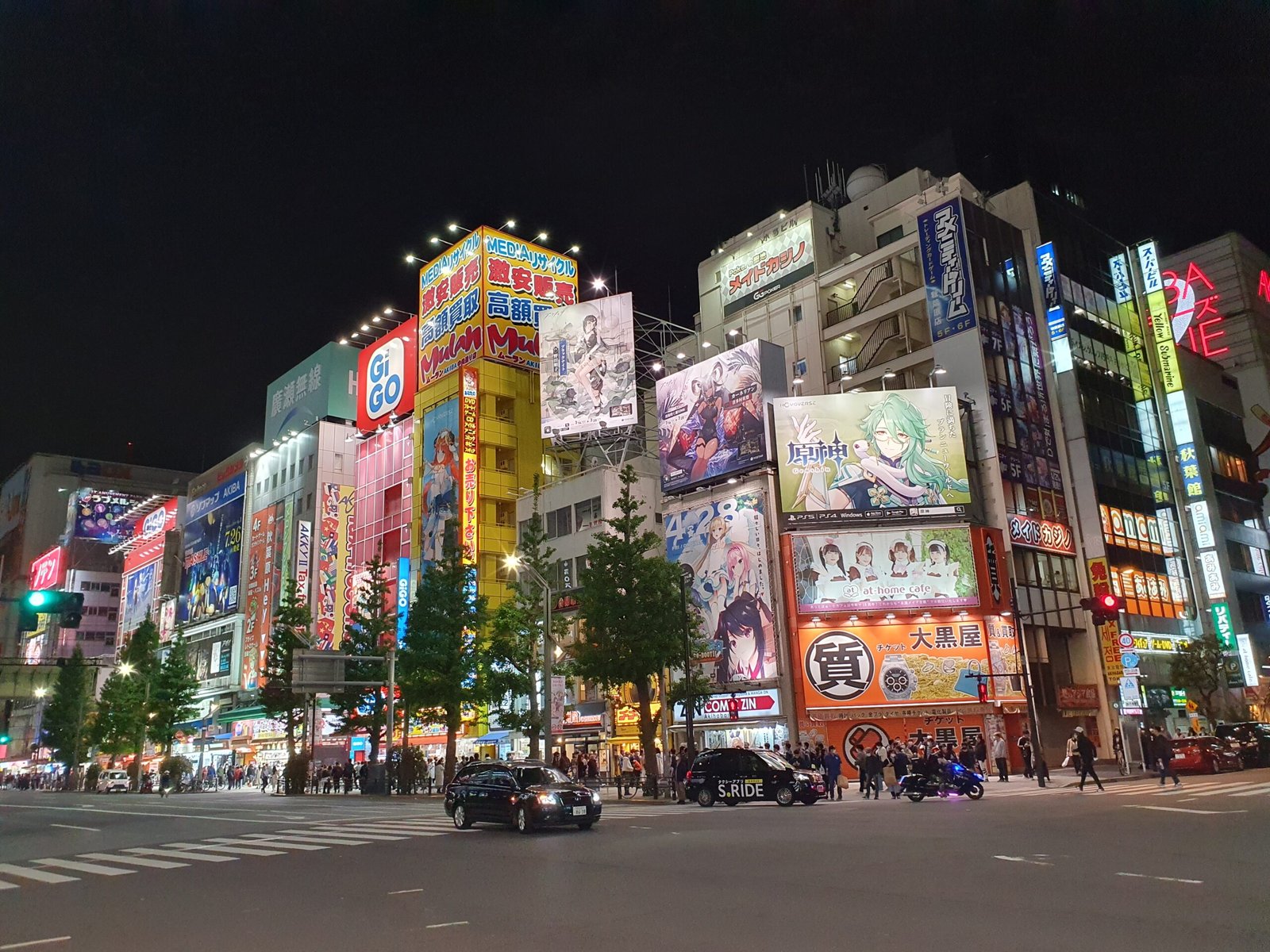
Akihabara – the electronics district
The selection in the shops is very diverse.
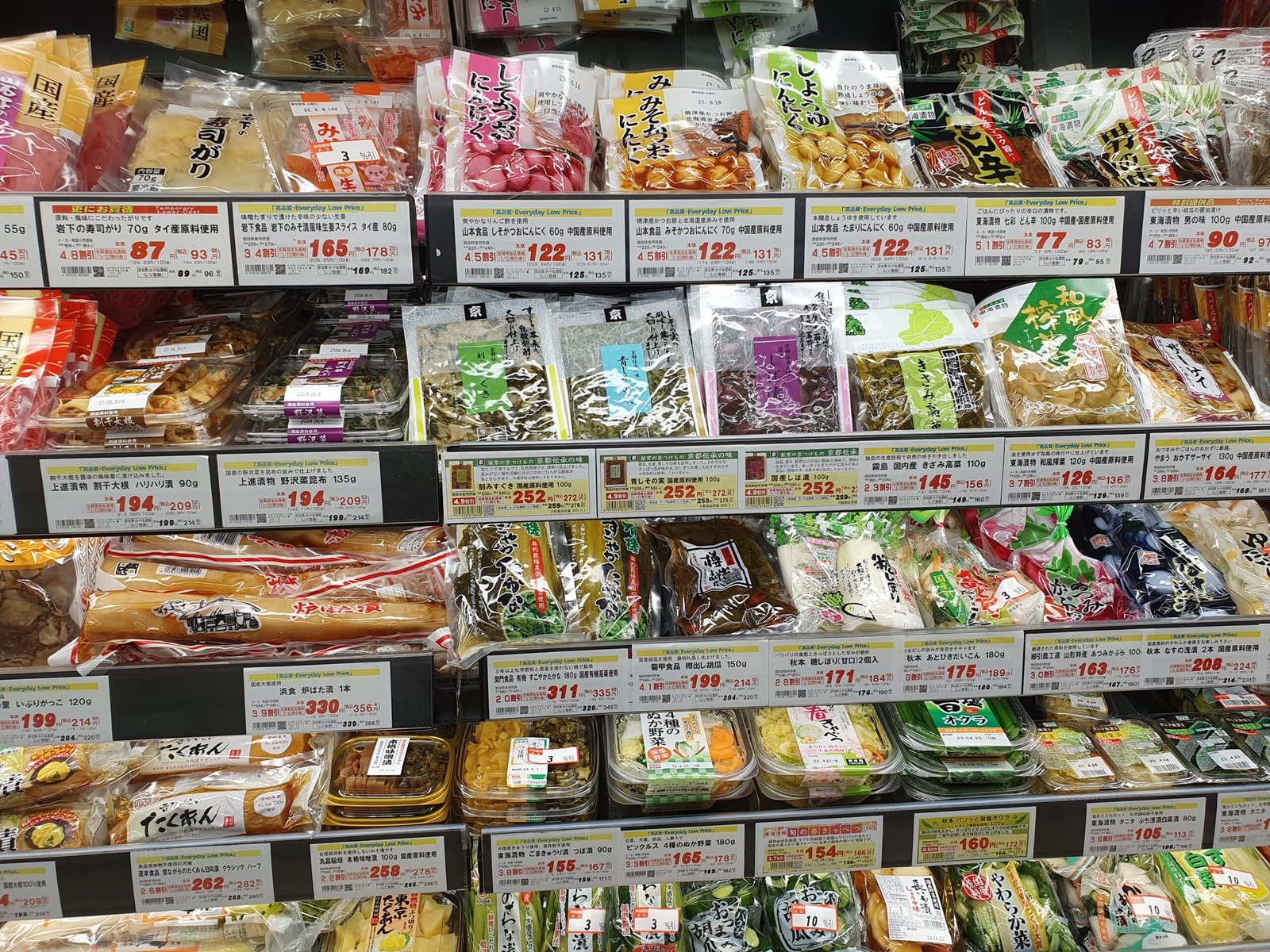
By comparing the percentages, we figured out which carton contained skimmed milk.
The chocolate/cookie mushrooms turned out to be particularly delicious.
In addition to Japanese products, there are also some Finnish products.

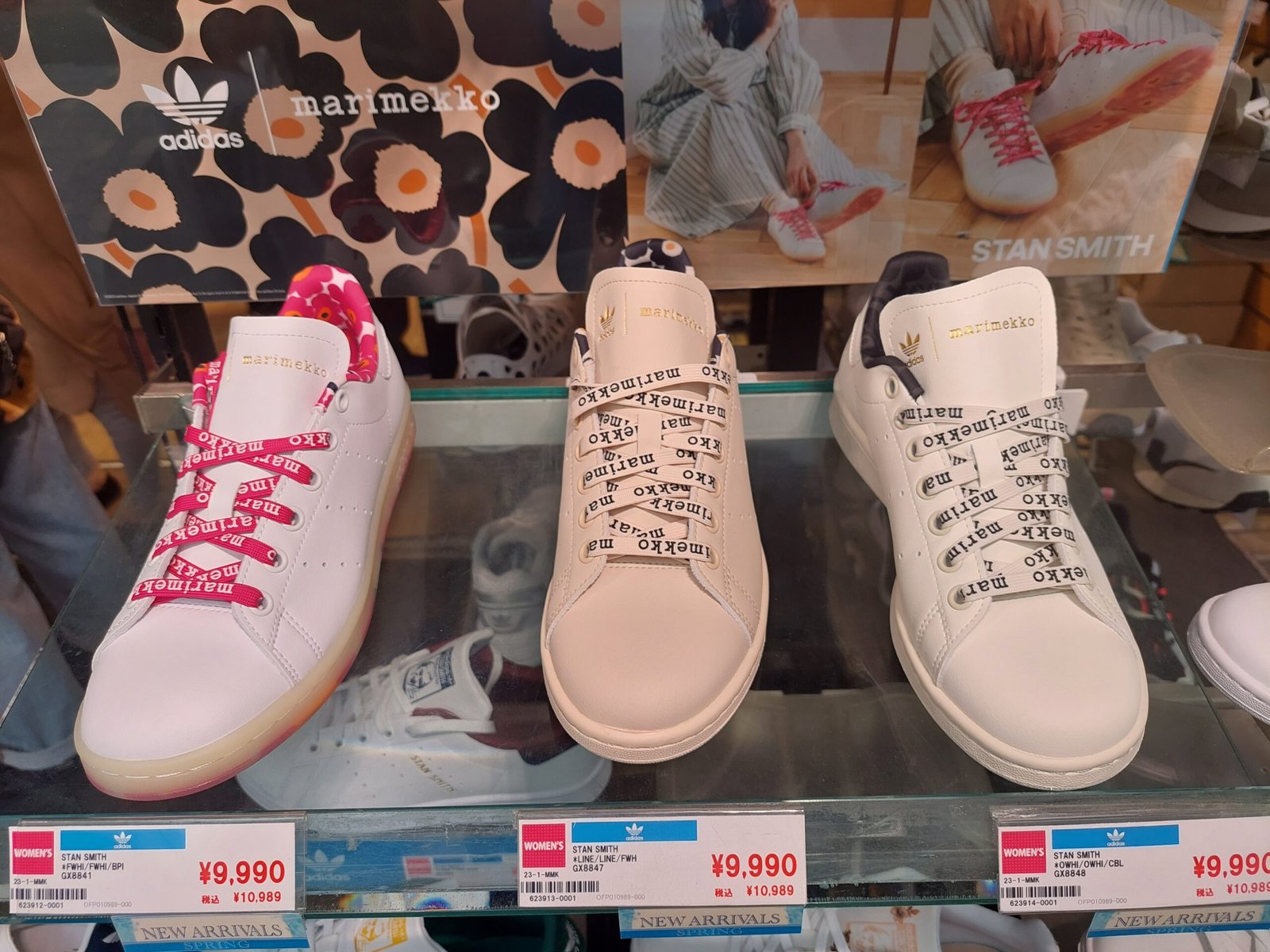
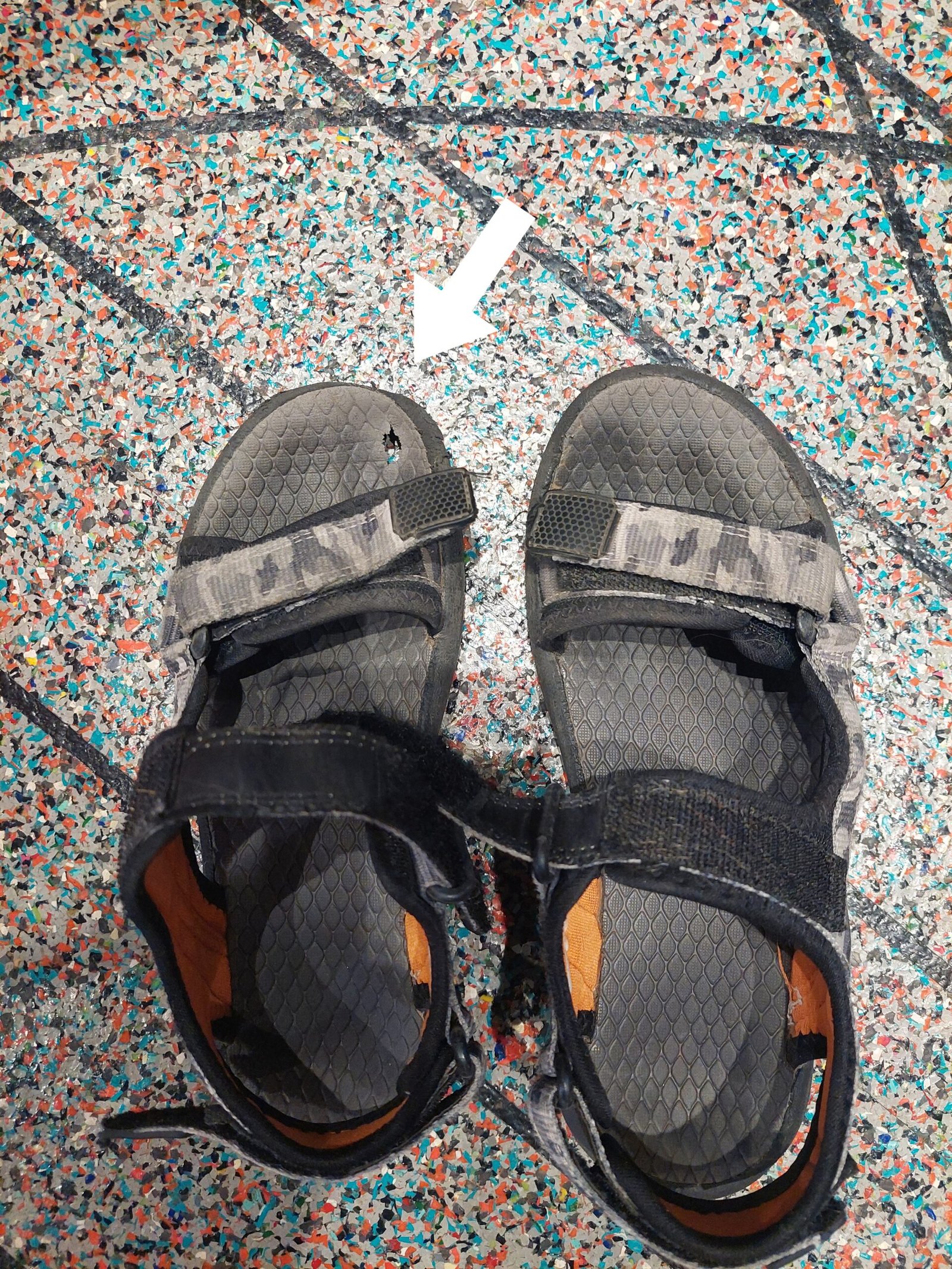
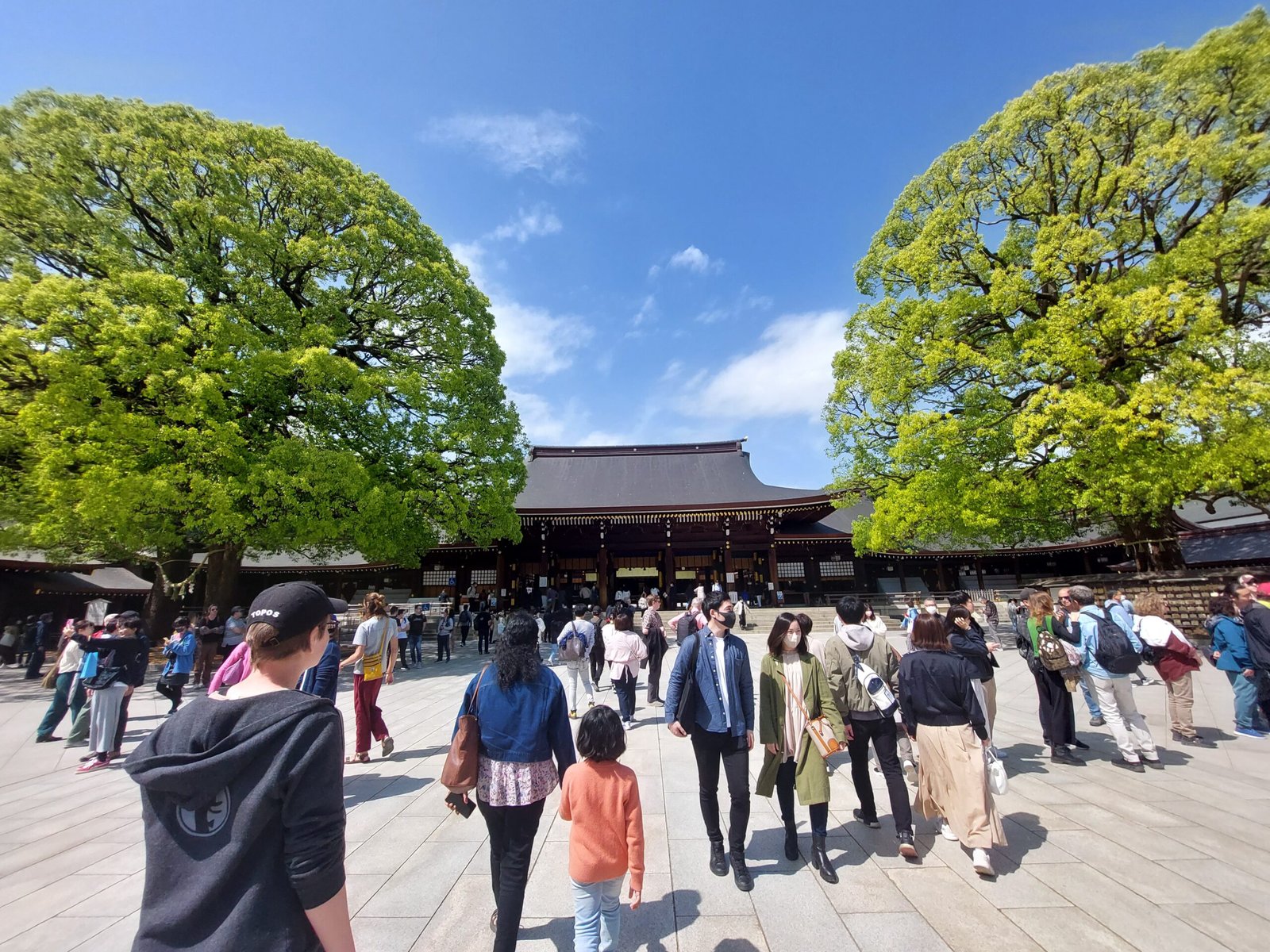
On Sunday morning, we headed to Yoyogi Park and the Meiji Jingu shrine next to it. We got off at the Shibuya station, and walked through the Harajuku district towards the temple. The Harajuku area has a wide variety of shops, and this time some of the shops looked like there might be a chance of finding new sandals for Risto to replace the broken ones. We stopped at a few shops on the way to the temple, but we couldn’t find the right size in any of them. So Risto continued on his way, still with a hole in his sandals.

Apparently, Prisma's cheap brand only lasts for three months of continuous use and walking.

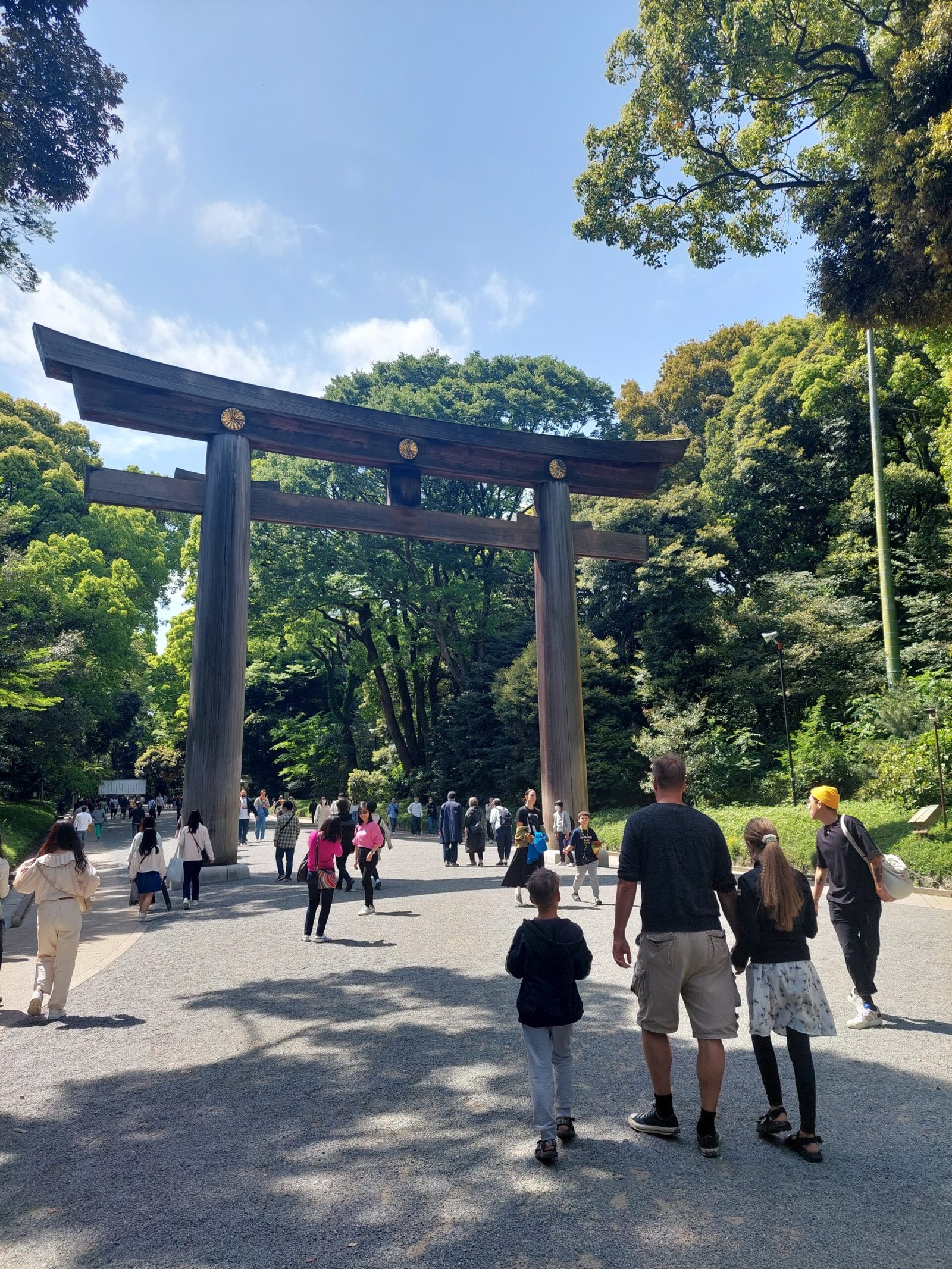
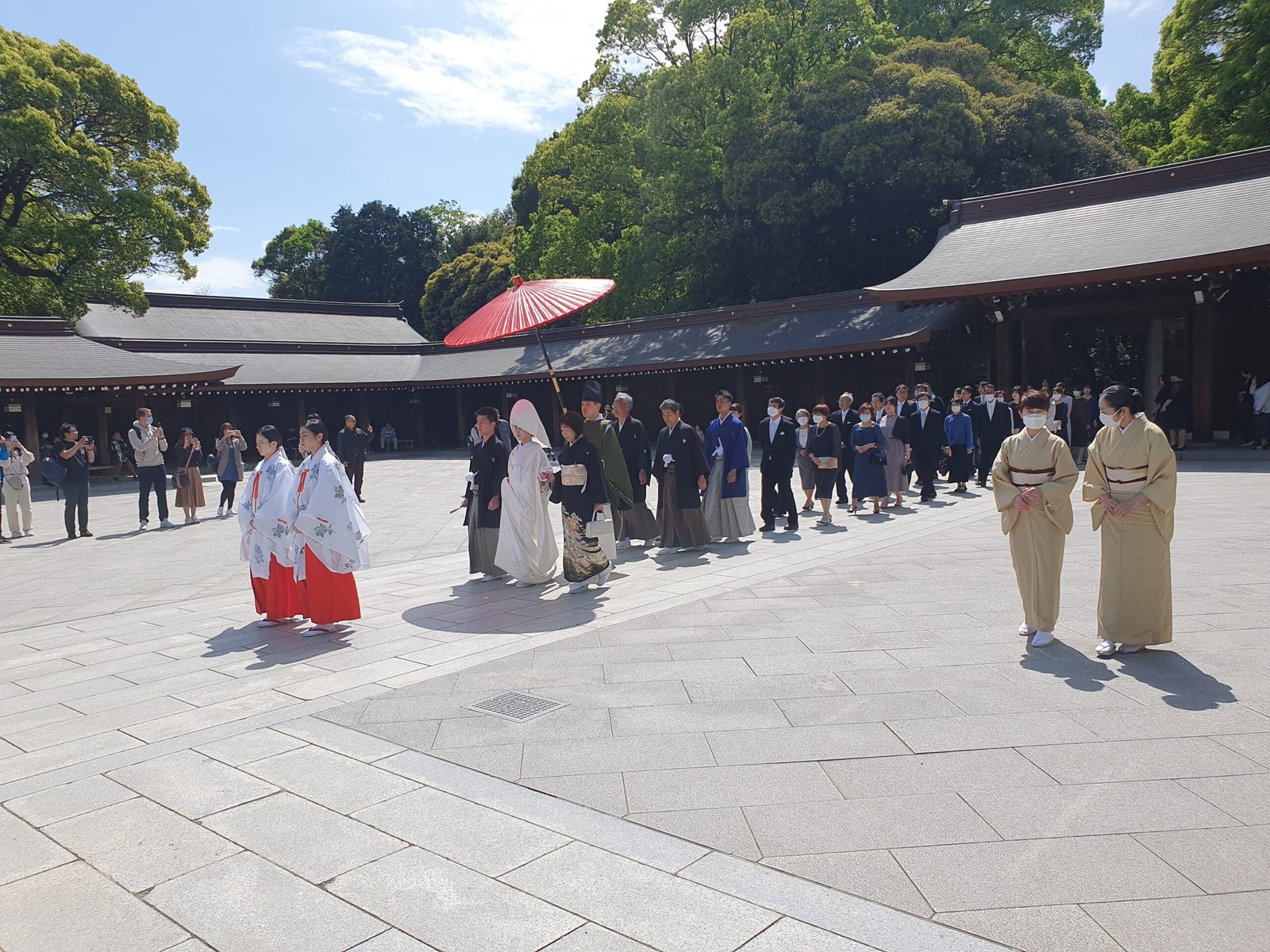
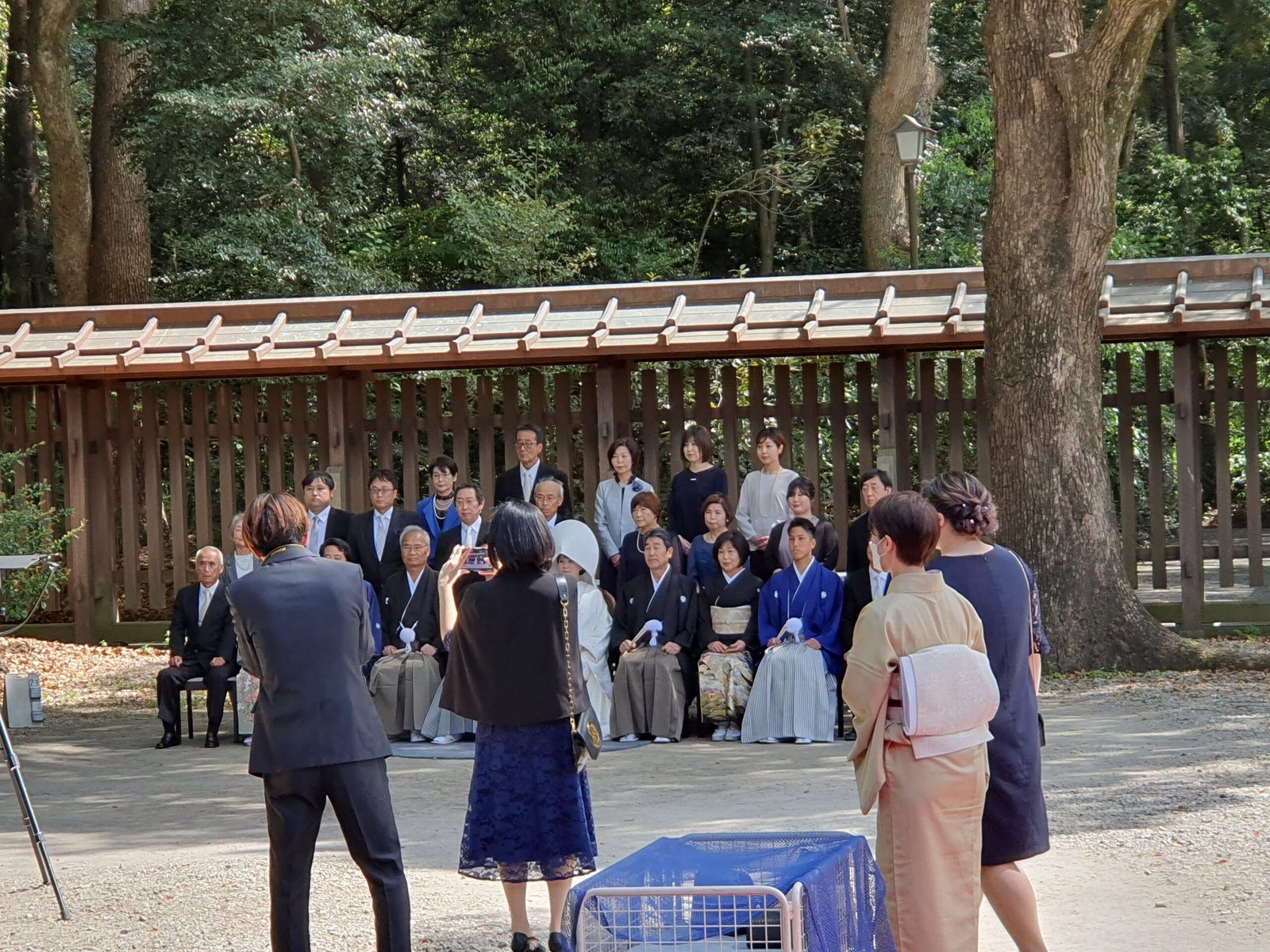
Meiji Jingu shrine is dedicated to the divine spirits of Emperor Meiji and his wife. Apparently the place is important to the locals, as there were so many of them. We also happened to see a wedding procession passing through the temple grounds to be photographed behind the temple. The photographing was interesting to watch. A large number of assistants were busy straightening the pleats of the bridal party’s outfits and doing their hair. Everything clearly had to be perfect to the smallest detail. When everything was finally in order, one photo was taken and that was that.
We walked through large gates to enter the temple area.
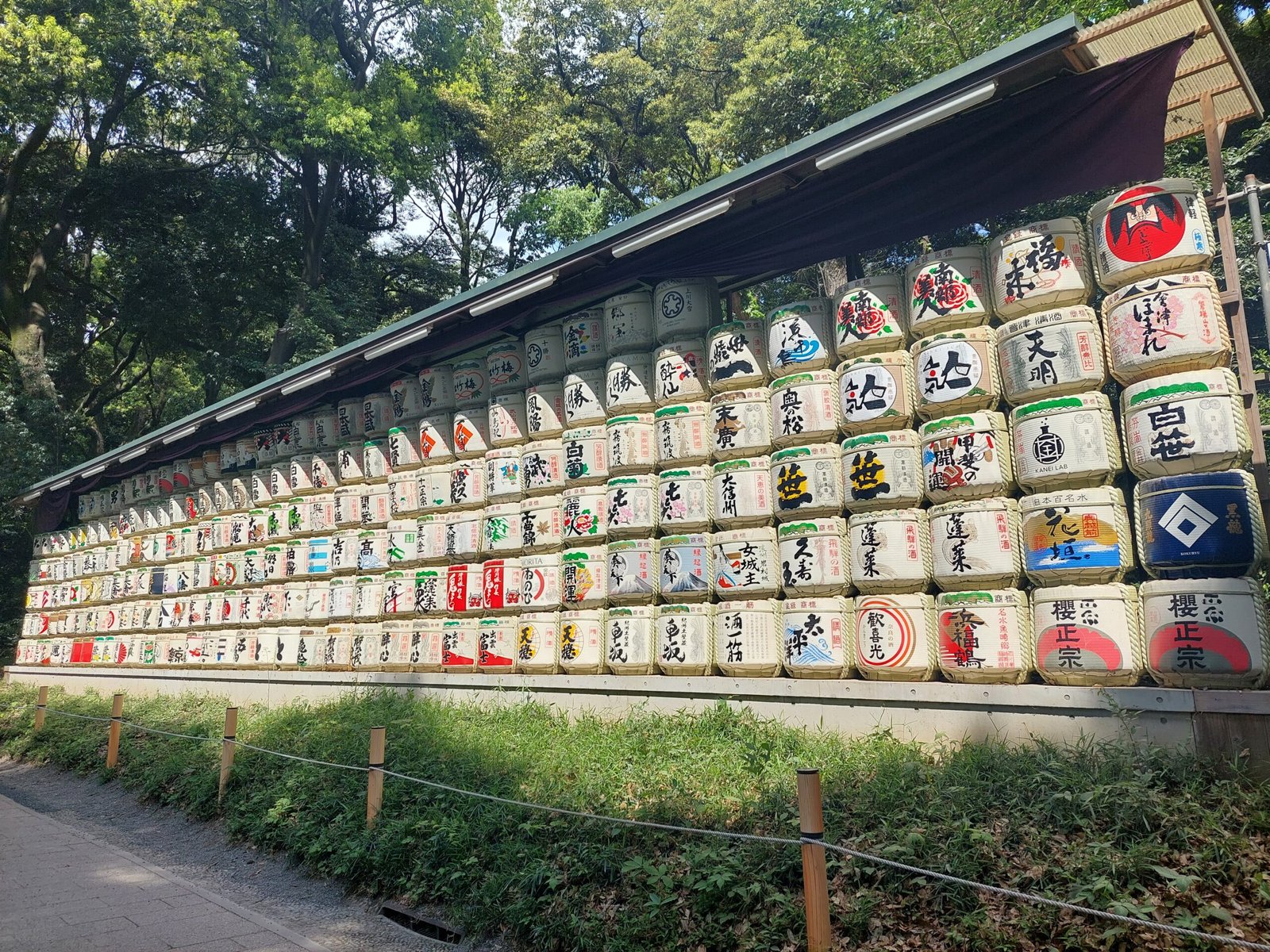
The late emperor and his wife supported industrialization. To honor this, sake producers donate a new barrel of sake to this installation every year.
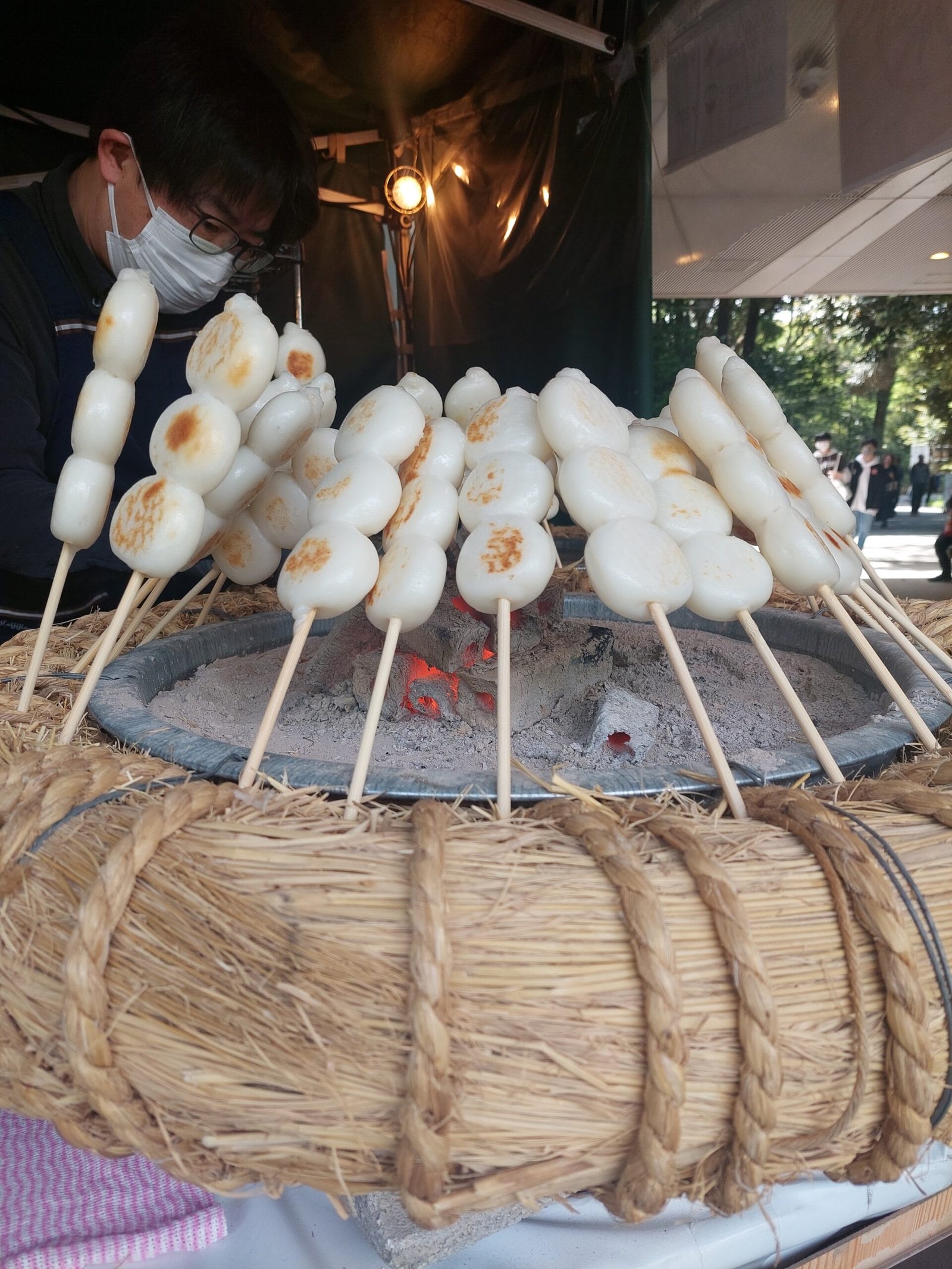
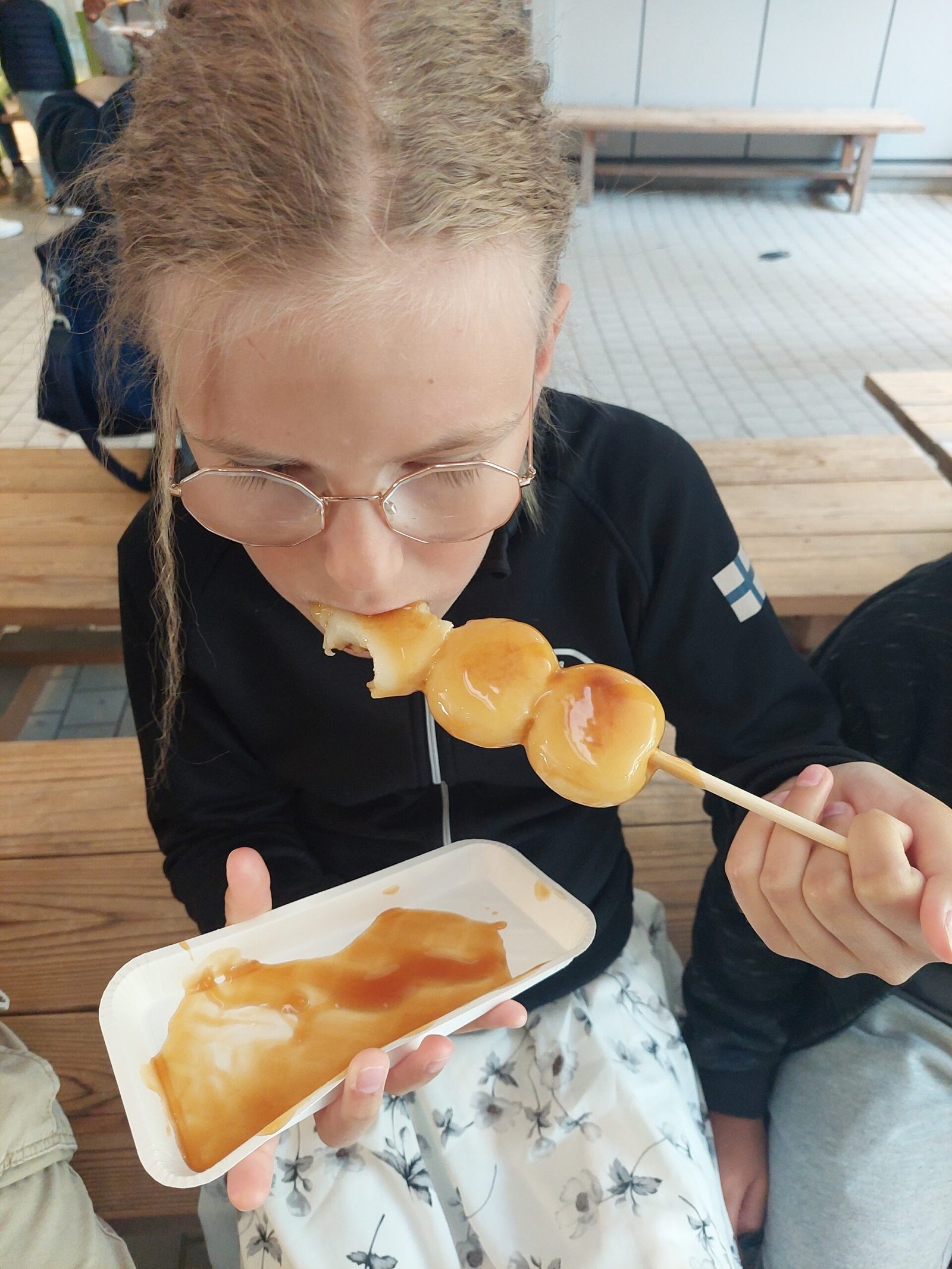
A small snack, dangos
Dangos are made from rice flour and served with a sweet soy sauce.
Entrance to the sanctuary
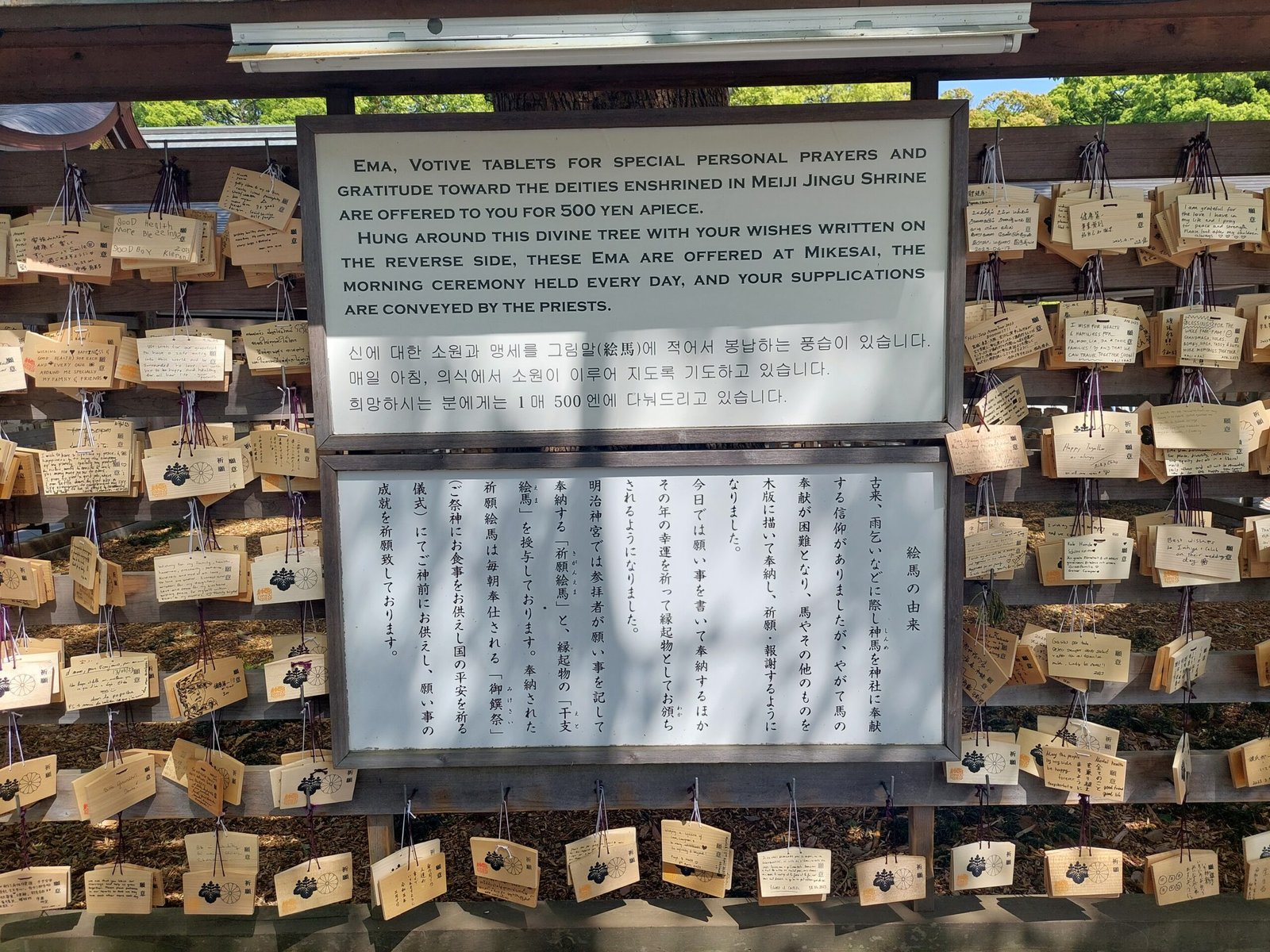
Once again, it was possible to make requests to the spirits. For a fee, of course.
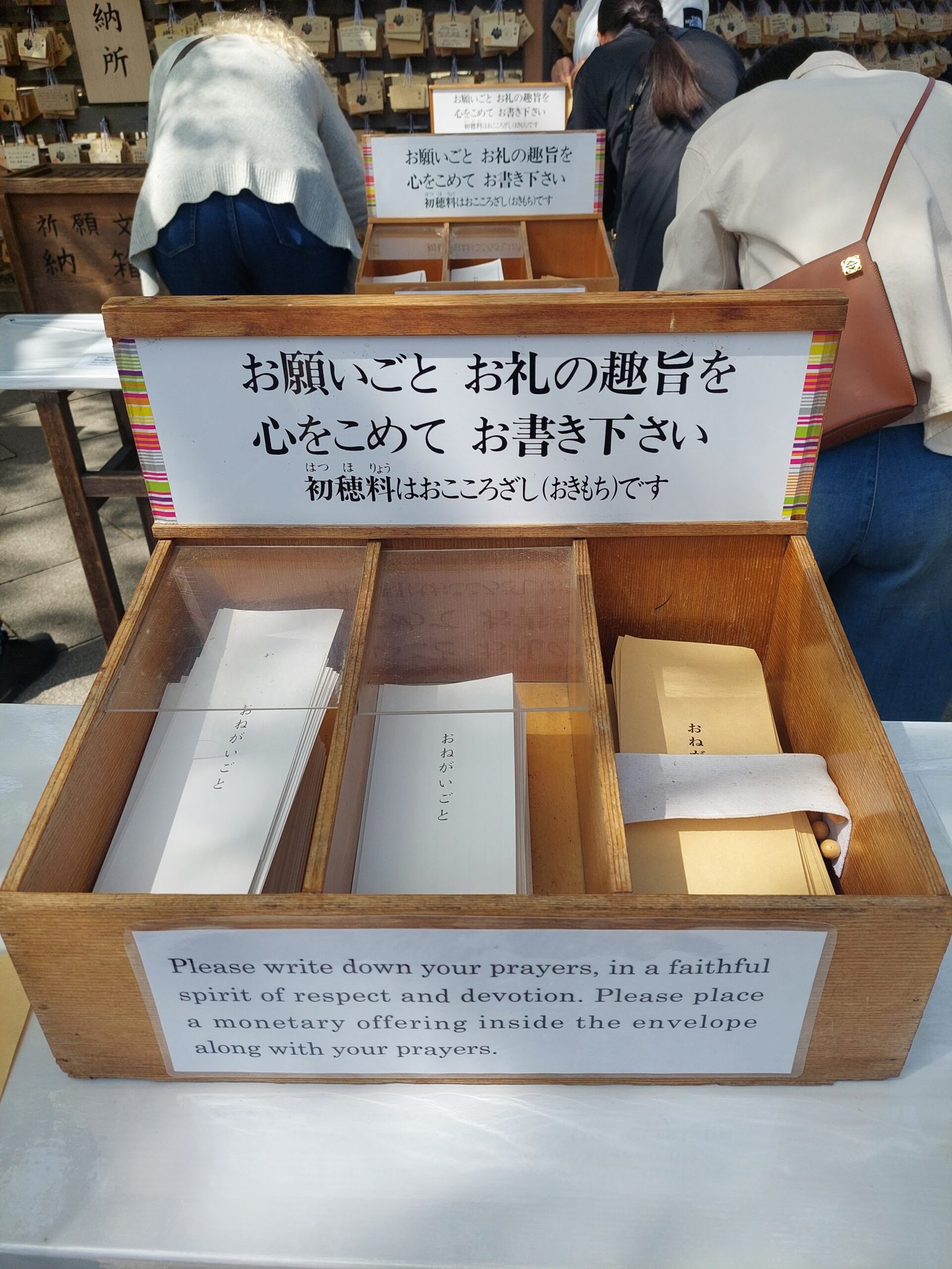
A small donation was also required for prayers written on paper if you wanted them to be heard by the spirits.
The temple was crowded with both locals and tourists.

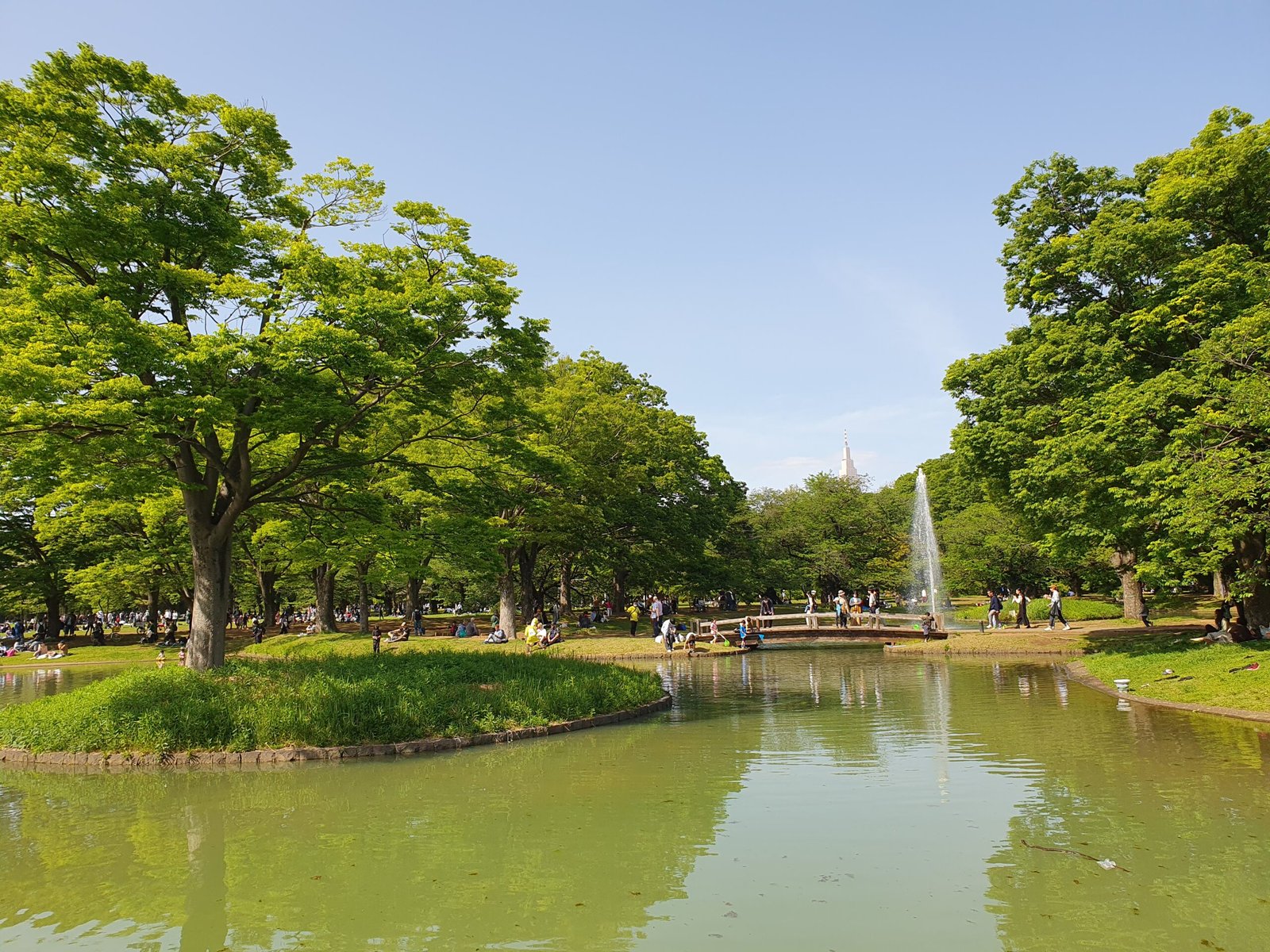
From the temple we walked to the park next to it. Yoyogi Park is one of the largest in Tokyo and is a very popular picnic spot on weekends. There were a lot of people there, since the weather was nice. In addition to the picnic groups, there were different kinds of performers, and we stopped to watch their performances every now and then. We also saw several women who were apparently going to practise Japanese archery, kyudo. However, we didn’t see a place where they were practising it, so unfortunately we missed out seeing them shooting a bow and arrow over 2m long this time.

The park had ponds and lawns. The atmosphere was a bit like Kaivopuisto on May Day, but without the engineering students.
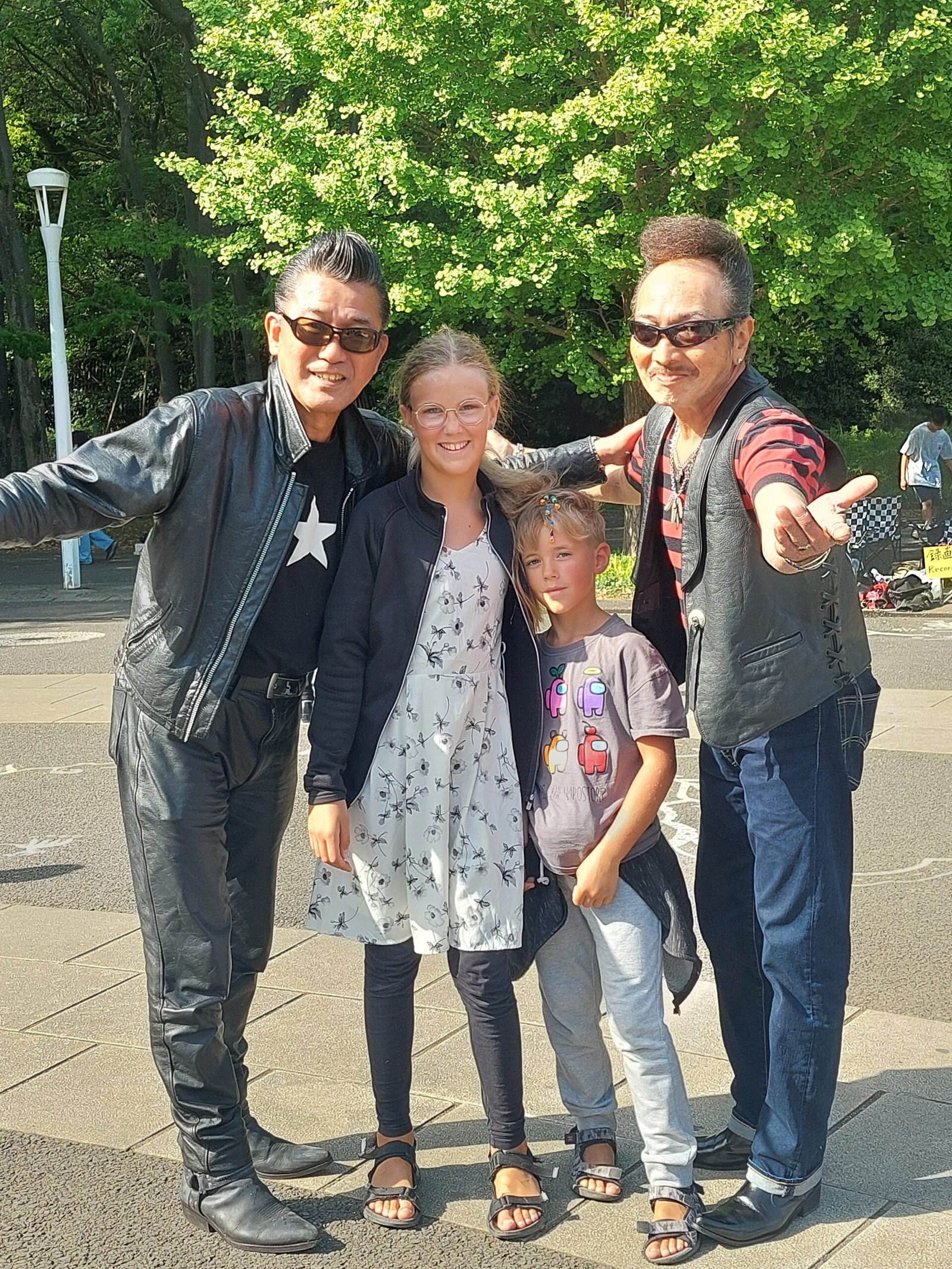
Rock 'n' roll fans and Elvis impersonators were strutting their stuff in the park.
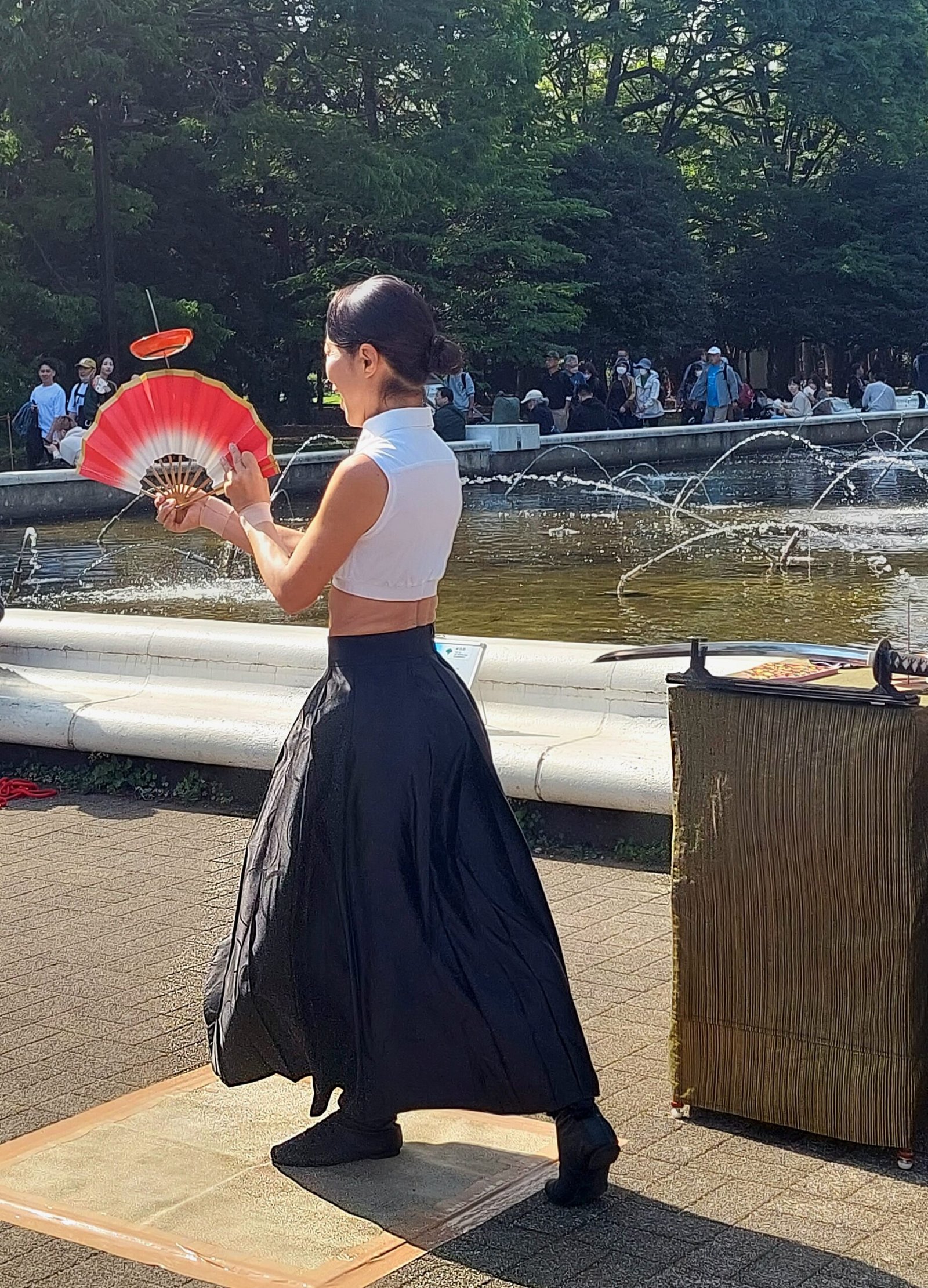
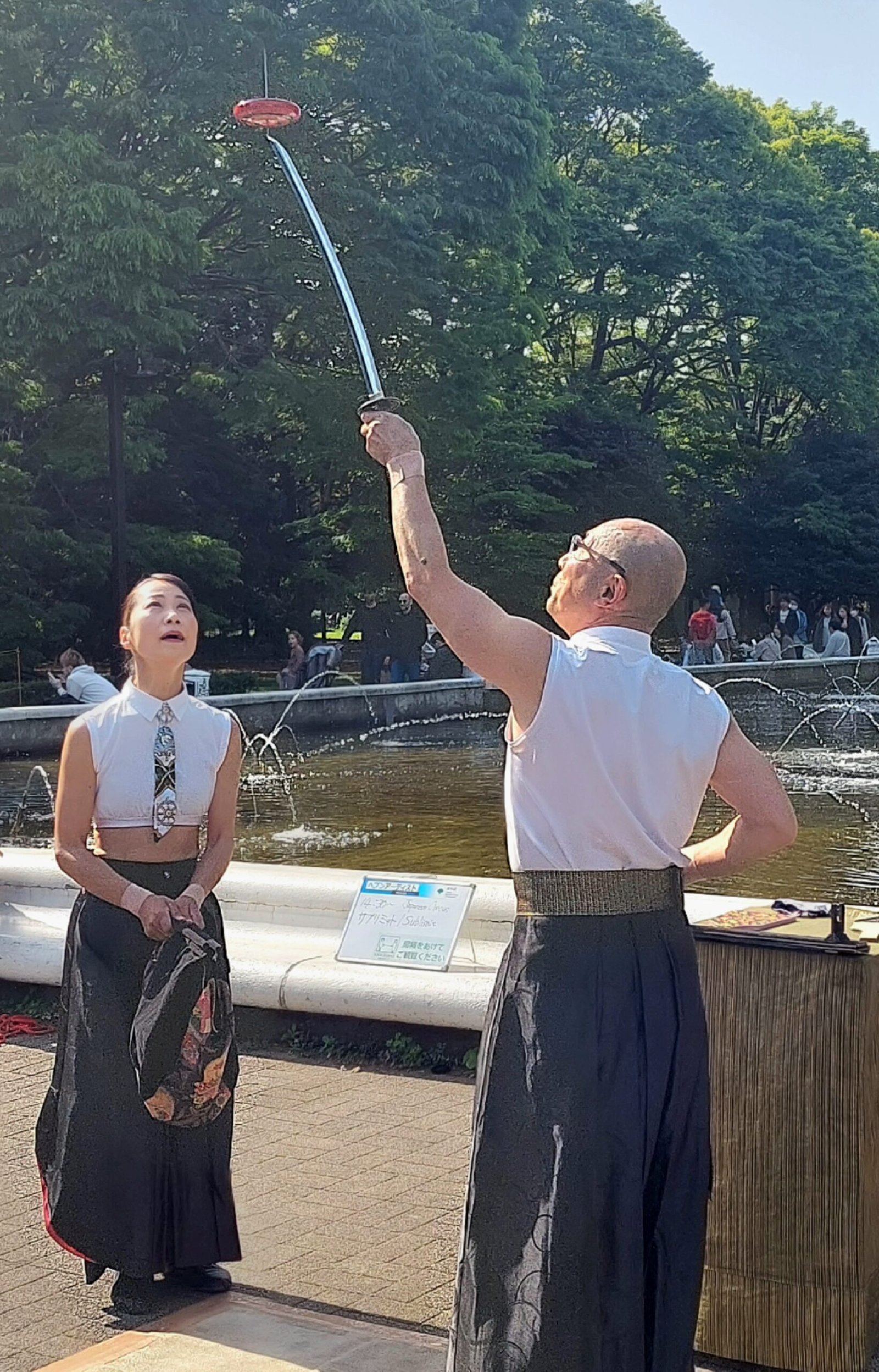
There was also a Japanese circus show.
This duo was really talented.

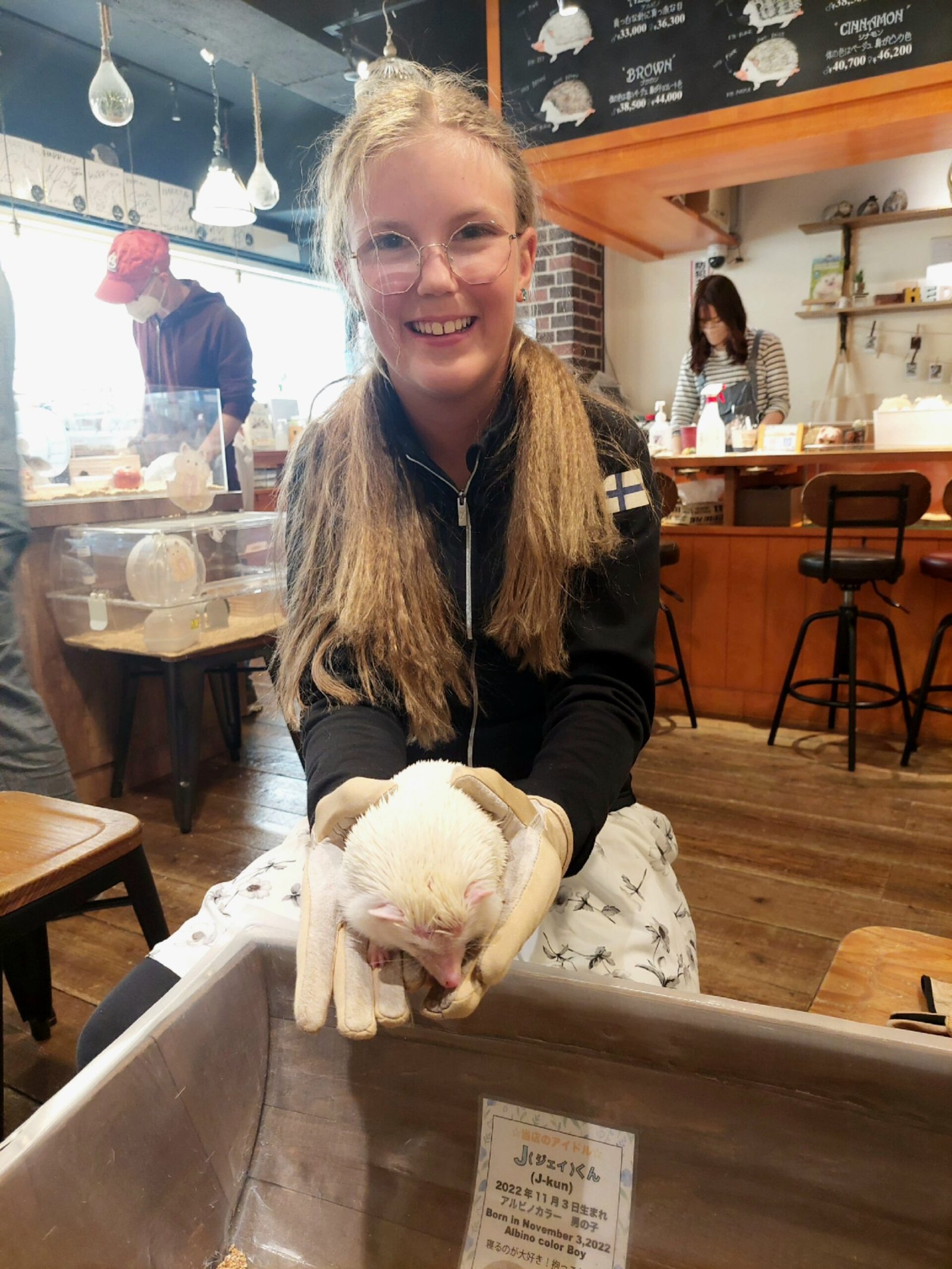
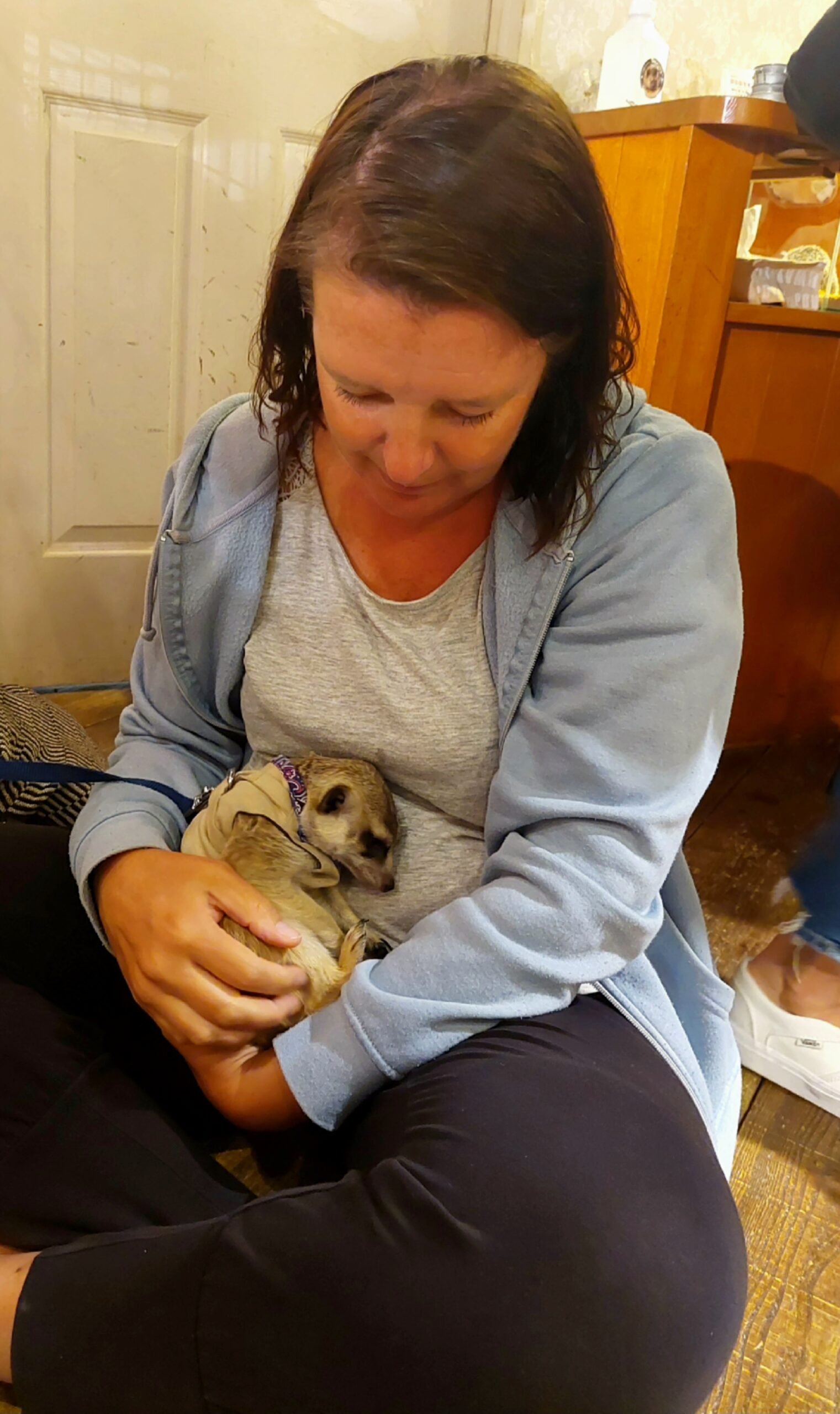
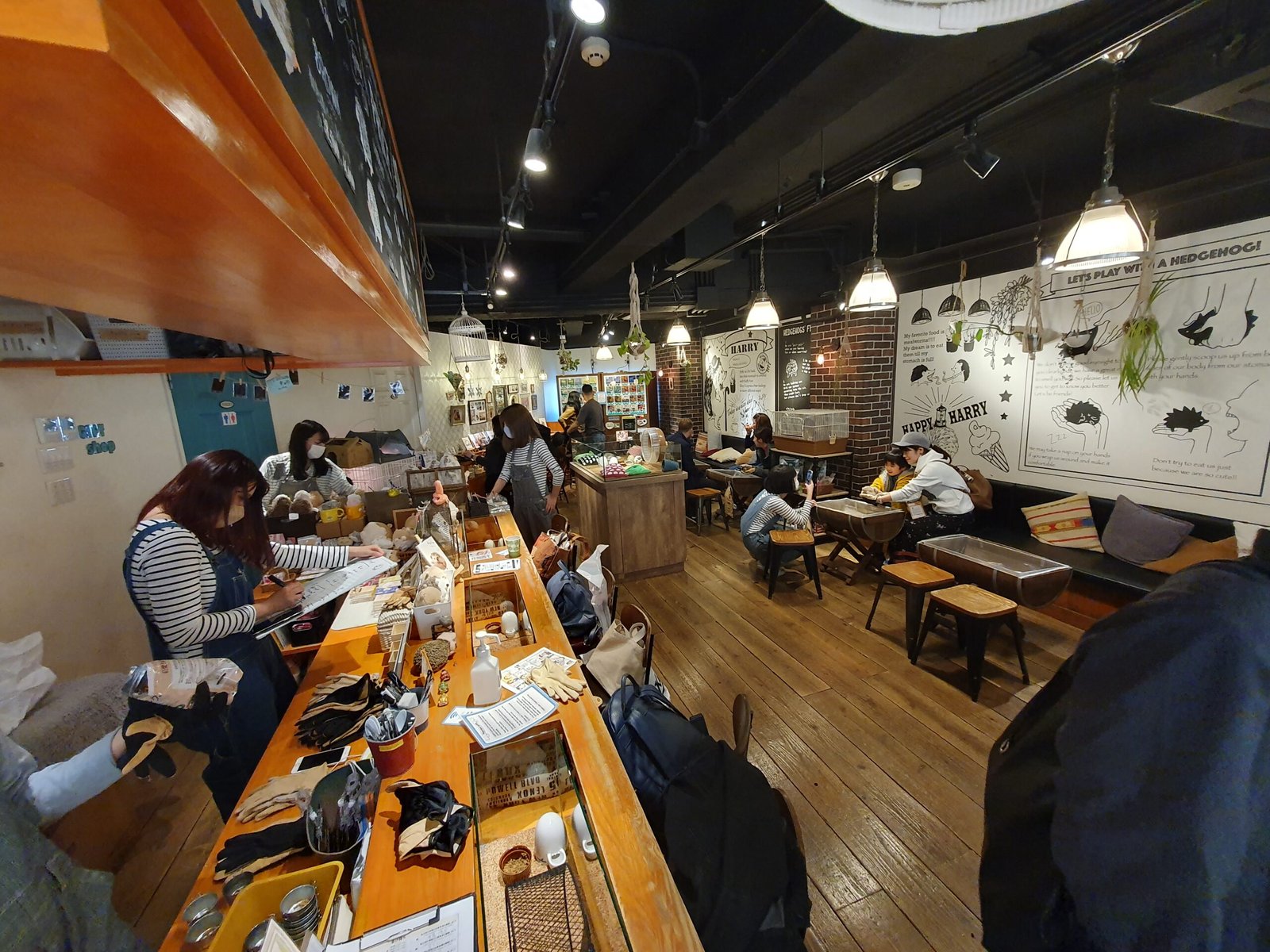
As we left the park, we spotted a hedgehog café on the way back. We paid for a half-hour café slot, which included feeding and petting the hedgehogs. The café would also have had hamsters, but we wanted to play with the hedgehogs. The hedgehogs were very cute, although one of them was a bit of a grumpy sort. First it bit Marko’s finger and after a while it bit Risto too. In addition to playing with the hedgehogs, we also got to play with the pet meerkat too.

For hygiene reasons, it was necessary to wear gloves while handling the hedgehogs.
Harry Cafe had several places where you could interact with the hedgehogs.

As it was already half past three, we all started to get really hungry. We ended up eating at a Japanese pasta restaurant. This time they had an English menu for us, so ordering was easy. Eating was a bit of a challenge, as the only utensils we had were chopsticks. The adults were able to eat their pasta with chopsticks, but the children had to ask for a fork after a while.

On the way back, Risto spotted Nike’s shop, where we finally found him a new pair of sandals. Marko also tried to buy sandals for himself, but at least in this store he couldn’t find a size big enough. Risto’s sandals were apparently adult size, so Marko might have problems finding shoes for himself in Japan.

On the metro ride we almost made a small mistake, but luckily Marko noticed it in time. Somehow we had managed to hop on an express metro, which didn’t stop at all stations. Our home station would have been one of the skipped stations. We jumped off at the next stop and waited for the local metro. When we got home, it was evening again. The days do go really fast here, even if we leave early in the morning.

Leave a Reply

Your email address will not be published. Required fields are marked *