On Saturday afternoon we took the bullet train to Fukuoka. As it was the start of the Japanese Golden Week (a longer holiday that lasts until 5 May), there were considerably more people on the train than on our first longer train journey. The train was so fully booked that we couldn’t even get seats next to each other. We managed to get all four of us in the same carriage though. Risto sat next to a young Japanese woman who, with the help of Google translator, started talking to him. She was very happy to hear that we were from Finland.
The trip from Osaka to Fukuoka took 2,5h. This time we saw more countryside on the way. Last time it was mainly one city after another. However, Fukuoka is a big city with about 1,5 million inhabitants. The woman next to Risto told him that Fukuoka is famous for its food, especially ramen and mentaiko. We knew what ramen was, but we had to Google mentaiko later. I don’t think we’ll try it, as it is a sack of salted cod roe, which is marinated in chili and spices.
When we arrived in Fukuoka, it was raining. Since our apartment hotel was located about 800m from the Fukuoka train station, we decided to walk there despite the rain. We were standing at the traffic lights waiting for them to change, when a woman came up behind the children and put her own umbrella to protect them. The kids already knew how to say “arigato gozaimasu” as they continued their journey when the traffic lights changed again.
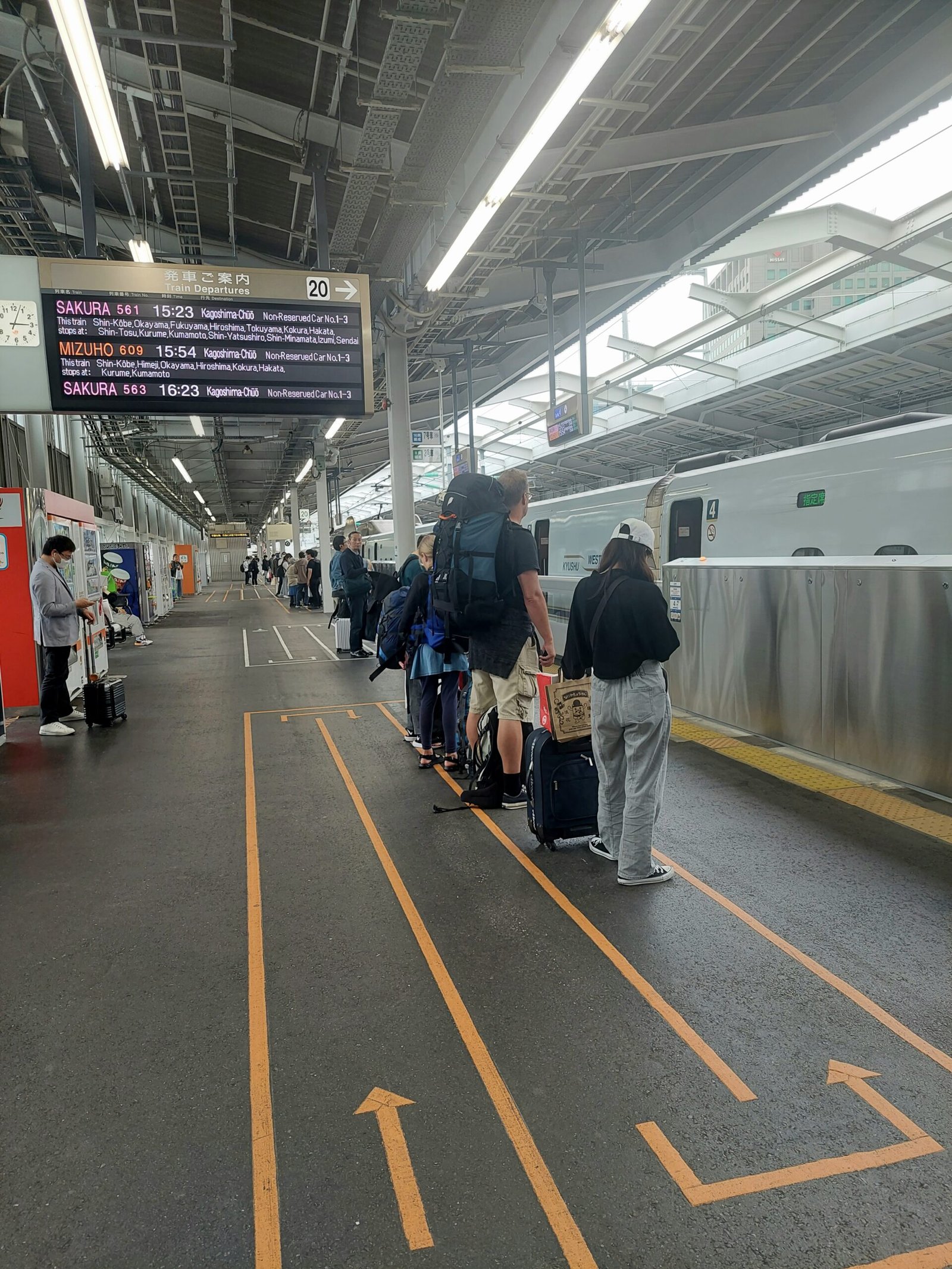
Also at Osaka train station, the queuing location and direction are clearly marked.
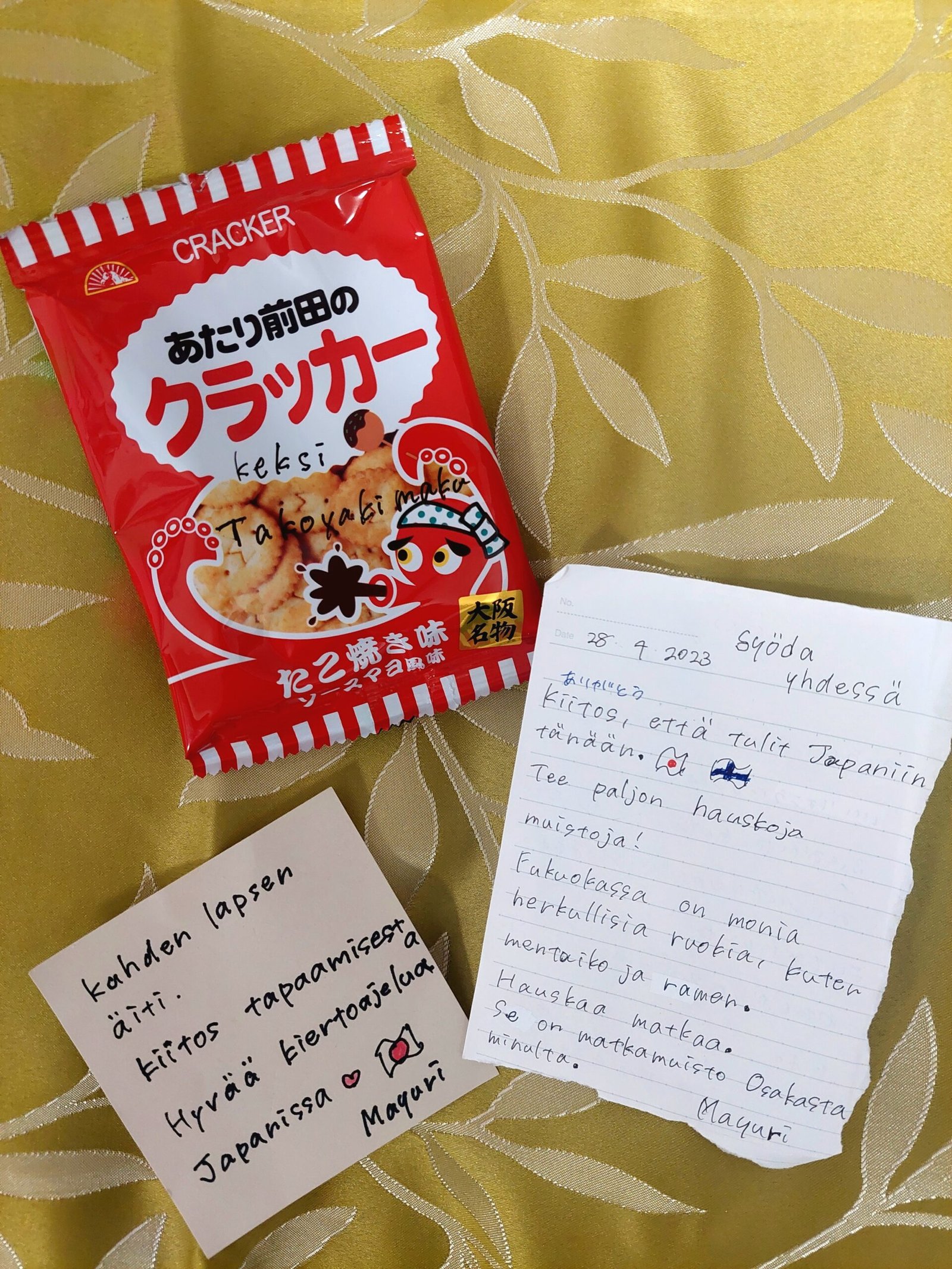
The woman sitting beside Risto made us a "souvenir" during the train journey.
Our apartment was much smaller than our apartment in Osaka. Nevertheless, they had managed to fit in a small kitchen and a bedroom with two double beds, separated from the rest of the room by sliding doors. Marko braved the rain for a second time to get us some food, as we hadn’t eaten anything decent since breakfast and it was already past seven. Marko found a variety of micro-prepared foods in a local shop, although he wasn’t quite sure what they were. For the most part, he was lucky, and the food was quite good. In particular, the spaghetti with chilli and ham slices and sausages was surprisingly good. A couple of steaks in breadcrumbs turned out to be related to some local herring, although we had initially thought we had bought chicken. Marko bravely ate his own herring, Jaana’s fish ended up in the trash.
A gourmet dinner served with seaweed.
The remote controls had their own uv disinfection cabinet.
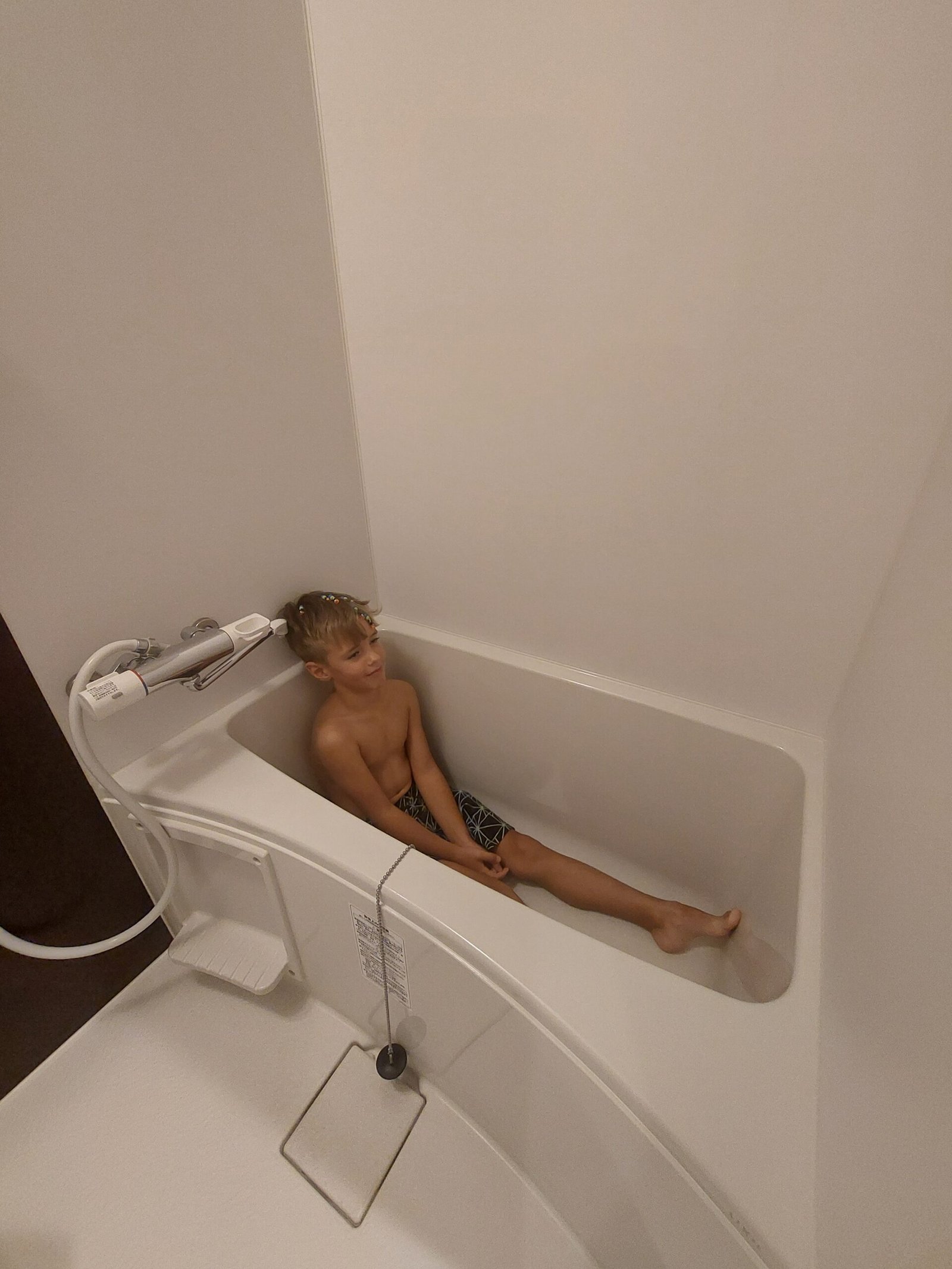
There was also a small bathtub in the small room. Not exactly adult size.
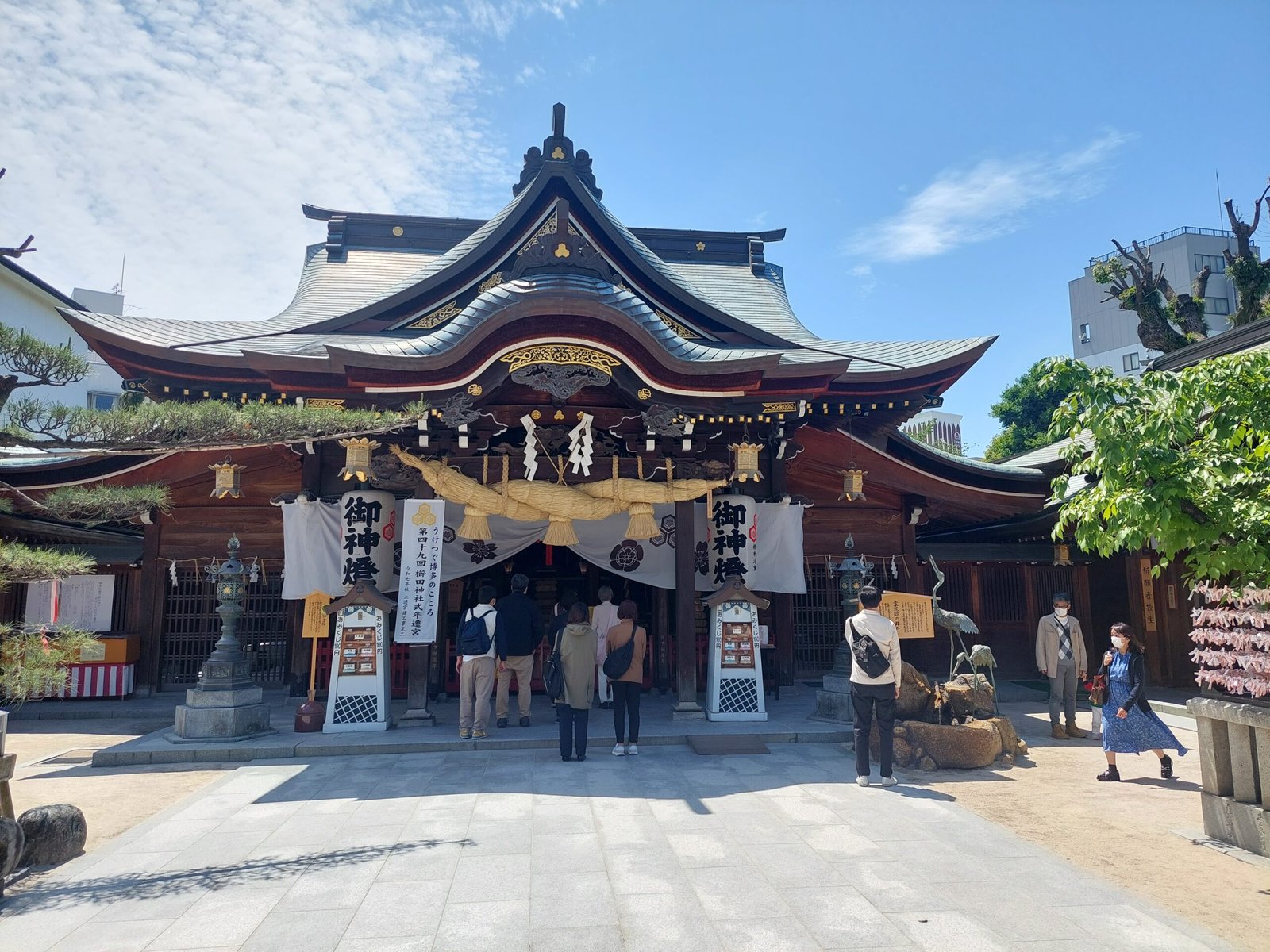
Since Japan doesn’t celebrate May Day like Finland, May Day eve was just another day for us. We walked to Hakata train and subway station and took the subway to Kushida Shrine. It is one of the oldest Shinto shrines in Japan, and is considered Fukuoka’s guardian shrine. In front of the shrine there was a sacred fountain decorated with three crane statues. Drinking from this fountain (as well as praying) is said to promote health and longevity. We didn’t drink from the fountain, just took a picture of it.
Kushida Shrine
Is this the secret of the Japanese longevity?
The shrine entrance was guarded by this statue.
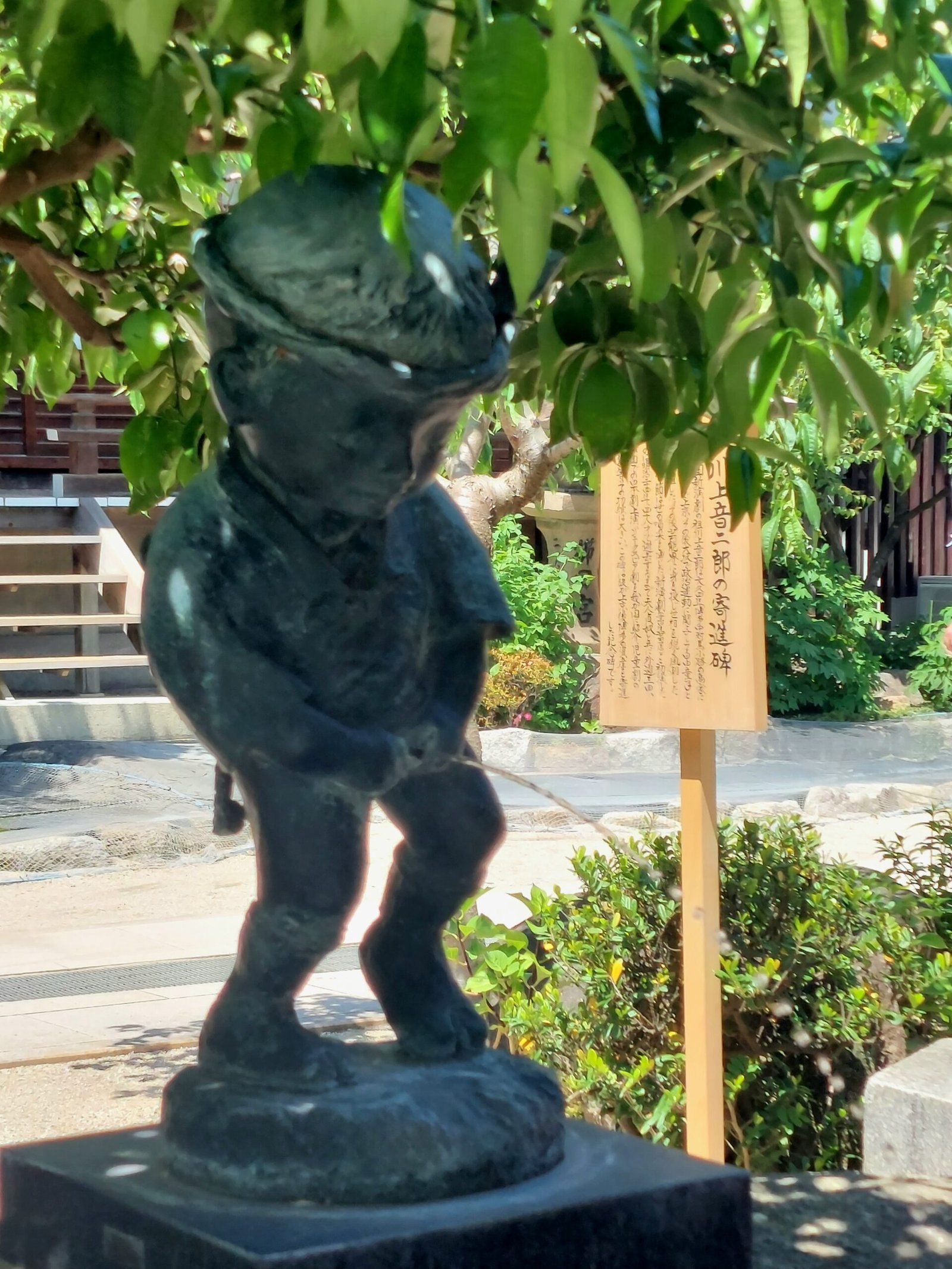
We also found a "Japsiken-pis", shrewdly hidden in the bushes of course!
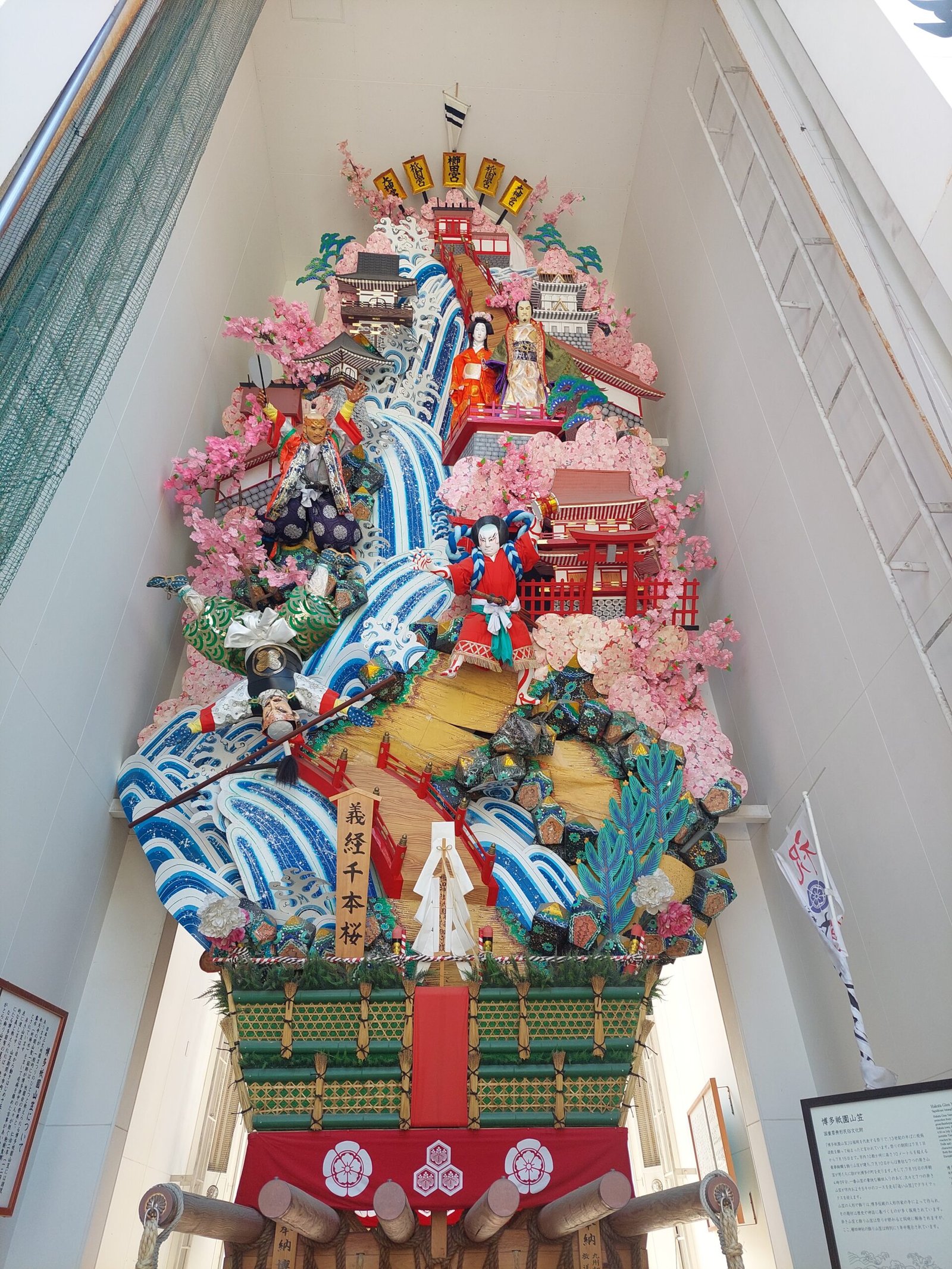
There was a Yamakasa, a decorative float, on display next to the shrine. Yamakasas are carried in a procession around the city during Hakata Gion Yamakasa festival in the summer. It takes many men to carry the largest of them, as they can weigh up to a ton.
Yamakasas are usually destroyed after a procession. This one was left at the temple for display.
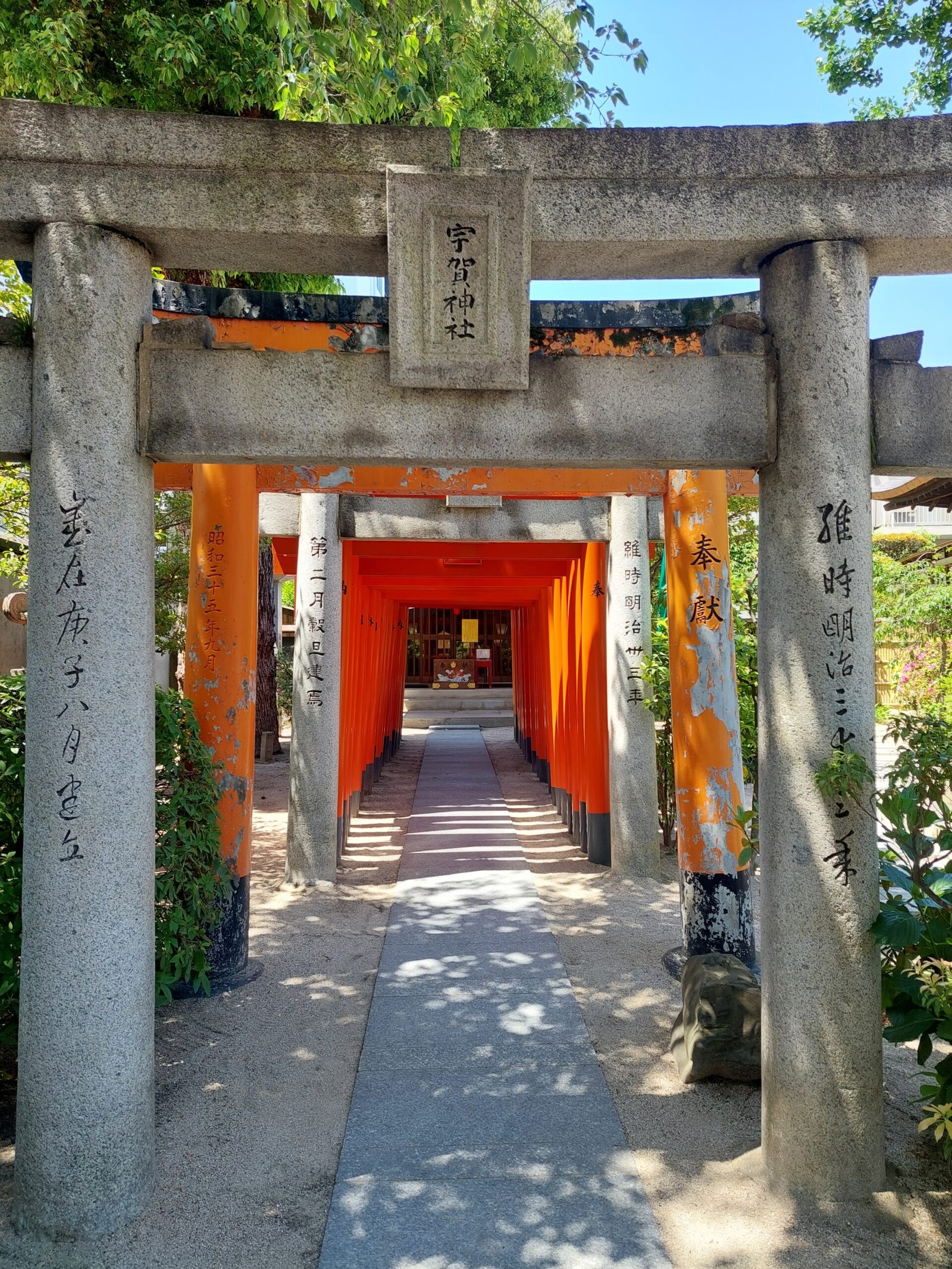
There were several places in the area where you could go to pray.
From spiritual culture we moved on to something very different on the other side of the road. We popped in a huge shopping mall called Canal City. We only went there for a bite to eat, though, and a quick pop into a few shops. After that, we headed back to the flat. None of us had the energy to go for a walk around the city, as there are no particular “must see” sights in Fukuoka. So we spent a quiet evening at home in our 30 square meter studio apartment and gathered energy for the next day.
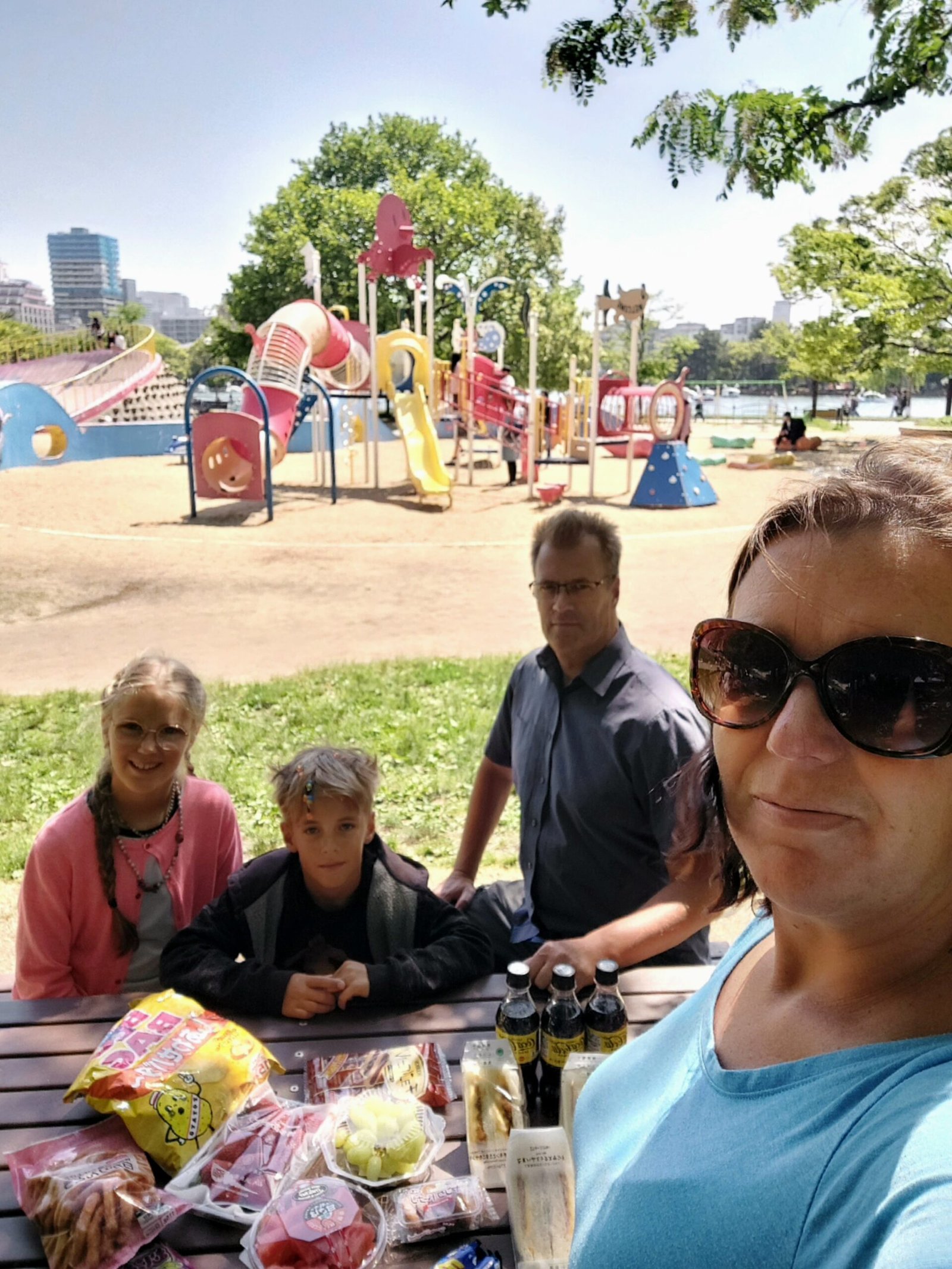
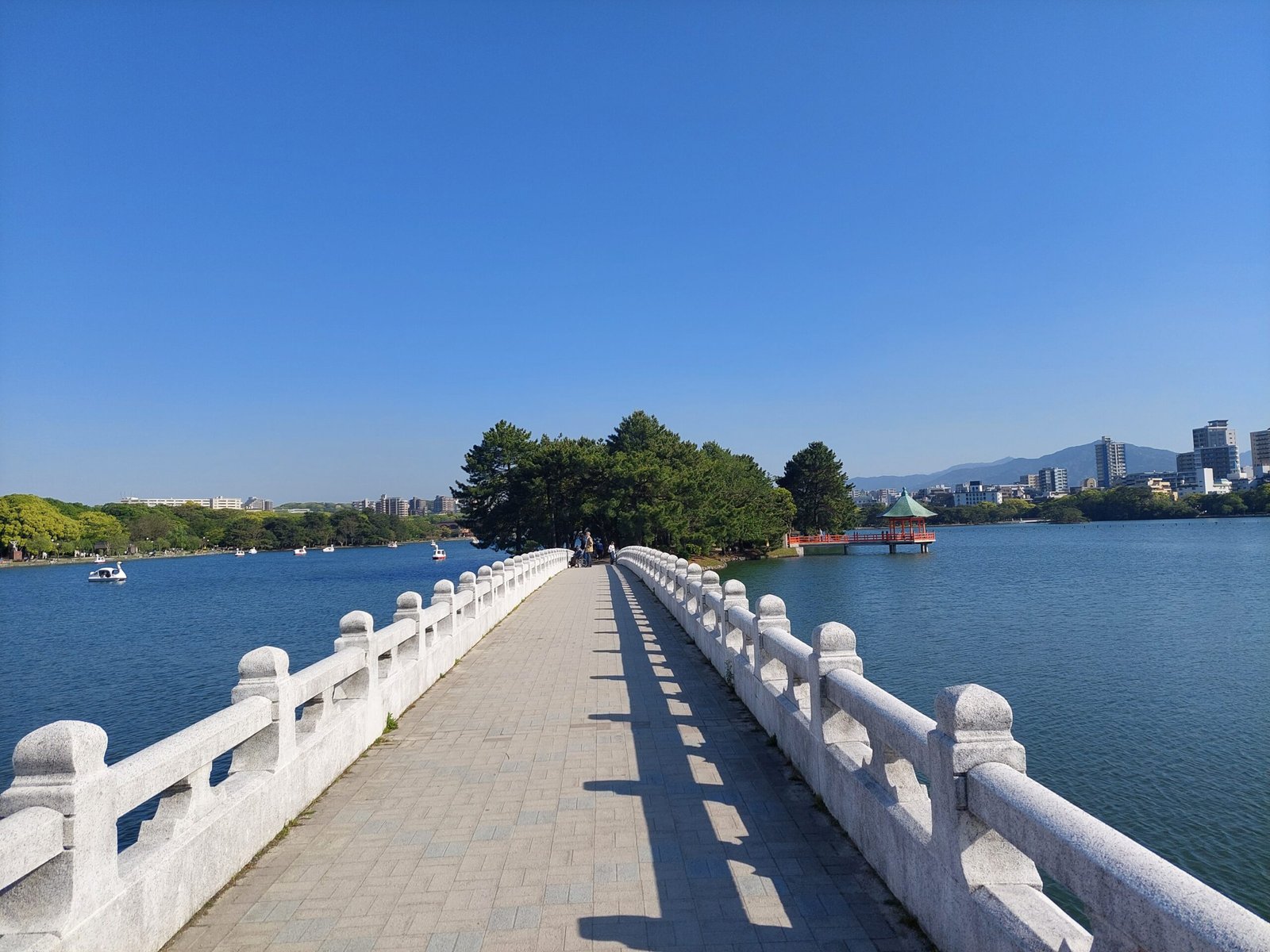
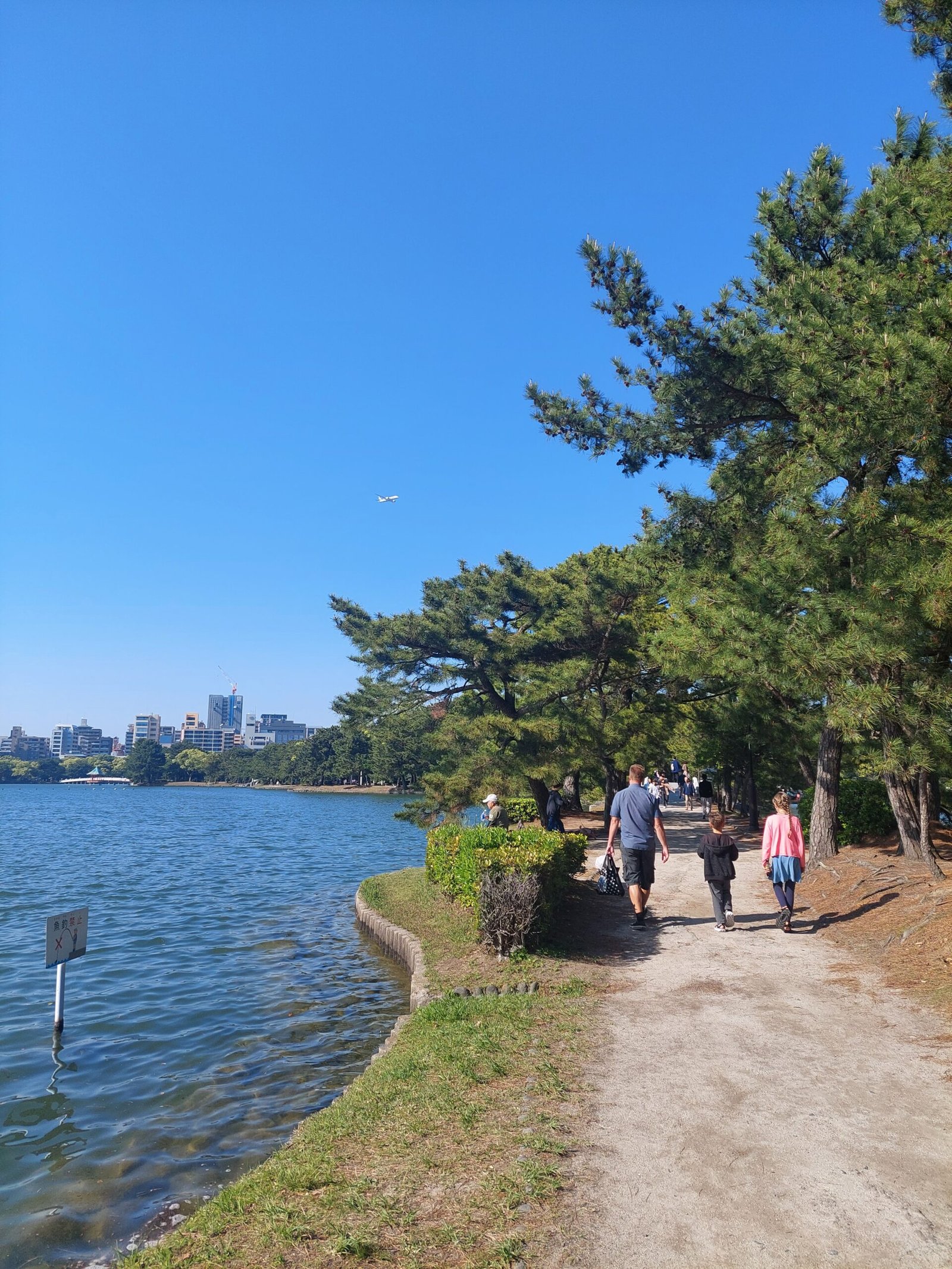
On the 1st of May, we kept up the Finnish May Day traditions and went for a picnic in the park. After visiting two shops we had fruit, sandwiches, treats and even some donuts in our bags. In the park the children spotted a playground and headed straight for it. As there were picnic tables next to the play area, we stayed there for a May Day picnic. After the picnic we walked along the 2km long running and cycling trail around the pond in the park. There were three small islands in the middle of the pond, with bridges to cross. We took a shortcut through them and ended up at a kiosk where you could rent a paddling boat. Of course, the kids wanted to soar like a bird, so we rented a (Finnish) swan for half an hour at 1600Yen and went for a pedal. Apparently these pedal boats were designed more with Asian sizing in mind, as I think Risto was the only one of us with a good pedalling position. Nevertheless, we managed to pedal around the entire boating area, and I think we still had a couple of minutes left. Ohori Park would also have included the ruins of Fukuoka Castle, but we didn’t go to see them and returned to the hotel to pack our things. The next day we had an early wake-up call for the ferry to Busan.
There is a huge pond in the middle of Ohori Park. You can also fish in part of the pond.
May Day picnic
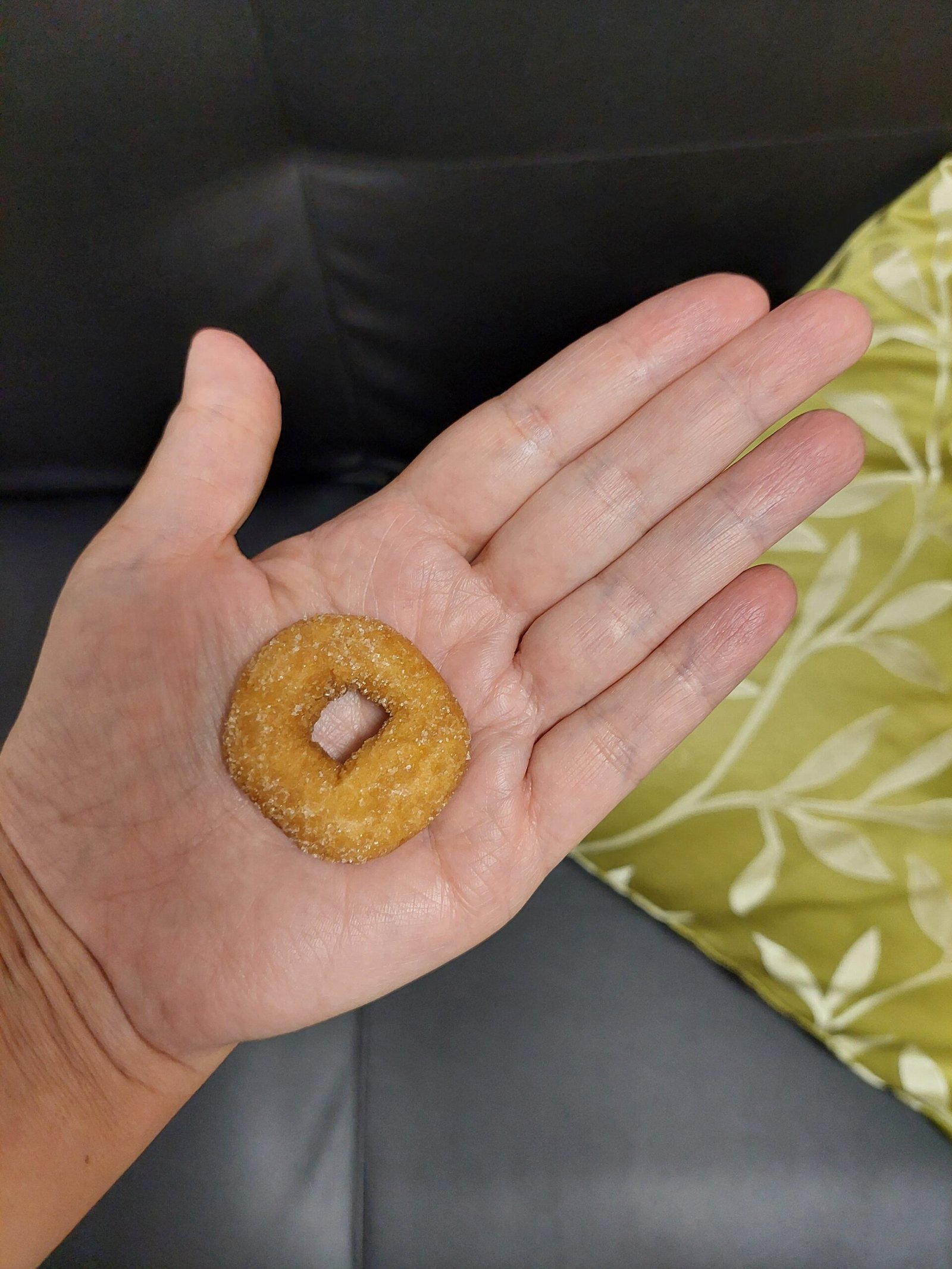
Apparently the size of the donuts is also proportional to the size of the Asians.
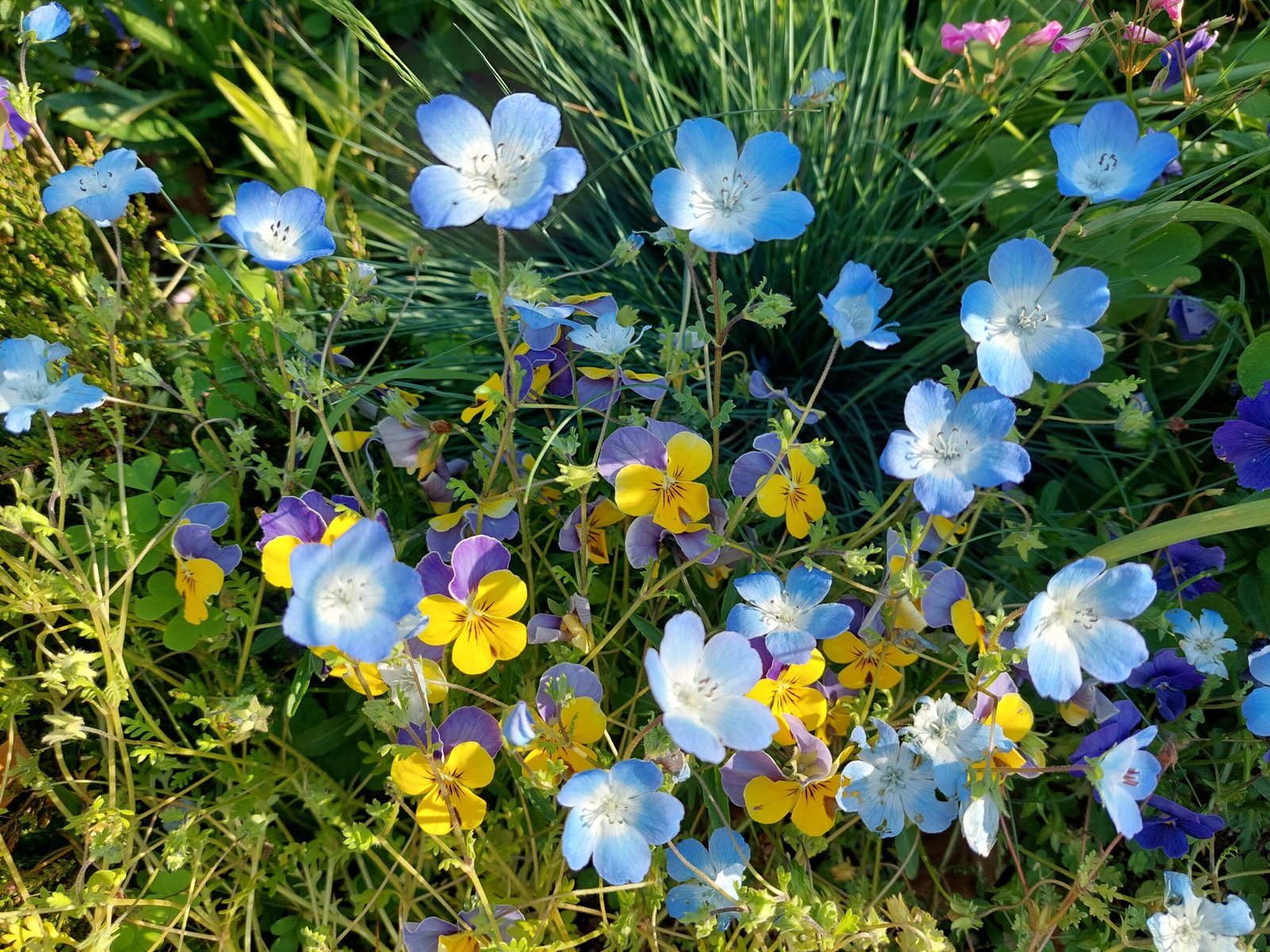
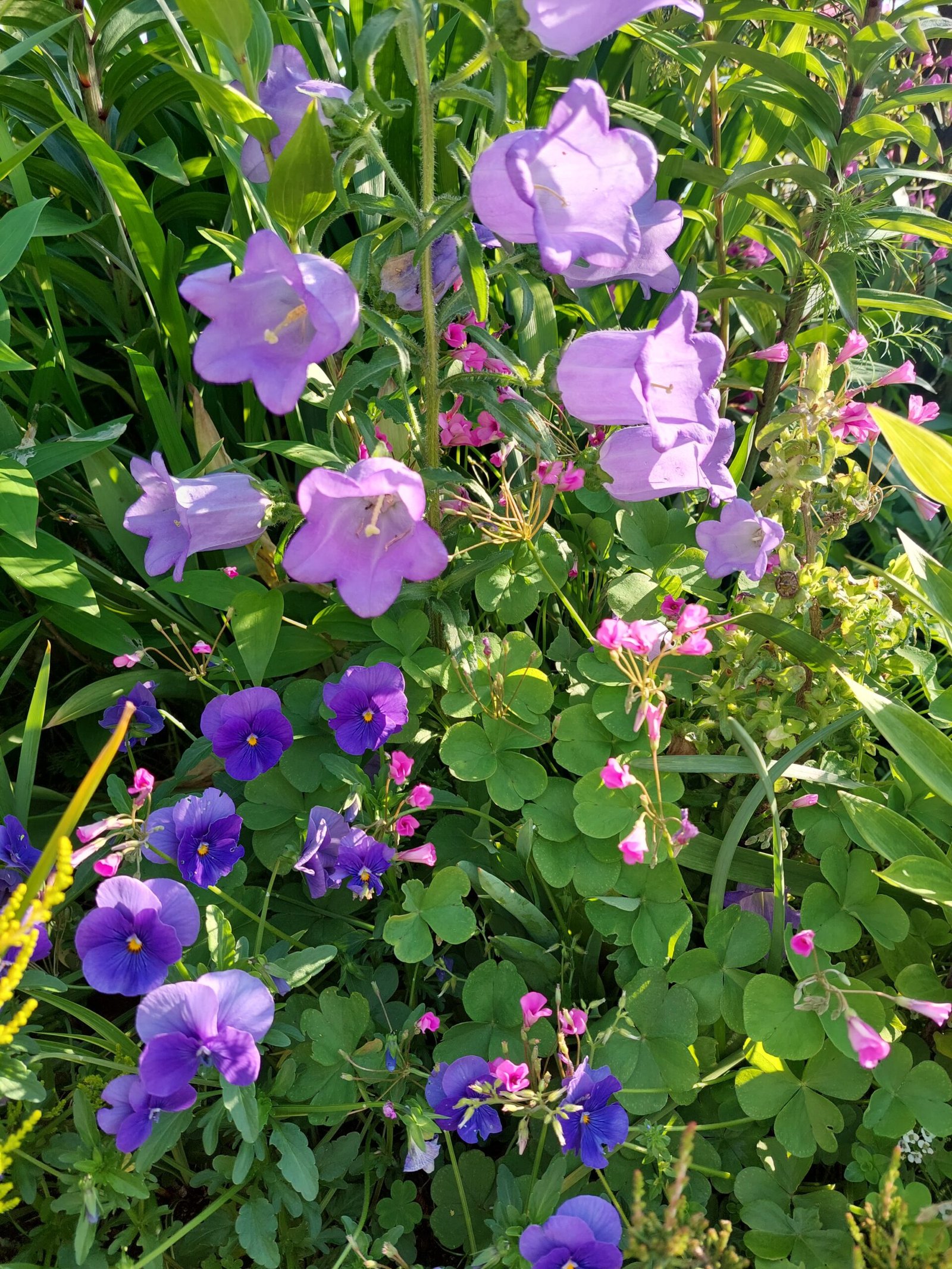
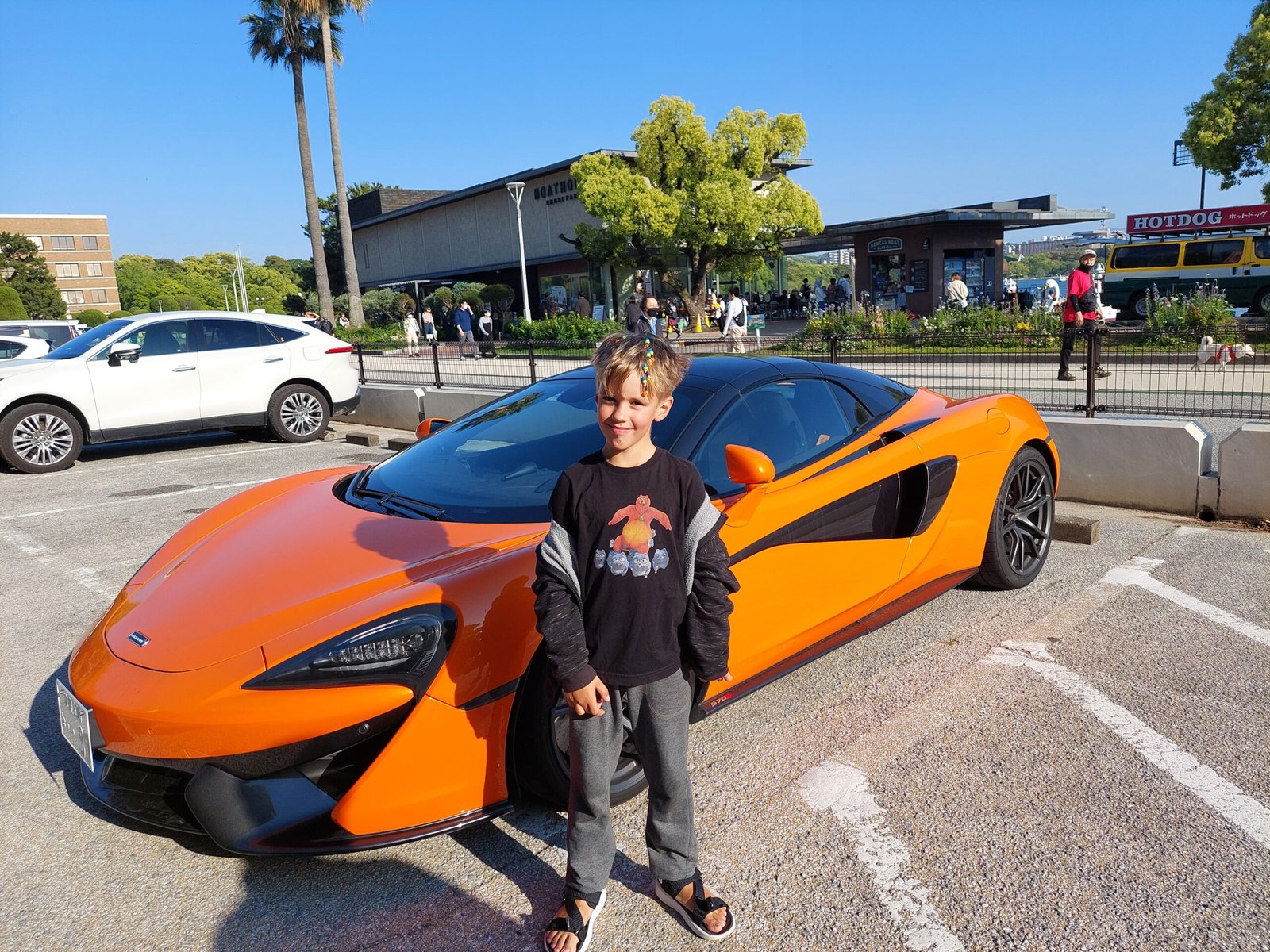
While Jaana photographed the flowers, Marko found other things to photograph.
It was very precise where in the pond you could fish and where you couldn't.