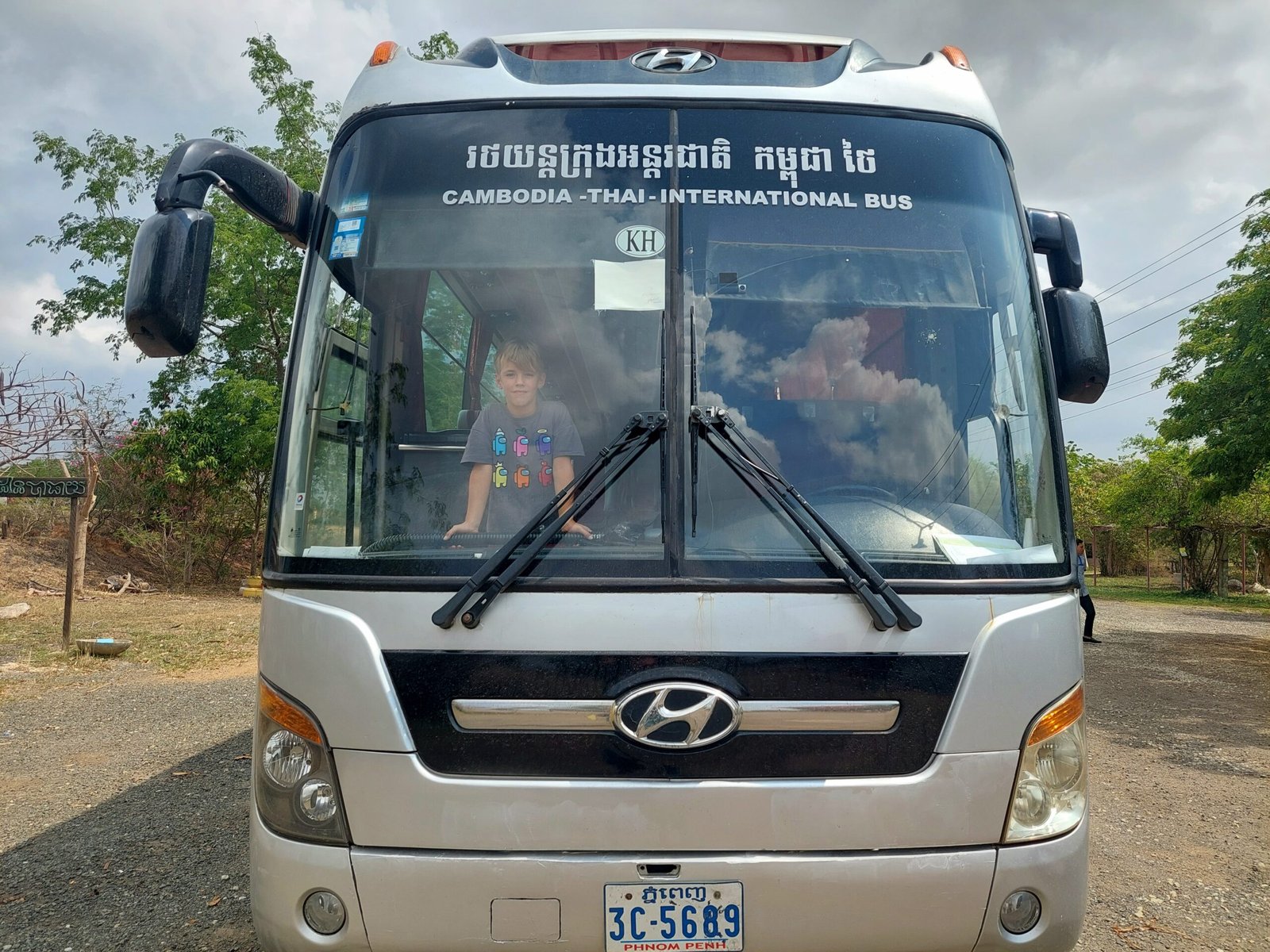
Sunday was a travel day. This time we moved a little further north from Phnom Penh to Siem Reap. Siem Reap is home to the famous Angkor Wat, which we plan to visit. We travelled again with Giant Ibis, as we had been very happy with the company’s bus ride the previous time.
Assistant driver R. Aho
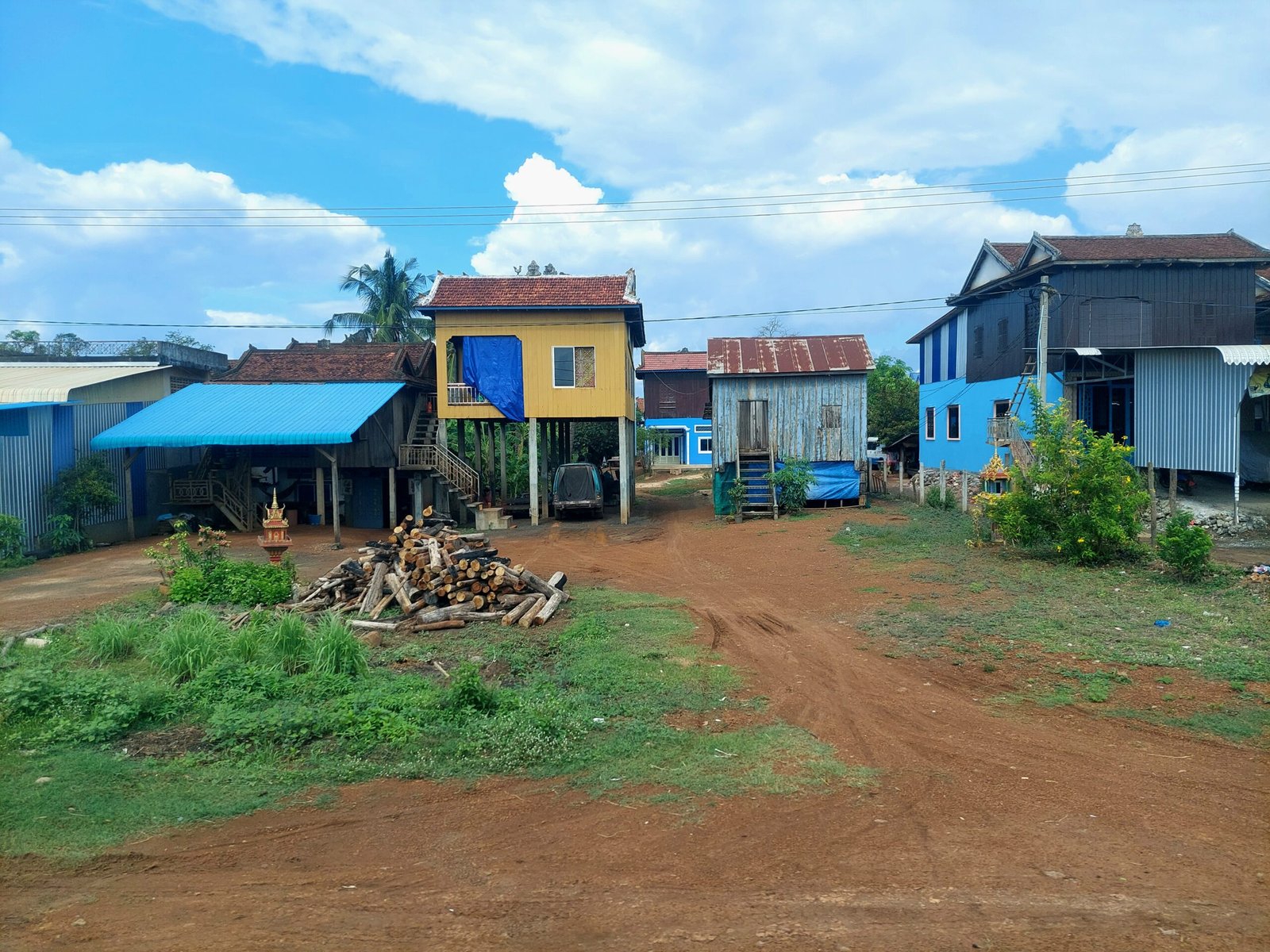
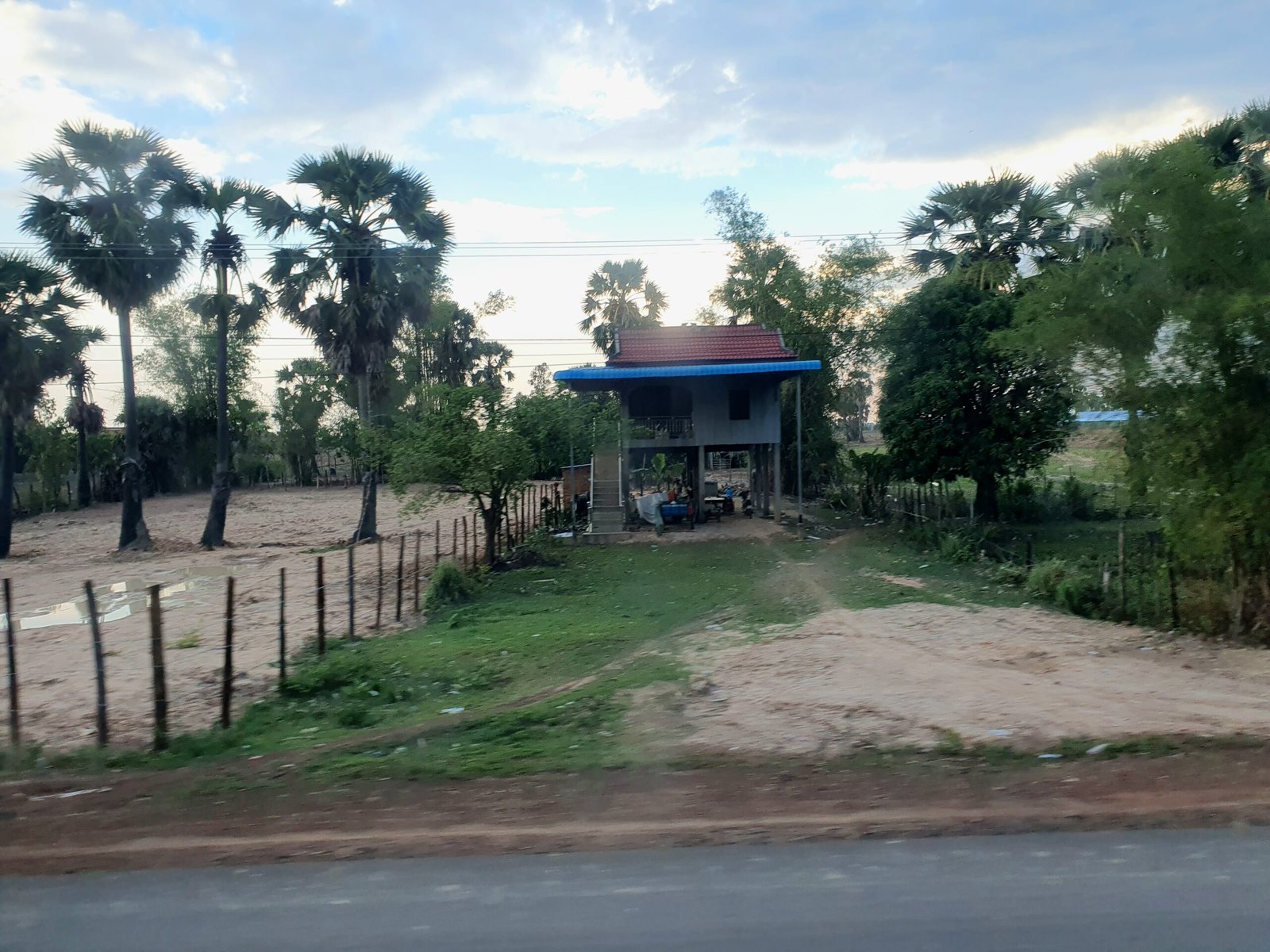
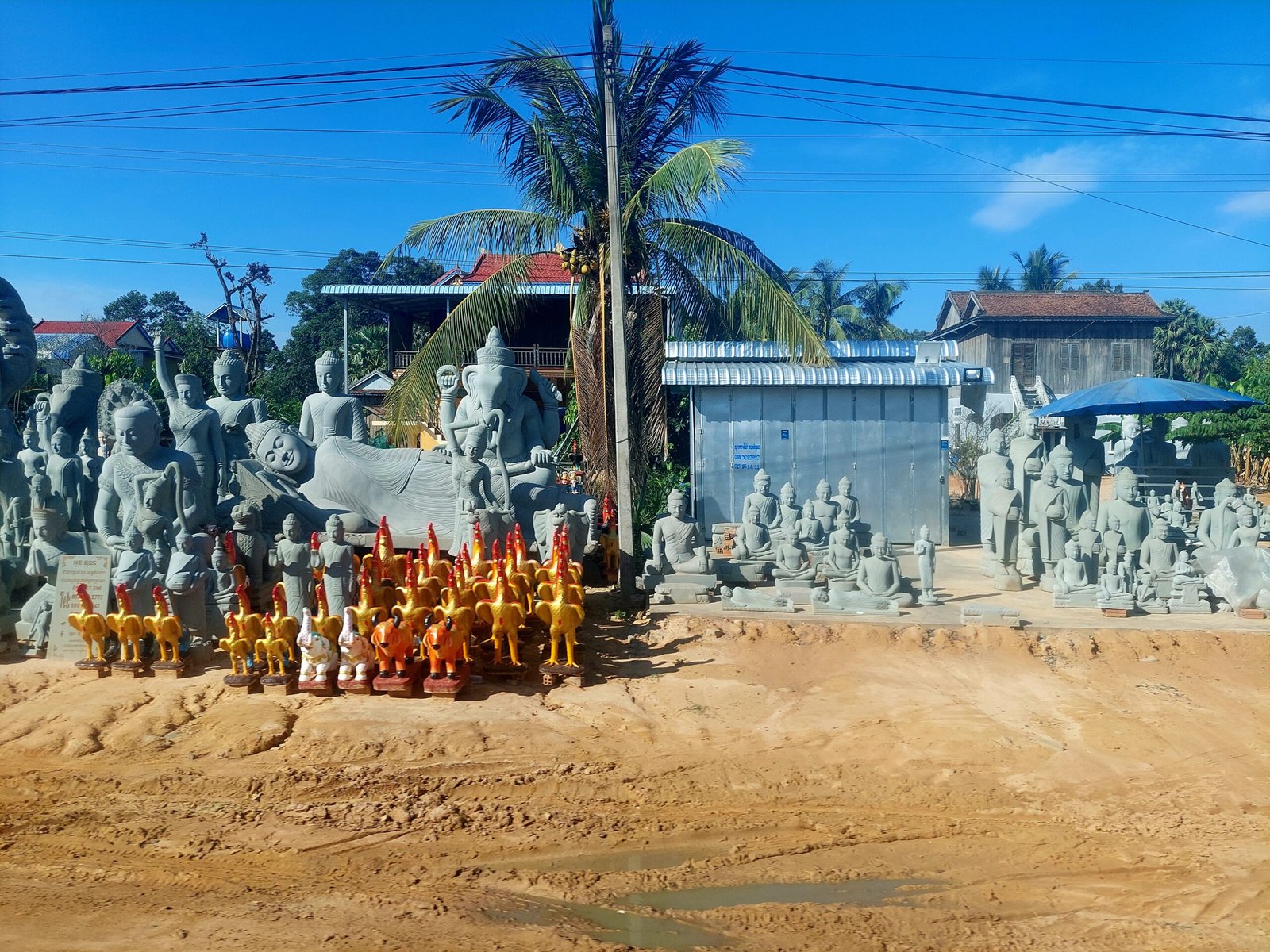
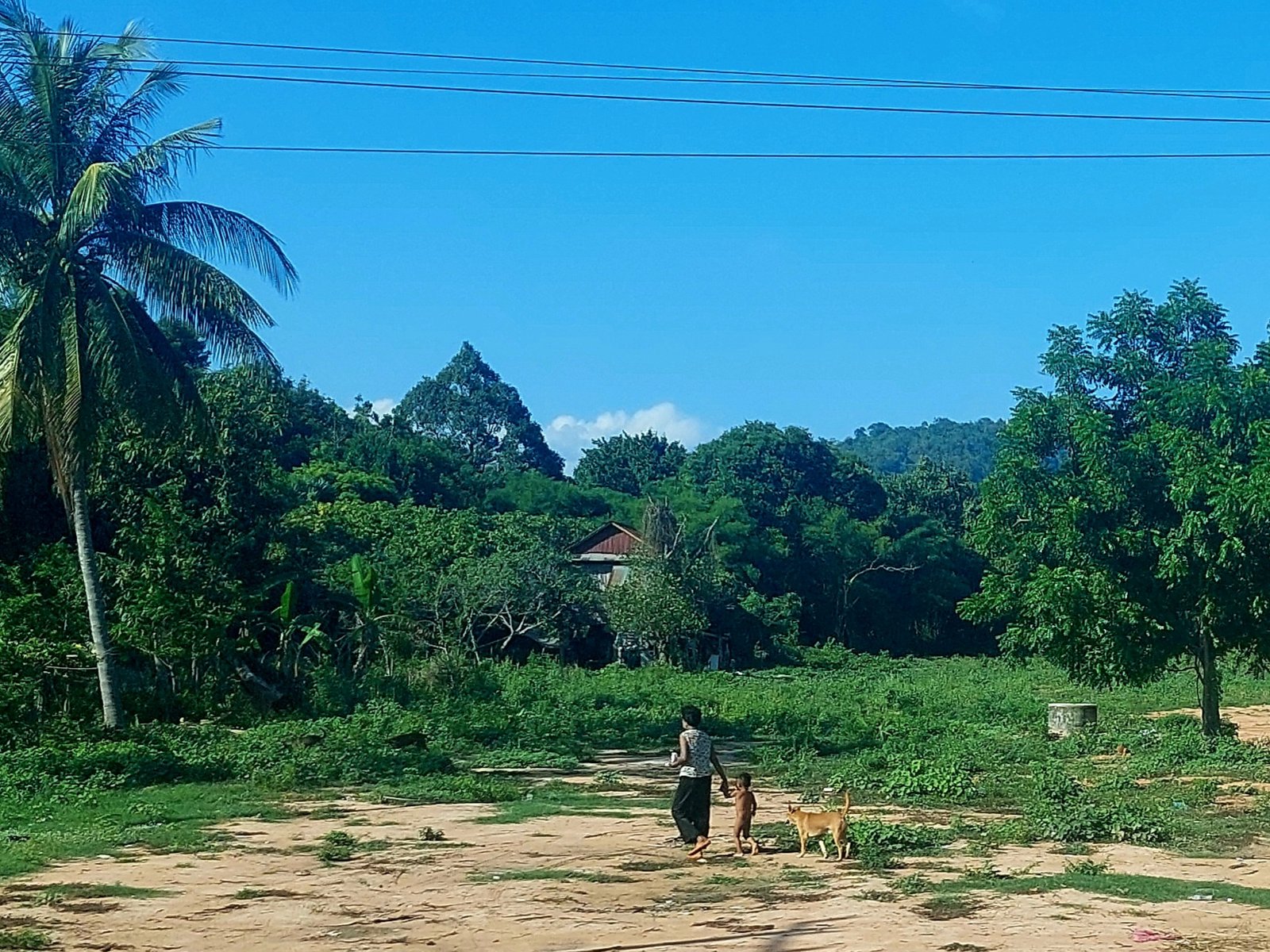
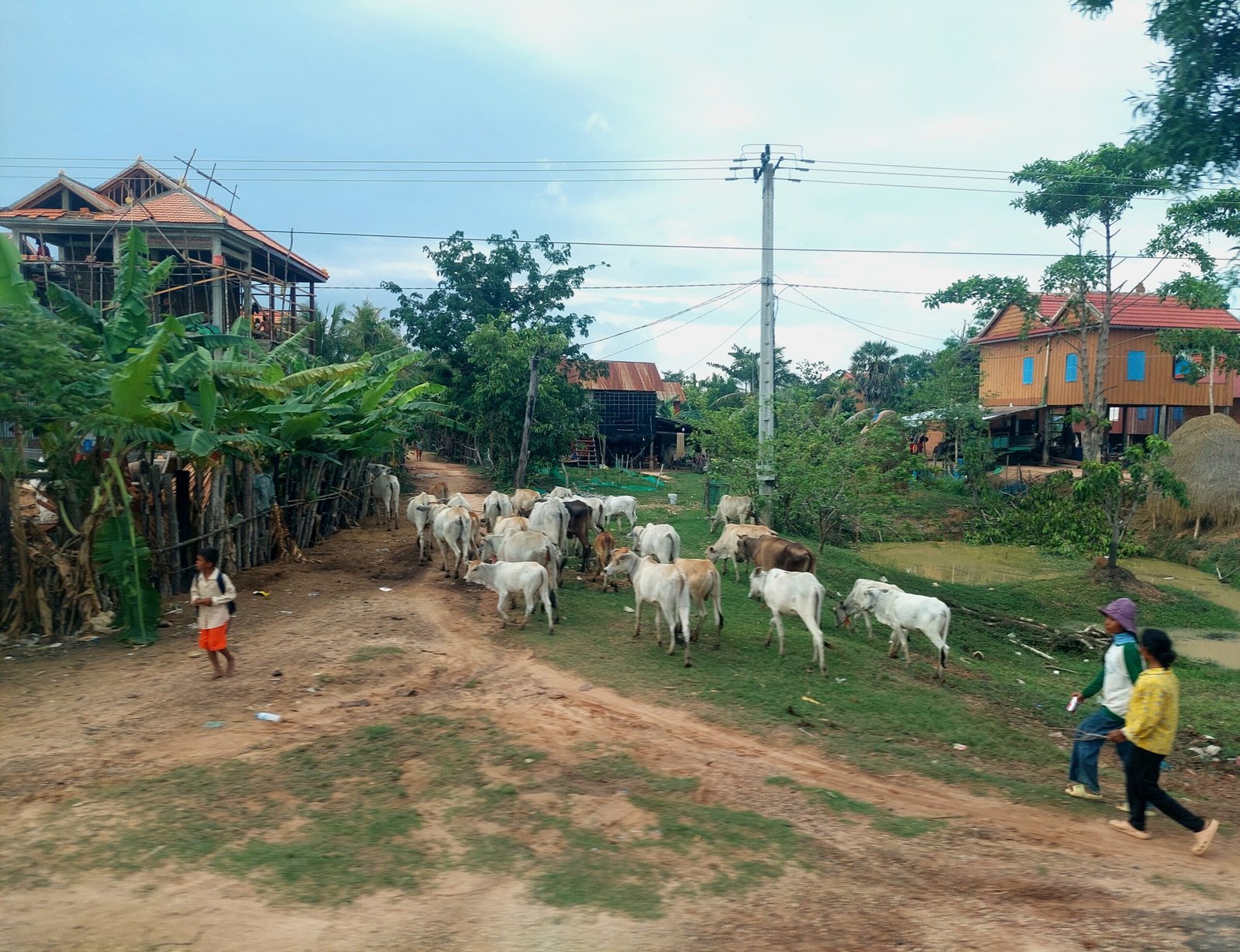
The journey went mainly through the countryside. Driving there confirmed what we had actually known all along: life in rural Cambodia is simple and poor. Around 80% of the Cambodian population lives in rural areas (usually) in stilt houses. The houses are built on stilts because during the monsoon season the water level can rise dramatically and flooding would damage the buildings. The lower part of the buildings is also used for storage, and apparently also for sleeping during the hottest months. In addition to these houses, we also saw several roadside statue shops, where huge statues of Buddha and animals were sold. Of course, there were smaller statues too, but at least the ones on display on the roadside were on the larger end of the scale. There were also several temples along the roadside. That makes sense, since there must be places to sell those huge Buddha statues. No one puts them in their own backyard, I guess.
These houses remain dry even in the worst floods.
These buildings were among the better ones.
Drive through house
Rural romance
A Buddha statue to decorate the backyard.
A pair like this was also for sale.
The selection of statues was really wide.
We drove through landscapes like this for most of the trip.
Herding cows back home seemed to be the job of the older children.
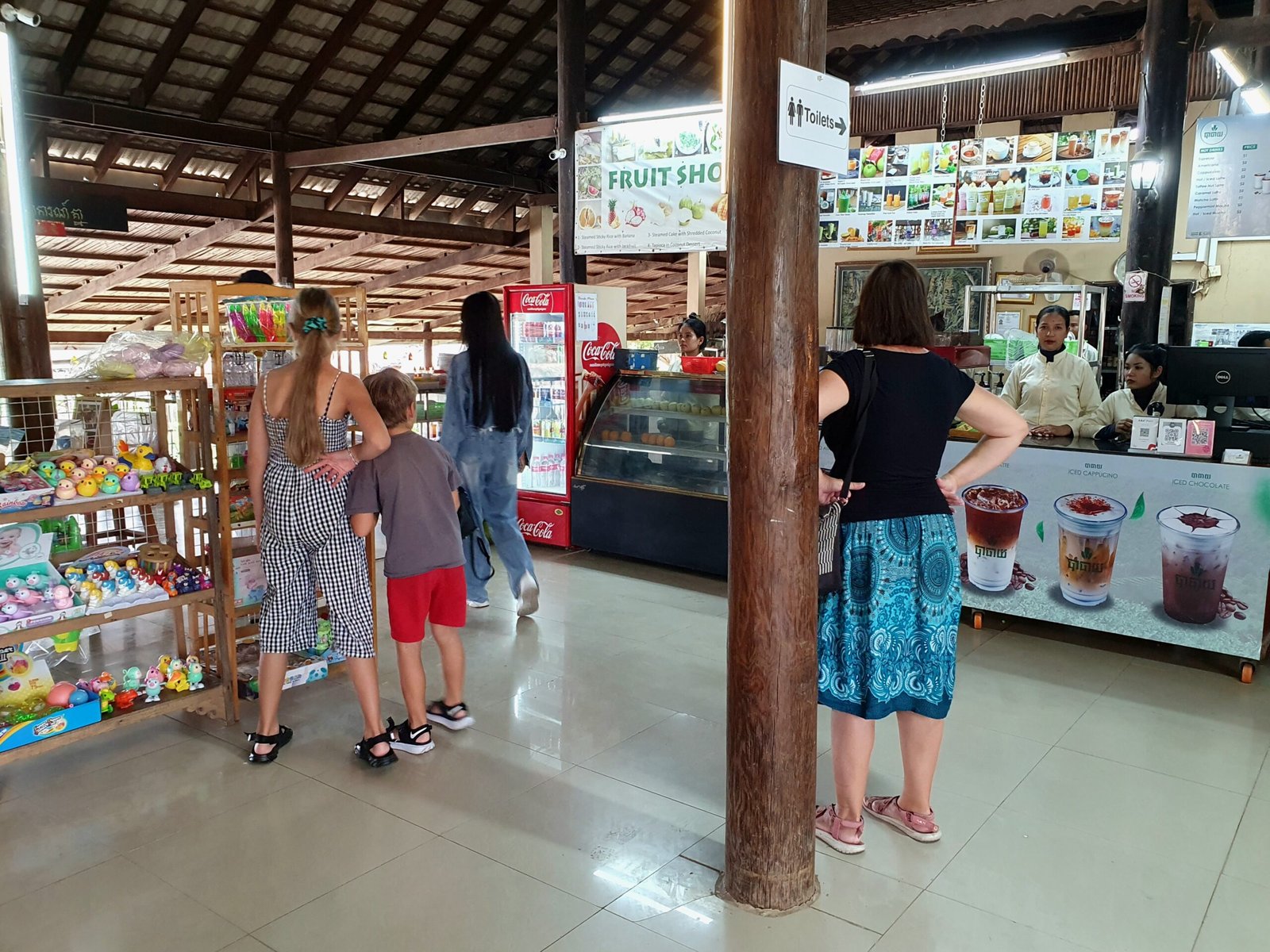
This bus ride included two stops like the previous one: a longer lunch break, and a shorter toilet break. This time, we didn’t have lunch at the stop, as the open-air kitchen and dining area didn’t really tempt us to eat. We bought a bag of crisps instead and ate the fruit we had taken with us. The second stop was no better, so we skipped Sunday lunch this time.
Our lunch spot was a bit more ascetic than last time.
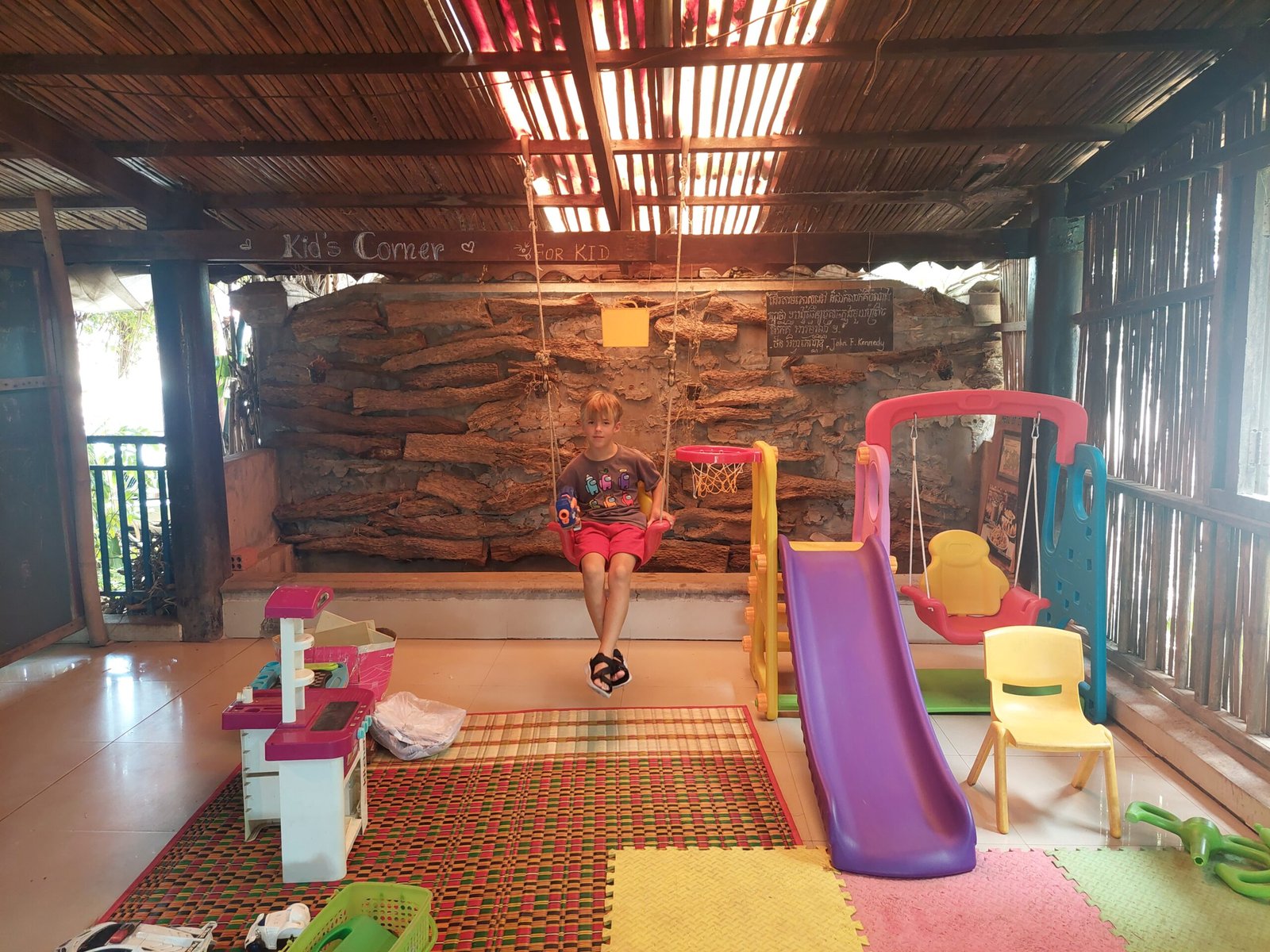
However, there was a play corner for the children.
You had to ask at the counter for the actual food, as the signs only advertised drinks.
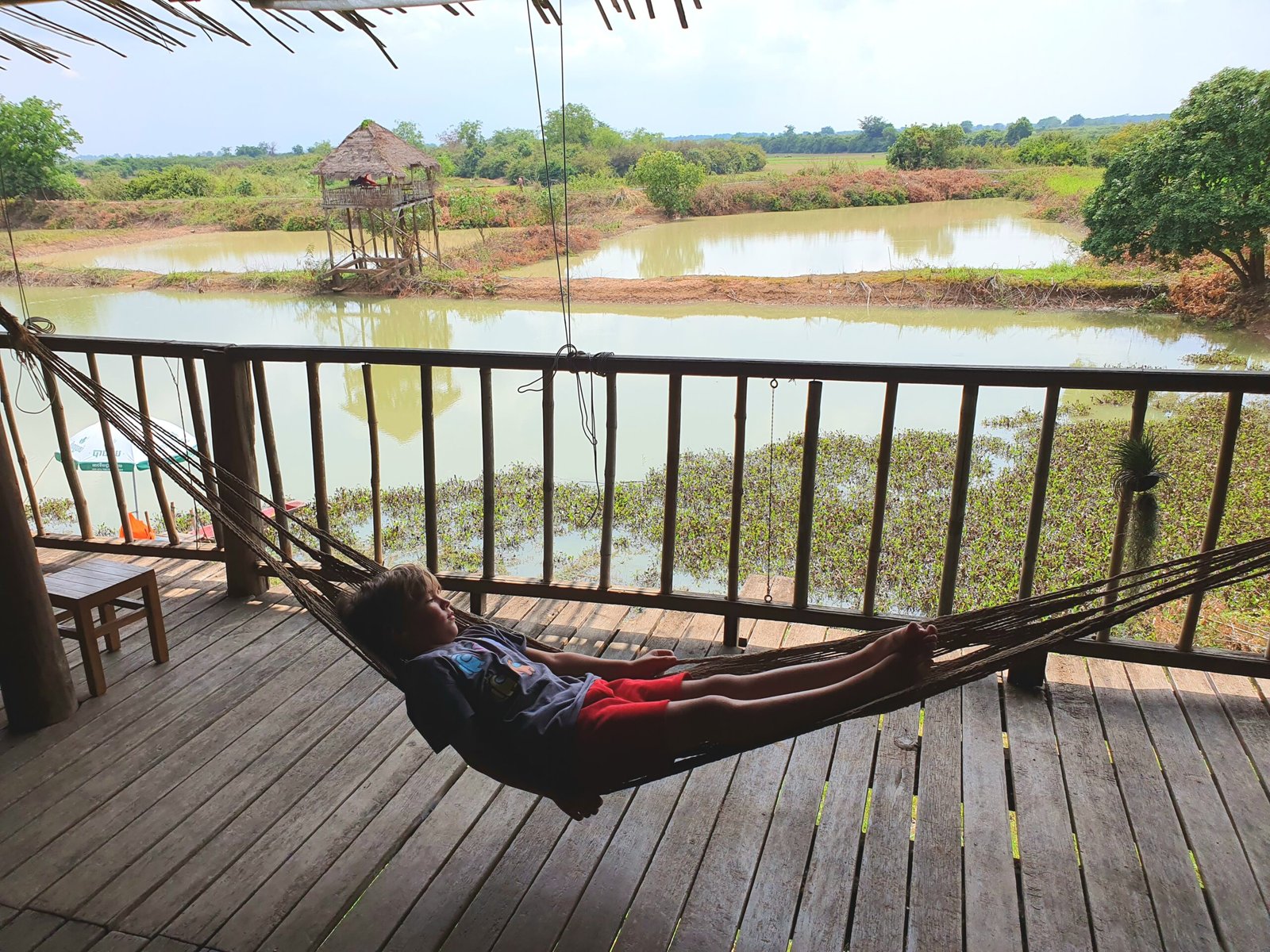
There were hammocks on the back terrace for tired travelers.
The bus journey took a bit over six hours. When we arrived at the bus terminal after dark, the power went out. There we searched for backpacks with the other passengers by the light of our mobile phone flashlights. It would have been difficult to try to order a Grab taxi (the equivalent of an Uber), so we hopped on a bigger tuk tuk, which took us to our hotel for two dollars. After we checked in, Marko went to look for a grocery store to get us something to eat, since we had missed lunch. The shop he found was so big, that this time we had real cheese on our bread for the first time in a long time!
Monday was a rest day. In other words, we spent most of our time at the hotel pool and in our apartment. It wasn’t a day of pure rest, however, as we had to do some planning and book an excursion to Angkor Wat and accommodation in Bangkok, where we’re heading next. Now we had to decide how we are going to cross the border. There are two options: a Giant Ibis bus, which takes about 9h, or a 1h flight. The flight isn’t a lot more expensive, so the price isn’t a decisive factor. You get to see more if you take the bus, but on the other hand, 9h on a bus is a long time to sit, even if we have some stops.
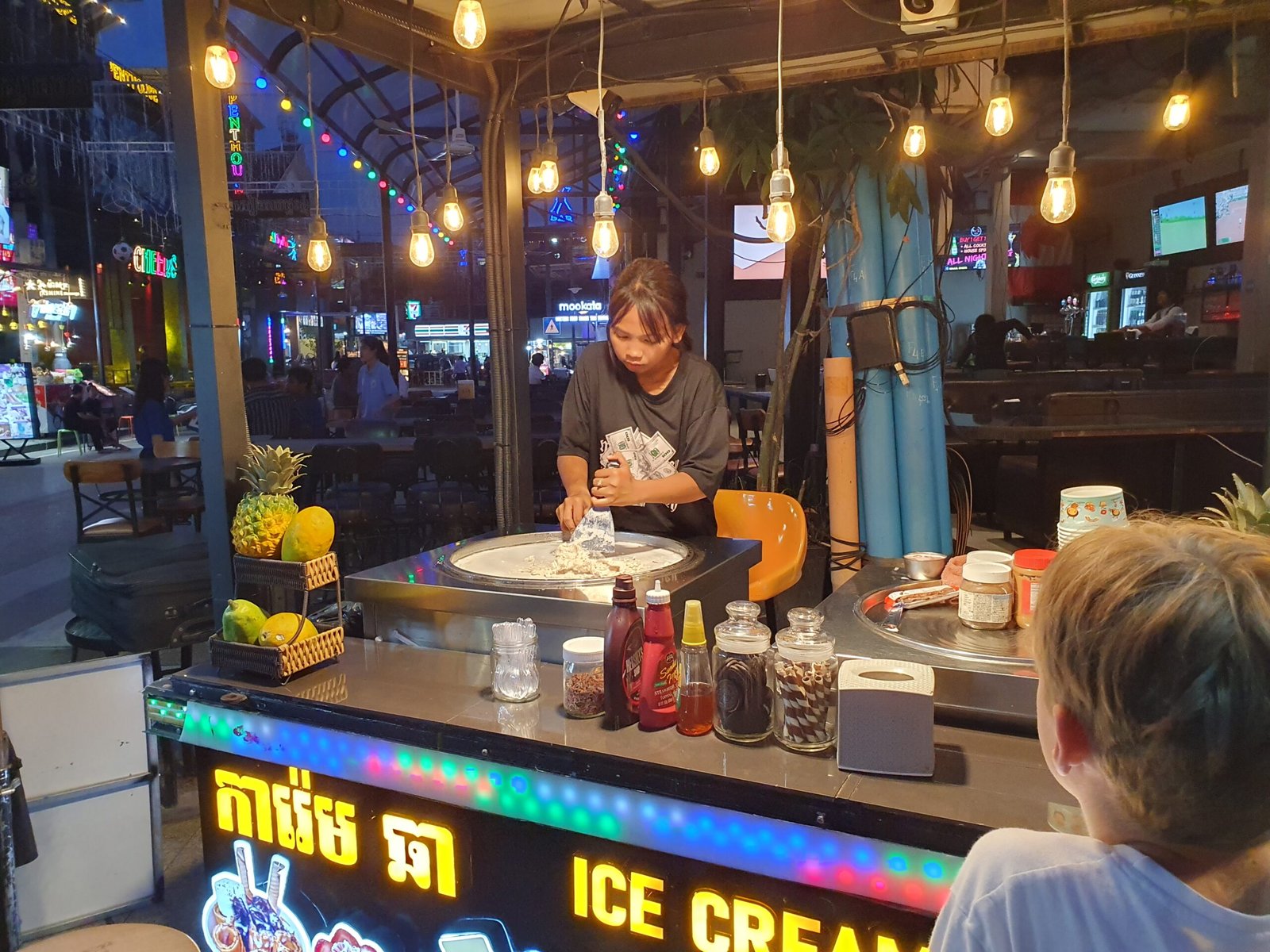
In the afternoon we went to Siem Reap city centre for dinner. We went to a Greek restaurant, which turned out to be an excellent choice. There was also a Khmer restaurant opposite this restaurant, which we will probably visit also. After dinner, we went to see what the city centre looked like. There were loads of different restaurants and bars. (And more western tourists since Auckland!) One of the streets was called “Pub Street”, which of course we had to visit. There the kids got ice cream for dessert, which was made right in front of us on a really cold tray, and then rolled up with two spatulas.
The wait for food can sometimes feel really long.
Tuk-tuk drivers waited outside restaurants in the hope of picking up customers.
At six o'clock, the street was still quiet, but in the evening and especially on weekends, it can get quite busy here.
Kinder ice cream rolls are being made here.
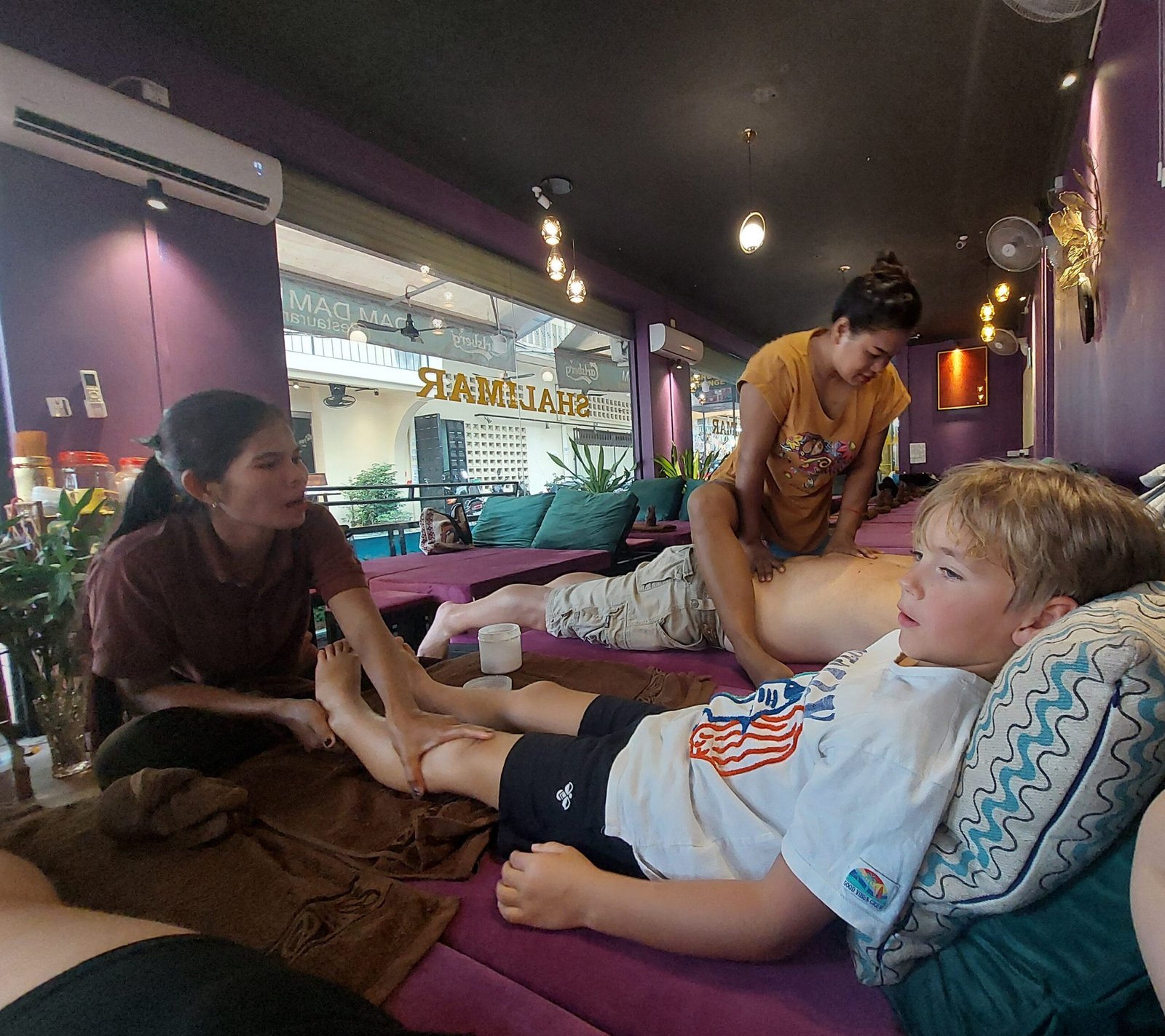
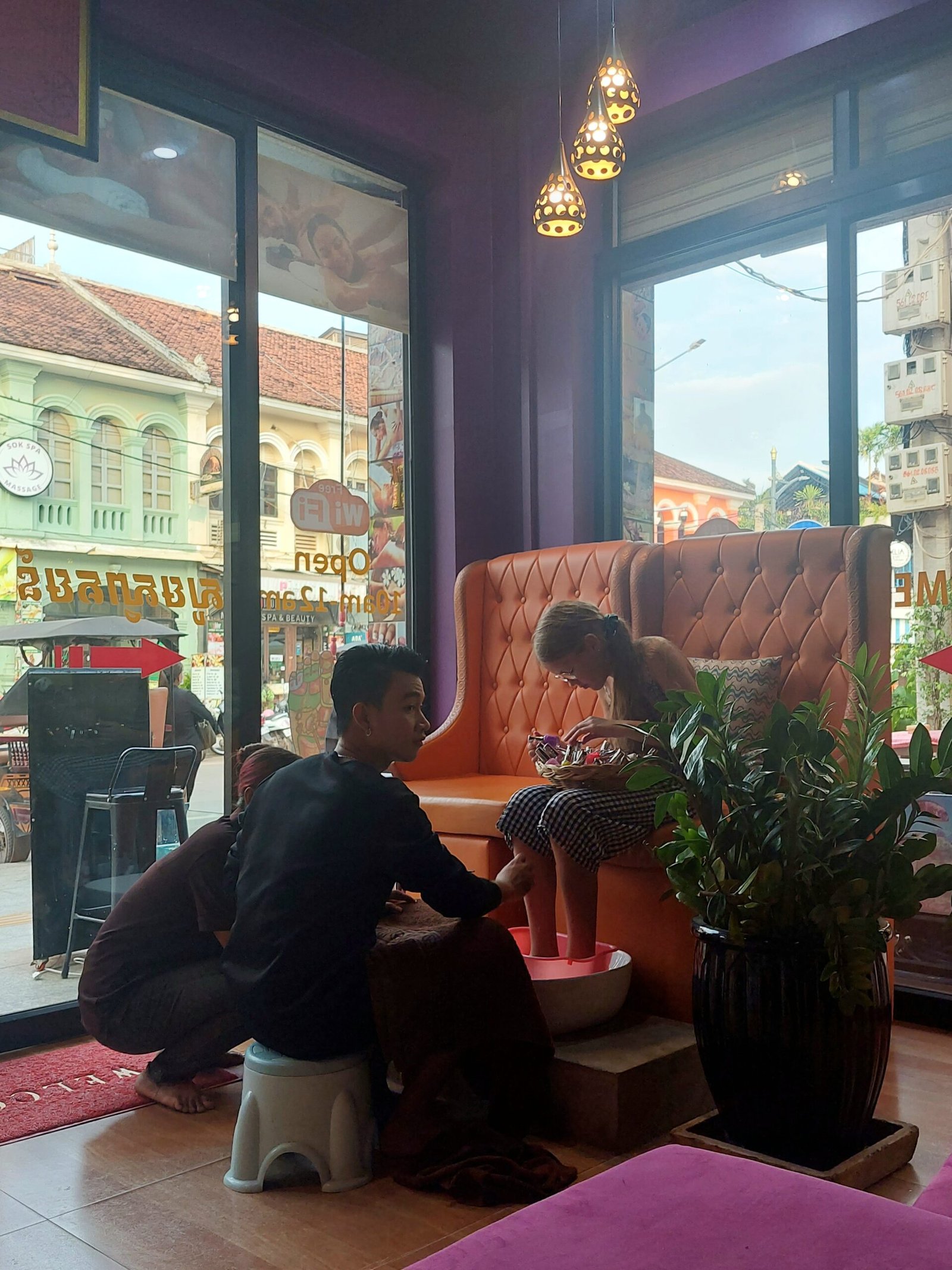
Before the dessert, we stopped for a massage. If you can get a 30min massage for four dollars, you don’t want to miss it. Jaana and Risto took the foot massage, while Marko had a neck and shoulder massage. Ronja wanted a pedicure, so a young man spent half an hour at her feet, first massaging her feet, then cutting and filing her nails, and finally applying nail polish. Ronja was very happy with the result. The next day, she says, she has to go for a manicure to get matching nail polish on her finger nails. Risto also liked his own massage, although it was a bit tickling. He also wants another massage the next day. We adults share the idea, so tomorrow we will probably be heading towards the centre of Siem Reap in the evening again. In reality, to get a massage here, you don’t have to go further than the other side of the road, as there are small boutiques offering foot and other massages everywhere you look.
A foot massage for four bucks
"Mom, this is so hard. There are too many nail polishes. I can't choose."
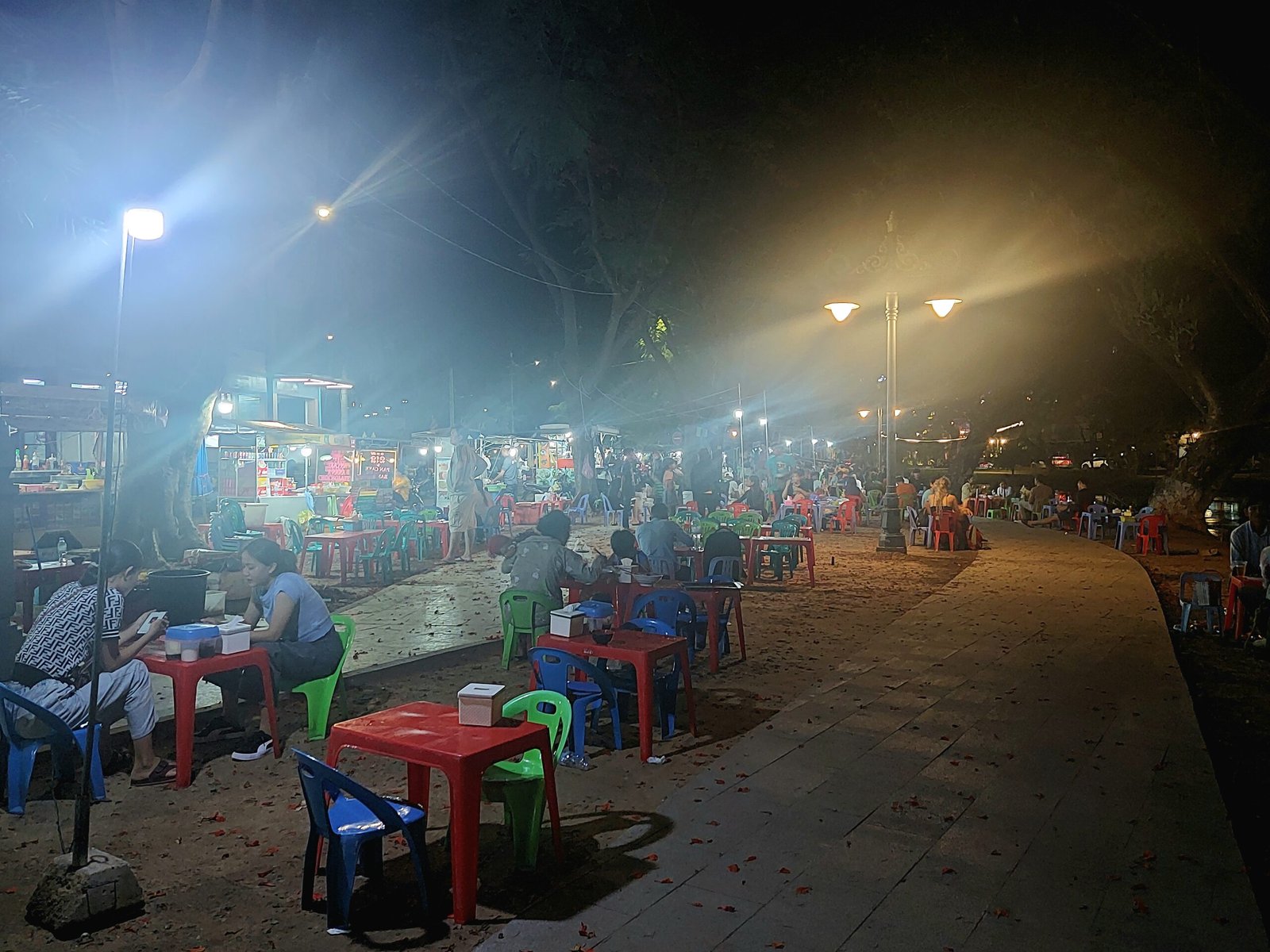
The riverbank was lined with small street kitchens. The customers were mainly locals, but a few tourists had also found their way there.
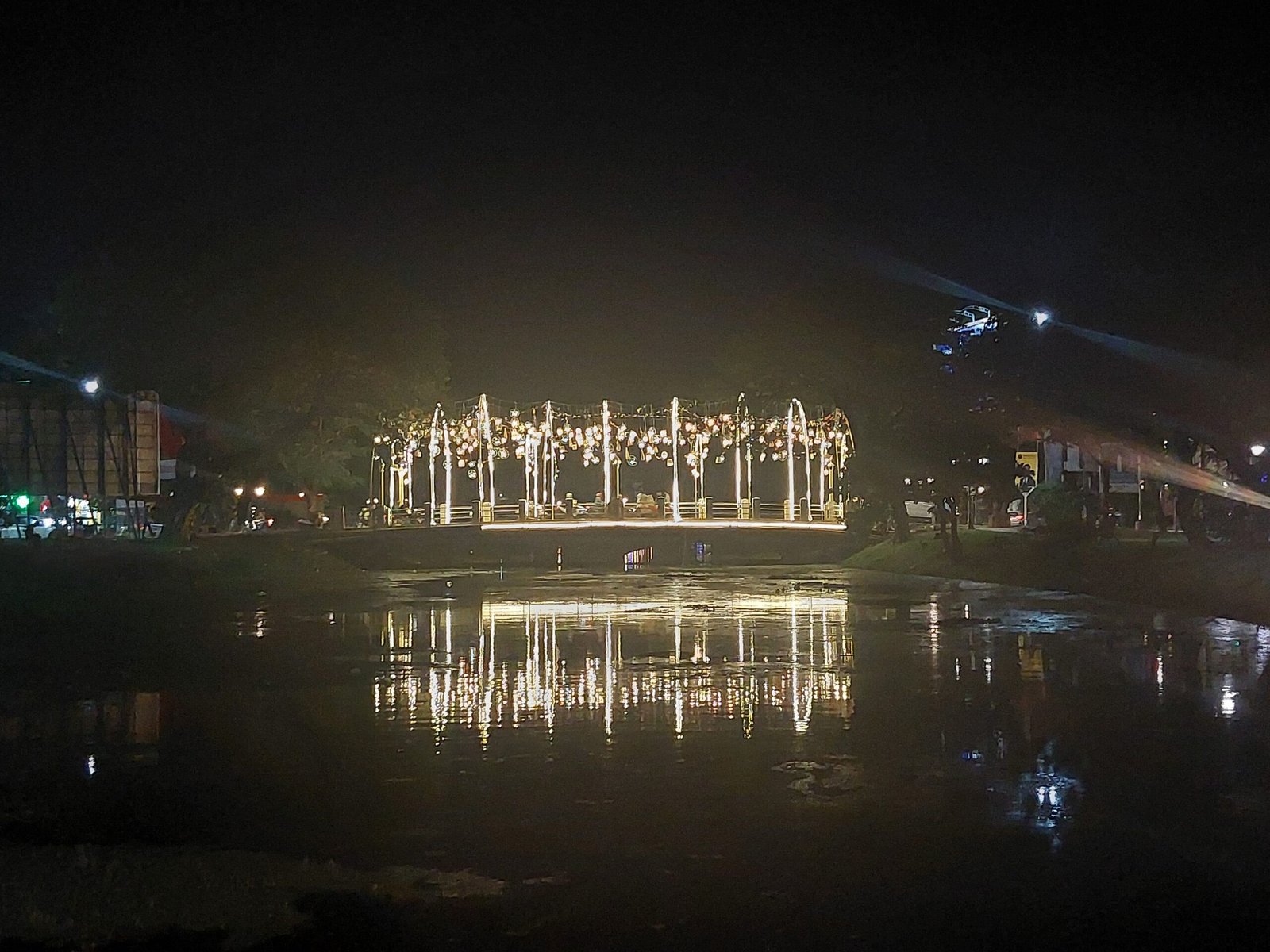
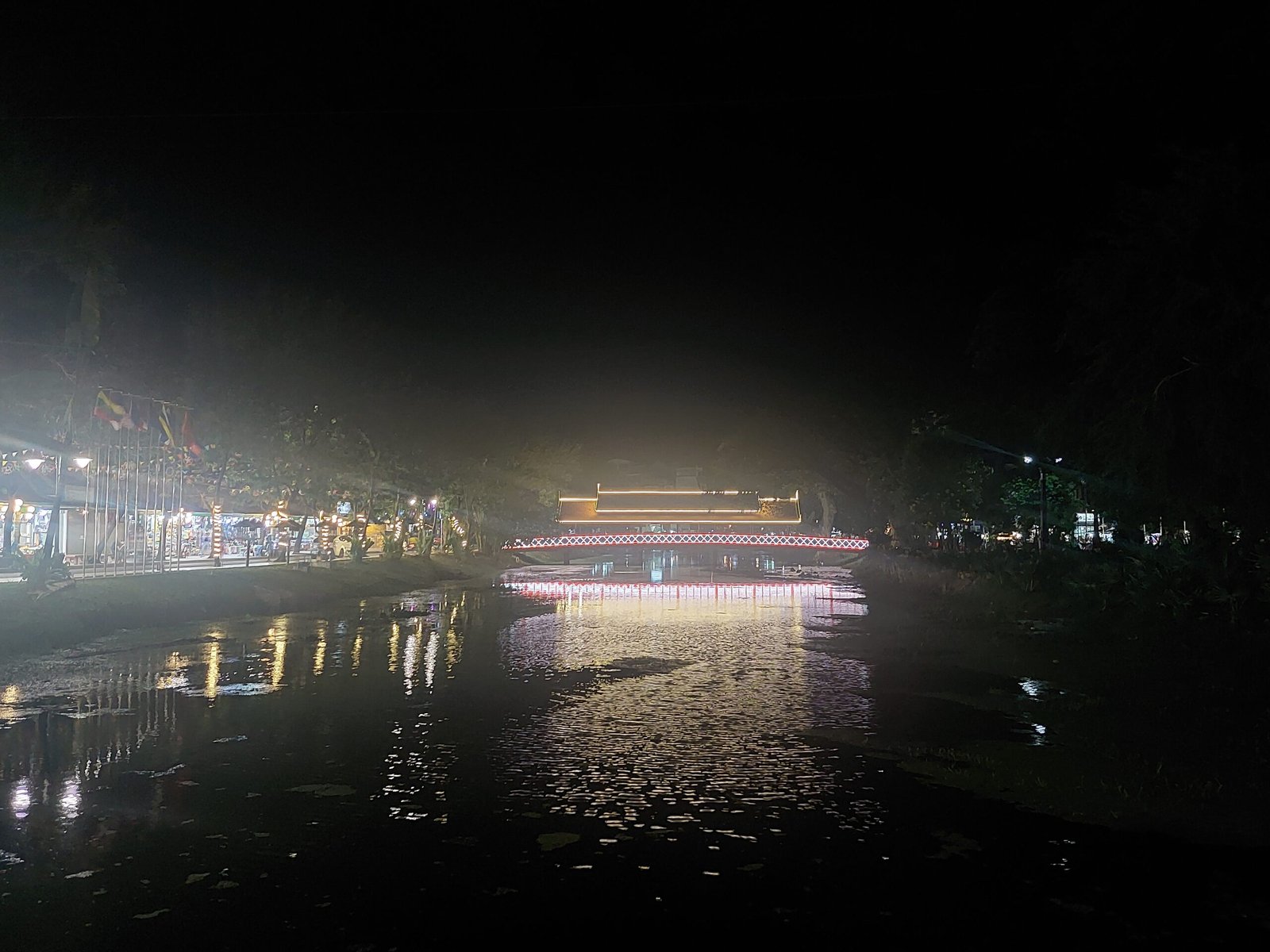
The bridges over the river were brightly lit.
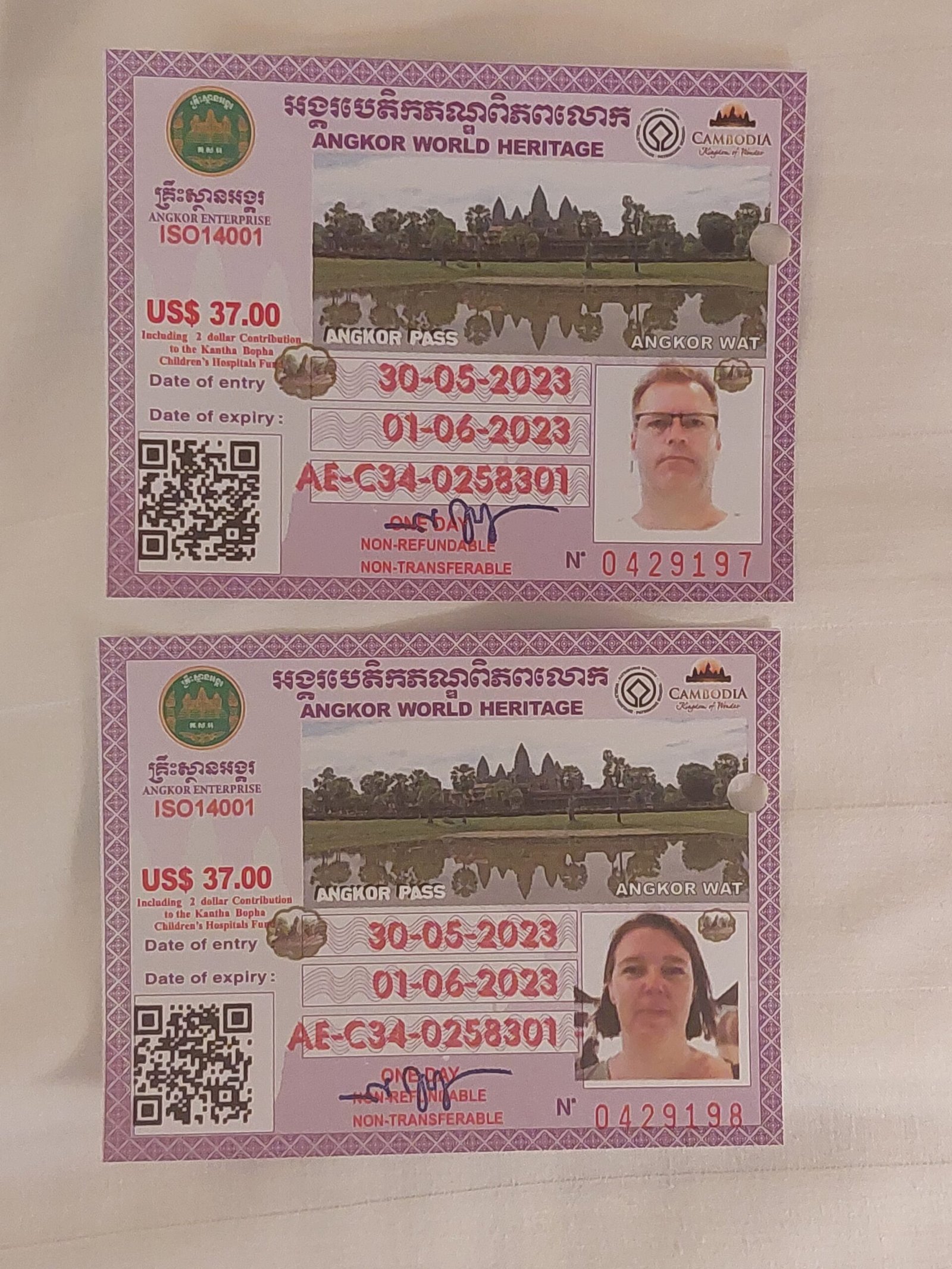
Tuesday was a temple day. (The children joined us, though not with great enthusiasm.) We had booked a five-hour tour of the three most important temples in the Angkor Wat area. Our guide and driver came to pick us up from the hotel at 7:45am. Our first stop was at the office, where we bought ourselves one-day entrance tickets to the area. There were also three-day tickets available, but we figured one day was enough for all of us.
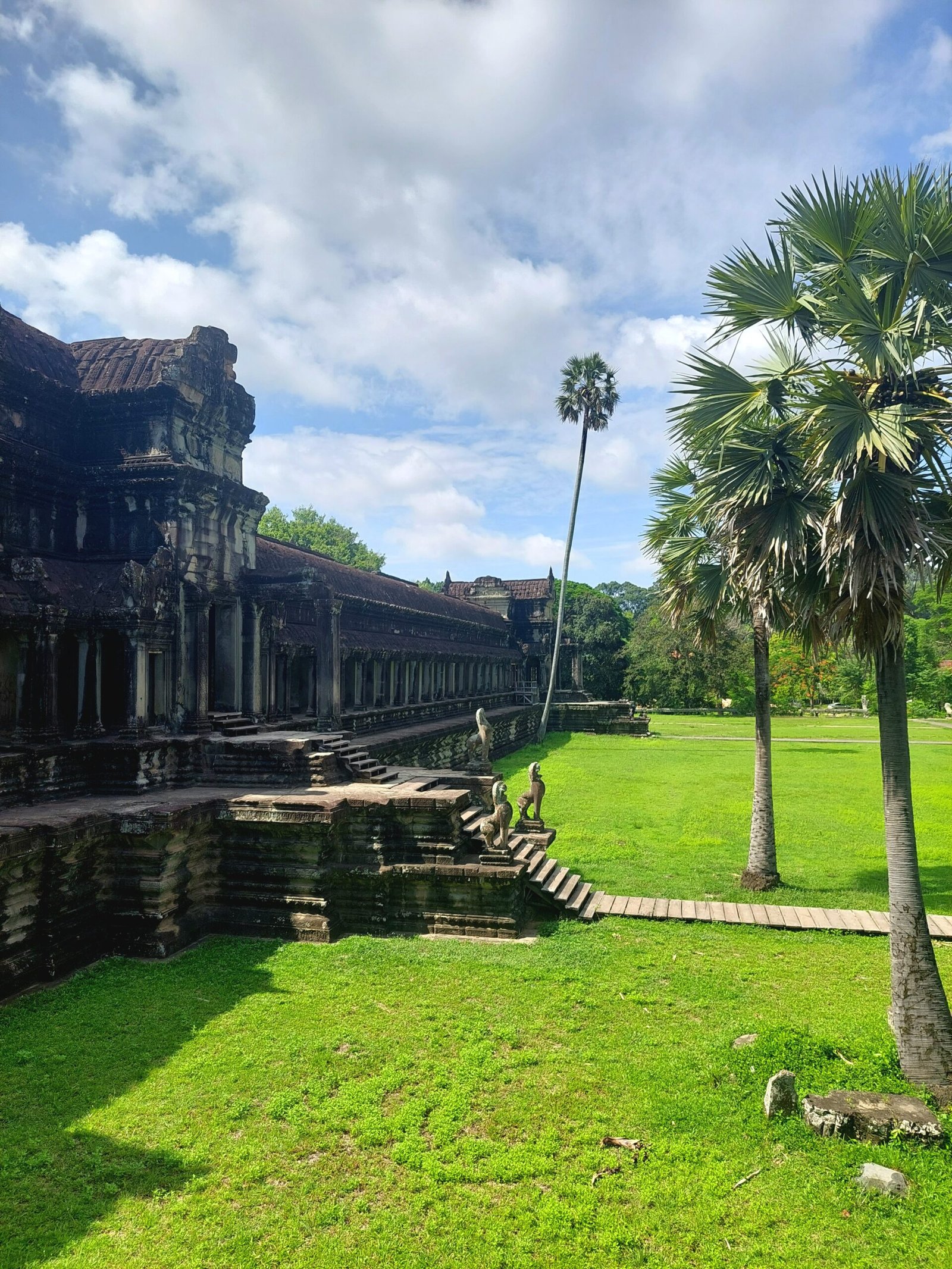
Once the proper tickets (with photo) were purchased, we drove to the Angkor Wat temple first. It is certainly the most famous temple in the region, and indeed is truly impressive in all its grandeur. It took 37 years to build, involving 300 000 workers, 4 000 elephants and 2 000 skilled craftsmen who carved the huge stones transported to the site into the desired shape on site.
Festival passes for the Angkor Wat area. We were asked for our tickets several times during the day.
During the coronavirus pandemic, when there were no tourists, a lawn was planted in front of Angkor Wat.
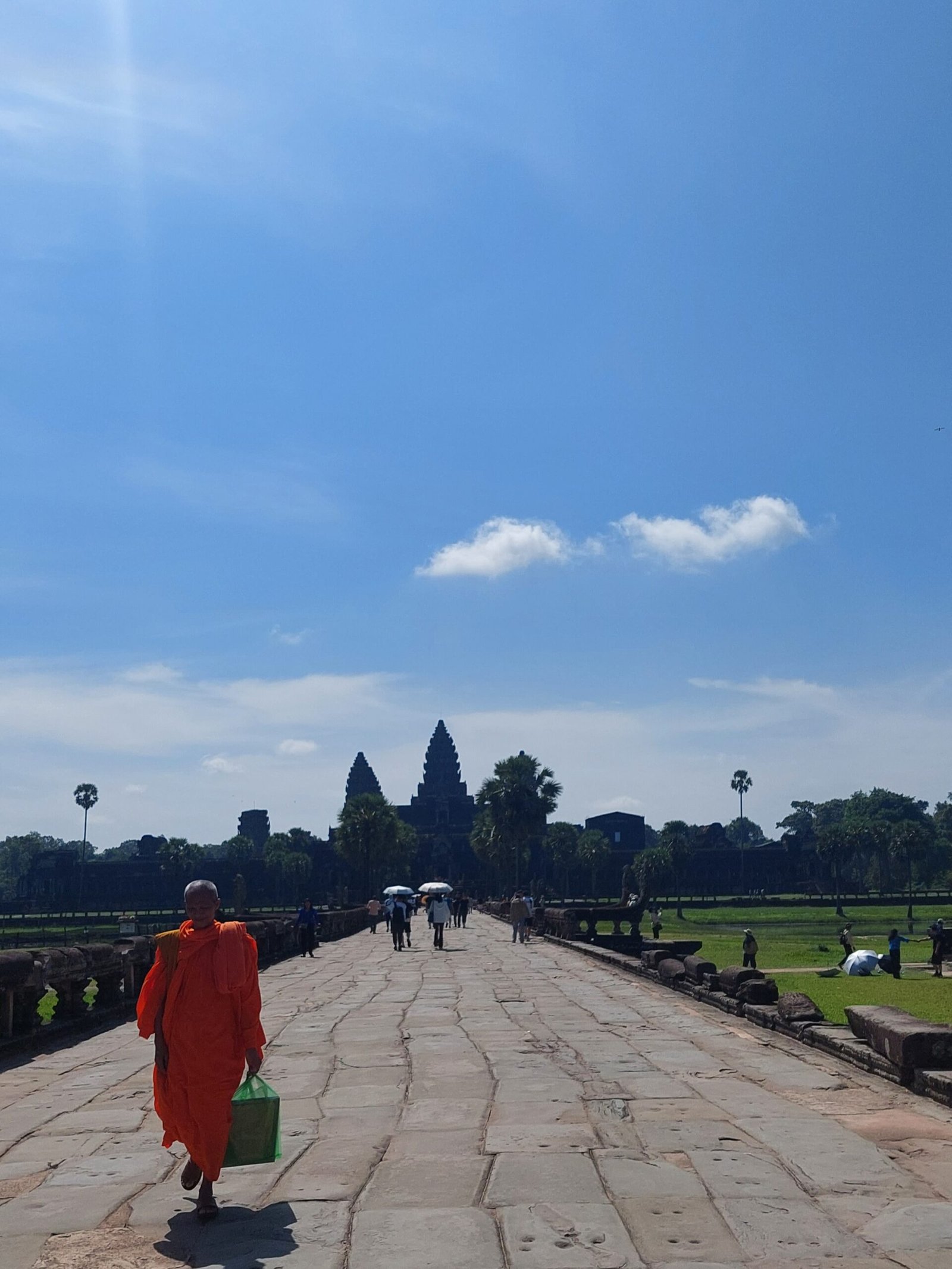
As Angkor Wat is now a Buddhist temple, many monks also visit it.
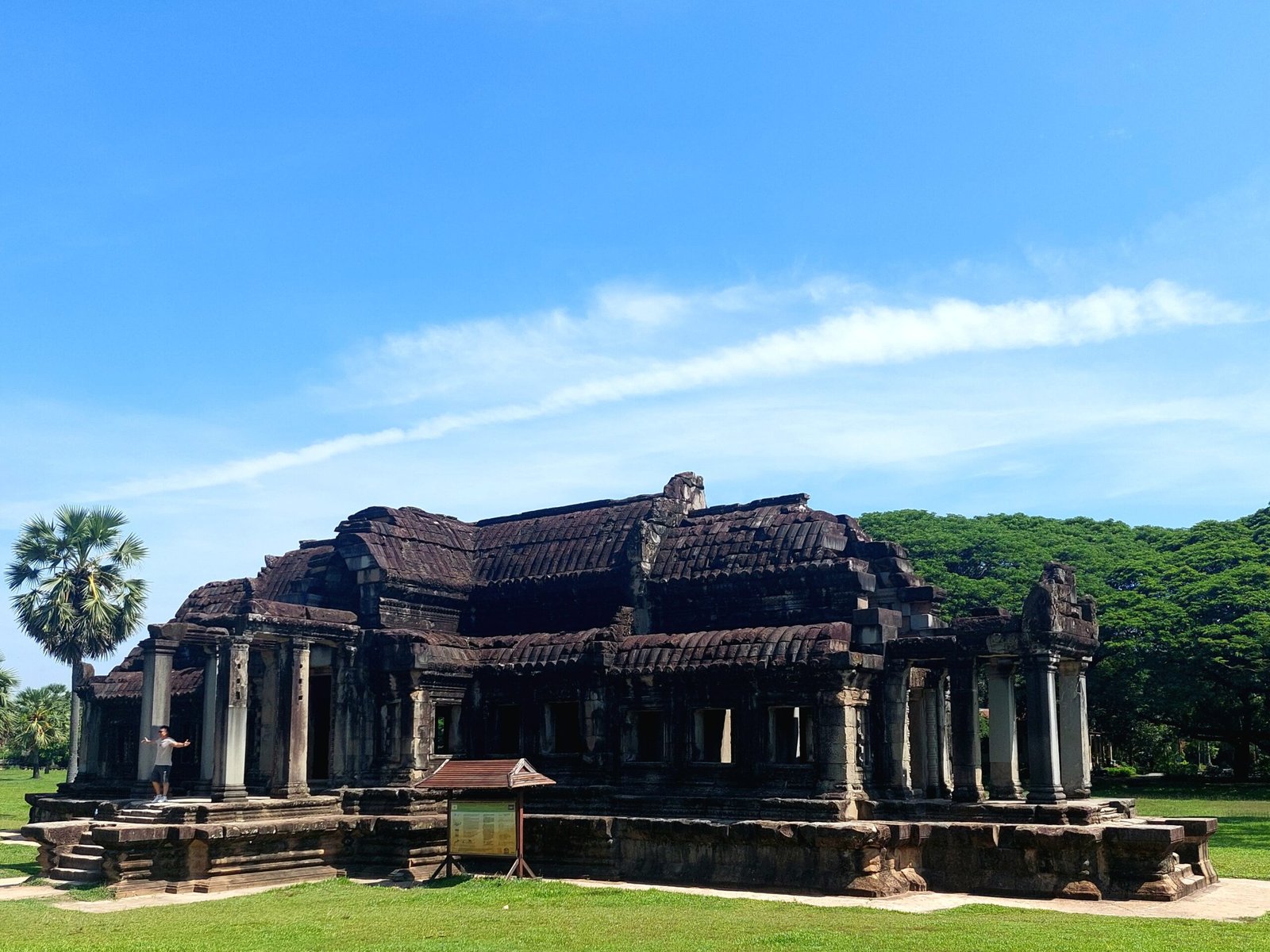
Outside the temple, there are two libraries where texts carved into stone slabs provide information about the construction of the temple, among other things.
Early risers come to the shore of the pond in front of the temple to admire the sunrise. We were not among them.
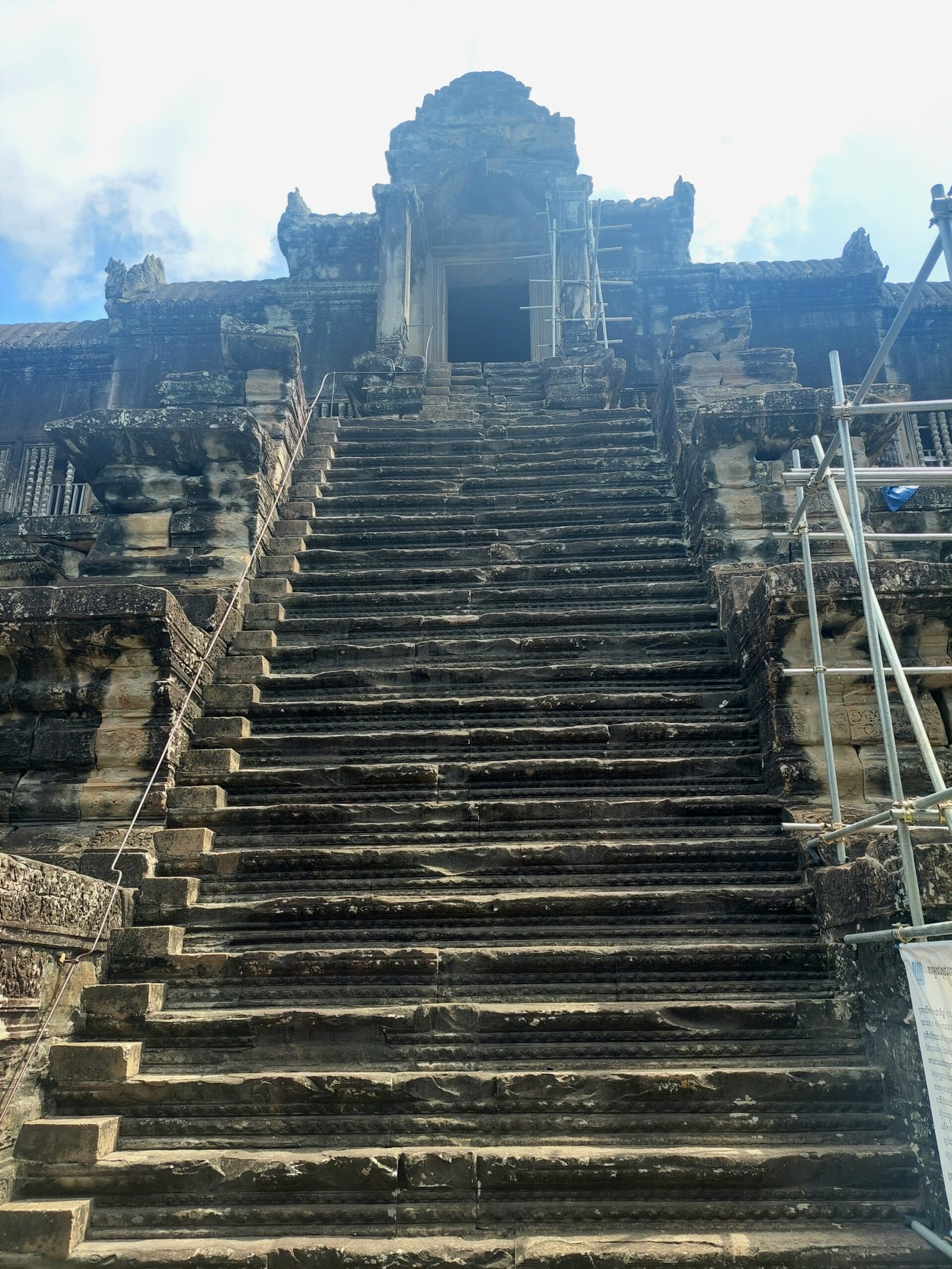
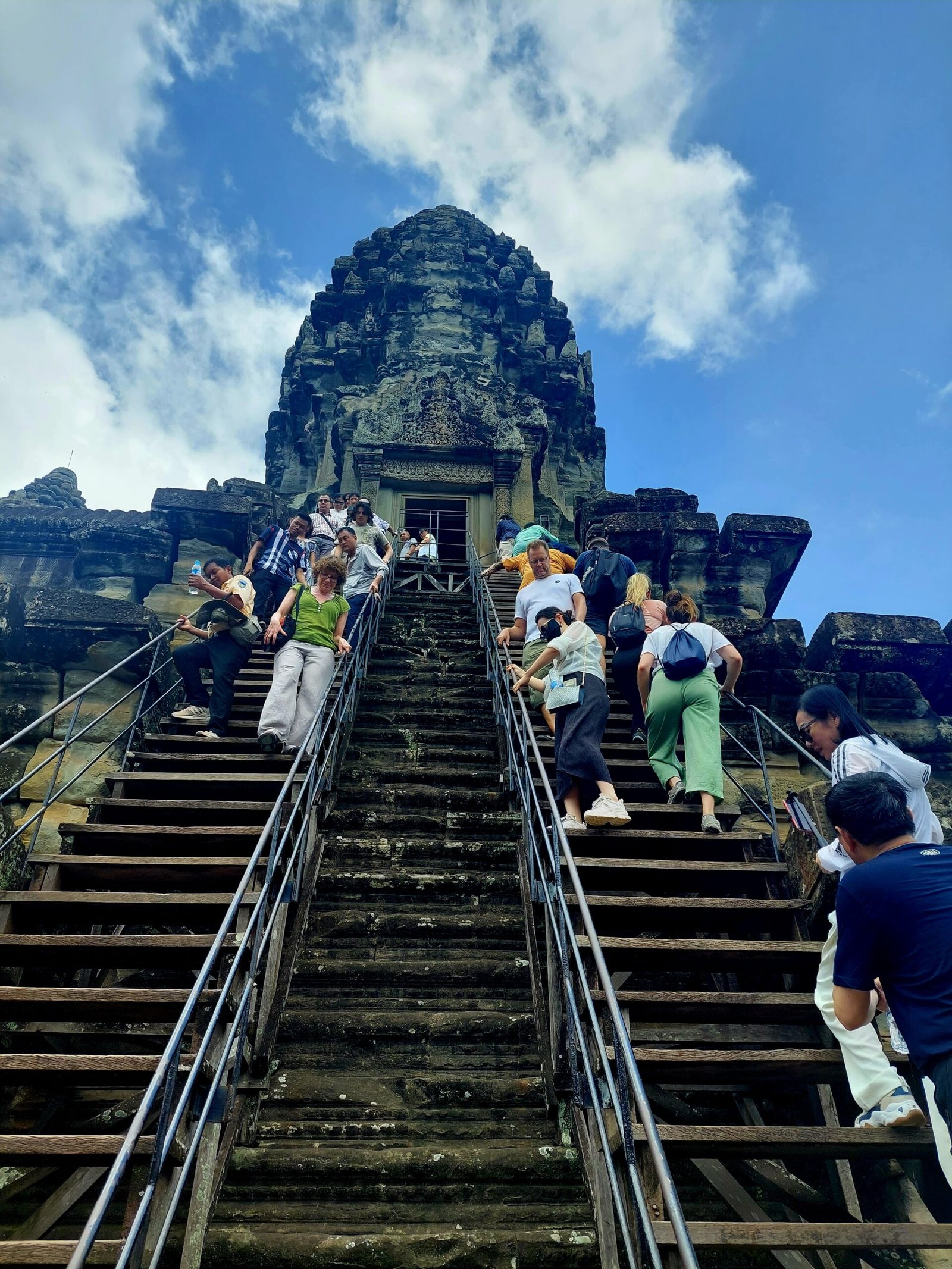
The sun was shining from the blue sky, so it was a sweaty day exploring Angkor Wat. Our guide told us a lot about the history of the area. This largest temple complex in the world was originally built as a Hindu temple and dedicated to the Hindu god Vishnu. However, it was later converted into a Buddhist temple by another ruler. The temple had three sections, the highest of which, the one representing the sky, was accessible only to royalty and the highest-ranking priests. The original stairs to the top floor were very steep, reflecting how difficult and long the journey to heaven was. Tourists who stumbled up them were often so badly injured that they were eventually banned from climbing them. For a while, the top section was completely closed to tourists, but nowadays it is once again open to all visitors over 12 years of age, using the wooden stairs replacing the old ones. They are very steep too.
There were three entrances to the temple. Today, everyone can also pass through the royal gate. The picture shows the gate for ordinary people.
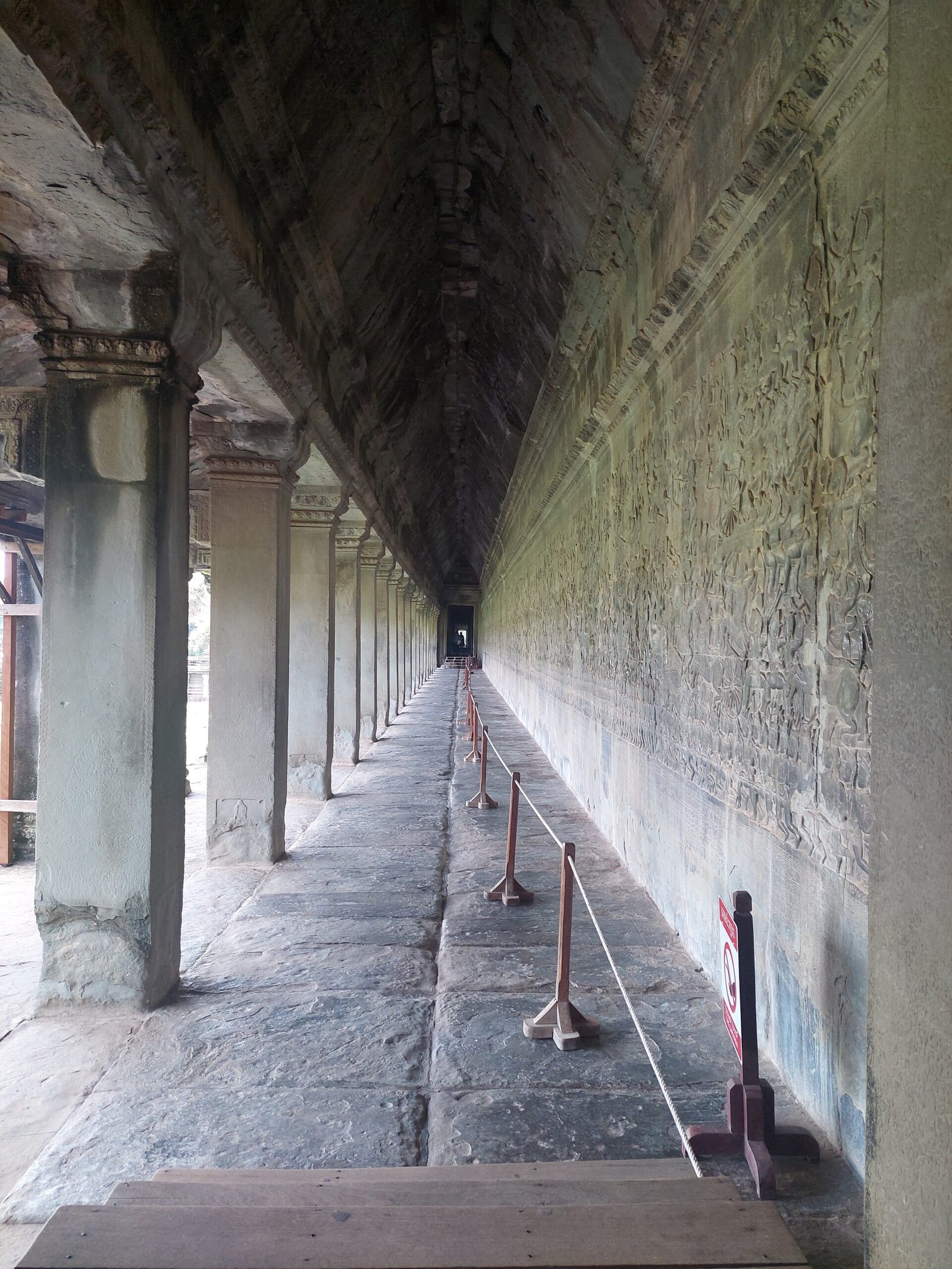
The first level of the temple was a "teaching gallery," with images carved into the walls telling stories about battles and everyday life, among other things.
Brave warriors in battle on the wall of Angkor Wat.
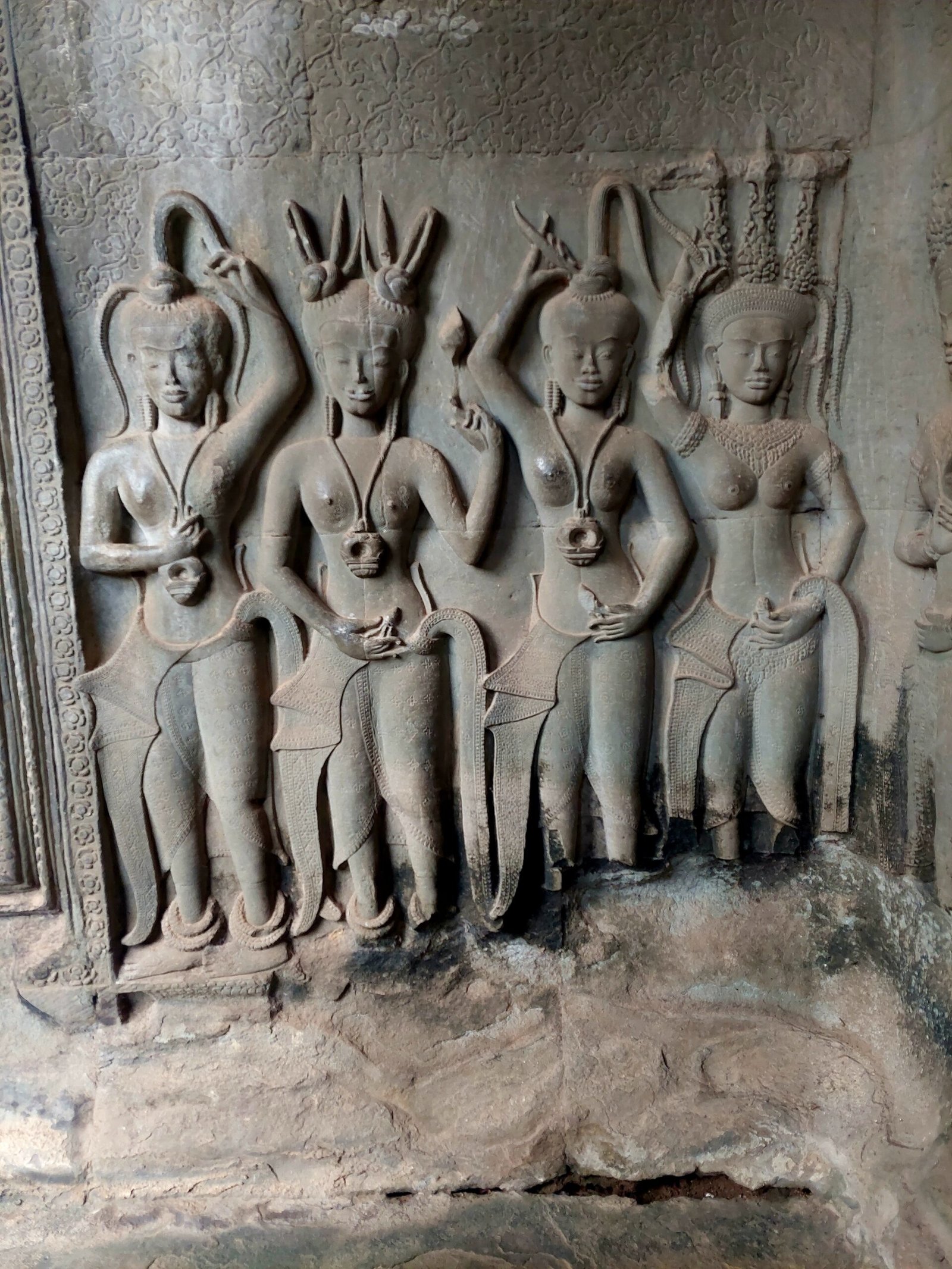
The temple walls feature 1,800 carvings of apsara dancers.
The stairway to heaven used to be long and rocky.
Nowadays, wooden steps have been built to make it easier for tourists.
The highest tower of the temple is 67 meters high, so the views from there were magnificent.
The children stayed with the guide on the middle floor while we climbed up to the heavens.
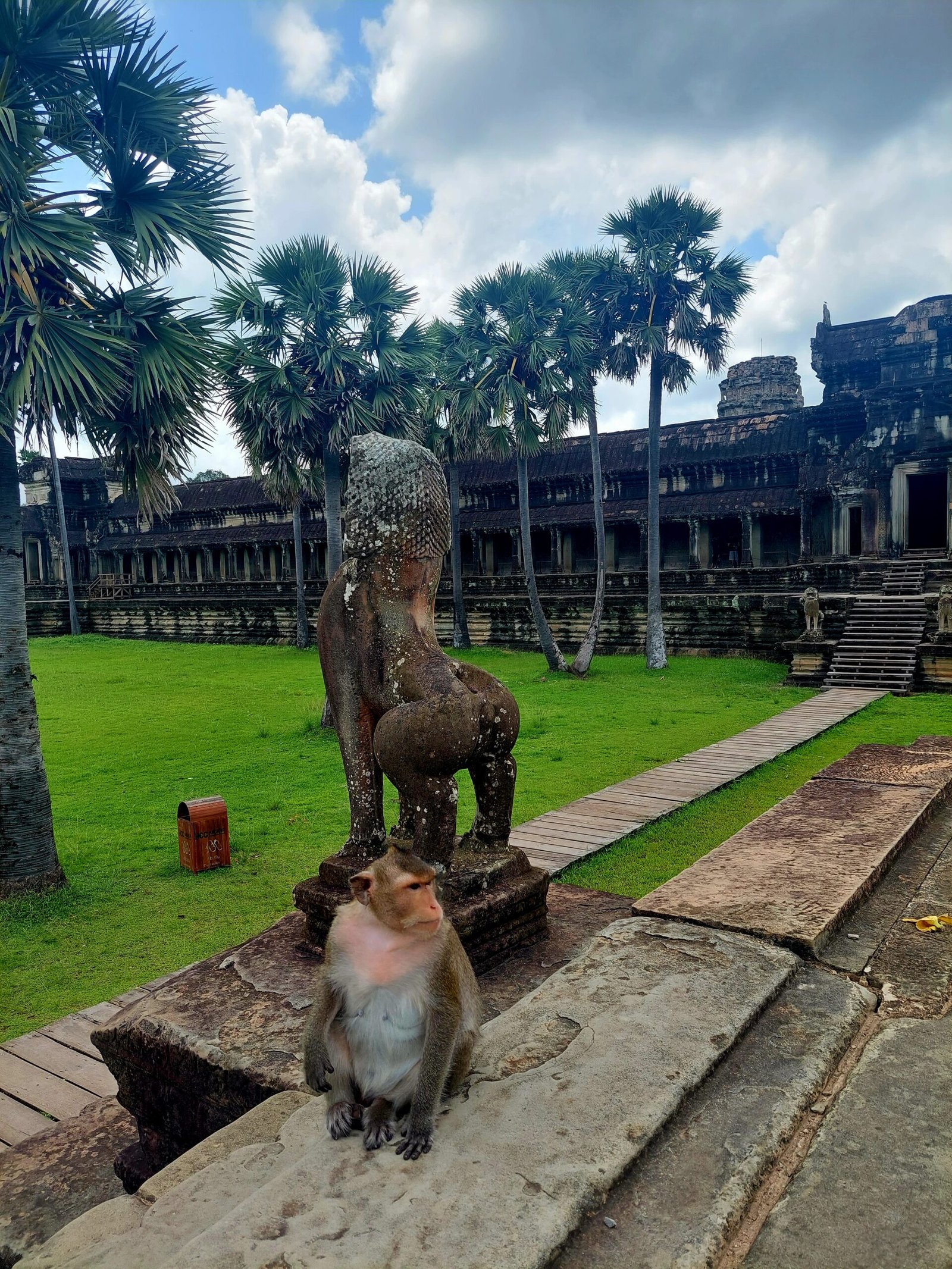
In addition to tourists, monkeys also roamed the temple.
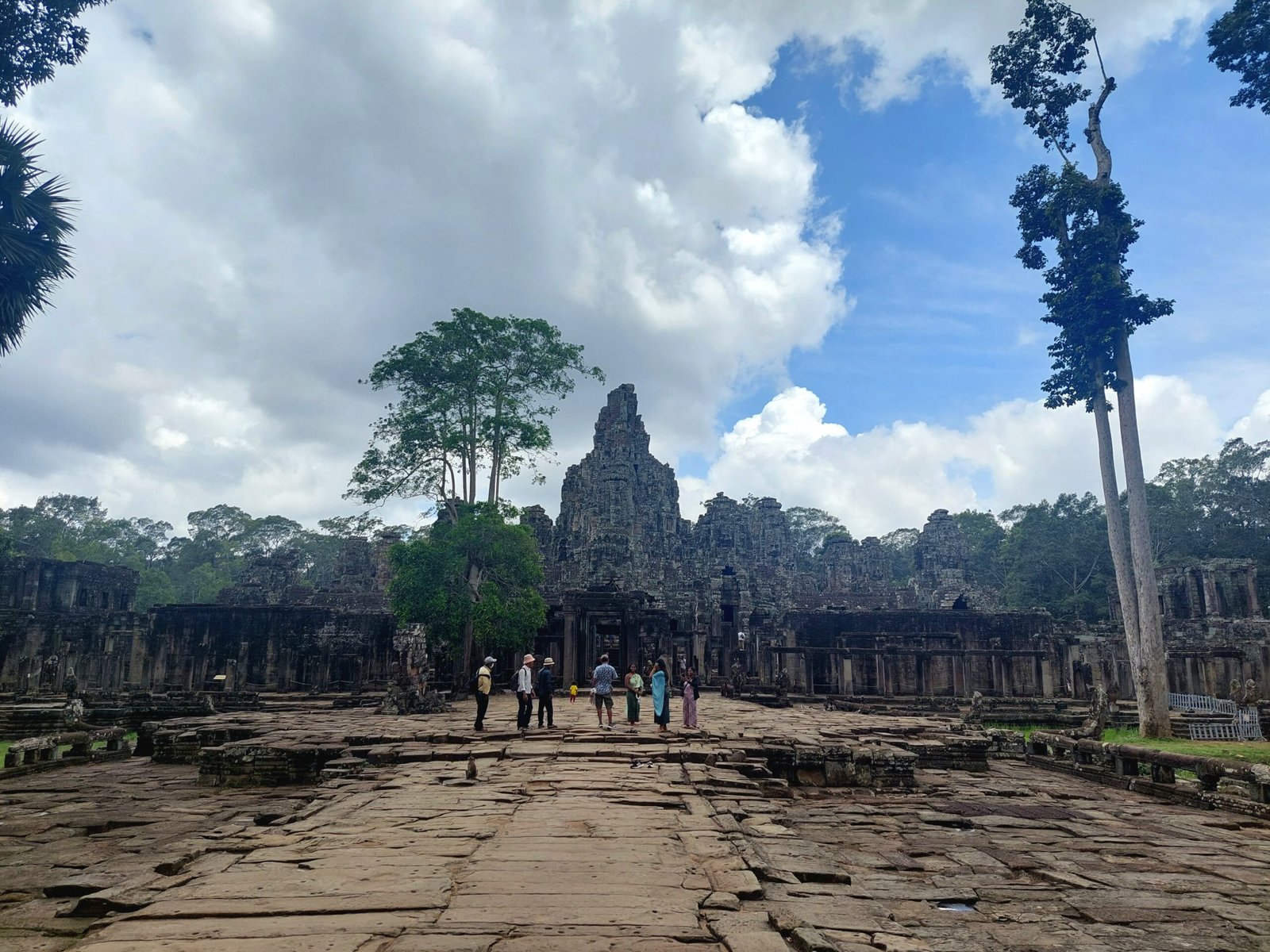
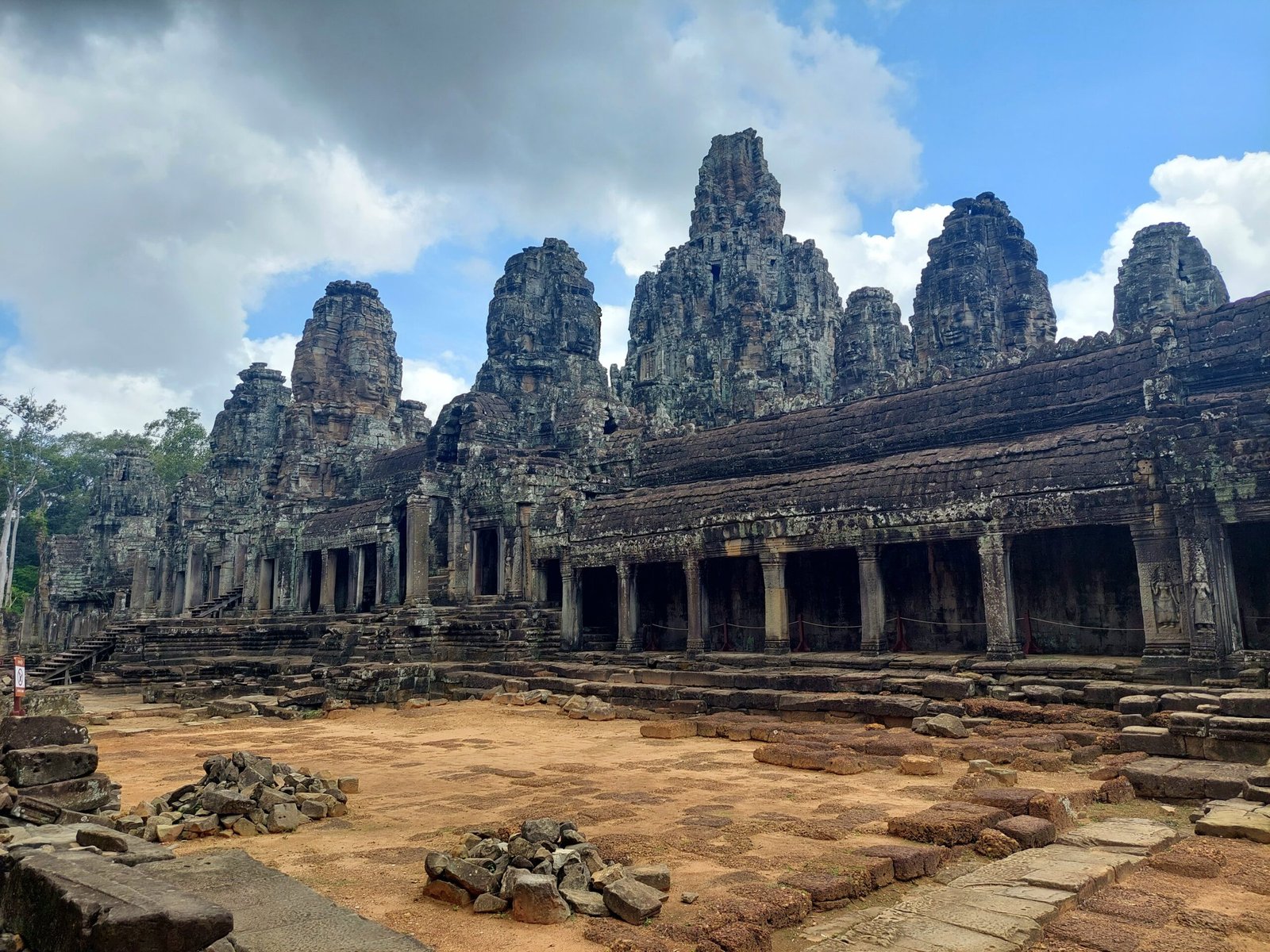
From Angkor Wat, we continued to the Bayon temple, which is famous for the smiling face of Buddha carved into its stone towers, facing four different directions. This temple once stood in the middle of the nine square kilometre city of Angkor Thom, home to one million upper-class people. The common people lived outside the walls.
A wide moat surrounded both Angkor Thom and Angkor Wat.
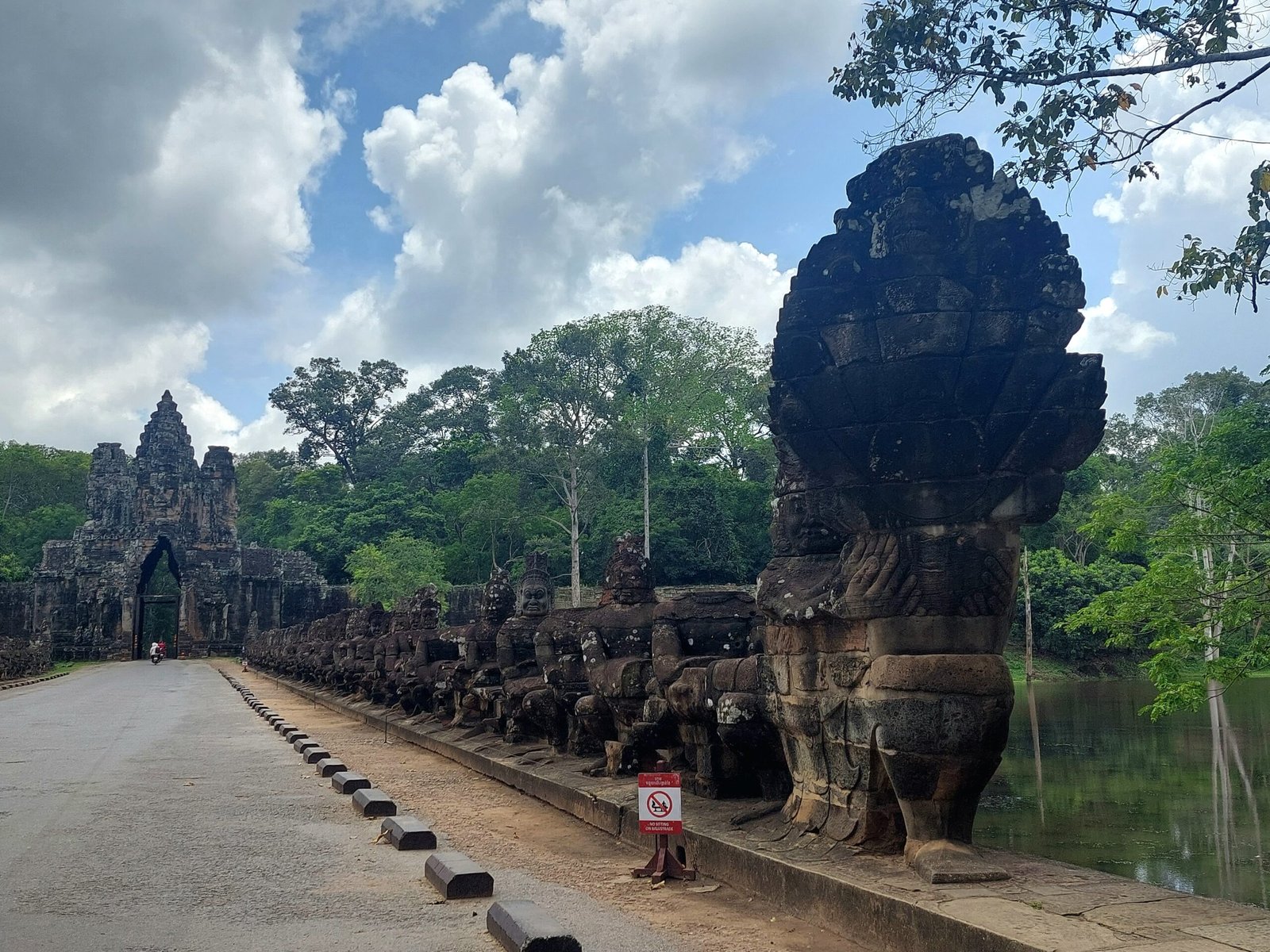
The moat could be crossed via a bridge guarded by a Naga serpent.
On the right side of the bridge, the serpent was being pulled by angry, evil gods. On the left side were good gods.
The entrances were decorated with smiling faces of Buddha looking in the four directions.
Main entrance to the Bayon temple
If you look closely, you can see smiling faces on every tower. Some are better preserved than others.
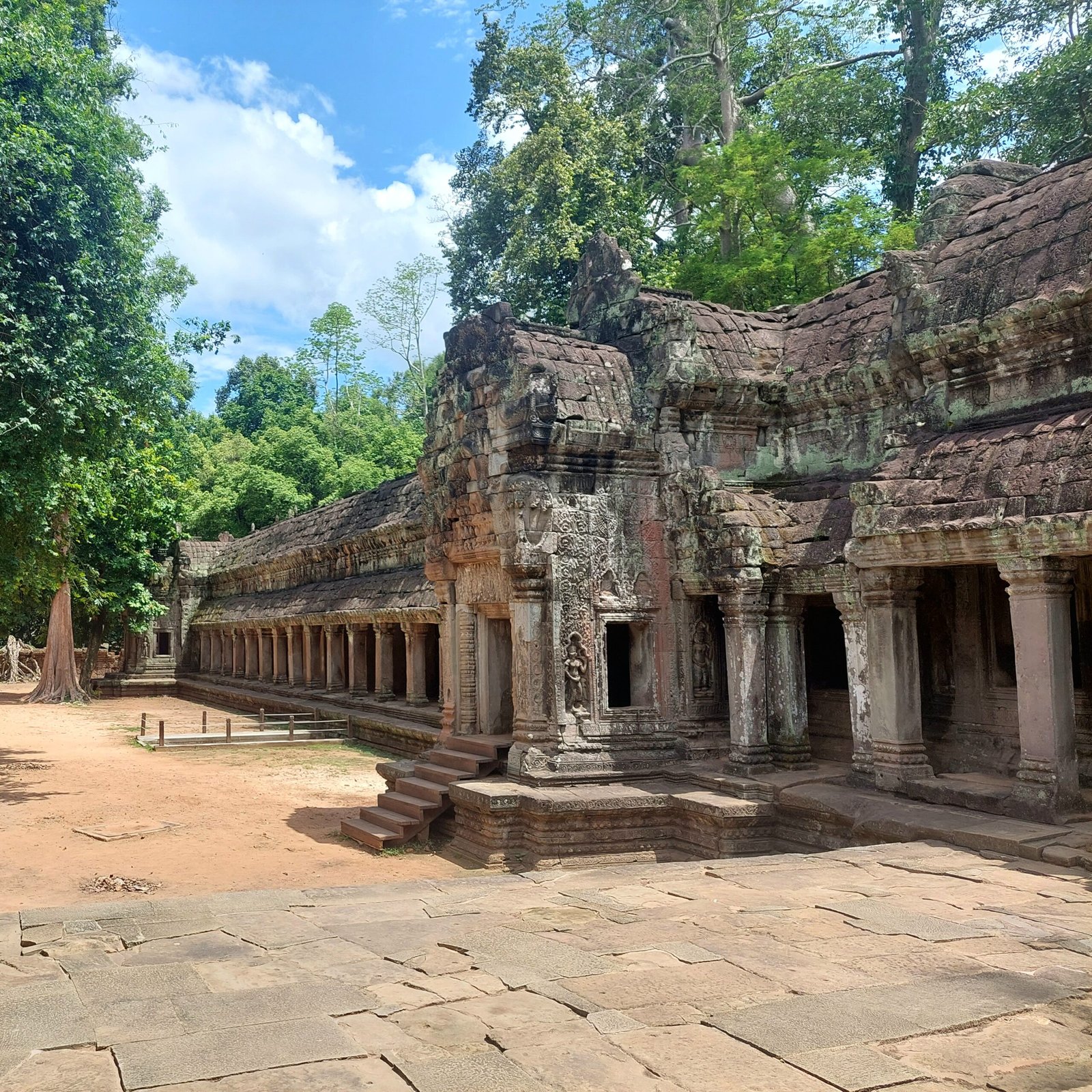
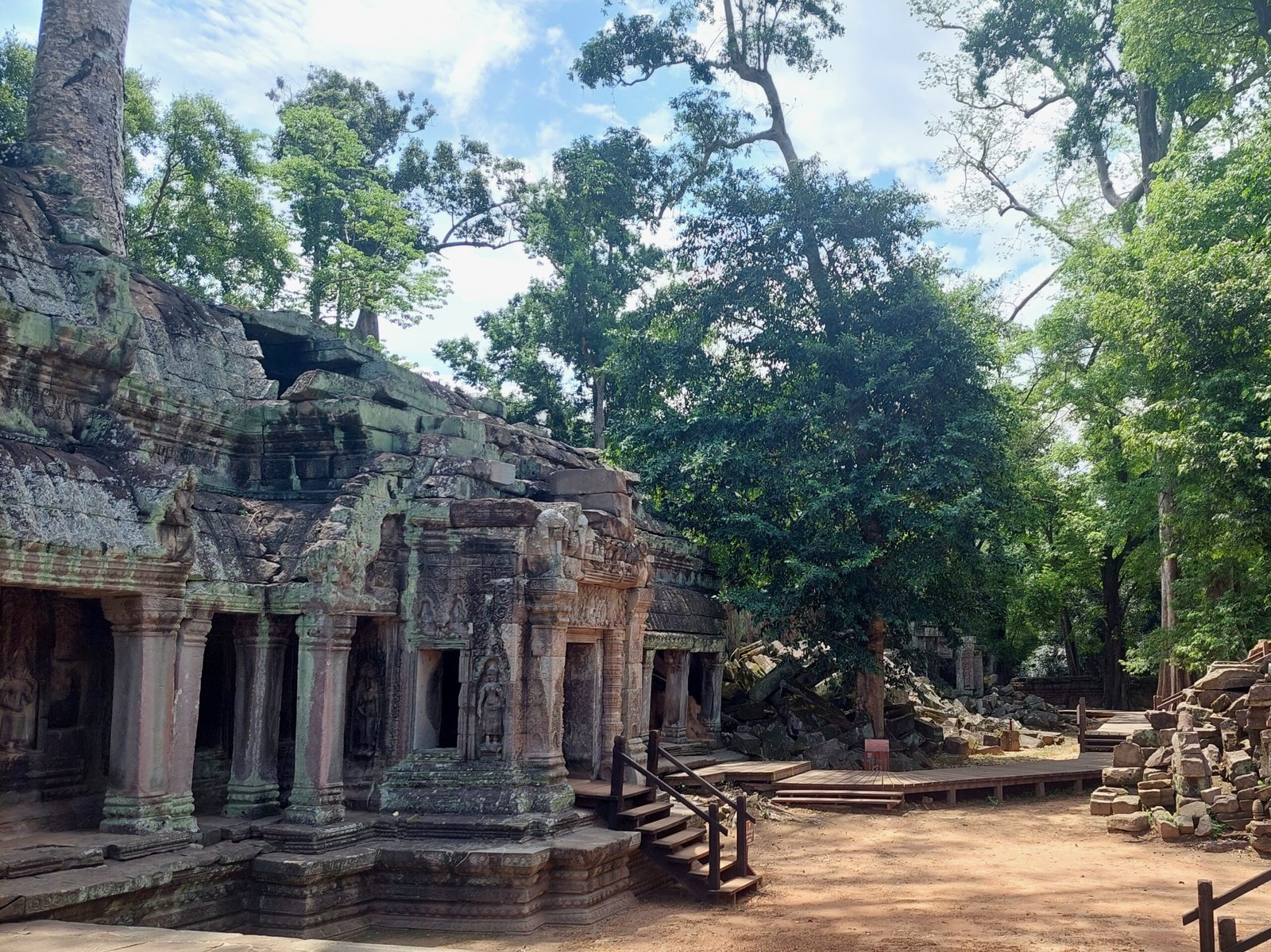
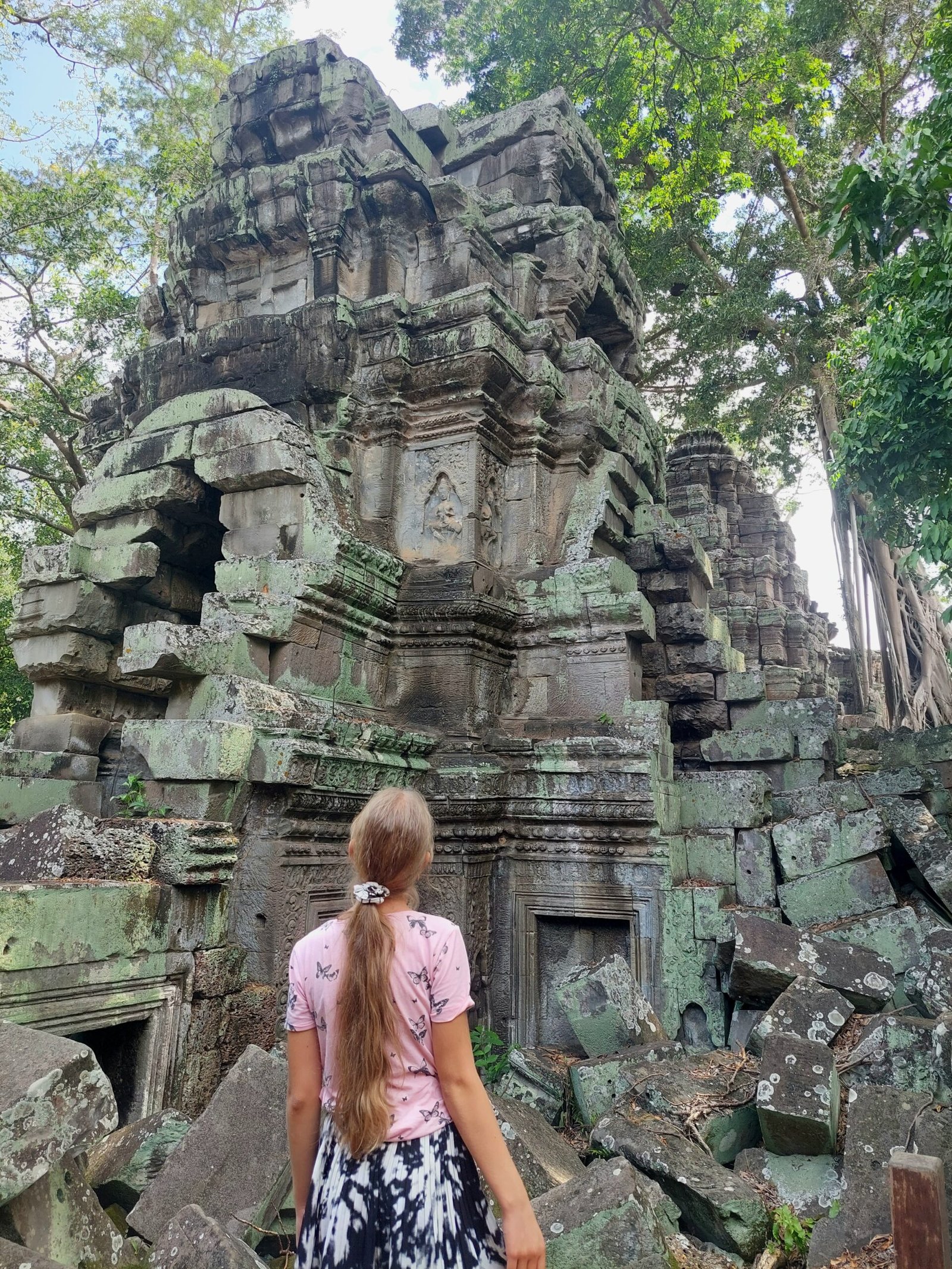
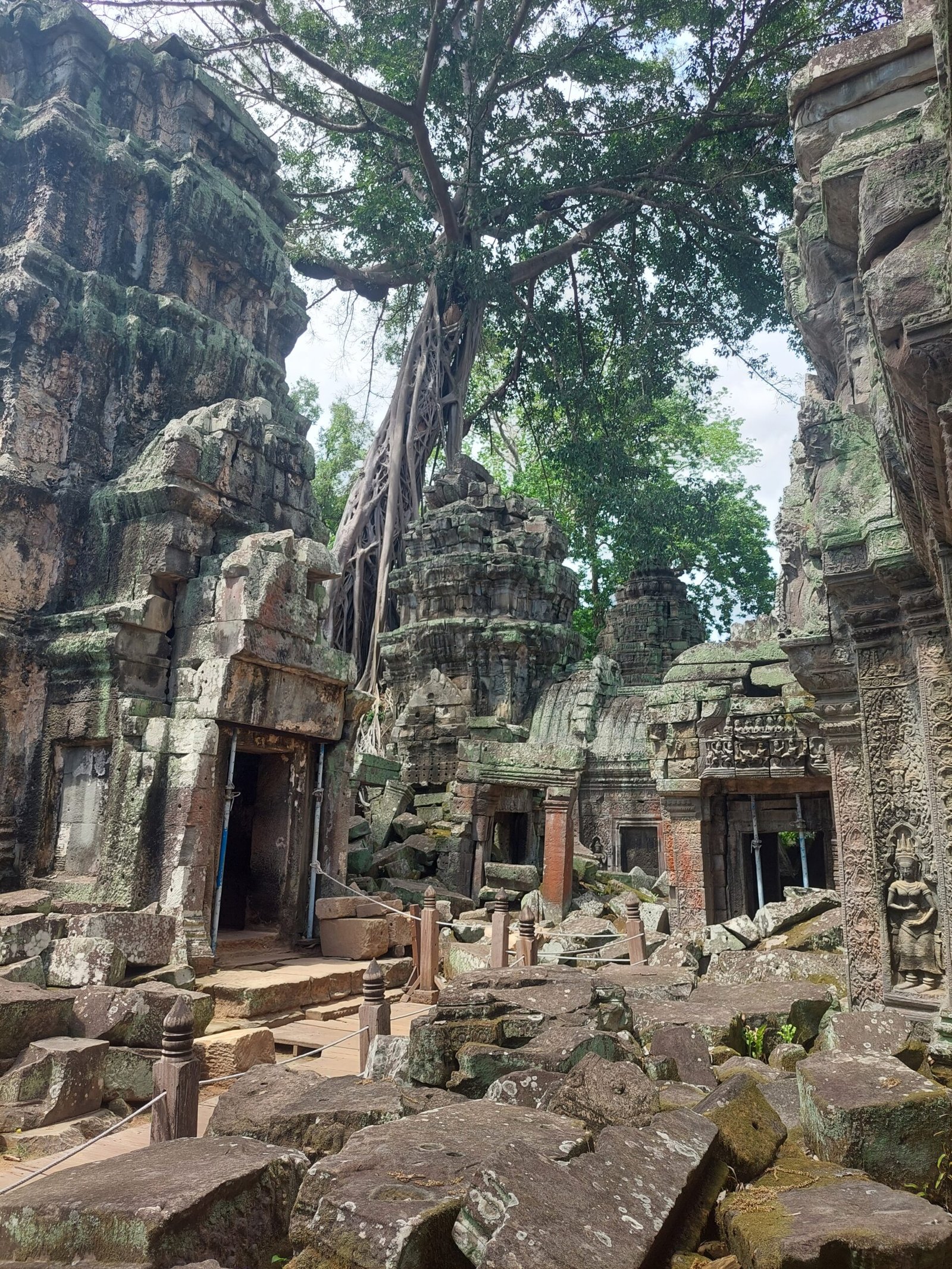
After Bayon it was time for a lunch break, after which we continued on to a third temple, Ta Prohm. This temple area was long forgotten and completely covered by jungle. When it was rediscovered, archaeologists and researchers cleared the jungle enough to allow access to the temple ruins again. Today, as with all other temples, the temple is still undergoing restoration work. The restoration of all the temples in the region is financed by German, French and Indian donors, among others. Part of the income from visitors to the area is also used for restoration work.
The entrance to the Ta Phrom temple looks small, but the temple area is surprisingly large.
The next ruler wanted to convert the Bayon temple into a Hindu temple according to his own religion, so he carved a third eye and a beard for Buddha. However, most of the Buddha carvings were simply destroyed.
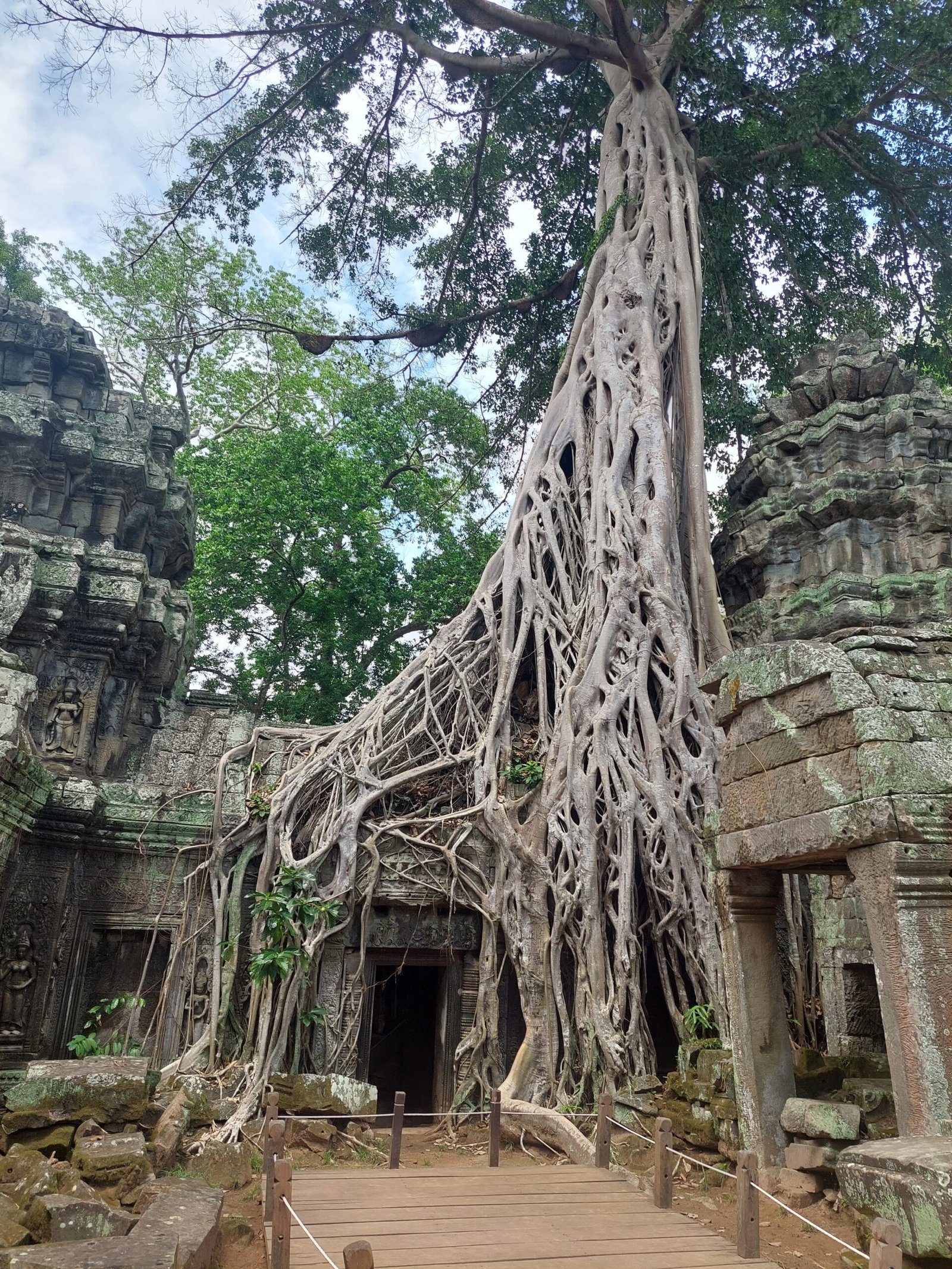
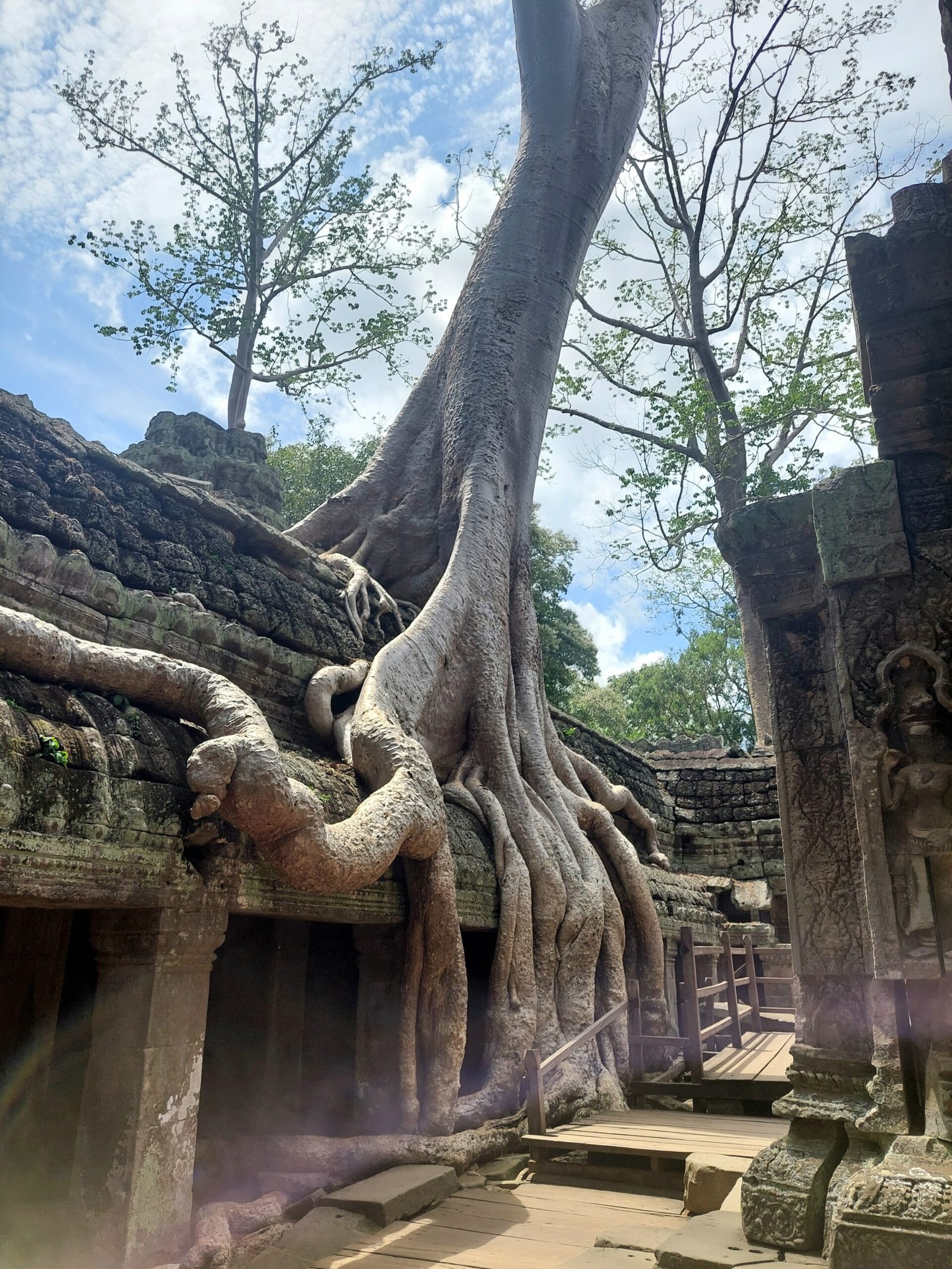
When nature meets religion
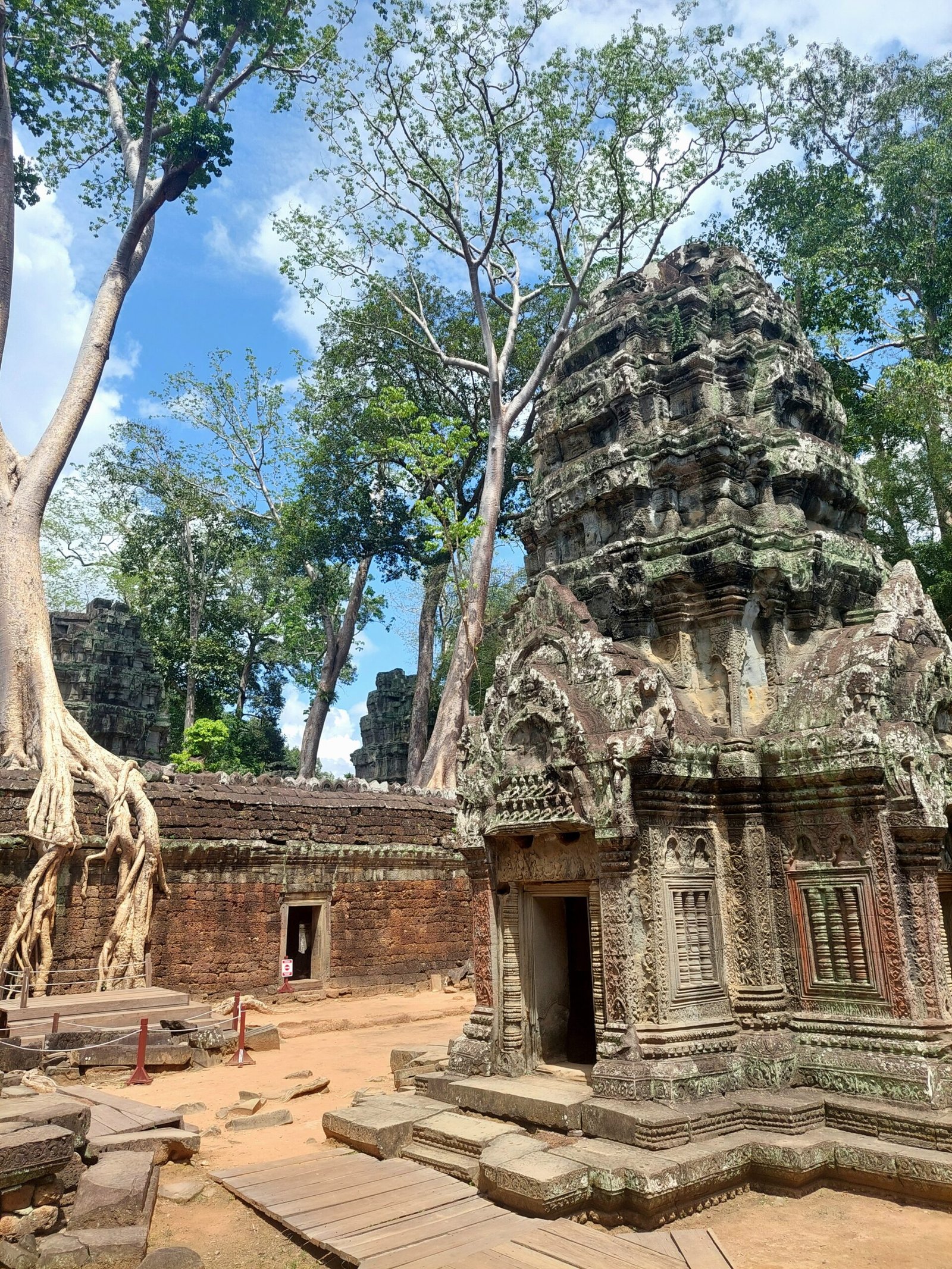
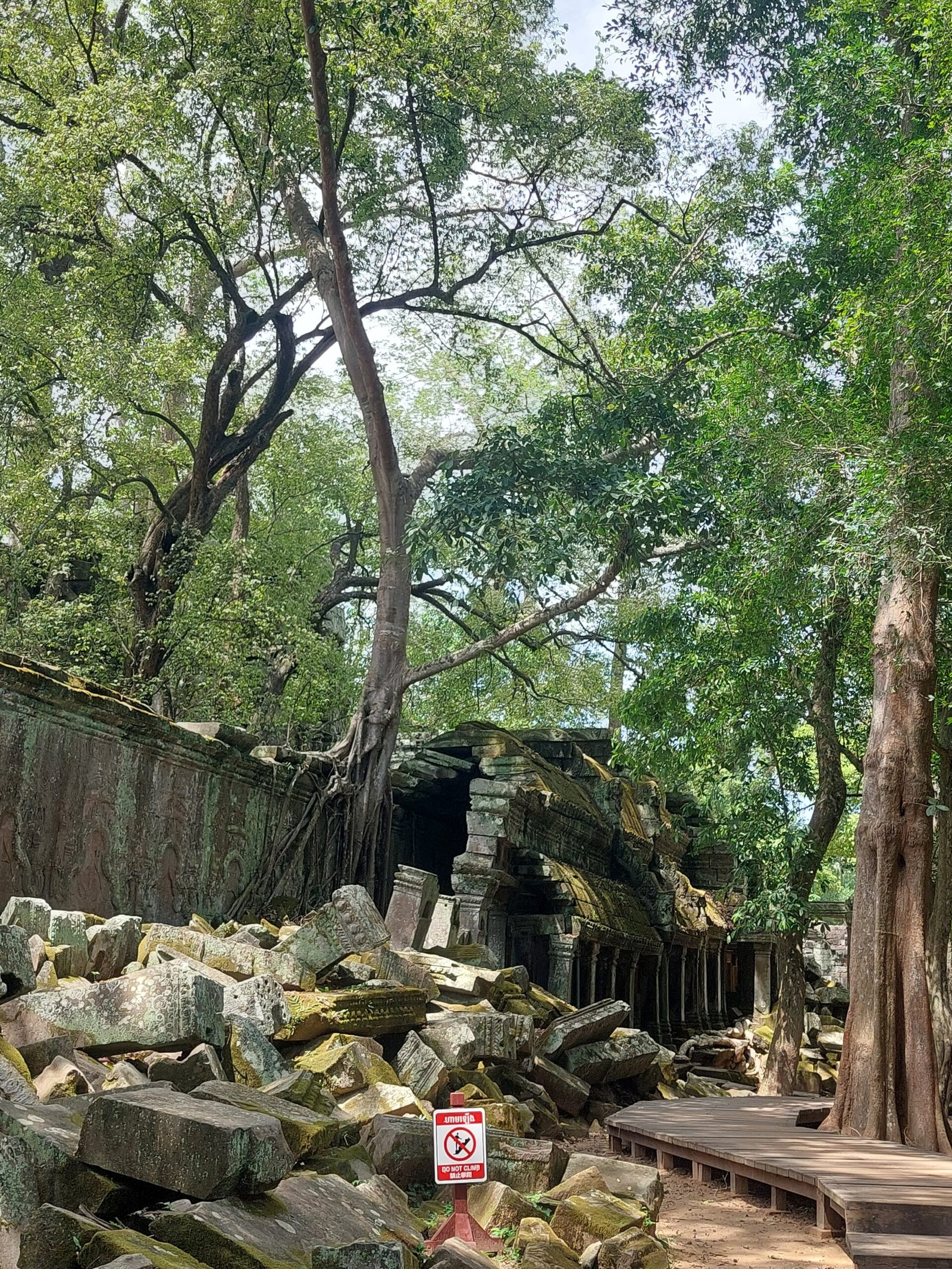
The Ta Prohm temple is also known for the Tomb Raider film starring Angelina Jolie. It is a very picturesque place, so it is no wonder that the production company had chosen it as the location for the film. Although Angkor Wat is a truly impressive temple in all its grandeur, at least I preferred this place, which has been taken over by nature.
Part of the temple complex has been restored by Indians.
This is the unrestored part of the same "teaching gallery."
The dark lumps hanging from the branches are beehives.
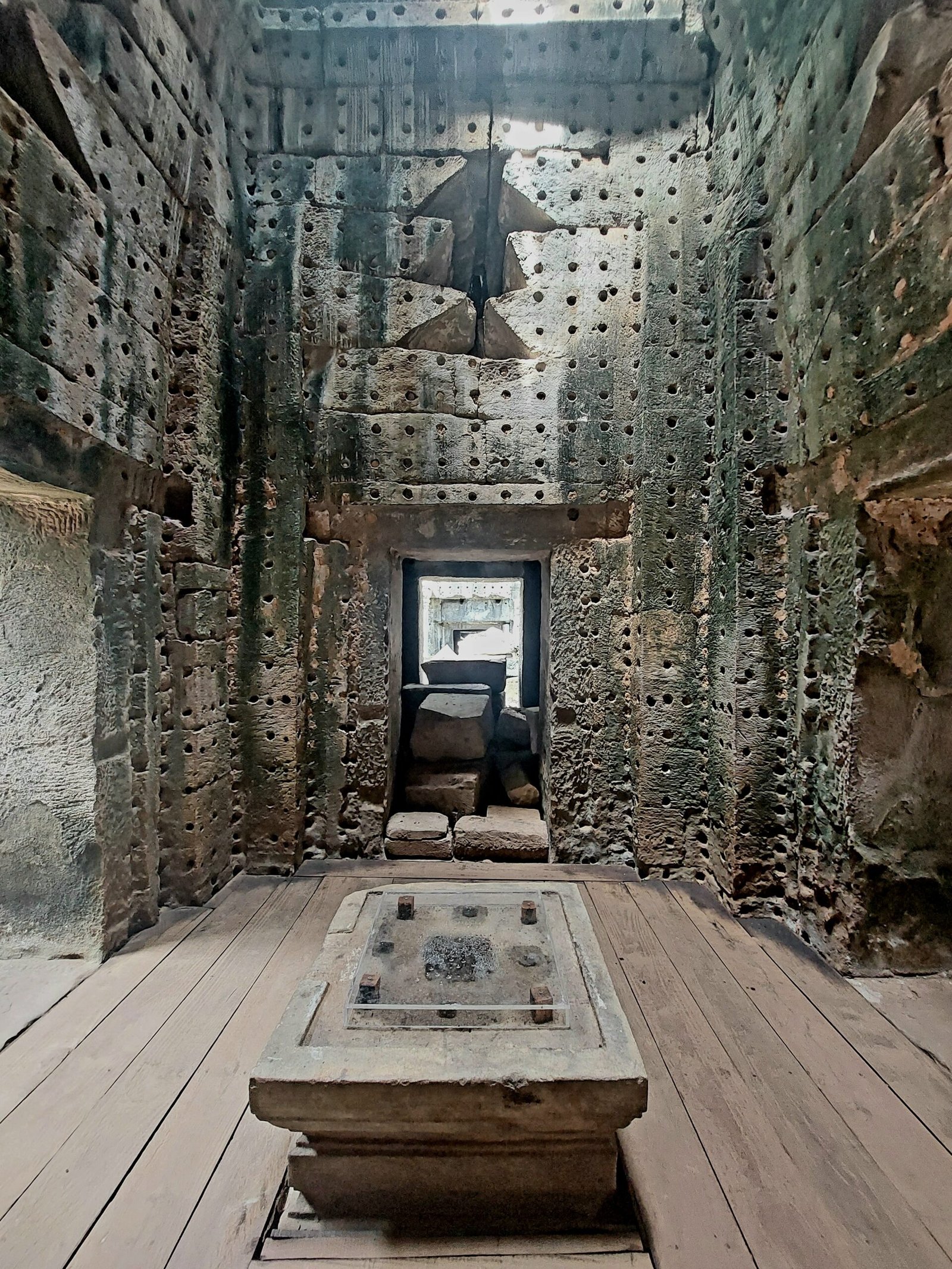
These are not bullet holes, but each hole once contained a gemstone decorating the tomb of the temple's builder's mother.
We also talked a lot about tourism in Cambodia during our tour. Before Covid, Angkor Wat had 9,000 – 12, 000 visitors a day during the peak season. Now the number is somewhere around 3,000. No wonder we managed to take a lot of pictures where there were no other people at all. Our guide told us that he used to work 28 days a month before Covid 19, but now he works only five days a month. At least he has a job, unlike the Chinese-speaking guides who have virtually no clients at the moment. Our guide told us that there are 5,000 trained guides and an equal number of tuk tuk drivers working in Siem Riep. If the number of tourists is now a fraction of what it used to be, you can understand how fierce the competition for tourists’ money is here. 65% of the locals’ income is related to tourism somehow.
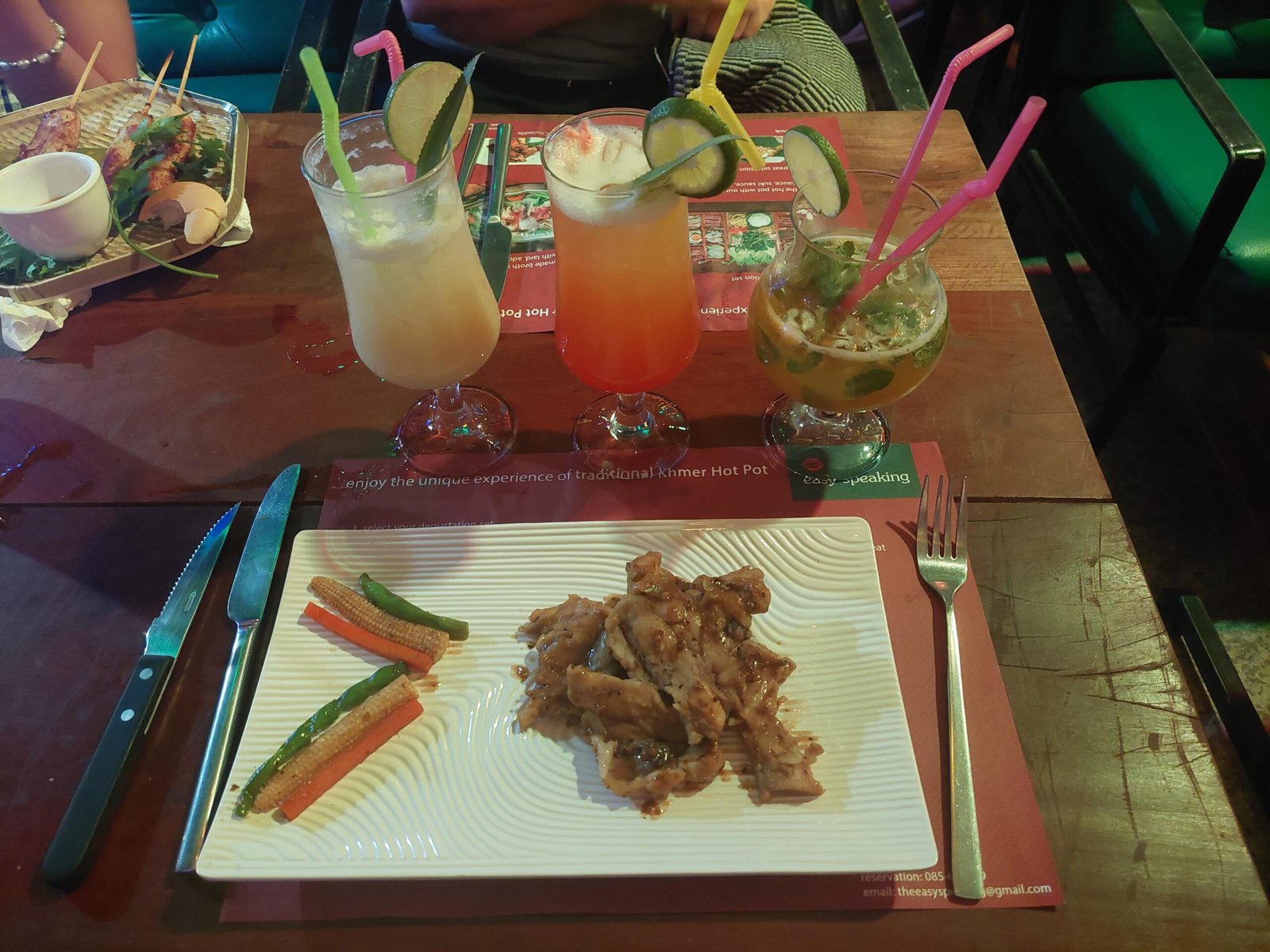
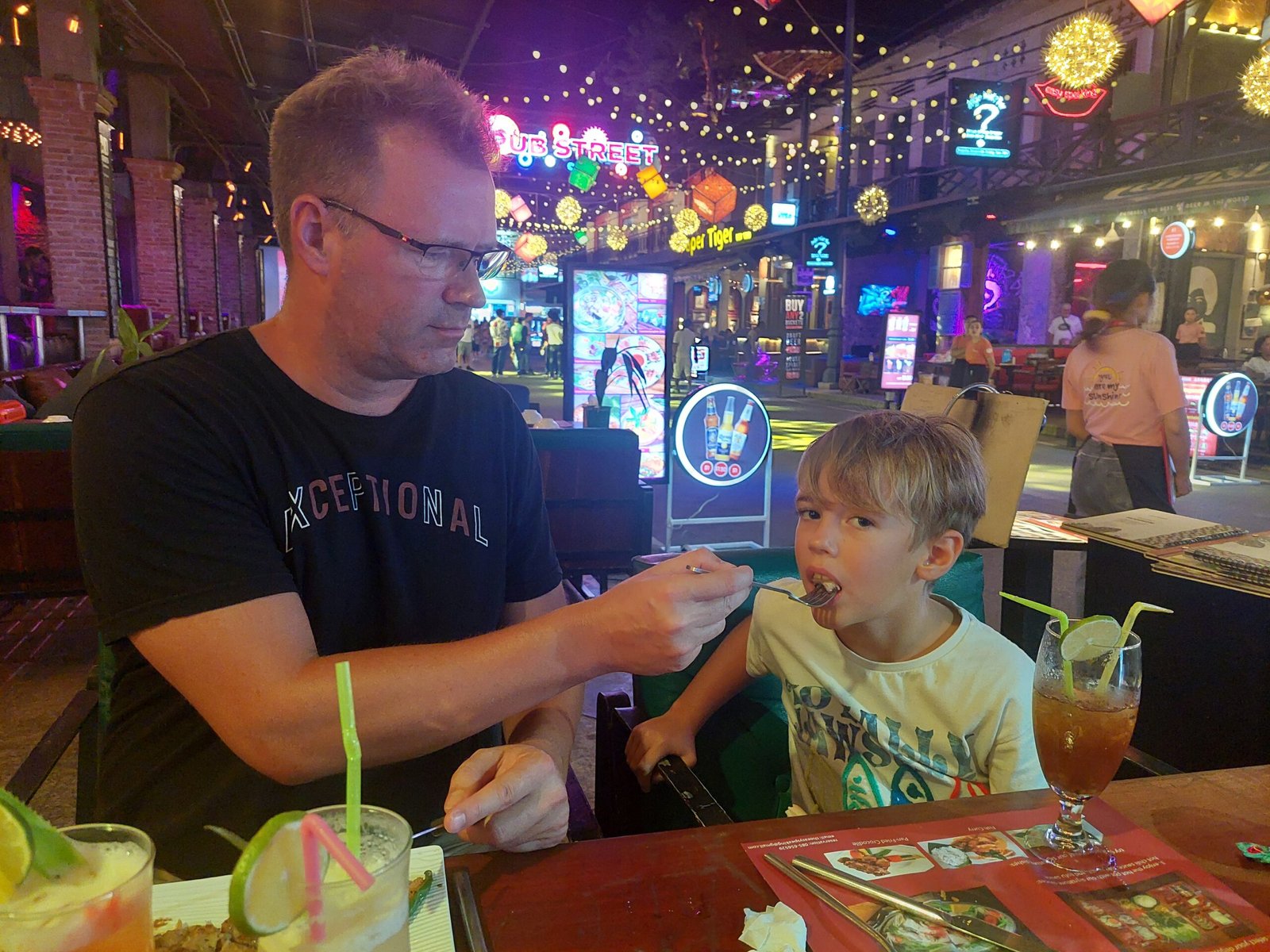
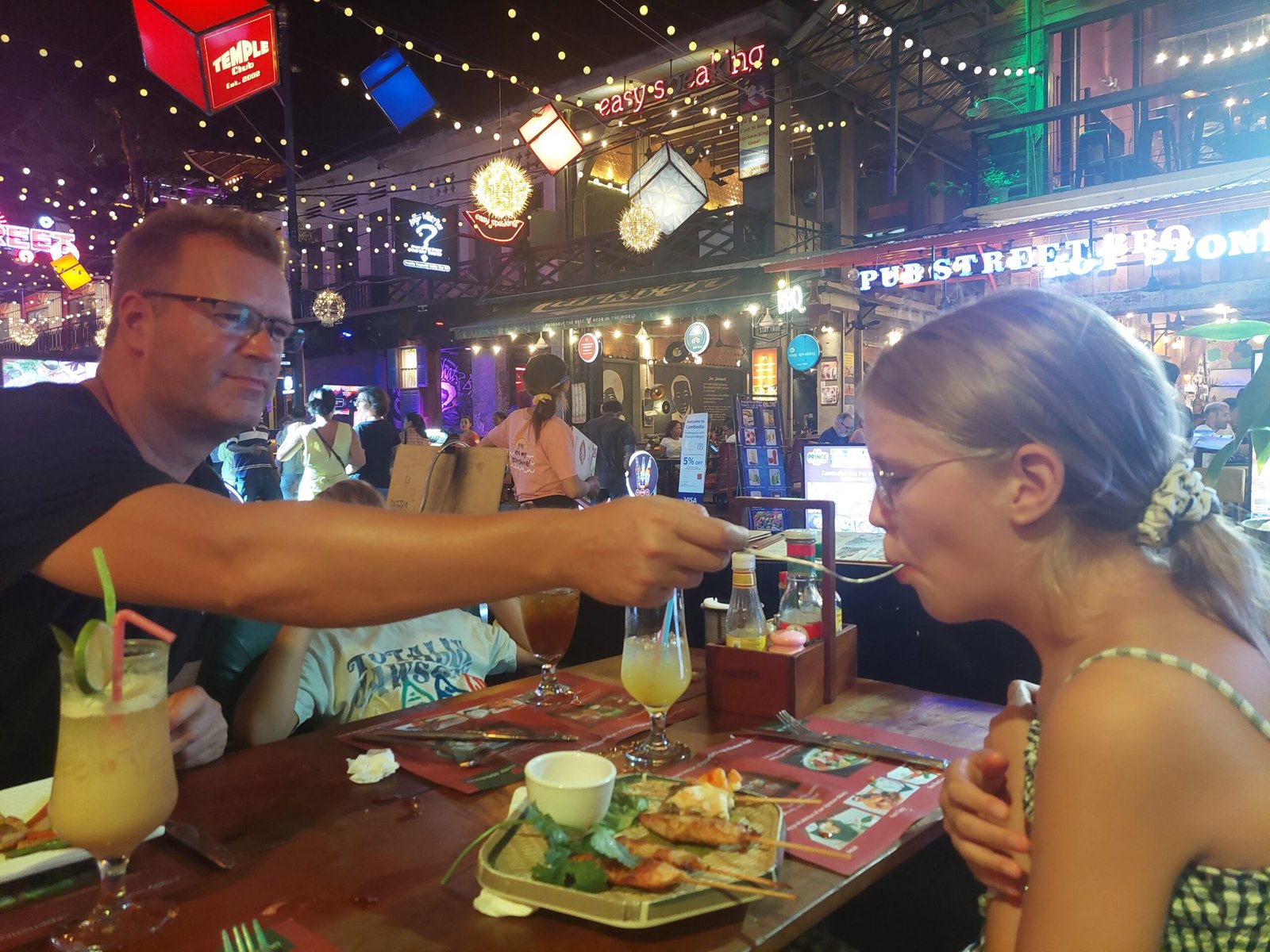
In the evening we went for another massage in the city centre. This time Ronja and Risto exchanged parts, and Risto took a pedicure with nail polish while Ronja was having a foot massage. After the massage we went to the pub street for drinks and a snack. In addition to small burgers and satay chicken skewers, there was also grilled crocodile on the plate. We also had a couple of 2.5 USD drinks to go with the food.
The crocodile was a little dry, but quite good.
"Dad, don't order crocodile since you're going to make us try it anyway!"
Ronja liked the chicken skewers better than the crocodile.
On Wednesday, we decided to have a day off, and hang out by the pool at our hotel.
The water in the swimming pool was as warm as bird's milk.
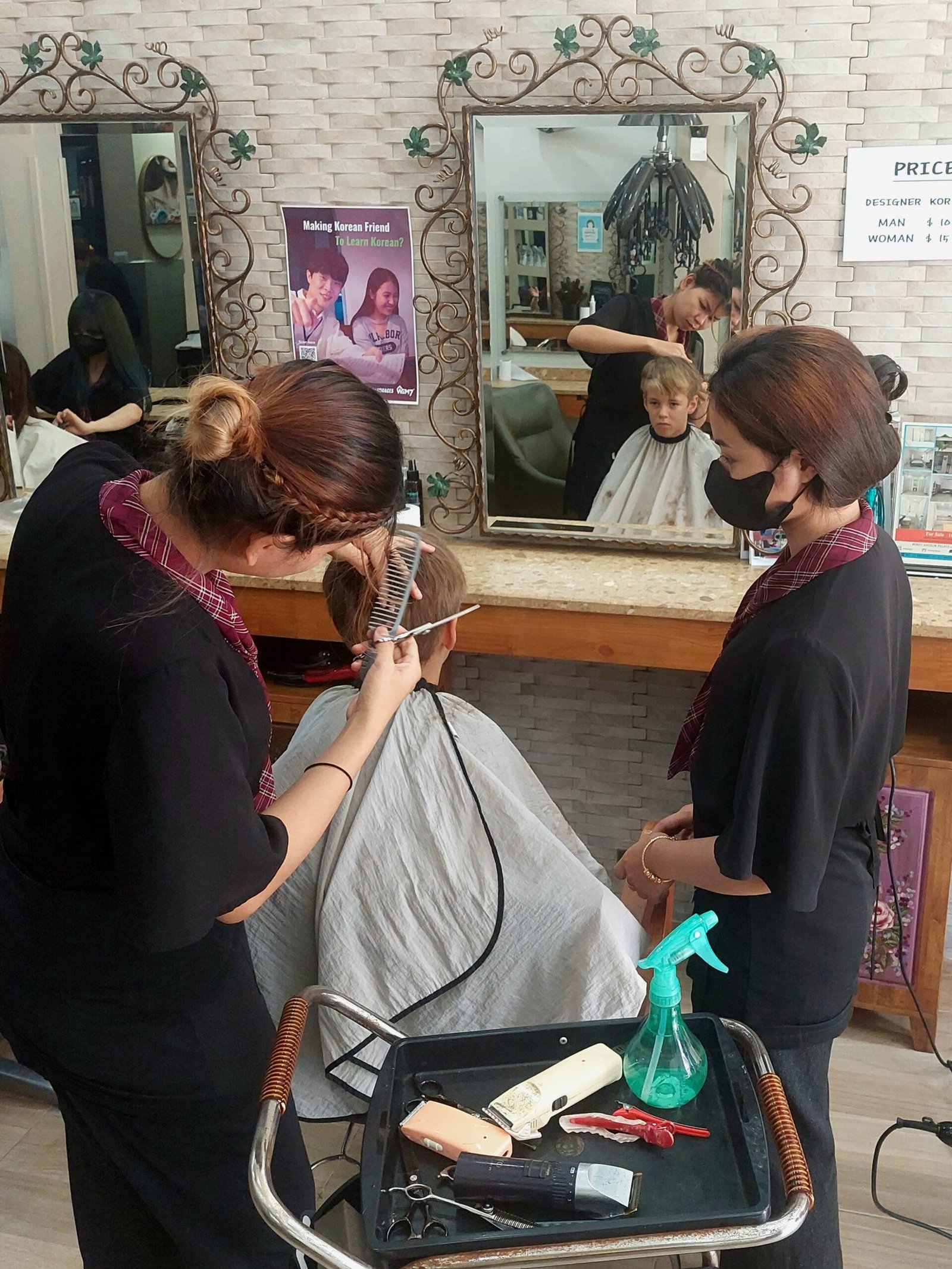
Risto also had a haircut at the hair salon next to our hotel. The haircut was long due, since the last time he got one, was in Auckland. The haircut and wash cost 7 dollars, so it was a good overall deal to get the little guy back in shape.
Haircutting is a job for two women.
First time getting a hair wash at a barber's.
Marko braved the afternoon heat, and went for a walk in the city centre while Jaana and the kids spent time in our air-conditioned apartment.
There is a large Buddhist temple in the center of Siem Reap. We didn't drag the kids there.
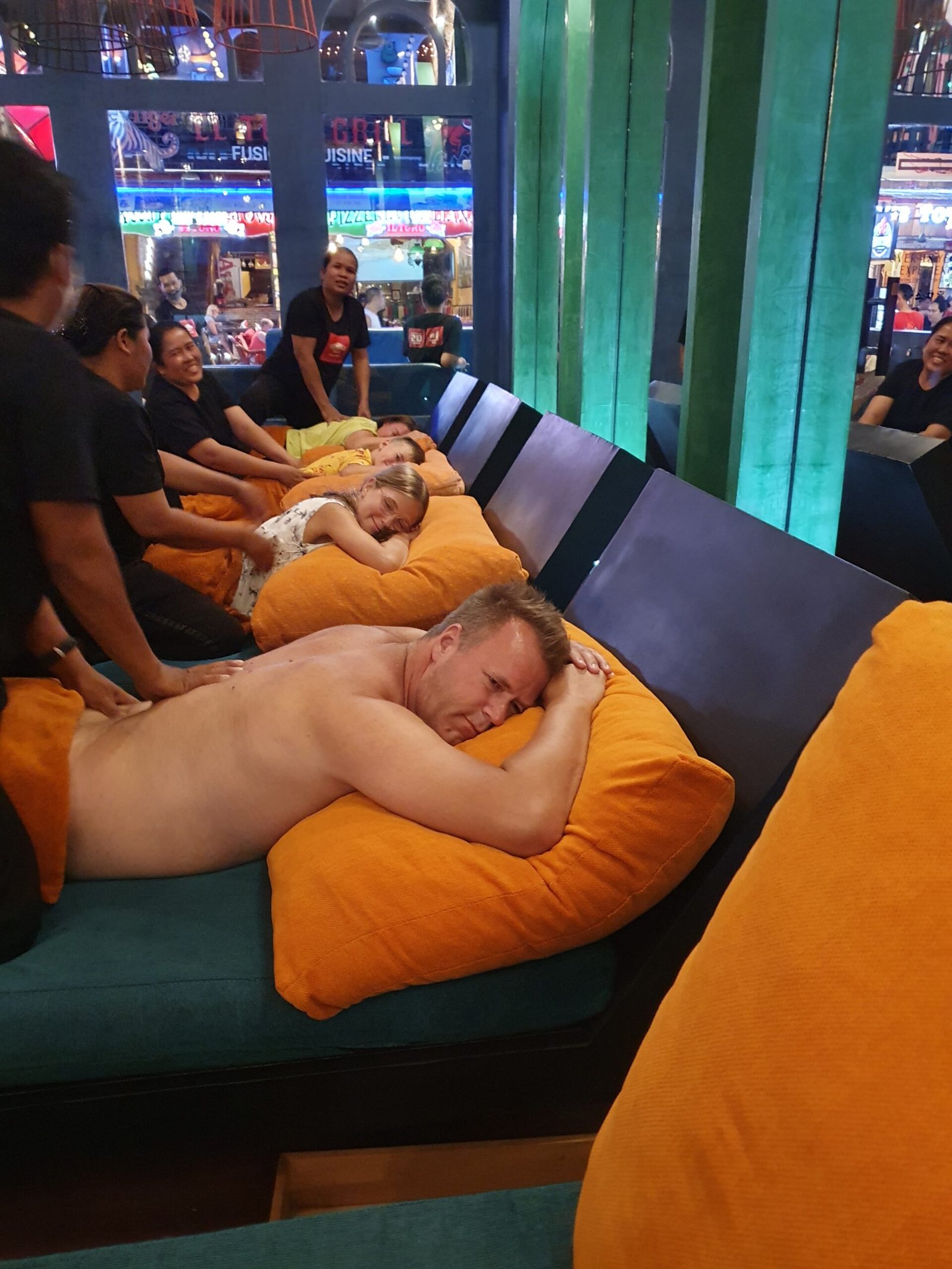
In the evening we took a tuk tuk to the pub street for another massage. This time we all took the neck-back-head-massage. The masseuses were particularly fond of Risto, and several times before and after the massage they stroked his back and hands and giggled.
A half-hour massage cost $5 per person. It's easy to tell from Ronja's expression whether she's having fun.
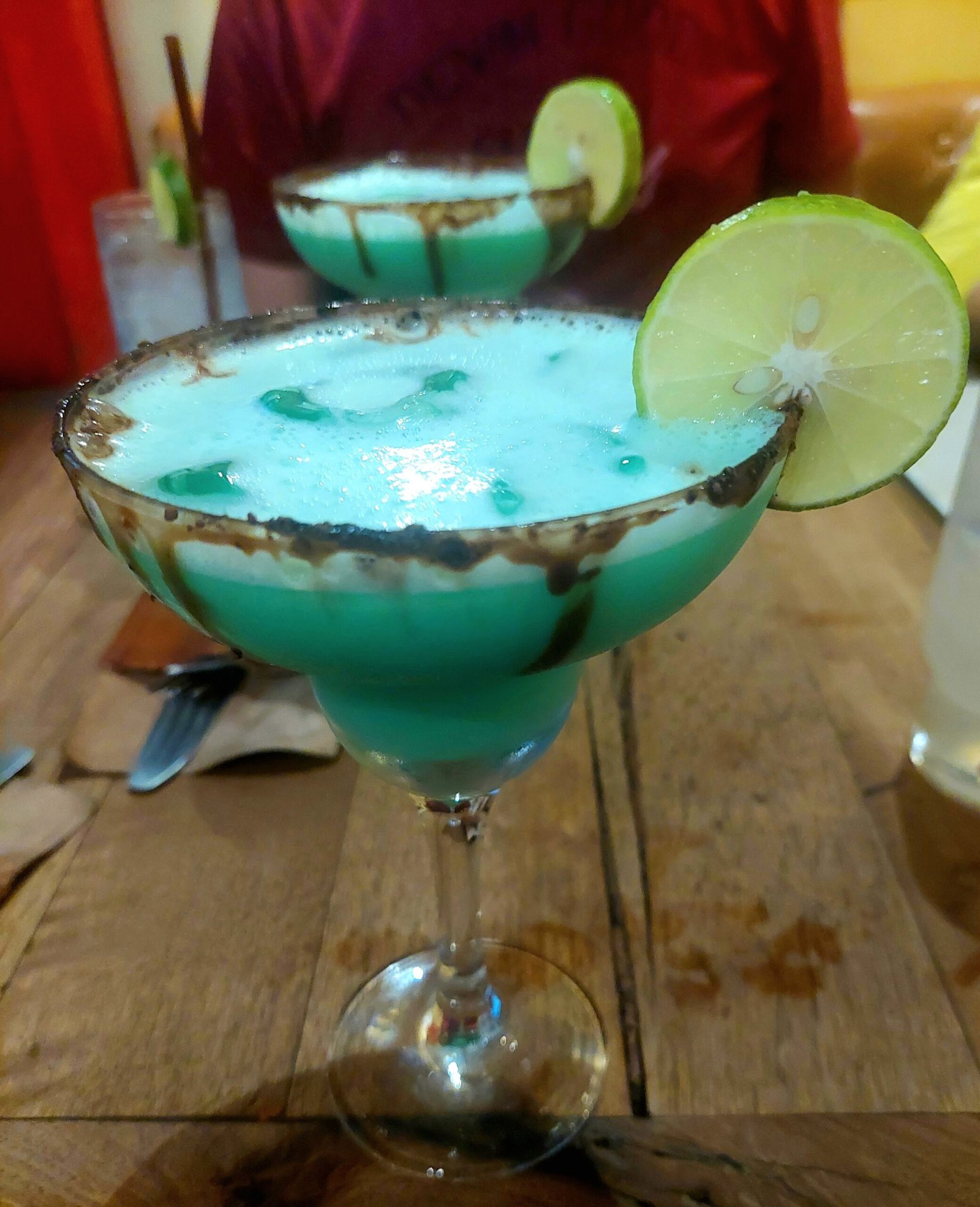
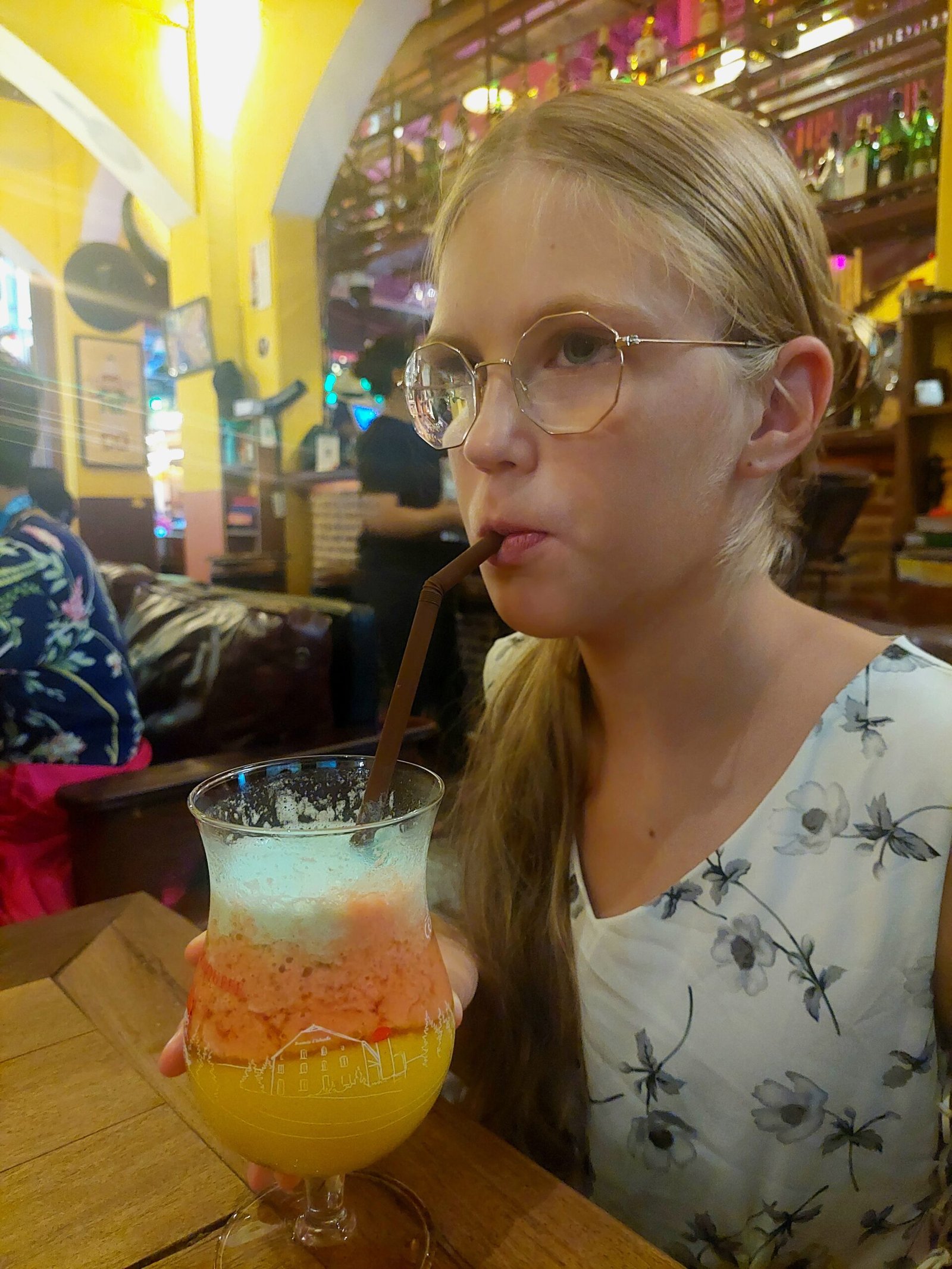
For dinner we went to a proper cross-over restaurant, as the place served Italian, Mexican and local food. Marko had a crocodile burger, while Jaana and the kids stuck to more traditional options. As the drinks were really cheap at this restaurant too, we ordered a few of them. Jaana’s favourite was the mint chocolate martini, while Marko liked his Flaming B52 shot. The kids ordered non-alcoholic rainbow drinks. When we left the restaurant, there was a tuk tuk driver waiting for us outside, who said he would take us to our hotel for two dollars. Apparently he had driven us before, because he knew where we were staying.
Mint chocolate martini – just like liquid After Eight chocolate.