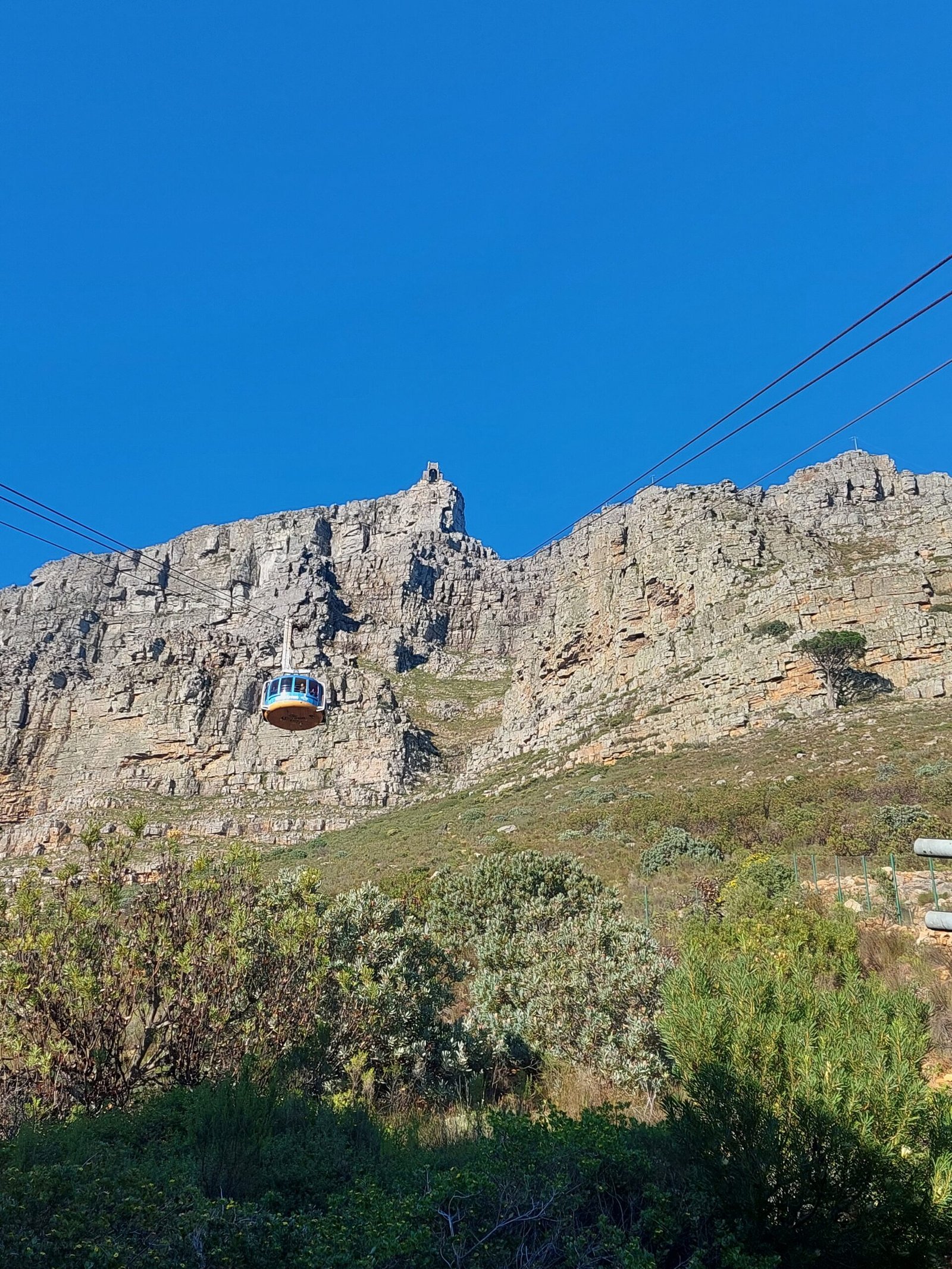
Thursday was a sunny day too, so we decided to visit Table Mountain as soon as we woke up. From the windows of our apartment we could already see a lot of cars lining the mountainside. We were a little worried about how bad the queues would be at the bottom of the cable car lift, but when we got there, there were no queues at all. We hopped on the next cable car and rushed to the top of Table Mountain at 1085m. The ride to the upper station took just a few minutes, whereas walking along the path would have taken a fit hiker a good couple of hours.
The Table Mountain cabin lift can carry 65 passengers at a time.
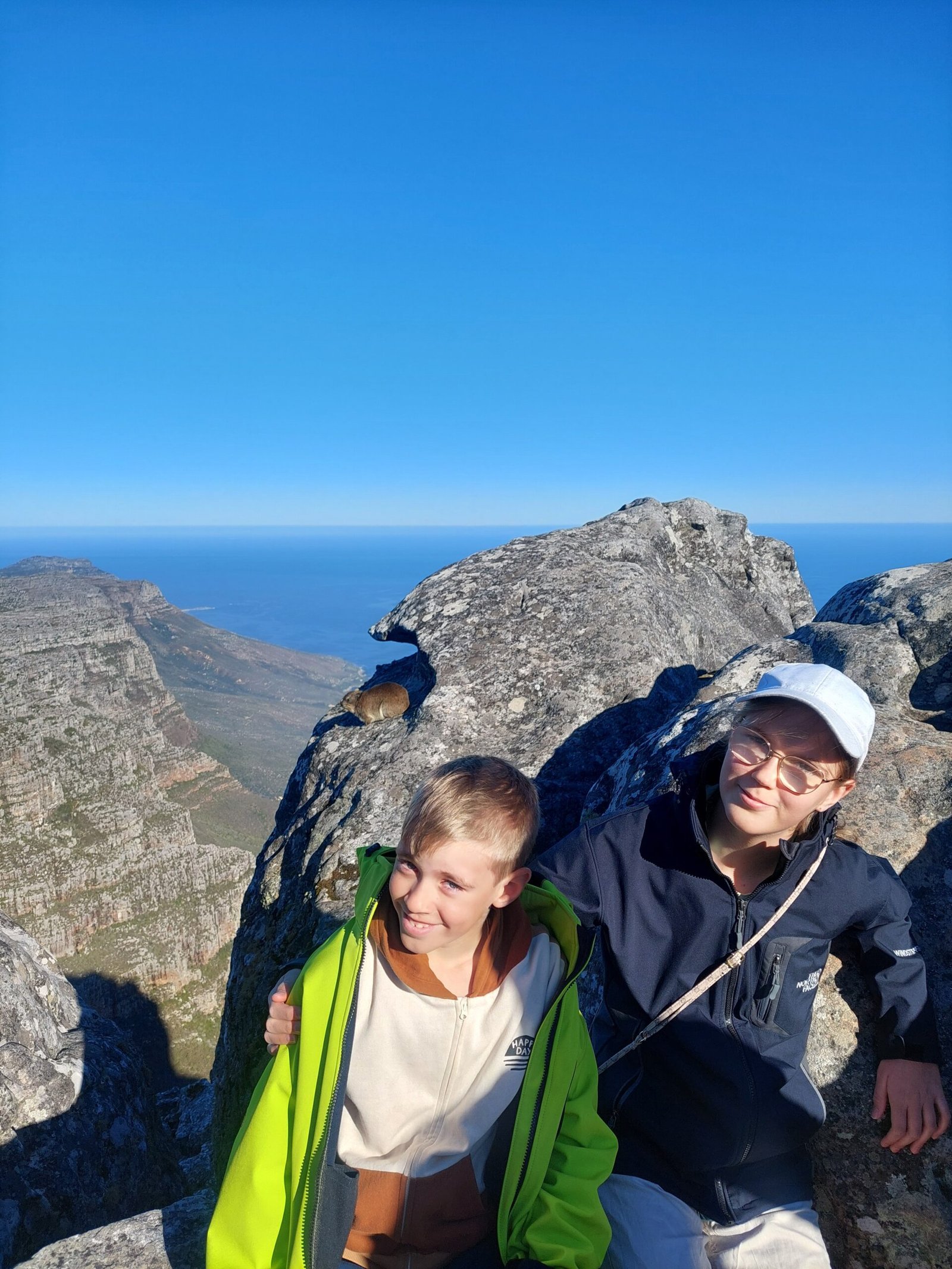
We took a long walk on the top of Table Mountain to admire the views. There were some other tourists on the top too, but it wasn’t crowded at all like in the high season. We also saw a few dassies lounging in the sun on the edges of the cliff. Dassies don’t look like very agile fellows, but apparently they can move around the rocky slopes well enough, as it is not yet extinct…
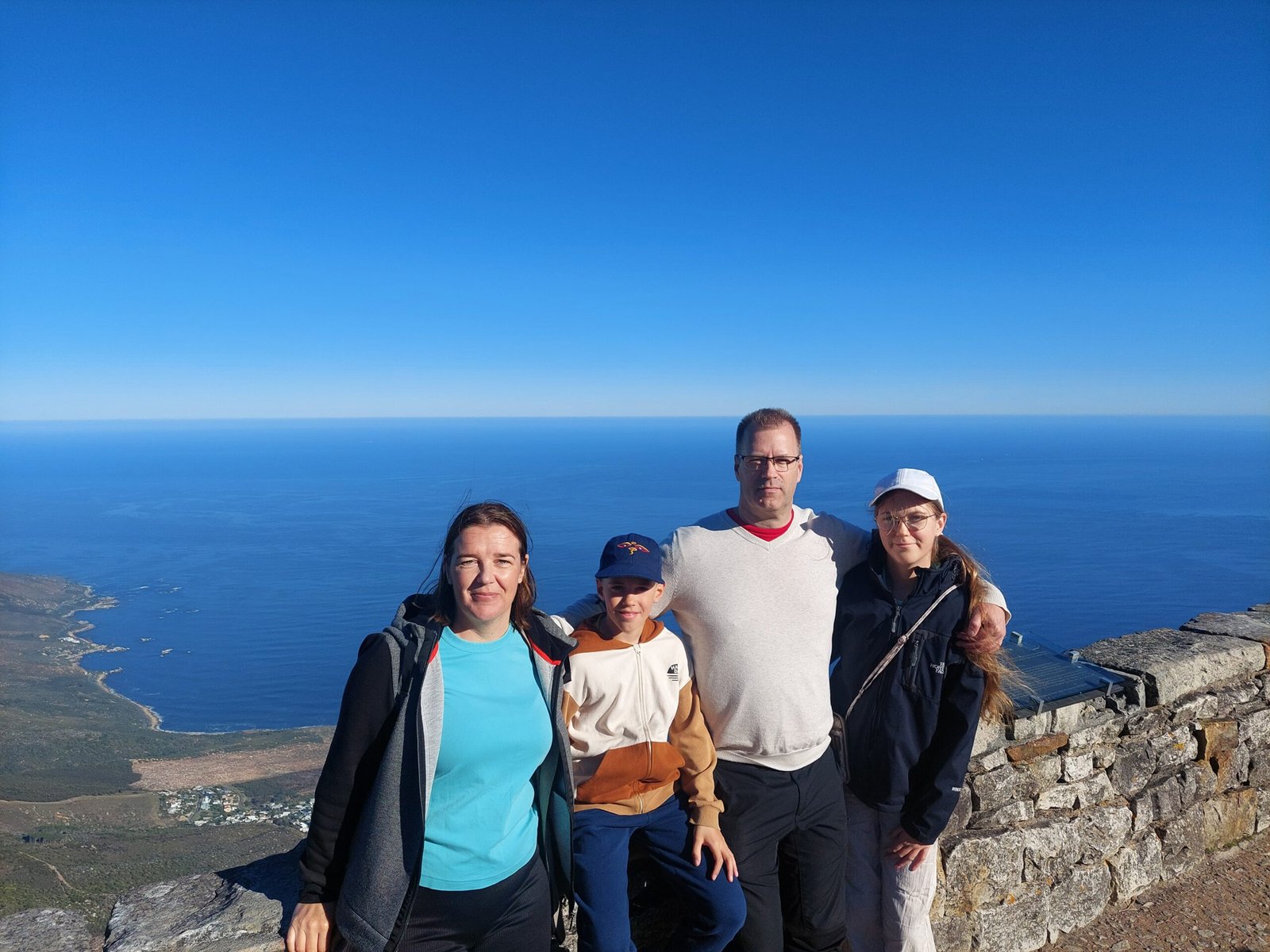
The obligatory family portrait
Ronja, Risto and Supermarsu lurking in the background
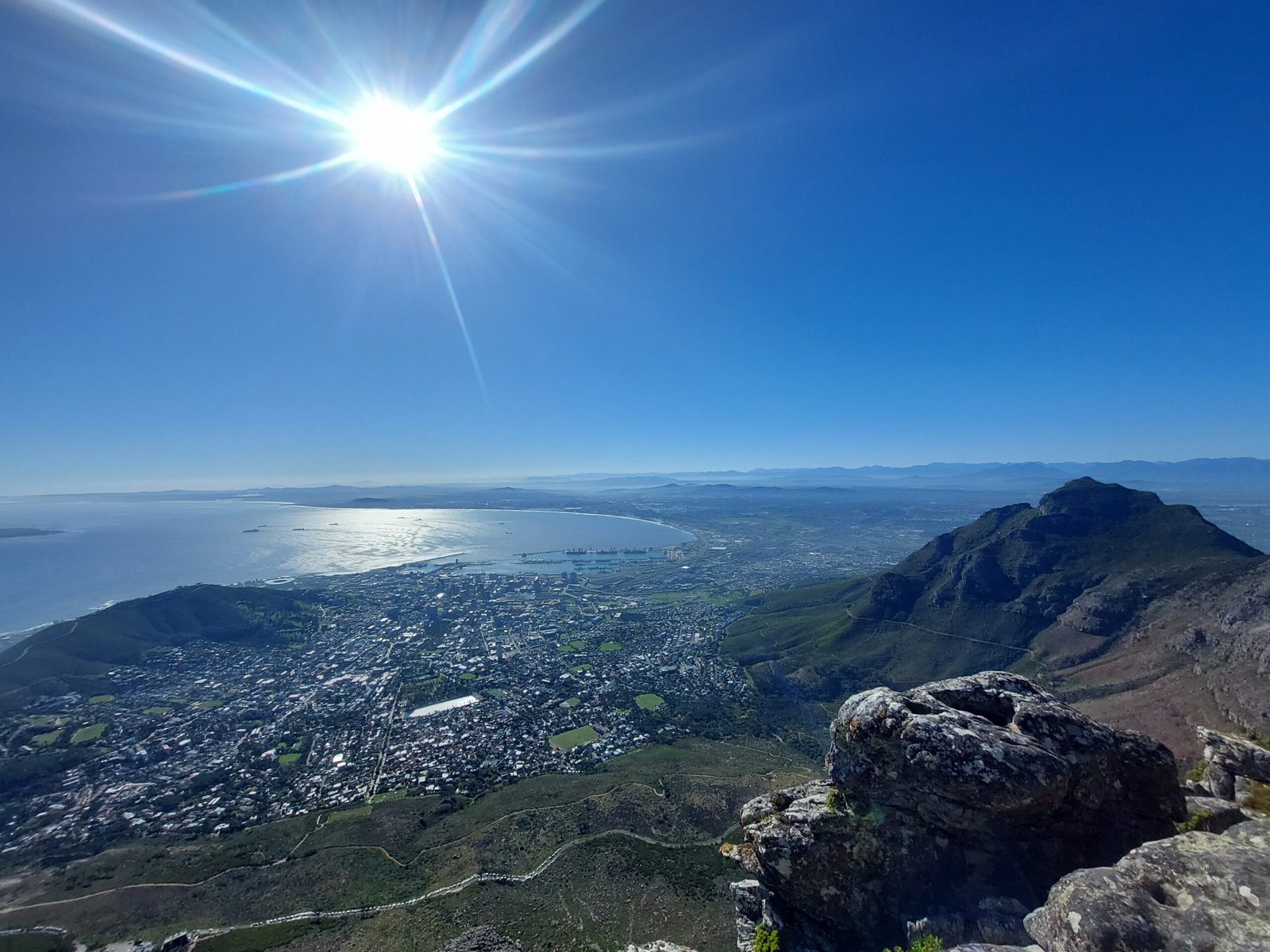
On a clear day, you can see far from the Table Mountain.
If you look closely, you can see Marko and Risto sitting on a rock in the distance.
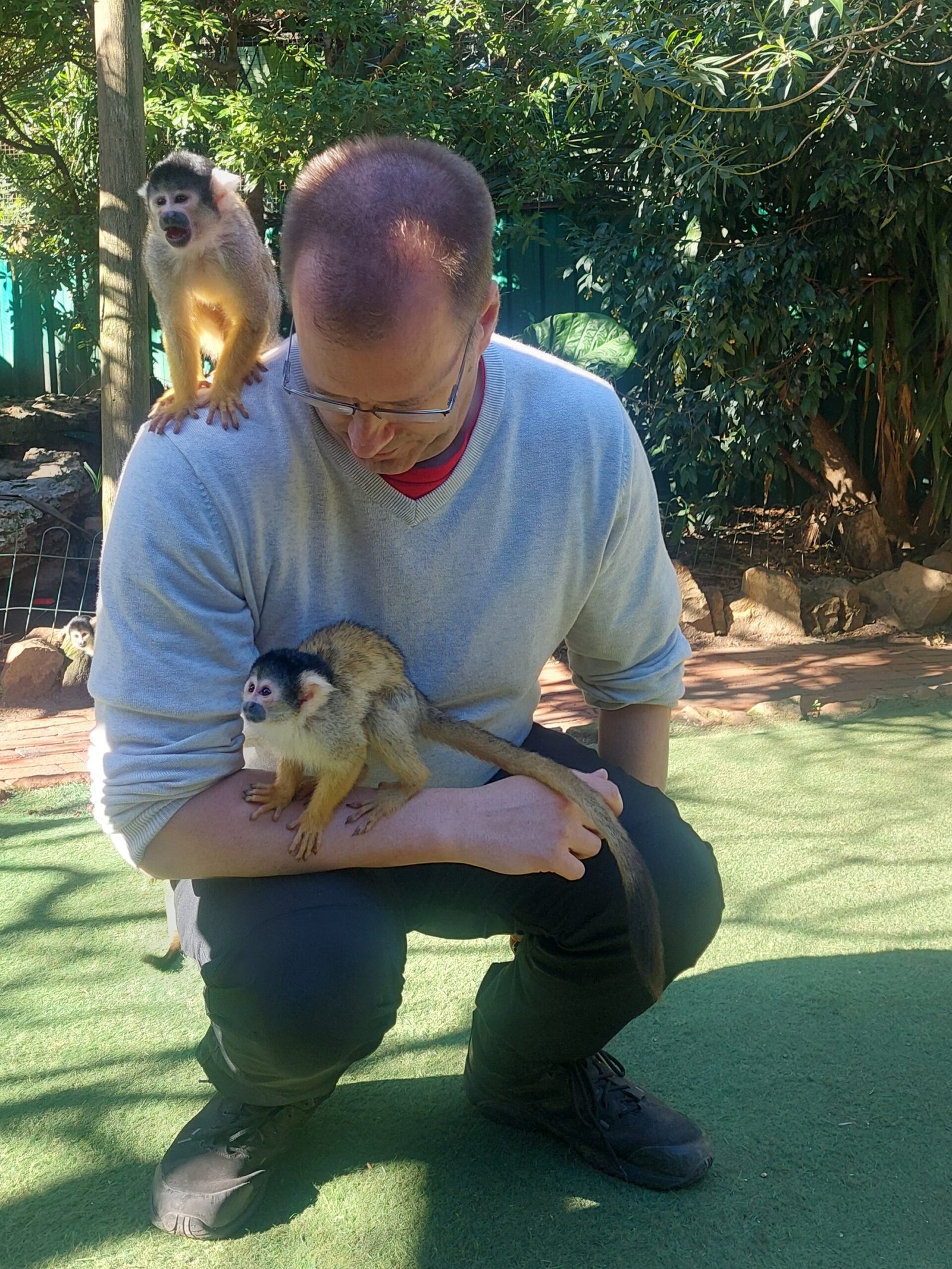
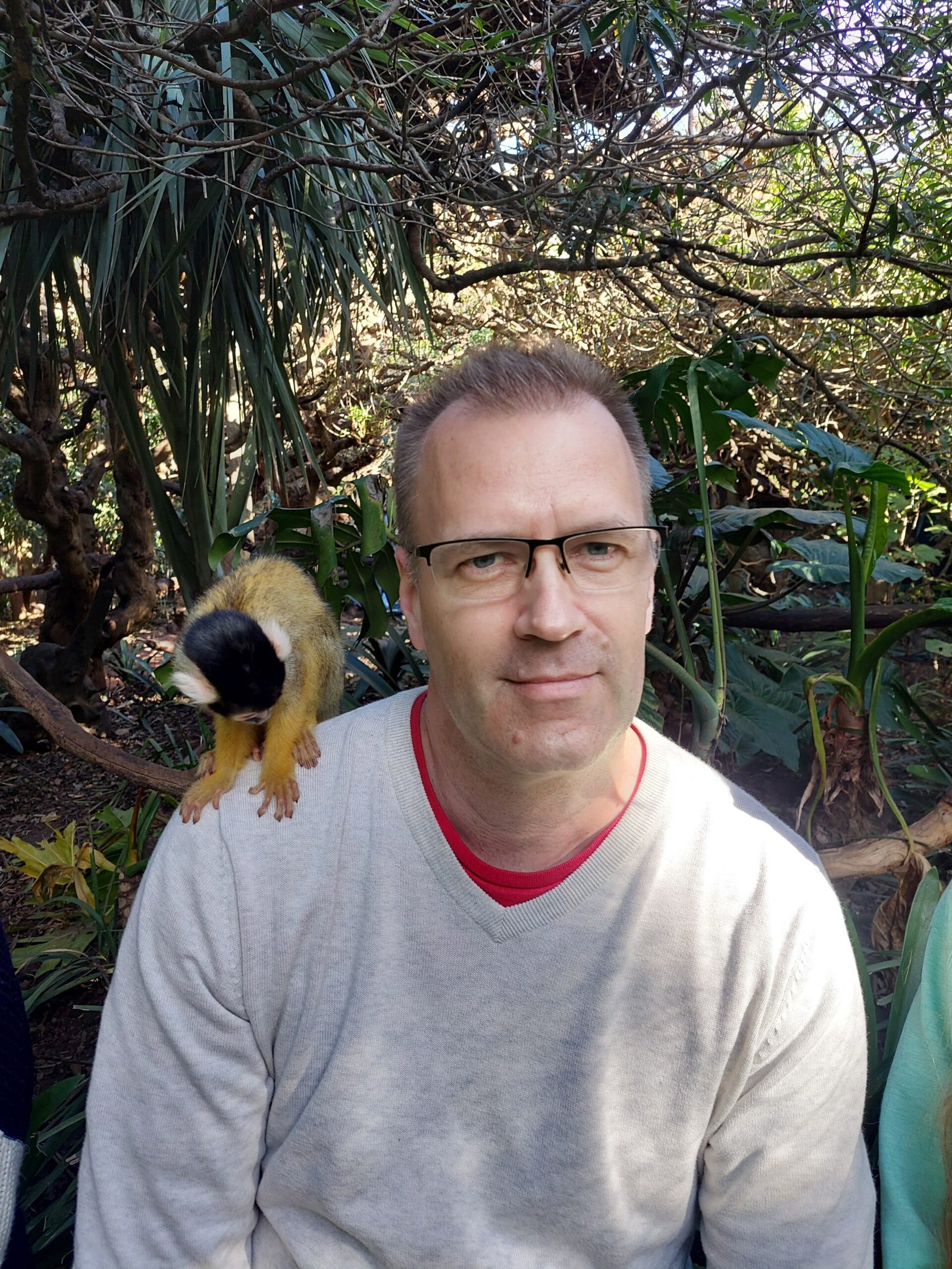
After admiring the scenery, we booked an Uber to take us to The World of Birds in Hout Bay. As the name suggests, there are a lot of different kind of birds there, but we were really there for the little monkeys. In English, these guys are known as squirrel monkeys, but the story doesn’t say which is the father, the squirrel or the monkey… Anyway, we had also had the chance to meet these little fellows 12 years ago when we visited Cape Town. The little monkeys were still very friendly and climbed on top of us eagerly. At first the children were clearly a little nervous, but when they realised that the monkeys were not doing anything to them, both children relaxed. In the end, they liked the monkeys so much that we had to go and say hello to them a second time before we left the park.
Marko liked the monkeys, and the monkeys liked Marko.
The second round with the monkeys went smoothly.
The monkeys also tried hard to take selfies.
One of the monkeys had brought its baby along.
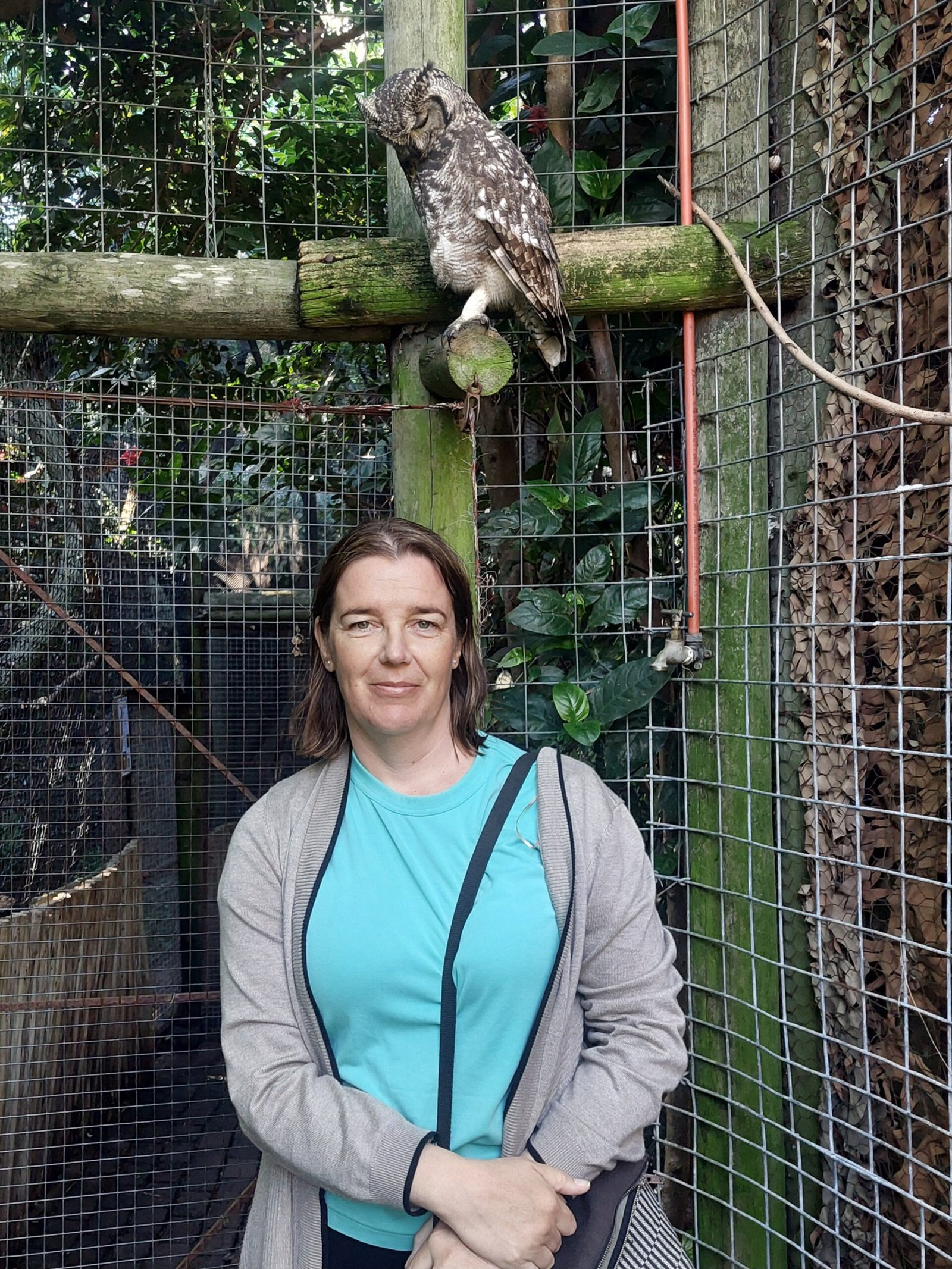
The owl guarding the gate scared the children so much that their mother was sent in first.
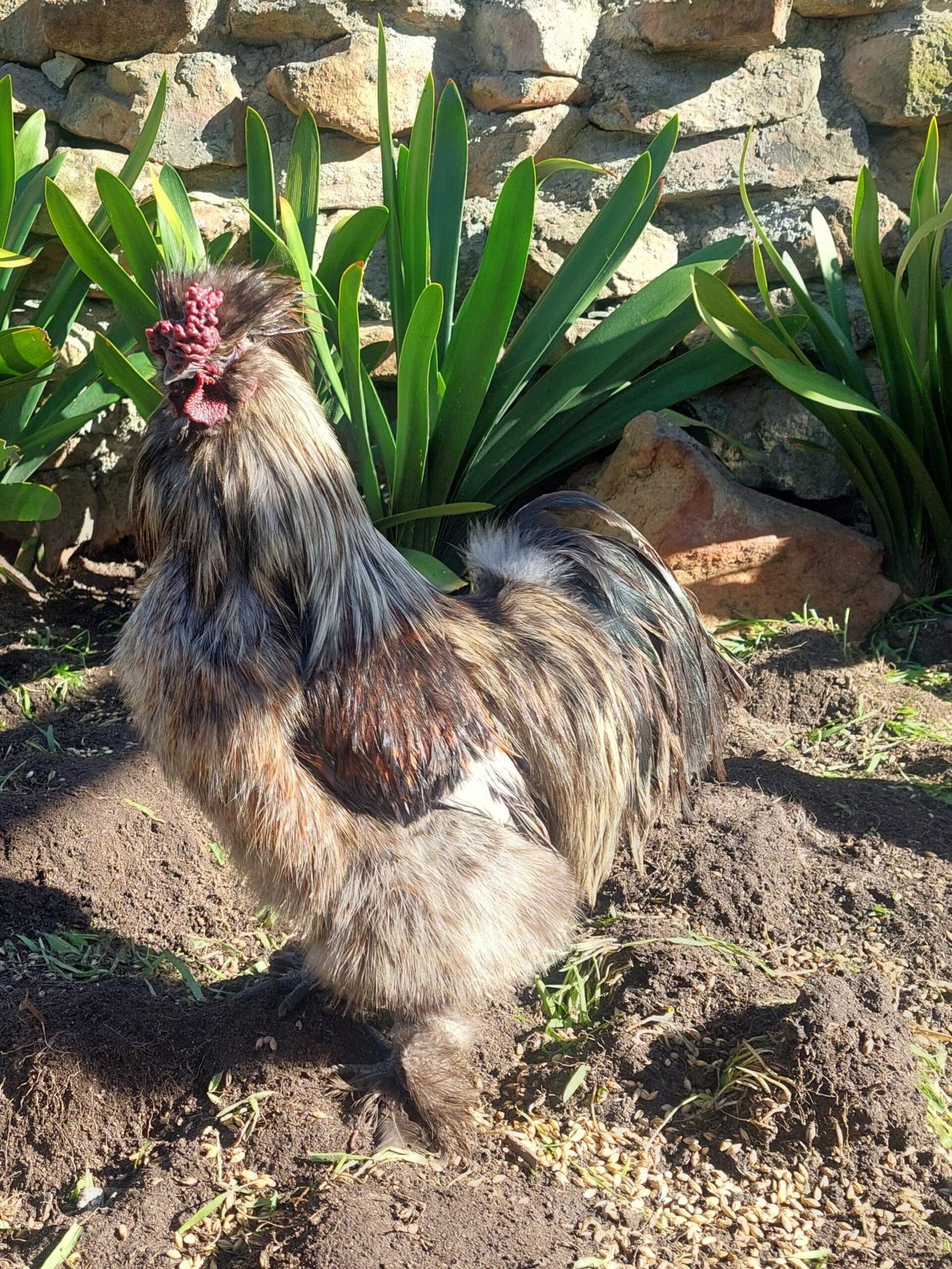
This "killer rooster" also blocked the children's path.
At this point in the day, it was almost three o’clock and we hadn’t eaten anything since breakfast. So we headed back to the V&A Waterfront shopping centre for a combined lunch and dinner. While being there, we had to buy Marko a new phone, because when we arrived in Cape Town, the old phone stopped working properly. It would only charge itself with a single cable, and even then it was very unreliable. Transferring photos from the phone to the computer was also quite a tricky process. We had already tried to repair the charging plug the day before at a local phone repair shop. There an employee plugged his USB cord into the phone, and as the phone started charging, he concluded that there was nothing wrong with the phone… “Your phone is charging. No problem. Have a nice day!” It was pointless to explain him that it didn’t charge all the time. He had made his mind up.
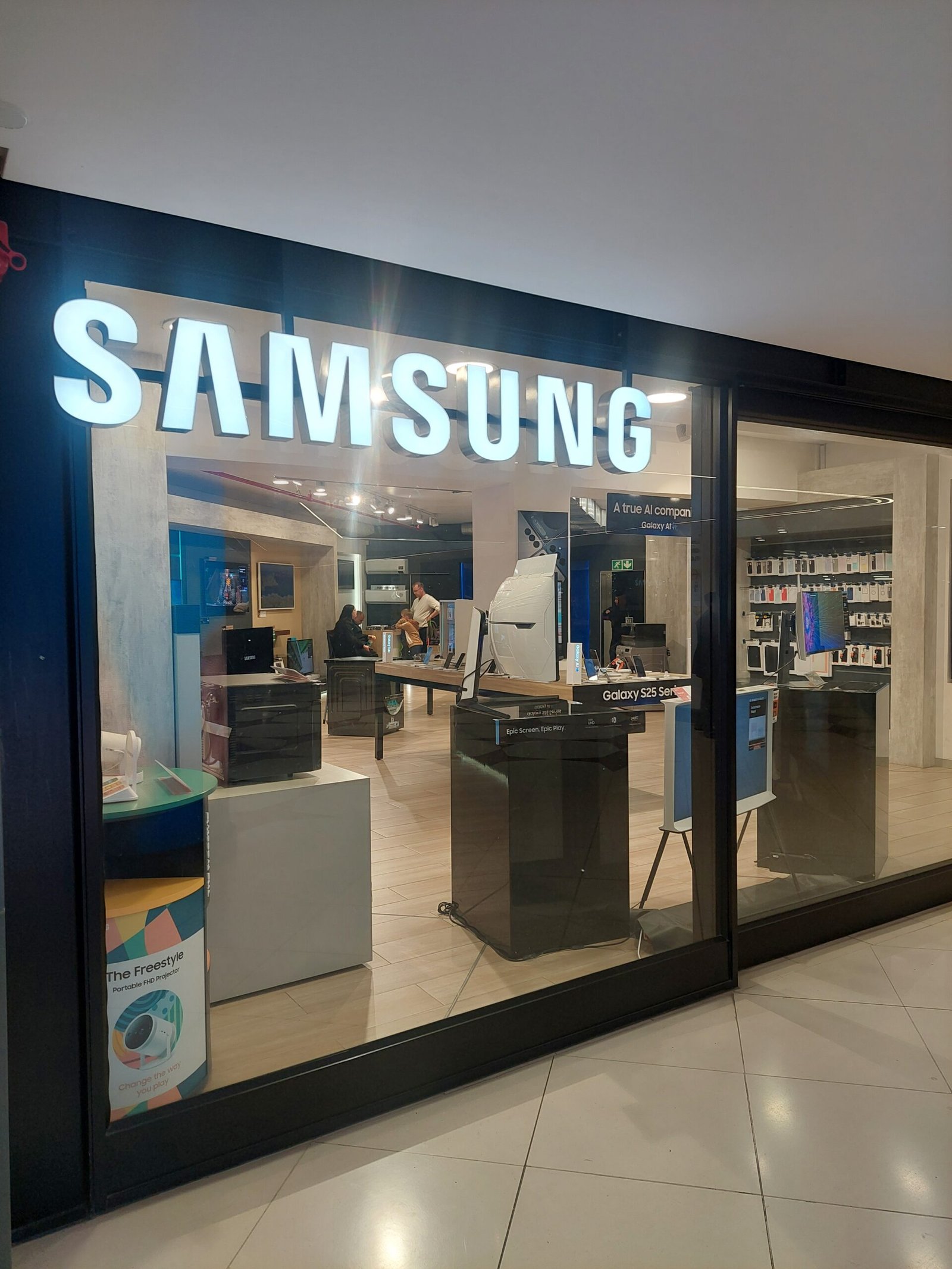
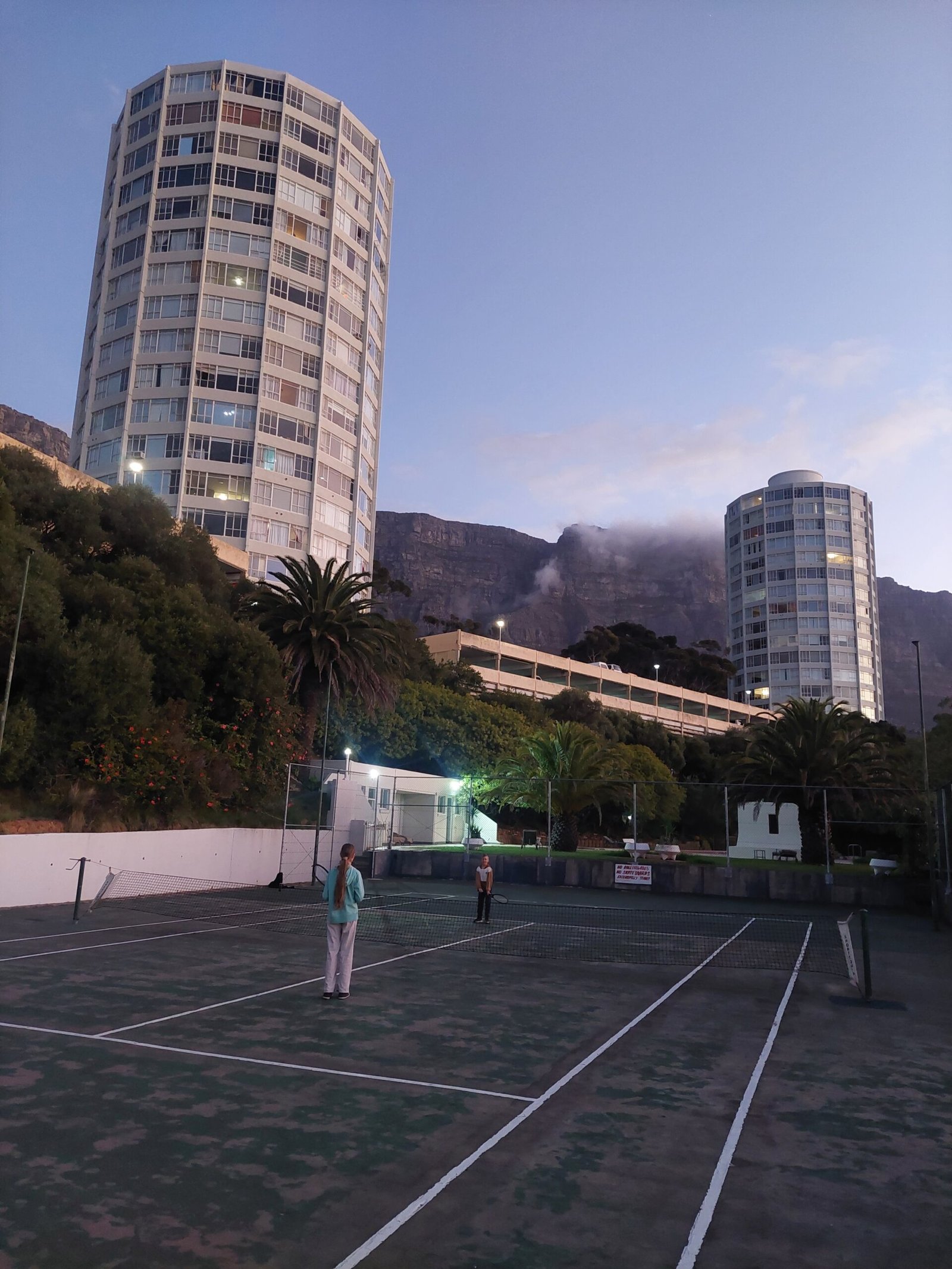
Marko found a Samsung store, and bought a new phone for himself. However, it took so long to transfer the data from the old phone to the new one that Jaana and the kids went back to the house, and Marko stayed at the mall and waited for his new phone. Risto and Ronja still had time to play a game of tennis on the tennis court in the apartment complex. However, as the sun already sets around six o’clock here, and there weren’t lights on the court, the game was cut short. In the dark, hitting the ball was a bit of a gamble, especially as neither of the children is a tennis champion.
Marko returned to the apartment at 8:30 in the evening with a smile on his face. He now had a new phone and a pillow to sleep on in the tent. So we are all gradually getting ready for our overlanding trip.
Boys shopping for phones
Wimbledon isn't calling just yet.
On Friday afternoon, we went to visit the Langa township, where 100 000 people live in a three square kilometre area. Langa was built in phases, but it was officially opened in 1927. The name Langa in Khosa means sun. Although it was a cloudy day, at least the people we met there were very sunny and friendly despite their living conditions. Risto even got to join in for a short game of football with the local boys.
The local boys played soccer really well, even in sandals.
Our guide still lived in Langa himself, so he was able to tell us very vividly about life in the township. During the tour, we were also able to visit three different homes, which was a very eye-opening experience especially for the children.
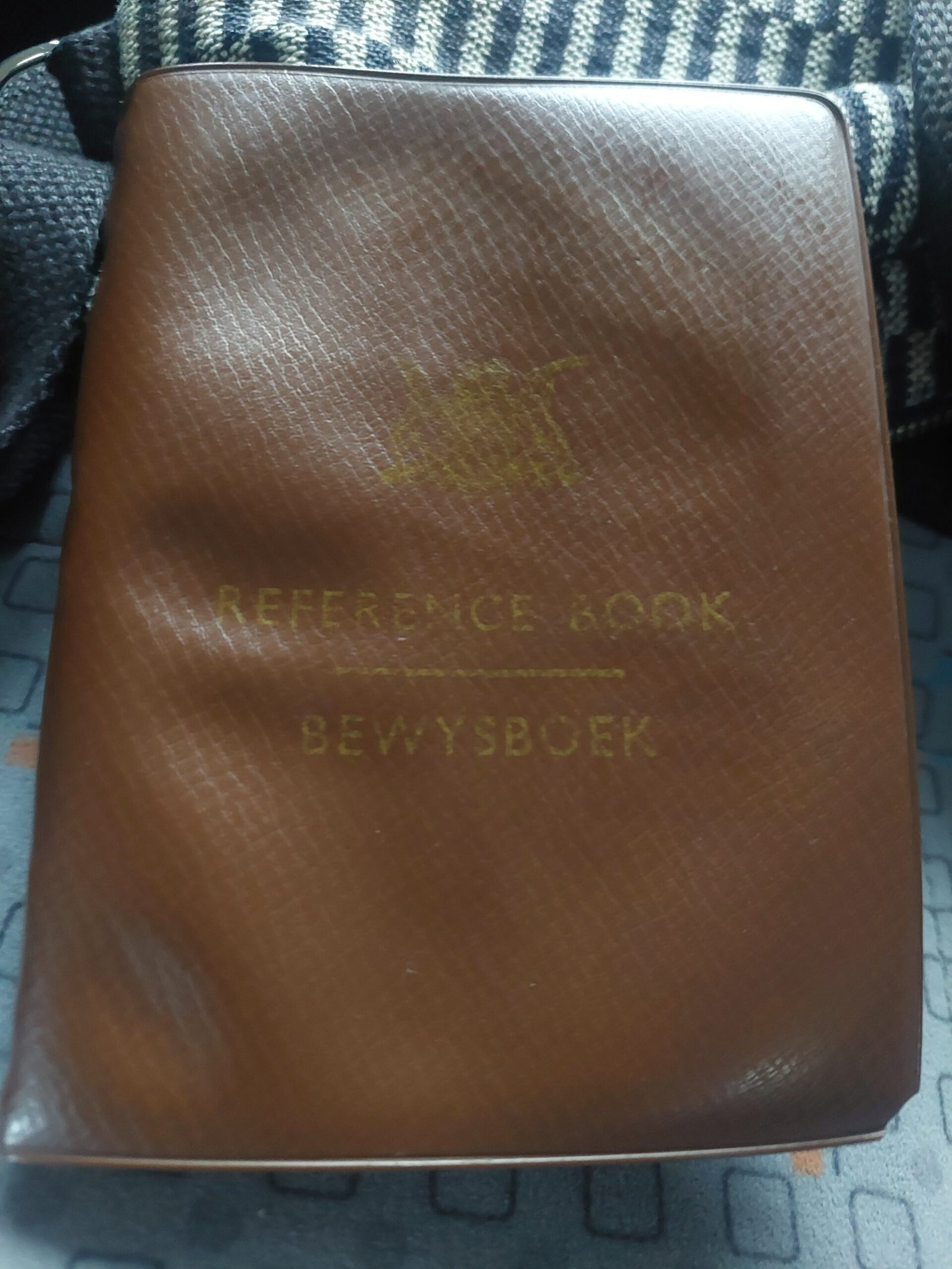
The Dom document (dom means stupid) was mandatory during apartheid for all black people who wanted to move around the central area of Cape Town.
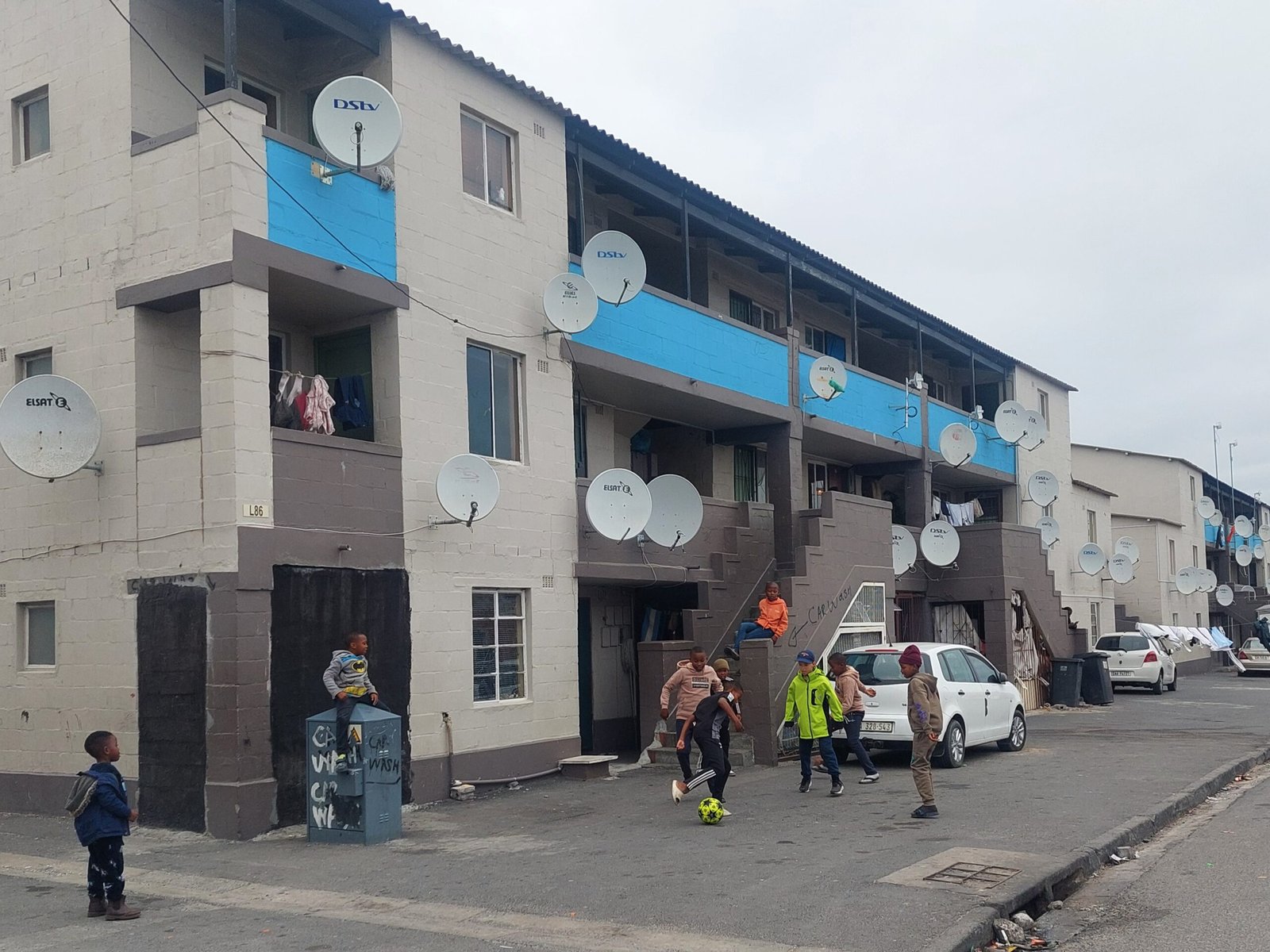
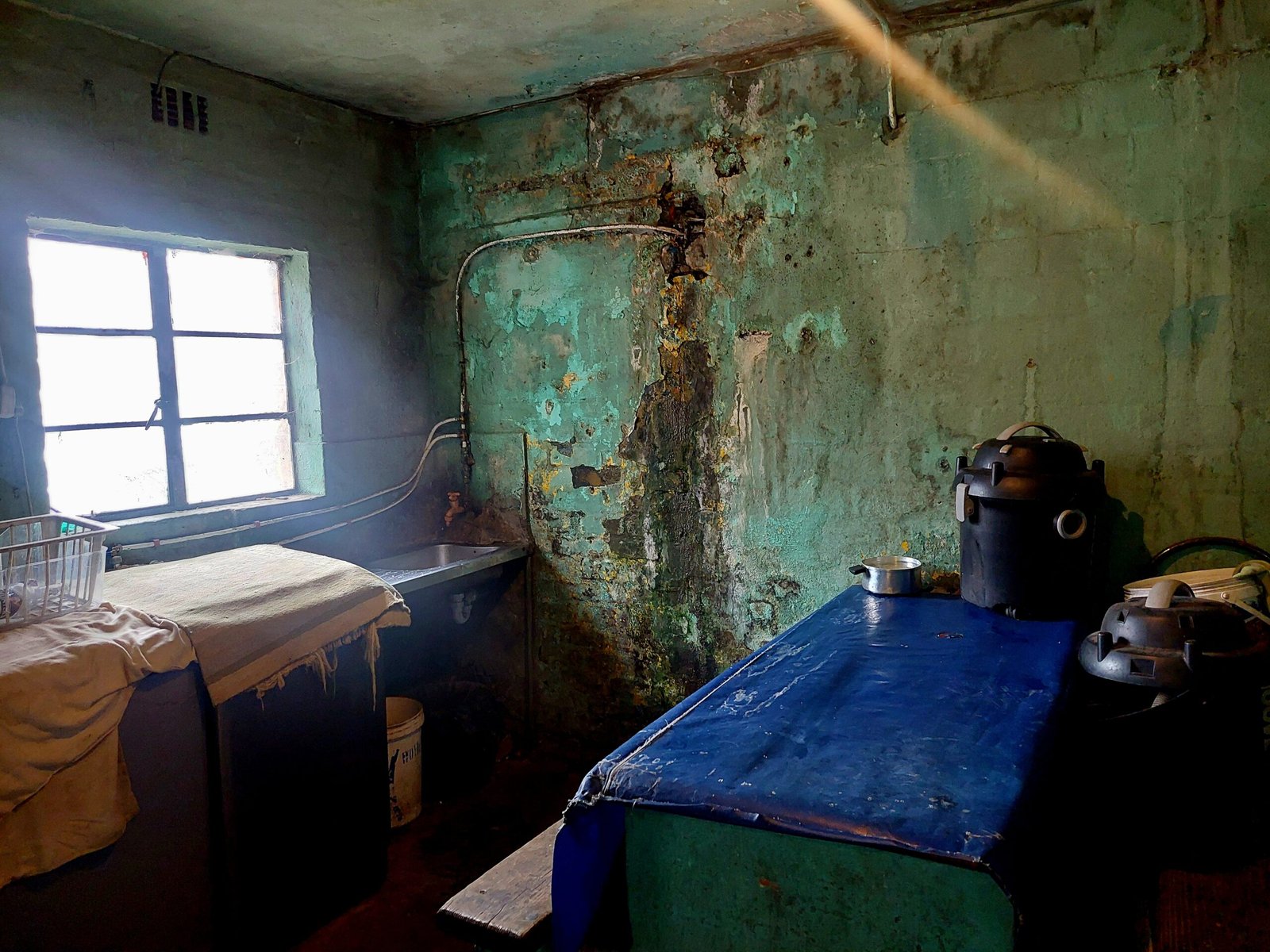
The first home we visited was in a “hostel”. This apartment had a shared kitchen and toilet, between six different rooms. In each room lived either two or three families. If the room had two beds, it was for two families. In three bed rooms lived three families together. The two-family room we were able to visit was currently occupied by 13 people. The adults slept in the beds and the children were sleeping on the floor. In some cases, a six-room ‘hostel’ like this could have housed up to 100 people.
Our guide told us that he used to live in one of the hostels, and that the biggest challenge was getting to use the toilet. When you have almost a hundred people trying to get ready for school and work at the same time in the morning, there’s bound to be a queue behind the toilet door. So our guide told us that he used to get up around 3:30 to 4:00 in the morning to get into the toilet before the queue started to build up.
It was clearly laundry day at the hostel apartment. Each room has its own satellite dish so that residents can watch soccer.
The apartments were accessed via a shared kitchen.
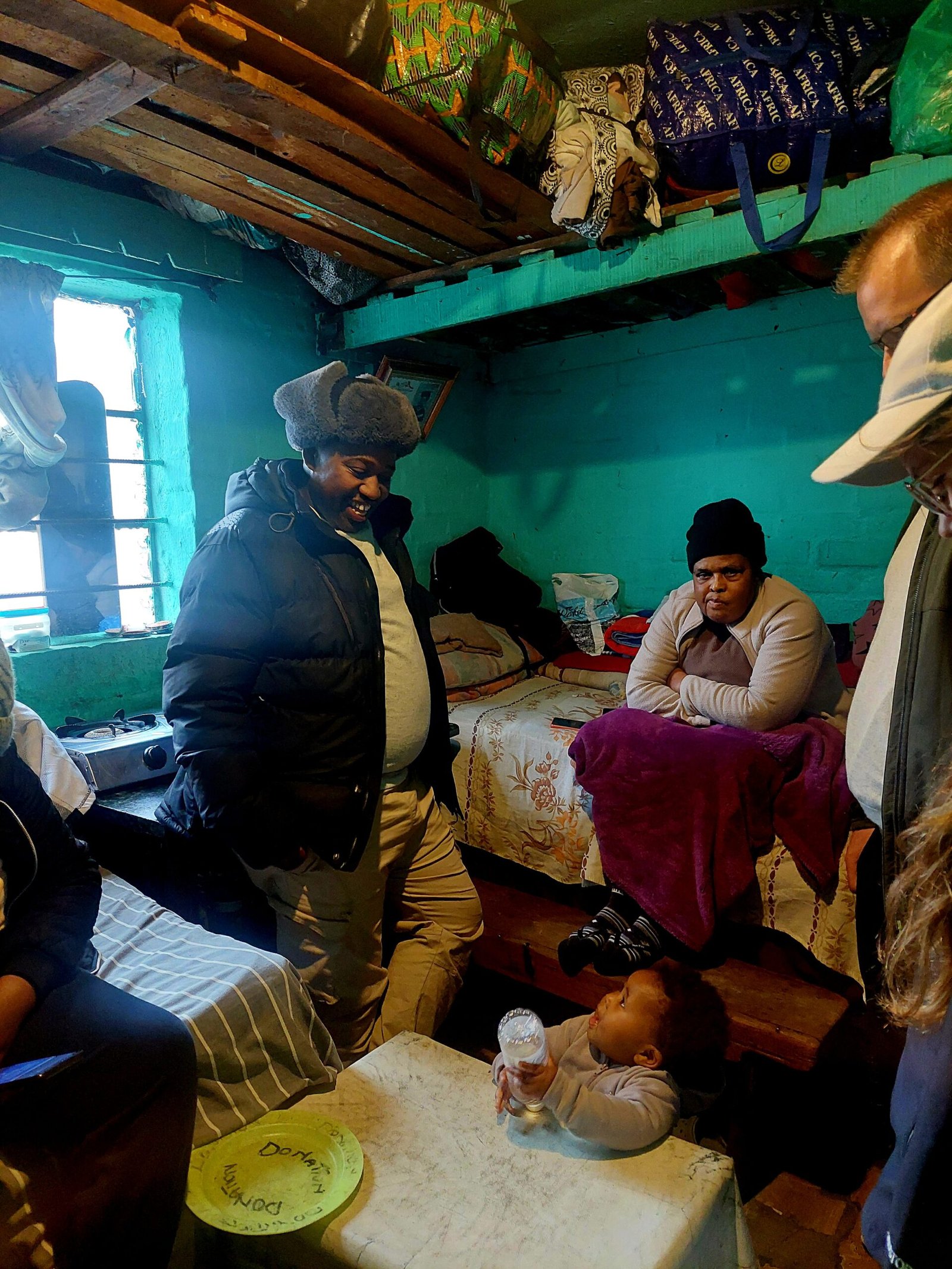
The rent in the hostel room is not expensive, only 50ZAR/bed/month (about 2.5€). To get out of these apartments you should be able to prove that you have a regular income. The lady living in this room did run her own small food stall, but as she only operated with cash, she had no proof that she had a regular, fixed income. Therefore, she and her family continued to live in a tiny room of about four square metres. Ronja had crocheted a couple of stuffed octopi and she gave one of them to an 11-month-old girl living in the room. She didn’t seem to have many other toys there.
The little fellow got an octopus.
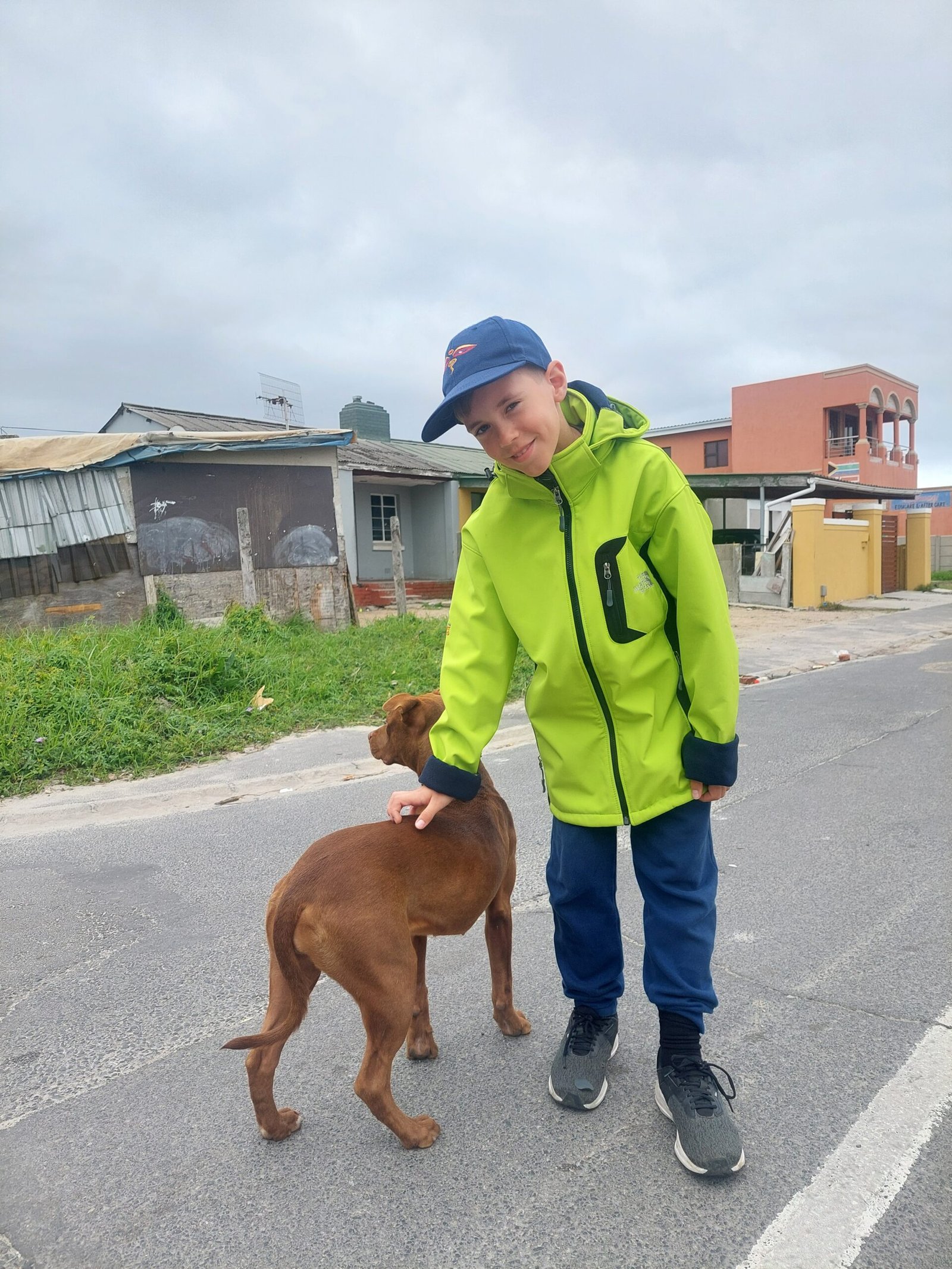
Risto immediately found some doggy friends.
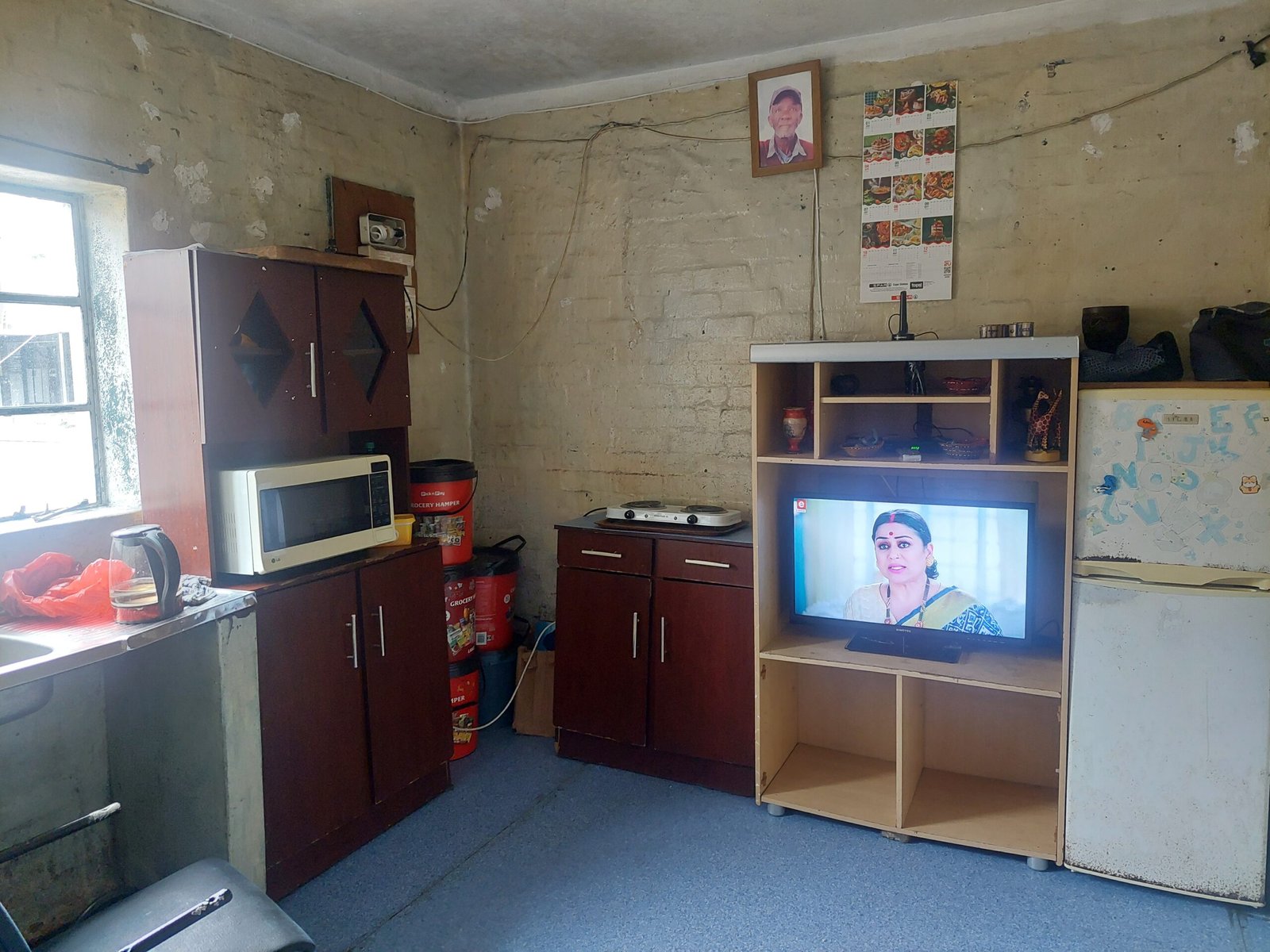
The next apartment we visited was a bit better. This was a one-bedroom apartment with a joined living room/kitchen and toilet, with only one family living there. The monthly rent is 350ZAR (about 17€), which is already significantly higher than the rent of a “hostel apartment”. Our guide told us that he currently lived in such an apartment with his family. He said that having a private toilet made life so much better now. No more getting up at the crack of dawn to get to work by 8am.
This apartment has a little more space and privacy.
Two competing barbecue kiosks.
Next we continued to Langa’s Beverly Hills, home to Langa’s best-off residents. It was interesting to hear that even Langa residents who could afford to move out prefer to stay in their neighbourhoods, but are trying to get a place in Langa Beverly Hills. Unfortunately, however, this is not easy, as there is little room for new, more spacious housing to be built. So to get a place to live in the area, you would have to manage to buy a flat from someone who already lives there. The last time that happened was in 2003. So Beverly Hills is a sought-after residential area even in Cape Town.
Apartments in the 'Beverly Hills' part of Langa cost around 1,500,000 ZAR (75,000 EUR).
Works by local artists were also on sale.
If you don't have enough money for the whole sugar package, you can get just two tablespoons of sugar here if you want.
People gather at this bar to watch football.
This bar, on the other hand, only serves home-brewed drinks.
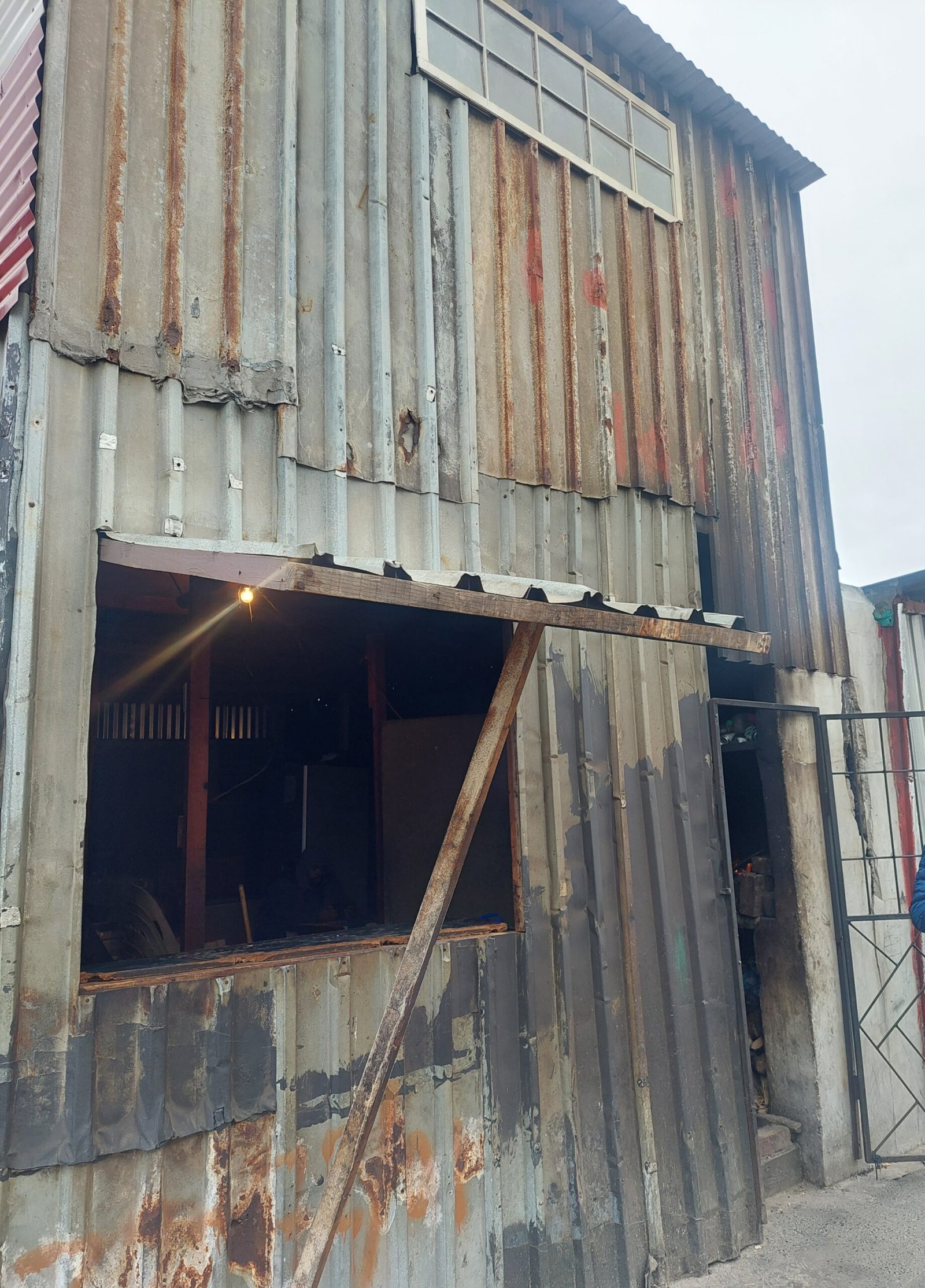
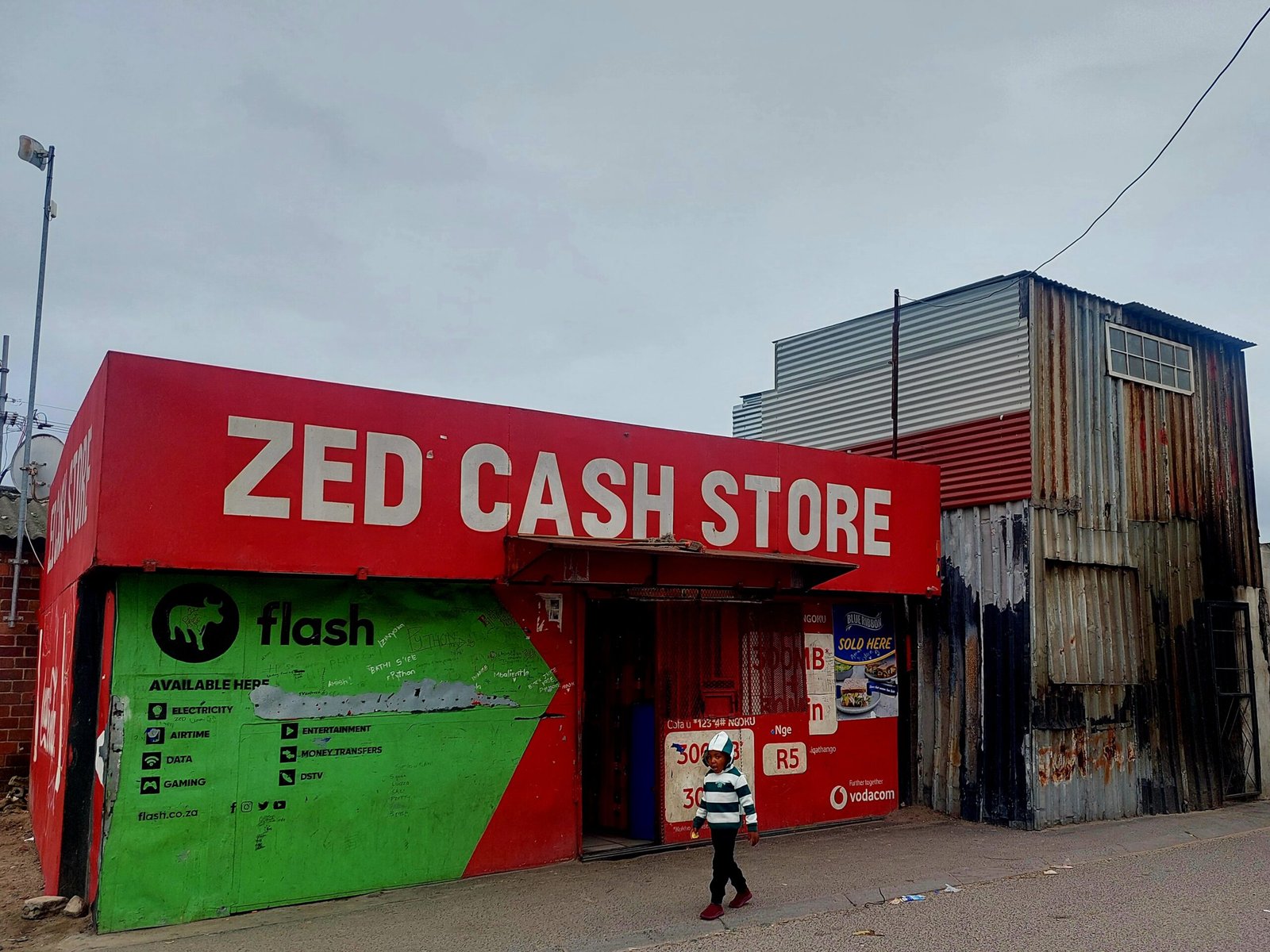
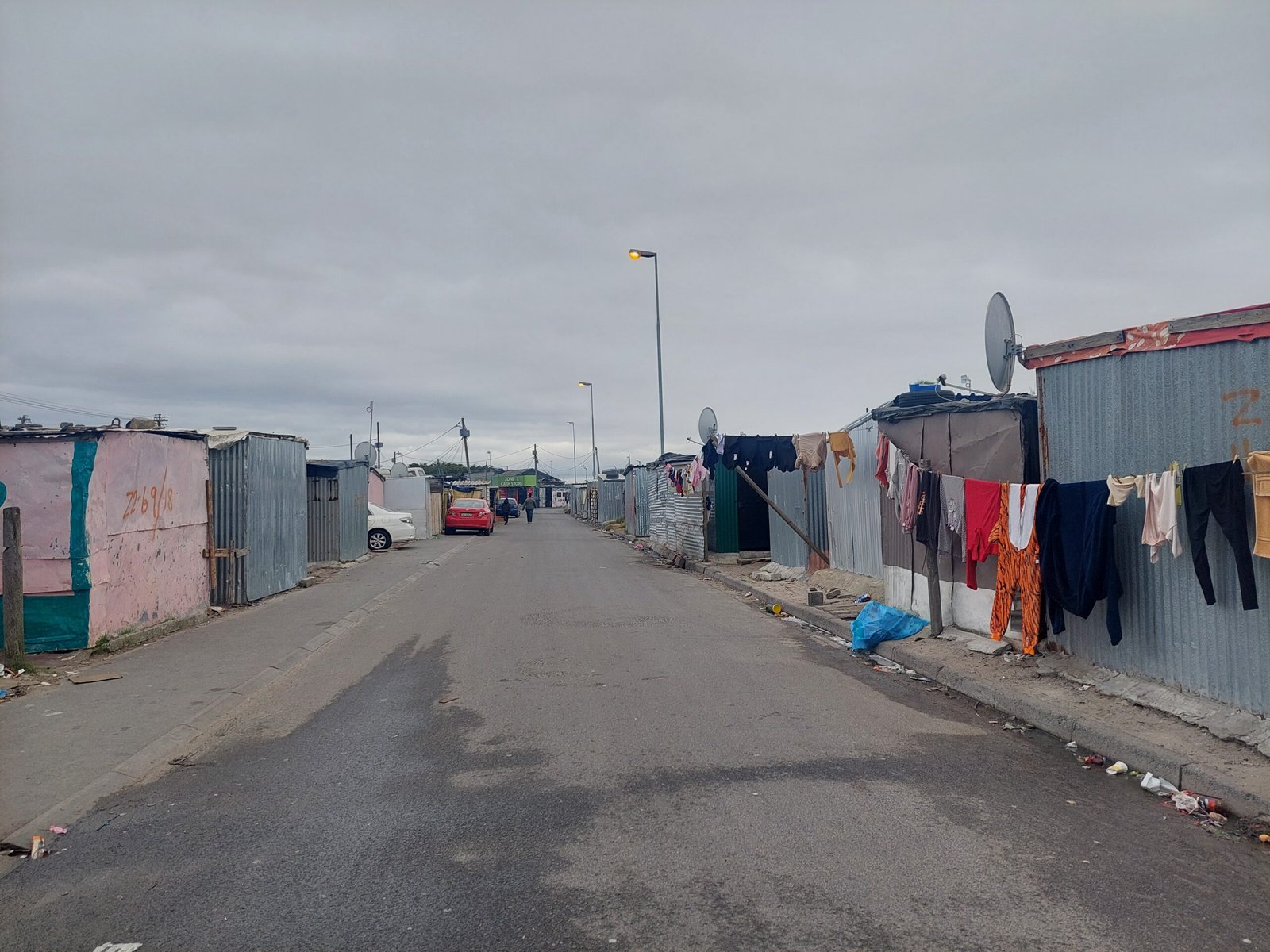
Finally, we visited the part of Langa that is best described by the word “slum”. These shacks are built of all sorts of building materials, with no running water or electricity. They are cold in winter and hot in summer. In the coldest months, fires are very common, as people heat their shacks with gas and oil heaters, as well as open fires in large paint cans. However, in the apartment we visited, it was really warm, even though it was a chilly day outside. The occupants were probably heating their home efficiently because there was a small baby living there. Ronja gave one of the octopi she made to this little girl.
Langa slums.
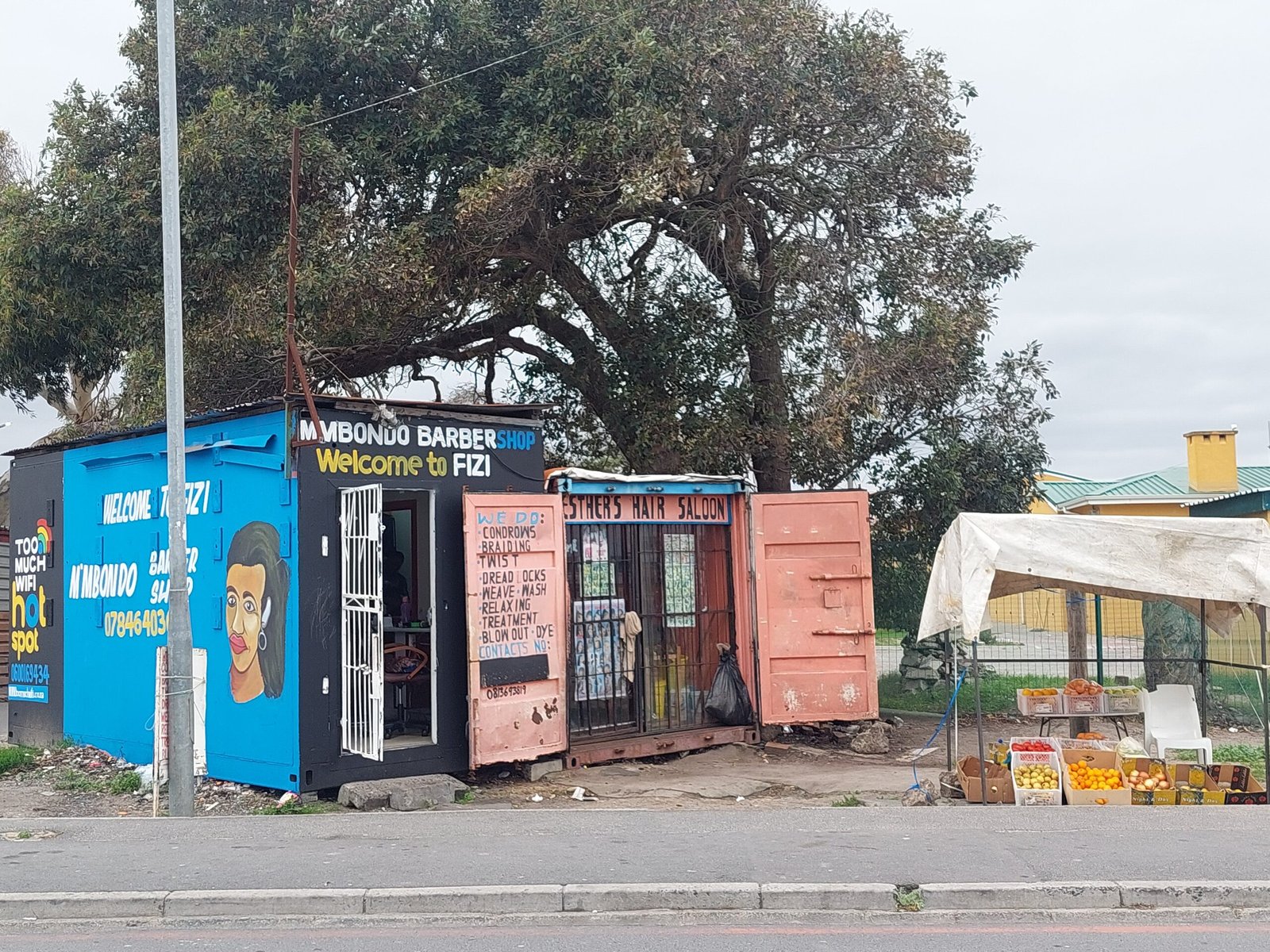
Men can get their hair done in the blue container. The pink container is for women.
This little baby also got an octopus.
Because the buildings in the slum area are so close together, the fires spread quickly and destroy the homes of hundreds of people at a time. The last time this happened was in December. Langa has its own fire brigade, which is only a 10min drive away, but even so, when a fire breaks out, the damage is usually extensive.
Slums are often built next to the “hostel housing”, because then the people living in the slum can draw electricity from the buildings. They also share toilets with families living in shared housing.
Large murals encourage people to get vaccinated.
Braai means barbecue.
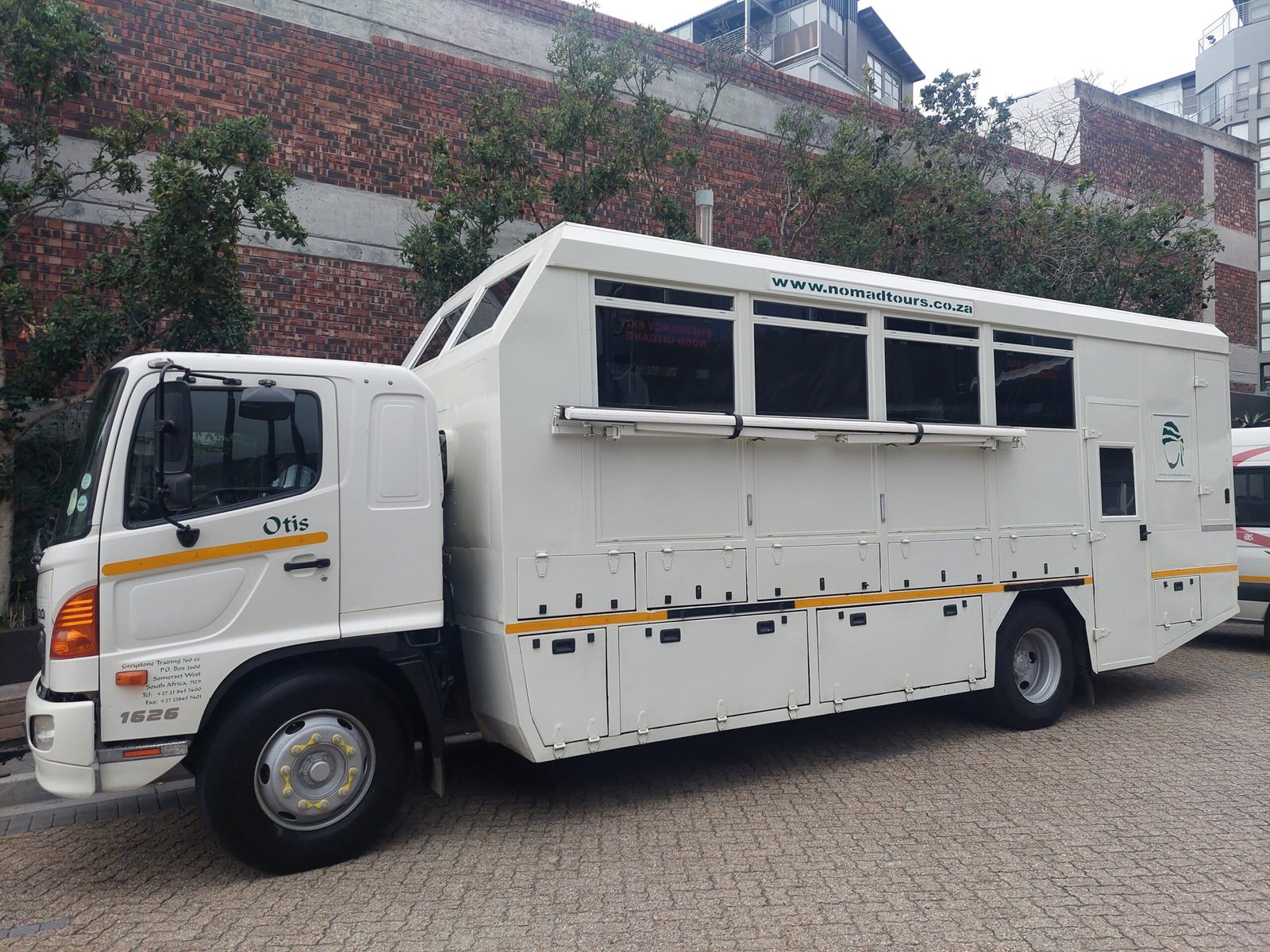
After our visit to Langa was over, we went to the hotel to meet the leaders of our overlanding trip and possibly other travelling companions. As we were there a little early, we only met a few other travelling companions. We were told that there would be no more than 15 of us on the truck in addition to the guide, the driver and a German interpreter. That was excellent news, because now we potentially have a bit more room in the truck for everyone. We quickly filled in all the necessary paperwork and then returned to the apartment to repack our backpacks for the six-week truck ride.
We'll be hitting the road on Saturday in this vehicle.