On Tuesday morning, we got up again just after six and packed up the tents. We enjoyed breakfast at 7:00 a.m. and an hour later we set off to continue our journey. We had another day of driving ahead of us, as our next destination was about 400 km away. Nothing particularly noteworthy happened during the trip. We stopped once, much to Ronja’s horror, for a toilet break in the bushes, and made another stop at a Spar supermarket in the town of Mariental. There, Stanley replenished our food supplies and we travelers bought snacks for the long drive. Until then, we had mostly driven on fairly flat asphalt roads. Now, however, we were moving onto a bumpier sandy road. As our other guide, Taku, said, “Now it’s going to be dusty, dusty, bumpy, bumpy, stony, stony, bushy, bushy.” (Bush referring to the only toilet option available on certain stretches of the road.)
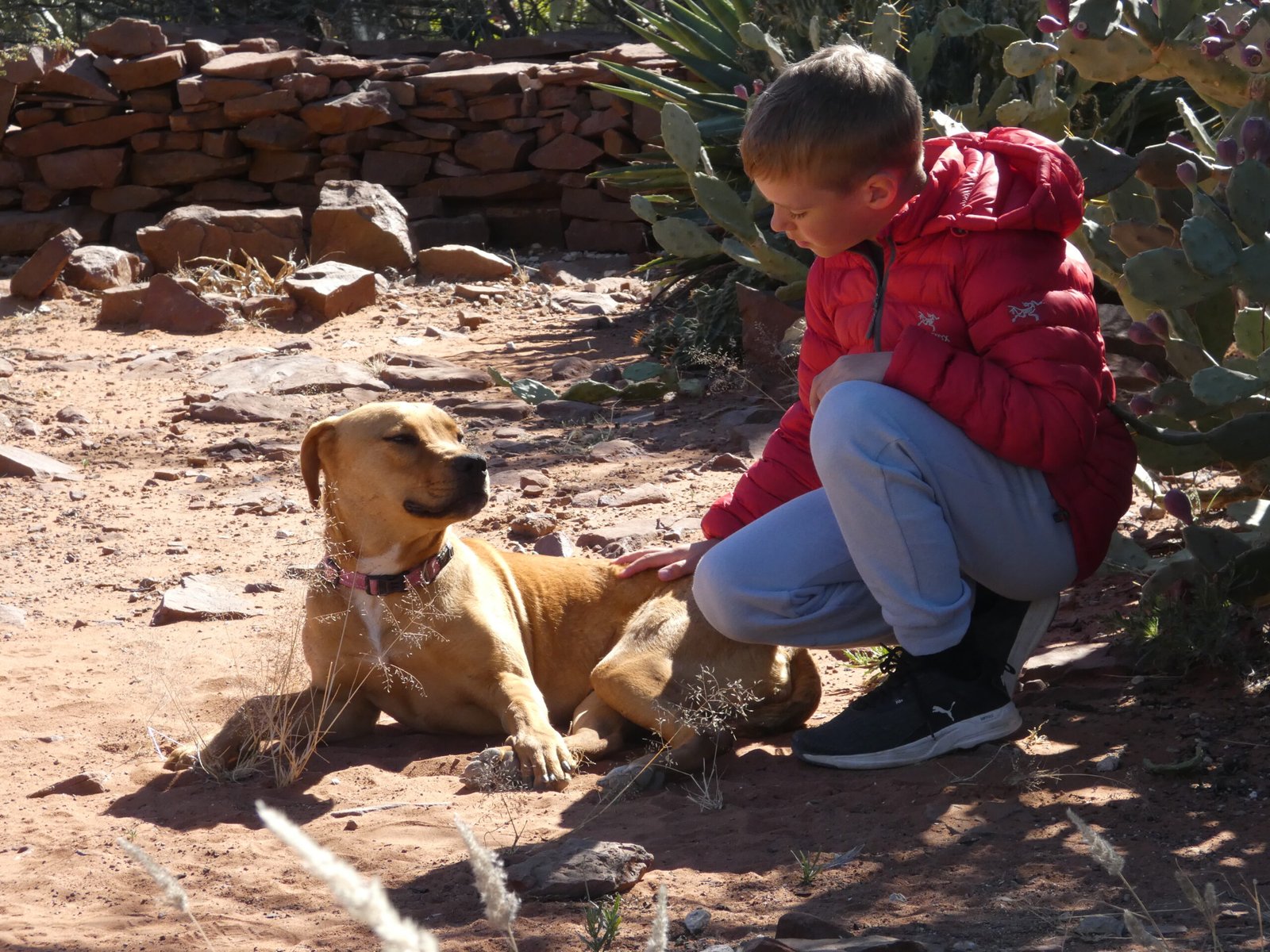
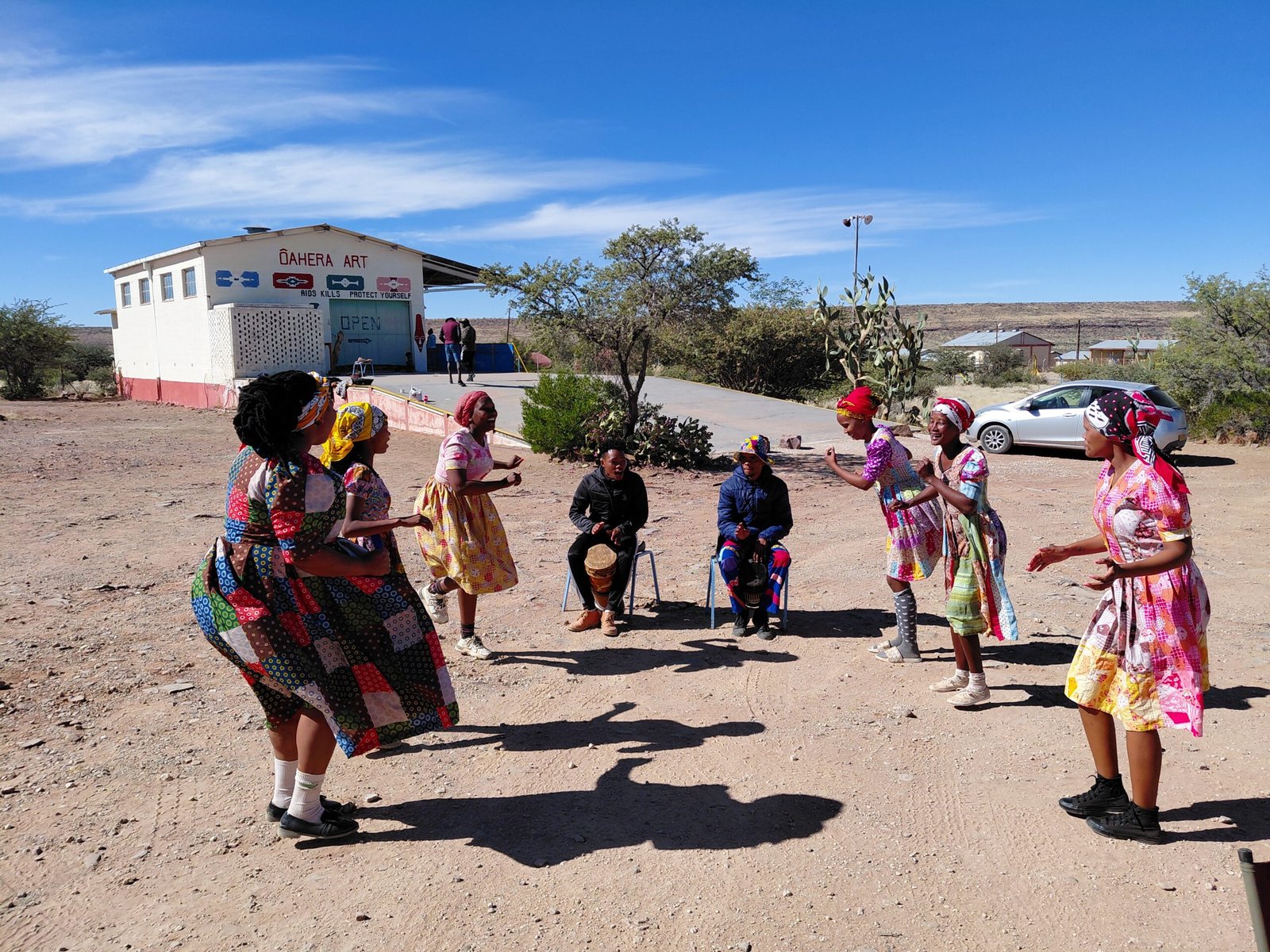
We drove along the sandy road for about an hour until we stopped in a small village to refuel and have lunch. While we were eating, a group of local men and women came to perform African songs for us. Naturally, this performance was not entirely free of charge, as the performers hoped for a small donation after their performance. Of course, we were happy to give them something. Risto wasn’t very interested in African songs, as he had spotted a dog, which he immediately went to pet. The dog was very shy and wouldn’t let anyone else pet it except Risto. Risto just has a phenomenal connection with dogs!
Early in the morning, it can get quite cold in the back of a truck.
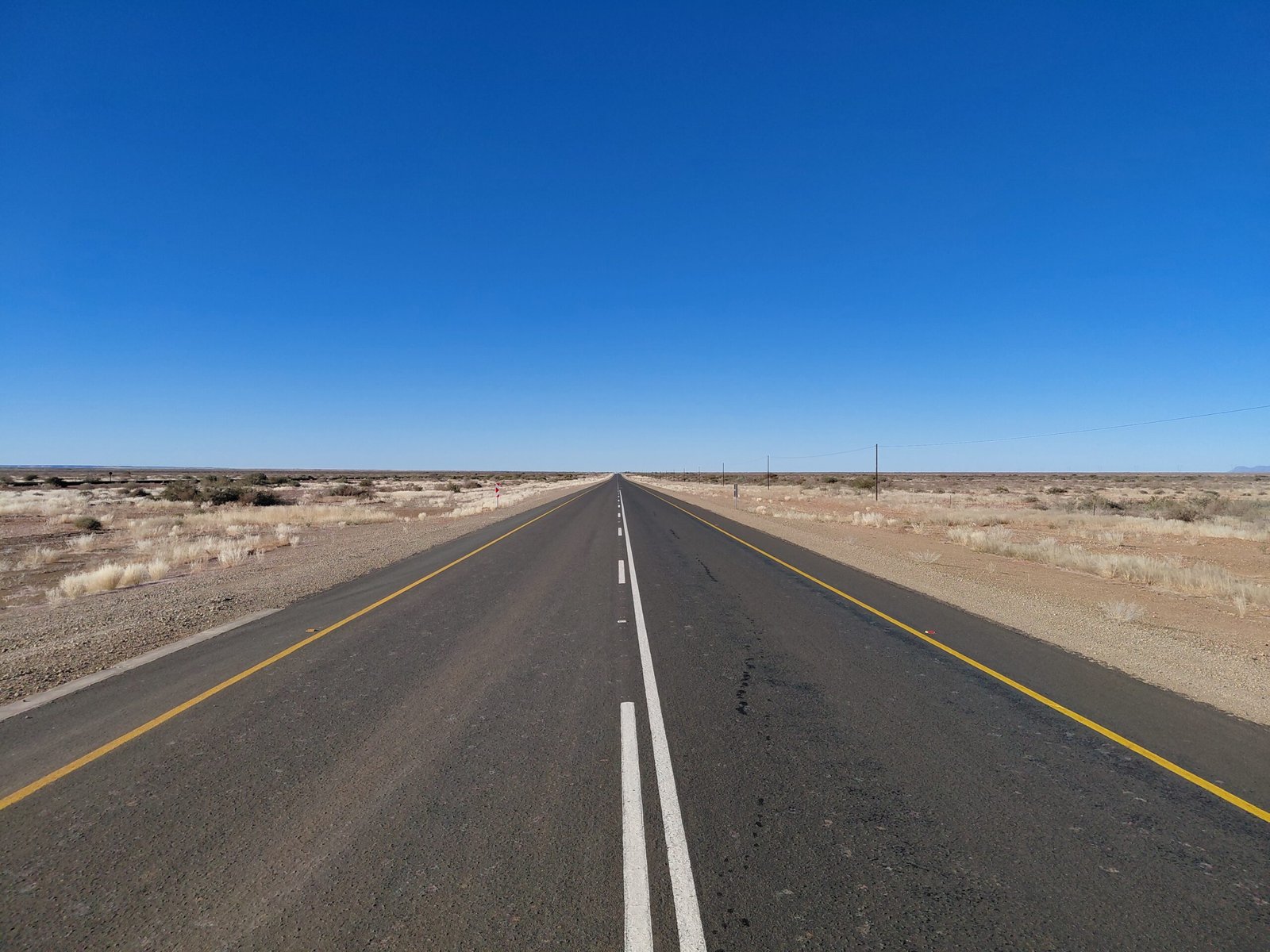
At first, the road was flat and straight.
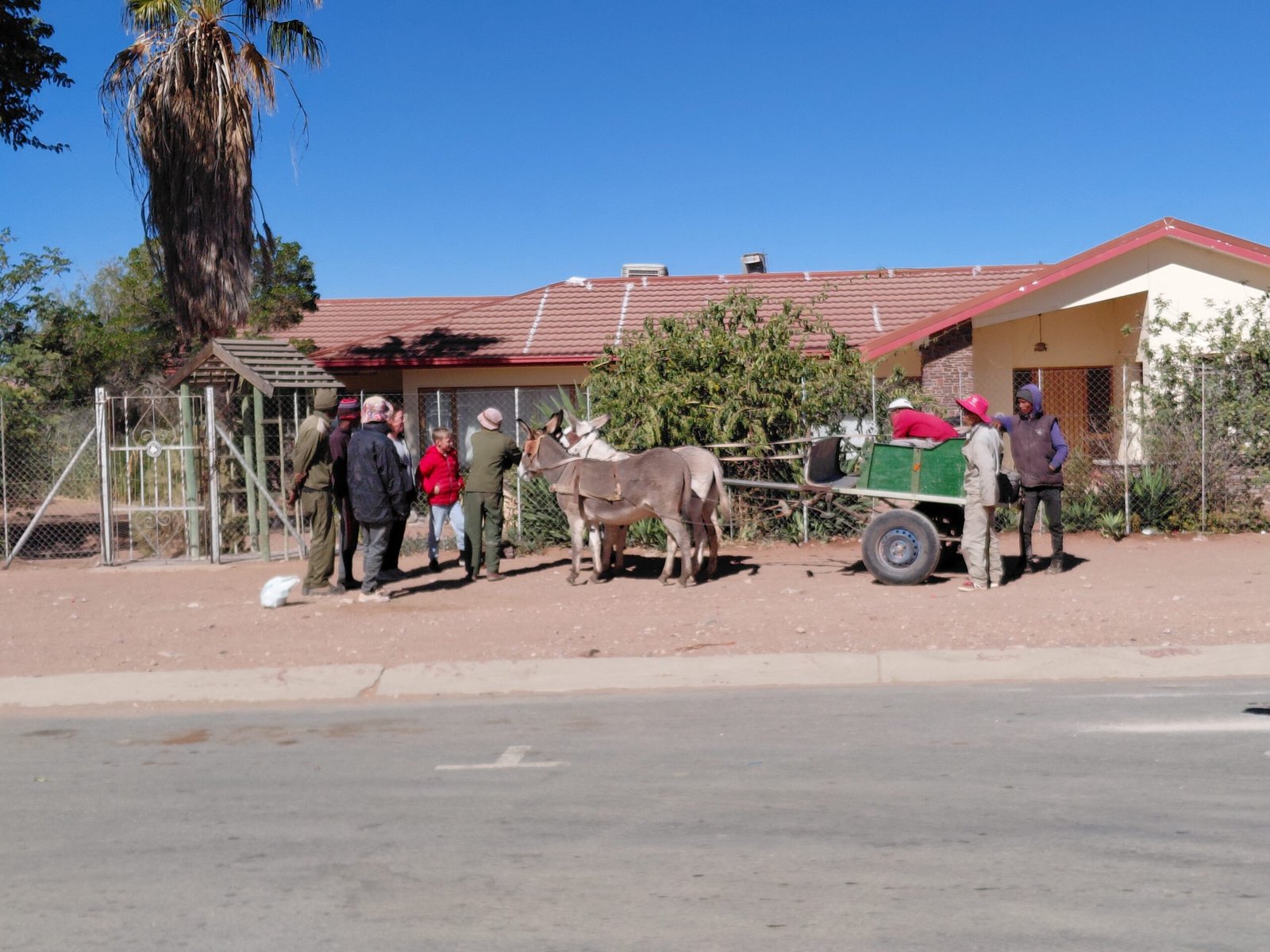
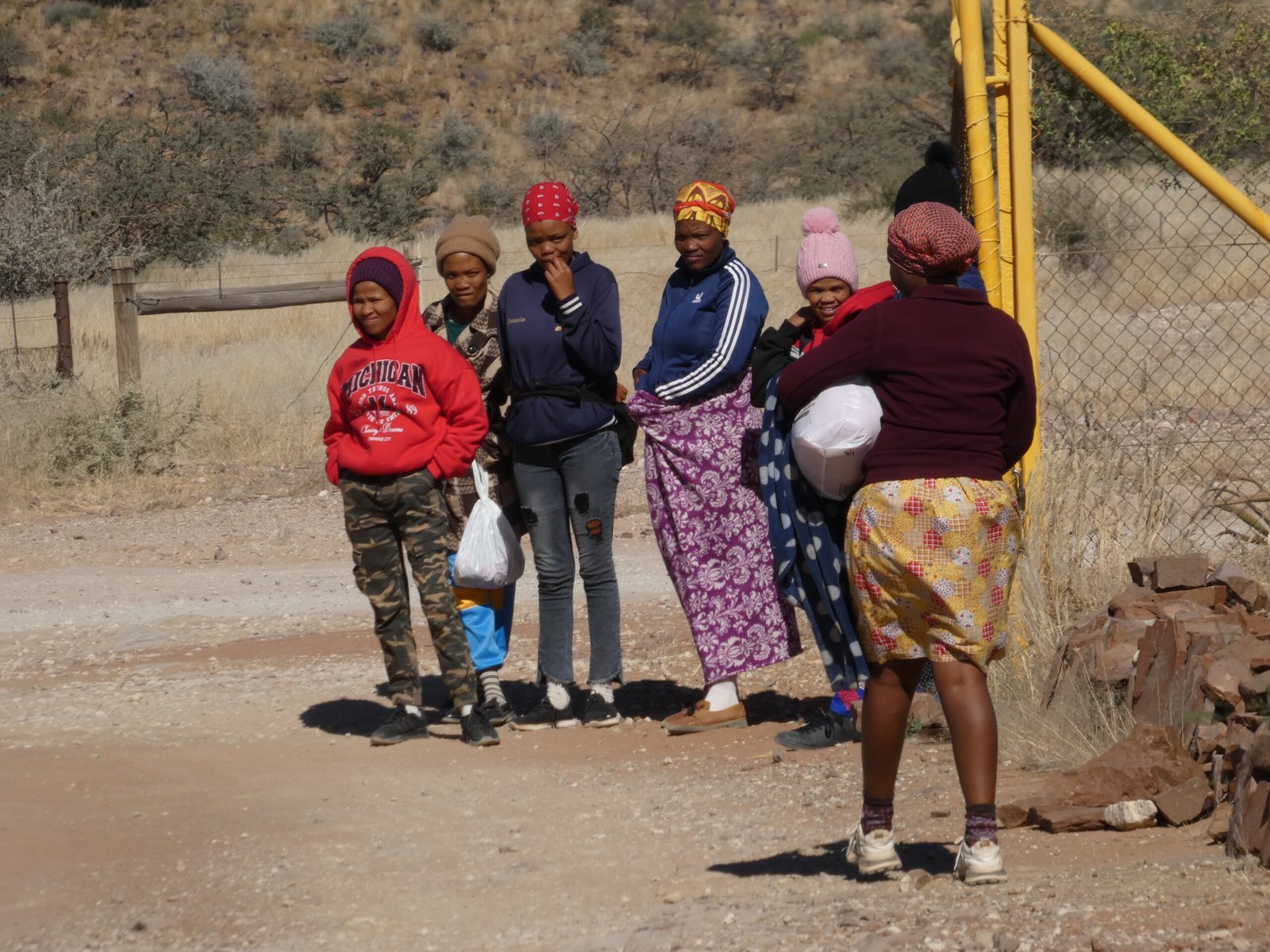
These locals had come on three donkeys to fetch bread and sugar from their farms 50 km away.
Risto and his canine friend
This was Marko's friend.
The locals came to check us out.
A group of dancers and musicians performed for us.
The roads are still straight, but they're definitely not flat anymore. Bumpy, bumpy, especially in the back seat.
In the evening, we arrived at Hammerstein Lodge in the Namib Desert. We decided to get rooms for ourselves, as the temperature was expected to drop below freezing during the following nights. Risto was a little disappointed by this information, as he had wanted to camp despite the cool weather. We got two double rooms, but when we went to the room intended for the children, someone had already settled in there. The staff was puzzled by the situation, as according to their records, no one was supposed to be in that room. We probably checked all the double rooms that were supposed to be available, but they all had other people’s belongings in them. In the end, Risto got lucky, because we ended up taking the only double room that was actually available, plus a single room for the children. Risto got to sleep on the floor on camping mattresses. Ronja was completely confused, and I think a few swear words were uttered when she asked, “Why do we always have some kind of problem?!” Risto, on the other hand, was happy when he got to sleep in a sleeping bag after all. And best of all, three camping mattresses were brought to his room from the truck. In the end, Risto slept like a real princess in a fairy tale on top of a thick pile of mattresses. The camping mattresses provided by Nomad are 5 cm thick and really soft. We normally sleep in tents with two mattresses each, so even there, any lumps or small stones on the ground won’t disturb our sleep too much.
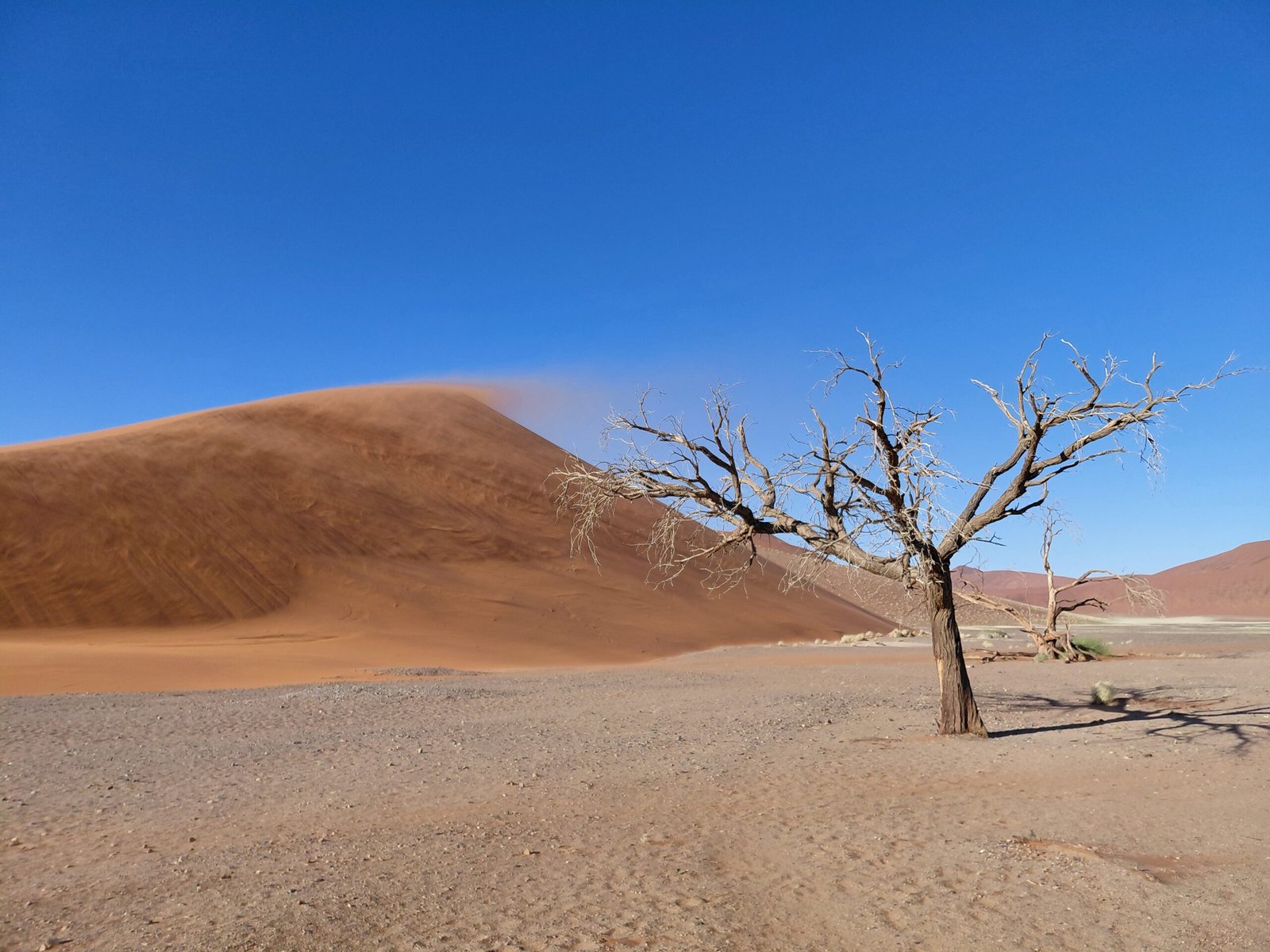
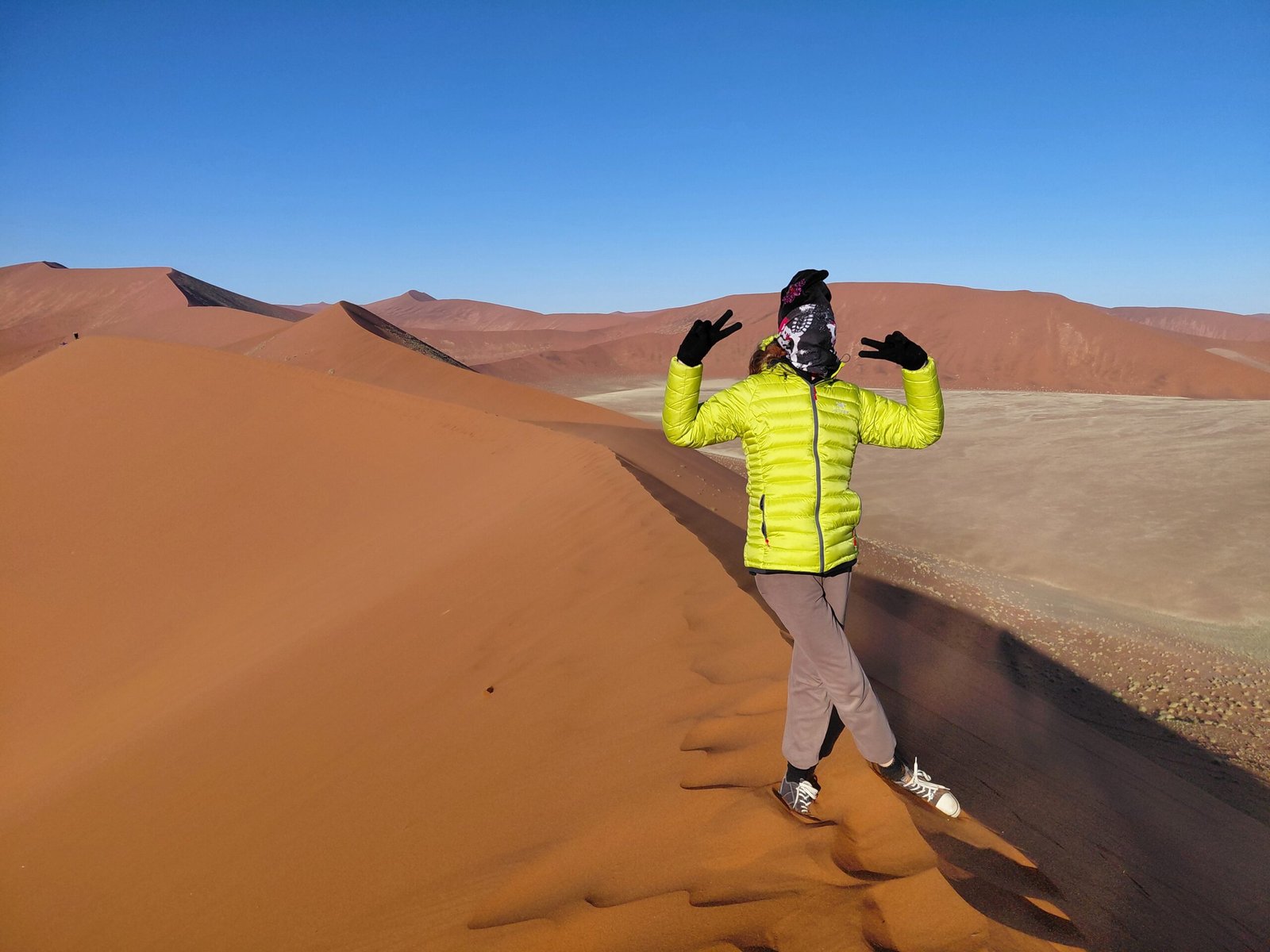
On Wednesday, we had our earliest wake-up call so far. The alarm went off at 5:20 a.m. so that we could get to the sand dunes in Sossusvlei Nature Reserve on time. The drive from the campsite to the park gate took about an hour, and we tried to get there by sunrise. We were almost the first in line at the gate, so we were able to quickly continue our journey towards dune number 45. The dune gets its name from the fact that it is about 45 km from the park gate. This dune in the Namib Desert is apparently the most famous of the dunes in the area and is visited by many people every day. Although it was a windy day, we climbed to the top of the dune anyway. Although the dune is only 170 meters high, it was really hard to climb up its ridge in the soft sand. Risto was the first of us to reach the top, Marko arrived right after him, and Jaana and Ronja summited a bit later. This probably says a lot about the fitness levels of each of us. However, I should mention that almost half of the group didn’t even attempt to climb the dune or only climbed part of the way.
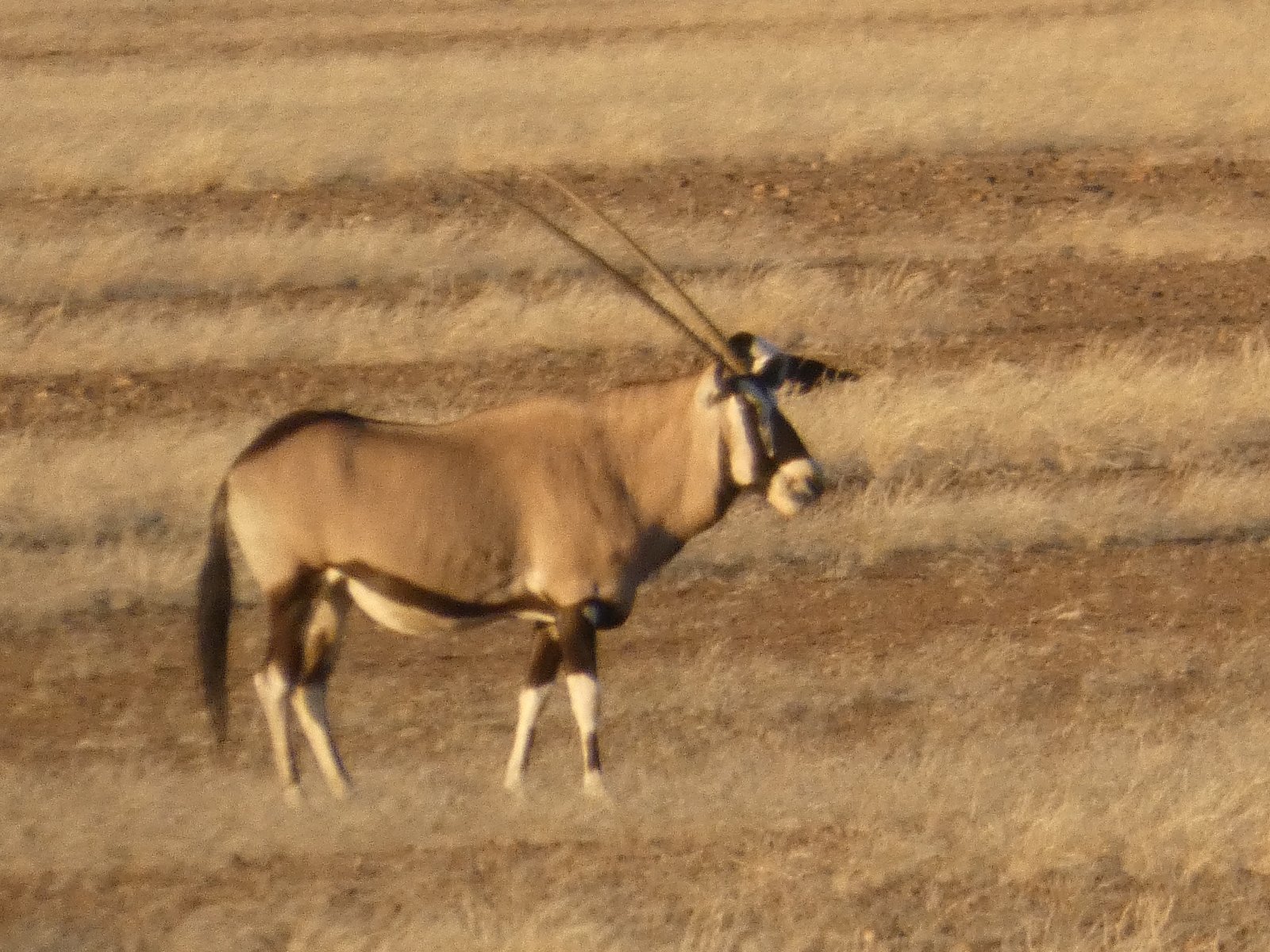
On the way to the dunes, we spotted a herd of Oryx antelopes.
There it is, Dune 45.
It was worth climbing the dune along the windward ridge. The sand there was a little more compacted than on the other side of the ridge.
Ronja took a break halfway up the dune.
Summit!
However, climbing to the top was worth it, as the views were magnificent! We admired the scenery for a while, but then we had to start our descent. Fine sand swirled around us at the top of the dune, getting into our eyes, mouths, and ears. Going down was much easier than climbing up had been. Risto and Ronja decided to try rolling down, so we needed a shower in the evening. At some point during the rolling, Ronja’s hat came off and was caught by the wind. Fortunately, our traveling companions below noticed it and signaled to us in which direction it had gone. Marko managed to run along the slope after the hat so that it didn’t end up completely lost in the Namib Desert.
Risto overboard!
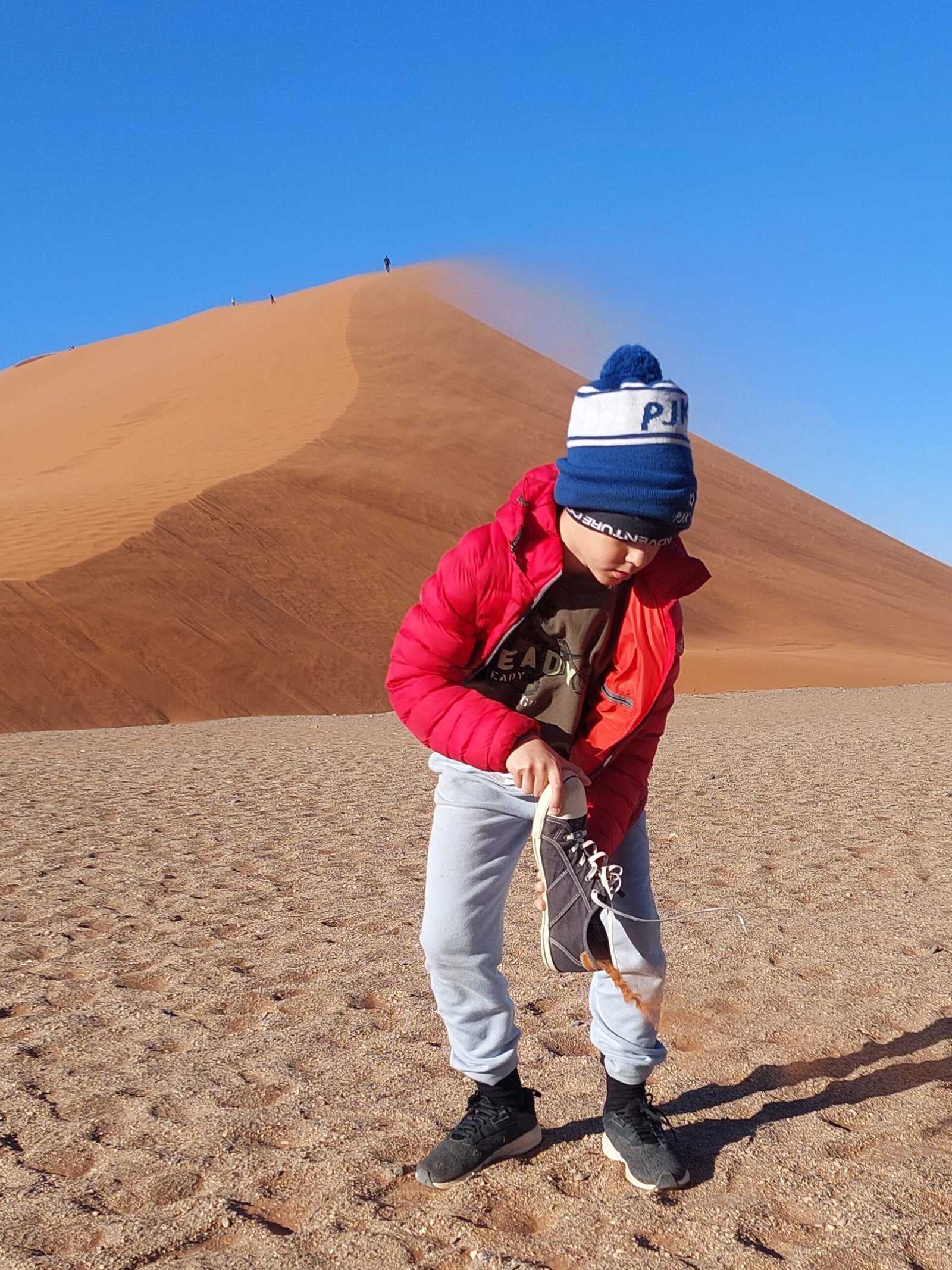
After the climb, everyone had their shoes full of sand.
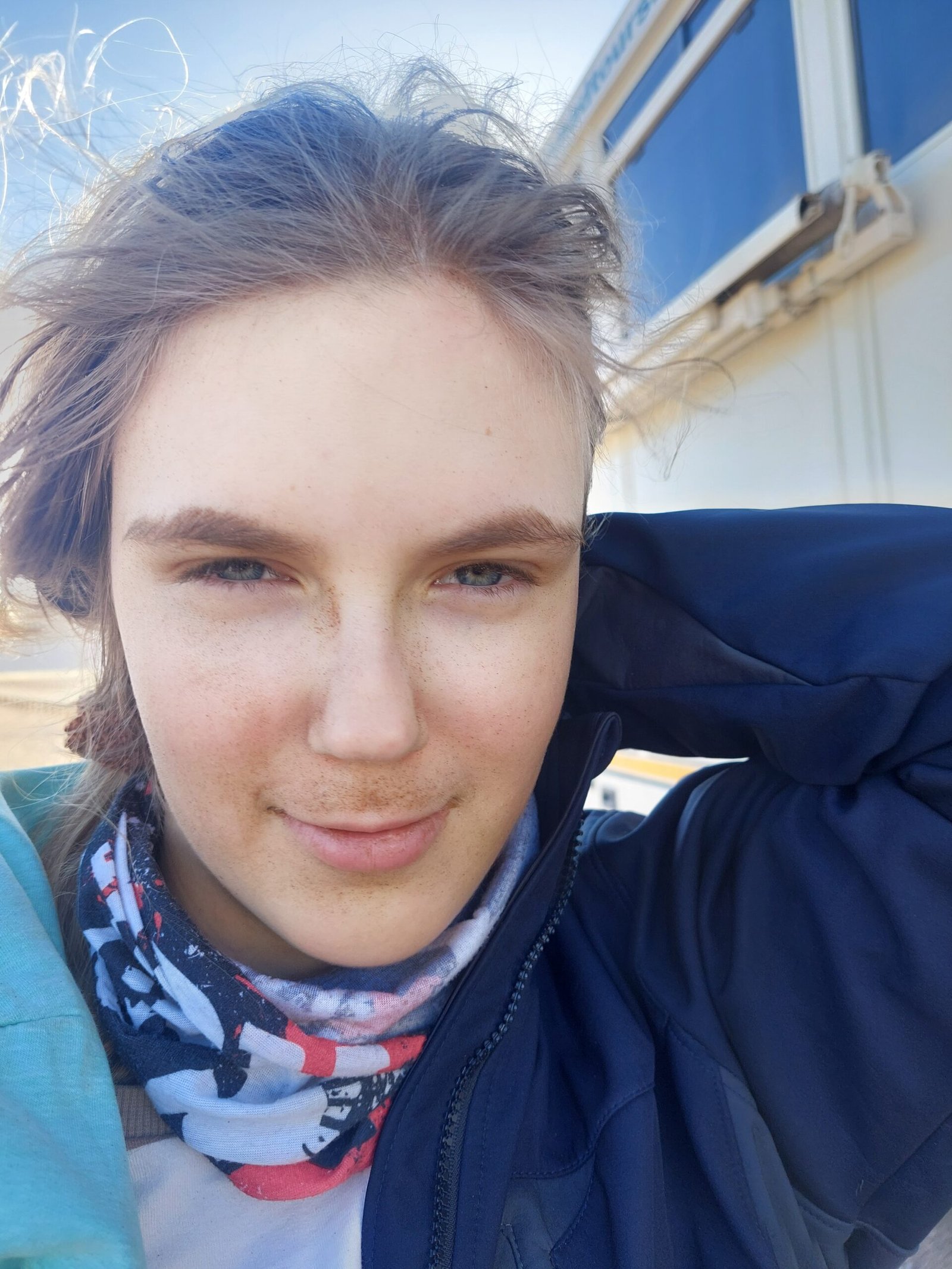
There was sand everywhere. This is what Ronja would look like if she had a mustache.
From the dunes, we continued our journey towards the Deadvlei area. Apparently, there used to be water there a long time ago, but then the dunes surrounded the area and prevented water from reaching it. The vegetation gradually died off, leaving only dead tree trunks standing in the area. They are estimated to be around 900 years old. The area is so dry that the trees have not rotted, but have remained standing in the middle of the dunes. The combination of the white salt flats, black-gray trees, and red dunes was very photogenic.
We weren't allowed to touch the trees, so we had to settle for posing next to them or behind them.
Bleak, but beautiful in its own way.
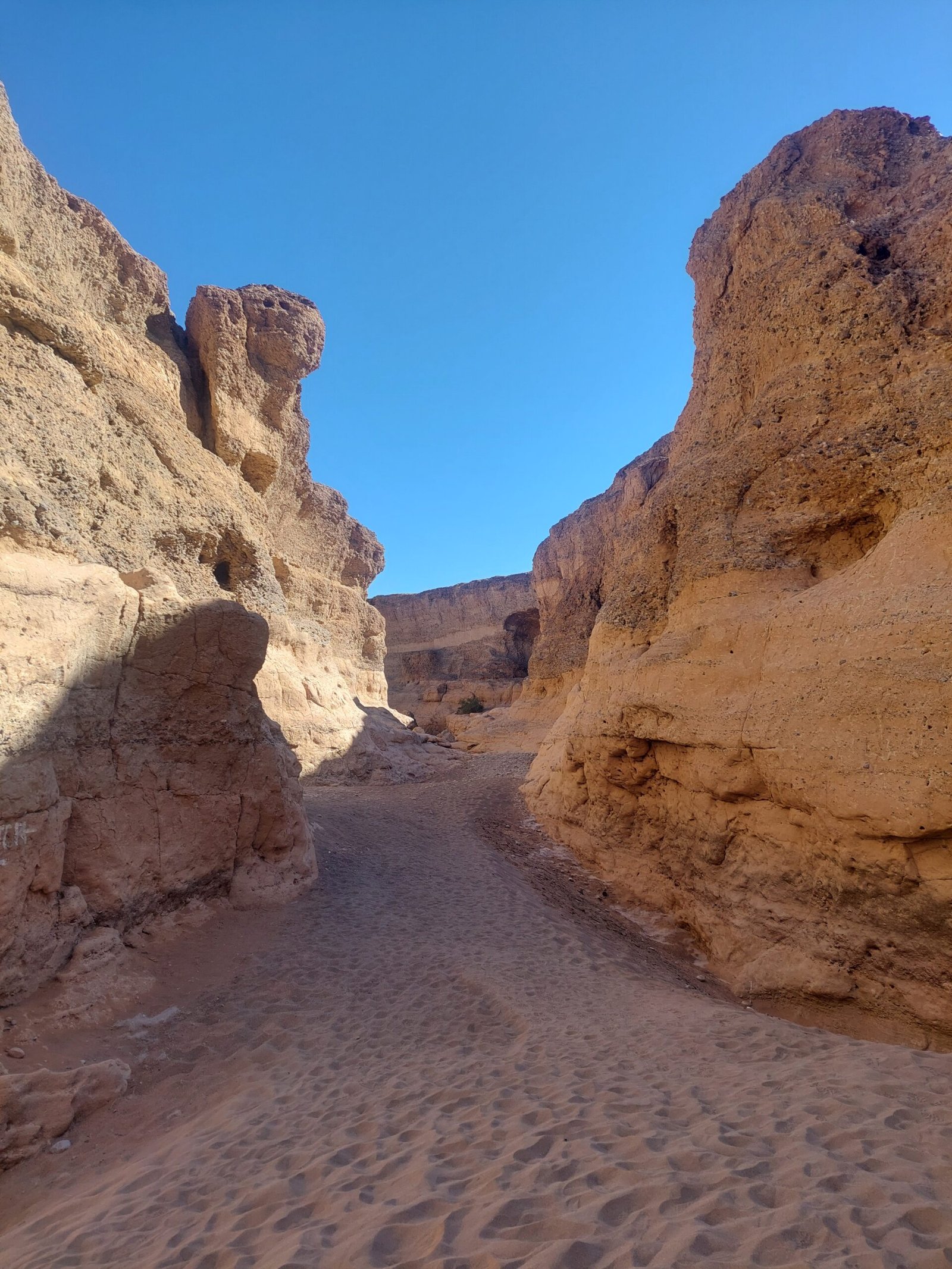
Our last stop before returning to the campsite was Sesriem Canyon, which is probably not one of the world’s largest canyons. This time, we descended into the canyon and walked there for a short while. In reality, the canyon is almost 5 km long, but we only saw a very short section of it. Our journey through the canyon ended when we came to a small body of water that had collected at the bottom of the canyon. There was no way to get around it, so we turned back towards the truck. Apparently, the other end of the canyon would have been at the water’s edge anyway, so we didn’t miss anything important. We arrived back at the campsite in good time, so we had time to just relax.
The Sesriem Canyon wasn't particularly deep.
In the morning before departure, we went to pay for our accommodation at the reception. We were delighted to hear that we had stayed very cheaply, as the children did not have to pay anything for their own room. So the price for two nights for four people came to a total of 1120 NAD, or 56 euros.
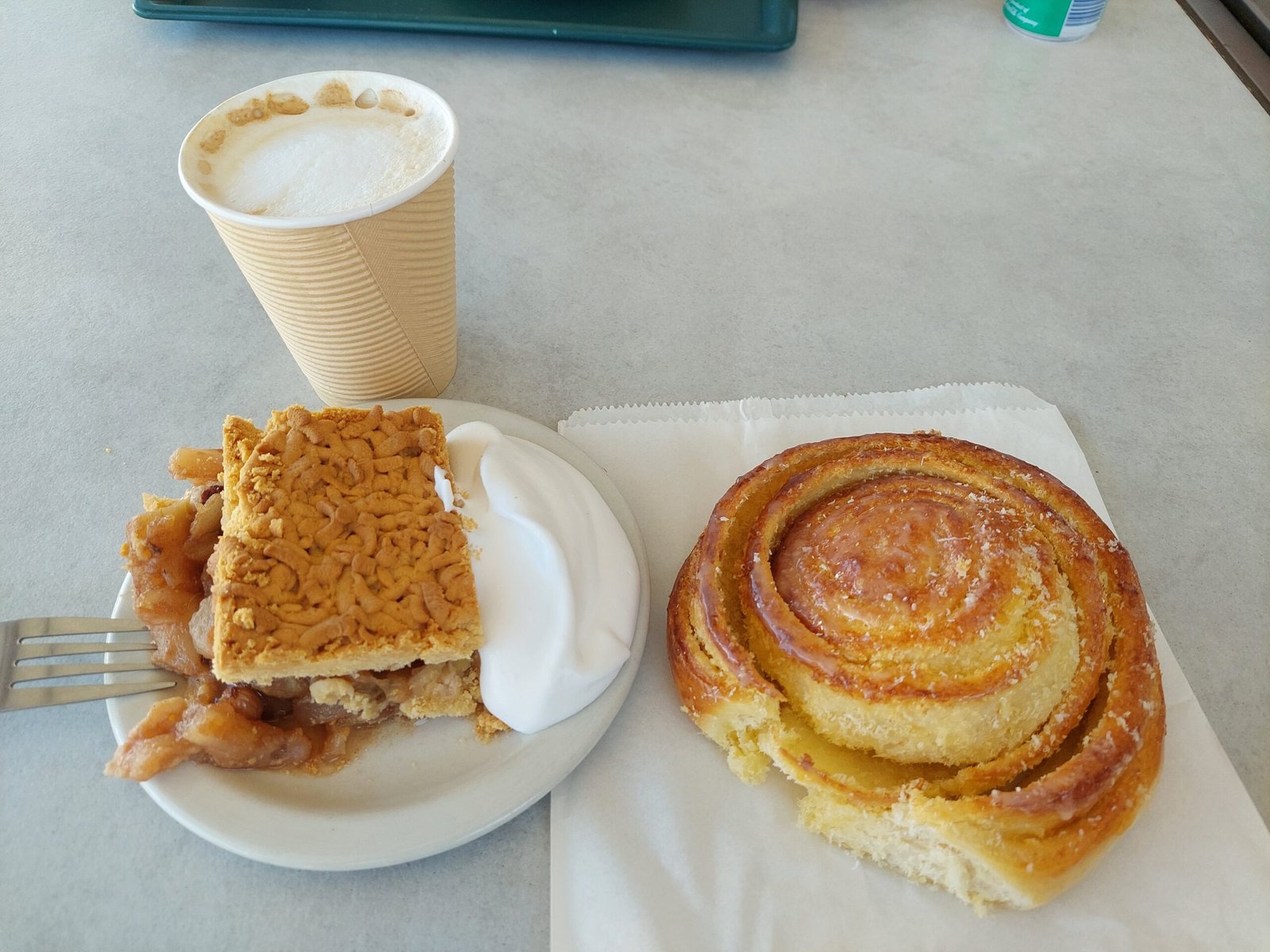
Our next night’s accommodation was a few hours away at Boesman’s Camp in the middle of the Namib Desert. Halfway there, we stopped at a place called Solitaire to try its famous apple pie. It was apparently some kind of guesthouse, but they also ran a café and a souvenir shop. We didn’t buy anything from the souvenir shop, but three apple pies, a huge bun and drinks cost us just under €15. The place was quite busy. You wouldn’t have guessed that in the middle of the Namib Desert, in the middle of nowhere, there was a lively and popular café!
Welcome to Solitaire!
The kids buying pies.
They were delicious!
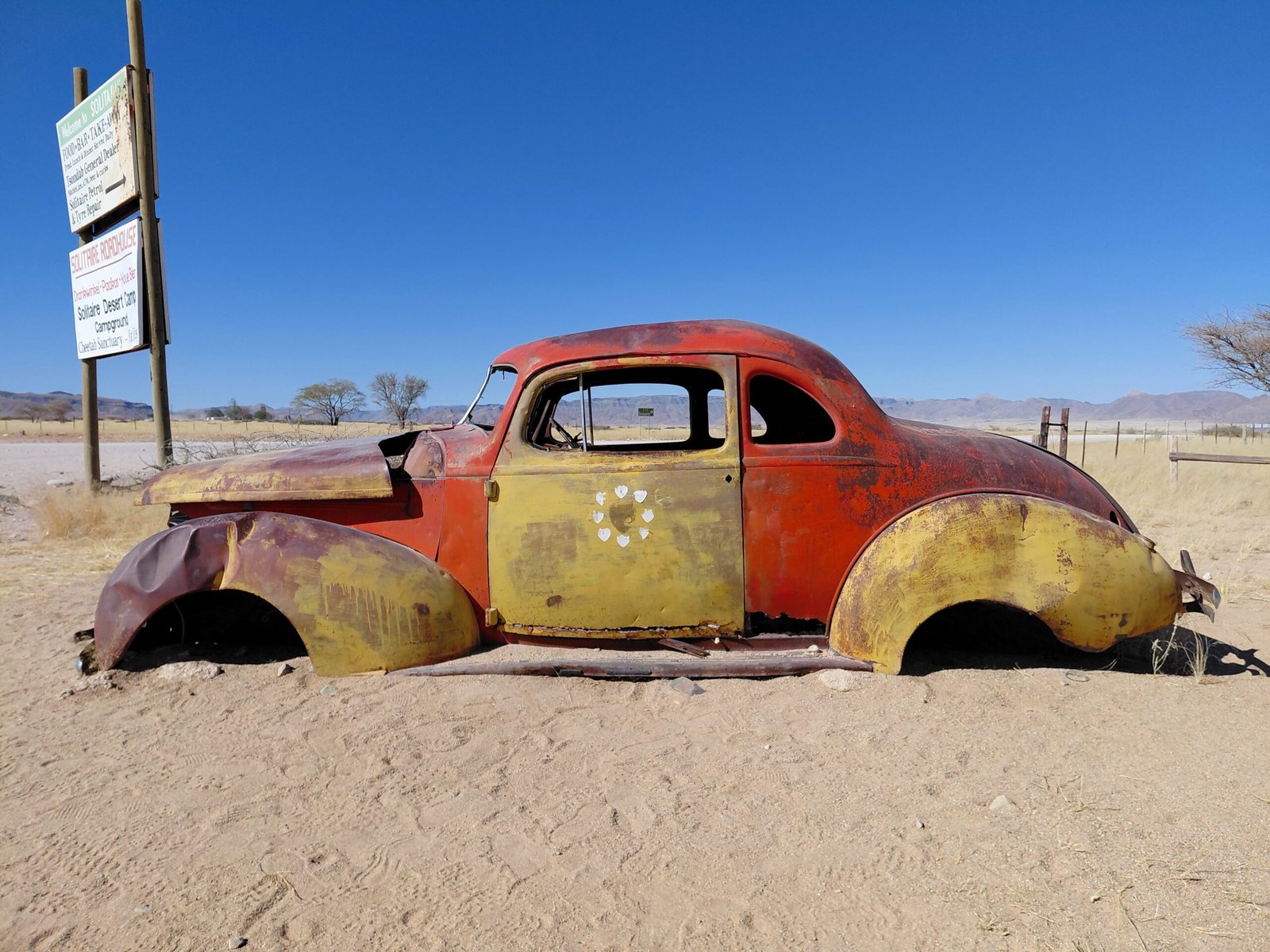
Solitaire wasn't exactly a metropolis.
We dared to climb onto this tractor wreck.
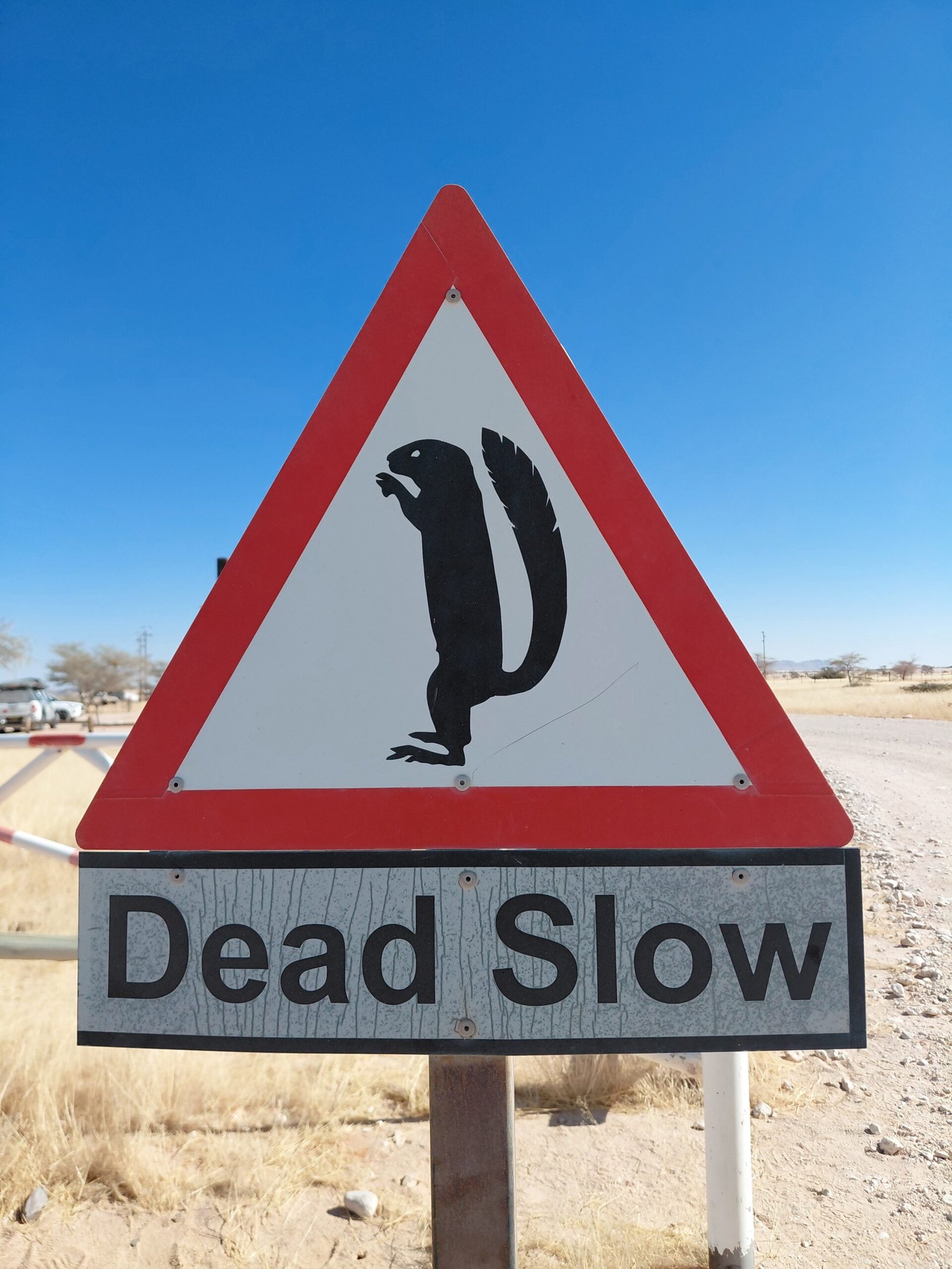
Solitaire was inhabited by little mongooses.
From Solitaire, the journey continued for a while until we arrived at our accommodation. Boesman’s Camp was so isolated that there was no cell phone reception or Wi-Fi. Electricity was provided by solar panels. So we followed the instructions on the wall and spent our time chatting with each other.
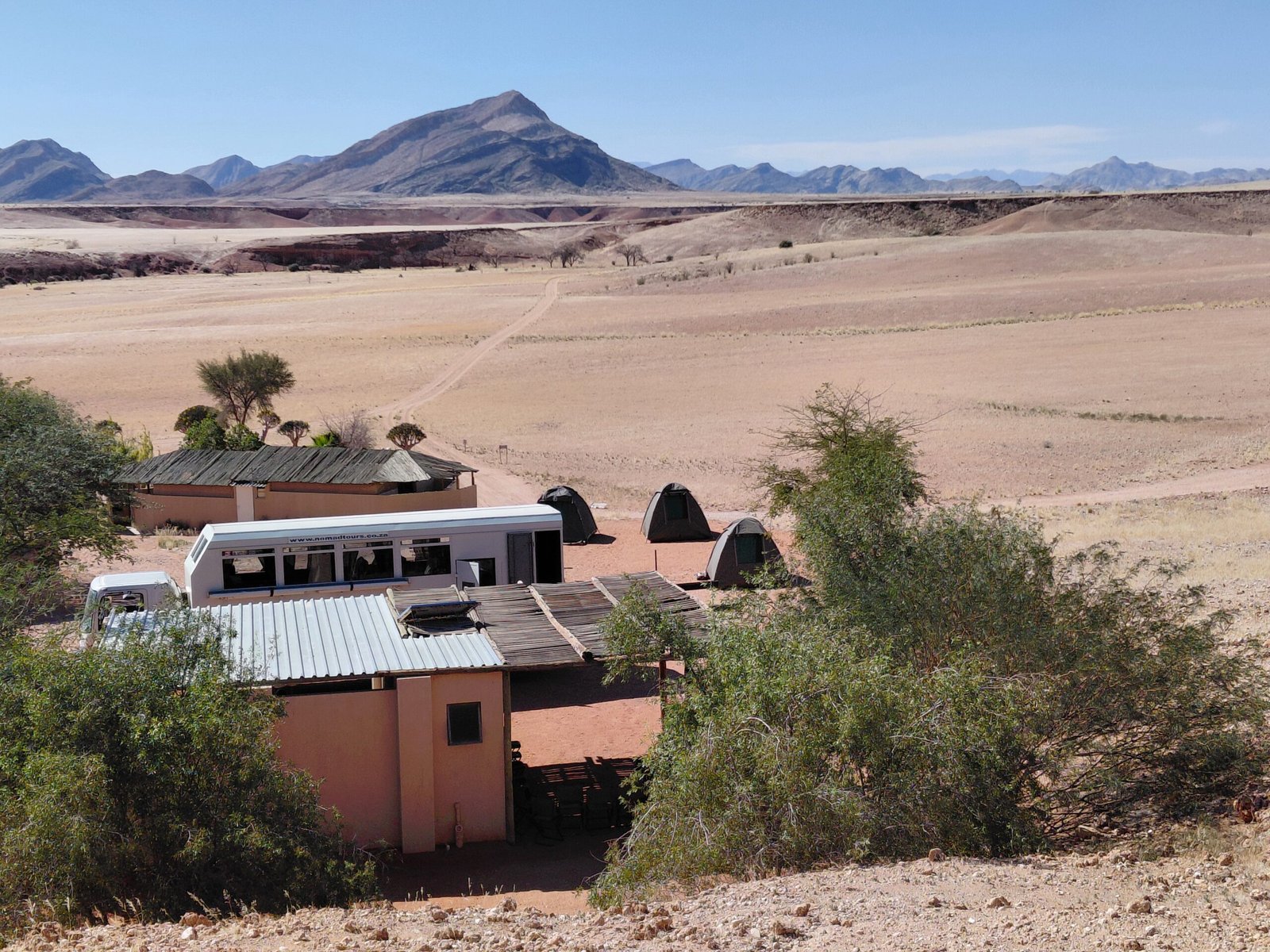
Our campsite with a view.
It was nice to rest in the shade of the tent.
In the foreground is the cooking shelter. Behind it are showers and toilets.
Apparently, there is an unusually large amount of hay in the desert this year. Well, everything is relative.
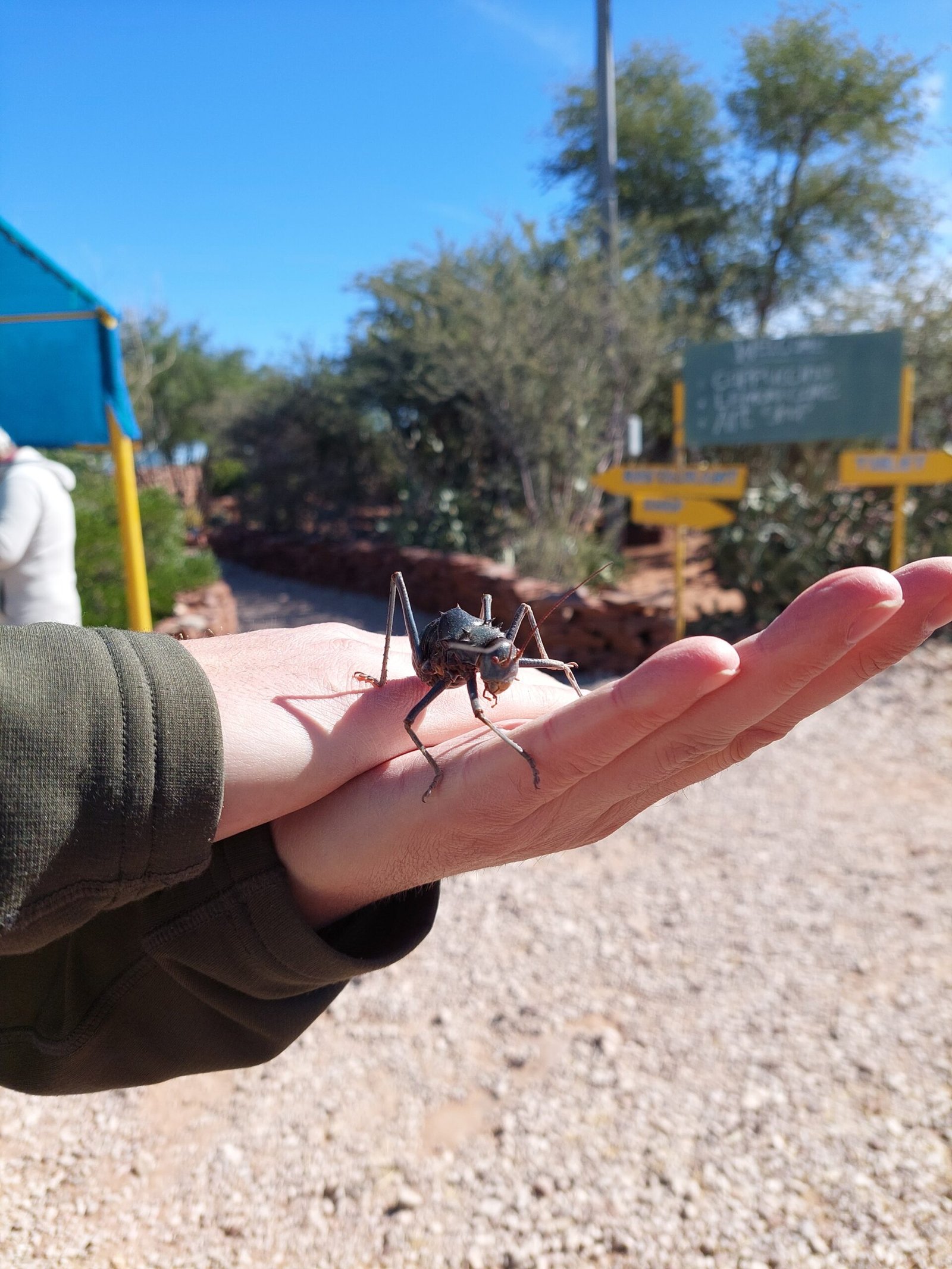
At lunchtime, we were joined by a huge number of the large 5 cm armored bush crickets we had seen earlier. These crickets have no eyes, but use their antennae to help them move around. Perhaps this is why these creatures tended to get a little too close for comfort to the travelers enjoying their lunch. Gradually, one by one, people stood up to eat instead of sitting on the folding chairs. Standing up made it easier to dodge the crickets while eating.
Ronja and Risto named these grasshoppers “villagers.”
In the afternoon, we went on a small excursion with a flatbed truck. Our guide was a man named Francis, who had apparently lived in the desert his entire life. He gave us a very lively and entertaining description of how people and animals survive in the desert. He even lured a spider out from under the ground, which is called a “trapdoor spider” in English. This spider digs a tunnel about a meter deep into the ground to stay cool on hot summer days. It covers the entrance to the tunnel with a web it spins. When prey happens to come near the entrance, the spider quickly shoots up and catches its prey. Ronja was very interested to know whether this spider was dangerous to humans. Apparently not, even though it was poisonous. It wasn’t interested in such large prey.
During the drive, we also saw spear-horned antelopes (oryx) and a small mountain goat (steenbok). We didn’t see any mountain zebras, but they had come to drink at the watering hole made for animals at the campsite later that night. Before returning for dinner, we stayed to admire the beautiful sunset from the top of a small hill. It was a truly magnificent experience. Everything was completely silent and the sun slowly sank behind the hills, painting the sky an incredible orange-red color.
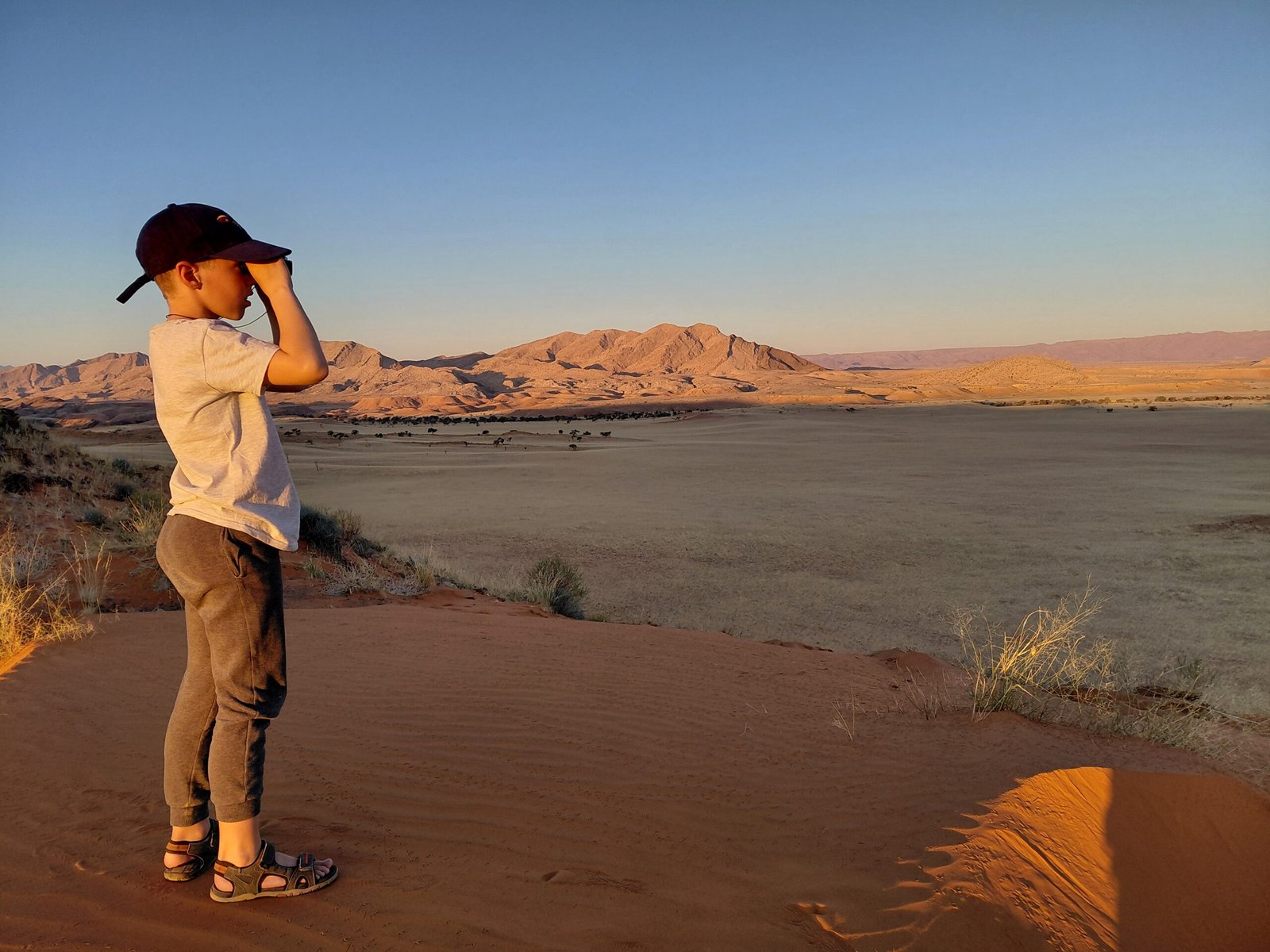
Risto looking for antelopes
The sand gets its red color from the iron mixed in with it. “I told you I wanted to bring a magnet on this trip!” muttered Risto when Francis showed us how much iron was in the sand using a magnet inside a paper bag.
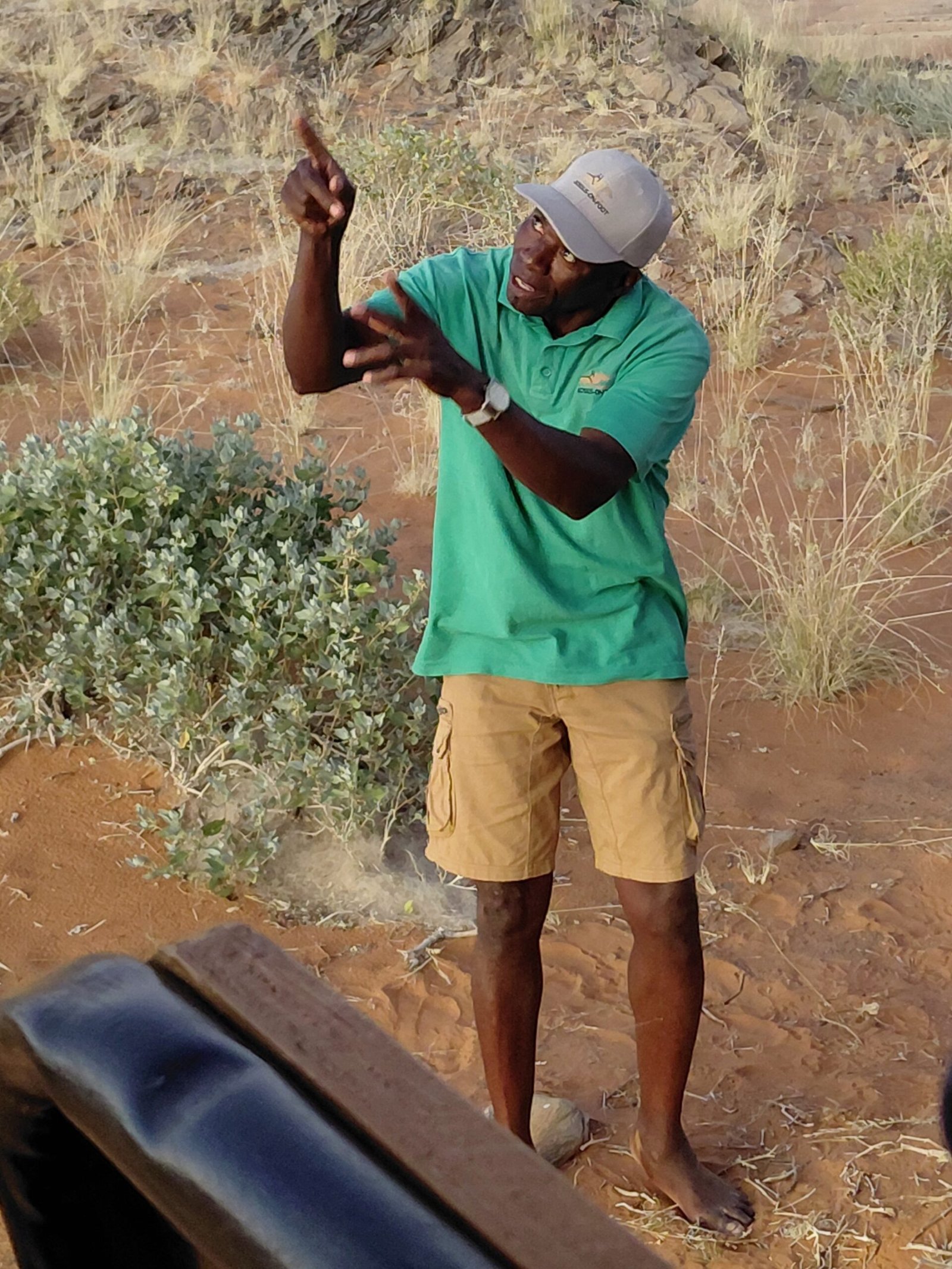
Our guide was both very knowledgeable and theatrical.
A magnificent sunset photographed without any filters.
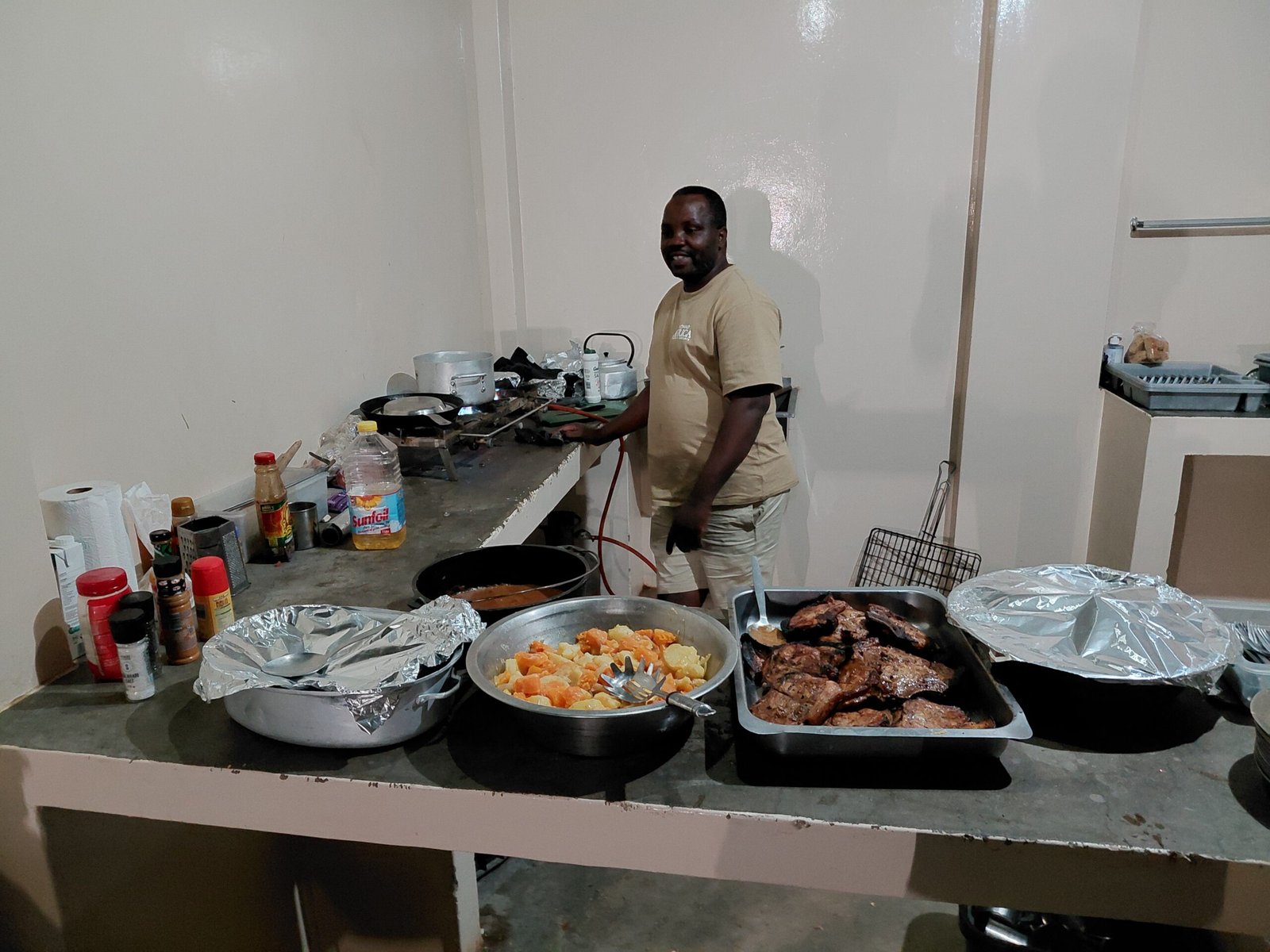
During the drive, Stanley had prepared dinner for us.
At dinner, Risto got to work on the campfire again, so the little guy’s day was saved. Life was also smiling for Ronja, as the night was really warm, albeit windy. No one froze while sleeping in the tents, and in the morning we woke up refreshed, shortly before sunrise.
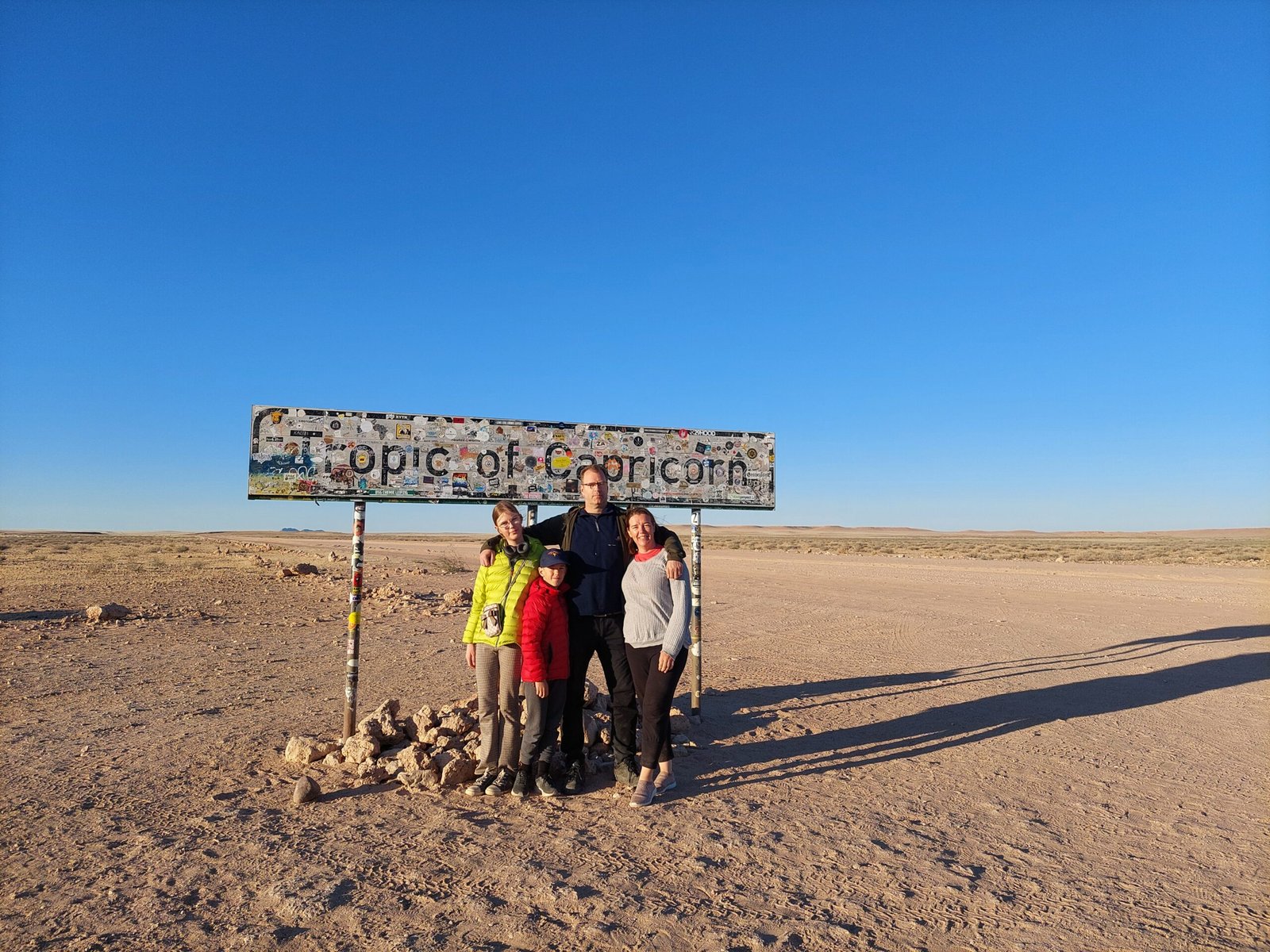
On Friday, we drove from Boesman’s Camp to Swakopmund on the Atlantic coast. We stopped a couple of times along the way. The first stop was at the Tropic of Capricorn, where everyone had to take the obligatory photos. Then we stopped to admire the scenery in an area called Moon Landscape, which apparently vaguely resembled the surface of the moon. The next stop was shopping for lunch at The Dunes Mall shopping center and admiring the flamingos at a nearby lagoon. In the afternoon, we finally arrived in Swakopmund, which has a population of about 76,000.
Family photo at the Tropic of Capricorn.
Moon landscapes
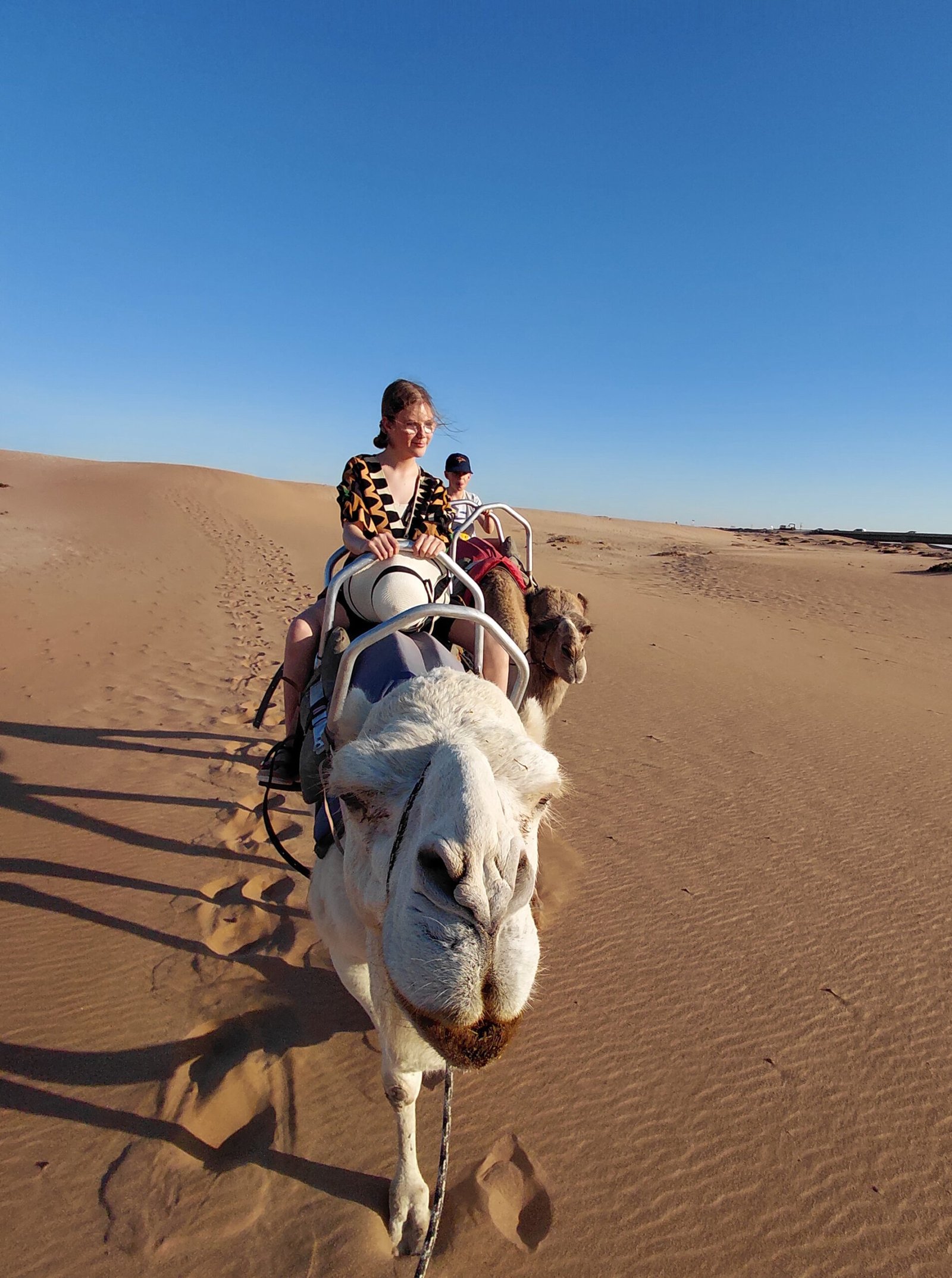
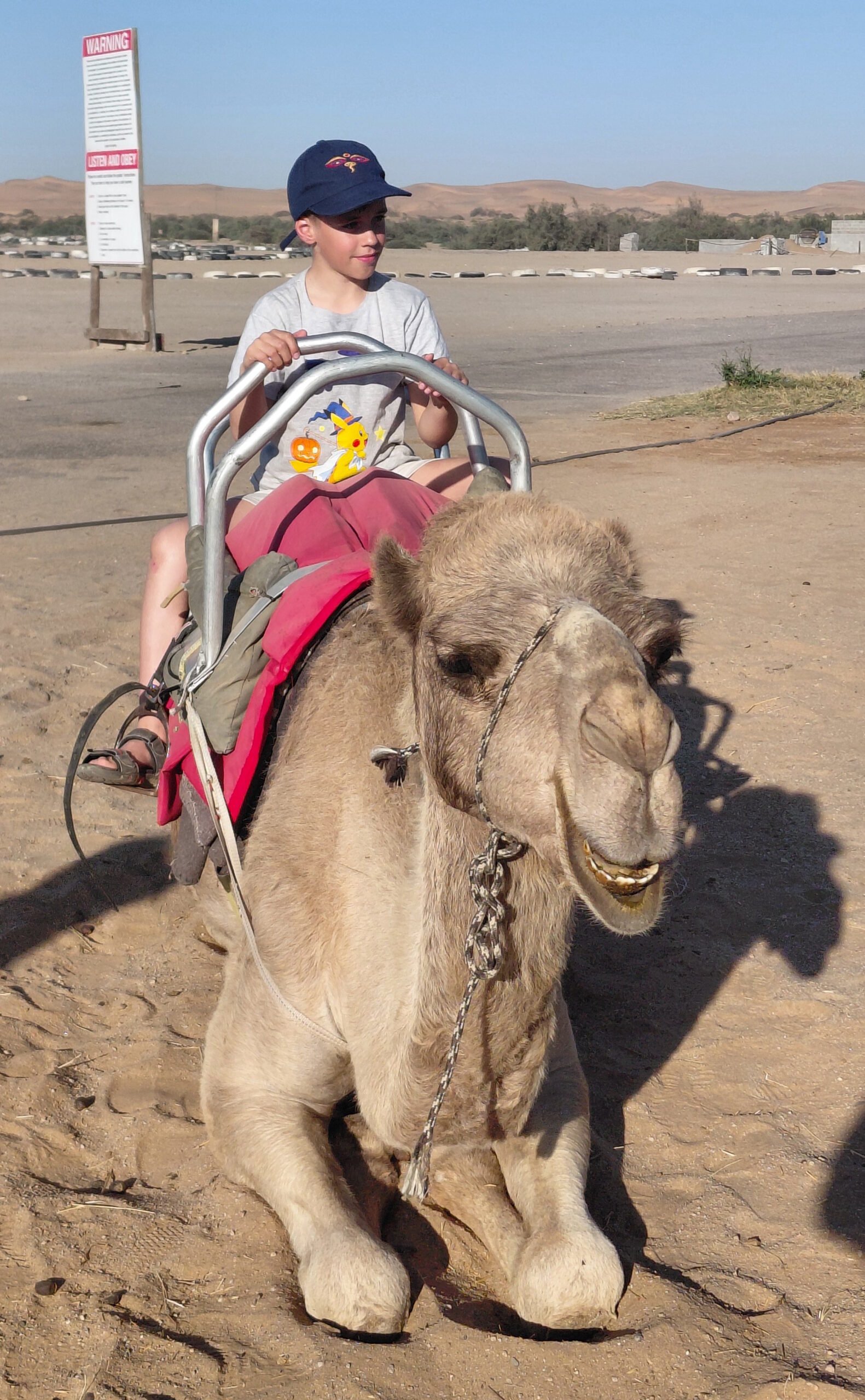
We stayed two nights at Haus Garnison near the center of Swakopmund. Before dinner, we had time to try camel riding on the nearby dunes. Sitting on a walking camel is quite comfortable, but when the animals start running, it’s quite a bumpy ride! We had dinner at the Old Steamer restaurant with the whole group. It was a buffet, and there was something for everyone. Marko found plenty of giant prawns and three steaks. Risto, on the other hand, had several chocolate mousses.
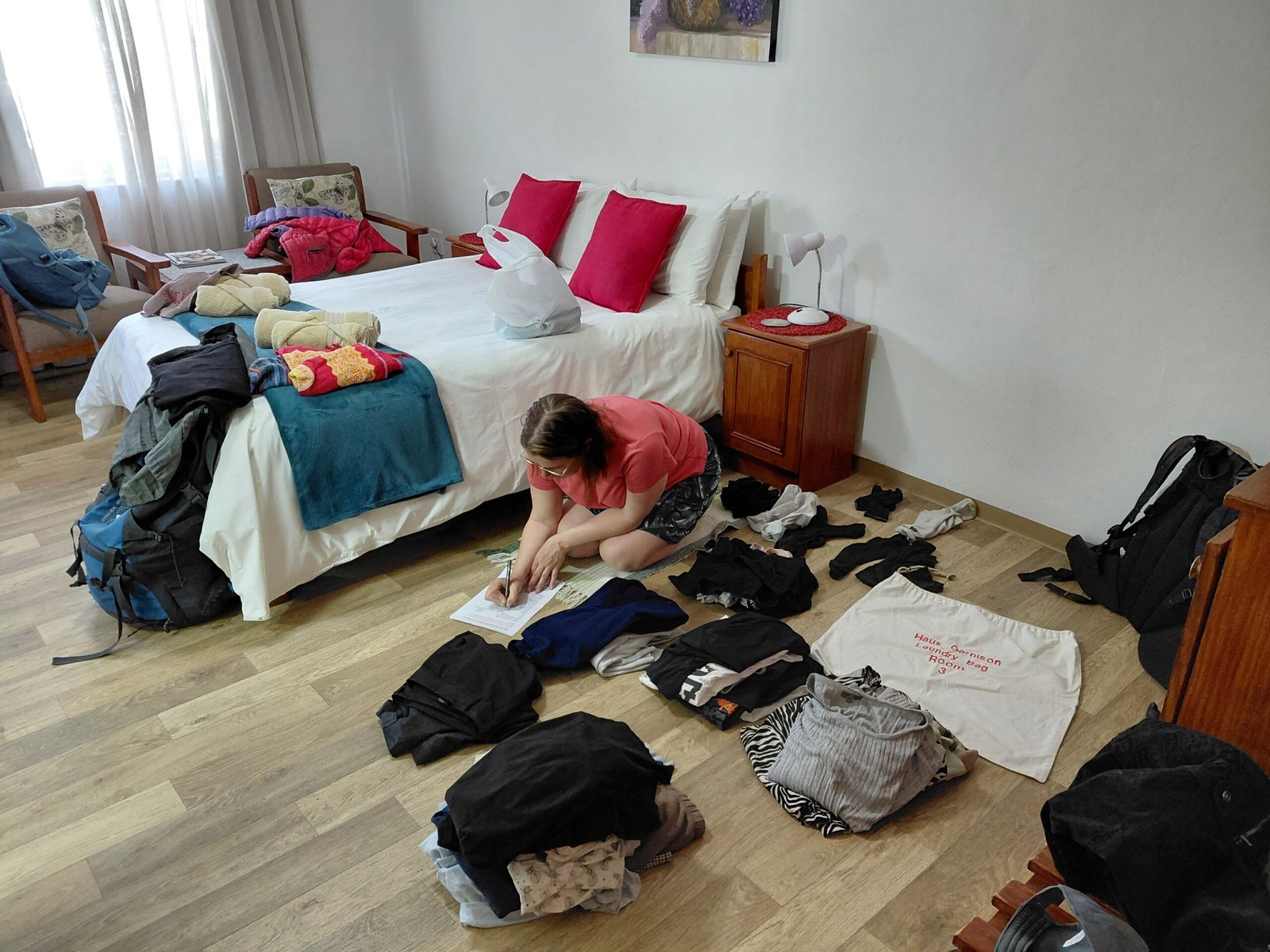
Finally, laundry day! Every item of clothing had to be carefully listed to ensure that everyone got their own back. Our laundry bag weighed 7.5 kg. The laundry cost 338 NAD, or about 17 euros.
Ronja and Risto of Namibia
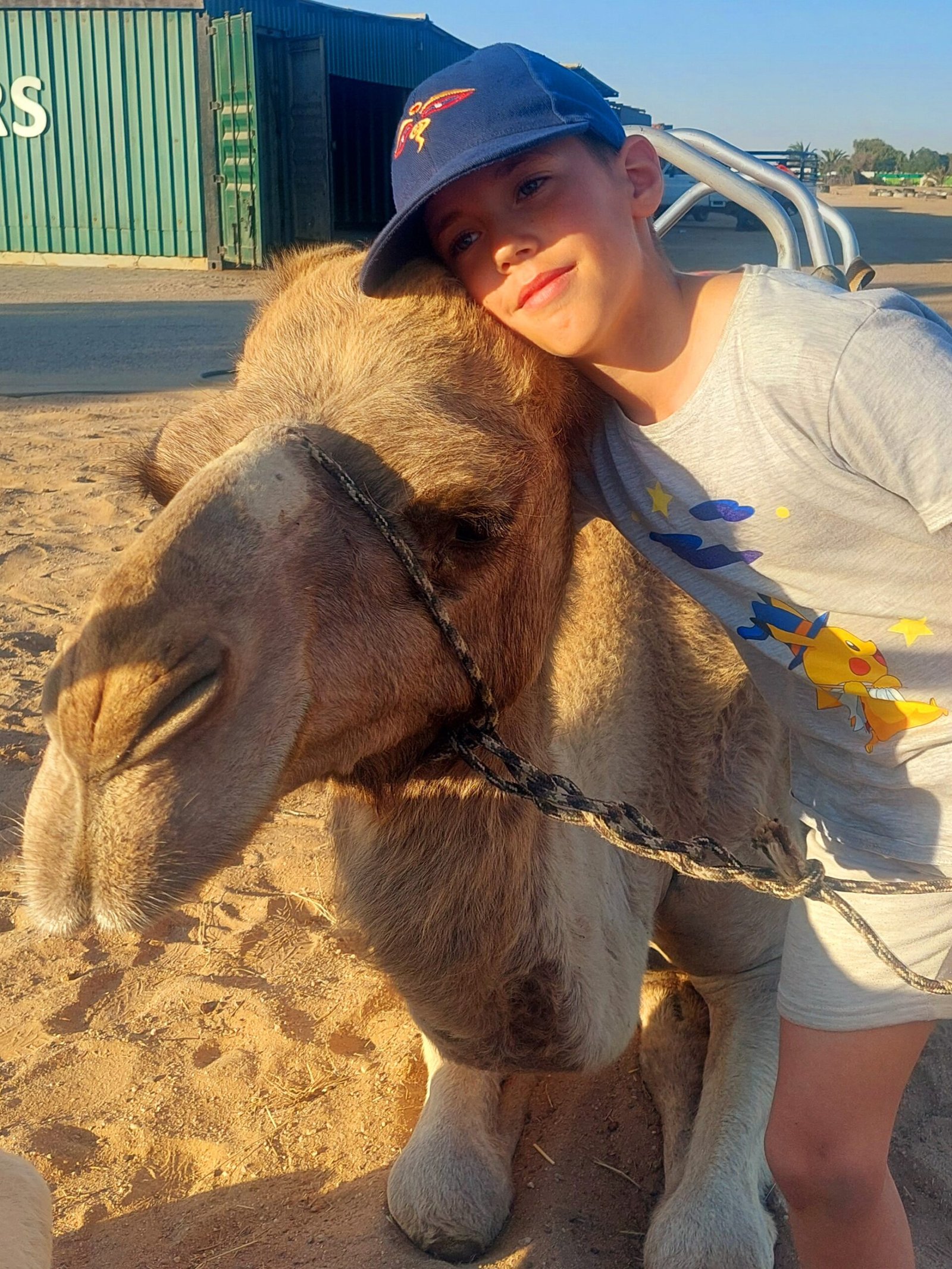
Risto's camel was called Mohammed.
Farewell hug!
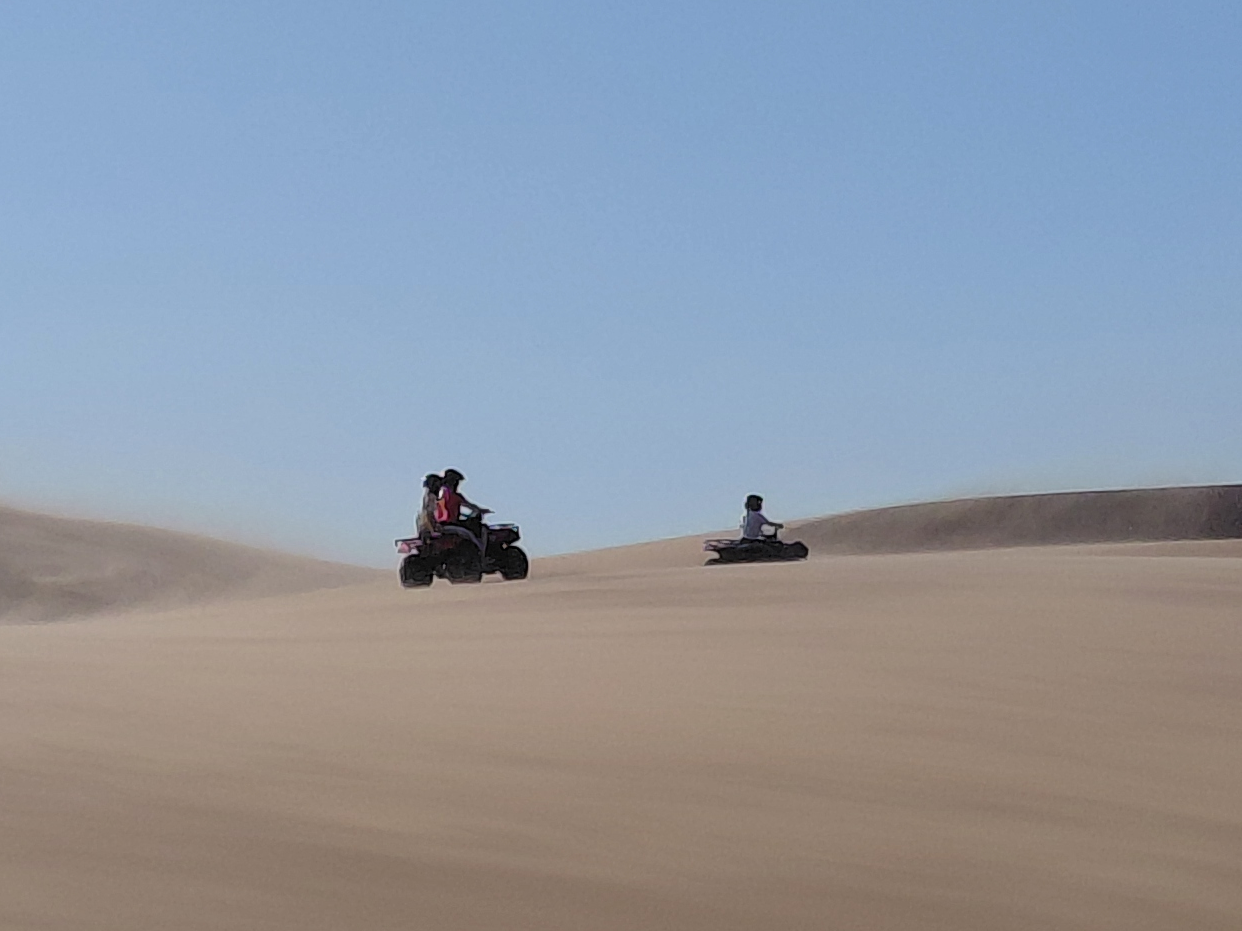
We had booked a 2.5-hour ATV ride on the dunes for Saturday. The idea was to spot animals living there, such as small lizards, snakes, and spiders. However, the day was so windy that spotting animals would have been impossible. So we ended up driving around in a sandstorm on the dunes for 2.5 hours. Surprisingly, the blowing sand didn’t bother us too much, as we all had helmets with protective visors. When we booked the ride, Risto said he wanted his own ATV to drive. Ronja, on the other hand, preferred to ride as a passenger. At some point, Ronja became tempted to drive, so Jaana ended up riding as Ronja’s passenger for part of the trip.
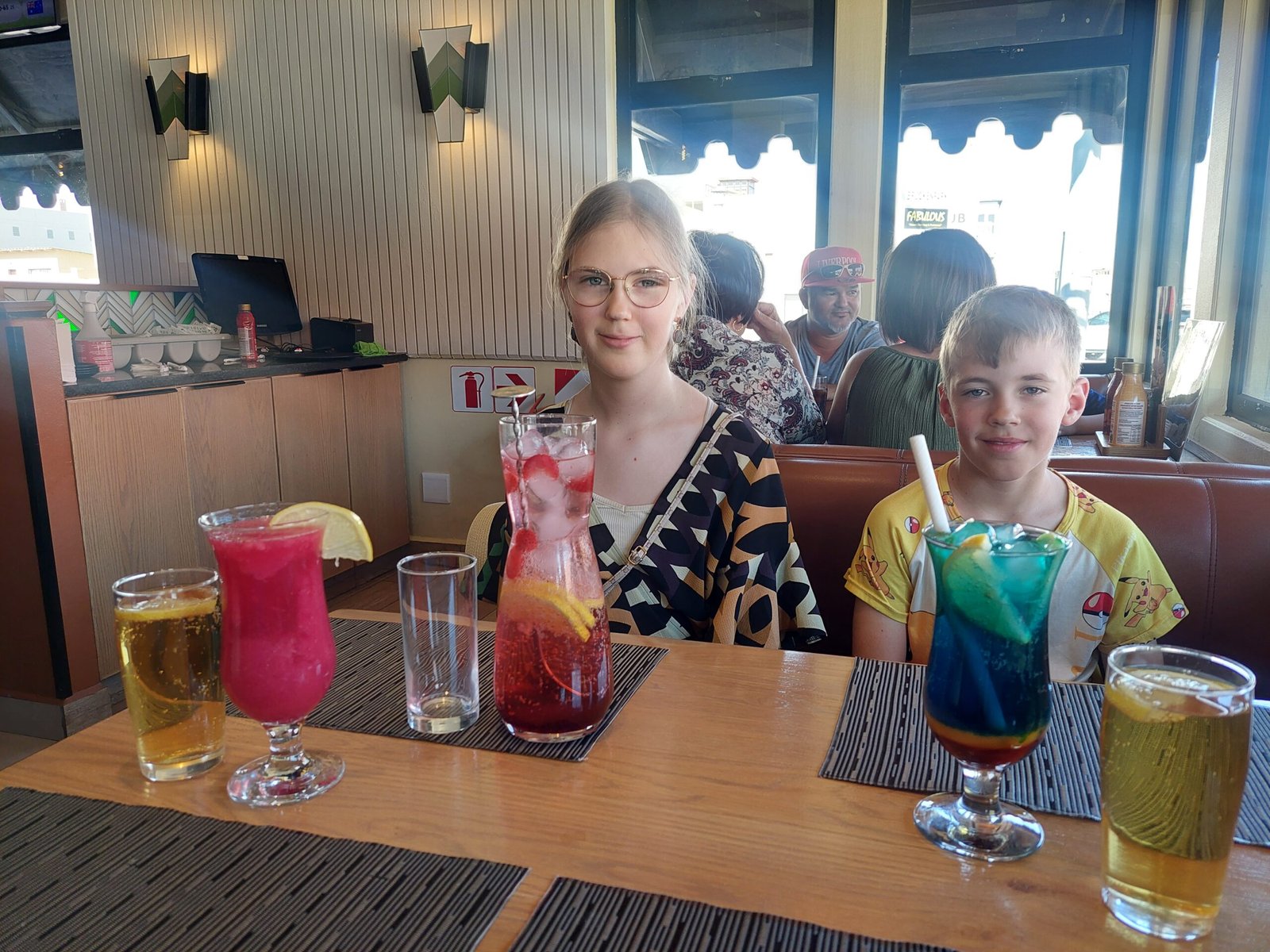
Drink break
It came as a surprise to us adults that our daredevil Risto was actually a much more cautious driver than Ronja. He was even a little too cautious, as he didn’t dare to accelerate his ATV enough when going up the dunes. As a result, Risto got stuck first, followed by the rest of us. Our guide had to rescue Risto from the dune slope a couple of times, but then Risto’s driving speed picked up a little. At some point, we stopped and switched drivers so that Ronja drove the slightly smaller ATV originally given to Risto on her own, and Risto got to sit with Marko. This arrangement allowed us all to enjoy the thrill of speed a bit more, and Ronja was able to drive her own ATV on the dunes as fast as it would go, which was 48 km/h.
After the last break, Ronja was given an adult ATV to drive on her own, and our guide drove the slightly smaller ATV back to the depot. When we arrived, Ronja received special praise from our guide for driving really well. I have to say that this ride went much better than Ronja’s first attempt at a go-kart track, where she crashed her vehicle straight into the wall on the first corner.
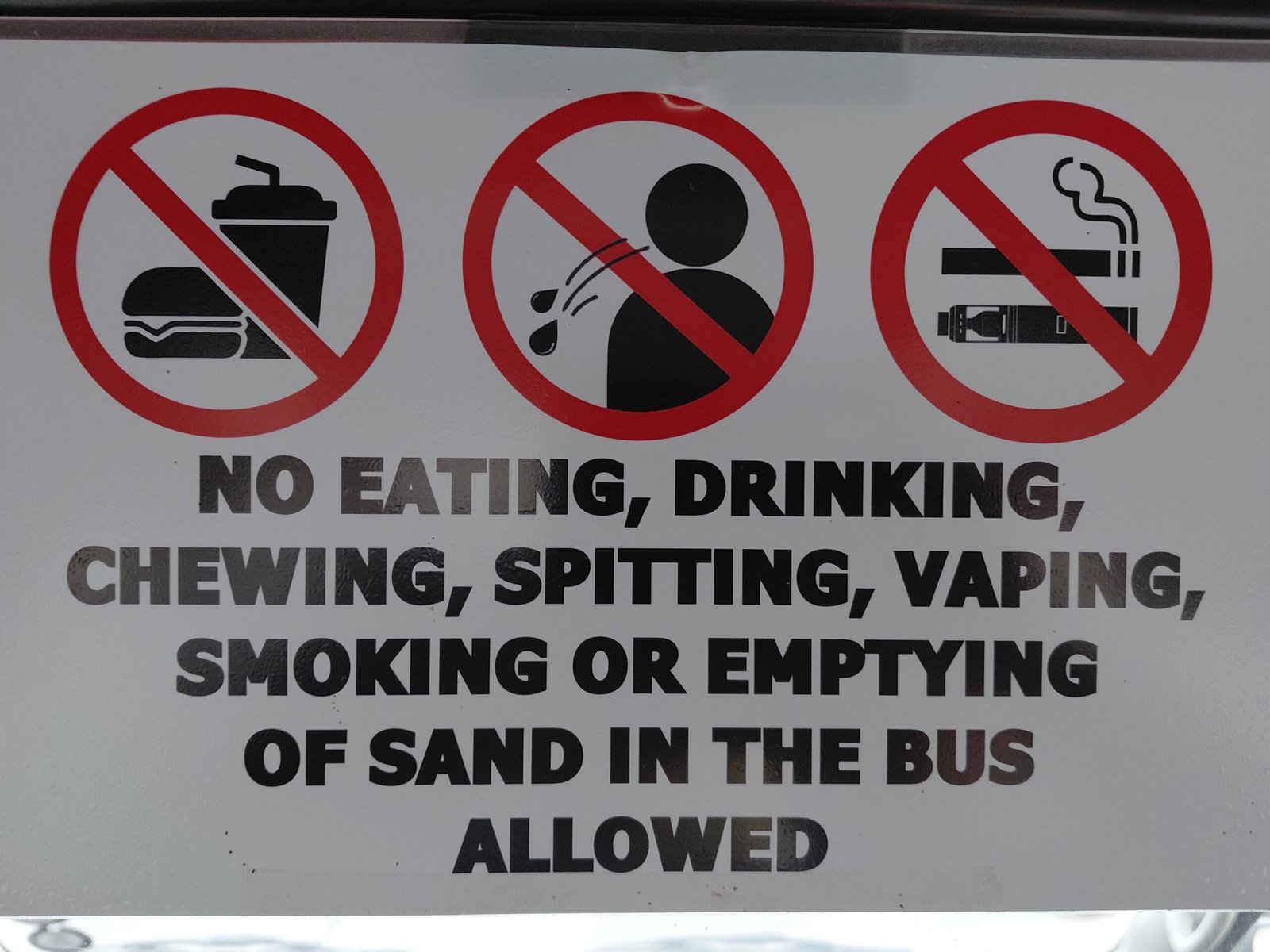
On the way back, we had to behave ourselves in the car!