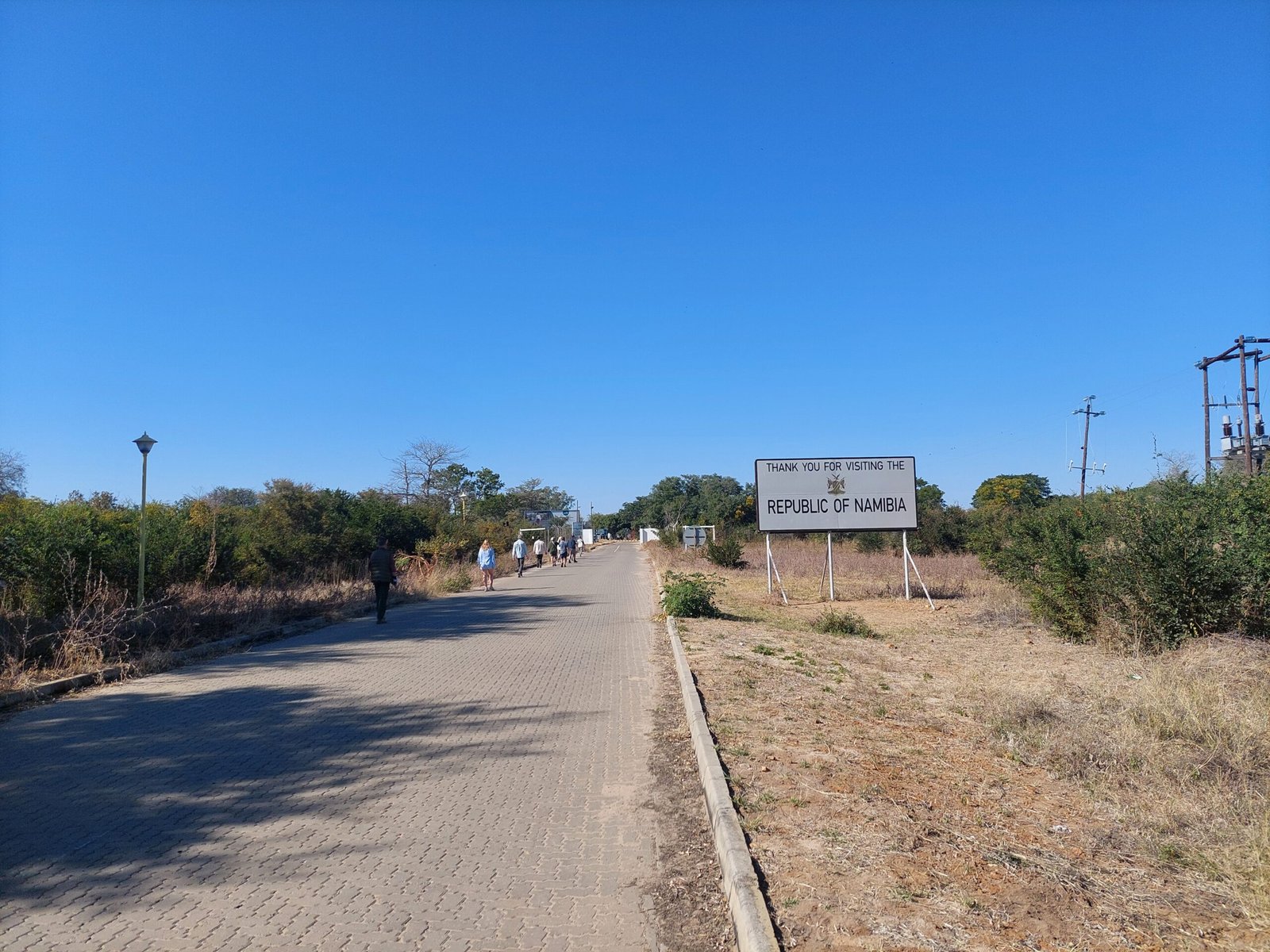
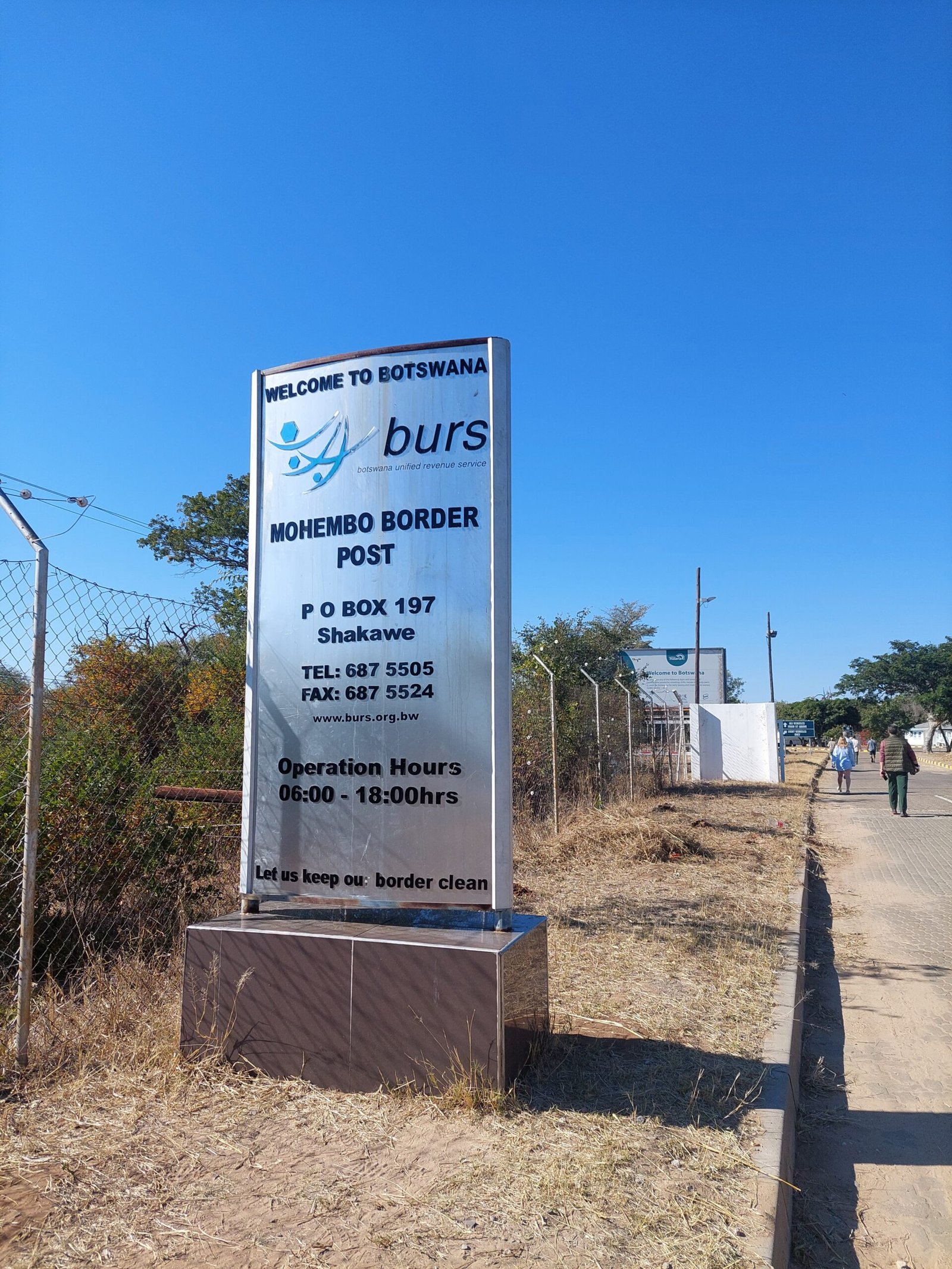
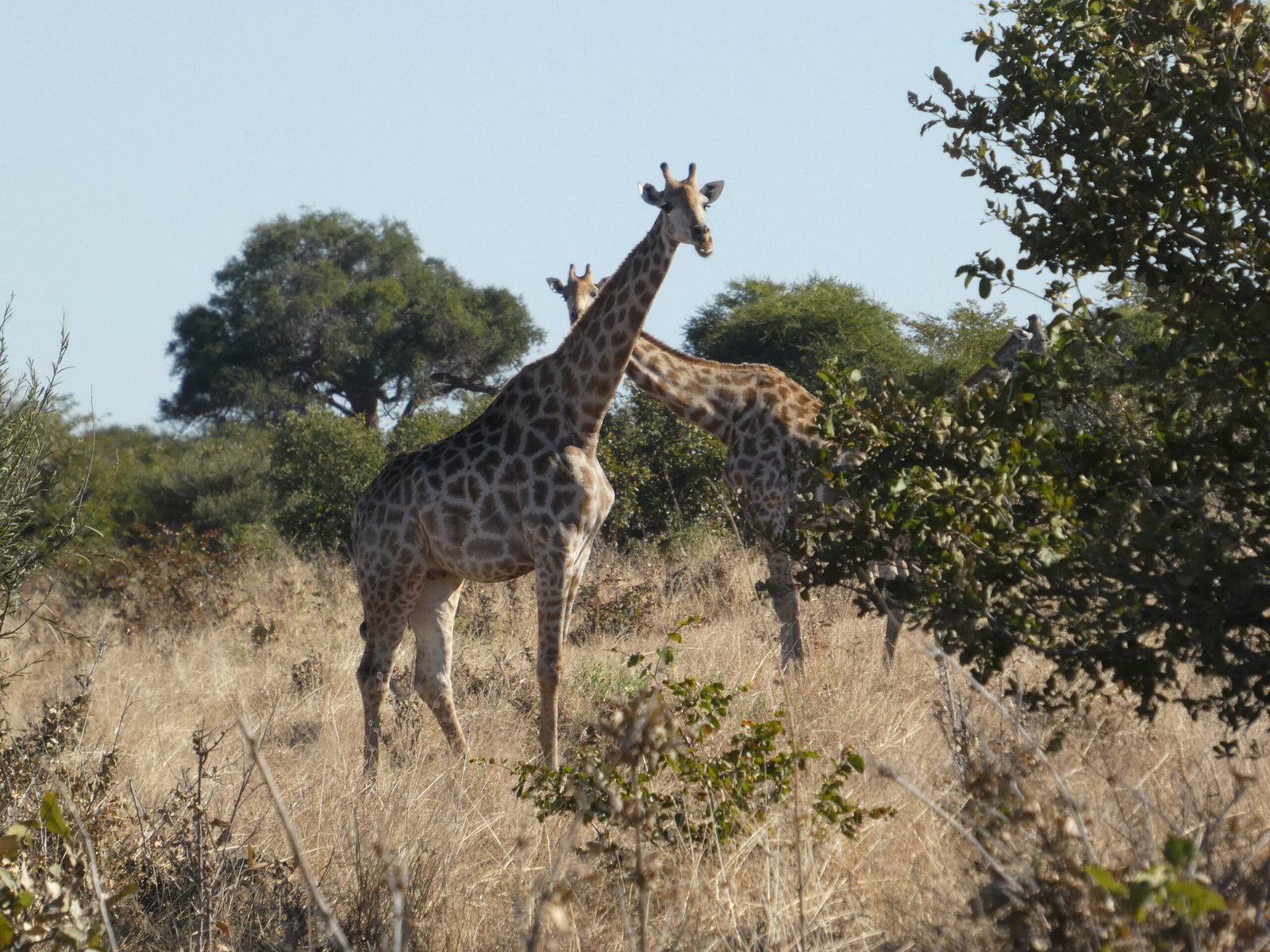
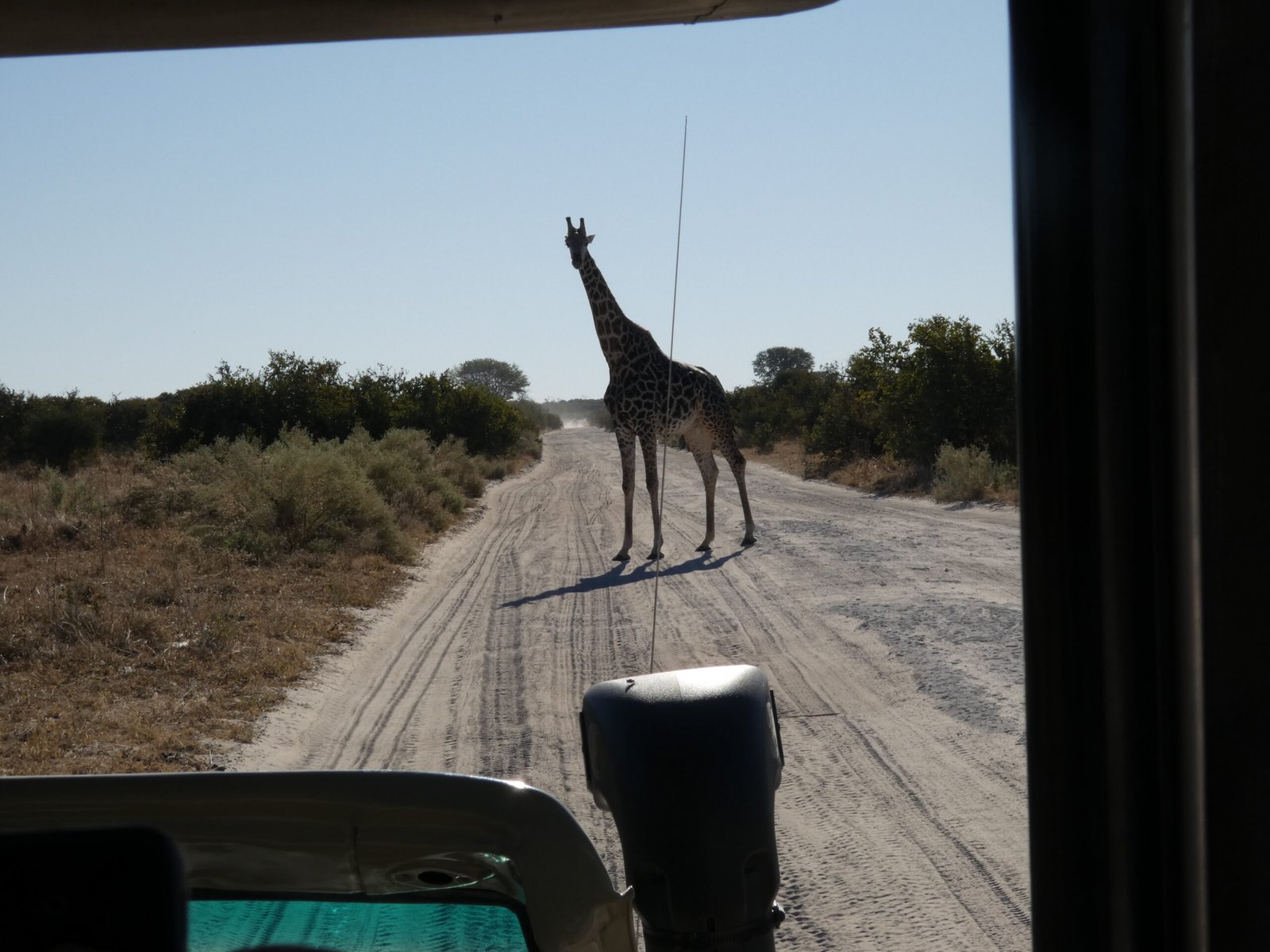
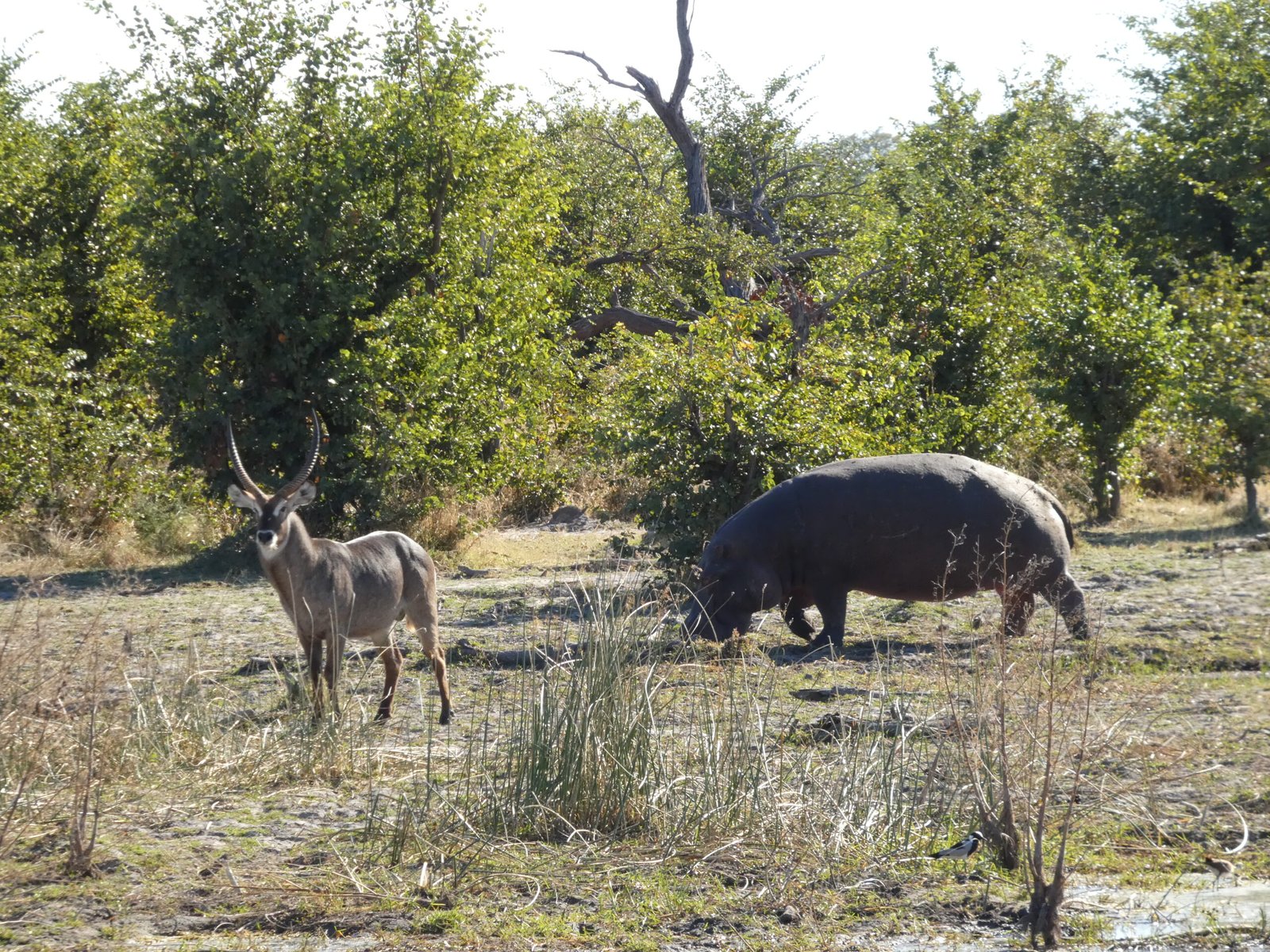
After breakfast, we climbed back into our truck and set off towards the Botswana border. The road wound its way through a nature reserve, so we were able to spot some animals as we drove towards the border. As soon as we left the park gates, we saw eight giraffes, antelopes, and wild boars.
We arrived at the Namibian border station after only a short drive. This time, the border formalities on both the Namibian and Botswana sides were completed very quickly. In addition to our passports, we were asked to show the children’s birth certificates, but otherwise nothing special happened. There was no queue at all.
Farewell to Namibia
Welcome to Botswana
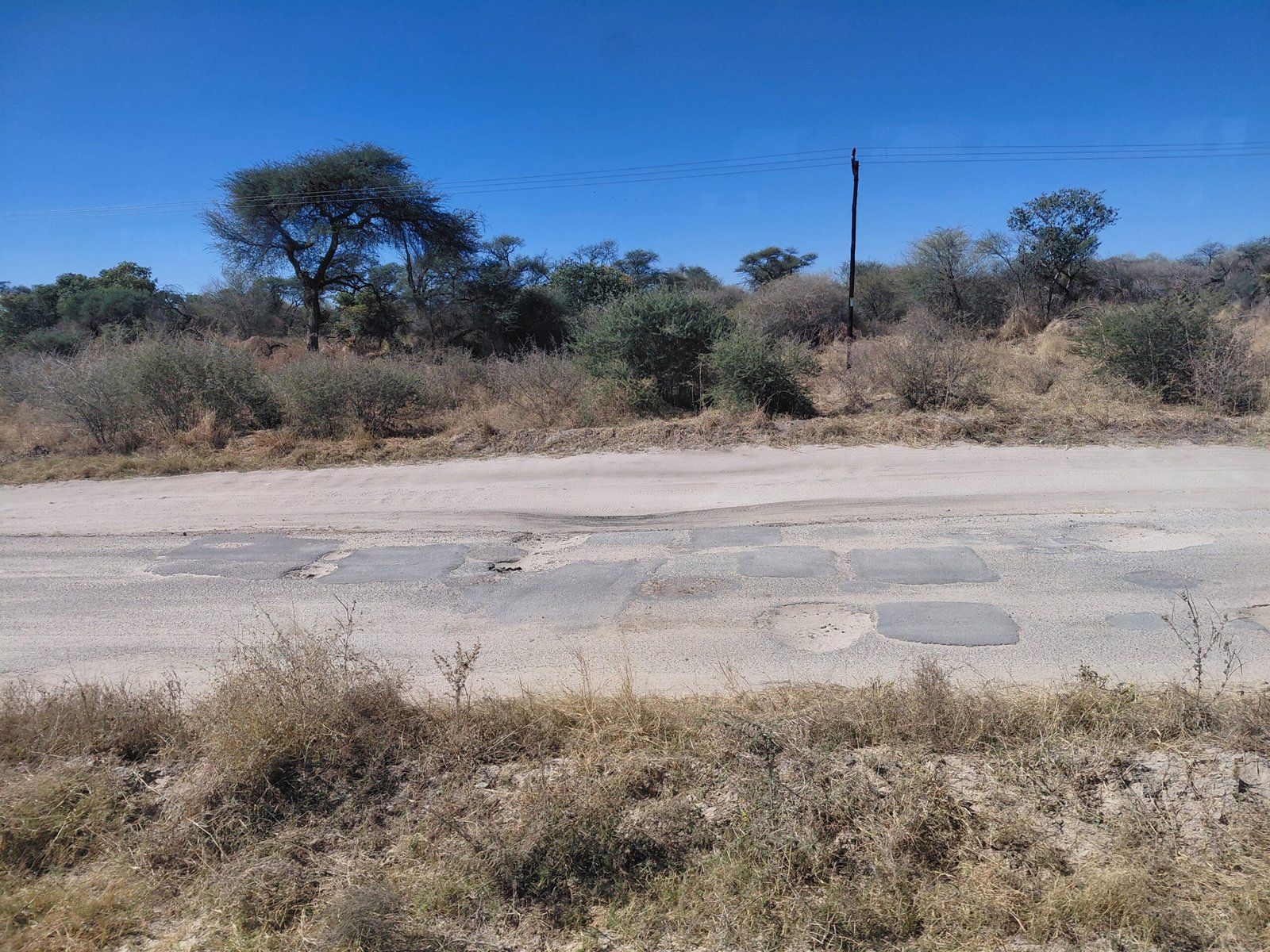
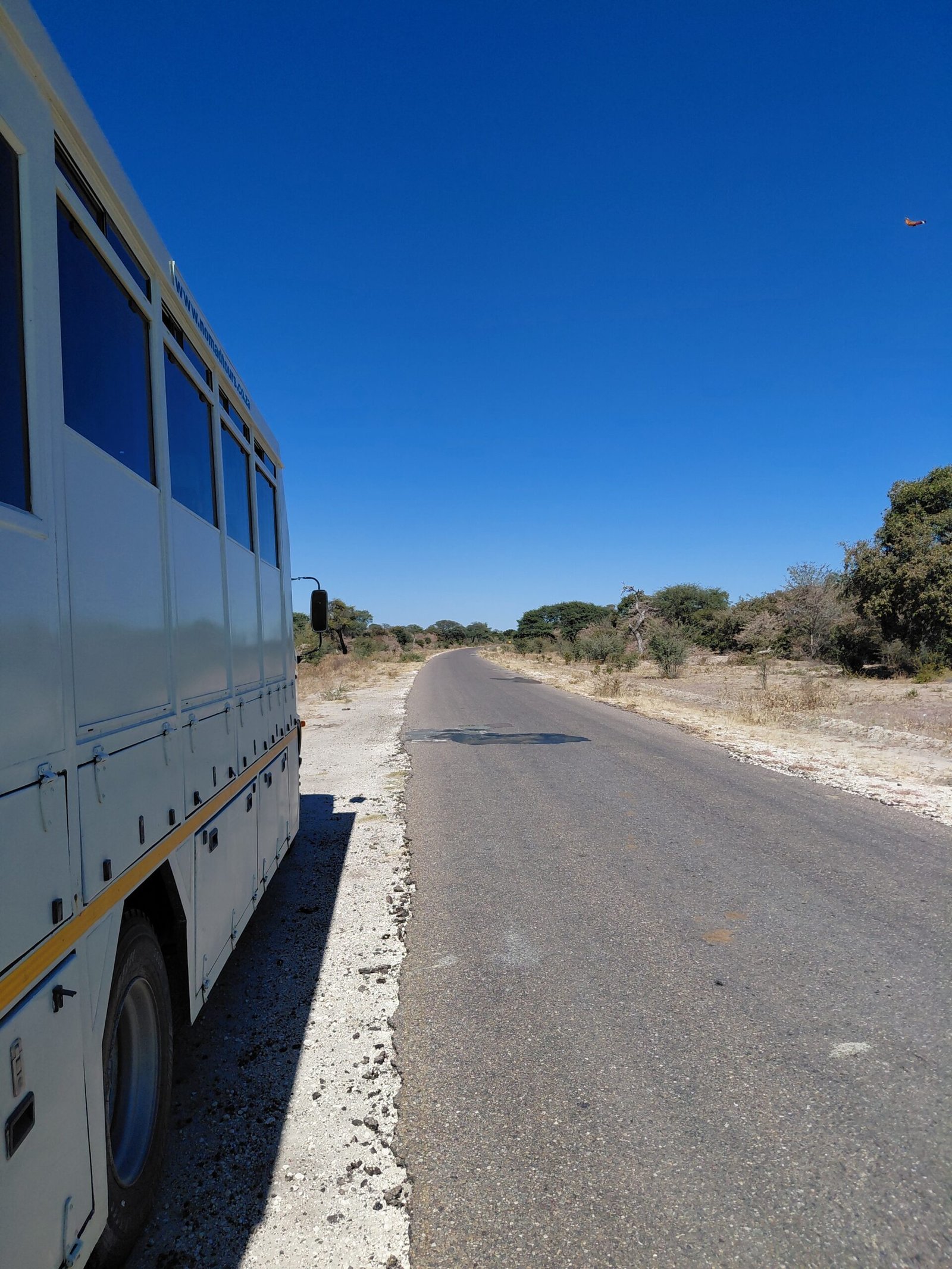
As soon as we crossed the border, we noticed that we had entered a new country. We hadn’t seen any donkeys on the Namibian side, but now there were loads of them running around everywhere. In addition, there were far fewer settlements than on the Namibian side. The people in Botswana must be concentrated in a few larger cities, because Namibia and Botswana have almost the same population. In addition to donkeys, there were also significantly more cows and goats grazing freely than in Namibia. The biggest difference, however, was the quality of the roads. The asphalt roads had an astonishing number of large potholes, which Taku had to dodge constantly while driving. As a result, our truck swayed from side to side along the road. Someone might have thought that our driver was drunk, but Taku drove onward with sheer determination.
In some places, the roads would have needed a little resurfacing.
“The infrastructure is not 100%” was Stanley's assessment of Botswana.
Local barber
Taku got into trouble with the police in Botswana. He paid them something. The story doesn't say whether it was a fine.
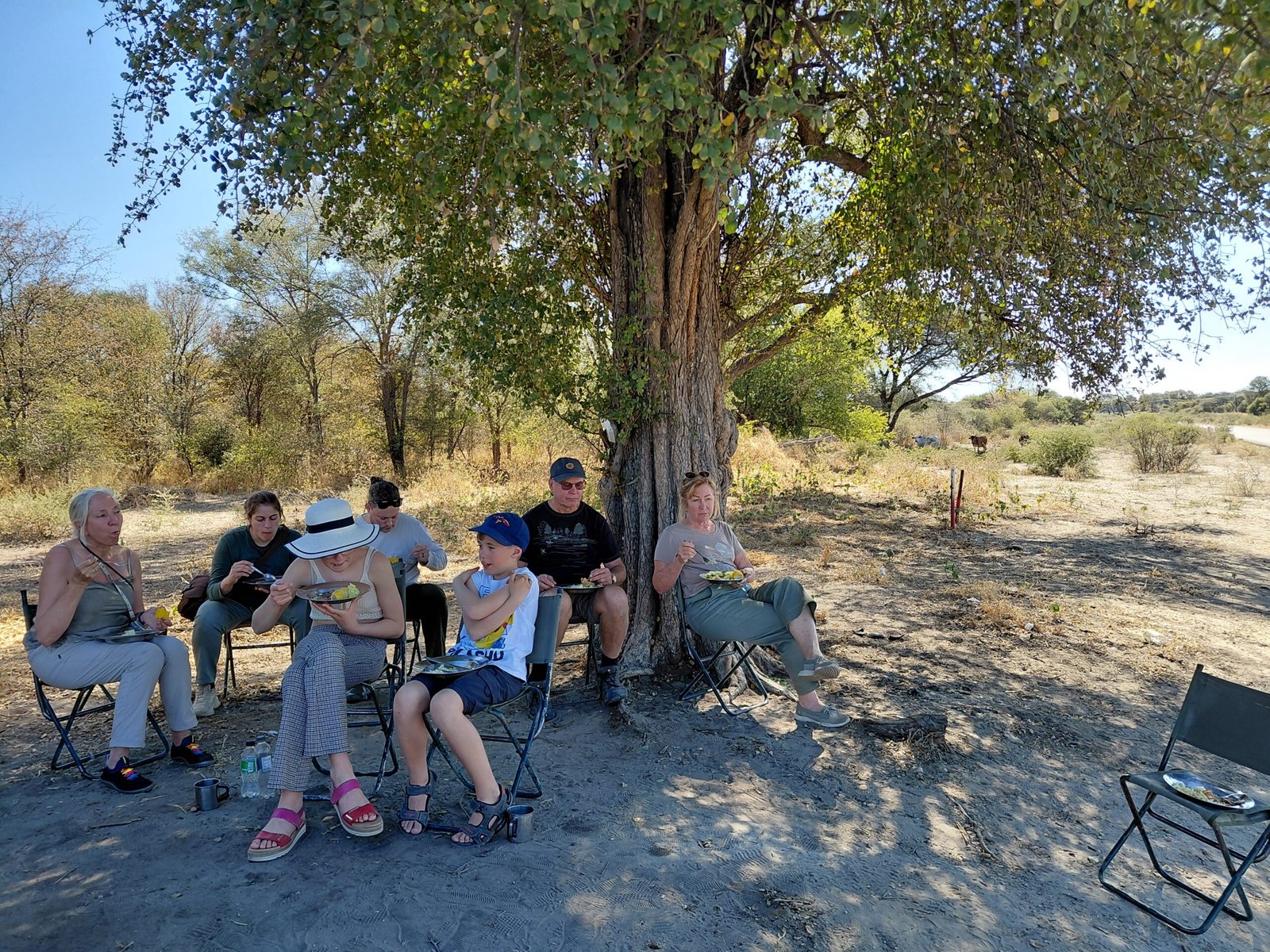
Once we had made it through the worst of the bumpy road, we stopped at the side of the road for a quick lunch while cows watched our activities from ten meters away. However, they had enough hay to eat, so they let us eat our lunch in peace. After that, we continued our journey for another couple of hours until we finally arrived in the town of Maun, where we stayed for the night after an eight hour drive. As it was a town with a population of over 50,000, we all stayed in a hotel on the outskirts of the town center. We enjoyed dinner at the hotel restaurant’s buffet, after which we had to quickly pack our smaller overnight bags for a two-night trip to the Okavango Delta.
Lunch under the watchful eyes of cows.
Buffet dinner in Maun
When Taku informed us at dinner about the upcoming excursion to the river delta, Ronja went ballistic. She realized that the travelers staying in tents did not have their own toilets in the tents provided by the bush camp. Our travel companions who normally stay in rooms had toilets and showers in their own tents. “What if I need to go to the toilet and I’m not allowed to move around alone at night?” asked the young lady, very distressed. When Taku promised to sort something out and Jaana agreed to be Ronja’s tentmate for the next couple of nights, the young lady calmed down and dried her tears. This is certainly an educational trip in many ways.
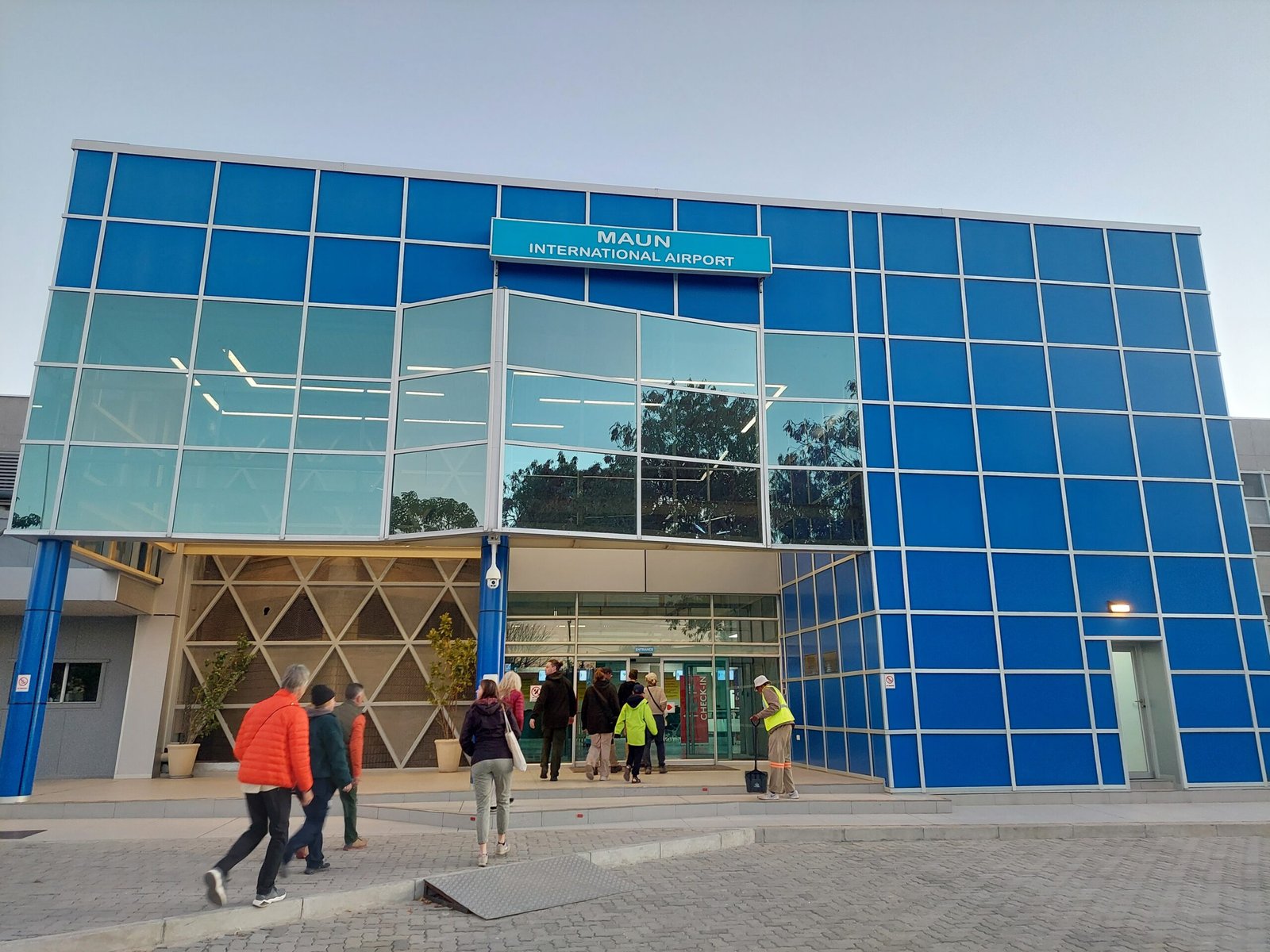
There was no rush at Maun International Airport in the morning.
In the morning, we woke up early again for a scenic flight over the delta. The plan was to fly for 45 minutes over the Okavango Delta, admiring the scenery and possibly even seeing some animals. We arrived at the airport well ahead of time at 7:00 a.m., but it turned out that Taku had accidentally booked us on the wrong day. The flight he had booked was actually the day before. In Europe, we would certainly have been sent back to the hotel, as this was our mistake and not the airline’s. In Africa, however, things work a little differently. Taku negotiated with the clerk for a moment, and the new dates were written on the tickets in pencil. After that, we had to wait for the pilots to be called in to take us over the river delta. After waiting for about an hour, all 13 of us who had booked the flight were finally able to board the planes.
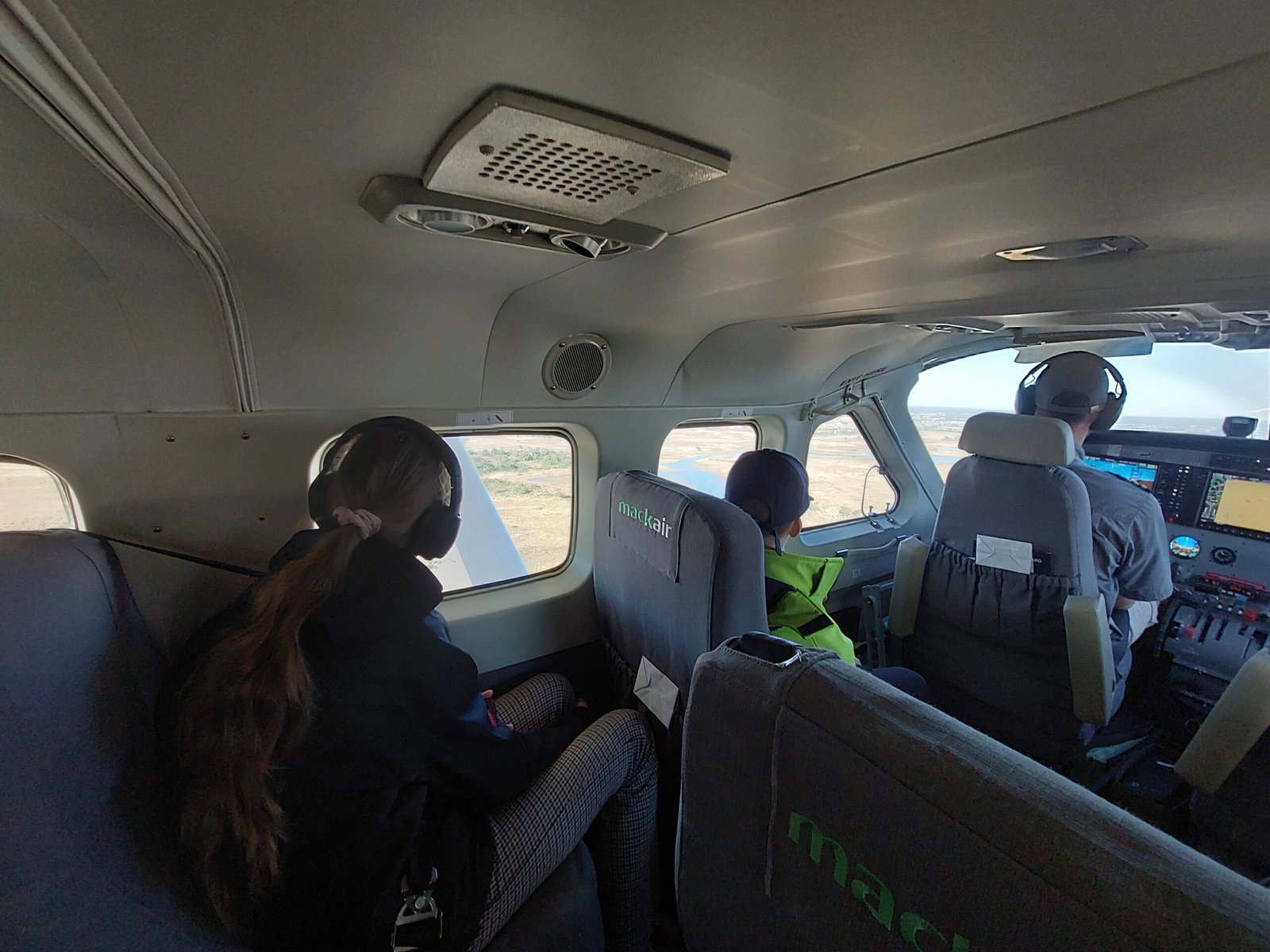
From the plane, the vastness of the river delta really opened up. We flew over the delta for 45 minutes, and it seemed like it would never end. We were perhaps a little surprised at how few animals we could see from the plane, but the largest ones, such as elephants and giraffes, were easy to spot. However, it wasn’t worth trying to photograph the animals from the air.
The captain getting ready for takeoff.
The plane could seat 12 people, but there were only seven of us on board.
The river delta is a vast area.
When we returned to the airport, we jumped into the truck and hurried to pay for our flights at the Mack Air office. For some strange reason, this company operates on a “cash only” basis, so we first had to stop at an ATM to withdraw local currency. We could have paid with dollars, but not everyone had enough dollars with them. We tried two different ATMs to withdraw money, but both were out of cash. “This is Africa, TIA,” we said, and decided to return to the hotel for a late breakfast and then go back to hunt for an ATM where we could get some local cash. Since we were already almost two hours behind schedule, breakfast was rather quick, but we still managed to get everyone on the truck in time.
At a local shopping center, we finally found an ATM where everyone was able to withdraw money. Now no one was short of cash anymore! Next, we made a quick stop at the Mack Air office, after which we transferred to four-wheel drive vehicles that took us to the Okavango Delta for two nights. We could only pack clothes for two days, as there was no luggage space in the cars and we had to keep our backpacks in the footwell in front of the seats.
We spent the next couple of days driving around in this four-wheel drive.
“Bumpy bumpy”
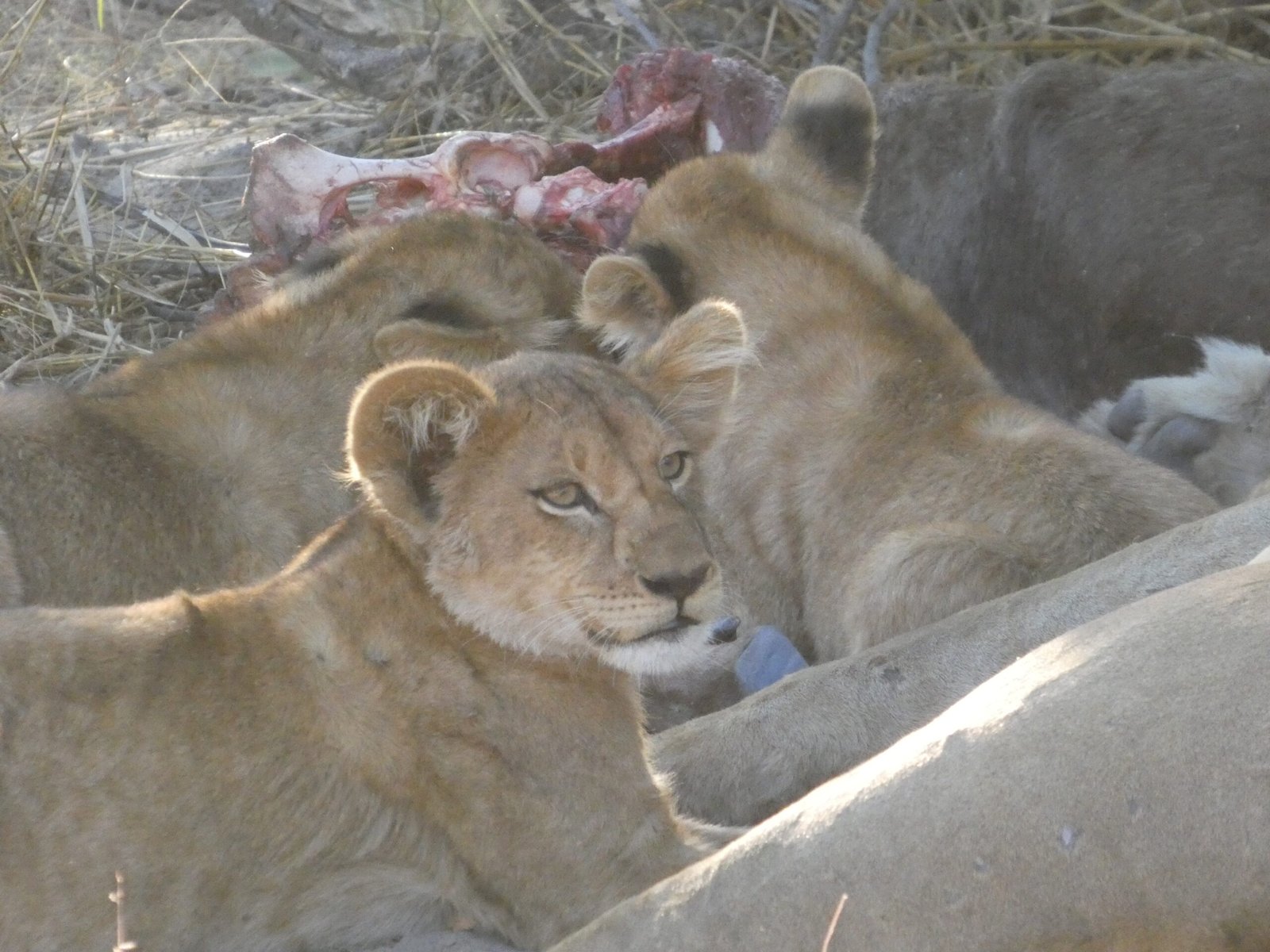
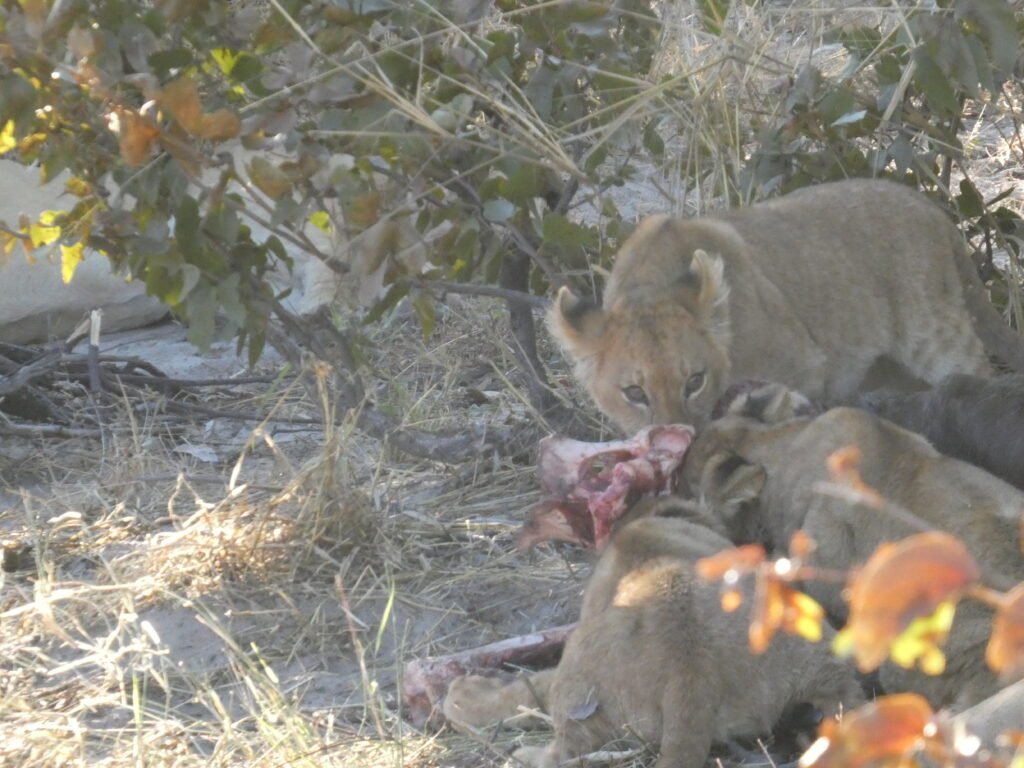
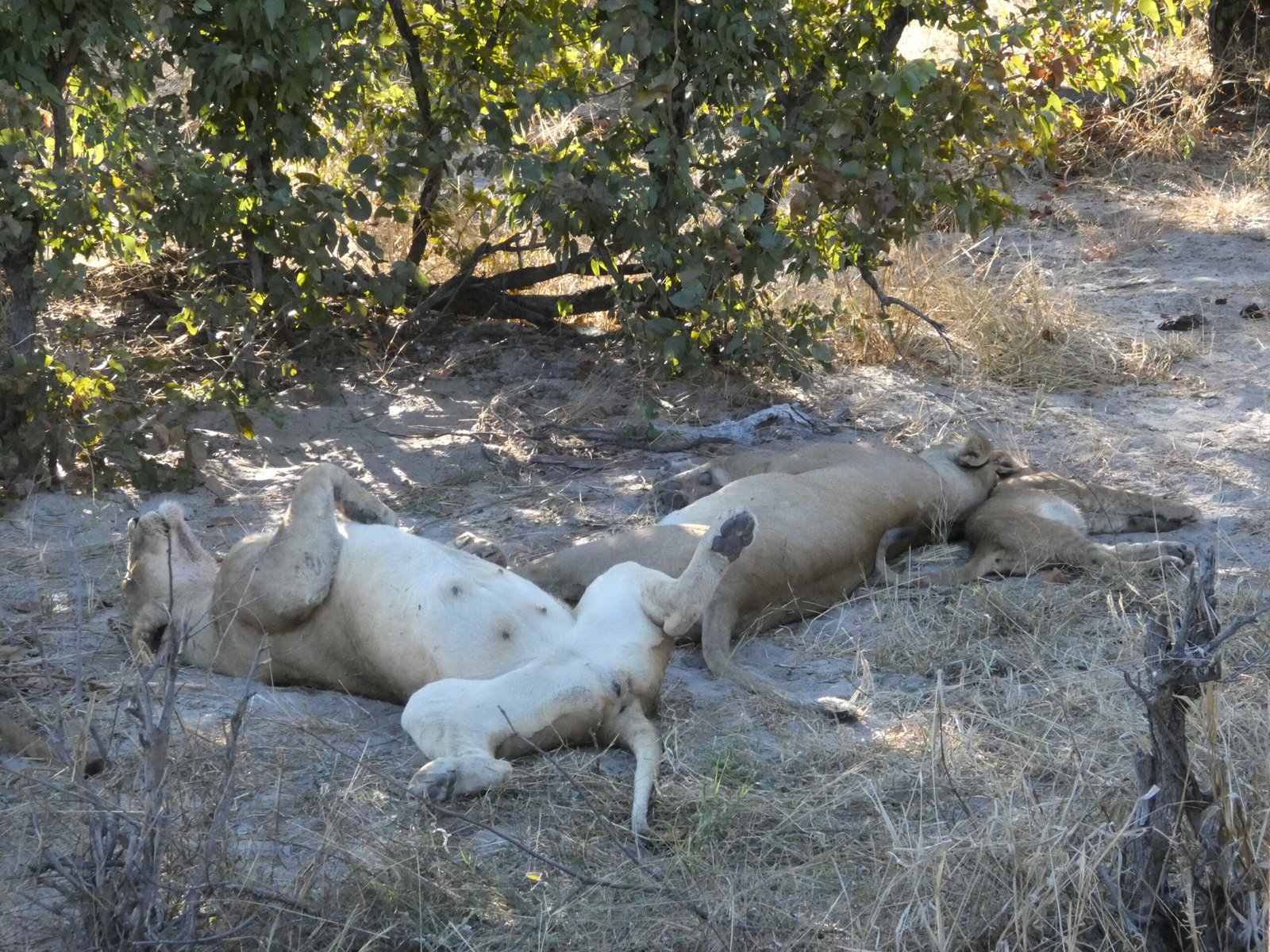
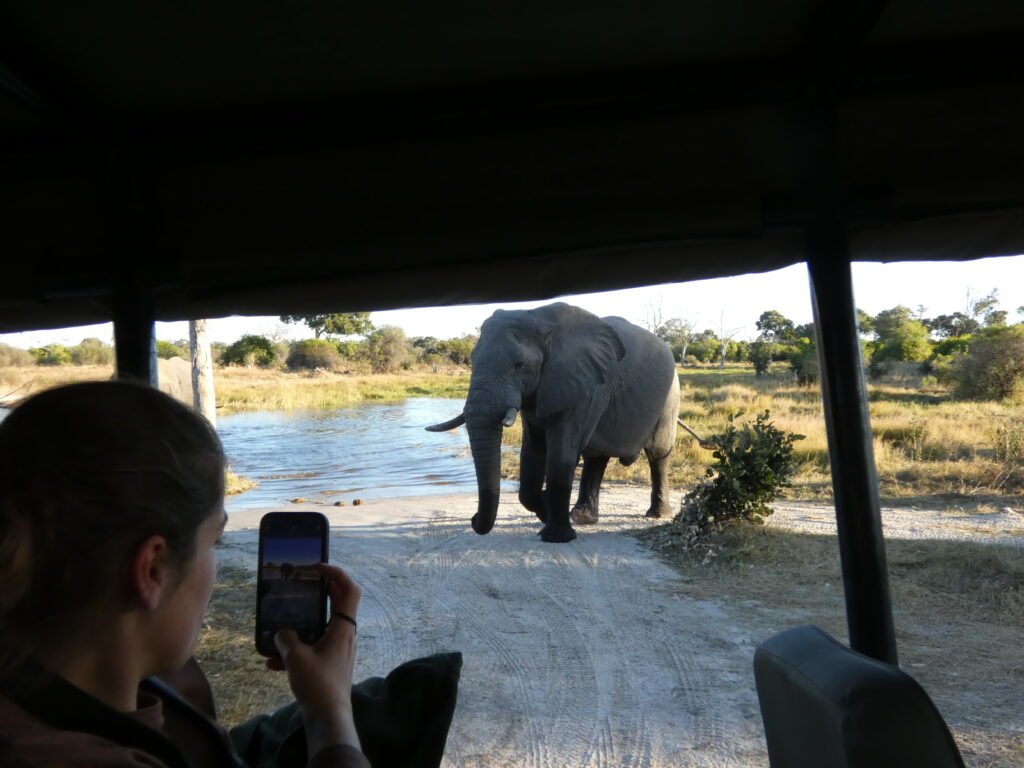
Pretty soon after the asphalt road ended, it became clear why trucks couldn’t drive on the delta. The sandy road was really bumpy, and the truck would have definitely gotten stuck in the soft sand more than once. With our four-wheel drive, we pushed forward tenaciously, albeit a little slowly in places. When we left, we were told that the four-wheel drive ride would take about five hours. However, five hours turned into seven, as our local guides decided to combine the transfer drive with a game drive. It was a great idea, as we saw an incredible number of animals up close. Perhaps the most amazing experience was watching a pride of lions, whose cubs were still feasting on a wildebeest carcass hunted by the females. We were only a couple of meters away from the pride, but the well-eaten lions paid no attention to us. We also saw elephants so close that we could almost touch them from the car.
Game drive in the Okavango River delta.
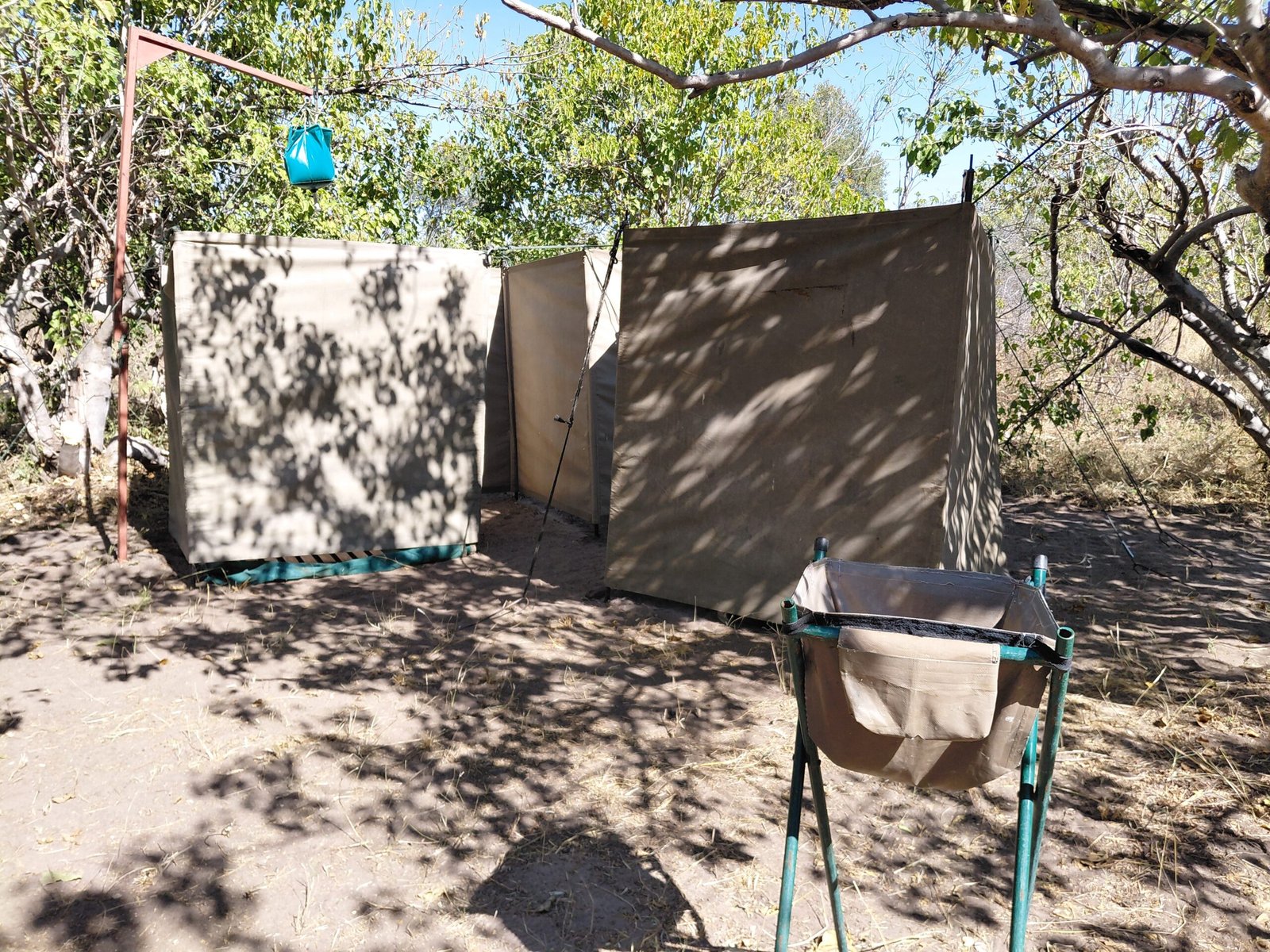
It was only when the sun was setting that we arrived at our camp in the middle of the delta. We were welcomed with a song, after which we quickly settled into our tents. Ronja was not at all impressed with the toilet facilities, especially after one of the camp workers said that lions had been roaming around the camp recently. This employee said that it would not be safe to go to the toilet at night, but when we asked our guides about it, they said that it was okay to go if you took a friend with you. Ronja checked with a few other staff members. One said that a staff member should accompany us to the restroom, and another said that it was safe to go alone as long as we checked with a flashlight first to make sure there were no animals around.
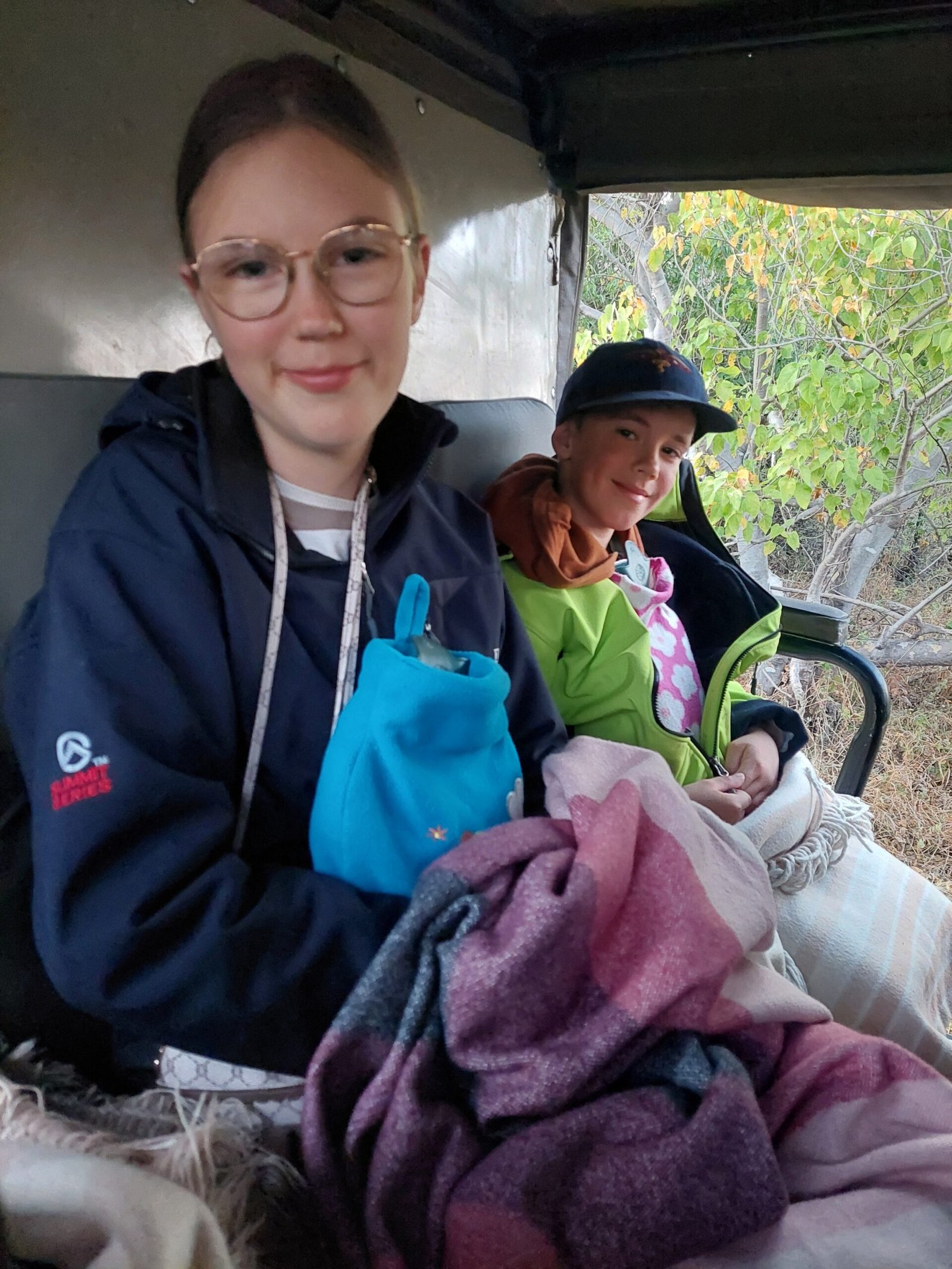
We had a delicious meat stew for dinner under the camp tent, after which we moved to the campfire to listen to instructions for the next day. When the campfire began to die down, we all hurried to our tents, knowing that we would have to wake up early again the next morning. Before going to bed, we were given hot water bottles, which was a nice surprise. Here in the delta, nighttime temperatures can drop below freezing even in June, so we knew it would be a cool night. However, we had thick blankets, hot water bottles, and several layers of clothing, so we all slept well. During the night, we were occasionally awakened by the cries of hyenas, which seemed to come from somewhere very close to our camp. In the early hours of the morning, Jaana heard an animal, probably a wild boar, grunting contentedly somewhere behind the tent. The other grunting sound was Marko snoring in the neighboring tent.
Shower and toilet at the campsite
Tent lights charging for the night
As there was no electricity at the camp, we charged our cameras and phones using the car battery. The blanket protects the equipment from the sun.
We were woken up at six, and warm water was brought to us in small containers in front of the tent so we could freshen up. At half past six, we had breakfast, after which we jumped back into the four-wheel drive and set off to see what animals we would see this time. We were given new hot water bottles and blankets to keep us nice and warm during the first few hours of the drive.
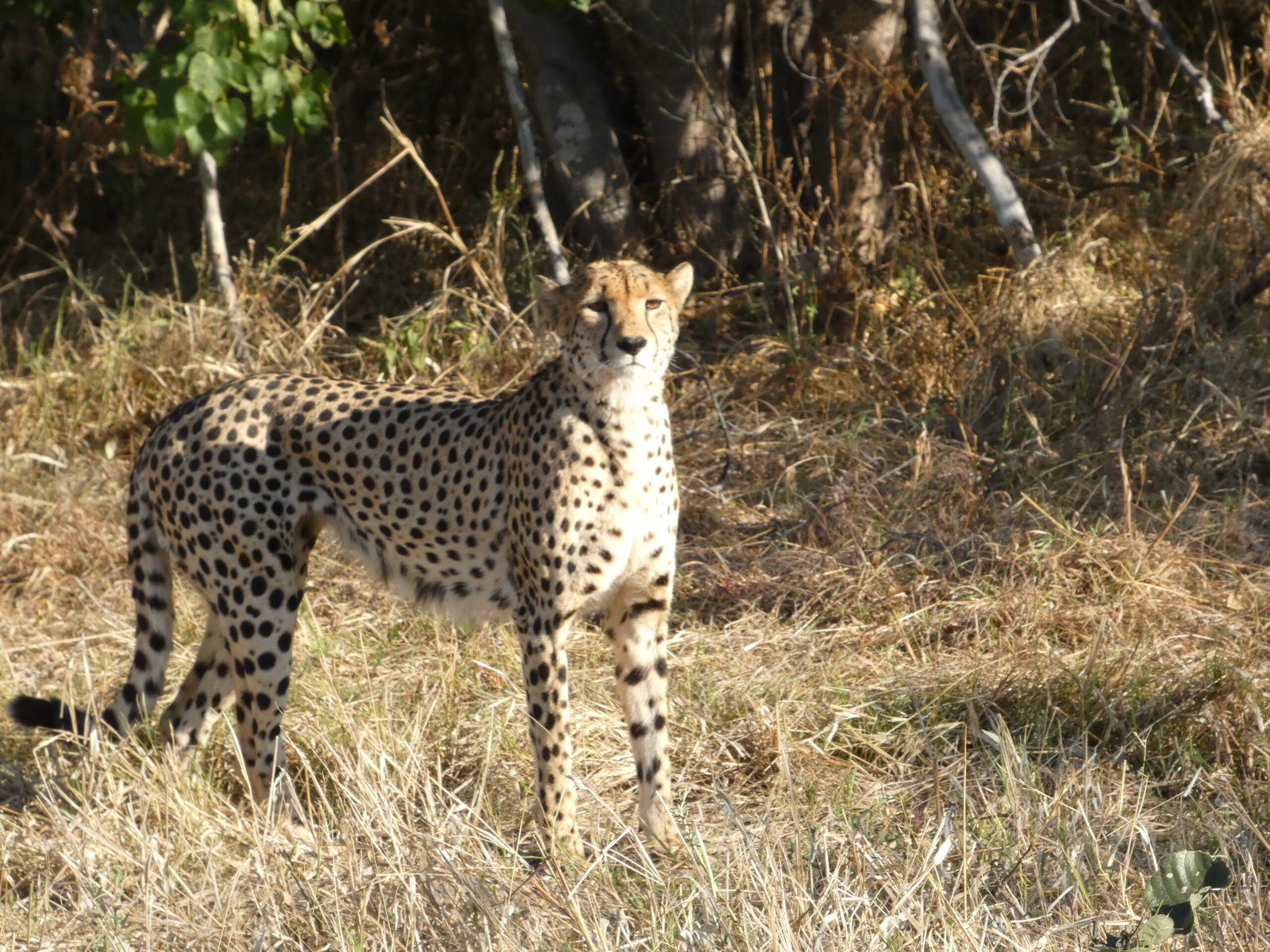
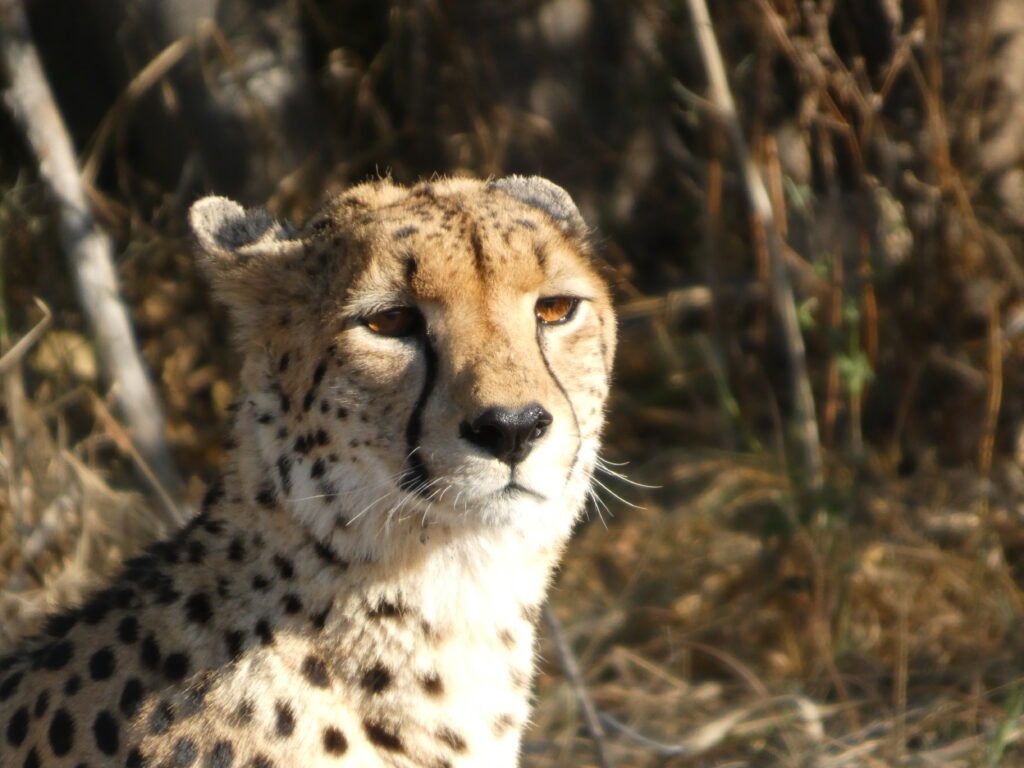
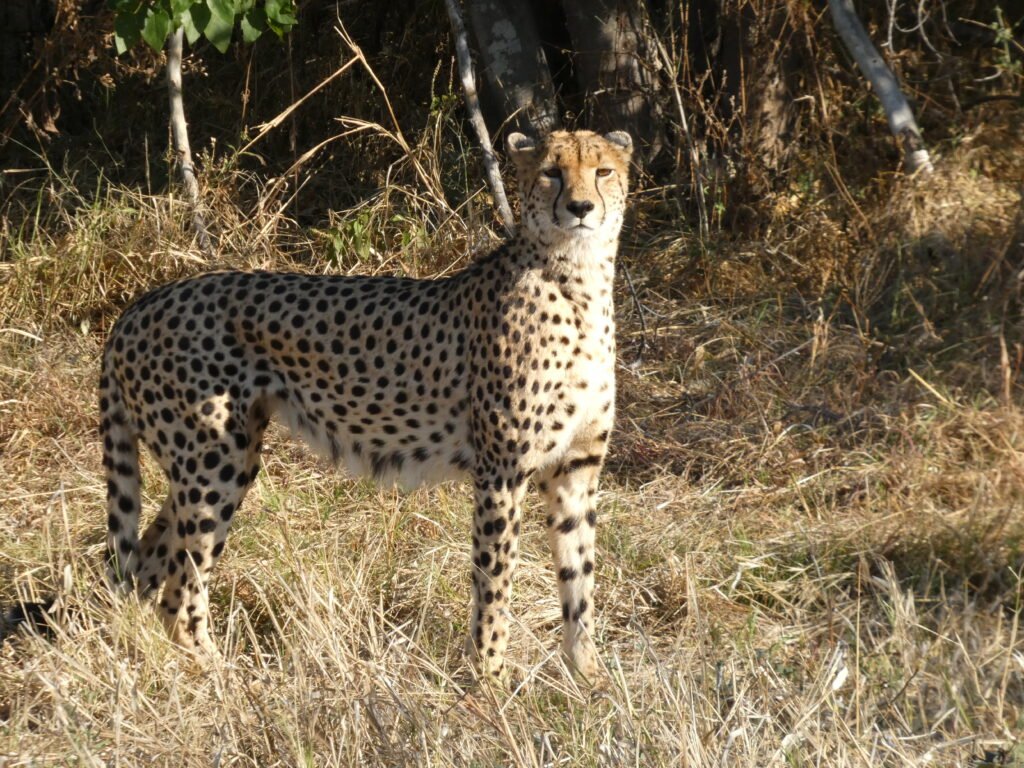
This was definitely not a wasted trip! We drove to a nature reserve behind a village called Khwai. There we saw a rare black-faced impala and lots of elephants. However, the highlight of the trip was seeing a cheetah. Our guide said that seeing a cheetah in the delta is very rare these days. He himself has only seen one 1-2 times a year, and this was his first time this year. The cheetah we saw was interested in a group of antelopes grazing nearby. Unfortunately (for the cheetah), the antelopes were all fully grown, so it had no chance of catching them. Even if it were fast enough to catch them, the cheetahs bite is not strong enough to bring down a fully grown antelope.
Hot water bottles under our arms at seven in the morning, ready to leave on safari.
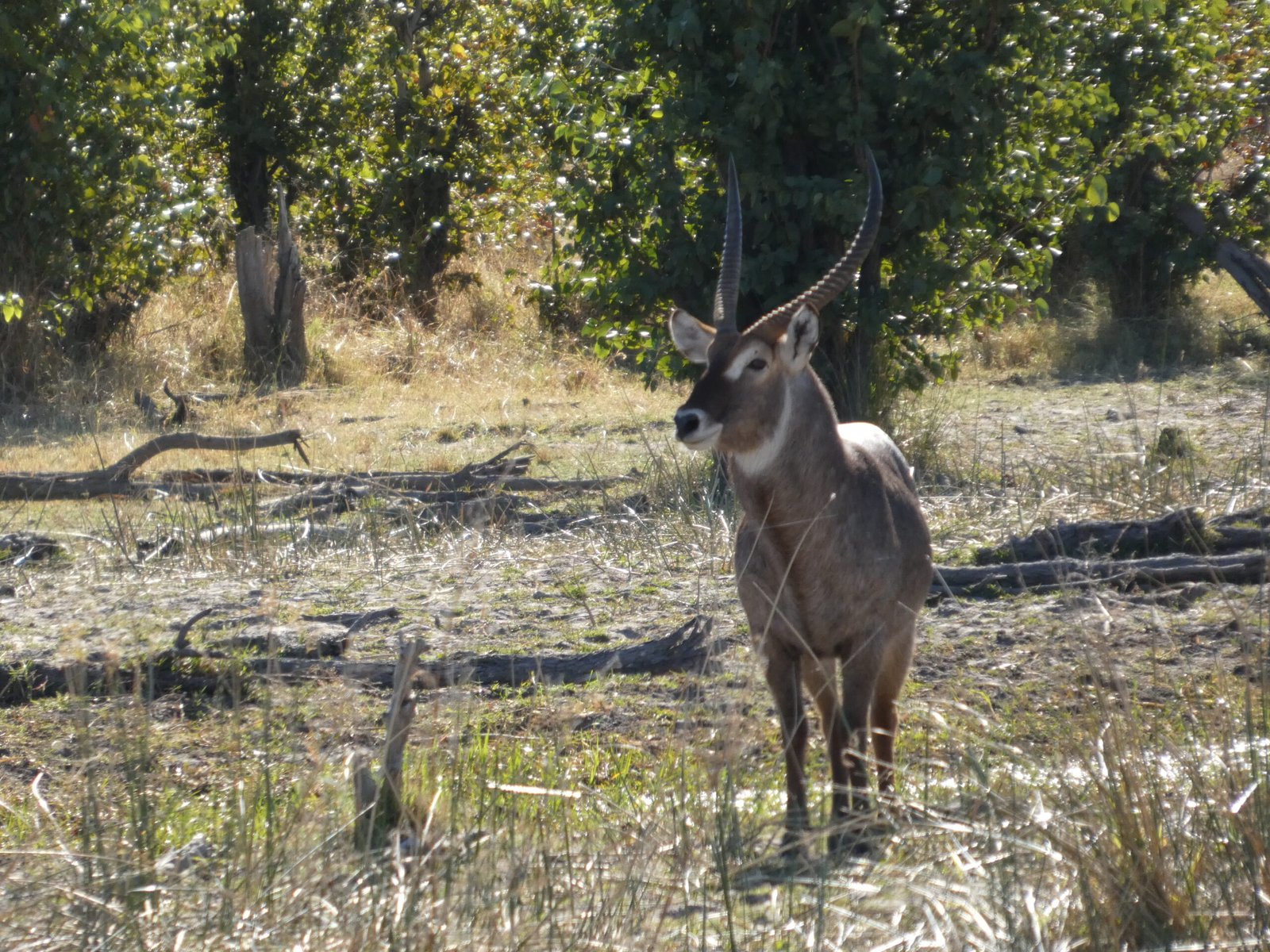
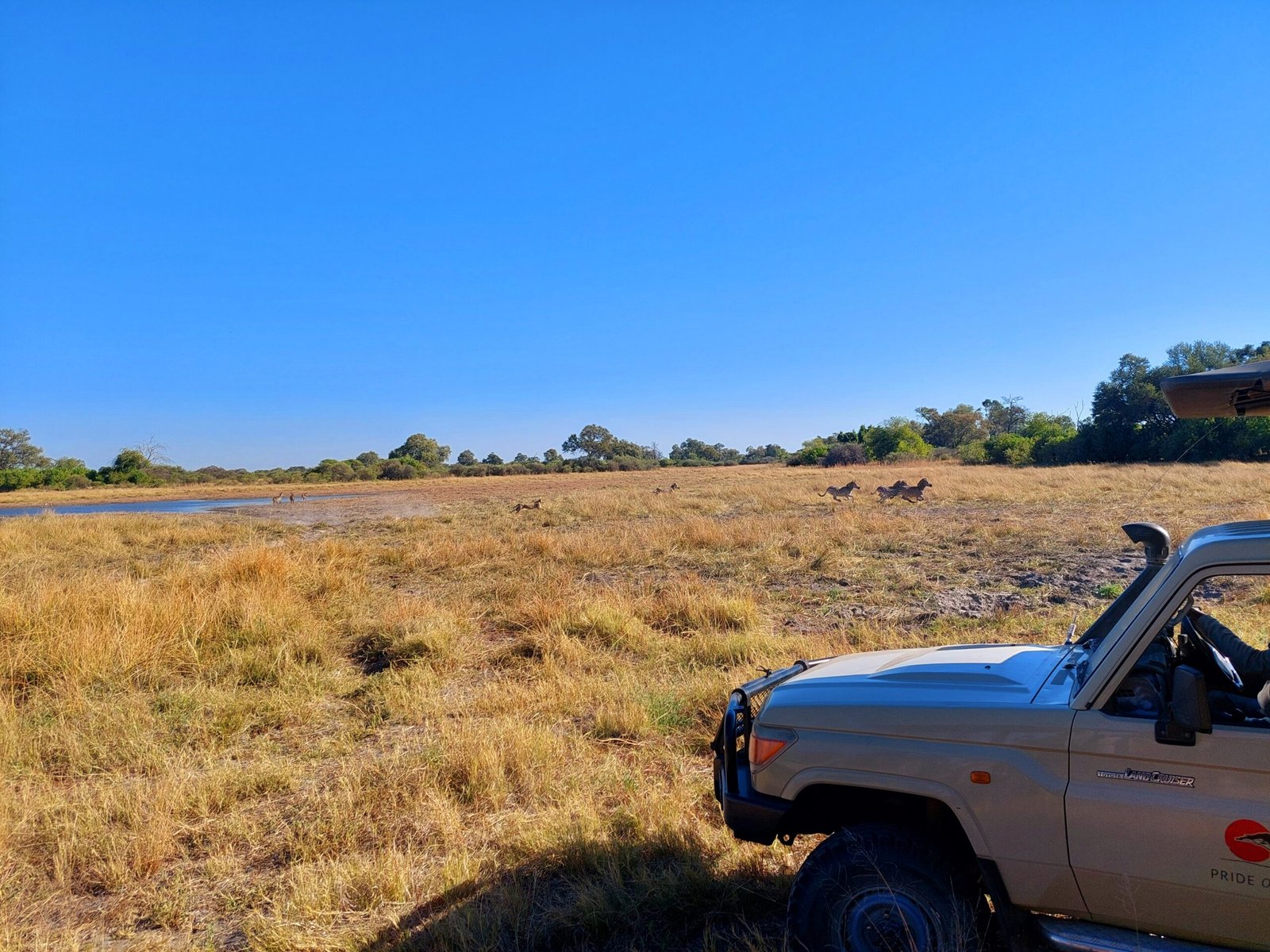
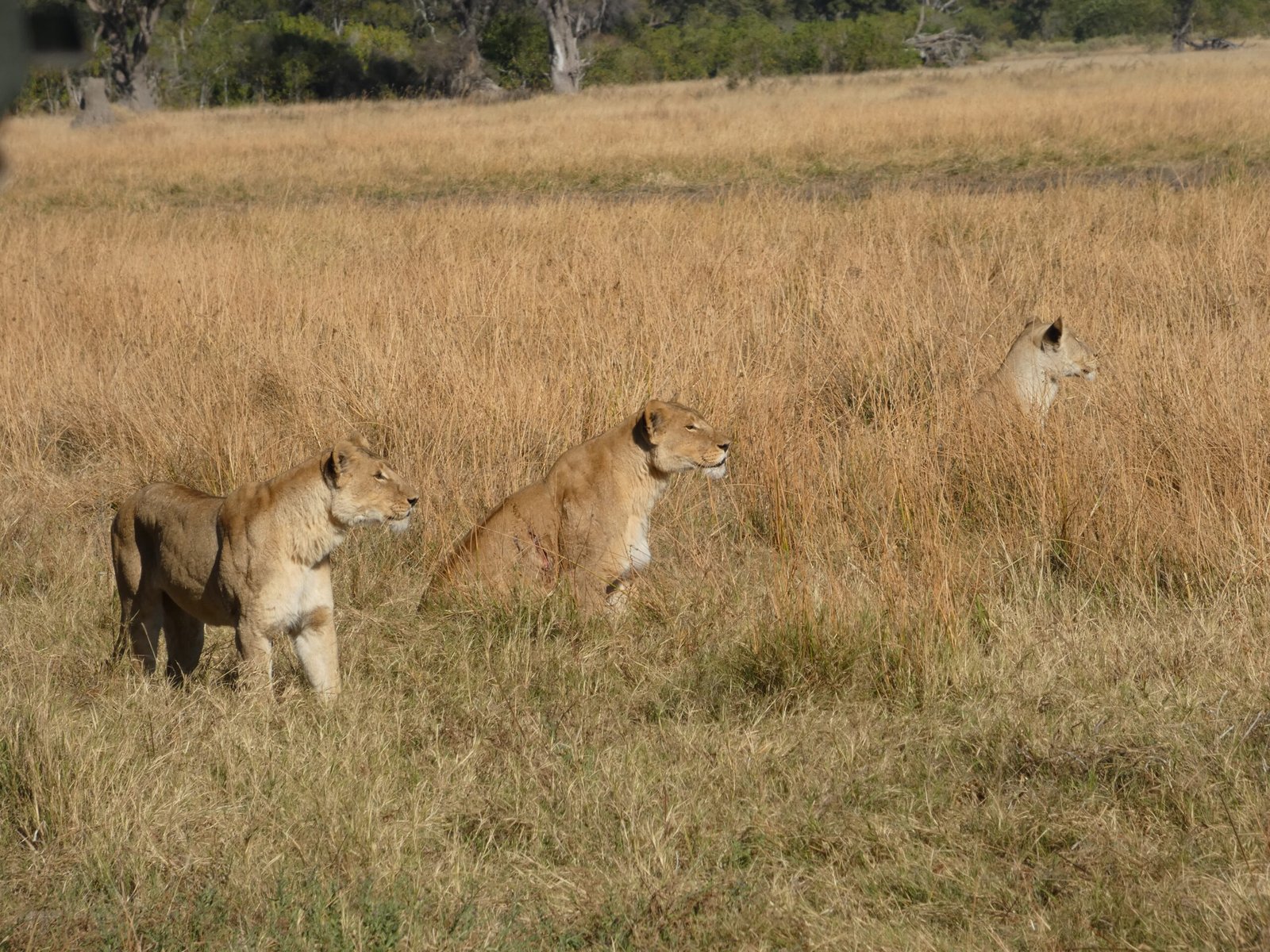
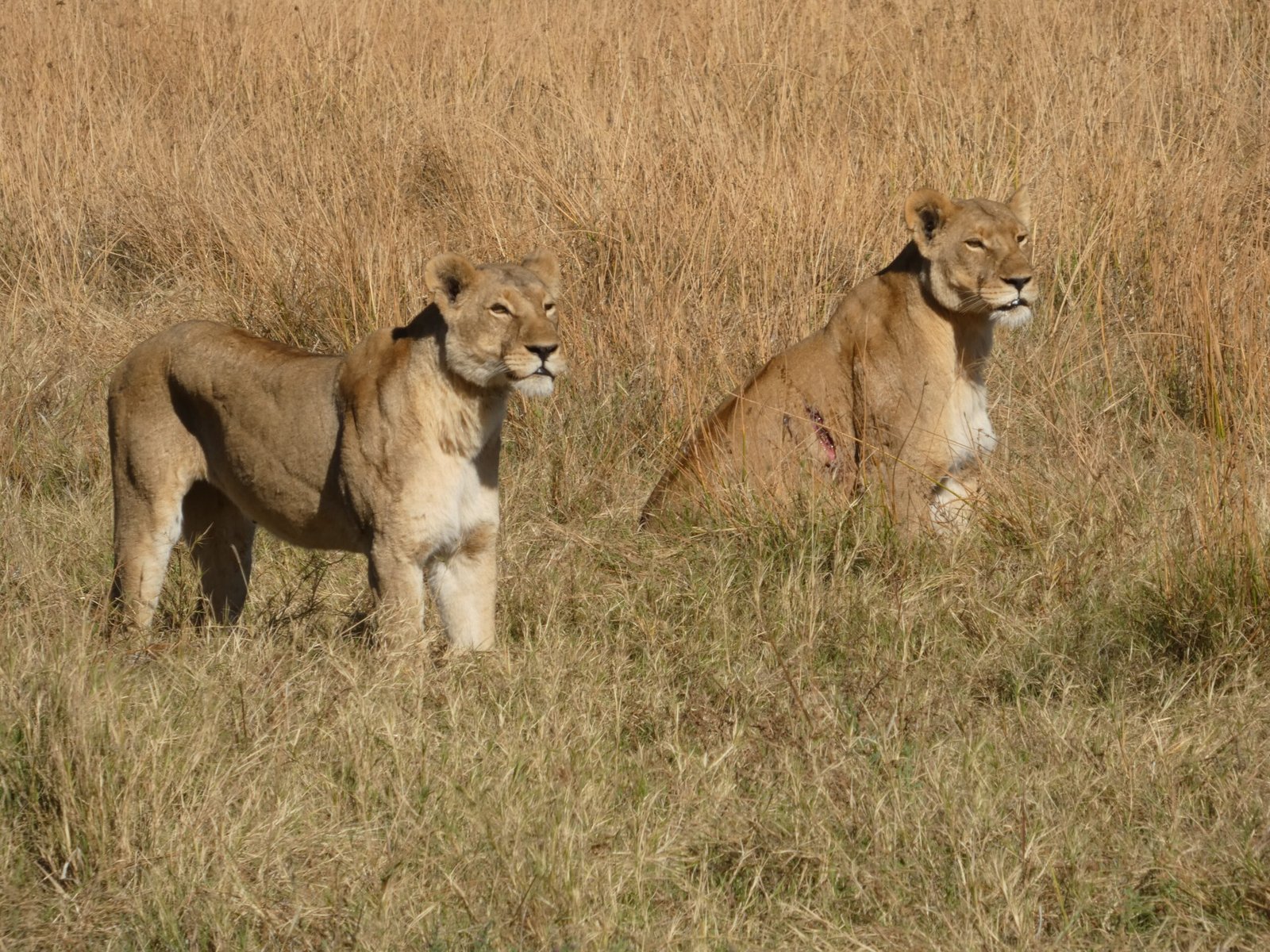
After seeing the cheetah, we got to watch a pride of lions hunt. Our guide knew exactly what each lion would do next. He was clearly very experienced in this line of work. This was no surprise, as he told us he had been working as a guide in the delta since 1997. The pride we saw had set its sights on the youngest member of a herd of waterbucks. The ambush was already well underway when a herd of zebras came trotting along and ruined the lions’ plans. Zebras are too big for lions to catch. Apparently, a zebra can even kill a lion with its kick. Despite this, the lions finally launched an attack on the herd of zebras and antelopes, but because the terrain was very uneven for lions, they were unable to accelerate to their top speed and ended up empty handed. The cheetah we had seen earlier had also sneaked up on them, and one of the lionesses chased it away from their prey. Apparently, it is very rare to see one cat chasing another.
This is the best picture we got of the hunt.
When one lion launched an attack, several lions that we hadn't noticed at all suddenly rose from the grass.
One of the lions was probably wounded while hunting antelope.
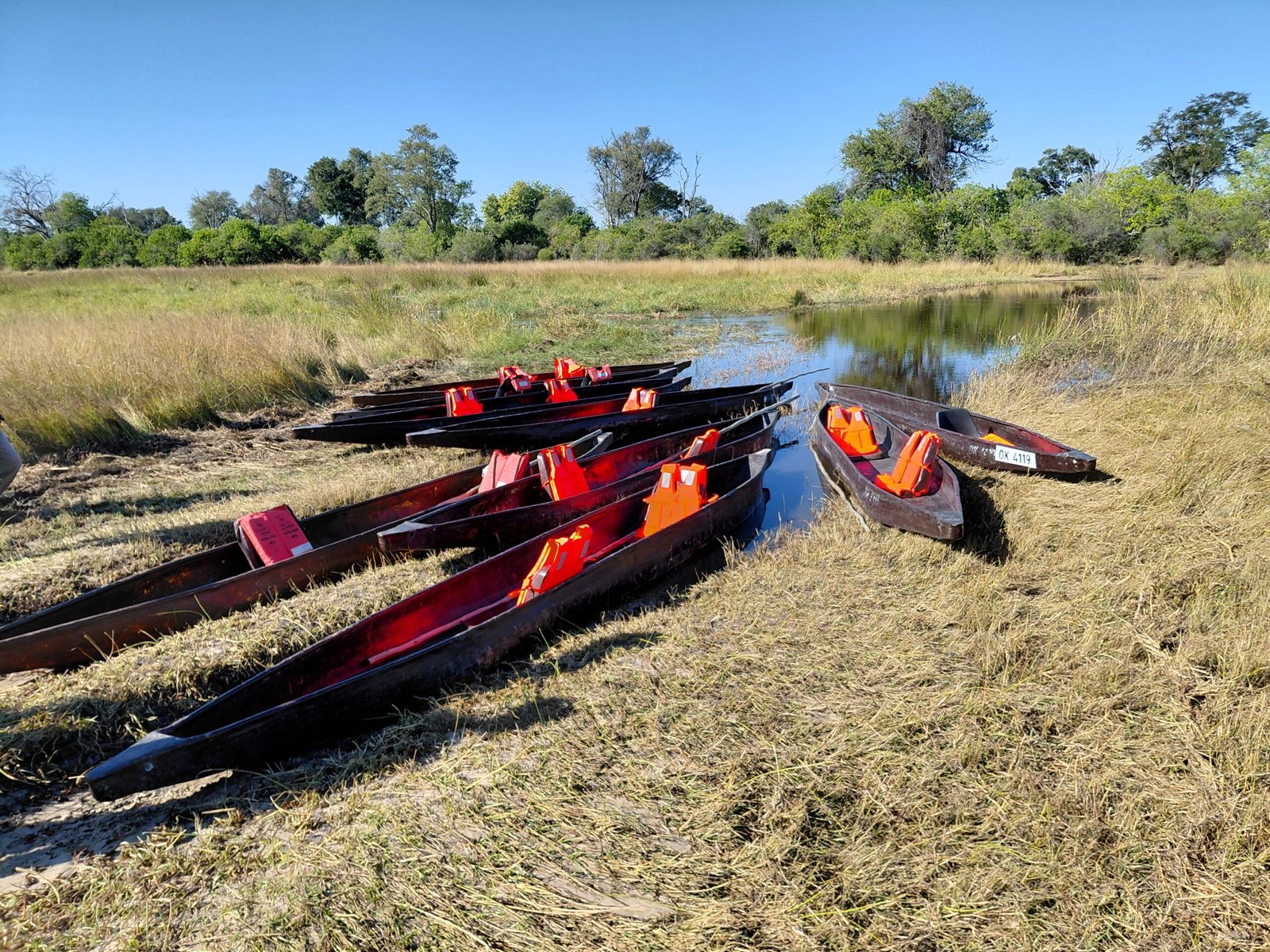
We returned to our camp for lunch, after which we luckily had a short break. As we crawled into our tents to rest, we noticed that a room fairy was also visiting the riverbank. Our beds had been neatly made, and all our clothes had been folded into neat piles on top of the beds. Even Marko’s dirty underwear, which he had hidden under his bed to be put in the laundry bag, had been tidied away. After a rest and some afternoon coffee, we set off again. This time, we headed for the delta’s wetlands, where we traveled in a small traditional mokoro boat. In the past, these boats were carved from wood, but the ones we used were made of fiberglass.
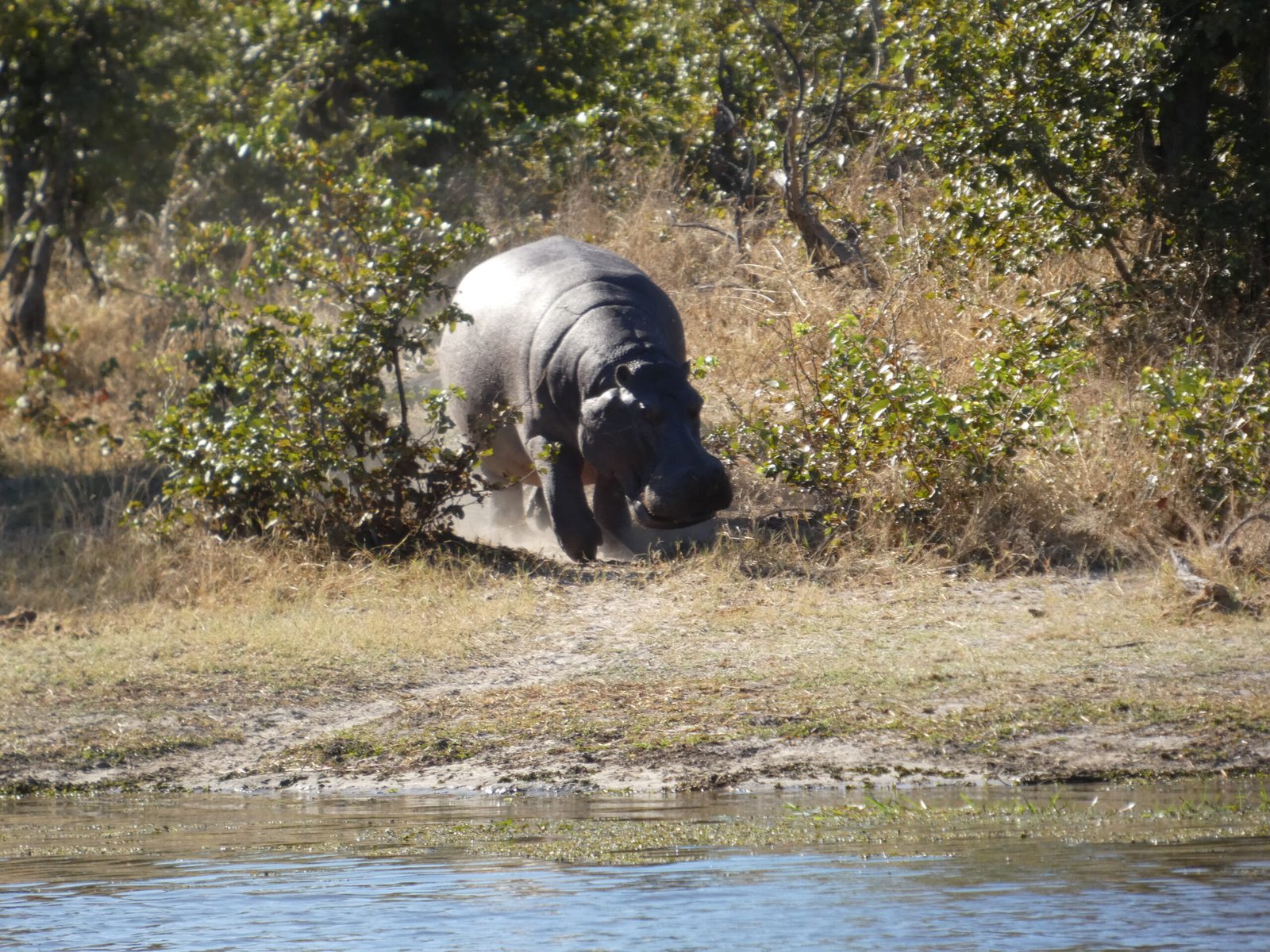
Each boat could carry two passengers. Local young men pushed the boats forward using poles in the shallow river. Jaana’s and Ronja’s boat went first, as the man poling the canoe was said to be the best at spotting hippos lurking in the water. We could hear the hippos, but luckily we didn’t encounter any this time. It would have been pretty impossible to escape from a hippo in a small boat if we had to. Instead of hippos, we saw an elephant that had come to the area to eat water plants.
Mokoros ready for passengers.
After a couple of hours on the boat, we set off again in the four-wheel drive to see if we could spot any more animals. This time we weren’t lucky and we didn’t see anything we hadn’t already seen before. We returned after sunset and noticed that the room fairy had visited our tents again. Once again, the beds were neatly made and our clothes were neatly folded, including Marko’s underwear. The service was better than in any hotel we had ever stayed at! Even at the Hilton, the room fairy only visits once a day at most.
We had dinner again in the outdoor shelter, after which we sat by the campfire for a while before going to bed. This time, the animals did not disturb our sleep, and we slept soundly until morning. Except for Marko, who ran to the bathroom all night, feeling like he had caught a cold.
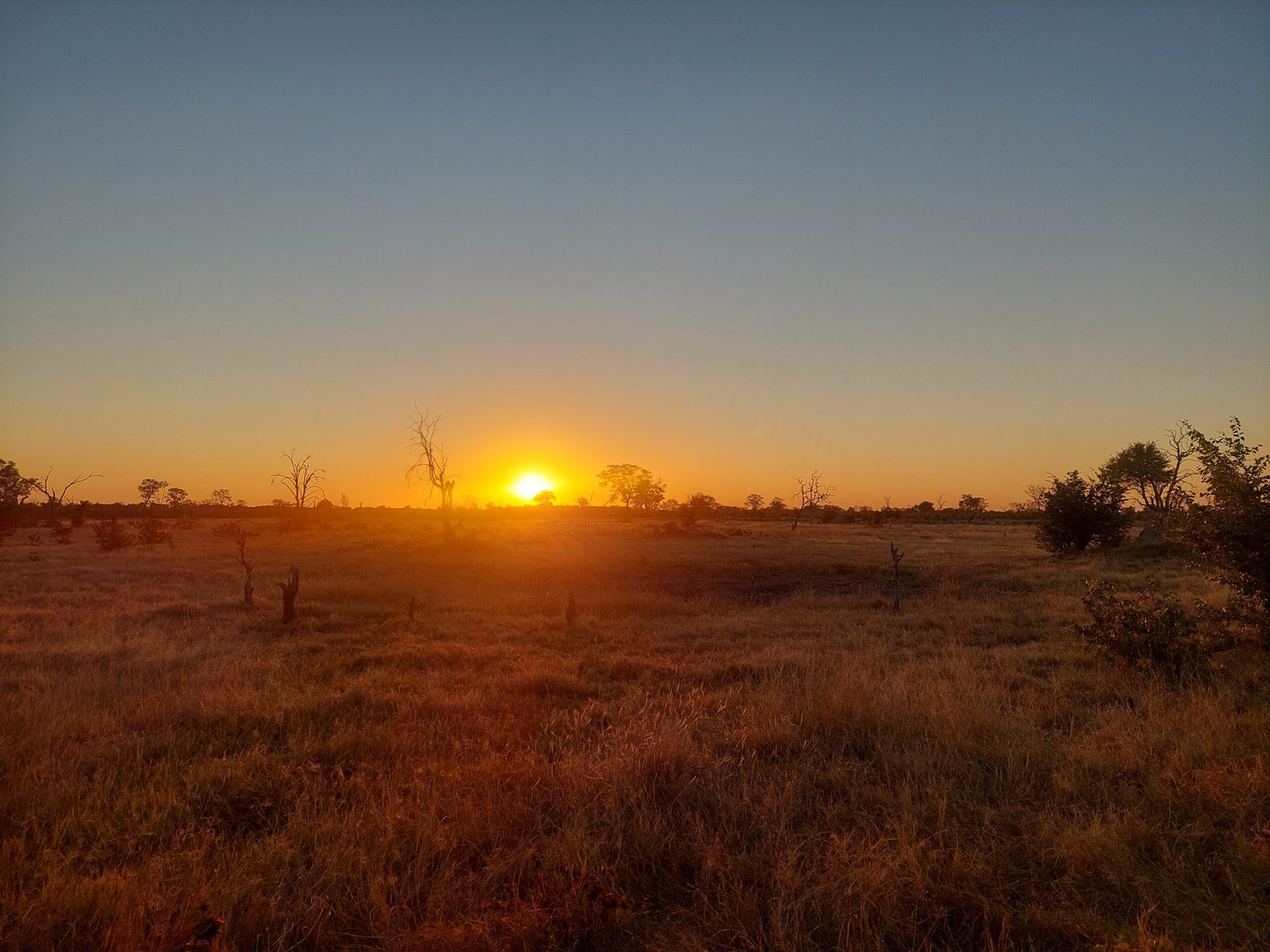
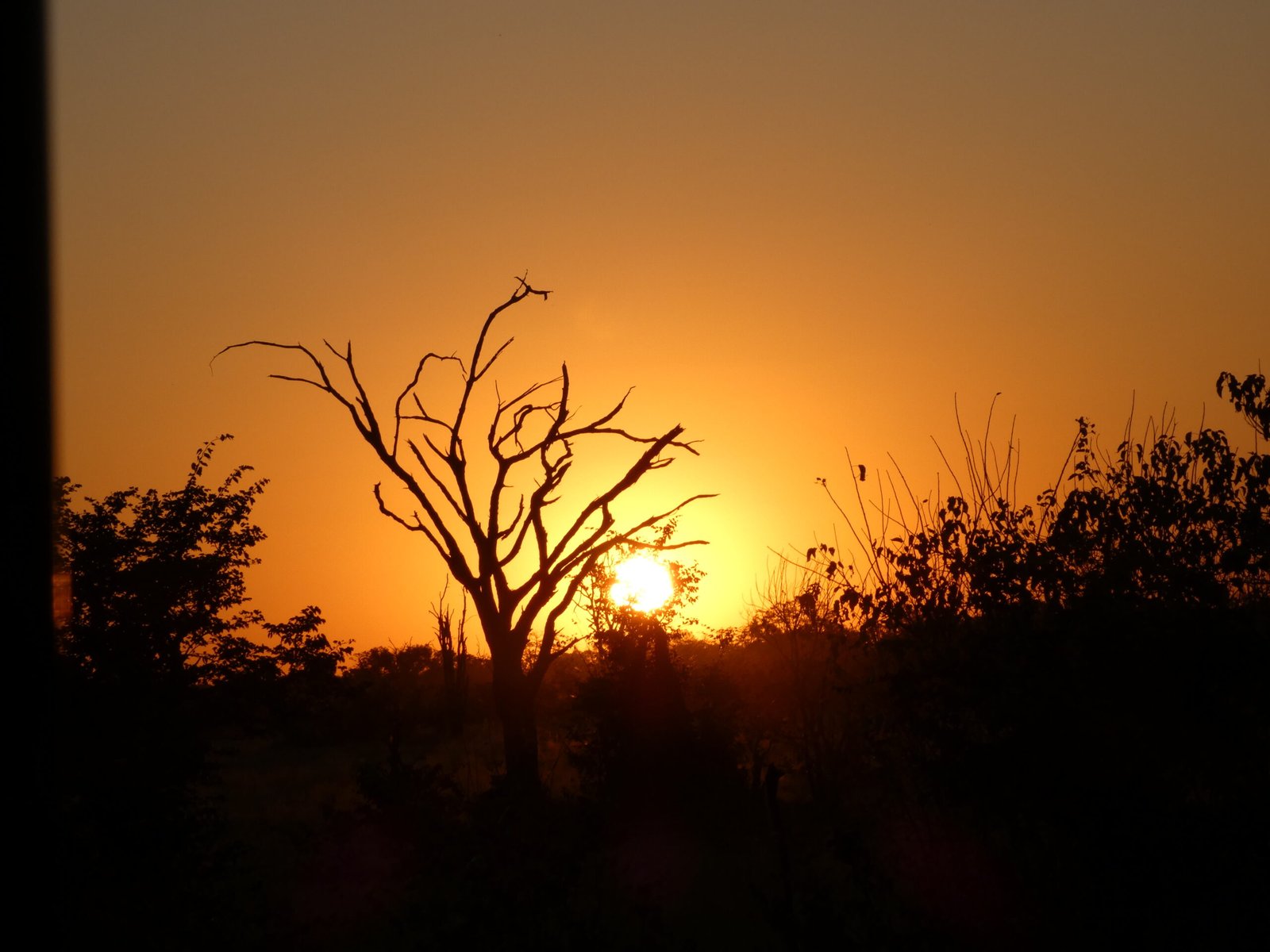
You never get tired of African sunsets!
When we woke up in the morning, the animals announced their presence once again. We heard lions roaring, elephants trumpeting, and jackals and hyenas howling. After breakfast, we began the long and bumpy journey back to the city of Maun. We only stopped a couple of times for bushy bushy, so we were all pretty exhausted when we arrived in Maun after about 4.5 hours. There, we had to jump straight into a truck, and the journey continued towards a campsite called Elephant Sands.
If the four-wheel drive ride was long, so was the rest of the journey! We didn’t stop for lunch at all, but were given sandwiches to take with us, which were supposed to serve as lunch. There are three vegetarians in our group, one of whom is also allergic to gluten. For some reason, this had been forgotten by the tired people at the delta campsite, and there was only one vegetarian option available. We did find a gluten-free roll, but it accidentally had chicken in it. If it had just been a roll filled with cold cuts, we could have removed the cold cuts and eaten the roll with the other fillings. However, the roll was filled with some kind of chicken paste, which was impossible to remove completely.
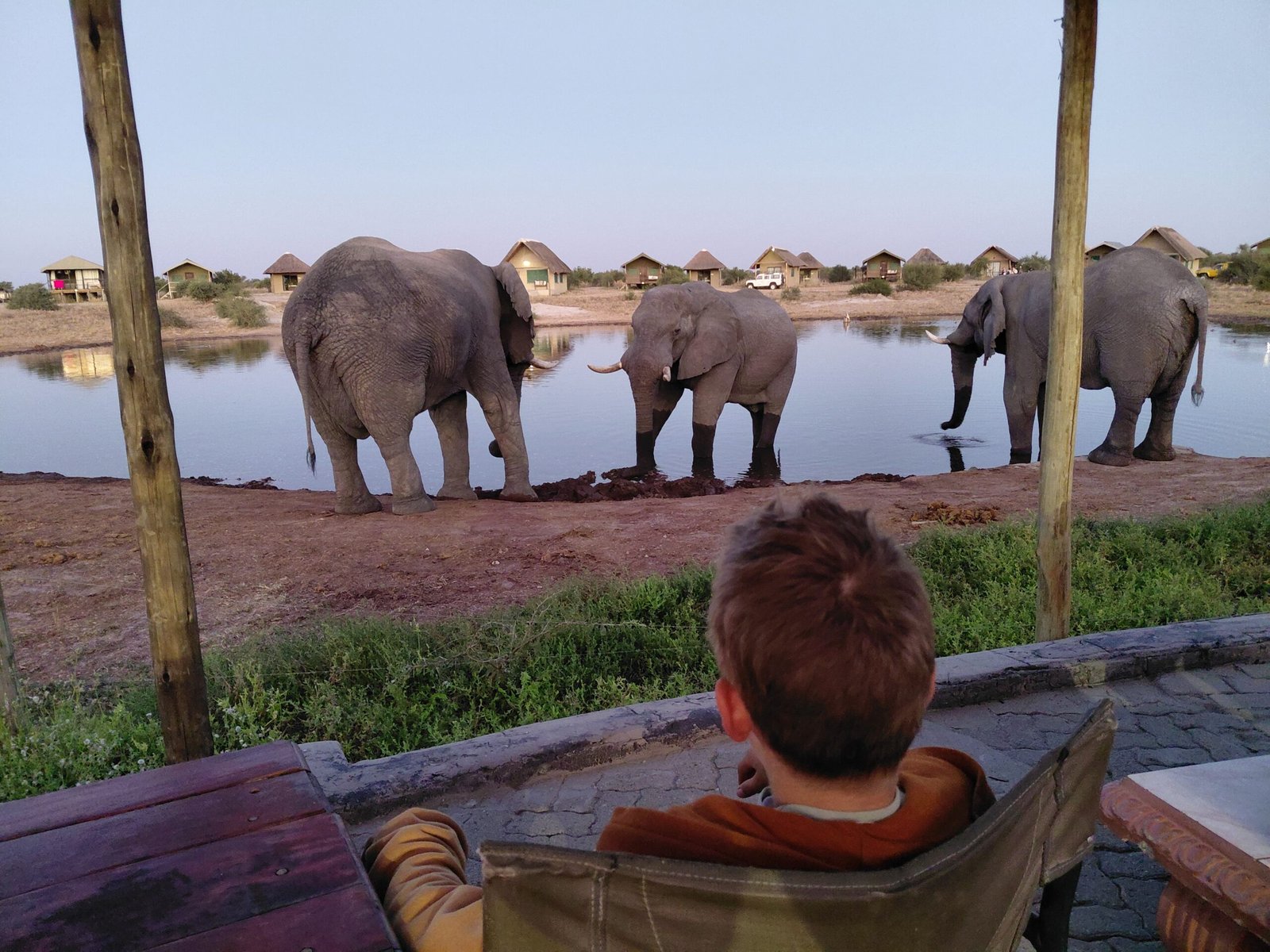
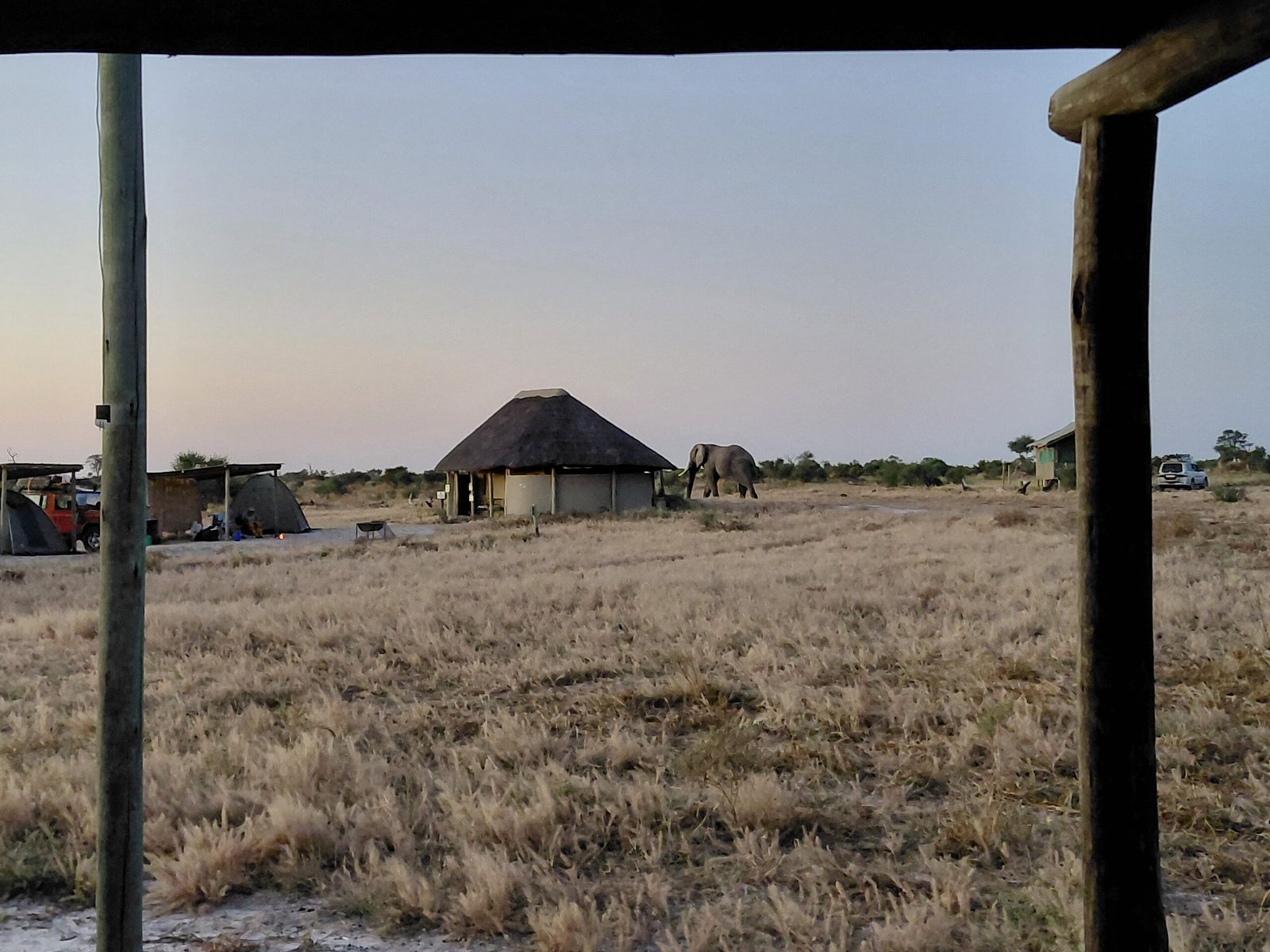
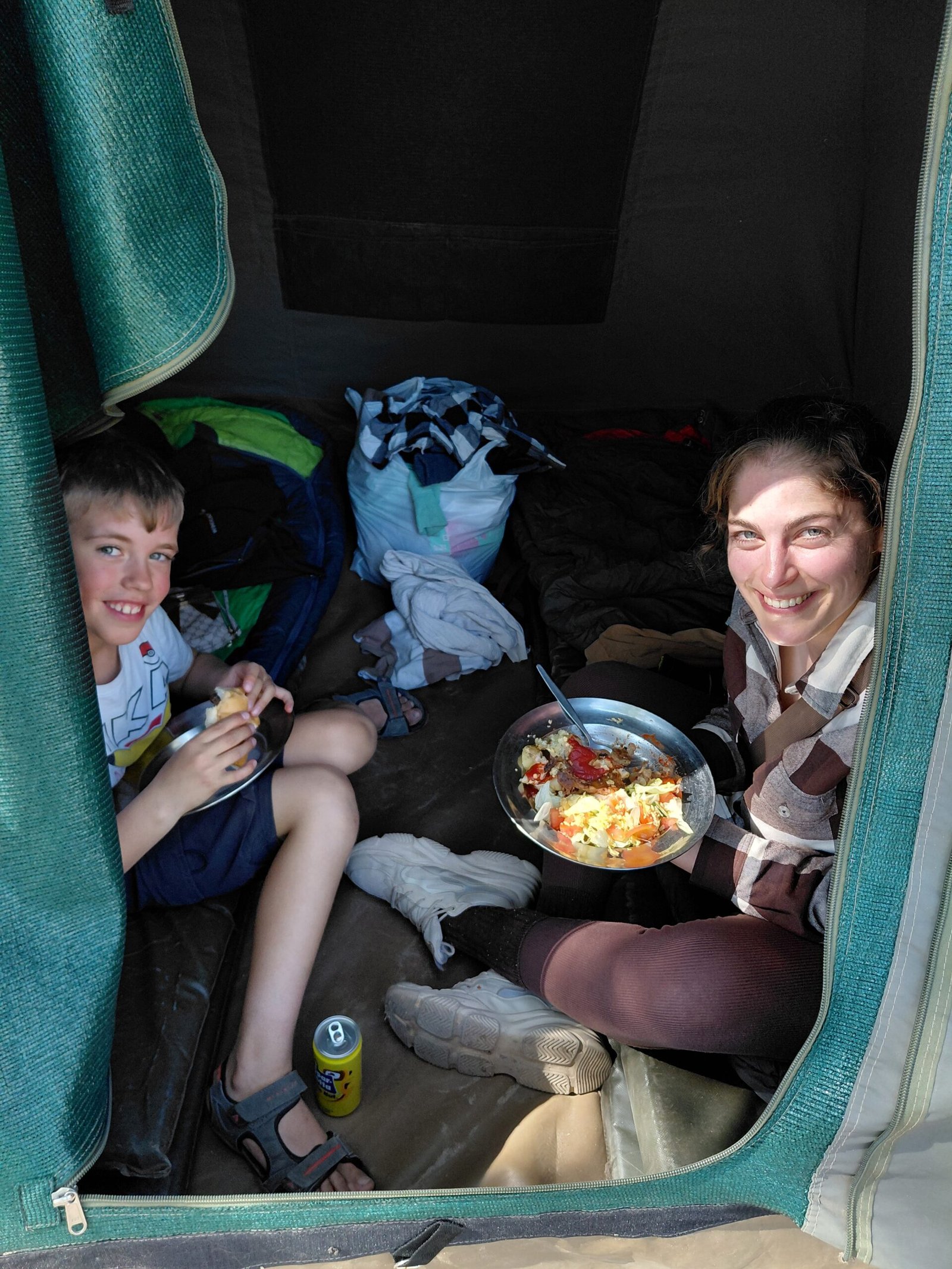
After a total of ten hours of traveling, we finally arrived at our destination. There are many elephants in the Elephant Sands area, so after dark, guests staying in the rooms were driven to their doorsteps by car. Those of us staying in tents were close enough to the restaurant area that we could walk there ourselves. However, Risto always needed an adult to accompany him, as he was under 12 years old. As you can imagine, Ronja was not very happy to hear that there were elephants roaming around at night. For this reason, we set up our tents as close as possible to the toilet and shower facilities so that we wouldn’t have to walk too far to use the bathroom at night.
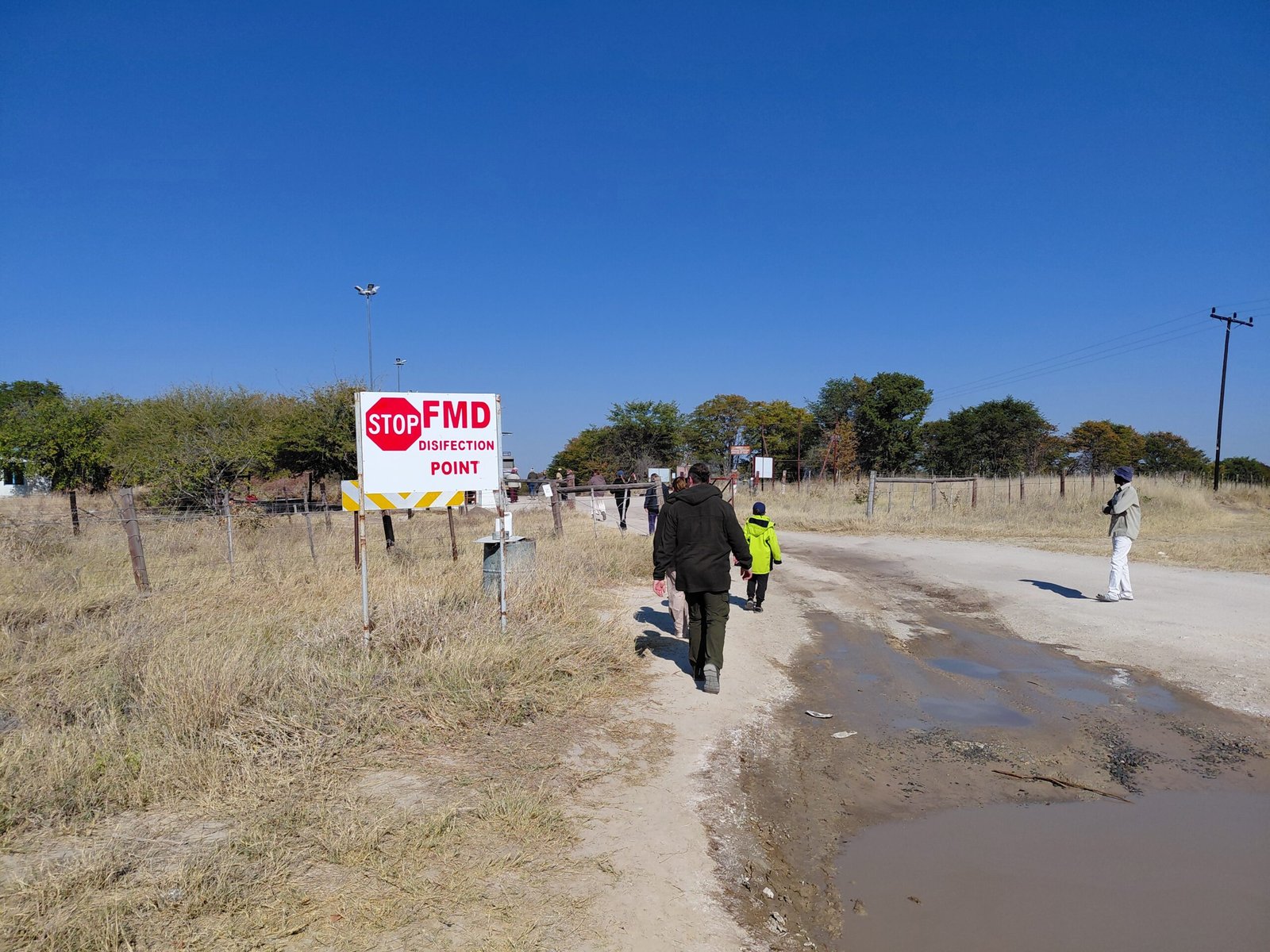
When leaving the swamp area, we had to disinfect our shoes and the tires of the car so that we wouldn't bring any diseases to the Maun area.
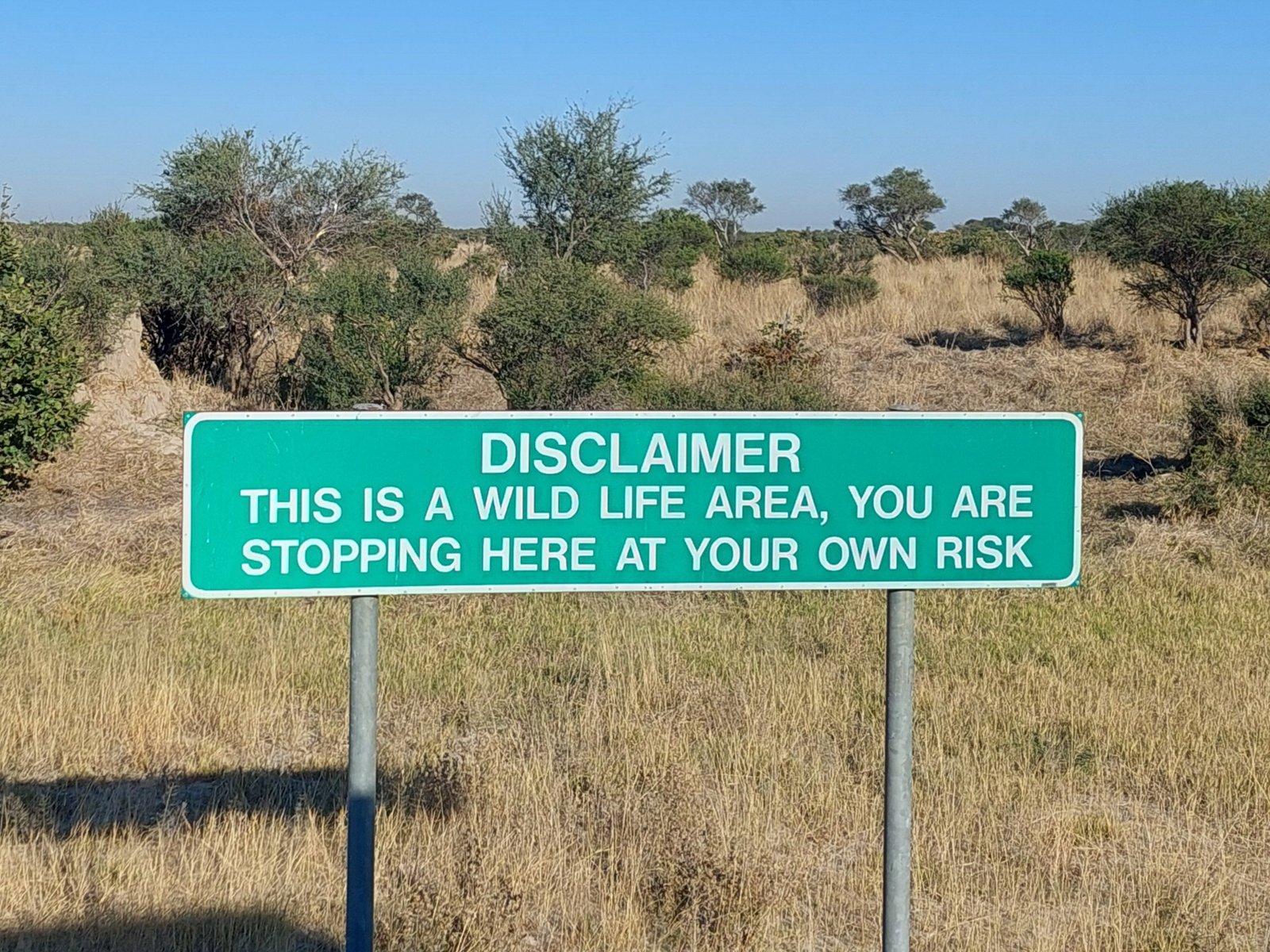
This warning sign welcomed us to Elephant Sands.
Due to recent autumn rainfall in the area, there weren't many elephants around.
We had dinner at the restaurant’s buffet, which once again offered a wide variety of delicacies. At the same time, we were able to watch the elephants bustling about at the drinking area in front of the restaurant. Risto wasn’t particularly interested in the elephants, but instead played with a German shepherd named Bella and the campfires. He also gave a little pet mongoose a good scratch. This mongoose was Bella’s good friend, which is why it hung around wherever Bella was.
Ronja got to scratch a mongoose.
Not many people have had the chance to get kissed by a mongoose.
Spikes had been placed in front of the toilets to prevent elephants from messing with the water pipes.
In the morning, we got to sleep in a little longer than usual because breakfast wasn’t served until 7:30. We were all really happy about this because we were all really tired after the long day of traveling the day before. We slept well, even though the elephants tried to wake us up with their trumpeting at around five in the morning. During the night, a group of three lions, one male and two females, had also wandered through the campsite. Stanley and Taku had seen these creatures quietly tiptoeing past the front of our truck. In the morning, we heard the lions roaring in addition to the trumpeting of the elephants, but we didn’t see them again. Maybe it was just as well. Our morning coffee might have gone down the wrong way if the lions had joined us for breakfast. A toucan and a couple of other birds tried hard to get at the chopped fruit on offer, but we didn’t pay much attention to them.
Toucan looking for a bite to eat.
After breakfast, we got back in the car and started the 250 km drive to our destination. Fortunately, the road was in good condition this time, so the journey went quickly as Taku cruised along at over 100 km/h. We arrived at Thebe River Lodge around noon, having made one toilet stop and one shopping stop along the way. Stanley immediately started making hamburgers for lunch, while the rest of us pitched our tents and settled in. This would be our second-to-last night together, as four of us would be leaving at the Victoria Falls on the Zimbabwe side, and Taku and Stanley would be returning to Cape Town. The rest of us will hop on a new truck with new guides on the Zambian side, and apparently we will be joined by eight new travel companions.
For our second-to-last evening together, we had planned a river cruise at sunset. With this in mind, we had stopped at a shop, as we had been told that there would be no refreshments or snacks available on the boat. So we filled a cooler bag with drinks and a bag with snacks and jumped on board.
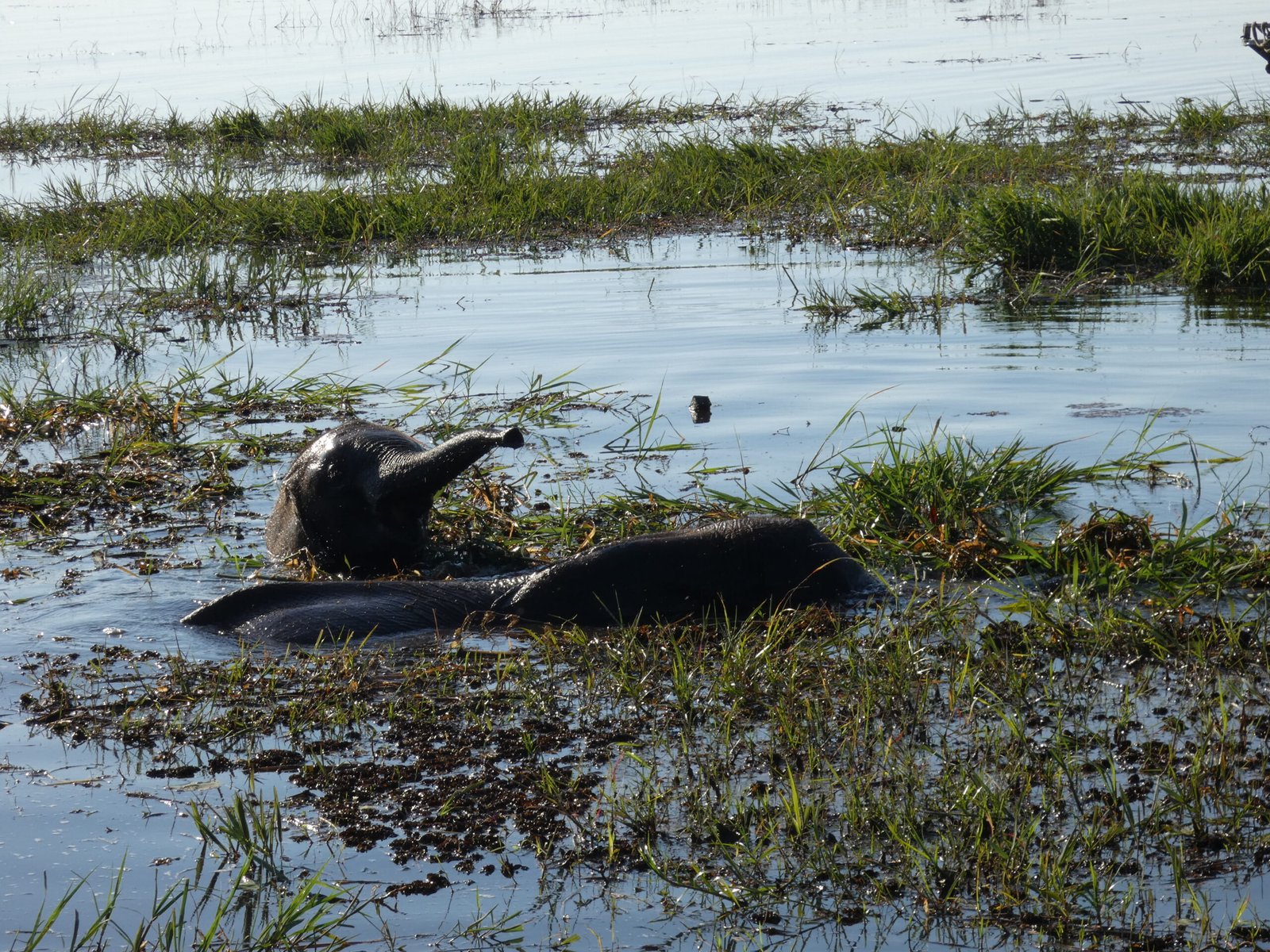
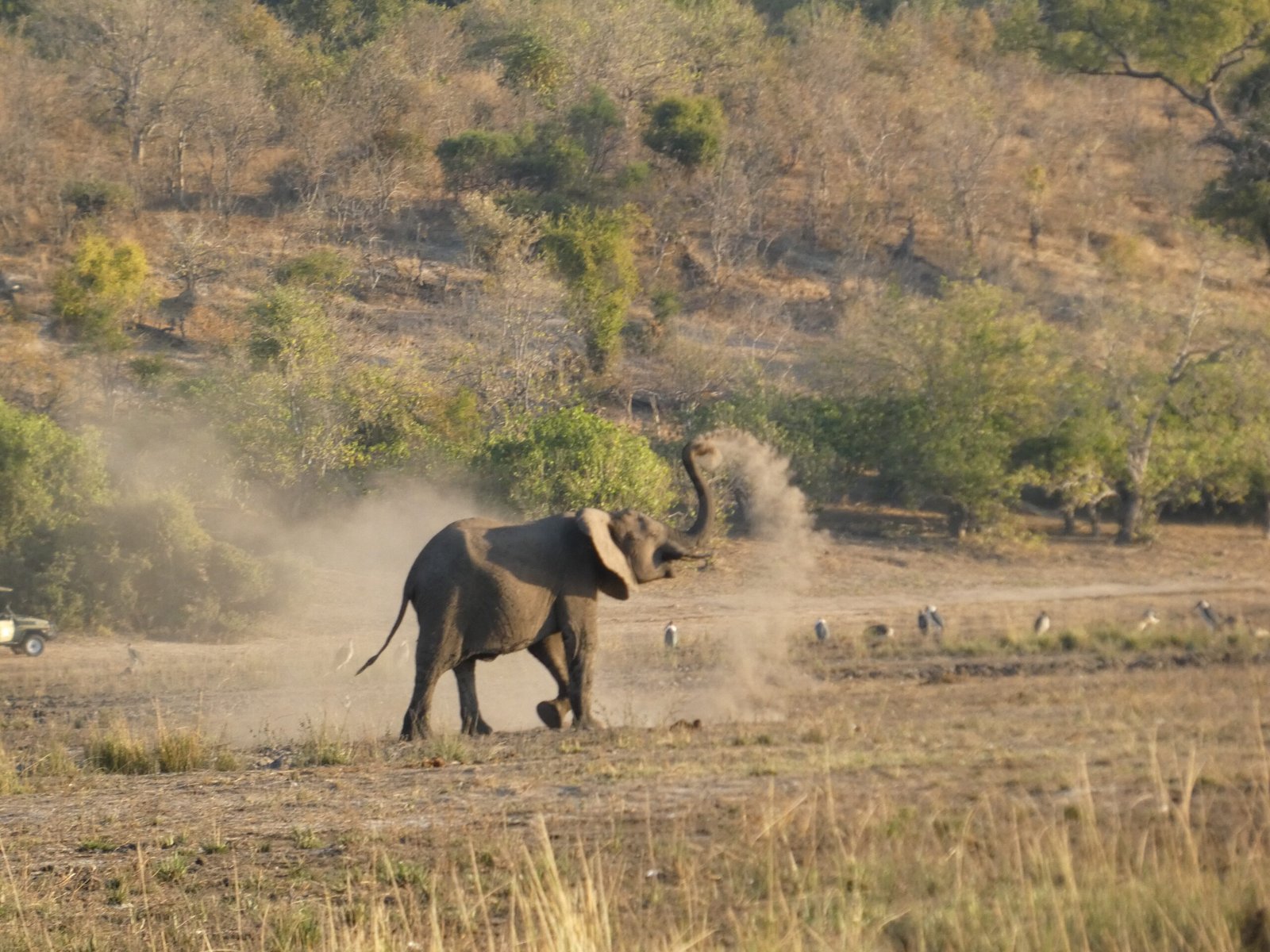
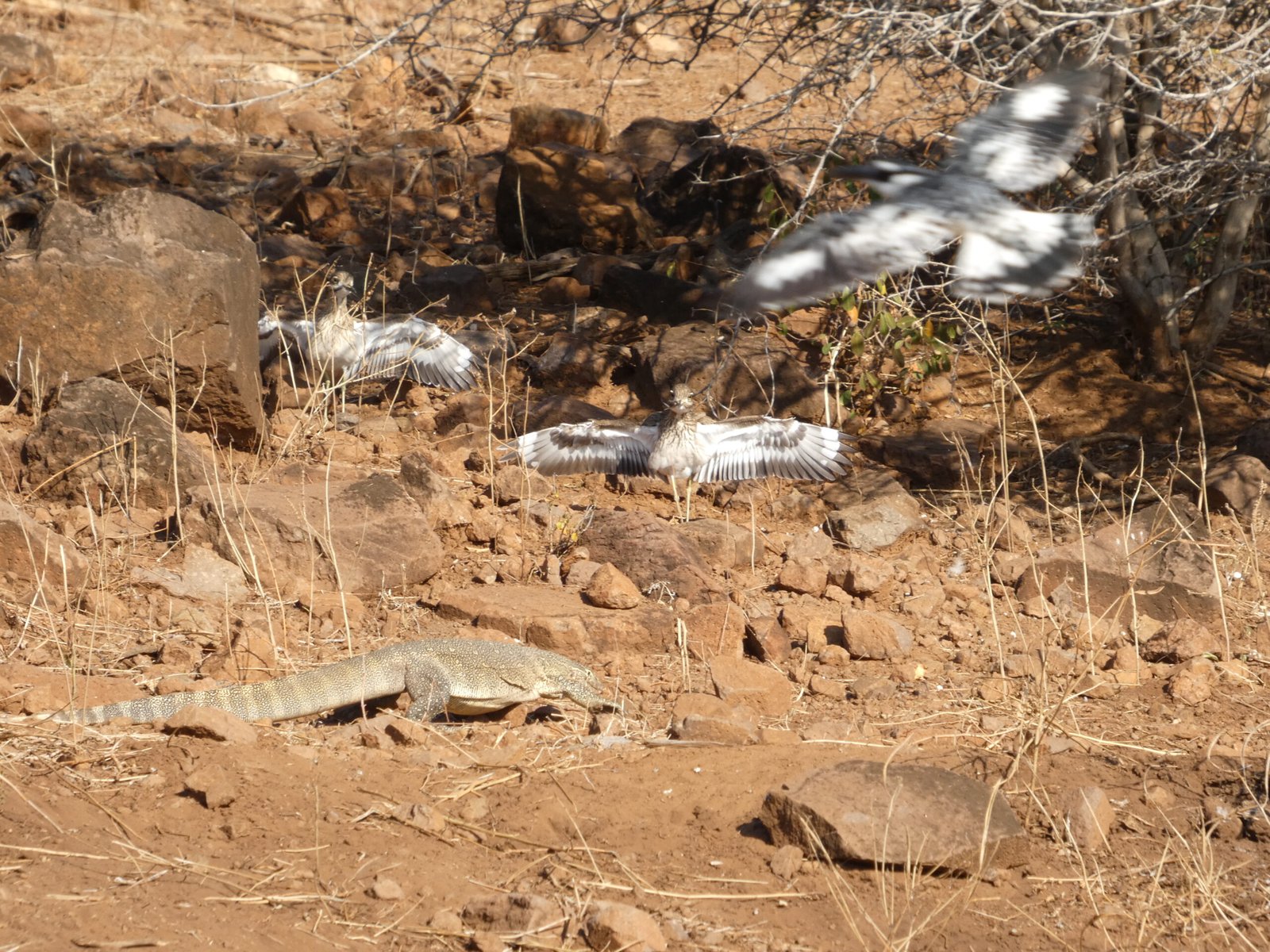
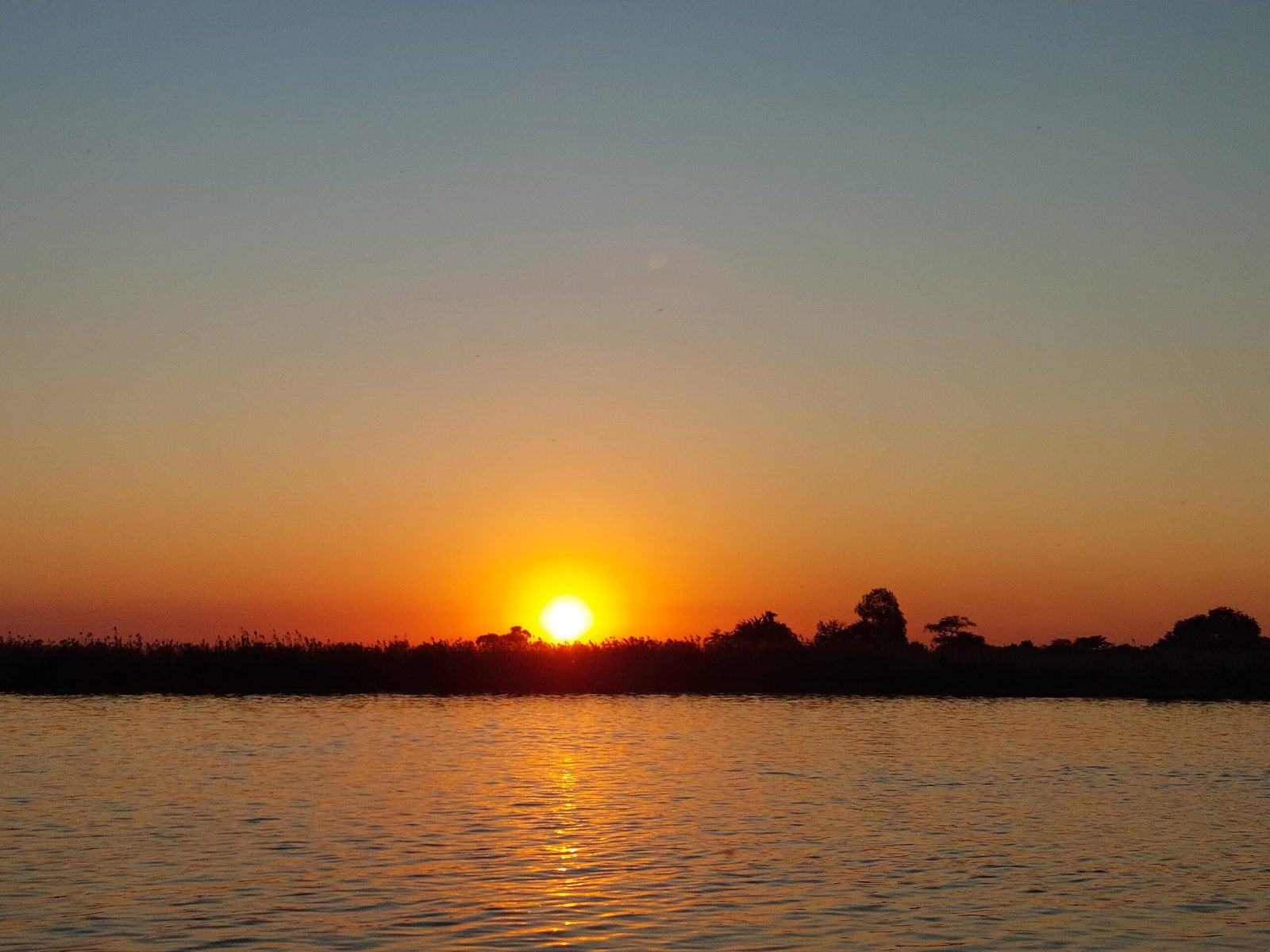
We had all imagined that we were just going on a scenic cruise. However, it soon became clear that this was quite a wildlife tour at the end of our trip to West Africa. We saw herds of elephants both swimming and grazing. We also saw hippos, crocodiles, and a big lizard trying to steal eggs from birds’ nests for food. However, the birds defended their nests so fiercely that the lizard had to retreat this time. The cruise was crowned by a magnificent sunset, after which we returned to the campsite to eat our last dinner prepared by Stanley in our truck. The next day, the journey would continue towards Zimbabwe and Victoria Falls.
Approaching Zimbabwe
Taku and Stanley taking a break
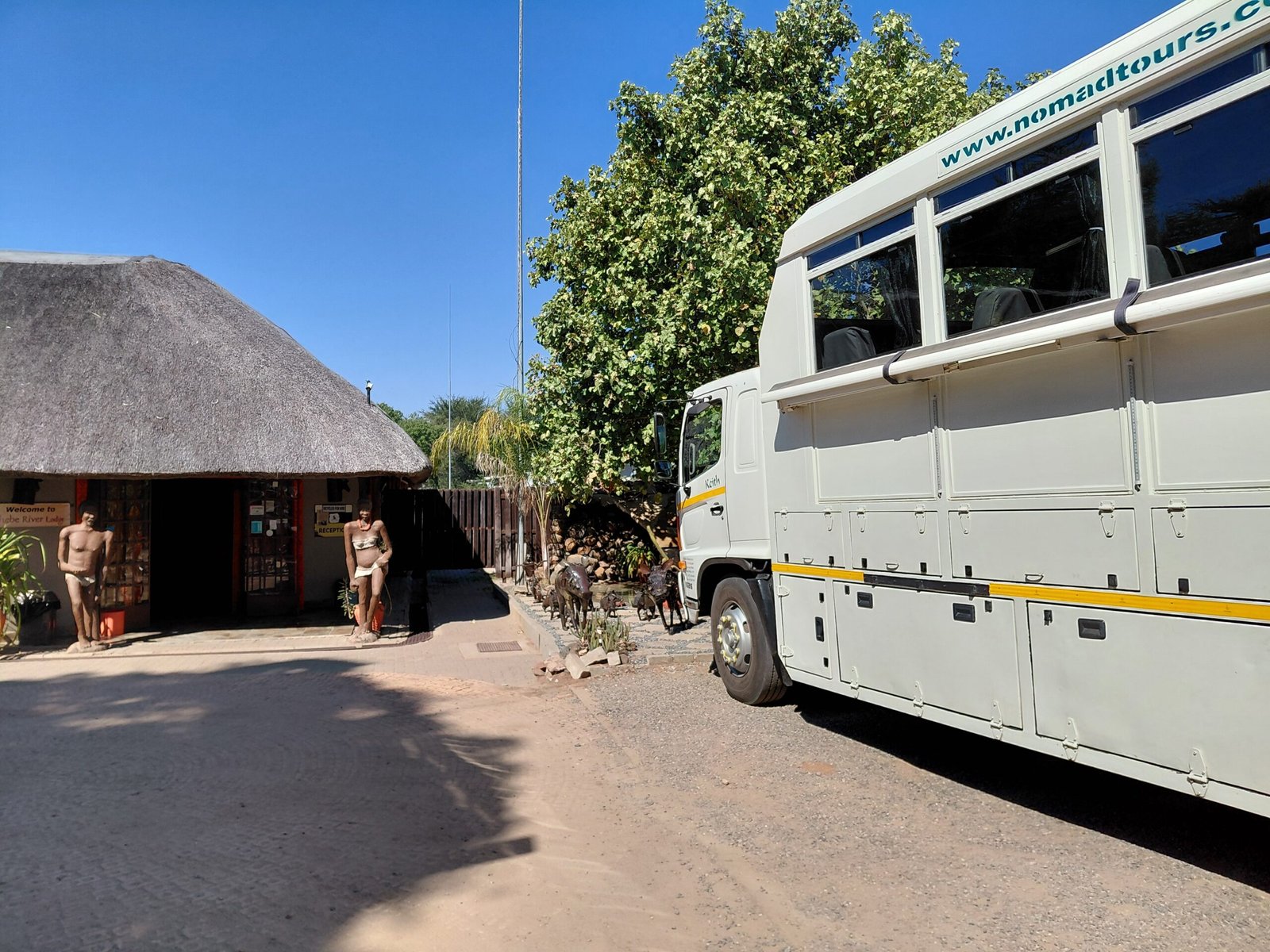
Thebe Riverside Lodge was a hub for overlanding trucks.