18.7. – 20.7.2025

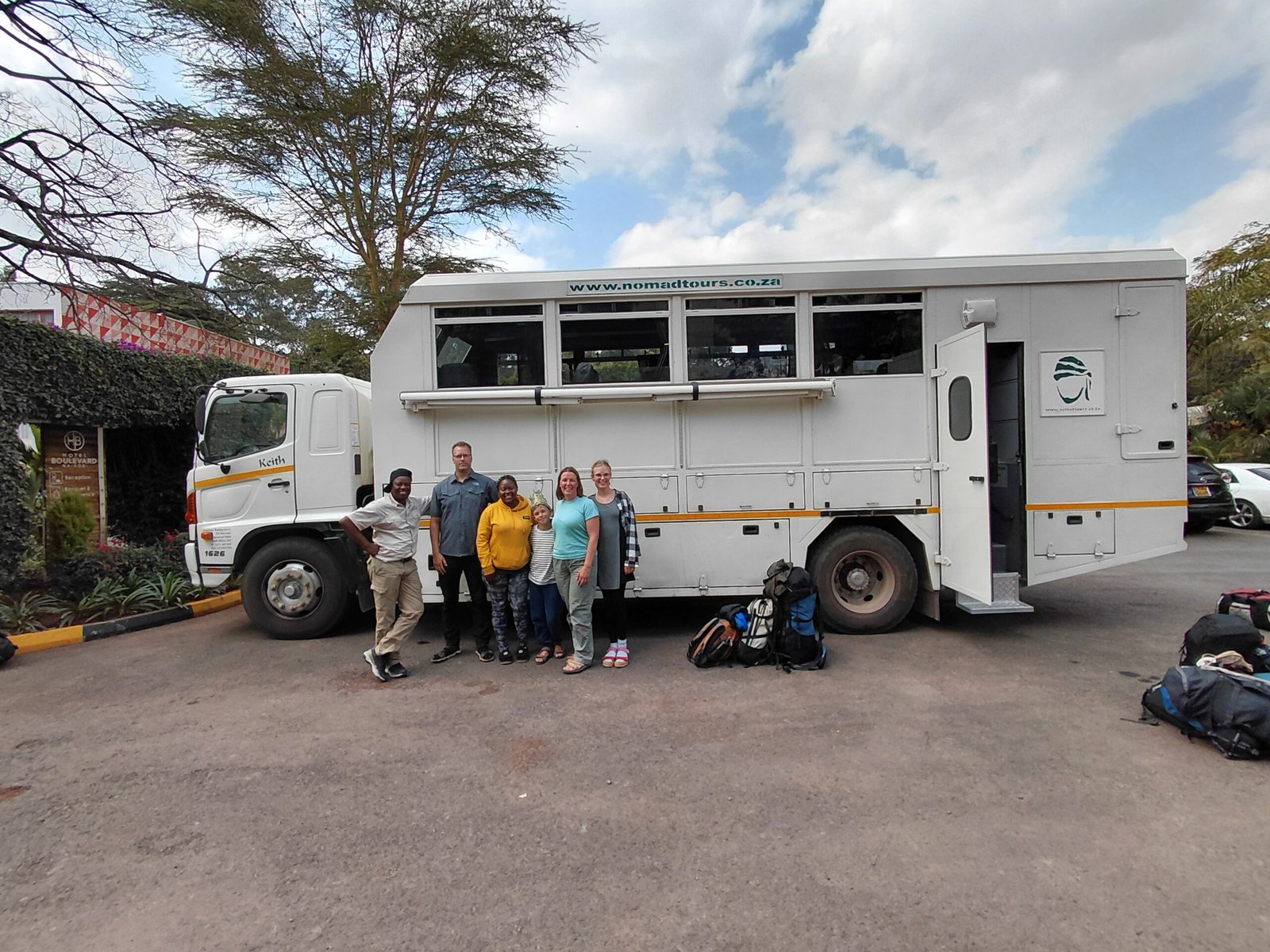
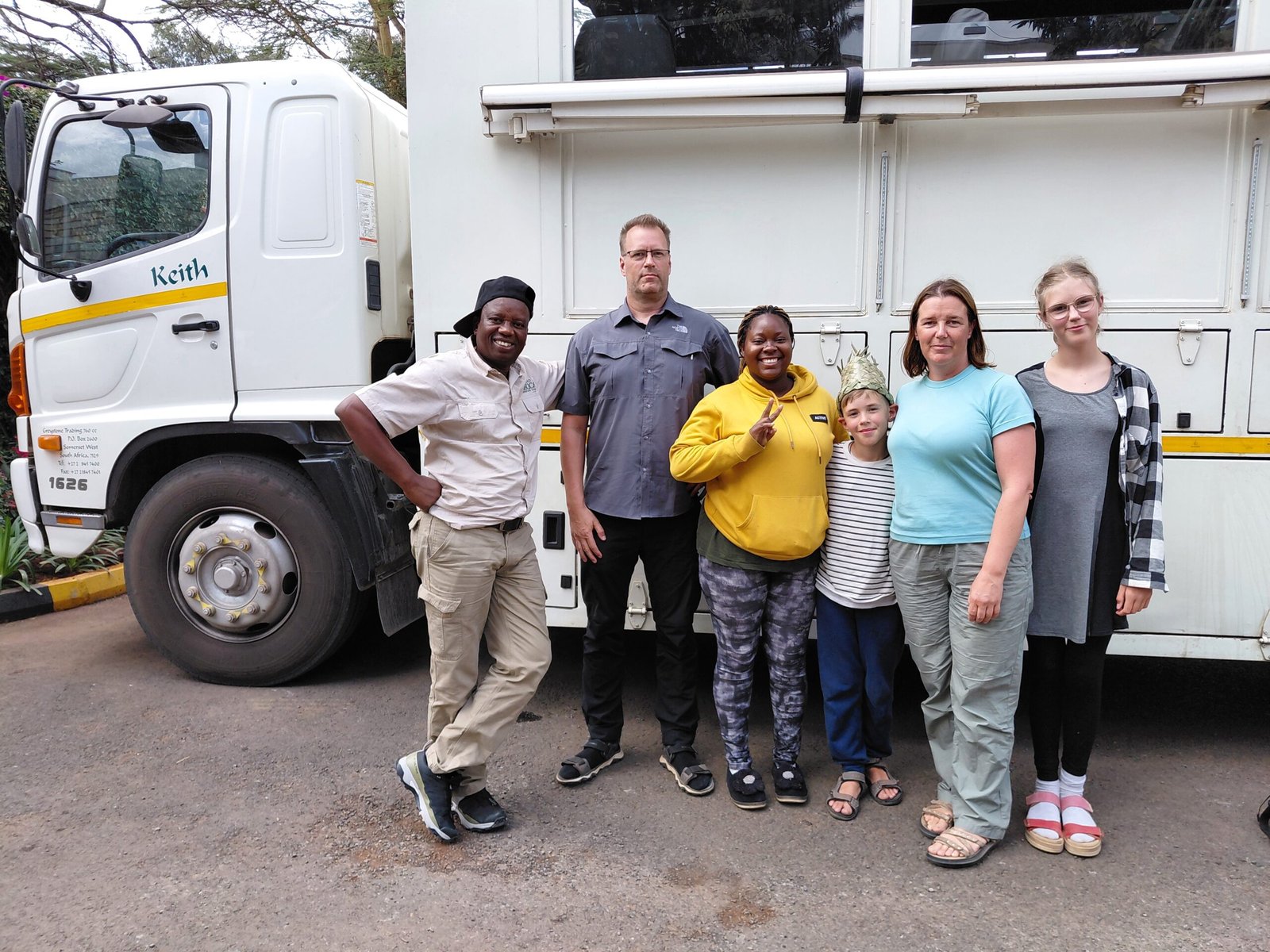
We arrived in Nairobi, in the courtyard of the Boulevard Hotel sometime around 3pm. We gathered our luggage and said goodbye to our nice travelling companions. Many of them will be missed, as we travelled together for 1.5 months and had already made friends. Fortunately, many of them are avid travellers, so we will certainly meet some of them again sometime in the future.

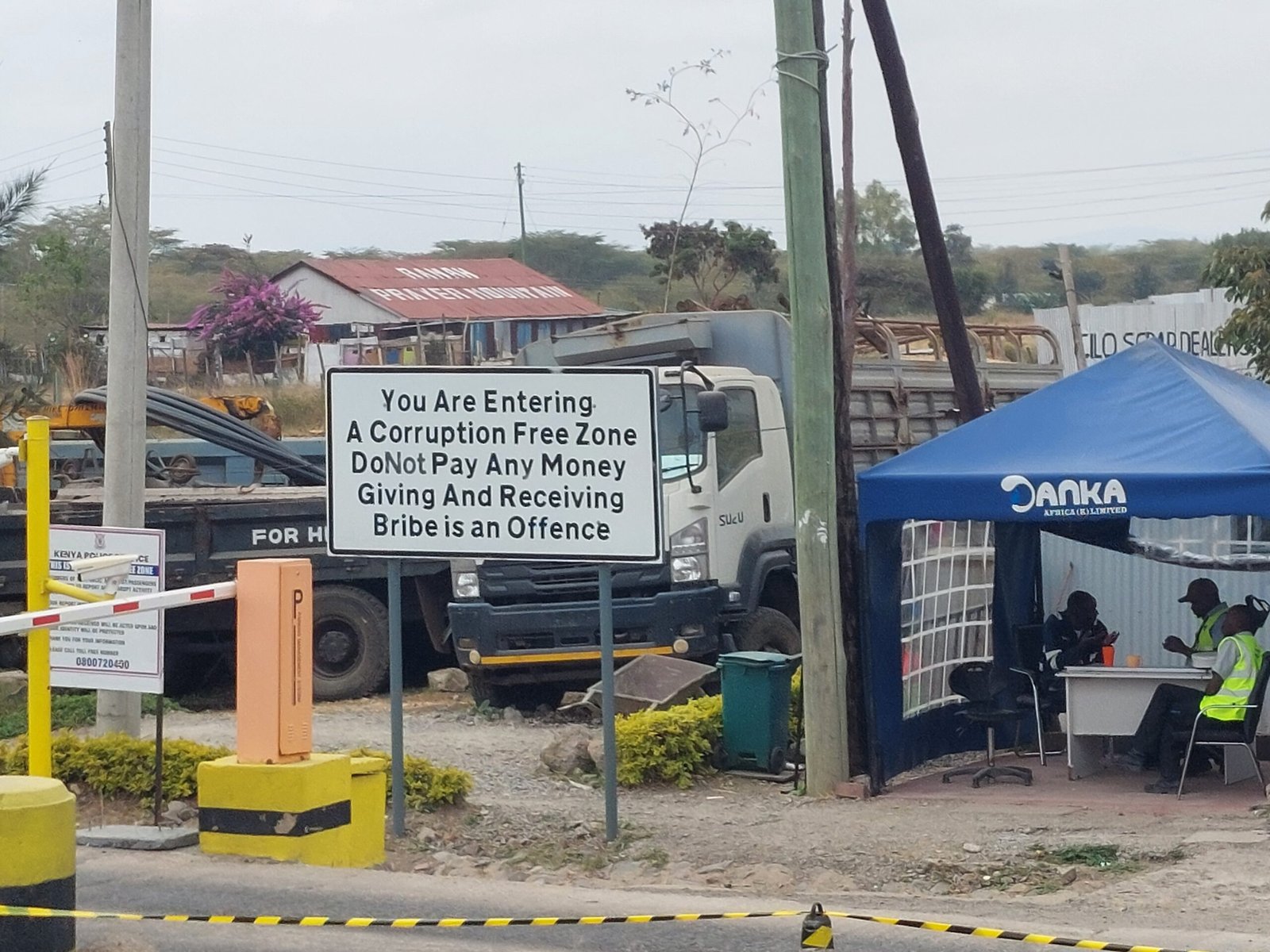
One last toilet stop before arriving. No more bushy bushy for Ronja on the Kenyan side.
On the right side of the road, law and order were maintained. I wonder what the situation was on the left side, where there was no such sign?
Six weeks on the truck ended in the parking lot of the Boulevard Hotel.

We did not stay at the Boulevard Hotel, like the people continuing their journey to Uganda, as we had booked an apartment at a place called Broadwalk Residency. We hopped on an Über and drove the less than a kilometre to our accommodation. In principle, we could have walked there, but as traffic in Nairobi is quite hectic and there are no pedestrian crossings or traffic lights, it was safer to take the car.

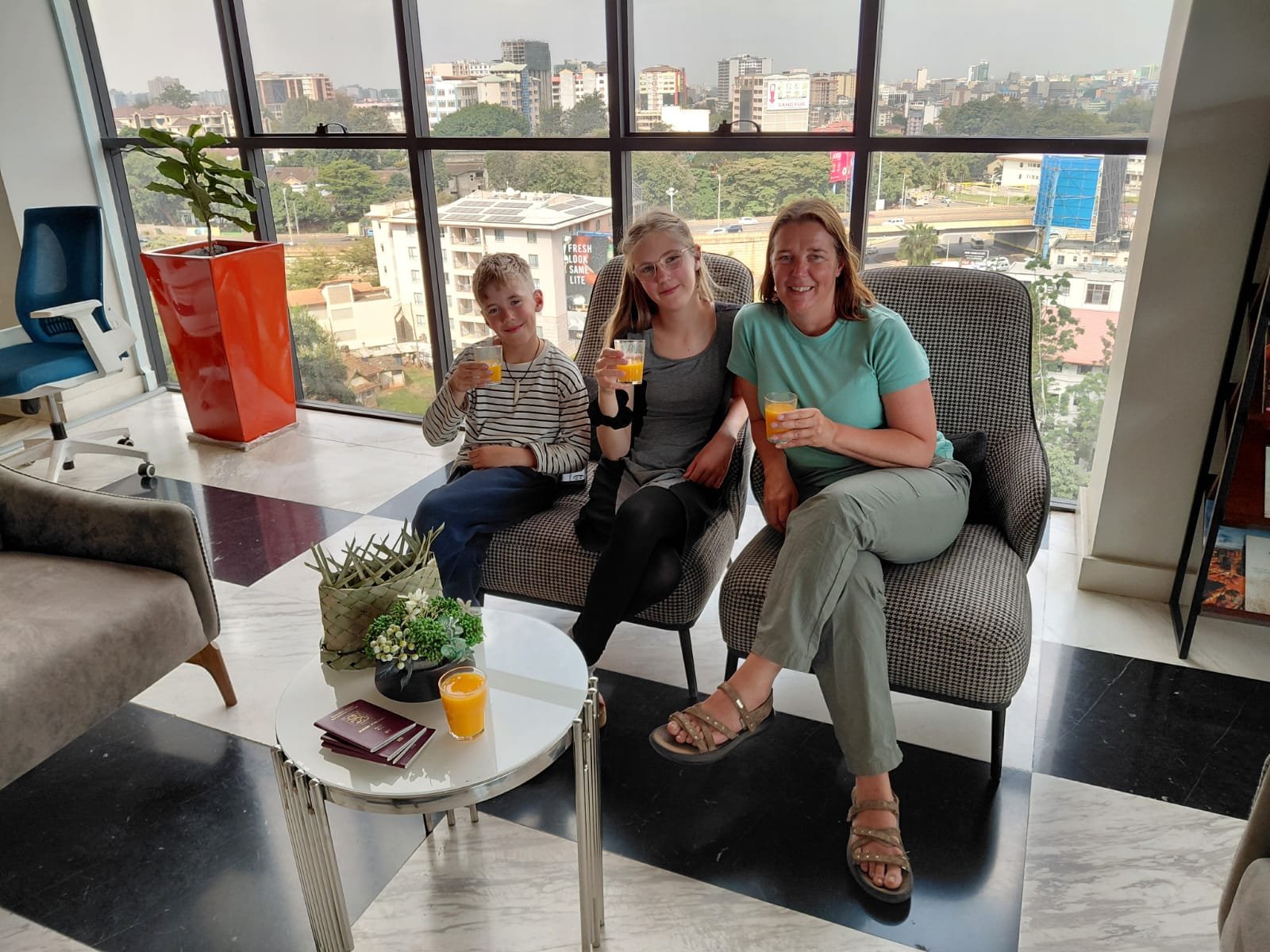
Waiting for the room to be ready.

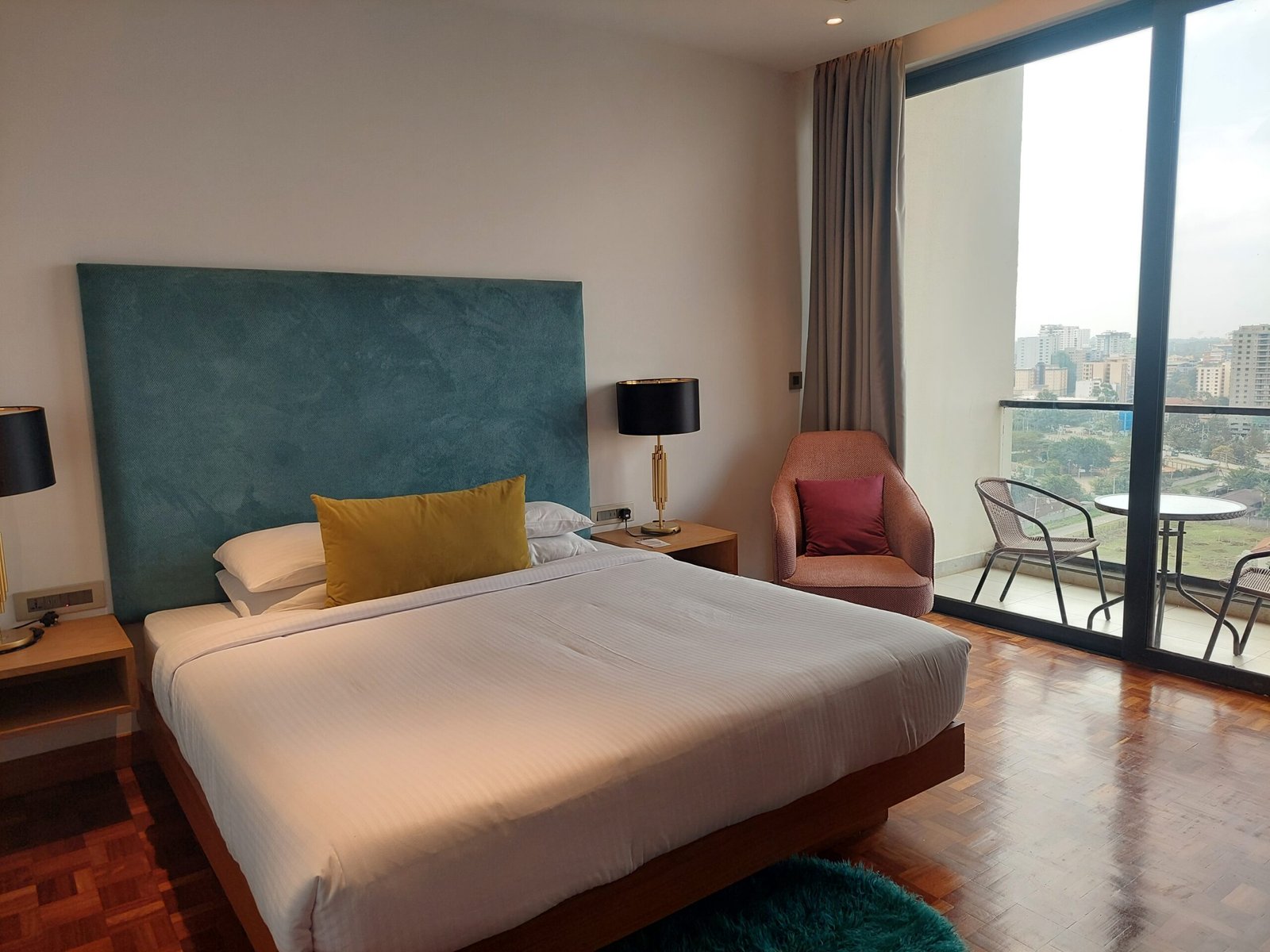
Checking in was not a lightning-fast process, as after the welcome drinks we had to wait another 45 minutes for our room. This was quite unusual, as the place advertises check-in time as 12 noon. When we finally got to our room, it was well worth the wait. Pretty soon we went to see what the food offerings would be like in the shopping centre downstairs from the hotel. We found a food court where Marko, Jaana and Risto ordered Lebanese food. Ronja, on the other hand, chose Mexican vegetable tacos. Finally, we visited the big supermarket in the mall to buy some breakfast supplies.

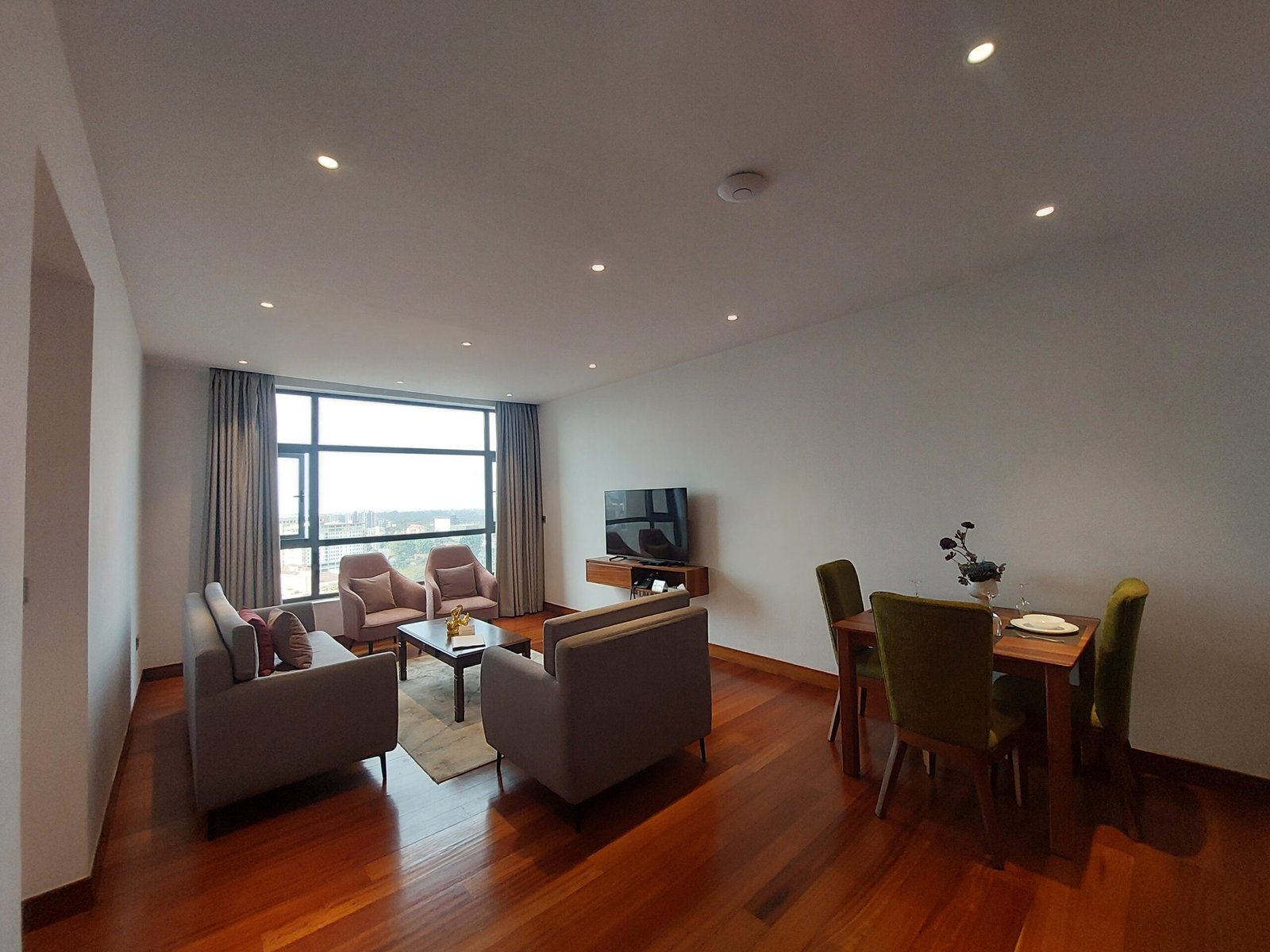
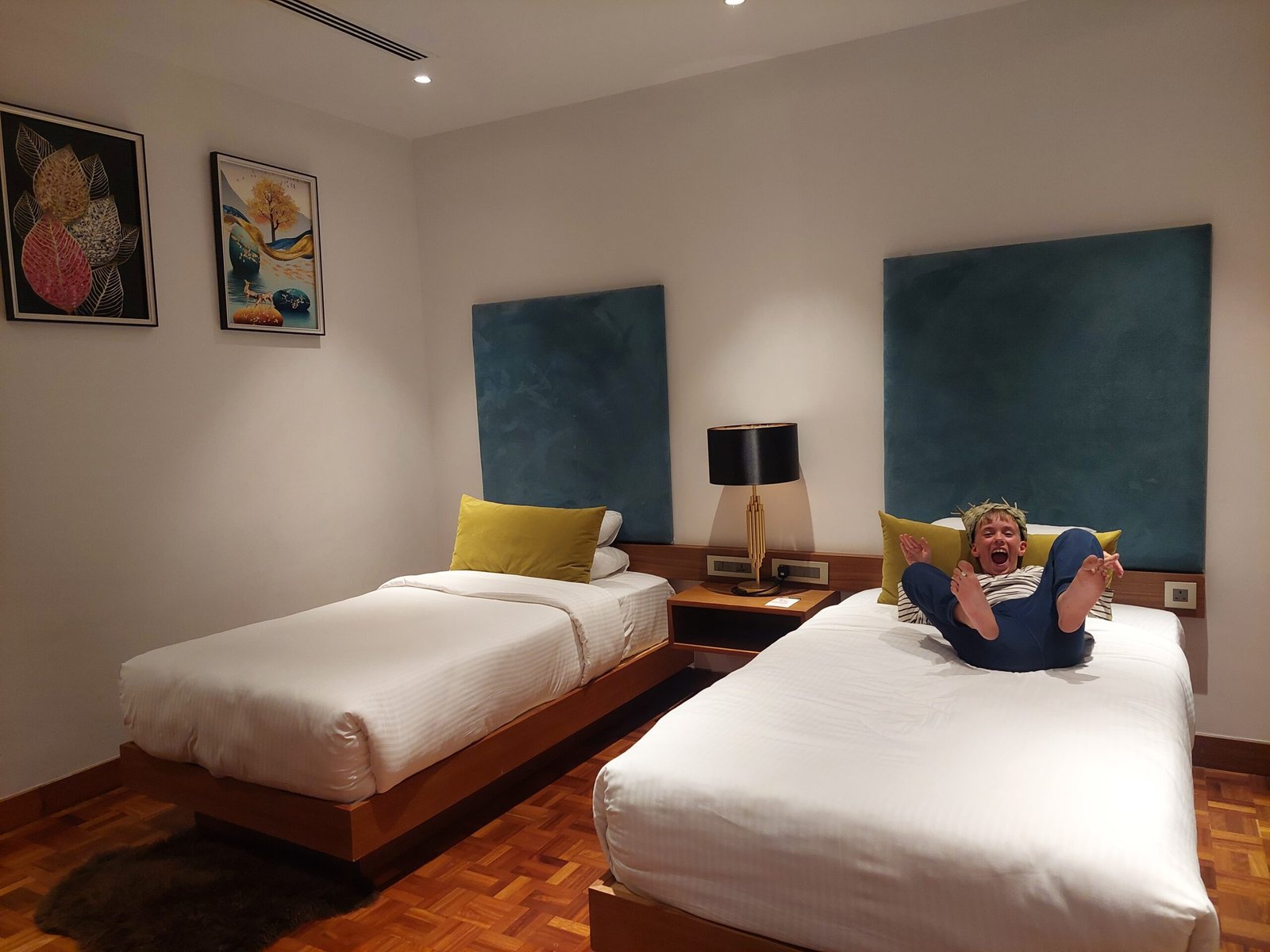
The Nairobi apartment was a little more spacious than the Nomad tents.
In the kitchen, we only used the fridge and the dishes. Cooking could wait until we were back home.
The apartment also had a large balcony, where Jaana went to pose in the stylish pants she had bought at the mall.

We hadn’t deliberately planned any programme for Saturday. We slept a little longer than we were used to on this trip and then just spent time in our apartment, blogging and enjoying the unscheduled nature of the day. The kids went to a Superpark type of a place in the mall downstairs for a couple of hours, and then later on to the pool at our hotel. Apparently there would have been a sauna and steam room, but we skipped them this time, as we’ll be home in a few days anyway. In the evening we went out for dinner again at the same place as the day before. The food was again excellent and there was more than enough of it.

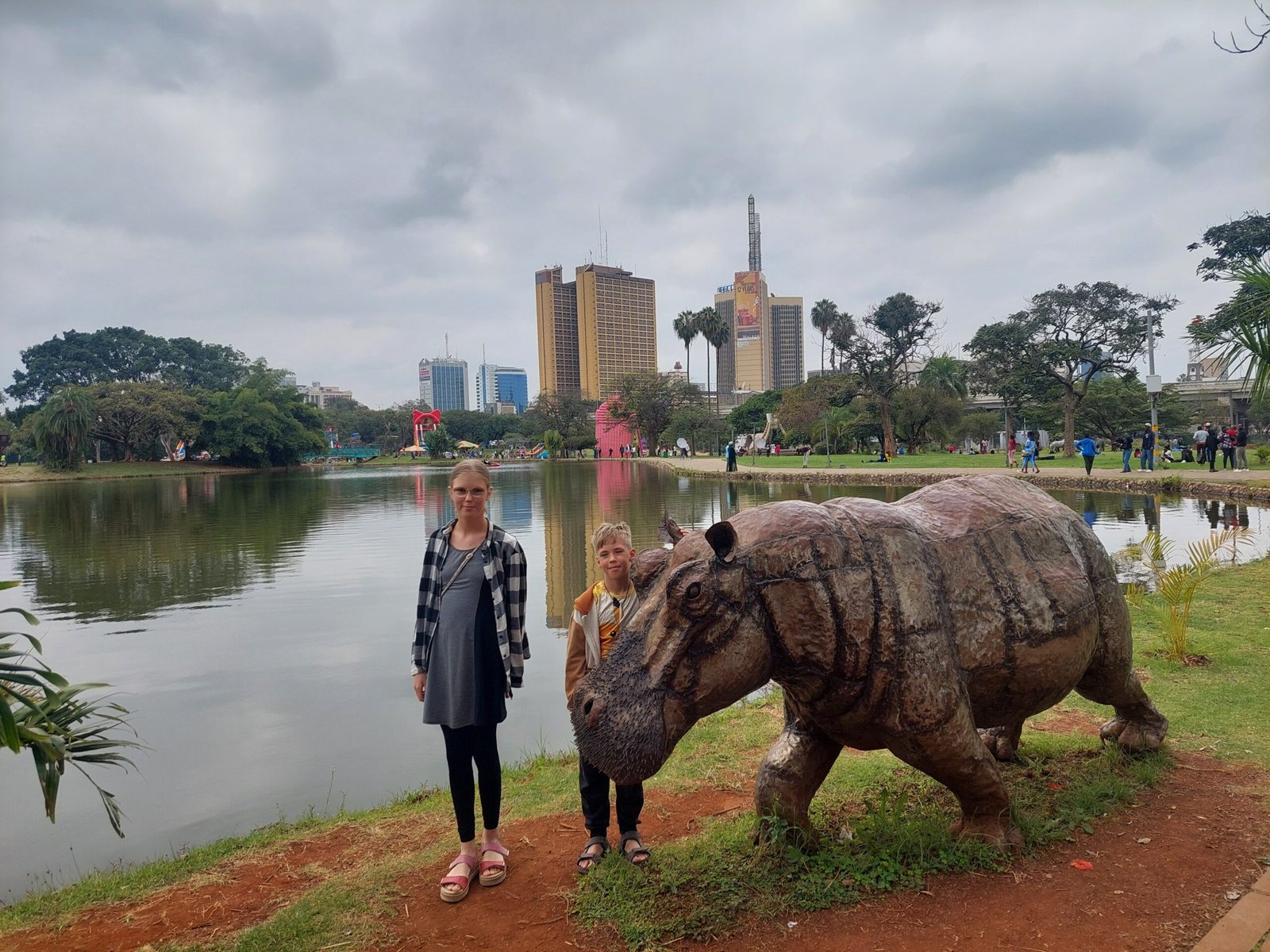
On Sunday we managed to negotiate a slightly later check-out for ourselves, after which we took an Über to the center of Nairobi. We had booked a guided walking tour of downtown Nairobi for the afternoon. As we had some spare time, we wanted to visit Uhuru Park on our own. But visiting public parks in Kenya isn’t as simple as one might expect as we were asked for our passports at the gates of the park. Marko happened to have his own passport with him, but Jaana and the children had their passports at the hotel. After a moment of bewilderment, the gate guard relented and allowed us to enter without our passports.

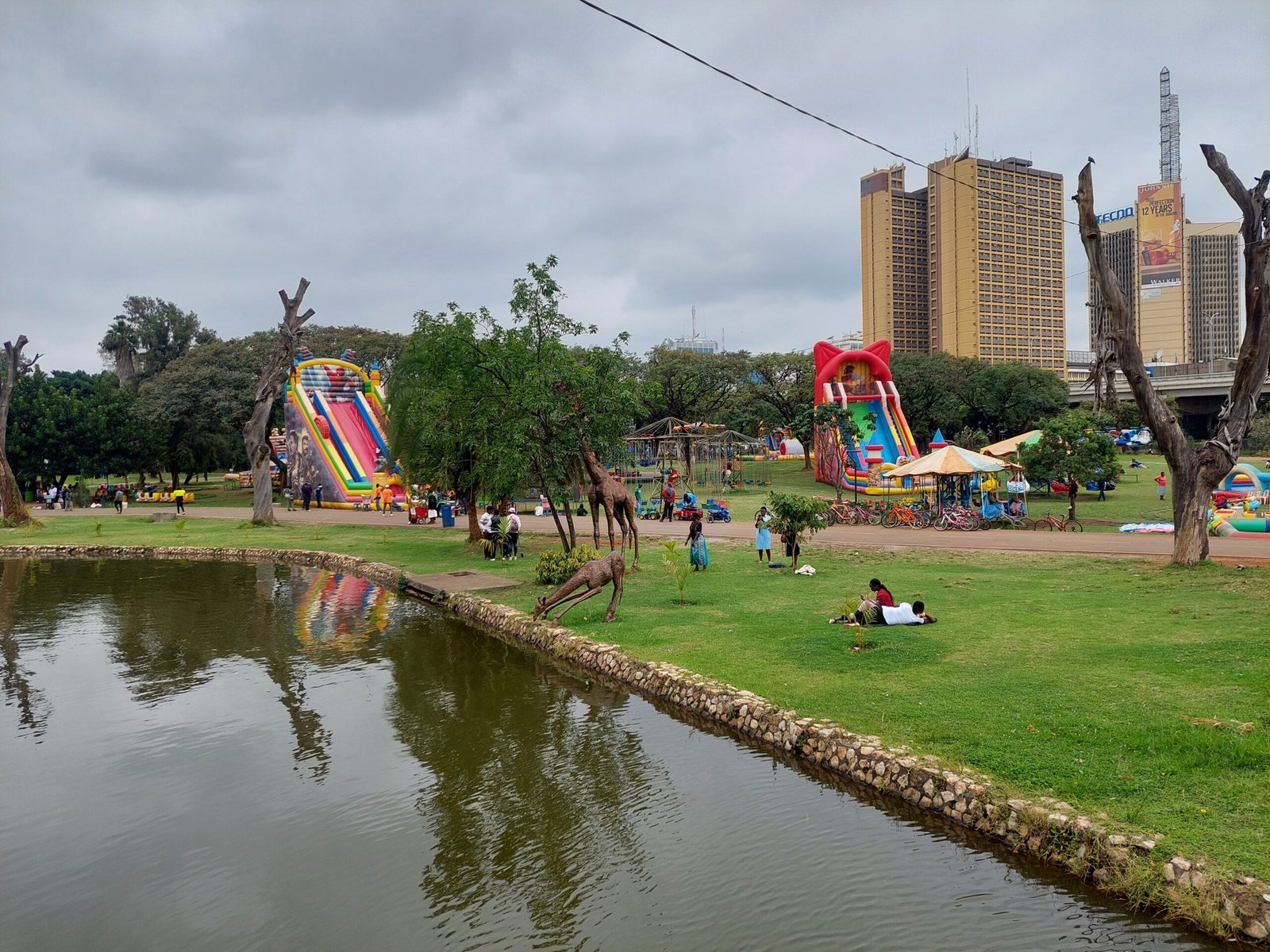
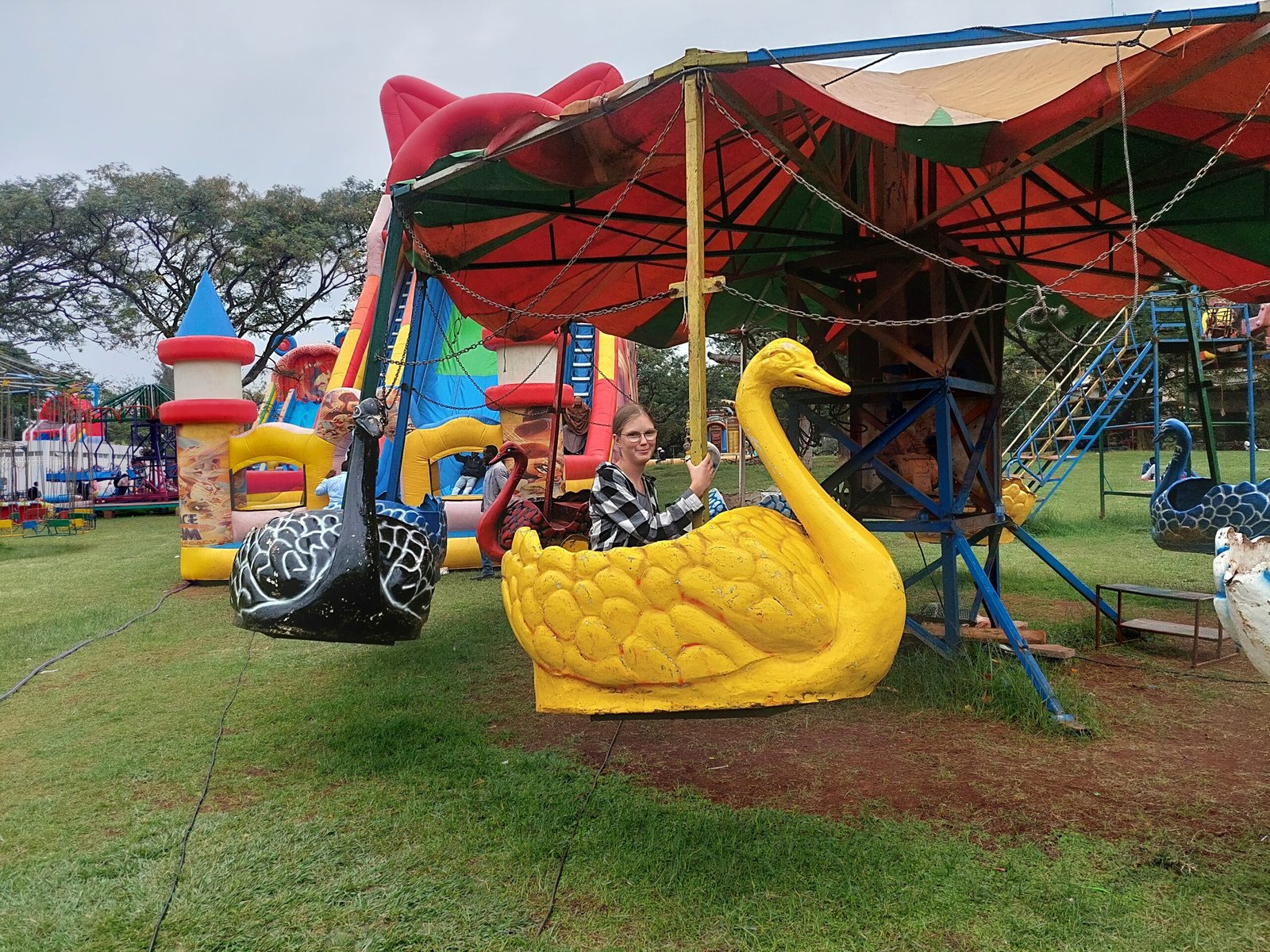
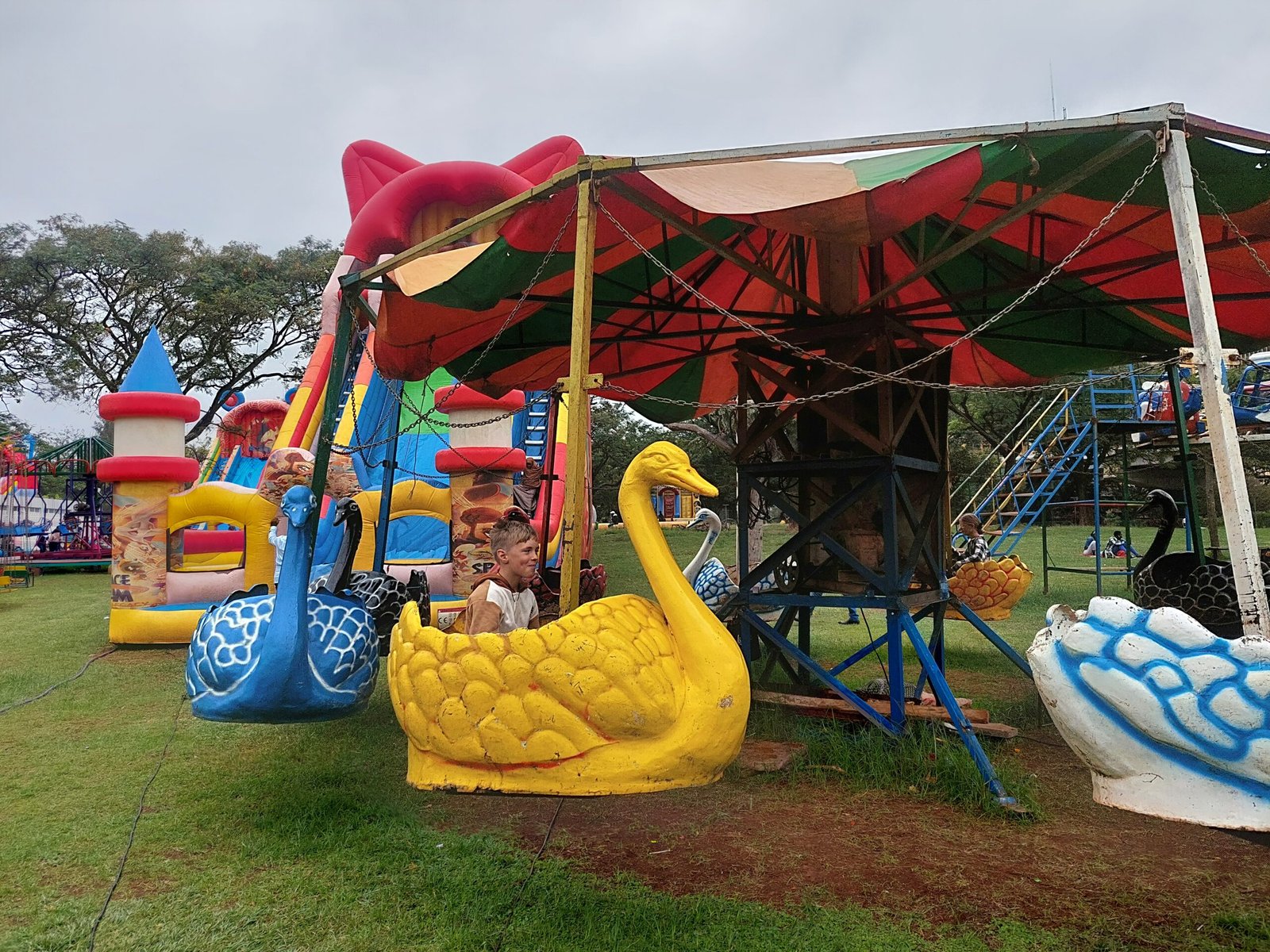
The park was quite a special place. There were lots of different amusement park rides and bouncy castles. You could also have taken a pedal boat ride in the park’s small pond, or cruised along the park’s walkways on a quad bike. For younger children, there were also remote-controlled go-karts. Bicycles or roller skates could also be hired. We were told that one ride cost 200 shillings. We found this price of just over a euro very reasonable, so the children decided to ride the swan carousel together. Later, Risto went to test the inflatable slide. However, the tour guide later told us that we had been charged a tourist price for the rides. The locals pay 50 shillings per ride. As Nairobi has a large number of people with low income, this park is very popular with the locals at weekends because of its low prices.

In Uhuru Park, there were many animal statues where people took photos of themselves.
No ride in Linnanmäki spins as long as this carousel!
The children were placed on opposite sides of the carousel to keep the carousel balanced.

After our visit to the park, we went to CJ’s restaurant for a snack. The reason we chose this restaurant was that our tour started in front of it. The place was clearly a little more upmarket, and the food was delicious. The only slight drawback was the bees flying around after the food. They were a little too interested in what we had on our plates.

During the guided tour of the city, we walked along the streets of the upper town. Our guide was really nice and knew a lot about life in Nairobi. We now know that Nairobi’s buses are called matatus and that there are three different types of them. The first ones are boringly plain, the second ones are decorated with fancy graffiti and the third ones have pop music and flashing disco lights on top of the graffiti.

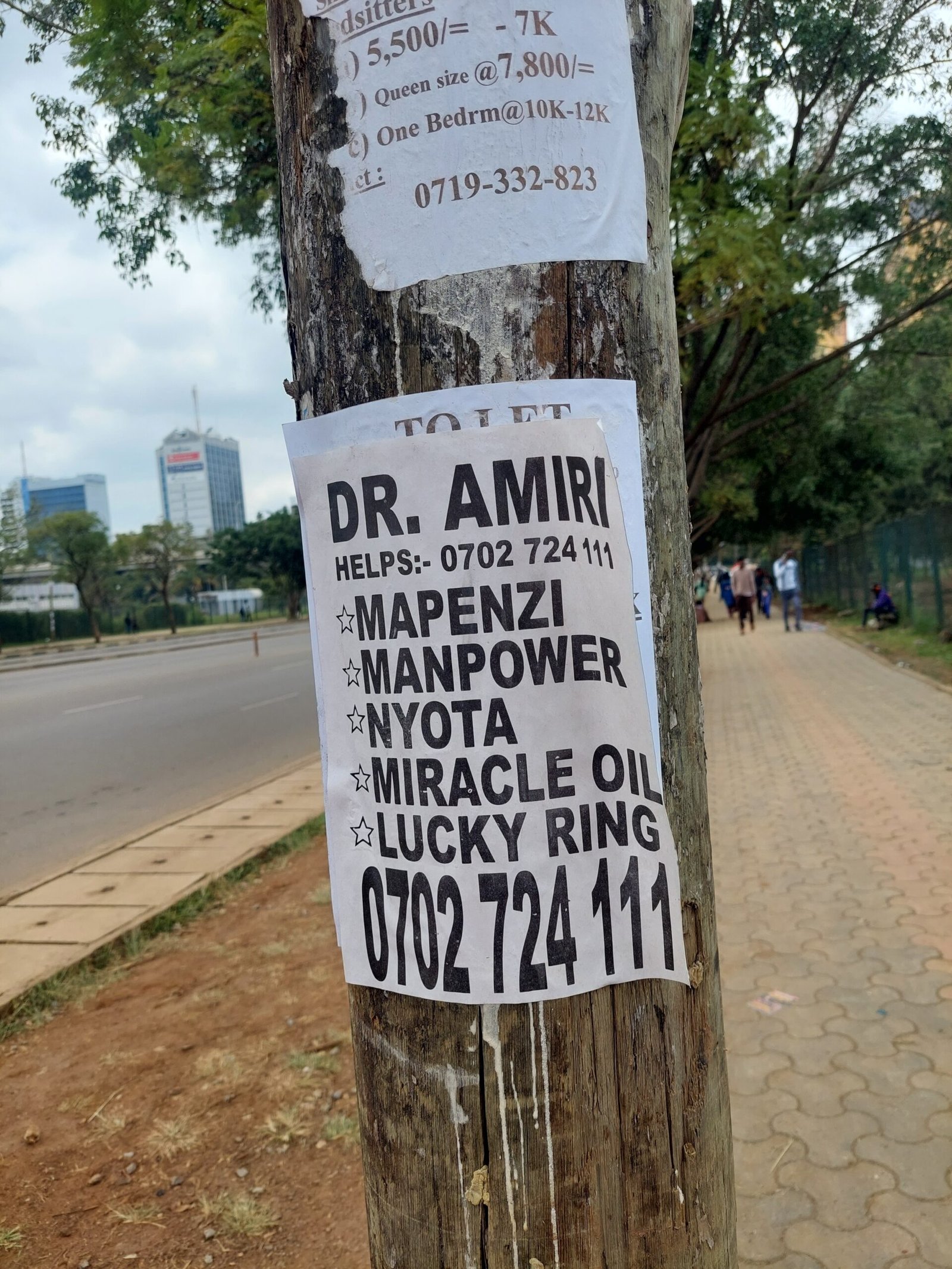
Dr. Amiri seemed to offer comprehensive services.
The final part of the Matatu bus (tatu) stands for the number three.
These buses fell into category two. We did not see any category one disco buses.

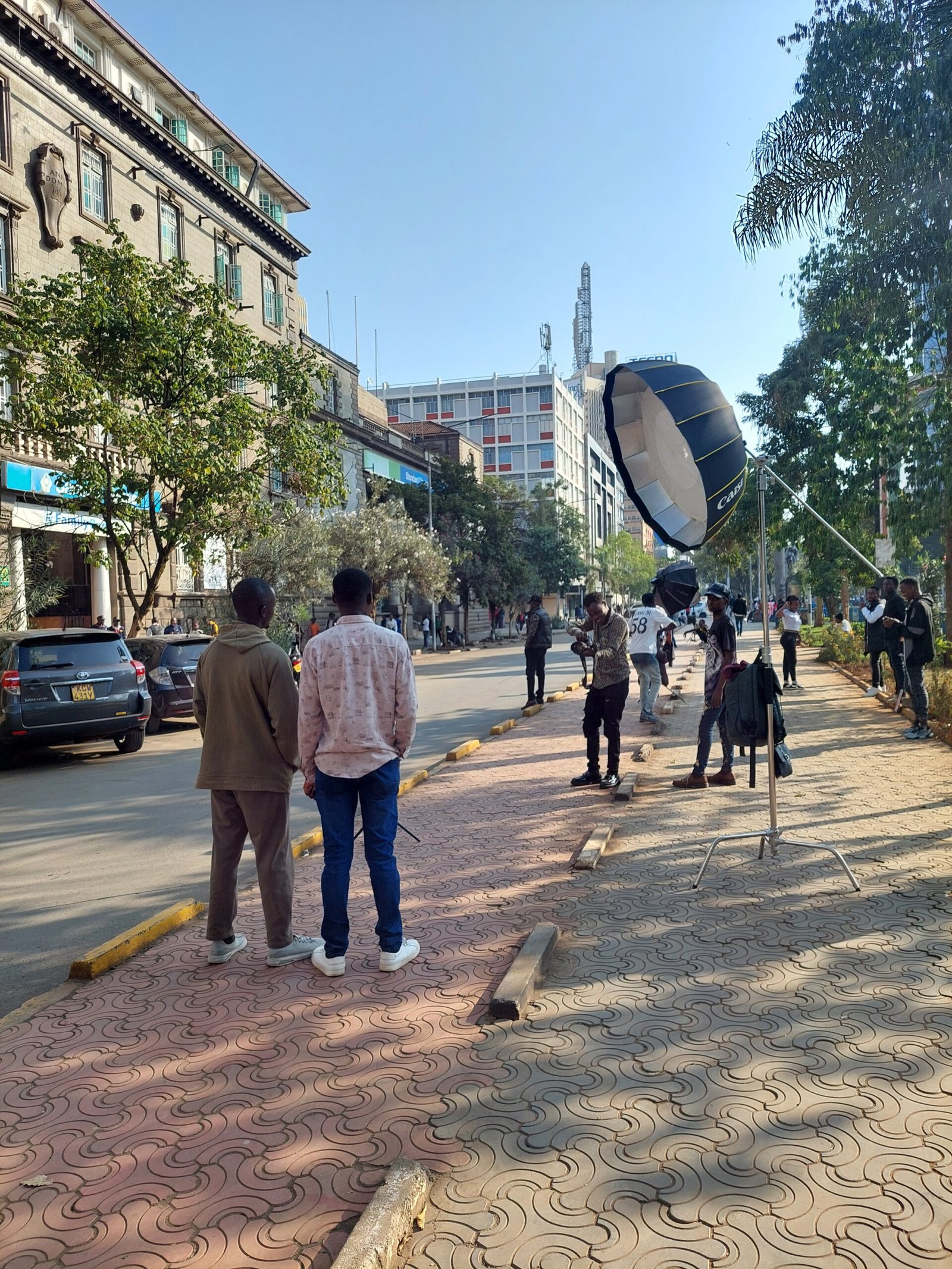
During the tour, we also stopped for a longer time to observe local young people who had gathered in the streets to practice their dances and make Tiktok videos. The participants in the dance groups don’t even necessarily know each other, they all just come into town to hang out. When they find a group that looks interesting, they mingle and join the dance.

Every young person in Nairobi wants to be a Tiktok star.
There were plenty of photographers on the streets, taking photos of people for a small fee.

During the tour we also passed through the local market. As it was Sunday, most of the shops were closed. Unfortunately, only the vendors selling tourist trinkets were actually there. They tried very hard to sell us their products, but this time there were no deals.

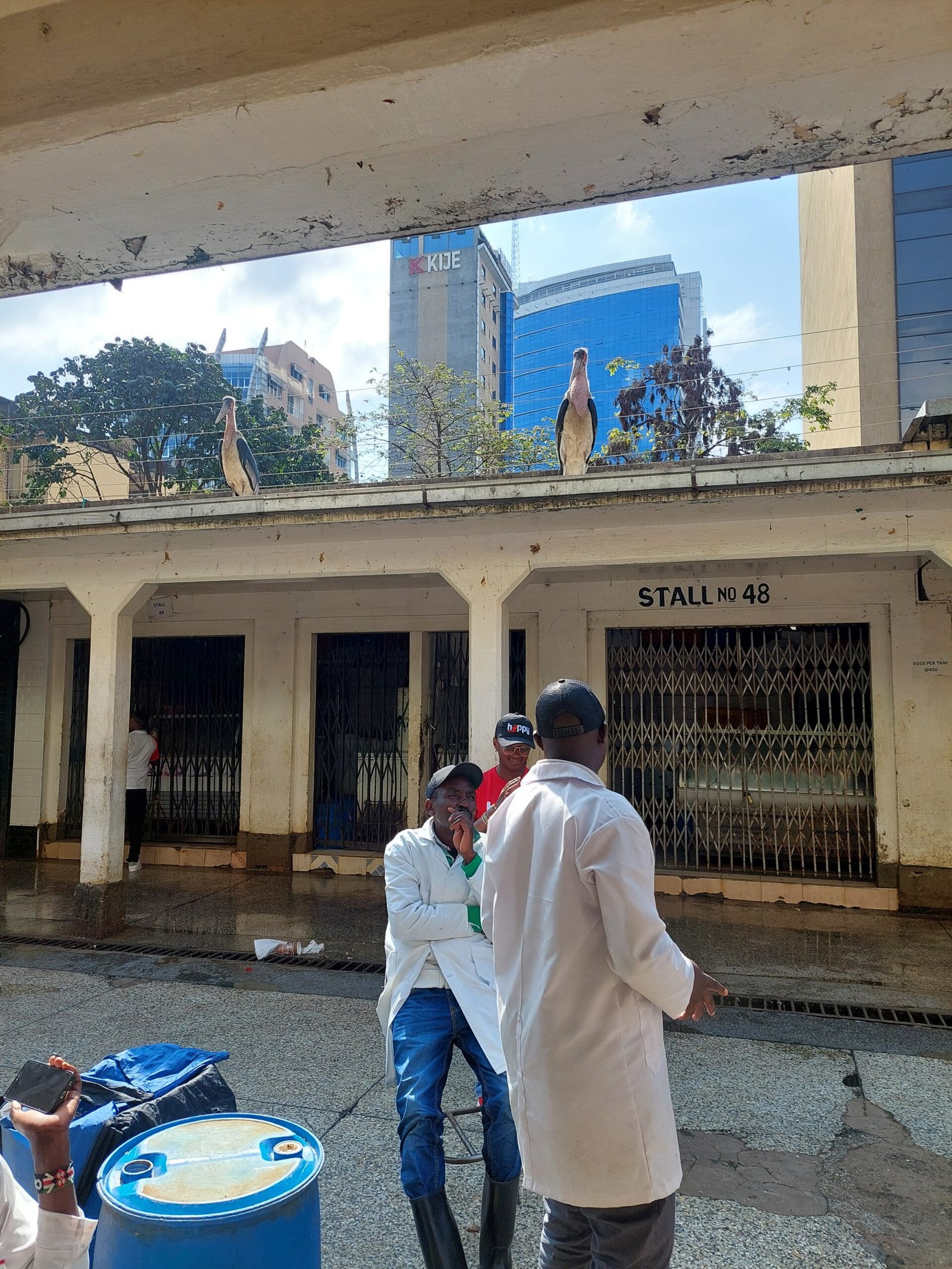
Some of the stalls were located inside the market hall.
The meat department had to be clean and ready by 11:00. The vendors' coats must not be bloody, or else they will be fined.
The Marabou storks were waiting for pieces of meat thrown to them by the market vendors. Since the birds are fed, they do not steal meat from the vendors.
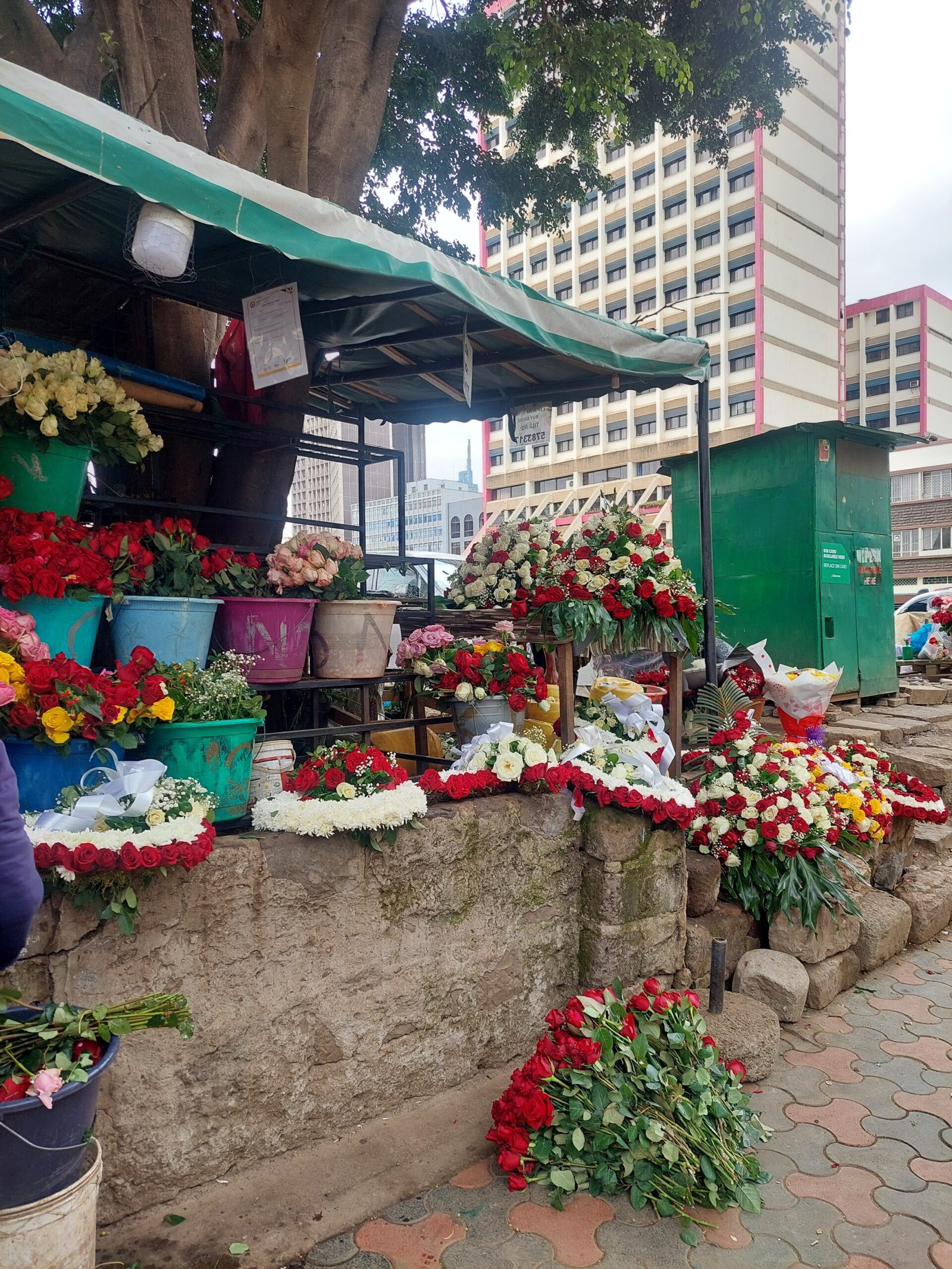
A third of the roses imported to Finland are grown in Kenya.
A single rose costs on average 30 shillings, or about €0.20.

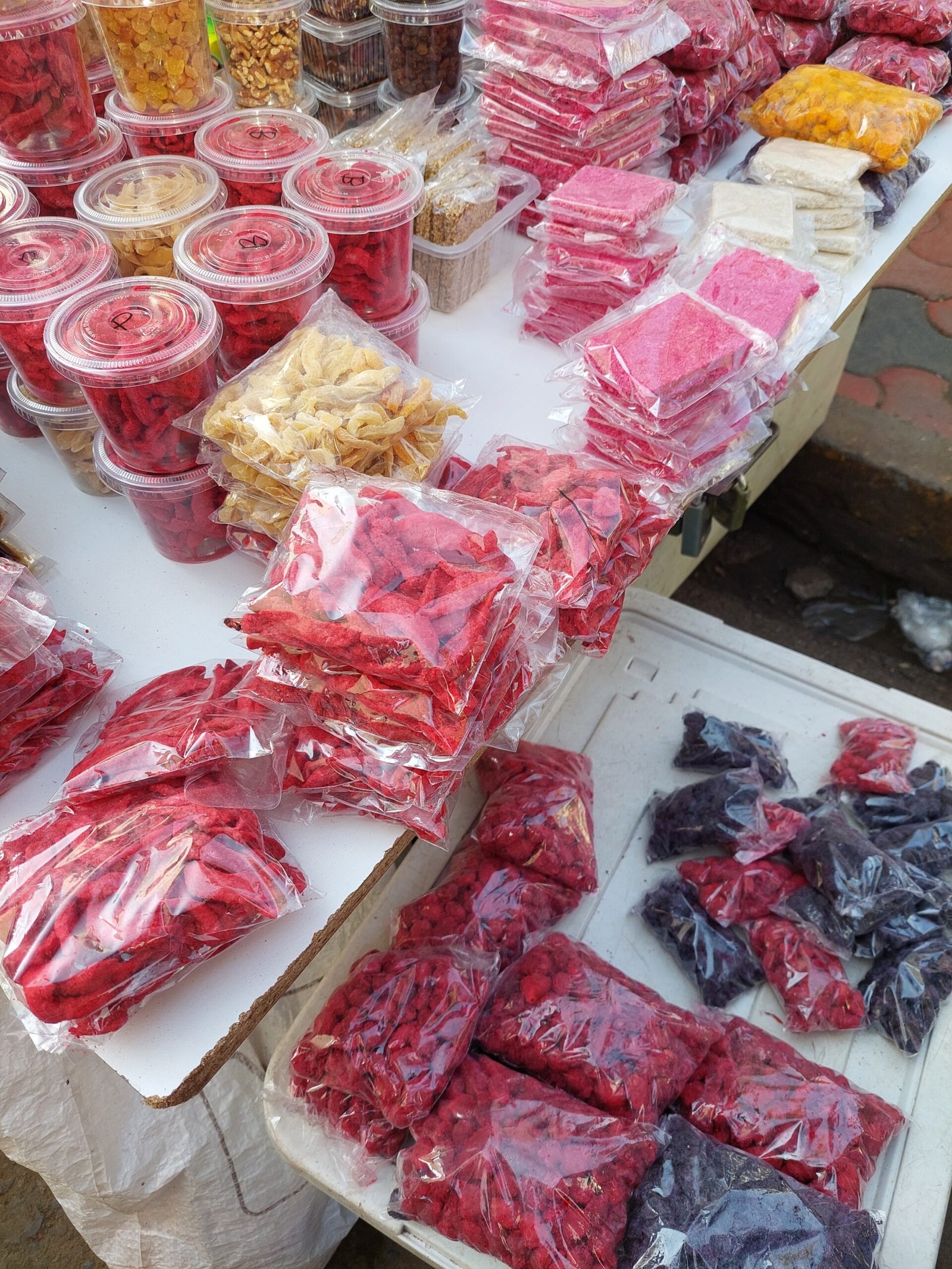
Near a local mosque, we tasted mabuyu candies made from the seeds of the baobab tree and dried mangoes covered in baobab powder. Marko’s favourites were the mangoes, while Jaana and the kids preferred the suckable mabuyu candies. They were not meant to be eaten whole, but only to suck the layer on top of the brown seed and then spit the seed on the ground.

The Mabuyu candies were bitter sweet.

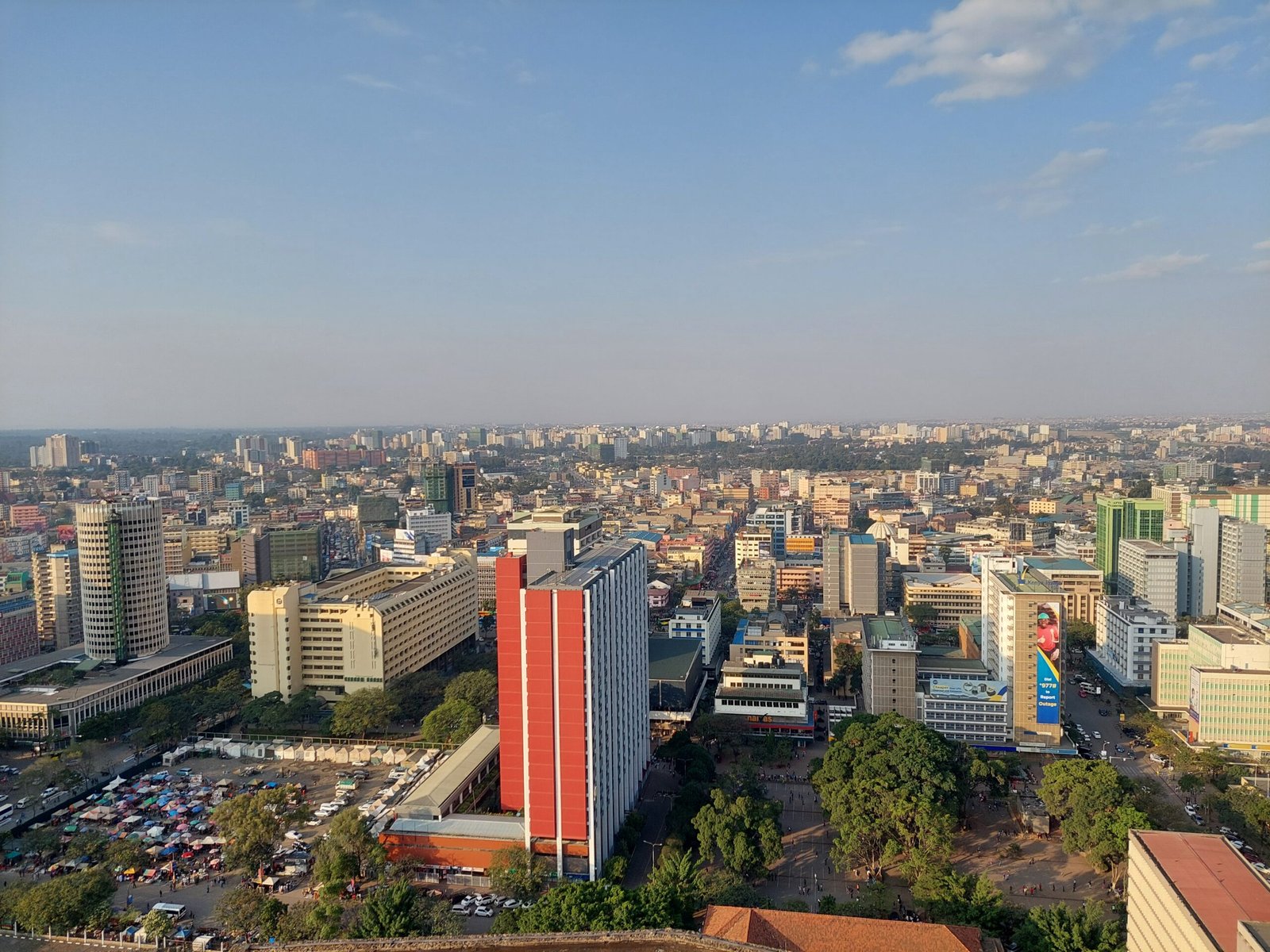
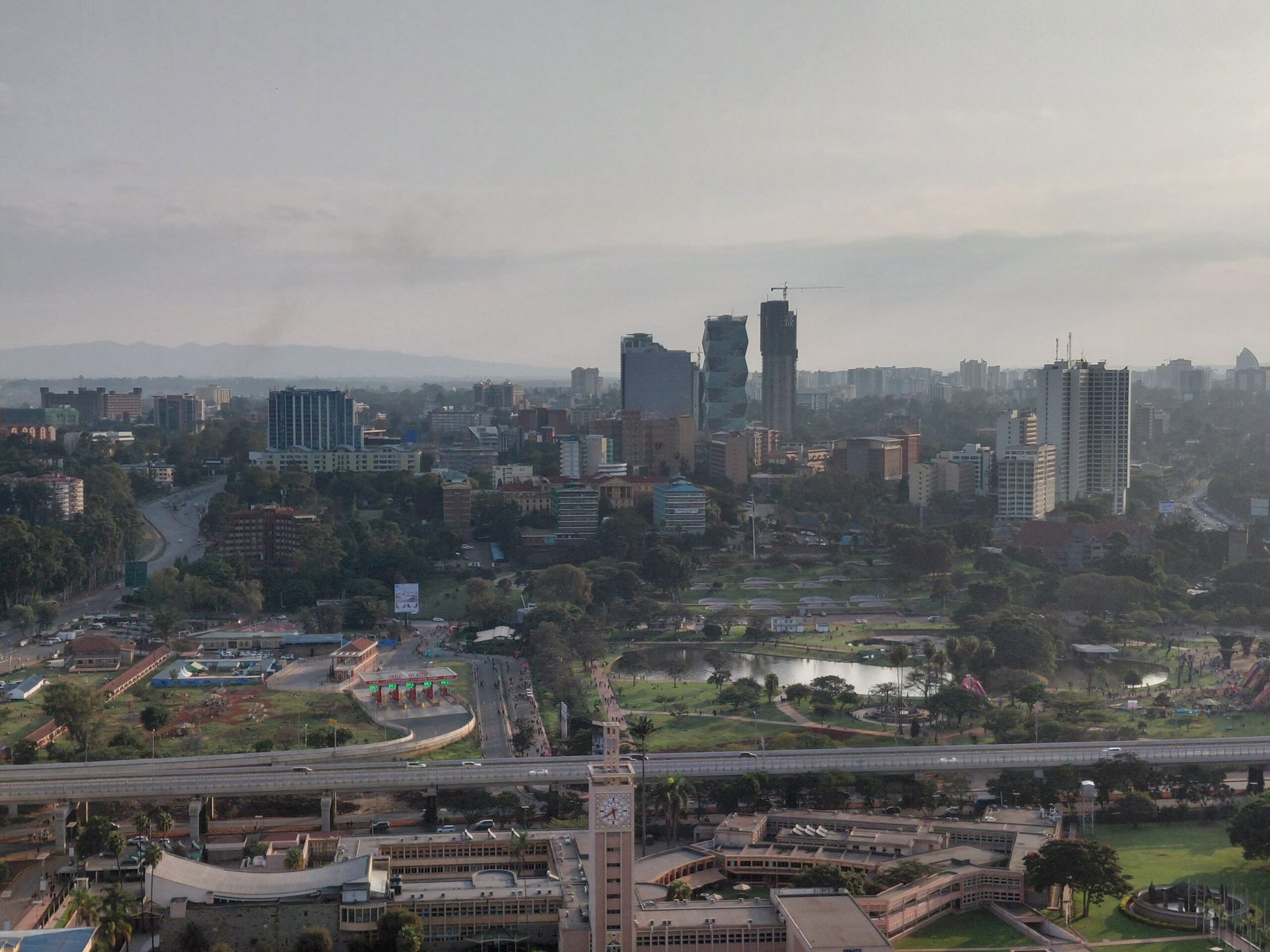
Our tour ended at the top of the 105-metre high KICC (Kenyatta International Convention Centre) tower. The entrance fee was not very expensive, 500 shillings/adult and 200 shillings/child. So for less than ten euros, the whole family could admire Nairobi from a bird’s eye view. As the weather was sunny, we could see really far in all directions. A Kenyan gospel choir was also there at the same time, filming a music video. So we even got a concert for free.

The KICC serves as both a conference and office building.
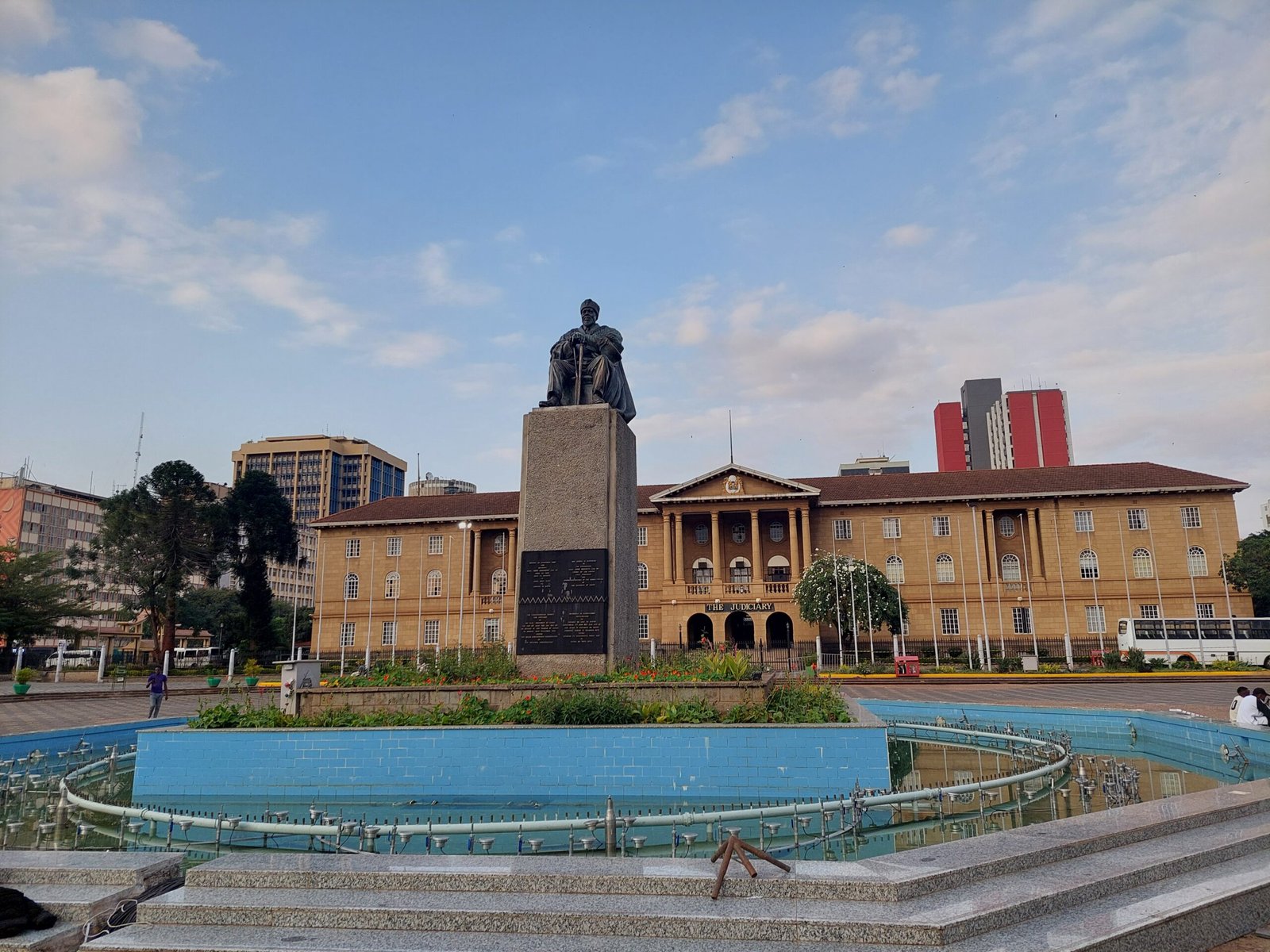
In front of the building is a statue of Kenya's first president, looking straight at the place where he is buried.
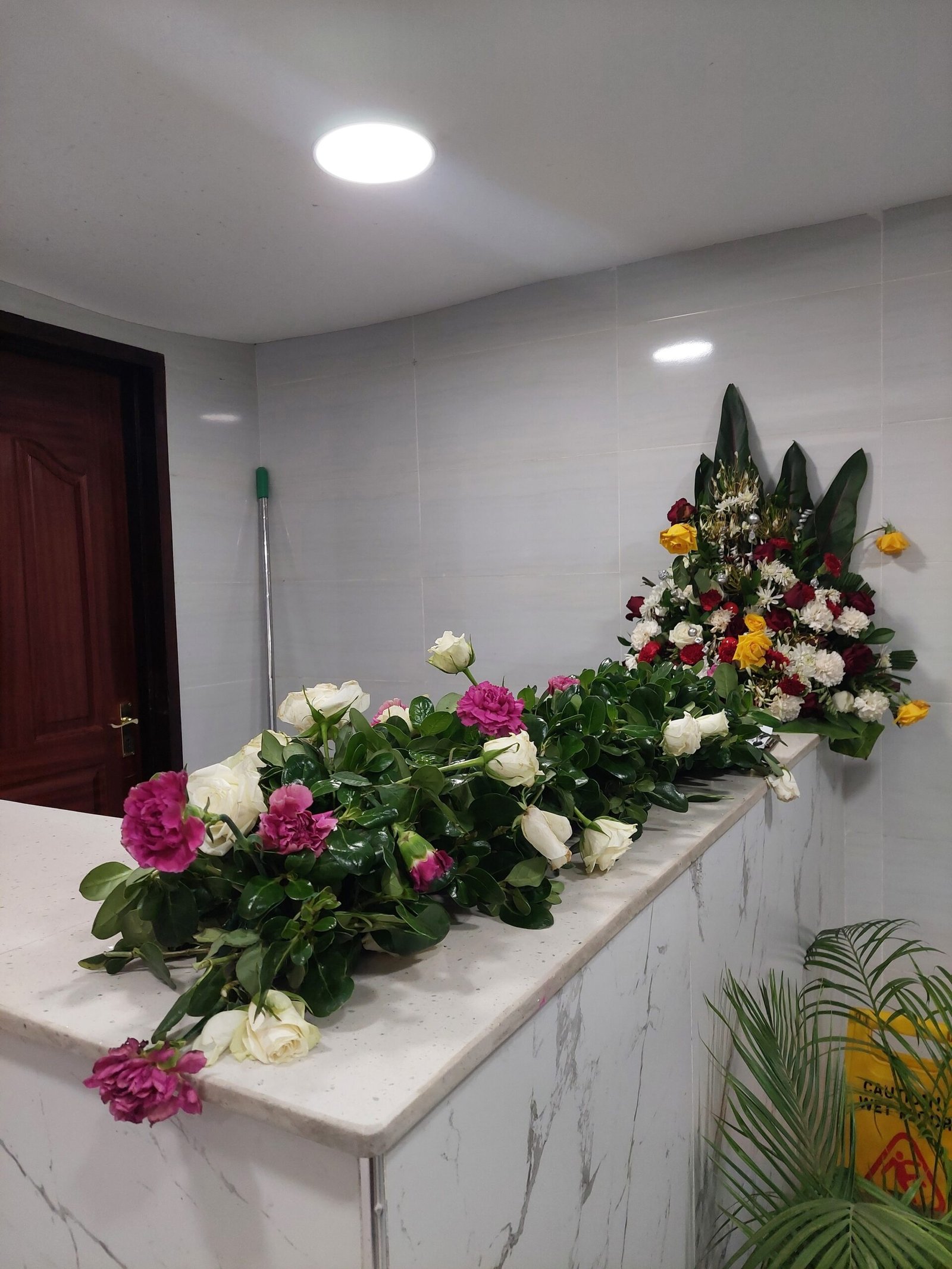
Fresh flower arrangements are brought to the KICC's women's bathroom every Sunday.
Nairobi alone is home to around 6 million people. Kenya has a population of over 55 million.
In Nairobi, people have no postal addresses. Bills etc. are sent by SMS and newspapers are bought in shops. Even the post boxes in the city center are now just decoration.

At the end of the walking tour, our guide drove us back to our hotel, after which we went straight to the airport. To get to the airport area, we first had to jump out of the taxi and walk through security. Then we had a bit of a ride still before we got to the actual terminal. Our flight was supposed to leave from Terminal C, but for some reason the whole terminal was closed. “There’s an emergency. Terminal is not working. Use terminal B,” we were told. We had no choice but to join the queue outside, so we could get inside the terminal after having our bags checked.

At least here in Nairobi, security seems to be pretty tight everywhere, especially in areas where foreign tourists are moving around. According to our guide, this is due to a few major terrorist attacks that Al-Qaeda had managed to carry out here in the past. Even when entering our hotel car park, the bottoms of cars were checked with large mirrors, and shopping centers and other public buildings have x-ray machines and metal detector gates.

We were sitting in Terminal B for a while when we heard an announcement about a flight to Doha. Marko went to investigate, and it turned out that Terminal C had been opened. Well, we gathered all our worldly possessions again and headed out the door towards Terminal C. Naturally, the way to the terminal was through a scanner and a security gate, but fortunately there was no major queue this time. As check-in for the Qatar Airways flight was already open, we were able to get through security to the other side very smoothly. So we had a couple of hours to enjoy the peaceful atmosphere of the lounge and the delicious food and drinks on offer.

And so the trip was almost over. It’s been an incredibly wonderful trip. We’ve seen and experienced so much that we’ll certainly have plenty to remember for a long time to come. Risto’s favourite thing about this trip has been all the encounters with animals (including the dogs at the different campsites). Ronja says it was nice when our travelling companions became new friends.  She also enjoyed getting to know new countries and cultures. Marko thinks it was interesting to see how different everything is here compared to back home. The animals, nature, housing, infrastructure and general way of life are just so different here. This is Africa, TIA. Jaana has found it interesting to see how different all eight African countries are. It’s easy to think that all African countries are the same, but that is definitely not the case. Each country has its own characteristic features. The nature and the people are completely different everywhere. What people have in common, however, is an endless positivity and curiosity about foreigners. Many of these countries are desperately poor, yet the people are cheerful and smiling. They are also used to getting by on very little and being grateful for whatever little they have. Probably this trip has also opened the children’s eyes to the fact that you can get by with a little less and still be happy. All in all, this trip has been a great success. Apart from a few bouts of mild diarrhoea, no one got sick and no one had anything stolen. The only losses were Risto’s swimming goggles forgotten in Zanzibar and Ronja’s hair towel, which is probably still hanging on a nail in the shower room of some Botswana campsite.

Once again, the children have proved to be the ultimate travelling companions. This was also the opinion of the other travellers in our group. We heard several compliments about both of our children. Especially about how well behaved, smart, funny and social they are. Both of them were also complimented on their English language skills on several occasions. Perhaps the best praise, however, came from the driver of the first leg, Taku, who said, “Your kids were the highlight of my trip.”  That’s quite a compliment from a guy who does these trips for a living.

Even though this trip is coming to an end for us, we’ll have to return to Africa again later to see the rest of the countries we haven’t yet visited on this continent. So this is by no means a final farewell to this continent. For now, however, we will return to our daily lives at home and plan future trips a little later.
Leave a Reply

Your email address will not be published. Required fields are marked *