On Wednesday morning, we walked from our hotel towards the port where the ferries to Zanzibar departed. Although the ferry tickets had been picked up and checked in advance, one of our travel companions was still missing a ticket while Dimitri had two tickets with his name on them. Fortunately, this problem was quickly solved at the port, and we all got to the waiting room to wait for the ferry to leave. This time we were not the only white people there, as Zanzibar is a very popular tourist destination.
Getting on the ferry was quite a bit of pushing and shoving on the part of the locals. There were no queues of any kind, or even attempts at them, but the port was a ‘fast eat slow’ affair. However, we made it through the somewhat chaotic screening of our luggage and waited almost an hour before we were able to board the catamaran.
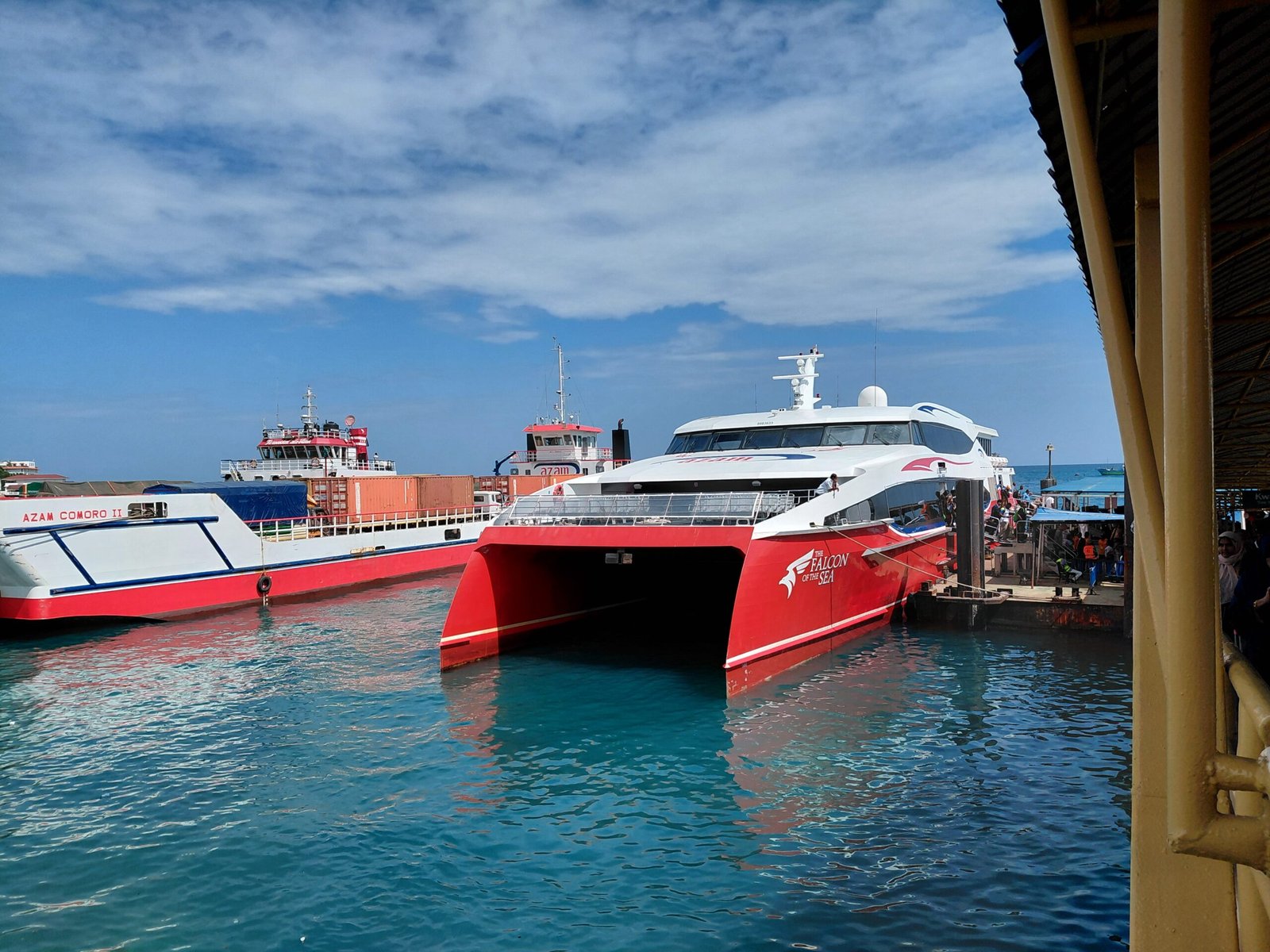
We travelled to the island of Zanzibar with this catamaran.
It was a bit crowded in Dar es Salaam's ferry port.
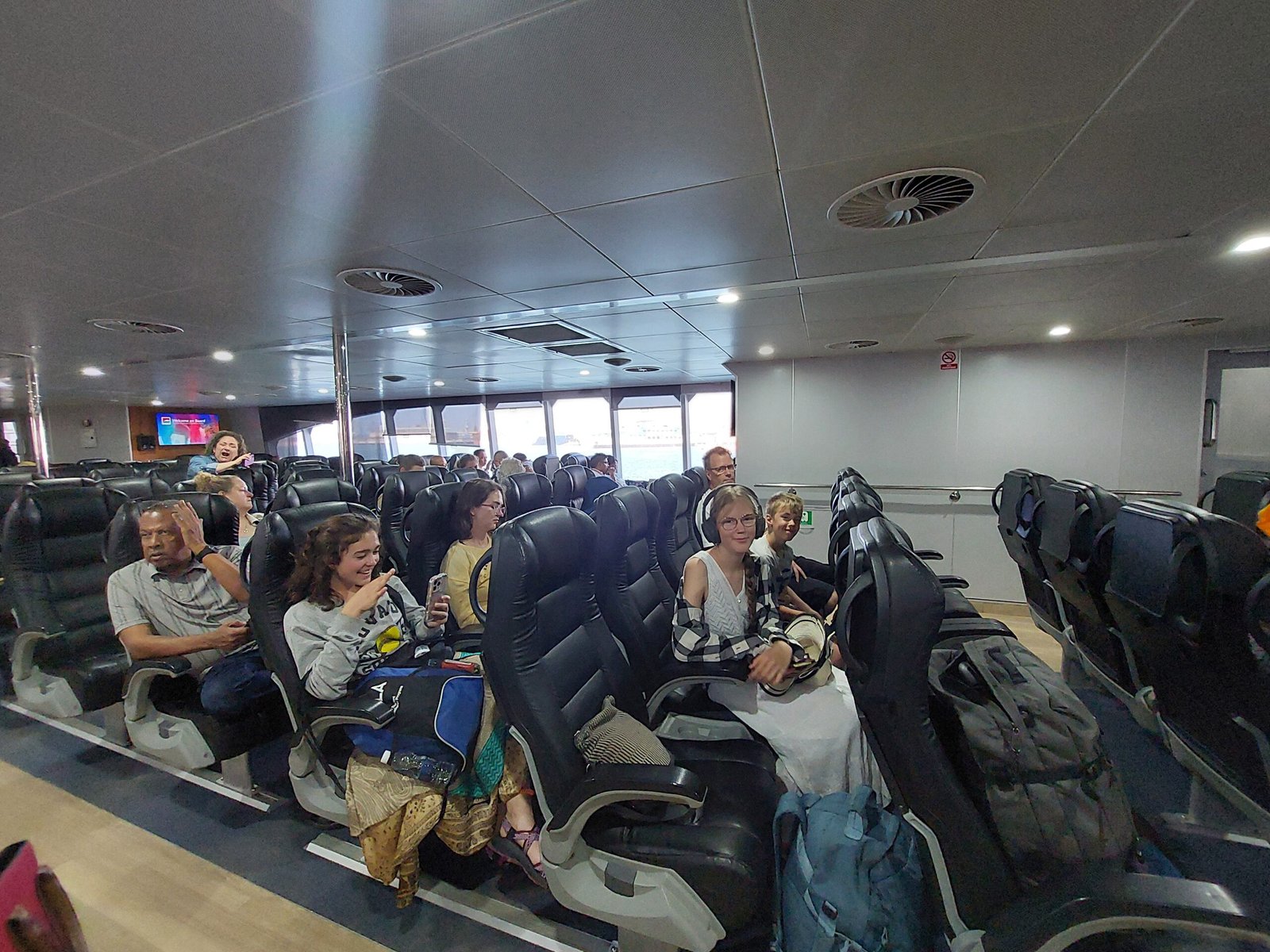
Finally on the ferry.
A higher power was relied upon to make the ferry journey a success.
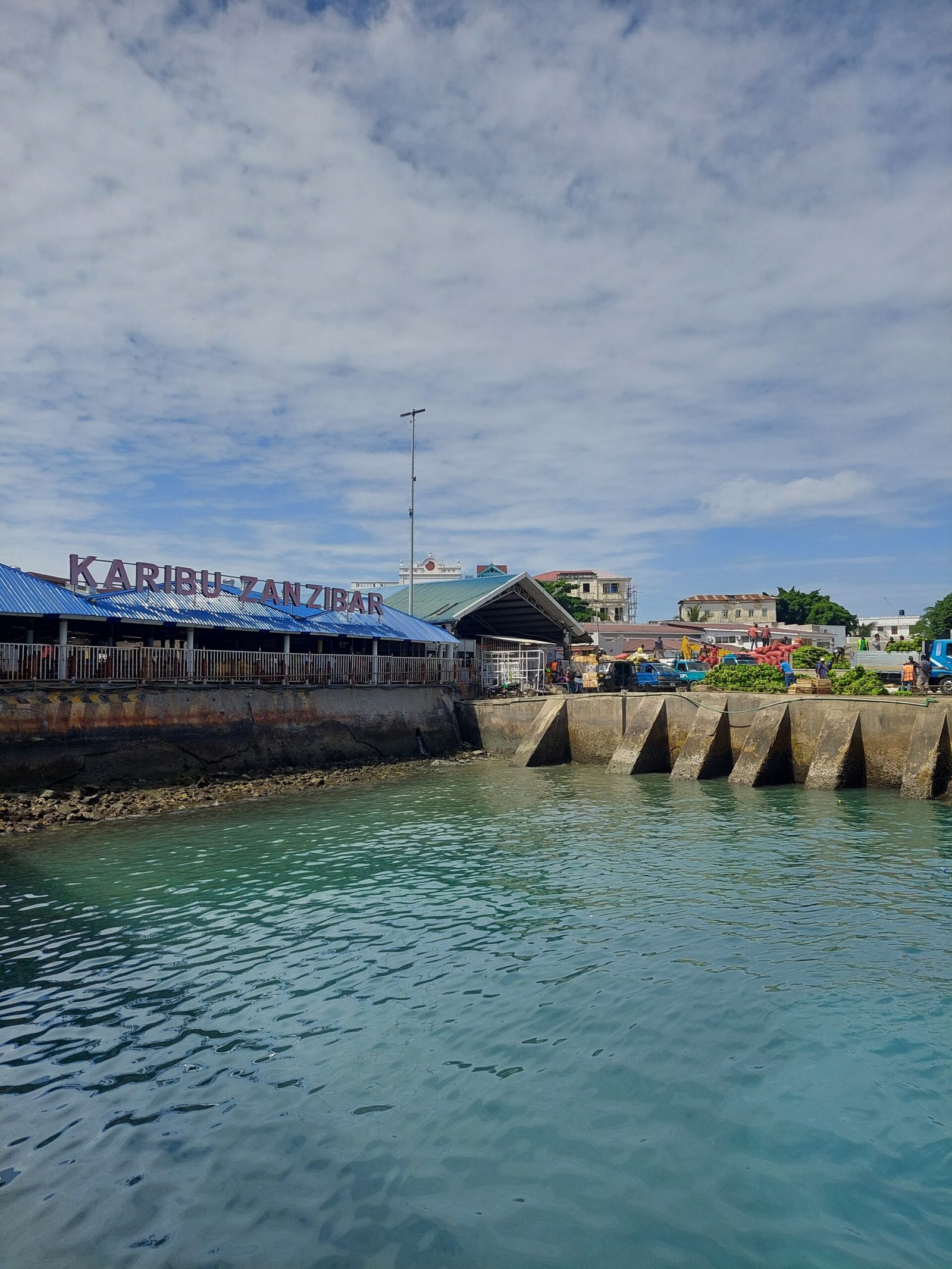
Karibu sana - welcome!
The journey itself was very smooth and relaxed. After about 1,5h on the ferry we arrived on the island of Zanzibar. After getting off the ferry, we had to show the immigration officers our compulsory Zanzibar travel insurance and our passports. However, nowhere did it say at which counter this would take place. So we marched straight to the immigration counter, but that was a big mistake. First we should have stopped at one of the anonymous counters where they also sold these travel insurance policies. There, after a lot of hassle, we got stamps on our entry forms by showing the qr-code of our insurance policy. Only then we could proceed to the immigration counter again.
At this point, one of the more senior officials started shouting that we should all hand in our passports and stamped entry forms at the same time as a group. Well, we did as we were told, as did two other groups of Western tourists. At that point, this official grabbed all of the stamped entry forms that were neatly tucked between the passports and piled them on the table. The other (apparently inferior) officials tried to stop him, but by then it was too late. The passports and entry forms of the three Western groups were happily jumbled up on the immigration counter. There, after a moment of wondering, the staff began to sort the entry forms back between the matching passports. Then they had to find out which passport belonged to which tourist group. Lin, who had come with us to Zanzibar, probably won’t want to take another group to the island by ferry right away, unless she has to. She seemed to be getting a bit uptight about the immigration officials’ antics. After a rather long wait, we were finally able to move on.
At the Zanzibar ferry port lobby, we waited for our passports for probably close to an hour.
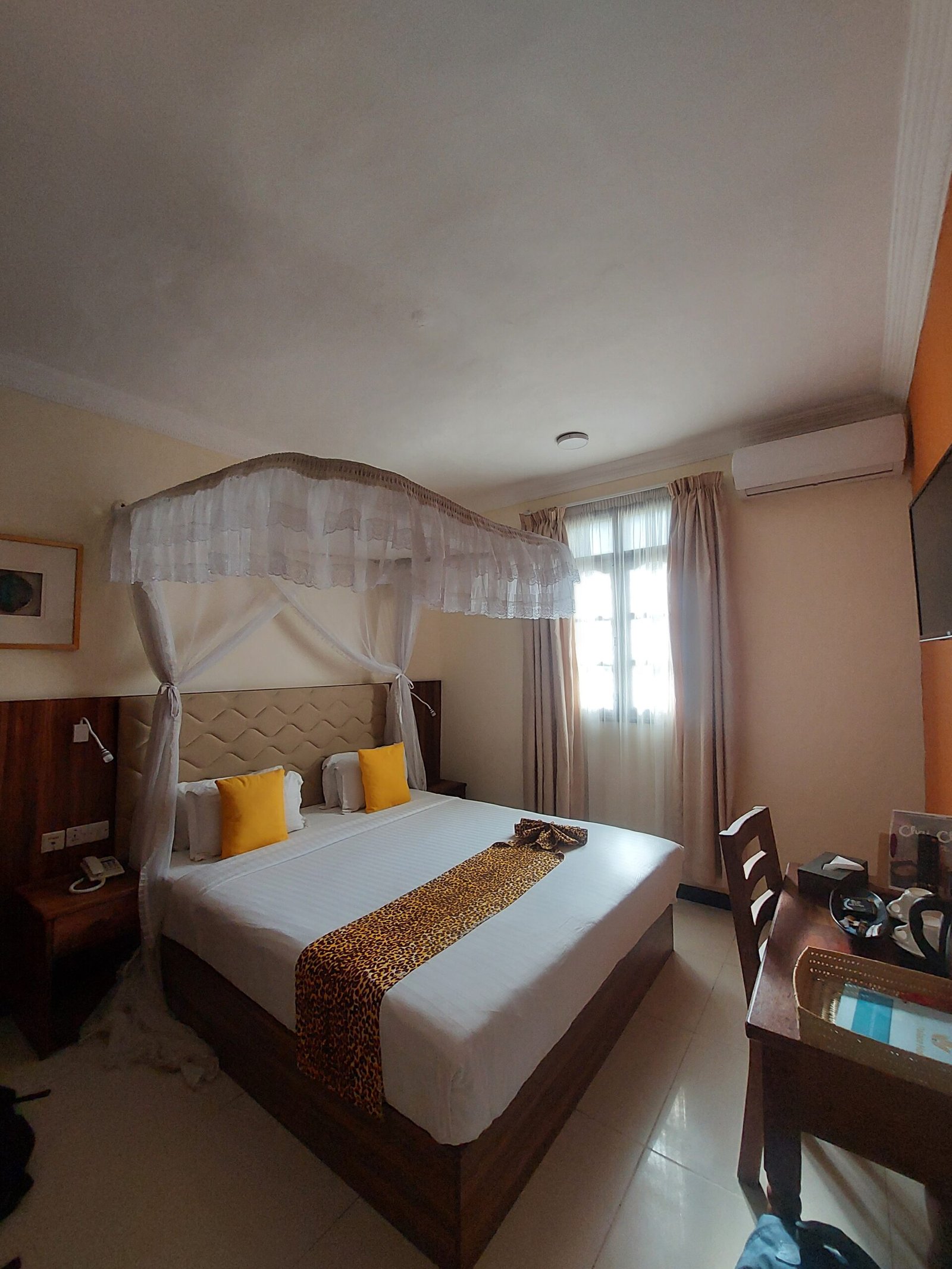
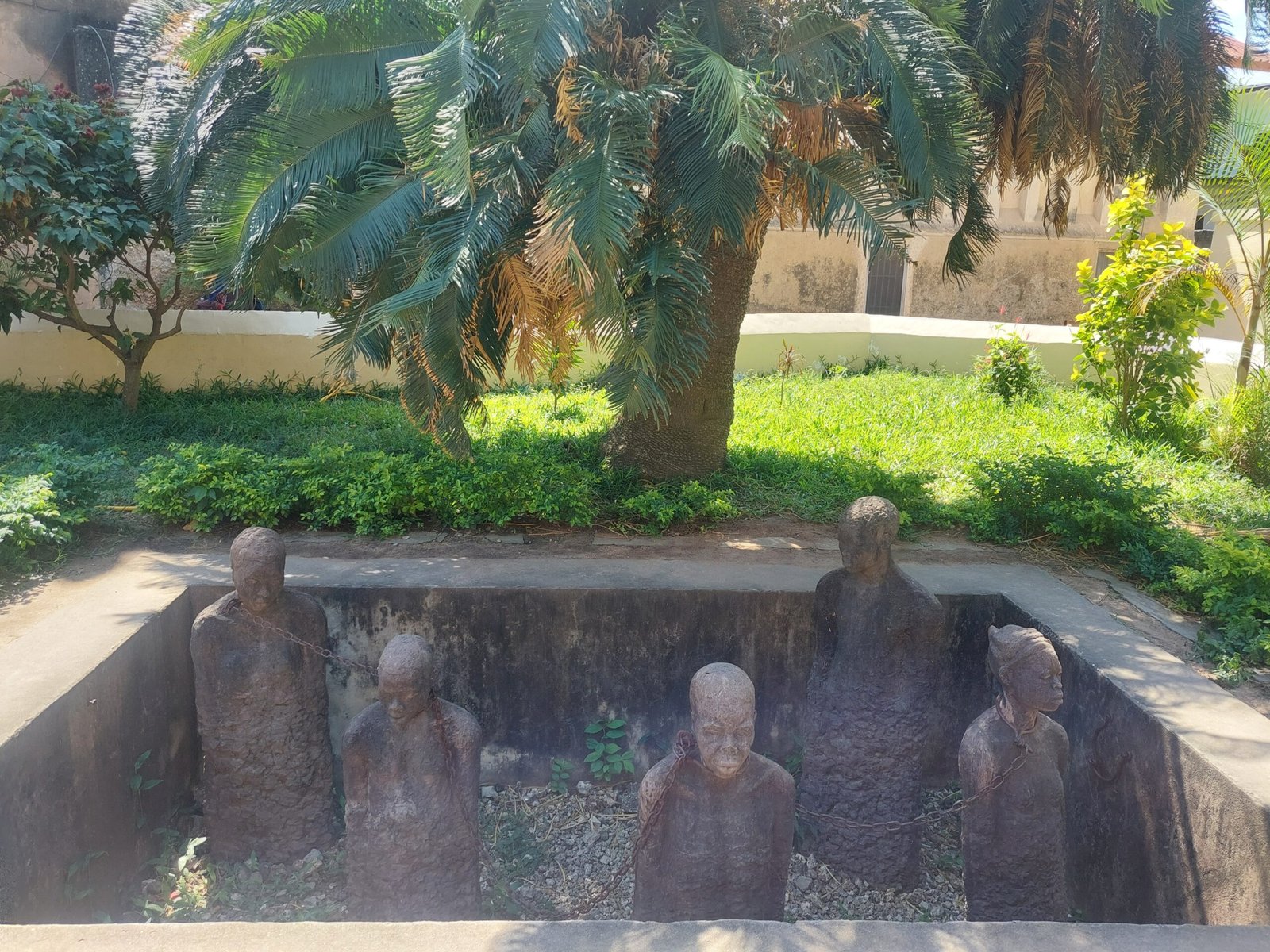
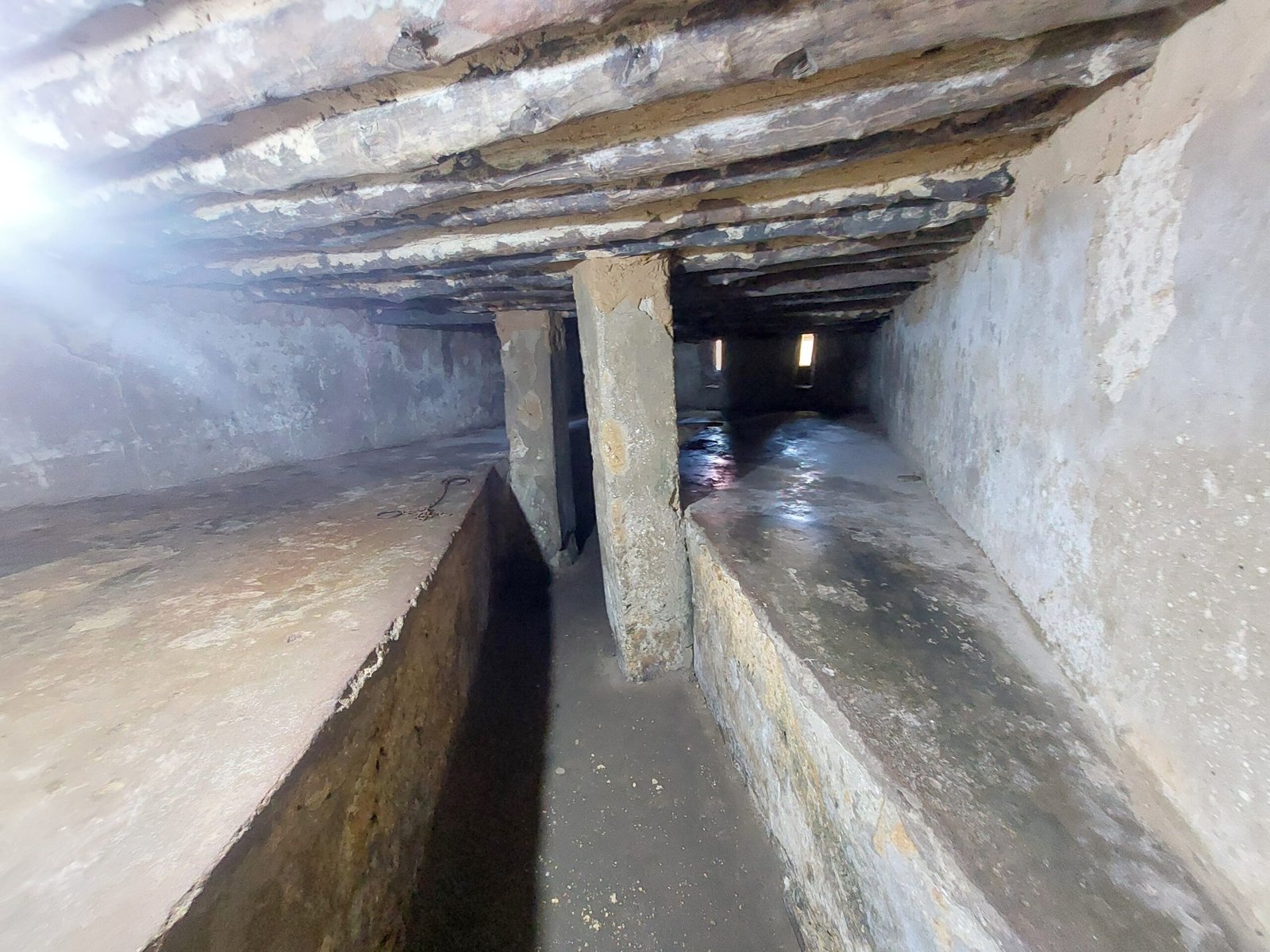
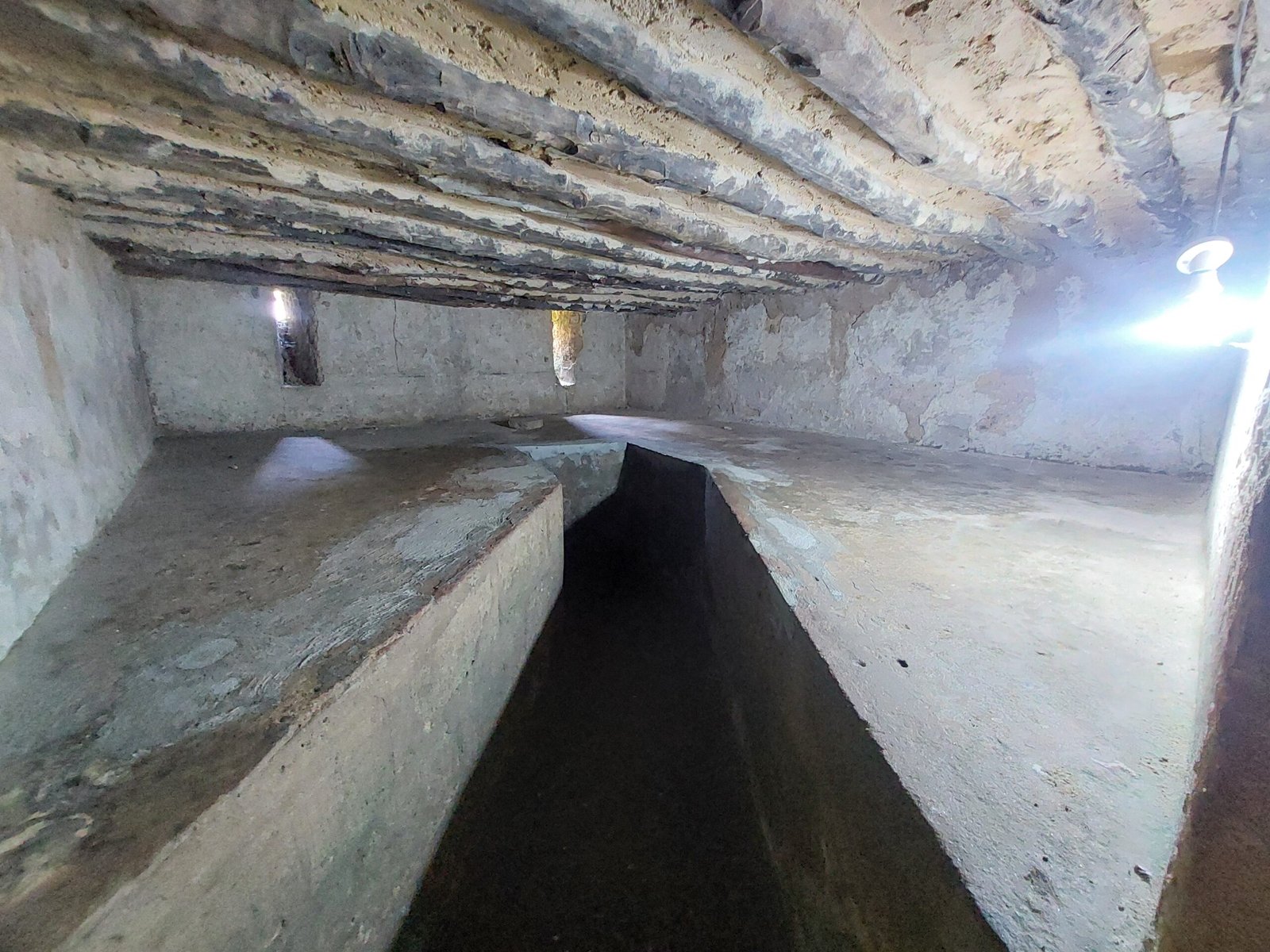
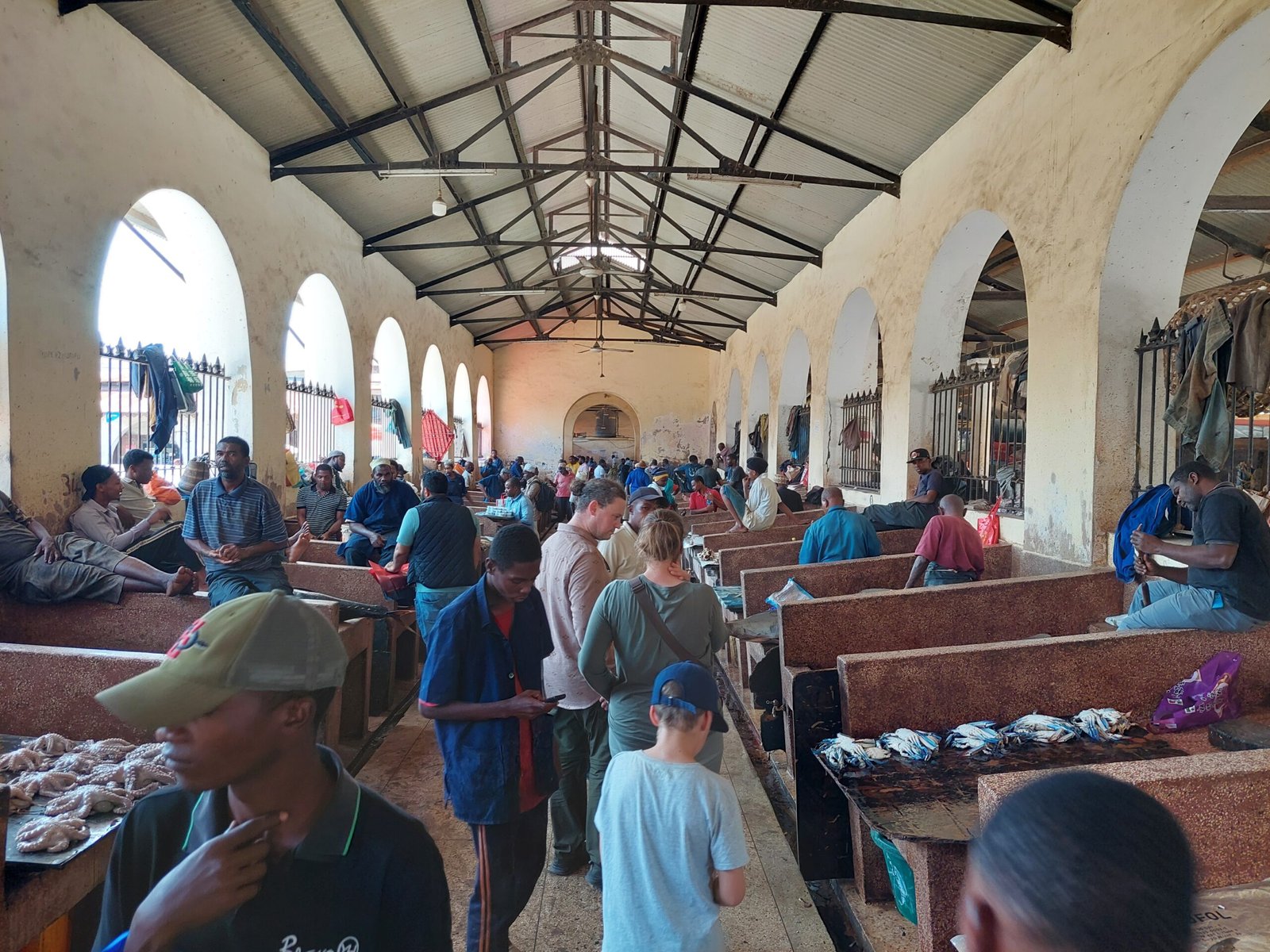
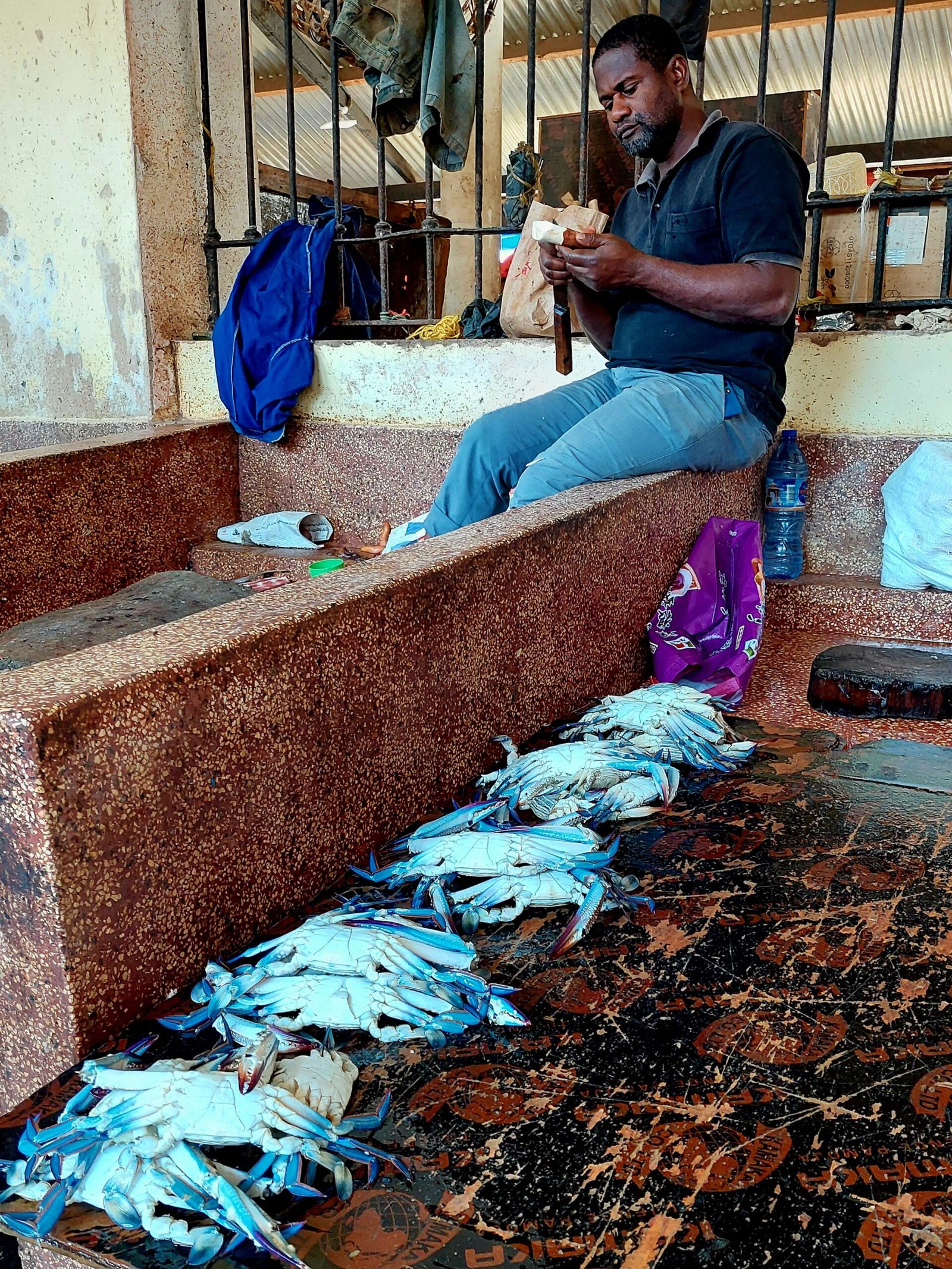
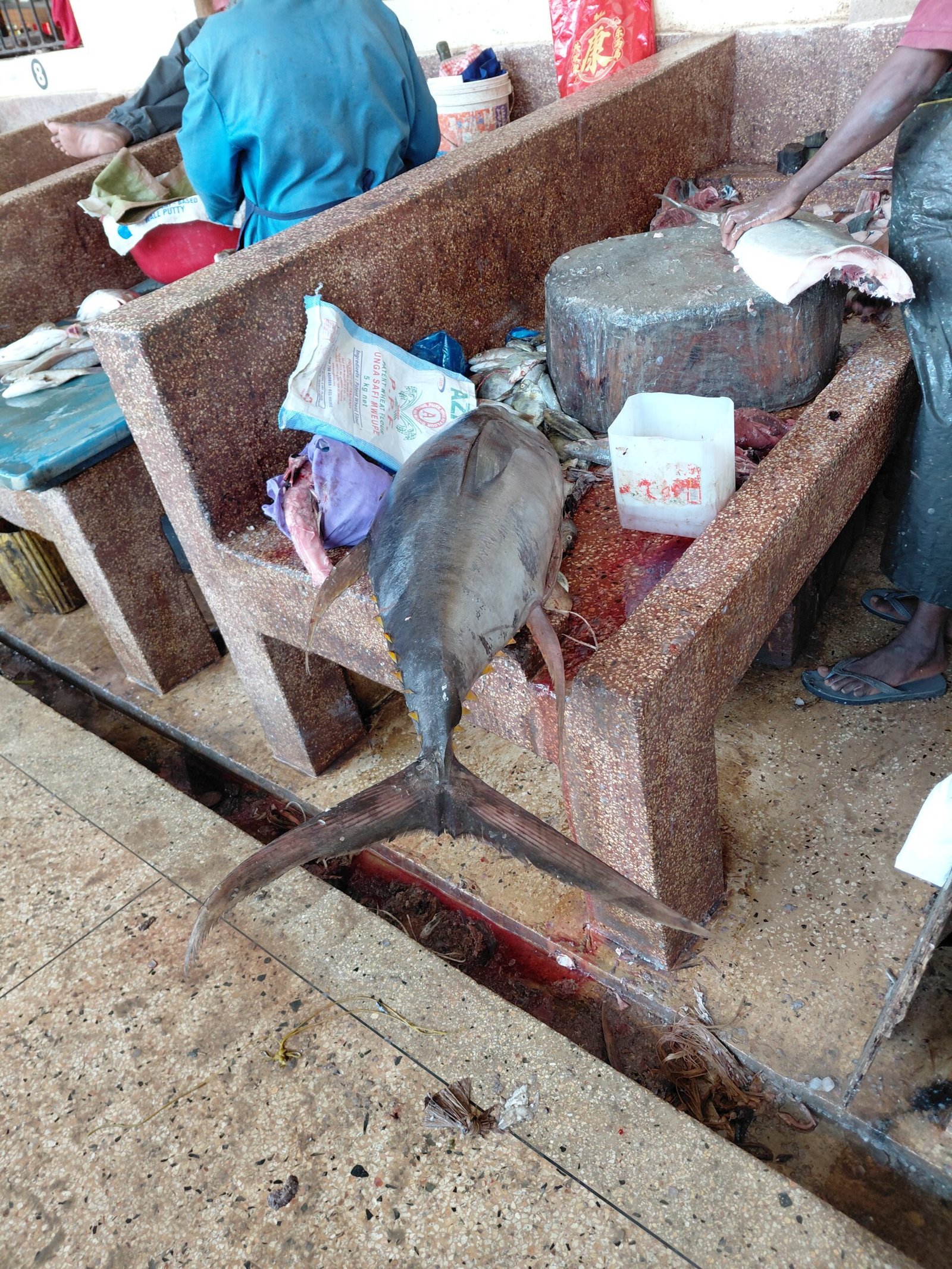
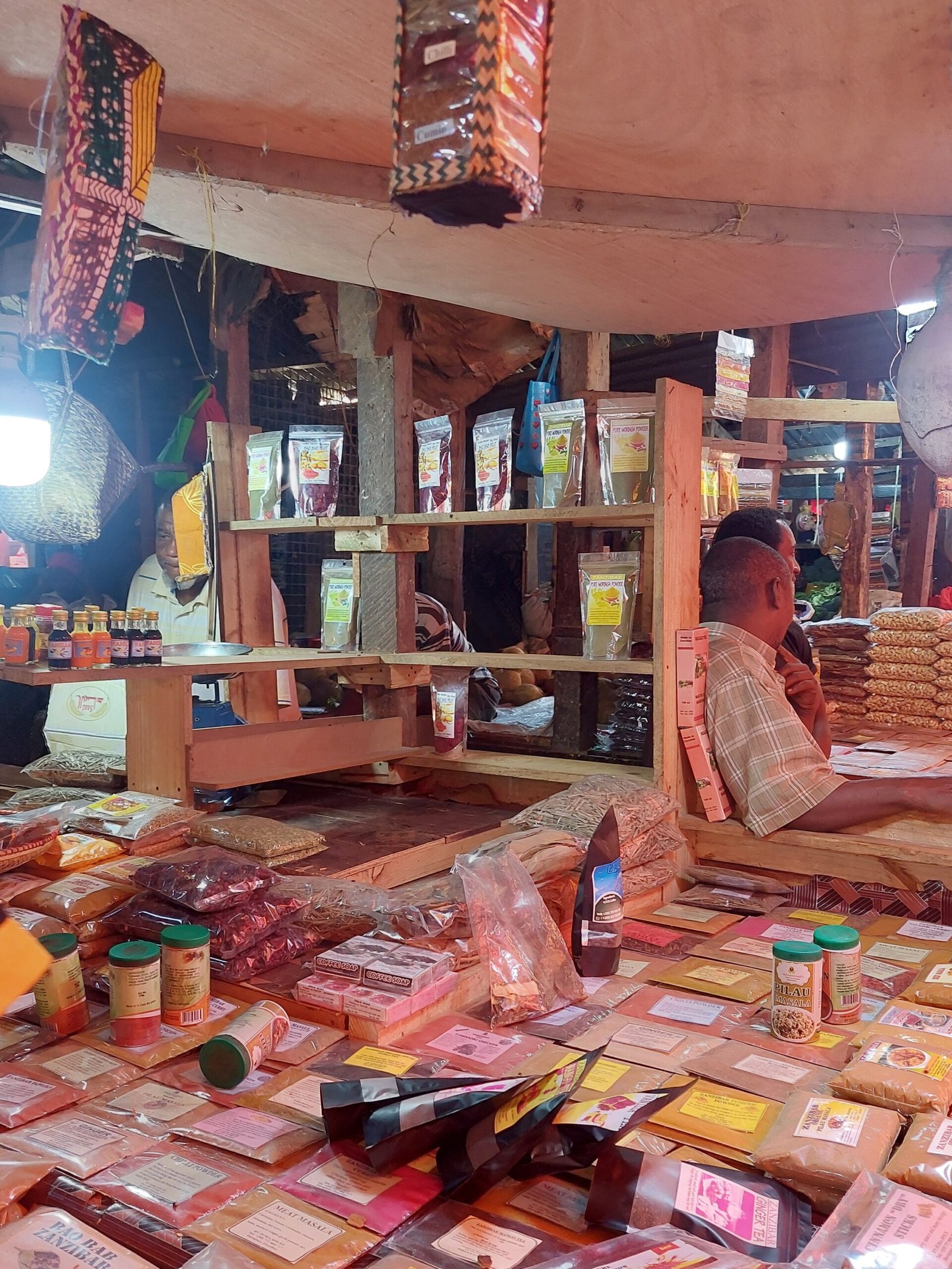
We stayed for one night in Zanzibar’s old town, Stone Town, at the Spice Castle hotel. As our rooms were not yet ready, we just left our luggage in the hotel lobby and went for a walking tour of the narrow alleys of the old town. Among other things, we visited a place where slaves brought from inland Africa had once been traded. Now there was a church, and a museum where we went to learn a little more about the slave trade of the time. What surprised Risto most was that children were also sold as slaves back then. We also got a peek into the cramped cellar rooms where slaves were kept for 2-3 days before going to the slave market. The larger cell had room for 75 women and children. The smaller cell housed 50 men. We also visited the market in the old town, where fish, vegetables and spices were sold. The smell in the fish section was very fishy, but once we got to the vegetable and spice section we could breathe through our noses again.
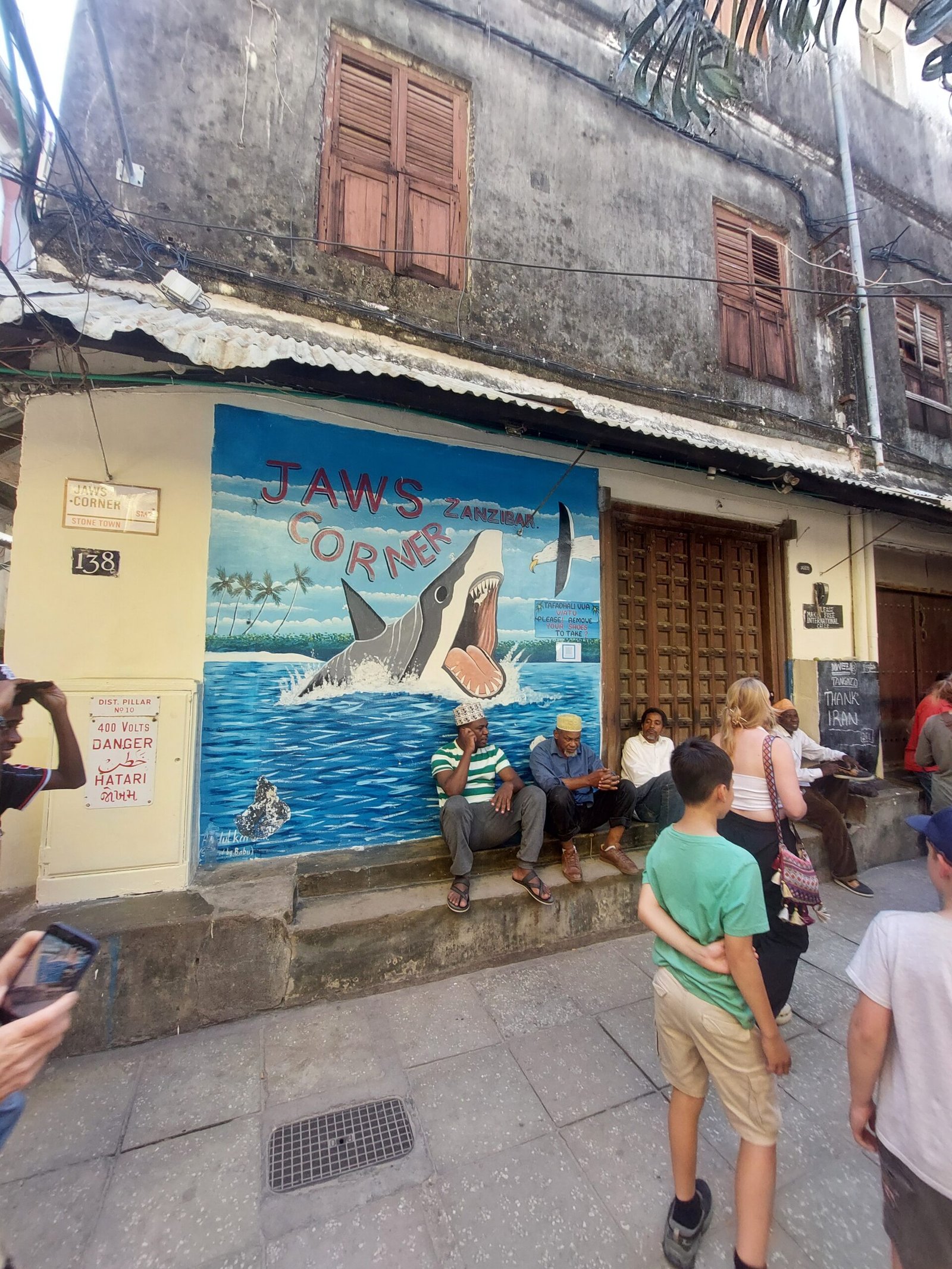
Our hotel was located next to Sharks Corner.
The rooms were quiet and comfortable. The adult bedroom did smell very strongly of mosquito repellent.
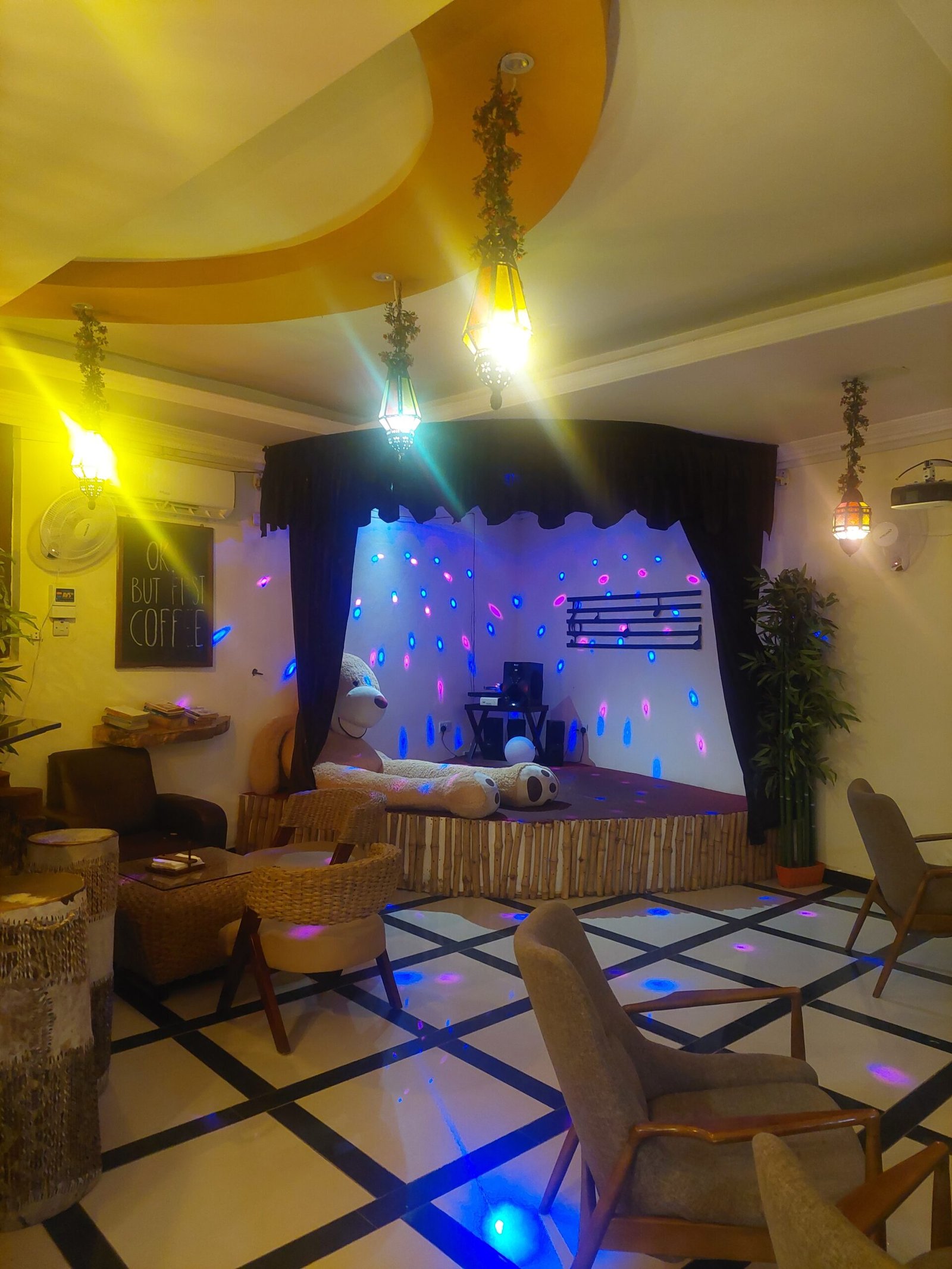
The hotel also had a karaoke option.
The streets of Stonetown have no room for cars. Even scooters are a tight fit.
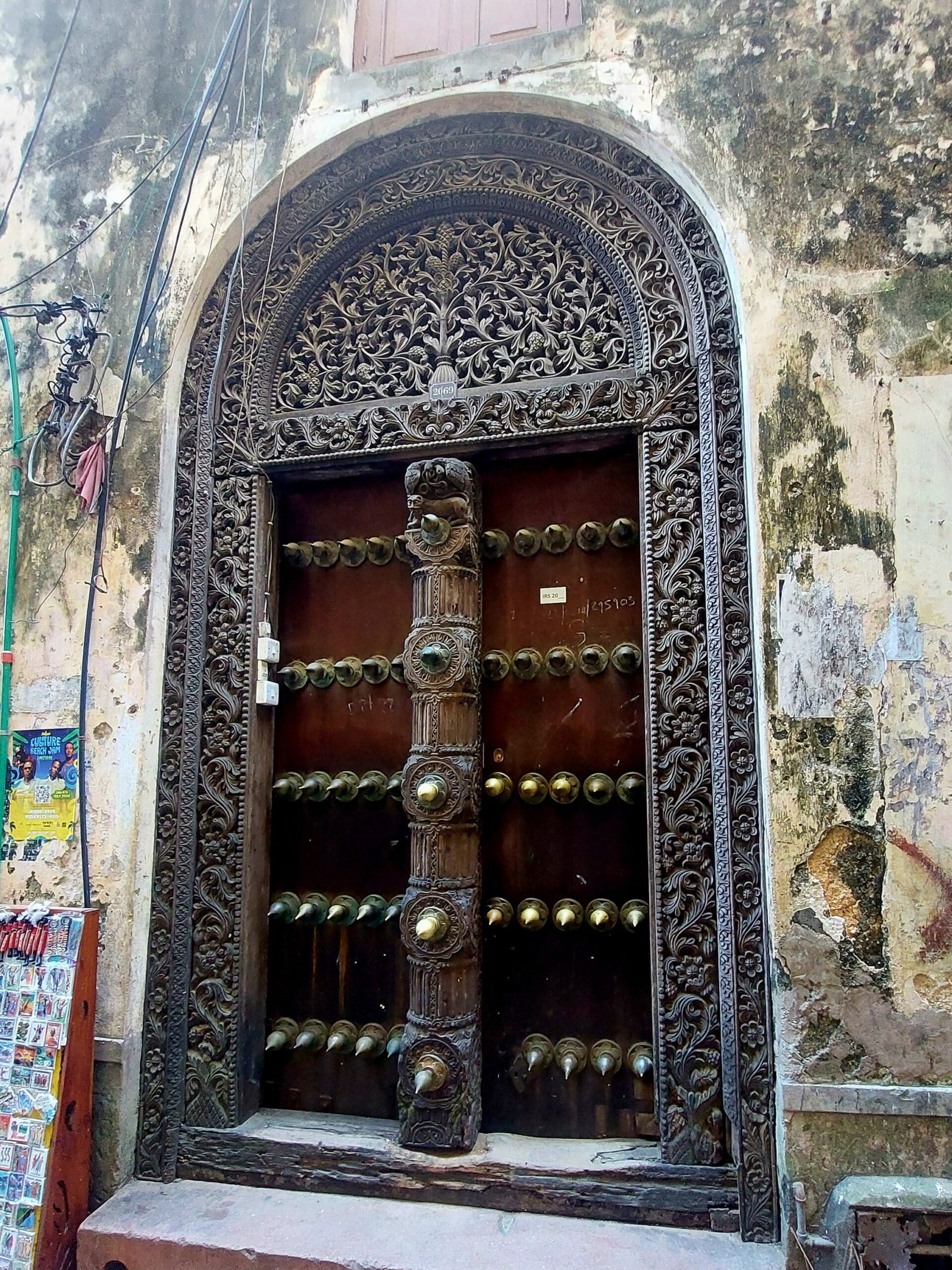
The doors of Stonetown are partly inspired by Arabic culture.
This door, with its round arches and spikes against elephants, is of Indian origin.
Slaves used to be sold here.
This was a cell for women and children.
The men were put in this cell.
Later, a church was built on the site.
The fish market offered a wide variety of seafood.
The fruit and vegetable section offered a wide range of delicacies.
There were also spices to suit all tastes.
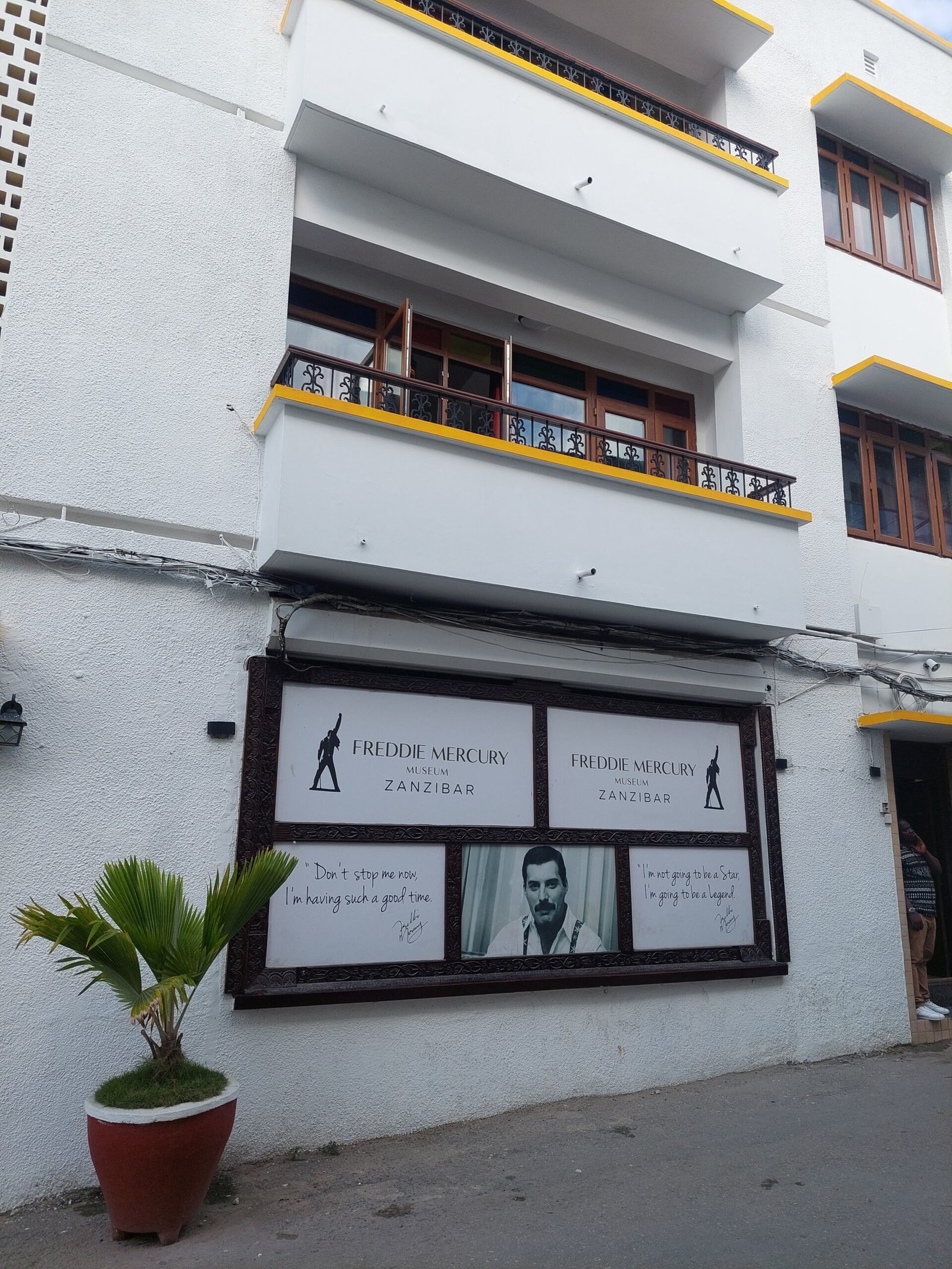
After the tour, we were all very hungry and our guide directed us to one of the restaurants in the area. The food wasn’t great and the service was slow, but when you’re hungry, anything will do. Risto, however, did not give a very flattering review of the chicken dish he had. Before returning to the hotel, we visited the house where Freddie Mercury used to live in Zanzibar. The place is now a museum, but we didn’t go there because, according to online reviews, there are only a couple of rooms with photographs and a grand piano on display. So all we needed was a photo of the place from the outside. When we got to the hotel, we took a short break, during which the kids went swimming in the hotel pool.
95% of Zanzibar's population is Muslim.
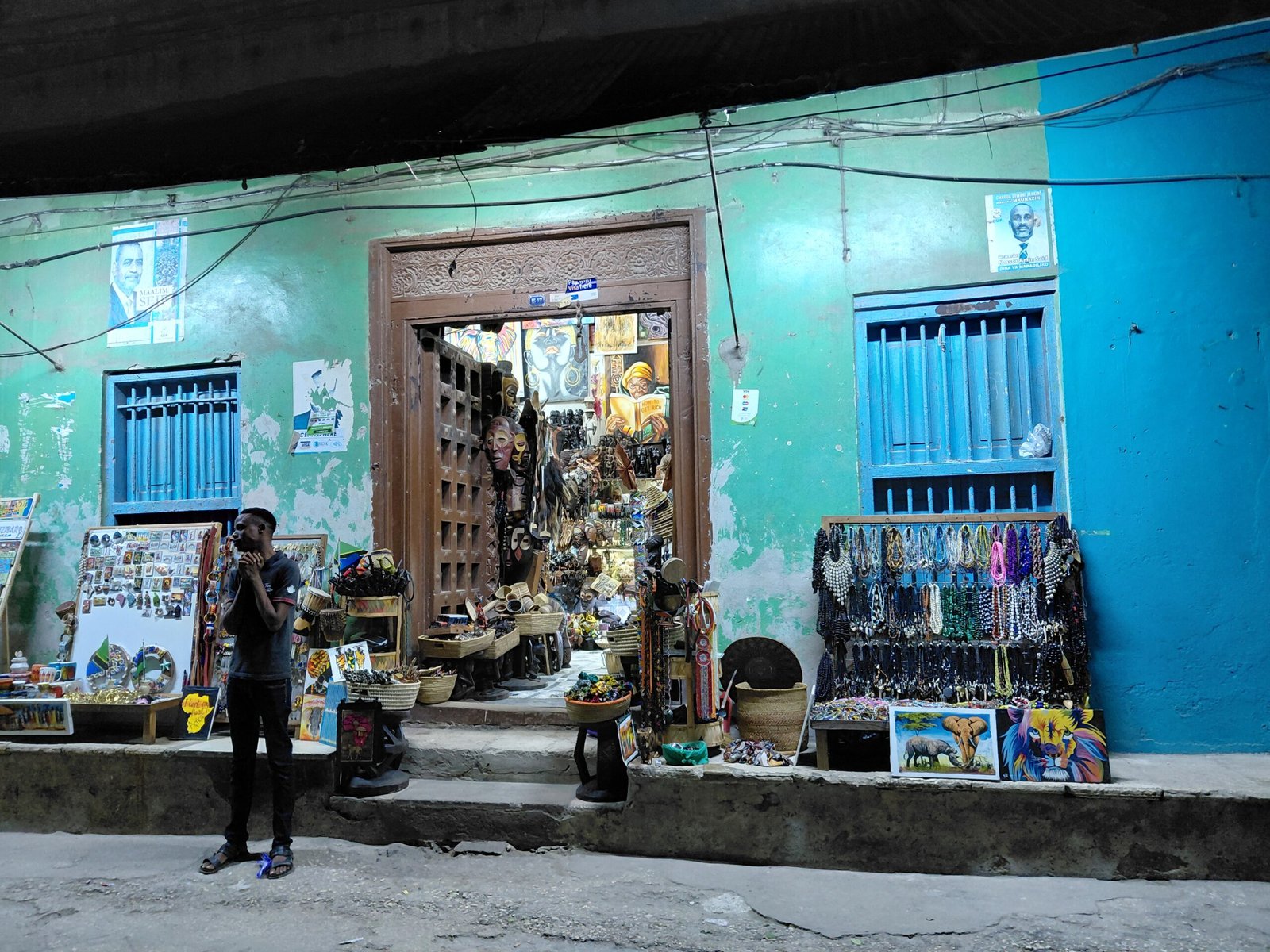
In the evening we set off again. This time we headed for the evening market on the promenade, with the idea of finding a slightly more upmarket place for dinner. It was a good plan, but there were a couple of changes when we left the hotel first, at the kids’ request, to wander around the souvenir shops of the old town. A few souvenirs for friends back home were found. After shopping, we ended up at the local fish market again and only then walked to the promenade for the evening market.
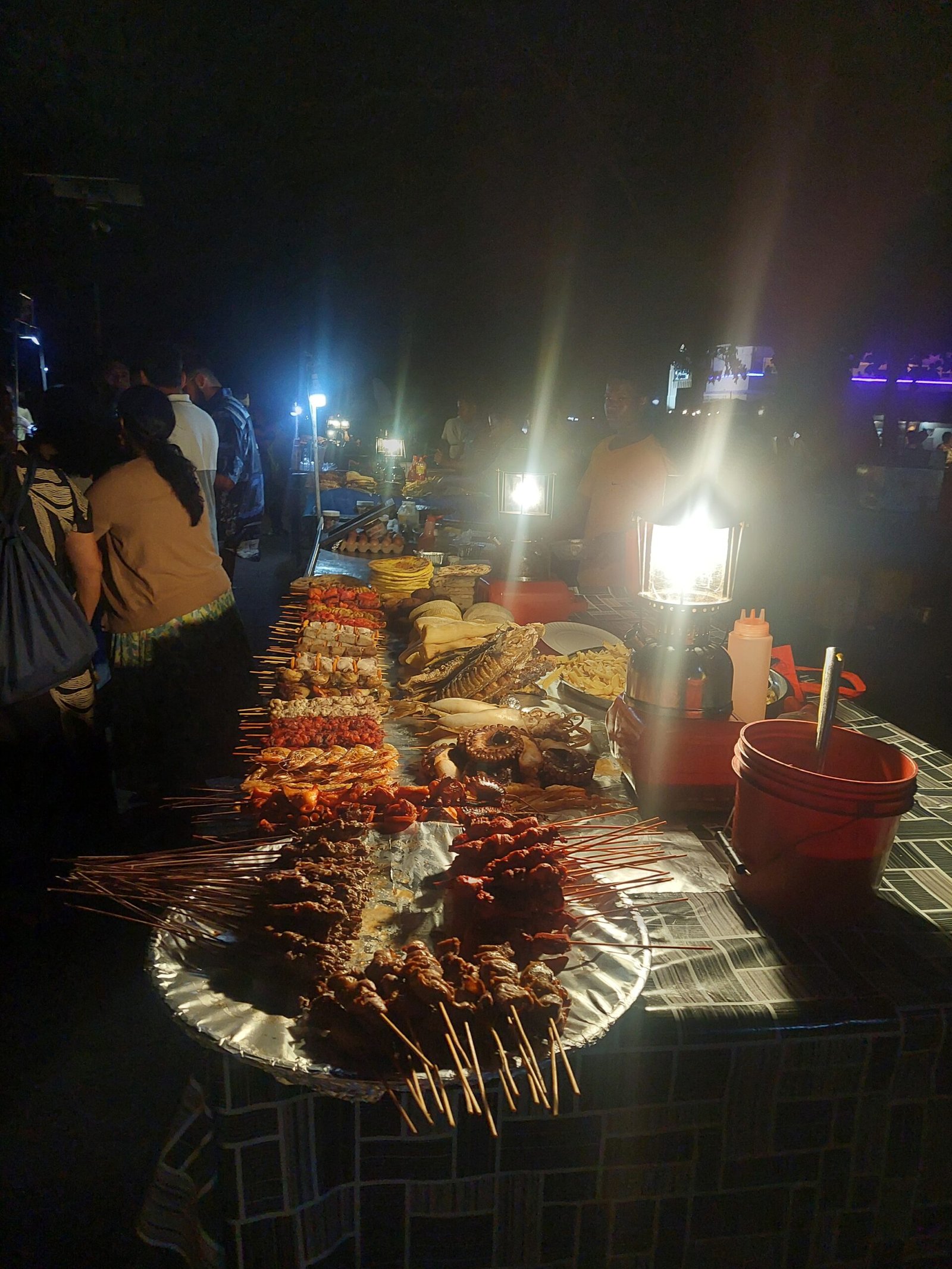
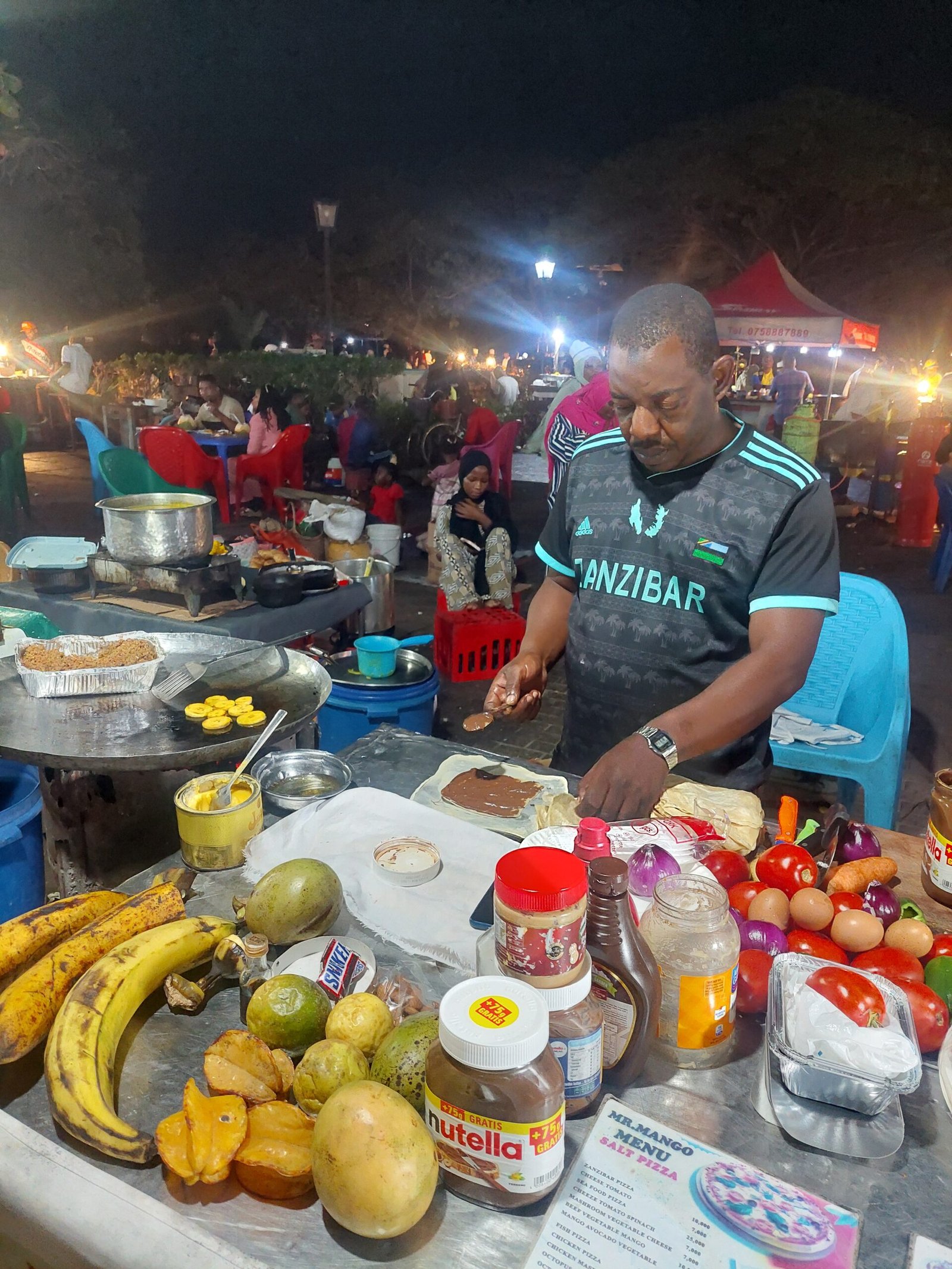
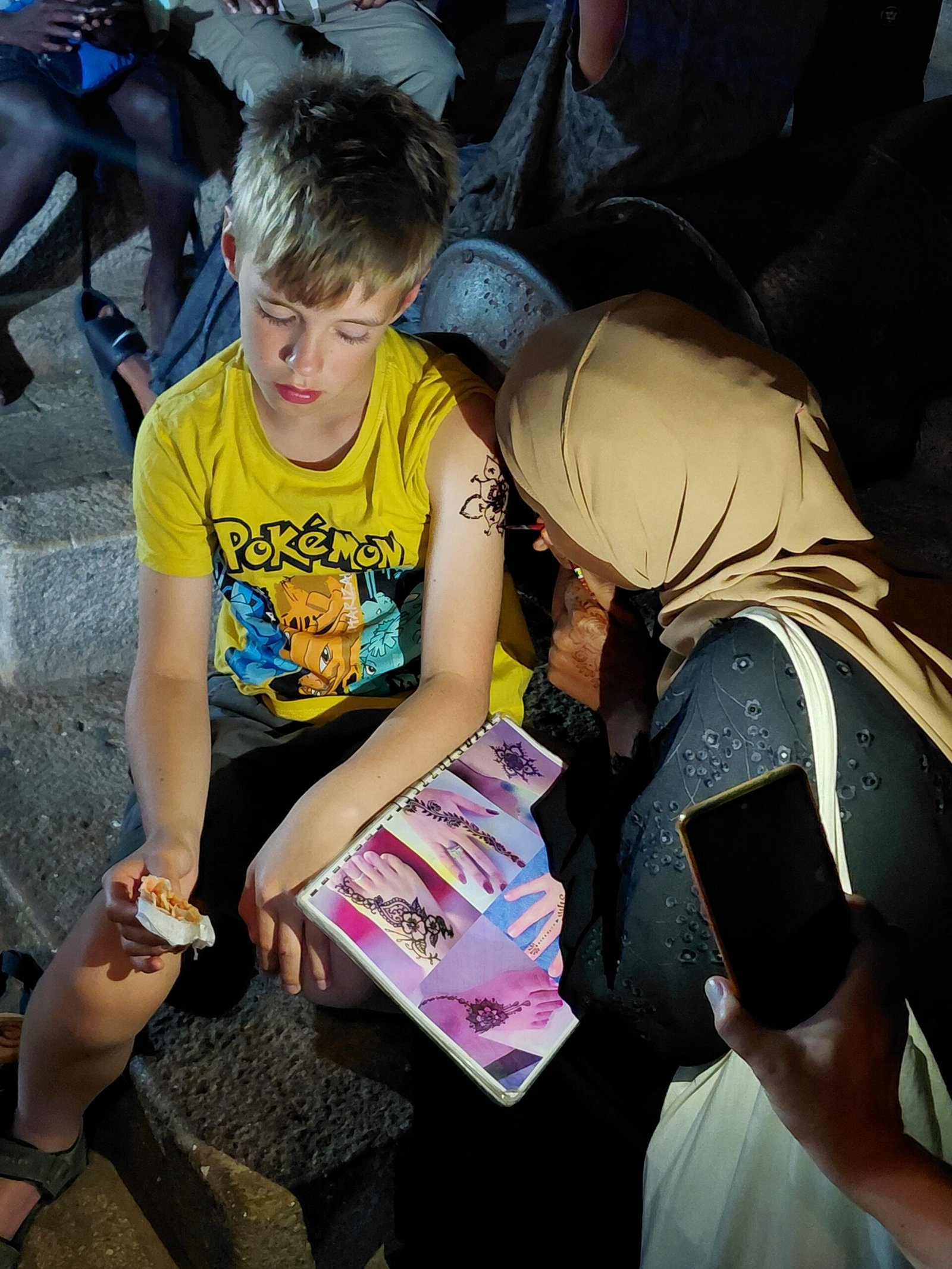
The market was busy with people both selling and shopping. The food stall vendors were a little too eager to get customers for themselves. There would have been a variety of delicacies on offer, but as we couldn’t be sure of the freshness of all the ready-to-eat meat and seafood on offer, we ended up buying shwarmas. At least there we could see the meat being carved directly from a larger piece of meat that was being roasted. Marko liked the shwarmas so much that he ended up eating three of them. In all fairness, the wraps were quite small in size, so even three of them did not amount to anything out of the ordinary. In addition to the shwarmas, we bought sugar cane juice, a couple of other freshly squeezed juices, a nutella-banana crepe for Risto and ice cream for Ronja. The ice cream was made from condensed milk and the flavours requested by the customer (Ronja had pineapple and Kitkat) on a cold metal tray by chopping and rolling with metal spatulas. We had previously had similar “rolled ice cream” in Cambodia on a pub street in Siem Riep. Ronja and Risto also got henna tattoos, after which we returned to the hotel to sleep.
There was no shortage of souvenir shops in Stonetown.
The market offered a wide range of delicacies.
A nutella-banana crepe for Risto
Risto wanted a tattoo on his shoulder.
Ronja got her tattoo on her ankle.
The tattoos will last for a couple of weeks.
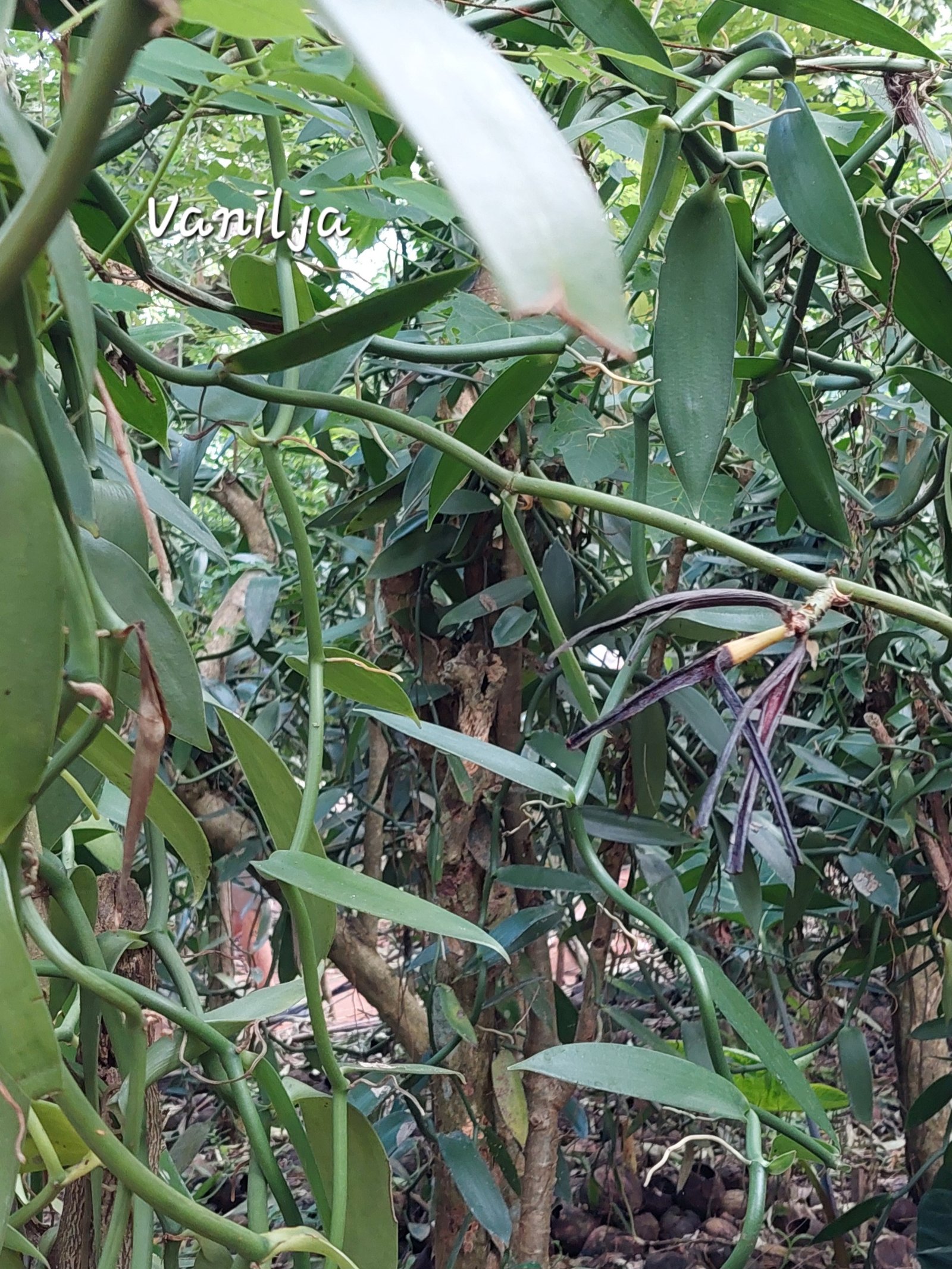
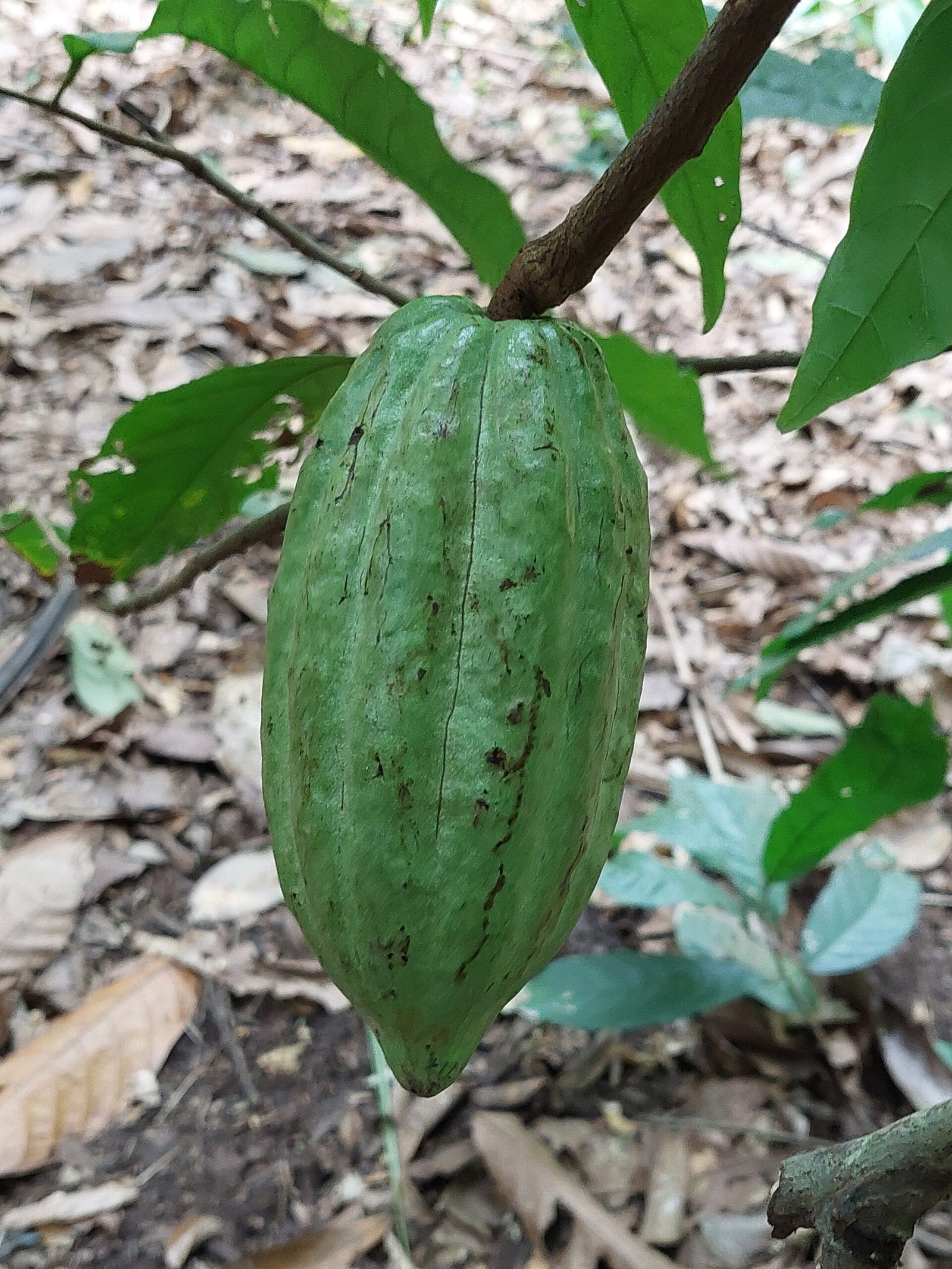
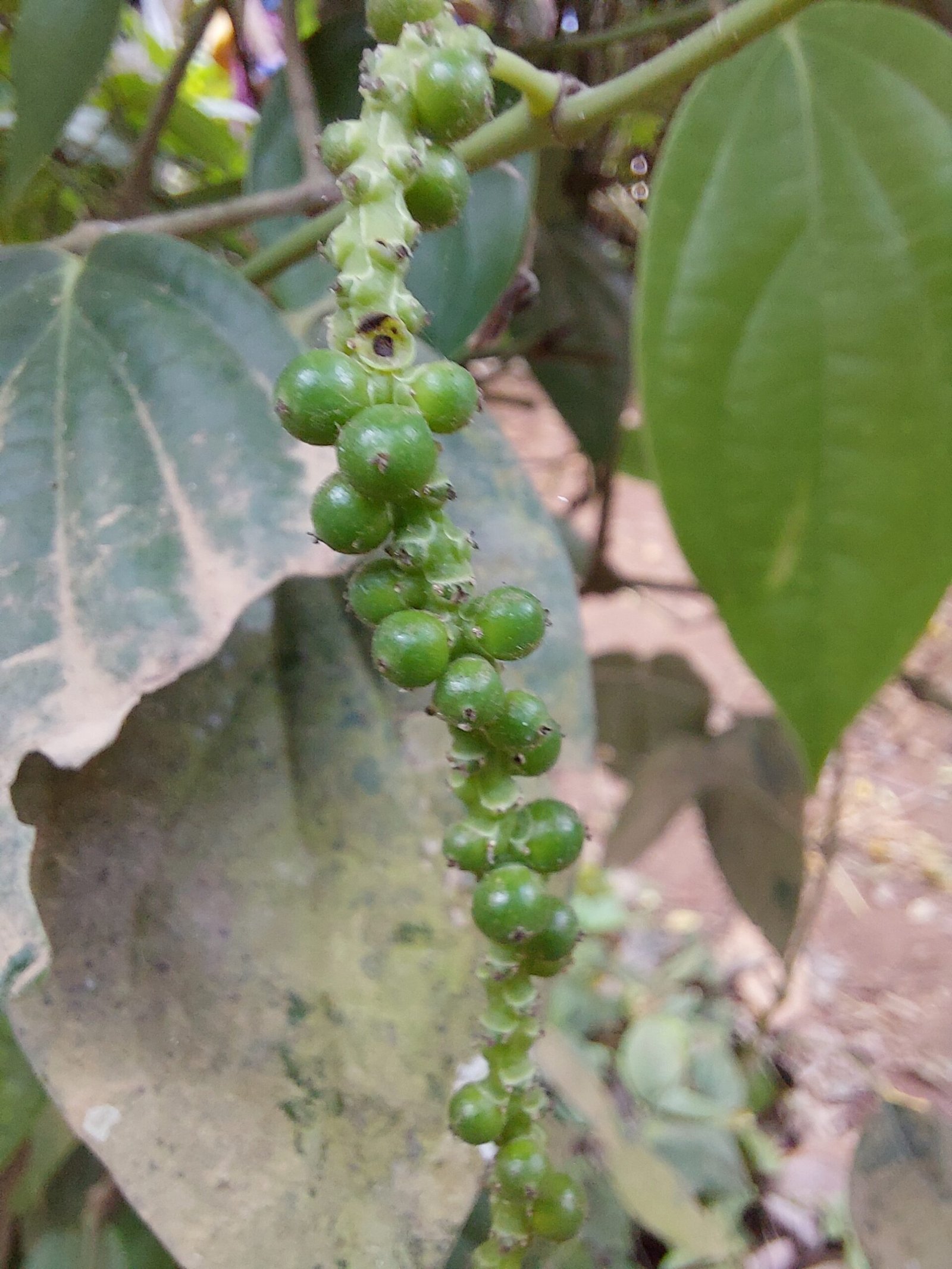
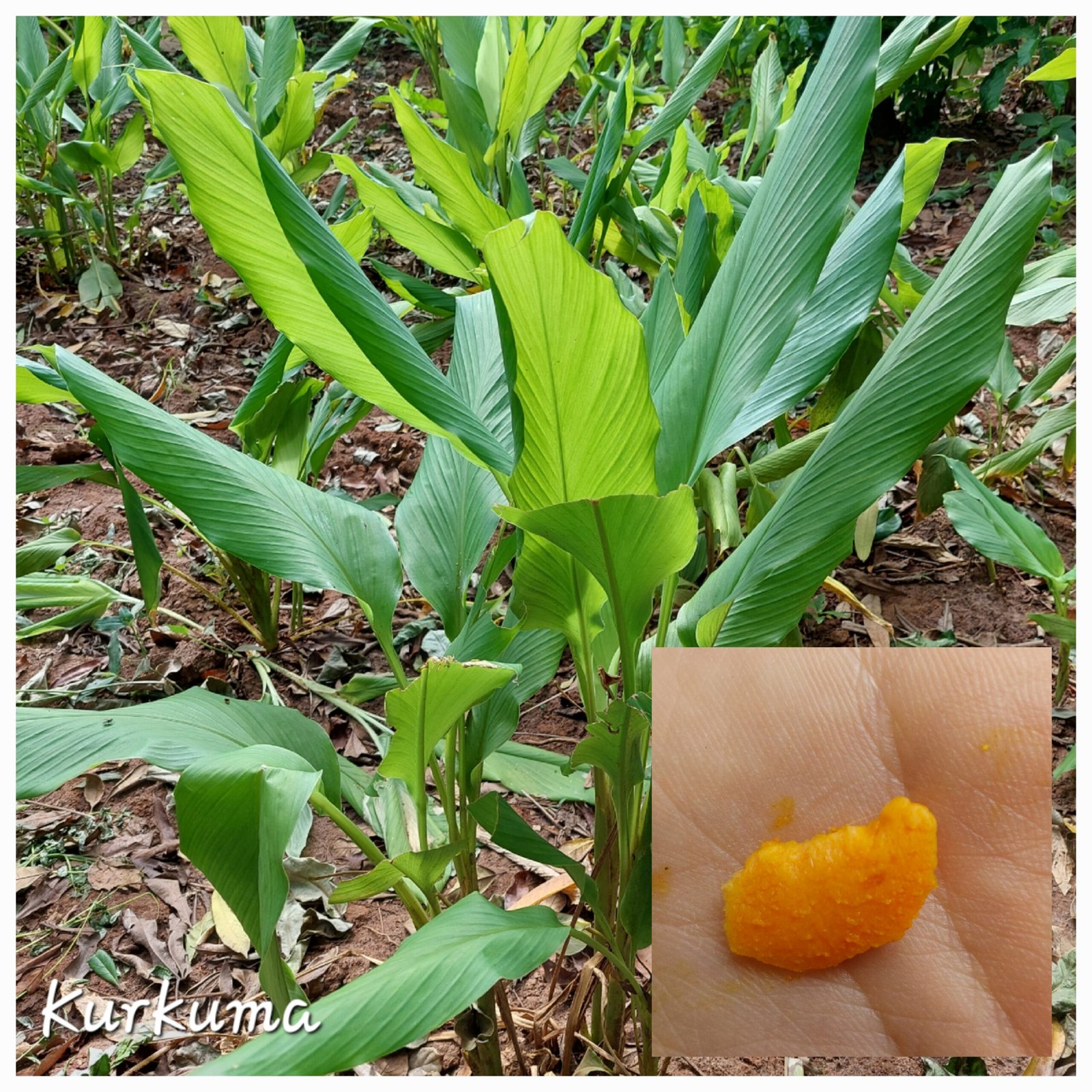
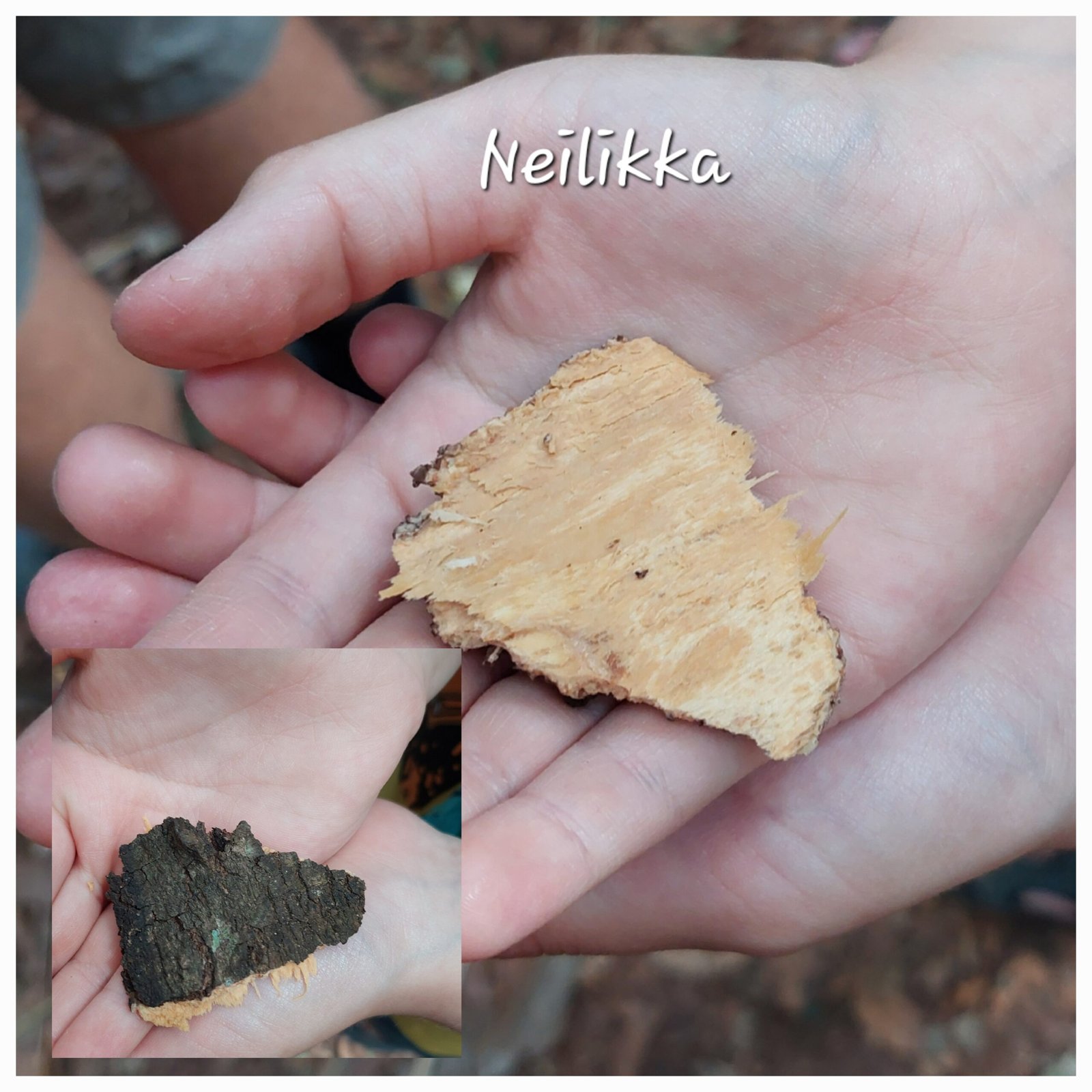
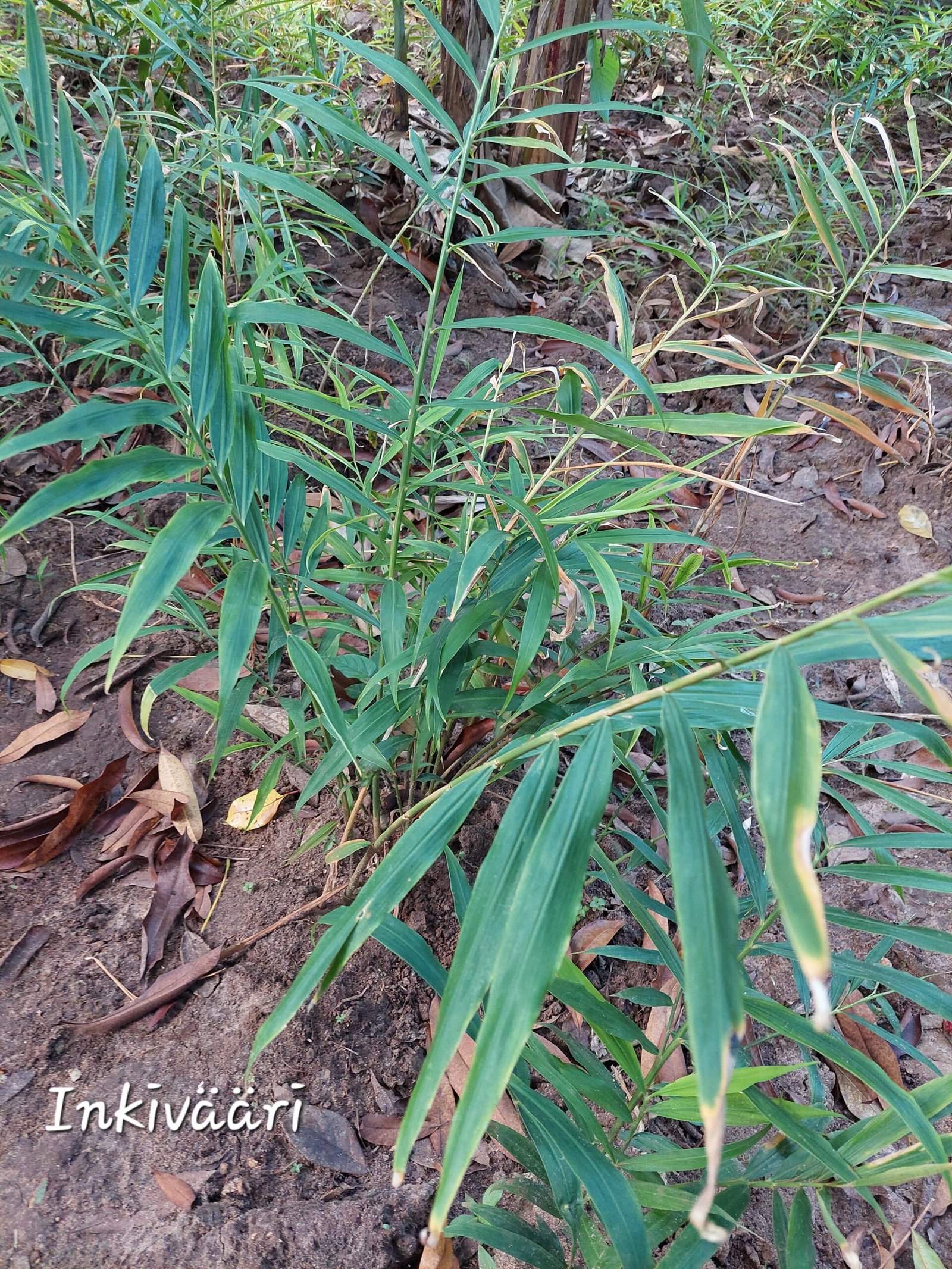
After breakfast we continued our journey towards the northern tip of Zanzibar and the village of Nungwi. On the way, we first stopped at a spice farm where we were introduced to the different spice plants that grow on the island of Zanzibar. You could have also bought different kinds of spiced coffee or spices from the spice farm, but this time we decided not to shop there. Jaana did, however, indulge in Chanel no.0 perfume, made from herbs grown on the farm.
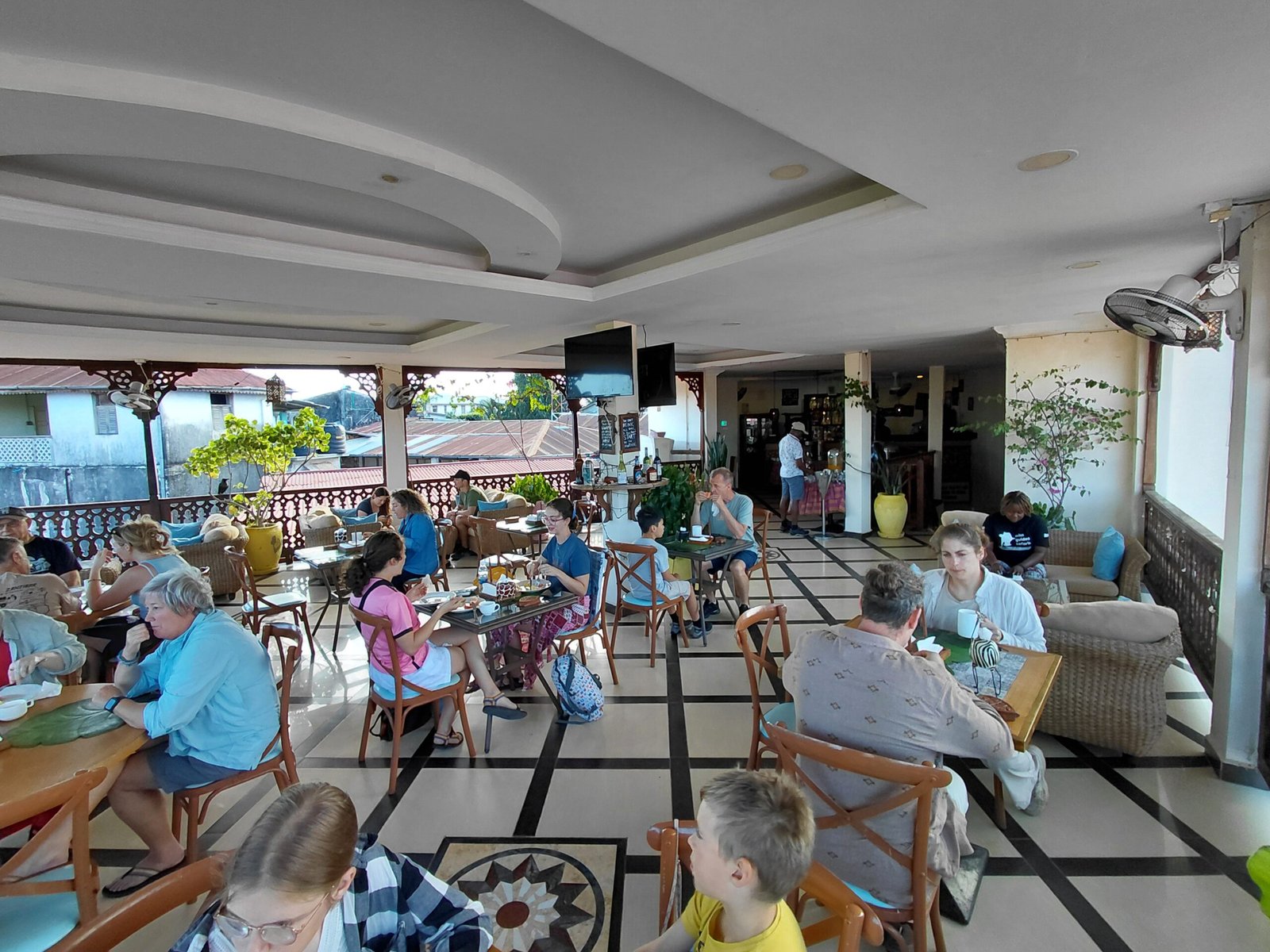
Enjoying breakfast on the hotel's roof terrace.
It's easier to identify spices on the spice rack in the shop!
Cacao
Pepper
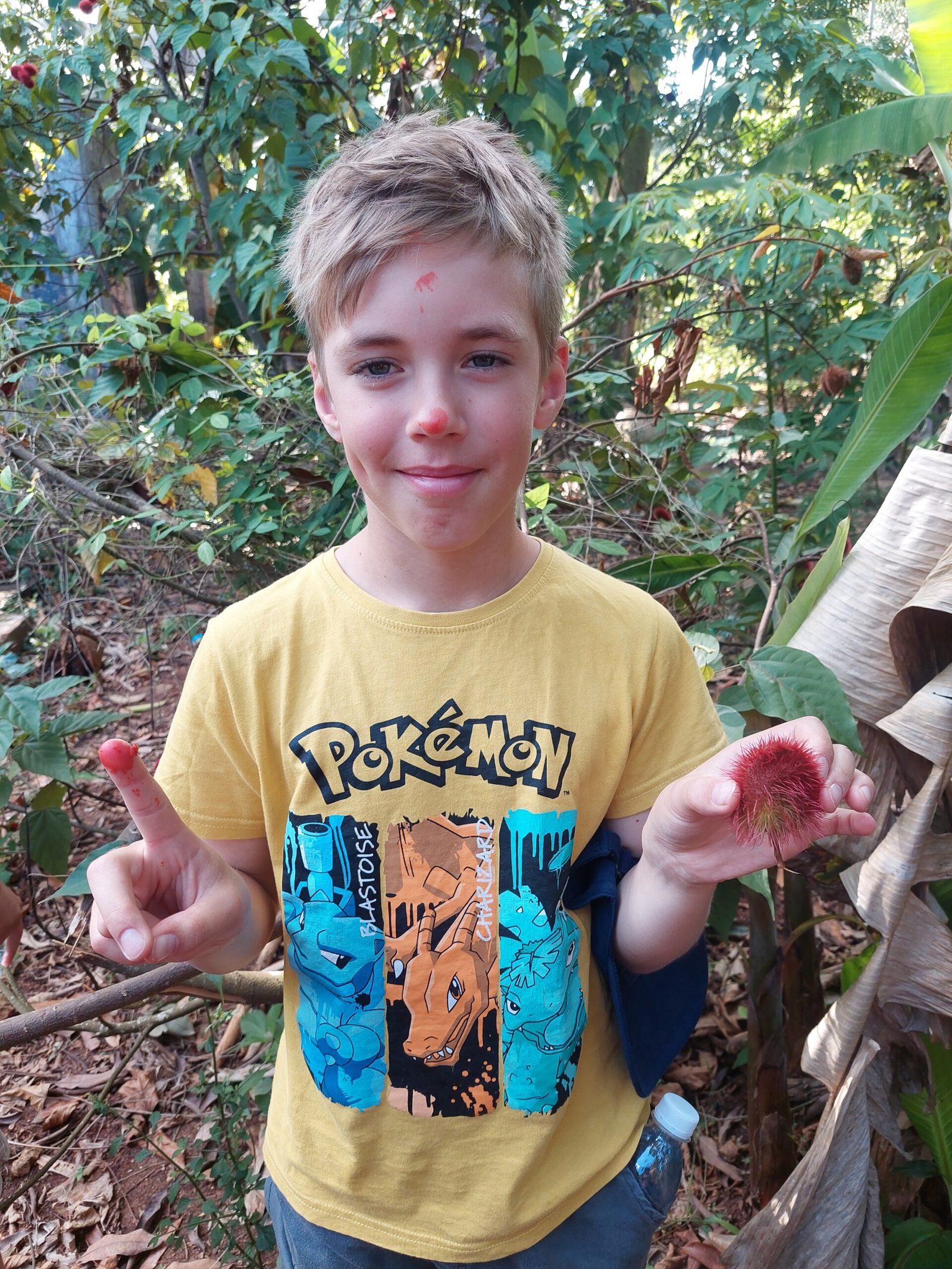
Risto tested organic makeup.
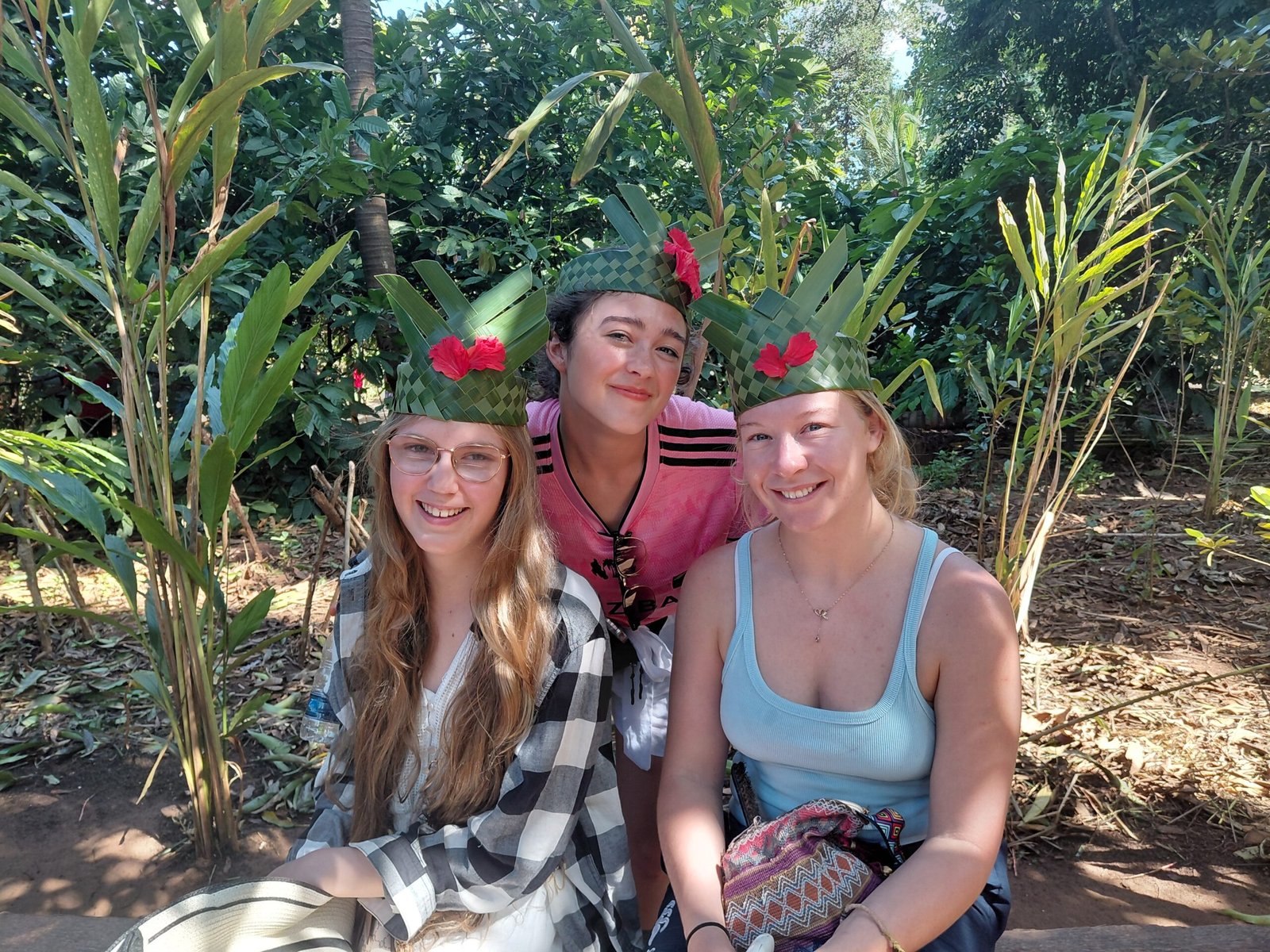
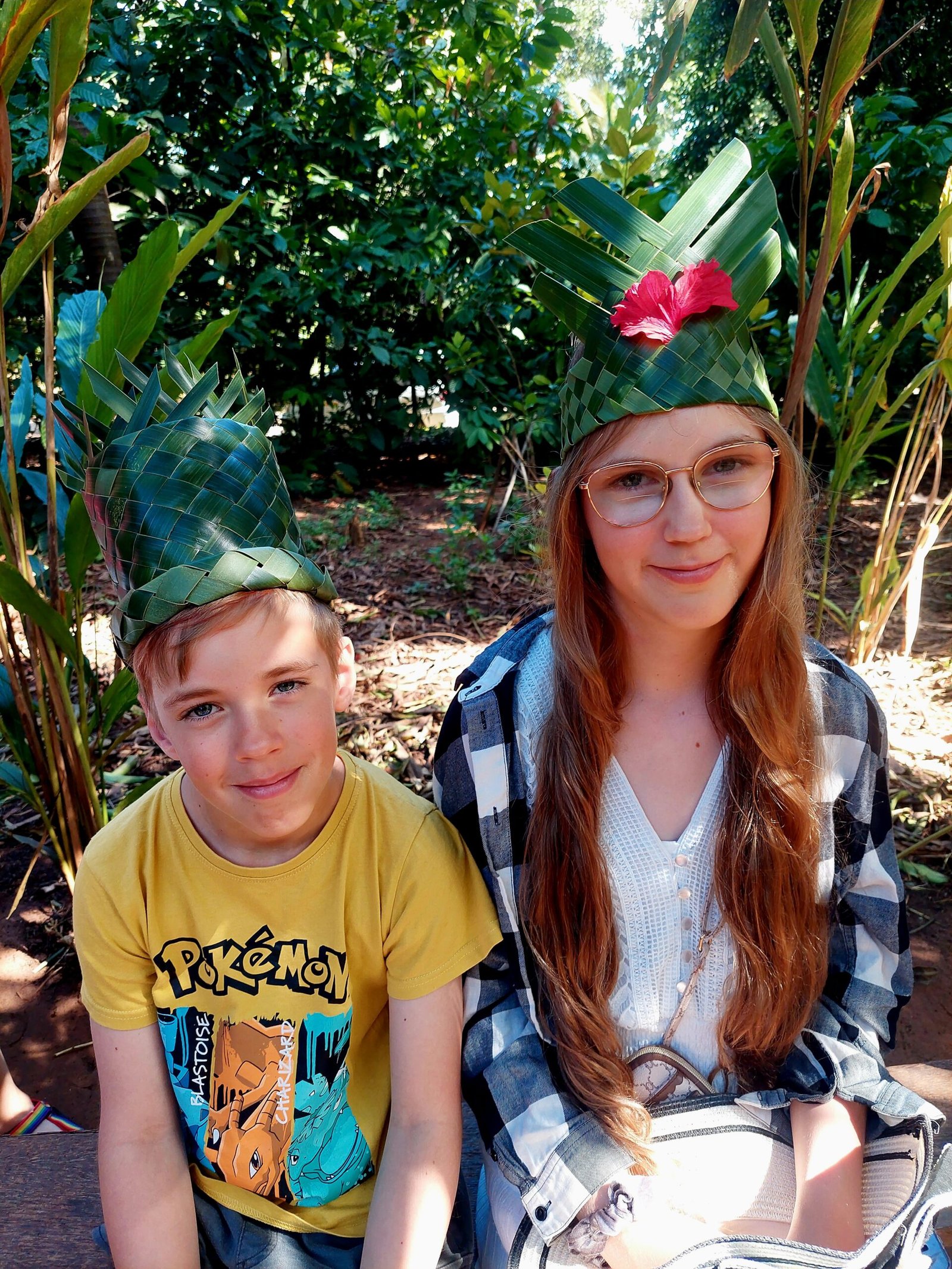
We also got hats braided from palm leaves. (Ronja, Meg and Sophie)
First, we watched as this local man climbed a palm tree to sing a song. Then it was our turn to try. Risto reached the highest. He said the hard, jagged bark of the palm tree hurt his feet.
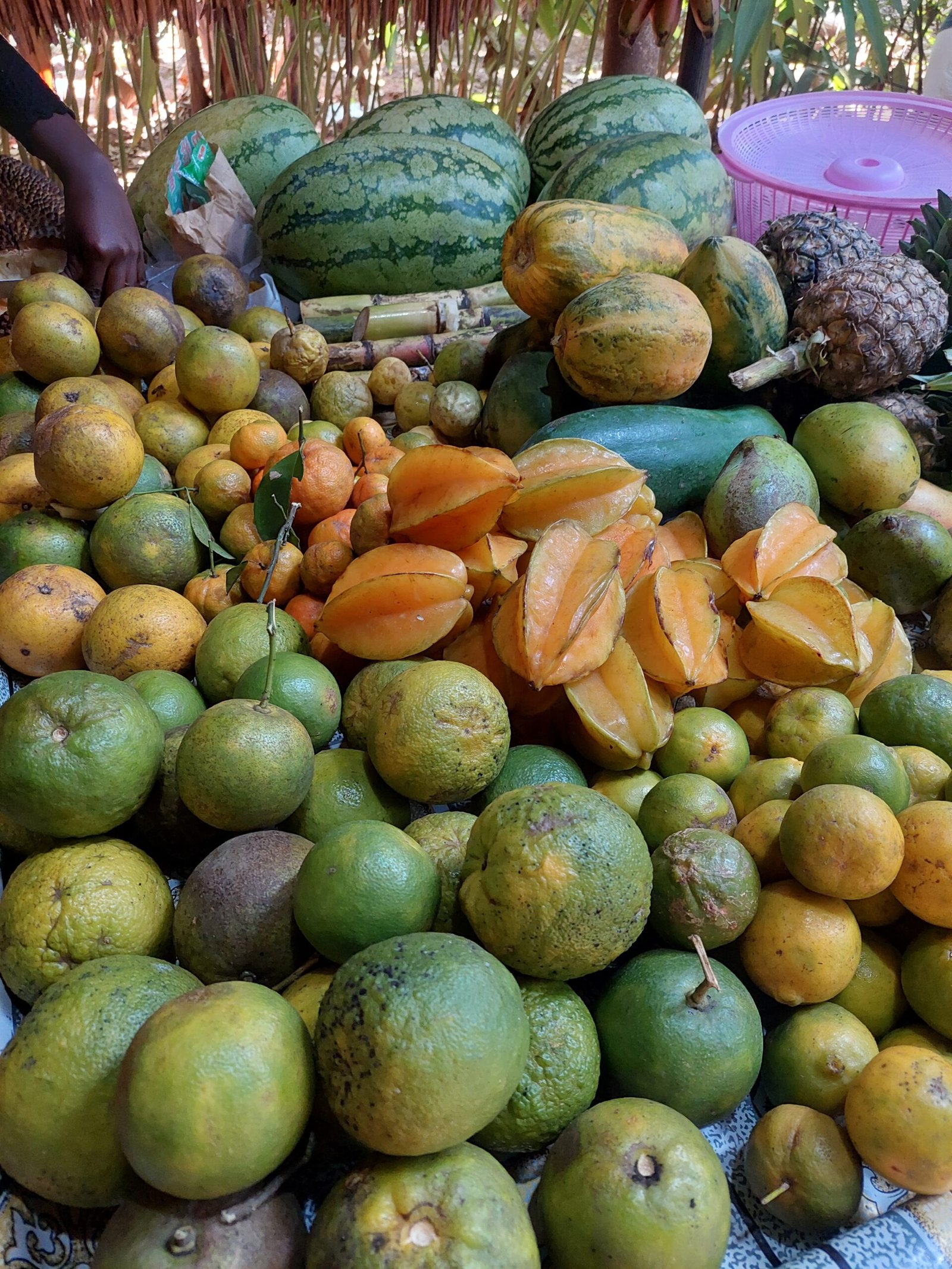
Finally, we tasted some fruit.
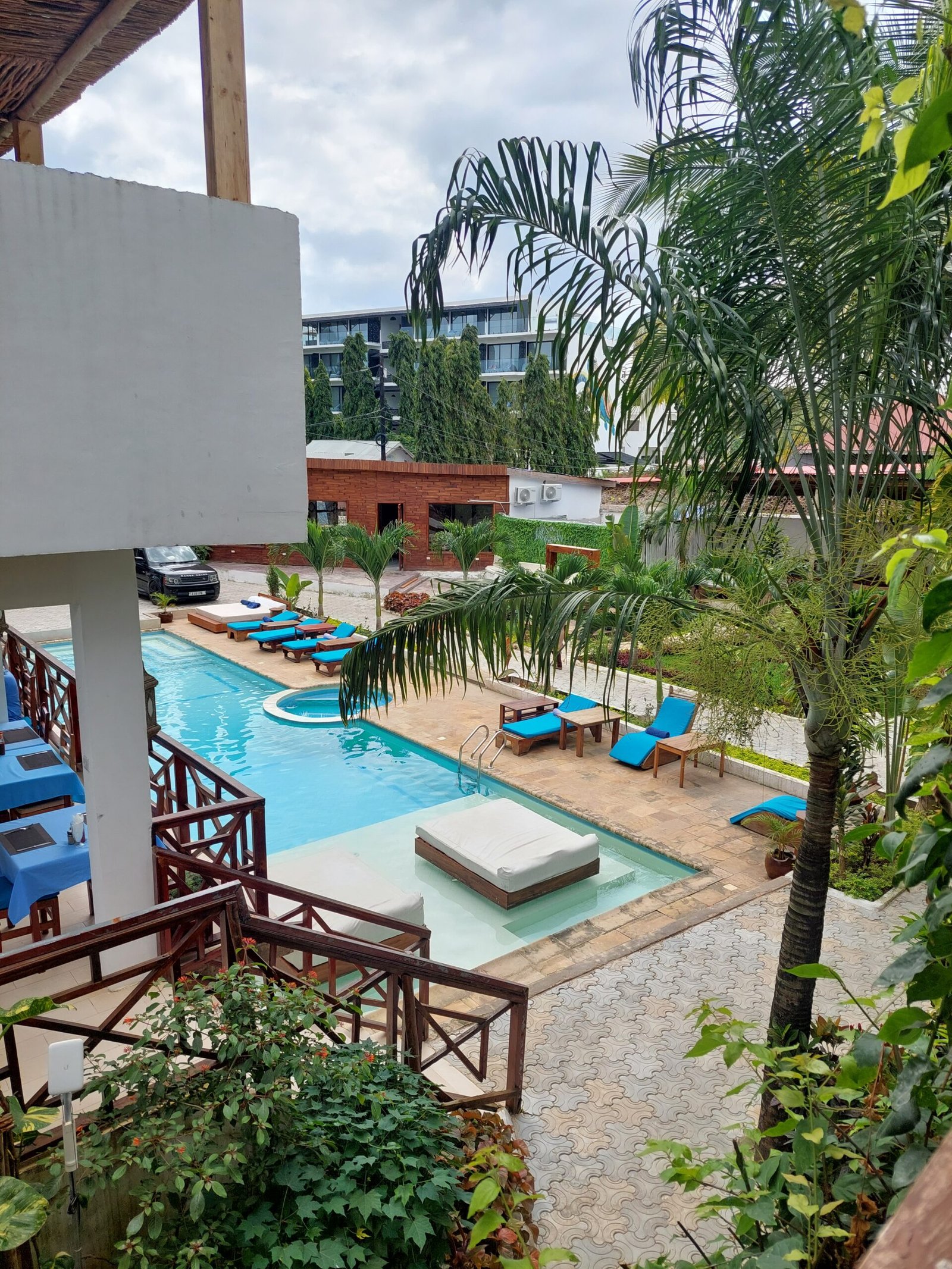
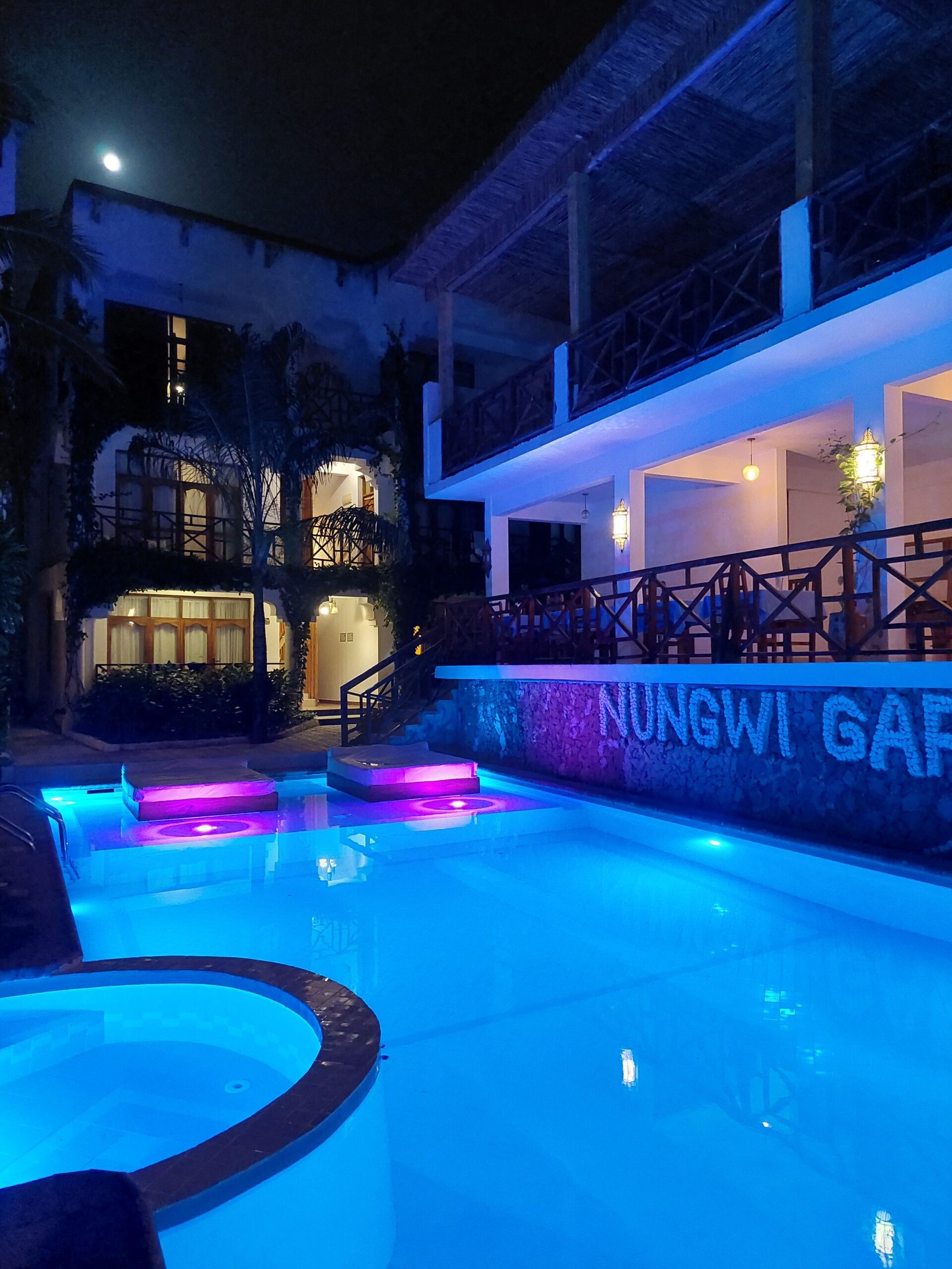
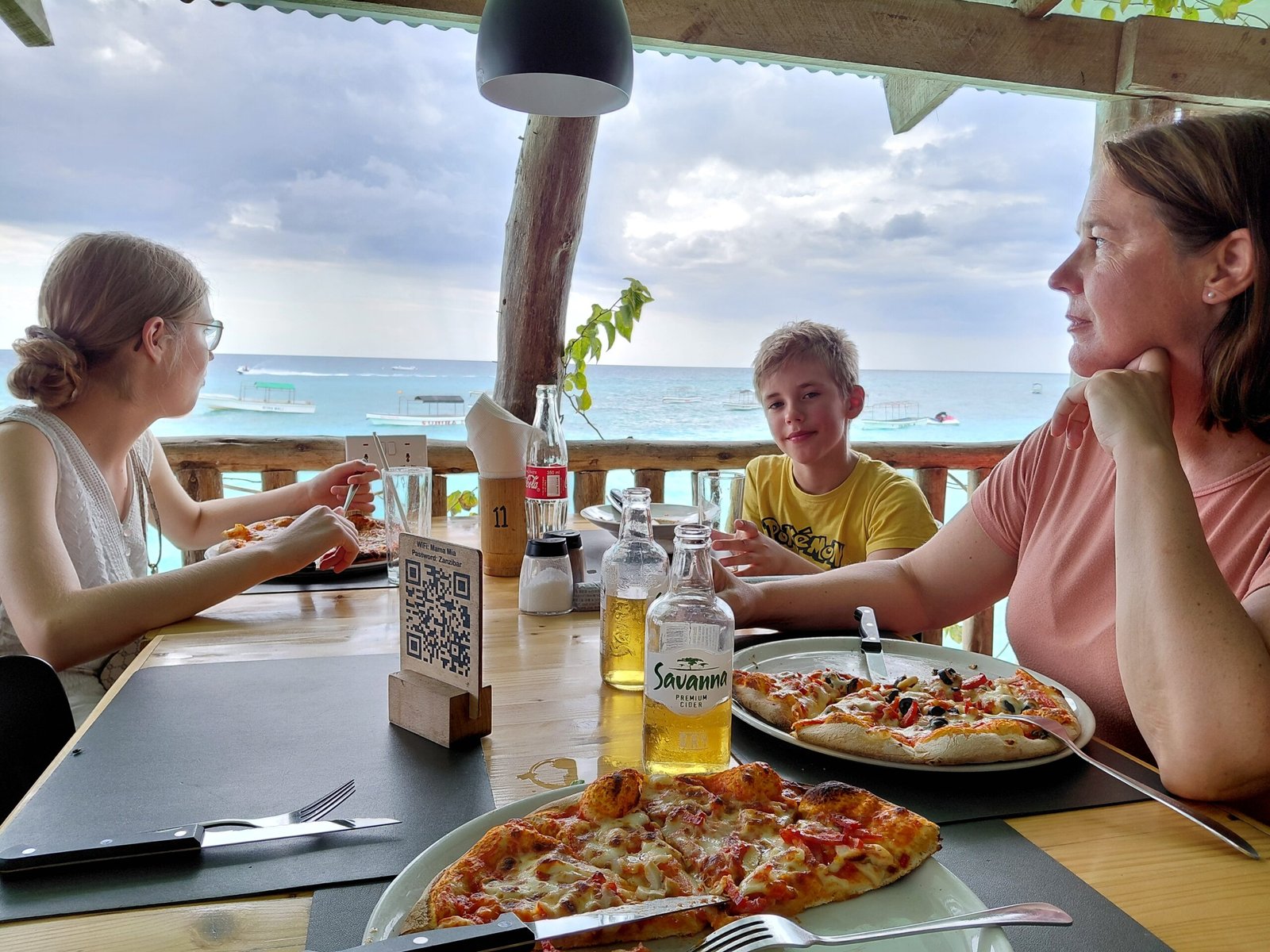
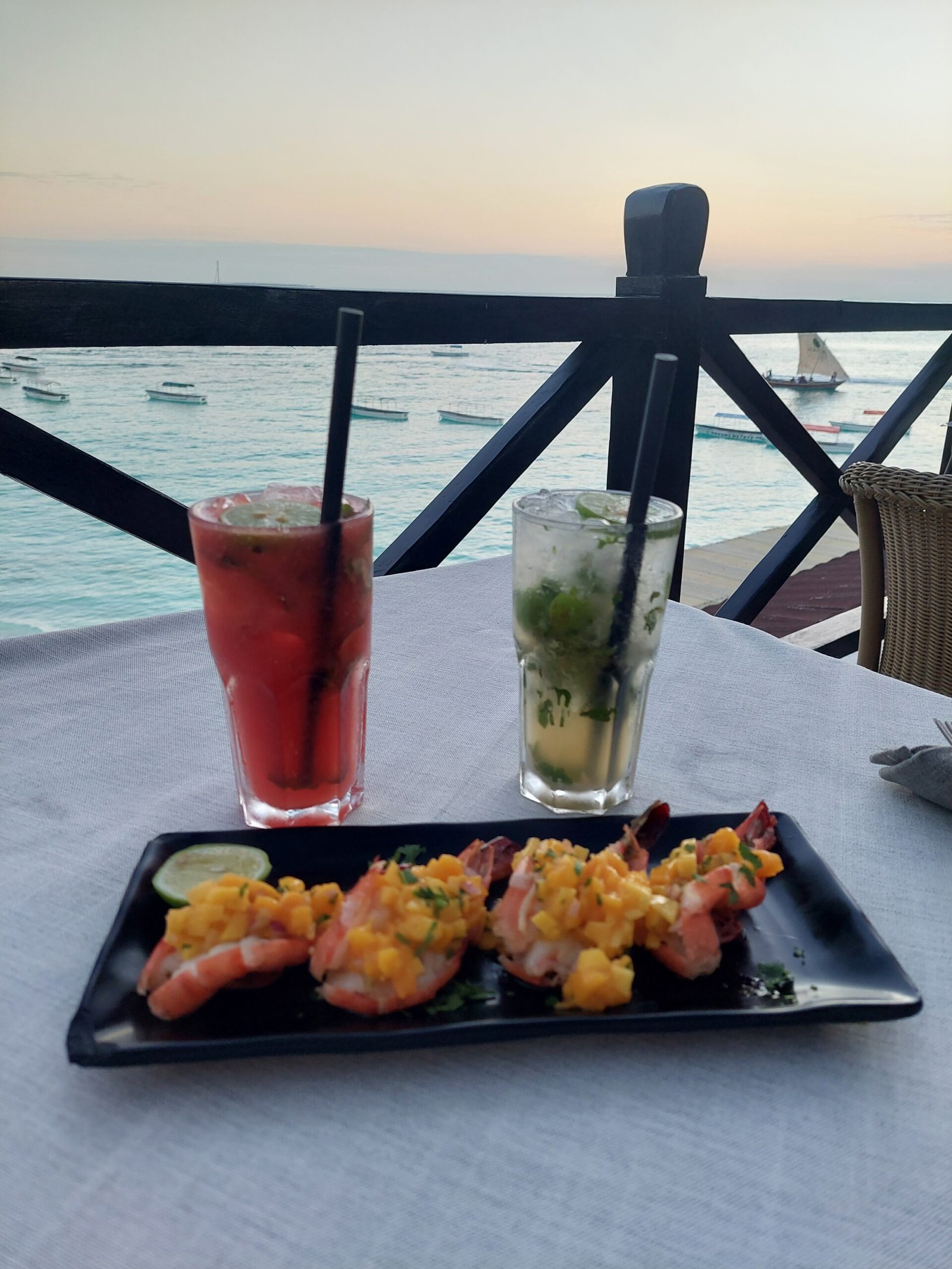
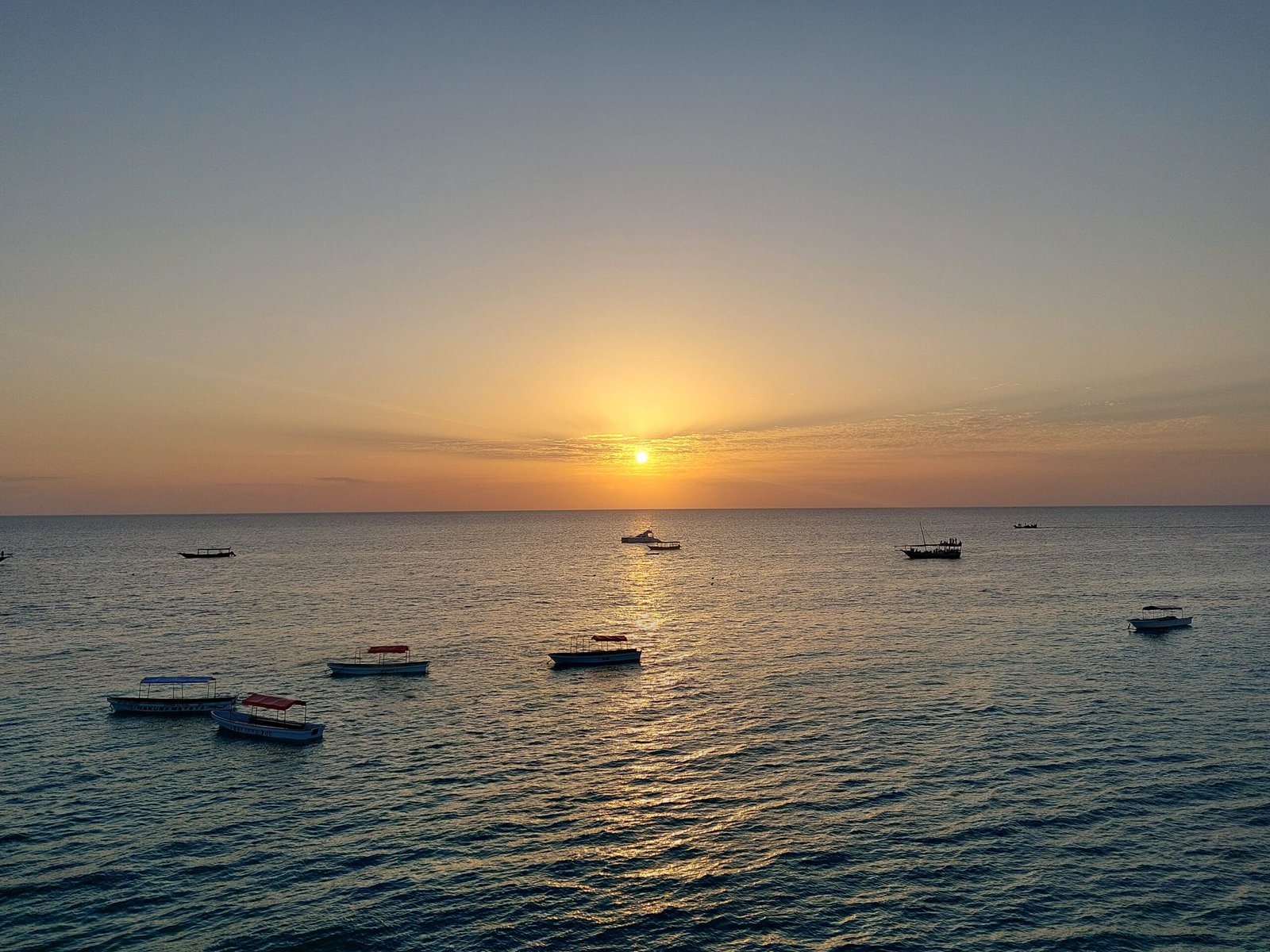
From the spice farm we drove another hour or so to the village of Nungwi and stayed at a hotel called Nungwi Gardens. The hotel was very comfortable and only a short walk from the beach. We walked to the beach for lunch at the Italian restaurant Mama Mia. The food was very good, and Risto finally got the pasta bolognese he had hoped for. Since it was a warm day, we decided to test the hotel pool after lunch, where the water was nice and warm. After swimming, Jaana and Marko went to the nearby beach to watch the sunset in one of the beach restaurants. Ronja and Risto stayed at the hotel because they were not interested in watching the sunset after a long day.
Nungwi garden was a very pleasant place.
In the evening, there was also a wide range of delicacies on offer.
Someone had gone for an evening cruise with his ferrari.
We had booked a snorkelling trip for Friday. As Ronja didn’t have her own snorkelling goggles, or nose clips to go with her regular swim goggles, it was a bit uncertain whether she would be able to go at all. Gift had been told on the phone the day before that the operators would try to find nose clips, but when we arrived at the snorkelling site office in the morning, the guys there had never even heard of any nose clips. Jaana and Ronja decided not to go on the snorkelling trip, but then we were told that Ronja would see dolphins from the boat during the trip, and could probably swim a bit. So in the end we all decided to go.
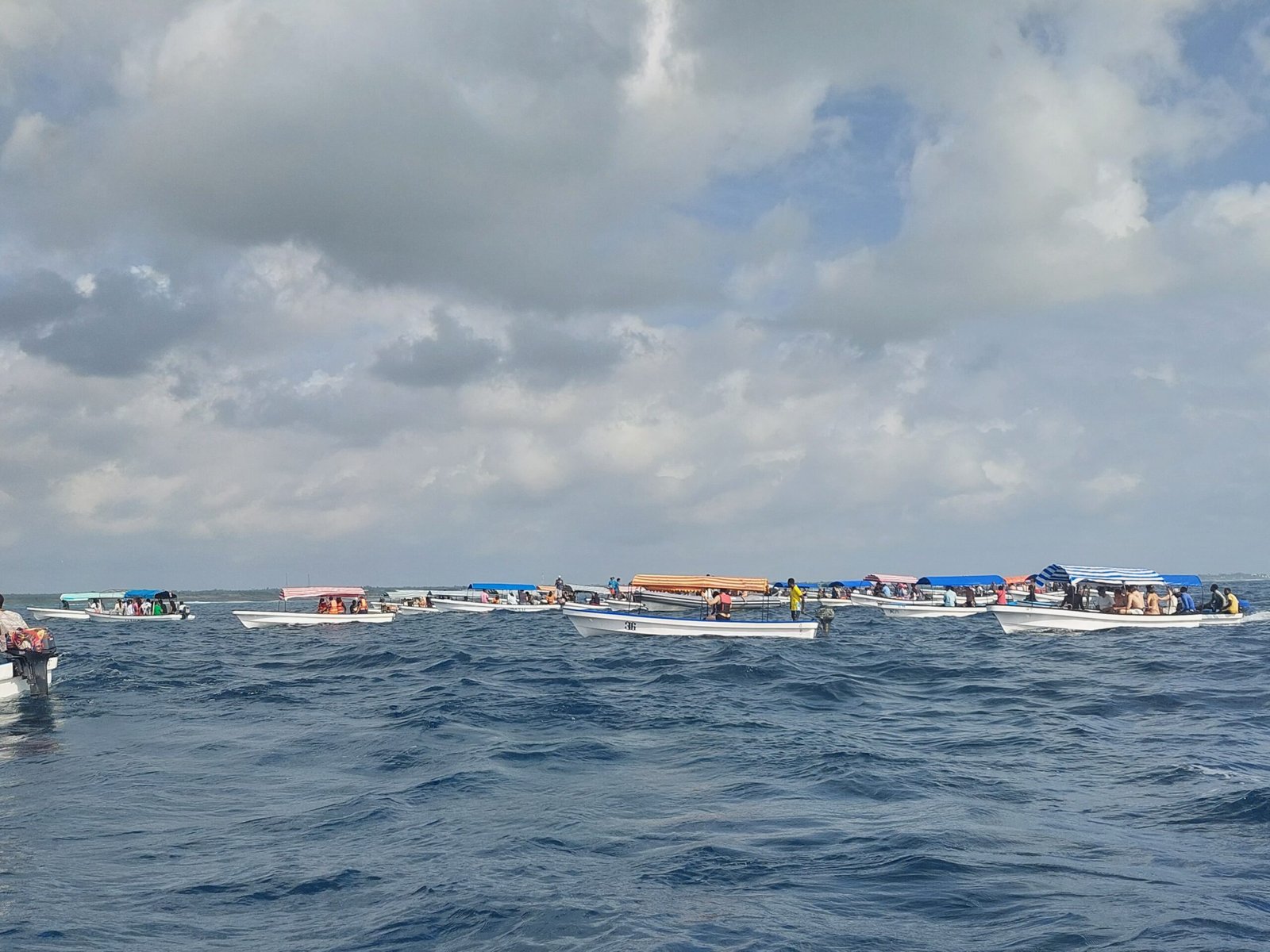
The boat ride to the area where the dolphins were swimming turned out to be a pretty wet and bumpy ride. Our boat wasn’t that big, but the waves were surprisingly big. After probably about 40 minutes, we arrived at a spot where dozens of other boats on snorkeling and dolphin trips had ended up. The name of the game was that when one group of boats spotted dolphins jumping on the surface, they would call out to the others, and all the boats would circle around to surround the dolphins. You could jump off the boats into the sea to swim with the dolphins, but we didn’t for two reasons. The first reason was that it would have been very dangerous to jump into the water with boats cruising around with their propellers running. Among the waves, it would not have been easy for the drivers to spot the swimmers floating in the water. Another reason was that it was not at all pleasant for the dolphins. Sure, they could dive away from the tourists swarming around if they wanted to, but it still seemed like a dolphin chase.
A dolphin chase.
After the dolphin spot, we continued on to a small coral reef where we all got to snorkel. Ronja was given a life jacket so she could snorkel more easily with just one hand. With the other hand, Ronja had to hold her nose. We had taken some bread with us from breakfast. As we crumbled it into the water, colourful fish swarmed all around us. If there were a lot of fish, there were a lot of people also. The place was really overcrowded at first, but luckily some of the boats that had arrived earlier left soon enough, and we were able to swim in clearer waters for a while.
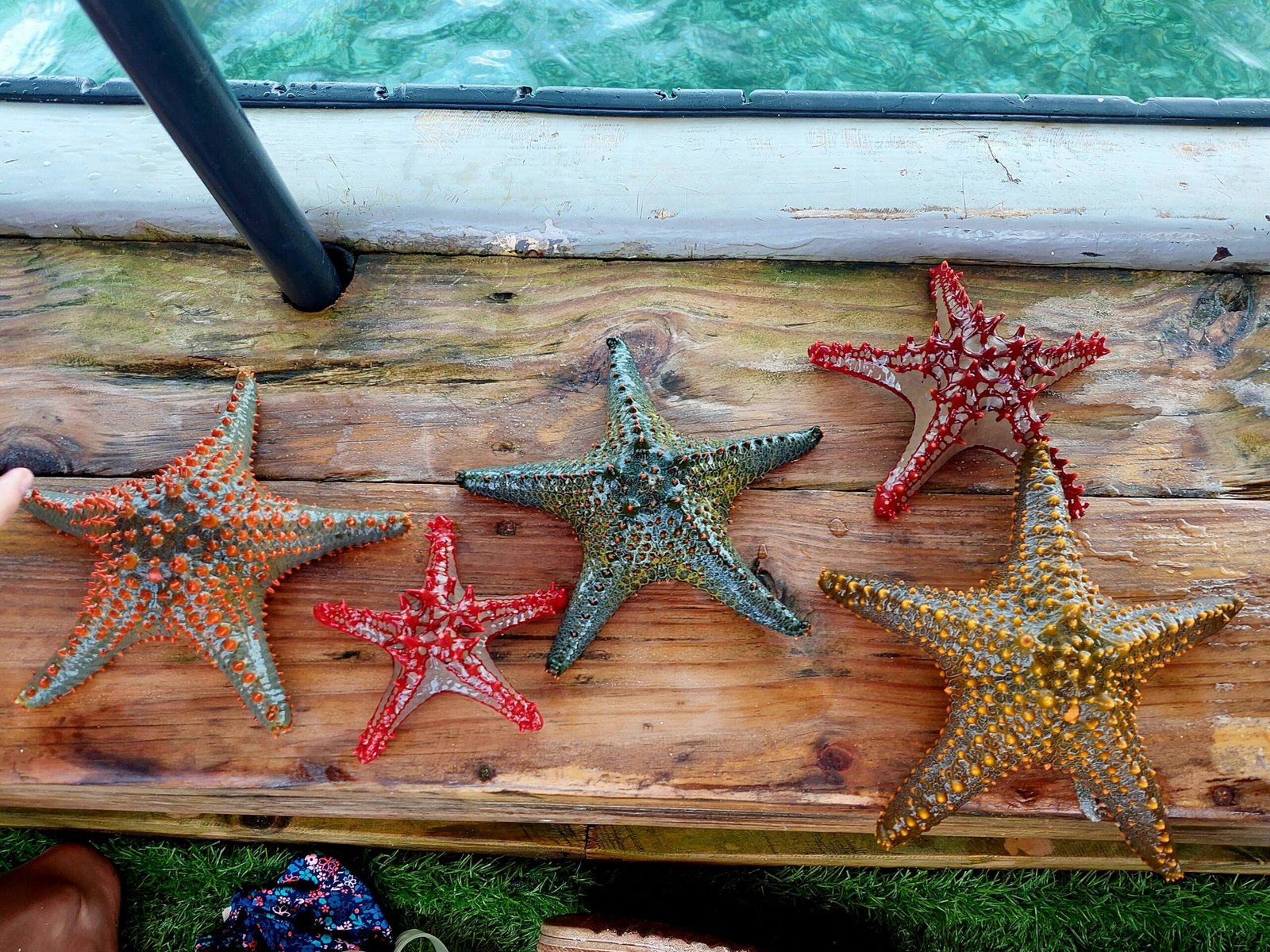
After snorkelling, we went to a small sandy beach to enjoy the sun and fresh fruit. Even there, we didn’t really need to be alone. On the way back, we stopped in an area with lots of starfish and sea urchins. Apparently, sea urchins are the food of starfish, so there were plenty of starfish in the area. However, we were surprised to see how many different types of starfish there were on the seabed. We picked up a few different ones to take pictures of on board the boat, but then released them back into the water. They say that a starfish can’t survive on dry land for more than three minutes before it dies.
This is the idyll we set out to find.
This is what was on offer.
On the way back we came across a place where there were dolphins, but only a couple of boats. That's when Marko and Risto went for a quick swim with them.
A collection of sea stars.
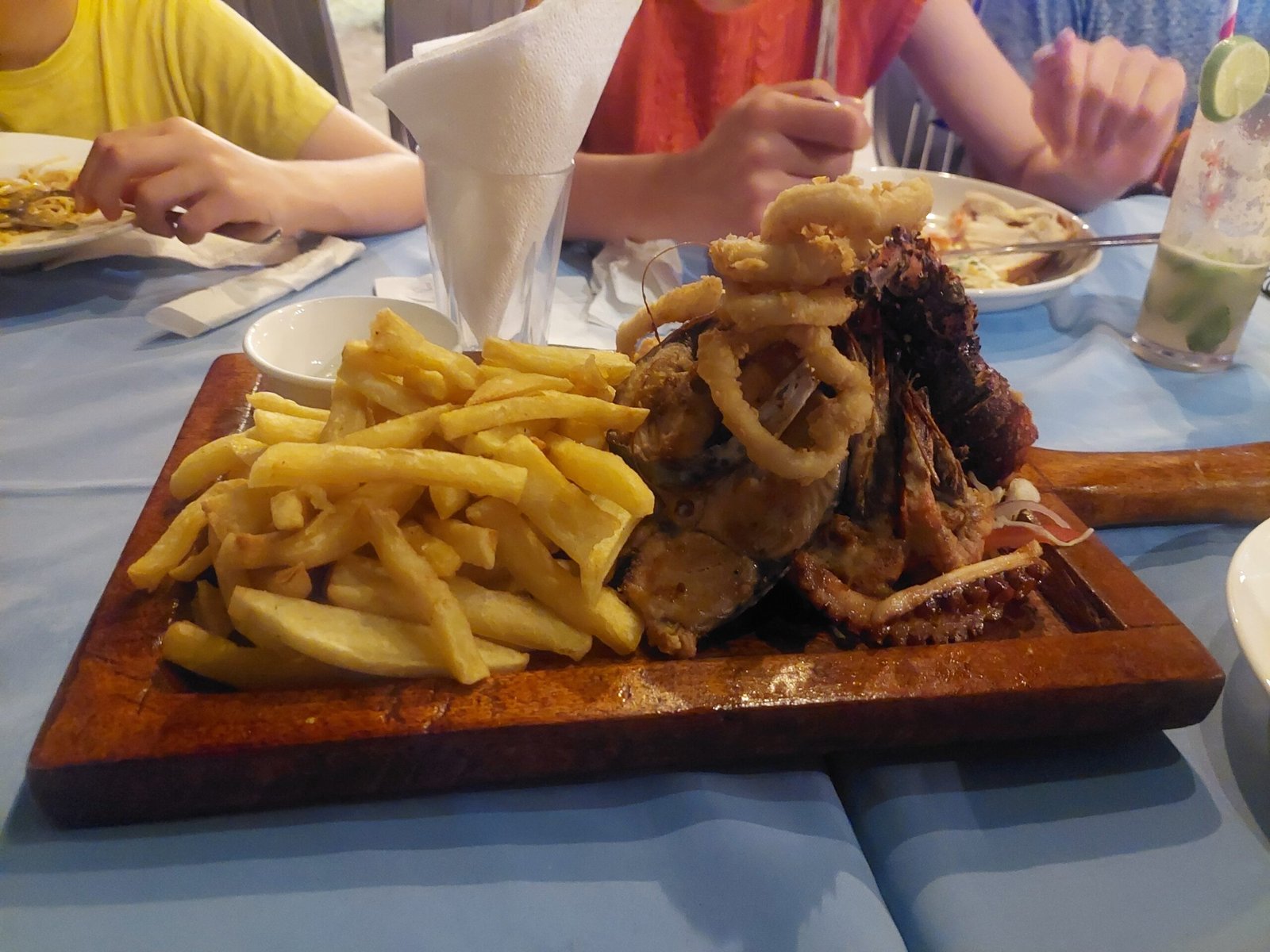
After the snorkeling trip, we were all in need of a shower and a good lunch. This time we tried one of the other restaurants on the beach. There too the views were beautiful, but the food was certainly no match for Mama Mia. After lunch we went for a massage. There were four massage tables at a small massage place near the beach, but only two of them were free. So Ronja and Jaana were the first to be massaged and Marko and Risto came back an hour later. The massage was not very expensive, 20$/h, and it was also very good. So it was a very worthwhile and relaxing investment after long days spent on the road! In the evening we all went to the beach restaurant for our last dinner together, as Jamie, Alex, Meg, Gabby and Dimitri would be leaving the next day. We had ordered the food in advance, as there were so many of us. Even so, we waited a little over an hour for the food. I wonder how long it would have taken to get the food if we hadn’t ordered it in advance. Pole, pole, as they say in Swahili.
The seafood platter was a long wait, and it wasn't even particularly good.
In the morning, we left at 7am for the ferry port of Zanzibar. It was only at this point that we were given our ferry tickets and discovered that this time there were four missing tickets. And again Dimitri had two tickets in his name. One of the four missing tickets was of course Ronja, so the young lady was about to make a bit of a fuss. Gift grabbed the passports of all the non-ticket holders and used the hour-long drive to the ferry port to get tickets for everyone. When we got to the port, there were still no tickets. So we had to negotiate with the gate guard for a while to get everyone into the port waiting area anyway. Gift’s own negotiating skills were no longer enough, and at this point Gift had to phone to the boss of the place, who told the guard to let us in.
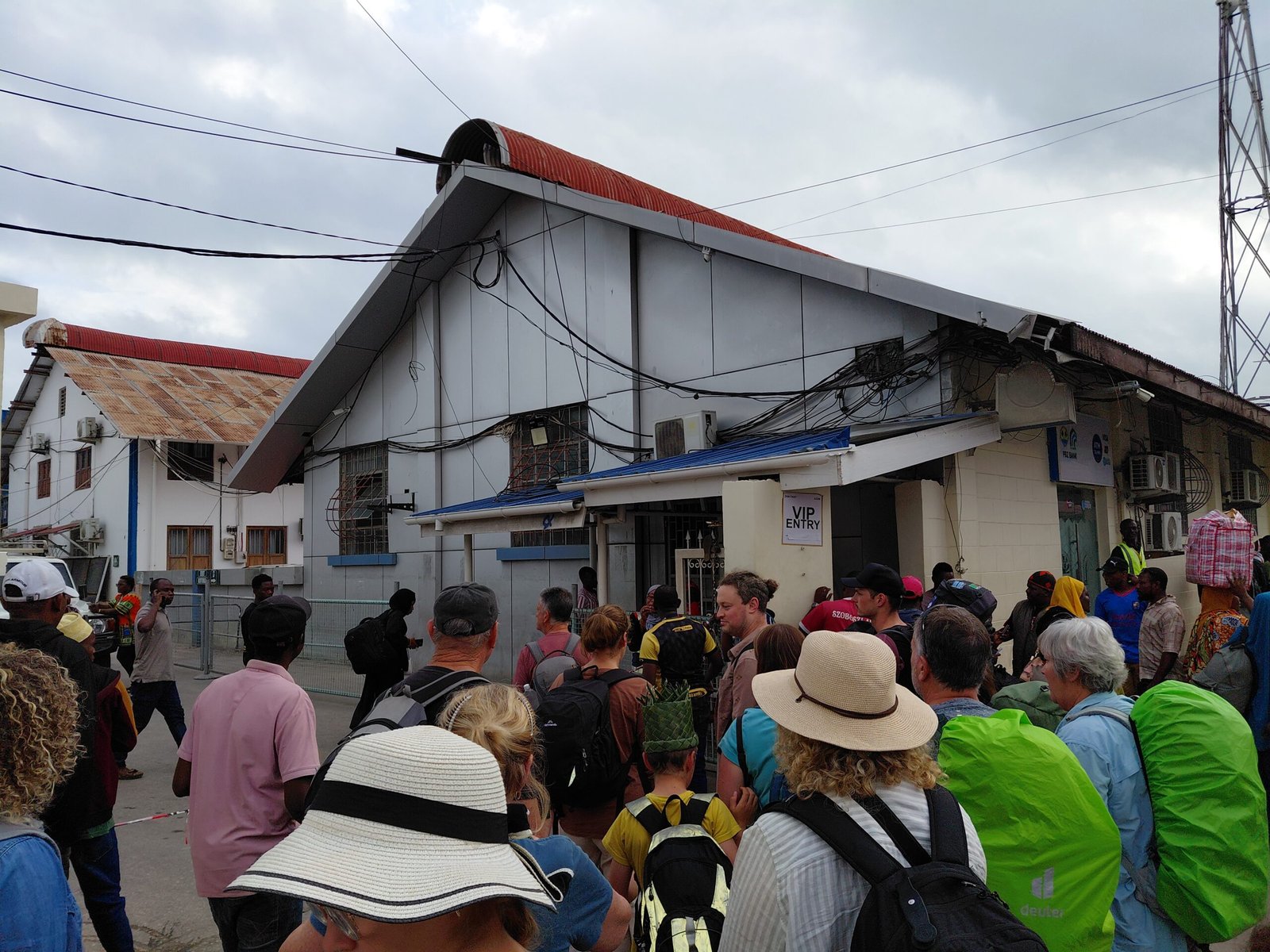
We apparently sat in the VIP lounge for a good while on leather sofas while Gift sorted out the missing tickets. Eventually, everyone had a ticket, and we were able to board the ferry 15 minutes before it was due to leave. At this point we were handed a completely random ticket, so for example Jaana was on the ferry under Nils’ name and Ronja was just “Any foreign adult”. Marko was the only one who got his own ticket back purely by chance.
Back in Dar es Salaam, we said goodbye to five of our travelling companions and continued our own journey towards the small town of Bagamoyo. Before that, we stopped for an hour at the Dar shopping center, where we had an hour to have lunch and to replenish our snack supplies.
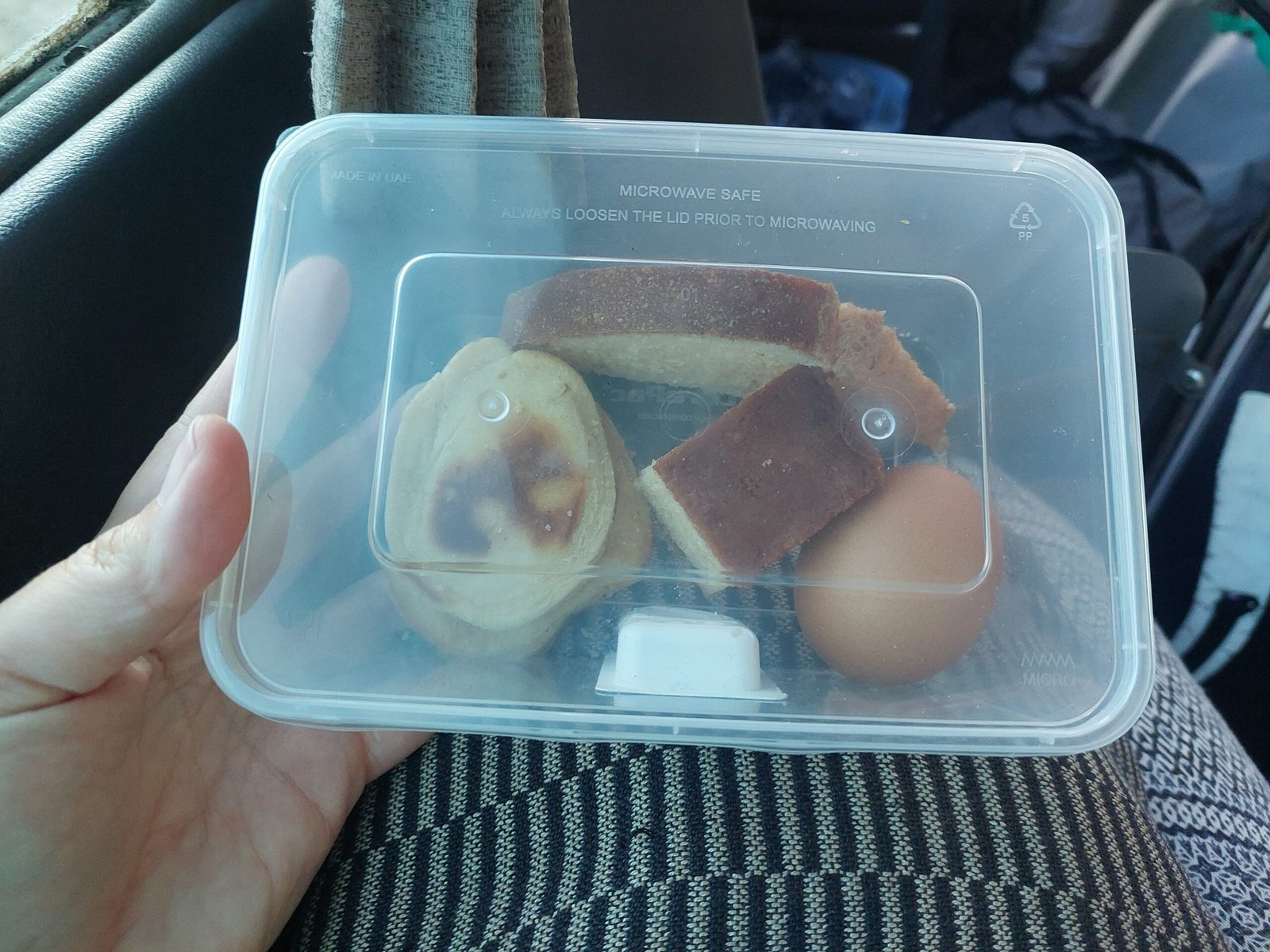
Breakfast was enjoyed in the car. No Michelin stars.
Here we negotiate access to the VIP lounge without tickets.
This waiting area had leather sofas!
I'm still smiling...
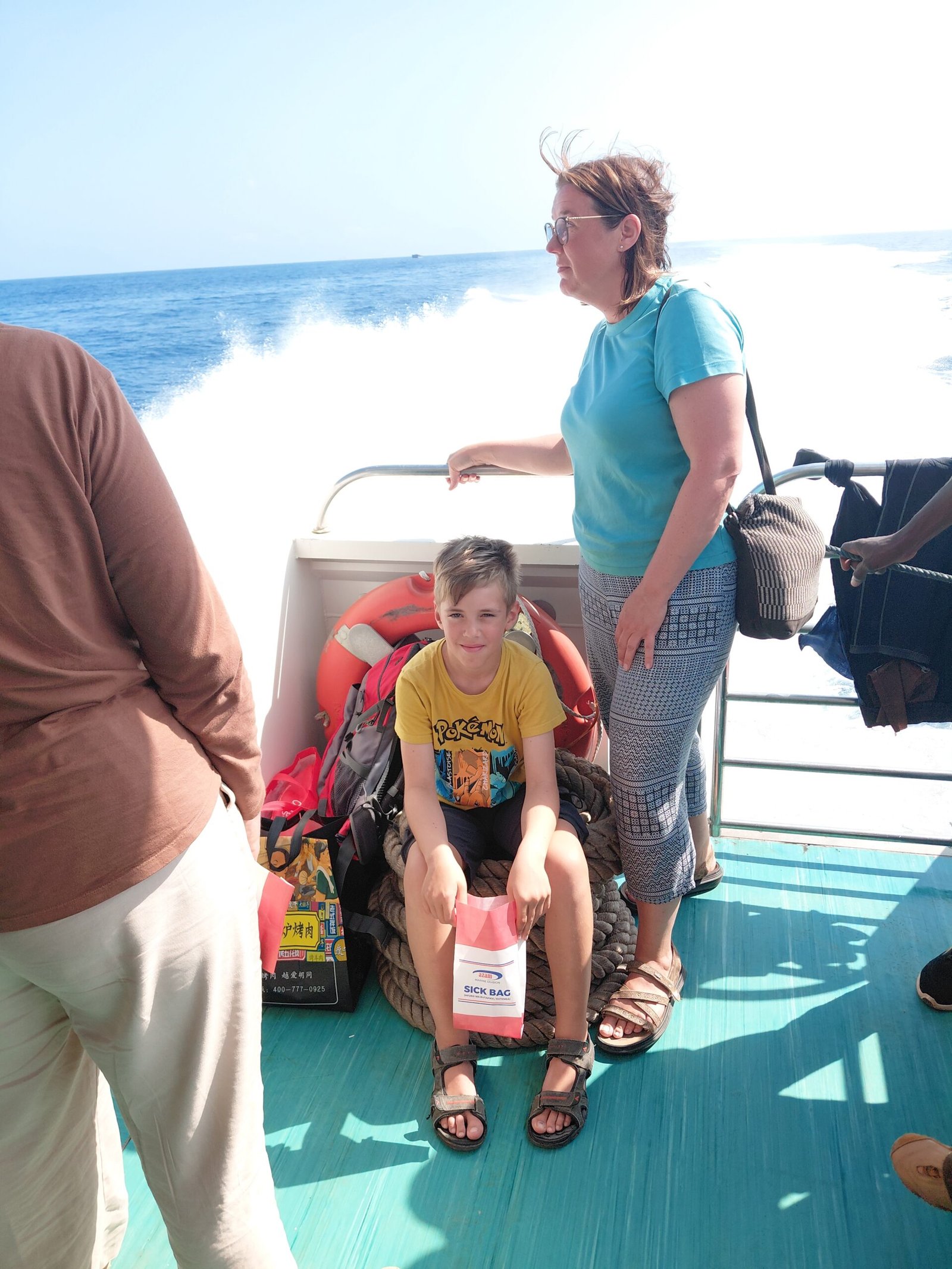
The way back was rough, and several people felt sick. However, Risto managed to keep his breakfast down until Dar es Salaam.
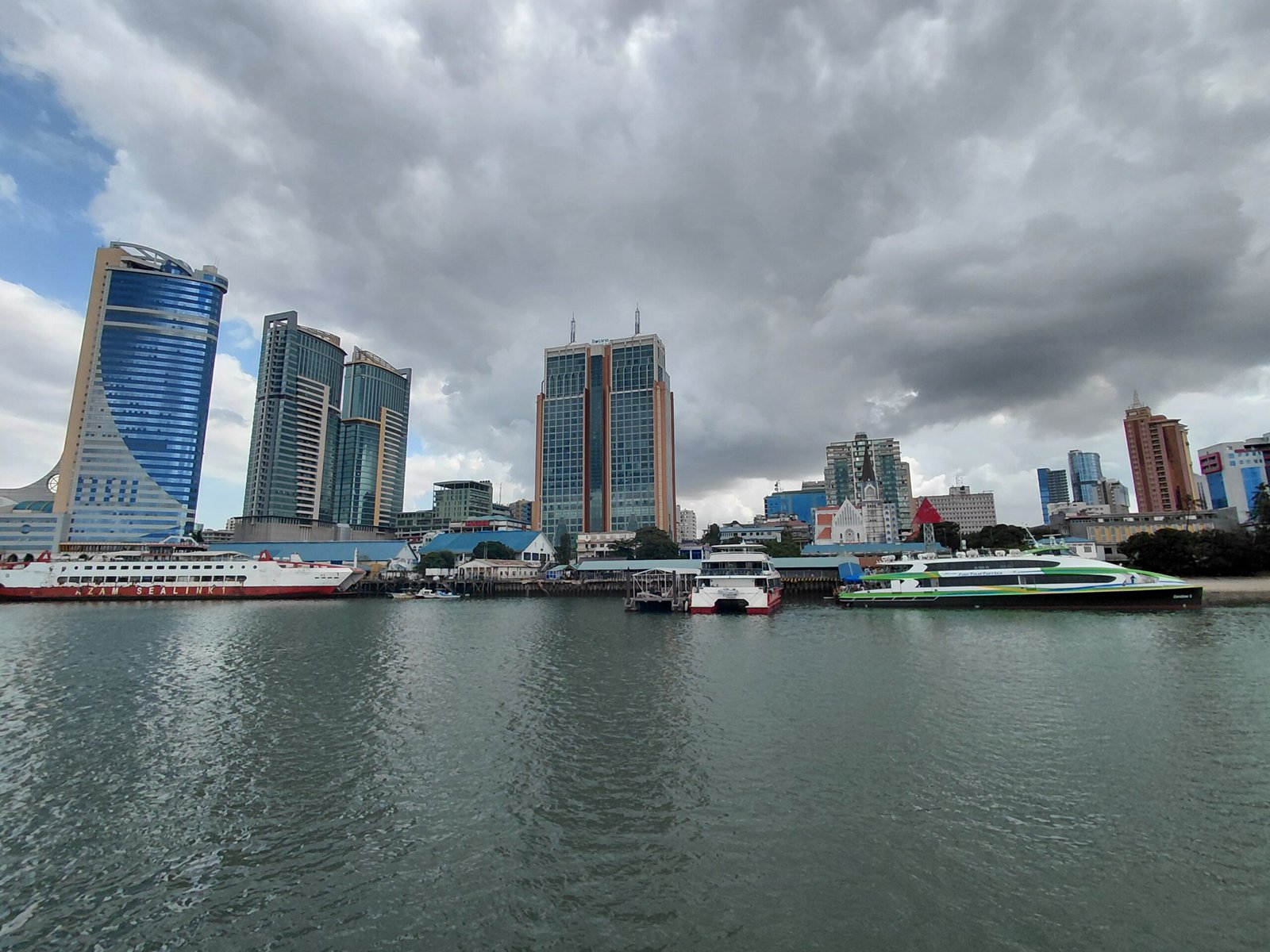
Finally back at the port of Dar es Salaam.
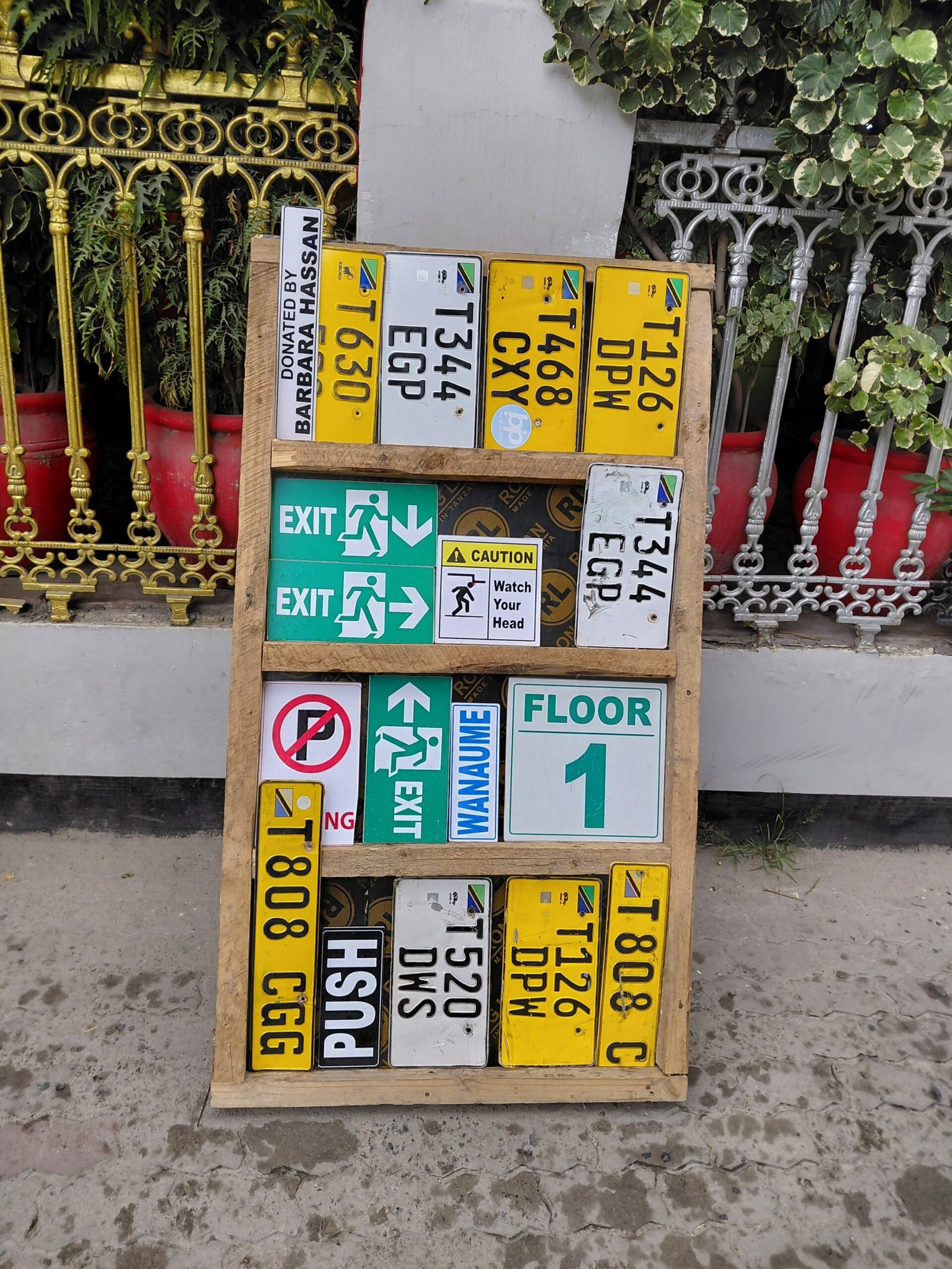
On the way back, you could have grabbed a new set of plates for your car, if the previous ones were taken away by a nasty cop.
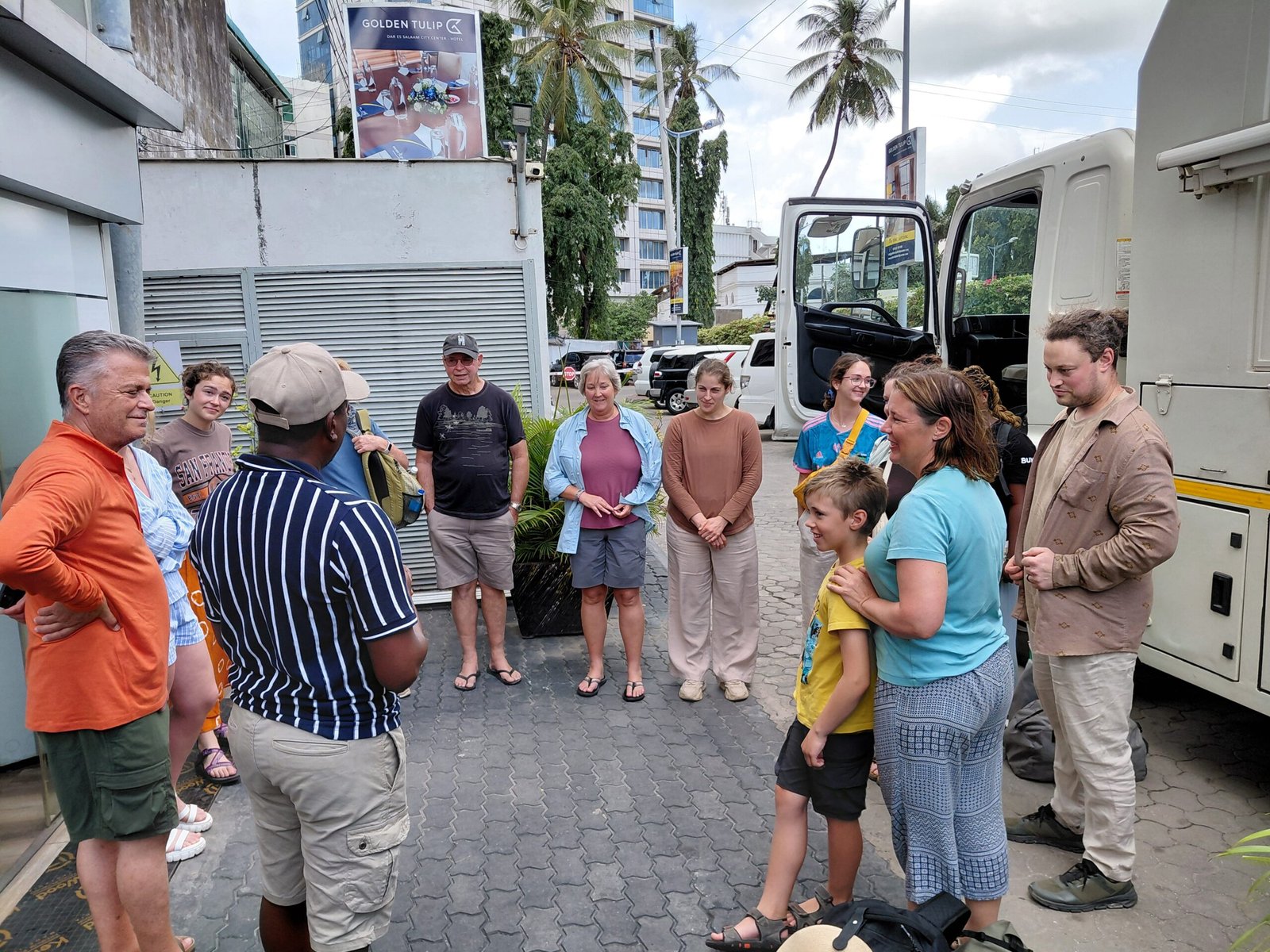
First goodbye to some of our travelling companions and then back on board the truck.