Hyppäsimme jälleen bussin kyytiin ja lähdimme hetkeksi pakoon Kuala Lumpurin helteistä säätä Cameron Highlands-nimiselle seudulle Malesian puolivälin paikkeille. Tämä alue on tunnettu viileästä ilmastostaan sekä teeviljelmistä, jotka ovat iso osa täkäläistä maisemaa. Matka Kuala Lumpurista Tanah Rataan kestää bussilla 4,5h. Välimatka ei ole kuin vähän reilut 200km, mutta koska loppumatka pitää tehdä kapeaa mutkittelevaa vuoristotietä pitkin, on ajoaika yllättävänkin pitkä, vaikka bussi ei pysähdy matkan aikana kuin lyhyelle vessatauolle.

Alueella sijaitsee kolme suurempaa asuinkeskittymää: Ringlet, Tanah Rata ja Brinchang. Tanah Rata on niistä keskimmäinen ja erityisesti länsimaalaisten reppureissaajien suosiossa. Muuten täällä on paljon paikallisten omia loma-asuntoja, jotka ovat usein viikot tyhjillään, mutta viikonlopuiksi ja loma-aikoina nekin täyttyvät, ja kylässä näkyy enemmän paikallistakin väestöä.

Jo ensimmäisenä iltapäivänä huomasimme iloksemme, että auringon laskettua lämpötila laskee täällä huomattavasti, eikä päivälläkään ole liian kuuma. Kun lapset leikkivät pimenevässä illassa paikallisessa leikkipuistossa, lämpömittari näytti + 16C. Ihanaa vaihtelua jatkuvaan +30C:n helteeseen!

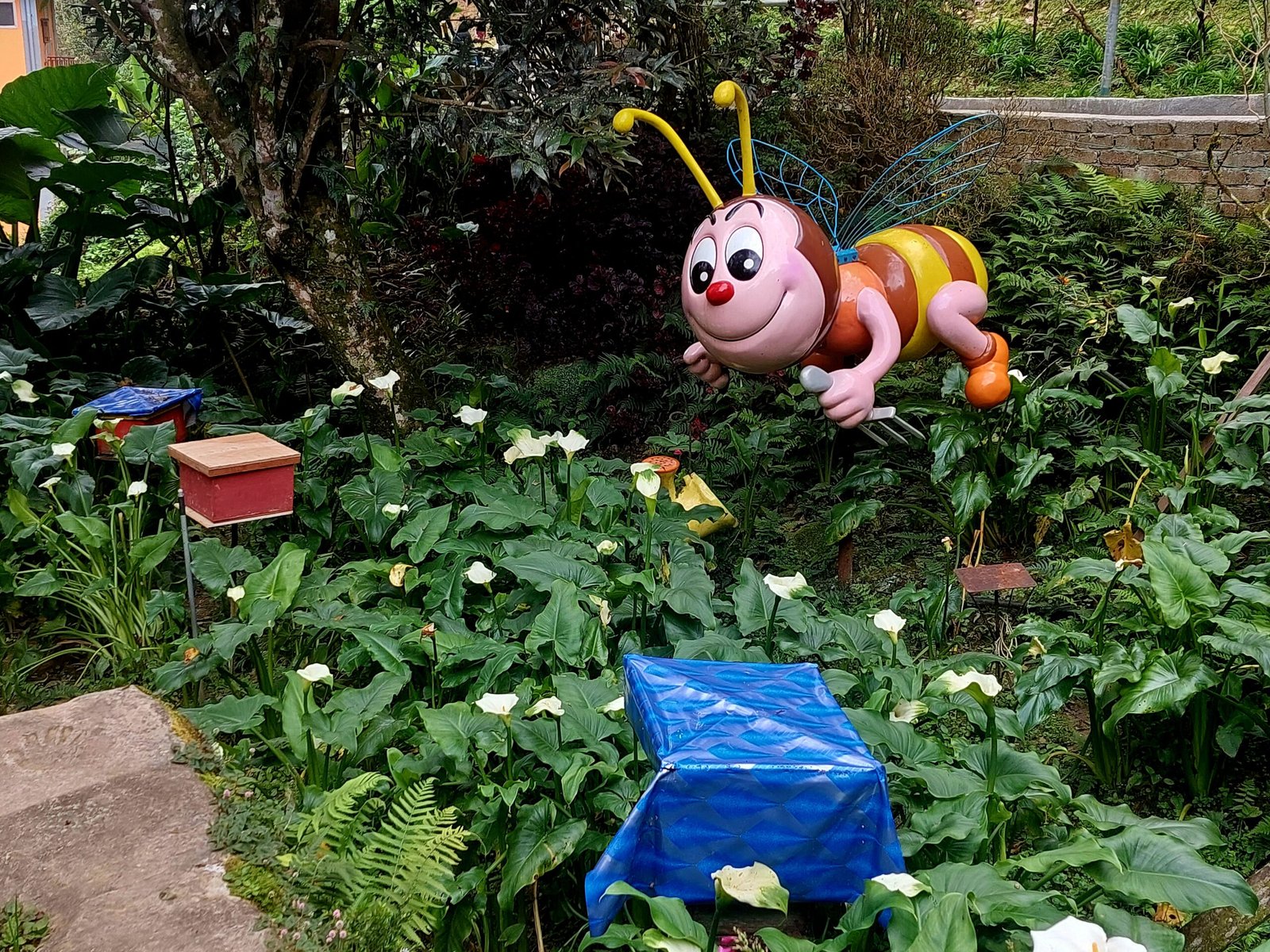
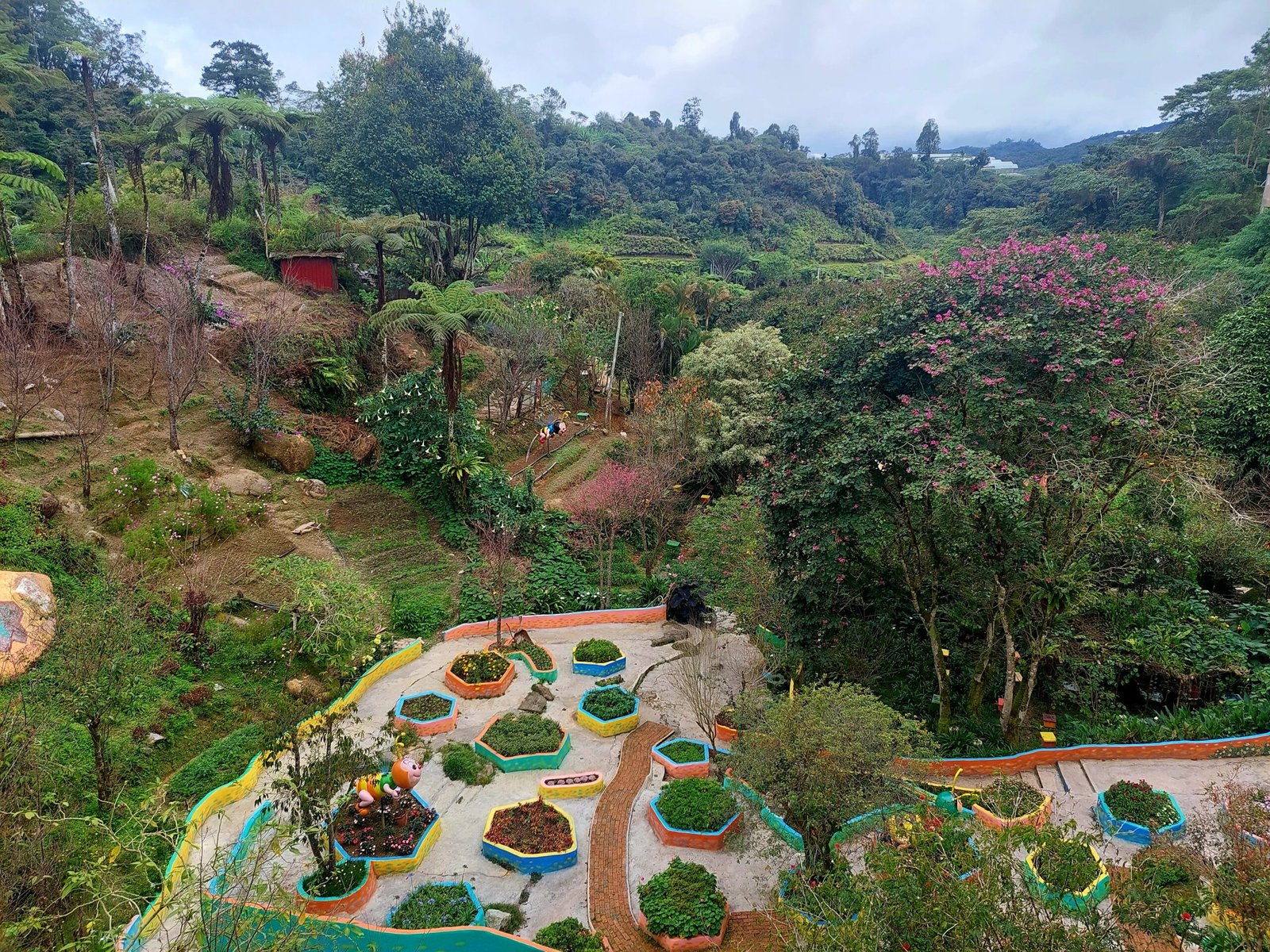
Mehiläisfarmi alhaalla notkelmassa
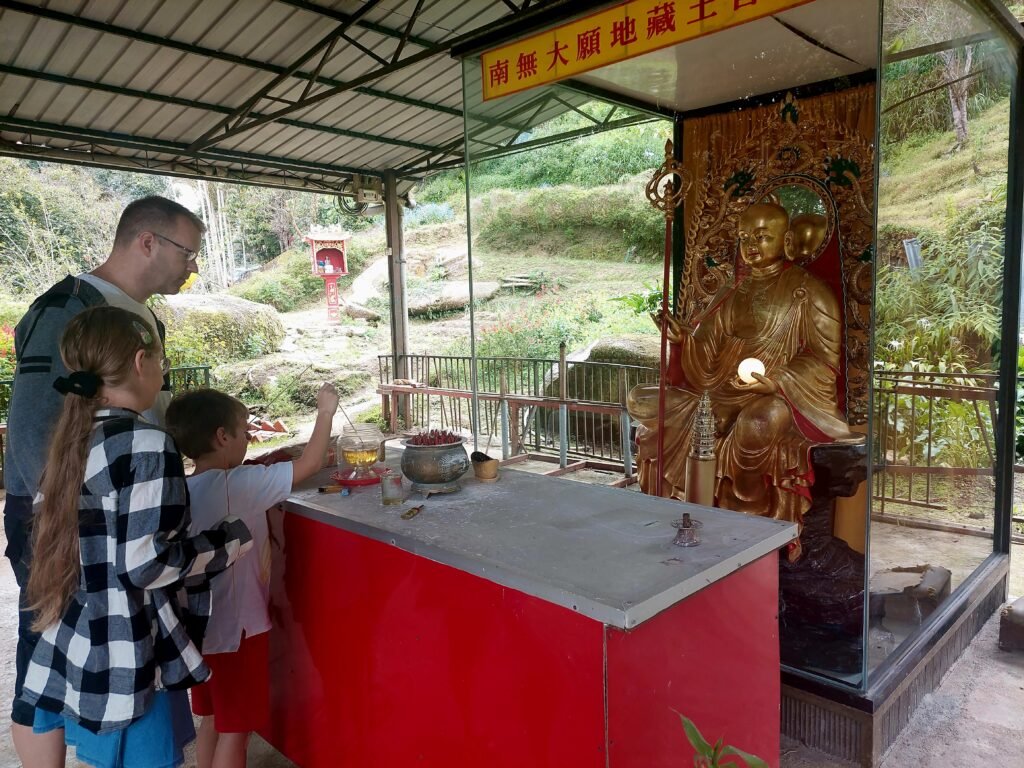
Mehiläisilläkin oli oma Buddha-patsaansa
Siinä ne ovat - kamalat mehiläispesät

Ensimmäisenä kokonaisena päivänä vuokrasimme itsellemme taksin kolmeksi tunniksi 90MYR:n (20€) hintaan, ja ajelimme katsomaan paikallista ruusutarhaa sekä mehiläisfarmia. Sen lisäksi tarvitsimme taksia siihen, että lähin kunnollinen ruokakauppa sijaitsi Brinchangissa, jonne on Tanah Ratasta matkaa noin viitisen kilometriä. Mehiläisfarmi ei ollut suuren suuri, mutta siitä huolimatta farmin alueelle oli saatu viriteltyä melkoinen määrä mehiläispesiä. Kiertelimme hetken puutarhassa sulassa sovussa mehiläisten kanssa ja lopuksi ostimme paikan kaupasta muutamaa eri hunajalaatua. Onneksi tämä nähtävyys oli ilmainen, sillä olisi ehkä hieman harmittanut maksaa tällaisesta ”nähtävyydestä”. Risto ei arvostanut mehiläisfarmivierailua lainkaan, vaan ilmoitti, että hän ei puhu enää meille koskaan, kun kidutamme häntä tällä tavalla. Taas olivat siis hymykuvat hieman kortilla, koska Risto pelkää kaikenlaisia lintua pienempiä lentäviä otuksia aika paljon.

Ruusutarhassa
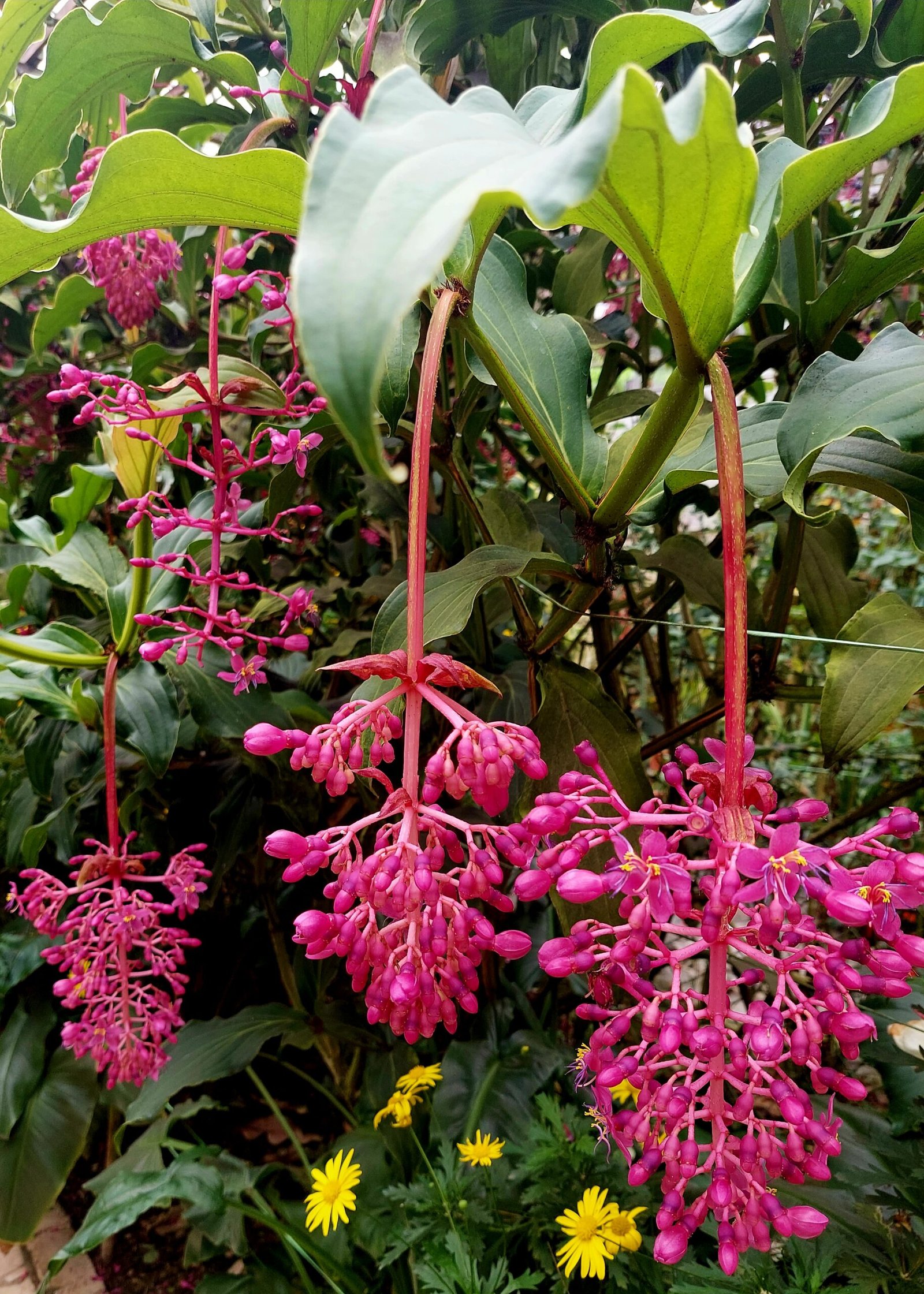
Tämän kiukkuinen kasvilaji jäi tunnistamatta
Tämäkään ei ole ruusu

Ruusutarhassa Ristokin jo rentoutui hieman. Toki hän varmisti, mahtoiko sielläkin olla mehiläisiä kukissa pörräämässä. Ruusutarha ei ollutkaan paikka, jossa kasvatettiin pelkästään ruusuja, vaan sieltä löytyi niiden lisäksi vaikka minkälaisia erilaisia (oletettavasti) paikallisia kasveja. Tässäkin paikassa olisi ollut oma myymälänsä, mutta sen me onnistuneesti vältimme kokonaan.

Ruokakauppa oli todella hyvin varusteltu. Itseasiassa se oli paljon suurempi, kuin olimme tämänkokoiseen kylään kuvitelleet. Vaikka kauppa olikin kookas, ei sieltä löytynyt lainkaan juustoa. Tai löytyihän sieltä niitä yksittäispakattuja juustosiivuja, mutta eivät ne kyllä ihan oikeaa juustoa vastaa. Malesiassa juusto (tai ilmeisesti muutkaan maitotuotteet) ei ole kovin suuressa suosiossa, koska sitä, tai jugurttia on usein aika hankala löytää ainakaan kovin suurissa pakkauksissa. Toinen, mitä täällä ei juuri näe, on leikkeleet. Täällä ei kai syödä kovin usein ihan tavallisia voileipiä.

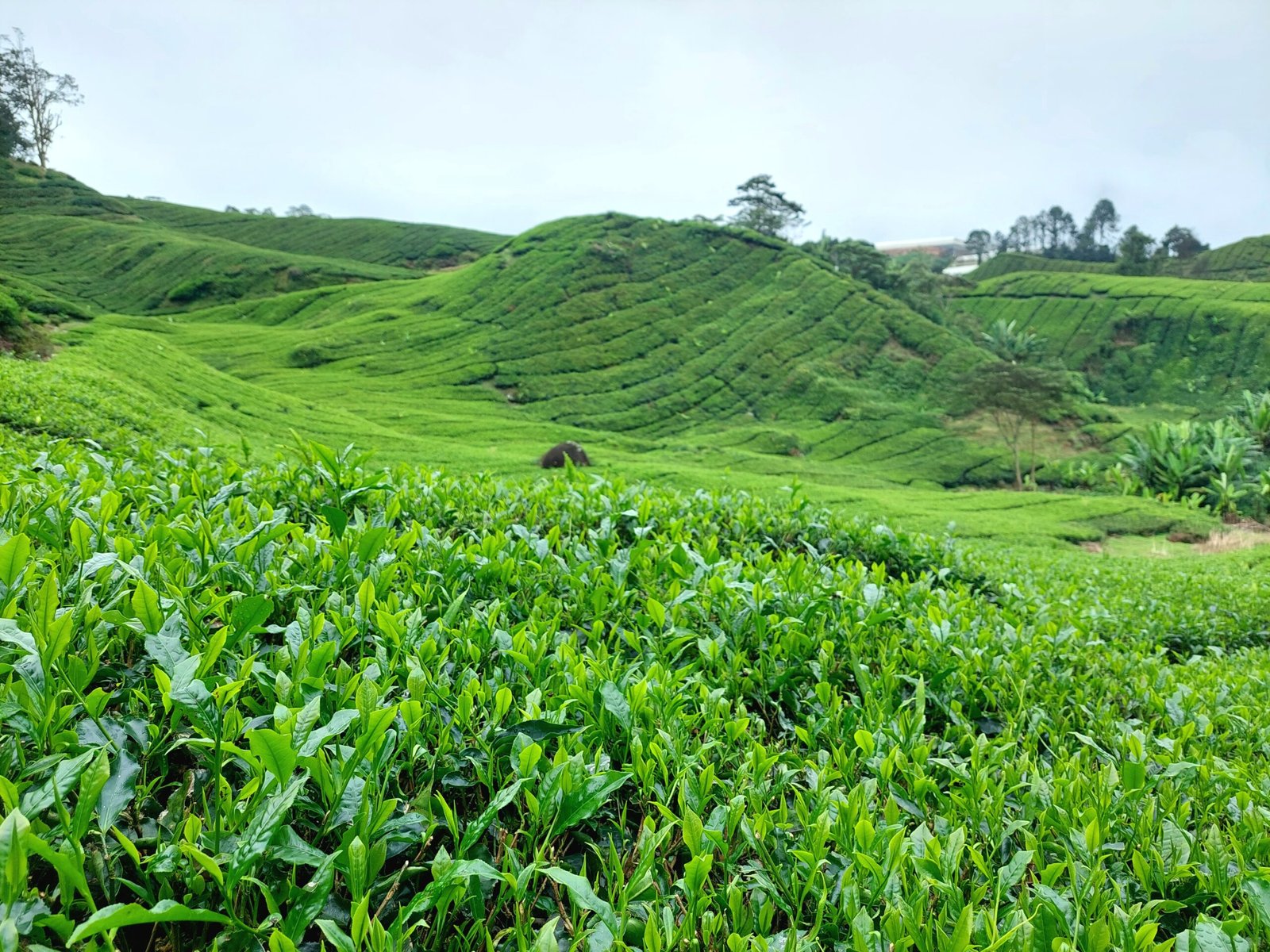
Teepensaita kasvaa rinteillä paljon.

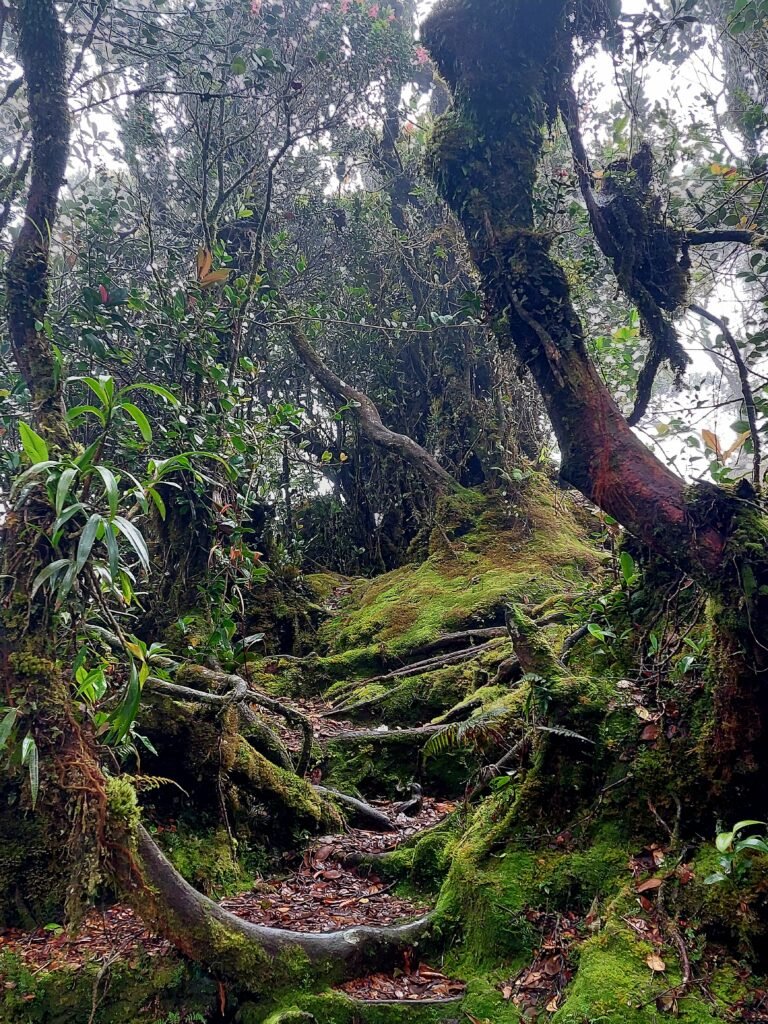
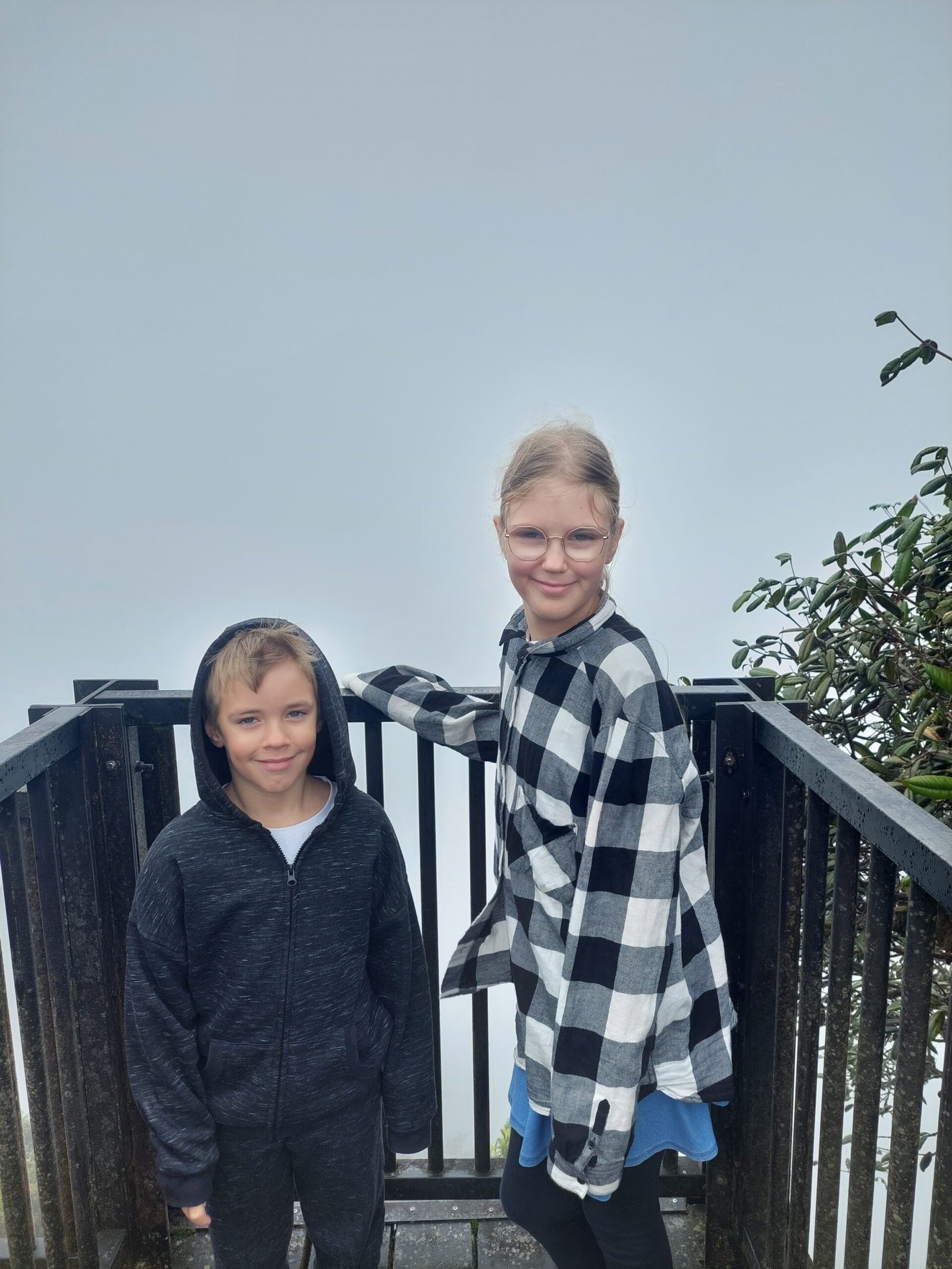
Toiseksi päväksi varasimme opastetun retken paikalliseen sademetsään, teeviljelmille sekä perhospuistoon. Starttasimme aamusta jo klo 8:30, sillä iltapäivisin täällä saattaa usein sataa. Kun ryhdyimme kaivelemaan autosta itsellemme turvavöitä, kuski tokaisi “There’s no need for seatbelts, you’re here to relax.” Noh, takapenkillä niitä turvavöitä ei olisi edes ollutkaan. Ajoimme suoraan alueen korkeimmalle kohdalle Gunum Brinchang-kukkulan huipulle, jossa sammaleinen sademetsä sijaitsi. Koska huippu oli 2000m:n korkeudessa, ja sää pilvinen, saimme tarpoa todella kosteassa sademetsässä pilvien keskellä vajaan tunnin verran. Onneksi olimme varustautuneet viileämpään säähän, joten pahemmin ei siellä tullut kylmä tuulesta ja viileästä säästä huolimatta. Sademetsässä kävellessämme oppaamme kertoili meille sademetsän kasveista, ja niiden eri käyttötarkoituksista. Saimme myös kuulla, että täällä ylhäällä sademetsissä kasvaa todella vähän hedelmäpuita, joten siksi eläimistö siellä ei myöskään ole kovin runsas. Erilaisia hyönteisiä sademetsästä löytyi toki paljonkin. Hyttysiä täällä sademetsässä ei juurikaan ole, koska ylhäältä kukkuloilta ei löydy juurikaan seisovaa vettä, jossa hyttysentoukat kehittyvät. Myös iljettävät iilimadot puuttuvat kokonaan.

Metsässä kasvoi sammalta lähes kaikkialla.
Siellä jossain se maisema on!
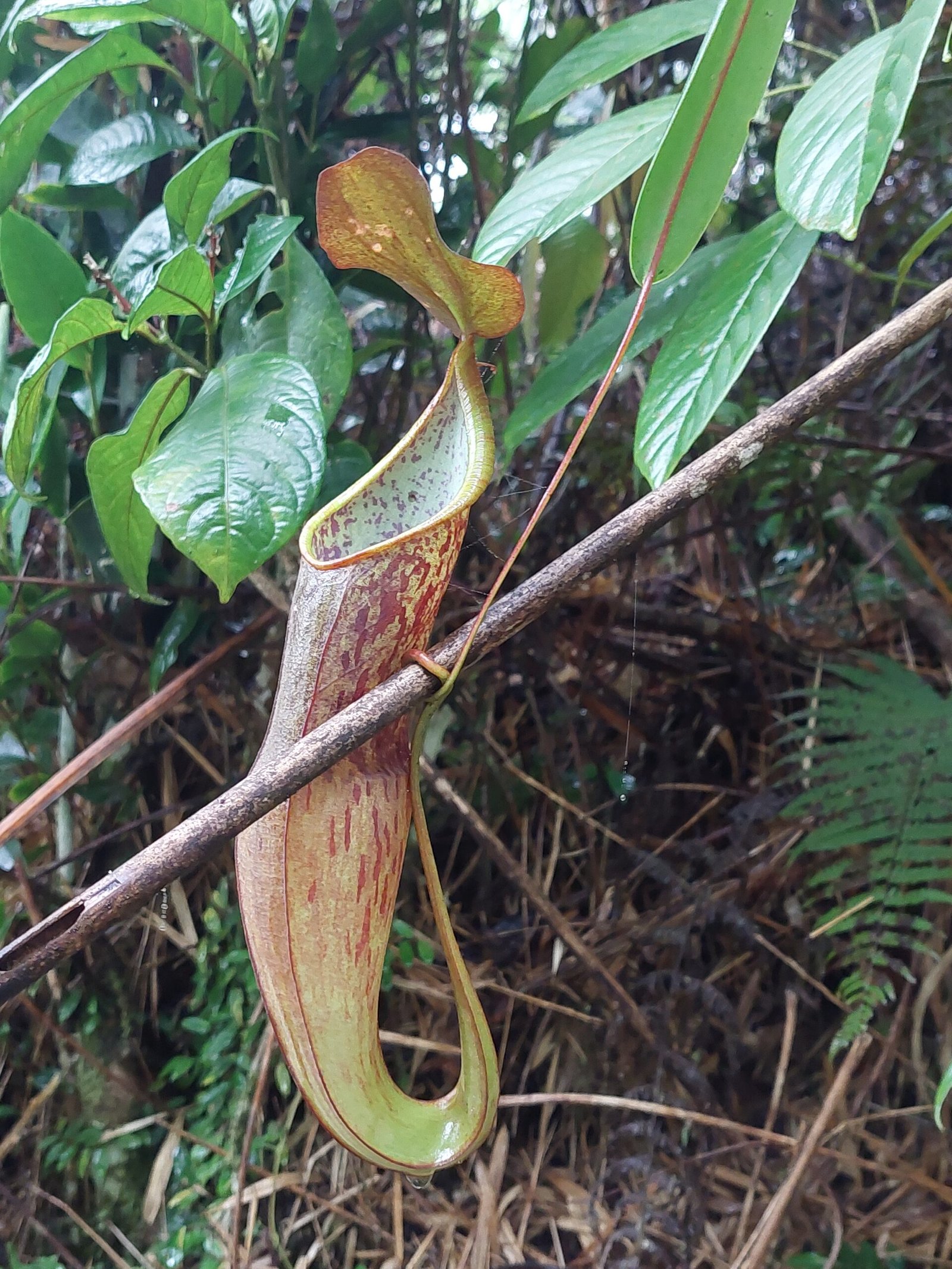
"Monkey cup" on tämän lihansyöjäkasvin englannikielinen nimi.

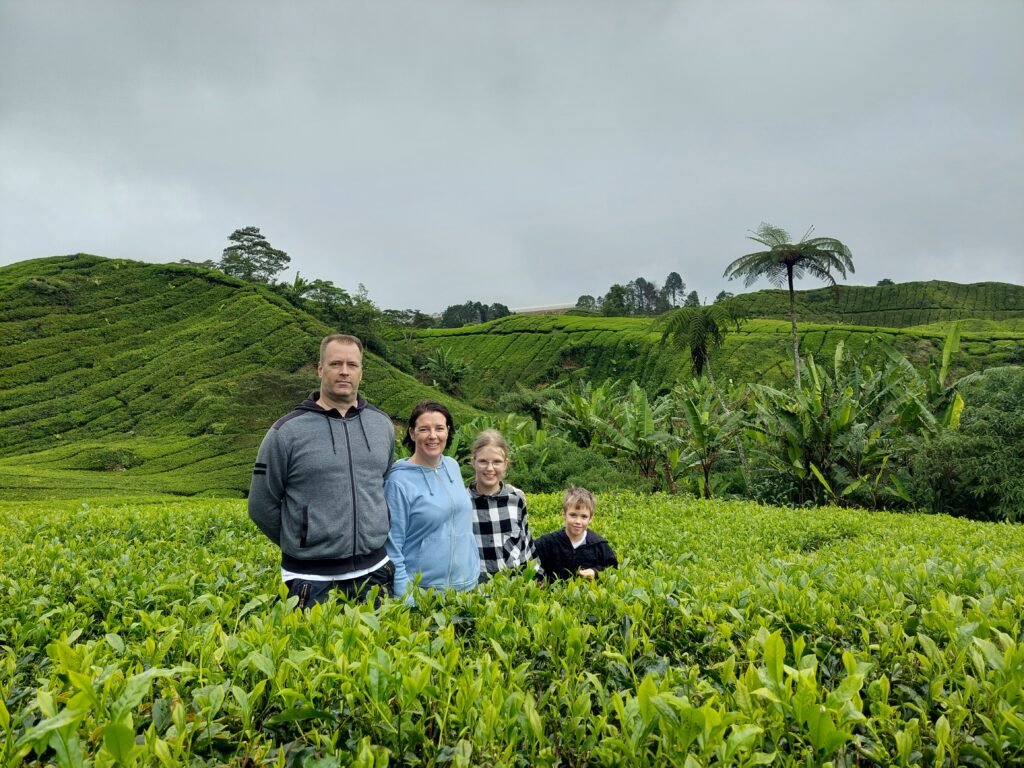
Teeviljelmät sijaitsivat hieman alempana pilvien alapuolella. Vierailimme skotlantilaisomistuksessa olevan teefirman, BOH:n (Best Of Highlands) tiluksilla. Siellä tuotettavasta teestä 95% jäi Malesian omille markkinoille, ja loput 5% kuljetettiin myytäväksi Singaporeen. Tee ei kuulu alunperin malesialaiseen kasvillisuuteen, mutta Malesian ollessa Britannian siirtomaa, toivat britit teenjuontikulttuurin mukanaan myös tänne. Koska Cameron Highlands -alue sopii erinomaisesti ilmastoltaan teen viljelyyn, ovat isoimmat teeviljelmät keskittyneet juuri tänne. Täällä teepensaista voi kerätä satoa ympäri vuoden sopivan ilmankosteuden ja viileämmän, mutta ei liian kylmän sään vuoksi, toisin kuin kuumemmilla alueilla. Nykyään teelehtien poiminnassa käytetään apuna koneita, joten poiminta on hieman nopeampaa kuin käsin. Kone tosin muistuttaa litteää ruohonleikkuria, jota pari miestä vetää välissään rinteillä teepensasrivistöjen päällä. Että kovin automaattista poiminta ei edelleenkään ole. Jyrkemmillä rinteillä teelehtien poimintaan käytetään vähän suomalaisen marjapoimurin tyyppistä vekotinta. Kävimme hörppäämässä kupposet teetä kakkupalasten kera firman omassa kahviossa, ja ostimmepa jopa mukaan paketin erästä heidän teelaaduistaankin. Sen jälkeen suuntasimme vielä perhosfarmille.

Teepensaista kerätään vain latvuston nuorimmat lehdet.

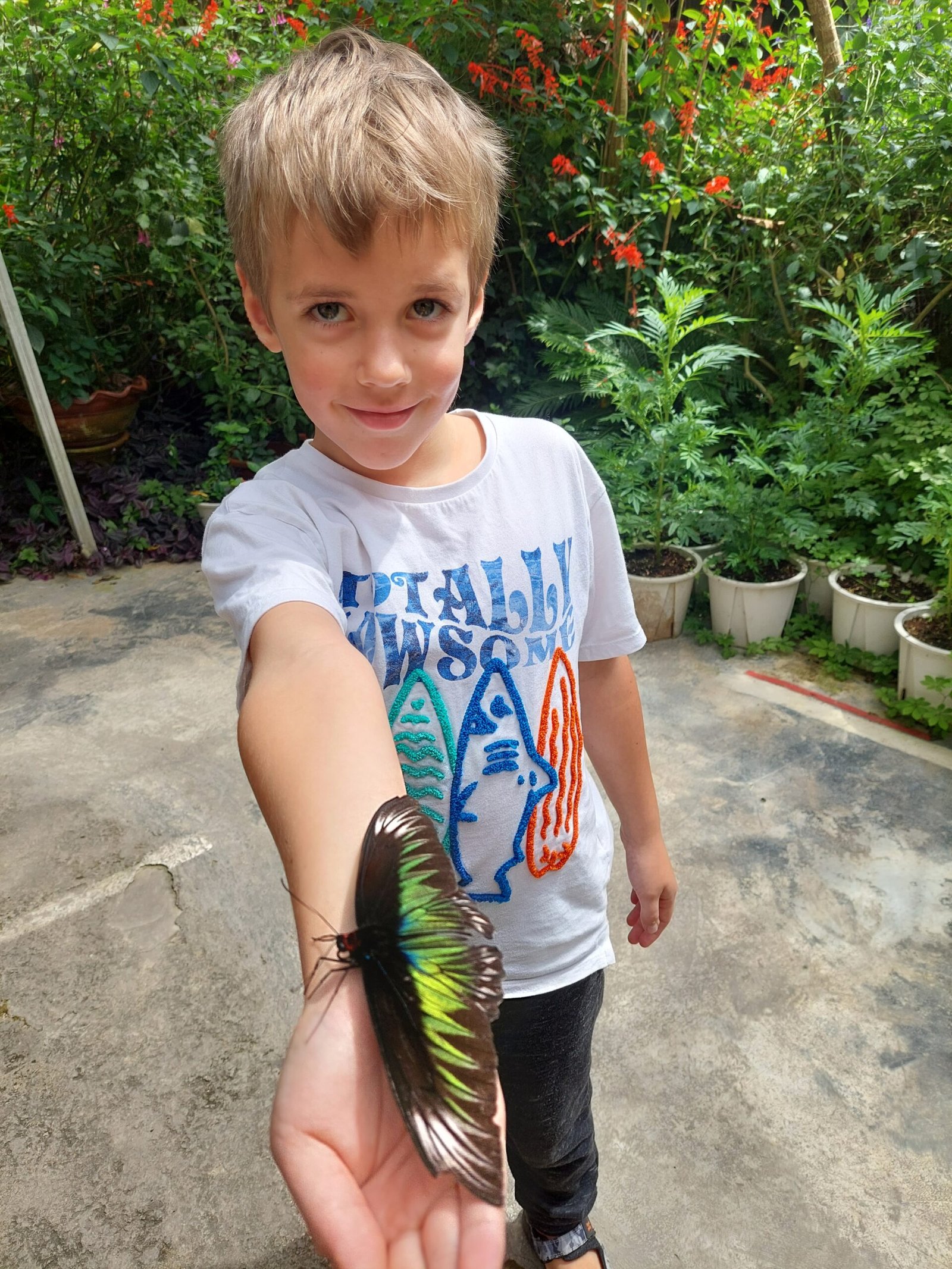
Farmi oli ehkä väärä nimitys tälle paikalla, mutta yhtä kaikki isossa katetussa tilassa lenteli paljon erikokoisia ja –näköisiä perhosia. Suurimmat niistä olivat Malesian kansallisperhosia, Rajah Brooken linnunsiipiä. Niiden siipien kärkiväli vaihtelee 15-17cm välillä. Sisään astuessamme näimme pari tällaista perhosta lekottelemassa rauhallisesti auringossa. Poimimme ne varovasti käteemme, ja saimmekin niistä muutamia kuvia, kun ne istuivat vaateissamme kiinni. Tosin vasta vähän pidemmälle sisälle käveltyämme näimme infokyltin, joka kielsi perhosten käsittelyn, mutta se ohje tuli meille hieman liian myöhään…

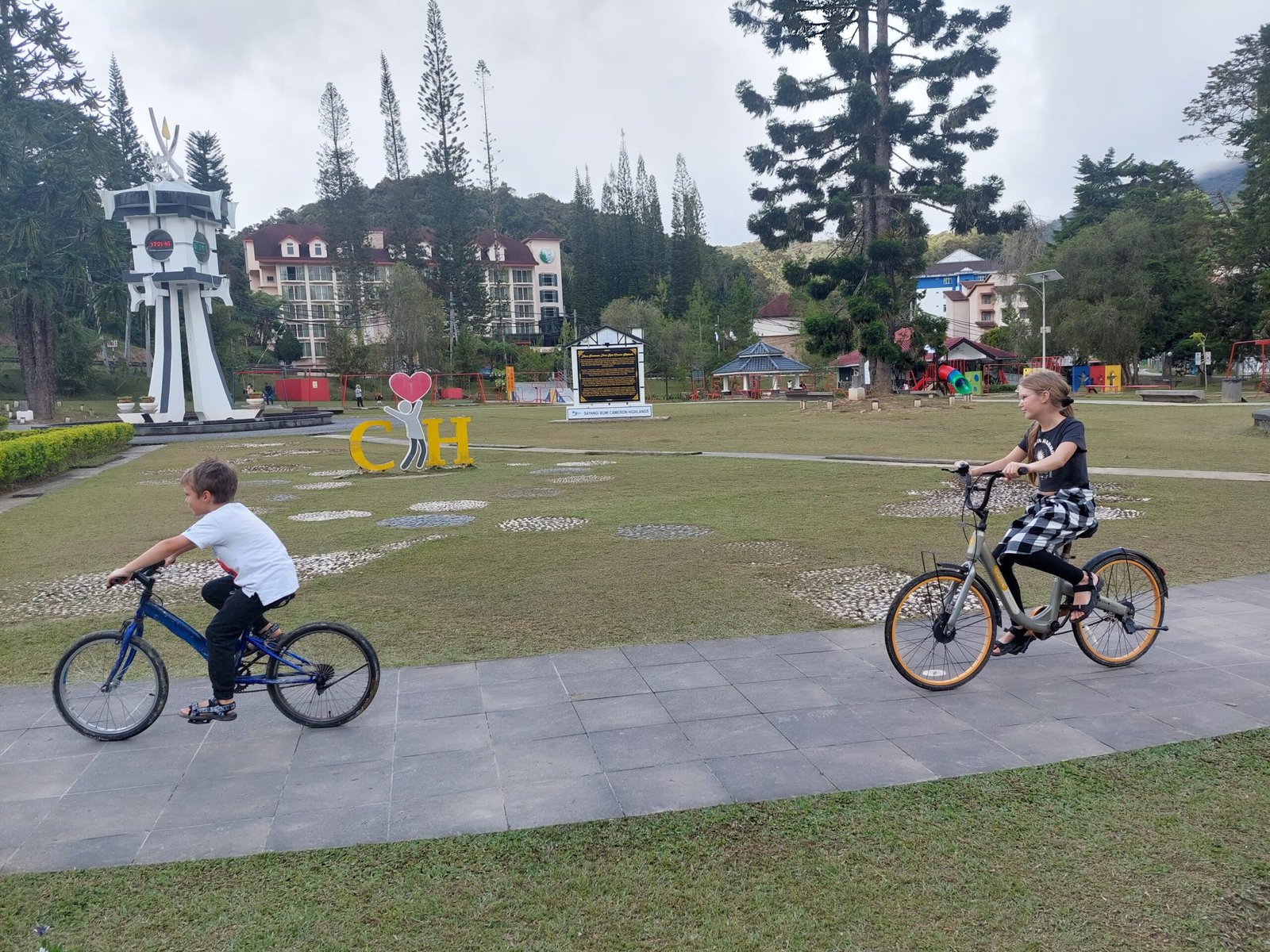
Viimeiseksi päiväksi ei ollut suunnitelmissa mitään kämpillä oleskelua kummempaa, mikä olikin ihan hyvä juttu, sillä koko päivän sataa tihuutteli vettä aina pitkälle iltapäivään asti. Kun sade vähän taukosi, lähdimme lasten kanssa vielä paikalliseen leikkipuistoon. Sieltä sain vuokrata kaksi polkupyörää 20MYR:n (4,5€) hintaan, joilla lapset pyöräilivät ympäri puistoa hiki päässä. Liikuntatunti suoritettu siis. Pyörien kunnossa ei ollut hurraamista, ja kypärätkin puuttuivat, mutta kyllä ne tässä tapauksessa ihan asiansa ajoivat.

Paikalliset ihmettelivät, kun kerroin lasten pyöräilevän usein Suomessa kouluun.

Briefly in English:

We hopped on a bus to escape the heat of Kuala Lumpur and ended up in Cameron Highlands. The area is known for its cool climate and tea plantations. It’s only about 200km north from Kuala Lumpur, but it took 4,5 hours to get there on the bus. The reason is that the last bit of the road is very narrow and winding, so the bus driver had to drive relatively slowly to get there in one piece.

There are three bigger towns in this area right next to each other: Ringlet, Tanah Rata and Brinchang. Tanah Rata is the place for the backpackers, so there are plenty of them around. Many of the apartments here are empty right now, because they belong to the Malaysian people, who come here only during the weekends and holidays. Because now it’s the long weekend for the Chinese New Year, we’re expecting this place to be more crowded starting from tomorrow. So far it has been very quiet here.

Already the first day we noticed that the weather is much more pleasant for us Finns here up on the hills. When the kids were playing at the local playground after the sunset, the temperature had dropped to +16C. It was a welcoming change to the +30 heat in Kuala Lumpur.

For the first day we rented a cab for three hours. It cost only 90MYR (20€), so it made sense to do so. Especially because we would have needed to take a taxi to the neighbouring town Brinchang anyway, because the closest proper grocery store was there. So we decided to get three birds with one stone and make a visit to the local bee farm and rose garden as well while we were on the move.

The bee farm was very small, but nevertheless they had managed to put quite a few beehives there on the premises. We walked around the garden for a while and bought some honey from the gift shop, but other than that there wasn’t much to see. Risto was more than happy that the visit was relatively short, because he is afraid of all kinds of flying objects that are smaller than a bird. He kept telling us that we were torturing him by making him walk among the bees.

The rose garden was bigger, but technically it wasn’t just roses. There were plenty of them too, but also all kinds of (apparently) local plants that we didn’t recognise at all. It was a pretty place to walk around for a while.

The grocery store was much bigger than we expected. We managed to find everything we needed except for cheese and ham (or any kind of meat slices really) to put on our toast. Apparently sandwiches or milk products in general aren’t a big thing in Malaysia. It’s often very had to find ham/turkey slices, cheese or a family sized yoghurt pack from the shop.

For the second day here we booked a trip to the local mossy forest, tea plantation and a butterfly farm. The mossy forest we went into was on a top of the highest peak in Cameron Highlands, Gunum Brinchang. It’s at the altitude of 2000m, so it was rather cold there, because the morning was cloudy. On a clear day you can see far from there, but today it was just clouds.

The walk in the forest was cold, slippery and wet. Fortunately we had prepared us for a cooler weather, so we weren’t that cold really. The guide told us about all the different kinds of plants in the forest you can use for medical purposes. He also explained how in the higher altitudes there aren’t that many fruit trees in the rainforest, so there are not that many wild animals there. You can find a lot of different kinds of insects though, but no leeches or mosquitos.

The tea plantation was located a few hundred meters lower than the peak, so there were no clouds when we got there. We visited the most popular Malaysian tea company called BOH (Best of Highlands). It’s a Scottish company and has been owned by the same family for three generations now. 95% of the tea they produce is for the Malaysian market, and the remaining 5% is exported to Singapore. Tea hasn’t originally grown in Malaysia. It was the time when Malaysia was a colony of UK, when the brits brought tea here. The moist, but cool weather is well suited for farming tea, so the biggest tea plantations are concentrated in this area. Around here you can harvest tea all year round, whereas in other warmer areas you can’t. Nowadays they use machines to harvest tea, but in the earlier days the tea leaves were picked by hand. When I say machines, I don’t mean big, automatic things. The machine looks more like a flat lawn mower that is pulled by who men between them on top of the tea bushes. If the hill is very steep, they use a berry picker type of a thing to pick the leaves. We also tasted some of the BOH teas at the café on the premises and ended up buying some too.

The butterfly farm wasn’t really a farm at all. It was just a greenhouse full of different types and sizes of butterflies. The biggest of them were the national butterflies of Malaysia, Rajah Brooke’s Birdwings. Their wing span can be up to 15-17cm. When we entered the building we happened to see a couple of them sitting on the bushes. We carefully picked them up and held them on our hands and clothes. Only later we noticed an information board saying “Please don’t try to pick the butterflies”. Oh well, too late for that.

For the last day here we hadn’t planned anything special to do, which turned out to be a good thing, because it was pretty much raining the whole day until late afternoon. Then we went to the local playground, where the kids rented two bikes for 20MYR (4,5€) and cycled around for a good while. Another sports lesson completed, great success!

One Response

Leave a Reply to Leena Hänninen Cancel reply

Your email address will not be published. Required fields are marked *