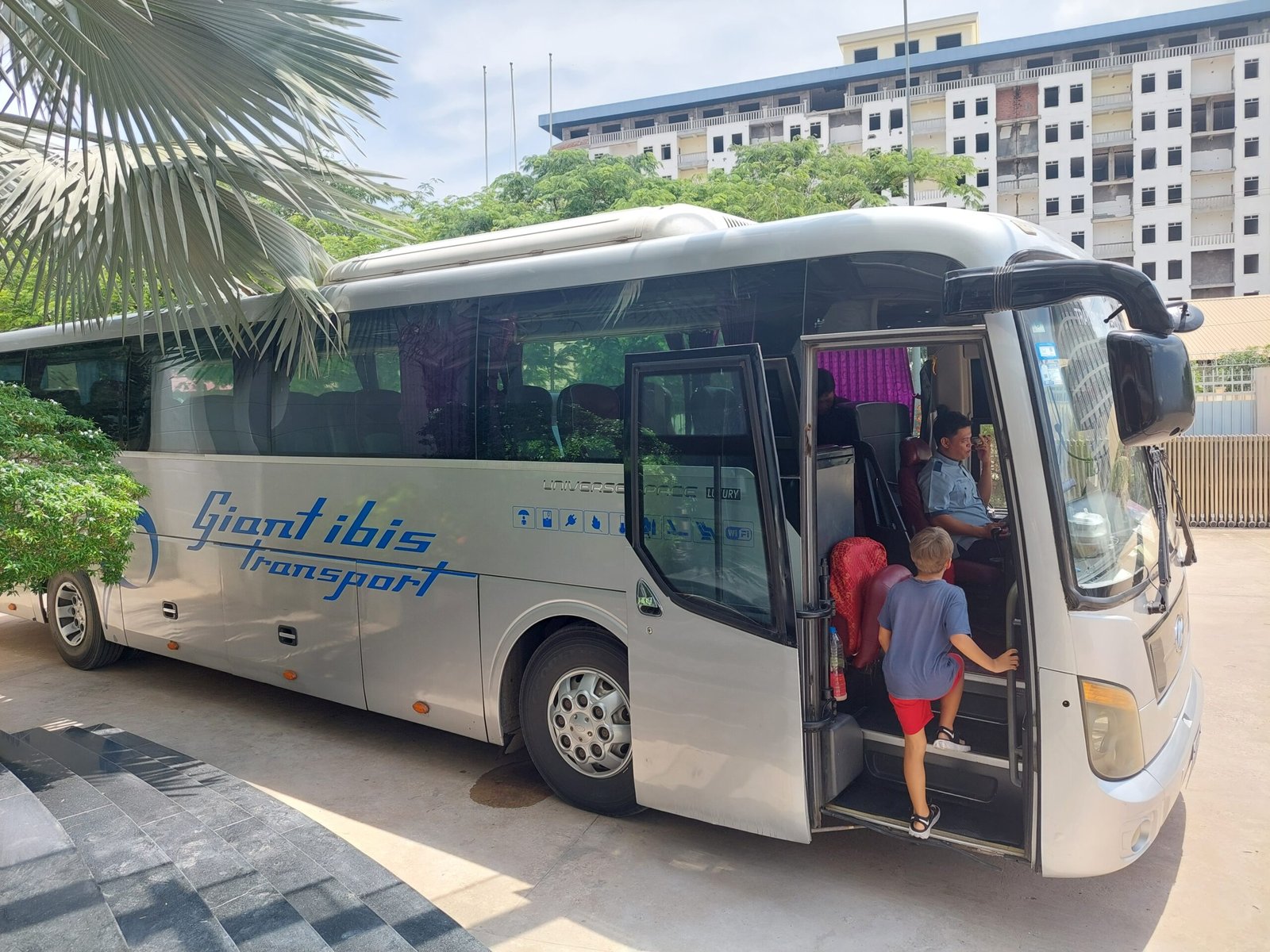
On Thursday, we took the Giant Ibis bus from Ho Chi Minh to Phnom Penh in Cambodia. The bus journey took almost seven hours, but of course some of the time was taken up with border formalities and lunch. The road was in pretty good condition throughout the journey, but in both cities and their suburbs the traffic was so congested that we made very slow progress.
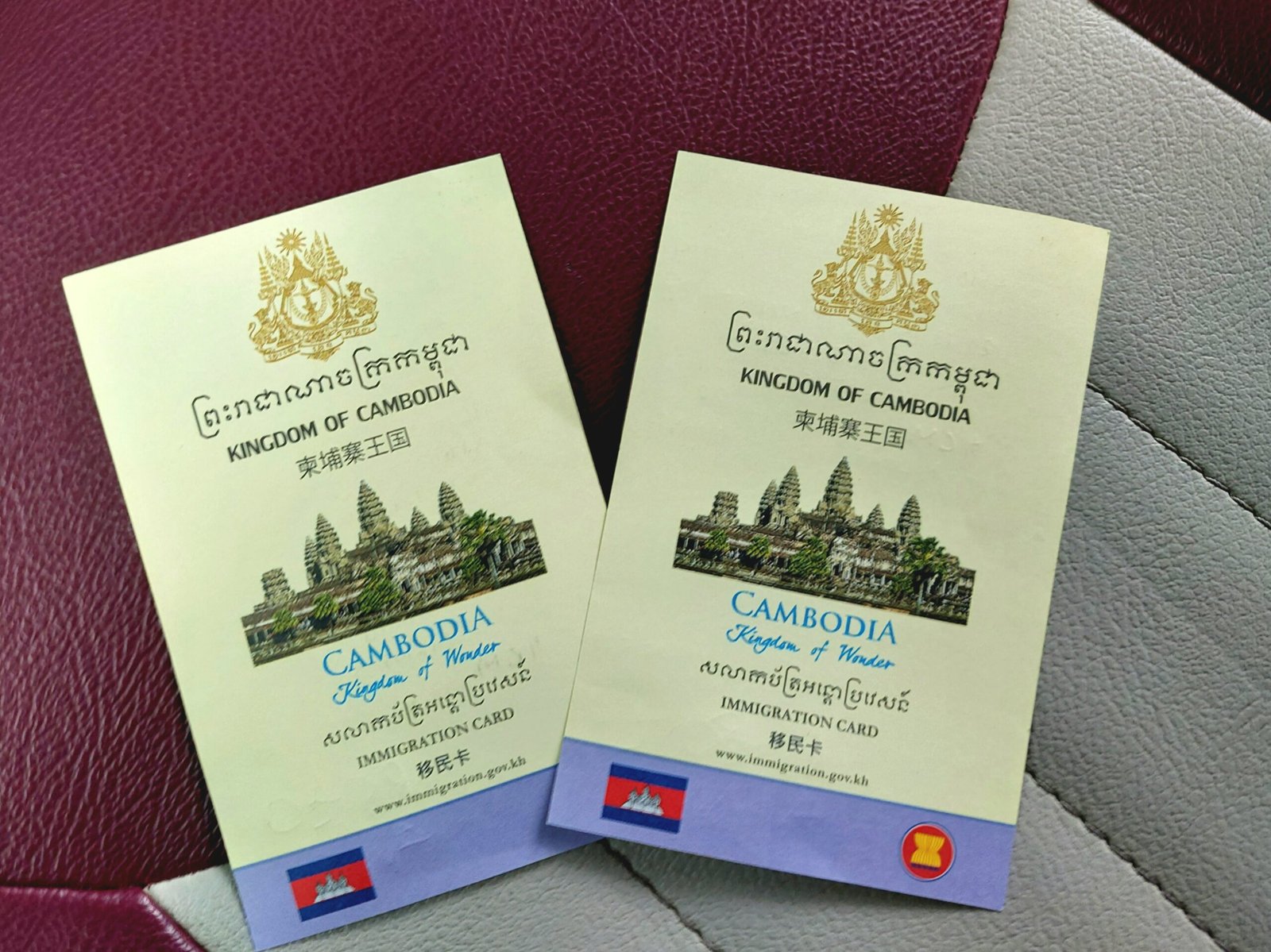
The first stop on the journey was at the Vietnam border. This stop was practically pointless, though, as the official at the border just glanced at one of our family’s passports and handed the whole bundle back. For the Cambodian border formalities, we each had to fill in the same entry form twice. One was taken by the authorities and the other was stapled to the passport on the same page as the entry stamp. The visa on arrival procedure was very conveniently handled by a representative of the bus company while we were having lunch at a restaurant at the border. After lunch, we went to show our faces and passports to the Cambodian border authorities, after which we had successfully crossed yet another border.
Our family filled eight of these forms.
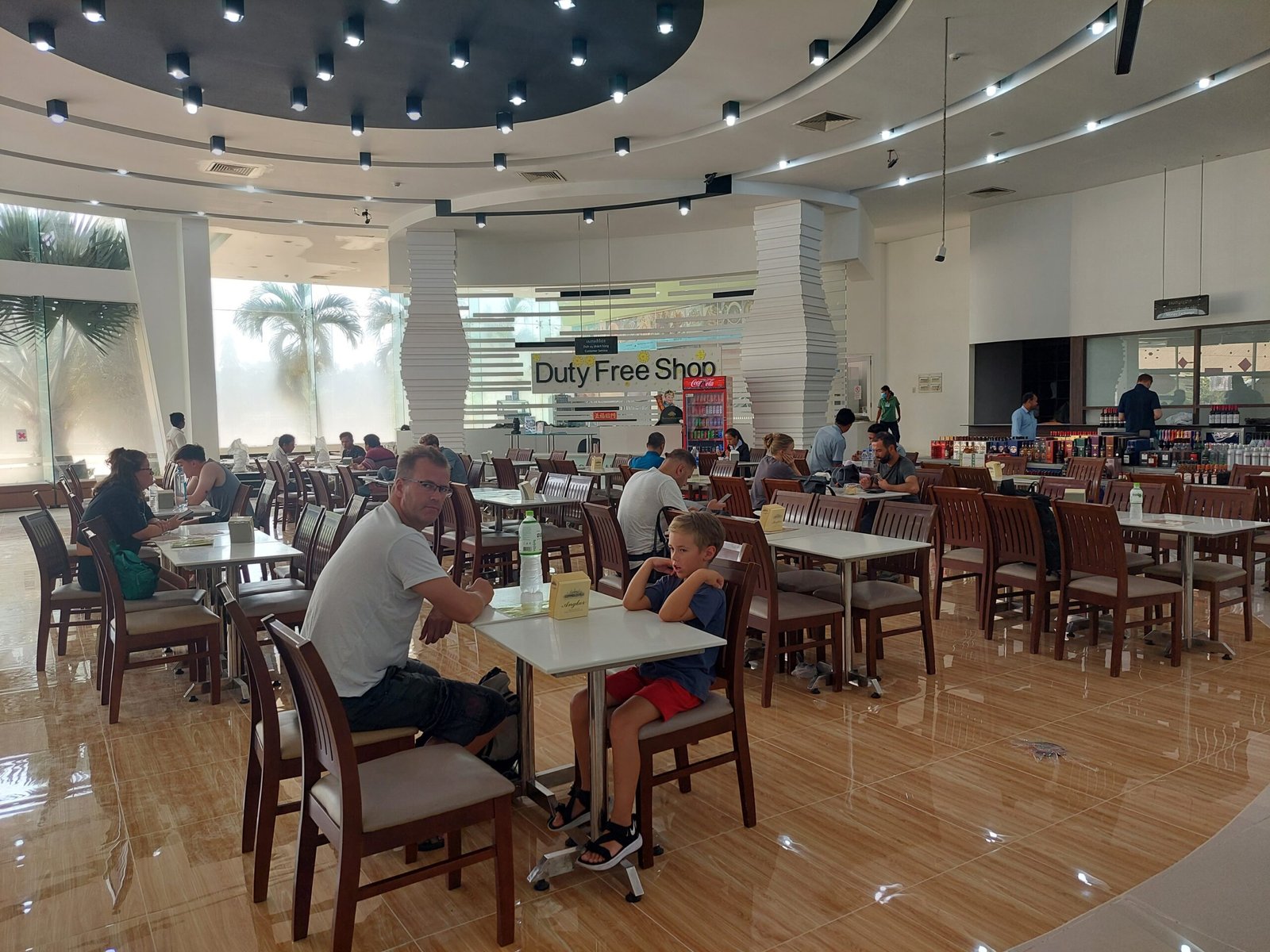
Waiting for lunch at the border station
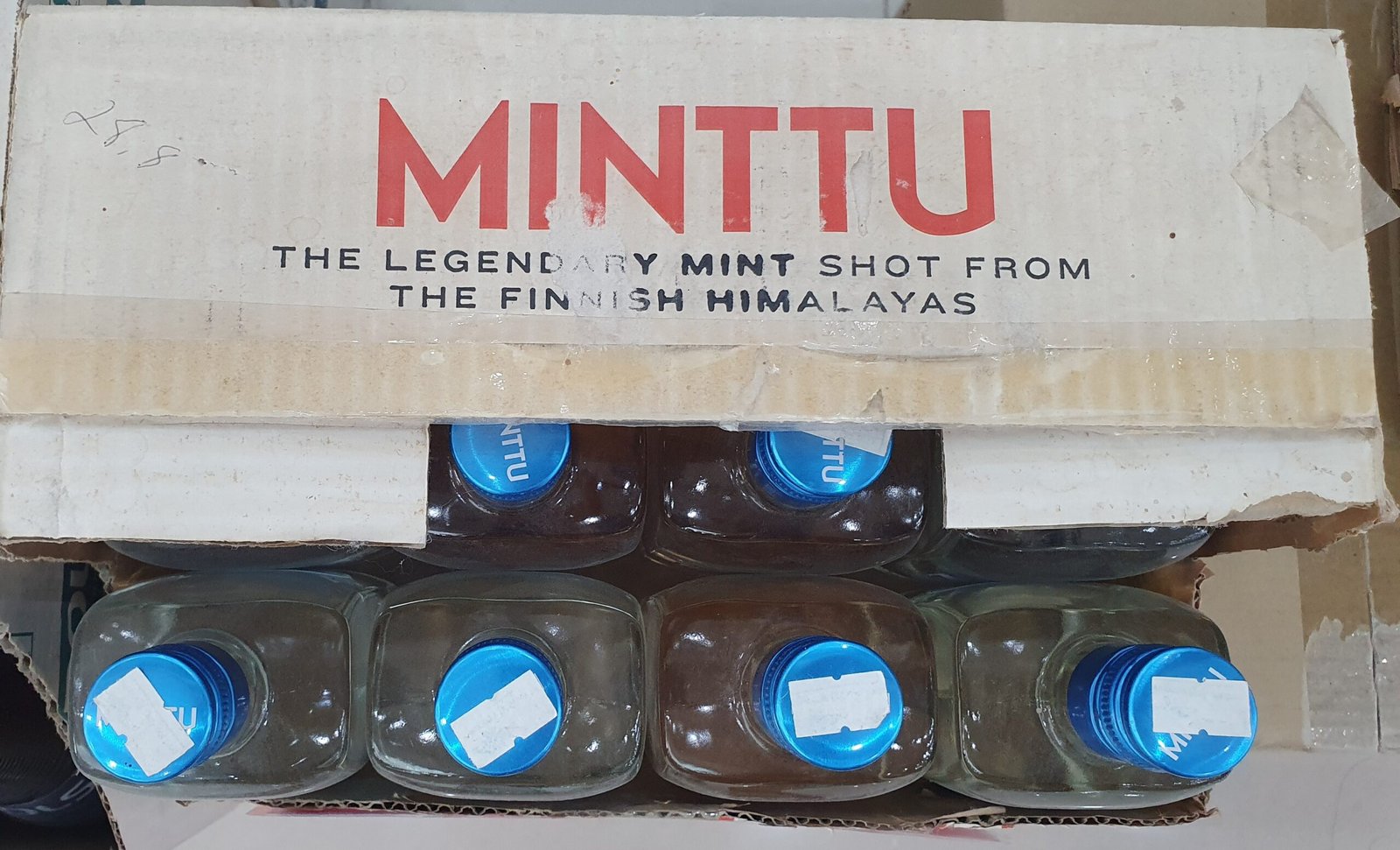
The duty-free shop at the border sold mint liqueur straight from the Finnish Himalayas.
In the Giant Ibis bus, everyone got a huge croissant and a bottle of water for the journey.
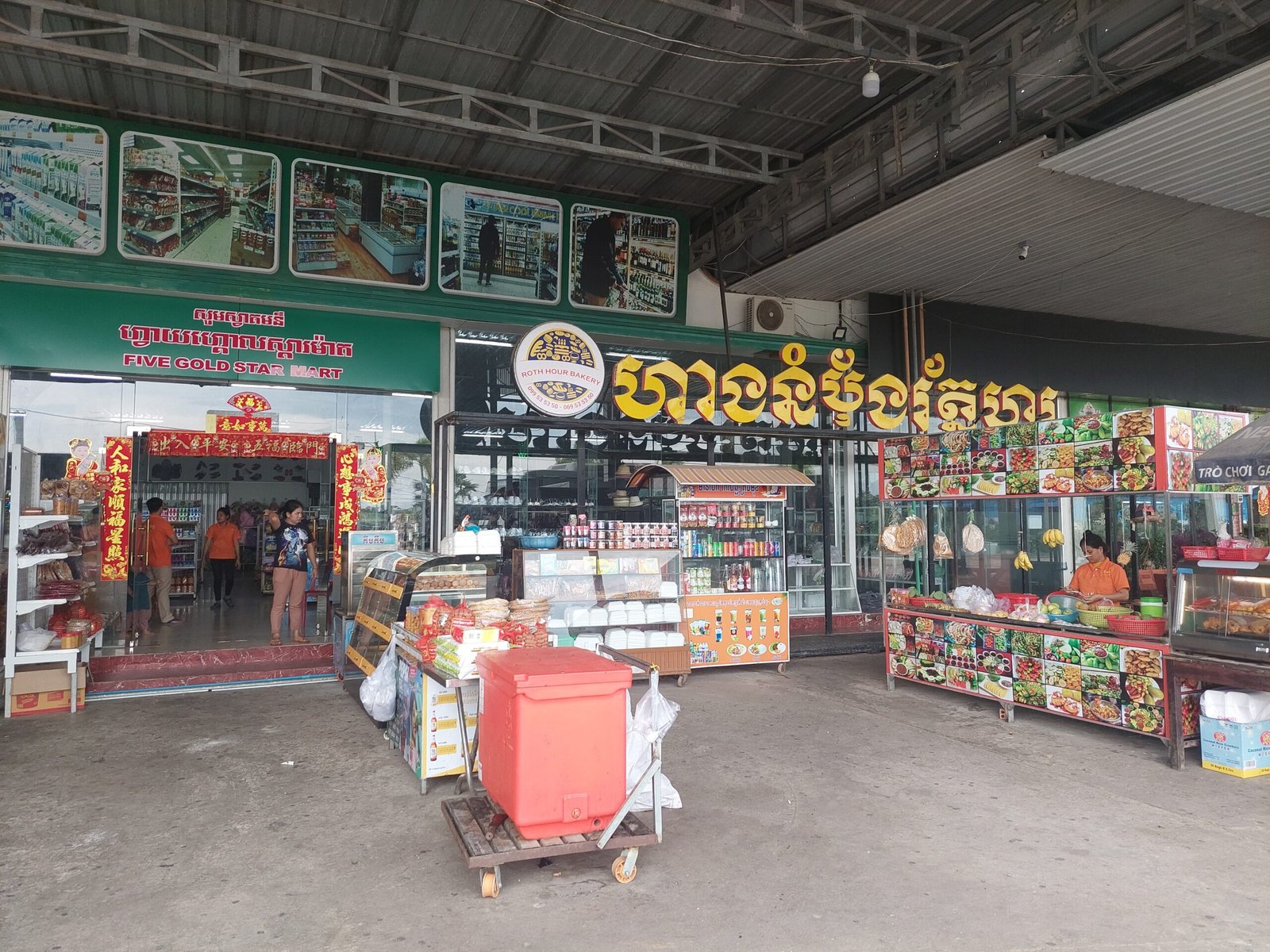
Before arriving in Phnom Penh, we stopped for a toilet break at a 'five gold star mart'. Ronja didn't give the toilets a single star.
Immediately on the other side of the border, you noticed a few differences from Vietnam. Here, there were cows walking freely everywhere. But these animals were probably not sacred to the locals, considering how our driver was honking at them if they strayed onto the road. There are also many scooters in Cambodia, but there are also plenty of motorcycle taxis (tuk tuk), which Ronja does not like because they are so noisy. The buildings look also different. Apparently, poverty is also significantly higher in the cities in this country, as we saw several children in the traffic selling various trinkets. We had not come across anything like this in Vietnam. But the main difference is that here people actually stop on a red light. That didn’t happen in Vietnam.
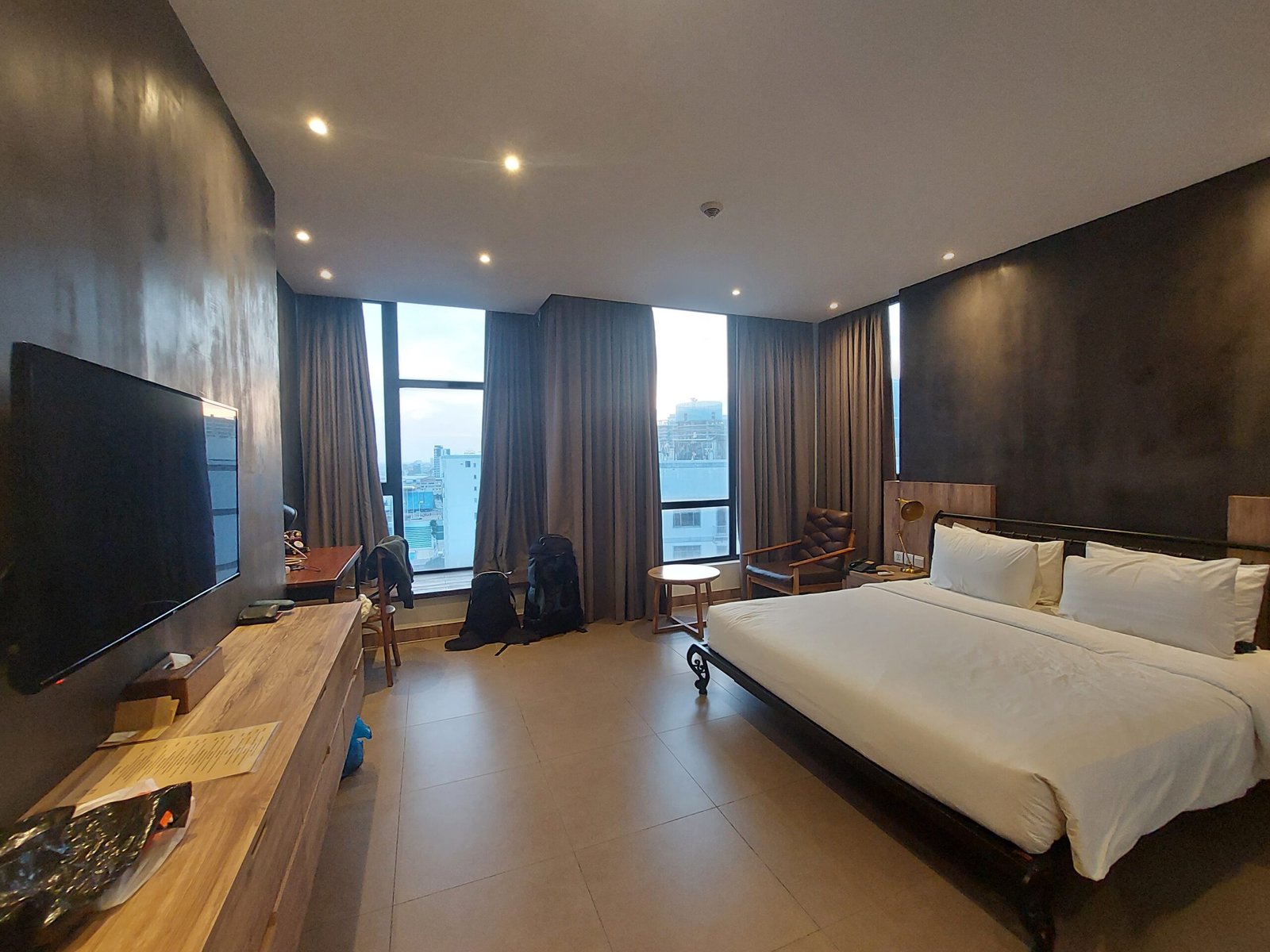
From the bus terminal we caught a taxi, which took us to our hotel right outside the city centre. We were again accommodated in two separate hotel rooms, which were surprisingly very large. In fact, we thought we could have easily fit the whole family in the children’s room, as their “single” beds were the size of a narrow double bed. In the evening, we went swimming in the hotel pool and a little later had dinner at the pool restaurant.
The hotel rooms were very spacious.
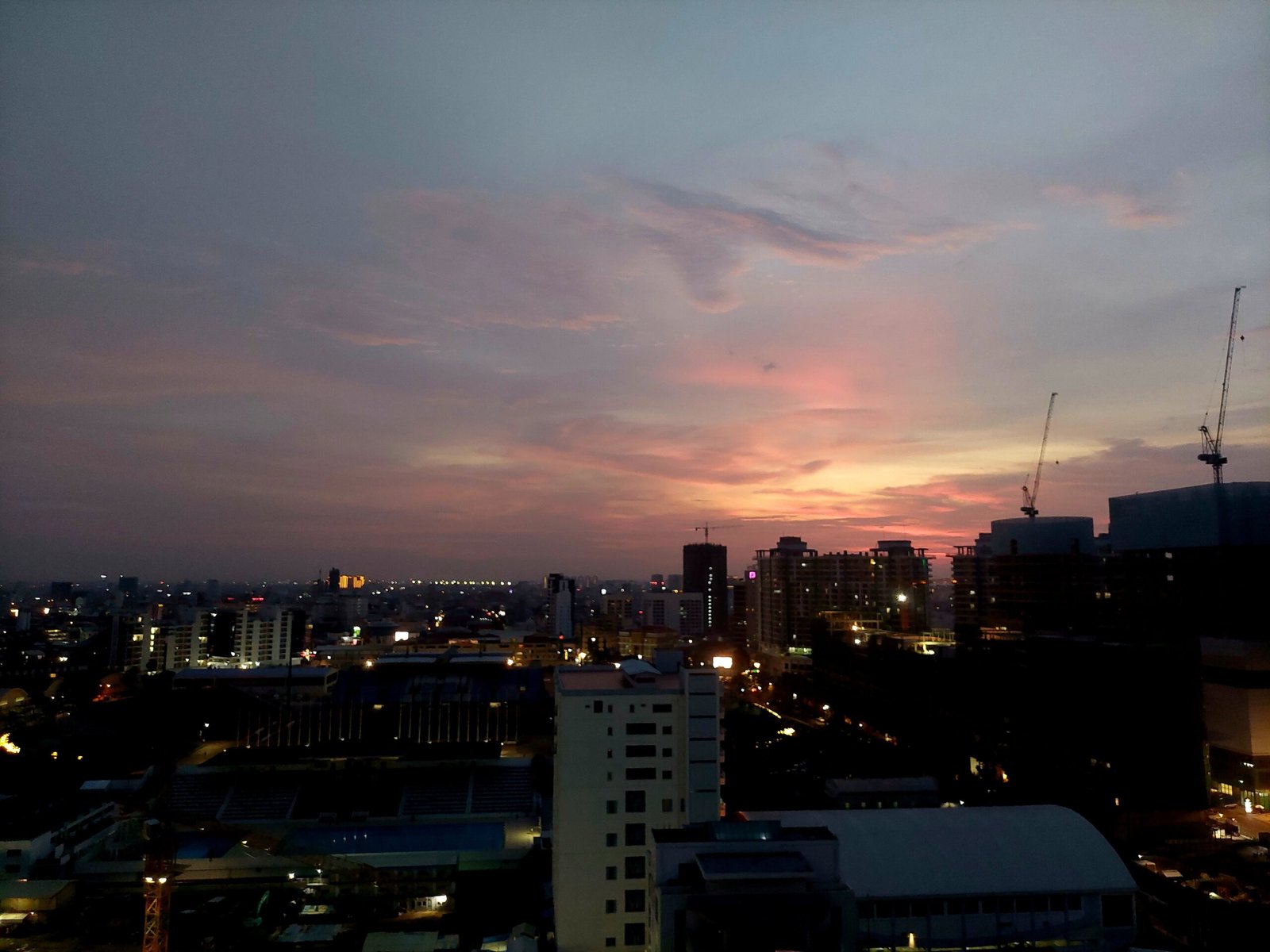
Views from the rooftop swimming pool
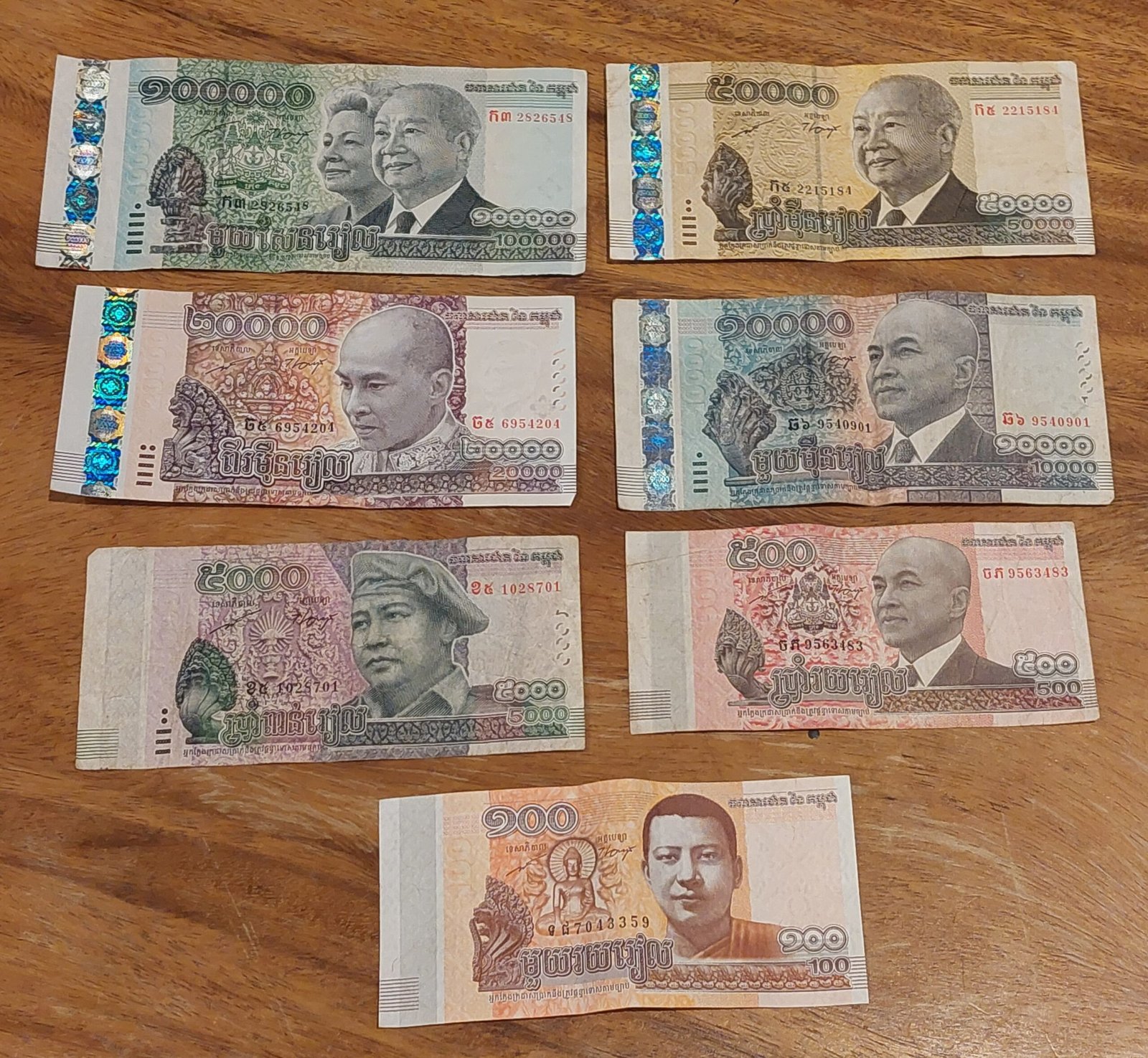
If the Vietnamese dong exchange rate was wild (1€ = 25 000VND), the Cambodian riel is not much better. Here, one euro buys 4400KHR. In Vietnam, it was all banknotes, and that is presumably the case in Cambodia also. Although some of the notes are really worthless. Marko calculated when he returned from the shop that the 100KHR he had received as change was worth about three pieces of toilet paper. However, we try to use real toilet paper, and only use 100 riel notes in an emergency, to avoid being accused of sacrilege.
A hundred riel bill is worth about two cents.
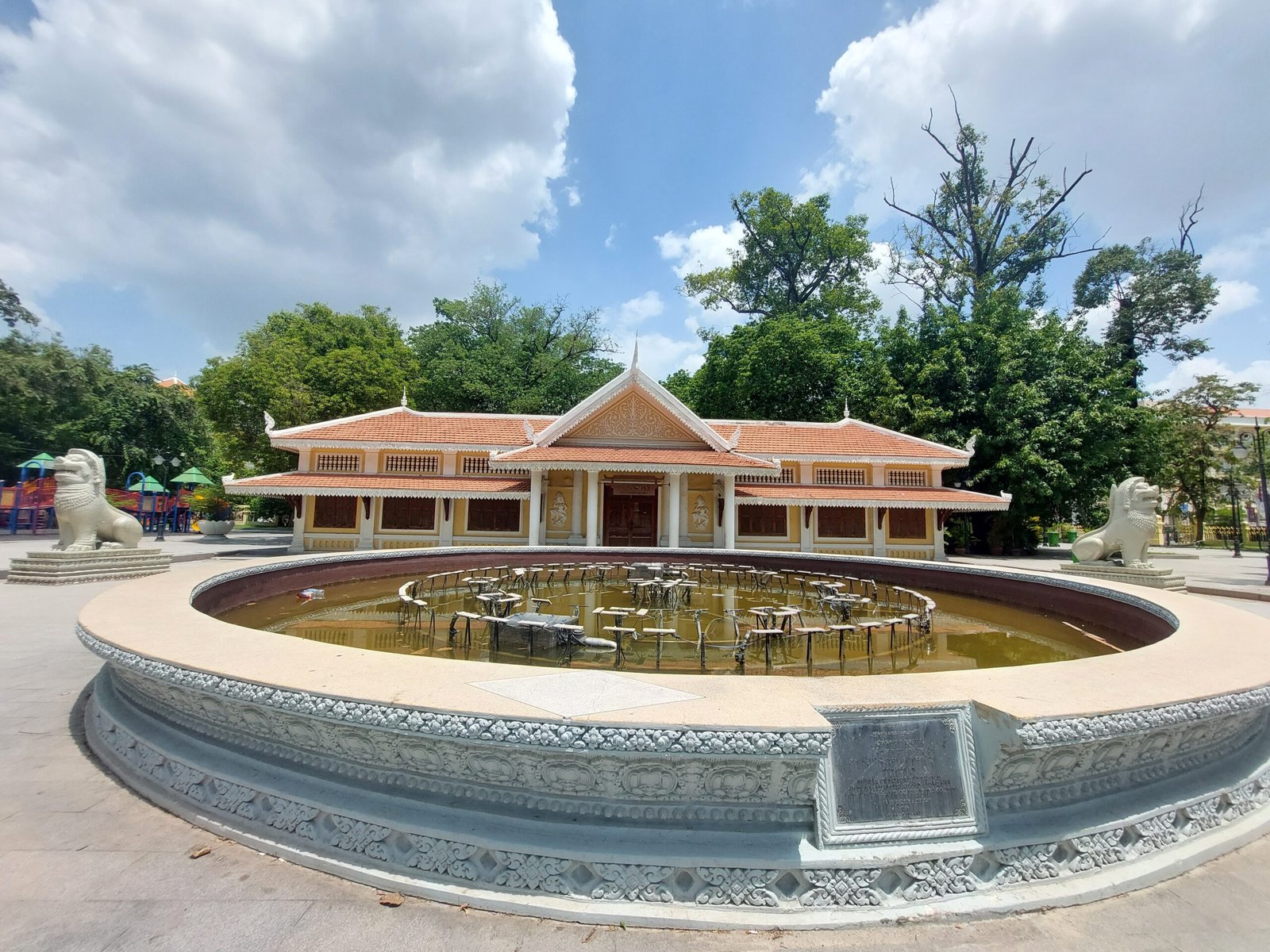
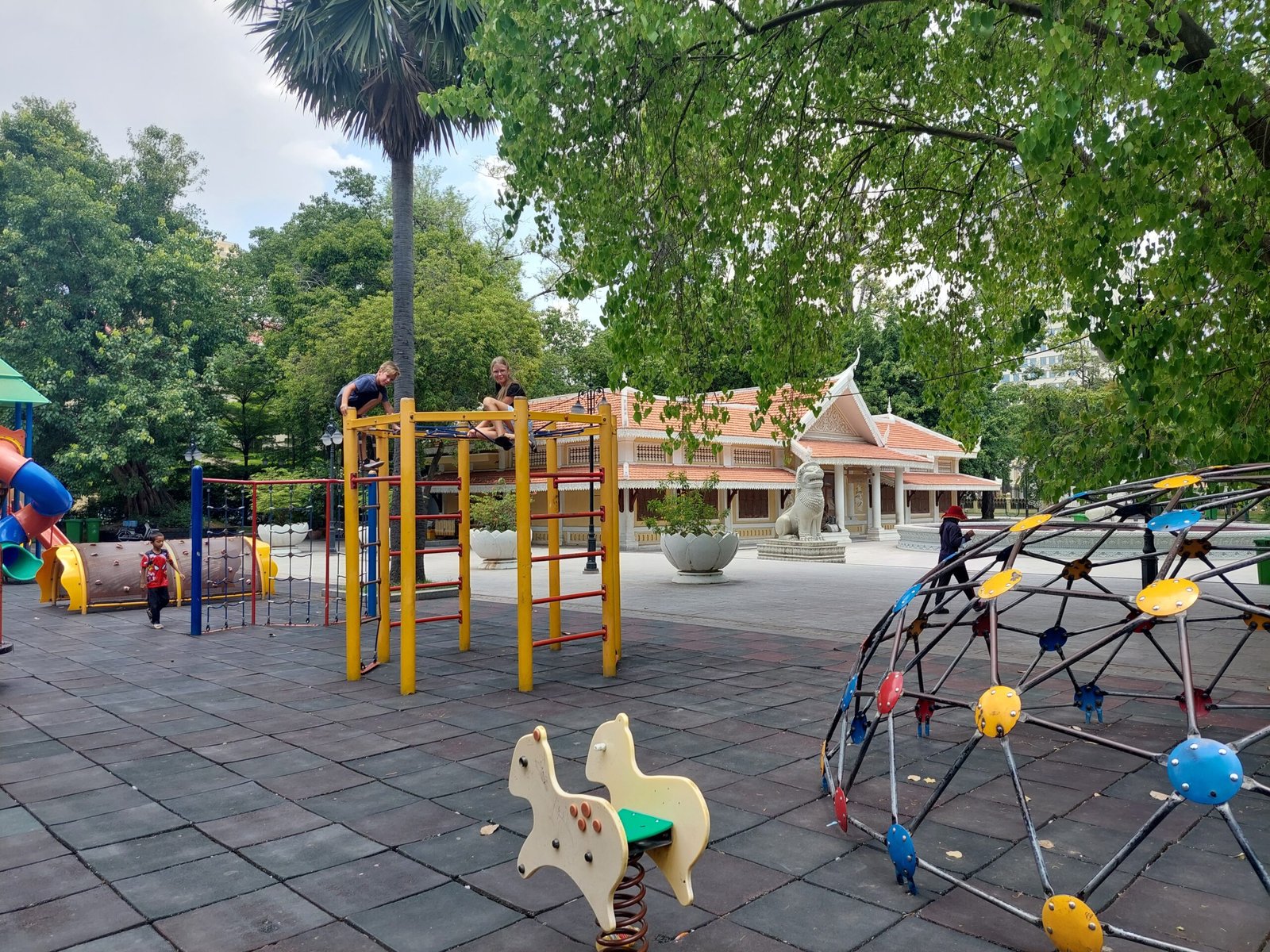
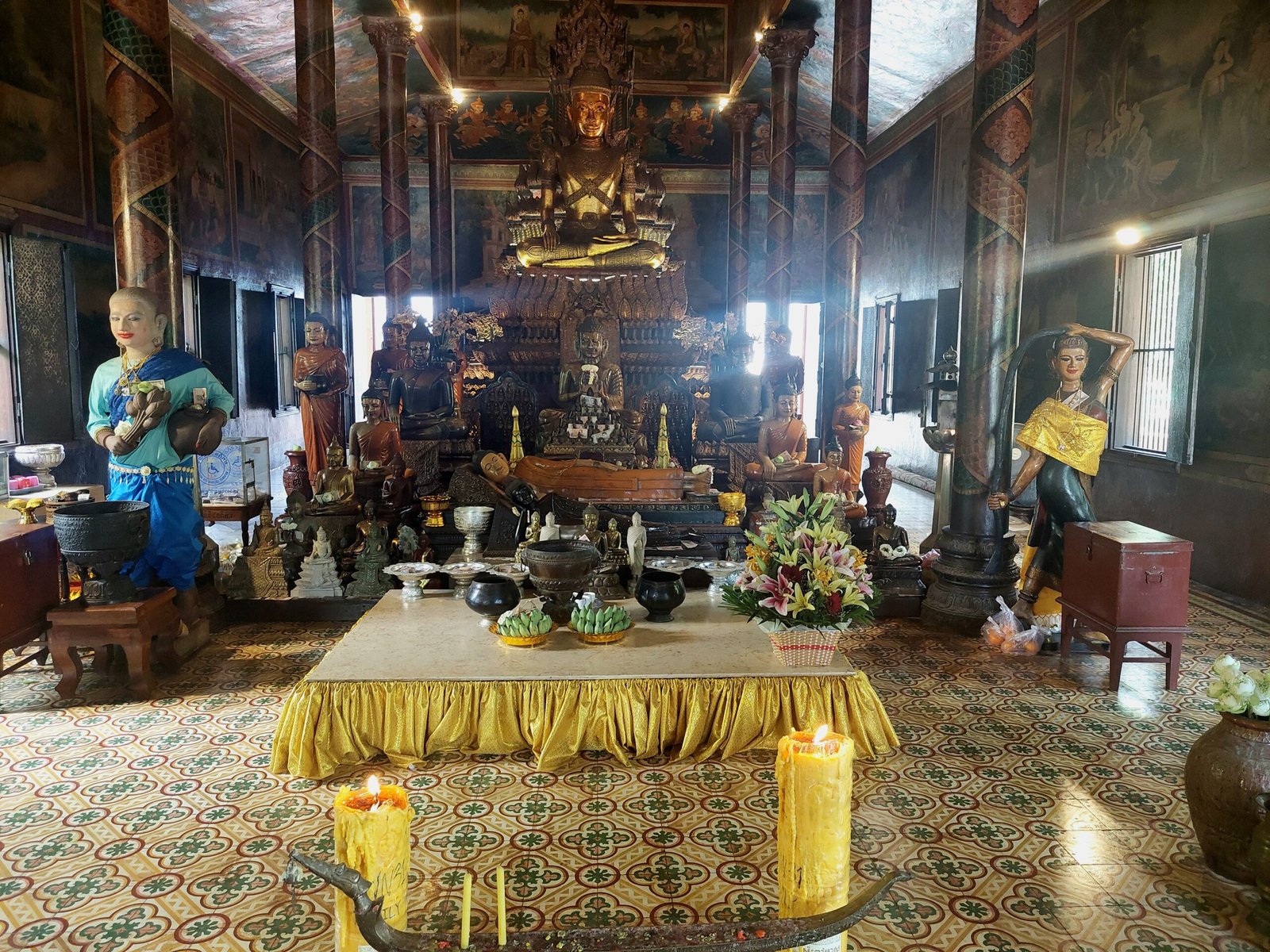
On Friday, we had planned to visit the Royal Palace at around eleven. When we were about to leave, we were told that the guards were on lunch break. The place would open at 2PM again. So we changed our plans, and took a tuk tuk to Wat Phnom temple. The kids immediately started screaming “Daddy promised we wouldn’t go to any temple today!”. When we go there, they were pleasantly surprised, because there was a playground in front of the temple. The playground wasn’t very modern, and it was already very hot, but nevertheless the children played there for a good while. While the kids played in the park, we adults took turns visiting the temple.
The playground also had a library, which was closed at the time of our visit.
Fortunately, some of the climbing frames were in the shade.
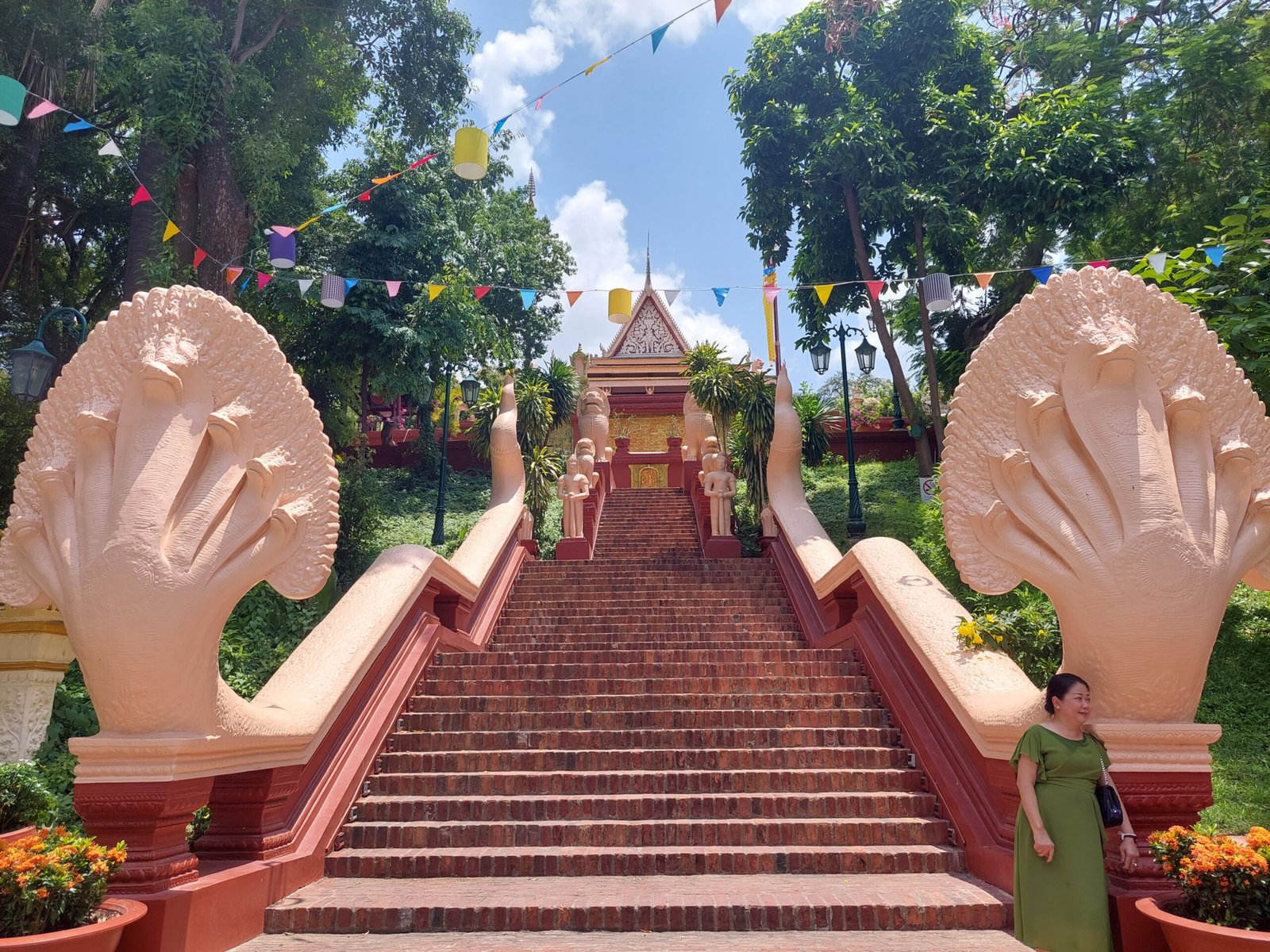
Naga, a multi-headed cobra, guards the steps of Wat Phnom temple.
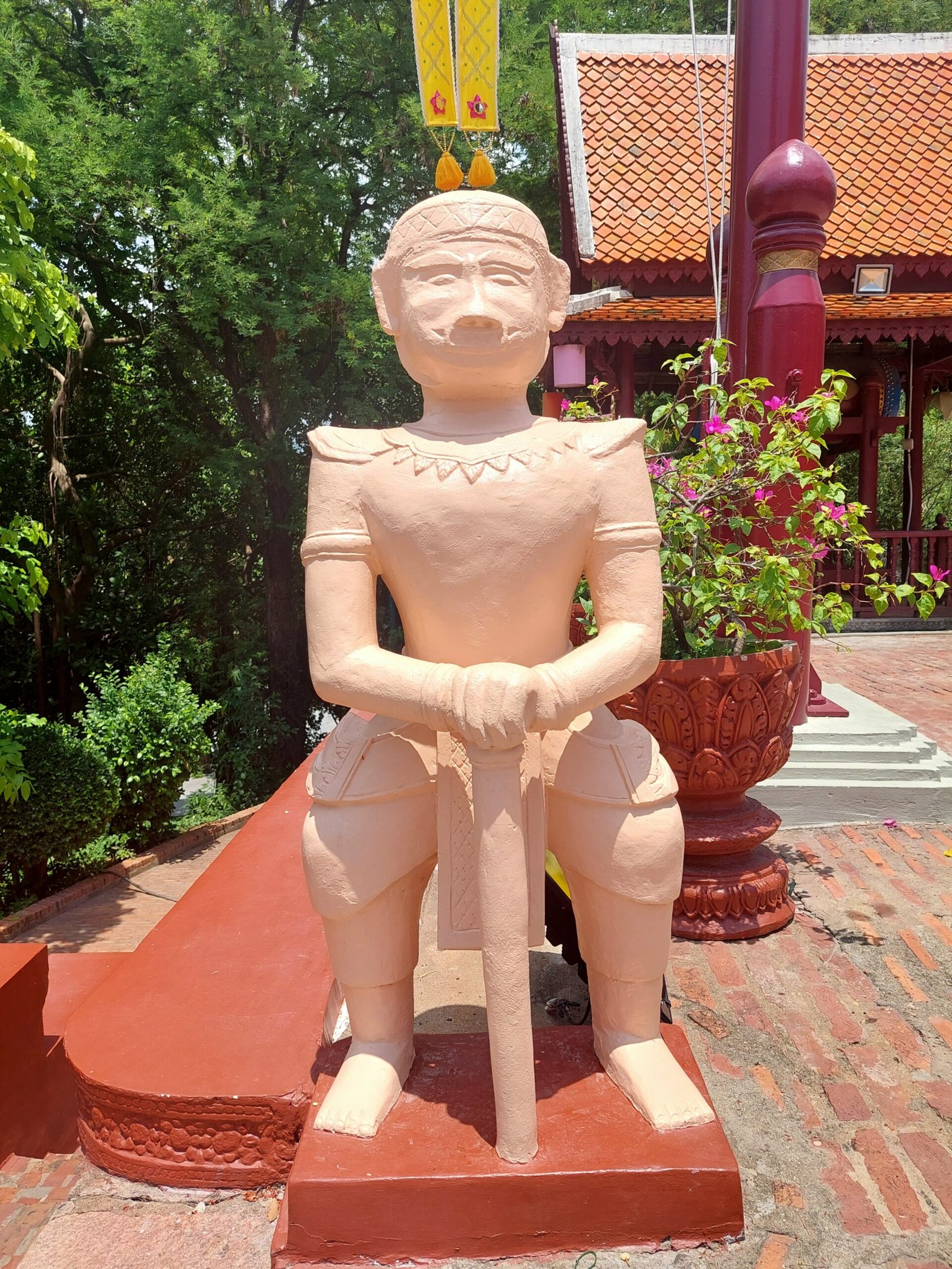
The entrance to the temple is guarded by monkey statues.
Inside Wat Phnom
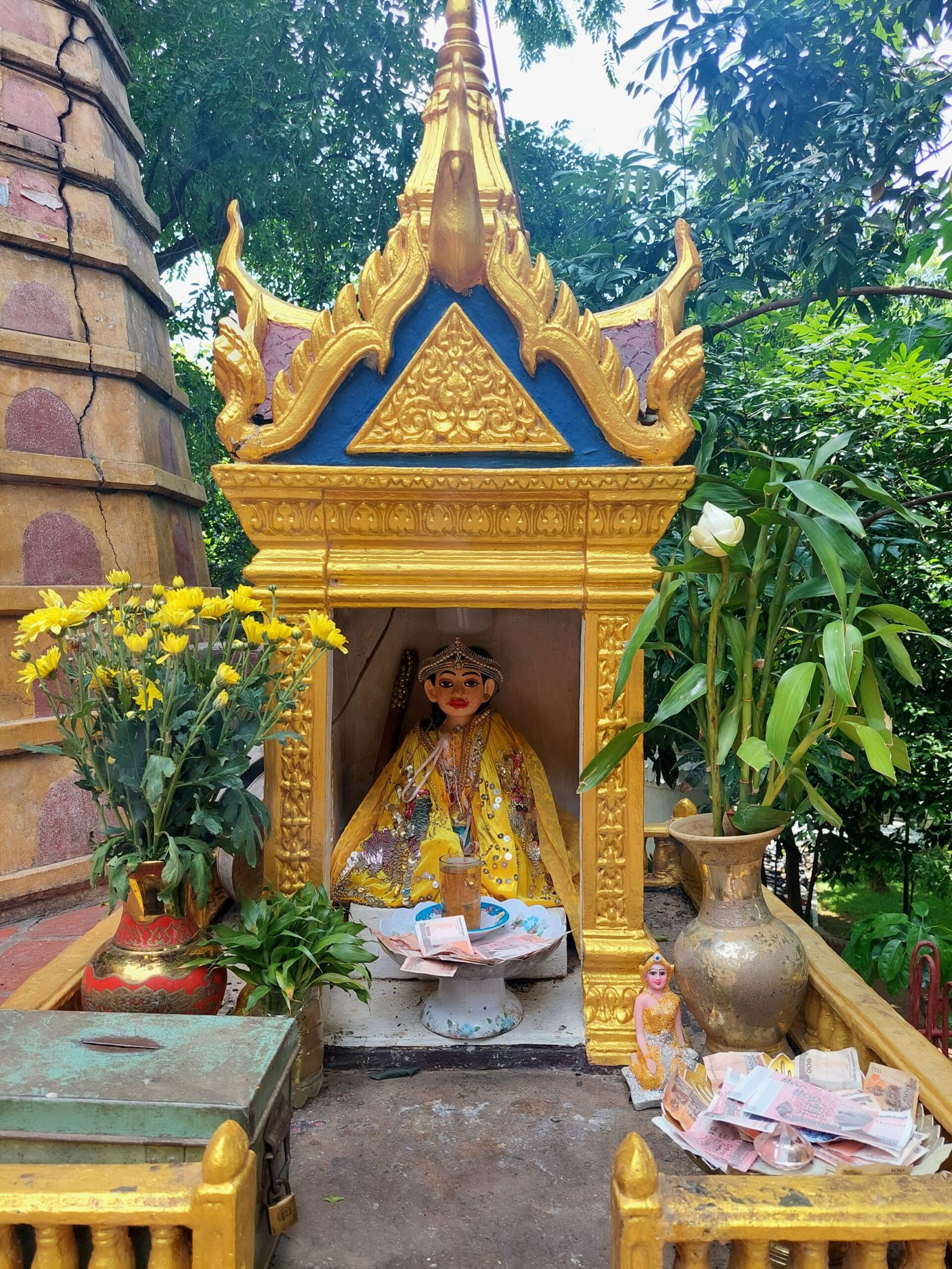
There are small altars everywhere.
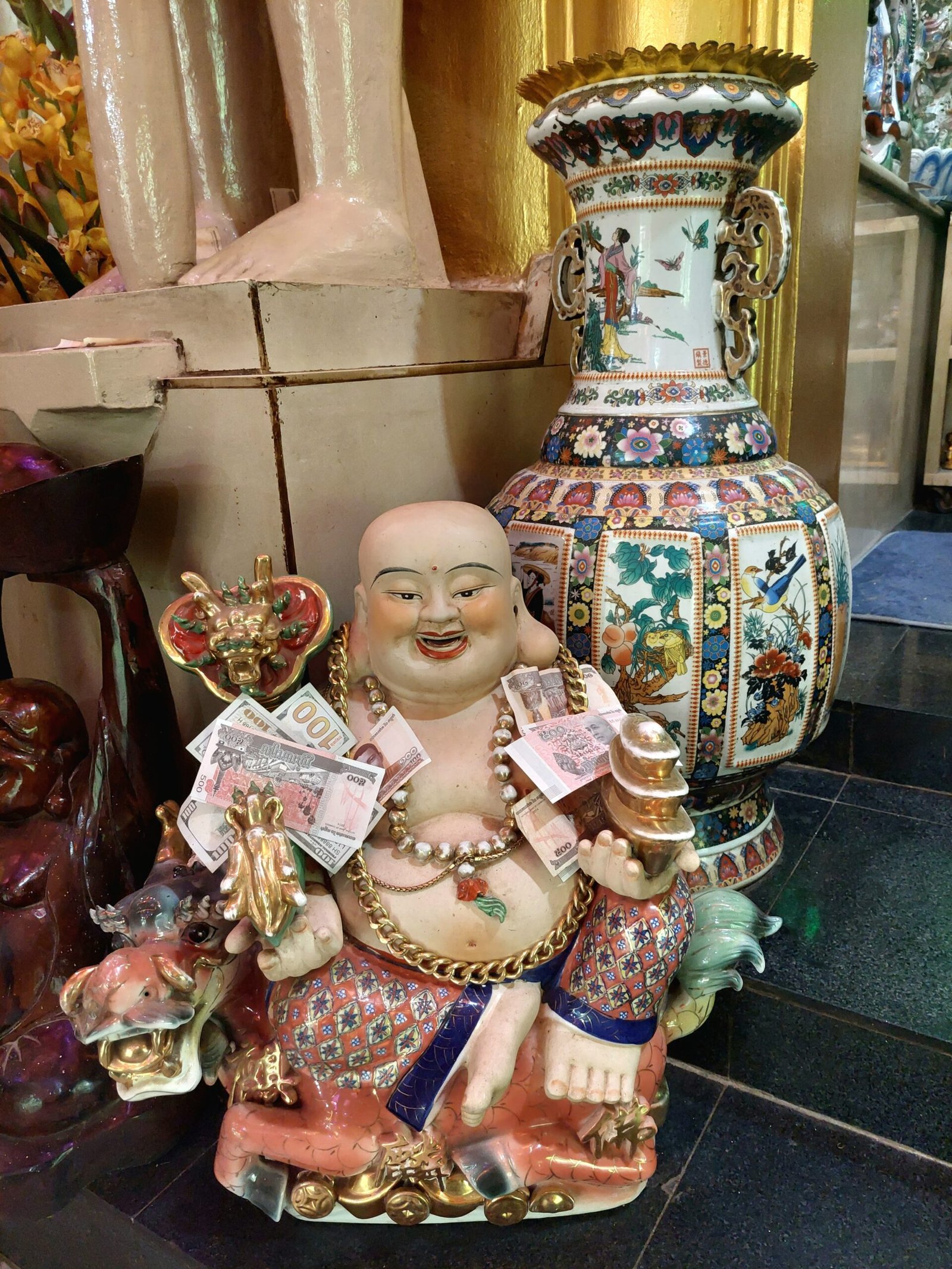
People sometimes offer large sums of money to Buddha.
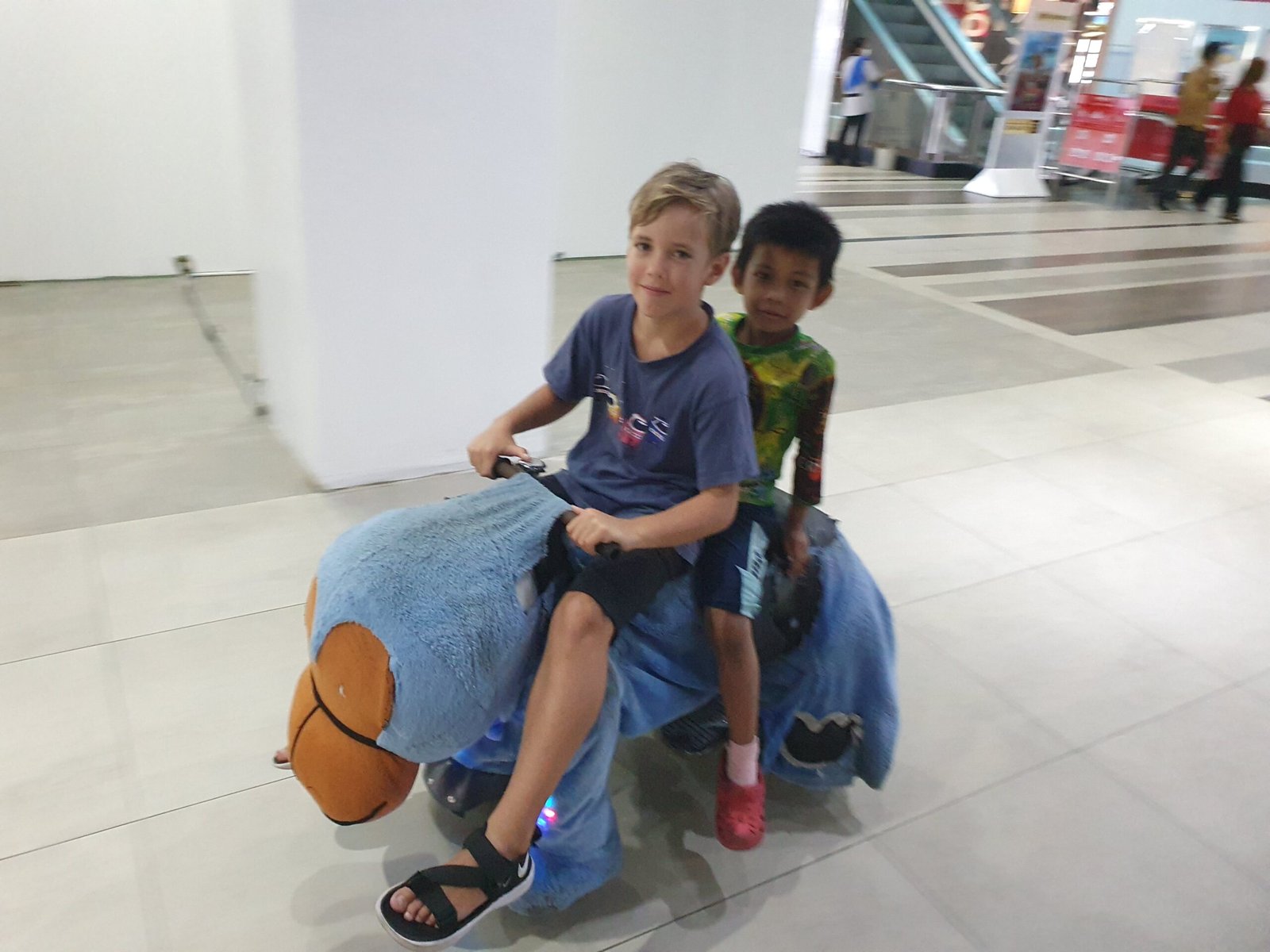
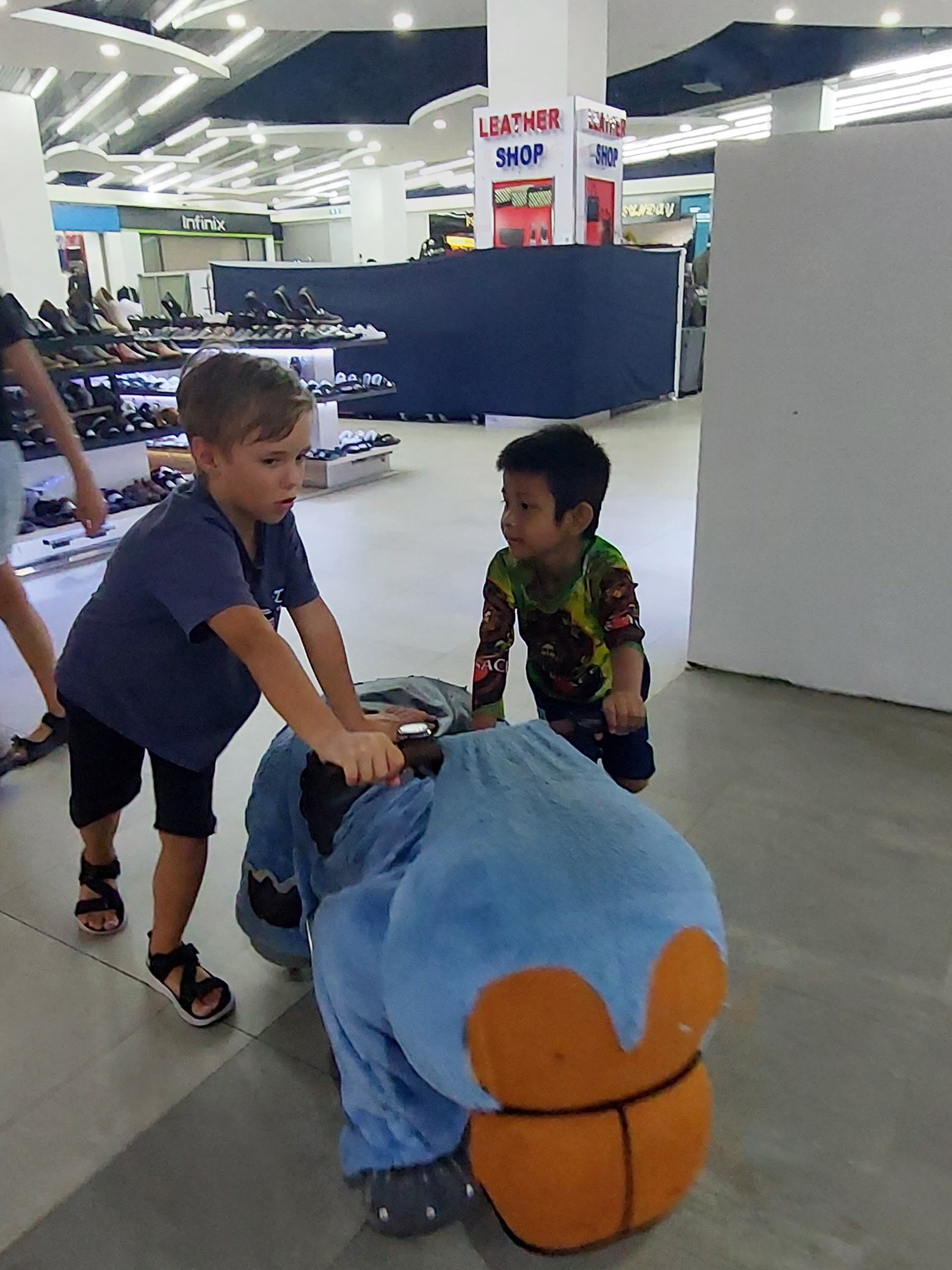
From the temple, we continued by tuk tuk to the local mall. It was several floors high, but inside it was very empty. On one of the upper floors we found a small indoor playground where both children went to play for a while. You could also buy tokens for some kind of electric animal scooters. At first, the kids were driving together around the mall, but then Risto picked up a local little boy, and Ronja followed them on foot.
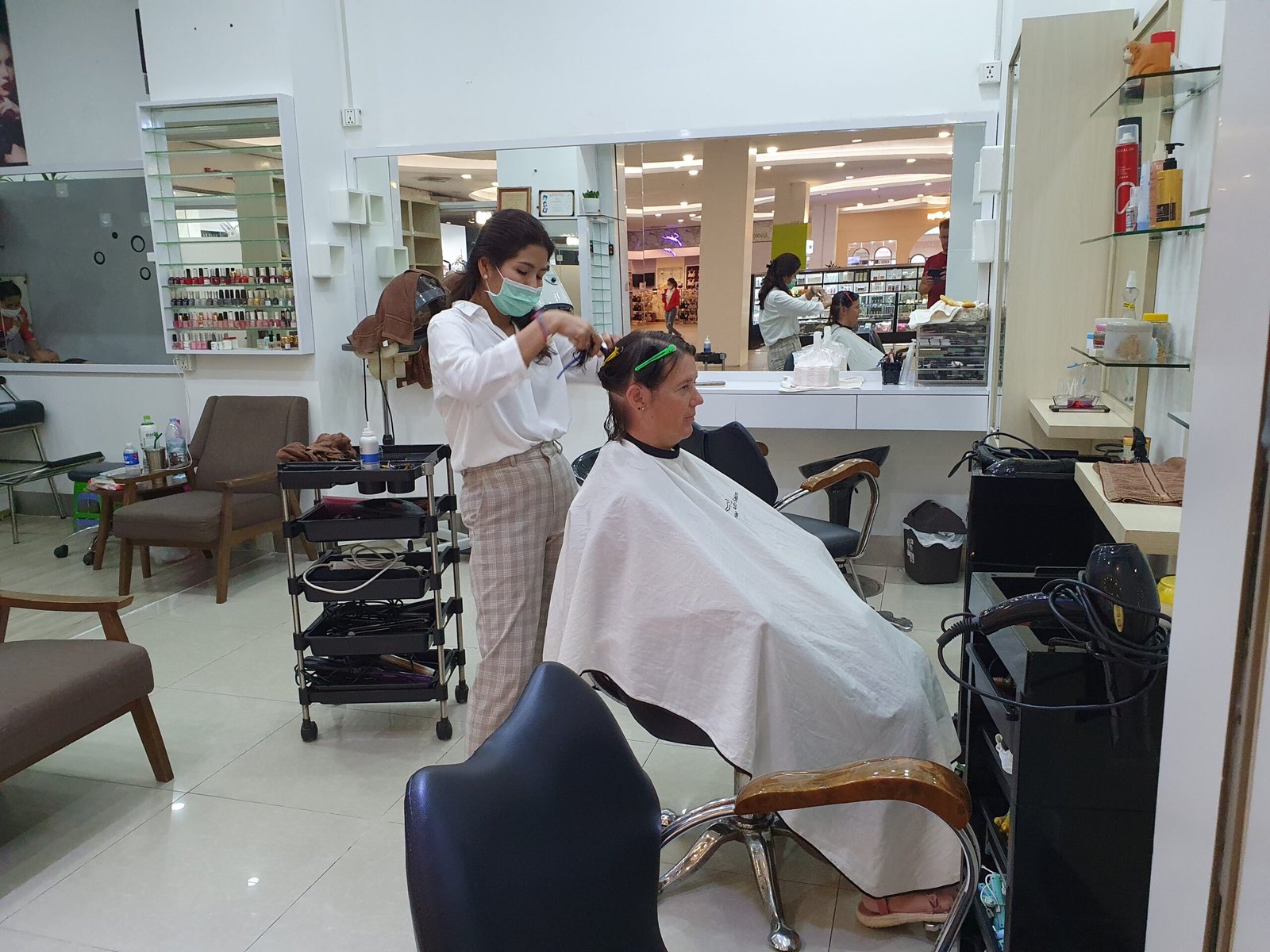
While the children were playing upstairs in the mall, Jaana went downstairs to the hairdresser. There was a slight language barrier, but in the end Jaana thought she had agreed on a haircut with a shampoo wash. Well, they did wash her hair. Twice. The third time, the conditioner was applied to the hair. Otherwise it would have been fine, but apparently this wash included a head massage. It may sound nice, but it was not a relaxing experience! And it lasted for what seemed like an eternity. A tiny woman was squeezing Jaana’s head so hard that for a moment she was afraid her entire skull would crumble under her fingers. After the first two rounds of “regular” massage, the third one started. This wasn’t as rough as the previous “massages”, but it was still an exotic experience. This time, the woman used her long nails and scratched Jaana’s scalp so hard that it’s a wonder there’s any hair left. Eventually we got to the haircut, and it went as smoothly as at any hairdresser in Finland. The whole treatment cost 40 000KHR (about 9€). At these rates, it’s worth taking the very rough head massage too.
At this point, the visit to the hairdresser's was starting to feel quite relaxing.
There was also a decent sized supermarket downstairs in the mall, so we went there to get some snacks for the hotel. Many other westerners had also found their way to the same supermarket. I think it was probably one of the few places where the selection was also suitable for a western diet.
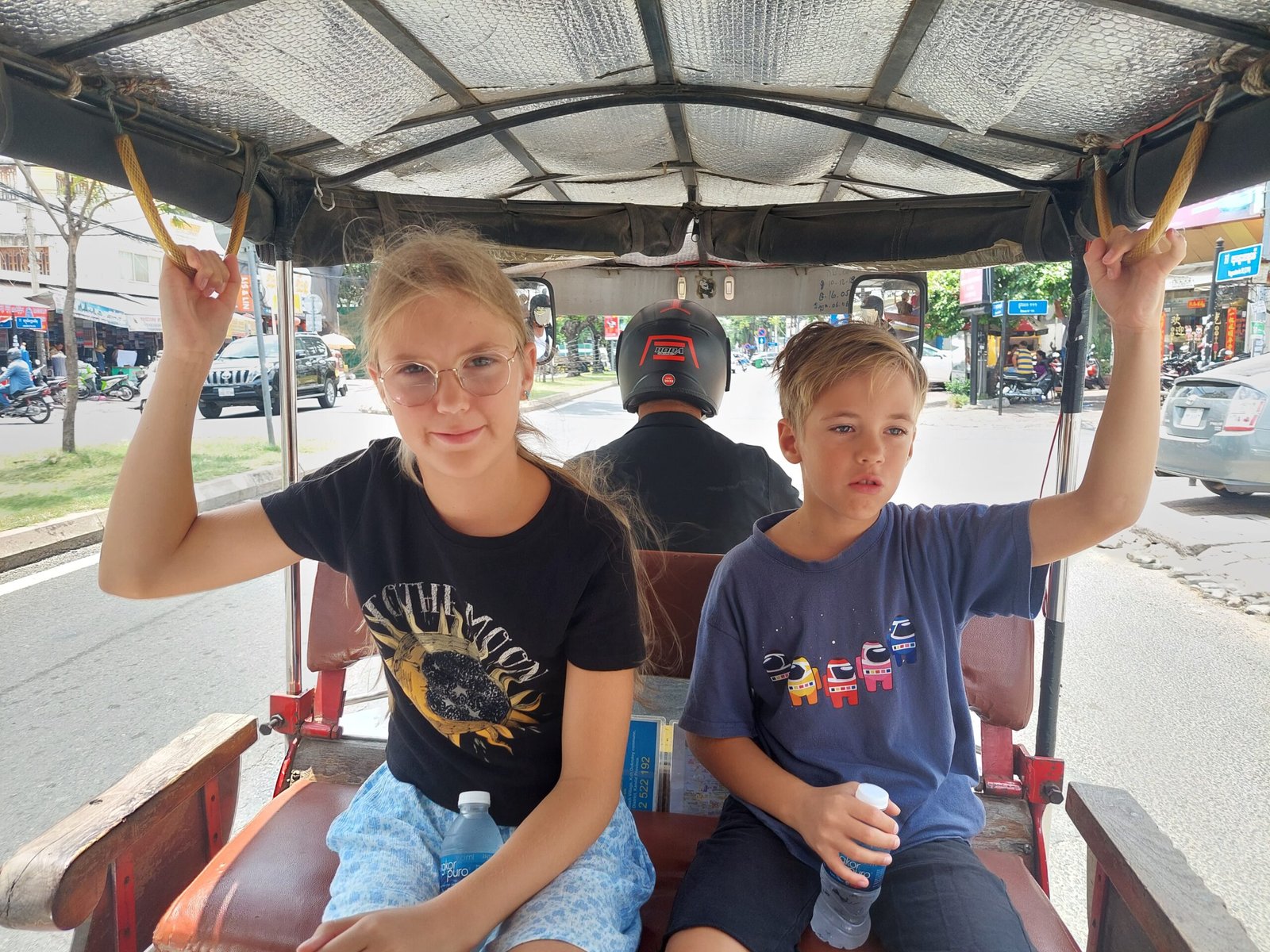
On Saturday, right after breakfast, we set off on another attempt to visit the Royal Palace. We went there by tuk tuk and it only cost us three dollars. In Cambodia the prices are often quoted in dollars, although payment is then made in local currency. The dollar has long been a popular currency here because of its more stable exchange rate, but now they’re trying to get rid of dollars in Cambodia. New dollars are no longer being put into circulation, and efforts are being made to eliminate old ones. If you pay in US dollars, your change will be in Cambodian riel.
Many tuk-tuks are very spacious and reasonably quiet.
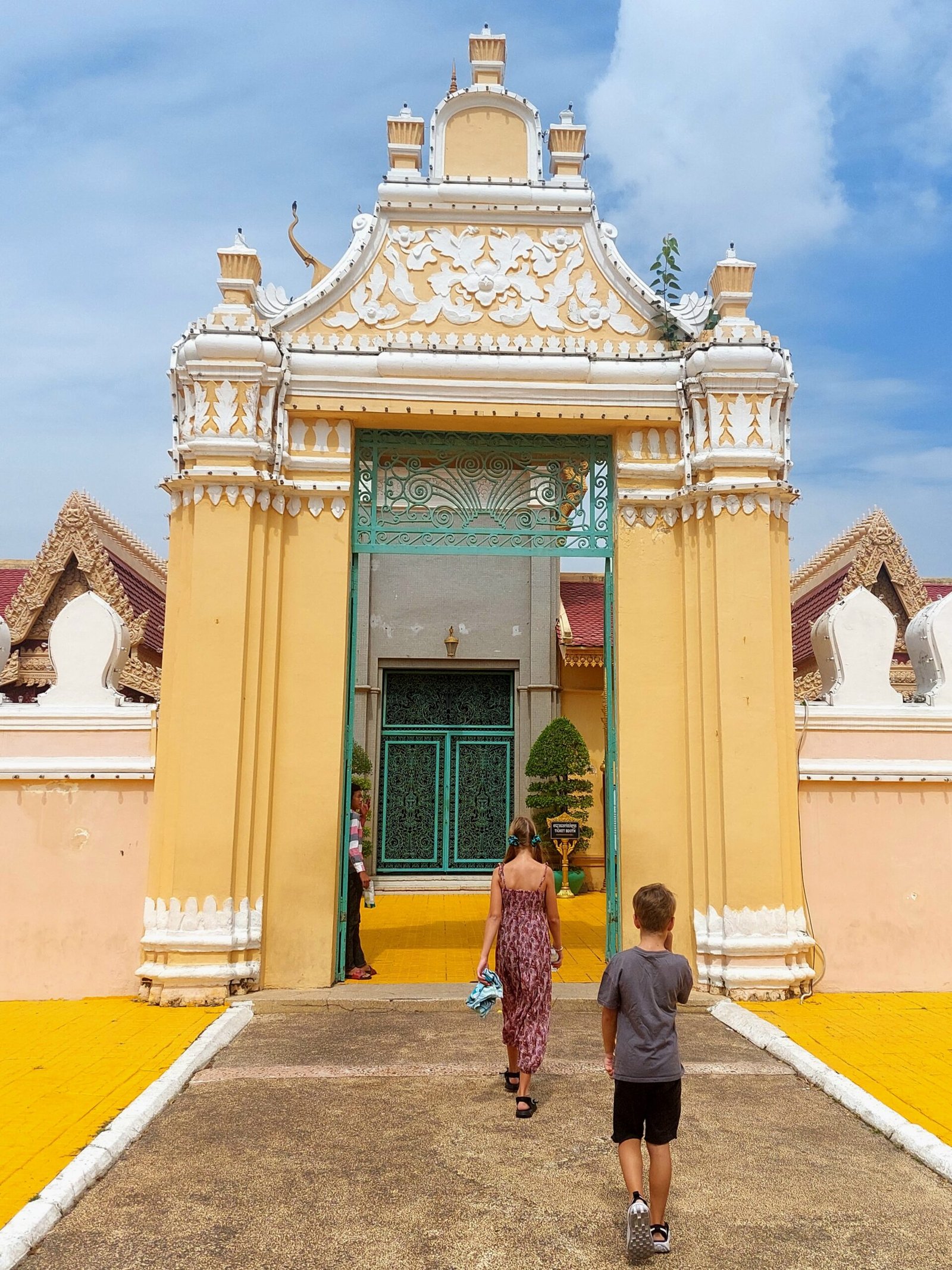
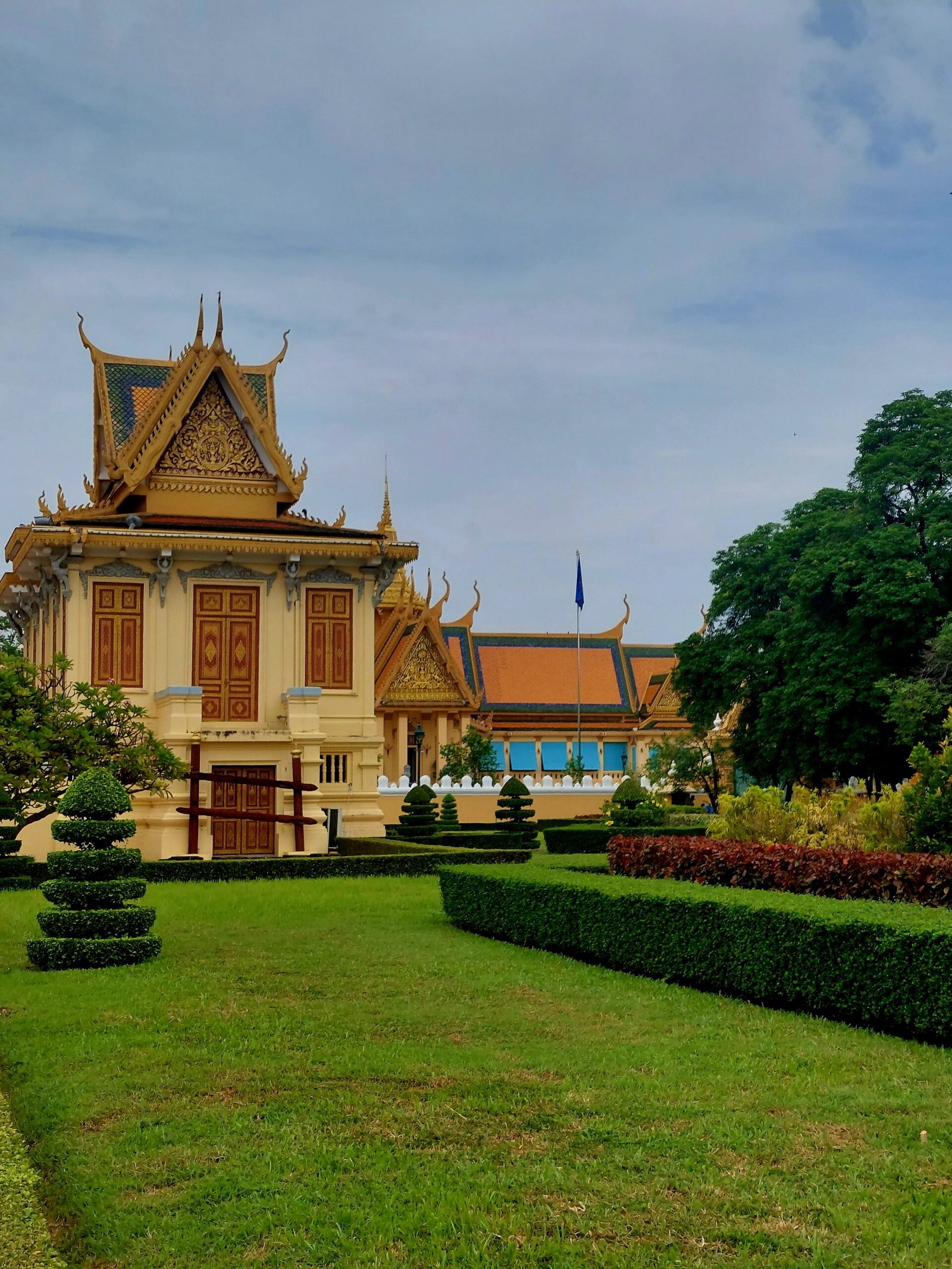
The palace area is also a home to the royal family, so some areas are closed to public. There are four entrances to the area, one of which is open to palace employees and tourists. There were a few other tourists in the area, but very few, considering of the size of the palace area.
The entrance for ordinary people was not very grand.
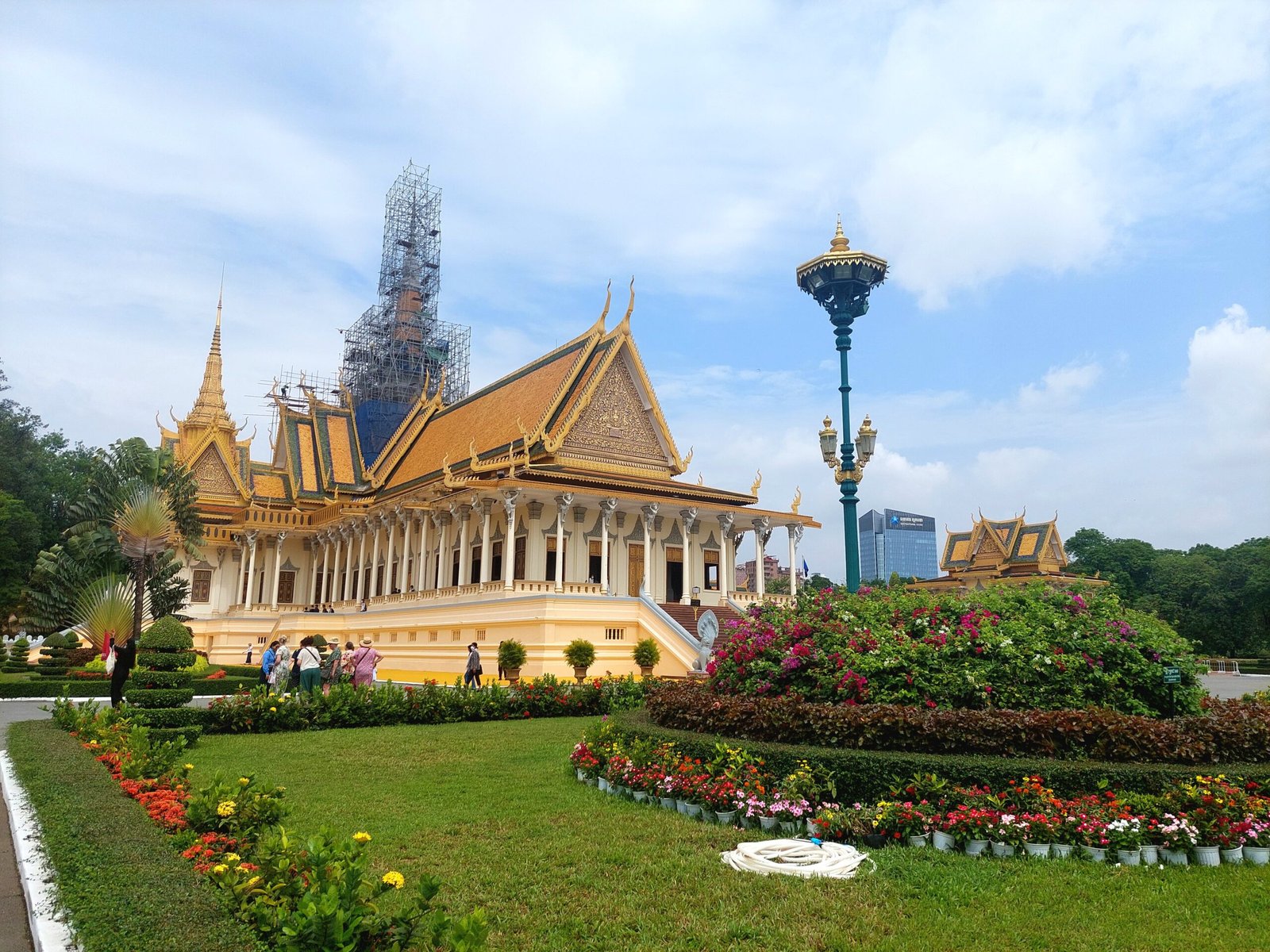
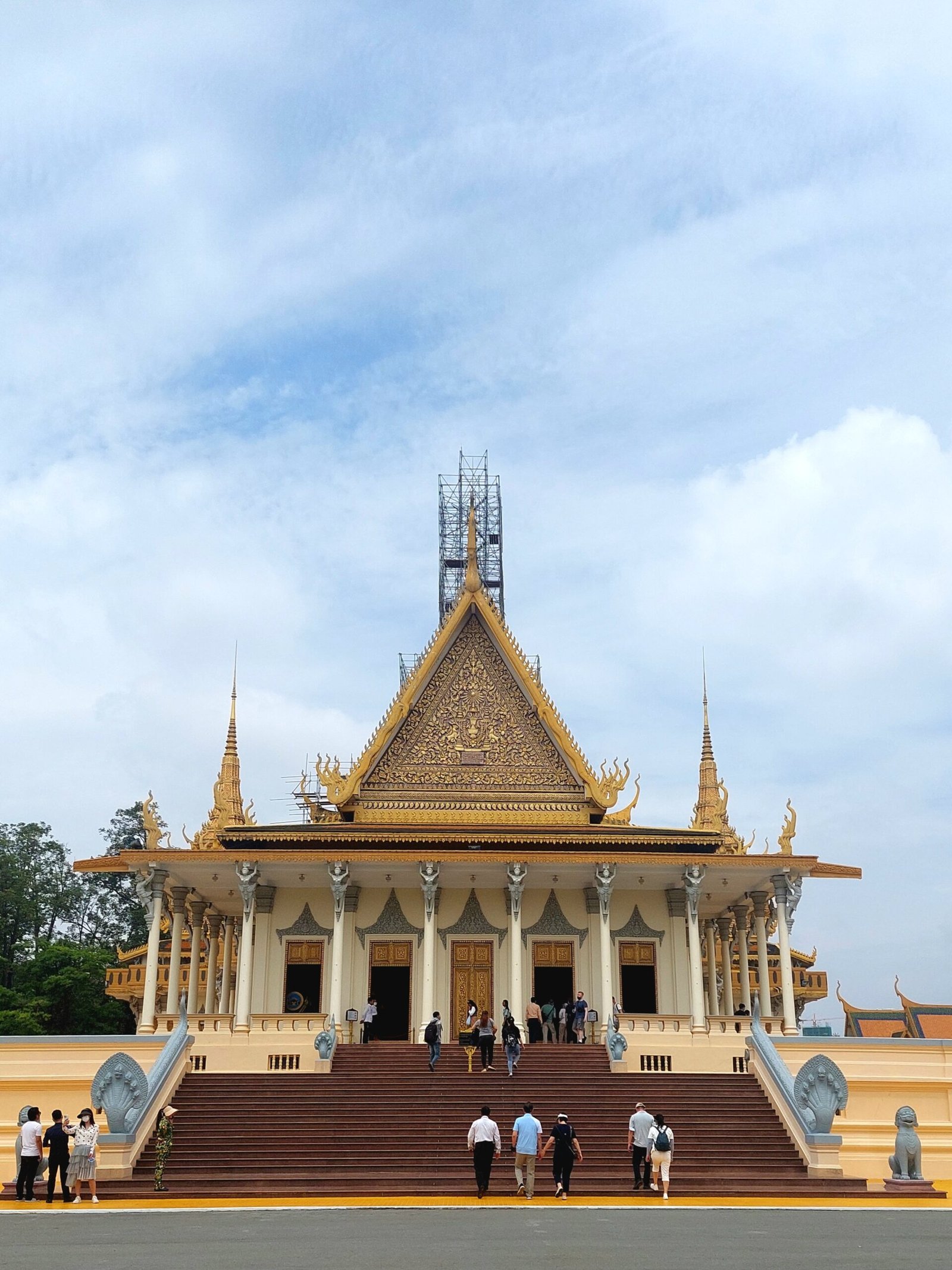
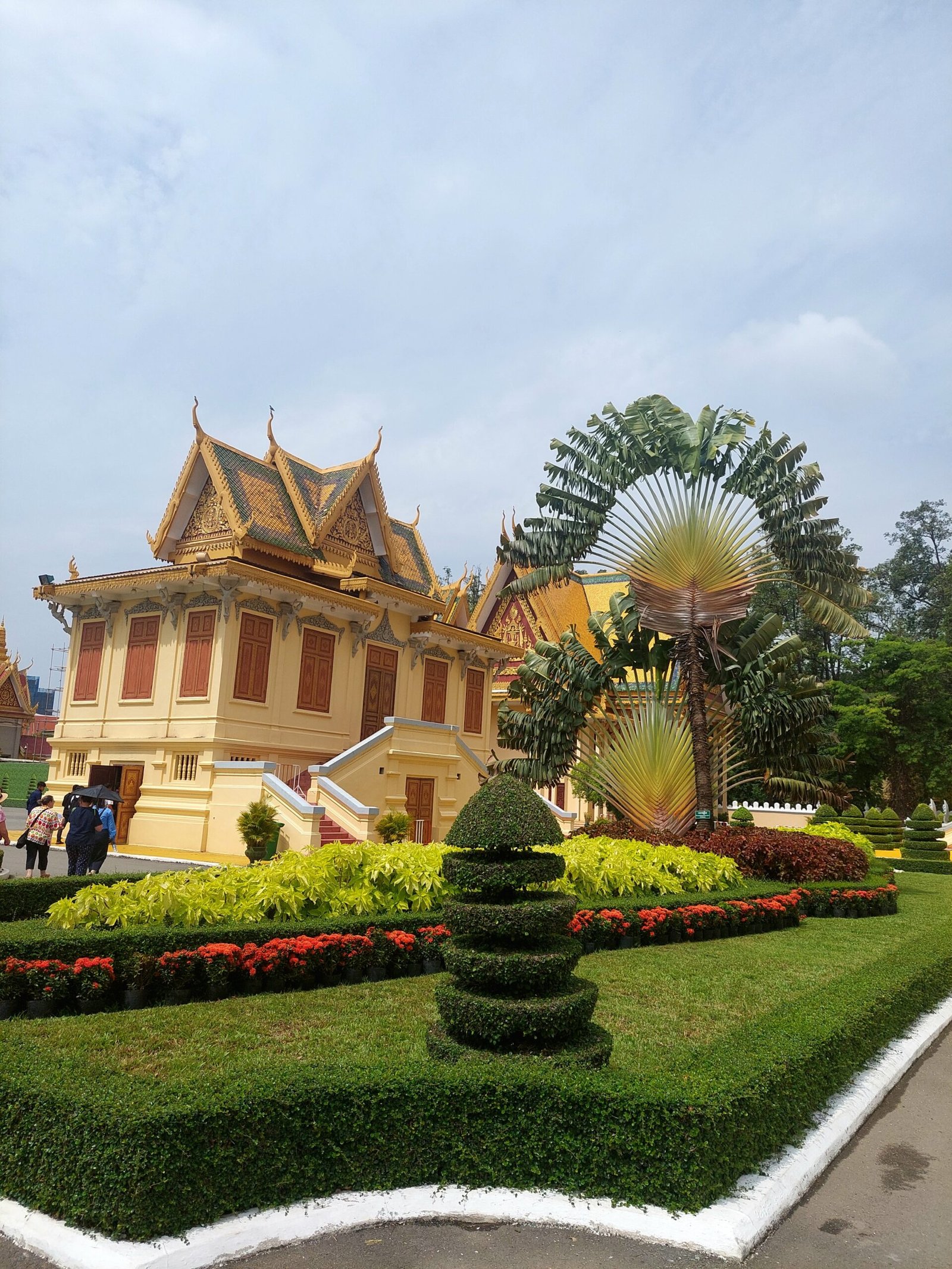
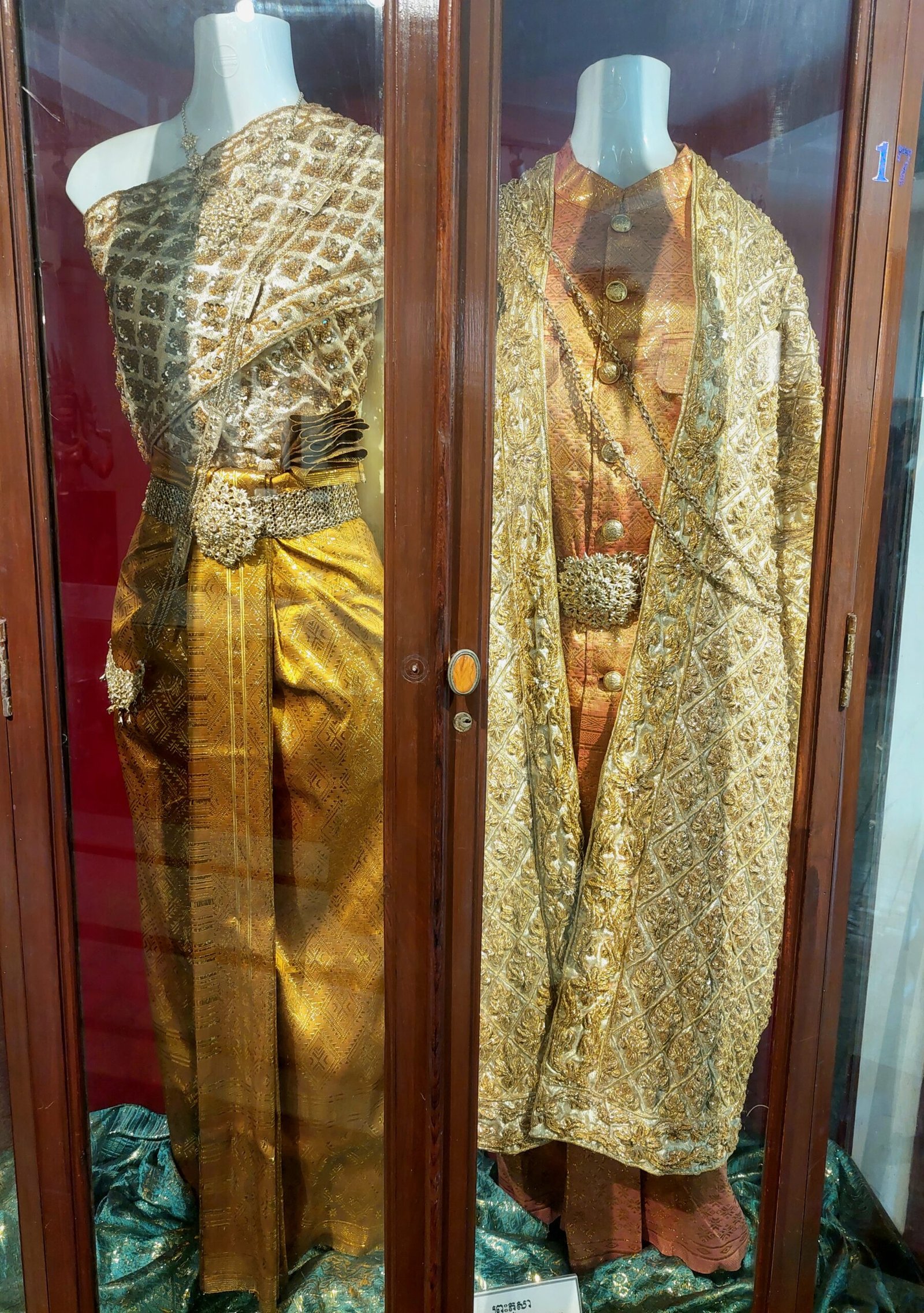
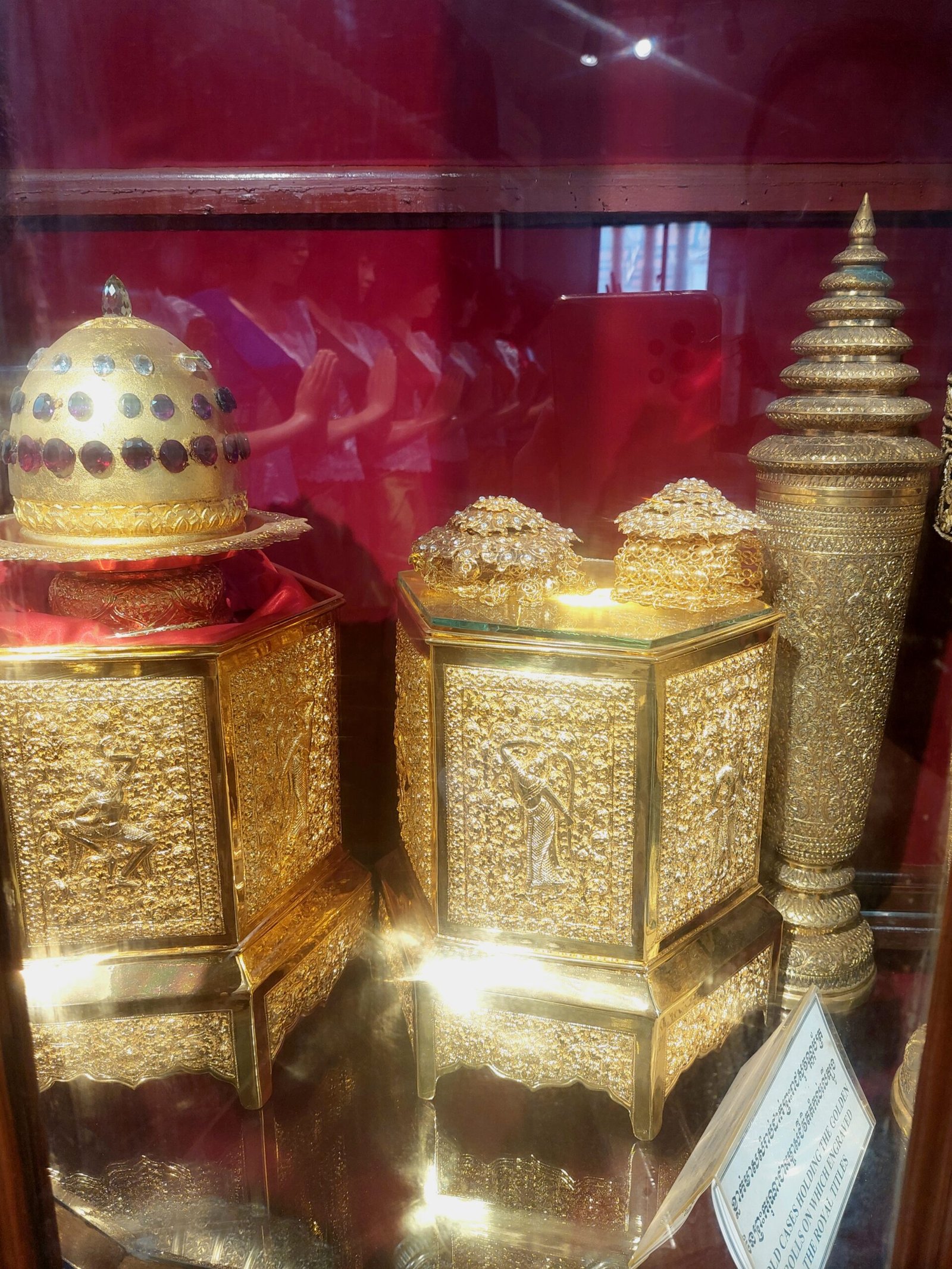
We first took a peek inside the throne hall. This is where new kings are crowned and all the important visitors are received. Needless to say, tourists do not count as important visitors, so we were only allowed a peek through the door. No pictures were allowed. Next to this building was a smaller building with royal costumes and artefacts. Some of the objects were clearly there for museum use only, but some are still used, for example, in coronations.
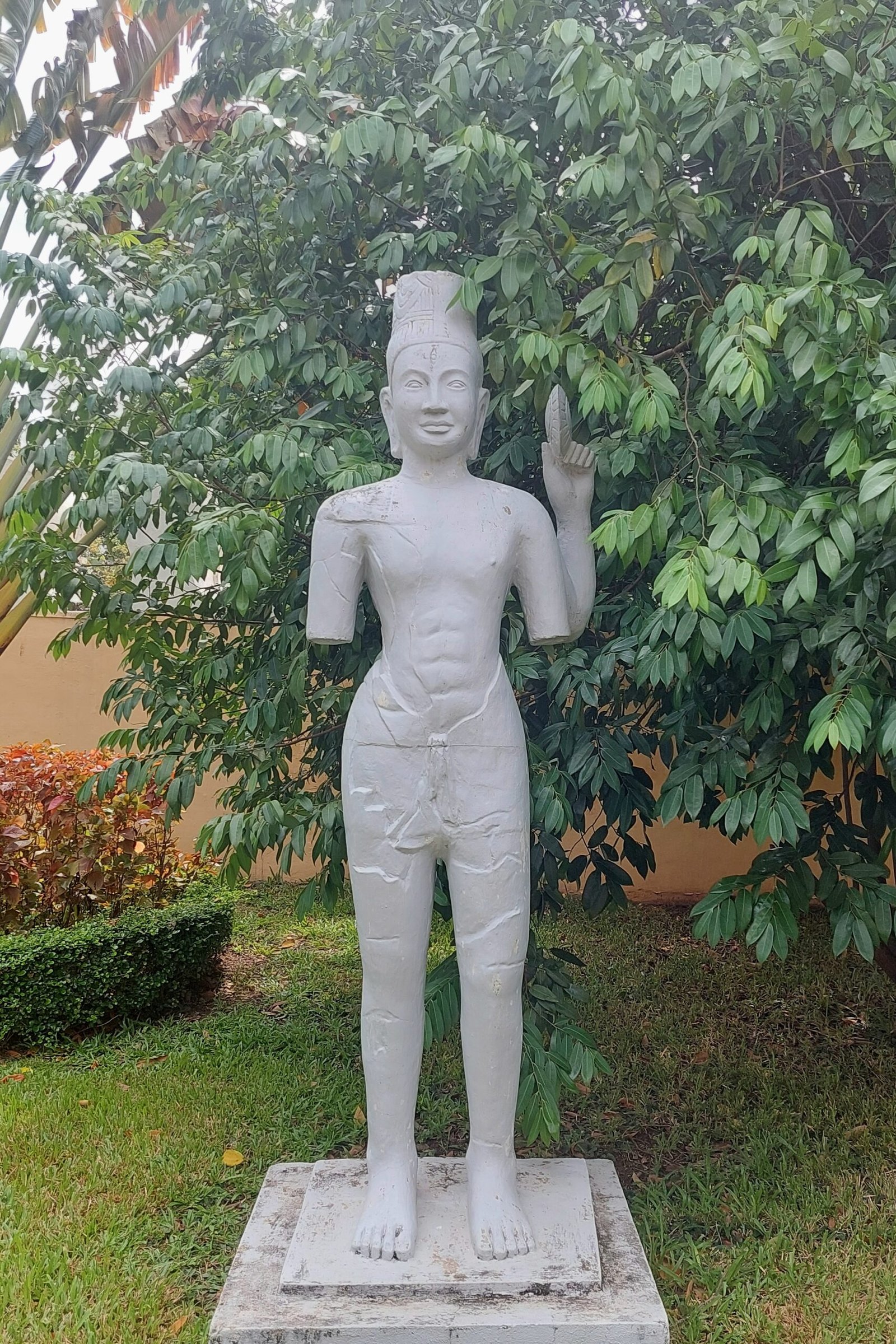
There were many statues in the palace courtyard that appeared to have three hands. However, two of them were always broken.
The highest dome of the Throne Hall was currently under renovation.
The Throne Hall was also guarded by multi-headed cobras.
We couldn’t get even close to the king’s personal residence, but we saw a blue flag in its courtyard which indicates that the king was in his palace at the time.
This building housed royal costumes and coronation regalia.
A flag indicated that the king was at home.
Royal costumes sewn from gold thread.
Golden coronation cases
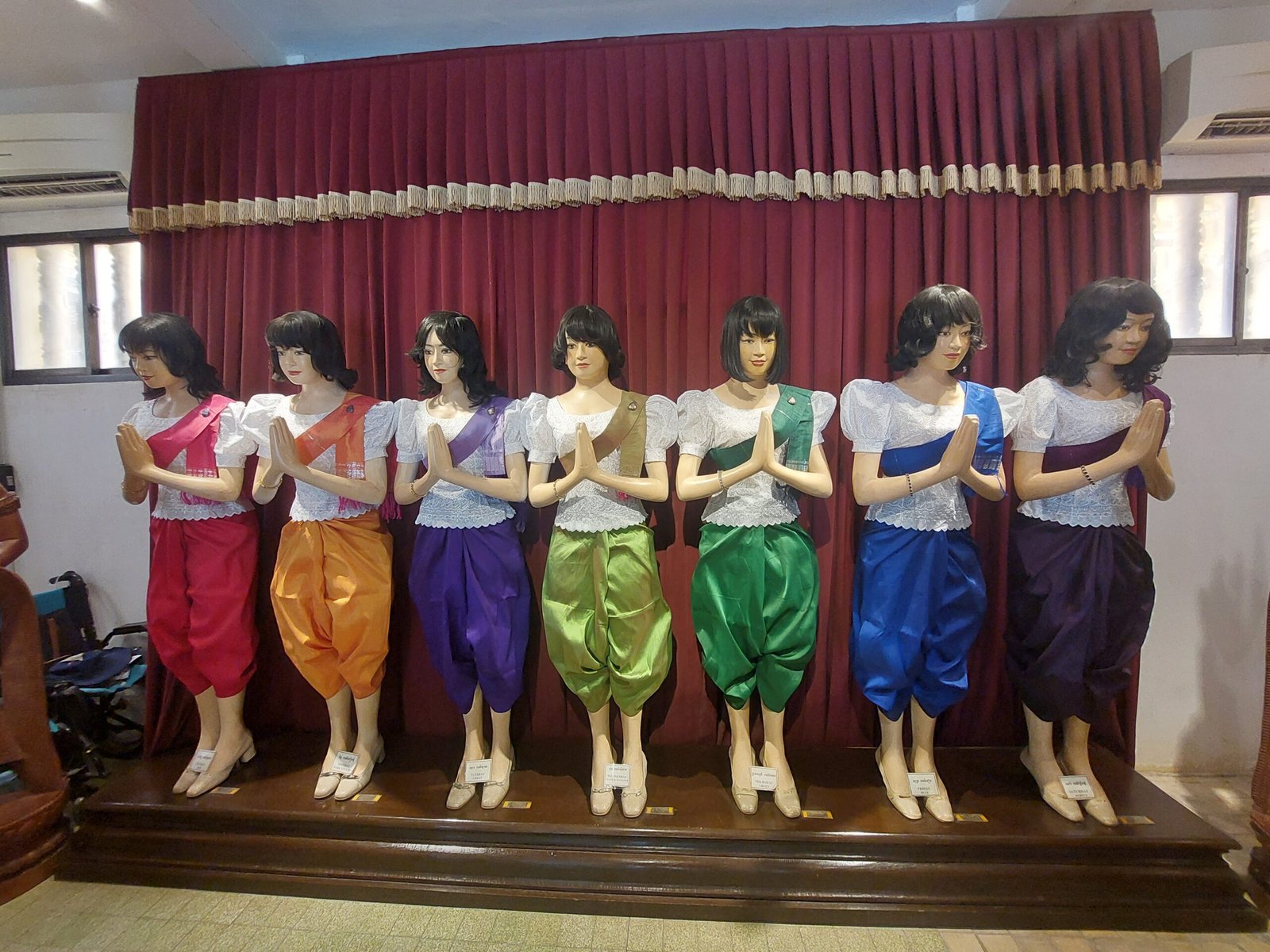
Each day of the week has its own color. This is said to bring good luck and prosperity.
Tourists were allowed in to the Silver Pagoda in the grounds of the palace, so we went there next. The name of the building comes from the fact that its entire floor is made of 500 silver tiles. If you add up their weight, it’s almost six tons. The silver tiles were covered with thick red carpets, but some of them were left visible for tourists to admire. The pagoda also had a huge golden Buddha statue weighing 90kg. This gold statue was also decorated with 9,584 diamonds, so it was no wonder that there were guards on every corner. In addition to the silvery floor and the golden Buddha statue, there were many other silver and gold statues and artefacts on display in the pagoda. So we were practically visiting a huge treasury.
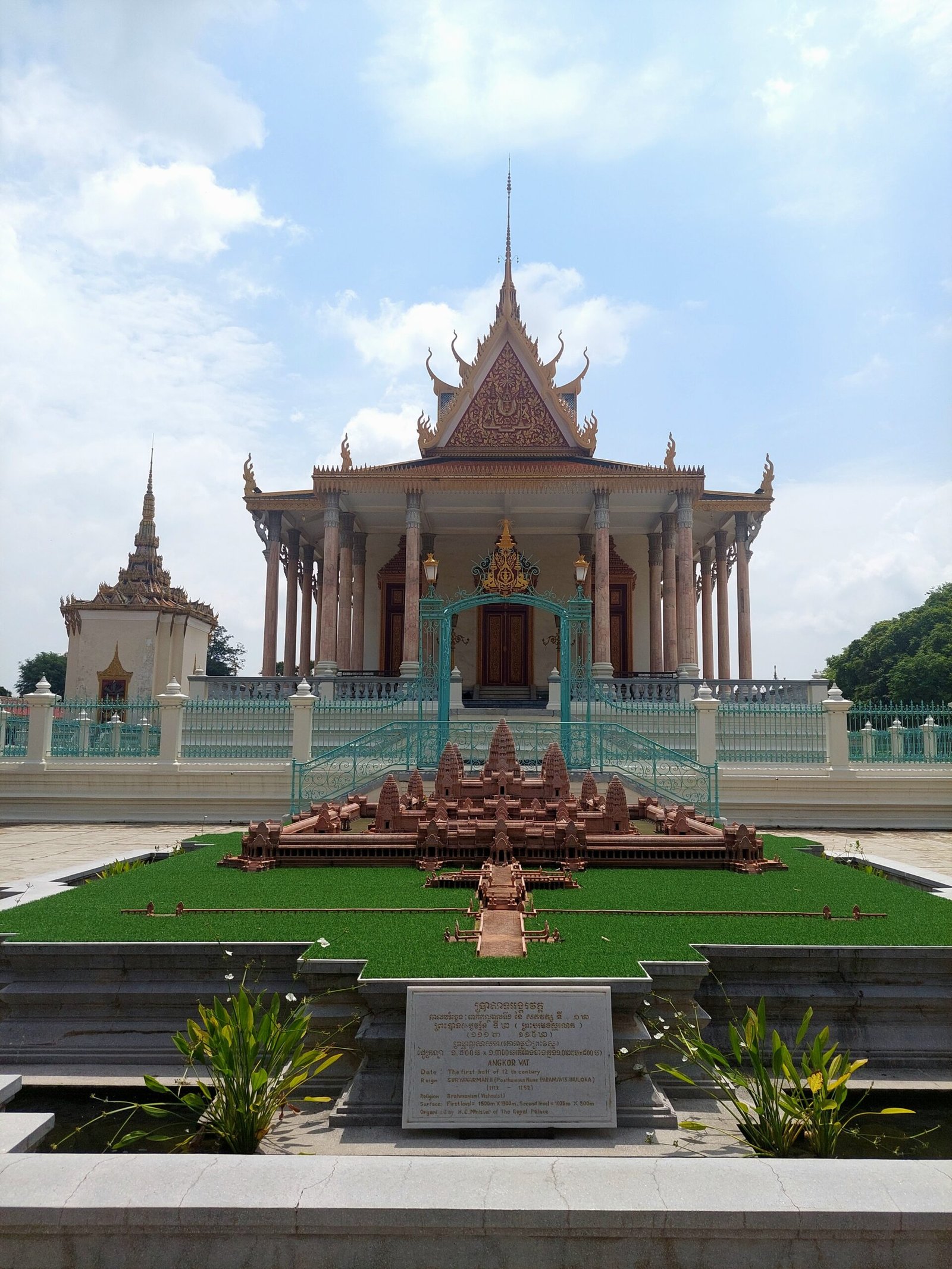
In front of the Silver Pagoda was a miniature model of Angkor Wat.
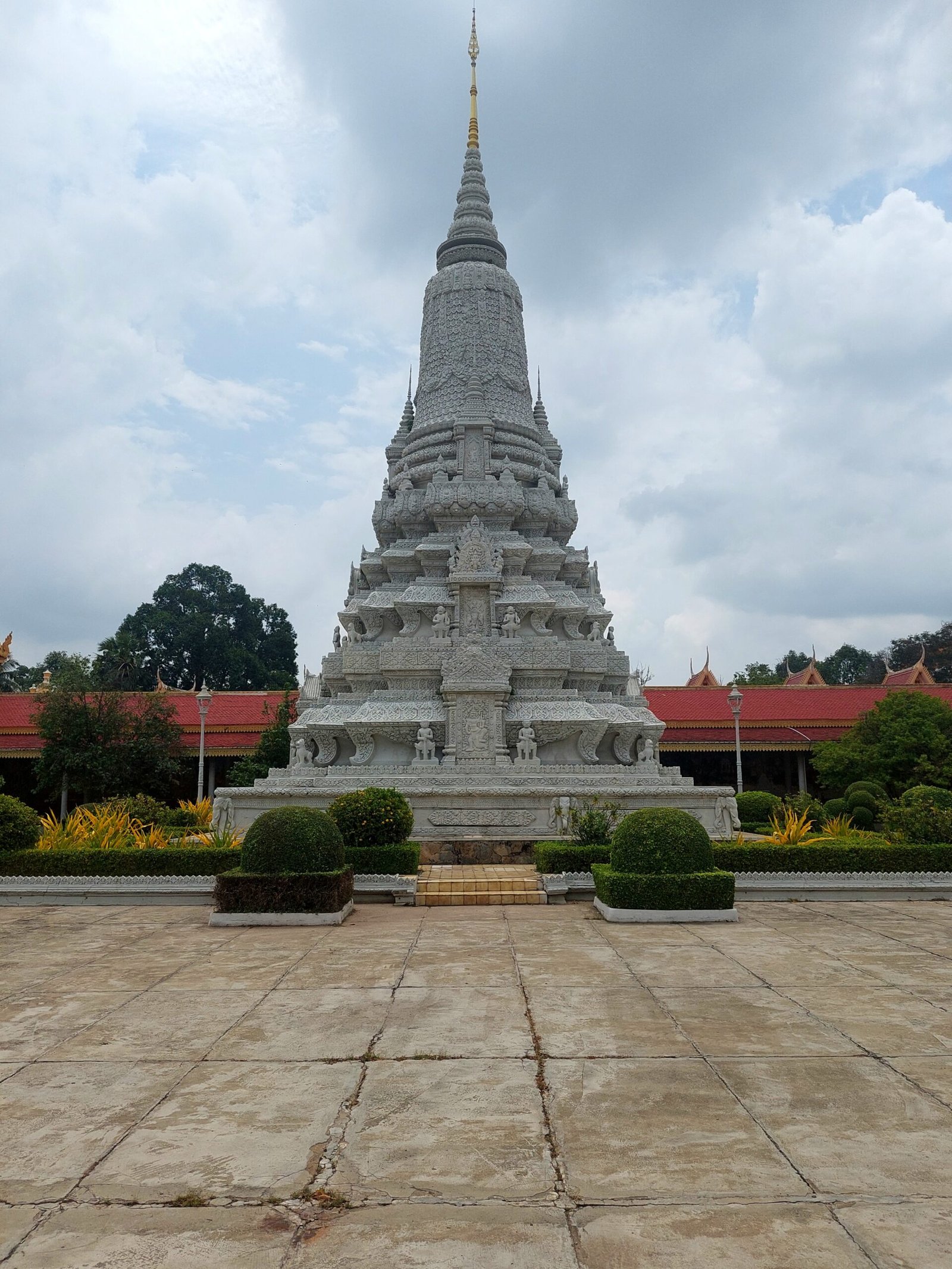
There were several of these "stupas" in the palace grounds.
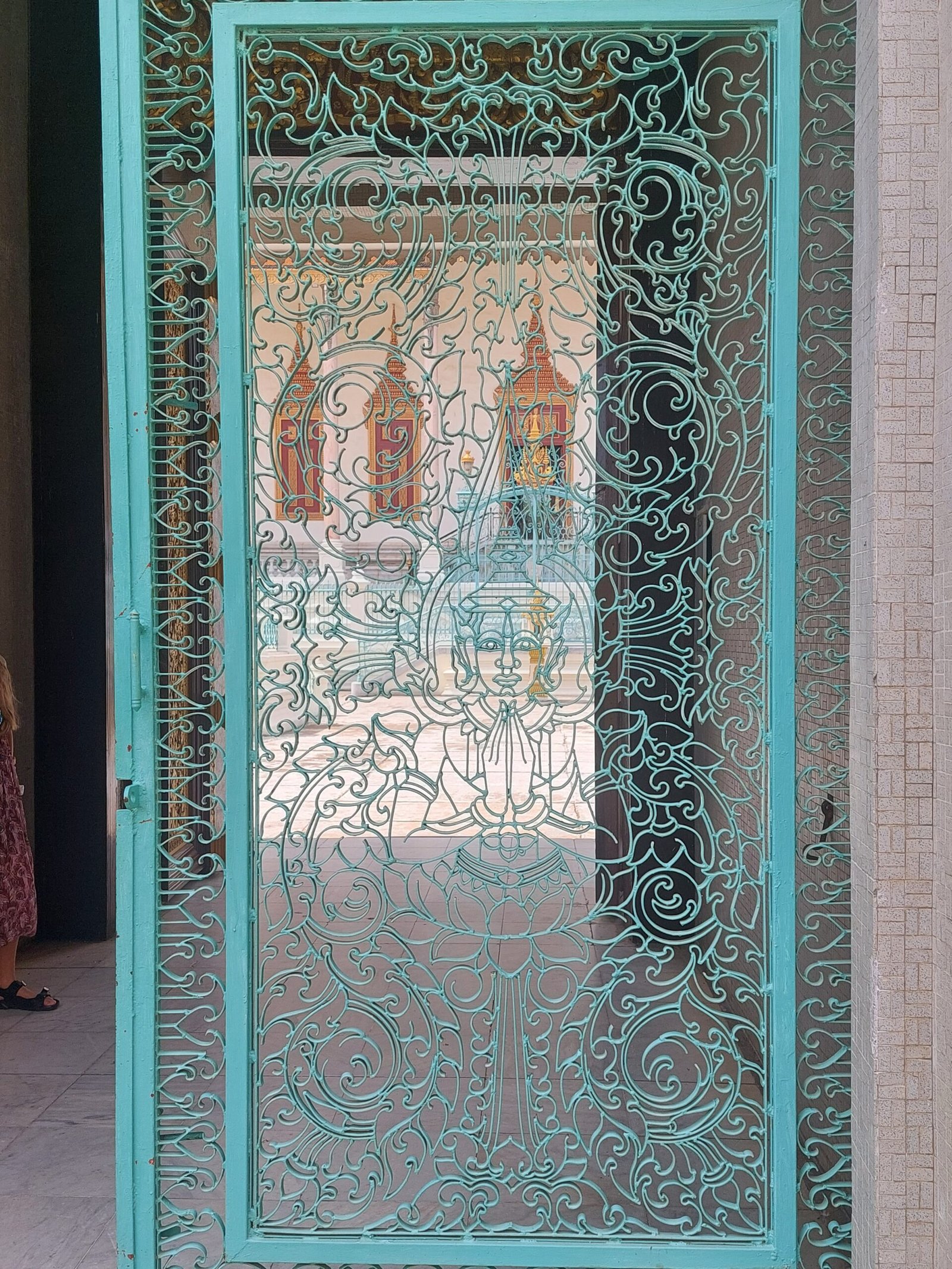
There were many fine details to be found in the palace grounds.
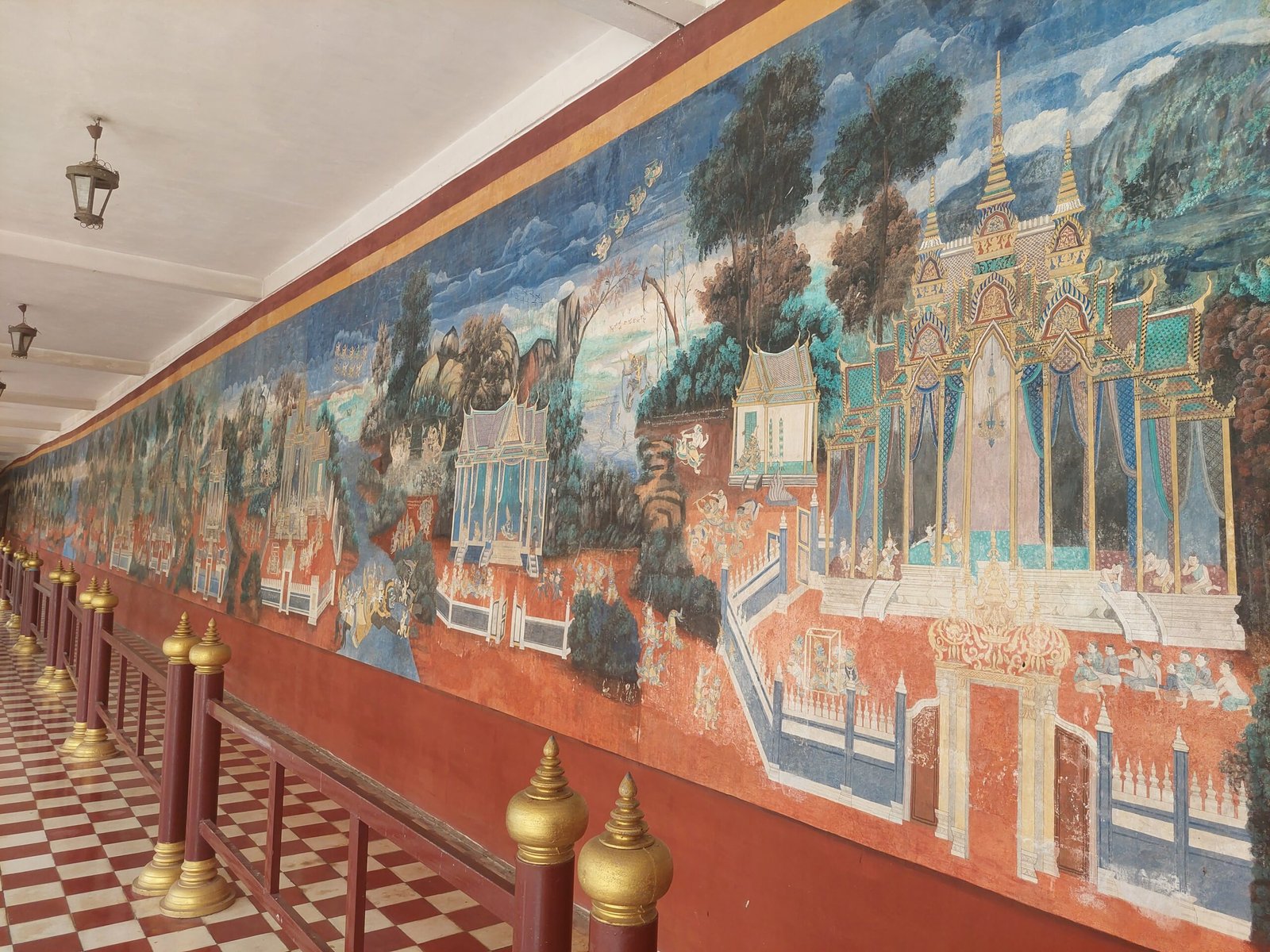
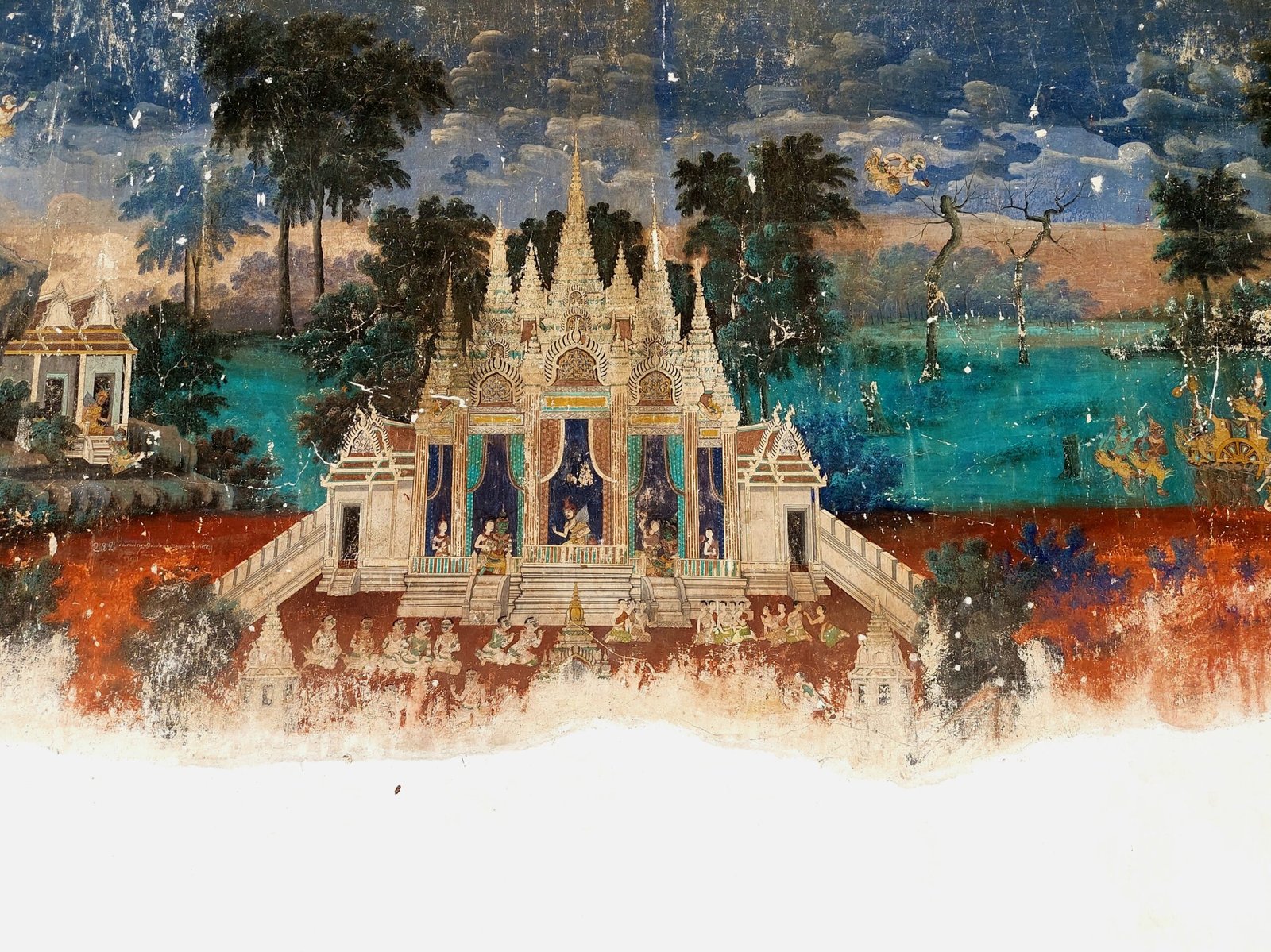
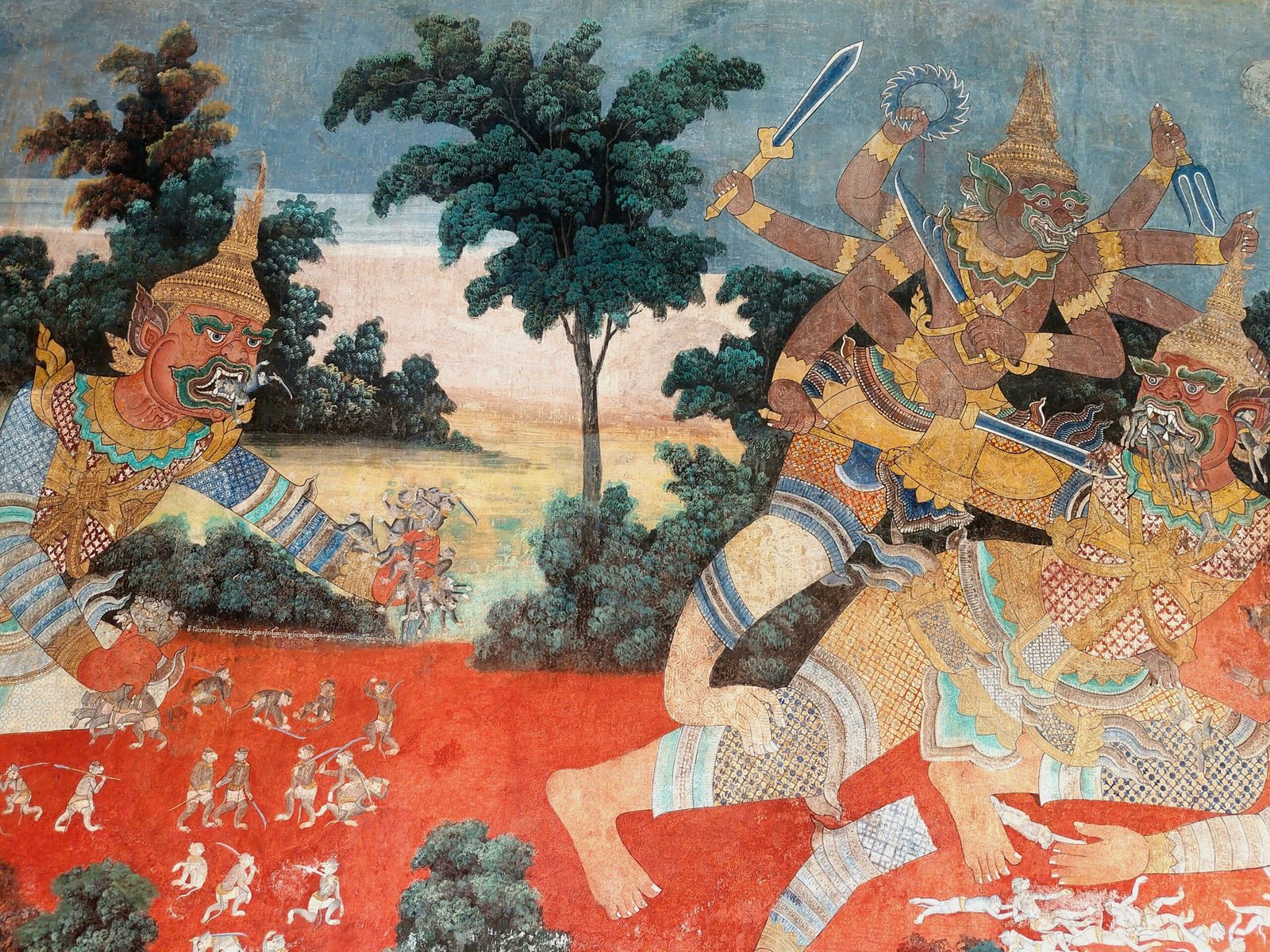
Some of the largest frescoes in Asia can be found here.
The flooded Mekong River damaged the frescoes.
Some of them have been restored to their original condition.
Before we left the palace grounds, we saw musicians playing traditional instruments in the courtyard. We watched them play for a while, and when they finished, we asked if the children could have a go. The musicians nodded, so soon Ronja and Risto were jamming along with the local musicians to some folk music. Risto played the bamboo xylophone (roneat) and Ronja played the kongvong, which consists of several small gongs tuned to different pitches.
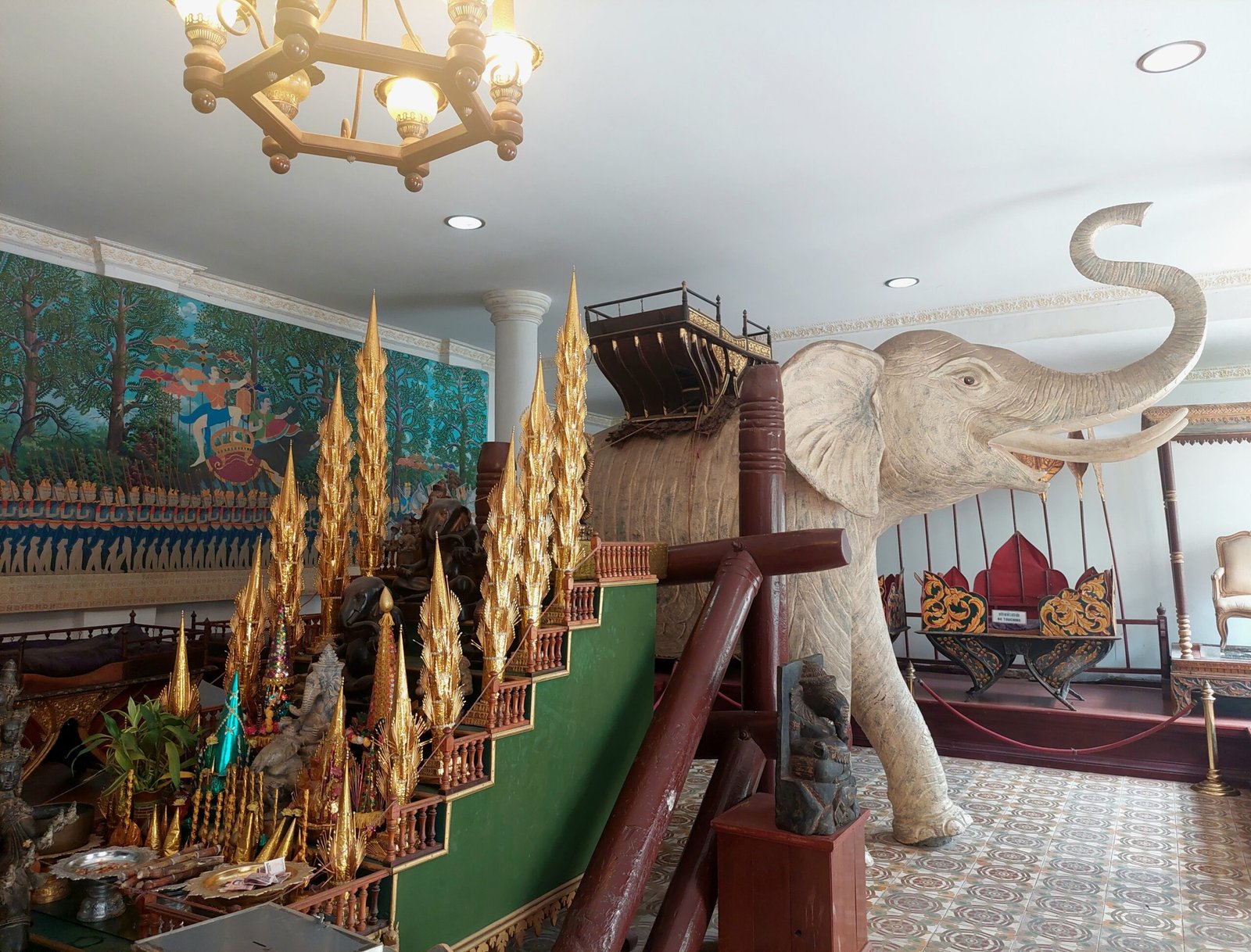
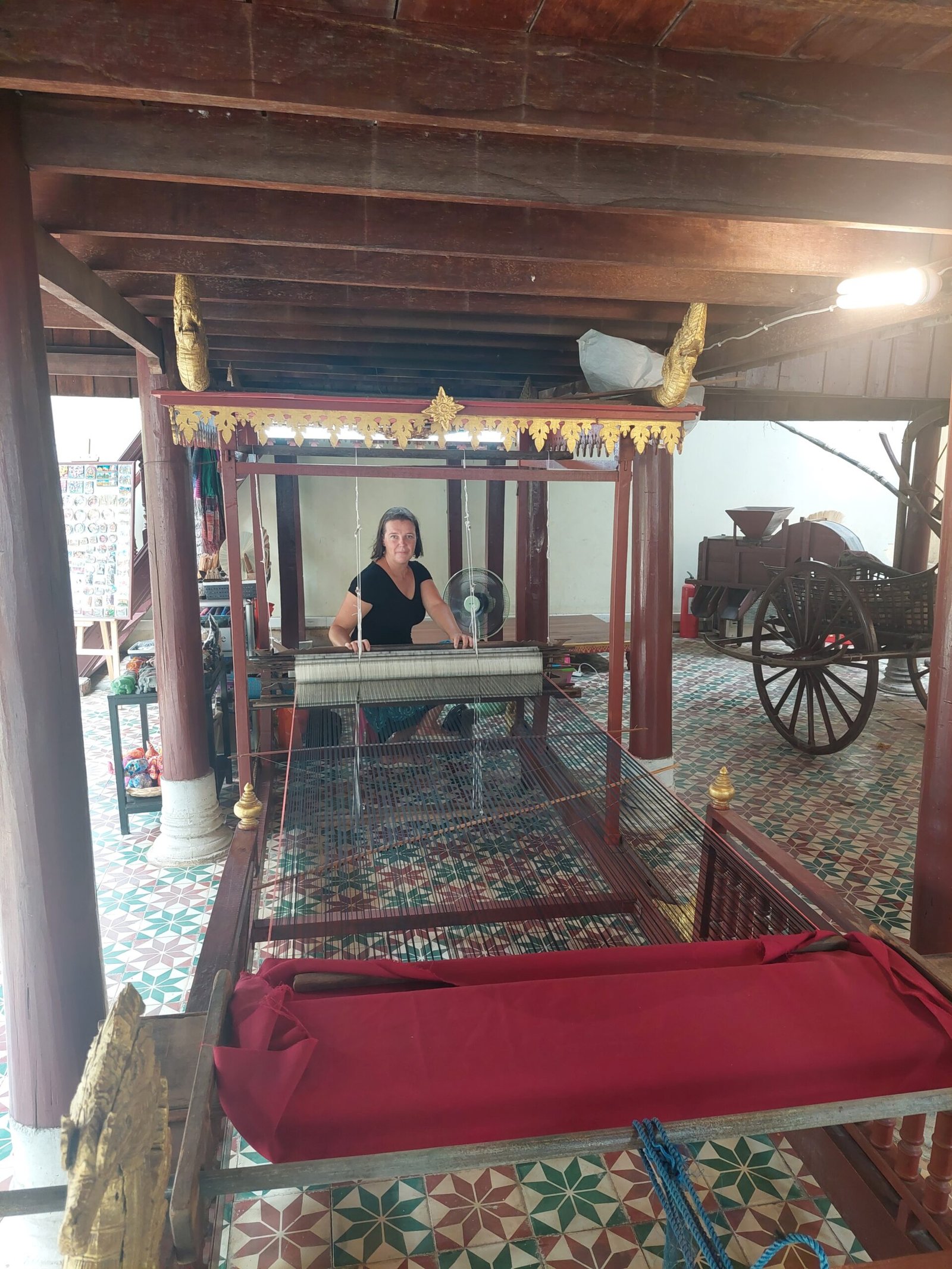
We also saw the royal seats, where royalty were once carried on elephants. Apparently this is no longer done. We also saw some kind of “royal looms” in the courtyard, which Jaana went to examine a little more closely.
The king needed steps to climb onto the elephant's back.