Our longer summer vacation this year took us to South America, since Marko was the only one in our family who had ever visited that continent before. For the first time, we flew with the highly praised Turkish Airlines from Helsinki to São Paulo via Istanbul. The praise for the airline proved well-deserved, as both flights departed almost exactly on time, the staff was extremely friendly, and the food served on the plane was simply excellent! The first flight to Istanbul took about three hours, after which we had a little over four hours to kill before our longer overnight flight to Brazil. Luckily, we found a lounge at the airport where we were able to pass the time enjoying food and drinks.
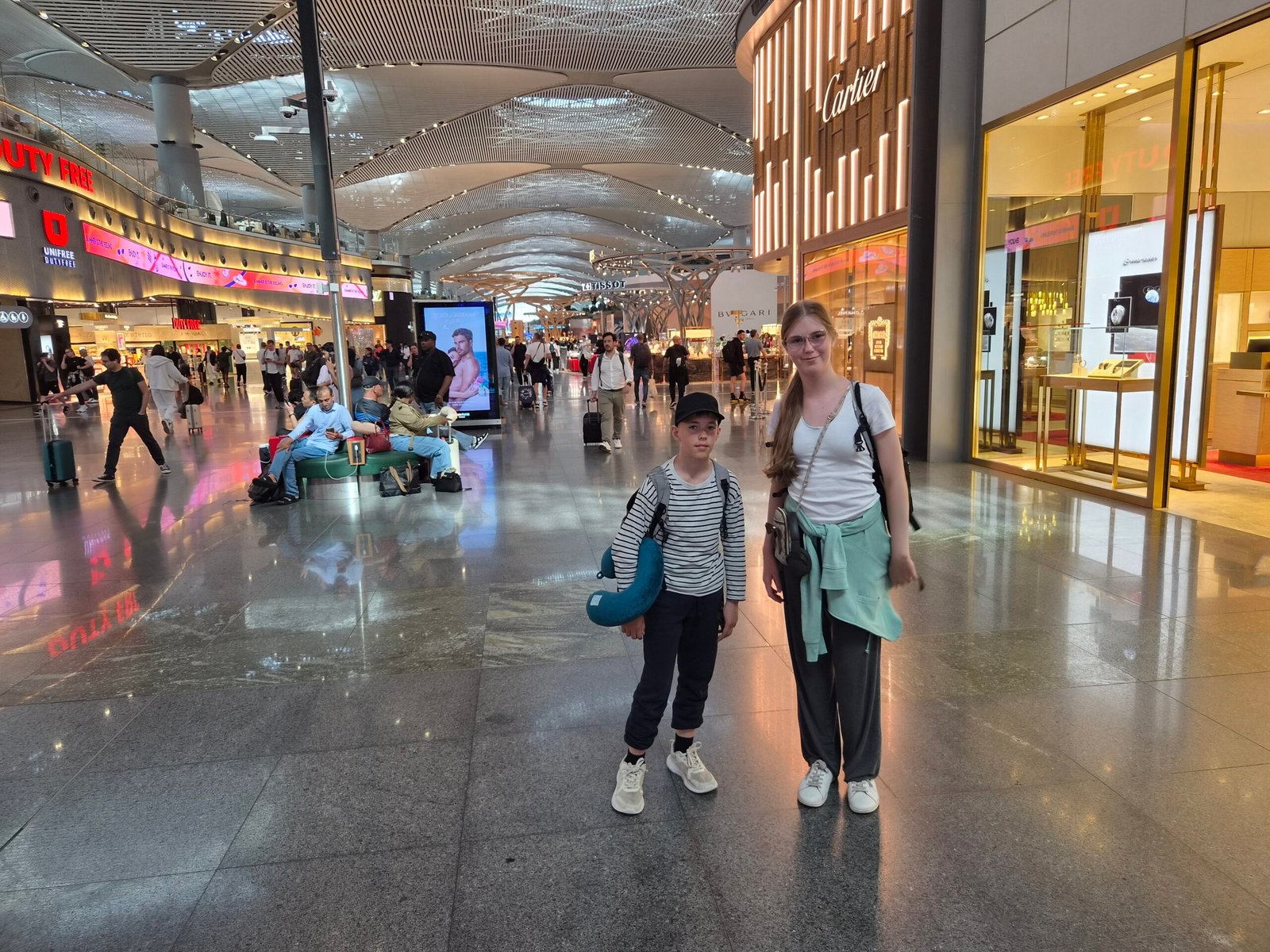
Istanbul International Airport is the second-busiest airport in Europe after Heathrow.
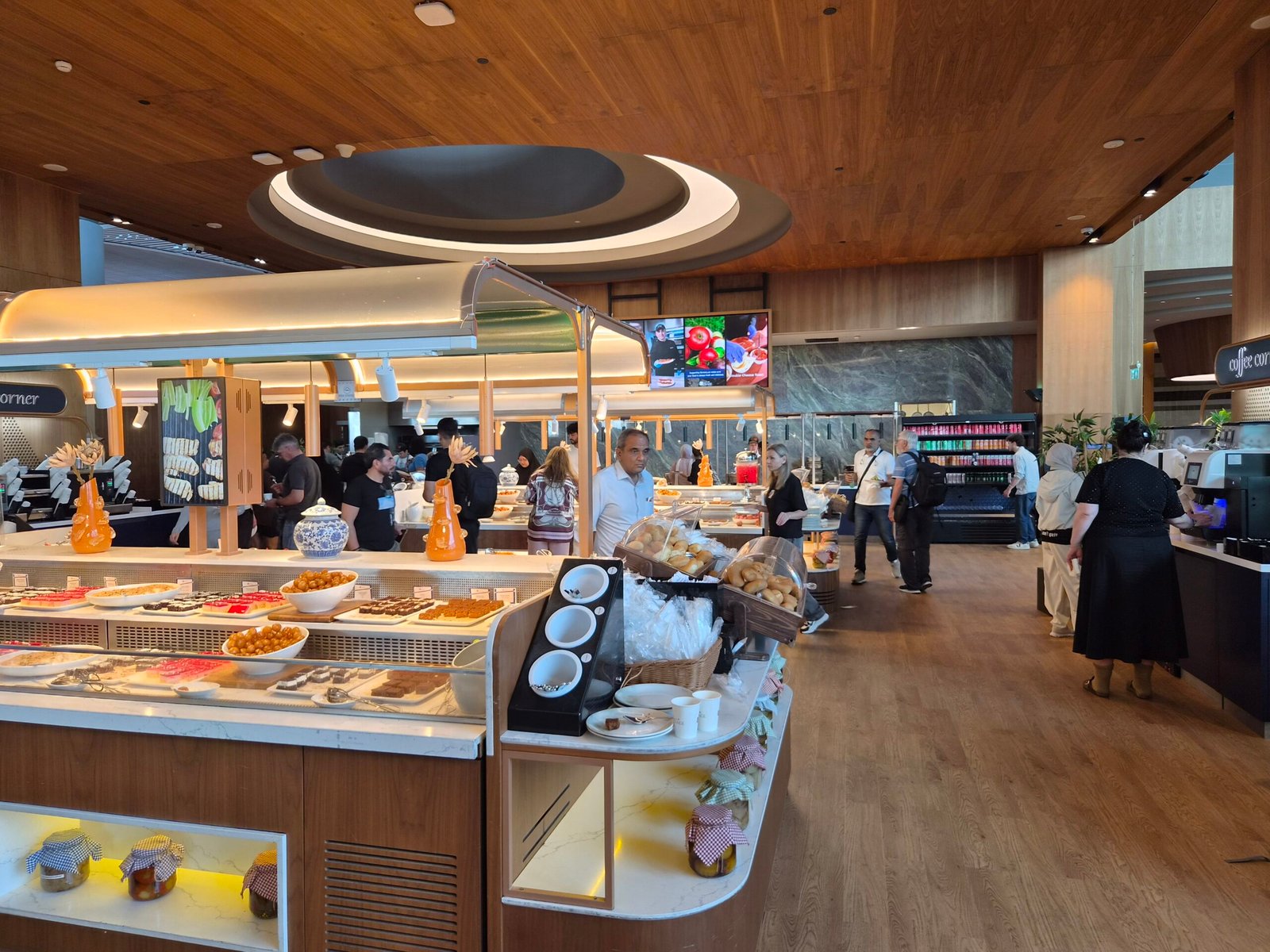
The lounge’s food selection was quite extensive.
The second flight departed at 20:15, and we landed in São Paulo just after four in the morning. The original estimated flight time of 13.5 hours was therefore extended to fourteen hours, as we faced a fairly strong headwind for almost the entire journey. However, we all managed to sleep surprisingly well on the plane, so we weren’t absolutely exhausted when we arrived. The border formalities were sorted out quickly. After that, we took an Uber to the nearby Ibis Budget airport hotel to get a bit more sleep. We were pleasantly surprised to find that breakfast was served at this hotel from as early as 4:30 in the morning, so we simply took our rucksacks to our room and went straight back to eat. We’d managed to negotiate a slightly later check-out time, so after breakfast we had time to sleep for a good five hours in proper beds before continuing our journey to our actual accommodation near the centre of São Paulo.
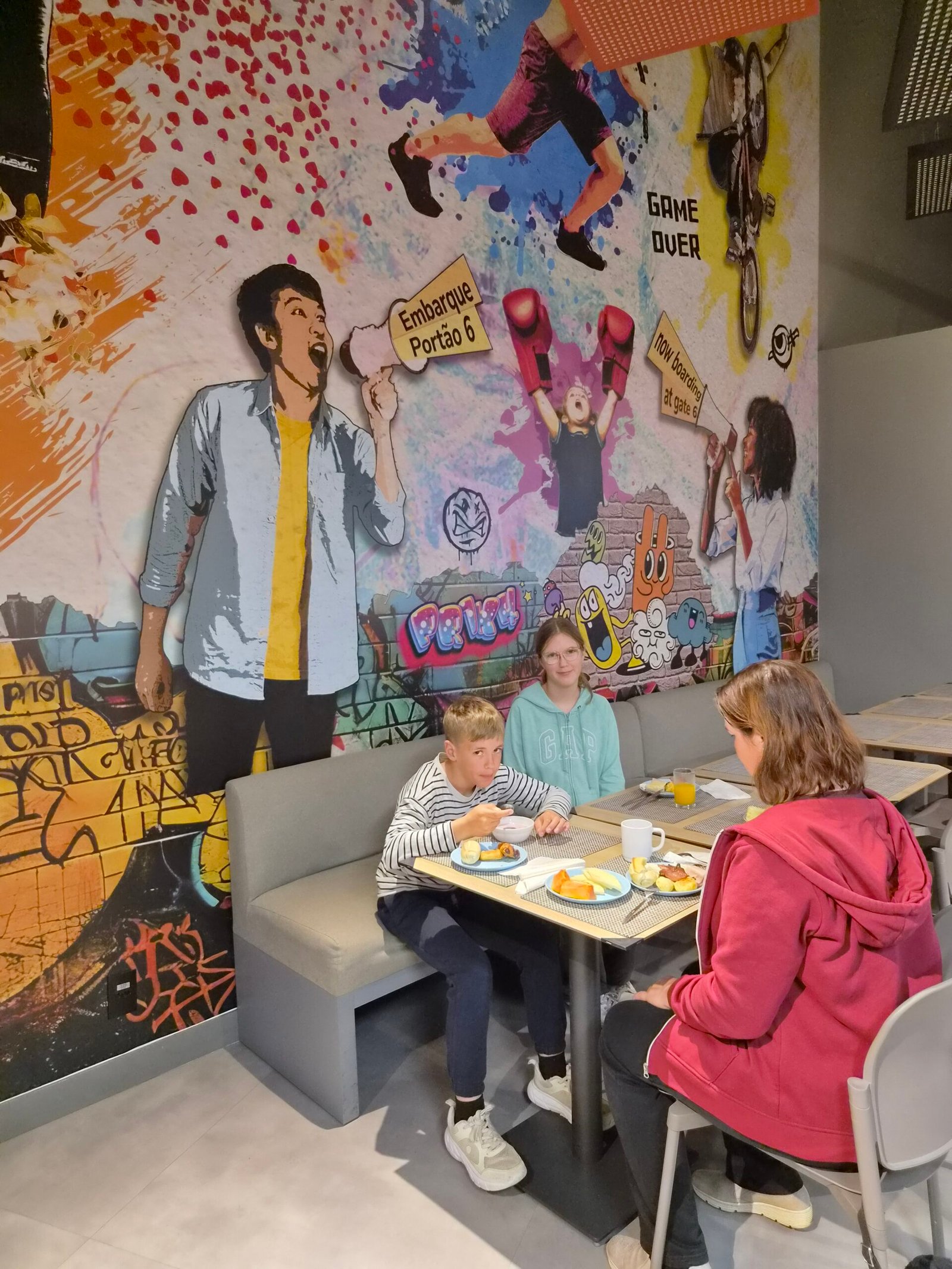
Here we go again – time for a meal! This time, it’s breakfast at the hotel.
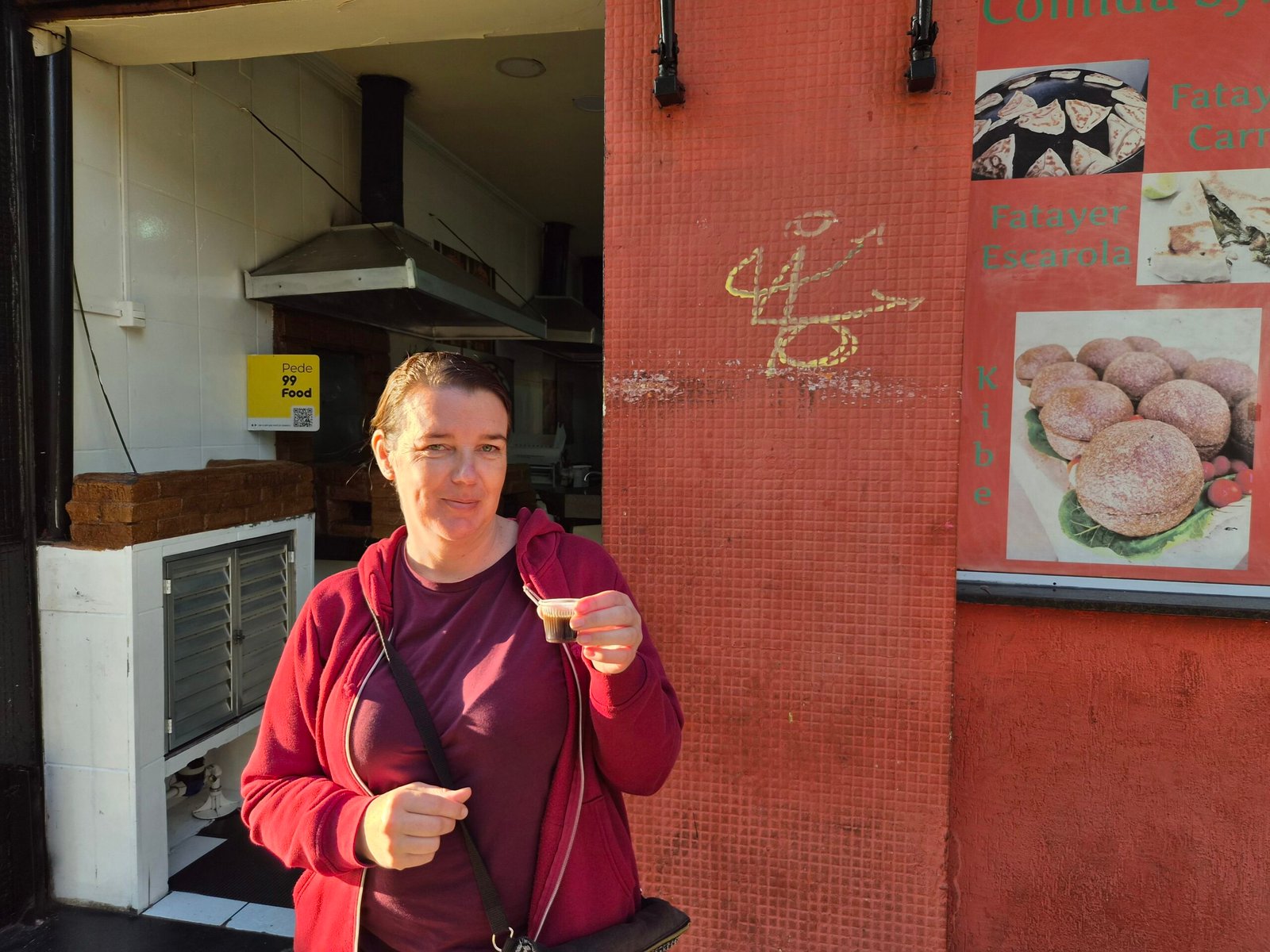
The Uber ride to Rosemari’s Apartments took a surprisingly long time, as there’s certainly no shortage of traffic in a city with a population of 11.9 million! Eventually, though, we managed to check into our small two-bedroom flat, after which we set off on foot to explore the neighbourhood. Our first stop was a small Syrian restaurant a few hundred metres from our flat, as lunchtime had long since passed whilst we were having a morning nap at our previous hotel. From the restaurant, we continued our walk even closer to the city centre, as we also wanted to find a grocery shop to stock up on supplies for breakfast and evening.
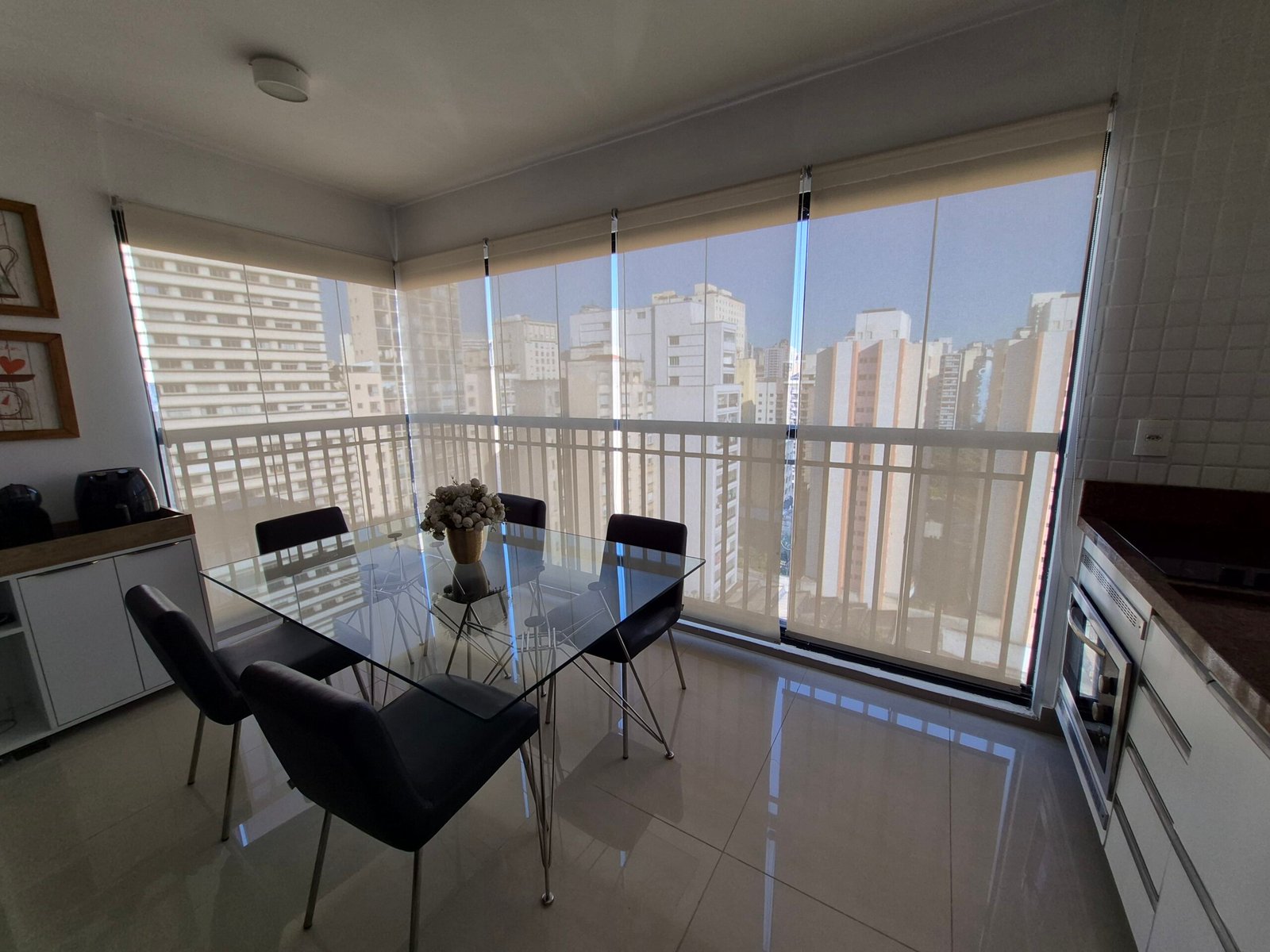
An interesting extension operation had been carried out in the apartment, as the kitchen had been placed on the balcony.
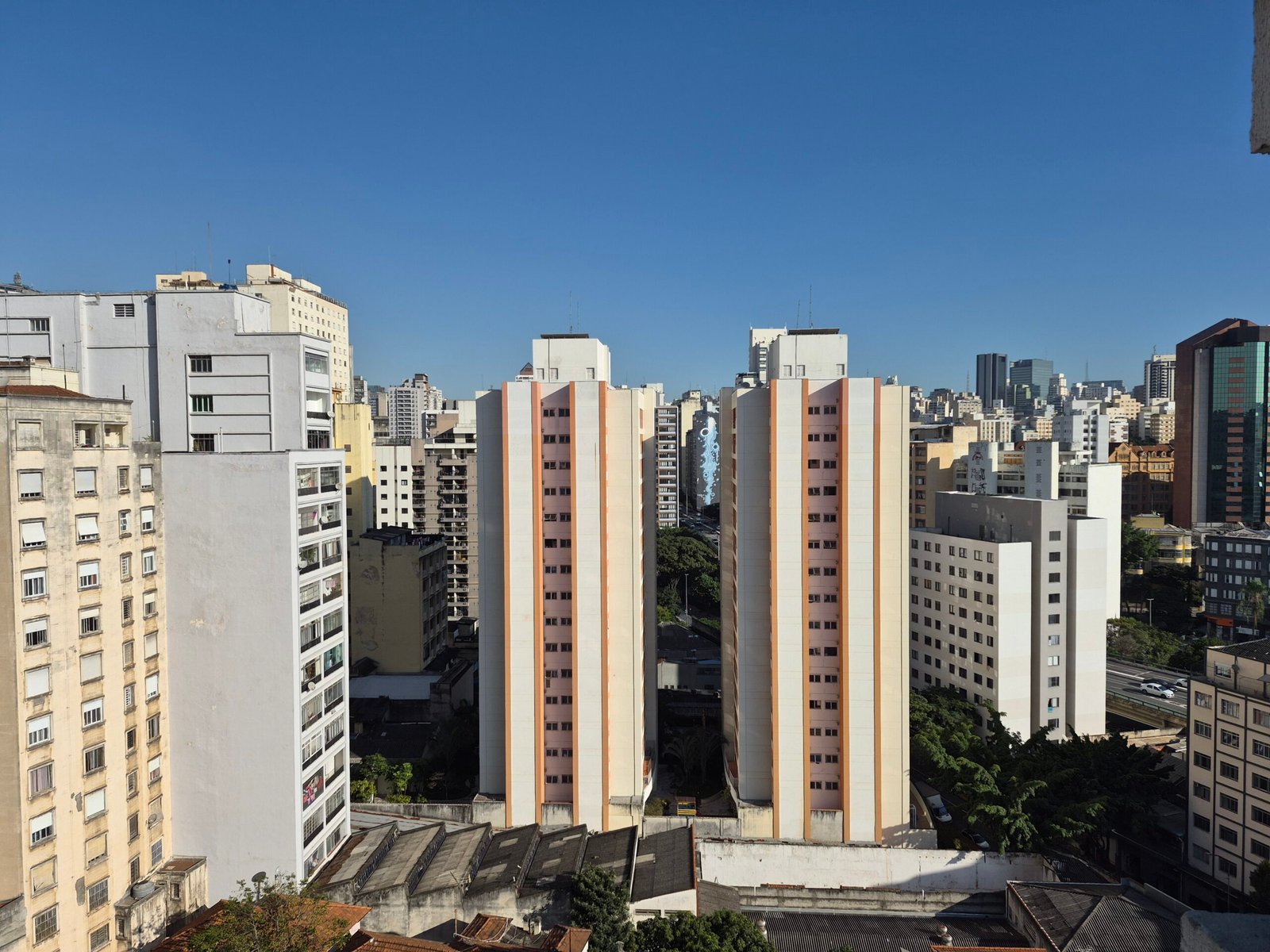
The view from our flat’s balcony wasn’t particularly green.
The dessert coffee at the Syrian restaurant was rather small.
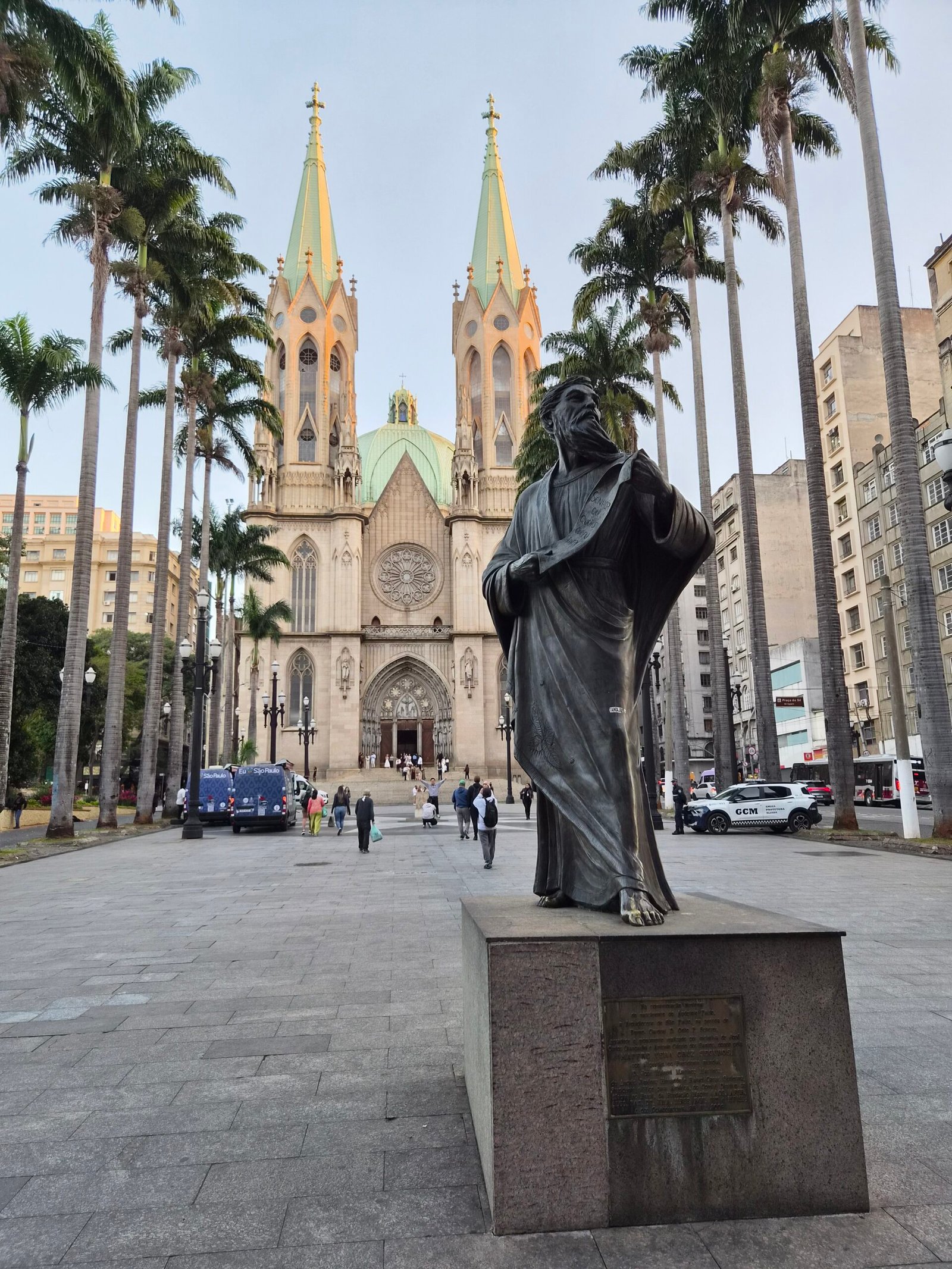
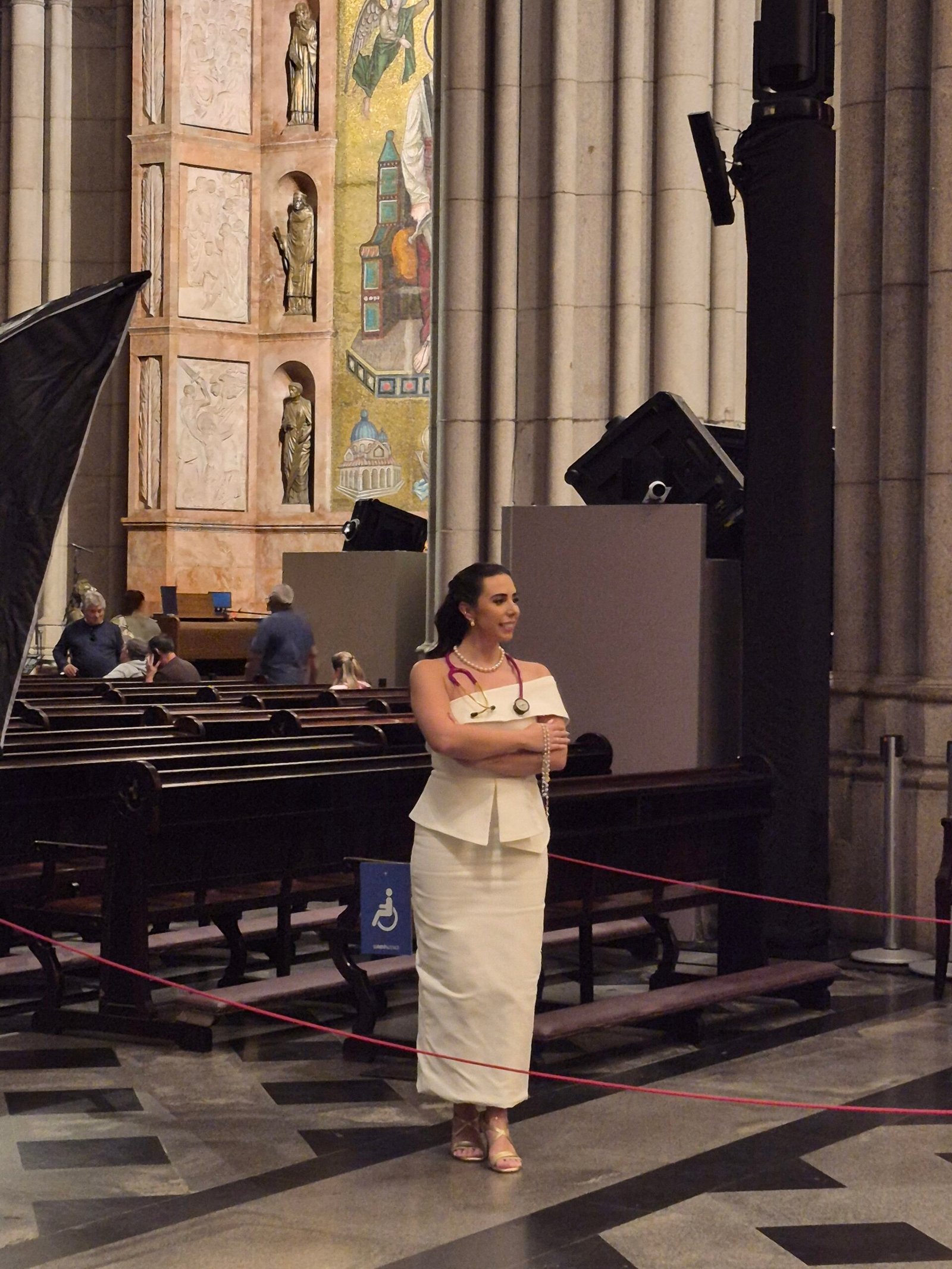
We didn’t spot a grocery shop straight away, but we did come across a large local cathedral, which we decided to pop into. The Catedral Metropolitana de Nossa Senhora da Assunção e São Paulo (what a mouthful!) is built in the Neo-Gothic style and, according to some sources, is the fourth-largest Neo-Gothic cathedral in the world. A graduation mass for newly qualified doctors had been held in the cathedral earlier that day. The service itself had already finished by the time we stepped inside, but there were still several newly qualified doctors there, being photographed by professional photographers. Apparently, it was customary for them to wear their stethoscopes round their necks in the portraits.
Catedral Metropolitana de Nossa Senhora da Assunção e São Paulo
A newly qualified doctor, ready to have her photograph taken
As the sun starts to set much earlier in Brazil than in Finland, we decided to make our way back to our flat. To our delight, we spotted a small grocery shop near the cathedral, where we were able to buy everything we needed for breakfast. Ronja was a little wary of walking through the city streets in the dark. This was certainly influenced by the fact that, near the cathedral, a police officer had pointed out to Ronja that she’d be better off tucking her phone pouch, which was hanging from her shoulder, under her hoodie for better protection against pickpockets. Fortunately, we didn’t come across any pickpockets, but there were huge numbers of homeless people on the streets. On the other hand, there are police officers on patrol at practically every street corner, so we were able to walk home in complete peace despite the darkness.
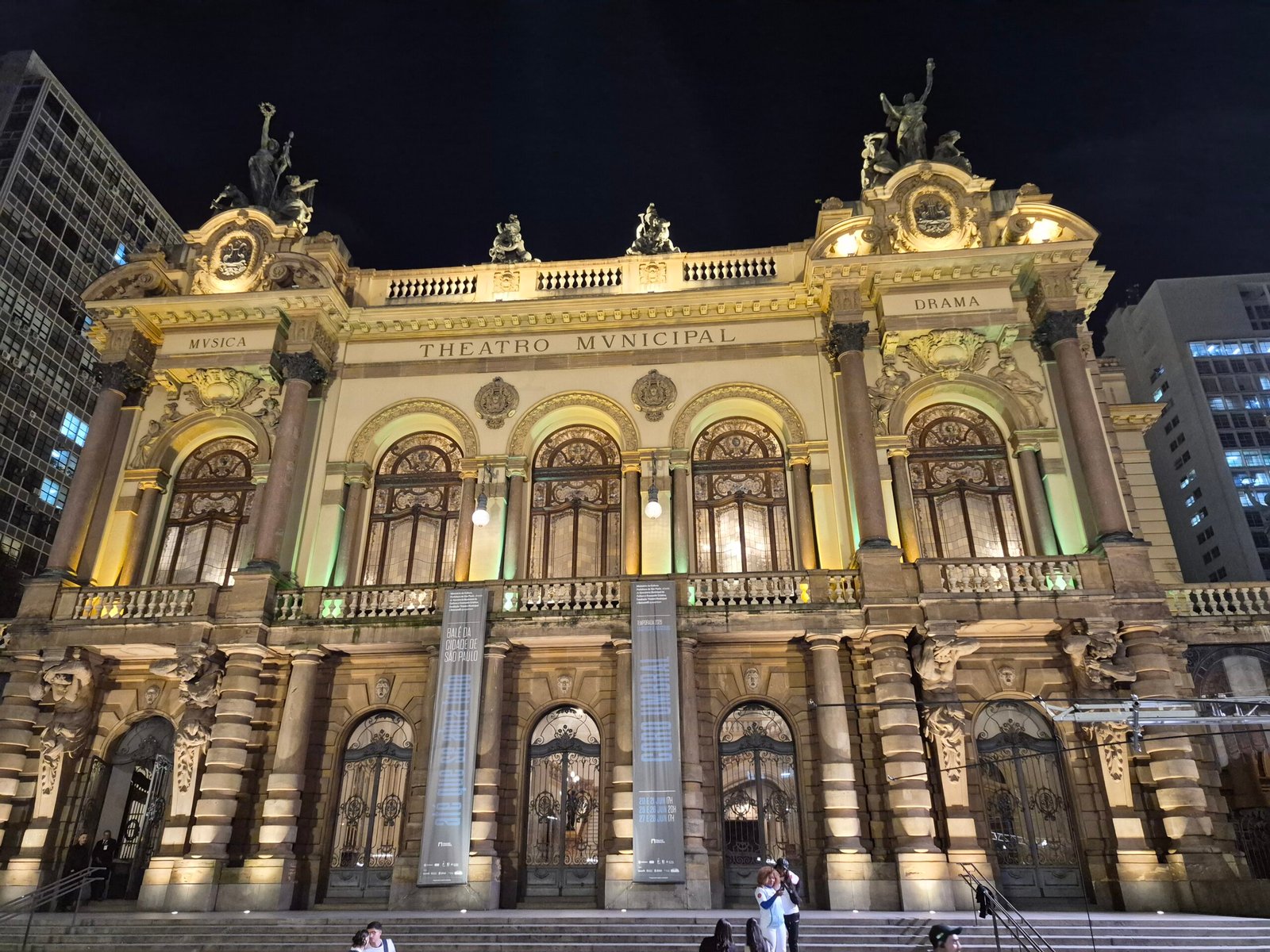
On the way back, we walked past the municipal theatre. The building, illuminated in the evening, looked rather grand.
On Thursday, we set off to explore São Paulo in more detail, led by a guide. We’d booked a half-day tour via the Get Your Guide app, which covered all the city’s main attractions. Our guide was Mauricio from Argentina, who guided us participants fluently throughout the tour in Portuguese, Spanish and English. Mauricio had an incredible knowledge of the area, so it was a pleasure to explore the city under his guidance.
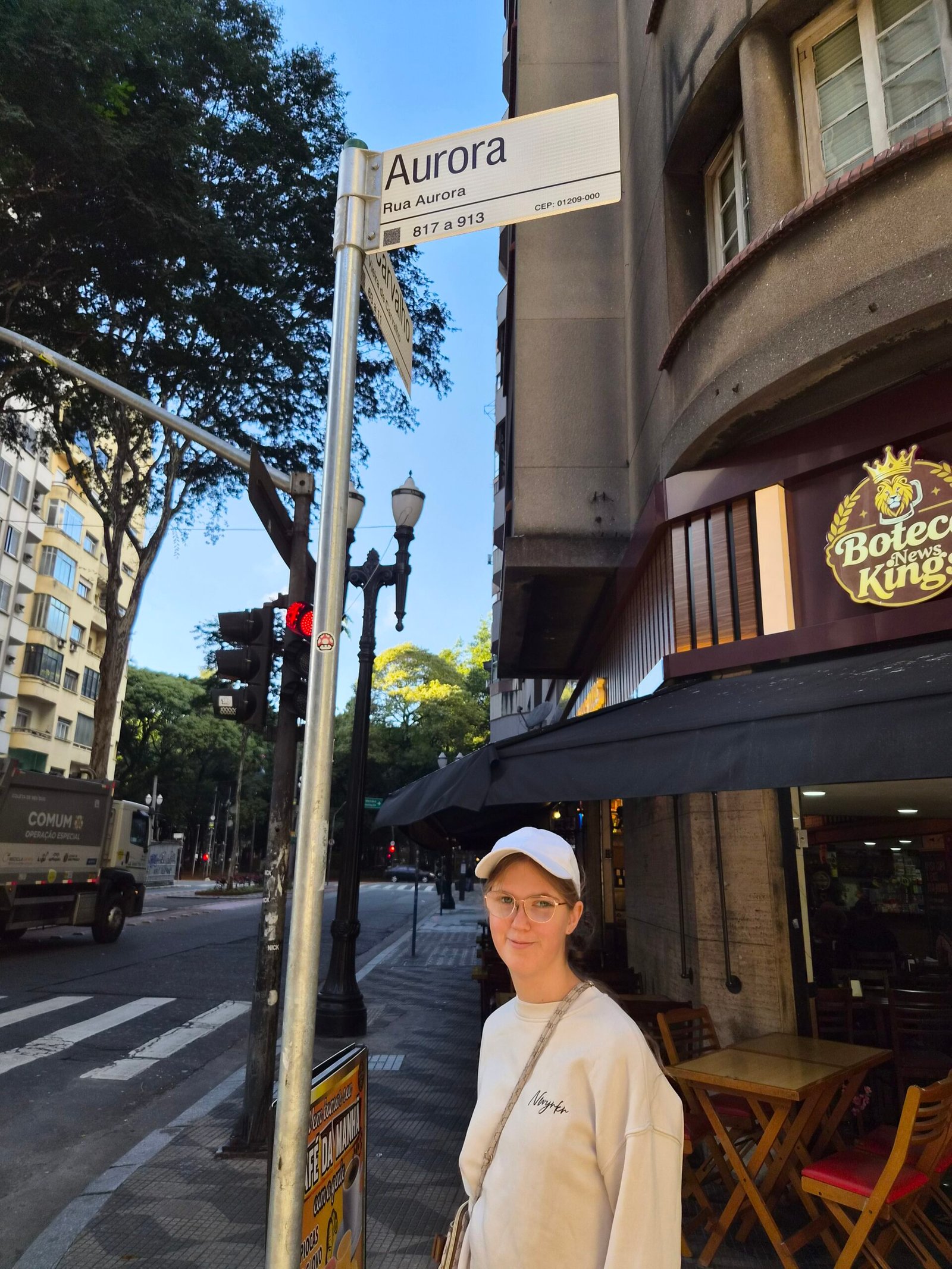
Rua Aurora and Ronja Aurora, same same, but slightly different
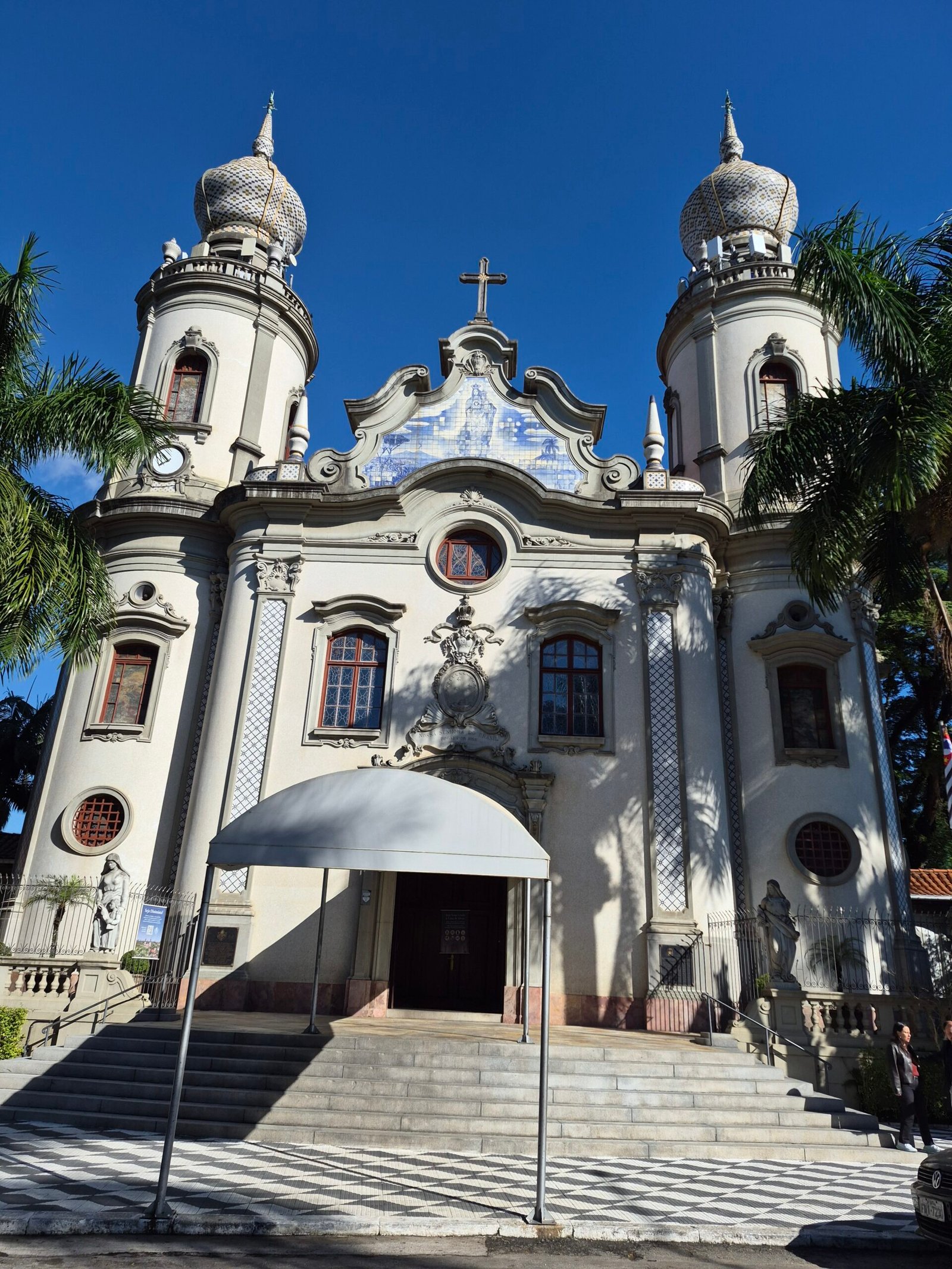
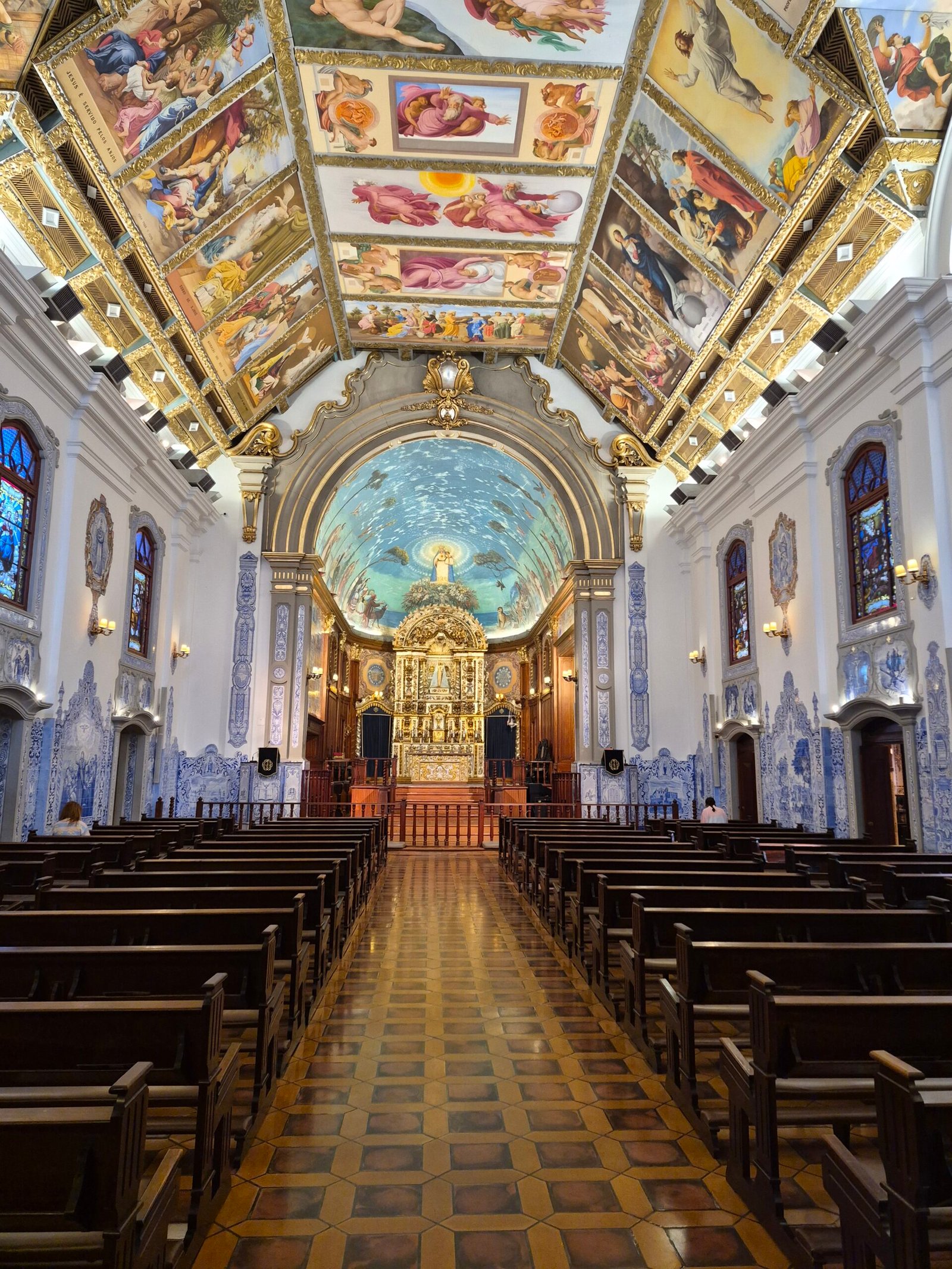
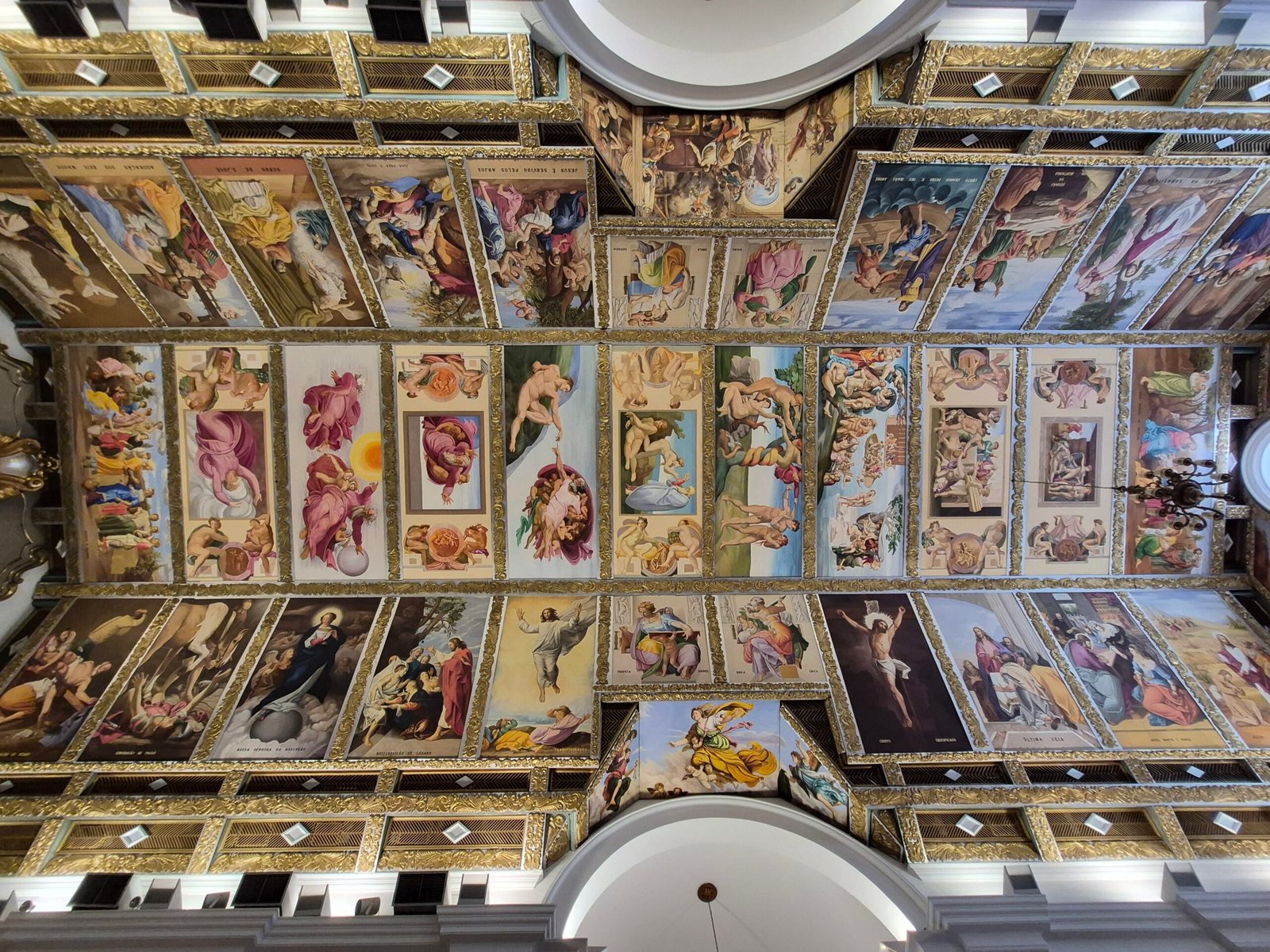
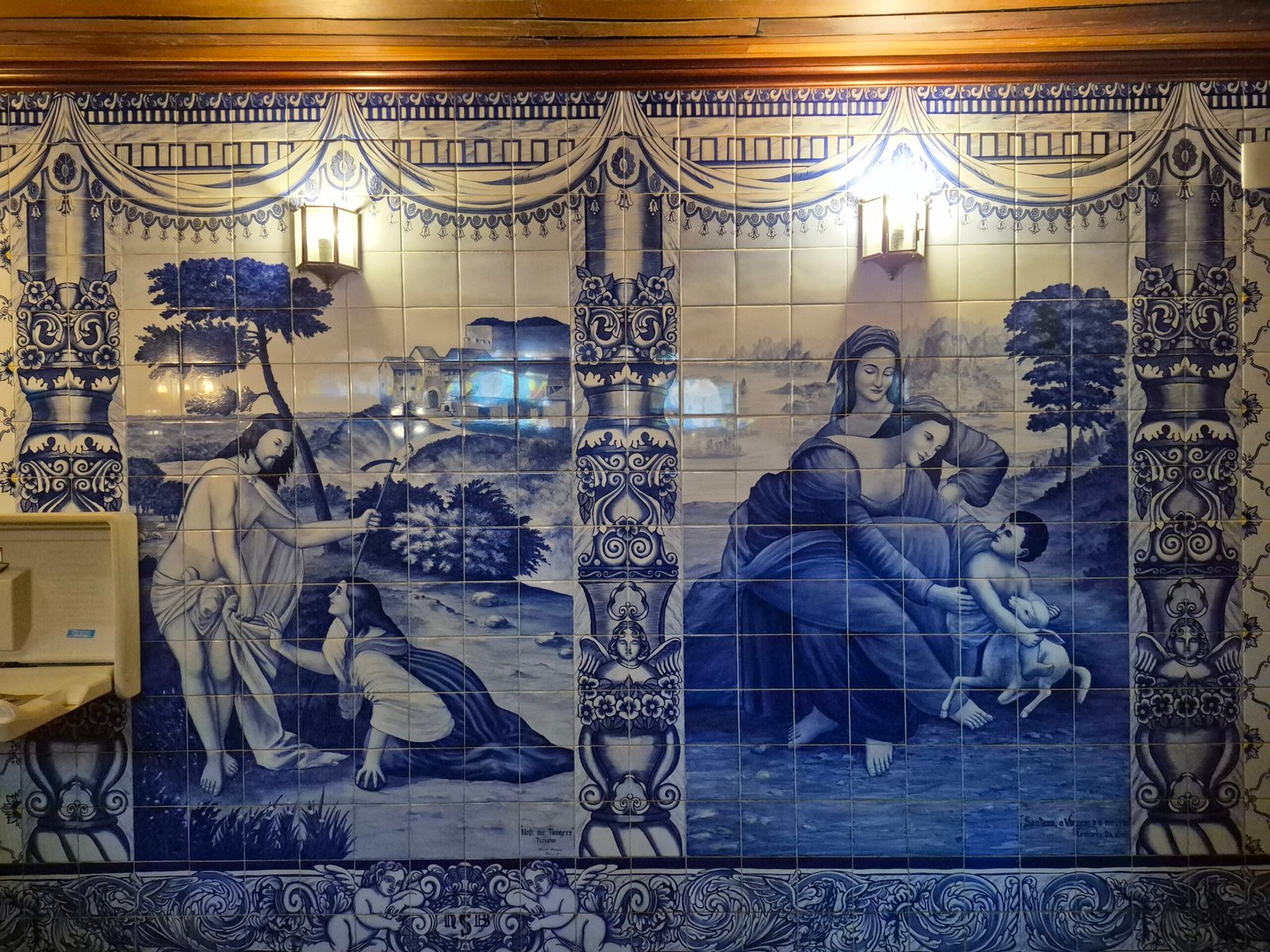
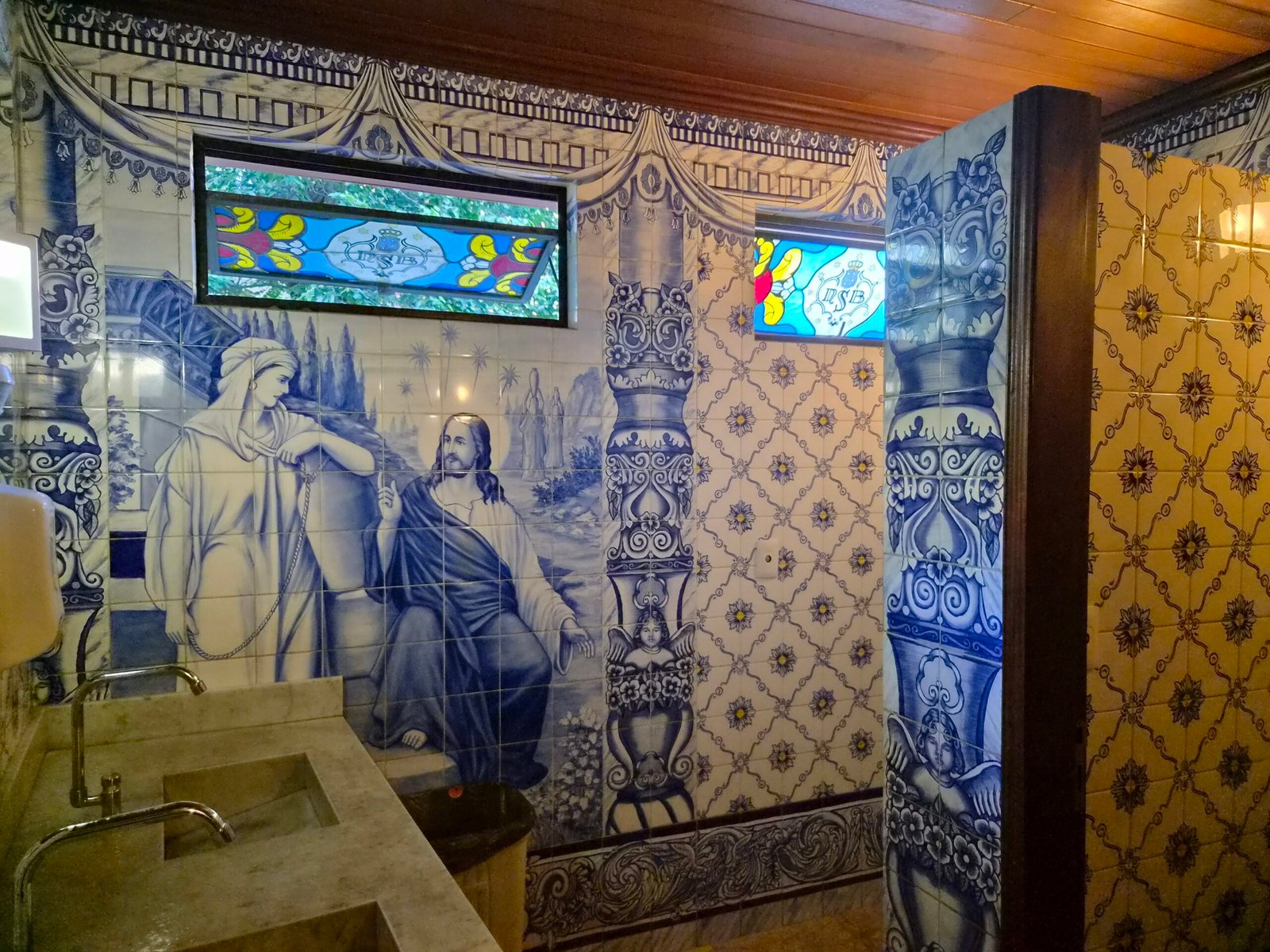
First, we drove to a nicer part of town to visit the church where the city’s elite, amongst others, get married and have their children baptised. There is a 2.5-year waiting list to get married in the church, and on top of that, you have to pay a contribution of at least €4,500 to book it. In practice, hardly anyone books the church at this minimum price, as the money goes towards the church’s charitable work. Naturally, all the rich and famous also want to show that they are a noble and generous lot, and they donate considerably more money to the church. Nossa Senhora do Brasil was certainly the most ornate church any of us had ever visited. Even the church’s toilet facilities had their own ornate murals. So it’s no wonder that it’s a popular wedding venue.
You’d be hard-pressed to find a more ornate church!
They certainly didn’t skimp on the colours in the ceiling paintings either!
There were some stunning paintings on the walls in the ladies’ toilets.
In the men’s toilets, Jesus was there to oversee the proceedings.
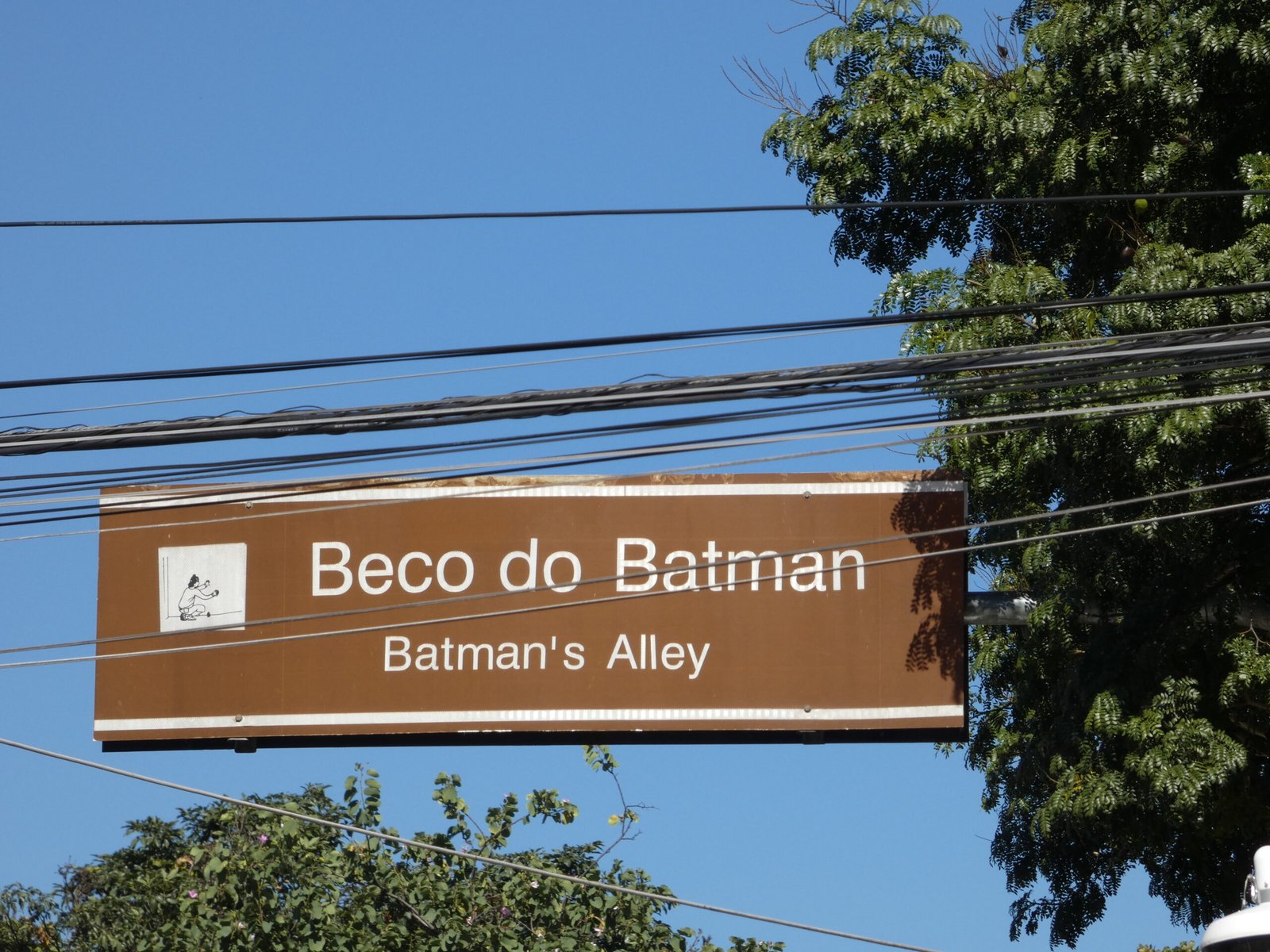
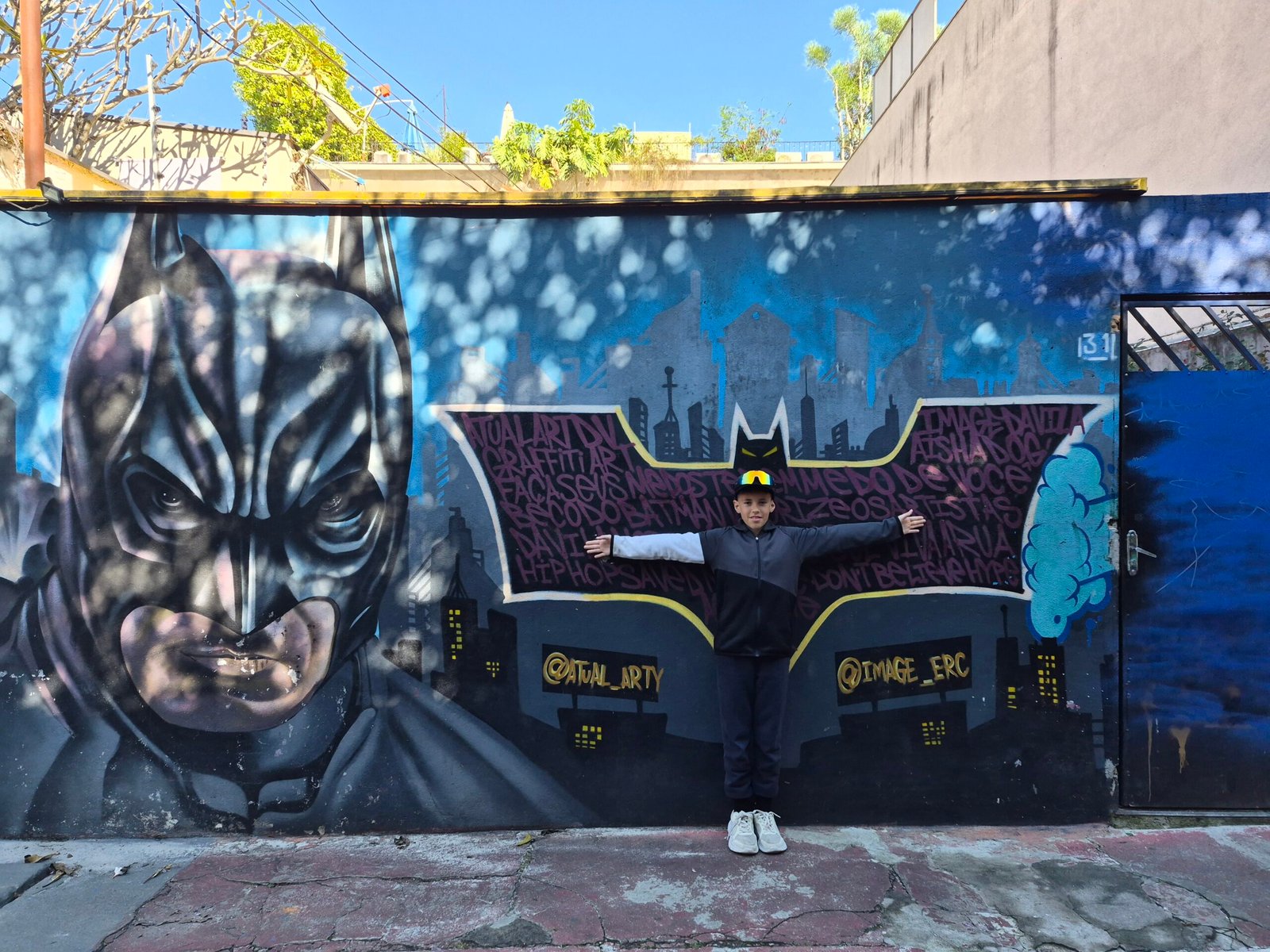
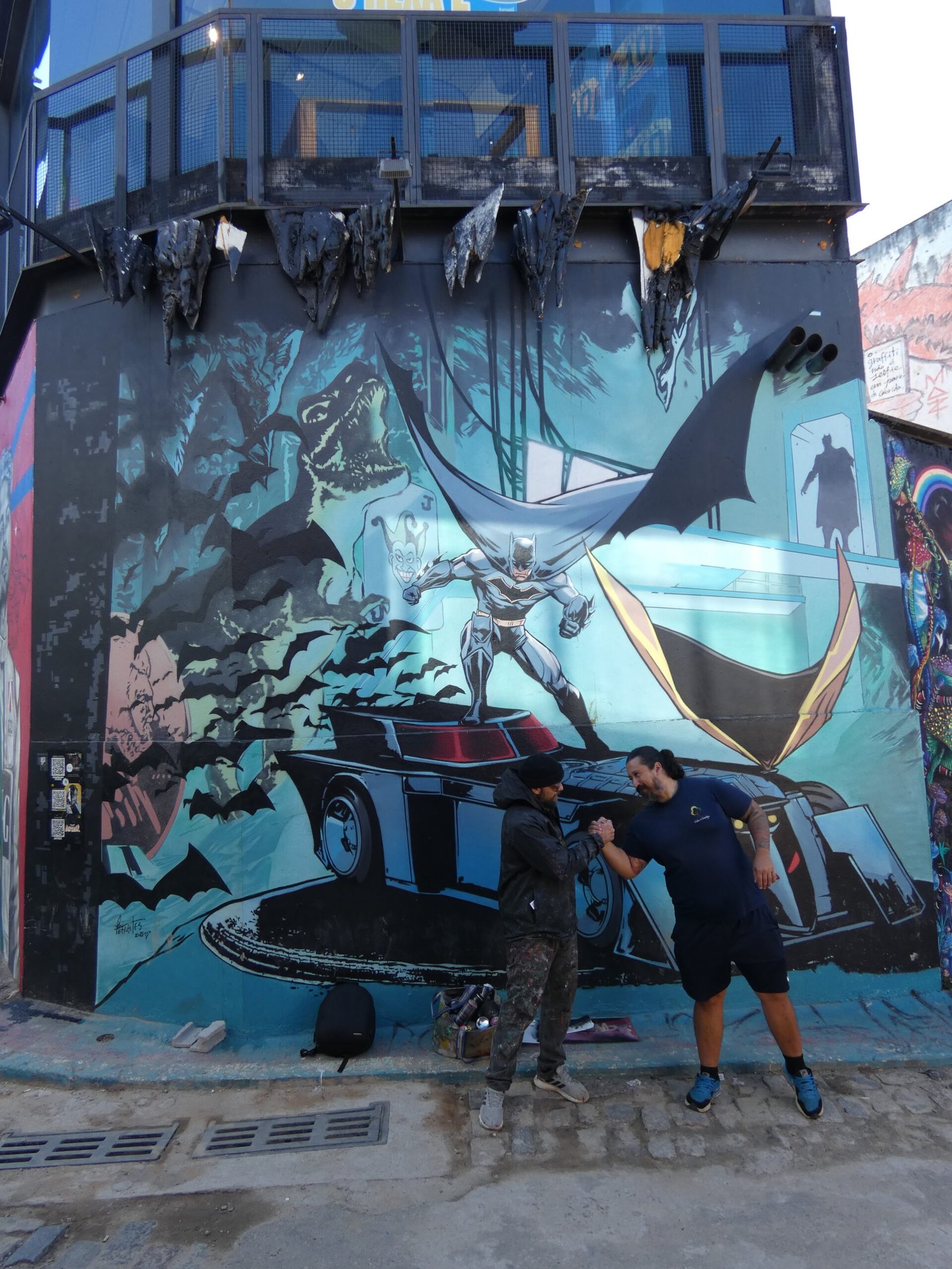
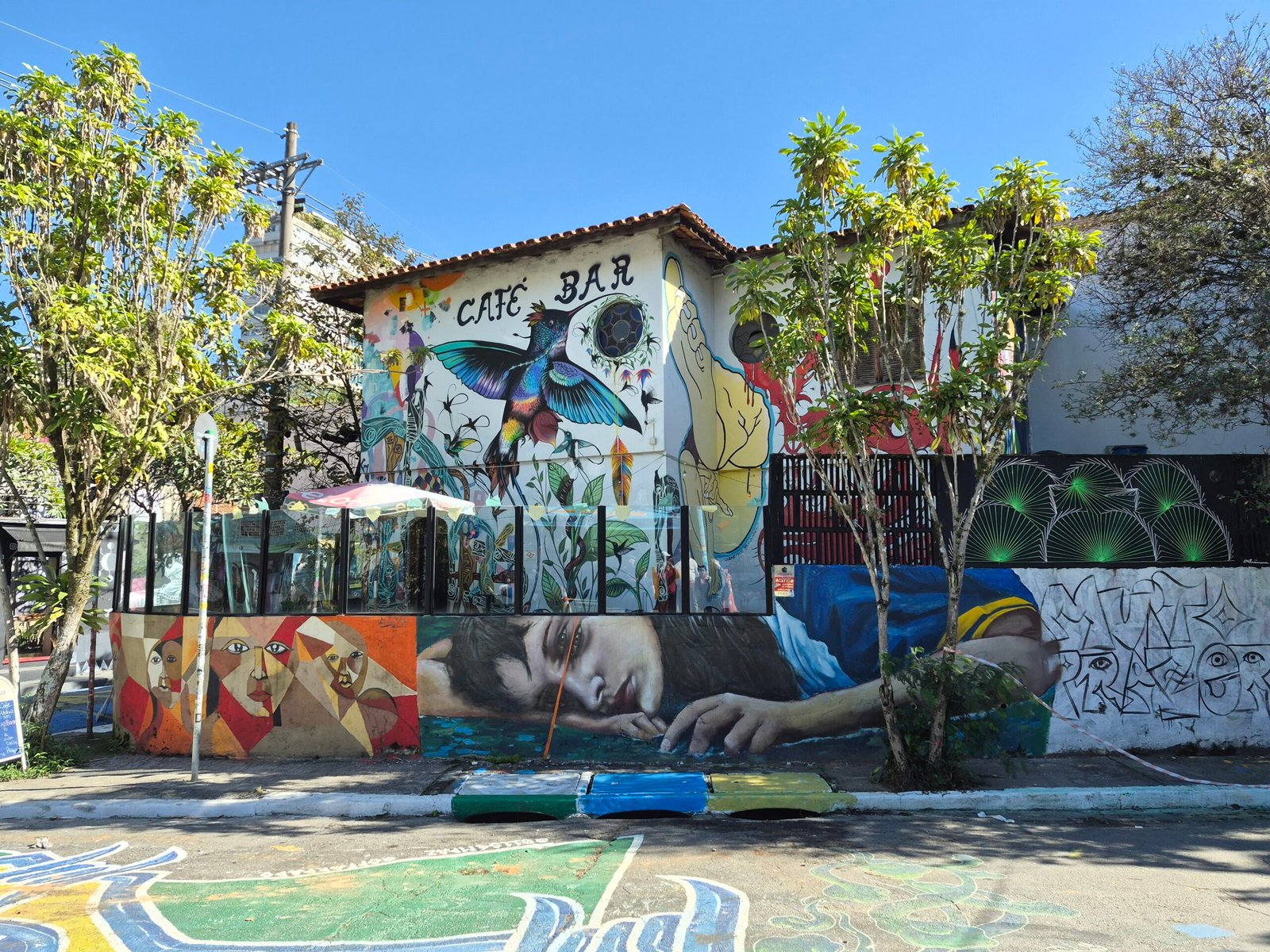
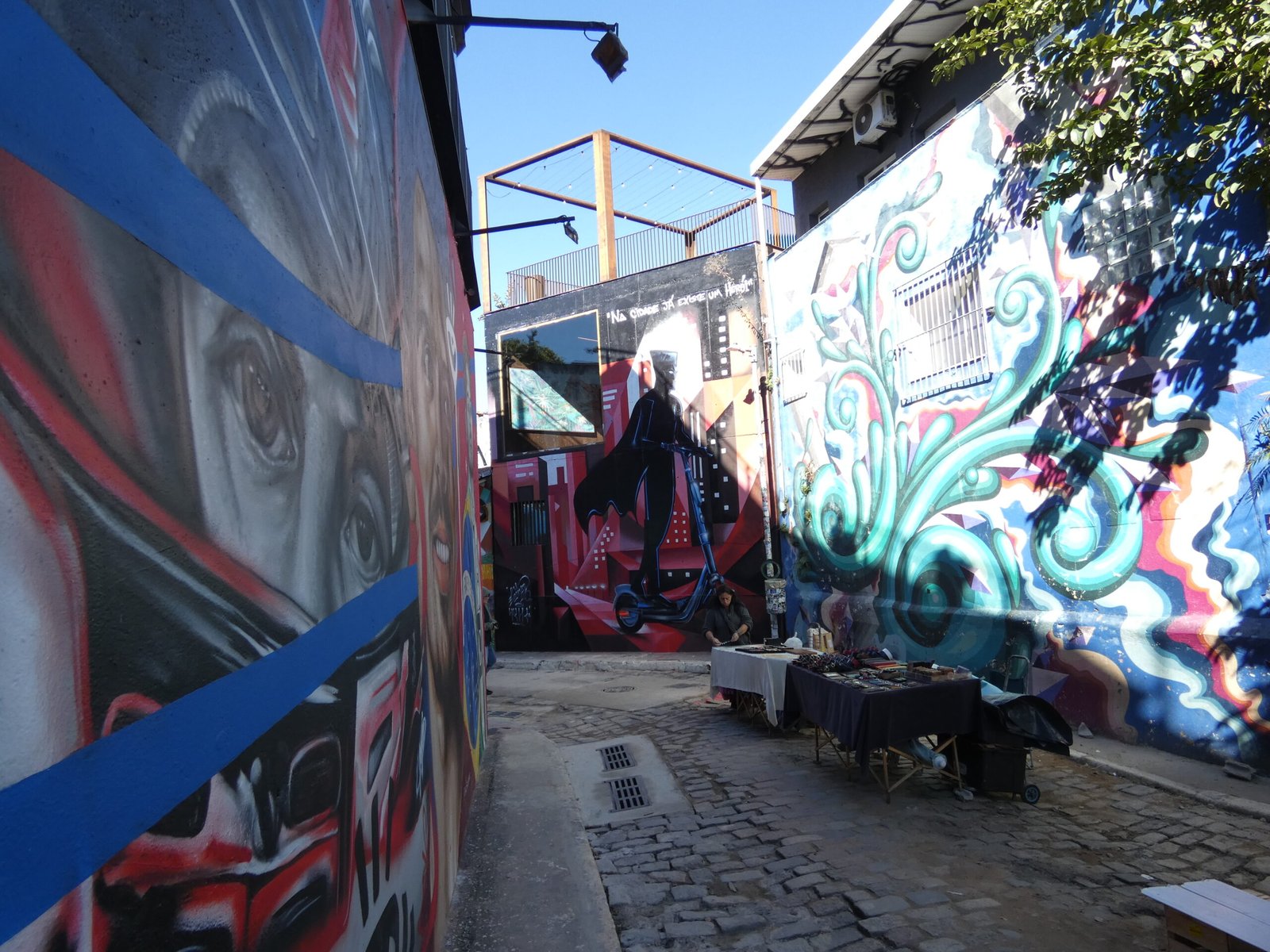
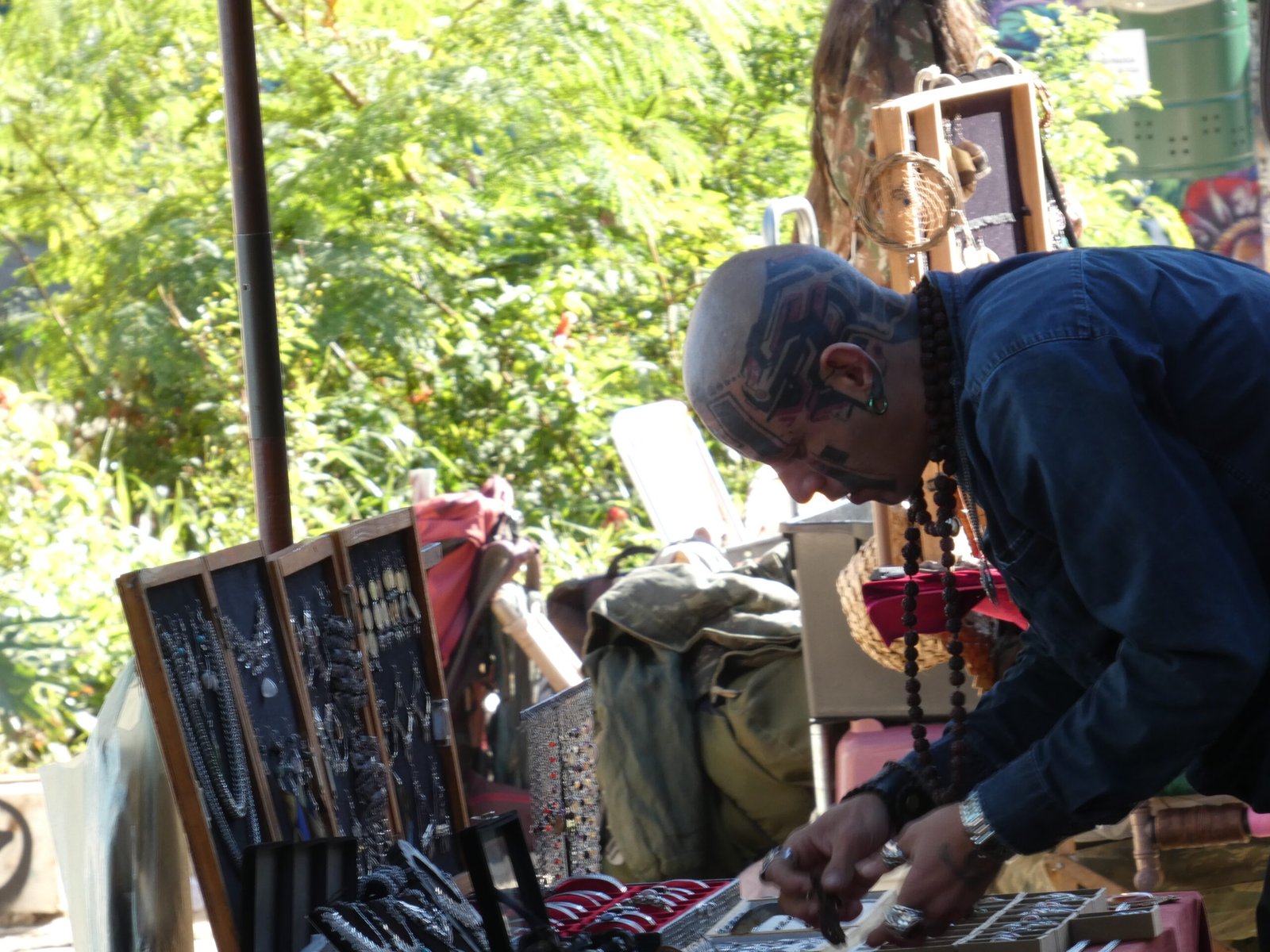
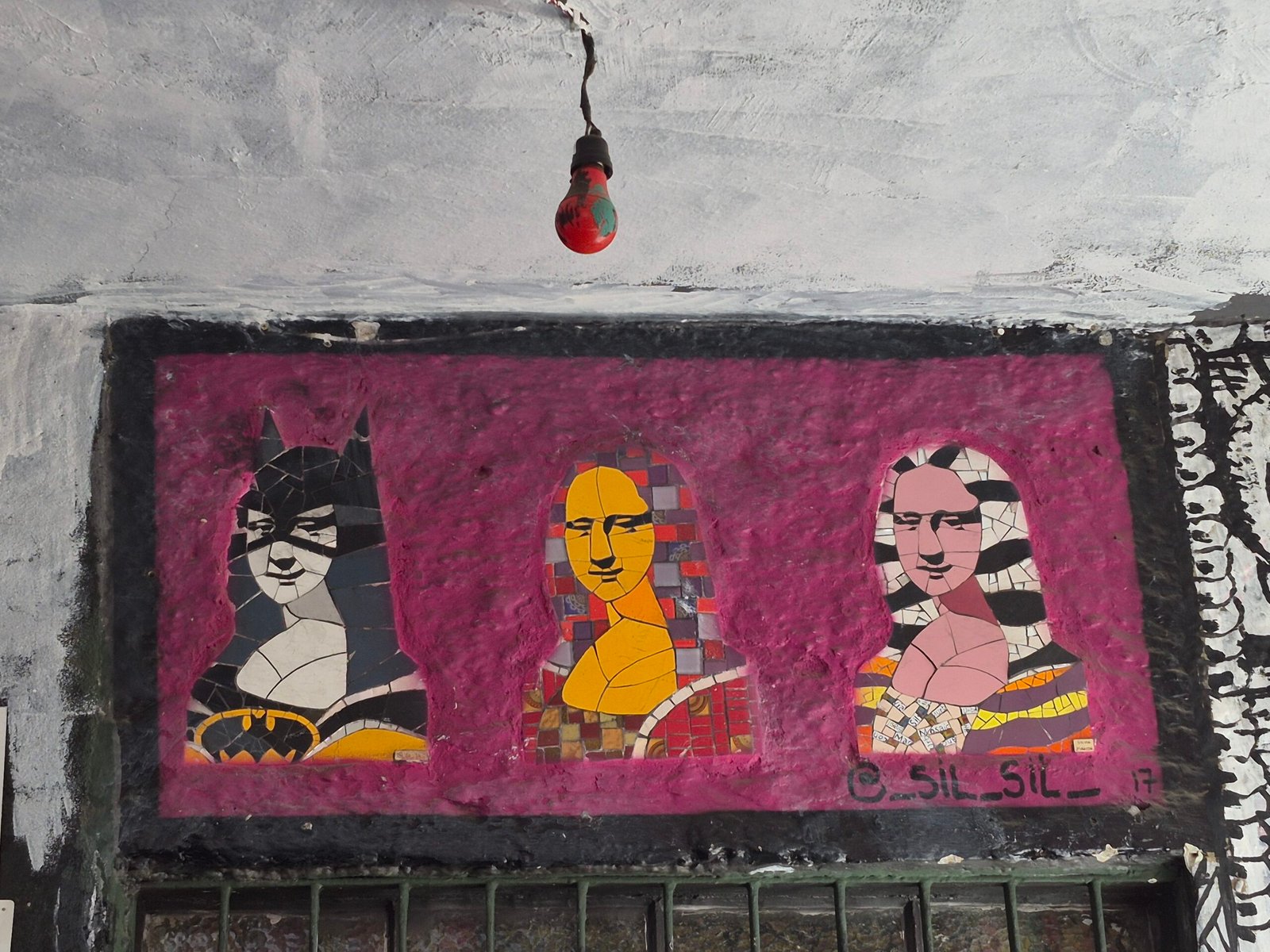
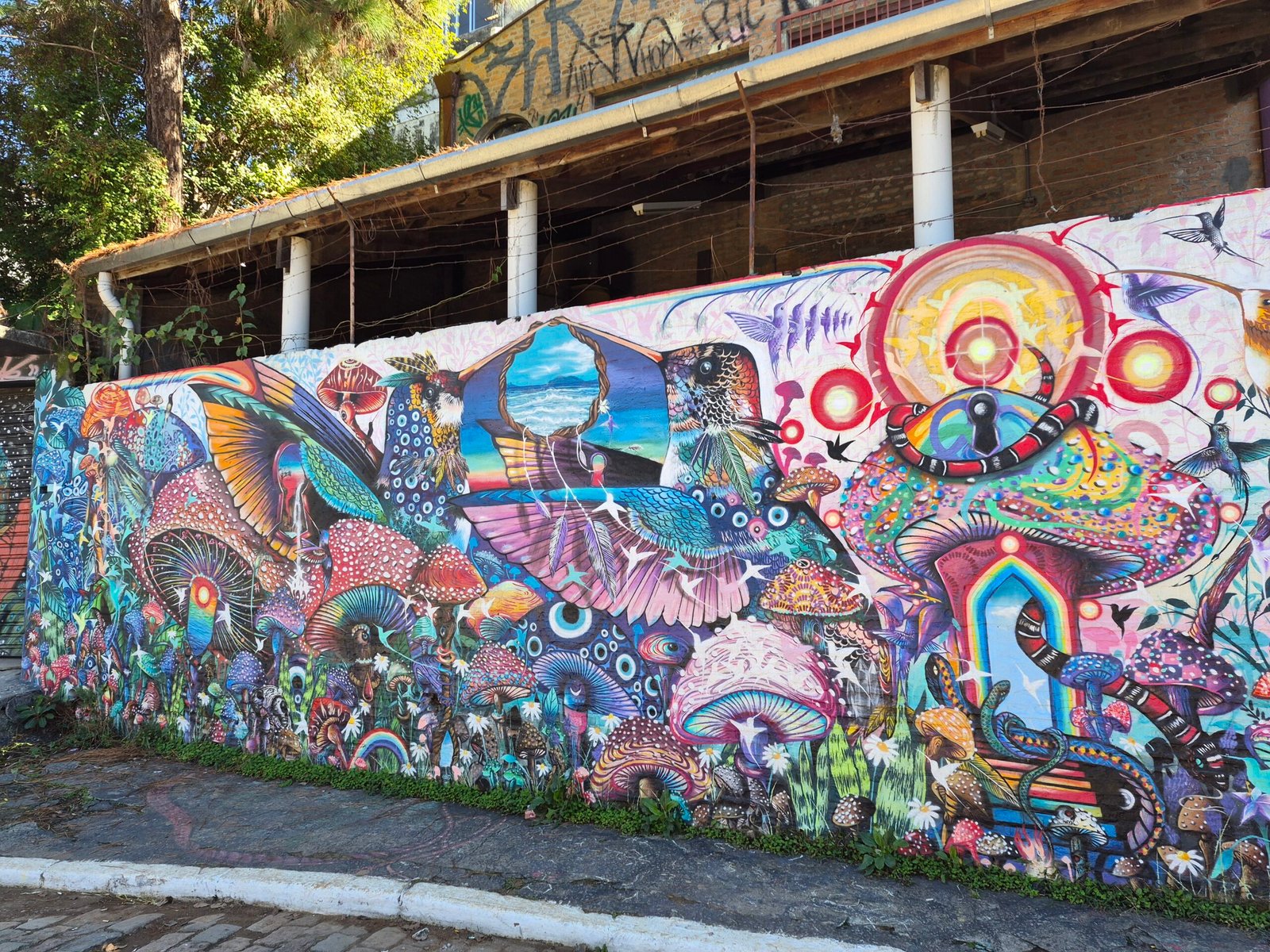
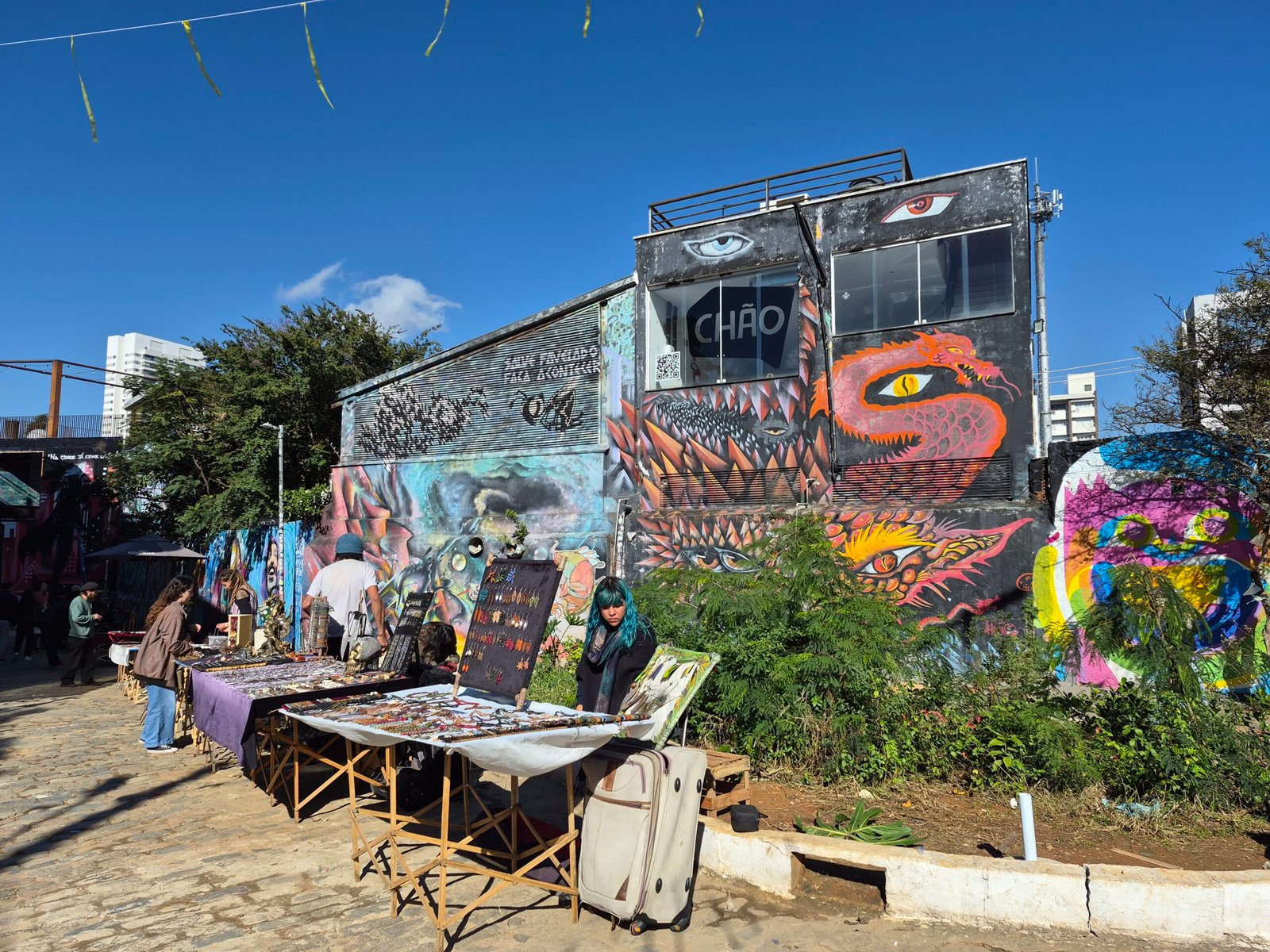
From the church, the journey continued to an area known as Beco do Batman. The area earned its nickname, ‘Batman’s Alley’, from a Batman-themed mural that was once painted there. The original mural has been painted over a long time ago, and it has been replaced by many new paintings. Many of them are still Batman-themed, though. The area is home to a wide variety of art galleries, as well as street artisans selling their own wares. We didn’t buy anything from them this time, but our walking tour ended at a small chocolate shop in the area, whose temptations we could no longer resist.
Tremble, you villains!
Our guide Mauricio on the right and the street artist on the left
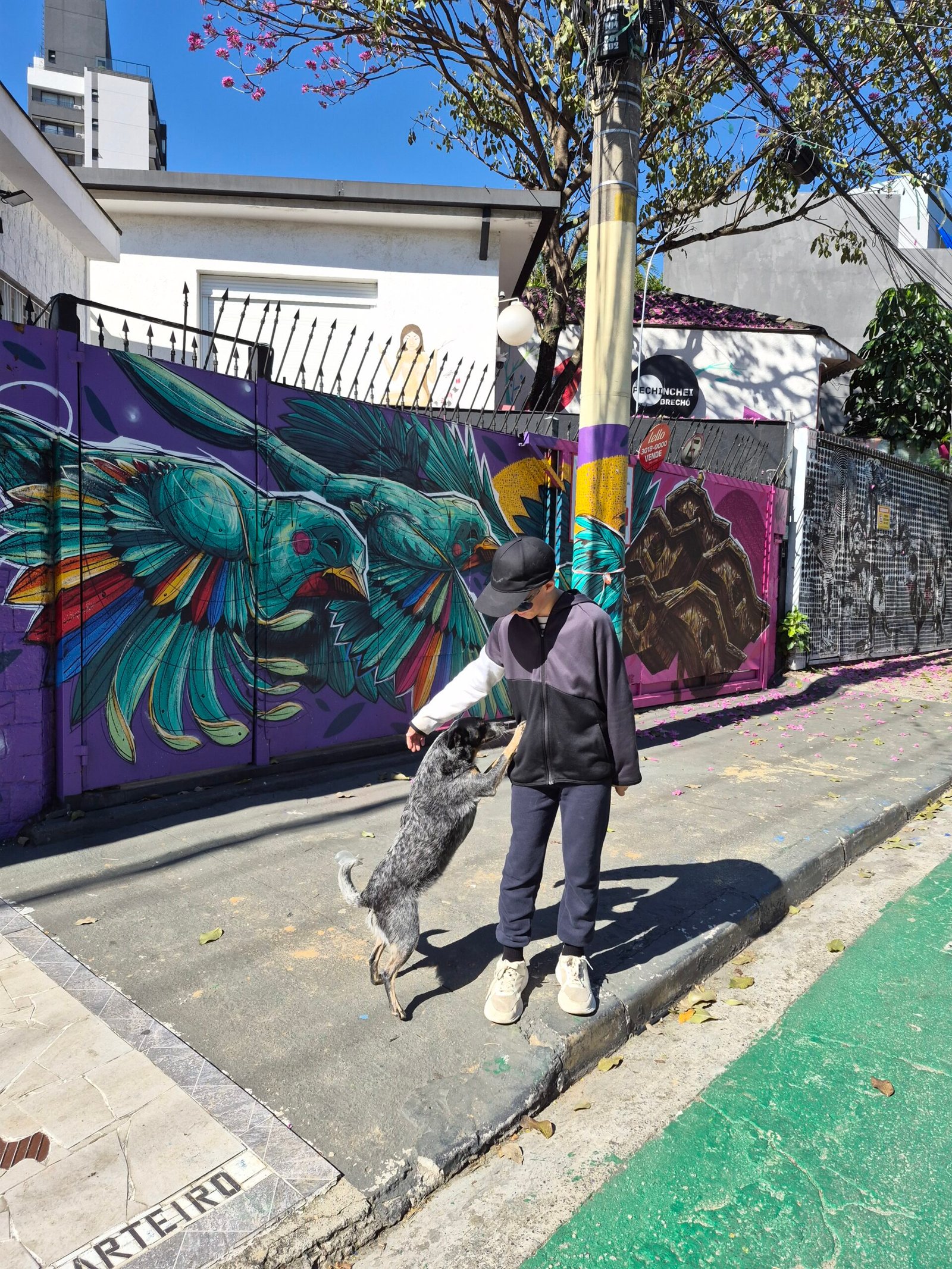
Risto was immediately joined by the gallery owner’s dog.
Here, lots of people get plenty of tattoos, and in really visible places.
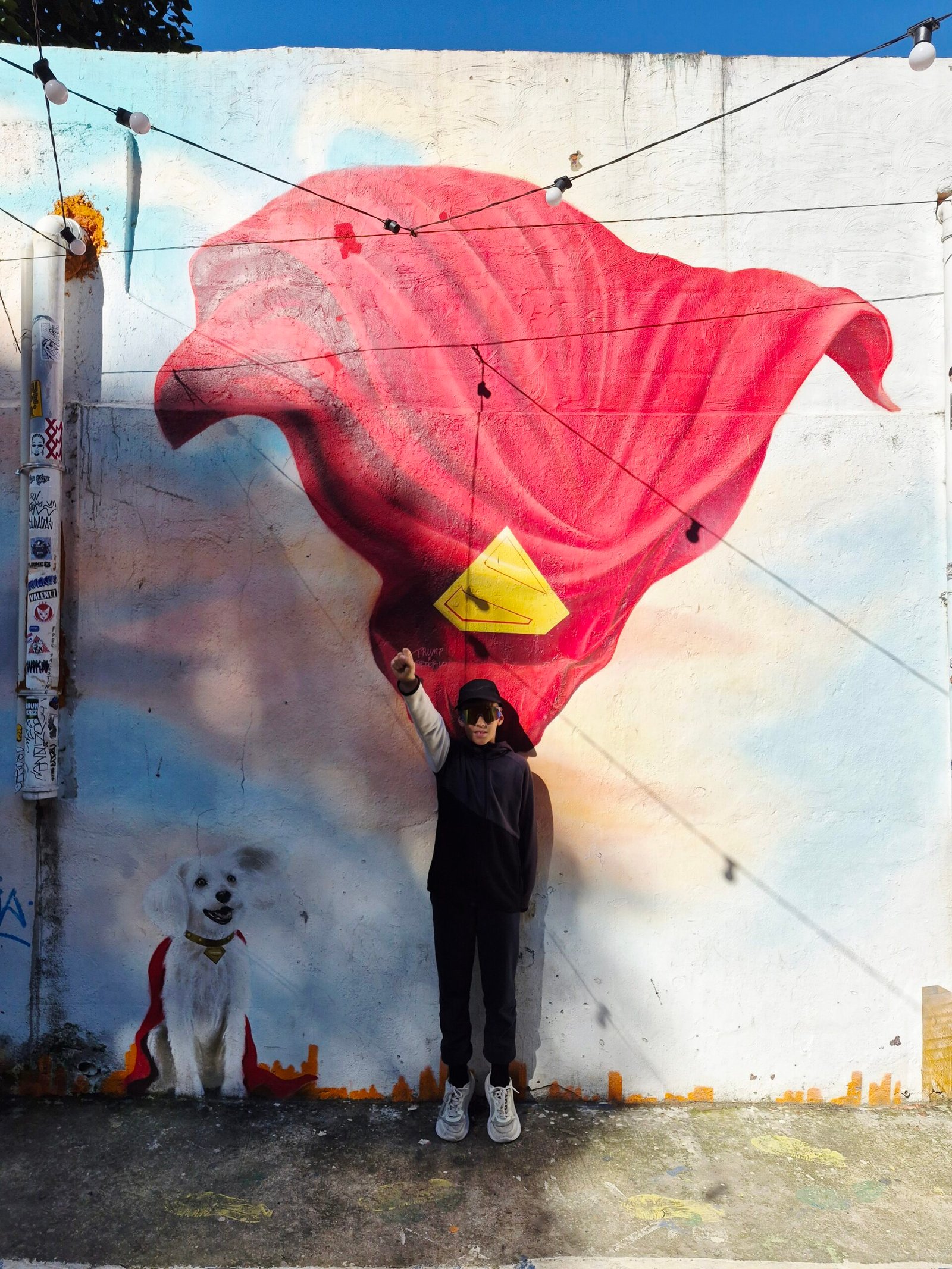
Superman and Superdog
During the day, we also visited an old building called Casa de Rosas, situated on Avenida Paulista, which had once belonged to one of the city’s most famous architects. There wasn’t really much to see inside the building, as it was completely empty. The building had taken its name from the magnificent rose garden in its courtyard. The rose bushes were still about three metres tall, so they have clearly been well looked after, even by the city authorities.
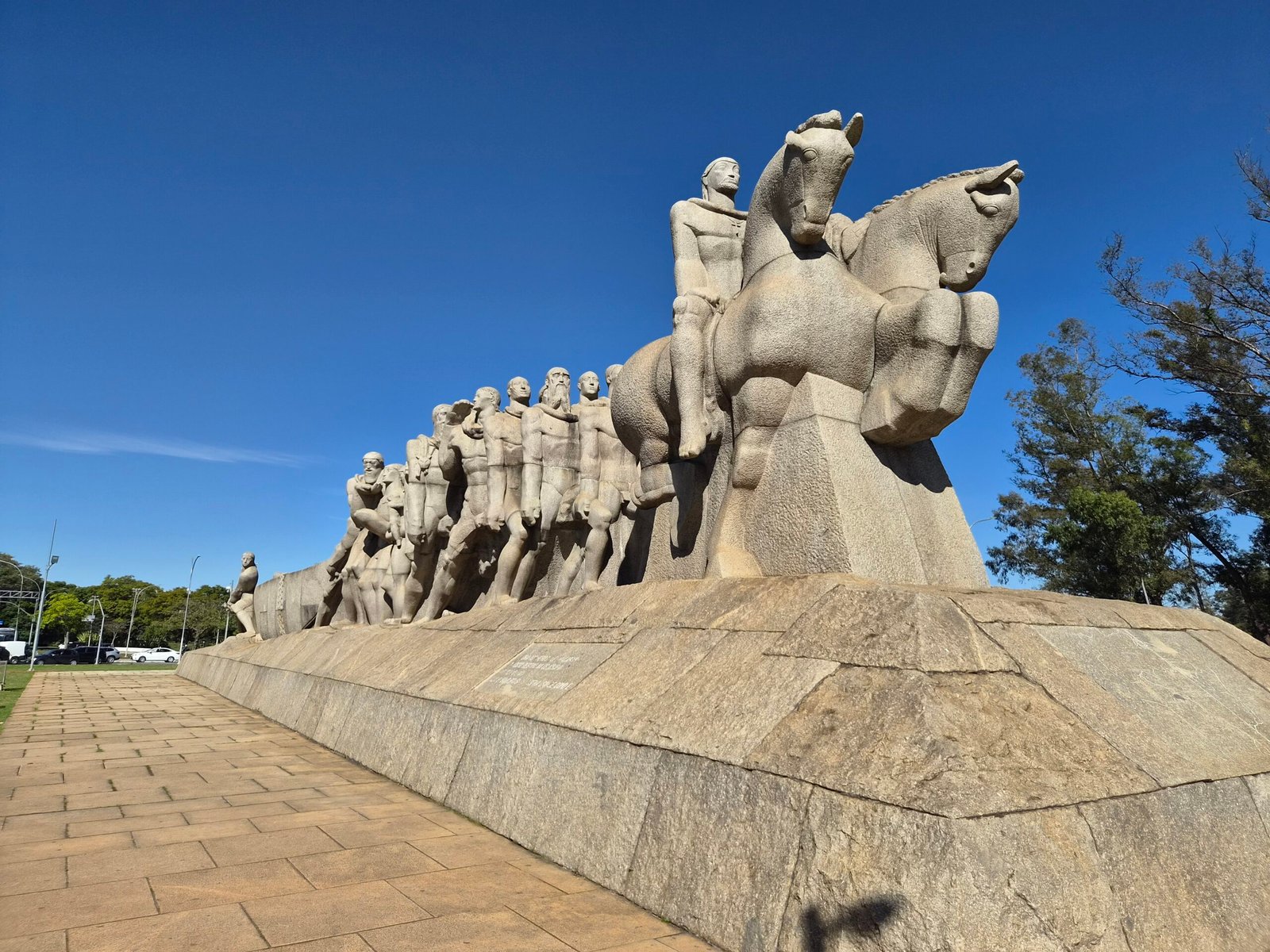
We also stopped at two different statues, the history of which was then explained in great detail by our guide. As the commentary was very long in all three languages, Risto felt we’d lingered by the statues for far too long. The first statue depicted the founders of São Paulo, whilst the second, the Monumento às Bandeiras, depicted the exploratory expeditions into the Brazilian interior undertaken by the settlers.
Monumento às Bandeiras
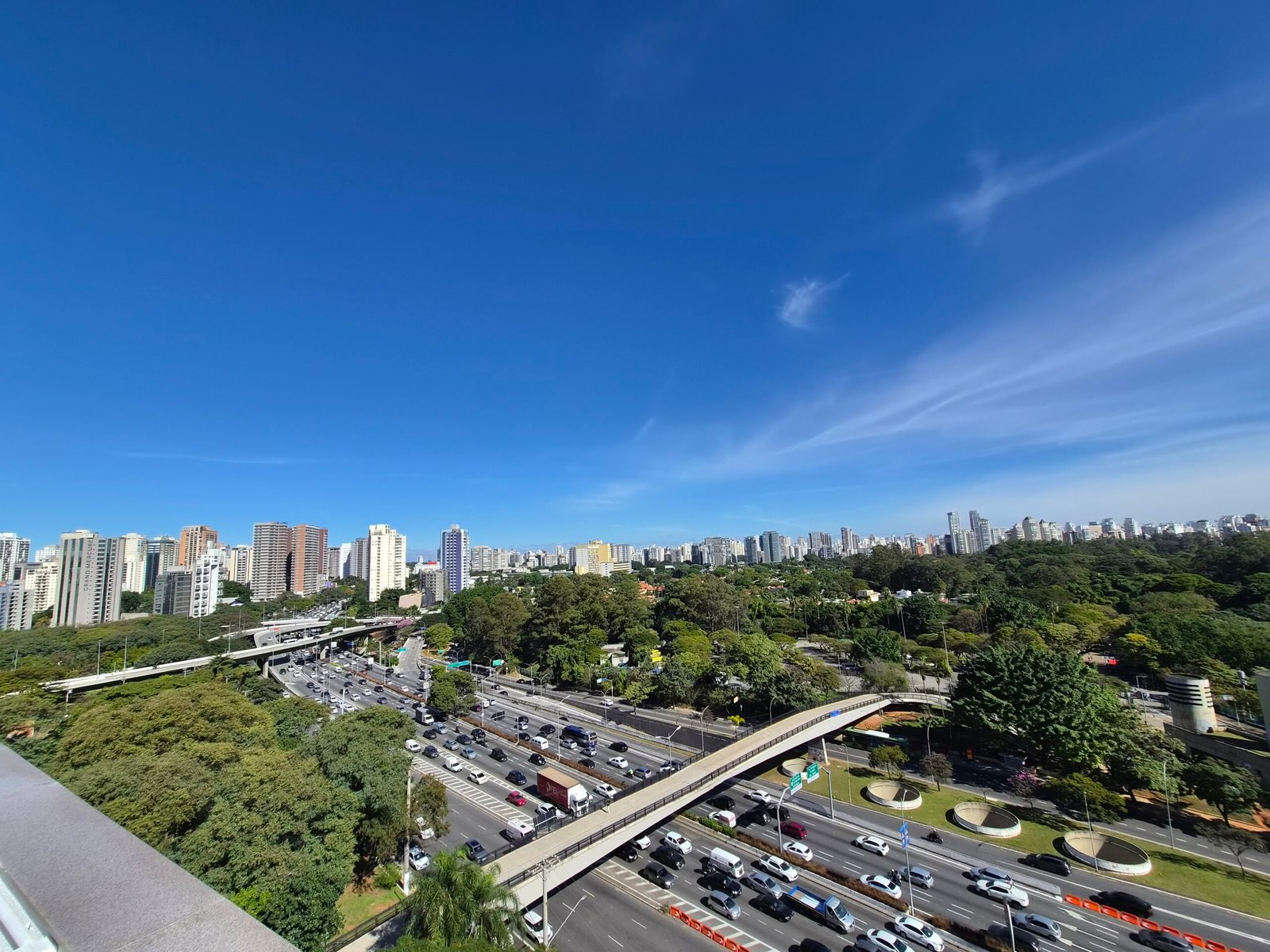
Towards the end of the sightseeing tour, we stopped on the roof of the Museum of Contemporary Art to admire the views of São Paulo from above. No matter which way you turned your head, the city’s towering blocks of flats stretched as far as the eye could see. The last two stops were the cathedral, which we’d already visited the previous day, and the city’s first railway station. Long-distance trains no longer run between cities from here, but local train services are busy. We were told that the metro is the one mode of transport the city simply couldn’t do without. When the metro drivers went on strike a few years ago, our guide’s usual 15-minute commute by metro turned into a 2.5-hour slog on a local bus. Here, traffic is nothing but rush hour round the clock.
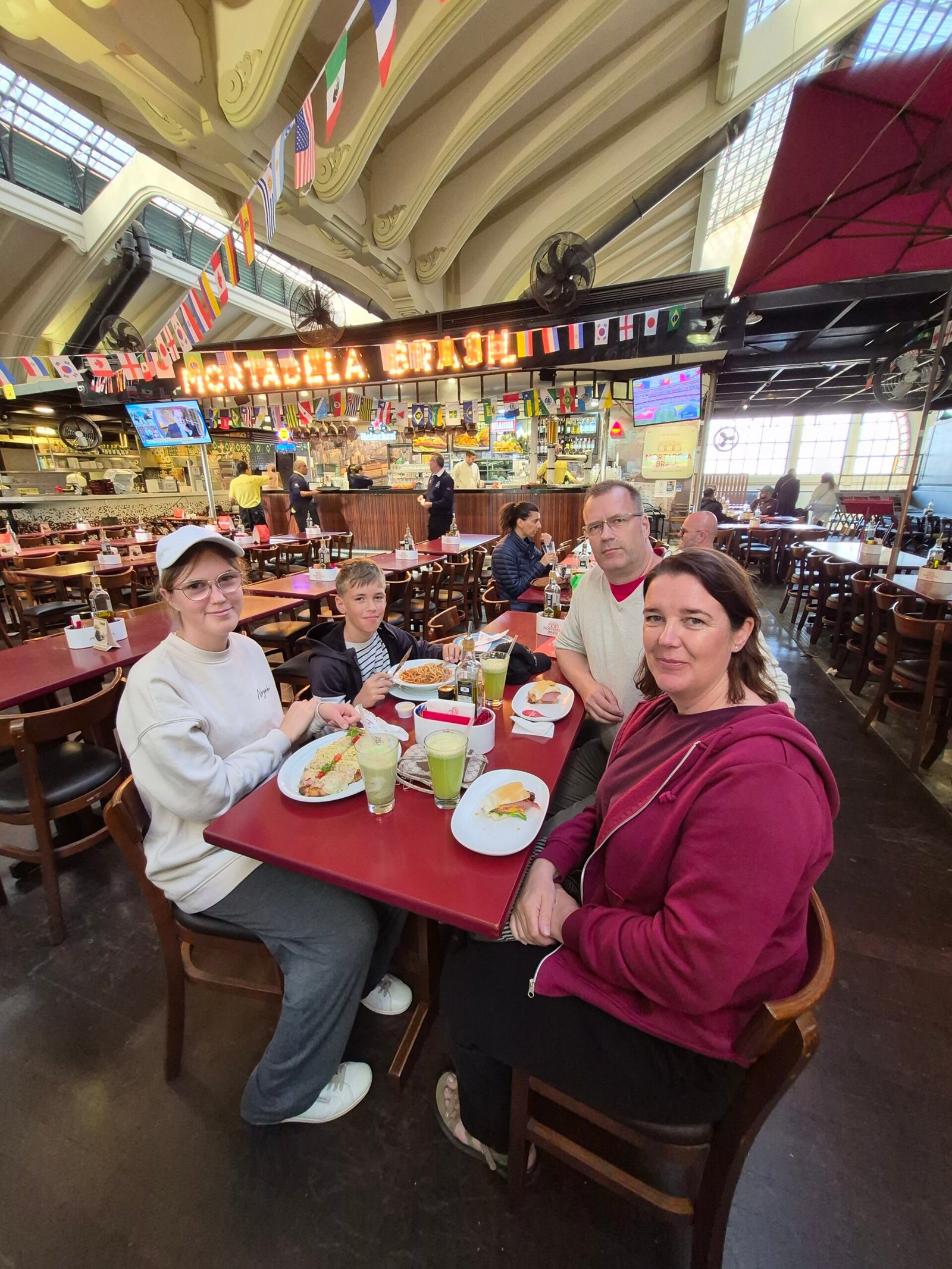
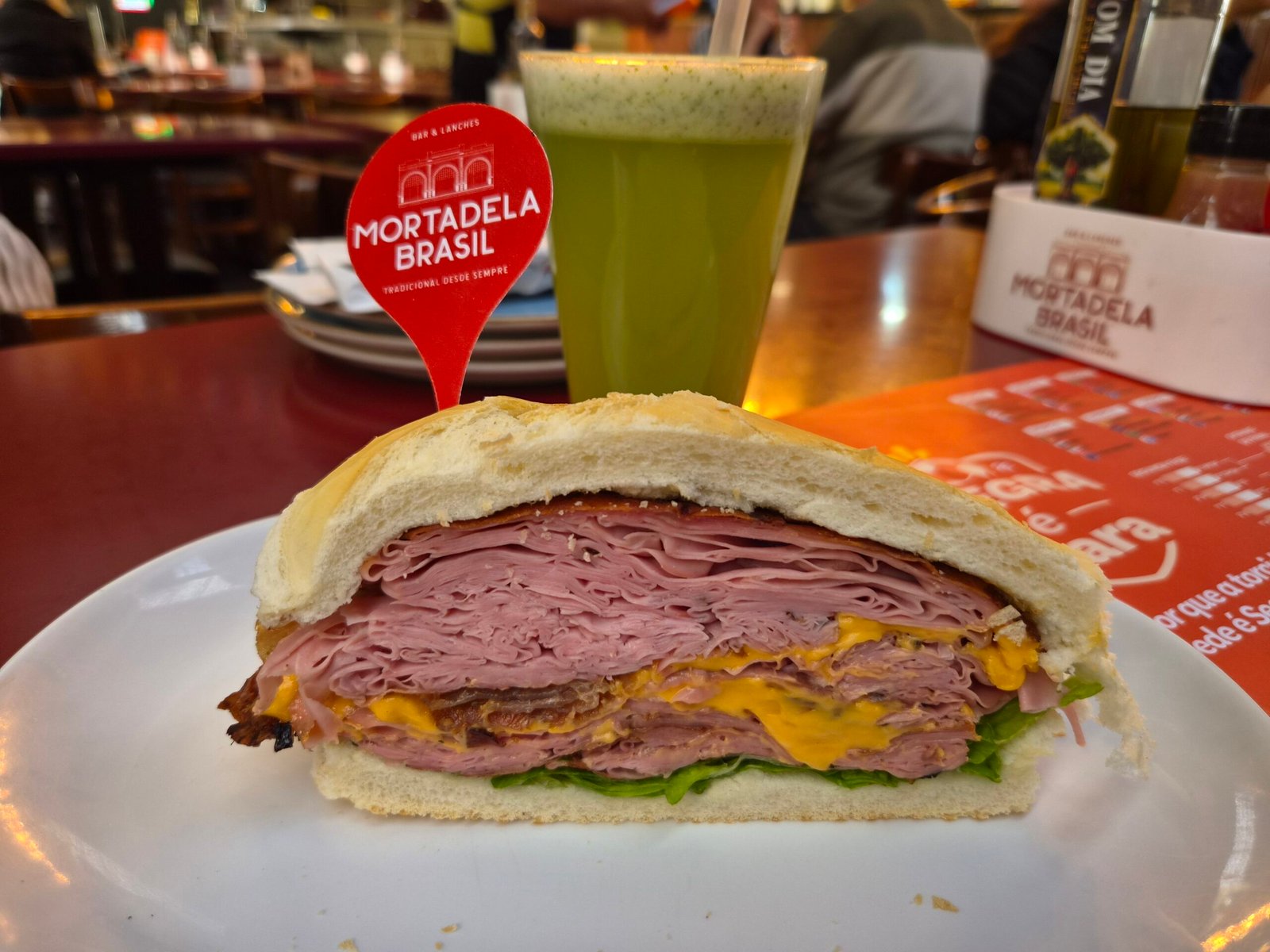
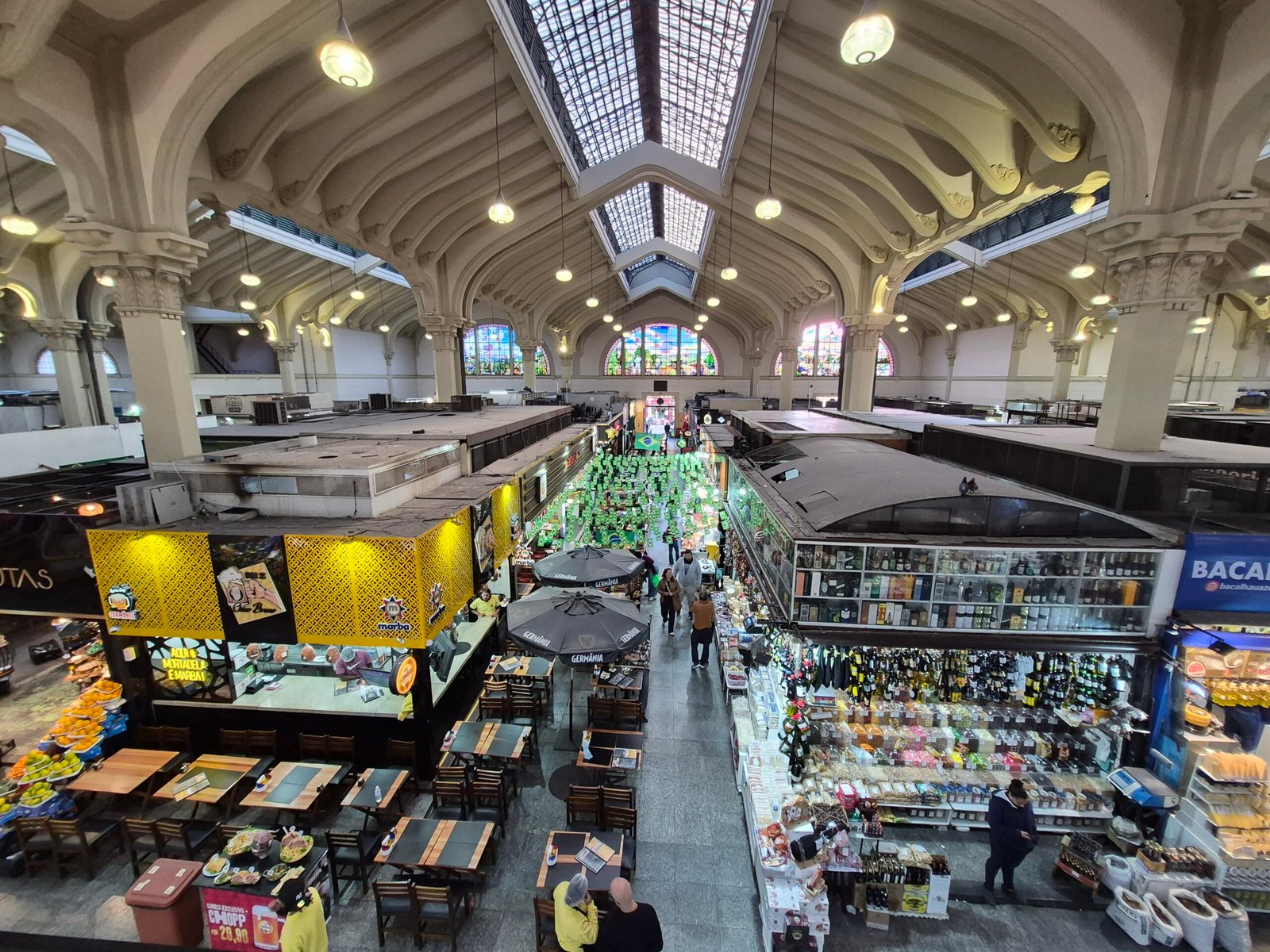
We were dropped off near the local market hall, where we went for a very late lunch. We were all starving, as we’d had breakfast as early as seven in the morning, and by this time it was already past three. Fortunately, the dishes we’d ordered arrived quickly, so no one was caught out by hunger pangs – though it certainly came close!
São Paulo is a huge city with a population of 11.9 million.
Having a very late lunch on the upper floor of the market hall.
Vegans, watch out! Ham, bacon and mortadella.
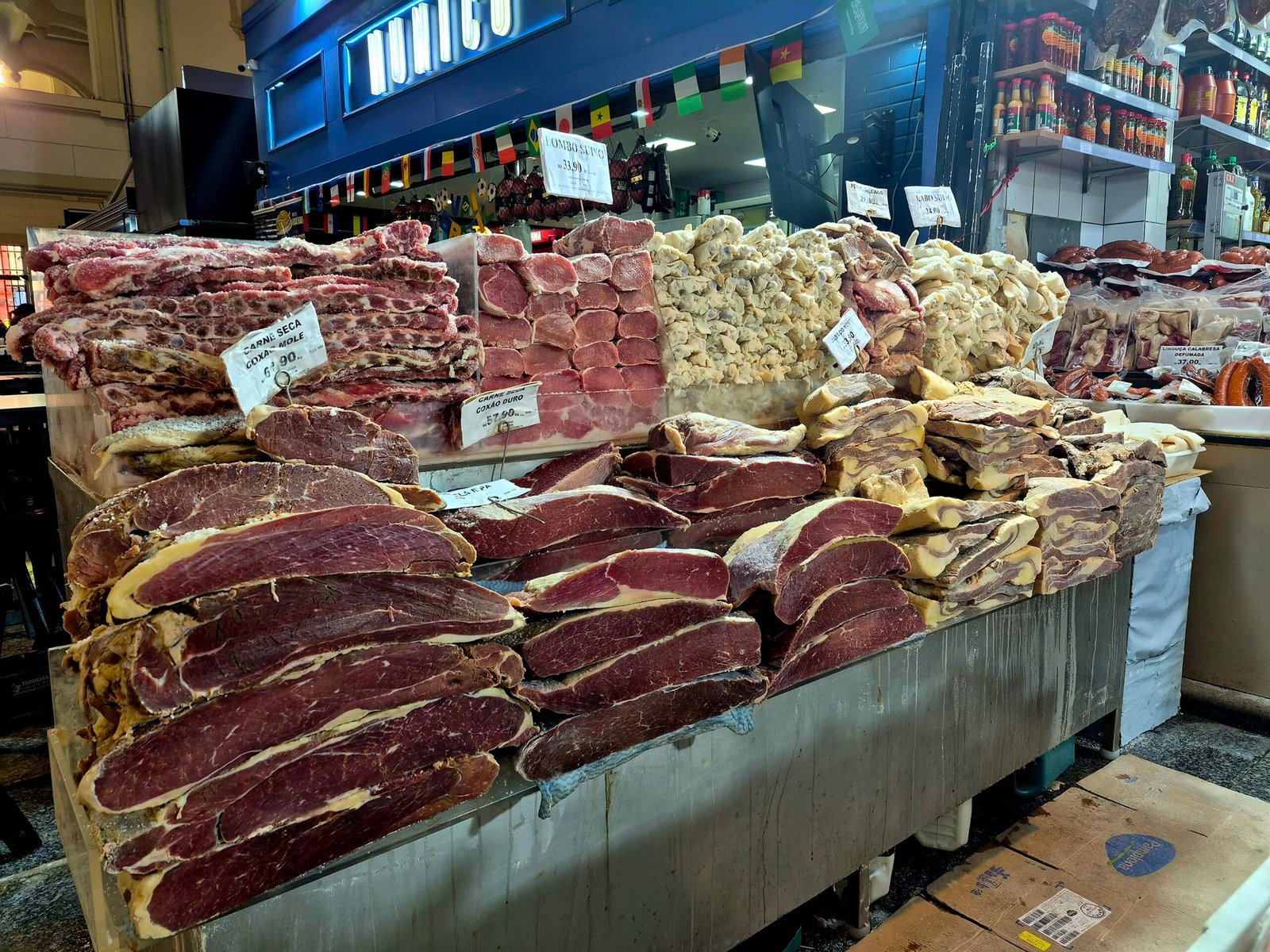
There was also a plentiful selection of meat on the ground floor of the market hall.
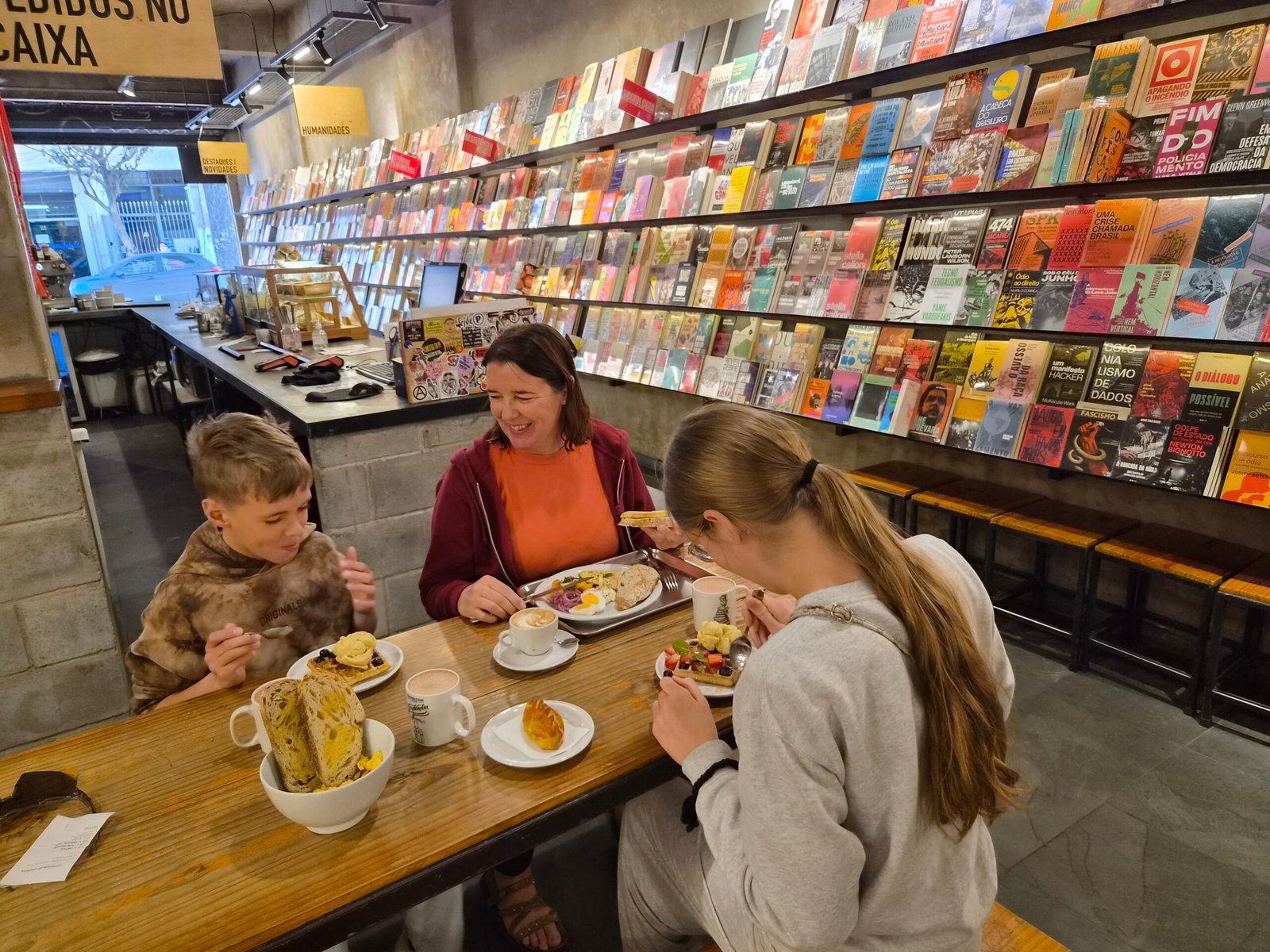
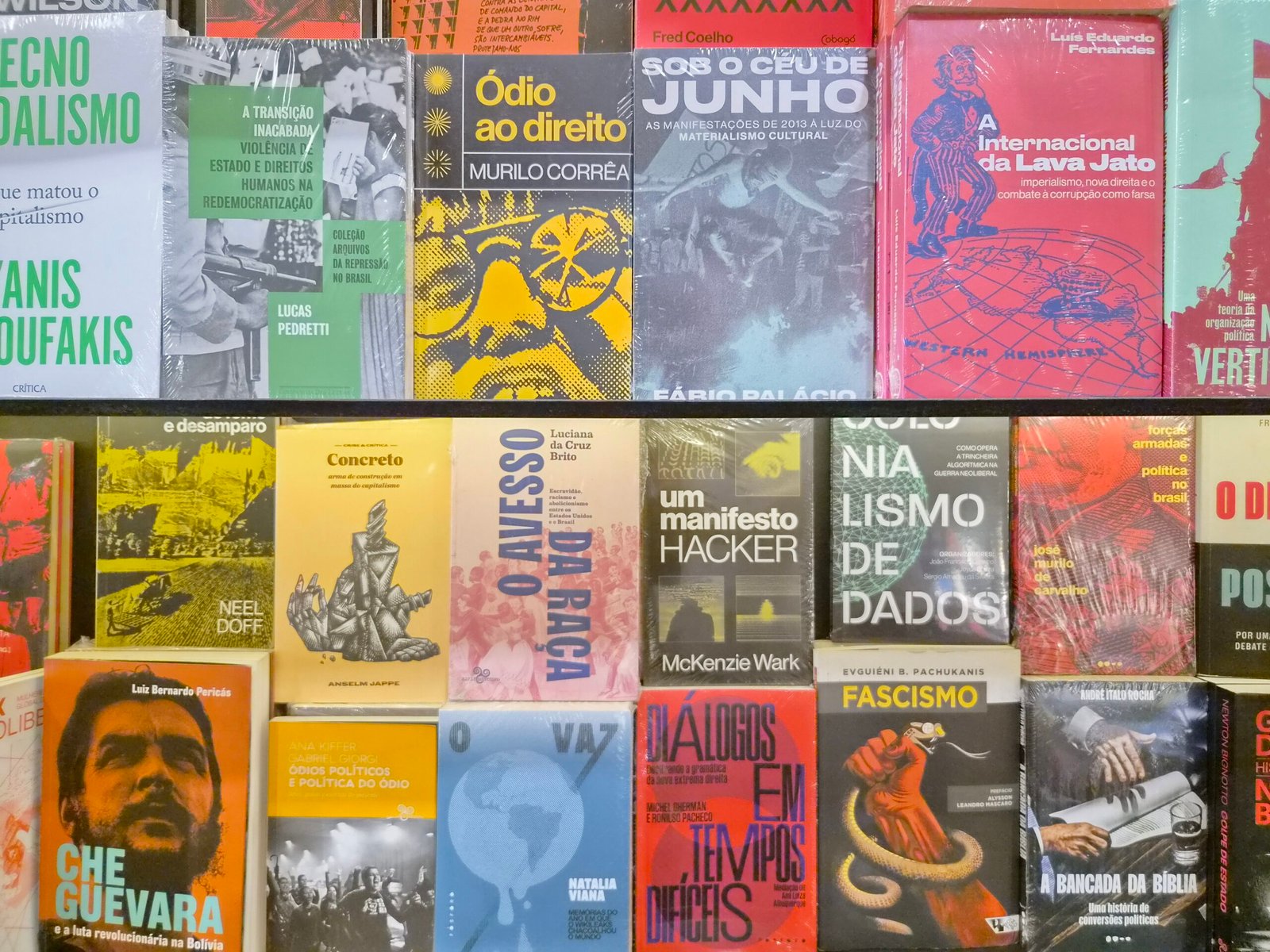
On Midsummer’s Eve, we first went to a nearby café for breakfast. After sitting there for a while, we realised that it seemed to be a hotbed of communism, as the café’s selection of books included, amongst other things, Marx’s writings and works critical of capitalism. Whatever political ideology the café represented, the breakfast there was truly delicious. The children had waffles and fruit salad, Jaana had avocado on toast, and Marko had scrambled eggs and an empanada.
At the Communists’ café
The passion for the cause was clearly evident in the selection of books.
We’d realised that the metro was a really handy way to get from the café to Avenida Paulista, so we walked the short distance to the nearest metro station, Santa Cesília. We bought single-journey tickets from the ticket machine and, after studying the metro map for a moment, came to the conclusion that we should first travel a few stops on metro line 3 and then change to line 12. We’d already hopped on line 12 when it started to seem that something wasn’t quite right. We quickly got off before the train had a chance to set off, and spent a moment examining the situation more closely on the platform. It turned out that we’d been about to board some sort of local train, bound for the outskirts of the city. As there were several places with names referring to Paulista on the metro map, we’d got the wrong Paulista and had therefore gone in the wrong direction. Eventually, we found the right Paulista and made it to our destination.
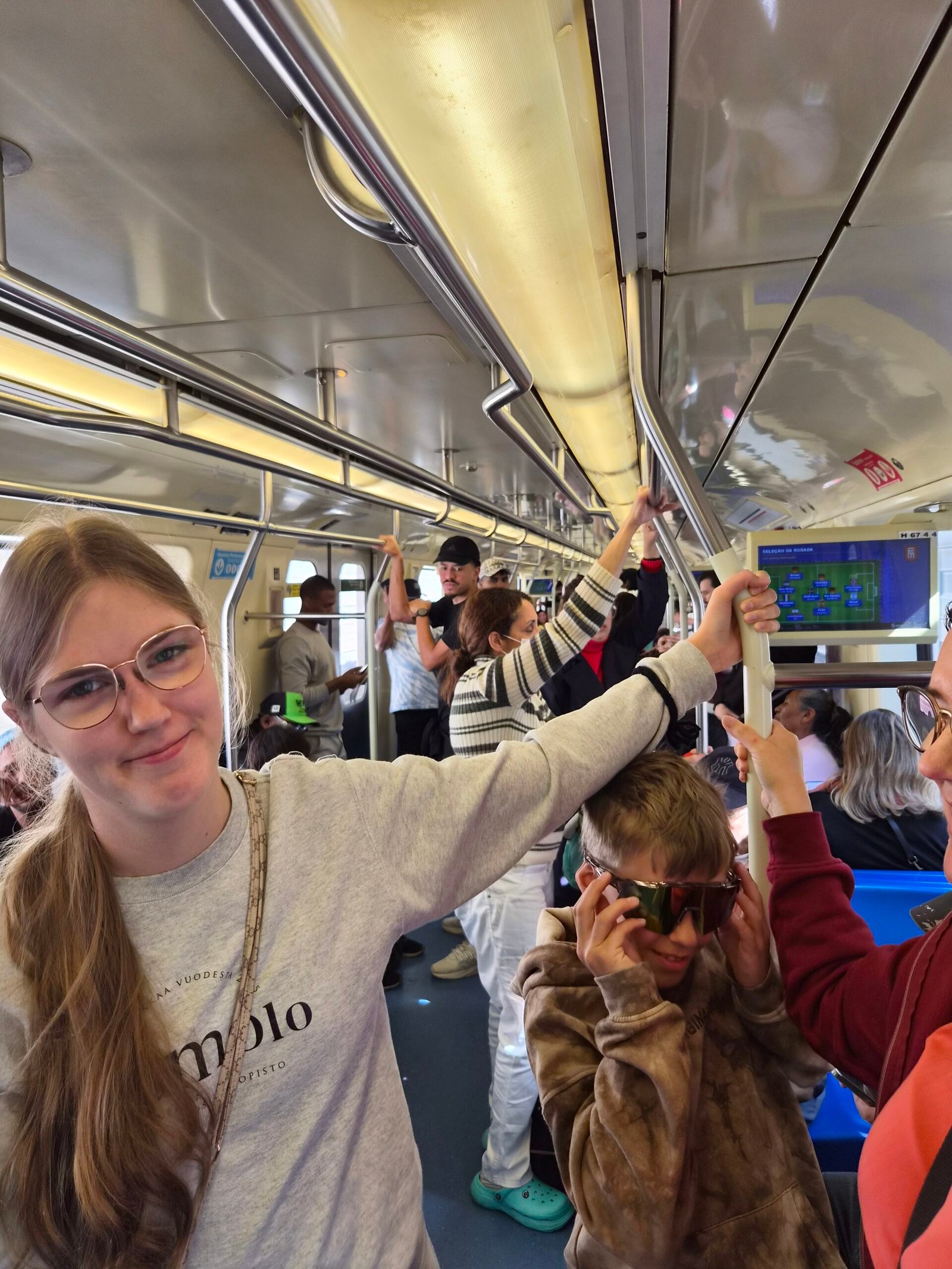
The metro in São Paulo ran every few minutes.
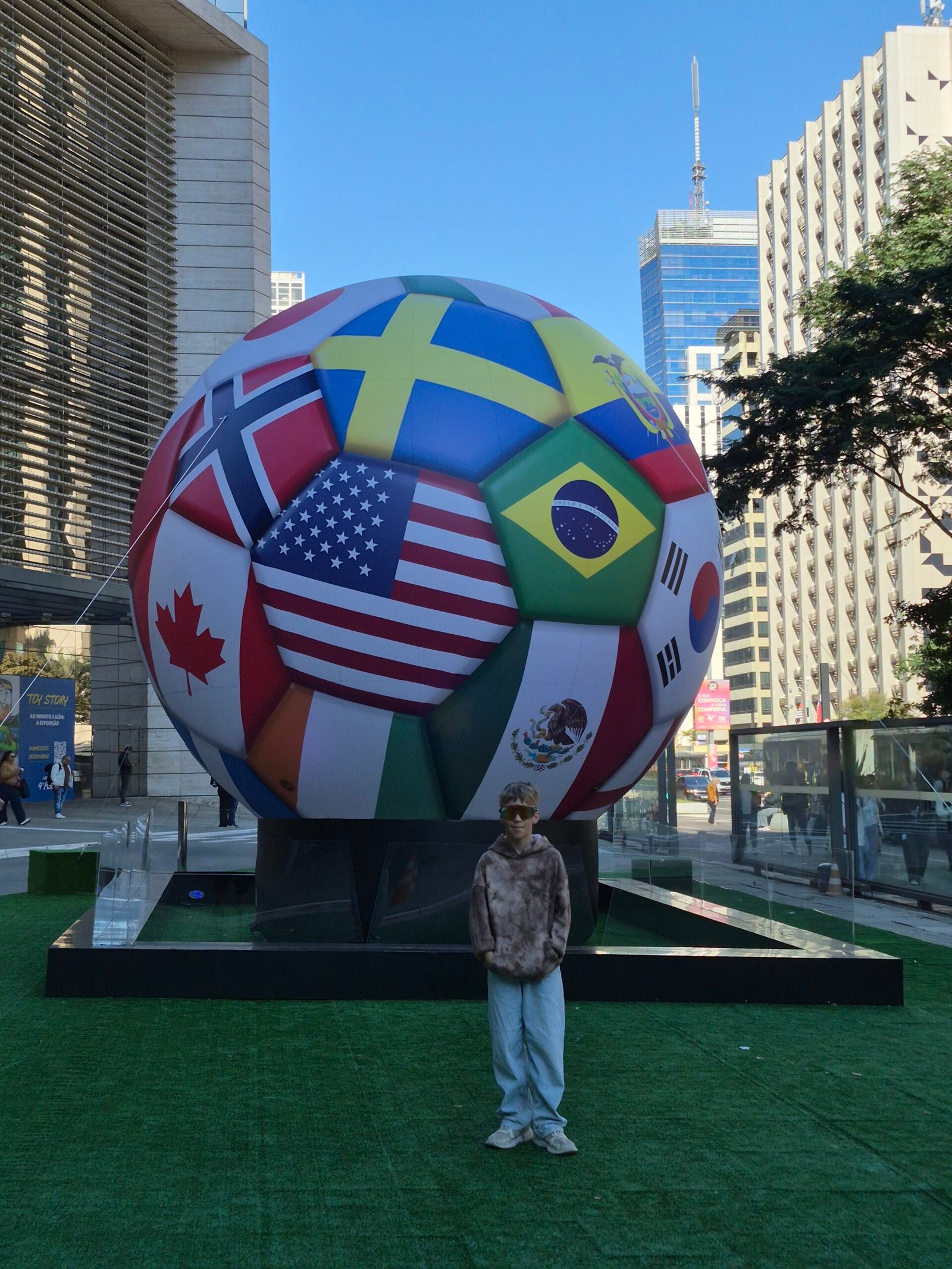
The World Cup is on everywhere here.
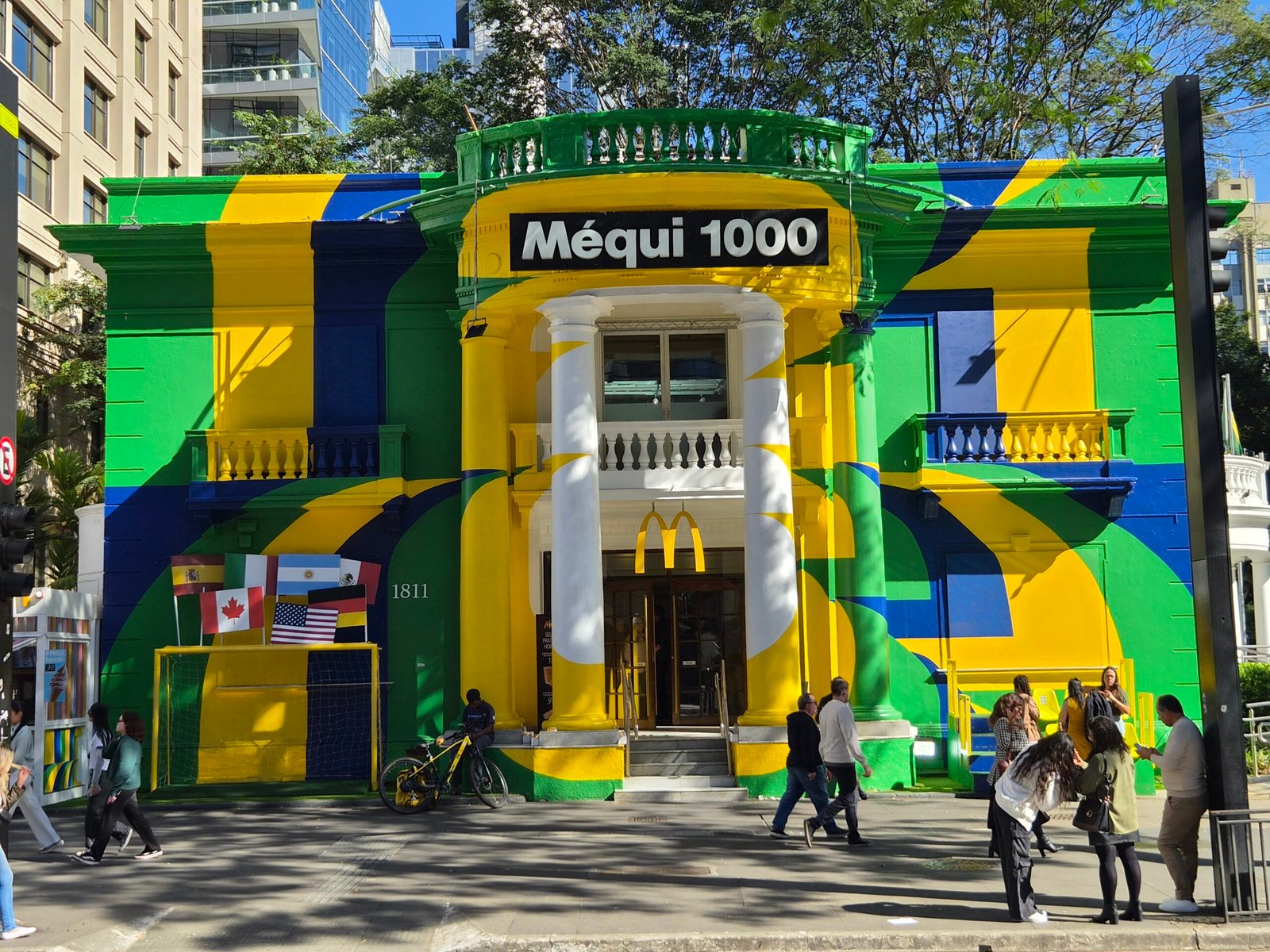
The local McDonald’s doesn’t quite follow the traditional McDonald’s style in terms of its appearance.
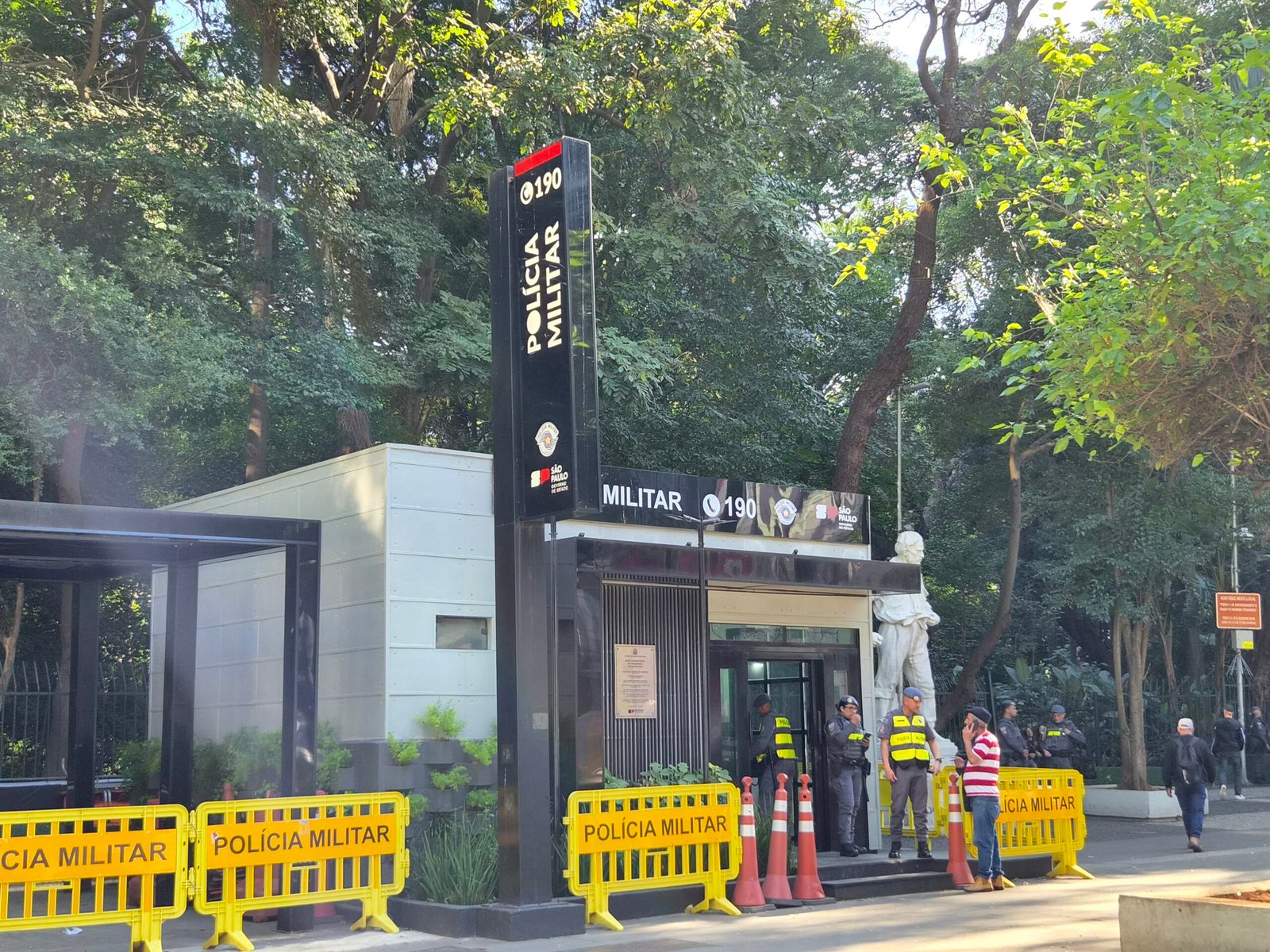
One of many small police stations on Avenida Paulista.
When we left Finland, we had made a proper beginner’s mistake and left our travel adaptor at home. Our plan was to see if we could find a suitable adapter in one of the large shopping centres on Avenida Paulista. We did find one after asking around a bit, but as it would have cost just over €40, we decided not to buy it. Here, Finnish plugs generally fit into local sockets, provided the plug head is of the narrower type. The bulkier end of an extension lead won’t fit into them, so the multi-socket extension lead we’ve brought with us is currently of no use. We’ll just have to hope that our next places to stay have as many sockets as this one does, so we can charge our phones, laptops, tablets and camera easily without needing an extension lead.
We got back to the flat early enough for the children to have a quick dip in the (somewhat chilly) swimming pool and do Risto’s floorball exercises together in the gym. In the evening, we still had to figure out how the laundry room worked and book an Uber for the next morning to take us to the airport. It was, after all, time to head off to the next stop on our trip: the Amazon rainforest.
Booking a ride to the airport was easy, but getting clean clothes to take with us to the Amazon was a whole other story. In theory, there were washing machines and tumble dryers in our house’s laundry room, but they were operated via an app that hadn’t received very many stars in the reviews. Marko tried to register an account on the app, but it just ended in a series of error messages. As the laundry app asked for a local tax number – or, failing that, a passport number – our attitude towards the app soured rather quickly anyway. Fortunately, there was another self-service launderette 300 metres away, so we headed there in the evening to try our luck. Once again, we discovered that a local tax identification number was required to use the machines. What a nuisance! Luckily, there were a couple of other people at the launderette at the same time, so we asked them for help. One chap entered his own CPF number into the payment terminal so that we could pay for the use of the washing machine and tumble dryer.