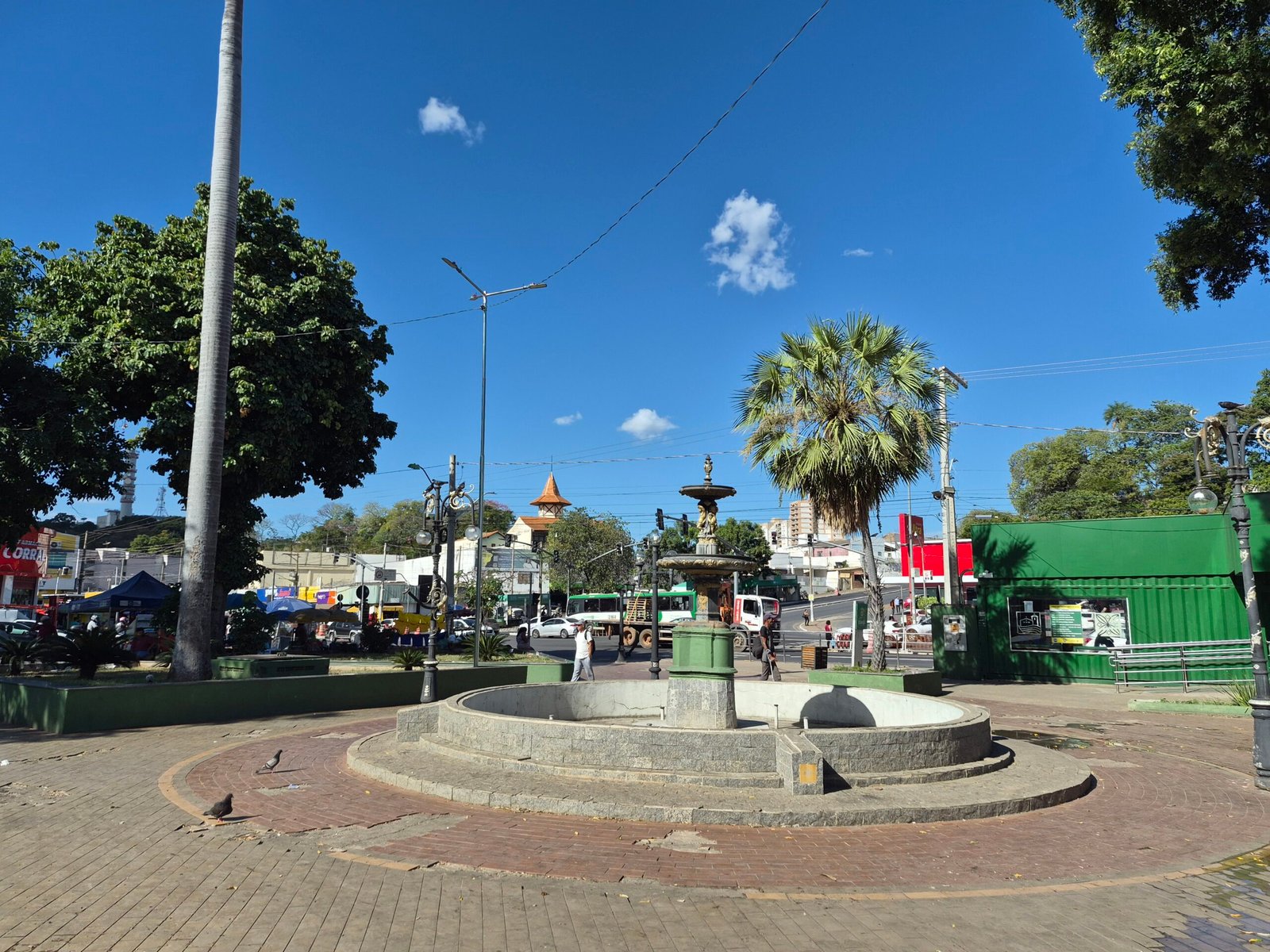
Cuiabá and Pantanal 26.6. – 2.7.2026
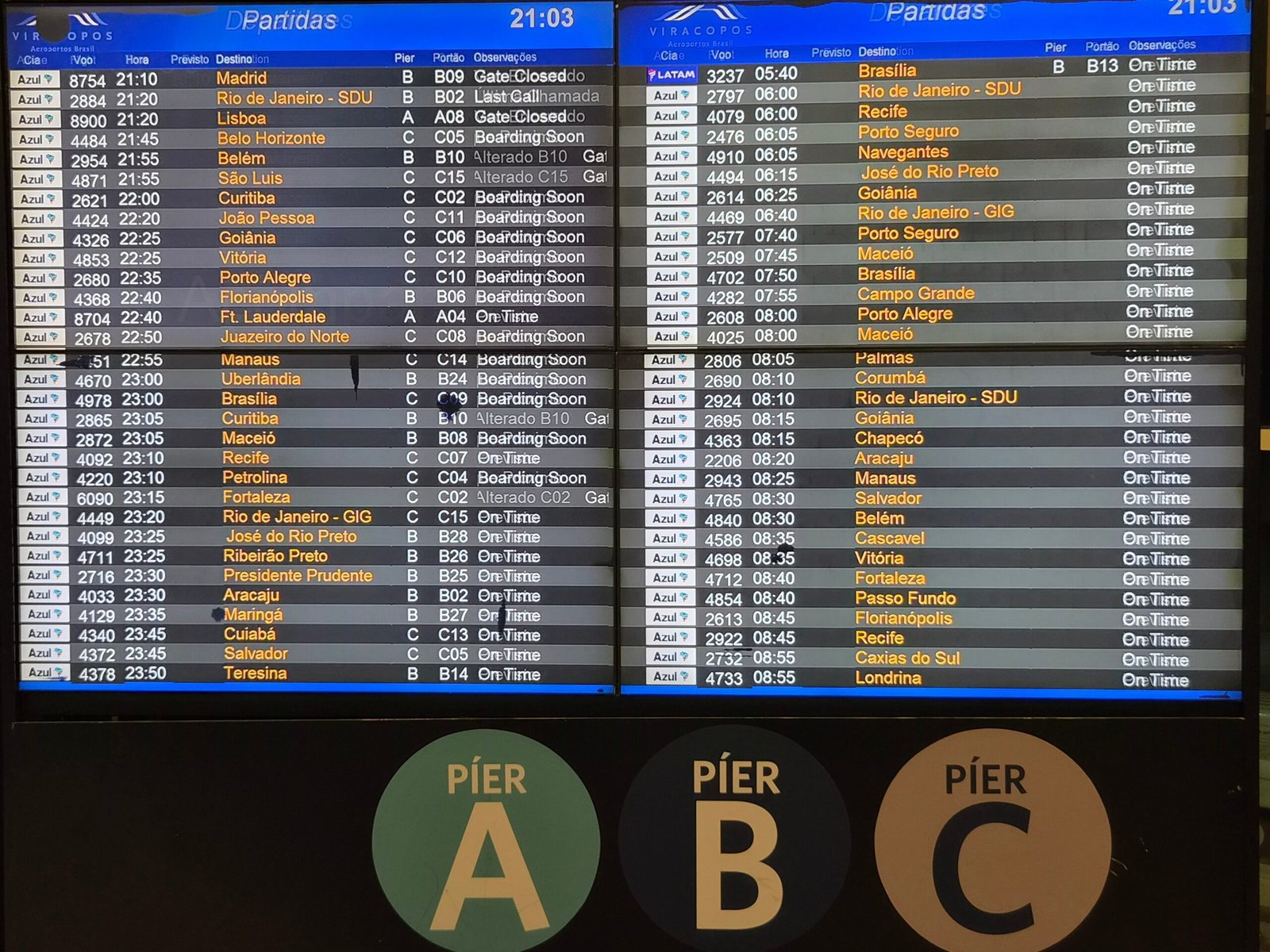
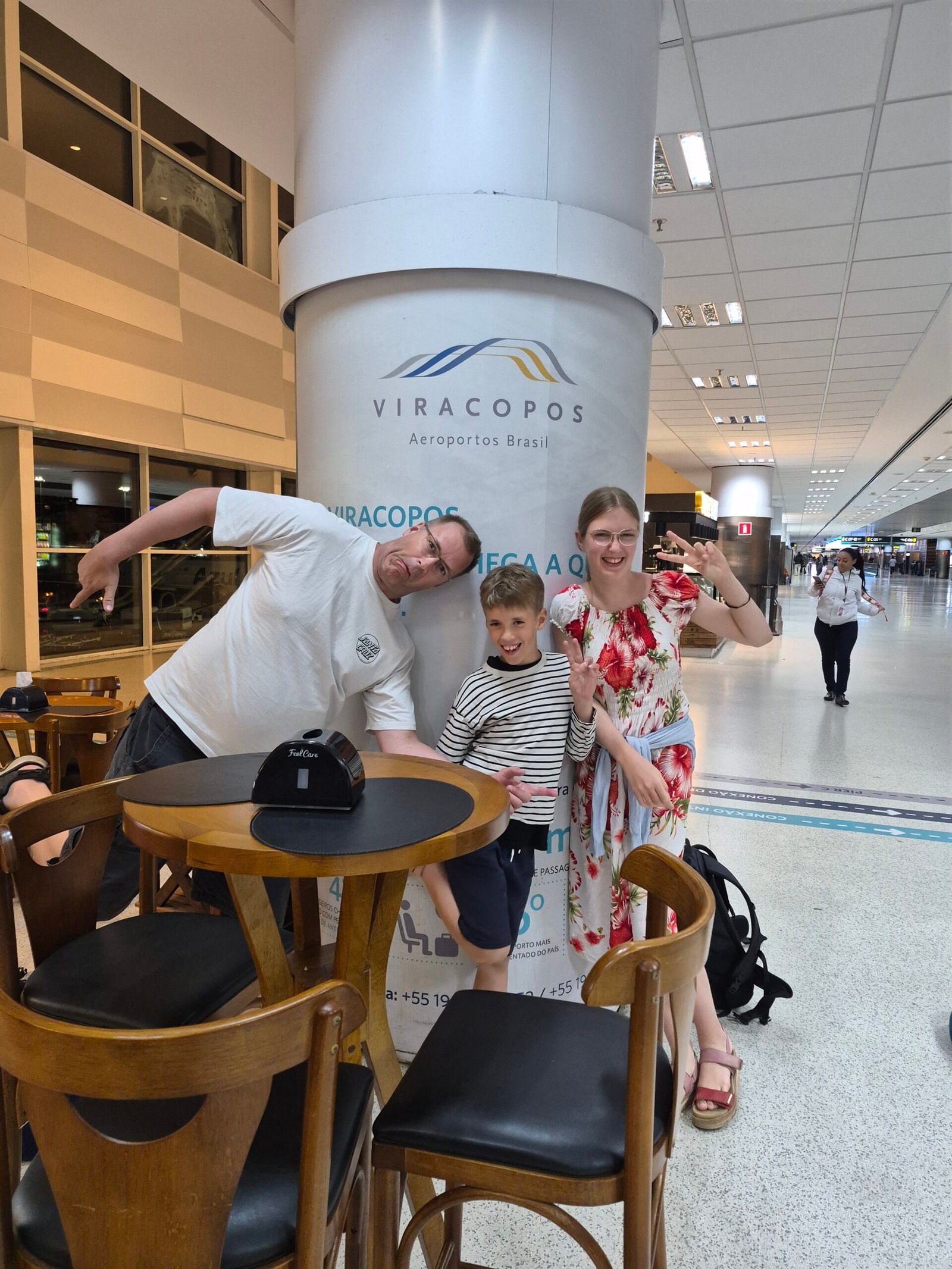
After midday, we hopped into an Uber from the Mercury Hotel and drove to the airport. Manaus International Airport wasn’t all that big, but it did have a lounge where we could wait for our flight to depart. Our flight didn’t leave until around four in the afternoon, and it foolishly flew right past Cuiabá only to land at Viracopos Airport near São Paulo. We had a layover there and had to fly back along practically the same route halfway before we finally landed at Cuiabá Airport at 1:30 in the middle of the night. There simply isn’t a direct flight between Manaus and Cuiabá.
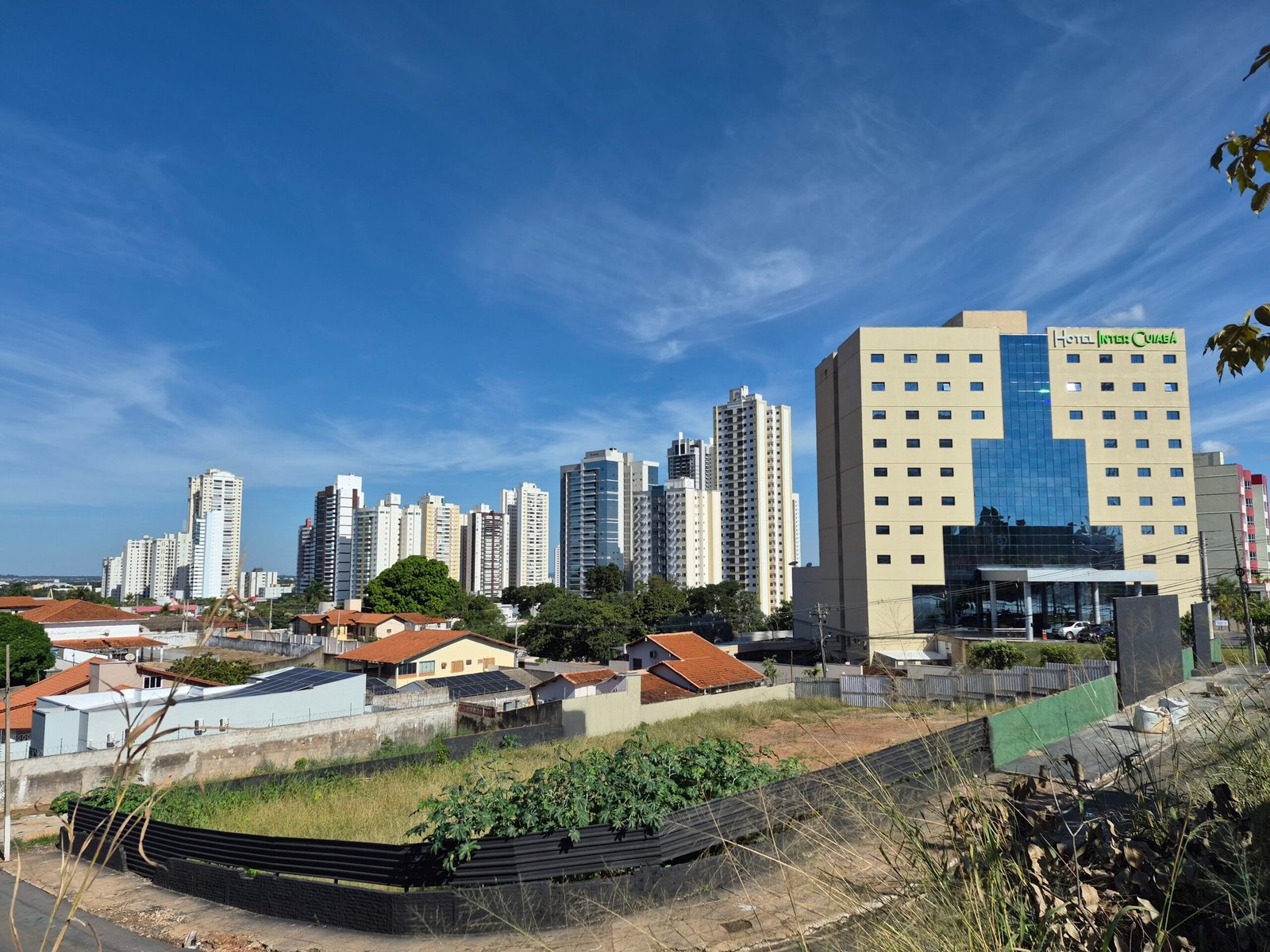
We stayed at Hotel Inter Cuiabá, and we managed to get some sleep before heading out to check out the breakfast buffet. By this point, Risto had already been complaining of a headache, so for breakfast he made do with some painkillers, a little juice, bread, and yogurt. Since we’d just been on a trip to the Amazon, we decided to play it safe and head to a nearby local health center—which was free even for tourists—to find out what was bothering Risto.
The health center was surprisingly large, but its standard was quite different from similar facilities in Finland. The eSIM card Marko had purchased came in handy right away, since not a single person there spoke English. They did understand Spanish, but they only spoke Portuguese back to us, so there was a noticeable language barrier.
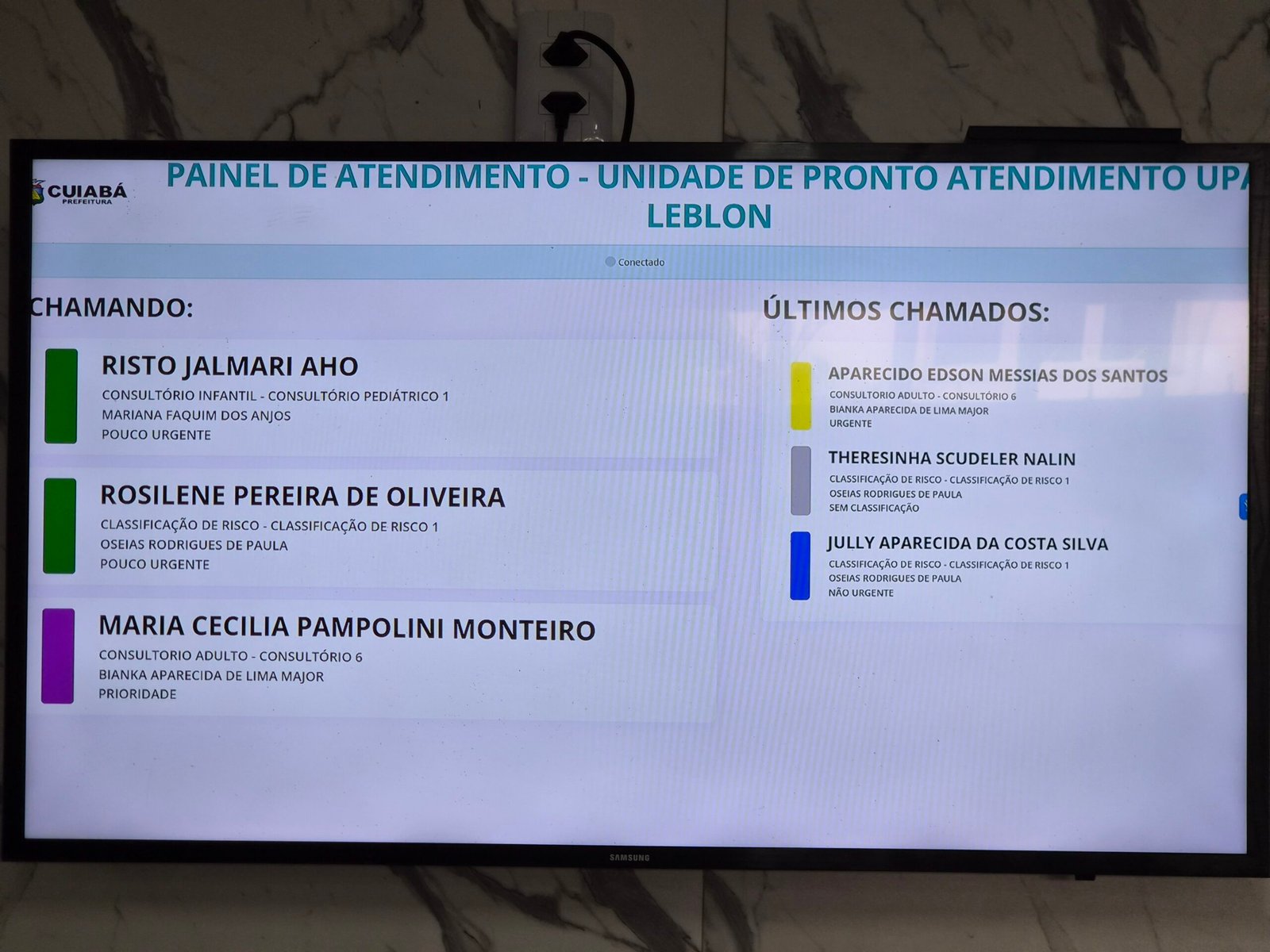
First, we were taken to a room where a nurse assessed how urgent our case was. At this point, Risto’s temperature was taken for the first time. No fever, thanks to the pain killer. Then, marked with a green tag, we were sent back to the waiting room to wait until Risto’s name appeared on the board. Those with a red tag were seen by a doctor immediately; those with a green tag had to wait a little longer. Before his name even had a chance to appear on the board, Risto threw up, and all the orange juice from that morning flew in an arc onto the floor. We tried asking if there was any paper somewhere to clean up the mess, but we were told that wasn’t our job. Cleaners would arrive a little later to take care of the mess. Strangely enough, at that point, plenty of empty space suddenly appeared around us on the rows of benches in the waiting room…
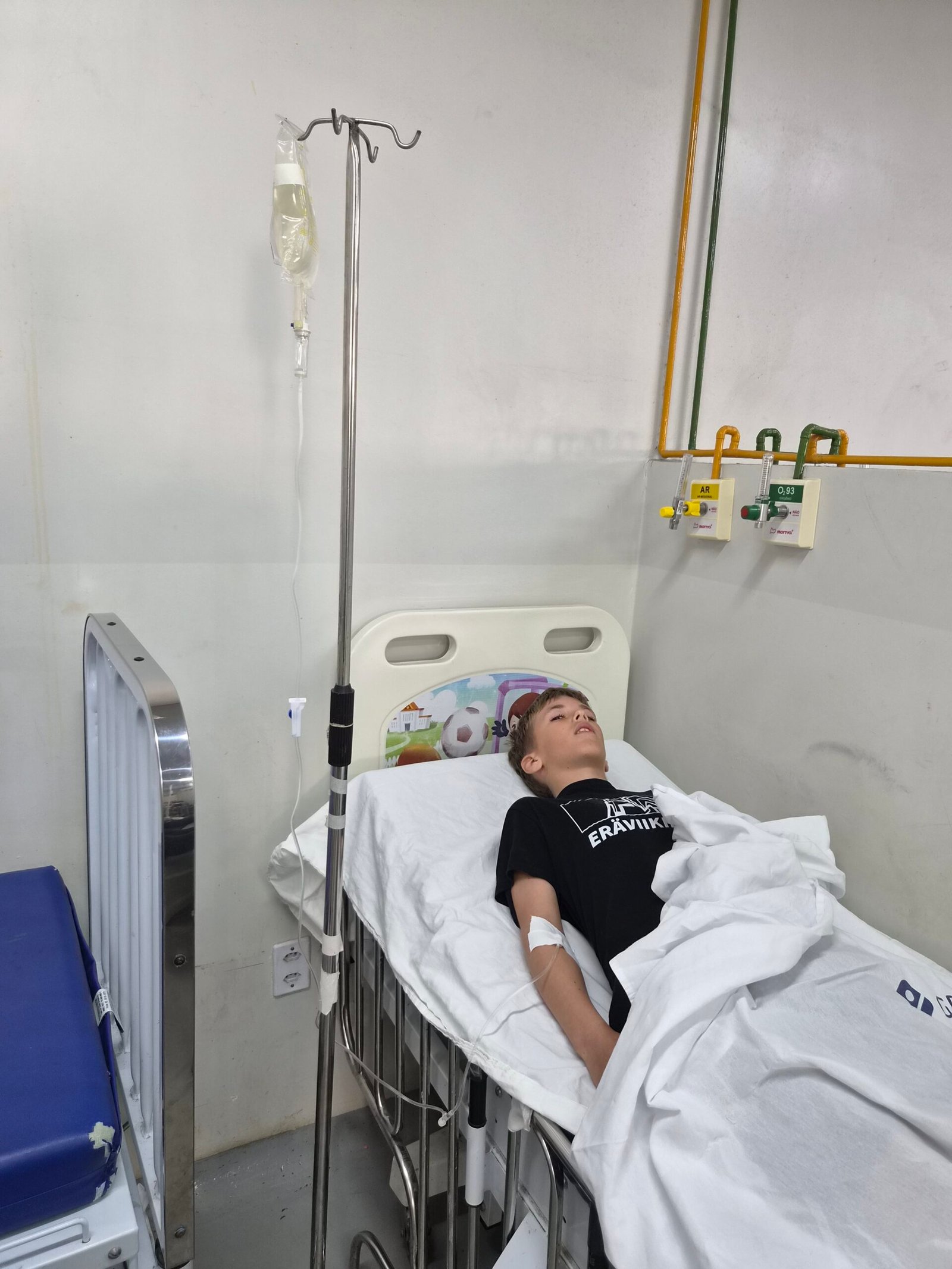
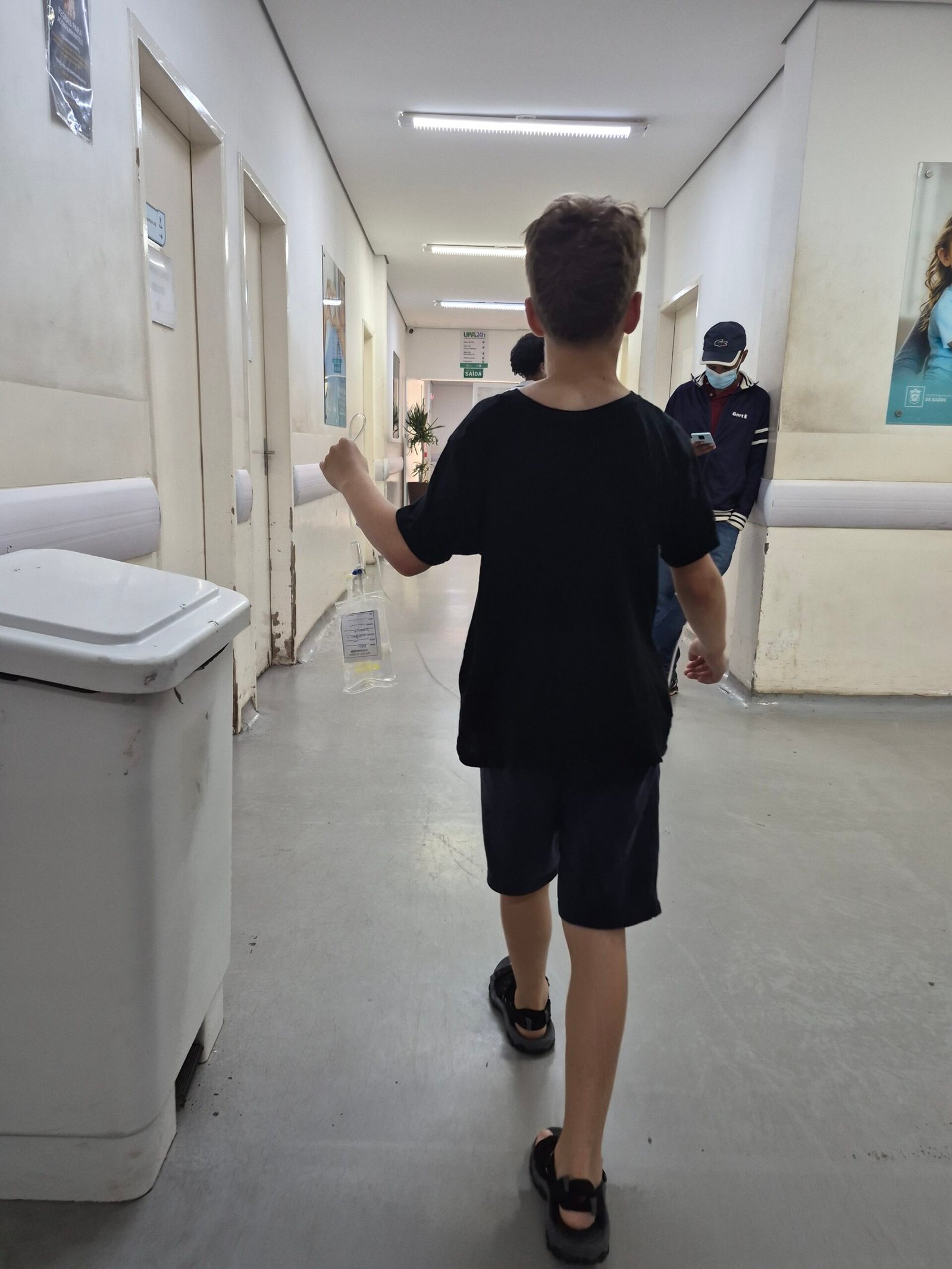
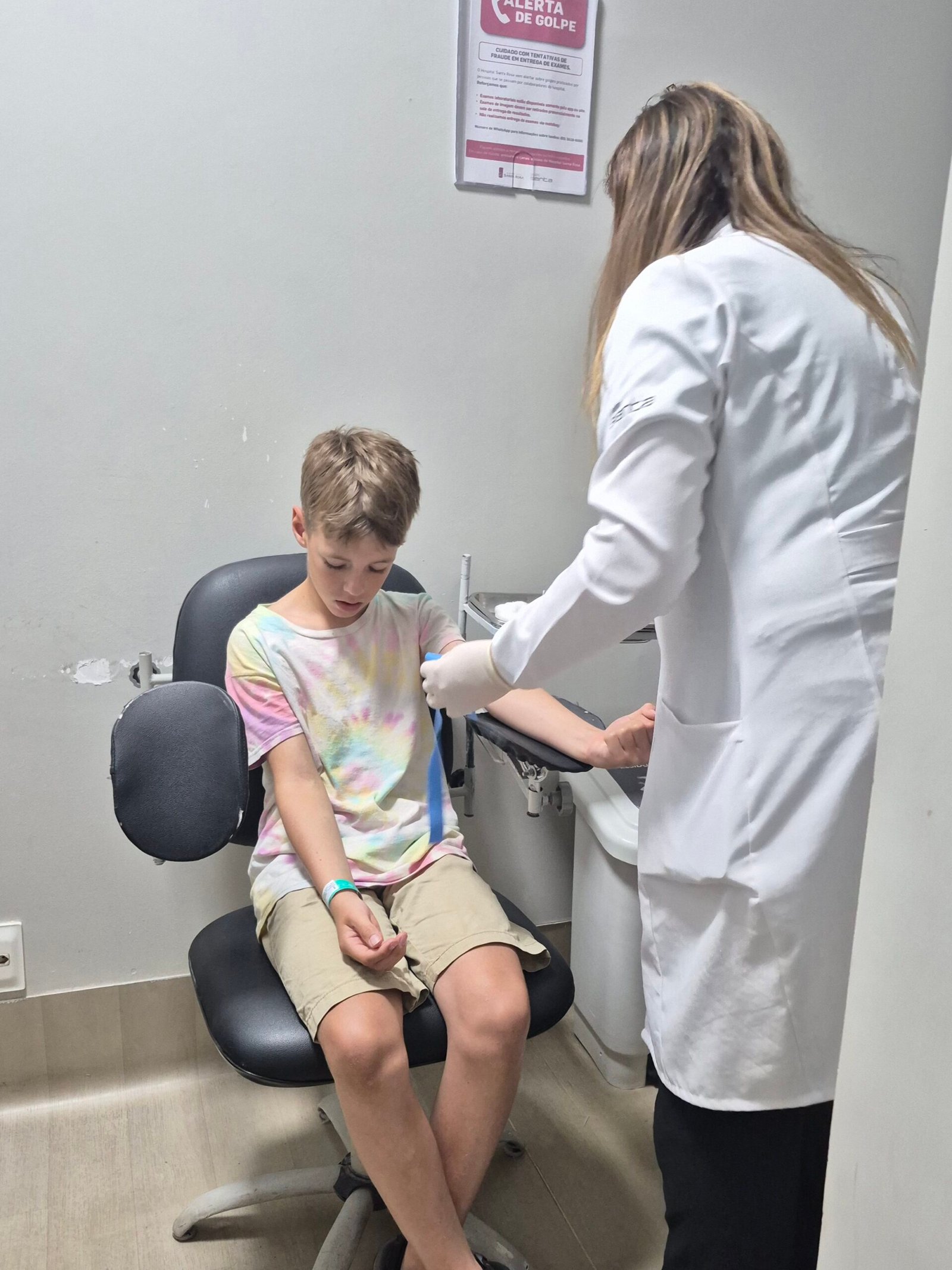
Soon Risto was called in to see the doctor, who took his temperature a second time (still no fever), prescribed a few different medications for home treatment, and also ordered some lab tests for Risto. Once again, we returned to the waiting room to wait for Risto’s name to appear on the board again. At this point, Risto’s fever began to rise, and by the time we got to the lab tests, his fever was so high that we were referred to another pediatrician for a new consultation. So at this point, his temperature was taken for the third time. The other pediatrician, who even knew a few words of English, took his temperature for the fourth time and prescribed Risto fever-reducing medication administered directly into a vein so that the blood tests could be taken. So we made our way through the waiting room again to a new treatment room, where all the patients were sitting with IVs in their arms. Apparently, it’s common practice here to administer medication intravenously very readily, as none of the patients seemed to be seriously ill at all.
We waited half an hour for the medication to be administered intravenously, after which Risto’s temperature was taken for the fifth time. His fever was still too high, so a cold compress was placed on his forehead, and cotton balls moistened with alcohol (!!) were placed under his armpits to bring down his fever. About twenty minutes later, his temperature was taken again—this time for the sixth time. The reading was still too high for lab tests, so Risto continued to lie there for another 20 minutes. They tried to take his temperature a seventh time, but the thermometer gave a completely wrong reading. They fetched a new thermometer, but its batteries were dead. It wasn’t until the ninth thermometer that they got readings from Risto that allowed them to draw the blood samples that had been ordered earlier. A couple of full vials later, we made it back to the hotel with the medications in our bag, waiting to hear the blood test results after eight in the evening.
It had only been an hour since we returned to the hotel when Risto’s fever began to rise rapidly again. We gave him one of the fever-reducing medications prescribed by the doctor, and Jaana went back to the health center to ask if a malaria test had been included in the blood tests, but she was told that the health center couldn’t perform that test. To our surprise, they told us we’d have to go to the local university hospital for the test. So Jaana and Risto took an Uber there, while Marko and Ronja stayed at the hotel.
At the hospital gates, Jaana and Risto were told that malaria tests weren’t performed at all on weekends. The security guard directed them to a pharmacy a short distance away, where they were told rapid tests were available. The friendly security guard ordered them a ride and even paid for it himself. (Well, the ride didn’t actually cost more than a euro.) At the pharmacy, Jaana and Risto were told that they were out of tests. They were advised to go to the health center, where we had already been that morning. At this point, Jaana told the pharmacy staff that the health center apparently had no malaria tests available, so they were recommended to go to a maternity clinic as a second option. At this point, however, Jaana and Risto decided to return to the hotel, check the results of the blood tests taken at the health center, and then figure out what to do next. Over the weekend, it seems that you can’t get a malaria test done anywhere, at least not in the public healthcare system. It could be that Risto is suffering from some other illness anyway. Even back home in Finland, Risto usually starts out with a very high fever, which then goes down, and by the next day there’s no sign of the illness. Let’s hope that’s the case this time, too.
At eight o’clock in the evening, Jaana returned to the health center to hear the results. The receptionist first said that the results would only be disclosed to the person concerned. To that, Jaana replied that the person in question was sleeping at a hotel with a high fever, and she had no intention of dragging the actual patient all the way here for no good reason. As the mother, Jaana said she was fully entitled to hear the results. At that point, the receptionist printed out a single A4-sized sheet of paper for Jaana and wished her a good evening. Jaana then stated that she wouldn’t leave until she’d spoken with the doctor, since that’s what we’d been promised earlier that morning when we visited the clinic. The receptionist re-entered Risto’s information into the system and said that Jaana could go knock on the doctor’s door right away. The doctor wasn’t in his office, but after a short wait, he arrived. Another pediatrician joined them; in addition to understanding English, he also spoke the language quite fluently. Both pediatricians agreed that, based on the test results, Risto simply had a more virulent virus that would likely clear up in a few days. In their opinion, there was nothing preventing us from leaving for the Pantanal. If the fever and feeling unwell persisted even after the trip, we would need to go to the hospital for malaria and dengue tests. By then it would be a weekday, and getting the tests done would be no problem.
The following night, Risto still had a fairly high fever and ran to the bathroom several times, but by morning the fever was gone. Maybe the fever reducer he took during the night helped—who knows. Risto still didn’t have an appetite for breakfast, so he stayed in the room to sleep while the rest of us went out to eat. As a souvenir from breakfast, Risto got a single roll, which he obediently nibbled on in the hotel room before we left for the Pantanal.
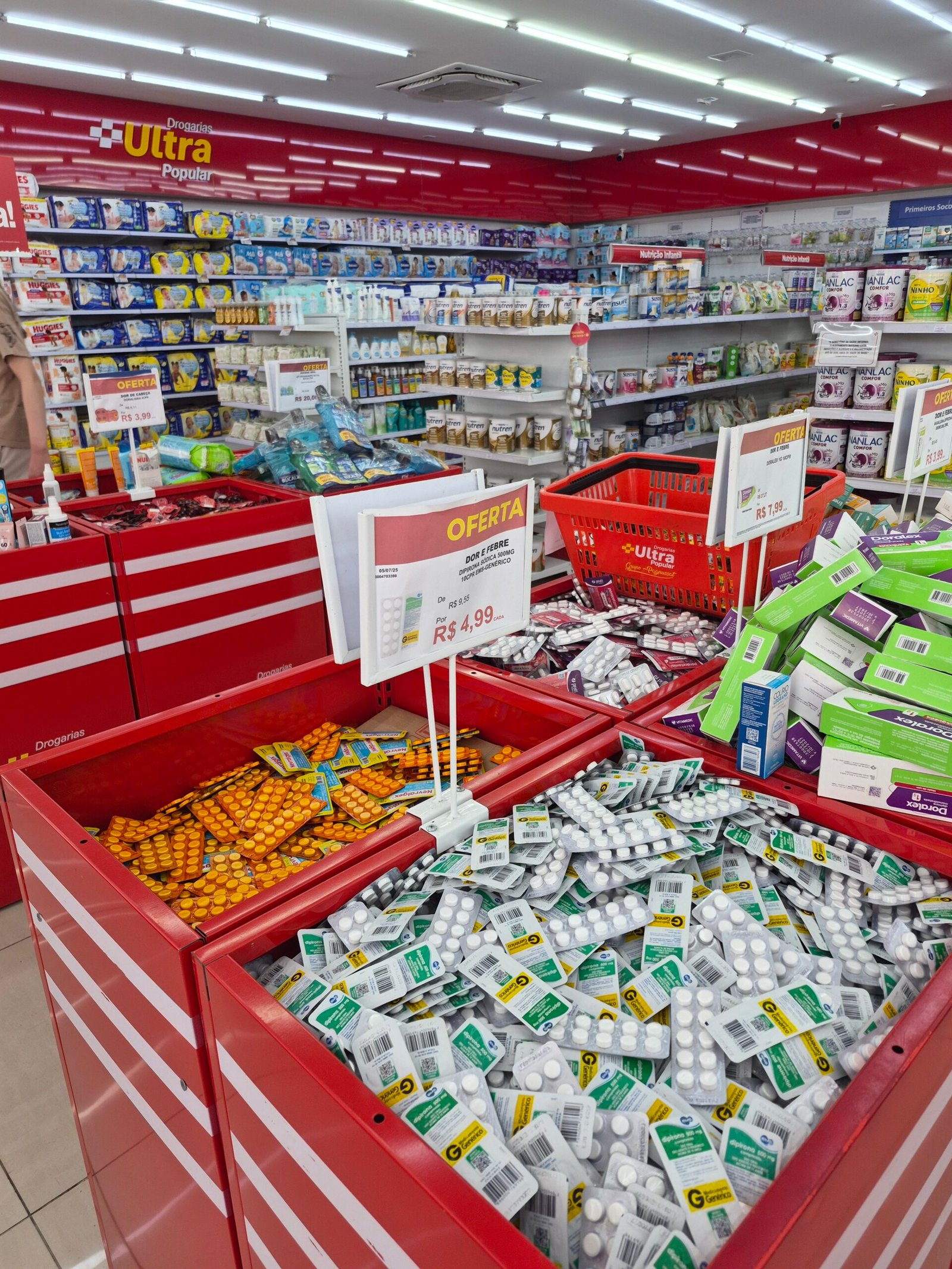
We asked our driver to stop first at a pharmacy so we could buy Risto some Paracetamol—a medication he was more familiar with—to replace the local fever reducer prescribed by the doctor, which isn’t available in Finland. We also bought a thermometer for the trip, as well as a powder to mix with water, which would give Risto some energy and electrolytes.
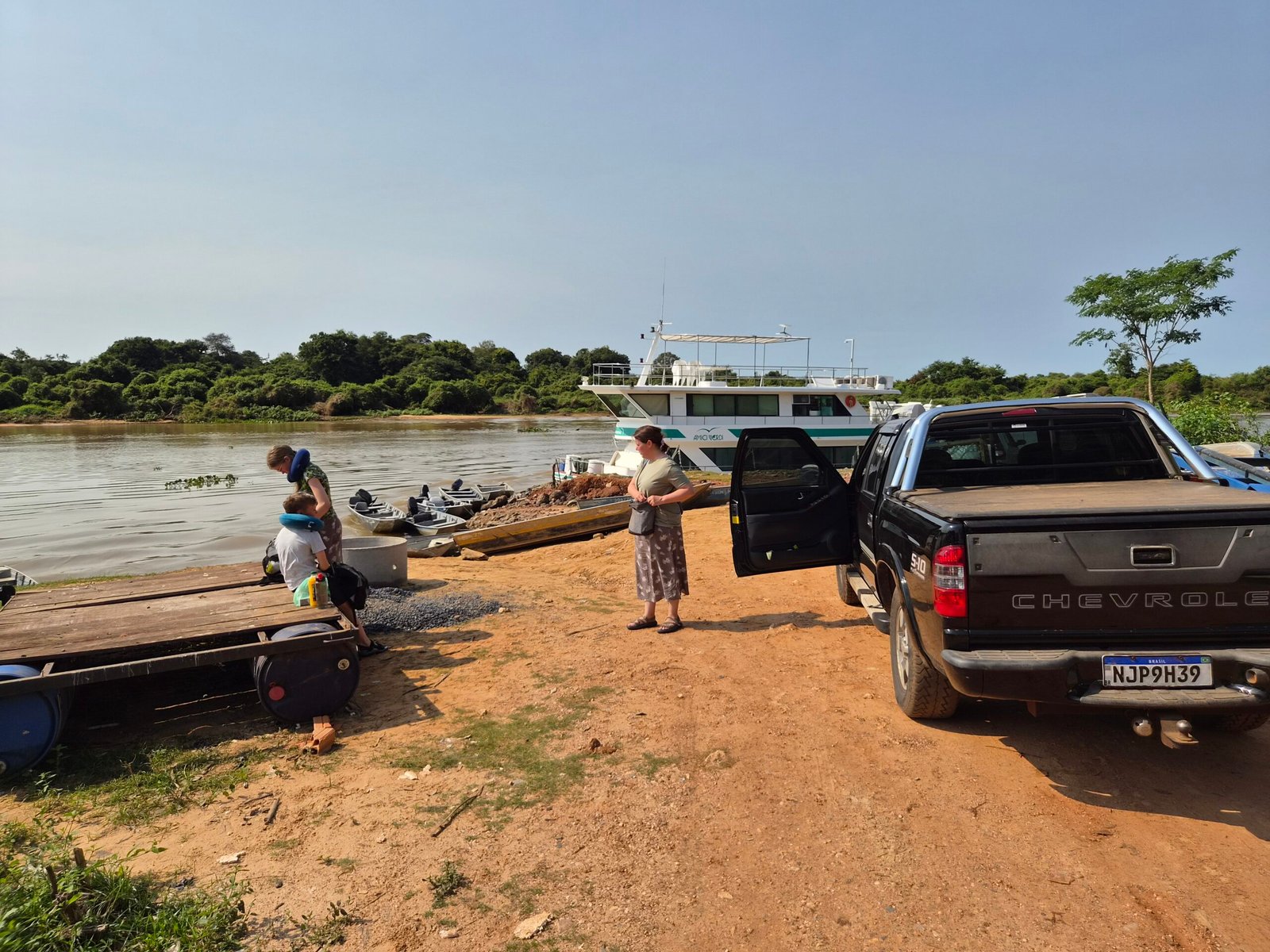
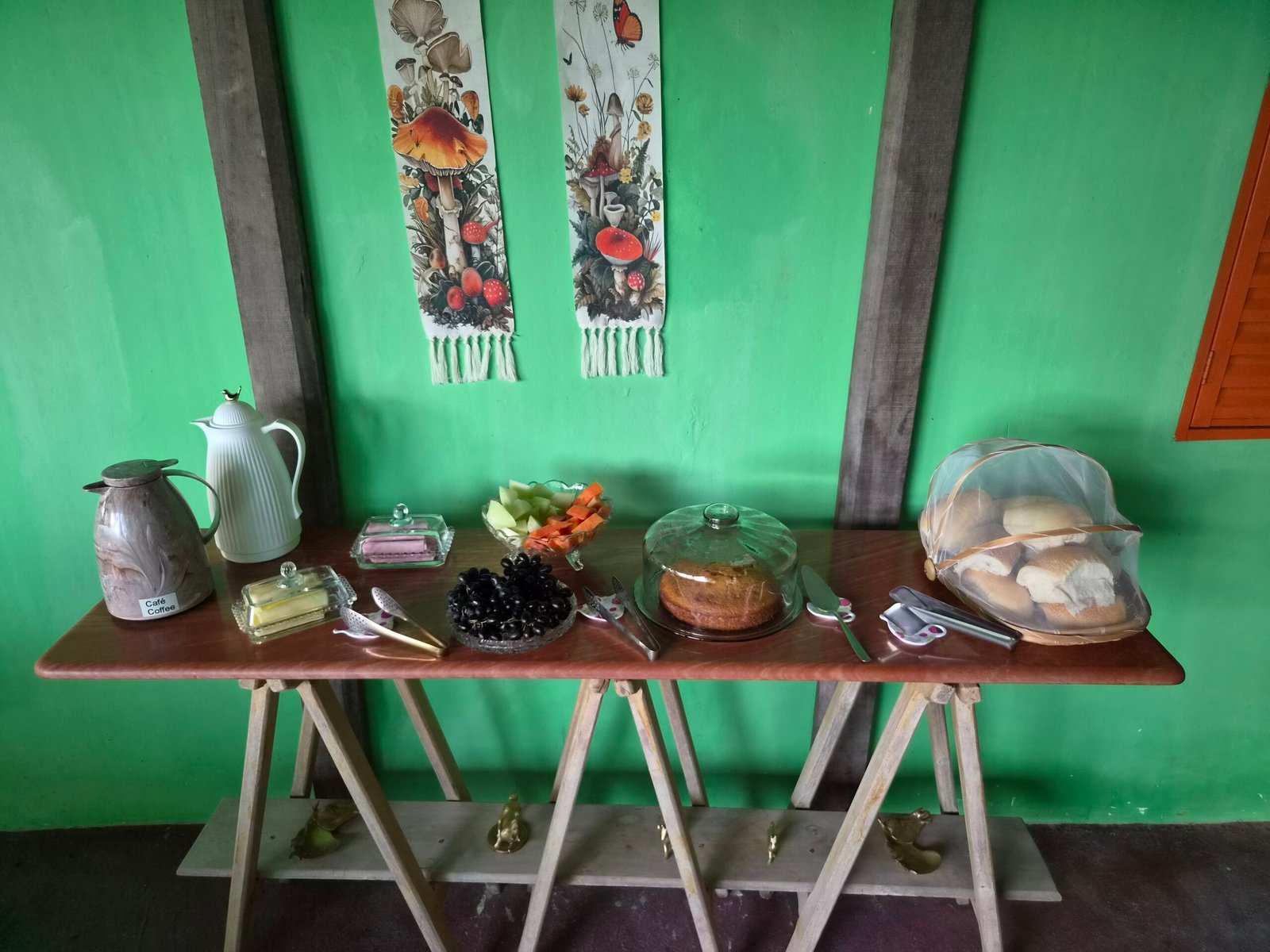
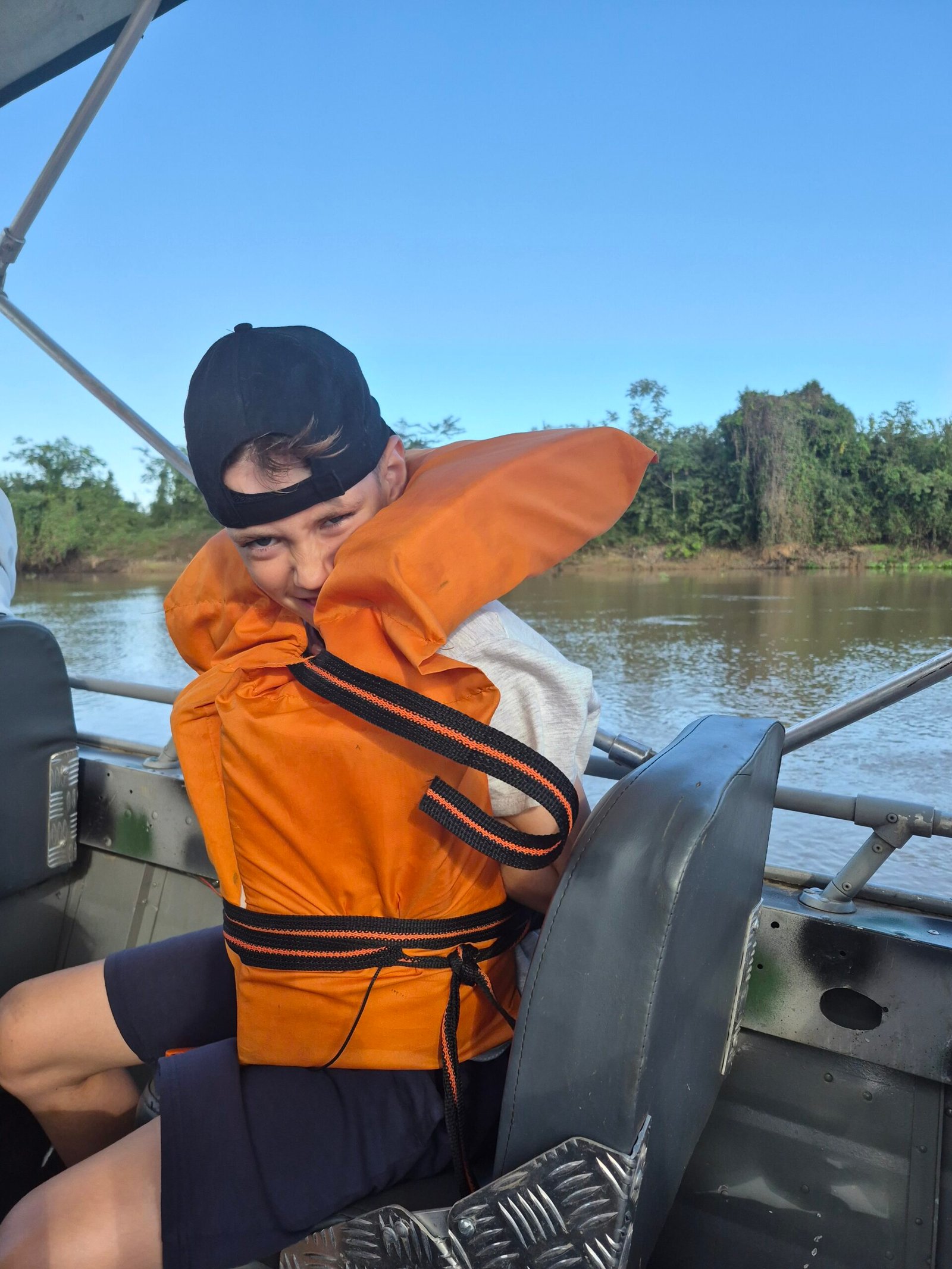
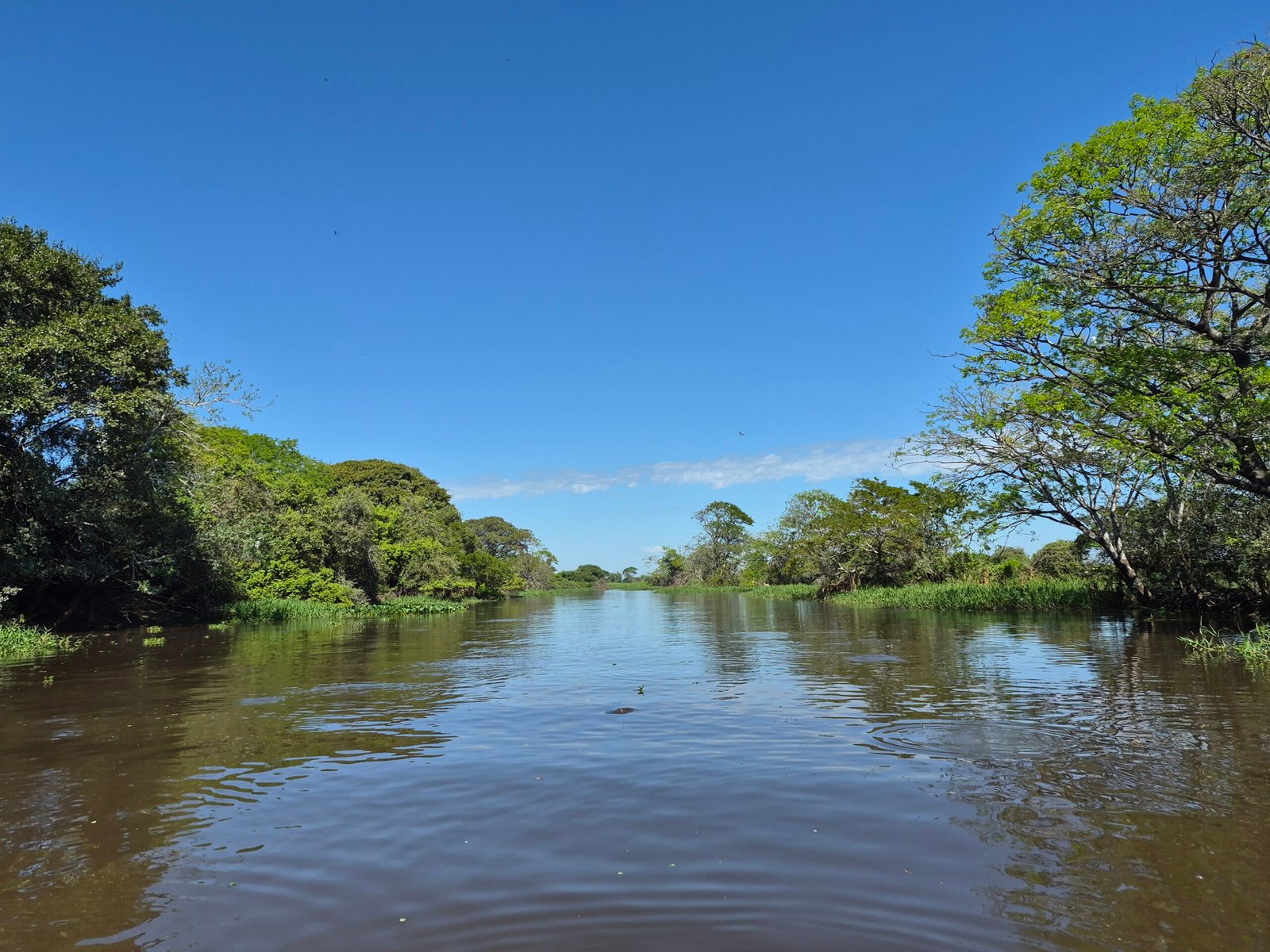
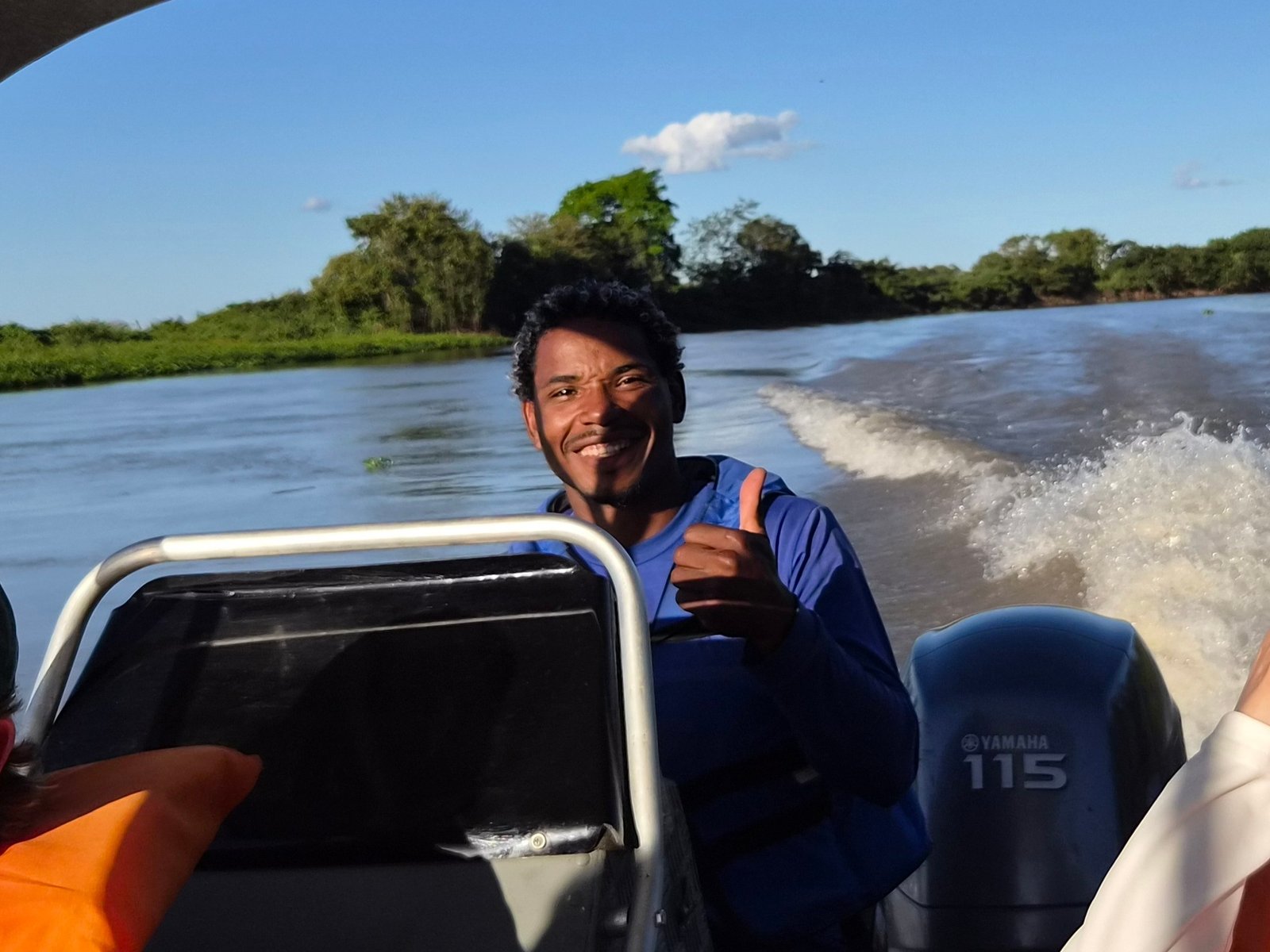
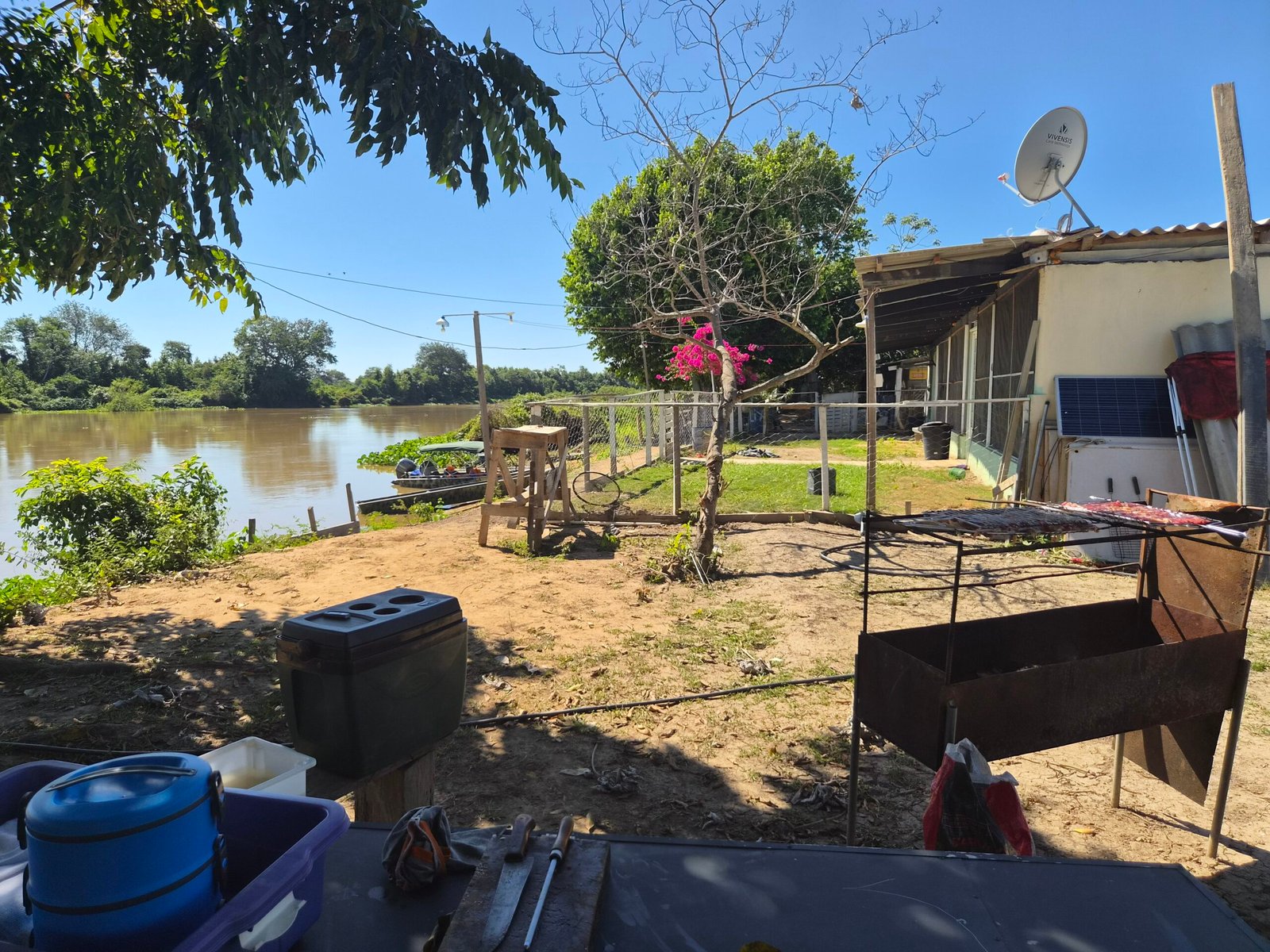
The journey to our lodgings in the Pantanal was surprisingly long. We first traveled for two hours by car, after which we hopped aboard a small motorboat and sped down the river for another two hours. We arrived around one o´clock in the afternoon, and almost immediately afterward we were served a delicious lunch.
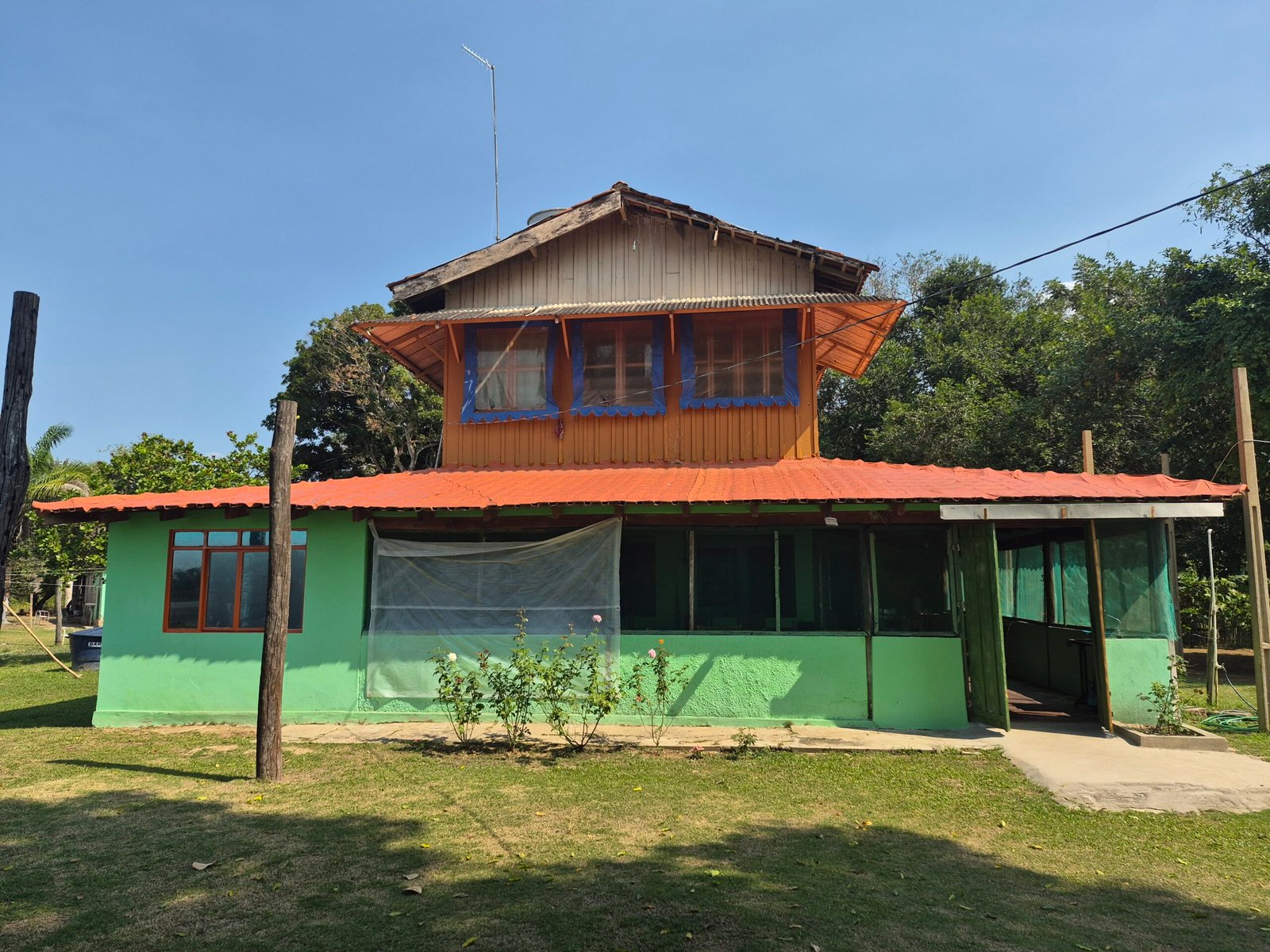
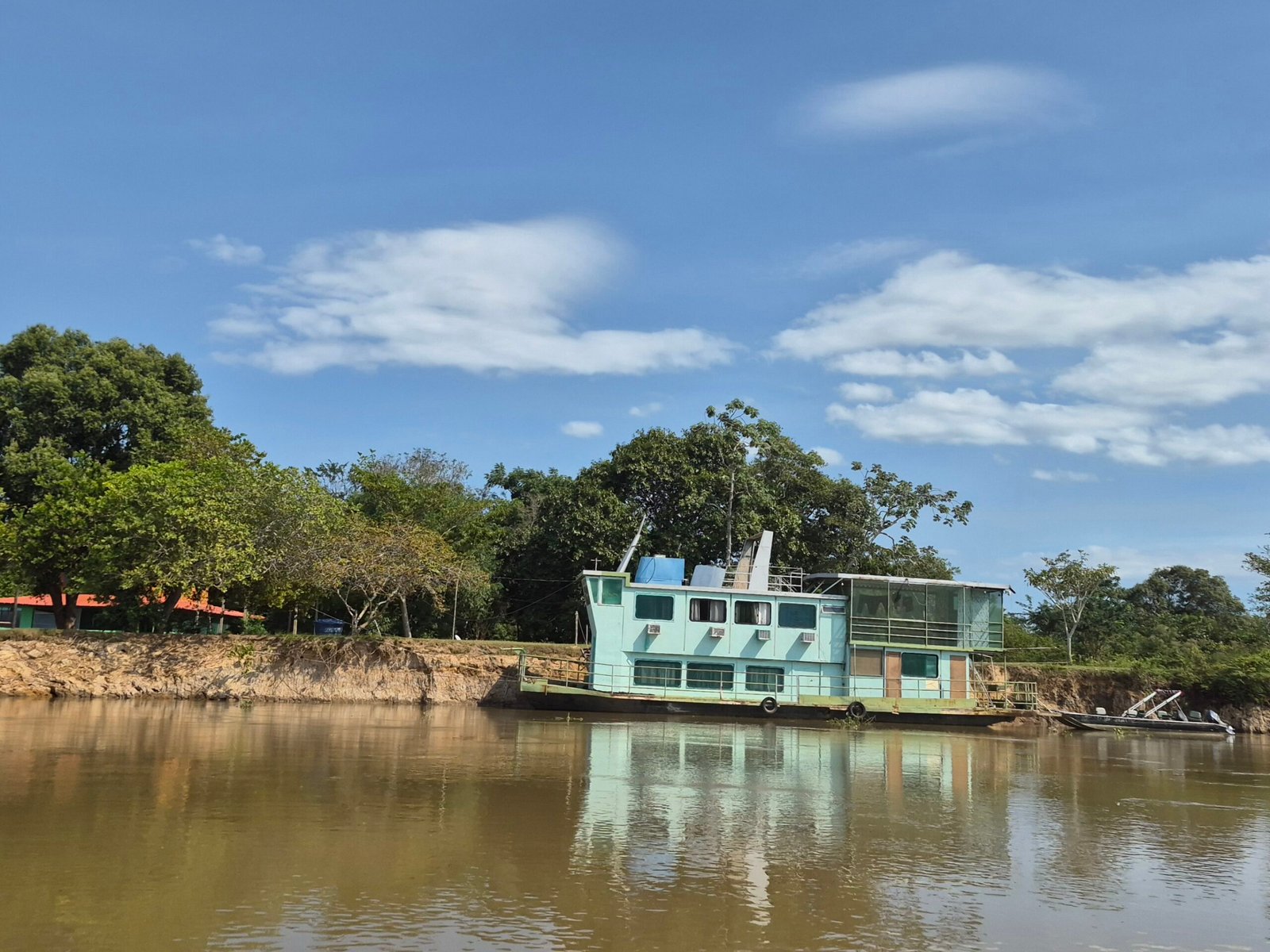
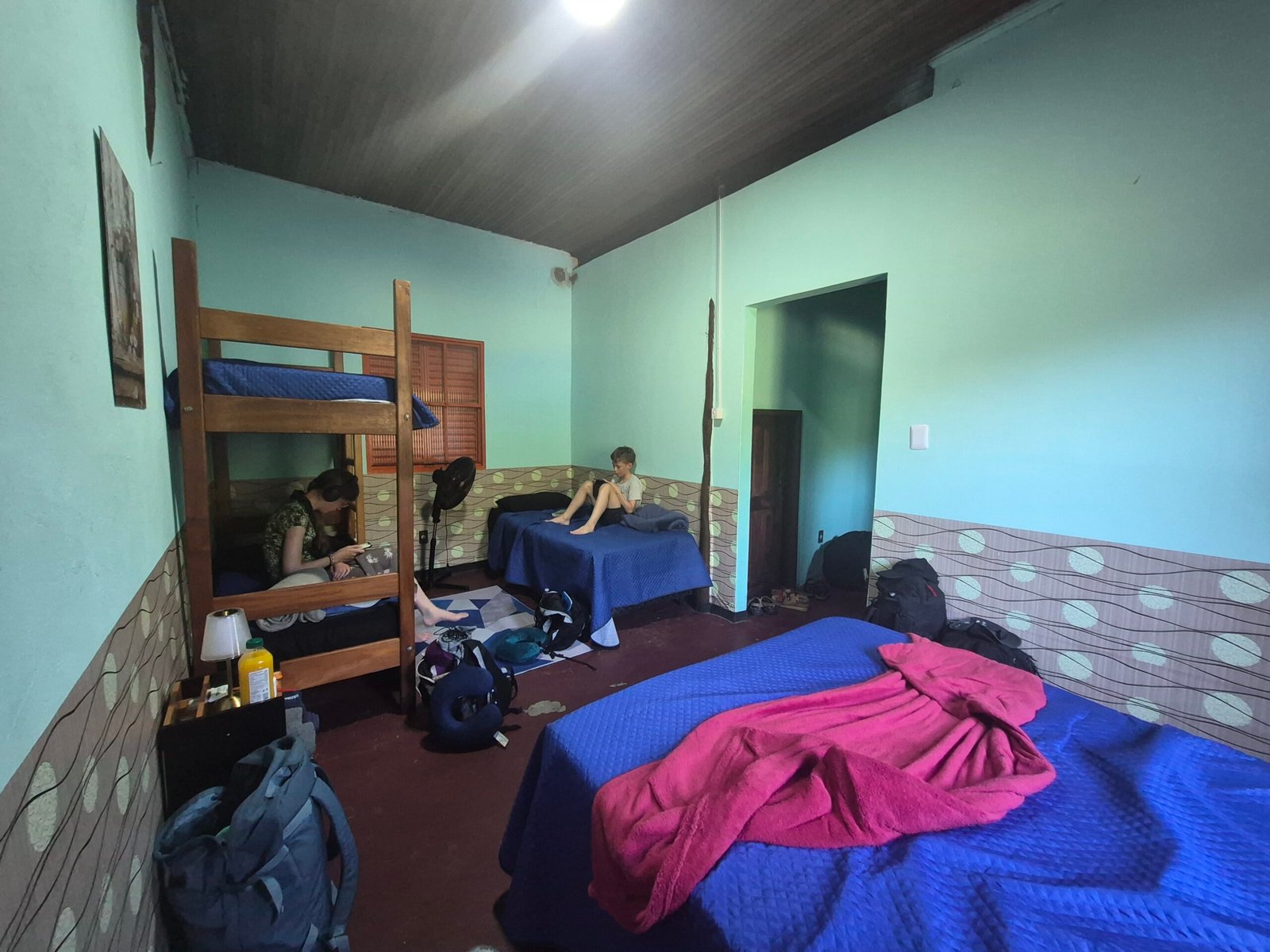
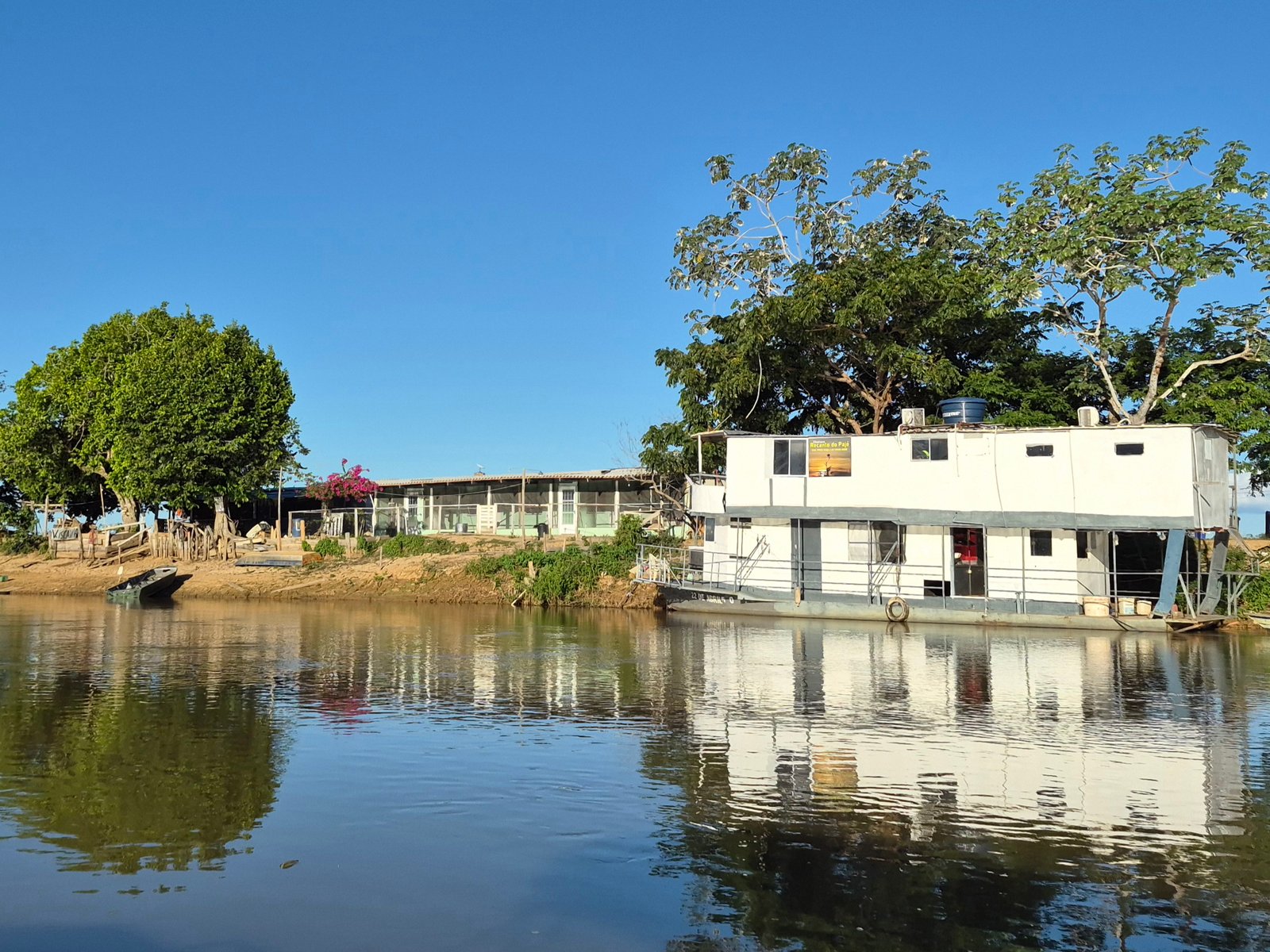
We stayed at a small guesthouse-style place by the river with a Polish couple. We had our own five-person room, and the Polish couple had a two-person room. Both rooms were located on the ground floor of the main building. The owner apparently had her own quarters on the upper floor of the building. Another option would have been to spend the night on a boat moored on the river, but we didn’t want to stay there because they only offered small double rooms.
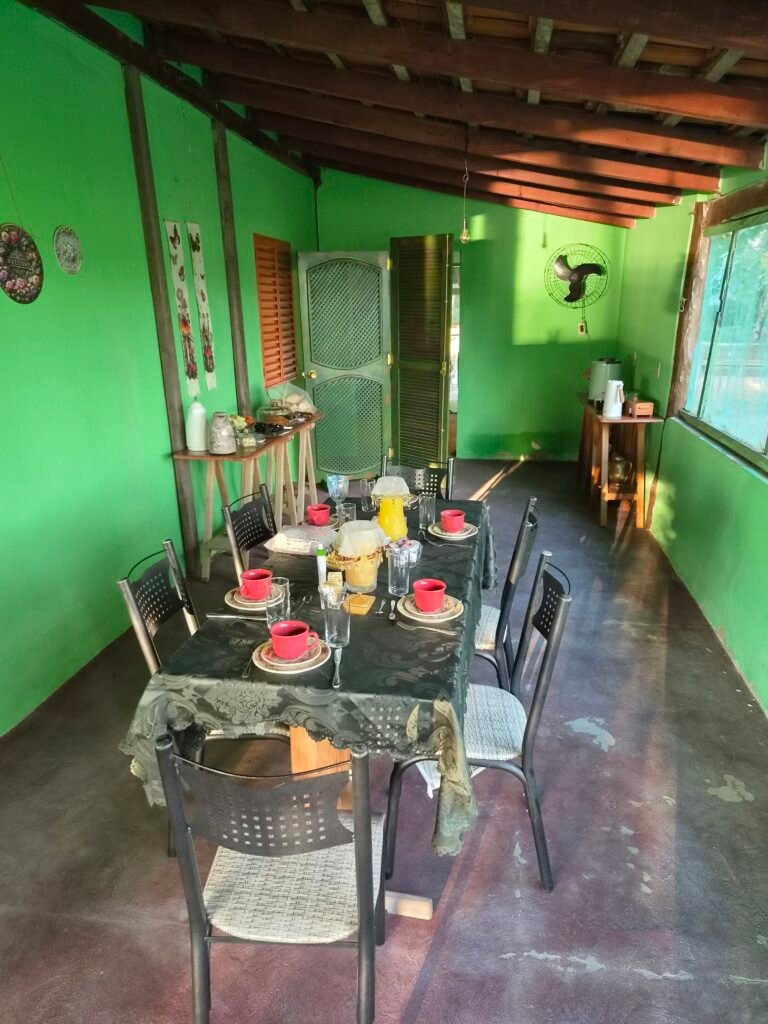
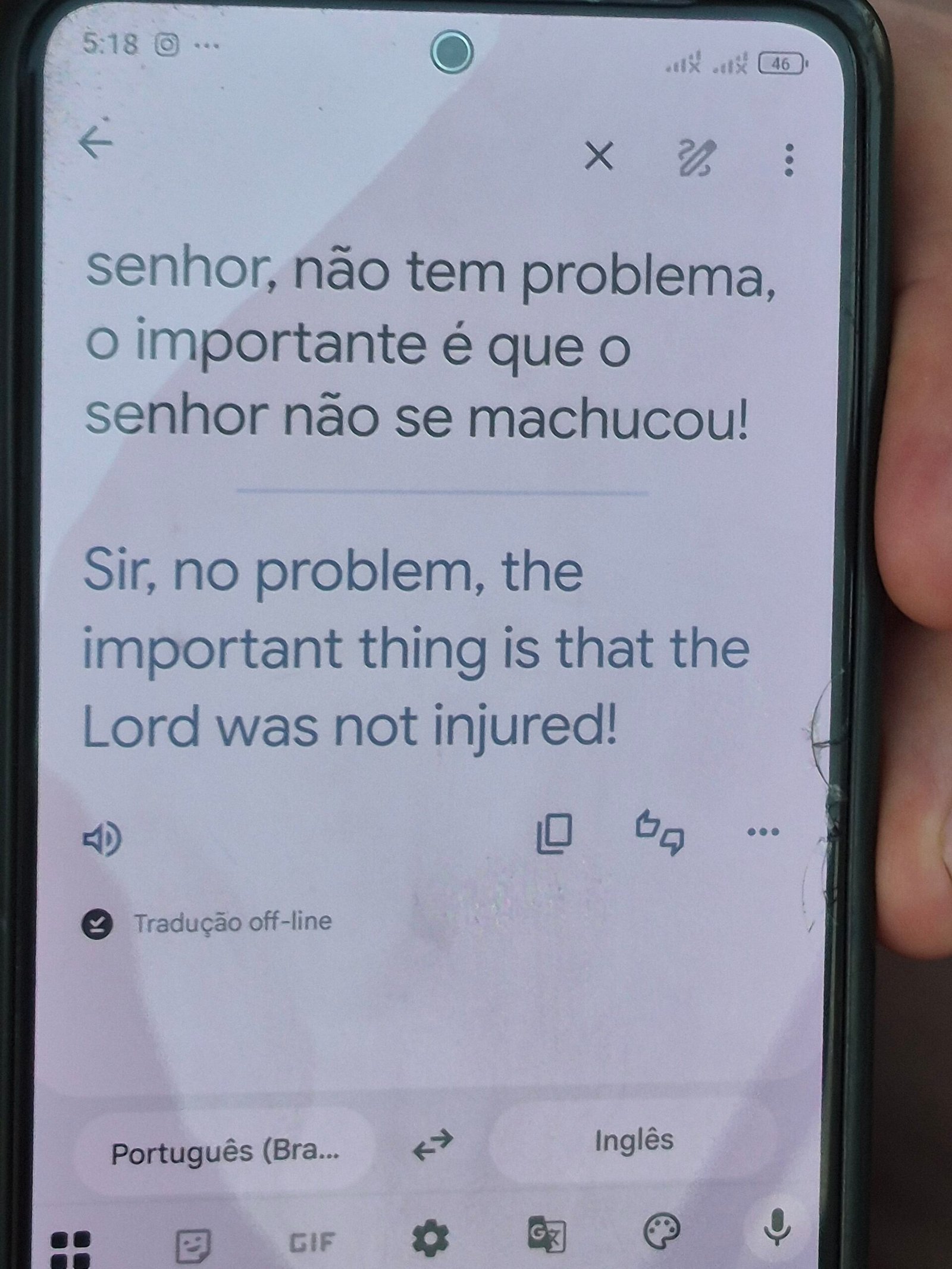
Even at lunch, Risto ate nothing but rice and a single slice of bread, but the main thing was that he ate something at least. There were definitely small signs of improvement in the air, as Risto was interested in the free drinks in the building’s common area fridge, as well as the candy we’d bought earlier at the store. After lunch, we took a short break in our cool, air-conditioned room. In addition to the cool room, we were all pleasantly surprised to find that the place had a working internet connection. This made communicating with the owners much easier, since they only spoke Portuguese and a little Spanish. So Google Translate came in handy here, too.
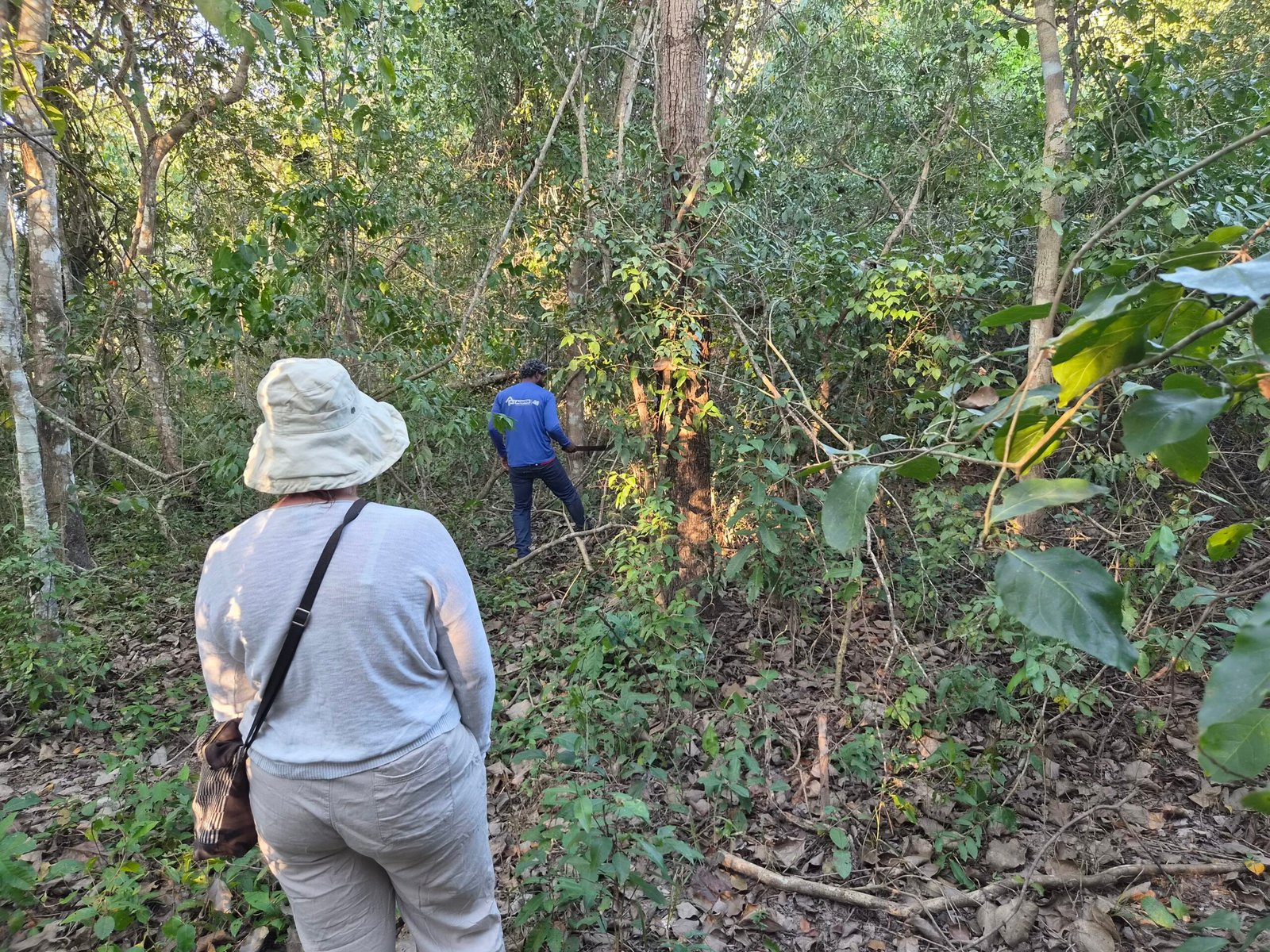
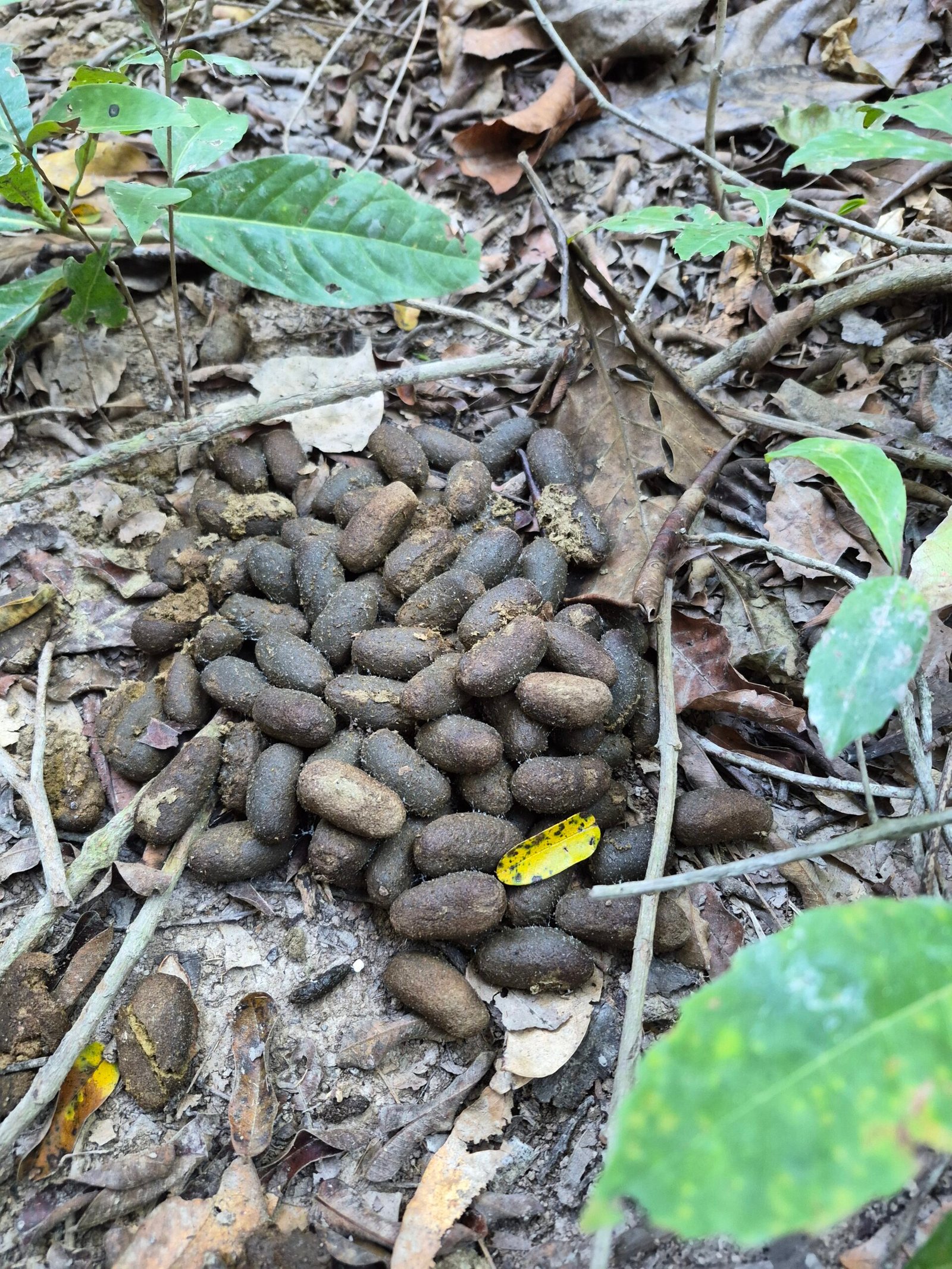
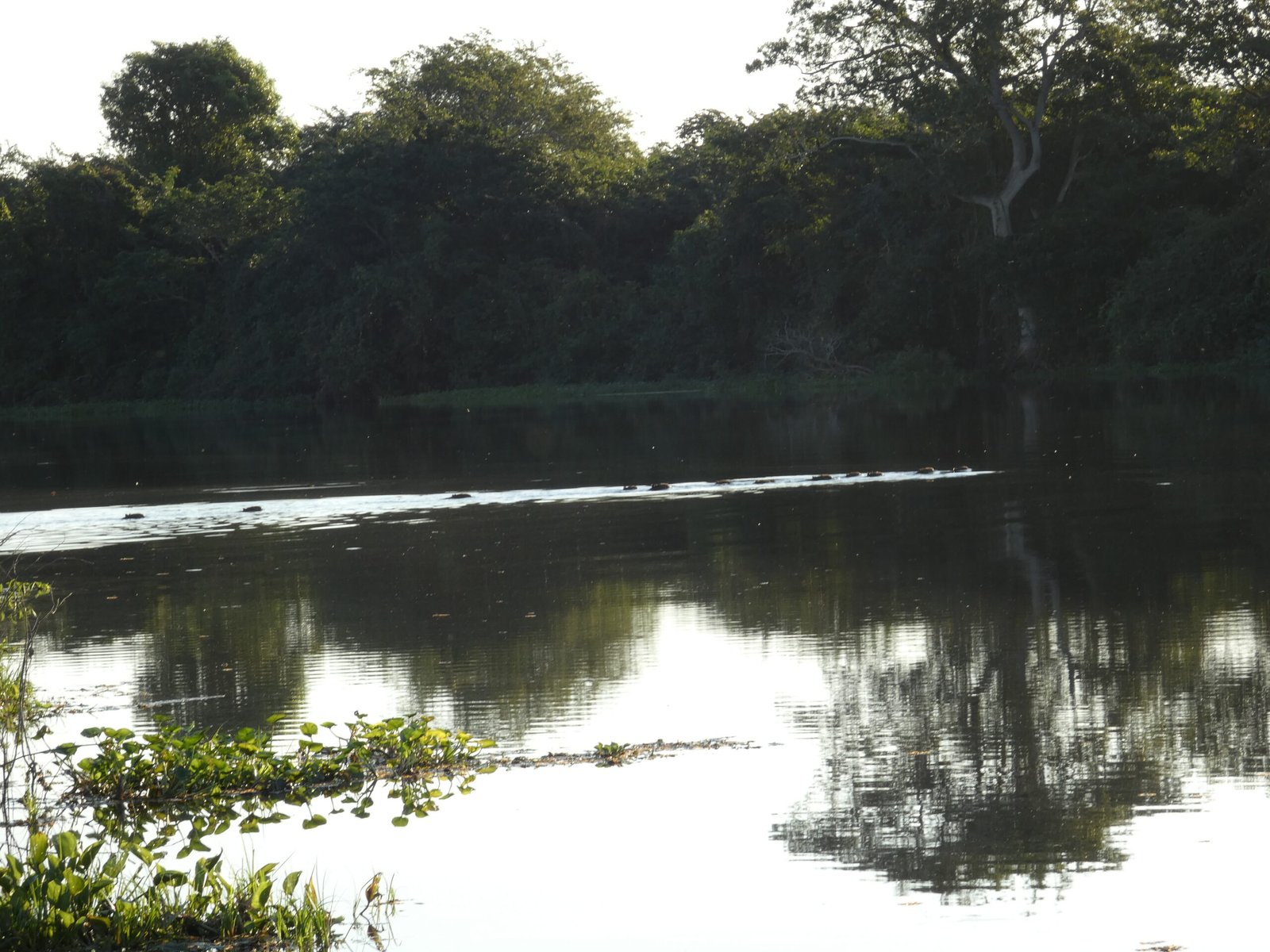
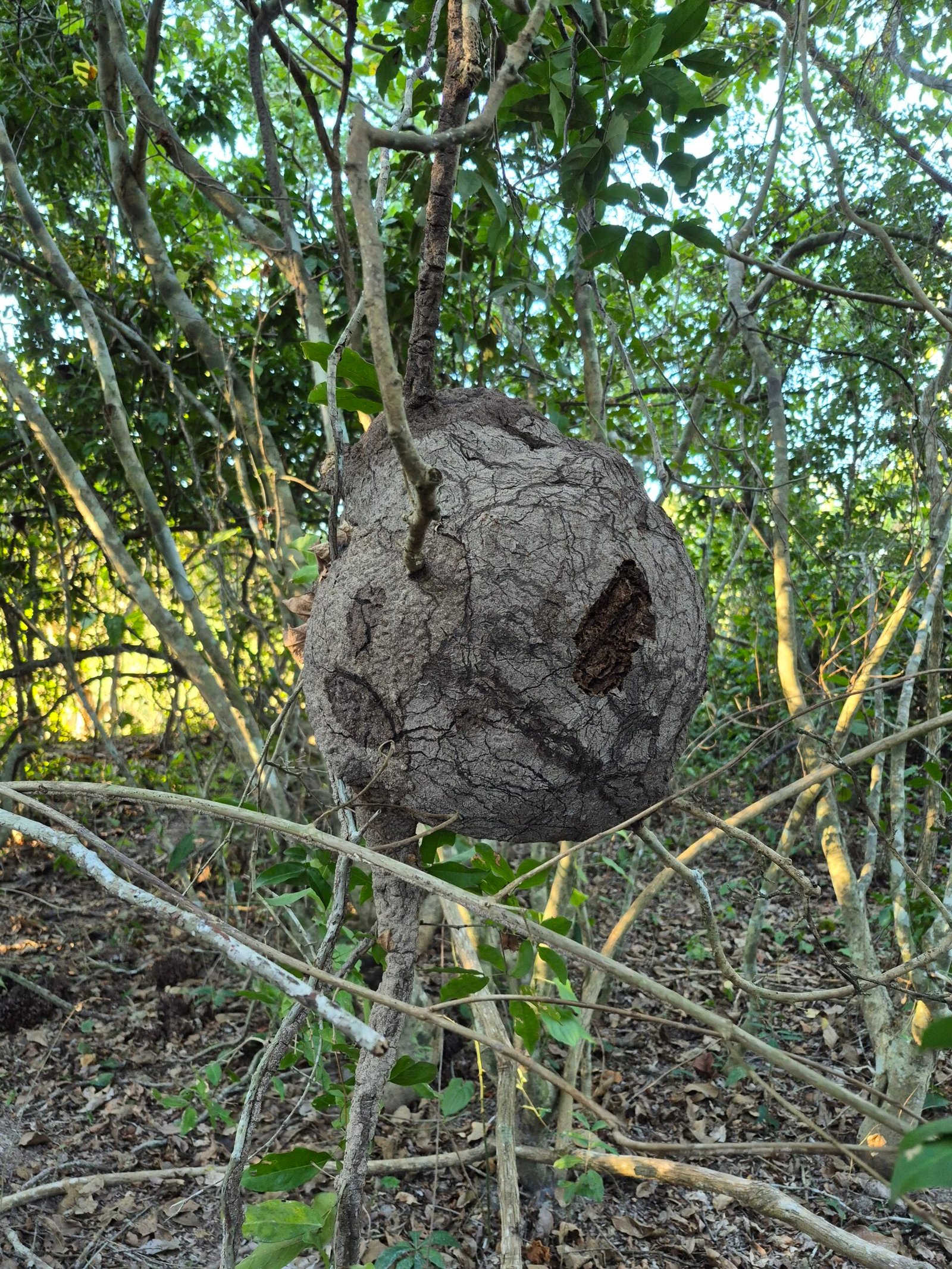
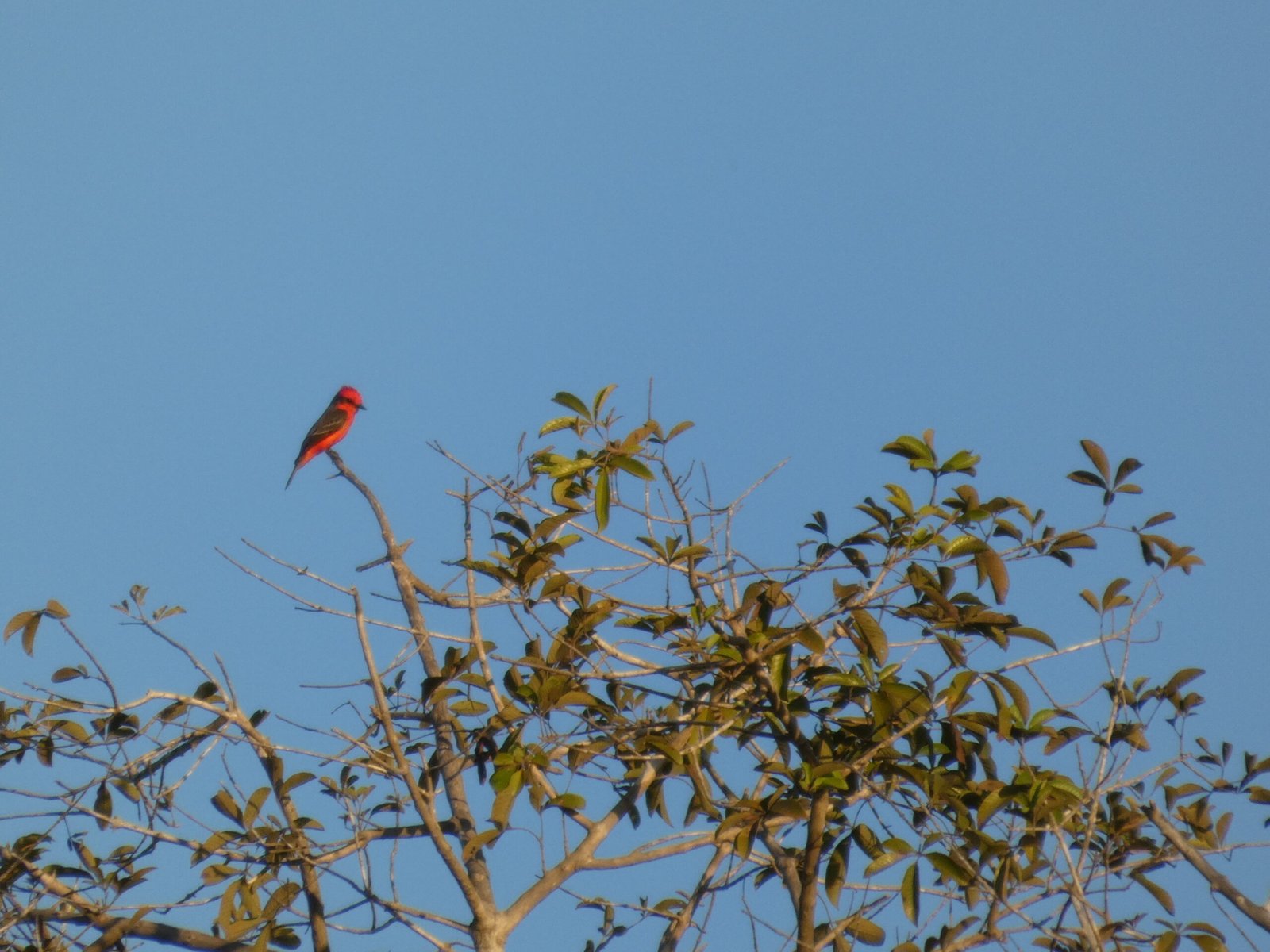
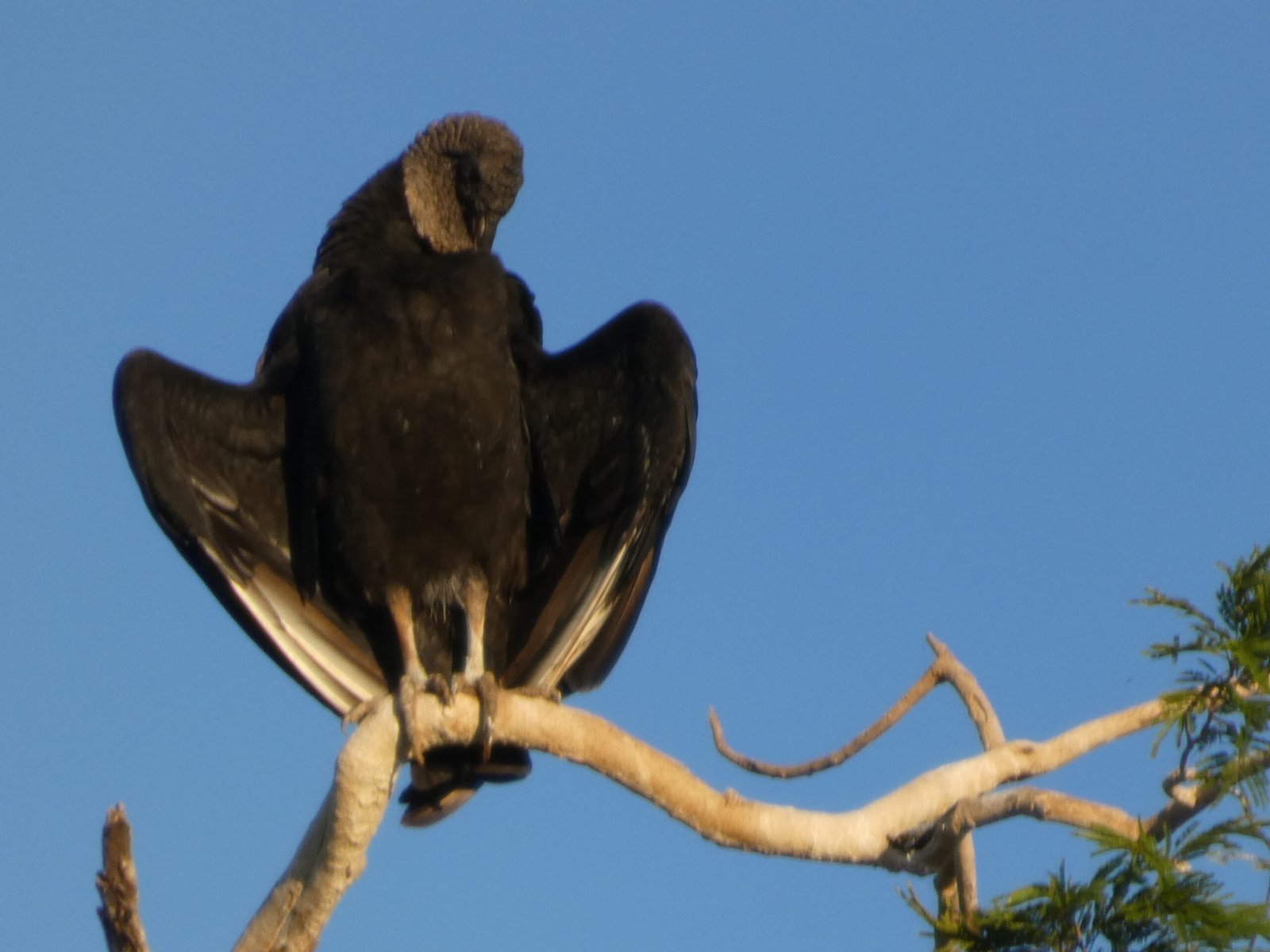
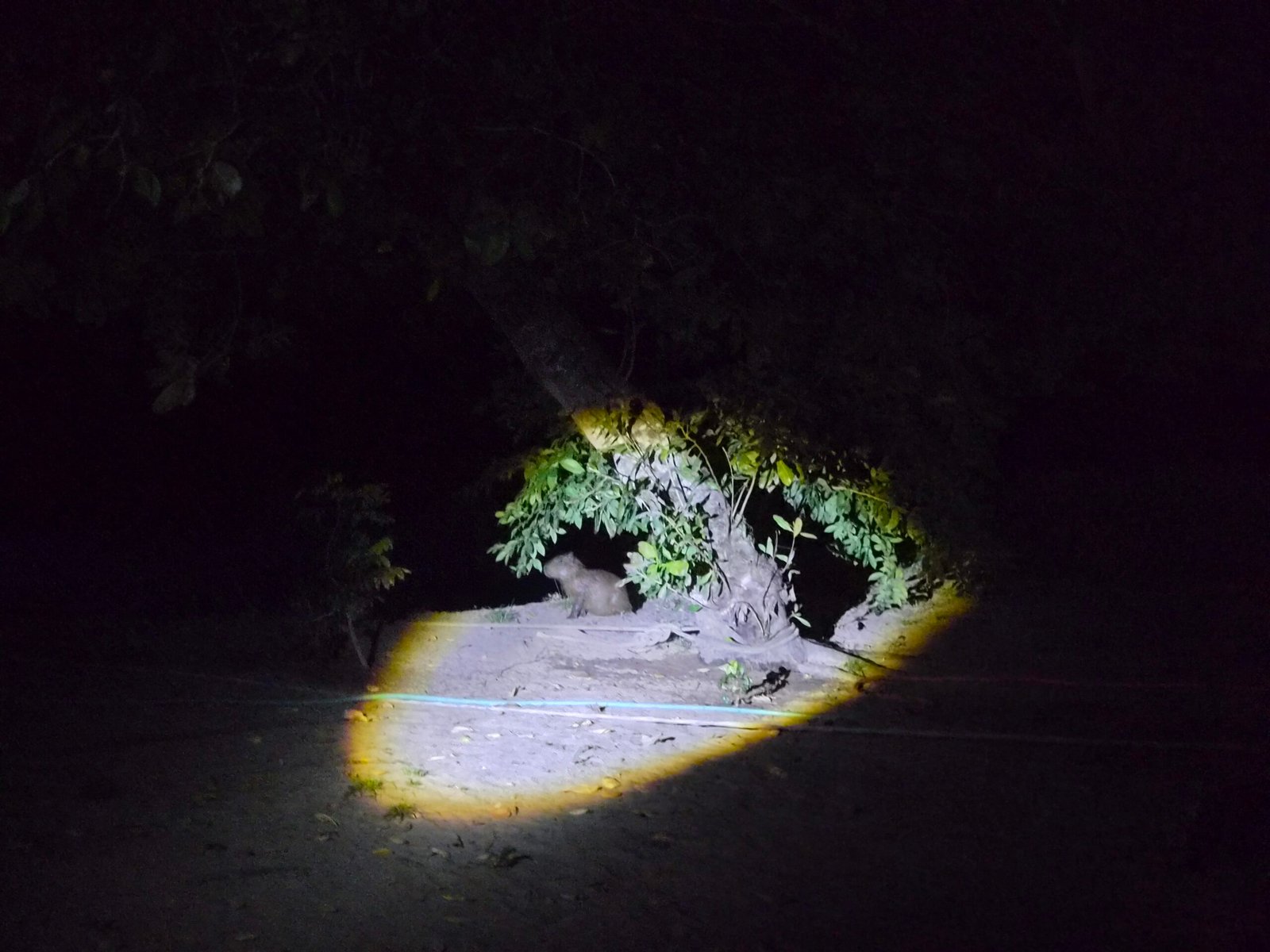
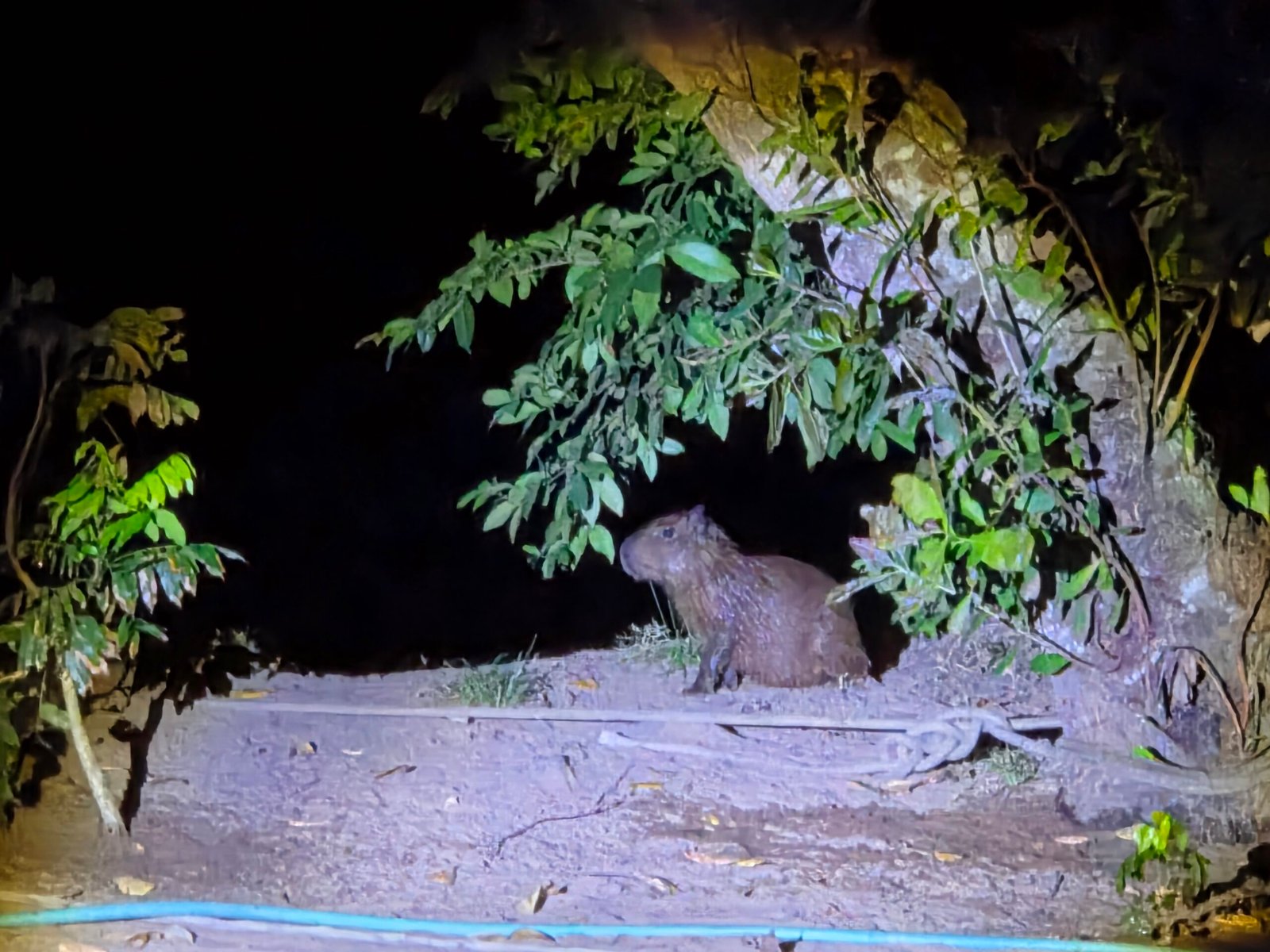
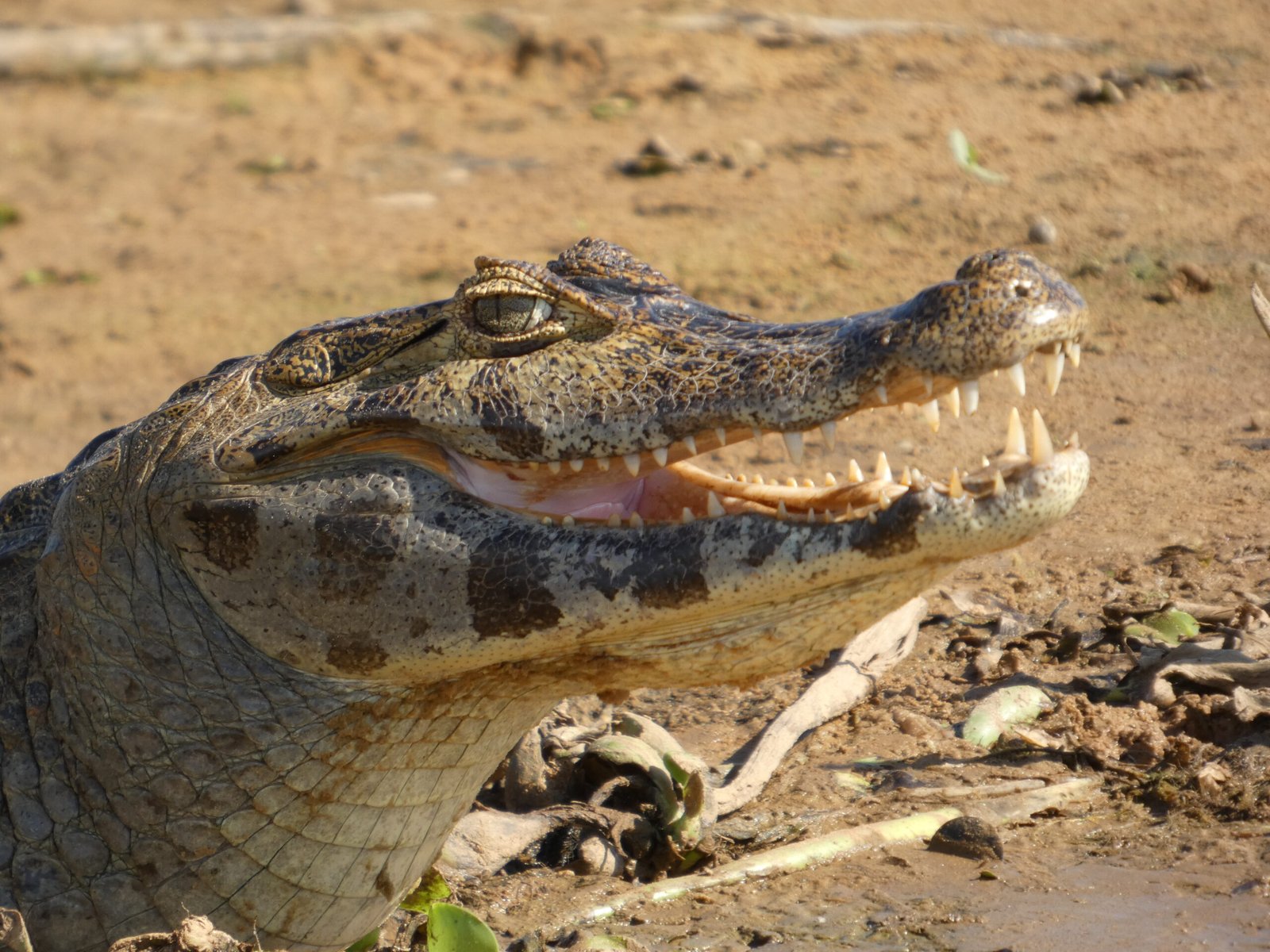
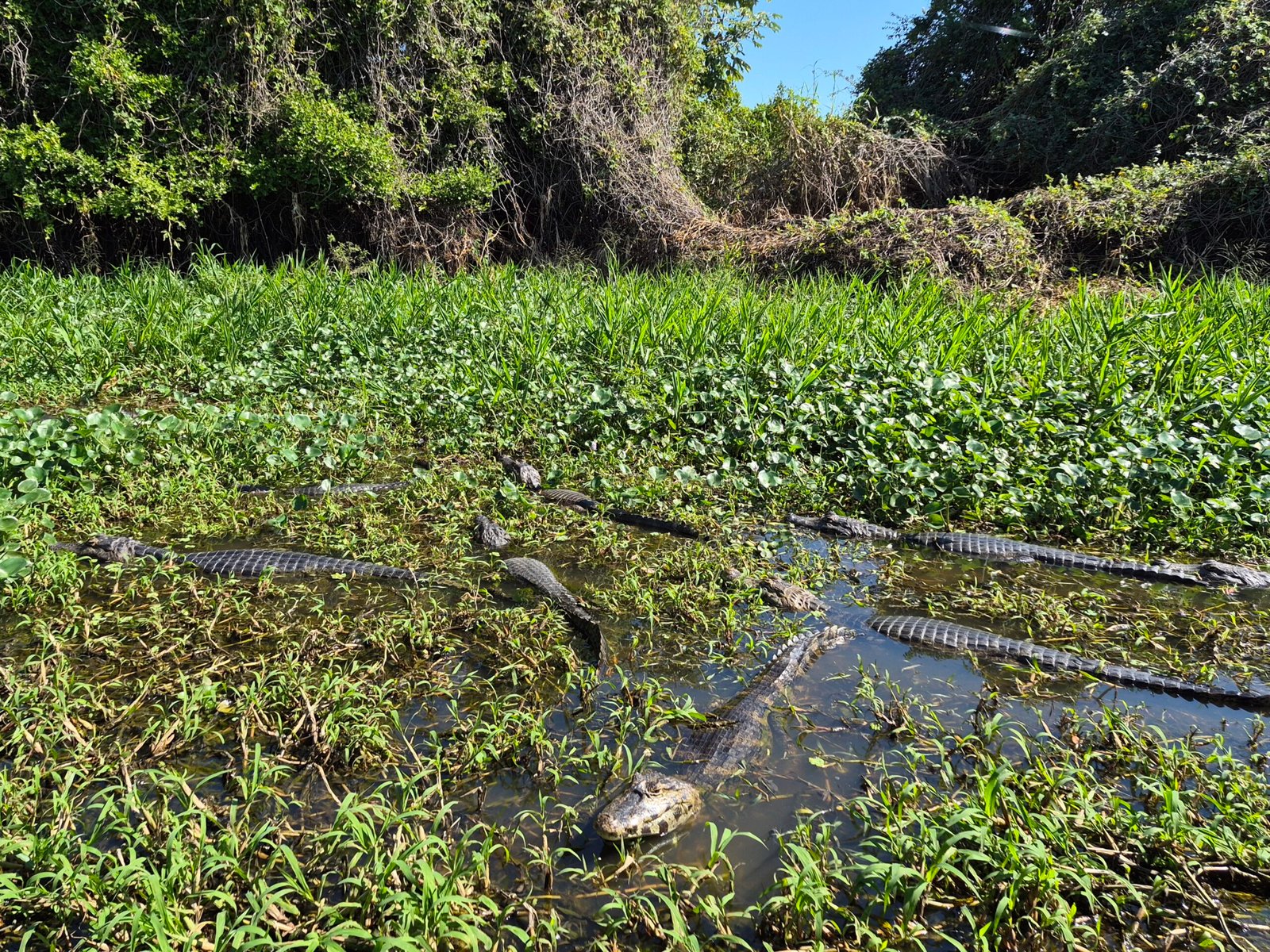
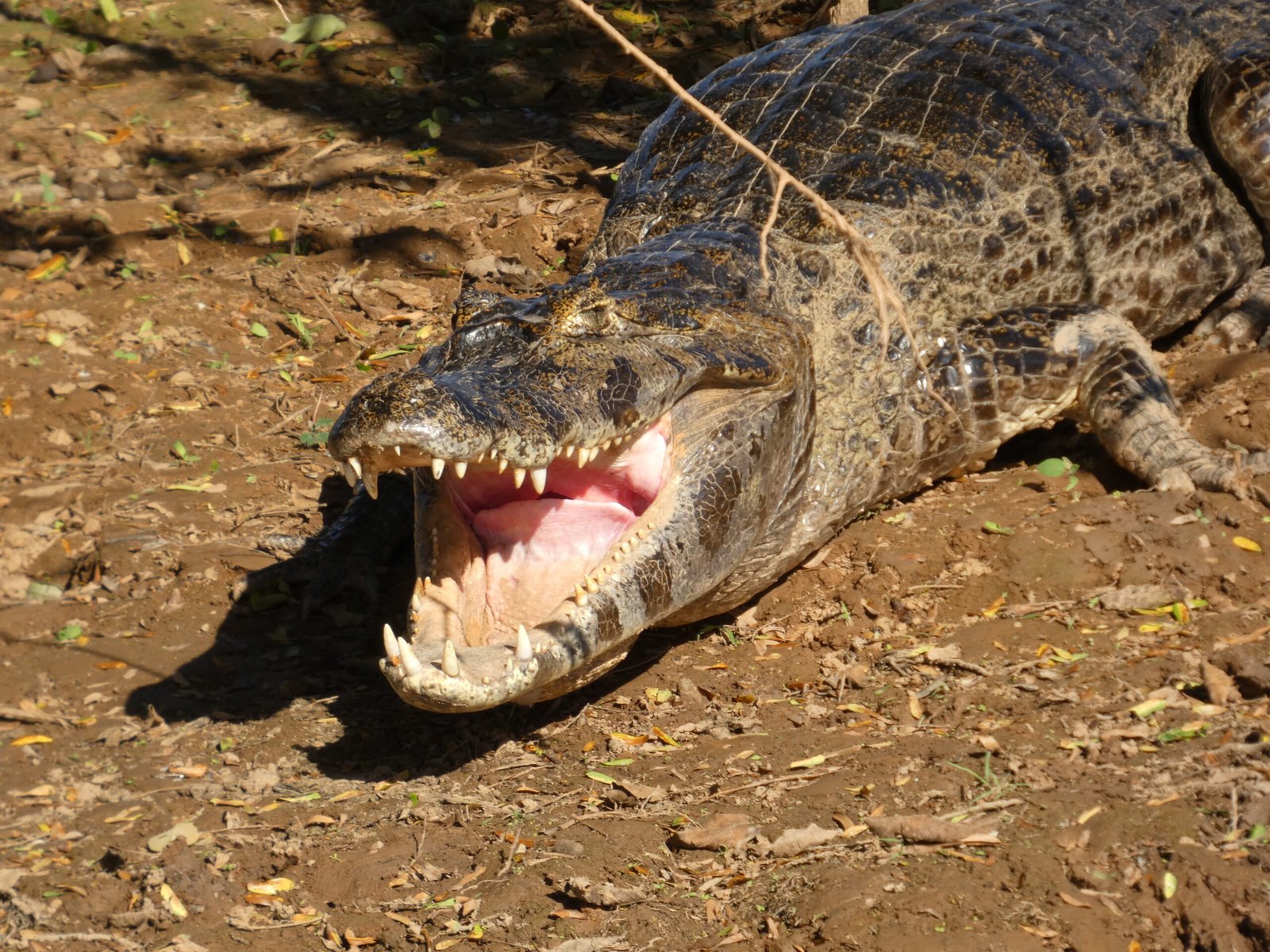
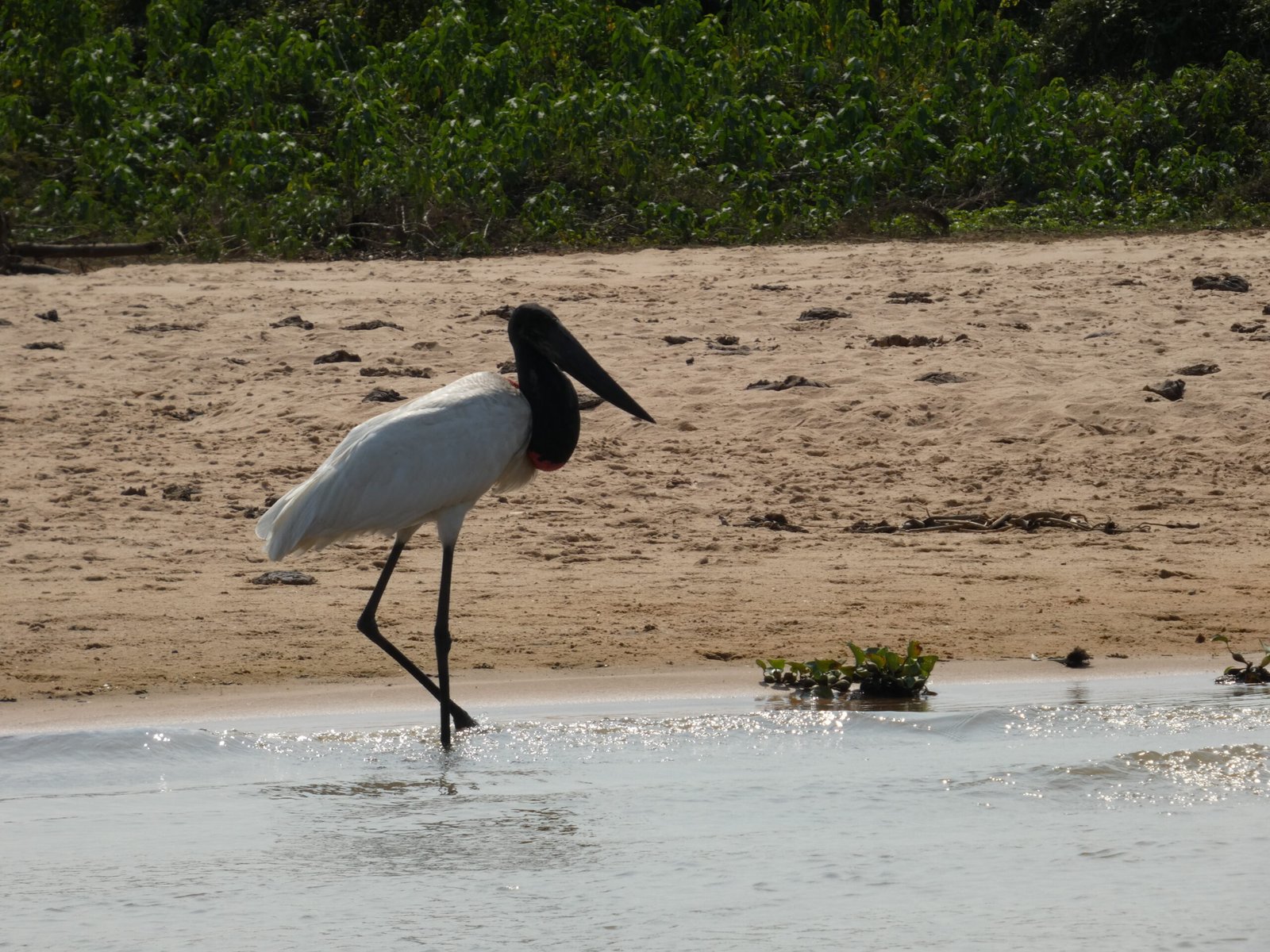
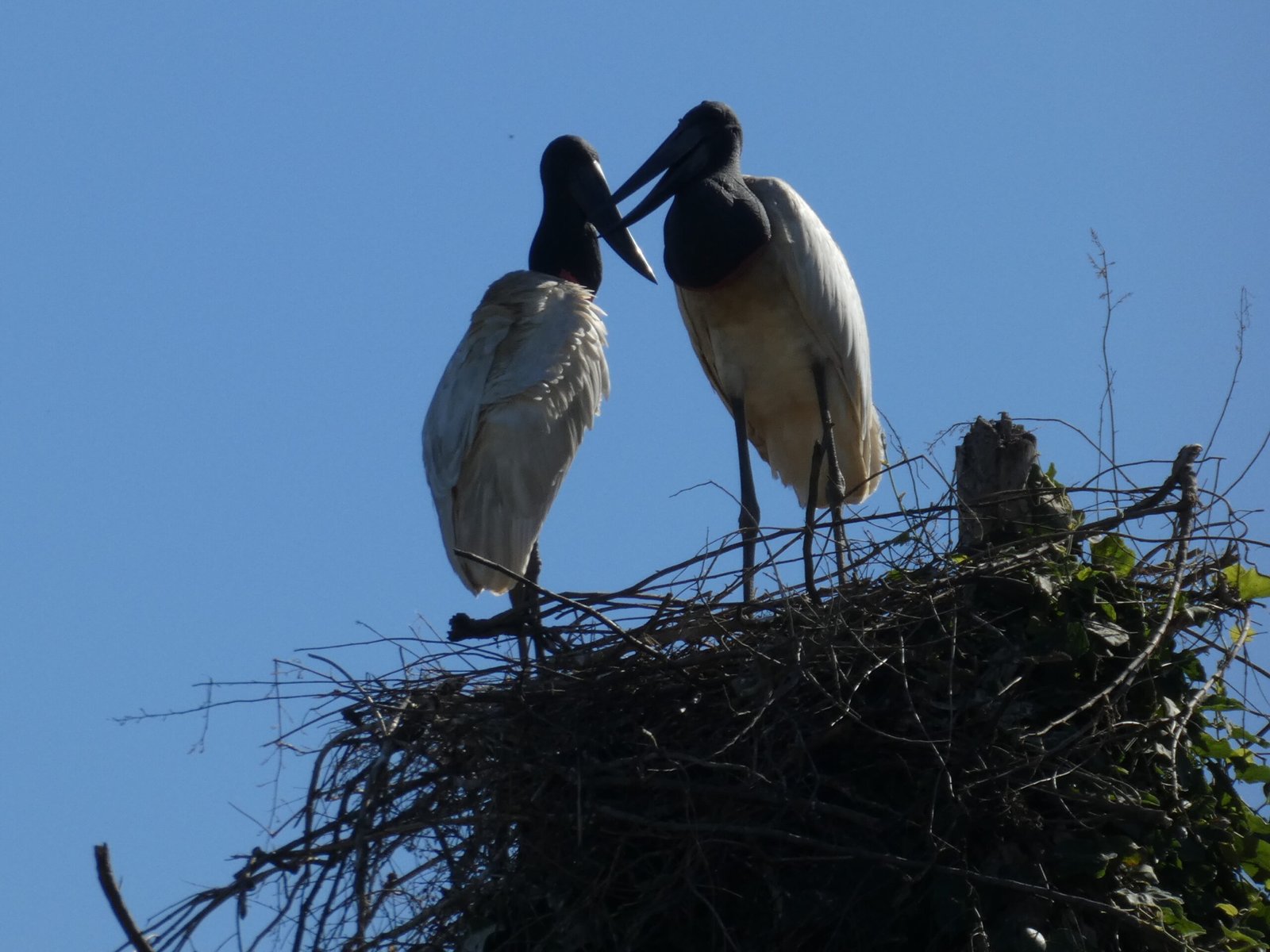
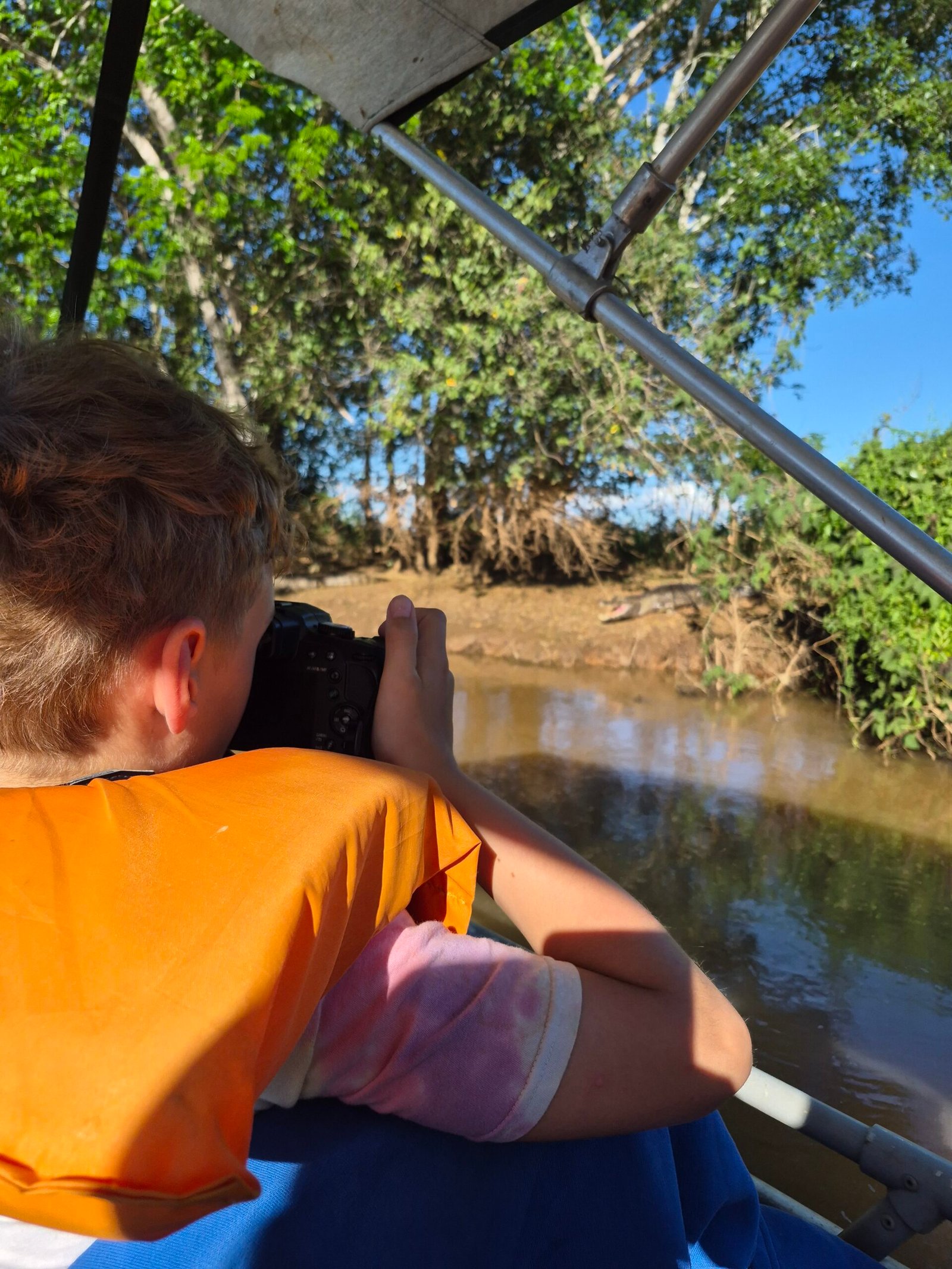
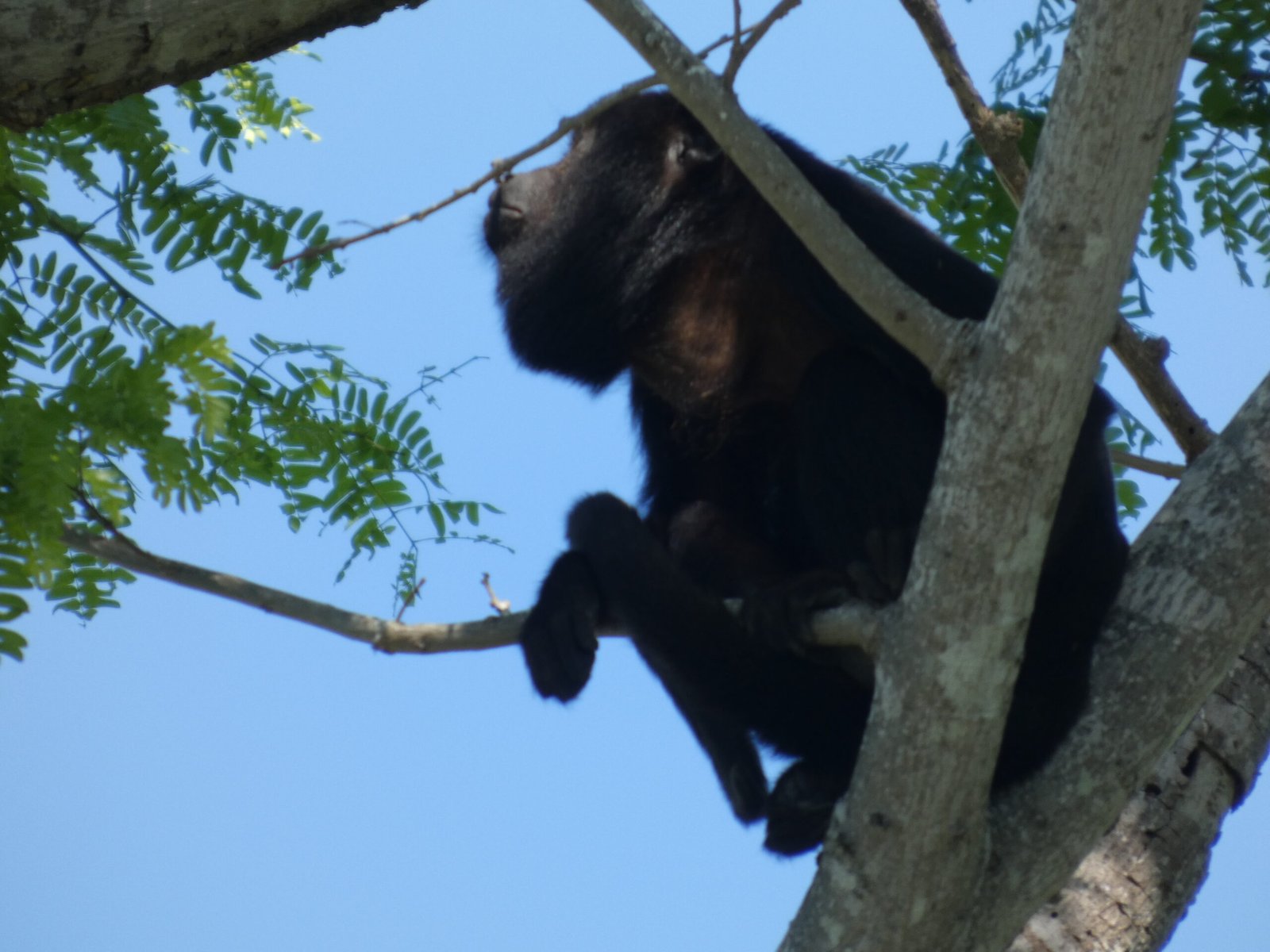
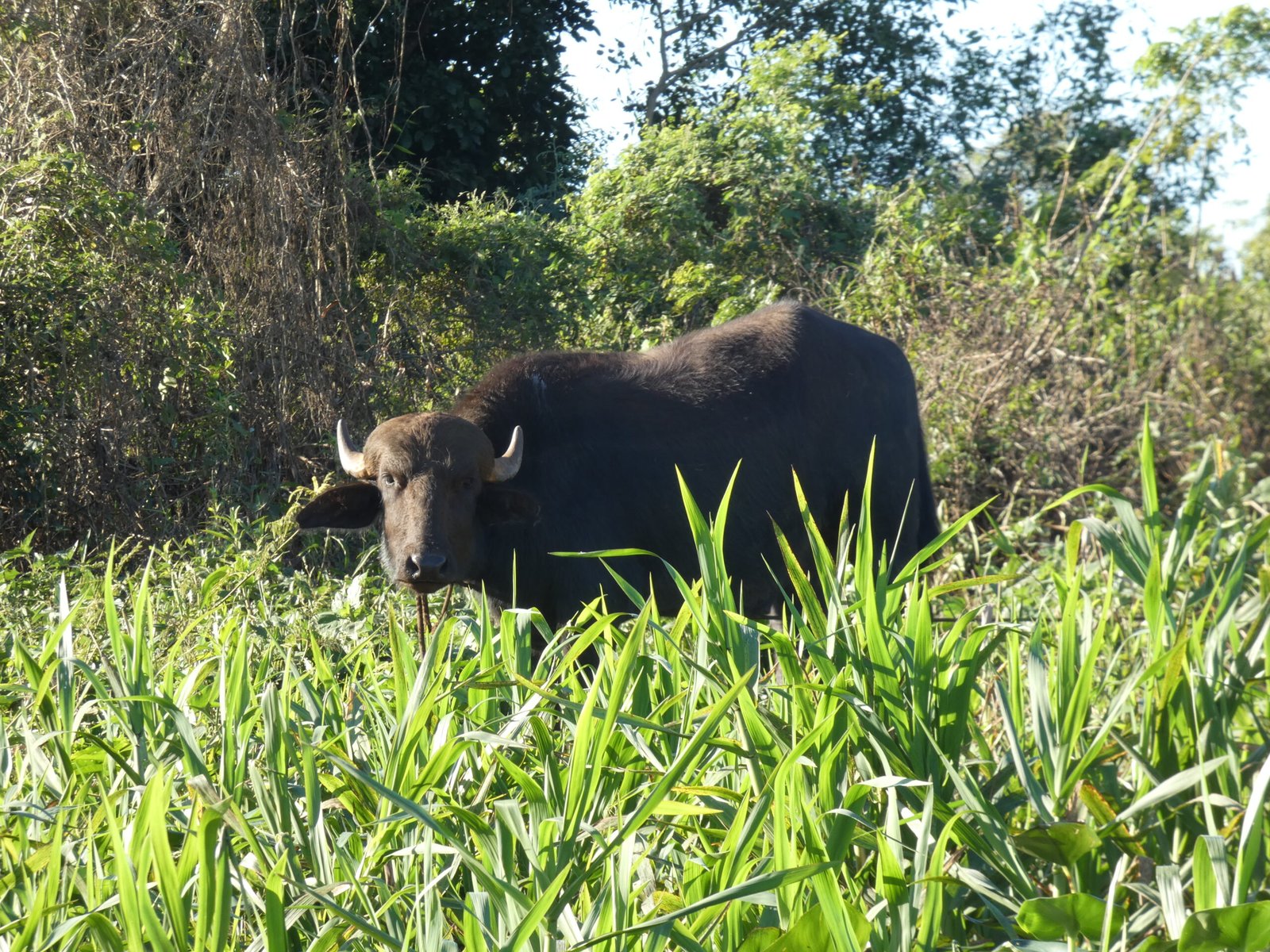
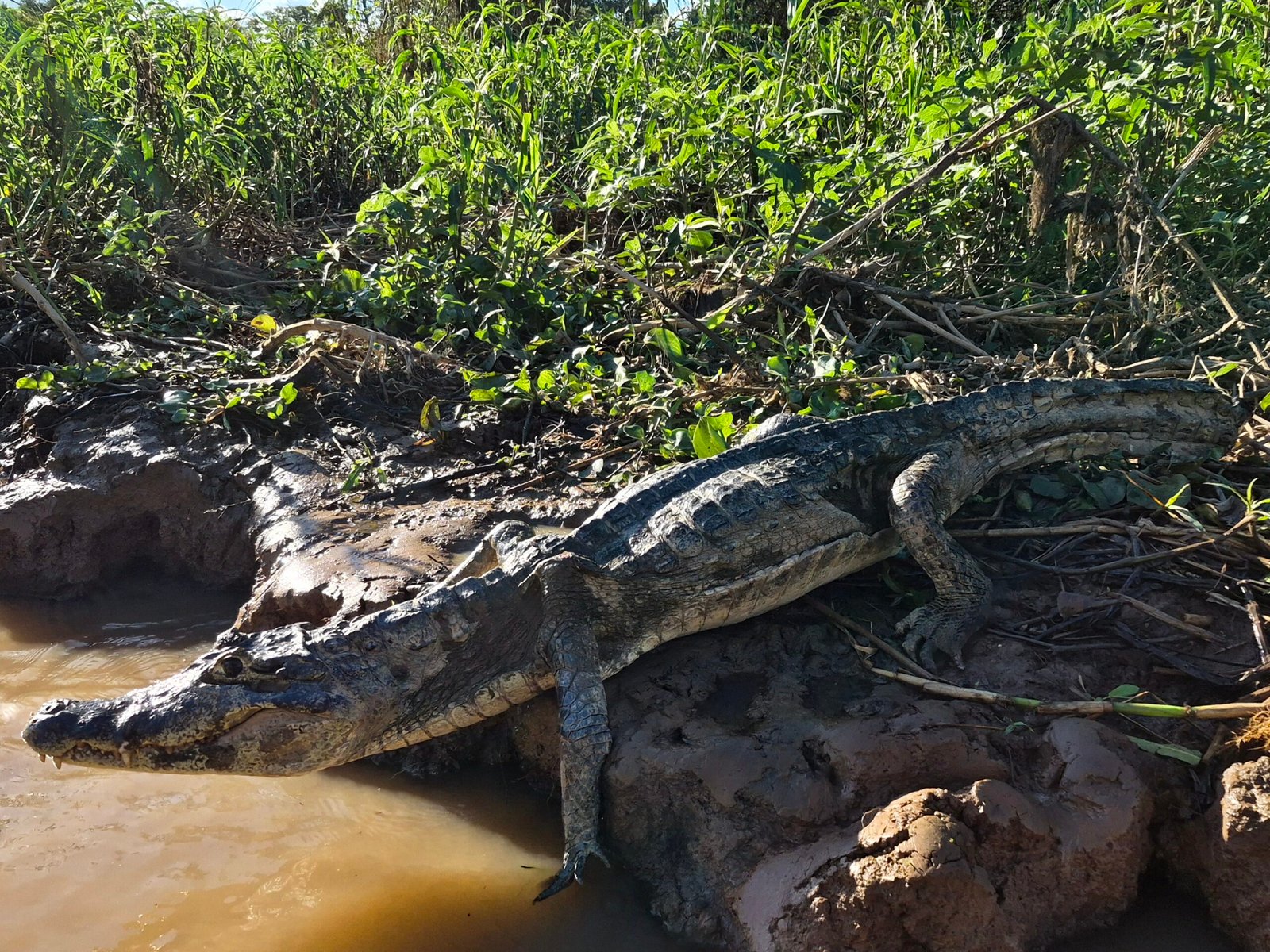
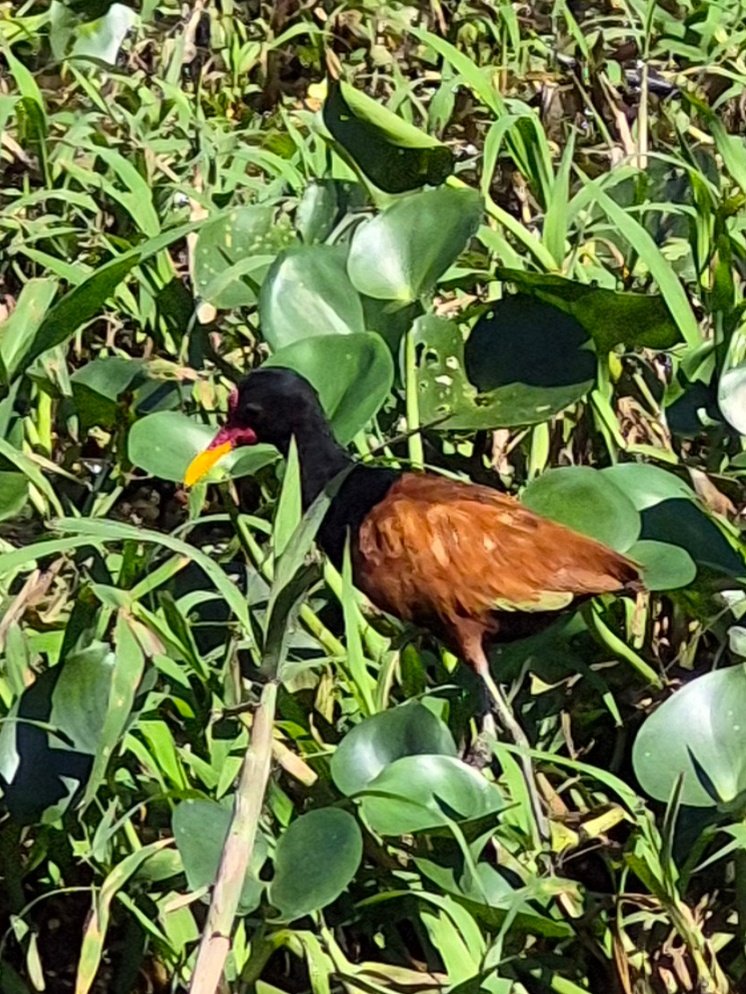
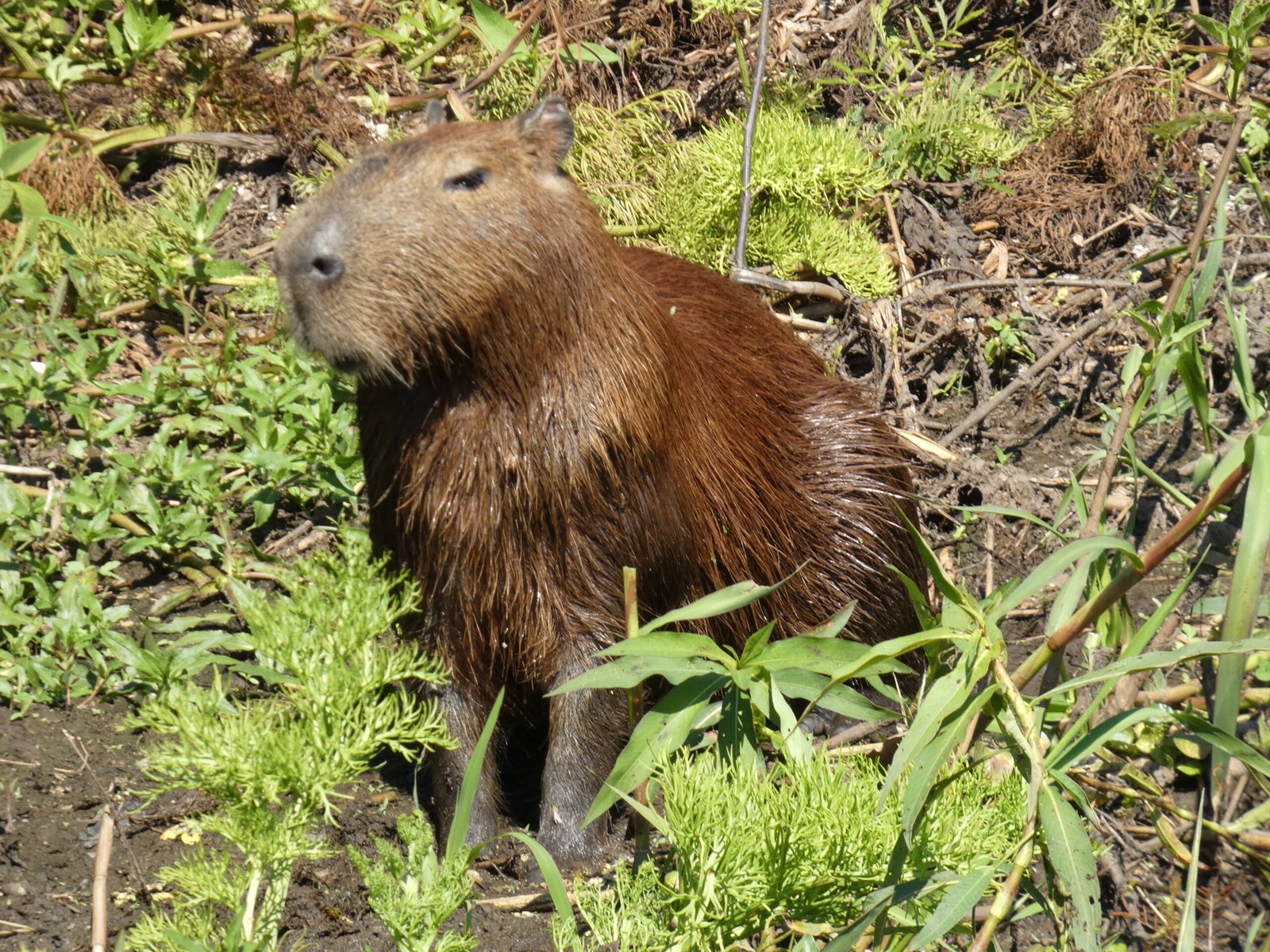
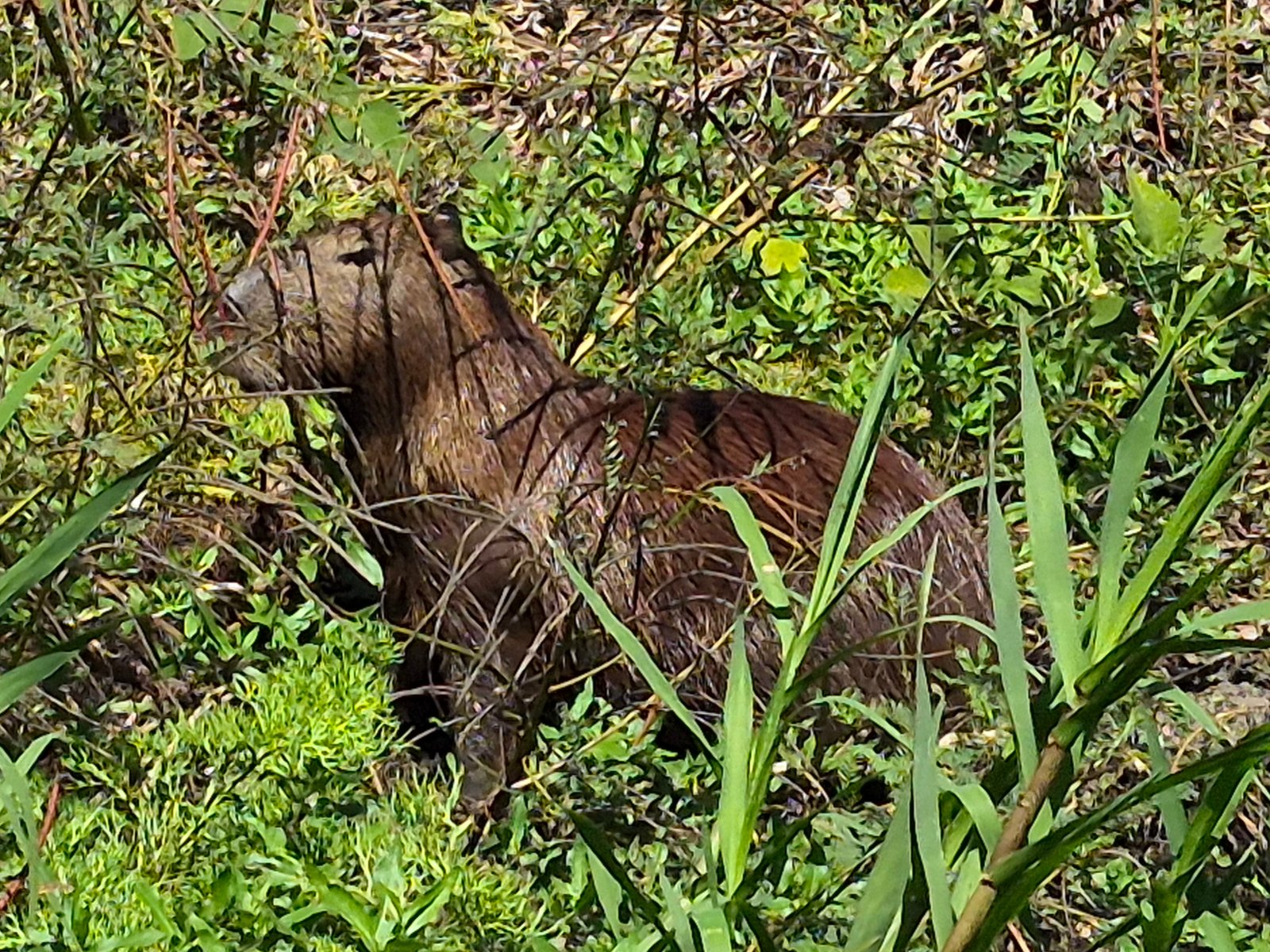
After our siesta, we headed into the forest with our guide, Wellington, to spot animals. He only spoke Portuguese and a little Spanish, so Google Translate was a big help when he told us about the animals we saw. We didn’t take Risto along on this two-hour hike, since we figured it would be better for him to rest in his room so he’d have the energy to go jaguar spotting the next day. In just under two hours, we saw far more animals than we had seen during our entire time in the Amazon. We saw several different groups of monkeys climbing in the trees. It was really hard to get photos or videos of them, though, because they were hiding so effectively in the treetops among the foliage. In addition to the monkeys, we saw many different birds, as well as lots of capybaras. We also spotted a tiny capybara in the yard of our lodging after the sun had set. We also spotted a caiman lounging in a wetland. We’d actually already spotted nearly a dozen of them from the boat on our way there. Wellington also showed us some jaguar paw prints on the ground. It was actually a good thing we didn’t run into a jaguar itself on this hike. That might have been a bit too nerve-wracking of an encounter. In addition to these larger animals, we encountered an insane number of mosquitoes, which, despite the mosquito repellent, kept trying to get a little too close for comfort. Luckily, the Pantanal isn’t in a malaria-risk area!
In the evening, we had dinner. The adults were served fish with cheese, and the hostess had fried chicken for the kids. This meal, too, was absolutely delicious! I should also mention that both meals included dessert. That was delicious as well.
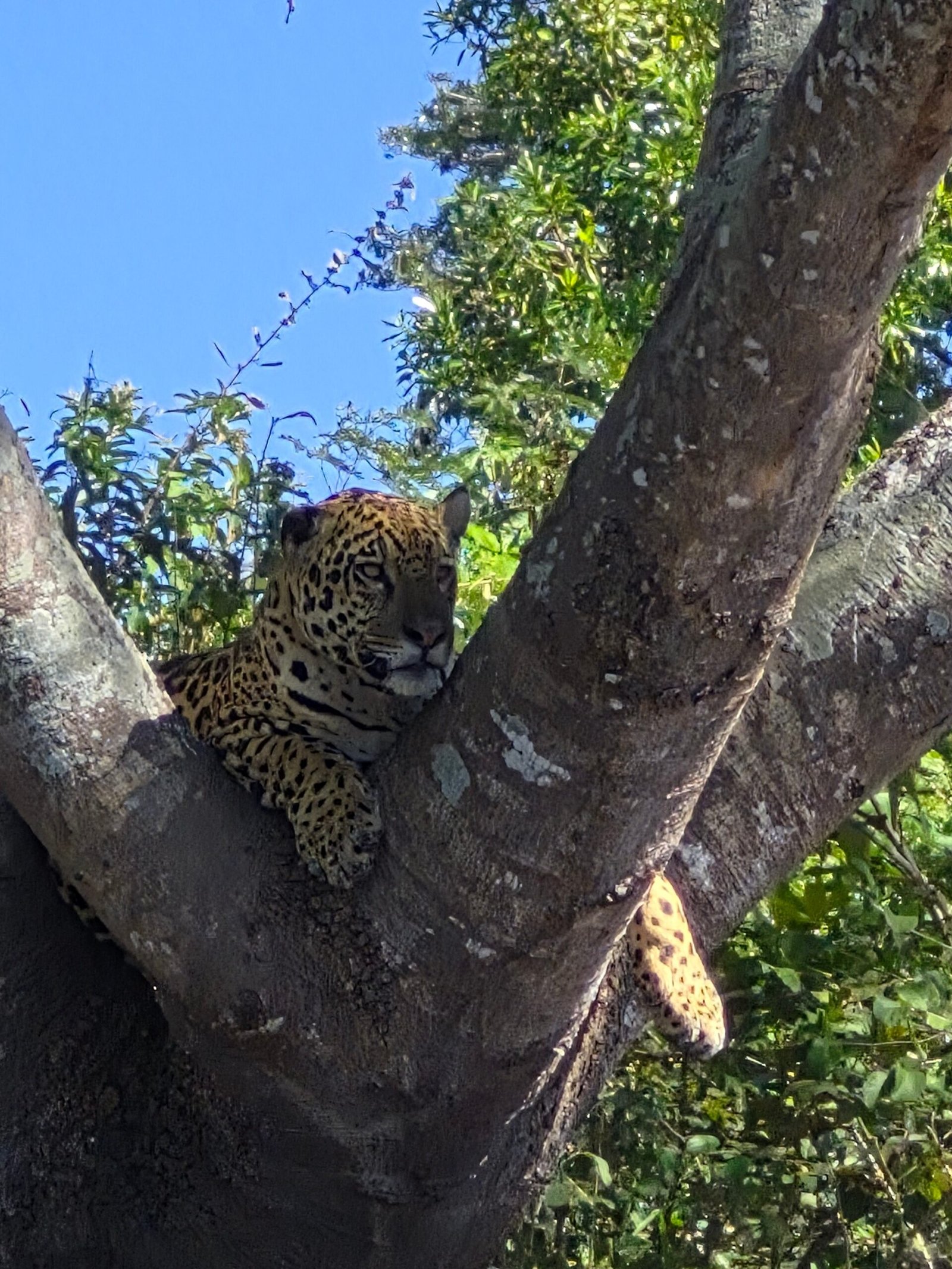
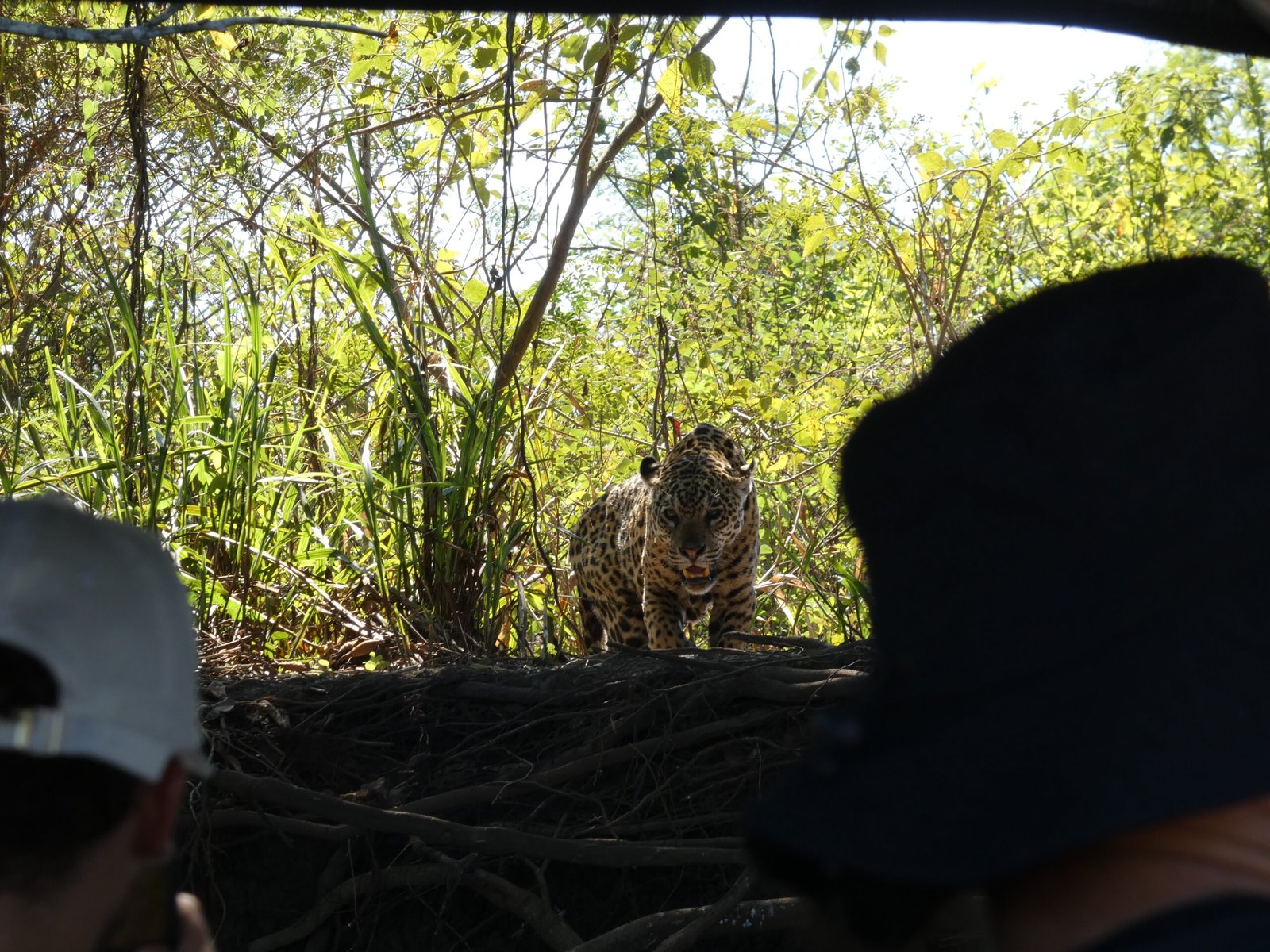
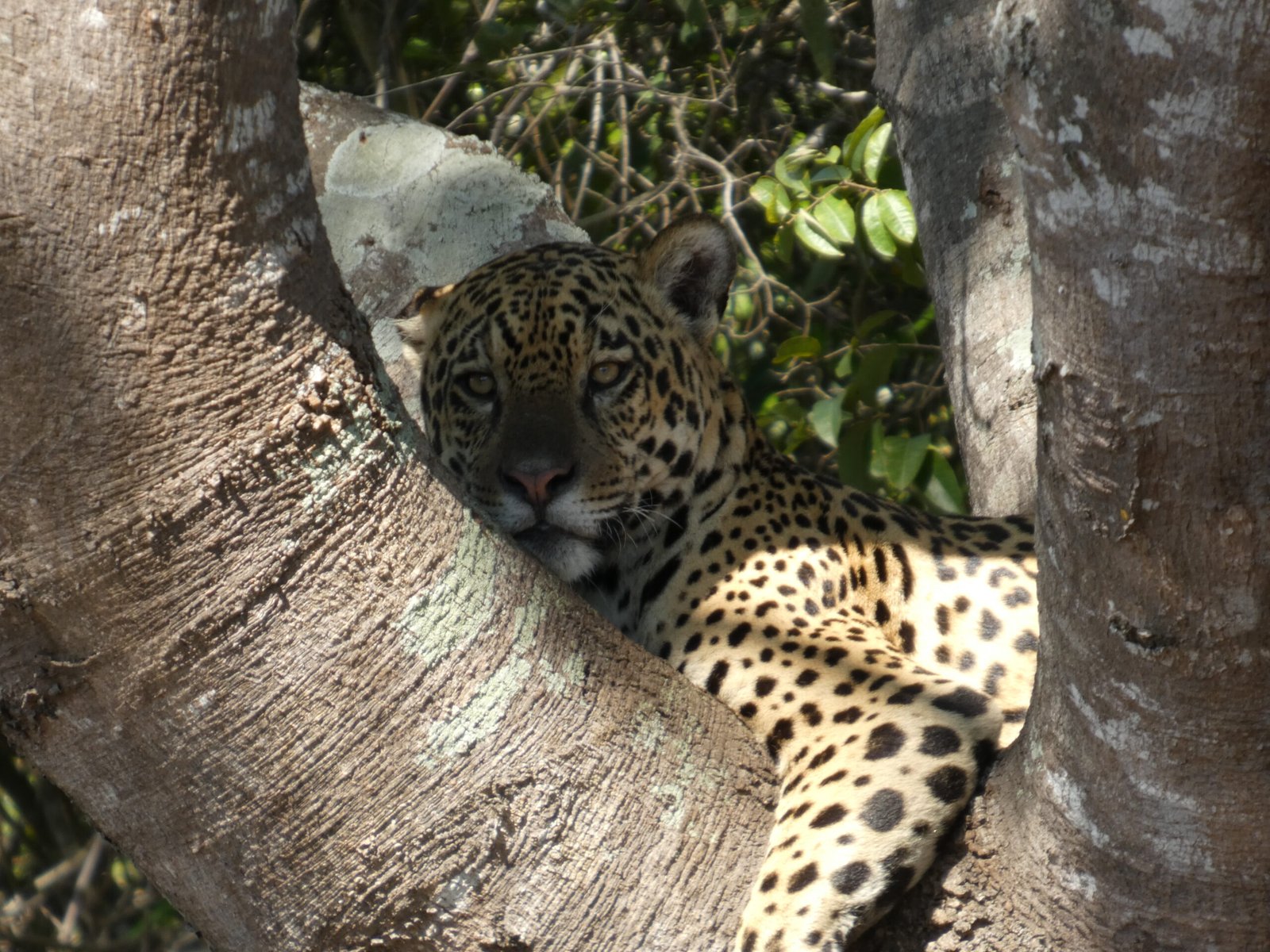
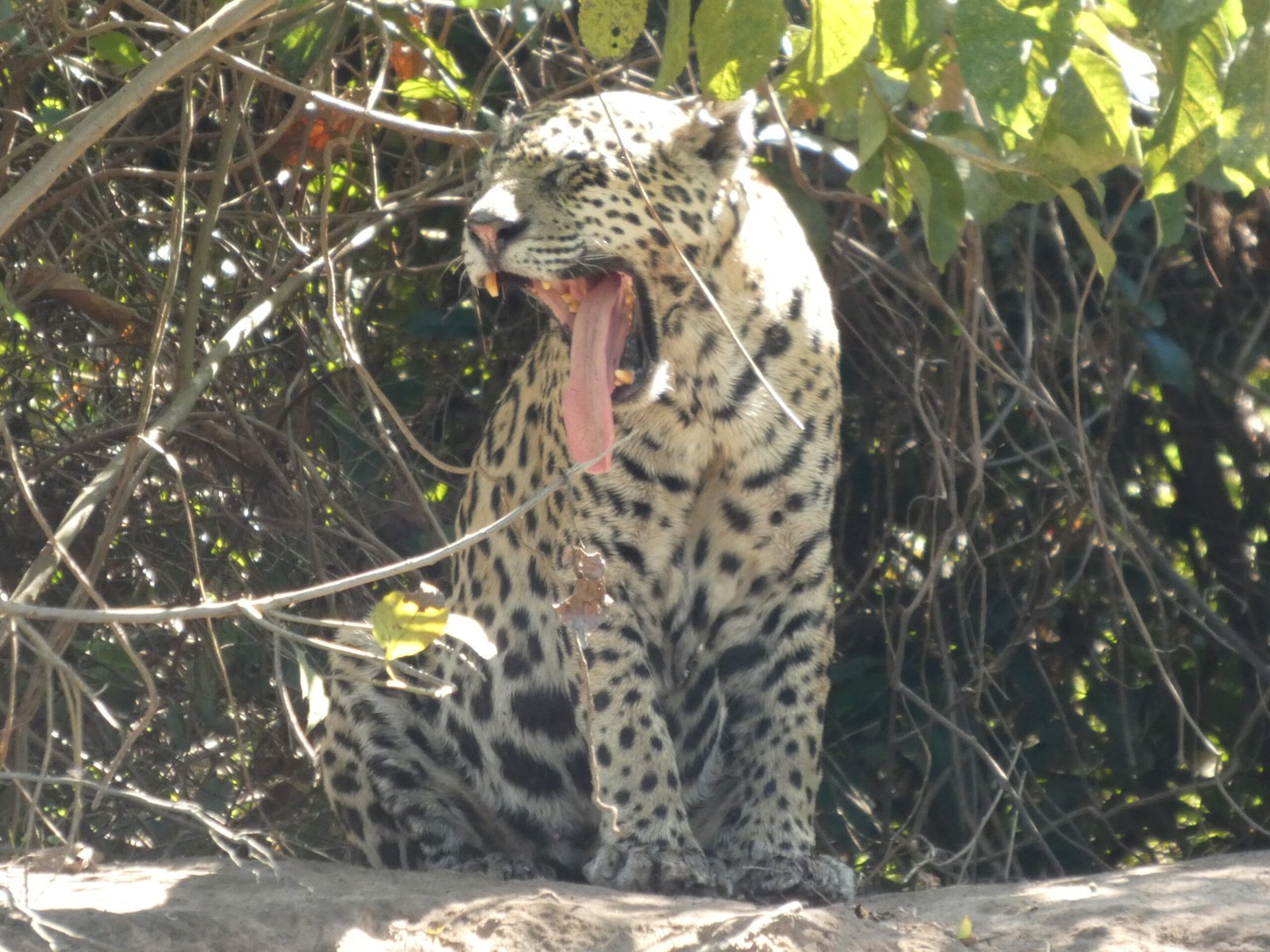
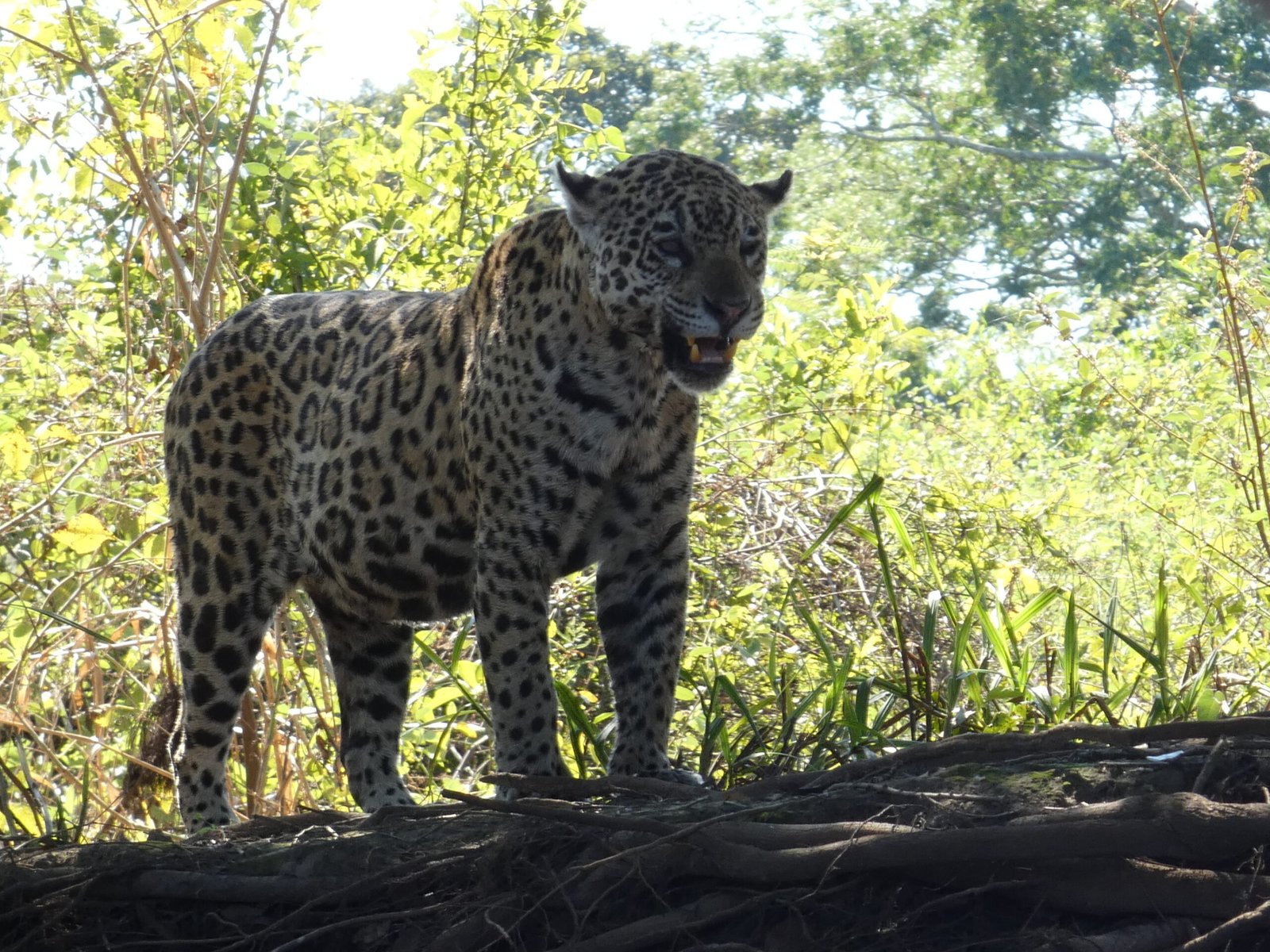
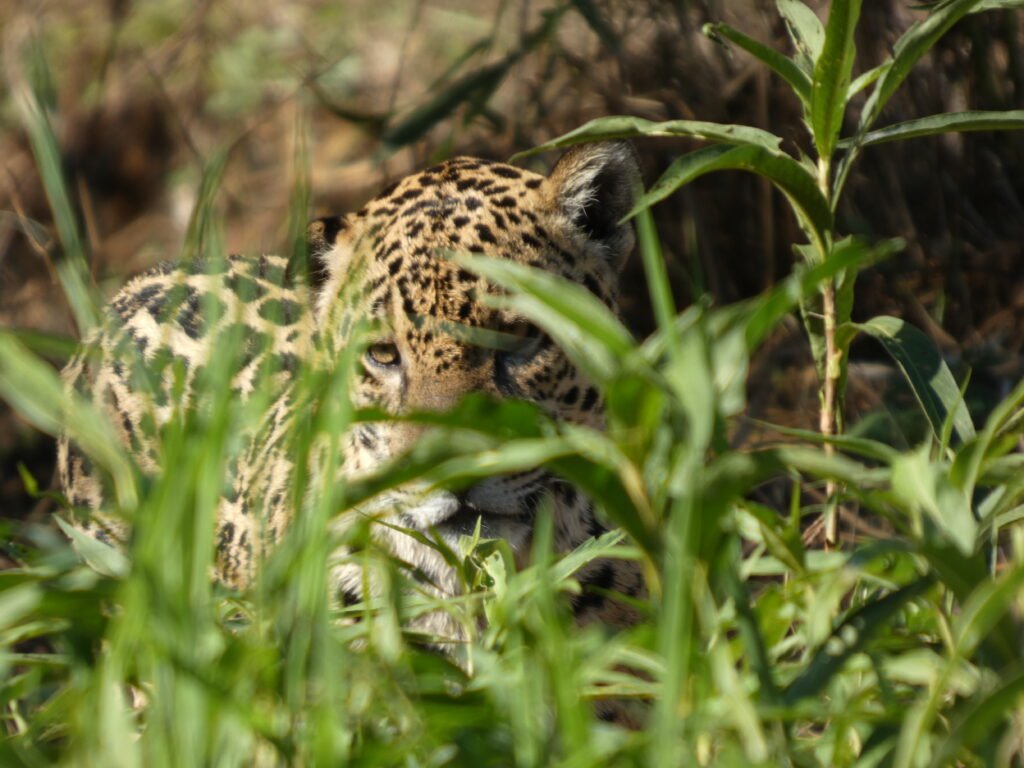
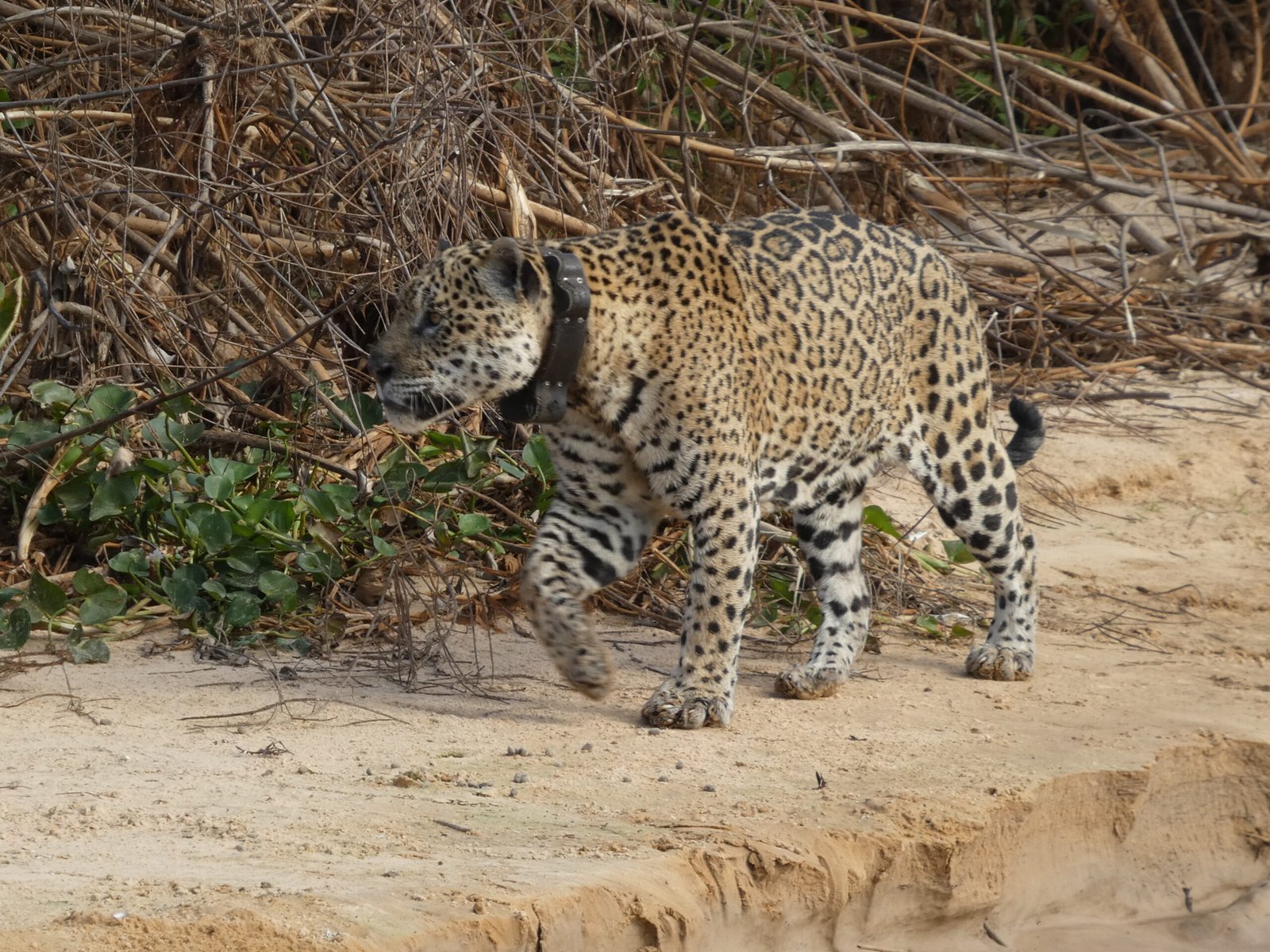
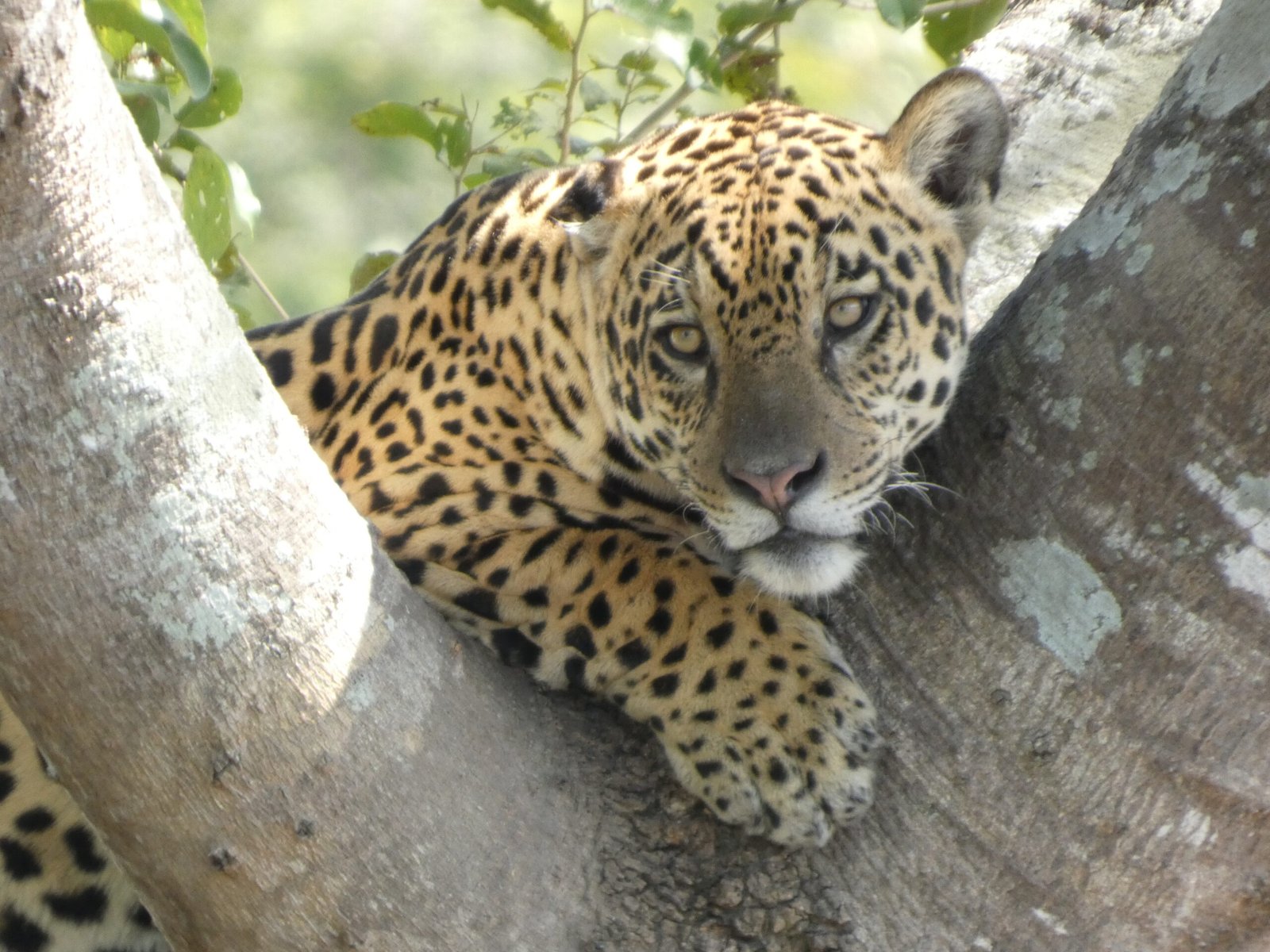
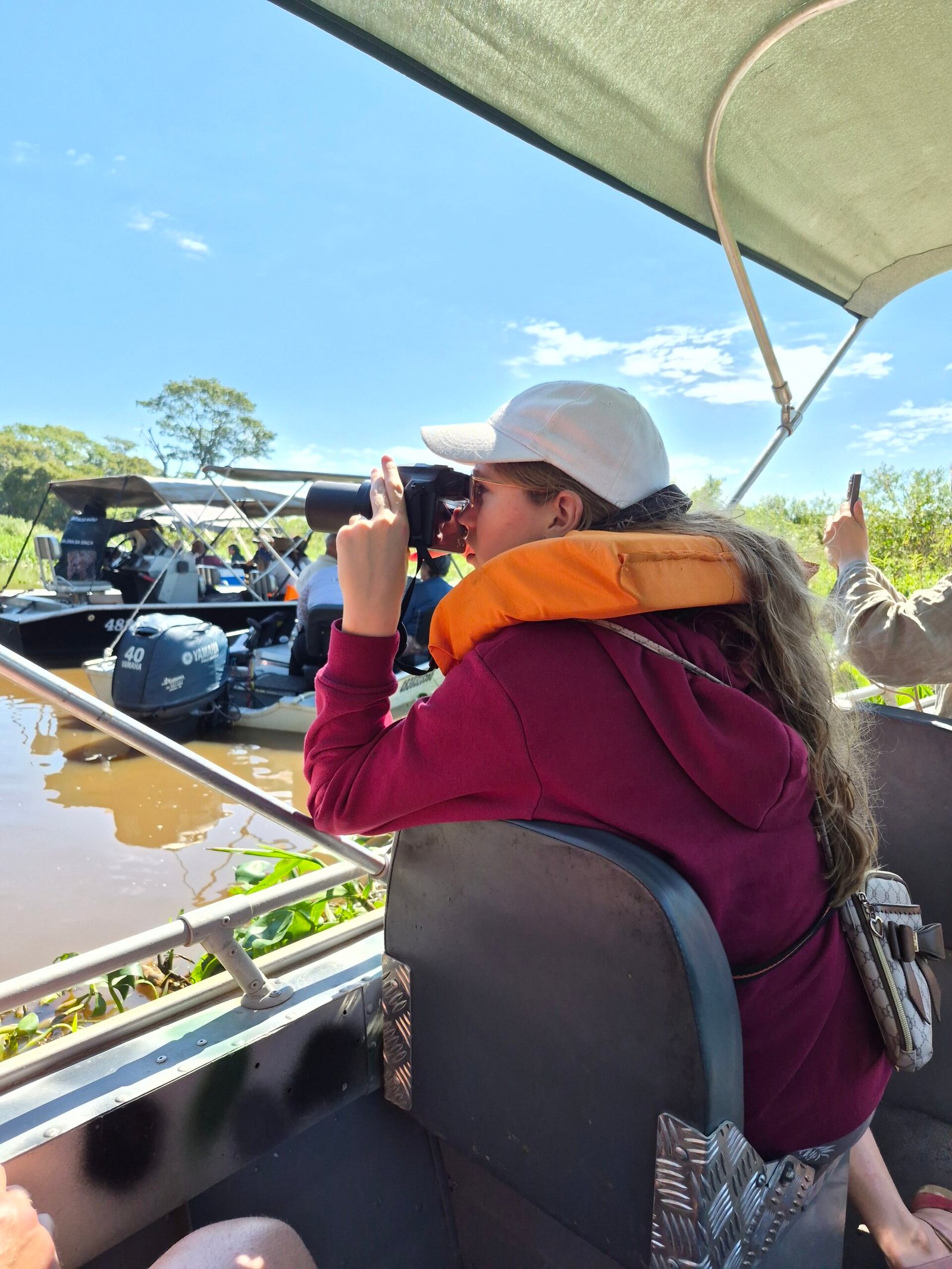
The next morning, we had breakfast at seven, after which we set out on a full-day excursion to the river. Our plan was to focus on spotting jaguars, but we also saw plenty of other animals along the way. Together with our new Polish friends, we made a bet on how many jaguars we’d see that day. Jaana guessed just two, and Risto guessed six. Everyone else guessed somewhere in between. At first, it seemed like Jaana’s guess would be right, but by the end of the day, we had spotted a total of six jaguars. Pretty incredible!
It’s estimated that there are about 4,000–7,000 jaguars living in the Pantanal region. In the Northern Pantanal, particularly along the Cuiabá and Piquirī rivers in Porto Jofre, there is the world’s highest known density of jaguars. So it’s no wonder we managed to see so many of them in a single day.
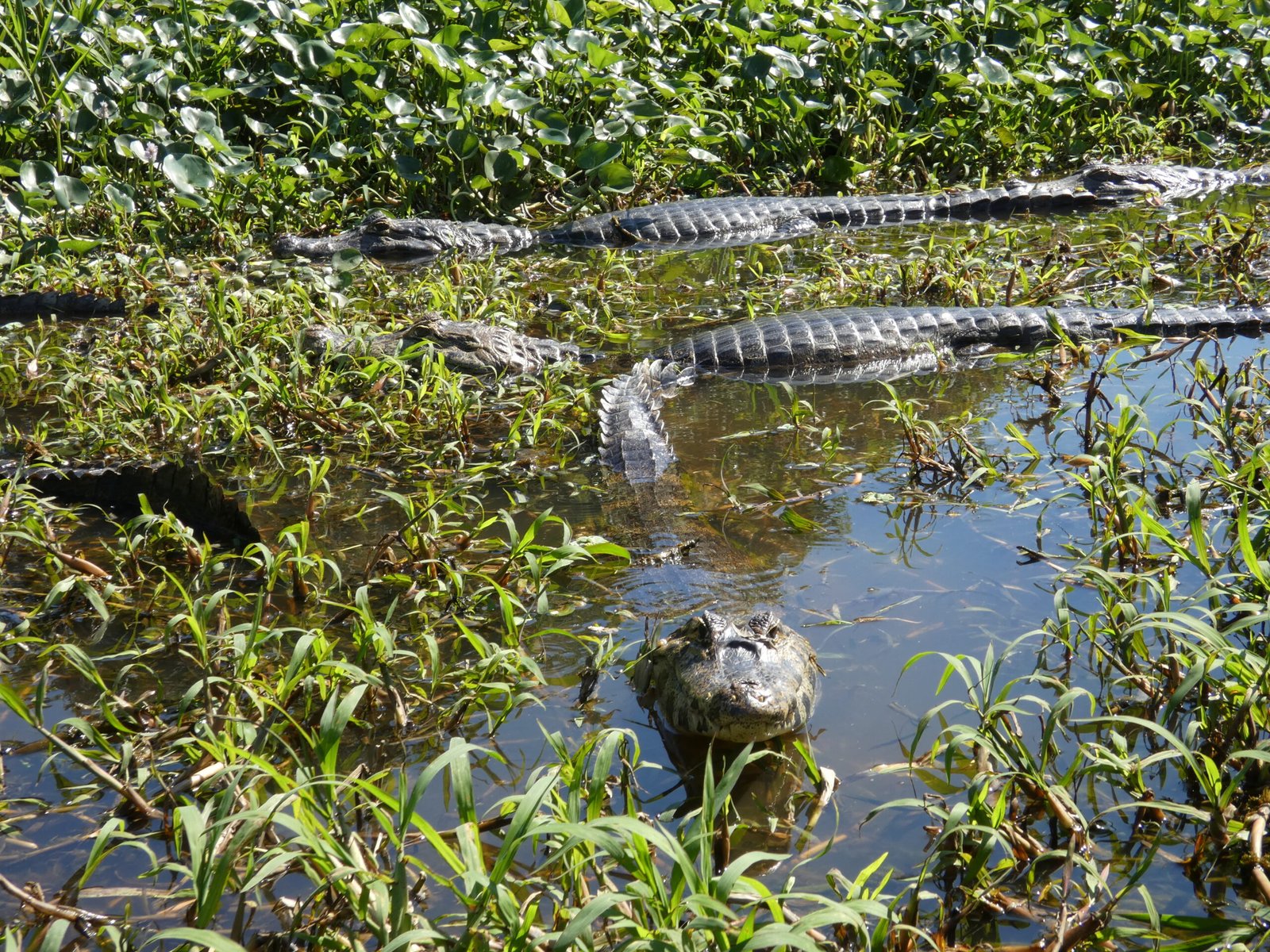
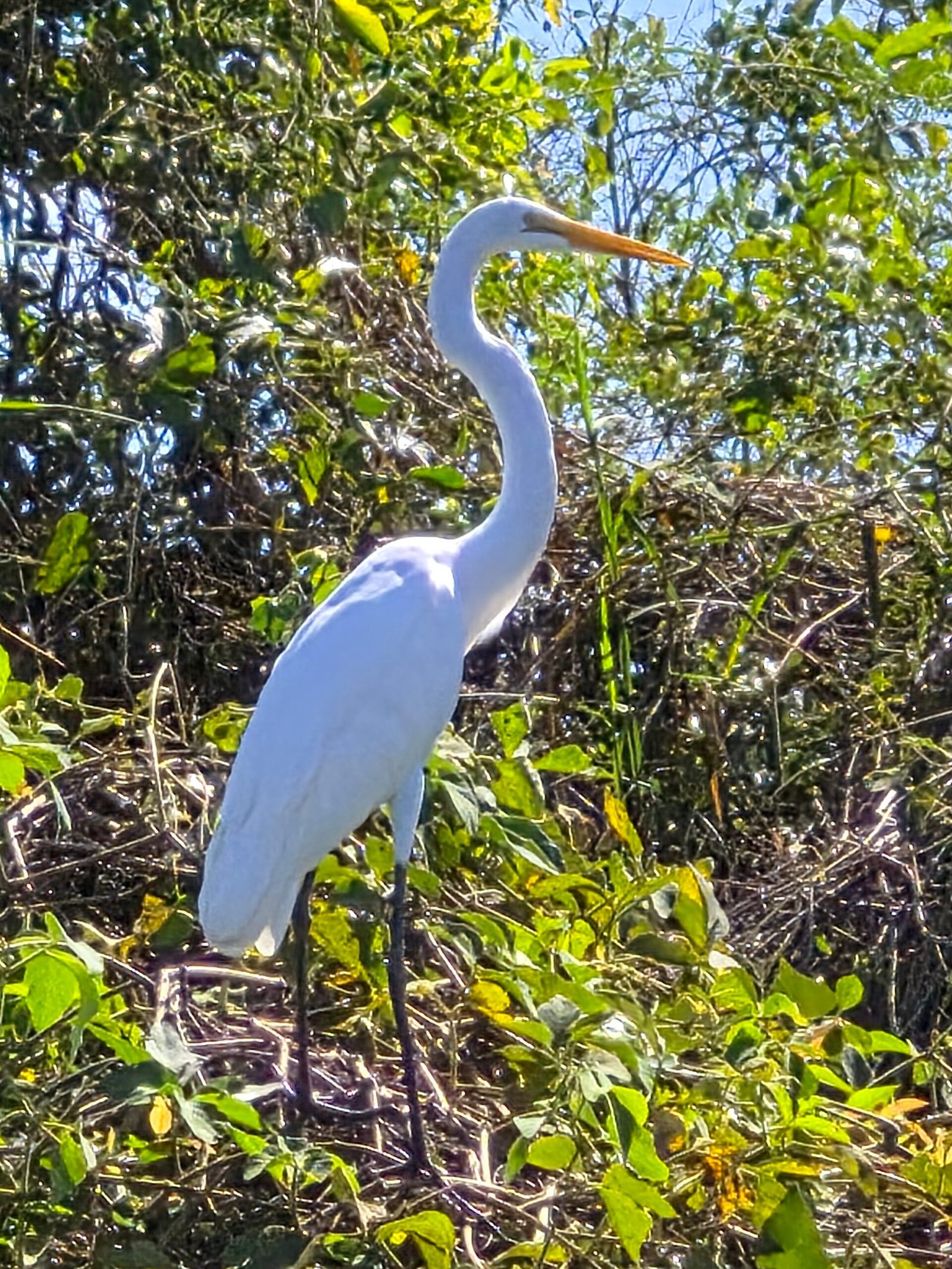
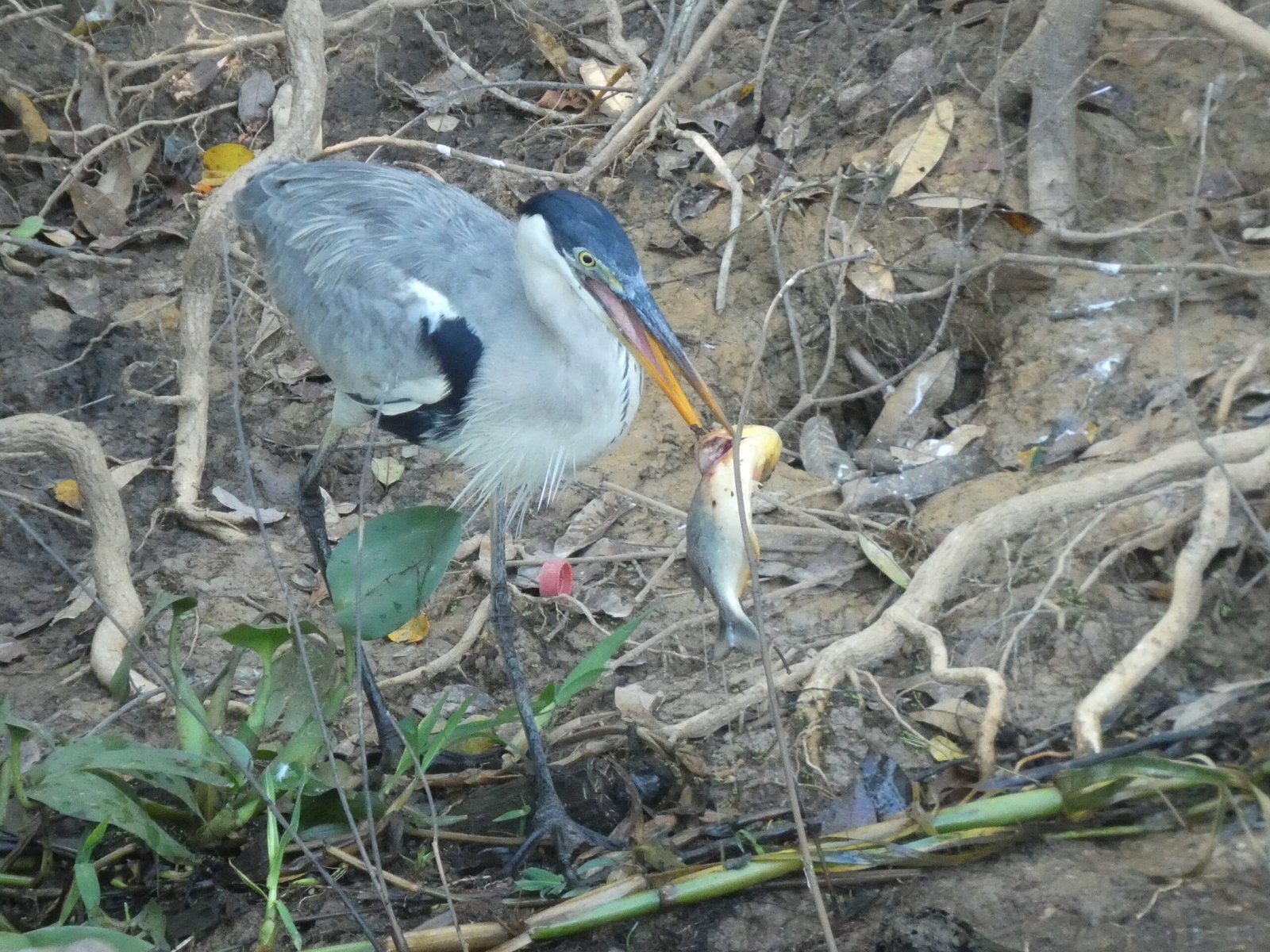
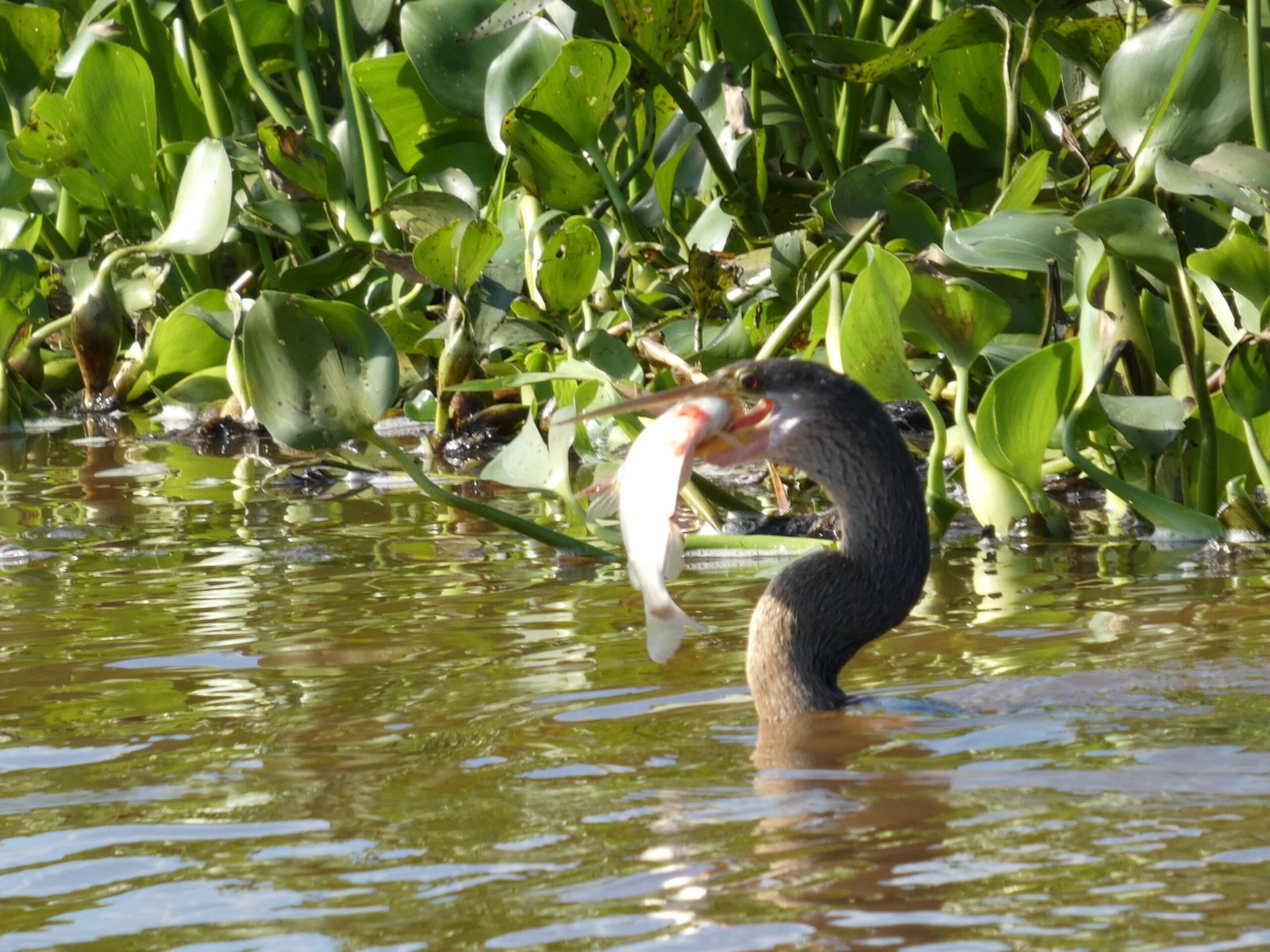
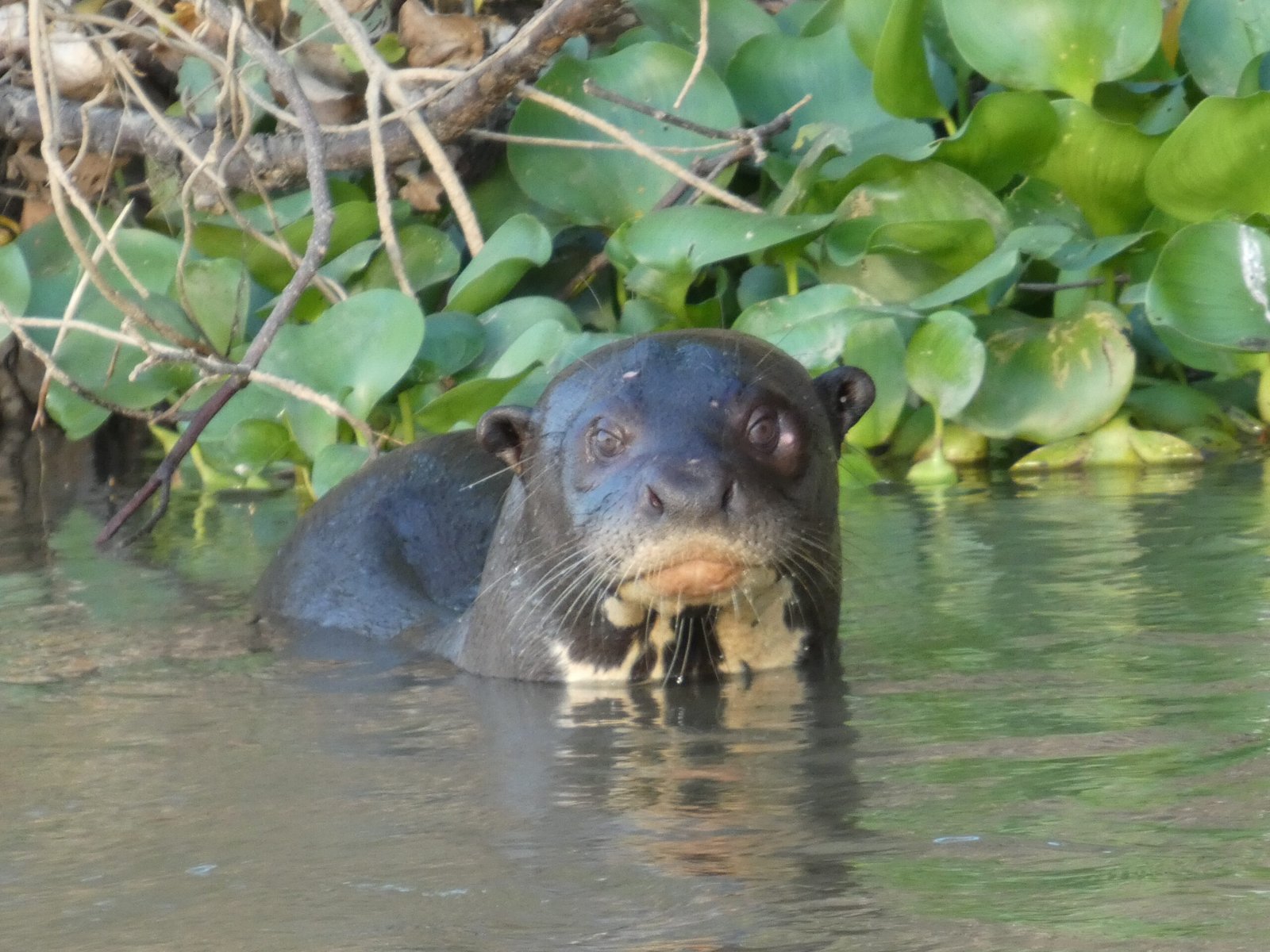
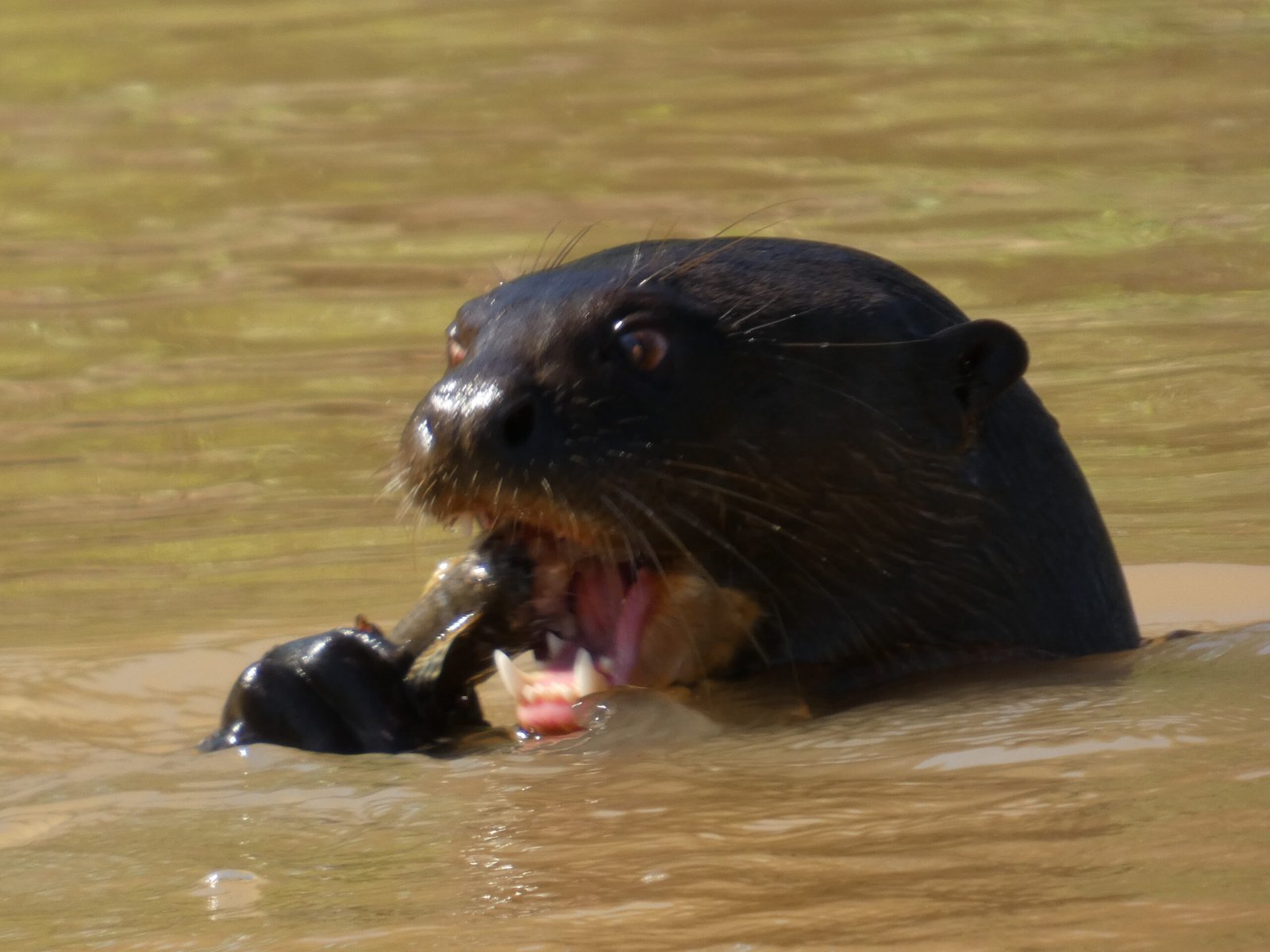
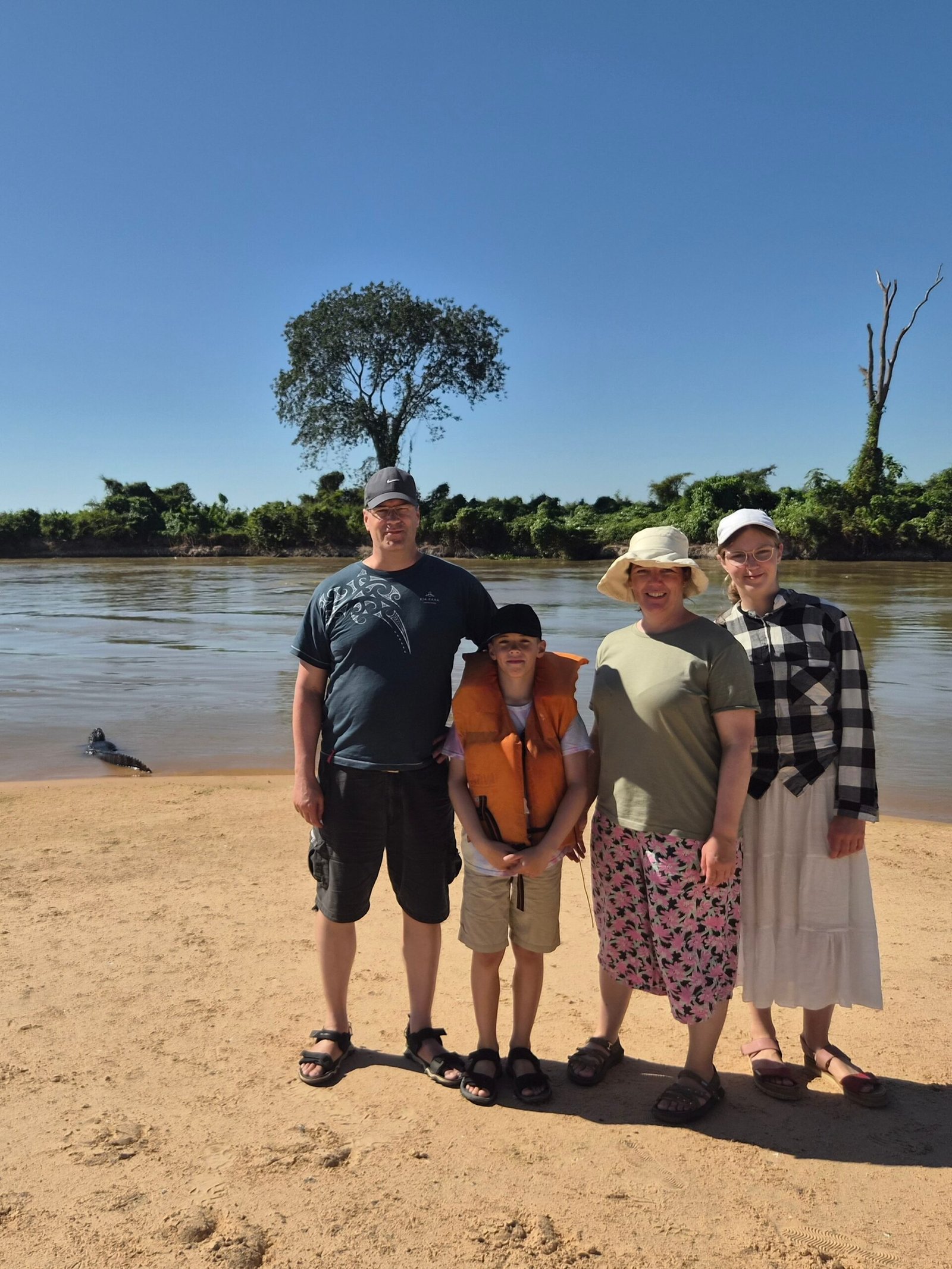
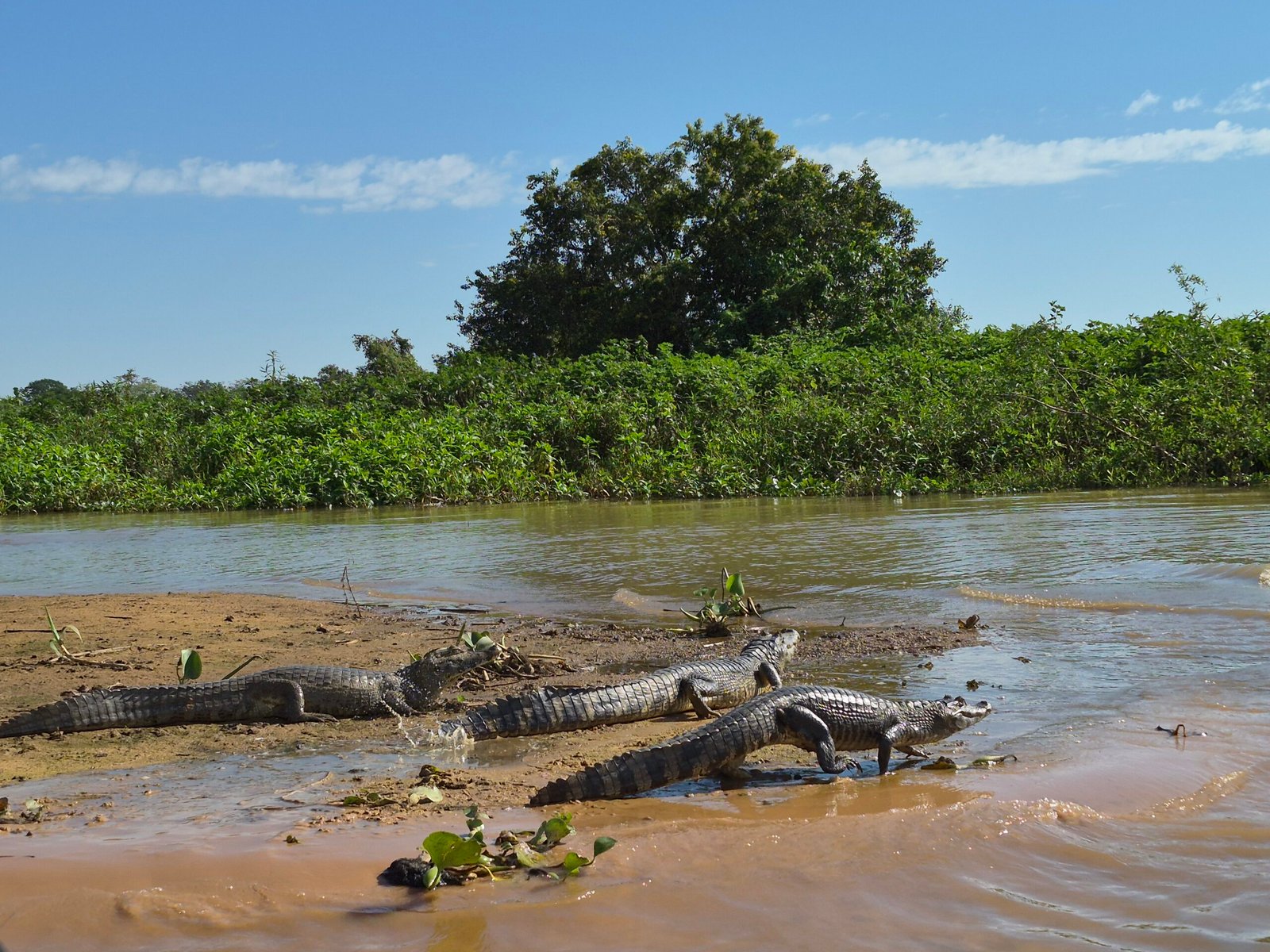
The area we explored was located nearly a two-hour boat ride from our lodgings. Since we were traveling at 50 km/h along the river’s main channel, that meant a journey of at least 75 km deeper into the Pantanal wetlands. In addition to jaguars, we saw many different species of herons, as well as other birds. We also saw capybaras, giant otters that grow to over two meters in length, and thousands of caimans. We can estimate the number of caimans somewhat because, just for fun, we counted a few times how many caimans we saw per minute. The first time, we spotted 12 of them; the next time, 18. From this, we could calculate that we saw an average of about 15 caimans per minute, which would mean about 900 caimans per hour. We were out and about for a total of 11 hours, so everyone can do the math and see that there were truly incredible numbers of caimans! And these were just the ones we actually saw. There were surely just as many more hiding in the brown water and among the vegetation. You wouldn’t even think of swimming in this river, unlike in the Amazon.
Wellington told us that some of the jaguars we saw during the day had been cataloged. We saw at least Pantanera, Patricia, and Ousado. Wellington didn’t recognize the other three. Each jaguar has a unique pattern of spots, just like zebras have stripes, and jaguars are identified primarily by the spots on their faces.
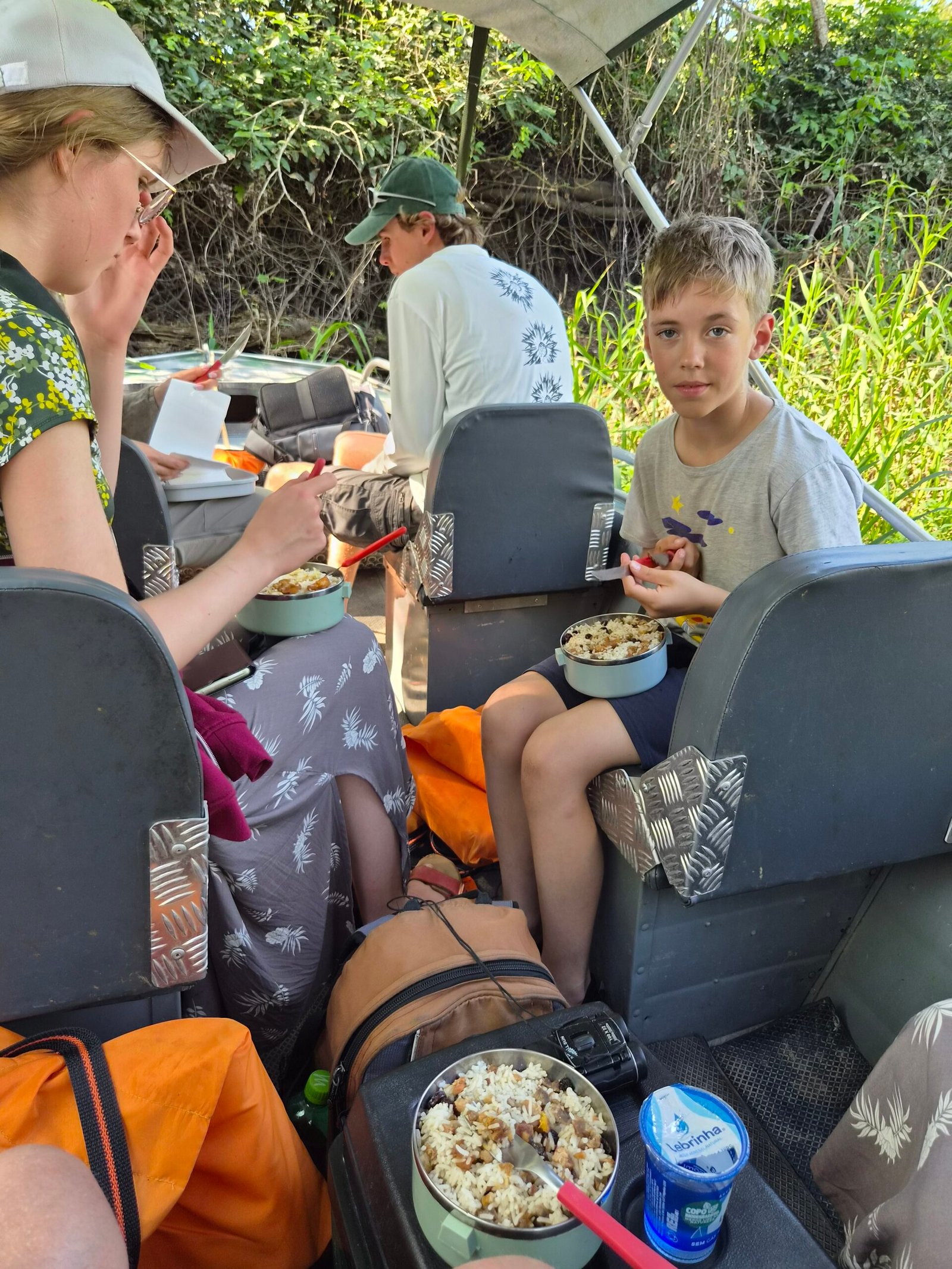
Since it was a full-day trip, we also had a picnic lunch on the boat. We found a shady spot along the river and moored the boat there. Unfortunately, the mosquitoes also seemed to enjoy the shade. So each of us ate as fast as we could so we could get moving again and escape the mosquitoes. After lunch, we had to stop for a quick bathroom break in the bushes, since there were no actual restroom facilities along the riverbank. Wellington went first to check the area to make sure there wasn’t a jaguar lurking in the bushes, and then the rest of us hopped out of the boat into the cover of the bushes to take care of business. We returned to the boat and rounded the next bend. And what was waiting for us there? A jaguar, of course! So, without realizing it, we’d gone to relieve ourselves about 100 meters away from a fairly large big cat. To be fair, though, the jaguar was walking on the opposite side of the river from where we had been moored just a moment earlier. Even knowing that didn’t offer much comfort in hindsight, because a moment later we saw just how skillfully this big cat can swim and hunt in the water…
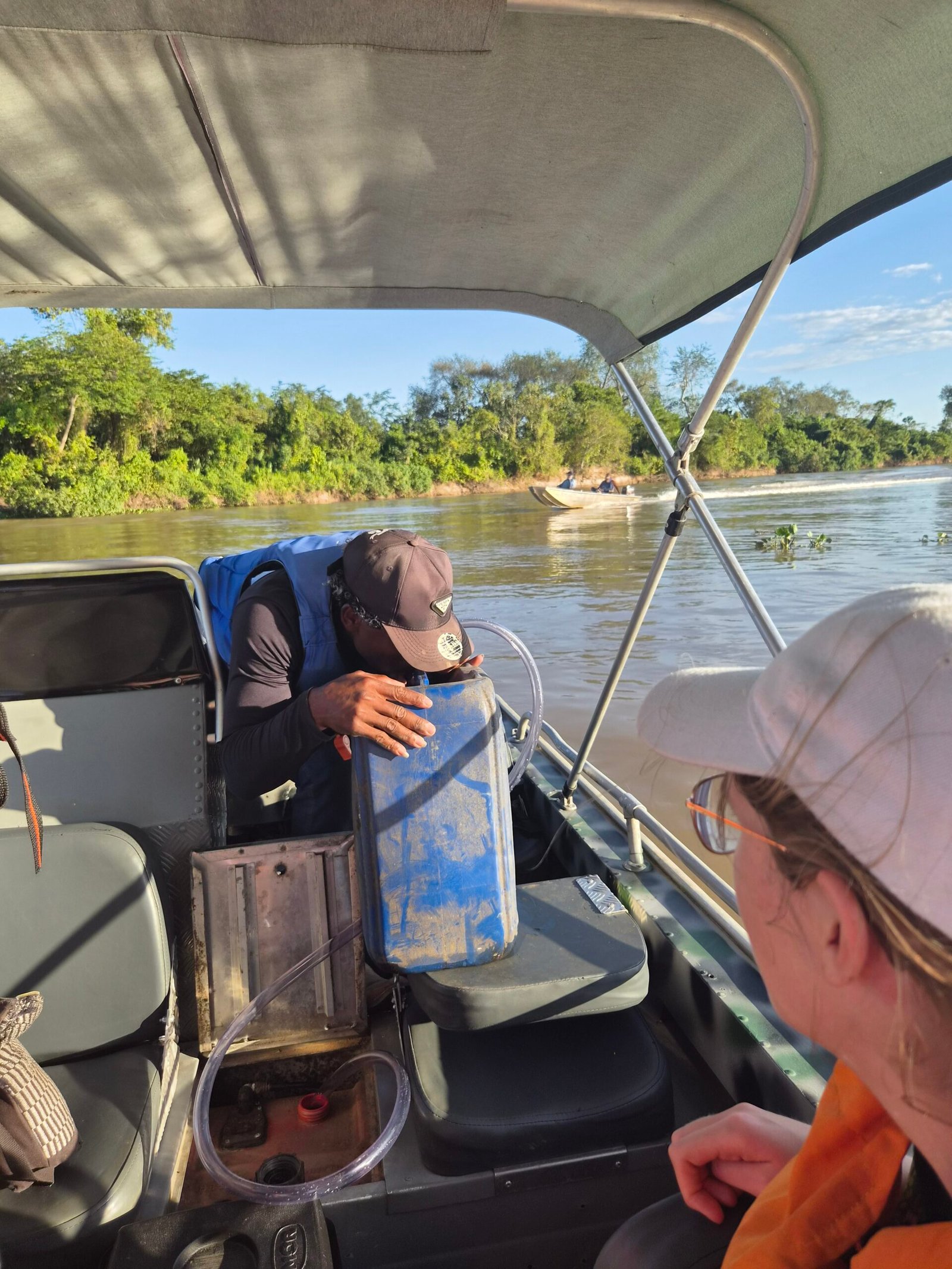
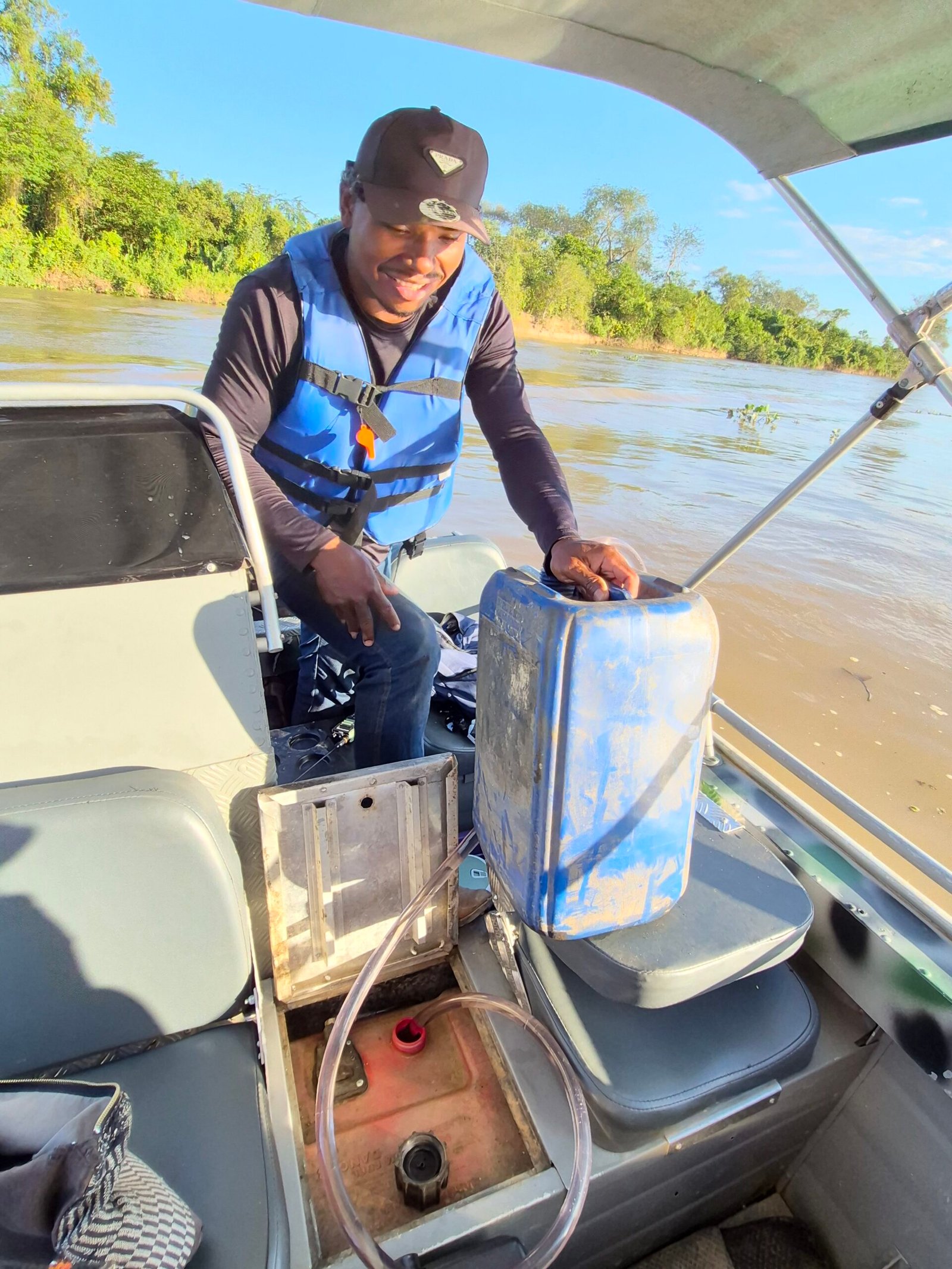
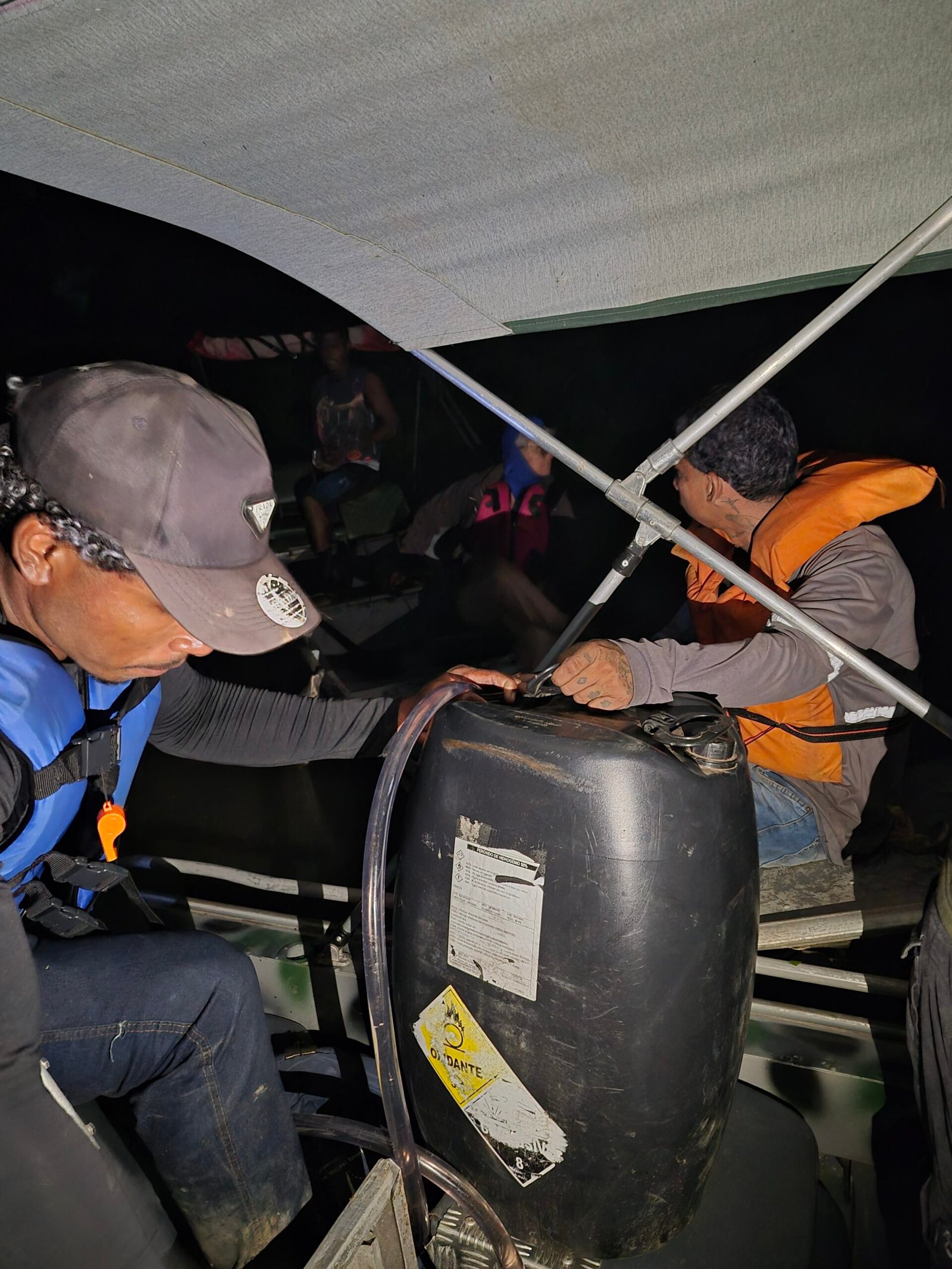
We set off back to our lodging sometime after four in the afternoon. At some point, the engine ran out of gas, but that wasn’t a problem, since Wellington had brought a spare canister with him, from which he topped off the gas tank. So we continued our journey home, but about a 15-minute drive from home, we ran out of gas again. This time the spare can was already empty, so we had no choice but to steer the boat on its last drops of gas into the bushes along the shore to wait for a tow. We had to tie ourselves to the reeds because our campsite was located upstream, and the current would have carried us away from our campsite at a relatively brisk pace if we’d been left drifting in the middle of the river. Of course, there was the risk in the riverbank reeds that you never knew what might be lurking there. After all, we’d seen more than a few sharp-toothed creatures that day, both on land and in the water.
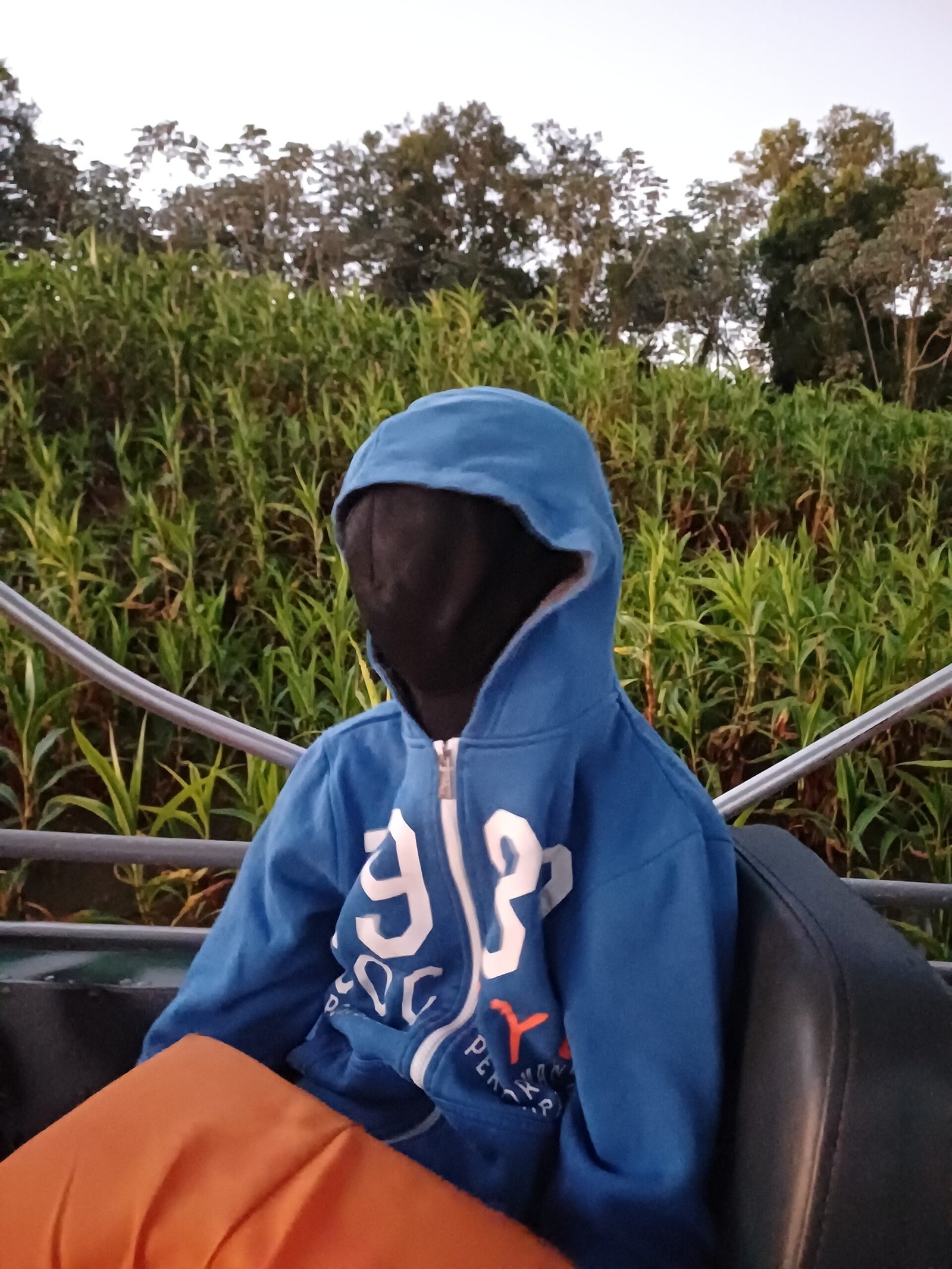
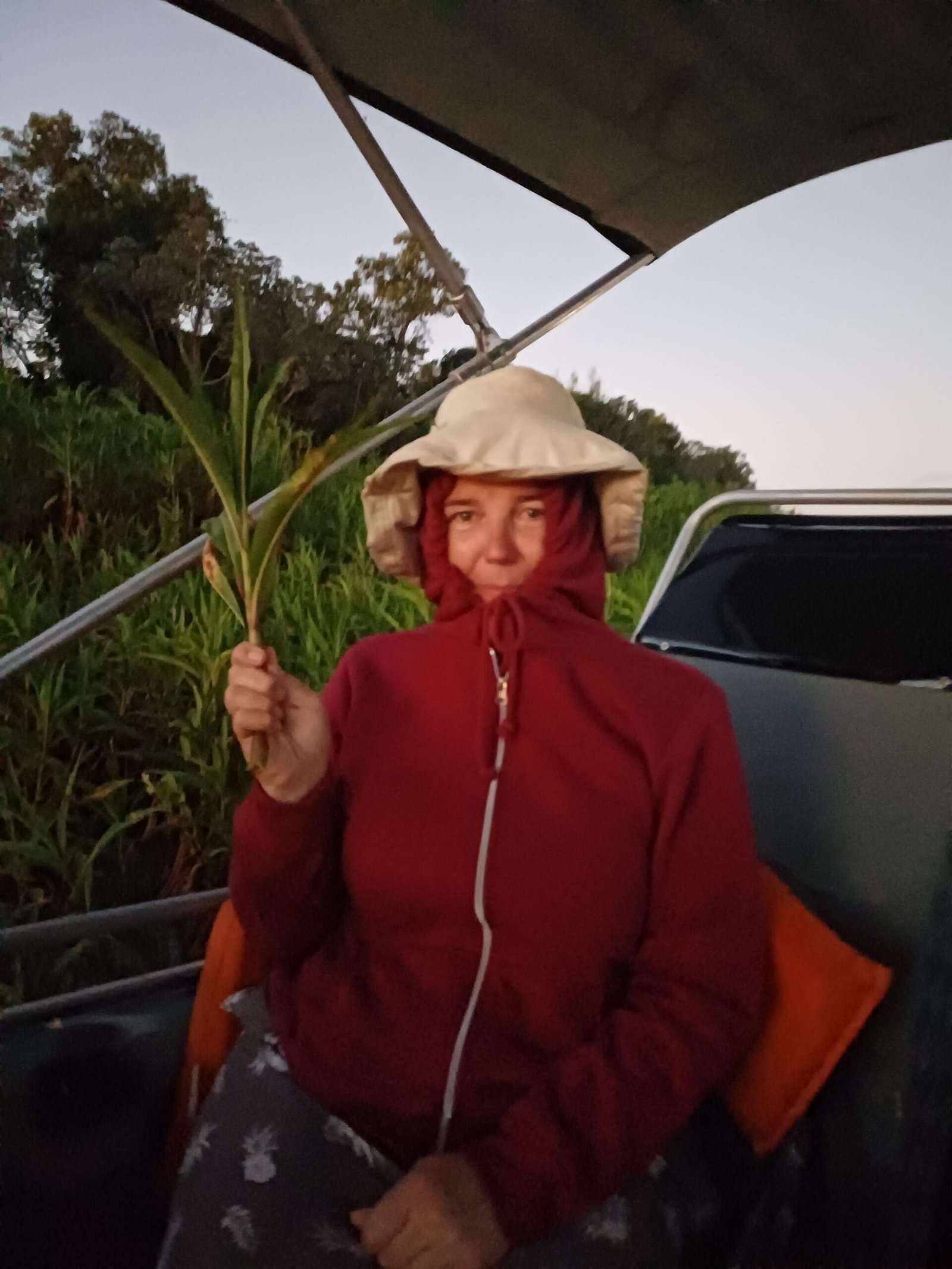
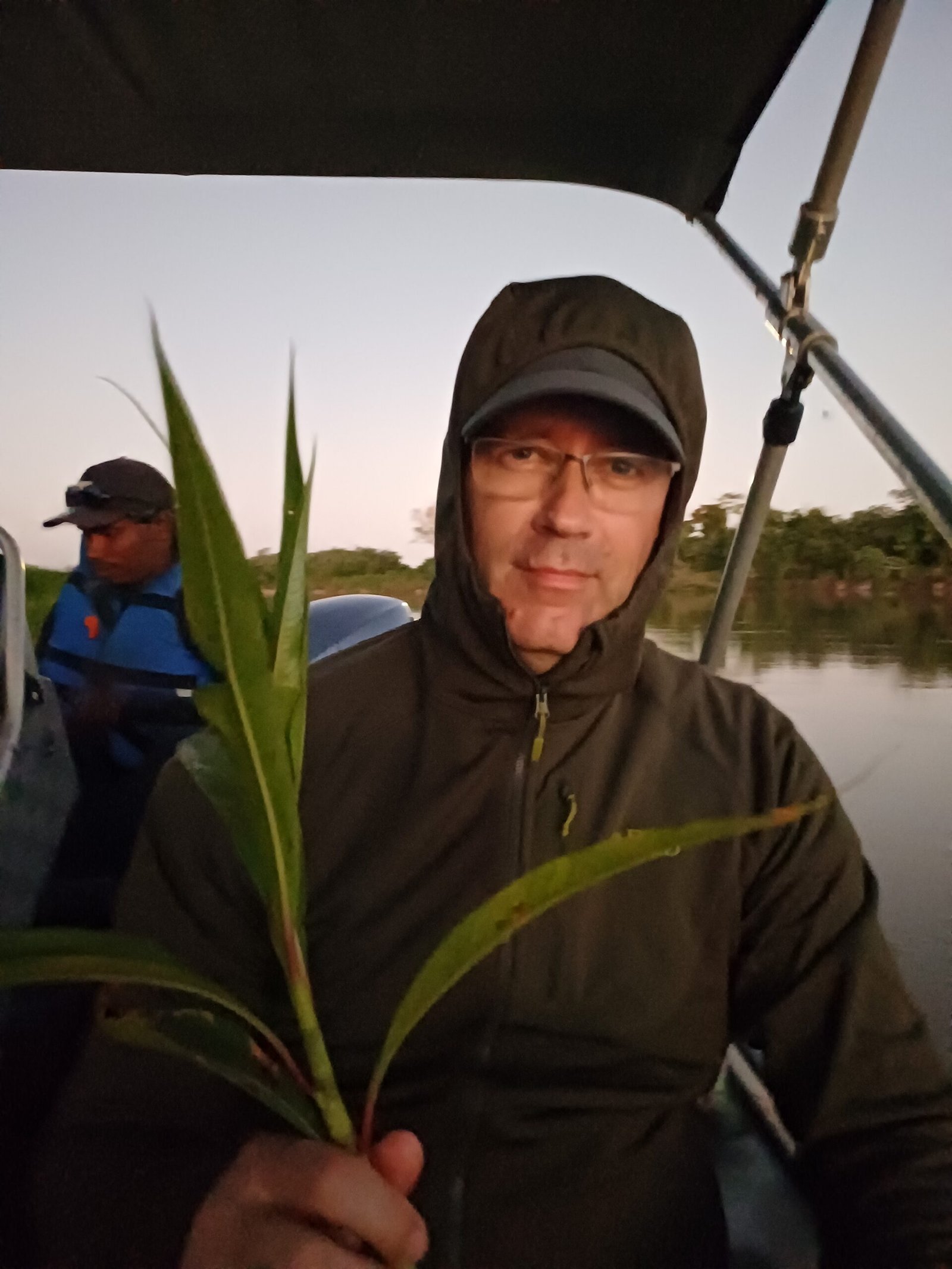
Since there was no cell service, Wellington had arranged with our lodging that if he didn’t return by 17:30, they would wait another 20 minutes. If we still hadn’t made it back by then, they would send help in another boat. By the time we ran out of gas, it was already 17:25, so we figured we wouldn’t have to wait in the reeds for an unreasonably long time. We weren’t really in any great danger, since we had water with us, and there was food as well. The only problem was the mosquitoes, which found us the very second we parked the boat in the reeds. And there were a LOT of them. As the sun went down, more and more of those little devils kept coming. We tore some branches from the reeds to use as swatters to shoo the mosquitoes away. Fortunately, our hostess had urged us to bring long-sleeved shirts (mainly with the cool morning breeze in mind), so we pulled them on to protect ourselves from the bloodthirsty mosquitoes. The mosquito repellent containing 40% DEET was also a lifesaver.
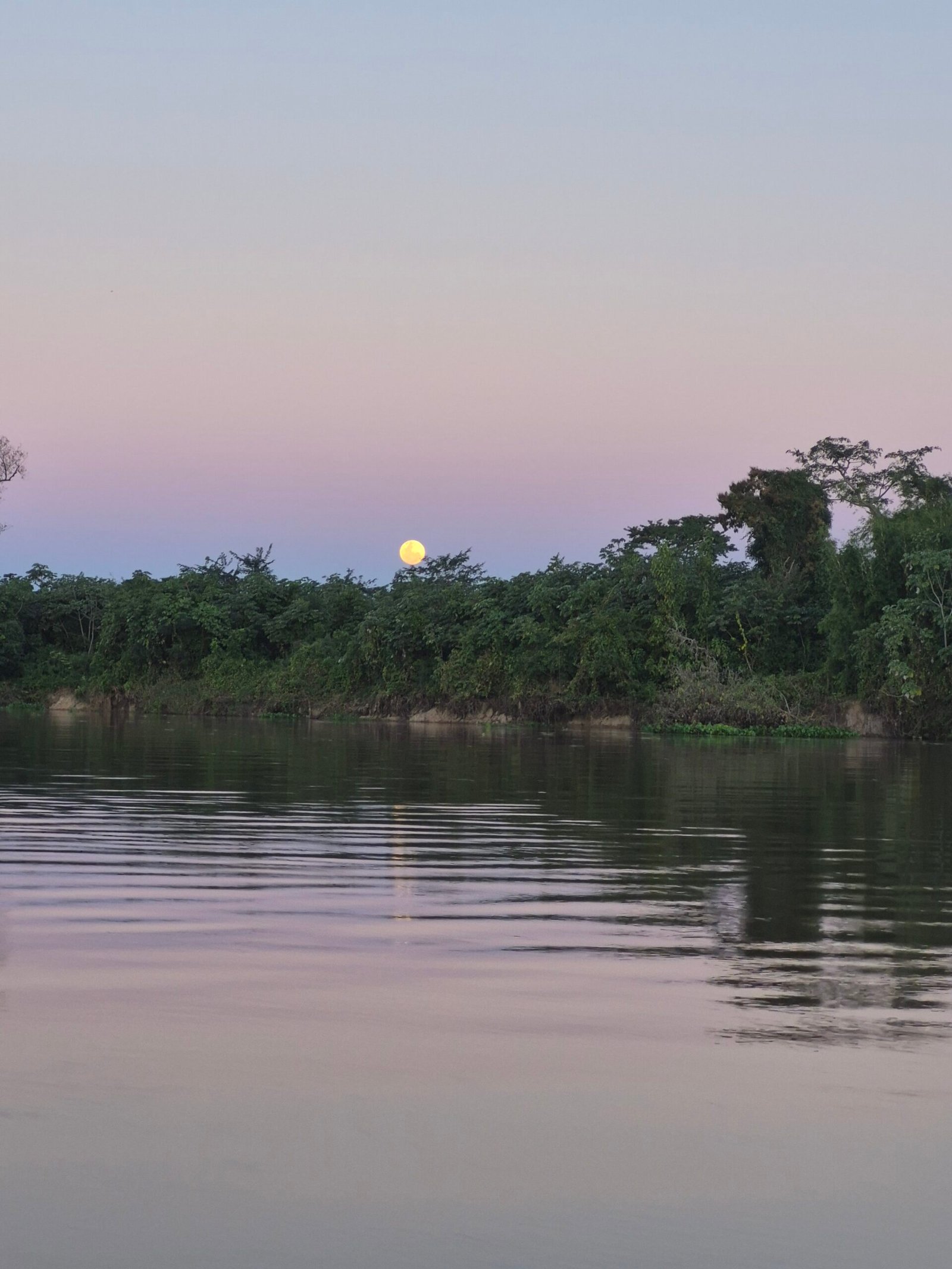
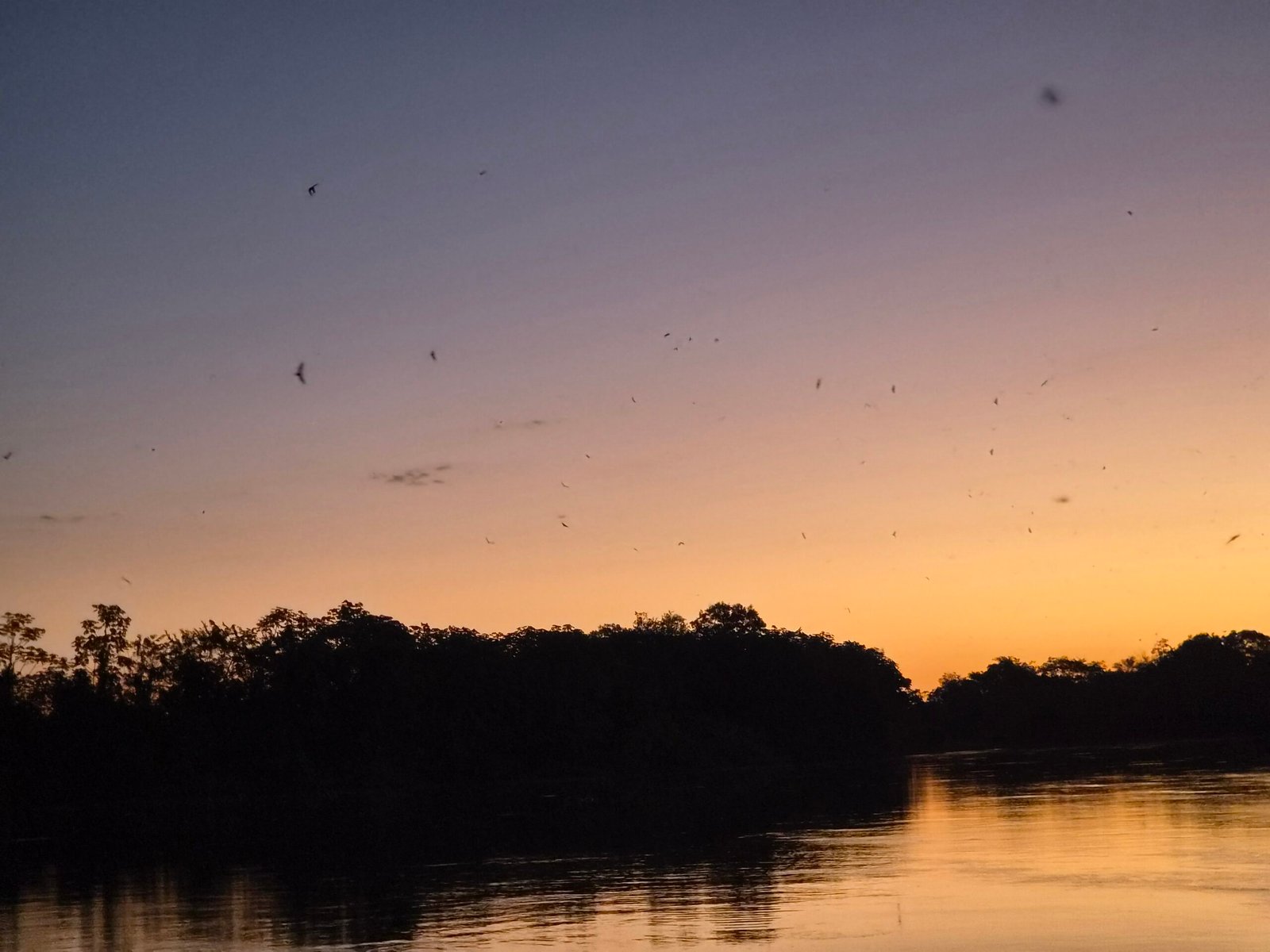
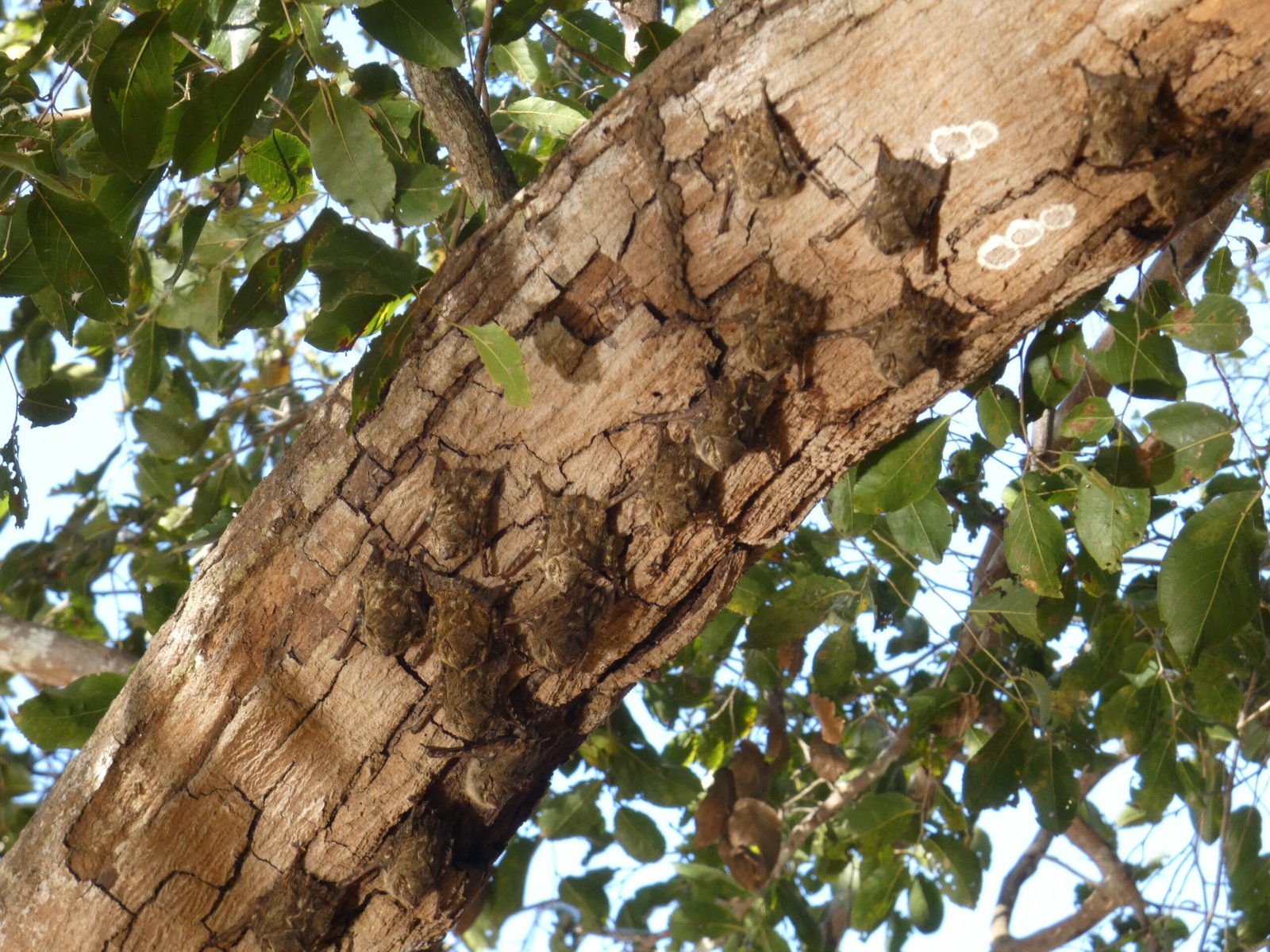
Darkness fell around us, bats and the moon appeared in the sky, but there was still no sign of the rescue party. That’s when Wellington said that the delay was probably because the boat sent to rescue us had left from the fishermen’s lodge behind us, and that they had apparently headed in the wrong direction. At that point, we began to wonder a bit about our lodge’s entire rescue plan. As Europeans, we immediately came up with numerous ways to improve this system so that tourists wouldn’t have to wait on a boat for over an hour for help to arrive in the event of an emergency. So, we still weren’t really in any real danger, but being mosquito bait was starting to get on all of our nerves.
Once it had been over an hour since we ran out of gas and we still hadn’t heard any help, Wellington decided to pull the boat right up to the shore and climb out of the reeds onto dry land to find some kind of long stick so he could pole us to a nearby dwelling. (Naturally, there weren’t any paddles of any kind on the boat.) From there, we could call for help to the right address. Risto was a little worried as our guide disappeared into the darkness behind the reeds, and we were left bobbing in the shallow water near the shore. “What if a jaguar comes out of there and attacks us?” That’s a pretty good question, actually… When Wellington returned with a long pole, we also began to hear the sound of an engine. A moment later, our host Margarida and two men appeared from around a bend in the river in their boat, which was carrying a large can of gasoline. Once the tank was full again, we continued our journey back to our lodging, after about a 1.5-hour wait. Well, now we have another story to tell when we´re old.
When we finally got home, there was a big frog in the Polish couple’s room. The man tried to shoo the creature out of the room with his shoe, but the frog didn’t get the hint. So Risto went over, grabbed the frog, and set off to carry it outside. Apparently, Risto’s grip wasn’t tight enough, because the frog somehow managed to wriggle free and clung to Risto’s hand with its own legs. Risto was a little startled by this and flung the frog in an arc onto the floor. Now it was the frog’s turn to be startled, and it let out quite a stream of panic pee on the dining room floor. At that point, Marko grabbed the frog and took it outside. Once again, the frog managed to wriggle free and climb onto Marko’s shoulder. From there, we finally managed to shoo the frog down and back into the wild. After the frog episode, we ate a late—but once again truly delicious—dinner, and gradually drifted off to sleep. We certainly had quite an eventful day!
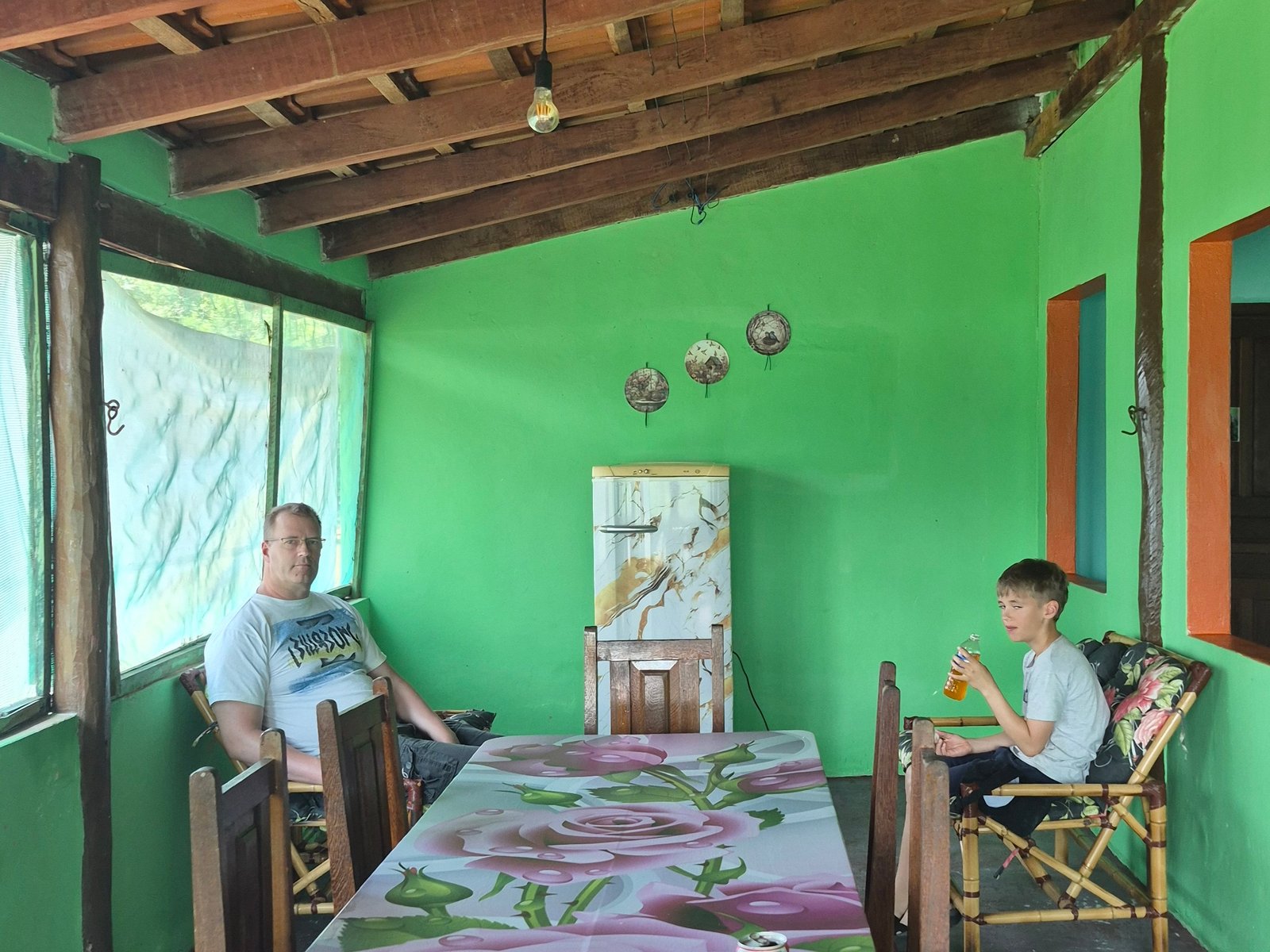
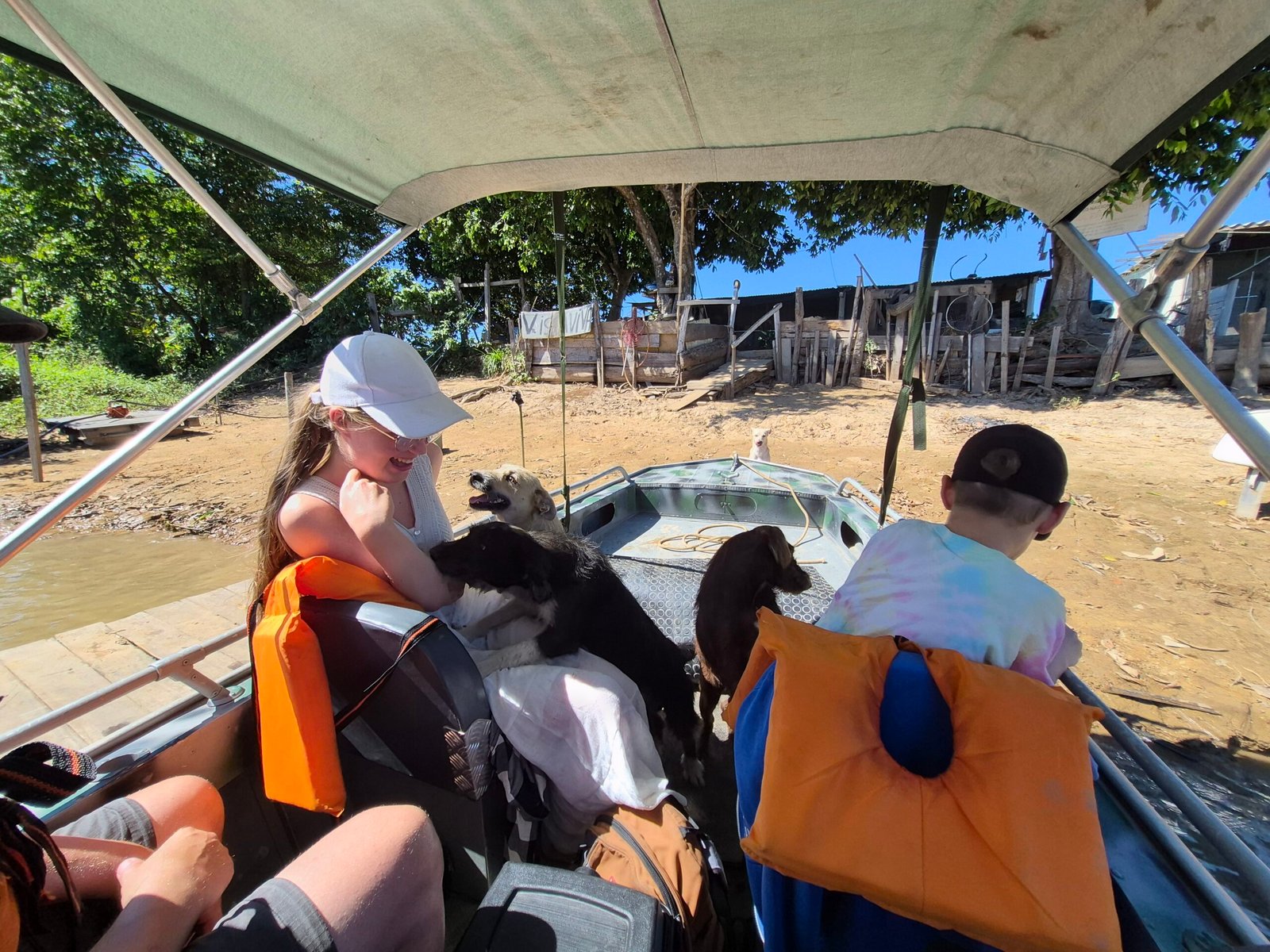
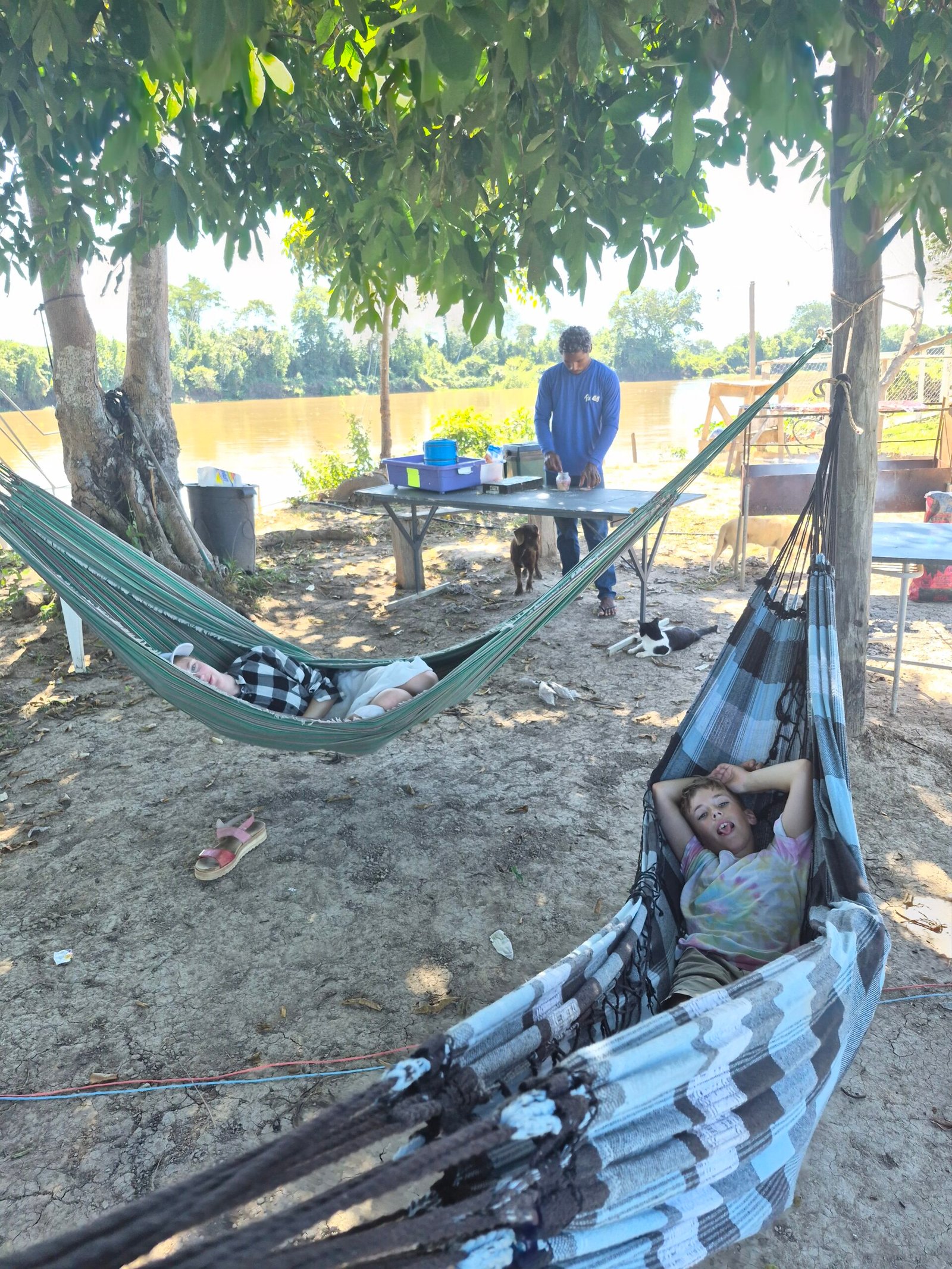
On Tuesday, we woke up a little later than usual, since we had a full-day excursion booked for that day called “A Day in Nature.” The excursion wasn’t much different from the previous day’s jaguar-spotting trip, except that we didn’t go as far by boat this time. We spotted animals closer to our lodging (but still over an hour’s boat ride away), and we had lunch in the backyard of a fisherman’s family. It was the same spot where we’d stopped the previous day for a bathroom break and to fix the backrest of one of the boat’s seats. One of the locals hung hammocks for us in the shade of the trees, where we could relax and wait for lunch.
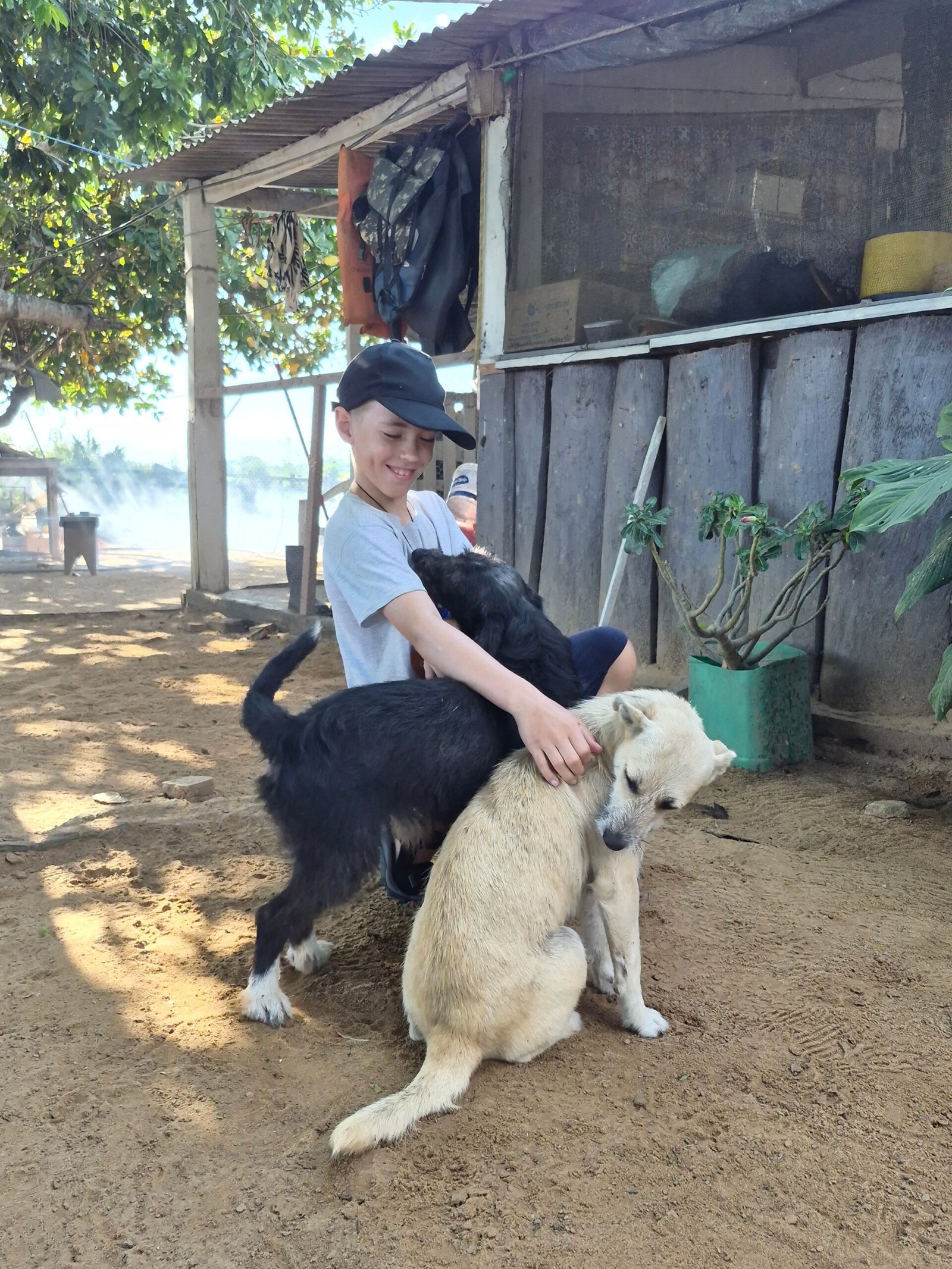
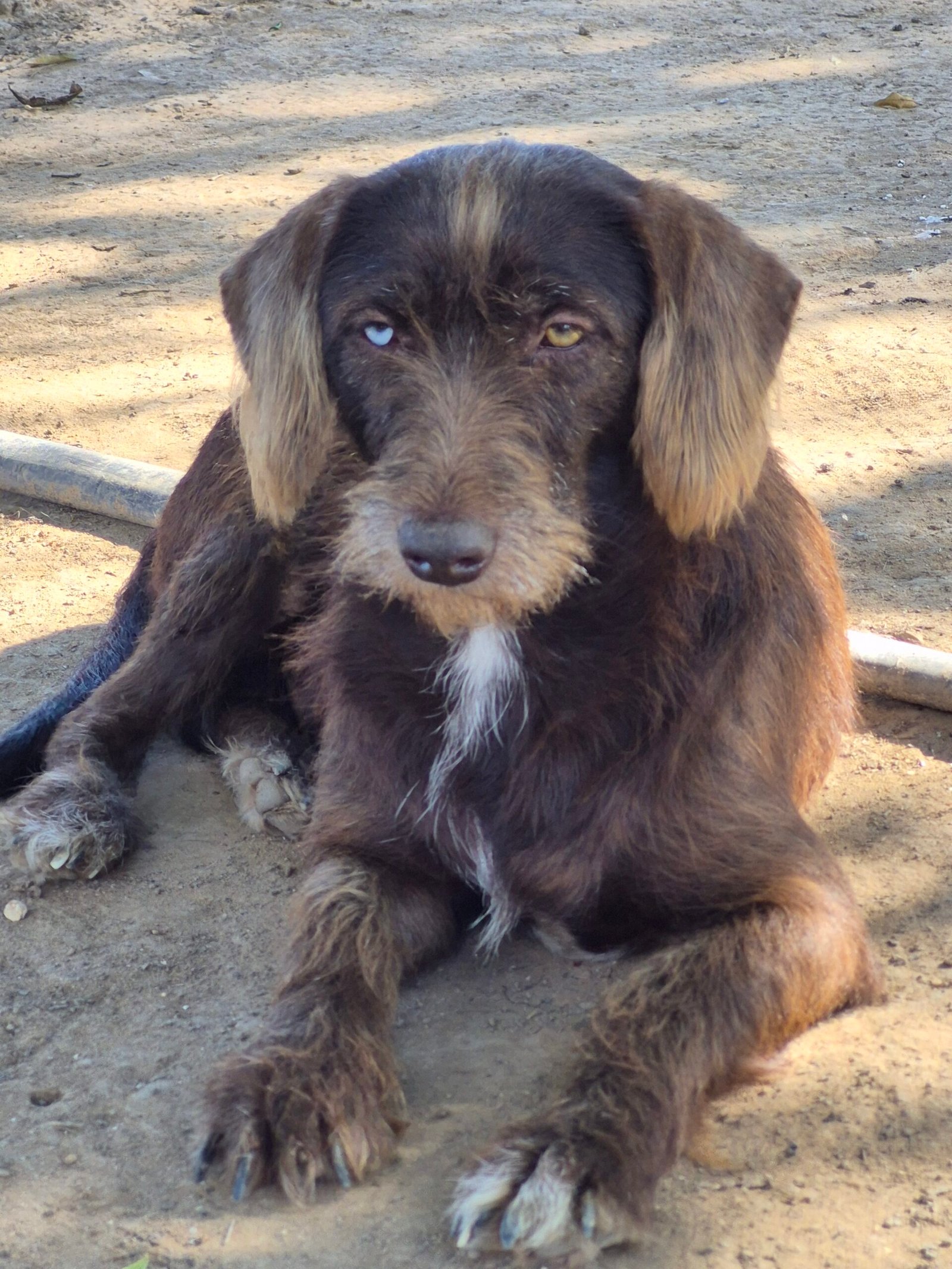
This time we didn’t bring any prepared food with us; instead, Wellington grilled both chicken and beef for us. We had to wait quite a while for the food, because at first Wellington placed the meat to cook nearly half a meter above the smoldering coals. It wasn’t until half an hour later that he moved the meat closer to the heat source, at which point it actually began to cook. Opinions may vary on the cooking technique, but the food turned out truly delicious once it was finally ready. The homemade seasoning blend on top of the meat was incredibly good, and the chicken skin was grilled so crispy that even Ronja happily ate it. We gave all the chicken cartilage and the fattier cuts of meat to the four dogs and one cat waiting around the table, who had clearly gotten their share of the tourists’ food before as well.
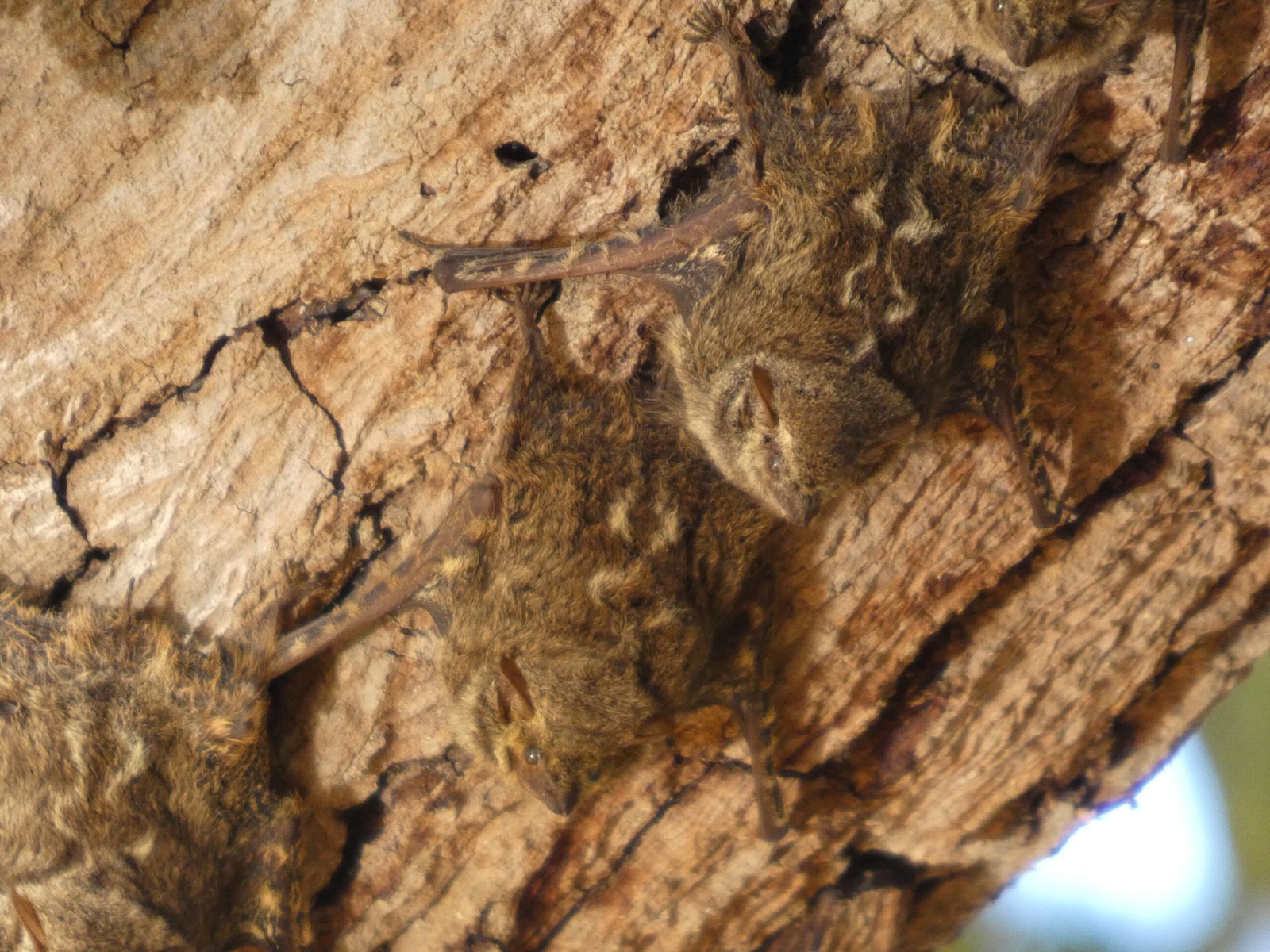
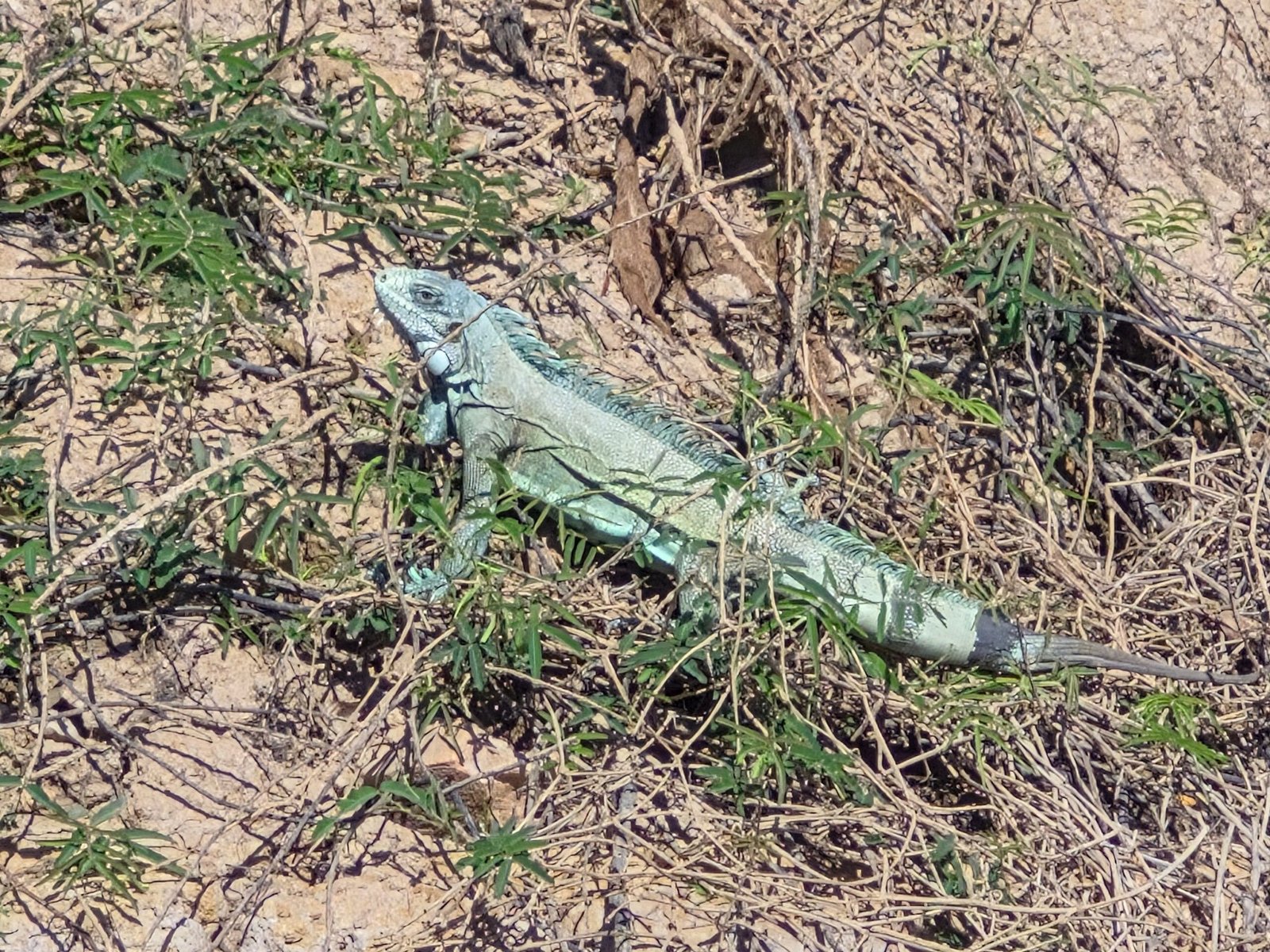
We didn’t see any jaguars during the day this time, but we did see several iguanas, numerous birds, and countless caimans. We also saw giant otters, a capybara, and bats. This time, we had enough gas to make it all the way back, even though Wellington tried to scare us a few times by saying we were running out of fuel. This time, we were out for only eight hours and returned during daylight hours.
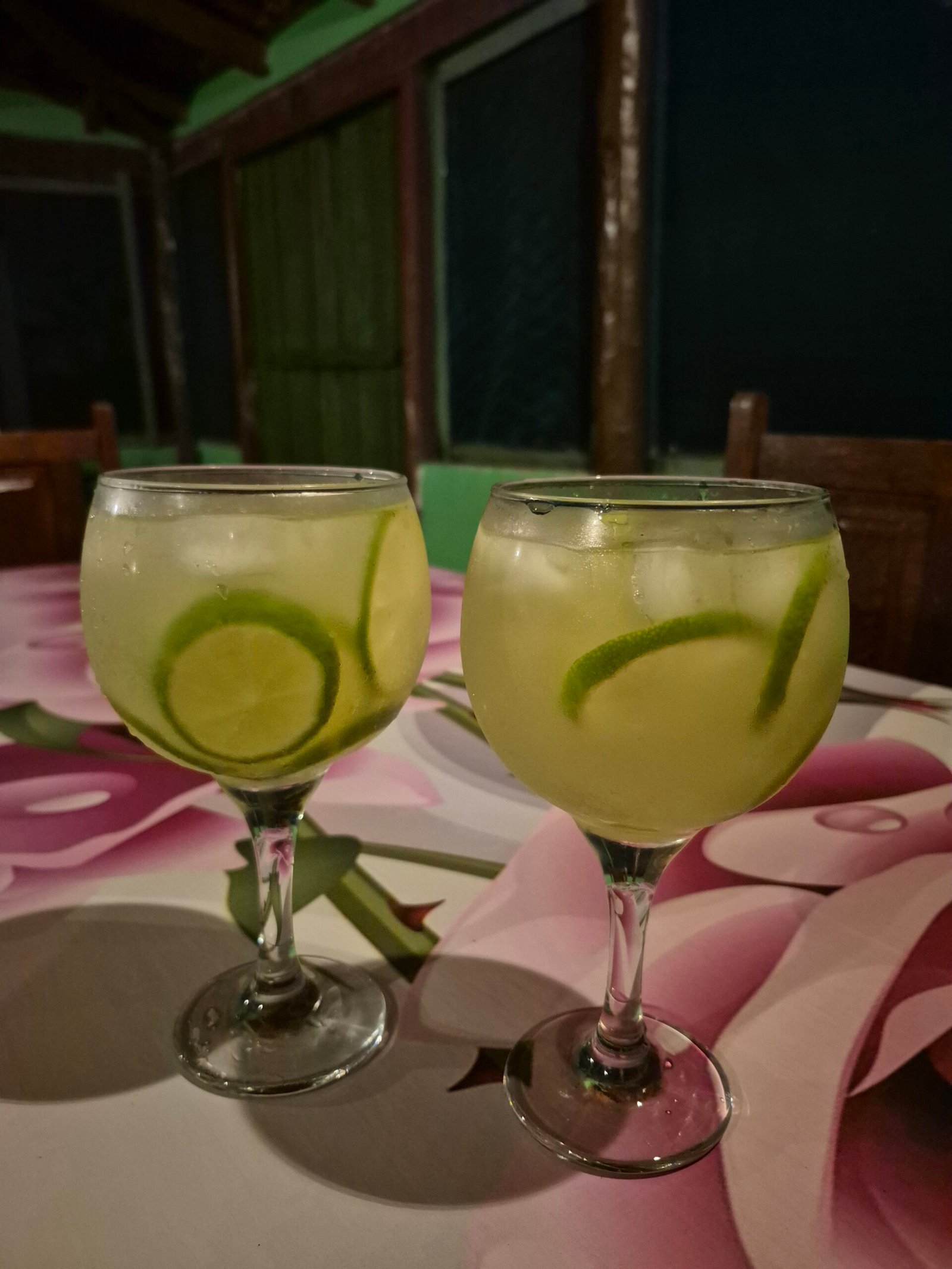
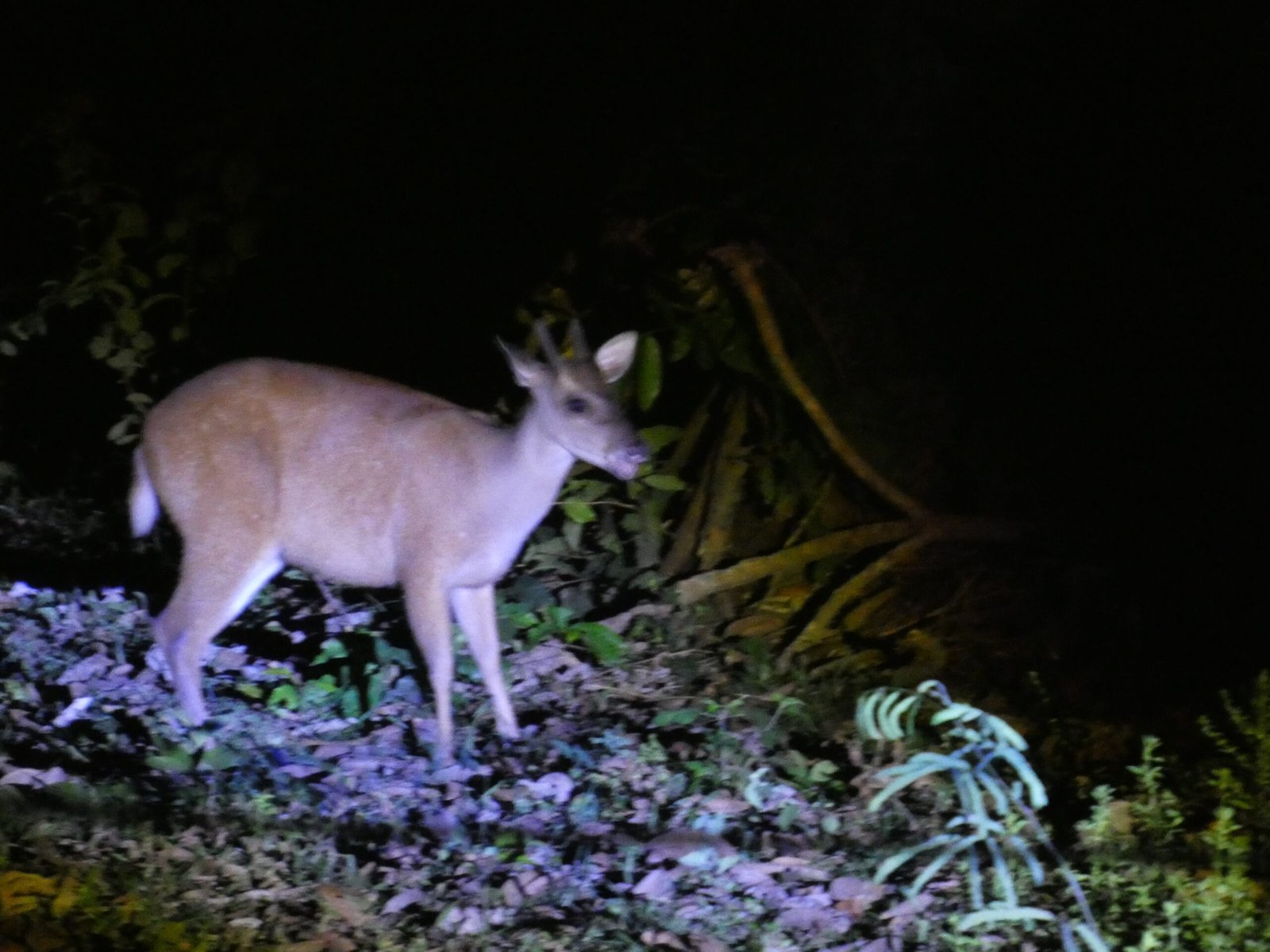
We had already settled down at the table in the lounge to wait for dinner and enjoy the daily giant caipirinhas—which were apparently included in the price of our stay—when a baby pronghorn trotted into the yard of our lodging after sunset to graze. Wellington had spotted it and came over to ask if we wanted to see it. Our second encounter was with a frog that had taken up residence in the Polish couple’s room. This time it was Jaana’s turn to rescue our travel companions from distress and carry the frog outside. It’s funny that there were always frogs in the Poles’ room, but none ever found their way into ours. The dinner Margareda prepared was once again truly delicious, complete with dessert, so with our bellies full, it was nice to go to bed.
Since Risto’s diarrhea still showed no signs of letting up—and, in Risto’s own words, his bowel movements were still “Finnish spring water”— we decided to head to Cuiabá the next day to visit a private hospital to make sure that Risto wasn’t suffering from anything more serious than traveler’s diarrhea. So, on the return trip, Jaana and Risto got off the car at the Santa Rosa Hospital in downtown Cuiabá—a facility highly recommended by the hostess of our lodging—while Marko and Ronja continued on directly to our apartment. Once Risto recovers from this illness, he’s already ordered some pasta for himself in advance, because right now his “python meter” reportedly reads 2% rice and 98% Coca-Cola. (According to Risto, this meter reflects what he’s been eating lately. That’s not entirely true, though, since he has been happily enjoying rolls, various juices, fried chicken and meat, and candy.) Another scale Risto uses is the “python composition scale.” It starts with Finnish spring water and ends with a “mega-night python.” In between, there’s also, for example, a smoothie, an iced slushie, a flock of pigeons, fish soup, a half-python, an almost-python, and a regular python. He can’t be that sick if he’s coming up with stuff like this to pass the time! So, we’re waiting for the mega python!
At the Santa Rosa hospital, there was once again a bit of a language barrier, but luckily there’s Google Translate. Jaana has, however, already gotten pretty good at understanding the Portuguese questions they’re asked at the doctor’s office, since they tend to follow pretty much the same pattern. Jaana can also give basic answers in a cheerful mix of Portuguese and Spanish (90% Spanish, 10% Portuguese). If that doesn’t work, they pull out their phones and use the translator.
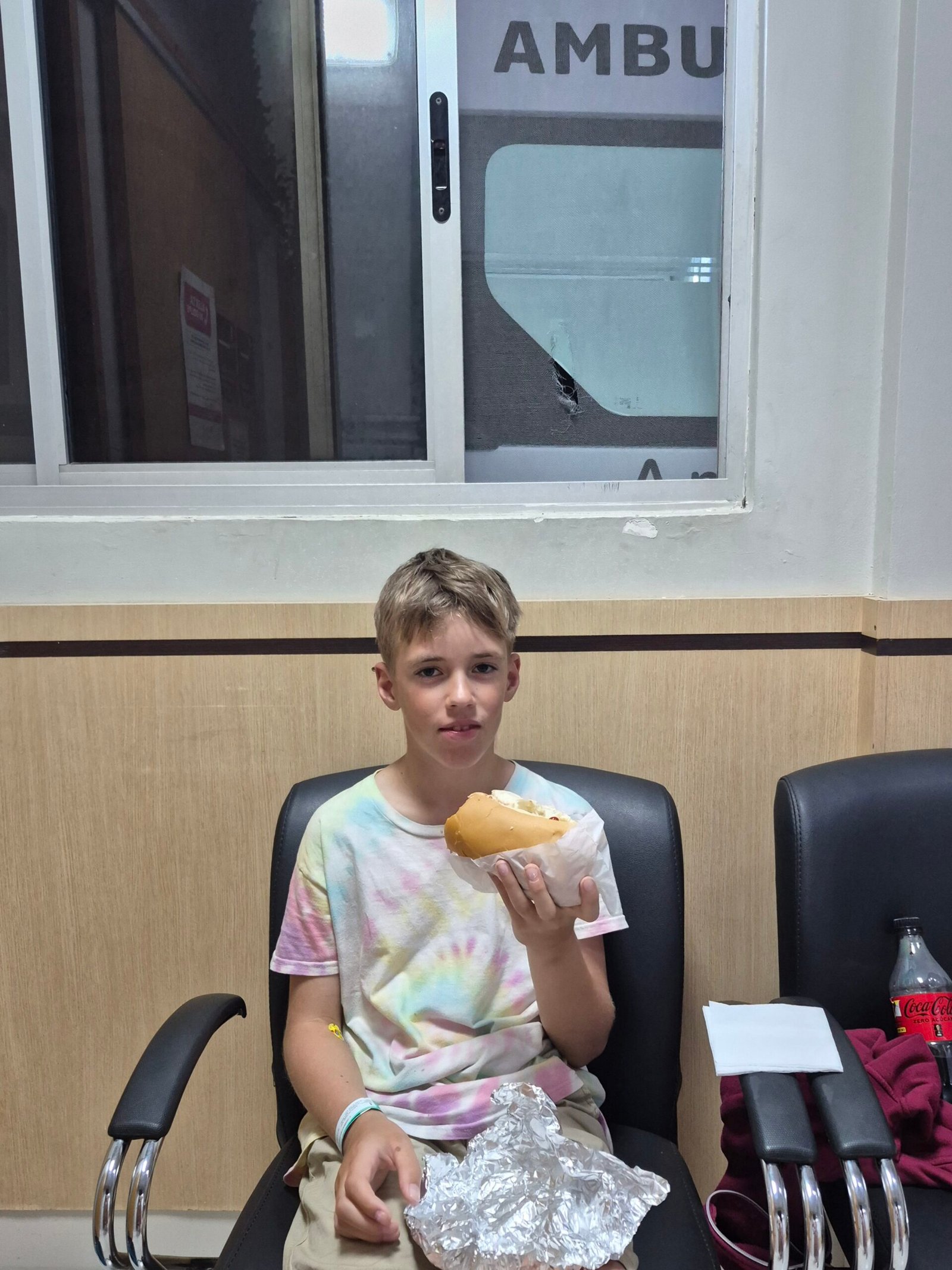
This time, getting to see the doctor and having the new blood tests done didn’t take very long, but we had to wait 2.5 hours for the results. At first, we were told the results would be ready in a couple of hours, but for one reason or another, the wait ended up being another half hour longer. Since Jaana and Risto had only had breakfast in the Pantanal wetlands, they were already getting pretty hungry. However, they were reportedly not allowed to go anywhere far from the hospital, so Jaana went to a hot dog stand across the street to buy hot dogs for herself and Risto, which they then ate in the hospital waiting room while waiting for the blood test results.
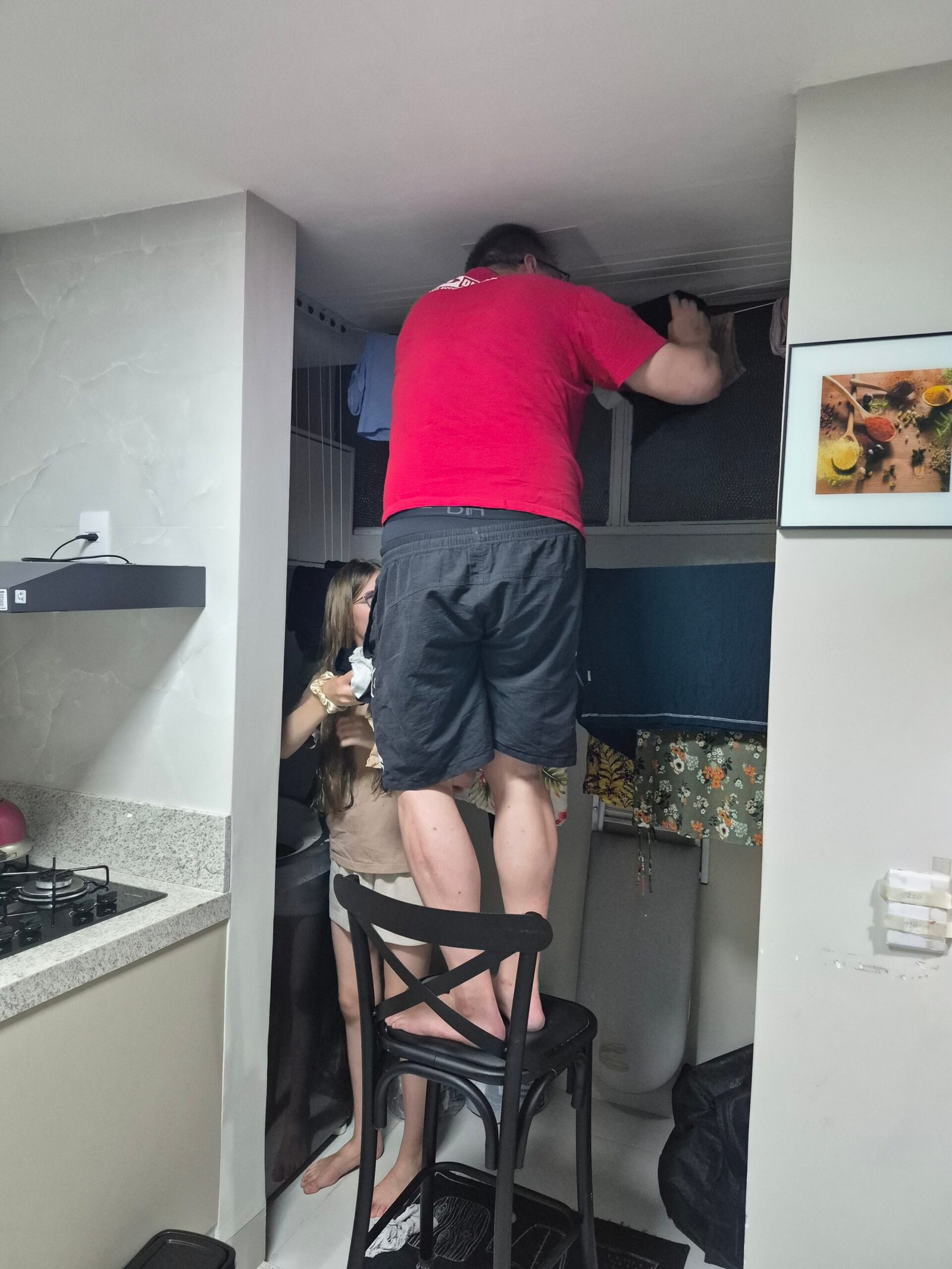
Since it took so long to get the results, the female doctor who had initially treated Risto had already finished her shift and gone home. She was replaced by another female doctor who was incredibly tall—even taller than Marko—and who also spoke a little English. She explained that Risto had an illness very common among Brazilian children, which required a three-day course of antibiotics to heal. However, even without the antibiotics, while we were waiting at the hospital, Risto’s “python composition” had improved to the level of fish soup. We were prescribed many other things as well, such as acetaminophen, probiotics, and so on, but the doctor said that maybe we should just stick to the antibiotics for now. So we hopped into an Uber and zoomed back to our apartment, where Marko and Ronja had stocked the fridge full and the first load of laundry was already hanging out to dry. On our way to dinner, we stopped by the pharmacy to pick up the medicine. We would have needed a local tax ID number, a CPF, to buy the medicine, but the pharmacy employee “lent” us her own tax ID number so we could purchase the antibiotics.
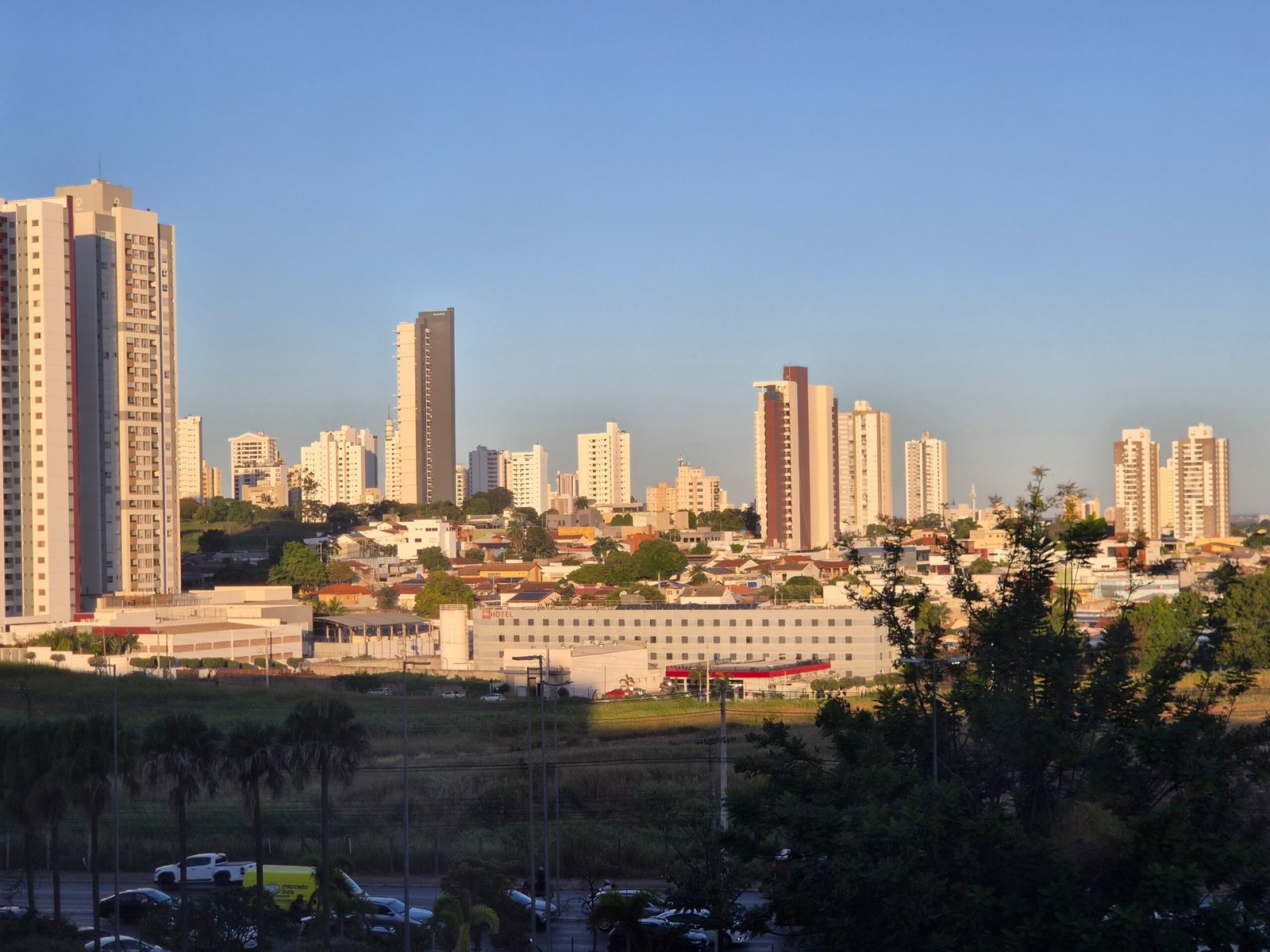
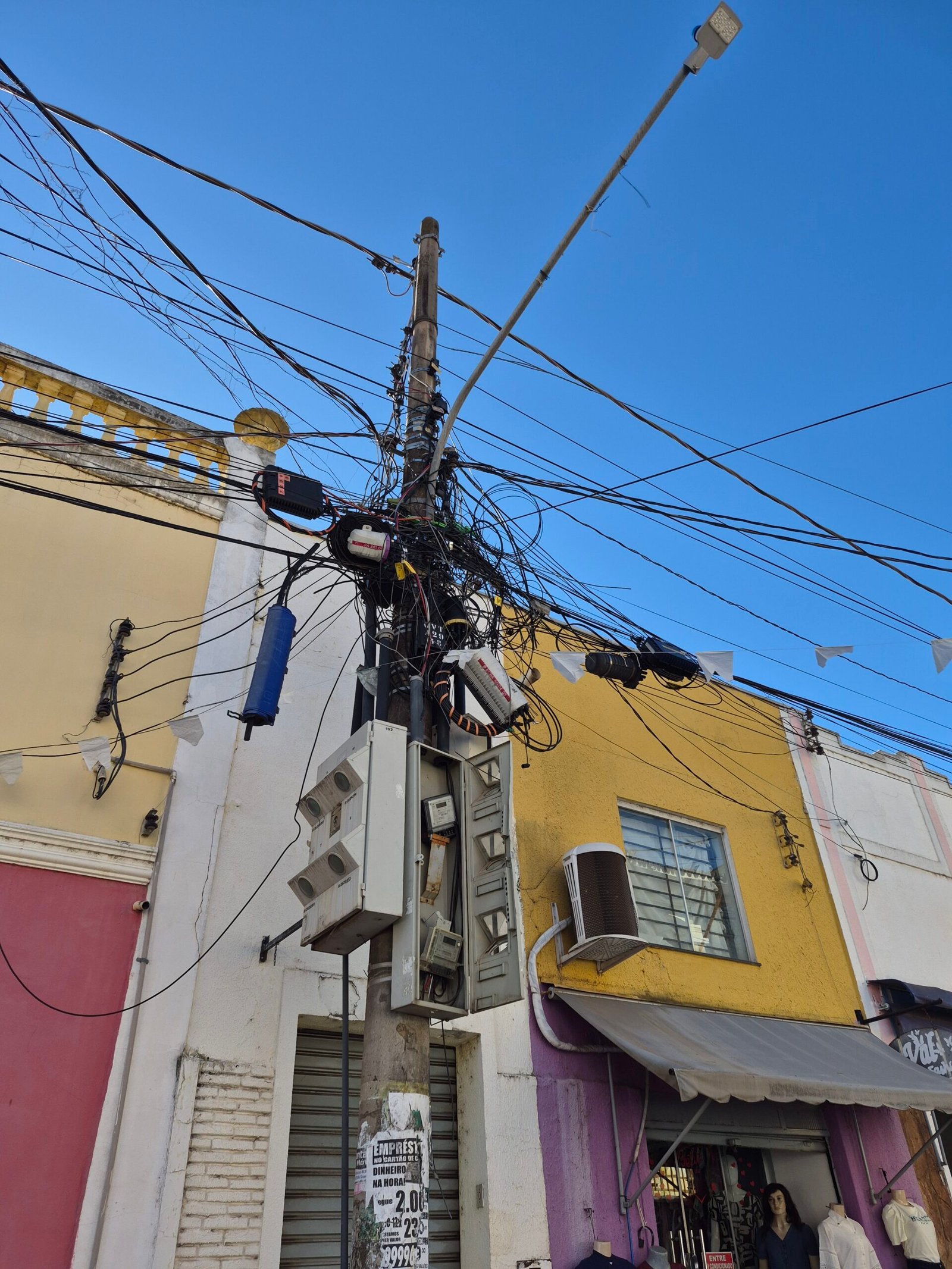
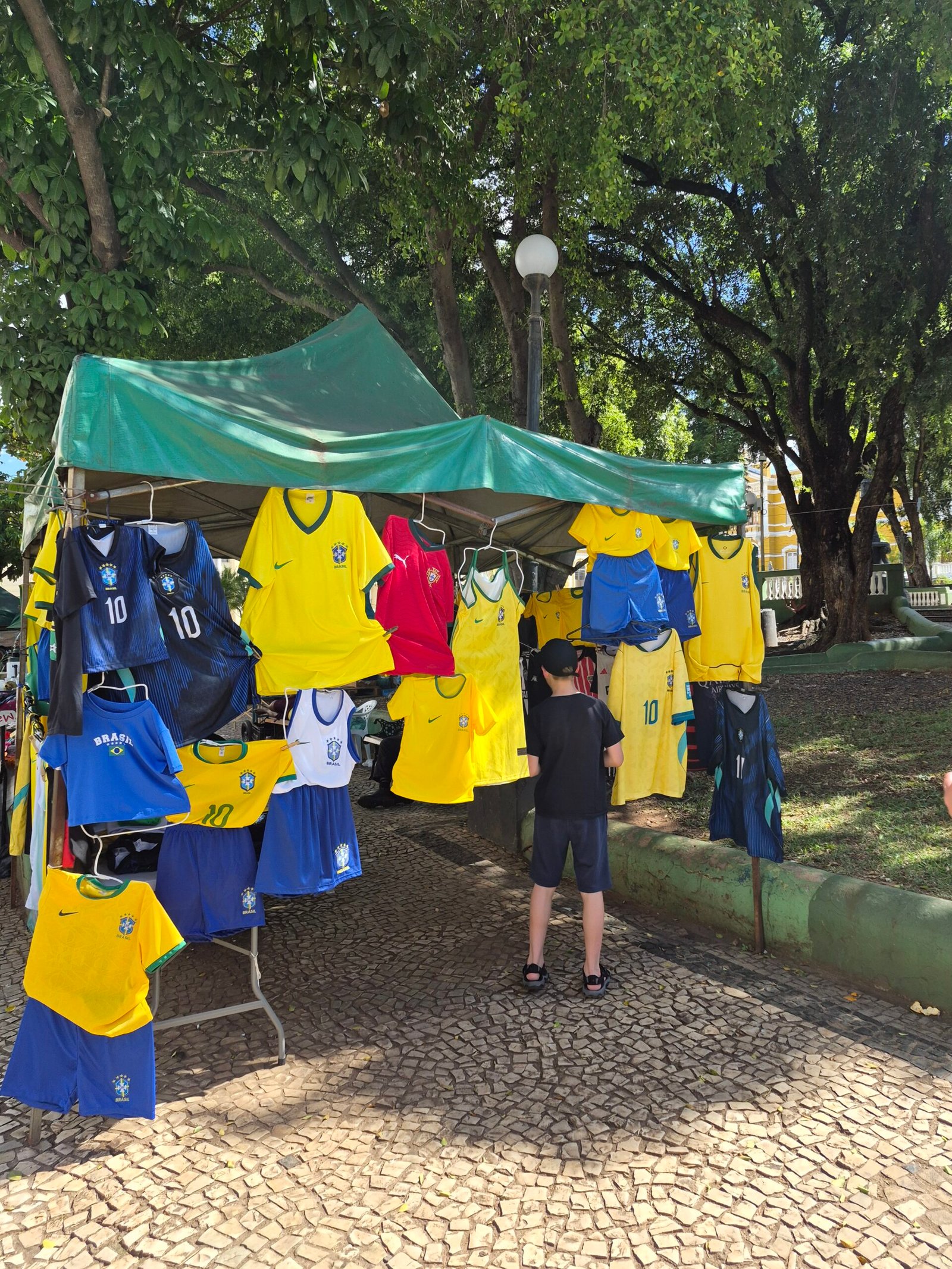
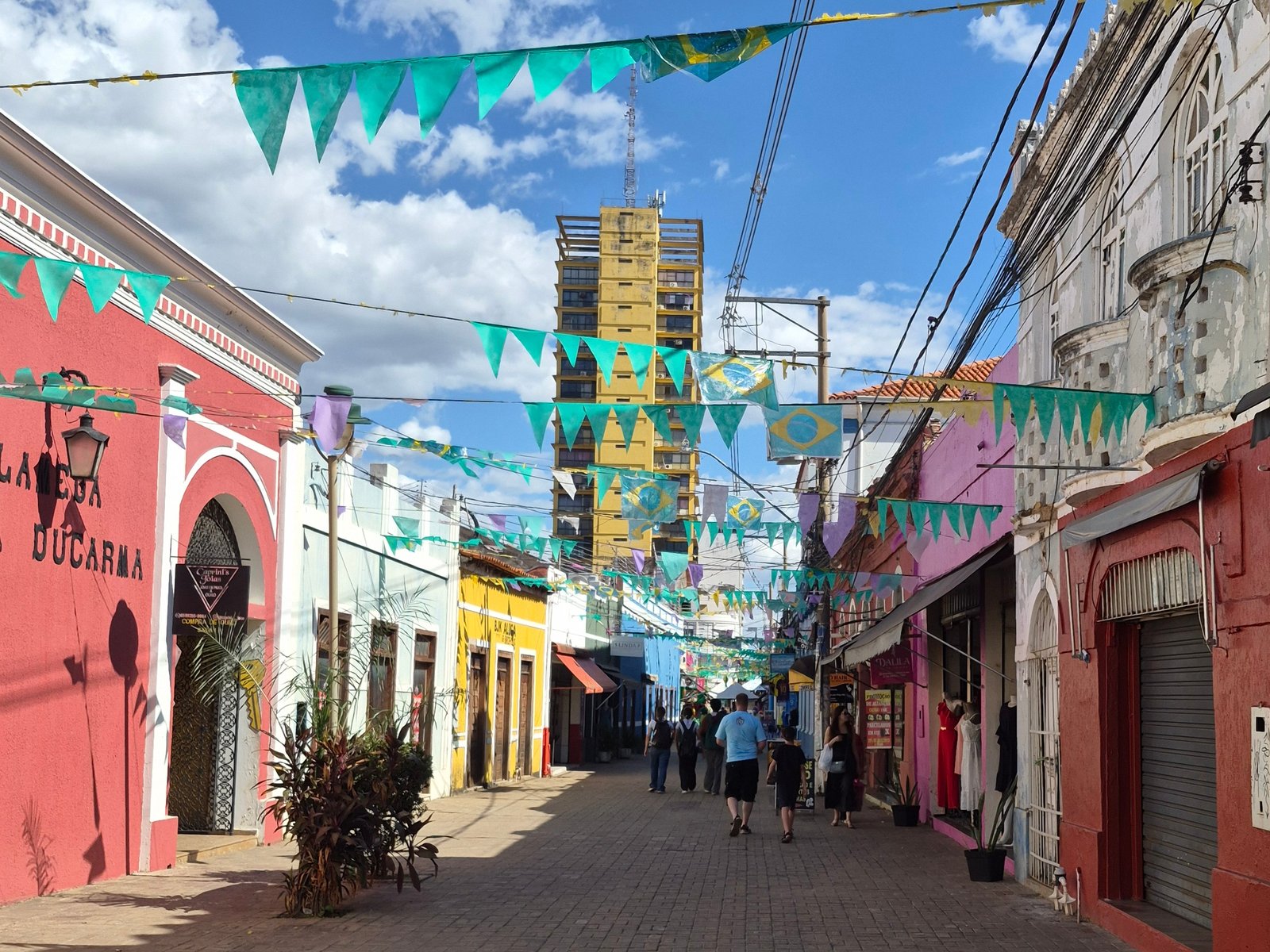
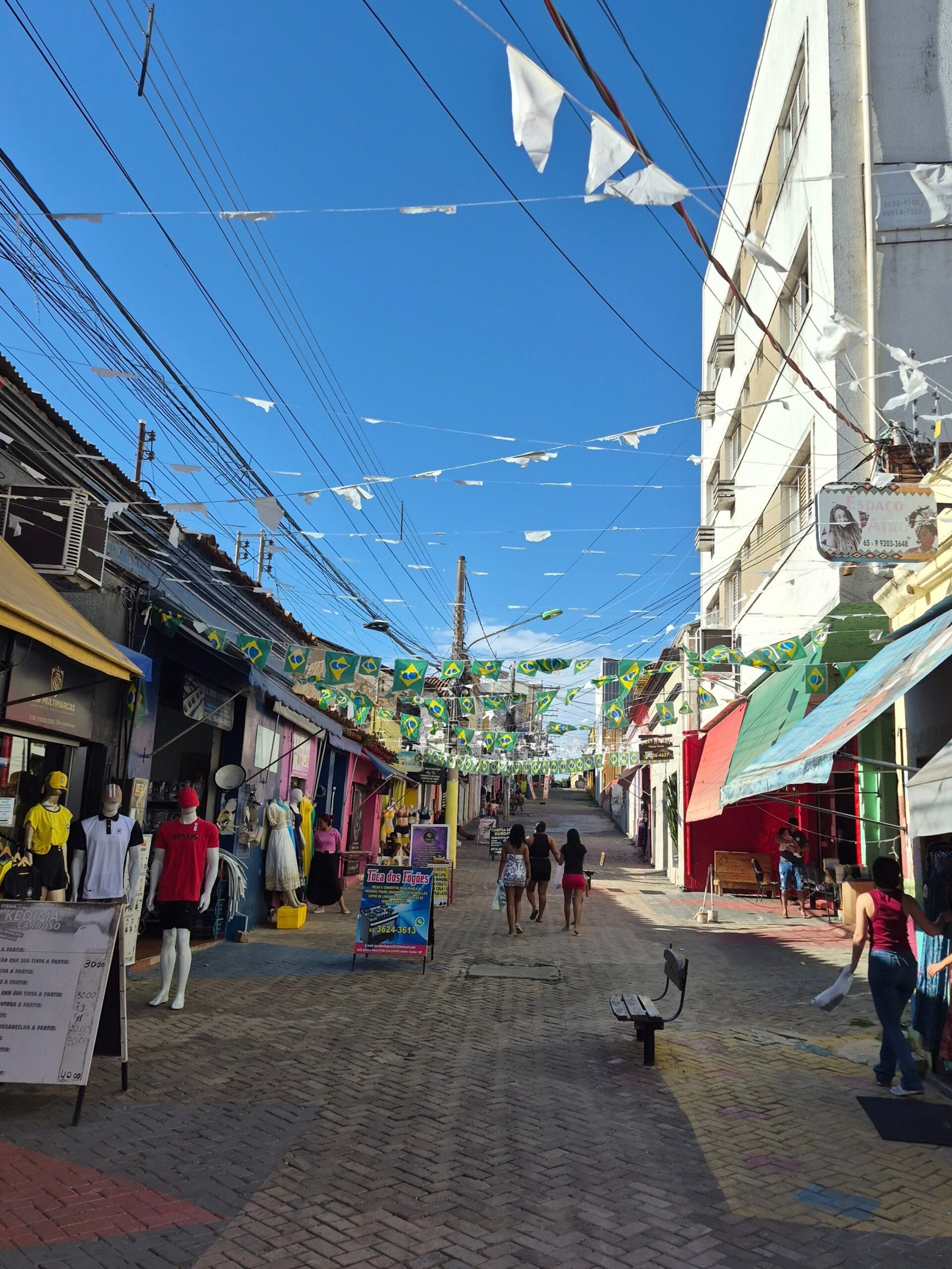
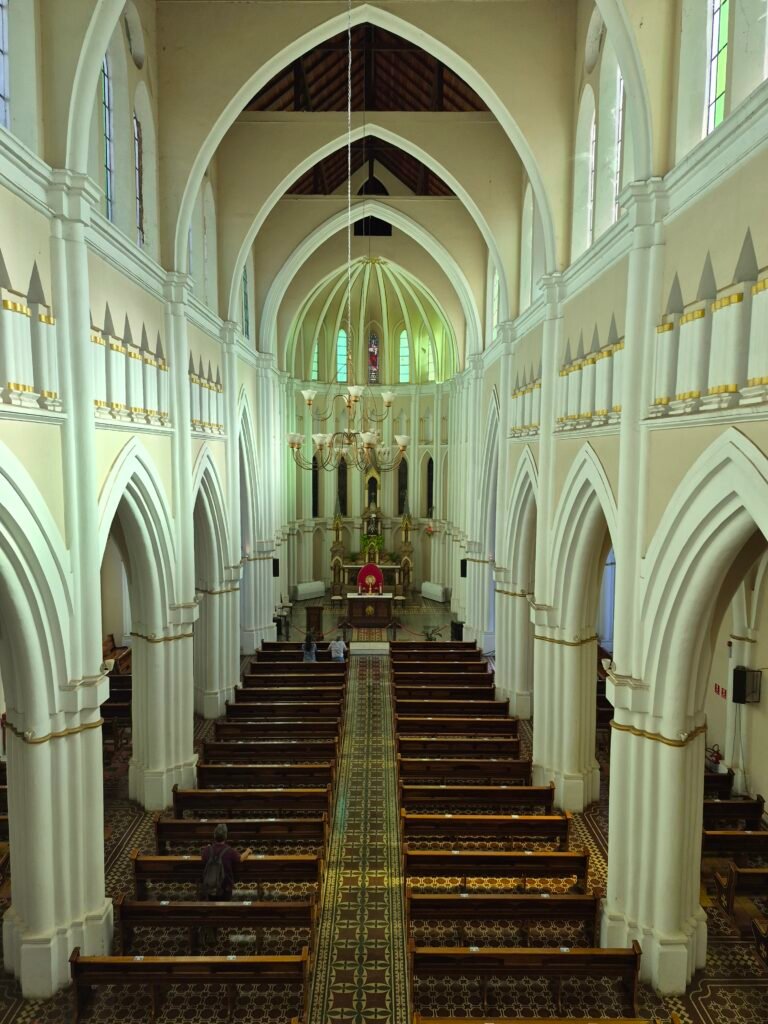
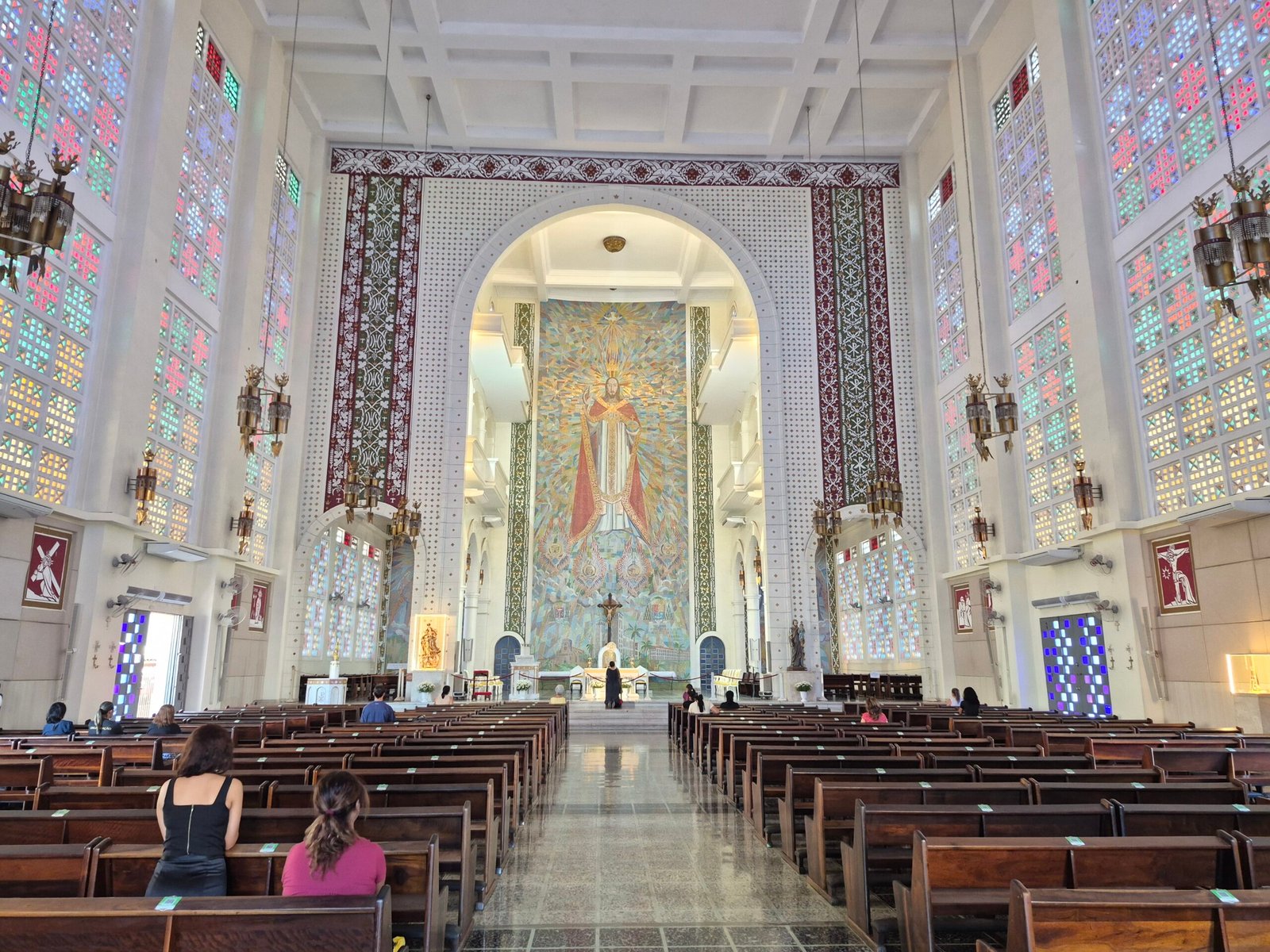
We took it pretty easy on our last full day in Cuiabá. In the morning, we did some more laundry, and then around noon we set out to explore the older part of town. There wasn’t really anything special to see there—just a few churches and lots of street vendors. Risto, who normally isn’t much of a shopper, got excited and bought a few soccer jerseys to take home. For a late lunch, we headed to a shopping center a little further away, since the historic downtown didn’t really have any dining options beyond sandwich shops. We made a quick stop at a grocery store and then returned to the apartment.
The soccer match between Portugal and Croatia, which Risto wanted to watch, started at 19:00. Yle Areena was technically showing the game, but Risto couldn’t get it to play on his tablet because the stream was restricted to the EU. So we grabbed Marko’s laptop, set up a VPN connection to Finland, got the game streaming from Areena, and hooked the laptop up to the big flat-screen TV in the living room with an HDMI cable. When Ronja came into the living room, she was wondering how we could be watching the match with Finnish commentary!
After the game, we packed our bags for the next day’s flight. The plan was to head next to the Iguazu Falls via Viracopos airport.