In the morning, an Uber came to pick us up from our apartment in Asuncion a little after seven o´clock. At first, the driver hesitated a bit when he saw that we had four backpacks and four daypacks with us. The driver tried to refuse to take us altogether, but Jaana managed to convince him to take us after all. Of course, this meant that Marko sat in the front seat with his own backpack on his lap, while Jaana and the kids had Risto’s backpack in the back seat in addition to their own backpacks. Fortunately, the trip only took about 30 minutes, so we managed it fine even though it was a bit cramped. After all, we’d had to do this several times before. In these parts of the world, booking a more spacious “Comfort” class car guarantees practically nothing. In Brazil, the cars weren’t necessarily very spacious, but at least they were in relatively good condition and new; in Paraguay and Argentina, however, the rides have been rather modest so far.
We made it to Silvio Pettirossi International Airport well in time, despite the taxi driver’s protests. Check-in went quite smoothly, so we still had about an hour to spare before our flight departed. Considering the size of the city, the international terminal, at least, wasn’t all that big. This time we weren’t flying on an Azul flight; instead, we were on an Aerolíneas Argentinas flight. We’d been seated in a rather odd arrangement: the kids were in row 20 at the back of the plane, and we adults were in the first row of economy class, row number 4. Since boarding took place in groups, the kids boarded the plane before us. We watched the situation from behind, waiting to see at what point the flight attendants would ask the kids who they were traveling with—and perhaps not let them board alone at all. However, that didn’t happen; instead, the children flashed their boarding passes and strolled onto the plane. So we spent the entire flight to Buenos Aires at completely opposite ends of the plane. This was great practice for the kids for when they eventually travel on their own as adults. The kids even managed to order drinks during the flight in Spanish, since the crew, of course, didn’t speak English.
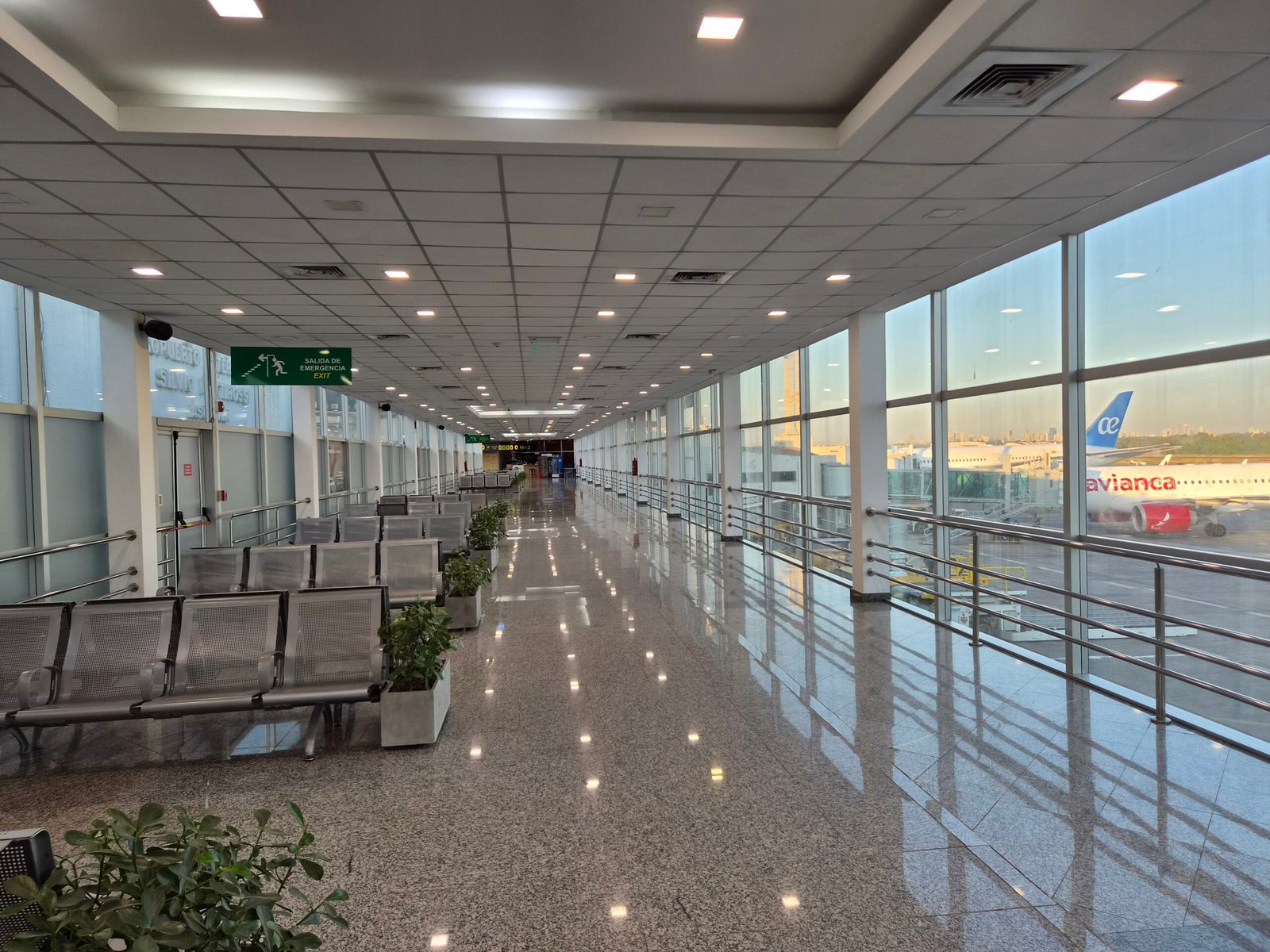
Traffic at the Asunción airport certainly didn't slow things down
The flight from Asunción to Buenos Aires took 1 hour and 55 minutes, after which we stood in line for passport control for almost another hour and a half. Apparently, after standing in line for 1.5 hours, we were spared from the long line and directed to a slightly shorter one because of Risto. I guess he still met the criteria for a small child, and we finally made it through the fast lane into Buenos Aires. Since we’d been standing in the immigration line for so long, we didn’t have to wait for our luggage at all. In fact, the baggage carousel was just about to stop completely when we walked over to pick up our backpacks. We ordered an Uber to our accommodation and began our five-day adventure in Buenos Aires. One thing worth mentioning about this ride is that our luggage fit just fine, but the condition of the seat belts in the back seat was a bit iffy. Risto spent half the trip fiddling with Jaana’s seatbelt, trying to get the buckle to slide through what looked like a chewed-up and frayed seatbelt so that the strap could reach the latch.
Buenos Aires
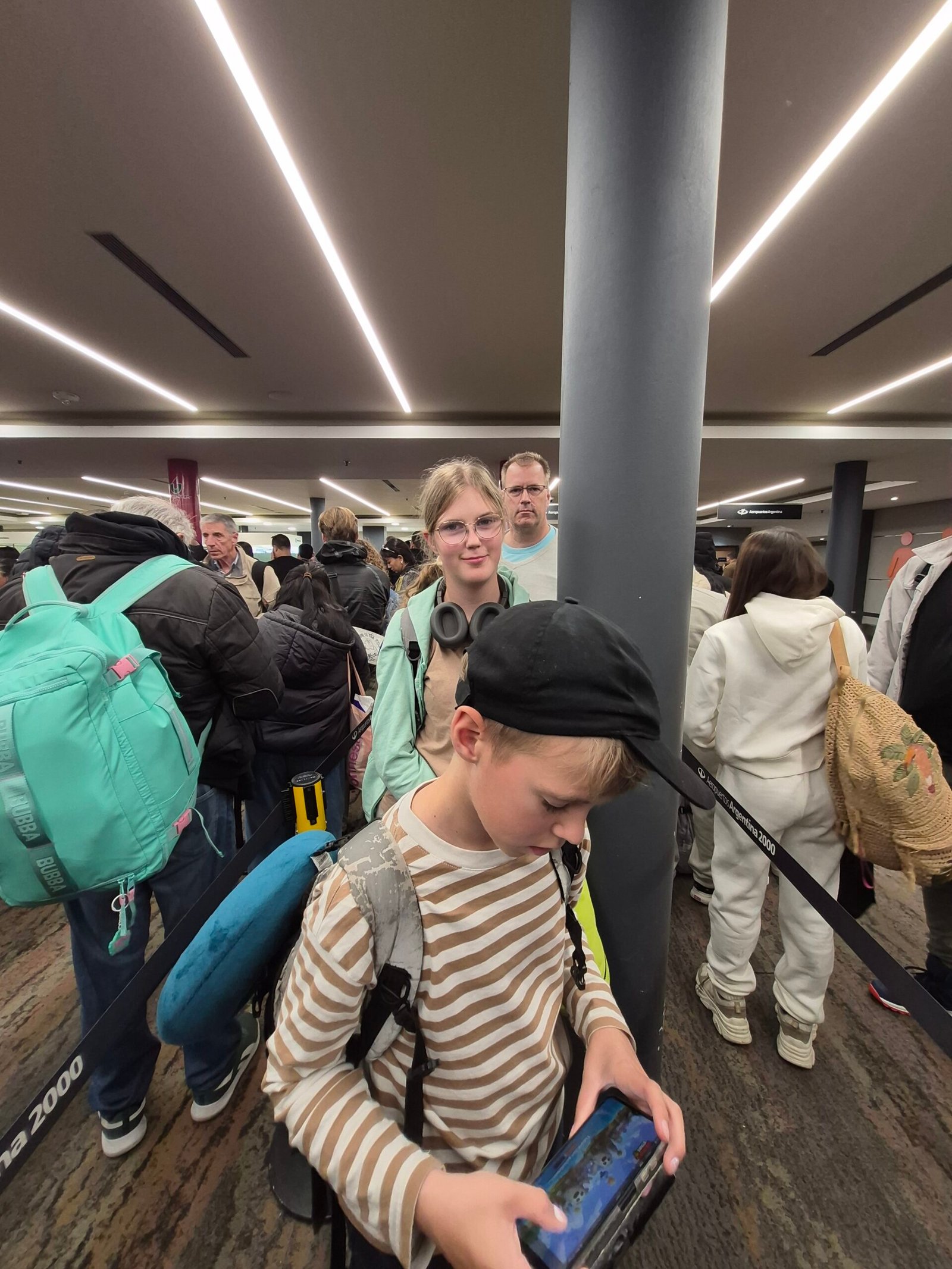
Nothing welcomes a tourist to a country more warmly than standing in line for a couple of hours at passport control
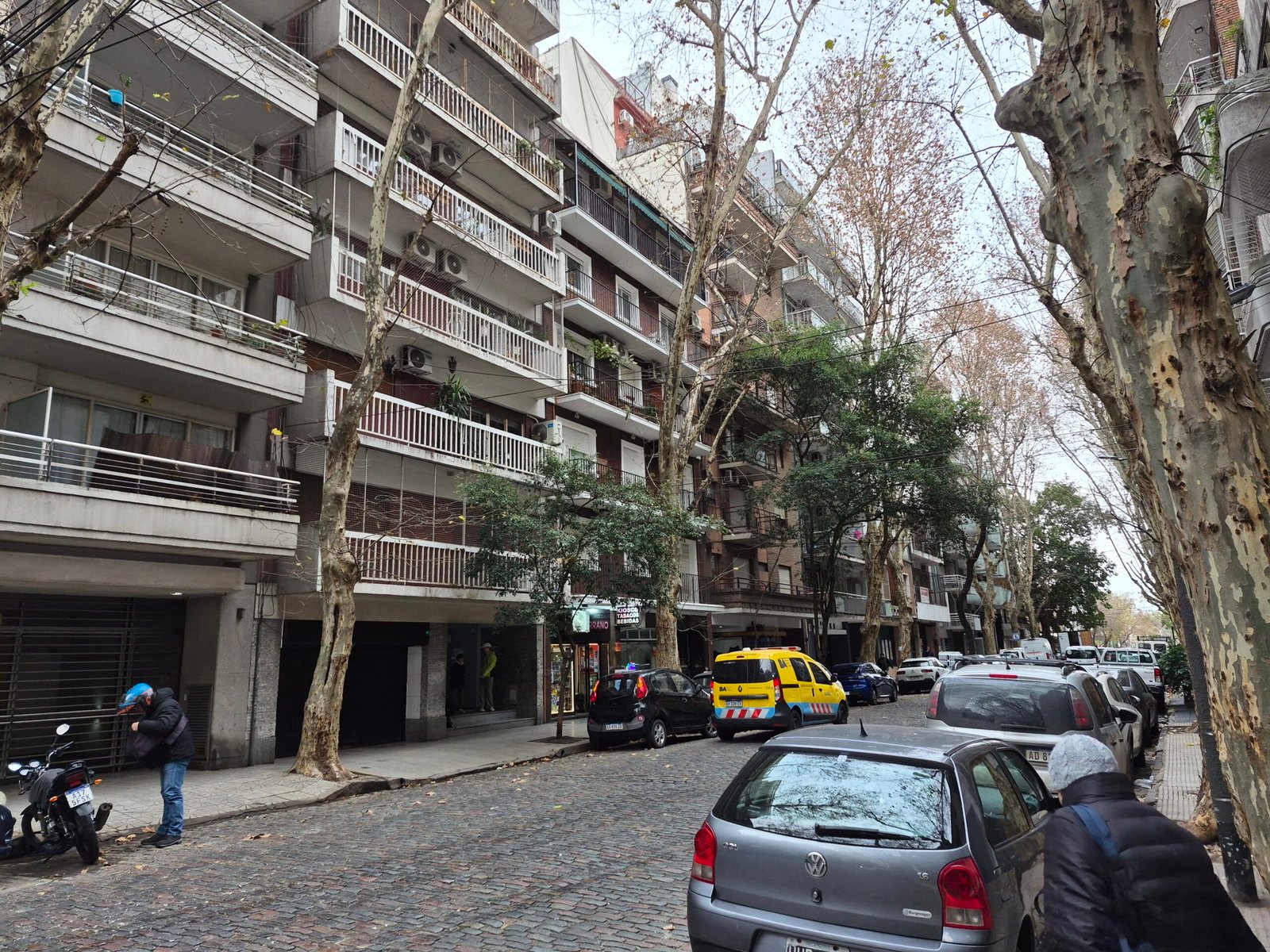
We stayed in Buenos Aires at an apartment called Luciana Palermo Soho. True to its name, the place was located in a neighborhood reminiscent of New York’s SoHo. The streets in the area were lined with small restaurants, each one looking more inviting than the next, and, amazingly, every one of them was packed with customers. Of course, it was Friday, and there was a soccer match that evening, but still. The city of Buenos Aires has a population of 3.1 million. If you include the entire metropolitan area, the population rises to between 14 and 16.7 million. This means that about one-third of the country’s total population lives in the Buenos Aires metropolitan area. In Finland, the capital city region is home to about one-sixth of the country’s population, which amounts to just over a million residents.
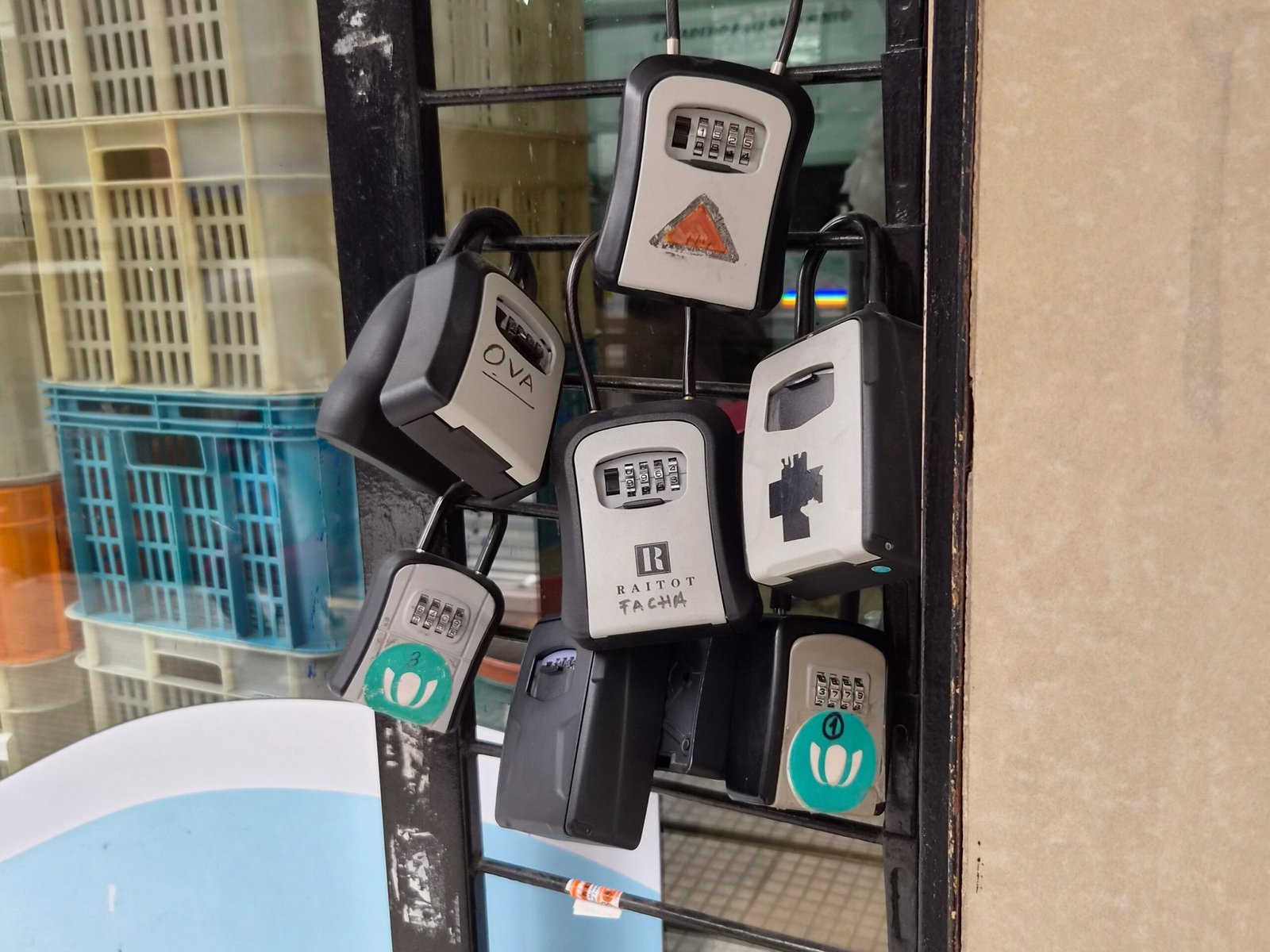
Checking into our apartment wasn’t exactly a breeze. We did manage to find our way by Uber right up to the front door of our apartment, but the doors didn’t just open for us like that. A couple of blocks away, tucked away next to the gate of a laundromat, was a locked key box, and we first had to go there to get the key so we could enter the stairwell. With the help of Google Maps, Marko set off toward the laundromat, while Jaana and the kids stayed at the bottom of the stairs to watch our things. It was pretty chilly standing outside, since daytime temperatures here in the south are only around +12°C during the winter. To our delight, an elderly woman with her dog happened to be entering the very same stairwell we were heading toward. Jaana tried asking the woman in Spanish to let them into the lobby to wait for Marko, but the woman said she didn’t dare let anyone in who didn’t have a key. Apparently, in her opinion, we didn’t look like a very trustworthy bunch. So we had no choice but to keep waiting. We had better luck with the next resident, and Jaana and the kids were able to go inside to wait for Marko. They didn’t have to wait much longer, because Marko had found a cluster of key boxes next to the laundry room door and returned with the key.
There are probably several Airbnb-style accommodations in the area
Our third-floor accommodation in Buenos Aires
The apartment had quite a unique character. Apparently, the owner was very fond of horses—and horse polo in particular—since every room, right down to the bathroom, was decorated with horse-themed items. This apartment, which had two bedrooms, a living room, and a kitchen, was quite spacious. We even had our own balcony, though we didn’t use it since it’s winter here and the weather is what you’d expect. The large glass windows on the balcony weren’t particularly well insulated either, and there was a slight draft coming through the cracks, but luckily, for once, the apartment’s air conditioners with heating were working. With the push of a single button, we were able to get warm air from the apartment’s two units, so we didn’t have to freeze inside after all. Later that evening, Ronja tested the shower as well and reported that hot water was also available in this apartment. It’s not something you can take completely granted for…
About an hour after we arrived, the apartment owner stopped by to collect a $300 cash payment for the remaining portion of the rent. Apparently, dollars are still the currency of choice here, even though inflation has stabilized under the new president. During the previous president’s term, inflation had been as high as 20% per month. These days, it has stabilized at around 2% per year. After paying the rent, we set out to find a suitable place to eat. Our criteria were food that would suit everyone and the opportunity to watch the Spain-Belgium soccer match. We didn’t have to walk very far before we found a veritable hub of restaurants in the Palermo Soho area. We fell victim to one of the bouncers, and soon we were seated in a restaurant where the soccer match was being shown on at least two different screens, much to Risto’s delight. The place might not have been a gourmet haven, but it served perfectly decent restaurant food. The prices were perhaps a bit higher than what we’d gotten used to in Brazil and Paraguay, but we still managed to eat for about €15 per person. Here in Argentina, it’s much harder (for everyone except Marko) to figure out how much things cost, since one euro is worth about 1,700 Argentine pesos. Luckily, we have Marko with us—a walking calculator—and when Marko isn’t around, we have proper calculators on our phones, so figuring out the prices doesn’t take too long. On the way home, we stopped by a grocery store to pick up some breakfast supplies, and then we returned to the apartment for the rest of the evening. We live close enough to downtown that Jaana had to wear earplugs while sleeping. There isn’t much soundproofing, and the adults’ bedroom faced the street side of the apartment building.
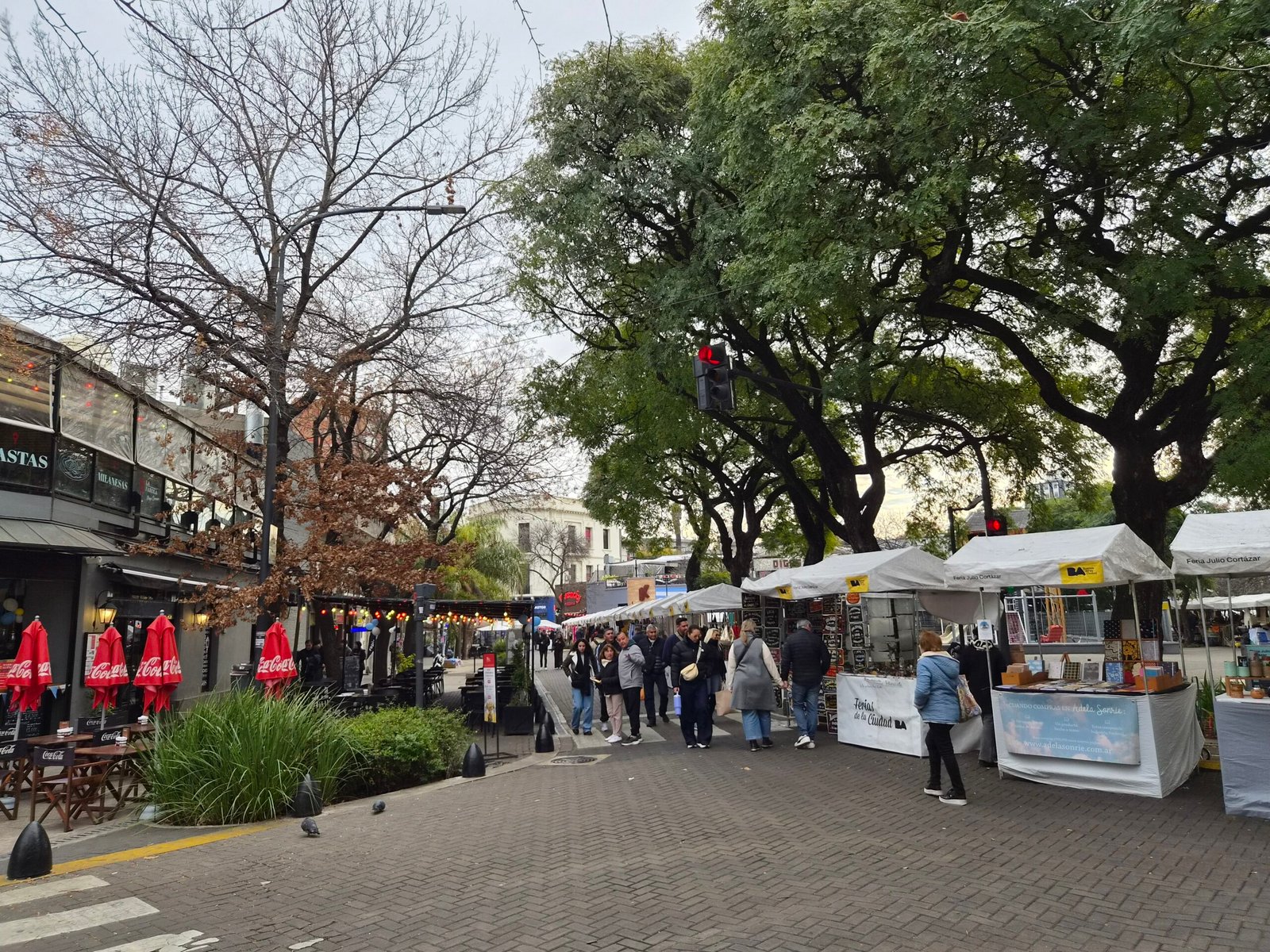
There was a weekend market in a small nearby square
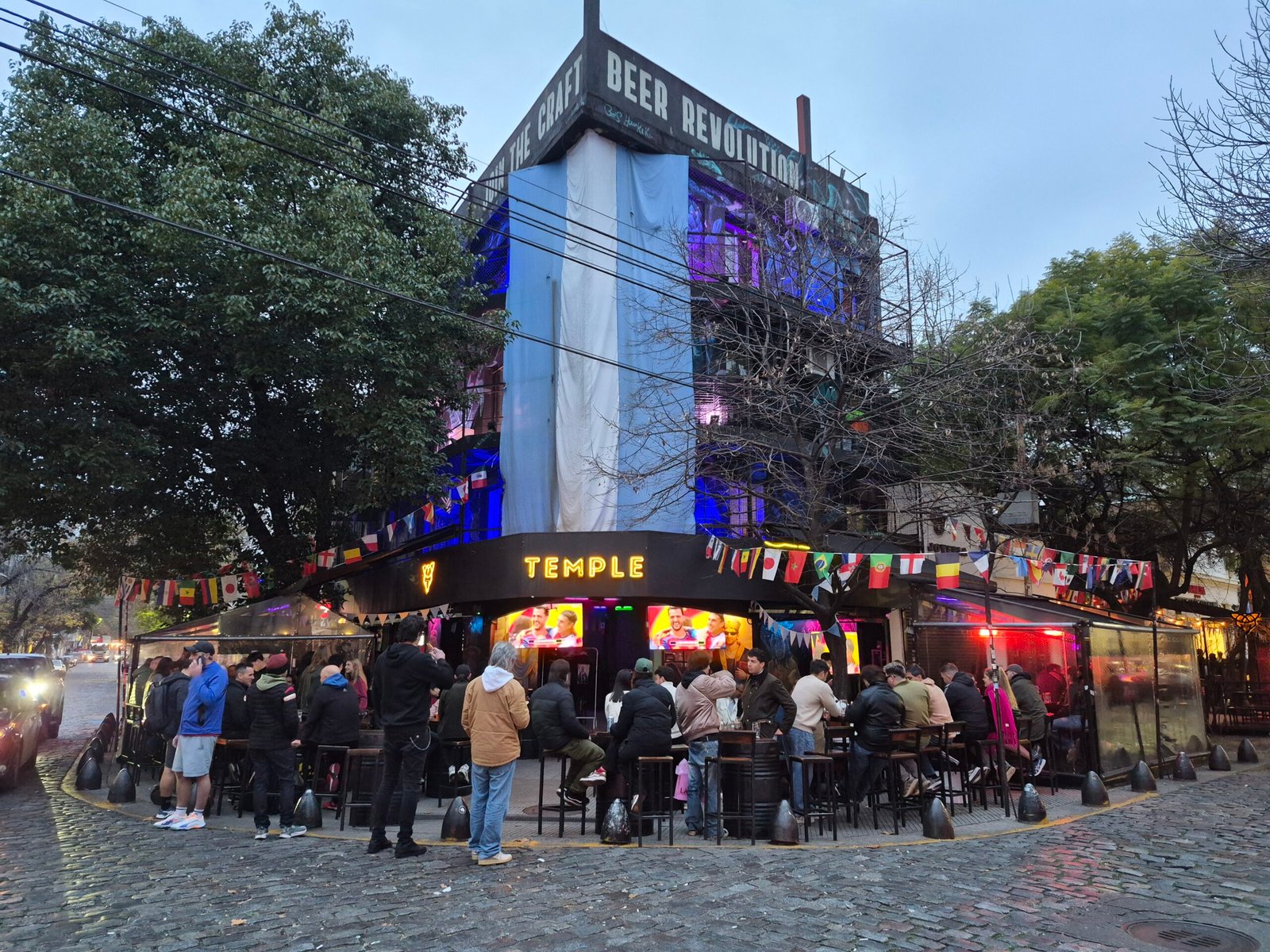
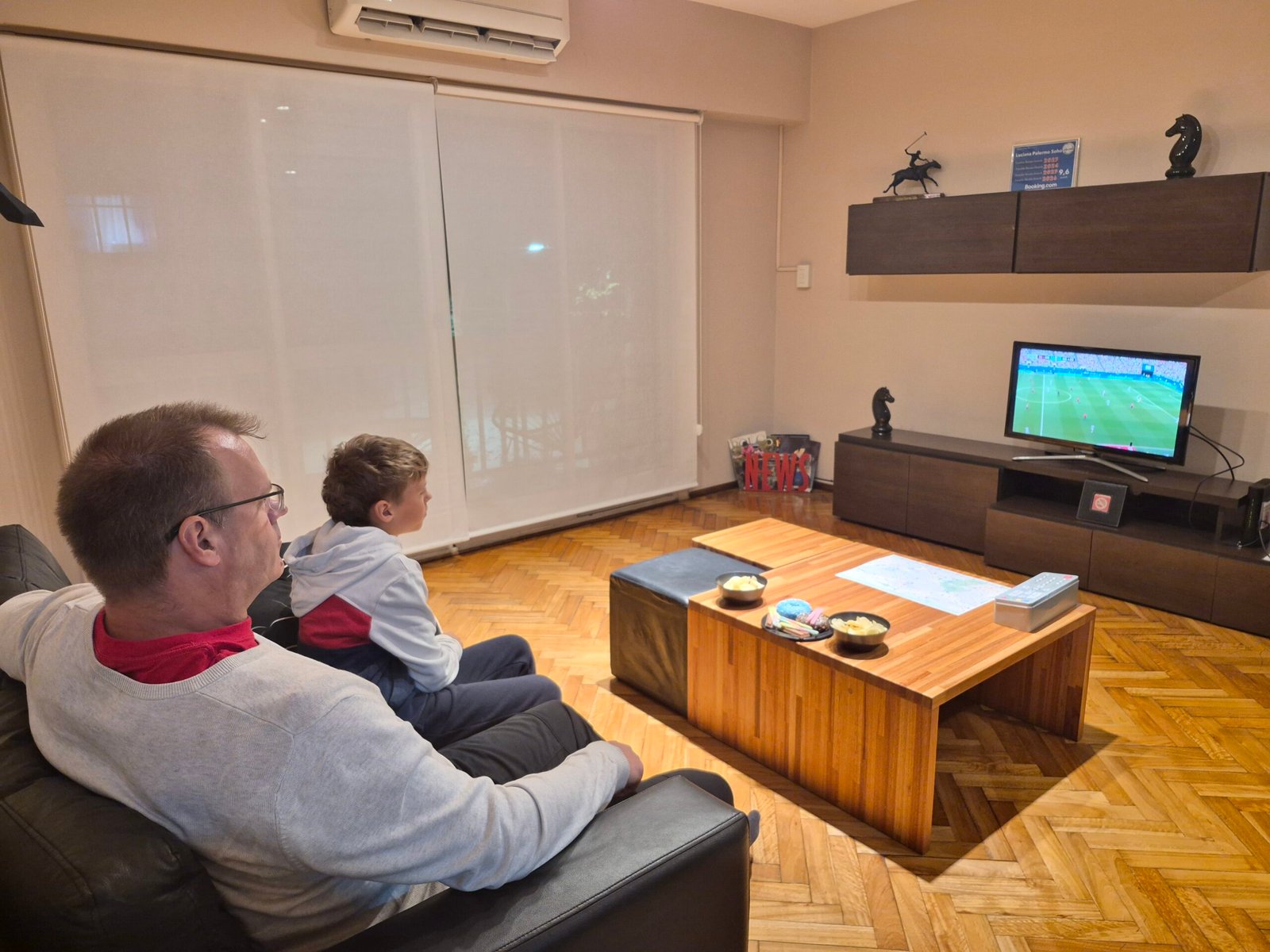
The game was just starting, but the best seats were already taken. However, there were more places to watch the game at practically every other restaurant or bar—that is, every few dozen meters.
On Saturday, surprise surprise, we all slept in really late. Even Risto didn’t wake up until around half past ten, which is really late for him. Since we woke up so late, we didn’t leave our apartment until around two in the afternoon. We didn’t have anything special planned for the day, so we went for a walk to the nearby Tres de Febrero Park. The park was really large, covering a total of about 400 hectares. Risto went for a 30-minute run along the shore of a small pond. Risto wasn’t the only one out for a run—there were plenty of locals working out in the park as well. In addition to runners, there were also lots of roller skaters in the park. It wasn’t entirely clear to us whether the skates were people’s own or if they could be rented somewhere.
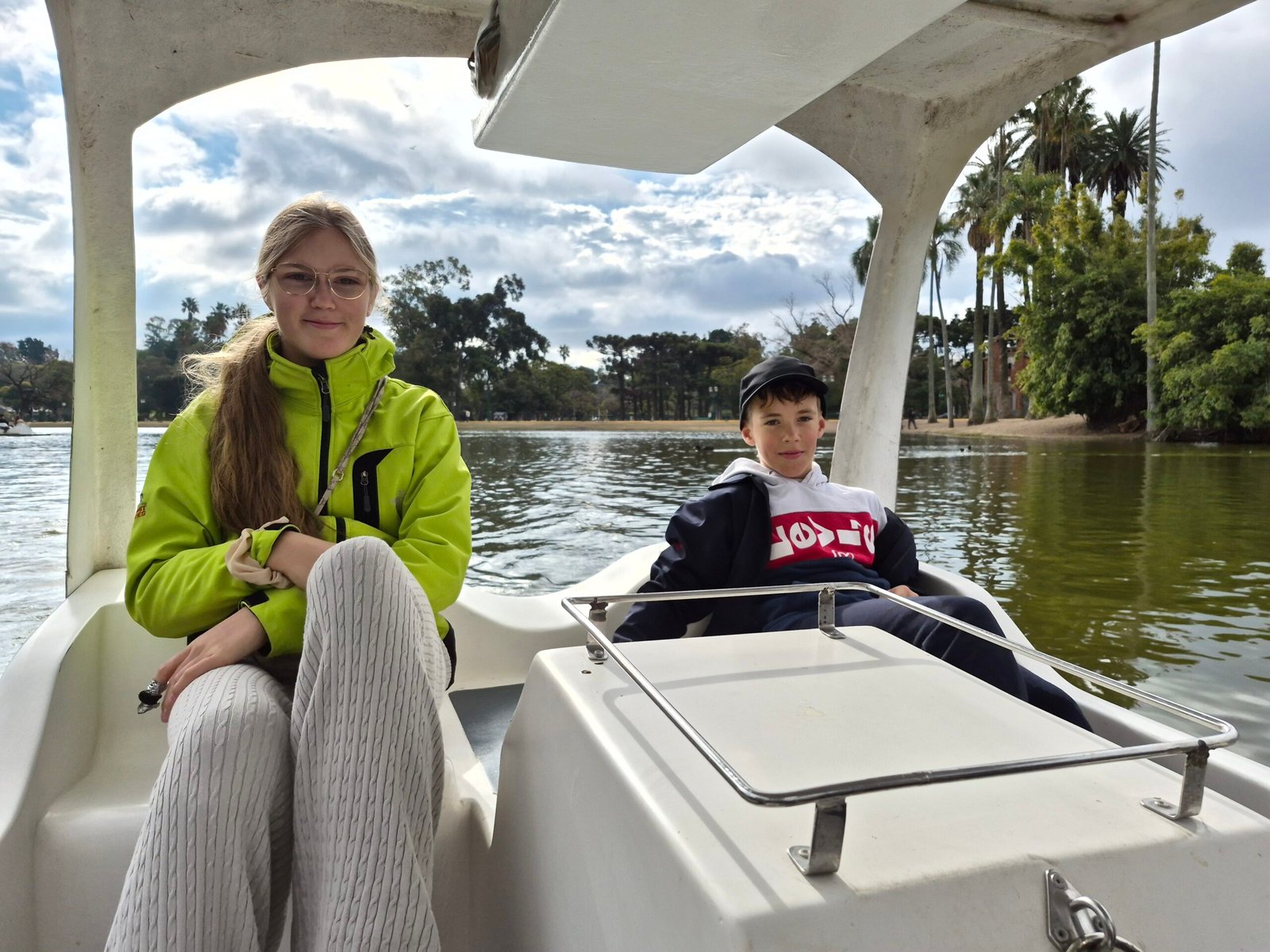
You could definitely rent a type of pedal cart in the park to pedal around the grounds. We didn’t rent one of those, but we did rent a pedal boat. A 30-minute boat ride cost 24,000 Argentine pesos, or about 14€. We adults sat in the boat while the kids pedaled it across the pond in the middle of the park. In addition to the pedal boats, there were huge numbers of large geese on the pond that we had to dodge every now and then. We adults did suggest to the kids that hitting a white goose would earn 10 points and a black goose—which is much rarer—would earn as many as 20 points. The kids, however, didn’t go for it; instead, they maneuvered smoothly around the geese and other boaters on the pond.
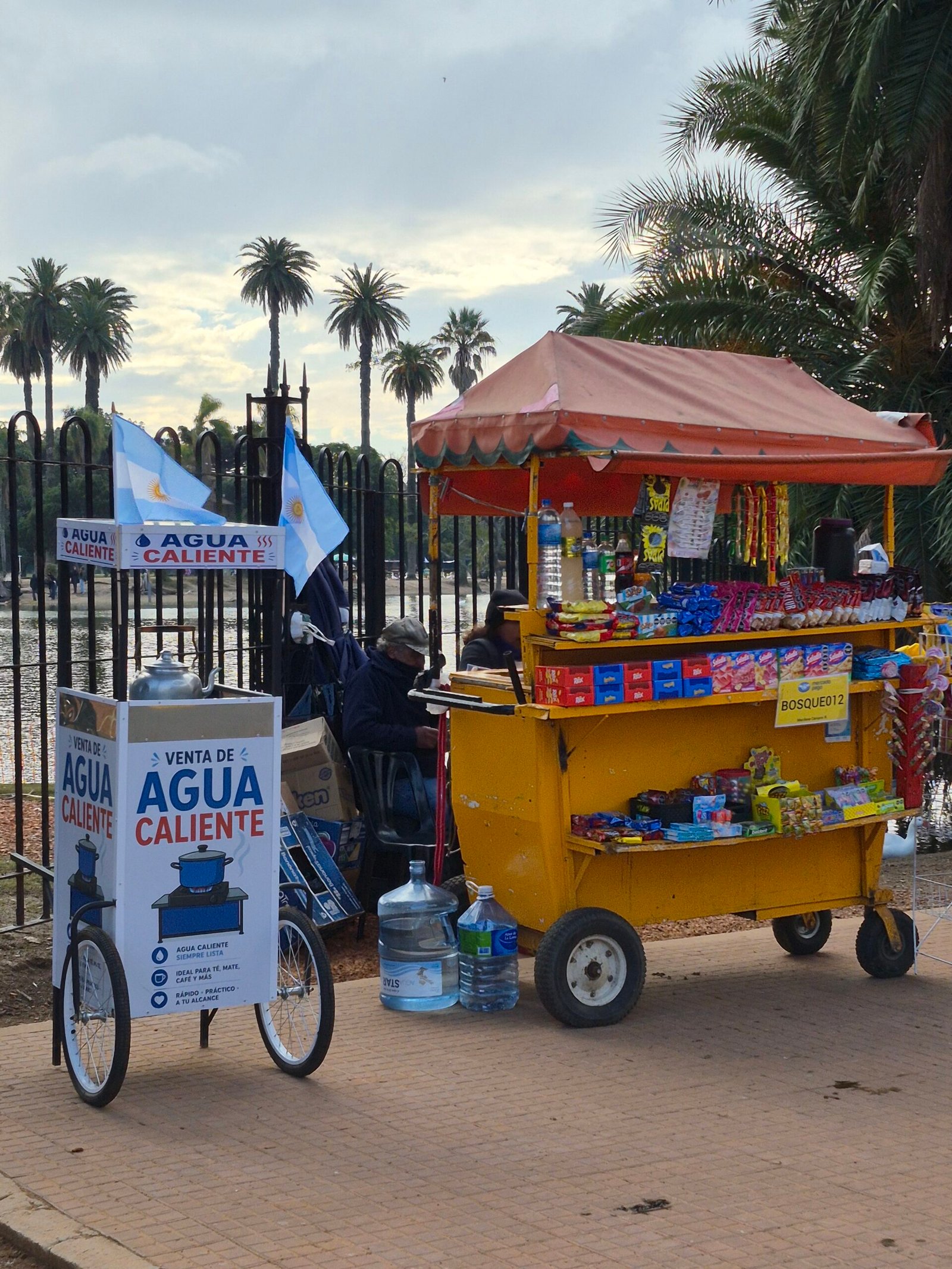
Since it was winter, hot water was available at the little kiosks. In practice, it was probably meant for mate.
Four seats, two sets of pedals. The kids "won" this raffle.
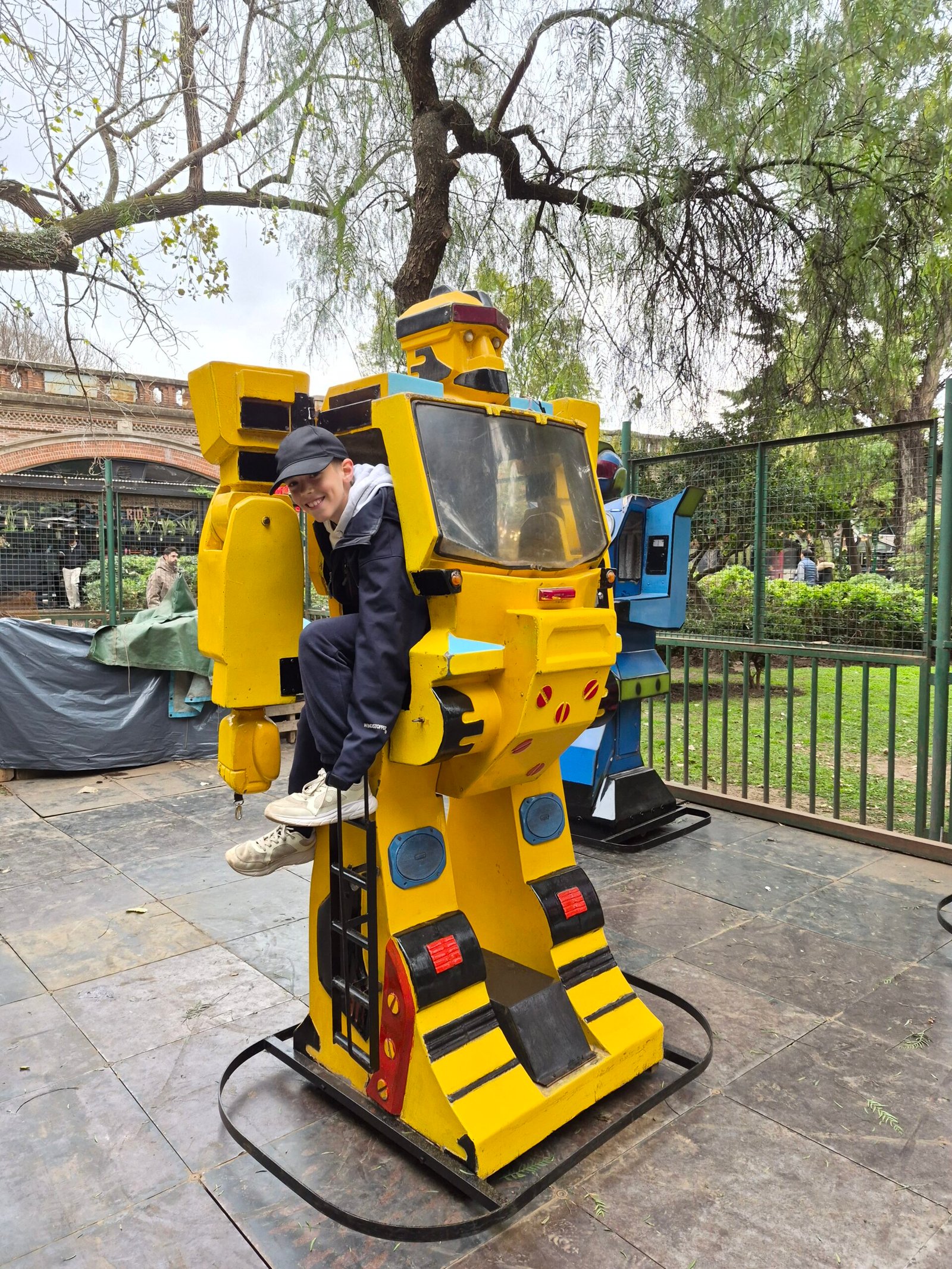
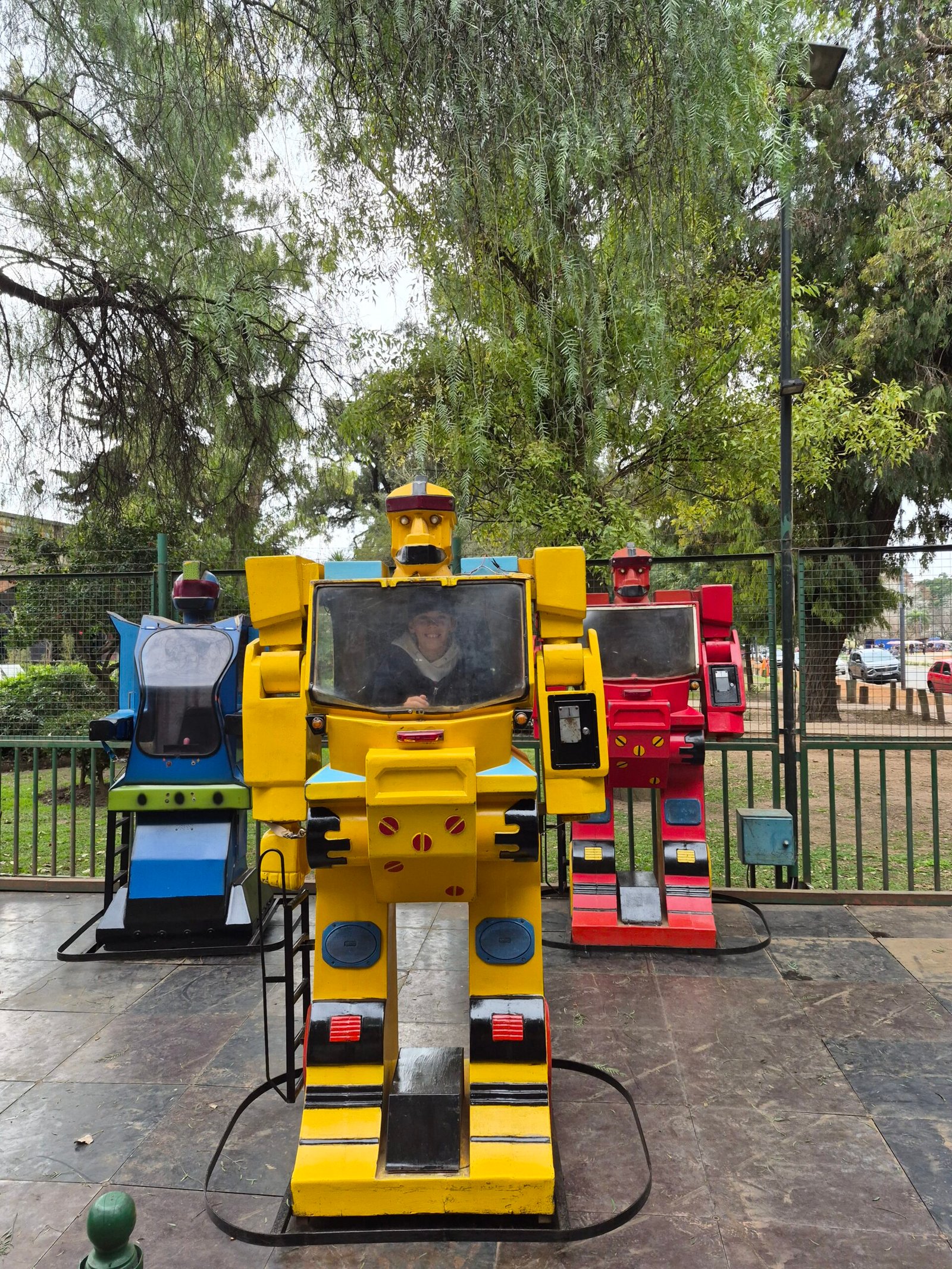
We were just about to leave the park when we happened to walk past a carousel. We were more interested in the funny Transformers robots next to the carousel, which you could operate for 2,000 pesos if you wanted to. Unfortunately, we didn’t have any local currency, and the ticket booth didn’t accept cards. However, Jaana managed to negotiate a deal for one ride on the robot and the carousel for five USD. Of course, we ended up paying more for the ride this way, but Risto just had to get on that robot! The ride was definitely meant for kids a little smaller than Risto, but he managed to squeeze himself onto the robot, pulling off a minor miracle of fitting in.
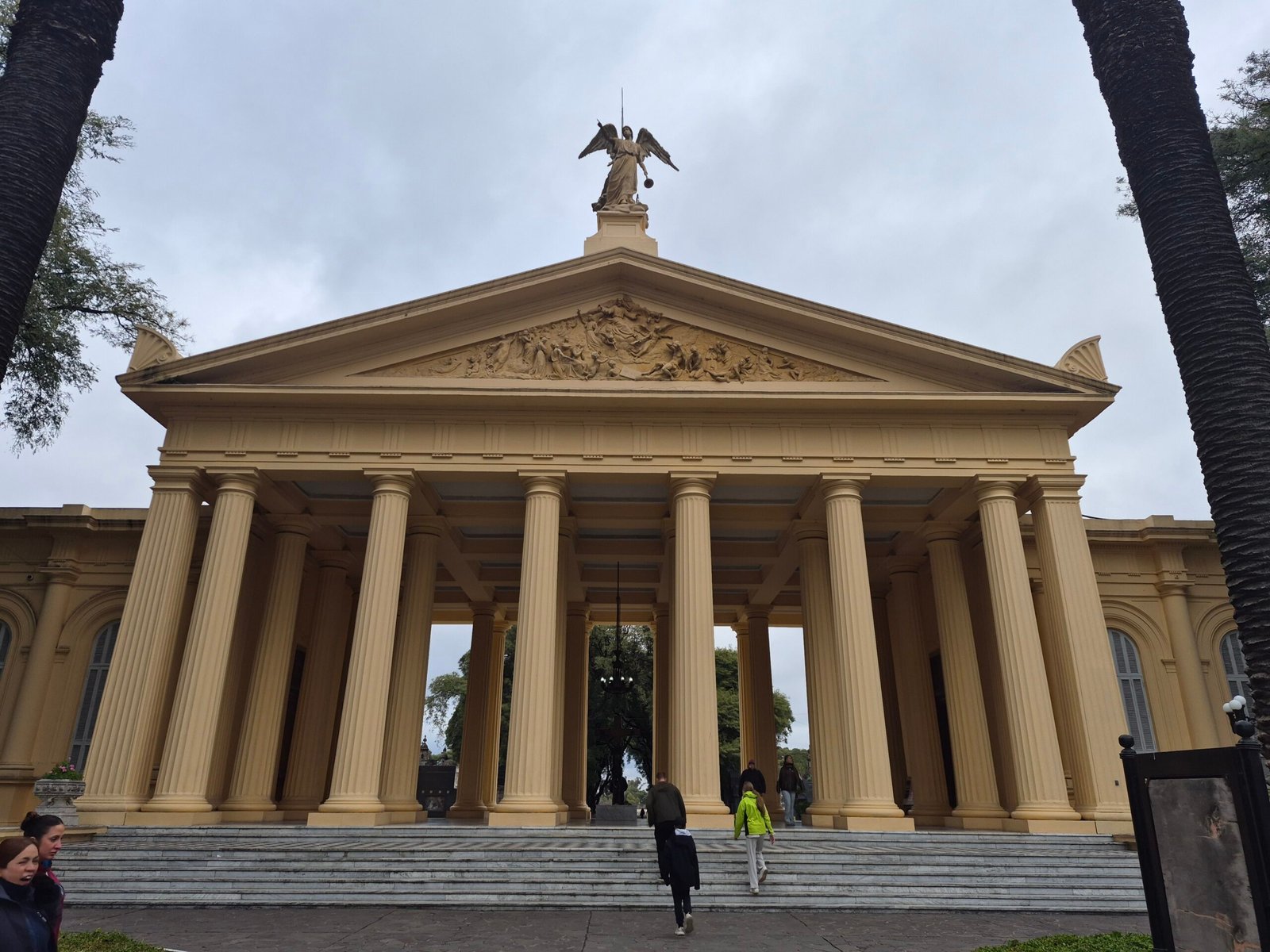
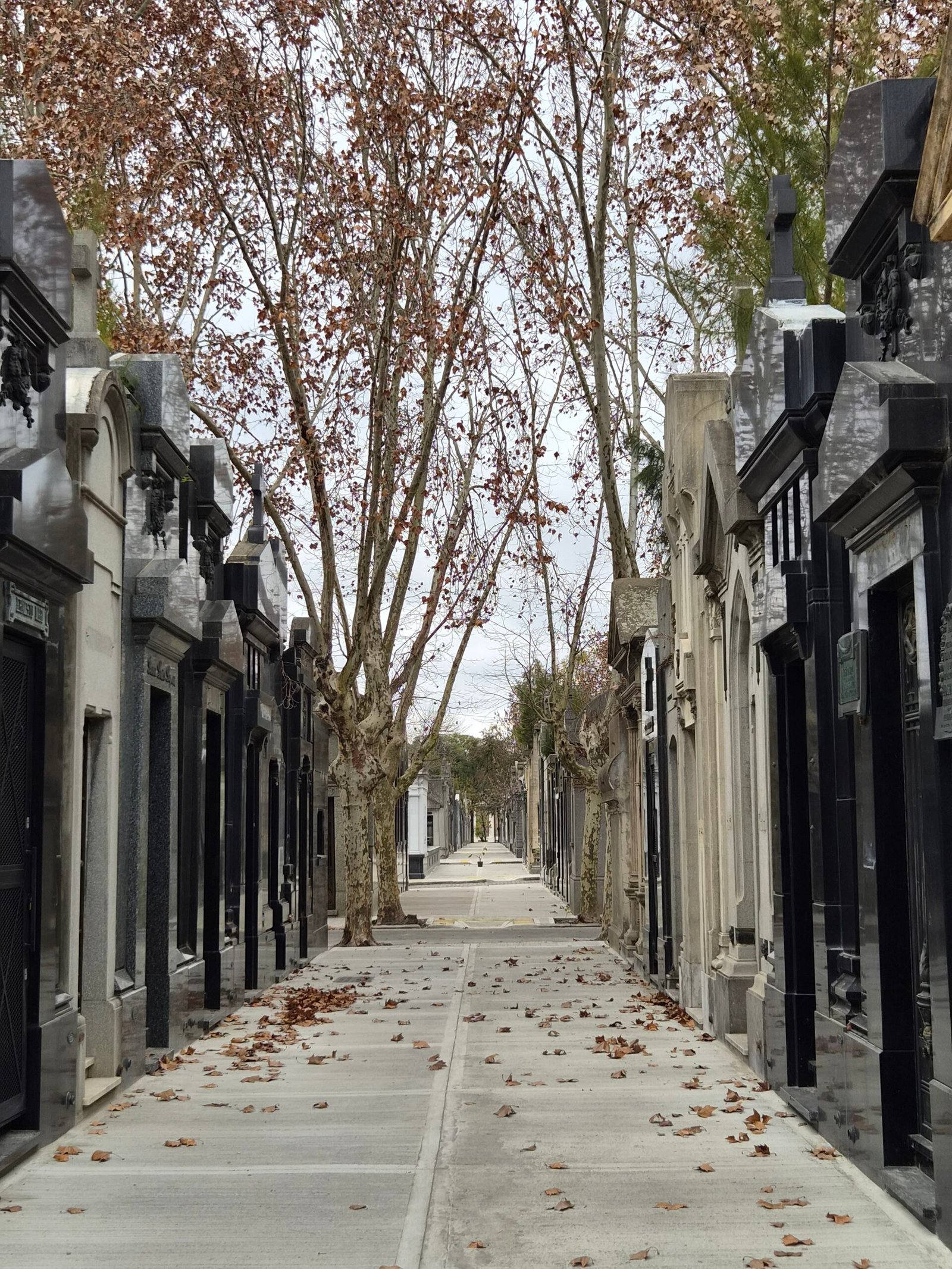
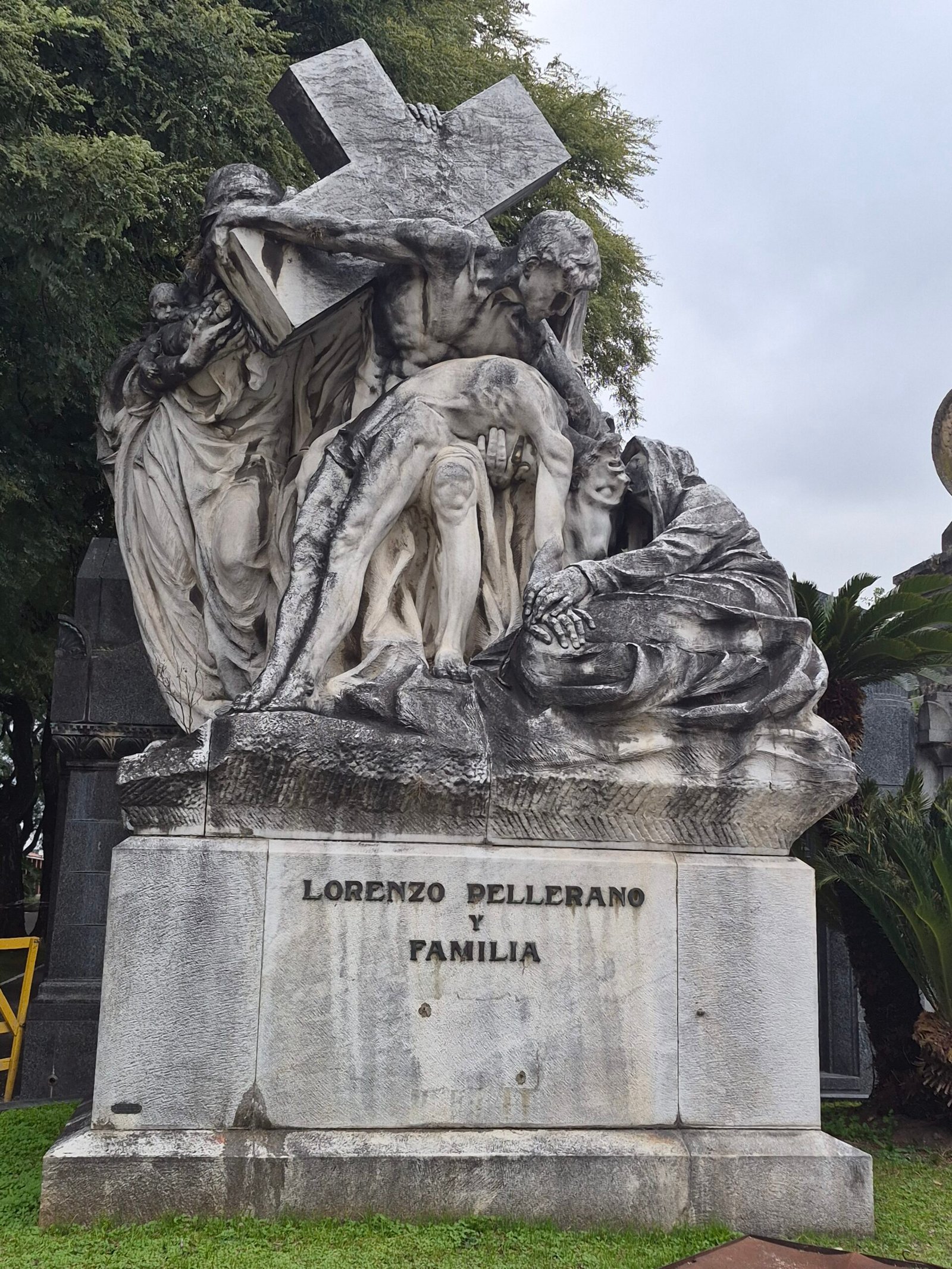
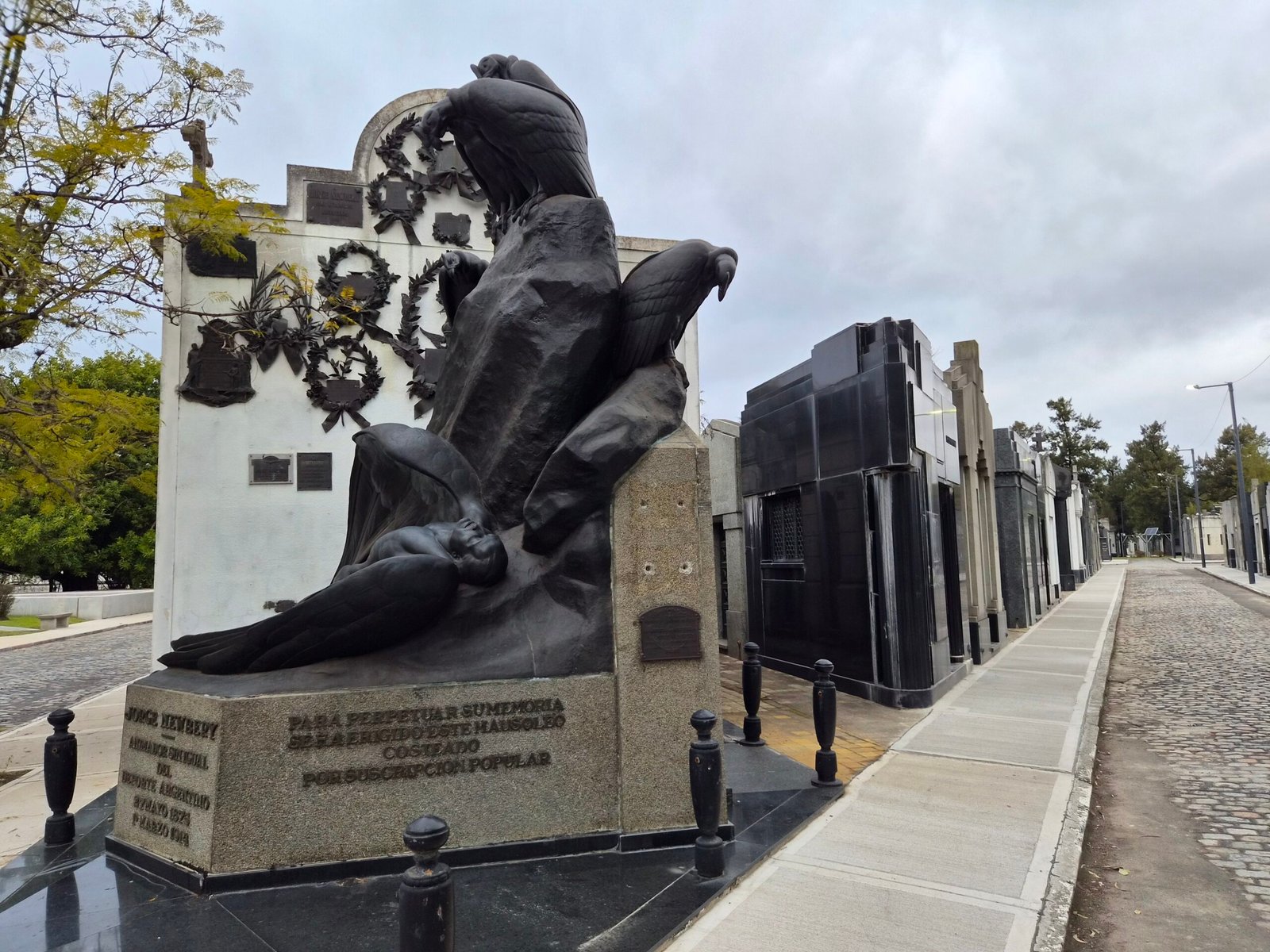
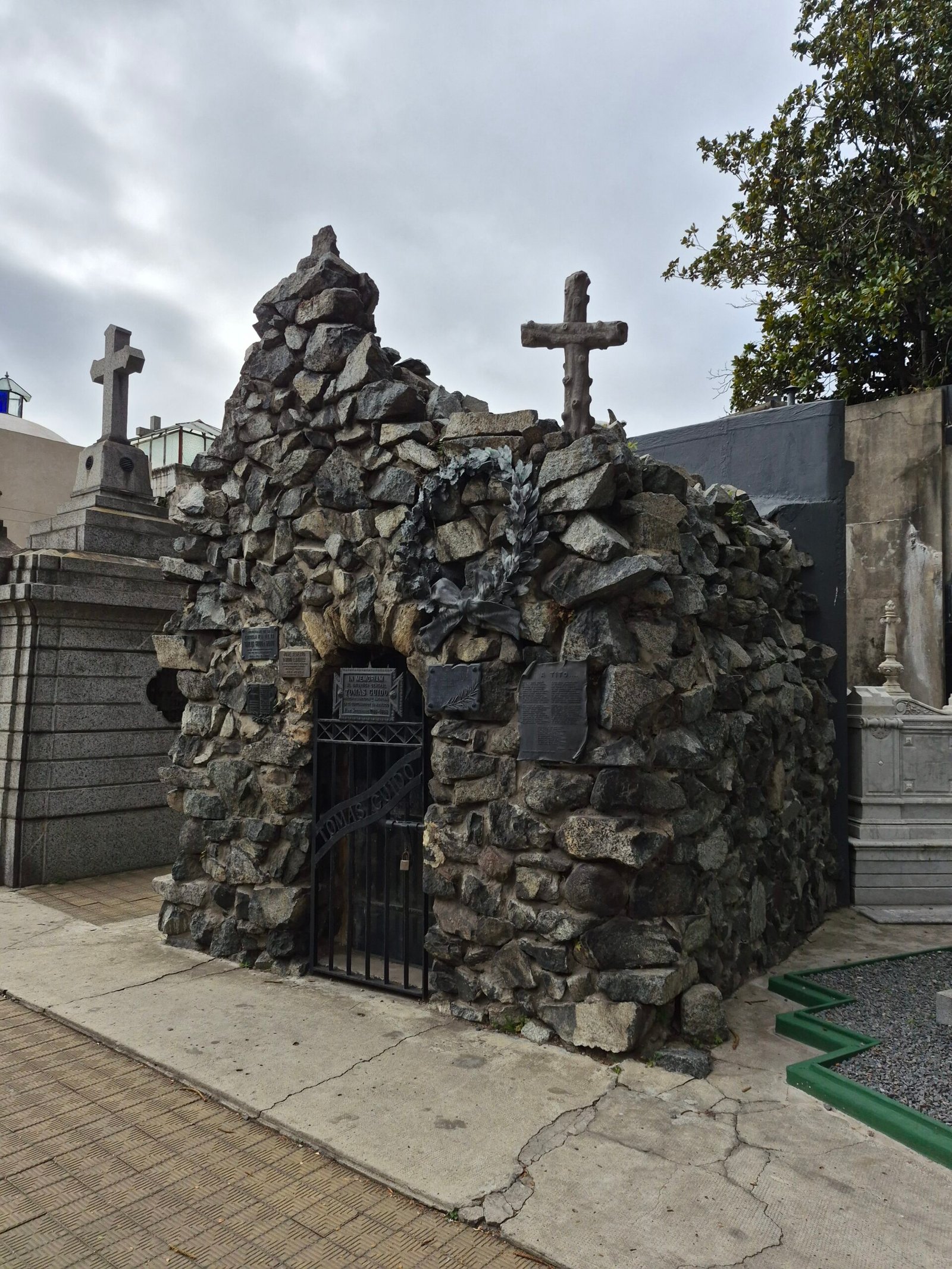
From the park, we took an Uber to Chacarita Cemetery, which is the largest cemetery in all of Argentina (95 hectares). It may not be as famous as Buenos Aires’ other cemetery, Recoleta, but many famous Argentines are also buried there. Apparently, the cemetery also has a separate section for local artists, musicians, and writers, but we couldn’t find it this time. Even though we only saw a small part of the cemetery, it was an impressive place. Since it was Saturday, the cemetery closed at 17:00, so after wandering around for just half an hour, we set out to find a place to eat. Risto had already started hinting that soon there would be a tombstone reading “Aho,” because he was about to starve to death.
Chacarita cemetary
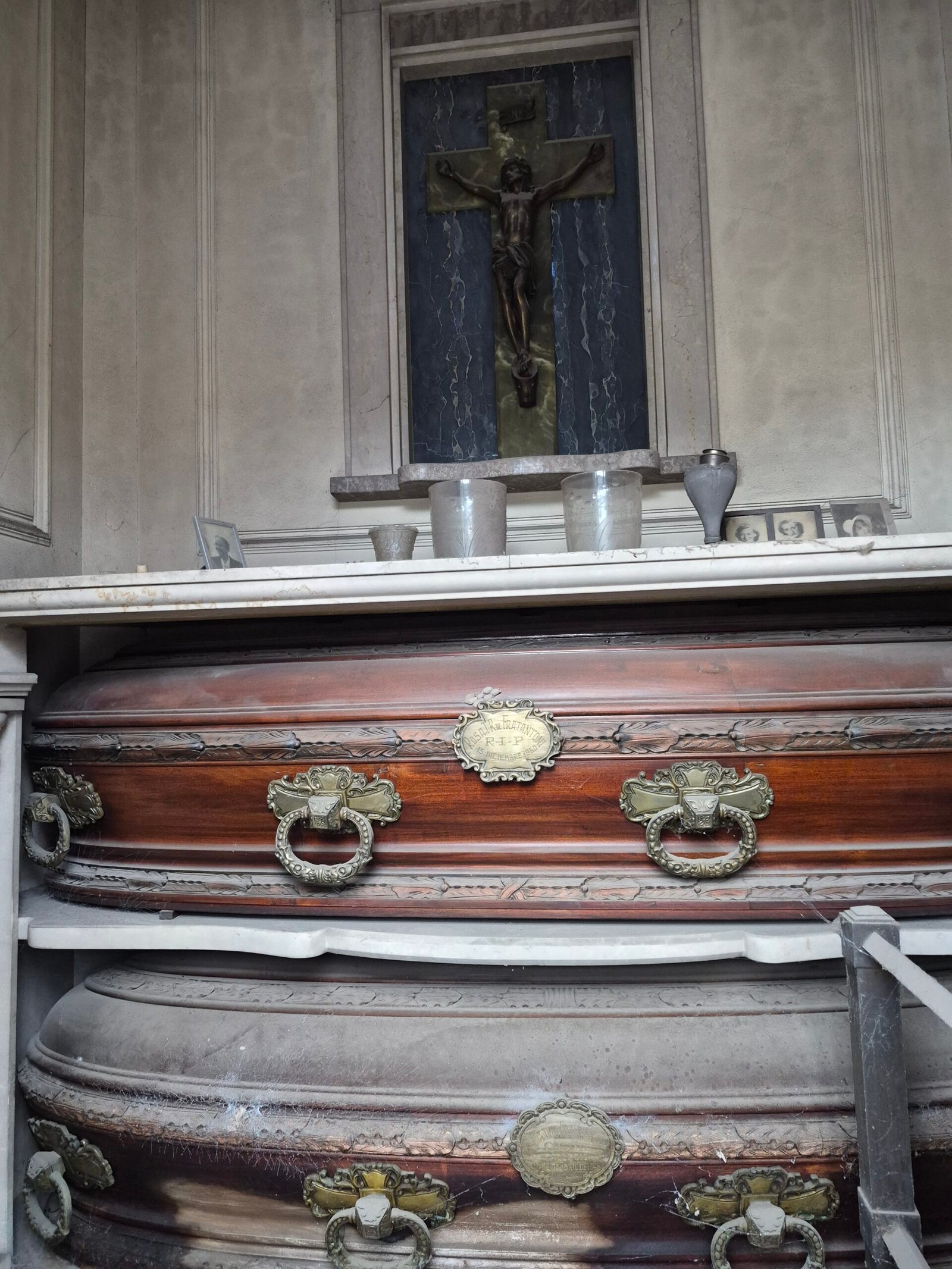
Layer by layer, just like a family tree
We found a place to eat right across the street. We decided to go there because it was absolutely packed. A million flies can’t be wrong. Risto ordered two different kinds of empanadas for himself, and the rest of us ordered one pizza to share. We’ve gradually learned that in this part of the world, the portions are always ridiculously huge. Even this time, there was still one generous slice left uneaten from a single large pizza. After dinner, we headed home and watched the Norway–England soccer match live on Areena.
Football from Yle Areena
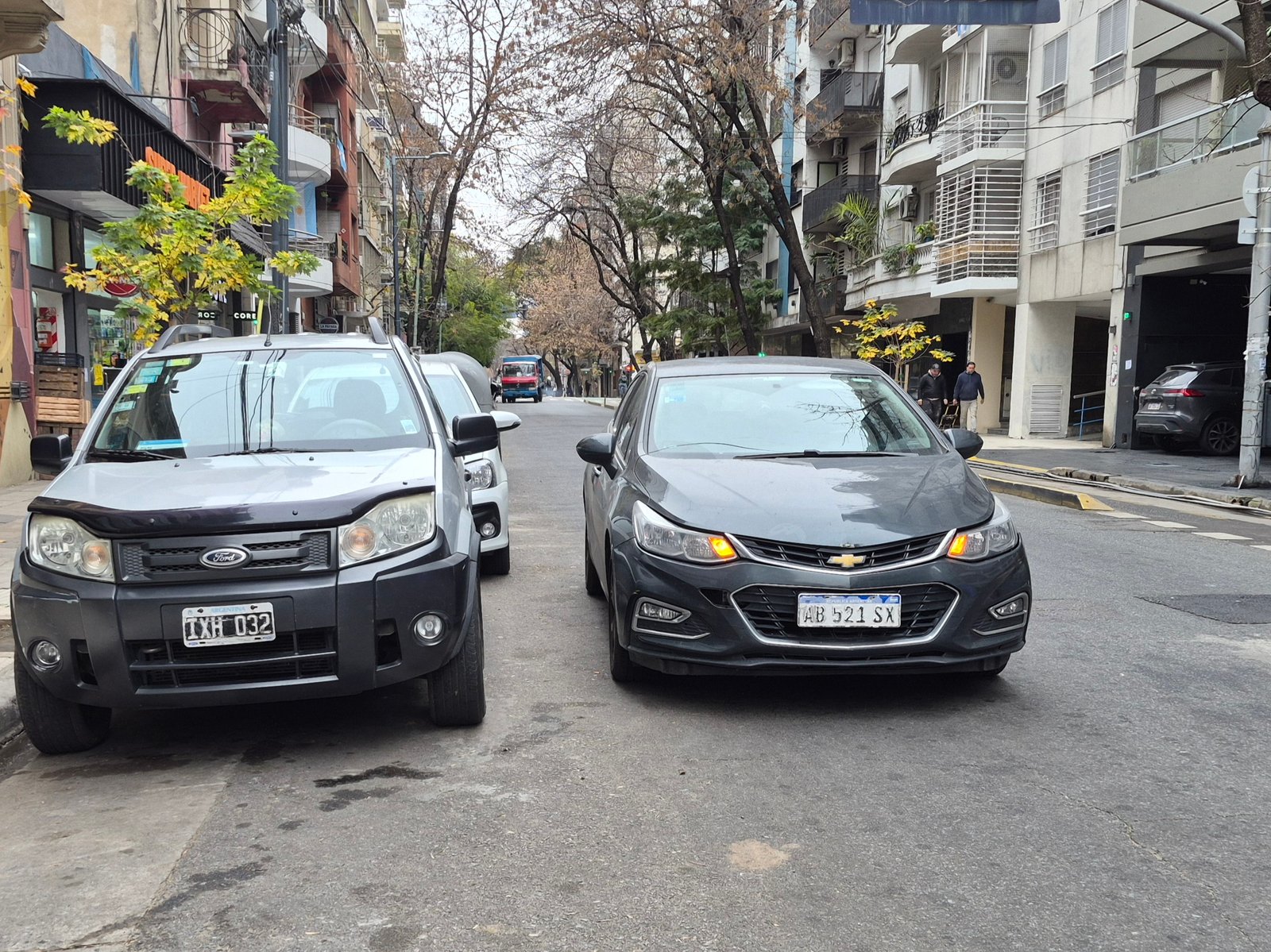
Traffic in Buenos Aires has turned out to be a bit more orderly than it was in Asunción. That said, not all traffic rules are followed here either. One thing we’ve paid particular attention to here is the use of emergency lights. On our way back to the apartment, we saw a line of eight cars in the adjacent lane, all with their emergency lights on. However, this wasn’t an emergency at all; the cars had simply been parked on the roadway for one reason or another. This isn’t the only time we’ve seen cars parked with their emergency lights on. Apparently, it’s quite common here to leave your car wherever you want, as long as the emergency lights are on. Another masterclass in the use of emergency lights came from a woman who was driving in the middle of the roadway toward an intersection with her emergency lights on. The Uber driver behind her was left guessing which way she might be turning, since—technically speaking—she was signaling in both directions.
Monopoly's "Get Out of Jail Free" card is nothing compared to the all-powerful status of emergency lights in South American traffic
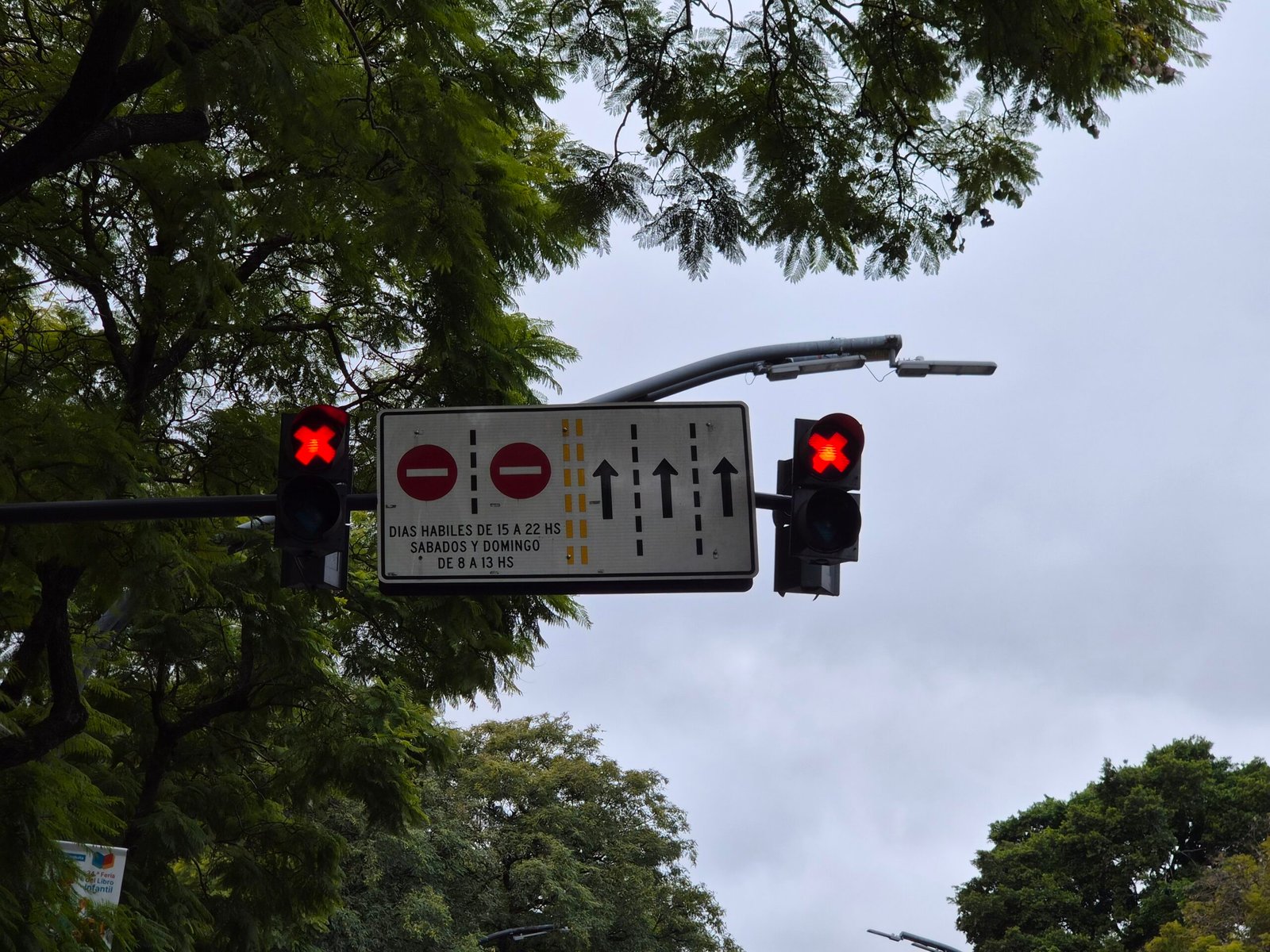
If drivers’ own behavior isn’t confusing enough, the city administration has decided to make sure that people from outside the city won’t want to come and drive around on the city streets. Some roads, even those with multiple lanes, will be converted to one-way traffic during rush hour. These sections of road will have special traffic lights that indicate when the direction of travel has been reversed on certain lanes.
Three lanes in one direction and two in the other. Or five lanes in one direction and none in the other. It depends on the position of the moon.
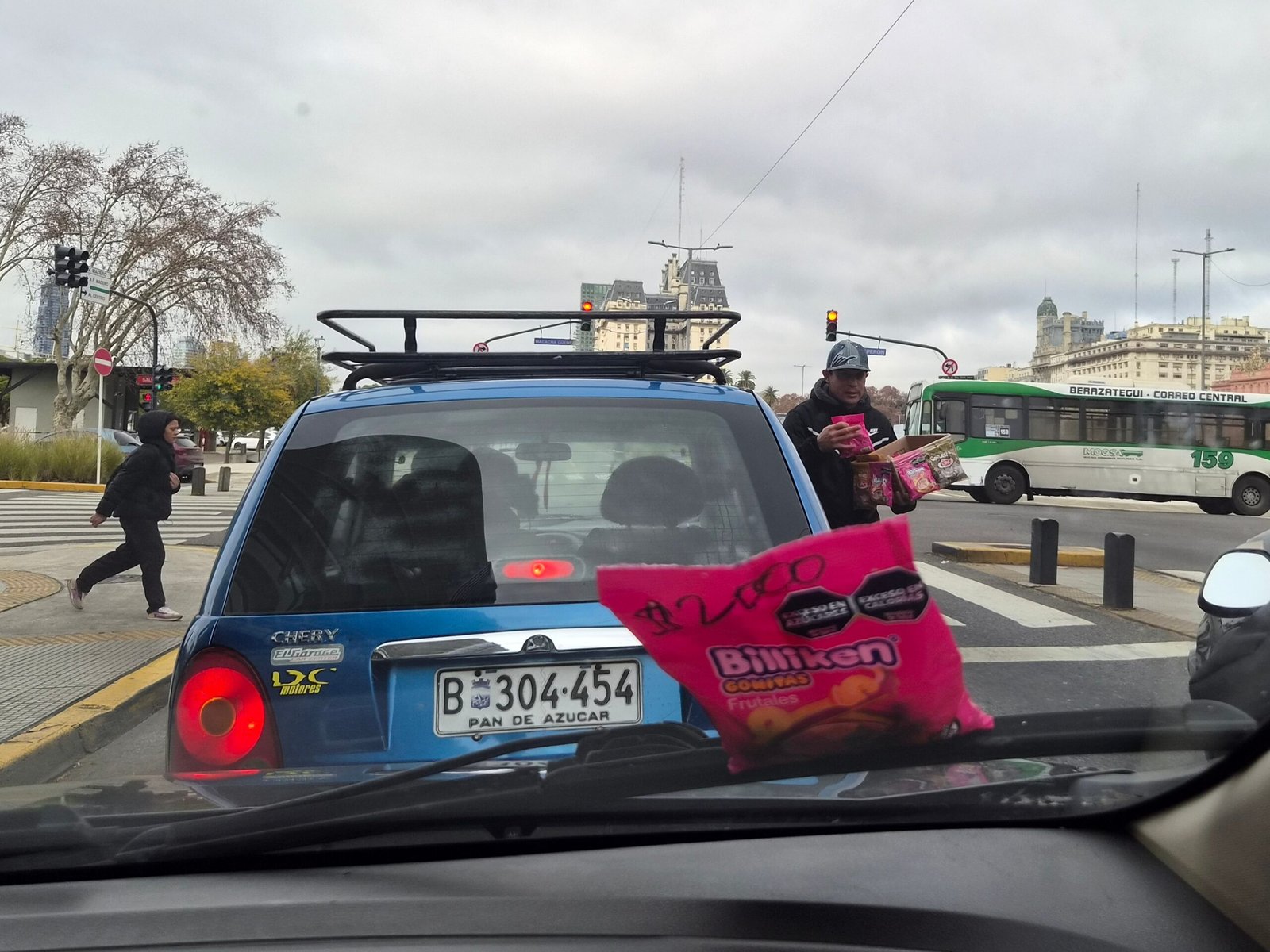
The intersections also had their own entertainment. At some intersections, there were performers—like jugglers—and at others, there were street vendors. To be honest, the bag of candy was quite affordable compared to the imported treats sold in stores.
There's no time to dither over the purchase decision or the transaction here. We didn't ask, but I'm guessing they don't accept credit cards.
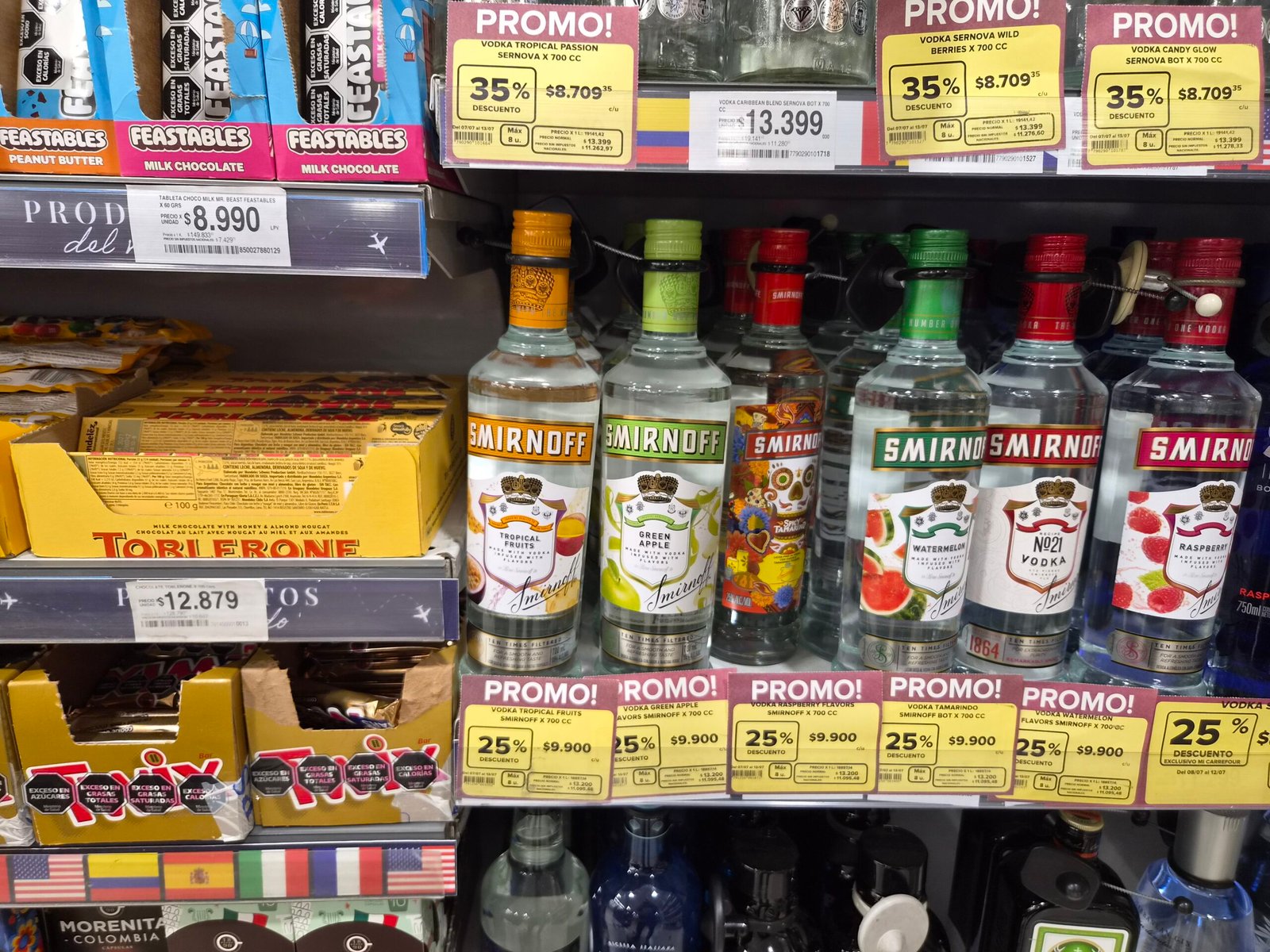
How about 100 grams of Toblerone for 7.8 euros? A 0.7-liter bottle of Smirnoff for six euros seems like a much better deal.
For Sunday, we had booked a guided tour of Buenos Aires’s main attractions. In principle, we could have visited the same sights on our own using the Hop-on Hop-off bus, but the price would have been almost the same for four people anyway. With a private tour, we were also sure to get more out of the tour than we would have from the pre-recorded commentary on a tourist bus.
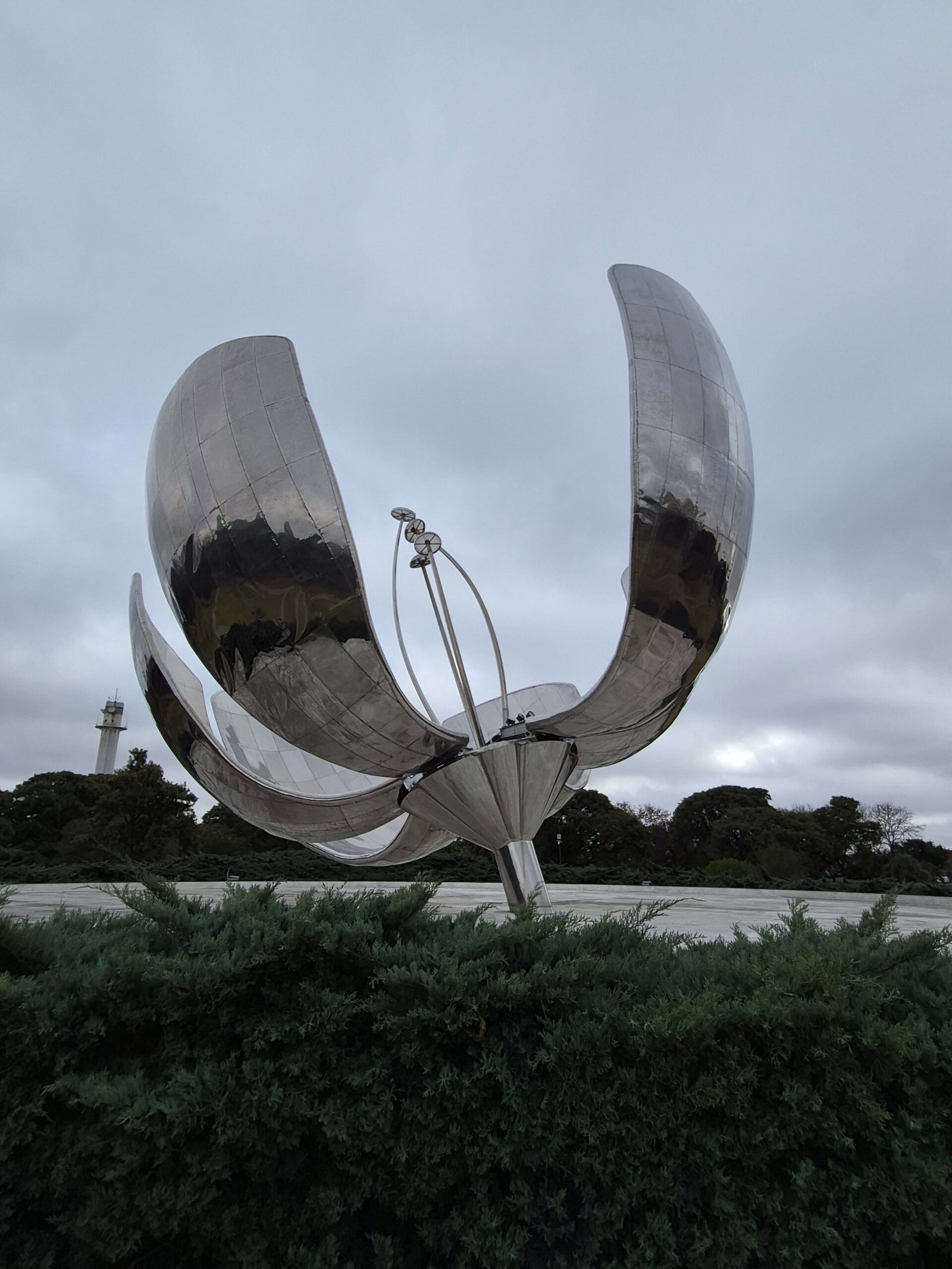
Our guide, Leo, picked us up right on time at 10:30 a.m., and his first stop was a square called La Plaza de las Naciones Unidas in the Recoleta neighborhood. In the middle of the square stood a large metal flower assembled from parts of an airplane fuselage. The flower was now permanently open because two of its petals had come loose during a storm. Although the loose petals have been put back in place, the mechanism that closes the flower at night is still broken.
Floralis Generica
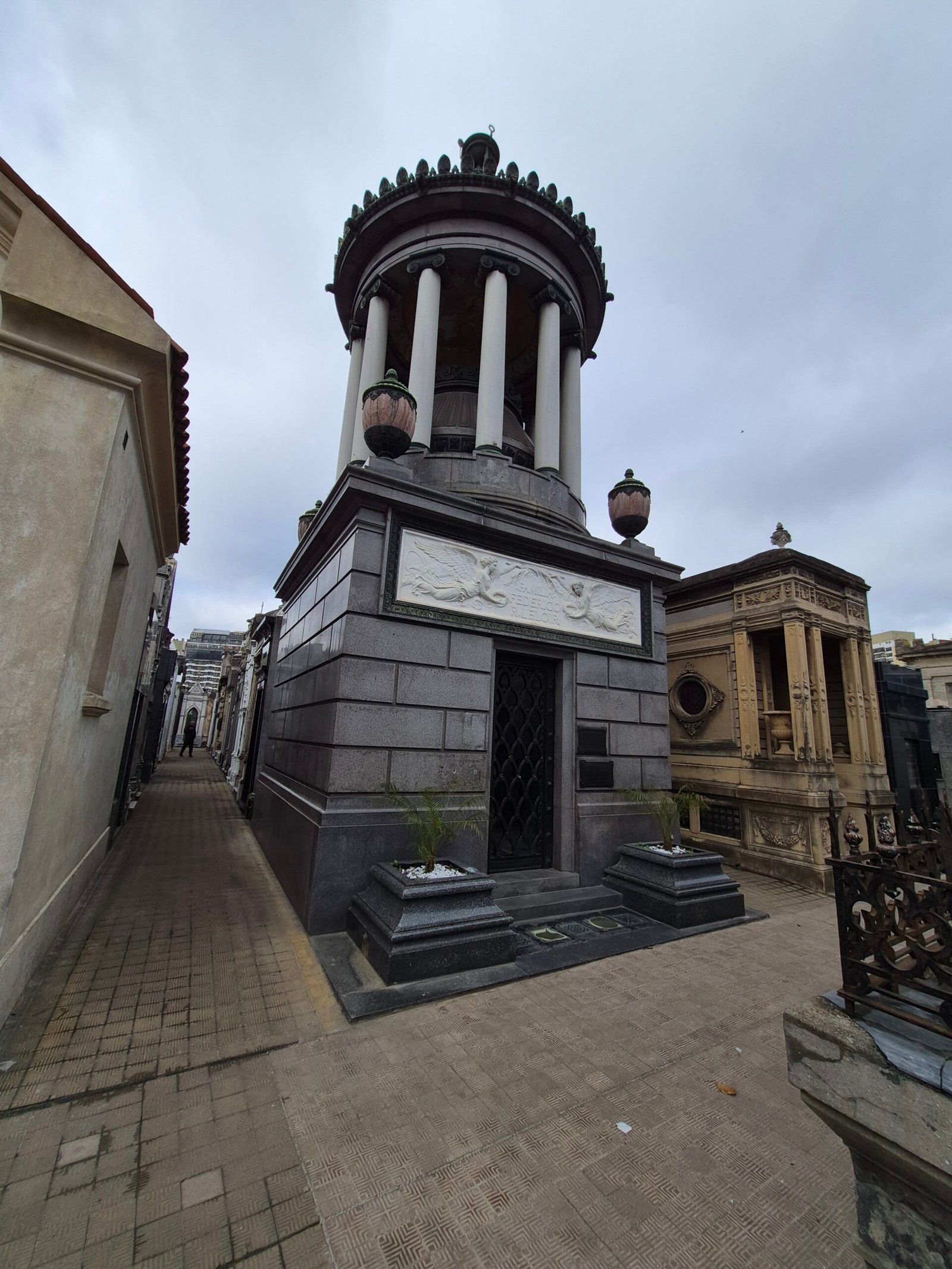
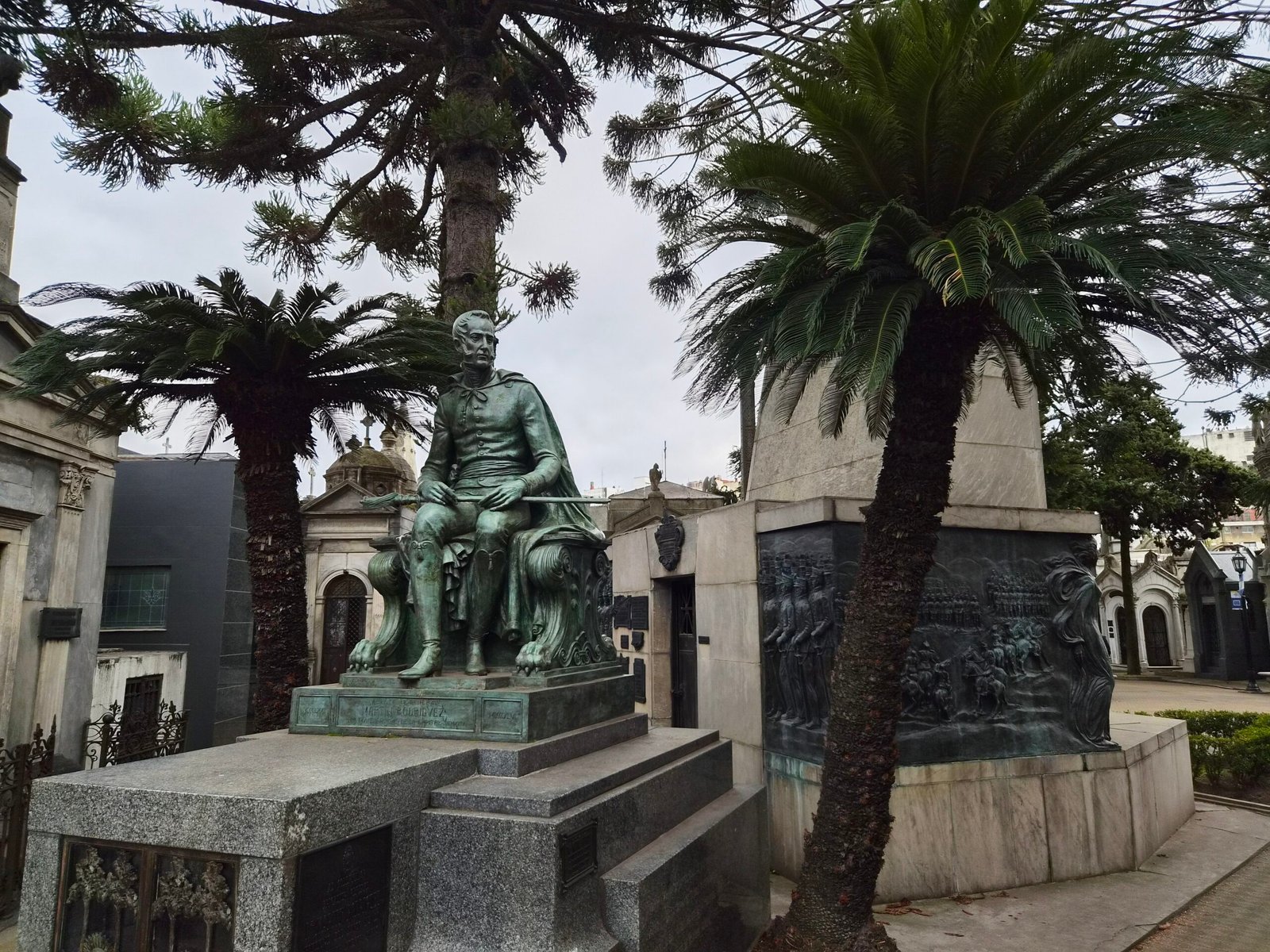
Since we were already in the Recoleta neighborhood, our next stop was naturally the Recoleta Cemetery. Unlike the Chacarita Cemetery, tourists had to pay an admission fee to enter here. Many prominent Argentines are buried in the cemetery. Of those, we only recognized the name Eva Perón. Leo told us that building a mausoleum in the cemetery can cost as much as $3,000,000. Prices per square meter at the cemetery hover around $10,000, which is many times higher than the price per square meter for apartments in the same area. Plots for burial vaults rarely come up for sale. They actually only come up for sale if an entire family dies out and no one is left to tend the grave. If more than one person is interested in the same burial plot, an auction is held for it. We went to see what the cemetery’s most expensive mausoleum looked like, and it was enormous! It was so large that all the people buried there could have been placed in the above-ground sections, so no underground levels were needed at all.
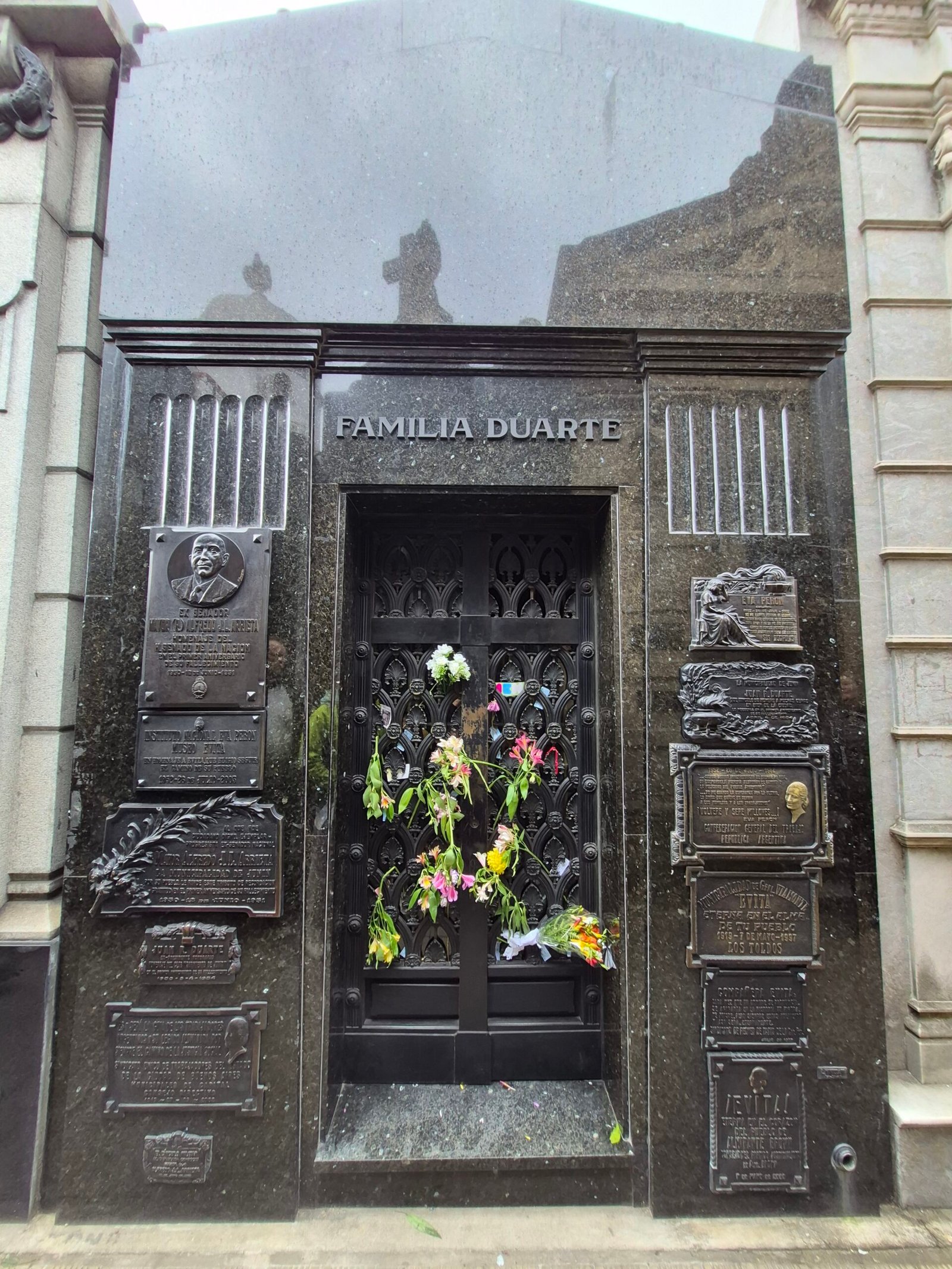
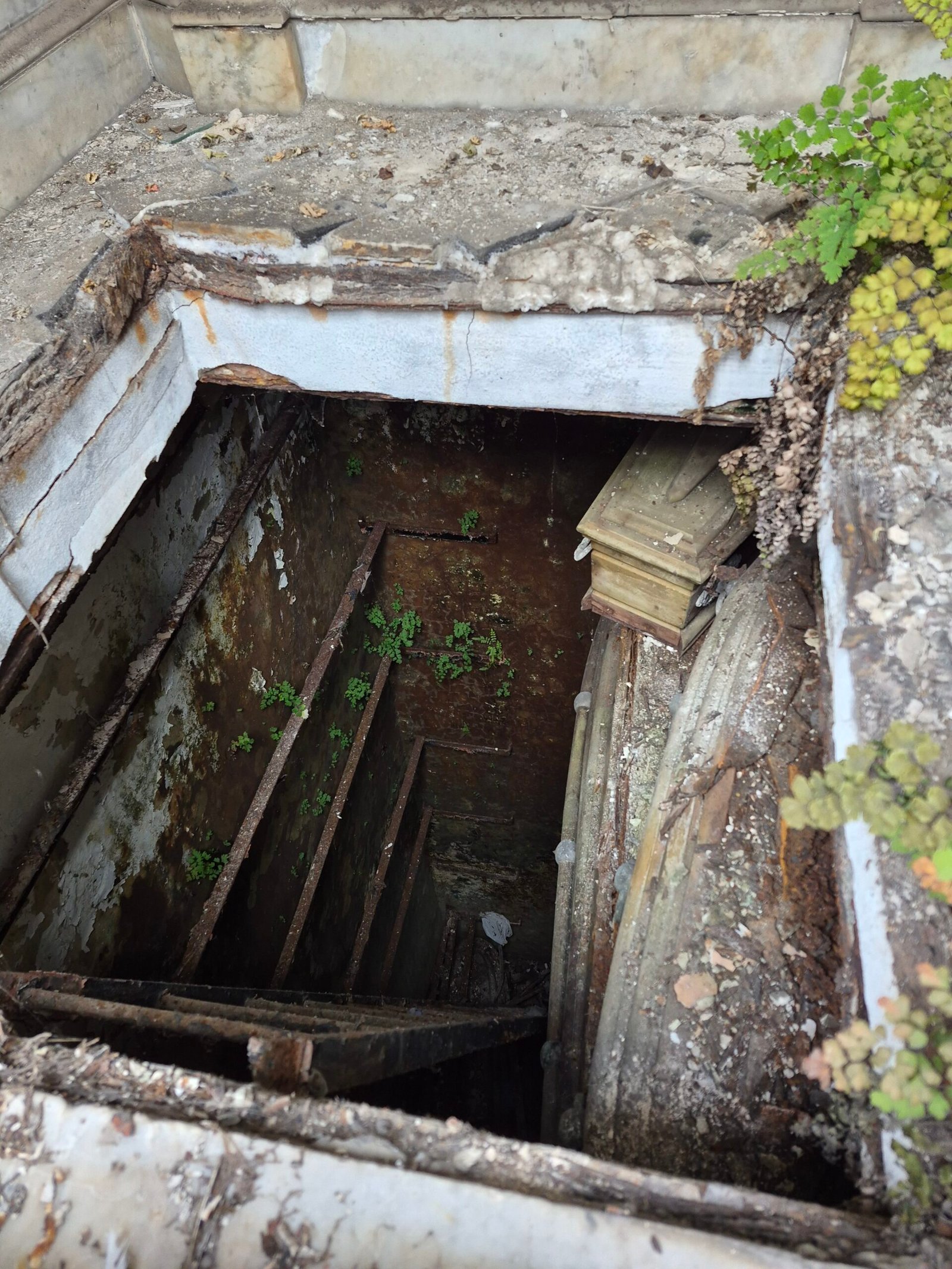
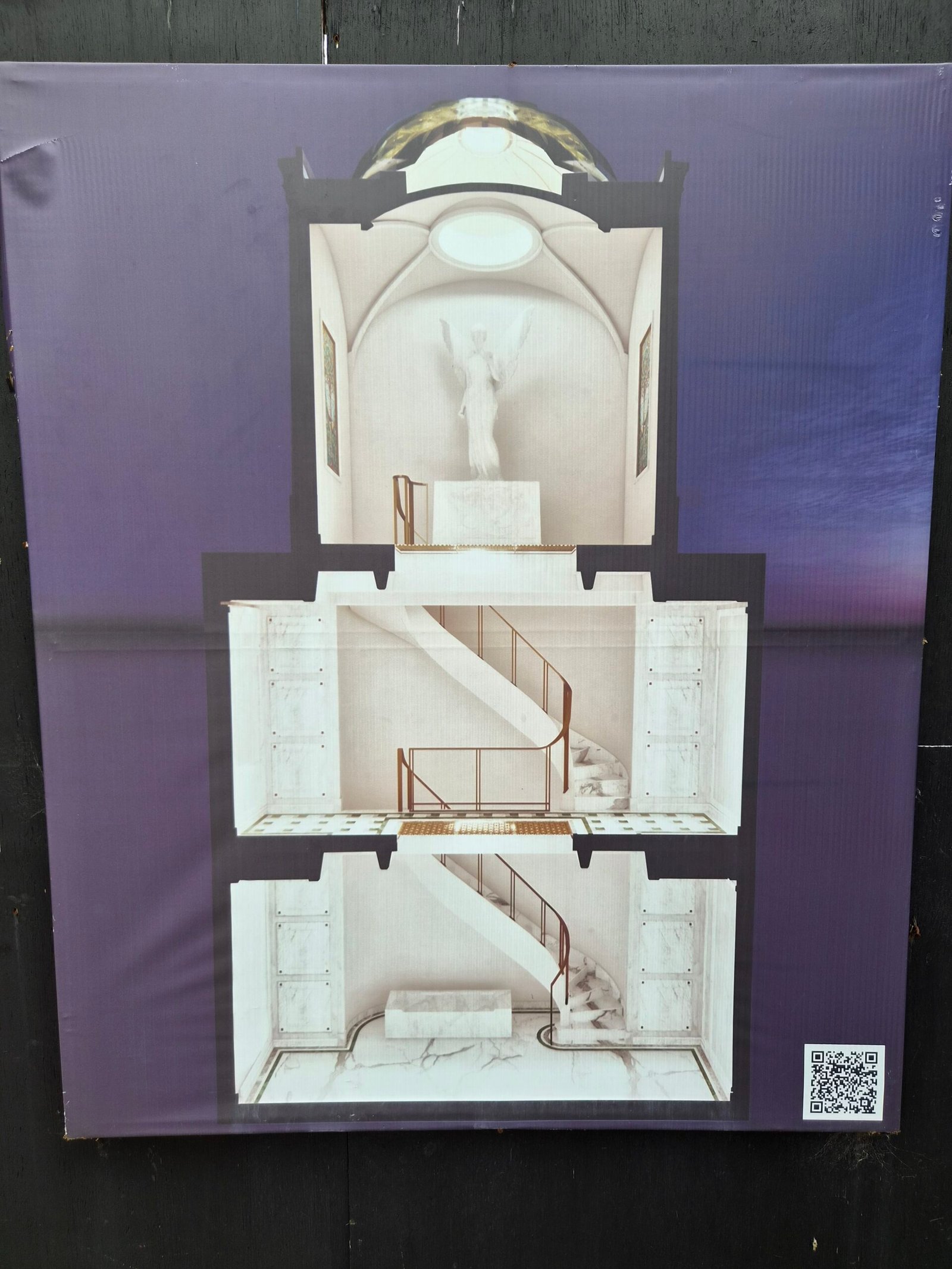
To our surprise, the mausoleum where Eva Perón is currently buried was not at all grandiose. This was because she was buried in her own family’s mausoleum, rather than in the same place as her husband. However, her husband, former Argentine President Juan Perón, is buried somewhere entirely different from the Recoleta Cemetery. Leo also told us that Eva Perón’s body was initially smuggled to Italy for sixteen years for safekeeping and buried at the Cimitero Maggiore in Milan under the alias Maria Maggi de Magistris. Today, however, she is buried in Buenos Aires in her family’s mausoleum, two stories below ground level. This is because the mausoleums are arranged so that the family’s elders—and those buried first—rest in coffins at ground level, while those buried later are placed on different levels below ground. There can be a great many levels in these mausoleums. We were able to peek inside some of them and saw that there could be at least five levels.
The most expensive mausoleum in Recoleta
Eva Perón (Duarte)
A mausoleum built of Andean stone
The coffin or urn of the first person buried is at ground level. Additional layers are dug later as needed for subsequent generations.
There's no room for new mausoleums. Apparently, they were building a rather luxurious version to replace one of the old ones.
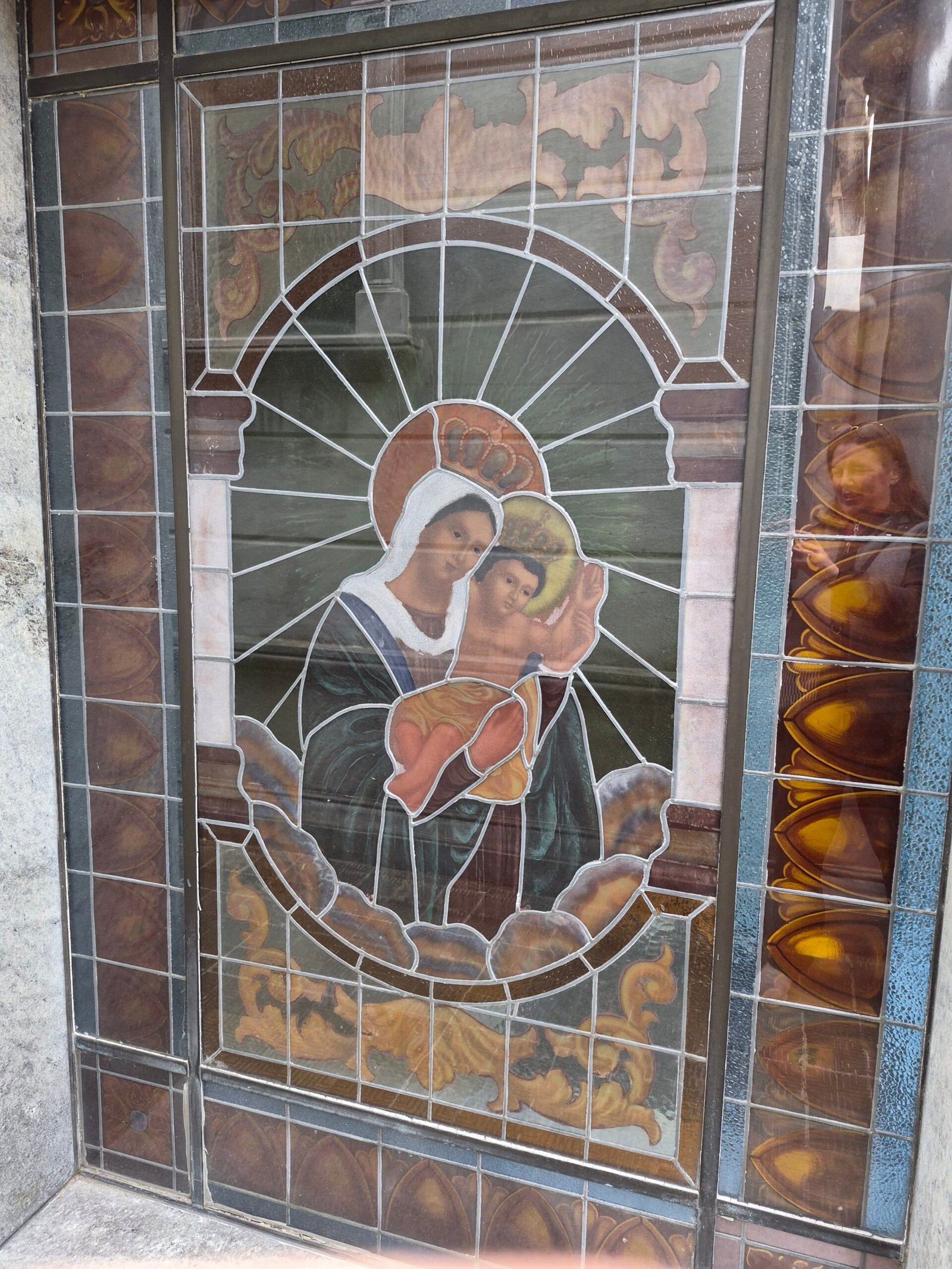
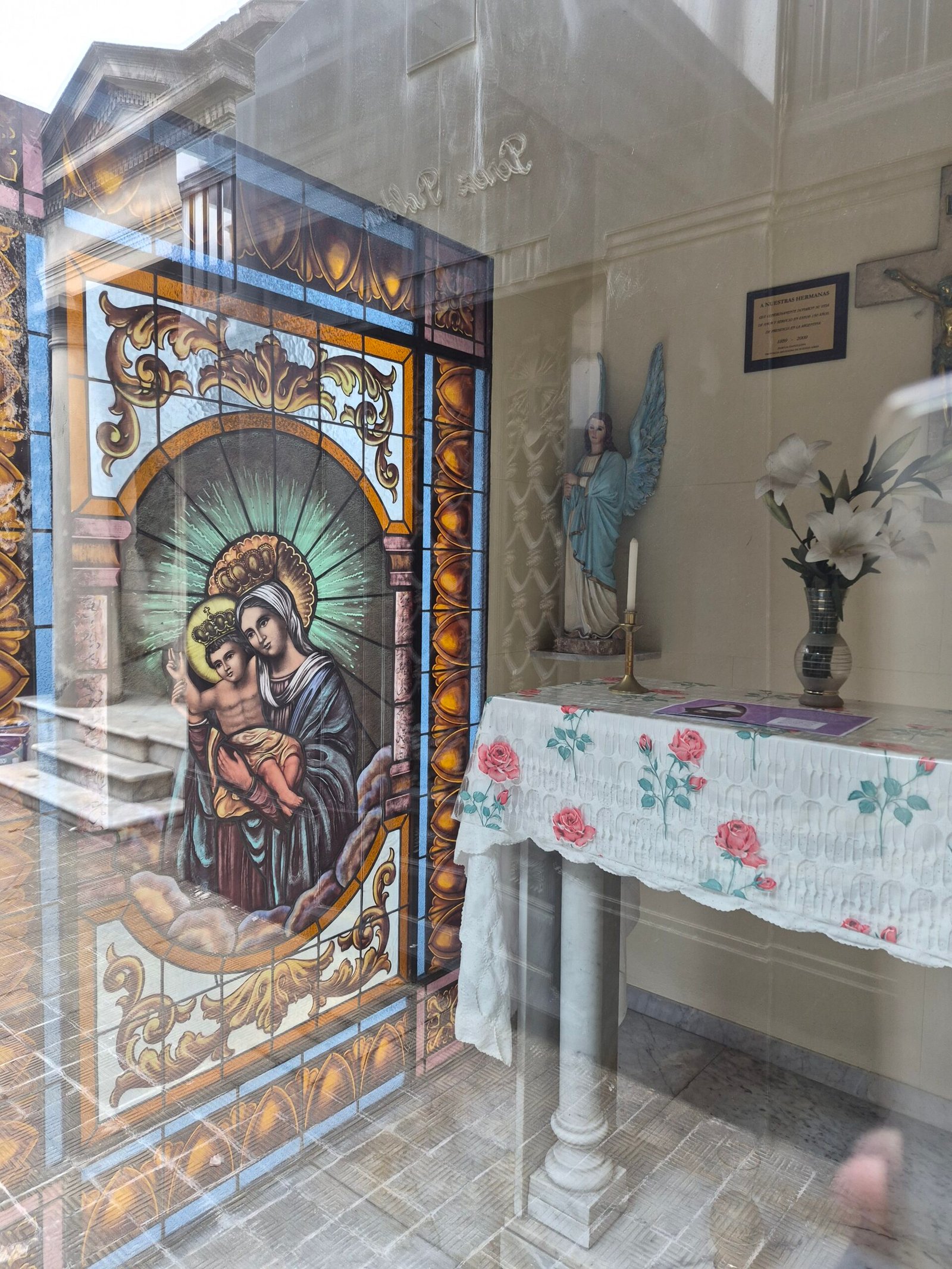
Stained-glass window from the outside
The same stained-glass window, viewed from the inside
Outside the cemetery stood Buenos Aires' oldest tree, a rubber tree over 200 years old.
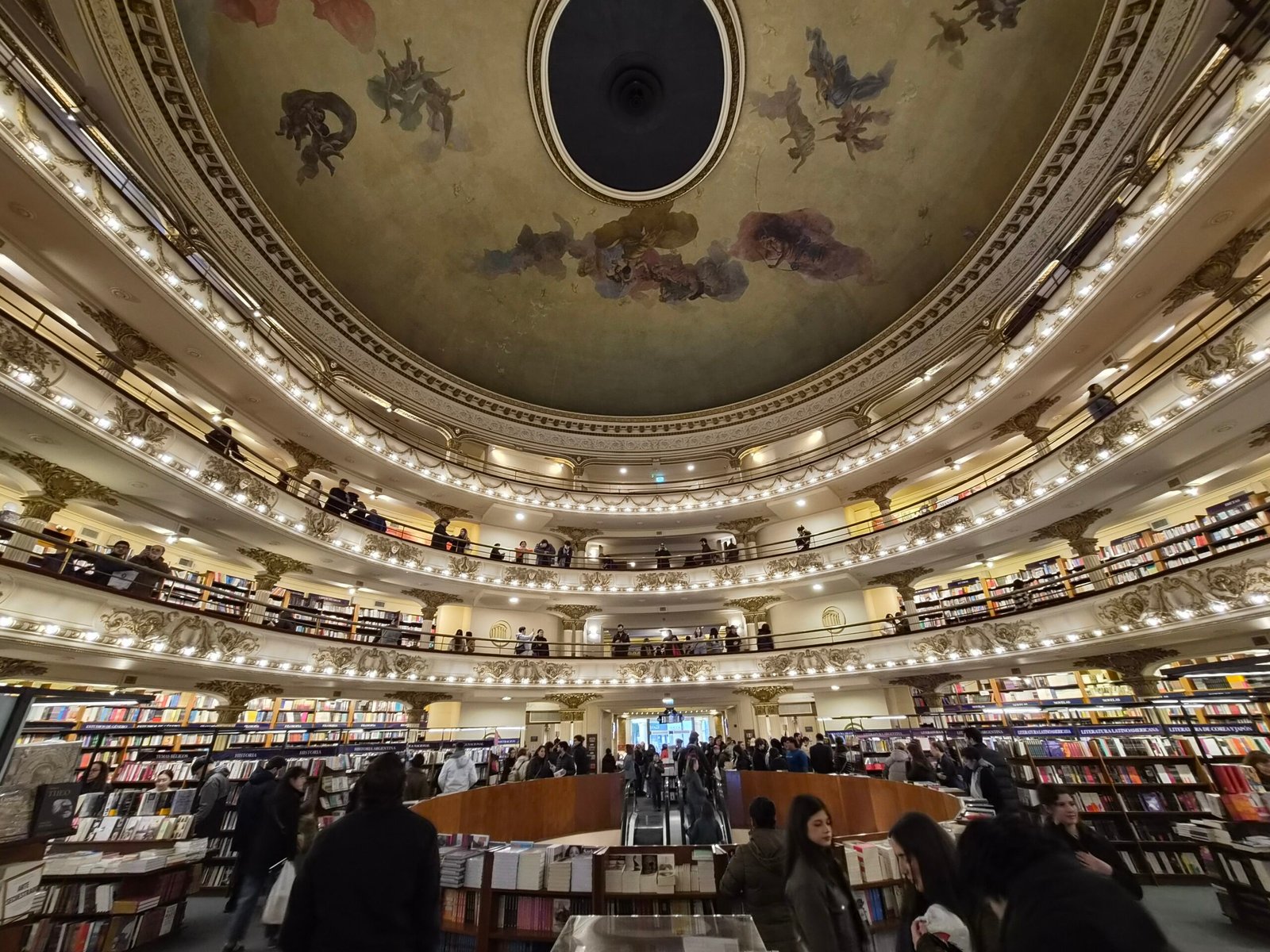
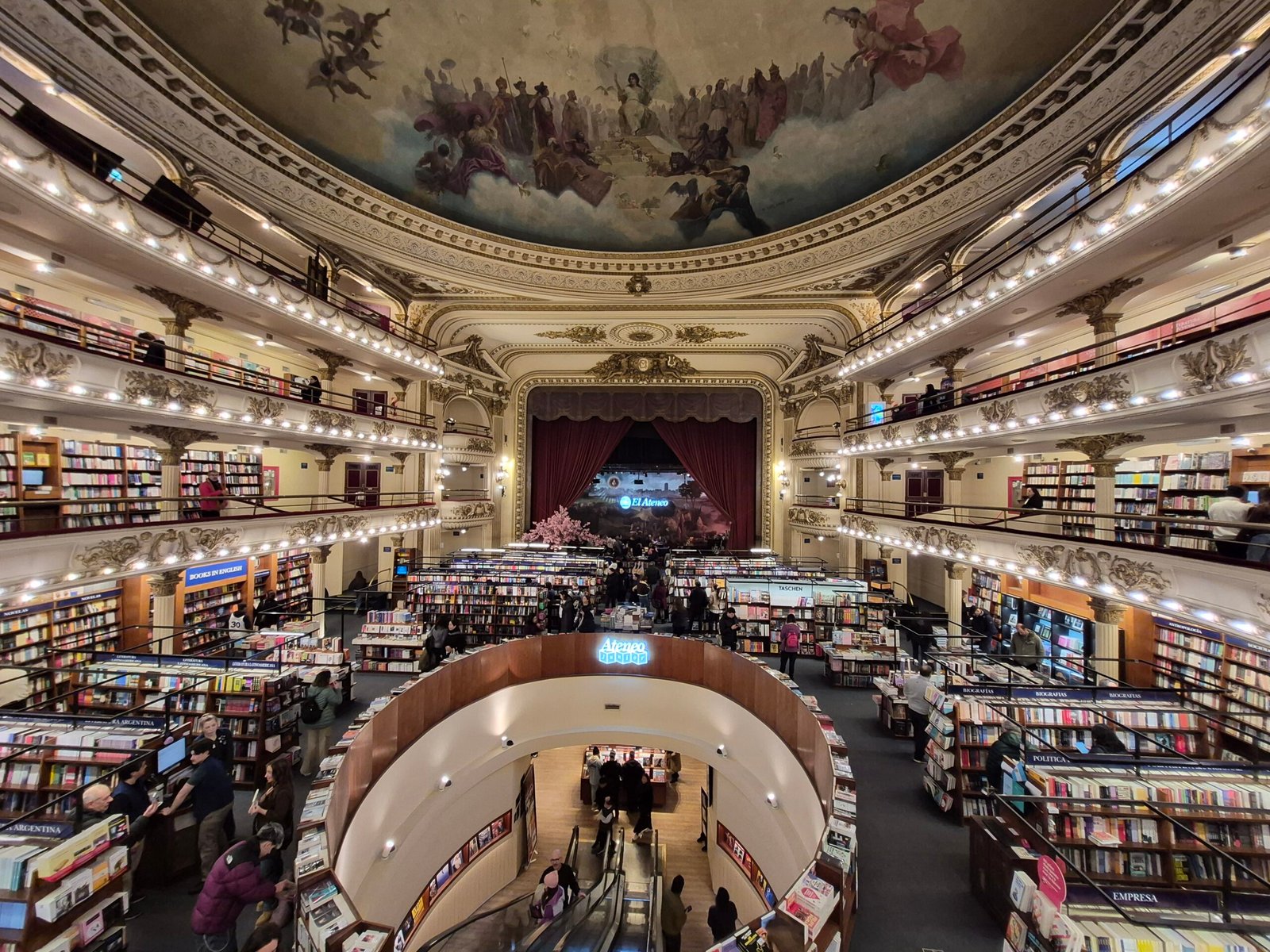
From the cemetery, we continued on to Buenos Aires’ famous bookstore, El Ateneo Grand Splendid, which is housed in a former theater. The bookstore was breathtakingly beautiful and is considered one of the most beautiful bookstores in the world. Helsinki’s Akateeminen bookstore certainly pales in comparison to this place!
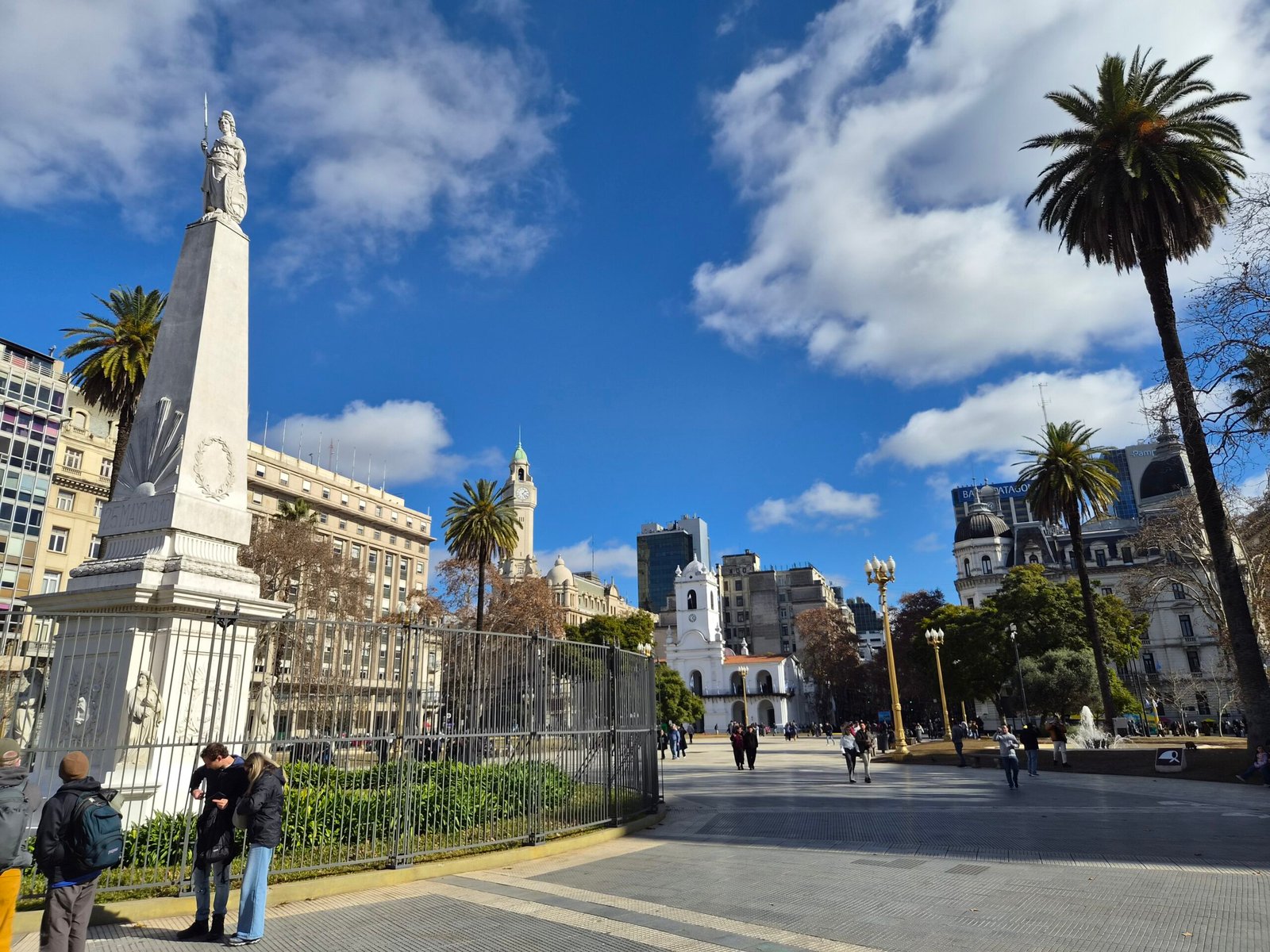
Our next stop was Plaza de Mayo, which is surrounded by most of Buenos Aires’ government buildings, including the Casa Rosada, the presidential palace. This is the same building from whose balcony Eva Perón once delivered her famous speech. Our guide told us that there are many stories circulating online about why the building is painted pink. The real reason for the color, we were told, is that after it was built, it was first painted with a mixture of lime and cow’s blood, because ordinary paint couldn’t withstand the city’s high humidity. In the 1800s, cow’s blood from Buenos Aires’ slaughterhouses was also cheap and readily available, so this was a significantly more affordable solution. In later years, the building has been repainted with ordinary paint.
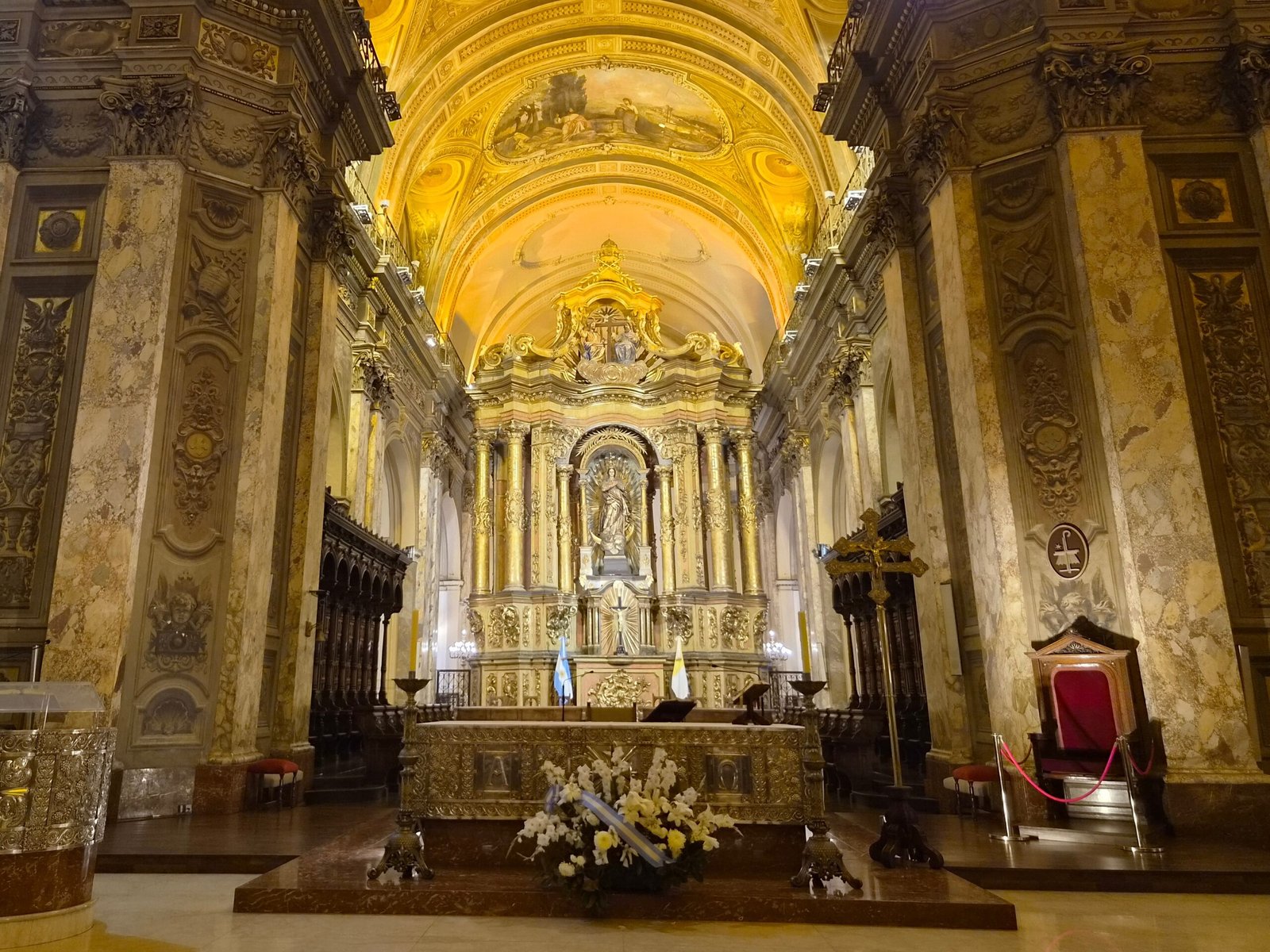
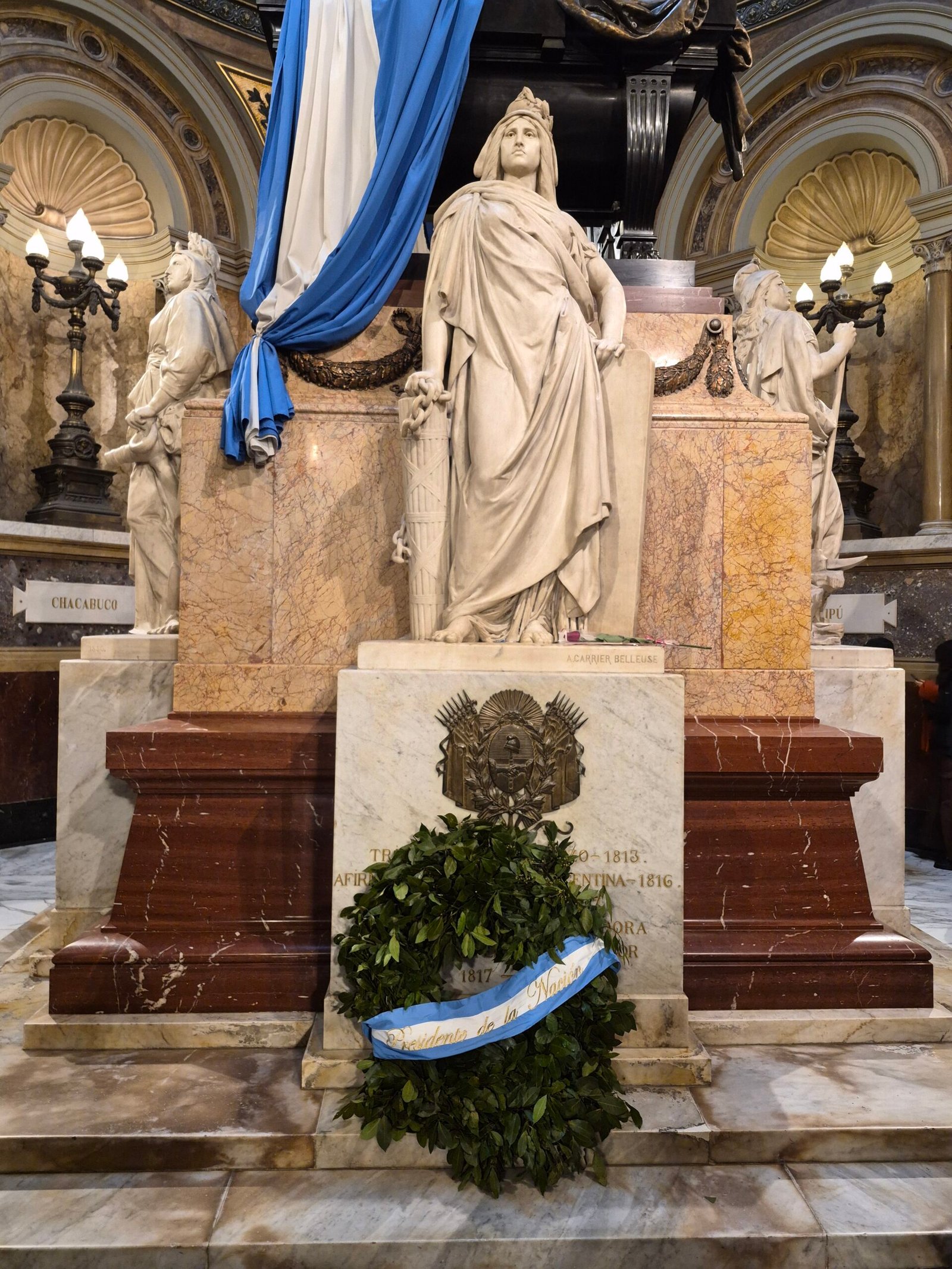
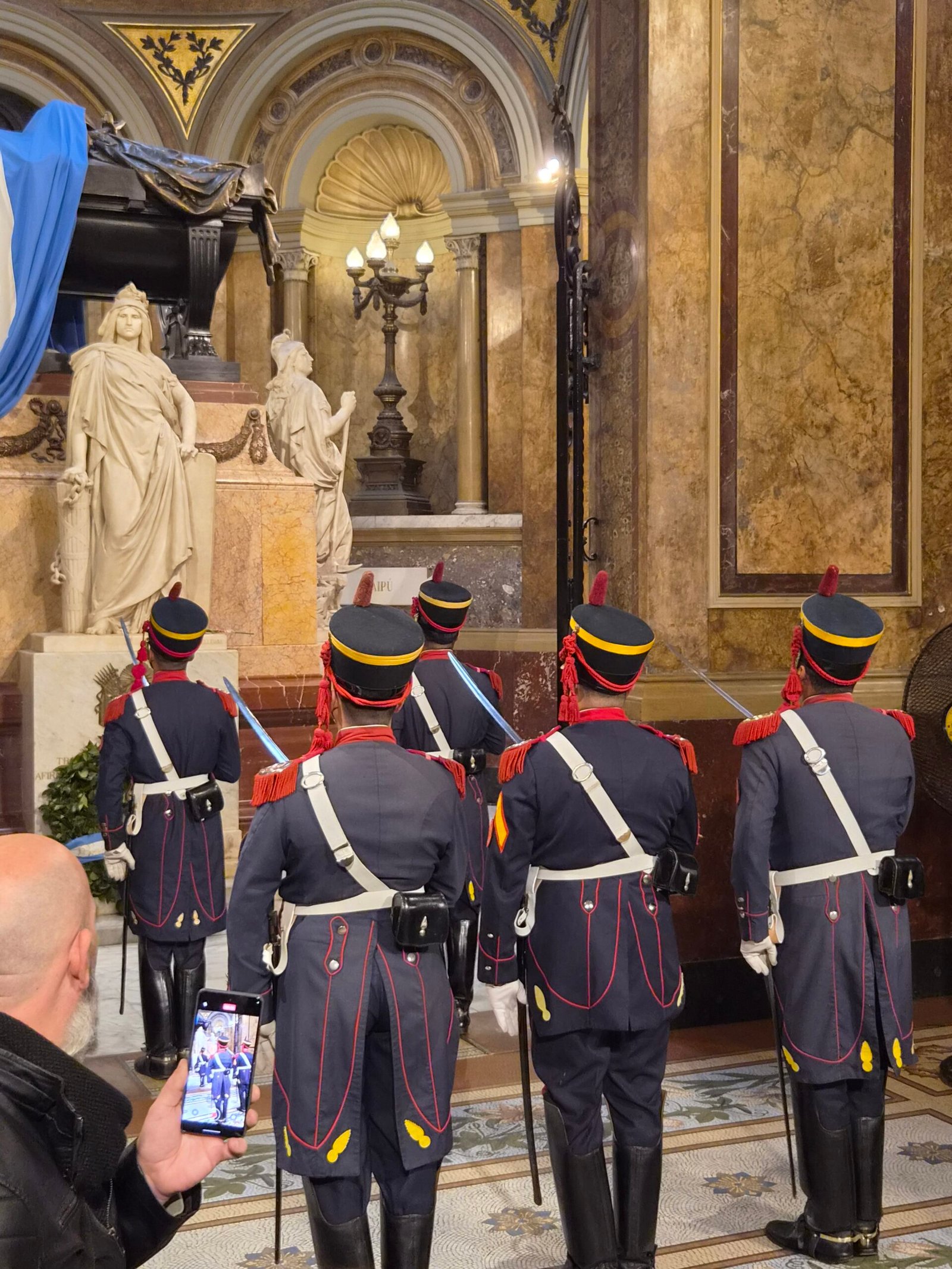
The Catedral Metropolitana de Buenos Aires is also located on the edge of the same square. Inside is the mausoleum of General José de San Martín. His mausoleum is guarded by two sentries, and we happened to arrive just in time for the changing of the guard. He was reportedly an Argentine general and statesman, known as one of South America’s most important freedom fighters. He played a key role in liberating southern and central South America from Spanish colonial rule.
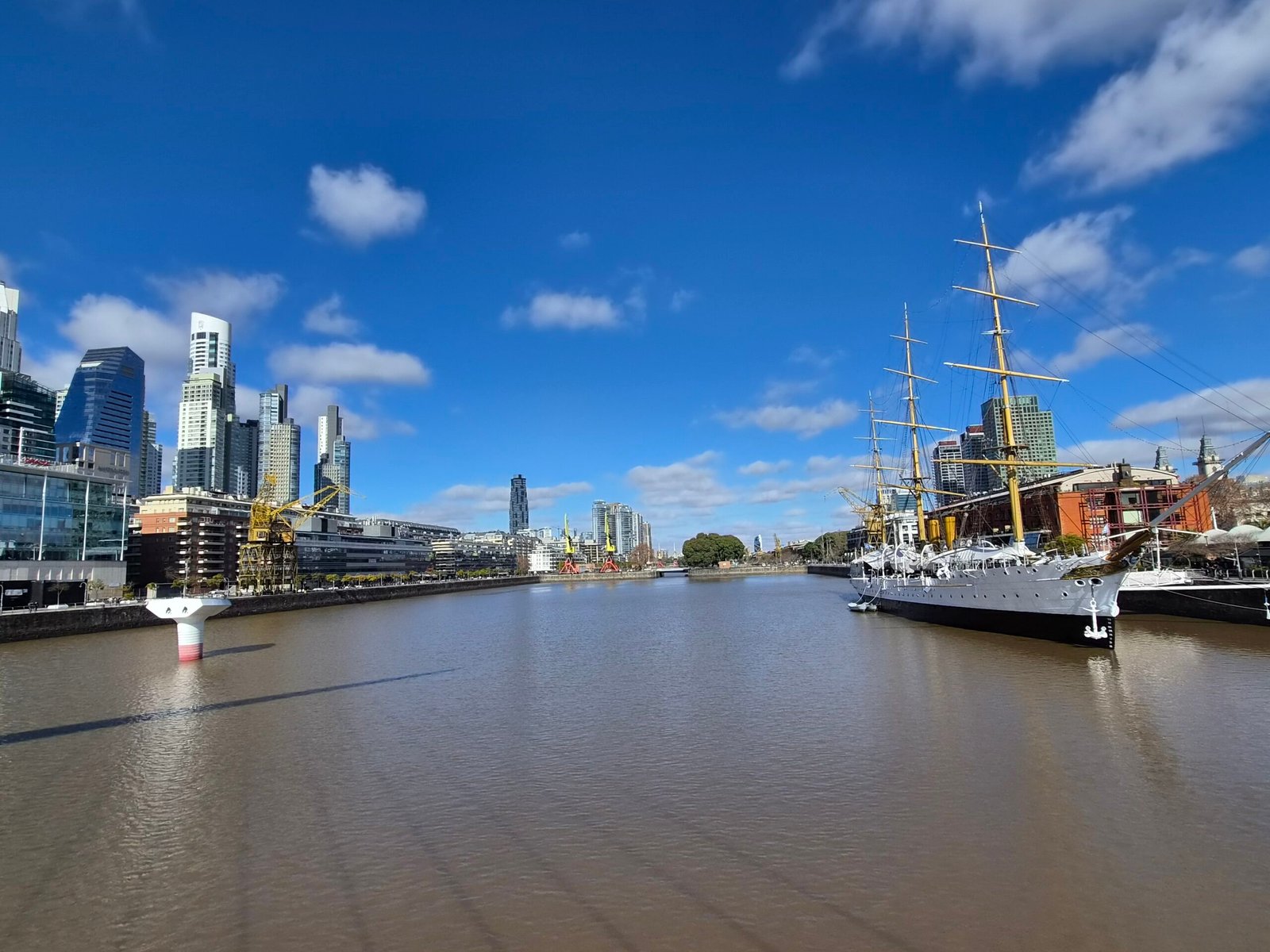
The view from the Puente de la Mujer resembled the one from the Aura River in Turku
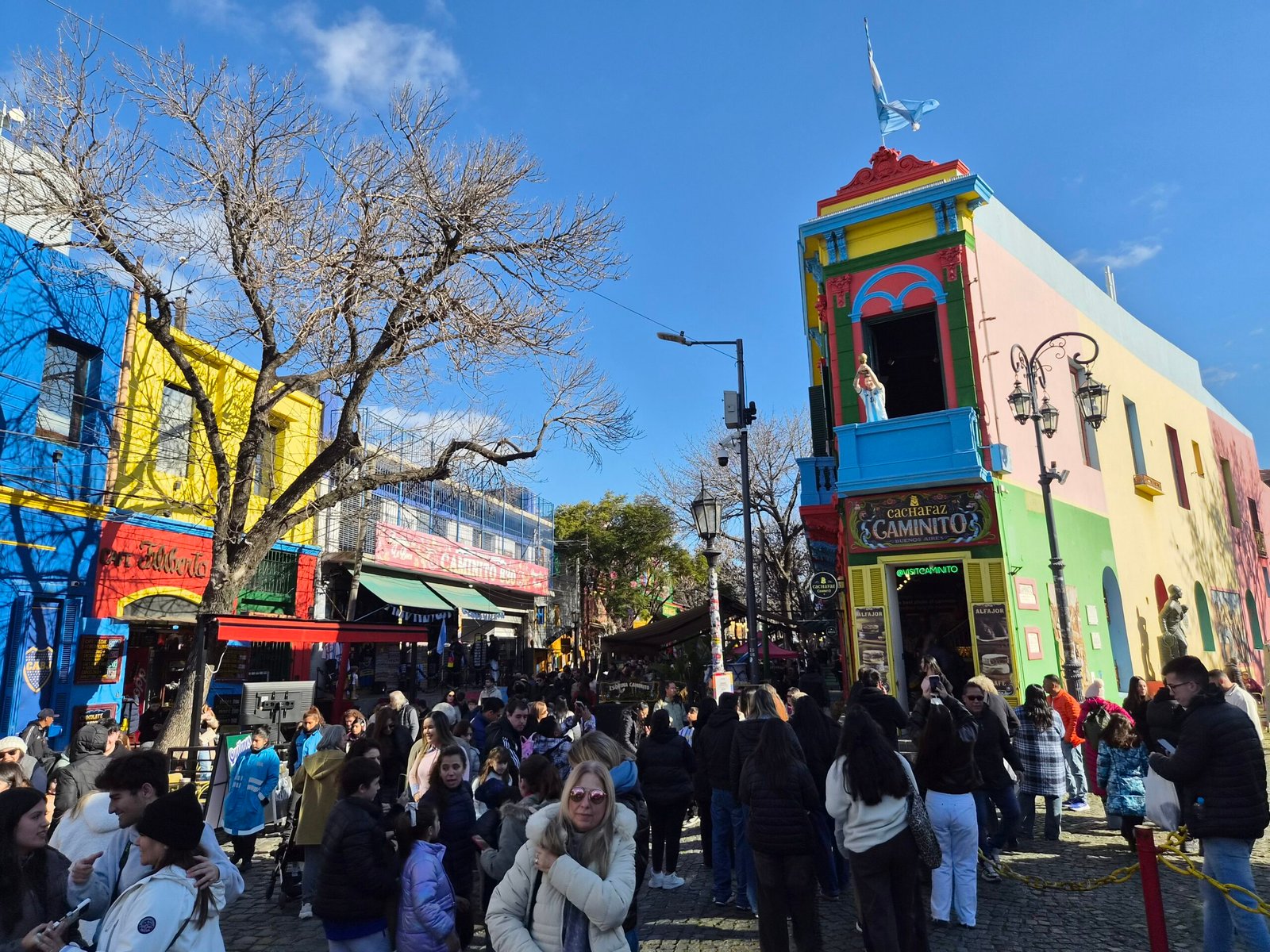
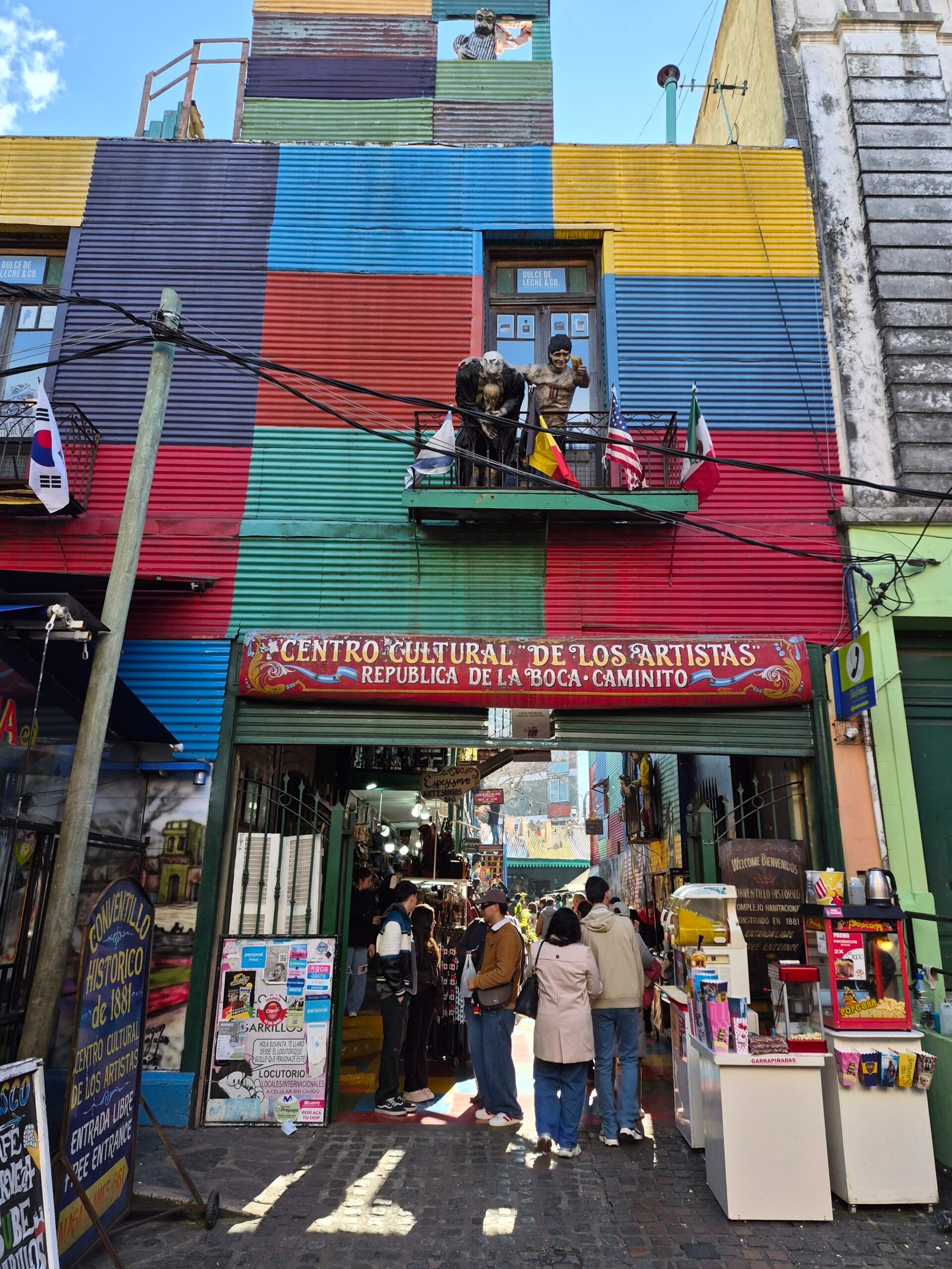
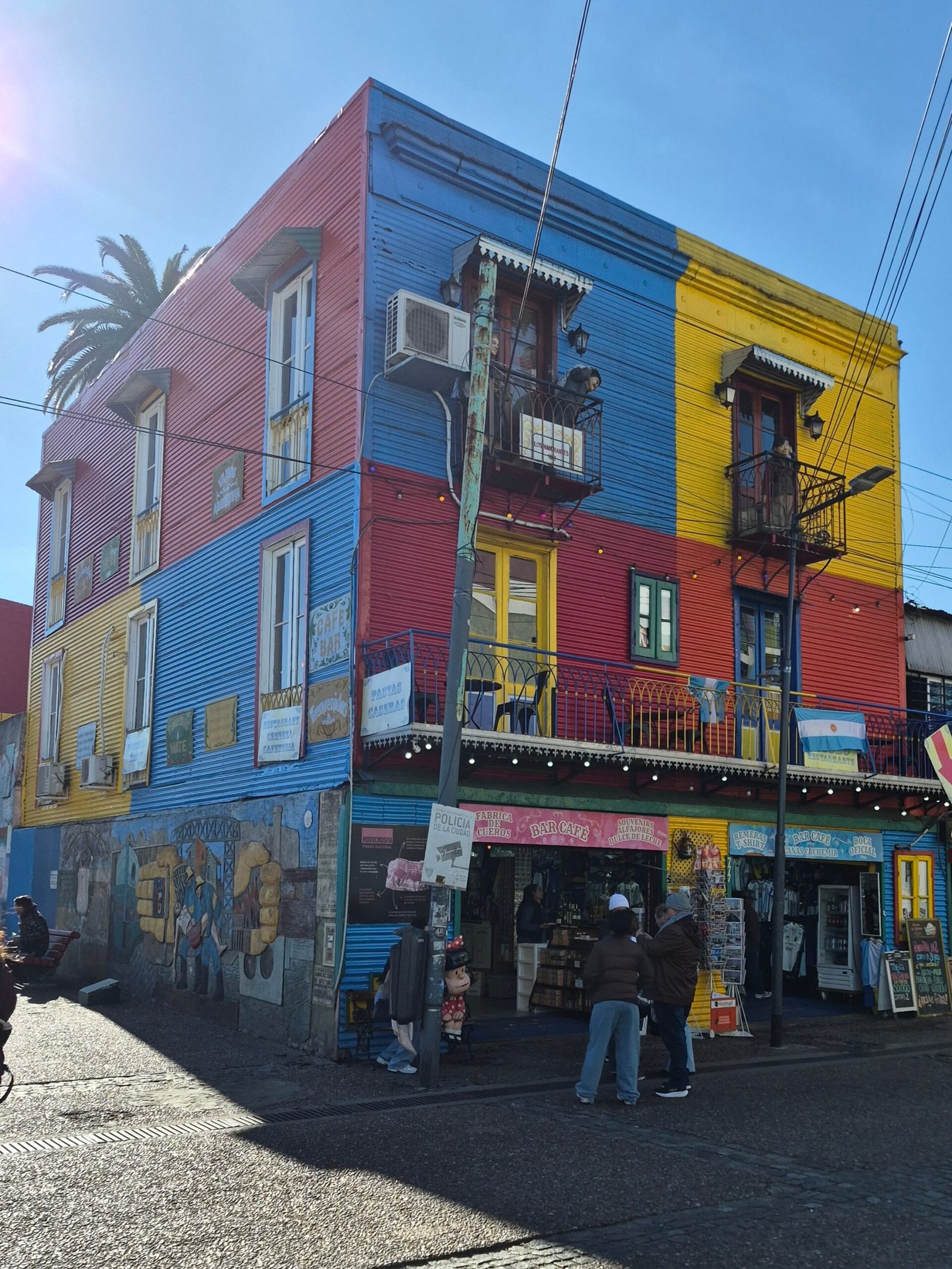
From the square, our journey continued to the La Boca neighborhood. The area is famous for its history of immigration, its brightly painted tin-roofed houses, and its well-known Caminito pedestrian street. The area is also home to La Bombonera, the stadium of the legendary Boca Juniors soccer club. We heard that even Maradona once played there. We didn’t visit the stadium, but we did take a quick stroll down Caminito. To get to the promenade, we obviously had to park the car somewhere. Since there were no open street-side spots, our guide stylishly pulled the car right into the middle of the sidewalk and said, “Welcome to my Plan B.”
Caminito was full of all kinds of restaurants and bars. Leo recommended a cozy-looking restaurant there, so we thought we might come back to the area the next day. However, we were told the place was only open for lunch, since after the sun sets after five o’clock, the area becomes very unsafe due to the nearby favela, and the restaurants close their doors by five at the latest.
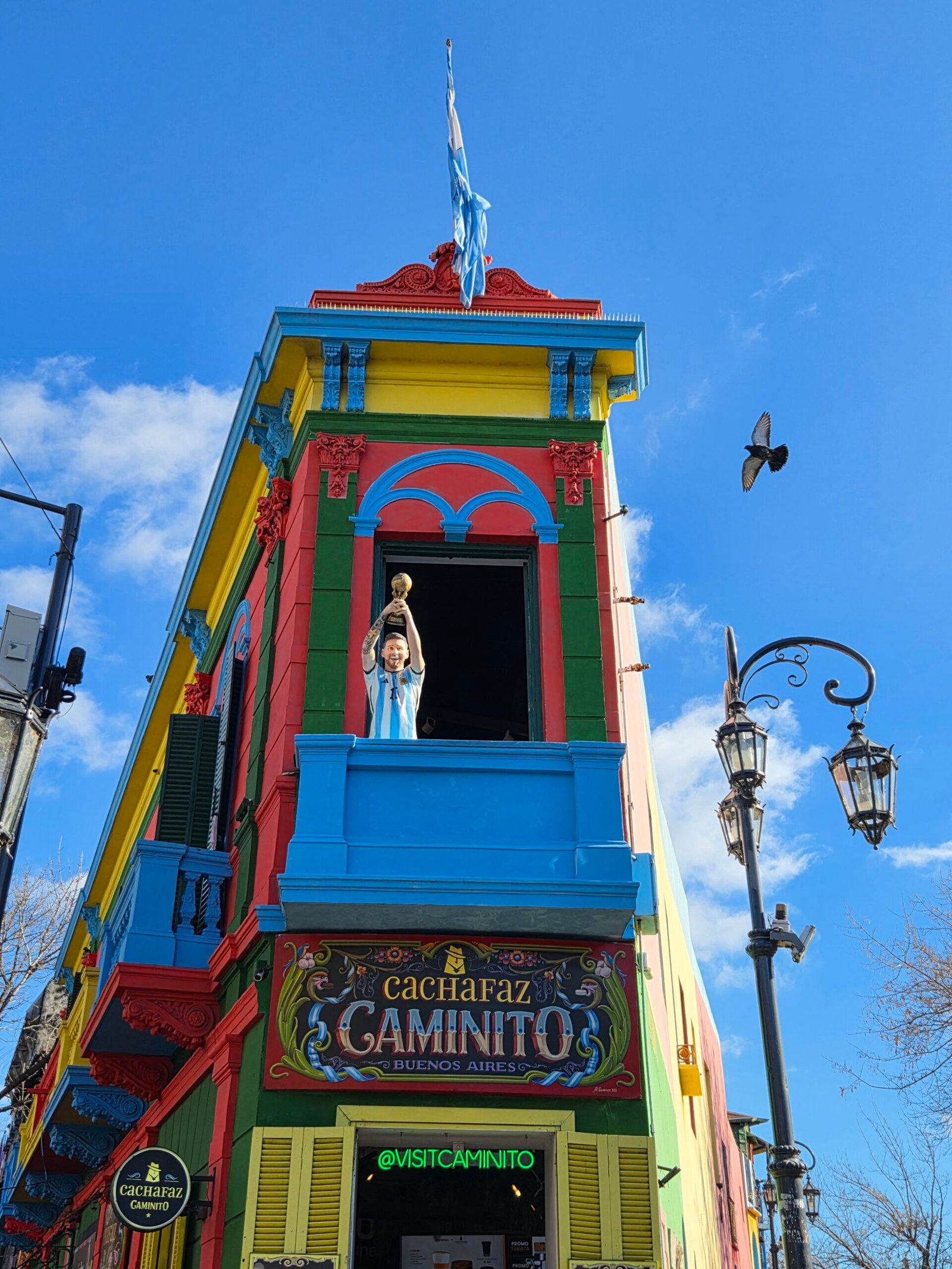
Caminito
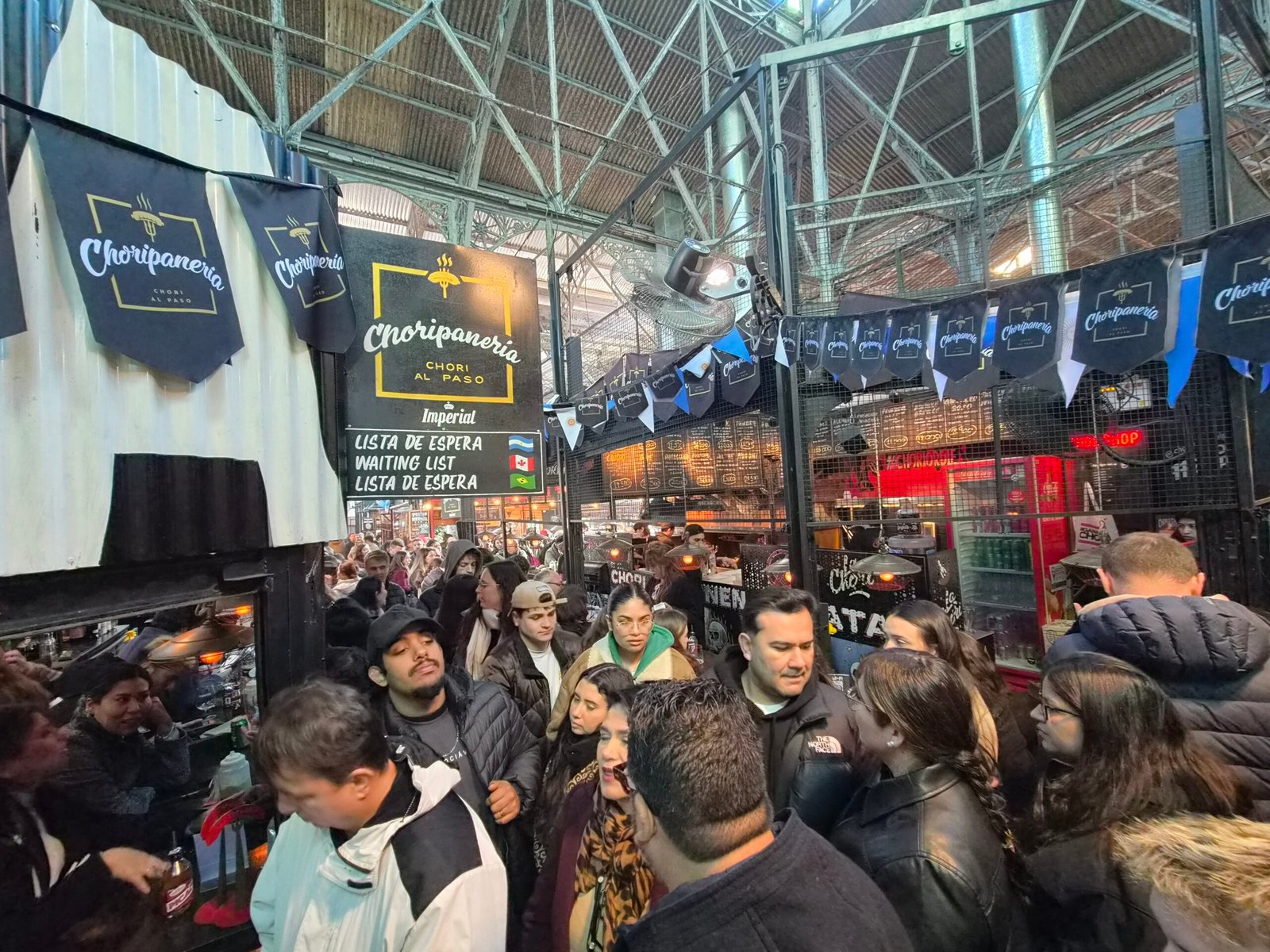
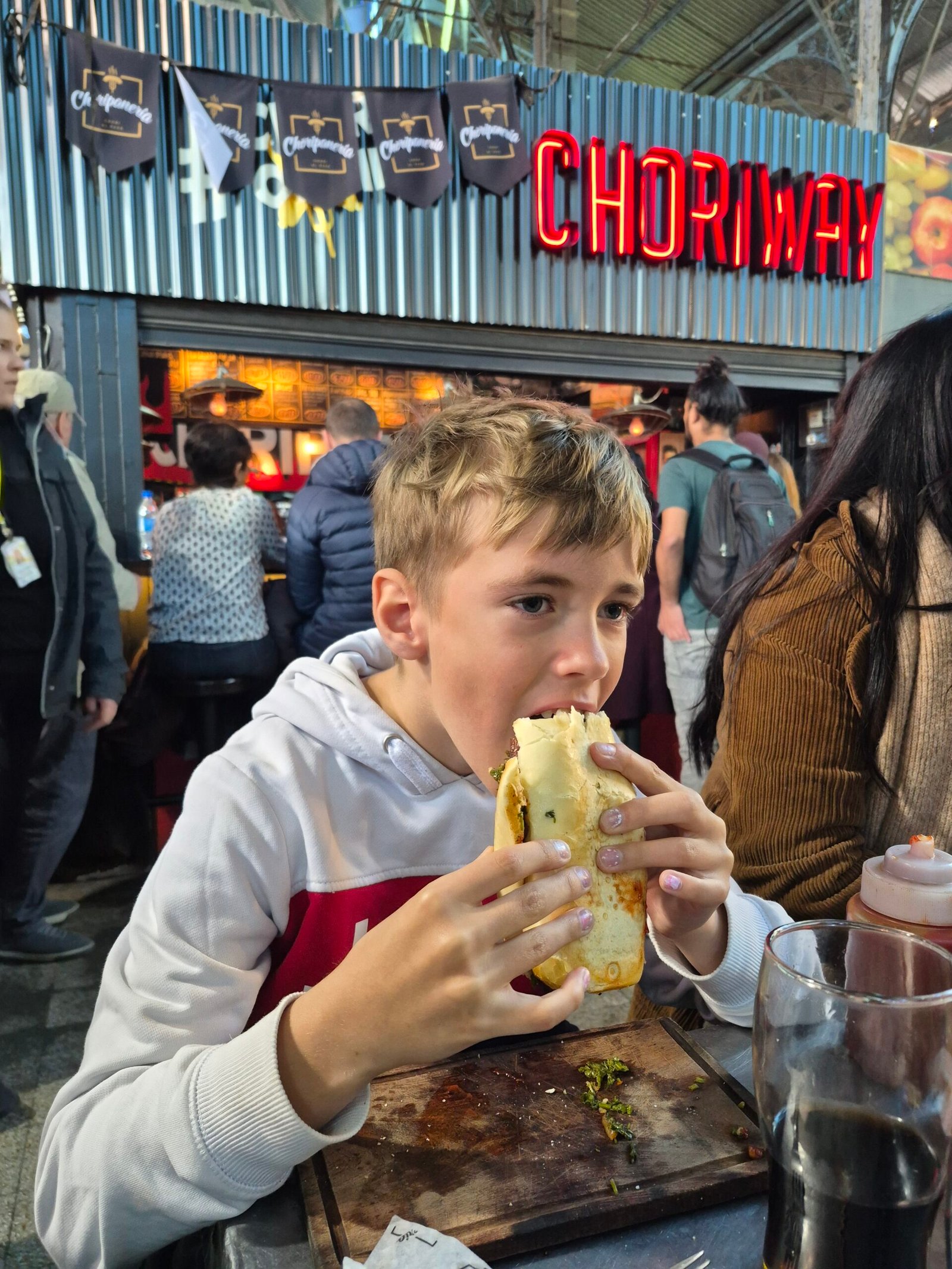
This turned out to be our last stop with the guide. Next, he dropped us off near the San Telmo Market, where we went to have a combined lunch and dinner at a place he recommended. We hadn’t the slightest idea just how popular La Choripaneria was. The restaurant served practically nothing but traditional Argentine street food: bread stuffed with chorizo sausage and served with sides. Ronja was on the verge of tears because she didn’t want sausage, but luckily, under current Argentine law, every restaurant must also offer a vegetarian option, so we found grilled Halloumi cheese on the menu, which was fine with Ronja too. Despite the simple menu, there was quite a line at the place, and we, too, had to wait on the waiting list for nearly half an hour. While we waited, we looked at the various meal options displayed on the walls and decided on our orders in advance. When we finally got a table, it still took quite a while for the food to arrive. The long line at the place was clearly partly due to slow service, but of course, it was also a popular spot.
Choripaneria
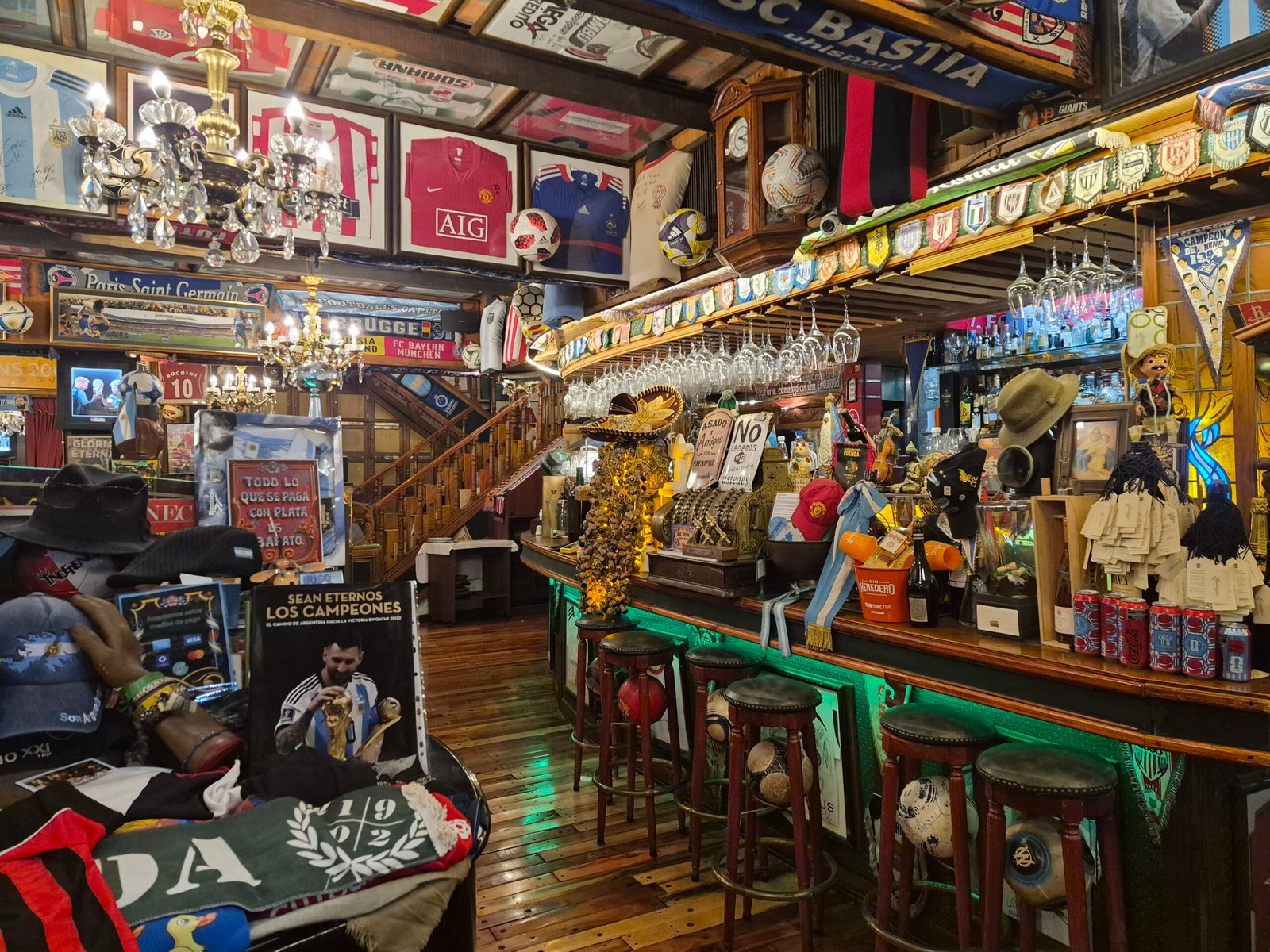
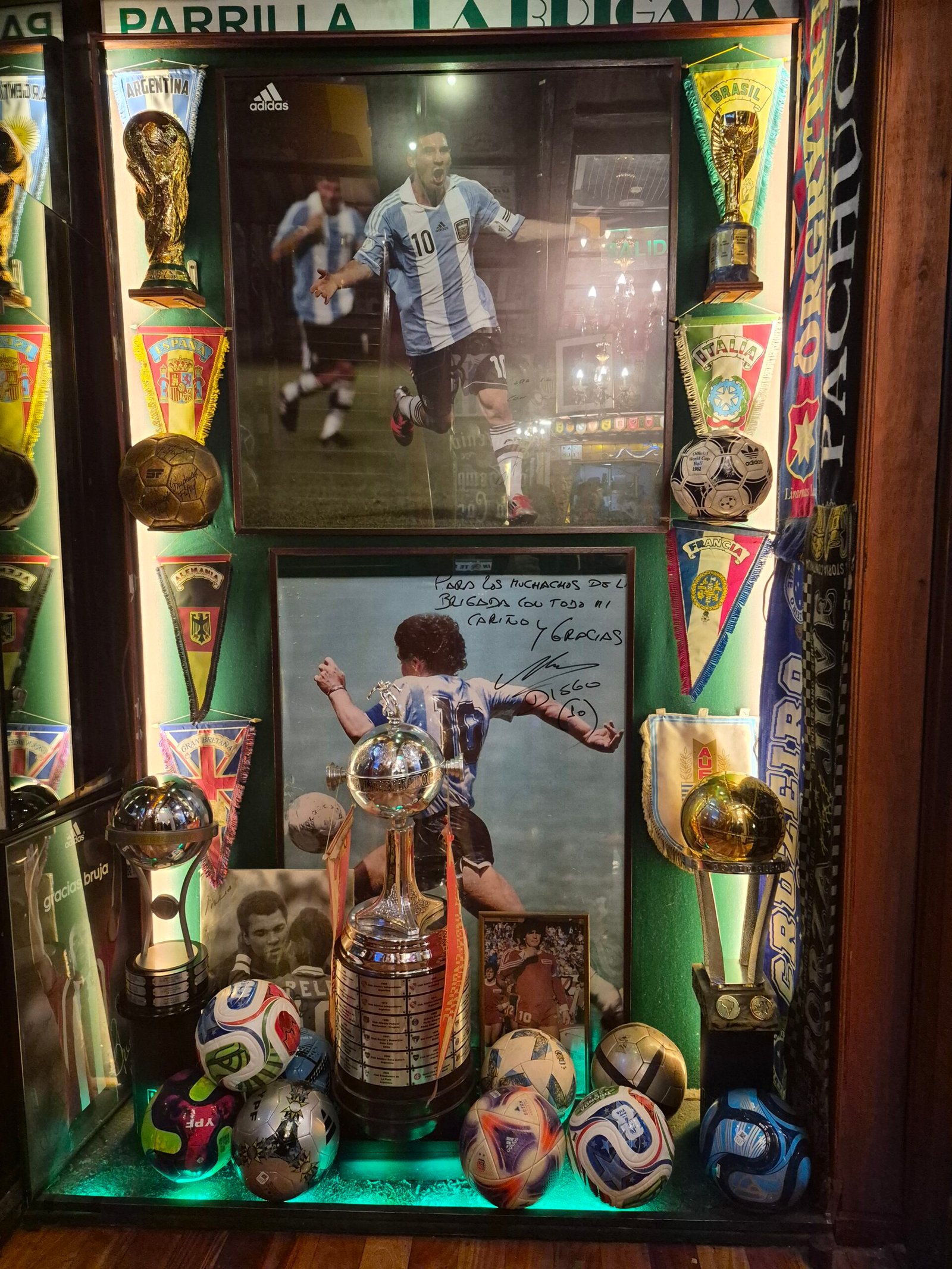
Before we set off again, we still had to use the restroom. For some reason, the women’s restroom at the market hall was closed, so there was a huge line at the men’s restroom. Jaana and the kids stayed in line, and Marko went to exchange money at the market hall’s currency exchange counter. By the time Marko returned, the line hadn’t moved much at all. At this point, Jaana went to ask at a restaurant located outside the market hall if the kids could use their restroom. Fortunately, this worked out, even though, in principle, the restroom was intended only for the restaurant’s customers. The place had a very unique interior. It was almost a shame we didn’t eat there. Risto, at least, would have really appreciated the soccer-themed decor.
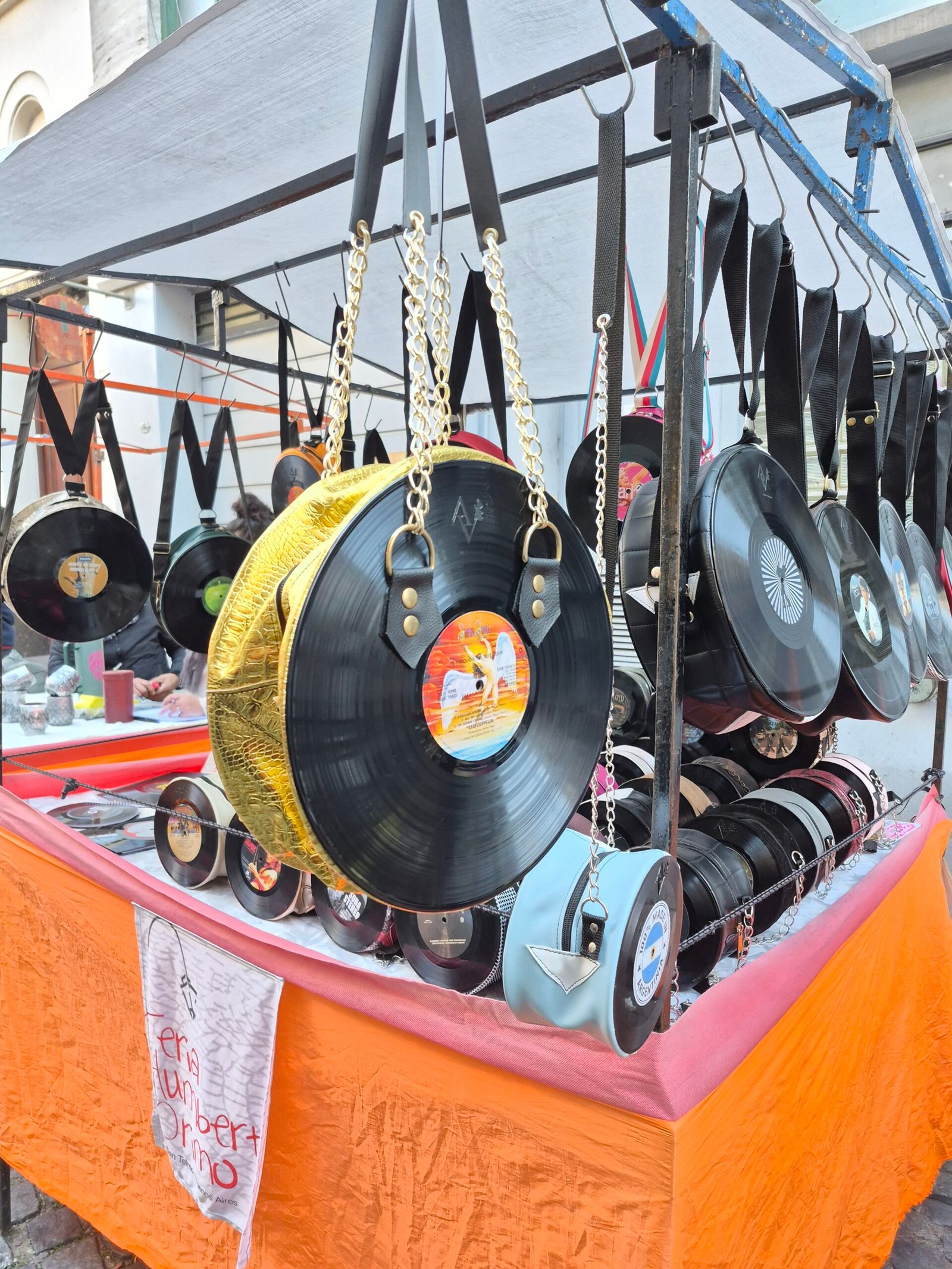
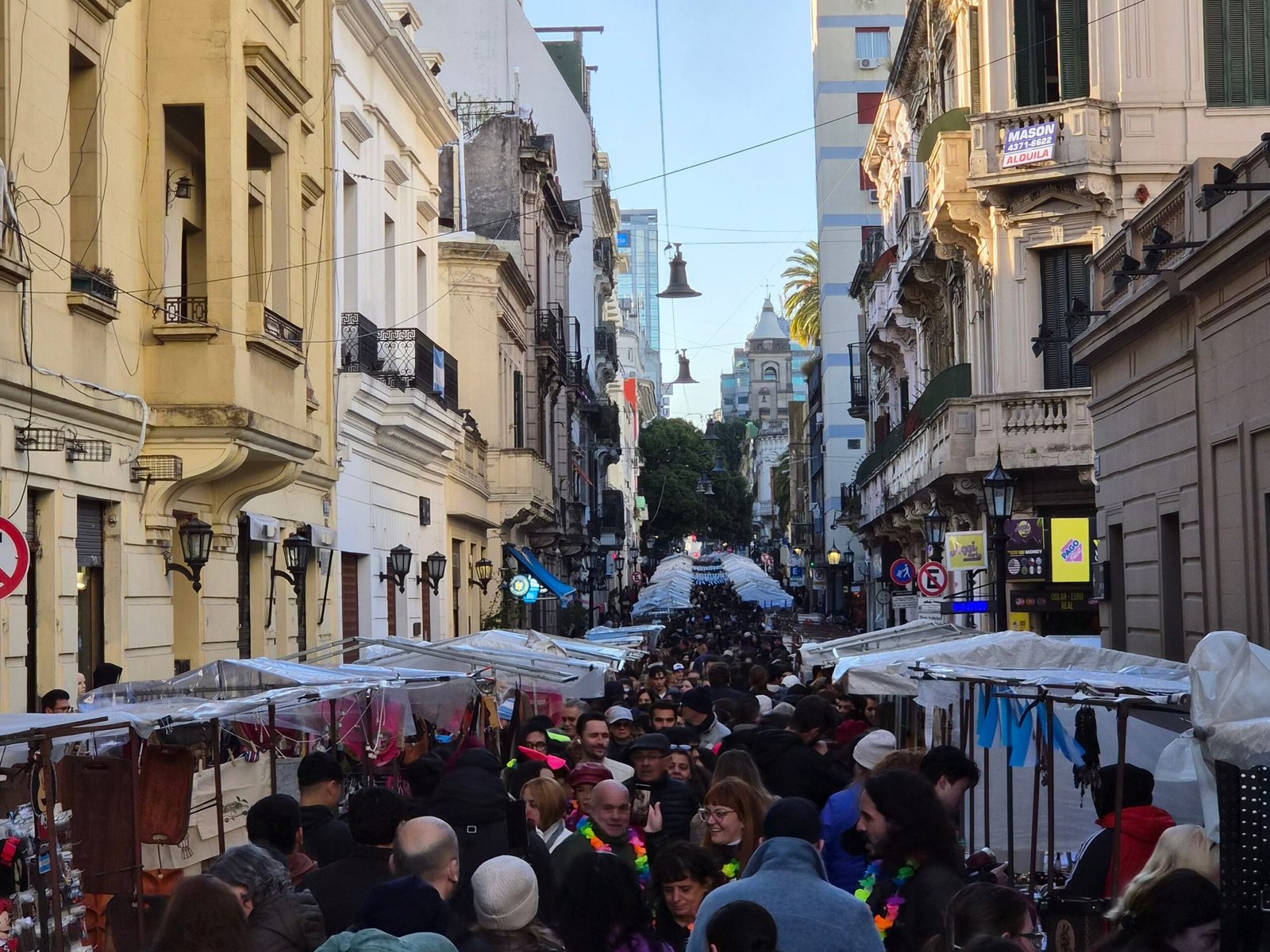
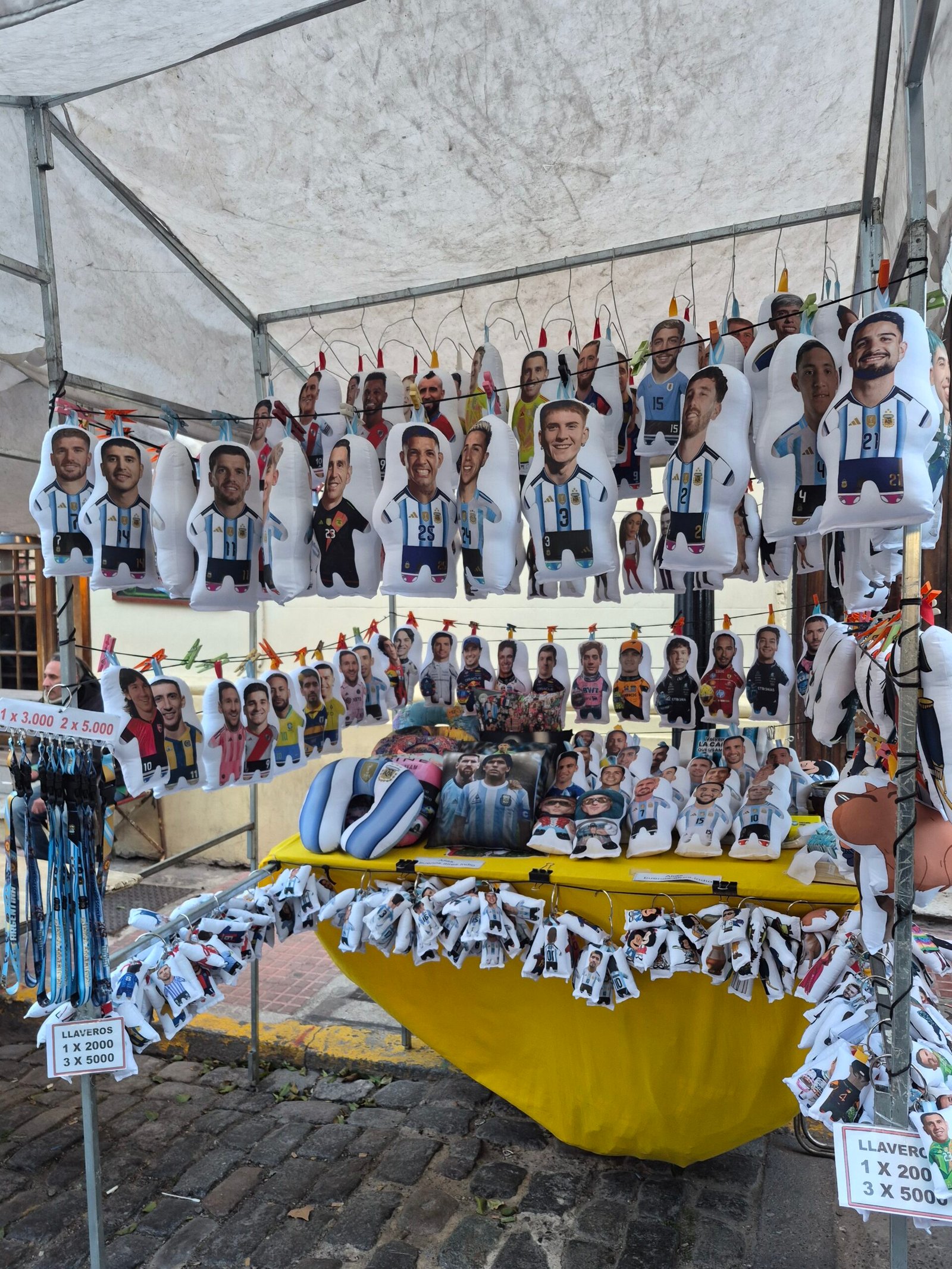
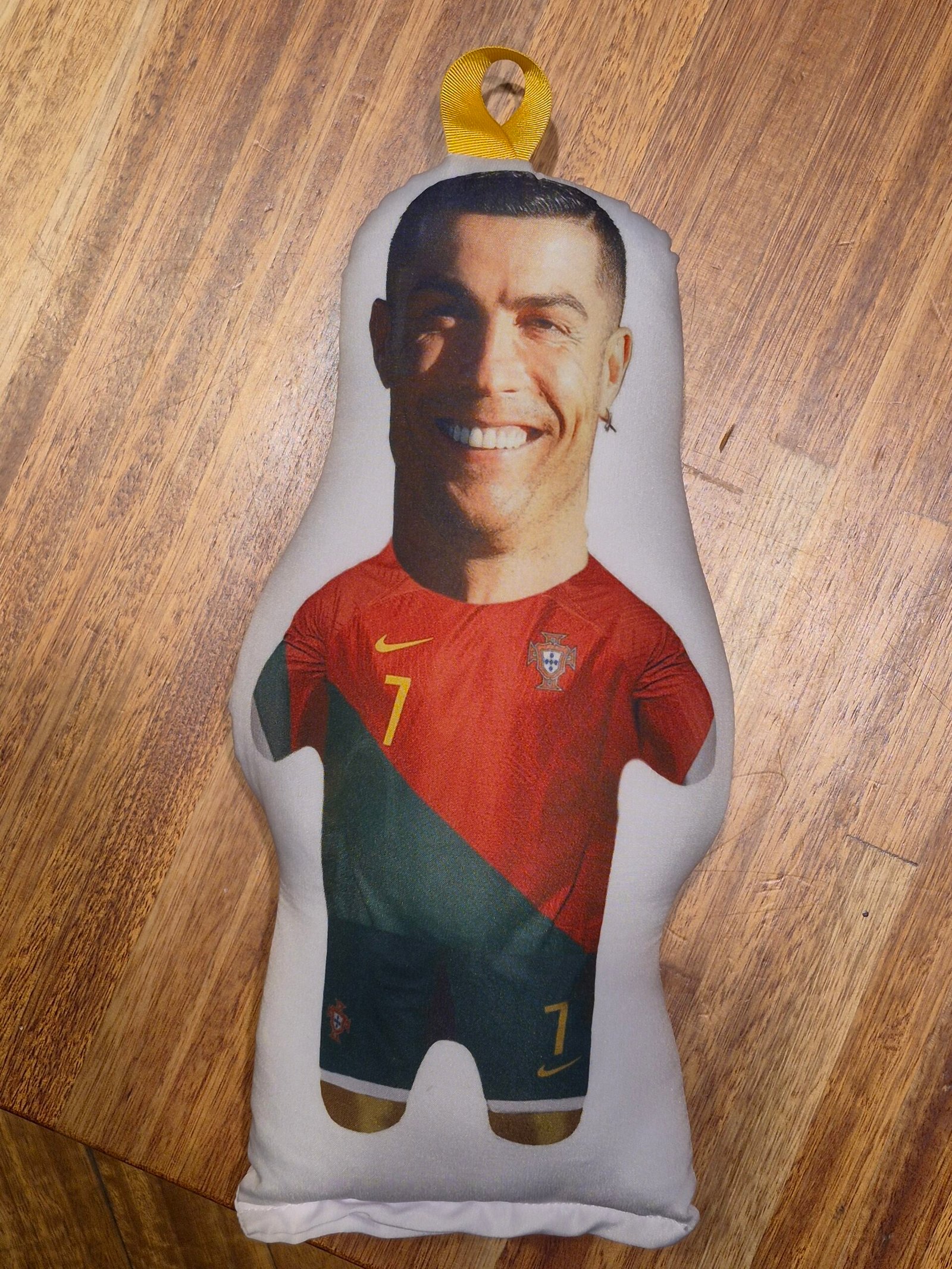
Since it was Sunday, the San Telmo Market was still in full swing. So we left the market hall and walked down the street, which was completely closed to traffic. Instead of cars, both sides of the street were lined with numerous artisan stalls selling a wide variety of beautiful—and even inventive—handmade crafts. Ronja found a ring at one of the stalls, while Risto found a truly hideous Ronaldo-themed stuffed thingy.
A traffic jam stretching ten blocks and a whole bunch of stalls
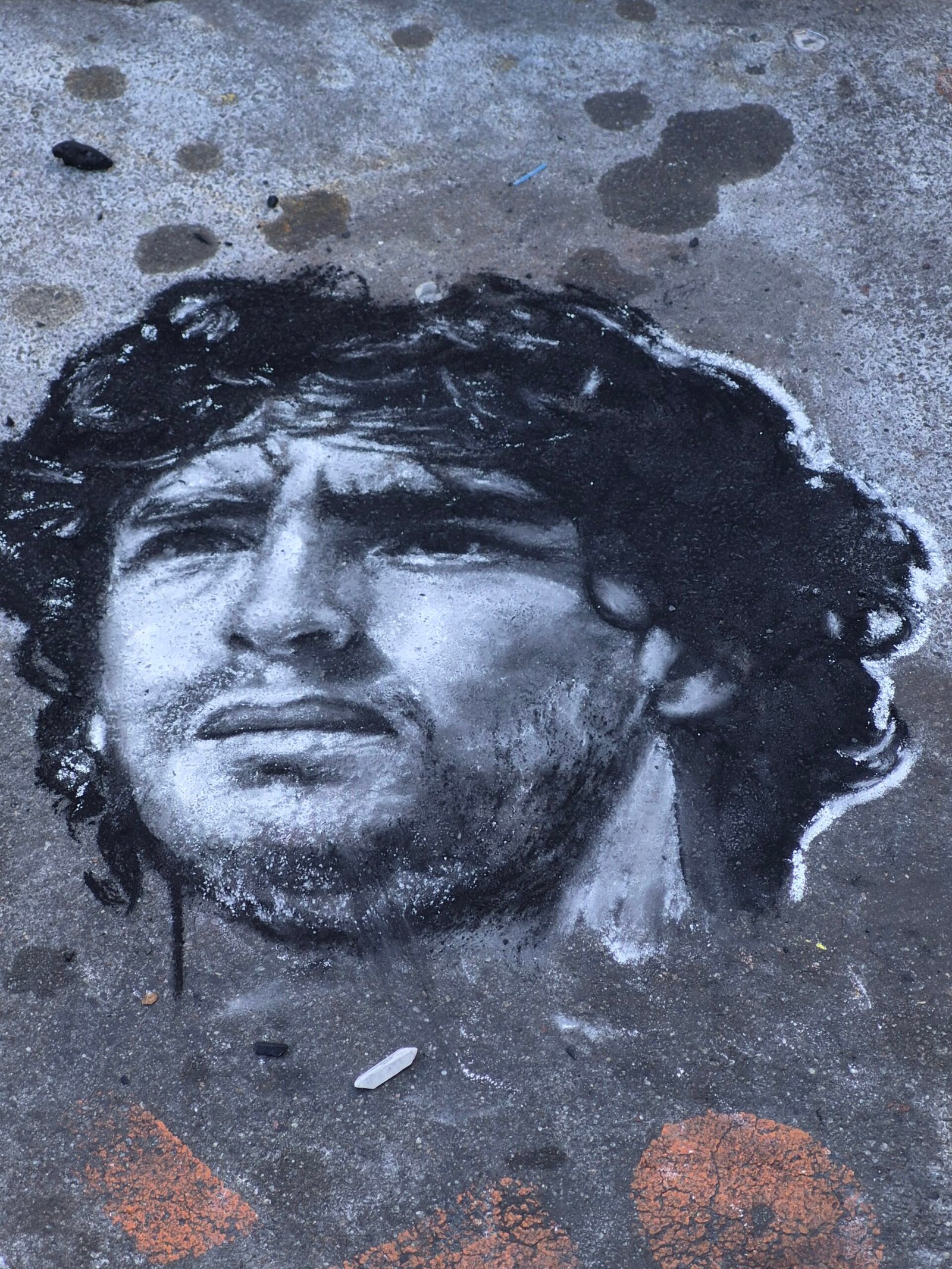
A street painting by a local artist
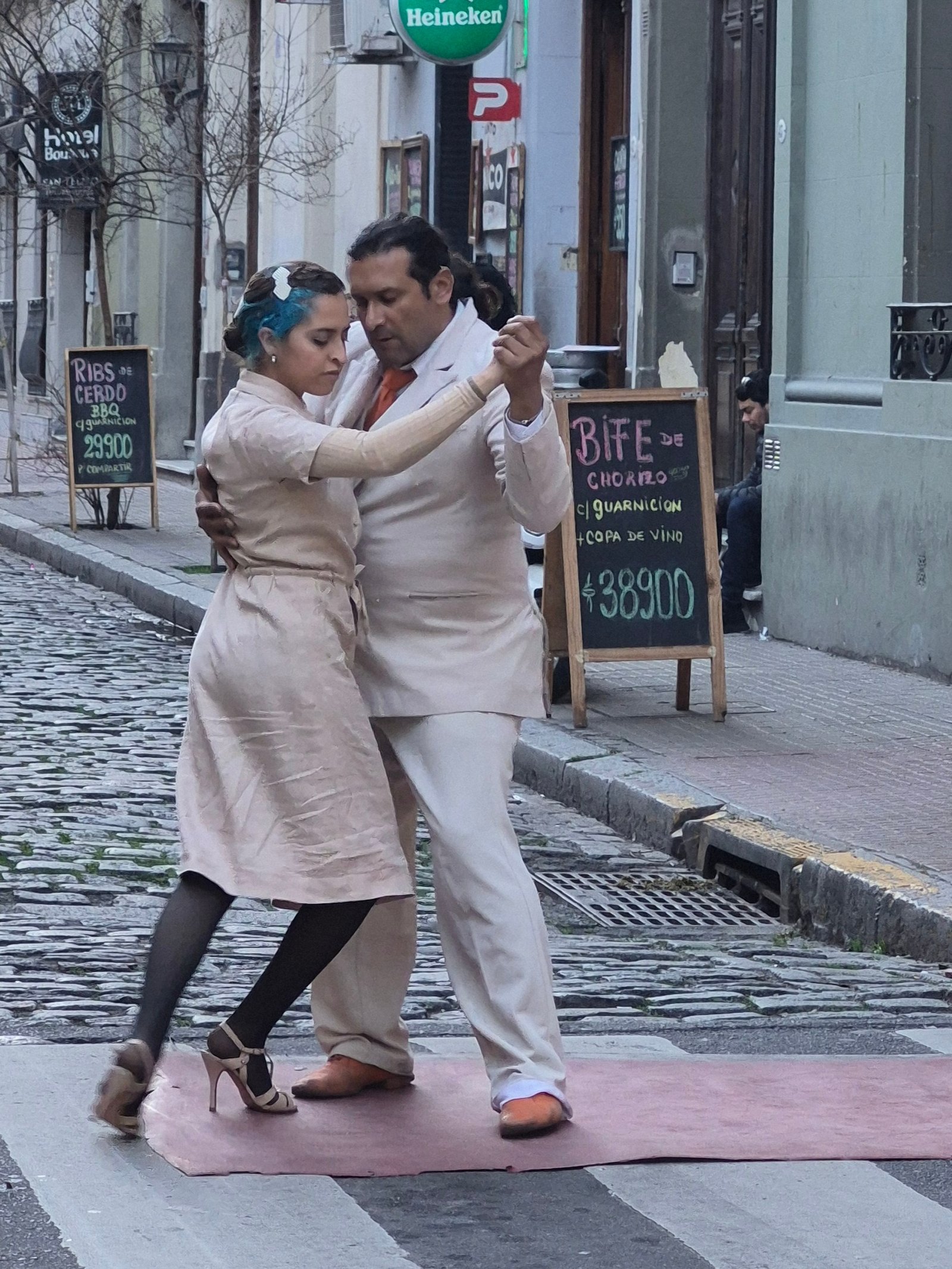
A tango performance
In whose mind was the world lacking these products?
Risto now owns a soft Ronaldo hattifattener (hattivatti from Moomins).
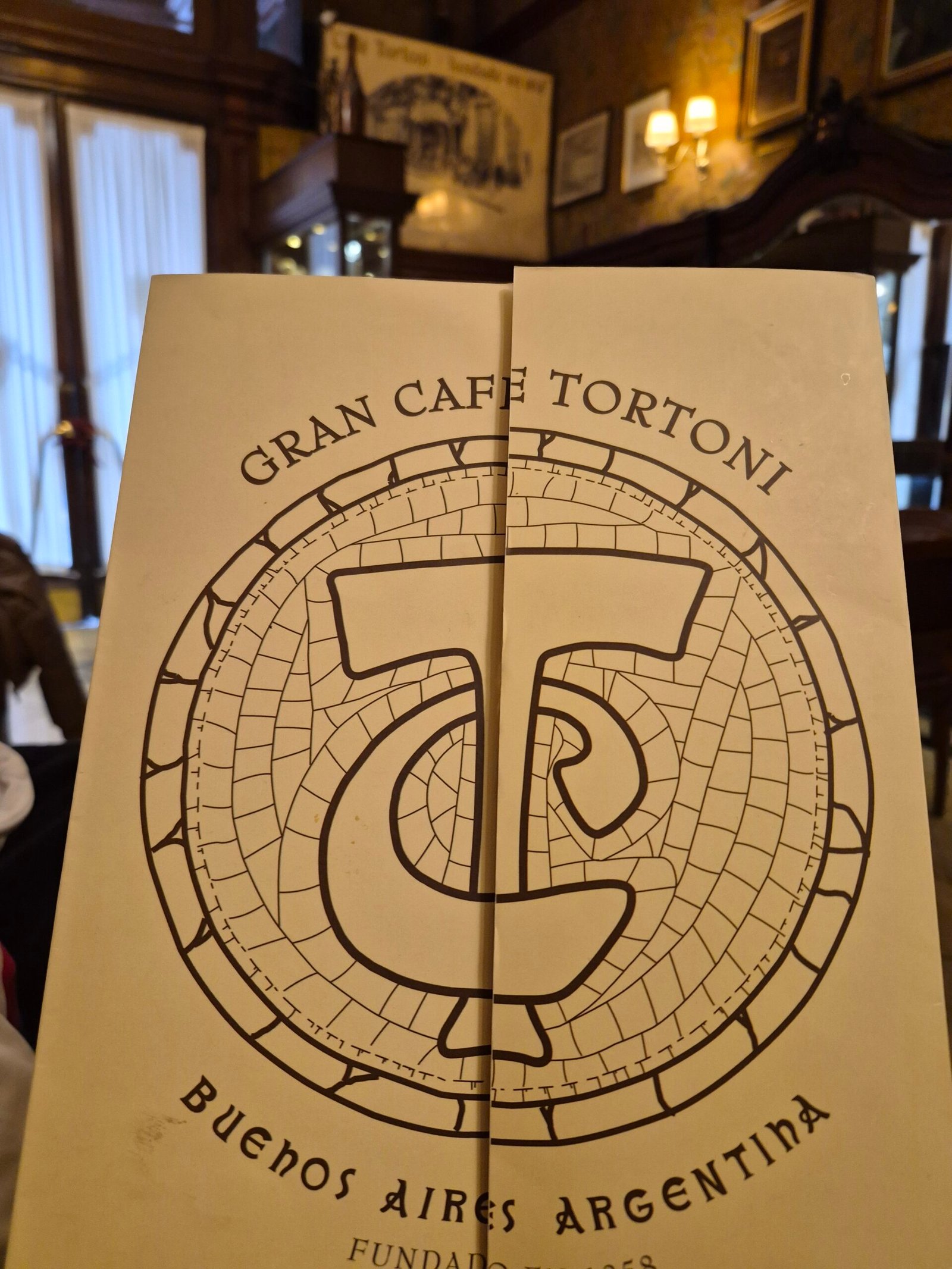
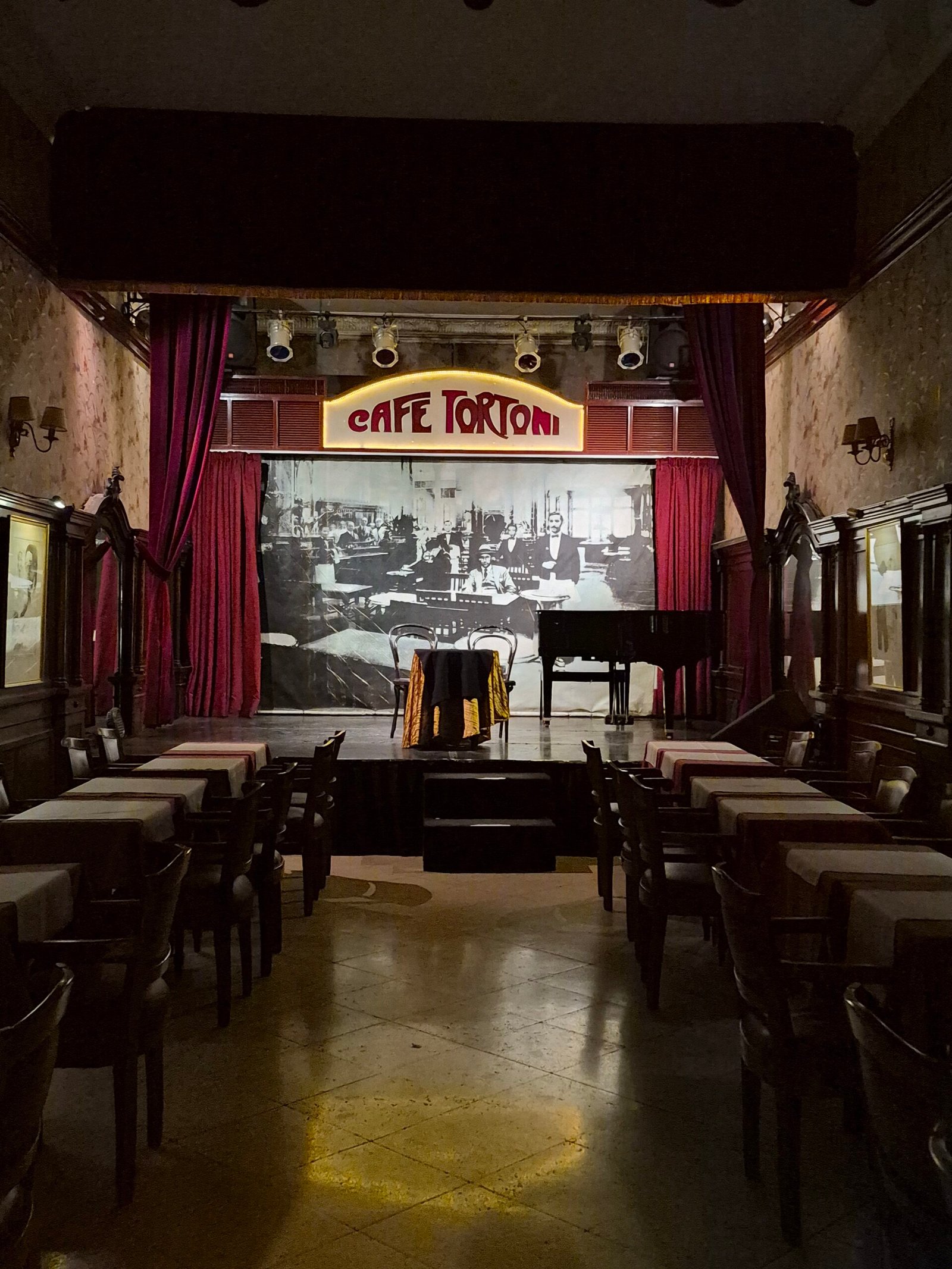
After walking the entire length of the market area, we had returned to Plaza del Mayo. Nearby was the city’s most famous—and apparently also oldest—café, Café Tortoni, founded in 1858. We’d planned to go there to try the café’s famous churros, but we were completely taken by surprise by the line snaking in front of the café. Jaana went over to ask a couple at the front of the line how long they’d been waiting to get in. Apparently, they’d been waiting in line for 1 hour and 45 minutes. There was no way we were going to join that line to wait for churros! So we took an Uber back to our apartment and decided to check if we could make a table reservation in advance. Unfortunately, the cafe did not take reservations, but with the help of AI, we figured out the best time to visit the café, because we simply had to try its famous churros. So we decided to give it another try on Monday during a less crowded time.
On Monday, we took a day off. We did, however, have to set the alarm clock early enough that morning to make it to the laundromat near our apartment in time to drop off our laundry, so we could get it back the same day. We’d accumulated enough laundry that it filled two bags. Washing and drying our clothes cost a total of 24,000 pesos, or about 14€. Once we had dropped off the laundry, we headed back to try to get into Café Tortoni.
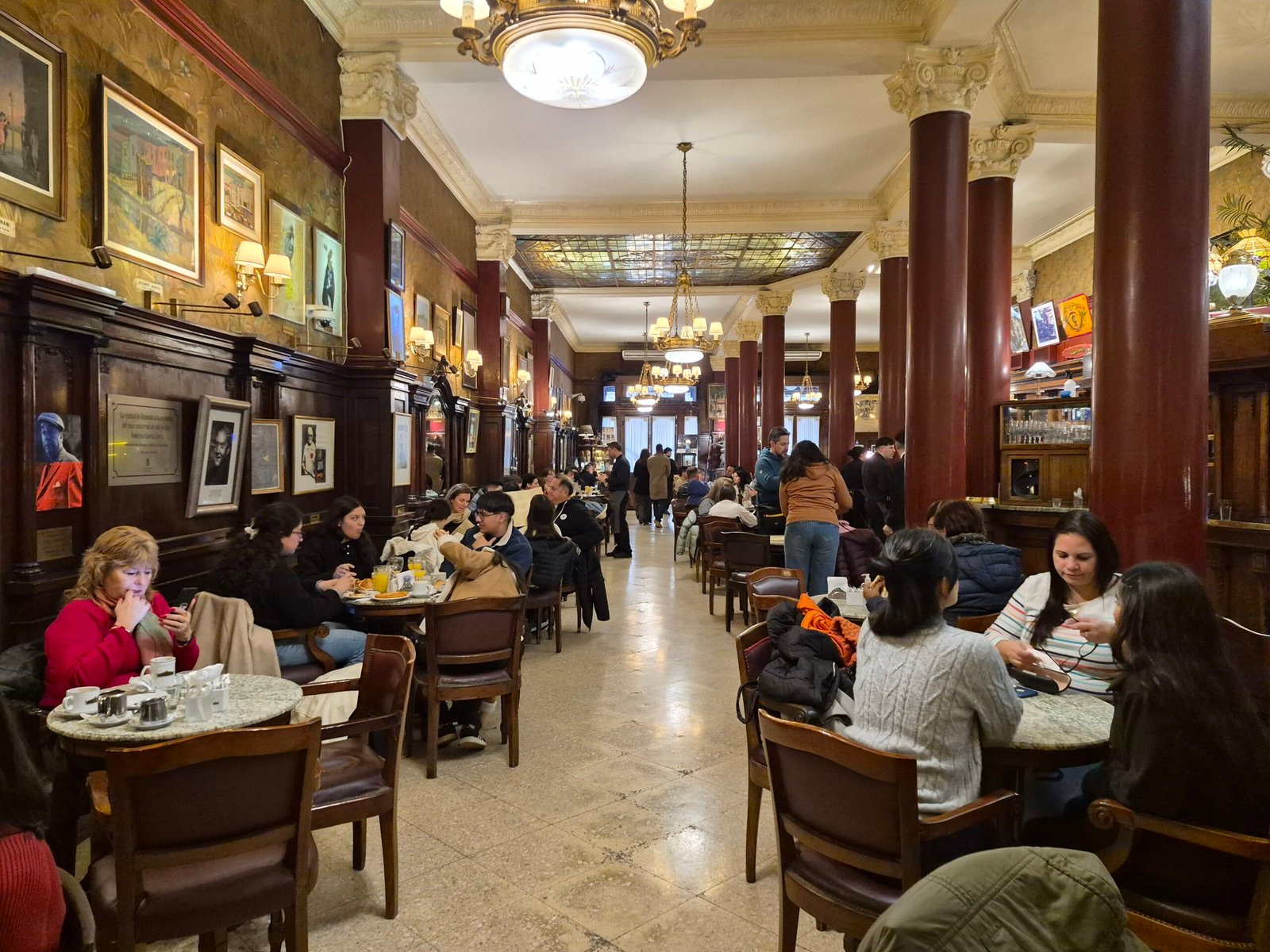
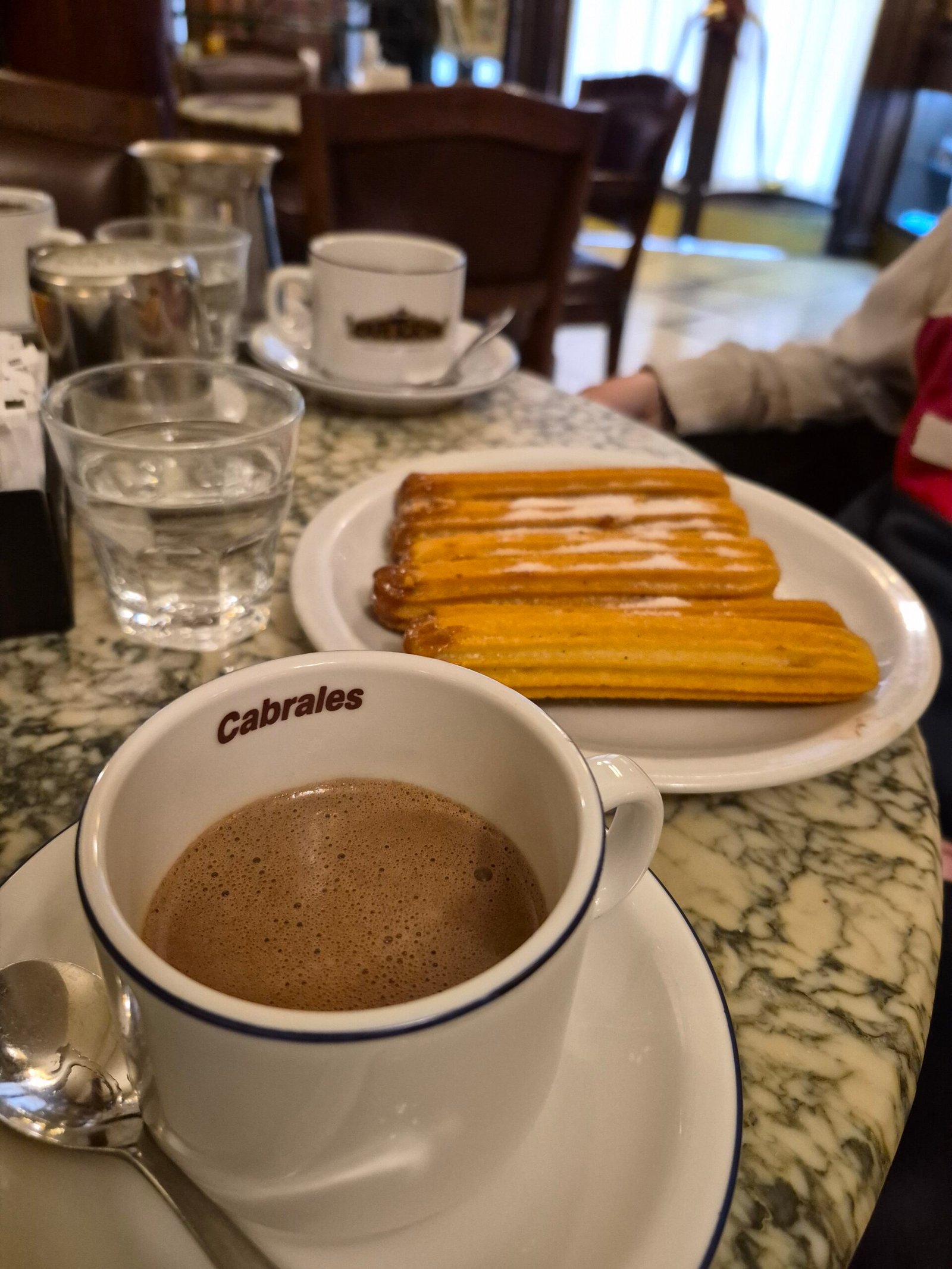
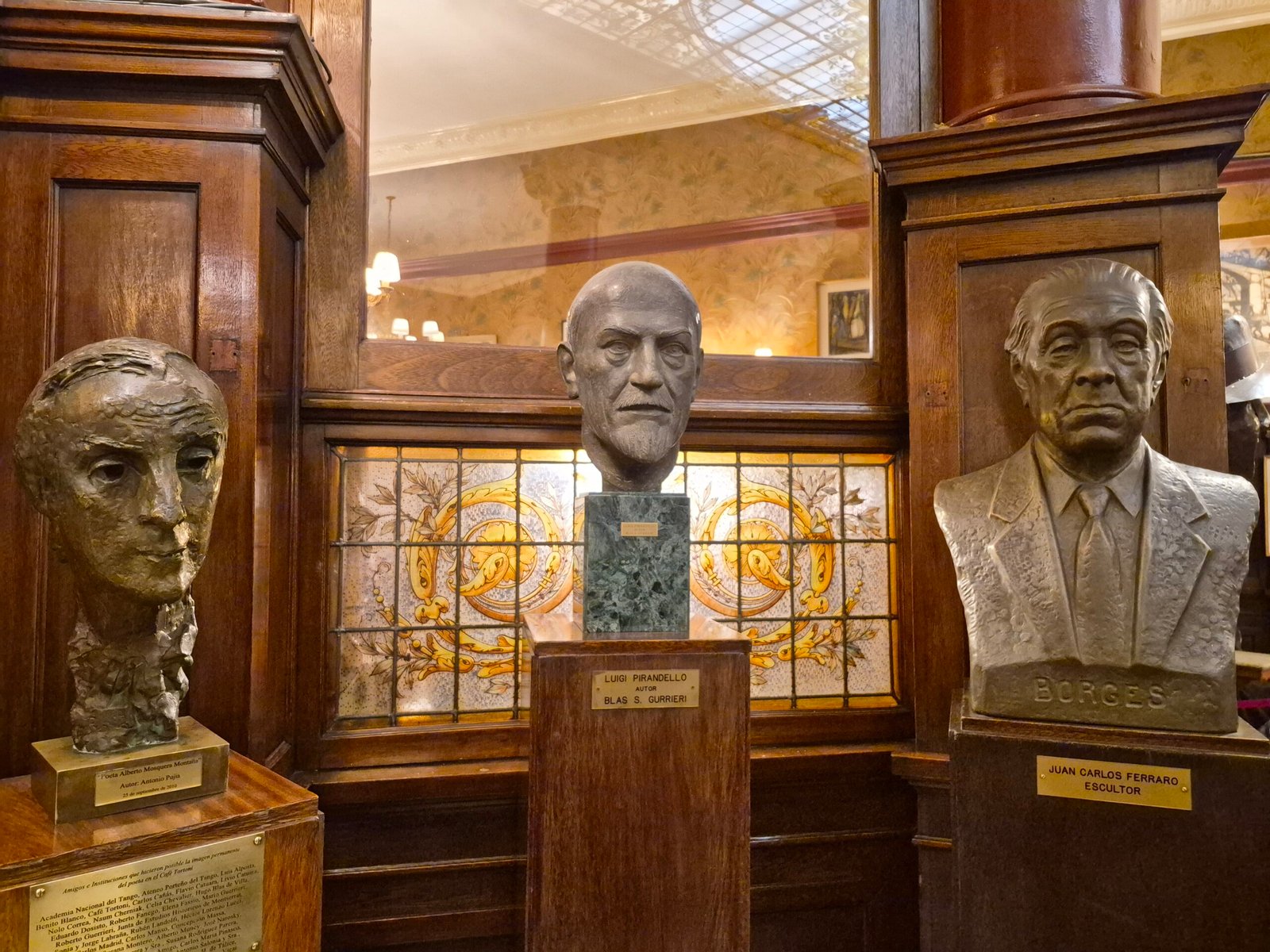
This time, the line wasn’t as long as it had been the previous day. Despite that, we still had to wait in line for about 20 minutes to get into the café. Café Tortoni is Buenos Aires’s most famous and oldest café. It’s also one of the most beautiful cafés in the world. Many famous writers, poets, politicians, and scientists have sipped coffee there over the years. These days, the café also regularly hosts tango performances, but at eleven in the morning, we didn’t see any. We all ordered the café’s most famous dish: churros and hot chocolate. Risto isn’t really into churros, but he still said they were pretty good. The rest of us loved our orders. The churros were filled with dulce de leche, and the hot chocolate was really thick and chocolatey. It was a real treat to enjoy them while soaking up the atmosphere of history.
Café Tortoni
Kaakao ja churrot
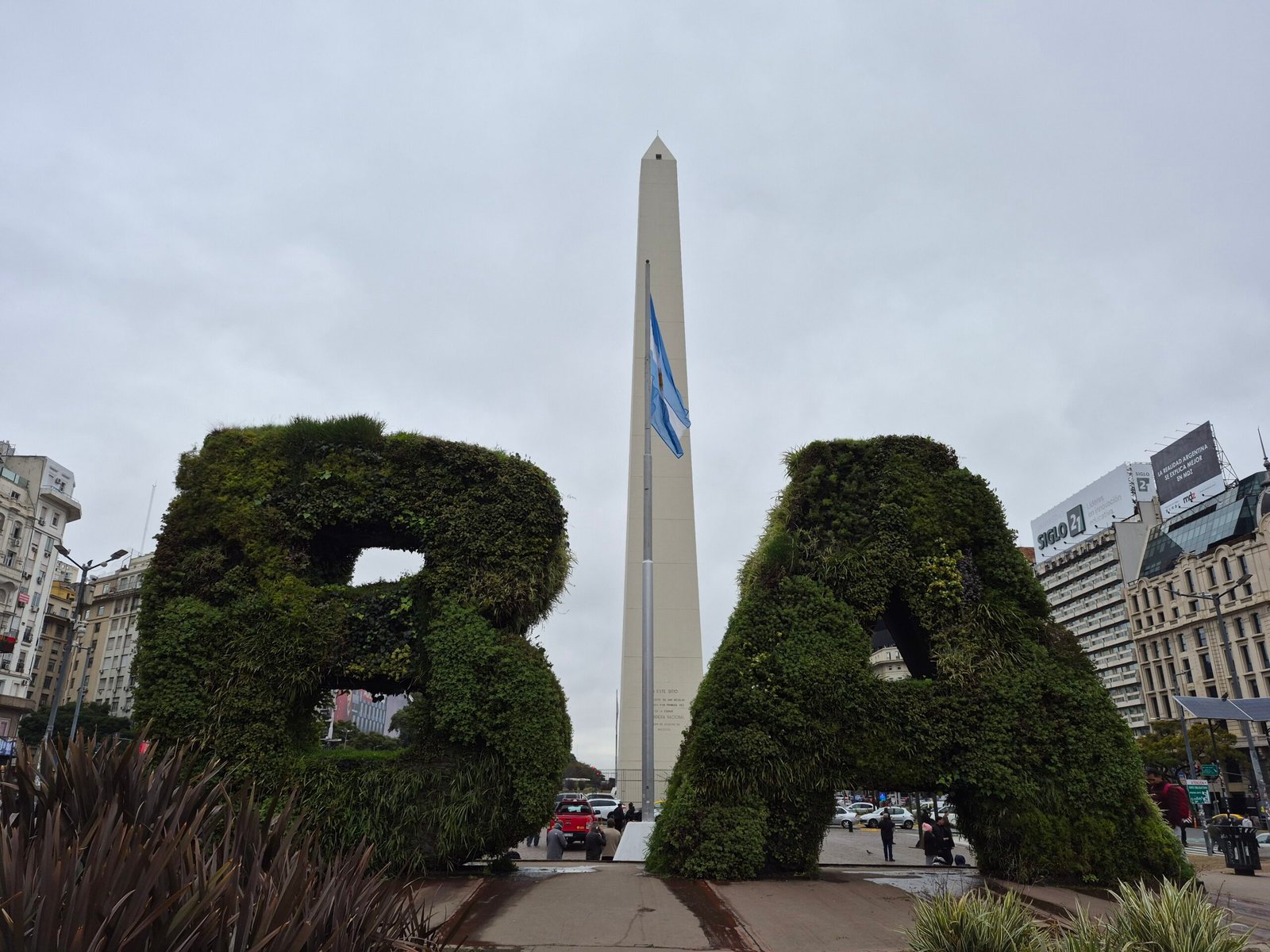
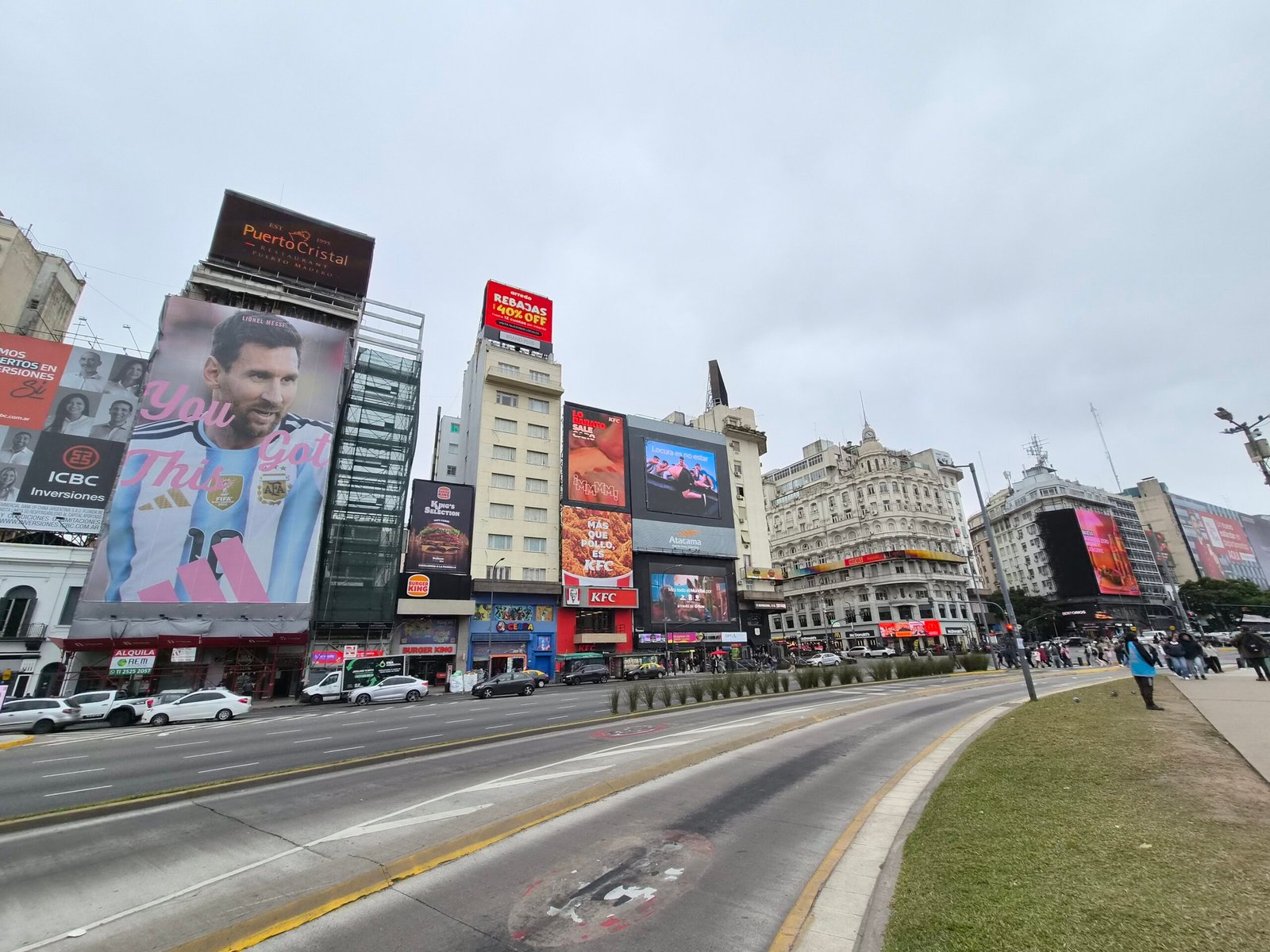
Before heading home, we stopped by to see perhaps Buenos Aires’s most famous landmark, the Obelisk. This 67.5-meter-tall monument is located at a central intersection where the world’s widest street, Avenida 9 de Julio (we counted up to 13 lanes at most while we drove along it in an Uber), meets Avenida Corrientes. It’s also possible to climb inside the Obelisk, but to do so, we would have had to purchase tickets in advance. The day before, our guide had told us that the Obelisk is where the people of Buenos Aires gather, much like how people in Helsinki head to the market square. The last time Argentina won the World Cup, 5 million people gathered around the obelisk to celebrate the victory. Our guide chuckled a bit when we told him that the entire population of Finland is only slightly larger than that…
The Obelisk in Buenos Aires
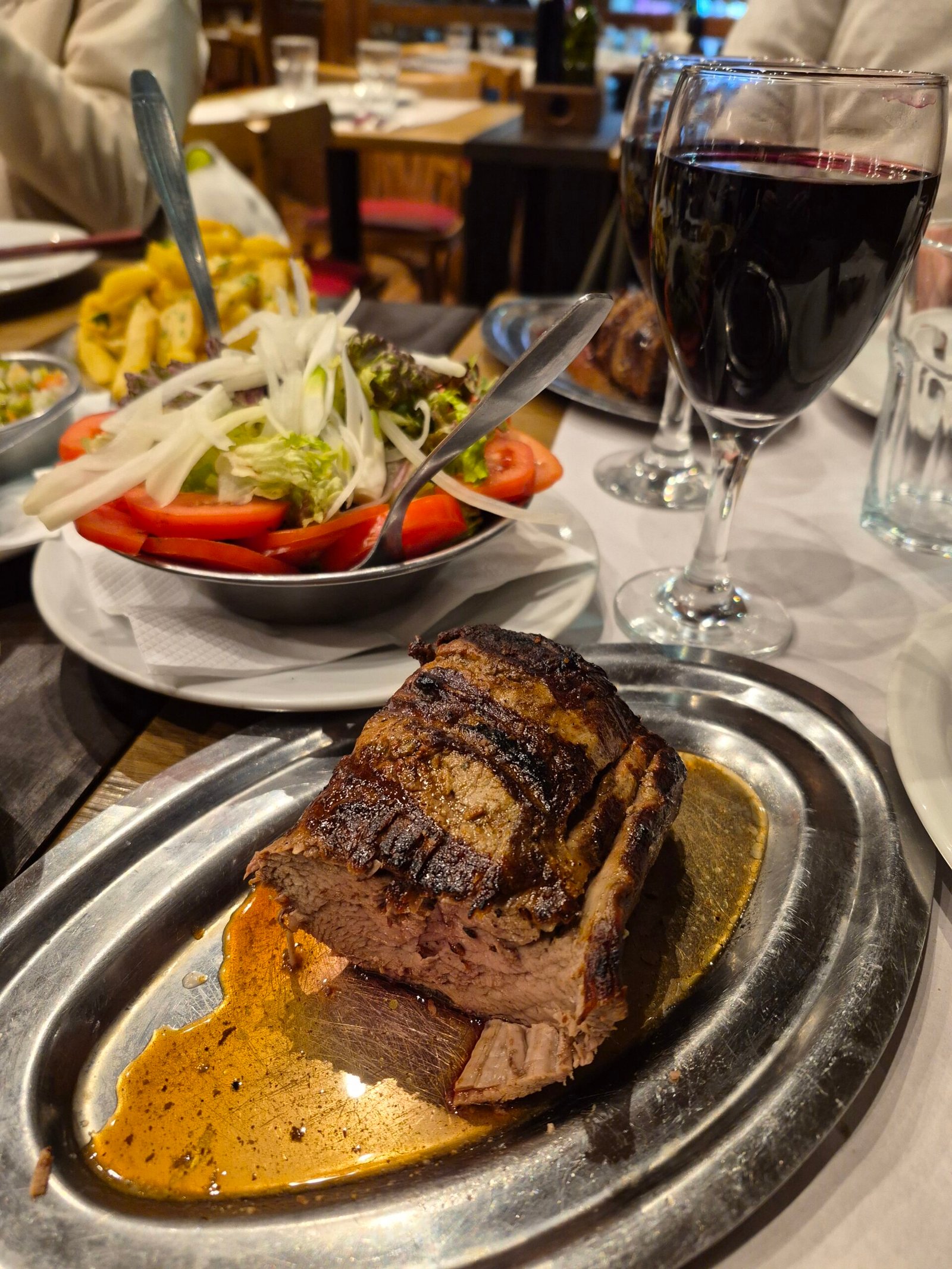
We spent the afternoon at our apartment, and it wasn’t until evening, after picking up our laundry, that we headed out again. Once again, our destination was a restaurant, though this time it was for dinner rather than a treat. Since we’d been in Argentina for a long time without having had a proper steak (though we’d certainly already sampled more than a few bottles of local wine), we decided to spend our last evening enjoying one at a steakhouse called Celia, located in the Palermo neighborhood. We chose the place because it had received good reviews when we were browsing through local restaurants. Since we were out at a time when the locals were just starting to think about going out to eat, we had the restaurant all to ourselves. Jaana and Marko ordered beef sirloin steaks with sides. Ronja, on the other hand, wanted a vegetable-stuffed sandwich with fries, and Risto was served the familiar and reliable Pasta Bolognese. The portion sizes were again on the generous side, as the steak weighed 400g and was, in fact, a hearty, melt-in-your-mouth, tender cut of meat. Marko managed to finish his entire steak, but Jaana only managed to eat about 300g of hers. Luckily, Risto came to the rescue after finishing his massive plate of pasta and polished off the rest of Jaana’s steak. Looks like the boy’s going through a growth spurt!
The thickness of the steak was equivalent to the length of a similar steak in Europe.
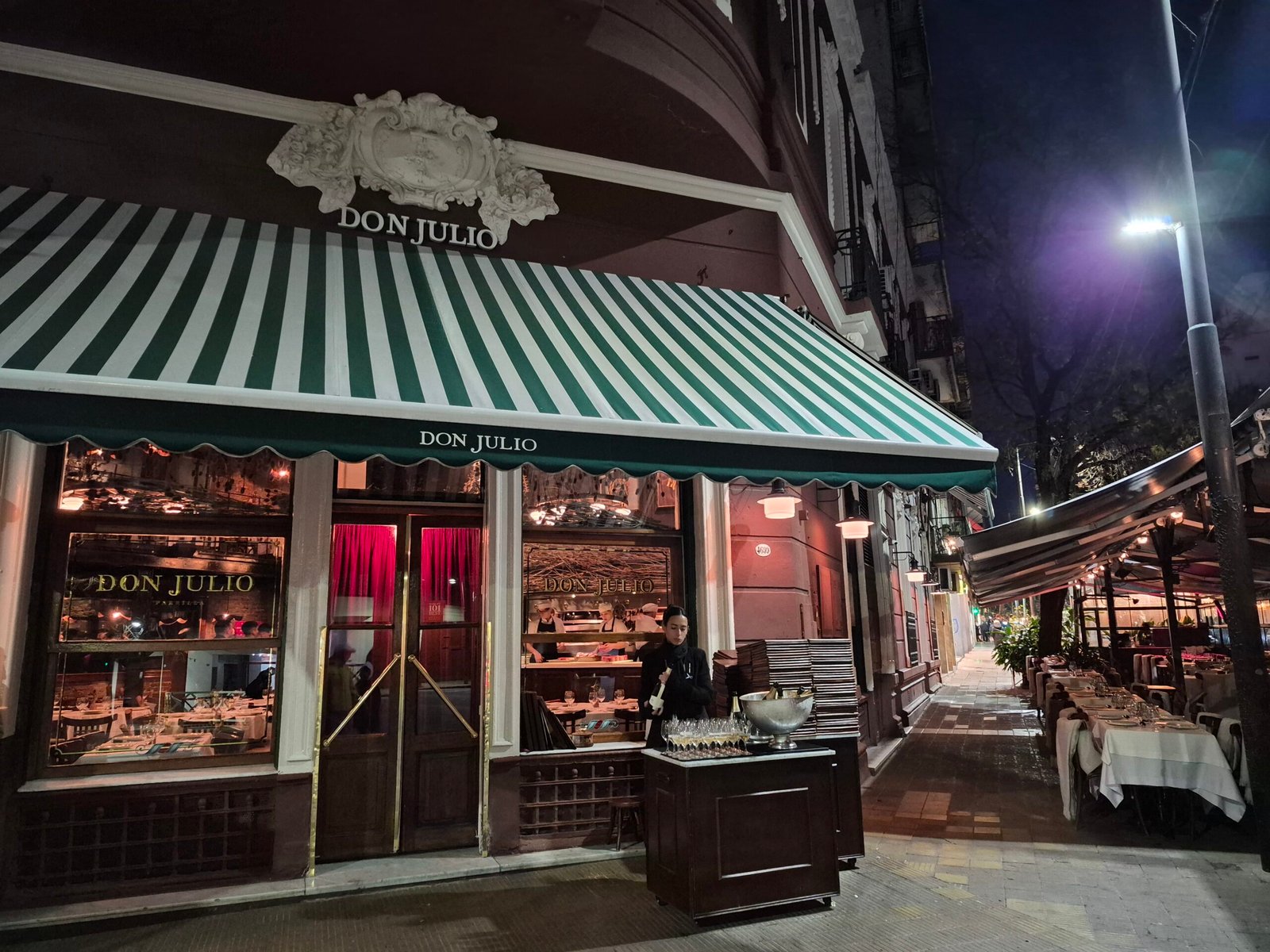
Both on our way to Celia and on our way back, we walked past Don Julio, the world-famous Argentine steakhouse located right next to our home. The place is a one-Michelin-star restaurant where you need a reservation to get in. Reservations must be made months in advance, so we were hopelessly too late for this place. Since it has only one star (plus one green Michelin star for sustainability), the price wouldn’t have been outrageously high—around €110–€140 per person—but for our family of four, the bill would have been a bit too steep if we’d gone there. So Celia was definitely the better option this time.