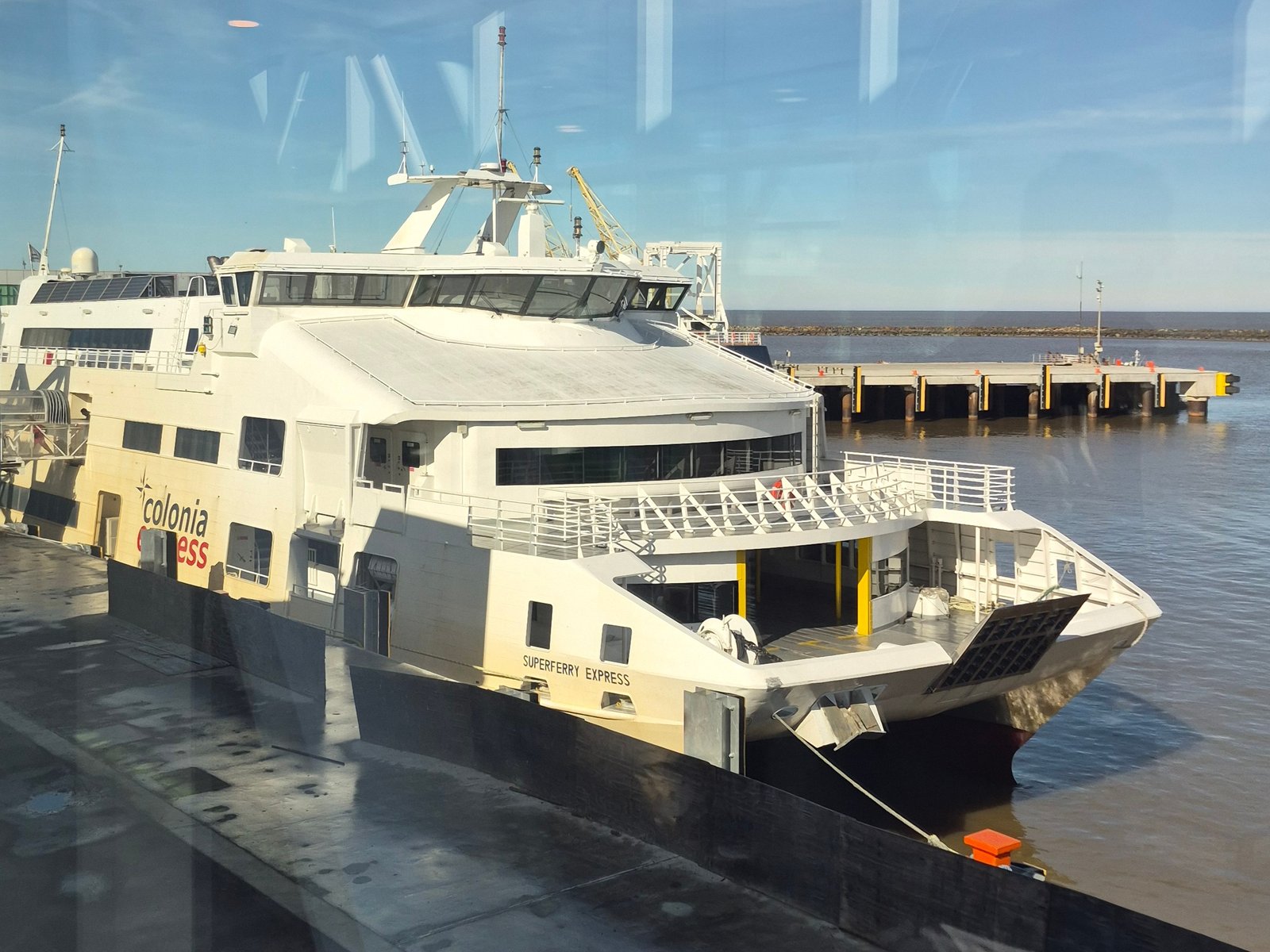
In the morning, after breakfast, we left our apartment in Buenos Aires and headed for the ferry terminal, where our Colonial Express ferry would depart for Uruguay. We arrived at the port well in advance, since we had to check out of our apartment by 10:30 and didn’t want to wander around town with all our luggage.
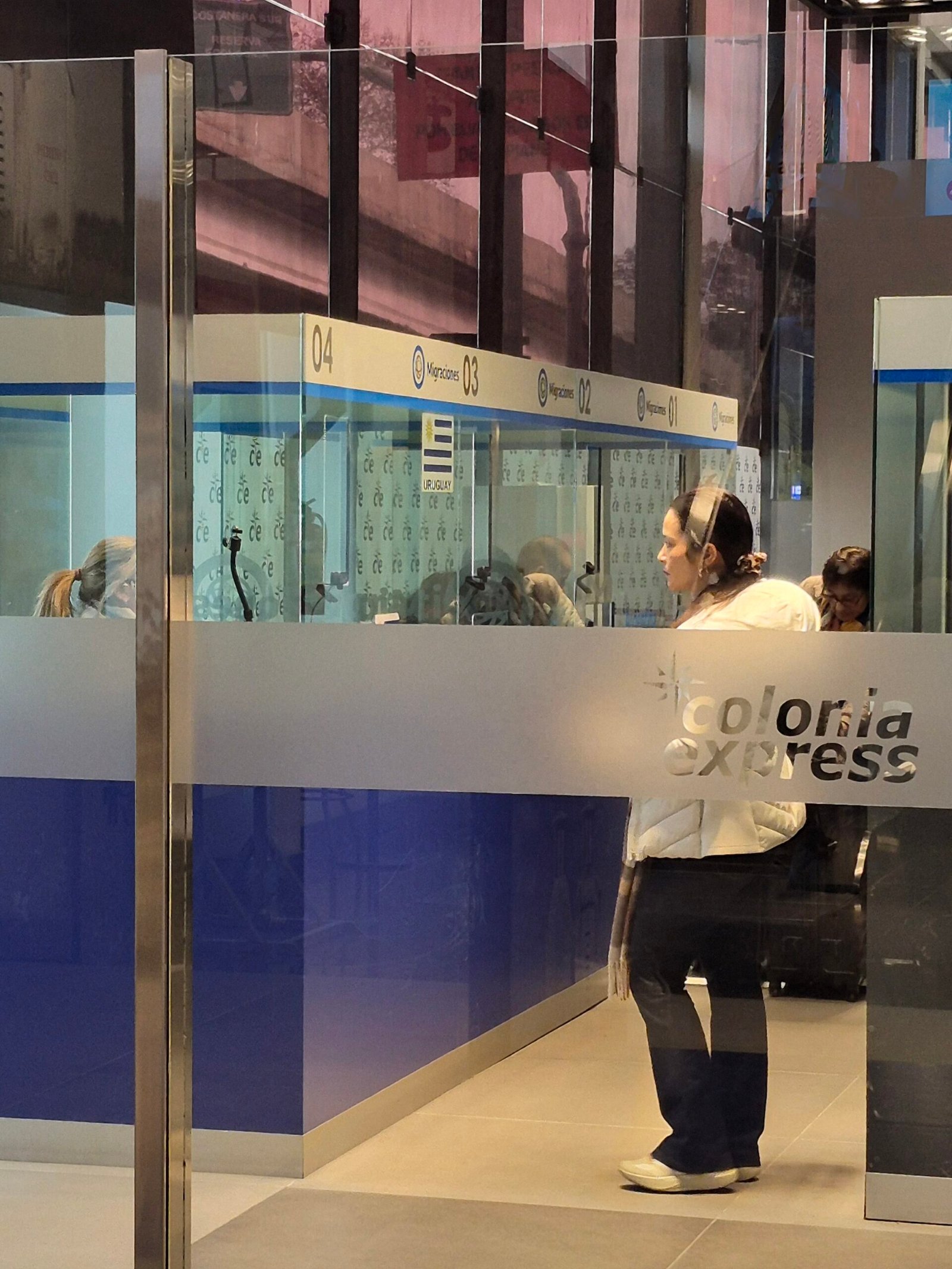
We picked up our tickets at the ticket counter, after which we went through what was perhaps the easiest border crossing ever. Everything was taken care of in one go. At the first window, we got our passports stamped with exit stamps from Argentina, and at the adjacent window, we were registered as having arrived in Uruguay—even though, technically speaking, we were still firmly on the Argentine side.
Out of the country through one counter, and in through another. How convenient!
We chugged along in this boat for an hour from Buenos Aires to the Uruguayan side.
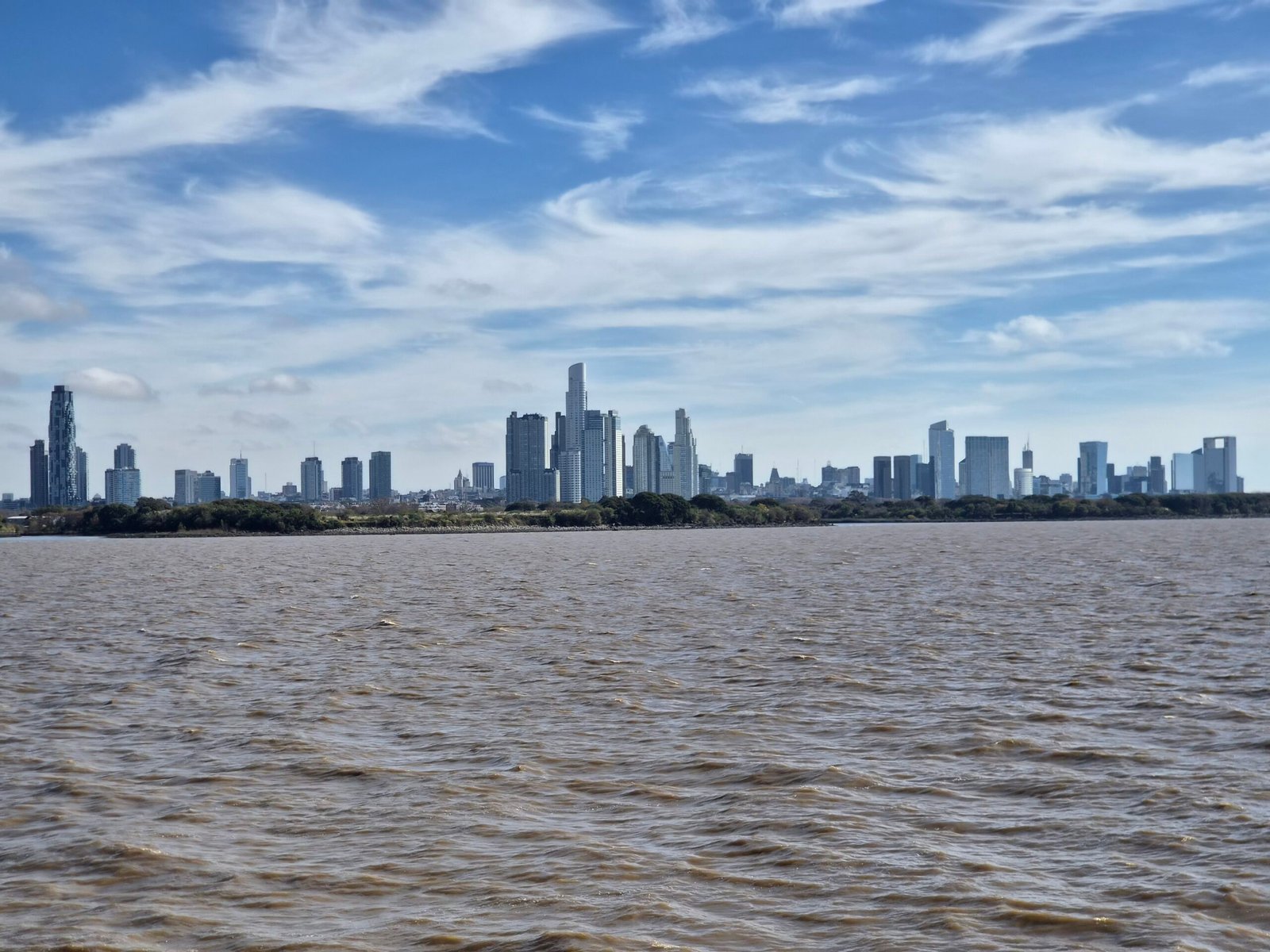
Farewell to Buenos Aires
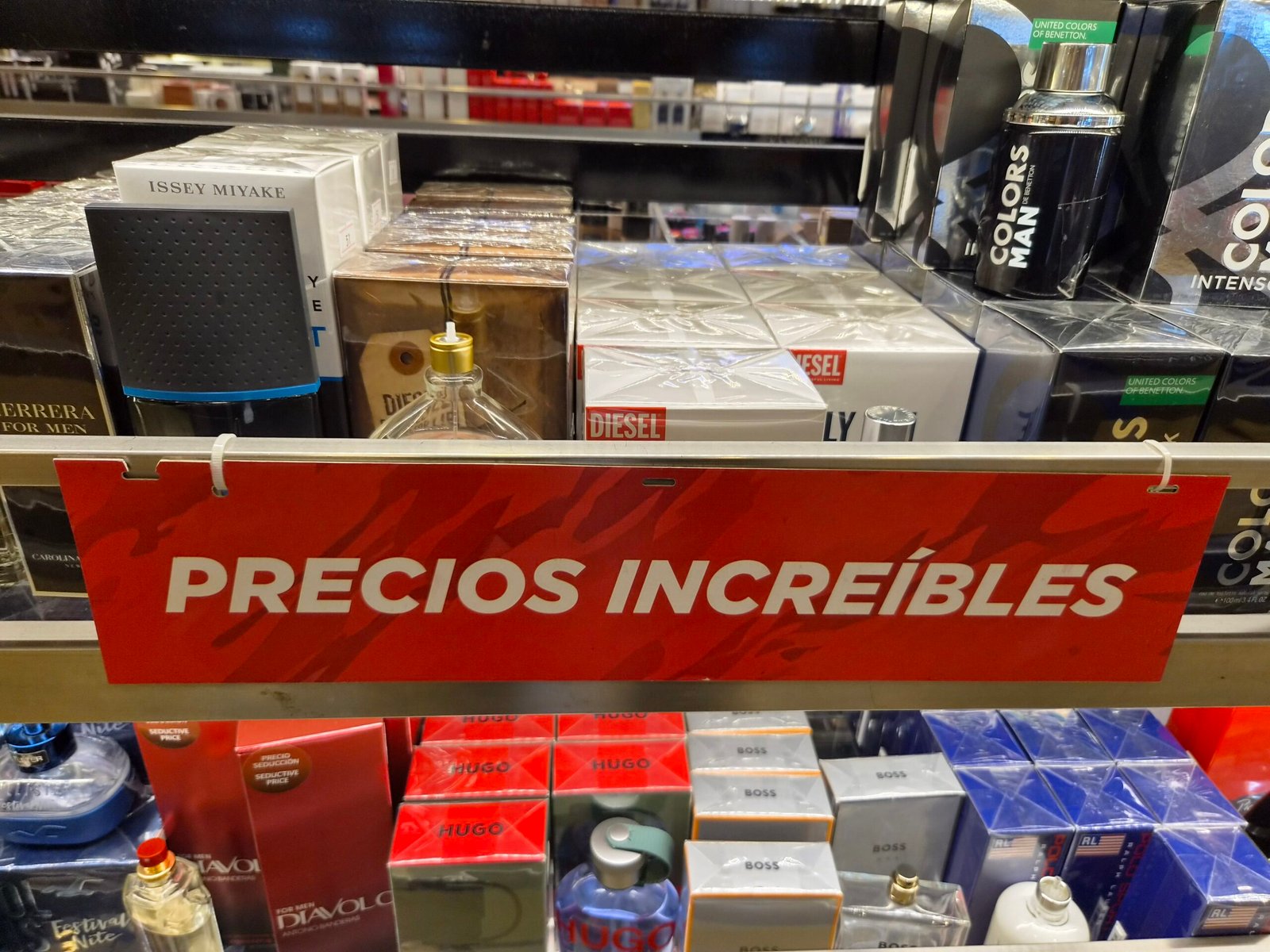
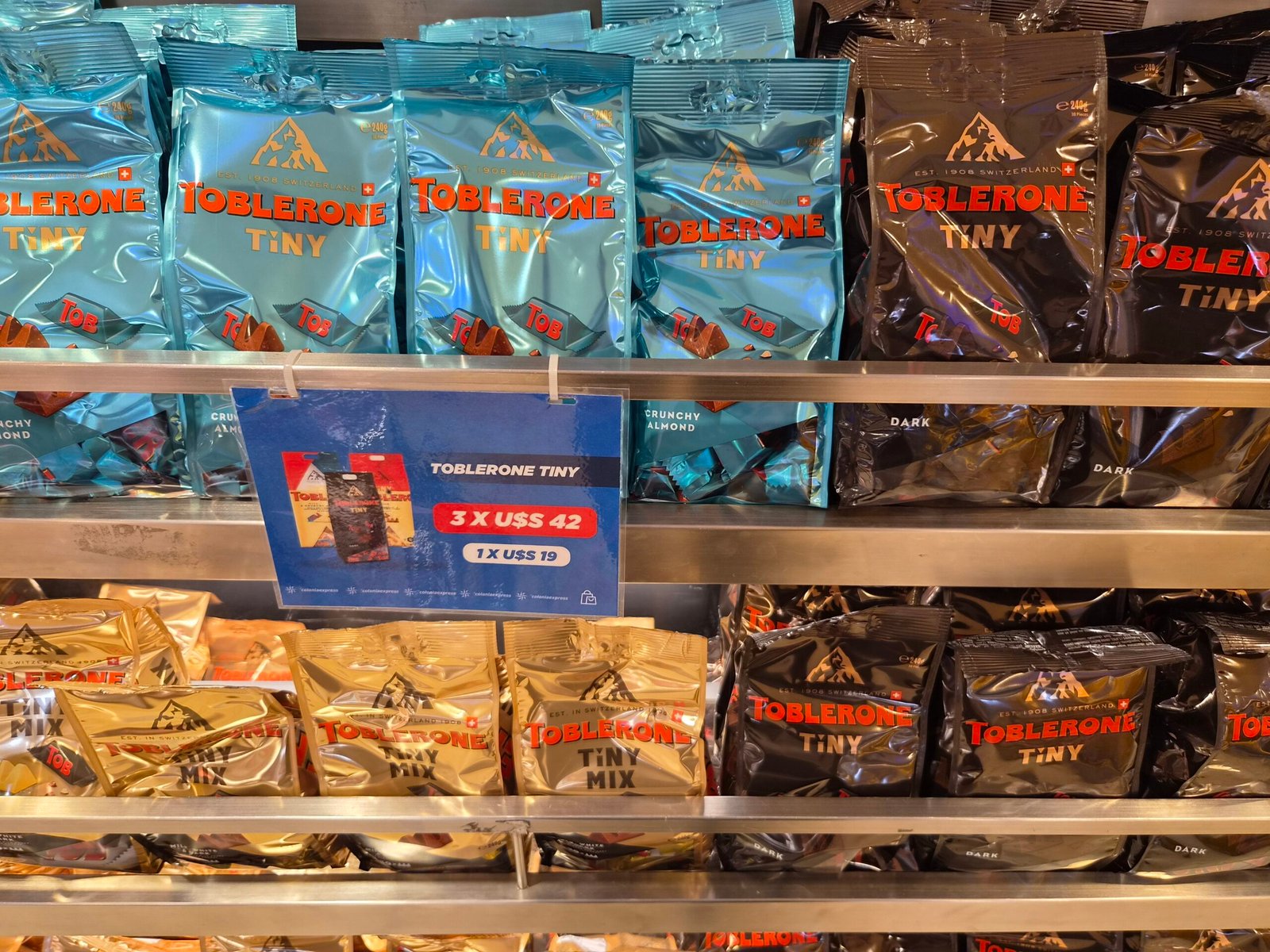
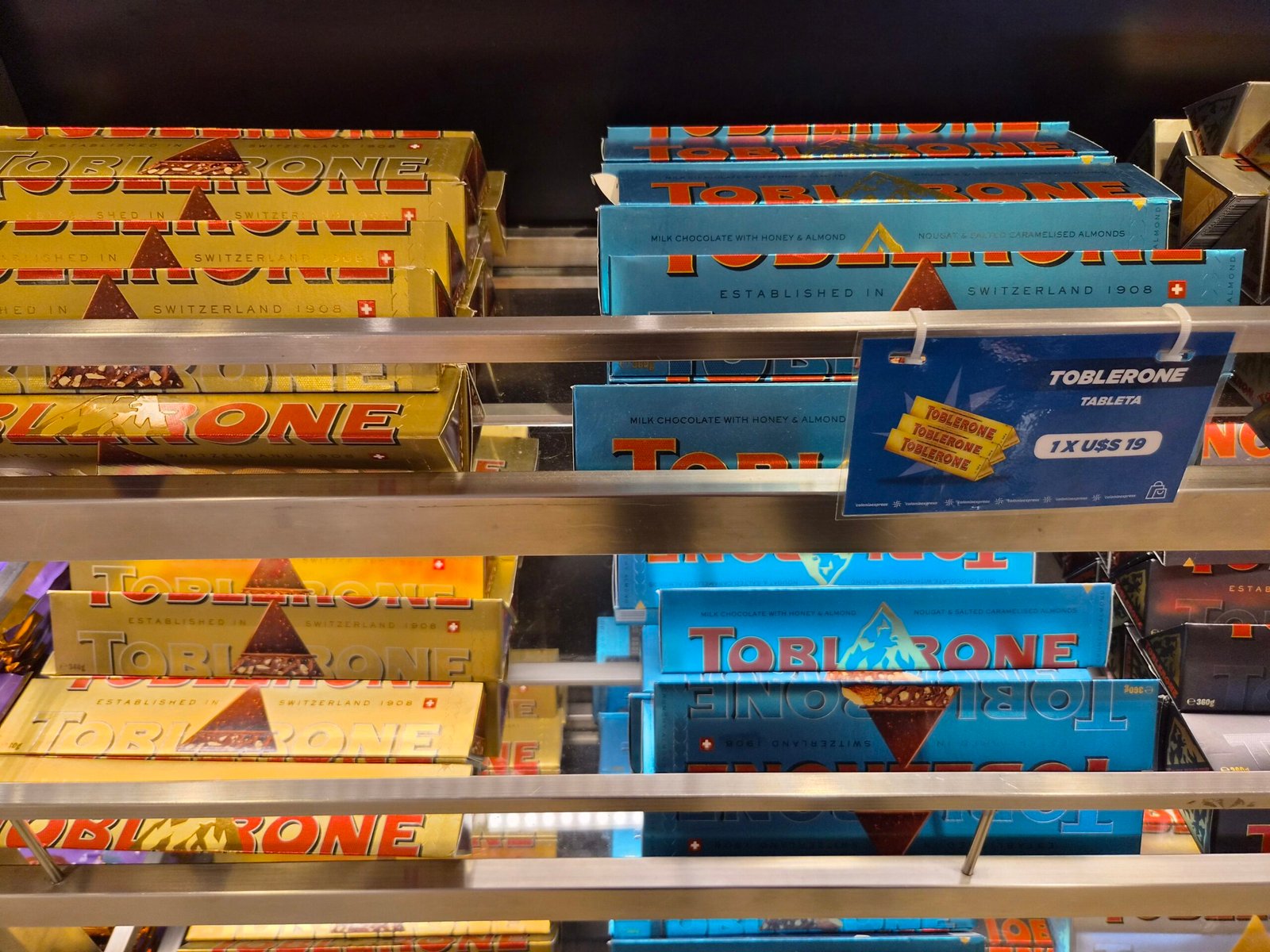
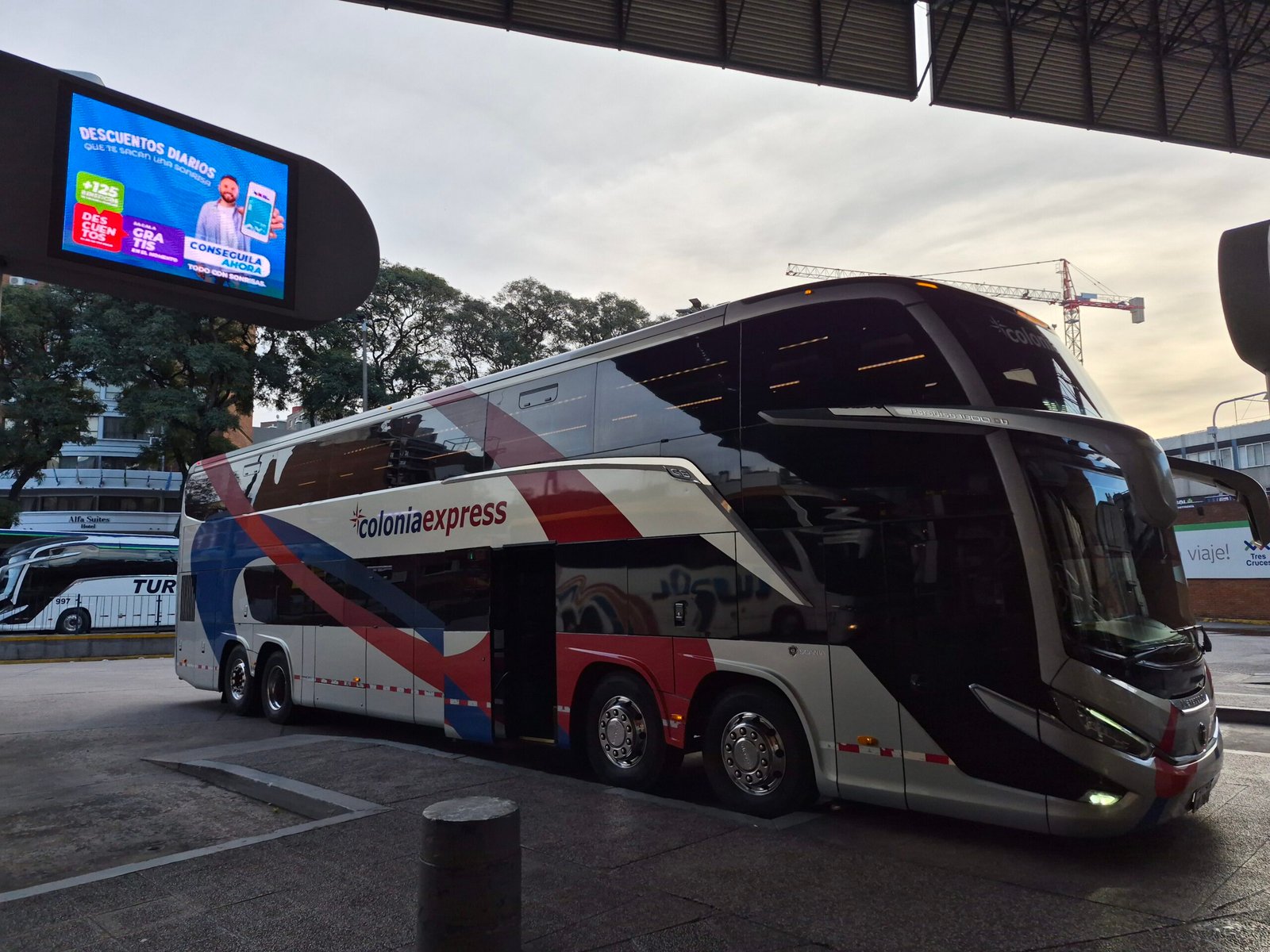
The ferry was nowhere near full, so we had plenty of room during the hour-long crossing of the Rio de la Plata. The ferry wasn’t quite the size of Swedish ferries, but it had three decks and space for cars. Marko also checked out the selection at the duty-free shop, but at those prices, the products were left on the store shelves. The ferry departed from Buenos Aires and arrived in Colonia del Sacramento, a small town of about 30,000 residents on the opposite bank of the river. From there, the journey continued directly by bus to Montevideo, the capital of Uruguay. The bus ride took about 2 hours and 15 minutes, so we arrived while it was still daylight.
Unbelievable prices, that's for sure! The ferry's duty-free wasn't exactly free.
Yes, the prices really are in U.S. dollars!
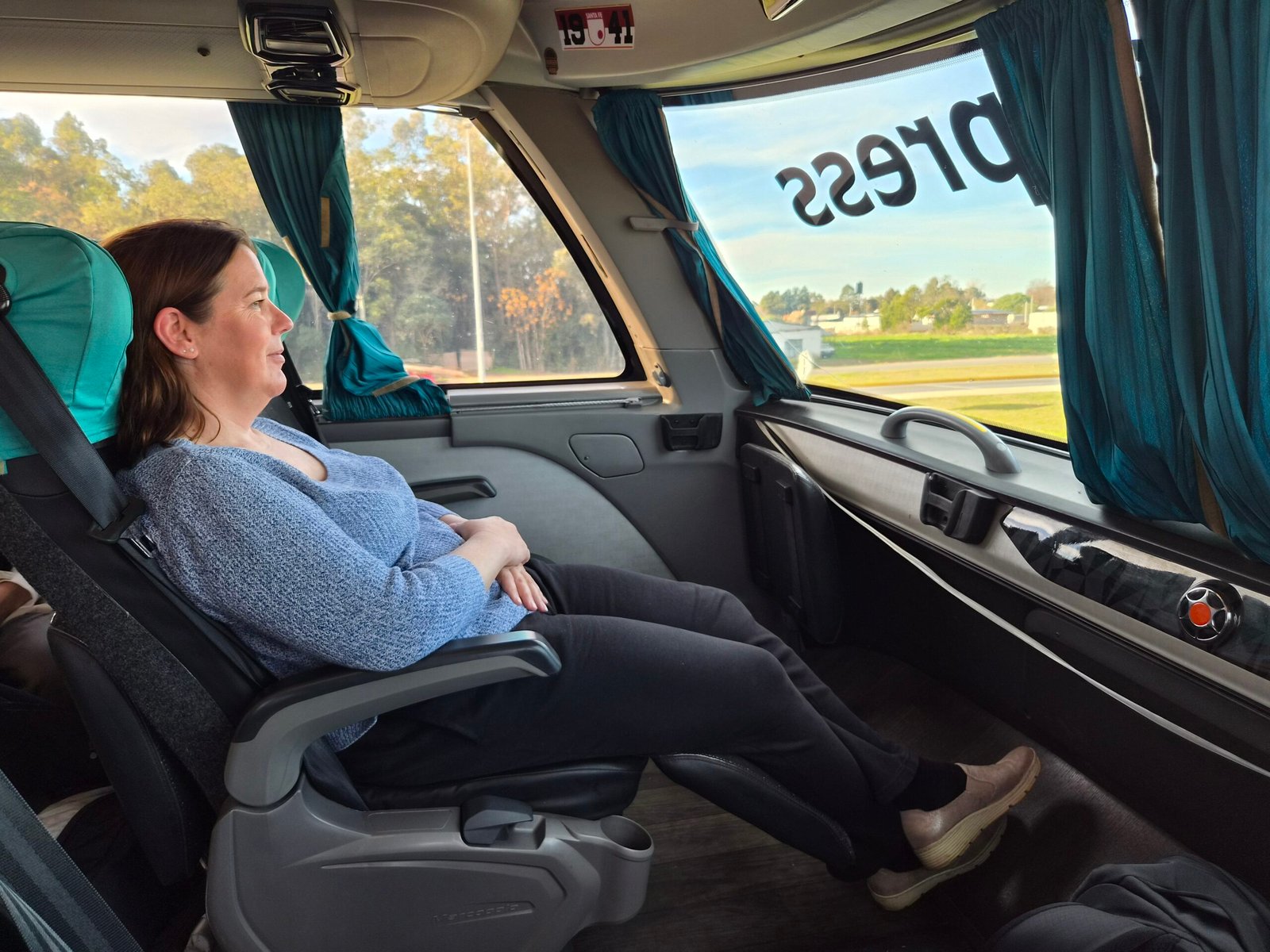
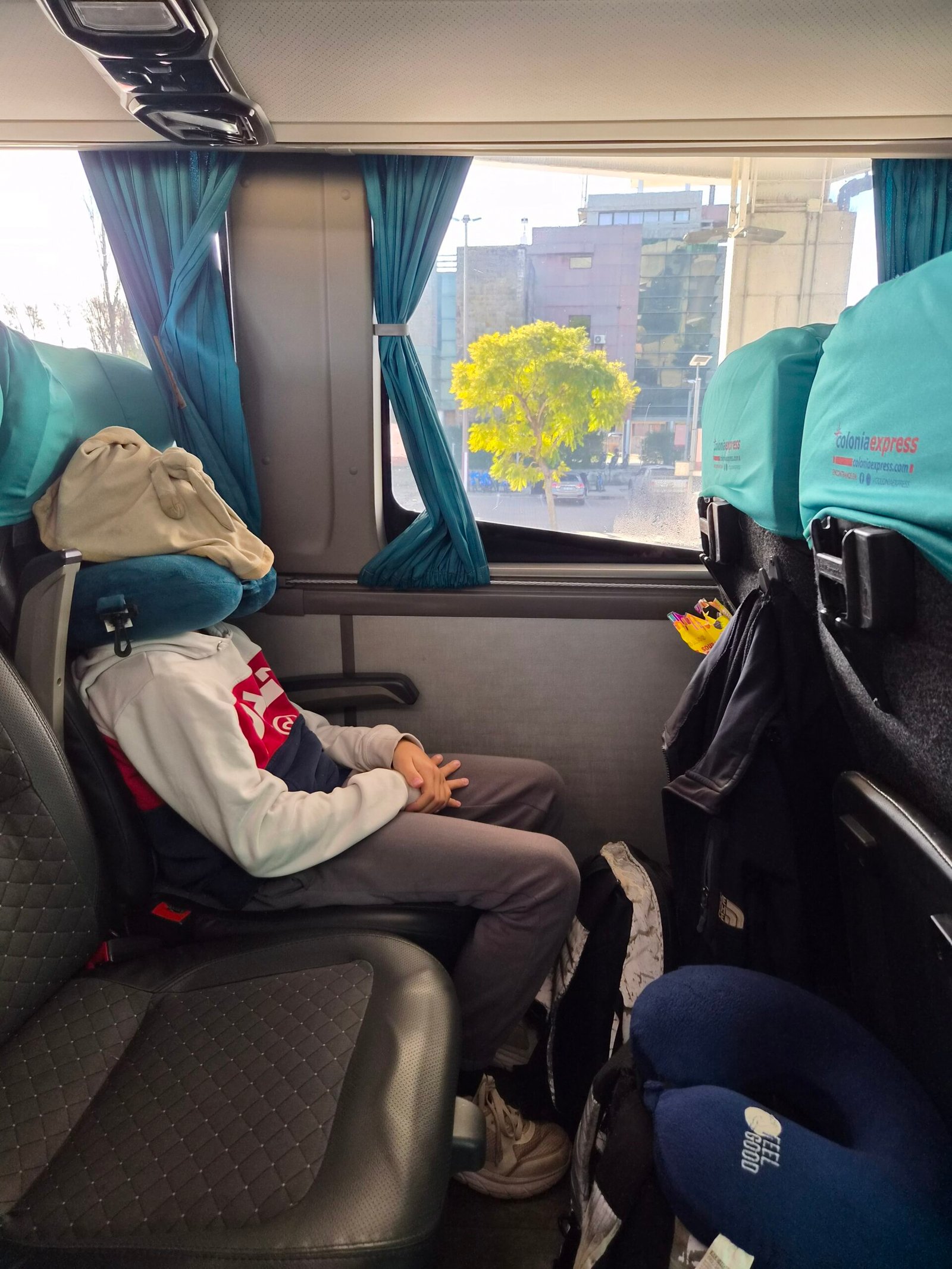
This bus was also very spacious and comfortable to ride on.
There was plenty of legroom.
The seats could have been reclined almost all the way back, but it's fine to sleep like this, too.
From the bus terminal, we ordered a ride to our apartment, where we were met by the apartment owner’s father. The owner himself currently lives in Valencia, Spain. Apparently, his father lived somewhere very close by, since it only took him a few minutes to walk to our apartment. At first, he didn’t say much more than a few words, but tried to communicate with the little English he knew. When he realized that Jaana spoke some Spanish, the man really opened up, and he talked nonstop for the next 15 minutes.
Here, too, the rent had to be paid in cash and in dollars, so we’re a little skeptical whether every penny will actually make it to the tax authorities this time either. After we had paid the man the full rental amount—$384—we headed to a nearby restaurant for dinner. The place also served chivitos, but this time we stuck to the food options we were more familiar with. Chivito is Uruguay’s national dish. It’s usually a massive serving that includes a thin, grilled beef steak, melted mozzarella, ham, bacon, a fried egg, lettuce, tomato, and mayonnaise. The dish is often served in a large roll with French fries. That’s why we didn’t want to risk ending up with yet another enormous portion to eat. This time, however, the dishes we ordered were of a quite moderate size.
We also found a supermarket near our apartment, where we went to buy groceries for breakfast. The supermarket had a proper meat and cheese counter where you could ask the clerks to slice the cheese and ham you wanted. You hardly ever see this kind of service counter anywhere in Finland anymore. The sun had already set by the time we returned to our apartment, so we spent the rest of the evening at home and went to bed early.
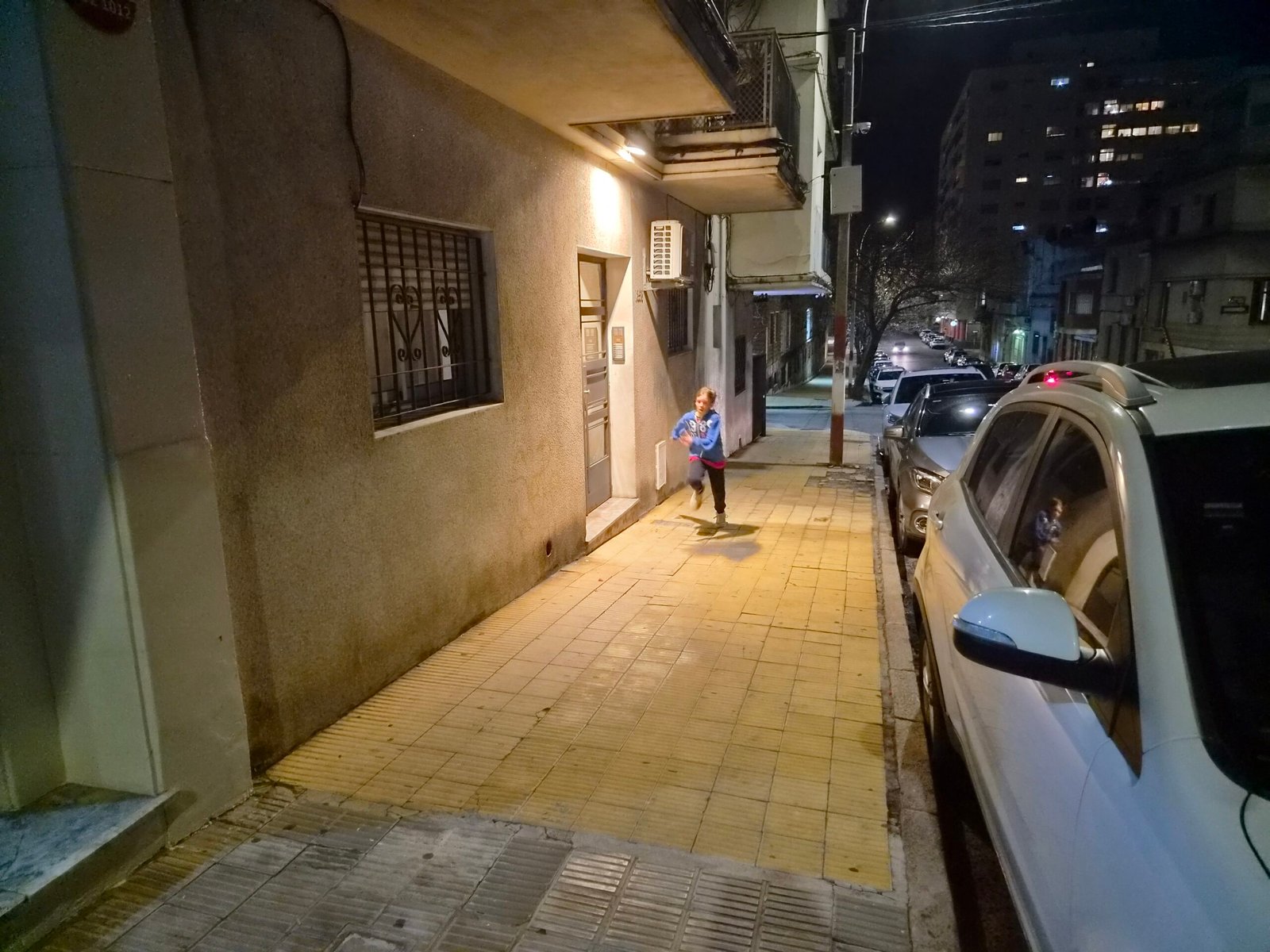
Risto's sprint workouts on our home street
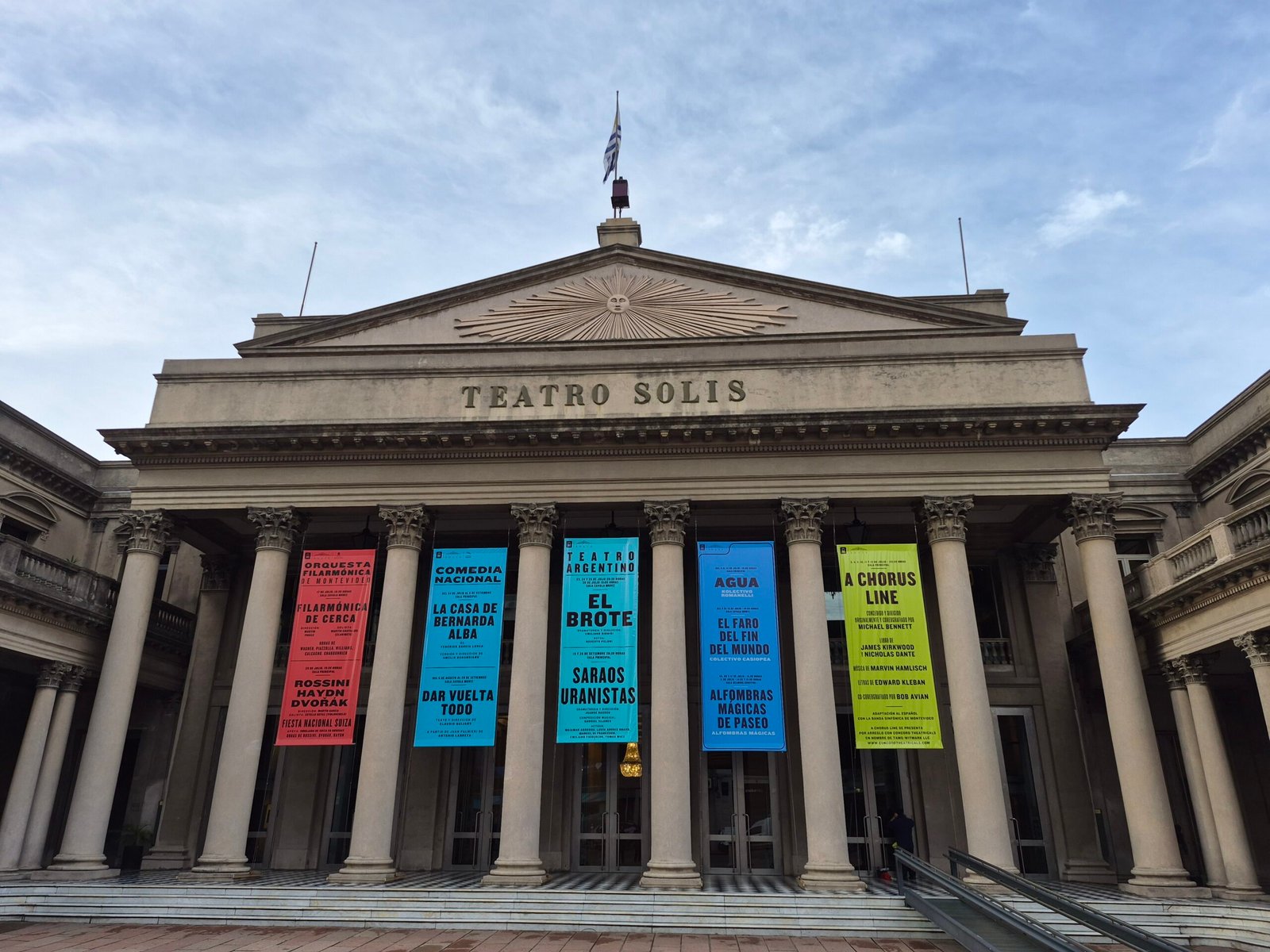
We had booked a 3.5-hour guided tour of Montevideo for Wednesday. We didn’t expect anything too spectacular from this €25-per-person tour, but to our surprise, the tour was really good. It turns out that even Montevideo has many interesting sights worth visiting, even though we initially thought otherwise. The tour began in front of the local theater, on the edge of Plaza Independencia. We only admired the theater from the outside, but our guide told us that the interior was also worth seeing. Apparently, we should come back the next day around 16:00 so we could buy tickets for a guided tour of the theater’s interior.
A light is always turned on in the small box beneath the flag whenever a performance is taking place at the theater. In the past, when the surrounding buildings were still low, the light could be seen far out to the city limits, letting people know that it was worth coming to the theater.
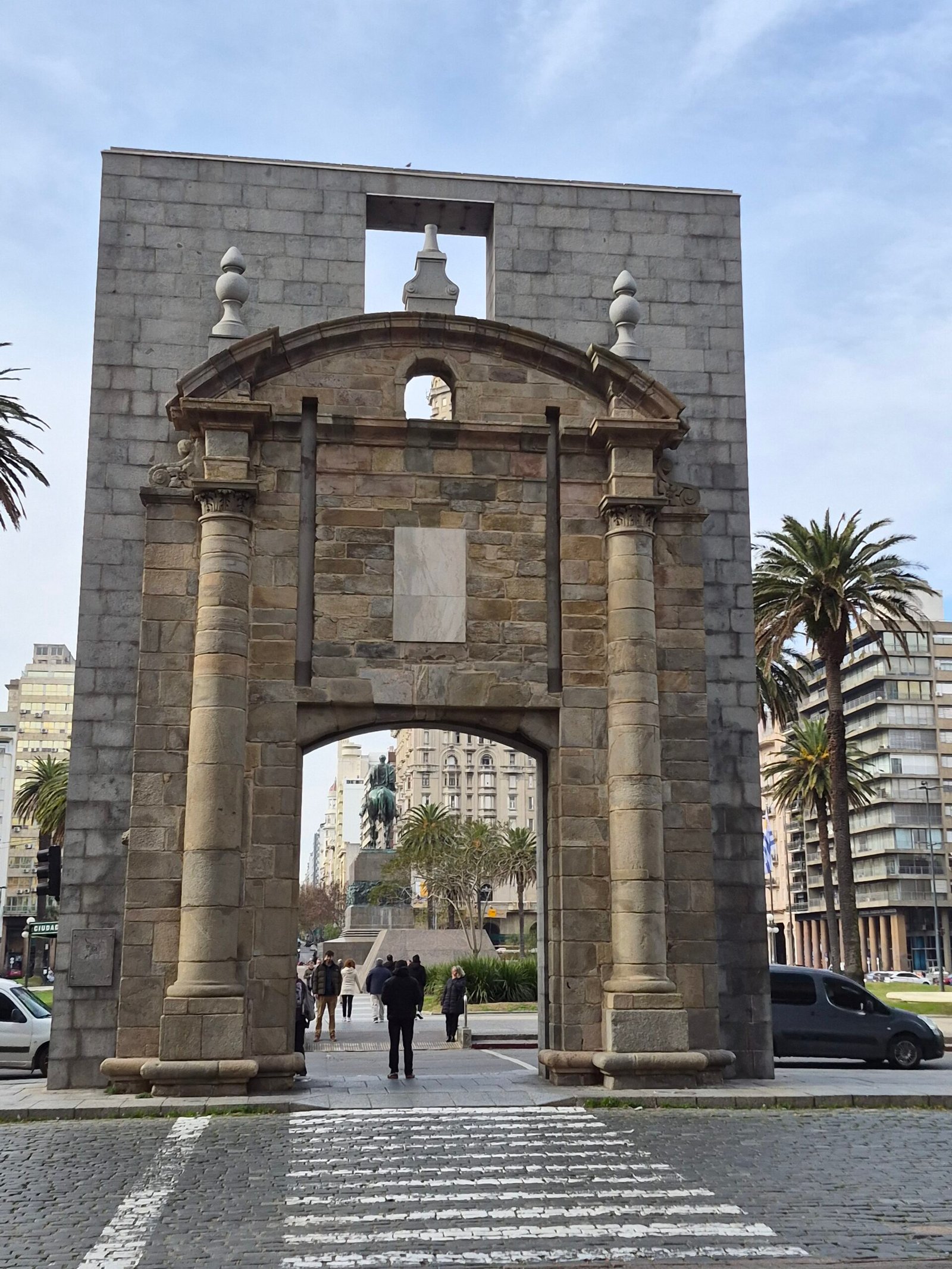
Many other notable buildings could also be found along the edge of the same square. Standing on the edge of the square was the Puerto de la Ciudadela, the gate to the old city, which had once been surrounded by walls. The walls had been torn down long ago, but the gate was left standing to remind people of how far the walled city once extended.
This gate once provided access to the walled city of Montevideo.
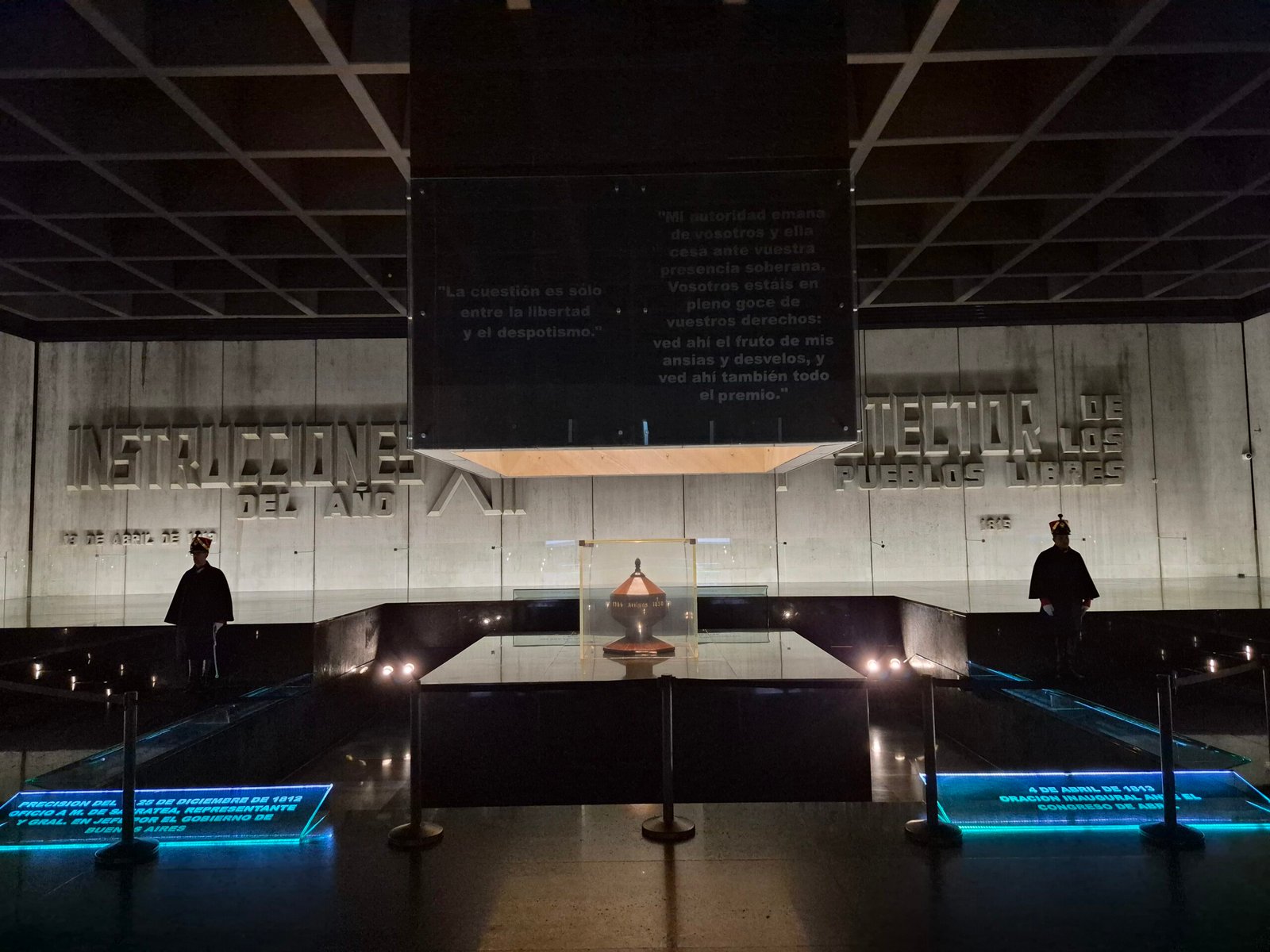
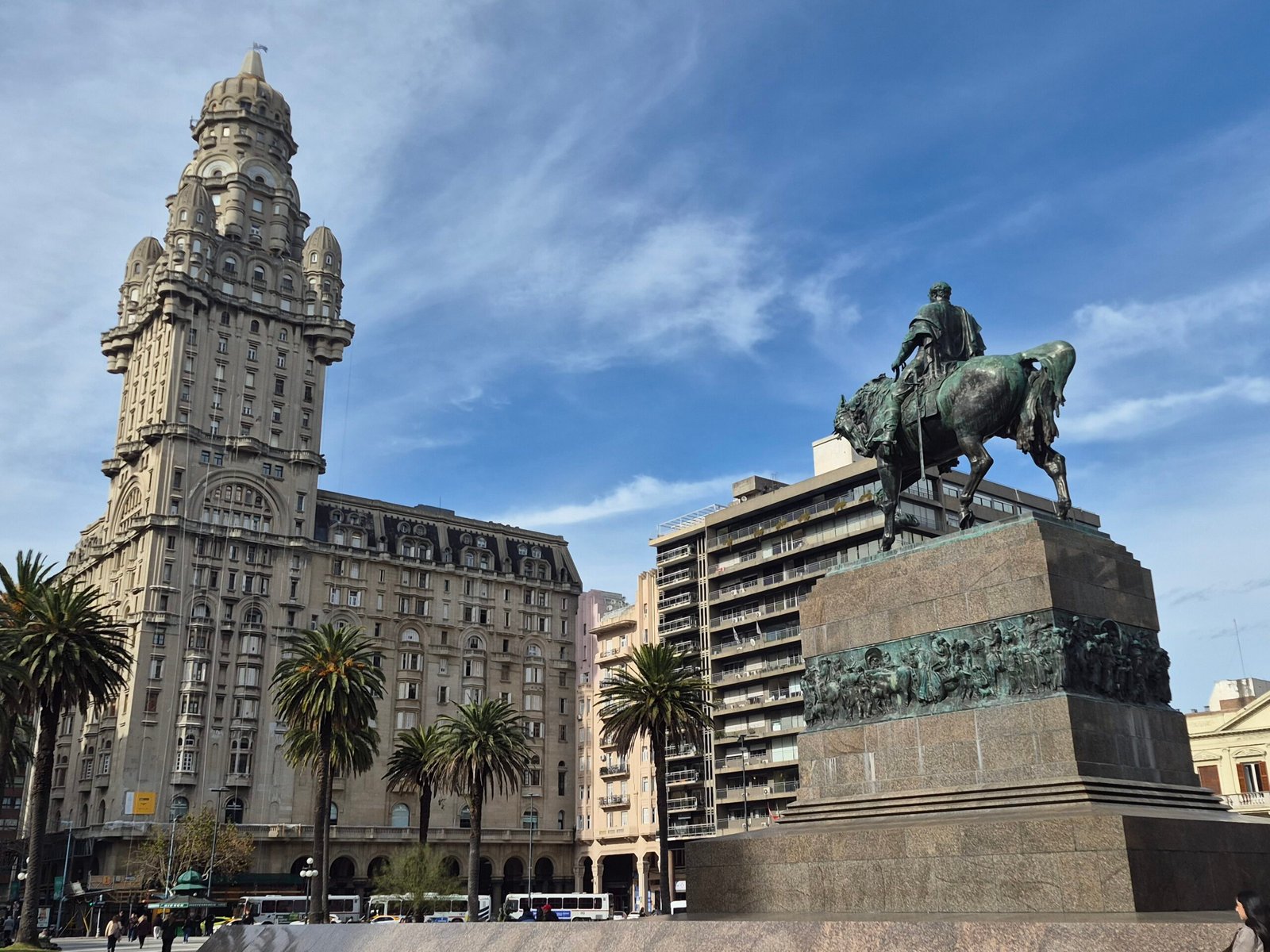
In the center of the square stands the mausoleum of Uruguay’s national hero, General José Gervasio Artigas. Artigas is the most important figure in the country’s history and in the independence movement, and his remains are guarded day and night by two soldiers in the mausoleum. Probably Montevideo’s most famous building, the Palacio Salvo, is located on the other side of the same square. It was completed in 1928, originally as a hotel, and was for a long time the tallest building in South America.
There wasn't really a rush of visitors to the mausoleum this time (either?).
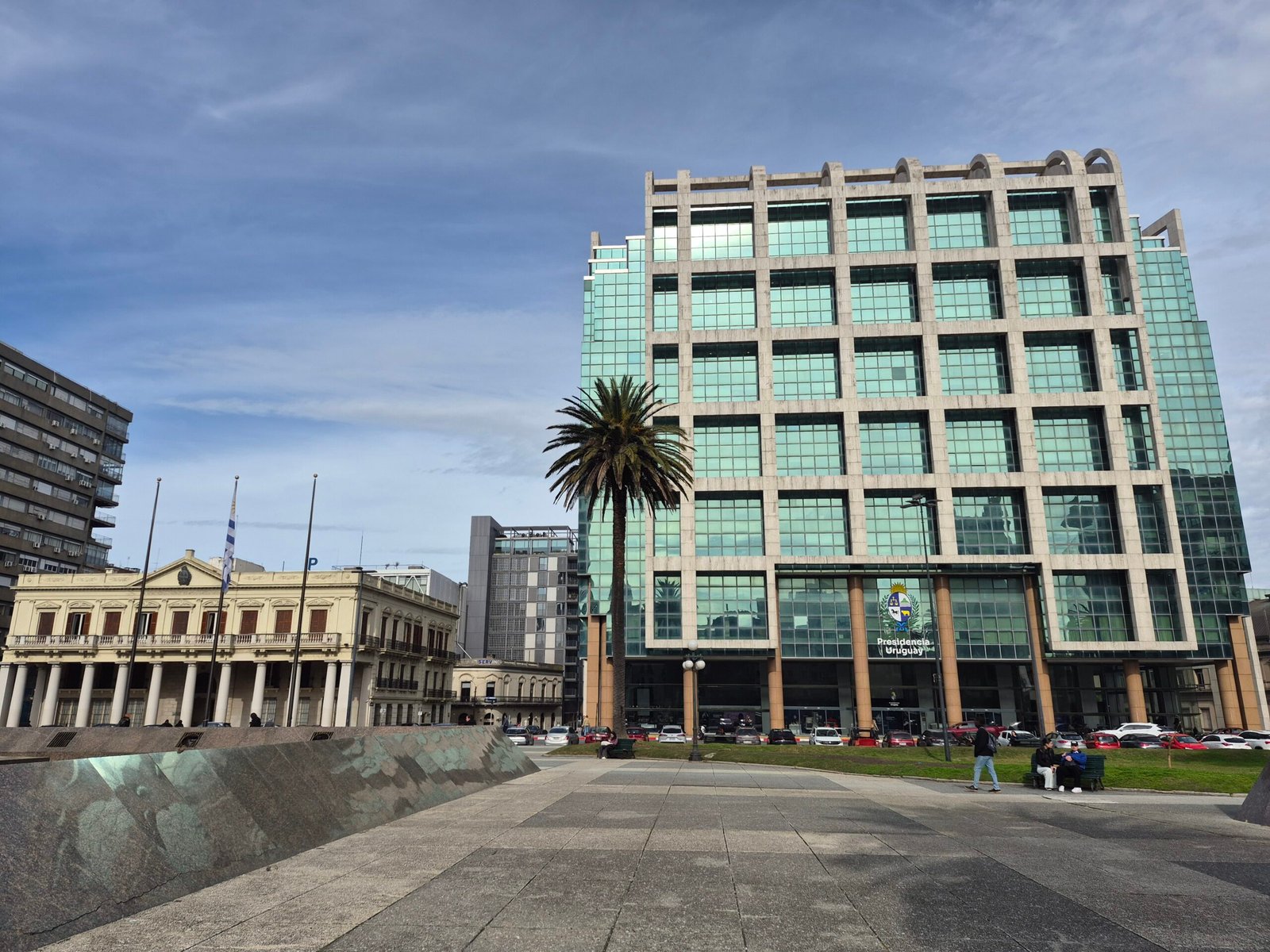
We also made a quick stop at the Uruguayan president’s official workplace. This was essentially the equivalent of the presidential palace in Helsinki. Security wasn’t particularly tight, as just about anyone could wander right into the lobby. In the lobby, which housed a small museum, there were two female security guards behind the counter, but there were no other security measures in place. Our guide noted, however, that the place was better guarded than usual, since there’s typically only one guard—and that’s usually a man. Our guide also told us that the current president sometimes comes down to the lobby to chat with visitors. Apparently, our guide has met the president six times. We didn’t get to meet the president this time, but we did sign the guestbook anyway.
The new (on the right) and old (on the left) presidential offices. The newer one isn't exactly an architectural gem.
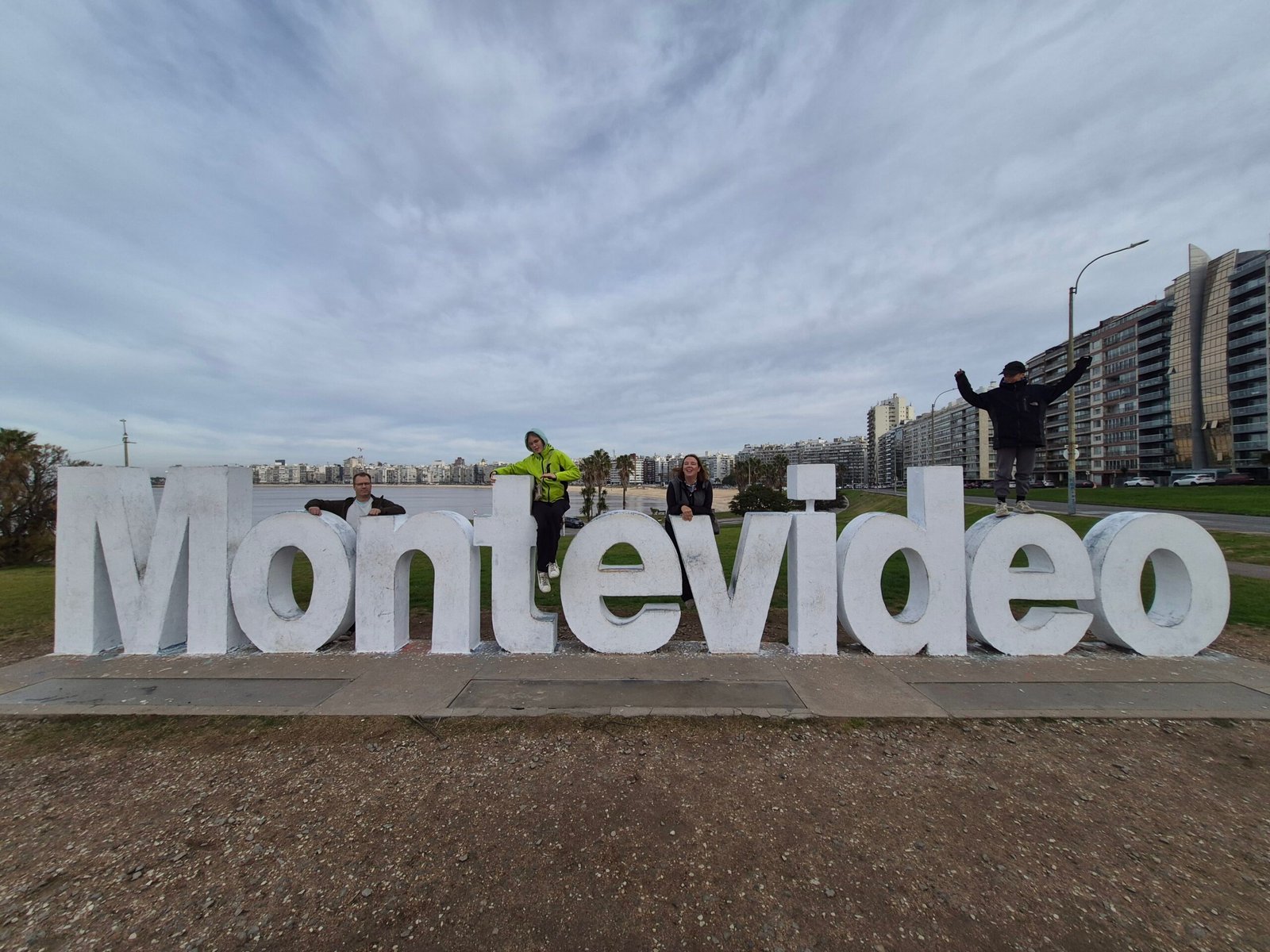
From Independence Square, we drove along the 22-kilometer-long seaside boulevard to the Montevideo sign, where we just had to take the traditional photos in front of it. The seaside boulevard actually runs right past our apartment, so if we were really energetic, we could run a marathon one day by jogging back and forth along the Rambla. Montevideo’s Rambla is said to be one of the world’s longest continuous seaside boulevards, if not the longest. There are several popular beaches along the Rambla, one of which, Playa Ramirez, is just a couple hundred meters from our apartment.
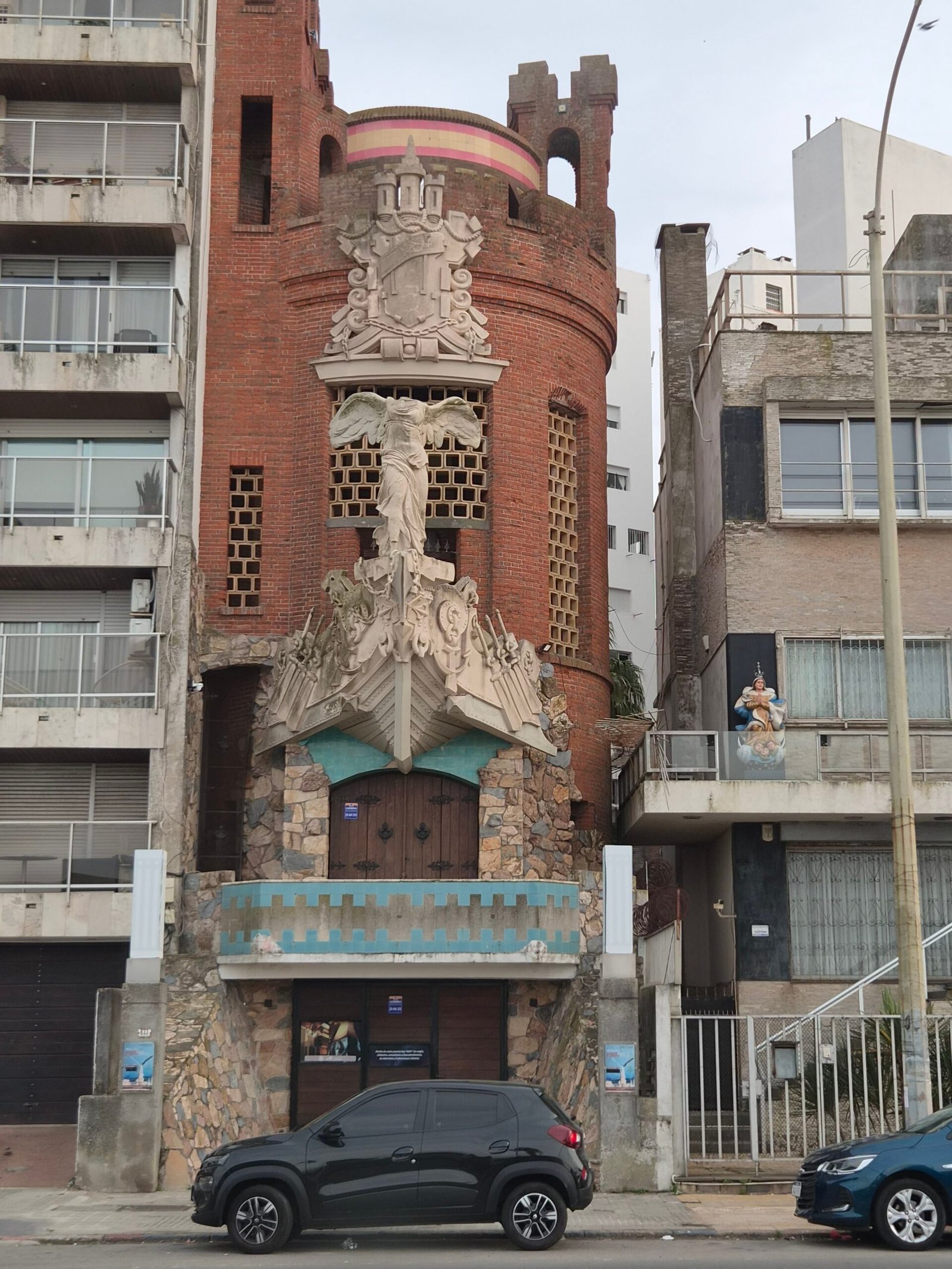
A quirky house on the beach
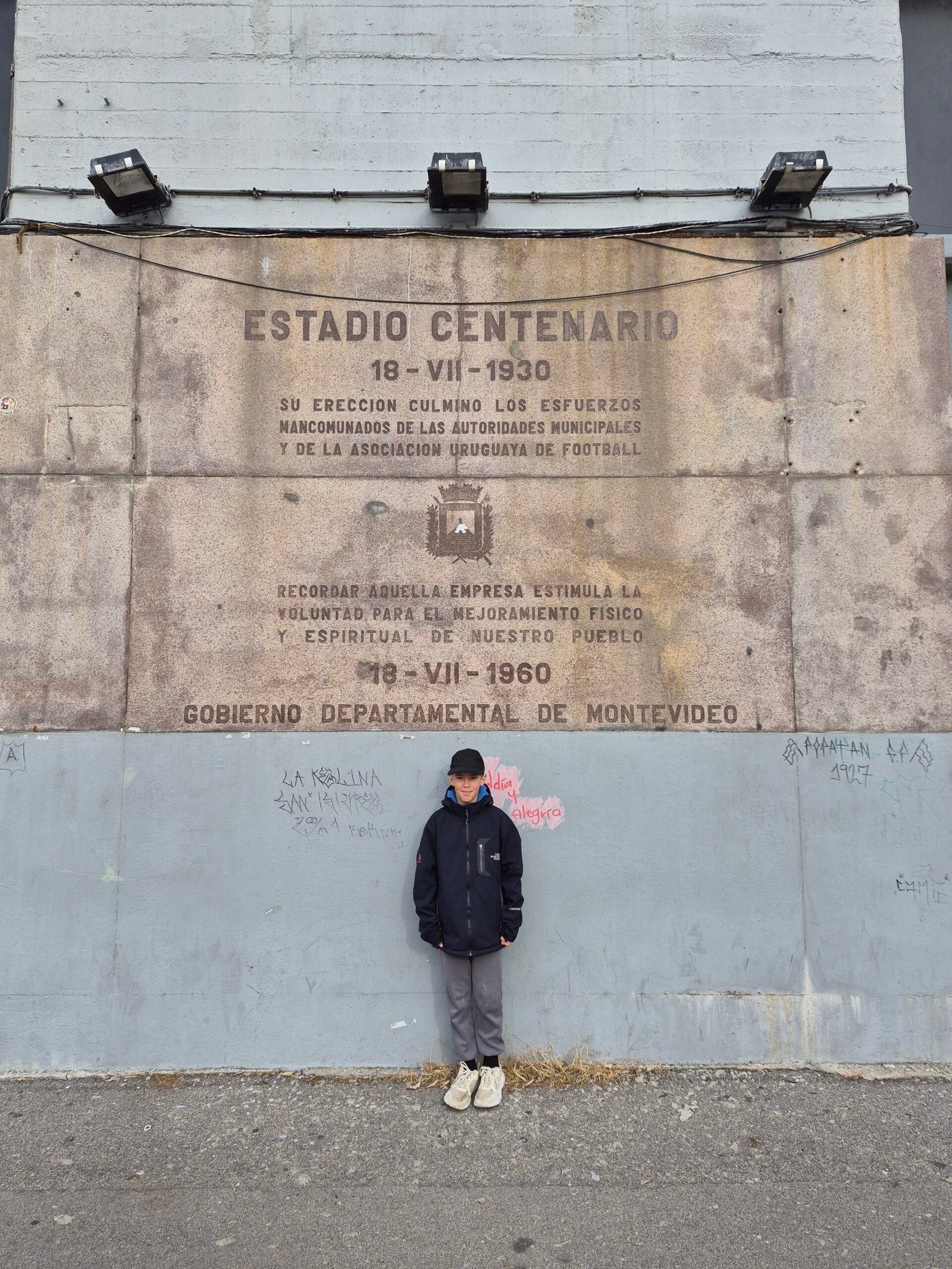
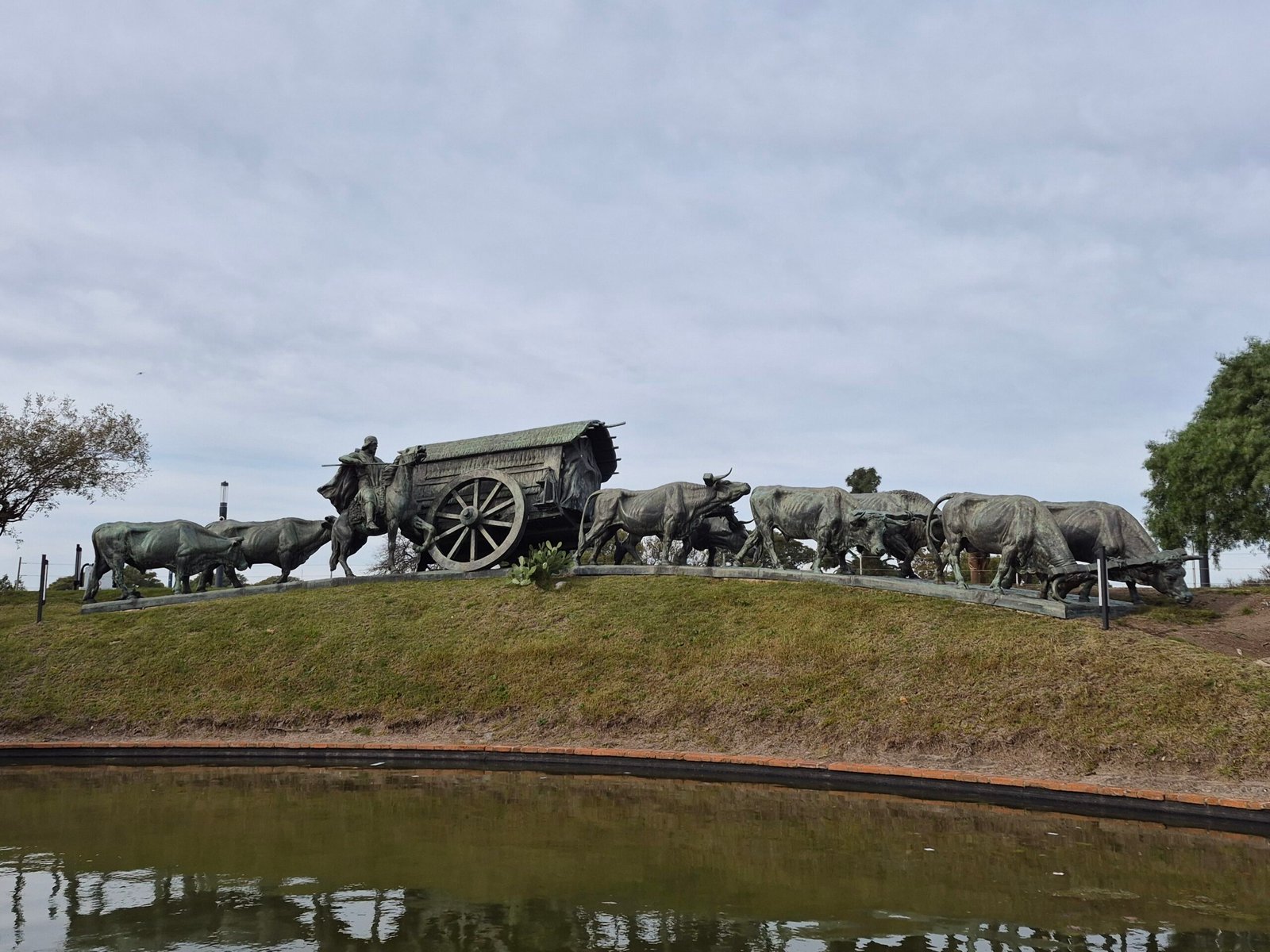
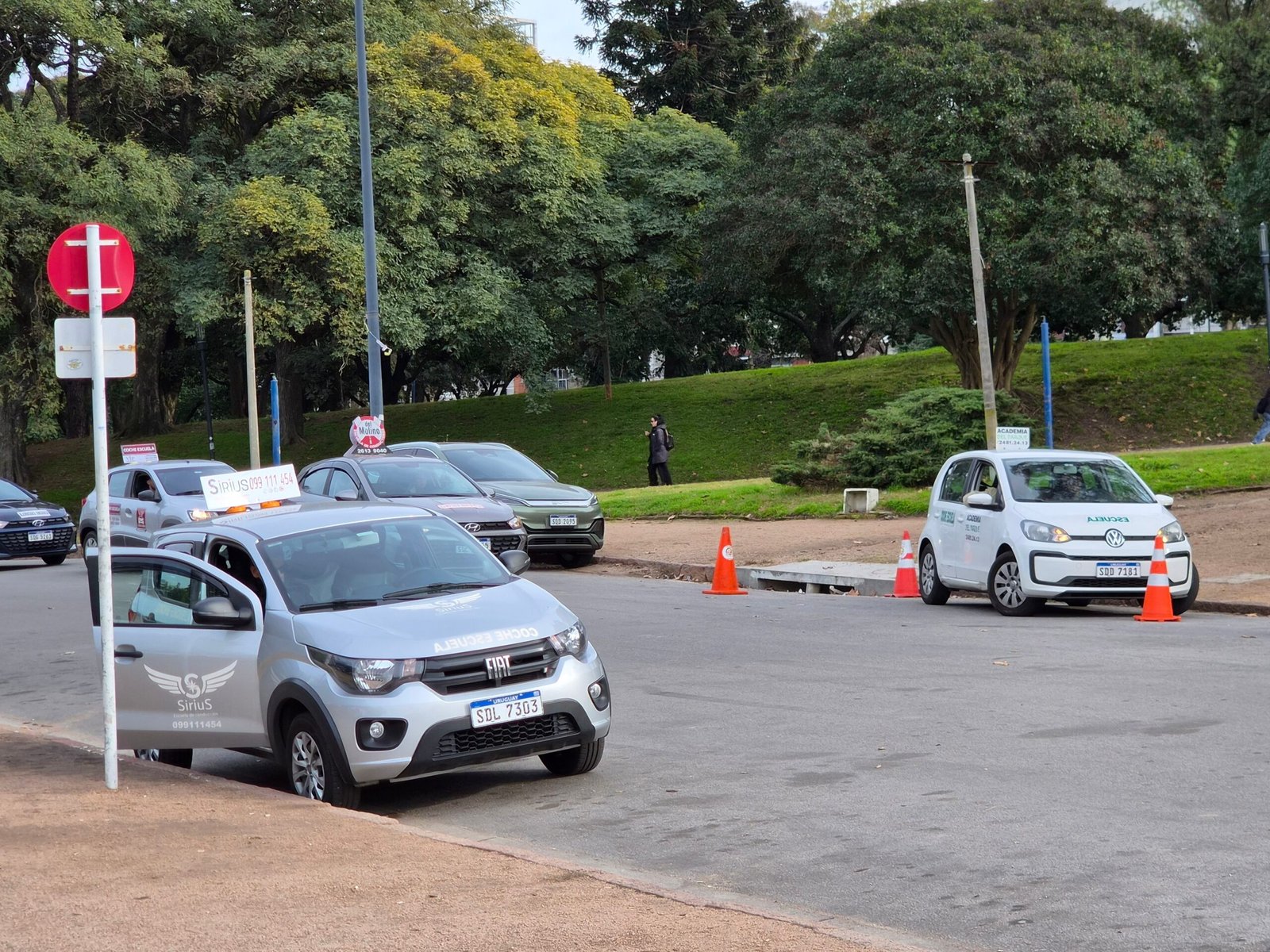
From the sign, the journey continued to the soccer stadium (Estadio Centenario), where the first-ever FIFA World Cup was held in 1930. Uruguay was chosen as the host country at that time because it had defeated Brazil in the final of the previous Olympic Games. Today, the stadium no longer meets FIFA standards, but apparently, in preparation for the next World Cup, the protected stadium will be modernized, and in honor of its centennial, the tournament’s opening match will be played there. (At this point, even Risto’s interest was piqued, and he listened intently to the guide’s explanations). The stadium is located in the large Parque Batlle, which features many other fields and fitness areas built for various sports. We stopped in the park near the Monumento a la Carreta (Ox Cart Monument). Before the statue was erected at its current location in Montevideo, it was cast in bronze in Florence, since there weren’t any foundries in South America at the time large enough for such a colossal work. The sculpture was first exhibited at an art exhibition in Florence before its journey across the Atlantic. In 1976, the work was officially declared a National Historic Monument of Uruguay. It is one of the most famous and most photographed public artworks in Montevideo and all of Uruguay. We, however, ended up taking more photos of the driving school students and their instructors swarming around the statue like a flock of pigeons. Since there apparently isn’t much traffic in Montevideo, it seems you can simulate a traffic jam this way. Just have all the driving school students practice parallel parking and pulling away at the same time, and you’ll have a traffic jam in no time!
Risto's interest was piqued when we reached the stadium.
Ox-drawn carts were the main mode of transportation in these parts in days gone by.
We heard that driving school in Uruguay includes about 12 hours of driving lessons. No wonder so many cars are a little beat up.
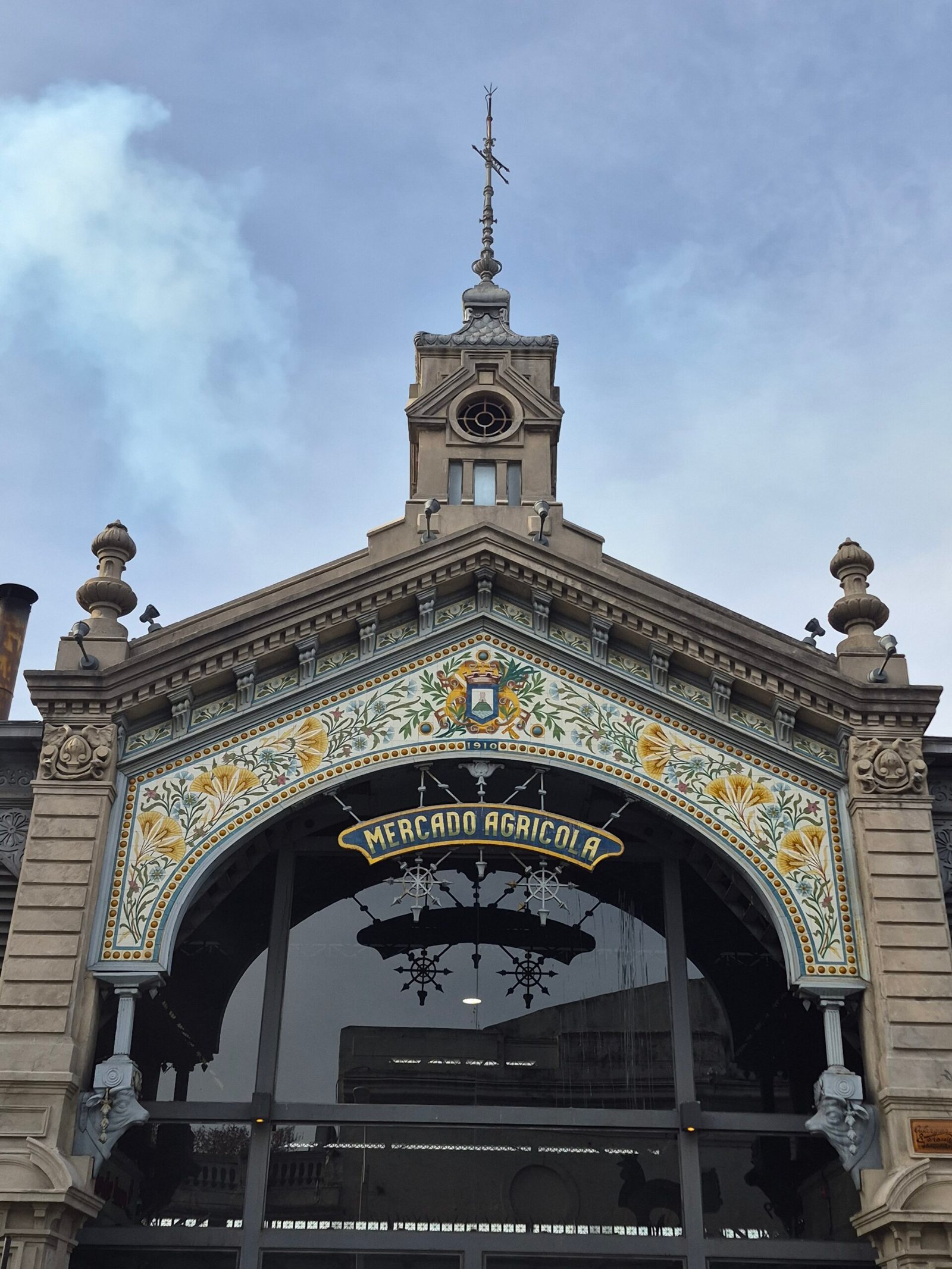
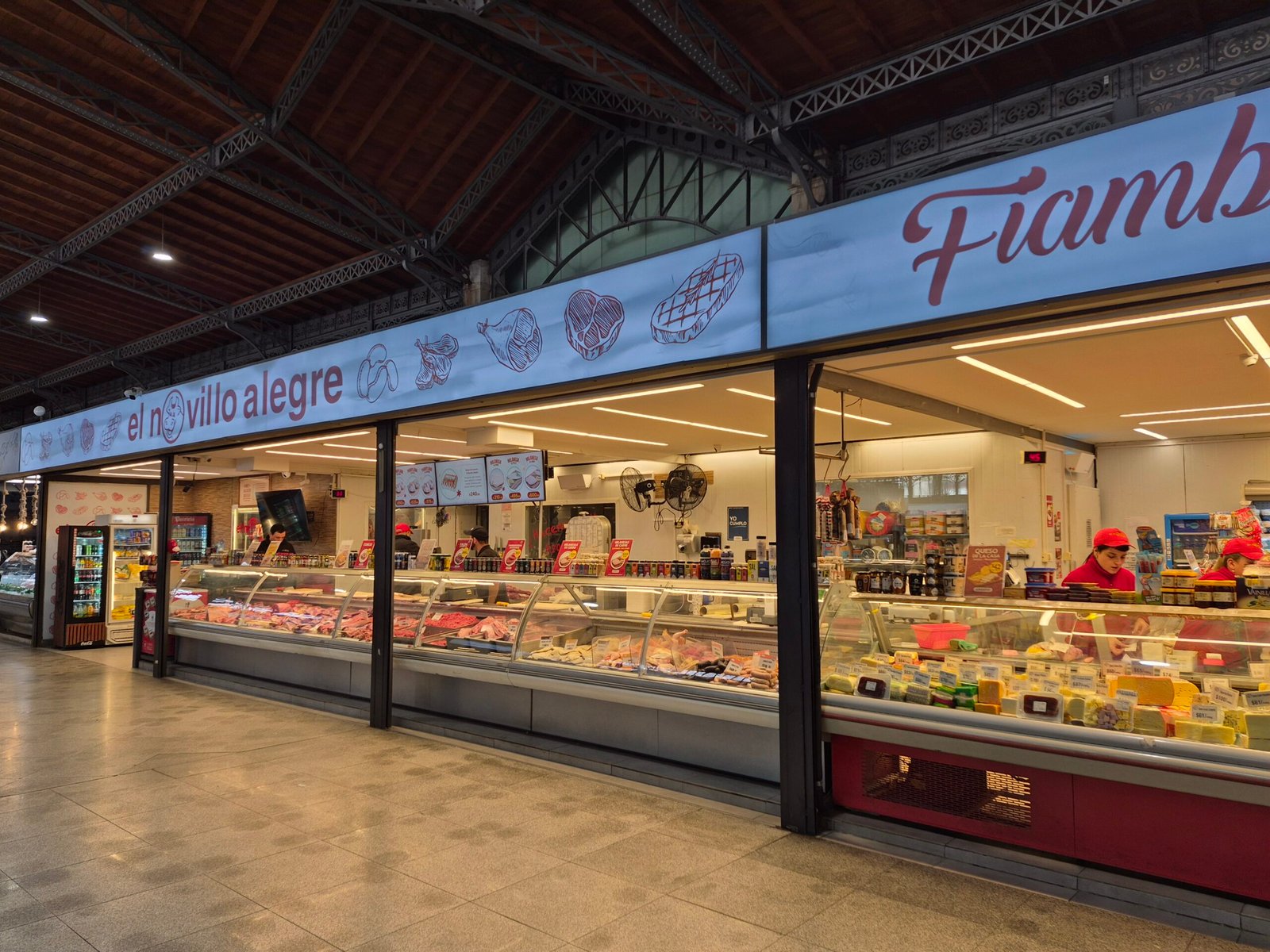
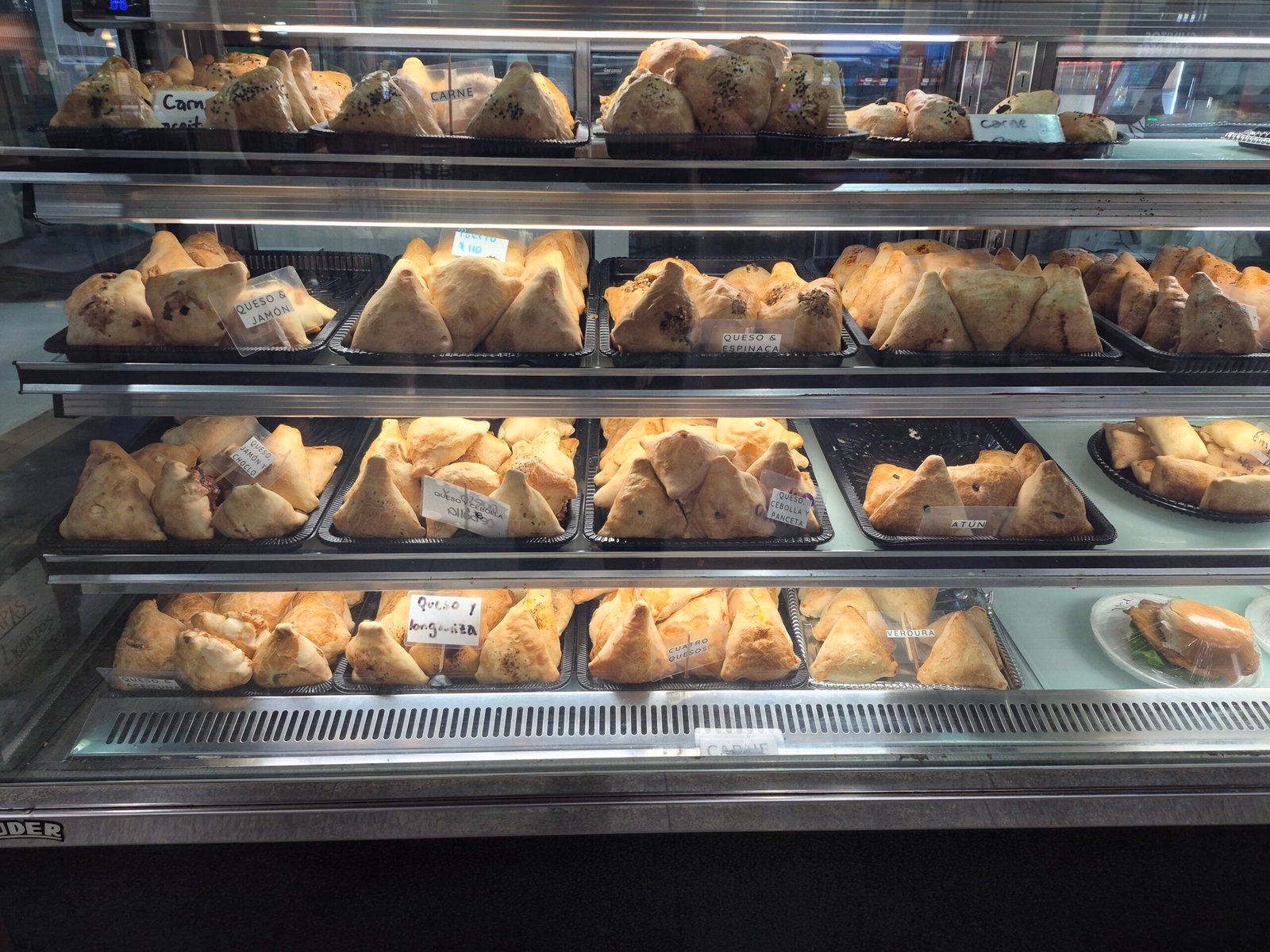
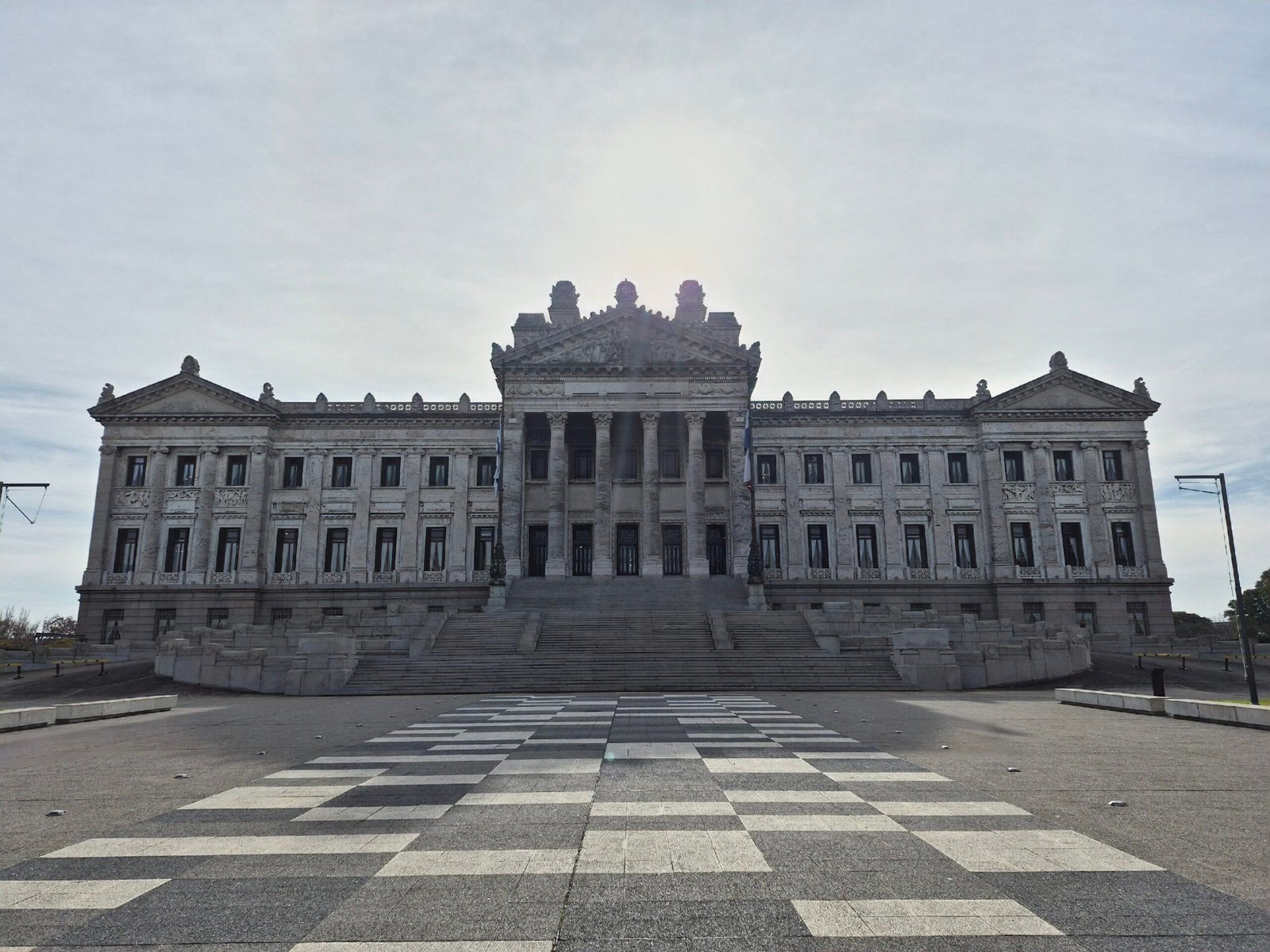
Our next stop was the Mercado Agrícola, the local market hall. This place was mostly focused on food—fresh vegetables, meat, cheese, and so on. We also bought a couple of empanadas and some cookies from one of the stalls. They were absolutely delicious. From the market hall, we continued on to the Uruguayan Parliament building, which was quite an impressive-looking structure. Apparently, guided tours are offered there as well, but we just admired the building from the outside.
We went to see Agricola...
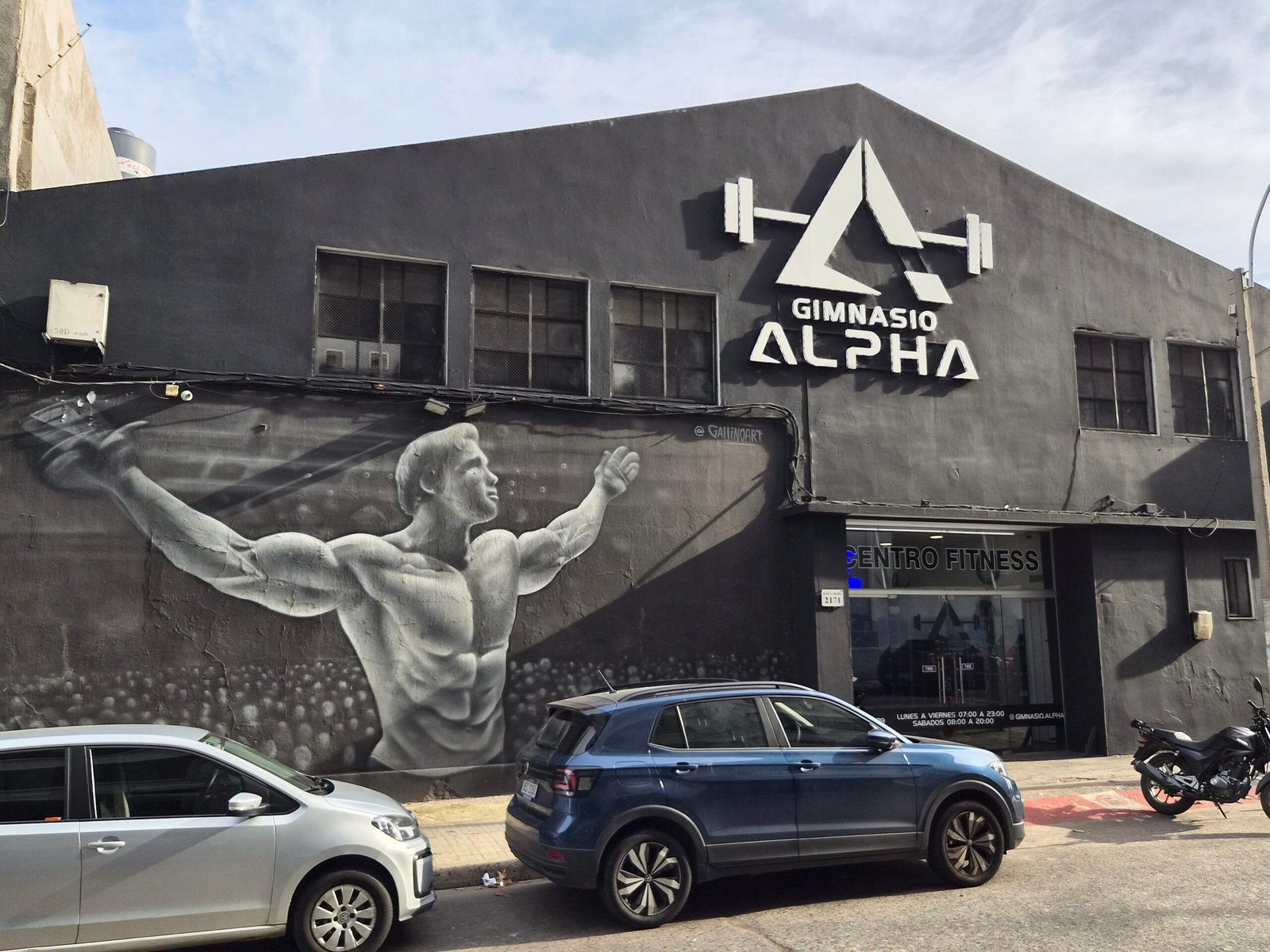
...but Marko found Schwarzenegger. A bit cooler facade than at Malmi Fitness24Seven!
There was a wide variety of treats available at the hall.
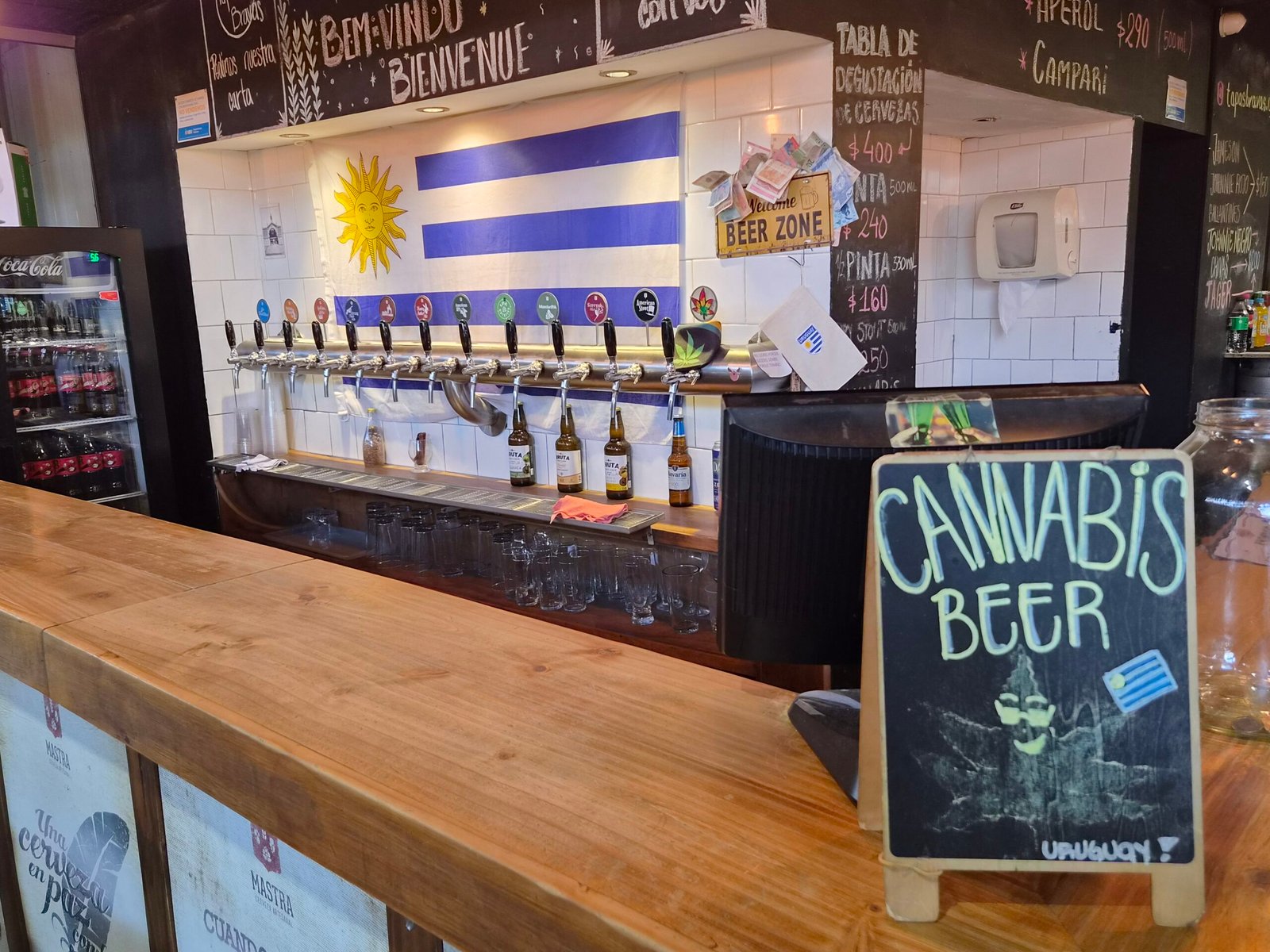
We didn't try the cannabis beer.
The empanadas were enough for us.
The Uruguayan Parliament building was impressive in both appearance and size.
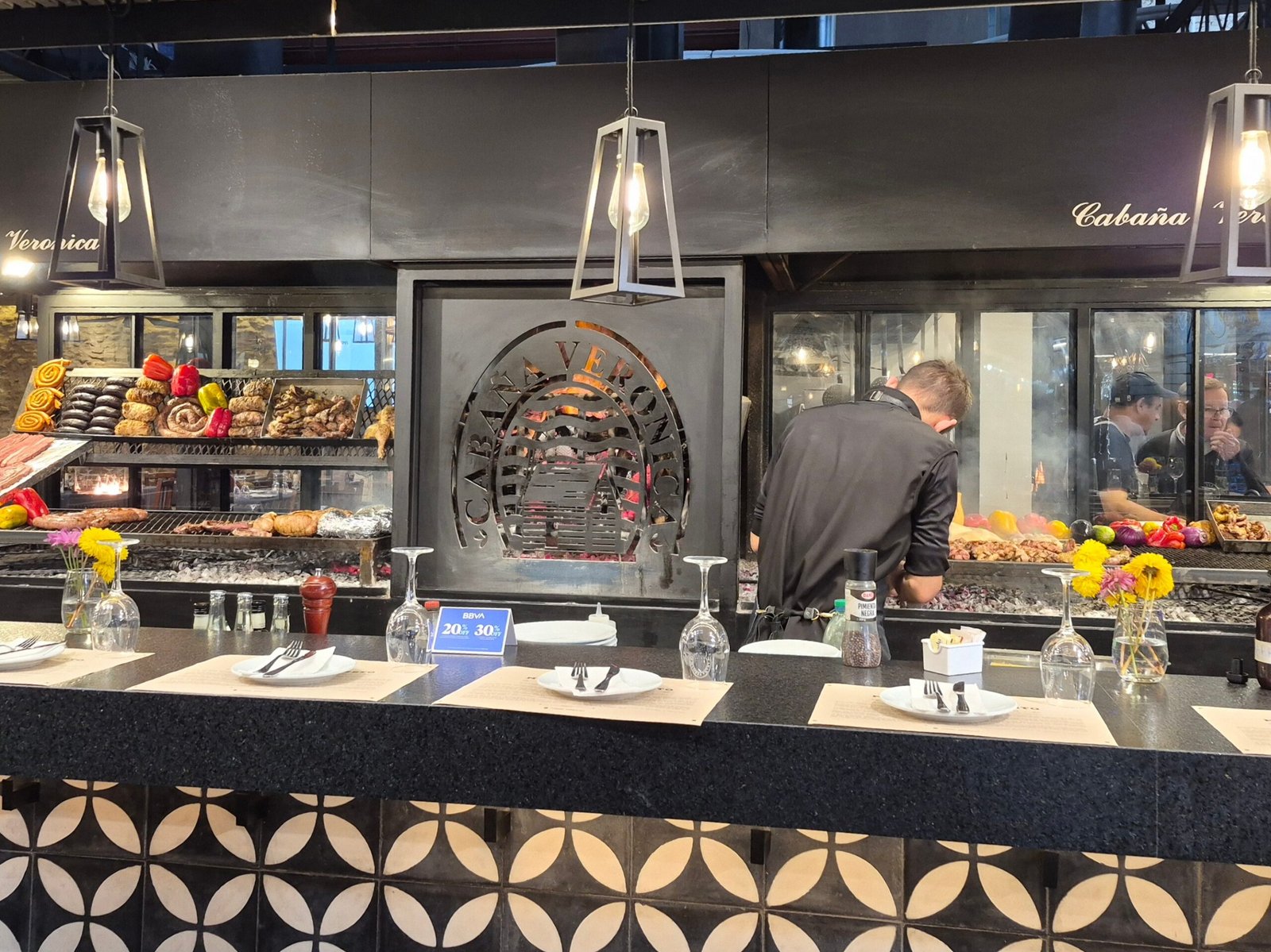
Our last stop was the city’s second market hall, the Mercado del Puerto (Harbor Market). This market hall is mostly filled with restaurants, and our guide recommended one there to us. However, no one was hungry yet at noon, so we decided to keep exploring for a while longer and come back to eat there later.
The food looked so delicious that we decided to come back here to eat a little later.
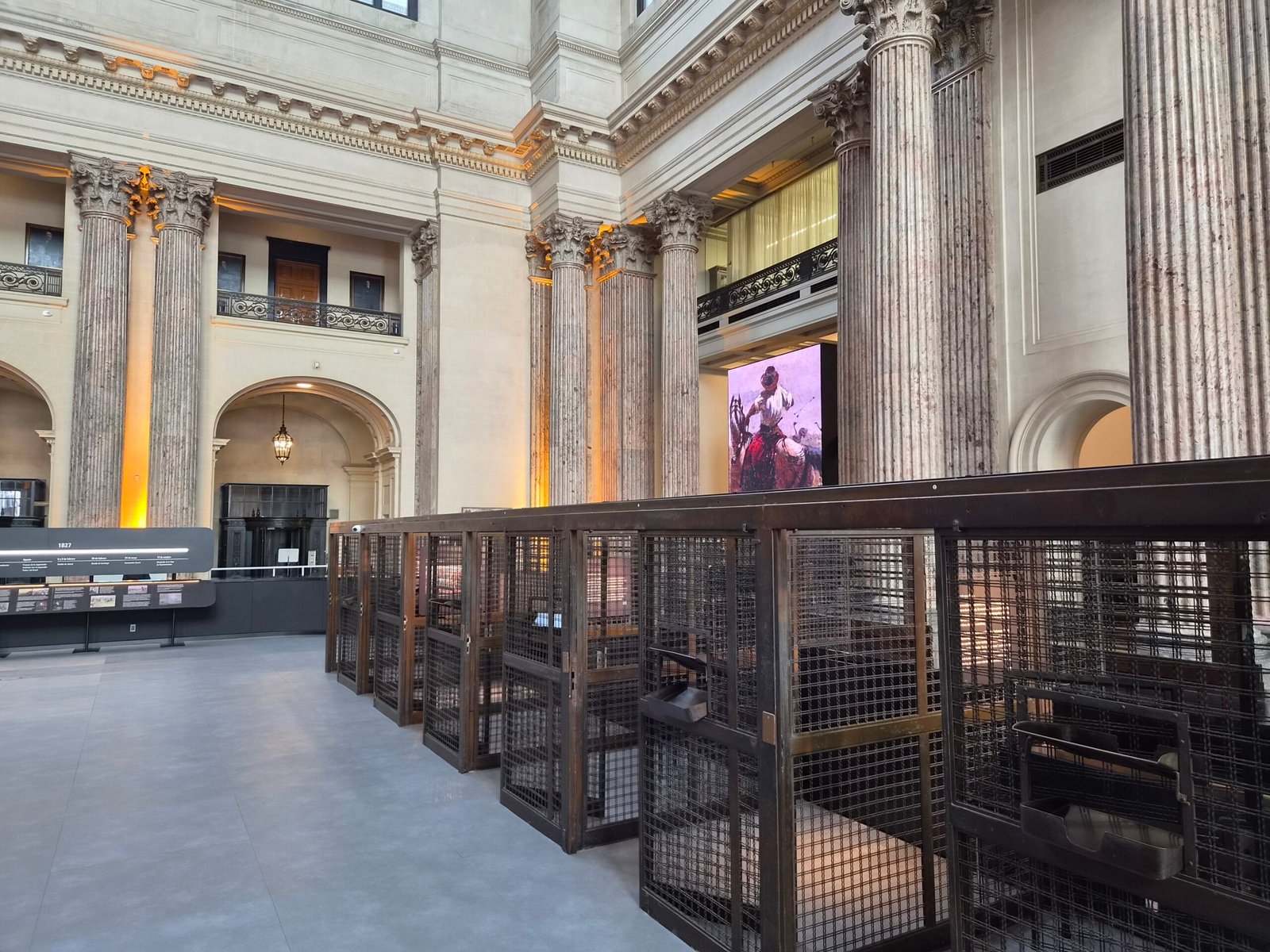
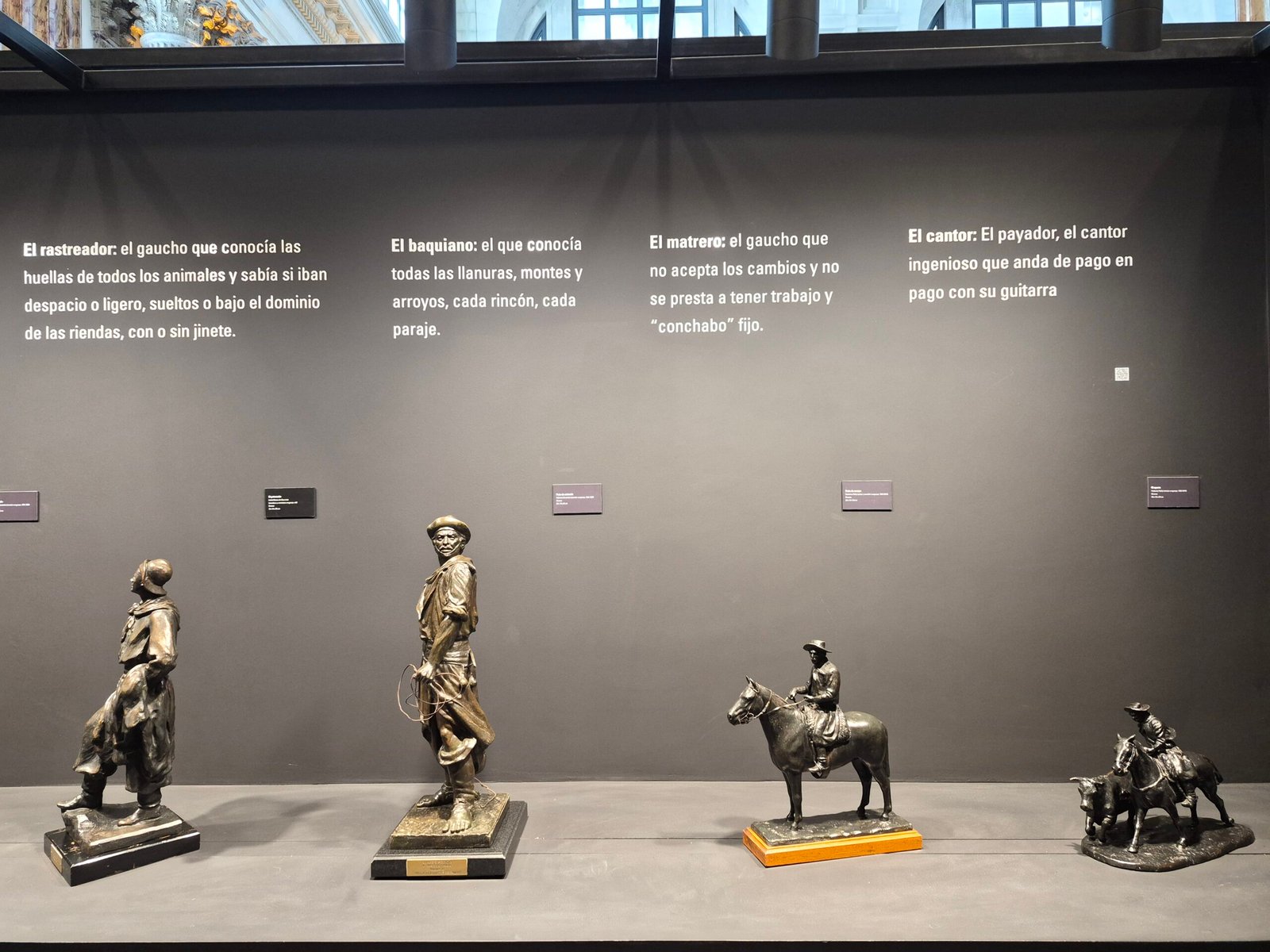
Our guide had also recommended the gaucho and money museum, located just a stone’s throw from the market hall. Since admission was free, we decided to stop by. The museum wasn’t very large, but the setting was impressive. The museum was actually located in the same building as a bank, and the museum’s exhibits were apparently set up in the lobby of the old bank branch. In the middle of the museum, in one room with screens on all four walls, a short film was playing that gave you a little taste of what it’s like to be a gaucho. In the other rooms, there were exhibits of gaucho gear and items related to coin minting.
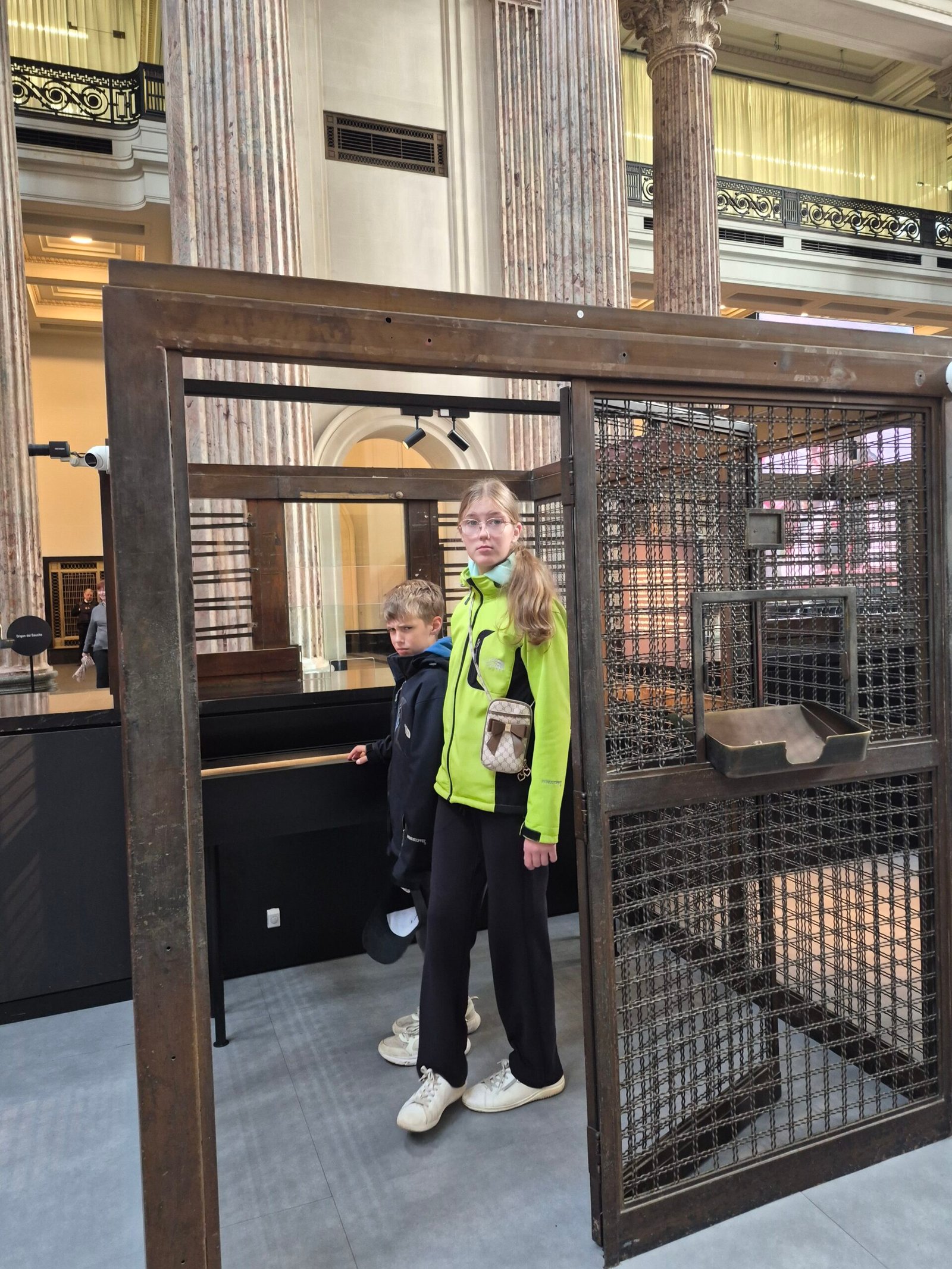
The museum also had items on display in the bank's old employee "cubicles."
"Close the gate, we won't talk to you." Risto wasn't exactly thrilled about this museum visit.
At the museum, we learned that there were four different types of gauchos.
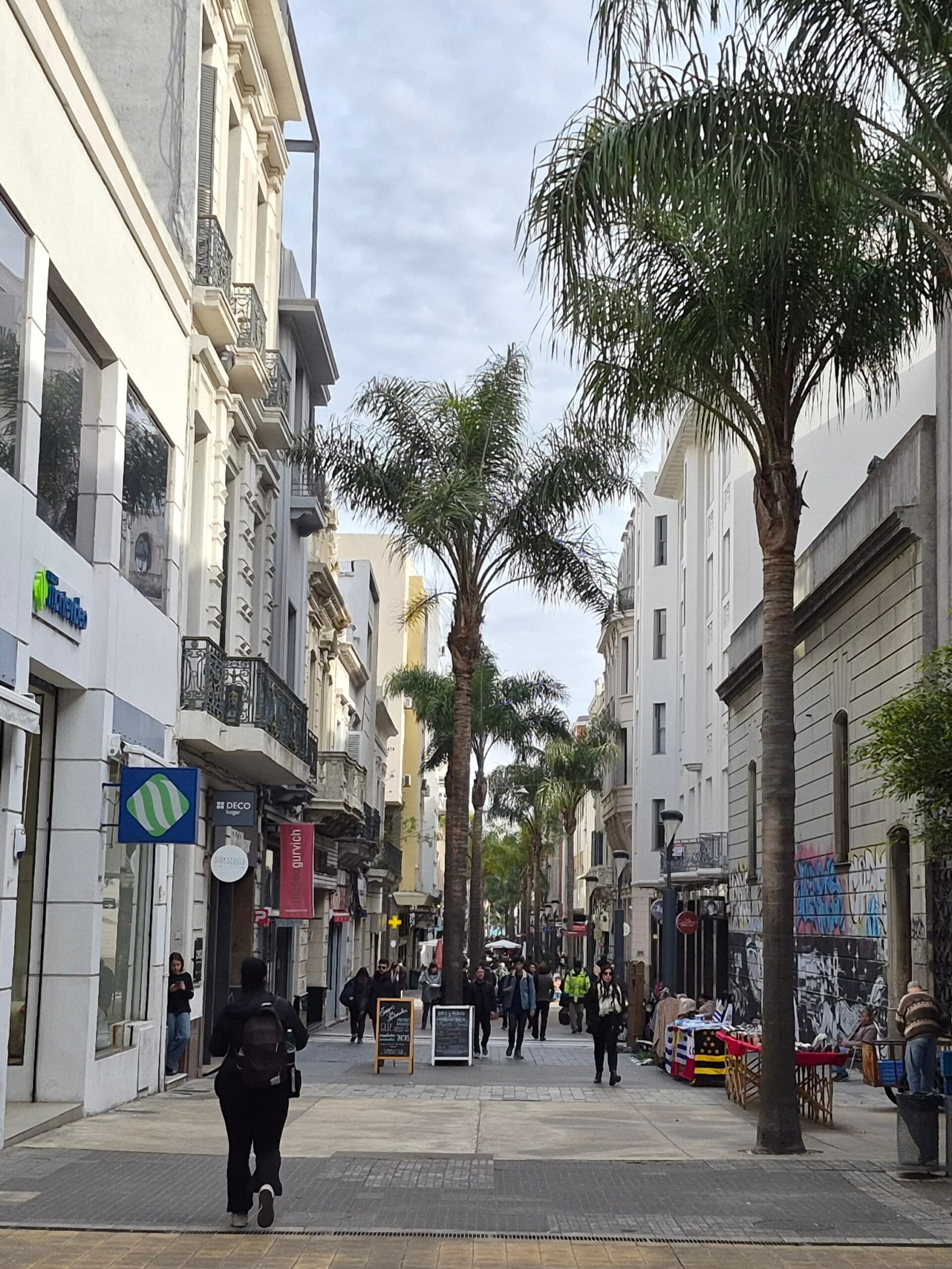
After our visit to the museum, we wandered around the area’s pedestrian street, Sarandi, for a while before heading back to the harbor hall for lunch. We still weren’t very hungry, so we ordered three meals to share among the four of us, hoping we’d at least be able to finish them with dignity. Jaana and Risto shared a chivito, while Marko and Ronja ate their own meals. Marko’s steak was still a pretty manly portion, and Ronja’s spinach pasta wasn’t exactly small either, but somehow we managed to clean our plates almost completely.
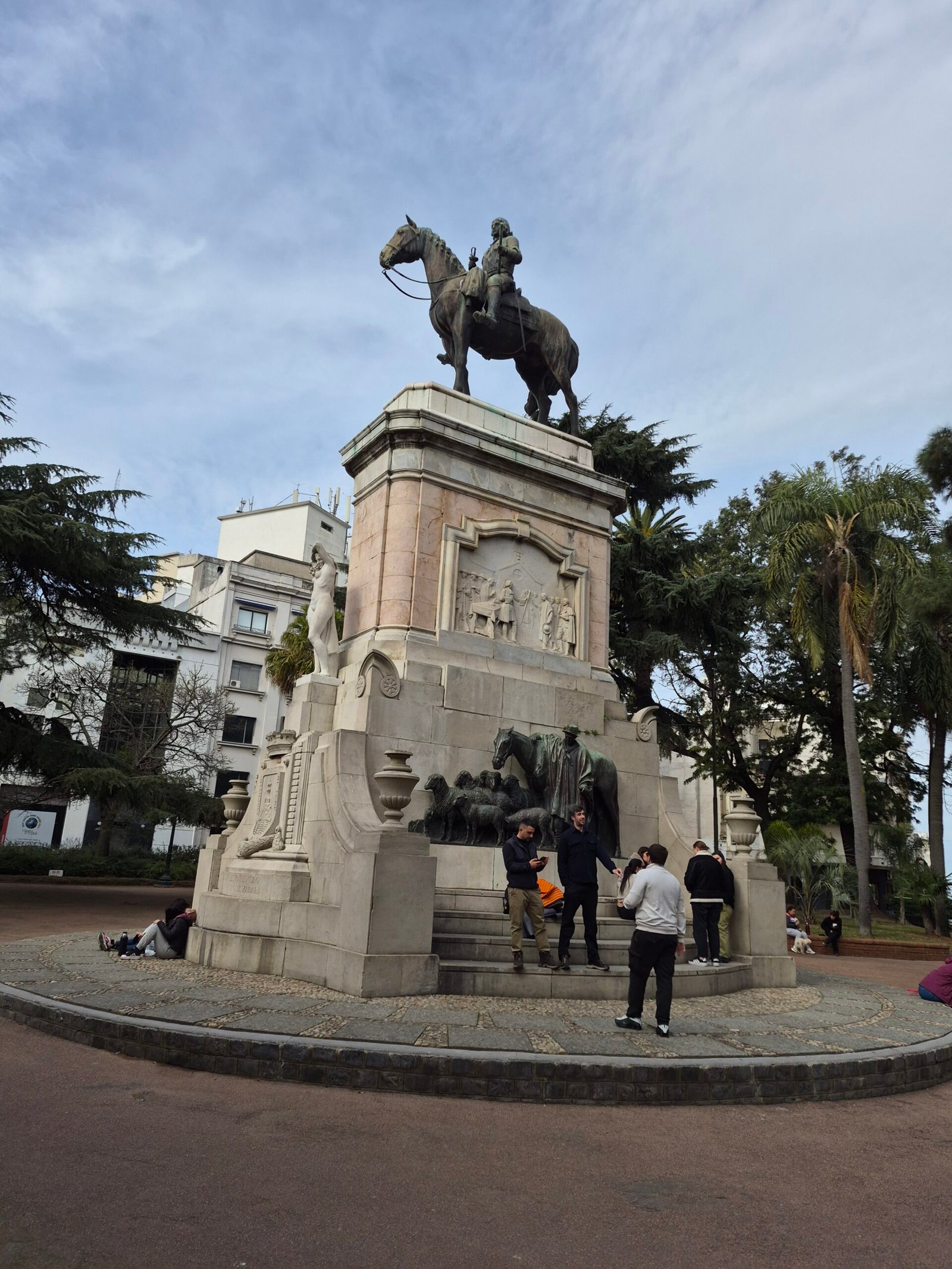
This statue was erected in honor of Bruno Mauricio de Zapala, the founder of the city of Montevideo.
Montevideo's pedestrian street, Sarandi
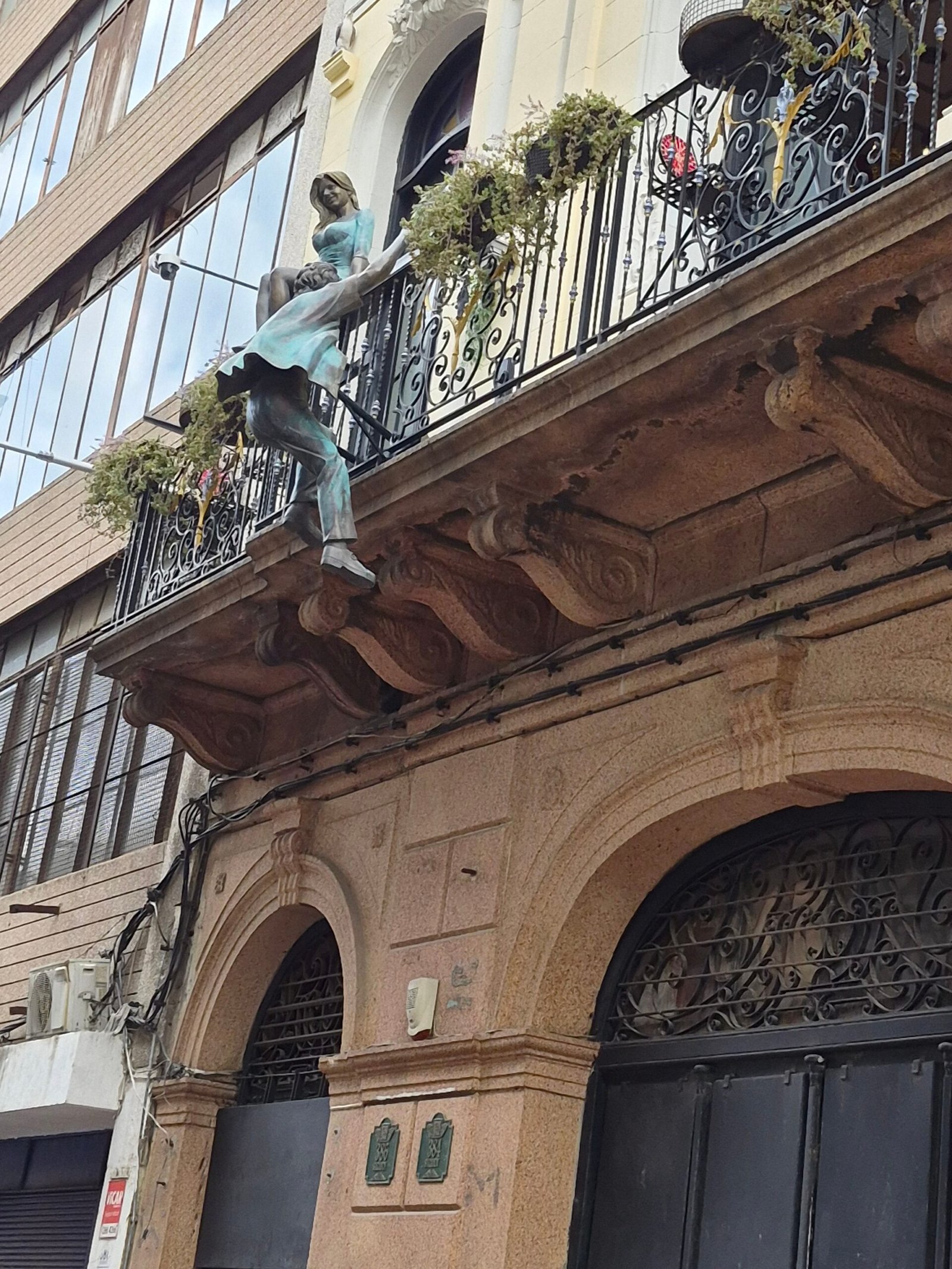
There were some funny statues on the street.
From the market hall, we walked back to Independence Square and the Palacio Salvo. We had, in fact, bought tickets for a guided tour of that site. The building served as a hotel until 1969, when the last hotel operations were shut down and the building was converted into a residential complex. Today, the building contains about 400 apartments, and, surprisingly, it is home to over a thousand people. One information board did list the number of residents as 2,000, but that’s very hard to believe, since practically all the apartments are only the size of a large hotel room.
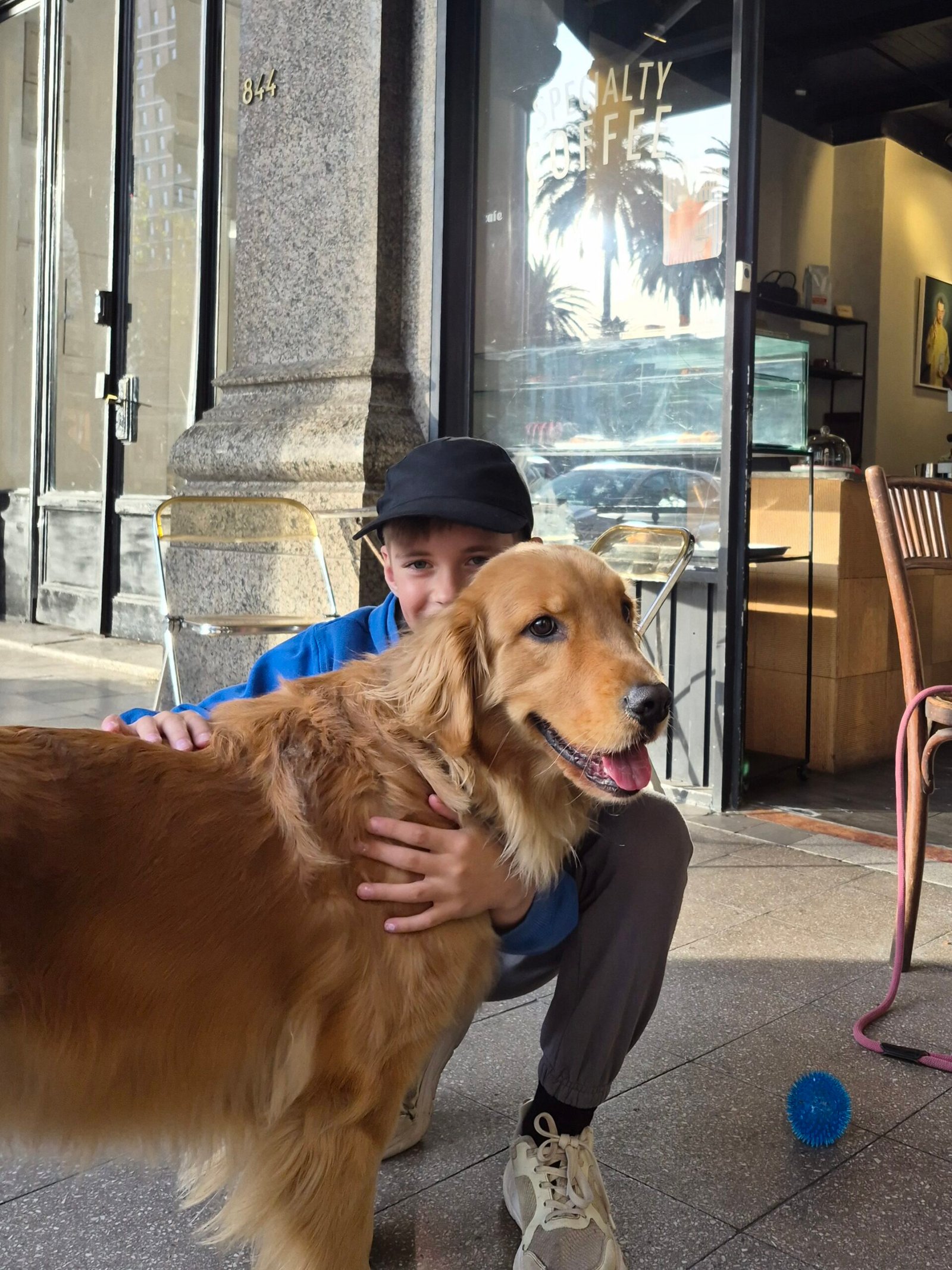
Risto found a dog friend in front of Palacio Salvo.
After the tour, Risto began planning to move into Palacio Salvo.
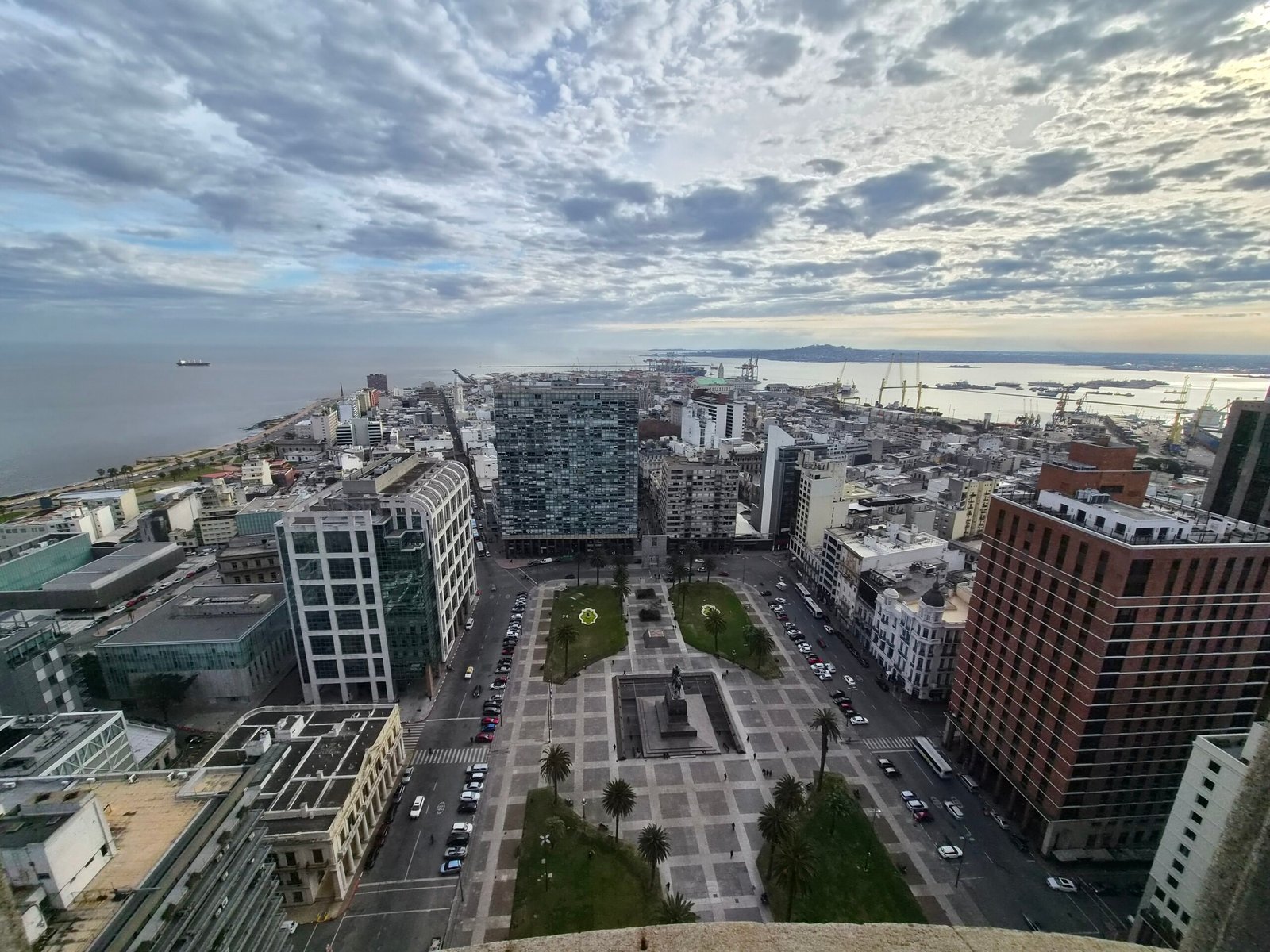
We had imagined that the ticket would get us up to the 25th floor of the building to admire the views and back down again, but to our surprise, we got a full-fledged guided tour in English. We heard lots of interesting facts about the building, and we also got to admire the views from a height of about 95 meters. In the past, you could admire the views all around the tower, but since the building had been converted into a residential building—which required installing a new elevator reaching all the way to the top floors—the elevator machinery is now located on the other side of the tower. We had imagined that the rents for the apartments in the building would be quite high due to its central location, but our guide told us that the rent for a single apartment is about $400 a month. This sounds really affordable to Finnish ears, but it’s important to remember that wages in Uruguay aren’t in the same league as in Finland. Our guide told us she earns about 20,000 pesos a month, which is about $500 or €430. It’s hard to cover rents like that on your own with a salary like that.
The views from the top of the building were spectacular.
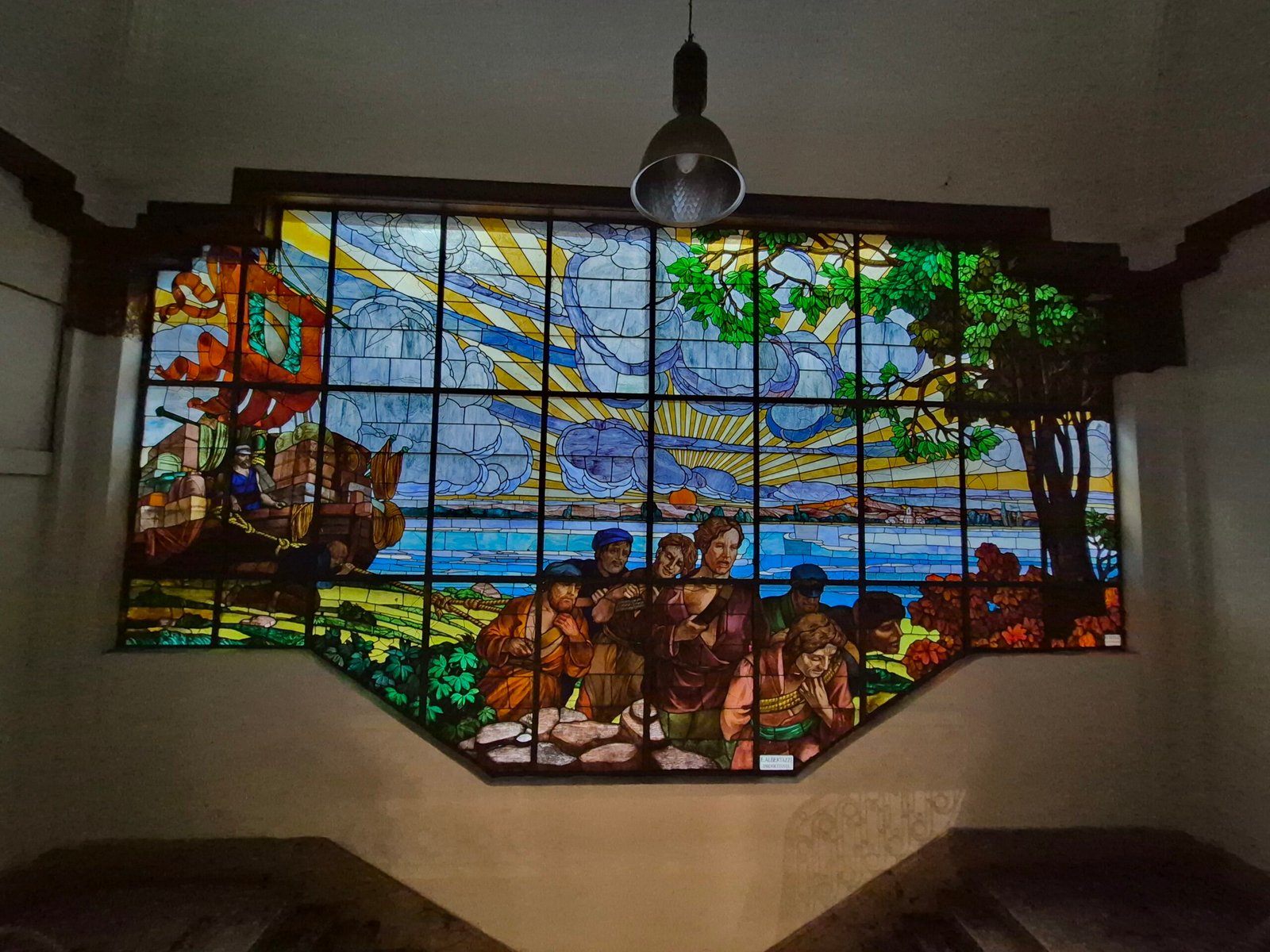
The stained-glass artwork in the stairwell draws inspiration from the barges of the Volga.
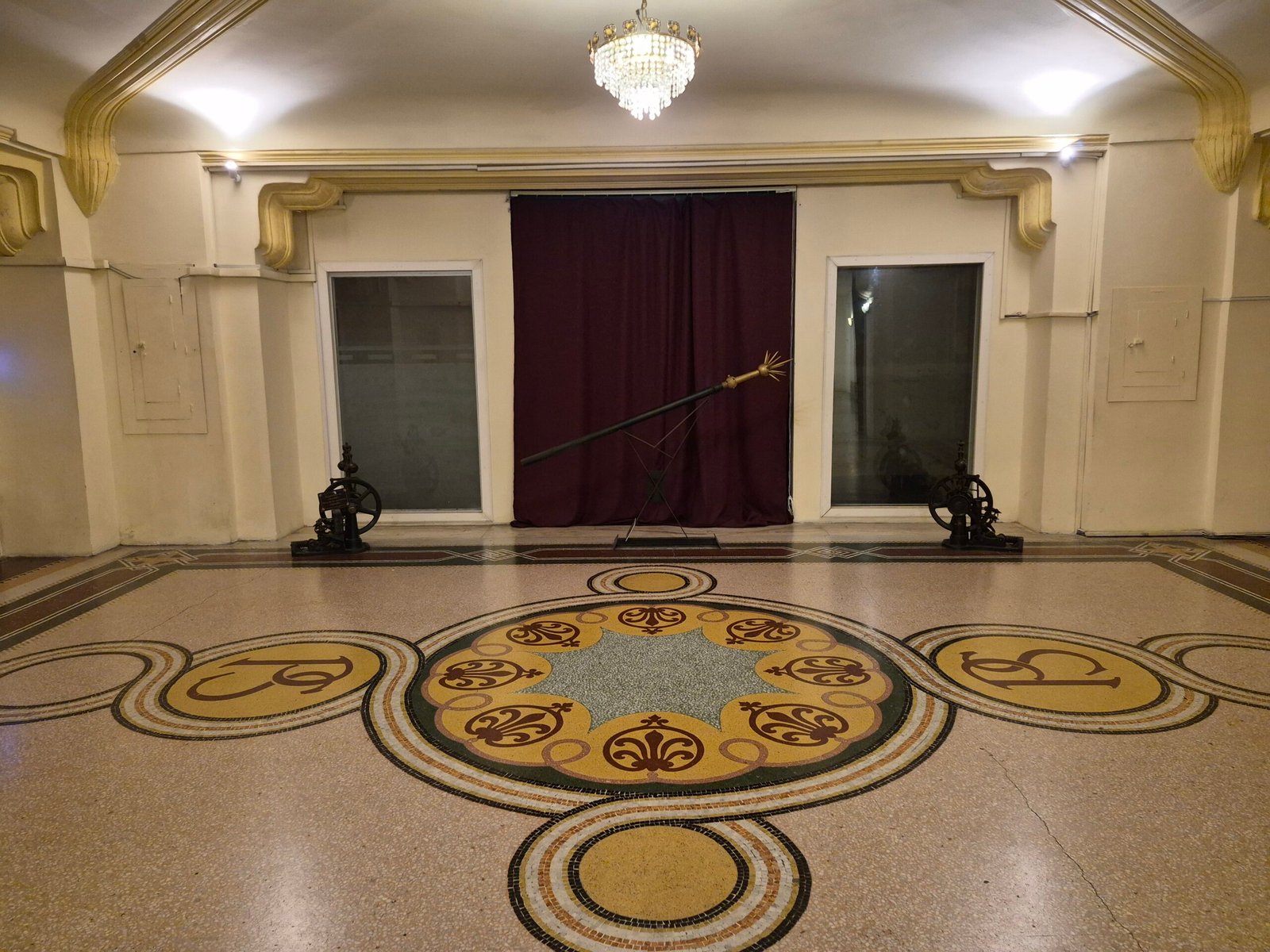
The mosaic patterns on the floor were laid by hand. In the background is the building's old lightning rod.
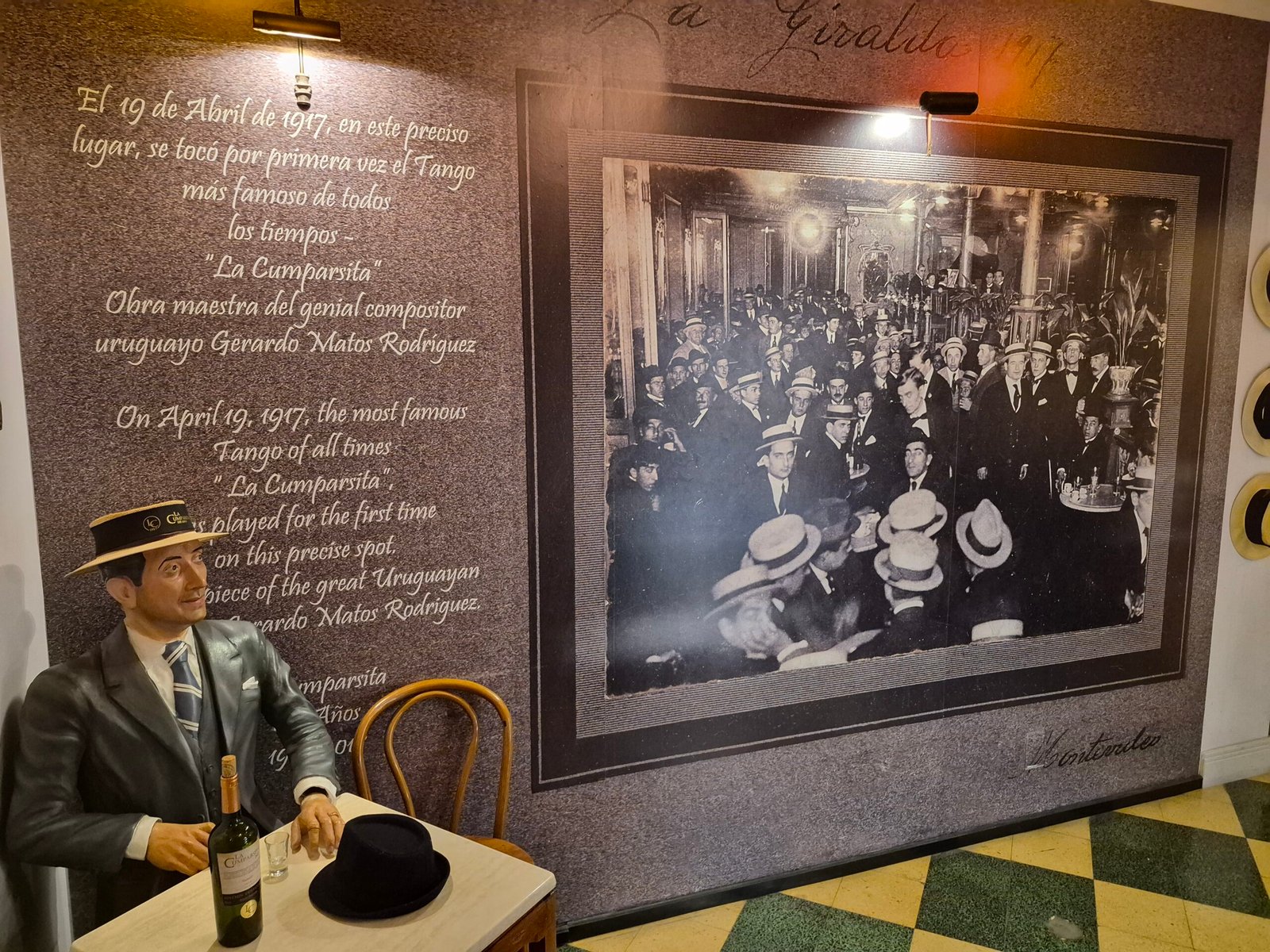
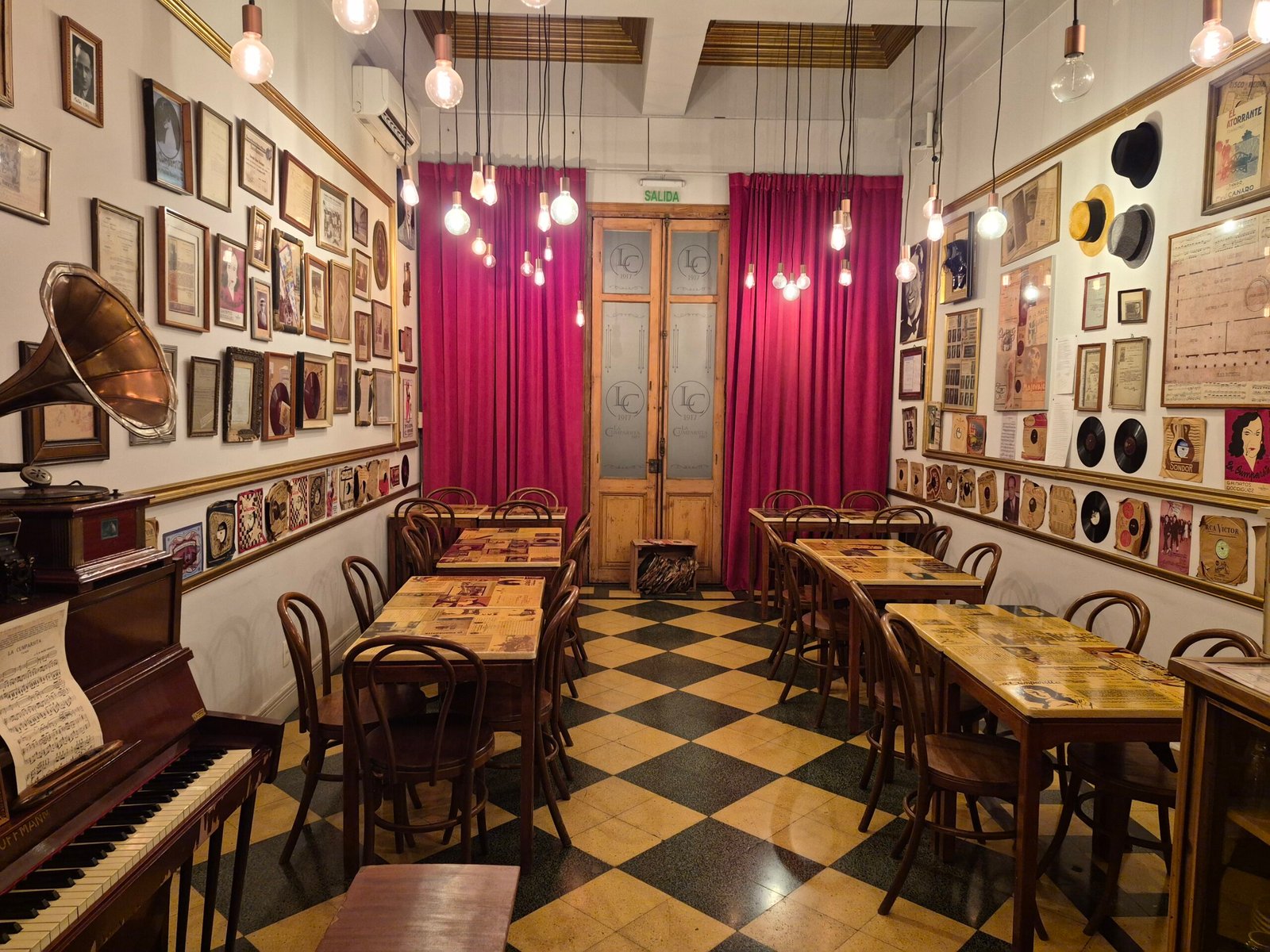
The guided tour ended at the tango museum, where “La Cumparsita” was playing on a loop. The reason for this was that, before the hotel was built, there had been a gentlemen’s café on the site, where live music was also performed in the evenings. It was there that the tango “La Cumparsita” was first performed. The café was demolished to make way for the hotel, but a small museum was established in the building at the exact spot where the orchestra used to perform in the café in the evenings.
At the entrance to the Tango Museum, we were welcomed by the composer of the song "La Cumparsita."
This spot was once the location of the orchestra's stage, where "La Cumparsita" was first performed.
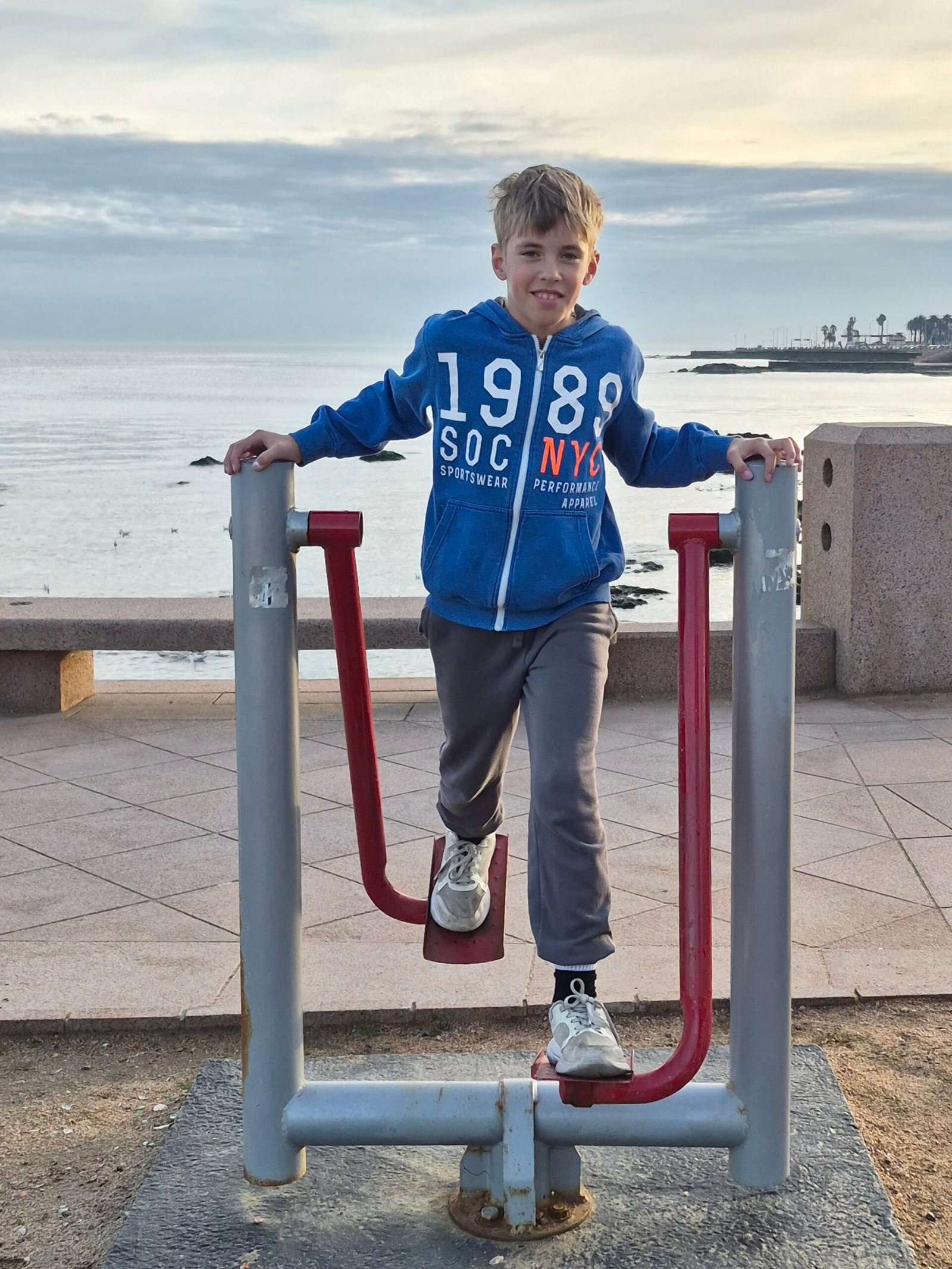
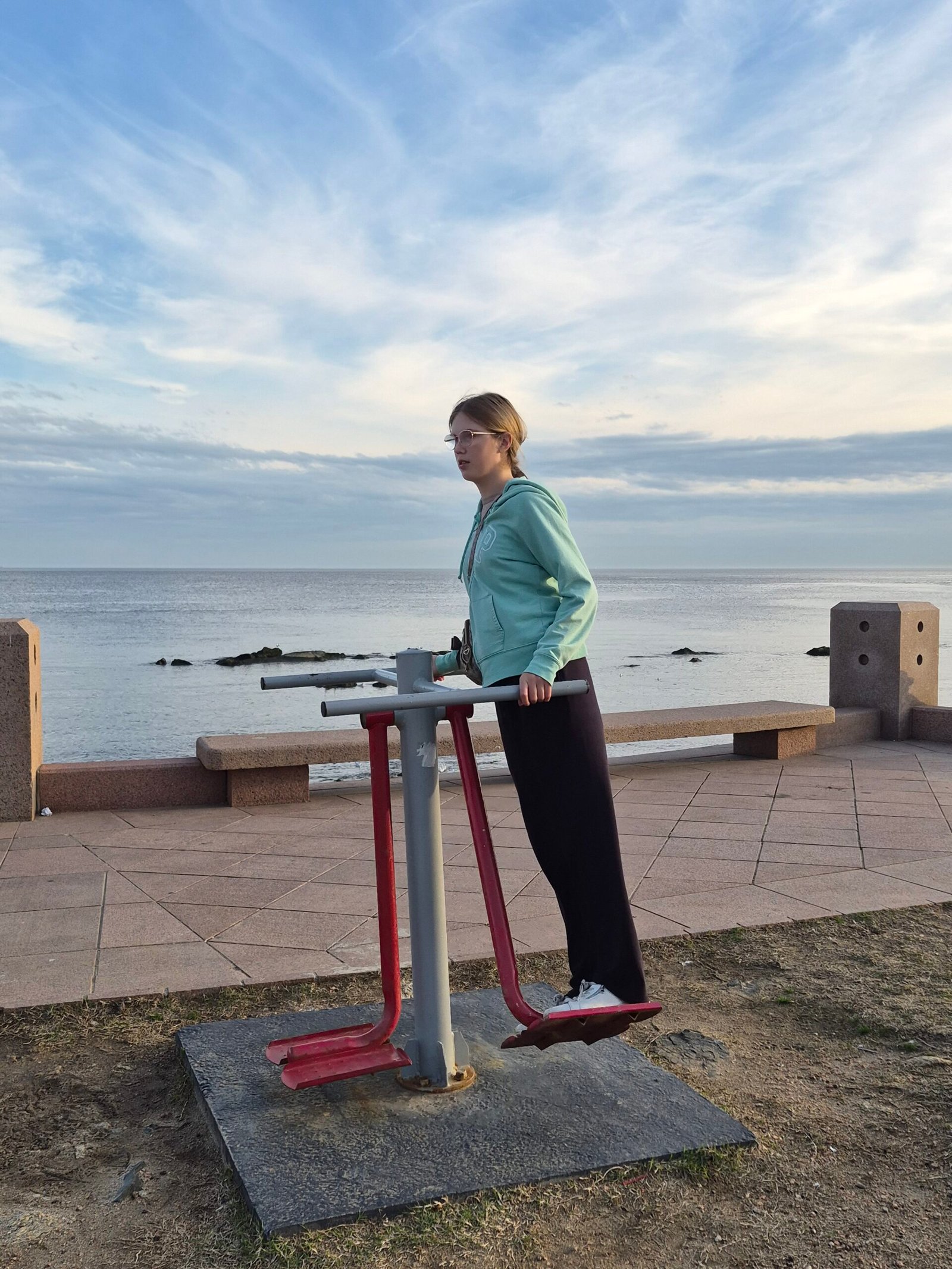
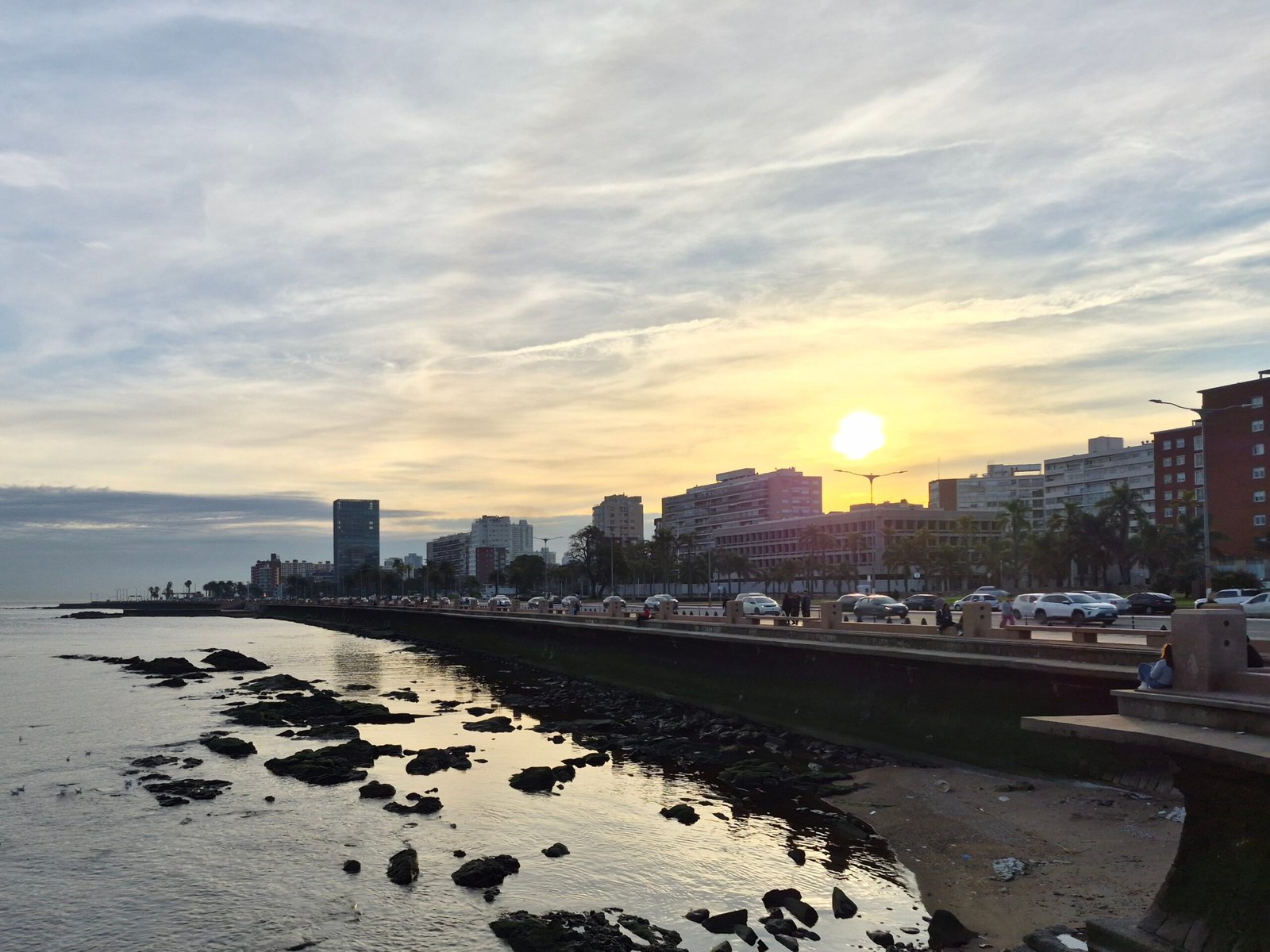
After the tour, we finally returned to our apartment. Since it was still light out and warm (+18°C), we decided to head out to the nearby waterfront promenade to see what the atmosphere would be like at five in the evening. There were plenty of joggers, fitness enthusiasts, and people walking their dogs. Ronja and Risto even got into a friendly race against each other on the soft beach sand. Marko also decided to try his luck against Risto, but Risto narrowly beat Marko in their race (at least over short distances). Jaana didn’t even bother trying, since she knew the race would surely end in defeat. We could have stayed on the beach longer, but the sun was already starting to set, so we decided to head back to our apartment for the rest of the evening.
Evening workout
The water level was really low. I wonder if it's low tide.
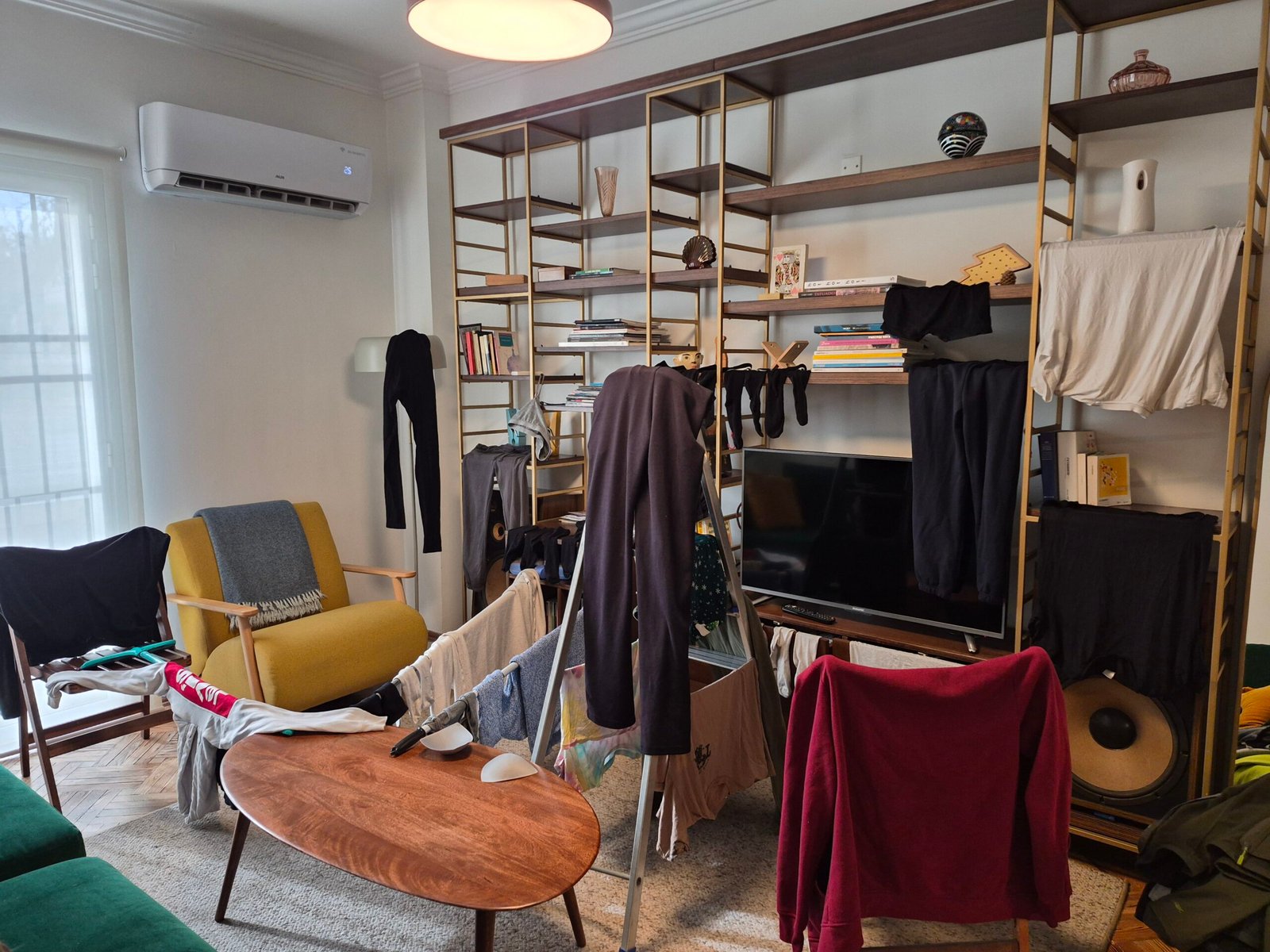
Since we had already visited all of Montevideo’s major attractions on Wednesday, our plans for Thursday consisted only of doing laundry, going to the theater, and having dinner. Our apartment did have a decent washing machine, but there was no drying rack, so we had to get creative again to fit two loads of laundry inside to dry. Well, there was a drying rack in the apartment, but it had been rigged outside of the kitchen window. Sure, you could dry laundry there just fine, but if your grip on a piece of clothing slipped while hanging it up or taking it down, the clothes would end up lying at the bottom of a pit, and you wouldn’t be able to get it back. When we peered into the pit, we saw at least a couple of socks that had met this fate. Marko was brave and hung some of his clothes there, but Jaana and the kids stuck to the “more traditional” bookshelf method.
Laundry day
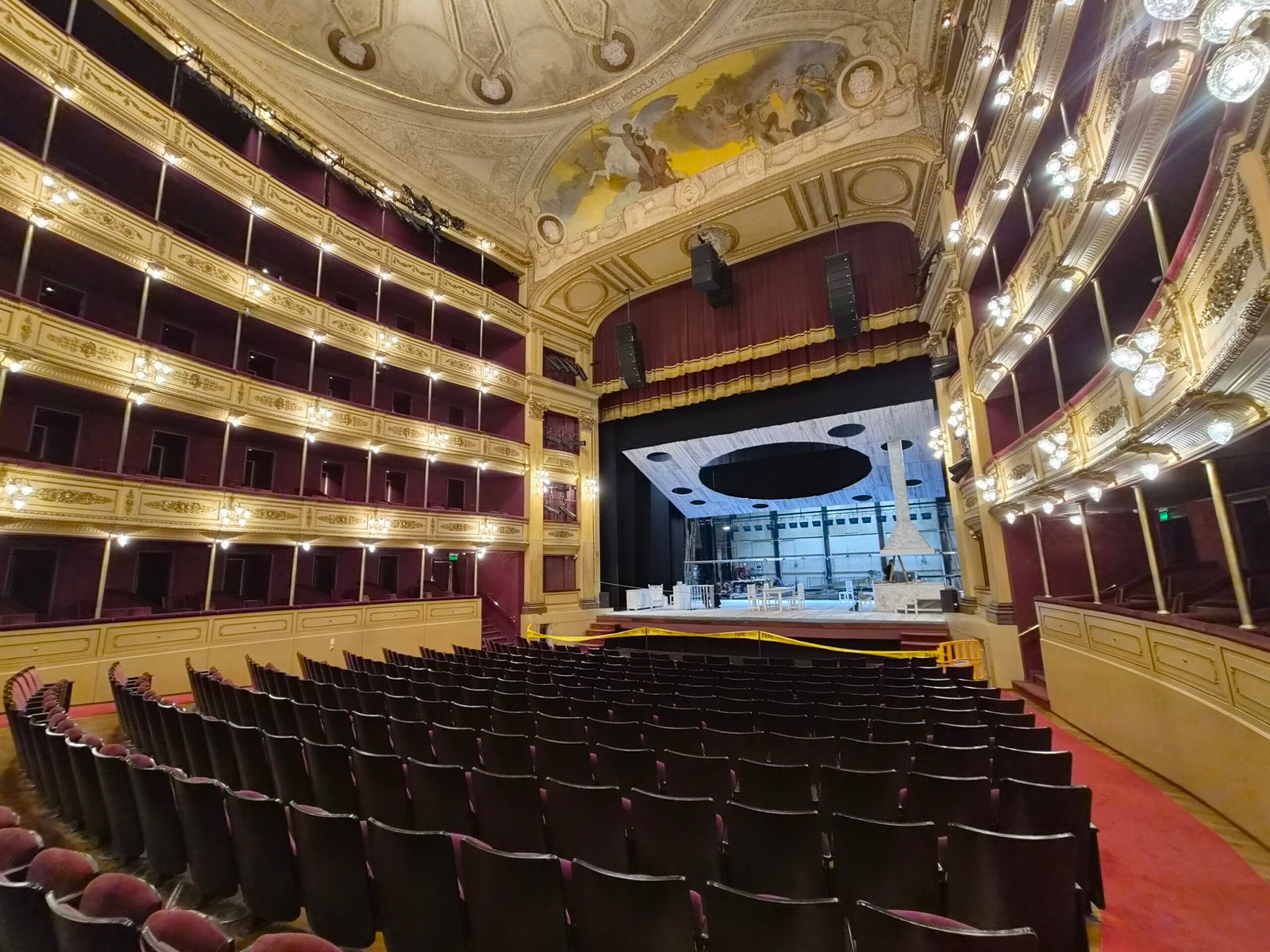
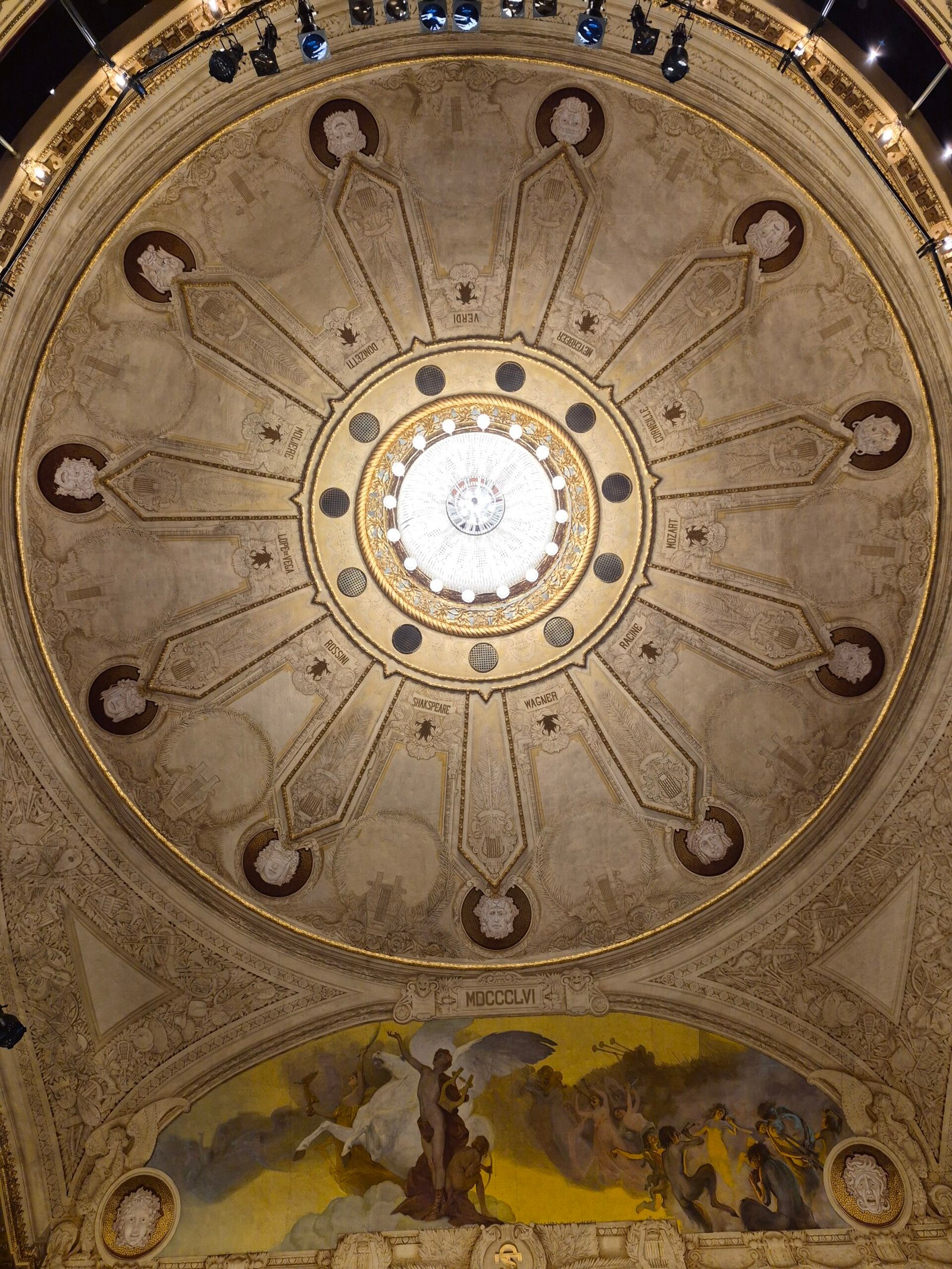
We went to the Solis Theater a little before four—the very spot where we’d started our guided tour the previous day. Besides us, the only other participants in the English-language guided tour were a Greek mother and daughter, so there weren’t enough of us foreign tourists to make it feel crowded. The Spanish- and Portuguese-speaking groups, on the other hand, were quite large. The Teatro Solis is Uruguay’s most important and oldest theater. It opened back in 1856, and you can see both plays and concerts there. The theater’s magnificent main hall seats about 1,000 people, but since the view of the stage is poor from some of the seats, only 800 tickets are sold per performance for plays. Concerts, however, can be sold out to a full house, since in those cases you don’t need to see—just hear.
The main stage at Teatro Solis was magnificent.
The decorative painting on the ceiling was first done on canvas, which was then attached to the ceiling.
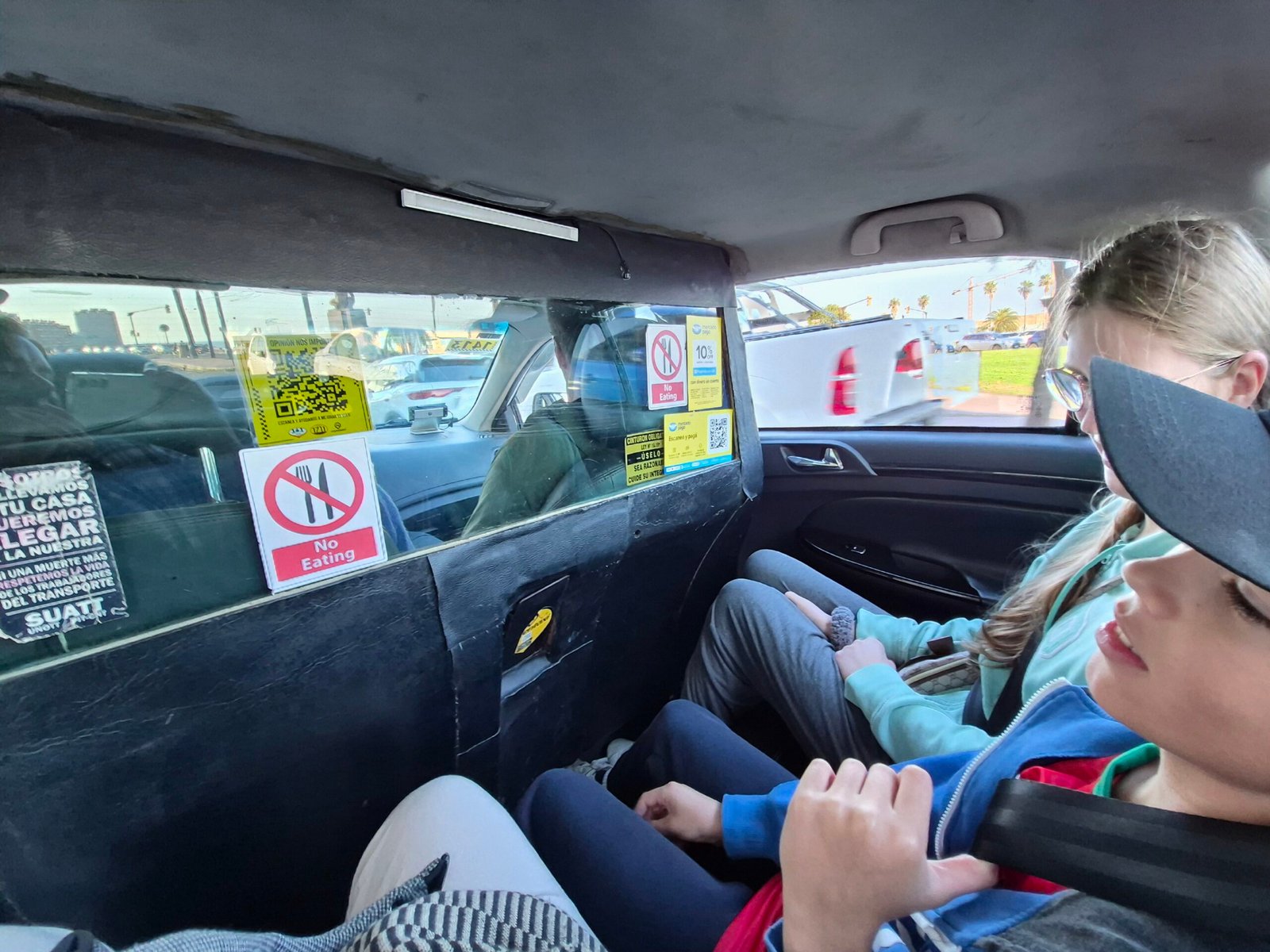
After the theater, we hopped in an Uber and headed to one of Montevideo’s shopping malls for dinner. Although the mall was advertised as one of Montevideo’s largest, Montevideo Shopping wasn’t really anything special. We did find a food court there, but the options were mostly burgers and pizza. At least Ronja managed to find a vegetarian lasagna there. After dinner, it was time to head back to our apartment and pack our bags for the next day’s flight to Rio de Janeiro. Rio will be our last real stop on this trip, after which we’ll be heading back home to Finland.
To our surprise, the Uber turned out to be a taxi. Jaana and the kids ended up in the back seat behind the glass partition.