Rio de Janeiro 17.7.-24.7.2026
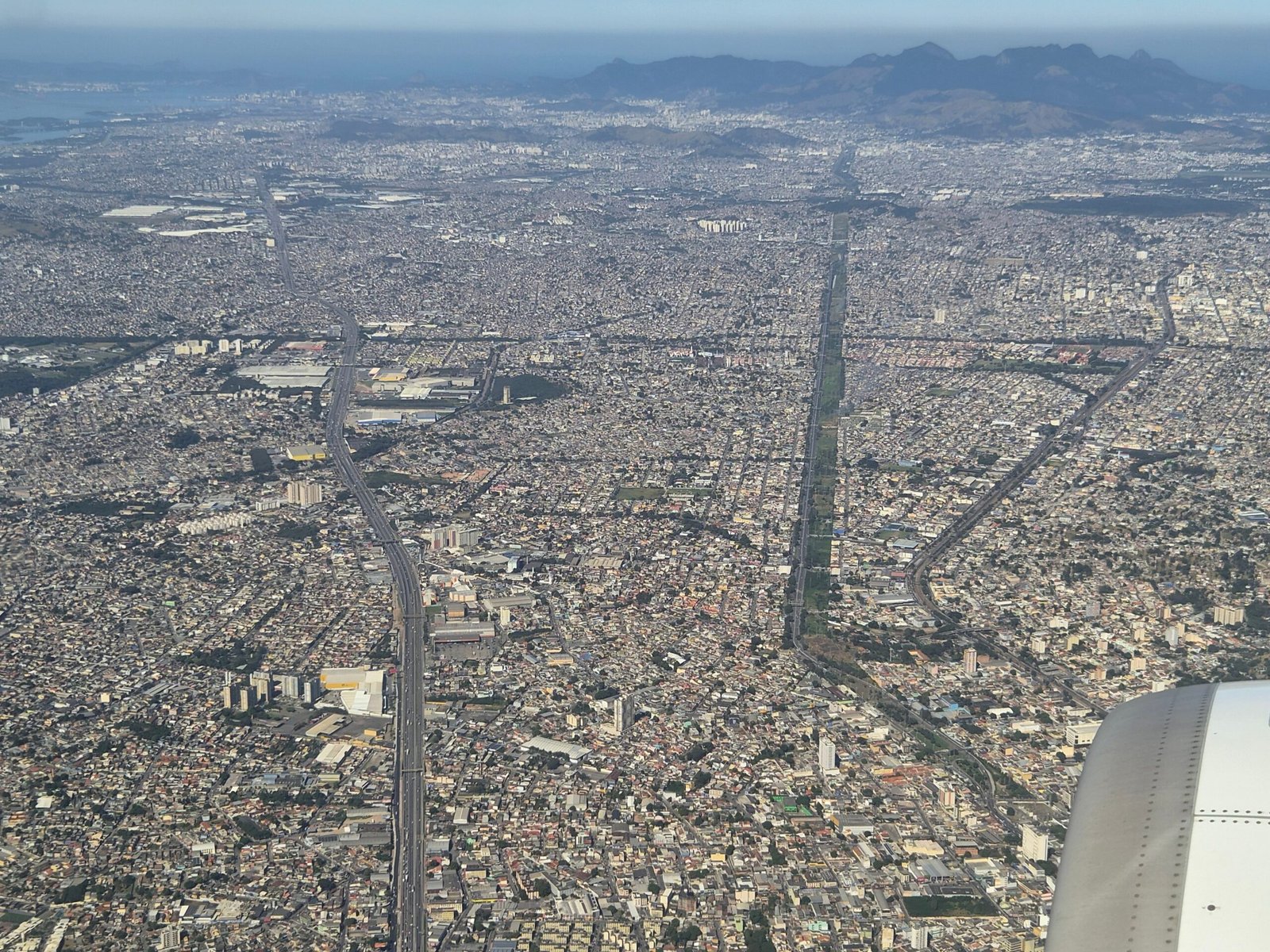
We flew from Montevideo to Rio de Janeiro on a flight operated by the Chilean airline Sky. The flight was only half full, so we had plenty of room. The flight time was also shortened by about twenty minutes, so we landed in Rio a little after one o’clock in the afternoon.
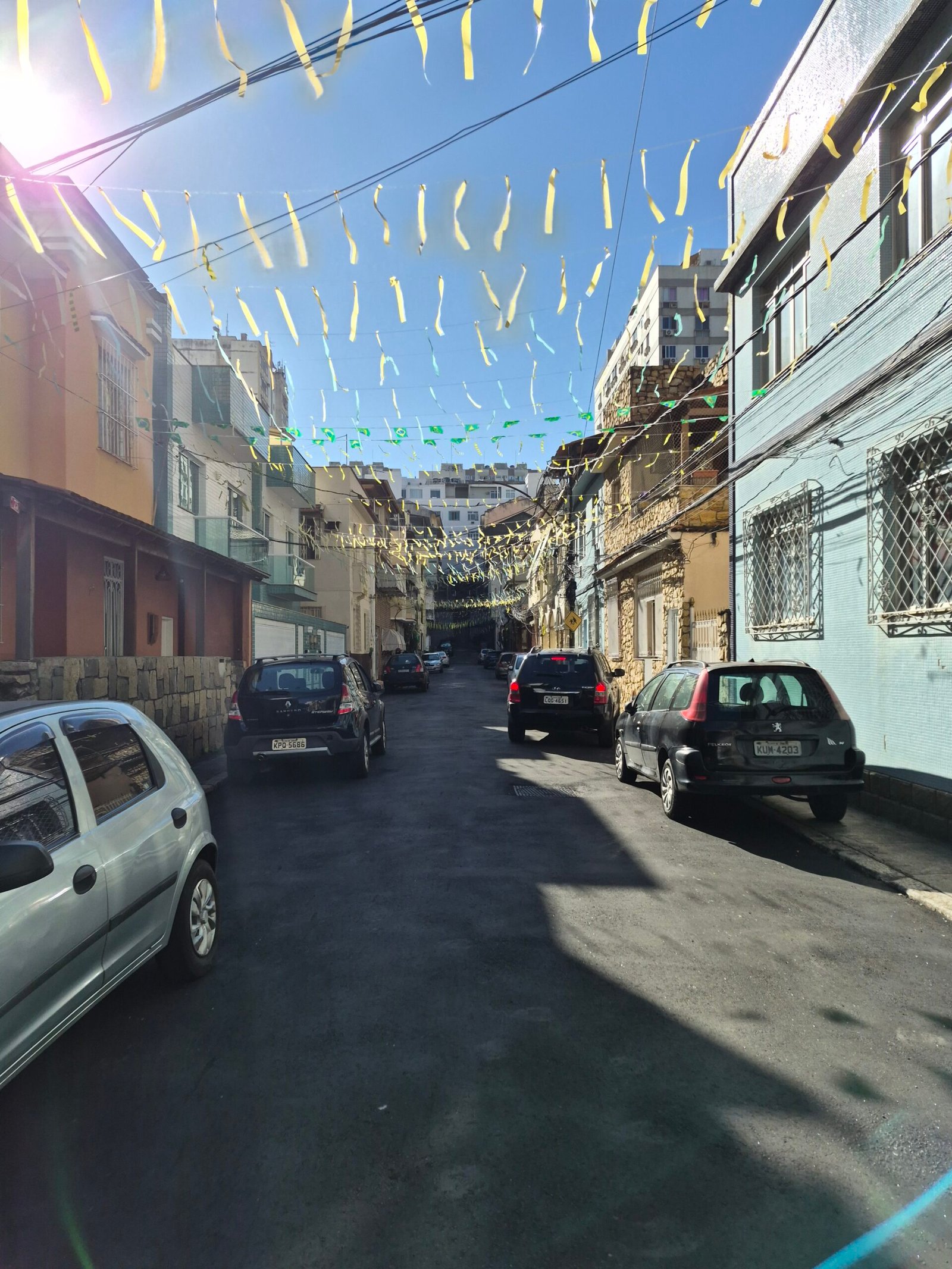
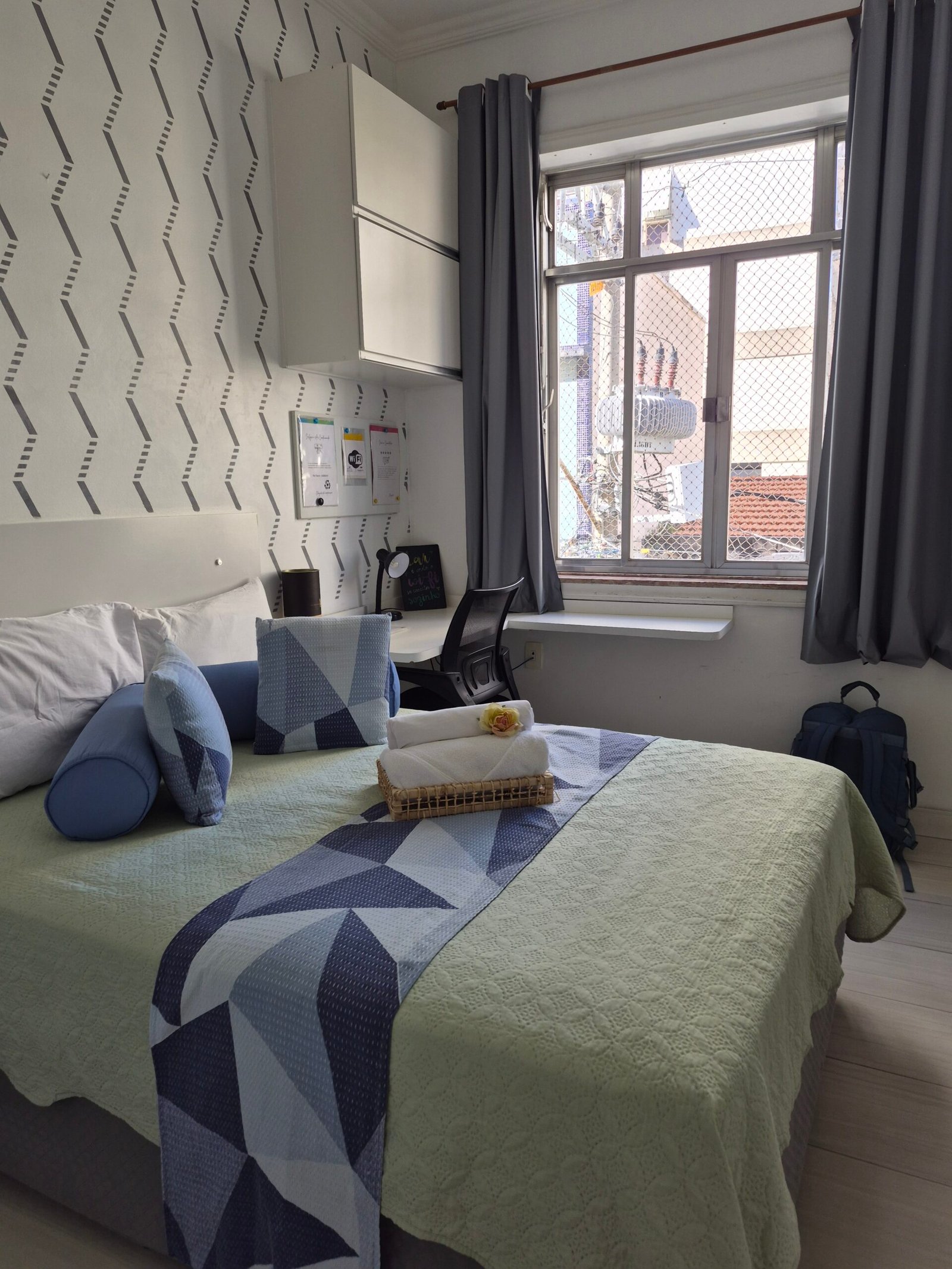
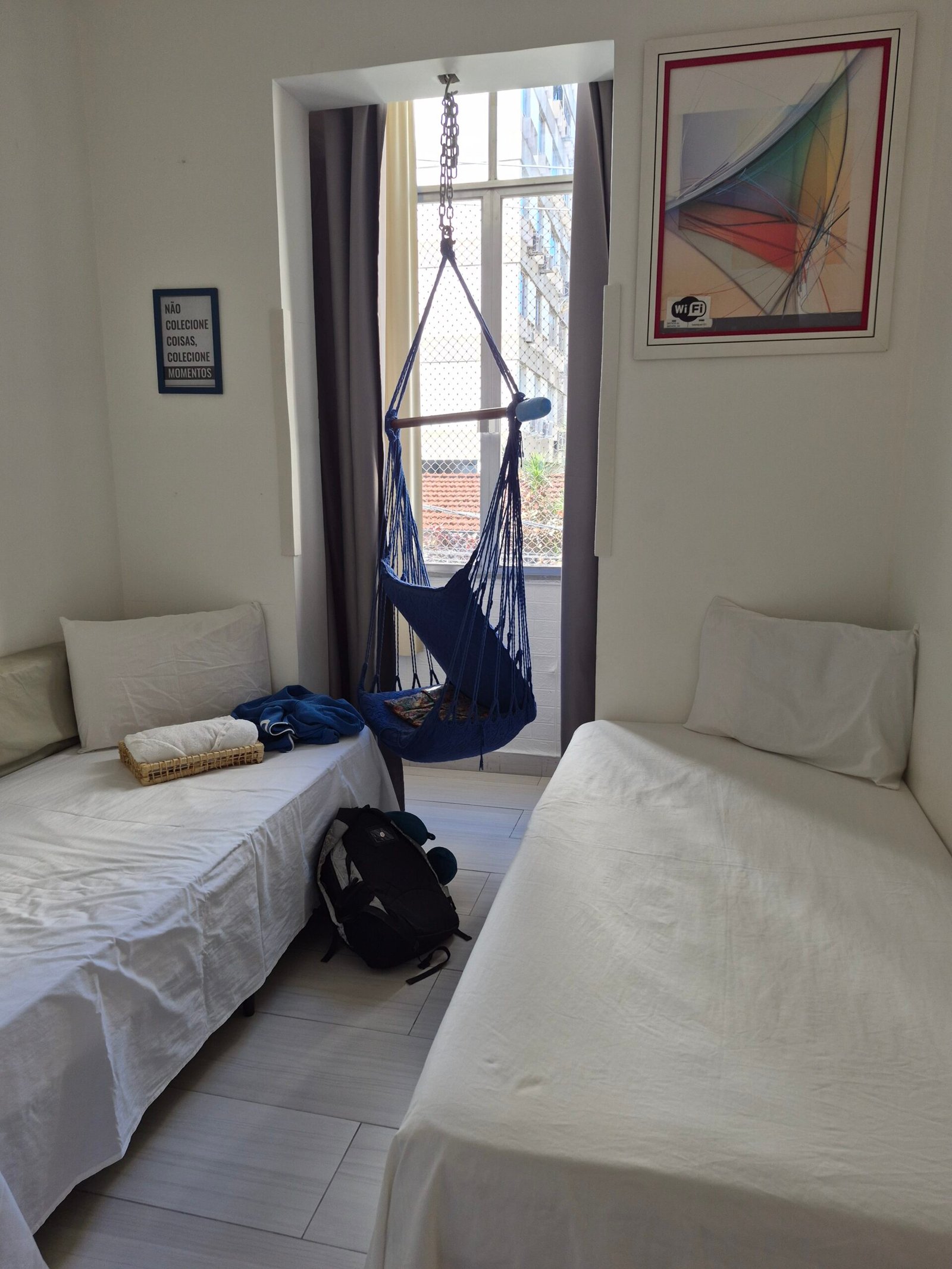
We had once again rented a two-bedroom apartment, since we weren’t keen on spending six nights in a cramped hotel room. While looking at accommodations, we had also found hotels to be quite expensive, so an apartment like this was a more affordable option for us. Our apartment was located in the Tijuca neighborhood on a stretch of street that was closed off by a barrier and patrolled by security, so even though there seemed to be some homeless people in the area, this place felt really nice, peaceful, and safe. We could hear some noise from the main street in the apartment, but it wasn’t as disruptive as it was in Buenos Aires, for example.
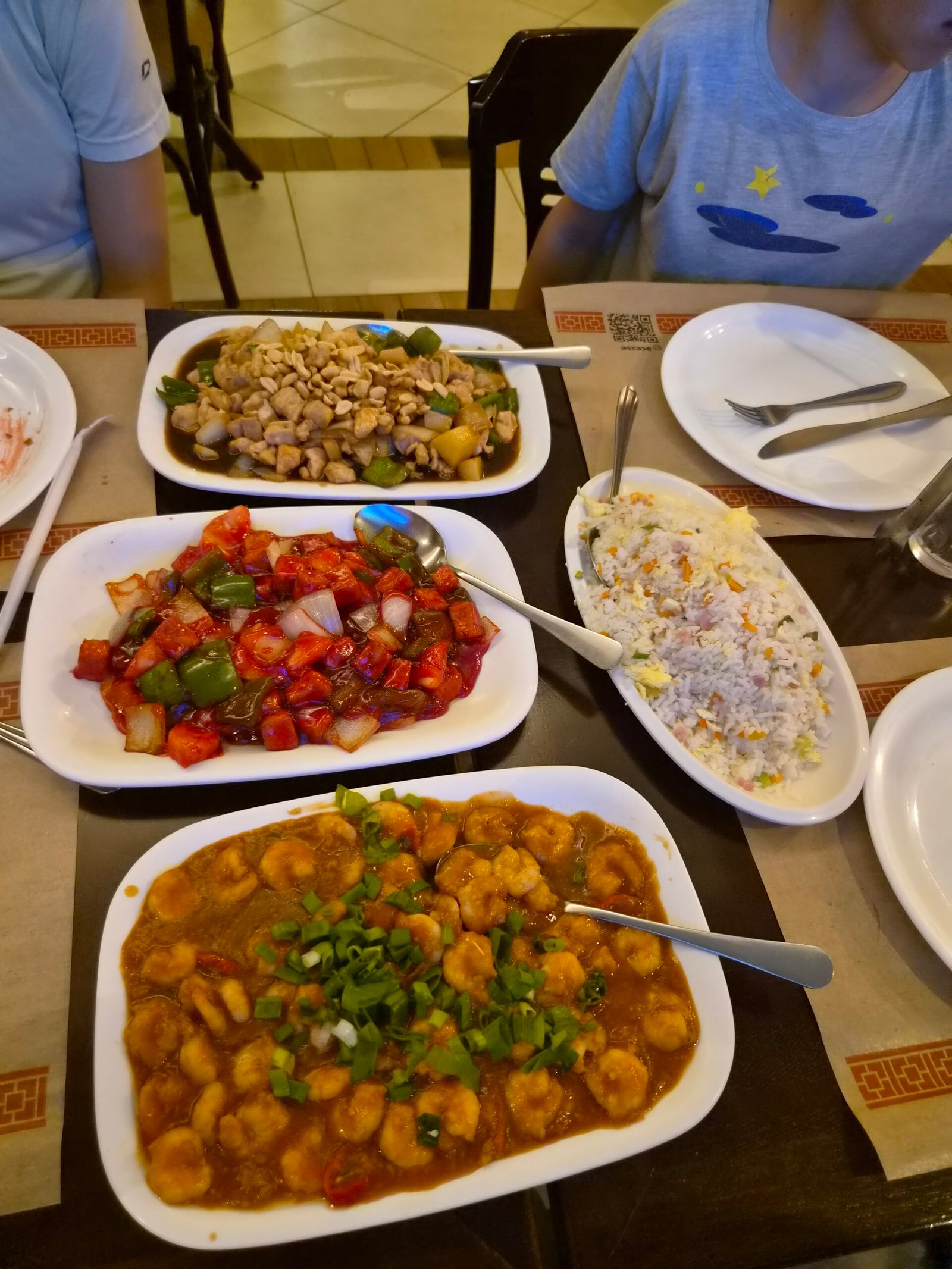
It was closer to four in the afternoon when we set out on our traditional “dinner and groceries” excursion. We chose a nearby Chinese restaurant, China Town, which had received really good reviews on Google. The restaurant turned out to be an excellent choice—the food was delicious, and the portions were so generous that we still had leftovers in the fridge ready to eat the next day.
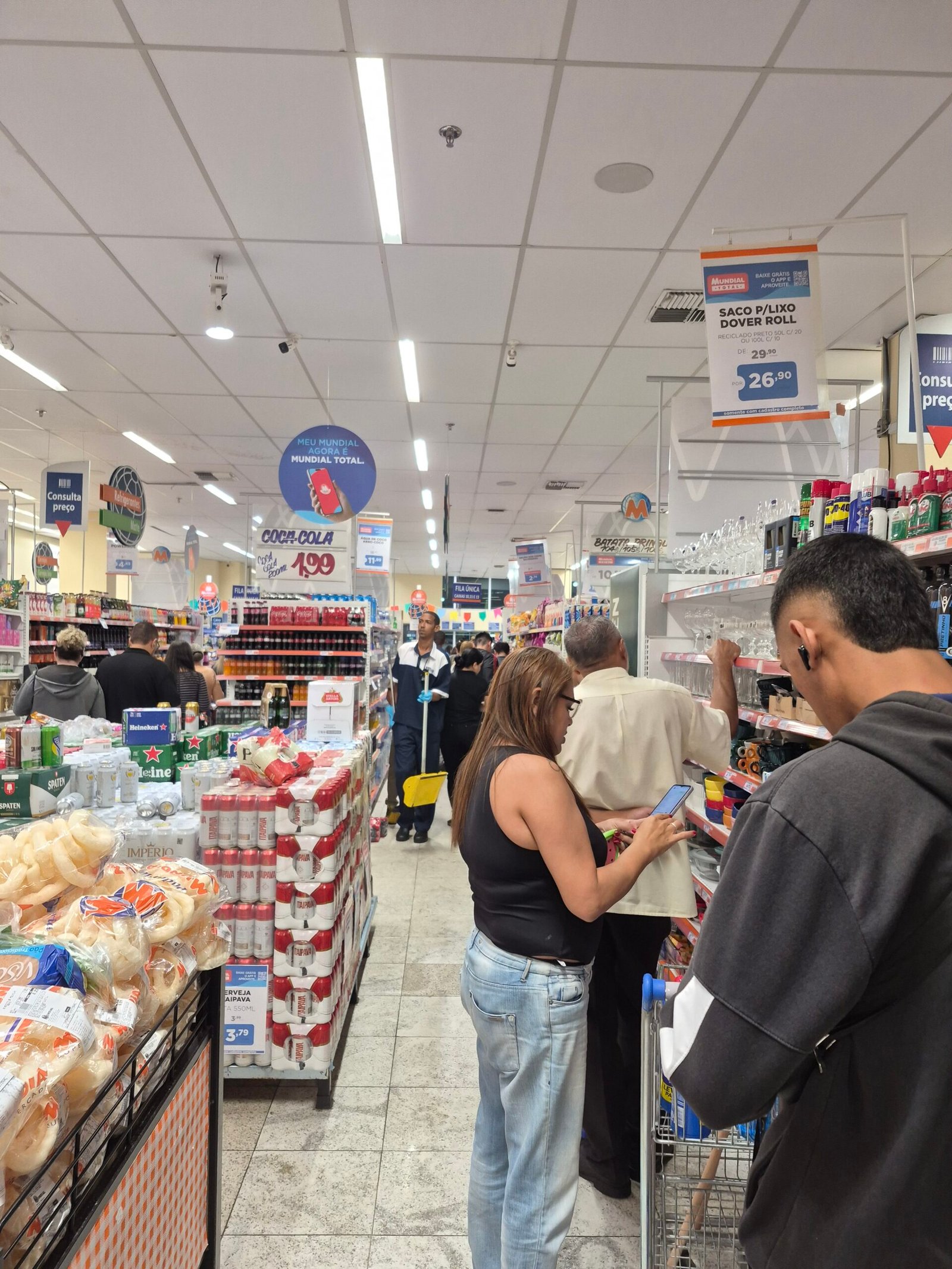
Even the big grocery store was just a ten-minute walk from our apartment. It was probably the only somewhat larger store in the area, because there were an absolutely staggering number of people shopping there. Since the aisles were quite narrow, shopping there was just like being in a Finnish grocery store during the worst Christmas rush! When we finally got our groceries on the counter and offered our cards to pay, that darn machine first rejected Marko’s card, and then Jaana’s as well. There was a sign on the wall of the store—clearly written in English, too—stating that they don’t accept credit cards, but Jaana’s Mastercard is just a debit card, and Marko’s combination card naturally also has a debit feature. Despite that, both were declined. We hadn’t enough cash to pay for the whole bill, so we had no choice but to leave some of our purchases at the store’s checkout so we could pay our way out.
On the way back, we spotted a bank and a row of ATMs on the other side of the road, so we decided to go there to withdraw money, since we’d run into this payment issue with Mastercard before—especially at grocery stores. Jaana, however, recalled that this was the same bank branch that hadn’t accepted Marko’s card in São Paulo either. Marko went to the ATM just to experience that this was indeed the case. Then Jaana went to try her luck, and this time, too, for some reason, the bank seemed to prefer Jaana’s card over Marko’s, and we were able to withdraw cash.
It’s been surprisingly difficult to use a debit card in these countries in general. We’ve frequently encountered situations where a payment was rejected entirely, or at least had to be confirmed twice before it went through. Also, when paying at a store, even with a debit card, you often have to first select “credit” as the payment method, followed by a second selection screen where you then have to choose “debit,” and only then can you proceed to the actual payment transaction.
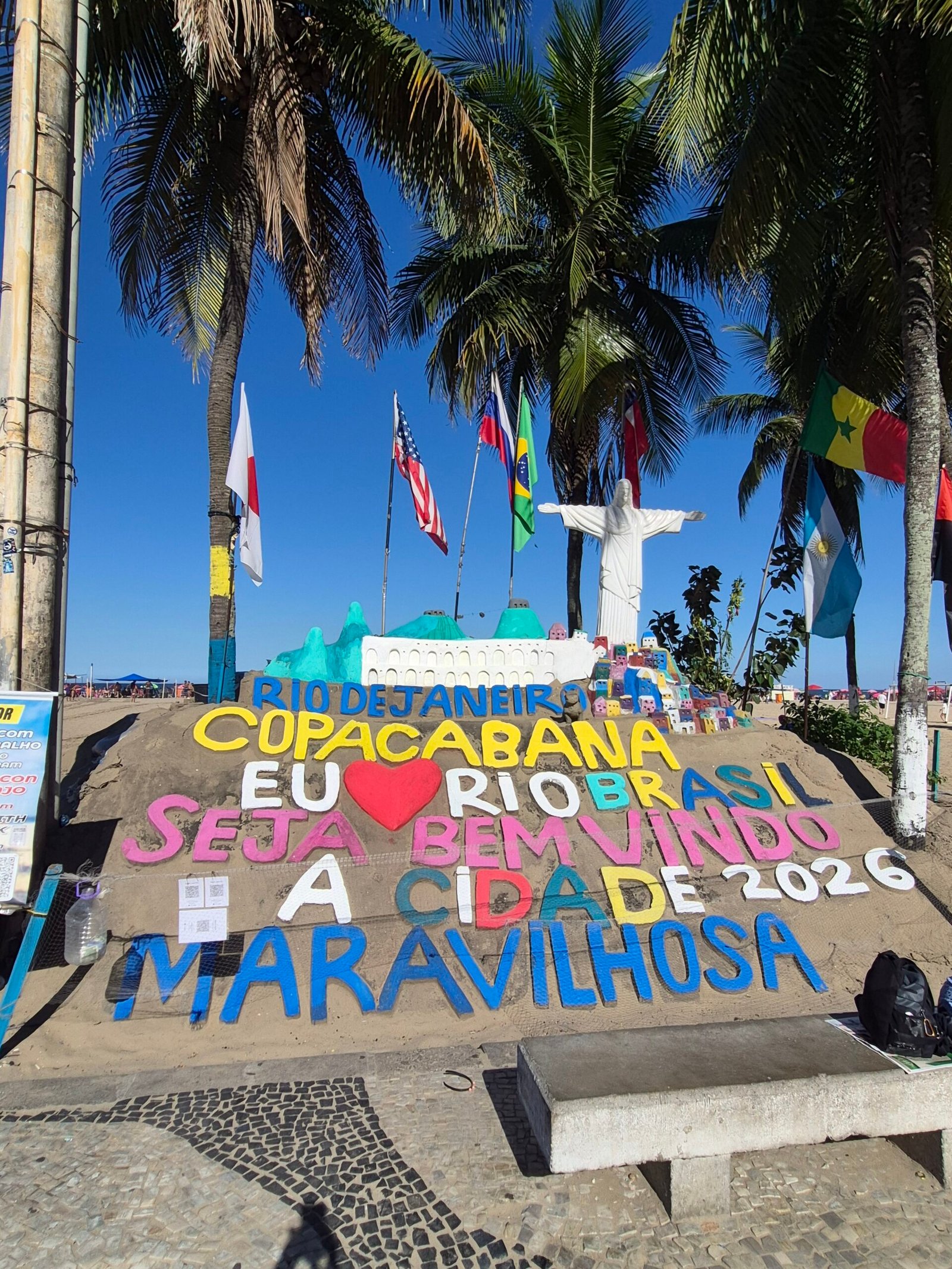
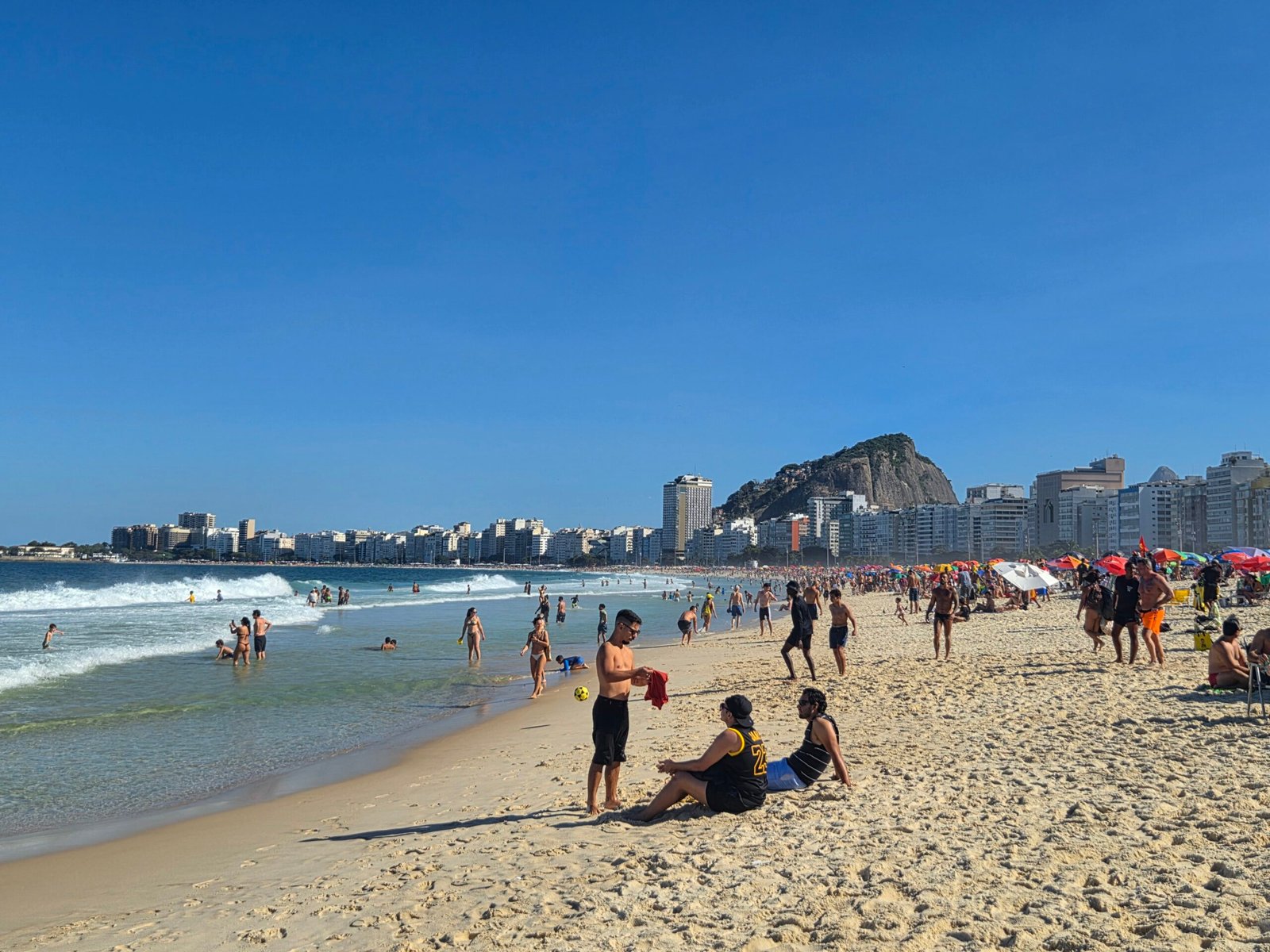
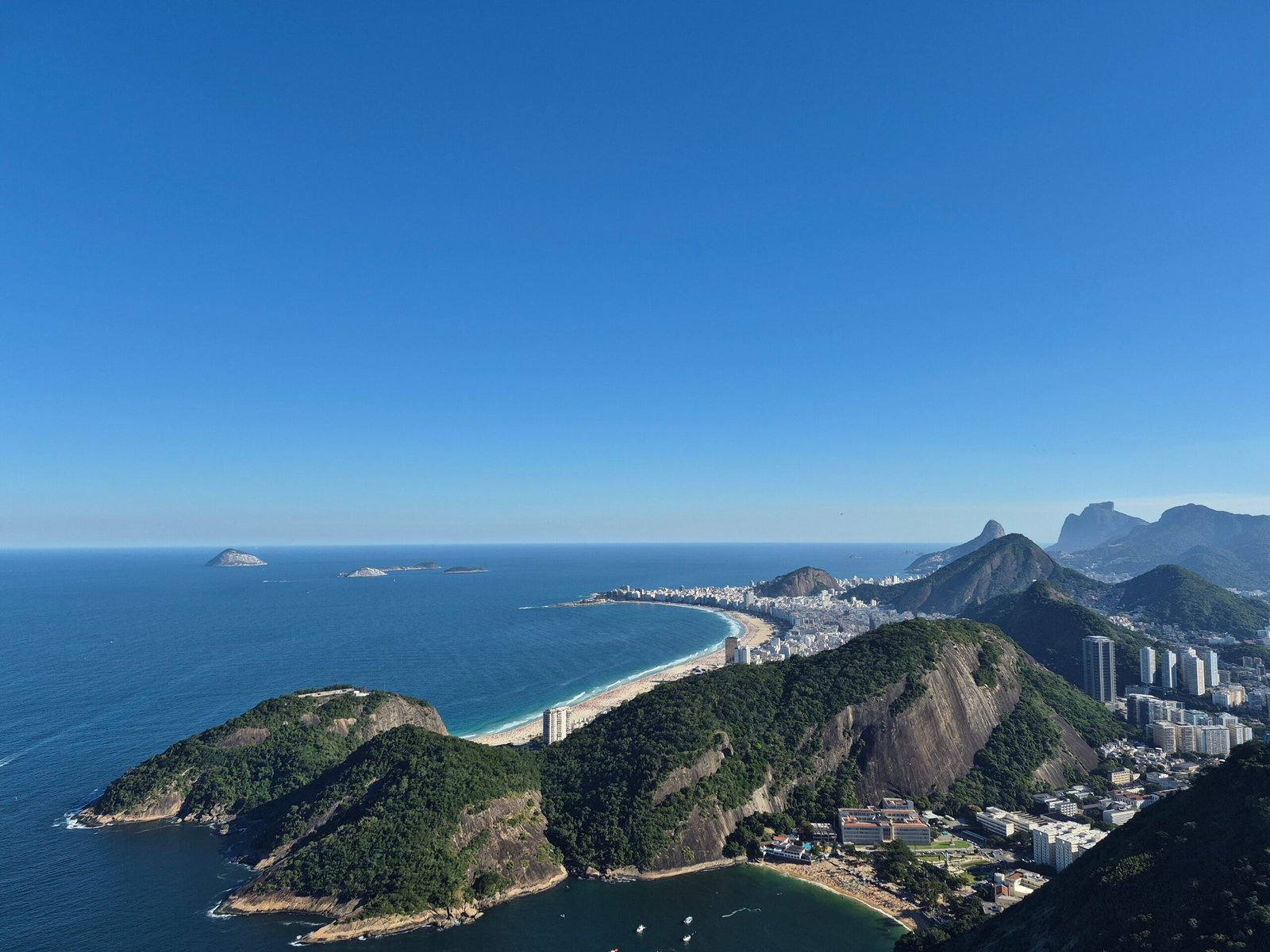
On Saturday, we spent a laid-back day off. We slept in and didn’t head to Copacabana Beach by subway until the afternoon to see what the scene would be like there on a Saturday. We didn’t bring any swimwear with us, since the plan was just to take a short walk along the beach and soak up the atmosphere. Since it was the weekend, many locals had also made their way to the beach. People were playing a lot of beach volleyball and kicking a soccer ball around at the water’s edge. Some people had even ventured into the ocean. Although daytime temperatures here are really warm even in winter (even on Saturday it was +27°C), the seawater is still only a little over twenty degrees. We dipped our toes in the water, too, and concluded that a Finn could manage to swim there. What limits swimming are the strong waves and ocean currents, as well as the beach that drops off quickly. There are some areas on the beach where the waves are a bit calmer, but if we do come back to the beach in our swimsuits, we’ll definitely stick to areas where we can touch the bottom and keep our heads above the water.
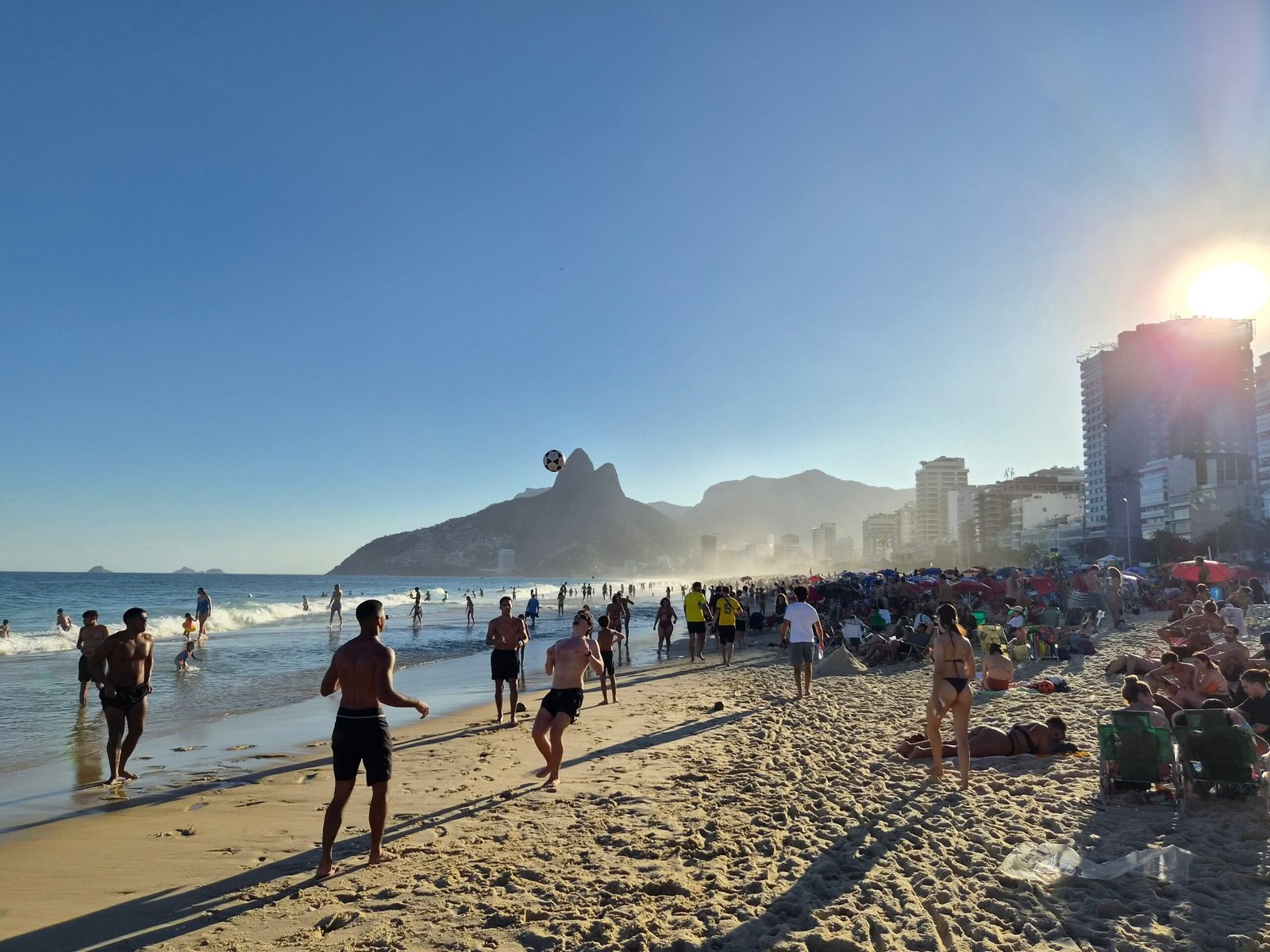
We stopped by a nearby ice cream shop to get some ice cream and ate it on Copacabana Beach, after which we decided to check out the other beach, Ipanema, as well. Although the internet said the beaches were supposed to be different, we didn’t really notice much of a difference. Maybe there were slightly fewer street vendors on Ipanema Beach than on Copacabana, but otherwise the atmosphere seemed pretty much the same at both.
From Ipanema Beach, we walked to the Leblon shopping center, since it was reasonably close to the beach. Downstairs at the mall, there was some kind of sing-along event going on, where two really talented musicians were playing and singing, and the audience could join in if they wanted to. Since the audience consisted mostly of older people, they naturally didn’t really sing along to songs like “Shallow” or “I Say a Little Prayer,” but when a classic Portuguese-language song we didn’t recognize came on, the crowd erupted with joy and the singing rang out. There was a metro station right next to the shopping center, but since Uber was a faster way to get home, we decided to take it back to our place. Surprisingly, taking the metro was actually more expensive for our family of four than using Uber. Of course, the metro would have been cheaper if you were alone or used the metro ticket to travel all the way to the outskirts of the metro lines. When we bought metro tickets on the way to Copacabana, the single-ride tickets didn’t seem to have any kind of zone system.
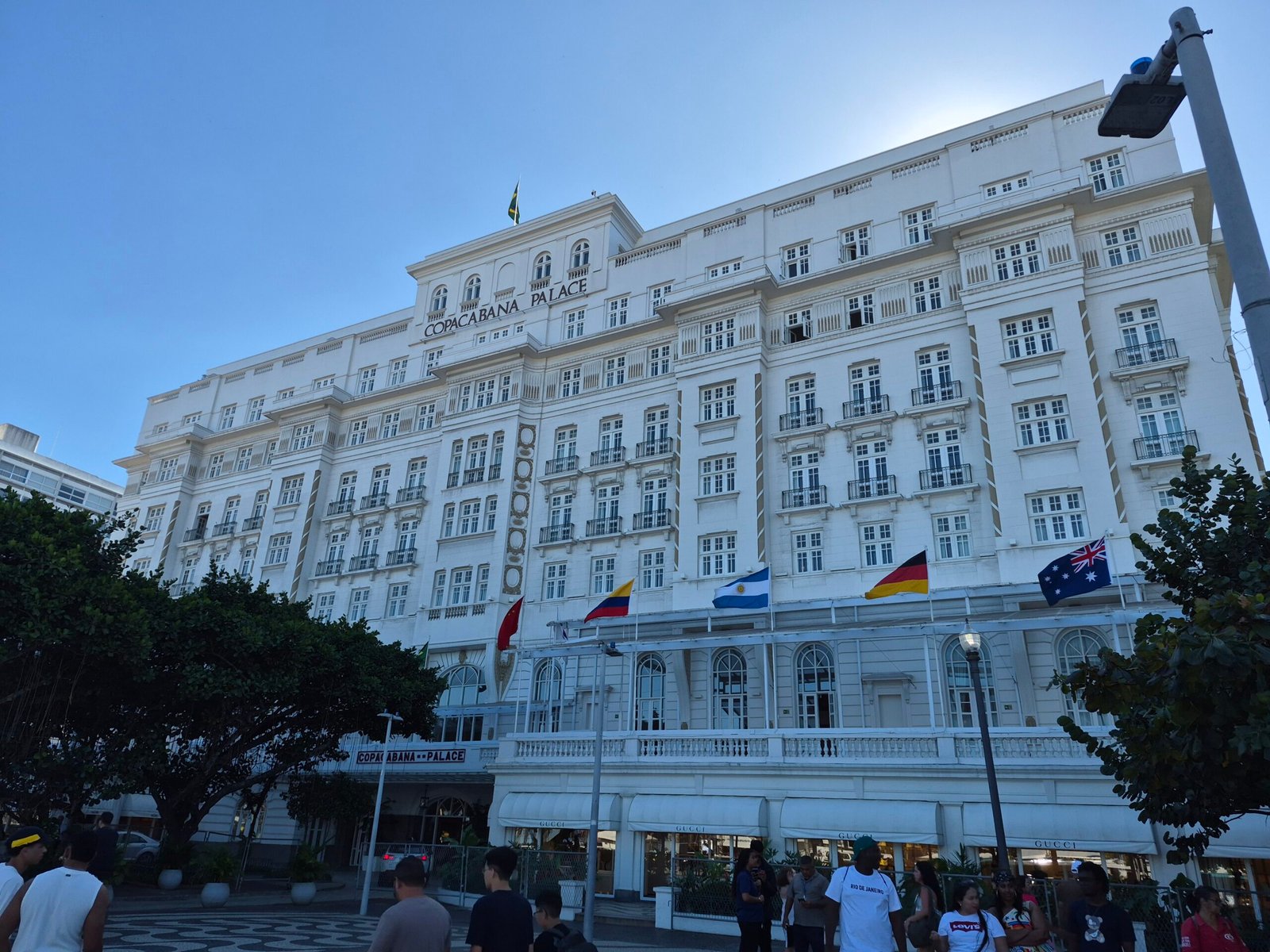
On Sunday, we had to get up before six, since we had booked a full-day tour of Rio’s main attractions. We were picked up in front of the Copacabana Palace Hotel on Copacabana Beach. It felt pretty extravagant standing there in front of the hotel waiting for our ride, since a night at that hotel cost over €600 for a double room. It would have been a bit too pricey for our family to stay there for about a week, since we would have needed two rooms every night.
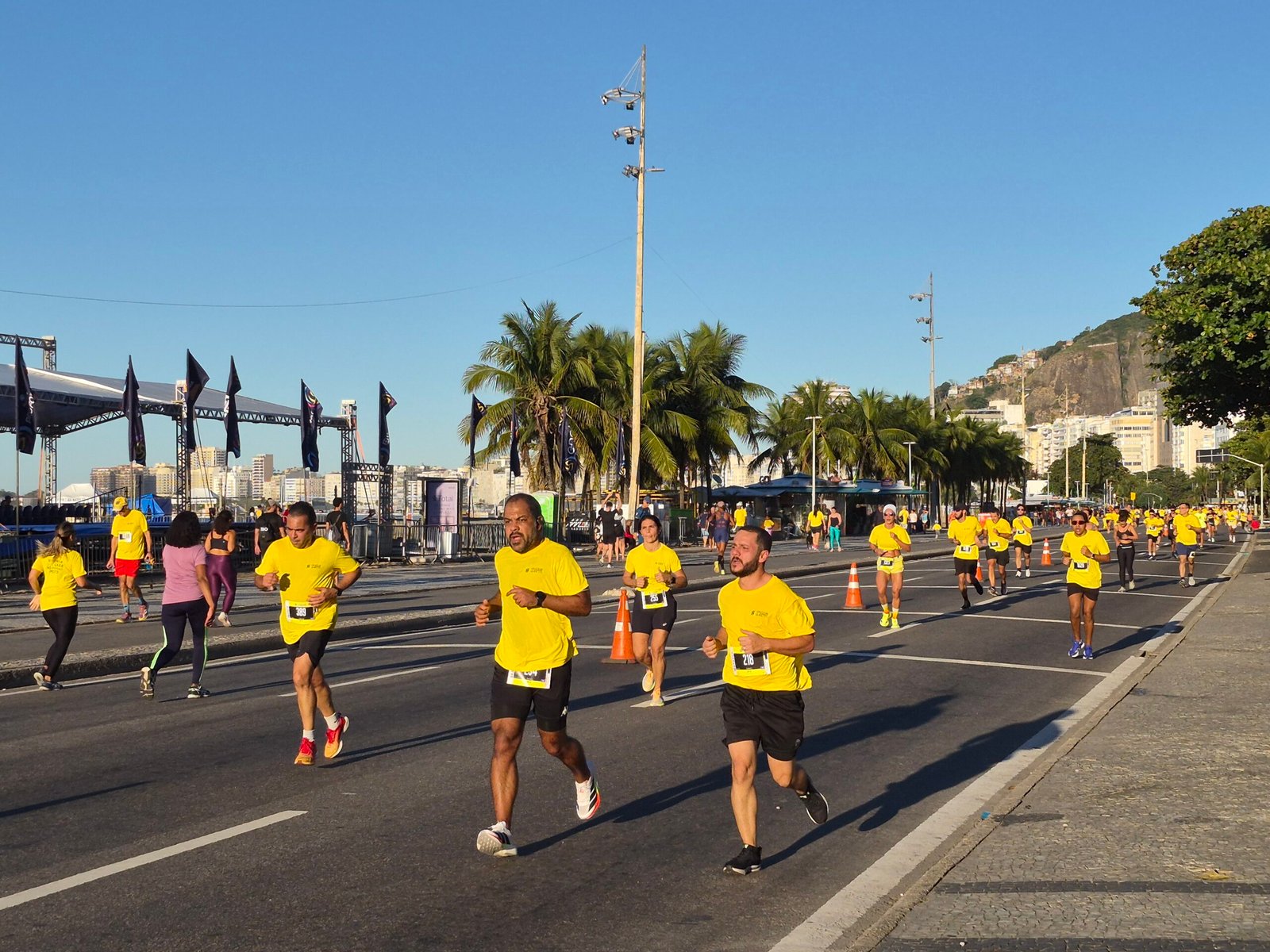
While we were waiting for our ride, we watched the people who had come to the fitness run event on the Copacabana beach boulevard. We heard the event is held every Sunday, when one side of the entire beach promenade is closed to cars so that people can enjoy their Sunday even more than usual by walking or running along the beach.
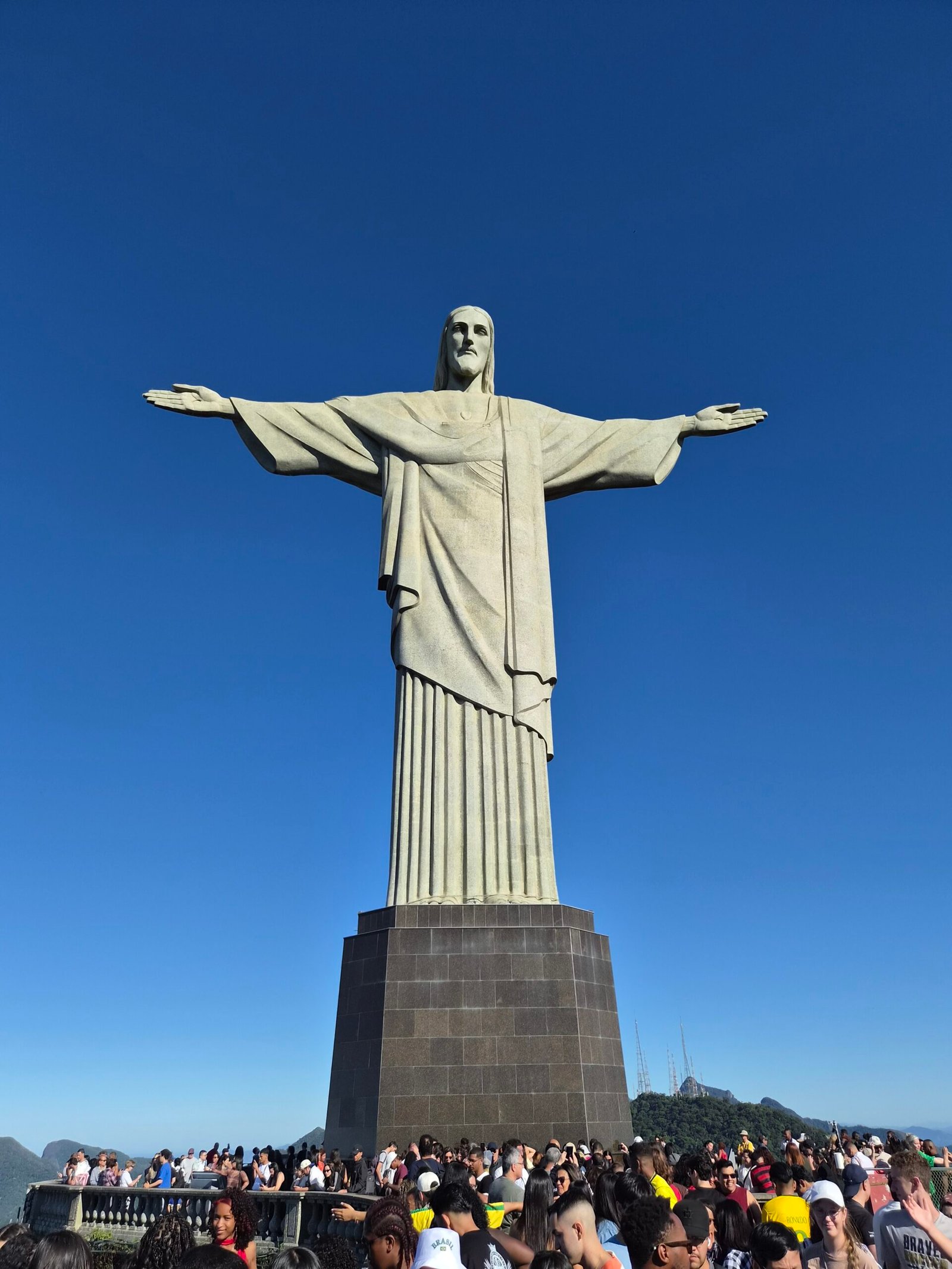
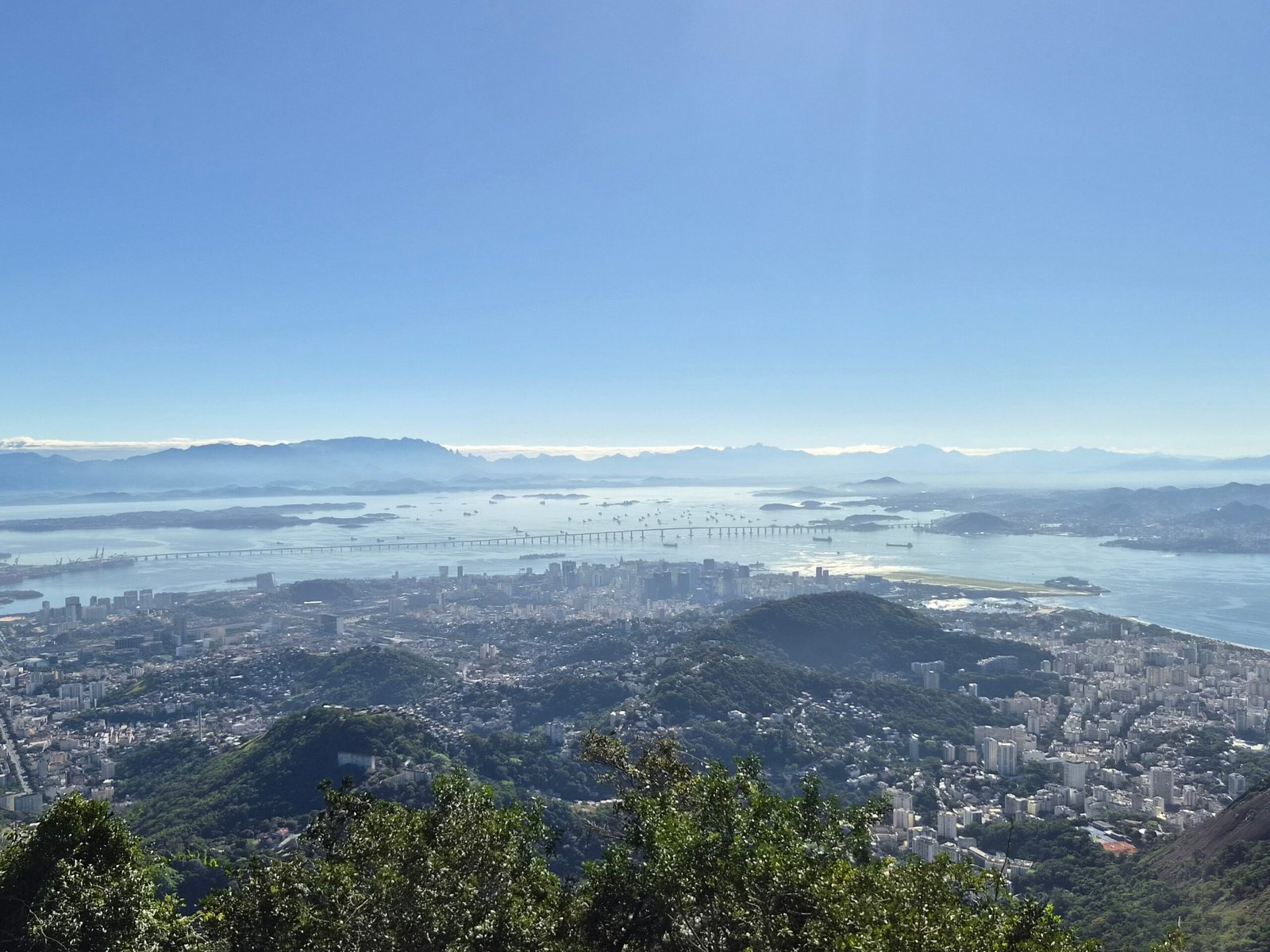
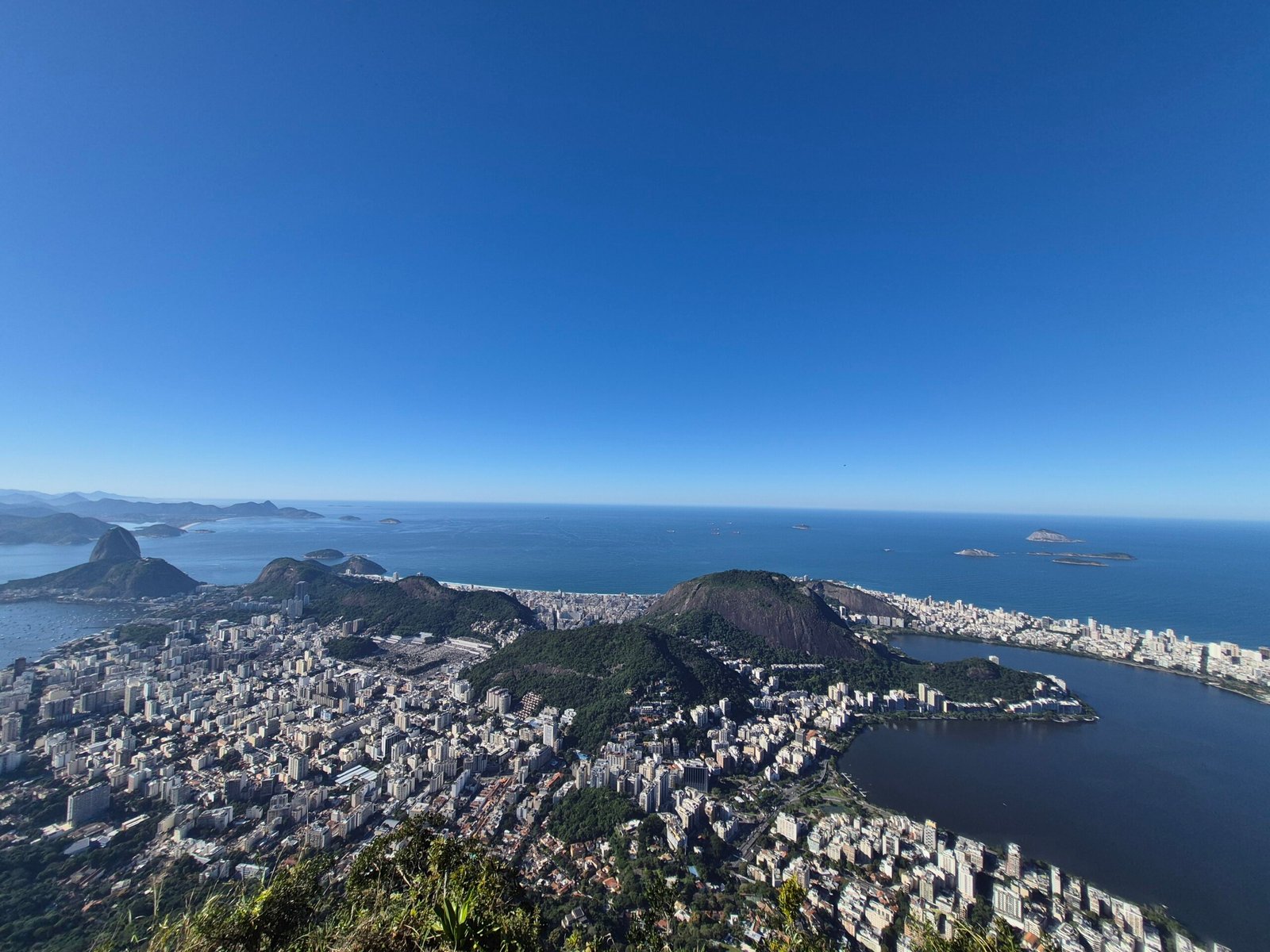
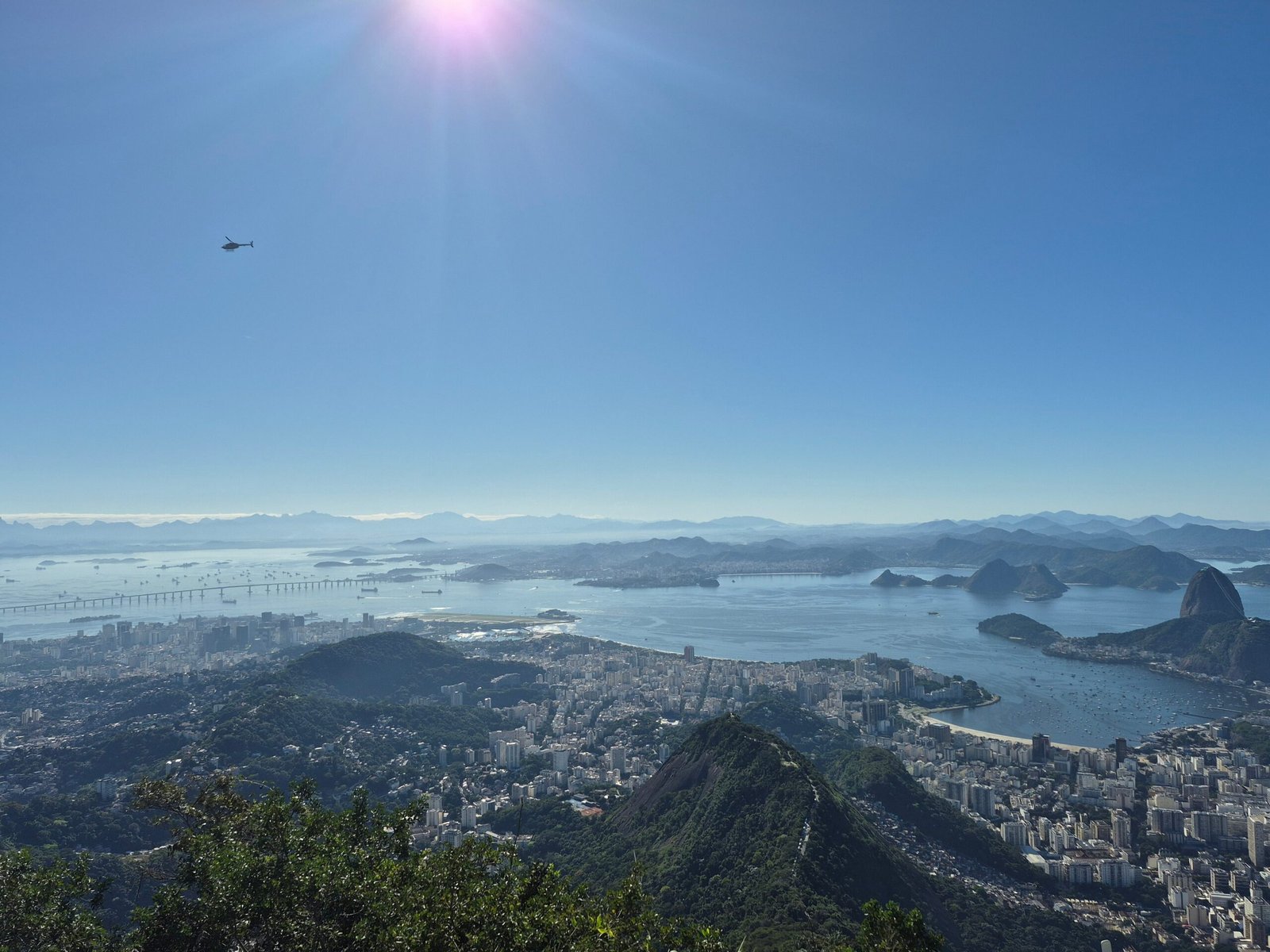
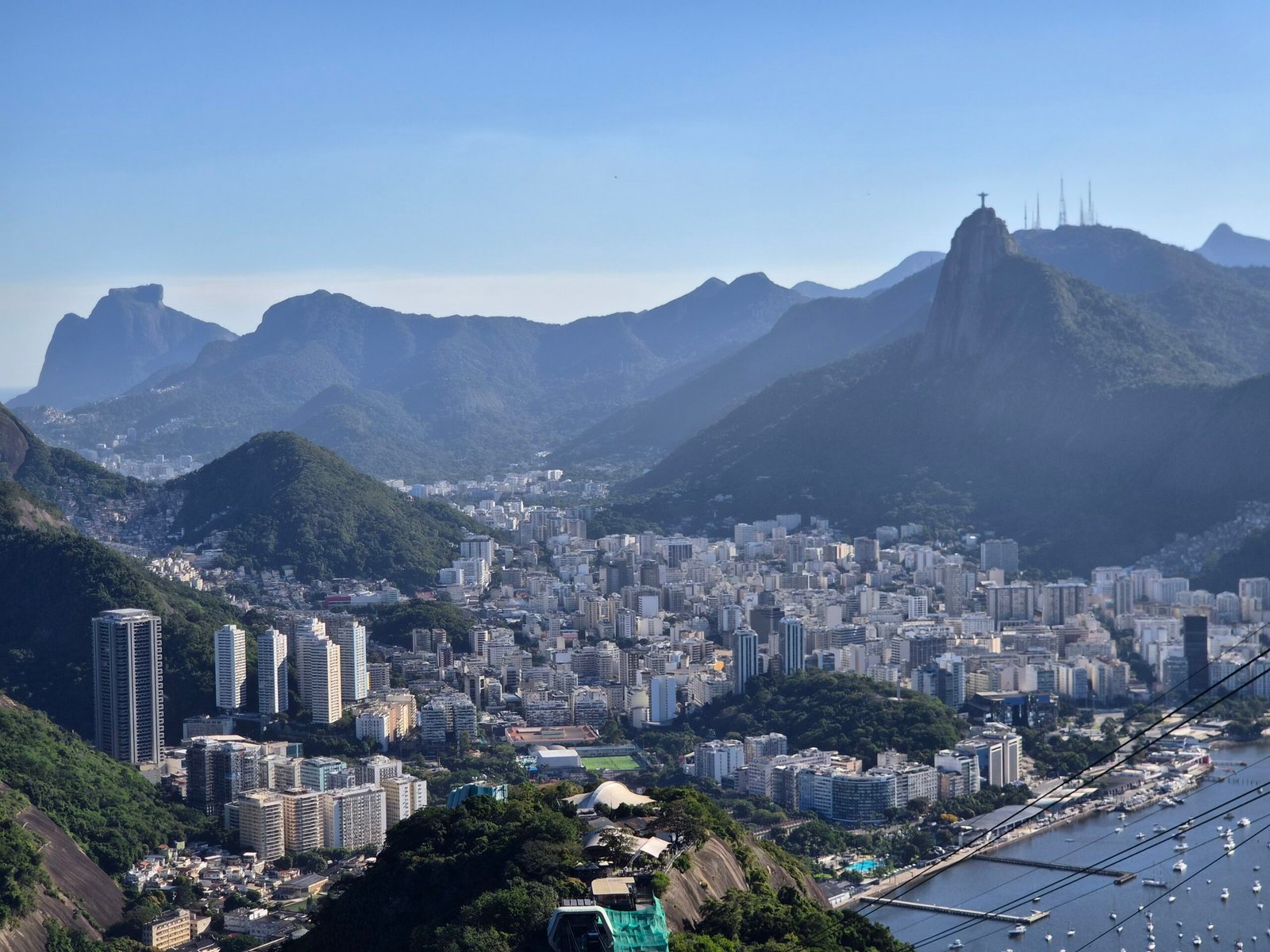
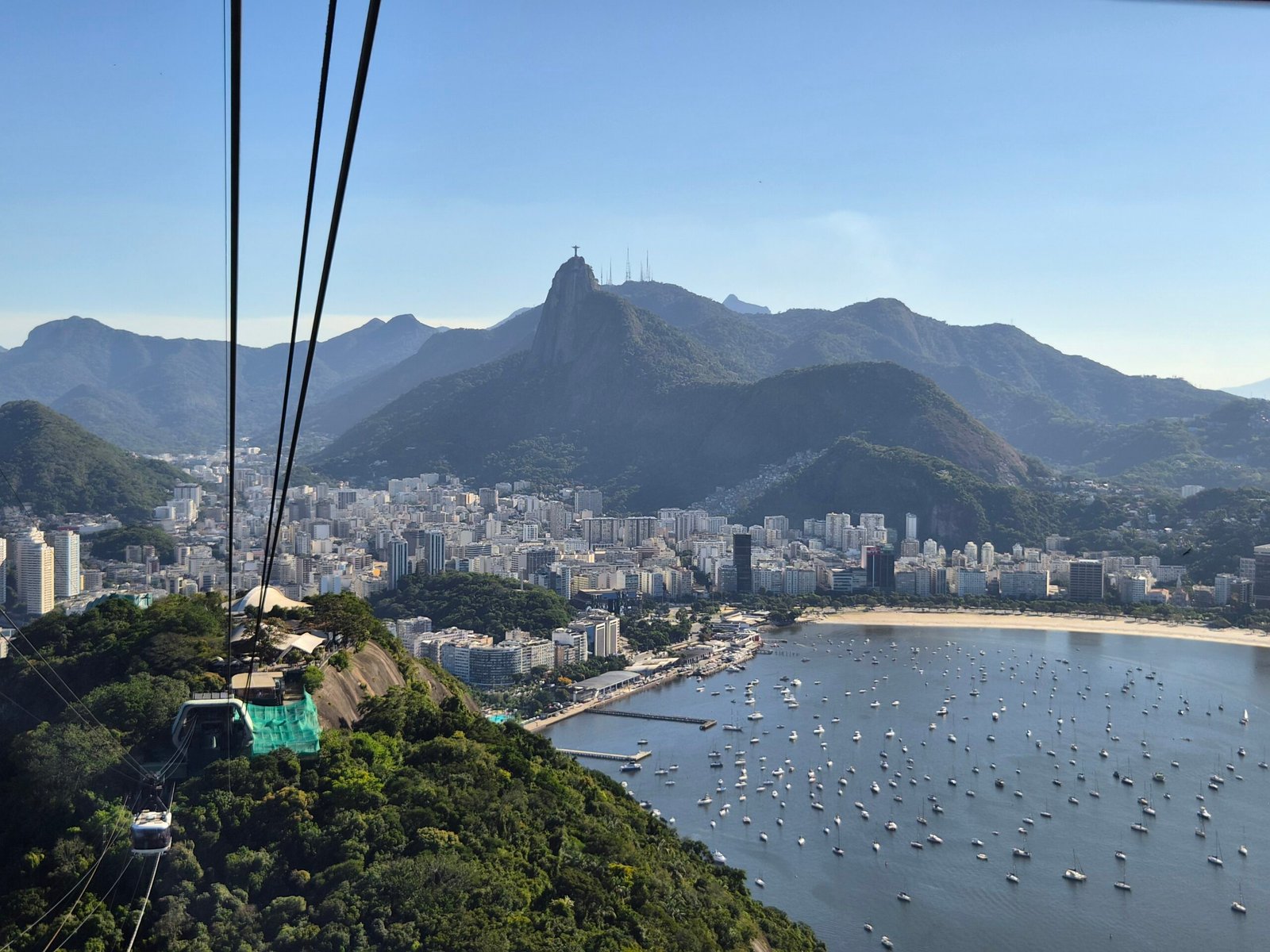
When we were picked up, our first stop was the Christ the Redeemer statue (Cristo Redentor) in Tijuca National Park. We first drove up in our own car, and then took the national park’s minibus to the statue at an elevation of 710 meters. Or, technically speaking, the ride ended a little lower down, since we still had to climb 200 steps to reach the statue. The other option would have been the elevator, but the line was so long that we decided to take the stairs instead.
Including its pedestal, the statue stands 38 meters tall, so it looked quite impressive when standing at its base. To our surprise, we learned that there’s a small chapel inside the statue’s pedestal where you could, for example, get married or have your child baptized. Even during our visit, some kind of service was taking place in the tiny chapel, which was only a few square meters in size. You’d have to think pretty carefully about who to invite to your wedding if you plan to get married there.
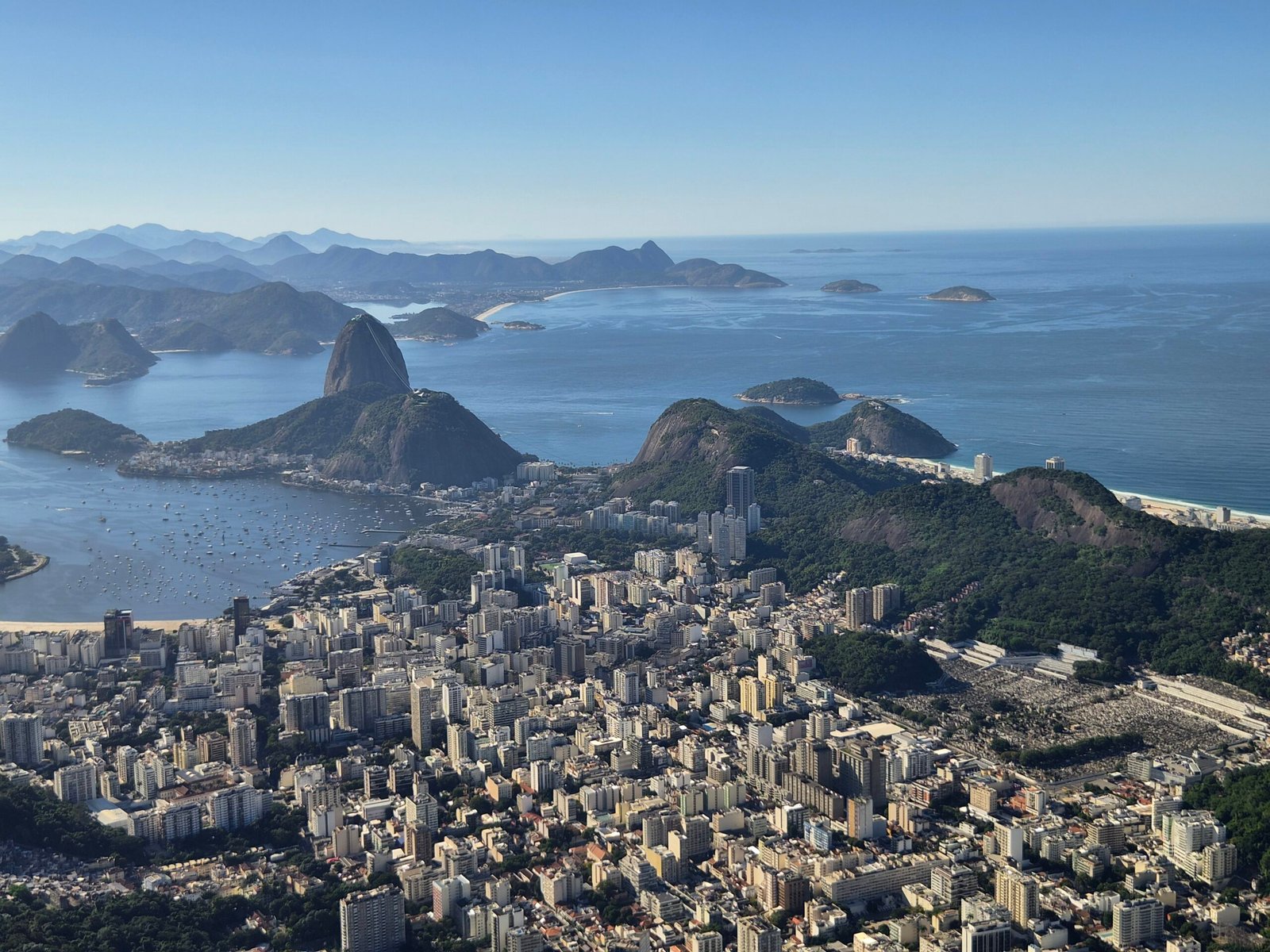
If the statue was impressive, the scenery was certainly breathtaking as well. The only downside to the place was that, even though we were definitely among the first tourists of the morning, there were way too many people at the statue and in the surrounding area—all of whom, of course, were trying to take the very best photo of themselves with the Christ statue. Pretty soon, we started to feel like heading off to a slightly less crowded spot.
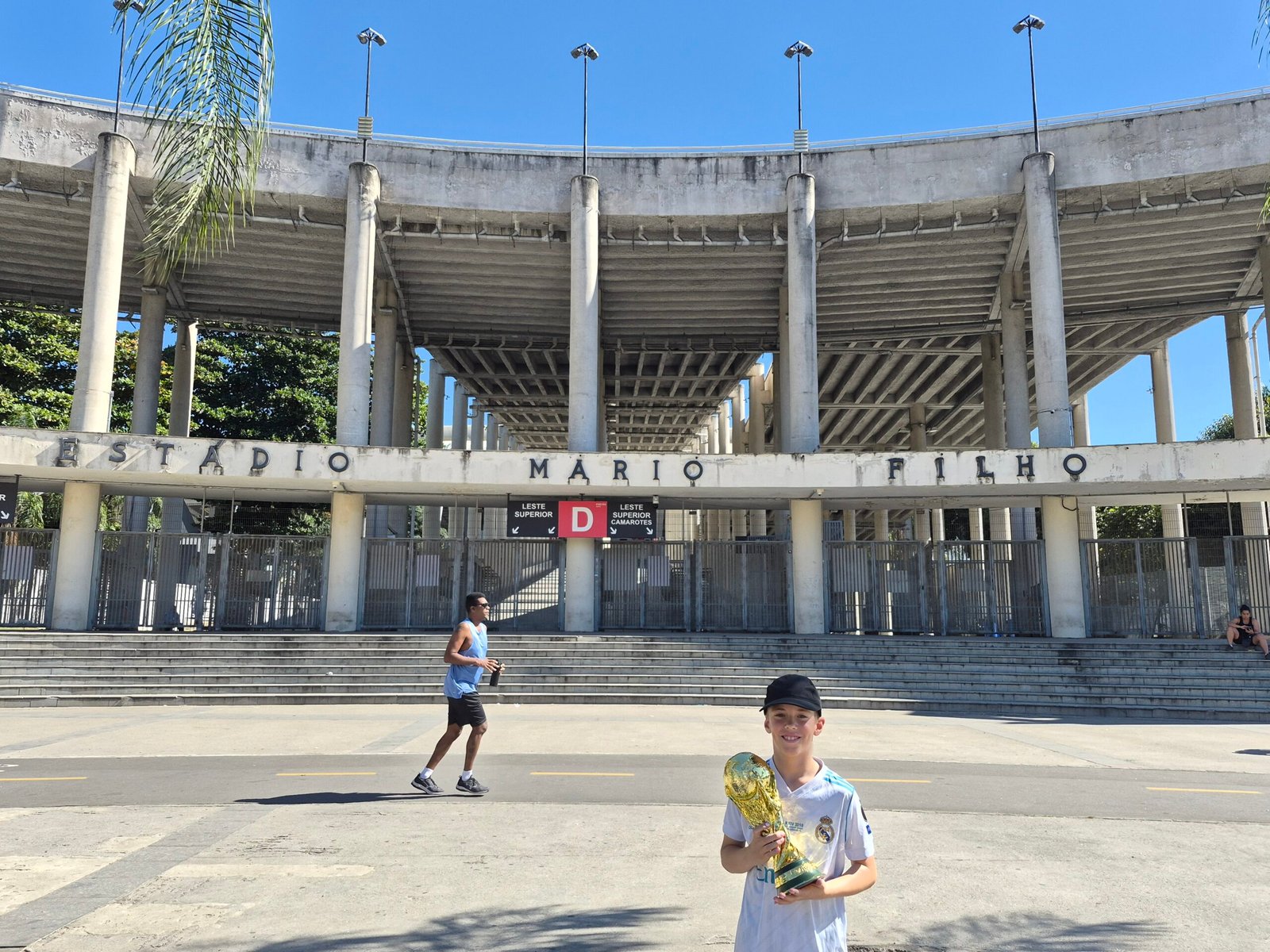
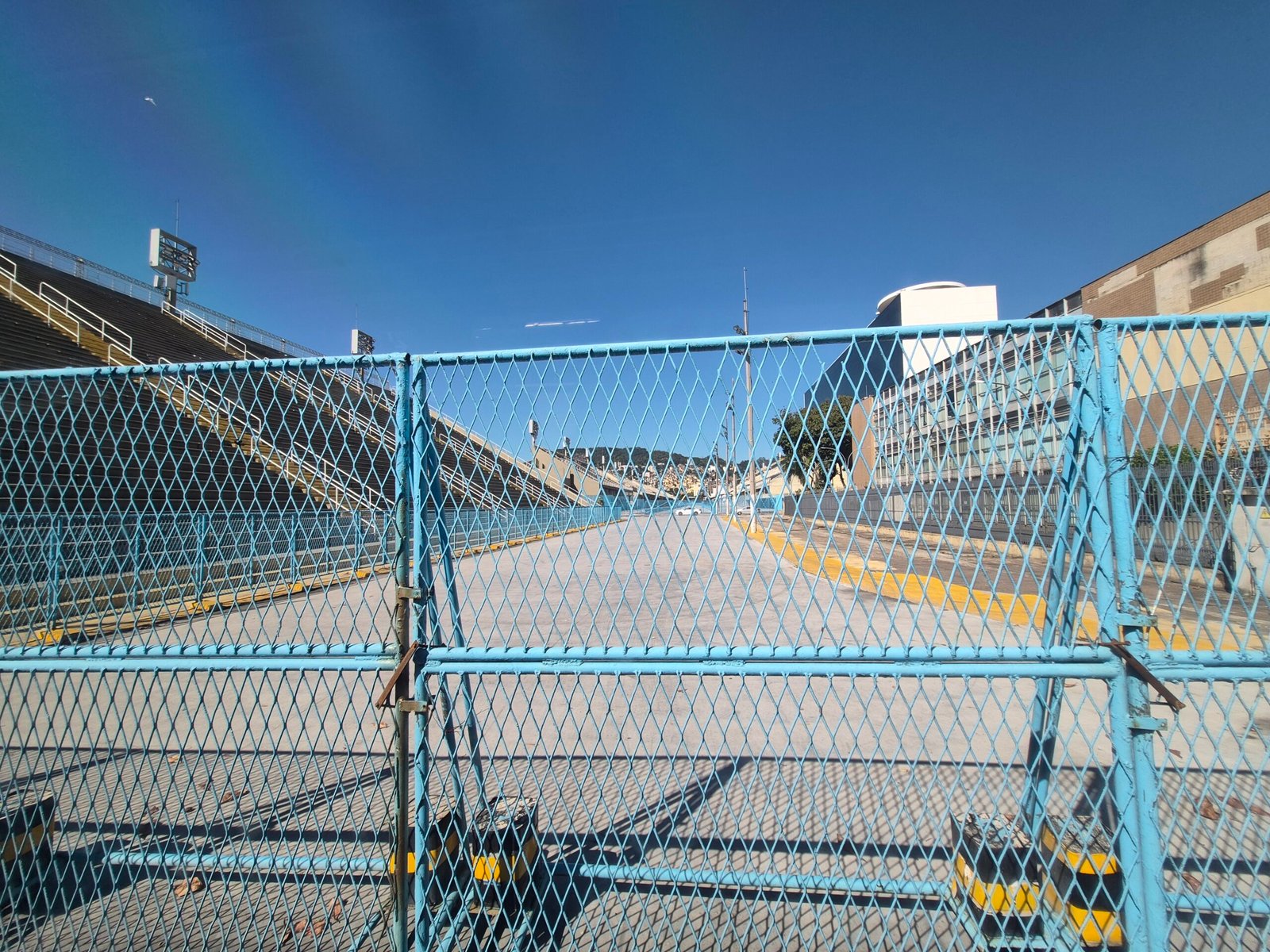
From the statue, we continued on to the Maracanã soccer stadium (officially Estádio Jornalista Mário Filho), which can accommodate a modest 78,000 spectators at a time. This time, we just stopped by the stadium gates, but guided tours are also available there. As we continued on to the local cathedral, we also drove past the 700-meter-long Sambadrome, where during Carnival, various samba schools showcase their talents to the public. Of course, the samba schools also dance and play music along the street leading up to the venue, which is completely closed to traffic during Carnival. It would certainly be quite an experience to visit Rio during the Samba Carnival.
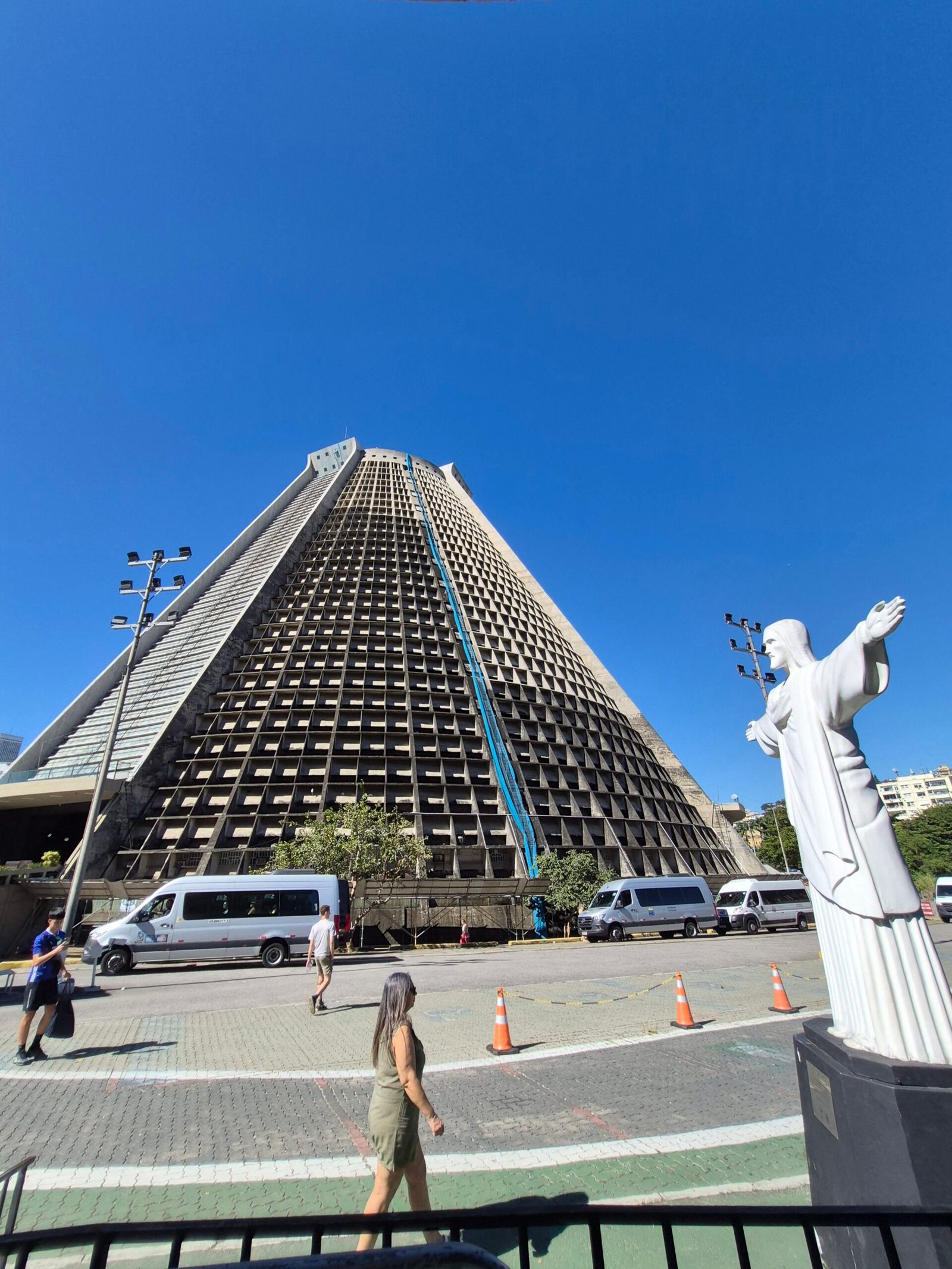
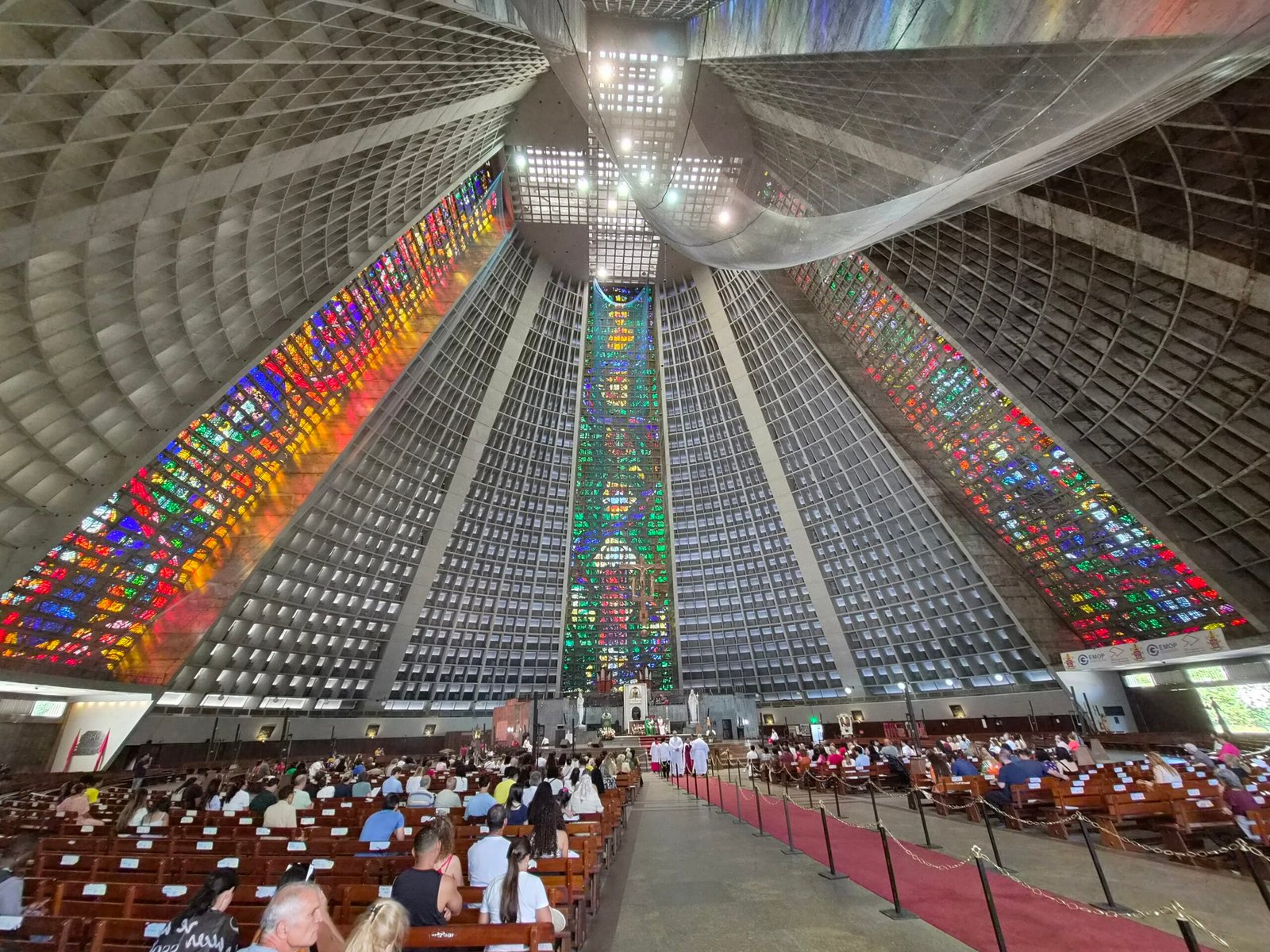
When we read in the day’s itinerary that we would be stopping by the cathedral, we imagined we’d see another classically beautiful, ornate church. Instead, we drove right into the courtyard of a shockingly ugly, pyramid-shaped concrete building. The Catedral Metropolitana de São Sebastião is a massive concrete structure that can hold up to 20,000 people at once. Since we visited on a Sunday, a service was apparently underway in the cathedral, but attendance was rather sparse. We didn’t bother going very far inside the cathedral for the sake of these proceedings, but we took photos from the doorway of the massive stained-glass windows that stretched from floor to ceiling. For all its ugliness, the cathedral turned out to be quite impressive after all.
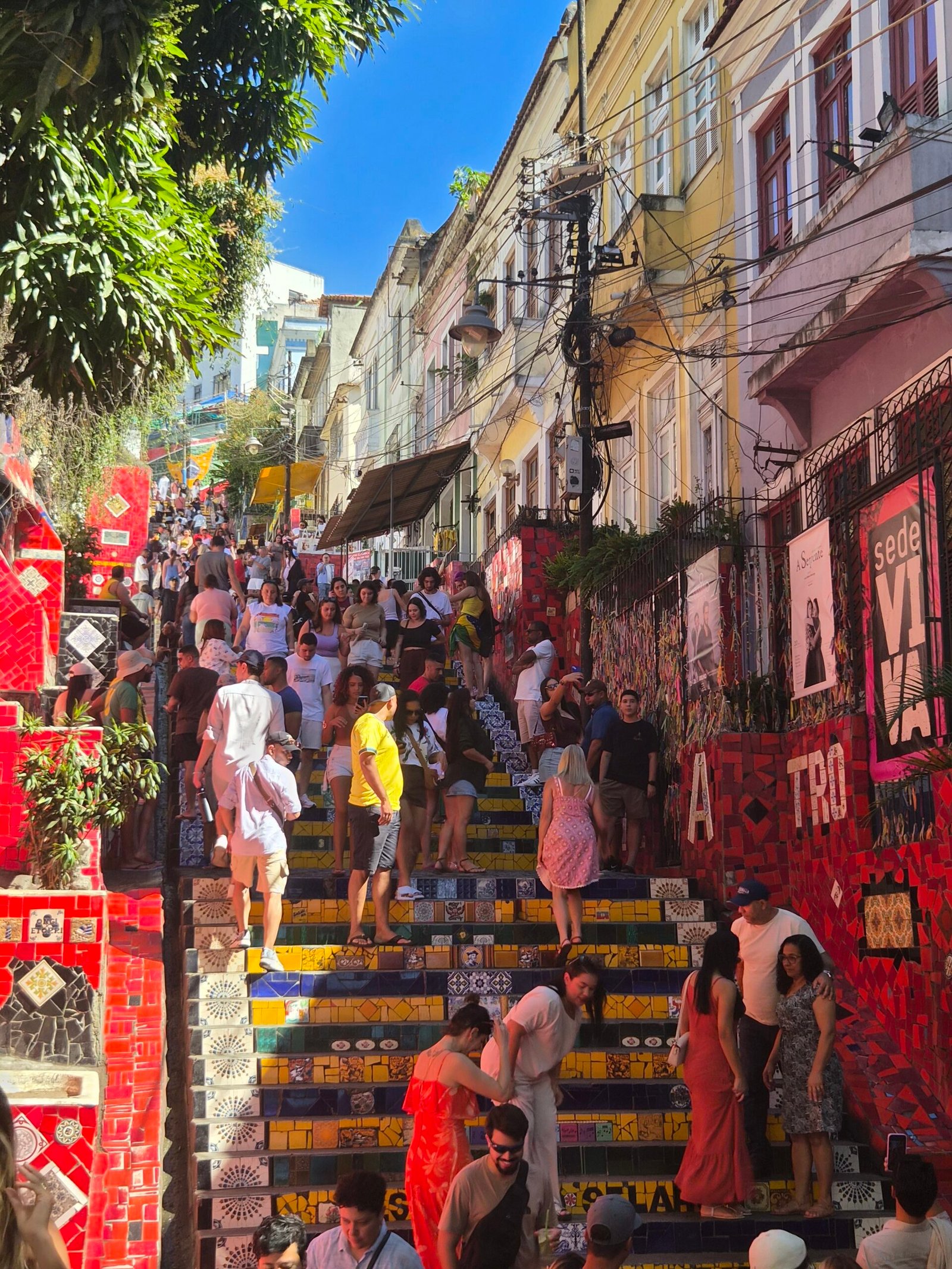
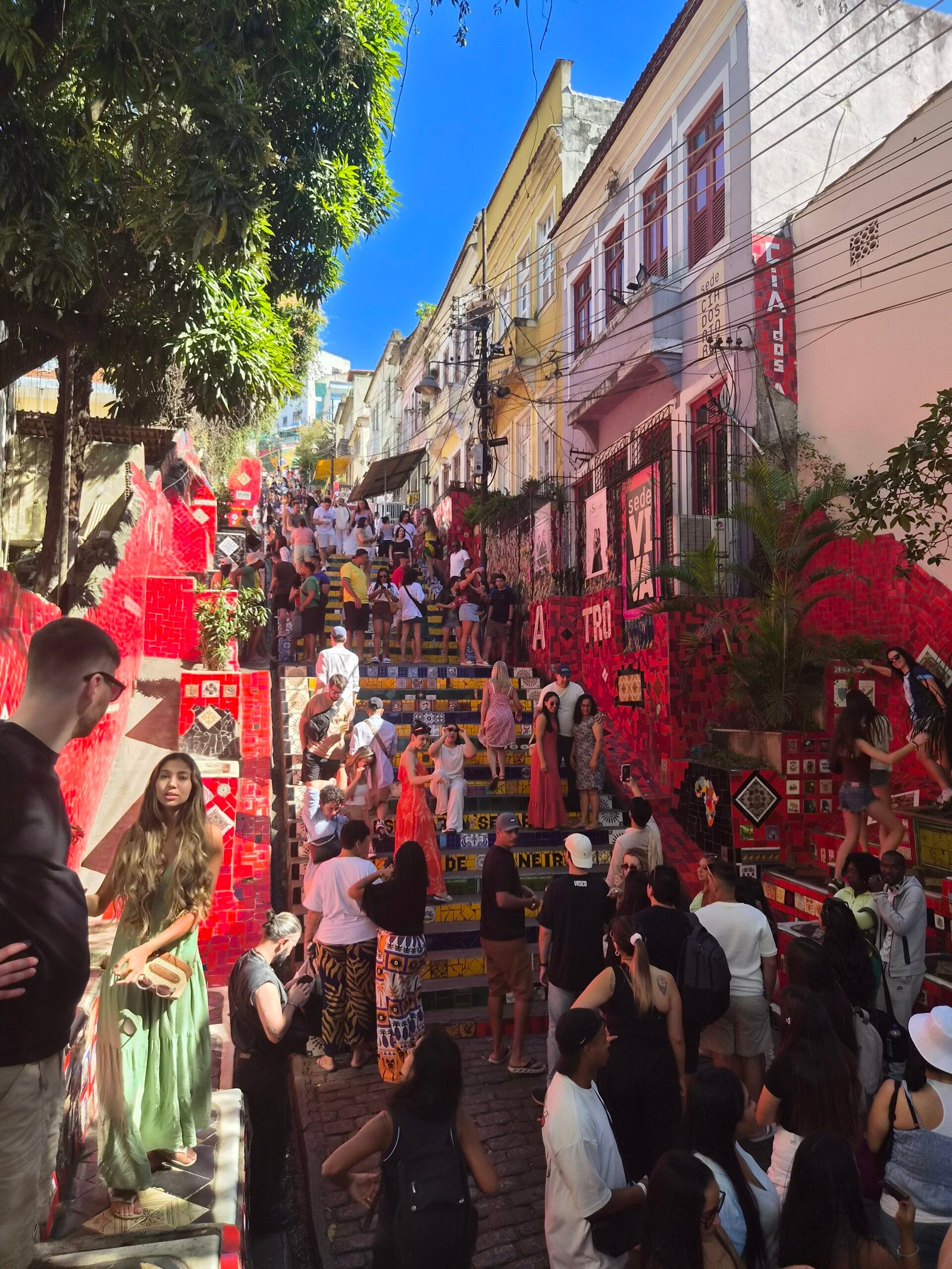
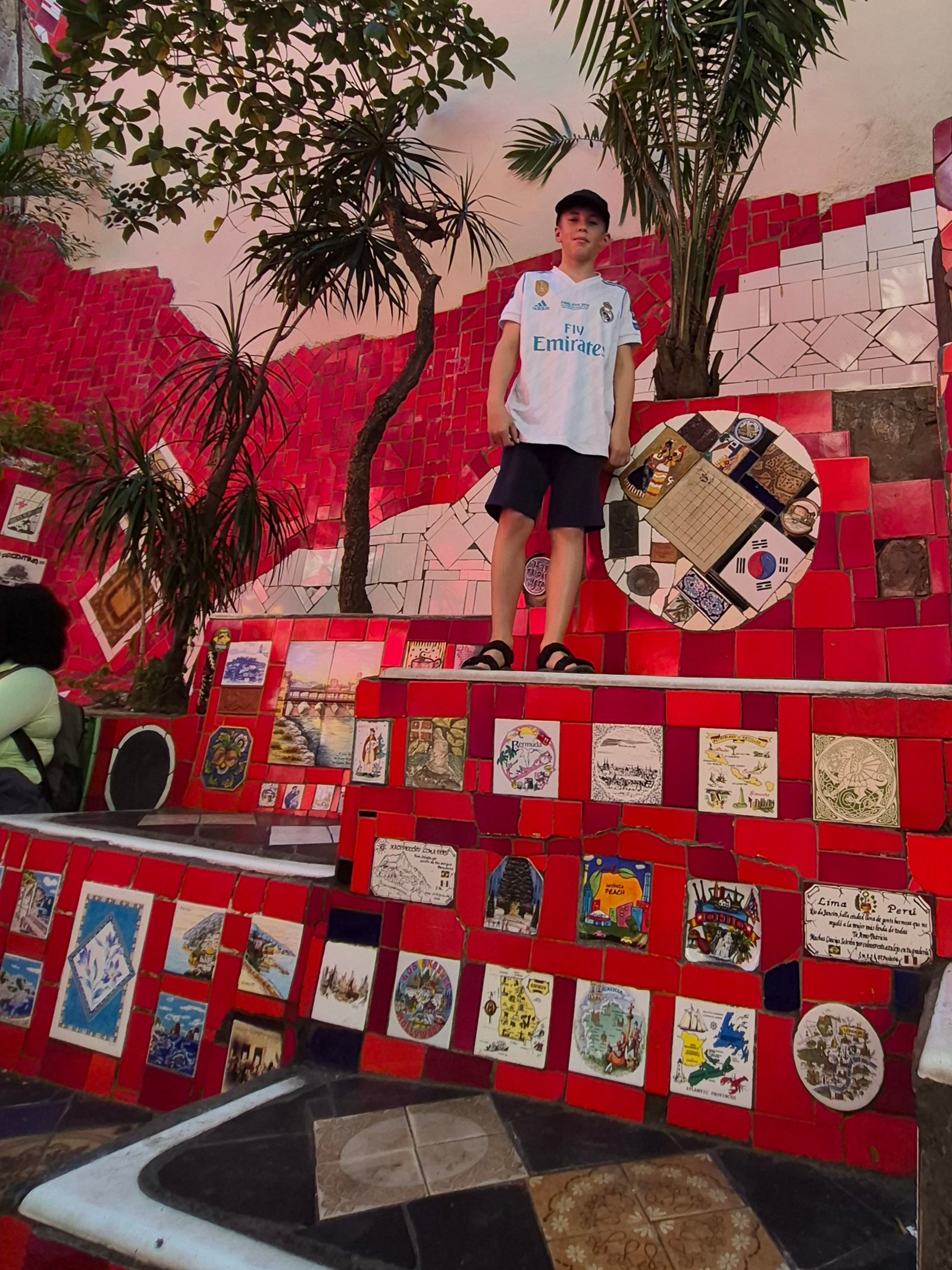
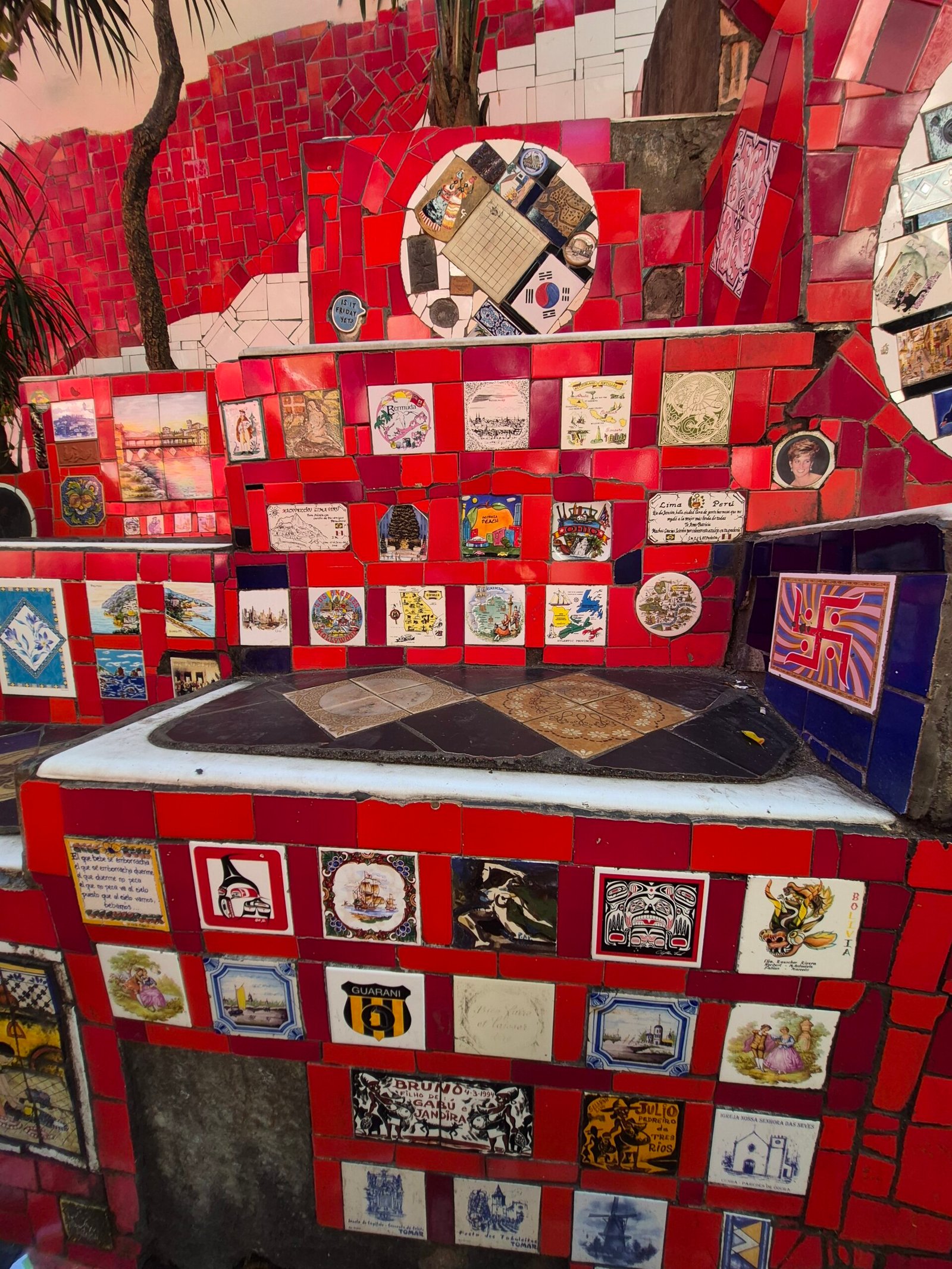
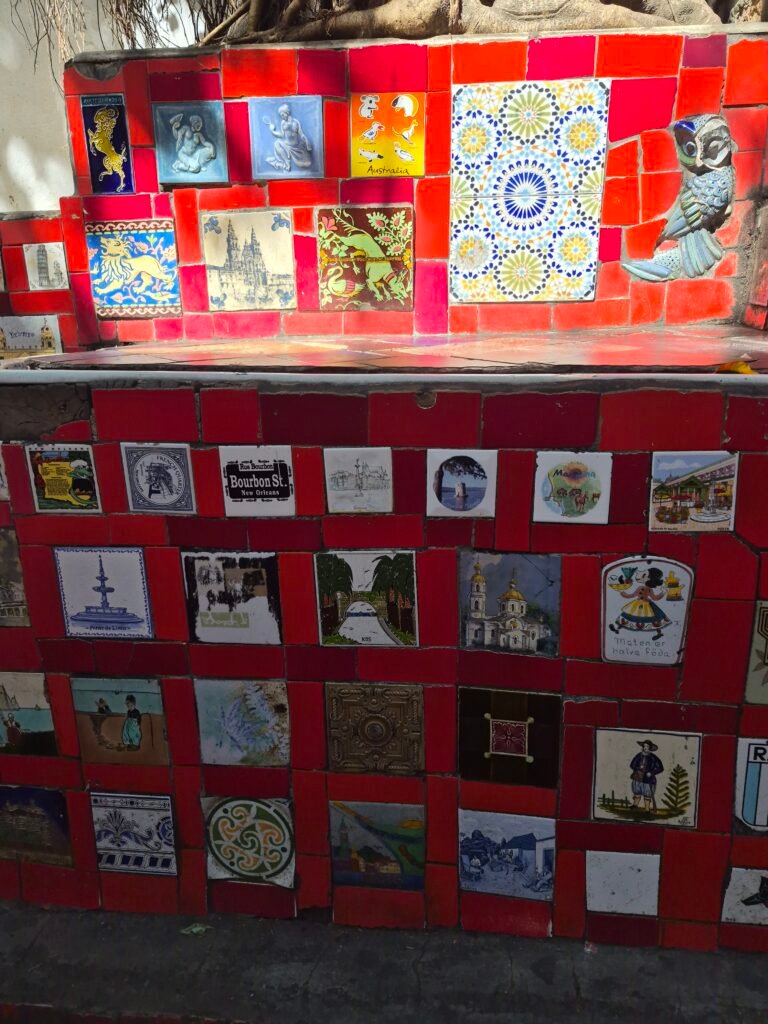
We also went to see the Selarón Stairs, which connect the Lapa and Santa Teresa neighborhoods. Chilean-born artist Jorge Selarón began the project to decorate the stairs in front of his home in 1990. The staircase has 250 steps covered with over 2,000 ceramic tiles from more than 60 countries. We hadn’t heard of these stairs before, but our guide told us that music videos by for example U2 and Snoop Dogg had been filmed there.
Next up was a lunch stop. This time, we ate at a traditional Brazilian buffet restaurant, where waiters circling the tables kept coming by to offer customers a variety of grilled meat options. We tried quite a few different kinds, and it was delicious. We were so focused on eating that we completely forgot to take any photos of our lunch.
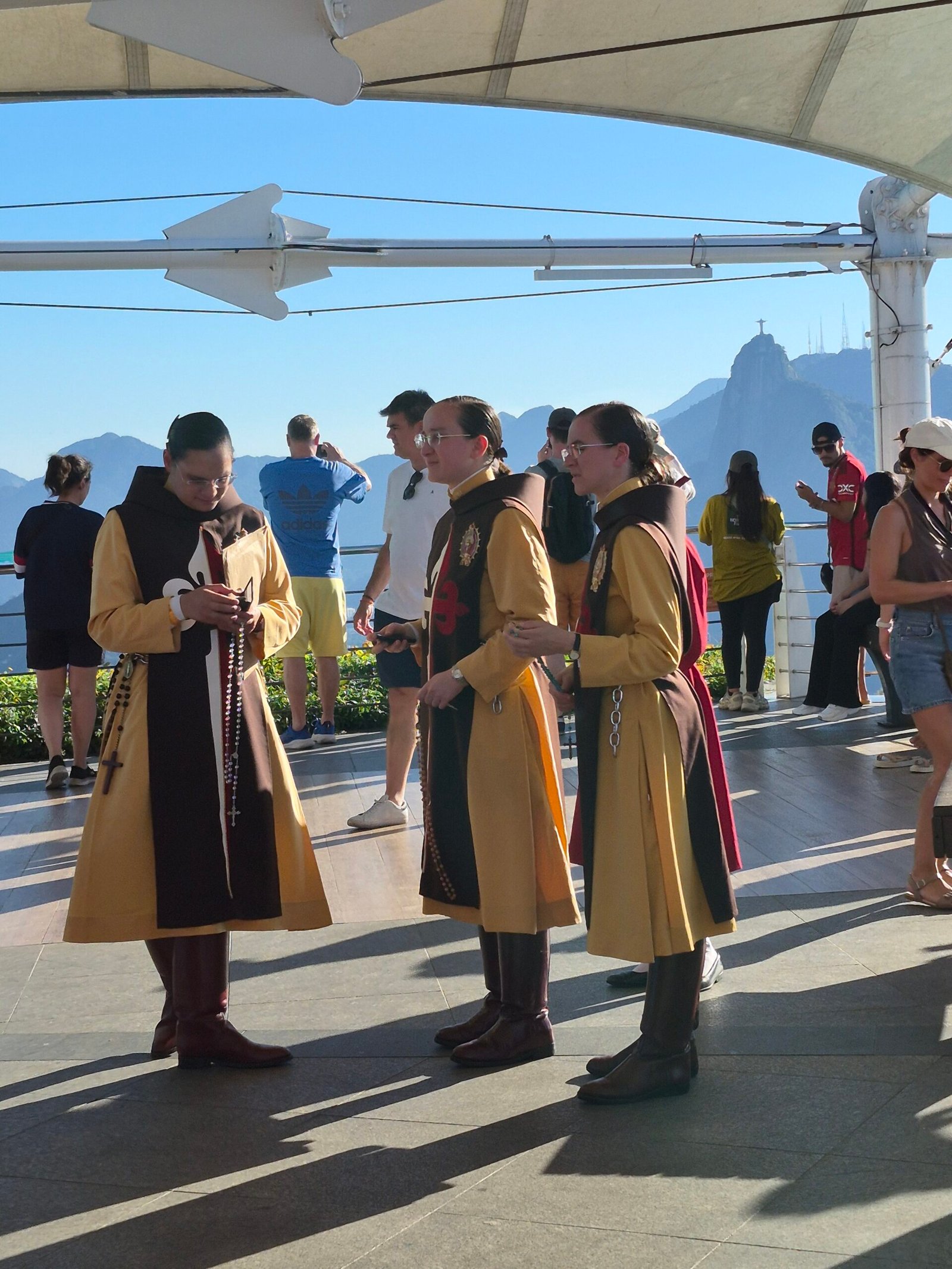
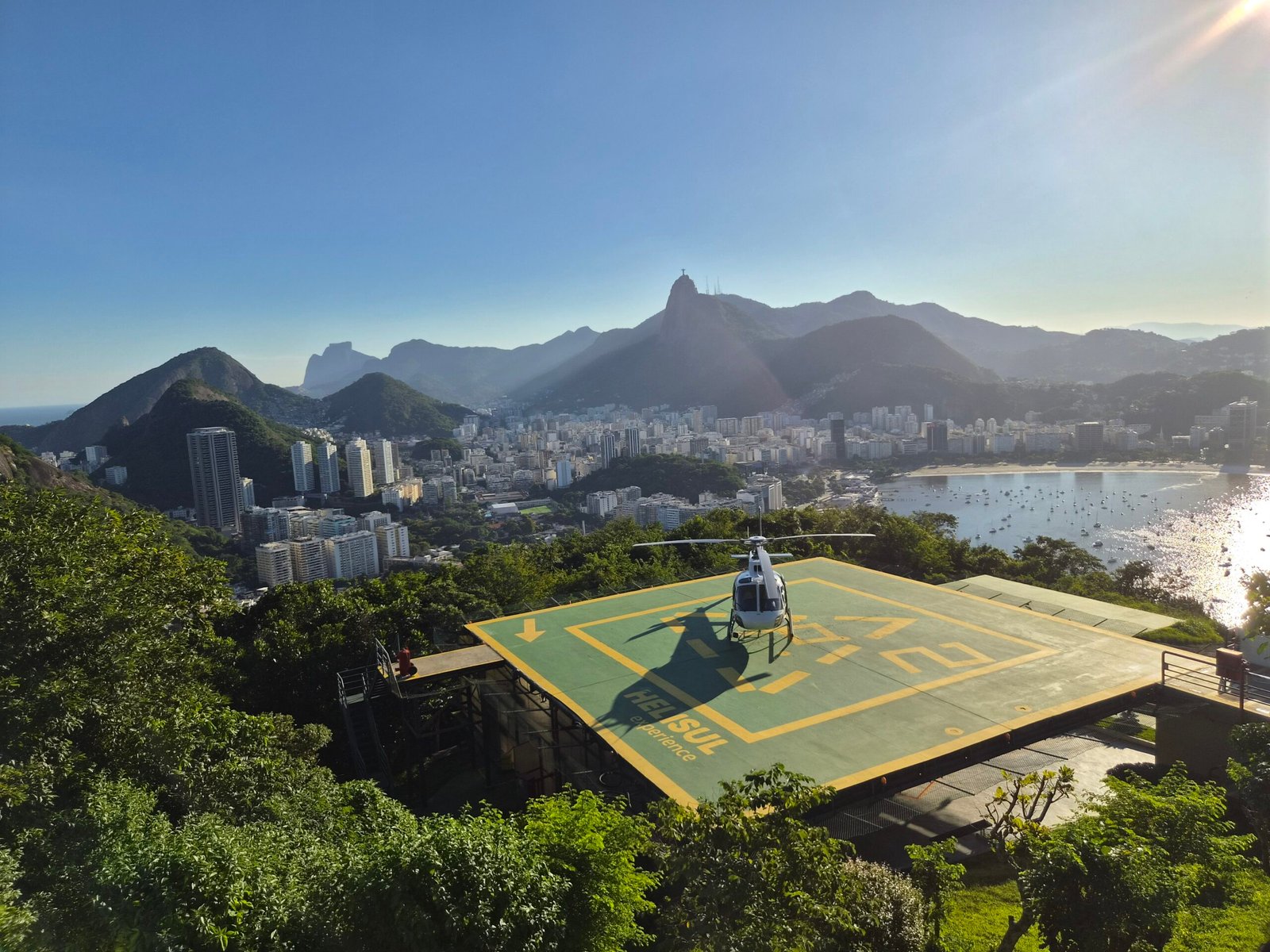
After lunch, we headed out to take in the views from the summit of Sugarloaf Mountain. The trip is divided into two parts. First, we took a cable car up 220 meters to Urca Mountain, and from there the journey continued to the summit of Sugarloaf Mountain at an elevation of 400 meters. From there, too, there were magnificent views all around the city of Rio, just like from the Christ the Redeemer statue. Since our guided tour ended there, we decided to make our own way back to our apartment. So we no longer traveled with our group of 19 people; instead, when the group headed back down to the first peak, we stayed behind at the summit of Sugarloaf Mountain to admire the views.
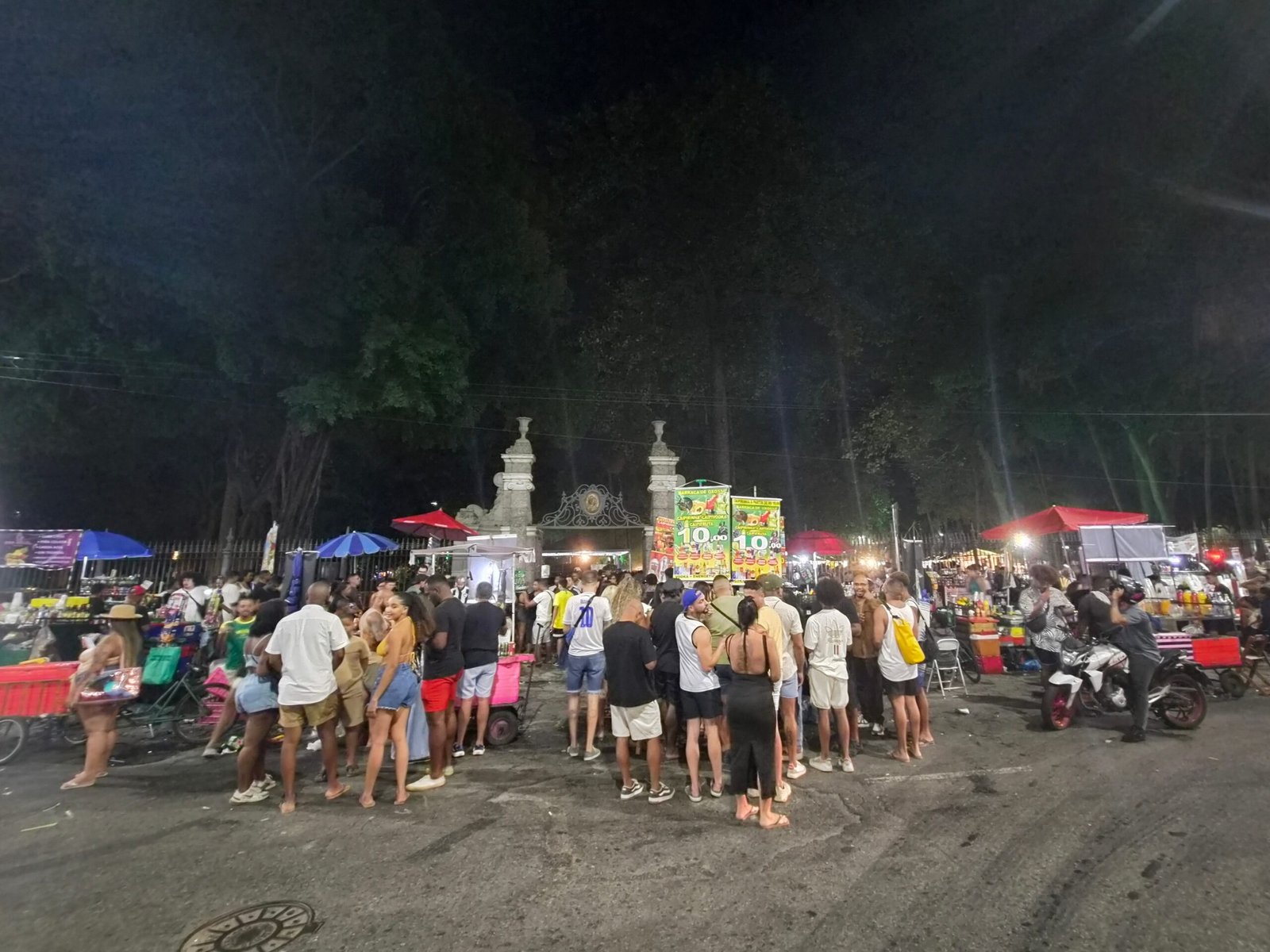
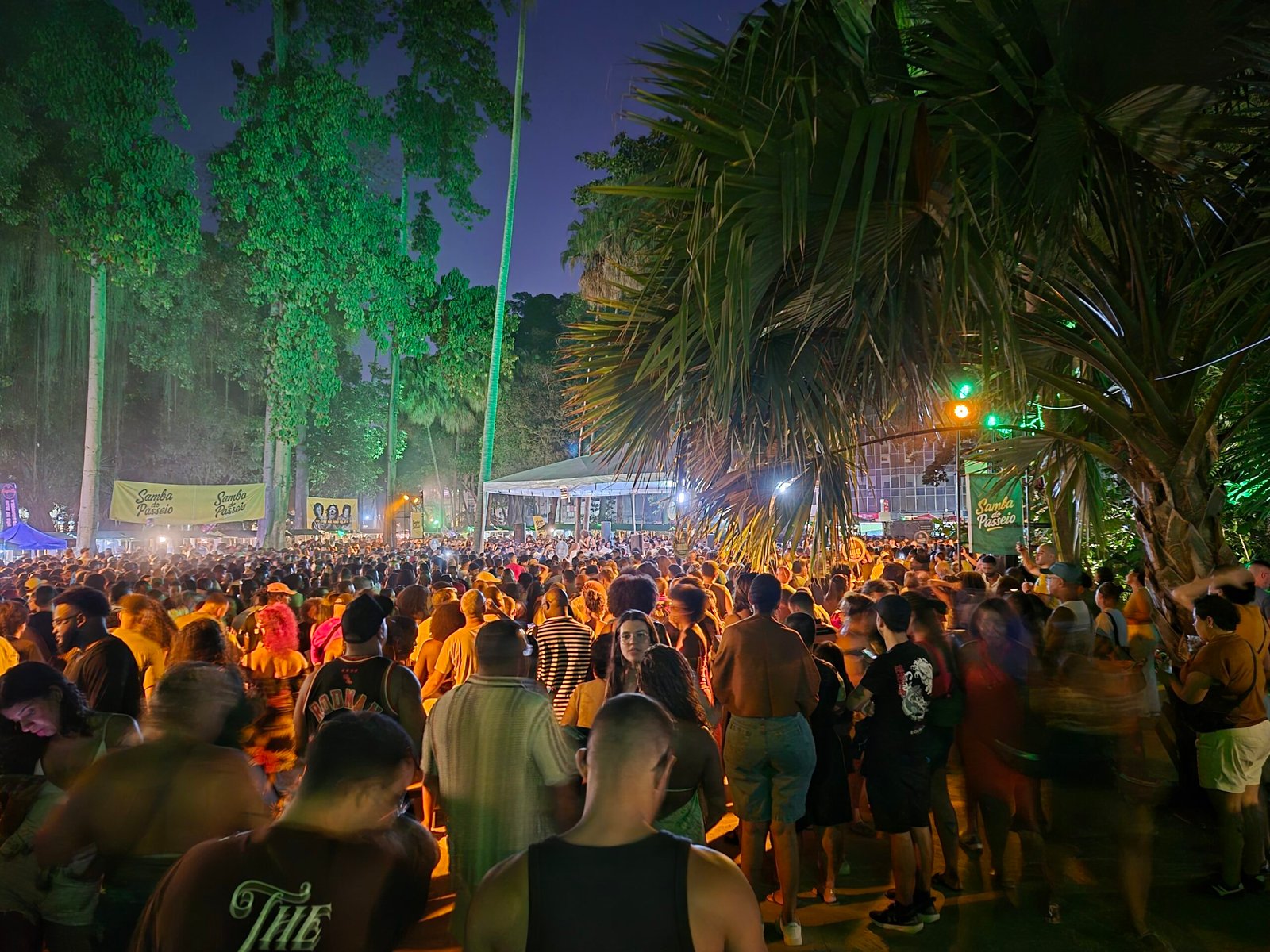
When we returned from the mountain, we took an Uber to Gloria’s Sunday market. Since we didn’t set out until after four, the vendors were already slowly packing up their stalls when we arrived. We walked all the way to the end of the market area, though, because our guide had told us about a nearby park where there would be samba that evening. We found the park easily, but when we got there, there was only a local DJ playing music. We asked at one of the stalls if there would be samba later that evening. Since we were told yes, we stayed in the park to hang out and wait for the music to change. When not even a single samba dancer had shown up by six o’clock, we decided to head back to our place. We’d had a really long day because we’d woken up at six in the morning, so none of us—least of all Risto—felt like staying in the park any longer to wait whether there was going to be a samba dance performance in addition to the live singers and sing-alongs. The locals, however, seemed to be enjoying themselves in the park. They were eating, drinking, and singing along with the various performers—apparently local hit songs.
We made it home just in time to watch Spain win the World Cup, much to the delight of the Brazilians. We had heard from our guide that not a single local would ever, even by accident, root for Argentina, since apparently the Argentine players had, at some point in the past, really messed with the Brazilians when playing against them. According to allegations—which Maradona, for example, admitted were true years later—the Argentine team’s support staff had slipped Rohypnol into a Brazilian player’s drink during the 1990 World Cup. You didn’t have to read between the lines to understand our guide’s opinion when he stated that if Argentina were playing against Satan, they would be rooting for Satan. The Argentine president may also have slightly dented his country’s standing in the eyes of other South American nations when he remarked in 2021 that “Mexicans come from the Indians, Brazilians from the jungle, but we Argentines have come by ship from Europe.” The atmosphere at matches between Argentina and Brazil is probably even a notch more intense than at the hockey matches between Finland and Sweden.
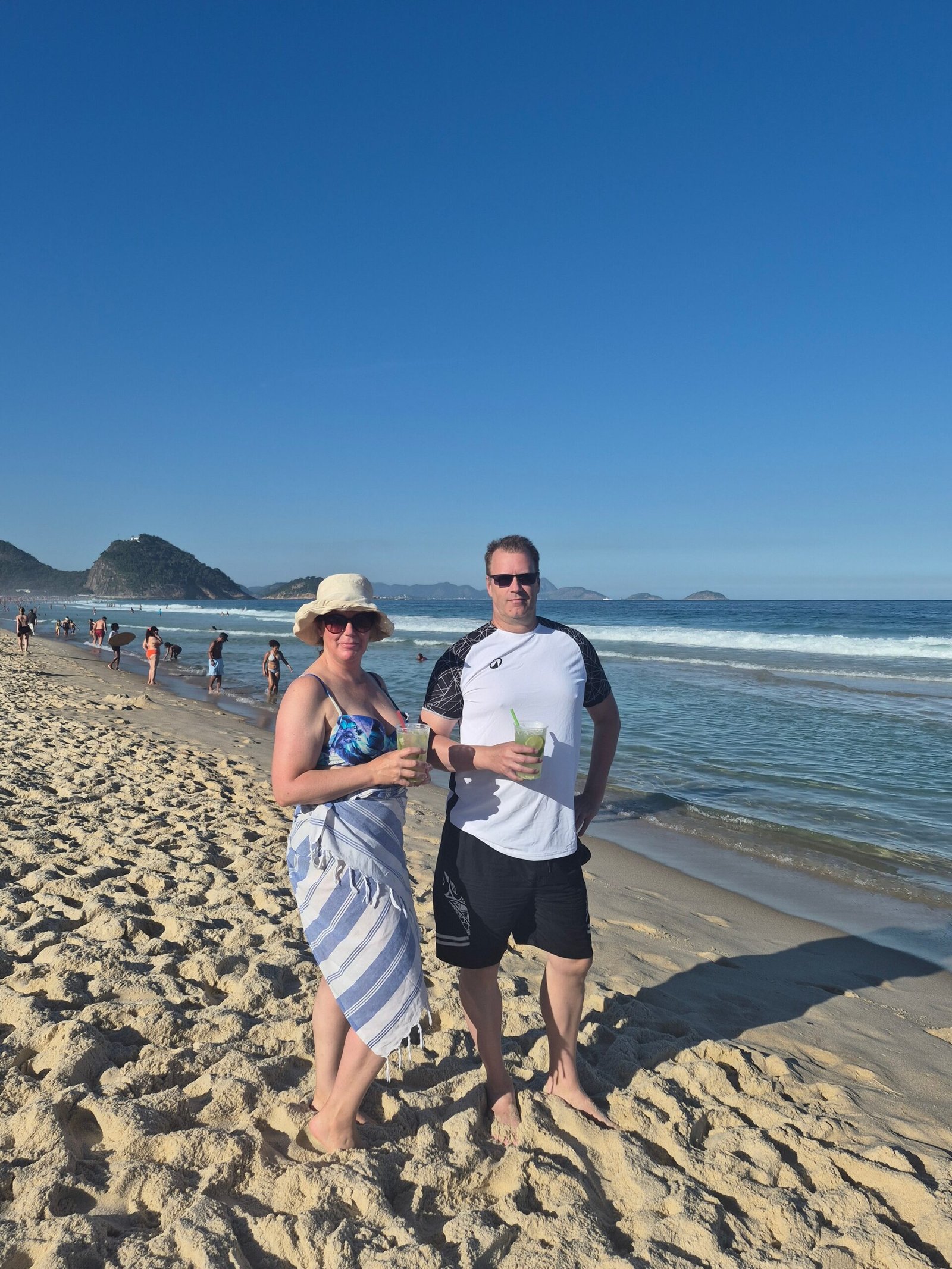
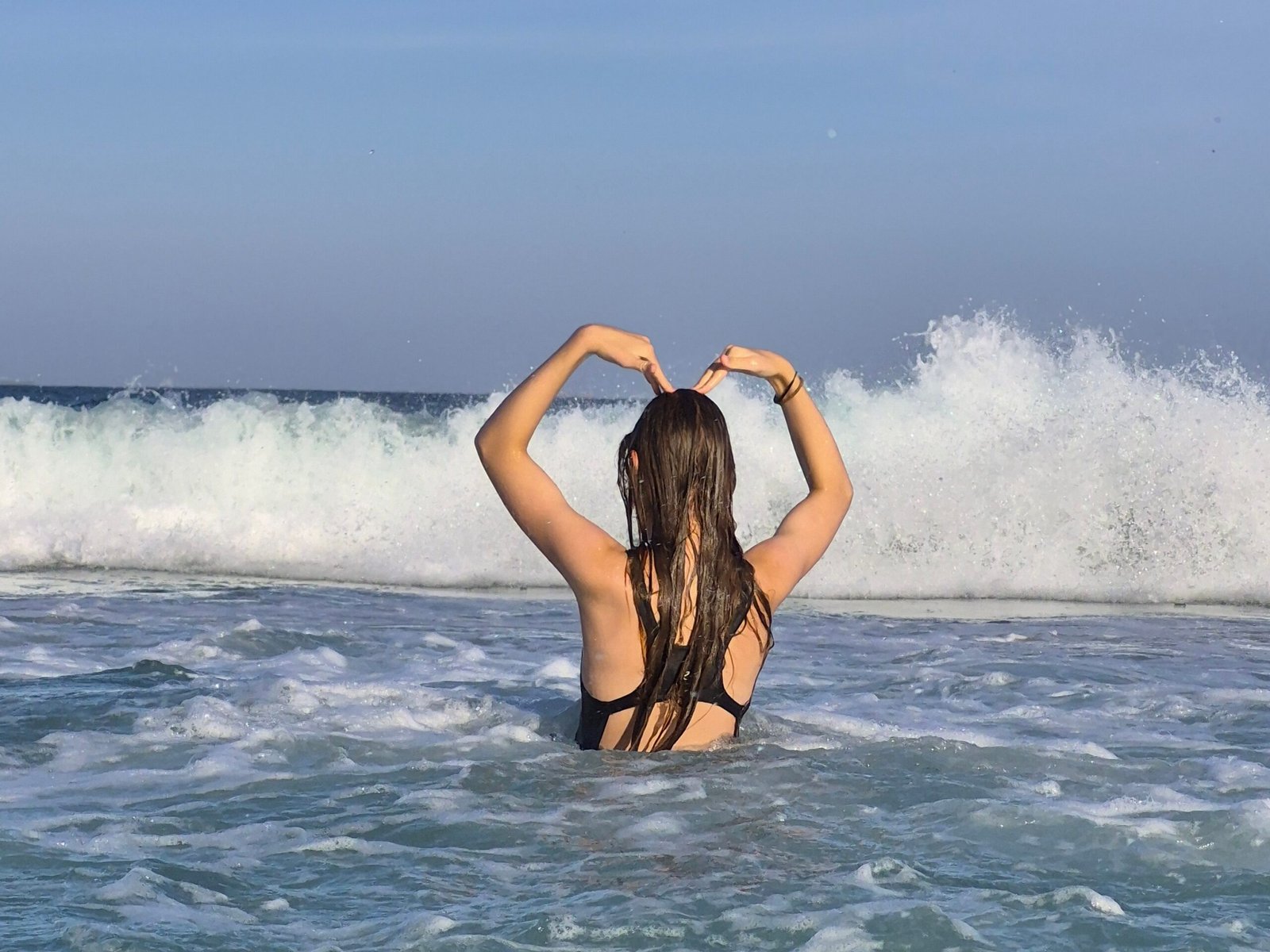
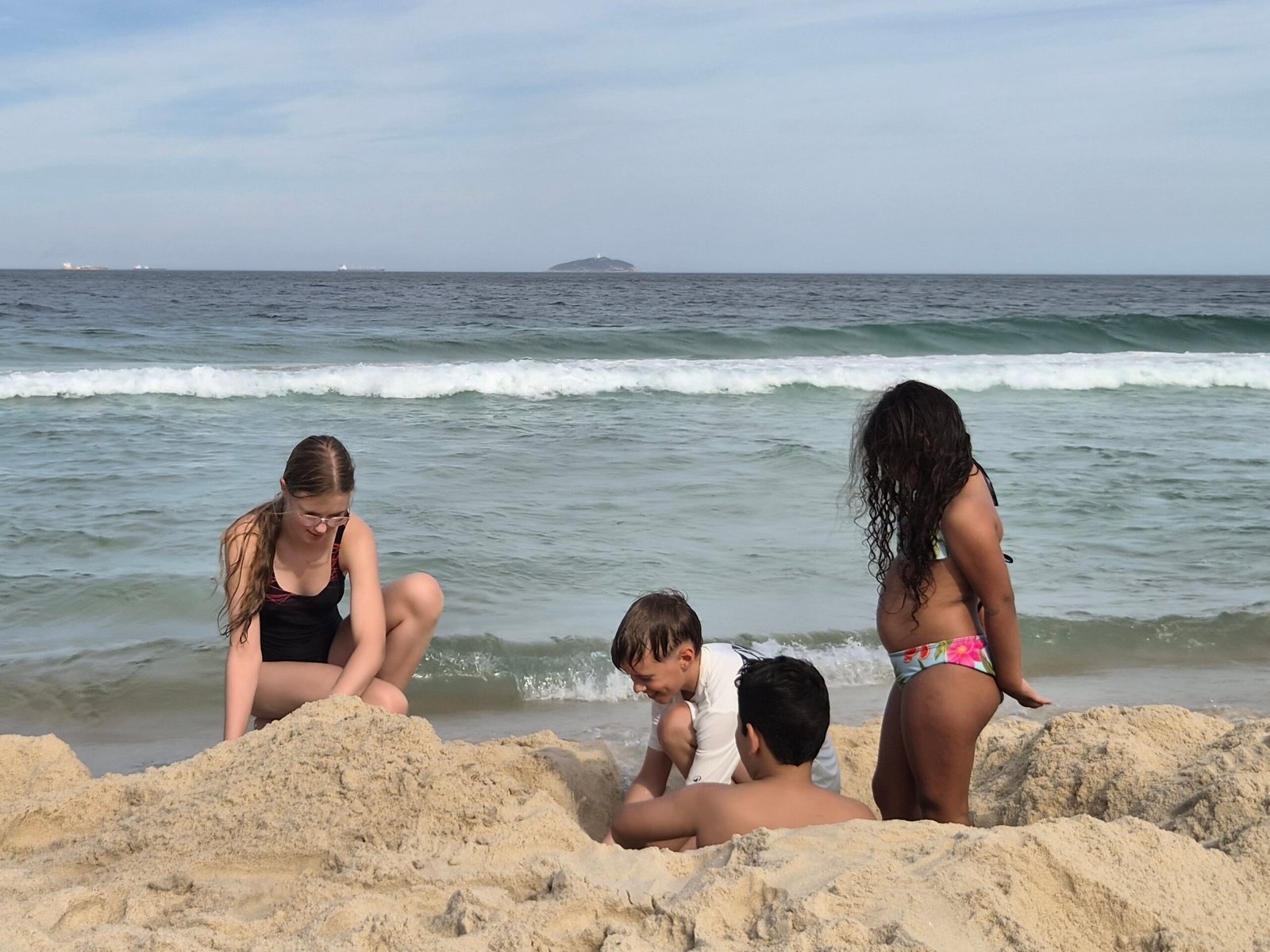
On Monday, we decided to spend the day at Copacabana Beach. Since it was a weekday—and not exactly peak tourist season anyway—the beach was relatively quiet compared to the weekend. We still weren’t exactly alone there, but fortunately, it wasn’t terribly crowded either. Of course, this also meant that all kinds of street vendors were very eager to haggle with us. This time, though, with the exception of the ice cream vendor, they came away empty-handed. The adults even ordered their own drinks from the same group from whom we rented our beach umbrellas and chairs. The sale of additional services was organized very efficiently. Along the beach promenade, there were numbered stalls every few dozen meters where you could get everything you needed. Each vendor had their own designated stretch of beach near their booth that they served. Beach gear, drinks, and food items, along with their prices, were all clearly displayed on laminated brochures that they left for customers on a small beach table. Beach chairs and umbrellas were marked with the vendor’s number, and the vendors would periodically make the rounds in their area to take additional orders. Competition kept prices low; they were fixed and clearly displayed, and did not depend on how touristy you looked. For example, a massive 700-milliliter caipirinha cost 5.5 euros. The same competitiom applied to the numerous small restaurants along the beach promenade, where prices seemed to remain in the same range even in the evening, after the beach had emptied out.
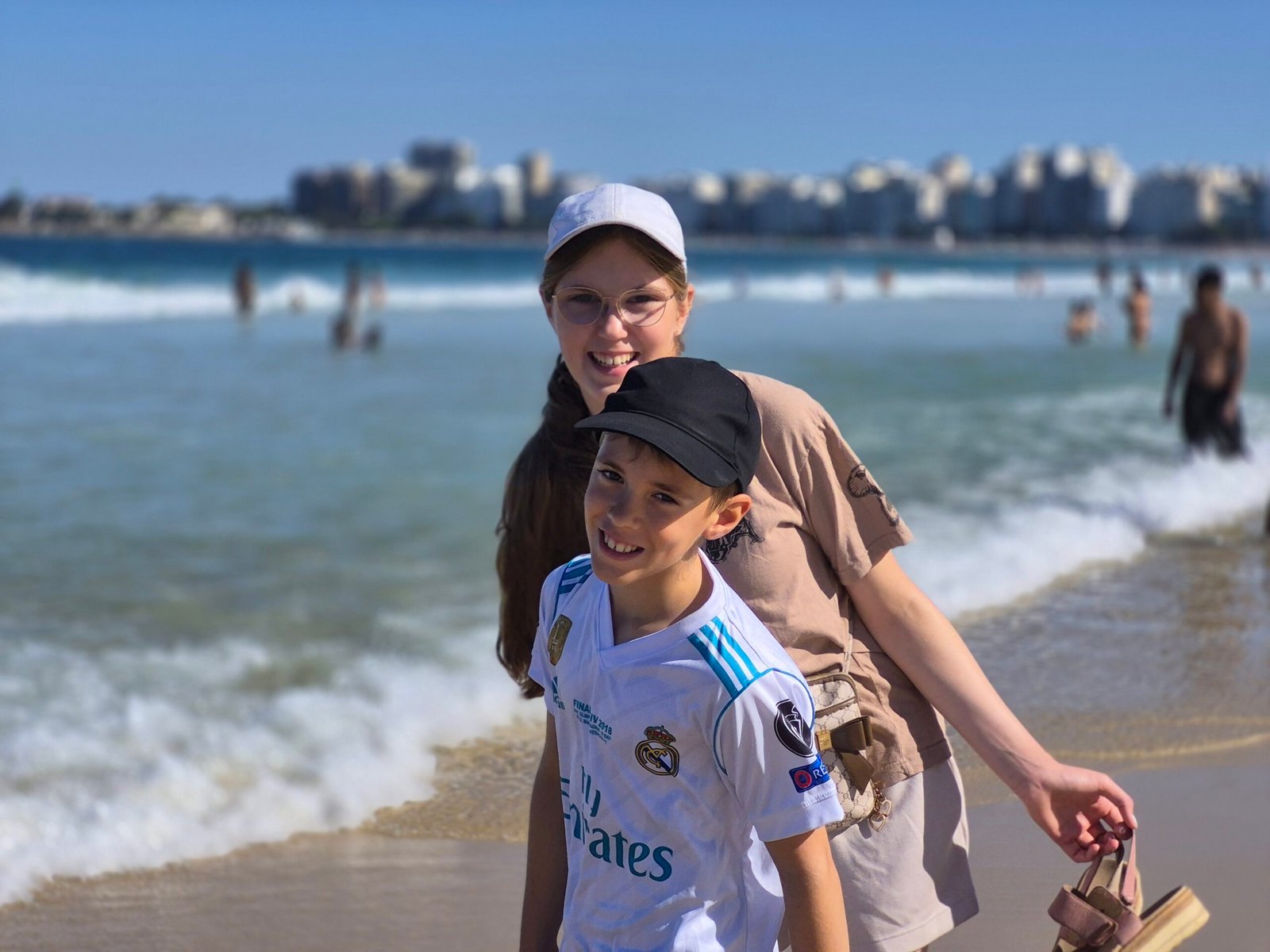
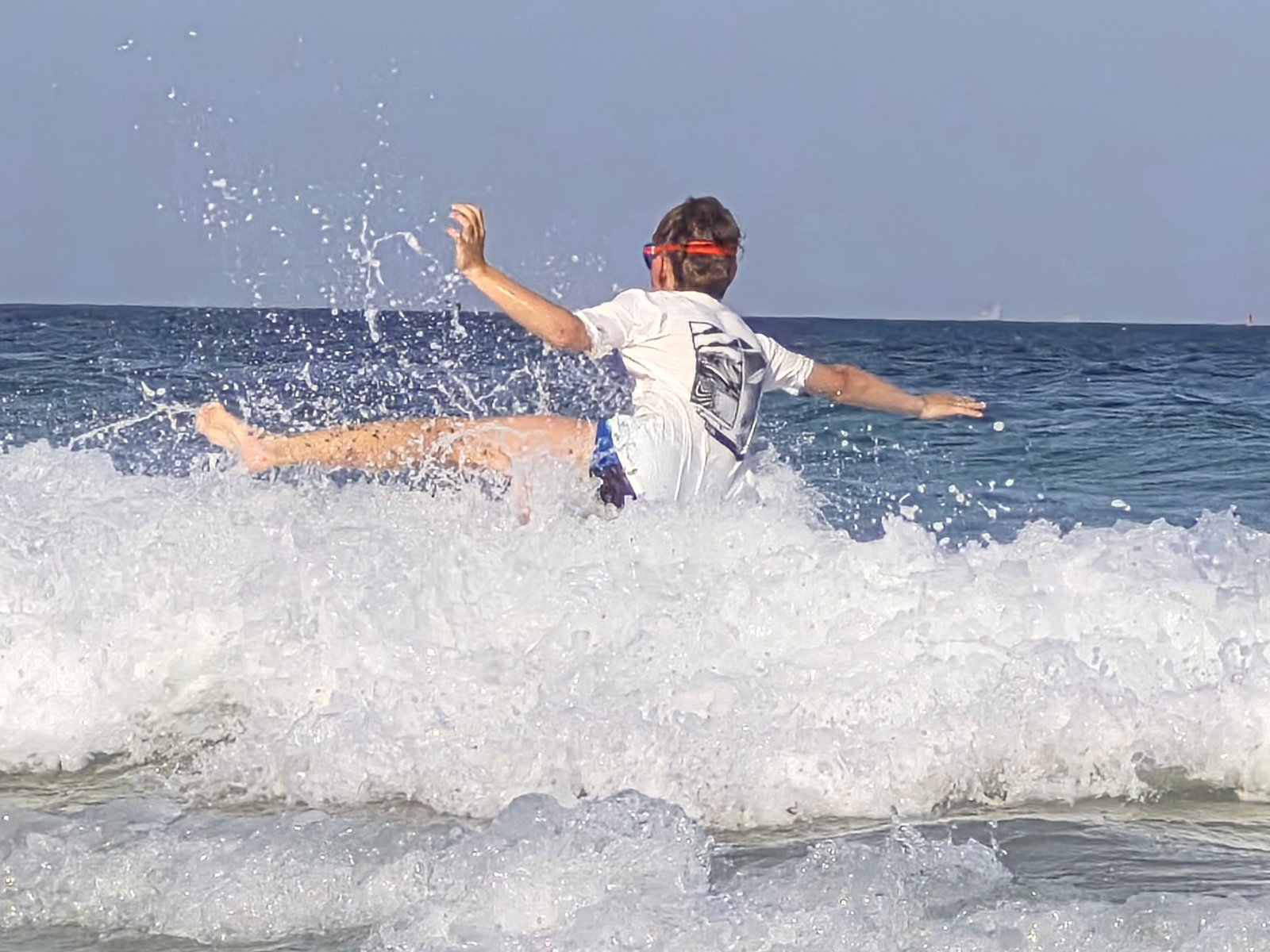
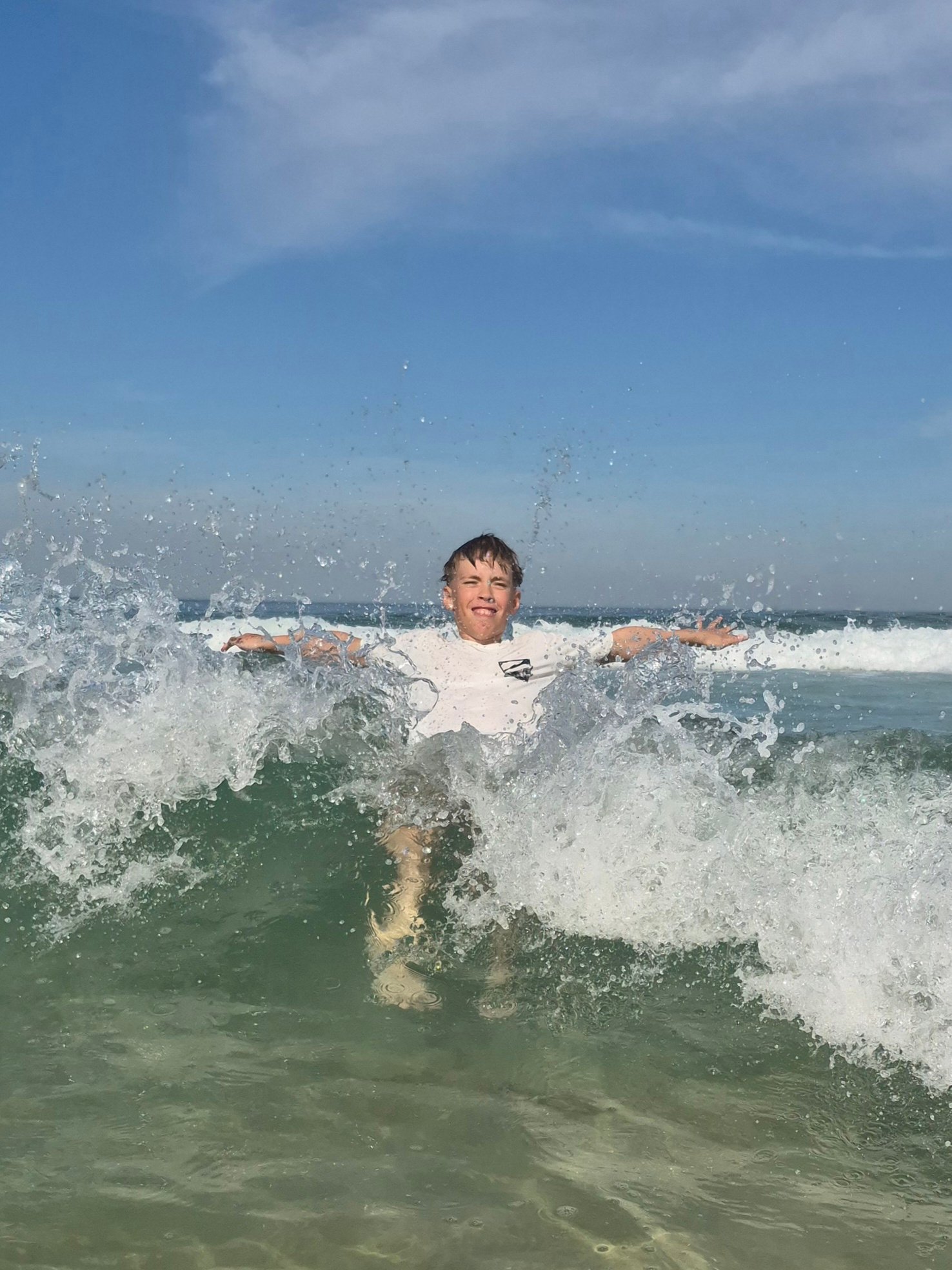
After a bit of getting used to, the seawater turned out to be surprisingly warm, so Marko and the kids spent quite a while playing in the water, even in the really strong waves. Jaana stayed on the beach watching the trio splashing around in the waves, since you can’t risk leaving your belongings unattended on the beach because of thieves. We rented four chairs and two beach umbrellas, although two of the chairs ended up being pretty much useless, since the kids spent most of their time either in the water or on the sand. The afternoon at the beach was really nice and relaxed, and we didn’t head back to our apartment until the sun started to set. The ride to the beach by Uber took about 25 minutes without any major traffic, but the return trip took nearly 45 minutes due to traffic.
That evening, Marko stopped by the local store to stock up the fridge a bit, and witnessed firsthand how a thief on a motorcycle tried to snatch a cell phone from the hand of a man talking on the phone at the side of the road. This time, the thief came away empty-handed, as the man managed to hold on to his phone tightly enough. This was, however, a good reminder that warnings about various types of theft here are not given in vain, and that people are advised to keep a close eye on their belongings while out on the streets.
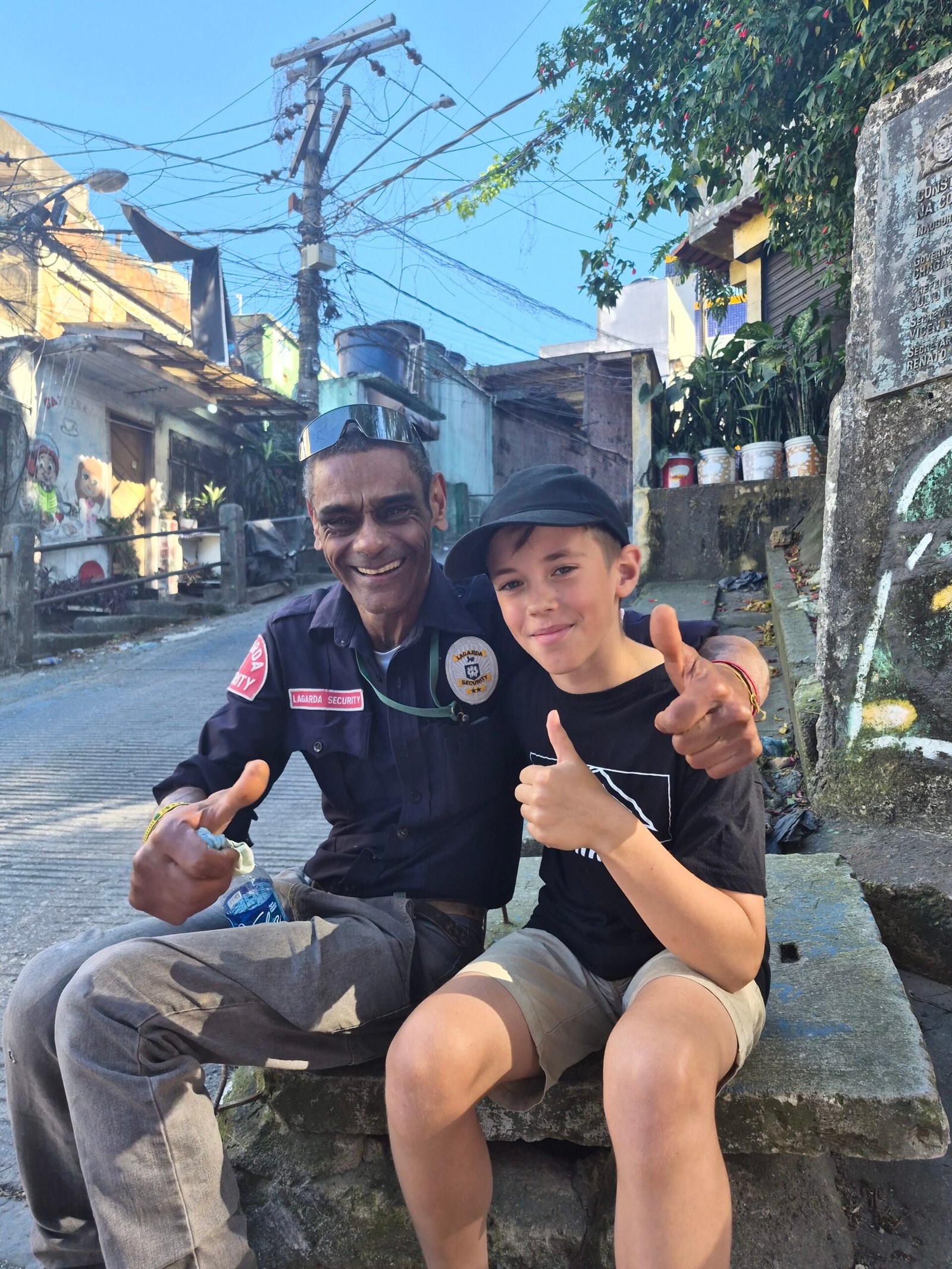
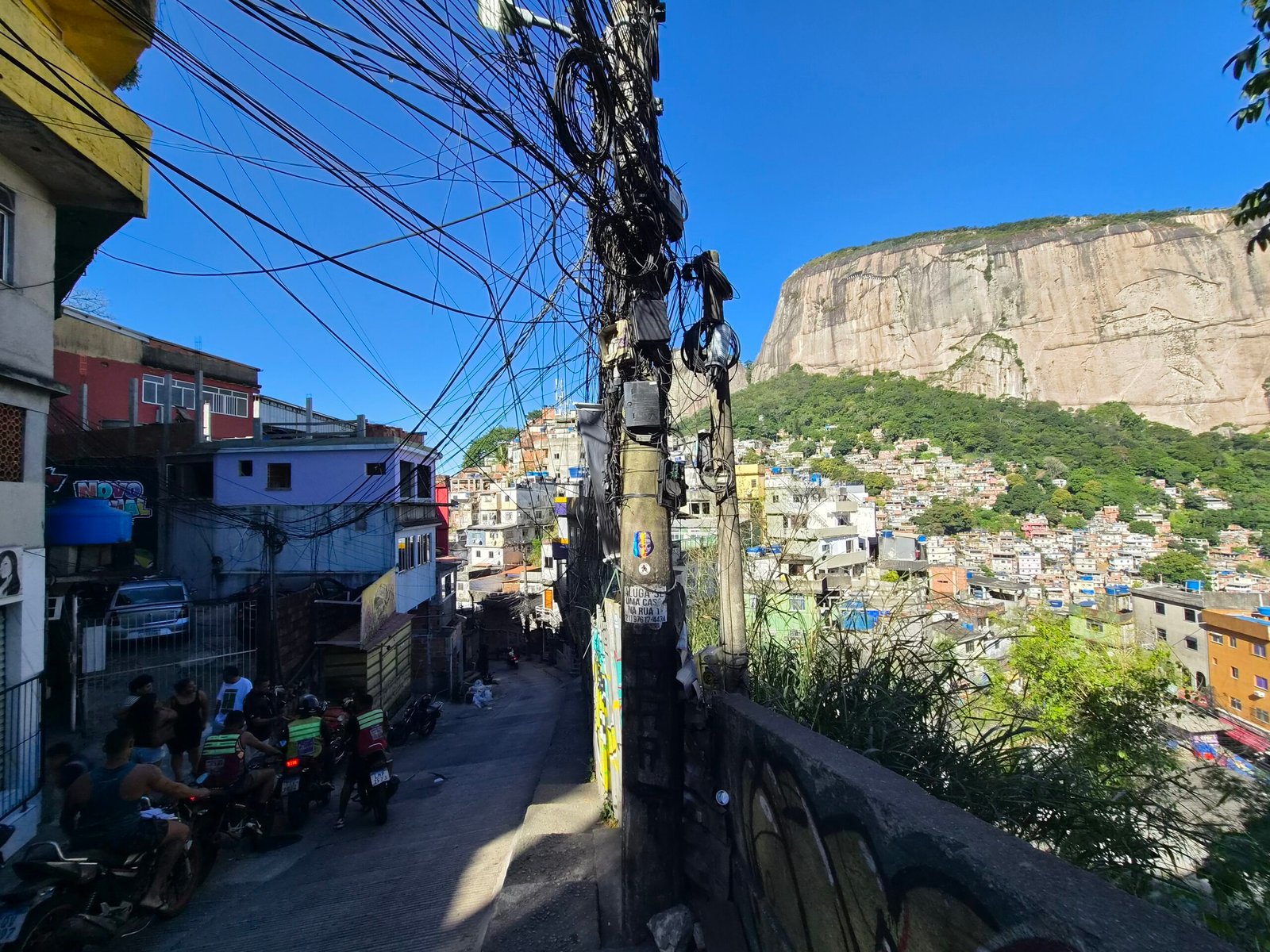
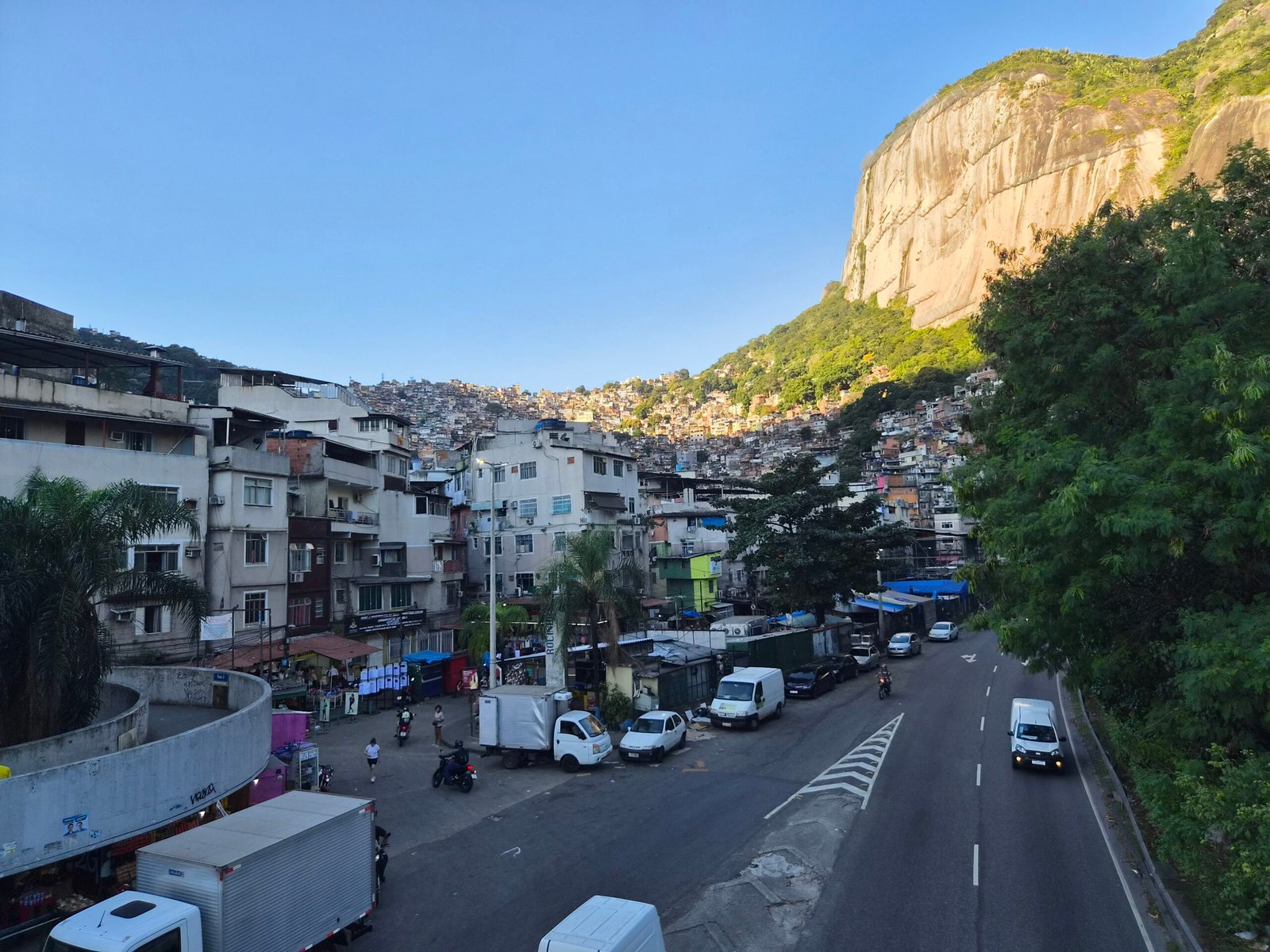
For Tuesday, we had booked a tour of Rio de Janeiro’s most famous and largest favela, Rocinha. Our guide was Carlos, who had lived in that very favela his entire life. Even on the drive to Rocinha, we learned that the word “favela” is actually the name of a certain shrub or tree, and that’s where the term “favela” comes from when referring to Brazil’s slums. The first residents of the favelas were slaves freed in the late 1800s and early 1900s, as well as soldiers who did not receive the wages or housing they had been promised after the war. They settled on the steep hills of Rio de Janeiro because they could not afford the city’s official housing. According to Carlos, back then, when these people described where they lived, they would say they lived on the hillside beneath the favela trees. Eventually, the term “favela” became established to mean a slum.
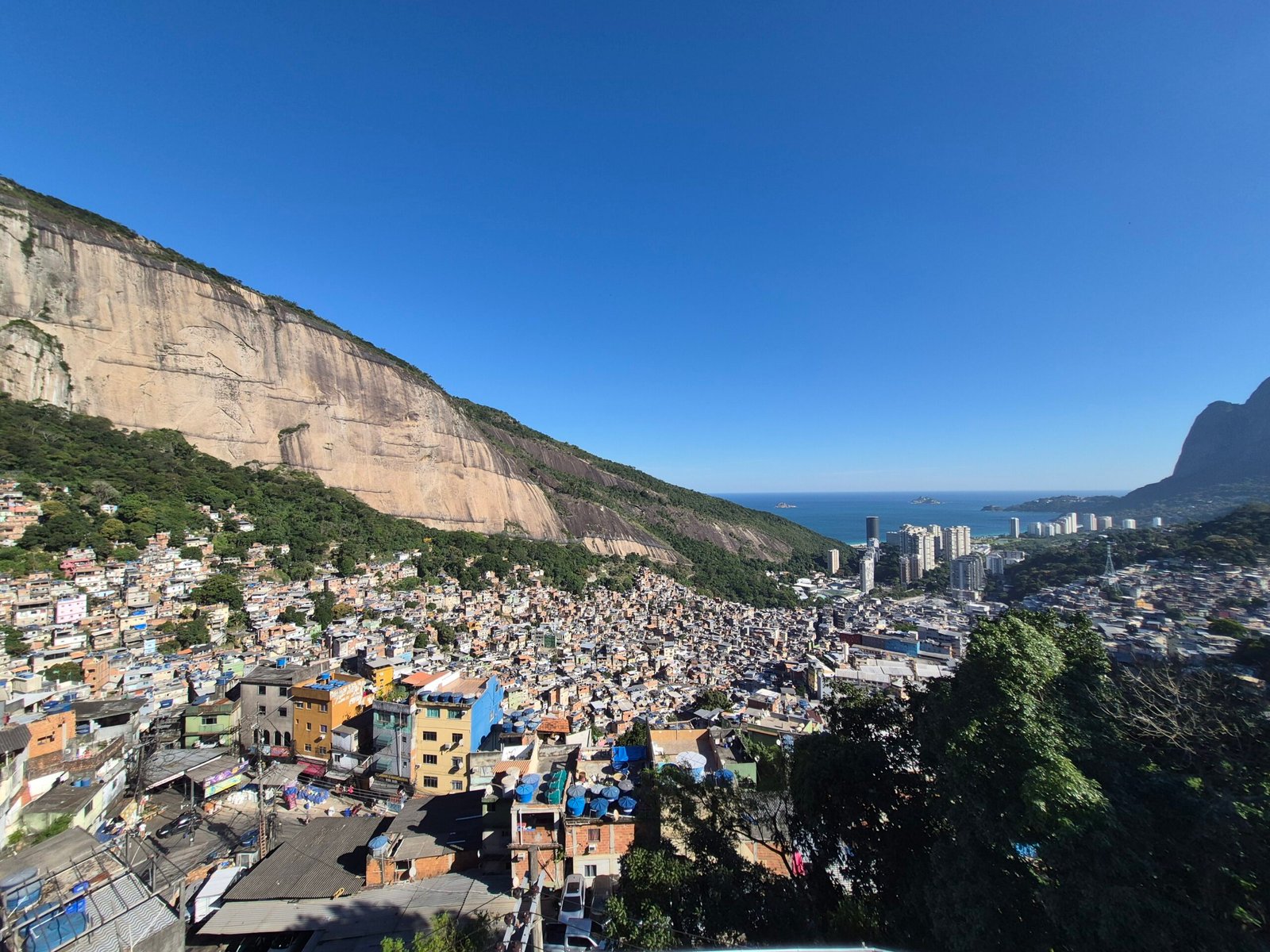
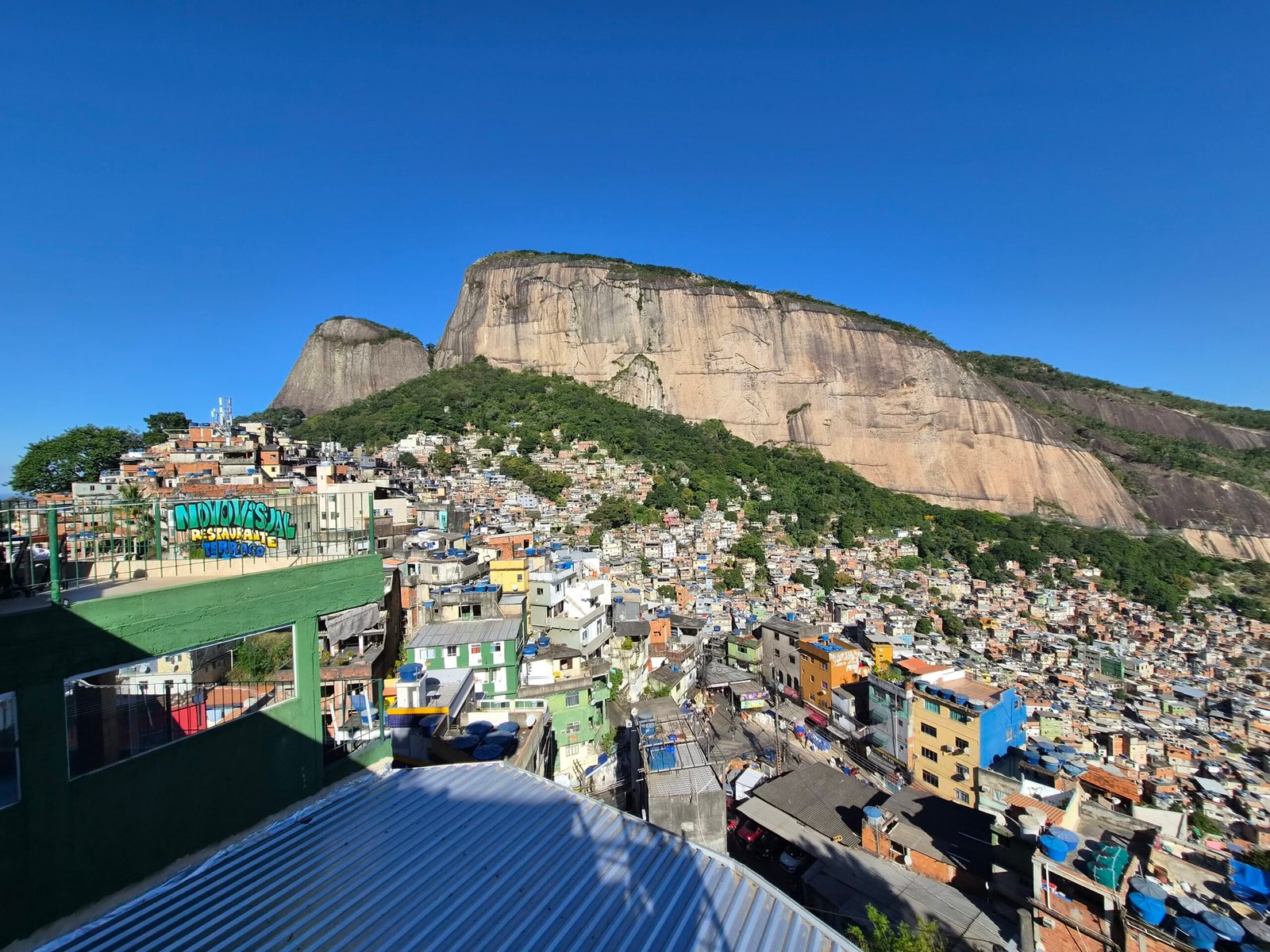
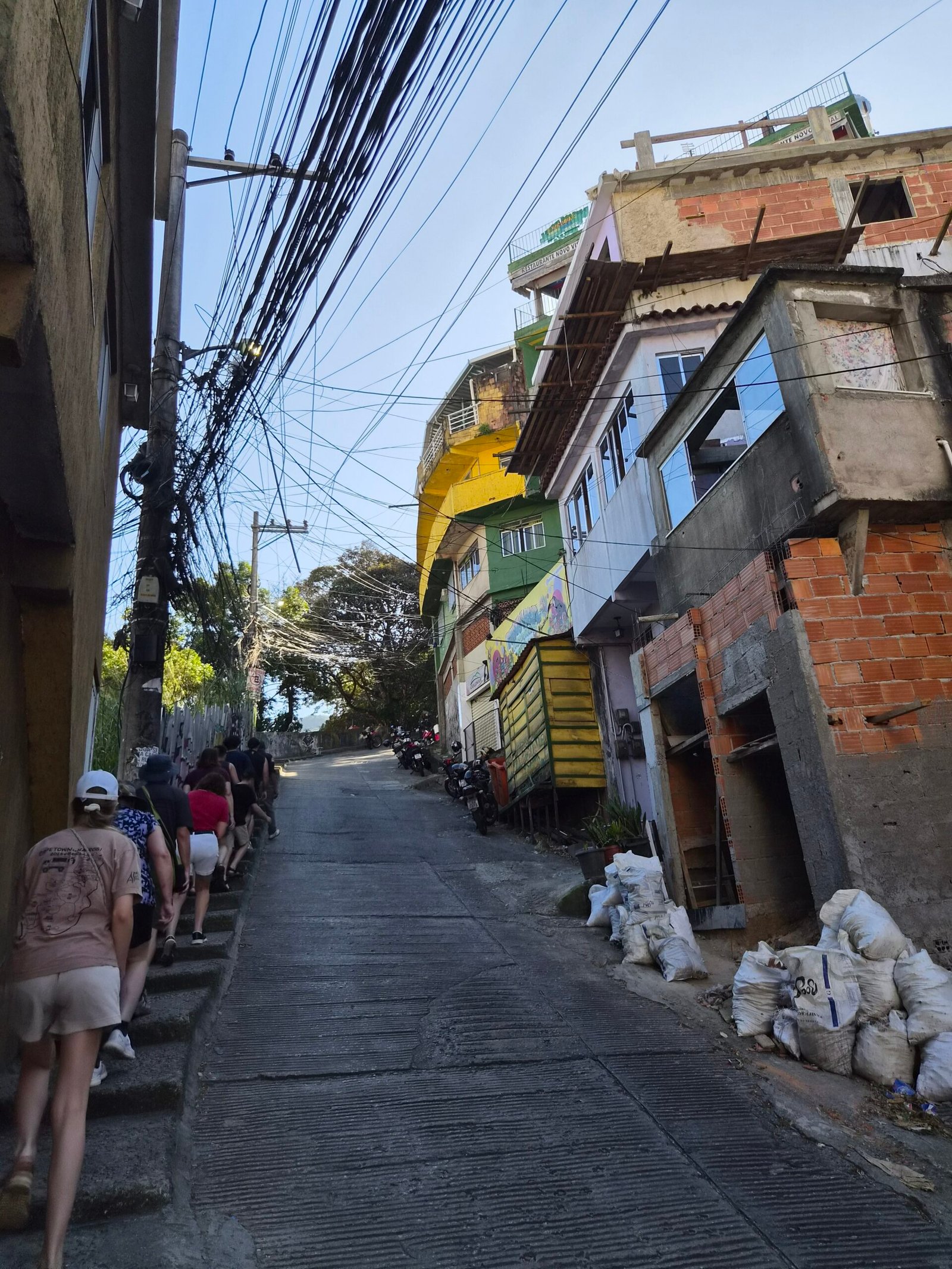
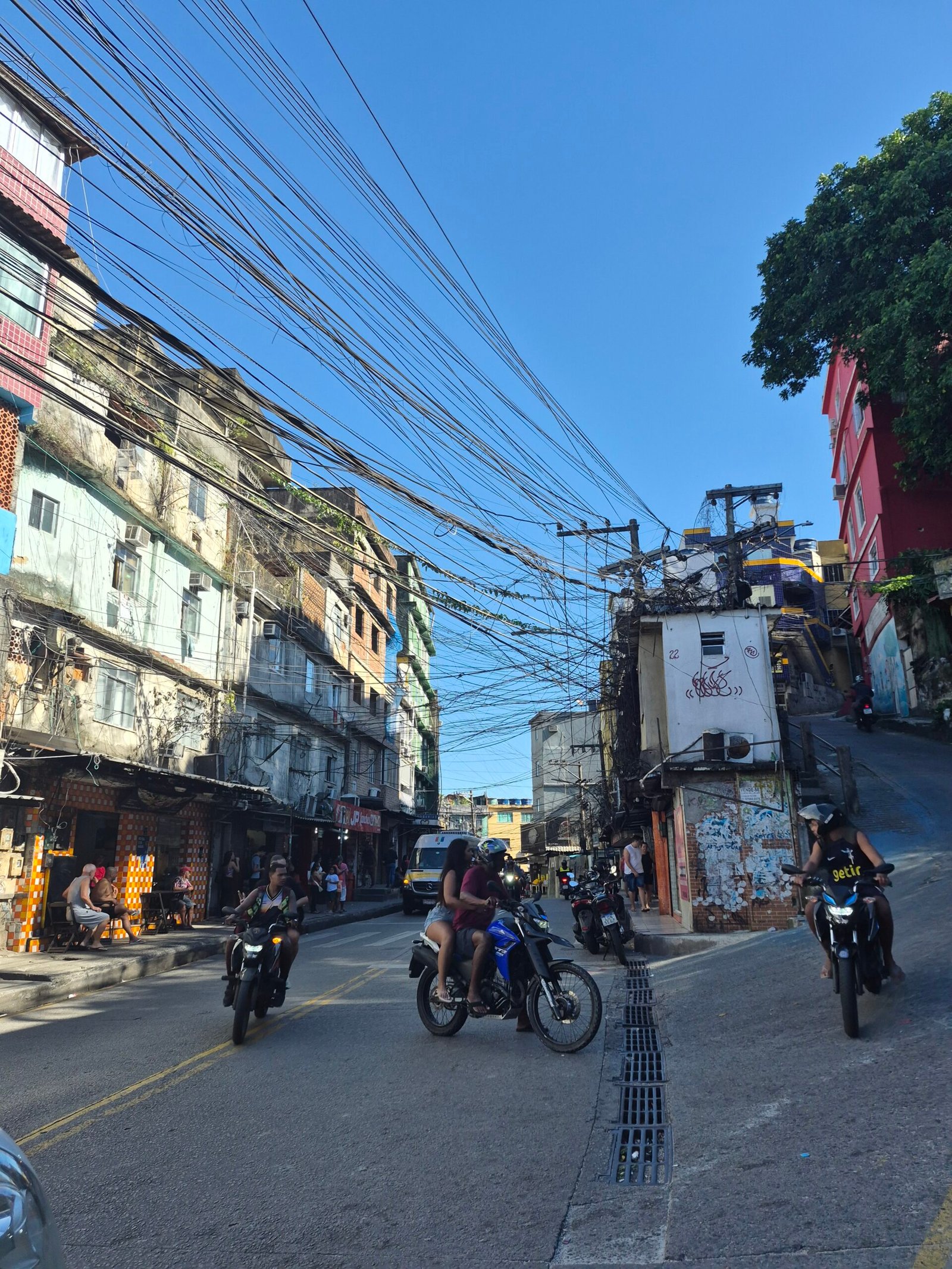
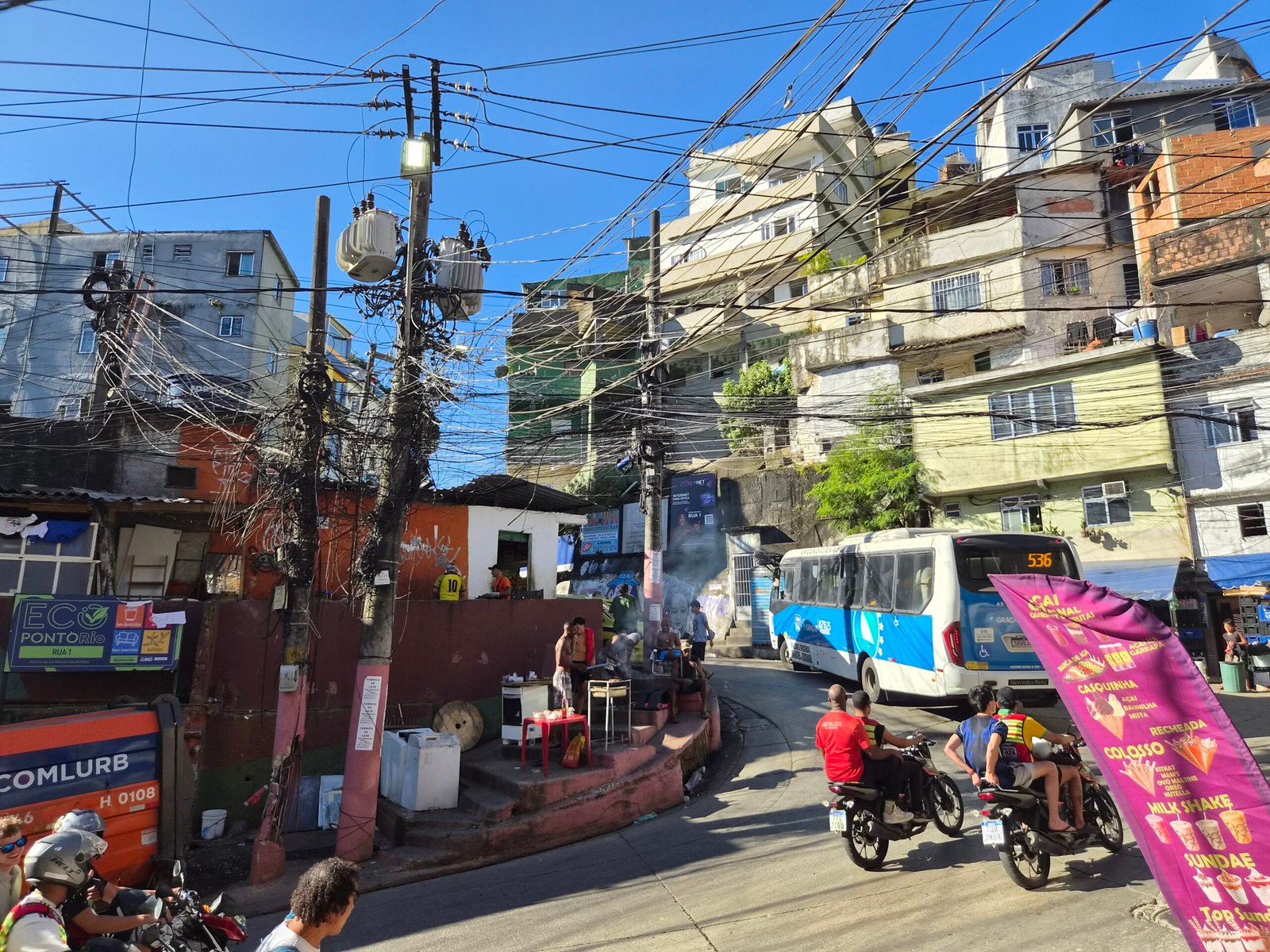
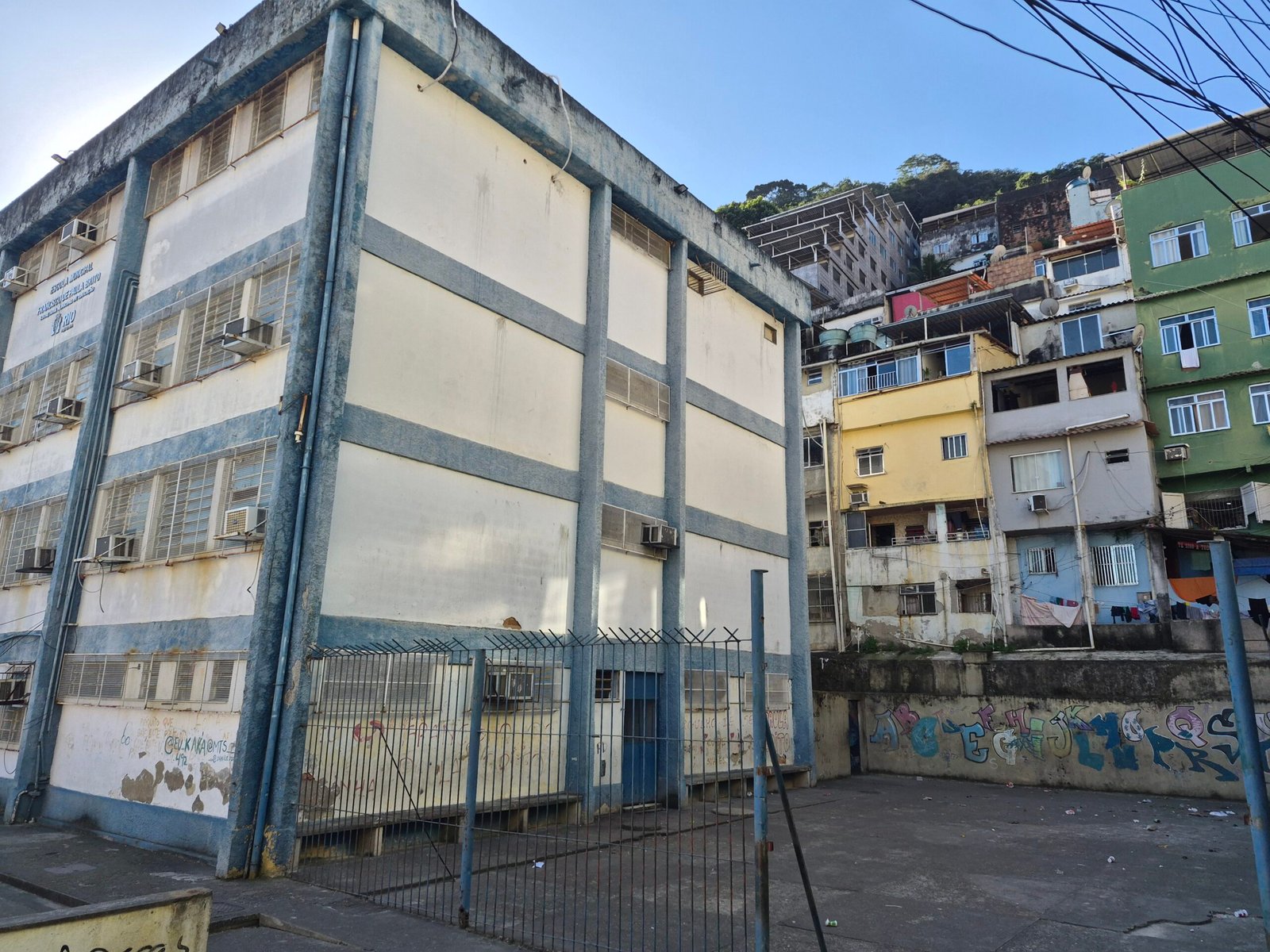
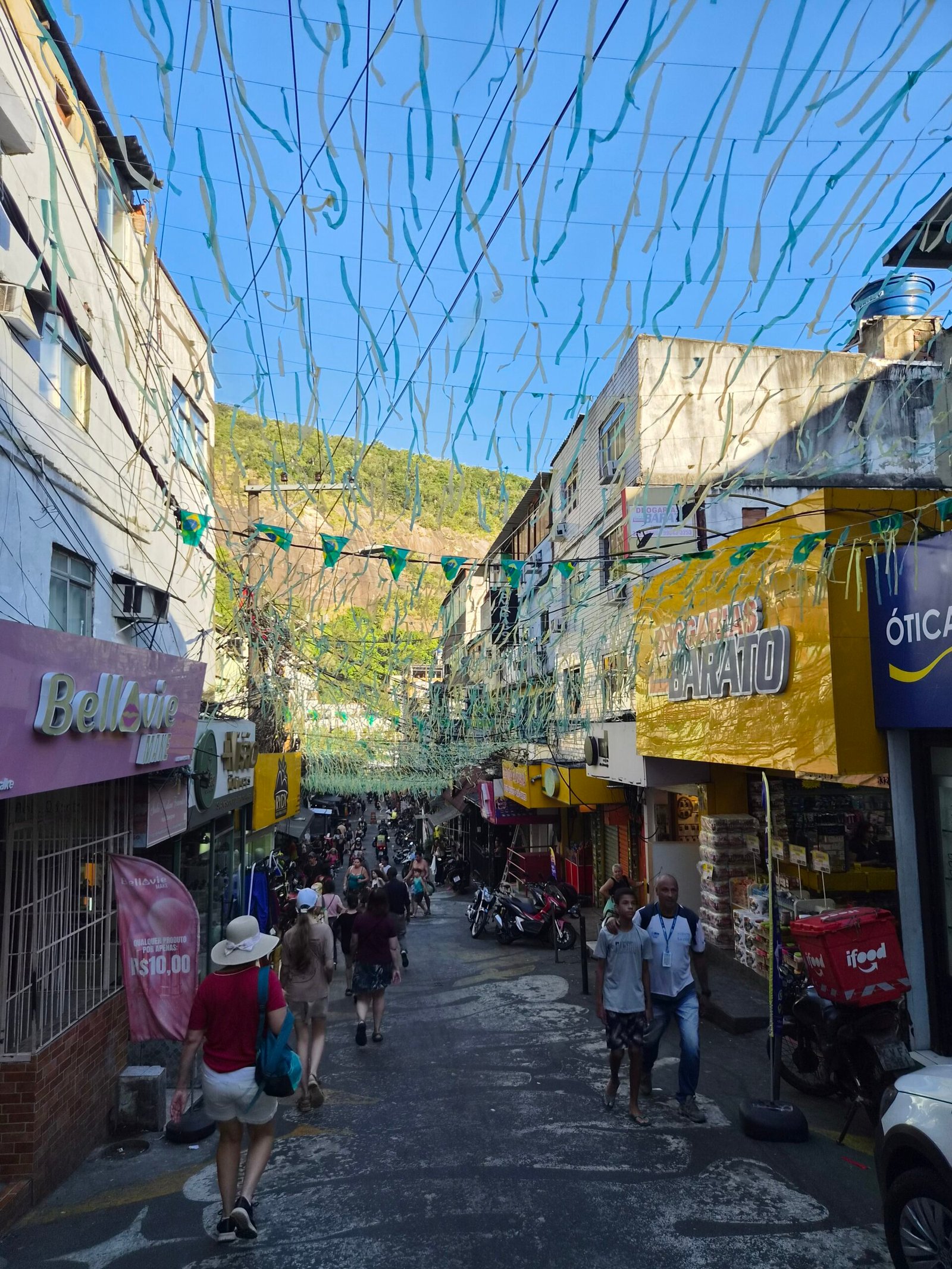
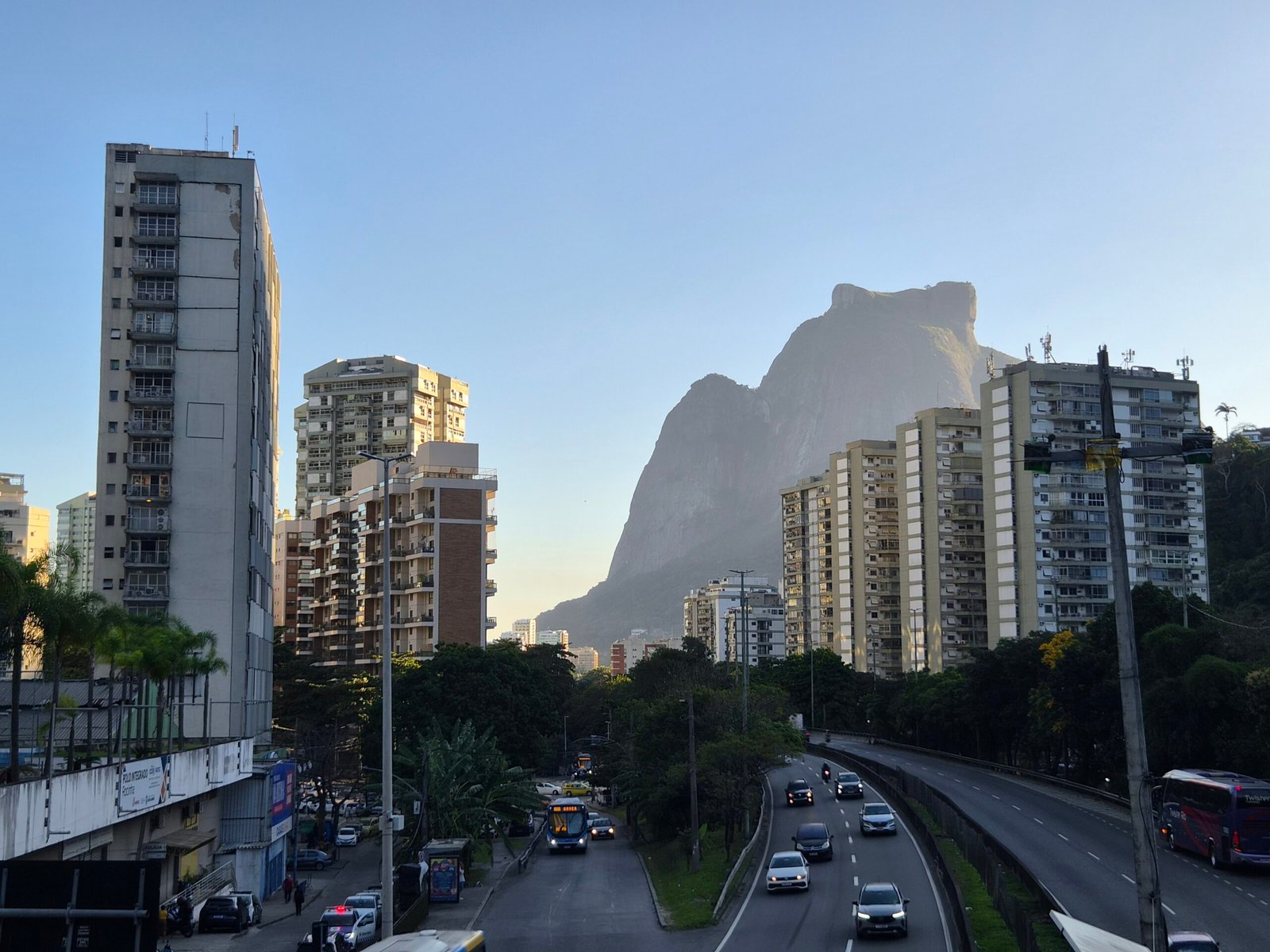
There are several slums in Rio, but Rocinha is by far the most developed and largest of them (approx. 160,000 residents). Rocinha has four schools, a hospital, a couple of medical clinics, a police station, banks, and many small businesses—from shops to barbershops and gyms. So it’s like a small city within a city. Public transportation, such as buses and motorcycle taxis, runs frequently up and down Rocinha’s streets. Most homes have electricity, running water, and a toilet, and garbage collection takes place daily; nevertheless, at least according to Carlos, the amount of trash is sometimes a major problem. A significant advantage of Rocinha is its location in southern Rio, home to Copacabana and a large portion of Rio’s service sector jobs. According to Carlos, the vast majority of Rocinha’s residents work in the surrounding areas, and their commutes are quick thanks to public transportation. The jobs are mainly low-skilled positions, such as cleaning, transportation, or sales, but jobs like these are apparently quite readily available. Many of the favelas are located much further out on the city’s outskirts, from which the commute to southern Rio can take a couple of hours each way, at least during rush hour. The economic situation and employment rates in other favelas are likely to be generally quite a bit worse than in Rocinha. People rarely move away from Rocinha, even though some might afford to do so.
Carlos had nothing good to say about the school system. He explained that the schools in Rocinha are public schools where children attend classes for only a couple of hours a day. The differences between public and private schools in Rio—and probably throughout Brazil as well—are reportedly enormous. Carlos mentioned that even his middle school-aged daughter still can’t read or write properly, and he has to constantly help her with her studies. That’s because they don’t receive adequate instruction at school. Many children attend school just for the free lunch, and once they’ve had it, they leave. We, too, walked past a school building, but there wasn’t a single child or teacher in sight.
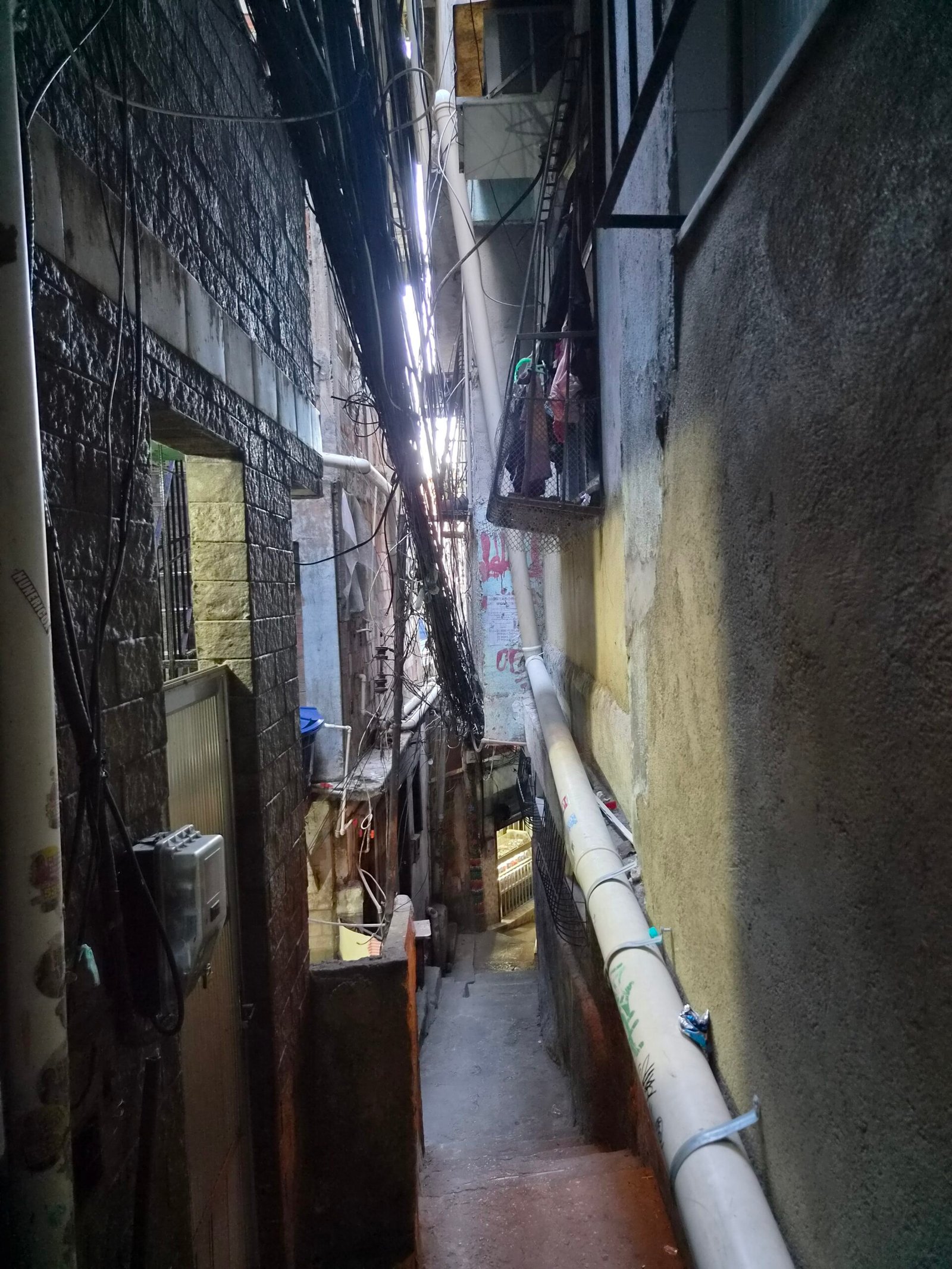
While walking with Carlos, we felt very safe in the narrow alleys of the favela. However, it’s probably not a good idea to go into the area alone, since the whole place is such a maze without official street names and you’d get lost in no time. When we wondered how the residents of Rocinha receive their mail, Carlos explained that people living in the narrow alleys use the names of the larger streets that run through Rocinha as their addresses and pick up their mail from the buildings located along those streets.
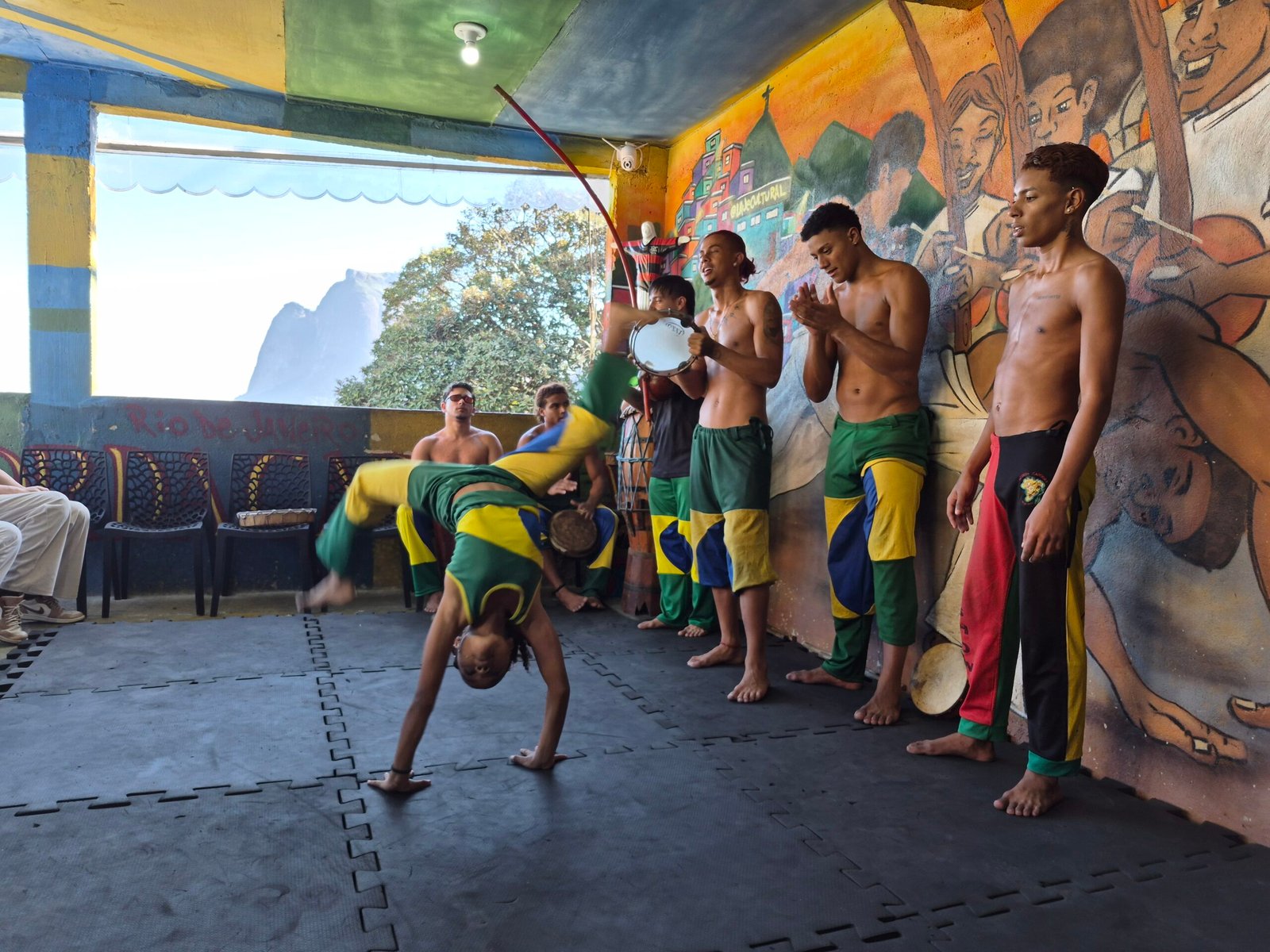
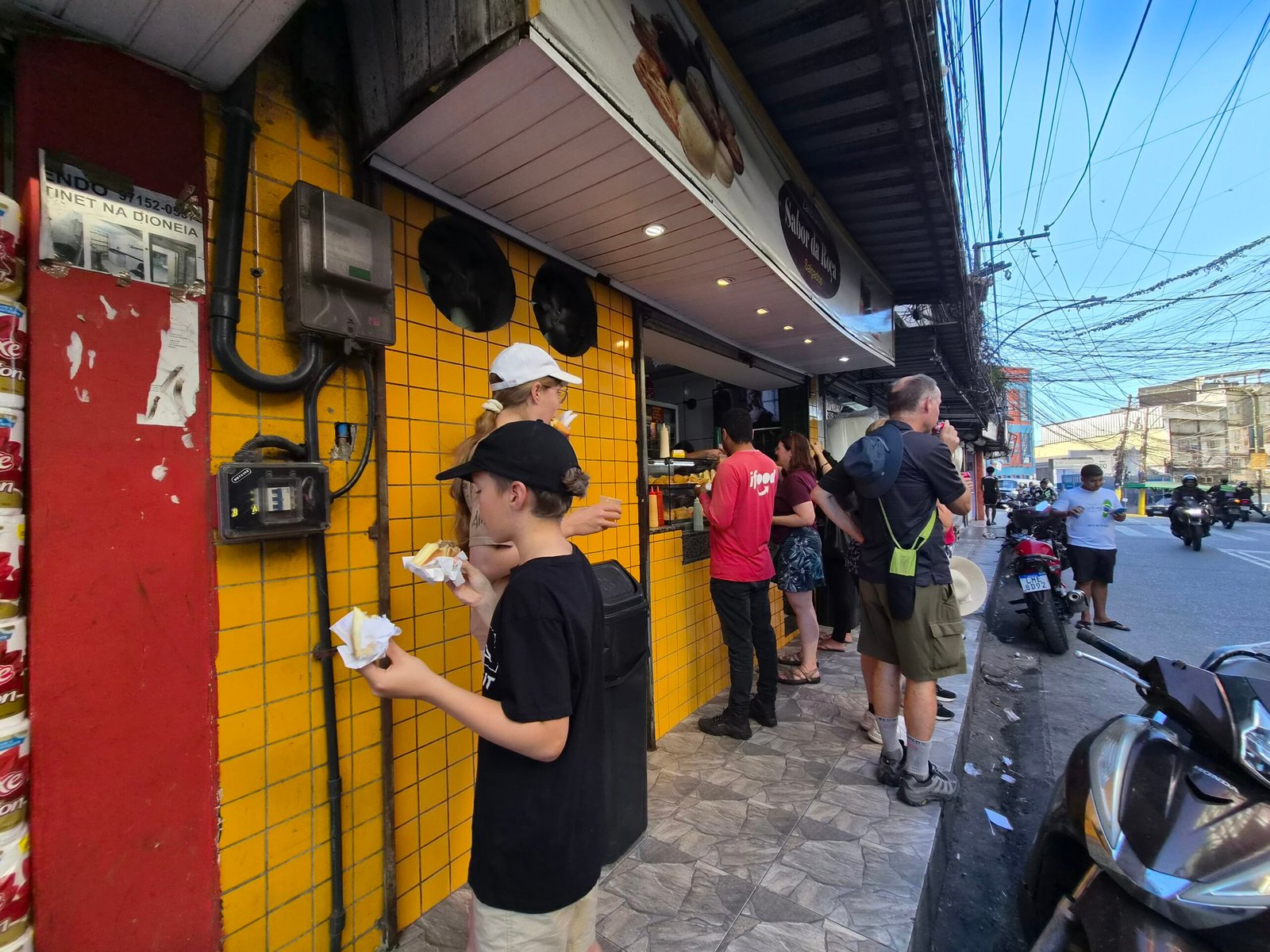
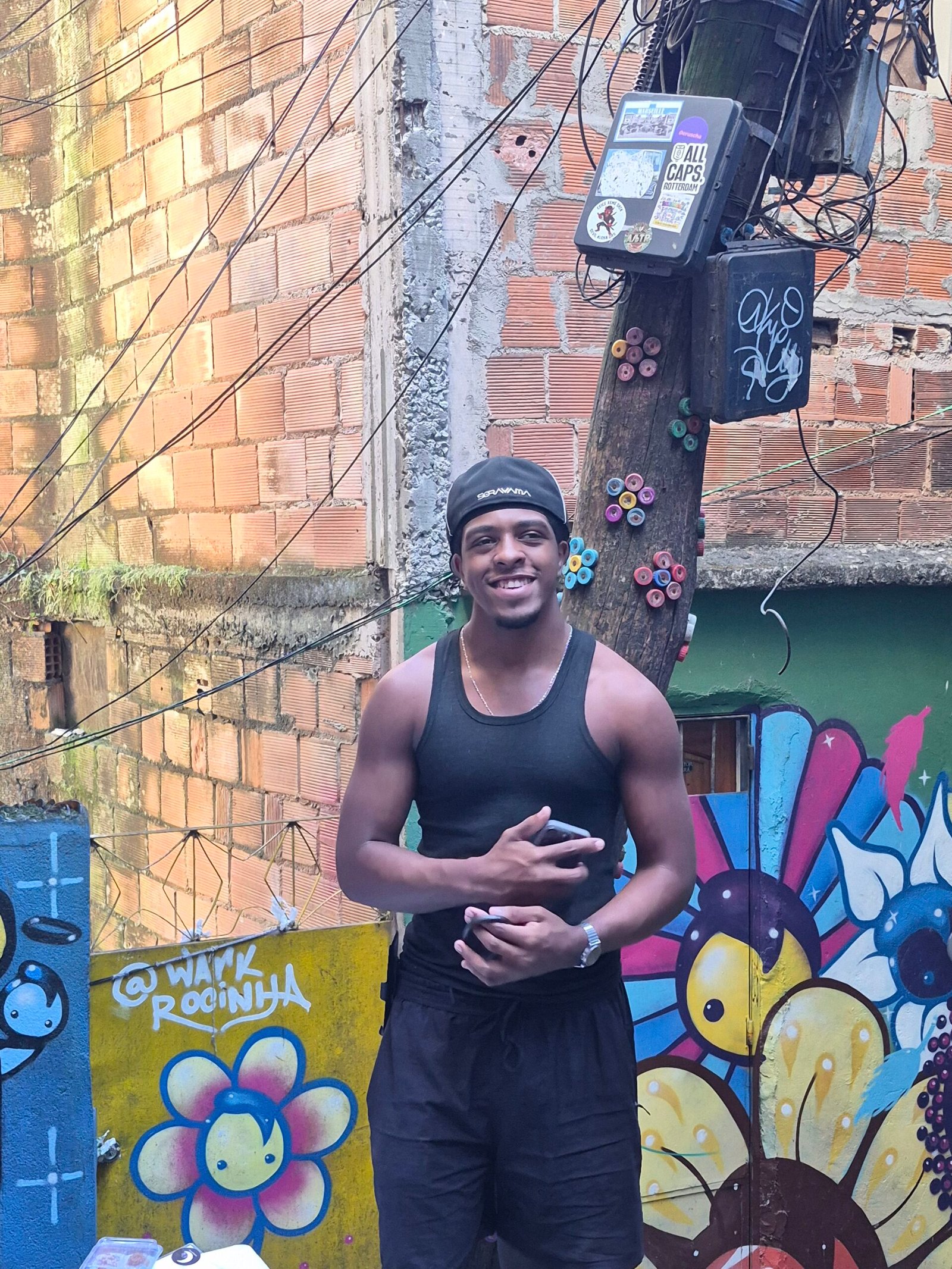
Another reason why tourists shouldn’t wander around Rocinha alone is the area’s unstable situation. Although Carlos said that, as a general rule, the area is safe and the community looks out for its own, clashes between the police and drug cartels, for example, can lead to shootouts in certain areas. There are also many incidents of pickpocketing, muggings, and thefts of cameras and cell phones in the area. However, tourists on guided tours are generally not robbed, as tourists are an important source of income for the favelas. We, too, left a few reals in Rocinha when we sponsored a local capoeira school (a debit card would have worked there for tipping as well), ate what were perhaps the best empanadas ever, supported a local rapper by buying homemade sweets from him (Ronja also started following him on Instagram), and stopped for some sodas at a local bar. The total amount of money we spent wasn’t much, but it’s important to remember that the average monthly wage for working people in the area is about $200. For them, every cent a tourist brings makes a difference.
After the favela tour, we returned to Copacabana Beach, where we had dinner at one of the small restaurants along the beach. The restaurant’s menu was quite extensive, but Marko and Jaana admittedly got a bit of a “Cuba vibe” when, as we were ordering, the server kept telling us, one dish at a time, that it wasn’t available at the moment. In the end, though, we managed to place our orders, and the food was delicious. The food was also surprisingly affordable, considering the restaurant was located in a prime spot right by the beach. For example, the shrimp pasta—which was packed with shrimp—cost only €12. At that price, you’d only get to look at shrimp in Finland!
In the evening, Risto and Marko stopped by a barbershop near our apartment to get their hair cut—it had grown quite long during the trip. Risto went with a style modeled after some soccer player whose name was at least unknown to Jaana, while Marko stuck with his familiar and safe crew cut. The haircuts weren’t very expensive either—35 reals, or about six euros per head.
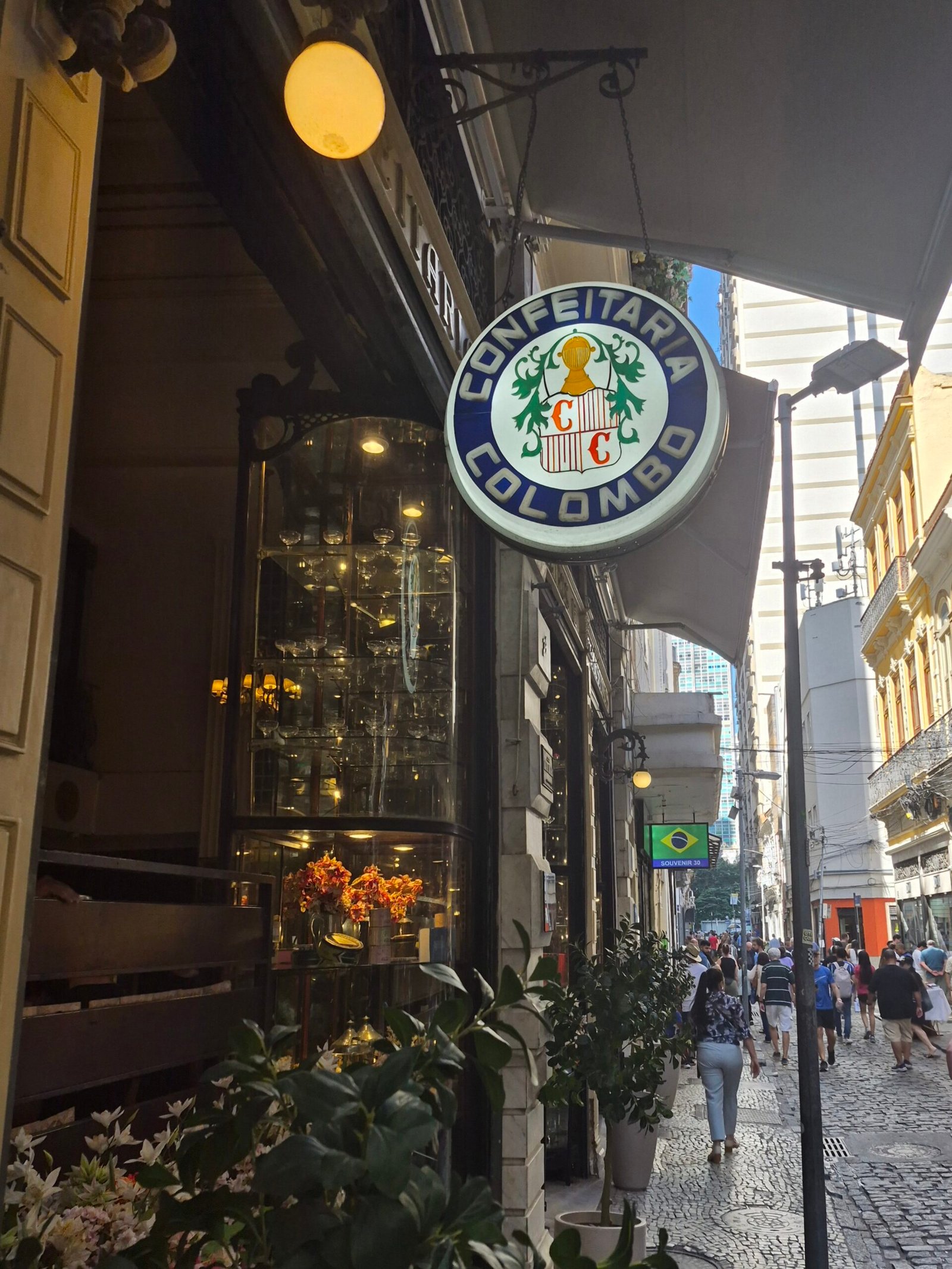
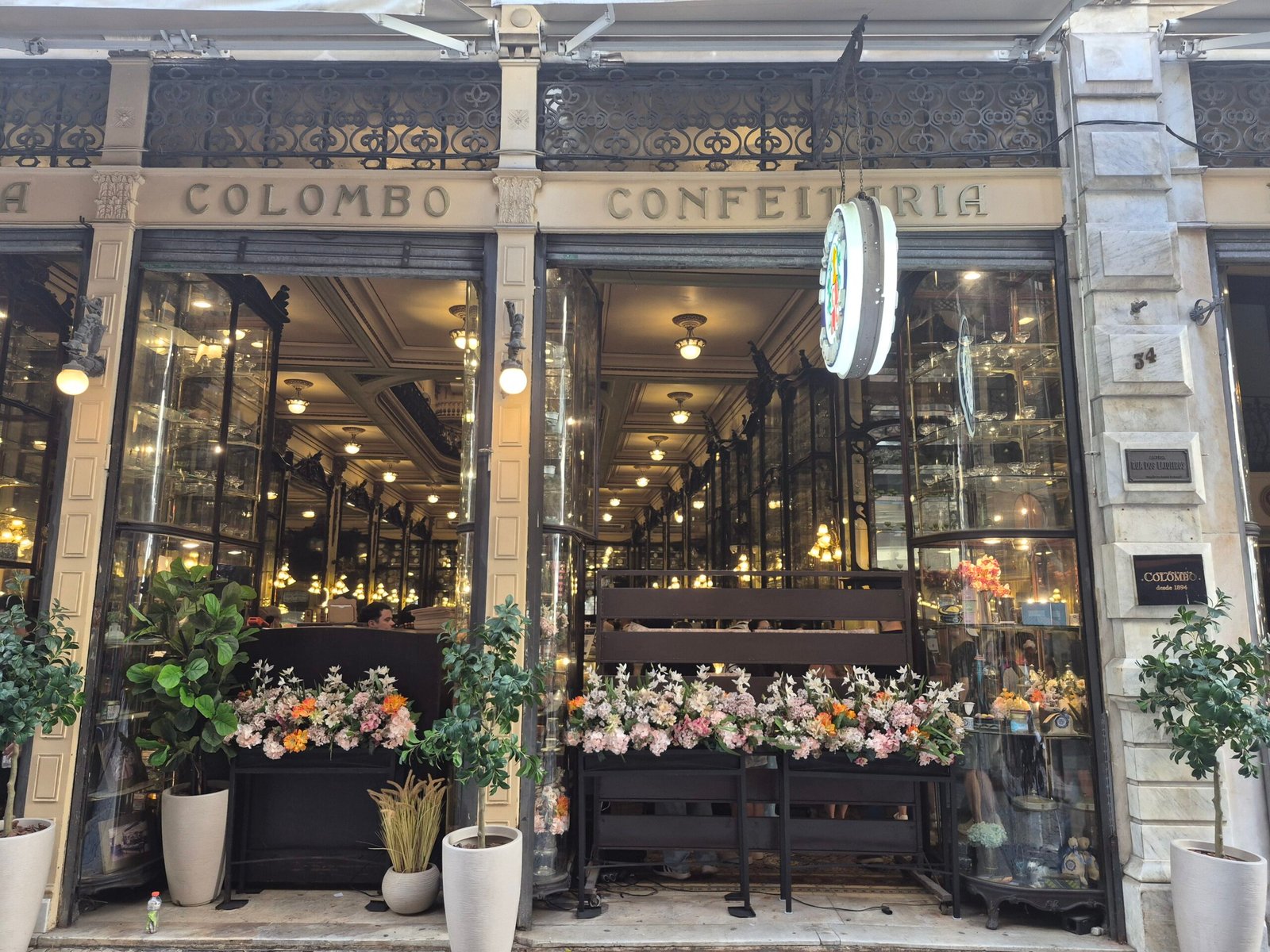
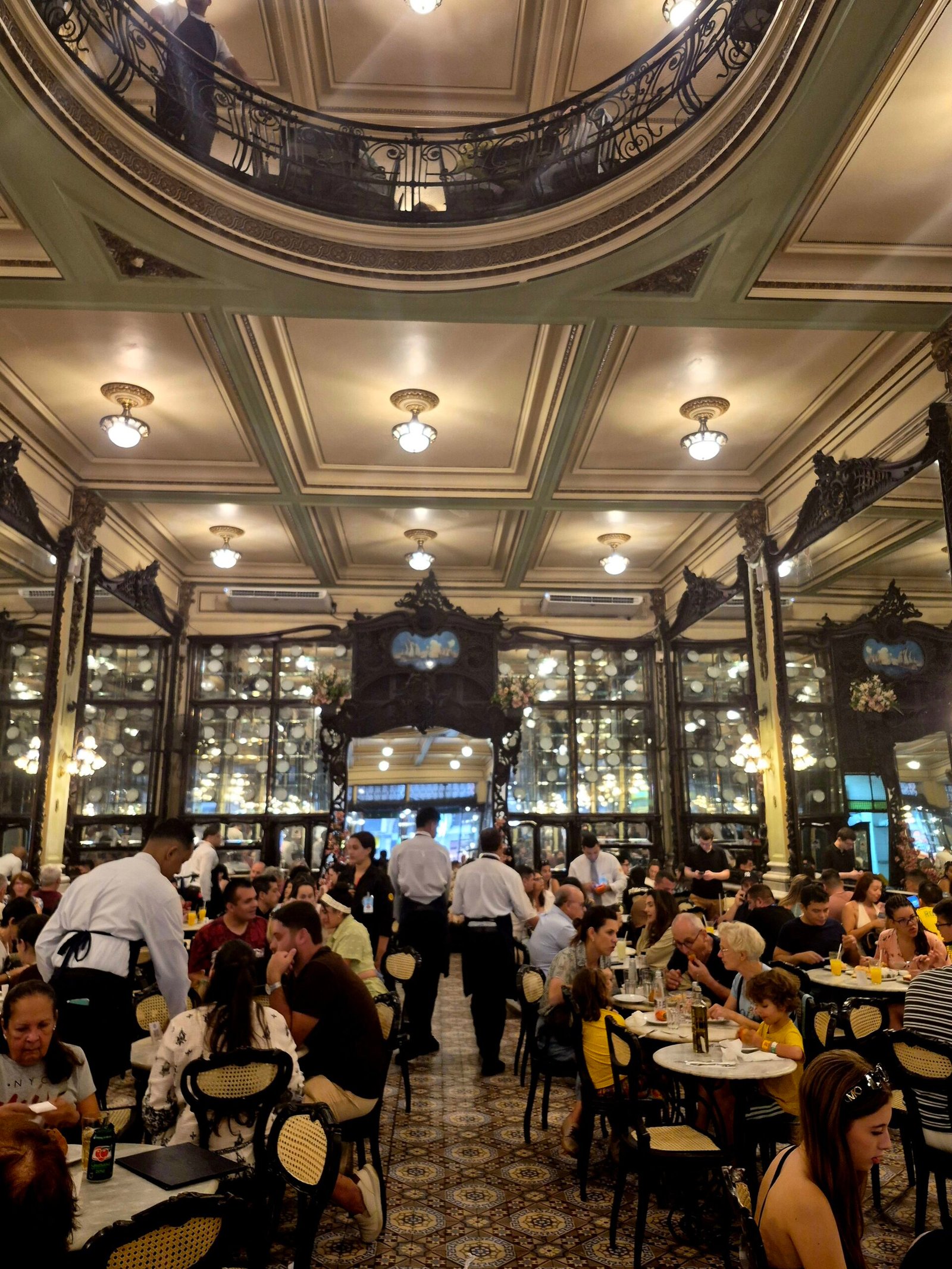
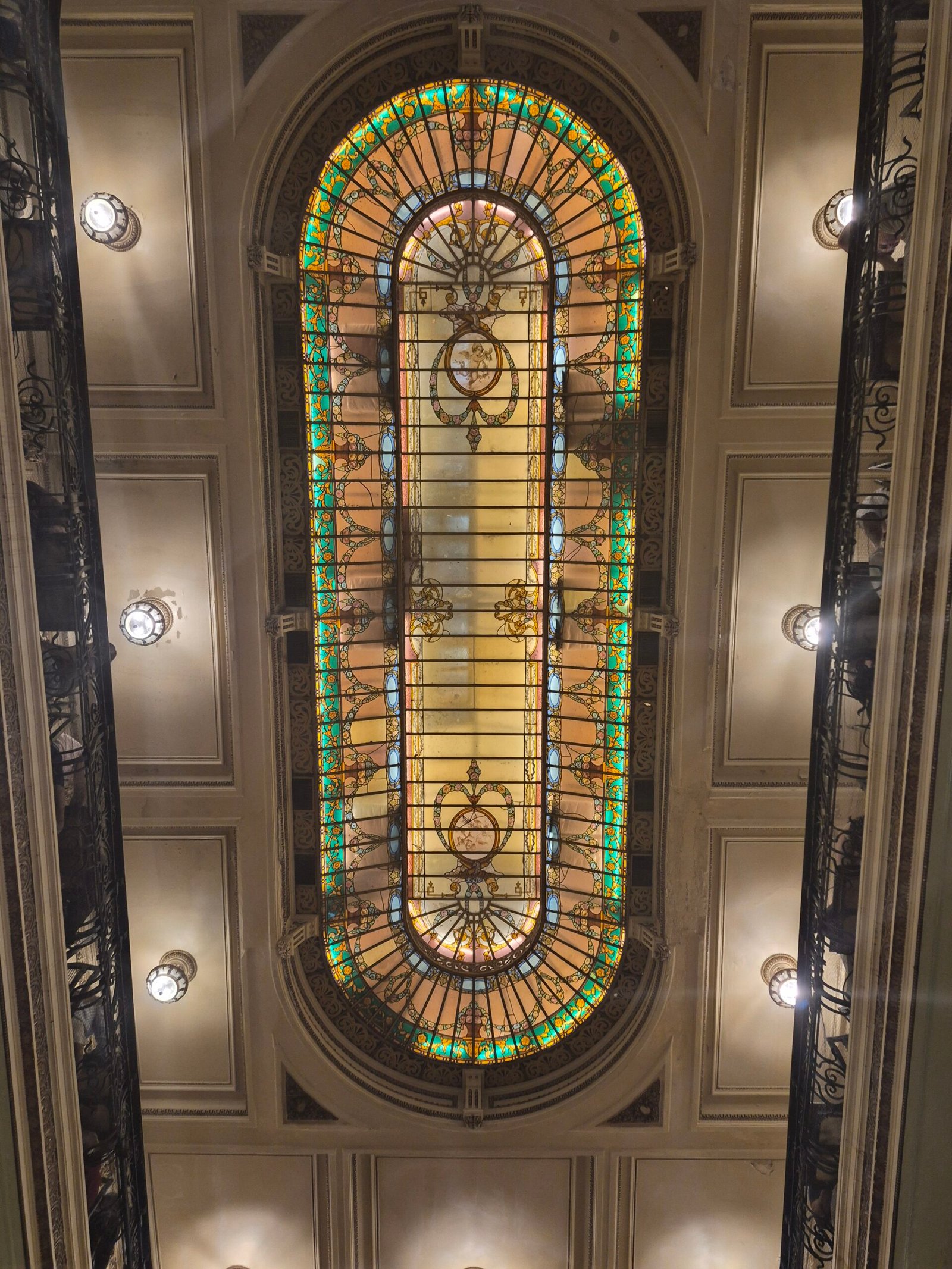
To celebrate our last full day of vacation here in Rio, we set out to explore the offerings of Rio de Janeiro’s famous café, Confeitaria Colombo. The place was founded back in 1894 and is certainly just as magnificent as Café Tortoni in Buenos Aires. The walls on the lower level of Colombo feature eight enormous crystal mirrors. The mirrors were originally imported from Belgium and are framed by beautiful hand-carved frames. The stunning stained-glass window on the ceiling also deserves a special mention. Confeitaria Colombo spans two floors, but the upper floor serves meals, while the lower floor focuses on café items, savory snacks, and brunch.
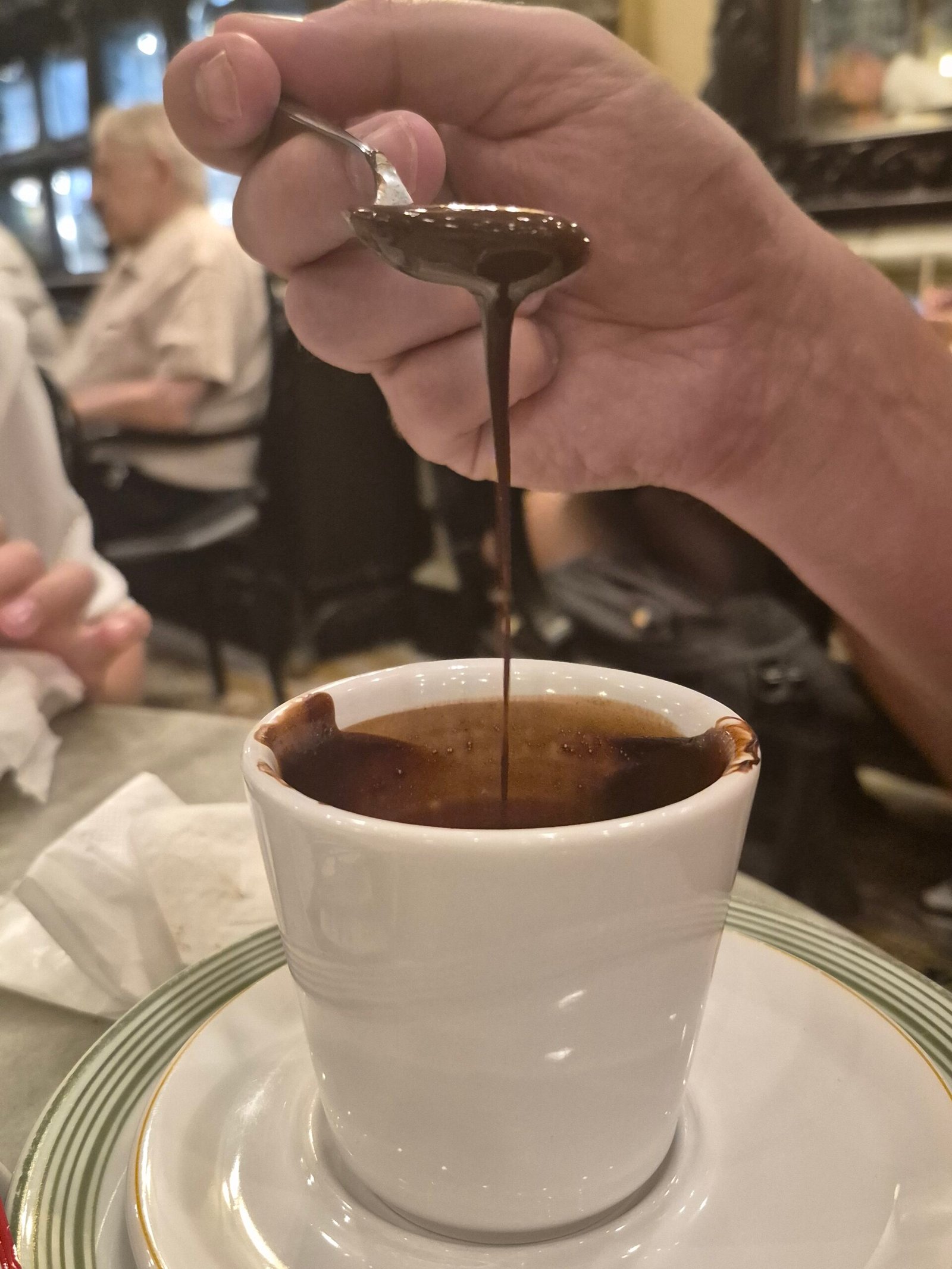
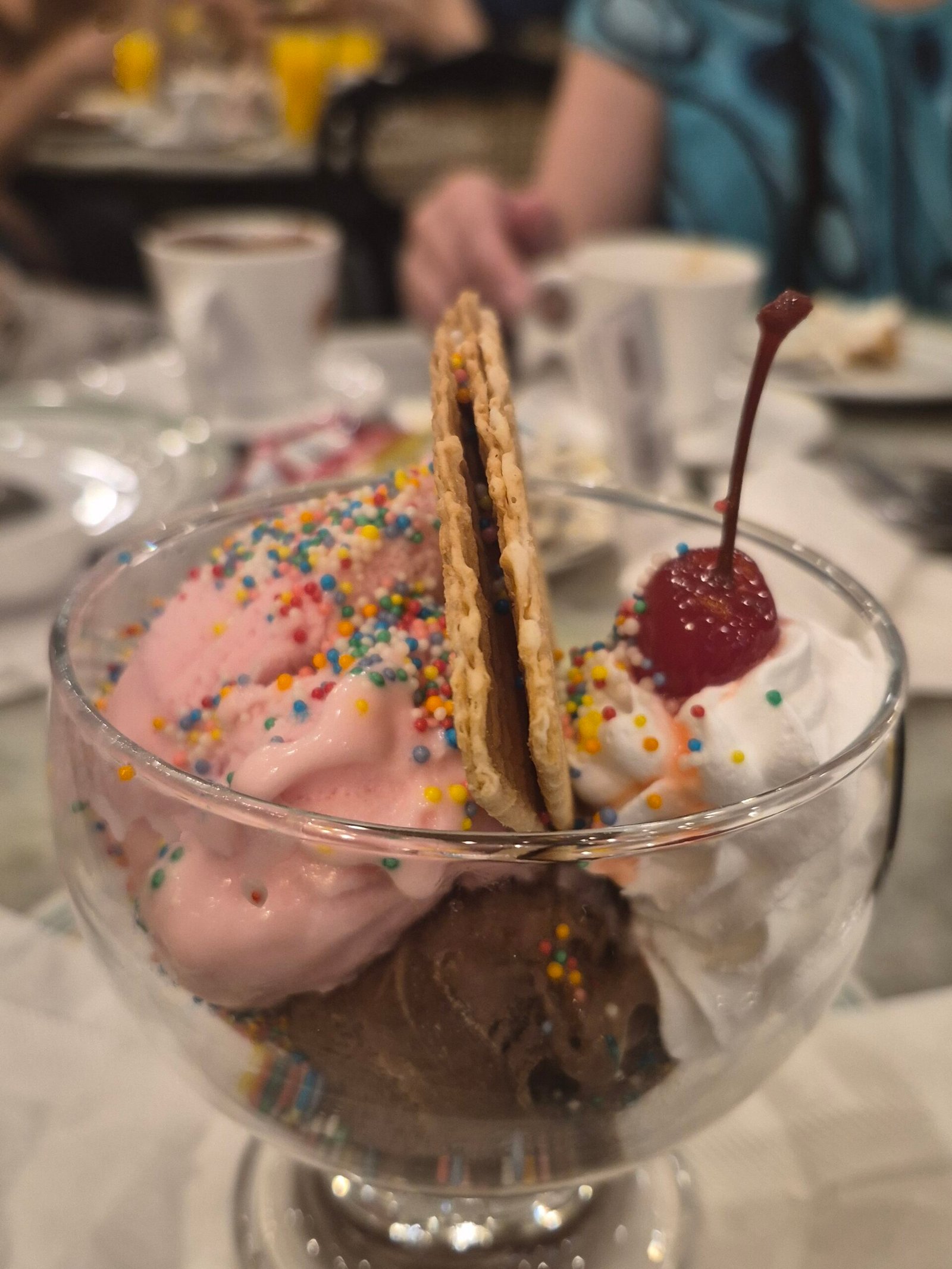
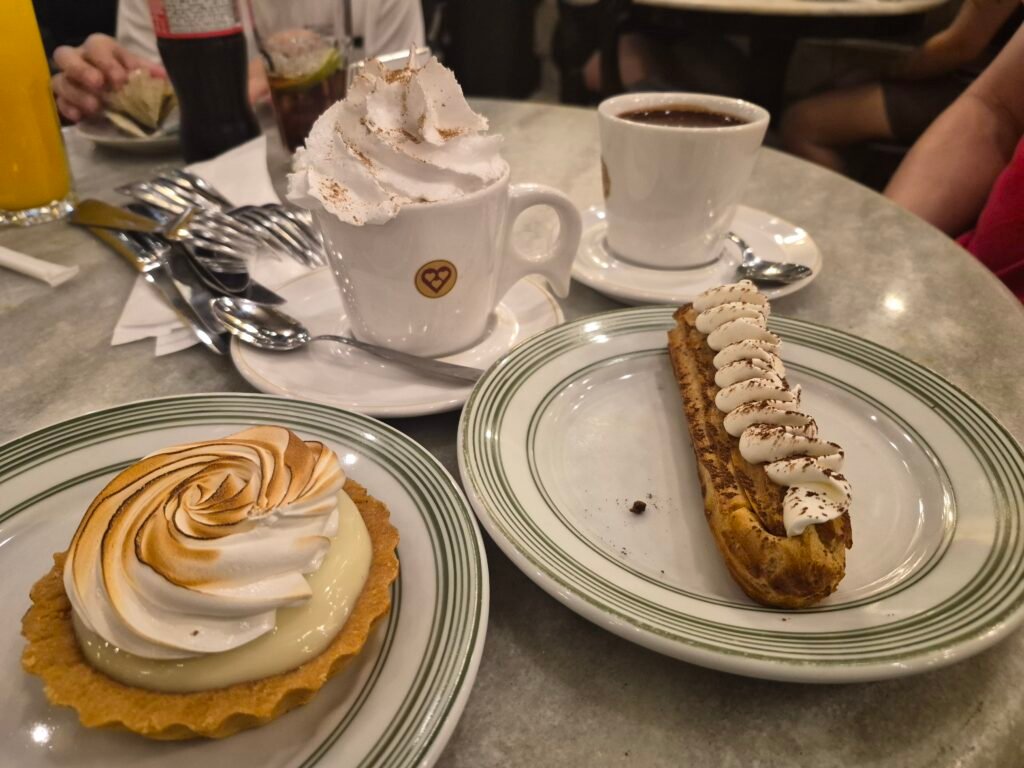
The selection of treats at the place was truly extensive, and the sweetness level was pretty much off the charts. Risto played it safe and ordered a serving of ice cream, which he knew for sure he’d enjoy. Ronja indulged in a brownie, Marko had a tiramisu slice, and a lemon cake was served to Jaana. Jaana’s signature cappuccino was topped with a generous amount of cinnamon-spiced whipped cream, and in Marko’s hot chocolate, the spoon practically stood upright on its own. That’s how thick and creamy the hot chocolate was.
After we finished our treats, we continued on to Copacabana Beach. We had promised the kids another day at the beach, since Risto, in particular, loved playing in the waves. The waves were perhaps a little bigger than last time, and a red flag was flying on the beach instead of a yellow one. Despite the red flag, it was safe to play in the surf near the shore, since even Risto could touch the bottom the whole time. It probably wouldn’t have been a good idea to go any deeper, even though a lone person seemed to be paddling on a SUP board quite far away.
We rented beach chairs and umbrellas from the same group as last time, since we’d been satisfied with their service before. This time, though, we only rented two beach chairs, because we’d learned from our previous experience that we practically didn’t need any chairs for the kids. We also ended up having to close the two beach umbrellas we had rented, because the wind on the beach picked up so strongly for a moment that it even blew one of our open umbrellas away.
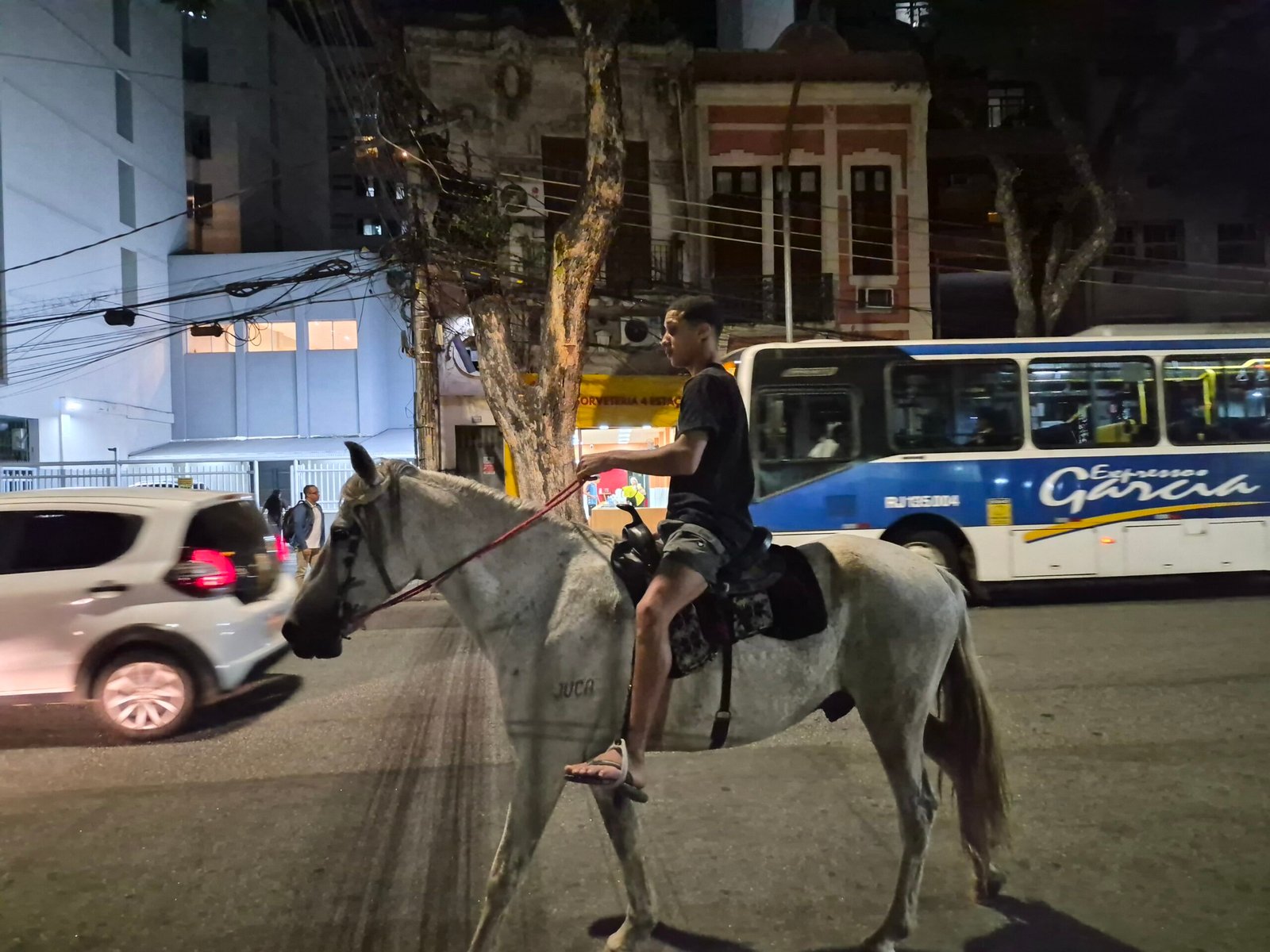
For dinner, we went to a pasta place near the beach, and then we had to head back to the apartment to pack our things for the final leg of the trip. Once again, the trip back from downtown took considerably longer than the trip in the other direction. We’ve concluded, however, that this is because the main road that cars take when heading to the beach is, for one reason or another, closed to traffic traveling in the opposite direction. As a result, cars have to weave through the narrow side streets, which causes traffic congestion. The only vehicles that manage to move smoothly even in heavy traffic are scooters and motorcycles. They zip in and out between cars, constantly honking their horns. Hopefully, drivers who change lanes in quite an unpredictable manner will at least somehow notice that a motorcycle is coming up from behind and that it’s not exactly the best time to change lanes. There are almost always two people riding on a motorcycle. At least they’re wearing helmets, but T-shirts, shorts, and flip-flops don’t offer much protection if a car suddenly swerves out in front of them from the adjacent lane. It’s a miracle we haven’t seen a single crash yet. With traffic like this, they’re bound to happen every day!
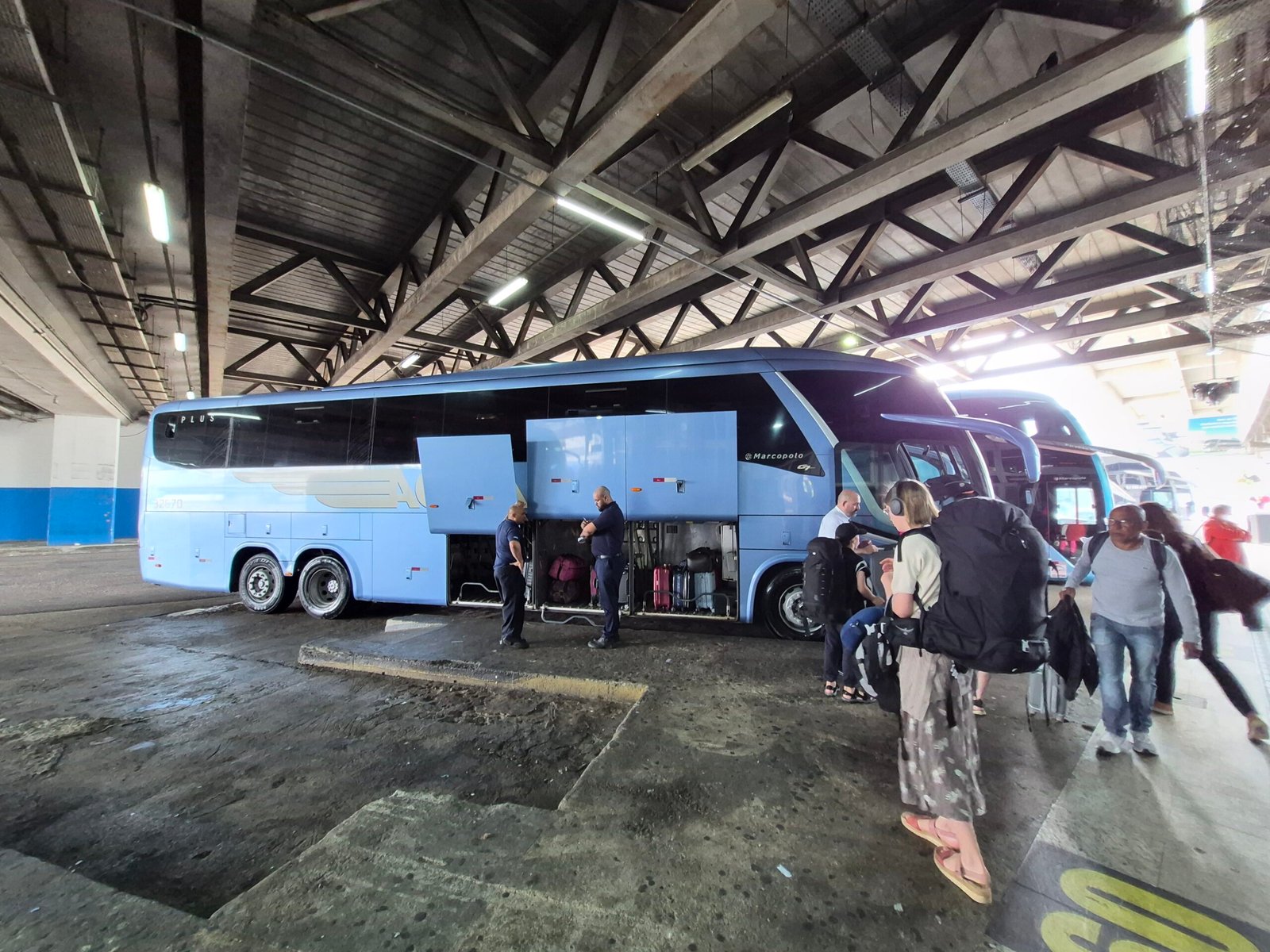
The bus back to São Paulo departed from a terminal that was only a 10-minute drive from our place. So we didn’t have to get up too early to catch the 11:00 bus operated by Aguia Branca. This time the bus was single-decker, but the seats were once again nice and soft and wide. The trip was scheduled to take 6.5 hours, which isn’t exactly a fast average speed for a 300-kilometer journey. However, we’d chosen the bus over flying because that way we’d get to see a bit more of the scenery. Since it was a long trip, it also included a 30-minute lunch break. So everything sounded great as we set off on the bus toward São Paulo.
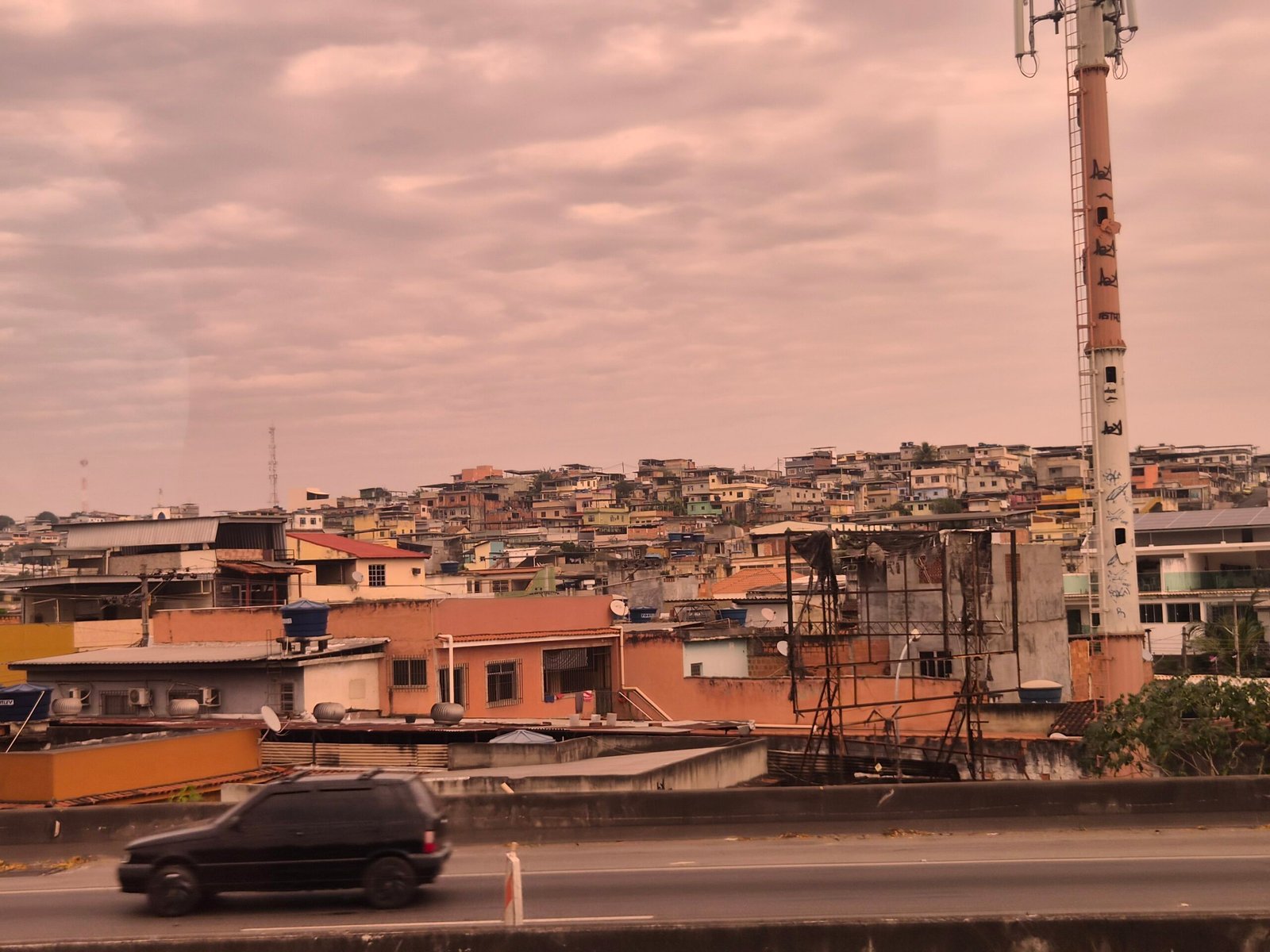
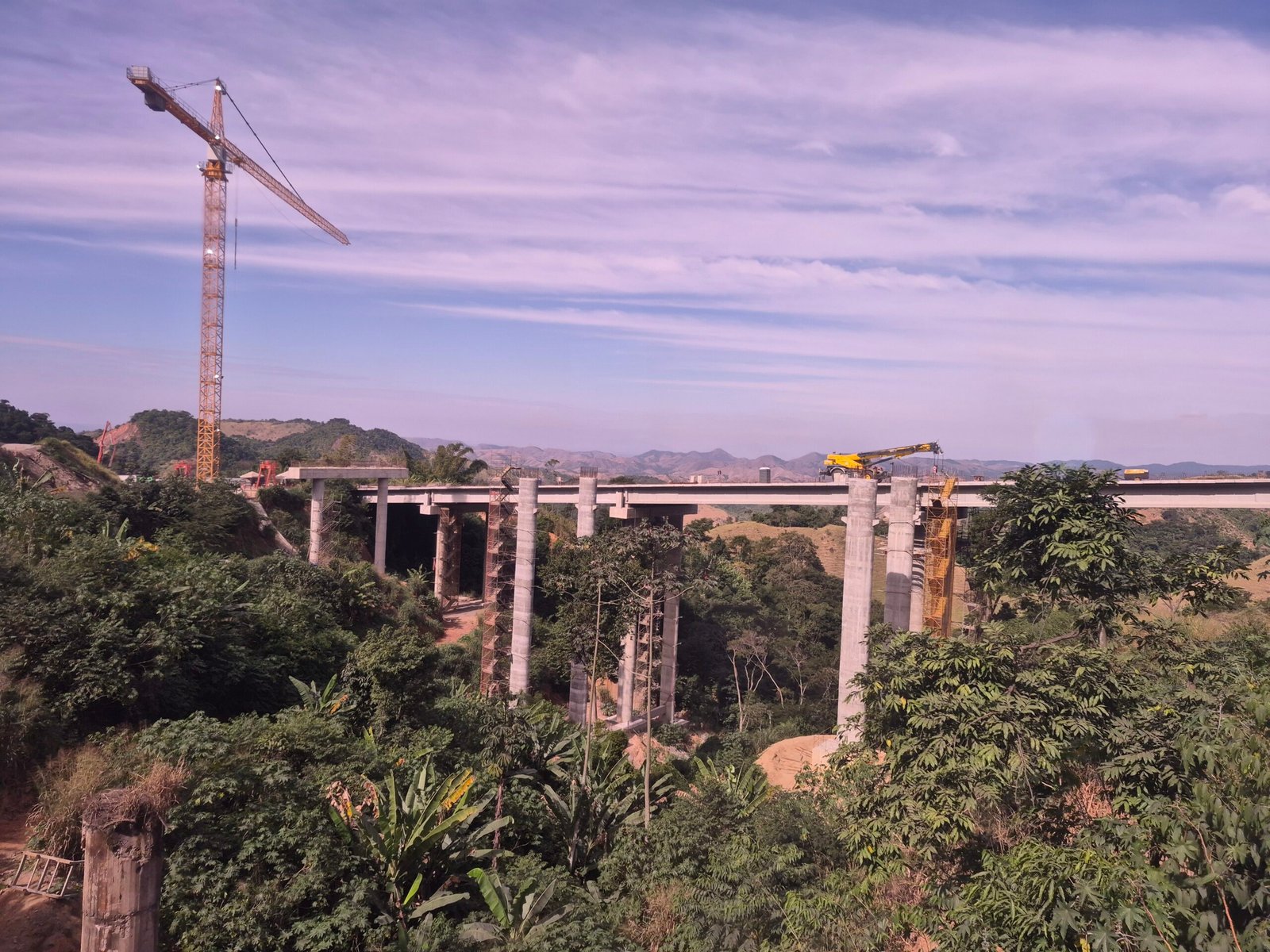
Right from the start, we got stuck in traffic, which was apparently caused by various road construction projects in the suburbs. Once we got past that, the trip went quite smoothly for a while, until we reached a more mountainous area where a massive road construction project was underway. Jaana looked up online to find out what the project was all about. Apparently, once completed, this massive project is intended to eliminate the worst bottlenecks on the mountainous route and improve road safety. Four lanes will be built in both directions, and a total of 24 viaducts and exit ramps for vehicles with brake failures will be constructed along the route.
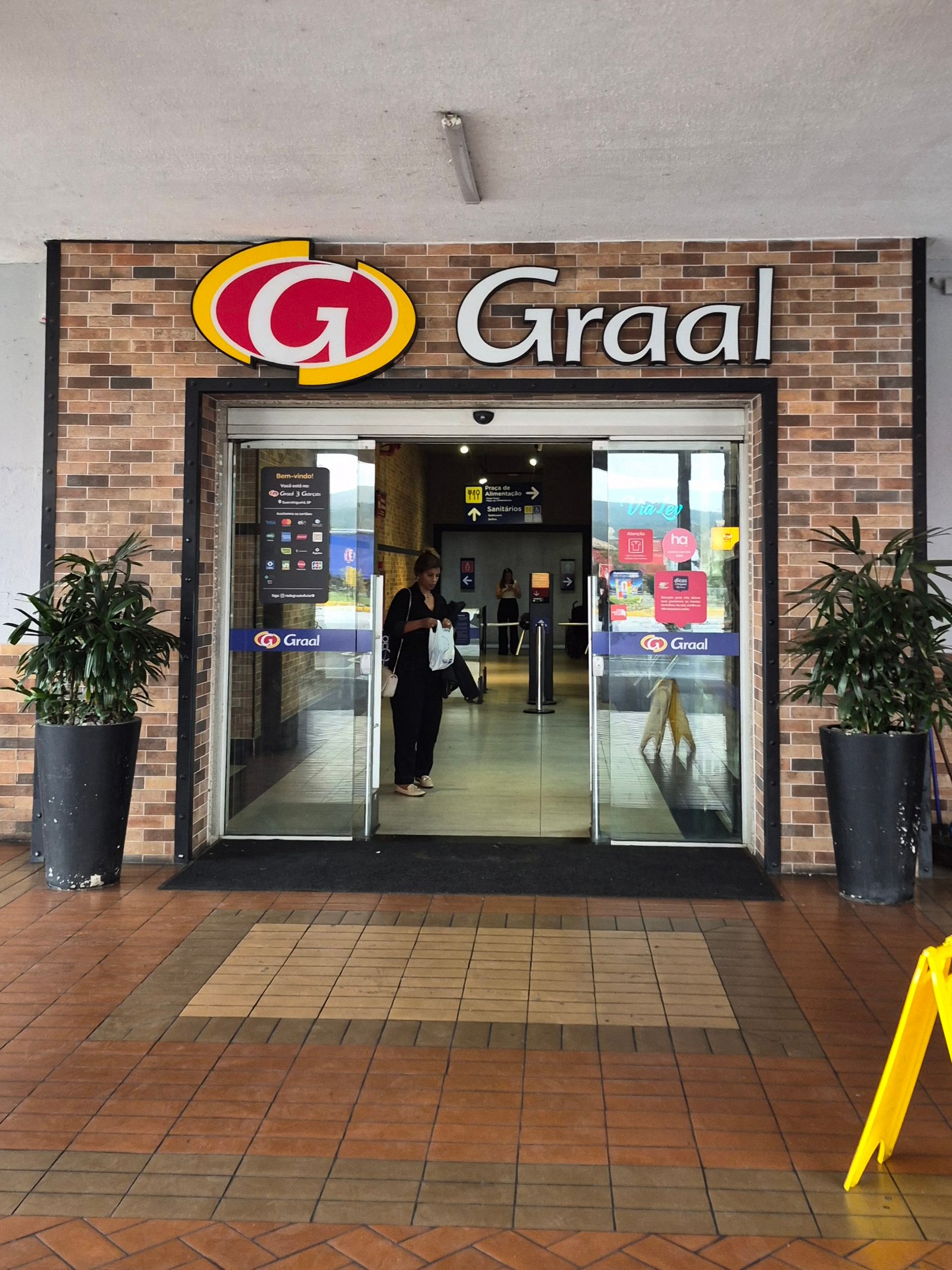
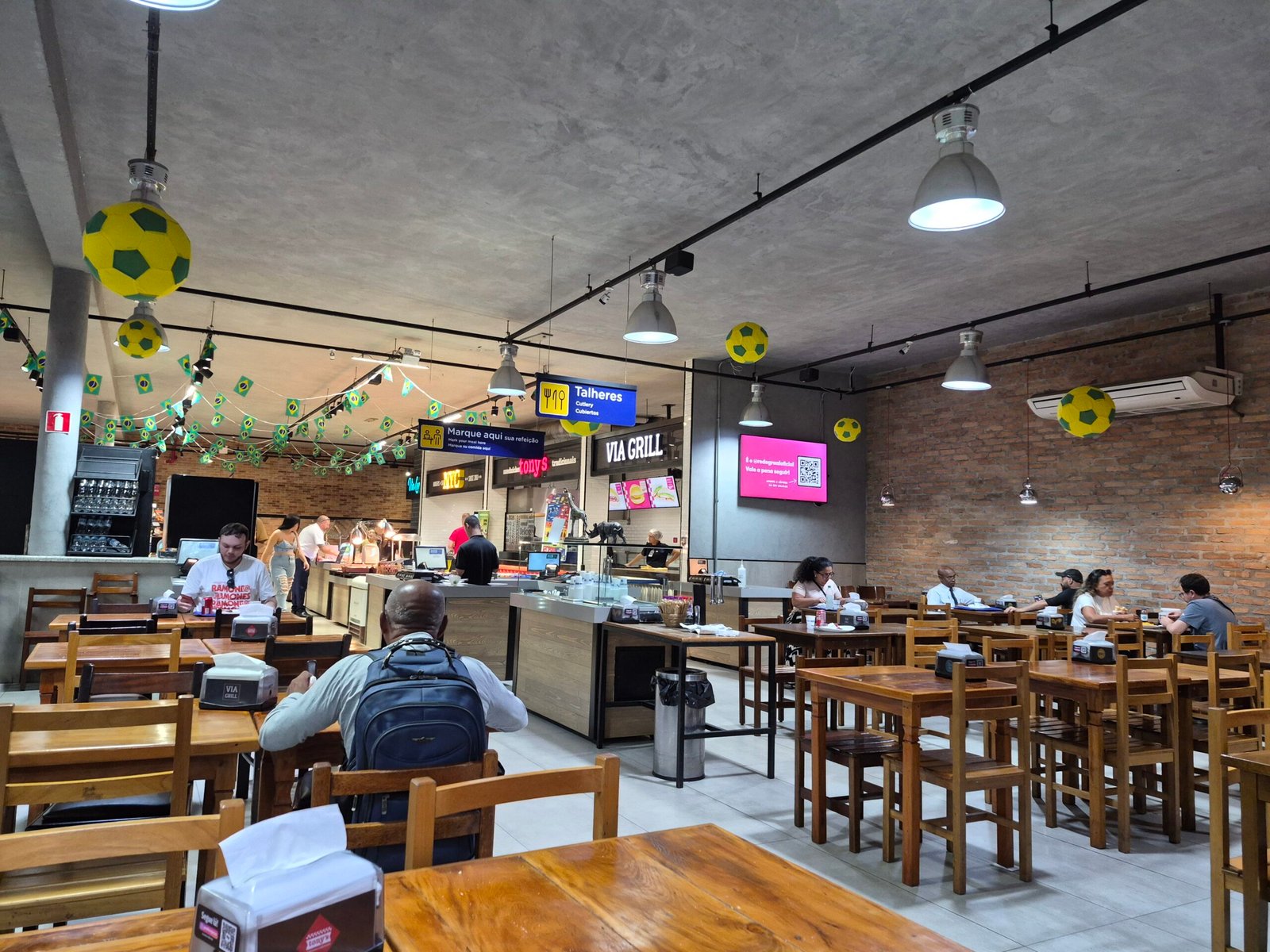
We ended up sitting in that traffic jam for a really long time. At this point, we were already starting to wonder whether the estimated 6.5-hour travel time would hold up. When, about four hours after we set out, we stopped at a gas station-like place called Graal to eat, it became painfully clear that we wouldn’t arrive in São Paulo by 17:30.
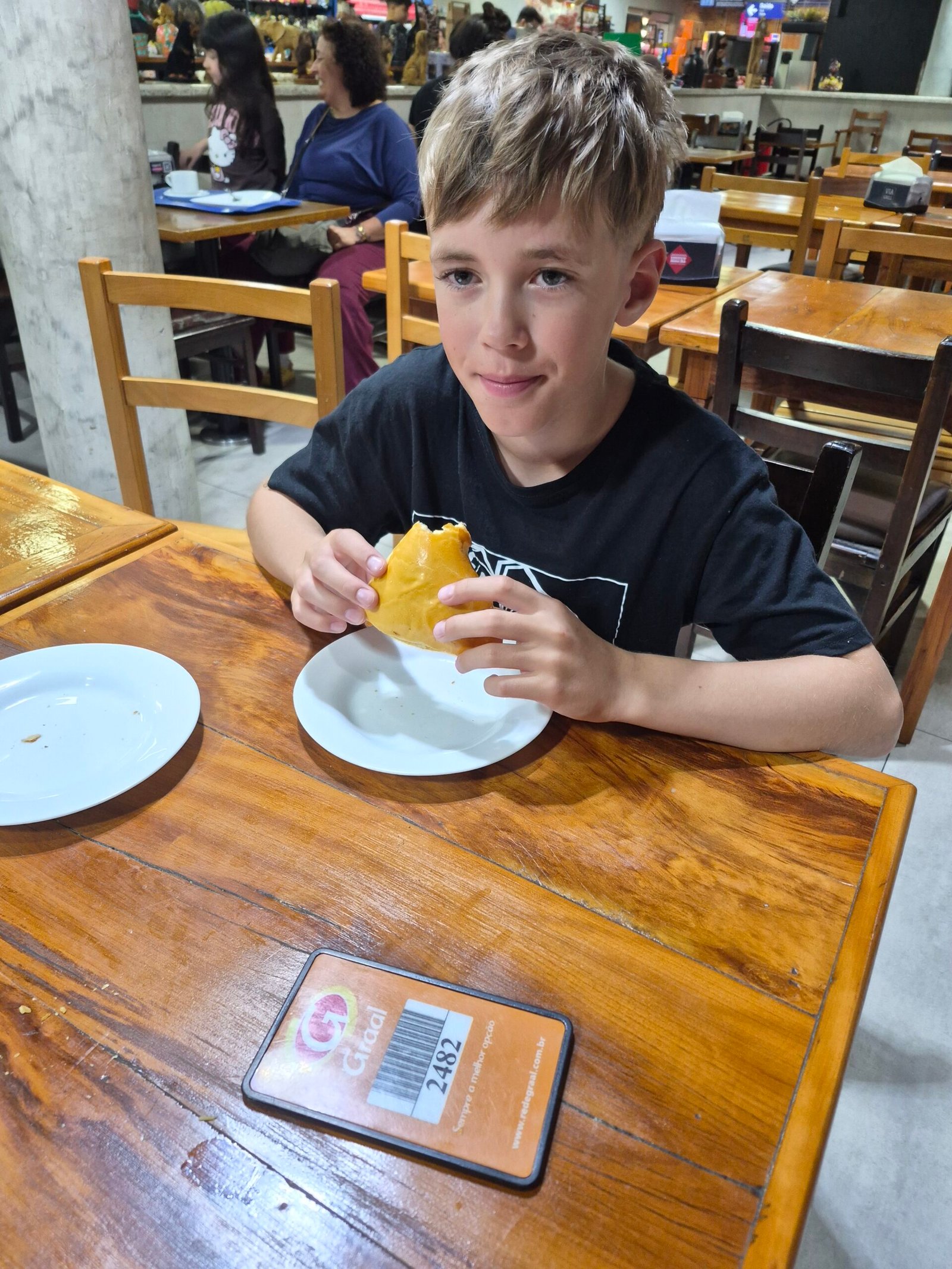
The dining area at the rest stop was set up in a really interesting way. To enter the area, you had to take a numbered plastic token from a vending machine and walk through the gates. Then, once inside, you could choose the food you wanted, which was entered into the cash register system using the token’s number code. After finishing your meal, you could only leave the area once you’d paid for your food at another register and slipped the token into the machine to open the gates.
After the lunch break, the journey continued for several more hours, and we finally arrived at the São Paulo bus station at 19:30, after an 8.5-hour trip. From the bus station, we ordered an Uber to the airport hotel, and the ride took another half hour. Since we arrived so late, the hotel restaurant had already closed. However, we were able to order food through room service, so that’s what we did. That was probably the first time ever we’d ordered anything through room service. The hotel’s room service wasn’t exactly lightning-fast, so it wasn’t until around 22:30 that we’d all finished eating and were ready for bed.
On Friday, we simply took an Uber to the airport and began our rather long journey home. The first flight, on Turkish Airlines from São Paulo to Istanbul, lasted a little over 12 hours. Risto and Ronja had actually drawn up a written plan for the trip, and their plans held up pretty well—even when it came to sleep. Risto must have slept for at least 6 hours during the flight, and Ronja slept for a few hours as well. Jaana and Marko didn’t sleep, so they managed to watch quite a few movies on the plane’s in-flight entertainment system during that time. We had a 3-hour layover in Istanbul, and the flight to Helsinki departed at 15:05. None of us slept on this flight, so by the time we finally got home at 20:15 on Saturday evening, the adults in the family had been awake for nearly 30 hours straight, and even the kids had only managed a few hours of sleep in between.
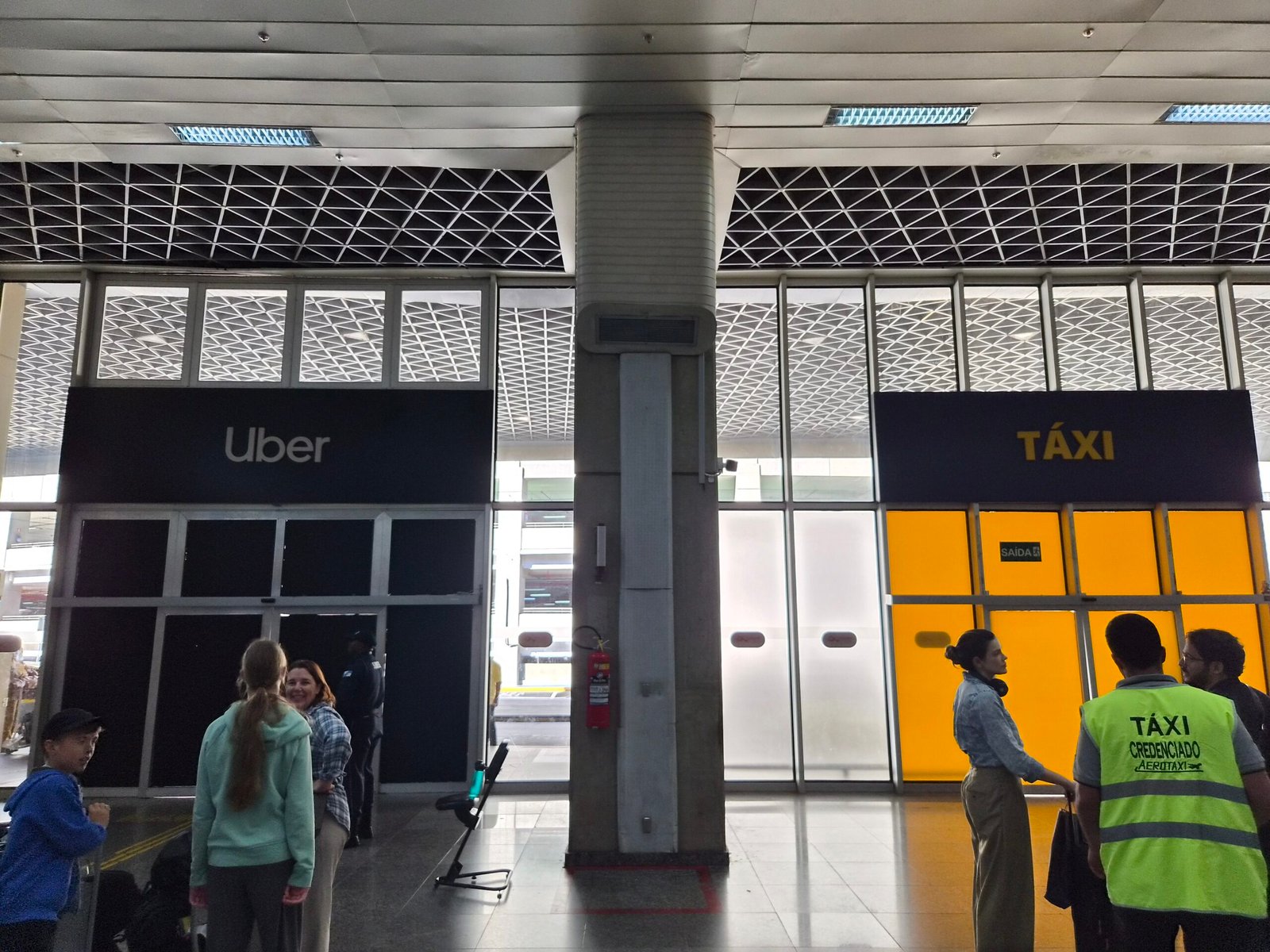
All in all, this summer vacation trip was a real success. Everything went according to plan, and many of our destinations were pleasant surprises. For example, we’d been a bit skeptical about visiting the capitals of Paraguay and Uruguay, but they were nice and Ronja especially liked Montevideo. We all agreed that, despite the heat, the Amazon and Pantanal regions were the highlights of the trip. For Marko, though, spending the night in a “crappy blanket”—that is, a hammock—was a minor downside to the Amazon. In addition to the nature destinations, Marko and Risto also fell in love with Rio. Jaana, on the other hand, liked Buenos Aires. Getting around with Uber was surprisingly easy, so we didn’t have to haggle with local taxi drivers over fares. We didn’t use a traditional taxi even once; instead, we took a total of 56 Uber rides. For the most part, the fares were cheap (€5–10), with the exception of the ride from the Montevideo airport and the longer ride from São Paulo to Viracopos Airport. That said, that ride was also almost 100 km long.
Since we’ve been taking these kinds of longer vacation trips for a long time, we’ve noticed how technological advancements have made traveling much easier. We’ve used Google’s offline maps on our trips before, but a new and useful feature this time was Google Translate’s offline languages, which we could download to our phones to make it easier to communicate in places without an internet connection. Both adults also purchased an eSIM card from Airalo for their phones, which provided 5 GB of data for €20. This amount was more than enough for us to order Ubers and communicate with private accommodation hosts or tour operators in places where there was no Wi-Fi connection. In theory, various eSIM cards have been available for at least 5–6 years now, but we hadn’t used them before. Recently, eSIM support in cell phones has expanded from flagship models to more mainstream devices. Another significant improvement is that, in addition to country-specific eSIM cards, regional cards are now available that cover, for example, all of South America. This meant we didn’t always have to get a new eSIM card every time we arrived in a new country. Loading the card onto the phone was so easy that even Jaana was able to do it herself.
We’ve also booked most of our guided tours in various destinations through platforms like TripAdvisor, Viator, or GetYourGuide. These platforms now let you book tours from even very small tour operators, and the advantage is that paying through them is much easier. In fact, in many places we ran into the problem that, for one reason or another, a European Mastercard didn’t work as a payment method. Sometimes the card was even declined at a store, and we had to pay in cash. Confusingly, Azul, one of Brazil’s largest airlines, didn’t accept our cards as a form of payment at all. Before leaving on the trip, Marko had tried to book flights directly through the airline’s own website. Despite numerous attempts, he was unable to do so. So this wasn’t just a temporary glitch on the airline’s website. Fortunately, we were able to book the flights through Booking.com, and our cards have always been accepted on that platform.
This brings us to the point that it’s always a good idea to carry multiple bank cards when traveling. We had four of them with us. Usually, at least one of them was accepted as a payment method, but not always. For this reason, it’s also a good idea to carry some cash. We had brought along both euros and dollars. We used them to pay for some accommodations and also exchanged them for local currency at currency exchange counters. Usually, we’ve withdrawn local cash from ATMs, but that doesn’t always work, so it’s a good idea to bring a little extra cash just in case. Since the biggest expenses, such as flights and accommodations, are usually paid for in advance, you don’t need to carry such a large amount of cash that you’d be constantly stressing about it.
South America was a really great travel destination, and even though it was winter there, the daytime temperatures were still comfortable for someone from Finland. The locals were friendly, and the food was relatively inexpensive and really tasty. The only thing that proved a bit tricky at times was finding decent yogurt, since it doesn’t seem to be part of the locals’ breakfast or snack repertoire. We had booked our accommodations in advance so that most of them also had a washing machine. This meant we only needed to bring about a week’s worth of clothes at a time (except for Ronja, who needs to have the perfect outfit for every occasion, plus a few extras in case her mood changes), so our luggage fit perfectly into our backpacks. This time, in addition to our jackets, we also had to bring several pairs of shoes, since we needed sneakers for getting around in the Amazon and the Pantanal—ones that could get wet and muddy. Now we’ve seen part of this continent, but we’ll definitely be back there again someday. Looking forward to new adventures!